Regulation of Intestinal Butyrate Transporters by Oxidative and Inflammatory Status


Abstract

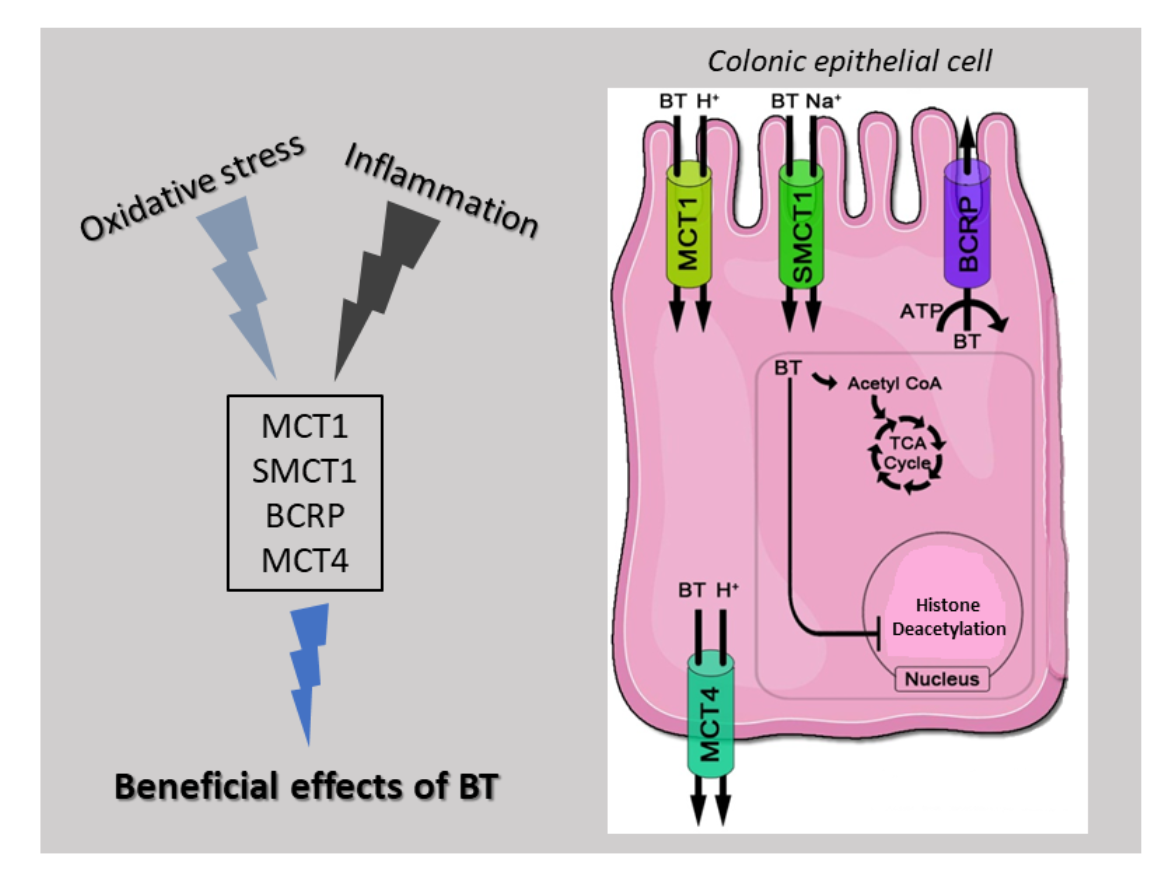
1. Introduction—The Role of Butyrate in the Human Intestine
2. Membrane Transport of Butyrate in the Intestinal Epithelium
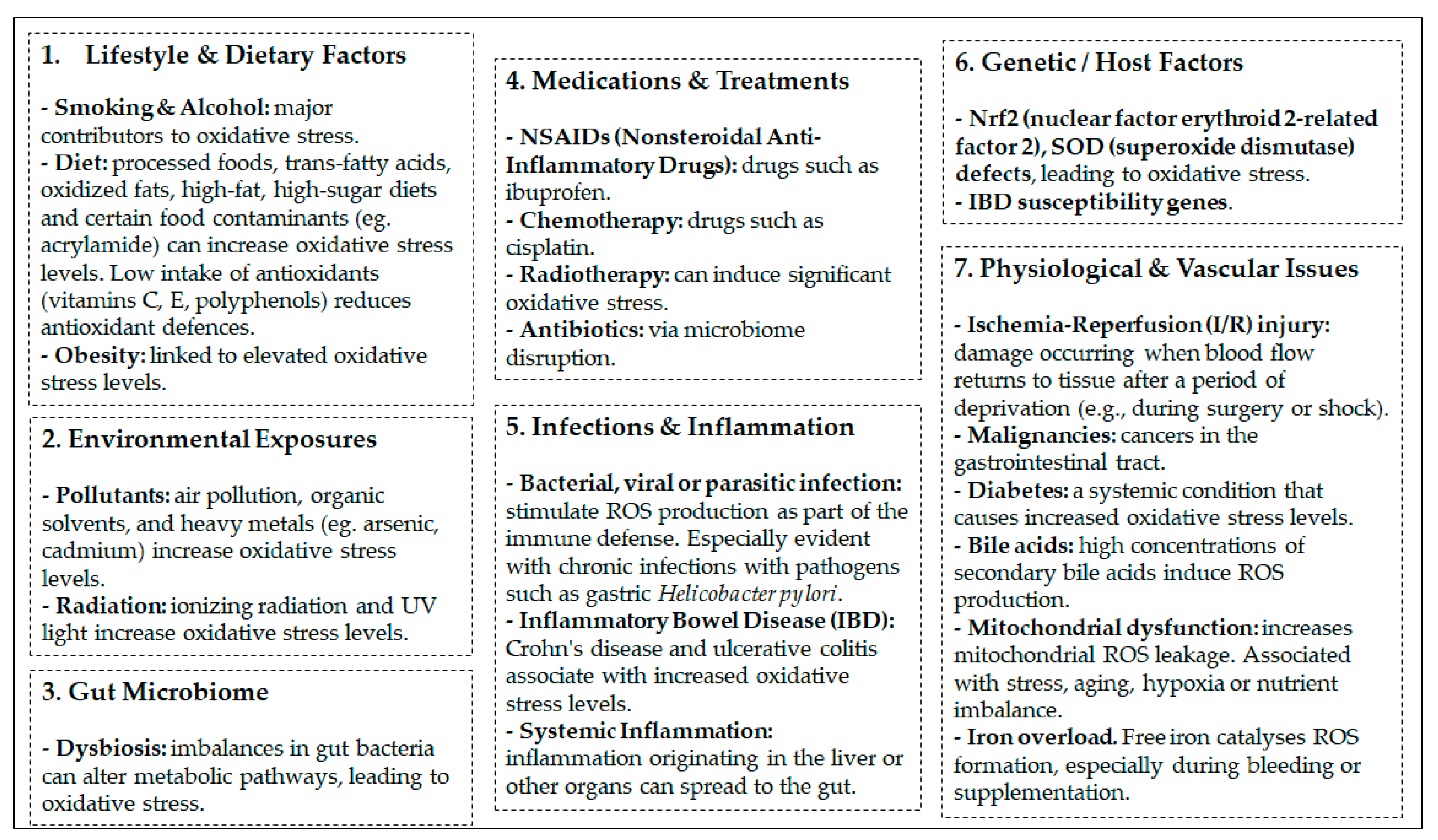
3. Regulation of Butyrate Transport by Oxidative Stress/Redox Levels

| Transporter | Oxidative Stress Inducer(s) | Experimental Model | Observed Effect | Mechanism | Ref. |
|---|---|---|---|---|---|
| SMCT1 |
| IEC-6 cells | ↓ |
| [18] |
| MCT1 | Caco-2 cells | = |
| ||
| MCT1 |
| IEC-6 cells | ↓ |
| [19] |
| SMCT1 | ↓ |
| |||
| MCT1 |
| NCM460 cells, HCT15 cells | ↑ |
| [20] |
| MCT4 | ↓ |
| |||
| BCRP |
| IEC-6 cells | = |
| [18] |
| BCRP |
| HT-29wt cells, HT-29DxR (doxorubicin-resistant) cells | ↑ |
| [25] |
| BCRP |
| Rat ileum | ↓ |
| [26] |
| Caco-2 cells | ↓ |
| ||
| BCRP |
| HT-29 cells | ↓ |
| [27] |
| Transporter | Experimental Model/ Inflammatory Mediator | Observed Effect | Mechanism | Ref. | |
| MCT1 |
| ↓ |
| [32] | |
| MCT1 |
| ↓ |
| [33] | |
| BCRP | ↓/= |
| |||
| MCT1 |
| ↓ |
| [34] | |
| BCRP |
| ↓ |
| ||
| MCT1 |
| ↓ |
| [35] | |
| ↓ |
| |||
| ↓ |
| |||
| SMCT1 |
| = |
| [36] | |
| SMCT1 |
| ↓ |
| [37] | |
| ↓ |
| |||
| MCT1 |
| ↓ |
| [38] | |
| MCT4 | ↑ |
| |||
| MCT1 |
| ↓ |
| [39] | |
| SMCT1 | ↓ |
| |||
| MCT1 |
| ↓ |
| [40] | |
| MCT1 |
| ↓ |
| [41] | |
| MCT1 |
| ↓/↑ |
| [42] | |
| MCT1 |
| ↓ |
| [43] | |
| MCT1 |
| ↓ |
| [44] | |
| MCT4 | ↓ |
| |||
| MCT1 |
| ↓ |
| [45] | |
| MCT1 |
| ↑ |
| [20] | |
| MCT4 | ↓ |
| |||
| MCT1 |
| = |
| [46] | |
| SMCT1 |
| ||||
| BCRP |
| ↓ |
| [47] | |
| BCRP |
| ↓ |
| [48] | |
| BCRP |
| ↓ |
| [49] | |
| MCT4 |
| ↑ |
| [50] | |
| MCT4 |
| ↑ |
| [51] | |
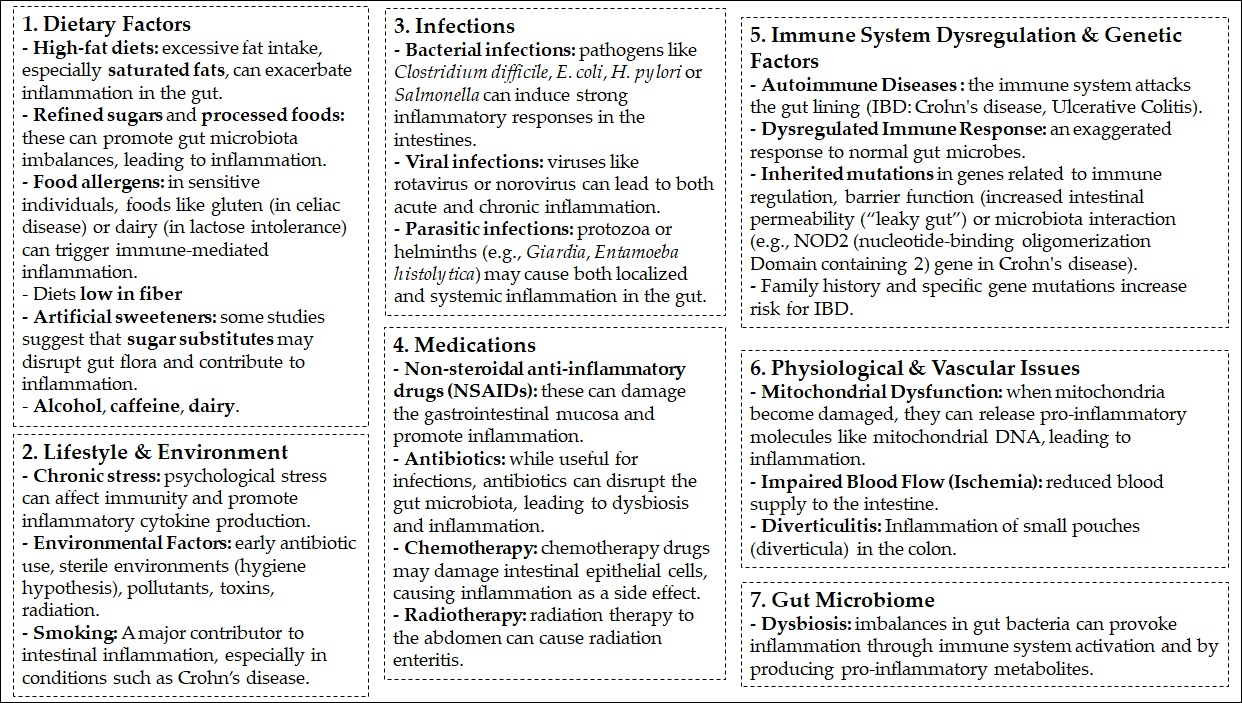
4. Regulation of Butyrate Transport by Inflammation
5. Relevance of Redox Modulation of Butyrate Transport on Butyrate-Mediated Effects
6. Conclusions and Future Perspectives
Funding
Institutional Review Board Statement
Informed Consent Statement
Data Availability Statement
Acknowledgments
Conflicts of Interest
Abbreviations
| ALS | Amyotrophic lateral sclerosis |
| BCRP | Breast cancer resistance protein |
| BT | Butyrate |
| CRC | Colorectal cancer |
| GPR | G-protein-coupled receptors |
| HDACs | Histone deacetylases |
| IBD | Inflammatory bowel disease |
| IFN-γ | Interferon-gamma |
| LPS | Lipopolysaccharide |
| MCT1 | Monocarboxylate transporter 1 |
| MCT4 | Monocarboxylate transporter 4 |
| NSAIDs | Non-steroidal anti-inflammatory drugs |
| NRF2 | Nuclear factor erythroid 2-related factor 2 |
| ROS | Reactive oxygen species |
| SCFA | Short-chain fatty acid |
| SMCT1 | Sodium-coupled monocarboxylate transporter 1 |
| TNF-α | Tumor necrosis factor-alpha |
References
- Couto, M.R.; Gonçalves, P.; Magro, F.; Martel, F. Microbiota-derived butyrate regulates intestinal inflammation: Focus on inflammatory bowel disease. Pharmacol. Res. 2020, 159, 104947. [Google Scholar] [CrossRef]
- Gonçalves, P.; Martel, F. Regulation of colonic epithelial butyrate transport: Focus on colorectal cancer. Porto Biomed. J. 2016, 1, 83–91. [Google Scholar] [CrossRef]
- Astbury, S.M.; Corfe, B.M. Uptake and metabolism of the short-chain fatty acid butyrate, a critical review of the literature. Curr. Drug Metab. 2012, 13, 815–821. [Google Scholar] [CrossRef] [PubMed]
- Ganapathy, V.; Thangaraju, M.; Prasad, P.D.; Martin, P.M.; Singh, N. Transporters and receptors for short-chain fatty acids as the molecular link between colonic bacteria and the host. Curr. Opin. Pharmacol. 2013, 13, 869–874. [Google Scholar] [CrossRef]
- Gonçalves, P.; Martel, F. Butyrate and Colorectal Cancer: The Role of Butyrate Transport. Curr. Drug Metab. 2013, 14, 994–1008. [Google Scholar] [CrossRef]
- Sivaprakasam, S.; Bhutia, Y.D.; Yang, S.P.; Ganapathy, V. Short-Chain Fatty Acid Transporters: Role in Colonic Homeostasis. Compr. Physiol. 2018, 8, 299–314. [Google Scholar] [CrossRef]
- Gonçalves, P.; Gregório, I.; Martel, F. The short-chain fatty acid butyrate is a substrate of breast cancer resistance protein. Am. J. Physiol.-Cell Physiol. 2011, 301, C984–C994. [Google Scholar] [CrossRef]
- Aramouni, K.; Assaf, R.; Shaito, A.; Fardoun, M.; Al-Asmakh, M.; Sahebkar, A.; Eid, A.H. Biochemical and cellular basis of oxidative stress: Implications for disease onset. J. Cell Physiol. 2023, 238, 1951–1963. [Google Scholar] [CrossRef]
- Hassan, H.A.; Ahmed, H.S.; Hassan, D.F. Free radicals and oxidative stress: Mechanisms and therapeutic targets. Hum. Antibodies 2024, 32, 151–167. [Google Scholar] [CrossRef]
- Klaunig, J.E. Oxidative Stress and Cancer. Curr. Pharm. Design 2018, 24, 4771–4778. [Google Scholar] [CrossRef]
- Pisoschi, A.M.; Pop, A. The role of antioxidants in the chemistry of oxidative stress: A review. Eur. J. Med. Chem. 2015, 97, 55–74. [Google Scholar] [CrossRef]
- Bhattacharyya, A.; Chattopadhyay, R.; Mitra, S.; Crowe, S.E. Oxidative Stress: An Essential Factor in the Pathogenesis of Gastrointestinal Mucosal Diseases. Physiol. Rev. 2014, 94, 329–354. [Google Scholar] [CrossRef]
- Sun, Y.Q.; Wang, X.R.; Li, L.; Zhong, C.; Zhang, Y.; Yang, X.D.; Li, M.Y.; Yang, C. The role of gut microbiota in intestinal disease: From an oxidative stress perspective. Front. Microbiol. 2024, 15, 1328324. [Google Scholar] [CrossRef]
- Vona, R.; Pallotta, L.; Cappelletti, M.; Severi, C.; Matarrese, P. The Impact of Oxidative Stress in Human Pathology: Focus on Gastrointestinal Disorders. Antioxidants 2021, 10, 201. [Google Scholar] [CrossRef]
- Kuo, M.T. Redox Regulation of Multidrug Resistance in Cancer Chemotherapy: Molecular Mechanisms and Therapeutic Opportunities. Antioxid. Redox Signal. 2009, 11, 99–133. [Google Scholar] [CrossRef]
- Matalon, S.; Hardiman, K.M.; Jain, L.; Eaton, D.C.; Kotlikoff, M.; Eu, J.P.; Sun, J.H.; Meissner, G.; Stamler, J.S. Regulation of ion channel structure and function by reactive oxygen-nitrogen species. Am. J. Physiol.-Lung Cell. Mol. Physiol. 2003, 285, L1184–L1189. [Google Scholar] [CrossRef]
- Ikemura, K.; Iwamoto, T.; Okuda, M. Altered functions and expressions of drug transporters in liver, kidney and intestine in disorders of local and remote organs: Possible role of oxidative stress in the pathogenesis. Expert. Opin. Drug Met. 2009, 5, 907–920. [Google Scholar] [CrossRef]
- Gonçalves, P.; Gregório, I.; Catarino, T.A.; Martel, F. The effect of oxidative stress upon the intestinal epithelial uptake of butyrate. Eur. J. Pharmacol. 2013, 699, 88–100. [Google Scholar] [CrossRef] [PubMed]
- Gonçalves, P.; Catarino, T.; Gregório, I.; Martel, F. Inhibition of butyrate uptake by the primary bile salt chenodeoxycholic acid in intestinal epithelial cells. J. Cell Biochem. 2012, 113, 2937–2947. [Google Scholar] [CrossRef] [PubMed]
- Diehl, K.; Dinges, L.A.; Helm, O.; Ammar, N.; Plundrich, D.; Arlt, A.; Röcken, C.; Sebens, S.; Schäfer, H. Nuclear factor E2-related factor-2 has a differential impact on MCT1 and MCT4 lactate carrier expression in colonic epithelial cells: A condition favoring metabolic symbiosis between colorectal cancer and stromal cells. Oncogene 2018, 37, 39–51. [Google Scholar] [CrossRef]
- Wang, L.J.; Zhu, R.X.; Wang, J.H.; Yu, S.W.; Wang, J.X.; Zhang, Y. Nrf2 Activation Enhances Muscular MCT1 Expression and Hypoxic Exercise Capacity. Med. Sci. Sports Exerc. 2020, 52, 1719–1728. [Google Scholar] [CrossRef]
- Ammar, N.; Hildebrandt, M.; Geismann, C.; Röder, C.; Gemoll, T.; Sebens, S.; Trauzold, A.; Schäfer, H. Monocarboxylate Transporter-1 (MCT1)-Mediated Lactate Uptake Protects Pancreatic Adenocarcinoma Cells from Oxidative Stress during Glutamine Scarcity Thereby Promoting Resistance against Inhibitors of Glutamine Metabolism. Antioxidants 2023, 12, 1818. [Google Scholar] [CrossRef]
- Gyawali, A.; Kang, Y.S. Transport Alteration of 4-Phenyl Butyric Acid Mediated by a Sodium- and Proton-Coupled Monocarboxylic Acid Transporter System in ALS Model Cell Lines (NSC-34) Under Inflammatory States. J. Pharm. Sci. 2021, 110, 1374–1384. [Google Scholar] [CrossRef]
- De Saedeleer, C.J.; Porporato, P.E.; Copetti, T.; Pérez-Escuredo, J.; Payen, V.L.; Brisson, L.; Feron, O.; Sonveaux, P. Glucose deprivation increases monocarboxylate transporter 1 (MCT1) expression and MCT1-dependent tumor cell migration. Oncogene 2014, 33, 4060–4068. [Google Scholar] [CrossRef]
- Pinzón-Daza, M.L.; Cuellar-Saenz, Y.; Nualart, F.; Ondo-Mendez, A.; Del Riesgo, L.; Castillo-Rivera, F.; Garzón, R. Oxidative Stress Promotes Doxorubicin-Induced Pgp and BCRP Expression in Colon Cancer Cells Under Hypoxic Conditions. J. Cell Biochem. 2017, 118, 1868–1878. [Google Scholar] [CrossRef]
- Ogura, J.; Kuwayama, K.; Sasaki, S.; Kaneko, C.; Koizumi, T.; Yabe, K.; Tsujimoto, T.; Takeno, R.; Takaya, A.; Kobayashi, M.; et al. Reactive oxygen species derived from xanthine oxidase interrupt dimerization of breast cancer resistance protein, resulting in suppression of uric acid excretion to the intestinal lumen. Biochem. Pharmacol. 2015, 97, 89–98. [Google Scholar] [CrossRef]
- Semelakova, M.; Jendzelovsky, R.; Fedorocko, P. Drug membrane transporters and CYP3A4 are affected by hypericin, hyperforin or aristoforin in colon adenocarcinoma cells. Biomed. Pharmacother. 2016, 81, 38–47. [Google Scholar] [CrossRef]
- Adachi, T.; Nakagawa, H.; Chung, I.; Hagiya, Y.; Hoshijima, K.; Noguchi, N.; Kuo, M.T.; Ishikawa, T. Nrf2-dependent and -independent induction of ABC transporters ABCC1, ABCC2, and ABCG2 in HepG2 cells under oxidative stress. J. Exp. Ther. Oncol. 2007, 6, 335–348. [Google Scholar]
- Komori, H.; Yamada, K.; Tamai, I. Hyperuricemia enhances intracellular urate accumulation via down-regulation of cell-surface BCRP/ABCG2 expression in vascular endothelial cells. BBA-Biomembranes 2018, 1860, 973–980. [Google Scholar] [CrossRef]
- Miller, D.S. Regulation of ABC Transporters Blood-Brain Barrier: The Good, the Bad, and the Ugly. Adv. Cancer Res. 2015, 125, 43–70. [Google Scholar]
- Verenich, S.; Gerk, P.M. Peroxynitrite and 4-Hydroxynonenal Inactivate Breast Cancer Resistance Protein/ABCG2. Biomed. Res. Int. 2019, 2019, 3891535. [Google Scholar] [CrossRef]
- De Preter, V.; Arijs, I.; Windey, K.; Vanhove, W.; Vermeire, S.; Schuit, F.; Rutgeerts, P.; Verbeke, K. Impaired butyrate oxidation in ulcerative colitis is due to decreased butyrate uptake and a defect in the oxidation pathway. Inflamm. Bowel Dis. 2012, 18, 1127–1136. [Google Scholar] [CrossRef] [PubMed]
- Erdmann, P.; Bruckmueller, H.; Martin, P.; Busch, D.; Haenisch, S.; Müller, J.; Wiechowska-Kozlowska, A.; Partecke, L.I.; Heidecke, C.D.; Cascorbi, I.; et al. Dysregulation of Mucosal Membrane Transporters and Drug-Metabolizing Enzymes in Ulcerative Colitis. J. Pharm. Sci. 2019, 108, 1035–1046. [Google Scholar] [CrossRef]
- Ferrer-Picón, E.; Dotti, I.; Corraliza, A.M.; Mayorgas, A.; Esteller, M.; Perales, J.C.; Ricart, E.; Masamunt, M.C.; Carrasco, A.; Tristán, E.; et al. Intestinal Inflammation Modulates the Epithelial Response to Butyrate in Patients With Inflammatory Bowel Disease. Inflamm. Bowel Dis. 2020, 26, 43–55. [Google Scholar] [CrossRef] [PubMed]
- Thibault, R.; De Coppet, P.; Daly, K.; Bourreille, A.; Cuff, M.; Bonnet, C.; Mosnier, J.F.; Galmiche, J.P.; Shirazi-Beechey, S.; Segain, J.P. Down-regulation of the monocarboxylate transporter 1 is involved in butyrate deficiency during intestinal inflammation. Gastroenterology 2007, 133, 1916–1927. [Google Scholar] [CrossRef] [PubMed]
- Li, P.; Luo, J.; Jiang, Y.M.; Pan, X.Y.; Dong, M.L.; Chen, B.X.; Wang, J.H.; Zhou, H.; Jiang, H.D.; Duan, Y.R.; et al. Downregulation of OATP2B1 by proinflammatory cytokines leads to 5-ASA hyposensitivity in Ulcerative colitis. Chem.-Biol. Interact. 2024, 398, 111074. [Google Scholar] [CrossRef] [PubMed]
- Borthakur, A.; Anbazhagan, A.N.; Kumar, A.; Raheja, G.; Singh, V.; Ramaswamy, K.; Dudeja, P.K. The probiotic Lactobacillus plantarum counteracts TNF-alpha-induced downregulation of SMCT1 expression and function. Am. J. Physiol. Gastrointest. Liver Physiol. 2010, 299, G928–G934. [Google Scholar] [CrossRef]
- Godínez-Méndez, L.A.; Vega-Magaña, A.N.; Peña-Rodríguez, M.; Valencia-Hernández, G.A.; Muñoz-Sánchez, G.; Iñiguez-Gutiérrez, L.; López-Roa, R.; Ramos-Márquez, M.E.; Fafutis-Morris, M.; Delgado-Rizo, V. Galactooligosaccharides Promote Gut Barrier Integrity and Exert Anti-Inflammatory Effects in DSS-Induced Colitis Through Microbiota Modulation. Int. J. Mol. Sci. 2025, 26, 7968. [Google Scholar] [CrossRef]
- Jayawardena, D.; Tyagi, S.; Nazmi, A.; Olivares-Villagomez, D.; Dudeja, P.K. Ion Transport Basis of Diarrhea in a Mouse Model of Adoptive T Cell Transfer Colitis. Digest Dis. Sci. 2020, 65, 1700–1709. [Google Scholar] [CrossRef]
- Simeoli, R.; Mattace Raso, G.; Pirozzi, C.; Lama, A.; Santoro, A.; Russo, R.; Montero-Melendez, T.; Berni Canani, R.; Calignano, A.; Perretti, M.; et al. An orally administered butyrate-releasing derivative reduces neutrophil recruitment and inflammation in dextran sulphate sodium-induced murine colitis. Br. J. Pharmacol. 2017, 174, 1484–1496. [Google Scholar] [CrossRef] [PubMed]
- Couto, M.R.; Andrade, N.; Magro, F.; Martel, F. Bile salts and proinflammatory cytokines inhibit MCT1-mediated cellular uptake of butyrate and interfere with its antiproliferative properties. Exp. Cell Res. 2023, 429, 113670. [Google Scholar] [CrossRef] [PubMed]
- Couto, M.R.; Gonçalves, P.; Catarino, T.A.; Martel, F. The Effect of Inflammatory Status on Butyrate and Folate Uptake by Tumoral (Caco-2) and Non-Tumoral (IEC-6) Intestinal Epithelial Cells. Cell J. 2017, 19 (Suppl. 1), 96–105. [Google Scholar]
- Tudela, C.V.; Boudry, C.; Stumpff, F.; Aschenbach, J.R.; Vahjen, W.; Zentek, J.; Pieper, R. Down-regulation of monocarboxylate transporter 1 (MCT1) gene expression in the colon of piglets is linked to bacterial protein fermentation and pro-inflammatory cytokine-mediated signalling. Br. J. Nutr. 2015, 113, 610–617. [Google Scholar] [CrossRef]
- Souders, C.I.I.; Aristizabal-Henao, J.J.; Patuel, S.J.; Bowden, J.A.; Zubcevic, J.; Martyniuk, C.J. Interaction between Butyrate and Tumor Necrosis Factor α in Primary Rat Colonocytes. Biomolecules 2023, 13, 258. [Google Scholar] [CrossRef] [PubMed]
- Boesmans, L.; Ramakers, M.; Arijs, I.; Windey, K.; Vanhove, W.; Schuit, F.; Rutgeerts, P.; Verbeke, K.; De Preter, V. Inflammation-Induced Downregulation of Butyrate Uptake and Oxidation Is Not Caused by a Reduced Gene Expression. J. Cell Physiol. 2015, 230, 418–426. [Google Scholar] [CrossRef]
- Kent-Dennis, C.; Penner, G.B. Effects of lipopolysaccharide exposure on the inflammatory response, butyrate flux, and metabolic function of the ruminal epithelium using an ex vivo model. J. Dairy Sci. 2021, 104, 2334–2345. [Google Scholar] [CrossRef]
- Deuring, J.J.; de Haar, C.; Koelewijn, C.L.; Kuipers, E.J.; Peppelenbosch, M.P.; van der Woude, C.J. Absence of ABCG2-mediated mucosal detoxification in patients with active inflammatory bowel disease is due to impeded protein folding. Biochem. J. 2012, 441, 87–93. [Google Scholar] [CrossRef]
- Englund, G.; Jacobson, A.; Rorsmon, F.; Artursson, P.; Kindmark, A.; Rönnblom, A. Efflux transporters in ulcerative colitis: Decreased expression of BCRP (ABCG2) and Pgp (ABCB1). Inflamm. Bowel Dis. 2007, 13, 291–297. [Google Scholar] [CrossRef]
- Gutmann, H.; Hruz, P.; Zimmermann, C.; Straumann, A.; Terracciano, L.; Hammann, F.; Lehmann, F.; Beglinger, C.; Drewe, J. Breast cancer resistance protein and P-glycoprotein expression in patients with newly diagnosed and therapy-refractory ulcerative colitis compared with healthy controls. Digestion 2008, 78, 154–162. [Google Scholar] [CrossRef]
- He, L.Y.; Wang, H.L.; Zhang, Y.H.; Geng, L.L.; Yang, M.; Xu, Z.H.; Zou, K.J.; Xu, W.F.; Gong, S.T. Evaluation of Monocarboxylate Transporter 4 in Inflammatory Bowel Disease and Its Potential Use as a Diagnostic Marker. Dis. Markers 2018, 2018, 2649491. [Google Scholar] [CrossRef]
- Zhang, S.X.; Xu, W.F.; Wang, H.L.; Cao, M.W.; Li, M.S.; Zhao, J.H.; Hu, Y.; Wang, Y.D.; Li, S.Y.; Xie, Y.W.; et al. Inhibition of CREB-mediated ZO-1 and activation of NF-κB-induced IL-6 by colonic epithelial MCT4 destroys intestinal barrier function. Cell Proliferat. 2019, 52, e12673. [Google Scholar] [CrossRef]
- de Jong, P.R.; González-Navajas, J.M.; Jansen, N.J.G. The digestive tract as the origin of systemic inflammation. Crit. Care 2016, 20, 279. [Google Scholar] [CrossRef]
- Vuyyuru, S.K.; Kedia, S.; Sahu, P.; Ahuja, V. Immune-mediated inflammatory diseases of the gastrointestinal tract: Beyond Crohn’s disease and ulcerative colitis. JGH Open 2022, 6, 100–111. [Google Scholar] [CrossRef]
- Caron, B.; Honap, S.; Peyrin-Biroulet, L. Epidemiology of Inflammatory Bowel Disease across the Ages in the Era of Advanced Therapies. J. Crohns Colitis 2024, 18, ii3–ii15. [Google Scholar] [CrossRef]
- Ng, S.C.; Shi, H.Y.; Hamidi, N.; Underwood, F.E.; Tang, W.; Benchimol, E.I.; Panaccione, R.; Ghosh, S.; Wu, J.C.Y.; Chan, F.K.L.; et al. Worldwide incidence and prevalence of inflammatory bowel disease in the 21st century: A systematic review of population-based studies. Lancet 2017, 390, 2769–2778. [Google Scholar] [CrossRef]
- Abdulla, M.; Mohammed, N. A Review on Inflammatory Bowel Diseases: Recent Molecular Pathophysiology Advances. Biologics 2022, 16, 129–140. [Google Scholar] [CrossRef] [PubMed]
- Guan, Q. A Comprehensive Review and Update on the Pathogenesis of Inflammatory Bowel Disease. J. Immunol. Res. 2019, 2019, 7247238. [Google Scholar] [CrossRef]
- Johnstone, M.; Han, A.; Bennett, N.; Standifer, C.; Smith, A.; Donohoe, D. Characterization of the Pro-inflammatory Cytokine IL-1β on Butyrate Oxidation in Colorectal Cancer Cells. Faseb J. 2016, 30, 1614–1621. [Google Scholar] [CrossRef]
- Yang, T.; Li, H.B.; Oliveira, A.C.; Goel, R.; Richards, E.M.; Pepine, C.J.; Raizada, M.K. Transcriptomic signature of gut microbiome-contacting cells in colon of spontaneously hypertensive rats. Physiol. Genomics 2020, 52, 121–132. [Google Scholar] [CrossRef] [PubMed]
- Yang, T.; Magee, K.L.; Colon-Perez, L.M.; Larkin, R.; Liao, Y.S.; Balazic, E.; Cowart, J.R.; Arocha, R.; Redler, T.; Febo, M.; et al. Impaired butyrate absorption in the proximal colon, low serum butyrate and diminished central effects of butyrate on blood pressure in spontaneously hypertensive rats. Acta Physiol. 2019, 226, e13256. [Google Scholar] [CrossRef] [PubMed]
- Li, C.; Xu, M.M.; Wang, K.; Adler, A.J.; Vella, A.T.; Zhou, B. Macrophage polarization and meta-inflammation. Transl. Res. 2018, 191, 29–44. [Google Scholar] [CrossRef]
- Hahn, E.L.; Halestrap, A.P.; Gamelli, R.L. Expression of the lactate transporter MCT1 in macrophages. Shock 2000, 13, 253–260. [Google Scholar] [CrossRef]
- Choi, J.S.; Jin, M.J.; Han, H.K. Role of monocarboxylic acid transporters in the cellular uptake of NSAIDs. J. Pharm. Pharmacol. 2005, 57, 1185–1189. [Google Scholar] [CrossRef]
- D’Antongiovanni, V.; Antonioli, L.; Benvenuti, L.; Pellegrini, C.; Di Salvo, C.; Calvigioni, M.; Panattoni, A.; Ryskalin, L.; Natale, G.; Banni, S.; et al. Use of Saccharomyces boulardii CNCM I-745 as therapeutic strategy for prevention of nonsteroidal anti-inflammatory drug-induced intestinal injury. Br. J. Pharmacol. 2023, 180, 3215–3233. [Google Scholar] [CrossRef] [PubMed]
- Gonçalves, P.; Araújo, J.R.; Martel, F. Characterization of Butyrate Uptake by Nontransformed Intestinal Epithelial Cell Lines. J. Memb. Biol. 2011, 240, 35–46. [Google Scholar] [CrossRef] [PubMed]
- Gonçalves, P.; Araújo, J.R.; Pinho, M.J.; Martel, F. Modulation of butyrate transport in Caco-2 cells. Naunyn-Schmiedeberg’s Arch. Pharmacol. 2009, 379, 325–336. [Google Scholar] [CrossRef] [PubMed]
- Gottfried, E.; Lang, S.A.; Renner, K.; Bosserhoff, A.; Gronwald, W.; Rehli, M.; Einhell, S.; Gedig, I.; Singer, K.; Seilbeck, A.; et al. New aspects of an old drug--diclofenac targets MYC and glucose metabolism in tumor cells. PLoS ONE 2013, 8, e66987. [Google Scholar] [CrossRef]
- Neuhoff, S.; Ungell, A.L.; Zamora, I.; Artursson, P. pH-Dependent passive and active transport of acidic drugs across Caco-2 cell monolayers. Eur. J. Pharm. Sci. 2005, 25, 211–220. [Google Scholar] [CrossRef]
- Wegner, S.A.; Kim, H.; Avalos, J.L. Optogenetic screening of MCT1 activity implicates a cluster of non-steroidal anti-inflammatory drugs (NSAIDs) as inhibitors of lactate transport. PLoS ONE 2024, 19, e0312492. [Google Scholar] [CrossRef]
- Babu, E.; Ananth, S.; Veeranan-Karmegam, R.; Coothankandaswamy, V.; Smith, S.B.; Boettger, T.; Ganapathy, V.; Martin, P.M. Transport via SLC5A8 (SMCT1) Is Obligatory for 2-Oxothiazolidine-4-Carboxylate to Enhance Glutathione Production in Retinal Pigment Epithelial Cells. Investig. Ophthalmol. Vis. Sci. 2011, 52, 5749–5757. [Google Scholar] [CrossRef]
- Cui, D.P.; Morris, M.E. The Drug of Abuse γ-Hydroxybutyrate Is a Substrate for Sodium-Coupled Monocarboxylate Transporter (SMCT) 1 (SLC5A8): Characterization of SMCT-Mediated Uptake and Inhibition. Drug Metab. Dispos. 2009, 37, 1404–1410. [Google Scholar] [CrossRef] [PubMed]
- Itagaki, S.; Gopal, E.; Zhuang, L.N.; Fei, Y.J.; Miyauchi, S.; Prasad, P.D.; Ganapathy, V. Interaction of ibuprofen and other structurally related NSAIDs with the sodium-coupled monocarboxylate transporter SMCT1 (SLC5A8). Pharm. Res.-Dordr 2006, 23, 1209–1216. [Google Scholar] [CrossRef]
- Yuri, T.; Kono, Y.; Fujita, T. Transport characteristics of 5-aminosalicylic acid into colonic epithelium: Involvement of sodium-coupled monocarboxylate transporter SMCT1-mediated transport system. Biochem. Bioph Res. Commun. 2020, 524, 561–566. [Google Scholar] [CrossRef]
- Ananth, S.; Zhuang, L.; Gopal, E.; Itagaki, S.; Ellappan, B.; Smith, S.B.; Ganapathy, V.; Martin, P. Diclofenac-induced stimulation of SMCT1 (SLC5A8) in a heterologous expression system: A RPE specific phenomenon. Biochem. Biophys. Res. Commun. 2010, 394, 75–80. [Google Scholar] [CrossRef] [PubMed][Green Version]
- Marabotto, E.; Kayali, S.; Buccilli, S.; Levo, F.; Bodini, G.; Giannini, E.G.; Savarino, V.; Savarino, E.V. Colorectal Cancer in Inflammatory Bowel Diseases: Epidemiology and Prevention: A Review. Cancers 2022, 14, 4254. [Google Scholar] [CrossRef] [PubMed]
- World Health Organization. Colorectal Cancer. Available online: https://www.who.int/news-room/fact-sheets/detail/colorectal-cancer (accessed on 21 November 2025).
- Fanizza, J.; Bencardino, S.; Allocca, M.; Furfaro, F.; Zilli, A.; Parigi, T.L.; Fiorino, G.; Peyrin-Biroulet, L.; Danese, S.; D’Amico, F. Inflammatory Bowel Disease and Colorectal Cancer. Cancers 2024, 16, 2943. [Google Scholar] [CrossRef]
- Faye, A.S.; Holmer, A.K.; Axelrad, J.E. Cancer in Inflammatory Bowel Disease. Gastroenterol. Clin. 2022, 51, 649–666. [Google Scholar] [CrossRef]
- Keller, D.S.; Windsor, A.; Cohen, R.; Chand, M. Colorectal cancer in inflammatory bowel disease: Review of the evidence. Tech. Coloproctol. 2019, 23, 3–13. [Google Scholar] [CrossRef]
- Cuff, M.; Dyer, J.; Jones, M.; Shirazi-Beechey, S. The human colonic monocarboxylate transporter Isoform 1: Its potential importance to colonic tissue homeostasis. Gastroenterology 2005, 128, 676–686. [Google Scholar] [CrossRef]
- Gupta, N.; Martin, P.M.; Prasad, P.D.; Ganapathy, V. SLC5A8 (SMCT1)-mediated transport of butyrate forms the basis for the tumor suppressive function of the transporter. Life Sci. 2006, 78, 2419–2425. [Google Scholar] [CrossRef]
- Hadjiagapiou, C.; Schmidt, L.; Dudeja, P.K.; Layden, T.J.; Ramaswamy, K. Mechanism(s) of butyrate transport in Caco-2 cells: Role of monocarboxylate transporter 1. Am. J. Physiol. Gastrointest. Liver Physiol. 2000, 279, G775–G780. [Google Scholar] [CrossRef]
- Koukourakis, M.I.; Giatromanolaki, A.; Harris, A.L.; Sivridis, E. Comparison of metabolic pathways between cancer cells and stromal cells in colorectal carcinomas: A metabolic survival role for tumor-associated stroma. Cancer Res. 2006, 66, 632–637. [Google Scholar] [CrossRef]
- Pinheiro, C.; Longatto, A.; Scapulatempo, C.; Ferreira, L.; Martins, S.; Pellerin, L.; Rodrigues, M.; Alves, V.A.F.; Schmitt, F.; Baltazar, F. Increased expression of monocarboxylate transporters 1, 2, and 4 in colorectal carcinomas. Virchows Arch. 2008, 452, 139–146. [Google Scholar] [CrossRef]
- Haraguchi, N.; Utsunomiya, T.; Inoue, H.; Tanaka, F.; Mimori, K.; Barnard, G.F.; Mori, M. Characterization of a side population of cancer cells from human gastrointestinal system. Stem Cells 2006, 24, 506–513. [Google Scholar] [CrossRef]
- Liu, H.G.; Pan, Y.F.; You, J.; Wang, O.C.; Huang, K.T.; Zhang, X.H. Expression of ABCG2 and its Significance in Colorectal Cancer. Asian Pac. J. Cancer Prev. 2010, 11, 845–848. [Google Scholar] [PubMed]
- Nakanishi, T.; Ross, D.D. Breast cancer resistance protein (BCRP/ABCG2): Its role in multidrug resistance and regulation of its gene expression. Chin. J. Cancer 2012, 31, 73–99. [Google Scholar] [CrossRef]
- Thangaraju, M.; Cresci, G.; Itagaki, S.; Mellinger, J.; Browning, D.D.; Berger, F.G.; Prasad, P.D.; Ganapathy, V. Sodium-coupled transport of the short chain fatty acid butyrate by SLC5A8 and its relevance to colon cancer. J. Gastrointest. Surg. 2008, 12, 1773–1781. [Google Scholar] [CrossRef]
- Rana, A.; Samtiya, M.; Dhewa, T.; Mishra, V.; Aluko, R.E. Health benefits of polyphenols: A concise review. J. Food Biochem. 2022, 46, e14264. [Google Scholar] [CrossRef] [PubMed]
- Sanchez-Tena, S.; Vizan, P.; Dudeja, P.K.; Centelles, J.J.; Cascante, M. Green tea phenolics inhibit butyrate-induced differentiation of colon cancer cells by interacting with monocarboxylate transporter 1. Biochim. Biophys. Acta 2013, 1832, 2264–2270. [Google Scholar] [CrossRef]
- Gonçalves, P.; Araújo, J.R.; Pinho, M.J.; Martel, F. In Vitro Studies on the Inhibition of Colon Cancer by Butyrate and Polyphenolic Compounds. Nutr. Cancer 2011, 63, 282–294. [Google Scholar] [CrossRef] [PubMed]
- Kopustinskiene, D.M.; Jakstas, V.; Savickas, A.; Bernatoniene, J. Flavonoids as Anticancer Agents. Nutrients 2020, 12, 457. [Google Scholar] [CrossRef] [PubMed]
- Long, J.; Guan, P.; Hu, X.; Yang, L.Y.; He, L.Q.; Lin, Q.L.; Luo, F.J.; Li, J.Z.; He, X.G.; Du, Z.L.; et al. Natural Polyphenols as Targeted Modulators in Colon Cancer: Molecular Mechanisms and Applications. Front. Immunol. 2021, 12, 457. [Google Scholar] [CrossRef]
- Yang, L.L.; Akanyibah, F.A.; Yao, D.M.; Jin, T.; Mao, F. The role of COX-2 and its use as a therapeutic target in IBD and related colorectal cancer. Arch. Biochem. Biophys. 2025, 771, e13256. [Google Scholar] [CrossRef]
- Katona, B.W.; Weiss, J.M. Chemoprevention of Colorectal Cancer. Gastroenterology 2020, 158, 368–388. [Google Scholar] [CrossRef]
- Manful, C.F.; Fordjour, E.; Ikumoinein, E.; Abbey, L.; Thomas, R. Therapeutic Strategies Targeting Oxidative Stress and Inflammation: A Narrative Review. BioChem 2025, 5, 35. [Google Scholar] [CrossRef]


Disclaimer/Publisher’s Note: The statements, opinions and data contained in all publications are solely those of the individual author(s) and contributor(s) and not of MDPI and/or the editor(s). MDPI and/or the editor(s) disclaim responsibility for any injury to people or property resulting from any ideas, methods, instructions or products referred to in the content. |
© 2025 by the author. Licensee MDPI, Basel, Switzerland. This article is an open access article distributed under the terms and conditions of the Creative Commons Attribution (CC BY) license.
Share and Cite
Martel, F. Regulation of Intestinal Butyrate Transporters by Oxidative and Inflammatory Status. Antioxidants 2026, 15, 48. https://doi.org/10.3390/antiox15010048
Martel F. Regulation of Intestinal Butyrate Transporters by Oxidative and Inflammatory Status. Antioxidants. 2026; 15(1):48. https://doi.org/10.3390/antiox15010048
Chicago/Turabian StyleMartel, Fátima. 2026. "Regulation of Intestinal Butyrate Transporters by Oxidative and Inflammatory Status" Antioxidants 15, no. 1: 48. https://doi.org/10.3390/antiox15010048
APA StyleMartel, F. (2026). Regulation of Intestinal Butyrate Transporters by Oxidative and Inflammatory Status. Antioxidants, 15(1), 48. https://doi.org/10.3390/antiox15010048