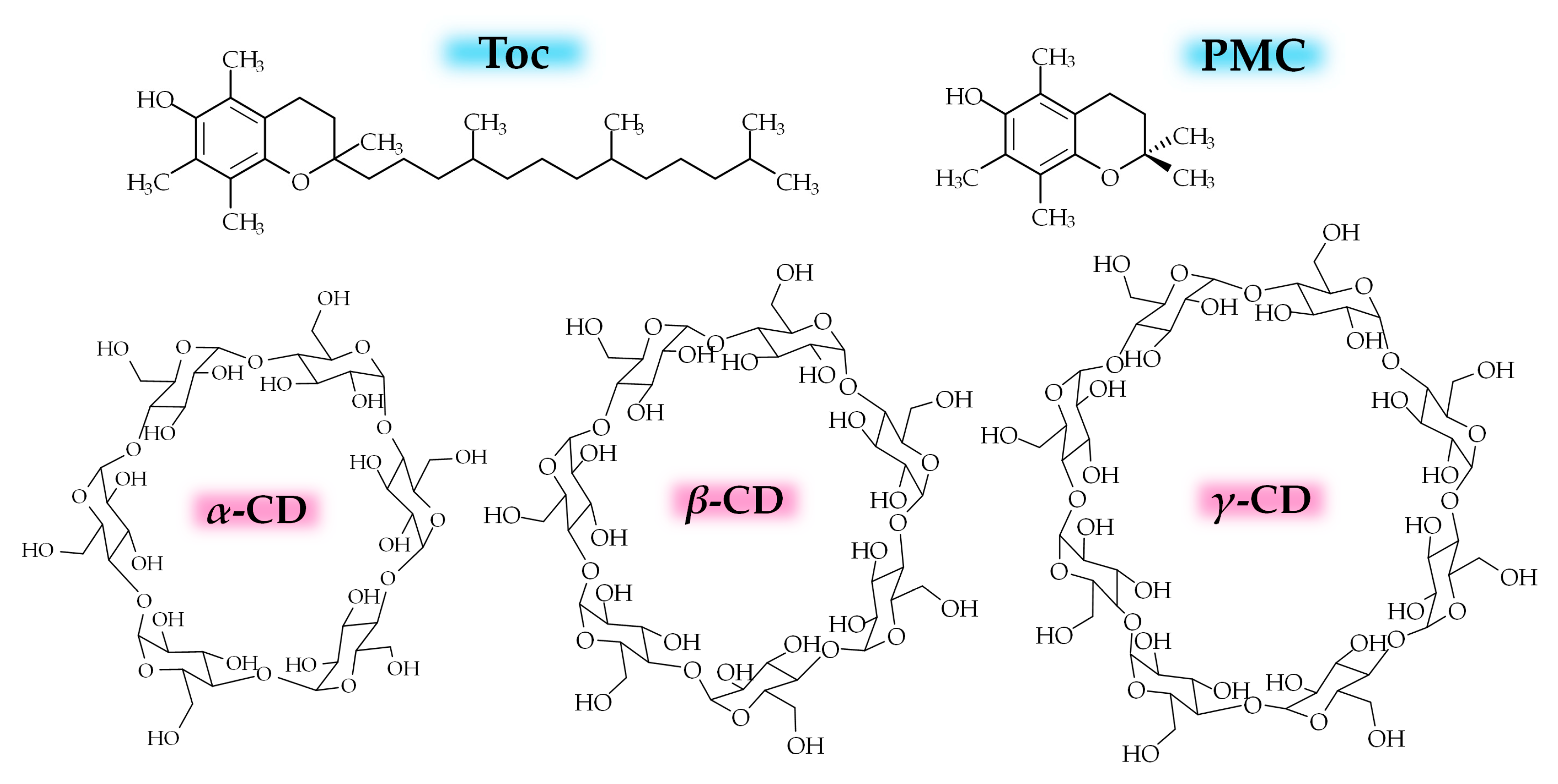
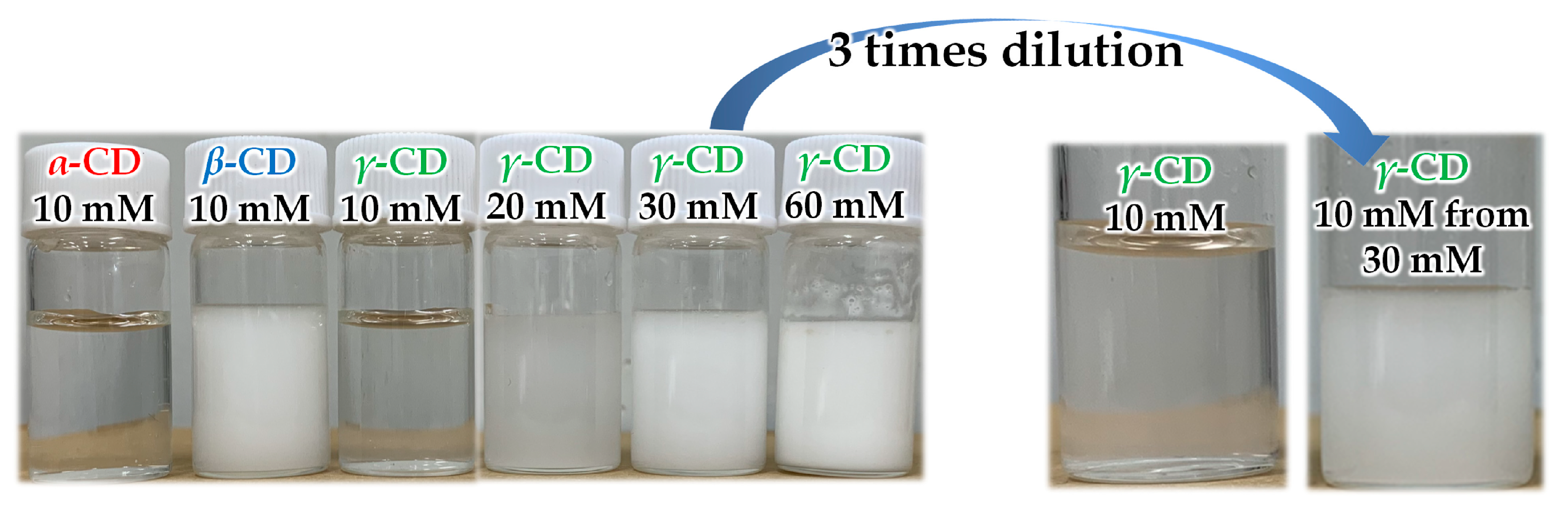
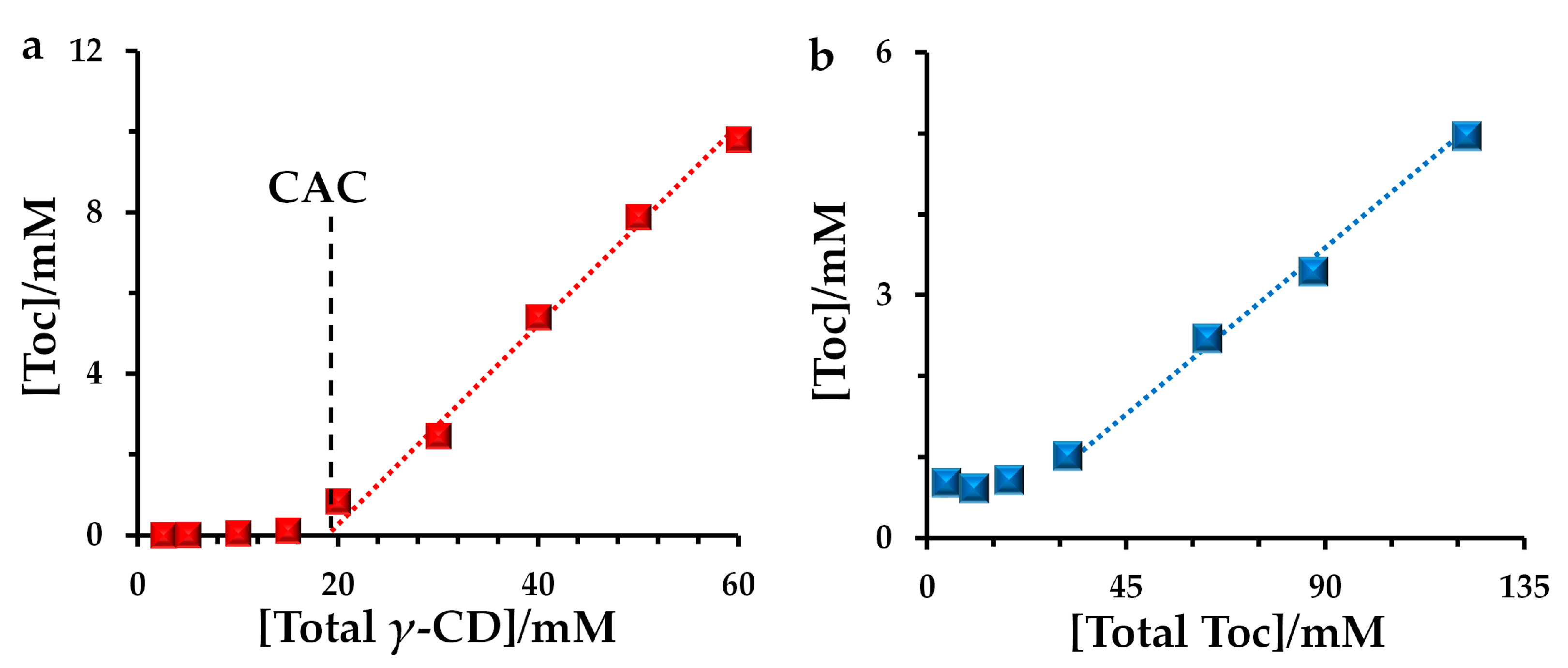
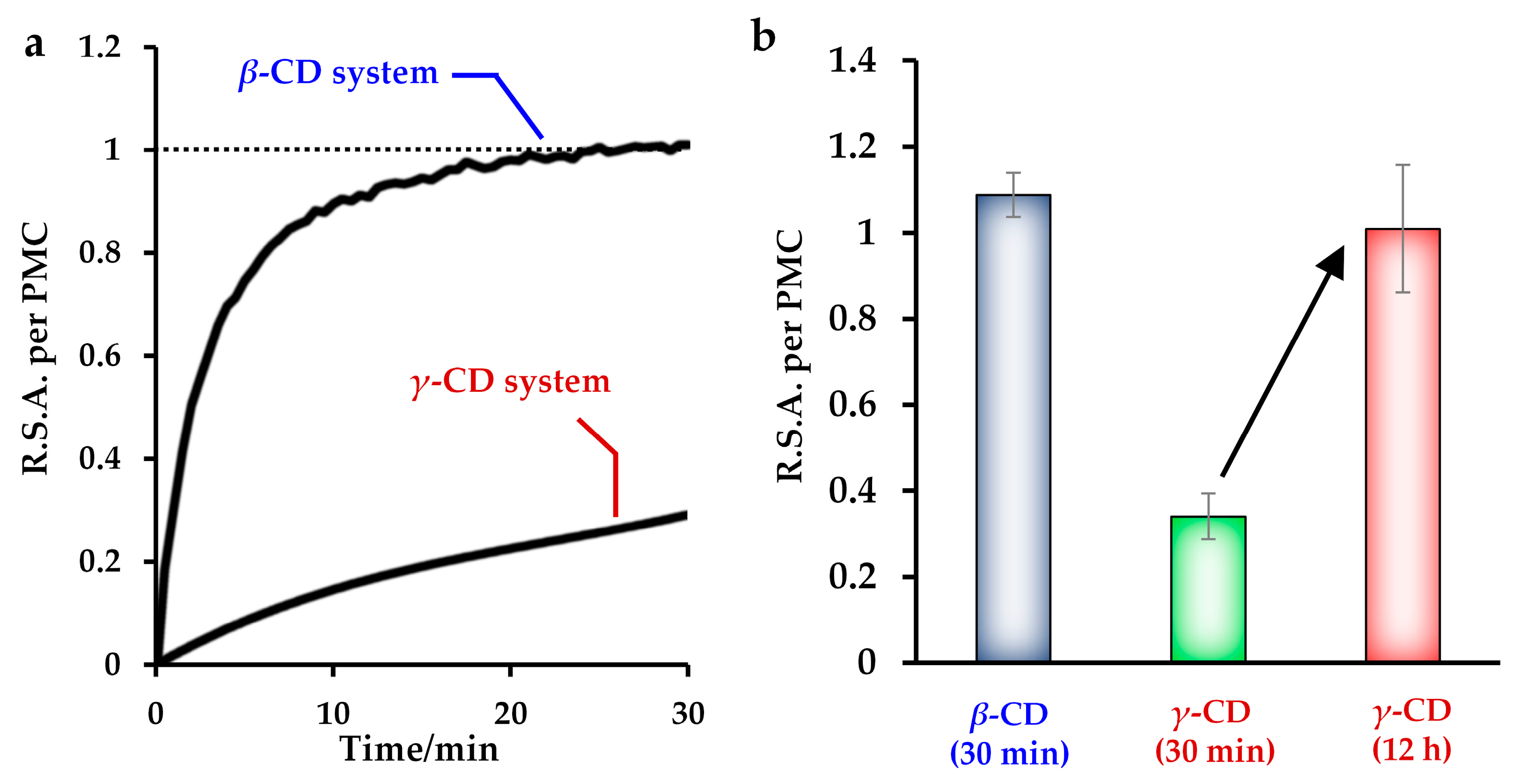
Development of Water-Insoluble Vehicle Comprising Natural Cyclodextrin—Vitamin E Complex
 , and
, and Abstract
Share and Cite
Ogawa, S.; Shinkawa, M.; Hirase, R.; Tsubomura, T.; Iuchi, K.; Hara, S. Development of Water-Insoluble Vehicle Comprising Natural Cyclodextrin—Vitamin E Complex. Antioxidants 2021, 10, 490. https://doi.org/10.3390/antiox10030490
Ogawa S, Shinkawa M, Hirase R, Tsubomura T, Iuchi K, Hara S. Development of Water-Insoluble Vehicle Comprising Natural Cyclodextrin—Vitamin E Complex. Antioxidants. 2021; 10(3):490. https://doi.org/10.3390/antiox10030490
Chicago/Turabian StyleOgawa, Shigesaburo, Mai Shinkawa, Ryuji Hirase, Taro Tsubomura, Katsuya Iuchi, and Setsuko Hara. 2021. "Development of Water-Insoluble Vehicle Comprising Natural Cyclodextrin—Vitamin E Complex" Antioxidants 10, no. 3: 490. https://doi.org/10.3390/antiox10030490
APA StyleOgawa, S., Shinkawa, M., Hirase, R., Tsubomura, T., Iuchi, K., & Hara, S. (2021). Development of Water-Insoluble Vehicle Comprising Natural Cyclodextrin—Vitamin E Complex. Antioxidants, 10(3), 490. https://doi.org/10.3390/antiox10030490