From Clipping to Coiling and Beyond: Mapping the Evolution and Future Directions of Intracranial Aneurysm Research


Highlights
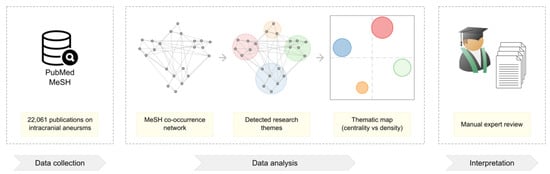
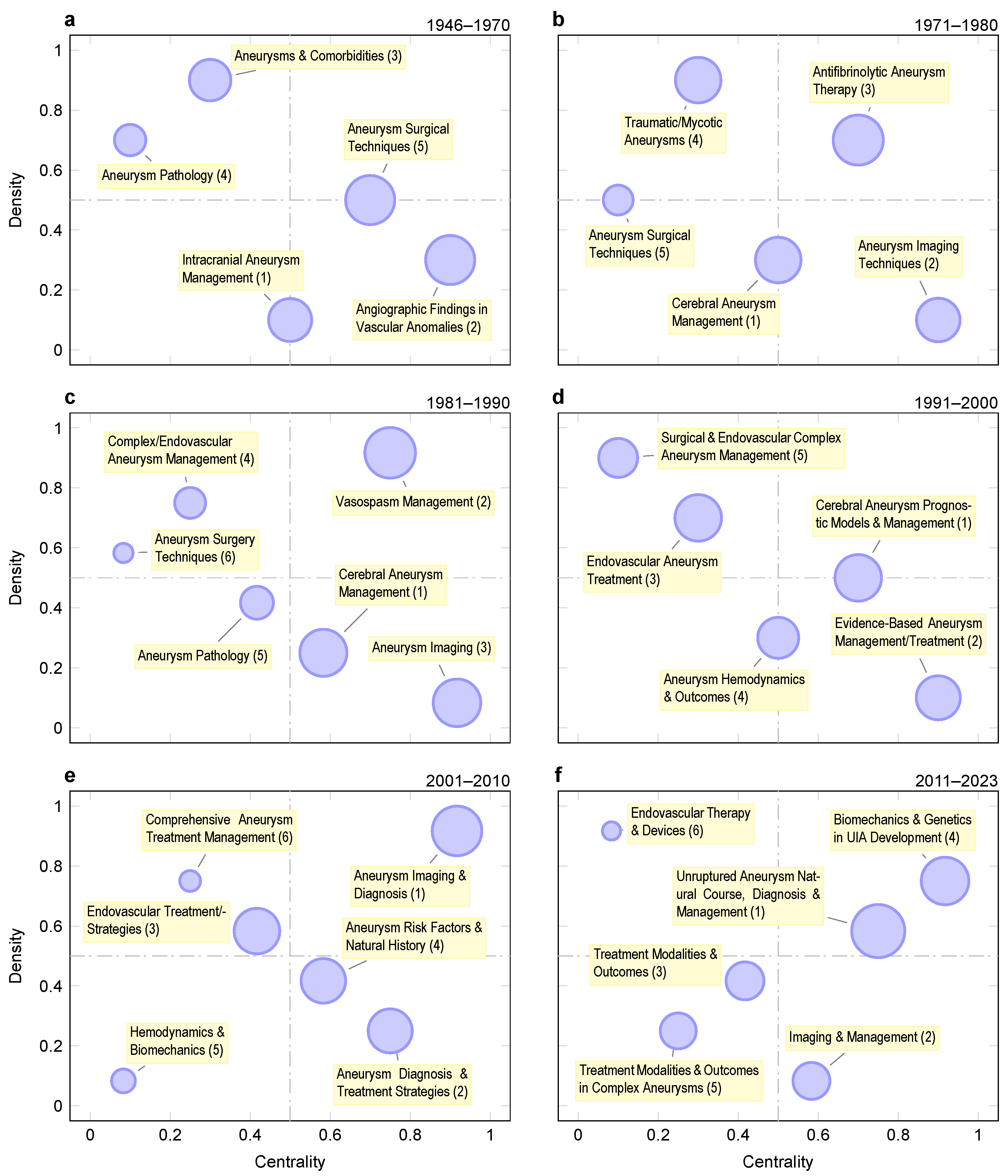
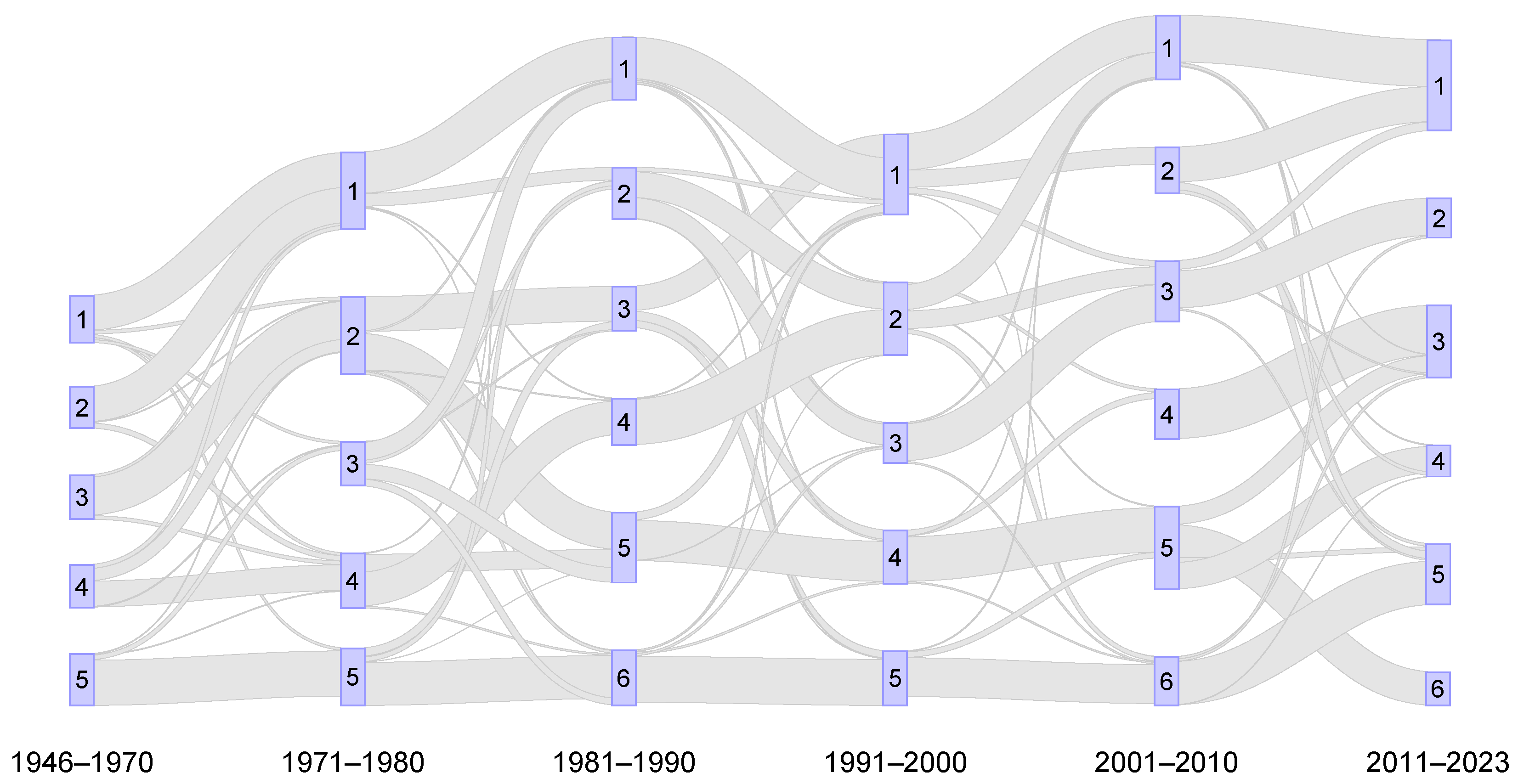
- Co-word analysis of 22,061 PubMed publications (1946–2023) identified four distinct phases of intracranial aneurysm research: open-surgery, transitional, endovascular, and multidisciplinary, each characterized by shifts in dominant MeSH-term clusters.
- The field’s thematic trajectory reflects a fundamental transition from reactive, technique-driven management of ruptured aneurysms to predictive, individualized risk stratification for unruptured lesions.
- The mapped conceptual structure highlights persistent research gaps, including limited representation of mechanistic and basic-science research and continued reliance on observational rather than randomized evidence.
Abstract
1. Introduction
2. Related Work
3. Materials and Methods
3.1. Data Collection
3.2. Data Analysis
- 1.
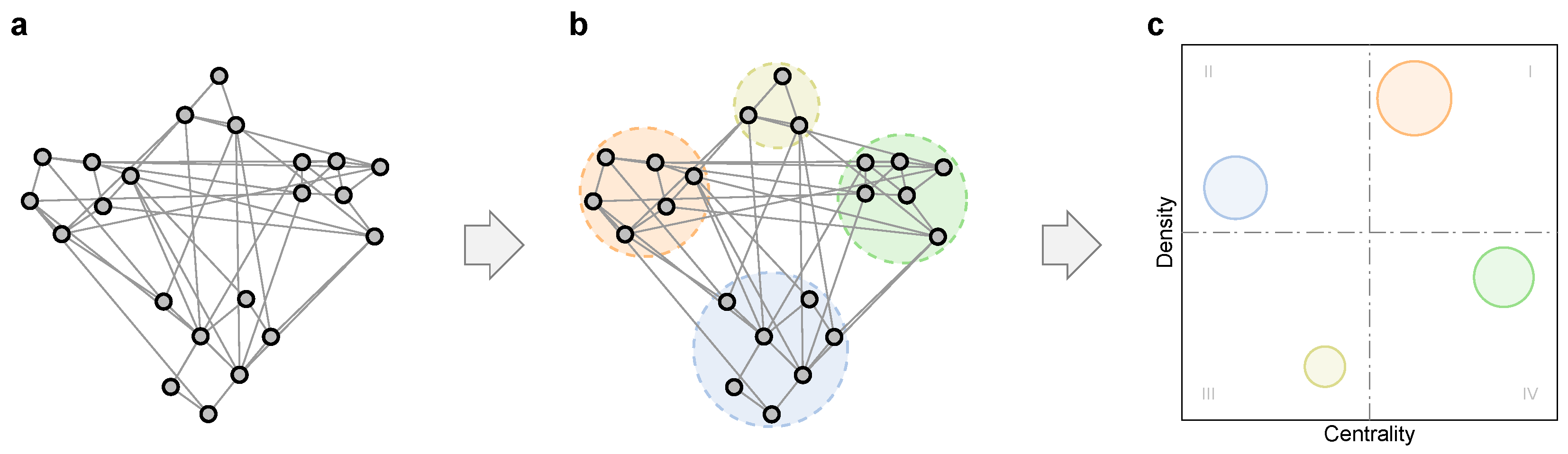
- Motor topics: Clusters in Quadrant I are characterized by high centrality and high density. These clusters are well-developed and have typically been studied over long periods by established research groups.
- 2.
- Niche topics: Clusters in Quadrant II have low centrality but high density. These clusters are highly homogeneous, with strong internal connections, but remain isolated from the rest of the field due to weak external links.
- 3.
- Emerging or declining topics: Clusters in Quadrant III have both low centrality and low density, representing either nascent (emerging) or fading research topics.
- 4.
- Basic topics: Clusters in Quadrant IV have high centrality and low density, encompassing transversal and general research topics. While important for the research community, these topics are not yet internally well-developed.
4. Results
4.1. Descriptive Bibliometric Analysis
4.2. Science Mapping Analysis
4.2.1. Period 1946–1970
4.2.2. Period 1971–1980
4.2.3. Period 1981–1990
4.2.4. Period 1991–2000
4.2.5. Period 2001–2010
4.2.6. Period 2011–2023
4.2.7. Thematic Evolution
5. Discussion
Author Contributions
Funding
Institutional Review Board Statement
Informed Consent Statement
Data Availability Statement
Conflicts of Interest
Abbreviations
| 4D-MRI | four-dimensional flow magnetic resonance imaging |
| AI | artificial intelligence |
| ASPECTS | Alberta Stroke Programme Early CT Score |
| BRAT | Barrow Ruptured Aneurysm Trial |
| DSA | digital subtraction angiography |
| ELAPSS | Earlier subarachnoid hemorrhage, Location of aneurysm, Age > 60 years, Population, |
| Size of aneurysm, Shape of aneurysm | |
| ESO | European Stroke Organisation |
| IA | intracranial aneurysm |
| ISAT | International Subarachnoid Aneurysm Trial |
| ISUIA | International Study of Unruptured Intracranial Aneurysms |
| MeSH | Medical Subject Headings |
| NLM | US National Library of Medicine |
| PED | pipeline embolization device |
| PHASES | Population, Hypertension, Age, Size of aneurysm, Earlier SAH, Site of aneurysm |
| SAH | subarachnoid hemorrhage |
| UCAS | Unruptured Cerebral Aneurysm Study |
| WSS | wall shear stress |
References
- Rinkel, G.J.; Djibuti, M.; Algra, A.; van Gijn, J. Prevalence and risk of rupture of intracranial aneurysms: A systematic review. Stroke 1998, 29, 251–256. [Google Scholar] [CrossRef] [Scilit] [PubMed]
- Frösen, J.; Piippo, A.; Paetau, A.; Kangasniemi, M.; Niemelä, M.; Hernesniemi, J.; Jääskeläinen, J. Remodeling of saccular cerebral artery aneurysm wall is associated with rupture: Histological analysis of 24 unruptured and 42 ruptured cases. Stroke 2004, 35, 2287–2293. [Google Scholar] [CrossRef] [Scilit] [PubMed]
- Shojima, M.; Oshima, M.; Takagi, K.; Torii, R.; Hayakawa, M.; Katada, K.; Morita, A.; Kirino, T. Magnitude and role of wall shear stress on cerebral aneurysm: Computational fluid dynamic study of 20 middle cerebral artery aneurysms. Stroke 2004, 35, 2500–2505. [Google Scholar] [CrossRef] [PubMed]
- Greving, J.P.; Wermer, M.J.H.; Brown, R.D.; Morita, A.; Juvela, S.; Yonekura, M.; Ishibashi, T.; Torner, J.C.; Nakayama, T.; Rinkel, G.J.E.; et al. Development of the PHASES score for prediction of risk of rupture of intracranial aneurysms: A pooled analysis of six prospective cohort studies. Lancet Neurol. 2014, 13, 59–66. [Google Scholar] [CrossRef] [Scilit] [PubMed]
- Neifert, S.N.; Chapman, E.K.; Martini, M.L.; Shuman, W.H.; Schupper, A.J.; Oermann, E.K.; Mocco, J.; Macdonald, R.L. Aneurysmal subarachnoid hemorrhage: The last decade. Transl. Stroke Res. 2021, 12, 428–446. [Google Scholar] [CrossRef] [Scilit] [PubMed]
- Hunt, W.E.; Hess, R.M. Surgical risk as related to time of intervention in the repair of intracranial aneurysms. J. Neurosurg. 1968, 28, 14–20. [Google Scholar] [CrossRef] [Scilit] [PubMed]
- Peschillo, S.; Caporlingua, A.; Caporlingua, F.; Guglielmi, G.; Delfini, R. Historical landmarks in the management of aneurysms and arteriovenous malformations of the central nervous system. World Neurosurg. 2016, 88, 661–671. [Google Scholar] [CrossRef] [Scilit] [PubMed]
- Sloffer, C.A.; Lanzino, G. Historical vignette. Dominique Anel: Father of the Hunterian ligation? J. Neurosurg. 2006, 104, 626–629. [Google Scholar] [CrossRef] [Scilit] [PubMed]
- Dandy, W.E. Intracranial aneurysm of the internal carotid artery: Cured by operation. Ann. Surg. 1938, 107, 654–659. [Google Scholar] [CrossRef] [Scilit] [PubMed]
- Yasargil, M.G.; Kasdaglis, K.; Jain, K.K.; Weber, H.P. Anatomical observations of the subarachnoid cisterns of the brain during surgery. J. Neurosurg. 1976, 44, 298–302. [Google Scholar] [CrossRef] [Scilit] [PubMed]
- Yaşargil, M.G. A legacy of microneurosurgery: Memoirs, lessons, and axioms. Neurosurgery 1999, 45, 1025–1092. [Google Scholar] [CrossRef] [Scilit] [PubMed]
- Kiraz, M.; Demir, E.; Özdemir, Ö. An international bibliometric study of scientific articles on intracranial aneurysms. Neuroradiol. J. 2021, 34, 482–493. [Google Scholar] [CrossRef] [Scilit] [PubMed]
- Donthu, N.; Kumar, S.; Mukherjee, D.; Pandey, N.; Lim, W.M. How to conduct a bibliometric analysis: An overview and guidelines. J. Bus. Res. 2021, 133, 285–296. [Google Scholar] [CrossRef] [Scilit]
- Callon, M.; Courtial, J.P.; Laville, F. Co-word analysis as a tool for describing the network of interactions between basic and technological research: The case of polymer chemistry. Scientometrics 1991, 22, 155–205. [Google Scholar] [CrossRef] [Scilit]
- Lu, V.M.; Chen, S.H.; Young, C.C.; Starke, R.M. Nature, content and shifts over time of the most impactful unruptured intracranial aneurysms articles: A bibliometric analysis. J. Neurointerv. Surg. 2021, 13, 177–181. [Google Scholar] [CrossRef] [Scilit] [PubMed]
- Zhang, Q.; Weng, L.; Li, J. The evolution of intracranial aneurysm research from 2012 to 2021: Global productivity and publication trends. Front. Neurol. 2022, 13, 953285. [Google Scholar] [CrossRef] [Scilit] [PubMed]
- Qin, Z.; Liu, Z.; Wang, Y.; Feng, Y.; Li, S. Knowledge mapping of intracranial aneurysm clipping: A bibliometric and visualized study (2001–2021). World Neurosurg. 2023, 173, e808–e820. [Google Scholar] [CrossRef] [Scilit] [PubMed]
- Fu, A.Y.; Kumarapuram, S.; Sreenivasan, S.; Roychowdhury, S.; Gupta, G. Trends in global research for treating intracranial aneurysms: A bibliometric analysis. World Neurosurg. 2023, 177, 143–151.e4. [Google Scholar] [CrossRef] [Scilit] [PubMed]
- Chen, J.; Liu, J.; Liu, X.; Zeng, C.; Chen, Z.; Li, S.; Zhang, Q. Animal model contributes to the development of intracranial aneurysm: A bibliometric analysis. Front. Vet. Sci. 2022, 9, 1027453. [Google Scholar] [CrossRef] [Scilit] [PubMed]
- Lei, C.; De Stefano, F.A.; Heskett, C.; Fry, L.; Brake, A.; Le, K.; Peterson, J.; Ebersole, K. A review of the top 100 most influential articles on basilar artery aneurysms. Neurosurg. Rev. 2023, 46, 108. [Google Scholar] [CrossRef] [Scilit] [PubMed]
- Chen, G.; Cao, Y.; Du, X.; Cui, J.; Zeng, X.; Yang, H.; Ren, Z.; Xu, K. The clinical research landscape of intracranial nicardipine for aneurysmal subarachnoid hemorrhage: Insights from bibliometric analysis. Drug Des. Devel. Ther. 2025, 19, 1129–1146. [Google Scholar] [CrossRef] [Scilit] [PubMed]
- Chen, B.; Huang, S.; Zhang, L.; Yang, L.; Liu, Y.; Li, C. Global tendencies and frontier topics in hemodynamics research of intracranial aneurysms: A bibliometric analysis from 1999 to 2022. Front. Physiol. 2023, 14, 1157787. [Google Scholar] [CrossRef] [Scilit] [PubMed]
- Zhang, F.; Turhon, M.; Huang, J.; Li, M.; Liu, J.; Zhang, Y.; Zhang, Y. Global trend in research of intracranial aneurysm management with artificial intelligence technology: A bibliometric analysis. Quant. Imaging Med. Surg. 2024, 14, 1022–1038. [Google Scholar] [CrossRef] [Scilit] [PubMed]
- Aria, M.; Cuccurullo, C. bibliometrix: An R-tool for comprehensive science mapping analysis. J. Inf. 2017, 11, 959–975. [Google Scholar] [CrossRef] [Scilit]
- Kottwitz, S. LATEX Graphics with TikZ; Packt Publishing: Birmingham, UK, 2023. [Google Scholar]
- Blondel, V.D.; Guillaume, J.L.; Lambiotte, R.; Lefebvre, E. Fast unfolding of communities in large networks. J. Stat. Mech. 2008, 2008, P10008. [Google Scholar] [CrossRef] [Scilit]
- Wiebers, D.O.; Whisnant, J.P.; Huston, J.; Meissner, I.; Brown, R.D.; Piepgras, D.G.; Forbes, G.S.; Thielen, K.; Nichols, D.; O’Fallon, W.M.; et al. Unruptured intracranial aneurysms: Natural history, clinical outcome, and risks of surgical and endovascular treatment. Lancet 2003, 362, 103–110. [Google Scholar] [CrossRef] [Scilit] [PubMed]
- Molyneux, A.; Kerr, R.; Stratton, I.; Sandercock, P.; Clarke, M.; Shrimpton, J.; Holman, R.; International Subarachnoid Aneurysm Trial (ISAT) Collaborative Group. International Subarachnoid Aneurysm Trial (ISAT) of neurosurgical clipping versus endovascular coiling in 2143 patients with ruptured intracranial aneurysms: A randomised trial. Lancet 2002, 360, 1267–1274. [Google Scholar] [CrossRef] [Scilit] [PubMed]
- Barber, P.A.; Demchuk, A.M.; Zhang, J.; Buchan, A.M. Validity and reliability of a quantitative computed tomography score in predicting outcome of hyperacute stroke before thrombolytic therapy. ASPECTS Study Group. Alberta Stroke Programme Early CT Score. Lancet 2000, 355, 1670–1674. [Google Scholar] [CrossRef] [Scilit] [PubMed]
- Kassell, N.F.; Torner, J.C.; Haley, E.C.; Jane, J.A.; Adams, H.P.; Kongable, G.L. The International Cooperative Study on the Timing of Aneurysm Surgery. Part 1: Overall management results. J. Neurosurg. 1990, 73, 18–36. [Google Scholar] [CrossRef] [Scilit] [PubMed]
- International Study of Unruptured Intracranial Aneurysms Investigators. Unruptured intracranial aneurysms–risk of rupture and risks of surgical intervention. N. Engl. J. Med. 1998, 339, 1725–1733. [CrossRef] [Scilit] [PubMed]
- van Gijn, J.; Kerr, R.S.; Rinkel, G.J.E. Subarachnoid haemorrhage. Lancet 2007, 369, 306–318. [Google Scholar] [CrossRef] [Scilit] [PubMed]
- Vlak, M.H.; Algra, A.; Brandenburg, R.; Rinkel, G.J. Prevalence of unruptured intracranial aneurysms, with emphasis on sex, age, comorbidity, country, and time period: A systematic review and meta-analysis. Lancet Neurol. 2011, 10, 626–636. [Google Scholar] [CrossRef] [Scilit] [PubMed]
- Raymond, J.; Guilbert, F.; Weill, A.; Georganos, S.A.; Juravsky, L.; Lambert, A.; Lamoureux, J.; Chagnon, M.; Roy, D. Long-term angiographic recurrences after selective endovascular treatment of aneurysms with detachable coils. Stroke 2003, 34, 1398–1403. [Google Scholar] [CrossRef] [Scilit] [PubMed]
- Becske, T.; Kallmes, D.F.; Saatci, I.; McDougall, C.G.; Szikora, I.; Lanzino, G.; Moran, C.J.; Woo, H.H.; Lopes, D.K.; Berez, A.L.; et al. Pipeline for uncoilable or failed aneurysms: Results from a multicenter clinical trial. Radiology 2013, 267, 858–868. [Google Scholar] [CrossRef] [Scilit] [PubMed]
- Tindall, G.T.; Goree, J.A.; Lee, J.F.; Odom, G.L. Effect of common carotid ligation on size of internal carotid aneurysms and distal intracarotid and retinal artery pressures. J. Neurosurg. 1966, 25, 503–511. [Google Scholar] [CrossRef] [Scilit] [PubMed]
- Botterell, E.H.; Lougheed, W.M.; Scott, J.W.; Vandewater, S.L. Hypothermia, and interruption of carotid, or carotid and vertebral circulation, in the surgical management of intracranial aneurysms. J. Neurosurg. 1956, 13, 1–42. [Google Scholar] [CrossRef] [Scilit] [PubMed]
- White, J.C.; Ballantine, H.T. Intrasellar aneurysms simulating hypophyseal tumours. J. Neurosurg. 1961, 18, 34–50. [Google Scholar] [CrossRef] [Scilit] [PubMed]
- Weir, B.; Grace, M.; Hansen, J.; Rothberg, C. Time course of vasospasm in man. J. Neurosurg. 1978, 48, 173–178. [Google Scholar] [CrossRef] [Scilit] [PubMed]
- Fisher, C.M.; Kistler, J.P.; Davis, J.M. Relation of cerebral vasospasm to subarachnoid hemorrhage visualized by computerized tomographic scanning. Neurosurgery 1980, 6, 1–9. [Google Scholar] [CrossRef] [Scilit] [PubMed]
- Kosnik, E.J.; Hunt, W.E. Postoperative hypertension in the management of patients with intracranial arterial aneurysms. J. Neurosurg. 1976, 45, 148–154. [Google Scholar] [CrossRef] [Scilit] [PubMed]
- Ferguson, G.G. Physical factors in the initiation, growth, and rupture of human intracranial saccular aneurysms. J. Neurosurg. 1972, 37, 666–677. [Google Scholar] [CrossRef] [Scilit] [PubMed]
- Winn, H.R.; Richardson, A.E.; Jane, J.A. The long-term prognosis in untreated cerebral aneurysms: I. The incidence of late hemorrhage in cerebral aneurysm: A 10-year evaluation of 364 patients. Ann. Neurol. 1977, 1, 358–370. [Google Scholar] [CrossRef] [Scilit] [PubMed]
- Wiebers, D.O.; Whisnant, J.P.; O’Fallon, W.M. The natural history of unruptured intracranial aneurysms. N. Engl. J. Med. 1981, 304, 696–698. [Google Scholar] [CrossRef] [Scilit] [PubMed]
- Grote, E.; Hassler, W. The critical first minutes after subarachnoid hemorrhage. Neurosurgery 1988, 22, 654–661. [Google Scholar] [CrossRef] [Scilit] [PubMed]
- Wijdicks, E.F.; Vermeulen, M.; ten Haaf, J.A.; Hijdra, A.; Bakker, W.H.; van Gijn, J. Volume depletion and natriuresis in patients with a ruptured intracranial aneurysm. Ann. Neurol. 1985, 18, 211–216. [Google Scholar] [CrossRef] [Scilit] [PubMed]
- Voldby, B.; Enevoldsen, E.M.; Jensen, F.T. Cerebrovascular reactivity in patients with ruptured intracranial aneurysms. J. Neurosurg. 1985, 62, 59–67. [Google Scholar] [CrossRef] [Scilit] [PubMed]
- Kassell, N.F.; Peerless, S.J.; Durward, Q.J.; Beck, D.W.; Drake, C.G.; Adams, H.P. Treatment of ischemic deficits from vasospasm with intravascular volume expansion and induced arterial hypertension. Neurosurgery 1982, 11, 337–343. [Google Scholar] [CrossRef] [Scilit] [PubMed]
- Zubkov, Y.N.; Nikiforov, B.M.; Shustin, V.A. Balloon catheter technique for dilatation of constricted cerebral arteries after aneurysmal SAH. Acta Neurochir. 1984, 70, 65–79. [Google Scholar] [CrossRef] [Scilit] [PubMed]
- Petruk, K.C.; West, M.; Mohr, G.; Weir, B.K.; Benoit, B.G.; Gentili, F.; Disney, L.B.; Khan, M.I.; Grace, M.; Holness, R.O. Nimodipine treatment in poor-grade aneurysm patients. Results of a multicenter double-blind placebo-controlled trial. J. Neurosurg. 1988, 68, 505–517. [Google Scholar] [CrossRef] [Scilit] [PubMed]
- Kawase, T.; Toya, S.; Shiobara, R.; Mine, T. Transpetrosal approach for aneurysms of the lower basilar artery. J. Neurosurg. 1985, 63, 857–861. [Google Scholar] [CrossRef] [Scilit] [PubMed]
- Dolenc, V.V. A combined epi- and subdural direct approach to carotid-ophthalmic artery aneurysms. J. Neurosurg. 1985, 62, 667–672. [Google Scholar] [CrossRef] [Scilit] [PubMed]
- Juvela, S.; Porras, M.; Poussa, K. Natural history of unruptured intracranial aneurysms: Probability of and risk factors for aneurysm rupture. J. Neurosurg. 2000, 93, 379–387. [Google Scholar] [CrossRef] [Scilit] [PubMed]
- Ujiie, H.; Tachibana, H.; Hiramatsu, O.; Hazel, A.L.; Matsumoto, T.; Ogasawara, Y.; Nakajima, H.; Hori, T.; Takakura, K.; Kajiya, F. Effects of size and shape (aspect ratio) on the hemodynamics of saccular aneurysms: A possible index for surgical treatment of intracranial aneurysms. Neurosurgery 1999, 45, 119–129. [Google Scholar] [CrossRef] [Scilit] [PubMed]
- Kataoka, K.; Taneda, M.; Asai, T.; Kinoshita, A.; Ito, M.; Kuroda, R. Structural fragility and inflammatory response of ruptured cerebral aneurysms. A comparative study between ruptured and unruptured cerebral aneurysms. Stroke 1999, 30, 1396–1401. [Google Scholar] [CrossRef] [Scilit] [PubMed]
- Berendes, E.; Walter, M.; Cullen, P.; Prien, T.; Van Aken, H.; Horsthemke, J.; Schulte, M.; von Wild, K.; Scherer, R. Secretion of brain natriuretic peptide in patients with aneurysmal subarachnoid haemorrhage. Lancet 1997, 349, 245–249. [Google Scholar] [CrossRef] [Scilit] [PubMed]
- Guglielmi, G.; Viñuela, F.; Sepetka, I.; Macellari, V. Electrothrombosis of saccular aneurysms via endovascular approach. Part 1: Electrochemical basis, technique, and experimental results. J. Neurosurg. 1991, 75, 1–7. [Google Scholar] [CrossRef] [Scilit] [PubMed]
- Guglielmi, G.; Viñuela, F.; Dion, J.; Duckwiler, G. Electrothrombosis of saccular aneurysms via endovascular approach. Part 2: Preliminary clinical experience. J. Neurosurg. 1991, 75, 8–14. [Google Scholar] [CrossRef] [Scilit] [PubMed]
- Lieber, B.B.; Stancampiano, A.P.; Wakhloo, A.K. Alteration of hemodynamics in aneurysm models by stenting: Influence of stent porosity. Ann. Biomed. Eng. 1997, 25, 460–469. [Google Scholar] [CrossRef] [Scilit] [PubMed]
- Sonobe, M.; Yamazaki, T.; Yonekura, M.; Kikuchi, H. Small unruptured intracranial aneurysm verification study: SUAVe study, Japan. Stroke 2010, 41, 1969–1977. [Google Scholar] [CrossRef] [Scilit] [PubMed]
- Lylyk, P.; Miranda, C.; Ceratto, R.; Ferrario, A.; Scrivano, E.; Luna, H.R.; Berez, A.L.; Tran, Q.; Nelson, P.K.; Fiorella, D. Curative endovascular reconstruction of cerebral aneurysms with the pipeline embolization device: The Buenos Aires experience. Neurosurgery 2009, 64, 632–642. [Google Scholar] [CrossRef] [Scilit] [PubMed]
- Szikora, I.; Berentei, Z.; Kulcsar, Z.; Marosfoi, M.; Vajda, Z.S.; Lee, W.; Berez, A.; Nelson, P.K. Treatment of intracranial aneurysms by functional reconstruction of the parent artery: The Budapest experience with the pipeline embolization device. AJNR Am. J. Neuroradiol. 2010, 31, 1139–1147. [Google Scholar] [CrossRef] [Scilit] [PubMed]
- Piotin, M.; Blanc, R.; Spelle, L.; Mounayer, C.; Piantino, R.; Schmidt, P.J.; Moret, J. Stent-assisted coiling of intracranial aneurysms: Clinical and angiographic results in 216 consecutive aneurysms. Stroke 2010, 41, 110–115. [Google Scholar] [CrossRef] [Scilit] [PubMed]
- Wermer, M.J.H.; van der Schaaf, I.C.; Algra, A.; Rinkel, G.J.E. Risk of rupture of unruptured intracranial aneurysms in relation to patient and aneurysm characteristics: An updated meta-analysis. Stroke 2007, 38, 1404–1410. [Google Scholar] [CrossRef] [Scilit] [PubMed]
- Cebral, J.R.; Castro, M.A.; Burgess, J.E.; Pergolizzi, R.S.; Sheridan, M.J.; Putman, C.M. Characterization of cerebral aneurysms for assessing risk of rupture by using patient-specific computational hemodynamics models. AJNR Am. J. Neuroradiol. 2005, 26, 2550–2559. [Google Scholar] [PubMed]
- Raabe, A.; Beck, J.; Gerlach, R.; Zimmermann, M.; Seifert, V. Near-infrared indocyanine green video angiography: A new method for intraoperative assessment of vascular flow. Neurosurgery 2003, 52, 132–139. [Google Scholar] [CrossRef] [Scilit] [PubMed]
- Cebral, J.R.; Castro, M.A.; Appanaboyina, S.; Putman, C.M.; Millan, D.; Frangi, A.F. Efficient pipeline for image-based patient-specific analysis of cerebral aneurysm hemodynamics: Technique and sensitivity. IEEE Trans. Med. Imaging 2005, 24, 457–467. [Google Scholar] [CrossRef] [Scilit] [PubMed]
- Helgadottir, A.; Thorleifsson, G.; Magnusson, K.P.; Grétarsdottir, S.; Steinthorsdottir, V.; Manolescu, A.; Jones, G.T.; Rinkel, G.J.E.; Blankensteijn, J.D.; Ronkainen, A.; et al. The same sequence variant on 9p21 associates with myocardial infarction, abdominal aortic aneurysm and intracranial aneurysm. Nat. Genet. 2008, 40, 217–224. [Google Scholar] [CrossRef] [Scilit] [PubMed]
- Backes, D.; Rinkel, G.J.E.; Greving, J.P.; Velthuis, B.K.; Murayama, Y.; Takao, H.; Ishibashi, T.; Igase, M.; terBrugge, K.G.; Agid, R.; et al. ELAPSS score for prediction of risk of growth of unruptured intracranial aneurysms. Neurology 2017, 88, 1600–1606. [Google Scholar] [CrossRef] [Scilit] [PubMed]
- Morita, A.; Kirino, T.; Hashi, K.; Aoki, N.; Fukuhara, S.; Hashimoto, N.; Nakayama, T.; Sakai, M.; Teramoto, A.; Tominari, S.; et al. The natural course of unruptured cerebral aneurysms in a Japanese cohort. N. Engl. J. Med. 2012, 366, 2474–2482. [Google Scholar] [CrossRef] [Scilit] [PubMed]
- Xiang, J.; Natarajan, S.K.; Tremmel, M.; Ma, D.; Mocco, J.; Hopkins, L.N.; Siddiqui, A.H.; Levy, E.I.; Meng, H. Hemodynamic-morphologic discriminants for intracranial aneurysm rupture. Stroke 2011, 42, 144–152. [Google Scholar] [CrossRef] [Scilit] [PubMed]
- Meng, H.; Tutino, V.M.; Xiang, J.; Siddiqui, A. High WSS or low WSS? Complex interactions of hemodynamics with intracranial aneurysm initiation, growth, and rupture: Toward a unifying hypothesis. AJNR Am. J. Neuroradiol. 2014, 35, 1254–1262. [Google Scholar] [CrossRef] [Scilit] [PubMed]
- Chalouhi, N.; Ali, M.S.; Jabbour, P.M.; Tjoumakaris, S.I.; Gonzalez, L.F.; Rosenwasser, R.H.; Koch, W.J.; Dumont, A.S. Biology of intracranial aneurysms: Role of inflammation. J. Cereb. Blood Flow Metab. 2012, 32, 1659–1676. [Google Scholar] [CrossRef] [Scilit] [PubMed]
- Steiner, T.; Juvela, S.; Unterberg, A.; Jung, C.; Forsting, M.; Rinkel, G.; European Stroke Organization. European Stroke Organization guidelines for the management of intracranial aneurysms and subarachnoid haemorrhage. Cerebrovasc. Dis. 2013, 35, 93–112. [Google Scholar] [CrossRef] [Scilit] [PubMed]
- Molyneux, A.J.; Birks, J.; Clarke, A.; Sneade, M.; Kerr, R.S.C. The durability of endovascular coiling versus neurosurgical clipping of ruptured cerebral aneurysms: 18 year follow-up of the UK cohort of the International Subarachnoid Aneurysm Trial (ISAT). Lancet 2015, 385, 691–697. [Google Scholar] [CrossRef] [Scilit] [PubMed]
- Spetzler, R.F.; McDougall, C.G.; Zabramski, J.M.; Albuquerque, F.C.; Hills, N.K.; Russin, J.J.; Partovi, S.; Nakaji, P.; Wallace, R.C. The Barrow Ruptured Aneurysm Trial: 6-year results. J. Neurosurg. 2015, 123, 609–617. [Google Scholar] [CrossRef] [Scilit] [PubMed]
- McDougall, C.G.; Spetzler, R.F.; Zabramski, J.M.; Partovi, S.; Hills, N.K.; Nakaji, P.; Albuquerque, F.C. The Barrow Ruptured Aneurysm Trial. J. Neurosurg. 2012, 116, 135–144. [Google Scholar] [CrossRef] [Scilit] [PubMed]
- Hong, Y.; Wang, Y.J.; Deng, Z.; Wu, Q.; Zhang, J.M. Stent-assisted coiling versus coiling in treatment of intracranial aneurysm: A systematic review and meta-analysis. PLoS ONE 2014, 9, e82311. [Google Scholar] [CrossRef] [Scilit] [PubMed]
- Nelson, P.K.; Lylyk, P.; Szikora, I.; Wetzel, S.G.; Wanke, I.; Fiorella, D. The pipeline embolization device for the intracranial treatment of aneurysms trial. AJNR Am. J. Neuroradiol. 2011, 32, 34–40. [Google Scholar] [CrossRef] [Scilit] [PubMed]
- Kallmes, D.F.; Hanel, R.; Lopes, D.; Boccardi, E.; Bonafé, A.; Cekirge, S.; Fiorella, D.; Jabbour, P.; Levy, E.; McDougall, C.; et al. International retrospective study of the pipeline embolization device: A multicenter aneurysm treatment study. AJNR Am. J. Neuroradiol. 2015, 36, 108–115. [Google Scholar] [CrossRef] [Scilit] [PubMed]
- Cebral, J.R.; Mut, F.; Raschi, M.; Scrivano, E.; Ceratto, R.; Lylyk, P.; Putman, C.M. Aneurysm rupture following treatment with flow-diverting stents: Computational hemodynamics analysis of treatment. AJNR Am. J. Neuroradiol. 2011, 32, 27–33. [Google Scholar] [CrossRef] [Scilit] [PubMed]
- Brinjikji, W.; Murad, M.H.; Lanzino, G.; Cloft, H.J.; Kallmes, D.F. Endovascular treatment of intracranial aneurysms with flow diverters: A meta-analysis. Stroke 2013, 44, 442–447. [Google Scholar] [CrossRef] [Scilit] [PubMed]
- Chalouhi, N.; Jabbour, P.; Singhal, S.; Drueding, R.; Starke, R.M.; Dalyai, R.T.; Tjoumakaris, S.; Gonzalez, L.F.; Dumont, A.S.; Rosenwasser, R.; et al. Stent-assisted coiling of intracranial aneurysms: Predictors of complications, recanalization, and outcome in 508 cases. Stroke 2013, 44, 1348–1353. [Google Scholar] [CrossRef] [Scilit] [PubMed]
- Maingard, J.; Phan, K.; Ren, Y.; Kok, H.K.; Thijs, V.; Hirsch, J.A.; Lee, M.J.; Chandra, R.V.; Brooks, D.M.; Asadi, H. The 100 most cited articles in the endovascular management of intracranial aneurysms. J. Neurointerv. Surg. 2018, 10, 859–868. [Google Scholar] [CrossRef] [Scilit] [PubMed]
- Zheng, J.; Zhou, R.; Meng, B.; Li, F.; Liu, H.; Wu, X. Knowledge framework and emerging trends in intracranial aneurysm magnetic resonance angiography: A scientometric analysis from 2004 to 2020. Quant. Imaging Med. Surg. 2021, 11, 1854–1869. [Google Scholar] [CrossRef] [Scilit] [PubMed]
- da Costa Borsatto, G.J.; Bertelli Ramos, M.; Mota Telles, J.P.; Nunes Rabelo, N.; Jacobsen Teixeira, M.; Gadelha Figueiredo, E. Research trends within aneurysmal subarachnoid hemorrhage from 2017 to 2021: A bibliometric study. Neurosurg. Rev. 2023, 46, 165. [Google Scholar] [CrossRef] [Scilit] [PubMed]
- Wang, H.; Fu, T.; Du, Y.; Gao, W.; Huang, K.; Liu, Z.; Chandak, P.; Liu, S.; Van Katwyk, P.; Deac, A.; et al. Scientific discovery in the age of artificial intelligence. Nature 2023, 620, 47–60. [Google Scholar] [CrossRef] [Scilit] [PubMed]



| Title | TC | TC/Y | NTC |
|---|---|---|---|
| Unruptured intracranial aneurysms: Natural history, clinical outcome, and risks of surgical and endovascular treatment [27] | 2635 | 119.8 | 54.3 |
| International Subarachnoid Aneurysm Trial (ISAT) of neurosurgical clipping versus endovascular coiling in 2143 patients with ruptured intracranial aneurysms: A randomised trial [28] | 2605 | 113.3 | 52.2 |
| Surgical risk as related to time of intervention in the repair of intracranial aneurysms [6] | 2584 | 45.3 | 35.1 |
| Validity and reliability of a quantitative computed tomography score in predicting outcome of hyperacute stroke before thrombolytic therapy [29] | 1830 | 73.2 | 37.1 |
| The International Cooperative Study on the Timing of Aneurysm Surgery. Part 1: Overall management results [30] | 1502 | 42.9 | 26.5 |
| Unruptured intracranial aneurysms–risk of rupture and risks of surgical intervention [31] | 1286 | 47.6 | 28.1 |
| Subarachnoid haemorrhage [32] | 1242 | 69.0 | 32.9 |
| Prevalence of unruptured intracranial aneurysms, with emphasis on sex, age, comorbidity, country, and time period: A systematic review and meta-analysis [33] | 1199 | 85.6 | 36.2 |
| Long-term angiographic recurrences after selective endovascular treatment of aneurysms with detachable coils [34] | 1135 | 51.6 | 23.4 |
| Prevalence and risk of rupture of intracranial aneurysms: A systematic review [1] | 1073 | 39.7 | 23.5 |
| Period | Clust | n | Docs | Cent | Dens | Cluster Label |
|---|---|---|---|---|---|---|
| 1946–1970 | 1 | 39 | 174 | 2.84 | 38.08 | Intracranial Aneurysm Management |
| 2 | 51 | 48 | 6.75 | 48.41 | Angiographic Findings in Vascular Anomalies | |
| 3 | 36 | 62 | 2.37 | 71.01 | Aneurysms & Comorbidities | |
| 4 | 21 | 100 | 0.91 | 60.16 | Aneurysm Pathology | |
| 5 | 51 | 197 | 4.90 | 52.67 | Aneurysm Surgical Techniques | |
| 1971–1980 | 1 | 44 | 229 | 2.17 | 18.75 | Cerebral Aneurysm Management |
| 2 | 40 | 254 | 2.51 | 15.79 | Aneurysm Imaging Techniques | |
| 3 | 53 | 176 | 2.23 | 21.27 | Antifibrinolytic Aneurysm Therapy | |
| 4 | 44 | 259 | 1.83 | 24.95 | Traumatic/Mycotic Aneurysms | |
| 5 | 19 | 81 | 0.83 | 20.74 | Aneurysm Surgical Techniques | |
| 1981–1990 | 1 | 47 | 47 | 1.47 | 11.09 | Cerebral Aneurysm Management |
| 2 | 54 | 359 | 1.61 | 13.77 | Vasospasm Management | |
| 3 | 48 | 208 | 1.92 | 10.96 | Aneurysm Imaging | |
| 4 | 20 | 400 | 0.70 | 13.53 | Complex Aneurysm Management & Endovascular Aneurysm Treatment | |
| 5 | 23 | 128 | 0.83 | 11.33 | Aneurysm Pathology | |
| 6 | 8 | 450 | 0.35 | 12.63 | Aneurysm Surgery Techniques | |
| 1991–2000 | 1 | 46 | 589 | 1.22 | 5.83 | Cerebral Aneurysm Prognostic Models & Management |
| 2 | 41 | 483 | 1.38 | 4.95 | Evidence-Based Approach for Aneurysm Management/Treatment | |
| 3 | 46 | 593 | 0.86 | 6.00 | Endovascular Aneurysm Treatment | |
| 4 | 35 | 285 | 0.94 | 5.15 | Aneurysm Hemodynamics & Outcomes | |
| 5 | 32 | 567 | 0.68 | 8.92 | Surgical & Endovascular Complex Aneurysm Management | |
| 2001–2010 | 1 | 52 | 277 | 1.31 | 4.81 | Aneurysm Imaging & Diagnosis |
| 2 | 41 | 821 | 0.82 | 3.50 | Aneurysm Diagnosis & Treatment Strategies | |
| 3 | 44 | 974 | 0.71 | 3.99 | Endovascular Treatment/Strategies | |
| 4 | 42 | 144 | 0.78 | 3.80 | Aneurysm Risk Factors & Natural History | |
| 5 | 12 | 855 | 0.17 | 3.19 | Hemodynamics & Biomechanics | |
| 6 | 9 | 818 | 0.19 | 4.07 | Comprehensive Aneurysm Treatment Management | |
| 2011–2023 | 1 | 59 | 1946 | 0.36 | 2.18 | Unruptured Aneurysm Natural Course, Diagnosis & Management |
| 2 | 29 | 1521 | 0.27 | 1.59 | Imaging & Management | |
| 3 | 30 | 182 | 0.25 | 1.81 | Treatment Modalities & Outcomes | |
| 4 | 48 | 1415 | 0.36 | 2.18 | Biomechanics & Genetics in UIA Development | |
| 5 | 27 | 2478 | 0.16 | 1.79 | Treatment Modalities & Outcomes in Complex Aneurysms | |
| 6 | 7 | 2070 | 0.08 | 2.18 | Endovascular Therapy & Devices |
Disclaimer/Publisher’s Note: The statements, opinions and data contained in all publications are solely those of the individual author(s) and contributor(s) and not of MDPI and/or the editor(s). MDPI and/or the editor(s) disclaim responsibility for any injury to people or property resulting from any ideas, methods, instructions or products referred to in the content. |
© 2026 by the authors. Licensee MDPI, Basel, Switzerland. This article is an open access article distributed under the terms and conditions of the Creative Commons Attribution (CC BY) license.
Share and Cite
Pešak, J.; Kastrin, A. From Clipping to Coiling and Beyond: Mapping the Evolution and Future Directions of Intracranial Aneurysm Research. Brain Sci. 2026, 16, 984. https://doi.org/10.3390/brainsci16090984
Pešak J, Kastrin A. From Clipping to Coiling and Beyond: Mapping the Evolution and Future Directions of Intracranial Aneurysm Research. Brain Sciences. 2026; 16(9):984. https://doi.org/10.3390/brainsci16090984
Chicago/Turabian StylePešak, Jure, and Andrej Kastrin. 2026. "From Clipping to Coiling and Beyond: Mapping the Evolution and Future Directions of Intracranial Aneurysm Research" Brain Sciences 16, no. 9: 984. https://doi.org/10.3390/brainsci16090984
APA StylePešak, J., & Kastrin, A. (2026). From Clipping to Coiling and Beyond: Mapping the Evolution and Future Directions of Intracranial Aneurysm Research. Brain Sciences, 16(9), 984. https://doi.org/10.3390/brainsci16090984