Subchronic Cannabidiol (CBD) Treatment During the Silent Period Fails to Prevent Increased Seizure Susceptibility Following Lithium-Pilocarpine-Induced Status Epilepticus
 , , , and
Highlights
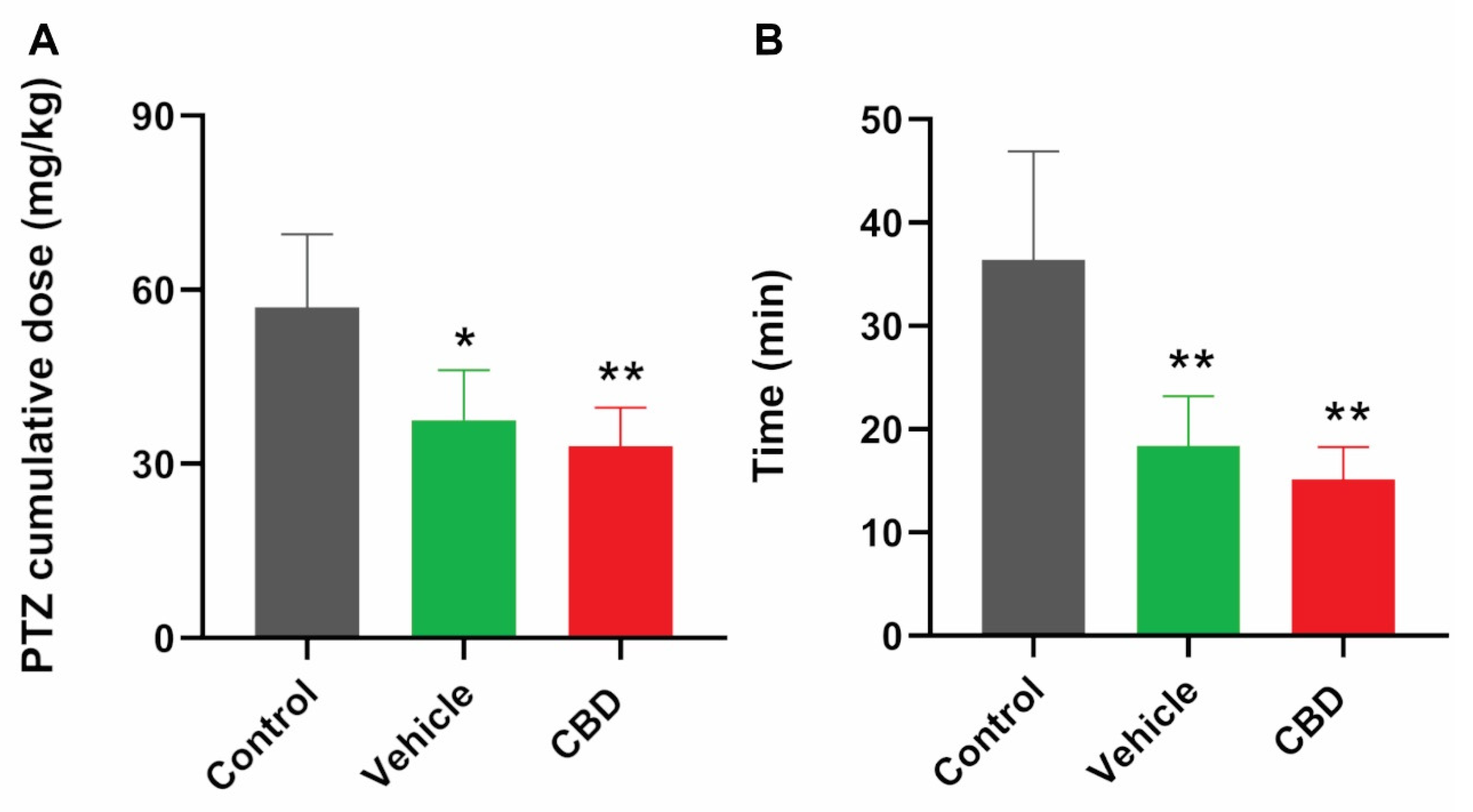
- The susceptibility of rats to develop epileptic seizures after experiencing Status Epilepticus (seizure threshold) can be determined through the discrete administration of subconvulsive doses of pentylenetetrazol.
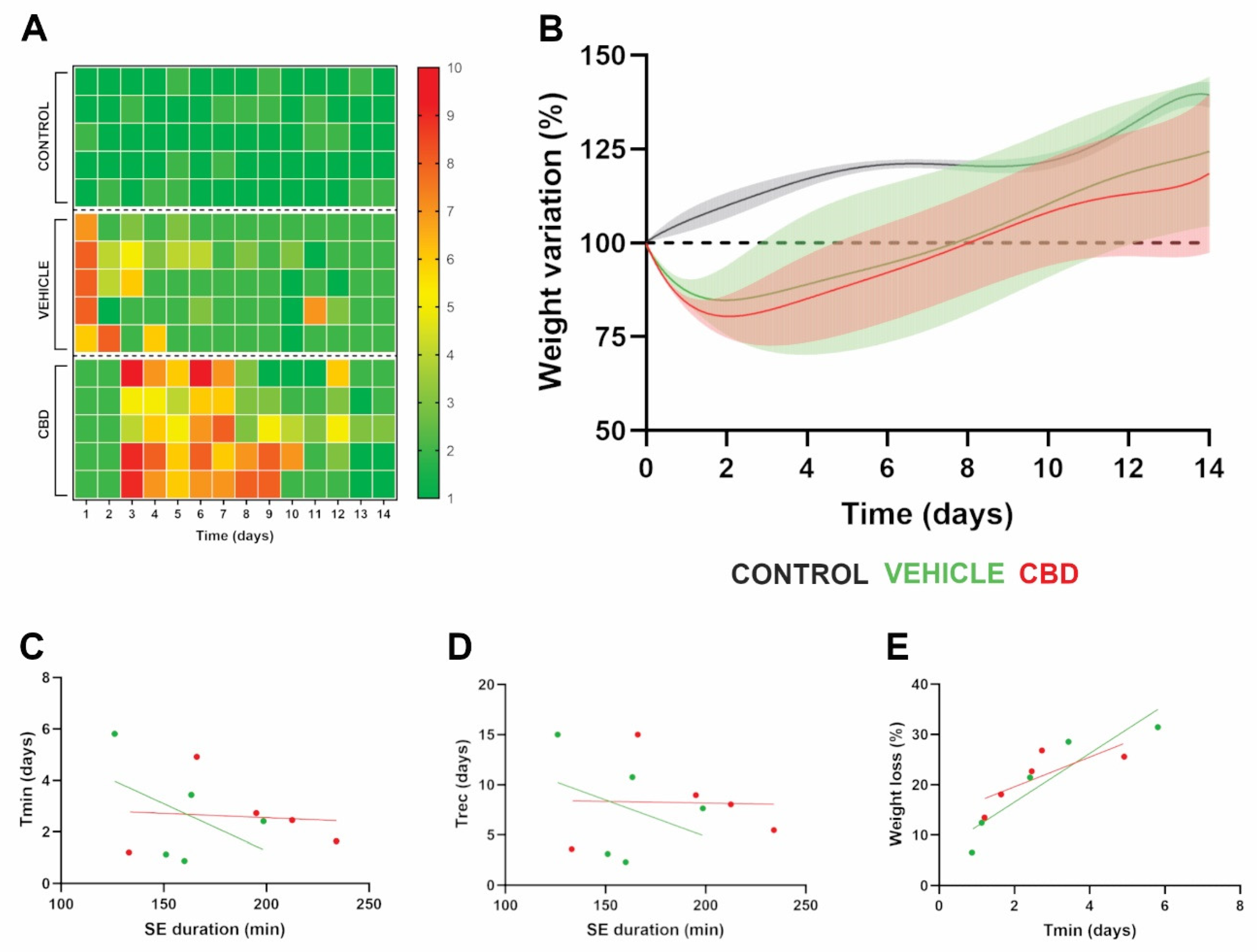
- Subchronic treatment (14 days) with Cannabidiol after Status Epilepticus does not modify the seizure threshold and increases several SE comorbidities such as the post-seizure irritability and weight loss.
- Based on the anti-inflammatory and anticonvulsant effects of Cannabidiol, it was hypothesized that subchronic treatment could improve the epileptic threshold after Status Epilepticus. Our results indicate that Cannabidiol, at least under the administered conditions, does not improve the epileptic threshold and exacerbate the post-SE comorbidities.
Abstract
1. Introduction
2. Materials and Methods
2.1. Animal and Experimental Models
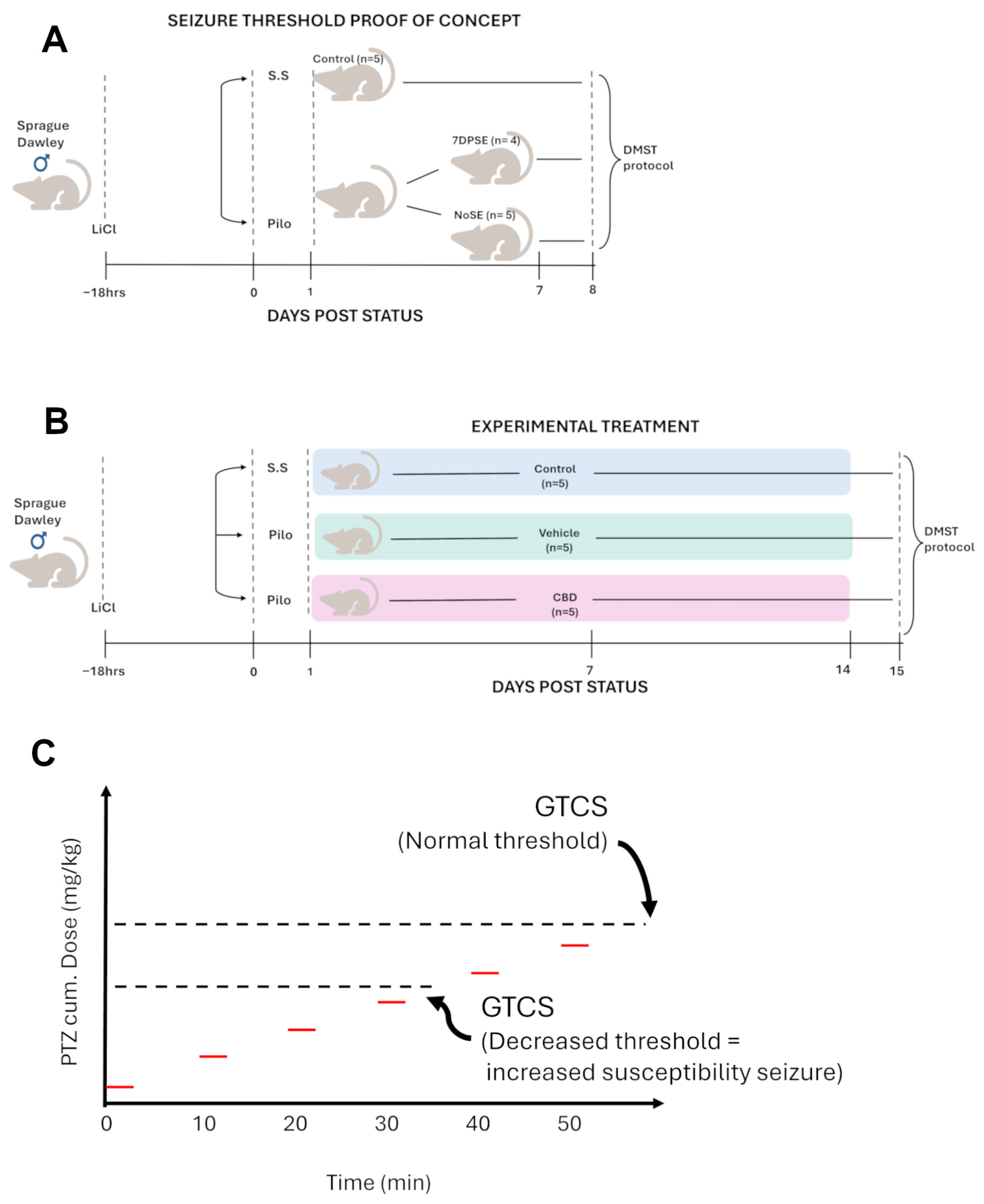
2.2. Experimental Design
2.3. Evaluation of Discretely Measured Seizure Threshold (DMST)
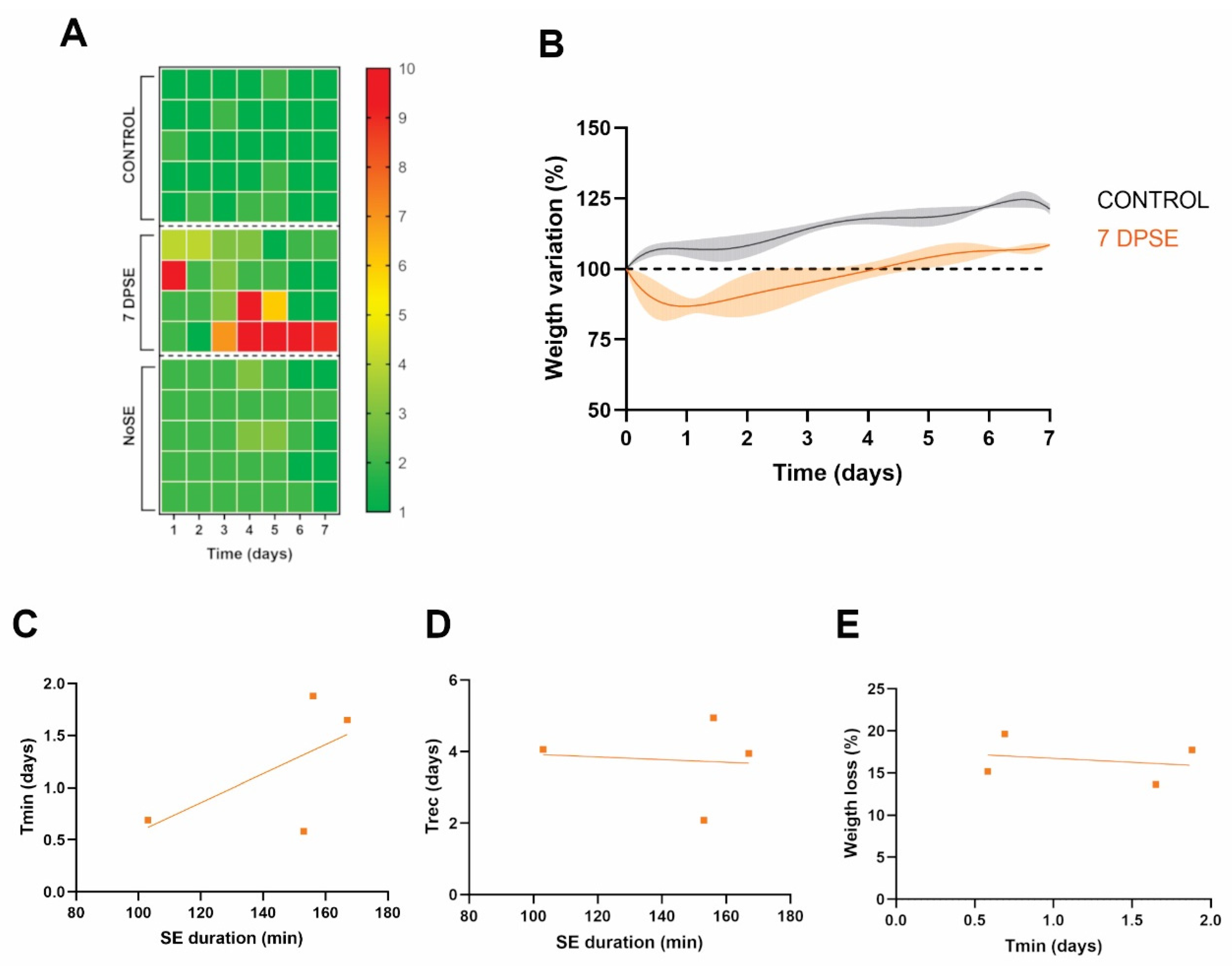
2.4. Monitoring Animal Development
- 1:
- Normal, active, and docile in the cage before and during handling.
- 2:
- Active and alert, but elusive, responds well to handling.
- 3:
- Decreased activity but alert, responds to handling.
- 4:
- Lethargic, unresponsive to handling.
- 5:
- Lethargic, responsive to handling.
- 6:
- Slight difficulty handling inside the cage (exaggerated response to minor noises, difficult to remove from cage).
- 7:
- Moderate difficulty handling inside the cage (exaggerated response to minor noises, jumps uncontrollably, difficult to remove from cage).
- 8:
- Moderate difficulty handling outside the cage (flight response, jumps uncontrollably).
- 9:
- Severe difficulty handling inside and outside the cage (jumps uncontrollably, spins around on its tail).
- 10:
- Maximum difficulty handling (jumps uncontrollably, spins around on its tail, bites).
2.5. Statistical Analysis
3. Results
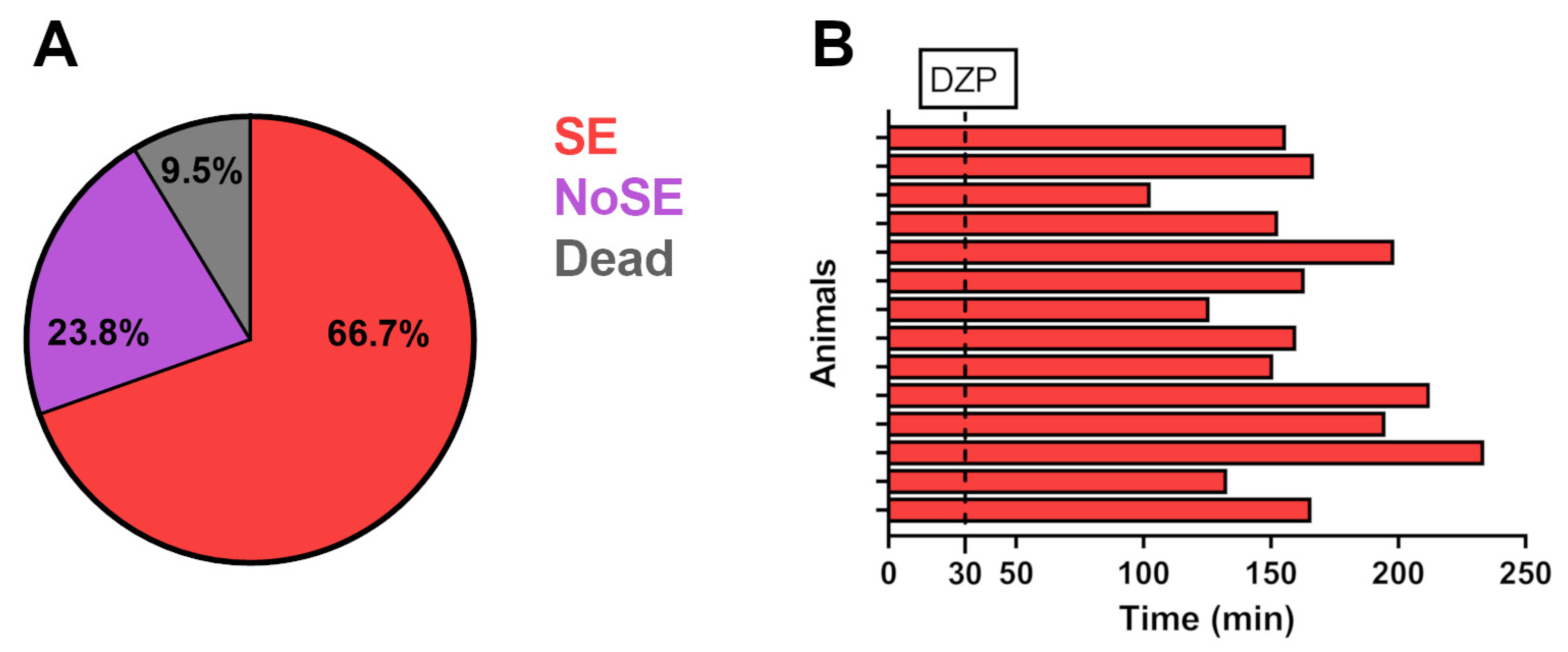
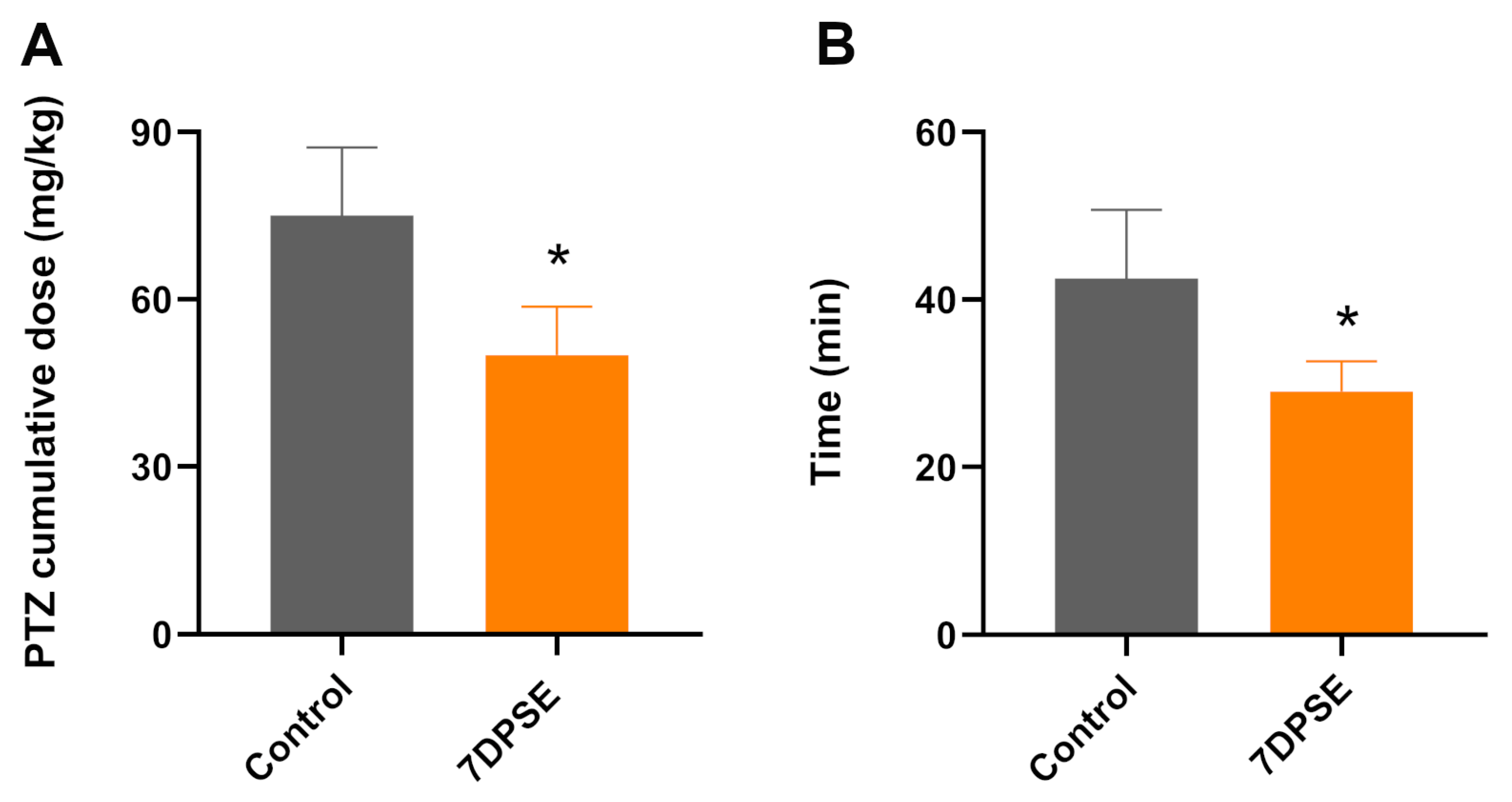
3.1. Seizure Threshold Measure
3.2. Evaluation of the Effect of CBD on Susceptibility to Develop Seizures After SE
4. Discussion
5. Conclusions
Author Contributions
Funding
Institutional Review Board Statement
Data Availability Statement
Conflicts of Interest
References
- Devinsky, O.; Cross, J.H.; Laux, L.; Marsh, E.; Miller, I.; Nabbout, R.; Scheffer, I.E.; Thiele, E.A.; Wright, S.; for the Cannabidiol in Dravet Syndrome Study Group. Trial of Cannabidiol for Drug-Resistant Seizures in the Dravet Syndrome. N. Engl. J. Med. 2017, 376, 2011–2020. [Google Scholar] [CrossRef] [PubMed]
- Devinsky, O.; Marsh, E.; Friedman, D.; Thiele, E.; Laux, L.; Sullivan, J.; Miller, I.; Flamini, R.; Wilfong, A.; Filloux, F.; et al. Cannabidiol in patients with treatment-resistant epilepsy: An open-label interventional trial. Lancet Neurol. 2016, 15, 270–278. [Google Scholar] [CrossRef] [PubMed]
- Devinsky, O.; Patel, A.D.; Cross, J.H.; Villanueva, V.; Wirrell, E.C.; Privitera, M.; Greenwood, S.M.; Roberts, C.; Checketts, D.; VanLandingham, K.E.; et al. Effect of Cannabidiol on Drop Seizures in the Lennox-Gastaut Syndrome. N. Engl. J. Med. 2018, 378, 1888–1897. [Google Scholar] [CrossRef] [PubMed]
- Pharmaceuticals, J. EPIDIOLEX® Safely and Effectively. Highlights of Prescribing Informmation. Available online: https://www.accessdata.fda.gov/drugsatfda_docs/label/2021/210365Orig1s011lbl.pdf (accessed on 20 May 2026).
- Karazniewicz-Lada, M.; Glowka, A.K.; Mikulska, A.A.; Glowka, F.K. Pharmacokinetic Drug-Drug Interactions among Antiepileptic Drugs, Including CBD, Drugs Used to Treat COVID-19 and Nutrients. Int. J. Mol. Sci. 2021, 22, 9582. [Google Scholar] [CrossRef] [PubMed]
- Stout, S.M.; Cimino, N.M. Exogenous cannabinoids as substrates, inhibitors, and inducers of human drug metabolizing enzymes: A systematic review. Drug Metab. Rev. 2014, 46, 86–95. [Google Scholar] [CrossRef] [PubMed]
- Anderson, L.L.; Etchart, M.G.; MacNair, L.; Land, M.H.; Mosesova, I.A.; Bonn-Miller, M.O.; Arnold, J.C. In Vitro Screening of Three Commercial Cannabis-Based Products on ATP-Binding Cassette and Solute-Carrier Transporter Function. Cannabis Cannabinoid Res. 2022, 7, 304–317. [Google Scholar] [CrossRef] [PubMed]
- Auzmendi, J.; Palestro, P.; Blachman, A.; Gavernet, L.; Merelli, A.; Talevi, A.; Calabrese, G.C.; Ramos, A.J.; Lazarowski, A. Cannabidiol (CBD) Inhibited Rhodamine-123 Efflux in Cultured Vascular Endothelial Cells and Astrocytes Under Hypoxic Conditions. Front. Behav. Neurosci. 2020, 14, 32. [Google Scholar] [CrossRef] [PubMed]
- Holland, M.L.; Lau, D.T.; Allen, J.D.; Arnold, J.C. The multidrug transporter ABCG2 (BCRP) is inhibited by plant-derived cannabinoids. Br. J. Pharmacol. 2007, 152, 815–824. [Google Scholar] [CrossRef] [PubMed]
- Rocha, L.; Frias-Soria, C.L.; Ortiz, J.G.; Auzmendi, J.; Lazarowski, A. Is cannabidiol a drug acting on unconventional targets to control drug-resistant epilepsy? Epilepsia Open 2020, 5, 36–49. [Google Scholar] [CrossRef] [PubMed]
- Fuentes-Mejia, M.; Fallico, M.J.; Talevi, A.; Gavernet, L.; Orozco-Suarez, S.A.; Rocha, L. Cannabidiol combined with GABAergic drugs but not with sodium channel blockers prevents the development of drug-resistance seizures in a preclinical model. Front. Pharmacol. 2025, 16, 1644018. [Google Scholar] [CrossRef] [PubMed]
- Nagarkatti, P.; Pandey, R.; Rieder, S.A.; Hegde, V.L.; Nagarkatti, M. Cannabinoids as novel anti-inflammatory drugs. Future Med. Chem. 2009, 1, 1333–1349. [Google Scholar] [CrossRef] [PubMed]
- Nichols, J.M.; Kaplan, B.L.F. Immune Responses Regulated by Cannabidiol. Cannabis Cannabinoid Res. 2020, 5, 12–31. [Google Scholar] [CrossRef] [PubMed]
- Zurier, R.B.; Burstein, S.H. Cannabinoids, inflammation, and fibrosis. FASEB J. 2016, 30, 3682–3689. [Google Scholar] [CrossRef] [PubMed]
- Aswad, M.; Pechkovsky, A.; Ghanayiem, N.; Hamza, H.; Louria-Hayon, I. High CBD extract (CBD-X) modulates inflammation and immune cell activity in rheumatoid arthritis. Front. Immunol. 2025, 16, 1599109. [Google Scholar] [CrossRef] [PubMed]
- Gomez, C.T.; Lairion, F.; Repetto, M.; Ettcheto, M.; Merelli, A.; Lazarowski, A.; Auzmendi, J. Cannabidiol (CBD) Alters the Functionality of Neutrophils (PMN). Implications in the Refractory Epilepsy Treatment. Pharmaceuticals 2021, 14, 220. [Google Scholar] [CrossRef] [PubMed]
- McHugh, D.; Tanner, C.; Mechoulam, R.; Pertwee, R.G.; Ross, R.A. Inhibition of human neutrophil chemotaxis by endogenous cannabinoids and phytocannabinoids: Evidence for a site distinct from CB1 and CB2. Mol. Pharmacol. 2008, 73, 441–450. [Google Scholar] [CrossRef] [PubMed]
- Zimmer, T.S.; David, B.; Broekaart, D.W.M.; Schidlowski, M.; Ruffolo, G.; Korotkov, A.; van der Wel, N.N.; van Rijen, P.C.; Muhlebner, A.; van Hecke, W.; et al. Seizure-mediated iron accumulation and dysregulated iron metabolism after status epilepticus and in temporal lobe epilepsy. Acta Neuropathol. 2021, 142, 729–759. [Google Scholar] [CrossRef] [PubMed]
- Merelli, A.; Repetto, M.; Lazarowski, A.; Auzmendi, J. Hypoxia, Oxidative Stress, and Inflammation: Three Faces of Neurodegenerative Diseases. J. Alzheimers Dis. 2021, 82, S109–S126. [Google Scholar] [CrossRef] [PubMed]
- Pitkanen, A.; Lukasiuk, K.; Dudek, F.E.; Staley, K.J. Epileptogenesis. Cold Spring Harb. Perspect. Med. 2015, 5, a022822. [Google Scholar] [CrossRef] [PubMed]
- Annegers, J.F.; Hauser, W.A.; Coan, S.P.; Rocca, W.A. A population-based study of seizures after traumatic brain injuries. N. Engl. J. Med. 1998, 338, 20–24. [Google Scholar] [CrossRef] [PubMed]
- Hesdorffer, D.C.; Logroscino, G.; Cascino, G.; Annegers, J.F.; Hauser, W.A. Risk of unprovoked seizure after acute symptomatic seizure: Effect of status epilepticus. Ann. Neurol. 1998, 44, 908–912. [Google Scholar] [CrossRef] [PubMed]
- Graham, N.S.; Crichton, S.; Koutroumanidis, M.; Wolfe, C.D.; Rudd, A.G. Incidence and associations of poststroke epilepsy: The prospective South London Stroke Register. Stroke 2013, 44, 605–611. [Google Scholar] [CrossRef] [PubMed]
- Jones, N.A.; Glyn, S.E.; Akiyama, S.; Hill, T.D.; Hill, A.J.; Weston, S.E.; Burnett, M.D.; Yamasaki, Y.; Stephens, G.J.; Whalley, B.J.; et al. Cannabidiol exerts anti-convulsant effects in animal models of temporal lobe and partial seizures. Seizure 2012, 21, 344–352. [Google Scholar] [CrossRef] [PubMed]
- Pitkanen, A.; Kharatishvili, I.; Karhunen, H.; Lukasiuk, K.; Immonen, R.; Nairismagi, J.; Grohn, O.; Nissinen, J. Epileptogenesis in experimental models. Epilepsia 2007, 48, 13–20. [Google Scholar] [CrossRef] [PubMed]
- Lazarini-Lopes, W.; Do Val-da Silva, R.A.; da Silva-Junior, R.M.P.; Silva-Cardoso, G.K.; Leite-Panissi, C.R.A.; Leite, J.P.; Garcia-Cairasco, N. Chronic cannabidiol (CBD) administration induces anticonvulsant and antiepileptogenic effects in a genetic model of epilepsy. Epilepsy Behav. 2021, 119, 107962. [Google Scholar] [CrossRef] [PubMed]
- Fallah, M.S.; Dlugosz, L.; Scott, B.W.; Thompson, M.D.; Burnham, W.M. Antiseizure effects of the cannabinoids in the amygdala-kindling model. Epilepsia 2021, 62, 2274–2282. [Google Scholar] [CrossRef] [PubMed]
- Anderson, L.L.; Low, I.K.; McGregor, I.S.; Arnold, J.C. Interactions between cannabidiol and Delta(9) -tetrahydrocannabinol in modulating seizure susceptibility and survival in a mouse model of Dravet syndrome. Br. J. Pharmacol. 2020, 177, 4261–4274. [Google Scholar] [CrossRef] [PubMed]
- Colasanti, B.K.; Lindamood, C., 3rd; Craig, C.R. Effects of marihuana cannabinoids on seizure activity in cobalt-epileptic rats. Pharmacol. Biochem. Behav. 1982, 16, 573–578. [Google Scholar] [CrossRef] [PubMed]
- Patra, P.H.; Barker-Haliski, M.; White, H.S.; Whalley, B.J.; Glyn, S.; Sandhu, H.; Jones, N.; Bazelot, M.; Williams, C.M.; McNeish, A.J. Cannabidiol reduces seizures and associated behavioral comorbidities in a range of animal seizure and epilepsy models. Epilepsia 2019, 60, 303–314. [Google Scholar] [CrossRef] [PubMed]
- Auzmendi, J.; Buchholz, B.; Salguero, J.; Canellas, C.; Kelly, J.; Men, P.; Zubillaga, M.; Rossi, A.; Merelli, A.; Gelpi, R.J.; et al. Pilocarpine-Induced Status Epilepticus Is Associated with P-Glycoprotein Induction in Cardiomyocytes, Electrocardiographic Changes, and Sudden Death. Pharmaceuticals 2018, 11, 21. [Google Scholar] [CrossRef] [PubMed]
- Ramzan, I.M.; Levy, G. Kinetics of drug action in disease states. XIV. Effect of infusion rate on pentylenetetrazol concentrations in serum, brain and cerebrospinal fluid of rats at onset of convulsions. J. Pharmacol. Exp. Ther. 1985, 234, 624–628. [Google Scholar] [CrossRef]
- Kubova, H.; Mares, P. Are morphologic and functional consequences of status epilepticus in infant rats progressive? Neuroscience 2013, 235, 232–249. [Google Scholar] [CrossRef] [PubMed]
- Slomko, A.M.; Naseer, Z.; Ali, S.S.; Wongvravit, J.P.; Friedman, L.K. Retigabine calms seizure-induced behavior following status epilepticus. Epilepsy Behav. 2014, 37, 123–132. [Google Scholar] [CrossRef] [PubMed]
- Avanzini, G.; Franceschetti, S. Cellular biology of epileptogenesis. Lancet Neurol. 2003, 2, 33–42. [Google Scholar] [CrossRef] [PubMed]
- Najm, I.; Ying, Z.; Janigro, D. Mechanisms of epileptogenesis. Neurol. Clin. 2001, 19, 237–250. [Google Scholar] [CrossRef] [PubMed]
- Jean, G.; Carton, J.; Haq, K.; Musto, A.E. The role of dendritic spines in epileptogenesis. Front. Cell Neurosci. 2023, 17, 1173694. [Google Scholar] [CrossRef] [PubMed]
- Thompson, S.A. Kindling in humans: Does secondary epileptogenesis occur? Epilepsy Res. 2023, 198, 107155. [Google Scholar] [CrossRef] [PubMed]
- Fenwick, P. The nature and management of aggression in epilepsy. J. Neuropsychiatry Clin. Neurosci. 1989, 1, 418–425. [Google Scholar] [CrossRef] [PubMed]
- Budaszewski Pinto, C.; de Sa Couto-Pereira, N.; Kawa Odorcyk, F.; Cagliari Zenki, K.; Dalmaz, C.; Losch de Oliveira, D.; Calcagnotto, M.E. Effects of acute seizures on cell proliferation, synaptic plasticity and long-term behavior in adult zebrafish. Brain Res. 2021, 1756, 147334. [Google Scholar] [CrossRef] [PubMed]
- Curia, G.; Longo, D.; Biagini, G.; Jones, R.S.; Avoli, M. The pilocarpine model of temporal lobe epilepsy. J. Neurosci. Methods 2008, 172, 143–157. [Google Scholar] [CrossRef] [PubMed]
- Leite, J.P.; Bortolotto, Z.A.; Cavalheiro, E.A. Spontaneous recurrent seizures in rats: An experimental model of partial epilepsy. Neurosci. Biobehav. Rev. 1990, 14, 511–517. [Google Scholar] [CrossRef] [PubMed]
- Jara, A.; Lazarowski, A.; López, D.E.; Auzmendi, J. Functional, morphological and ethological characterization of a transgenic mice model for the study of epilepsy acquisition. In Proceedings of the XIV Congreso Latinoamericano de Epilepsia, Lima, Peru, 16–18 May 2026. [Google Scholar]
- Blanco, M.M.; dos Santos, J.G., Jr.; Perez-Mendes, P.; Kohek, S.R.; Cavarsan, C.F.; Hummel, M.; Albuquerque, C.; Mello, L.E. Assessment of seizure susceptibility in pilocarpine epileptic and nonepileptic Wistar rats and of seizure reinduction with pentylenetetrazole and electroshock models. Epilepsia 2009, 50, 824–831. [Google Scholar] [CrossRef] [PubMed]
- Rattka, M.; Brandt, C.; Loscher, W. Do proconvulsants modify or halt epileptogenesis? Pentylenetetrazole is ineffective in two rat models of temporal lobe epilepsy. Eur. J. Neurosci. 2012, 36, 2505–2520. [Google Scholar] [CrossRef] [PubMed]
- Tollner, K.; Twele, F.; Loscher, W. Evaluation of the pentylenetetrazole seizure threshold test in epileptic mice as surrogate model for drug testing against pharmacoresistant seizures. Epilepsy Behav. 2016, 57, 95–104. [Google Scholar] [CrossRef] [PubMed]
- Drion, C.M.; Borm, L.E.; Kooijman, L.; Aronica, E.; Wadman, W.J.; Hartog, A.F.; van Vliet, E.A.; Gorter, J.A. Effects of rapamycin and curcumin treatment on the development of epilepsy after electrically induced status epilepticus in rats. Epilepsia 2016, 57, 688–697. [Google Scholar] [CrossRef] [PubMed]
- Hester, M.S.; Hosford, B.E.; Santos, V.R.; Singh, S.P.; Rolle, I.J.; LaSarge, C.L.; Liska, J.P.; Garcia-Cairasco, N.; Danzer, S.C. Impact of rapamycin on status epilepticus induced hippocampal pathology and weight gain. Exp. Neurol. 2016, 280, 1–12. [Google Scholar] [CrossRef] [PubMed]
- Turkanis, S.A.; Smiley, K.A.; Borys, H.K.; Olsen, D.M.; Karler, R. An electrophysiological analysis of the anticonvulsant action of cannabidiol on limbic seizures in conscious rats. Epilepsia 1979, 20, 351–363. [Google Scholar] [CrossRef] [PubMed]
- Reddy, D.S.; Mbilinyi, R.H.; Ramakrishnan, S. Efficacy of the FDA-approved cannabidiol on the development and persistence of temporal lobe epilepsy and complex focal onset seizures. Exp. Neurol. 2023, 359, 114240. [Google Scholar] [CrossRef] [PubMed]
- Vezzani, A.; Balosso, S.; Ravizza, T. Neuroinflammatory pathways as treatment targets and biomarkers in epilepsy. Nat. Rev. Neurol. 2019, 15, 459–472. [Google Scholar] [CrossRef] [PubMed]
- Ransohoff, R.M. A polarizing question: Do M1 and M2 microglia exist? Nat. Neurosci. 2016, 19, 987–991. [Google Scholar] [CrossRef] [PubMed]
- Campos, A.C.; Moreira, F.A.; Gomes, F.V.; Del Bel, E.A.; Guimaraes, F.S. Multiple mechanisms involved in the large-spectrum therapeutic potential of cannabidiol in psychiatric disorders. Philos. Trans. R. Soc. Lond. B Biol. Sci. 2012, 367, 3364–3378. [Google Scholar] [CrossRef] [PubMed]
- Rosenberg, E.C.; Tsien, R.W.; Whalley, B.J.; Devinsky, O. Cannabinoids and Epilepsy. Neurotherapeutics 2015, 12, 747–768. [Google Scholar] [CrossRef] [PubMed]
- Gray, R.A.; Whalley, B.J. The proposed mechanisms of action of CBD in epilepsy. Epileptic Disord. 2020, 22, 10–15. [Google Scholar] [CrossRef] [PubMed]
- Deiana, S.; Watanabe, A.; Yamasaki, Y.; Amada, N.; Arthur, M.; Fleming, S.; Woodcock, H.; Dorward, P.; Pigliacampo, B.; Close, S.; et al. Plasma and brain pharmacokinetic profile of cannabidiol (CBD), cannabidivarine (CBDV), Delta(9)-tetrahydrocannabivarin (THCV) and cannabigerol (CBG) in rats and mice following oral and intraperitoneal administration and CBD action on obsessive-compulsive behaviour. Psychopharmacology 2012, 219, 859–873. [Google Scholar] [CrossRef] [PubMed]
- Schwotzer, D.; Kulpa, J.; Trexler, K.; Dye, W.; Jantzi, J.; Irshad, H.; Ware, M.A.; Bonn-Miller, M.; McDonald, J.; Lefever, T. Pharmacokinetics of Cannabidiol in Sprague-Dawley Rats After Oral and Pulmonary Administration. Cannabis Cannabinoid Res. 2023, 8, 360–373. [Google Scholar] [CrossRef] [PubMed]
- Zhang, Q.; Melchert, P.W.; Markowitz, J.S. Pharmacokinetic Variability of Oral Cannabidiol and Its Major Metabolites after Short-Term High-Dose Exposure in Healthy Subjects. Med. Cannabis Cannabinoids 2024, 7, 1–9. [Google Scholar] [CrossRef] [PubMed]
- Millar, S.A.; Stone, N.L.; Yates, A.S.; O’Sullivan, S.E. A Systematic Review on the Pharmacokinetics of Cannabidiol in Humans. Front. Pharmacol. 2018, 9, 1365. [Google Scholar] [CrossRef] [PubMed]
- Herdegen, T.; Cascorbi, I. Drug Interactions of Tetrahydrocannabinol and Cannabidiol in Cannabinoid Drugs. Dtsch. Arztebl. Int. 2023, 120, 833–840. [Google Scholar] [CrossRef] [PubMed]
- Linares, I.M.; Zuardi, A.W.; Pereira, L.C.; Queiroz, R.H.; Mechoulam, R.; Guimaraes, F.S.; Crippa, J.A. Cannabidiol presents an inverted U-shaped dose-response curve in a simulated public speaking test. Braz. J. Psychiatry 2019, 41, 9–14. [Google Scholar] [CrossRef] [PubMed]
- Malfait, A.M.; Gallily, R.; Sumariwalla, P.F.; Malik, A.S.; Andreakos, E.; Mechoulam, R.; Feldmann, M. The nonpsychoactive cannabis constituent cannabidiol is an oral anti-arthritic therapeutic in murine collagen-induced arthritis. Proc. Natl. Acad. Sci. USA 2000, 97, 9561–9566. [Google Scholar] [CrossRef] [PubMed]
- Narayan, A.J.; Downey, L.A.; Manning, B.; Hayley, A.C. Cannabinoid treatments for anxiety: A systematic review and consideration of the impact of sleep disturbance. Neurosci. Biobehav. Rev. 2022, 143, 104941. [Google Scholar] [CrossRef] [PubMed]
- Nedelescu, H.; Wagner, G.E.; De Ness, G.L.; Carroll, A.; Kerr, T.M.; Wang, J.; Zhang, S.; Chang, S.; Than, A.H.; Emerson, N.E.; et al. Cannabidiol Produces Distinct U-Shaped Dose-Response Effects on Cocaine-Induced Conditioned Place Preference and Associated Recruitment of Prelimbic Neurons in Male Rats. Biol. Psychiatry Glob. Open Sci. 2022, 2, 70–78. [Google Scholar] [CrossRef] [PubMed]
- Zhou, H.Z.; Scott, B.W.; Oleksak, Y.I.; Burnham, W.M. Antiseizure Effects of Cannabidiol in Combination with Cannabigerol in the Maximal Electroshock Seizure Model. Basic. Clin. Pharmacol. Toxicol. 2026, 138, e70194. [Google Scholar] [CrossRef] [PubMed]
- Mao, K.; You, C.; Lei, D.; Zhang, H. High dosage of cannabidiol (CBD) alleviates pentylenetetrazole-induced epilepsy in rats by exerting an anticonvulsive effect. Int. J. Clin. Exp. Med. 2015, 8, 8820–8827. [Google Scholar] [PubMed]
- Leigh, N.J.; Goniewicz, M.L. Acute Effect of Electronic Cigarette-Generated Aerosol From Flavored CBD-Containing Refill Solutions on Human Bronchial Epithelial Cells. Front. Physiol. 2020, 11, 592321. [Google Scholar] [CrossRef] [PubMed]
- Didik, S.; Ahrari, A.; Taneja, K.; Bohovyk, R.; Levchenko, V.; Dissanayake, L.V.; O-Uchi, J.; Staruschenko, A. The effects of Cannabidiol on podocytes in vitro. Biochem. Biophys. Res. Commun. 2025, 784, 152654. [Google Scholar] [CrossRef] [PubMed]
- Li, Y.; Wu, Q.; Li, X.; Cournoyer, P.; Choudhuri, S.; Guo, L.; Chen, S. Toxicity of cannabidiol and its metabolites in TM3 mouse Leydig cells: A comparison with primary human Leydig cells. Arch. Toxicol. 2024, 98, 2677–2693. [Google Scholar] [CrossRef] [PubMed]
- Bhandari, B.; Naeini, S.E.; Rezaee, S.; Rogers, H.M.; Khodadadi, H.; Bosomtwi, A.; Seyyedi, M.; MacKinnon, N.J.; Dhandapani, K.M.; Salles, E.L.; et al. Optimization of seizure prevention by cannabidiol (CBD). Transl. Neurosci. 2025, 16, 20220362. [Google Scholar] [CrossRef] [PubMed]
- Hlozek, T.; Uttl, L.; Kaderabek, L.; Balikova, M.; Lhotkova, E.; Horsley, R.R.; Novakova, P.; Sichova, K.; Stefkova, K.; Tyls, F.; et al. Pharmacokinetic and behavioural profile of THC, CBD, and THC+CBD combination after pulmonary, oral, and subcutaneous administration in rats and confirmation of conversion in vivo of CBD to THC. Eur. Neuropsychopharmacol. 2017, 27, 1223–1237. [Google Scholar] [CrossRef] [PubMed]
- Perucca, E. Cannabinoids in the Treatment of Epilepsy: Hard Evidence at Last? J. Epilepsy Res. 2017, 7, 61–76. [Google Scholar] [CrossRef] [PubMed]
- Gaston, T.E.; Bebin, E.M.; Cutter, G.R.; Liu, Y.; Szaflarski, J.P.; Program, U.C. Interactions between cannabidiol and commonly used antiepileptic drugs. Epilepsia 2017, 58, 1586–1592. [Google Scholar] [CrossRef] [PubMed]
- Anderson, L.L.; Absalom, N.L.; Abelev, S.V.; Low, I.K.; Doohan, P.T.; Martin, L.J.; Chebib, M.; McGregor, I.S.; Arnold, J.C. Coadministered cannabidiol and clobazam: Preclinical evidence for both pharmacodynamic and pharmacokinetic interactions. Epilepsia 2019, 60, 2224–2234. [Google Scholar] [CrossRef] [PubMed]


Disclaimer/Publisher’s Note: The statements, opinions and data contained in all publications are solely those of the individual author(s) and contributor(s) and not of MDPI and/or the editor(s). MDPI and/or the editor(s) disclaim responsibility for any injury to people or property resulting from any ideas, methods, instructions or products referred to in the content. |
© 2026 by the authors. Licensee MDPI, Basel, Switzerland. This article is an open access article distributed under the terms and conditions of the Creative Commons Attribution (CC BY) license.
Share and Cite
Gómez, C.T.; Fernández, F.; Jara, A.; Borda, N.; Moscovicz, F.; Yauri-Huaman, Y.; Caceres-Robles, R.; Pacheco-Otalora, L.F.; Lazarowski, A.; Auzmendi, J. Subchronic Cannabidiol (CBD) Treatment During the Silent Period Fails to Prevent Increased Seizure Susceptibility Following Lithium-Pilocarpine-Induced Status Epilepticus. Brain Sci. 2026, 16, 851. https://doi.org/10.3390/brainsci16080851
Gómez CT, Fernández F, Jara A, Borda N, Moscovicz F, Yauri-Huaman Y, Caceres-Robles R, Pacheco-Otalora LF, Lazarowski A, Auzmendi J. Subchronic Cannabidiol (CBD) Treatment During the Silent Period Fails to Prevent Increased Seizure Susceptibility Following Lithium-Pilocarpine-Induced Status Epilepticus. Brain Sciences. 2026; 16(8):851. https://doi.org/10.3390/brainsci16080851
Chicago/Turabian StyleGómez, Claudia Taborda, Florencia Fernández, Agustín Jara, Natalia Borda, Franco Moscovicz, Yessenia Yauri-Huaman, Rodrigo Caceres-Robles, Luis F. Pacheco-Otalora, Alberto Lazarowski, and Jerónimo Auzmendi. 2026. "Subchronic Cannabidiol (CBD) Treatment During the Silent Period Fails to Prevent Increased Seizure Susceptibility Following Lithium-Pilocarpine-Induced Status Epilepticus" Brain Sciences 16, no. 8: 851. https://doi.org/10.3390/brainsci16080851
APA StyleGómez, C. T., Fernández, F., Jara, A., Borda, N., Moscovicz, F., Yauri-Huaman, Y., Caceres-Robles, R., Pacheco-Otalora, L. F., Lazarowski, A., & Auzmendi, J. (2026). Subchronic Cannabidiol (CBD) Treatment During the Silent Period Fails to Prevent Increased Seizure Susceptibility Following Lithium-Pilocarpine-Induced Status Epilepticus. Brain Sciences, 16(8), 851. https://doi.org/10.3390/brainsci16080851