Review

Authentic Assessment of Social–Emotional Development in Early Childhood: A Scoping Review

1
Department of Language Science and Technology, Faculty of Humanities, The Hong Kong Polytechnic University, Hong Kong, China
2
Department of Counseling and Special Education, Virginia Commonwealth University, Richmond, VA 23284, USA
3
Department of Special and Early Education, College of Education, Northern Illinois University, DeKalb, IL 60115, USA
4
Department of Theory and Practice in Teacher Education, University of Tennessee, Knoxville, TN 37996, USA
*
Author to whom correspondence should be addressed.
Brain Sci. 2026, 16(8), 806; https://doi.org/10.3390/brainsci16080806

Submission received: 29 May 2026 / Revised: 11 July 2026 / Accepted: 14 July 2026 / Published: 30 July 2026
(This article belongs to the Special Issue Social and Emotional Processes in Interpersonal Contexts)

Abstract

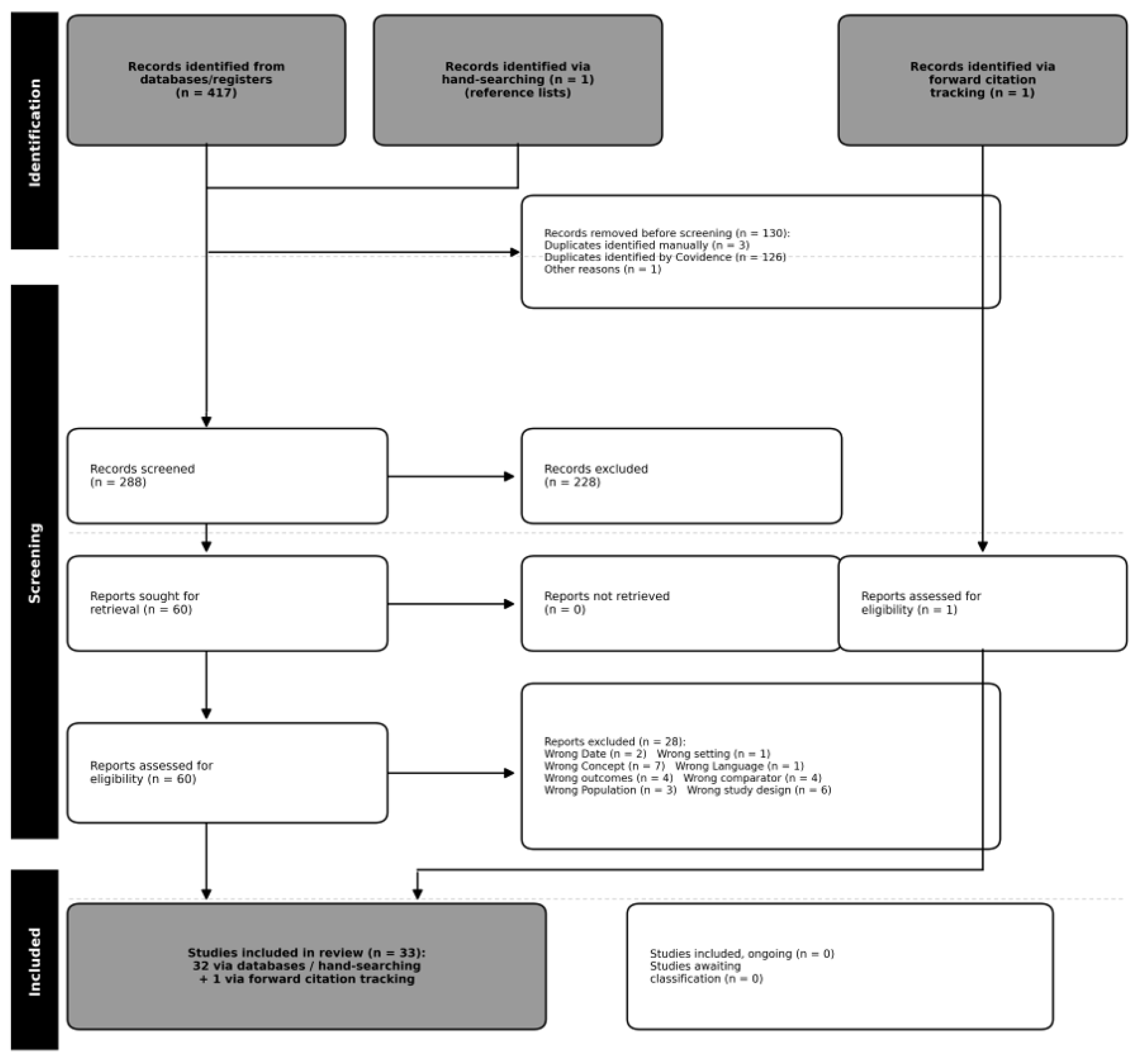
Background/Objectives: Authentic assessment—the systematic observation of naturally occurring social–emotional behavior by familiar caregivers—is increasingly mandated by international early childhood frameworks, yet the field lacks a comprehensive tool inventory, conceptual clarity on “authenticity,” and synthesized evidence on contextual coverage. This scoping review maps authentic social–emotional development (SED) assessment tools for children aged 0–8, examines how authenticity is conceptualized, and identifies gaps in cultural adaptation, disability inclusion, and age-range coverage. Methods: Following the Arksey and O’Malley framework enhanced by Levac et al. and JBI methodology, six databases (PsycINFO, ERIC, Education Source, MEDLINE, Scopus, Web of Science) were searched for English-language peer-reviewed publications (2006–2026), supplemented by hand-searching and forward citation tracking. Inclusion criteria targeted children aged 0–8 assessed via authentic modalities (naturalistic observation, play-based assessment, portfolio, performance-based tasks, curriculum-embedded measurement) in any global setting. Data charting used an integrated sociocultural and interpretive assessment framework. Reporting followed PRISMA-ScR. Results: Thirty-three studies yielded 43 instruments, 29 meeting authentic assessment criteria. Naturalistic observation predominated (23 studies; 69.7%), followed by play-based assessment (10; 30.3%); portfolio and curriculum-embedded approaches were under-represented. Most studies originated from the United States (57.6%) and targeted preschoolers (3–5 years; 75.8%), with thin coverage of infants/toddlers and primary-grade children. “Authenticity” was operationalized across ecological, participatory, and cultural dimensions rarely integrated theoretically. Conclusions: This review provides the first systematic landscape map of authentic SED assessment for children aged 0–8, confirming feasibility and diversity while revealing gaps in age coverage, geographic reach, and cultural adaptation. The integrated framework offers a potentially transferable analytic model, and findings can inform equitable, contextually responsive assessment practice and policy.
Keywords: authentic assessment; social–emotional development; early childhood; scoping review; naturalistic observation; sociocultural theory; interpretive assessment; 0–8 years authentic assessment; social–emotional development; early childhood; scoping review; naturalistic observation; sociocultural theory; interpretive assessment; 0–8 years