
This is an early access version, the complete PDF, HTML, and XML versions will be available soon.
Article

From Spontaneous Ignitions to Sensorimotor Cell Assemblies via Dopamine: A Spiking Neurocomputational Model of Infants’ Hand Action Acquisition

by
Nick Griffin
1,*,
Andrea Mattera
2,
Gianluca Baldassarre
2 and
Max Garagnani
3,4,*
1
Department of Computing, Goldsmiths, University of London, London SE14 6NW, UK
2
Institute of Cognitive Sciences and Technology, National Research Council, 00196 Rome, Italy
3
Department of Philosophy, Alma Mater Studiorum—University of Bologna, 40126 Bologna, Italy
4
Brain Language Laboratory, Department of Philosophy and Humanities, Freie Universität Berlin, 14195 Berlin, Germany
*
Authors to whom correspondence should be addressed.
Brain Sci. 2026, 16(2), 158; https://doi.org/10.3390/brainsci16020158

Submission received: 28 November 2025 / Revised: 21 January 2026 / Accepted: 22 January 2026 / Published: 29 January 2026

Abstract

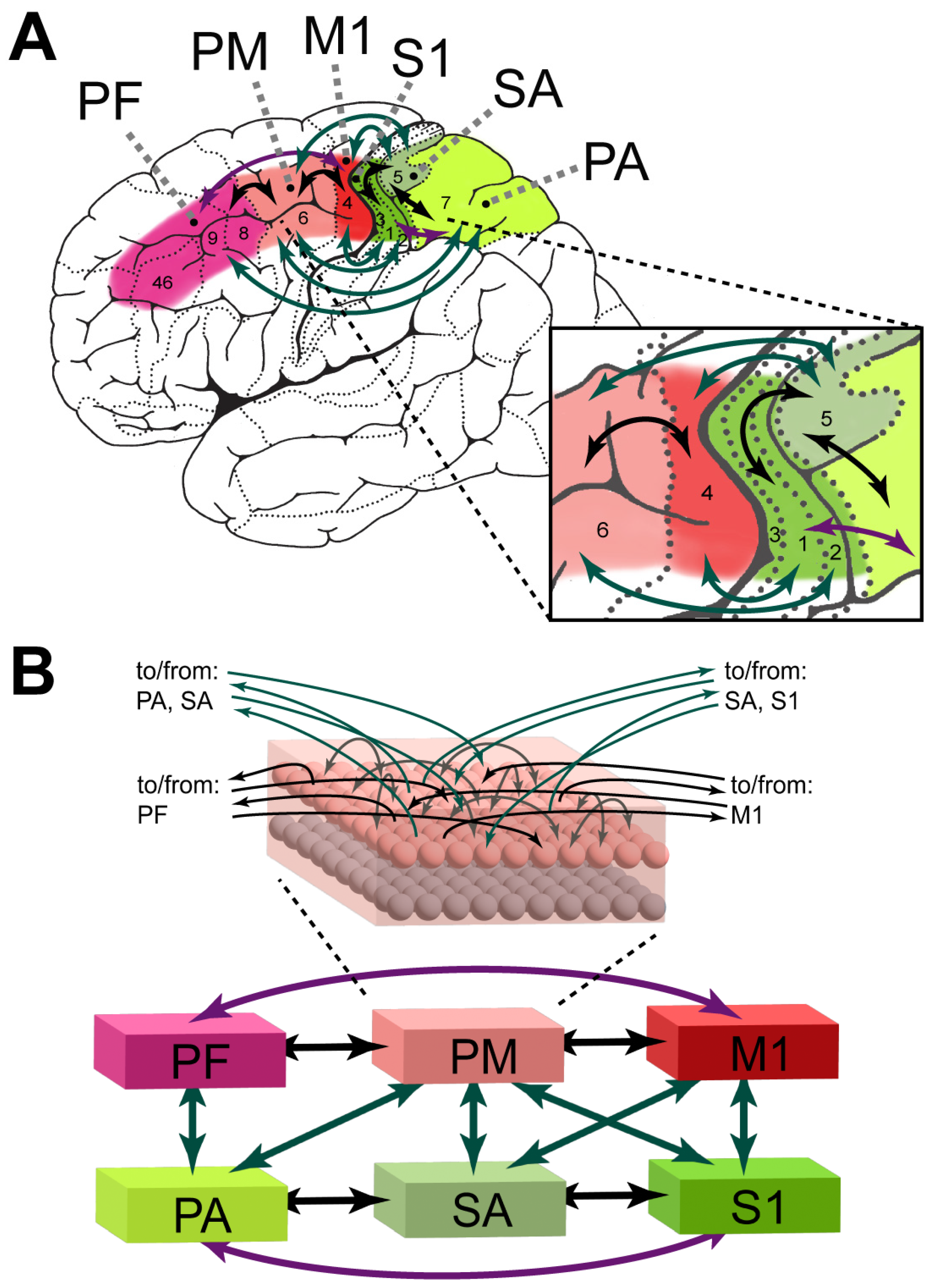
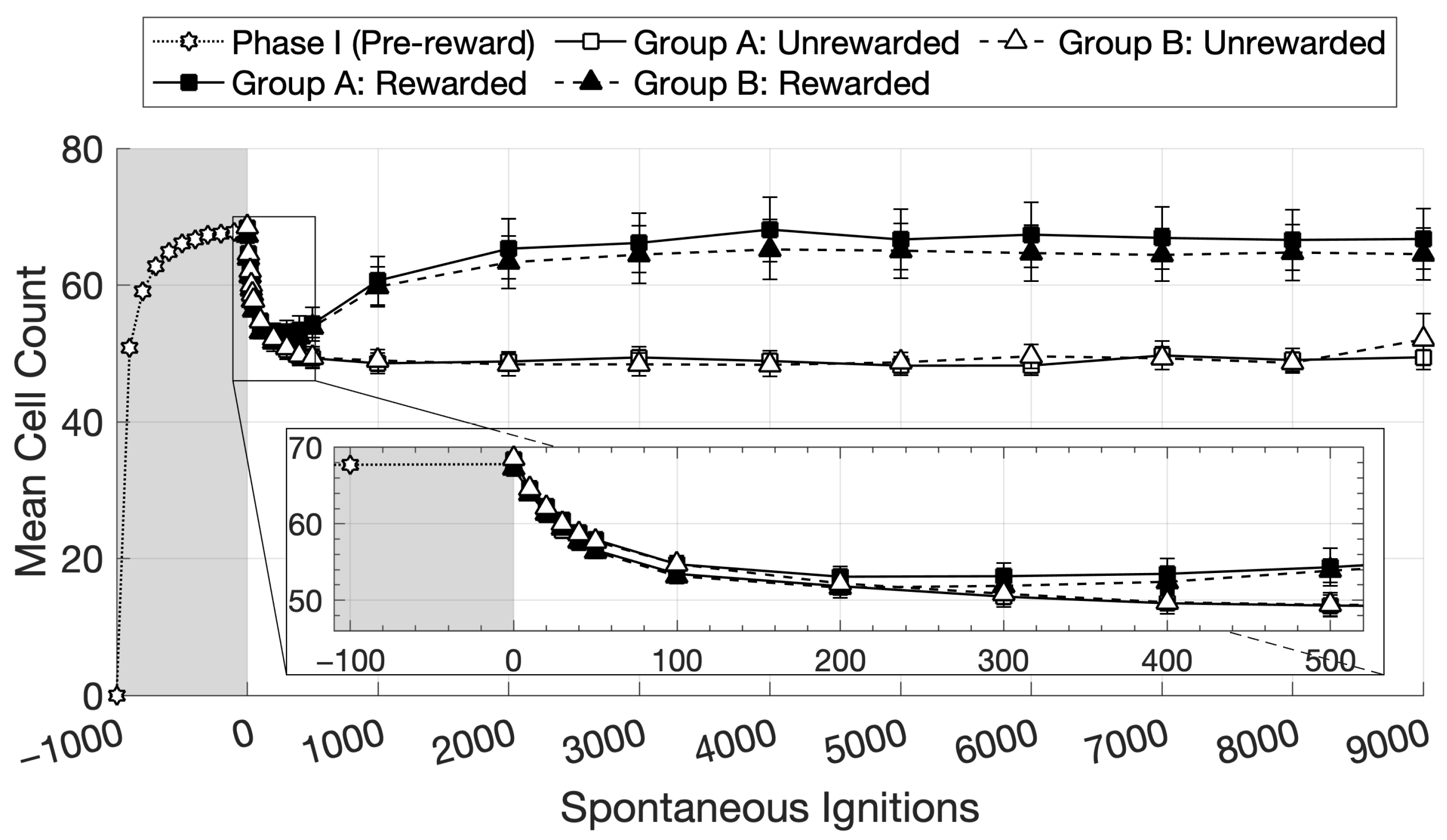
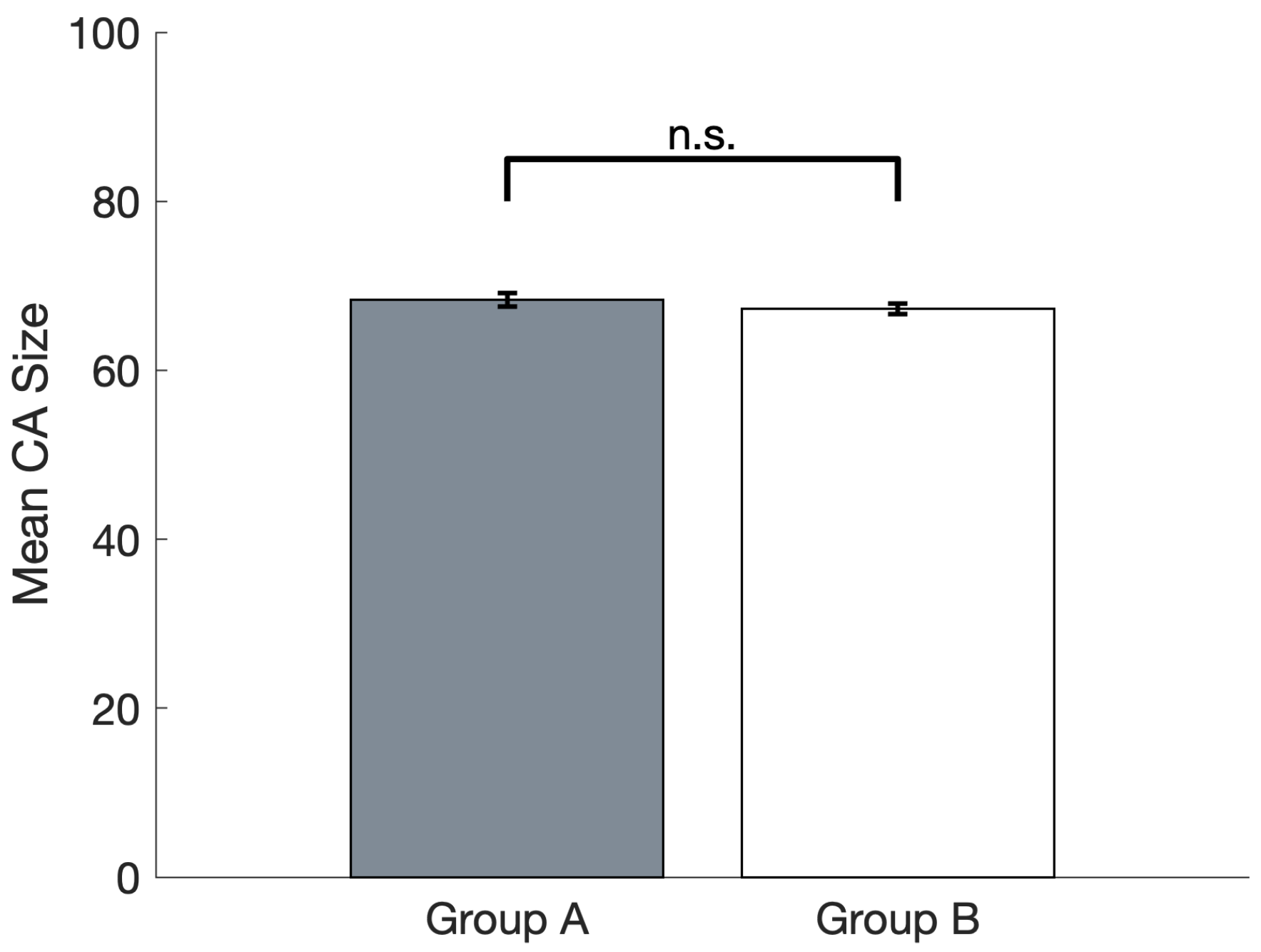
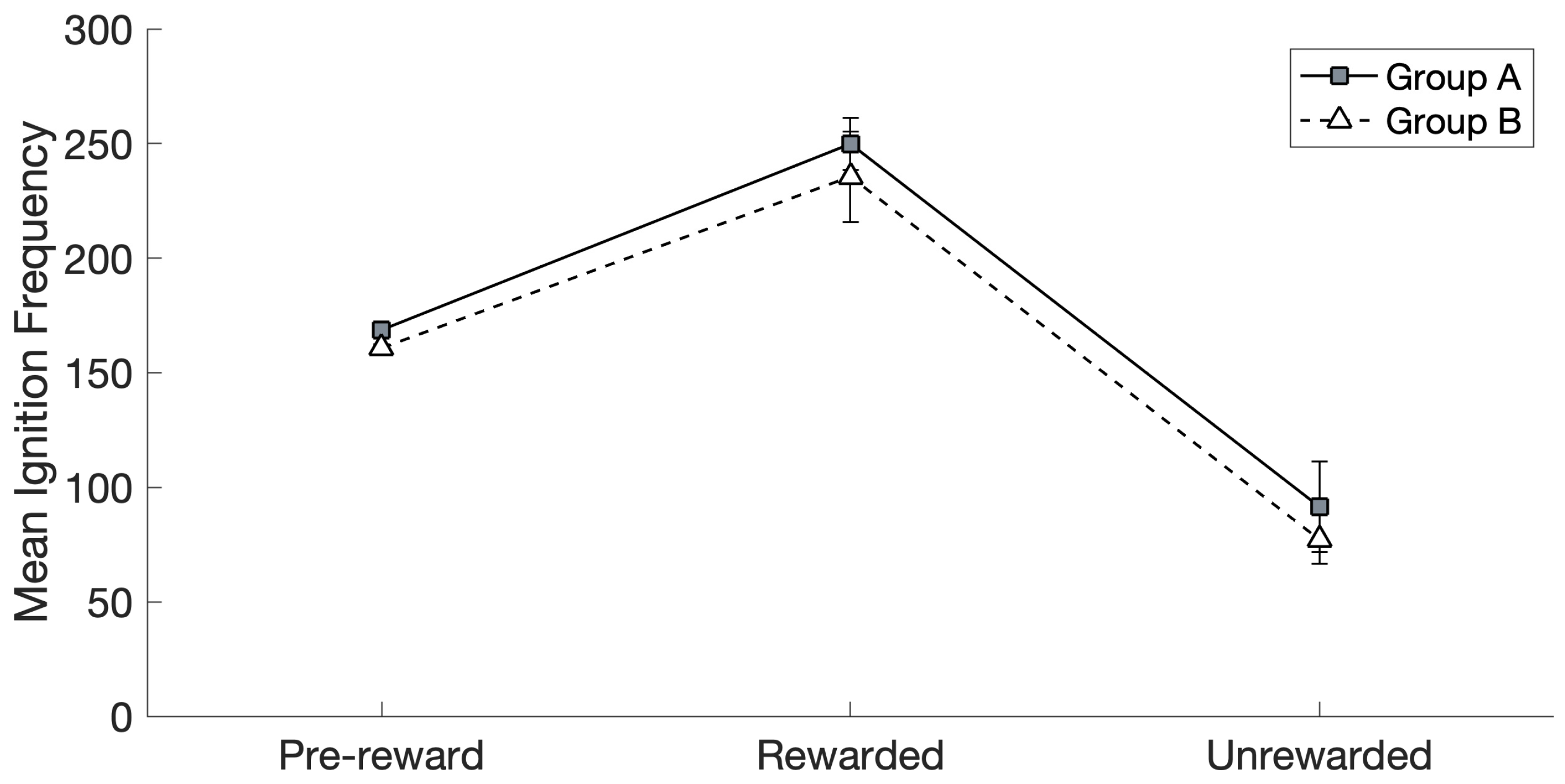
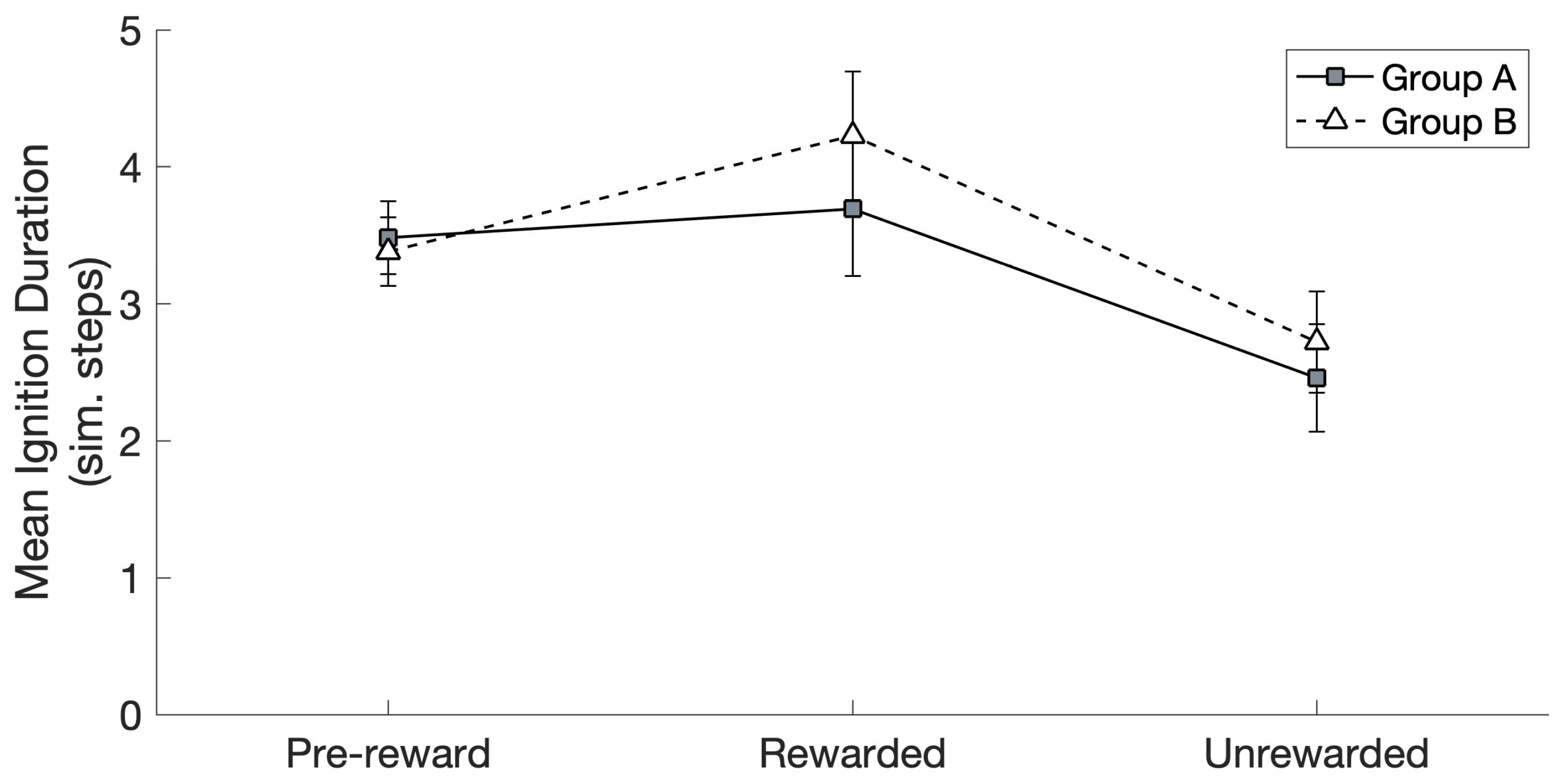
Background/Objectives: From birth, infants learn how to interact with the world through exploration. It has been proposed that this early learning phase is driven by motor babbling: the spontaneous generation of exploratory movements that are progressively consolidated through associative mechanisms. This process leads to the acquisition of a repertoire of hand movements such as single- or multi-finger flexion, extension, touching, and pushing. Later, in a second phase, some of these movements (e.g., those that happen to enable access to biologically salient stimuli, such as grasping food) are further reinforced and consolidated through rewards obtained from the environment. However, the neural mechanisms underlying these processes remain unclear. Here, we used a fully neuroanatomically and neurophysiologically constrained neural network model to investigate the brain correlates of these processes. Methods: The model consists of six neural maps simulating six human brain areas, including three pre-central (motor-related) and three post-central (sensory-related) regions. Each map is composed of excitatory and inhibitory spiking neurons, with biologically constrained within- and between-area connectivity forming recurrent circuits. Hand action execution and corresponding haptic perception are simulated simply as activity in primary motor and somatosensory model areas, respectively. During an initial “exploratory” phase, the network learned, via Hebbian mechanisms, associations—as emerging distributed cell assembly (CA) circuits—linking “motor” to corresponding “haptic feedback” patterns. As a result of this initial training, the model began to exhibit spontaneous ignitions of these CA circuits, an emergent phenomenon taken to represent internally generated, non-stimulus-driven attempts at hand action exploitation. In a second phase, a global reward signal, simulating dopamine-mediated reward encoding, was applied to only a subset of “successful” actions upon their noise-driven ignition. Results: During the first exploratory phase, the neural architecture autonomously developed “action-perception” circuits corresponding to multiple possible hand actions. During the subsequent exploitation phase, positively reinforced circuits increased in size and, consequently, in frequency of spontaneous ignition, when compared to non-rewarded “actions”. Conclusions: These results provide a mechanistic account, at the cortical-circuit level, of the early acquisition of hand actions, of their subsequent consolidation, and of the spontaneous transition of an agent’s behavior from exploration to reward-seeking, as typically observed in humans and animals during development.
Keywords: reinforcement learning; dopamine; spontaneous action; neurobiologically realistic modeling; deep network; cell assembly reinforcement learning; dopamine; spontaneous action; neurobiologically realistic modeling; deep network; cell assembly