Article

Personalized Dose Selection for Treatment of Patients with Neuropsychiatric Disorders Using tDCS


by
Sagarika Bhattacharjee
1,*,
Rajan Kashyap
2,
Vanteemar S. Sreeraj
3,
Palanimuthu T. Sivakumar
3,†,
Ganesan Venkatasubramanian
3,
John E. Desmond
4,†,
S. H. Annabel Chen
5,6,7,
T. N. Sathyaprabha
1 and
Kaviraja Udupa
1
1
Department of Neurophysiology, National Institute of Mental Health & Neurosciences NIMHANS, Bengaluru 560029, India
2
Department of Neuroimaging and Interventional Radiology, National Institute of Mental Health & Neurosciences NIMHANS, Bengaluru 560029, India
3
Department of Psychiatry, National Institute of Mental Health & Neurosciences NIMHANS, Bengaluru 560029, India
4
Department of Neurology, School of Medicine, The Johns Hopkins University School of Medicine, Baltimore, MD 21218, USA
5
Department of Psychology, Nanyang Technological University, Singapore 639798, Singapore
6
Centre for Research and Development in Learning (CRADLE), Nanyang Technological University, Singapore 639798, Singapore
7
Lee Kong Chian School of Medicine (LKC Medicine), Nanyang Technological University, Singapore 639798, Singapore
*
Author to whom correspondence should be addressed.
These authors contributed equally to this work as senior authors.
Brain Sci. 2024, 14(12), 1162; https://doi.org/10.3390/brainsci14121162

Submission received: 27 August 2024 / Revised: 2 October 2024 / Accepted: 3 October 2024 / Published: 21 November 2024

Abstract

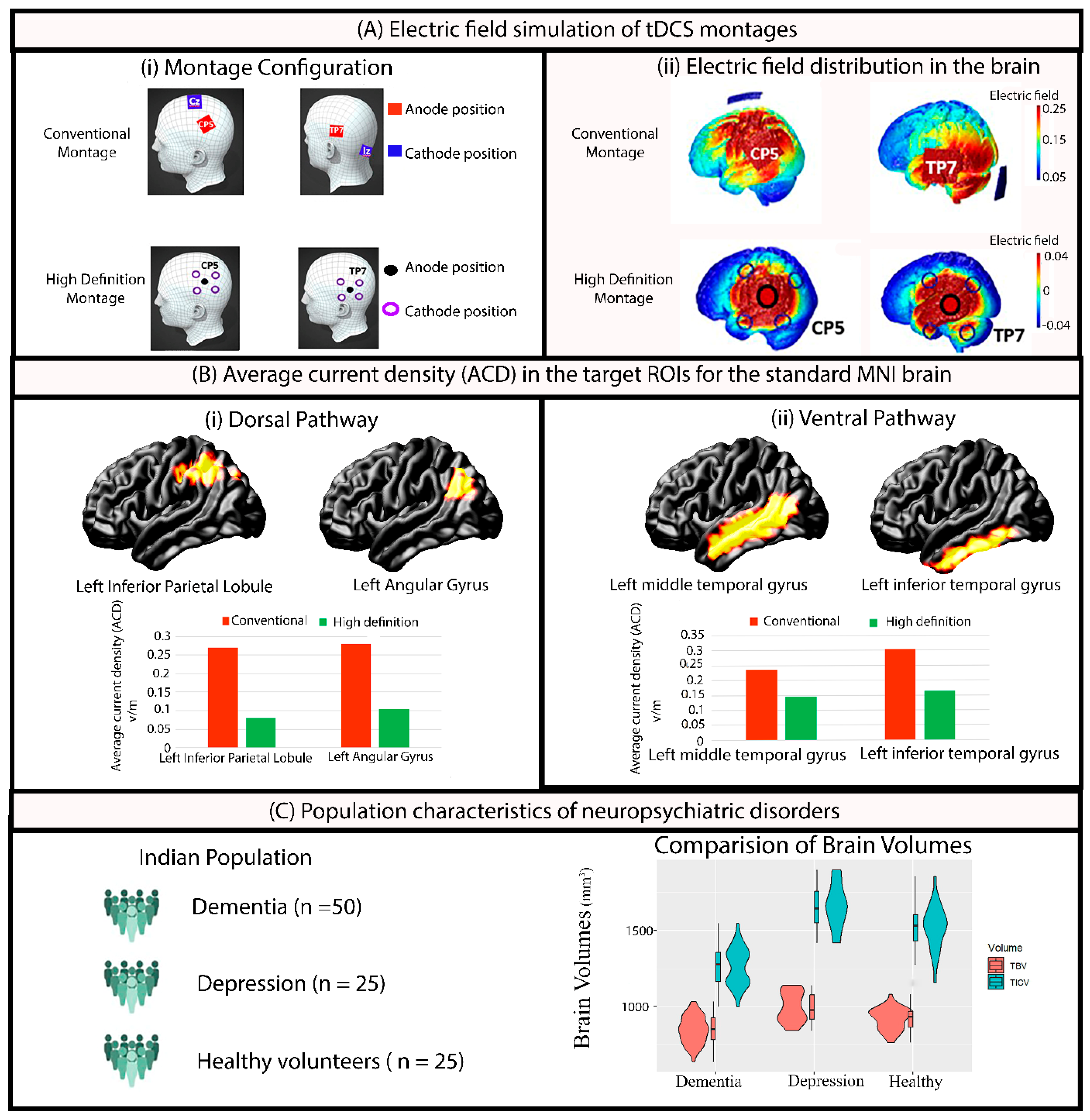
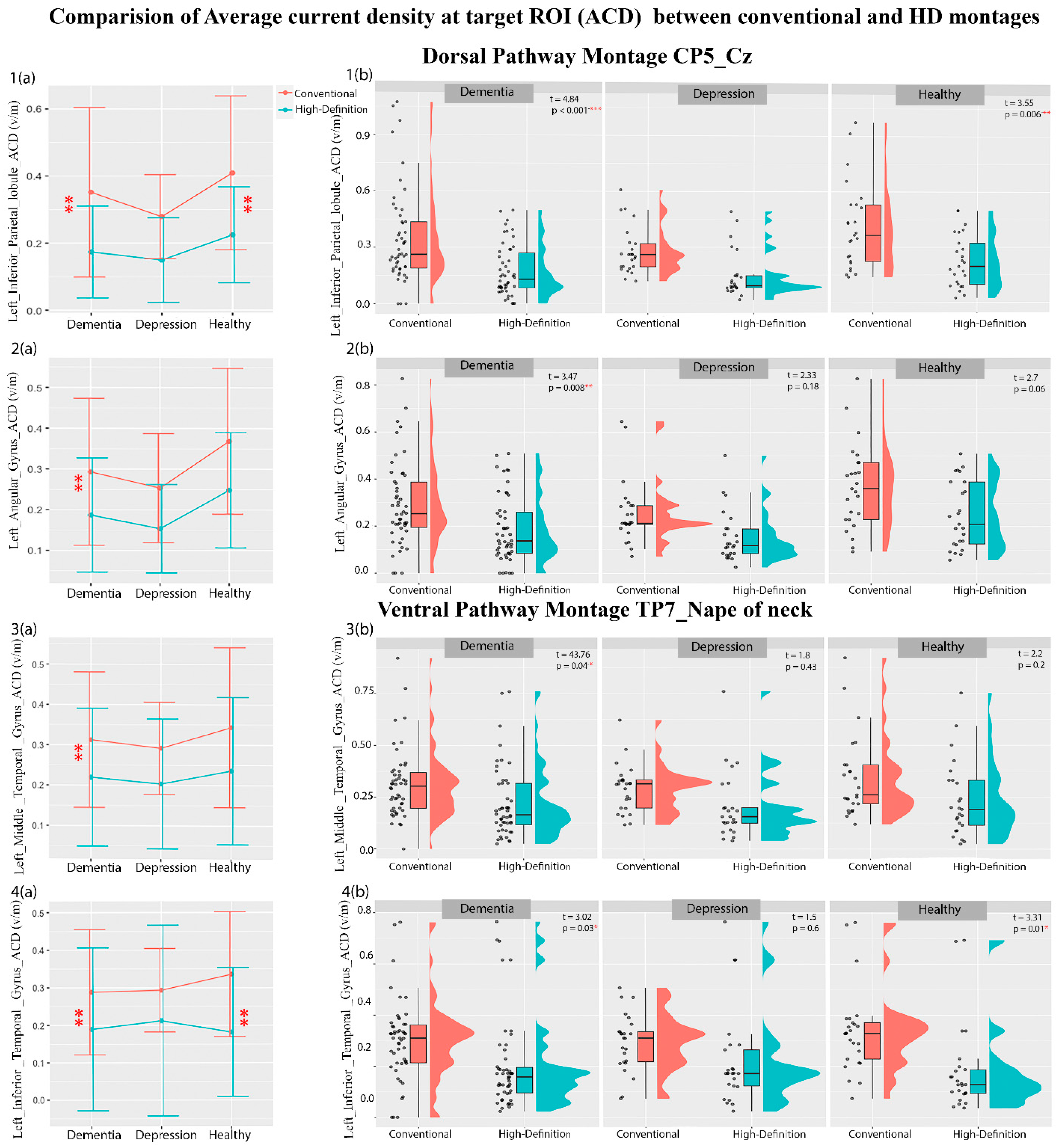
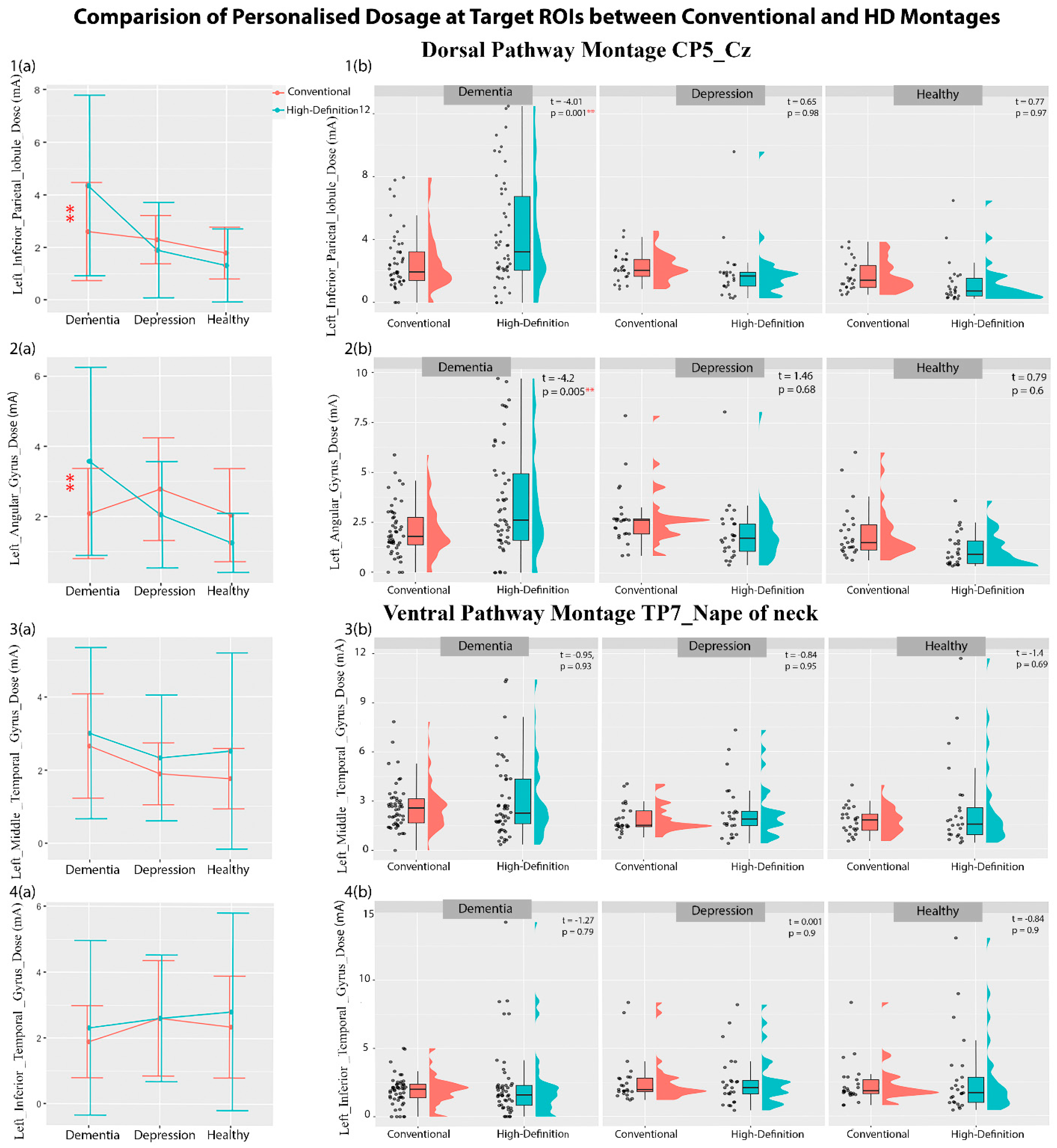
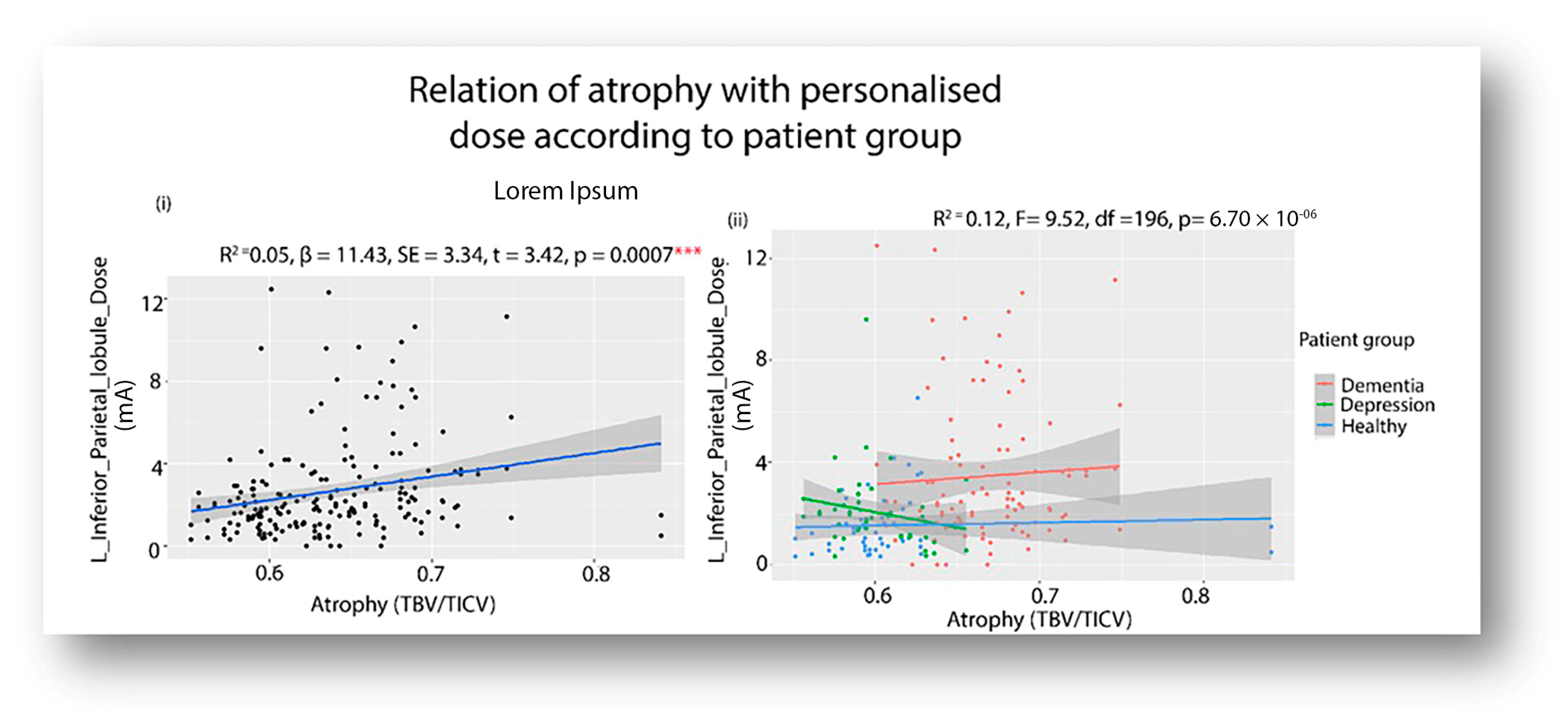
Background: Individualizing transcranial direct current stimulation (tDCS) parameters can improve precision in neuropsychiatric disorders. One important decision for the clinician is the selection of an appropriate montage—conventional or high-definition (HD)—to implement dose-controlled tDCS while maintaining the patient’s safety. Method: The present study simulated tDCS administration using T1-weighted brain images of 50 dementia, 25 depression patients, and 25 healthy individuals for two conventional and HD montages, targeting the regions of interest (ROIs) in the dorsal and ventral pathways that support language processing. For each tDCS configuration, the electric fields at the ROIs and the individualized dose required to achieve the desired current intensity at the target ROI across the subjects were estimated. Linear regression was performed on these parameters. Result: A significant relationship between atrophy and current dose that varies according to the disease was found. The dementia patients with significant brain atrophy required a higher personalized dosage for HD montage, as the current intensity at the target ROIs was lower and more variable than that of conventional montage. For dementia, tDCS individualization is pathway-dependent, wherein HD configuration of the dorsal route requires current dosages above the safety limit (>4 mA) for 46% of individuals. However, there was no significant difference in electrode configurations between the HD and traditional setups for depression and healthy volunteers without significant brain atrophy. Conclusions: HD-tDCS with fixed locations is limited, making conventional tDCS more effective for dose-controlled applications. In patients with atrophy, individualized adjustments based on simulations are needed due to the variable stimulation strength in the ROI.
Keywords: individualization; atrophy; precision medicine; transcranial direct current stimulation; HD—conventional montage trade-off individualization; atrophy; precision medicine; transcranial direct current stimulation; HD—conventional montage trade-off