Review

Cellular Spheroids of Mesenchymal Stem Cells and Their Perspectives in Future Healthcare

1
Institute of Polymer Science and Engineering, National Taiwan University, Taipei 10617, Taiwan
2
Consolidated Research Institute for Advanced Science and Medical Care, Waseda University, Tokyo 169-8555, Japan
3
Center of Tissue Engineering and 3D Printing, National Taiwan University, Taipei 10617, Taiwan
4
Institute of Cellular and System Medicine, National Health Research Institutes, Zhunan 35053, Taiwan
*
Author to whom correspondence should be addressed.
Appl. Sci. 2019, 9(4), 627; https://doi.org/10.3390/app9040627
Submission received: 29 November 2018 / Revised: 14 January 2019 / Accepted: 2 February 2019 / Published: 13 February 2019
(This article belongs to the Section Applied Biosciences and Bioengineering)

Abstract

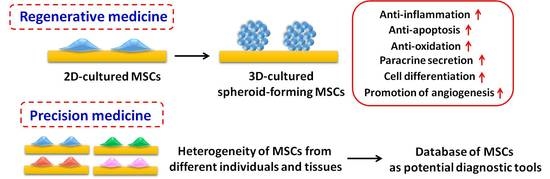
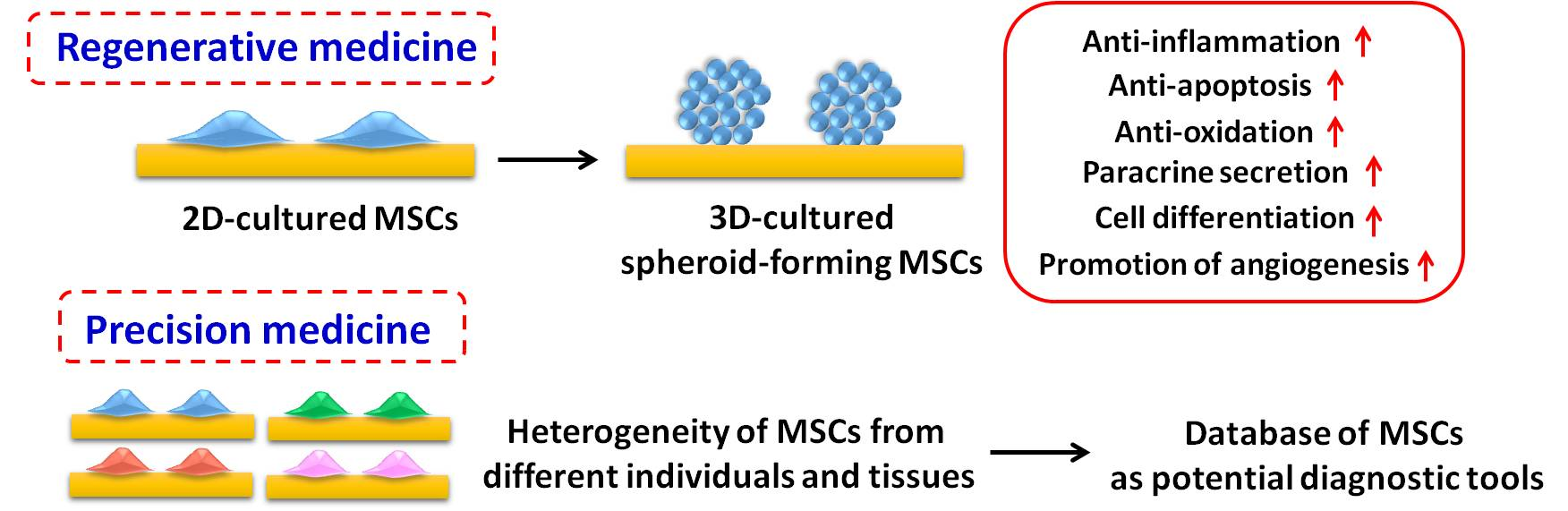
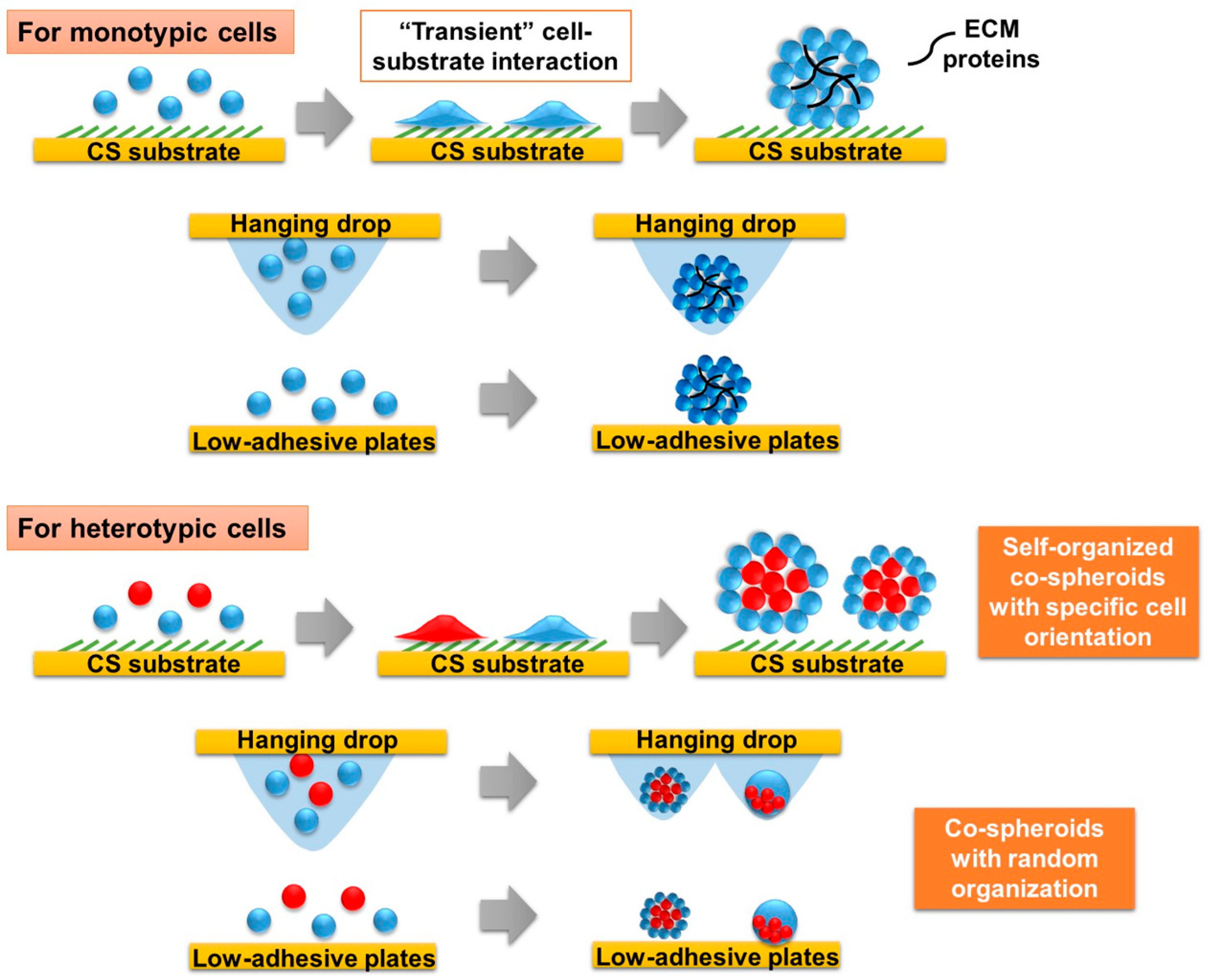
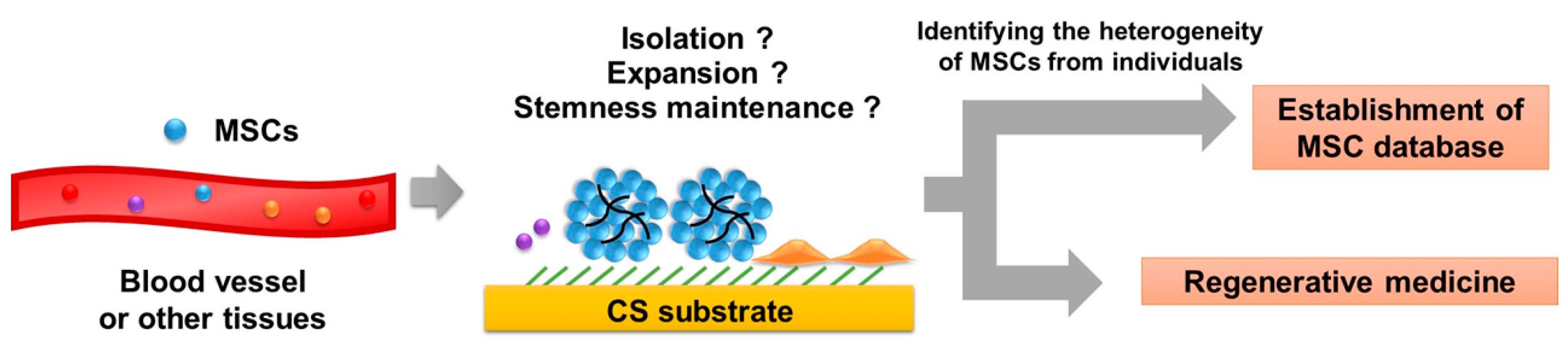
Intrinsic cellular properties of several types of cells are dramatically altered as the culture condition shifts from two-dimensional (2D) to three-dimensional (3D) environment. Currently, several lines of evidence have demonstrated the therapeutic potential of mesenchymal stem cells (MSCs) in regenerative medicine. MSCs not only replenish the lost cells, they also promote the regeneration of impaired tissues by modulating the immune responses. Following the development of 3D cell culture, the enhanced therapeutic efficacy of spheroid-forming MSCs have been identified in several animal disease models by promoting differentiation or trophic factor secretion, as compared to planar-cultured MSCs. Due to the complicated and multifunctional applications in the medical field, MSCs are recently named as medicinal signaling cells. In this review, we summarize the predominant differences of cell–environment interactions for the MSC spheroids formed by chitosan-based substrates and other scaffold-free approaches. Furthermore, several important physical and chemical factors affecting cell behaviors in the cell spheroids are discussed. Currently, the understanding of MSCs spheroid interactions is continuously expanding. Overall, this article aims to review the broad advantages and perspectives of MSC spheroids in regenerative medicine and in future healthcare.
Keywords: mesenchymal stem cells; 3D cell culture; cellular spheroids; chitosan mesenchymal stem cells; 3D cell culture; cellular spheroids; chitosan
Graphical Abstract