1. Introduction
Additive manufacturing (AM) is a modern approach to manufacturing in which products are created by layering material based on a digital model. This approach allows for a high degree of geometric freedom and efficient use of material compared to traditional manufacturing methods [
1]. Over the past decade, additive technologies have seen a significant boom in industrial and research applications, from healthcare, automotive, and aerospace to the development of functional prototypes [
2,
3]. Technologies such as fused filament fabrication (FFF) have become particularly popular due to their accessibility, ability to process a wide range of thermoplastic materials, and the possibility to optimize the mechanical and surface properties of products by controlling process parameters [
4]. The widespread use of AM is also linked to the development of new polymer materials, improvements in energy efficiency, and the growing role of this technology in sustainable manufacturing [
5,
6]. Annealing is an important post-processing step in improving the properties of polymer materials produced by fused filament fabrication (FFF) technology [
7]. During 3D printing, rapid cooling of individual layers occurs, which often leads to poor adhesion between layers and deterioration of mechanical properties. This effect, caused by incomplete cross-linking of polymer chains between layers, leads to anisotropy and reduced strength of the prints [
8,
9,
10]. Heat treatment after printing allows for the release of internal stresses and increases the degree of crystallinity. Annealing thus leads to improved strength, stiffness, and thermal stability of 3D-printed polymers and composites [
11,
12]. With appropriately selected temperatures and exposure times, a significant increase in Young’s modulus and tensile strength can be achieved, while simultaneously reducing the residual porosity of the material [
13]. Polyamide 6 (PA6) is widely used in engineering applications due to its excellent mechanical strength, thermal resistance, and chemical stability. However, FFF-printed PA6 parts often suffer from limited interlayer bonding and dimensional instability [
14]. Although several studies have investigated the influence of annealing temperature on the crystallinity and mechanical properties of polyamide-based materials, the effect of exposure time during the annealing process remains less explored [
15,
16,
17]. Recent studies have shown that mechanical performance of additively manufactured polymer components can be tailored by optimizing process parameters and thermal conditions, which directly influence interlayer bonding, anisotropy, and load-bearing capability of printed structures [
18]. The present study aims to investigate the influence of annealing exposure time on the mechanical properties and microstructural behaviour of PA6 and its fiber-reinforced composites produced by fused filament fabrication. The results provide insights into optimizing post-processing conditions to achieve enhanced mechanical performance and reliability of additively manufactured polymer components.
3. Results
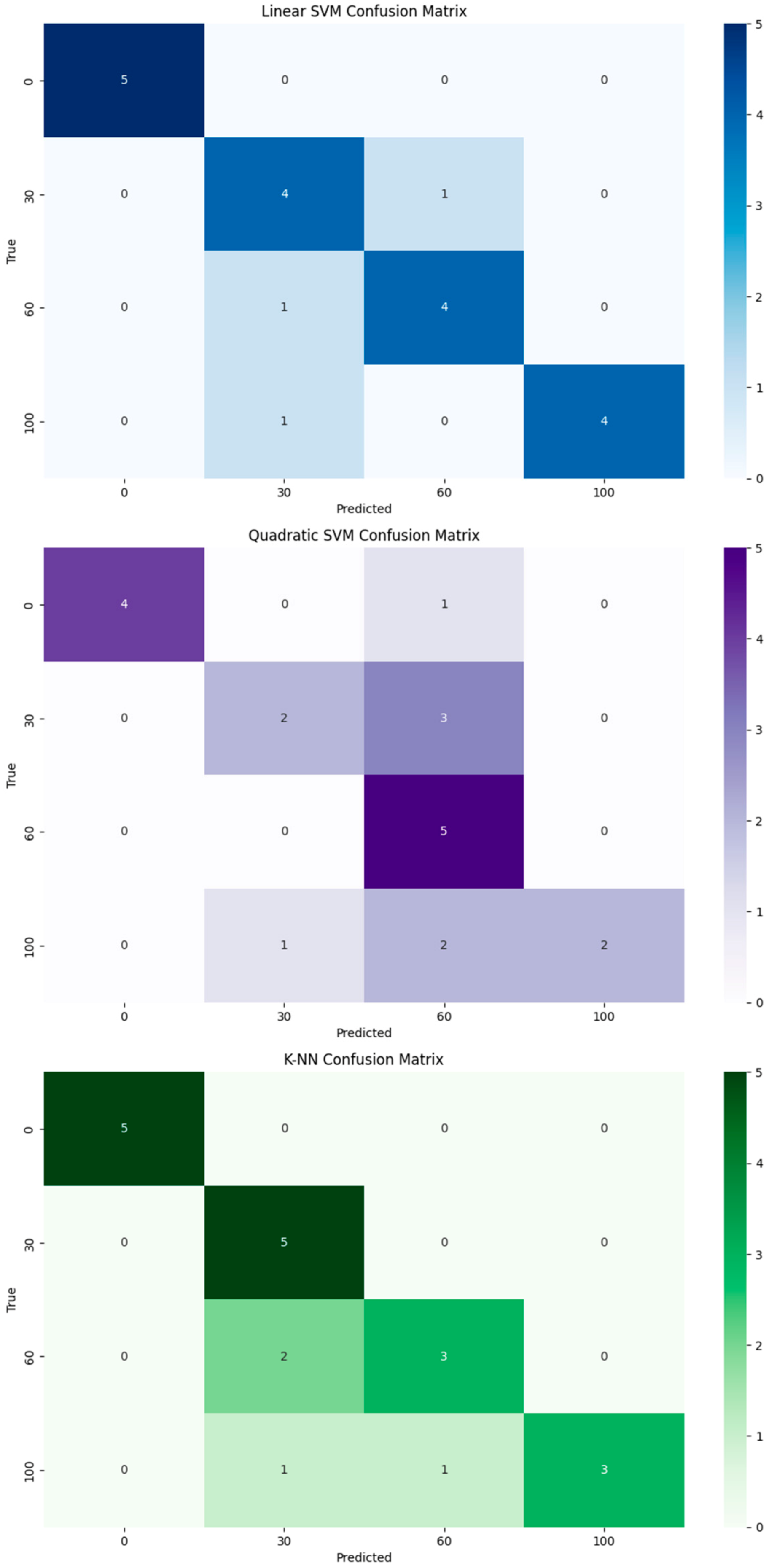
When classifying Onyx material exposed to thermal stress, the Linear SVM model showed the best agreement, with an average F1 score of 0.86 across all thermal exposure times. It is evident from
Figure 3 that the most significant marker in the concordance matrix is material not exposed to thermal stress. The reduced cross-concordance at the first exposure time (30 min), with an F1 score of 0.73, indicates significant structural changes in the material. The classification report shows that the reference state of the material without thermal stress (0 min) was classified unambiguously (F1 score of 1.00), confirming the high repeatability and stability of its markers in the measured data. This state also forms the most significant marker in the agreement matrix, as it overlaps minimally with other classes. At the first degree of thermal stress (30 min), there was a noticeable decrease in classification accuracy, with an F1 score of 0.73 indicating significant material changes resulting from structural modifications to the polymer matrix. The increased cross-correlation of this class with higher degrees of thermal stress indicates that degradation or relaxation processes are initiated in this interval.
With further increases in exposure time (60 and 100 min), the classification stabilizes again, with F1 scores reaching 0.80 and 0.89, respectively. This phenomenon indicates that after an initial phase of significant changes, the material state consolidates into a more recognizable structural configuration. The significantly lower performance of the quadratic SVM (65%) indicates that the separation of classes is predominantly linear in nature. The K-NN model achieved 80% accuracy, but with higher sensitivity to local class overlap, especially at higher temperature loads.
For the Onyx material, one-way ANOVA revealed statistically significant differences among the tested groups (F (3,16) = 19.38,
p < 0.0001). According to Tukey’s HSD post hoc test [
23] (α = 0.05) in
Table 3, the non-annealed Onyx samples (0 min) showed significantly lower tensile strength compared to all annealed conditions (
p < 0.001).
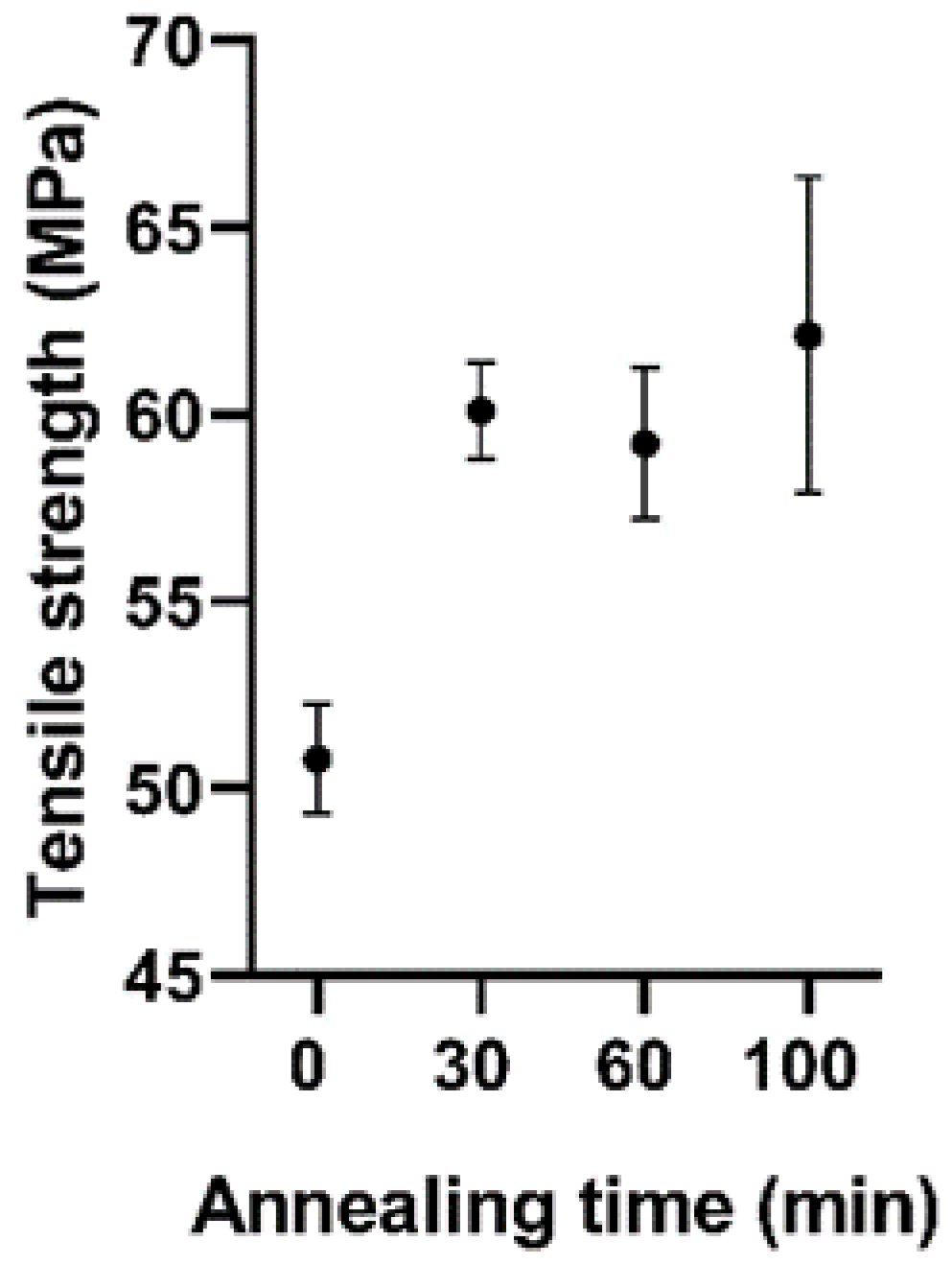
No significant differences were found among the annealed groups (30, 60, and 100 min), indicating that the main improvement in mechanical performance occurred within the first 30 min of annealing (
Figure 4,
Table 4).
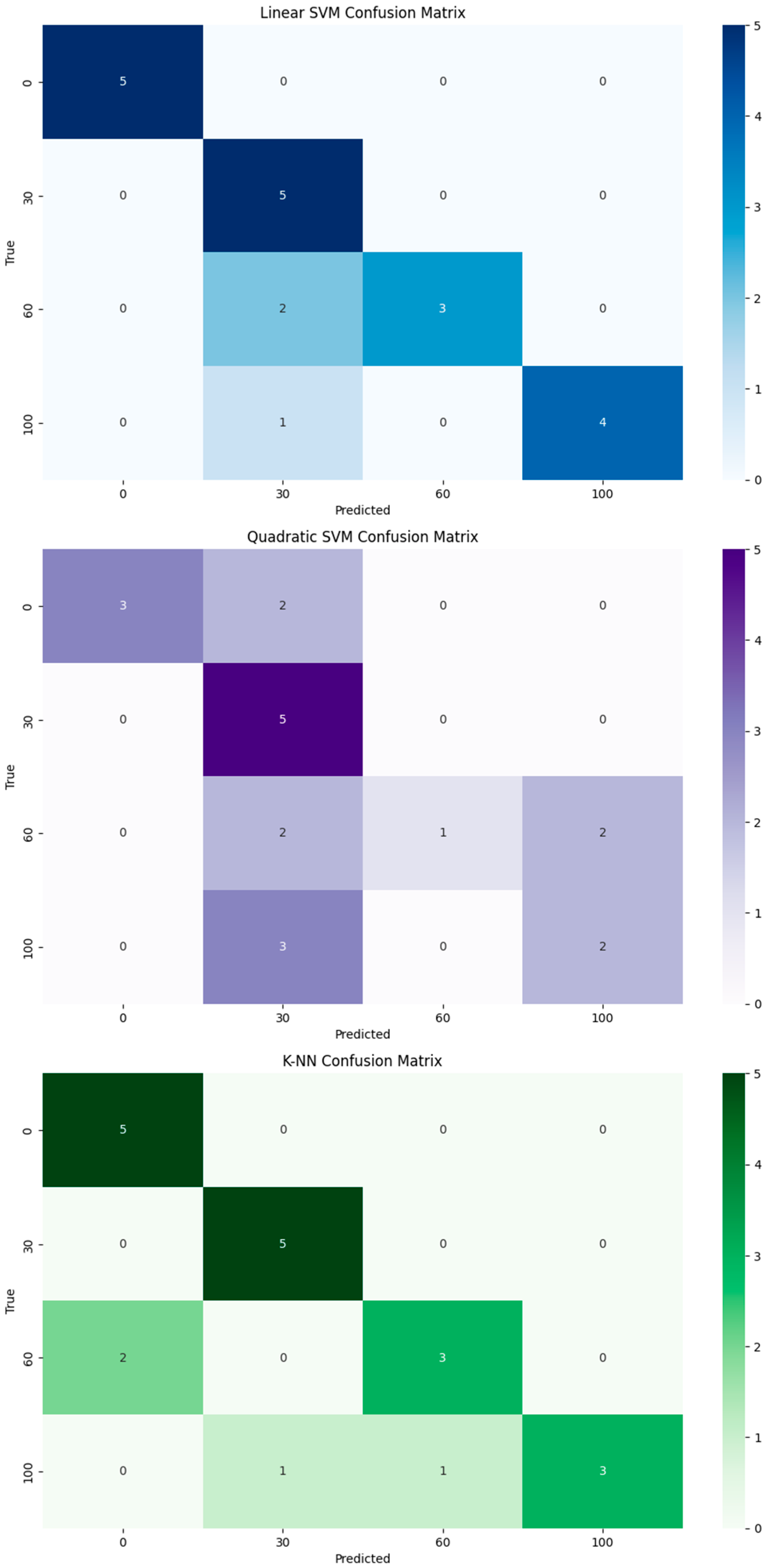
In the case of PA6 material, Linear SVM (
Figure 5) again showed the best results, with an average F1 score of 0.85, which is comparable to the Onyx material. Here, too, the unexposed material (0 min) was classified flawlessly, confirming its significant distinguishability from thermally stressed states. Quadratic SVM fails more significantly in this case (55% accuracy), especially in the 60 min class, where the F1 score is only 0.33, indicating unstable nonlinear separation. The K-NN model achieved an accuracy of 80%, distinguishing very well between lower temperature loads, but at 60 and 100 min there was an increased rate of confusion between classes.
For the PA6 material, one-way ANOVA revealed no statistically significant differences among the tested groups (F (3,16) = 2.175,
p = 0.1308). Based on the results of Tukey’s HSD post hoc analysis (α = 0.05) in
Table 5, annealing time had no statistically significant influence on the tensile strength of PA6.
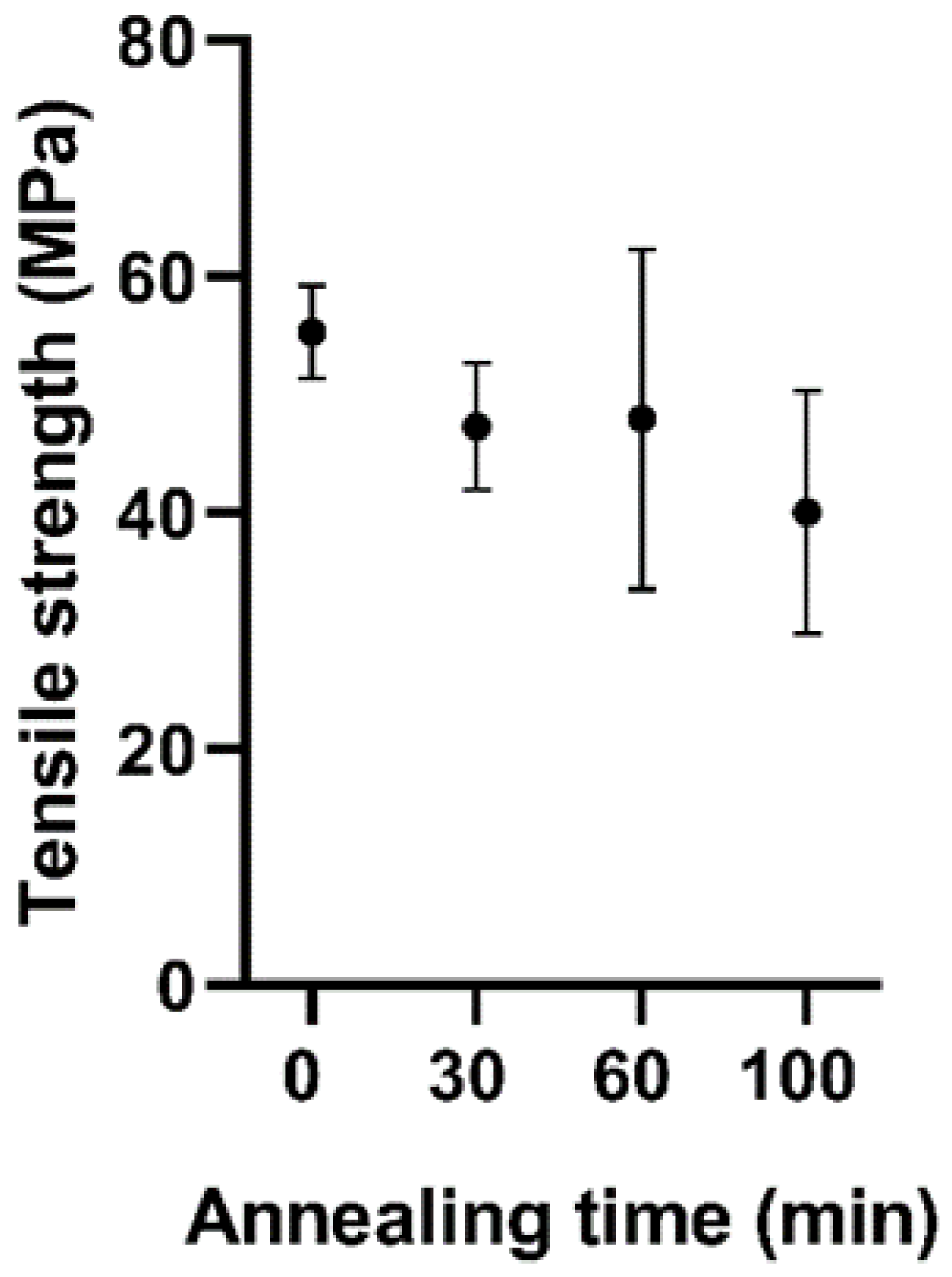
While a gradual decrease in mean strength values was observed with longer exposure (
Figure 6,
Table 6), the differences among the tested groups were not significant, suggesting that PA6 maintained stable mechanical behaviour under the applied thermal conditions.
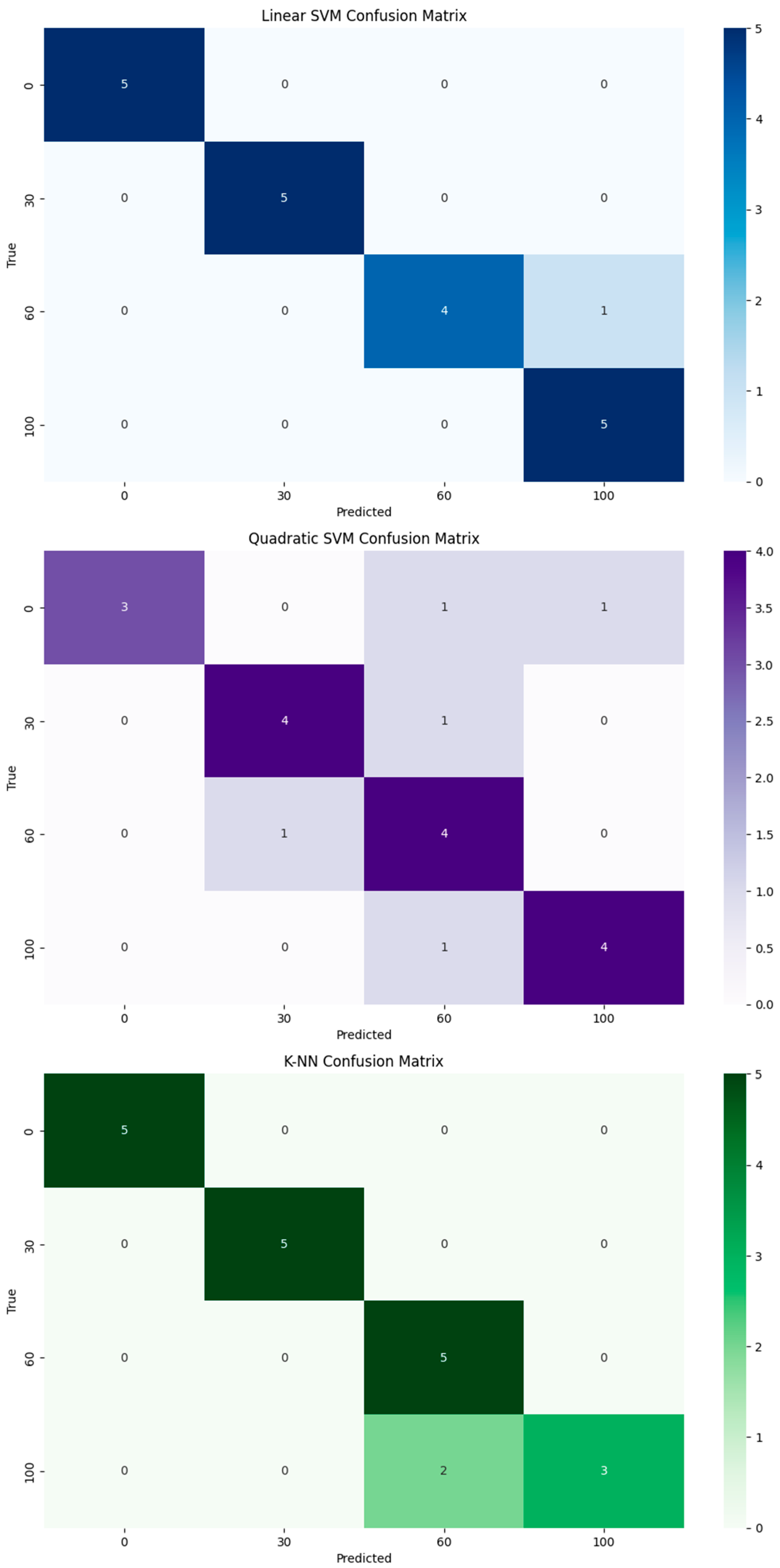
PA6 GF30 (polyamide reinforced with 30% glass fibers) showed the best classifiability of all analysed materials. The Linear SVM model achieved an exceptionally high average F1 score of 0.95, with classes 0 and 30 min classified without any errors. This result indicates high stability and consistency of material response even after initial heat exposure.
Even at higher heat stress times (60 and 100 min), the classification remains very reliable (F1 scores of 0.89 and 0.91), indicating that the presence of glass fibers significantly limits inhomogeneous structural changes and increases the contrast between individual degradation states. Compared to pure PA6 and Onyx materials, the classes are more linearly separable. The quadratic SVM achieved only 75%, with the greatest inaccuracies occurring in the class without thermal stress, indicating that the nonlinear model is unable to adequately capture the global structure of the data. The K-NN model achieved a very good accuracy of 90%, but with a slight deterioration in the distinction between the 60 min and 100 min states, indicating local similarity in material responses at higher temperatures.
In terms of the materials themselves, PA6 GF30 showed the highest degree of classifiability across all models.
The Onyx and PA6 materials showed comparable classification success, but with more pronounced changes in the initial stages of thermal loading. In particular, the 30 min class represented a critical transition state with the highest degree of cross-correlation, indicating the initiation of significant material changes.
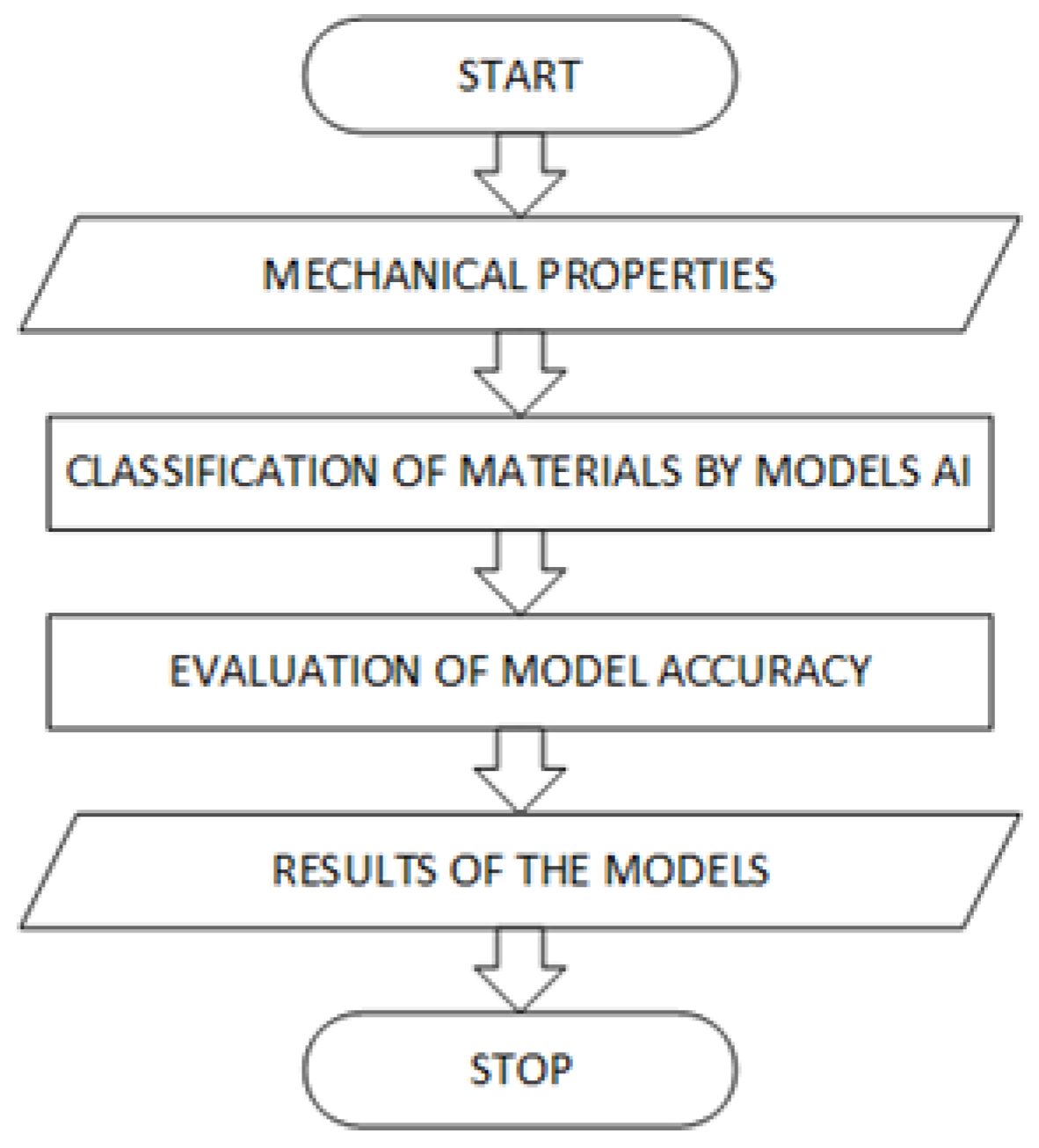
These results suggest that changes in material properties caused by temperature effects are primarily manifested by linear trends in the feature space. Linear SVM is also less prone to overfitting with a small number of samples, which is advantageous in this experiment with a limited number of measurements to apply to a given set (
Figure 7).
For the PA6 GF30 material, one-way ANOVA revealed statistically significant differences among the tested groups (F (3,16) = 23.10,
p < 0.0001). Tukey’s HSD post hoc analysis (α = 0.05) in
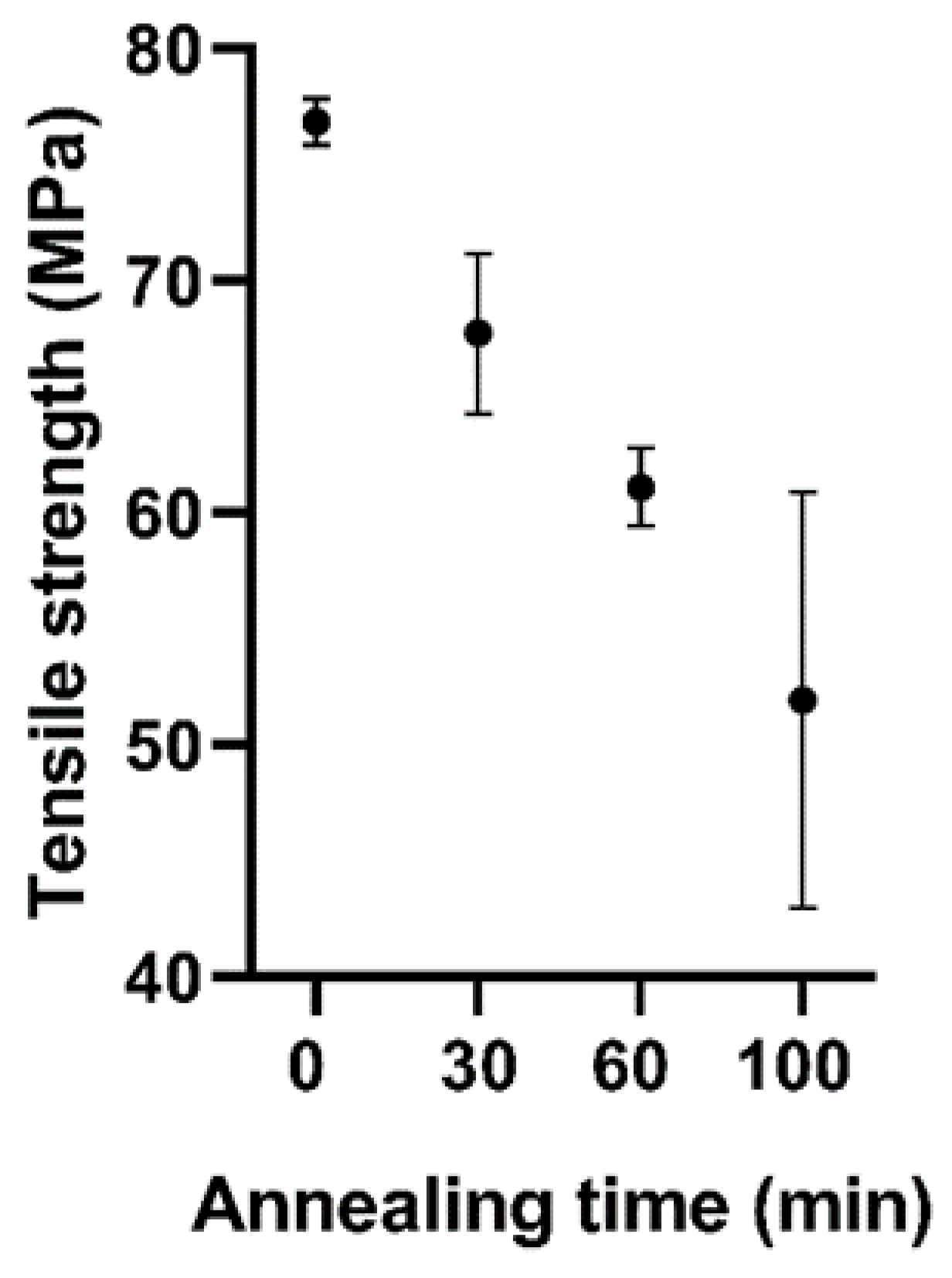
Table 7 revealed a progressive decline in tensile strength with longer annealing times (
Figure 8,
Table 8). The non-annealed PA6 GF30 specimens exhibited significantly higher strength compared to all annealed samples, whereas the 30 min and 60 min groups did not differ significantly from each other. After 100 min of annealing, tensile strength dropped markedly, suggesting deterioration of the polymer–fiber interface under prolonged heat exposure.
4. Discussion
The present study demonstrates that the effect of annealing on FFF-manufactured PA6-based materials strongly depends on material composition, which is in good agreement with previously published findings. For the Onyx composite, a tensile strength increase of approximately 18% after 30 min of annealing at 180 °C was observed, while longer exposure did not result in further statistically significant improvement. Similar behavior was reported by Handwerker et al. [
24], who attributed early-stage strength enhancement in polyamide composites to stress relaxation and improved interlayer bonding, followed by structural stabilization. Mushtaq et al. [
25] also reported that most mechanical benefits of thermal post-processing in PA6-based filaments occur within short exposure times.
In contrast, the continuous decrease in tensile strength of PA6 GF30 with increasing annealing time observed in this study differs from trends reported for neat polyamides but is consistent with findings on fiber-reinforced systems. Kamlendra et al. [
26] and Zaghoul et al. [
27] showed that prolonged thermal exposure can degrade the polymer–glass fiber interface due to thermal mismatch and microstructural damage, leading to reduced load transfer efficiency. The strength reduction of approximately 32% after 100 min observed here supports these conclusions and suggests that annealing conditions beneficial for matrix-dominated materials may be detrimental for glass fiber-reinforced PA6.
For neat PA6, no statistically significant changes in tensile strength were detected, despite a gradual numerical decrease. This result aligns with Zhou et al. [
28] and Clavéria et al. [
29], who reported stable tensile behavior of PA6 under controlled thermal and humidity conditions. The pre-drying of specimens in this study likely minimized hygroscopic effects, which are known to strongly influence the mechanical response of polyamides [
30].
This study is limited by the relatively small sample size and the absence of microstructural characterization. Future work will focus on incorporating SEM analysis and expanding the dataset to improve model robustness and provide deeper insight into material behavior.
The high accuracy of Linear SVM models (85–95%) suggests that thermally induced changes in mechanical behavior follow predominantly linear trends. Although the evolution of tensile strength with annealing time is not strictly linear (e.g., Onyx in
Figure 4), the classification results suggest that the data are largely linearly separable. This indicates that the underlying changes in material behavior can be approximated by linear decision boundaries. These findings are consistent with observations by Pernica et al. [
31] and Mita’ et al. [
32] who reported effective linear separability of material states in additively manufactured polymers when thermal or mechanical degradation progresses gradually. Similar trends have been reported in recent studies, where predictive modelling combined with experimental testing enabled reliable evaluation of damage evolution and mechanical performance of additively manufactured polymer structures under tensile loading conditions [
33].
5. Conclusions
This study quantified the influence of annealing time on the tensile strength of FFF-manufactured PA6-based materials. For the Onyx composite, annealing at 180 °C resulted in a significant increase in tensile strength from 50.8 MPa (0 min) to 60.1 MPa after 30 min, representing an improvement of approximately 18%. Further annealing up to 60 and 100 min did not lead to statistically significant additional gains, with tensile strength values remaining in the range of 59.2–62.1 MPa.
In contrast, PA6 GF30 exhibited a continuous decrease in tensile strength with increasing annealing time. The strength declined from 76.9 MPa (0 min) to 67.7 MPa (30 min) and further to 51.9 MPa after 100 min, corresponding to an overall reduction of approximately 32%, indicating degradation of the polymer–glass fiber interface during prolonged thermal exposure.
For neat PA6, tensile strength decreased from 55.3 MPa (0 min) to 40.0 MPa (100 min); however, these changes were not statistically significant (p > 0.05), suggesting stable mechanical behavior under the applied annealing conditions.
Machine learning classification supported these findings, with the Linear SVM model achieving accuracies of 85% for Onyx and PA6, and 95% for PA6 GF30, confirming that thermally induced material changes are predominantly linear. The results demonstrate that annealing is beneficial for Onyx within short exposure times, while extended annealing is detrimental for glass fiber-reinforced PA6, emphasizing the need for material-specific optimization of post-processing conditions.