Article

Study on Near-Field Spectral Characteristics and Vibration Control of Multi-Hole Blasting Based on VMD


1
Xinjiang Xuefeng Sci-Tech (Group) Co., Ltd., Urumqi 830047, China
2
Xinjiang Xuefeng Blasting Engineering Co., Ltd., Urumqi 830047, China
3
School of Geology and Mining Engineering, Xinjiang University, Urumqi 830047, China
*
Author to whom correspondence should be addressed.
Appl. Sci. 2026, 16(8), 3665; https://doi.org/10.3390/app16083665
Submission received: 18 March 2026 / Revised: 3 April 2026 / Accepted: 6 April 2026 / Published: 9 April 2026

Featured Application

The findings of this research can be directly applied to the design and optimization of multi-hole millisecond-delay blasting networks in open-pit mines and complex geological environments. By implementing the proposed spatial distance-based dynamic matching strategy for delay times—specifically utilizing shorter delays in near-slope regions to suppress peak particle velocity and longer delays in far-field areas to reduce destructive low-frequency energy concentration—mining engineers can effectively mitigate blasting-induced vibration hazards. This application provides a practical, high-precision technical guideline for safeguarding mine slopes and adjacent structures while ensuring efficient rock fragmentation during mining operations.

Abstract

To explore the spectral characteristics of near-field vibration signals from multi-hole millisecond-delay blasting in open-pit mines and the modulation effect of delay time on blasting energy distribution, field blasting vibration tests with multi-gradient delays were conducted taking an open-pit coal mine in Xinjiang as the engineering background. Particle Swarm Optimization (PSO) optimized Variational Mode Decomposition (VMD) and Hilbert-Huang Transform (HHT) were introduced for the refined processing and frequency band energy ratio analysis of the measured signals, and field vibration control tests were subsequently carried out. The results show that compared with the traditional Empirical Mode Decomposition (EMD), the PSO-optimized VMD can effectively overcome the mode aliasing phenomenon. By extracting the high-frequency Intrinsic Mode Function (IMF7) that characterizes the instantaneous detonation impulse, the actual delay time was successfully inverted to be 10.47 ms. The inter-hole delay time significantly affects the time-frequency distribution of vibration energy. Under the 25 ms delay condition, the energy ratio of the high-frequency band is the highest, and the low-frequency energy accumulation degree is the lowest, which is most conducive to shortening the vibration duration and accelerating energy attenuation. Control tests further confirmed that adopting a 17 ms delay in the near-slope area can effectively control the peak particle velocity (PPV) in the near field, while adopting a 23 ms delay in the middle and far areas can further reduce the low-frequency energy concentration. The research results demonstrate a dynamic matching strategy for millisecond delays based on spatial distance differences, which has important guiding significance for realizing safe and efficient blasting vibration control in open-pit mines.

1. Introduction

In the mining process of open-pit mines, drilling and blasting are the primary means of achieving rock fragmentation. However, the strong ground vibrations induced by them pose a serious threat to the stability of surrounding buildings and slopes [1]. In recent years, with the extension of blasting engineering into complex environments, significant progress has been made in the research of blasting vibration control technologies [2]. Accurate prediction of peak particle velocity (PPV) is a prerequisite for effective control. Traditional empirical formulas often have limitations, which has led to the widespread application of artificial intelligence and machine learning algorithms in the prediction field [3]. Zhang et al. [4] and Li et al. [5] combined swarm intelligence-optimized support vector machine (SVM) and probability theory models, respectively, to significantly improve the prediction accuracy of peak vibration velocity. However, prediction is only the foundation. Active control through optimizing blasting parameters remains the most direct means of mitigating vibration hazards [6].
Among numerous active control technologies, precise delay blasting achieves vibration reduction utilizing the out-of-phase interference mechanism of seismic waves by rationally regulating the inter-hole delay time, and its effect is particularly remarkable [7]. Li et al. [8] and Huang et al. [9] studied the vibration reduction mechanism of short-delay blasting and its frequency-domain control methods. With the popularization of high-precision digital electronic detonators, Xie et al. [10] and Lin et al. [11] pointed out that delay optimization based on single-hole waveform superposition can substantially reduce the vibration peaks of multi-hole blasting. Xu et al. [12] systematically analyzed the influence of different millisecond delay times on surrounding rock stress by constructing a 3D numerical model. The field tests conducted by Ma et al. [13], Liu et al. [14], and Yan et al. [15] also fully demonstrated that reasonable grouped delay and hole-by-hole initiation technologies can effectively improve the explosive energy release structure, yielding an overall vibration reduction rate far exceeding that of conventional methods.
To deeply explore the inherent mechanism of waveform interference for vibration reduction, advanced signal analysis technologies must be utilized to extract time-frequency domain characteristics. The Hilbert-Huang Transform (HHT) has been widely adopted due to its outstanding ability to process non-stationary signals [16]. However, Empirical Mode Decomposition (EMD), the core of this method, is susceptible to interference from high-frequency noise and low-frequency trend items on site, resulting in severe mode aliasing [17]. To address this defect, Jia et al. [18] and Fu et al. [19] explored signal distortion correction and noise filtering methods, while Song et al. [20] and Peng et al. [21] introduced the Complete Ensemble Empirical Mode Decomposition with Adaptive Noise (CEEMDAN) model to reconstruct effective signals. Building on this, the Variational Mode Decomposition (VMD) technology proposed by Dragomiretskiy et al. [22] fundamentally changed the signal processing framework, achieving quasi-orthogonal decomposition of frequency bands by constructing a constrained variational model. Wang et al. [23] and Yi et al. [24] successfully applied VMD to engineering blasting signals, proving its significant advantages in overcoming aliasing and accurately extracting intrinsic mode components.
The damage caused by blasting vibration is essentially due to a process of energy transfer and dissipation [25]. Leng et al. [26] and Gao et al. [27] deeply analyzed the transmission regulation mechanism of explosive energy and the influence of initiation positions. The research by Ma et al. [28] and Yang et al. [29] showed that energy attenuation is dually restricted by the rock medium and explosive performance. From the perspective of frequency-domain distribution, Chen et al. [30] and Liu et al. [31] found that near-field vibration energy is mainly concentrated in the low-frequency band, while high-frequency energy attenuates extremely fast in the rock mass. Studies by Jia et al. [32] and Yang et al. [33] further confirmed that precise delay not only reduces amplitude but also guides the shifting of energy bands. Moreover, Chu et al. [34] and Pan et al. [35] discussed the impact of energy distribution on the stability of adjacent structures and backfills, emphasizing the importance of the synergistic effect between the distance from the blasting center and the delay time [36].
Synthesizing the above research, it is evident that despite fruitful achievements in the fields of blasting vibration control and time-frequency analysis, critical limitations remain. Most previous studies rely on traditional recursive decomposition algorithms, such as Empirical Mode Decomposition (EMD). However, when processing near-field, high-noise, and strongly non-stationary multi-hole blasting signals, these traditional methods frequently suffer from severe mode aliasing and cross-band leakage. This mathematical deficiency leads to the generation of “false” low-frequency components, thereby depriving the decomposed signals of clear physical significance. Meanwhile, under complex open-pit mine geological conditions, quantitative research on the evolution laws of millisecond delay parameters and near-field energy band shifting is still scarce. Crucially, there is a lack of synergistic control strategies predicated on “high-fidelity signal reconstruction”—which, in this context, refers to the mathematical capability to precisely isolate true intrinsic vibration modes without generating spectral artifacts.
To bridge these gaps and taking an open-pit coal mine in Xinjiang as the engineering background, this paper introduces the Particle Swarm Optimization (PSO)-optimized VMD algorithm and HHT. By conducting multi-gradient delay blasting tests, the spectral characteristics and energy distribution laws of near-field vibration signals under different delay times in multi-hole blasting are analyzed, and field vibration control tests are further implemented. Beyond the application of the PSO-VMD and HHT algorithms, the specific original contribution of this study lies in identifying the specific phenomenon of frequency band energy shifting induced by the natural resonance period of the rock mass, and proposing a spatial distance-based dynamic matching strategy tailored to practical engineering constraints.

2. Experimental Site and Vibration Monitoring Scheme

2.1. Experimental Site

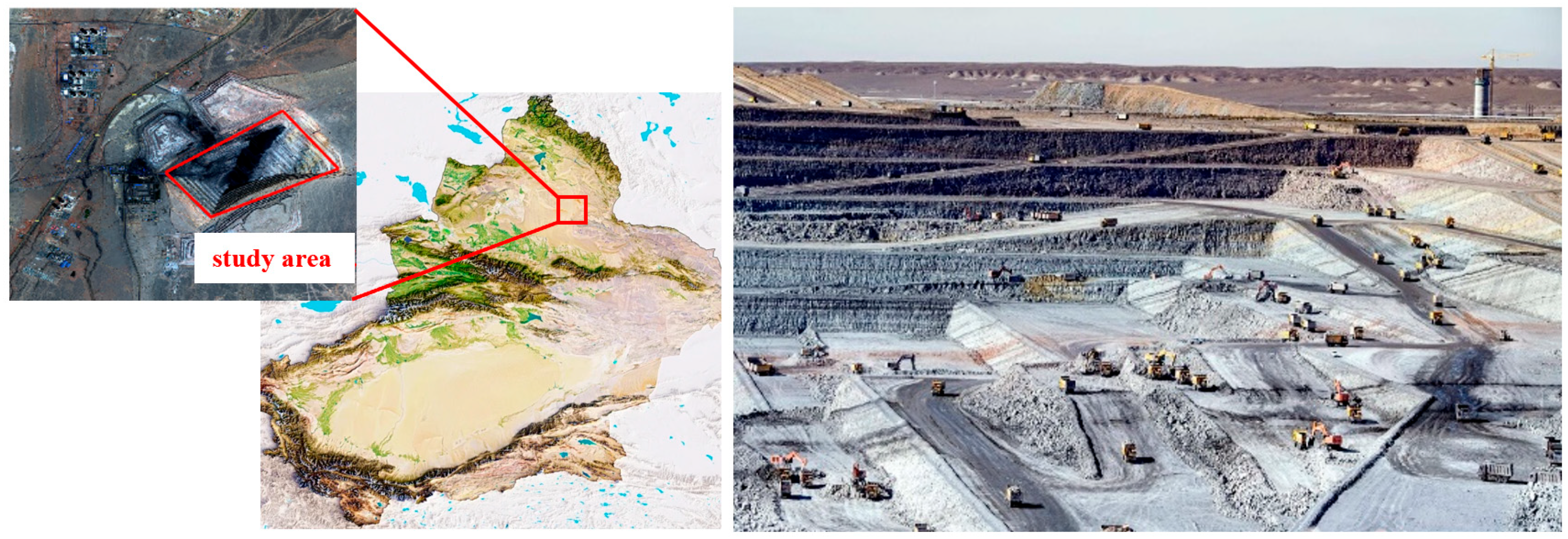
The experimental site of this study is located in a large open-pit coal mine in the Zhundong Economic and Technological Development Zone, Xinjiang, as shown in Figure 1. The mining area is rich in coal resources, but the geological conditions are relatively complex. The coal seams in this area are shallowly buried with a low stripping ratio. The main minable coal seam is predominantly lignite, with an average thickness of 76.84 m. The strata occurring in the mining area are mainly composed of interbedded sandstone, mudstone, siltstone, and coal seams. The overall geological structure is relatively simple, with only localized fault structures developed.
The rock mass in the field blasting operation area mainly presents an argillaceous sandy structure, featuring typical layered structures and argillaceous cementation, which belongs to the hard rock type in engineering rock mass classification. The overall geological environment of the test area is stable, with no obvious aquifers or large primary fractures developed inside, and the rock mass structure is relatively solid. Although the surrounding environment of the test area is open and devoid of surface buildings, to ensure the safety of mine production, it is still necessary to strictly control the potential adverse effects of blasting vibration, fly rock, and air shock waves on the stability of high and steep slopes, on-site operators, and large mechanical equipment during the design and construction of multi-hole blasting.
According to the geological survey report of the research area, the rocks in the area are mainly composed of interbedded mudstone and sandstone, and the mechanical properties of the rocks are shown in Table 1.

2.2. Blasting Vibration Monitoring Scheme

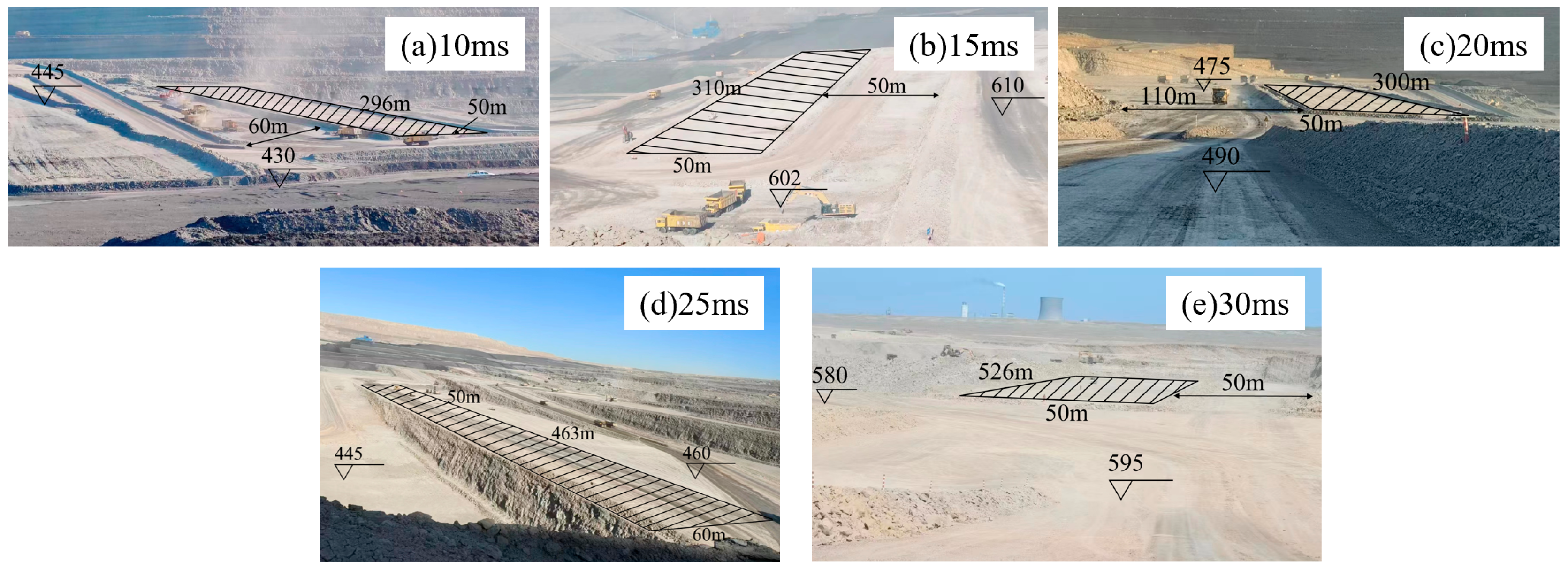
To deeply study the influence of different millisecond delay parameters on blasting vibration characteristics, five groups of blasting vibration test schemes with different delay time gradients were designed in this test, as shown in Table 2. The delay times were set to 10 ms, 15 ms, 20 ms, 25 ms, and 30 ms, respectively. The test site is shown in Figure 2. To ensure the reliability and stability of the monitoring data, two vibration monitors were deployed in parallel at each measuring point. Regarding experimental variable control, high-precision digital electronic detonators from similar production batches and ammonium nitrate fuel oil (ANFO) explosives with the same production process were uniformly selected, and the explosive unit consumption for a single blast was strictly controlled within the range of 0.19 to 0.21 kg/m3. All blasting areas adopted a uniform borehole diameter of 152 mm, with hole spacing and row spacing set to 8 m and 6 m, respectively. The charge structure of the boreholes adopted continuous columnar charging and implemented bottom initiation. While the charge length was adaptively adjusted according to the actual depth of each borehole, the maximum charging length for individual holes was strictly constrained at 12 m to ensure that the maximum explosive mass per single hole remained highly consistent.
Specifically, the field blasting employed approximately 9 rows for each group, with an inter-row delay time strictly set to 73 ms. Because 73 is a prime number, achieving simultaneous detonation under the 10–30 ms inter-hole delays would mathematically require the network to have at least 10 to 30 rows. Given that our tests only consisted of 9 rows, simultaneous detonation of any two holes is mathematically and physically impossible in this network.
It is worth noting that although the total number of holes and theoretical volumes varied among the five test groups to meet the daily production requirements of the open-pit mine, a strict hole-by-hole millisecond delay network was implemented. Therefore, the maximum explosive charge per delay interval (Qmax) detonated instantaneously was strictly maintained at a consistent level. According to the Sadowski formula (Equation (1)), the peak particle velocity and spectral energy distribution are primarily governed by Qmax and the distance from the blasting center. Under the premise that both the scaled distance and the maximum explosive charge per delay interval are kept rigorously constant, the inter-hole delay time acts as the sole core variable modulating the frequency band energy distribution. This experimental design effectively eliminates the potential interference of the total blast volume on the comparative analysis of vibration characteristics.
V = k Q m a x 1 3 / R α
where V is the peak particle velocity; Qmax is the maximum explosive charge per delay; R is the distance from the blast source to the monitoring point; and k and α are site-specific empirical constants dependent on the geological and rock mass conditions.
The vibration measuring points were arranged at a distance of 20 m from the boundary of the blasting area. A three-channel intelligent vibration monitor was selected as the monitoring equipment to synchronously record the triaxial vibration velocity signals (horizontal radial, horizontal tangential, and vertical directions) at the measuring points. The appearance and detailed parameters of the equipment are shown in Table 3. A total of two monitoring devices of this model were deployed on site. According to the Nyquist sampling theorem, the sampling frequency must be at least twice the highest frequency component. Since the dominant frequency of blasting vibration typically ranges from 0 to 500 Hz, the sampling frequency was uniformly set to 4000 Hz. This safely exceeds the theoretical minimum requirement, guaranteeing the high-fidelity capture of transient impulse waves. To obtain the complete vibration waveform of the entire blasting process, the acquisition parameters of all devices were kept highly consistent, with the sampling frequency uniformly set to 4000 Hz and the single-trigger acquisition duration set to 0.2 s to facilitate subsequent analysis. The vibration monitor is equipped with a built-in high-sensitivity triaxial acceleration sensor with a measurement range of 0.0003–40 g, which can accurately capture the surface micro-vibrations induced by multi-hole blasting. During the test, all monitoring devices enabled the synchronous trigger mode. After the blasting operation was completed and offline collection was finished, the data was exported for subsequent processing through a universal serial bus (USB) connected to a terminal device.
To accurately determine the location of the measuring points, a distance of 20 m from the blasting center was first measured on the 3D point cloud data of the blasting area obtained by UAV scanning, and the target coordinates were extracted. Subsequently, Real-Time Kinematic (RTK) positioning was used to navigate to the target location before the blasting operation, and physical markers were set. When installing the vibration monitor, gypsum was used to tightly bond the bottom of the device to the surface rock and soil mass, forming a good rigid coupling structure, thereby minimizing test errors caused by poor contact. Based on the rigorous monitoring scheme described above, the final blasting vibration test results of the 5 groups with different delay times are shown in Table 4.

3. Principle of VMD and Comparative Analysis of Signal Decomposition Effects

3.1. Principle of VMD

Variational Mode Decomposition, referred to as VMD technology, was officially proposed in 2014. This method can effectively decompose complex non-stationary signals into a number of sub-signals with limited bandwidths, which are known as Intrinsic Mode Functions (IMFs). VMD possesses significant adaptability and non-recursive characteristics, enabling the quasi-orthogonal decomposition of signals, so that each IMF component is closely distributed around its specific center frequency.
The specific implementation of the VMD algorithm covers three core steps: first, the Hilbert transform is applied to each IMF component to obtain its unilateral analytic spectrum; second, an exponential term is introduced to tune the center frequency band of each component and shift it to the baseband; finally, the bandwidth of each IMF component is accurately estimated by calculating the squared L2-norm of the gradient of the demodulated signal’s Gaussian smoothness.
The constrained variational problem can be expressed as:
min u k , u k k t δ t + j π t u k t e j ω k t 2 2 k u k t = f t
where uk(t) is the k-th mode component of the signal, {uk} represents the set of decomposed IMF components, ωk represents the center frequency of the k-th component, and {ωk} represents the set of center frequencies of all components. f(t) is the original input signal to be decomposed, δ(t) is the Dirac delta function, j is the imaginary unit, t is the time, and t denotes the partial derivative with respect to time and represents the convolution operator.
To avoid the constrained problem, a quadratic penalty factor a and a Lagrange multiplier λ(t) are introduced to convert it into an unconstrained problem. lt is solved through the alternating direction method of multipliers (ADMM), continuously updating the IMFs and center frequencies, and introducing the augmented Lagrangian function as follows:
L u k , ω k , λ = α k t δ t + j π t u k t e j ω k t 2 2 + f t k u k t 2 2     + λ t f t k u k t
where α represents the data-fidelity constraint balancing parameter (quadratic penalty factor), and <, > denotes the inner product.
By continuously updating and solving for each IMF component and ωk, the mode update expression is ultimately obtained as follows:
u ¯ i n + 1 ω = f ¯ ω i = 1 k 1 u i n + 1 ω 1 + 2 α ω ω k n 2 i = 1 k 1 u i n + 1 ω + λ ¯ n ω 2 1 + 2 α ω ω k n 2
where f ¯ ω ,   u ¯ i ω ,   λ ¯ ω and u ¯ k n + 1 ω represent the Fourier transforms of f t ,   u t ,   λ t , and u k n + 1 t , respectively; n denotes the iteration number; and ω is the frequency domain variable. The update expression for the center frequency is obtained as follows:
ω k n + 1 = 0 w u ¯ i n + 1 ω 2 d ω 0 u ¯ i n + 1 ω 2 d ω
Each IMF can be regarded as an independent mode, and the expressions for the instantaneous amplitude and instantaneous frequency of each mode are as follows:
A t = R u t 2 + I u t 2 F t = 1 2 π R u t I u t R u t I u t R u t 2 + I u t 2
where A(t) and F(t) are the instantaneous amplitude and instantaneous frequency, respectively. R and I represent the real and imaginary parts of the analytic signal, while R’ and I’ denote their corresponding derivatives with respect to time t.
The performance of the VMD algorithm is comprehensively influenced by multiple input parameters, mainly including the Lagrange multiplier update parameter, the penalty factor α, the mode decomposition number k, the initialized center frequencies, and the convergence tolerance. To ensure algorithmic stability and robust noise tolerance during the heuristic search, the secondary parameters were fixed to their standard empirical default values: the Lagrange multiplier update parameter was set to 0, the initialized center frequencies were set to 1, and the convergence tolerance was fixed at 1 × 10⁻⁷. Among them, the penalty factor α and the mode number k act as the most core control parameters and were dynamically optimized via the PSO algorithm. These two parameters have a significant impact on the final decomposition results, as improper parameter combinations often lead to frequency aliasing during the decomposition process, thereby seriously affecting the accuracy of time-frequency mapping.
To determine the key parameters α and k in the VMD process, this study uses the PSO algorithm and selects the vibration data with a 10 ms delay time at a distance of 20 m from the blasting center as a sample for iterative optimization. After the algorithm’s denoising process, the Root Mean Square Error (RMSE) of the reconstructed signal is only 0.1161. This value is at a low level, indicating that the difference between the reconstructed signal and the original waveform is extremely small, and the reconstruction effect is good. At the same time, the Signal-to-Noise Ratio (SNR) of the signal reaches as high as 28.22 dB, which is at a high level, meaning that the influence of high-frequency noise in the blasting signal is significantly suppressed. The calculated information entropy value is 5.6368, reflecting the complexity and randomness of the signal, indicating that the reconstructed signal maintains a certain degree of information complexity. Comprehensively considering various evaluation indicators, under the condition of achieving the best signal denoising effect, the optimal penalty factor α is determined to be 4773.37, and the optimal mode decomposition number k is 7.

3.2. Comparison Between VMD and EMD

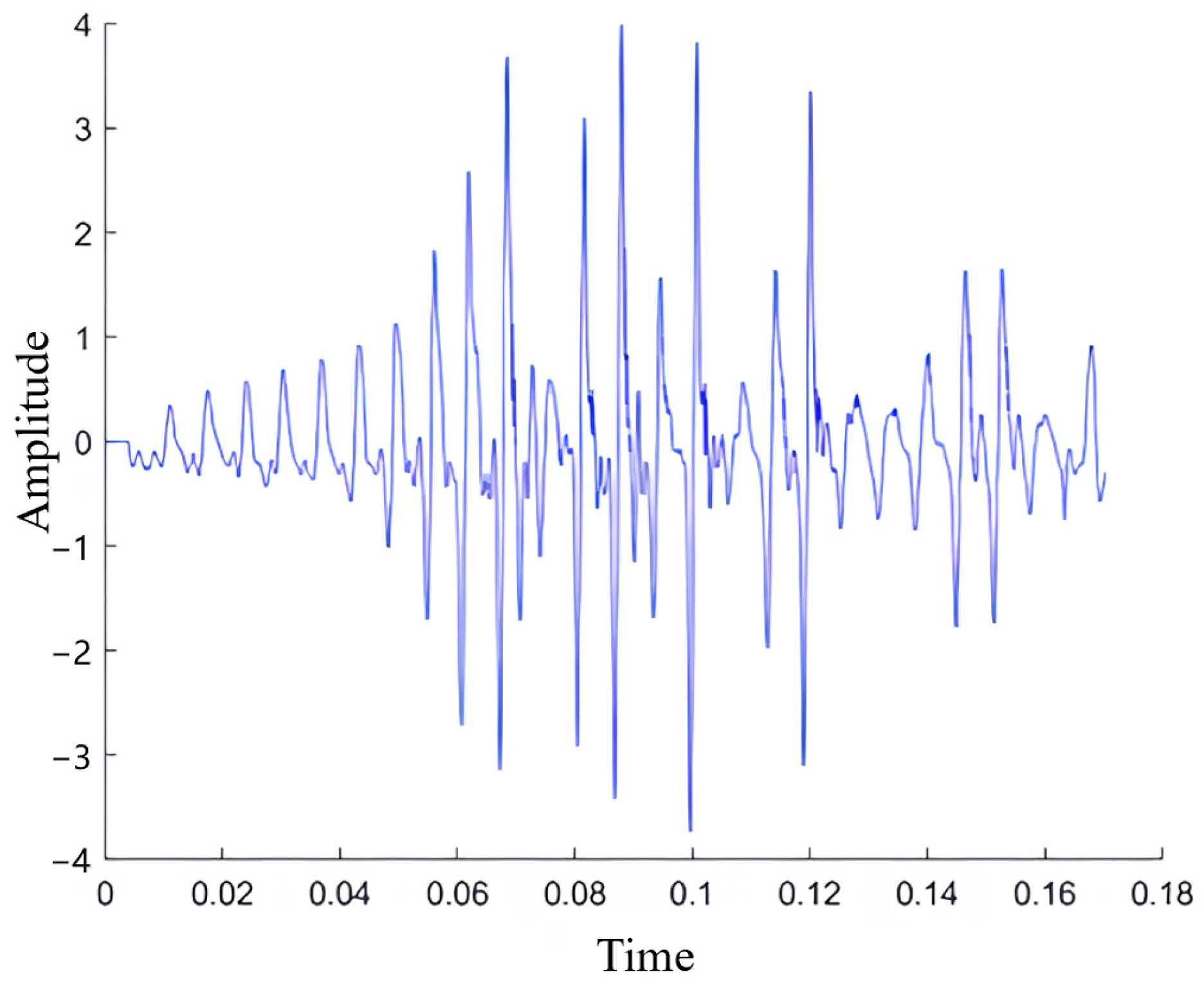
The X-channel signal of blasting vibration under the 10 ms delay condition in the vibration measurement data was selected for comparative analysis. The original time-history data are shown in Figure 3.
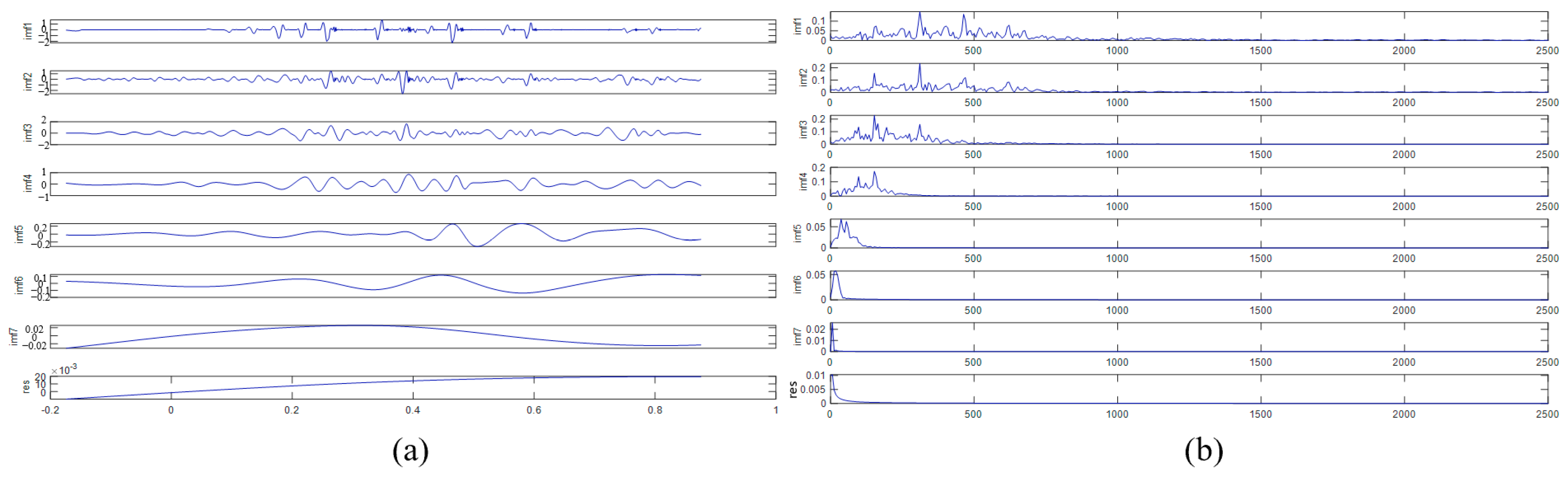
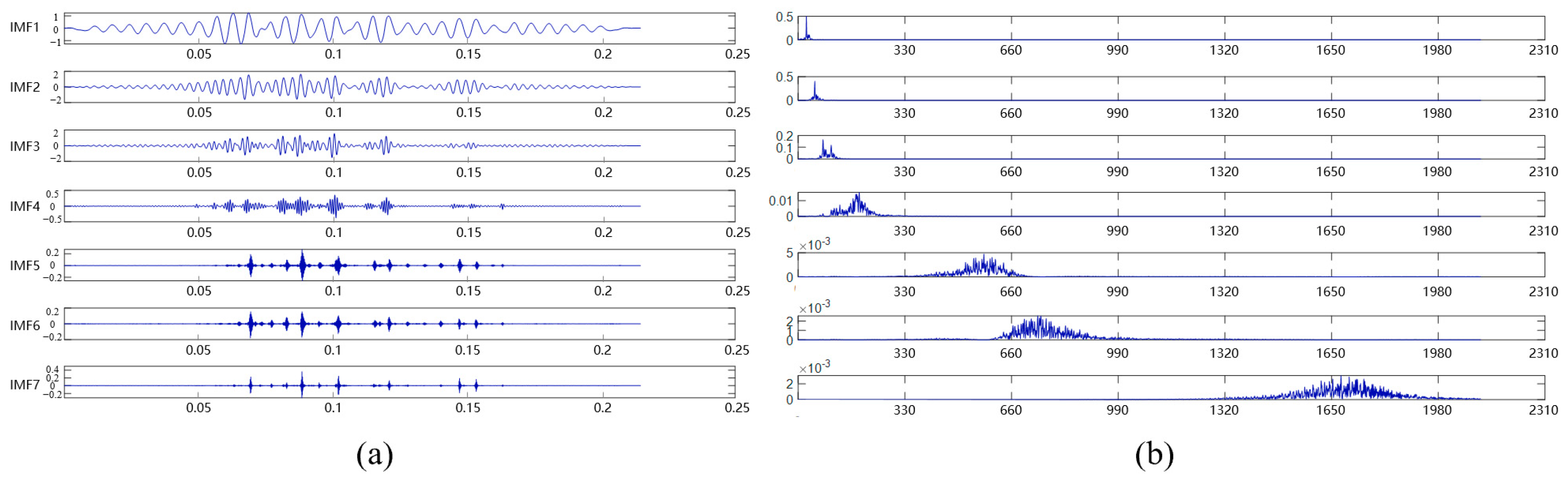
To deeply compare the differences in spectral characteristics after VMD and EMD processing, these two algorithms were successively used to analyze the aforementioned synthesized signal. First, a total of seven IMF components were obtained through EMD processing, as shown in Figure 4a; subsequently, the Fourier transform was used to calculate the instantaneous frequencies of the obtained components, with the results detailed in Figure 4b. Observing this spectrogram, it can be found that the frequency bandwidths of the components successively decrease, and there is a significant cross-overlapping phenomenon between adjacent frequency bands. The occurrence of this phenomenon is mainly attributed to the inherent dyadic filter bank nature of EMD. Although this method has the ability to adaptively process non-stationary signals, when facing complex measured signals with environmental noise and impulse interference, the fitting calculation of its upper and lower envelopes is highly susceptible to the influence of local extrema. As calculation errors continuously accumulate during the sifting process, severe mode aliasing is inevitably triggered, substantially weakening the resolution of the spectrum. Many false components are derived, especially in the low-frequency band, which actually contain very little effective feature information, resulting in the final generated IMF components losing their clear physical significance.
As an advanced signal processing method based on adaptive Wiener filters, VMD exhibits stronger robustness when processing noisy signals. This technology continuously iteratively optimizes each mode and its center frequency by solving the variational problem, ensuring that the finally extracted intrinsic mode functions are more accurate and effective. Figure 5a displays the processing effect of VMD on the same group of vibration signals. Based on the previous optimization results, the mode decomposition number k was set to 7, and the penalty factor α was set to 4773.37. Seven IMF components were similarly successfully decomposed, and the corresponding amplitude spectrum of each component is intuitively presented alongside it.
Rather than relying on subjective visual assessment, the variational mathematical framework of VMD intrinsically solves the mode aliasing problem. By mathematically minimizing the squared L2-norm of the gradient of the demodulated signal, VMD explicitly forces each intrinsic mode to be strictly band-limited around its optimally updated center frequency. Furthermore, with the PSO-optimized penalty factor (α = 4773.37), the algorithm applies a very strong penalty to wide-band signals. The distinct boundaries observed in Figure 5b are the direct physical manifestation of this rigid quantitative bandwidth constraint, providing a rigorous mathematical guarantee for eliminating spectral overlap compared to EMD.

3.3. Inversion of Delay Time Based on VMD Results

Based on the stronger robustness of VMD frequency band decomposition, the effectiveness and accuracy of VMD are further verified by inverting the delay time.
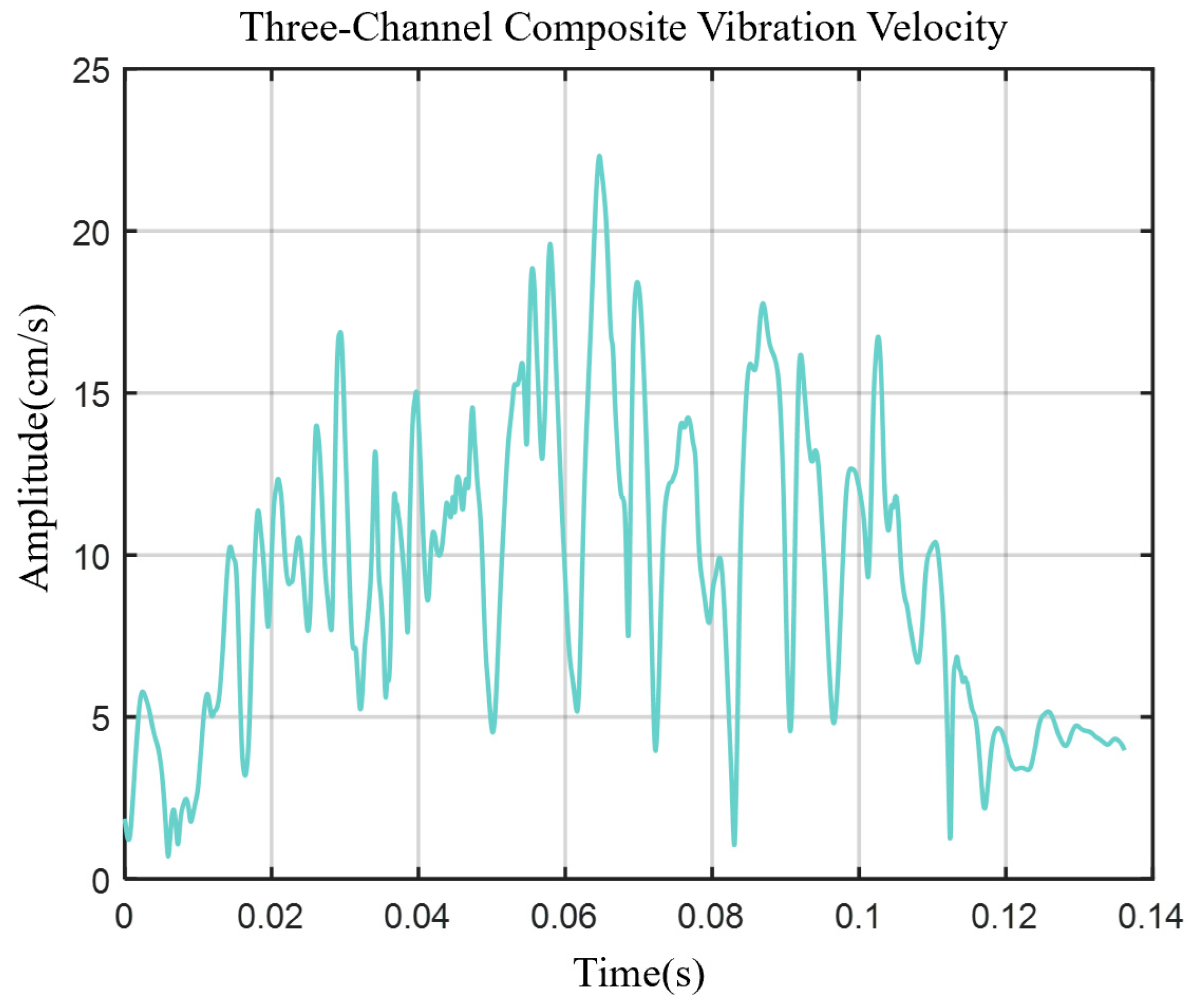
Figure 6 shows the time-domain waveform of the original three-channel superimposed blasting vibration signal. Observing this waveform, it can be seen that the measured vibration signal presents extremely significant multi-component characteristics. The vibration waves of each millisecond delay stage superimpose and interfere with each other, making the overall signal exhibit highly complex nonlinear and non-stationary evolutionary properties.
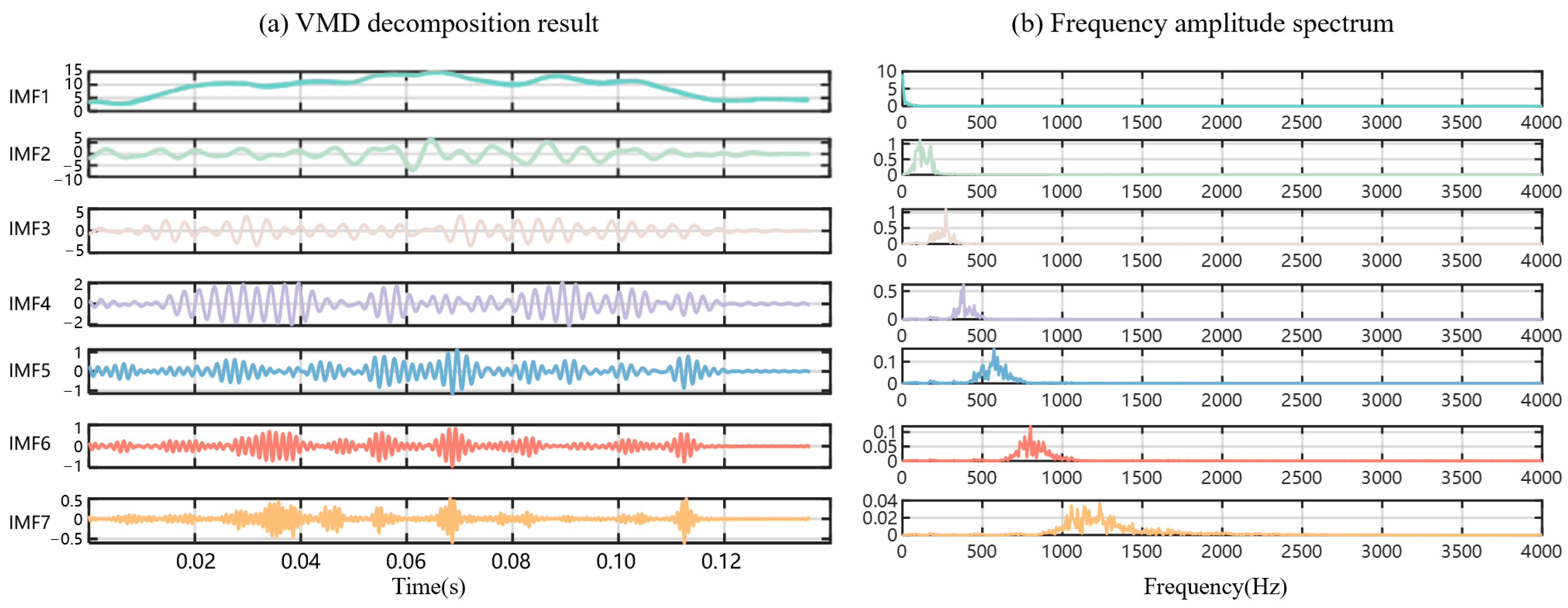
Figure 7 intuitively presents the processing results of VMD. The original signal was successfully disassembled into seven intrinsic mode functions and one residual term. Among the aforementioned intrinsic mode function components, IMF1 to IMF3 constitute the core skeleton of the original signal. With the gradual decrease in the decomposition center frequency, the waveform periods of the remaining low-frequency components are significantly elongated, and the energy and amplitude they carry also show a trend of gradual attenuation. As the decomposition order continues to increase, these high-order low-frequency components gradually detach from the main characteristics of the original signal, while the finally filtered residual component is usually negligible due to its extremely weak energy. Among the decomposed components, although IMF1 (the low-frequency component) gathers the highest resonance energy of the entire blasting process, its long-period nature tends to obscure the transient detonation features. In contrast, the high-frequency component (IMF7) accurately captures the instantaneous dynamic stress impulses generated by the sequential detonation of individual boreholes, free from the masking effect of low-frequency site resonance. Based on this physical mechanism, this study strategically selects IMF7 as the main control component of the blasting vibration signal to carry out the inversion calculation of the millisecond delay time.
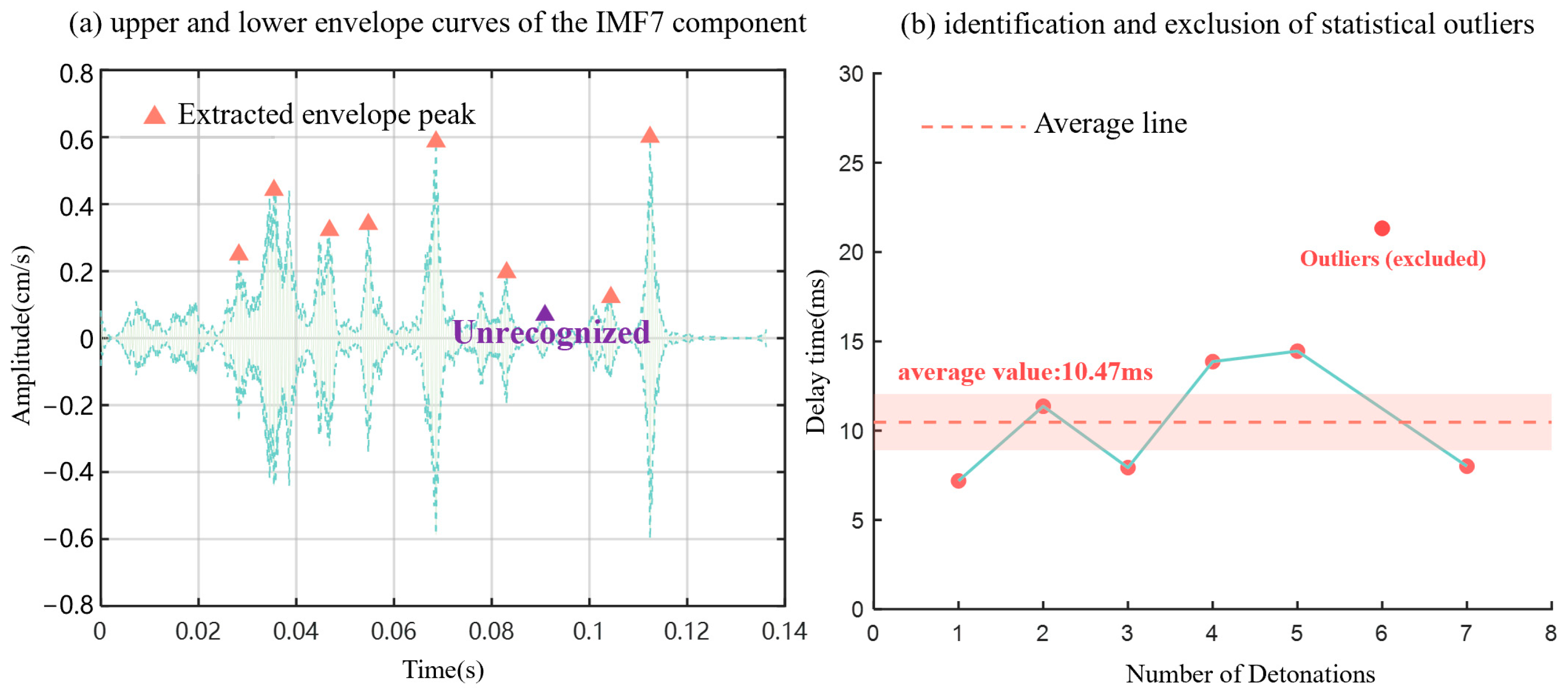
Figure 8 displays the morphology of the upper and lower envelopes of IMF7 and the local peak identification results. Within the effective envelope interval, a total of 8 significant peaks were accurately identified, and the time intervals between adjacent peaks are 7.19 ms, 11.37 ms, 7.93 ms, 13.87 ms, 14.45 ms, 8.01 ms, and 22.13 ms. Through comparison, it is found that the first 6 peak intervals closely approach the design delay time of 10 ms. However, before the occurrence of the 22.13 ms interval, a tiny peak failed to be effectively captured by the algorithm. The analysis suggests that the waveform at this location was strongly masked and interfered with by other high-order low-frequency components. Specifically, the standard deviation of the first six effective peak intervals is calculated to be 2.92 ms. According to the Pauta criterion, the interval of 22.13 ms significantly exceeds the three-standard-deviation threshold and is therefore identified as a statistical outlier caused by strong masking interference from other high-order low-frequency components. To ensure the rigor of the inversion data, this outlier was excluded, and the arithmetic mean of the remaining effective peak intervals was calculated, ultimately yielding an inverted delay time of 10.47 ms. This inversion result is highly consistent with the actual blasting design parameter of 10 ms, thereby proving the effectiveness and accuracy of the VMD method in extracting features of complex blasting vibrations from the perspective of engineering field measurements.

4. Analysis of Near-Field Spectral Characteristics of Multi-Hole Blasting Vibration Based on Delay Time and Blasting Vibration Control Tests

4.1. HHT Results

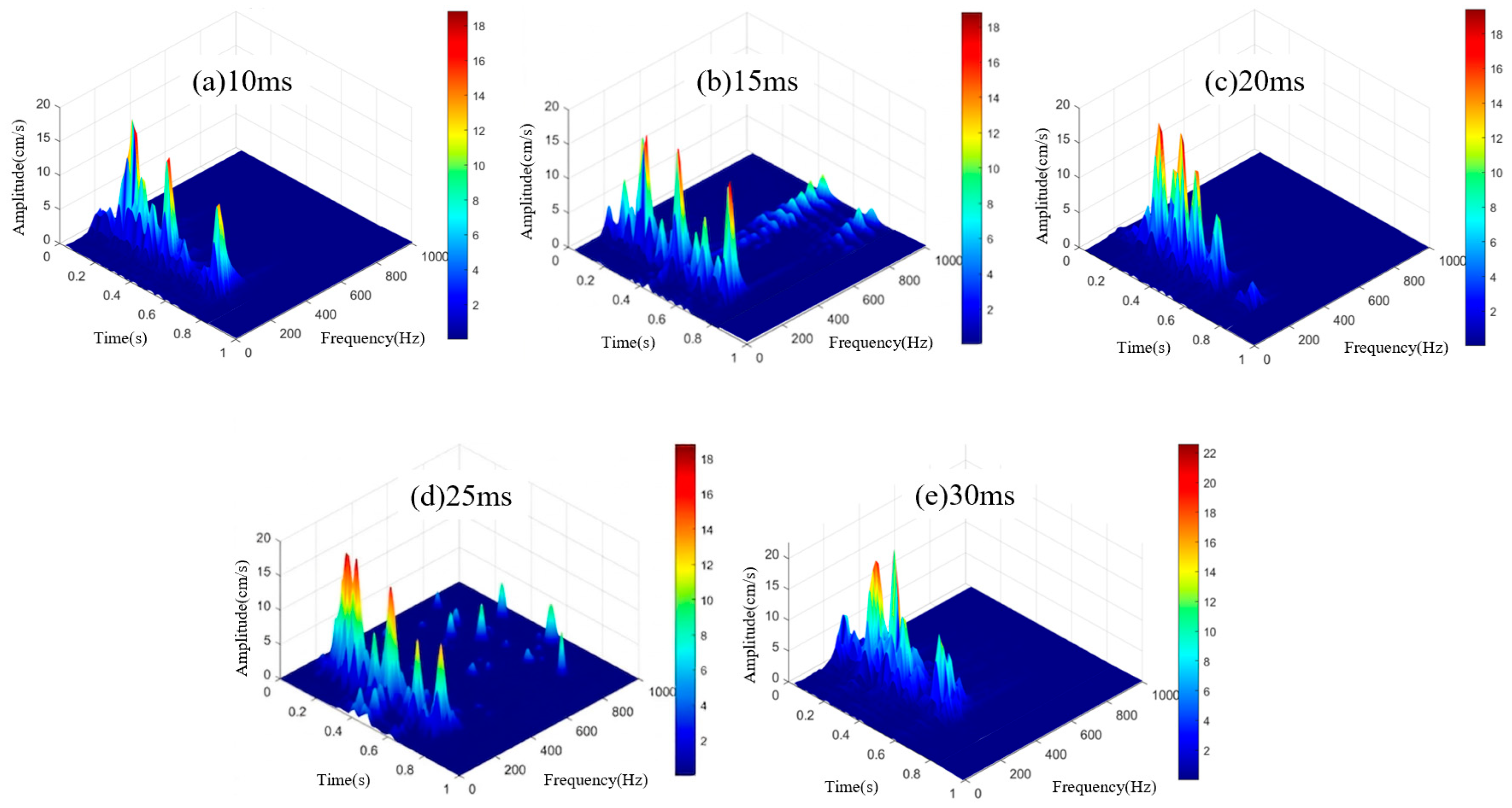
For the five groups of blasting vibration test data with delay times of 10 ms, 15 ms, 20 ms, 25 ms, and 30 ms, the Hilbert-Huang Transform (HHT) was further implemented on the basis of completing the Variational Mode Decomposition (VMD). This was done to more intuitively reveal the amplitude evolution laws of each vibration signal at different time and frequency scale.
As shown in Figure 9, under the delay conditions of 10 ms, 20 ms, and 30 ms, the blasting vibration energy distribution is relatively concentrated, mainly gathering in the low-to-medium frequency band of 0 to 200 Hz. This indicates that under excessively short or certain specific delay parameters, blasting energy is prone to superposition in the low-frequency band. According to elastodynamics and wave propagation theory, high-frequency stress waves possess shorter wavelengths, making them highly susceptible to scattering, reflection, and absorption dissipation induced by structural planes and micro-cracks in the rock mass. Conversely, low-frequency waves possess longer wavelengths and stronger diffraction capabilities, allowing them to bypass minor structural discontinuities with minimal energy loss. Consequently, the low-frequency energy intrinsically dominates the macroscopic vibration field, which may cause significant low-frequency destructive impacts on close-range buildings/structures and high steep mine slopes. In contrast, under the 15 ms and 25 ms delay conditions, the energy exhibits a significant characteristic of diverging towards high frequencies. This demonstrates that a reasonable millisecond delay time can effectively transfer energy to the high-frequency band, thereby weakening the adverse effects of low-frequency resonance on mine slopes.

4.2. Energy Ratio Analysis

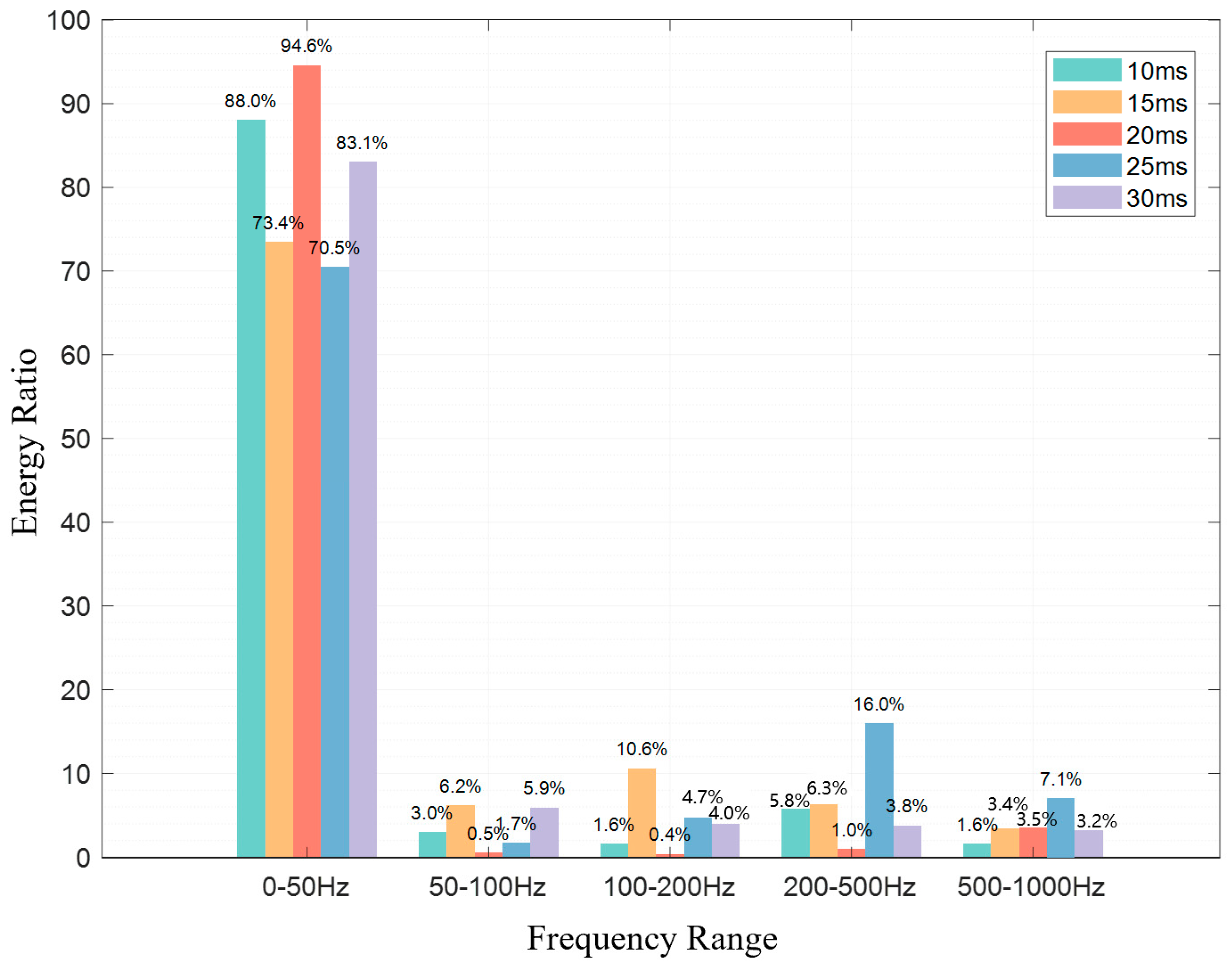
To quantify the energy distribution characteristics within different frequency bands, the overall frequency range was subdivided into five analysis intervals: 0–50 Hz, 50–100 Hz, 100–200 Hz, 200–500 Hz, and 500–1000 Hz. The energy ratio of the vibration signals in each frequency band interval under different delay times was calculated, and the specific distribution patterns are shown in Figure 10.
Within the main low-frequency band of 0–50 Hz, the energy ratio under all delay conditions occupies an absolute dominant position, generally exceeding 50% and reaching up to over 90%. In particular, for the extremely low-frequency components within this interval, their energy ratio exhibits severe nonlinear fluctuations with the change in delay time: it drops sharply from 88.80% at 10 ms to 73.43% at 15 ms, then rebounds abnormally to 94.58% at 20 ms, and finally bottoms out at 70.51% at 25 ms. The abnormal rebound of low-frequency energy at the 20 ms delay can be explained by the wave interference mechanism. As shown in Table 4, the dominant frequency of the blasting vibration in this geological condition is predominantly concentrated around 50 Hz, corresponding to a natural vibration period (T) of approximately 20 ms. When the inter-hole delay time was set to exactly 20 ms, it inadvertently aligned with the predominant period of the seismic waves, triggering significant constructive interference (resonance). The peaks of the delayed waveforms superimposed perfectly, leading to a drastic resonance aggregation of the low-frequency energy. Conversely, when delay times of 15 ms and 25 ms were adopted, phase shifts equivalent to roughly 0.75 and 1.25 times the vibration period were introduced. This induced destructive interference, where the wave peaks and troughs canceled each other out, effectively suppressing the accumulation of low-frequency energy and promoting its transfer to medium-high frequency bands.
Overall, in the 10–25 ms interval, as the delay time gradually increases, the low-frequency energy ratio exhibits an overall declining trend, although this process is sharply interrupted by the resonance-induced energy rebound at the 20 ms mark. In the 50–100 Hz frequency band, the energy ratio is extremely small and almost negligible. Entering the 100–200 Hz frequency band, the energy ratio begins to rebound and remain at about 5%; as the delay time increases, the energy share in this frequency band slightly expands, confirming that part of the energy has shifted from the low-frequency region. In the medium-high frequency band of 200–500 Hz, the energy ratio further climbs to about 10%, whereas in the ultra-high frequency band of 500–1000 Hz, the energy ratio begins to attenuate again. A comprehensive comparison reveals that with the prolongation of the delay time, the energy ratios in both the 100–200 Hz and 200–500 Hz frequency bands show an upward trend. This fully indicates that, provided that the dominant resonance period of the rock mass is strictly avoided, appropriately increasing the delay time can effectively promote the transition of blasting energy to higher frequency bands.

4.3. Blasting Vibration Control Tests

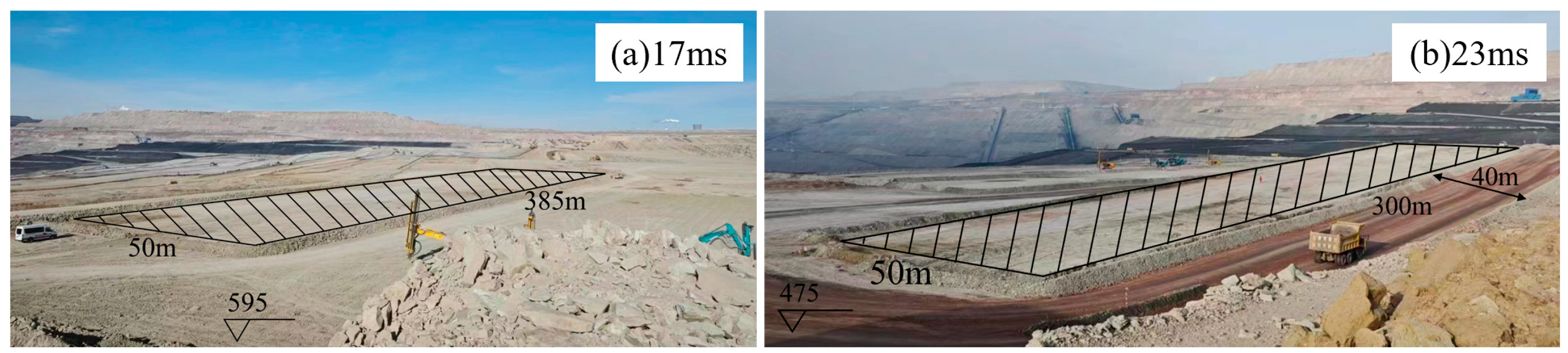
Based on the aforementioned research conclusions, 15 ms and 25 ms are the theoretically optimal delay times for vibration reduction, whereas 20 ms acts as a dangerous resonance point. In the preliminary tests, an increment of 5 ms was selected to ensure equidistant gradients. However, in actual large-scale blasting operations, to completely eliminate the risk of simultaneous detonation caused by common multiple overlaps in complex networks, engineering practices generally mandate the use of prime numbers for design delays. To balance the theoretical necessity of escaping the 20 ms resonance peak and the engineering constraint of using prime numbers, we shifted towards the theoretical optimums (15 ms and 25 ms) along the downward trend of low-frequency energy. Consequently, 17 ms and 23 ms were ultimately selected as the two practical comparative delay times for this control test. In the test, two vibration monitors were deployed in parallel at distances of 20 m, 40 m, and 80 m from the blasting center, totaling 6 independent measuring points. During the test, the hole spacing of 8 m and row spacing of 6 m were strictly maintained while ensuring that core blasting parameters such as explosive unit consumption and charge structure were basically consistent. The test site is shown in Figure 11, and the test parameters are shown in Table 5. The geological conditions of the blasting area for this control test were similar to those of the previous test area; the main lithology was still interbedded sandstone and mudstone, and the joint development degree of the rock mass was at a medium level. During the on-site implementation phase, the drilling accuracy, charging specifications, and stemming quality were strictly controlled throughout the process, thereby maximizing the high consistency of the test conditions and the comparability of the results.

4.4. Blasting Vibration Control Effect

Table 6 shows the peak particle velocities (PPVs) measured in the blasting vibration control tests under the two different delay times mentioned above. Comparing the data, it can be found that under the 17 ms delay condition, when the distance from the blasting center is 20 m, the peak particle velocity in the near field is significantly lower than that of the 23 ms delay group. However, as the blasting seismic wave propagates outward to the mid-to-far field conditions with distances increasing to 40 m and 80 m, the vibration velocity attenuation of the 23 ms delay group is more rapid, and its corresponding peak particle velocity is conversely significantly lower than that of the 17 ms group.
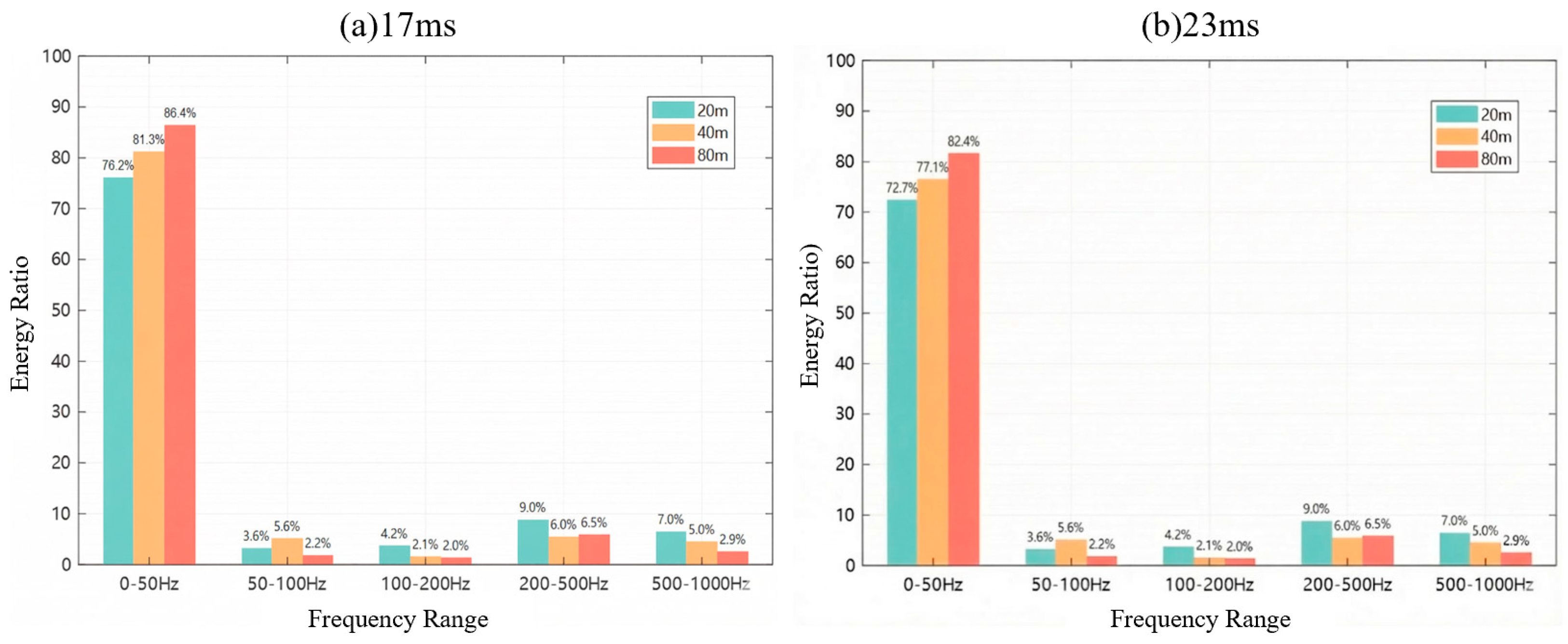
As shown in Figure 12, analyzing from the overall frequency-domain distribution characteristics of energy, no matter what millisecond delay condition is adopted, the blasting vibration energy is highly concentrated in the low-frequency band of 0–50 Hz. Furthermore, as the distance from the blasting center extends from 20 m to 80 m, the energy ratio of this core low-frequency band shows an increasing trend. In stark contrast, in the mid-to-high frequency band, especially in the high-frequency region of 500–1000 Hz, the energy ratio generally exhibits a gradual attenuation trend with the increase in the propagation distance of the seismic wave. This phenomenon corroborates the physical propagation law that high-frequency vibration stress waves attenuate faster in rock mass media.
Further horizontal comparison of the data under the two different delay times reveals that when the millisecond delay time increases from 17 ms to 23 ms, the energy concentration in the main frequency band of 0–50 Hz undergoes a substantial change. Specifically, under the 17 ms delay scheme, the low-frequency energy ratios at the three measuring points of 20 m, 40 m, and 80 m are as high as 76.2%, 81.3%, and 86.4%, respectively; when the delay scheme is adjusted to 23 ms, the low-frequency energy ratios at the corresponding spatial distances experience a considerable decline, dropping to 72.7%, 77.1%, and 82.4%, respectively. The quantitative comparison results show that altering the millisecond delay parameters can effectively adjust the initial distribution structure of blasting energy among different frequency bands, and appropriately prolonging the inter-hole delay can reduce the accumulation degree of destructive energy in the low-frequency band.
Synthesizing the dual analysis results of vibration velocity and frequency band energy, and targeting the specific geological lithology and production status of this open-pit coal mine in Xinjiang, a refined blasting delay recommendation based on spatial distance dynamic matching is proposed. Under working conditions where the blasting area is close to the slope requiring key protection, it is recommended to prioritize the 17 ms inter-hole delay to effectively curb the risk of the near-field peak vibration velocity exceeding the limit. Conversely, when the blasting area is far from the slope, it is recommended to switch to the 23 ms inter-hole delay, thereby accelerating the along-path dissipation of the vibration stress wave and effectively reducing the structural disturbance of low-frequency long waves to the slope, ultimately achieving a unification of mining efficiency and slope safety maintenance.

5. Discussion

The test site in this study was limited to a single open-pit coal mine in Xinjiang. The strata in this mining area are mainly composed of sandstone, mudstone, and siltstone, representing relatively specific geological conditions. The applicability of the research conclusions and the optimal delay time parameters in hard rock or mines with other complex geological structures requires further verification. Regarding the scalability of the proposed spatial distance-based dynamic matching strategy, its practical implementation is subject to several engineering constraints. For instance, in ultra-large-scale blasting networks, avoiding common multiple overlaps dictates the mandatory use of prime numbers, which restricts the continuous selection of theoretically optimal delays. Furthermore, the operational complexity and the economic costs of deploying heterogeneous delay times across different blasting zones must be carefully balanced.
In addition, this study primarily selected specific delay time gradients for spectral characteristic analysis. Although two parameters of 17 ms and 23 ms were refined in the subsequent control tests, a more continuous and extensive range of millisecond delays was not covered, failing to establish a continuous quantitative mapping model between the delay time and the frequency-band energy distribution. Future research can increase the layout density of measuring points and conduct comparative tests in mines with different rock mechanics characteristics.
Finally, it is imperative to acknowledge that this study is predicated on the rock mass under ambient temperature conditions. In real mining scenarios, especially in open-pit coal mines susceptible to spontaneous combustion or underground fires, the thermo-mechanical degradation of the rock mass may significantly alter the propagation and spectral characteristics of vibration waves. Recent studies have highlighted the profound impact of elevated temperatures on the mechanical behavior and structural integrity of engineering materials [37]. Therefore, investigating the evolution of blasting vibration spectra under thermo-mechanical coupling conditions represents a crucial direction for future research, which will further perfect the control theory of multi-hole blasting vibration.

6. Conclusions

By introducing Particle Swarm Optimization (PSO)-optimized Variational Mode Decomposition (VMD) technology combined with the Hilbert-Huang Transform (HHT), this study conducted a refined time-frequency analysis of near-field vibration signals from multi-hole blasting in an open-pit coal mine and carried out field vibration control tests. The main conclusions of the study are as follows:
(1)
Compared with traditional algorithms, the VMD technology optimized by the PSO algorithm can effectively avoid the mode aliasing phenomenon during the decomposition process of blasting vibration signals. Based on the high-frequency intrinsic mode component that characterizes the detonation source, the actual delay time of multi-hole blasting was successfully inverted to be 10.47 ms, which has a minimal error compared to the design value of 10 ms, proving the high precision and reliability of this method in extracting the features of complex near-field blasting vibrations.
(2)
The delay time of multi-hole millisecond delay blasting directly determines the time-frequency distribution characteristics of vibration energy, a process primarily governed by wave interference mechanisms. When the delay time inadvertently aligns with the natural vibration period of the rock mass constructive interference triggers a sharp resonance rebound in low-frequency energy. Conversely, strictly avoiding this resonance point induces destructive interference. Under the 25 ms delay condition, the energy ratio of the medium-high frequency band is the highest, and the low-frequency energy accumulation degree is the lowest, which is most conducive to shortening the vibration duration and accelerating energy attenuation.
(3)
The propagation of blasting vibration waves in the rock mass presents a significant characteristic of high frequencies being prone to attenuation, causing the low-frequency energy ratio to continuously climb with the increase in the distance from the blasting center. Changing the delay parameters can effectively adjust the initial energy distribution; compared to the 17 ms delay, the 23 ms delay can further reduce the low-frequency energy concentration at various distance measuring points.
(4)
Considering the specific geological conditions and slope protection requirements of this open-pit coal mine, a millisecond delay optimization scheme based on spatial distance differences is proposed. In blasting areas closer to the slope, it is recommended to adopt a 17 ms inter-hole delay to control the near-field peak particle velocity (PPV). In blasting areas farther from the slope, it is recommended to adopt a 23 ms delay to accelerate vibration wave attenuation and reduce low-frequency disturbances, thereby achieving safe and efficient blasting operations.

Author Contributions

Conceptualization, D.Z.; methodology, D.Z.; formal analysis, H.C., S.W., Y.M. and F.G.; investigation, D.Z., H.X. and J.Z.; resources, H.X. and J.Z.; data curation, D.Z.; writing—original draft preparation, D.Z.; writing—review and editing, H.C., S.W., Y.M. and F.G.; visualization, H.C., S.W., Y.M. and F.G.; supervision, H.C.; project administration, D.Z. and H.X. All authors have read and agreed to the published version of the manuscript.

Funding

This study was funded by the Research on Intelligent Collaborative Design and Blasting Efficiency Evaluation of the Entire Process of Open-Pit Mine Drilling, Loading and Filling project (autonomous region science and technology plan project key research and development project) (2024B01005-1).

Institutional Review Board Statement

Not applicable.

Informed Consent Statement

Not applicable.

Data Availability Statement

The data presented in this study are available in the article, further inquiries can be directed to the corresponding author.

Acknowledgments

The authors would like to express their sincere gratitude to Xinjiang University for their invaluable guidance and help in polishing the manuscript. Special thanks are also given to Xinjiang Xuefeng Blasting Engineering Co., Ltd., for their support and cooperation during the field blasting tests.

Conflicts of Interest

Dasong Zhang was employed by Xinjiang Xuefeng Sci-Tech (Group) Co., Ltd. Hongyan Xu and Jinggang Zhang were employed by Xinjiang Xuefeng Blasting Engineering Co., Ltd. The remaining authors declare that the research was conducted in the absence of any commercial or financial relationships that could be construed as a potential conflict of interest.

References

  1. Zhang, W.; Wang, H.; Gao, P.; Wang, M.; Cheng, B.; Zong, Q. Vibration characteristics and safety control of deep-hole bench blasting in large open-pit mines. Metal Mine 2024, 9, 151–160. [Google Scholar] [CrossRef]
  2. Wu, Y.; Mu, C.; Zong, Q.; Wu, J.; Zhou, H. Study on blasting vibration control of brick-concrete structure under subway tunnel. Appl. Sci. 2022, 12, 10960. [Google Scholar] [CrossRef]
  3. Xu, S.; Chen, T.; Liu, J.; Zhang, C.; Chen, Z. Blasting vibration control using an improved artificial neural network in the Ashele copper mine. Shock Vib. 2021, 2021, 9949858. [Google Scholar] [CrossRef]
  4. Zhang, P.; Yuan, Y.; He, Y.; Dai, S.; Li, J.; Chi, X.; Li, W.; Sun, X.; Zhang, J.; Bai, R.; et al. Blasting vibration velocity prediction of open pit mines based on GRA-EPSO-SVM model. Coal Sci. Technol. 2025, 53, 105–115. [Google Scholar] [CrossRef]
  5. Li, Q.; Li, L.; Huang, H.; Xiao, Y.; Wei, X. Study on safety prediction and control of blasting vibration in high slopes based on probability theory. J. China Acad. Saf. Sci. Technol. 2024, 20, 12–18. [Google Scholar]
  6. He, L.; Yin, L.; Zhong, D.; Zhang, X.; Zhao, Y.; Xiong, H.; Chen, S.; Njamba, B. Review on blasting vibration intensity, waveform and spectrum: Prediction and active control. Blasting 2024, 41, 189–204. [Google Scholar]
  7. Wang, Y.; Yang, Y.; Gao, Q.; Jiang, W.; Zhou, H.; Yang, R. Blasting vibration response characteristics and safety control measures of double-arch tunnel without middle wall. China J. Highw. Transp. 2023, 36, 266–277. [Google Scholar]
  8. Li, P.; Lu, W.; Wu, X.; Chen, M.; Yan, P.; Hu, Y. Spectral prediction and control of blast vibrations during the excavation of high dam abutment slopes with millisecond-delay blasting. Soil Dyn. Earthq. Eng. 2017, 94, 116–124. [Google Scholar] [CrossRef]
  9. Huang, D.; Qiu, X.; Shi, X.; Gou, Y.; Zhou, J. Experimental and numerical investigation of blast-induced vibration for short-delay cut blasting in underground mining. Shock Vib. 2019, 2019, 4609754. [Google Scholar] [CrossRef]
  10. Xie, X.; Huang, X.; Yao, Y.; He, L.; Wu, Y. Research progress on fine blasting technology of deep-hole bench in open-pit mines. Met. Mine 2022, 7, 7–18. [Google Scholar]
  11. Lin, F.; Liu, R.; Zhang, Z.; Jiang, D.; Chen, J.; Li, Y. Reduction of blasting induced ground vibrations using high-precision digital electronic detonators. Front. Earth Sci. 2022, 9, 804504. [Google Scholar] [CrossRef]
  12. Xu, H.; Gao, W.; Liu, J. Numerical simulation study on blasting vibration effect with different millisecond delays between holes. Ind. Constr. 2021, 51, 563–566. [Google Scholar]
  13. Ma, J.; Li, X.; Wang, J.; Tao, Z.; Zuo, T.; Li, Q.; Zhang, X. Experimental study on vibration reduction technology of hole-by-hole presplitting blasting. Geofluids 2021, 2021, 5403969. [Google Scholar] [CrossRef]
  14. Liu, B.; Li, J.; Ni, H.; Zuo, Y. Experimental study on reducing blasting vibration by grouped delay hole-by-hole initiation. Eng. Blasting 2024, 14, 2169. [Google Scholar]
  15. Yan, L.; Jiang, Y.; Yue, Z.; Zhang, X.; Gou, X.; Ran, X.; Guo, Z. Blasting construction control and vibration propagation law of large cross-section ultra-shallow buried bias railway tunnel. J. Vib. Shock 2024, 43, 81–95. [Google Scholar]
  16. Zaid, M. Dynamic stability analysis of rock tunnels subjected to impact loading with varying UCS. Geomech. Eng. 2021, 24, 505–518. [Google Scholar]
  17. Wang, H.; Bai, H.; Zhao, Y.; Wang, D.; Wang, X.; Wang, S. The removal method of the blasting vibration signal trend item and noise. Shock Vib. 2021, 2021, 1645380. [Google Scholar] [CrossRef]
  18. Jia, B.; Ling, T.; Hou, S.; Liu, D.; Wang, X. Application of variational mode decomposition in removing trend item of blasting signal. Explos. Shock Waves 2020, 40, 123–131. [Google Scholar]
  19. Fu, X.; Yu, J.; Liu, J.; Yang, R.; Dai, L. Distortion correction and chaotic multifractal characteristics of tunnel blasting vibration signals. J. Vib. Shock 2022, 41, 76–85. [Google Scholar]
  20. Song, D.; Tong, Y.; Qiu, L.; Wei, M.; Wang, M.; Guo, M. Effective electromagnetic-vibration signal reconstruction and chaotic characteristics of granite splitting failure. J. China Coal Soc. 2024, 49, 1375–1387. [Google Scholar]
  21. Peng, Y.; Liu, Y.; Zhang, C.; Wu, L. A novel denoising model of underwater drilling and blasting vibration signal based on CEEMDAN. Arab. J. Sci. Eng. 2021, 46, 4857–4865. [Google Scholar] [CrossRef]
  22. Dragomiretskiy, K.; Zosso, D. Variational mode decomposition. IEEE Trans. Signal Process. 2014, 62, 531–544. [Google Scholar] [CrossRef]
  23. Wang, H.; Li, Y.; Zhao, Y. Application of k-value optimized VMD-wavelet packet analysis joint denoising method in tunnel blasting signals. Explos. Mater. 2021, 50, 50–57. [Google Scholar]
  24. Yi, W.; Yan, L.; Wang, Z.; Yang, J.; Tao, T.; Liu, L. Geotechnical engineering blasting: A new modal aliasing cancellation methodology of vibration signal de-noising. Earthq. Eng. Eng. Vib. 2022, 21, 313–323. [Google Scholar] [CrossRef]
  25. Li, T.; Chen, M.; Ye, Z.; Lu, W.; Wei, D. Study on energy transfer efficiency of blasting explosion in different coupling media. Explos. Shock Waves 2021, 41, 111048. [Google Scholar]
  26. Leng, Z.; Jia, Y.; Lu, W.; Sun, J.; Xie, X. Blasting energy transmission law and boulder formation mechanism of high porosity soft rock. J. Basic Sci. Eng. 2024, 32, 1420–1433. [Google Scholar]
  27. Gao, Q.; Jin, J.; Wang, Y.; Lu, W.; Leng, Z.; Chen, M. Influence law of initiation position in hole on distribution of blasting vibration field. Explos. Shock Waves 2021, 41, 135–149. [Google Scholar]
  28. Ma, C.; Wu, L.; Sun, M. Effect of free face number on energy distribution and attenuation law of underwater drilling blasting vibration signals. Explos. Shock Waves 2022, 42, 142–153. [Google Scholar]
  29. Yang, R.; Li, W.; Yang, G.; Ma, X. Experimental study on the effect of explosive type on blasting effect of rich iron ore. Explos. Shock Waves 2020, 40, 93–104. [Google Scholar]
  30. Chen, H.; Jia, H.; Huang, Y.; Zhang, Z. Study on blasting vibration propagation law of an open-pit mine slope based on FSWT algorithm. Conserv. Util. Miner. Resour. 2024, 44, 29–40. [Google Scholar]
  31. Liu, M.; Huang, Y.; Li, Z.; Jia, H.; Gan, D.; Li, H.; Zhang, Z. Study on energy distribution of blasting vibration signals in Pulang copper mine based on wavelet transform algorithm. China Min. Mag. 2024, 33, 226–234. [Google Scholar]
  32. Jia, Y.; Chen, D.; He, L.; Wang, H.; Shu, Z.; Wang, W. Time-frequency characteristics and actual delay identification of precise delay blasting vibration. Eng. Blasting 2023, 29, 1–9. [Google Scholar]
  33. Yang, J.; Peng, C.; Ye, Z.; Leng, Z.; Wei, B. Energy distribution characteristics of blasting shock waves in deep rock mass. Acta Armamentarii 2024, 45, 1735–1746. [Google Scholar]
  34. Chu, Y.; Li, P.; Liang, H.; Li, H.; Liu, W.; Zhang, L.; Huang, X.; Wu, Y. Effect of vibration reduction materials on blasting vibration law of cylindrical water pool. Chin. J. High Press. Phys. 2024, 38, 191–201. [Google Scholar]
  35. Pan, R.; Chen, H.; Zhao, K.; Liu, L.; Zeng, P. Study on the influence of open-pit blasting dynamic load on the stability of underground backfill. Min. Res. Dev. 2023, 43, 81–86. [Google Scholar]
  36. Tan, M. Study on the influence of explosive performance on the propagation of blasting seismic waves and the law of energy attenuation. China Min. Mag. 2024, 33, 193–199. [Google Scholar]
  37. Bolina, F.L.; Fachinelli, E.G.; Rodrigues, J.P.C. Analysis of building structures subjected to electric vehicle fires. J. Build. Eng. 2025, 107, 112769. [Google Scholar] [CrossRef]
Figure 1. Schematic and aerial view of the study area.
Applsci 16 03665 g001
Figure 2. Monitoring areas of blasting vibration signals under different delay times: (a) 10 ms; (b) 15 ms; (c) 20 ms; (d) 25 ms; (e) 30 ms.
Applsci 16 03665 g002
Figure 3. Velocity-time history curve of the vibration signal.
Applsci 16 03665 g003
Figure 4. EMD results (a) and amplitude spectra (b).
Applsci 16 03665 g004
Figure 5. VMD results (a) and amplitude spectra (b).
Applsci 16 03665 g005
Figure 6. Time-domain waveform of the superimposed 10 ms three-channel blasting vibration data.
Applsci 16 03665 g006
Figure 7. VMD results and corresponding amplitude spectra: (a) VMD result; (b) frequency amplitude spectra.
Applsci 16 03665 g007
Figure 8. Inversion of actual delay time: (a) upper and lower envelope curves of the IMF7 component; (b) identification and exclusion of statistical outliers.
Applsci 16 03665 g008
Figure 9. 3D Hilbert spectrum of vibration signals under different delay times: (a) 10 ms; (b) 15 ms; (c) 20 ms; (d) 25 ms; (e) 30 ms.
Applsci 16 03665 g009
Figure 10. Energy ratio diagram of vibration signals in various frequency bands under different delay times.
Applsci 16 03665 g010
Figure 11. Blasting vibration control test areas: (a) 17 ms; (b) 23 ms.
Applsci 16 03665 g011
Figure 12. Comparison of frequency band energy distribution: (a) 17 ms; (b) 23 ms.
Applsci 16 03665 g012
Table 1. Mechanical properties of rocks in the study area.
RockBTS (MPa)UCS (MPa)E (GPa)Φ (º)C (MPa)
Mudstone0.115.301.03529.882.64
Sandstone0.066.470.96636.450.93
Table 2. Blasting parameters of 5 blasting vibration signal monitoring areas.
ParameterDesign Value
10 ms15 ms20 ms25 ms30 ms
Number of holes392413424772855
Hole depth (m)2.3–16.96.7–15.41.4–16.51.5–17.415.2–16.3
Distance to slope crest (m)2.5–3.02.5–3.02.5–3.02.5–3.02.5–3.0
Subdrilling (m)0.5–1.51.0–1.50.5–1.50.5–1.51.5
Theoretical volume (m3)222,750221,268261,595347,250384,750
Explosive unit consumption (kg/m3)0.2030.1930.1980.2070.196
Table 3. Schematic diagram and parameters of the vibration monitor.
Schematic Diagram of Vibration MonitorMonitor ParameterDesign Value
Applsci 16 03665 i001Acceleration range (g)0.0003~40
Velocity range (cm/s)0.01~40
Resolution (bit)16
Sampling rate (Hz)4000
Table 4. Blasting vibration test results of 5 groups with different delay times.
TestChannel NameMaximum ValueDominant Frequency (Hz)Duration (s)
10 msX18.682 cm/s58.5940.997
Y15.644 cm/s58.5940.999
Z13.783 cm/s58.5940.868
15 msX15.404 cm/s78.8280.998
Y5.801 cm/s53.4380.999
Z10.292 cm/s53.4380.999
20 msX14.990 cm/s54.6880.693
Y14.637 cm/s52.7340.999
Z21.636 cm/s54.6880.732
25 msX10.588 cm/s76.8750.964
Y17.546 cm/s52.7340.943
Z20.198 cm/s76.8750.986
30 msX19.338 cm/s40.0780.849
Y19.280 cm/s54.6880.848
Z20.234 cm/s52.7340.778
Table 5. Parameters of blasting vibration control tests for 17 ms and 23 ms.
Delay TimeNumber of HolesHole Depth (m)Distance to Slope Crest (m)Subdrilling (m)Theoretical Volume (m3)Explosive Unit Consumption (kg/m3)
17 ms4822.3–17.22.5–3.00.5–1.5288,7500.204
23 ms3921.7–14.72.5–3.00.5–1.5221,6540.196
Table 6. Peak particle velocities at various distances under different delay times.
Delay Time20 m40 m80 m
17 ms11.57 cm/s7.35 cm/s4.87 cm/s
23 ms14.05 cm/s5.65 cm/s2.21 cm/s
Disclaimer/Publisher’s Note: The statements, opinions and data contained in all publications are solely those of the individual author(s) and contributor(s) and not of MDPI and/or the editor(s). MDPI and/or the editor(s) disclaim responsibility for any injury to people or property resulting from any ideas, methods, instructions or products referred to in the content.