A Cross-Scale Study of Data-Driven Micro-to-Macro Mechanical Heterogeneity in Sandstone



Abstract
1. Introduction
2. Materials and Methods
2.1. CNN–Transformer Image Segmentation Model
2.1.1. Improved Network Model
2.1.2. Datasets and Training Parameters
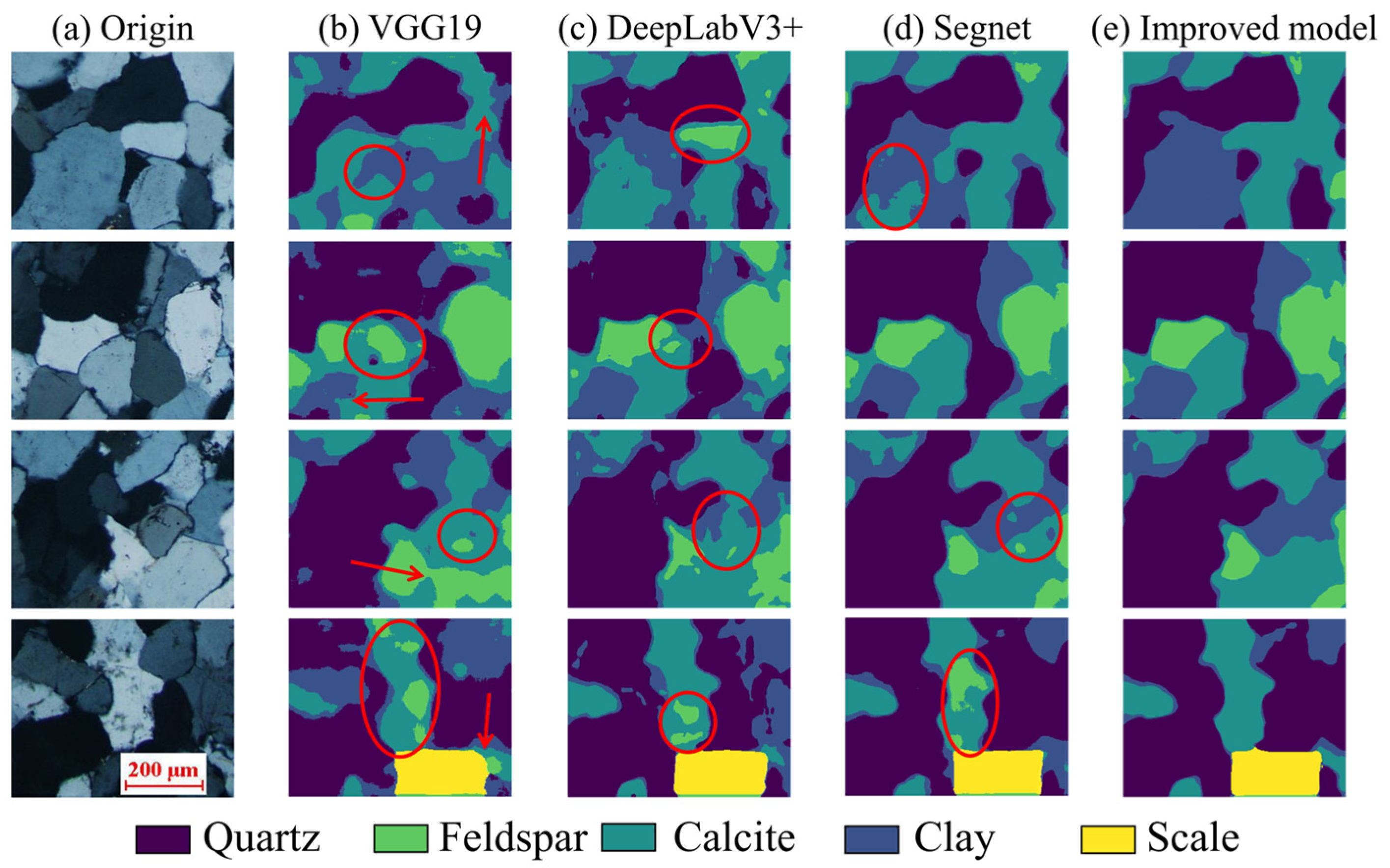
2.1.3. Analysis of Experimental Results
2.2. Cross-Scale Upgrading Method
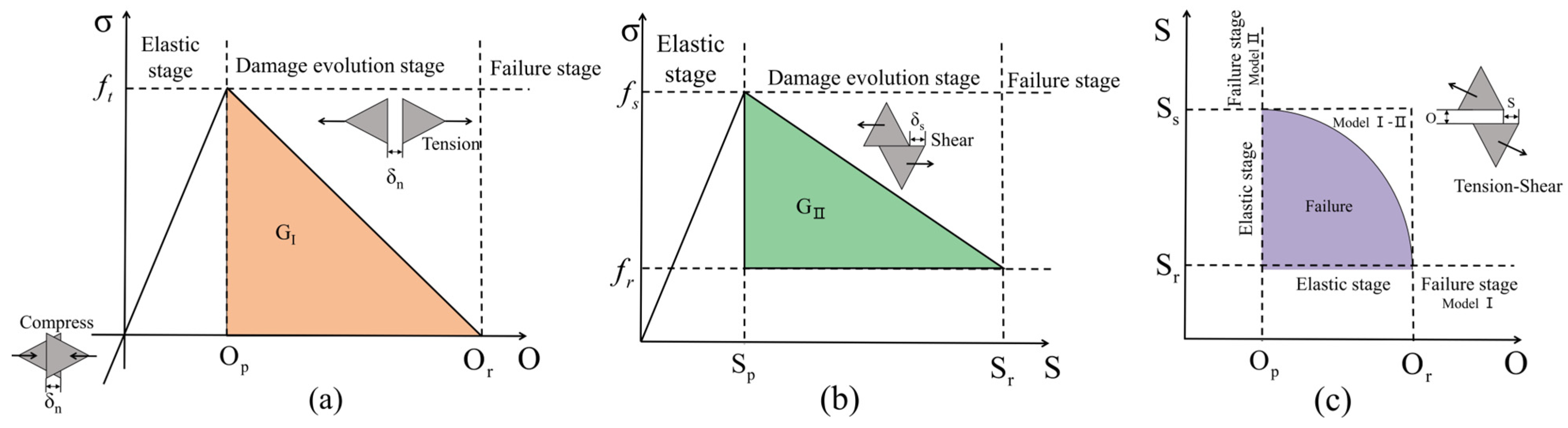
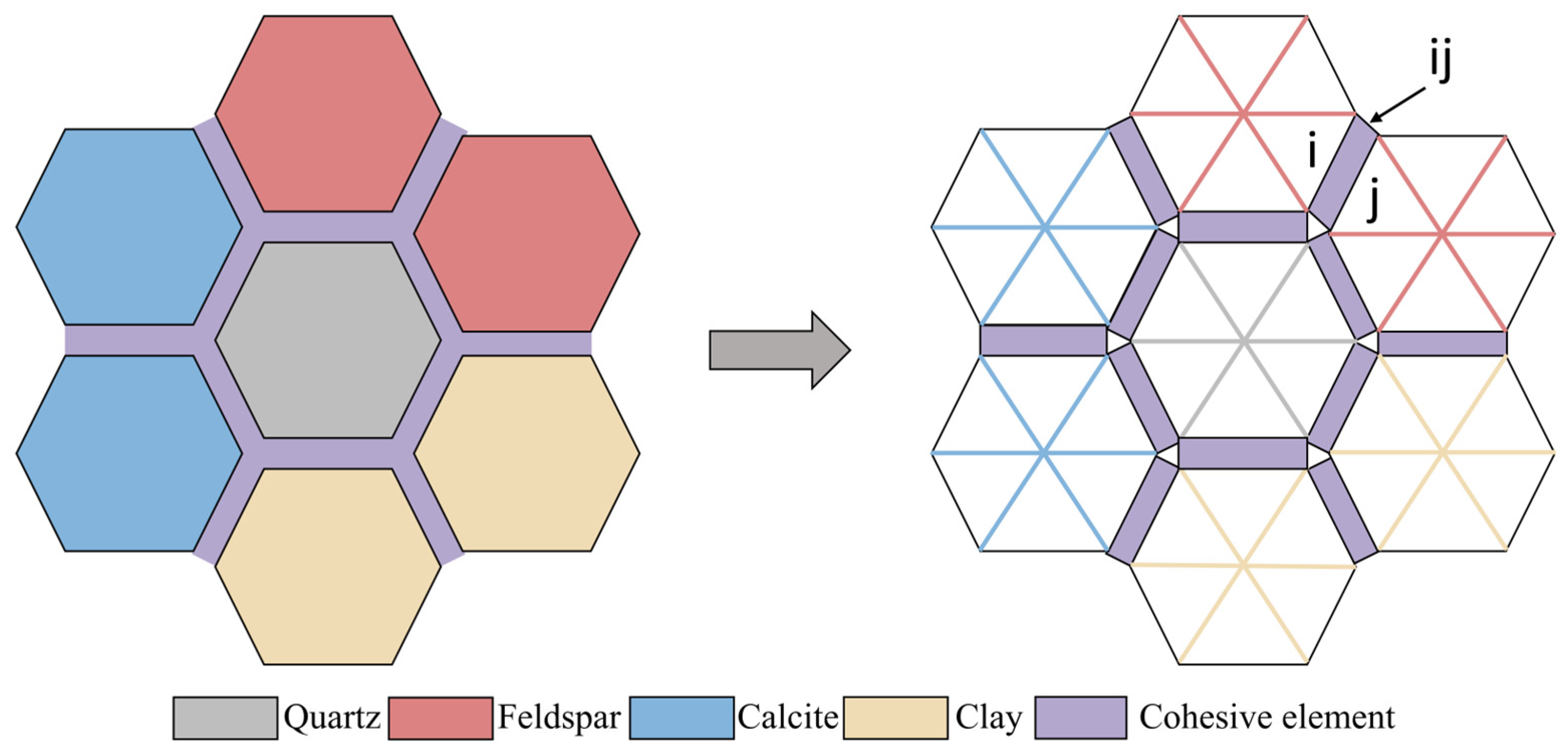
2.2.1. The Combined Finite-Discrete Element Method (FDEM)
2.2.2. Cross-Scale Upgrading Method Based on Sandstone Cast Specimen Thin-Section Data and Nanoindentation Data
- (1)
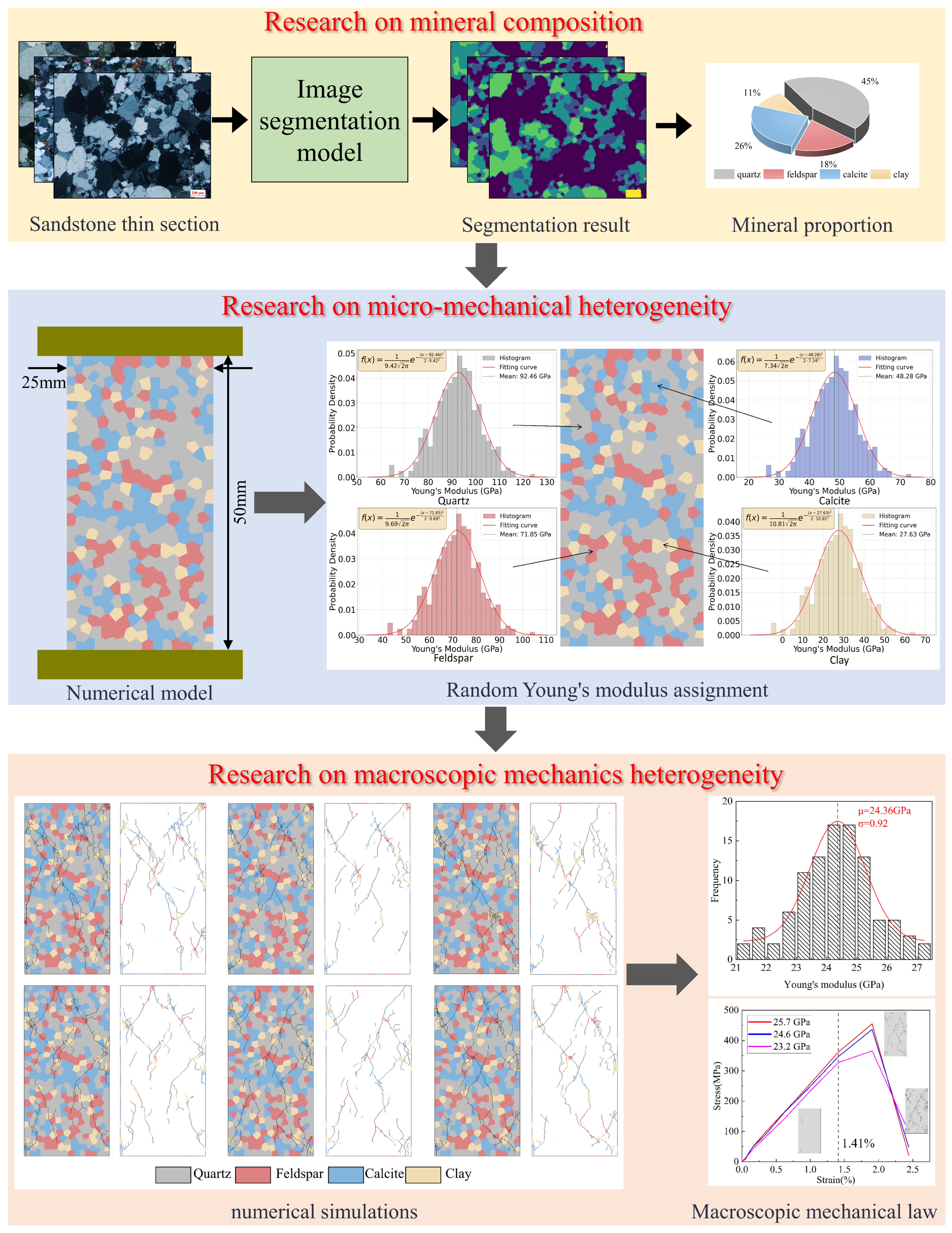
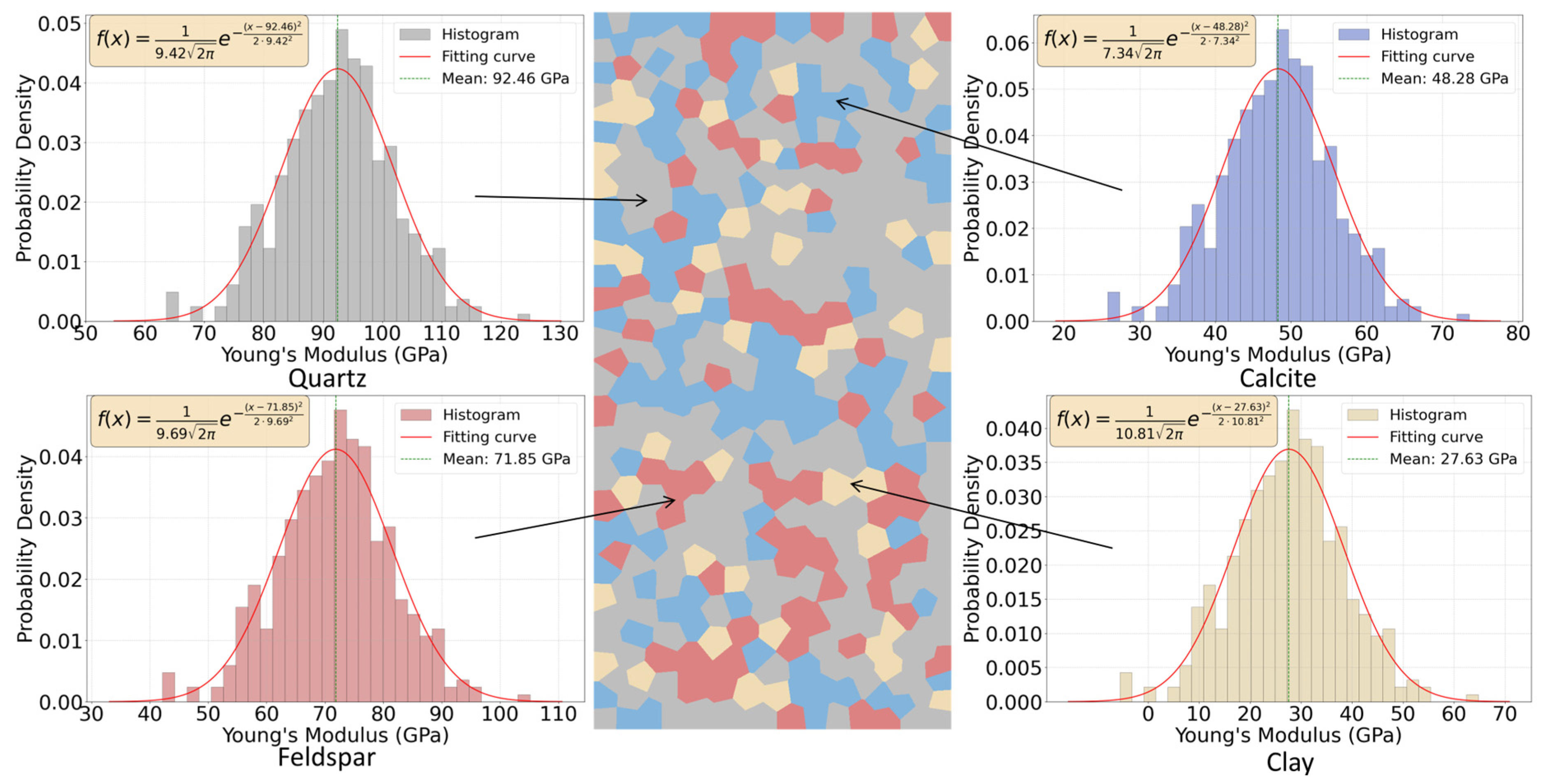
- Acquisition of mineral composition and Young’s modulus probability density functions: The proposed CNN–Transformer dual-branch feature fusion image segmentation model was used to obtain mineral composition and content from sandstone thin-section data. Statistical analysis was performed on the nanoindentation experimental data of various mineral phases in sandstone [18,19,46,47]. The Young’s modulus values were generally found to follow a normal distribution. Based on this, the probability density function of Young’s modulus for each mineral phase was established through statistical calculation.
- (2)
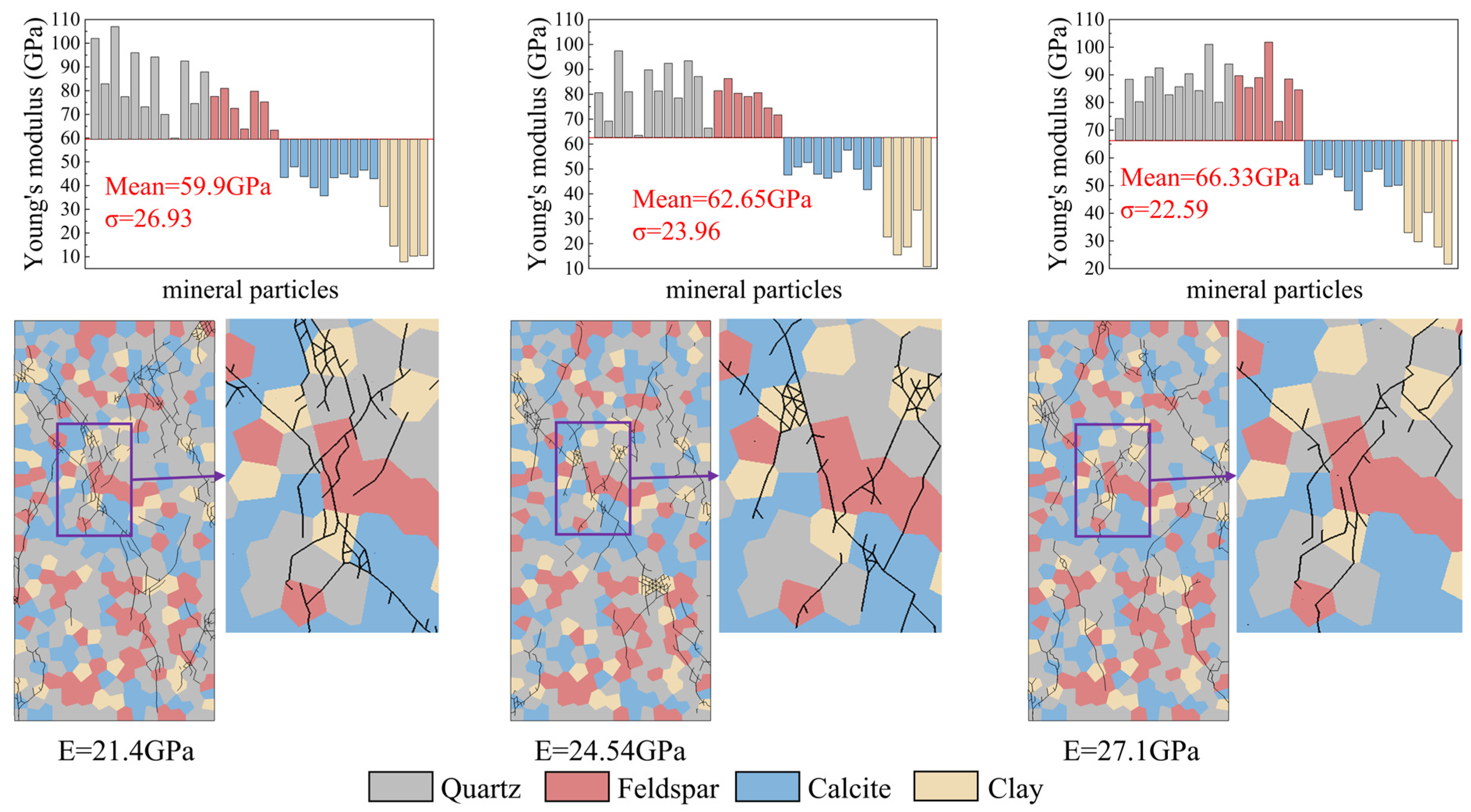
- Random sampling and assignment: To fully account for the random distribution of minerals in sandstone reservoirs, this study requires multiple rounds of sampling and numerical simulation. To ensure variability among the sampling results, different random seeds were used in the sampling process. For assigning mechanical parameters to mineral grains, a stratified sampling method was employed to ensure that the sampled Young’s modulus values effectively cover the entire probability density distribution of each mineral. The specific procedure for stratified sampling is as follows: First, calculate the cumulative distribution function of Young’s modulus for each mineral. Divide its range [0, 1] uniformly into N subintervals (where N is the number of grain elements for that mineral type). A random seed is then used to sample within each sub-interval, and the sampled value is mapped to a specific Young’s modulus value via inverse transform sampling. During the assignment process, to prevent abnormal spatial clustering of mineral particle mechanical parameters, the spatial positions of mineral particles were randomly sorted using the same random seed. The sampled Young’s moduli were then assigned to the mineral particles, as illustrated in Figure 8.
- (3)
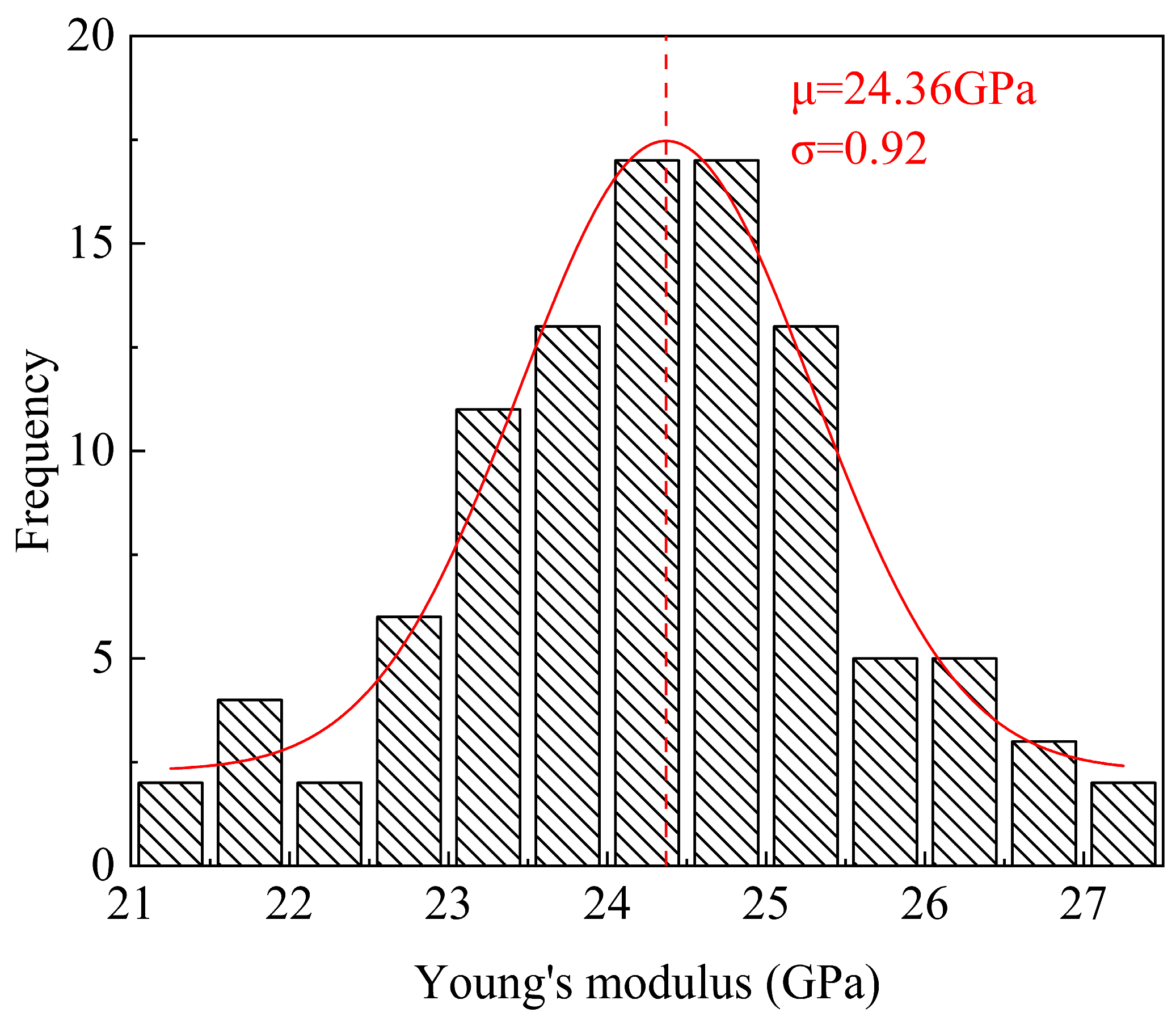
- Numerical Simulation: Through the aforementioned random sampling assignment method, the spatial random distribution of mineral mechanical properties was achieved and applied to the FDEM-GBM uniaxial compression model. Subsequently, through numerous independent random assignment simulations, a statistical analysis was conducted on the distribution pattern of the macroscopic Young’s modulus of sandstone, thereby achieving cross-scale upscaling from microscopic heterogeneity to macroscopic mechanical response. It should be noted that this study focuses on the influence of mineral composition and its microscopic heterogeneity on the macroscopic mechanical properties of sandstone; therefore, initial pores and defects in the rock were not considered. This idealized treatment leads to a purely linear elastic stage in the numerical simulation, which is different from the pore compaction stage observed in laboratory experiments.

2.2.3. Method Validation
3. Results and Discussion
3.1. Influence of Mineral Micro-Heterogeneity on the Macro-Mechanical Properties of Sandstone
3.2. Influence of Mineral Content on the Macro-Mechanical Properties of Sandstone
3.3. Brittleness Evaluation Index for Sandstone
4. Conclusions
- (1)
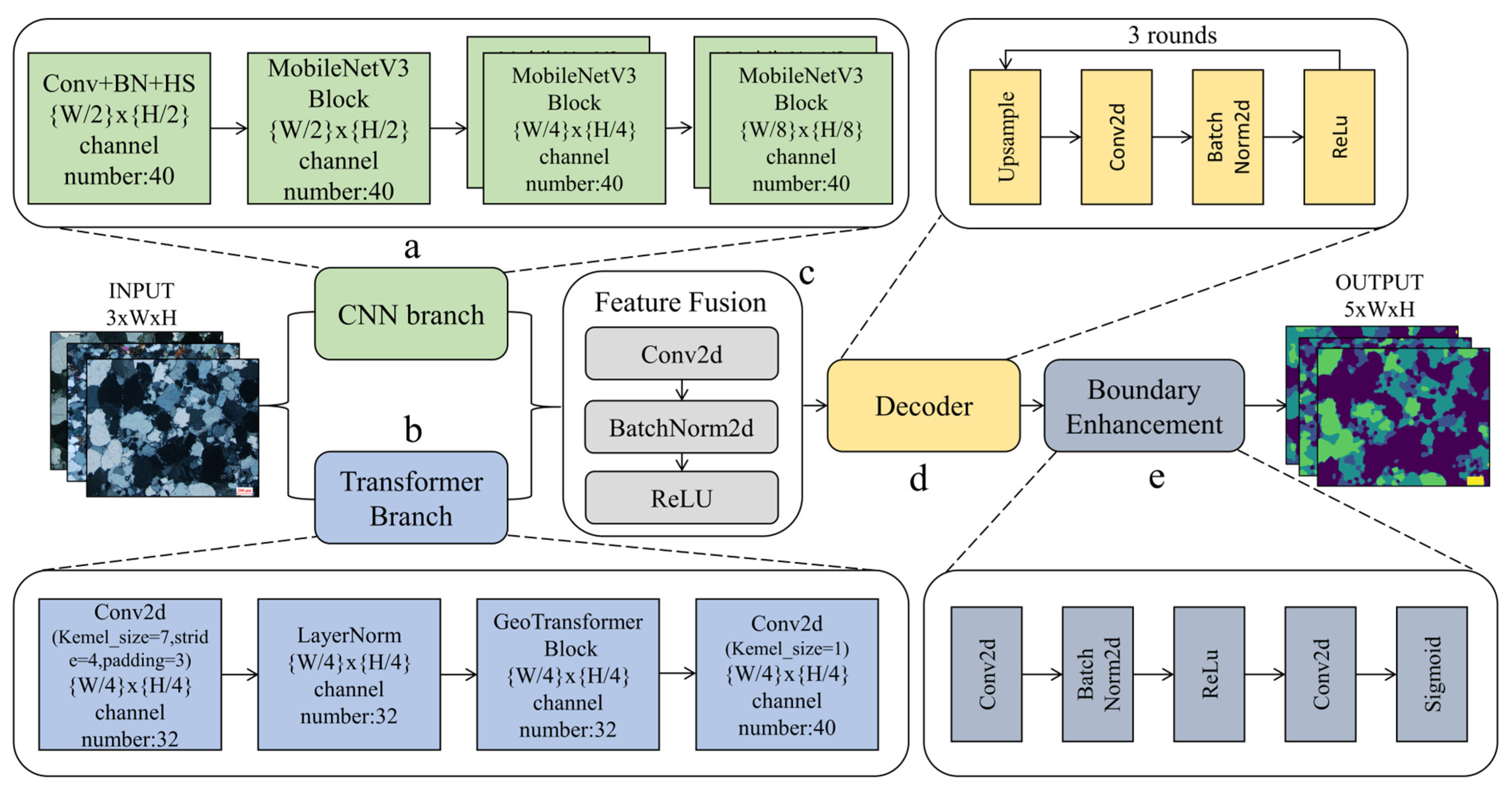
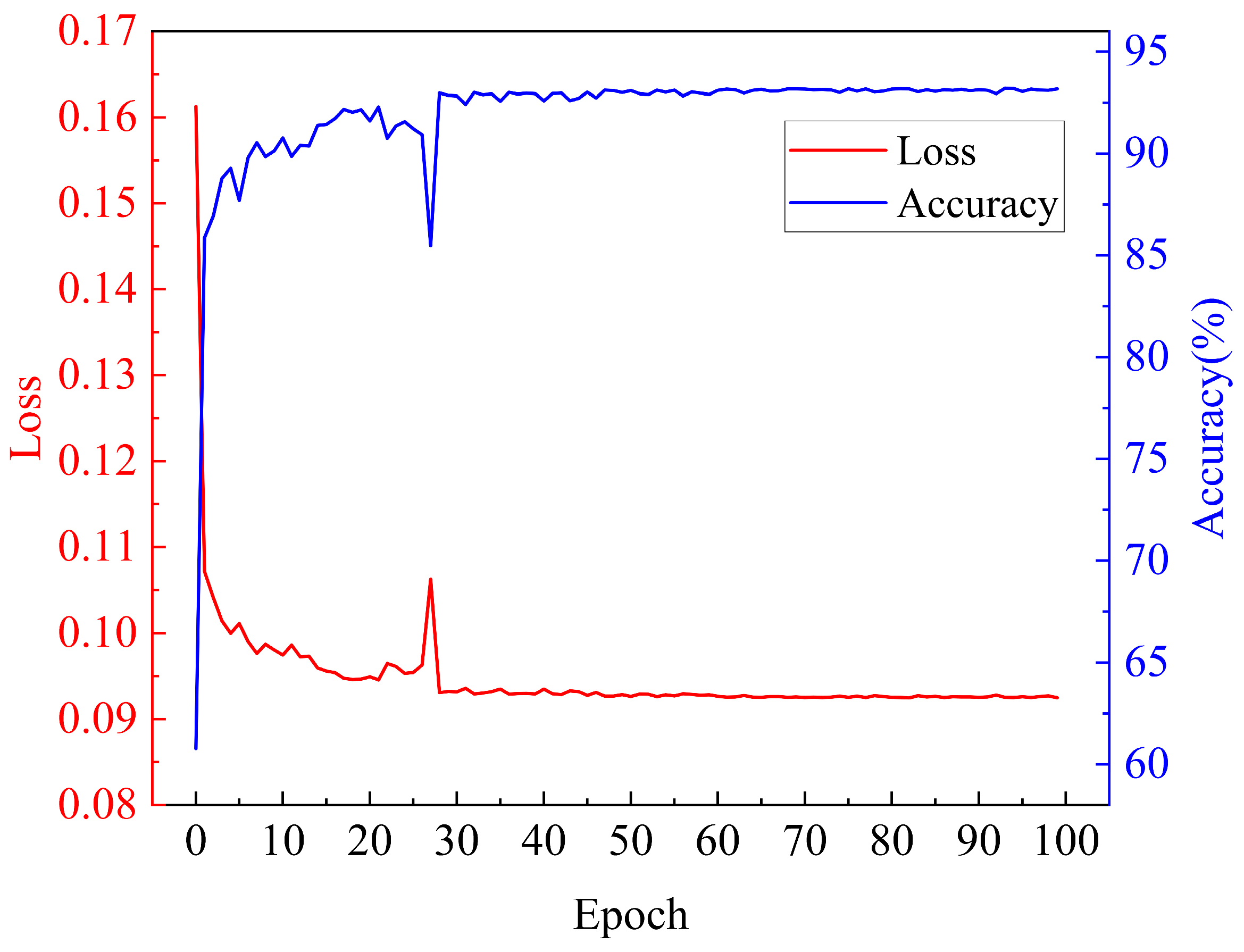
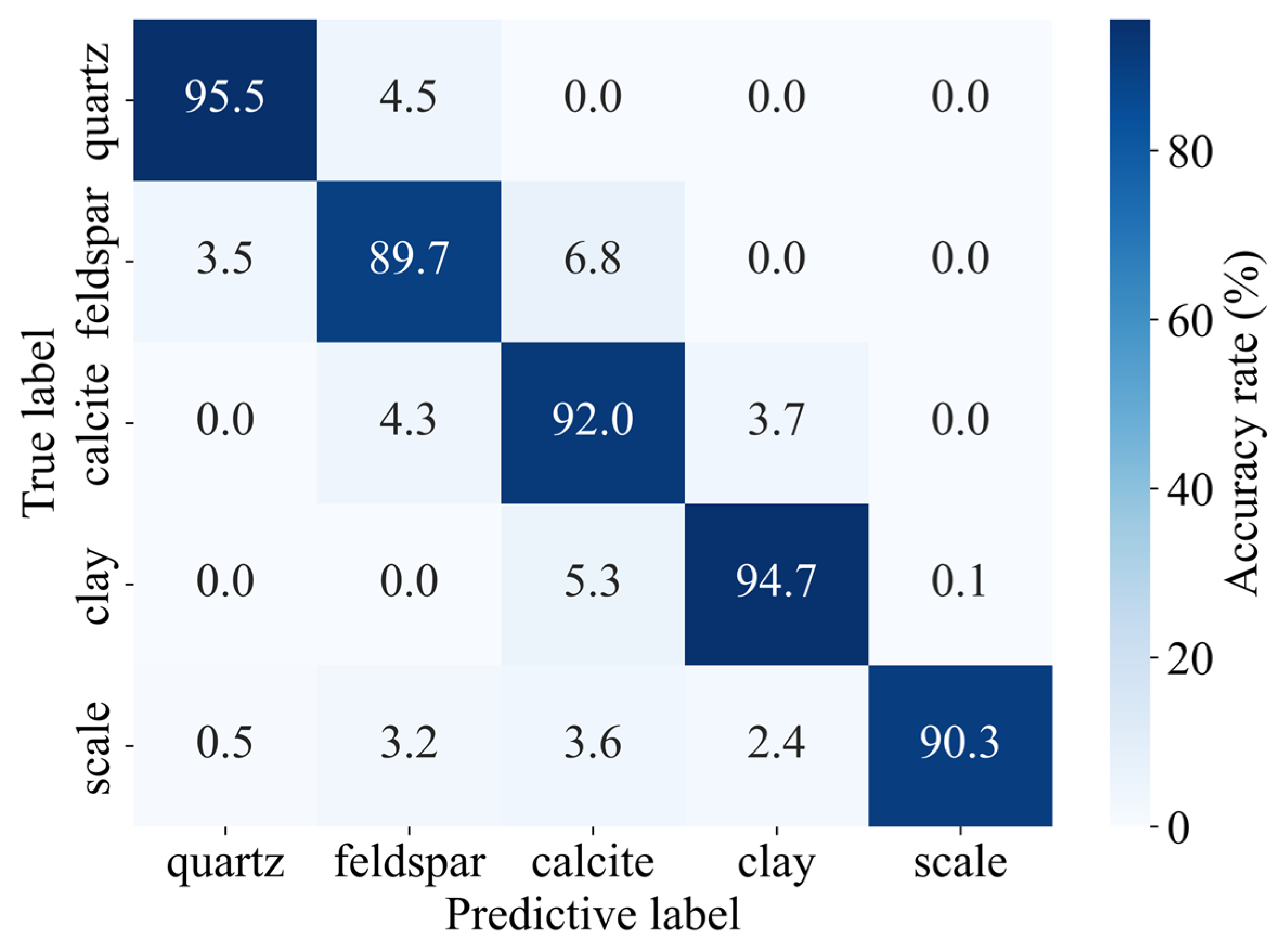
- The CNN–Transformer dual-branch image segmentation model proposed in this study was trained on sandstone thin-section data. It effectively captures both local details and global features of mineral distribution, achieving a segmentation accuracy of 93.26% and a mean intersection over union (mIoU) of 86.50%, thereby obtaining reliable mineral composition data.
- (2)
- Based on the nanoindentation data of minerals, their micromechanical probability density functions were obtained. Random sampling and assignment were then performed according to the probability density functions of each mineral. This spatial random distribution of mineral mechanical properties was implemented into the FDEM-GBM uniaxial compression model for calculating the sandstone’s macroscopic mechanical strength. Consequently, a cross-scale research method was proposed that integrates sandstone mineral composition and its microscopic heterogeneity into macroscopic heterogeneity.
- (3)
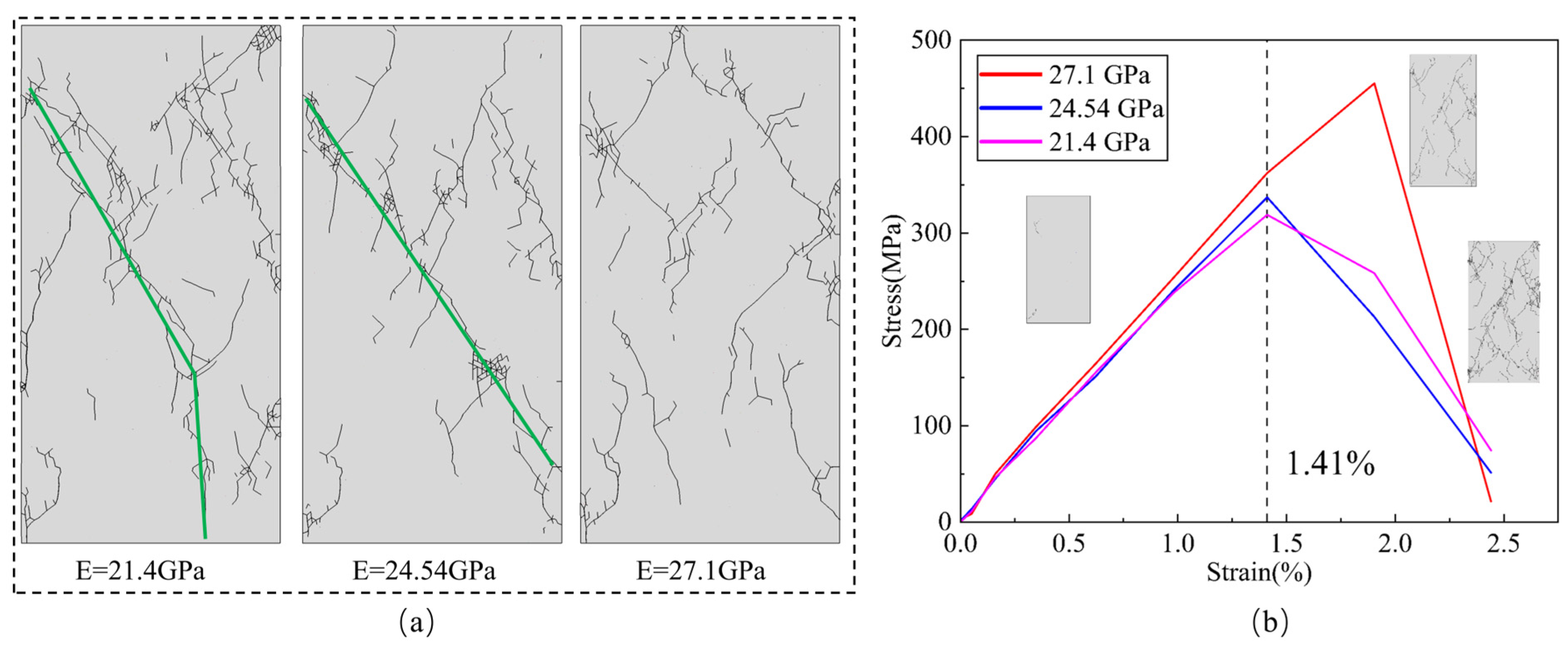
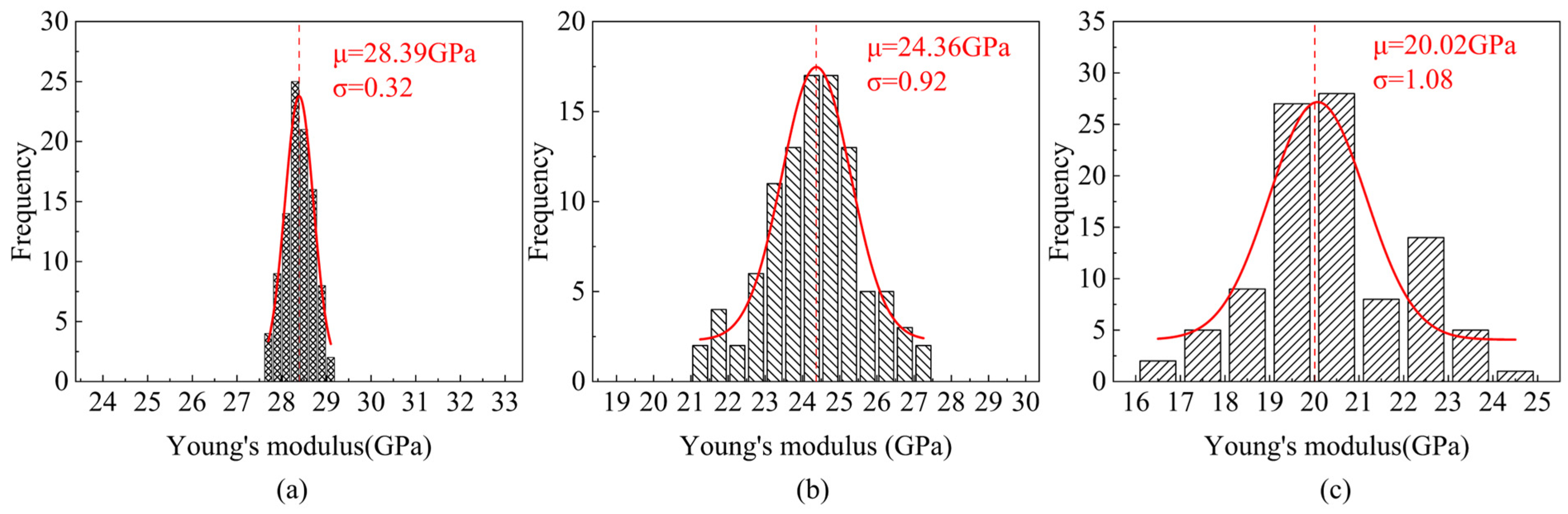
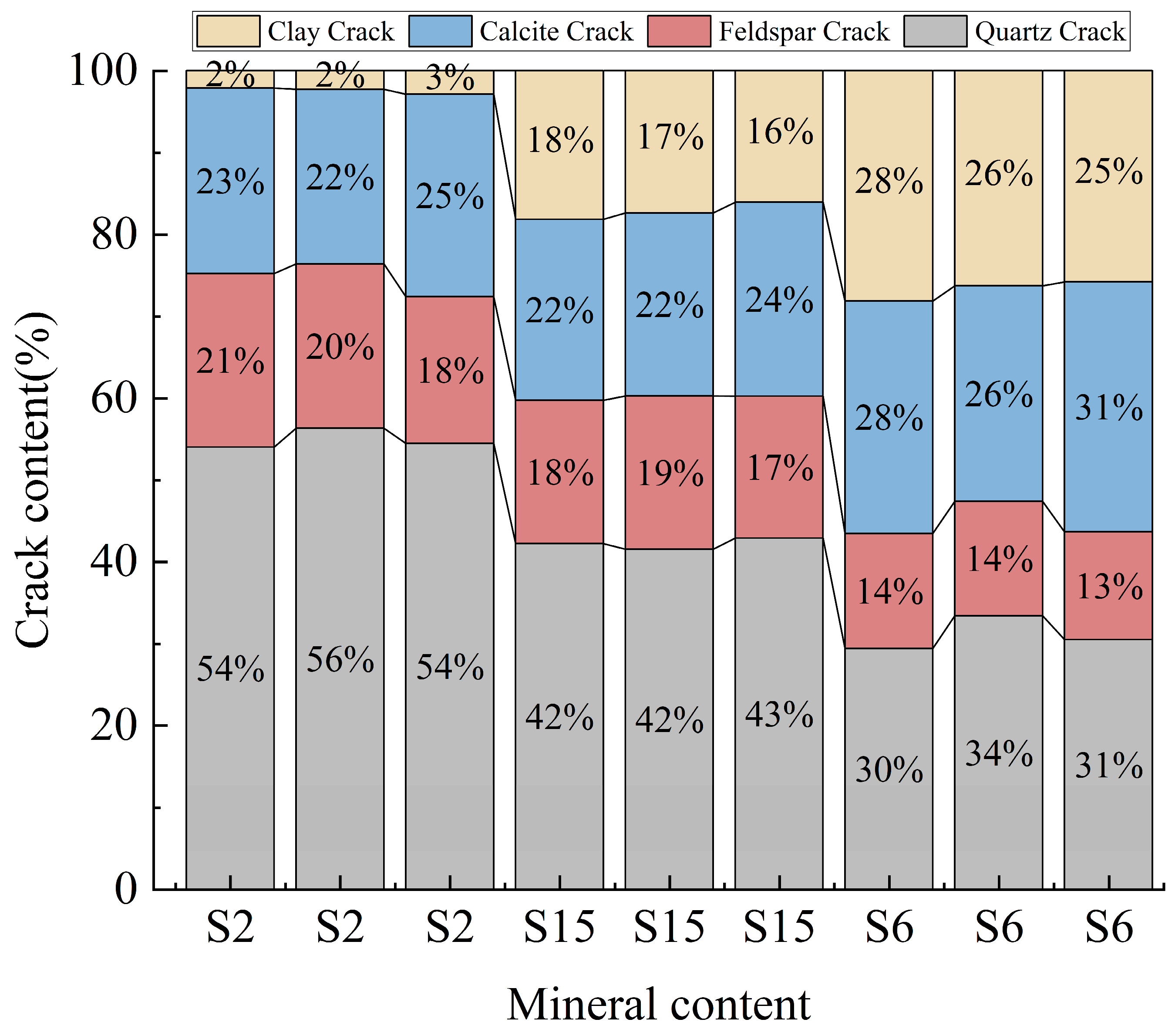
- The spatially irregular distribution of mineral mechanical properties in sandstone leads to a normal distribution of the macroscopic Young’s modulus obtained from uniaxial compression numerical simulations, with Young’s modulus ranging from 21.4 GPa to 27.1 GPa across different mineral compositions. Further investigation reveals that, as the content of high-strength minerals (e.g., quartz) decreases from 56.4% to 30.2% and clay content increases from 3.7% to 28.1%, the mean macroscopic Young’s modulus decreases from 28.39 GPa to 20.02 GPa, while its standard deviation increases from 0.32 to 1.08, and the proportion of cracks propagating through low-strength minerals rises from 2.55% to 26.67%. This indicates that mineral composition and content are the primary factors controlling the macroscopic mechanical properties of sandstone, while the heterogeneity in mineral mechanical properties is a secondary factor.
- (4)
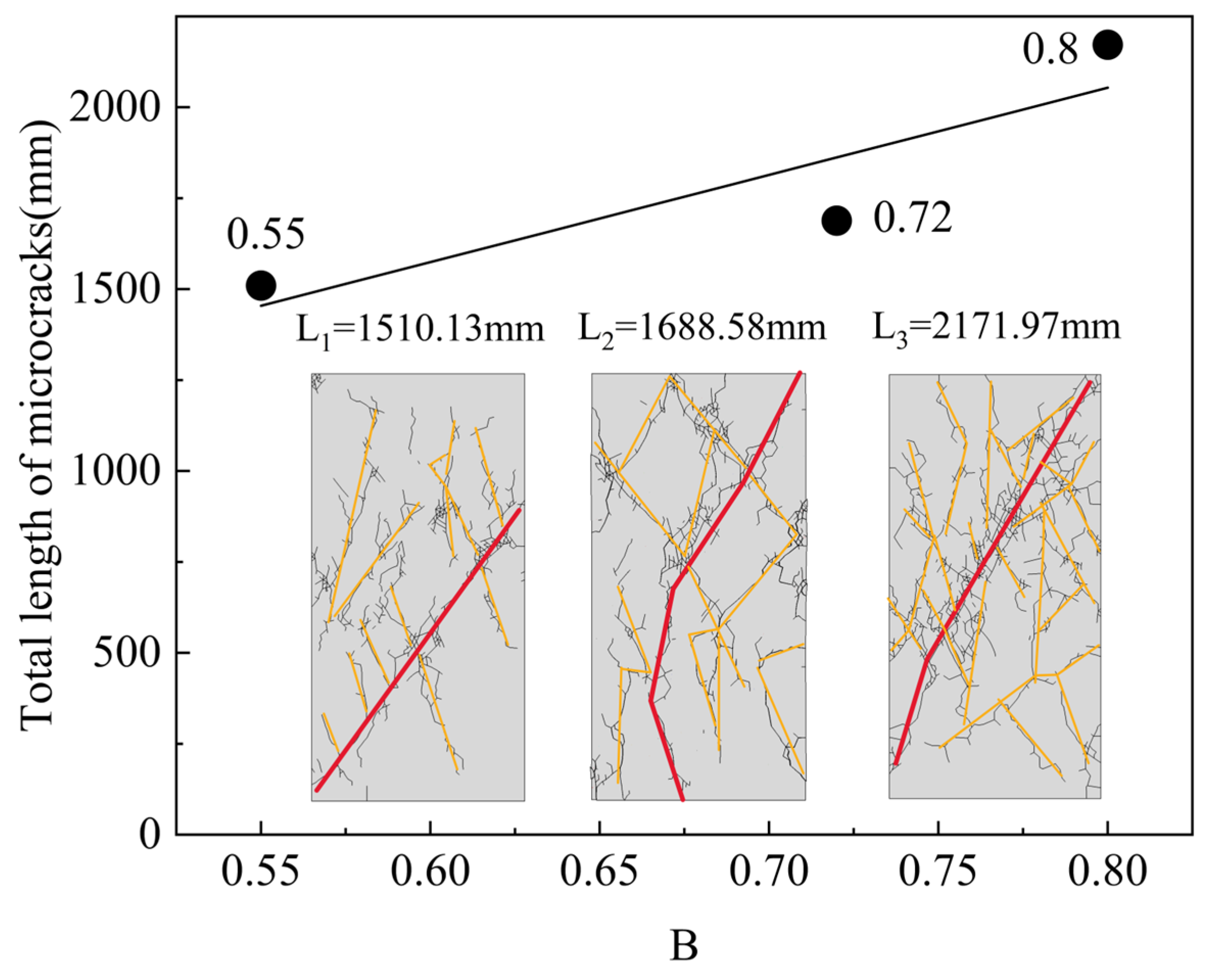
- Based on the mineral content of sandstone and the distribution characteristics of its micromechanical and macro-mechanical properties, a brittleness evaluation index was developed. The calculated brittleness indexes for three representative mineral compositions are 0.55, 0.72, and 0.80, respectively. This study found that a higher sandstone brittleness index leads to a greater tendency to generate branched cracks during the fracturing process, forming a complex fracture network.
Author Contributions
Funding
Institutional Review Board Statement
Informed Consent Statement
Data Availability Statement
Acknowledgments
Conflicts of Interest
References
- Zou, C.N.; Yang, Z.; Tao, S.Z.; Yuan, X.J.; Zhu, R.K.; Hou, L.H.; Wu, S.T.; Sun, L.; Zhang, G.S.; Bai, B.; et al. Continuous hydrocarbon accumulation over a large area as a distinguishing characteristic of unconventional petroleum: The Ordos Basin, North-Central China. Earth-Sci. Rev. 2013, 126, 358–369. [Google Scholar] [CrossRef]
- Gao, H.; Li, H. Pore structure characterization, permeability evaluation and enhanced gas recovery techniques of tight gas sandstones. J. Nat. Gas Sci. Eng. 2016, 28, 536–547. [Google Scholar] [CrossRef]
- Guo, Z.Q.; Li, X.Y.; Liu, C.; Feng, X.; Shen, Y. A shale rock physics model for analysis of brittleness index, mineralogy and porosity in the Barnett Shale. J. Geophys. Eng. 2013, 10, 025006. [Google Scholar] [CrossRef]
- Guo, P.; Li, X.; Li, S.D.; He, J.M.; Mao, T.Q.; Zheng, B. Combined effect of rock fabric, in-situ stress, and fluid viscosity on hydraulic fracture propagation in Chang 73 lacustrine shale from the Ordos Basin. J. Cent. South Univ. 2024, 31, 1646–1658. [Google Scholar] [CrossRef]
- Sun, W.B.; Zuo, Y.J.; Wu, Z.H.; Liu, H.; Zheng, L.J.; Shui, Y.; Xi, S.; Lou, Y.; Luo, X. The distribution characteristics of brittle minerals in the Lower Cambrian Niutitang Formation in northern Guizhou. J. Nat. Gas Sci. Eng. 2021, 86, 103752. [Google Scholar] [CrossRef]
- Su, Z.Z.; Li, T.T.; Bai, M.X.; Zhou, Z.J. Influence of mineral composition on initiation pressure of waterflood-induced fractures in tight sandstone reservoir. ACS Omega 2024, 9, 9269–9285. [Google Scholar] [CrossRef]
- Liu, K.D.; Zhao, S.X.; Diao, L.; Yue, W.P.; Sun, C.W.; Xia, Y. Research on the mechanical properties and micro damage mechanism of water bearing sandstone under uniaxial compression. Sci. Rep. 2025, 15, 7320. [Google Scholar] [CrossRef] [PubMed]
- Du, K.; Sun, Y.; Zhou, J.; Khandelwal, M.; Gong, F.Q. Mineral Composition and Grain Size Effects on the Fracture and Acoustic Emission (AE) Characteristics of Rocks Under Compressive and Tensile Stress. Rock Mech. Rock Eng. 2022, 55, 6445–6474. [Google Scholar] [CrossRef]
- Shi, X.C.; Tang, Y.; Chen, S.; Gao, L.Y.; Wang, Y.M. Experimental study on the sandstone abrasiveness via mineral composition and microstructure analysis. Petroleum 2024, 10, 440–445. [Google Scholar] [CrossRef]
- Ahmed, Z.; Khan, A.S.; Ahmed, B. Sandstone Composition and Provenance of the Nari Formation, Central Kirthar Fold belt, Pakistan. Pak. J. Geol. 2020, 4, 90–96. [Google Scholar] [CrossRef]
- Marques, V.G.; da Silva, L.R.D.; Carvalho, B.M.; de Lucena, L.R.F.; Vieira, M.M. Deep learning-based pore segmentation of thin rock sections for aquifer characterization using color space reduction. In Proceedings of the 2019 International Conference on Systems, Signals and Image Processing (IWSSIP), Osijek, Croatia, 5–7 June 2019; IEEE: New York, NY, USA, 2019; pp. 235–240. [Google Scholar] [CrossRef]
- Yu, Q.Y.; Xiong, Z.W.; Du, C.; Dai, Z.X.; Soltanian, M.R.; Soltanian, M.; Yin, S.; Liu, W.; Liu, C.; Wang, C.; et al. Identification of rock pore structures and permeabilities using electron microscopy experiments and deep learning interpretations. Fuel 2020, 268, 117416. [Google Scholar] [CrossRef]
- Jin, C.Y.; Wang, K.; Han, T.; Lu, Y.; Liu, A.X.; Liu, D. Segmentation of ore and waste rocks in borehole images using the multi-module densely connected U-net. Comput. Geosci. 2022, 159, 105018. [Google Scholar] [CrossRef]
- Zheng, D.Y.; Hou, L.; Hu, X.M.; Hou, M.C.; Dong, K.; Hu, S.H.; Teng, R.; Ma, C. Sediment grain segmentation in thin-section images using dual-modal Vision Transformer. Comput. Geosci. 2024, 183, 105664. [Google Scholar] [CrossRef]
- Liao, S.Z.; Hu, J.H.; Zhang, Y. Mechanism of hydraulic fracture vertical propagation in deep shale formation based on elastic–plastic model. Eng. Fract. Mech. 2024, 295, 109806. [Google Scholar] [CrossRef]
- Haddad, M.; Sepehrnoori, K. Simulation of hydraulic fracturing in quasi-brittle shale formations using characterized cohesive layer: Stimulation controlling factors. J. Unconv. Oil Gas Resour. 2015, 9, 65–83. [Google Scholar] [CrossRef]
- Fan, C.H.; Nie, S.; Li, H.; Radwan, A.E.; Pan, Q.C.; Shi, X.C.; Li, J.; Liu, Y.; Guo, Y. Quantitative prediction and spatial analysis of structural fractures in deep shale gas reservoirs within complex structural zones: A case study of the Longmaxi Formation in the Luzhou area, southern Sichuan Basin, China. J. Asian Earth Sci. 2024, 263, 106025. [Google Scholar] [CrossRef]
- Luo, Y.F.; Zhang, S.L.; Zhu, Y.J.; Huang, F.; Wu, Q.H. Micromechanical properties and homogenization of sandstone based on nanoindentation. Phys. Fluids 2024, 36, 086611. [Google Scholar] [CrossRef]
- Cao, F.; He, J.H.; Cao, H.X.; Deng, H.C.; La Croix, A.D.; Jiang, R.; Li, R.; Li, J. Quantitative characterization of the multiscale mechanical properties of low-permeability sandstone roofs of coal seams based on nanoindentation and triaxial tests and its implications for CO2 geological sequestration. Int. J. Coal Sci. Technol. 2025, 12, 18. [Google Scholar] [CrossRef]
- Yan, D.D.; Zhao, L.X.; Wang, Y.; Zhang, Y.H.; Cai, Z.J.; Song, X.H.; Zhang, F.; Geng, J. Heterogeneity indexes of unconventional reservoir shales: Quantitatively characterizing mechanical properties and failure behaviors. Int. J. Rock Mech. Min. Sci. 2023, 171, 105577. [Google Scholar] [CrossRef]
- Liu, Y.W.; Liu, Q.S.; Feng, G.; Lyu, Q.; Liu, S.M.; Wang, Y.J.; Tang, X. Upscaling mechanical properties of shale obtained by nanoindentation to macroscale using accurate grain-based modeling (AGBM). Energy 2025, 314, 134126. [Google Scholar] [CrossRef]
- Hu, L.; Wang, F.; Jiang, F.; Huang, G. Study on the influence of mineral composition on the mechanical properties of granite based on FDEM-GBM method. Simul. Model. Pract. Theory 2023, 129, 102834. [Google Scholar] [CrossRef]
- Chen, B.; Xiang, J.; Latham, J.P.; Bakker, R.R. Grain-scale failure mechanism of porous sandstone: An experimental and numerical FDEM study of the Brazilian Tensile Strength test using CT-Scan microstructure. Int. J. Rock Mech. Min. Sci. 2020, 132, 104348. [Google Scholar] [CrossRef]
- Liu, Q.; Deng, P.H. Numerical Study of Rock Fragmentation Process and Acoustic Emission by FDEM Based on Heterogeneous Model. Math. Probl. Eng. 2020, 2020, 2109584. [Google Scholar] [CrossRef]
- Wu, D.; Li, H.B.; Fukuda, D.; Liu, H.Y. Development of a finite-discrete element method with finite-strain elasto-plasticity and cohesive zone models for simulating the dynamic fracture of rocks. Comput. Geotech. 2023, 156, 105271. [Google Scholar] [CrossRef]
- Wang, R.; Chen, R.Q.; Yan, H.; Guo, X.X. Lightweight concrete crack recognition model based on improved MobileNetV3. Sci. Rep. 2025, 15, 312. [Google Scholar] [CrossRef] [PubMed]
- Howard, A.; Sandler, M.; Chen, B.; Wang, W.J.; Chen, L.C.; Tan, M.X. Searching for MobileNetV3. In Proceedings of the 2019 IEEE/CVF International Conference on Computer Vision (ICCV), Seoul, Republic of Korea, 27 October–2 November 2019; IEEE: New York, NY, USA, 2019; pp. 1314–1324. [Google Scholar]
- Elfwing, S.; Uchibe, E.; Doya, K. Sigmoid-weighted linear units for neural network function approximation in reinforcement learning. Neural Netw. 2018, 107, 3–11. [Google Scholar] [CrossRef] [PubMed]
- Everingham, M.; Eslami, S.M.A.; Van Gool, L.; Williams, C.K.I.; Winn, J.; Zisserman, A. The pascal visual object classes challenge: A retrospective. Int. J. Comput. Vis. 2014, 111, 98–136. [Google Scholar] [CrossRef]
- de la Rosa, J.; Pérez, Á.; de Sisto, M.; Hernández, L.; Díaz, A.; Ros, S.; González-Blanco, E. Transformers analyzing poetry: Multilingual metrical pattern prediction with transformer-based language models. Neural Comput. Appl. 2021, 35, 18171–18176. [Google Scholar] [CrossRef]
- Lin, T.Y.; Dollár, P.; Girshick, R.; He, K.; Hariharan, B.; Belongie, S. Feature pyramid networks for object detection. In Proceedings of the 2017 IEEE Conference on Computer Vision and Pattern Recognition (CVPR), Honolulu, HI, USA, 21–26 July 2017; IEEE: New York, NY, USA, 2017; pp. 936–944. [Google Scholar]
- Singh, B.; Davis, L.S. An analysis of scale invariance in object detection—SNIP. In Proceedings of the 2018 IEEE/CVF Conference on Computer Vision and Pattern Recognition, Salt Lake City, UT, USA, 18–23 June 2018; IEEE: New York, NY, USA, 2018; pp. 3578–3587. [Google Scholar]
- Russell, B.C.; Torralba, A.; Murphy, K.P.; Freeman, W.T. LabelMe: A database and web-based tool for image annotation. Int. J. Comput. Vis. 2007, 77, 157–173. [Google Scholar] [CrossRef]
- Liu, T.; Liu, Z.B.; Zhang, K.J.; Li, C.S.; Zhang, Y.; Mu, Z.H.; Xu, M.; Zhang, Y.; Li, X. Research on the generation and annotation method of thin section images of tight oil reservoir based on deep learning. Sci. Rep. 2024, 14, 9175. [Google Scholar] [CrossRef]
- Tariq, M.; Akram, A.; Yaqoob, S.; Rasheed, M. Real-time Age and Gender Classification using VGG19. Adv. Mach. Learn. Artif. Intell. 2023, 4, 1106. [Google Scholar] [CrossRef]
- Peng, H.M.; Xiang, S.Y.; Chen, M.J.; Li, H.Y.; Su, Q. DCN-Deeplabv3+: A novel road segmentation algorithm based on improved deeplabv3+. IEEE Access 2024, 12, 87397–87406. [Google Scholar] [CrossRef]
- Liu, H. Optimization research on decorative pattern design of Dunhuang caisson based on SegNet image segmentation technology. GeoJournal 2025, 90, 119. [Google Scholar] [CrossRef]
- Munjiza, A. The Combined Finite-Discrete Element Method; John Wiley & Sons: Chichester, UK, 2004. [Google Scholar] [CrossRef]
- Lisjak, A.; Grasselli, G. A review of discrete modeling techniques for fracturing processes in discontinuous rock masses. J. Rock. Mech. Geotech. Eng. 2014, 6, 301–314. [Google Scholar] [CrossRef]
- Mahabadi, O.K.; Lisjak, A.; Munjiza, A.; Grasselli, G. Y-Geo: New combined finite-discrete element numerical code for geomechanical applications. Int. J. Geomech. 2012, 12, 676–688. [Google Scholar] [CrossRef]
- Deng, P.H.; Liu, Q.S.; Huang, X.; Bo, Y.; Liu, Q.; Li, W.W. Sensitivity analysis of fracture energies for the combined finite-discrete element method (FDEM). Eng. Fract. Mech. 2021, 251, 107793. [Google Scholar] [CrossRef]
- Feng, Z.C.; Zhao, Y.S.; Duan, K.Y. Influence of rock cell characteristics and rock inhomogeneity parameter on complete curve of stress-strain. Chin. J. Rock Mech. Eng. 2004, 23, 1819–1823. [Google Scholar] [CrossRef]
- Deng, P.H.; Liu, Q.S.; Huang, X.; Liu, Q.; Ma, H.; Li, W.W. Acquisition of normal contact stiffness and its influence on rock crack propagation for the combined finite-discrete element method (FDEM). Eng. Fract. Mech. 2021, 242, 107459. [Google Scholar] [CrossRef]
- Lisjak, A.; Grasselli, G.; Vietor, T. Continuum–discontinuum analysis of failure mechanisms around unsupported circular excavations in anisotropic clay shales. Int. J. Rock Mech. Min. Sci. 2014, 65, 96–115. [Google Scholar] [CrossRef]
- Huang, T.; Zhu, H.Y.; Liu, Q.Y.; Dai, X.W.; Tang, X.H.; Yi, X.Y.; He, X.; She, C.; Zheng, M. Study on multi-cluster fracture interlaced competition propagation model of hydraulic fracturing in heterogeneous reservoir. SSRN Electron. J. 2024, 244, 213415. [Google Scholar] [CrossRef]
- Munjiza, A.; Andrews, K.R.F. Penalty function method for combined finite–discrete element systems comprising large number of separate bodies. Int. J. Numer. Methods Eng. 2000, 49, 1377–1396. [Google Scholar] [CrossRef]
- Qi, Y.; Ju, Y.W.; Yu, K.; Meng, S.Z.; Qiao, P. The effect of grain size, porosity and mineralogy on the compressive strength of tight sandstones: A case study from the eastern Ordos Basin, China. J. Pet. Sci. Eng. 2022, 208, 109461. [Google Scholar] [CrossRef]
- Ye, Y.; Tang, S.; Xi, Z. Brittleness evaluation in shale gas reservoirs and its influence on fracability. Energies 2020, 13, 388. [Google Scholar] [CrossRef]
- Jarvie, D.M.; Hill, R.J.; Ruble, T.; Pollastro, R.M. Unconventional shale-gas systems: The Mississippian Barnett Shale of north-central Texas as one model for thermogenic shale-gas assessment. AAPG Bull. 2007, 91, 475–499. [Google Scholar] [CrossRef]
- Rickman, R.; Mullen, M.; Petre, E.; Grieser, B.; Kundert, D. A practical use of shale petrophysics for stimulation design optimization: All shale plays are not clones of the Barnett shale. In Proceedings of the SPE Annual Technical Conference and Exhibition, Denver, CO, USA, 21–24 September 2008; Society of Petroleum Engineers: Richardson, TX, USA, 2008; p. SPE-115258-MS. [Google Scholar]
- Harbert, W.; Goodman, A.; Spaulding, R.; Haljasmaa, I.; Crandall, D.; Sanguinito, S.; Kutchko, B.; Tkach, M.; Fuchs, S.; Werth, C.J.; et al. CO2 induced changes in Mount Simon sandstone: Understanding links to post CO2 injection monitoring, seismicity, and reservoir integrity. Int. J. Greenh. Gas Control 2020, 100, 103109. [Google Scholar] [CrossRef]
- Wu, H.M.; Zhang, N.; Lou, Y.S.; Zhai, X.P.; Liu, B.; Li, S. Optimization of fracturing technology for unconventional dense oil reservoirs based on rock brittleness index. Sci. Rep. 2024, 14, 8909. [Google Scholar] [CrossRef] [PubMed]



| Segmentation Method | Accuracy/% | Dice | Recall/% | Precision/% | mIoU/% | F1 Score |
|---|---|---|---|---|---|---|
| VGG19 | 69.78 | 0.7167 | 71.68 | 72.03 | 46.38 | 71.67 |
| DeepLabV3+ | 82.69 | 0.7842 | 83.46 | 75.57 | 65.22 | 78.42 |
| Segnet | 87.80 | 0.8816 | 87.80 | 88.56 | 79.18 | 88.16 |
| Improved model | 93.26 | 0.9271 | 92.65 | 92.76 | 86.50 | 92.71 |
| Parameter | Value |
|---|---|
| Quartz Young’s modulus expected value | 92.46 GPa |
| Feldspar Young’s modulus expected value | 71.85 GPa |
| Calcite Young’s modulus expected value | 48.28 GPa |
| Clay Young’s modulus expected value | 27.63 GPa |
| Quartz Poisson’s ratio | 0.17 |
| Feldspar Poisson’s ratio | 0.20 |
| Calcite Poisson’s ratio | 0.28 |
| Clay Poisson’s ratio | 0.31 |
| Quartz density | 2712 kg/m3 |
| Feldspar density | 2650 kg/m3 |
| Calcite density | 2560 kg/m3 |
| Clay density | 1600 kg/m3 |
| Tensile strength expected value | 2 MPa |
| Shear strength expected value | 20 MPa |
| Tensile fracture energy expected value | 28 N/mm |
| Shear fracture energy expected value | 200 N/mm |
| Serial Number | Quartz (%) | Feldspar (%) | Calcite (%) | Clay (%) |
|---|---|---|---|---|
| S1 | 45.9 | 17.0 | 21.7 | 15.4 |
| S2 | 56.4 | 14.0 | 25.9 | 3.7 |
| S3 | 42.9 | 19.7 | 27.8 | 9.6 |
| S4 | 41.6 | 21.9 | 28.5 | 8.0 |
| S5 | 47.9 | 19.5 | 24.2 | 8.3 |
| S6 | 30.2 | 14.6 | 27.1 | 28.1 |
| S7 | 33.4 | 14.9 | 25.0 | 26.7 |
| S8 | 46.0 | 15.4 | 21.5 | 17.1 |
| S9 | 47.0 | 13.9 | 39.0 | 0.1 |
| S10 | 49.0 | 16.3 | 34.2 | 0.5 |
| S11 | 44.4 | 21.7 | 22.3 | 11.6 |
| S12 | 39.9 | 21.2 | 27.7 | 11.2 |
| S13 | 53.6 | 18.4 | 15.2 | 12.8 |
| S14 | 48.3 | 22.3 | 20.0 | 9.4 |
| Mean (S15) | 45.0 | 18.0 | 26.0 | 11.0 |
Disclaimer/Publisher’s Note: The statements, opinions and data contained in all publications are solely those of the individual author(s) and contributor(s) and not of MDPI and/or the editor(s). MDPI and/or the editor(s) disclaim responsibility for any injury to people or property resulting from any ideas, methods, instructions or products referred to in the content. |
© 2026 by the authors. Licensee MDPI, Basel, Switzerland. This article is an open access article distributed under the terms and conditions of the Creative Commons Attribution (CC BY) license.
Share and Cite
Xia, B.; Zhang, Y.; Xu, X.; Wang, L.; Li, R.; Zheng, X. A Cross-Scale Study of Data-Driven Micro-to-Macro Mechanical Heterogeneity in Sandstone. Appl. Sci. 2026, 16, 3589. https://doi.org/10.3390/app16073589
Xia B, Zhang Y, Xu X, Wang L, Li R, Zheng X. A Cross-Scale Study of Data-Driven Micro-to-Macro Mechanical Heterogeneity in Sandstone. Applied Sciences. 2026; 16(7):3589. https://doi.org/10.3390/app16073589
Chicago/Turabian StyleXia, Binwei, Yulin Zhang, Xinqin Xu, Lei Wang, Rui Li, and Xiong Zheng. 2026. "A Cross-Scale Study of Data-Driven Micro-to-Macro Mechanical Heterogeneity in Sandstone" Applied Sciences 16, no. 7: 3589. https://doi.org/10.3390/app16073589
APA StyleXia, B., Zhang, Y., Xu, X., Wang, L., Li, R., & Zheng, X. (2026). A Cross-Scale Study of Data-Driven Micro-to-Macro Mechanical Heterogeneity in Sandstone. Applied Sciences, 16(7), 3589. https://doi.org/10.3390/app16073589