Article

Repair of Wellbore Microannuli with Microfine Cement

by
Serafin Garcia Fernandez
1,
Daniel Heras Murcia
2 and
John C. Stormont
2,*
1
Agapito Associates, LLC., Grand Junction, CO 81501, USA
2
TS-Nano, Inc., Albuquerque, NM 87110, USA
*
Author to whom correspondence should be addressed.
Appl. Sci. 2026, 16(7), 3257; https://doi.org/10.3390/app16073257
Submission received: 13 February 2026 / Revised: 10 March 2026 / Accepted: 25 March 2026 / Published: 27 March 2026

Abstract

This study evaluates the effectiveness of microfine cement (MF) to seal two laboratory-fabricated wellbore microannuli. The samples were characterized with their hydraulic apertures (158 and 85 µm). A rough cement surface paired with a transparent acrylic plate, acting as a steel surrogate, formed the basis of the experimental setup, with the acrylic enabling direct visual monitoring of MF behavior throughout the tests. Hydraulic aperture measurements were taken before and after each repair attempt, with MF injected at constant pressure and a 24 h curing period allowed between successive injections. Four injection cycles were completed per sample. The MF cement had a d95 = ~14 µm and a w/c of 1.45. Results show progressive reduction in hydraulic aperture from 158 µm to 20 µm and from 85 µm to 8 µm, but complete sealing was not achieved. Visual observations revealed that bleeding and filtration (plug formation) were the primary mechanisms limiting repair efficiency. These findings highlight the challenges of sealing rough microannuli with MF and suggest that aperture variability and particle filtration strongly influence repair outcomes. Higher injection pressures or alternative materials may be required for complete sealing.

1. Introduction

Access to subsurface resources—including oil and gas production, CO2 sequestration, hydrocarbon storage, and geothermal energy—is achieved through wellbores [1,2,3,4,5,6]. The potential leakage pathways that can undermine a wellbore’s hydraulic and mechanical integrity were identified by Gasda et al. [7], who showed interfaces between dissimilar materials (cement–steel and cement–rock) and fractures within the constituent materials (cement, steel, adjacent rock, and plugs) as the main vulnerability zones. Among these pathways, the interface between steel and cement (commonly referred to as the microannulus) has been consistently recognized as a particularly critical conduit for leakage [8,9,10,11,12]. Recent studies further demonstrate that the size and nature (dry vs. wet) of microannuli strongly influence cement evaluation responses and sealing effectiveness, underscoring the importance of understanding microannulus morphology in remediation work [13].
The conventional approach to seal leakage pathways has been cementitious squeeze operations. Nevertheless, their effectiveness is frequently compromised by particle filtration, a process whereby cement grains bridge across narrow apertures and prevent adequate sealing [14]. Squeezing operations typically consist of injecting pressurized cement into the annulus behind the casing to repair a casing leak, a poor bond between the casing and the cement, gas channels in the cement, or other flaws that serve as flow paths. Squeeze jobs can be performed at pressures either below or above formation strength and are typically executed using one of two pumping strategies: the running squeeze or the hesitation squeeze [15]. Given their limited success, multiple attempts are often necessary, each adding considerable cost to remediation efforts [16,17,18].
Grouting (the practice of pressure-injecting a cementitious or sand-based mixture into soil or rock formations) has been widely investigated as a way of enhancing both mechanical strength and hydraulic resistance. Common applications of grouting include sealing rocks around tunnels to reduce water inflow [19]. A key constraint in grouting design is injection pressure: it must exceed the resistance of the fluid already occupying the fracture yet remain below the threshold that would extend or widen it [20]. Ideally, the grout completely fills the fracture, displacing any resident fluids such as hydrocarbons, natural gas, or brine, which improves the structural integrity of the surrounding medium and avoids fluid migration. In practice, however, accurately characterizing fracture apertures prior to intervention is rarely straightforward, and unintended fracture extension during injection is a well-known risk. The propagation of a fracture due to an internal fluid pressure has been extensively established, since it is the principle of hydraulic fracturing [21,22].
Penetrability refers to the ease with which a grout or repair material can be driven into a fracture under pressure. Several parameters govern this property, including the w/c ratio, particle size distribution, degree of hydration and flocculation, applied pressure, and the relationship between opening size and cement grain size [23,24,25,26,27,28,29]. With respect to the w/c ratio, increasing water content improves flow into smaller apertures, but reduces mechanical strength. Beyond a certain threshold, excess water promotes bleeding, which is the phenomenon where water separates from the cement matrix, leaving behind a free water. According to the European Standard EN 12715 for grouting, a cement mix is considered “stable” if the bleeding is less than 5% of the mix volume after 120 min [30]. This rule is widely followed to avoid bleeding [28,31,32,33,34]. However, despite this rule, Draganovic [19] showed that bleeding of the cement can still happen, resulting in incomplete repairs.
Particle filtration presents an additional challenge in grouting operations. This mechanism is triggered when cement grains accumulate at a narrow opening, forming a filter cake that blocks further particle penetration, only allowing water to flow through. A widely adopted design criterion to mitigate this risk is to select a grout whose maximum particle size does not exceed one-third of the target aperture [23,35,36], though this ratio can be relaxed to one-half under particularly favorable combinations of w/c ratio, grain size distribution, additives, and aperture geometry [26]. A recent mechanistic review of cementitious grouts confirms that filtration, rheology, and particle-size effects remain dominant factors controlling grout performance across scales [37].
Despite the challenges, cement-based materials are widely used to repair wellbores due to their relatively low cost and the industry’s familiarity and experience with them. Alternative sealants have been investigated to overcome the inherent limitations of cement-based grouting. Particle-free polymer-based materials are particularly attractive in this regard since they are capable of penetrating into finer apertures, and their viscosities can be lower than those of MF. Polymer hardening or polymerization can be triggered by environmental stimuli including temperature [38], pH [39,40], and pressure [41,42]. Nanoparticle addition has been proven to enhance the material properties [43,44,45]. Silica-based solutions have also emerged as candidates for plug and abandonment applications in wellbore systems [46] and to seal fractures < 50 µm [47,48,49].
Laboratory investigations of repair material penetration into fractures have predominantly relied on smooth parallel-plate configurations, either as uniform openings or with stepped geometries designed to replicate aperture variability. In the context of MF specifically, Draganovic et al. conducted a series of slot experiments, spanning both short and long geometries with varying constrictions, to examine the onset of plug formation and filtration [19,24,25]. Their results indicated a minimum penetrable aperture of 75 µm using a microfine cement with a d95 of 32 µm before filtration happened and established that although longer slot geometries (4 m) better reflect field conditions, shorter slots (0.3 m) yield sufficiently reliable estimates of grout penetration behavior. Slater et al. [50] employed a smooth parallel-plate configuration to evaluate a well-dispersed microfine cement system, demonstrating successful injection into a 120 µm aperture and improvement in penetration depth relative to conventional MF.
Despite most real-world fractures in field settings being rough, investigations into grout penetrability under such conditions remain limited [51]. The wellbore microannulus shares key characteristics with rough fractures, particularly its spatially variable aperture distribution, spanning both wide and narrow zones, which directly governs the feasibility of effective sealing [10]. Surface roughness has been shown to induce channeling of the fluid flow [52,53] and to facilitate filter cake development [25,54]. Wang et al. [51] demonstrated through radial injection experiments in rough fractures that surface irregularities generated asymmetries in the advancing grout front, resulting in uneven coverage. While most previous studies on grout penetrability have focused on smooth, uniform fractures, real-world wellbore microannuli are rough and irregular; this work addresses this gap by experimentally evaluating microfine cement injection into rough microannuli with visual observation.
This work reports on an experimental investigation into the effectiveness of MF as a sealant for wellbore microannuli. Two rough planar microannuli with hydraulic apertures of 158 and 85 µm were selected to represent conditions where repair is challenging yet leakage contribution to the wellbore system remains significant. Both hydraulic aperture values exceeded the estimated mechanical penetration threshold of approximately 50 µm for the MF used (d95 = ~14 µm), providing a relevant test range for evaluating repair performance. The experimental design incorporated visual access to the microannulus throughout injection, enabling direct observation and documentation of the repair dynamics. The primary objective was to quantify and characterize the sealing effectiveness achievable through MF injection alone.

2. Materials and Methods

2.1. Sample Preparation

To replicate the microannulus between the wellbore cement and steel casing, two planar samples were constructed. Each sample comprised a rough cement base, with a transparent acrylic plate serving as a substitute for the steel casing. The microannulus was defined as the gap between the cement surface and the acrylic plate. Following the American Petroleum Institute guidelines [55], Class G cement was prepared using a water-to-cement ratio of 0.44 and cast against a steel plate. To ensure consistent aperture variability and surface roughness on the cement, the same steel plate was employed for both samples. After 24 h, thermal debonding of the steel and cement was induced by subjecting the steel to alternating cold and hot cycles. Cooling was achieved by placing crushed ice on the steel for 15 min, followed by heating with warm tap water for 5 min. Debonding generally occurred after four such cycles. Once the steel was detached from the cement, the cement specimens were cured in a hot-water bath maintained at 70 °C for a period of 7 days. A transparent acrylic plate, possessing wetting characteristics comparable to those of steel, was positioned atop the rough cement surface to allow visual observation throughout the experiments. Based on steady-state water-flow measurements, the cement–acrylic assembly exhibited an estimated hydraulic aperture of 85 µm. To produce a second sample with a different hydraulic aperture while retaining the same cement surface roughness, a 25 µm shim was inserted between the cement and the acrylic to mechanically hold the microannulus open. This modification resulted in a second sample with a hydraulic aperture of 158 µm.

2.2. Experimental Setup

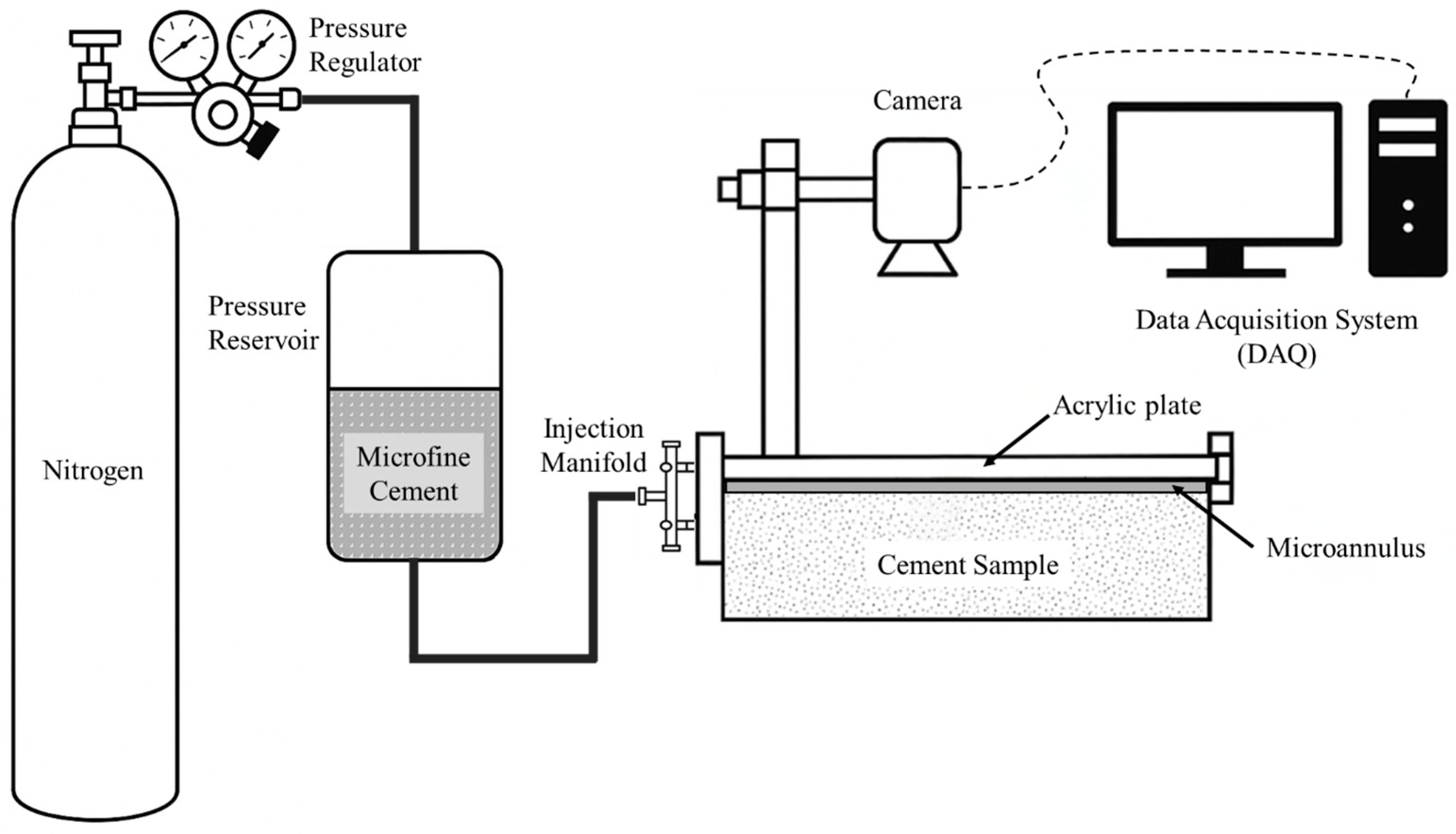
Figure 1 illustrates the experimental setup. A gas-pressurized reservoir served as the driving mechanism to deliver the repair material into the microannulus. The gas source was linked to a pressure regulator, enabling precise control of the injection pressure. The reservoir was charged with the MF, which was then introduced into the sample through a manifold designed to ensure uniform fluid distribution. A video camera positioned above the specimen recorded the progression of the repair material within the microannulus. To prevent the injected fluid pressure from enlarging the microannulus gap, evenly spaced clamps held the acrylic and cement together. A rigid steel sheet was placed along the edges of the acrylic to avoid uneven pressure distribution. The sides of the sample were sealed with epoxy to contain the flow. We acknowledge that using a flat acrylic plate does not replicate the curvature of real wellboresas it cannot fully reproduce their curvature, gravity effects, and radial confinement; however, this configuration was necessary to permit image acquisition and maintain controlled, low-pressure testing conditions.

2.3. Characterization of the Repair Material Used in This Study

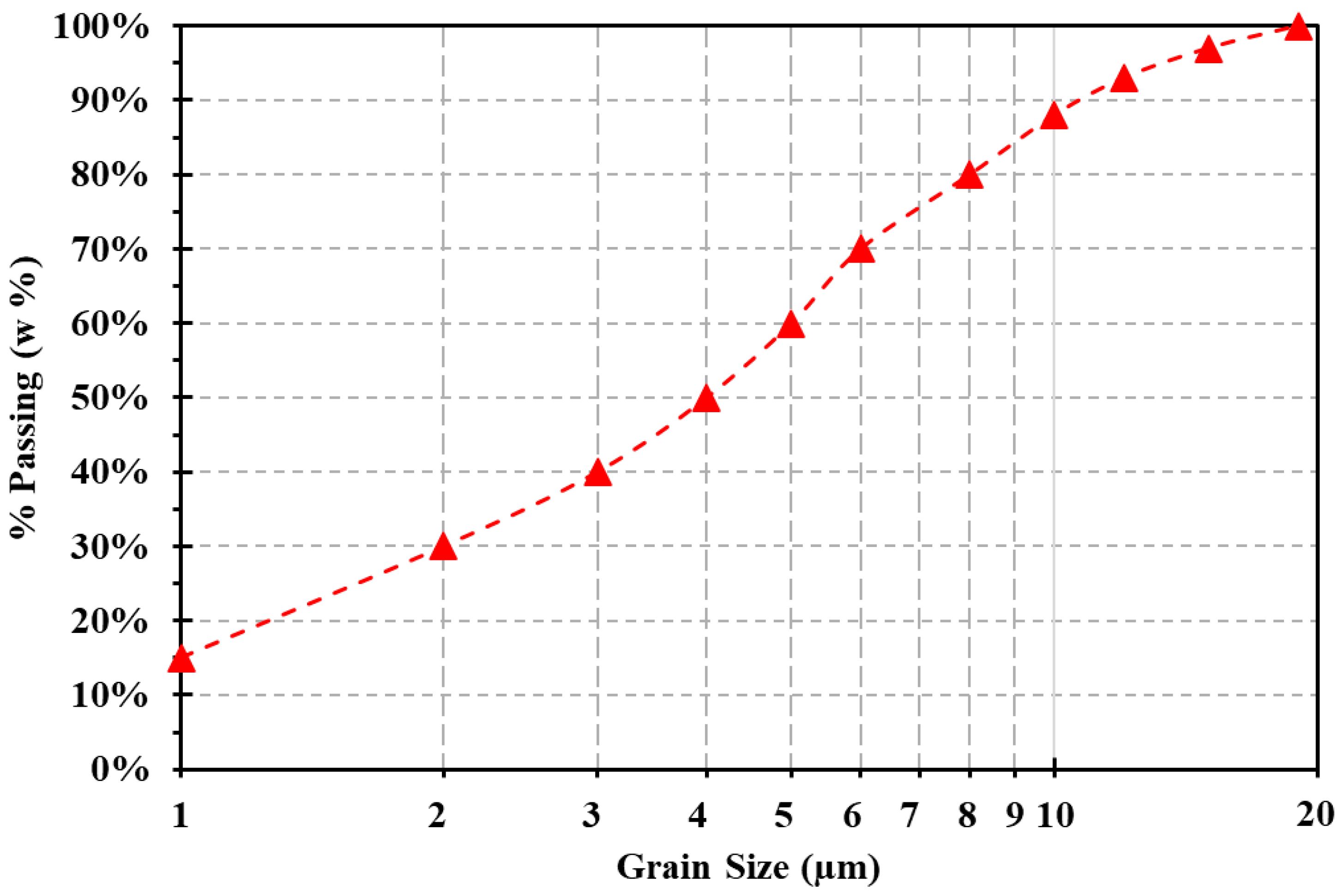
The MF used was MIKRODUR® (Dykerhoff, Germany). The grain size distribution of the MF was characterized by the manufacturer as d95 = ~14 µm and a d50 = ~4.5 µm. The water-to-cement ratio used was 1.45, which was sufficient to increase the mix’s permeability without causing excessive bleeding. The particle size distribution for the microfine cement is depicted in Figure 2.
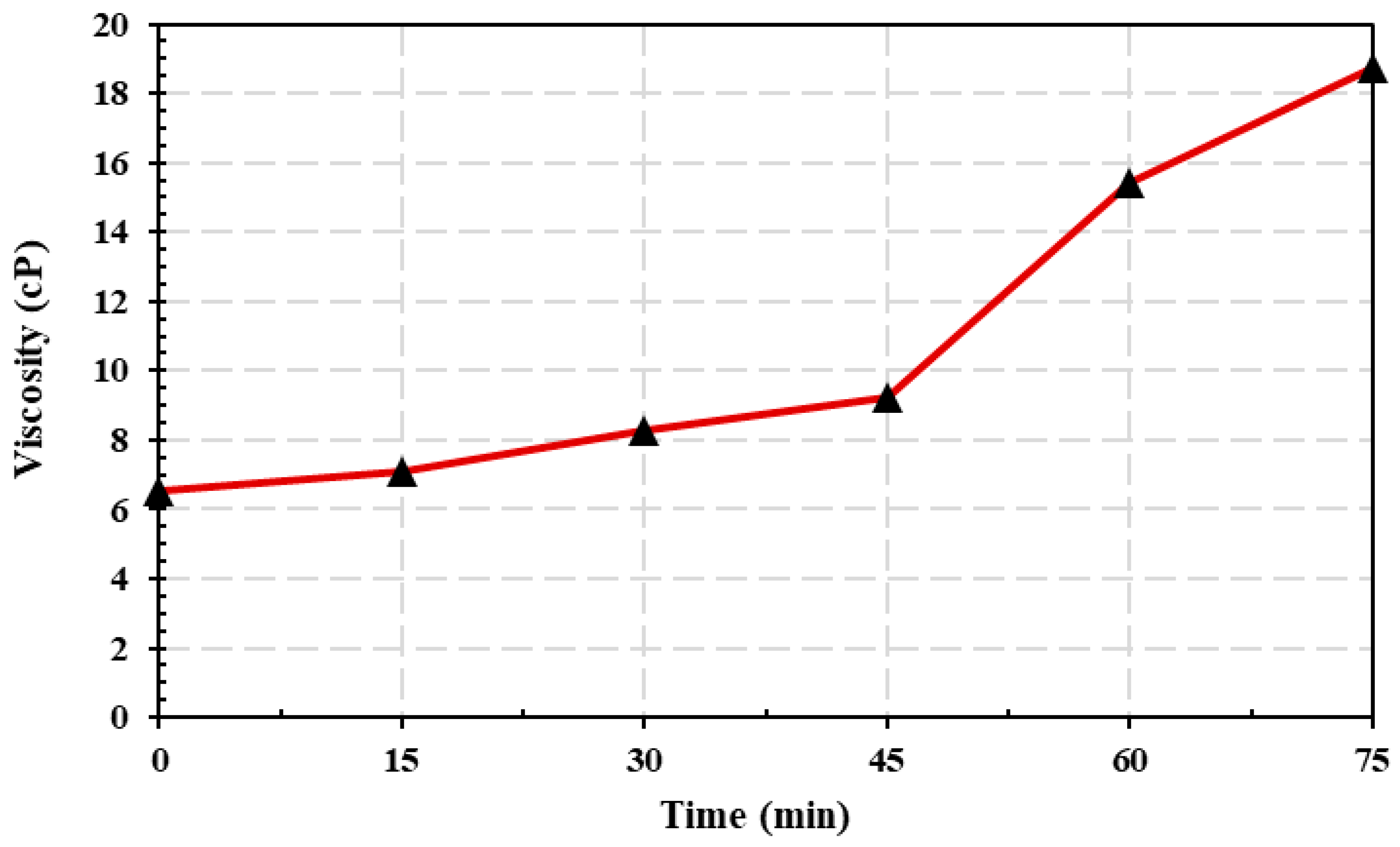
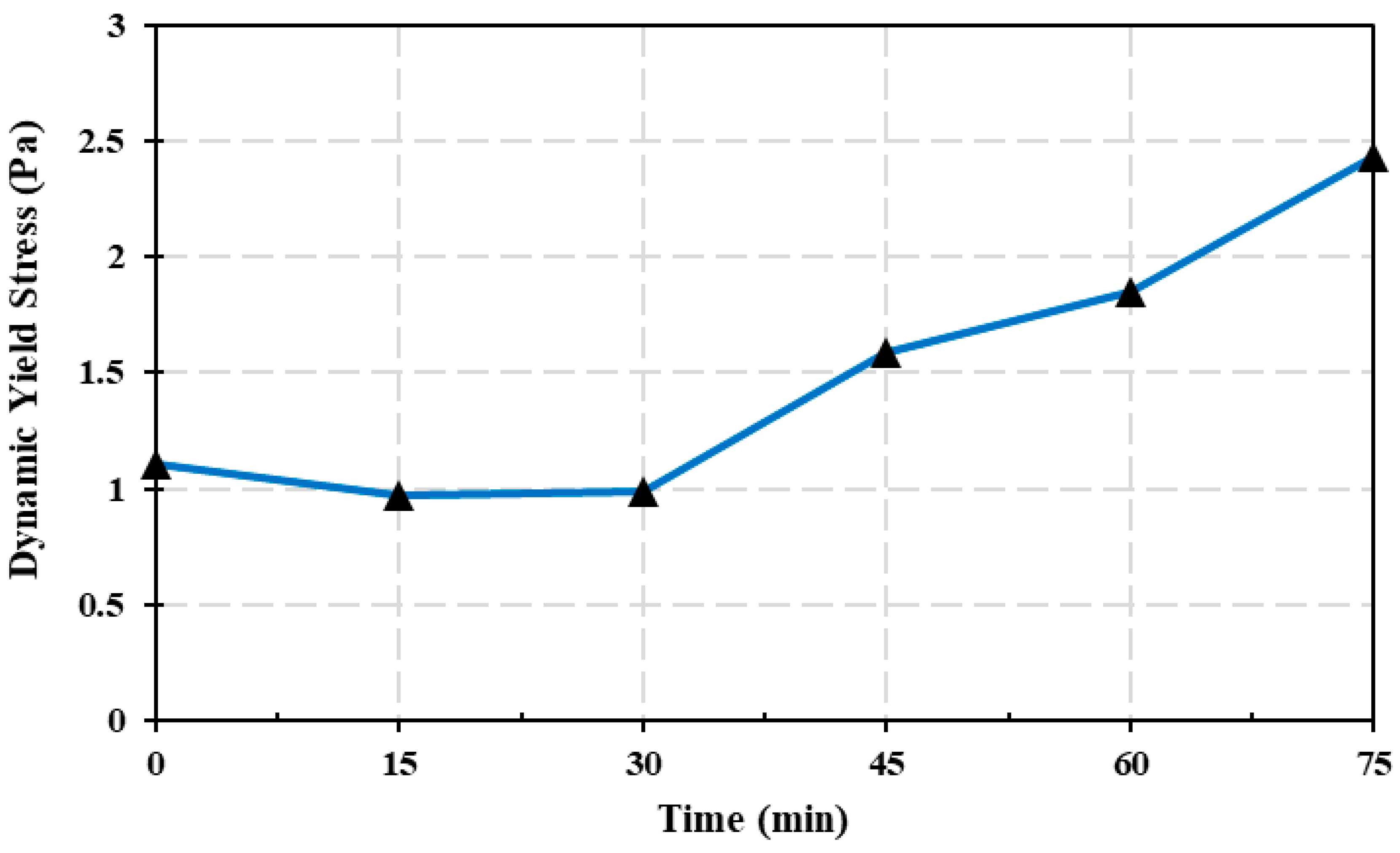
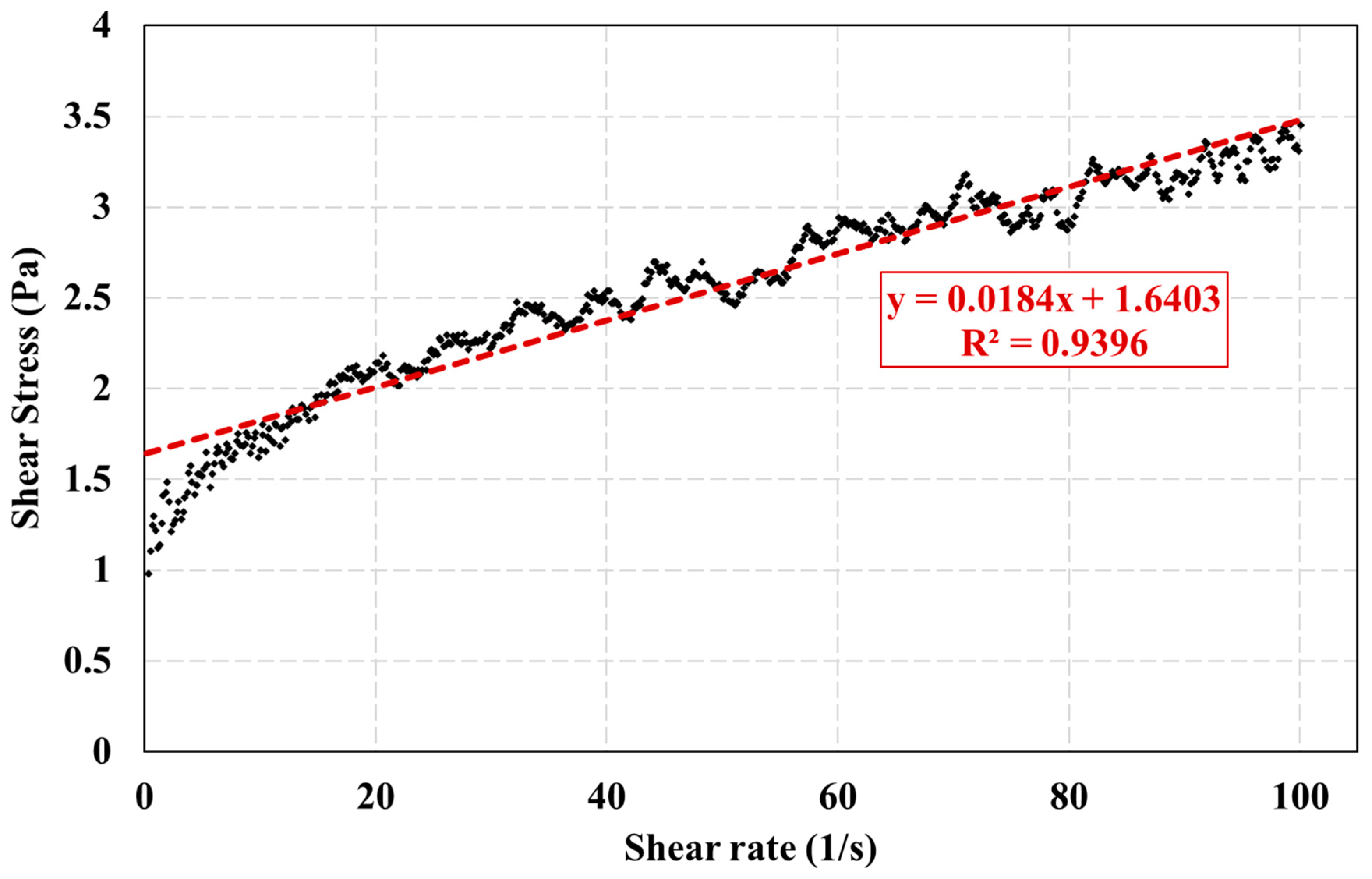
Based on the particle size distribution of the MF, it was anticipated that the material would penetrate and seal a fracture with an aperture ranging from 28 to 42 µm, in accordance with the established rule of thumb for cement penetration into fractures. This guideline was originally formulated assuming a smooth, uniform fracture opening. Although the hydraulic aperture of a rough fracture is not equivalent to its mechanical aperture, it still serves as a useful benchmark for assessing whether the microannulus could be effectively sealed by MF. In the case of a microannulus with a uniform aperture, the hydraulic and mechanical values would be comparable. However, as the aperture size distribution becomes increasingly non-uniform, the divergence between hydraulic and mechanical aperture measurements grows. Additionally, while mechanical and hydraulic apertures tend to converge toward similar values in larger openings, their differences can become pronounced as the apertures decrease in size. Bleeding was assessed by introducing the MF-water mixture into graduated cylinders and monitoring the volume of free water accumulated after 120 min [30]. Due to the limited amount of MF available for the experiments, 100 mL graduated cylinders were employed instead of the 1000 mL cylinders specified in the standard recommendation. The bleeding measured for the MF in this study was 4.3 ± 1% by volume, which suggests the mixture was stable. The rheology of the MF was characterized by the viscosity (Figure A1) and the dynamic yield stress (Figure A2) over time. An example of shear stress vs. shear rate is shown in Figure A3. Details about those measurements are shown in the Appendix A.
To enhance visualization during the injection experiments, a black dye (Nigrosin) was incorporated into the MF to darken its appearance, thereby allowing the injected material to be distinguished from the original Class G cement. Initially, Nigrosin was added at a concentration of 0.1% by weight of water; after two injections, the concentration was increased to 0.3% to achieve an even darker coloration.

2.4. Hydraulic Aperture Measurement

The hydraulic aperture of both samples was measured initially and after each repair attempt by measuring the steady-state flow of water through the sample. The cubic law [56] is expressed as:
h 3 = 12 Q μ w i
where h is the hydraulic aperture (L), Q is the volumetric flow rate (L3/T), i is the hydraulic gradient (F/L3), μ is the fluid viscosity (FT/L2), and w (L) is the width of the flaw, which is assumed to be the width of the specimens.
The hydraulic aperture was determined by measuring the volume of water flowing through the microannulus at a known pressure over time. It is assumed that flow occurs exclusively through the microannulus, given that the permeability of the cement is several orders of magnitude lower than that of the open, interconnected pathways within the microannulus. The setup depicted in Figure 1 was employed for this purpose, with minor adjustments. There was no gas tank, and a graded reservoir filled with water was added at a known height (known head pressure). The change in the reservoir volume over time was used to interpret the flow rate, hence allowing for an estimation of the hydraulic conductivity of the sample.

2.5. Testing Matrix

Two samples with different hydraulic apertures were used in this study: sample A (158 µm) and sample B (85 µm). The MF was injected using a constant pressure (up to a maximum of 41 kPa). We acknowledge that the experiments were conducted at low pressures to prevent pressure-induced changes to the crack geometry and potential leakage from the injection system and to accommodate low-viscosity materials, noting that achieving field-level pressures would require a fully confined experimental setup.
To begin injection into the microannulus, the pressure was initially set at approximately 7 kPa. After steady-state flow was achieved, the sample was inspected visually. If air bubbles remained trapped within the microannulus, the injection pressure was raised to around 14 kPa to promote more complete displacement. This procedure was repeated as needed, with pressures increased up to 41 kPa. If the microannulus appeared to be completely filled with MF before the maximum pressure was reached, the injection was halted at that point to prevent potential leakage. Following injection, the MF was allowed to cure for 24 h, after which the hydraulic aperture was remeasured. The injection process was repeated until the hydraulic aperture did not decrease further; it increased because the MF displaced some previous repair material, or the hydraulic aperture was <10 µm.

3. Results and Discussion

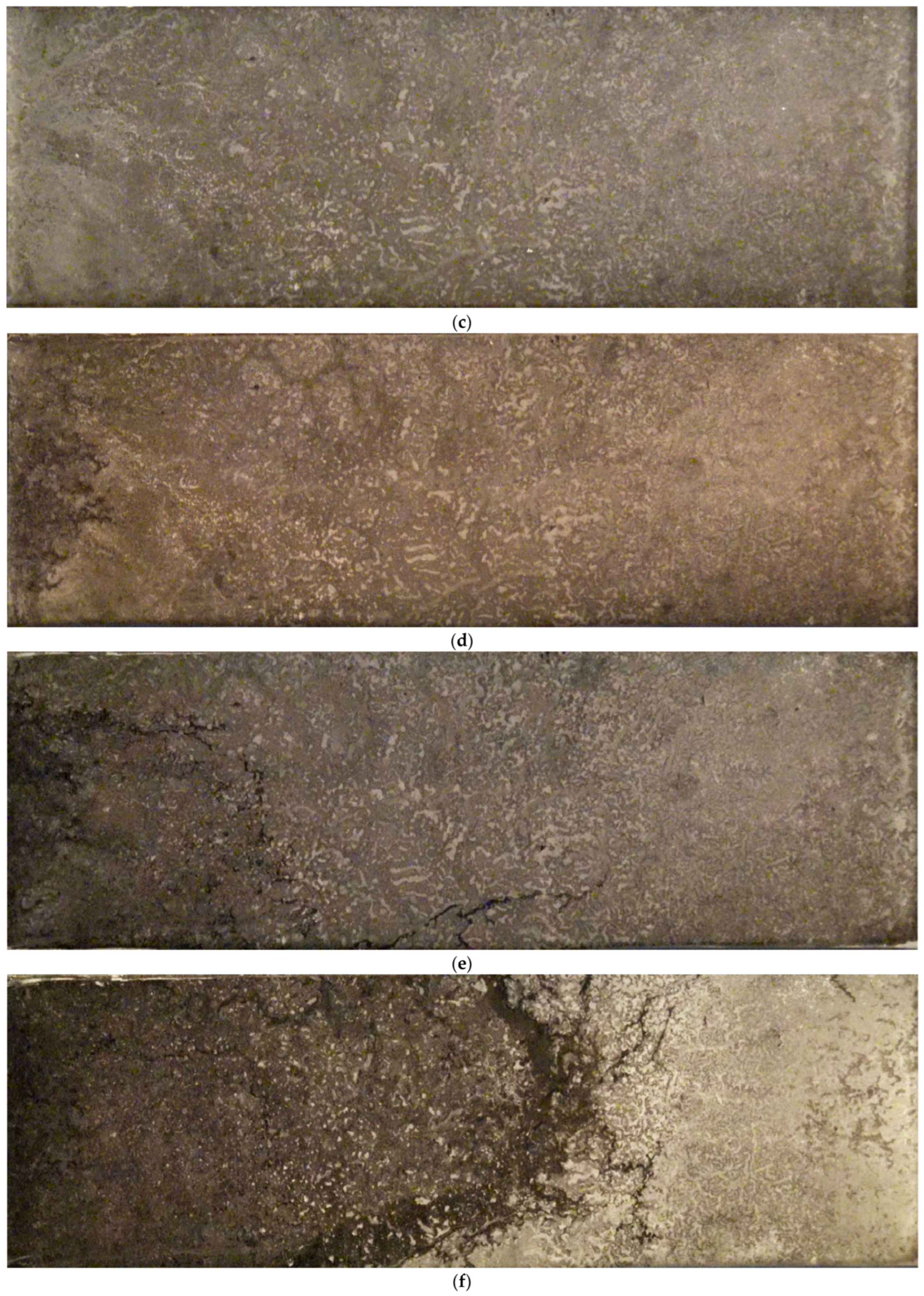
Samples A and B each underwent four repair attempts using MF. For every injection, two key characteristics were observed to describe the experimental outcome: whether the repair material traversed the microannulus and exited at the downstream end (referred to as breakthrough), and whether the material occupied the entire microannulus or was confined to preferential flow channels. The injections were labeled using the following convention: MF followed by the sequential injection number (1 through 4). For example, MF2 denotes the second injection attempt with MF. A summary of these observations is provided in Table 1 and Table 2.
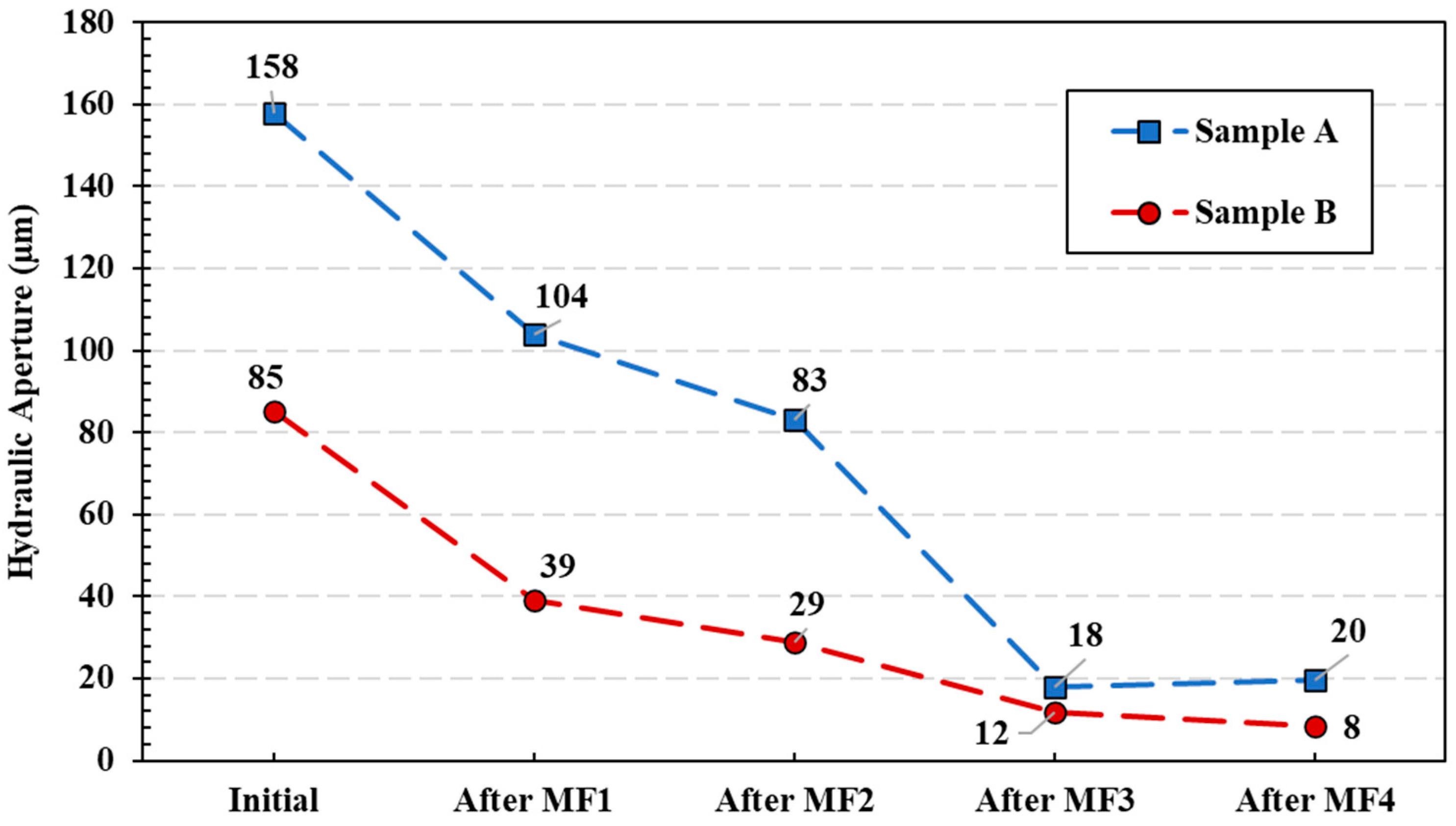
The hydraulic aperture after each injection is shown graphically in Figure 3.
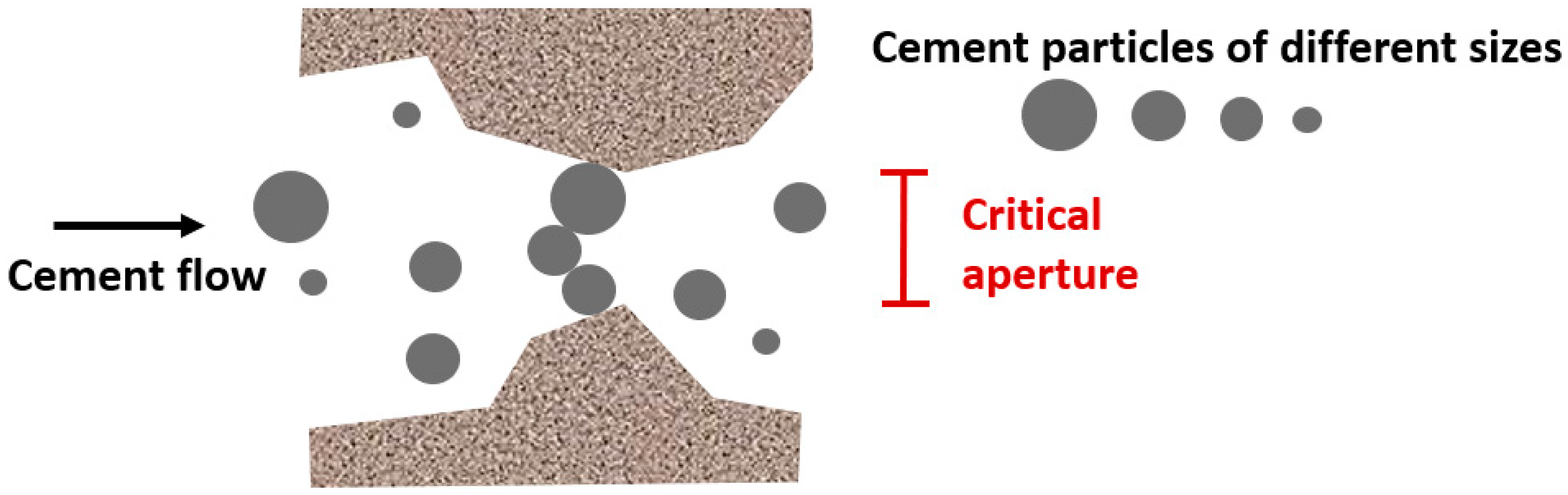
Two distinct phenomena impeded successful repair of the microannulus and required multiple consecutive injection attempts: bleeding (Figure 4) and plug formation leading to filtration (Figure 5). In the case of bleeding, the space occupied by free water remains interconnected throughout the microannulus and thus continues to contribute to its hydraulic aperture. Plug formation (Figure 5) occurs when the cement encounters a narrow aperture, causing particles to accumulate and clog the opening, thereby creating a filter cake. This filter cake prevents the further passage of MF particles, allowing only water to flow through, if at all. This mechanism significantly hinders the sealing of small, rough apertures, such as those characteristic of a wellbore microannulus. Our results can be interpreted within the framework of Draganović [19], who separates the roles of bleeding (water segregation that maintains connected flow paths) and plug formation/filtration (filter-cake buildup at constrictions). In our tests, early bleeding produces water-rich pathways that remain conductive even where the microannulus appears filled, whereas later injections encounter critical constrictions where filtration arrests particle advance and yields non-breakthrough channel flow; this sequence accounts for the asymptotic floor in hydraulic aperture reduction after repeated injections. Draganović further shows that these outcomes depend on the aperture-to-grain-size ratio and w/c ratio in thin slots, with rapid bleeding (and potential refilling) and constriction-controlled filtration matching our observations in Figure 3, Figure 4 and Figure 5.

3.1. Sample A

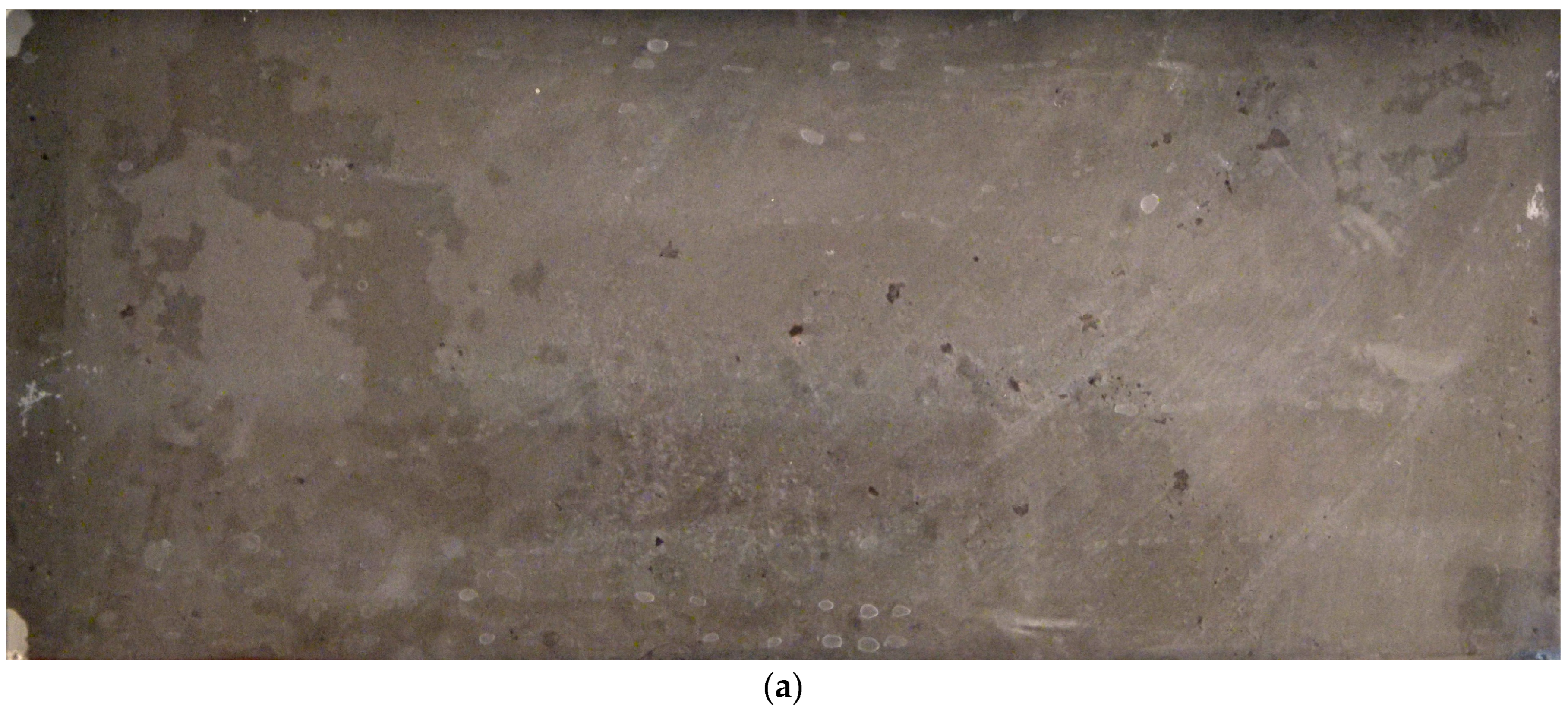
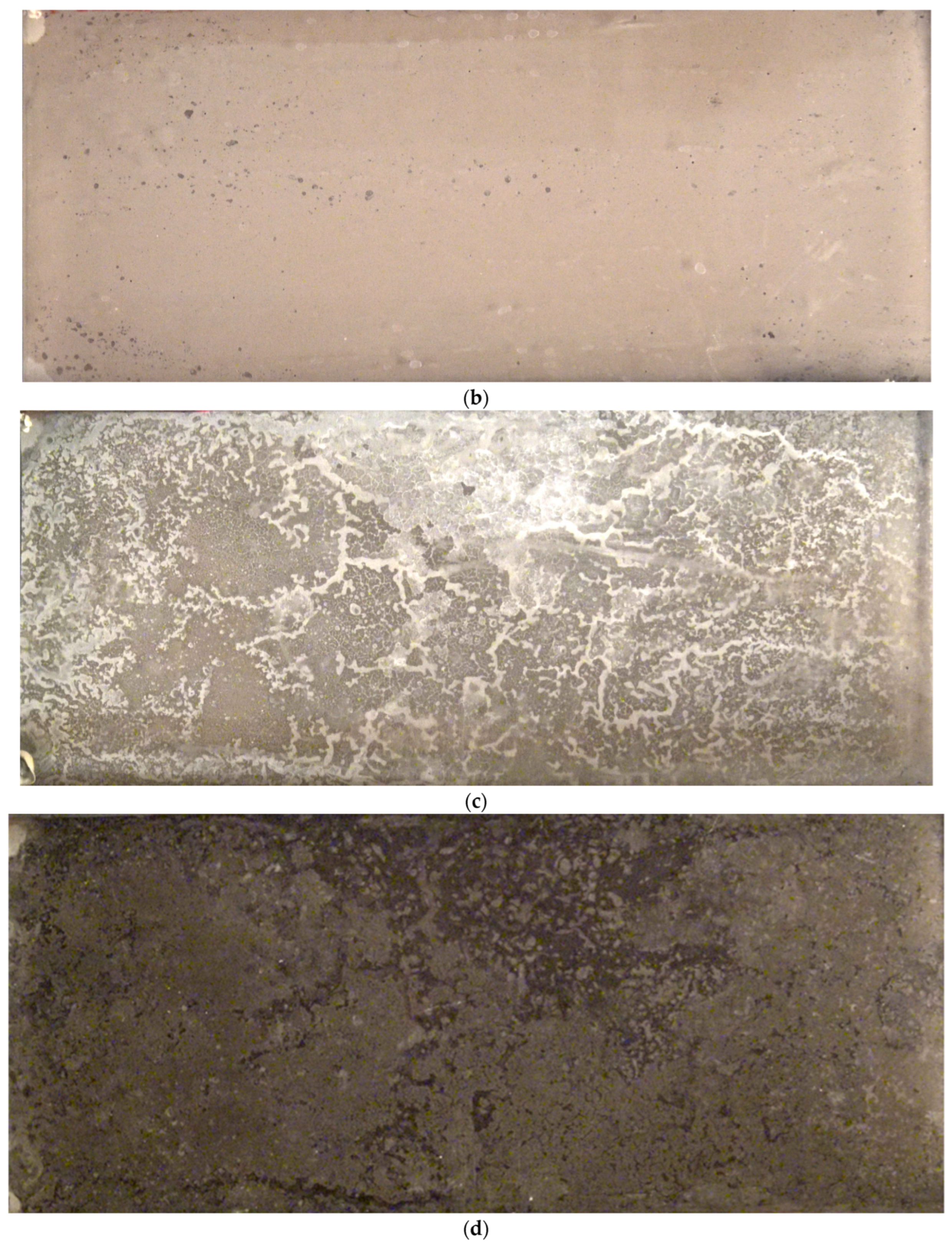
Sample A initially exhibited a hydraulic aperture of 158 µm, as shown in Figure 6a. Following the first MF injection (MF1), the sample appeared as depicted in Figure 6b, with the MF appearing to occupy most of the microannulus, although some trapped air bubbles were visible. After a 24 h curing period, an accumulation of free water was evident within the sample (Figure 6c), accompanied by lighter-colored regions suggesting the presence of a separate water phase. The hydraulic aperture measured after MF1 was 104 µm. Bleeding is considered a primary contributor to the incomplete repair observed; when water was subsequently injected to reassess the hydraulic aperture, it was seen to flow across the entire microannulus rather than through isolated pathways. This indicates that even areas appearing visually sealed still permitted flow. Although the effluent water was not subjected to chemical analysis, no visible cement traces were detected in it.
For the second injection (MF2), Nigrosin dye was incorporated into the MF to facilitate visual tracking of the cement’s flow path during injection. The MF permeated the entire microannulus—exhibiting no visually discernible channeling—and achieved breakthrough at the outlet. However, as evidenced by the darker coloration in the previously light areas shown in Figure 6d, the MF preferentially invaded those specific apertures. As more MF filled those locations, they showed a darker color than the rest of the microannulus (Figure 6d). The hydraulic aperture was only reduced to 83 µm.
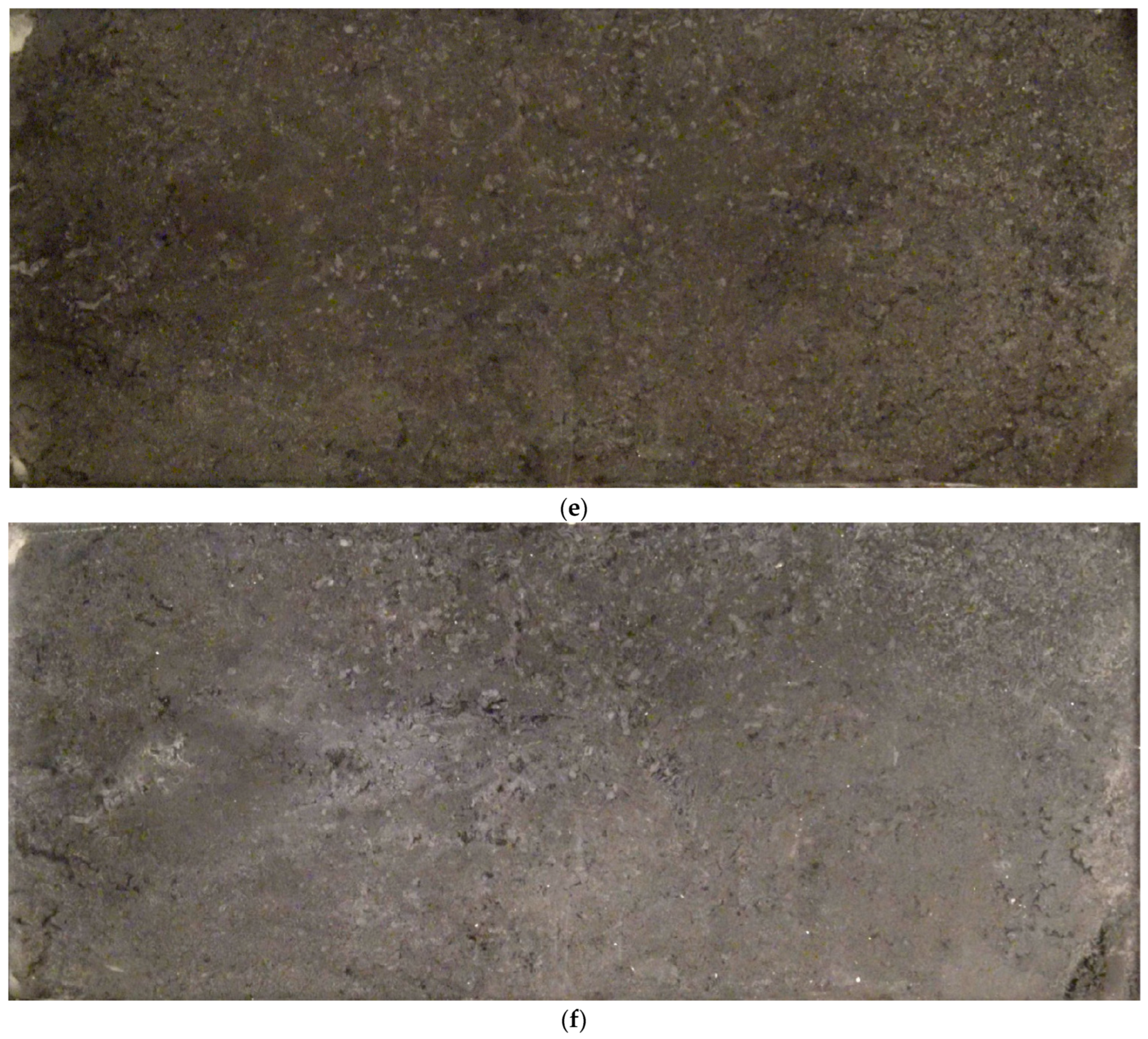
MF3 (Figure 6e) flowed through all the microannulus again, and it produced a significant reduction in the hydraulic aperture to 18 µm. It was hypothesized that a filter cake was forming in critical apertures, filtering the cement and resulting in an incomplete repair. Long-slot filtration experiments have shown similar behavior, where stable filter cakes develop at aperture constrictions and halt particle transport while allowing water flow [25].
In this context, critical apertures are defined as the narrowest constrictions within the microannulus that govern fluid flow and dictate whether cement particles are able to pass. These restricted zones frequently trigger filtration and plug formation, thereby limiting the penetration capacity of microfine cement, as illustrated in Figure 5. Although the MF appeared to occupy the entire microannulus up to this stage, it is likely that only water was able to traverse those critical apertures. MF4 (Figure 6f) only flowed through some channels and did not break through, which leads to the belief that filtration was occurring, and that eventually, the MF plugged the channel flow at some point during the injection. In addition, the hydraulic aperture increased slightly after this repair (from 18 to 20 µm), so it was possible that the MF damaged or displaced some previously injected MF. Similar flow-regime transitions, including channelized advance and capillary-controlled invasion patterns, have been observed in resin-based microannulus repair studies under controlled microannulus geometries [57,58].

3.2. Sample B

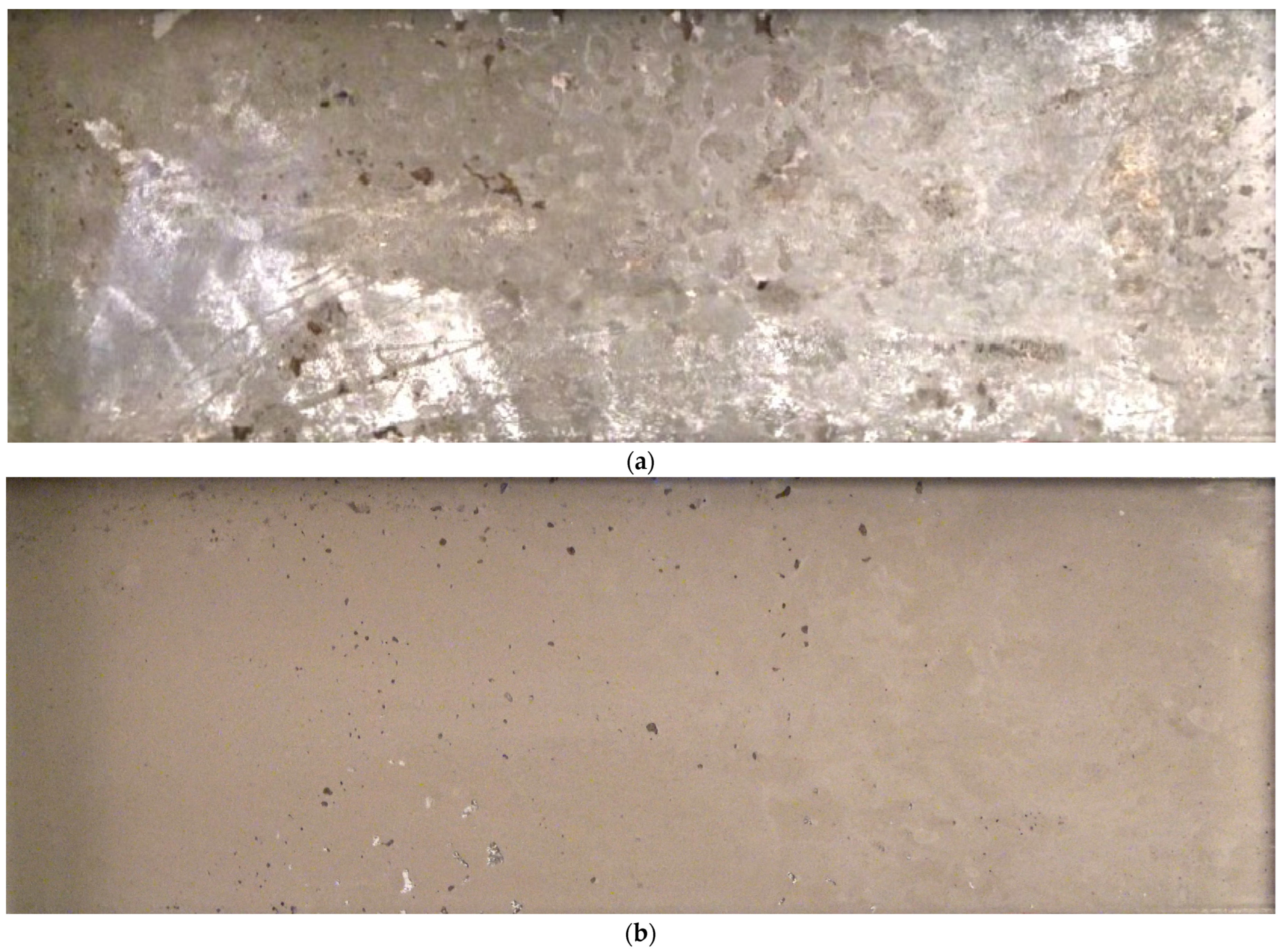
Sample B initially presented a hydraulic aperture of 85 µm, as depicted in Figure 7a. The condition of the microannulus following the first MF injection is shown in Figure 7b. After a 24 h period following this initial injection, some lighter-colored zones were observable (Figure 7c); however, these were substantially less extensive compared to those observed in Sample A after its first injection (Figure 6c). This improved integrity of the injected MF is reflected in the resulting hydraulic aperture measurement of 39 µm. During the subsequent water injection for hydraulic aperture assessment, flow was observed across nearly the entire microannulus area, indicating that bleeding was the primary factor responsible for the incomplete repair.
As illustrated in Figure 7d, the second injection attempt (MF2) resulted in MF flow that was confined to preferential channels, with no breakthrough observed at the sample outlet. The inability of the cement to traverse the entire sample suggests the development of a plug, or filter cake, within these flow channels. This mechanism impedes complete restoration of the microannulus, permitting flow only of water and fine particles. The hydraulic aperture measured subsequent to this injection was 29 µm, a value that falls near the lower threshold of the mechanical aperture range (28–42 µm) generally regarded as sealable by cementitious materials. During the third injection (MF3), depicted in Figure 7e, breakthrough was not achieved, and the MF again predominantly flowed through preferential channels for most of the sample. However, the MF did succeed in filling the entire microannulus in the region adjacent to the injection side, specifically the third of the sample closest to the inlet. It is hypothesized that the water flow employed to measure the hydraulic aperture may have eroded or compromised the MF near the entrance, thereby enabling fresh MF to subsequently fill that area. Alternatively, it is possible that only water carrying dye and residual cement grains permeated the full extent of the microannulus, with the majority of cement particles being filtered out. This would account for the continued flow of repair material through the microannulus without a substantial improvement in the seal. Regardless of the precise mechanism, plug formation and filtration were the primary factors preventing complete sealing of the microannulus. Following this injection, the hydraulic aperture was reduced to 12 µm. MF4 (Figure 7f) had predominantly channel flow, with MF flowing through all the first half of the sample, and without breakthrough. The hydraulic aperture dropped to 8 µm.

4. Conclusions

This paper presents an experimental investigation demonstrating the capacity of Microfine (MF) cement to repair wellbore microannuli. The findings indicate that multiple injection attempts were necessary to seal simulated microannuli with hydraulic apertures of 158 µm and 85 µm. Although the filtration behavior and bleeding of cement slurries have been examined in prior work, this study reveals that these same mechanisms impeded successful remediation; even after four MF injections, a conductive pathway remained, characterized by hydraulic apertures of approximately 20 µm in Sample A and 8 µm in Sample B. MF proved capable of partially sealing hydraulic apertures that fell below the mechanical aperture thresholds for filtration documented in existing literature. This outcome implies the existence of an aperture distribution comprising both larger and smaller flow paths. While it is recognized that hydraulic and mechanical aperture measurements can differ, particularly at such small scales, the hydraulic aperture remains a useful and interpretable metric, making such comparisons relevant provided their conceptual distinction is maintained. The hypothesis of a heterogeneous aperture distribution was supported by direct visual examination of the samples, which revealed the presence of distinct flow channels. Furthermore, the incorporation of dyes into the repair materials enabled visual differentiation between flow confined to these channels and flow distributed across the entire microannulus. Achieving a faster injection rate would necessitate higher pressures; however, such an approach would not facilitate MF injection, as filtration—rather than injection rate—is the primary limiting factor in the repair process. Recent full-scale annulus-repair tests show that resin-based sealants can achieve near-complete leakage suppression, outperforming cement-based systems in cases where filtration limits cement effectiveness [59]. Only pressures sufficient to hold the microannulus open could enhance the effectiveness of the MF repair. However, applying higher pressures carries the risk of generating new leakage pathways. Subsequent research should investigate polymer-based sealants or the addition of nano-additives to cement formulations to mitigate filtration and enhance sealing performance in irregular microannuli.

Author Contributions

Conceptualization, S.G.F. and J.C.S.; methodology, S.G.F. and J.C.S.; validation, S.G.F. and J.C.S.; formal analysis, S.G.F. and D.H.M.; investigation, S.G.F.; resources, J.C.S.; data curation, S.G.F. and D.H.M.; writing—original draft preparation, S.G.F.; writing—review and editing, S.G.F., D.H.M. and J.C.S.; visualization, S.G.F. and D.H.M.; supervision, J.C.S.; project administration, J.C.S.; funding acquisition, J.C.S. All authors have read and agreed to the published version of the manuscript.

Funding

This research received no external funding.

Data Availability Statement

All the data has been presented in this article.

Conflicts of Interest

Author Serafin Garcia Fernandez was employed by the company Agapito Associates, LLC. Authors Daniel Heras Murcia John C. Stormont were employed by the company TS-Nano, Inc.

Appendix A

The rheology of the MF was characterized by the viscosity (Figure A1) and the dynamic yield stress (Figure A2) over time. Seventy-five minutes were considered sufficient for this characterization as the viscosity more than doubled over that period, from 6.5 cP to 18.7 cP. The microfine was mixed with water and placed in the rheometer for the measurement at time 0. The same mix was left in the rheometer and used for the consecutive measurements. The viscosity at time 0 was 6.5 cP, with a dynamic yield stress of 1.1 Pa. The MF mix was adequately characterized by a Bingham model (Figure A3).
Figure A1. Viscosity of the MF as a function of time.
Applsci 16 03257 g0a1
Figure A2. Dynamic yield stress of the MF as a function of time.
Applsci 16 03257 g0a2
The MF can be fit to a Bingham model. Figure A3 shows the data obtained for the MF at 60 min, with R2 = 0.95.
Figure A3. Shear stress vs. shear rate for the MF used at 60 min.
Applsci 16 03257 g0a3

References

  1. Allahvirdizadeh, P. A Review on Geothermal Wells: Well Integrity Issues. J. Clean. Prod. 2020, 275, 124009. [Google Scholar] [CrossRef]
  2. Bérest, P.; Brouard, B. Safety of Salt Caverns Used for Underground Storage Blow Out; Mechanical Instability; Seepage; Cavern Abandonment. Oil Gas Sci. Technol.-Rev. IFP 2003, 58, 361–384. [Google Scholar] [CrossRef]
  3. Davies, R.J.; Almond, S.; Ward, R.S.; Jackson, R.B.; Adams, C.; Worrall, F.; Herringshaw, L.G.; Gluyas, J.G.; Whitehead, M.A. Oil and Gas Wells and Their Integrity: Implications for Shale and Unconventional Resource Exploitation. Mar. Pet. Geol. 2014, 56, 239–254. [Google Scholar] [CrossRef]
  4. Miyazaki, B. Well Integrity: An Overlooked Source of Risk and Liability for Underground Natural Gas Storage. Lessons Learned from Incidents in the USA. Geol. Soc. Lond. Spec. Publ. 2009, 313, 163–172. [Google Scholar] [CrossRef]
  5. Watson, T.L.; Bachu, S. Identification of Wells with High CO2-Leakage Potential in Mature Oil Fields Developed for CO2-Enhanced Oil Recovery; Society of Petroleum Engineers: Calgary, AB, Canada, 2008. [Google Scholar]
  6. Zhang, M.; Bachu, S. Review of Integrity of Existing Wells in Relation to CO2 Geological Storage: What Do We Know? Int. J. Greenh. Gas Control 2011, 5, 826–840. [Google Scholar] [CrossRef]
  7. Gasda, S.E.; Bachu, S.; Celia, M.A. Spatial Characterization of the Location of Potentially Leaky Wells Penetrating a Deep Saline Aquifer in a Mature Sedimentary Basin. Environ. Geol. 2004, 46, 707–720. [Google Scholar] [CrossRef]
  8. Bellabarba, M.; Bulte-Loyer, H.; Froelich, B.; Le Roy-Delage, S.; van Kuijk, R.; Zeroug, S.; Guillot, D.; Moroni, N.; Pastor, S.; Zanchi, A. Ensuring Zonal Isolation beyond the Life of the Well. Oilfield Rev. 2008, 20, 18–31. [Google Scholar]
  9. Garcia Fernandez, S.; Anwar, I.; Reda Taha, M.M.; Stormont, J.C.; Matteo, E.N. Two-Phase Flow Properties of a Wellbore Microannulus; American Rock Mechanics Association: Westminster, CO, USA, 2020. [Google Scholar]
  10. Garcia Fernandez, S.; Matteo, E.N.; Taha, M.R.; Stormont, J.C. Characterization of Wellbore Microannuli. J. Nat. Gas Sci. Eng. 2019, 62, 13–25. [Google Scholar] [CrossRef]
  11. Huerta, N.J.; Bryant, S.L.; Strazisar, B.R.; Kutchko, B.G.; Conrad, L.C. The Influence of Confining Stress and Chemical Alteration on Conductive Pathways within Wellbore Cement. Energy Procedia 2009, 1, 3571–3578. [Google Scholar] [CrossRef]
  12. Stormont, J.C.; Garcia Fernandez, S.; Taha, M.R.; Matteo, E.N. Gas Flow through Cement-Casing Microannuli under Varying Stress Conditions. Geomech. Energy Environ. 2018, 13, 1–13. [Google Scholar] [CrossRef]
  13. Bazaid, A.; Jawed, R.; Alatigue, M.; Kumar, A. Analysis of Varying Microannulus Size on Cement Evaluation; OnePetro: Dhahran, Saudi Arabia, 2024. [Google Scholar]
  14. Yousuf, N.; Olayiwola, O.; Guo, B.; Liu, N. A Comprehensive Review on the Loss of Wellbore Integrity Due to Cement Failure and Available Remedial Methods. J. Pet. Sci. Eng. 2021, 207, 109123. [Google Scholar] [CrossRef]
  15. Nelson, E.B.; Guillot, D. Well Cementing; Nelson, E.B., Ed.; Elsevier: Amsterdam, The Netherlands, 2006. [Google Scholar]
  16. Farkas, R.F.; England, K.W.; Roy, M.L.; Dickinson, M.; Samuel, M.; Hart, R.E. New Cementing Technology Cures 40-Year-Old Squeeze Problems; OnePetro: Houston, TX, USA, 1999. [Google Scholar]
  17. Roth, J.; Reeves, C.J.; Johnson, C.R.; DeBruijn, G.G.; Bellabarba, M.; Le Roy-Delage, S.; Bulte-Loyer, H. Innovative Hydraulic Isolation Material Preserves Well Integrity; OnePetro: Orlando, FL, USA, 2008. [Google Scholar]
  18. Saponja, J. Surface Casing Vent Flow and Gas Migration Remedial Elimination-New Technique Proves Economic and Highly Successful. J. Can. Pet. Technol. 1999, 38. [Google Scholar] [CrossRef]
  19. Draganovic, A. Bleeding and Filtration of Cement-Based Grout. Ph.D. Thesis, KTH Royal Institute of Technology, Stockholm, Sweden, 2009. [Google Scholar]
  20. Stille, H.; Gustafson, G.; Hassler, L. Application of New Theories and Technology for Grouting of Dams and Foundations on Rock. Geotech. Geol. Eng. 2012, 30, 603–624. [Google Scholar] [CrossRef]
  21. Valko, P.; Economides, M.J. Hydraulic Fracture Mechanics; Wiley Chichester: Hoboken, NJ, USA, 1995; Volume 28. [Google Scholar]
  22. Wong, H.Y.; Farmer, I.W. Hydrofracture Mechanisms in Rock during Pressure Grouting. Rock Mech. 1973, 5, 21–41. [Google Scholar] [CrossRef]
  23. Axelsson, M.; Gustafson, G.; Fransson, Å. Stop Mechanism for Cementitious Grouts at Different Water-to-Cement Ratios. Tunn. Undergr. Space Technol. 2009, 24, 390–397. [Google Scholar] [CrossRef]
  24. Draganović, A.; Stille, H. Filtration and Penetrability of Cement-Based Grout: Study Performed with a Short Slot. Tunn. Undergr. Space Technol. 2011, 26, 548–559. [Google Scholar] [CrossRef]
  25. Draganović, A.; Stille, H. Filtration of Cement-Based Grouts Measured Using a Long Slot. Tunn. Undergr. Space Technol. 2014, 43, 101–112. [Google Scholar] [CrossRef]
  26. Eklund, D.; Stille, H. Penetrability Due to Filtration Tendency of Cement-Based Grouts. Tunn. Undergr. Space Technol. 2008, 23, 389–398. [Google Scholar] [CrossRef]
  27. Jorne, F.; Henriques, F.M.A. Evaluation of the Grout Injectability and Types of Resistance to Grout Flow. Constr. Build. Mater. 2016, 122, 171–183. [Google Scholar] [CrossRef]
  28. Mirza, J.; Saleh, K.; Langevin, M.-A.; Mirza, S.; Bhutta, M.A.R.; Tahir, M.M. Properties of Microfine Cement Grouts at 4 °C, 10 °C and 20 °C. Constr. Build. Mater. 2013, 47, 1145–1153. [Google Scholar] [CrossRef]
  29. Rahman, M.; Håkansson, U.; Wiklund, J. In-Line Rheological Measurements of Cement Grouts: Effects of Water/Cement Ratio and Hydration. Tunn. Undergr. Space Technol. 2015, 45, 34–42. [Google Scholar] [CrossRef]
  30. EN 12715; Execution of Special Geotechnical Work-Grouting. European Committee for Standardization (CEN): Brussels, Belgium, 2020.
  31. Li, S.; Sha, F.; Liu, R.; Li, Z.; Zhang, Q. Investigation of Viscous Behaviour and Strength of Microfine-Cement-Based Grout Mixed with Microfine Fly Ash and Superplasticiser. Adv. Cem. Res. 2017, 29, 206–215. [Google Scholar] [CrossRef]
  32. Li, S.; Sha, F.; Liu, R.; Zhang, Q.; Li, Z. Investigation on Fundamental Properties of Microfine Cement and Cement-Slag Grouts. Constr. Build. Mater. 2017, 153, 965–974. [Google Scholar] [CrossRef]
  33. Pantazopoulos, I.A.; Markou, I.N.; Christodoulou, D.N.; Droudakis, A.I.; Atmatzidis, D.K.; Antiohos, S.K.; Chaniotakis, E. Development of Microfine Cement Grouts by Pulverizing Ordinary Cements. Cem. Concr. Compos. 2012, 34, 593–603. [Google Scholar] [CrossRef]
  34. Zhang, S.; Qiao, W.-G.; Chen, P.-C.; Xi, K. Rheological and Mechanical Properties of Microfine-Cement-Based Grouts Mixed with Microfine Fly Ash, Colloidal Nanosilica and Superplasticizer. Constr. Build. Mater. 2019, 212, 10–18. [Google Scholar] [CrossRef]
  35. Mitchell, J.K. Soil Improvement-State of the Art Report. In Proceedings of the 11th International Conference on Soil Mechanics and Foundation Engineering; Routledge: Oxfordshire, UK, 1981; Volume 4, pp. 509–565. [Google Scholar]
  36. Tolppanen, P.; Syrjänen, P. Hard Rock Tunnel Grouting Practice in Finland, Sweden, and Norway—Literature Study; Finnish Tunnelling Association: Helsinki, Finland, 2003. [Google Scholar]
  37. Entezam, A.; Nourizadeh, H.; Burey, P.; McDougall, K.; Craig, P.; Shokri, B.J.; Entezam, S.; Aziz, N.; Mirzaghorbanali, A. Cementitious Grouts in Ground Support Systems: A PRISMA-Guided Bibliometric and Mechanistic Review. Appl. Sci. 2025, 15, 12439. [Google Scholar] [CrossRef]
  38. Alkhamis, M.; Imqam, A.; Milad, M. Evaluation of an Ultra-High Performance Epoxy Resin Sealant for Wellbore Integrity Applications; Society of Petroleum Engineers: Richardson, TX, USA, 2019. [Google Scholar]
  39. Ho, F. The Use of a pH-Triggered Polymer Gelant to Seal Cement Fractures in Wells. Master’s Thesis, The University of Texas at Aust, Austin, TX, USA, 2015. [Google Scholar]
  40. Welch, N.J.; Frash, L.P.; Harp, D.H.; Carey, J.W. Shear Strength and Permeability of the Cement-Casing Interface. Int. J. Greenh. Gas Control 2020, 95, 102977. [Google Scholar] [CrossRef]
  41. Rusch, D.W.; Sabins, F.; Aslakson, J. Microannulus Leaks Repaired with Pressure-Activated Sealant; Society of Petroleum Engineers: Charleston, WV, USA, 2004. [Google Scholar]
  42. Singh, A.K.; Patil, B.; Kishore, K.; Khanna, M.; Varma, S.R. Casing Leak Investigation & Successful Repair by Application of Pressure Activated Liquid Sealant in a Newly Completed Well in Offshore Environment—A Case Study; OnePetro: Bergen, Norway, 2015. [Google Scholar]
  43. Genedy, M.; Matteo, E.N.; Stenko, M.; Stormont, J.C.; Taha, M.R. Nanomodified Methyl Methacrylate Polymer for Sealing of Microscale Defects in Wellbore Systems. J. Mater. Civ. Eng. 2019, 31, 04019118. [Google Scholar] [CrossRef]
  44. Genedy, M.; Kandil, U.F.; Matteo, E.N.; Stormont, J.; Reda Taha, M.M. A New Polymer Nanocomposite Repair Material for Restoring Wellbore Seal Integrity. Int. J. Greenh. Gas Control 2017, 58, 290–298. [Google Scholar] [CrossRef]
  45. Todd, L.; Cleveland, M.; Docherty, K.; Reid, J.; Cowan, K.; Yohe, C. Big Problem-Small Solution: Nanotechnology-Based Sealing Fluid; OnePetro: Dallas, TX, USA, 2018. [Google Scholar]
  46. Pagano, A.G.; Mountassir, G.E.; Lunn, R.J. Performance of Colloidal Silica Grout at Elevated Temperatures and Pressures for Cement Fracture Sealing at Depth. J. Pet. Sci. Eng. 2021, 208, 109782. [Google Scholar] [CrossRef]
  47. Funehag, J.; Fransson, Å. Sealing Narrow Fractures with a Newtonian Fluid: Model Prediction for Grouting Verified by Field Study. Tunn. Undergr. Space Technol. 2006, 21, 492–498. [Google Scholar] [CrossRef]
  48. Funehag, J.; Gustafson, G. Design of Grouting with Silica Sol in Hard Rock—New Design Criteria Tested in the Field, Part II. Tunn. Undergr. Space Technol. 2008, 23, 9–17. [Google Scholar] [CrossRef]
  49. Funehag, J.; Gustafson, G. Design of Grouting with Silica Sol in Hard Rock—New Methods for Calculation of Penetration Length, Part I. Tunn. Undergr. Space Technol. 2008, 23, 1–8. [Google Scholar] [CrossRef]
  50. Slater, H.J.; Stiles, D.A.; Chmilowski, W. Successful Sealing of Vent Flows with Ultra-Low-Rate Cement Squeeze Technique; OnePetro: Amsterdam, The Netherlands, 2001. [Google Scholar]
  51. Wang, X.; Xiao, F.; Zhang, Q.; Zhou, A.; Liu, R. Grouting Characteristics in Rock Fractures with Rough Surfaces: Apparatus Design and Experimental Study. Measurement 2021, 184, 109870. [Google Scholar] [CrossRef]
  52. Brown, S.R. Fluid Flow through Rock Joints: The Effect of Surface Roughness. J. Geophys. Res. 1987, 92, 1337–1347. [Google Scholar] [CrossRef]
  53. Gustafson, G.; Stille, H. Stop Criteria for Cement Grouting. Felsbau Z. Für Geomech. Ingenieurgeologie Bauwes. Bergbau 2005, 25, 62–68. [Google Scholar]
  54. Lu, Y.; He, M.; Wang, L.; Ren, B.; Sun, X.; Zhang, K. In-Situ Visualization Experiments on the Microscopic Process of Particle Filtration of Cement Grouts within a Rock Fracture. Tunn. Undergr. Space Technol. 2020, 95, 103157. [Google Scholar] [CrossRef]
  55. API Specification 10A; Specification for Cements and Materials for Well Cementing. American Petroleum Institute (API): Washington, DC, USA, 2009.
  56. Witherspoon, P.A.; Wang, J.S.Y.; Iwai, K.; Gale, J.E. Validity of Cubic Law for Fluid Flow in a Deformable Rock Fracture. Water Resour. Res. 1980, 16, 1016–1024. [Google Scholar] [CrossRef]
  57. Garcia Fernandez, S.; Stormont, J.C. Flow Regime Controls on Resin Repair Material Invading a Microannulus. Geoenergy Sci. Eng. 2023, 226, 211733. [Google Scholar] [CrossRef]
  58. Garcia Fernandez, S.; Stormont, J.C. Flow patterns of a resin repair material in a vertical wellbore microannulus. Gas Sci. Eng. 2023, 113, 204963. [Google Scholar] [CrossRef]
  59. Jimenez, K.B.; Kragset, S.; Skadsem, H.J.; Lima, V.N.; Stormont, J.C.; Taha, M.R. Sealing and Durability Evaluation of Microannulus Treatment with a Resin-Based Material: Permeability and Tracer Measurements in a Full-Scale Test Section; OnePetro: Stavanger, Norway, 2025. [Google Scholar]
Figure 1. Experimental setup for the repair material injection.
Applsci 16 03257 g001
Figure 2. Particle size distribution for the microfine cement.
Applsci 16 03257 g002
Figure 3. Measured hydraulic aperture values for Samples A and B following each MF repair attempt.
Applsci 16 03257 g003
Figure 4. Adapted from [19]. Effect of bleeding on grouting.
Applsci 16 03257 g004
Figure 5. Adapted from [19]. Plug formation in an irregular cement crack, a precursor to the filtration process.
Applsci 16 03257 g005
Figure 6. Sample A at various stages of repair: (a) condition prior to any repair attempt; (b) immediately following the first MF injection (MF1); (c) 24 h after MF1 (the lighter gray zones indicate regions where excess free water accumulated, leading to incomplete filling); (d) after the second injection (MF2) (the darker appearance is due to the addition of Nigrosin dye to the MF for tracking purposes; the MF can be seen to have permeated the entire microannulus, with increased filling observed in the areas previously affected by excess free water); (e) following the third injection (MF3); (f) following the fourth injection (MF4).
Applsci 16 03257 g006aApplsci 16 03257 g006bApplsci 16 03257 g006c
Figure 7. Sample B at various stages of repair: (a) condition prior to any repair attempt; (b) immediately following the first MF injection (MF1); (c) 24 h after MF1; (d) after the second injection (MF2); (e) following the third injection (MF3); (f) following the fourth injection (MF4). The black coloration indicates the flow path of the MF during the final injection. The MF penetrated more than half the length of the microannulus, as evidenced by the dark dye added to the material. A clear demarcation is visible between the most recently injected MF (darker) and the material from previous injections (lighter).
Applsci 16 03257 g007aApplsci 16 03257 g007b
Table 1. A qualitative account of the repair material injections conducted on Sample A.
Sample A
(h = 158 µm)
Breakthrough?All Microannulus or Channel?
Injection MF1YesAll
Injection MF2YesAll
Injection MF3YesAll
Injection MF4NoChannel
Table 2. A qualitative account of the repair material injections conducted on Sample B.
Sample A
(h = 158 µm)
Breakthrough?All Microannulus or Channel?
Injection MF1YesAll
Injection MF2YesAll
Injection MF3YesAll
Injection MF4NoChannel
Disclaimer/Publisher’s Note: The statements, opinions and data contained in all publications are solely those of the individual author(s) and contributor(s) and not of MDPI and/or the editor(s). MDPI and/or the editor(s) disclaim responsibility for any injury to people or property resulting from any ideas, methods, instructions or products referred to in the content.