Article

T-Connected Line Protection for Hybrid DC Systems Based on the Attenuation Characteristics of Electromagnetic Wave Energy

Key Laboratory of Smart Grid of Ministry of Education, Tianjin University, Tianjin 300072, China
*
Author to whom correspondence should be addressed.
Appl. Sci. 2026, 16(7), 3185; https://doi.org/10.3390/app16073185
Submission received: 4 March 2026 / Revised: 21 March 2026 / Accepted: 24 March 2026 / Published: 26 March 2026
(This article belongs to the Section Electrical, Electronics and Communications Engineering)

Abstract

T-connected lines are increasingly applied in hybrid DC systems due to their excellent flexibility and scalability. However, their asymmetric boundaries and the unclear physical boundaries at both ends of the LCC-side boundary element pose challenges for relay protection. To address the inability of conventional DC line protection to identify internal and external faults on the LCC side, this paper proposes an identification method based on the attenuation characteristics of electromagnetic wave energy. On this basis, a complete protection scheme for T-connected lines is proposed. The protection is initiated by the rate of voltage change of the T-connected bus; faults inside and outside the T-zone are identified by the direction of the line-mode current on the T-zone outgoing lines; and internal and external faults on the LCC side are identified by the line-mode energy ratio of electromagnetic waves at both ends of the boundary element. Additionally, the fault pole is selected by the electromagnetic wave energy change of the positive and negative poles. A simulation model of a hybrid DC system containing a T-connected line is constructed on PSCAD/EMTDC, and the effectiveness of the method for identifying internal and external faults on the LCC side and the protection scheme are verified.

1. Introduction

Hybrid Direct Current (DC) systems not only retain the advantages of low loss and large capacity of traditional DC systems [1] but also reduce the risk of commutation failure [2,3,4]. Because T-connected lines can flexibly achieve multi-terminal interconnection and are convenient for the subsequent expansion of the power grid architecture [5], their application in hybrid DC systems is increasing. However, the T-connected line boundary is asymmetric and the physical boundaries at both ends of the Line-Commutated Converter-side (LCC-side) boundary element are unclear [6,7,8]. Therefore, the relay protection must first address the issue of accurately identifying internal and external faults on the LCC side and, based on this, develop a protection scheme for T-connected lines with good selectivity. This is of great theoretical significance and practical value for ensuring the safe and stable operation of power systems.
At present, the research on T-connected protection methods in hybrid DC systems is still limited. Reference [9] utilizes the high-frequency phase differences of the initial current traveling waves at both ends of the boundary element to identify internal and external faults on the LCC side, which is effective but requires a high hardware sampling frequency. Reference [10] extracts the energy of transient signals in specific frequency bands by wavelet transform, then uses the energy difference at both ends of the boundary element to distinguish internal and external faults on the LCC side. The drawback is that it is sensitive to noise. Reference [11] calculates the line-mode current at both ends of the boundary element by the improved Hausdorff algorithm and uses the difference between the calculated value and the actually measured value to identify internal and external faults on the LCC side. While this method offers strong noise immunity and a high tolerance to transition resistance, its performance is hindered by the signal attenuation of long transmission lines. Reference [12] applies the high-frequency feature vectors of line-mode voltage to the identification of internal and external faults on the LCC side, but its calculation is complicated.
The above from the literature mainly study the identification criteria for internal and external faults on the LCC side, and the protection schemes mostly adopt conventional methods. For example, References [9,10,11,12] identify faults inside and outside the T-zone by the direction of the line-mode current at the T-zone boundary points, and References [9,11,12] select the fault pole based on the ground-mode voltage at the T-zone boundary point. Reference [13] analyzes the transient characteristics of the line-mode current on DC lines. By using the complementary set empirical mode decomposition theory, the intrinsic mode energy entropy of the line-mode current is obtained, and a protection method for T-connected transmission lines is proposed. Its disadvantages are that the calculation is complex, and it would be influenced by noise. Reference [14] utilizes the first peak arrival time of the line-mode voltage traveling wave of the fault point to construct a T-connected protection method. It is clear in principle, but its ability to withstand transition resistance is weak.
This paper first analyses the attenuation characteristics of electromagnetic wave energy at both ends of the LCC-side boundary element, then proposes a method for identifying internal and external faults on the LCC side based on the attenuation characteristics of electromagnetic wave energy. Subsequently, a novel protection scheme for T-connected lines in hybrid DC systems is presented. It utilizes electromagnetic wave energy to identify internal and external faults on the LCC side and select the fault pole, then uses the direction of the line-mode current to identify faults inside and outside the T-zone. Simulation results verify the effectiveness of the protection scheme.

2. Analysis of the Attenuation Characteristics of Electromagnetic Wave Energy After Passing Through the Boundary Element

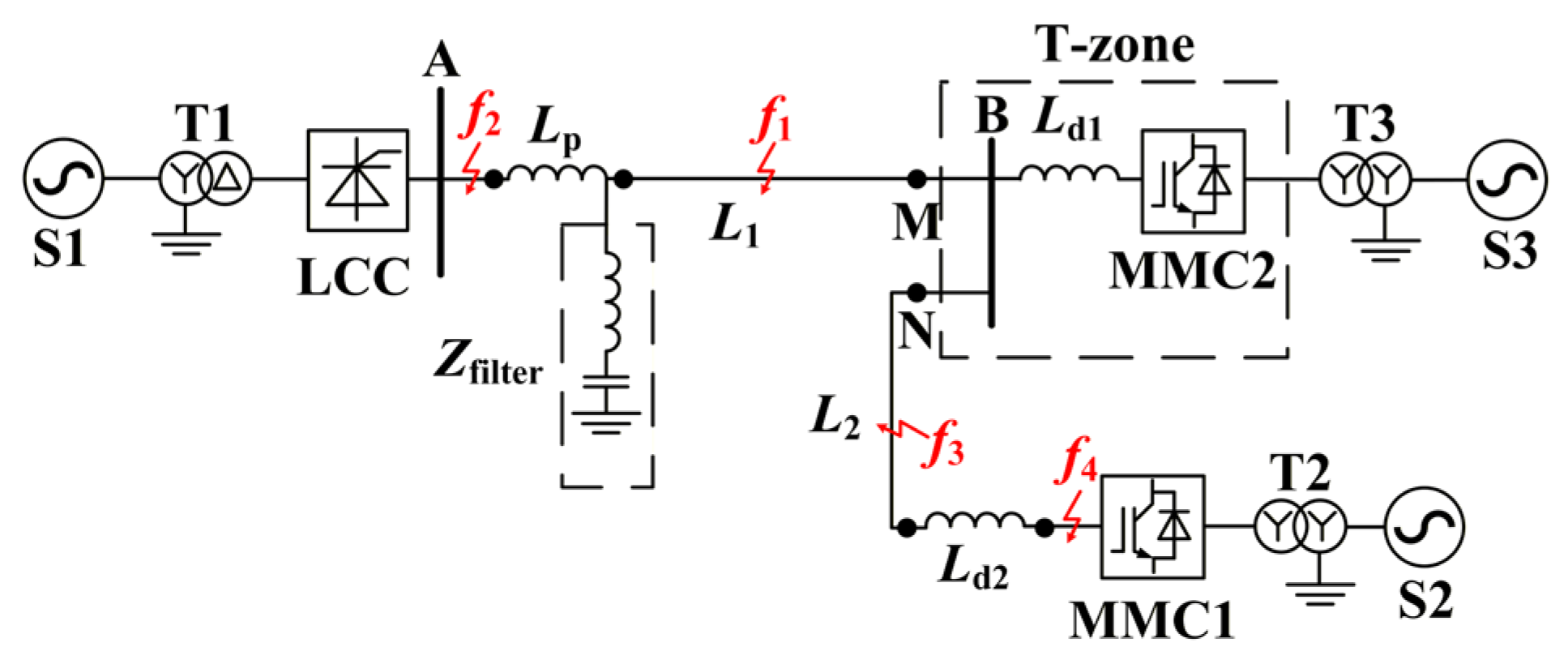
Figure 1 illustrates a hybrid DC system with a T-connection. The Alternating Current (AC) power source S1 is connected to a 12-pulse LCC converter station, and the line terminal is equipped with a smoothing reactor Lp and a DC filter group Zfilter. The AC power sources S2 and S3 are connected to different hybrid bridge Modular Multilevel Converter (MMC) stations, and the current-limiting reactors Ld1 and Ld2 are installed at the outlets of the converter station. Two DC lines L1, L2 and the MMC2 converter station are interconnected through a T-zone bus, and M, N are the protection measurement points.
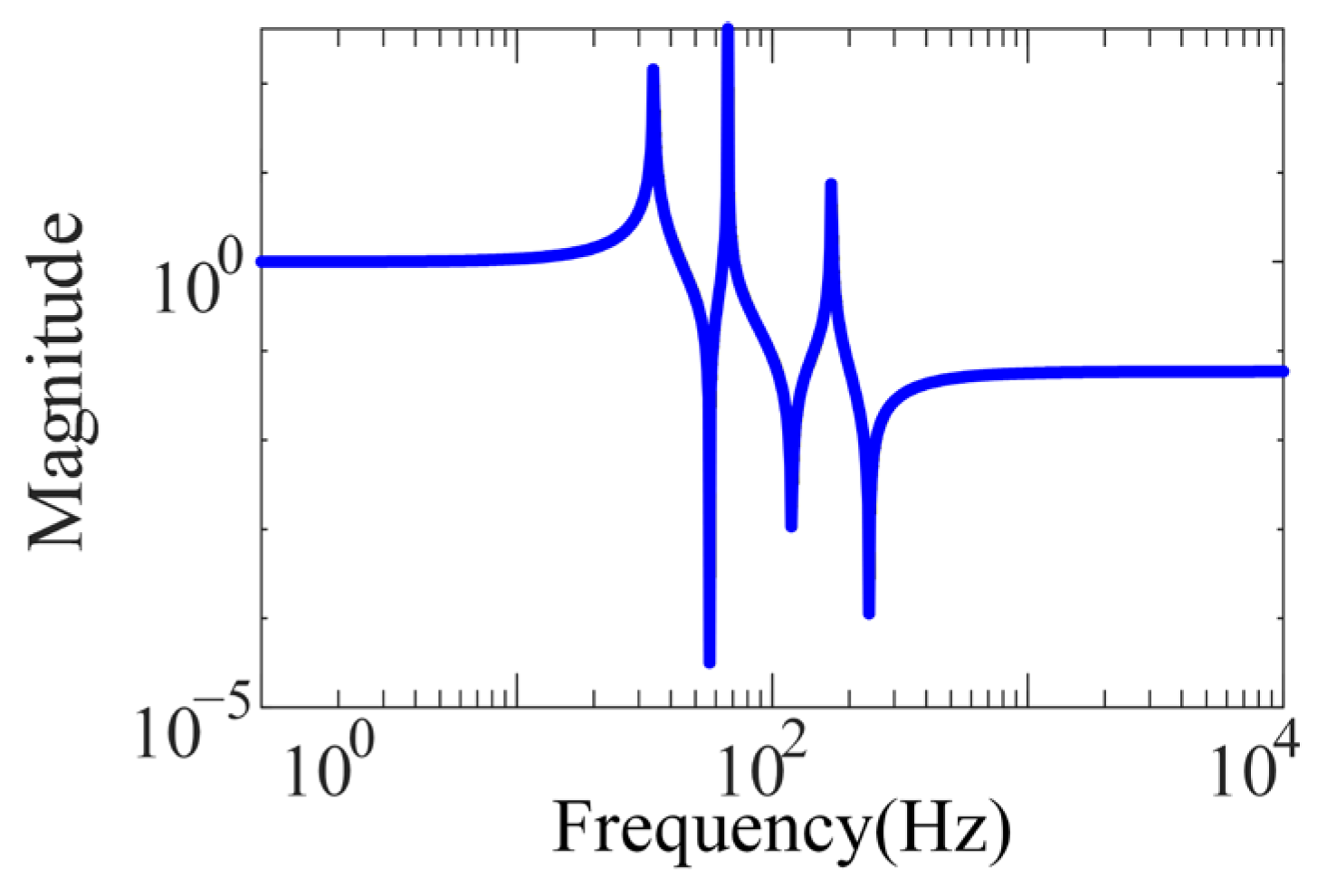
The configuration of the boundary elements in the T-connected line is asymmetric [15]. The LCC-side boundary element is the smoothing reactor Lp and the DC filter Zfilter, and the MMC-side boundary elements are the current-limiting reactors Ld1 and Ld2. A voltage transformer and current transformer are installed at both ends of the LCC-side boundary element [16], but the physical boundaries at both ends of the boundary element are unclear. Reference [12] used the Kunliulong engineering parameters to plot the amplitude–frequency response of the LCC-side boundary element, as shown in Figure 2. For frequencies below 100 Hz, the amplitude remains almost unchanged, which means that f1 point internal faults and f2 point external faults on the LCC side cannot be identified by the protection device using this band signal. For frequencies between 100 Hz and 2300 Hz, the amplitude–frequency response shows multiple extrema, making internal and external faults on the LCC side difficult to identify. For frequencies above 2300 Hz, the amplitude significantly attenuates and the attenuation coefficient remains unchanged, so this frequency band can be used to identify internal and external faults on the LCC side, but the sampling frequency must exceed 4600 Hz, which has high requirements for hardware. It can be seen that within the 0–2300 Hz frequency range, the physical boundaries at both ends of the LCC-side boundary element are unclear, rendering conventional DC line protection incapable of identifying the internal and external faults on the LCC side.
Reference [17] analyzed the propagation process of voltage and current as electromagnetic waves along a lossy transmission line and deduced the propagation characteristics of electromagnetic wave energy. The electromagnetic wave energy starting from point x0 at time t0 and arriving at point x on the DC line at time t satisfies the following equation.
W ( x , t ) = t 0 t 0 + T 0 u ( t ) i ( t ) d t W ( x , t ) = W ( x 0 , t 0 ) e ( R 0 / Z + Z G 0 ) x
Here, T0 is the integration time; u(t), i(t) and W(x,t) denote the voltage, current and electromagnetic wave energy at point x at time t; and W(x0,t0) is the electromagnetic wave energy at x0 at time t0. R0, G0, L0, and C0 are the resistance, conductance, inductance, and capacitance per unit length of the line, respectively, and Z = ( R 0 + j ω L 0 ) / ( G 0 + j ω C 0 ) is the impedance representing the propagation characteristics of electromagnetic waves. Because of the high propagation frequency of electromagnetic waves, ω is very large, R 0 ω L 0 , G 0 ω C 0 , and Z L 0 / C 0 .
Equation (1) indicates that when an electromagnetic wave propagates along a lossy transmission line, its energy W(x,t) decreases exponentially. The attenuation rate is positively correlated with R0 and G0 and negatively correlated with Z.
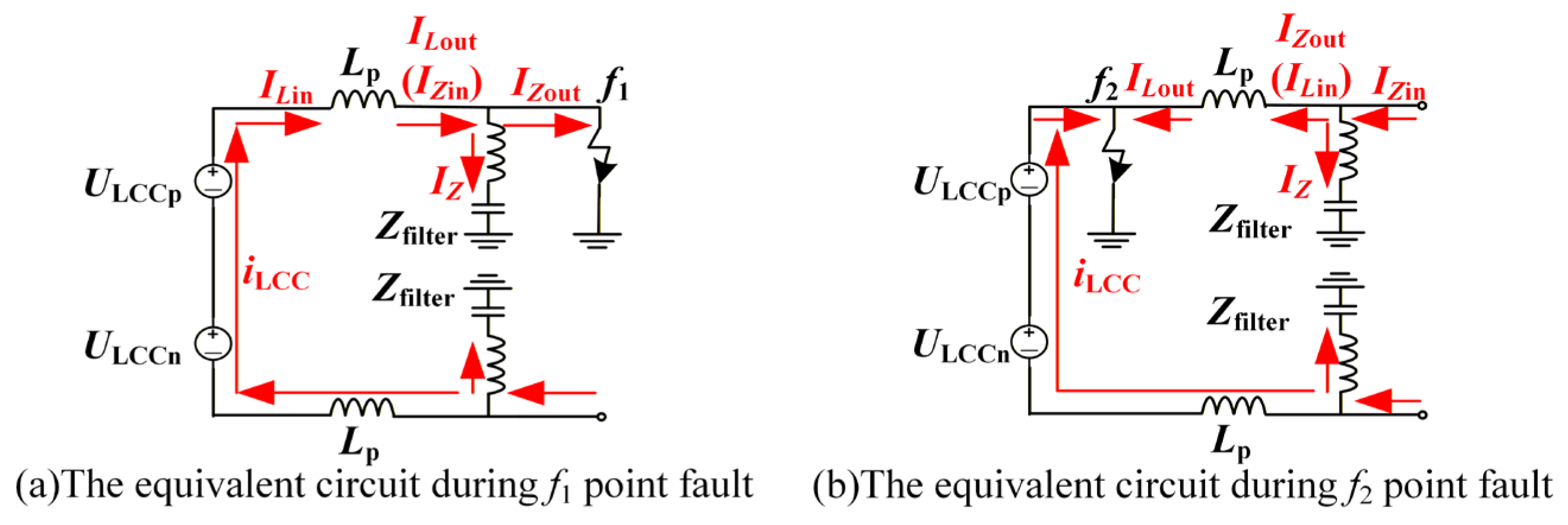
Below, the attenuation characteristics of electromagnetic wave energy after passing through the LCC-side boundary element are analyzed. When a metallic ground fault occurs on the positive pole at f1, the fault development process on the LCC side is divided into the initial fault stage and the control action stage [18]. At the initial fault stage, the DC voltage is basically maintained at the rated voltage, while the DC current rises rapidly, and the equivalent circuit is as shown in Figure 3a. ULCCp and ULCCn denote the positive and negative voltages of the LCC converter station, and iLCC is the current provided by the LCC converter station. The current ILin at the left side and the current ILout at the right side of the smoothing reactor satisfy
I L out = I L in e a
where a = ∆t/τ is the attenuation factor, ∆t represents the time taken for the current to pass through the smoothing reactor, τ = Lp /Rp is the time constant, and Rp and Lp are the resistance and inductance of the smoothing reactor.
The electromagnetic wave energy change at both ends of the smoothing reactor is
Δ W L p = W L in W L out = t 0 t 0 + T 0 u L in ( t ) i L in ( t ) u L out ( t ) i L out ( t ) d t = t 0 t 0 + T 0 L p d i L in d t i L in L p d i L out d t i L out d t = t 0 t 0 + T 0 L p i L in d i L in d t d t L p i L out d i L out d t d t
As shown in the above derivation, the integration with respect to t is transformed into an integration with respect to iLin and iLout. Thus, the integration limits transition from ( t 0 , t 0 + T 0 ) in the time domain to ( 0 , I L in ) and ( 0 , I L out ) in the current domain.
Δ W L p = L p 0 I L in i L in d i L in 0 I L out i L out d i L out = L p ( 0.5 i L in 2 0 I L in ) ( 0.5 i L out 2 0 I L out ) = 0.5 L p I L in 2 I L out 2
Substituting (2) into (4) yields
Δ W L p = 0.5 L p I L in 2 ( I L in e a ) 2 = 0.5 L p I L in 2 1 e 2 a
Then, the relationship between the electromagnetic wave energy WLp(x1,t1) on the left side of the smoothing reactor and the electromagnetic wave energy WLp(x2,t2) on the right side is obtained as follows.
W L p ( x 2 , t 2 ) = W L p ( x 1 , t 1 ) Δ W L p = W L p ( x 1 , t 1 ) 0.5 L p I L in 2 1 e 2 α
According to Equation (6), the electromagnetic wave energy will attenuate after the smoothing reactor, and the attenuation degree is positively correlated with Lp, ILin, and a. In practical engineering, Lp = 100–103 mH and ea ≈ 1, so the energy attenuation is small.
After the electromagnetic wave passes through the DC filter Zfilter, the electromagnetic wave energy change is
Δ W Z filter = Δ W C + Δ W L = t 0 t 0 + T 0 u C ( t ) i C ( t ) d t + t 0 t 0 + T 0 u L ( t ) i L ( t ) d t = t 0 t 0 + T 0 u C C d u C d t d t + t 0 t 0 + T 0 L d i L d t i L d t = C 0 U Z u C d u C + L 0 I Z in I Z out i L d i L = C ( 0.5 u C 2 0 U Z ) + L ( 0.5 i L 2 0 I Z in I Z out ) = 0.5 C U Z 2 + 0.5 L ( I Z in I Z out ) 2
where ∆WC and ∆WL represent the energies stored in capacitor C and inductor L, respectively; UZ is the voltage of the DC filter Zfilter; and IZin and IZout are the currents at the left side and right side that satisfy
I Z = I Z in I Z out
By substituting (8) into (7), WZfilter(x1,t1) at the left side and WZfilter(x2,t2) at right side become
W Z filter ( x 2 , t 2 ) = W Z filter ( x 1 , t 1 ) Δ W Z filter = W Z filter ( x 1 , t 1 ) 0.5 C U Z 2 0.5 L I Z 2
According to Equation (9), the electromagnetic wave energy will decrease after passing through Zfilter. The greater the values of C, L, UZ, and IZ, the greater the energy decrease. In practical engineering, C = 100–102 μF and L = 100–102 mH, but UZ is large, so the energy loss is much greater than when it passes through the smoothing reactor.
By combining (6) and (9), the electromagnetic wave energy change at both ends of Lp and Zfilter is expressed as
W Z filter ( x 2 , t 2 ) = W L p ( x 1 , t 1 ) Δ W L p Δ W Z filter = W L p ( x 1 , t 1 ) 0.5 [ L p I L in 2 1 e 2 a + C U Z 2 + L I Z 2 ]
The ratio of the two is
W Z filter ( x 2 , t 2 ) W L p ( x 1 , t 1 ) = W L p ( x 1 , t 1 ) Δ W L p Δ W Z filter W L p ( x 1 , t 1 ) = 1 0.5 [ L p I L in 2 1 e 2 a + C U Z 2 + L I Z 2 ] W L p ( x 1 , t 1 ) < 1
Because ea ≈ 1 → 0.5Lp I L in 2 |1 − e−2a| ≈ 0, the energy 0.5( C U Z 2 + L I Z 2 ) absorbed by the DC filter Zfilter is typically 10–30% of WLp(x1,t1) and WZfilter(x2,t2)/WLp(x1,t1) ≈ 0.7–1.
When the fault occurs at f2, the equivalent circuit is as shown in Figure 3b. The energy ratio at both ends of Lp and Zfilter is
W Z filter ( x 2 , t 2 ) W L P ( x 1 , t 1 ) = W Z filter ( x 2 , t 2 ) W Z filter ( x 2 , t 2 ) Δ W L p Δ W Z filter = W Z filter ( x 2 , t 2 ) W Z filter ( x 2 , t 2 ) 0.5 [ L P I L in 2 1 e 2 a + C U Z 2 + L I Z 2 ] > 1
where 0.5( C U Z 2 + L I Z 2 ) is typically 10–30% of WZfilter(x2,t2), so WZfilter(x2,t2)/WLp(x1,t1) ≈ 1–1.5.
At the control action stage, although the LCC converter station increases its trigger angle α, which decreases ULCCp and ULCCn [19], the equivalent circuit can still be represented by Figure 3. Therefore, the analysis results are identical to those in the initial fault stage: when an f1 fault occurs, WZfilter(x2,t2)/WLp(x1,t1) ≈ 0.7–1; when an f2 fault occurs, WZfilter(x2,t2)/WLp(x1,t1) ≈ 1–1.5.

3. The Criterion for Identifying Internal and External Faults on the LCC Side

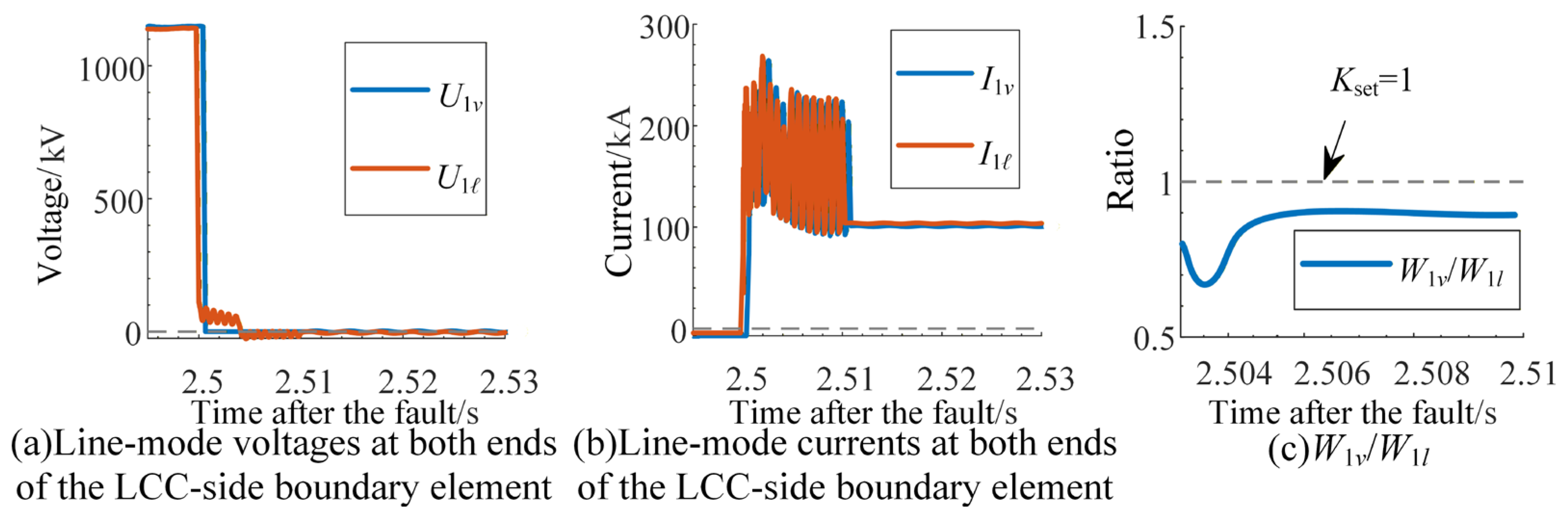
According to the analysis results in Section 2, on the LCC side, when the fault occurs at the internal f1 point, WZfilter(x2,t2)/WLp(x1,t1) < 1; when the fault occurs at the external f2 point, WZfilter(x2,t2)/WLp(x1,t1) > 1. Physically, when an LCC-side internal fault occurs (i.e., a fault on the right side of the LCC-side boundary element), the electromagnetic wave energy flows from left to right (from the valve side to the line side), so the energy on the left side is greater than that on the right side, resulting in the ratio W1v/W1 > 1. When an LCC-side external fault occurs (i.e., a fault on the left side of the LCC-side boundary element), the electromagnetic wave energy flows from right to left (from the line side to the valve side), so the energy on the left side of the boundary element is smaller than that on the right side and W1v/W1 < 1. Therefore, whether the ratio WZfilter(x2,t2)/WLp(x1,t1) is greater than 1 or less than 1 can be used to identify internal and external faults on the LCC side. The identification criterion is
W 1 v W 1 > 1 , hold   for   3   points internal   fault W 1 v W 1 < 1 , hold   for   3   points external   fault W 1 j = k k + N u 1 j ( k ) i 1 j ( k ) ,   j = v ,
where W1 and W1v are the line-mode energy at the line side and valve side of the LCC-side boundary element, respectively. k is the sampling point at t0 and k + N is the sampling point at t0 + T0. At a sampling rate of 4 kHz, the first data window adopts 0 to 3 ms after the fault, the second is 1 to 4 ms, and the third is 2 to 5 ms. Only when the electromagnetic wave energy ratios at both ends of the LCC-side boundary element calculated for these three data windows all meet the criterion will the protection device trigger the output. Thus, the operation time of the protection is 5 ms.
To verify the effectiveness of the identification criterion, a simulation model of Figure 1 is developed on the PSCAD/EMTDC platform. The AC equivalent systems S1, S2 and S3 have rated voltage and frequency 500 kV and 50 Hz; the capacities are 480 MVA, 240 MVA and 120 MVA; and the equivalent impedance ratio is X/R = 13. The parameters of transformers T1, T2, and T3 are listed in Table 1. The DC system voltage is ±800 kV, with line L1 being 200 km and line L2 being 100 km. The DC line adopts a distributed parameter model, and the parameters are listed in Table 1. The LCC station uses constant DC current and fixed firing angle α control, the MMC1 converter station utilizes constant DC voltage and constant AC voltage control, and the MMC2 converter station adopts constant active power and constant AC voltage control. The sampling frequency is 4 kHz.
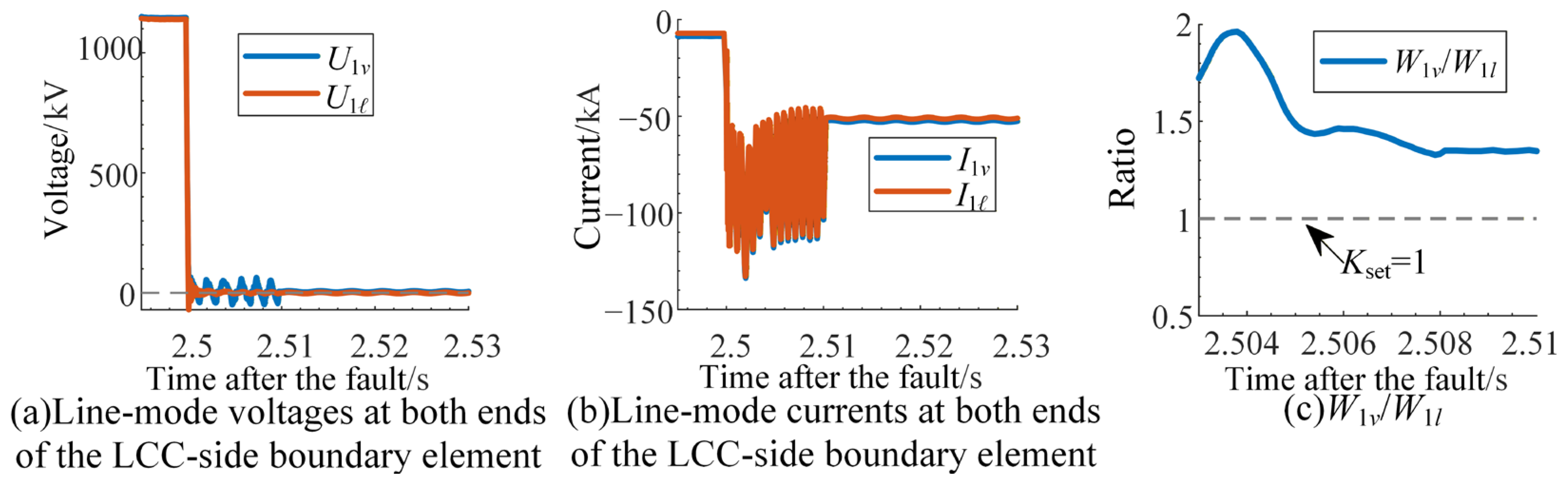
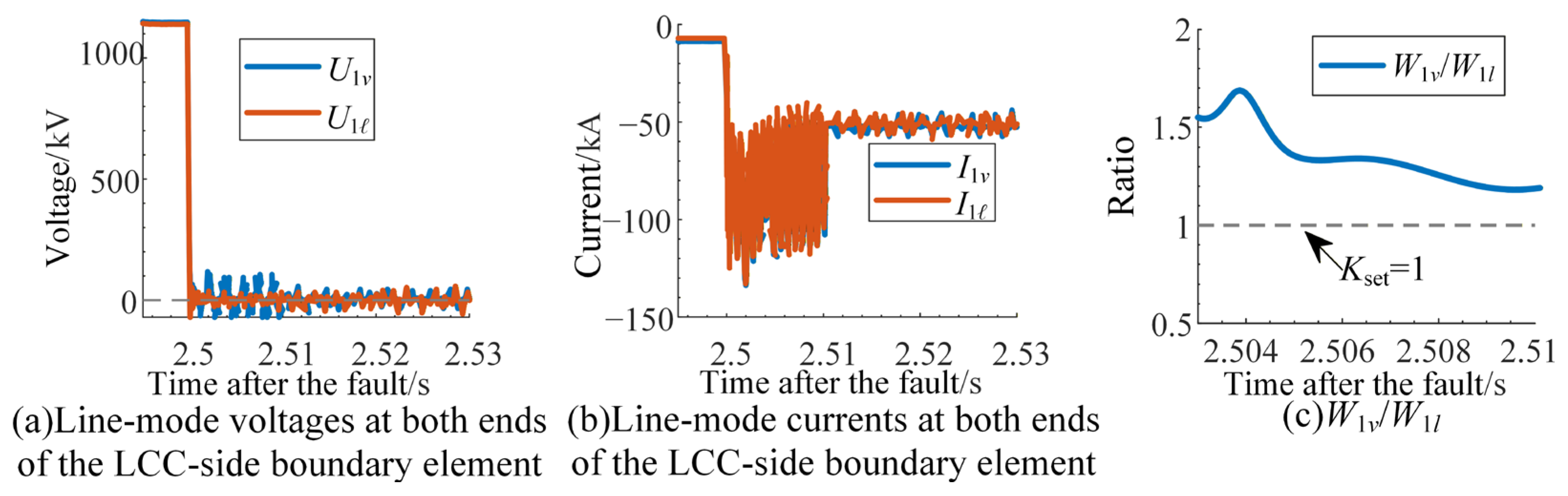
The simulation results for a bipolar fault at internal point f1 when t = 2.5 s are shown in Figure 4. After t = 2.5 s, the line-mode voltages at both ends of the LCC-side boundary element decrease, and the line-mode currents of these two sides increase and quickly transition to the steady-state values. W1v/W1 > 1 lasts for more than 3 ms, so an f1 point internal fault on the LCC side is identified.
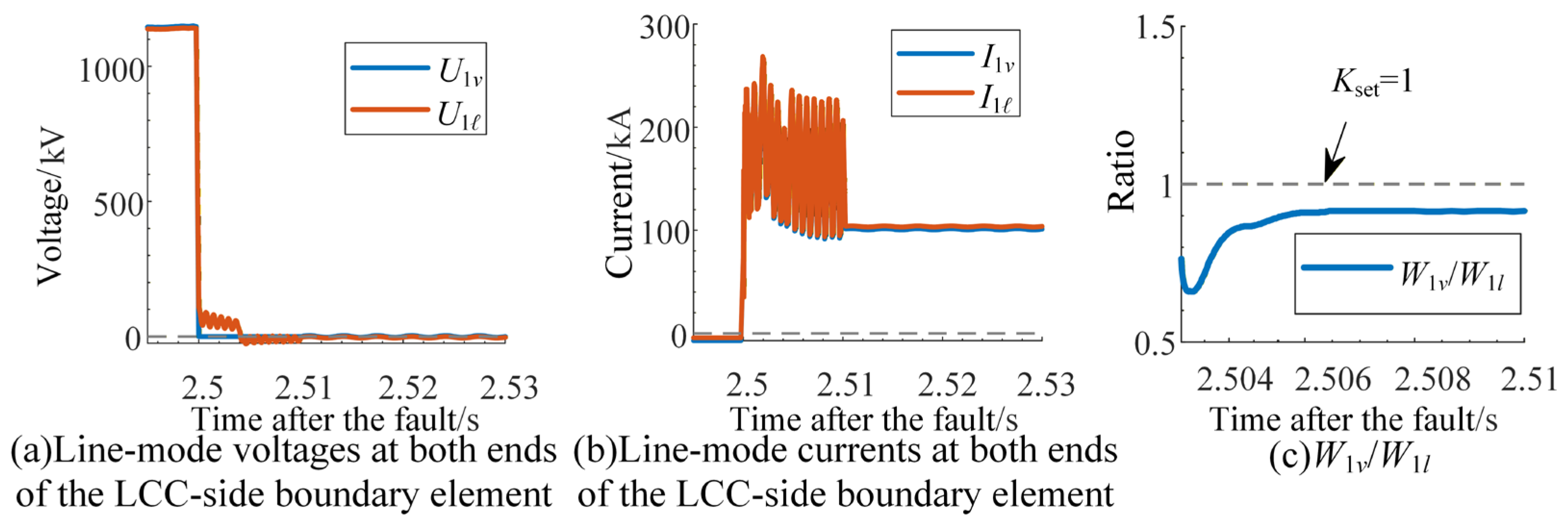
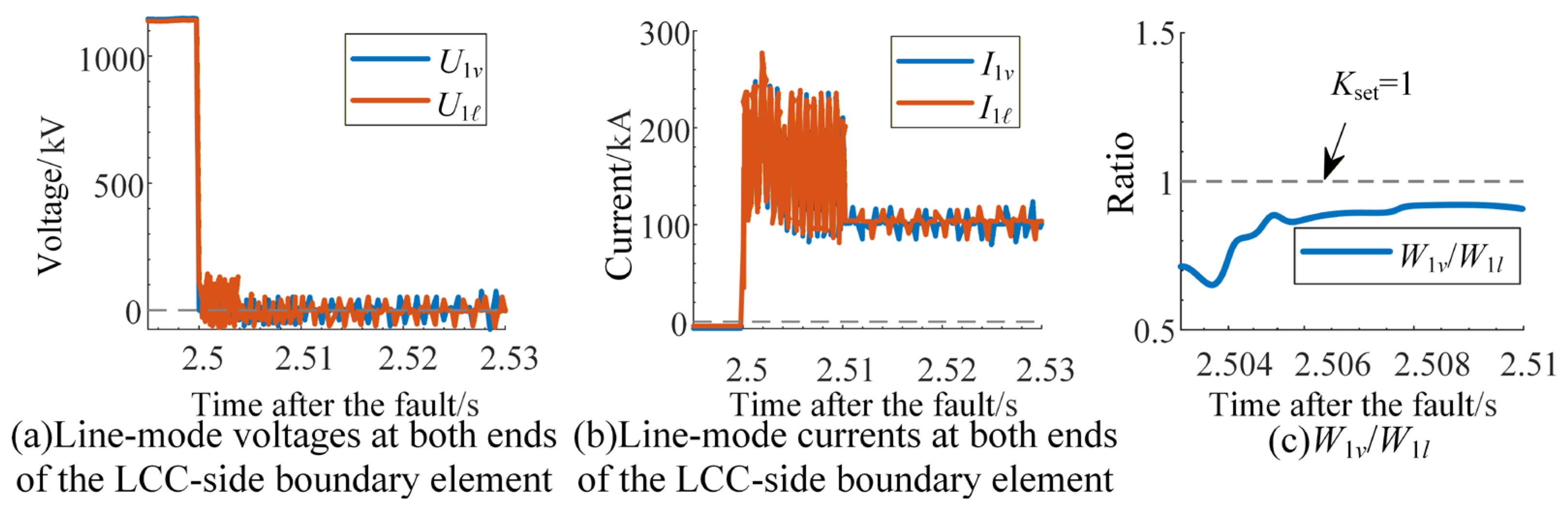
The simulation results for a bipolar fault at external point f2 when t = 2.5 s are shown in Figure 5. After t = 2.5 s, the line-mode voltages at both ends of the LCC-side boundary element decrease, and the line-mode currents of these two sides increase and quickly transition to the steady-state values. From Figure 5c, W1v/W1 < 1 is satisfied for more than 3 ms, so an f2 point external fault on the LCC side is identified.
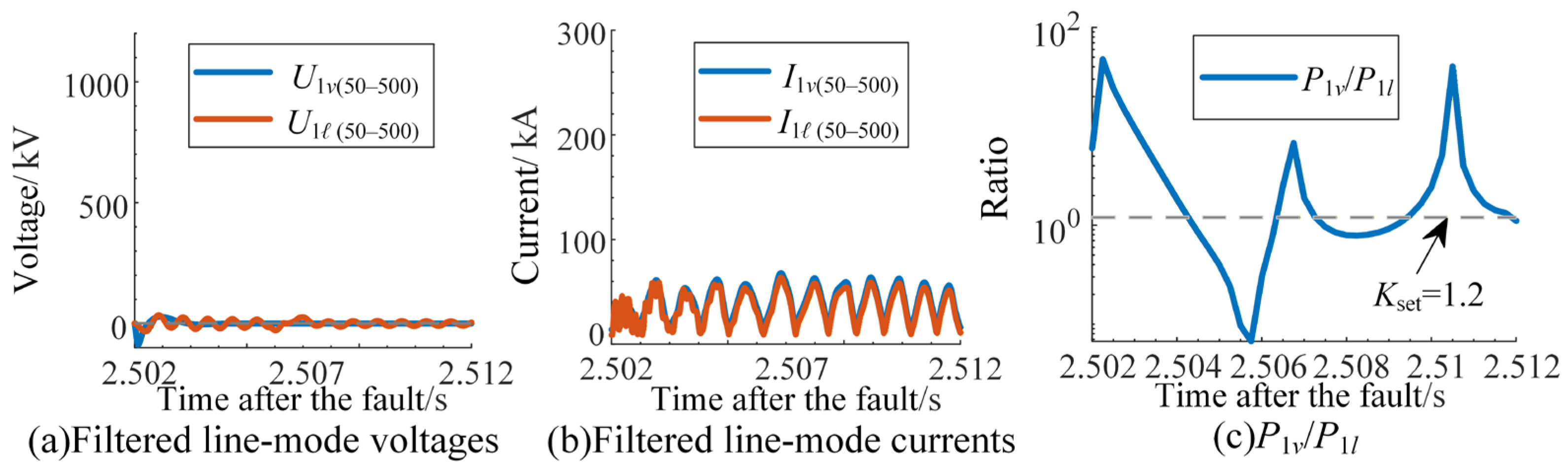
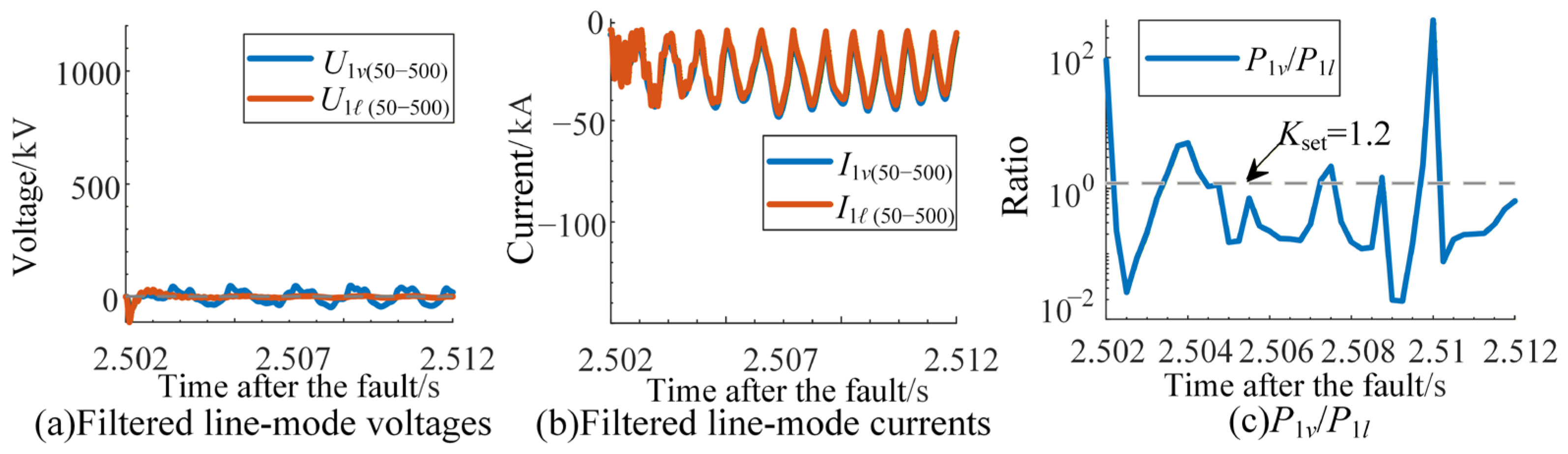
Reference [20] uses a Chebyshev bandpass filter to extract the 50–500 Hz frequency band of line-mode voltage and current at both ends of the LCC-side boundary element, using the power ratio P1v/P1 (P1 = U1I1) of this frequency band at both ends being greater than the setting (Kset = 1.2) to identify f1 point internal faults and P1v/P1 being smaller than the setting to identify f2 point external faults. The action time of the main protection must be less than 5 ms, while the duration of the identification criterion in Reference [20] is set to 3 ms. Therefore, the data window of the Chebyshev filter can only be set to 2 ms, which is eight sampling points corresponding to a 4 kHz sampling frequency, and eight filter coefficients are listed in Table 2. Due to the limited number of sampling points within the 2 ms data window, the filter struggles to adequately extract the signal’s frequency domain characteristics, resulting in constrained filtering performance [21].
Figure 6 shows the simulation results for the Reference [20] method when a bipolar fault occurs at f1. The filtered line-mode voltages and currents after the Chebyshev bandpass filter are not smooth enough. From Figure 6c, P1v/P1 > Kset does not last for 3 ms, so the f1 point internal fault on the LCC side cannot be identified.
Figure 7 shows the simulation results from the Reference [20] method when a bipolar fault occurs at f2. The filtered line-mode voltages and currents after the Chebyshev bandpass filter are not smooth enough. P1v/P1 < Kset does not last for 3 ms, so the f2 point external fault on the LCC side cannot be identified.
From the above analysis, compared with the identification method proposed in Reference [20], the method proposed in this paper for identifying the internal and external faults on the LCC side based on the attenuation characteristics of electromagnetic wave energy is more effective.

4. Novel Protection Scheme for T-Connected Line in Hybrid DC System

4.1. Protection Initiation Criterion

After a unipolar fault, the voltage of the faulty pole decreases; after a bipolar fault, the voltages of both poles drop [22]. Therefore, the protection initiation criterion is
d u Bj d t > K set U dc ,   j = p , n ,   hold   for   3   sampling   points
where uBj is the positive or negative voltage at bus B, p and n denote the positive and negative poles, Udc is the rated DC voltage, and the reliability coefficient Kset = 0.1 is applied to avoid the influence of voltage fluctuations.

4.2. Fault Inside and Outside the T-Zone Identification Criterion

Use Equation (15) to convert the positive and negative pole components into line-mode and ground-mode components [23].
x 1 x 0 = 2 2 1 1 1 1 x p x n
Here, xp, xn and x1, x0 are the positive and negative poles and the line-mode and ground-mode components, respectively.
The positive direction of current is defined as flowing from the bus to the line. When faults occur at different locations, the directions of the line-mode currents i1M and i1N measured at points M and N are as tabulated in Table 3. According to Table 3, the criteria for identifying faults inside and outside the T-zone are as follows.
( i 1 M > 0 ) & ( i 1 N < 0 ) , last   for   3   ms LCC   side   fault ( i 1 M < 0 ) & ( i 1 N > 0 ) , last   for   3   ms MMC   side   fault ( i 1 M < 0 ) & ( i 1 N < 0 ) , last   for   3   ms T-zone   fault

4.3. LCC- or MMC-Side Internal and External Fault Identification Criterion

(1) For the LCC side, Equation (13) is used to identify internal and external faults.
(2) For the MMC side, the boundary elements are the current-limiting reactors Ld1 and Ld2. According to Equation (6) in Section 2, the electromagnetic wave energy will attenuate after passing through the current-limiting reactors. Considering the direction of the electromagnetic wave energy flow during the fault, it can be concluded that when an internal fault occurs on the MMC side, W1v/W1 > 1 (where W1v and W1 represent the line-side and valve-side line-mode electromagnetic wave energy of the MMC-side boundary elements); when an external fault occurs on the MMC side, W1v/W1 < 1. Therefore, using Equation (13) can also identify the internal and external faults on the MMC side.

4.4. Fault Pole Selection Criterion

Let ∆WMp and ∆WMn represent the electromagnetic wave energy changes of the positive pole and negative pole at point M.
Δ W Mj = k k + N Δ u Mj ( k ) Δ i Mj ( k ) ,   j = p , n Δ u Mj = u Mj post u Mj pre ,   Δ i Mj = i Mj post i Mj pre
Here, u Mj post , u Mj pre and i Mj post , i Mj pre are the post-fault and pre-fault voltages and currents at point M, and j = p, n.
In the case of a unipolar fault, the voltage and current of the fault pole change greatly [24,25], so |∆WMp/∆WMn| ≠ 1. For a bipolar fault, the bipolar electromagnetic wave energy changes are nearly equal [26], and |∆WMp/∆WMn| ≈ 1. The fault pole selection criterion is
Δ W Mp Δ W Mn > 1 + ξ , Positive   pole   fault Δ W Mp Δ W Mn < 1 1 + ξ , Negative   pole   fault 1 1 + ξ < Δ W Mp Δ W Mn < 1 + ξ , Bipolar   fault
where ξ is the reliability coefficient. Reference [27] pointed out that when a positive pole fault occurs, ∆iMp >> ∆iMn, ∆uMn = kcuMp, and the coupling coefficient kc < 0.5. Combining this with Equation (17) yields
Δ W Mp Δ W Mn = Δ u Mp Δ i Mp Δ u Mn Δ i Mn = Δ u Mp Δ i Mp k c Δ u Mp Δ i Mn > > 1 k c > 2
It can be seen that the electromagnetic wave energy change of the fault pole is far more than twice that of the healthy pole, so ξ = 1 is set.

4.5. Protection Flowchart

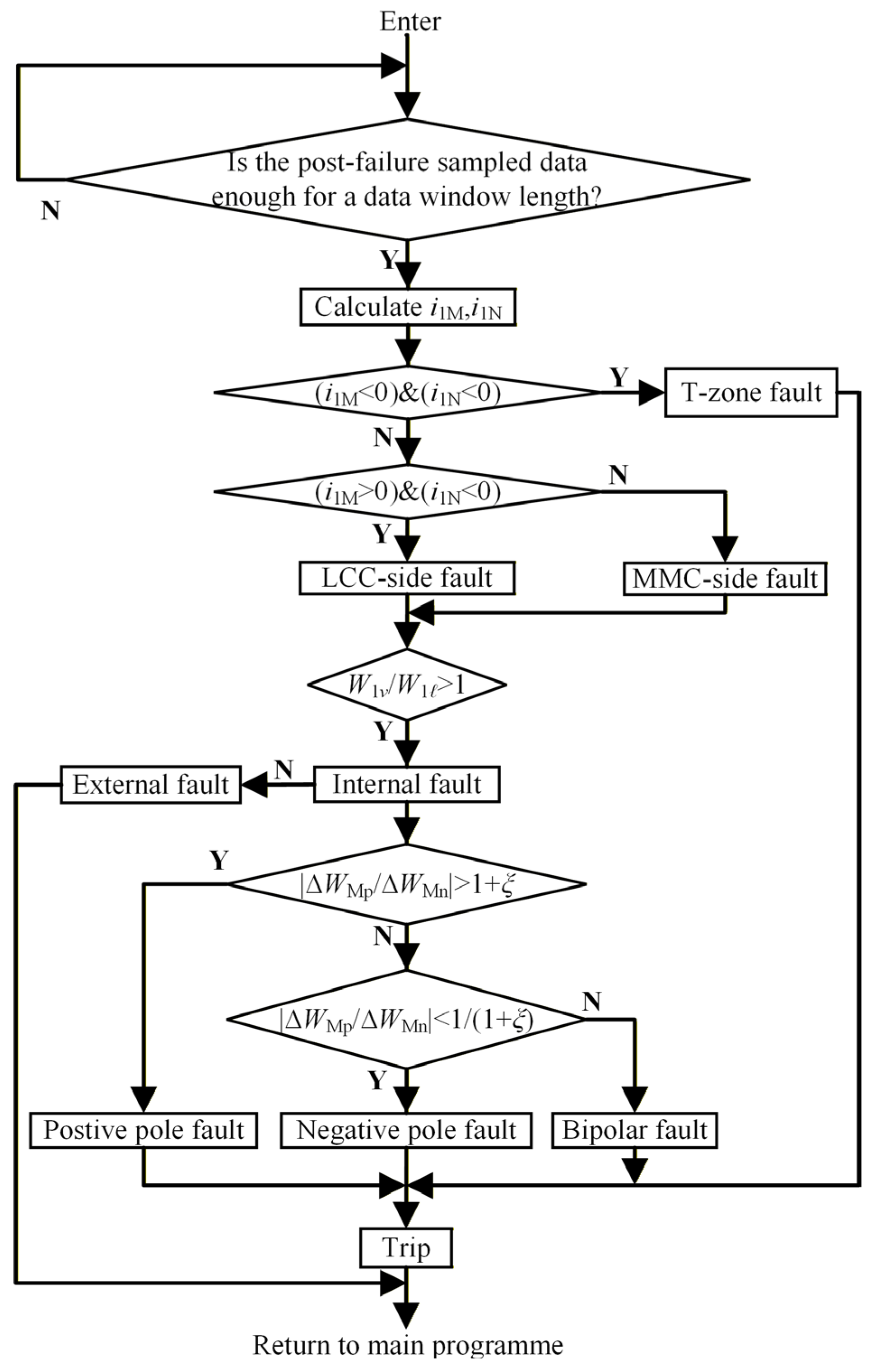
During normal system operation, the protection device calculates duBi/dt based on the sampled data. If Equation (14) is satisfied, the protection logic enters the flowchart shown in Figure 8. After the post-fault sampled data reaches the data window length T0 for calculating the electromagnetic wave energy, the line-mode currents i1M and i1N are first calculated based on the positive and negative pole currents of the DC line, and then the protection device determines whether the fault is inside or outside the T-zone based on the relationship between i1M and i1N. When the fault is inside the T-zone, the protection operates and trips. When the fault is outside the T-zone, W1v/W1 is used to identify internal and external faults on the LCC or MMC side, and |∆WMp/∆WMn| is further used to select the fault pole.

4.6. Simulation Verification

On the simulation model of the system shown in Figure 1 that was built using PSCAD/EMTDC in this article, the system parameters were set according to Table 1. For Udc = 800 kV, take Kset = 0.1; then the protection initiation criterion setting is UdcKset = 80 kV, and the fault pole selection criterion setting is 1 + ξ = 2.

4.6.1. The Simulation Results for a Positive Pole Fault Occurring at t = 2.5 s

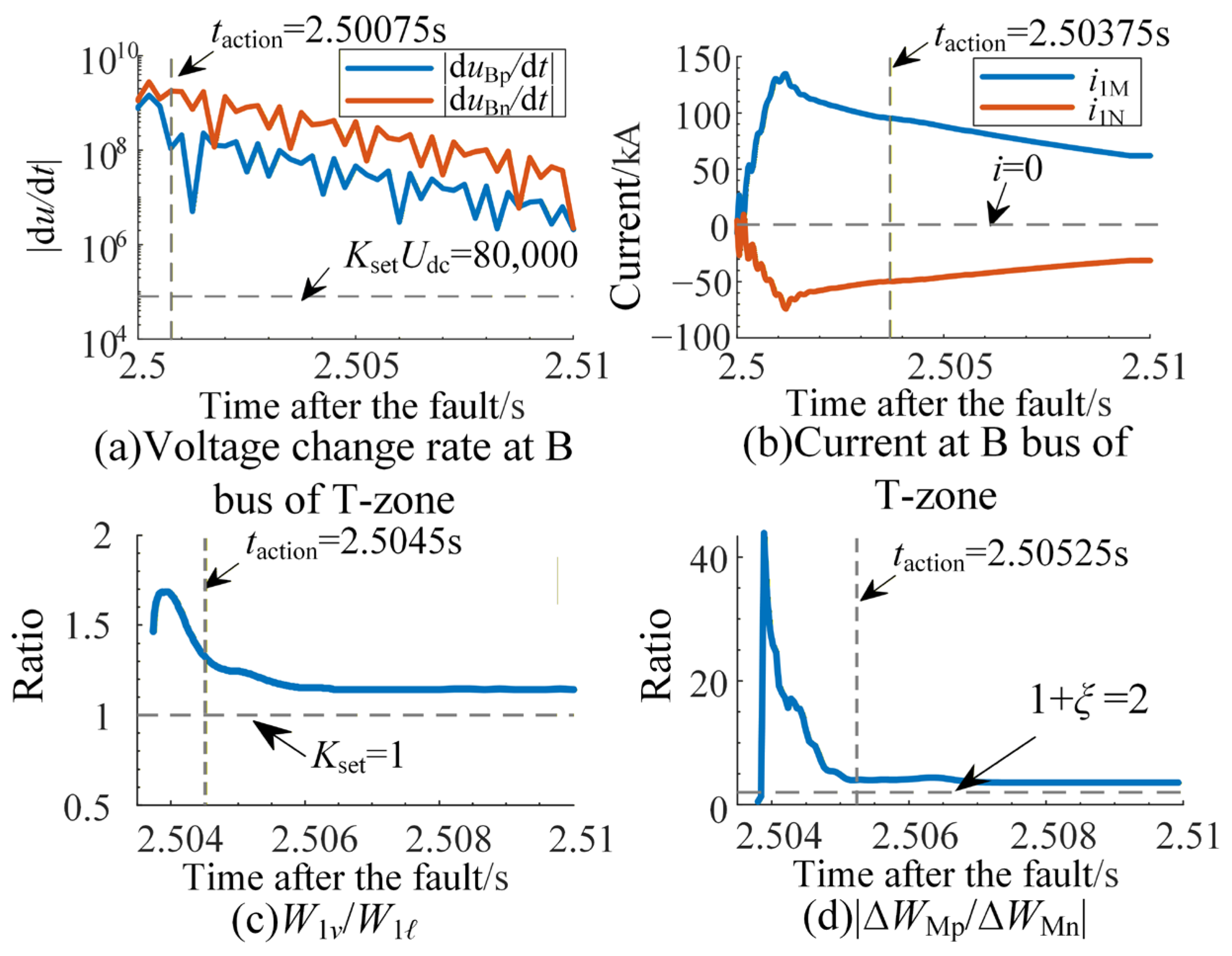
(1) As shown in Figure 9a, after the fault, the absolutes of voltage change rates increase. At 0.75 ms after the fault, |duBj/dt|(j = p, n) > KsetUdc holds for three sampling points, so the protection is initiated.
(2) Figure 9b demonstrates that the line-mode current i1M is positive while i1N is negative after the fault. At 3.75 ms after the fault, because i1M > 0 and i1N < 0 lasts for 3 ms, an LCC-side fault is identified.
(3) Figure 9c shows that W1v/W1 first rises and then drops, whilst remaining greater than Kset = 1. 5.75 ms after the fault. W1v/W1 > 1 lasts for three consecutive sampling points. Thus, an internal fault on the LCC side is identified.
(4) As depicted in Figure 9d, |∆WMp/∆WMn| first rises and then drops whilst remaining greater than 1 + ξ = 2. 6.25 ms after the fault. |∆WMp/∆WMn| > 1 + ξ lasts for three sampling points, so a positive pole fault is identified.

4.6.2. The Simulation Results for Other Faults

Table 4 presents the simulation results for other faults, including a Positive-to-Ground fault (PGF), Negative-to-Ground fault (NGF) and Positive-to-Negative fault (PNF). From Table 4, the protection not only correctly identifies internal and external faults on the LCC side but also has a strong ability to withstand transition resistance.

4.6.3. The Influence of Measurement Noise on the Protection Method

Figure 10 below presents the simulation results under 15 dB white noise when an LCC-side internal fault occurs. Due to the presence of noise, the voltage and current fluctuate significantly after the fault. However, W1v/W1 > 1 still holds for three points, and the protection correctly identifies an LCC-side internal fault.
Figure 11 presents the simulation results under 15 dB white noise when an LCC-side external fault occurs. W1v/W1 < 1 holds for three points, accurately identifying the LCC-side external fault.
It can be seen from the simulation results that the proposed method is unaffected by measurement noise.

4.6.4. The Influence of Synchronization Errors on the Protection Method

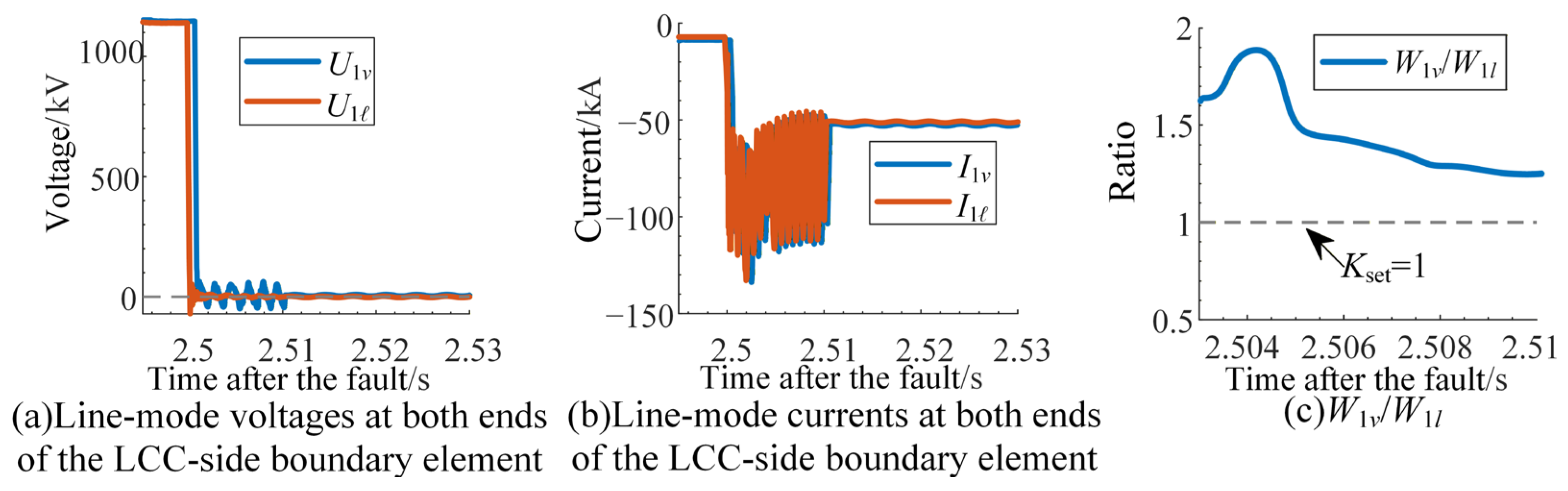
Figure 12 below illustrates the simulation results when there is a synchronous delay of two sampling points between the left end and the right end of the line in the case of an LCC-side internal fault. W1v/W1 > 1 holds for three points, identifying the LCC-side internal fault.
Figure 13 presents the simulation results for an LCC-side external fault when there is a synchronization delay of two sampling points between the left end and the right end of the line. W1v/W1 < 1 holds for three points, identifying the LCC-side external fault.

4.6.5. Other Influencing Factors

The proposed criterion for identifying LCC-side internal and external faults relies on the electromagnetic wave energy ratio at both ends of the LCC-side boundary element. This ratio is only determined by the parameters of the smoothing reactor Lp and the DC filter Zfilter and is independent of the line length and system parameters.
The conventional line protection device usually requires synchronous sampling at both ends. Similarly, the proposed T-connected line protection requires all three ends to adopt the same synchronous sampling frequency to ensure the consistency of data.
The proposed protection system can be realized through the hardware of conventional digital protection devices, which mainly includes a data acquisition unit, a data processing unit, and a digital input/output unit. The sampling rate of the data acquisition unit is set to 4 kHz.

5. Conclusions

This paper proposes a novel protection method for T-connected lines in hybrid DC systems based on the attenuation characteristics of electromagnetic wave energy. The specific advantages and innovations of this approach include the following: (1) Because there is a significant difference in the ratio of electromagnetic wave energy at both ends of the boundary element when internal and external faults occur on the LCC side, the proposed method can correctly identify them. This successfully solves the problem of conventional DC line protection failing to identify these two types of faults by the specific frequency bands. (2) Its principle is clear, and it does not require wavelet transform to extract the fault traveling wave or a digital filter to extract high-frequency energy. Only time-domain integration is required, making it easy to implement. (3) It has a strong ability to withstand transition resistance.

Author Contributions

Conceptualization, Y.Z. and Y.W.; methodology, Y.W.; software, Y.W.; validation, Y.Z., Y.W. and F.L.; formal analysis, Y.W.; investigation, Y.W. and F.L.; resources, Y.Z.; data curation, Y.W.; writing—original draft preparation, Y.W.; writing—review and editing, Y.Z.; visualization, Y.W.; supervision, Y.Z.; project administration, Y.Z.; funding acquisition, Y.Z. All authors have read and agreed to the published version of the manuscript.

Funding

This research was funded by the Joint Funds of the National Natural Science Foundation of China (U23B20112).

Institutional Review Board Statement

Not applicable.

Informed Consent Statement

Not applicable.

Data Availability Statement

The original contributions presented in this study are included in the article. Further inquiries can be directed to the corresponding author.

Conflicts of Interest

The authors declare no conflicts of interest.

Abbreviations

The following abbreviations are used in this manuscript:
LCCLine-Commutated Converter
MMCModular Multilevel Converter
DCDirect Current
ACAlternating Current

References

  1. Wang, Z.; Zhang, Z.; Fan, Y.; Fan, J.; Shu, Y. A Pilot Protection Scheme for a Hybrid HVDC Transmission System based on an Approximate Entropy Change Criterion. Power Syst. Prot. Control 2024, 52, 1–12. [Google Scholar] [CrossRef]
  2. Cai, H.; Zhang, J.; Yu, J.; Zhang, Z. Fault Current and Voltage Estimation for Pole-to-Pole Faults in Modular Multilevel Converter Based DC Grids Considering AC Active Power. Appl. Sci. 2021, 11, 2882. [Google Scholar] [CrossRef]
  3. Xing, C.; Huang, Z.; Bi, G.; Chen, S.; Wang, L.; Niu, Y. Research on Single-end Directional Protection for UHV Three-terminal Hybrid DC Transmission Lines Based on T-zone Low and Medium Frequency Attenuation Characteristics as Directional Elements. Power Syst. Technol. 2024, 48, 2622–2631. [Google Scholar] [CrossRef]
  4. Jia, K.; Feng, T.; Chen, M.; Wang, C.; Bi, T. Line Protection Scheme for Hybrid LCC-MMC Type DC Distribution System. Trans. China Electrotech. Soc. 2021, 36, 656–665. [Google Scholar] [CrossRef]
  5. Wang, M. Research on Fault Clearing and Recovery Technology of LCC-MMC Hybrid HVDC Transmission System. Master’s Thesis, Beijing Jiaotong University, Beijing, China, 2021. [Google Scholar]
  6. Zhang, K. Research on Fault Analysis and Protection Principles of DC Lines in Multi-Terminal Hybrid HVDC System. Master’s Thesis, South China University of Technology, Guangzhou, China, 2019. [Google Scholar]
  7. Zhou, Q.; Chen, S.; Deng, J.; Bi, G.; Wei, R. Fault Region Identification Method of UHV Three-terminal Hybrid DC Line Based on CNN-SVM. Electr. Power Sci. Eng. 2024, 40, 21–30. [Google Scholar]
  8. Wu, C.; Liang, Z.; Huang, Q.; Zhang, X.; Zhang, D. Double-ended Protection Scheme for Hybrid DC System Based on EEMD and GP Algorithms. Smart Power 2025, 53, 98–106. [Google Scholar] [CrossRef]
  9. Dai, Z.; Niu, B.; Qiu, H.; Xi, X.; Han, Z.; Wei, S. Single-ended Protection Scheme for Multi-terminal Hybrid DC Lines Based on Initial Current Traveling Wave Phase. High Volt. Eng. 2024, 50, 649–659. [Google Scholar] [CrossRef]
  10. Li, H.; Zhang, K.; Wang, G.; Huang, D.; Li, M.; Guo, Z. Fault Area Discrimination Method for Parallel Multi-terminal Hybrid HVDC Line. Autom. Electr. Power Syst. 2019, 43, 119–125+179. [Google Scholar]
  11. Wu, Y.; Fan, Y.; Wang, Z.; Xu, X.; Huang, Z.; Li, D. Protection scheme of multi-terminal hybrid HVDC transmission line based on traveling wave theory and improved Hausdorff distance. Eng. J. Wuhan Univ. 2024, 57, 608–618. [Google Scholar] [CrossRef]
  12. Dai, Z.; Xi, X.; Li, T.; Niu, B.; Li, H. Single-Ended Protection Scheme for Hybrid Multi-terminal DC Transmission Lines Based on Intrinsic Mode Feature Vector. High Volt. Eng. 2024, 50, 4627–4639. [Google Scholar] [CrossRef]
  13. Xing, C.; Li, P.; Chen, S.; Bi, G.; Deng, J.; Zhang, Z. Directional Transient Protection of Multi-terminal Hybrid DC Lines Based on Inherent Mode Energy Entropy. Power Syst. Technol. 2023, 47, 4737–4747. [Google Scholar] [CrossRef]
  14. Zhang, C.; Song, G.; Dong, X. Non-Unit Ultra-High-Speed DC Line Protection Method for HVDC Grids Using First Peak Time of Voltage. IEEE Trans. Power Deliv. 2021, 36, 1683–1693. [Google Scholar] [CrossRef]
  15. Gao, S.; Shen, Q.; Song, G. A Pilot Protection Scheme for Hybrid Three-terminal DC Systems. J. Hunan Univ. (Nat. Sci.) 2023, 50, 125–135. [Google Scholar] [CrossRef]
  16. Shu, H.; Zhao, H.; Zhang, X.; Dong, H.; Chen, N.; Bo, Z. Reliability Analysis of Main Electrical Connection for Sending-end Converter Station in Kunliulong Hybrid DC Project of China. Autom. Electr. Power Syst. 2021, 45, 115–123. [Google Scholar]
  17. Li, T. Research on Fault Location for High Voltage Direct Current Overhead-Cable Hybrid Transmission Lines. Ph.D. Thesis, Tianjin University, Tianjin, China, 2022. [Google Scholar]
  18. Wang, Z.; Ling, J.; Zheng, J.; Wang, C.; Kong, X.; Liu, Z.; Feng, X. Optimized DC fault transient control strategy for embedded symmetric unipolar LCC-HVDC. Power Syst. Technol. 2025, 49, 1541–1550. [Google Scholar] [CrossRef]
  19. Li, Y.; Zhang, S.; He, J.; Li, B. Mechanism of Commutation Failure and Response Characteristics During Phase Shift Process of LCC Rectifier Station Failure. High Volt. Eng. 2025, 1–12. [Google Scholar] [CrossRef]
  20. Yang, Y.; Tai, N.; Liu, J.; Zheng, X. A Pilot Protection Scheme for HVDC Transmission Lines Based on Boundary Energy. Proc. CSEE 2015, 35, 5757–5767. [Google Scholar] [CrossRef]
  21. Zhou, J.; Ding, W. Optimization Design of FIR Digital Filter Based on Enhanced Multimodal Particle Swarm Optimization Algorithm. Informatiz. Res. 2025, 51, 46–53. [Google Scholar]
  22. Zhang, B.; Yan, L.; Lu, L.; Huang, H.; Feng, J.; Zhang, E. Single-pole Grounding Fault Identification Method for Photovoltaic Power Station Collection System Based on Pearson Correlation Coefficient. Proc. CSU-EPSA 2022, 34, 116–121. [Google Scholar] [CrossRef]
  23. Zuo, P.; Qin, W.; Xia, F.; Chen, X.; Yang, L. Single-pole ground selection method for DC distribution networks based on zero-mode current correlation. Power Syst. Prot. Control 2022, 50, 86–96. [Google Scholar] [CrossRef]
  24. Farhadi, M.; Mohammed, O.A. A New Protection Scheme for Multi-Bus DC Power Systems Using an Event Classification Approach. IEEE Trans. Ind. Appl. 2016, 52, 2834–2842. [Google Scholar] [CrossRef]
  25. Pourfaraj, A.; Iman-Eini, H.; Hamzeh, M.; Langwasser, M.; Liserre, M. A Thyristor-Based Multiline Hybrid DCCB in Protection Coordination with MMC in Multiterminal DC Grids. IEEE J. Emerg. Sel. Top. Power Electron. 2024, 12, 5055–5064. [Google Scholar] [CrossRef]
  26. Matos Farias, J.V.; Camurça, L.; Langwasser, M.; Liserre, M. An Analysis of Combining Dc Circuit Breaker and Hybrid MMC with Reduced Number of FBSM for HVdc System Protection. In 2022 IEEE 13th International Symposium on Power Electronics for Distributed Generation Systems (PEDG); IEEE: Kiel, Germany, 2022; pp. 1–5. [Google Scholar]
  27. Zhang, B.; Zhang, S.; You, M.; Cao, R. Research on transient-based protection for HVDC lines. Power Syst. Prot. Control 2010, 38, 18–23. [Google Scholar]
Figure 1. Topology of the hybrid T-connected DC system.
Applsci 16 03185 g001
Figure 2. Amplitude–frequency response of the LCC-side boundary element.
Applsci 16 03185 g002
Figure 3. Equivalent circuits of the LCC side after faults.
Applsci 16 03185 g003
Figure 4. Simulation results from this paper’s method when f1 point internal fault occurs.
Applsci 16 03185 g004
Figure 5. Simulation results from this paper’s method when f2 point external fault occurs.
Applsci 16 03185 g005
Figure 6. Simulation results from Reference [20] when f1 point internal fault occurs.
Applsci 16 03185 g006
Figure 7. Simulation results from Reference [20] when f2 point external fault occurs.
Applsci 16 03185 g007
Figure 8. The protection flow.
Applsci 16 03185 g008
Figure 9. Simulation results after a positive pole fault at f1.
Applsci 16 03185 g009
Figure 10. Simulation results under 15 dB measurement noise when LCC-side internal fault occurs.
Applsci 16 03185 g010
Figure 11. Simulation results under 15 dB measurement noise when LCC-side external fault occurs.
Applsci 16 03185 g011
Figure 12. Simulation results considering synchronization delays of 2 points when LCC-side internal fault occurs.
Applsci 16 03185 g012
Figure 13. Simulation results considering synchronization delays of 2 points when LCC-side external fault occurs.
Applsci 16 03185 g013
Table 1. The parameters of the system.
T1T2T3
Rated capacity/MVA400200100
Converter transformer ratio525/172525/243525/216
Leakage reactance/Ω11.2522.5045.00
Connection methodY/∆Y/YY/Y
MMC1MMC2
Sub-module capacitance/mF1812
Sub-module rated voltage/kV4.54.5
Number of sub-modules200200
DC line
R/(Ω/km)0.0896
L/(mH/km)0.147
G/(μS/km)0.001
C/(μF/km)0.01297
Table 2. The filter coefficients.
n01234
Value0.05190.22710.53790.86051
n5678
Value0.86050.53790.22710.0519
Table 3. Directions of i1M, i1N for faults at different locations.
Fault LocationThe Sign of i1M The Sign of i1N
f1+
f2+
f3+
f4+
T-zone
Table 4. Simulation results under different conditions.
FaultRgi1Mi1NW1v/W1|∆WMp/∆WMn|Identification Result
f1
(NGF)
0.01
100
500
+
+
+


1.4888
1.0347
1.0019
0.0393
0.0321
0.0322
An LCC-side internal negative pole fault
f2
(PGF)
0.01
100
500
+
+
+


0.6624
0.8877
0.9763
An LCC-side external fault
f3
(PNF)
0.01
100
500


+
+
+
1.1958
1.0314
1.0365
1.0001
0.9978
1.0022
An MMC-side internal bipolar fault
Disclaimer/Publisher’s Note: The statements, opinions and data contained in all publications are solely those of the individual author(s) and contributor(s) and not of MDPI and/or the editor(s). MDPI and/or the editor(s) disclaim responsibility for any injury to people or property resulting from any ideas, methods, instructions or products referred to in the content.