Article

In Search of Zurbarán’s Influence on the Óbidos Painting Workshop

1
Laboratório José de Figueiredo, Museus e Monumentos de Portugal, EPE (LJF-MMP, EPE), Janelas Verdes s/n, 1200-690 Lisboa, Portugal
2
ARTIS-Instituto História da Arte, Faculdade de Letras, Universidade de Lisboa (ARTIS-FLUL), Alameda da Universidade, 1600-214 Lisboa, Portugal
3
Laboratório HERCULES, Escola de Ciências e Tecnologia, Universidade de Évora, Largo Marquês de Marialva 8, 7000-676 Évora, Portugal
4
LIBPhys-UNL, Laboratório de Instrumentação, Engenharia Biomédica e Física da Radiação, Departamento de Física, Faculdade de Ciências e Tecnologia, Universidade Nova de Lisboa, 2829-516 Almada, Portugal
*
Author to whom correspondence should be addressed.
Appl. Sci. 2026, 16(6), 3087; https://doi.org/10.3390/app16063087
Submission received: 15 March 2025 / Revised: 13 March 2026 / Accepted: 17 March 2026 / Published: 23 March 2026

Abstract

This study assesses indicative technical correspondences and divergences between Francisco de Zurbarán’s painting practices and those observed in the seventeenth-century Óbidos workshop (Baltazar Gomes Figueira and Josefa d’Óbidos). We focus on the composition and function of priming layers, the shadow-to-light painting sequence, and pigment/binder usage. A multi-analytical approach was employed: portable X-ray Fluorescence (XRF), Optical Microscopy on polished cross-sections (OM), Scanning Electron Microscopy in backscattered mode with Energy-Dispersive X-ray analysis (SEM-BSE/EDS), Micro-Confocal Raman Spectroscopy (µ-Raman), and Micro-Fourier Transform Infrared Spectroscopy (µ-FTIR). Rather than treating single pigments as diagnostic, we compare patterns of application and stratigraphic behaviour—notably a two-layer priming, in which a finer, Fe-rich upper layer is actively used to build shadows, and a consistent exploitation of the priming as a value layer in a shadow-to-light sequence. Materials largely overlap, while priming compositions differ, plausibly reflecting local resources. Given the small corpus (two works by Zurbarán, one by Baltazar, and one by Josefa), conclusions are presented as indicative and contextualized within Iberian workshop practice.

1. Introduction

Francisco de Zurbarán (1598–1664) is a central figure of the Spanish Golden Age; though he never left Spain, his work influenced seventeenth-century Europe and the Americas [1,2,3,4,5,6,7,8,9]. In Portugal, the Óbidos workshop—Baltazar Gomes Figueira (1604–1674) and Josefa d’Óbidos (1630–1684)—offers a compelling setting where Sevillian practices and aesthetics were received and adapted [5,6,7,8,9]. Baltazar worked in Seville among major contemporaries, including Zurbarán, before returning to Portugal; Josefa, trained in Óbidos, internalized and reinterpreted these influences in her own aesthetic language [5,6,7,8,9].
From a technical perspective, Iberian seventeenth-century workshops operated within a broadly shared framework codified in treatises such as those of Francisco Pacheco and Nunes, and the later compilations translated and discussed by Véliz [10,11,12]. These sources emphasize a layered practice in which carefully prepared grounds, controlled priming strategies, and a systematic shadow-to-light sequence were central to both economy of materials and the construction of tenebrist light effects [10,11,12]. Recent technical studies on Spanish and Portuguese canvases have refined this picture, demonstrating the variability and regional nuance of ground compositions, as well as the persistence of certain mixtures and pigment choices across different centres [11,12,13,14,15,16,17].
Within this context, the Óbidos workshop assumes particular relevance. Art-historical scholarship has repeatedly underlined its role in mediating between Sevillian models—especially Zurbarán and Murillo—and local devotional and courtly demands [5,6,7,8]. However, while stylistic affinities between Zurbarán and the Óbidos painters have been extensively discussed, detailed comparative work on their materials and techniques remains limited. Existing analytical studies on Josefa d’Óbidos and her workshop have primarily focused on the transition from panel to canvas and on the evolution of her palette and supports over time [9], but a targeted comparison with established Sevillian practices is still emerging.
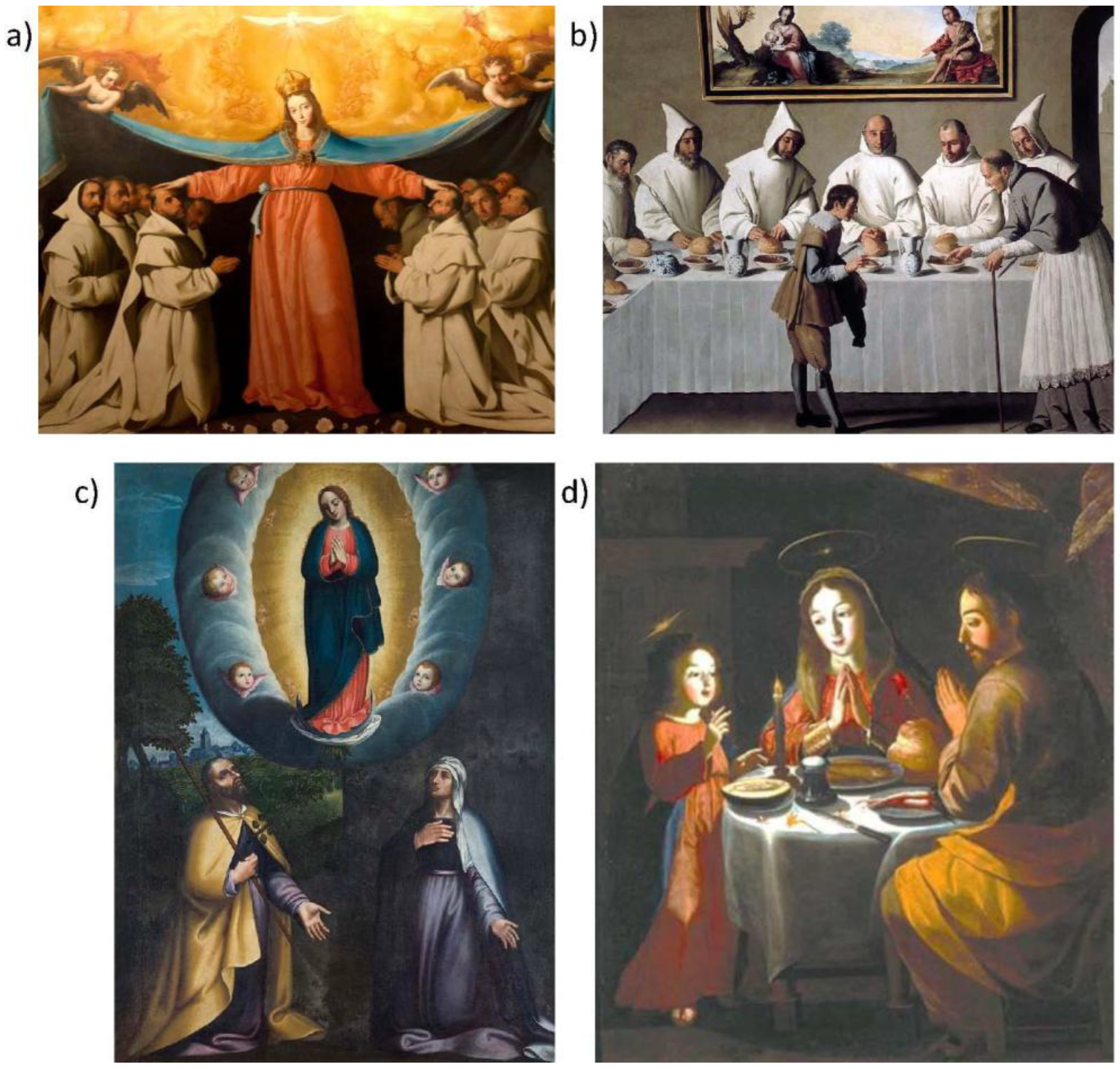
The present article addresses this gap by focusing on a small but carefully chosen corpus: two canvases by Zurbarán, La Virgen de las Cuevas and San Hugo en el refectorio de los Cartujos (P1–P2), and two key works associated with the Óbidos workshop, Genealogia da Virgem (P3, Baltazar Gomes Figueira) and Sagrada Família (P4, Josefa d’Óbidos). Rather than attempting to “prove” direct influence through identical pigments or unique technical signatures, our aim is to assess the extent to which (i) ground and priming strategies, (ii) paint-layer sequences, and (iii) recurrent pigment mixtures and binder systems reveal shared working habits that are consistent with documented workshop exchanges and artistic training across the Iberian world.
By combining non-invasive and micro-analytical techniques, we seek to (a) characterize key material and stratigraphic features in each painting; (b) identify convergences and divergences between the Sevillian and Óbidos examples; and (c) discuss these findings in light of contemporary written sources and the comparative technical literature on Spanish and Portuguese Baroque painting [4,10,11,13,14,15,17,18,19]. Our conclusions are cautiously framed, given the limited sample size, but they offer a material basis for re-examining notions of “influence” and “affinity” between Zurbarán and the Óbidos workshop.

2. Condition Overview

A visual survey and review of conservation records revealed distinct intervention histories. The two Portuguese paintings (P3–P4) underwent historical wax relining, which can flatten craquelure, alter optical relationships between light and shadow, and promote migration of wax/emulsion into priming and paint layers. This, in turn, complicates binder and varnish IR signatures and increases surface hydrophobicity [10,11,12]. The Sevillian works (P1–P2) present lateral band overpaints and localized retouchings [20,21]. Differentiating original paint from later interventions was essential both for technical comparison and for conservation planning. Figure 1 shows the four case-study paintings.

3. Materials and Methods

3.1. Ethical Sampling Rationale and Documentation

Portable X-ray Fluorescence Spectroscopy (XRF) pre-screening preceded any sampling. Micro-sampling (sub-millimetric fragments) was restricted to pre-existing losses, lifting cracks, or detached flakes, and only where layer separation was essential to (i) discriminate original paint from overpaint and (ii) document stratigraphy for conservation decisions.

3.2. Non-Invasive X-Ray Fluorescence Spectroscopy (XRF)

XRF measurements were carried out with a Mini-X portable tube (Rh anode) coupled to an Amptek X123 SDD, in a 90° geometry to reduce Compton background, at 30 kV and 15 µA, with 120 s acquisition time per spot, in air. Spectra were processed with DppPMCA 1.0.0.22 setup software [16]. XRF trends guided targeted micro-sampling and flagged potential overpaint and varnish build-ups. No XRF was performed on polished cross-sections.

3.3. Cross-Sections and Optical Microscopy (OM)

Fragments were embedded in epoxy resin (Epofix), sectioned, and polished with graded micro-mesh. Optical Microscopy (Leica DM2500M, dark field; MC170HD camera) documented layer order and thickness (calibrated scale), pigment dispersion, and interfaces (e.g., priming/paint and varnish/retouching) [10,11,13,14,15,18,22,23,24,25].

3.4. SEM-BSE Imaging and EDS Microanalysis (Imaging vs. Elemental)

SEM-BSE was used for microstructural and stratigraphic imaging, and EDS was used for elemental analysis. Analyses were performed with a Hitachi S-3700N in variable-pressure mode (40 Pa, 20 kV, 10 mm working distance, uncoated samples) coupled to a Bruker XFlash 5010 SDD, energydispersive detector, Bruker Corporation, Billerica, MA, USA. Outputs included BSE micrographs (morphology and grain size) and EDS point/area spectra and maps.

3.5. µ-Raman Microspectroscopy

µ-Raman spectra were acquired with a Horiba-Jobin Yvon XploRA spectrometer, using 785 nm excitation, a 100× objective, ≤0.2 mW laser power, a 300 µm pinhole, and a 1200 L/mm grating, over 100–3000 cm−1. Data were processed in LabSpec v5.78 and compared with Spectral ID™ and reference databases [22,23,24,25,26,27]. Fluorescence was minimized by low laser power and short accumulations.

3.6. µ-FTIR Microspectroscopy (Transmission)

µ-FTIR analyses were performed with a Bruker Tensor 27/Hyperion 3000 system, Bruker Corporation, Billerica, MA, USA. equipped with a diamond compression cell, scanning between 4000 and 600 cm−1 (4 cm−1 resolution, 64 scans, MCT detector). Spectra were recorded in transmission mode on as-is micro-scrapings (no FTIR on polished cross-sections). The technique was used to identify binders, extenders, and alteration products (e.g., metal carboxylates and oxalates) [28,29,30,31,32].
Where wax and varnish intrusions complicated IR interpretation, results were reported as “consistent with” particular materials and triangulated with EDS, µ-Raman, and OM/SEM-BSE observations. English was edited by a native-speaker scientific editor; pigment and material terminology was standardized (e.g., “vermilion (cinnabar)” at first mention; “vermilion” thereafter). Blank table cells are annotated “n.d.” (not detected).

4. Results

4.1. Zurbarán: La Virgen de las Cuevas (P1) and San Hugo en el Refectorio de los Cartujos (P2), c. 1655

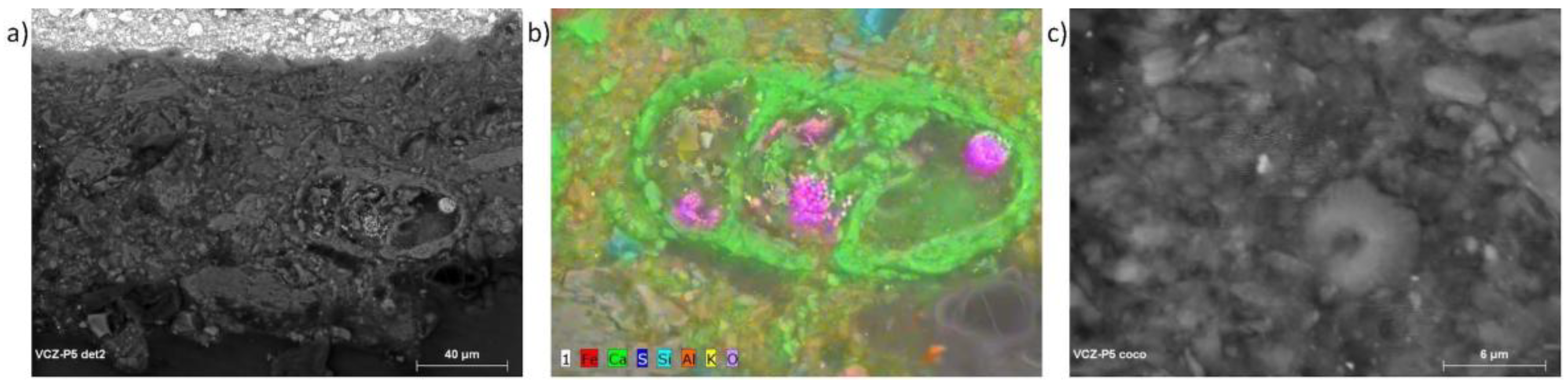
Ground and priming strategy. Both paintings exhibit a two-stage priming system. A lighter brown, coarser lower layer is overlaid by a darker, finer upper layer. SEM-BSE/EDS indicates Fe enrichment in the upper priming. Foraminifera and coccoliths occur within the priming, and pyrite (Fe–S) appears preferentially within foraminiferal chambers (OM/SEM-BSE; EDS; Figure 2), consistent with Guadalquivir riverbed sediments in the Sevillian context [17,33,34].
Painting sequence. Optical Microscopy reveals a consistent shadow-to-light build in which the darker upper priming is deliberately exploited as a value layer to model shadows, in line with Iberian treatise practice [10,11,12]. Typical paint stacks comprise one to two paint layers above the priming, with average thicknesses of approximately 40–50 µm.
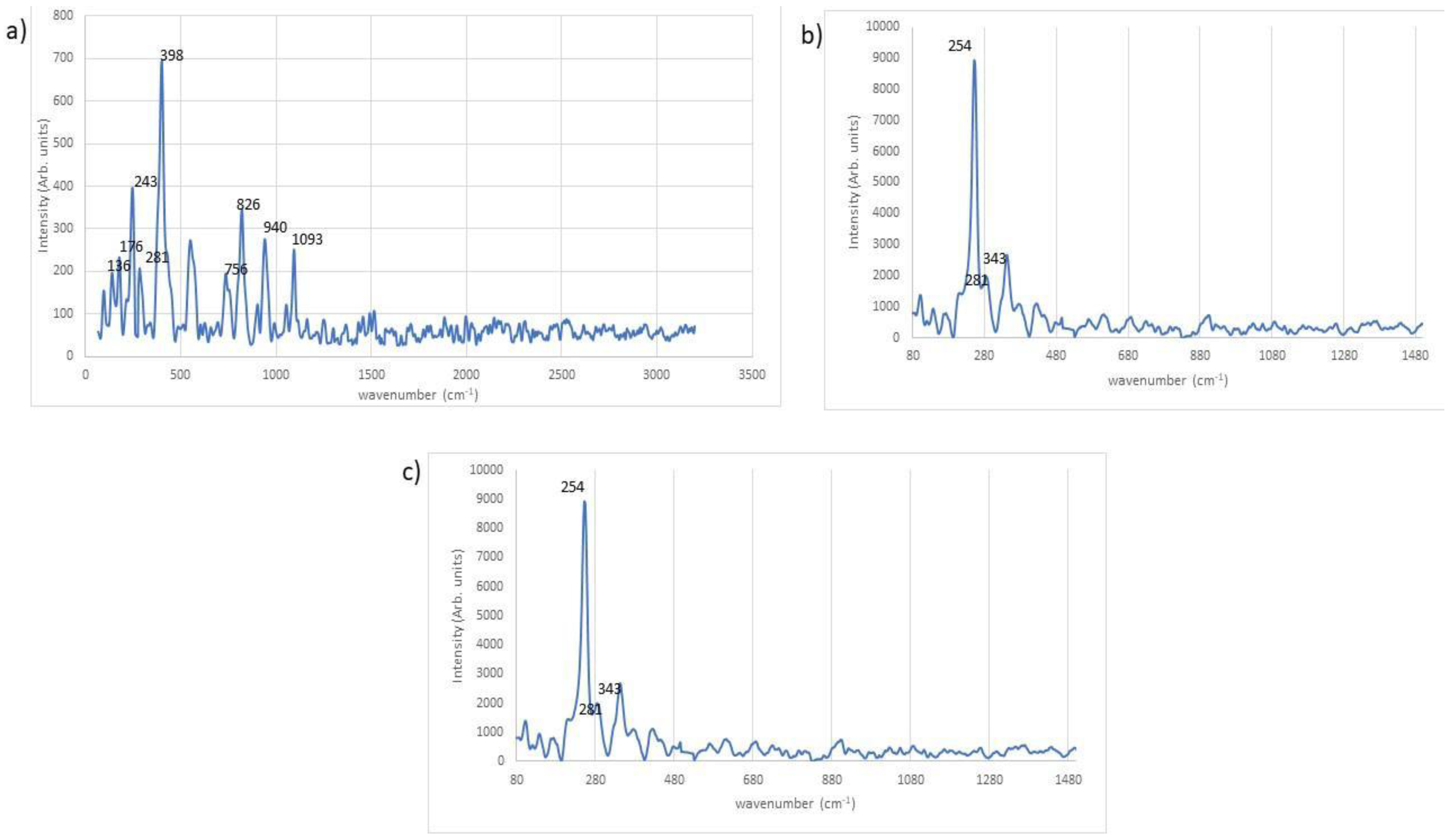
Pigment and binder system. The palette is based on a restricted but flexible set of pigments (µ-Raman; µ-FTIR; Table 1). Whites and greys rely on lead white matrices, with greys modulated by minor carbon black and earths [14]. Blues are composed of azurite and lead white in varied ratios. Reds and oranges employ vermilion (cinnabar), often combined with a red lake in glazing configurations; minium is documented in P1 [4]. Browns and dark passages are built with earth pigments (ochres), with or without carbon black. Table 1 summarizes µ-Raman identifications for P1–P2, and Figure 3 illustrates representative spectra of azurite and vermilion (cinnabar) [22,23,24,25].
Later overpaints and retouchings are discernible along lateral bands and selected passages, where mismatches in priming and varnish, together with non-original chromatic sequences, are corroborated by XRF and µ-FTIR (e.g., in P1, lead white + silica + CaCO3 + gypsum; in P2, CaCO3 + lead white + silica) [16,26].

4.2. Óbidos Workshop: Genealogia da Virgem (P3, Baltazar) and Sagrada Família (P4, Josefa)

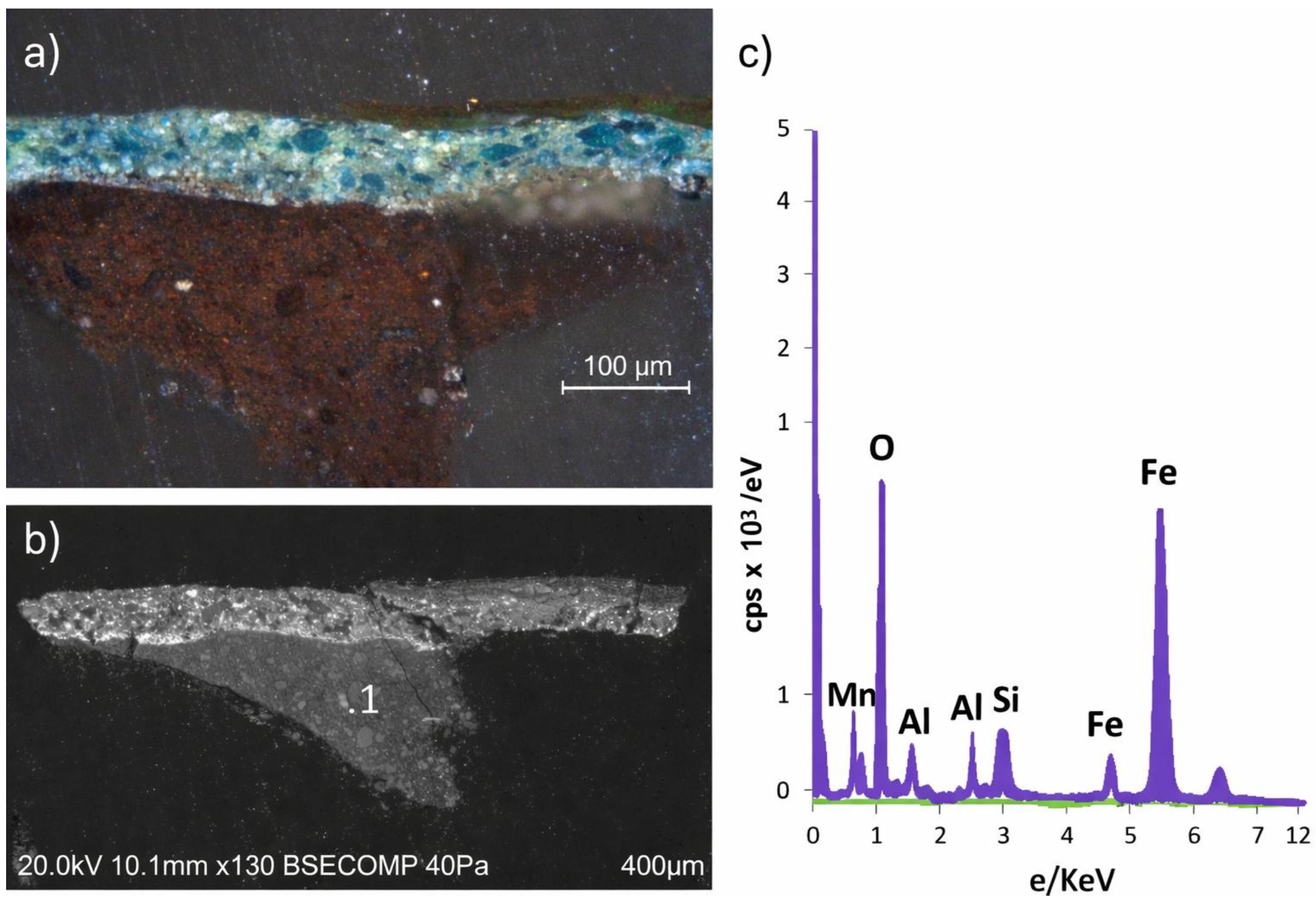
Ground and priming strategy and materials. As in P1–P2, both Portuguese paintings use a two-stage priming whose finer upper layer is actively used to deepen shadows. However, the composition of these primings differs. SEM-BSE/EDS indicates matrices rich in Mn, Fe, Al, and Si, with minor Ca; pyrite and biogenic CaCO3 microfossils were not detected, in contrast to P1–P2, suggesting different raw-material sources (Figure 4) [17,35].
µ-FTIR frequently reveals oxalates and wax within these primings, consistent with the wax-relining histories previously noted (§2) [30,31,32]. This reinforces the distinction between a shared method (two-layer priming used for modelling shadows) and distinct, regionally sourced materials.
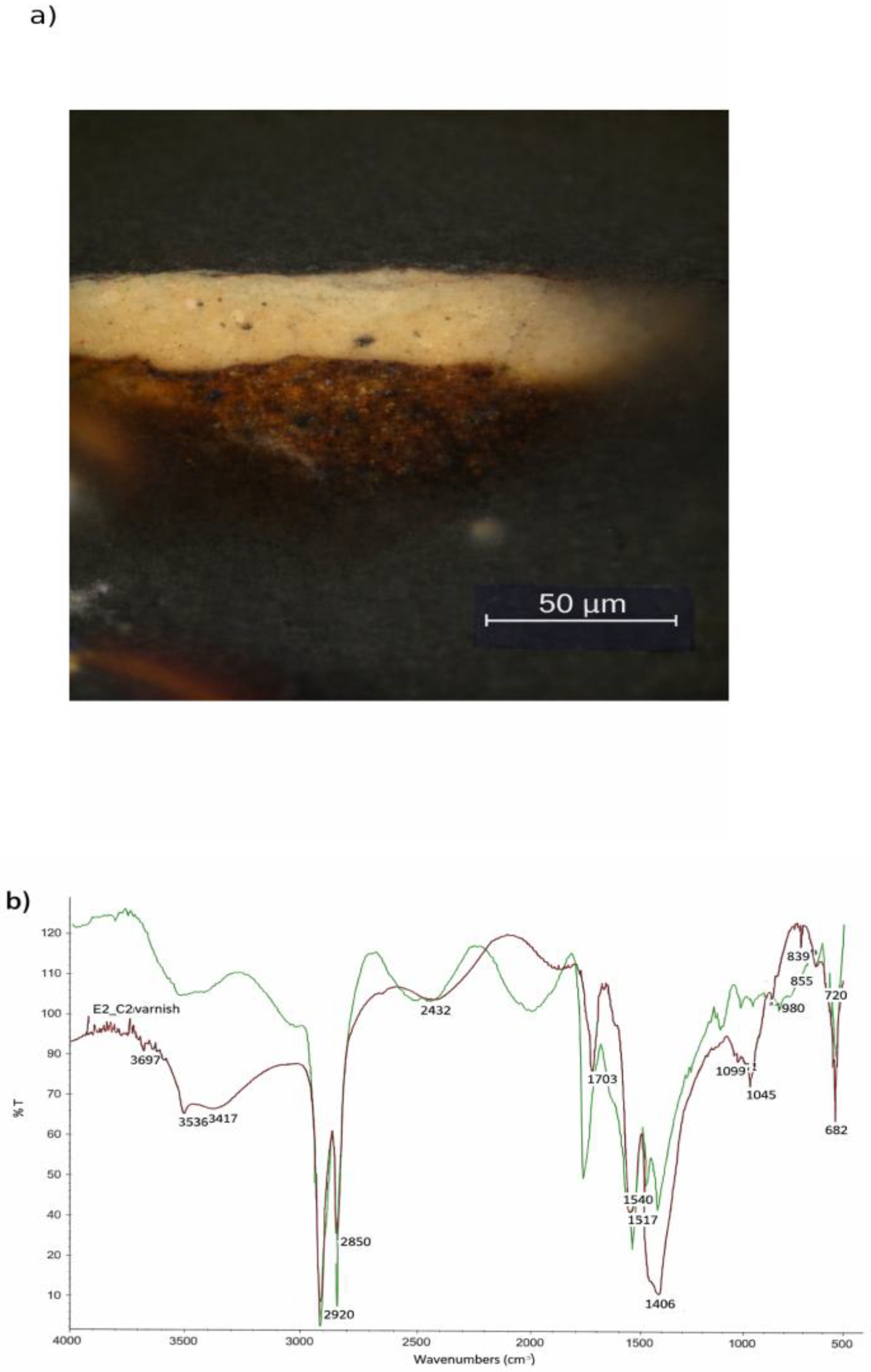
Pigments and mixtures. The main pigment system in P3–P4 broadly overlaps with that of the Sevillian works, with some noteworthy emphases (Table 2, Table 3 and Table 4). Whites and greys are built on lead white matrices (µ-Raman/µ-FTIR); greys include carbon black and goethite or other earths, and plumbonacrite is identified in some white/blue mixtures (µ-Raman). Carnations combine cerussite-rich lights with traces of vermilion and lead–tin yellow (Type I/II), with carbon black for shadows; µ-FTIR indicates proteinaceous sizing (likely animal glue) in the ground and drying oil in the paint layers (Table 4; Figure 5) [10,11,12].
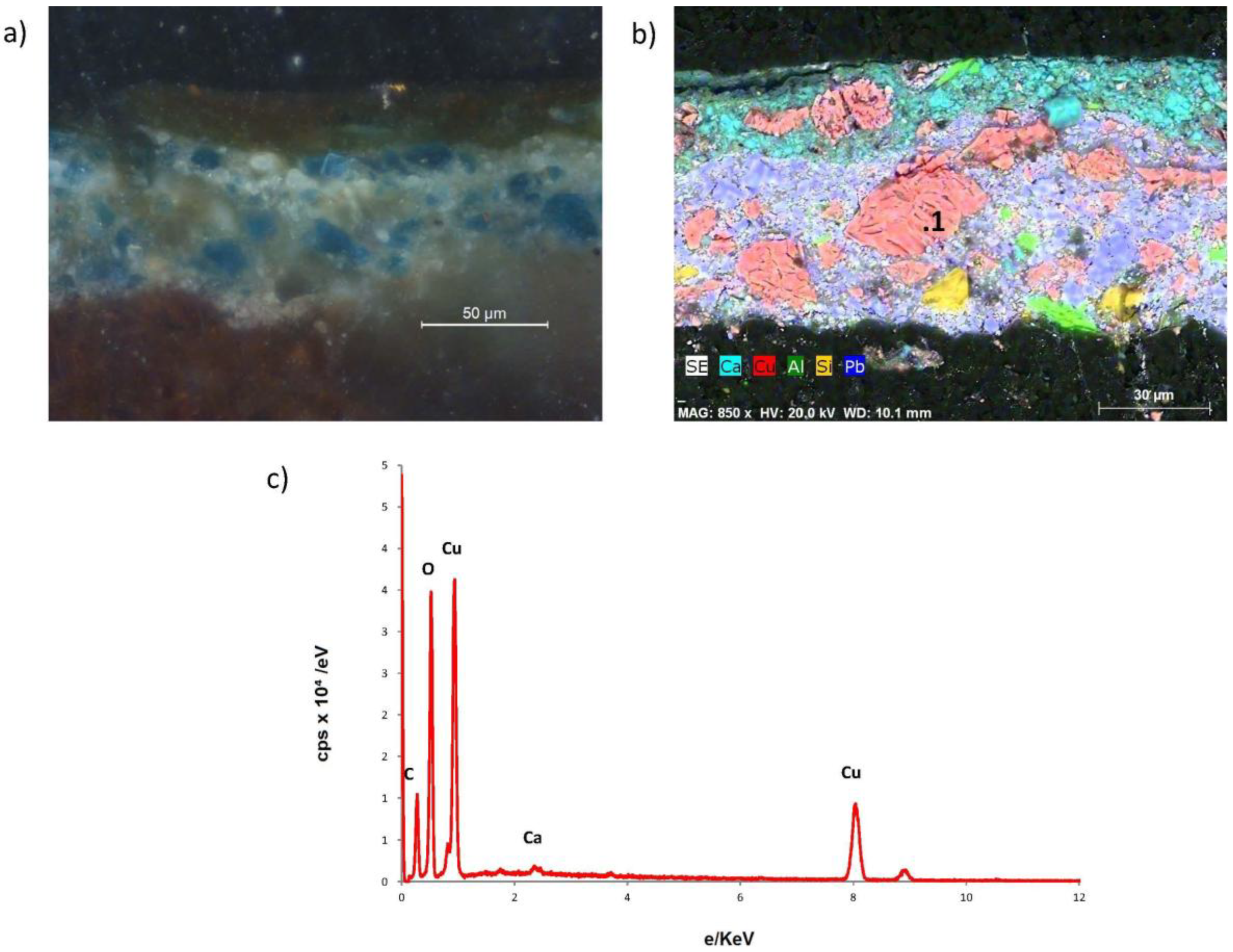
Blues are based on azurite and lead white (P3 in particular), with carbon black and occasional vermilion in shadow passages (e.g., the Virgin’s mantle border) [17]. Greens involve malachite and azurite in P3 and azurite-based greens in P4; copper carboxylates and chlorides are detected in degraded areas (µ-FTIR/µ-Raman), plausibly exacerbated by relining processes (Figure 6) [30,31,32]. Yellows comprise goethite and lead–tin yellow (Type I > II), the latter more frequent in Baltazar’s work (P3) and used more sparingly by Josefa (P4) [17]. Reds and oranges employ vermilion (cinnabar), often combined with a red lake as a glaze over vermilion, and minium [17].
Spot-level XRF and µ-Raman results for P3 are synthesized in Table 3, and layer-specific µ-FTIR assignments are shown in Table 4. Together, these datasets document the systematic use of azurite–lead white mixtures, selective lead–tin yellow for highlights, and complex interactions between original paints and later relining/varnish interventions.

5. Comparative Discussion

The strongest correspondences between the four paintings concern method. Across the corpus, we observe a two-layer priming in which the finer, Fe-richer upper layer is deliberately used to construct shadows, functioning as a value layer [13,15,17]. This is paired with a consistent shadow-to-light sequence that economizes pigments—lead white matrices subtly modulated by low-dose colorants and/or carbon black—while heightening tenebrist contrasts [10,11,12]. Recurrent colour mixtures appear in the Sevillian and Óbidos paintings alike, notably azurite with lead white for blues, lead white with or without earths or carbon black for greys, selective lead–tin yellow for highlights, and vermilion combined with a red lake in red glazes [4,14,17].
The main divergences relate to priming composition and alteration histories. In P1–P2, the primings incorporate biogenic CaCO3 with pyrite infilling foraminifera, while the Óbidos works (P3–P4) employ Fe/Mn/Al/Si-rich earths without microfossils or pyrite [17,33,34,35]. Wax-relining residues and oxalates documented in P3–P4 complicate FTIR readings of binders and affect the optical behaviour at the surface [30,31,32]. These differences point to distinct raw-material sources and subsequent conservation histories, rather than to fundamentally different technical philosophies.
When considered alongside technical studies of other seventeenth-century Spanish and Portuguese painters [13,14,15,17,35], the patterns observed here appear broadly consistent with workshop practices that were widely shared across European painting traditions of the period and described in Iberian art-technological sources [10,11,12]. In this context, the similarities between the materials and stratigraphic organization observed in the works attributed to Zurbarán and those from the Óbidos workshop should not necessarily be interpreted as evidence of a distinct “western Iberian” technical cluster or of direct interpersonal transmission. Rather, they may reflect the adoption of a broadly shared methodological framework for ground preparation and paint handling that circulated widely in seventeenth-century artistic practice.
Within this broader framework, the Sevillian model remains a relevant point of reference, as several of the structural and material features documented here correspond closely to those identified in paintings associated with Sevillian workshops, while differing in some respects from contemporary northern European panel painting or fresco traditions. At the same time, local material choices—particularly in the formulation of earth-based primings—suggest adaptation to regional supply networks and workshop preferences. The present case study therefore supports interpreting the Óbidos painters as working within a widely shared technical tradition that was locally adapted, rather than simply reproducing a Sevillian model in a strictly imitative sense.

6. Conclusions, Conservation Relevance, and Limitations

Within a deliberately limited corpus (n = 4), this multi-analytical comparison reveals convergent working methods across Zurbarán and the Óbidos workshop, particularly in the construction and use of priming layers and in the management of light and shadow. In all four paintings, a two-stage priming is present, with a finer, Fe-richer upper layer actively exploited as a value layer for shadow modelling. This practice aligns with treatise prescriptions and with recent technical studies of other Spanish and Portuguese canvases, reinforcing the centrality of ground and priming design in Golden Age pictorial strategy [10,11,13,15,17].
At the same time, compositional differences in the primings—biogenic CaCO3 with pyrite-bearing foraminifera in the Sevillian works versus Fe/Mn/Al/Si-rich earths without microfossils or pyrite in the Óbidos paintings—point to distinct raw-material bases tied to local geological and commercial contexts [17,33,34,35]. These divergences do not undermine the shared method; rather, they suggest a flexible adaptation of a common technical framework to regionally available resources. In this sense, the Óbidos workshop appears less as a peripheral imitator and more as a participating node in a wider Iberian economy of materials and techniques.
The palette and layering strategies documented here further support this reading. The recurrent use of azurite–lead white mixtures, restrained greys based on lead white with modest additions of earths and carbon black, selective lead–tin yellow for highlights, and vermilion combined with red lakes for saturated reds is consistent with both the technical literature on Spanish Baroque painting and emerging data on Portuguese contemporaries [4,9,13,14,17]. These overlaps do not constitute a unique “signature” of Zurbarán’s influence but rather delineate a constellation of shared workshop habits that frame the Óbidos painters within a network of contemporaneous practitioners.
From an art-historical perspective, the present findings nuance the notion of Zurbarán’s “influence” on the Óbidos workshop. They suggest that the affinity between Zurbarán, Baltazar Gomes Figueira, and Josefa d’Óbidos is grounded less in the replication of specific recipes and more in the appropriation of a common technical grammar—two-layer primings exploited for tenebrist modelling, economical shadow-to-light sequences, and a restrained but versatile palette—adapted to local devotional demands and to the workshop’s own aesthetic priorities. In this respect, our results complement earlier stylistic analyses [5,6,7,8] by showing how such affinities manifest at the level of stratigraphy and material practice.
Conservation relevance. From a conservation standpoint, the combined use of XRF, OM, SEM-BSE/EDS, µ-Raman and µ-FTIR has (i) confirmed non-original side-band overpaints and yellowed natural varnish versus original paint, (ii) discriminated original Fe-rich shadow modelling from later dark overpaints, and (iii) documented wax-relining intrusions (oxalates and wax detected by µ-FTIR), thereby informing treatment options and risk assessment. The recognition that upper priming layers function as active value strata has direct implications for cleaning strategies and thresholds, particularly in areas where these layers emerge at the surface or have been partially exposed by past interventions.
Limitations and future work. The dataset is necessarily small, and any conclusions must be considered indicative. Future work will expand the corpus to include additional Óbidos workshop paintings and a broader range of Sevillian comparanda [5,6,7,8,9,17], extend non-invasive mapping (macro-XRF and reflectance imaging spectroscopy) to minimize sampling, and pursue more targeted binder and varnish stratigraphy (e.g., µ-FTIR-FPA on cross-sections and GC-MS on selected residues where ethically justified) [28,30,31,32]. Integrating these data with parallel studies on other Iberian workshops will allow a more systematic assessment of regional and workshop-specific patterns, refining our understanding of how technical practices articulated the artistic and devotional geographies of the seventeenth-century Iberian world.

Author Contributions

Conceptualization, V.A.; Formal analysis, S.V., A.C. (Ana Cardoso) and S.P.; Investigation, A.C. (Ana Cardoso) and M.L.C.; Resources, A.C. (António Candeias) and J.M.; Writing—original draft, V.A.; Writing—review & editing, M.L.C. All authors have read and agreed to the published version of the manuscript.

Funding

This research received no external funding.

Institutional Review Board Statement

Not applicable.

Informed Consent Statement

Not applicable.

Data Availability Statement

The original contributions presented in this study are included in the article. Further inquiries can be directed to the corresponding author.

Acknowledgments

Financial support by the Transnational Access to Research Infrastructures activity in the H2020 Programme of the EU (IPERION CH Grant Agreement No. 654028) is gratefully acknowledged through the project SINPOS: Spanish INfluences in Portuguese ÓbidosworkShop. We also acknowledge the Instituto del Patrimonio Cultural de España (IPCE, ES) for making available the archival documentation related to Zurbarán’s paintings, with special thanks to Maria Martingil, Ana Albar, María Luisa Gómez González, Carmen Vega, Miriam Bueso, Rocio Bruquetas, Manuel Blanco and Enrique Parra. We are grateful to Most Rev. Vicar Ricardo Franco at Saint Anthony Convent, Lourinhã, Portugal, and to the Museu de Évora for allowing the study of the Portuguese paintings. This work was supported by the research centre grant UID/EAT/04189/2013 and by Portuguese national funds through FCT—Fundação para a Ciência e a Tecnologia, I.P., under project UID/04189/2025 of ARTIS—Instituto de História da Arte, School of Arts and Humanities, University of Lisbon (DOI: https://doi.org/10.54499/UID/04189/2025). Support from LIBPhys-UNL was provided by FCT/MCTES/PIDDAC through research centre grant no. UID/Multi/04449/2013 to the HERCULES Laboratory. Additional support was received from PT-FIXLAB and PT-MOLAB of the E-RIHS infrastructure through Project BRIGHT: BRing the hIdden to the ligHT. The authors also wish to thank Cláudia Pereira at the Museums and Conservation Archive, LJF, MMP-EPE.

Conflicts of Interest

The authors declare no conflict of interest.

References

  1. Llaguno, G.; Junkal, M. The Textures of the Counter-Reformation. Cauriensia 2021, 16, 233–248. Available online: http://hdl.handle.net/10662/13654 (accessed on 20 January 2025).
  2. Gómez González, M.L.; Bruquetas, R.; Vicente, P. Materia, cuerpo y silencio. Proceso creativo en los zurbaranes del Monasterio de Guadalupe (Cáceres). In Zur Förderung der Kunstwissenschaftlichen Zusammenarbeit mit Spanien und Portugal; Carl Justi Vereinigung E.V.: Dresden, Germany, 2017; pp. 50–63. [Google Scholar]
  3. Wunder, A. Baroque Seville: Sacred Art in a Century of Crisis; Penn State University Press: University Park, PA, USA, 2017. [Google Scholar]
  4. Tomlinson, H.; Howard, H.; Peggie, D.; Ackroyd, P.; Carr, D. Murillo’s Christ Healing the Paralytic at the Pool of Bethesda: An introduction to the artist’s late painting technique. In Studying Old Master Paintings. Technology and Practice; Spring, M., Ed.; Archetype Publications: London, UK, 2011; pp. 173–179. [Google Scholar]
  5. Serrão, V.; Barghahn, B.; Hatherly, A.; Sobral, L. The Sacred and the Profane: Josefa de Óbidos of Portugal; Ministerio da Cultura Portugal/National Museum of Women in the Arts: Washington, DC, USA, 1997; ISBN 972758005X.
  6. Serrão, V. Josefa de Obidos e o Tempo Barroco; Instituto Português do Património Cultural, TLP: Lisboa, Portugal, 1991.
  7. Serrão, V. A ruptura com o figurino maneirista. Um renovado conceito de artista-pintor. In A Pintura Proto-Barroca em Portugal, 1612–1657; Faculdade de Letras da Universidade de Coimbra: Coimbra, Portugal, 1992; pp. 237–305. [Google Scholar]
  8. Serrão, V.; Garnot, N.; Carvalho, M.; Givaudan, A. Rouge et or: Trésors du Portugal Baroque; Gabinete das Relações Internacionais do Ministério da Cultura: Lisboa, Portugal, 2001.
  9. Antunes, V.; Candeias, A.; Mirão, J.; Pessanha, S.; Cardoso, A.; Manso, M.; Carvalho, M.L. Josefa d’ Óbidos workshop from panel to canvas. Multianalytical approach to materials and technical evolution of the most significant Portuguese painting workshop of the 17th century. J. Mol. Struct. 2019, 1188, 31–41. [Google Scholar] [CrossRef]
  10. Nunes, F.; Ventura, L. Arte da Pintura, Symmetria e Perspectiva. In Fac-Simile da Edição de 1615 Com um Estudo Introdutório de Leontina Ventura; Editorial Paisagem: Porto, Portugal, 1982; pp. 55, 56, 58–60. [Google Scholar]
  11. Véliz, Z. Artists’ Technique in Golden Age Spain: Six Treatises in Translation; Cambridge University Press: Cambridge, UK, 1986. [Google Scholar]
  12. Pacheco, F. Arte de la Pintura, su Antiguedad y Grandezas: Descríbense los Hombres Eminentes Recurso Electrónico; Fundación Histórica Tavera: Digibis: Madrid, Spain, 2000. [Google Scholar]
  13. Gayo, M.D.; Jover de Celis, M. Evolución de las preparaciones en la pintura sobre lienzo de los siglos XVI y XVII en España. Boletín del Mus. del Prado 2010, 46, 39–59. Available online: https://www.museodelprado.es/aprende/boletin/la-preparacion-de-los-lienzos-en-la-corte-de/9fab0abf-628e-31f3-a410-4076c61bcdbd (accessed on 25 March 2025).
  14. Galán, R.; Ledesma, A. La práctica del colorido al óleo en Miguel Cabrera. Estudio material de la serie de La Vida de la Virgen del Museo de América. In América en Madrid: Cultura Material, Arte e Imágenes; Alcalá, L.E., Prieto, B.N., Eds.; Vervuert Verlagsgesellschaft: Madrid, Spain, 2023; pp. 307–334. [Google Scholar]
  15. Jover de Celis, M.; Gayo, M.D. This they use in Madrid: The ground layer in paintings on canvas in 17th-century Madrid. In Making and Transforming Art. Technology and Interpretation. Proceedings of the 5th Symposium of the ICOM-CC Working Group for Art Technological Source Research, Royal Institute If Cultural Heritage (KIK-IRPA), Brussels, Belgium, 22–23 November 2012; Dubois, H., Townsend, J.H., Nadolny, J., Eyb-Green, S., Neven, S., Kroustallis, S., Neven, S., Eds.; Archetype Publications: London, UK, 2014; pp. 40–45. [Google Scholar]
  16. Križnar, A.; Ager, F.J.; Caliri, C.; Romano, F.P.; Respaldiza, M.Á.; Gómez-Morón, M.A.; Núñez, L.; Magdaleno, R. Study of two large-dimension Murillo’s paintings by means of macro X-ray fluorescence imaging, point X-ray fluorescence analysis, and stratigraphic studies. X-Ray Spectrom. 2019, 48, 482–489. [Google Scholar] [CrossRef]
  17. Galassi, S.G.; Payne, E. (Eds.) Zurbarán: Jacob and His Twelve Sons: Paintings from Auckland Castle; Centro de Estudios Europa Hispánica CEEH: Madrid, Portugal, 2017. [Google Scholar]
  18. Gerony, F.; Viguerie, L.; Boullay, C.; Gaslain, F.; Lanson, B.; Colin, C.; Michot, L.; Rollet, A.; Mériguet, G.; Jaber, M. Diving into micro- and macroscopic properties of egg-tempera paint based on Sienna pigment. Appl. Clay Sci. 2024, 249, 106612. [Google Scholar] [CrossRef]
  19. Carò, F.; Centeno, S.A.; Mahon, D. Painting with recycled materials: On the morphology of calcite pseudomorphs as evidence of the use of wood ash residues in Baroque paintings. Herit. Sci. 2018, 6, 3. [Google Scholar] [CrossRef]
  20. González, M.G. La Virgen de las Cuevas: Francisco de Zurbarán; IPCE: Madrid, Spain, 1990. [Google Scholar]
  21. González, M.G. San Hugo en el Refectorio: Francisco de Zurbarán; IPCE: Madrid, Spain, 1990. [Google Scholar]
  22. González, M. Dictionnaire des matériaux du peintre. Ge-Conservacion 2011, 2, 125–134. [Google Scholar] [CrossRef][Green Version]
  23. González, M. Painting in the Laboratory. Scientific examination for Art History and Conservation. Ge-Conservacion 2015, 8, 91–105. [Google Scholar]
  24. González, M.; Arteaga, A. The Diversity of Dyes in History and Archaeology. Ge-Conservacion 2018, 14, 56–68. [Google Scholar] [CrossRef]
  25. González, M.; Espinosa, T. Diagnóstico y metodología de restauración en la escultura policromada. Arbor 2001, 169, 457–473. [Google Scholar] [CrossRef]
  26. Baisch, U.; Camilleri, M.; Micallef, D.; Rhauderwiek, T.; Stock, N.; Spiteri, R.; Vella-Zarb, L. Crystallographic Studies in Cultural Heritage: Solid State Behaviour of Inorganic Pigments. Heritage 2019, 2, 967–975. [Google Scholar] [CrossRef]
  27. Hradil, D.; Bezdicka, P.; Hradilova, J.; Vasutova, V. Microanalysis of clay based pigments in paintings by XRD techniques. Microchem. J. 2016, 125, 10–20. [Google Scholar] [CrossRef]
  28. Wang, N.; Ling, H.; Egel, E.; Simon, S.; Rong, B. Complementary analytical methods in identifying gilding and painting techniques of ancient clay-based polychromic sculptures. Microchem. J. 2014, 114, 125–140. [Google Scholar] [CrossRef]
  29. Li, F.j.; Yang, H.-w.; Ayyamperumal, R.; Liu, Y. Evaluation of hydrophilicity and moisture adsorption characteristics of inorganic mineral pigments to sustain ancient paintings. J. King Saud Univ. Sci. 2022, 34, 102204. [Google Scholar] [CrossRef]
  30. Poli, T.; Piccirillo, A.; Zoccali, A.; Conti, C.; Nervo, M.; Chiantore, O. The role of zinc white pigment on the degradation of shellac resin in artworks. Poly Degrad. Stabil. 2014, 102, 138–144. [Google Scholar] [CrossRef]
  31. Poli, T.; Piccirillo, A.; Nervo, M.; Chiantore, O. Aging of Natural Resins in Presence of Pigments: Metal Soap and Oxalate Formation. In Metal Soaps in Art; Springer: Cham, Switzerland, 2019; pp. 141–152. [Google Scholar] [CrossRef]
  32. Eikema Hommes, M.H.; Wetering, E.; Wallert, A. Discoloration in Renaissance and Baroque Oil Paintings. Instructions for Painters, Theoretical Concepts, and Scientific Data. 2002. Available online: https://hdl.handle.net/11245/1.194612 (accessed on 23 February 2025).
  33. Rocha, F.; Pardo, A. 5th Symposium on the Atlantic Iberian Margin: Abstract Book; Universidade de Aveiro: Aveiro, Portugal, 2006; ISBN 972-789-210-8. Available online: http://id.bnportugal.gov.pt/bib/bibnacional/1701440 (accessed on 23 February 2025).
  34. Keller, M.; Macquaker, J.; Taylor, K.G.; Polya, D. Compositional controls on early diagenetic pathways in fine-grained sedimentary rocks: Implications for predicting unconventional reservoir attributes of mudstones. Am. Assoc. Pet. Geol. Bull. 2014, 98, 587–603. [Google Scholar] [CrossRef]
  35. Antunes, V.; Candeias, A.; Coroado, J.; Serrão, V.; Cachão, M.; Carvalho, M.L. A multidisciplinary approach to the study of the brightening effects of white chalk ground layers in 15th and 16th century paintings. Anal. Methods 2016, 8, 4785–4797. [Google Scholar] [CrossRef]
Figure 1. Corpus of case studies: (a) La Virgen de las Cuevas (P1), c. 1655, Museo de Bellas Artes de Sevilla, Spain; (b) San Hugo en el refectorio de los Cartujos (P2), c. 1655, Museo de Bellas Artes de Sevilla, Spain; (c) Genealogia da Virgem (P3), c. 1650/55, Convent of Saint Anthony, Lourinhã, Portugal; (d) Sagrada Família (P4), 1674, Museu de Évora, MMP, EPE, Portugal.
Applsci 16 03087 g001
Figure 2. (a) SEM–BSE micrograph of a cross-section from the Virgin’s tunic (P1), showing heterogeneous grain size in the priming layer with embedded foraminiferal fossils. (b) Composite SEM–EDS elemental map (Fe, Ca, S, Si, Al, and K) of the same area: magenta highlights Fe–S-rich domains interpreted as pyrite, while green marks Ca-rich foraminiferal tests; other hues indicate aluminosilicate phases. (c) SEM–BSE image of an individual coccolith fossil.
Applsci 16 03087 g002
Figure 3. µ-Raman spectra with labelled peaks for (a) azurite in P1 and (b,c) vermilion (cinnabar) in P2, recorded at representative spots listed in Table 1; diagnostic bands are indicated alongside each trace.
Applsci 16 03087 g003
Figure 4. (a) Optical microscopy (OM) image showing the blue of the sky and green foliage in P3. (b) SEM–BSE micrograph of the corresponding cross-section, highlighting the granular priming layer; the EDS analysis spot is marked (.1). (c) SEM–EDS spectrum at spot .1, displaying Fe, Mn, Al, Si, and Ca, consistent with an iron-rich earth (ochre).
Applsci 16 03087 g004
Figure 5. (a,b) µ-FTIR spectra showing bands attributable to lead white, proteins, and linseed oil (green trace) and to the final varnish layer (red trace).
Applsci 16 03087 g005
Figure 6. (a) OM image of the green trees and blue sky (P3); (b) SEM-BSE image of the same sample showing different grains in the blue of the sky and marking EDS analysis spot (.1); (c) EDS spectrum showing Ca, Cu, Al, Si, and Pb, consistent with azurite.
Applsci 16 03087 g006
Table 1. Pigments identified in P1 and P2 by µ-Raman spectra; diagnostic bands are listed in cm−1, with highest-intensity peaks in bold.
PaintingsPigmentsPeaks—Raman Shift (cm−1)
P2Cinnabar 254, 286, 343
P2Cerussite 1054
P1Cinnabar 254, 286–289, 343–345
P1Cerussite 1054
P1Red lake819, 1216, 1242, 1286, 1335, 1354, 1452
P1Azurite 250, 398, 825, 939, 1095, 1429
P1Cerussite 1054
Table 2. Summary of materials identified in the four case studies—canvas sizing, two-layer ground composition, principal pigments, and binding medium. “Proteinaceous sizing” denotes likely animal glue; “linseed oil (dried)” reflects µ-FTIR assignments. Minor traces are omitted for clarity; see the Methods Section for analytical details.
PaintingCanvas SizingTwo-Layer PrimingMain PigmentsMedium
P1 Proteinaceous (likely animal glue)Silicates, CaCO3, silica; minor Pb in upper layer (drier)Lead white, vermilion, minium, red lake, ochres, carbon blackLinseed oil (dried)
P2Proteinaceous (likely animal glue)Silicates, cinnabar, carbon black; gypsum tracesLead white, vermilion, minium, red lake, ochres, carbon blackLinseed oil (dried)
P3Proteinaceous (likely animal glue)Silicates, cinnabar, carbon black; gypsum tracesLead white, vermilion, minium, red lake, ochres, azurite, malachite, carbon black, lead–tin yellowOil
P4Proteinaceous (likely animal glue)Silicates, CaCO3, carbon black; gypsum tracesLead white, vermilion, minium, red lake, ochres, azurite, malachite, carbon blackOil
Table 3. XRF and µ-Raman results for P3; peak positions are reported in cm−1 (format standardized). The analysis type is indicated for each entry. Blank cells denote n.d. (not detected).
SampleColourPlaceXRFMicro-Raman Main Compounds (cm−1)
P3-1White lightGorge S.JoaquimPb, Fen.d.
P3-2White shadowGorge S.JoaquimPb, Fe, MnPlumbonacrite (312, 417, 1053), carbon black (1324.1601)
P3-3Yellow lightMantle S.JoaquimPb, Fe, SnGoethite (214.246, 314, 399, 541), cerussite (1048), carbon black (1295.1633)
P3-4Yellow shadowMantle S.JoaquimPb, Fe, Snn.d.
P3-5Light purpleTunic S.JoaquimPb, Fe, Cu, Hg, SAzurite (285, 396, 595, 763, 903, 1094) cerussite (1046), cinnabar (248, 340), gypsum (1000)
P3-6Purple shadowTunic S.JoaquimPb, Fe, Cu, Sn.d.
P3-7Carnation lightRight hand S.JoaquimPb, Fe, HgCinnabar (253, 280, 339), cerussite (1050), carbon black (1314, 1598)
P3-8Carnation shadowRight hand S.JoaquimPb, Fe, Hgn.d.
P3-9Brown lightRod S.JoaquimPb, Fe, Sn, S, HgLead–tin yellow type I (127, 193, 260, 268, 451, 545), cinnabar (250.339), gypsum (1001), cerussite (1041), carbon black (1323, 1600)
P3-10Brown shadowRod S.JoaquimPb, Fe, Sn, S, Hg
P3-11Brown lightHair S.JoaquimPb, Fe, S, Hg, MnCarbon black (1308.1592), goethite (301, 345, 453), burnt umber (229, 291, 403, 614)
P3-12Brown shadowHair S.JoaquimPb, Fe, S, Hg, Mnn.d.
P3-13Green lightRose stemPb, Fe, Cu, Sn.d.
P3-14ShadowRose stemPb, Fe, Cu, SBrochantite (383, 478, 606, 975) anhydrite (323, 1086),
carbon black (1291, 1566)
P3-15White lightVeil St. AnaPb, Fe, Cun.d.
P3-16White shadowVeil St. AnaPb, Fe, CuCarbon black (1326, 1591)
P3-17Blue lightMantle St. AnaPb, Fe, CuAzurite (276, 397, 763, 836, 1051, 1096), plumbonacrite (328, 404, 1051)
P3-18Blue shadowMantle St. AnaPb, Fe, Cu, Mnn.d.
P3-19Blue lightBodice St. AnaPb, Fe, CuAzurite (280, 517, 592, 726, 846, 950, 1099), plumbonacrite (332, 404, 456, 1051), hematite (225, 293, 409, 460, 610), cochineal (1315, 1323, 1419, 1566, 1637)
P3-20Blue shadowBodice St. AnaPb, Fe, Cu
P3-21Light purpleSkirt St. AnaPb, Fe, Mn, CuRaw sienna (300, 403, 544), goethite (251, 303, 400, 545, 571)
P3-22Purple shadowSkirt St. AnaPb, Fe, Mn, CuCarbon black (1306, 1582), hematite (227, 293, 413, 507, 615), azurite (233, 280, 328, 398, 537, 707, 833, 1096), hematite (224, 291, 408, 486, 609)
P3-23Carnation lightLeft hand St. AnaPb, Fe, HgCinnabar (254, 290, 391), cerussite (1050)
P3-24Carnation shadowLeft hand St. AnaPb, Fe, HgCarbon black (1303, 1594), cinnabar (262, 368)
P3-25Brown lightFloorPb, Fe, Ca, S, CuCalcite (278.713, 1087), gypsum (1002, 132), anhydrite (280.712, 1003, 1086, 1132), carbon black (1333, 1566)
P3-26Brown shadowFloorPb, FeGoethite (256, 314, 40, 538), hematite (221, 289, 401, 408, 494, 582), carbon black (1308, 1606)
P3-27Light greyWallPb, FeCarbon black (1318, 1606), goethite (280, 324, 383, 523)
P3-28Gray shadowWallPb, Fe, Cun.d.
P3-29Green lightBackgroundPb, Fe, CuMalachite (156, 204, 272, 378, 455, 531, 1092), goethite (209, 299, 403, 464, 563)
P3-30ShadowBackgroundPb, Fe, Cun.d.
P3-31Blue lightSkyPb, Fe, Cun.d.
P3-32Blue shadowSkyPb, Fe, CuAzurite (24, 280, 401, 761, 841, 939, 1109), plumbonacrite (267, 409, 1049), goethite (295, 391, 486)
P3-33Blue lightHousesPb, Fe, CuAzurite (238, 248, 275, 325, 400, 576, 766, 840, 936, 1005, 1094), carbon black (1318, 1633), cerussite (1050)
P3-34Blue shadowHousesPb, Fe, Cun.d.
P3-35Green lightTreePb, Fe, Cun.d.
P3-36ShadowTreeFe, Pb, Cun.d.
P3-37Blue lightCloudsPb, Fe, CuPlumbonacrite (332, 416, 1052), azurite (246, 290, 762, 836, 925, 1052, 1094), hematite (222, 294, 408, 501, 614)
P3-38Blue shadowCloudsPb, Fe, Cun.d.
P3-39Yellow lightSky haloPb, Fe, SnLead–tin yellow type I (129, 194, 274, 458), cerussite (1056)
P3-40Yellow shadowSky haloPb, Fe, Snn.d.
P3-41YellowVirgin’s halo Raw sienna (299, 400, 474, 553, 651), cerussite (1049), gypsum (1005)
P3-42Carnation lightLeft hand VirginPb, Fe, Sn, HgCinnabar (252, 284, 344), cerussite (1049), lead–tin yellow type II (150.253), carbon black (1332.1546)
P3-43Carnation shadowLeft hand VirginPb, Fe, Sn, Hgn.d.
P3-44Brown lightVirgin’s hairPb, Fe, HgCinnabar (251, 286, 345), carbon black (1303, 1595)
P3-45Brown shadowVirgin’s hairPb, Fe, Hgn.d.
P3-46Blue lightVirgin’s mantlePb, Fe, Cu, Hgn.d.
P3-47Blue shadowVirgin’s mantlePb, Fe, Cu, HgAzurite (246, 306, 546, 625, 766, 856, 1094), cinnabar (284, 241), carbon black (1307, 1613)
P3-48Red lightVirgin’s tunicPb, Fe, HgCinnabar (254, 286, 341), cerussite (1056), minium
P3-49Red shadowVirgin’s tunicPb, Hg, Fen.d.
P3-50White lightRose under VirginPb, Fe, CuCinnabar (252, 284, 342)
P3-51White shadowRose under VirginPb, Fen.d.
P3-52Brown lightAngel hair down the right side Pb, Fe, Cun.d.
P3-53Brown shadowAngel hair down the right side Pb, Fe, Cun.d.
P3-54Carnation lightAngel down the right side Pb, Fe, Hg, Cun.d.
P3-55Carnation shadowAngel down the right side Pb, Fe, Hg, Cun.d.
P3-56Light pinkAngel down the right side Pb, Fe, HgCinnabar (254, 282, 340), plumbonacrite (414, 1052)
P3-57Pink shadowAngel down the right side Pb, Fe, Hgn.d.
P3Primingn.d.Pb, Fe, HgHematite (224, 293, 409, 608), cinnabar (252, 345), carbon black (1333, 1608)
Table 4. Micro-µ-FTIR results on P3 (per layer) with diagnostic bands. (Bands: Drying oil: ester C=O: 1735–1740 cm−1; CH stretches: 2925–2855; C–O: 1240–1165. Protein (sizing): Amide I: ~1650; Amide II: ~1540 cm−1. Carbonates (calcite/cerussite/hydrocerussite): ν3: 1380–1395; ν2: 850–870 cm−1. Sulphates (gypsum/anhydrite): ν3: ~1100; ν4: ~670 cm−1. Oxalates: 1620/1320 cm−1. Metal carboxylates (soaps): asymmetric: 1510–1550; symmetric: 1400–1440 cm−1. See also Figure 5 for spectra).
SampleLayerIdentified Materials
P3-2White + varnish Hydrocerussite + kaolinite + oil + gypsum
lead carboxylates
P3-4Yellow + varnishKaolinite + quartz + gypsum (traces) + oil + protein + oxalates
P3-6Purple + varnishAzurite + hydrocerussite + carbon black
Kaolinite (traces) + oil + wax +
lead carboxylates
P3-8Varnish + carnationHydrocerussite + kaolinite + oil
Metal carboxylates
P3-14Green + varnishCalcite + cerussite + gypsum + kaolinite (traces) + oil + protein + oxalates + metal carboxylates
P3-16White + varnish Hydrocerussite + kaolinite + quartz + oil + protein + metal carboxylates
P3-18Blue + varnishAzurite + hydrocerussite + kaolinite (traces) +
lead carboxylates oil
P3-20Blue + varnishAzurite + oil + oxalates + metal carboxylates
P3-22Purple + varnishAzurite + hydrocerussite + oil +
lead carboxylates
P3-26Brown + varnishKaolinite quartz + calcite (traces) + oil + protein + oxalates + metal carboxylates
Ground/primingKaolinite + gypsum + wax + oxalates
P3-30Green + varnishGypsum + calcite (traces) + oil
Copper carboxylates + oxalates
Ground/primingKaolinite + oil + protein + oxalates
P3-31Blue + varnishAzurite + hydrocerussite + kaolinite (traces) +
lead carboxylates + oil
PreparationKaolinite + oil + oxalates
P3-36Green + varnishCalcite + gypsum + oil + copper carboxylates + oxalates
Ground/primingKaolinite + wax + oxalates
P3-38Blue + varnishAzurite + kaolinite + hydrocerussite +
calcite (traces) + oil + lead carboxylates
P3-40Light yellow + varnish Hydrocerussite + calcite + oil +
lead carboxylates
Dark yellow + varnishKaolinite + quartz + oil + metal carboxylates + oxalates
Ground/primingKaolinite + gypsum + oil + oxalates
P3-43Carnation + varnishKaolinite + hydrocerussite + calcite (traces)
Oil + protein + lead carboxylates + oxalates
P3-45Brown + varnishKaolinite + gypsum (traces) + oil + protein + oxalates
P3-47Blue + varnishAzurite + kaolinite + oil
P3-49Red + varnishKaolinite (traces) + oil + protein + oxalates
Ground/primingKaolinite + oil + protein + oxalates
P3-55Carnation + varnishAzurite + hydrocerussite + kaolinite + oil +
lead carboxylates
Ground/primingKaolinite + oil + oxalates
P3-57Pink + blue + varnishAzurite + hydrocerussite + oil +
lead carboxylates
Pink + varnishHydrocerussite + oil + protein + oxalates
Disclaimer/Publisher’s Note: The statements, opinions and data contained in all publications are solely those of the individual author(s) and contributor(s) and not of MDPI and/or the editor(s). MDPI and/or the editor(s) disclaim responsibility for any injury to people or property resulting from any ideas, methods, instructions or products referred to in the content.