1. Introduction
In contemporary orthodontics, treatment objectives have expanded beyond the correction of dental malocclusions to include facial esthetics, soft tissue balance, and overall profile harmony [
1]. Although the assessment of facial profile attractiveness is inherently subjective, objectively measurable craniofacial and skeletal characteristics have been shown to significantly influence esthetic judgments [
2,
3]. Facial esthetics, particularly facial profile harmony, have therefore become an essential component of clinical decision-making in orthodontic diagnoses and treatment planning [
4,
5]. In this context, the sagittal facial profile is regarded as one of the primary determinants of facial attractiveness, as it reflects the anteroposterior relationships among the maxilla, mandible, lips, and chin [
4,
6].
Minor deviations in lower facial proportions, particularly changes in chin projection and in the angle and depth of the mentolabial sulcus, are key determinants of facial profile attractiveness, as even millimetric modifications can markedly affect perceived harmony and self-perception [
7,
8]. Experimental profile simulations further demonstrate that mandibular advancement is associated with the highest attractiveness ratings, underscoring the esthetic relevance of sagittal mandibular positioning [
8]. Within this framework, proportional relationships between the upper lip, lower lip, and chin in the lower third of the face are recognized as critical contributors to overall facial balance and perceived attractiveness [
9,
10]. However, the perception of facial profile attractiveness is not uniform across observers. Professional training and clinical experience influence esthetic judgments, leading to significant perceptual differences among orthodontists, dentists, dental students, and laypersons [
5,
11]. Such variability may contribute to discrepancies between clinical evaluations and patient expectations, potentially affecting communication and treatment acceptance. The use of standardized visual stimuli has been recommended to enable reliable comparisons of facial esthetic perceptions. Predefined sagittal facial profile types minimize the variability related to individual facial characteristics and enable a more consistent comparison of observer responses [
4,
12]. In particular, it remains unclear which profile types are consistently perceived as attractive across different observer groups and which are subject to variation based on observer backgrounds. Although facial profile esthetics represent a critical component of contemporary orthodontic treatment planning, existing studies have largely relied on silhouette-based assessments or single observation groups, limiting clinical applicability and failing to capture discipline-dependent differences in esthetic sensitivity.
The present study aims to evaluate the perceived attractiveness of standardized sagittal facial profile types (S1–S7) and the profile range (S8) that participants desire, with a group comprising orthodontists, orthodontic Ph.D. residents, general dentists, specialist dentists, first-year and fifth-year dental students, and laypersons. In addition, this study investigates whether attractiveness evaluations differ according to observers’ educational level, professional background, age, gender, and nationality.
This study is based on the idea that its findings will contribute to a better understanding of perceptual differences in facial profile esthetics and support clinical decision-making in esthetic-oriented orthodontic treatment planning. Specifically, it was hypothesized that the straight profile (S3) would be consistently rated as the most attractive across all observer groups and that increasing orthodontic expertise would be associated with more critical and norm-oriented esthetic judgments, resulting in a greater divergence between professional and lay perceptions.
2. Materials and Methods
2.1. Population and Sample
A total of 510 individuals participated in the survey. The sample size of this study was determined based on a power analysis conducted using the G*Power 3.1 software. The analysis was performed with a significance level of α = 0.05 and a statistical power of 80% (1–β = 0.80), indicating that a minimum of 69 participants was required per group. Accordingly, each of the seven distinct groups included at least 69 individuals. Data were collected via an online survey administered between 27 June and 27 July 2025. Participants who could be reached online during this period were included. Individuals from different nationalities participated, and participants’ nationality information was recorded and evaluated as part of the demographic characteristics. One respondent was excluded due to inappropriate responses; therefore, data from 509 participants were included in the final analysis. Eligible participants were those who were residing in Northern Cyprus at the time of the data collection and who provided voluntary informed consent. The study population consisted of dental professionals, including general dentists, specialist dentists, and orthodontists, who had between 1 and 55 years of professional experience. The study population consisted of individuals aged 18–75 years, including first- and fifth-year dental students, orthodontic Ph.D. residents, general dentists, specialist dentists, orthodontists, and laypersons defined as individuals outside the dental profession with no formal dental education or training. Citizenship was not considered an eligibility criterion; Turkish Cypriots and Turkish nationals from Turkey, as well as individuals of other nationalities, were included, provided that they met the residency requirement. Participants represented diverse nationalities, and nationality data were recorded and analyzed as part of the demographic characteristics. To address the study objectives across different levels of professional training and public perception, both dental and non-dental observers were included. Exclusion criteria comprised self-reported neurological disorders, recent use of substances that could impair cognitive function, ocular or eyelid anomalies, severe visual impairment, and the use of photochromic lenses.
2.2. Method
This study aims to evaluate facial profile preferences among orthodontists, orthodontic Ph.D. residents, general dentists, specialist dentists, first-year and fifth-year dental students, and laypersons by assessing the effect of different skeletal malocclusion patterns on perceived facial esthetics and to identify potential discrepancies between professional esthetic judgments and patient expectations. The standardized profile photograph used for the digital modification was obtained from a female volunteer who was 22 years and 8 months old, following approval from the Cyprus Health and Social Sciences University Ethics Committee. The volunteer exhibited a skeletal Class I pattern. Skeletal measurements indicated that both jaws were positioned within normal limits (SNA 81.4°, SNB 76.7, and ANB 4.6) with a convex soft tissue profile (G′–Sn–Pog′ = 109°). The vertical growth pattern was normal, with SN–GoGn and FMA values within the normal range (SN–GoGn 36.4°, FMA (27°)). The nasolabial angle was also within normal limits (109°). A cephalometric analysis demonstrated dental and soft tissue measurements within normal and acceptable limits for the presented case. Maxillary incisor values (U1–SN = 97.2°, U1–NA = 15.8°/5.0 mm) and mandibular incisor values (IMPA = 102°, L1–NB = 36.9°/7.0 mm) were within acceptable ranges for the case and maintained a balanced interincisal angle (123°). Soft tissue measurements revealed a balanced lip position relative to the E-line (upper lip = −1 mm; lower lip = +1 mm), consistent with an esthetically acceptable facial profile. Dental measurements demonstrated an Angle Class I occlusal relationship and were within normal limits for the presented case (U1–SN = 97.2°, U1–NA = 15.8°/5.0 mm; IMPA = 102°; L1–NB = 36.9°/7.0 mm). The soft tissue evaluation revealed an esthetically balanced profile with a mildly convex facial contour (G′–Sn–Pog′ = 109°). Morphological measurements established the mandibular length (Co–Gn = 107 mm), ramus height (Co–Go = 41 mm), and maxillary length (Co–A = 82 mm), reflecting proportional maxillomandibular dimensions.
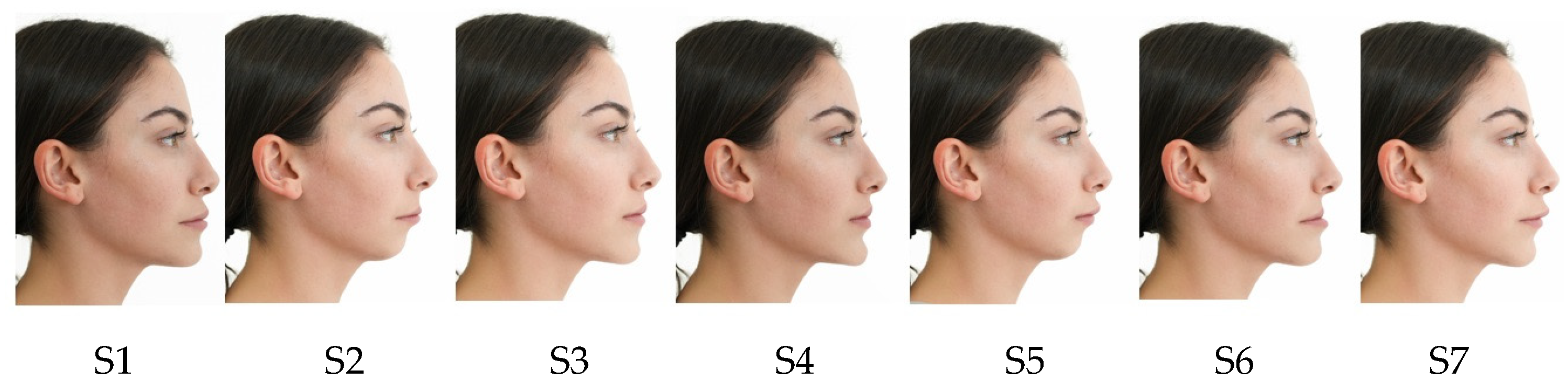
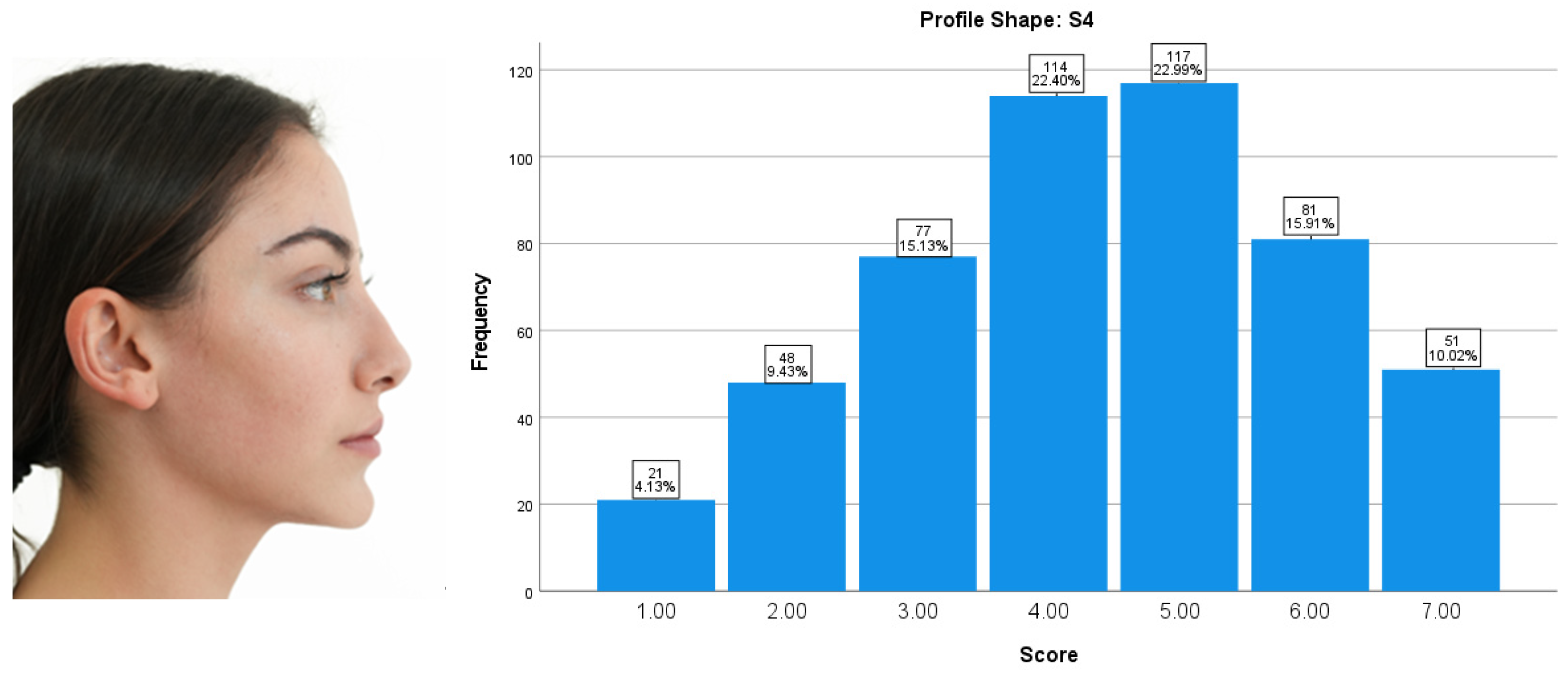
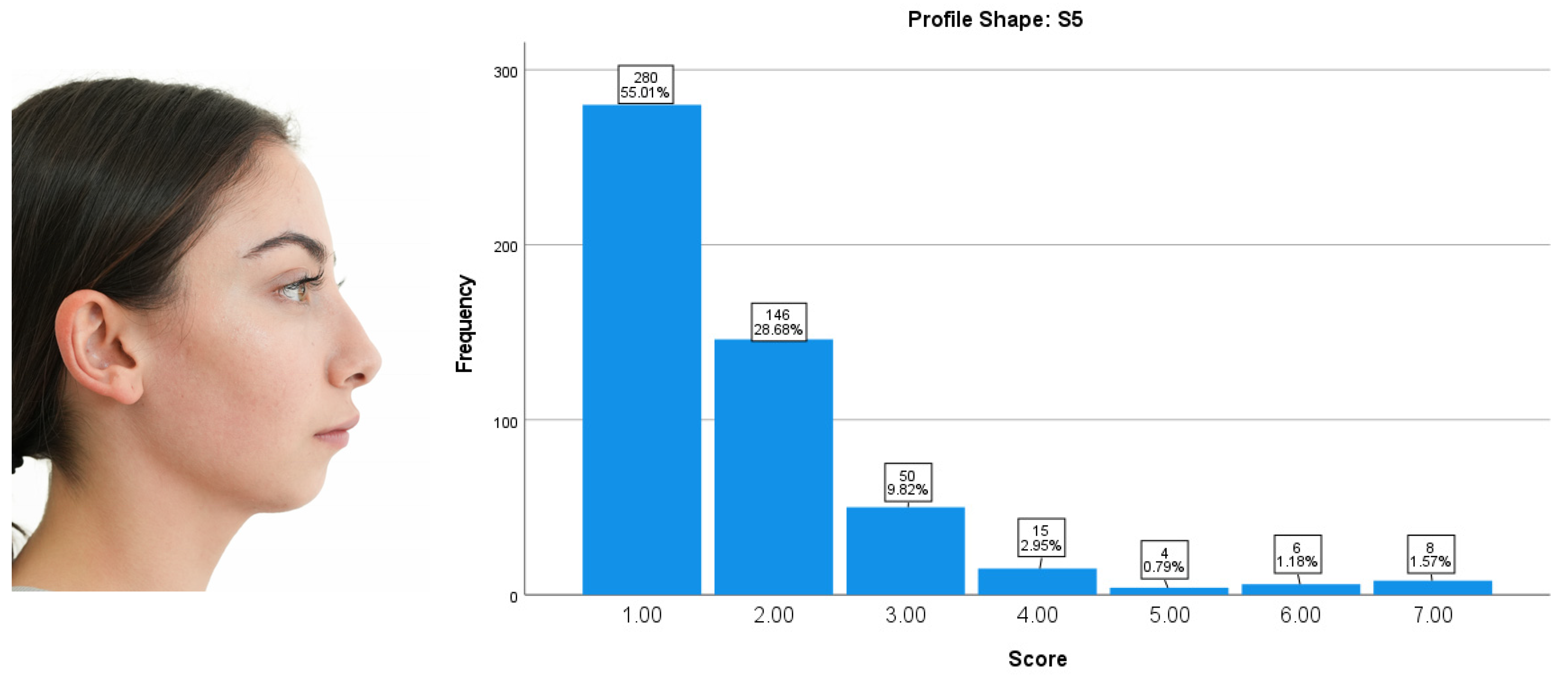
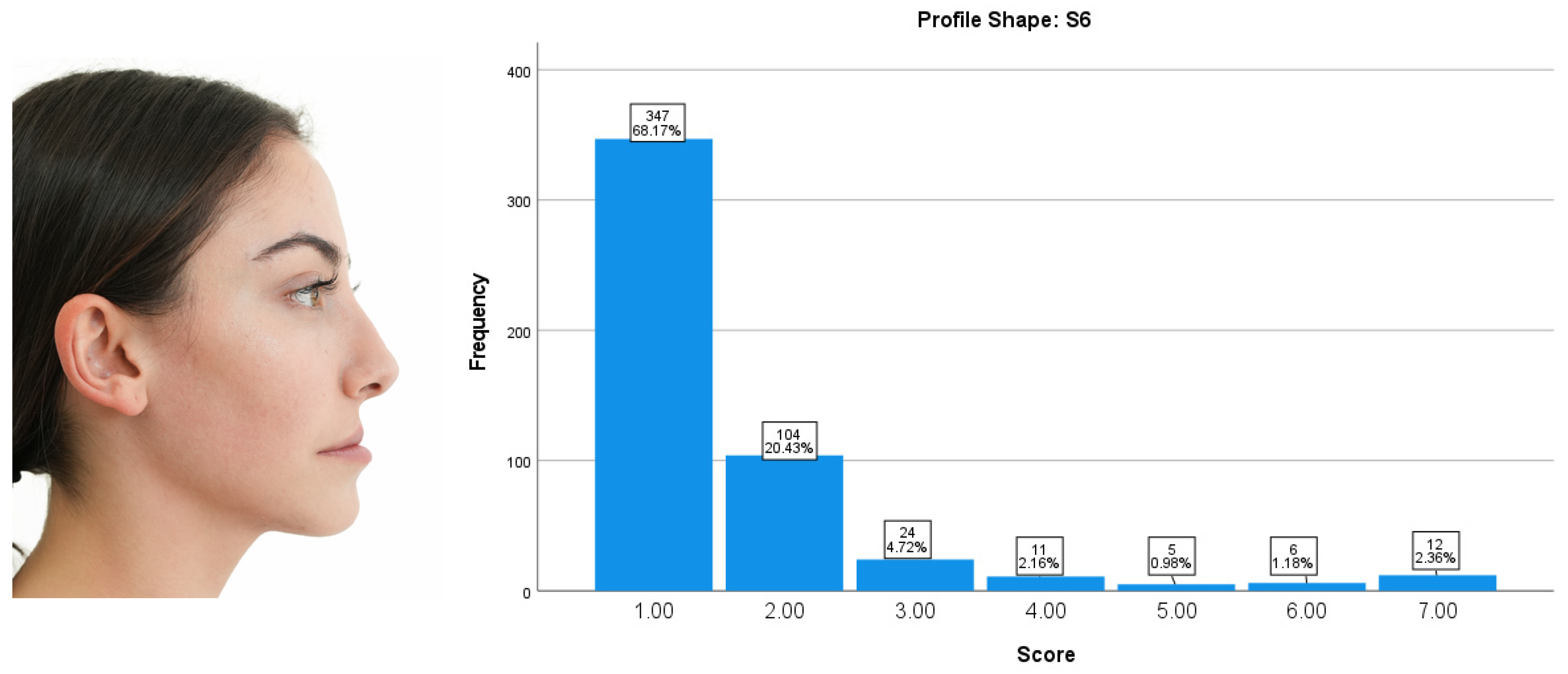
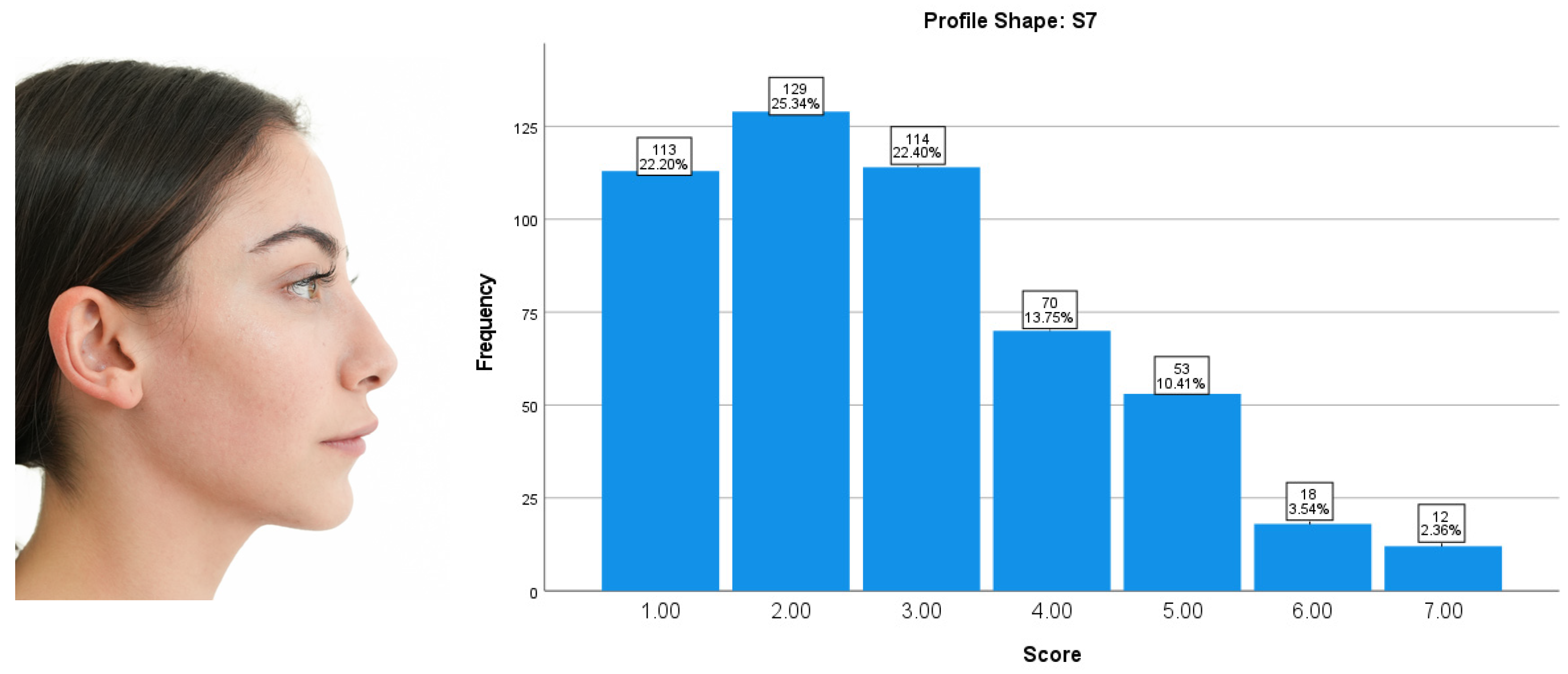
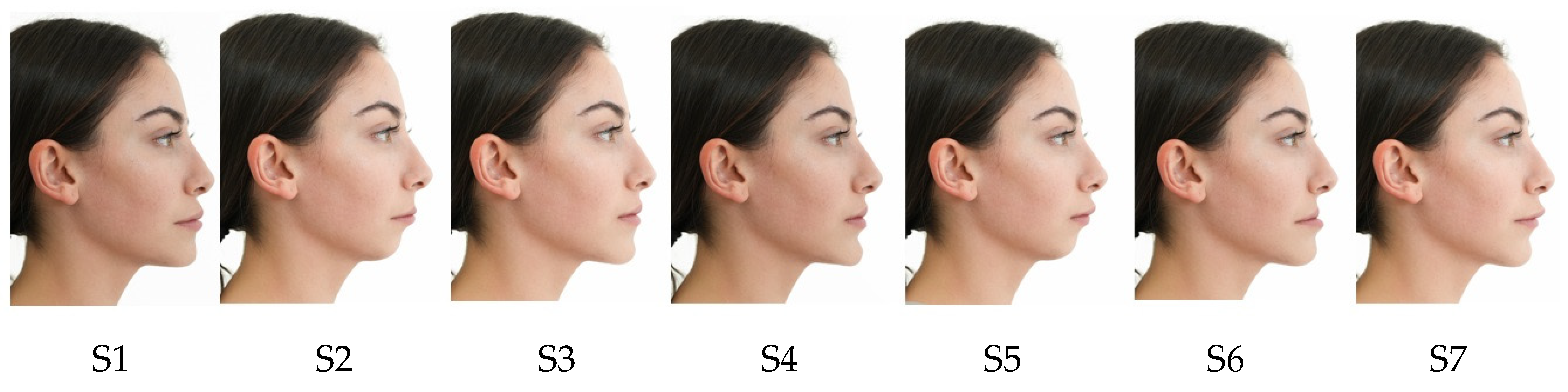
The volunteer participant had no clinically significant facial asymmetry and no scars, tattoos, or piercings. Photographs were captured in a professional studio using a Nikon D3200 SL-102C camera, with a natural head position maintained, the Frankfort horizontal plane oriented parallel to the ground, lips at rest, and teeth in maximum intercuspation. The original profile image was subsequently modified using Adobe Photoshop CC 2024 (Version 25.0) to create seven malocclusion-based facial profile types: mandibular prognathism, maxillary protrusion, maxillary retrusion, bimaxillary retrusion, mandibular retrognathism, straight profile, and bimaxillary protrusion. Participants rated seven malocclusion-based facial profile silhouettes (S1–S7) using a 1–7 visual analog scale (VAS), on which 1 represented the “least attractive” and 7 the “most attractive” profile. The profiles consisted of the following types: S1, bimaxillary protrusion (maxilla and mandible forward); S2, bimaxillary retrusion (maxilla and mandible backward); S3, straight profile; S4, mandibular prognathism (mandible forward); S5, mandibular retrognathism (mandible backward); S6, maxillary retrusion (maxilla backward); and S7, maxillary protrusion (maxilla forward) (
Figure 1). Additionally, participants were asked to select the profile that they ideally preferred (S8).
2.3. Data Collection
Data were collected electronically via Google Forms. Ethical approval for this study was granted by the Ethics Committee of the researchers’ university (this study has been reviewed and approved under registration number KSTU/2024/366 during a commission meeting held on 12 February 2025). Permission to distribute the survey was obtained from the Turkish Cypriot Dental Association and the Turkish Orthodontic Society; the latter disseminated an authorization email to its members (official letter dated 6 March 2025, No: TOD-25-032). All approvals were obtained before data collection, and no ethical concerns were reported by the respective institutions.
2.4. Data Analysis
All statistical analyses were performed using the Statistical Package for Social Sciences (SPSS) version 27. Descriptive data related to the general characteristics of the participants were summarized using frequency tables and presented as counts (n) and percentages (%). The scores for facial shape items (S1–S7) and responses to items S8 were examined across categories of all independent variables and reported using the mean (M), standard deviation (SD), median (Med.), and interquartile range (IQR; Q1–Q3). To determine the appropriate statistical tests for hypothesis testing, data normality was assessed using the Kolmogorov–Smirnov and Shapiro–Wilk tests, and the homogeneity of variances was evaluated using Levene’s test. As the data did not meet the assumptions required for parametric analyses, non-parametric statistical tests were subsequently applied. For independent variables with two categories, the Mann–Whitney U test was used, whereas the Kruskal–Wallis test was employed for comparisons involving more than two independent groups. When a statistically significant difference was identified, pairwise comparisons were conducted to determine the source of the difference.
3. Results
3.1. Distribution of Participants According to Their Sociodemographic Features
A total of 510 individuals participated in the survey. One participant was excluded due to inappropriate responses, and the data collected from 509 participants were analyzed. A total of 62.9% (n = 320) of the participants were female, and 37.1% (n = 189) were male. Regarding marital status, 32.4% (n = 165) of the participants were married, while 67.6% (n = 344) were single. When categorized by age, 32.2% (n = 164) were aged 25 years or younger, 47.2% (n = 240) were between 26 and 34 years, and 20.6% (n = 105) were 35 years or older. In terms of educational attainment, 42.4% (n = 216) had completed a high school degree or below, 29.9% (n = 152) held a university degree, and 27.7% (n = 141) possessed doctoral-level education or higher. Participants were classified into seven occupational subgroups: 14.5% (n = 74) were first-year dental students, 13.6% (n = 69) were fifth-year dental students, 15.5% (n = 79) were general dentists, 13.6% (n = 69) were specialist dentists, 13.8% (n = 70) were orthodontic Ph.D. students, 13.6% (n = 69) were orthodontists, and 15.5% (n = 79) were individuals outside the dental profession. The nationality distribution revealed that 38.1% (n = 194) were citizens of North Cyprus, 54.4% (n = 277) were citizens of the Republic of Turkey, and 7.5% (n = 38) were citizens of other countries. In regard to the participants’ birthplace, 33.2% (n = 169) were born in TRNC, 57.0% (n = 290) were born in Turkey, and 9.8% (n = 50) were born in other countries. With regard to nationality, among the 509 participants included in the analysis, 277 individuals (54.4%) were citizens of Turkey, and 194 individuals (38.1%) were citizens of Northern Cyprus. The remaining participants represented a diverse range of nationalities, including Iran (n = 15; 2.9%); Azerbaijan (n = 4; 0.8%); Syria (n = 4; 0.8%); Palestine (n = 3; 0.6%); Germany (n = 2; 0.4%); and one participant each (0.2%) from Belarus, the United Kingdom, Bulgaria, Morocco, Lebanon, Libya, Uzbekistan, Sudan, Tunisia, and Saudi Arabia. These data reflect the multinational composition of the resident population in this study (
Table 1).
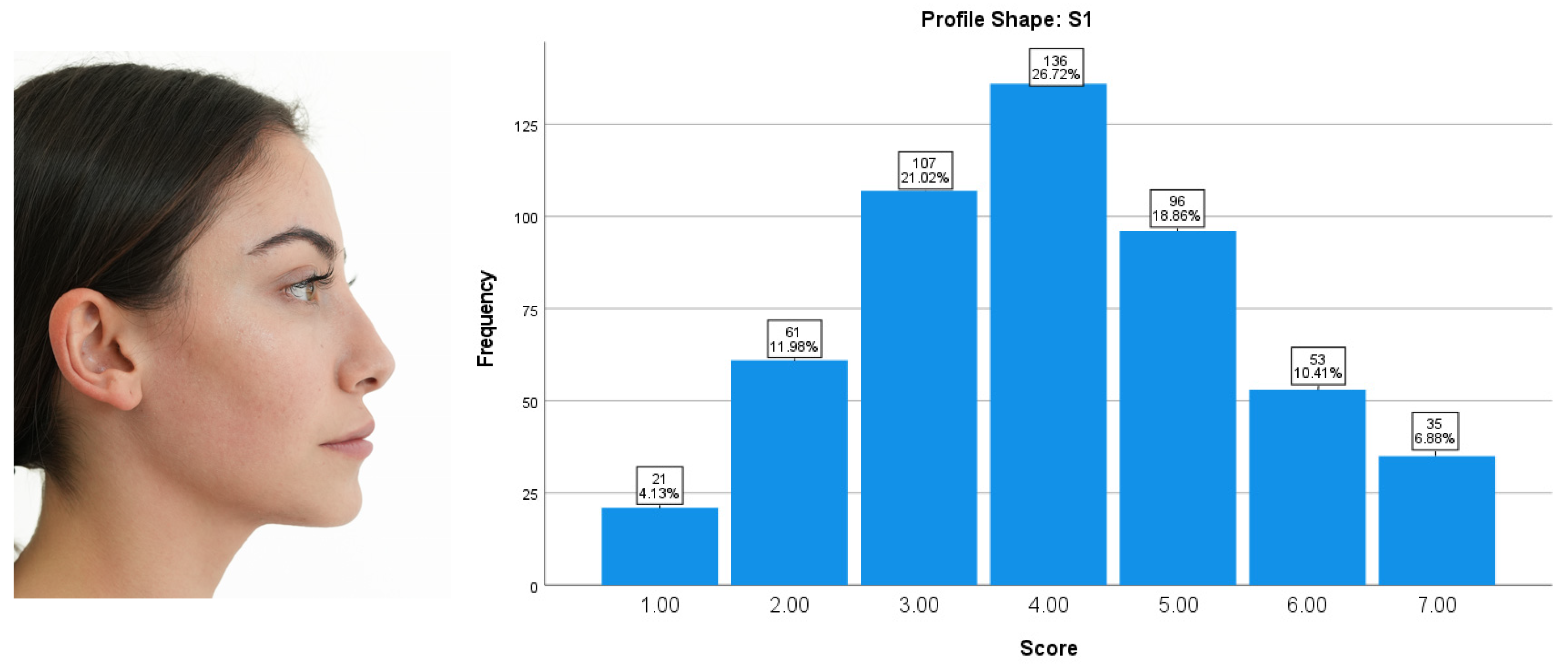
Across all participants, ratings of the seven facial profile silhouettes (S1–S7), as well as the self-identified and desired profiles, showed a generally balanced distribution, with most evaluations concentrated within the low to moderate attractiveness range.
The participants’ ratings were predominantly clustered around the mid-range attractiveness scores (3–5). A score of 4 was the most frequently assigned value (26.7%), followed by scores of 3 (21.0%) and 5 (18.9%). Lower (1–2) and higher (6–7) attractiveness scores were reported less frequently. Overall, facial profile silhouettes were perceived as moderately attractive, indicating a tendency toward balanced and non-extreme esthetic evaluations (
Figure 2).
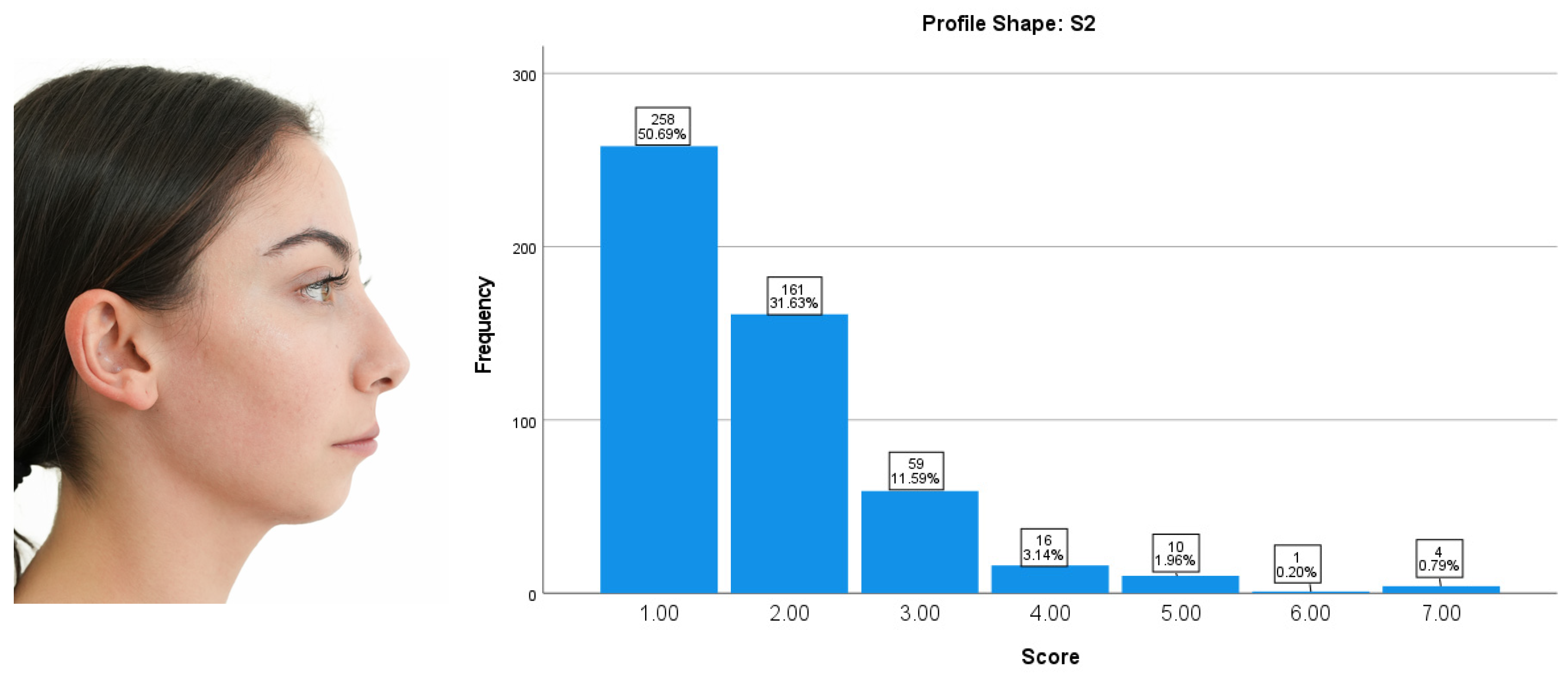
The participants’ ratings for Profile Shape S2 were predominantly concentrated at the lower end of the attractiveness scale. A score of 1 was the most frequently assigned value (50.69%), followed by 2 (31.63%). Mid-range attractiveness scores (3–5) accounted for a small proportion of responses, while higher scores (6–7) were rarely assigned. Overall, Profile Shape S2 was perceived as unattractive, indicating a consistent tendency toward negative aesthetic evaluations (
Figure 3).
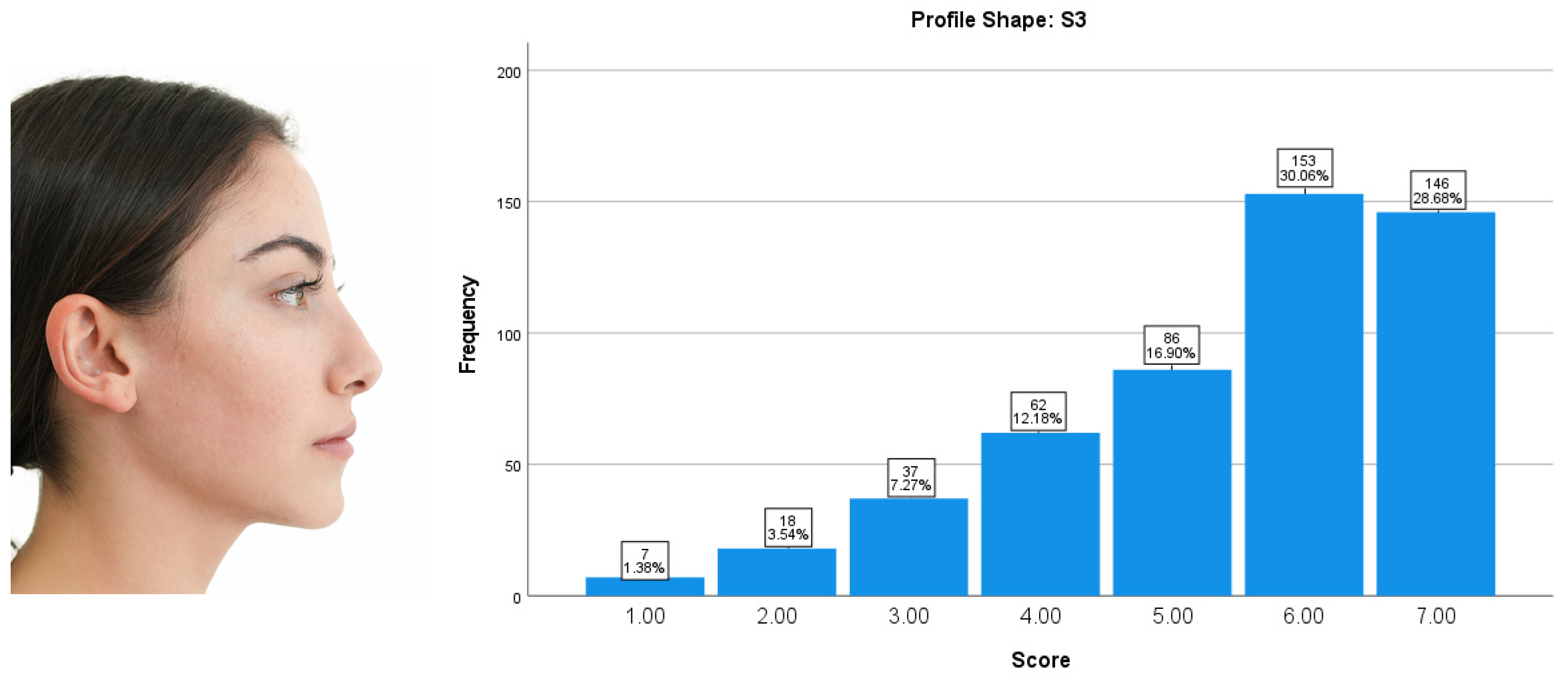
The participants’ ratings for Profile Shape S3 were predominantly concentrated within the high attractiveness range. A score of 6 was the most frequently assigned value (30.06%), followed closely by 7 (28.68%). Together, high attractiveness scores (6–7) accounted for 58.74% of all responses. Moderate attractiveness scores (3–5) represented 36.35% of the evaluations, while low attractiveness scores (1–2) were rarely assigned (4.92%). Overall, Profile Shape S3 was perceived as highly attractive, indicating a clear and consistent positive aesthetic evaluation among participants (
Figure 4).
The participants’ ratings for Profile Shape S4 were predominantly clustered within the mid-range attractiveness scores. A score of 5 was the most frequently assigned value (22.99%), followed closely by 4 (22.40%). Overall, moderate attractiveness scores (3–5) accounted for 60.52% of all responses. Lower attractiveness scores (1–2) represented 13.56% of the evaluations, while higher scores (6–7) accounted for 25.93%. Overall, Profile Shape S4 was perceived as moderately attractive, reflecting a balanced and neutral esthetic evaluation without strong positive or negative judgments (
Figure 5).
The participants’ ratings for Profile Shape S5 were predominantly concentrated within the low attractiveness range. A score of 1 was the most frequently assigned value (55.01%), followed by 2 (28.68%). Together, low attractiveness scores (1–2) accounted for 83.69% of all responses. Moderate attractiveness scores (3–4) were infrequently assigned, while high attractiveness scores (5–7) were rarely selected, representing only 2.74% of the evaluations.
Overall, Profile Shape S5 was perceived as highly unattractive, indicating a strong and consistent negative aesthetic evaluation among participants (
Figure 6).
The participants’ ratings for Profile Shape S6 were predominantly concentrated within the low attractiveness range. A score of 1 was the most frequently assigned value (68.17%), followed by 2 (20.43%). Overall, low attractiveness scores (1–2) accounted for 88.60% of all responses.
Moderate attractiveness scores (3–4) were rarely assigned, together representing 6.88% of the evaluations, while high attractiveness scores (5–7) accounted for only 4.50%. Overall, Profile Shape S6 was perceived as unattractive, reflecting a strong and consistent negative aesthetic evaluation among participants (
Figure 7).
The participants’ ratings for Profile Shape S7 were mainly concentrated within the low attractiveness range. A score of 2 was the most frequently assigned value (25.34%), followed by 1 (22.20%) and 3 (22.40%). Together, these scores accounted for 69.94% of all responses. Moderate attractiveness scores (4–5) represented 24.16% of the evaluations, while high attractiveness scores (6–7) were rarely assigned, accounting for only 5.90% of responses. Overall, Profile Shape S7 was perceived as unattractive, indicating a general tendency toward a negative aesthetic evaluation among participants (
Figure 8 and
Figure 9).
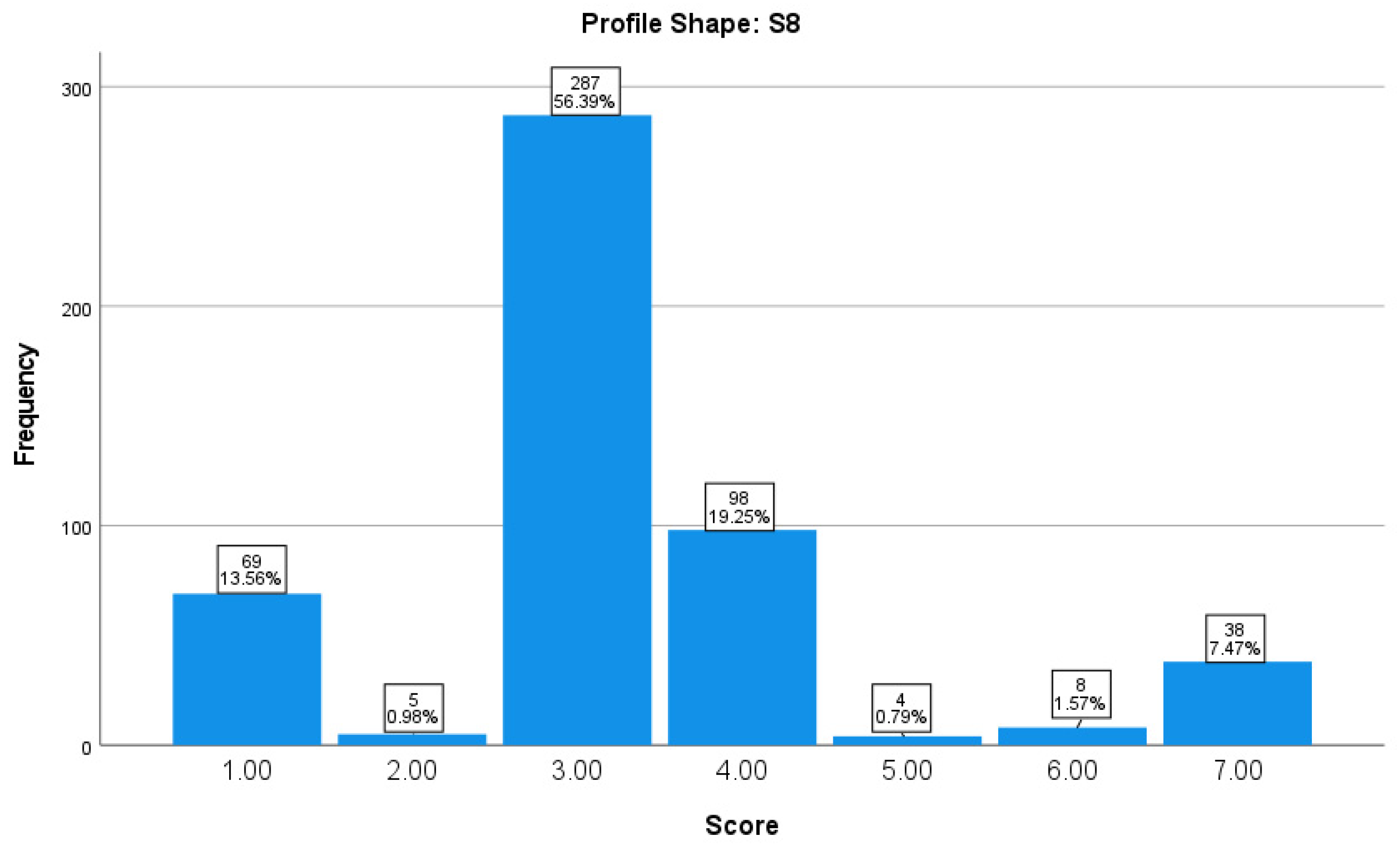
The majority of participants expressed a preference for possessing Profile Shape S3. More than half of the participants (56.4%) selected S3, making it the most preferred profile by a wide margin. This was followed by Profile Shape S4 (19.3%) and Profile Shape S1 (13.6%). All remaining profiles were preferred at much lower rates. Overall, these findings indicate that Profile Shape S3 was perceived as the most aesthetically desirable profile. The strong preference for S3 suggests that this profile best reflects participants’ perceptions of facial harmony and attractiveness.
Across all participants, ratings of the seven facial profile silhouettes (S1–S7), as well as the self-identified and desired profiles, showed a generally balanced pattern. Most profiles were rated within the low to moderate attractiveness range. High attractiveness ratings were uncommon and were mainly observed for Profile Shapes S3 and S4, indicating that these profiles were perceived more favorably than the others (
Figure 10).
3.2. Identification of Most and Least Preferred Profiles
Overall, Profile S3 received the highest mean ratings and was the most favored silhouette among participants. In contrast, Profiles S5 and S6 received the lowest evaluations, indicating the least favorable perceptions toward mandibular retrognathism and maxillary retrusion patterns.
3.3. Impact of Dental Training, Orthodontic Expertise, and Layperson Perspectives on Facial Profile Esthetic Perception: Comparative Analysis Across 8 Profile Types
Profiles without significant intergroup differences (S1, S2, S5, and S8):
No statistically significant differences were observed among the seven evaluator groups for Profiles S1, S2, S5, and S8 (all p > 0.05), indicating a high level of agreement between dental professionals at different stages of training and non-professional individuals.
For Profile S1, mean scores were tightly clustered around 4.0 across all groups, and median values were nearly identical. The absence of a significant group effect (p = 0.850) demonstrates a uniform aesthetic perception of this profile, regardless of professional background.
Similarly, Profile S2 exhibited highly consistent evaluations across all groups, with mean scores centered around 1.8 and no statistically significant differences detected (p = 0.940). These findings suggest a strong consensus regarding the unattractiveness of this profile shape among both professionals and laypersons.
For Profile S5, although laypersons assigned slightly higher mean scores (2.15 ± 1.55) compared with dental professionals (approximately 1.6–1.8 across professional subgroups), this tendency did not reach statistical significance (p = 0.167). Likewise, for Profile S8, orthodontists demonstrated marginally higher mean scores than some other professional subgroups; however, the observed differences were not statistically significant (p = 0.112).
Overall, aesthetic judgments for Profiles S1, S2, S5, and S8 were broadly comparable across all evaluator groups, indicating that the level of professional training did not substantially influence perceptions of these profile shapes.
3.4. Profiles with Significant Intergroup Differences
3.4.1. Profile S3
Profile S3 demonstrated the most pronounced intergroup differences and exhibited a clear association with the level of clinical specialization (p < 0.001). Mean scores increased progressively with advancing professional training levels. First-year and fifth-year dental students reported similar ratings (5.09 ± 1.61 and 5.01 ± 1.45, respectively), followed by general dentists (5.42 ± 1.30) and specialist dentists (5.86 ± 1.24). The highest mean score was recorded among orthodontists (6.30 ± 1.02), whereas laypersons provided the lowest ratings (4.92 ± 1.75).
Post hoc Mann–Whitney U analyses identified multiple significant pairwise differences. Specialist dentists rated Profile S3 significantly higher than fifth-year dental students (Comparison A) and laypersons (Comparison C). Orthodontists assigned significantly higher scores than fifth-year students (Comparison B), general dentists, orthodontic Ph.D. students (Comparison F), and laypersons (Comparison D). These results indicate a graded increase in the preference for Profile S3 with increasing clinical expertise, particularly regarding orthodontic specialization.
3.4.2. Profile S4
Significant intergroup differences were also detected for Profile S4 (p = 0.004). General dentists emerged as the group with the highest mean score (5.03 ± 1.40), distinguishing them from other evaluator categories.
The post hoc analysis revealed that general dentists rated Profile S4 significantly higher than orthodontists (Comparison E), orthodontic Ph.D. students (Comparison G), fifth-year dental students (Comparison H), and laypersons (Comparison I). In contrast, orthodontists, orthodontic Ph.D. students, dental students, and laypersons demonstrated intermediate and relatively similar ratings, with no statistically significant differences among these groups.
These findings indicate that the favorable evaluation of Profile S4 is particularly characteristic of general dental practitioners rather than orthodontic specialists or trainees.
3.4.3. Profile S6
For Profile S6, statistically significant differences between evaluator groups were observed (p = 0.001). Laypersons assigned the highest mean score (2.01 ± 1.53), whereas orthodontists (1.26 ± 0.59) and orthodontic Ph.D. students (1.34 ± 0.93) reported the lowest ratings.
Post hoc comparisons revealed that laypersons rated Profile S6 significantly higher than orthodontists (Comparison D). Additionally, a significant difference was observed among orthodontists, orthodontic Ph.D. students, and laypersons (Comparison J), indicating that evaluators with orthodontic training were more critical in their assessment of this profile.
3.4.4. Profile S7
A similar pattern was identified for Profile S7, with significant differences between groups (p = 0.028). Laypersons again provided the highest ratings (3.47 ± 1.87), while orthodontists (2.52 ± 1.15) and orthodontic Ph.D. students (2.54 ± 1.43) assigned lower scores.
The post hoc analysis (Comparison J) confirmed that the significant differences were primarily driven by the contrast between laypersons and evaluators with orthodontic training. No significant differences were detected between orthodontists and orthodontic Ph.D. students (
Table 2).
3.4.5. Summary of Findings
In summary, Profiles S1, S2, S5, and S8 were perceived consistently across all evaluator groups, demonstrating a minimal influence of professional background on aesthetic judgment. In contrast, Profiles S3, S4, S6, and S7 demonstrated significant variability related to clinical experience and the level of orthodontic training. An increasing specialization, particularly in orthodontics, was associated with a stronger preference for Profile S3 and a more critical evaluation of Profiles S6 and S7, while general dentists uniquely favored Profile S4.
3.5. Influence of Sociodemographic Variables on Esthetic Judgments
Although Profile S3 was viewed as the ideal across all age groups, participants aged ≤25 assigned significantly lower scores (5.06 ± 1.61) than those aged 26–34 (5.61 ± 1.35) and ≥35 (5.68 ± 1.48), indicating that the appreciation of the ideal facial profile increases with age (
Table 3).
Education levels were associated with significant differences for Profiles S3 and S7 (p < 0.001), with S3 ratings increasing as education levels rose, indicating a greater appreciation of the ideal profile among participants with higher educational attainment, whereas S7 received the highest scores from individuals with a high school education or below, suggesting a decreasing preference with increasing education levels. Birthplace was significantly associated with esthetic evaluations of Profiles S3 and S4 (p < 0.05); participants born in Turkey assigned the highest ratings to S3, reflecting a stronger preference for the ideal straight profile, while S4 was rated most favorably by individuals born in the Turkish Republic of Northern Cyprus, indicating a distinct birthplace-related esthetic pattern. Nationality demonstrated a significant effect only for Profile S3 (p = 0.003), with Turkish participants assigning higher ratings than those from the Turkish Republic of Northern Cyprus and other nationalities, suggesting a modest cultural influence on the perception of the ideal facial profile.
4. Discussion
Consistent with previous studies [
13,
14], the Class I straight profile (S3) emerged as the most esthetically favorable silhouette, receiving the highest attractiveness scores and being most frequently associated with the desired facial appearance among participants. This finding reinforces the widely accepted notion that balanced sagittal relationships and proportional harmony between maxillary and mandibular structures represent the esthetic ideal across diverse populations. The tendency of participants to favor neutral or moderately balanced profiles (S3–S4) and to avoid extreme sagittal discrepancies further highlights sagittal harmony as a critical determinant of facial esthetics. This inclination toward mid-range values is supported by earlier work reporting that an SNB angle between 73° and 83° is perceived as aesthetically acceptable by the general population [
15]. In contrast, retrusive profiles, particularly bimaxillary retrusion (S2), maxillary retrusion (S6), and mandibular retrusion-related silhouettes, were consistently rated as the least attractive. Notably, more than 80% of participants assigned very low scores to S2, indicating a markedly unfavorable esthetic perception. This finding contrasts with reports from Chinese populations, where bimaxillary retrusive profiles were preferred over protrusive ones [
16]. Such discrepancies underscore the influence of cultural, ethnic, and population-specific norms on facial attractiveness perception and caution against the assumption of universal aesthetic standards. Sociocultural influences were further evident in the effects of birthplace and nationality on profile evaluations. Participants born in Turkey demonstrated a stronger preference for the ideal straight profile (S3), whereas those born in the Turkish Republic of Northern Cyprus exhibited a more balanced appreciation of both S3 and S4. These findings align with previous evidence suggesting that faces closest to a culture’s normative appearance are judged as the most attractive [
17]. Collectively, the results indicate that facial profile perception is shaped by sociocultural exposure rather than being universally uniform. A pronounced expertise-dependent divergence was observed for the maxillary protrusion profile (S7), consistent with earlier observations that public preferences often differ from orthodontic esthetic norms [
18,
19]. Orthodontists assigned the lowest attractiveness scores to S7, followed by orthodontic Ph.D. students, while laypersons consistently rated this profile more favorably. This gradient reflects greater diagnostic sensitivity among clinicians toward convexity, mandibular deficiency, and excessive overjet, whereas the general population appears more tolerant of, or even receptive to, increased lip prominence. These findings emphasize the persistent gap between professional orthodontic standards and public esthetic preferences, underscoring the importance of integrating patient-centered expectations into contemporary treatment planning. Age and educational levels also influenced profile perceptions, albeit selectively. Although S3 was regarded as the ideal profile across all age groups, younger participants assigned significantly lower scores, suggesting that esthetic perception becomes more refined with age and that the appreciation of a normative facial balance strengthens over time. This pattern aligns with previous reports indicating that younger adults are more critical of physical appearance, whereas older individuals place less emphasis on facial attractiveness [
20,
21]. The educational level similarly exerted a differentiated effect: higher education levels were associated with an increased appreciation of the ideal straight profile (S3) and reduced tolerance for facial convexity (S7), indicating more discriminative esthetic judgments among highly educated participants [
20]. In contrast, sex did not meaningfully influence facial profile evaluations in the present study. Male and female participants demonstrated highly similar scoring patterns across all profiles, with only minor, clinically negligible differences for S6 and S7. These findings are consistent with previous reports that demonstrate that although small sex-based differences may reach statistical significance, they do not alter overall preference rankings or clinical interpretations [
22]. Together, these results suggest that esthetic judgments are driven primarily by anatomical profile characteristics rather than sex.
Overall, the present findings, in conjunction with the existing literature, indicate that while certain facial profiles, particularly the straight profile, are widely perceived as esthetically ideal, preferences are significantly modulated by sociocultural backgrounds, professional expertise, age, and education. The observed discrepancies between professional and lay perceptions highlight the necessity of balancing normative orthodontic standards with patient and societal expectations to achieve optimal esthetic outcomes in clinical practice.
This study includes several methodological and conceptual limitations that should be considered when interpreting the findings.
First, all profile manipulations (S1–S7) were created from a single female facial template. Although this approach ensured standardization across all stimuli, it limits the generalizability of the results to other facial types, including male faces, different age groups, and individuals with diverse skeletal or soft tissue characteristics. Despite using colored facial images rather than black and white silhouettes, all stimuli were presented as static two-dimensional photographs captured from a single sagittal view. The model’s hairstyle, skin tone, makeup, and general appearance were kept constant across all manipulated profiles. While this enhances experimental control, it also reduces the ecological validity because these variables naturally vary among individuals. Although participants were categorized into various professional groups, the level of clinical experience and exposure to orthodontic principles was heterogeneous within these groups. Variations in training duration, clinical practice experience, and familiarity with facial analysis may have influenced individual scoring patterns and reduced the precision with which true differences between professional subgroups could be detected. The assessments for the desired profile (S8) were based entirely on subjective self-reports. Since these judgments were not validated against actual facial measurements or photographs of the participants, they may be affected by individual bias, self-perception accuracy, or aspirational preferences, which could differ from objective facial characteristics. Finally, the manipulation method used in this study altered specific skeletal components of the profile, primarily the maxillary or mandibular positioning, while other influential features such as the nasal morphology, chin soft tissue thickness, nasolabial angle, and lip projection were intentionally kept constant. In real facial structures, these features vary simultaneously and interactively. Therefore, limiting manipulations to isolated skeletal changes does not fully capture the complexity of the real anatomical variability that contributes to esthetic perceptions.
5. Conclusions
Overall, the findings of this study support and confirm the study hypothesis that the straight profile (S3) was consistently rated as the most attractive across all observer groups and that increasing orthodontic expertise is associated with more critical and norm-oriented esthetic judgments, resulting in a greater divergence between professional and lay perceptions.
The straight profile (S3) was consistently perceived as the most attractive and ideal facial profile across all participant groups, serving as the primary reference point for facial harmony and esthetic balance.
Retrusive facial profiles (particularly S2, S5, and S6) were uniformly rated as the least attractive, demonstrating that sagittal retrusion has a strong negative impact on perceived facial esthetics.
Facial profile esthetic perceptions are not uniform and are significantly influenced by age, educational level, birthplace, nationality, and professional expertise, rather than being solely determined by anatomical features.
Orthodontic training and clinical expertise are associated with more critical and norm-oriented esthetic judgments, whereas laypersons demonstrate greater tolerance toward protrusive and convex profile characteristics.
Sex does not represent a clinically meaningful determinant of facial profile esthetic evaluations, as male and female participants demonstrated largely similar preference patterns.
These findings emphasize that effective orthodontic treatment planning should balance normative esthetic standards with patient expectations and the sociocultural context to achieve optimal and patient-centered esthetic outcomes.
Author Contributions
Conceptualization, Y.T. and İ.A.O.; methodology, Y.T. and İ.A.O.; software, Y.T.; validation, Y.T. and İ.A.O.; formal analysis, Y.T.; investigation, Y.T.; resources, Y.T.; data curation, H.Ş.; writing—original draft preparation, H.Ş.; writing—review and editing, H.Ş.; visualization, Y.T.; supervision, İ.A.O. and H.Ş.; project administration, Y.T. All authors have read and agreed to the published version of the manuscript.
Funding
This research received no external funding.
Institutional Review Board Statement
This study was approved by the Scientific Research Ethics Committee of Cyprus Health and Social Sciences University (KSTU/2024/366).
Informed Consent Statement
Written informed consent was obtained from the participants for participation in this study and the use of their data in anonymized form.
Data Availability Statement
The original contributions presented in this study are included in the article. Further inquiries can be directed to the corresponding author.
Acknowledgments
The authors would like to thank all participants of this study.
Conflicts of Interest
The authors declare that they have no competing interests.
References
- Cunha, F.R.; Fialho, T.; de Souza, J.E.P.; Freitas, D.S.; Cotrin, P.; Pinzan-Vercelino, C.R.M.; Freitas, K.M.S.; Valarelli, F.P. Comparison of facial profile attractiveness in pattern III patients treated with facial filling or orthognathic surgery. J. Cranio-Maxillofac.-Fac. Surg. 2025, 53, 239–244. [Google Scholar] [CrossRef] [PubMed]
- Silva, L.A.; de Almeida, K.R.; Ortolani, C.L.F. Aesthetic and Psychosocial Impacts of Hyaluronic Acid Fillers in Patients with Retrognathic Profiles. Aesthetic Plast. Surg. 2025. [Google Scholar] [CrossRef] [PubMed]
- Tipyanggul, W.; Changsiripun, C.; Chamnannidiadha, N. Class II esthetic preferences. Eur. J. Dent. 2025, 19, 366–373. [Google Scholar] [CrossRef] [PubMed]
- Czarnecki, S.T.; Nanda, R.S.; Currier, G.F. Perceptions of a balanced facial profile. Am. J. Orthod. Dentofac. Orthop. 1993, 104, 180–187. [Google Scholar] [CrossRef]
- Naini, F.B.; Cobourne, M.T.; McDonald, F.; Garagiola, U.; Wertheim, D. Quantitative investigation of the esthetic impact of lip prominence in relation to the esthetic line. Am. J. Orthod. Dentofac. Orthop. 2021, 159, 574–581. [Google Scholar] [CrossRef]
- Sonone, T.P.; Soni, V.; Gupta, S.; Shekatkar, Y.K.; Thorat, A.S.; Pol, T.R. Botox and dermal fillers in orthodontics: A review. J. Pharm. Bioallied Sci. 2022, 14, 60–65. [Google Scholar] [CrossRef]
- Nagamine, T. Facial aesthetics shaped by cultural norms. World J. Clin. Cases 2024, 12, 6684–6686. [Google Scholar] [CrossRef]
- Matoula, S.; Pancherz, H. Skeletofacial morphology of attractive and nonattractive faces. Angle Orthod. 2006, 76, 204–210. [Google Scholar] [CrossRef]
- Johnston, C.; Hunt, O.; Burden, D.; Stevenson, M.; Hepper, P. The influence of mandibular prominence on facial attractiveness. Eur. J. Orthod. 2005, 27, 129–133. [Google Scholar] [CrossRef]
- Ren, Y.; Maltha, J.C.; van ’t Hof, M.A.; Kuijpers-Jagtman, A.M. Optimum force magnitude for orthodontic tooth movement: A mathematical model. Am. J. Orthod. Dentofac. Orthop. 2004, 125, 71–77. [Google Scholar] [CrossRef]
- Krämer, A.; Sjöström, M.; Apelthun, C.; Hallman, M.; Feldmann, I. Post-treatment stability after 5 years of retention with vacuum-formed and bonded retainers: A randomized controlled trial. Eur. J. Orthod. 2023, 45, 68–78. [Google Scholar] [CrossRef] [PubMed]
- Winston, J.S.; O’Doherty, J.; Kilner, J.M.; Perrett, D.I.; Dolan, R.J. Brain systems for assessing attractiveness. NeuroImage 2007, 36, 989–995. [Google Scholar] [CrossRef]
- Akan, S.; Torgut, A.G.; Oktay, H. Effects of malocclusions on facial attractiveness and their correlations with the divine proportion. J. Orofac. Orthop. 2017, 78, 427–436. [Google Scholar] [CrossRef] [PubMed]
- Kerr, W.J.S.; O’Donnell, J.M. Panel perception of facial attractiveness. Br. J. Orthod. 1990, 17, 299–304. [Google Scholar] [CrossRef]
- Phillips, C.; Griffin, T.; Bennett, E. Perception of facial attractiveness. Int. J. Adult Orthodon. Orthognath. Surg. 1995, 10, 127–135. [Google Scholar] [PubMed]
- Cochrane, S.M.; Cunningham, S.J.; Hunt, N.P. A comparison of the perception of facial profile by the general public and three groups of clinicians. Int. J. Adult Orthodon. Orthognath. Surg. 1999, 14, 291–295. [Google Scholar] [PubMed]
- Maganzini, A.L.; Tseng, J.Y.K.; Epstein, J.Z. Perception of Facial Aesthetics by Native Chinese Participants by Using Manipulated Digital Imagery Techniques. Angle Orthod. 2000, 70, 393–399. [Google Scholar] [CrossRef]
- Michiels, G.; Sather, A. Influence of lower face vertical proportion on attractiveness. Eur. J. Orthod. 2005, 27, 349–354. [Google Scholar] [CrossRef]
- Larena-Morencos, B.; Macías-Gago, A.B.; Nieto-Sánchez, I.; Gómez-Clemente, V. Perceptions on facial profile aesthetics. J. Clin. Exp. Dent. 2025, 17, e951–e957. [Google Scholar] [CrossRef]
- Turkkahraman, H.; Gokalp, H. Facial profile preferences among various layers of Turkish population. Angle Orthod. 2004, 74, 640–647. [Google Scholar] [CrossRef]
- Tole, S.; Goudie, C. Revisiting early hypothyroidism screening in infants with Down syndrome. J. Perinatol. 2014, 34, 936–940. [Google Scholar] [CrossRef]
- Abu Arqoub, S.H.; Al-Khateeb, S.N. Perception of facial profile attractiveness of different antero-posterior and vertical proportions. Eur. J. Orthod. 2011, 33, 103–111. [Google Scholar] [CrossRef]
| Disclaimer/Publisher’s Note: The statements, opinions and data contained in all publications are solely those of the individual author(s) and contributor(s) and not of MDPI and/or the editor(s). MDPI and/or the editor(s) disclaim responsibility for any injury to people or property resulting from any ideas, methods, instructions or products referred to in the content. |