1. Introduction
Road transport is a major contributor to CO
2 emissions, air pollution, and noise pollution, playing a crucial role in achieving global climate protection goals. In Europe, road transport accounts for over 27% of total CO
2 emissions, making it the largest polluter within the transport sector and a primary focus for decarbonization efforts [
1]. The transition from internal combustion engine vehicles to Plug-in Hybrid Electric Vehicle (PHEVs) and Electric Vehicles (EVs) is a key strategy for reducing emissions, particularly when powered by renewable energy sources [
2]. Lithium-ion batteries (LIBs) are central to this shift, with nearly one in five (20.3%) newly registered cars in Germany in 2024 utilizing this technology [
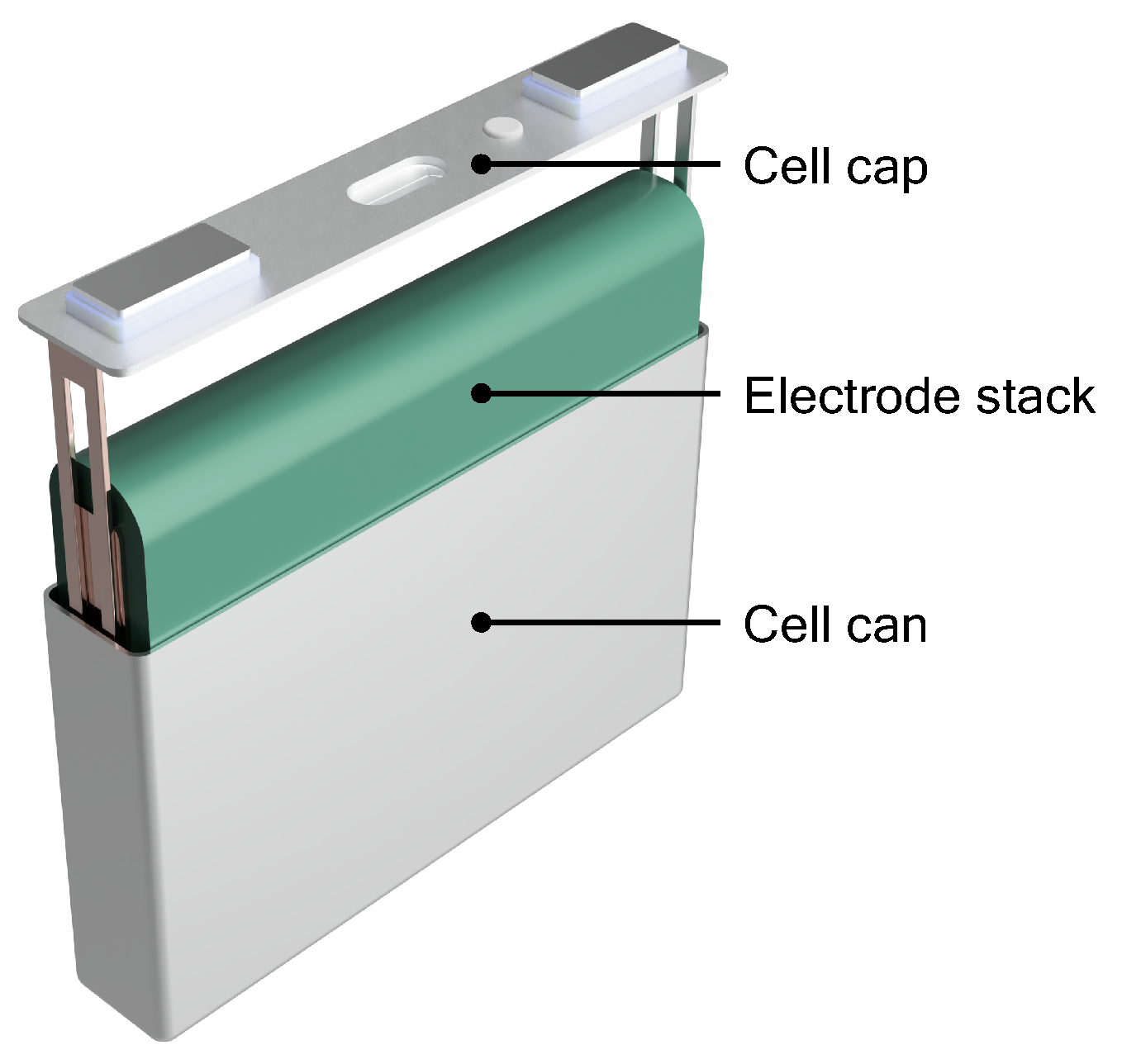
3]. As demand for EVs grows, advancements in battery cell production are important for improving cost, enhancing resource efficiency, and increasing production throughput. One component of a battery cell that is not directly associated with the cell as a chemical–electrical energy generator is the cell housing. Prismatic battery cell housings consist of a can and a cap assembly. The cap seals the cell and provides electrical connections (terminals), while the can encloses the internal components (electrode stack and electrolyte), ensuring structural integrity (see
Figure 1) [
4].
These housings are predominantly made of aluminum [
4]. Tool-Based Manufacturing (TM) methods for battery cell housing production require complex tooling, making them especially suitable for high-volume production scenarios with fixed designs [
4]. The can is commonly produced by deep drawing (DIN 8584-3 [
6]) or impact extrusion (DIN 8583-6 [
7,
8]), with wall thicknesses typically ranging from 0.6 mm to 1.2 mm [
9,
10]. Battery cell caps are fabricated using metal-forming techniques such as stamping (DIN 8588 [
11]), while insulating plastic components of the cap assembly are typically produced by injection molding [
12].
The reliance on high-volume production processes presents a significant challenge for small-scale and prototyping applications, where cost-efficient (geometrically) flexible manufacturing is essential for developing novel cell formats. This creates a bottleneck for cost- and time-efficient small-scale production, hindering innovation in developing and producing advanced battery technologies. Consequently, alternative manufacturing approaches are required to enable efficient small-batch production while maintaining the structural and functional integrity of battery cell housings.
Additive Manufacturing (AM), particularly Powder Bed Fusion using a Laser Beam (PBF-LB), offers a promising alternative for producing battery cell housings [
5]. PBF-LB is a well-established AM technology already used in serial production, capable of creating complex structures without expensive tooling [
13]. This makes it suitable for low-volume and geometry-flexible production of battery cell cans [
14]. Recent advancements in multi-material AM (MMAM) using PBF-LB, abbreviated as MM PBF-LB, have demonstrated the feasibility of producing battery cell caps with integrated conductor–insulator structures, which reduces the need for separate assembly steps and streamlines the manufacturing process [
15].
While the technical feasibility of AM-produced battery cell housings has been demonstrated, the economic viability under low-batch conditions remains insufficiently quantified. This paper assesses the economic feasibility of manufacturing prismatic cell housings using AM by applying a process-route-based cost model with a transparent cost breakdown. The study focuses on the PHEV2-format as specified in DIN 91252 [
16], comparing the costs of additively and tool-based produced cell housings for low-batch production. By conducting a comprehensive cost–benefit analysis, this study addresses the following key question:
Is AM a cost-effective solution for cell housing production, particularly in low-batch-size scenarios?
2. Cost Calculation Method
Similar to existing cost assessments for AM utilizing PBF-LB [
17,
18,
19], this study examines the primary cost drivers in the manufacturing of battery cell housings. To ensure a comprehensive comparison, this also considers TM methods; backward impact extrusion is evaluated for producing the battery cell can, which is the state-of-the-art method alongside deep drawing [
20]. Based on the assumed production scenario, the cost level of deep drawing is expected to be comparable to that of backward impact extrusion. Both methods require highly precise, multi-stage die tooling for cell can manufacturing [
21]. For the cap, milling is analyzed. Milling provides a more cost-effective solution for low-scale batch production by avoiding the high tooling costs associated with stamping—the state-of-the-art method for cap production in high-volume manufacturing scenarios. The injection molding for the cap is assumed to be performed externally. Using the insert-molding technique, similar to the approach presented by Woo et al. [
22], the milled metal parts (terminals and cap plate) are placed into the dedicated mold designed to match the required geometry. The result is a cap in which the plastic between the terminals and the cap plate provides electrical insulation. All processes require a form of part finishing essential for ensuring the functionality of the battery housing.
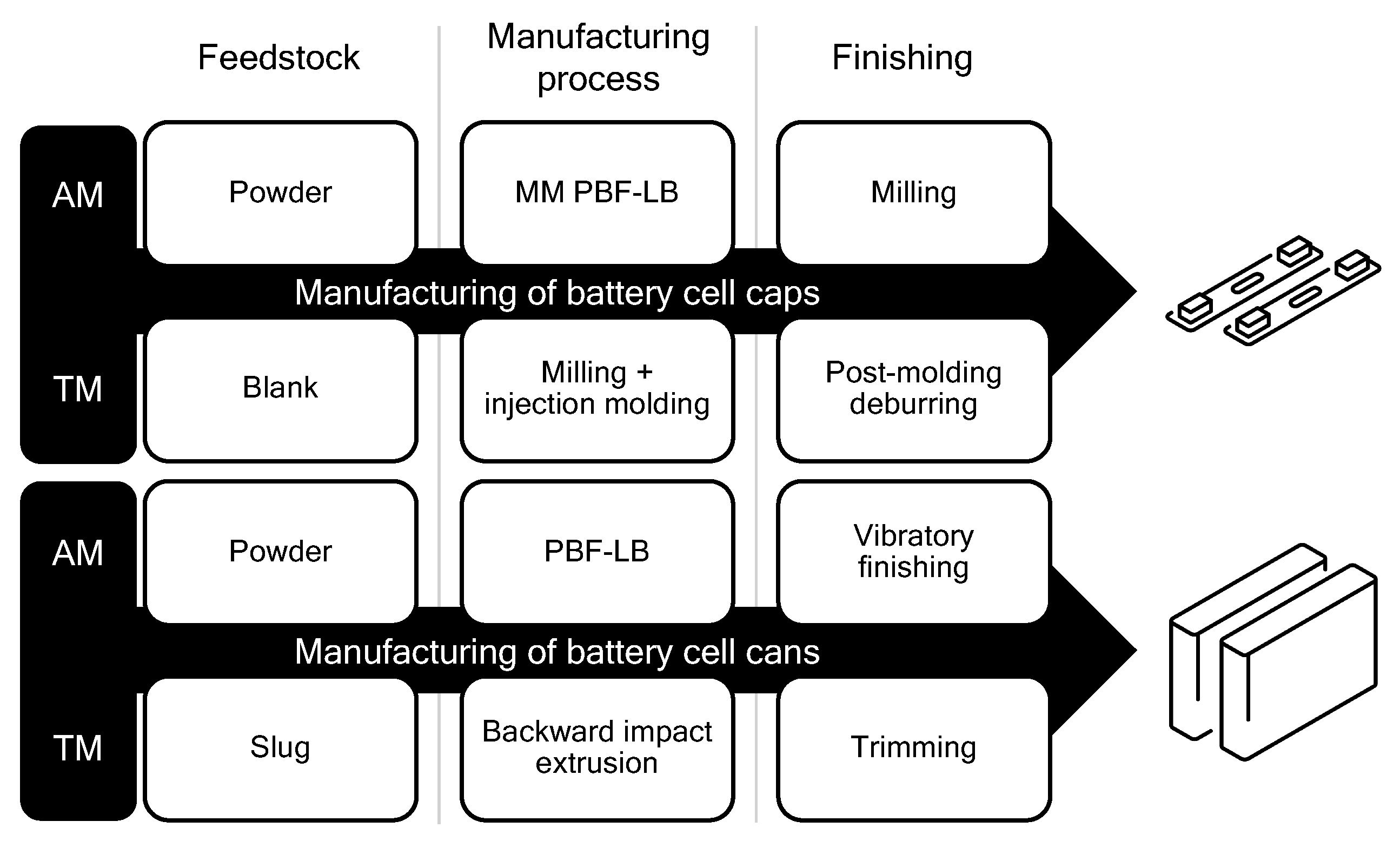
Figure 2 illustrates the assumed process routes for the can and cap in both AM and TM processes.
An Excel-based tool was developed to estimate the arising costs, which enables a complete cost calculation specifically for the production of a PHEV2-sized battery cell housing. The production costs are grouped into the following main categories: machine costs
, tooling costs
, material-based costs
, labor costs
, and part finishing costs
. The total cost for each process, denoted as
, is thus calculated by following Equation (
1):
In the following sections, each term of this calculation is examined in detail, with a breakdown of its determination for both the AM and the TM approach. Software costs are neglected in this calculation.
2.1. Machine Costs
The machine costs
include depreciation costs
, energy costs
, spatial costs
, gas costs
, interest costs
, and maintenance costs
. These costs are calculated as per Equation (
2). For TM, gas costs are not applicable. The depreciation costs for the machine are calculated using a seven-year depreciation period, aligning with common practices in life cycle assessment and life cycle costing studies for AM [
17,
23]. Machine costs are further adjusted to account for the machine’s availability, ensuring a realistic allocation that reflects its effective operational time. Energy costs are derived from the power consumption of the specific manufacturing process. Gas consumption includes the shielding gas necessary to maintain the inert atmosphere during the AM process, with argon specified in this scenario. Additionally, the costs of the spatial requirement are included for each manufacturing method, reflecting the expenses incurred for facility space and related infrastructure. Interest costs are also considered, representing the financial expenses associated with capital investment in the manufacturing equipment. These costs account for the opportunity cost of tying up financial resources.
2.2. Tooling Costs
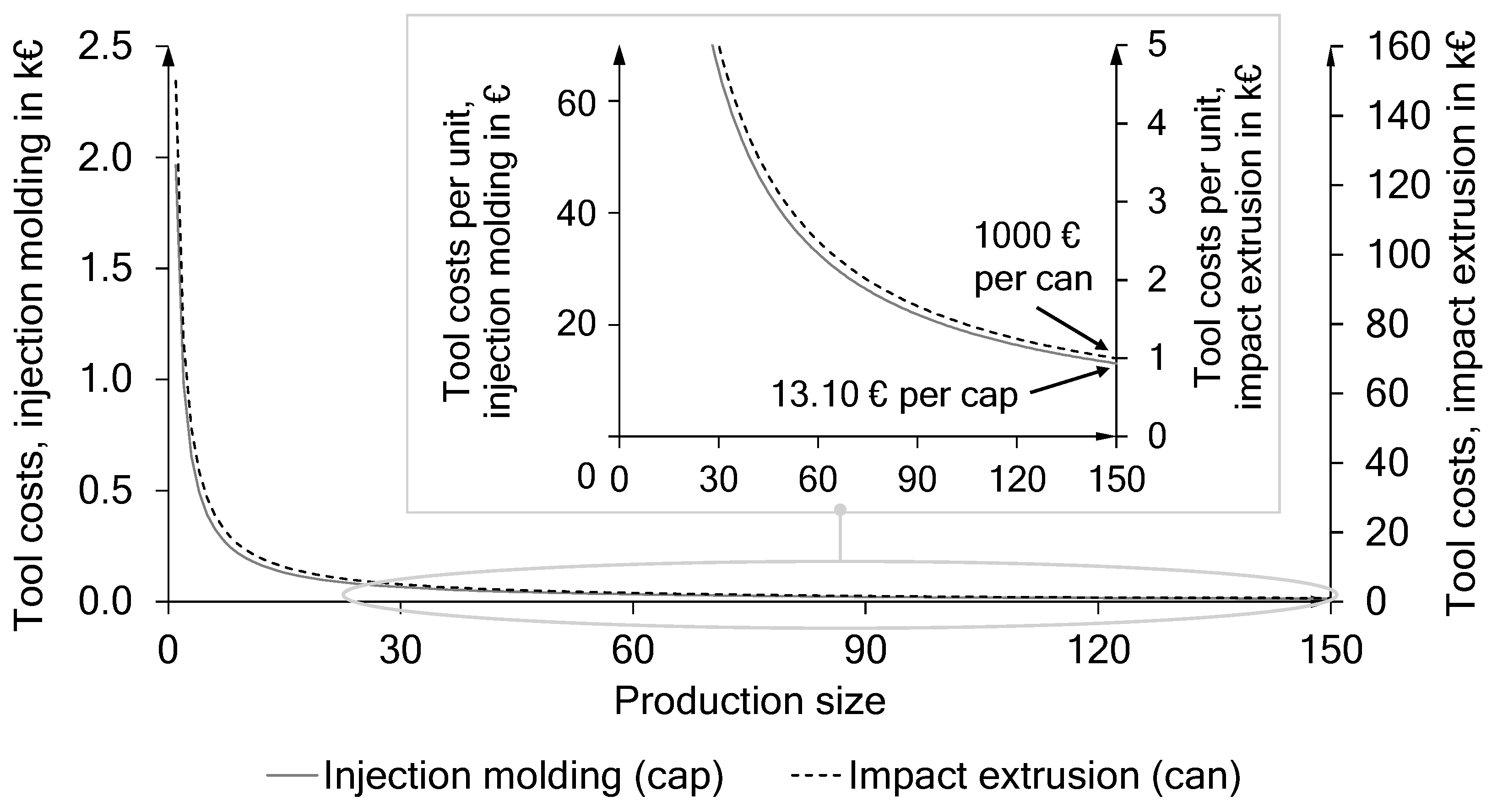
Tooling costs arise from the specific tools required for manufacturing the can and cap parts. This cost category applies exclusively to TM methods, as AM does not require additional tooling for the build-up process (, ). Tooling is necessary for both the backward extrusion process and the injection molding. However, as mentioned before, while no investment in an injection-molding machine is required, the tooling must be explicitly designed and manufactured—even in scenarios where the injection molding is outsourced. The tooling costs are evenly distributed across the total number of produced units, meaning that the cost per unit decreases as production volume increases until the lifetime of the tool is reached.
2.3. Material Costs
As outlined in Equation (
3), material costs are composed of the base material cost
and the fixed consumables cost
.
The AM material costs, denoted as
, are derived from the powder consumption, which is calculated based on the Computer-Aided Design (CAD) volume and the corresponding weight of fully solidified parts. Additionally, a powder loss factor of 57% [
24] is considered, calculated based on the amount of solidified material, reflecting typical powder losses during the PBF-LB process due to residues in the wet separator filter, sieve, shielding gas filter, aerosol emissions, and surface adhesion. Material costs for TM methods (
blank/slug) are likewise based on the blank (milling) or slug (impact extrusion) volume and corresponding material prices. During the forming process of the can, a material utilization rate of 80% is assumed. Additionally, the milling process used for cap manufacturing results in a material surplus of 55%, as determined by a common Computer-Aided Manufacturing (CAM) software (Autodesk Fusion 360, Autodesk Inc., San Rafael, CA, USA), reflecting the material waste generated through the subtractive manufacturing process.
2.4. Labor Costs
Labor costs are generated from the pre- and post-processing activities required for production. AM pre-processing costs include data preparation costs
, build job setup costs
(e.g., preparing the build plate, loading the powder, adjusting the layer height, and initiating the build job). AM post-processing costs involve machine-unloading costs
, depowdering costs
, costs for sieving of unused powder
, and costs for cutting the parts from the build plate
. The labor costs are represented as follows (Equation (
4)):
Labor costs for TM are derived from the specific operations required for the cap and the can. It is assumed that TM machines require constant monitoring during production. For the cap produced via milling, labor costs include activities such as setting up the milling machine
, preparing the CAD/CAM file
, clamping and reclamping the parts
, and the final supervision of the milling process itself
, see Equation (
5). For the can, manufactured using a backward extrusion process with a press, labor costs result from multiple manual operations. These include time for setup
, lubricating the slugs
, inserting and removing the slugs from the press
, and monitoring the operation
. Additionally, a final step involves washing off the grease
to prepare the part for use, cf. Equation (6).
The total labor costs for TM are expressed as
2.5. Part Finishing Costs
In this study, part finishing encompasses all processes that occur after the primary manufacturing step to ensure the final geometry meets the specifications outlined in DIN 91252 [
16]. These costs are aggregated and referred to as part finishing costs
. For AM, finishing the cap involves milling to achieve the required dimension tolerances and surface quality. This includes reducing the height of the part to its final thickness and incorporating a T-slot for a secure fit onto the can. The finishing costs for milling are calculated based on material consumption (e.g., cutting tools), machine usage (depreciation, energy consumption, spatial requirements, interest, and maintenance), and labor. For the AM can, finishing aims to reduce the surface roughness (R
a) to a value of 3 µm. This ensures that the prototypes exhibit surface properties closely aligned with those of mass-produced cans. The can is processed through vibratory finishing according to DIN 8589-17 [
25], where abrasive media and process compounds are used to smoothen the surface.
where
Cmat-finAM includes the cost of milling tools, abrasive media, compounds, and auxiliary bodies used for vibratory finishing.
Cmach-finAM covers the depreciation, energy consumption, spatial requirements, interest, and maintenance costs of both milling and machines for vibratory finishing.
Clab-finAM includes labor costs associated with manual operations such as part handling, quality inspection, and the preparation of milling equipment, tools, and auxiliary finishing elements.
In the TM route, finishing process cost () is primarily labor-driven. In the case of the TM cap, post-molding operations include manual deburring to remove flash and general excess material, followed by surface cleaning to ensure functional and electrical cleanliness. For the TM can, after the backward extrusion process, the edges at the open end require trimming, as they remain unfinished due to the nature of the forming process.
2.6. Validity and Assumptions
2.6.1. General Assumptions
The accuracy and reliability of the cost analysis presented in this study depend on several key assumptions and input parameters. The following framework conditions are defined as the basis for the cost calculations. Generally, the study focuses on the PHEV2-format, specifically with a can wall thickness of 0.8
. The cost analysis excludes the welding of the burst membrane (OPSD), as it represents an additional step for both AM and TM, such as laser welding. Instead, the analysis focuses solely on the manufacturing costs associated with the cap and the can. As shown in the cell teardown of a prismatic cell by Stock et al. [
26], one terminal typically consists of aluminum, whereas the other comprises both aluminum and copper. This configuration is also assumed in the present study; however, the joining process between the aluminum and copper parts (e.g., by ultrasonic welding) is not included in the cost estimation of the TM cap. The production scenario focuses on low-batch volumes ranging from one to 150 units, which represents a typical production size for testing and validating battery cells [
27]. This scenario is thus particularly relevant for the product development phase, flexible manufacturing requirements, and specialized applications such as aerospace and motorsports.
Table 1 provides an overview of the general assumptions. Technician labor costs are assumed to be EUR 40 per hour, reflecting the average labor cost in Germany in 2023 [
28]. Machine availability differs between TM and AM processes. For TM, the availability is set at 3520 h per year, representing a two-shift operation schedule. For AM, the availability is higher at 6132 h per year, accounting for 70% utilization [
29] to include downtime and maintenance. This increased availability reflects the ability of AM machines to operate unsupervised during nights and weekends, offering a significant advantage. The financial assumptions regarding the interest rate, energy cost, and rental expenses are also listed in
Table 1. Additionally, annual maintenance costs are estimated at 5% of the initial investment cost [
18], ensuring adequate coverage for repairs and upkeep over the equipment’s lifetime.
The inputs also include labor efforts, material and gas costs, spatial requirements for machines, and initial investment costs, among other factors. A detailed description of these differences is provided below.
2.6.2. AM of Caps and Cans
Table 2 provides an overview of the cost assumptions specifically for AM and part finishing costs with their corresponding values.
For AM machines, the study considers two setups: an EOS M290 system (EOS GmbH, Krailling, Germany) to produce mono-material cans, priced at EUR 450,000 [
31], and a customized EOS M290 system for multi-material processing (MM-EOS). The MM-EOS is a prototype system that required modifications costing approximately EUR 270,000, resulting in a total investment of EUR 720,000. These systems require a spatial footprint of 20 m
2. The power consumption of the mono-material machine is specified at 8.5 kW, whereas multi-material operation requires 15 kW. The process relies on argon gas to maintain an inert atmosphere at the cost of 2.14 € m
−3, with an average consumption rate of 1 m
3 h
−1 (increasing to 1.5 m
3 h
−1 for multi-material operation).
Peripheral equipment costs, including sieving units, powder recycling systems, vacuum immersion wet separators, and handling stations, are estimated at EUR 100,000 for both AM machines. Material costs vary depending on the specific powder used. Pure aluminum powder is priced at 78 € kg−1, pure copper powder at 77.4 € kg−1, and ceramic powder at 17.3 € kg−1. These prices refer to low-quantity purchases. For the production scenario, a 20% volume discount was applied, and the resulting adjusted prices were used for cost calculation.
Labor inputs include the time required for data preparation, machine setup, and powder management. For the mono-material can production, data preparation is estimated at 0.5 h, and machine preparation at 1.5 h. Multi-material production of the cap requires slightly more effort, with 1 h for data preparation and 2 h for machine preparation. Additional labor includes 1 h for removing the build job, 0.5 h for depowdering, and 1 h for powder recycling and sieving, based on practical experience.
Part finishing costs include equipment and material expenses for vibratory finishing and milling operations. Machine cost for vibratory finishing are set at EUR 16,800 (M1 Basic, Roesler Oberflaechentechnik GmbH, Bad Staffelstein, Germany), while the milling process uses an exemplary Haas VF3 (Haas Automation Inc., Oxnard, CA, USA) machine priced at EUR 70,000. Material costs for vibratory finishing, including abrasive media and compounds, are estimated at 1.08 € h−1, and milling tool service life costs per cap is assumed to be EUR 0.26. Labor for part handling during vibratory finishing and milling is estimated at 0.167 h per part. The machine utilization for vibratory finishing is consistent with the AM value (6132 h annually), while milling operates on a two-shift schedule with a total of 3520 h for TM processes with full supervision.
2.6.3. TM of Caps and Cans
The input data for the TM of battery cell housings is provided in
Table 3. The cap includes the cap plate and two terminals, which are machined separately and then inserted into the mold for injection molding to provide electrical insulation. This is followed by manual labor for deburring excess molding material and cleaning the surfaces of the cap (5 min). To manufacture the can, a press is needed, which, according to an expert interview, costs up to EUR 1,000,000. Additionally, a tool is required that costs EUR 150,000. This press occupies a spatial footprint of approximately 60
. The material utilization is set at 80%. A reject rate of 10% applies to the pressed cans, accounting for possible defects. This rate is based on an assumed batch size of up to 150 units. For larger production volumes, a lower reject rate is likely, as process stability and quality control generally improve with scale. The availability of the TM process is based on a two-shift operation, providing 3520 h annually. The press has a power consumption of up to 40 kW, resulting in an energy demand of approximately 5
per cell can. Since the press route is not fully automated, significant manual labor is required. This includes tasks such as lubricating the slugs (0.5 min), inserting and removing the slug or pressed can (1 min), trimming the edges (5 min), and washing (1 min). Consequently, the total manual labor time per can is estimated to be 7.5 min. This press cycle time is considerably slower than industrial standards, where highly automated systems achieve production speeds of up to 100 parts per minute with a material utilization rate of approximately 90% [
20]. However, the small-batch production volume assessed in this study does not justify the high investment costs associated with full automation. Instead, the focus remains on balancing cost-effectiveness and manual processes tailored to lower production quantities.
The TM production of caps involves a milling system, which is a key component in this manufacturing process. The initial investment cost for this system is estimated at EUR 70,000, with a spatial footprint of approximately 20 m2. Due to the subtractive nature of milling, material utilization is relatively low, leading to an assumed material surplus of 55%. Machine utilization aligns with that of the press and is calculated based on a two-shift operation. According to the exemplary machine data sheet, the power consumption of the milling system is specified as 15.5 kW. The injection-molding process for creating the insulation between the terminals and the cap plate is calculated based on the supplier quotation for comparable injection-molded parts, which are priced at EUR 1.93. Accordingly, this price is assumed per cap. The injection molding form tool is priced at EUR 1925 and is evenly distributed across the produced cap units. The setup of the milling machine and preparation of the CAD/CAM data requires 1 h of manual labor. Additionally, clamping and reclamping during the milling process add 20 min per cap.
For the values derived from the conducted expert interviews in
Table 3, an uncertainty of ±20% is considered to reflect the estimated nature of the underlying data.
2.7. Optional Smartification of AM Battery Cell Caps
Predictive maintenance and condition monitoring are critical emerging trends in industrial applications. An accurate estimation of the battery state and health, e.g., in EVs, is advantageous to ensure safe and efficient control of the battery. Integrating sensors directly into battery cell caps enables rapid detection of critical condition parameters, such as temperature variations and mechanical expansion of the cell housing [
5,
33]. PBF-LB supports the integration of sensors by allowing encapsulated cavities tailored precisely to the sensor geometry. The process involves pausing at a predefined height, preparing the surface, placing the sensor into the designated cavity, and subsequently resuming the build process [
34].
Table 4 outlines the additional costs associated with integrating a customized PT100 resistance thermometer for temperature measurement and a strain gauge (SG) for detecting strain changes within the cell housing, with particular emphasis on the resulting process interruption time. The integration of a standard foil-type strain gauge, such as the 3/350 CLY43-3L-1M from HBK, requires an integration time of approximately 22
per SG and an additional cooling period of 60
before integration. The cooling phase is essential to meet the adhesive’s temperature requirements for sensor integration. Therefore, it is necessary to reduce the build plate temperature during integration to avoid exceeding the adhesive’s flash point. According to the cost assumptions, material expenses include EUR 19.70 for the SG itself and roughly EUR 20.00 for consumables and equipment per integration, including the adhesive.
4. Discussion
This study provides initial insights into the economic aspects of AM battery cell housings. It is important to acknowledge that most data is derived from estimations, experience, and supplier quotations, which may introduce some uncertainty. The scenario presented above represents a near worst-case estimate, as upper-bound values were predominantly applied across multiple cost factors. For example, energy consumption was calculated based on the maximum rated power from the data sheet rather than the actual average consumption, which is typically lower. While this approach overestimates absolute costs, it ensures a valid comparative analysis, as both TM and AM were overestimated in a similar manner. As a result, despite potential deviations in absolute values, the relative cost trends and key cost drivers remain robust and reliable. Furthermore, the calculations reflect the current TRL of AM battery housings. In contrast, a best-case scenario that will be discussed later in this section represents an optimized future outlook, assuming advancements in process efficiency, machine setups, and workflow improvements. However, achieving this scenario requires further technological development and process refinement.
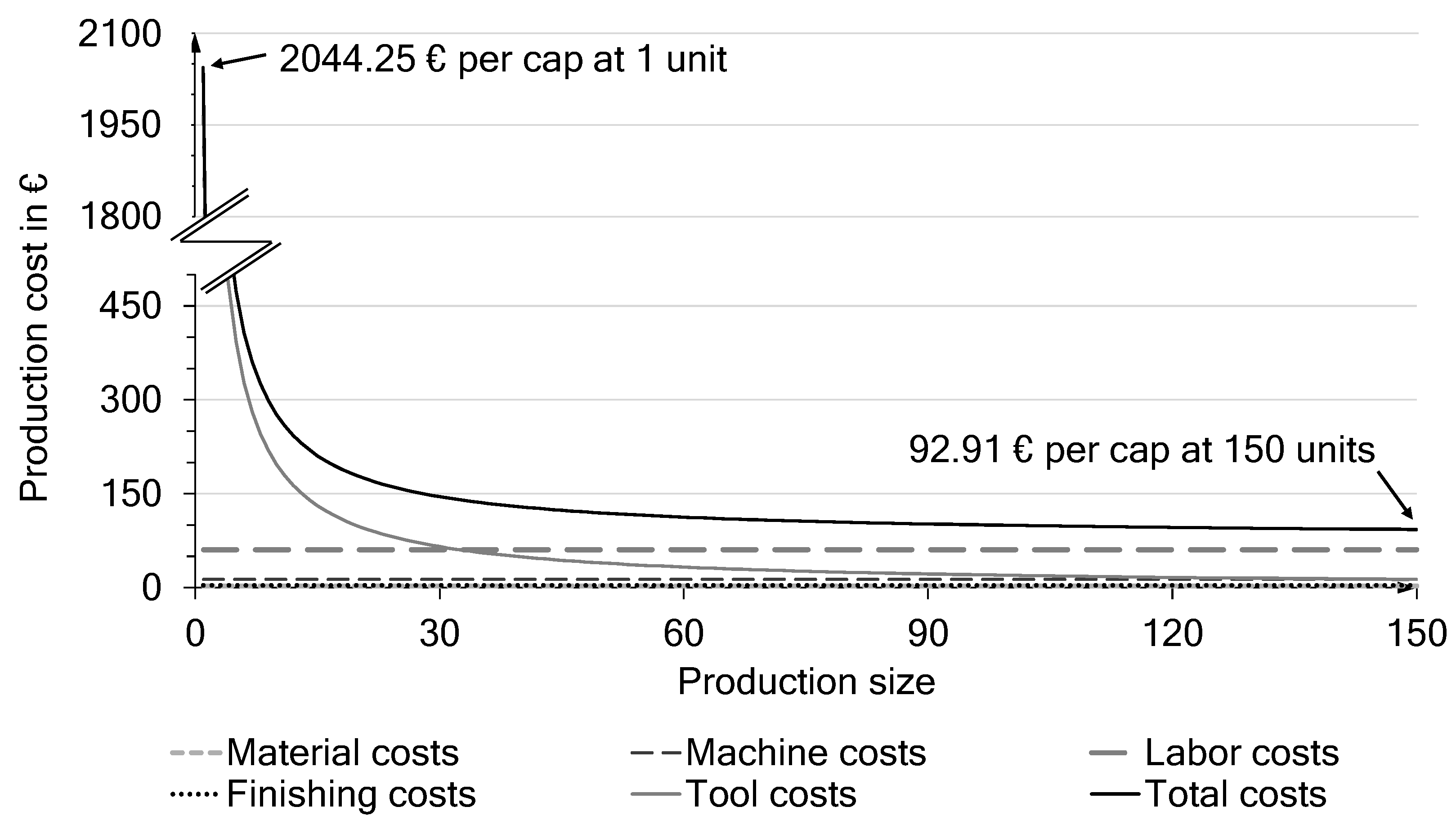
Overall, AM of battery cell housings offers a considerable cost advantage over TM at low batch sizes. For single-digit production runs, both cap and can fabrication using AM are more economical, primarily due to the high tooling costs required for TM; see
Figure 6. For cell caps, AM remains advantageous for up to nine units; beyond that, TM cap unit prices drop below those of AM (<EUR 294.69 per unit). In the case of battery cell cans, the benefit of AM is even more pronounced. The impact extrusion press tool used in TM is particularly expensive, with tooling costs that do not amortize sufficiently—reaching as high as EUR 1000 per unit for a production run of 150 units. Consequently, AM battery cell cans retain a cost advantage over TM even for production volumes up to 1406 units (TM can unit costs at 1406 units: EUR 123.13), delivering significant benefits not only in low-batch scenarios but also in mid-sized production runs.
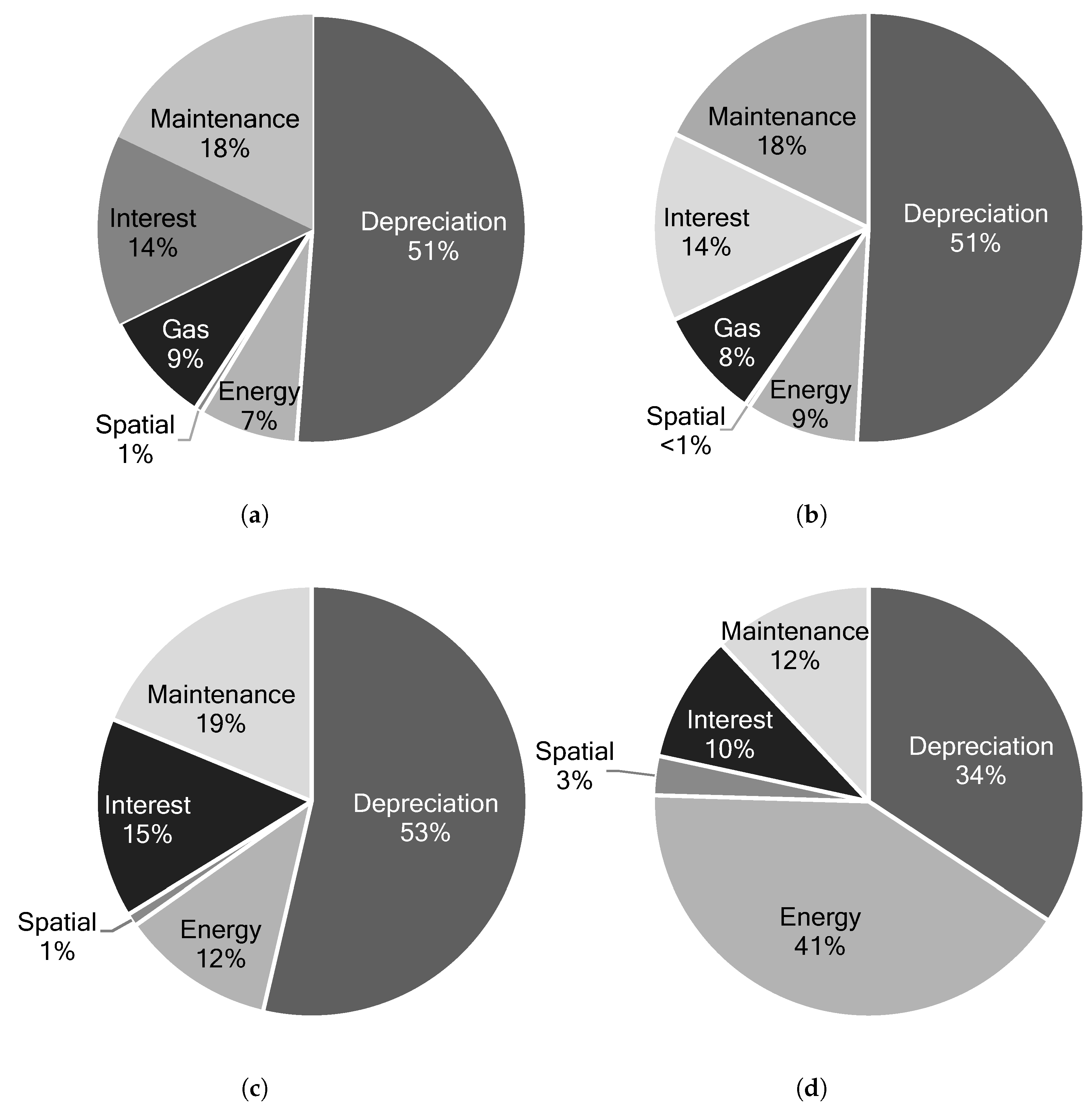
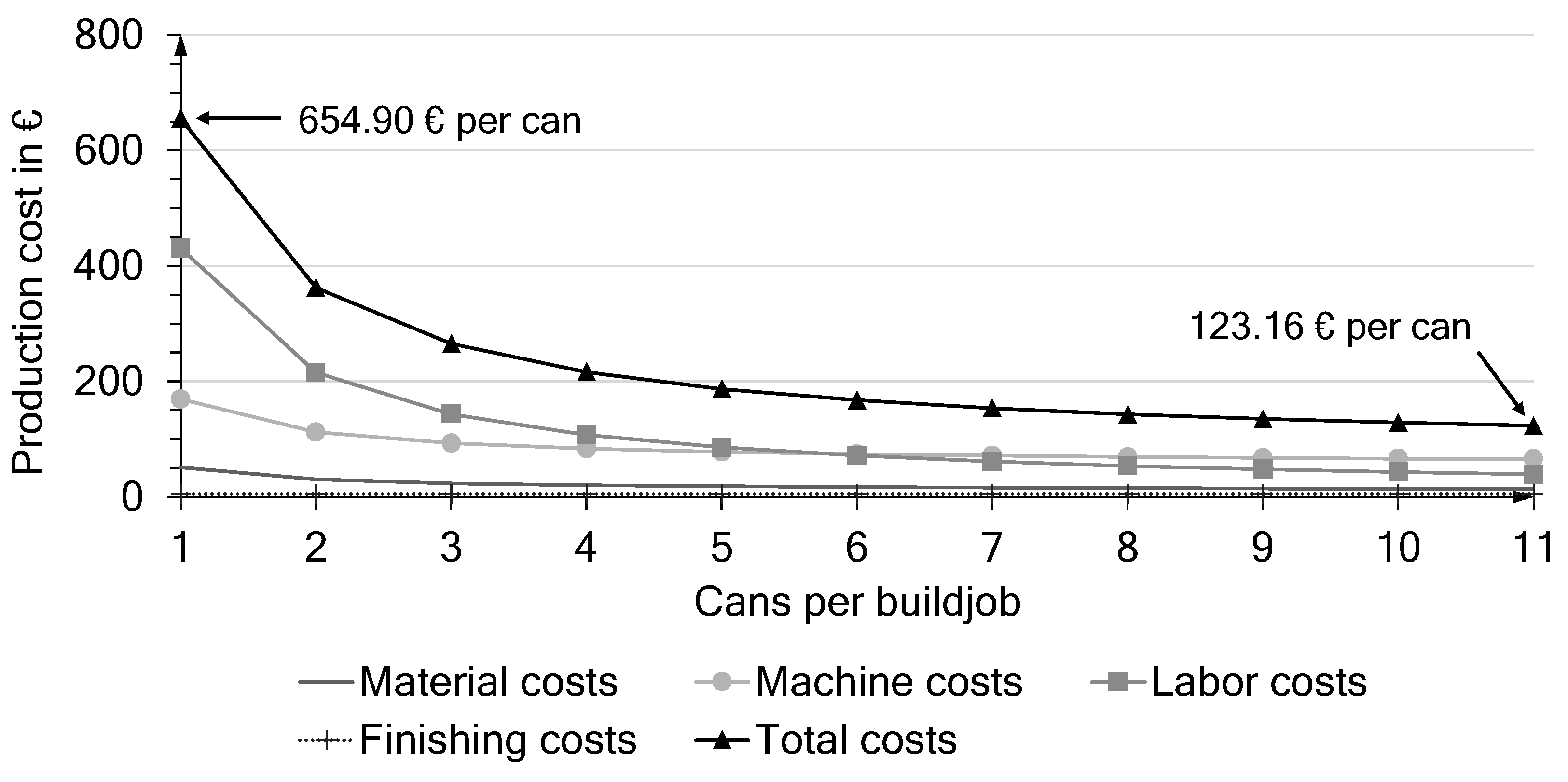
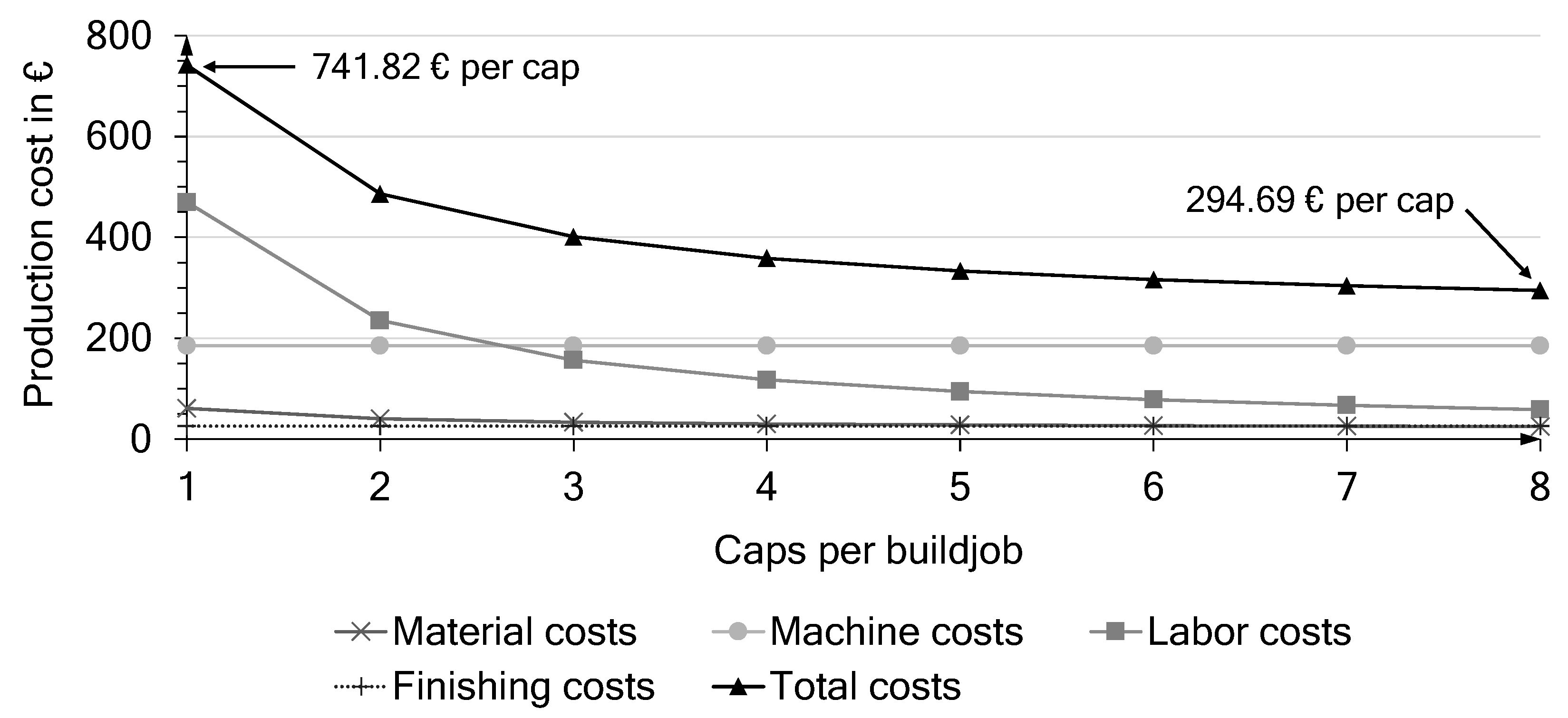
The analysis of production costs for AM battery cell housings demonstrates that unit costs are highly sensitive to build job size, as seen in
Figure 4 and
Figure 5. The clearance required for the robotic nozzle-based powder deposition in MM battery cell cap production [
35] limits the maximum batch size to eight caps per build job, thereby restricting further cost reductions.
A major cost driver is recoating time, which varies significantly between multi-material (cap) and mono-material (can) PBF-LB production. In mono-material can manufacturing, recoating follows a full-surface approach, introducing a fixed time component per build job. Each recoating cycle takes approximately 9 s per layer, with 1820 layers at a 50 µm layer height, resulting in a total recoating time of 4 h and 33 min per build job. While this substantially impacts cost for low batch sizes, the effect diminishes as more units are produced, distributing the constant recoating time across multiple parts. For example, while scanning time increases linearly—from 2 h and 12 min for a single can to 24 h and 12 min for a build job of 11 cans—the total machine time for producing 11 cans is only 4.26 times that of a single can. Accordingly, machine cost savings are primarily achieved by reducing the time required for the recoating process, thereby significantly lowering the per-unit production cost. This observation underscores the importance of maximizing build plate utilization or employing larger machine setups, such as the EOS M400, to enhance cost efficiency in mono-material can production. Further machine cost improvements can be achieved by reducing scanning time, thereby increasing unit throughput. However, such improvements require advanced multi-laser setups. For instance, using a quattro-laser system like the EOS M400-4 could substantially reduce production costs of battery cell cans. This configuration significantly decreases per-unit machine costs by reducing both scanning and recoating times. Moreover, the EOS M400-4 setup allows substantial labor cost reductions, accommodating up to 32 PHEV2-format cans per build job. This nearly triples the build plate capacity compared to the EOS M290, consequently reducing labor costs to approximately one-third. An EOS M400-4 system incurs a considerably higher hourly machine rate of EUR 65.05 due to its greater initial investment of EUR 1,420,000 [
31], increased power consumption of 22 kW, and larger spatial requirements of 50 m
2. Other cost parameters remain consistent with
Table 1 and
Table 2. Despite these increased hourly rates, the estimated total build time of 29.35 h for producing 32 PHEV2-format cans on the EOS M400-4 enables significantly higher throughput, ultimately reducing the final manufacturing cost to EUR 89.29 per can. Consequently, AM retains a cost advantage over TM up to a break-even production size of 2059 units. The multi-laser setup combined with an increased layer height of 100 μm further reduces the costs to EUR 58.03, thus expanding the cost advantage over the TM method to 3607 units.
In contrast, the selective powder deposition method used for cap production leads to a proportional increase in recoating time with each additional cap, limiting the economies of scale that can be achieved. This effect clarifies why machine costs remain constant despite rising production quantities in the multi-material cap production setup (cf.
Figure 5). Given the low current TRL, the recoating speed using a nozzle-based powder deposition is still limited, reaching only 10 mm s
−1 compared to 150 mm s
−1 for full surface recoating in mono-material build jobs. In the MM configuration, powder deposition consumes up to 86% of the total layer time, while only 14% is allocated to scanning for solidification, indicating significant potential for cost reductions with further process optimization [
15]. Cost reductions in an MM can production setup are mainly achievable by reducing the number of recoating actions—either by increasing the higher layer height or by advancing the recoating speed via faster feedrates. For example, in a scenario where a 100 µm layer height is employed, and nozzle recoating movements are twice as fast as in the current setup, machine costs can be significantly reduced by 75% from currently EUR 185.39 to EUR 46.35. This reduction also enables the production of eight cans at a unit price of EUR 155.39, while material, labor, and finishing costs remain unchanged. Labor costs are also 50% higher for the multi-material setup compared to the mono-material can production due to the lower build plate capacity and the more time-consuming build job preparation. The latter could be further optimized by a digital process chain in data preparation with automated data generation, which could provide a long-term solution and lower labor costs.
The rapid availability of prototype cell housings in AM significantly shortens the development phase, reducing the time between design, testing, and implementation of advanced battery cells. Initial housings can be manufactured within one week of finalizing the design, assuming equipment capacity is available. Conversely, TM suffers from prolonged tool procurement times. Furthermore, AM enables unprecedented design flexibility, facilitating rapid development, and optimization of novel battery formats without incurring substantial costs for tool modifications, a primary cost driver in TM.
A distinctive advantage of AM-produced battery cell caps is their capability to integrate additional functionalities directly within the component structure. These functionalities include encapsulated sensors such as temperature sensors or SGs, enabling continuous monitoring of battery conditions during operation. This integrated sensor approach enhances safety, reliability, and performance by allowing immediate detection and response to abnormal battery conditions, potentially extending battery life and improving overall system efficiency. In the development phase, the integrated sensor capabilities of “smartified” AM cell caps provide significant added value, particularly in low-batch-size production scenarios, as discussed in this paper. By allowing detailed in situ monitoring, sensors contribute substantially to deeper insights into battery behavior, enabling more precise analysis and optimization of battery cells. This enhanced understanding accelerates development activities and supports the rapid iteration and validation of new battery cell designs.
5. Conclusions
This study evaluates the economic viability of AM for battery cell housing production, especially at low volumes (up to 150 units). The analysis demonstrates that AM holds cost advantages over TM when the batch sizes remain in single-digit or low double-digit quantities, largely due to the absence of expensive tooling costs inherent in TM. AM remains economically favorable for battery cell cap production up to nine units, beyond which TM becomes more cost-effective. The analysis demonstrates that challenges associated with the current MM setup, coupled with its lower TRL compared to mono-material AM for cans, continue to limit the economic viability of AM-produced caps. However, AM cell caps offer an unprecedented advantage through the integration of sensor functionalities directly into the cap plate, significantly enhancing their capabilities for real-time monitoring and research-oriented applications. AM battery cell cans retain economic competitiveness up to approximately 1406 units, benefiting from the substantial tooling costs associated with the TM backward impact extrusion method. It is also expected that deep drawing, as an alternative TM route, would result in a comparable cost level to backward impact extrusion under the given production scenario. The cost advantage of AM becomes even more pronounced when utilizing large-size systems, as demonstrated by the example of the EOS M400-4. Further optimization opportunities exist, including increased layer heights and faster recoating and scanning speeds through advanced multi-laser systems, enhancing cost efficiency. The results should be interpreted within the boundary conditions defined in this work and may not directly apply if key assumptions change, for example, regarding the prismatic housing geometry, the investigated production volume range, the considered process chain scope, or the underlying cost environment. Future work could compare the costs of different prismatic cell housing sizes beyond the PHEV2-format investigated in this work to assess the transferability of the results and to gain further insights into geometry-dependent cost drivers. This would require updating size- and design-specific model parameters for both can and cap designs while keeping the same process chain assumptions to ensure comparability. In conclusion, AM represents a highly suitable and cost-effective manufacturing method for battery cell housings, offering particular advantages in low- to mid-volume production as well as research- and development-oriented applications.



 ,
,