Article

Analysis of Pore Structure Characteristics and Controlling Factors of Shale Reservoirs: A Case Study of the Qing-1 Member in Gulong Sag, Songliao Basin, China

1
School of Geosciences, Yangtze University, Wuhan 430100, China
2
Key Laboratory of Exploration Technologies for Oil and Gas Resources, Ministry of Education, Yangtze University, Wuhan 430100, China
*
Authors to whom correspondence should be addressed.
Appl. Sci. 2026, 16(1), 343; https://doi.org/10.3390/app16010343 (registering DOI)
Submission received: 3 December 2025 / Revised: 22 December 2025 / Accepted: 26 December 2025 / Published: 29 December 2025
(This article belongs to the Section Earth Sciences)

Abstract

The characteristics of shale oil reservoirs, such as low porosity, ultra-low permeability, and complex pore structure, are key factors affecting effective pore space and fluid migration. This study focuses on medium-to-high maturity mud shale in the Qing-1 Member of the Qingshankou Formation in the Gulong Sag. Using methods such as XRD, organic geochemical testing, and multi-scale pore characterization (FE-SEM, low-temperature CO2–N2 adsorption, high-pressure mercury intrusion, and CT scanning), the lithofacies and pore structure were comprehensively characterized, and their controlling factors were analyzed. The results indicate: (1) The mineral composition is dominated by felsic and clay minerals. Based on a three-level classification standard of “mineral composition–sedimentary structure–organic matter abundance”, seven subfacies were identified, with the dominant lithofacies being Felsic–Clayey Mixed Shale and Felsic-bearing Clay Shale. (2) The reservoir space consists of inorganic pores, organic pores, microfractures, and a small amount of other auxiliary pores, exhibiting “bimodal” pore size characteristics. Micro–mesopores dominate adsorption, while macropores/microfractures control free oil seepage; mesopores contribute the most to pore volume. (3) In terms of oil-bearing potential, Felsic–Clayey Mixed Shale shows prominent movable oil potential (average OSI: 133.08 mg/g; S1 > 2 mg/g, OSI > 100 mg/g). (4) CT-based 3D stick-and-ball models indicate that Felsic–Clayey Mixed Shale has the best connectivity (connectivity rate: 30.63%), with throat radii mostly ranging from 1–15 μm and pore radii from 2–20 μm. (5) Pore development is synergistically controlled by total organic carbon (TOC, with an optimal range of approximately 1–2.5%), clay/felsic mineral ratio, and bedding/structural fractures. The formation of the pore system is the result of dynamic coupling of organic–inorganic interactions during diagenetic evolution: intergranular pores of clay minerals and microfractures jointly contribute to specific surface area and pore volume, while bedding fractures connect nanopore clusters to enhance seepage capacity. This study improves the integrated understanding of dominant lithofacies, pore structure, and oil-bearing potential in the Qing-1 Member of the Gulong Sag, providing a basis for sweet spot evaluation and development optimization.

1. Introduction

With the accelerated transformation of the global energy structure, the exploration and development of unconventional oil and gas resources have grown increasingly crucial, and continental shale oil (CSO) has emerged as a key alternative resource for safeguarding national energy security. China is endowed with abundant shale oil resources, which are mainly concentrated in large petroliferous basins such as the Ordos, Songliao, and Junggar Basins [1,2,3,4]. As the core area for CSO exploration in China, the Songliao Basin hosts extremely thick organic-rich muddy shale in Member 1 of the Qingshankou Formation (K2qn1) within its Gulong Sag. This member possesses a superior material basis for hydrocarbon generation and favorable preservation conditions, thereby becoming a key target layer for shale oil enrichment [5,6].
Shale reservoirs are dominated by micro-nano pores and generally exhibit characteristics such as low porosity, low permeability, and strong heterogeneity [7,8]. The development of reservoir spaces significantly restricts the occurrence, retention, and migration efficiency of hydrocarbons [9,10]. Affected by dynamic changes in sedimentary environments, continental lacustrine basins feature diverse lithology types in shale sequences with frequent vertical variations, resulting in more complex microscopic pore structures of reservoirs and their controlling factors [11,12,13]. In terms of shale pore structure characterization, research methods have evolved from early qualitative observation via scanning electron microscopy (SEM) to the combined application of multiple technologies such as high-pressure mercury injection and low-temperature gas adsorption (CO2, N2), enabling the quantitative characterization of full pore size distribution [14,15]. The rise of three-dimensional visualization technologies including nano/micro CT and focused ion beam-scanning electron microscopy (FIB-SEM) has provided strong support for revealing the three-dimensional connectivity of pore networks. However, existing studies mostly focus on a single scale or partial pore size range. How to efficiently integrate macro–micro–nano multi-scale techniques and systematically reveal the coupling relationship between pores of different scales remains a difficult point in current research. The development of shale pore structures is synergistically controlled by its material basis (including mineral composition, texture, and chemical composition) and diagenetic evolution. Total organic carbon (TOC) content is a key factor controlling the development of organic matter pores; it affects the development of reservoir spaces through thermal evolution of organic matter (i.e., hydrocarbon generation and cracking; Ro = 0.5–2.0%) and often exhibits a non-linear relationship with porosity, with an optimal TOC range for pore development [16]. Mineral composition (e.g., the ratio of brittle minerals to clay minerals) restricts the preservation and evolution of pores by influencing rock mechanical properties and diagenetic processes [15,16,17]. Meanwhile, sedimentary structures and rock fabrics (e.g., the degree of lamination development) exert a significant control on pore anisotropy and permeability [18,19], while the development of microfractures is crucial for improving the seepage capacity of reservoirs [20]. Additionally, the strong compositional and structural heterogeneity of continental shales makes the synergistic control of three factors (i.e., organic matter, minerals, and fractures) on reservoirs particularly prominent.
The shale of the Qingshankou Formation in the Songliao Basin was deposited in a semi-deep to deep sedimentary environment, and is characterized by the development of multiple lithofacies types and complex laminated structures [21,22]. Although previous researchers have conducted extensive studies on this formation [23,24,25,26,27], there are still the following research gaps: (1) Most existing studies focus on pore characterization at a single scale or within a partial pore size range, and lack research on the coupling relationships of the macro–micro–nano multi-scale pore system; (2) There is insufficient comprehensive research on the detailed classification of lithofacies of the Member 1 of Qingshankou Formation (K2qn1) shale and the pore modification induced by organic-inorganic interactions during diagenetic evolution; (3) Research on the quantitative characterization of 3D pore networks and connectivity analysis using CT technology is relatively scarce; (4) There is a lack of in-depth understanding of the distribution law of movable fluids in the “dual-modal” pore system and its controlling factors.
Taking the shale of Wells YX55-1,YX55, and Y47 in K2qn1 of the Gulong Sag as the research object, this study comprehensively employs multi-scale testing methods including organic geochemistry, X-ray diffraction (XRD), field-emission scanning electron microscopy (FE-SEM), low-temperature CO2/N2 adsorption, high-pressure mercury intrusion, and CT scanning. It aims to systematically investigate the pore types and structural characteristics of shales with different lithofacies, and explore the main controlling factors of pore development, as well as the influence mechanism of pore structure on shale oil accumulation. The research findings can provide a scientific basis for the sweet spot evaluation and development optimization of shale oil in K2qn1.

2. Regional Geological Background

The Gulong Sag is situated in the Central Depression of the Songliao Basin (covering an area of approximately 260,000 km2). It is a Mesozoic–Cenozoic continental composite rift-depression basin, featuring a vertical “lower rift and upper depression” structure [25]. Formed under a regional extensional setting during the Late Jurassic to Early Cretaceous, the basin has experienced multiple evolutionary stages and is divided into six first-order tectonic units, including the Central Depression (Figure 1).
As the major oil-generating area in the basin, the Gulong Sag has extensively developed Cretaceous strata, including the Quantou Formation, Qingshankou Formation, Yaojia Formation, and Nenjiang Formation. Its tectonic activities are dominated by weak extensional-thermal subsidence. During the sedimentary period of K2qn1, the lacustrine basin featured a wide distribution and stable water body. Influenced by a moderate paleogeothermal gradient, it provided favorable conditions for hydrocarbon generation [26]. The sedimentary environment of K2qn1 is dominated by deep lake–semi-deep lake facies, with thick layers of organic-rich gray-black argillaceous shale developed. It has high organic matter content (dominated by Type I and Type II1 kerogen) and is in the medium-high maturity stage (with Ro generally greater than 0.9%) [23,27], boasting excellent hydrocarbon generation potential. It serves as the main hydrocarbon source rock for mid-shallow oil and gas, as well as being a key target formation for shale oil exploration. This member is commonly characterized by laminated/bedded structures, accompanied by the development of interbeds such as argillaceous siltstone and fine sandstone [17]. Its excellent hydrocarbon generation capacity is closely related to the microscopic pore structure of the reservoir. The developed complex pore structure system—including organic matter pores, microfractures, and intergranular mineral pores—provides an important space for oil and gas occurrence, and is a key geological factor affecting the storage performance and mobility of shale oil.

3. Materials and Methods

3.1. Samples

To investigate the pore structure characteristics of shale reservoirs with different lithofacies in the target formation of the study area, this study selected samples from Wells YX55-1, YX55, and Y47 in the K2qn1 of Gulong Sag, Songliao Basin. The samples are mainly buried at depths ranging from 2308 to 2388 m. Following the sampling principle of 1–2 samples per meter, conventional experiments—including total organic carbon (TOC) content determination and whole-rock and clay mineral X-ray diffraction (XRD) analysis—were conducted to identify the lithofacies characteristics of the shale. On this basis, some shale samples with different lithofacies from different depth intervals (selected by stratified sampling according to TOC intervals and lithofacies classification) were chosen. Multi-scale quantitative characterization was performed through CT scanning, field-emission scanning electron microscopy (FE-SEM) observation, combined with tests such as low-temperature CO2 adsorption, N2 adsorption, and high-pressure mercury intrusion, to comprehensively analyze the differential characteristics of reservoir spaces in shales with different lithofacies.

3.2. Experimental Methods

The determination of total organic carbon (TOC) content and mineral composition was conducted using a LECO CS844 carbon-sulfur analyzer (LECO, St. Joseph, MI, USA) and an Ultima Ⅳ X-ray diffractometer (Rigaku, Tokyo, Japan), respectively. Vitrinite reflectance (Ro) was measured with a Leica MPV-SP microphotometer (Leica, Wetzlar, Germany), and the rock pyrolysis parameters of samples were determined using a Rock-Eval 6 Plus source rock analyzer (Vinci Technologies, Nanterre, France). Microscopic pore imaging and observation were performed via a FEI Quanta FEG450 field-emission scanning electron microscope (Thermo Fisher, Hillsboro, OR, USA) equipped with an Ametek EDS energy dispersive spectrometer (Ametek, Berwyn, PA, USA).
The low-temperature gas adsorption experiment was conducted using a Micromeritics ASAP 2460 specific surface area and pore analyzer (Micromeritics, Norcross, GA, USA). Prior to testing, all samples were vacuum degassed at 110 °C for 12 h to remove impurities. For N2 adsorption (77 K, relative pressure: 0.01–0.995), the specific surface area and mesopore distribution were calculated based on the BET and DFT models, respectively. For CO2 adsorption (273 K, relative pressure: 0–0.03), the DFT model was used to analyze the micropore structure.
The high-pressure mercury intrusion experiment was conducted on an AutoPore Ⅳ 9500 automatic mercury porosimeter (Micromeritics, Norcross, GA, USA), which has a maximum mercury intrusion pressure of 200 MPa and a pore size detection range of 0.001–630 μm. The pore size distribution and pore-throat structure parameters were calculated based on the Washburn equation.
CT scanning was performed using a nano Voxel-3000 instrument (power: 120 W, sample diameter: 25 mm; Sanying Precision Instruments, Tianjin, China) to acquire 3D data of core samples. Through processes such as threshold segmentation (distinguishing pores from matrix based on gray-scale differences) and filtering and denoising (e.g., non-local means algorithm to suppress image noise), the pore network was reconstructed. Meanwhile, combined with the spatial occurrence and extension characteristics of fractures, natural microfractures, and artificial fractures induced by sample preparation were effectively distinguished, and their 3D connectivity was quantitatively analyzed, enabling multi-scale structural observation of the core.

4. Results

Multi-scale testing techniques—including X-ray diffraction (XRD), field-emission scanning electron microscopy (FE-SEM), low-temperature CO2-N2 adsorption, high-pressure mercury intrusion, and CT scanning—were comprehensively employed to characterize the lithofacies differences, reservoir space composition, and pore structure characteristics of the shale reservoir in K2qn1 of the Gulong Sag. The following are the experimental results.

4.1. Lithofacies Classification

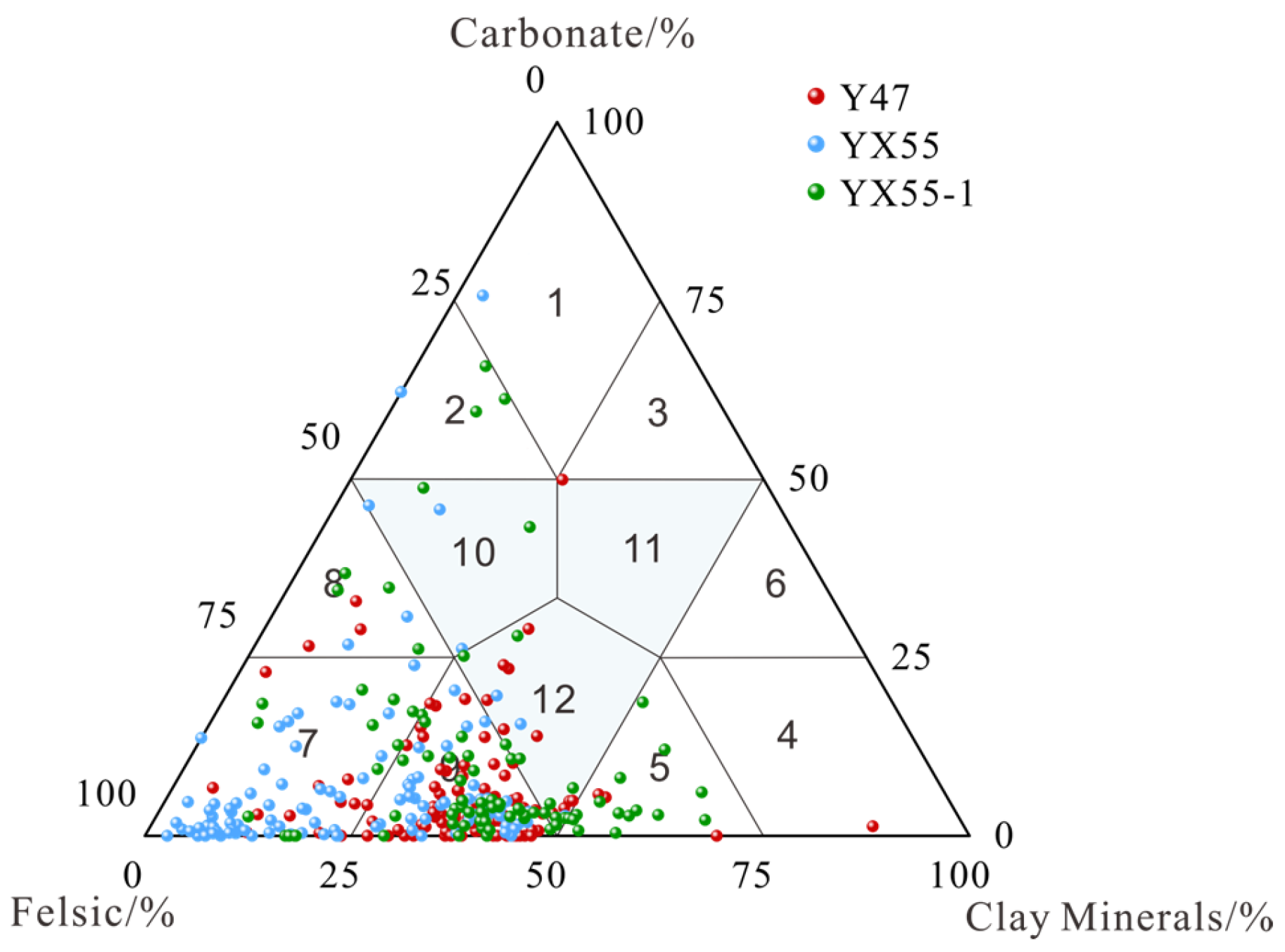
With clay minerals, carbonate minerals, and felsic minerals (including quartz, plagioclase, and a small amount of potassium feldspar) as the three end-members, shales can be classified into four major lithofacies types: clay-rich, felsic-rich, dolomite–limestone-rich, and mixed-rich [24,25]. Whole-rock X-ray diffraction (XRD) test results of the K2qn1 samples show that the mineral composition of muddy shales in the study area is dominated by felsic minerals (quartz, plagioclase), with contents ranging from 18.1% to 86.1% (average: 52.52%); followed by clay minerals, with contents ranging from 5% to 64.8% (average: 34.07%); and carbonate minerals (mainly calcite and dolomite), with low contents, ranging from 1% to 8% (average: 11%). Among them, calcite often fills intergranular spaces of clastic particles as cement, and local enrichment may be related to ostracod deposition. The clay mineral composition is dominated by illite (24.4–59.7%, average: 55.70%), followed by an illite–smectite mixed layer (ISM) (19.2–44.6%, average: 27.57%) and chlorite (2.1–36.7%, average: 12.13%). In addition, the content of heavy minerals is relatively low: pyrite, a typical sulfide mineral, is relatively common, while other heavy minerals (e.g., zircon, Fe-Ti oxides) are only present in trace amounts. This is consistent with the regional sedimentary environment of the Songliao Basin.
The characterization of petrological features and lithofacies classification of organic-rich shales mainly rely on key indicators such as organic matter abundance, mineral composition, and sedimentary textures and structures, with significant correlations among these three indicators [28,29]. According to the “mineral composition–sedimentary structure–organic matter abundance”, three-end-member lithofacies classification scheme (Figure 2), the shales can be subdivided into 12 subfacies. Core observation shows that the Qing-1 Member shales in the Gulong Sag are mainly characterized by horizontal bedding and massive structures. With a TOC content of 2% as the boundary, organic matter content is classified into low (TOC < 1%), medium (1% < TOC < 2%), and high (TOC > 2%) levels. The shales in the study area mainly include the following seven lithofacies: High-TOC Clay-bearing Felsic Shale (HT-CBFS), Medium-TOC Clay-bearing Felsic Shale (MT-CBFS), High-TOC Felsic-Clayey Mixed Shale (HT-FCMS), Medium-TOC Felsic-Clayey Mixed Shale (MT-FCMS), High-TOC Felsic-bearing Clay Shale (HT-FBCS), Medium-TOC Felsic-bearing Clay Shale (MT-FBCS), and Medium-TOC Felsic Shale (MT-FS).

4.2. Reservoir Space Types

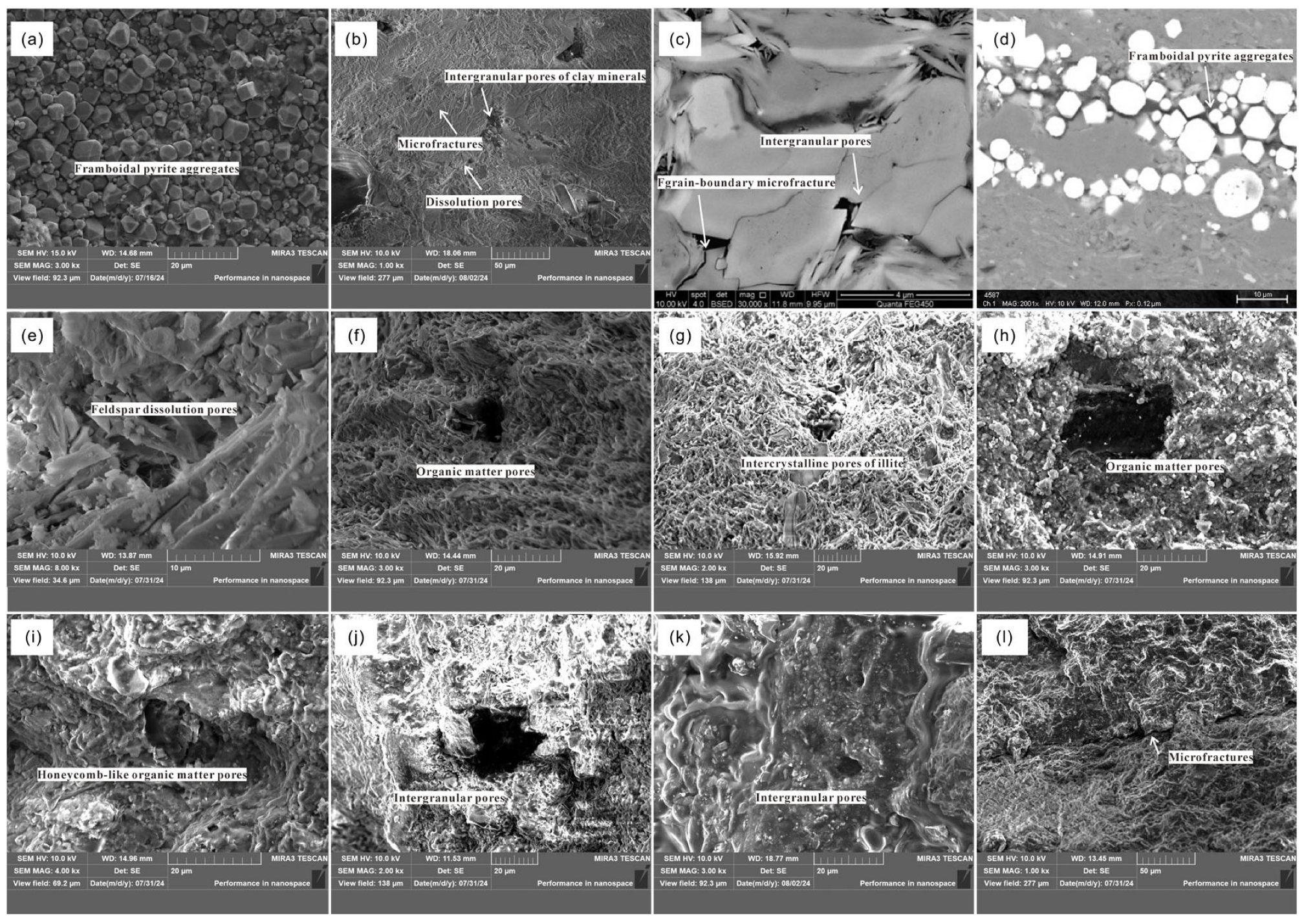
The reservoir space types of muddy shales in K2qn1 are controlled by multiple factors such as maturity and diagenetic evolution. According to genetic and morphological characteristics, they can be classified into three major categories: organic pores, inorganic pores, and microfractures (Figure 3). Among these, inorganic pores include intergranular (intercrystalline) pores and intragranular pores, while fractures include microfractures, bedding fractures, and tectonic fractures.
① Intergranular (intercrystalline) pores: Mainly consist of residual intergranular pores, dissolution edge pores, micropores between clay minerals, and intercrystalline pores. Primary intergranular pores are mostly destroyed during the early diagenetic stage by compaction, cementation, or organic matter filling. Only irregular polygonal or elongated pores are retained at the edges of rigid mineral grains such as quartz and feldspar, with a wide pore size distribution (Figure 3c). In the late burial stage, acidic fluids dissolve minerals such as feldspar and carbonate minerals, forming dissolved intergranular pores and inter-clay mineral micropores (Figure 3b,c). Intercrystalline pores are mainly distributed inside micron-sized spherical pyrite, presenting as nano-sized pore-fractures. These pores are fine and have poor connectivity (Figure 3a).
② Intragranular pores: Dominated by intragranular dissolved pores and pores within clay mineral/pyrite aggregates. Dense polygonal or elliptical dissolved pores develop inside soluble minerals such as feldspar and calcite, and coexist with or form lagging behind intergranular dissolved pores (Figure 3e).
③ Organic pores: Developed inside massive organic matter or in areas with volume shrinkage after hydrocarbon generation and expulsion, and are divided into edge pores (fractures) and internal pores. The former are curved and elongated, while the internal pores are mostly elliptical or honeycomb-shaped. Their pore sizes generally range from 100 nm to 1000 nm, and their connectivity is controlled by the distribution of organic matter networks (Figure 3h,i,k).
④ Microfractures: Multimorphic microfractures ranging from micron- to nano-scale are commonly developed in the Qingshankou Formation shales of the Gulong Sag, and together with pores form a reservoir system. Bedding fractures mostly develop horizontally or at a low angle in laminated shales (Figure 3l). During organic matter hydrocarbon generation and expulsion or stress changes, microfractures preferentially develop along bedding fractures, serving as lateral migration pathways for oil and gas in the reservoir.
FE-SEM and CT scanning observations show that the proportion of inorganic pores in the study area is overall high, and the developed pore types vary among shales of different lithofacies. For Clay-bearing Felsic Shale, laminations are well-developed; feldspar grains are dissolved to form honeycomb-shaped dissolved pores, which connect with intergranular pores to form an open pore network. Pore diameters are dominated by mesopores and macropores, with bedding fractures distributed parallel to the bedding plane. For Felsic–Clayey Mixed Shale, laminations are dense and organic matter abundance is high, featuring well-developed horizontal bedding. Microfractures along the bedding direction are easily formed at the contact surface between felsic and clay rocks, and the main pore types include intergranular pores, organic pore-fractures, and intercrystalline pores of clay minerals. For Felsic-bearing Clay Shale, intergranular pores, organic pores, and intercrystalline pores of clay minerals are dominant; influenced by organic acid dissolution, dissolved pores are also well developed, with discontinuously distributed bedding-parallel nano-fractures. For Felsic Shale, organic matter abundance is relatively low, with intergranular pores, intragranular pores, and intercrystalline pores as the main types.

4.3. Multi-Scale Characteristics of Pore Structure

Based on low-temperature gas adsorption, high-pressure mercury intrusion tests, and CT scanning analysis, this study uses the IUPAC classification standard—micropores (<2 nm), mesopores (2–50 nm), and macropores (>50 nm)—to jointly characterize the pore structure characteristics of K2qn1 shales [28].

4.3.1. Gas Adsorption

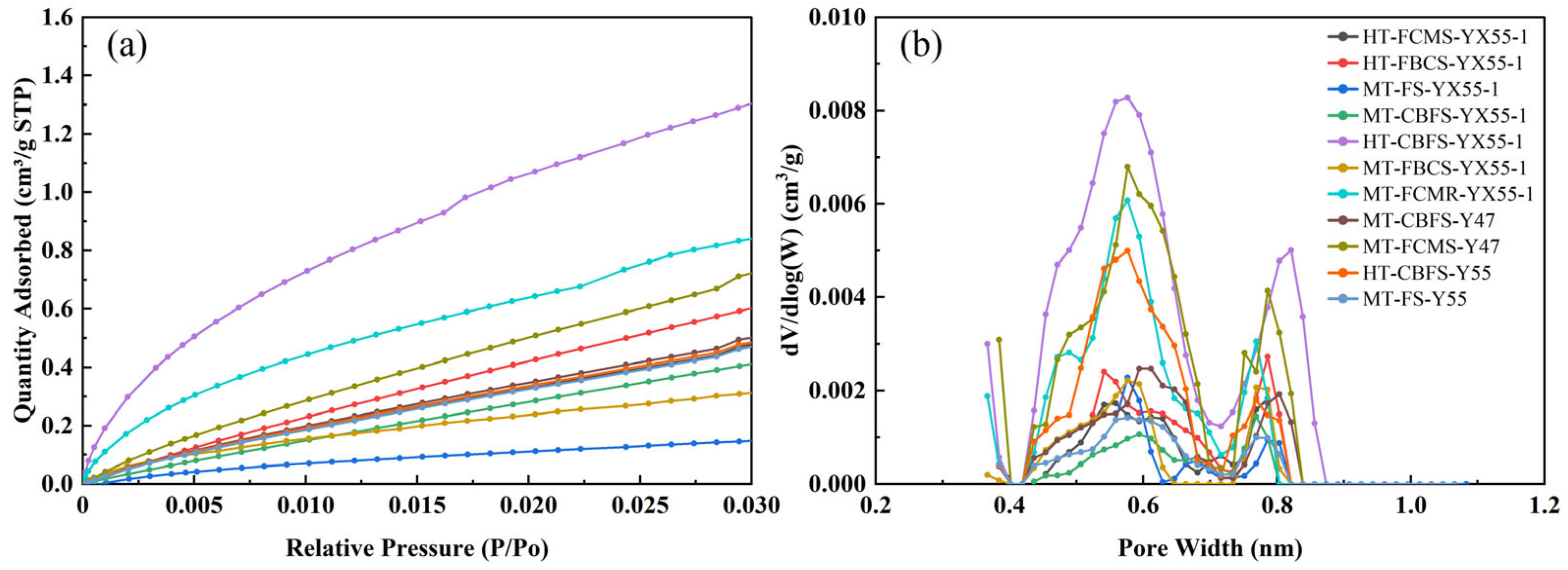
(1) CO2 Gas Adsorption
The CO2 adsorption curves of shale samples in the study area all show an upward trend and have not attained saturation pressure. Comparing the maximum adsorption capacities of different lithofacies: the maximum adsorption capacity of Clay-bearing Felsic Shale is 0.47–1.35 cm3/g; that of Felsic-Clayey Mixed Shale is 0.51–0.87 cm3/g; and those of Felsic-bearing Clay Shale and Felsic Shale are 0.34–0.67 cm3/g and 0.16–0.50 cm3/g, respectively. The micropore size distribution exhibits a bimodal characteristic, with peak values concentrated in the ranges of 0.48–0.64 nm and 0.75–0.85 nm. High-TOC Clay-bearing Felsic Shale has the largest DFT pore volume and specific surface area, followed by Medium-TOC Felsic-Clayey Mixed Shale, while other lithofacies are relatively smaller (Figure 4).
(2) N2 Adsorption Low-temperature
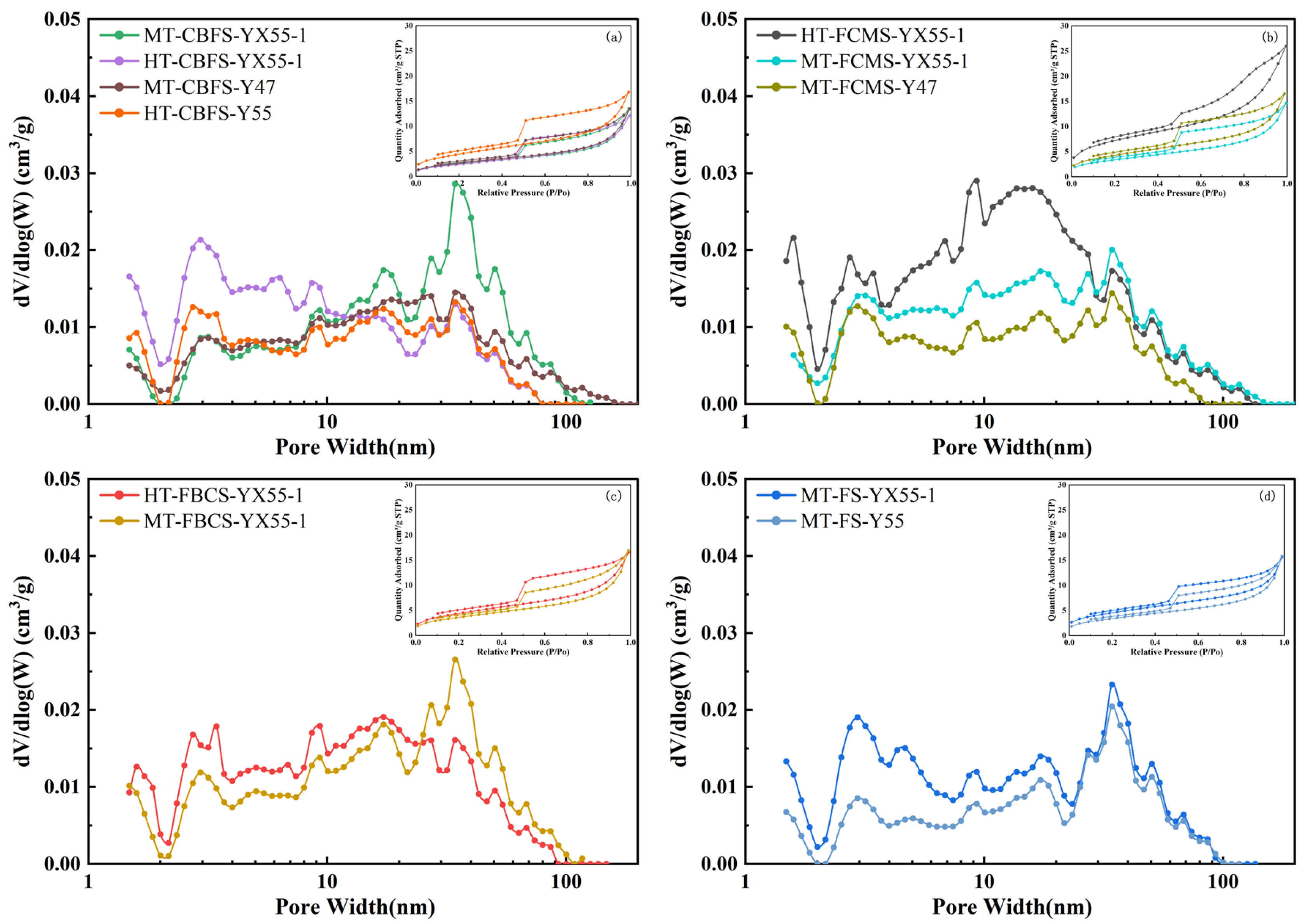
Low-temperature N2 adsorption experiments can effectively characterize the development of mesopores (2–50 nm) in shales, and the BET and DFT models are used to calculate the pore specific surface area and pore volume [30]. Analysis results of oil-washed samples show that most N2 adsorption isotherms are composite types of I(b), II, and IV(a), revealing the coexistence of micropores and larger pores. The hysteresis loops are mainly of H2/H3 types: Type H2 may be related to narrow-necked ink-bottle pores, and Type H3 may be related to parallel plate-like slit pores [29].
The maximum N2 adsorption capacity of each lithofacies ranges from 12.09 to 25.98 cm3/g. The pore size distribution curves calculated based on the DFT model exhibit bimodal or multimodal characteristics, with a complex pore size distribution, mainly concentrated in the range of 2.34 to 54.42 nm (Figure 5), and the performances of different lithofacies are as follows:
Clay-bearing Felsic Shale: The hysteresis loop is of H2/H3 type, corresponding to narrow-necked and wide-bodied ink-bottle pores and parallel plate slit pores. The BET specific surface area ranges from 9.002 to 16.31 m2/g (average: 11.06 m2/g), total pore volume is 0.014–0.020 cm3/g, and average pore diameter is 6.02 nm; Felsic–Clayey Mixed Shale: The isotherm characteristics are similar to those of Clay-bearing Felsic Shale, but High-TOC samples have smaller hysteresis loops and a sharp increase in adsorption capacity in the high-pressure region (maximum nitrogen adsorption capacity). This indicates that the reservoir space is dominated by slit pores and horizontal bedding fractures, with a well-developed pore network. Their pore volume (0.027 cm3/g) and specific surface area (25.866 m2/g) are the highest among all lithofacies, with an average pore diameter of 5.949 nm; Felsic-bearing Clay Shale: The hysteresis loop is of Type H3, indicating that slit-like intergranular/intercrystalline pores are dominant. The average specific surface area is 16.081 m2/g, total pore volume is 0.019 cm3/g, and average pore diameter is 5.325 nm; Felsic Shale: The desorption curve is concave, with obvious desorption condensation. The pores are a combination of slit pores (dominant) and ink-bottle pores. The BET specific surface area ranges from 12.462 to 16.384 m2/g (average:14.42 m2/g), total pore volume is 0.017–0.018 cm3/g, and average pore diameter is 6.019 nm.

4.3.2. High-Pressure Mercury Intrusion

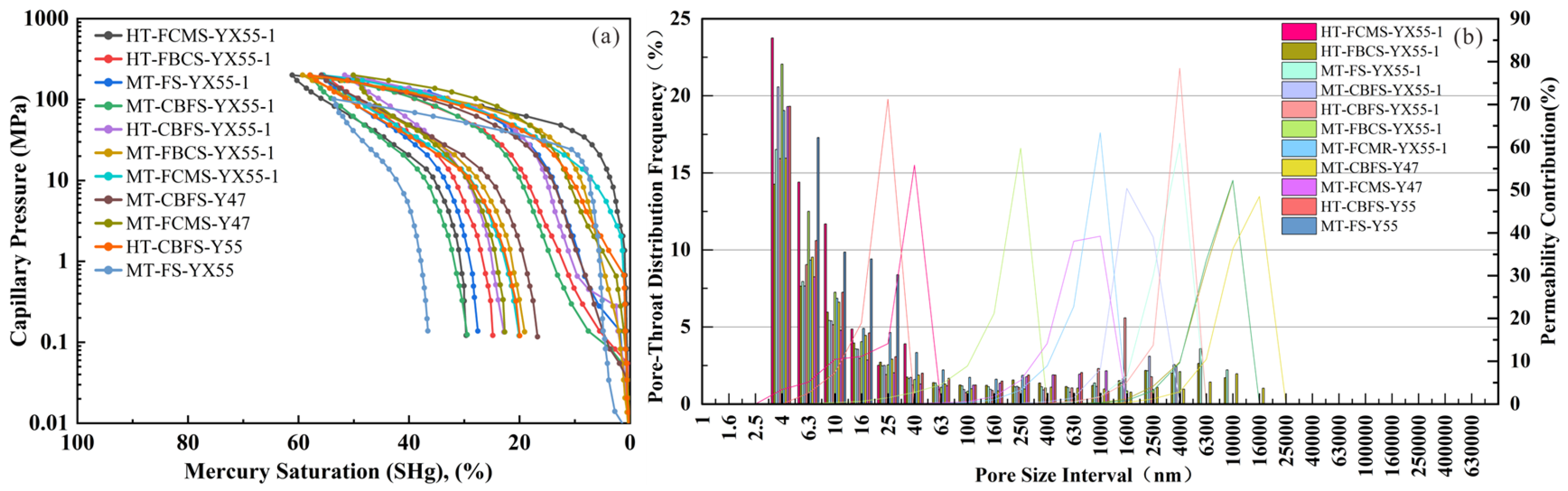
High-pressure mercury intrusion tests on 11 muddy shale samples show that the mercury intrusion curves of all samples have similar shapes, with the mercury intrusion process divided into three stages (Figure 6a). In the main high-pressure mercury intrusion stage (pressure > 25 MPa), the mercury intrusion curve has a large angle with the mercury saturation axis and extends for a long distance, with an average mercury intrusion saturation > 50%. This indicates abundant nano-scale pores and good pore connectivity, consistent with the N2 adsorption results. Except for High-TOC Felsic–Clayey Mixed Shale, which has a relatively high displacement pressure (>13.777 MPa), other samples have low displacement pressures (0.055–2.741 MPa). This lithofacies also has relatively high permeability, indicating that the primary pore throats are small, and an effective fracture network exists to improve seepage capacity. The overall mercury withdrawal efficiency of shale samples is high (49.082–70.054%, average: 58.424%), indicating that the connected pores are mainly intergranular through pores, with few ink-bottle pores, which is conducive to gas migration.
The porosity (1.12–5.79%) and permeability (0.035–13.225 mD) of the K2qn1 muddy shales vary significantly, reflecting strong reservoir heterogeneity caused by differences in pore-throat structure and diagenetic modification. Pore-throat characteristic parameters show that the average sorting coefficient is 2.845, and the difference between the peak position of pore-throat distribution (average: 0.004 μm) and the average pore-throat radius (average: 0.594 μm) is large. This indicates that the pore-throat distribution is dispersed, dominated by nano-scale, and presents a “micropore–mesopore–macropore” series connection characteristic. Although it has a certain migration capacity, the overall pore structure is poor.
The pore-throat distribution frequency and permeability contribution diagram (Figure 6b) shows that all samples have a significant peak in the small nano-pore interval (2.5–10 nm), and High-TOC and Medium-TOC Felsic–Clayey Mixed Shale have the highest proportion at 4 nm (23.75%, 19.05% and 19.31%), reflecting the “tight nano-reservoir” characteristic. Nano-pores are mainly derived from clay intercrystalline pores and feldspar dissolved micropores. Some muddy shale samples have a frequency peak in the macropore interval (1–10 μm), which is positively correlated with permeability distribution. The development of these pore throats is affected by feldspar dissolution, forming secondary large pore throats (mostly intergranular pores, tectonic microfractures, or strongly dissolved pores), which are the main channels for fluid seepage and affect the permeability of muddy shales.

4.3.3. 3D Connectivity Characteristics by CT Scanning

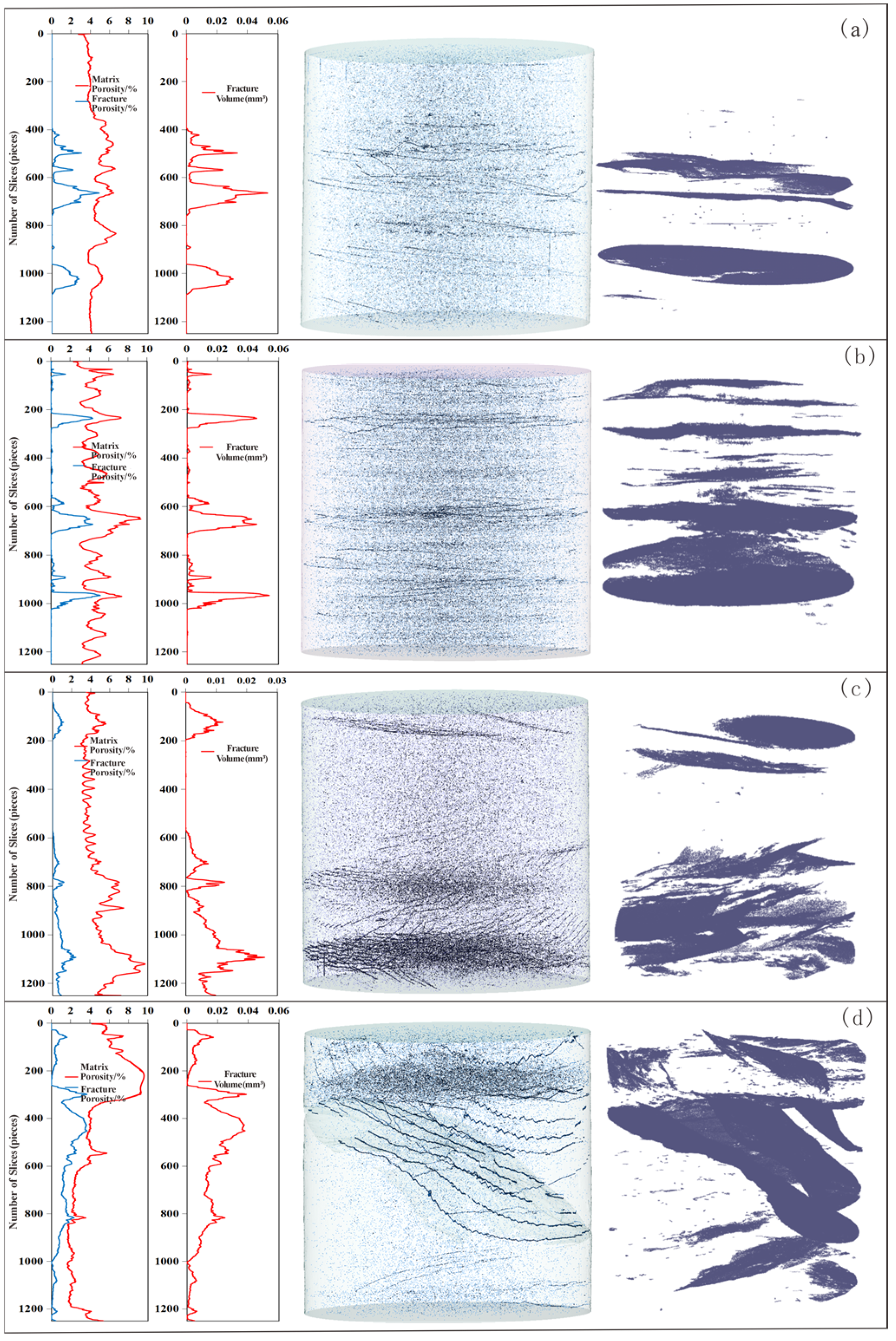
Micro-CT imaging technology can perform rapid non-destructive scanning and imaging of rock samples to establish a visualized three-dimensional (3D) digital core model, extract and analyze micron-scale pores and fractures, and conduct qualitative and quantitative analysis of pore-throat distribution characteristics and pore-fracture-related parameters [31]. The matrix porosity curve and fracture porosity curve of the 25 mm CT shale reservoir in K2qn1 fluctuate frequently, with horizontal/low-angle bedding fractures and tectonic fractures developed (Figure 7). In Clay-bearing Felsic Shale and Felsic–Clayey Mixed Shale, bedding fractures feature significant apertures and local densification. Core observations demonstrate that felsic laminations and clayey layers are interbedded, with bedding-parallel fractures developed along the interbedding interfaces, thereby forming horizontal preferential seepage pathways. The average fracture porosities of the two lithofacies are 0.48% and 0.51%, respectively, with maximum values reaching 4.92% and 5.13%. For intervals with well-developed microfractures, the overall average porosity increases to 6.67% and 9.36%. In Felsic-bearing Clay Shale, interlayer fractures and tectonic fractures coexist, with an average fracture porosity of 0.41% (maximum: 2.45%). Felsic Shale develops high-angle tectonic fractures penetrating laminations, forming vertical preferential seepage pathways, with a maximum fracture porosity of 3.70%. Additionally, the porosity in the distribution zones of brittle mineral bands can reach 9.61%. This indicates that the degree of microfracture development and mineral content are key controlling factors for the development of shale reservoir space.
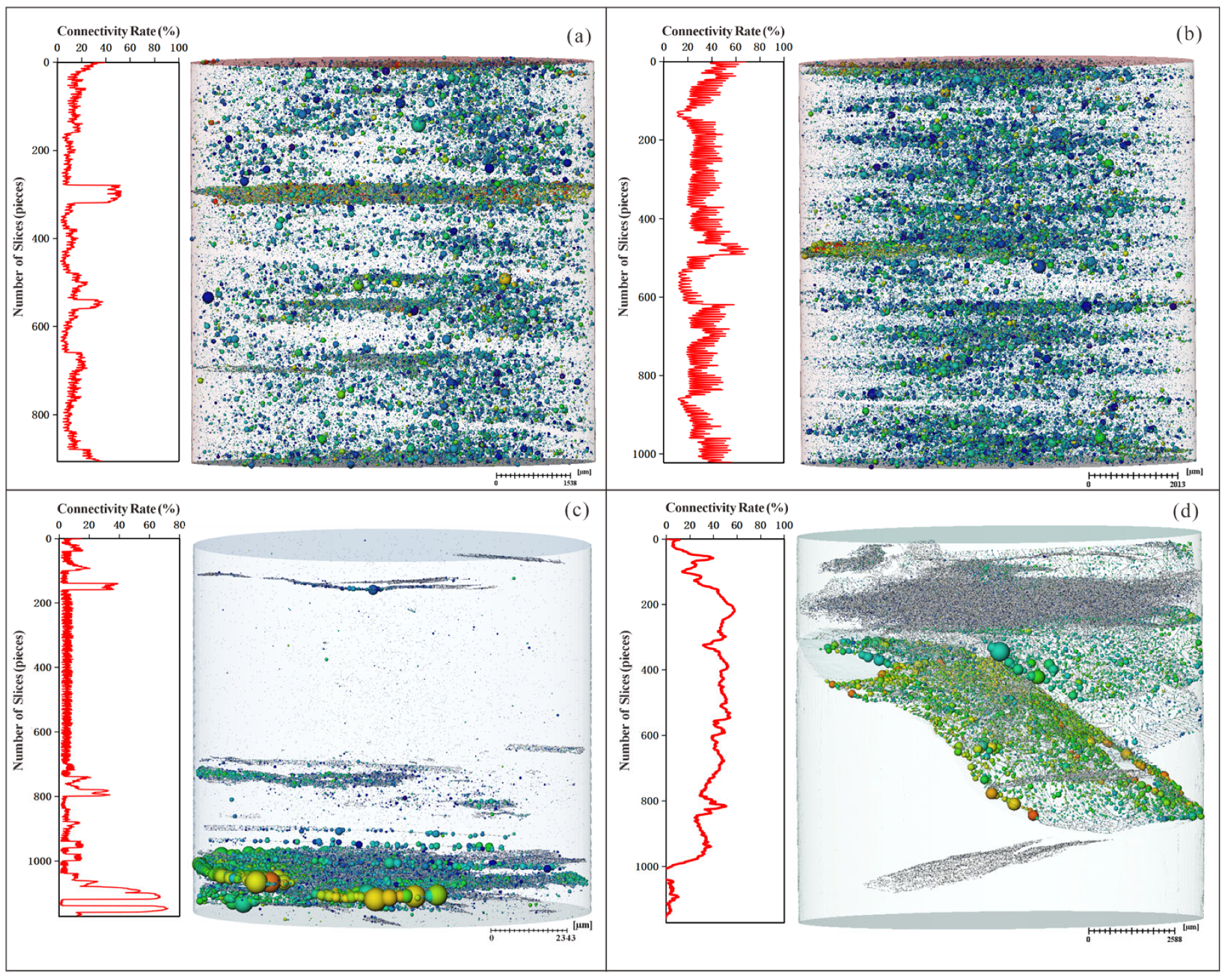
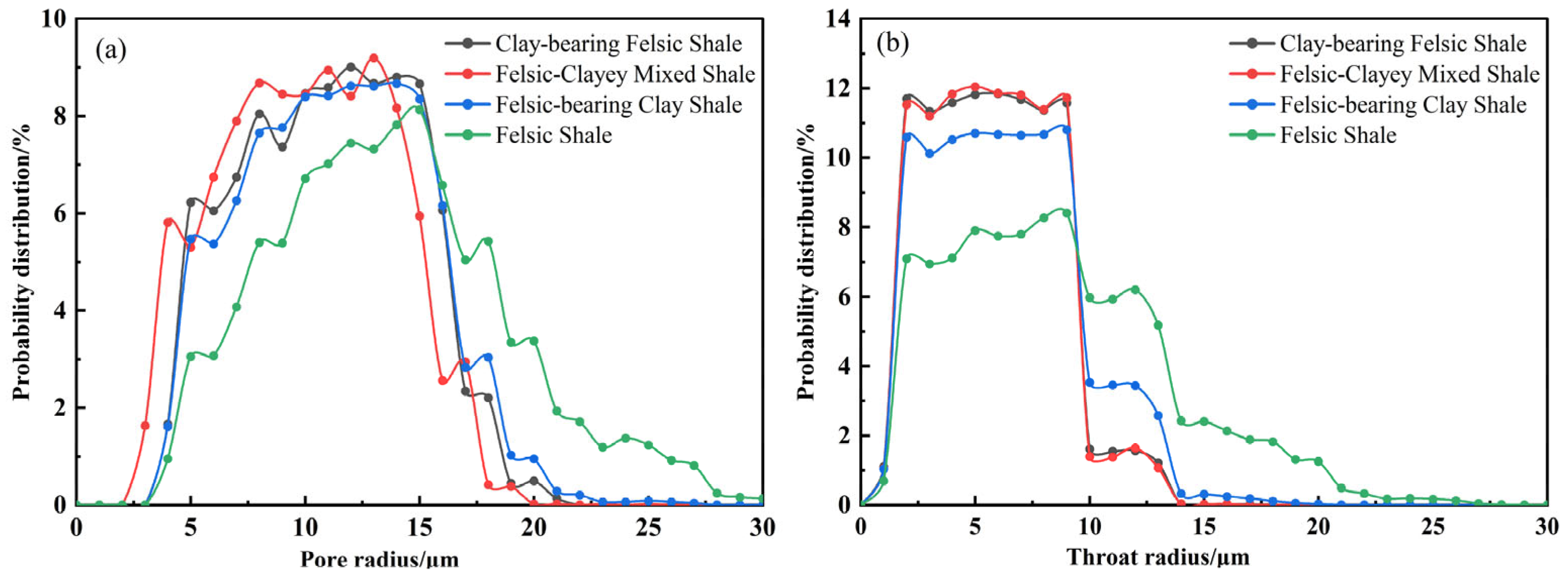
Analysis of 25 mm CT samples (Figure 8) shows that Felsic–Clayey Mixed Shale exhibits the optimal pore-throat connectivity with a connectivity rate of 30.63%. Felsic Shale and Felsic-bearing Clay Shale exhibit significant differences in connectivity rate, and their connected porosity distribution is highly consistent with the distribution of fractures and brittle minerals. Their transport system is supported by silt laminations and brittle mineral facies, ranking second in connectivity. Clay-bearing Felsic Shale is lithologically dense, with a relatively high connectivity rate in intervals with well-developed bedding fractures, but overall strong pore-fracture heterogeneity. The 3D stick-and-ball model of pore throats indicates that the throat radii of K2qn1 shales are mainly distributed in the range of 1–15 μm (accounting for 82.54%), and the pore radii are mainly concentrated in the range of 2–20 μm (accounting for 98.62%). The average pore-throat ratio ranges from 1.74 to 2.07 (Figure 9). The aforementioned pore-throat structure characteristics confirm that the development of bedding fractures can effectively optimize the reservoir pore structure, playing a key role in improving shale oil production and migration efficiency [31,32].

4.3.4. Joint Characterization of Pore Size Distribution

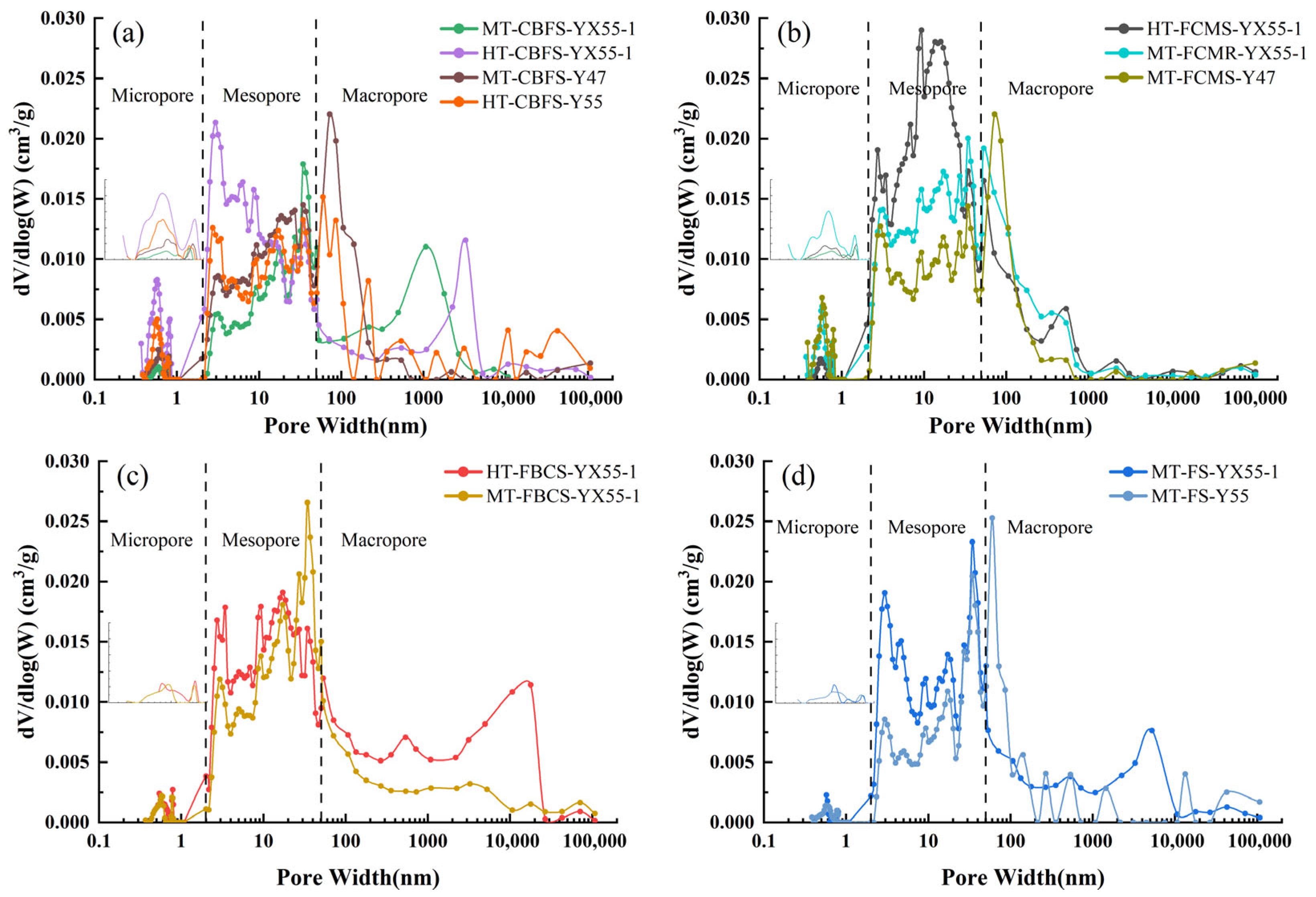
In high-pressure mercury intrusion experiments, as pressure increases, the primary pore structure of samples will be damaged, resulting in overestimated measured values of micropores (<2 nm) and mesopores (2–50 nm). However, the measurements of medium pores (50 nm–1 μm) and macropores are relatively accurate. Therefore, N2 adsorption is used to characterize mesopores, CO2 adsorption for micropores, and high-pressure mercury intrusion experiments for macropores, thereby achieving quantitative characterization of the full pore size range (Figure 10).
The pore size distribution of the K2qn1 muddy shales in the Gulong Sag is wide, with the pore size distribution curve showing a multimodal distribution characteristic. The total pore volume ranges from 0.0215 to 0.0405 cm3/g, dominated by mesopores, with relatively low proportions of micropores and macropores (Table 1). The average pore volume of mesopores is 0.017 cm3/g, accounting for 47.58–70.13% of the total pore volume; the average pore volume of micropores is 0.001 cm3/g, accounting for 0.37–5.05% of the total pore volume; the average pore volume of macropores is 0.011 cm3/g, accounting for 26.76–50.50% of the total pore volume. Among them, High-TOC Felsic-Clayey Mixed Shale has the largest proportion of mesopores and high pore-throat connectivity, with the best reservoir space development. Moreover, from Clay-bearing Felsic Shale to Felsic Shale, as the felsic mineral content increases, the proportion of mesopores gradually decreases, while the proportion of macropores gradually increases.

5. Discussion on Experimental Results

5.1. Oil-Bearing Property and Identification of Dominant Lithofacies

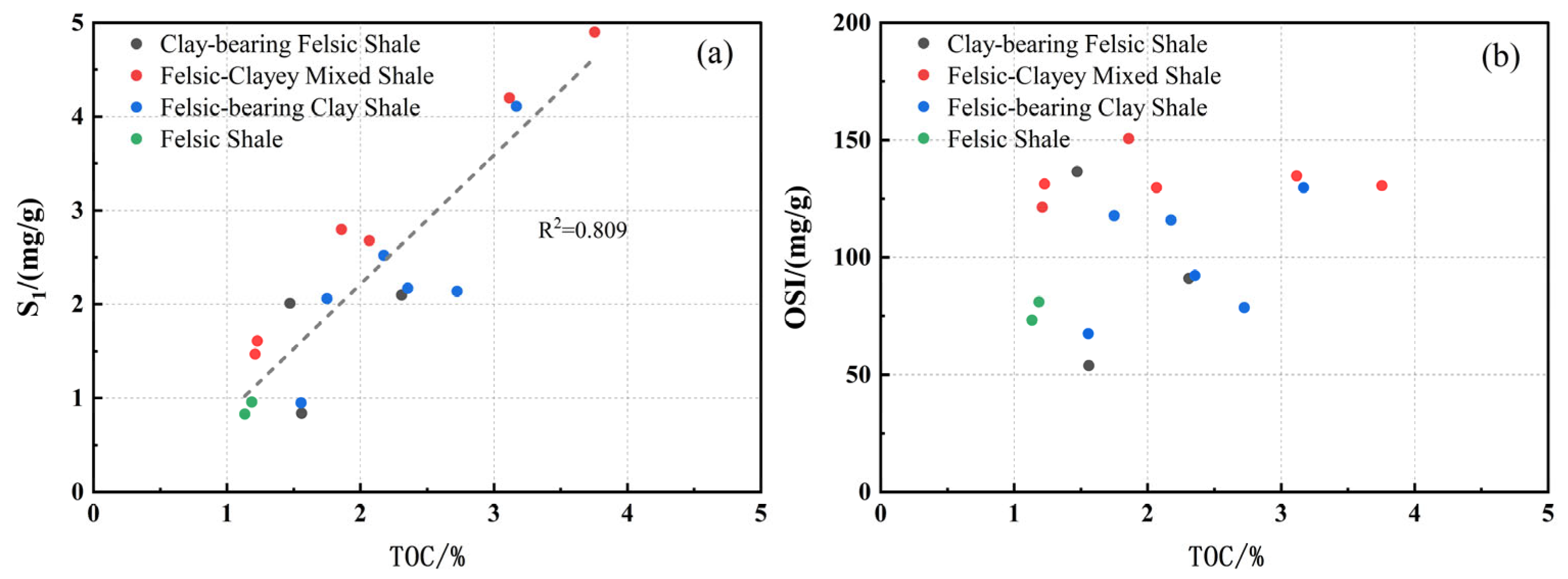
The evaluation of shale oil-bearing property is a key link in predicting “sweet spots” for oil and gas exploration. Rock pyrolysis free hydrocarbons (S1) are usually used to characterize oil content, and the Oil Saturation Index (OSI = 100 × S1/TOC) is used to evaluate movable oil potential [23,33]. Analysis results of rock pyrolysis tests on 18 samples of major oil-bearing lithofacies in the K2qn1 reservoir of the Gulong Sag (Figure 11) show that S1 content has a significant positive correlation with TOC content (R2 = 0.809), and the oil-bearing potential differs significantly among different lithofacies. The average OSI of Felsic Shale is less than 100 mg/g (average TOC: 1.16%); the OSI of Clay-bearing Felsic Shale ranges from 53.91 mg/g to 136.58 mg/g (average: 72.46 mg/g), with TOC ranging from 1.55% to 2.31% (average: 1.93%); the OSI of Felsic–Clayey Mixed Shale is 121.44–150.71 mg/g (average: 133.08 mg/g), with TOC values ranging from 1.21% to 3.75% (average: 2.21%); the OSI of Felsic-bearing Clay Shale ranges from 67.55 mg/g to 129.76 mg/g (average: 100.31 mg/g), with TOC values ranging from 1.55% to 3.16% (average: 2.29%). According to lithofacies statistics, the main oil-bearing lithofacies in the study area are Felsic-Clayey Mixed Shale and Felsic-bearing Clay Shale.
The pore types of the K2qn1 muddy shales in the Gulong Sag are complex with strong heterogeneity. Key evaluation parameters such as TOC content, free hydrocarbon content (S1), pore structure, and mineral composition are usually selected, and the dominant shale lithofacies are divided to systematically evaluate the hydrocarbon generation potential, reservoir performance, and fracability of source rocks [34].
Drawing on previous research and diagenetic studies, the K2qn1 shales in the Gulong Sag are mainly in the middle diagenetic stages A2 and B, corresponding to the mature–high maturity stages of organic matter thermal evolution respectively [23]. In medium-to-high maturity shales, organic matter undergoes extensive cracking to generate hydrocarbons, and TOC content directly affects differences in pore structure. The reservoir characteristics of shales with different lithofacies differ significantly. High-TOC Felsic–Clayey Mixed Shale has the best reservoir performance: although the pore volume dominated by mesopores is limited, the pore-throat sorting is good and movable oil mobility is high. Meanwhile, during the diagenetic evolution of the Gulong shale, as organic matter maturity increases, the hydrocarbon-generation contraction of organic matter induces volume changes. These changes trigger fluid pressure differences, thereby leading to the formation of diagenetic contraction microfractures, which synergistically enhance reservoir connectivity in coordination with the mesopore network (S1 > 2 mg/g, OSI > 100 mg/g saturated adsorption capacity), meeting the sweet spot criteria. High-TOC Felsic-bearing Clay Shale has well-developed slit-like and bottleneck-like pores, with a bimodal pore-throat distribution and general sorting, but the total pore volume is relatively the largest. The combination of felsic and clay laminations in this shale significantly improves the rock’s anti-compaction capacity. Meanwhile, the supporting framework composed of rigid particles has a good retention effect on mineral matrix pores, and the siliceous material precipitated from clay mineral transformation enhances brittleness and improves fracability, resulting in good reservoir development. Medium-TOC Felsic–Clayey Mixed Shale has well-developed reservoir space, with pore-throat connectivity affected by small pore throats, but obvious advantages in coarse mesopores and macropores, and high movable oil content inside the reservoir. In contrast, High-TOC Clay-bearing Felsic Shale has a lower degree of reservoir space development, smaller pore sizes, limited quantities, poor pore-throat connectivity, and relatively low movable oil content in the reservoir. Although Felsic Shale has a broad distribution of mesopore–macropore (singular for type description), its organic matter abundance and S1 values are low, resulting in low movable hydrocarbon abundance in the reservoir. Neither of these two lithofacies is a dominant lithofacies. In summary, Felsic–Clayey Mixed Shale and Felsic-bearing Clay Shale are the dominant lithofacies in the K2qn1 muddy shales of the Gulong Sag, with both high-quality oil-bearing potential and good reservoir-reformation performance, serving as the core target areas for shale oil exploration.

5.2. Influence of TOC on Pore Development

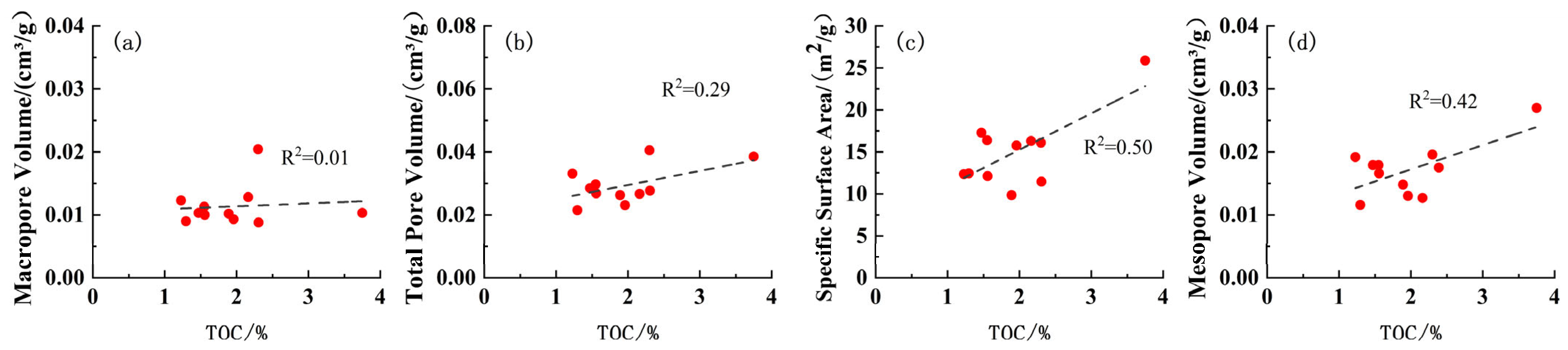
Total Organic Carbon (TOC) content is a key factor controlling the pore development of muddy shales, and it plays a decisive role especially in matrix porosity—which constitutes the main reservoir space and accounts for 72.3–89.5% of the total porosity. As the primary source of organic pores in the matrix, TOC exerts an obvious stage-specific controlling effect on pore evolution. In the study area, the TOC values range from 1.13% to 4.21% (average: 1.68%), and the vitrinite reflectance (Ro) values range from 0.6% to 2.0% (average: 1.43%). Analysis of the relationship between pore volume and organic carbon content of different shale samples indicates that TOC is mainly positively correlated with mesopore volume, weakly or negatively correlated with macropore volume, and shows no obvious correlation with total pore volume. As the main component of matrix porosity, the synchronous increase in mesopore volume and specific surface area further confirms the positive contribution of TOC to matrix porosity (Figure 12). Among them, organic pores formed by thermal evolution account for approximately 30–40% of the total matrix pore volume, serving as an important part of the matrix reservoir space.
This correlation is controlled by diagenetic stages: during the middle diagenetic stage A2 (Ro = 0.9–1.3%), hydrocarbon generation, organic acid dissolution, and clay mineral transformation collectively promote the development of organic pores and intercrystalline pores, leading to a significant increase in mesopore volume. In the high maturity stage (Ro > 1.3%), shale oil cracking continuously forms nano-scale organic pores, resulting in a systematic increase in the proportion of organic pores. However, late compaction and cementation inhibit the growth of total porosity. In addition, previous studies have shown that excessively high TOC content (e.g., >2.5%) will increase rock plasticity and cause asphalt filling of pores, thereby reducing pore volume. In contrast, a moderate TOC content (1–2.5%) is most conducive to the development of effective pores and small-to-medium pores [19,34].

5.3. Influence of Mineral Composition on Pore Development

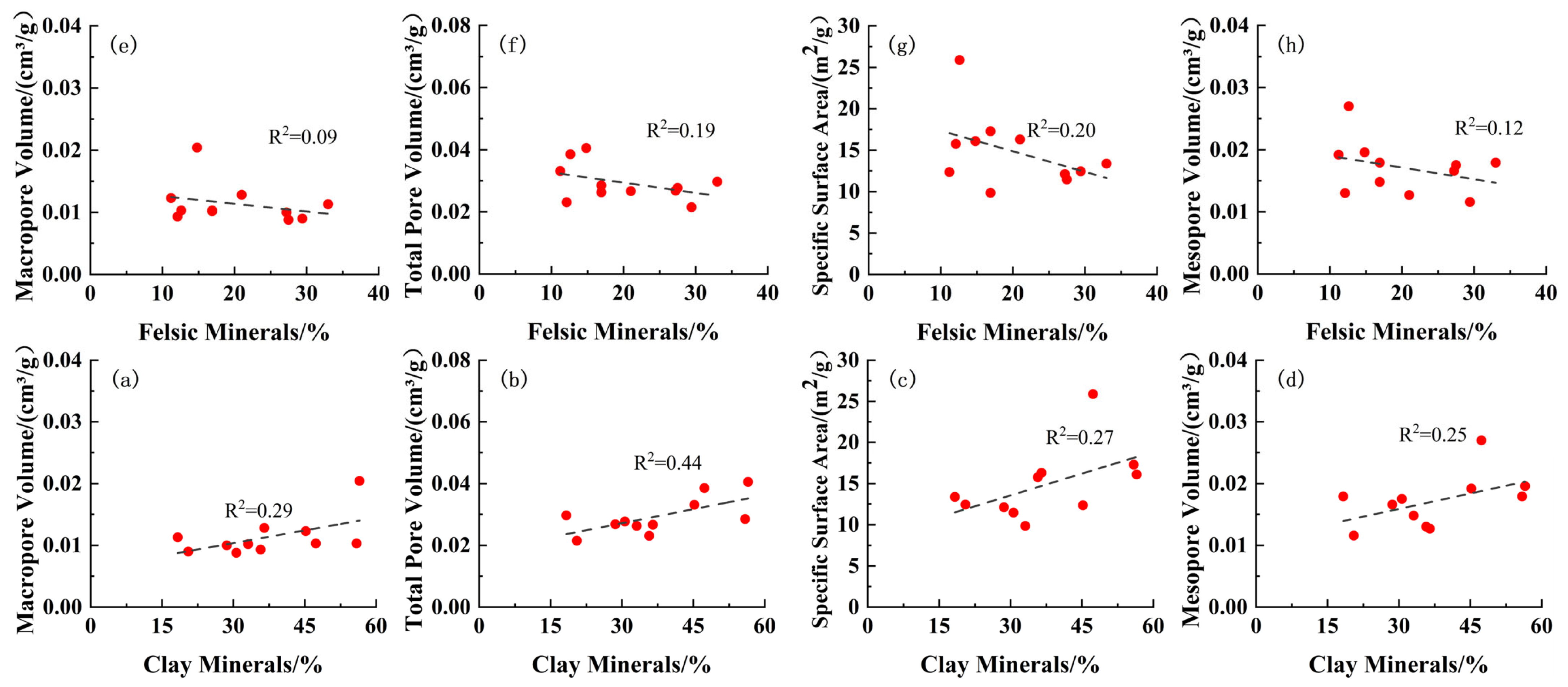
The pore structure of shales in the study area is mainly controlled by clay minerals and felsic minerals. They exhibit distinct influence mechanisms on the development of matrix porosity and fracture porosity. Clay minerals are key contributors to matrix porosity development. Both pore volume and specific surface area increase with increasing clay content, which is consistent with observations under field emission scanning electron microscopy (FE-SEM) that intergranular pores and clay mineral intercrystalline pores are well-developed in muddy shales. The flaky structure of clay minerals (especially illite and illite-smectite mixed layer) forms a large number of nano- to micro-scale intercrystalline pores and interlayer pores, which constitute the main body of the matrix pore network. Meanwhile, clay minerals often combine with organic matter to form organic-clay complexes, whose honeycomb, network, and fracture-like structures effectively enhance shale reservoir capacity. Such pores are widely developed in high-TOC muddy shales of the Gulong Sag and constitute one of the important spaces for oil and gas occurrence in shale reservoirs [23,35]. In contrast, there is a certain negative correlation with feldspar content (Figure 13), indicating that feldspar dissolved pores in the study area’s muddy shales are limited, with potential local enrichment in specific laminated shale units. This is mainly manifested by enhanced dissolution inside and at the edges of relatively coarse silt-sized feldspar grains. However, pores generated by feldspar dissolution during diagenesis are easily filled by cements formed by in situ deposition of dissolution products, resulting in a negative correlation between feldspar content and pore parameters, which significantly inhibits the preservation of inorganic matrix porosity. In addition, brittle minerals such as quartz and feldspar are prone to fracture under pressure, and their deformation differences from clay minerals facilitate the formation of microfractures inside minerals and at mineral interfaces. Analysis of 25 mm CT plug samples shows that intervals with good reservoir performance often develop tectonic microfractures or bedding-parallel microfractures, which act as primary seepage channels to connect pores of various types and scales, significantly improving the connectivity of shale reservoirs. Carbonate minerals have a relatively low content and thus make limited contributions to the pore structure. Although pyrite is not a dominant mineral, it exerts specific improving effects on the pore structure: FE-SEM observations reveal that a large number of regular nano-scale intercrystalline pores develop inside framboidal pyrite aggregates (associated with organic matter), and local pyrite enrichment can increase the mesopore volume and specific surface area of shales. As a rigid mineral, it has strong compaction resistance, which can effectively protect primary pores. Furthermore, the symbiotic interfaces between pyrite, clay minerals, and organic matter are prone to forming microfractures, slightly improving connectivity. Therefore, pyrite is a key influencing factor of the pore structure in organic-rich shales, and it is particularly significant for optimizing the storage performance and seepage capacity of inorganic matrix porosity.

6. Conclusions

(1) Based on the “mineral composition–sedimentary structure–organic matter abundance” classification scheme, the muddy shales of the K2qn1 in the Gulong Sag can be divided into seven lithofacies: High- and Medium-TOC Clay-bearing Felsic Shale, High- and Medium-TOC Felsic–Clayey Mixed Shale, High- and Medium-TOC Felsic-bearing Clay Shale, and Medium-TOC Felsic Shale. Among them, Felsic–Clayey Mixed Shale and Felsic-bearing Clay Shale possess both high-quality reservoir performance and excellent oil-bearing potential, serving as the core dominant lithofacies controlling shale oil enrichment.
(2) Shales of different lithofacies exhibit significant differentiation in hydrocarbon generation capacity and reservoir physical properties. The reservoir space of the K2qn1 muddy shales has the dual-porosity medium characteristic of “nano-pore adsorption (dominated by micro–mesopores) + macropore/microfracture seepage”, with an overall bimodal pore size distribution (mesopores: 2.34–54.42 nm; macropores: 1–10 μm), and their pore volume contributions are 58.1% and 38.8%, respectively. High-TOC Felsic–Clayey Mixed Shale exhibits strong hydrocarbon generation capacity, high movable oil content, and the most well-developed reservoir space, meeting the sweet spot criteria.
(3) The formation of the “bimodal” pore system in the K2qn1 shales of the Gulong Sag is synergistically controlled by organic–inorganic interactions during diagenetic evolution. This process is essentially the result of dynamic coupling between organic matter hydrocarbon generation and inorganic mineral changes, with obvious stage-specific characteristics in its evolution. As the thermal evolution degree of organic matter increases, dissolution and overpressure enhance the proportion of macropores, and the formation of organic pores also promotes the growth of total pore volume. The specific surface area and pore volume are mainly derived from clay mineral intercrystalline pores and microfractures. The felsic–clayey lamination combination effectively improves rock fracability. As key seepage channels, microfractures connect various types of pores to form a reticular pore-fracture system, providing the main reservoir space and seepage pathways for shale oil.

Author Contributions

Conceptualization, S.L., Z.L. and W.H.; methodology, S.L., Z.L. and W.H.; software, S.L., H.S. and W.W.; investigation, S.L. and W.W.; writing, S.L., H.S. and W.W.; data curation and visualization, S.L. and H.S.; supervision, H.S.; funding acquisition, Z.L. and W.H. All authors have read and agreed to the published version of the manuscript.

Funding

National Natural Science Foundation of China (Grant No. 41340030).

Institutional Review Board Statement

Not applicable.

Informed Consent Statement

Not applicable.

Data Availability Statement

All data and materials are available on request from the corresponding author. The data are not publicly available due to ongoing research using a part of the data.

Conflicts of Interest

The authors declare no conflicts of interest.

References

  1. Zou, C.N.; Yang, Z.; Cui, J.W.; Zhu, R.K.; Hou, L.H.; Tao, S.Z.; Yuan, X.J.; Wu, S.T.; Lin, H.S..; Wang, L.; et al. Formation Mechanism, Geological Characteristics and Development Strategy of Nonmarine Shale Oil in China. Pet. Explor. Dev. 2013, 40, 14–26. [Google Scholar] [CrossRef]
  2. Song, Y.; Li, Z.; Jiang, Z.; Luo, Q.; Liu, D.; Gao, Z. Progress and development trend of unconventional oil and gas geological research. Pet. Explor. Dev. 2017, 44, 675–685. [Google Scholar] [CrossRef]
  3. Fangzheng, J. Re-recognition of “unconventional” in unconventional oil and gas. Pet. Explor. Dev. 2019, 46, 847–855. [Google Scholar] [CrossRef]
  4. Liu, J.; Cao, J.; Wang, J.; Fei, L.; Wei, C.; Yang, Y.; Tang, W.; Xiao, D.; Qian, Y. Microscopic occurrence and self-containment mechanism of continental shale oil: Case study of Lucaogou Formation in Jimusaer sag, Junggar Basin. Acta Pet. Sin. 2025, 46, 1355. [Google Scholar] [CrossRef]
  5. Bai, X.F.; Lu, J.M.L. Hydrocarbon accumulation patterns and exploration potential of whole petroleum systems in northern Songliao Basin. Pet. Geol. Oilfield Dev. Daqing 2024, 43, 49–61. [Google Scholar] [CrossRef]
  6. Wang, X.; Baowen, C.U.I.; Zihui, F.; Hongmei, S.H.A.O.; Qiuli, H.U.O.; Bo, G.A.O.; Huasen, Z.E.N.G. In-situ hydrocarbon formation and accumulation mechanisms of micro-and nano-scale pore-fracture in Gulong shale, Songliao Basin, NE China. Pet. Explor. Dev. 2023, 50, 1269–1281. [Google Scholar] [CrossRef]
  7. Zhu, G.; Wang, X.; Zhang, J.; Liu, Z.; Bai, Y.; Zhao, Y. Enrichment conditions and favorable zones for exploration and development of continental shale oil in Songliao Basin. Acta Pet. Sin. 2023, 44, 110–124. [Google Scholar] [CrossRef]
  8. Li, F.; Wang, M.; Liu, S.; Hao, Y. Pore characteristics and influencing factors of different types of shales. Mar. Pet. Geol. 2019, 102, 391–401. [Google Scholar] [CrossRef]
  9. Bernard, S.; Wirth, R.; Schreiber, A.; Schulz, H.M.; Horsfield, B. Formation of nanoporous pyrobitumen residues during maturation of the Barnett shale (Fort Worth Basin). Int. J. Coal Geol. 2012, 103, 3–11. [Google Scholar] [CrossRef]
  10. Lu, Y.; Yang, F.; Bai, T.A.; Han, B.; Lu, Y.; Gao, H. Shale oil occurrence mechanisms: A comprehensive review of the occurrence state, occurrence space, and movability of shale oil. Energies 2022, 15, 9485. [Google Scholar] [CrossRef]
  11. Zhang, Q.; Liu, C.; Mei, X.; Qiao, L.J.Y. Status and prospect of research on microscopic shale gas reservoir space. Oil Gas Geol. 2015, 36, 666–674. [Google Scholar] [CrossRef]
  12. Han, Z.; Wang, G.; Wu, H.; Feng, Z.; Tian, H.; Xie, Y.; Wu, H. Lithofacies Characteristics of Gulong Shale and Its Influence on Reservoir Physical Properties. Energies 2024, 17, 779. [Google Scholar] [CrossRef]
  13. Li, Z.; Oyediran, I.A.; Huang, R.; Hu, F.; Du, T.; Hu, R.; Li, X. Study on pore structure characteristics of marine and continental shale in China. J. Nat. Gas Sci. Eng. 2016, 33, 143–152. [Google Scholar] [CrossRef]
  14. Sun, L.; Wang, X.; Feng, Z.; Shao, H.; Zeng, H.; Gao, B.; Jiang, H. Formation mechanisms of nano-scale pores/fissures and shale oil enrichment characteristics for Gulong shale, Songliao Basin. Oil Gas Geol. 2023, 44, 1350–1365. [Google Scholar] [CrossRef]
  15. Thommes, M.; Kaneko, K.; Neimark, A.V.; Olivier, J.P.; Rodriguez-Reinoso, F.; Rouquerol, J.; Sing, K.S. Physisorption of gases, with special reference to the evaluation of surface area and pore size distribution (IUPAC Technical Report). Pure Appl. Chem. 2015, 87, 1051–1069. [Google Scholar] [CrossRef]
  16. Wang, X.; Meng, Q.; Bai, Y.; Zhang, J.; Wang, M.; Liu, Z.; Sun, X.; Li, J.; Xu, C.; Xu, L.; et al. Millimeter-scale fine evaluation and significance of shale reservoir performance and oil-bearing property: A case study of Member 1 of Qingshankou Formation in Songliao Basin. Acta Pet. Sin. 2024, 45, 961–975. [Google Scholar] [CrossRef]
  17. Furmann, A.; Mastalerz, M.; Schimmelmann, A.; Pedersen, P.K.; Bish, D. Relationships between porosity, organic matter, and mineral matter in mature organic-rich marine mudstones of the Belle Fourche and Second White Specks formations in Alberta, Canada. Mar. Pet. Geol. 2014, 54, 65–81. [Google Scholar] [CrossRef]
  18. Liu, B.; Shi, J.; Fu, X.; Lü, Y.; Sun, X.; Gong, L.; Bai, Y. Petrological characteristics and shale oil enrichment of lacustrine fine-grained sedimentary system: A case study of organic-rich shale in first member of Cretaceous Qingshankou Formation in Gulong Sag, Songliao Basin, NE China. Pet. Explor. Dev. 2018, 45, 828–838. [Google Scholar] [CrossRef]
  19. Ross, D.J.K.; Bustin, R.M. The importance of shale composition and pore structure upon gas storage potential of shale gas reservoirs. Mar. Pet. Geol. 2009, 26, 916–927. [Google Scholar] [CrossRef]
  20. Gale, J.F.; Laubach, S.E.; Olson, J.E.; Eichhubl, P.; Fall, A. Natural Fractures in shale: A review and new observations. AAPG Bull. 2014, 98, 2165–2216. [Google Scholar] [CrossRef]
  21. Zhong, J.; Shengxin, L.I.U.; Yinsheng, M.A.; Chengming, Y.I.N.; Chenglin, L.I.U.; Zongxing, L.I.; Yong, L.I. Macro-fracture mode and micro-fracture mechanism of shale. Pet. Explor. Dev. 2015, 42, 269–276. [Google Scholar] [CrossRef]
  22. Sun, L.; Zhu, R.; Zhang, T.; Cai, Y.; Feng, Z.; Bai, B.; Jiang, H.; Wang, B. Advances and trends of non-marine shale sedimentology: A case study from Gulong Shale of Daqing Oilfield, Songliao Basin, NE China. Pet. Explor. Dev. 2024, 51, 1183–1198. [Google Scholar] [CrossRef]
  23. Sun, L.; Jia, C.; Zhang, J.; Cui, B.; Bai, J.; Huo, Q.; Xu, X.; Liu, W.; Zeng, H.; Liu, W. Resource potential of Gulong shale oil in the key areas of Songliao Basin. Acta Pet. Sin. 2024, 45, 1699–1714. [Google Scholar] [CrossRef]
  24. Chen, H.; Fu, L. Impact of pore structure on imbibition characteristics in Qingshankou Formation shale oil reservoirs, Songliao Basin. Spec. Oil Gas Reserv. 2025, 32, 94–103. [Google Scholar] [CrossRef]
  25. Yao, Y.; Xiao, F.; Li, S.; Yang, J.; Huang, Y.; Ye, C. Enrichment model of tight shale oil in the first Member of Cretaceous Qingshankou Formation in the southern Qijia sag, Songliao Basin. Acta Pet. Sin. 2024, 98, 3393–3407. [Google Scholar] [CrossRef]
  26. Lu, J.; Lin, T.; Li, J.; Fu, X.; Cui, K.; Gao, B.; Bai, Y.; Fu, X. Coupling mechanism of Gulong shale oil enrichment in Songliao Basin. Pet. Geol. Oilfield Dev. Daqing 2024, 43, 62–74. [Google Scholar] [CrossRef]
  27. Liu, B.; Meng, Q.; Fu, X.; Lin, T.; Bai, Y.; Tian, S.; Zhang, J.; Yao, Y.; Cheng, X.; Liu, Z. Composition of generated and expelled hydrocarbons and phase evolution of shale oil in the 1st member of Qingshankou Formation, Songliao Basin. Oil Gas Geol. 2024, 45, 406–419. [Google Scholar] [CrossRef]
  28. Liang, C.; Jiang, Z. Shale lithofacies and reservoir space of the Wufeng–Longmaxi formation, Sichuan Basin, China. Pet. Explor. Dev. 2012, 39, 736–743. [Google Scholar] [CrossRef]
  29. Liu, X.; Xiong, J.; Liang, L. Investigation of pore structure and fractal characteristics of organic-rich Yanchang formation shale in central China by nitrogen adsorption/desorption analysis. J. Nat. Gas Sci. Eng. 2015, 22, 62–72. [Google Scholar] [CrossRef]
  30. Song, Z.; Abid, A.; Lü, M. Quantitative analysis of nitrogen adsorption hysteresis loop and its indicative significance to pore structure characterization: A case study on the Upper Triassic Chang 7 Member, Ordos Basin. Oil Gas Geol. 2023, 44, 495–509. [Google Scholar] [CrossRef]
  31. Guo, X.; Shen, Y.; He, S. Quantitative pore characterization and the relationship between pore distributions and organic matter in shale based on Nano-CT image analysis: A case study for a lacustrine shale reservoir in the Triassic Chang 7 member, Ordos Basin, China. J. Nat. Gas Sci. Eng. 2015, 27, 1630–1640. [Google Scholar] [CrossRef]
  32. Shi, H.; Hu, W.; Li, T.; Li, Y.; Lu, D.; Liu, G. Pore throat structure characteristics of tight sandstone reservoirs and their influence on movable fluid occurrence: Taking the Chang-7 Member of Qingcheng area of Ordos Basin as an example. Bull. Geol. Sci. Technol. 2024, 43, 62–74. [Google Scholar] [CrossRef]
  33. Wang, H.; Niu, D.; Luan, Z.; Dang, H.; Pan, X.; Sun, P. Kinetic characteristics of secondary hydrocarbon generation from oil shale and coal at different maturation stages: Insights from open-system pyrolysis. Int. J. Coal Geol. 2025, 308, 104845. [Google Scholar] [CrossRef]
  34. Wan, J.; Yu, Z.; Huang, W. Reservoir space and controlling factors of lacustrine laminated shale oil reservoir: A case study of Cretaceous Qingshankou Formation in the Changling Sag, southern Songliao Basin, NE China. Nat. Gas Geosci. 2024, 35, 1671–1687. [Google Scholar] [CrossRef]
  35. Chang, J.; Fan, X.; Jiang, Z.; Wang, X.; Chen, L.; Li, J.; Chen, Z. Differential impact of clay minerals and organic matter on pore structure and its fractal characteristics of marine and continental shales in China. Appl. Clay Sci. 2022, 216, 106334. [Google Scholar] [CrossRef]
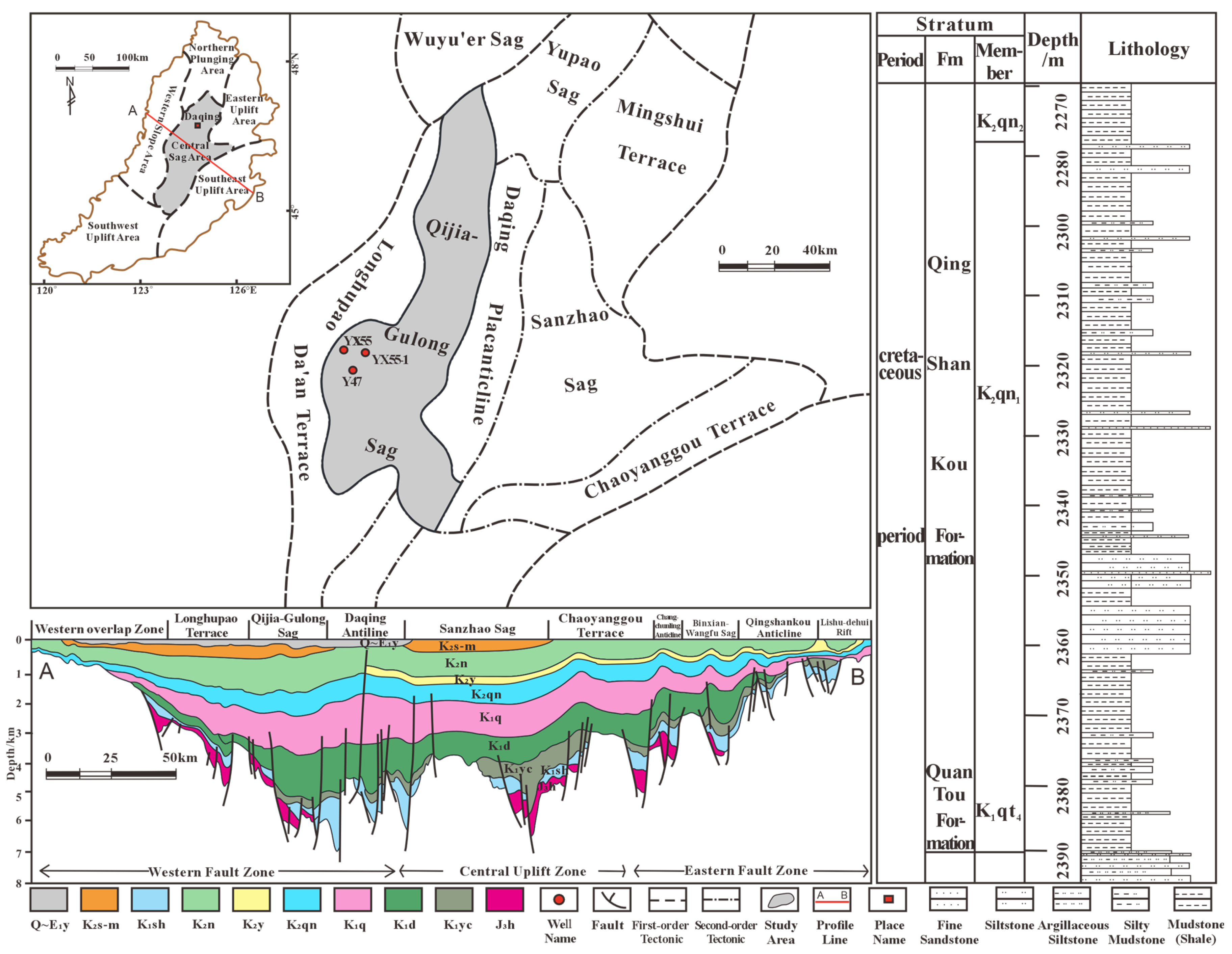
Figure 1. Regional geological setting and composite stratigraphic column of the Qing-1 Member in the Gulong Sag.
Applsci 16 00343 g001
Figure 2. Classification of shale facies in the Qing-1 Member, Gulong Sag. 1: Limestone/Dolomite; 2: Clay-Bearing Felsic Limestone/Dolomite; 3: Clay-Bearing Limestone/Dolomite; 4: Clay Shale; 5: Felsic-Bearing Clay Shale; 6: Dolomite/Limestone-Bearing Clay Shale; 7: Felsic Shale; 8: Dolomite/Limestone-Bearing Felsic Shale; 9: Clay-Bearing Felsic Shale; 10: Felsic-Dolomite/Limestone Mixed Shale; 11: Clay-Dolomite/Limestone Mixed Shale; 12: Felsic-Clay Mixed Shale.
Applsci 16 00343 g002
Figure 3. Types of shale reservoir spaces in the Qing-1 Member, Gulong Sag (a) 2447.35 m: Framboidal pyrite aggregates associated with organic matter; (b) 2446.25 m: Intergranular pores of clay minerals, intragranular dissolution pores of feldspar; (c) 2355.32 m: Intergranular pores of minerals, grain-boundary microfractures; (d) 2446.25 m: Intercrystalline pores of pyrite; (e) 2441.65 m: Feldspar dissolution pores; (f) 2446.25 m: Organic matter pores; (g) 2446.25 m: Intercrystalline pores of illite; (h) 2437.15 m: Organic matter pores; (i) 2437.15 m: Honeycomb-like organic matter pores; (j) 2428.15 m: Intergranular pores of clay minerals; (k) 2425.8 m: Organic matter pores; (l) 2418.59 m: microfractures.
Applsci 16 00343 g003
Figure 4. Low-Temperature CO2 Adsorption-Desorption Curves (a) and Incremental Pore Volume Pore Size Distribution (b) of Different Shale Facies in the Qing-1 Member, Gulong Sag.
Applsci 16 00343 g004
Figure 5. Low-Temperature N2 Adsorption-Desorption Curves and Pore Size Distribution of Different Shale Facies in the Qing-1 Member, Gulong Sag (a) Clay-bearing Felsic Shale; (b) Felsic-Clayey Mixed Shale; (c) Felsic-bearing Clay Shale; (d) Felsic Shale.
Applsci 16 00343 g005
Figure 6. High-Pressure Mercury Intrusion and Withdrawal Curves (a), Pore-Throat Distribution Frequency and Permeability Contribution (b) of Different Shale Lithofacies in the Qing-1 Member, Gulong Sag.
Applsci 16 00343 g006
Figure 7. 3D Pore Models and Fracture Models of Different Lithofacies in the Qing-1 Member, Gulong Sag (a) Clay-bearing Felsic Shale; (b) Felsic–Clayey Mixed Shale; (c) Felsic-bearing Clay Shale; (d) Felsic Shale.
Applsci 16 00343 g007
Figure 8. 3D Ball-and-Stick Connectivity Models of Different Lithofacies in the Qing-1 Member, Gulong Sag. (a) Clay-bearing Felsic Shale; (b) Felsic–Clayey Mixed Shale; (c) Felsic-bearing Clay Shale; (d) Felsic Shale.
Applsci 16 00343 g008
Figure 9. Pore Radius Distribution Diagram (a) and Throat Radius Distribution Diagram (b) of 25 mm Core Plug Samples from the Qing-1 Member, Gulong Sag.
Applsci 16 00343 g009
Figure 10. Combined Pore Size Characterization of Shales in the Qing-1 Member, Gulong Sag. (a) Clay-bearing Felsic Shale; (b) Felsic–Clayey Mixed Shale; (c) Felsic-bearing Clay Shale; (d) Felsic Shale.
Applsci 16 00343 g010
Figure 11. Relationships between TOC and S1 (a), and TOC and OSI (b) in Shales of the Qing-1 Member, Gulong Sag.
Applsci 16 00343 g011
Figure 12. Relationship between Pore Structure Parameters and TOC Values in Shales of the Qing-1 Member, Gulong Sag.
Applsci 16 00343 g012
Figure 13. Relationship between Pore Structure Parameters and Mineral Composition of Shales in the Qing-1 Member, Gulong Sag.
Applsci 16 00343 g013
Table 1. Pore Volume and Volume Contribution of Different Lithofacies in the Shales of the Qing-1 Member, Gulong Sag (Micropores-Mp, Mesopores-Ms, Macropores-Mc).
Well
Name
Abbrevia
tion
Well
Depth
TOC
/%
Felsic
/%
Clay
/%
Cabon-ate/%Pore Volume
(cm3/g)
Pore Volume
Proportion (%)
MpMsMcTotalMpMsMc
YX55-1HT-CBFS2378.91 m2.307461.530.62.90.00140.01750.00880.02775.05 63.18 31.77
YX55-1MT-CBFS2368.10 m1.558267.328.62.70.00010.01660.010.02680.37 62.17 37.45
YX55-1HT-FCMS2357.40 m3.7548.247.31.80.00120.0270.01030.03853.12 70.13 26.75
YX55-1MT-FCMS2382.06 m1.226547.245.23.60.00150.01920.01230.03314.55 58.18 37.27
YX55-1HT-FBCS2359.47 m2.337.756.53.40.00040.01960.02040.04050.99 48.51 50.50
YX55-1MT-FBCS2312.46 m1.5538.6255.883.480.00060.01790.01030.02852.08 62.15 35.76
YX55-1MT-FS2328.42 m1.471681.718.300.00060.01790.01130.02972.01 60.07 37.92
Y47MT-CBFS2351.67 m1.8955.133.19.40.00130.01480.01020.02634.80 56.36 38.84
Y47MT-FCMS2374.06 m1.9648.535.714.60.00080.0130.00930.02313.38 56.33 40.29
Y55HT-CBFS2388.28 m2.1653.336.54.60.00120.01270.01280.02674.46 47.58 47.96
Y55MT-FS2376.32 m1.296360.320.516.70.00090.01160.0090.02154.19 53.95 41.86
Disclaimer/Publisher’s Note: The statements, opinions and data contained in all publications are solely those of the individual author(s) and contributor(s) and not of MDPI and/or the editor(s). MDPI and/or the editor(s) disclaim responsibility for any injury to people or property resulting from any ideas, methods, instructions or products referred to in the content.