1. Introduction
Complex geological environments and frequent seismic activities in China are highly prone to inducing secondary geological hazards, such as landslides [
1,
2]. Slope toppling failure, defined by rotation, bending or fracturing along the structural planes of rock blocks under gravity or external loads [
3,
4], is common in secondary landslides triggered by seismic loads and has become a major hazard threatening engineering safety and regional stability [
5,
6]. For example, the 2008 Wenchuan earthquake triggered several slope toppling events, including the Xiaojianping landslide, the Guanshan landslide, the Zhaiziya landslide and the Heifengkou landslide [
7,
8,
9].
Recently, some scholars carried out extensive studies on the dynamic responses, failure mechanisms, and stability analyses of rock slopes toppling under seismic loads [
10,
11,
12]. Physical model tests [
13,
14] and numerical simulations [
15,
16] are often adopted to intuitively reveal the variation trends of slope acceleration, displacement and strain. However, physical model tests are affected by model scaling effects, which challenge fully reproducing the geological conditions and dynamic responses of the prototype slope [
17]. Numerical simulations, in turn, depend heavily on parameter calibration and require high computational costs [
18], which makes them difficult to apply rapidly for stability analyses in engineering settings.
Theoretical analysis has become a core area of research priority for scholars to derive analytical solutions by establishing geometric and mechanical models of slopes [
19]. The pseudo-static method equates seismic loads to static inertial forces, and uses limit equilibrium equations to evaluate slope stability [
20,
21]. The pseudo-dynamic method accounts for the fluctuation features of seismic waves, where the seismic inertial force is expressed as a function of time and space [
22,
23,
24,
25]. Meanwhile, the permanent displacement method quantifies the extent of slope instability based on the displacement rather than the safety factor [
26,
27,
28,
29]. Among these analytical approaches, the pseudo-static method is widely used in engineering due to its excellent model versatility and straightforward calculation process. Based on the limit equilibrium method, Goodman and Bray [
6] proposed a mathematical solution called the ‘step-by-step’ approach, which has been further developed by Guo et al. [
30] to account for the effects of seismic loads. Liu et al. [
31,
32] proposed a transfer coefficient method for analyzing the toppling stability of rock slopes under seismic loads by defining two parameters, the transfer coefficient and the equivalent toppling weight, and introducing them into the analysis. Qu et al. [
33] derived an analytical solution for flexural toppling under seismic loads through modifications to the cantilever beam method [
34].
The aforementioned studies have laid the groundwork for investigating rock slope toppling under seismic loads. However, existing analytical methods for block toppling failure under seismic loads still have certain limitations. There is a deviation between the assumptions in the existing models and the practical engineering conditions. Specifically, these models often assume two sets of orthogonal discontinuous structural planes, and when the number of rock blocks is excessively large, the calculation process becomes cumbersome [
35]. Bobet et al. [
36] proposed an analytical solution that assumes rock slopes as continuums. Sagaseta et al. [
37] found that when the length–width ratio of rock blocks reaches about 20, the proposed solution can accurately calculate slope stability. Liu et al. [
38] improved the solution and pointed out that the transition position at which rock blocks convert from toppling to sliding should be determined through the application of the limit friction equilibrium condition at the block base. Currently, no scholars have calculated the toppling stability of slopes with non-orthogonal structural plane blocks under seismic loads by pseudo-continuous medium methods.
Therefore, considering the non-orthogonal features of structural planes in practice and the effects of seismic loads, an improved pseudo-continuous medium method is proposed, and accordingly, the determination equation of the transition position from toppling to sliding is deduced. The reliability and applicability of the proposed method are validated by a case study, physical model test and comparison with existing analytical solutions. Finally, the effects of seismic loads on slope stability are analyzed in detail. The method proposed in this study can quickly and accurately evaluate the toppling stability and failure mode of rock slope blocks under seismic loads. The research improves the theoretical system of rock slope toppling failure under seismic loads and provides technical support for the seismic design of rock slopes in high-seismic-intensity regions.
2. Theoretical Analyses
2.1. Mechanical Model of Toppling Failure
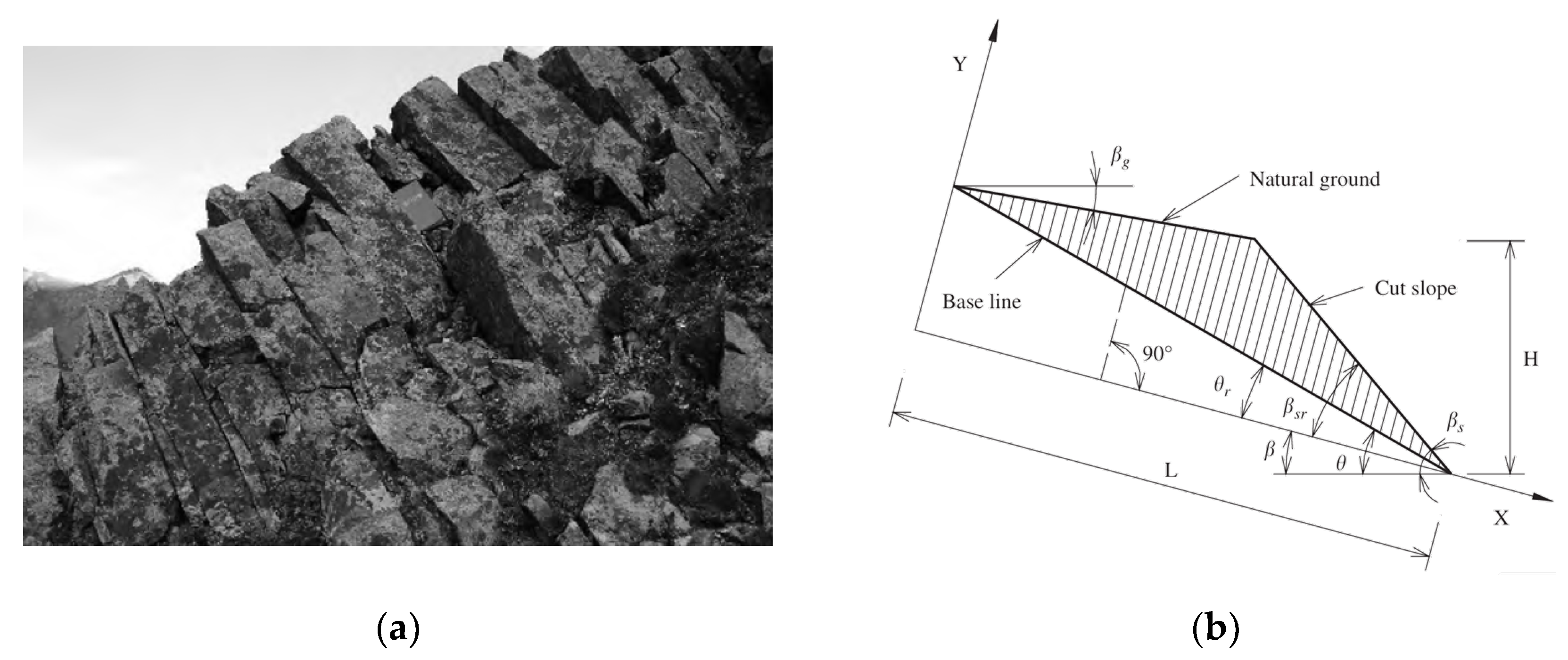
Figure 1a shows a typical phenomenon of block toppling failure. The slope is divided into a collection of rock blocks by a primary discontinuity set such as bedding or foliation, with steep inward dips and a strike approximately parallel to the slope.
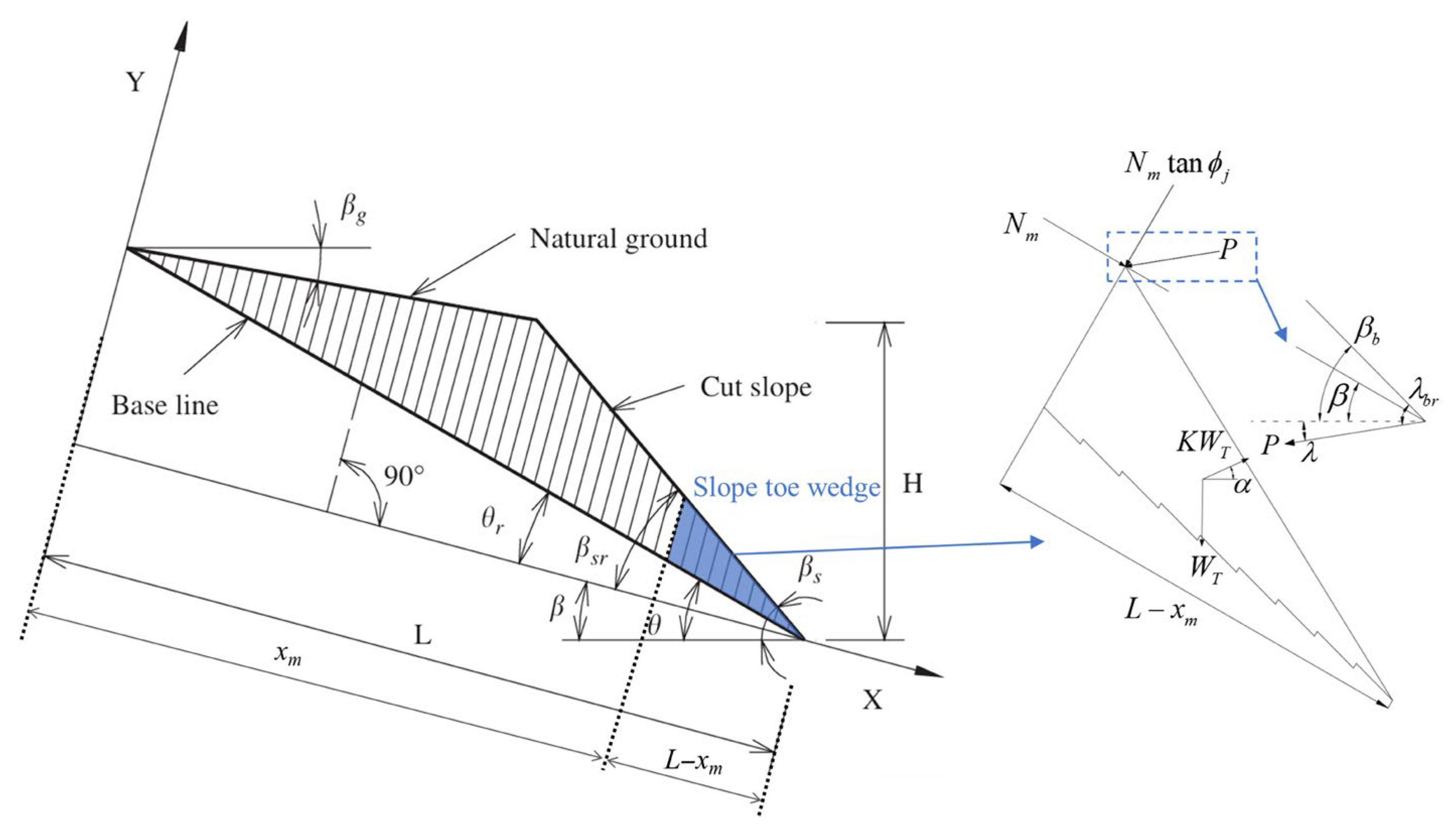
Figure 1b illustrates the geological model for block toppling under seismic loads, where the X- and Y-axes of the Cartesian coordinate system are perpendicular to and parallel to the dip of the dominant discontinuities, respectively.
Based on the existing limit equilibrium approach of block toppling failure proposed by R.E. Goodman and J.W. Bray [
4], and the pseudo-static method for earthquakes [
40], the following three basic assumptions are still adopted in the analysis process: (1) the side faces of the rock blocks satisfy the limit friction equilibrium condition; (2) the normal force between the adjacent rock blocks is applied to the tops of the rock blocks; and (3) the seismic loads are treated as constant forces acting on the centroid of the rock blocks, which can be angled with the horizontal plane.
According to the coordinate system, the expressions for the reference lines of the slope surface,
ys, and the toppling failure surface,
yb, can be written as
where
βgr,
βsr and
θr are, respectively, the angles of the natural ground surface, the cut slope surface, and the failure surface with respect to the line normal to the dominant discontinuities, where the forms of
βgr =
βg −
β,
βsr =
βs –
β,
θr =
θ −
β;
βg,
βs and
θ are, respectively, the dip angle of the natural ground surface, the dip angle of the cut slope surface and the apparent dip angle of the failure surface;
β is the dip angle of the normal line of the dominant discontinuities;
xc is the abscissa of the slope crest; and
L is the slope length along the line normal to the steep structure surface.
According to
Figure 1b, the expressions of parameters
L and
xc can be expressed as
where
H is the slope height.
Taking the slope crest as the boundary, the height of the rock blocks,
h, can be obtained as follows:
2.2. Establishment of Mechanical Equations
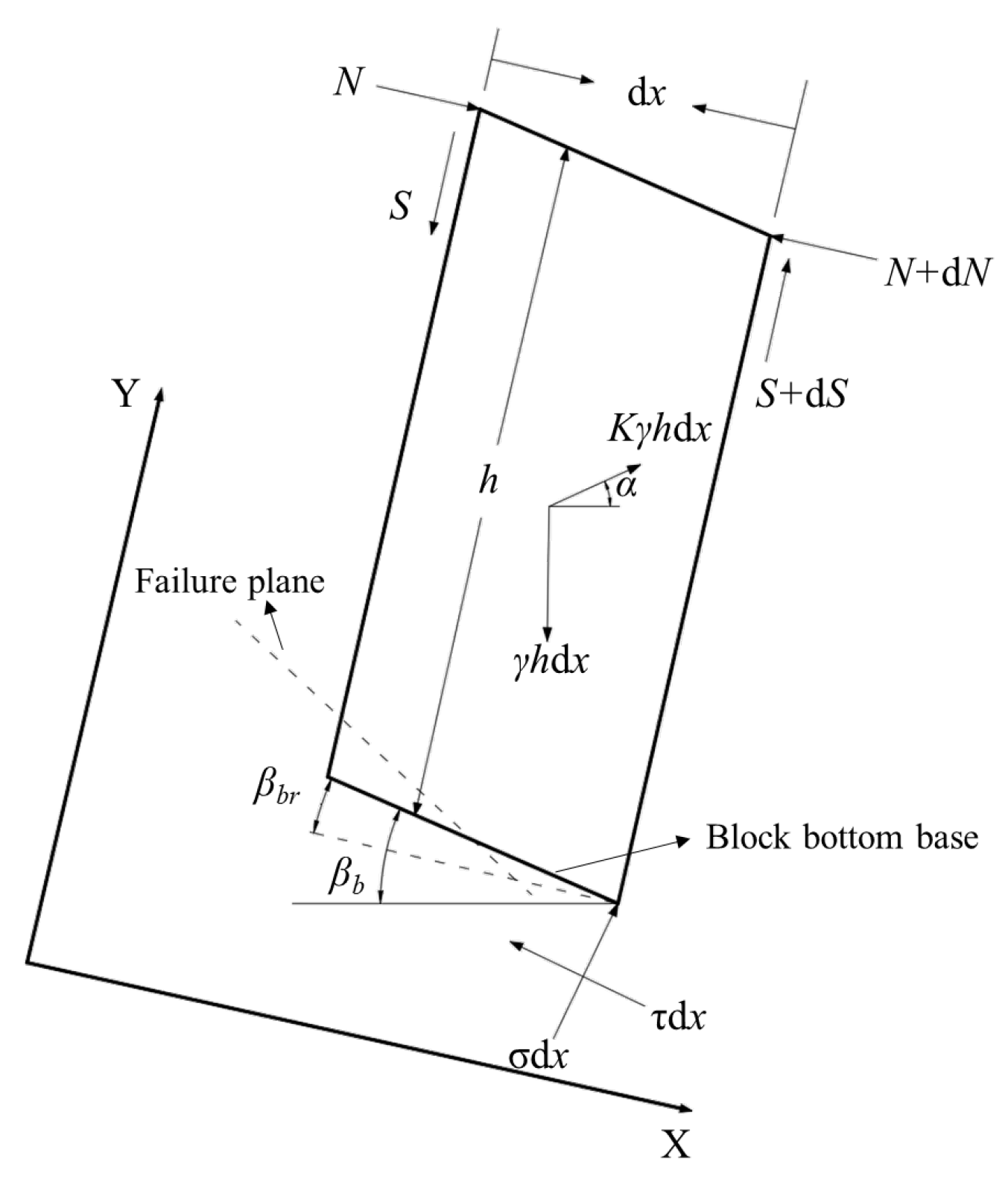
The rock blocks in the slope are regarded as micro-blocks, with a width of dx, when the spacing of dominant discontinuities in
Figure 1b approaches an infinitely small value. Based on the above three basic assumptions and considering the non-orthogonal characteristics of structural planes, the mechanical model of the micro-block under seismic loads can be depicted in
Figure 2. The midpoints of the bottom base of each block are connected to form the baseline of the failure surface.
According to
Figure 2, the toppling limit equilibrium expressions of the micro-block under seismic loads have the following forms:
where
N and
S are, respectively, the normal and shear forces between adjacent rock blocks;
γ is the weight of the block;
K is the seismic influence coefficient;
α is the angle between the direction of the seismic load and the horizontal plane, with positive values representing an upward direction;
βb is the dip angle of the block base;
βbr is the angle between the bottom base of the block and the normal line of the dominant discontinuities with the form
βbr =
βb −
β;
ϕj is the friction angle of the side of the block; and
σ and
τ are the normal stress and shear stress at the base of the block.
Accordingly, the limit equilibrium expressions of sliding failure can be written as
where
ϕb is the friction angle of the block base.
2.3. Analytical Solutions
To simplify the subsequent analysis, the following auxiliary parameters are introduced
By defining As, Ag and Aj as the differences between the tangent values of βgr, βsr and ϕj and tanθr, respectively, the deviation between the key parameters of the slope and the angle of the failure surface is quantified, which avoids subsequent repeated calculation and reduces the complexity of the derivation formula.
It can be found that Equation (6) is a first-order linear nonhomogeneous ordinary differential equation, and the standard form is d
N/d
x +
P(
x)
N =
Q(
x). At the same time, the integral factor is
x(Ag−Aj)/Ag. Integrating Equation (6) with the boundary condition of
P = 0 when
x = 0, the solutions of
N for toppling above the crest can be integrated to yield
Substituting Equations (7) and (8) into Equation (6), the solutions of
σ and
τ for toppling above the crest can be integrated to yield
When toppling failure occurs, the micro-block should be in sliding stable state, namely
Plugging Equations (14) and (15) into Equation (16) results in
Equation (17) is the criterion of slope instability mode under a seismic load. When the gradient of the block bottom base of the slope does not meet the requirements of Equation (17), the slope will undergo sliding failure rather than toppling failure under the seismic load. In this case, the slope can be regarded as a whole for sliding analysis, and the supporting force required to maintain the stability of the slope against sliding,
P, can be obtained as
Toppling failure occurs in the slope when Equation (17) is satisfied. At the same time, the integral factor is (
L −
x)
(Aj−As)/As. The general solutions for toppling below the slope crest can be obtained by integrating Equations (6)–(8), subject to the boundary condition of
, with the forms
2.4. Determination of Failure Mode Transition Location
It can be observed from Equation (19) that the supporting force required at the slope toe is zero when Aj ≥ As, while infinite when Aj < As. That is to say, under the toppling failure mode, the slope would either be in a state of limit equilibrium or toppling failure, which is obviously inconsistent with the actual situation. Therefore, there must be a critical point from the crest to the toe, xm, in which the failure mode transitions from toppling to sliding.
The three cases of Aj > As, Aj < As and Aj = As are discussed below, respectively.
2.4.1. Case 1: Aj > As (ϕj > βsr)
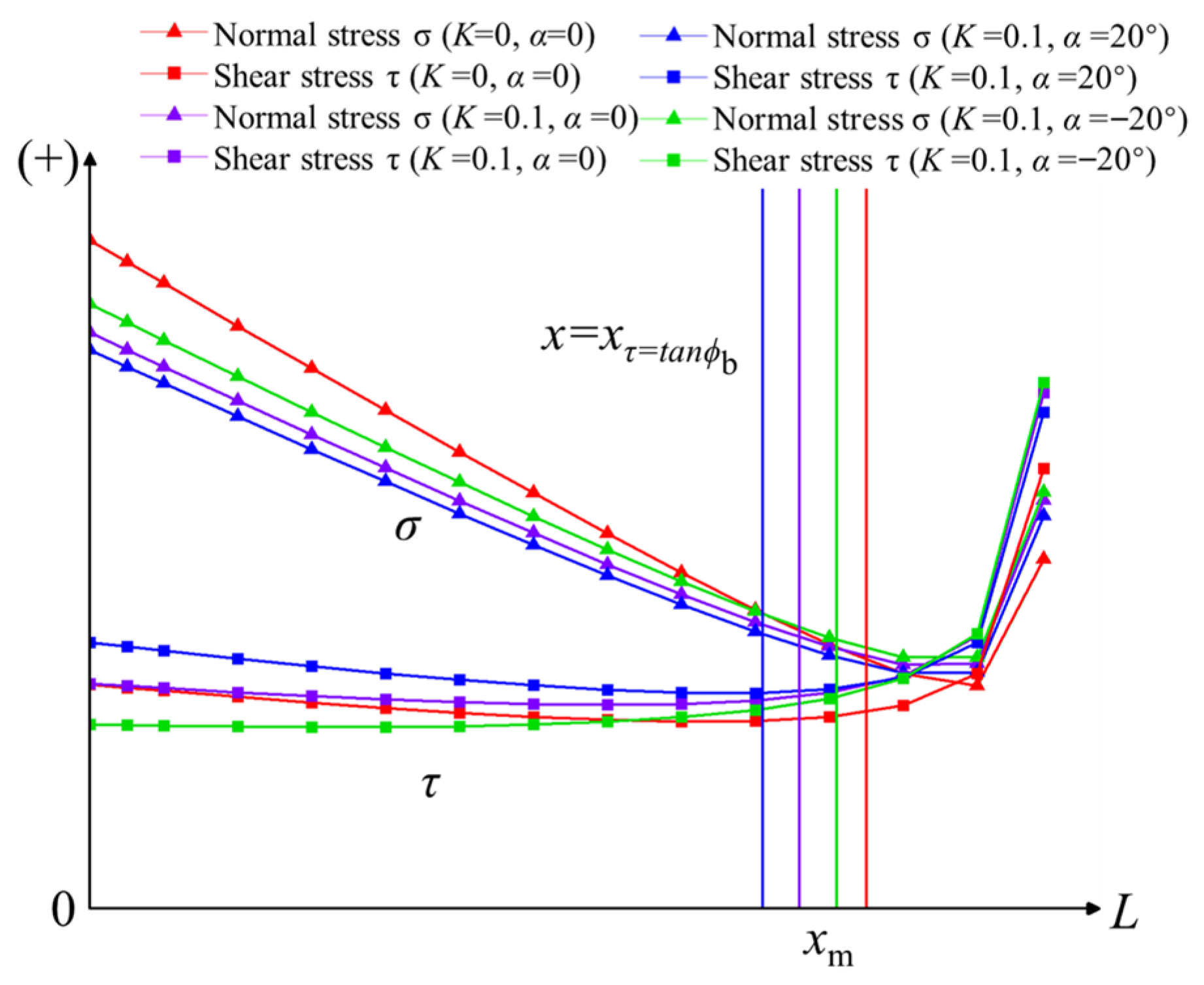
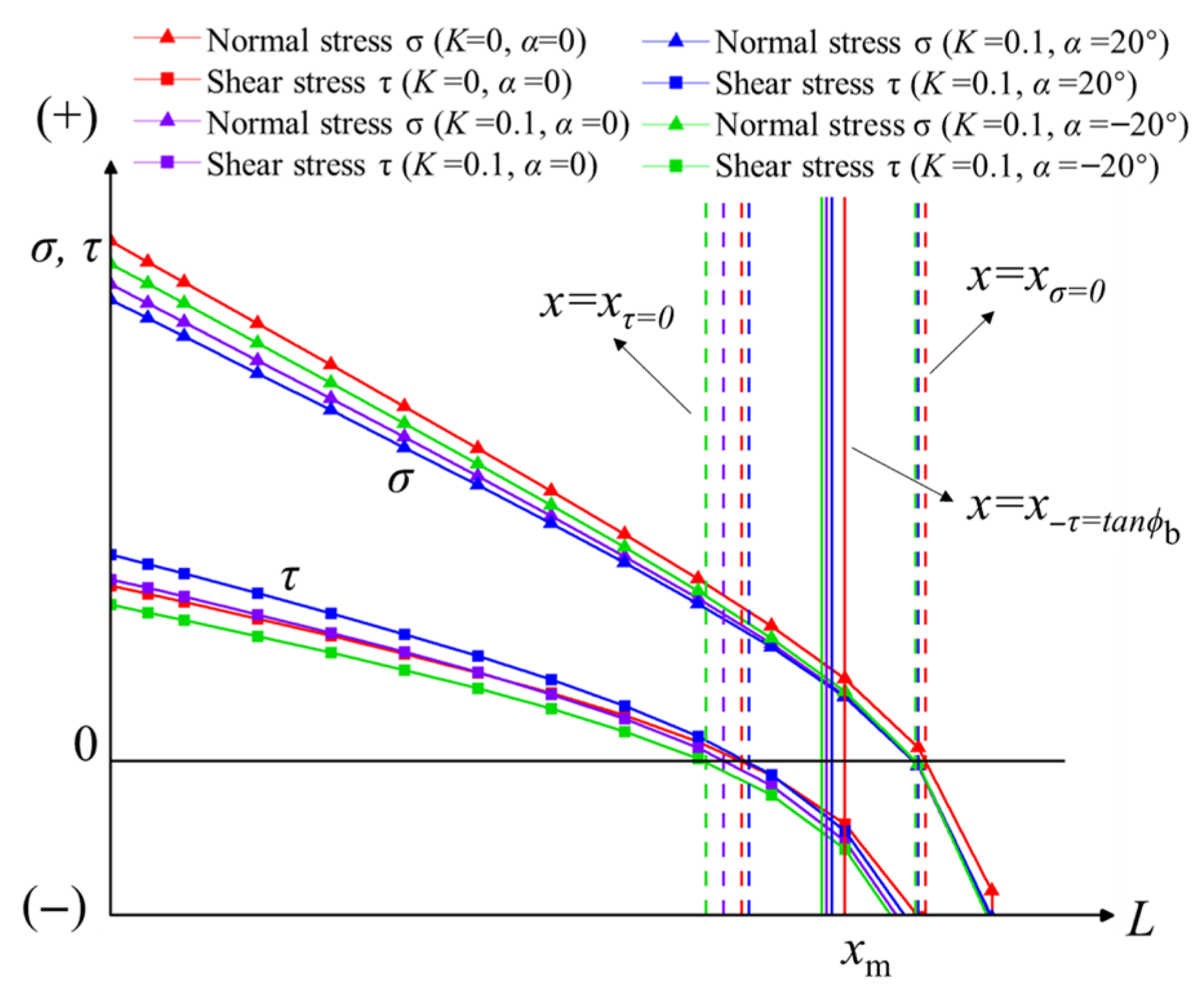
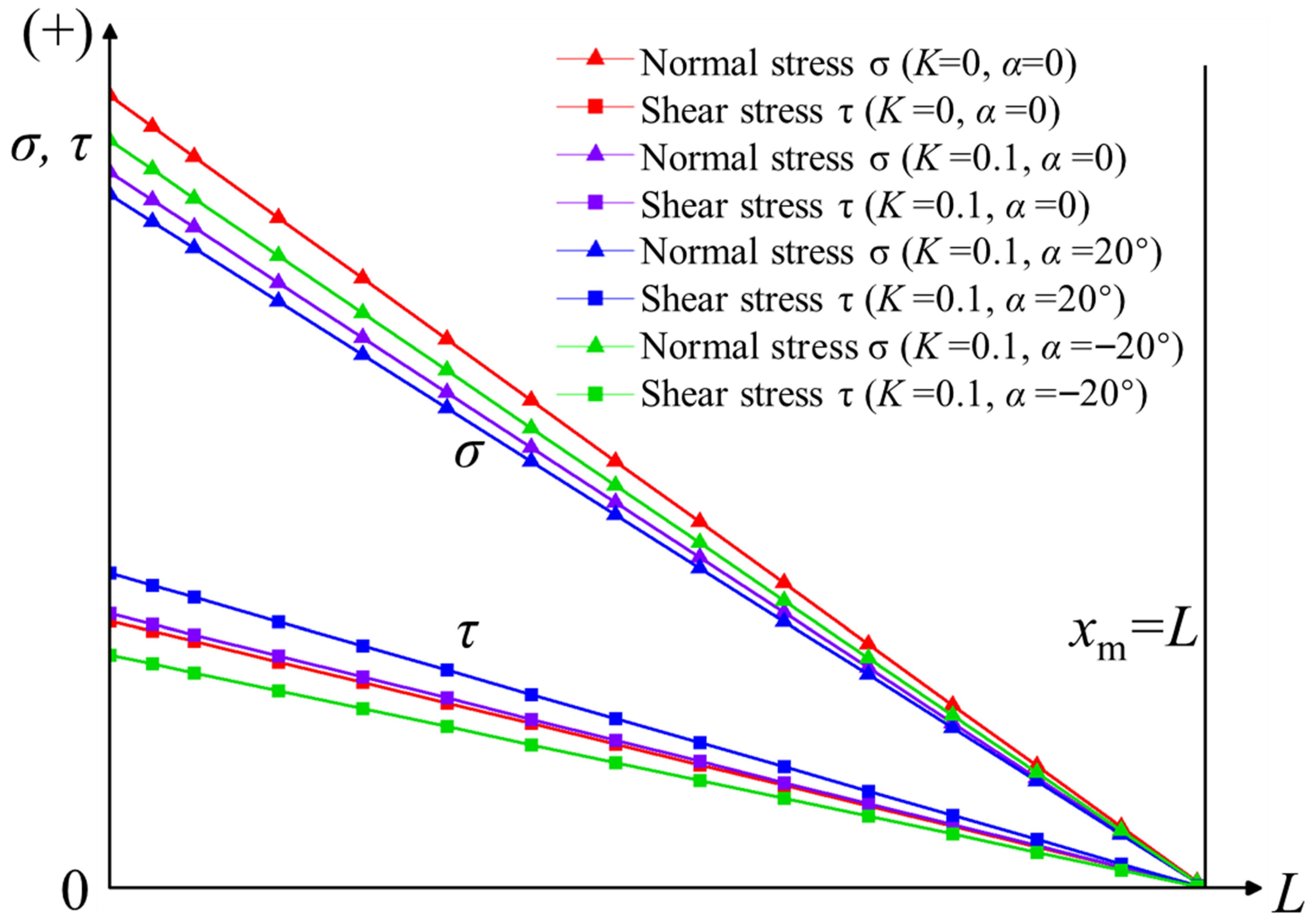
Figure 3 shows the stress curves of the block base when
Aj >
As. With increasing the abscissa value, both the normal stress and shear stress of the micro-block decrease first and then increase. When the stress on the micro-block base reaches the limit equilibrium condition, that is,
τ =
σtan
ϕb, the abscissa of the failure mode transition point,
xm, can be obtained by combining Equations (20) and (21), as
Correspondingly, the slope toe wedge below the transition point,
xm, undergoes sliding failure as a whole, as shown in
Figure 4.
The normal force, transmitted from the upper toppling rock blocks, acting at the transition point and the self-weight of the slope toe wedge jointly determine the supporting force required to maintain sliding stability,
P. The expression can be readily obtained as shown below
where
WT is the weight of the wedge toe with the form
WT =
γAs(
L −
xm)
2/2;
λ is the incidence angle of the supporting force,
P;
λbr is the supporting force and the normal line of the dominant discontinuities with the form
λbr =
λ −
β; and
Nm is the normal force acting at the block at
xm, which can be obtained by combining Equations (19) and (22).
2.4.2. Case 2: Aj < As (ϕj < βsr)
Figure 5 shows the stress curves of the micro-block base when
Aj <
As. It can be observed that the normal and shear stresses gradually decrease with increases in the abscissa value, and that the value of the shear stress turns negative earlier than the value of the normal stress. Before the normal stress reaches zero, therefore, there must be a critical point that satisfies −
τ =
σtan
ϕb, which is the transition position of the micro-block failure mode.
From Equations (19) to (21), and combined with −
τ =
σtan
ϕb, the solution for the failure mode transition position of the micro-block under the seismic loads can be written as
Similarly, the supporting force, P, can be calculated by combining Equations (19), (23) and (24).
2.4.3. Case 3: Aj = As (ϕj = βsr)
The condition
Aj =
As serves as the limiting condition of Cases 1 and 2. From the stress curves of the micro-block base (
Figure 6), it can be found that when
Aj =
As, both the normal and shear stresses of the micro-block decrease linearly to zero with increases in the abscissa value, and the slope is toppled as a whole. The abscissa of the failure mode transition position is
xm =
L.
At this time, the expression of rock toppling at the lower part of the slope crest under seismic loads can be simplified as
It is easy to give the value of the supporting force by submitting Equation (25) into Equation (23) and setting WT = 0.
2.5. Calculation Programming
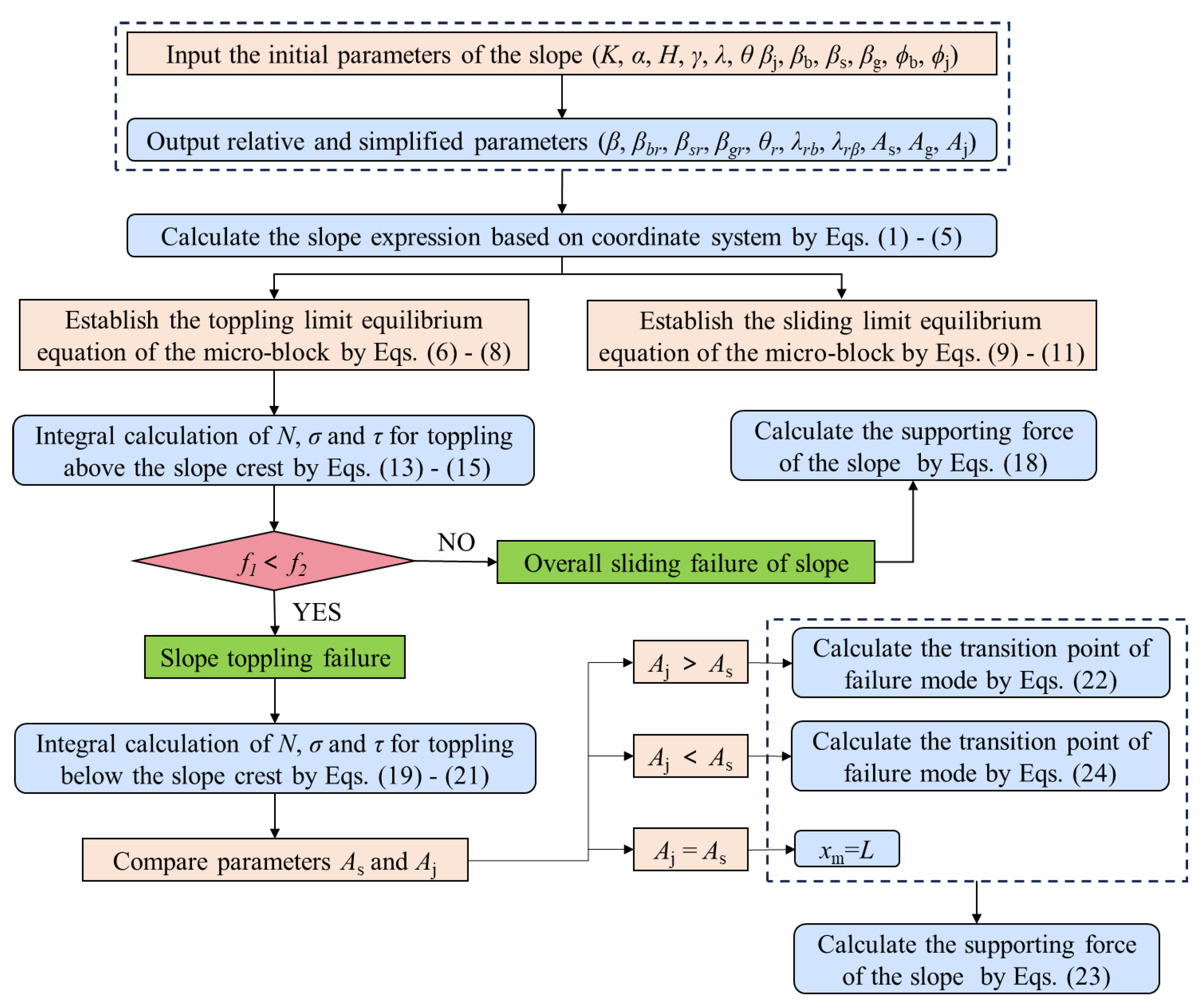
When the developed method is adopted to evaluate the toppling stability of a rock slope under seismic loads, the required parameters should be obtained through field investigations and laboratory tests. In order to facilitate the application of the analytical solution, a calculation program has been developed and the process of program analysis is summarized as follows:
(1) The initial parameters are input to calculate the output parameters and the geological parameters.
(2) The limit equilibrium equations of the toppling and sliding of micro-blocks under seismic load are established.
(3) The instability mode of the slope under a seismic load is determined by Equation (16) or Equation (17).
(4) If sliding occurs, the support force required for slope stability is calculated directly by Equation (18), or the supporting force required for supporting the toppling stability will be given by different computation modules according to the values of As and Aj.
A comprehensive flow chart based on the proposed approach is displayed in
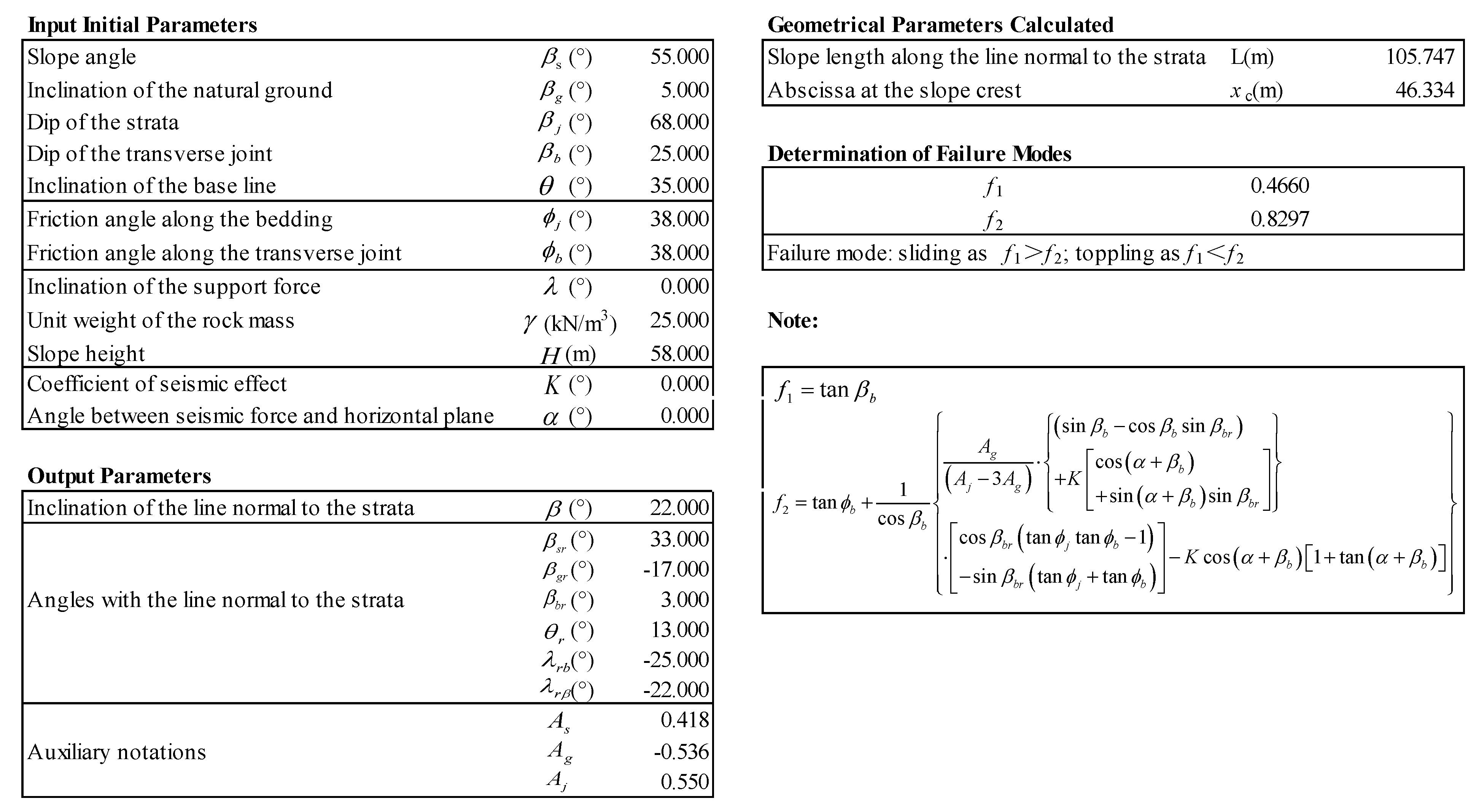
Figure 7, and the calculation program is shown in
Figure 8 and
Figure 9. The
f1 and the
f2 defined in
Figure 8 are calculated to determine the equation from Equation (17).
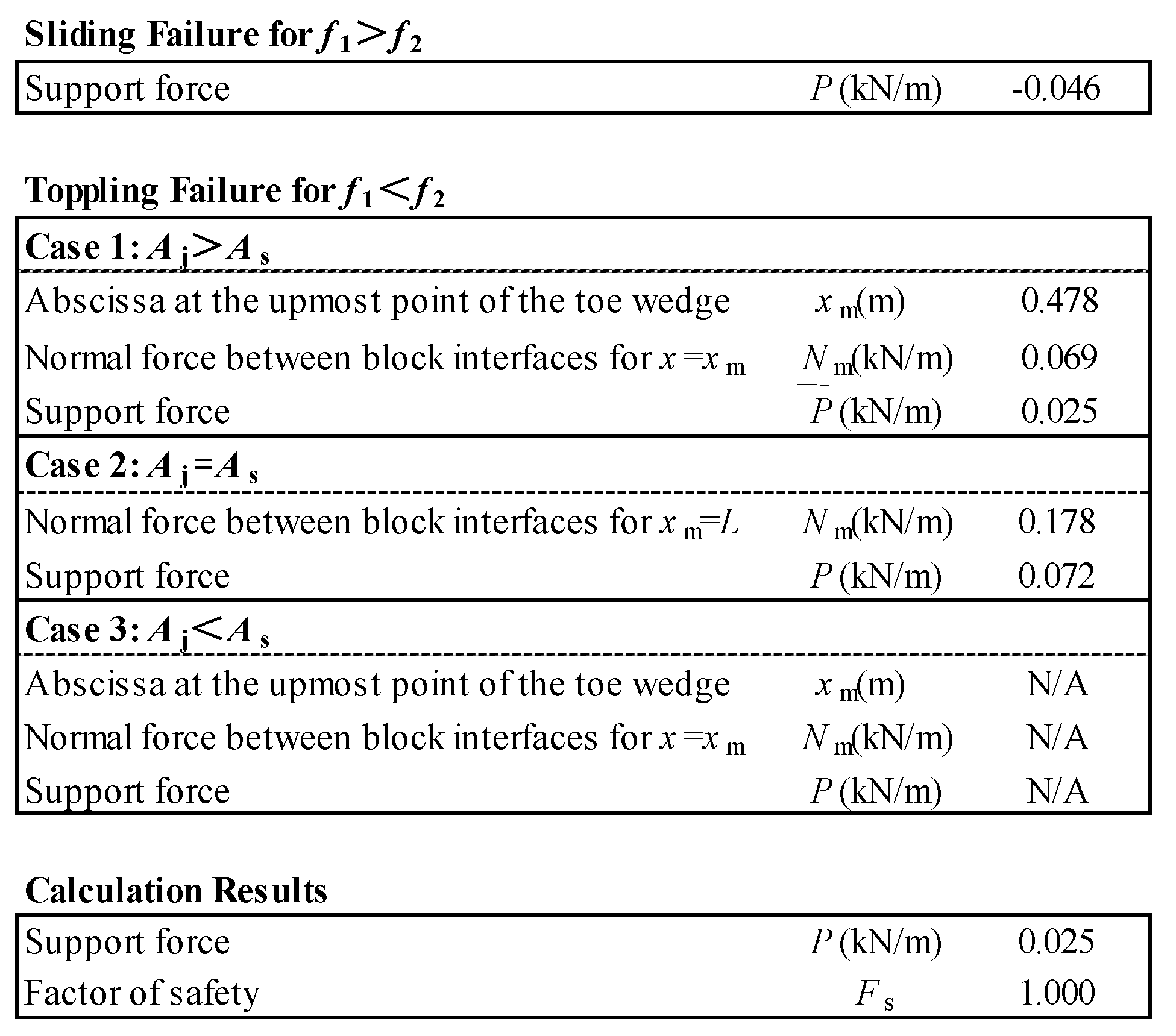
The calculation program shown in
Figure 9 determines the sliding or toppling failure of the slope by comparing the relationship between
f1 and
f2. When
f1 <
f2, the slope is at the point of toppling failure. At this time, according to the relationship between
As and
Aj, different formulas are substituted to calculate the support force and safety factor required for the slope, and they are displayed in the calculation results. On the contrary, the slope is a sliding failure and the calculation results are directly output.
4. Parameter Analysis
To further investigate the impact of seismic loads on slope stability, the parameter analysis was conducted using the physical and mechanical parameters of the slope provided in Liu’s transfer coefficient method. The values of
H,
t,
γ,
βb,
βs,
βg,
θ,
ϕj and
ϕb are 58, 5, 25, 25, 55, 5, 35, 38 and 38, respectively [
32]. For each parameter analysis below, only the value of the target parameter is varied, unless otherwise specified. The relationship between the seismic influence coefficient,
K, and the required supporting force,
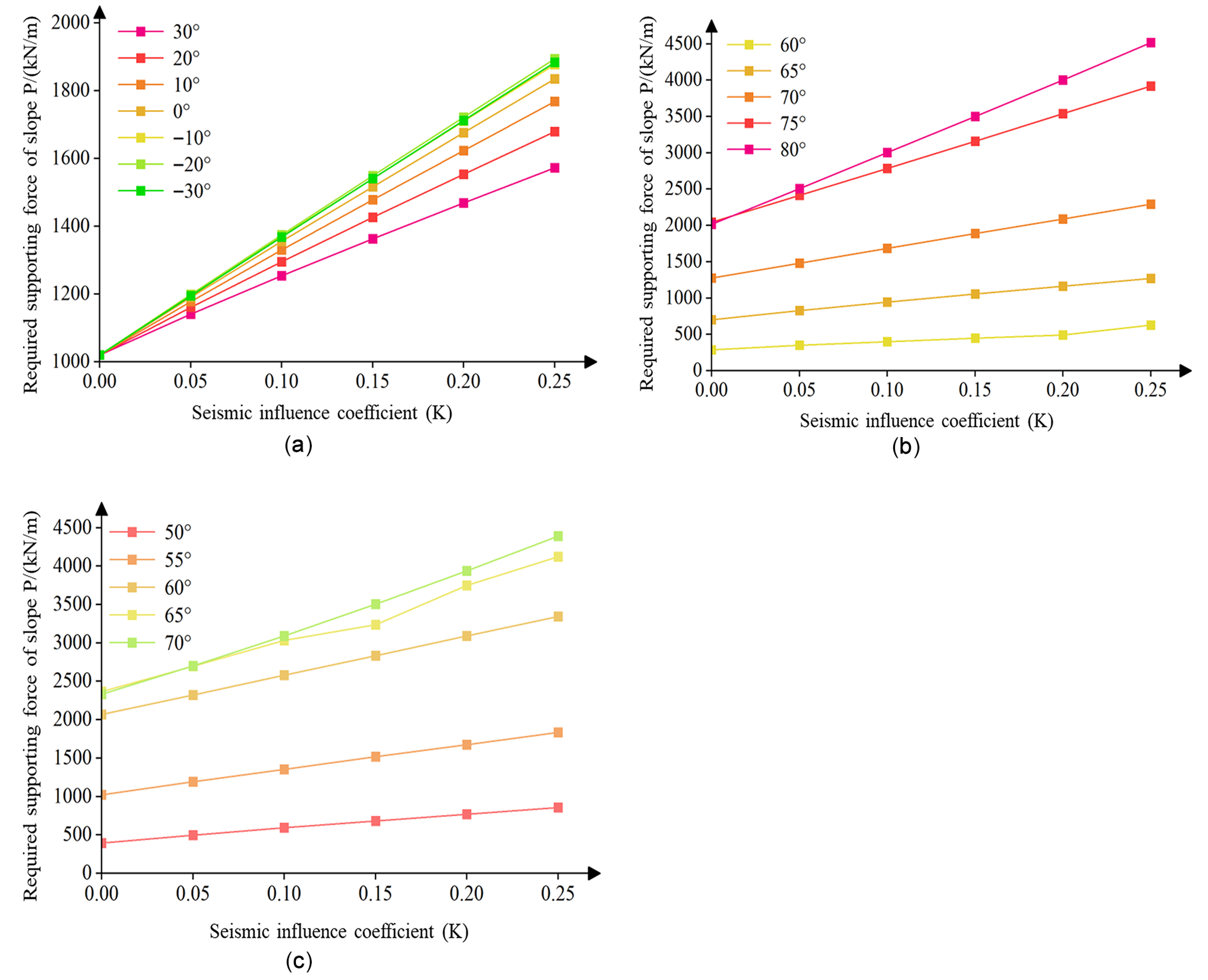
P, is depicted in
Figure 13.
It can be observed from
Figure 13a that seismic loads exert a big negative effect on the stability of the slope toppling. When
K = 0, the required supporting force of the slope,
P, is 1020.5 kN/m. With increasing the seismic influence coefficient, the required supporting force increases. When
K = 0.25, the required supporting force of the slope,
P, is 1572.73 kN/m. Additionally, the slope supporting force decreases as the angle between the seismic loads and the horizontal plane increases. For example, when
K = 0.20,
α is 30° and −30°, respectively, the values of the required supporting force of the slope,
P, are 1468.63 kN/m and 1712.73 kN/m.
Figure 13b,c show the influence of the dip angle of the dominant discontinuities and the slope angle on the slope support force. With rises in the dip angle of the steep structure surface or the slope angle, the supporting force required for the slope increases. It can also be observed that the support force increases with increases in both the dip angle of the steep structure surface and the slope angle. For example, when
K = 0.15, the required supporting force of the slope,
P, corresponding to the dip angles of steep structural surfaces of 70° and 80°, is 1899.23 kN/m and 3499.427 kN/m, respectively, with an increase of 84.25%. Correspondingly, when
K = 0.1, the slope angles of 60° and 70° correspond to
P values of 2577.76 kN/m and 3091.75 kN/m, respectively, which are a relative increase of 19.94%.
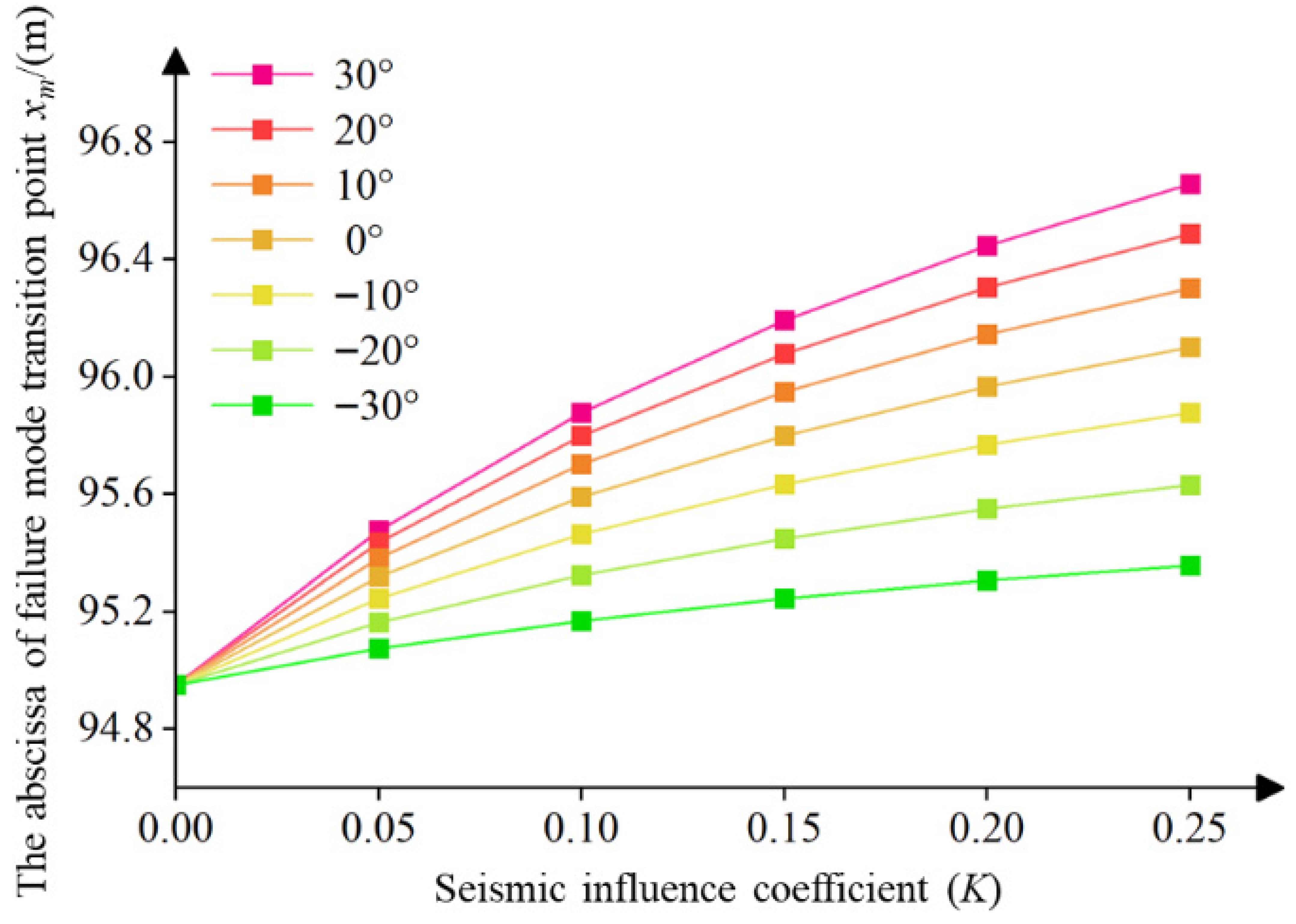
Figure 14 shows the relationship between the seismic influence coefficient and the transition position of the failure mode of the micro-block. It can be observed that with increasing K values, the value of xm increases, indicating that the transition position of the failure mode moves to the slope toe. When K increases from 0 to 0.25, the positions of xm corresponding to the angle between the direction of the seismic load and the horizontal plane, α, of 30° and −30° change from 94.95 m to 96.66 m and 95.35 m, respectively, increasing by 1.8% and 0.42%, indicating that when α < 0, the seismic action has a greater impact on slope stability.
As in the above presentation, the failure mode of a rock slope under seismic loads can be determined by Equation (17). There exists a critical seismic influence coefficient, Kcr, acquired by setting f1 = f2, and in this case, the slope will slide as a whole. Therefore, it is prudent to discuss the influence of different factors on the critical seismic influence coefficient.
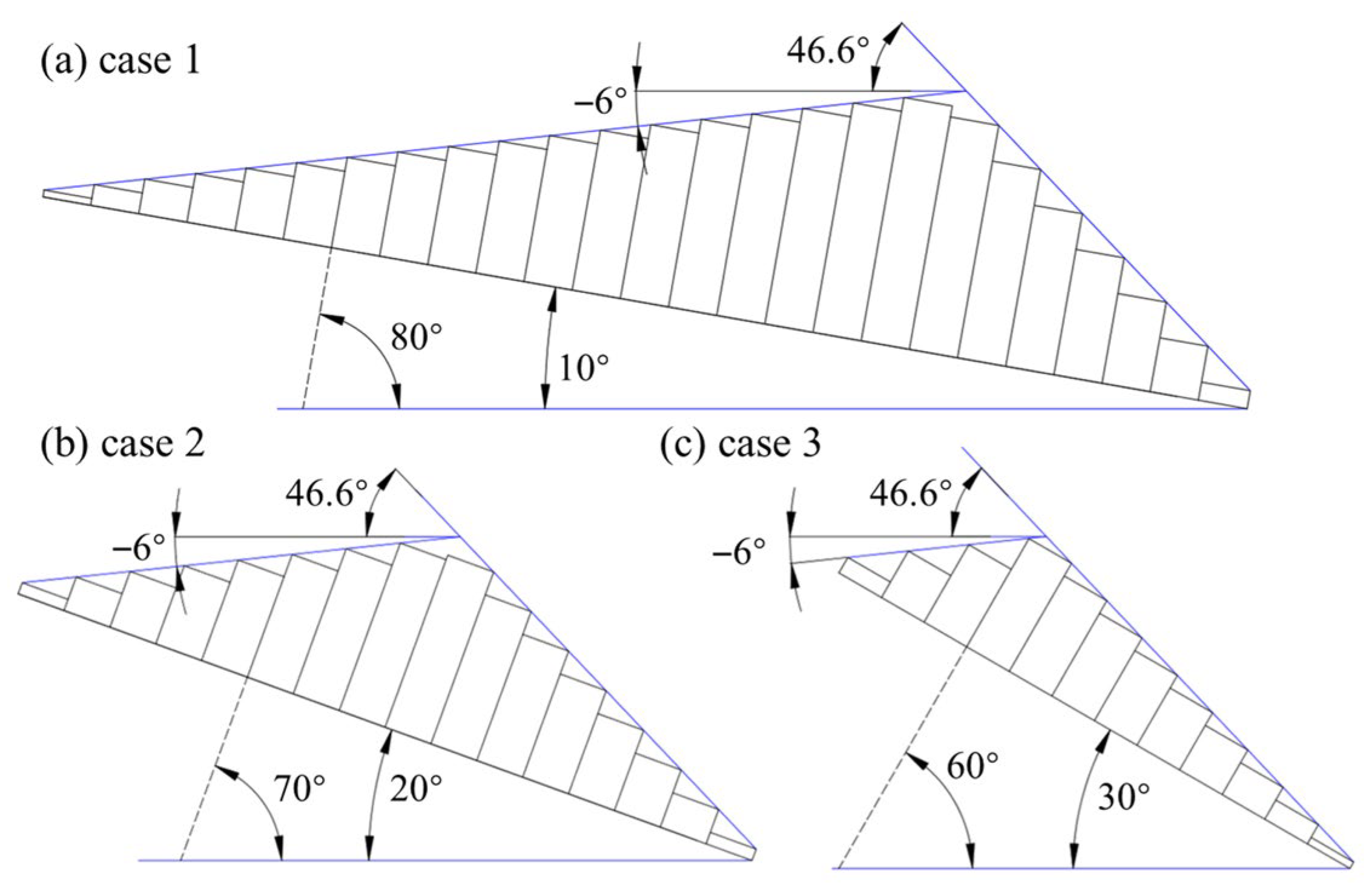
Based on the case data in
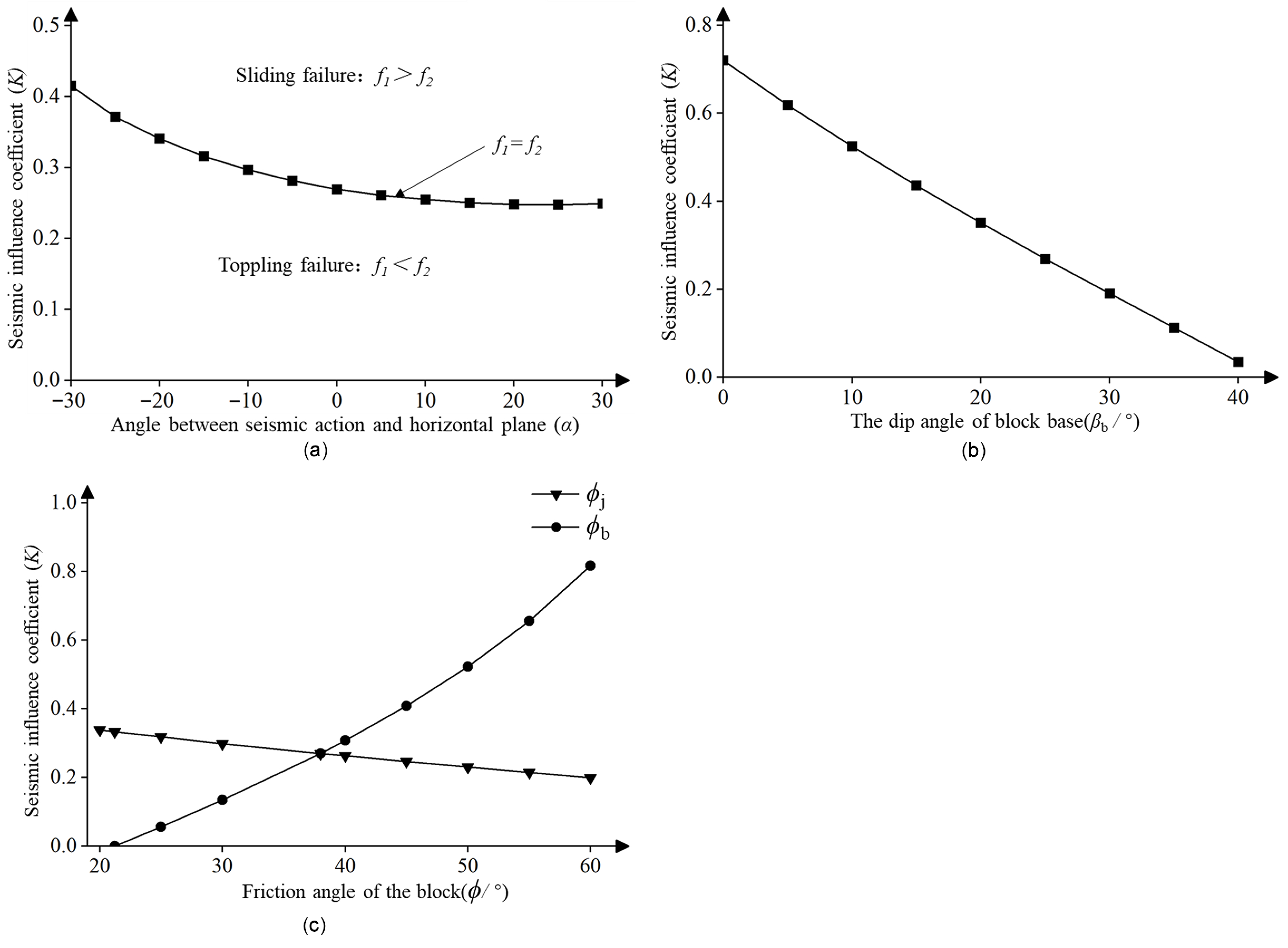
Table 3, the critical seismic influence coefficient corresponding to the transition of the slope failure mode is plotted, as shown in
Figure 15. It can be found that when the angle between the direction of the seismic load and the horizontal plane rises, the critical seismic influence coefficient descends, as shown in
Figure 15a.
Most previous studies on rock slope block toppling assume that the block bases are perpendicular to the dominant discontinuities, which is not always satisfied in practice. As shown in
Figure 15b, when considering the non-orthogonal scenario,
Kcr decreases linearly with the dip angle of block base,
βb, indicating that the shape of the underlying bedrock has a significant effect on the toppling stability of the slope.
Figure 15c shows the curves of the
Kcr and the internal friction angle of the block base and sides. As can be seen from
Figure 15c, the
Kcr value required for the transition from slope toppling to sliding increases with increases in the friction angle of the block base,
ϕb, and decreases with rises in the friction angle of the block sides,
ϕj. This phenomenon occurs because of the ‘rotation’ characteristics of toppling. The larger
ϕj, the stronger the restriction against the rotation of the block is, while the greater
ϕb, the stronger the restriction against the sliding of the block is.
5. Results and Discussion
Based on Liu’s pseudo-continuous medium method, and considering the non-orthogonal characteristics of the structural planes, an analytical solution for slope block toppling failure under seismic loads is proposed. Subsequently, the failure mode and seismic influence coefficient are analyzed. The main conclusions are summarized as follows:
(1) The developed method proposes a judge criterion for the failure mode of rock slopes, and gives the calculation equation of the transition point abscissa of the micro-block from toppling to sliding.
(2) Seismic loads have a significant negative effect on the toppling stability of rock slopes. With increases in the seismic influence coefficient or decreases in the angle between the seismic load and the horizontal plane, the supporting force required to maintain the toppling stability of the slope increases.
(3) The critical seismic influence coefficient, Kcr, is positively correlated with the friction angle of the block base, but negatively correlated with the friction angle of the block sides, and the angle between the seismic load and the horizontal plane and the dip angle of block base. When the seismic influence coefficient reaches the critical value, the slope will slide as a whole rather than topple.
(4) It should be pointed out that the proposed method provides asymptotic results for block toppling analyses and thus, is suitable to quickly evaluate the toppling stability of rock slopes in practical engineering.
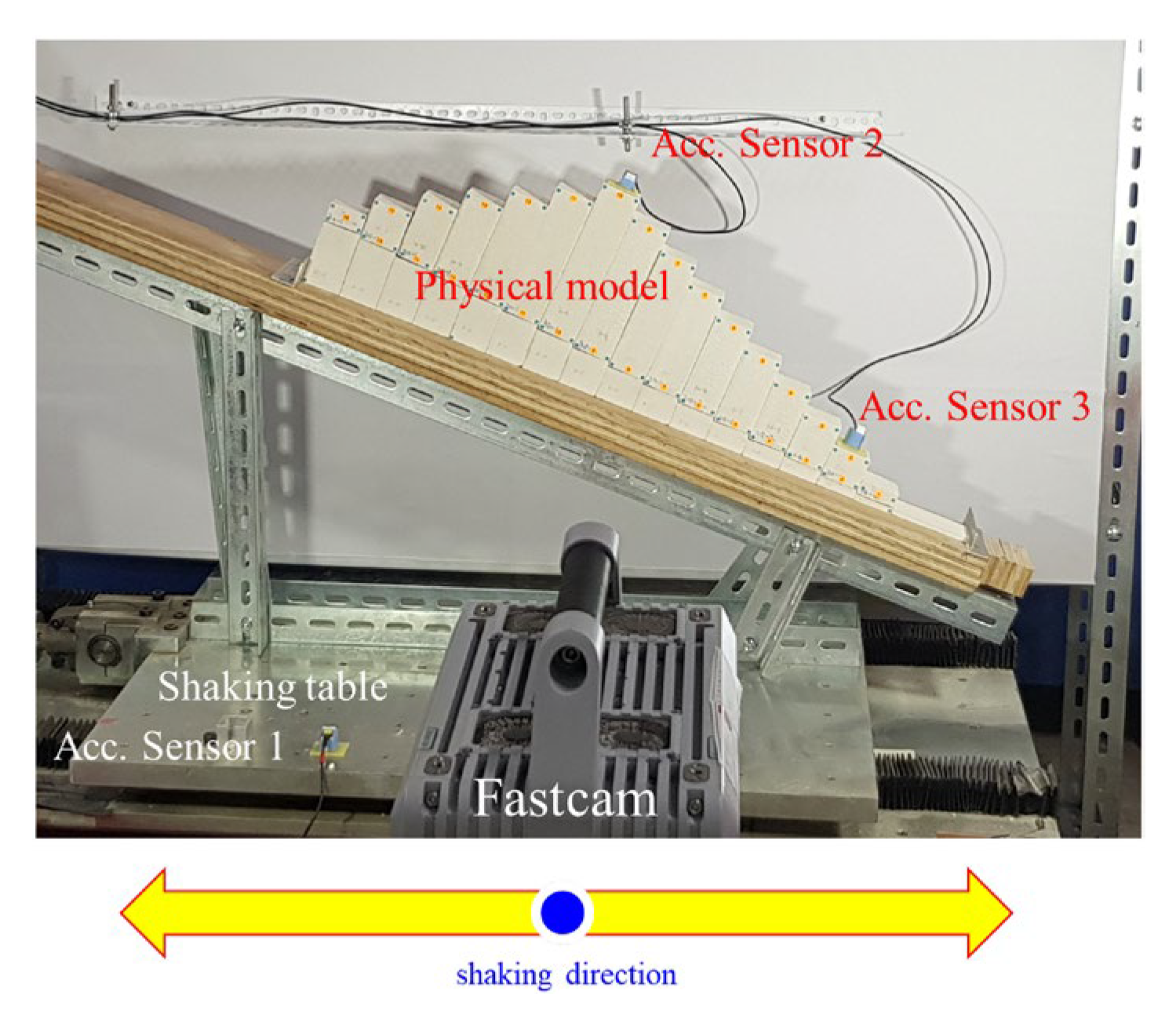
Although the stability analysis approach to block toppling in rock slopes under seismic loads has achieved some progress, this study has certain limitations that need to be addressed in future work. The pseudo-static assumption simplifies seismic loads as constant forces, ignoring the dynamic characteristics of seismic waves such as frequency and duration. Future research should develop a pseudo-dynamic analytical solution considering time-dependent seismic inertial forces. Additionally, the verification of the proposed method in this study is limited to model tests and case comparisons from the literature, and shaking table tests of slopes with non-orthogonal structural planes should be conducted to further validate the method. Furthermore, the coupling effect of rainfall and seismic loads on toppling stability could be analyzed to improve the method, enhance its computational accuracy in complex geological environments and expand its range of practical applications.