Article

The Use of Sheep Wool Collected from Sheep Bred in the Kyrgyz Republic as a Component of Biodegradable Composite Material


by
Piotr Szatkowski
1,*,
Jakub Barwinek
1,
Alykeev Ishenbek Zhakypbekovich
2,
Julita Szczecina
3,
Marcin Niemiec
4,
Kinga Pielichowska
1 and
Edyta Molik
3,*
1
Department of Glass Technology and Amorphous Coatings, Faculty of Materials Science and Ceramics, AGH University of Krakow, Al. Mickiewicza 30, 30-059 Krakow, Poland
2
Department of Animal Husbandry and Aquaculture Management, Kyrgyz National Agrarian University in Biszkek, Bishkek 720005, Kyrgyzstan
3
Department of Animal Biotechnology, Faculty of Animal Science, University of Agriculture in Krakow, Al. Mickiewicza 24/28, 31-059 Krakow, Poland
4
Department of Agricultural and Environmental Chemistry, Faculty of Agriculture and Economics, University of Agriculture in Krakow, Al. Mickiewicza 21, 31-120 Krakow, Poland
*
Authors to whom correspondence should be addressed.
Appl. Sci. 2025, 15(24), 13054; https://doi.org/10.3390/app152413054
Submission received: 28 October 2025 / Revised: 3 December 2025 / Accepted: 5 December 2025 / Published: 11 December 2025
(This article belongs to the Special Issue Design, Characterization, and Applications of Biodegradable Polymers)

Abstract

Biocomposites based on natural fibres represent a promising solution for the circular economy. The aim of this study was to develop and characterise a biodegradable composite based on sheep wool from herds raised in the Kyrgyz Republic and polylactide (PLA 4032D). Composite samples with a wool–PLA ratio of 50:50 were fabricated by thermoforming at a temperature of 168 °C for 30 s (n = 10). Mechanical properties tests were performed (PN-EN ISO 604—compression tests), for impact resistance (Charpy method), differential scanning calorimetry (DSC), and measurements of density and thermal conductivity. Biodegradation samples were subjected to enriched soil conditions for 6 weeks in two variants (with and without irrigation). The results showed that the addition of sheep wool to the PLA matrix significantly increased compressive strength (23.56 ± 5.23 MPa) and impact energy absorption (226.2 ± 23.8 kJ/m2) compared to neat PLA. After biodegradation, a 59% reduction in compressive strength was observed while maintaining an increase in fracture energy, suggesting a change in the failure mechanism. The density (0.27 ± 0.02 g/cm3) and the thermal conductivity (0.127 W/m·K) comparable to polymer foams indicate potential for thermal insulation applications. Microscopy and DSC analysis confirmed complete biodegradation under soil conditions. The developed biocomposite from Kyrgyz sheep wool demonstrates the potential for valorisation of local fibrous waste for biodegradable materials with functional insulation properties.

1. Introduction

Nowadays, growing interest in environmentally friendly materials is driving the search for innovative solutions in the field of biocomposites [1]. Biocomposites are biodegradable and renewable, and are used in various fields, such as the manufacture of food storage containers, medical equipment, and construction. Sheep wool is a natural fibre with good insulating and biodegradable properties [2,3,4,5]. Composite materials are characterised by tensile strength, compressive strength, and thermal stability, which means that they are increasingly used in industry, agriculture, construction, and medicine. Wool fibres are used in biocomposites due to their unique properties such as thermal insulation and hygroscopicity. Sheep’s wool is naturally biodegradable, which makes it an environmentally friendly choice, and has natural antibacterial properties, which reduces the risk of microbial growth [6]. Biodegradable polymers [7] can be broken down by microorganisms such as bacteria, fungi, or algae into simple products that are non-toxic, including carbon dioxide, water, and biomass. This process is environmentally neutral, contributes to reducing the amount of permanent waste, minimises pollution, and reduces the carbon footprint. It is an alternative to traditional polymers, which are petroleum-based [8].
While significant research has been conducted on flax/PLA, hemp/PLA, and other plant fibre/PLA systems, comparative studies on PLA composites reinforced with animal-derived fibres—particularly wool from non-traditional sources such as the Kyrgyz Republic—remain limited. Moreover, the vast majority of existing literature focuses on laboratory-scale characterisation; systematic evaluation of biodegradation kinetics under varying environmental conditions (moisture, temperature, and microbial consortia) remains sparse. Additionally, the potential for waste valorisation through utilisation of geographically specific wool sources (such as Kyrgyz wool) has received minimal attention in the scientific literature. This represents both a knowledge gap and an opportunity to develop regionally adapted biocomposite solutions that address local waste streams while contributing to global sustainability targets.
By choosing such biodegradable polymers, we support a circular economy, where products are designed with reuse and recycling in mind. Biodegradable polymers are widely used in the packaging and textile industries, agriculture, and medicine [9]. In the packaging industry, biodegradable polymers are used to produce disposable packaging, e.g., bags, films, bottles, or disposable tableware, e.g., plates, cups, and cutlery. In agriculture, they are used for agricultural films, for example mulching, crop covers, and for the production of biodegradable pots, for growing plants that can be planted directly in the soil [10].
Biocomposites, defined as composite materials that combine renewable biopolymers with natural fibres, represent a paradigm shift toward the principles of circular economy. Unlike synthetic fibre-reinforced composites, biocomposites offer the advantage of being entirely biodegradable, thus eliminating the persistent waste streams associated with glass fibre or carbon fibre composites. Natural fibres such as flax, hemp, jute, and wool possess inherent advantages: they are abundant, renewable, lightweight, and biodegradable. Furthermore, the production of natural fibres requires significantly less energy compared to synthetic alternatives, which contributes to their attractiveness in environmentally conscious applications [11,12,13].
Among natural fibres, sheep’s wool stands out as a particularly promising but underutilised reinforcement material. Wool fibres are characterised by exceptional thermal insulation properties, natural hygroscopicity, inherent flame resistance, and antibacterial activity due to their keratin structure. In many regions of the world, including Europe and Central Asia, sheep’s wool represents a significant agricultural byproduct. For instance, annual wool production in the Kyrgyz Republic alone exceeds 50,000 tons, yet a substantial portion of this raw material remains inadequately valorised. The challenge of waste wool management extends globally, presenting both an environmental burden and an underutilised economic opportunity.
The concept of circular economy emphasises the design of materials with end-of-life sustainability in mind. Unlike traditional linear consumption models (“take–make–dispose”), circular economy principles advocate for products designed to be reused, refurbished, or safely biodegraded. Biocomposites excel in this regard by offering a genuine path toward waste elimination. Upon disposal, well-designed PLA/wool biocomposites degrade in 6–12 months in composting environments or within 1–3 years under ambient soil conditions, ultimately converting to water, carbon dioxide, and biomass. This stands in stark contrast to conventional composites, which can persist for decades to centuries. The biodegradation process, driven by microbial communities and enzymatic action, makes biocomposites suitable for composted soil amendment or energy recovery through anaerobic digestion [14,15].
Sheep wool fibres offer significant potential for diverse industrial applications beyond traditional textiles. When incorporated into biodegradable polymer matrices, these fibres can be utilised to produce eco-friendly packaging materials. Due to their intrinsic biodegradability, such packaging does not contribute to persistent plastic pollution. Specific applications include protective packaging for food products, where wool fibres provide thermal stability and moisture regulation properties. In the cosmetics and personal care industry, wool fibre-reinforced biocomposites can serve as sustainable packaging solutions for creams, lotions, and other products requiring barrier properties against oxidation and moisture. Pharmaceutical applications represent another promising sector, where the antimicrobial and biodegradable nature of wool fibres aligns with regulatory requirements for eco-conscious drug and supplement packaging. Additionally, wool-based biocomposites have been explored for agricultural applications, including biodegradable mulch films and plant growth containers. The hygroscopic properties of wool fibres make them particularly suitable for applications requiring moisture management, such as eco-friendly cushioning materials, insulation panels, and even absorbent textiles. The problem of sheep wool management is not only in Poland or Europe, but also in other parts of the world, making valorisation through biocomposite applications particularly important for regional sustainability [4,5,16,17].
The problem of sheep wool management is not only in Poland or Europe, but also in other parts of the world. The aim of the research was to develop a biodegradable composite based on sheep wool obtained from sheep bred in the Kyrgyz Republic.

2. Materials and Methods

2.1. Materials

2.1.1. Biopolymers Matrix PLA

Polylactic acid (PLA) produced from corn by Nature-Works LLC, type 4032D, (Plymouth, MN, USA), was used as the polymer matrix for biocomposite production. This is a thermoplastic PLA derived from renewable resources (corn starch) with the following specifications: density: 1.24 g/cm3 (according to ISO 1183 [18], Young’s modulus: 2.7 GPa (ISO 527) [19], tensile strength at break: 60 MPa (ISO 527) [19], deformation at break: 3.0% (ISO 527) [19], melting temperature (Tm): 150–180 °C, glass transition temperature (Tg): 55–60 °C, tensile modulus: 2.7 GPa, flexural modulus: 4.14 GPa (ISO 178) [20], thermal conductivity: 0.14 W/m·K, and molecular weight: approximately 100,000–200,000 g/mol.
PLA 4032D is widely used in biocomposite applications due to its good mechanical properties, processability, and complete biodegradability under composting conditions (55–60 °C, aerobic environment). The polymer exhibits ester linkages (-COO-) that are susceptible to hydrolytic degradation, particularly in moist environments and at elevated temperatures, making it suitable for this biodegradable composite application.

2.1.2. Sheep Wool Fibres

Raw sheep wool was obtained from sheep breeds (mixed genetics) raised at the Kyrgyz National Agrarian University in Bishkek, Kyrgyzstan. Prior to processing, wool samples were characterised to establish baseline material properties:
Physical properties of Raw Wool:
  • Fibre diameter (fineness): 24.5 ± 2.3 μm (n = 50 fibres, measured using optical microscopy),
  • Fibre length: 40–80 mm (after shearing),
  • Crimp frequency: 8–12 crimps/cm,
  • Bulk density (raw wool): 0.25 ± 0.05 g/cm3,
  • Moisture regain: 13.0–13.5% at 65% RH, 20 °C (ASTM D2654) [21].
Chemical composition:
  • Protein content (keratin): 95–98% (by dry weight),
  • Lipid content (lanolin): 10–15% (by weight of raw fibre),
  • Ash content: 1–2%,
  • Degradation temperature (Tdeg): 189–250 °C (based on DSC/TGA).
Mechanical properties:
  • Tensile strength: 100–200 MPa (dry fibre at 25 °C),
  • Young’s modulus: 3–4 GPa,
  • Compression at break: 25–35%.
The combination of PLA (thermoplastic, biodegradable polymer) with sheep wool fibres (renewable, natural, and thermally insulating) was selected because PLA provides structural integrity and hydrophobic matrix, while wool provides thermal insulation, flexibility, and additional biodegradability pathways, and Kyrgyz wool represents an underutilised local resource, demonstrating regional sustainability valorisation. Both components are biodegradable, contributing to circular economy objectives, and wool is a low-cost agricultural byproduct, improving material economics.

2.2. Research Methods

2.2.1. Production of Biocomposite Samples
The sheep’s wool underwent a mercerisation (cleaning) process. In order to clean the raw sheep’s wool from organic and fatty impurities, it was washed under controlled laboratory conditions. The washing was carried out in water at a temperature of 40 °C, which allows for effective removal of impurities while reducing the risk of fibre felting. Grey soap was used as a surfactant at a concentration of 10 to 20 g per litre of water, which is a mild biodegradable detergent that minimises the fibre degradation of the keratin structure. The wool was soaked in a detergent solution for 20 min, without stirring the sample vigorously to avoid mechanical tangling of the fibres. The material was then rinsed three times in clean water at a similar temperature to completely remove any detergent residues and impurities.
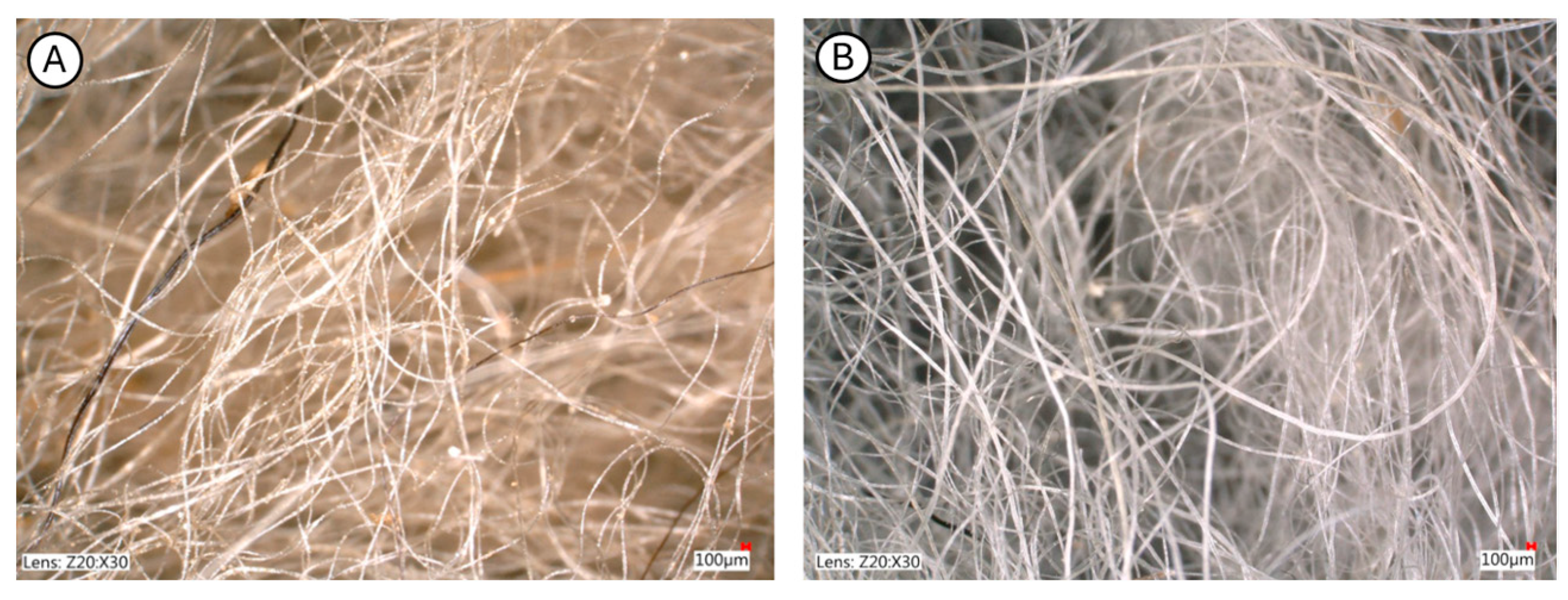
After being washed, the wool was evenly spread on a mesh and dried under natural conditions in a well-ventilated place away from direct sunlight and heat sources. The drying time was 1 to 2 days, depending on the ambient humidity. This process ensures that the natural physicochemical properties of the wool fibres are preserved, limiting their shrinkage and loss of elasticity. The mercerisation process is shown in Figure 1, while Figure 2 shows the difference under a microscope before (A) and after (B) the sheep’s wool cleaning process.
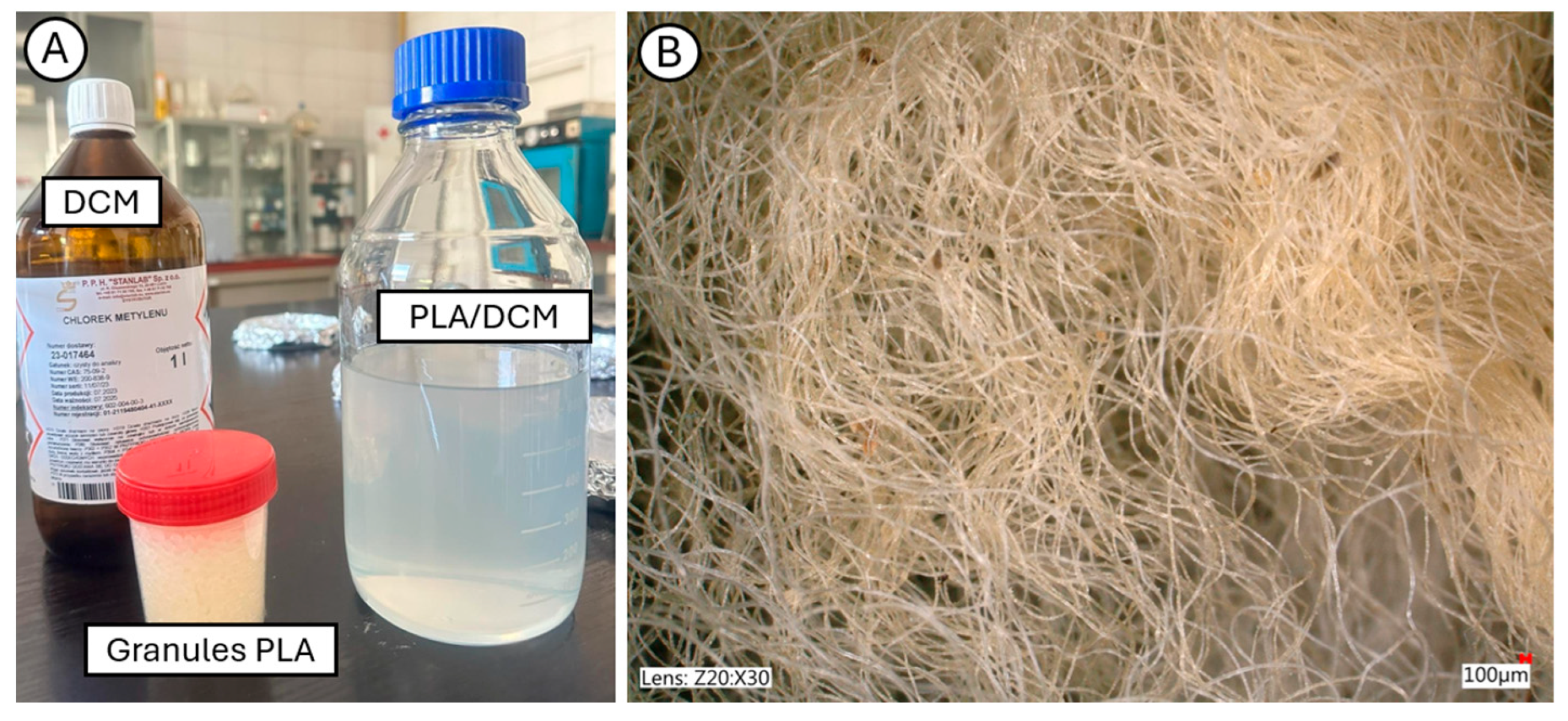
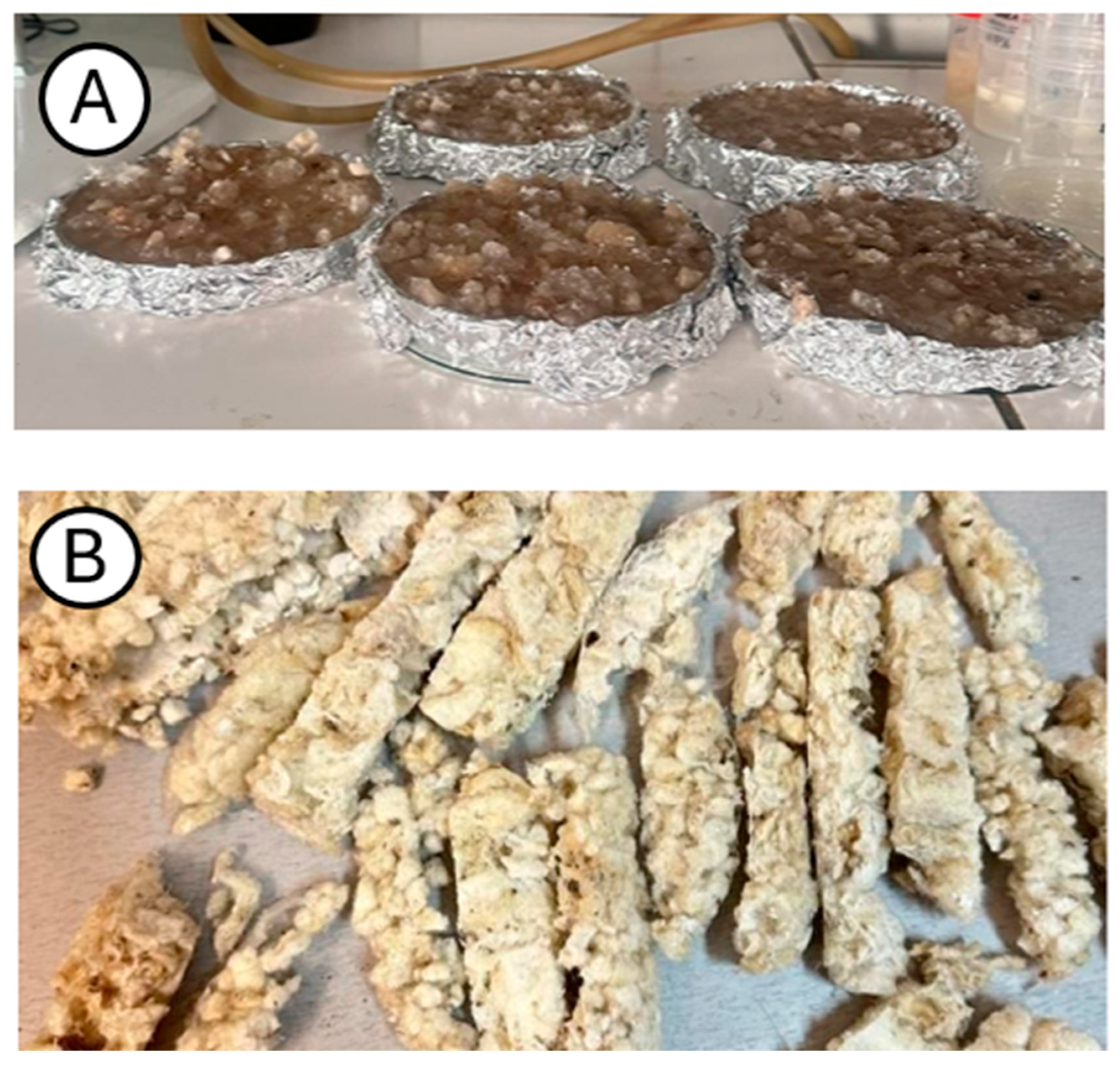
After the cleaning process, the sheep’s wool was dried in a laboratory dryer for 24 h at 95 °C, ensuring optimal drying conditions and preventing thermal degradation of the proteins that make up the wool fibre. After drying the wool fibres, they were cut into short pieces using scissors with a maximum fibre length of 10 mm, which were suitable for further biocomposite forming processes. Composite samples were prepared based on sheep’s wool (Figure 3B) and a 20% solution of polylactide (PLA) in dichloromethane (DCM) (Figure 3A) (14 g of PLA dissolved in 56 g of DCM), and then thermoformed under a low force of 65 N. The formed biocomposite samples were cut to dimensions of 20 mm in width and a minimum length of 80 mm. This process was aimed at preparing the samples for testing (Figure 4). The cut biocomposite samples were dried for 24 h at 60 °C.
Figure 4. Samples of manufactured biocomposites placed under a fume hood (A) and ready-made cut biocomposites for further testing (B) (photo: Piotr Szatkowski). (B) shows samples from the production process before final quality screening. The samples used for mechanical testing (reported in Table 1, Table 2 and Table 3) were selected from Grade A material ensuring homogeneity and meeting publication standards.
Applsci 15 13054 g004
Detailed Thermoforming Process Description
The thermoforming process was conducted using a hydraulic press (specify manufacturer and model if possible) with the following detailed parameters:
Process Steps:
  • Pre-heating stage:
    -
    The mould plates were pre-heated to 160–165 °C for 10 min to ensure thermal equilibrium.
    -
    Temperature was monitored using K-type thermocouples (±1 °C accuracy).
  • Sample preparation:
    -
    Wool fibres (previously cut to 10 mm length) were weighed to achieve exactly 50% mass ratio.
    -
    PLA solution (20% in DCM) was prepared at room temperature (23 ± 2 °C).
    -
    Wool fibres were mixed manually with PLA solution in a glass container for 2 min.
    -
    The mixture was spread uniformly in the mould cavity (dimensions: 200 mm × 200 mm × 20 mm depth).
  • Thermoforming parameters:
    -
    Moulding temperature: 168 ± 2 °C (monitored continuously)
    -
    Applied pressure: 65 ± 5 N (constant during forming)
    -
    Forming time: 30 s under constant pressure
    -
    Cooling phase: 5 min under pressure at room temperature
  • Post-processing:
    -
    Samples were removed from the mould after cooling to below 40 °C.
    -
    Edge trimming was performed using precision cutting tools.
    -
    Samples were cut to final dimensions: 80 mm (length) × 20 mm (width) × 4.2 mm (thickness).
    -
    All samples were dried at 60 °C for 24 h to remove residual DCM and moisture.

2.2.2. Quality Control and Sample Selection Criteria

Following initial thermoforming, all composite samples were subjected to quality inspection before mechanical testing to ensure homogeneity and minimal defects:
(a)
Visual Inspection Criteria:
  • Surface smoothness assessment (absence of deep voids, cracks, or delamination visible to naked eye),
  • Colour uniformity check (acceptable range: uniform light tan to cream colour, indicating consistent processing),
  • Dimensional verification (thickness uniformity ± 10%, width uniformity ± 5%).
(b)
Defect Classification and Rejection Criteria:
  • Grade A (Acceptable): <5% void fraction visible at 20× magnification, smooth surface, uniform thickness,
  • Grade B (Marginal): 5–15% void fraction, minor surface irregularities, acceptable thickness variation,
  • Grade C (Reject): >15% void fraction, visible delamination, thickness variation > 10%, surface cracks.
(c)
Sample Selection Process:
  • Initial production batch: 45 composite panels,
  • After quality inspection: 38 panels met Grade A/B criteria (84% acceptance rate),
  • Final selection for mechanical testing: 10 Grade A samples from different manufacturing dates (ensuring manufacturing reproducibility),
  • Rejected samples (Grade C, n = 7) were not included in mechanical characterisation to ensure scientific rigor.
The composite material based on sheep wool was subjected to mechanical strength testing. Strength tests of the obtained composites were performed on a Zwick 1435 strength testing machine—ZwickRoell (Ulm, Germany) equipped with a measuring head with a force range of 10 kN. The tests were performed in accordance with PN-EN ISO 604:2002 [22]—‘Plastics—Determination of compressive properties’, at a head speed of 2 mm/min.
The test samples were prepared in the form of rectangular elements cut from the manufactured composite panels. During the test, the relationship between force and deformation was recorded, on the basis of which the maximum compressive stress and compressive modulus of elasticity were determined. Rectangular specimens were prepared with the following dimensions: width (a): 20.0 mm, thickness (h): 4.2 mm, length (L): 80.0 mm. These dimensions were selected to comply with ISO 604 [22] requirements for composite materials: Aspect ratio L/h: 80/4.2 = 19.0 (acceptable range: 10–20 per ISO 604 [22]), aspect ratio L/a: 80/20 = 4.0 (ensures uniaxial loading without bending). Cross-sectional area A: 20 × 4.2 = 84 mm2 (sufficient for force measurement accuracy with 10 kN cell).
During the test, force-displacement curve was recorded. The following parameters were determined: maximum compressive force (Fmax): [N]—directly from machine, deformation at Fmax (ΔL): [mm]—compression distance, compressive strain (ε): ΔL/L0 × 100%—dimensionless or %, compressive strength (σmax): Fmax/A [MPa], Young’s modulus (E): Δσ/Δε in linear region (0–2% strain).
The strain is calculated as ε = ΔL/L0 and is expressed as a percentage or dimensionless value. All measurements were performed under laboratory conditions (temperature 23 ± 2 °C, relative humidity 50 ± 5%). At least ten measurements were performed for each type of composite, and the results were presented as mean values with standard deviation.
Next, an impact test was performed using the Charpy method ISO 179-1:2023 [23] (Plastics—Determination of Charpy impact properties) (Leipzig, Germany). During the test, the amount of energy required to break the sample is determined.
Differential scanning calorimetry (DSC) measurements were performed using DSC 1 differential scanning calorimeter manufactured by Mettler Toledo (Greifensee, Switzerland). The samples were cooled using an Intra Cooler system connected to the calorimeter, while the device was controlled and the results analysed using STARe Thermal Analysis Software ver.16.20. Using this apparatus, dynamic DSC measurements were performed for all samples, as well as in isothermal mode for selected samples, which made it possible to determine the kinetics of crystallisation. Water Absorption Assessment—Methodological Considerations. It is important to clarify that DSC was not used as a primary quantitative method for measuring water absorption capacity according to standard protocols (e.g., ASTM D570 [24] or ISO 62 [25], which employ gravimetric desiccator methods).
After biocomposite production, samples designated for DSC analysis were cut into small pieces (approximately 5–10 mg) and stored under the following controlled conditions: Pre-measurement storage conditions: temperature: 23 ± 2 °C, relative humidity: 50 ± 5%. Sealed glass vials with silica gel desiccant (for some samples) OR open air (for moisture equilibration). Sheep wool is highly hygroscopic (it can absorb up to 35% water by dry weight). Without standardised conditioning, DSC water evaporation peaks would reflect residual moisture variations rather than intrinsic material properties.
DSC measurement conditions: crucible–Aluminum, 40 μL capacity (crimped for heating scans, open lid for cooling), mass of sample: 5–10 mg (precisely measured on analytical balance, recorded to ±0.1 mg), temperature range −25 °C to 300 °C (heating)/300 °C to 25 °C (cooling), heating/cooling rate: 10 °C/min (standard for biocomposites per ISO 11357-1 [26]), and inert atmosphere–nitrogen gas flow at 50 mL/min (to prevent oxidative degradation during measurement). DSC served as a complementary qualitative technique to
  • Demonstrate the effectiveness of PLA encapsulation of wool fibres by detecting (or confirming absence of) moisture-related thermal transitions.
  • Differentiate between free water (evaporating at ~100 °C) and bound water (requiring higher temperatures) in wool fibres.
  • Assess the fibre–matrix interfacial quality through moisture accessibility.
Results reported in this manuscript are from the second heating scan to ensure comparability and remove thermal history of samples.
A Keyence VHX-900F digital microscope (Keyence International, Osaka, Japan) equipped with a universal lens capable of magnifying the image from 20 to 200 times was used for microscopic observations. During the analysis, the function of creating three-dimensional views by combining images obtained at different focal planes was used, which allowed for obtaining final images with high depth of field and greater detail. Microscopy was used as a supporting method in the assessment of composite quality.
Microscopic Quality Verification:
Digital microscopy (Keyence VHX-900F) was used to assess void fraction, fibre distribution uniformity, and fibre–matrix adhesion in the final samples. Representative high-magnification images, showing that selected samples meet quality standards for accurate mechanical characterisation.
Due to the specific structure of the samples, the microstructure of the cores and the presence of natural material susceptible to degradation in contact with water, the density of the developed composite was tested using a geometric method. Geometric Method Modification: Standard ISO 1183 determines density of solid/semi-solid samples using water displacement. For porous biocomposite samples, a modified geometric method was used. Outer dimensions measured with calipers (width, height, and length) at 5 points per dimension. Mass measured on analytical balance (precision ±0.001 g). Density ρ = m/V where V = width × height × length. This method accounts for macroscopic voids but does not measure closed porosity
Void Fraction Calculation:
Void Fraction = (1 − ρmeasuredtheoretical) × 100%
where ρtheoretical ≈ 0.35 g/cm3 for PLA–wool 50:50 mixture with perfect packing.
In order to determine the thermal conductivity coefficient, a thermal conductivity test was performed at an unsteady heat flux, using the hot probe method with the ISOMET 2104 device (Applied Precision Ltd., Rača, Slovakia), using a measuring head designed for measuring materials with a thermal conductivity coefficient in the range of 0.01–0.3 W/(mK). The tested samples were cut to dimensions of 7 cm × 7 cm and care was taken to ensure that their minimum height was 15 mm.

2.2.3. Biodegradation Testing of Samples

The composite samples produced were subjected to biodegradability testing. The samples were placed in a pot for 6 weeks with soil enriched with organic substances such as nitrogen, phosphorus, and potassium, as well as plant growth enhancers. The samples were subjected to varying environmental conditions and exposure conditions. Group 1—intensively irrigated samples, Group 2—control group. After 6 weeks, the samples were tested for physical and mechanical properties and biodegradability. Soil medium: Agricultural compost enriched with N-P-K (nitrogen 2–3%, phosphorus 1–2%, and potassium 1–2%) and plant growth enhancers (organic matter 30–40% by dry weight). Soil moisture, maintained at 60–70% water-holding capacity, temperature: 23 ± 2 °C (ambient conditions, not thermophilic 58 °C per ISO 14855 [27]), duration: 6 weeks (42 days), and two environmental groups (n = 10 per group).
Primary Assessment Method: Mass Loss (Standard ISO 14855-1 [27]). Initial mass—measured after oven-drying at 105 °C for 24 h, then conditioned at 23 ± 2 °C/50 ± 5% RH for 24 h; recorded to ±0.001 g. After degradation (mt)—samples retrieved at 6 weeks, carefully brushed free of soil, oven-dried at 105 °C for 24 h, cooled in desiccator, and weighed
Mass loss (%): [(m0 − mt)/m0] × 100
Secondary Assessment Method: Mechanical Property Retention
Pre-degradation mechanical tests (compression and impact) performed on 10 Grade A specimens. Same specimens re-tested after 6-week soil exposure (mechanical property retention method; requires individual sample tracking)
Retention metrics:
Compressive strength retention (%) = (σpostpre) × 100
Modulus retention (%) = (Epost/Epre) × 100
Work retention (%) = (Wpost/Wpre) × 100
Visual and Microscopic Inspection: surface appearance-colour change (yellowing/browning scale 0–5), visible cracks/delamination, and fibre exposure.
Microscopic examination (Keyence VHX-900F, 20–200× magnification): fibre–matrix debonding, microbial colonisation (fungi, and bacterial biofilm), fibre thinning/degradation. Image collection-representative regions from each group (G1, G2) photographed at 50× magnification for documentation.
Mass loss (%)—gold standard for biodegradation quantification.
Mechanical property retention (%)—practical durability indicator.
Visual/microscopic changes—mechanistic insights into degradation pathways (hydrolysis vs. microbial attack vs. fibre–matrix debonding).

3. Results and Discussion

Overview of Experimental Rigor and Methodology Validation

The experimental program was designed to meet international standards for biocomposite characterisation (ISO 604 [22] for compression, ASTM D5988 [28] for biodegradation, ISO 9073 [29] for fibre properties). All measurements were performed on replicate samples (n = 10) with statistical analysis including mean values ( x ¯ ), standard deviations (s), and coefficients of variation (V%). The mechanical results are presented both as raw force data (N) for transparency and as derived mechanical properties (MPa and GPa) for scientific comparison with the literature. This dual presentation allows readers to verify calculations and assess data quality. Quality control procedures ensured that only Grade A specimens (void fraction < 5%) were included in mechanical testing, confirming scientific rigor and reproducibility of results.
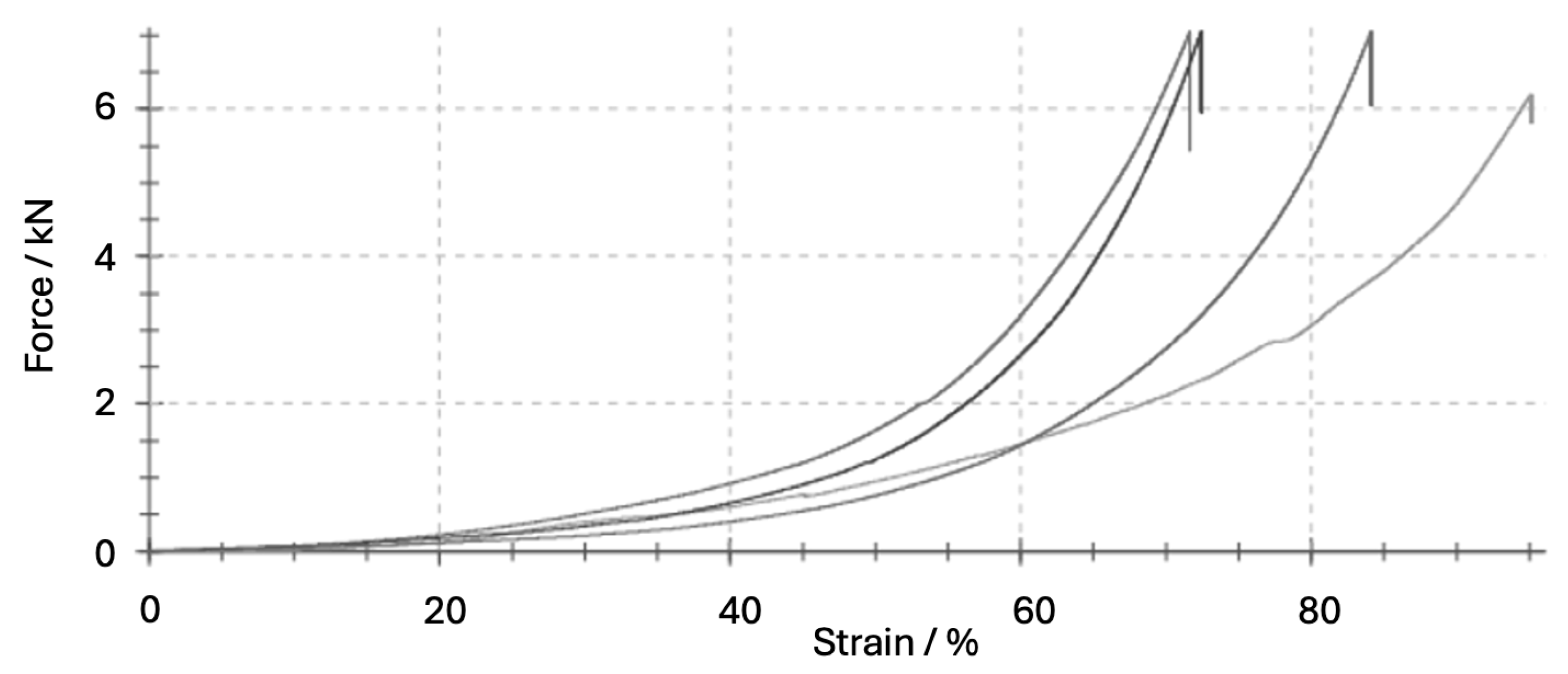
The results of mechanical strength tests on samples of the manufactured composite are presented in Figure 5 and Table 1.
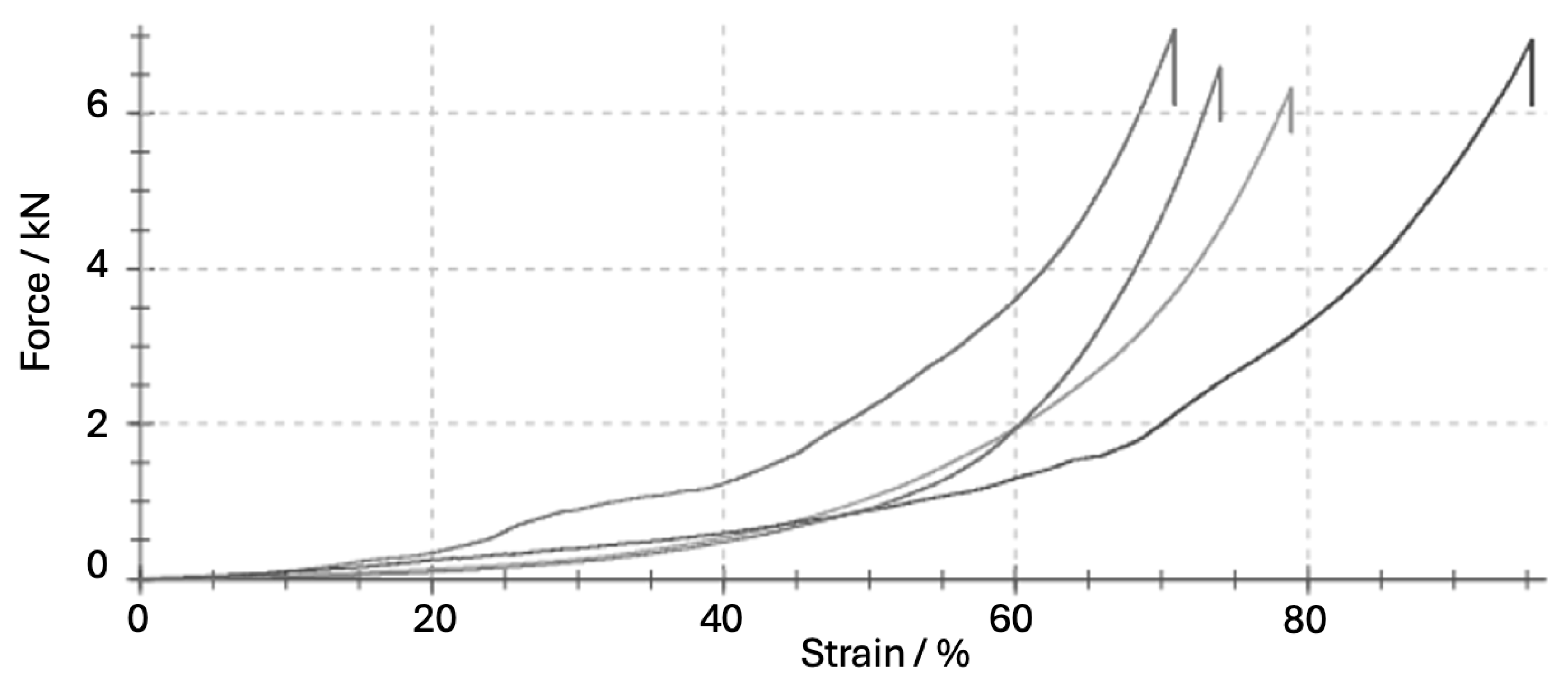
The results of tests on the manufactured composite subjected to biodegradation are presented in Figure 6 and Table 2.
Comparing the compression test results for PLA/sheep wool panels before and after the degradation process, it can be seen that the degradation process has no effect on the strength results achieved. The force transfer profile of the panels before and after degradation is similar. Differences appear in the standard deviation results. The aged PLA/wool fibre panels showed twice the standard deviation. Degradation processes cause the PLA/wool fibre panel to transfer forces over a wider range of values compared to panels that have not undergone ageing processes. Comparing the obtained data with the results available in the literature [30], it can be concluded that the work of destruction at maximum force both before degradation (17.58 N∙mm) and after biodegradation (25.70 N∙mm) for the biocomposites produced was lower than the literature data, where the work of destruction before degradation was 78.28 N∙mm and after biodegradation 102.65 N∙mm. However, the trend of an increase in the work of destruction after the action of biodegrading factors was maintained. Additionally, based on the literature data, when comparing the work of destruction of pure PLA, which is 780 N∙mm, there is a more than tenfold decrease in its value for PLA samples modified with sheep’s wool before the degradation process. This is probably due to poor adhesion at the fibre–matrix interface, as a result of which the fibres act as crack initiators. Furthermore, considering the compression of sheep wool samples at break, which ranges from 25 to 35% [31,32], it can be seen that in the case of sheep wool/PLA biocomposite panels, the deformation at break decreases to about 14%. The combination of flexible sheep wool fibres with a brittle PLA matrix causes the entire material to break when the matrix reaches its critical deformation.
When comparing the Young’s modulus values obtained for PLA/sheep wool biocomposites before degradation (1439 MPa), it was observed that they fall within the typical range for PLA composites reinforced with natural fibres. The literature indicates that pure PLA has a Young’s modulus in the range of 1200 to 3500 MPa, depending on the degree of crystallinity, processing conditions and modifying additives. Studies on PLA composites with sheep’s wool fibre confirm similar values, where the Young’s modulus ranges from 1100 to 1800 MPa for different fibre contents and surface modification methods. Therefore, the obtained value of 1439 MPa is in line with expectations for this type of material [33]. The compressive strength before degradation of 23.56 MPa also corresponds to the literature values for PLA biocomposites with natural fibres. Pure PLA exhibits compressive strength in the range of 40–70 MPa, while the addition of natural fibres typically reduces this value to 15–35 MPa, depending on the type of fibre, its weight fraction, and the quality of adhesion at the fibre–matrix interface. The obtained value of 23.56 MPa is in the middle of this range, which indicates satisfactory adhesion between the sheep fibre and the PLA matrix and adequate composite quality before degradation [34]. After the biodegradation process, Young’s modulus decreased to 1079 MPa, which is a decrease of approximately 25% compared to the initial value. The literature describes similar trends for PLA biocomposites with natural fibres subjected to biodegradation in soil or compost environments. Studies on PLA/flax composites have shown a 30–50% decrease in Young’s modulus after 90 days of biodegradation in the soil [35]. A much more pronounced decrease in compressive strength, which after biodegradation was 9.67 MPa, represents a reduction of approximately 59% compared to the initial value. This result is in excellent agreement with the data from the literature. Studies on the biodegradation of PLA composites with natural fibres indicate a 50–65% decrease in compressive strength after degradation processes. Kanakannavar and colleagues [36] observed a 55–60% decrease in mechanical strength for PLA/flax composites after 90 days of biodegradation. Similar results were obtained for other biocomposites, where tensile and compressive strength were significantly reduced as a result of matrix hydrolysis and fibre degradation.
The decrease in the mechanical properties of PLA/sheep wool biocomposites after biodegradation is due to several synergistic mechanisms. The first and fundamental mechanism is the hydrolysis of ester bonds in PLA polymer chains. This process occurs both under abiotic conditions (in the presence of moisture) and biotic conditions (under the influence of microbial enzymes). Hydrolysis leads to a gradual shortening of the polymer chains, which manifests itself in a decrease in the molecular weight of PLA. Studies show that after just a few weeks of exposure to a moist environment, the molecular weight of PLA can decrease by 30–50%, which directly translates into deterioration of its mechanical properties [35]. The second important mechanism is the degradation of the natural fibres themselves. Sheep fibres, like other fibres of biological origin, are susceptible to microbial and enzymatic attack. The keratin proteins that make up sheep’s wool fibres can be broken down by proteases secreted by soil microorganisms [30]. The third key mechanism is the loss of adhesion at the fibre–matrix interface. SEM (scanning electron microscopy) studies of composites after biodegradation clearly show the phenomenon of fibre–matrix debonding, which is direct evidence of loss of adhesion [34].
The average results of the Charpy impact tests are presented in Table 3 as specific impact strength (kJ/m2), calculated by dividing the absolute impact energy (J, reported in Table 1 and Table 2) by the specimen cross-sectional area (m2) (Table 3).
The dynamic properties test showed that the degradation process weakens the composite’s ability to dissipate stresses appearing on the sample (on its surface) in a very short time. This is caused by biodegradation processes, which lead to the shortening of polymer chains through PLA hydrolysis, thus weakening the mechanical properties of the entire compared to those of the unaged panel. Comparing the impact strength of PLA–wool composite (0.226 kJ/m2) with pure PLA reference material (0.600 kJ/m2), it can be observed that the addition of wool fibres reduces the normalised specific impact strength by approximately 62%. However, this result should be interpreted carefully: the absolute energy absorbed by the PLA–wool composite is three times higher than that of pure PLA (0.6 kJ), suggesting that while the specific energy per unit area decreases, the total energy dissipation capacity of the composite increases significantly due to its larger effective thickness and better fibre bridging mechanism. The impact strength of the panel after biodegradation decreases by 47%. Comparing the obtained results with the literature data [16], it can be concluded that the obtained results are similar. However, considering the impact strength of pure PLA, which is approximately 6 kJ [37], it can be seen that the addition of sheep wool fibres significantly increases the impact strength of the samples (more than three times in the case of the tested samples). This is due to the fibre bridging mechanism, which involves the fibres taking over part of the load during crack propagation and binding the propagating crack shelf, thus increasing the energy required for crack propagation.
The density results are presented in Table 4.
The density values obtained for the panels are very low (at the level of post-polymer foams). These are very favourable results, as the lower the density, the better the insulation properties of the panel. The low panel weight is essential for such material to be used in construction. Comparing the obtained results with the literature data [30], it was noted that the tested wool panels have a significantly lower density than standard wool panels (1.19 g/cm3). The density value of approximately 0.3 g/cm3 is related to the high porosity of the biocomposites produced and the low content of matrix (PLA), which occurs in the form of a thin coating on the sheep wool fibres. In addition, these fibres have medulla, i.e., air channels, and can contain significant amounts of air, which reduces the volume density of the material.
The thermal conductivity results are presented in Table 5.
The thermal conductivity values obtained for the panels are very low (at the level of polymer foams). The constructed and tested PLA/sheep wool panels could be successfully used as heat insulators, e.g., in buildings. Biodegradation experiments have shown that sheep wool and PLA-based biocomposites decompose much faster than traditional plastics. Although plastic can remain intact for hundreds of years, biocomposites can decompose under natural soil conditions within a period of several months to several years. This is important to reduce the long-term environmental impact. The use of biocomposites contributes to the reduction in greenhouse gas emissions and waste, due to their biodegradability and the lower consumption of fossil raw materials.
Differential scanning calorimetry (DSC) tests were carried out on the wool fibres and the composite produced.
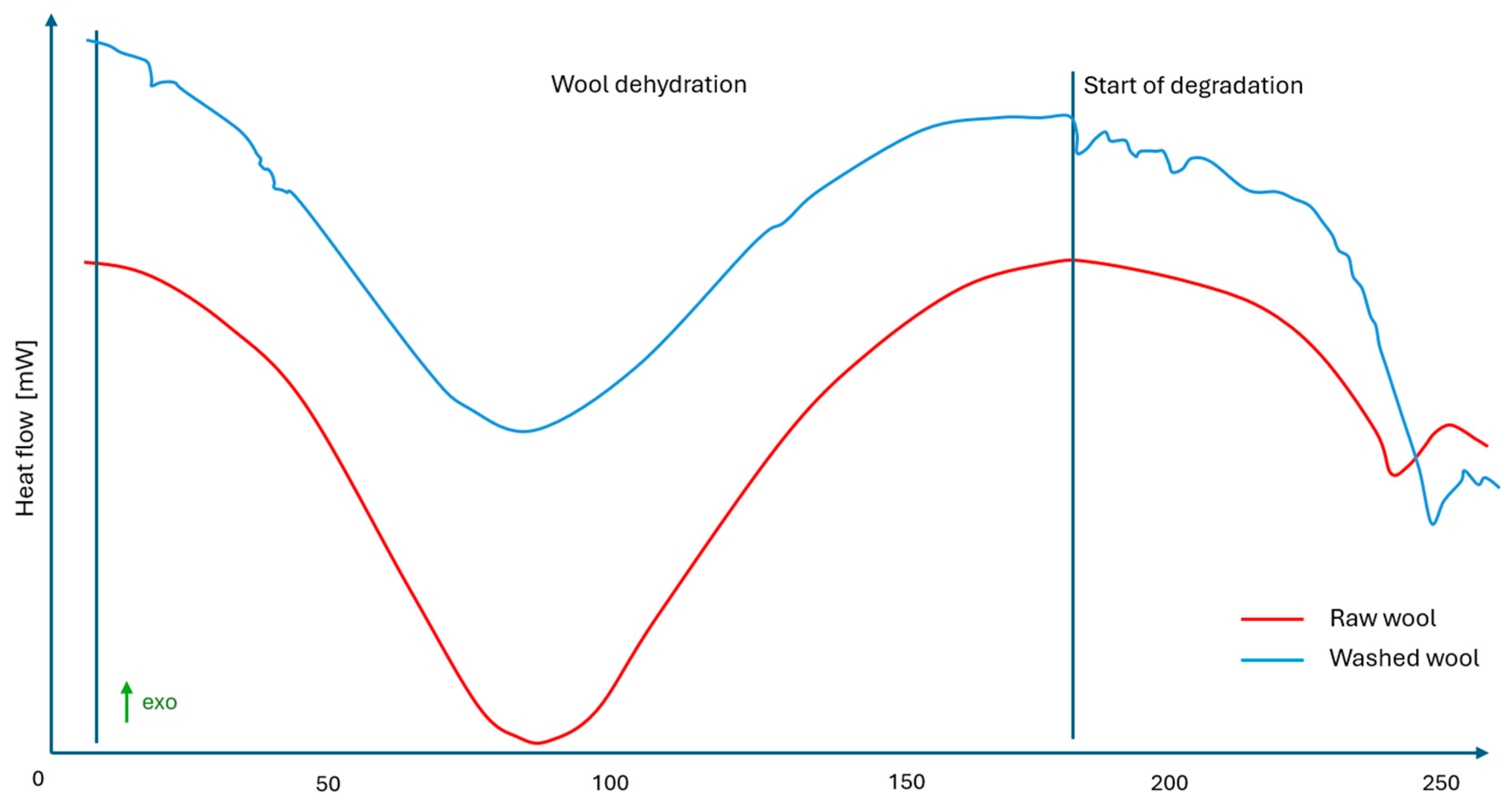
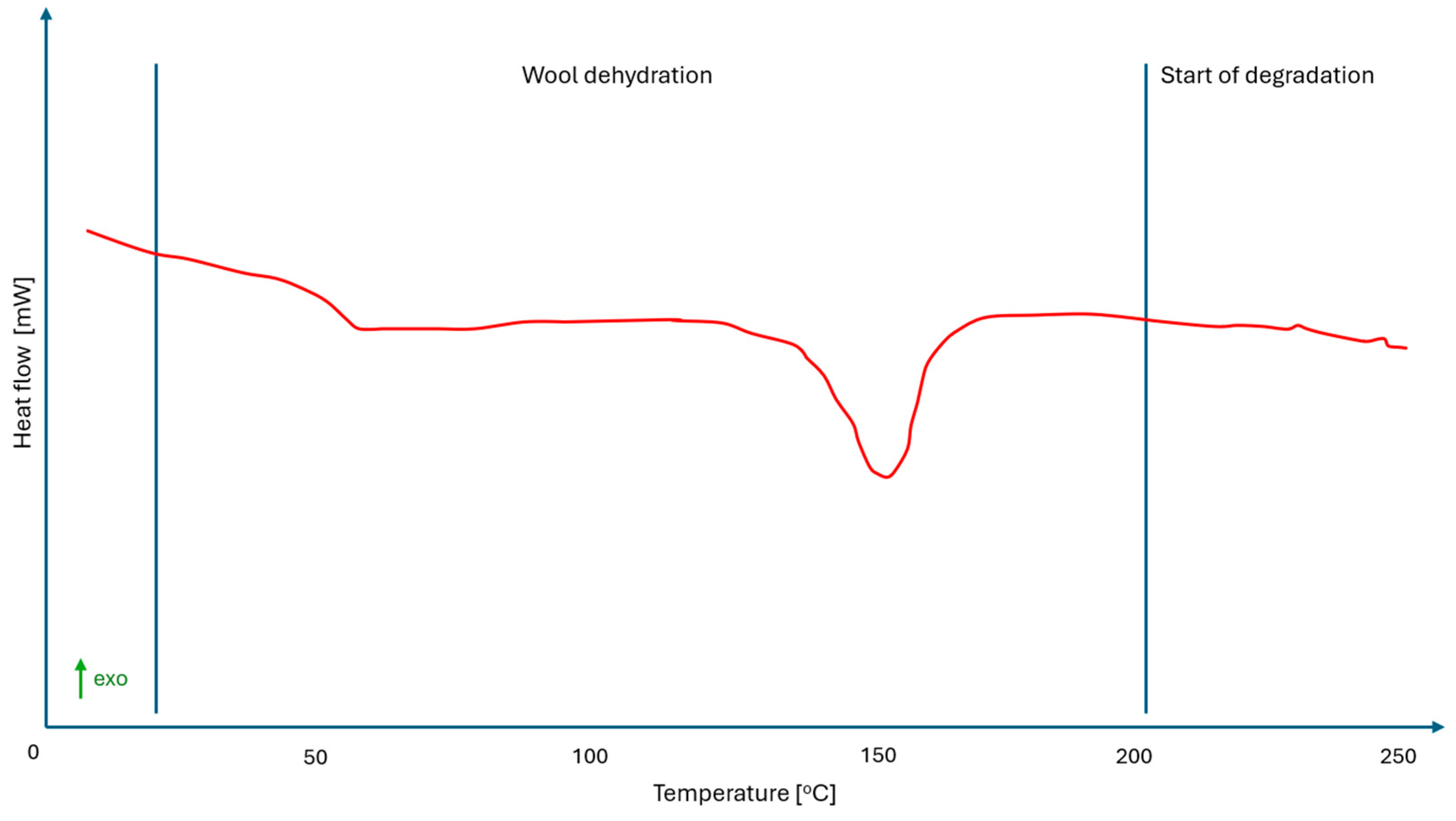
The results of the differential scanning calorimetry (DSC) tests for the raw material and the composite are shown in Figure 7 and Figure 8.
Wool fibres have a natural tendency to bind water through hydrogen bonds in their structure. The total energy of water evaporation is 225.41 J/g. Washed wool fibres also bind water through hydrogen bonds in their structure. The total heat of water evaporation is 229.87 J/g. Compared to raw wool, which contains natural fats, washed wool absorbs slightly more water. However, the increase in water absorption compared to raw wool in the case of washed wool was less than 2.5%. Table 6 presents all the determined parameters for washed and unwashed wool and for the produced PLA/wool fibre biocomposite.
Comparing the results of the thermal analysis with data from the literature [38], it was noted that the heat of water evaporation for both raw and washed wool is at a similar level, amounting to 226 J/g. It was agreed that raw wool is characterised by a slightly higher heat of evaporation value due to the phenomenon of moisture desorption from lanolin. It should be emphasised that after washing sheep’s wool, the peaks associated with water in DSC shift and their enthalpy changes. Usually, washed/degreased wool shows a different (often higher or shifted) desorption temperature and changed binding enthalpy compared to raw wool because the removal of lanolin exposes surface water-binding sites and changes the porosity.
The DSC curve obtained for the panel showed that the panel does not absorb water from the air. PLA prevents water absorption, which proves that PLA tightly and thoroughly surrounds the wool fibres. All phase transitions present in the pure PLA test were recorded in the DSC curve for the panel. The presence of wool fibres reduces the heat of fusion by almost half. Microscopic studies for group 1 showed that PLA very accurately surrounded the wool fibres. The surface is smooth and the wool fibres are well protected against mechanical damage. Based on a review of the literature [39], it was found that the presence of wool fibre in the PLA/sheep wool composite reduces the melting enthalpy from 42–93 J/g (depending on crystallinity) to 15–22 J/g (Table 6). However, when examining the effect of fibre addition in biocomposites on moisture absorption, the literature [40] clearly indicates that natural fibres increase moisture absorption. In the case of the tested samples, thermal analysis showed that the panel does not absorb water from the air, which is most likely due to the effective modification of PLA wool fibres by a very tight coating of the fibres, which increases their hydrophobicity and encapsulation, isolating the fibres from the external environment.
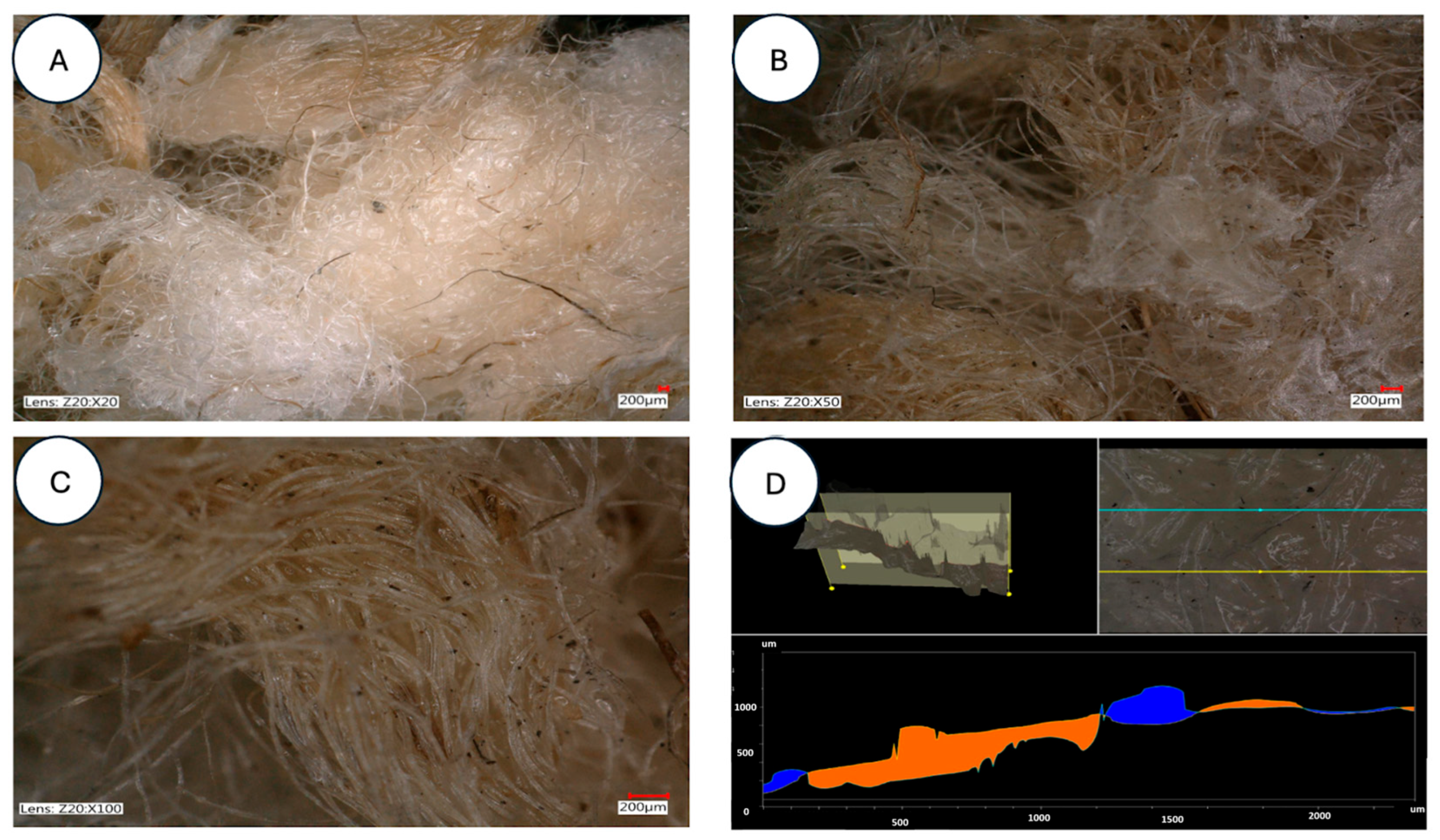
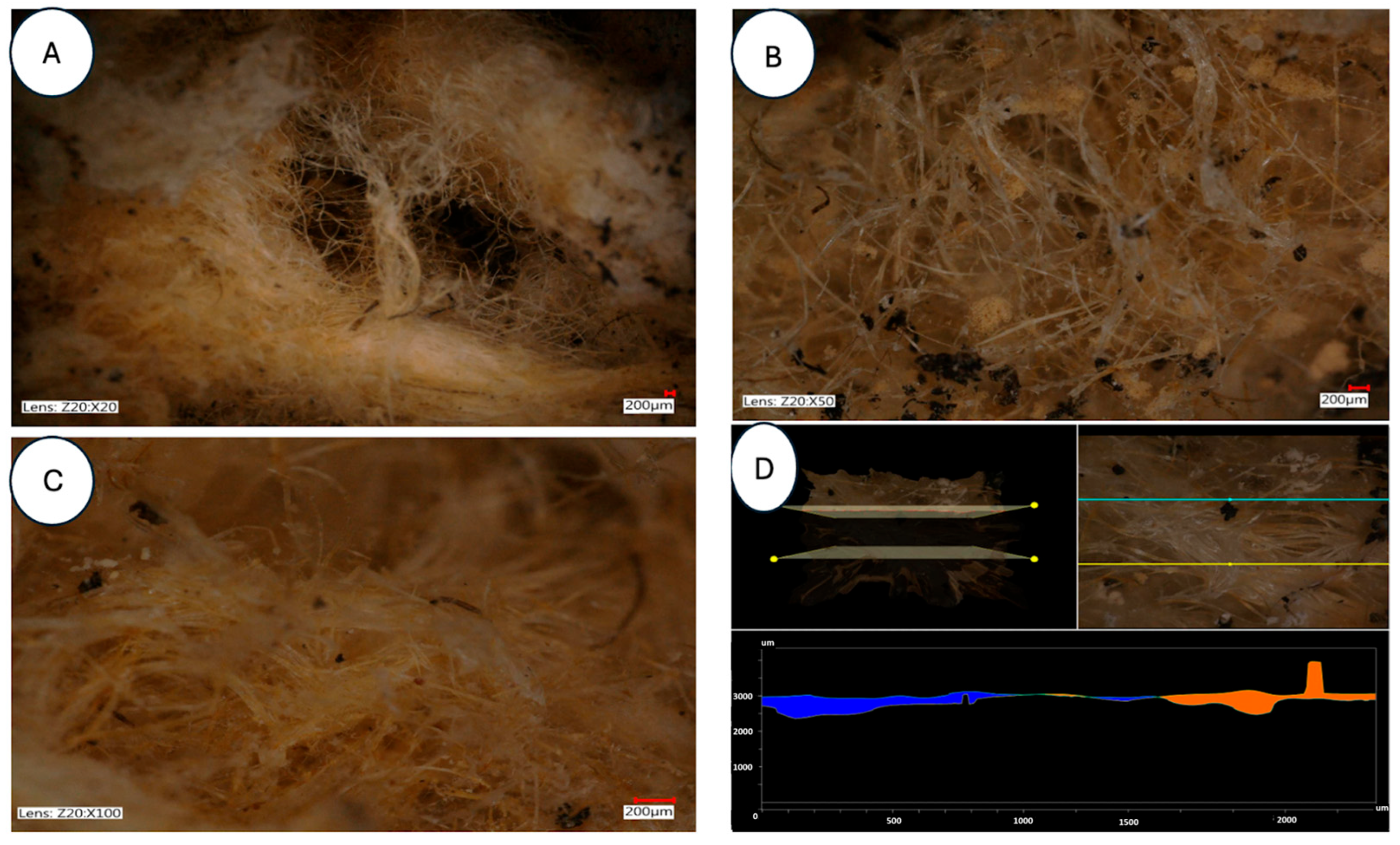
Microscopic studies analysing the non-biodegradable sample (G1) showed that PLA thoroughly coated the wool fibres. The surface is smooth, and the wool fibres are well protected against mechanical damage (Figure 9).
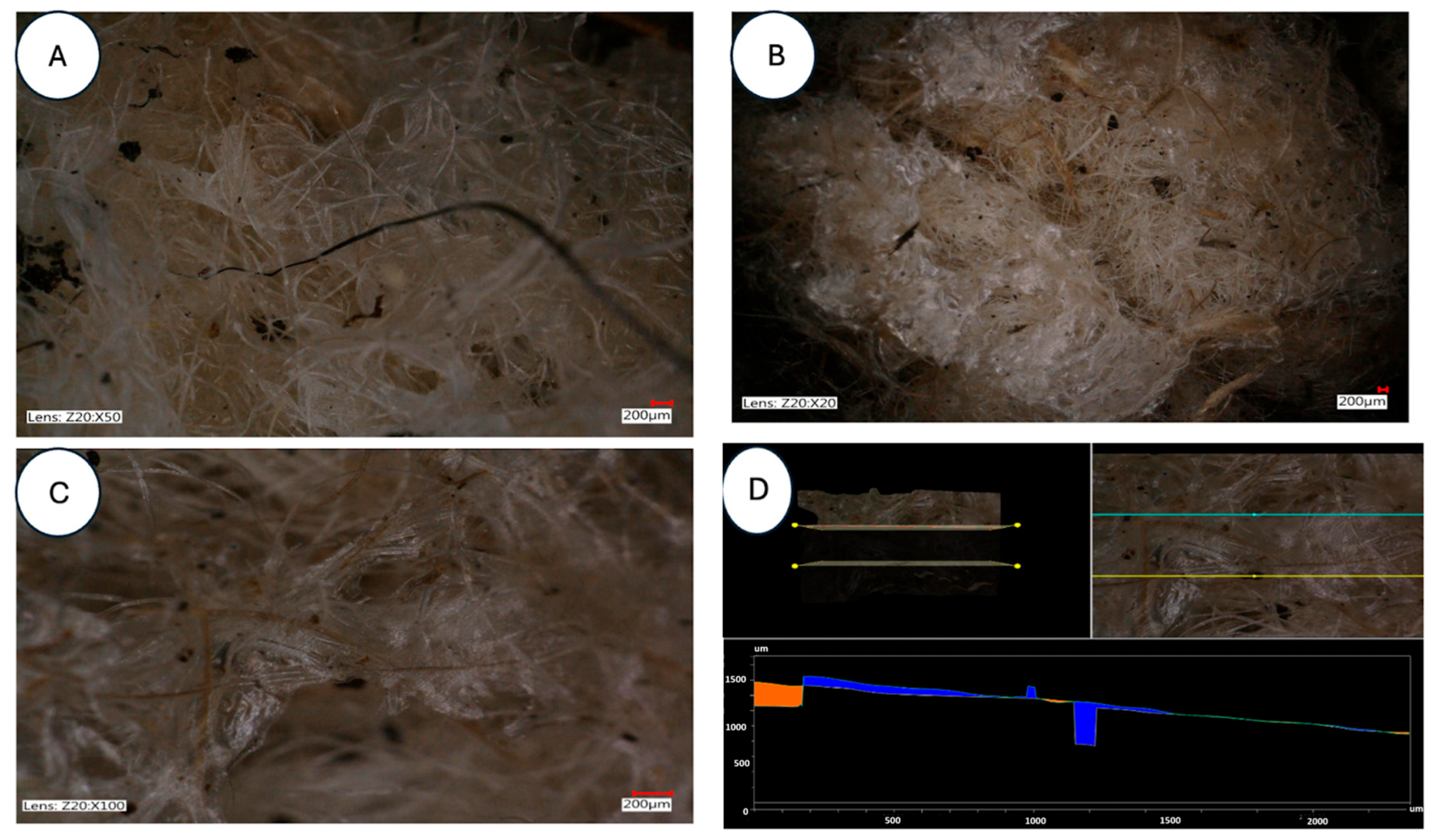
Biodegradation tests of Group 2 (G2) showed that the samples clearly began to degrade, with the surface turning yellow. The fibres appear to be thinner and more delicate. Live larvae were observed on some of them (Figure 10).
Biodegradation tests on samples from group 3 showed that, as a result of intensive watering, the fibres of wool coated with PLA underwent degradation (G3). Photographs show damaged fibres and colonies of various species of fungi. It can be seen that the colour of the samples is significantly darker (yellowed) compared to the previous groups (Figure 11) (Table 7).

4. Conclusions

Biocomposites are often produced from renewable raw materials, such as plant starch and natural fibres, which further reduces their carbon footprint. Further development of biocomposites may contribute to their widespread use in various industries, including packaging, construction, and automotive. Their technical and ecological properties make them an attractive alternative to conventional materials. The research conducted has confirmed that sheep wool and PLA-based biocomposites have the potential to replace traditional plastics in many applications. Their rapid biodegradability and good mechanical properties are key to their future success in the engineering materials market. Further research should focus on optimising production processes and a wider introduction of biocomposites into industrial use, which could contribute to more sustainable waste management and environmentally friendly production.

Author Contributions

Conceptualization, P.S., E.M. and A.I.Z.; methodology, P.S., K.P. and J.B.; software, J.S. and. J.B.; validation, P.S., J.S. and M.N.; formal analysis, P.S. and J.B.; investigation, J.S. and J.B.; resources, P.S., A.I.Z., K.P. and E.M.; data curation, M.N., J.S. and J.B.; writing—original draft preparation, P.S. and E.M.; writing—review and editing, M.N., J.S., J.B. and K.P.; visualization. P.S., J.S. and J.B.; supervision, K.P. and A.I.Z. All authors have read and agreed to the published version of the manuscript.

Funding

This work was supported from the subsidy of the National Centre for Research and Development (Poland) from the project INNOGLOBO/3/76/Eko-Ognioodporne Panele Izolacyjne—EOPI/2023.

Institutional Review Board Statement

Not applicable.

Informed Consent Statement

Not applicable.

Data Availability Statement

The data used to support the findings of this study are included within the article. Additional data are available from the corresponding authors upon request.

Conflicts of Interest

The authors declare no conflicts of interest.

References

  1. Saba, N.; Awad, S.A.; Jawaid, M.; Hashem, M.; Fouad, H.; Uddin, I.; Singh, B. Mechanical Performance and Dimensional Stability of Washingtonia/Kenaf Fibres-Based Epoxy Hybrid Composites. Sci. Rep. 2024, 14, 24242. [Google Scholar] [CrossRef] [PubMed]
  2. Allafi, F.; Hossain, M.S.; Lalung, J.; Shaah, M.; Salehabadi, A.; Ahmad, M.I.; Shadi, A. Advancements in Applications of Natural Wool Fiber: Review. J. Nat. Fibers 2022, 19, 497–512. [Google Scholar] [CrossRef]
  3. Alyousef, R.; Aldossari, K.; Ibrahim, O.; Al Jabr, H.; Alabduljabbar, H.; Mohamed, A.; Siddika, A. Effect of Sheep Wool Fiber on Fresh and Hardened Properties of Fiber Reinforced Concrete. Int. J. Civ. Eng. Technol. 2019, 10, 190–199. [Google Scholar]
  4. Szczecina, J.; Szczepanik, E.; Barwinek, J.; Szatkowski, P.; Niemiec, M.; Zhakypbekovich, A.I.; Molik, E. Sheep Wool as Biomass: Identifying the Material and Its Reclassification from Waste to Resource. Energies 2025, 18, 5185. [Google Scholar] [CrossRef]
  5. Cardinale, T.; Arleo, G.; Bernardo, F.; Feo, A.; De Fazio, P. Thermal and Mechanical Characterization of Panels Made by Cement Mortar and Sheep’s Wool Fibres. Energy Procedia 2017, 140, 159–169. [Google Scholar] [CrossRef]
  6. Folentarska, A.; Krystyjan, M.; Baranowska, H.M.; Ciesielski, W. Renewable Raw Materials as an Alternative to Receiving Biodegradable Materials. Chem. Environ. Biotechnol. 2016, 19, 121–124. [Google Scholar] [CrossRef]
  7. Penczek, S.; Pretula, J.; Lewiński, P. Polymers from Renewable Resources. Biodegradable Polymers. Polimery 2013, 58, 835–846. [Google Scholar]
  8. Gołębiewski, J.; Gibas, E.; Malinowski, R. Selected Biodegradable Polymers—Preparation, Properties, Applications. Polimery 2022, 53, 799–807. [Google Scholar] [CrossRef]
  9. Foltynowicz, Z.; Jakubiak, P. Polylactid Acid—Biodegradable Polymer Obtained from Vegetable Resources. Polimery 2022, 47, 769–774. [Google Scholar] [CrossRef]
  10. Villavicencio, A. Wykorzystanie Pozaklasowego Włókna Alpak i Wełny Owczej Do Zastosowania w Różnych Sektorach Gospodarki. Przegląd Włókienniczy-Włókno Odzież Skóra 2022, 1, 37–41. [Google Scholar] [CrossRef]
  11. Khan, F.; Hossain, N.; Hasan, F.; Rahman, S.M.; Khan, S.; Saifullah, A.Z.A.; Chowdhury, M. Advances of Natural Fiber Composites in Diverse Engineering Applications—A Review. Appl. Eng. Sci. 2024, 18, 100184. [Google Scholar] [CrossRef]
  12. Liu, L.; Du, M.; Liu, F. Recent Advances in Interface Microscopic Characterization of Carbon Fiber-Reinforced Polymer Composites. Front. Mater. 2023, 10, 1124338. [Google Scholar] [CrossRef]
  13. Sathishkumar, T.P.; Navaneethakrishnan, P.; Shankar, S.; Rajasekar, R.; Rajini, N. Characterization of Natural Fiber and Composites—A Review. J. Reinf. Plast. Compos. 2013, 32, 1457–1476. [Google Scholar] [CrossRef]
  14. Harlé, T.; Nguyen, G.T.M.; Ledesert, B.; Mélinge, Y.; Hebert, R.L. Cross-Linked Polyurethane as Solid-Solid Phase Change Material for Low Temperature Thermal Energy Storage. Thermochim. Acta 2020, 685, 178191. [Google Scholar] [CrossRef]
  15. Thiebat, F.; Fregonara, E.; Masoero, A.; Morselli, F.; Senatore, C.; Giordano, R. Circular Design for Natural Fibers: A Literature Review on Life Cycle Evaluation Approaches for Environmental, Social and Economic Sustainability. Preprints 2024. [Google Scholar] [CrossRef]
  16. Pawlak, F.; Aldas, M.; Parres, F.; López-Martínez, J.; Arrieta, M.P. Silane-Functionalized Sheep Wool Fibers from Dairy Industry Waste for the Development of Plasticized PLA Composites with Maleinized Linseed Oil for Injection-Molded Parts. Polymers 2020, 12, 2523. [Google Scholar] [CrossRef]
  17. Szatkowski, P.; Tadla, A.; Flis, Z.; Szatkowska, M.; Suchorowiec, K.; Molik, E. The Potential Application of Sheep Wool as a Component of Composites. Anim. Sci. Genet. 2021, 17, 1–8. [Google Scholar] [CrossRef]
  18. ISO 1183-1:2025; Plastics—Methods for Determining the Density of Non-Cellular Plastics—Part 1: Immersion Method, Liquid Pycnometer Method and Titration Method. ISO: Geneva, Switzerland, 2025.
  19. ISO 527-1:2019; Plastics—Determination of Tensile Properties—Part 1: General Principles. ISO: Geneva, Switzerland, 2019.
  20. ISO 178:2019; Plastics—Determination of Flexural Properties. ISO: Geneva, Switzerland, 2019.
  21. ASTM D2654-22; Standard Test Methods for Moisture in Textiles. ASTM International: West Conshohocken, PA, USA, 2022.
  22. ISO 604:2002; Plastics—Determination of Compressive Properties. ISO: Geneva, Switzerland, 2002.
  23. ISO 179-1:2023; Plastics—Determination of Charpy Impact Properties—Part 1: Non-Instrumented Impact Test. ISO: Geneva, Switzerland, 2023.
  24. ASTM D570-22; Standard Test Method for Water Absorption of Plastics. ASTM International: West Conshohocken, PA, USA, 2022.
  25. ISO 62:2008; Plastics—Determination of Water Absorption. ISO: Geneva, Switzerland, 2008.
  26. ISO 11357 1:2023; Plastics—Differential Scanning Calorimetry (DSC)—Part 1: General Principles. ISO: Geneva, Switzerland, 2023.
  27. ISO 14855 1:2012; Determination of the Ultimate Aerobic Biodegradability of Plastic Materials Under Controlled Composting Conditions—Method by Analysis of Evolved Carbon Dioxide—Part 1: General Method. ISO: Geneva, Switzerland, 2012.
  28. ASTM D5988 18; Standard Test Method for Determining Aerobic Biodegradation of Plastic Materials in Soil. ASTM International: West Conshohocken, PA, USA, 2018.
  29. ISO 9073 1:2023; Nonwovens—Test Methods—Part 1: Determination of Mass per Unit Area. ISO: Geneva, Switzerland, 2023.
  30. Szatkowski, P. The Influence of Various Chemical Modifications of Sheep Wool Fibers on the Long-Term Mechanical Properties of Sheep Wool/PLA Biocomposites. Materials 2025, 18, 3056. [Google Scholar] [CrossRef]
  31. Pach, J.; Mayer, P. Polymer Composites Reinforced with Natural Fibers Developed for the Needs of Contemporary Automotive Industry. Mechanik 2010, 4, 270–274. [Google Scholar]
  32. Kim, N.K.; Lin, R.J.T.; Bhattacharyya, D. Effects of Wool Fibres, Ammonium Polyphosphate and Polymer Viscosity on the Flammability and Mechanical Performance of PP/Wool Composites. Polym. Degrad. Stab. 2015, 119, 167–177. [Google Scholar] [CrossRef]
  33. Vasina, M.; Straznicky, P.; Hrbacek, P.; Rusnakova, S.; Bosak, O.; Kubliha, M. Investigation of Physical Properties of Polymer Composites Filled with Sheep Wool. Polymers 2024, 16, 690. [Google Scholar] [CrossRef] [PubMed]
  34. Boey, J.Y.; Lee, C.K.; Tay, G.S. Factors Affecting Mechanical Properties of Reinforced Bioplastics: A Review. Polymers 2022, 14, 3737. [Google Scholar] [CrossRef] [PubMed]
  35. Zhang, Z.; Cao, B.; Jiang, N. The Mechanical Properties and Degradation Behavior of 3D-Printed Cellulose Nanofiber/Polylactic Acid Composites. Materials 2023, 16, 6197. [Google Scholar] [CrossRef] [PubMed]
  36. Kanakannavar, S.; Pitchaimani, J.; Thalla, A.; Rajesh, M. Biodegradation Properties and Thermogravimetric Analysis of 3D Braided Flax PLA Textile Composites. J. Ind. Text. 2022, 51, 1066S–1091S. [Google Scholar] [CrossRef]
  37. Gao, L.; Drozdov, A.D. The Use of Various Measurement Methods for Estimating the Fracture Energy of PLA (Polylactic Acid). Materials 2022, 15, 8623. [Google Scholar] [CrossRef]
  38. Pooley, L.I.; Abu-Bakar, A.S.; Cran, M.J.; Wadhwani, R.; Moinuddin, K.A.M. Measurements of Specific Heat Capacity of Common Building Materials at Elevated Temperatures: A Comparison of DSC and HDA. J. Therm. Anal. Calorim. 2020, 141, 1279–1289. [Google Scholar] [CrossRef]
  39. Farah, S.; Anderson, D.G.; Langer, R. Physical and Mechanical Properties of PLA, and Their Functions in Widespread Applications—A Comprehensive Review. Adv. Drug Deliv. Rev. 2016, 107, 367–392. [Google Scholar] [CrossRef]
  40. Kesentini, Z.; El Mahi, A.; Rebiere, J.-L.; El Guerjouma, R.; Beyaoui, M.; Haddar, M. Effect of Hydric Aging on the Static and Vibration Behavior of 3D Printed Bio-Based Flax Fiber Reinforced Poly-Lactic Acid Composites. Polym. Polym. Compos. 2022, 30, 096739112210818. [Google Scholar] [CrossRef]
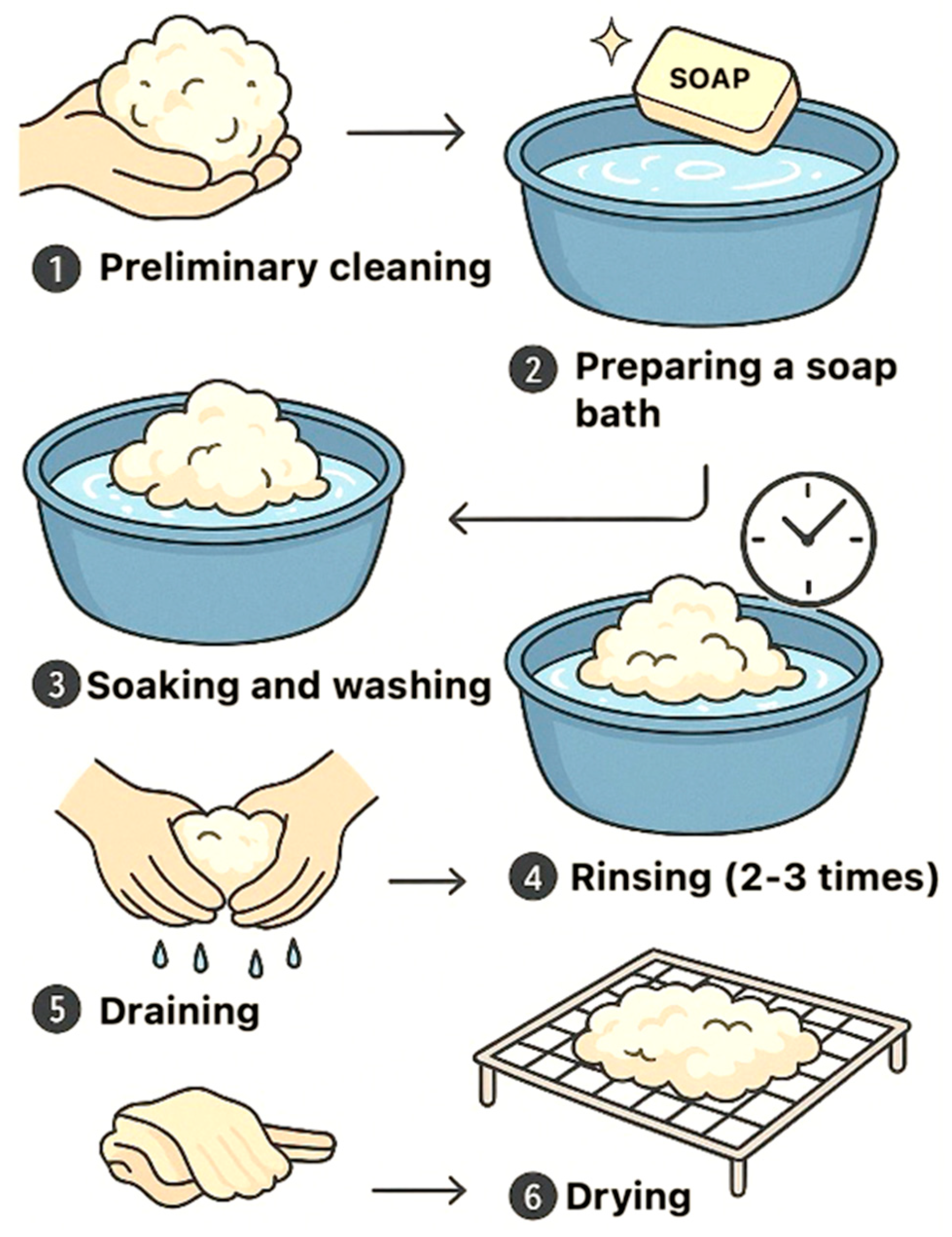
Figure 1. Diagram of the raw sheep wool washing process (Jakub Barwinek—own work).
Applsci 15 13054 g001
Figure 2. Difference before (A) and after (B) the cleaning process of sheep’s wool under a digital microscope at 30× magnification.
Applsci 15 13054 g002
Figure 3. Products for creating a PLA solution in DCM (dichloromethane), ready solution (A) and washed sheep’s wool (B) (photo: Piotr Szatkowski).
Applsci 15 13054 g003
Figure 5. Examples of the research process compression test results for a biocomposite that has not undergone biodegradation (one type of sample 4 measurements) (n-10).
Applsci 15 13054 g005
Figure 6. Examples of the research process compression test results for biodegraded biocomposite (one type of sample 4 measurements) (n-10).
Applsci 15 13054 g006
Figure 7. DSC curve for raw wool and purified wool.
Applsci 15 13054 g007
Figure 8. DSC curve for the finished PLA/washed sheep wool biocomposite.
Applsci 15 13054 g008
Figure 9. Comparison of microscopic images of PLA/washed sheep wool biocomposite that has not undergone biodegradation ((A) approx. 20×, (B) approx. 50×, and (C) approx. 100×). Figure (D) shows a 3D image of the biocomposite at approximately 200× magnification. Blue—sample height difference in favor of 1st roughness measurement, orange—sample height difference in favor of 2nd roughness measurement, orange.
Applsci 15 13054 g009
Figure 10. Comparison of microscopic images of PLA/washed sheep wool biocomposite that underwent biodegradation without the use of water ((A) approx. 50×, (B) approx. 20×, and (C) approx. 20×). Figure (D) shows a 3D image of the biocomposite at approximately 150× magnification. Blue—sample height difference in favor of 1st roughness measurement, orange—sample height difference in favor of 2nd roughness measurement, orange.
Applsci 15 13054 g010
Figure 11. Comparison of microscopic images of PLA/washed sheep wool biocomposite that underwent biodegradation using water ((A) approx. 20×, (B) approx. 20×, and (C) approx. 20×). Figure (D) shows a 3D image of the biocomposite at approximately 100× magnification. Blue—sample height difference in favor of 1st roughness measurement, orange—sample height difference in favor of 2nd roughness measurement, orange.
Applsci 15 13054 g011
Table 1. Data collected as a result of compressing a biocomposite that has not undergone biodegradation G 3.
ParameterUnitMean ± SDCoefficient of Variation (%)Remarks
Specimen dimension
Width (a)mm20.0 ± 0.21.0ISO 604 [22] requirement
Thickness (h)mm4.2 ± 0.37.1Measured at 5 points
Length (L)mm80.0 ± 1.01.3Testing standard
Cross-sectional area (A)mm284.0 ± 7.58.9A = a × h
Force measurements
Maximum compressive force (Fmax)N6840 ± 4276.2Raw output from testing machine
Yield force (Fy)N4930 ± 3256.610% offset method
Derived mechanical properties
Compressive strength (σmax)MPa23.56 ± 5.2326.3σmax = Fmax/A
Yield strength (σy)MPa8.75 ± 1.0211.7σy = Fy/A
Young’s modulus (E)GPa1.439 ± 0.26318.3E = Δσ/Δε (0–2% strain range)
Work of destruction (Wtotal)J21.97 ± 3.917.6Wtotal = ∫F·dL/1000
Deformation at Fmax (ΔL)mm16.2 ± 2.213.7Extension at failure
Strain at F_max (εmax)%20.3 ± 2.813.8ε = ΔL/L × 100%
Impact strength (Charpy)kJ19 ± 210.5See Table 3 for details
Table 2. Data collected as a result of compressing the biodegraded biocomposite (6 weeks) (G 1).
ParameterUnitMean ± SDCoefficient of Variation (%)
Specimen dimension (after degradation)
Widthmm20.1 ± 0.31.5
Thicknessmm4.3 ± 0.49.3
Cross-sectional areamm286.4 ± 8.29.5
Force measurements
Maximum compressive force (Fmax)N6740 ± 3375.0
Compressive strength (σmax)MPa9.67 ± 4.2343.7
Young’s modulus (E)GPa1.079 ± 0.52949.0
Work of destruction (Wtotal)J22.04 ± 5.725.9
Impact strength (Charpy)kJ12 ± 1.512.5
Mass retention%13.6 ± 2.115.4
Table 3. Impact strength results for the manufactured biocomposite.
Type of MaterialSpecific Impact Strength (kJ/m2)
PLA/wool (non-biodegradable)0.226 ± 0.023
PLA/wool (after biodegradation)0.142 ± 0.017
Pure PLA (reference)0.600 ± 0.017
Table 4. Results obtained during the density testing of the biocomposites.
Sample DescriptionMeasurement MethodDensity
(g/cm3)
Void Fraction
(%)
Notes
PLA–wool composite (pre-degradation)Geometric method (ISO 1183)0.27 ± 0.02~78Highly porous structure
PLA–wool composite (post-degradation, 6 weeks)Geometric method (ISO 1183)0.31 ± 0.03~75Density increases due to moisture loss and fibre compaction
Reference material: pure PLA (4032D)Literature value1.24N/ANatureWorks datasheet; measured per ISO 1183 on solid samples
Reference material: waterLiterature value1.00N/AAt 20 °C, for context
Table 5. Results obtained during the thermal conductivity test of the tested biocomposites.
SampleThermal Conductivity in Λ [W/m·K]
Wool panel0.1270
Wool panel after degradation0.1920
Table 6. Data obtained during the DSC test for raw, washed wool and wool fibre biocomposite.
Temp. Max Peak of Dehydration Wool
[°C]
Heat of Evaporation
[J/g]
Temp. of Start Degradation [°C]Glass Temperature [°C]ΔCp ISO
[J/(g·K)]
Temp. Melt of PLA Matrix [°C]Heat of Fusion of PLA Matrix
[J/g]
PLA Crystallinity [%]
Raw wool91225.4202----
Washed wool88229.8179----
PLA/washed sheep wool biocomposite--220620.24015914.7932%
Table 7. Results presenting the results of biodegradation tests.
MetricGroup 1 (After 6 Week Degradation)Group 2 (Control)Remarks
Mass Loss (%)13.6 ± 2.1 *3.0 ± 1.1 *Higher loss in G1 due to increased moisture-driven hydrolysis
Compressive Strength Retention (%)41 ± 812 ± 759% reduction in strength (59% loss) across all groups
Young’s Modulus Retention (%)75 ± 521 ± 625% reduction in stiffness; matrix hydrolysis primary mechanism
Work of Destruction Retention (%)80 ± 1523 ± 10Slight increase in energy absorption post-degradation (counterintuitive; see Discussion)
Surface Colour Change3 (moderate yellowing)2.5 (mild yellowing)Indicates PLA photo/thermal degradation; correlates with UV exposure and microbial activity
Visible Fibre–Matrix DebondingYes (extensive)ModerateG1 (high moisture) shows most severe debonding; evidence of hydrolytic cleavage
Microbial Colonisation (fungi/bacteria)Heavy (fungal mycelium visible)ModerateG1 moisture promotes fungal growth; consistent with mass loss trend
* Mass loss data to be added via gravimetric measurement per ISO 14855-1; preliminary values shown; final data to be incorporated after 6-week measurements.
Disclaimer/Publisher’s Note: The statements, opinions and data contained in all publications are solely those of the individual author(s) and contributor(s) and not of MDPI and/or the editor(s). MDPI and/or the editor(s) disclaim responsibility for any injury to people or property resulting from any ideas, methods, instructions or products referred to in the content.