Article

Development of a Prototype Hybrid Mixed Reality and Haptic Task Trainer for Temporomandibular Joint Dislocation


1
Department of Digital Health, Samsung Advanced Institute for Health Sciences & Technology (SAIHST), Sungkyunkwan University, Seoul 06351, Republic of Korea
2
Department of Emergency Medicine, Ng Teng Fong General Hospital, Singapore 609606, Singapore
3
Department of Surgery, Samsung Medical Center, Sungkyunkwan University School of Medicine, Seoul 06351, Republic of Korea
4
Department of Oral and Maxillofacial Surgery, Samsung Medical Center, Sungkyunkwan University School of Medicine, Seoul 06351, Republic of Korea
5
Department of Biomedical Engineering, Samsung Medical Center, Seoul 06351, Republic of Korea
6
Department of Emergency Medicine, Samsung Medical Center, Sungkyunkwan University School of Medicine, Seoul 06351, Republic of Korea
*
Author to whom correspondence should be addressed.
These authors contributed equally to this work.
Appl. Sci. 2025, 15(23), 12816; https://doi.org/10.3390/app152312816
Submission received: 30 October 2025 / Revised: 1 December 2025 / Accepted: 1 December 2025 / Published: 3 December 2025
(This article belongs to the Section Applied Biosciences and Bioengineering)

Abstract

This study introduces a novel mixed reality (MR) TMJ dislocation teaching program developed using HoloLens 2 and collaboration with interdisciplinary teams. The program offers an immersive learning experience, enabling individuals to visualize and interact with detailed 3D temporomandibular joint (TMJ) models and practice different reduction techniques repeatedly. Real-time feedback, combining the visual holographic overlay with mechanical resistance in the physical model, supports the learning process. The 3D-printed skull model provided haptic feedback, strengthened the positive response given by the MR model, and reinforced muscle memory. Despite some challenges related to the learning curve and cost, the program shows promise for practicing uncommon, high-anxiety clinical procedures in medical education. Future research directions include comparisons with traditional teaching methods, evaluating long-term skill retention, and exploring MR applications in other clinical procedures. Overall, this project demonstrates the potential of MR technology to advance medical education and skill acquisition.

1. Introduction

Temporomandibular joint (TMJ) dislocation is a relatively common condition worldwide, with reported incidence rates of 5.3 per 1,000,000 patients. Gender predilection varies across different populations [1,2,3,4]. The mandibular condyle is displaced from the articular fossa of the temporal bone, leading to considerable pain, functional impairment, and potential complications if not promptly addressed. The reduction technique is a crucial skill that healthcare professionals must acquire, particularly in the fields of emergency medicine, dentistry, and oral and maxillofacial surgery, to effectively manage TMJ dislocation. Traditionally, the teaching of TMJ dislocation reduction techniques has relied on conventional methods, including didactic lectures, anatomical models, and supervised hands-on practice. While these methods have served as the cornerstone of medical education, including strengths such as the availability of expert guidance and tangible feedback, they possess certain limitations. The scarcity of patients presenting with TMJ dislocation, ethical considerations, time constraints, and limited opportunities for repeated practice often hinder the acquisition and refinement of necessary skills. Furthermore, while the reduction maneuver is biomechanically straightforward, the high anxiety levels of both the patient and the novice practitioner can complicate the procedure. Thus, a confident and practiced approach is required, which is difficult to achieve without simulation.
To bridge this gap and enhance the teaching of the TMJ dislocation reduction technique, emerging technologies such as HoloLens 2 offer a novel and innovative approach. HoloLens 2, a mixed reality (MR) headset developed by Microsoft, is a three-dimensional (3D) visualization technology that creates an immersive and interactive learning environment, seamlessly merging virtual and real-world elements. The use of mixed reality has been widely reported in the literature reporting on medical (particularly anatomy) teaching [5,6,7,8,9,10,11] and surgical procedures in operating rooms [12,13,14]. A systematic review and meta-analysis were performed on augmented reality and virtual reality technology or programs in medical education and training. This reaffirmed the positive improvement these techniques cause in users’ psychomotor performance, knowledge acquisition, and spatial ability, with greater effects observed in the younger population and naturalistic studies [15,16,17]. Furthermore, HoloLens 2, with six degrees of freedom, outperforms devices with three degrees of freedom, such as Google Cardboard [18]. However, there is a current lack of studies in the literature regarding its use in uncommon but significant clinical procedures, such as the TMJ reduction technique.
By utilizing HoloLens 2 in teaching TMJ dislocation reduction, several benefits can be obtained. Firstly, HoloLens 2 showcases a highly detailed 3D holographic model of the temporomandibular joint, which provides a comprehensive view of the anatomical structures involved. This immersive experience aids understanding of complex spatial relationships and assists in developing a more intuitive grasp of the reduction technique in a controlled setting.
Moreover, HoloLens 2 facilitates repeated practice of the TMJ reduction technique without the need for live patients. This feature overcomes the limitations imposed by the scarcity of suitable cases, ensuring that learners gain proficiency through ample simulated practice before real clinical application is needed. Additionally, HoloLens 2 offers real-time feedback on the learner’s technique through visual cues in the headset and haptic resistance from the physical task trainer. This enhances the learning process by allowing immediate corrections and improvements. On the other hand, there are some limitations of using HoloLens 2 in procedural teaching, such as TMJ dislocation. HoloLens 2 lacks the ability to provide tactile feedback or sensations, which are important in understanding the resistance and sensitivity of a patient’s jaw during the reduction procedure. The learning curve to master HoloLens 2, including its cost and availability, may also hinder widespread implementation in the short term.
In this paper, we describe the development of a prototype for a novel teaching method for the TMJ dislocation reduction technique using HoloLens 2. We also attempt to overcome the limitation of tactile feedback by creating a customized 3D-printed TMJ model to assist learners with situations closely resembling real-world sensation. This is similar to those provided by the traditional teaching method. Through the amalgamation of virtual and real-world elements, HoloLens 2 holds promise in revolutionizing the way healthcare professionals are educated and trained in complex procedures. The following sections discuss the methodology, results, and implications of incorporating HoloLens 2 as a novel teaching modality for reducing TMJ dislocation, ultimately shedding light on its potential to improve medical education in this specific domain. It is important to note that this study focuses on the technical development, engineering feasibility, and prototyping workflow of the system. This methodological approach aligns with recent contributions in the field [19], establishing technical validity as a necessary prerequisite to clinical implementation. The pedagogical evaluation and assessment of learning outcomes will be the subject of a subsequent study.

2. Materials and Methods

The development of the HoloLens TMJ teaching program involved a collaborative effort between emergency physicians, maxillofacial surgeons, computer scientists in the Samsung Medical Center (SMC) Smart Health Lab (SHL), and a professional 3D modeling team. This multidisciplinary team brought together expertise in medical knowledge, surgical techniques, and cutting-edge technology to create an effective and immersive learning experience.

2.1. Design and Development

The team aimed to create a learning experience where users first gain didactics and basic knowledge of TMJ dislocation (Module 1). In this theoretical module, the 3D-printed model serves only as a static visual reference to complement the slides. The user then observes the various reduction techniques in virtual skulls with practice (Module 2). Lastly, users can practice the reduction technique repeatedly on the 3D-printed TMJ model with the help of the virtual overlays and the holographic skulls (Module 3) to enforce tactile feedback and muscle memory, which is the primary function of the physical task trainer.
The team developed a virtual skull with detailed anatomy of the temporomandibular joint. The process involved the acquisition of a virtual skull model from an open source, with accurate anatomical features, including the mandibular condyle, condylar, and coronoid process, as verified by emergency physicians and the maxillofacial surgeon. Unity (version 2022.2.19f1, Unity Technologies ApS., San Francisco, CA, USA), MRTK (Mixed Reality Toolkit version 2.8.3.0), and Microsoft Visual Studio 2022 (version 2022, Microsoft Corp., Redmond, WA, USA) were used to develop the entire Universal Windows Platform (UWP) application for HoloLens 2. Finally, for the AR part, we used Vuforia Engine 10.16’s model target.
We then separated the mandible from the rest of the skull to allow simulation of specific movements experienced by the TMJ in normal position, anterior TMJ dislocation, as well as during the process of various reduction techniques. A pair of virtual hands was added and was shown holding the mandible to illustrate the reduction techniques.
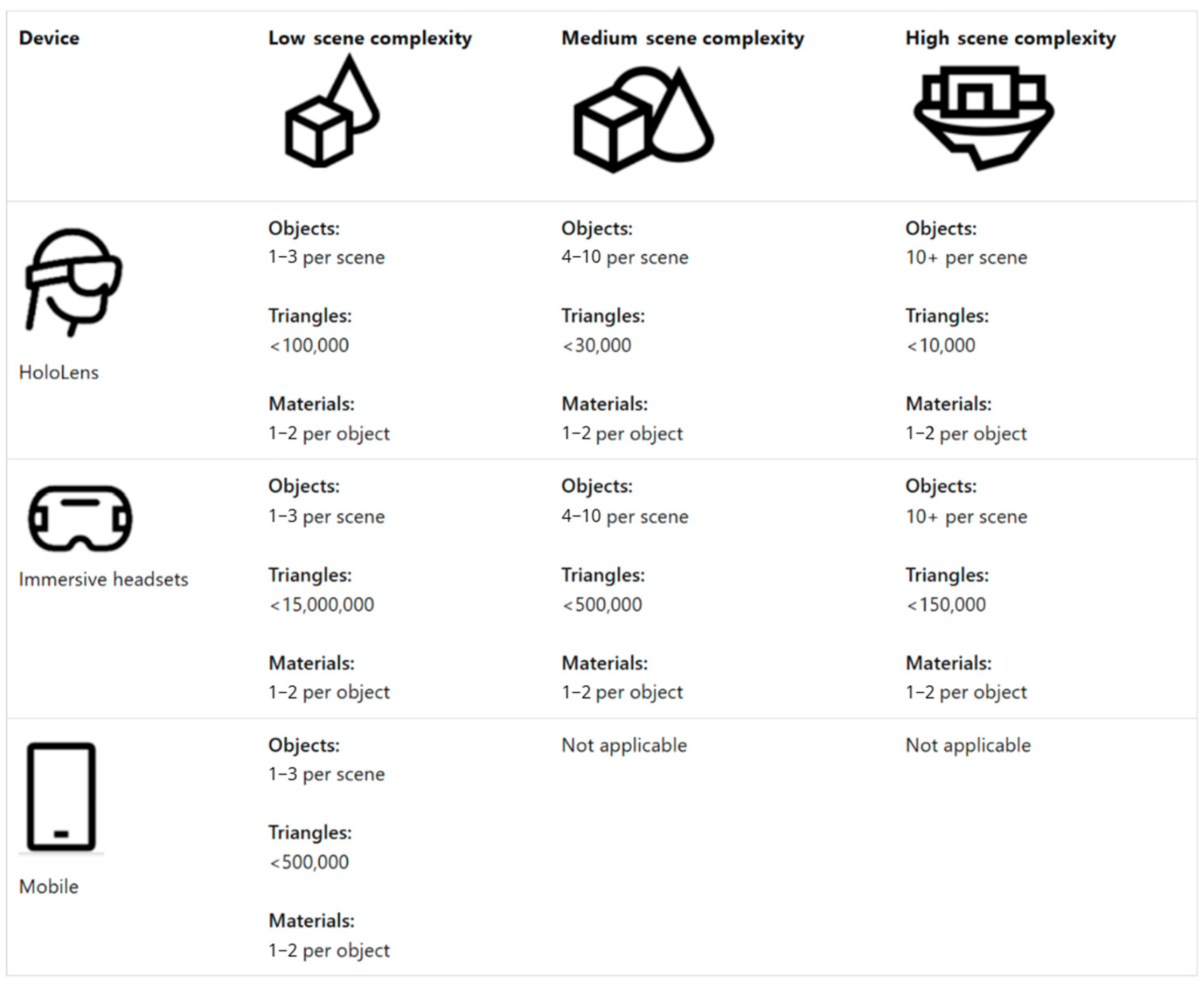
After noting the issue of dropping frame per second (fps) resulting in unsmooth animation, the team proceeded to reduce the triangles; this solution showed significant improvement. Figure 1 lists some general conservative targets to aim for when acquiring or authoring 3D models for various hardware. When in doubt, target the midrange profile for a balance of fidelity and performance. For HoloLens 2, Microsoft advises staying within the maximum limit of 100,000 polygons displayed on the screen for a comfortable experience.
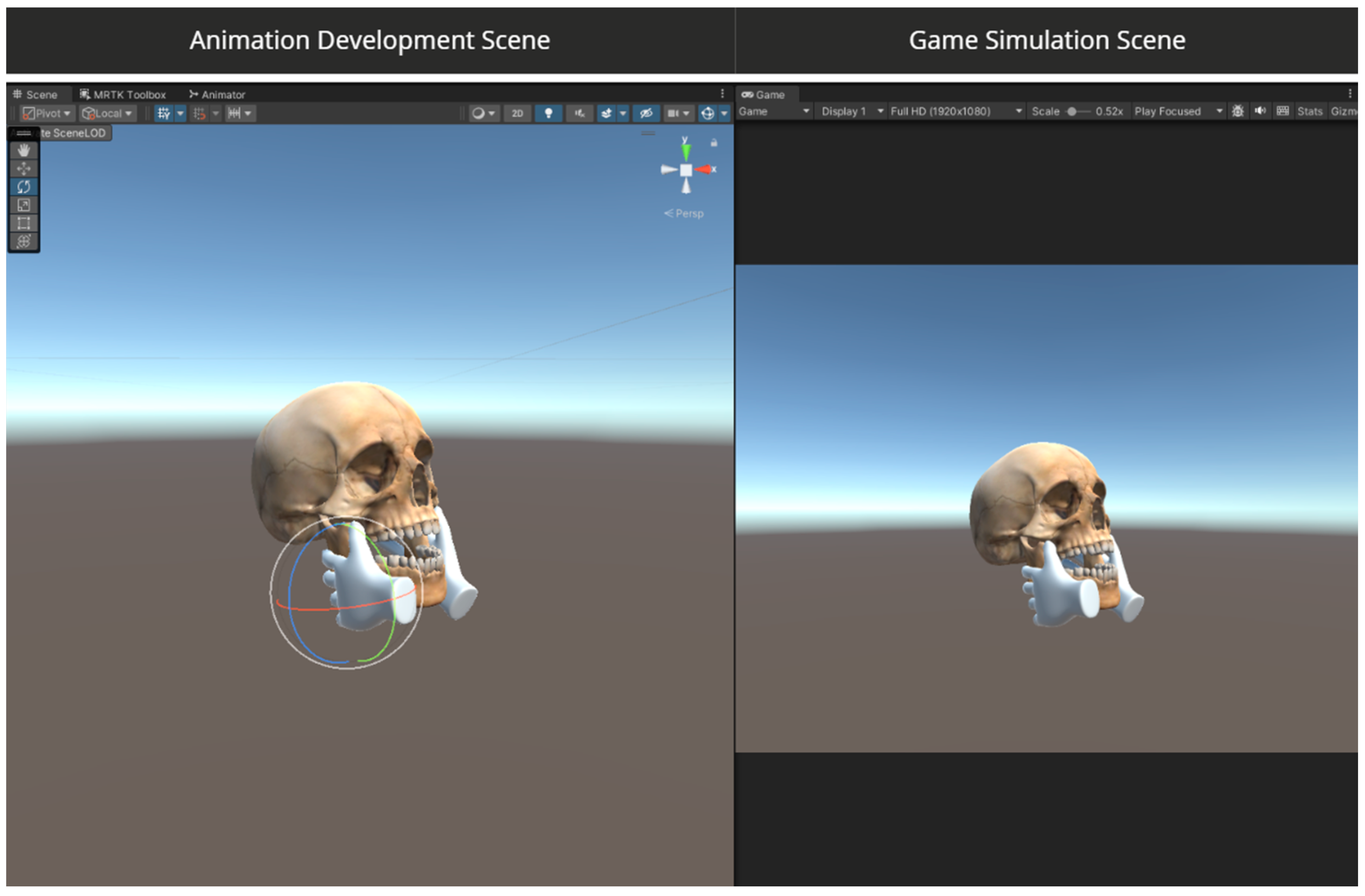
The team imported five virtual skulls in HoloLens 2 to facilitate user learning at different stages, namely, Basic Skull, Jaw Locked, Intraoral, Extraoral, and Syringe (Figure 2).
The didactic materials were then added to the virtual environment to provide users with basic knowledge. Specifically, information included approaches to reduction techniques, and the team provided detailed steps and key insights into each procedure. Users can study the virtual skull while simultaneously receiving the didactics. The didactics were provided in two languages, Korean and English, to suit the needs of local and international learners. The team also developed a customized 3D-printed TMJ model to help reinforce users’ understanding of the topic covered.
In addition to practical skulls, an AR part was included, namely Target Modeling. This technology recognizes the real 3D-printed skull and displays live AR instructions to the user.

2.2. Three-Dimensionally Printed TMJ Model: Printing Process, Challenges, and Modifications

A 3D skull in STL format was first obtained on an open-source website, thingiverse. It was then 3D-printed to study the feasibility of simulating TMJ movement and adding simulated muscles. The first version of the 3D skull used the PLA (Polylactic Acid) and PVA (Polyvinyl Acid) filament and took 96 h to print. The mandible, on the other hand, used the PLA filament and took 13 h to print. After printing the original 3D skull and mandible model, the team found three main problems. First, the total 3D printing time was too long, totaling roughly 100 h. Second, considering real-world training environments, the printed skull should be fixed on a wall or desk, requiring modification of the original 3D model. Third, the zygomatic arch of the original 3D-printed skull model was weak, requiring further modification of the original 3D model.
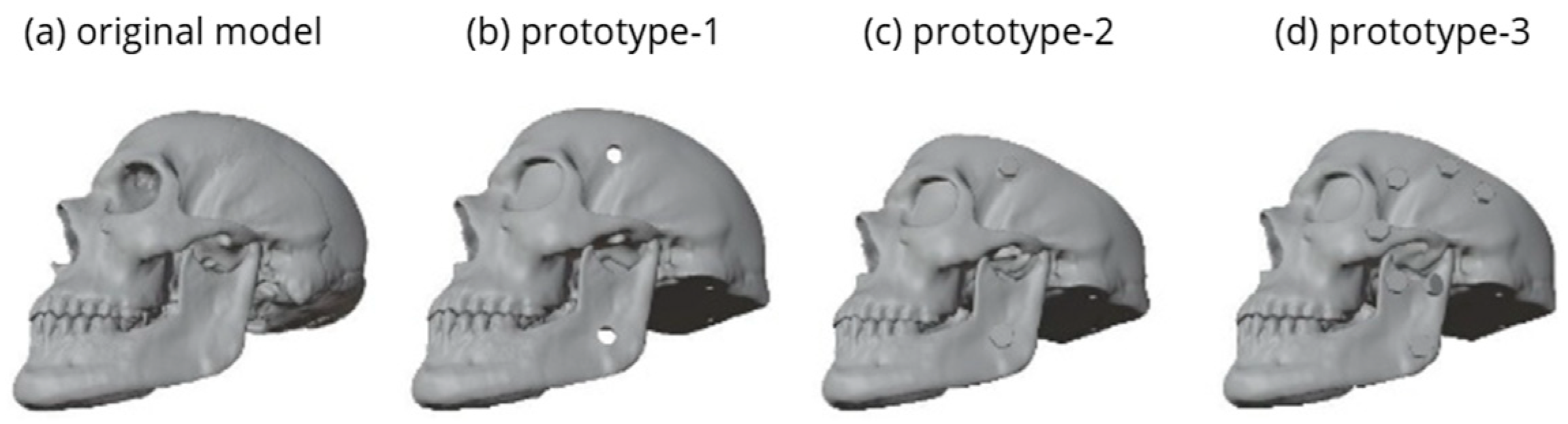
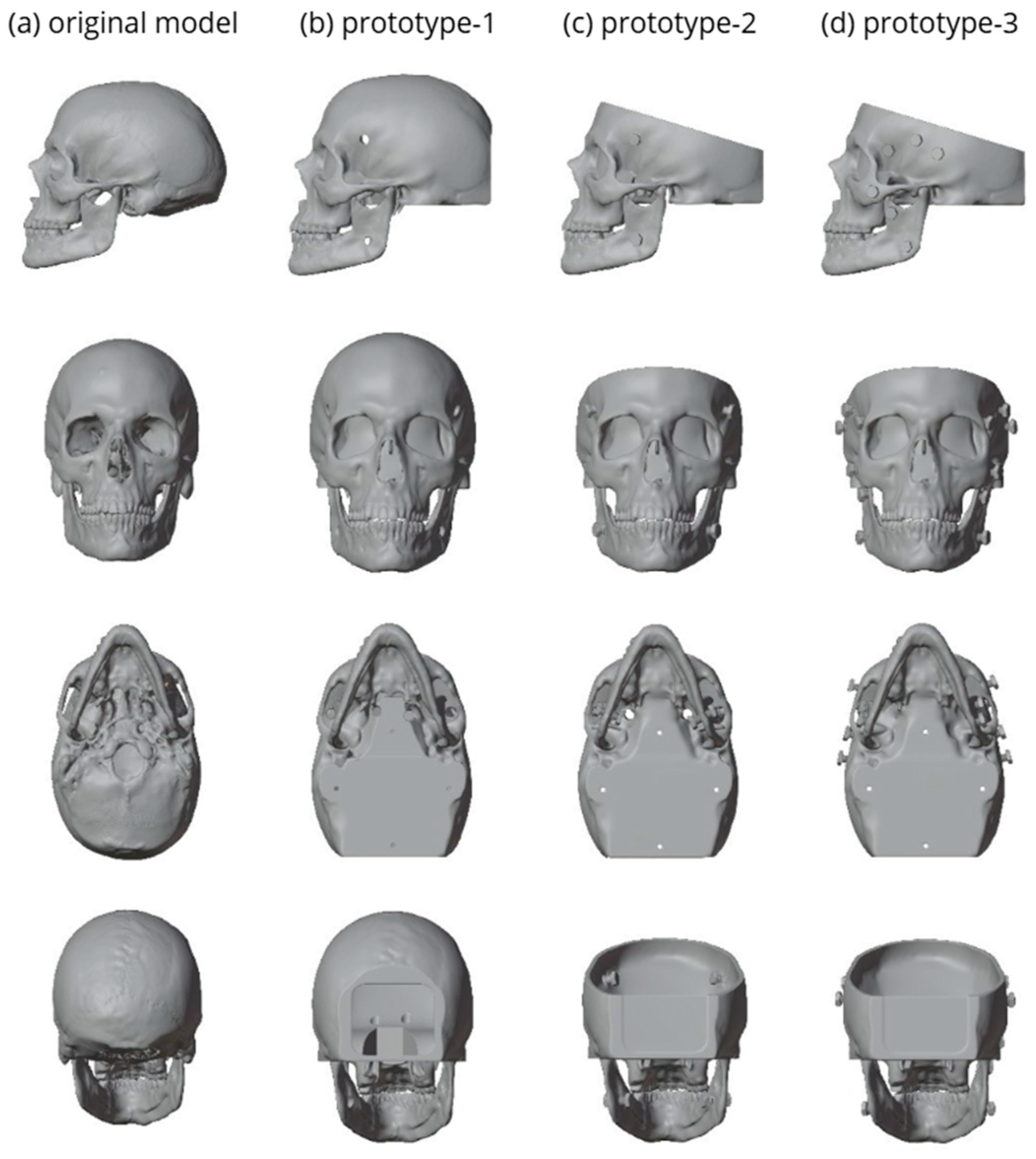
The 3D modeling team modified the original 3D skull model to prototype-1 using the open-source 3D graphics software Blender3D (vers. 3.5, the Blender Foundation, Amsterdam, The Netherlands). The team flattened the base of the skull and made 4 holes 4 mm in diameter at a 75 mm distance to fix the 90-degree tiltable single-mount monitor arm. On each side of the skull, a 1 cm diameter hole was made on the side of the zygomatic arch for rubber bands, representing the temporalis and masseter muscles.
We considered using rubber sheets to better represent the physiological surface area of the muscles. However, early stress testing revealed that sheets were prone to tearing at attachment points during repeated distension. Consequently, industrial-grade rubber bands were selected for the final prototype to prioritize durability, ease of replacement, and simplified assembly for users reproducing the model.
Prototype-1 was 3D-printed using Cubicon Single Plus (3DP-310F, Hyvision System, Sungnam, Republic of Korea), and Cubicreator4 (v.4.3.0, Hyvision System, Sungnam, Republic of Korea) was used for slicing before 3D printing. An essential process in 3D printing is 3D slicing; this method converts a 3D model (.stl file) into a set of instructions called G-code (.hfb file) for the 3D printer to use. These instructions include 3D printing options like the type of filament, layer height, density of the supporter, density of infill, printing temperature, and printing speed. The PLA filament was used to print both the skull and mandible with a layer height of 0.2 mm for the skull and 0.1 mm for the mandible. Printing the skull took 61 h and 59 min, and the mandible took 14 h and 30 min. Compared to the original model, prototype-1 saved about 30 h of skull printing time. On the other hand, the printing time of the mandible increased by 1 h and 30 min. This is mainly due to the high-quality printing setting and the 0.1 mm layer height. Thus, when printing prototype-2, the layer height of the mandible was changed. In the case of prototype-2, to shorten the printing time, unnecessary parts such as the upper and backside of the skull were removed from prototype-1. For better fixation of rubber bands, knobs were added instead of holes on the side of the skull and mandible. While the lateral pterygoid muscle plays a primary role in the anterior translation of the condyle, it was not included in the final simulation for structural reasons. The insertion point at the neck of the condyle was prone to mechanical failure during stress testing with PLA material. Therefore, the haptic simulation focuses on the masseter and temporalis muscle groups, which are responsible for the jaw-closing spasm that learners must overcome during the reduction maneuver. Moreover, to restrict the movement range of TMJ dislocation, an articular tubercle was added to each side of the skull.
Prototype-2 was also printed using the PLA filament and, to save printing time, a 0.3 mm layer height setting was applied to both the skull and mandible. As a result, 29 h and 47 min were needed to print the skull, and 5 h and 6 min were required to print the mandible, which saved about 30 h for the skull and 10 h for the mandible. However, the origin and insertion of the temporalis and masseter muscles require further modification for a more realistic representation. Prototype-3 increased the number of knobs on each side of the skull and mandible. In addition, a knob was added to the anterior side of the zygomatic arch. The team also noted that the articular tubercle of the TMJ was not prominent enough; therefore, the articular tubercles were modified with increased prominence for better haptic feedback and stability during the dislocation maneuver. Although the base model was derived from a human anatomical scan, the articular tubercle was intentionally modified to be more prominent. This modification was required to compensate for the low coefficient of friction of the printed PLA material. Unlike human tissue, the smooth plastic surface caused the unmodified mandible to spontaneously reduce (slide back from) the dislocated position. The exaggerated tubercle created a mechanical “lock” that mimicked the physiological resistance of a true dislocation, forcing the learner to apply the correct vector of downward force to achieve reduction. The holes over the zygomatic arch were also moved anteriorly to facilitate the movement of the simulated muscle. Below the skull, an articular tubercle of the TMJ was evident but not prominent enough; thus, we undertook modifications to make it more easily accessible for students to better feel the dislocation.
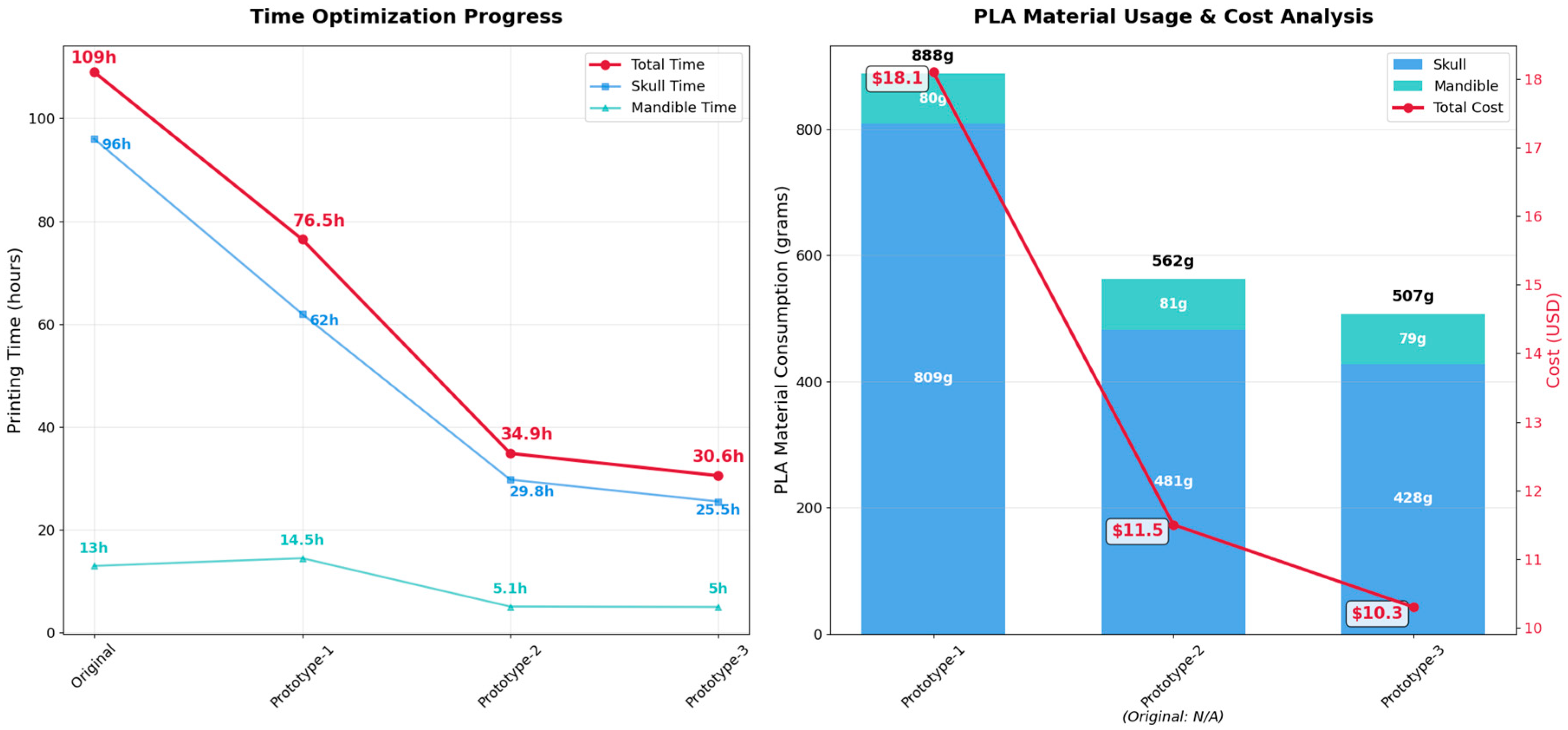
Compared to prototype-2, the 3D printing setting was the same in prototype-3 except for the density of the supporter, which changed from 1% to 5%. This saved 4 h of skull printing and 5 min of mandible printing. The mandible only requires a small amount of support; therefore, changing the density of the supporter did not result in a significant difference (Table 1 and Figure 3).
In conclusion, the team developed a customized 3D-printed TMJ model from a free-source 3D model. Considering the attachment of the temporalis and masseter muscles, several knobs were added to each side of the skull and mandible. To restrict the movement range of TMJ dislocation, the prominent articular tubercle of the TMJ was increased under the skull. A flattened skull base and four holes were added to fix the 3D-printed skull on a single monitor arm. Finally, optimizing the 3D printing setting made it possible to reduce total printing time for the skull and mandible from 110 h to 30.25 h, 72% in total. (Figure 4 and Figure 5). Moreover, we were able to cut the printing cost by 43%.
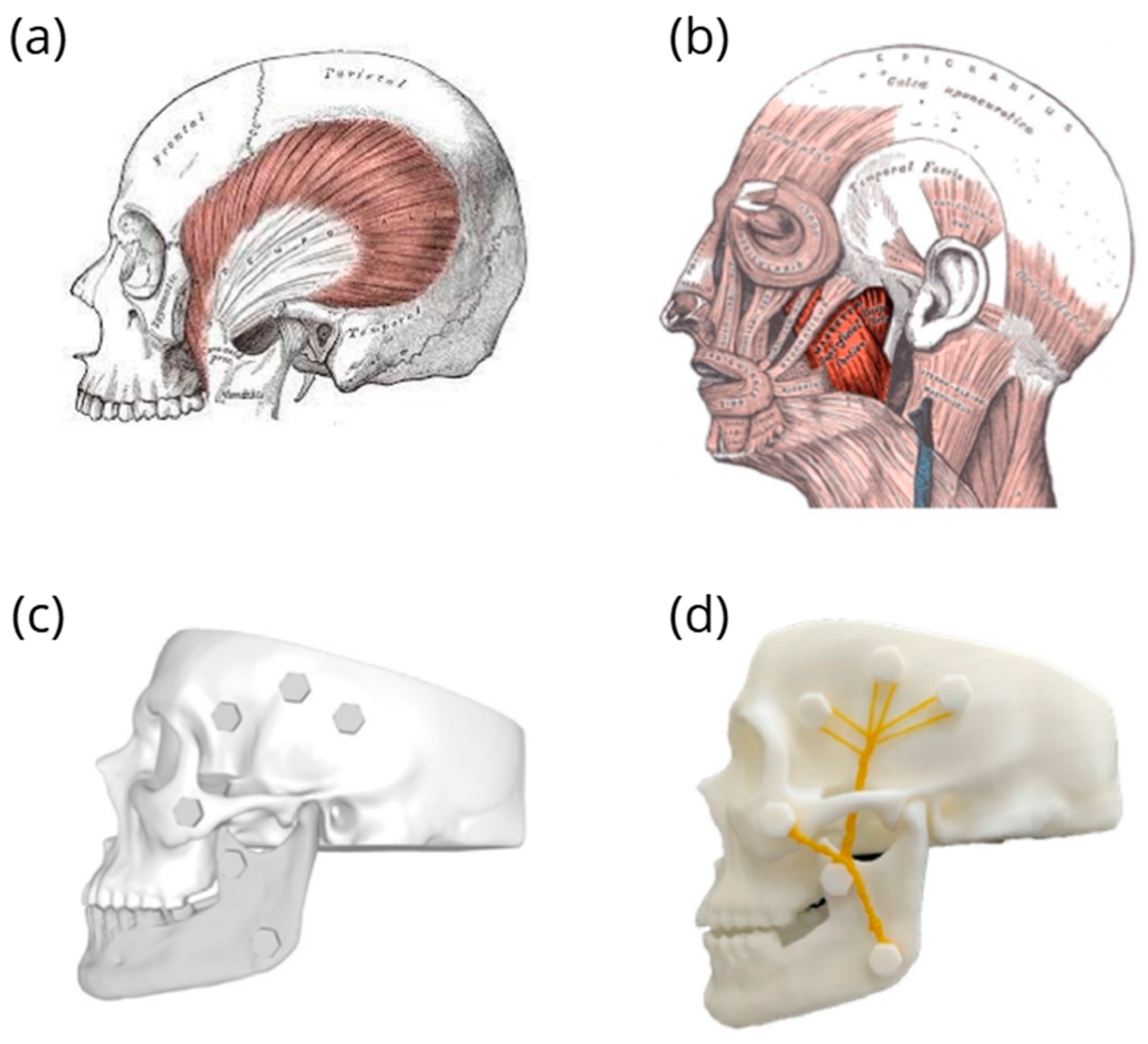
The team faced challenges in finding suitable material to simulate muscle movement. The temporalis muscle has a broad insertion site that occupies most of the temporal fossa and intrudes onto the tip and medial surface of the mandible coronoid process (Figure 6, top left image). The masseter originates from the zygomatic arch and is inserted along the angle and lateral surface of the mandible (Figure 6, top right image). We also faced difficulties in differentiating the flexible muscle and possible stress on the tip of the coronoid process; the team developed a system where rubber bands with adjustable tightness were applied across six knobs on each side of the 3D-printed skull (Figure 6, bottom left image). The maxillofacial surgeon provided input regarding the optimal location of knobs to simulate the temporalis and direction of masseter muscle movement and enhance the prominence of the articular eminence for better simulation of TMJ dislocation. The 3D modeling team in SMC then proceeded to remove the details irrelevant to the TMJ reduction training, adding knobs along both sides of the skull, and removing the parietal and occipital parts. In addition, holes were placed to allow the skull’s base to be fixed onto a monitor holder readily available on the market. Blender (version 3.5) was used for the prototype design. The final product needed significantly less printing time, with 25 h for the skull and 5 h for the mandible. Overall, the degree of realism was improved for the TMJ learning environment (Figure 6, bottom right image).
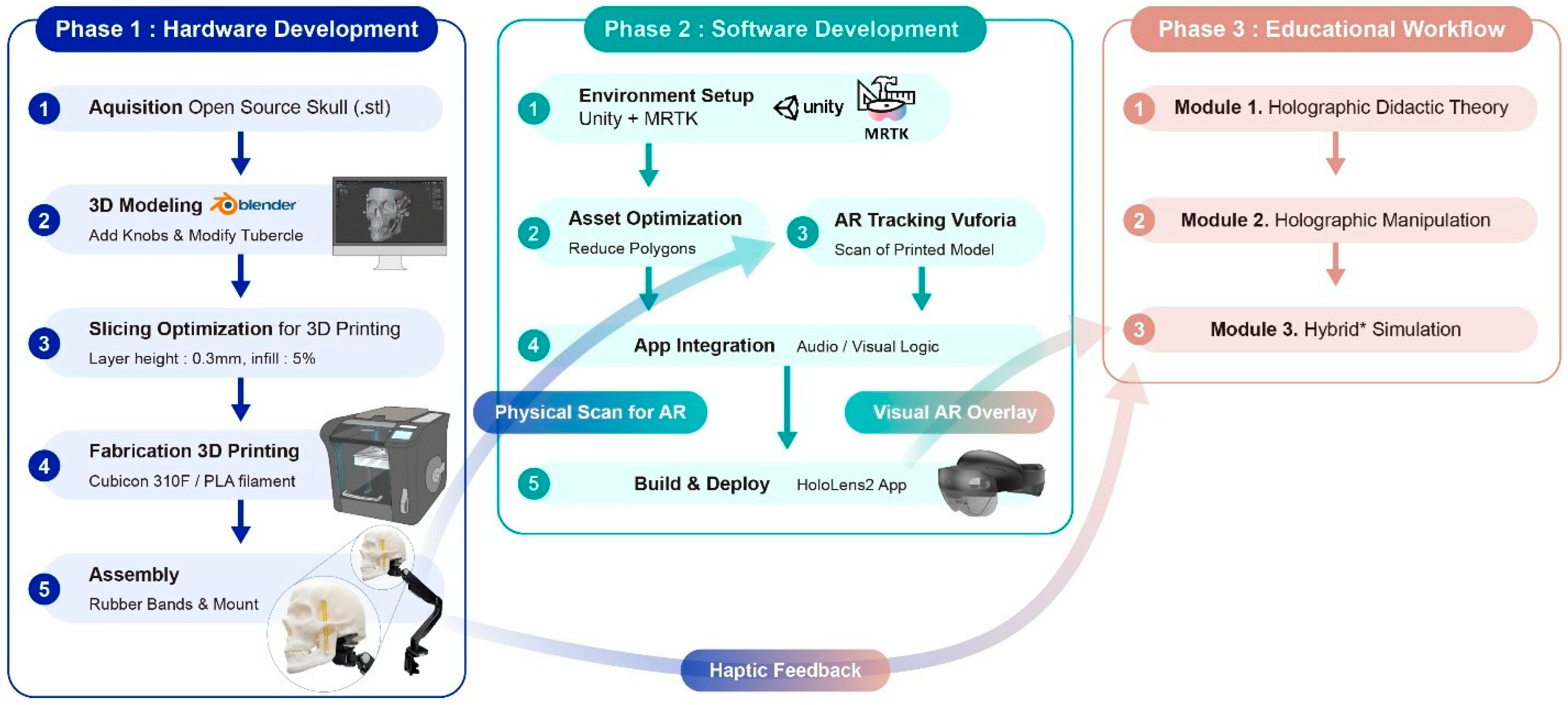
To summarize the interdisciplinary engineering process, the complete system architecture, integrating the hardware fabrication, software development, and educational workflow is illustrated in Figure 7.

3. Results

The program successfully developed the following modules:
  • Module 1: A 3D interactive program for learning TMJ dislocation procedures, including slides, videos, and 3D guides, to understand the science behind TMJ dislocation, including anatomy, clinical presentation, diagnosis, and management strategy.
  • Module 2: Anatomy models showing a virtual skull with normal TMJ movement, anterior TMJ dislocation, hands positioned in various positions for the reduction techniques, and movement of the mandible in relation to the skull during these techniques.
  • Module 3: A 3D-printed TMJ model for practical sessions, including AR overlay.
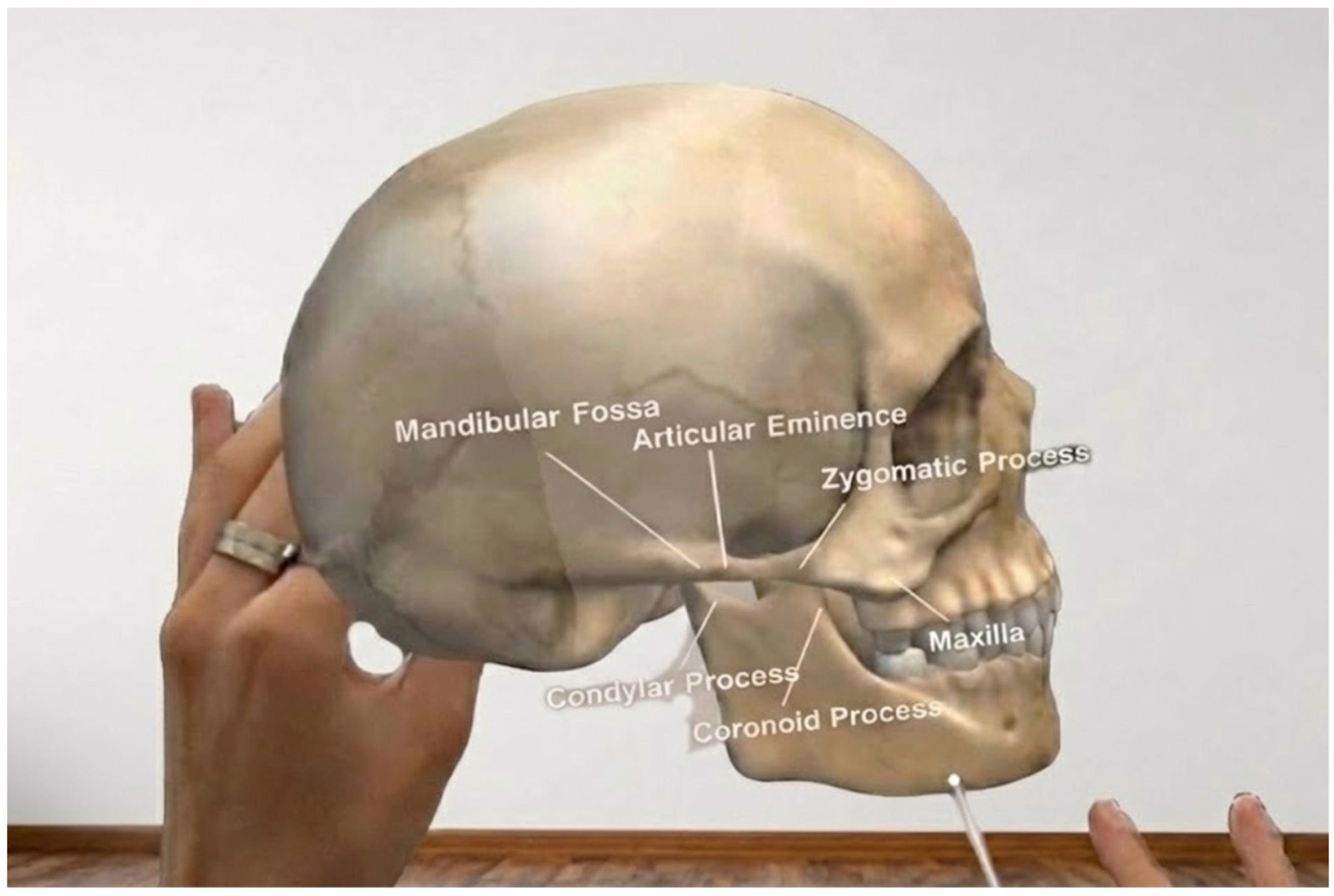
In Module 1, users can learn about the basic science of TMJ dislocation in both English and Korean, in a 3D interactive format. This includes the definition of TMJ, its anatomy in depth for both normal and dislocated positions, clinical and imaging diagnosis of TMJ dislocation, and up-to-date information about three different reduction techniques reported in the medical literature (Figure 8). The procedural steps and tips for performing each technique are discussed in detail. Emphasis is placed on patient preparation, specifically (1) head support (stabilizing the occiput against a wall, chair, or via manual stabilization by a third person if necessary to prevent recoil), (2) anxiety control, and (3) muscle relaxation to reduce jaw closing spasm prior to the procedure. This 3D interactive guide is approximately 8 min long.
The second module enables users to closely observe the anatomy of TMJ on a virtual skull in a realistic 3D space. Users can manipulate the model’s size and viewing angles to orient themselves regarding the spatial relationship of various anatomical structures in the TMJ. For example, users can observe that TMJ movement in normal situations comprises two parts, where the initial 2 cm of mouth opening involves the purely rotational movement of the condylar process in the mandibular fossa. Beyond 2 cm, the condylar process undergoes an anterior sliding movement on the articular disc. This complex action was difficult to understand and visualize using traditional teaching methods.
The next virtual skull is then used to demonstrate the process of TMJ dislocation. Users experience challenges in achieving successful reduction due to masseter muscle spasms, which prevent the condylar process from moving posteriorly. The subsequent virtual skull shows the reduction techniques, with virtual hands placed on the mandible, and illustrating the relative position of the condylar process to the mandibular fossa. The three TMJ reduction techniques and mandible movement are described in Table 2.
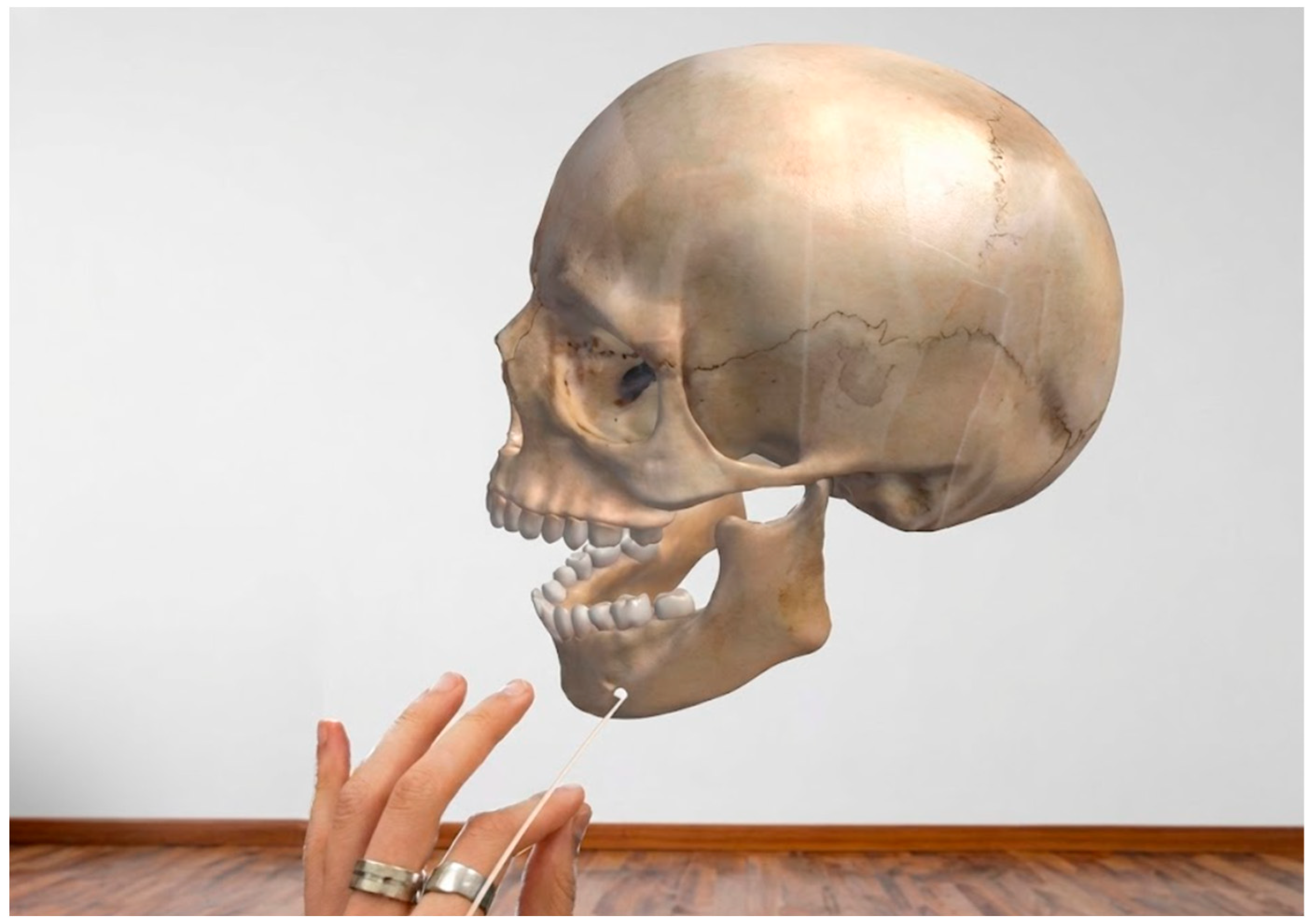
Lastly, users can “grasp” the mandible and simulate the movement required in reduction techniques to place the mandible in the correct position again (Figure 9). The video demonstrating Module 2 can be found in Appendix A.
For Module 3, the 3D-printed TMJ model supplements the limitations of HoloLens 2, providing realistic tactile feedback to users. In addition to self-simulating the normal movement and dislocation of TMJ, users can practice the three reduction techniques repeatedly and gain experience in an effective way to perform those techniques. The realistic environment and ability to provide deliberate practice in a controlled manner are extremely useful for uncommon but clinically important procedures such as TMJ dislocation. In this module, an AR Target Modeling feature was added to the 3D-printed TMJ model. Vuforia’s model target generator was used to analyze the structure of our model, which took approximately 4 h.
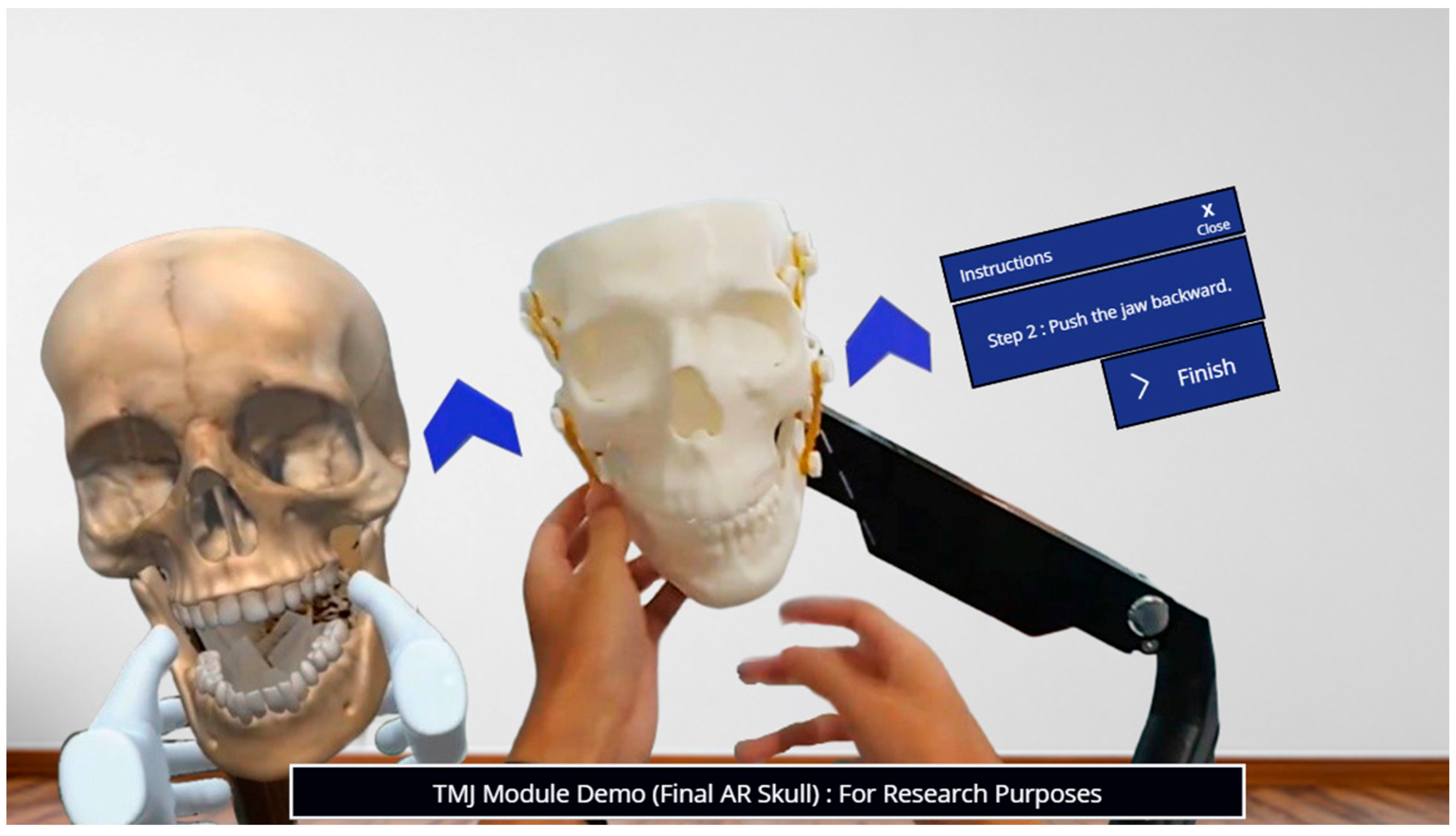
We then exported the model into Unity and, as a result, added our own educational overlays onto the 3D-printed TMJ model (Figure 10).

4. Discussion

This study demonstrated the development of an MR TMJ dislocation teaching program using HoloLens 2, with collaboration from several academic disciplines. This collective effort, where each interdisciplinary team shared knowledge and skills, led to the development of a novel teaching approach that allows users to learn about TMJ dislocation and reduction techniques. We believe we are the first team to report MR-assisted TMJ education in the literature; this could serve as a stepping stone to future uses of this method in education for uncommon but clinically important procedures. Other examples include reductions of shoulder and elbow dislocation, reductions of wrist and ankle fracture, open thoracotomy, lateral canthectomy, and even perimortem cesarean section.
This project has multiple strengths compared to traditional teaching methods. First, HoloLens 2 provides an immersive learning experience. Consistent with the previous literature [5,15,16,17], enhanced engagement is expected to facilitate better understanding and retention of complex anatomical structures. Secondly, HoloLens 2 enables learners to repeatedly practice the TMJ reduction technique in a safe and controlled virtual environment. This repetitive practice has the potential to enhance skill acquisition and build confidence, especially considering the limited availability of patients with TMJ dislocation. Subsequent practice on 3D-printed TMJ models can further reinforce the skills and muscle memory required. Thirdly, the HoloLens 2 and 3D TMJ model can provide instantaneous feedback on the learner’s technique, allowing for immediate adjustments and improvements. This real-time feedback mechanism can accelerate the learning process and help learners refine their skills more effectively. Lastly, the user’s view in HoloLens 2 can be projected in real-time onto a monitor. This makes tele-education possible, where group learning, distant learning, and interactive conference presentations can reach learners. This is not possible with traditional methods.
This paper describes the development process of our model in a pragmatic and detailed way, sharing the challenges faced and solutions applied. The team explained their approaches during development of the virtual skull (reduce the number of triangles, enhance animation of mandible, and create an engaging and seamless user experience), as well as the 3D TMJ model, including attempts to simplify the model and shorten printing time. The virtual model and 3D-printed model can be readily available on open-source websites, with a user-friendly 3D modeling program that colleagues with a computer science background will understand. As a result, similar projects can be reproduced by other teams without the need for cutting-edge technology or high-cost resources.
A few limitations were observed in this project. First, using HoloLens 2 technology requires familiarity with the device and its software. There may be a learning curve involved in mastering the operation of the HoloLens 2, which could potentially divert the learners’ attention from the core technique itself. Secondly, the implementation of HoloLens 2 technology may be limited by cost and accessibility issues. The acquisition and maintenance costs of the hardware and software, as well as the availability of the HoloLens 2 in educational institutions, may pose challenges to widespread adoption. Additionally, the current 3D-printed prototype lacks soft tissue structures (lips and cheeks). While this design choice maintains low production costs, it limits the simulation of soft-tissue interference, which can be a relevant factor during Intraoral and Syringe reduction techniques. Regarding anatomical fidelity, the current prototype does not simulate the Lateral Pterygoid muscle, which provides the anterior/inferior motion of the condyle. This omission was an engineering decision to maintain the structural integrity of the 3D-printed condylar neck; however, we aim to incorporate a reinforced simulation of this muscle in future iterations.
Furthermore, the visual representation of the reduction maneuver in the MR environment is a schematic approximation. Due to the hardware constraints of the standalone HoloLens 2 headset, high-fidelity biomechanical animations were simplified to optimize the polygon count and ensure a smooth frame rate. Consequently, complex compound movements (inferior distraction followed by posterior rotation) may only appear visually as simple pivotal rotations. To mitigate this, the application relies on audio and text prompts to provide precise biomechanical instructions.
This project provides future research directions. While this study focused on technical development, the next phase will involve a comparative study between the HoloLens 2 hybrid method and traditional didactic teaching to quantify its effectiveness. To rigorously evaluate educational efficacy, future pilot studies will utilize standardized scientific metrics. Specifically, we aim to measure (1) procedural efficiency, quantified by the “Time to Successful Reduction” metric (in seconds); (2) technical proficiency, using a modified Objective Structured Assessment of Technical Skills (OSATS) checklist specific to TMJ reduction maneuvers [21]; and (3) learner confidence, evaluated through pre- and post-training self-efficacy surveys using a 5-point Likert scale [22]. In addition, research should evaluate the long-term retention of skills by learners trained using this method. Assessing the ability to transfer learned techniques to real-world clinical settings, often referred to as “translational science”, will also provide valuable insights into the durability of this teaching modality. Finally, similar studies combining MR with task trainers to complement haptic feedback can be performed for other clinical procedures, such as joint dislocation reduction, lateral canthotomy, open thoracotomy, and perimortem cesarean section.

5. Conclusions

This newly developed teaching method, utilizing the HoloLens 2 with a 3D-printed model, demonstrates significant strengths for teaching TMJ dislocation reduction techniques. It provides an immersive and interactive learning environment, repeatable practice, and real-time haptic feedback. However, the limitations surrounding technical challenges and costs should be acknowledged. Future research should focus on addressing these limitations by conducting comparative studies, evaluating the long-term retention of skills, and exploring the integration of this model with surgical simulators. The ongoing development and refinement of this teaching method has the potential to enhance the training of clinically important procedures, contributing to the advancement of medical education.

Author Contributions

N.L.V. and W.M.N. conceptualized the research study. N.L.V., W.M.N., S.L., J.R., J.A., J.C.K., M.H.S. and W.C.C. developed the methodology. N.L.V. and W.M.N. prepared the original draft of the manuscript. N.L.V., W.M.N., S.L., J.R., J.A., J.C.K., M.H.S. and W.C.C. contributed to the review and editing of the manuscript. M.H.S. and W.C.C. acquired funding for the project. S.L., J.R., J.A., J.C.K., M.H.S. and W.C.C. provided resources for the study. M.H.S. and W.C.C. supervised the project. All authors have read and agreed to the published version of the manuscript.

Funding

HoloLens 2 (Microsoft) was provided by the Samsung Medical Center. This research was supported by a grant from the Korea Health Technology R&D Project through the Korea Health Industry Development Institute, funded by the Ministry of Health and Welfare, Republic of Korea (grant number: RS-2023-KH135335).

Institutional Review Board Statement

Not applicable. This study did not involve humans or animals.

Informed Consent Statement

Not applicable. This study did not involve humans.

Data Availability Statement

The original contributions presented in this study are included in the article. Additional data, including the 3D model and prototype software application developed for this work, are available from the corresponding author upon reasonable request due to ongoing development and proprietary considerations.

Conflicts of Interest

The authors declare no conflicts of interest.

Abbreviations

The following abbreviations are used in this manuscript:
ARAugmented Reality
FPSFrames Per Second
MRMixed Reality
MRTKMixed Reality Toolkit
OSATSObjective Structured Assessment of Technical Skills
PLAPolylactic Acid
PVAPolyvinyl Alcohol
SHLSmart Health Lab
SMCSamsung Medical Center
STLStereolithography
TMJTemporomandibular Joint
VRVirtual Reality

Appendix A

Video of Modules 1, 2, and 3.

References

  1. Agbara, R.; Fomete, B.; Obiadazie, A.C.; Idehen, K.; Okeke, U. Temporomandibular joint dislocation: Experiences from Zaria, Nigeria. J. Korean Assoc. Oral Maxillofac. Surg. 2014, 40, 111–116. [Google Scholar] [CrossRef][Green Version]
  2. Papoutsis, G.; Papoutsi, S.; Klukowska-Rötzler, J.; Schaller, B.; Exadaktylos, A.K. Temporomandibular joint dislocation: A retrospective study from a Swiss urban emergency department. Open Access Emerg. Med. 2018, 10, 171–176. [Google Scholar] [CrossRef]
  3. Krishnakumar Raja, V.B. Temporomandibular Joint Dislocation. In Oral and Maxillofacial Surgery for the Clinician; Bonanthaya, K., Panneerselvam, E., Manuel, S., Kumar, V.V., Rai, A., Eds.; Springer: Singapore, 2021; pp. 1381–1399. [Google Scholar] [CrossRef]
  4. Sharma, N.K.; Singh, A.K.; Pandey, A.; Verma, V.; Singh, S. Temporomandibular joint dislocation. Natl. J. Maxillofac. Surg. 2015, 6, 16–20. [Google Scholar] [CrossRef] [PubMed]
  5. Maniam, P.; Schnell, P.; Dan, L.; Portelli, R.; Erolin, C.; Mountain, R.; Wilkinson, T. Exploration of temporal bone anatomy using mixed reality (HoloLens): Development of a mixed reality anatomy teaching resource prototype. J. Vis. Commun. Med. 2020, 43, 17–26. [Google Scholar] [CrossRef]
  6. Zhang, G.; Liu, X.; Wang, L.; Zhu, J.; Yu, J. Development and feasibility evaluation of an AR-assisted radiotherapy positioning system. Front. Oncol. 2022, 12, 921607. [Google Scholar] [CrossRef]
  7. McJunkin, J.L.; Jiramongkolchai, P.; Chung, W.; Southworth, M.; Durakovic, N.; Buchman, C.A.; Silva, J.R. Development of a Mixed Reality Platform for Lateral Skull Base Anatomy. Otol. Neurotol. 2018, 39, e1137–e1142. [Google Scholar] [CrossRef]
  8. Arora, A.; Lau, L.Y.M.; Awad, Z.; Darzi, A.; Singh, A.; Tolley, N. Virtual reality simulation training in Otolaryngology. Int. J. Surg. 2014, 12, 87–94. [Google Scholar] [CrossRef]
  9. Clarke, E. Virtual reality simulation—The future of orthopaedic training? A systematic review and narrative analysis. Adv. Simul. 2021, 6, 2. [Google Scholar] [CrossRef] [PubMed]
  10. Pieterse, A.D.; Hierck, B.P.; de Jong, P.G.M.; Ginn, T.F.; Hamoen, E.C.; Reinders, M.E.J. User experiences of medical students with 360-degree virtual reality applications to prepare them for the clerkships. Virtual Real. 2023, 27, 1381–1389. [Google Scholar] [CrossRef]
  11. Koutitas, G.; Smith, S.; Lawrence, G. Performance evaluation of AR/VR training technologies for EMS first responders. Virtual Real. 2021, 25, 83–94. [Google Scholar] [CrossRef]
  12. Tepper, O.M.; Rudy, H.L.; Lefkowitz, A.; Weimer, K.A.; Marks, S.M.; Stern, C.S.; Garfein, E.S. Mixed Reality with HoloLens: Where Virtual Reality Meets Augmented Reality in the Operating Room. Plast. Reconstr. Surg. 2017, 140, 1066–1070. [Google Scholar] [CrossRef]
  13. Kubben, P.L.; Sinlae, R.S.N. Feasibility of using a low-cost head-mounted augmented reality device in the operating room. Surg. Neurol. Int. 2019, 10, 26. [Google Scholar] [CrossRef]
  14. Zuo, Y.; Jiang, T.; Dou, J.; Yu, D.; Ndaro, Z.N.; Du, Y.; Li, Q.; Wang, S.; Huang, G. A Novel Evaluation Model for a Mixed-Reality Surgical Navigation System: Where Microsoft HoloLens Meets the Operating Room. Surg. Innov. 2020, 27, 193–202. [Google Scholar] [CrossRef]
  15. Howard, M.C.; Davis, M.M. A Meta-analysis of augmented reality programs for education and training. Virtual Real. 2023, 27, 2871–2894. [Google Scholar] [CrossRef]
  16. Abich, J.; Parker, J.; Murphy, J.S.; Eudy, M. A review of the evidence for training effectiveness with virtual reality technology. Virtual Real. 2021, 25, 919–933. [Google Scholar] [CrossRef]
  17. Pedram, S.; Kennedy, G.; Sanzone, S. Toward the validation of VR-HMDs for medical education: A systematic literature review. Virtual Real. 2023, 27, 2255–2280. [Google Scholar] [CrossRef]
  18. Atsikpasi, P.; Fokides, E. A scoping review of the educational uses of 6DoF HMDs. Virtual Real. 2022, 26, 205–222. [Google Scholar] [CrossRef]
  19. Olinski, M.; Marciniak, P. Development of a Simplified Human Body Model for Movement Simulations. Appl. Sci. 2025, 15, 1011. [Google Scholar] [CrossRef]
  20. Chen, Y.C.; Chen, C.T.; Lin, C.H.; Chen, Y.R. A Safe and Effective Way for Reduction of Temporomandibular Joint Dislocation. Ann. Plast. Surg. 2007, 58, 105–108. [Google Scholar] [CrossRef]
  21. Martin, J.A.; Regehr, G.; Reznick, R.; Macrae, H.; Murnaghan, J.; Hutchison, C.; Brown, M. Objective structured assessment of technical skill (OSATS) for surgical residents. Br. J. Surg. 1997, 84, 273–278. [Google Scholar] [CrossRef] [PubMed]
  22. Laschinger, S.; Medves, J.; Pulling, C.; McGraw, R.; Waytuck, B.; Harrison, M.B.; Gambeta, K. Effectiveness of simulation on health profession students’ knowledge, skills, confidence and satisfaction. Int. J. Evid.-Based Healthc. 2008, 6, 278–302. [Google Scholar] [CrossRef] [PubMed]
Figure 1. Microsoft recommendations for optimized HoloLens 2 3D model.
Applsci 15 12816 g001
Figure 2. Virtual skull with modulated mandible and hands depicting optimal position for reduction technique.
Applsci 15 12816 g002
Figure 3. Optimization results for 3D skull printing: reductions in time, material use, and cost (Original currency in South Korean Won with conversion rate of 1 USD = 1471.58 Won. N/A denotes cases in which the amount of PLA and PVA filament used for fabricating the original model was not available.).
Applsci 15 12816 g003
Figure 4. Three-dimensional model comparison according to the modeling modification.
Applsci 15 12816 g004
Figure 5. Detailed 3D model comparison according to the modeling modification.
Applsci 15 12816 g005
Figure 6. (a) Top left: Temporalis muscle (Gray’s Anatomy, Public Domain illustration by Henry Vandyke Carter). (b) Top right: Masseter muscle (Gray’s Anatomy, Public Domain illustration by Henry Vandyke Carter). (c) Bottom left: Final 3D model in the Blender3D program. (d) Bottom right: The 3D-printed skull with rubber bands for simulated temporalis and masseter muscles. Note: The superior attachment point for the Masseter proxy was shifted anteriorly to the zygomatic prominence to prevent structural failure of the printed zygomatic arch under tension.
Applsci 15 12816 g006
Figure 7. Comprehensive workflow of the TMJ teaching program. The diagram illustrates the parallel development of the hardware (3D printed task trainer) and software (HoloLens 2 application), converging in the final hybrid educational module. * Integration of the physical task trainer with a synchronized virtual overlay and a holographic reference guide.
Applsci 15 12816 g007
Figure 8. A 3D interactive skull showing TMJ anatomy.
Applsci 15 12816 g008
Figure 9. The user grasping the mandible.
Applsci 15 12816 g009
Figure 10. Educational overlay applied to 3D-printed TMJ model (The blue arrows indicate the directional movement required for the mandibular reduction).
Applsci 15 12816 g010
Table 1. Printing setting options applied to each 3D model, showing printing time and cost (Original currency in South Korean Won with conversion rate of 1 USD = 1471.58 Won. N/A denotes cases in which the amount of PLA and PVA filament used for fabricating the original model was not available).
OriginalPrototype-1Prototype-2Prototype-3
SkullMandibleSkullMandibleSkullMandibleSkullMandible
filament materialPLA + PVAPLAPLAPLAPLAPLAPLAPLA
layer heightN/AN/A0.2 mm0.1 mm0.3 mm0.3 mm0.3 mm0.3 mm
density of supporterN/AN/A15%15%15%15%5%5%
printing time96 h13 h61 h 59 min14 h 30 min29 h 47 min5 h 6 min25 h 32 min5 h 1 min
material consumptionN/AN/A808.60 g79.67 g481.36 g80.69 g427.61 g79.04 g
total price
(US dollar)
N/A18.111.510.3
Table 2. Mandibular dislocation reduction techniques (Note: All techniques require the patient to be seated with the head firmly supported against a solid surface or via manual stabilization by an assistant to prevent recoil).
Reduction TechniqueMandible MovementChallenges
Intraoral (Traditional)
Applsci 15 12816 i001
Thumbs are placed on the external oblique ridge (lateral to the molars) to prevent bite injury, while fingers grasp the angle and lower border of the mandible. Strong downward pressure distracts the condyles inferiorly to bypass the articular tubercle. The posterior movement is largely supplied by the soft tissue environment repositioning the condyle in the fossa.Jaw closing spasm (temporalis, masseter) can hinder reduction. Risk of bite injury to clinician (thumbs). Procedural sedation may be needed.
Extraoral
Applsci 15 12816 i002
Dual-plane movement
(sagittal and transverse). While the mandible angle is pulled anteriorly, steady pressure is applied on the coronoid process of the other side, with the fingers behind the mastoid process providing counteracting force. The mandible is rotated by this maneuver [20].
Requires practice for complex mandibular manipulation. Facilitate reduction by avoiding direct stimulation of the bite reflex. Minimizes risk of bite injury to clinician.
Syringe
Applsci 15 12816 i003
Single-plane sagittal movement. Syringe movement is not a hands-free approach; the operator applies upwards pressure on the chin using the syringe as a fulcrum to move the condyle downwards.Difficult to place syringe in patients with soft tissue restrictions or mucosal fragility. Requires patient cooperation.
Disclaimer/Publisher’s Note: The statements, opinions and data contained in all publications are solely those of the individual author(s) and contributor(s) and not of MDPI and/or the editor(s). MDPI and/or the editor(s) disclaim responsibility for any injury to people or property resulting from any ideas, methods, instructions or products referred to in the content.