Antioxidant and Antimicrobial Potential of Malva neglecta Wallr. Extracts Prepared by “Green” Solvents

 , ,
, ,  , , ,
, , , 
Abstract
1. Introduction
2. Materials and Methods
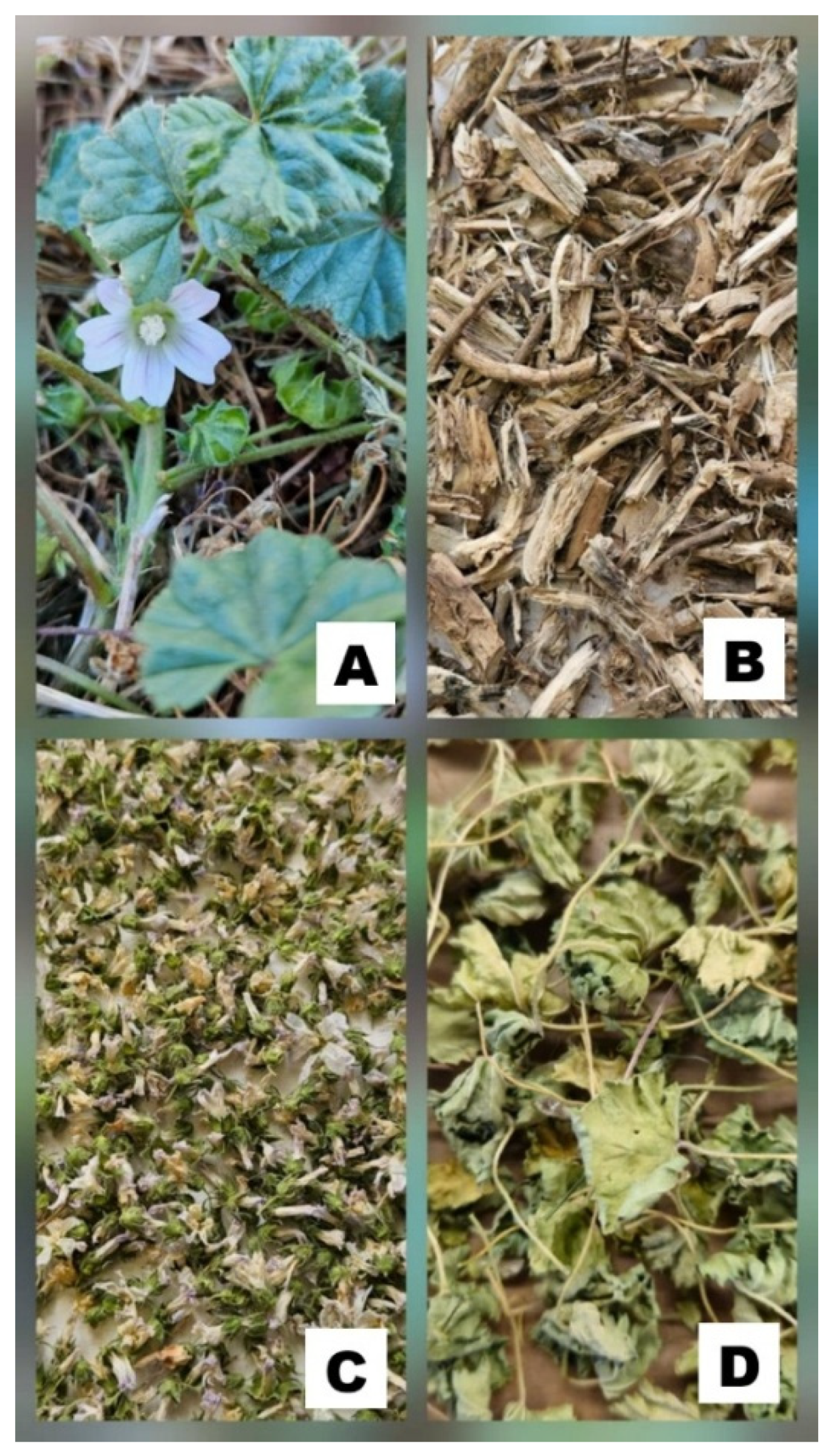
2.1. Plant Material
2.2. Microorganisms Studied
2.3. Sampling and Extract Preparation
2.3.1. By Classical Solvent, 70% v/v Ethanol in Water
2.3.2. By Natural Deep Eutectic Solvents (NADESs)
2.4. HPLC-PDA-MS Analysis
2.5. Determination of pH
2.6. Spectrophotometric Determination of the Antioxidant Activity
2.6.1. 2,2-Diphenyl-1-picrylhydrazyl (DPPH) Method
2.6.2. 2,2′-Azino-bis(3-ethylbenzothiazoline-6-sulfonic Acid (ABTS) Assay
2.6.3. Ferric-Reducing Antioxidant Power (FRAP) Assay
2.7. Determination of Total Phenolic Content (TPC)
2.8. Determination of Total Flavonoid Content (TFC)
2.9. Determination of Total Condensed Tannin Content (TCT)
2.10. Determination of Total Anthocyanin Content (TAntC)
2.11. Determination of Total Alkaloid Content (TAlkC)
2.12. Antimicrobial Activity
2.13. Statistical Analysis
3. Results and Discussion
3.1. Chemical Profiling and Antioxidant Potential of Malva neglecta Extracts
3.2. Antimicrobial Activity
4. Conclusions
Author Contributions
Funding
Data Availability Statement
Acknowledgments
Conflicts of Interest
Abbreviations
| ABTS | 2,2′-Azino-bis(3-ethylbenzothiazoline-6-sulfonic acid |
| ChCl | Choline Chloride |
| CA | Citric Acid |
| DPPH | 2,2-Diphenyl-1-picrylhydrazyl |
| FRAP | Ferric-Reducing Antioxidant Power |
| Gly | Glycerol |
| HPLC | High-Performance Liquid Chromatography |
| HBD | Hydrogen Bond Donor |
| HBA | Hydrogen Bond Acceptor |
| IZ | Inhibition Zone |
| MS | Mass Spectrometer |
| NADES | Natural Deep Eutectic Solvents |
| PDA | Photo Diode Detector |
| TAlkC | Total Alkaloid Content |
| TAntC | Total Anthocyanin Content |
| TCT | Total Condensed Tannin Content |
| TFC | Total Flavonoid Content |
| TPC | Total Phenolic Content |
| SD | Standard Deviation |
| UV | Ultra Violet |
| UV-Vis | Ultra Violet-Visible |
References
- Zare, P.; Mahmoudi, R.; Shadfar, S.; Ehsani, A.; Afrazeh, Y.; Saeedan, A.; Niyazpour, F.; Pourmand, B.S. Efficacy of chloroform, ethanol and water extracts of medicinal plants, Malva sylvestris and Malva neglecta on some bacterial and fungal contaminants of wound infections. J. Med. Plants Res. 2012, 6, 4550–4552. [Google Scholar] [CrossRef]
- Yaneva, Z.; Grozeva, N.; Todorova, M.; Kamenova-Nacheva, M.; Staleva, P.; Memdueva, N.; Tzanova, M.T. Comparison of the Potential of “Green” Classical and Natural Deep Eutectic Solvents in the Production of Natural Food Colorant Extracts from the Roots of Alkanna tinctoria (L.). Foods 2025, 14, 584. [Google Scholar] [CrossRef]
- Petkova, N.; Popova, A.; Alexieva, I. Antioxidant properties and some phytochemical components of the edible medicinal Malva sylvestris L. J. Med. Plants Stud. 2019, 7, 96–99. [Google Scholar]
- Zhahariev, D. The medicinal plants in Bulgaria: List of species, usable parts, fields of application, toxicity and contraindications. Acta Sci. Nat. 2022, 9, 33–46. [Google Scholar] [CrossRef]
- Al-Snafi, A.E. Medical benefit of Malva neglecta—A review. OSR J. Pharm. 2019, 9, 60–67. [Google Scholar]
- Carvalho, A.M.; Morales, R. Persistence of wild food and wild medicinal plant knowledge in a north-eastern region of Portugal. In Ethnobotany in the New Europe: People, Health and Wild Plant Resources; Pardo de Santayana, M., Pieroni, A., Puri, R., Eds.; Berghahn Books: Oxford, UK, 2013; Volume 14, pp. 147–171. [Google Scholar] [CrossRef]
- Abbasi, A.; Hashemi, M.; Pourjafar, H.; Hosseini, H. Malva neglecta seed polysaccharide mucilage coating enriched by the Lactobacillus brevis TD4 postbiotics: A promising strategy to promote the shelf life of fresh beef. Int. J. Biol. Macromol. 2024, 280, 135789. [Google Scholar] [CrossRef]
- Abbasi, A.; Hosseini, H.; Pourjafar, H.; Moradi, S.; Shojaee-Aliabadi, S. Malva neglecta essential oil: A promising approach for bio-preserving mayonnaise and assessing variable correlations through principal component analysis and heat map. Heliyon 2025, 11, e41971. [Google Scholar] [CrossRef]
- Türker, A.; Dalar, A. In vitro antioxidant and enzyme inhibitory properties and phenoliccomposition of M. neglecta Wallr. (Malvaceae) fruit: A traditionalmedicinal fruit from Eastern Anatolia. Ind. Crop Prod. 2013, 51, 376–380. [Google Scholar] [CrossRef]
- Pinela, J.; Barros, L.; Antonio, A.L.; Carvalho, A.M.; Oliveira, M.B.P.P.; Ferreira, I.C.F.R. Quality Control of Gamma Irradiated Dwarf Mallow (Malva neglecta Wallr.) Based on Color, Organic Acids, Total Phenolics and Antioxidant Parameters. Molecules 2016, 21, 467. [Google Scholar] [CrossRef] [PubMed]
- Seyyednejad, S.M.; Koochak, H.; Darabpour, E.; Motamedi, H. A survey on Hibiscus rosa—Sinensis, Alcea rosea L. and Malva neglecta Wallr. as antibacterial agents. Asian Pac. J. Trop. Med. 2010, 3, 351–355. [Google Scholar] [CrossRef]
- Gurbuz, I.; Ozkan, A.M.; Yesilada, E.; Kutsal, O. Anti-ulcerogenic activity of some plants used in folk medicine of Pinarbasi. Ethnopharmacology 2005, 101, 313–318. [Google Scholar] [CrossRef]
- Irfan, A.; Imran, M.; Khalid, N.; Hussain, R.; Basra, M.A.R.; Khaliq, T.; Shahzad, M.; Hussien, M.; Shah, A.T.; Qayyum, M.A.; et al. Isolation of phytochemicals from Malva neglecta Wallr and their quantum chemical, molecular docking exploration as active drugs against COVID-19. J. Saudi Chem. Soc. 2021, 25, 101358. [Google Scholar] [CrossRef]
- Tzanova, M.T.; Yaneva, Z.; Ivanova, D.; Toneva, M.; Grozeva, N.; Memdueva, N. Green Solvents for Extraction of Natural Food Colorants from Plants: Selectivity and Stability Issues. Foods 2024, 13, 605. [Google Scholar] [CrossRef]
- Negi, T.; Kumar, A.; Sharma, S.K.; Rawat, N.; Saini, D.; Sirohi, R.; Prakash, O.; Dubey, A.; Dutta, A.; Shahi, N.C. Deep eutectic solvents: Preparation, properties, and food applications. Heliyon 2024, 10, 30. [Google Scholar] [CrossRef] [PubMed]
- Zannou, O.; Koca, I. Optimization and stabilization of the antioxidant properties from Alkanet (Alkanna tinctoria) with natural deep eutectic solvents. Chemistry 2020, 13, 6437–6450. [Google Scholar] [CrossRef]
- Memdueva, N.; Tzanova, M.; Yaneva, Z.; Rusenova, N.; Grozeva, N.; Dinev, T. Natural Deep Eutectic Solvent-Based Extraction of Malva sylvestris L.: Phytochemical Content, Antioxidant and Antimicrobial Potential. Separations 2025, 12, 187. [Google Scholar] [CrossRef]
- Hasimi, N.; Ertaş, A.; Oral, E.V.; Alkan, H.; Boğa, M.; Yılmaz, M.A.; Yener, I.; Gazioğlu, I.; Ozaslan, C.; Akdeniz, M.; et al. Chemical profile of Malva neglecta and Malvella sherardiana by LC-MS/MS, GC/MS and their anticholinesterase, antimicrobial and antioxidant properties with aflatoxin-contents. Marmara Pharm. J. 2017, 21, 471–484. [Google Scholar] [CrossRef]
- Akkol, E.K.; Karpuz, B.; Türkcanoğlu, G.; Coşgunçelebi, F.G.; Taştan, H.; Aschner, M.; Khatkar, A.; Sobarzo-Sánchez, E. The Phytochemical Profile and Biological Activity of Malva neglecta Wallr. in Surgically Induced Endometriosis Model in Rats. Molecules 2022, 27, 7869. [Google Scholar] [CrossRef]
- Arslan, İ.H.; Kaya, Ö.F.; TosyagülÜ Çelik, H. Phytochemical Analysis of Active Phenolic Compounds in Some Plants Used as Traditional Folk Drugs for Cancer and Literature Review of Their Anti-cancer Effects. Appl. Ecol. Environ. Res. 2023, 21, 5901–5914. [Google Scholar] [CrossRef]
- Tzanova, M.; Atanasov, V.; Yaneva, Z.; Ivanova, D.; Dinev, T. Selectivity of Current Extraction Techniques for Flavonoids from Plant Materials. Processes 2020, 8, 1222. [Google Scholar] [CrossRef]
- Dinev, T.; Tzanova, M.; Velichkova, K.; Dermendzhieva, D.; Beev, G. Antifungal and Antioxidant Potential of Methanolic Extracts from Acorus calamus L., Chlorella vulgaris Beijerinck, Lemna minuta Kunth and Scenedesmus dimorphus (Turpin) Kützing. Appl. Sci. 2021, 11, 4745. [Google Scholar] [CrossRef]
- Rebaya, A.; Belghith, S.I.; Baghdikian, B.; Leddet, V.M.; Mabrouki, F.; Olivier, E.; Cherif, J.; Ayadi, M.T. Total Phenolic, Total Flavonoid, Tannin Content, and Antioxidant Capacity of Halimium halimifolium (Cistaceae). J. Appl. Pharm. Sci. 2015, 5, 052–057. [Google Scholar] [CrossRef]
- Lee, J.; Durst, R.W.; Wrolstad, R.E. Determination of total monomeric anthocyanin pigment content of fruit juices, beverages, natural colorants, and wines by the pH differential method: Collaborative study. J. AOAC Int. 2005, 88, 1269–1278. [Google Scholar] [CrossRef]
- John, B.; Sulaiman, C.T.; Satheesh, G.; Reddy, V.R.K. Spectrophotometric estimation of total alkaloids in selected Justicia species. Int. J. Pharm. Pharm. Sci. 2014, 6, 647–648. [Google Scholar]
- Velichkova, K.; Sirakov, I.; Rusenova, N.; Beev, G.; Denev, S.; Valcheva, N.; Dinev, T. In vitro antimicrobial activity on Lemna minuta, Chlorella vulgaris and Spirulina sp. extracts. Fresenius Environ. Bull. 2018, 27, 5736–5741. [Google Scholar]
- Mojab, F.M.; Kamalinejad, M.; Ghaderi, N.; Vahidipour, H.R. Phytochemical screening of some species of Iranian plants. Iran. J. Pharm. Res. 2010, 2, 77–82. [Google Scholar]
- Dalar, A.; Türker, M.; Konczak, I. Antioxidant capacity and phenolic constituents of Malva neglecta Wallr. and Plantago lanceolata L. from Eastern Anatolia Region of Turkey. J. Herb. Med. 2012, 2, 42–51. [Google Scholar] [CrossRef]
- Hassanpour Amnieh, A.; Jooyandeh, H.; Nasehi, B.; Hojjati, M. Investigation on physicochemical and rheological properties of malva leaves gum (Malva neglecta). J. Food Technol. Nutr. 2018, 15, 19–30. [Google Scholar] [CrossRef]
- Abbasi, A.; Sabahi, S.; Bazzaz, S.; Tajani, A.G.; Lahouty, M.; Aslani, R.; Hosseini, H. An edible coating utilizing Malva sylvestris seed polysaccharide mucilage and postbiotic from Saccharomyces cerevisiae var. boulardii for the preservation of lamb meat. Int. J. Biol. Macromol. 2023, 246, 125660. [Google Scholar] [CrossRef]
- Munir, A.; Youssef, F.S.; Ishtiaq, S.; Kamran, S.H.; Sirwi, A.; Ahmed, S.A.; Ashour, M.L.; Elhady, S.S. Malva parviflora Leaves Mucilage: An Eco-Friendly and Sustainable Biopolymer with Antioxidant Properties. Polymers 2021, 13, 4251. [Google Scholar] [CrossRef]
- Areesanan, A.; Nicolay, S.; Keller, M.; Zimmermann-Klemd, A.M.; Potterat, O.; Gründemann, C. Potential benefits of Malva sylvestris in dry-eye disease pathology in vitro based on antioxidant, wound-healing and anti-inflammatory properties. Biomed. Pharmacother. 2023, 168, 115782. [Google Scholar] [CrossRef]
- Dalar, A.; Konczak, I. Phenolic contents, antioxidant capacities and inhibitoryactivities against key metabolic syndrome relevant enzymes of herbal teas from Eastern Anatolia. Ind. Crops Prod. 2013, 44, 383–390. [Google Scholar] [CrossRef]
- Hikmawanti, N.P.E.; Ramadon, D.; Jantan, I.; Munim, A. Natural Deep Eutectic Solvents (NADES): Phytochemical Extraction Performance Enhancer for Pharmaceutical and Nutraceutical Product Development. Plants 2021, 10, 2091. [Google Scholar] [CrossRef]
- Cannavacciuolo, C.; Pagliari, S.; Frigerio, J.; Giustra, C.M.; Labra, M.; Campone, L. Natural Deep Eutectic Solvents (NADESs) Combined with Sustainable Extraction Techniques: A Review of the Green Chemistry Approach in Food Analysis. Foods 2023, 12, 56. [Google Scholar] [CrossRef]
- Anwar, M.A.; Gedaily, R.A.; Salama, A.; Aboulthana, W.M.; Kandil, Z.A.; Abdel-dayem, S.I.A. Phytochemical analysis and wound healing properties of Malva parviflora L. ethanolic extract. J. Ethnopharmacol. 2025, 337, 118983. [Google Scholar] [CrossRef] [PubMed]
- Matławska, I.; Sikorska, M.; El-Sayed, N.H.; Budzianowski, J.; Hołderna-Kędzia, E.; Mabry, T.J. Bioactive Flavone Sulfates of Abutilon indicum Leaves. Nat. Prod. Commun. 2019, 2, 1003–1008. [Google Scholar] [CrossRef]
- Billeter, M.; Meier, B.; Sticher, O. 8-hydroxyflavonoid glucuronides from Malva sylvestris. Phytochemistry 1991, 30, 987–990. [Google Scholar] [CrossRef]
- DellaGreca, M.; Cutillo, F.; Abrosca, B.D.; Fiorentino, A.; Pacifico, S.; Zarrelli, A. Antioxidant and Radical Scavenging Properties of Malva sylvestris. Nat. Prod. Commun. 2009, 4, 893–896. [Google Scholar] [CrossRef]
- Turumtay, A.E.; Demir, A.; Cetiz, M.V.; Uludag, E.B.; Baltaş, N.; Yaman, B.; Yaman, M.; Emirik, M.; Turumtay, H. Metabolite profiling of Althaea officinalis by HPLC-DAD-MS with in silico and in vitro analysis for therapeutic potential. Chem. Pap. 2023, 77, 6235–6253. [Google Scholar] [CrossRef]
- Hikmawanti, N.P.E.; Saputri, F.C.; Yanuar, A.; Jantan, I.; Ningrum, R.A.; Juanssilfero, A.B.; Munim, A. Choline chloride-urea-based natural deep eutectic solvent for highly efficient extraction of polyphenolic antioxidants from Pluchea indica (L.) Less leaves. Arab. J. Chem. 2024, 17, 105537. [Google Scholar] [CrossRef]
- Gomez-Urios, C.; Puchades-Colera, P.; Frigola, A.; Esteve, M.J.; Blesa, J.; Lopez-Malo, D. Natural deep eutectic solvents: A paradigm of stability and permeability in the design of new ingredients. J. Mol. Liq. 2024, 412, 125864. [Google Scholar] [CrossRef]
- Saha, S.K.; Dey, S.; Chakraborty, R. Effect of choline chloride-oxalic acid based deep eutectic solvent on the ultrasonic as-sisted extraction of polyphenols from Aegle marmelos. J. Mol. Liq. 2019, 287, 110956. [Google Scholar] [CrossRef]
- Batiha, G.E.; Tene, S.T.; Teibo, J.O.; Shaheen, H.M.; Oluwatoba, O.S.; Teibo, T.K.A.; Al-Kuraishy, H.M.; Al-Garbee, A.L.; Alexiou, A.; Papadakis, M. The phytochemical profiling, pharmacological activities, and safety of Malva sylvestris: A review. Naunyn-Schmiedeberg’s Arch. Pharmacol. 2023, 396, 421–440. [Google Scholar] [CrossRef]
- Gençay, A. Ethnobotanical Aspects of Cizre (Şırnak). Master’s Thesis, Yüzüncü Yil University, Van, Türkiye, 22 June 2007. [Google Scholar]
- Khalid, S.; Saleem, U. Phytochemical and Pharmacological Importance of Malva neglecta: An updated review. Pharmacol. Online 2018, 2, 52–62. [Google Scholar]
- Rhimi, F.; Rejili, M.; Benabderrahim, M.A.; Hannachi, H. Diversity of Phytochemical Content, Antioxidant Activity, and Fruit Morphometry of Three Mallow, Malva Species (Malvaceae). Plants 2025, 14, 930. [Google Scholar] [CrossRef] [PubMed]
- Kumari, B.; Solanki, H. Isolation of Alkaloids, Saponins and Tannins from Plants. Int. J. Plant Environ. 2019, 5, 223–225. [Google Scholar] [CrossRef]
- Moualek, I.; Benarab, K.; Belounis, Y.; Houali, K. Anti-Inflammatory and Antioxidant Activities of Cow’s Milk Supplemented with Aqueous Extract of Malva Sylvestris. Eurasia Proc. Health Environ. Life Sci. 2023, 11, 1–11. [Google Scholar] [CrossRef]
- Güder, A.; Korkmaz, H. Evaluation of in-vitro antioxidant properties of hydroalcoholic solution extracts Urtica dioica L., Malva neglecta Wallr. and their mixture. Iran. J. Pharm. Res. 2012, 11, 913–923. [Google Scholar] [PubMed]
- Żbik, K.; Onopiuk, A.; Szpicer, A.; Kurek, A. Comparison of the effects of extraction method and solvents on biological activities of phytochemicals from selected violet and blue pigmented flowers. J. Food Meas. Charact. 2023, 17, 6600–6608. [Google Scholar] [CrossRef]
- Sales, M.D.C.; Costa, H.B.; Fernandes, P.M.B.; Ventura, J.A.; Meira, D.D. Antifungal activity of plant extracts with potential to control plant pathogens in pineapple. Asian Pac. J. Trop. Biomed. 2016, 6, 26–31. [Google Scholar] [CrossRef]
- Khameneh, B.; Iranshahy, M.; Soheili, V.; Bazzaz, B.S.F. Review on plant antimicrobials: A mechanistic viewpoint. Antimicrob. Resist. Infect. Control 2019, 8, 118. [Google Scholar] [CrossRef]
- Gama, G.S.P.; Pimenta, A.S.; Feijó, F.M.C.; dos Santos, C.S.; de Oliveira Castro, R.V.; de Azevedo, T.K.B.; de Medeiros, L.C.D. Effect of pH on the antibacterial and antifungal activity of wood vinegar (pyroligneous extract) from eucalyptus. Rev. Árvore 2023, 47, 4711. [Google Scholar] [CrossRef]
- De Morais, P.; Gonçalves, F.; Coutinho, J.A.P.; Ventura, S.P.M. Ecotoxicity of cholinium-based deep eutectic solvents. ACS Sustain. Chem. Eng. 2015, 3, 3398–3404. [Google Scholar] [CrossRef]
- Radošević, K.; Čanak, I.; Panić, M.; Markov, K.; Bubalo, M.C.; Frece, J.; Srček, V.G.; Redovniković, I.R. Antimicrobial, cytotoxic and antioxidative evaluation of natural deep eutectic solvents. Environ. Sci. Pollut. Res. 2018, 25, 14188–14196. [Google Scholar] [CrossRef] [PubMed]
- Czerkas, K.; Olchowik-Grabarek, E.; Łomanowska, M.; Abdulladjanova, N.; Sękowski, S. Antibacterial Activity of Plant Polyphenols Belonging to the Tannins against Streptococcus mutans—Potential against Dental Caries. Molecules 2024, 29, 879. [Google Scholar] [CrossRef]
- Jenny, J.C.; Kuś, P.M.; Szweda, P. Investigation of antifungal and antibacterial potential of green extracts of propolis. Sci. Rep. 2024, 14, 13613. [Google Scholar] [CrossRef]
- Porto-Figueira, P.; Câmara, J.S.; Vigário, A.M.; Pereira, J.A.M. Understanding the Tolerance of Different Strains of Human Pathogenic Bacteria to Acidic Environments. Appl. Sci. 2023, 13, 305. [Google Scholar] [CrossRef]
- Lim, K.; Li, W.Y.; Dinata, A.; Ho, E.T. Comparing the antibacterial efficacy and functionality of different commercial alcohol-based sanitizers. PLoS ONE 2023, 18, 0282005. [Google Scholar] [CrossRef]
- Yousefi, R. Evaluation of the Antibacterial Effect of Malva sylvestris Ethanolic Extract on Standard Pathogenic Bacteria. International Conference on Biology of Medicinal Plants. Ph.D. Thesis, University of Qom, Qom, Iran, February 2023. [Google Scholar] [CrossRef]
- Keyrouz, E.; El Feghali, P.A.R.; Jaafar, M.; Nawas, T. Malva neglecta: A natural inhibitor of bacterial growth and biofilm formation. J. Med. Plants Res. 2017, 11, 380–386. [Google Scholar] [CrossRef][Green Version]
- Jangir, A.K.; Lad, B.; Dani, U.; Shah, N.; Kuperkar, K. In vitro toxicity assessment and enhanced drug solubility profile of green deep eutectic solvent derivatives (DESDs) combined with theoretical validation. RSC Adv. 2020, 10, 24063–24072. [Google Scholar] [CrossRef]
- Hassan, R.A.; Sand, M.I.; El-Kadi, S.M. Effect of some organic acids on fungal growth and their toxins production. J. Agric. Chem. Biotechnol. 2012, 3, 391–397. [Google Scholar] [CrossRef]
- Sekhon, A.S.; Padhye, A.A.; Garg, A.K. In vitro sensitivity of Penicillium marneffei and Pythium insidiosum to various antifungal agents. Eur. J. Epidemiol. 1992, 8, 427–432. [Google Scholar] [CrossRef]
- Lalitha, P.; Shapiro, B.L.; Srinivasan, M. Antimicrobial susceptibility of Fusarium, Aspergillus, and other filamentous fungi isolated from keratitis. Arch. Ophthalmol. 2007, 125, 789–793. [Google Scholar] [CrossRef]
- Sequeira, S.O.; Phillips, A.J.L.; Cabrita, E.J.; Macedo, M.F. Ethanol as an antifungal treatment for paper. Stud. Conserv. 2017, 62, 33–42. [Google Scholar] [CrossRef]



| ID | Plant Organ | Solvent |
|---|---|---|
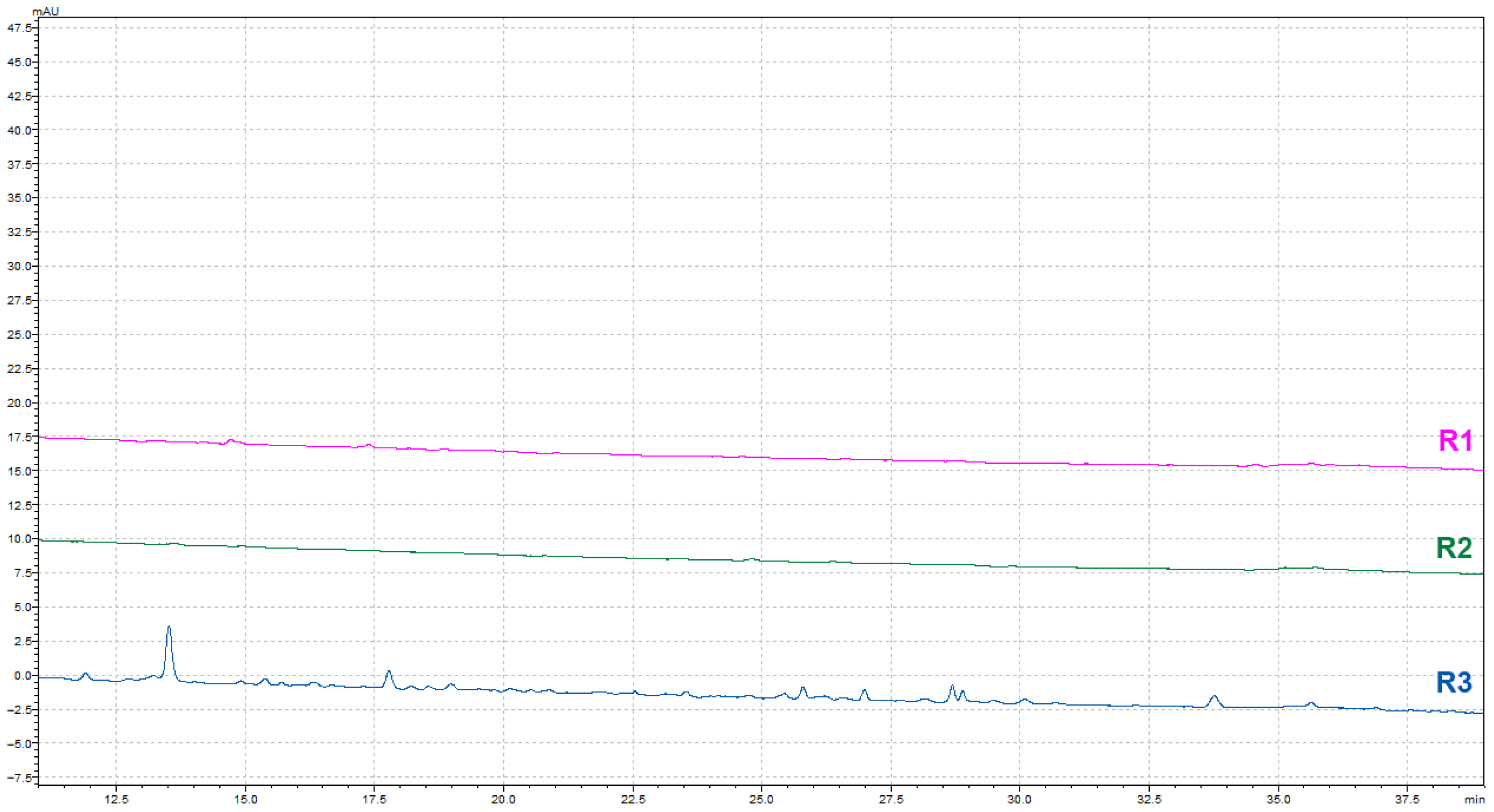
| L1 | Leaf | NADES1 Choline chloride + Citric acid + Water (1:1 mol/mol) + 30% w/w Water |
| F1 | Flower | Choline chloride + Citric acid + Water (1:1 mol/mol) + 30% w/w Water |
| R1 | Root | Choline chloride + Citric acid + Water (1:1 mol/mol) + 30% w/w Water |
| L2 | Leaf | NADES2 Choline chloride + Glycerol (1:1 mol/mol) + 30% w/w Water |
| F2 | Flower | Choline chloride + Glycerol (1:1 mol/mol) + 30% w/w Water |
| R2 | Root | Choline chloride + Glycerol (1:1 mol/mol) + 30% w/w Water |
| L3 | Leaf | 70% v/v Ethanol in water |
| F3 | Flower | 70% v/v Ethanol in water |
| R3 | Root | 70% v/v Ethanol in water |
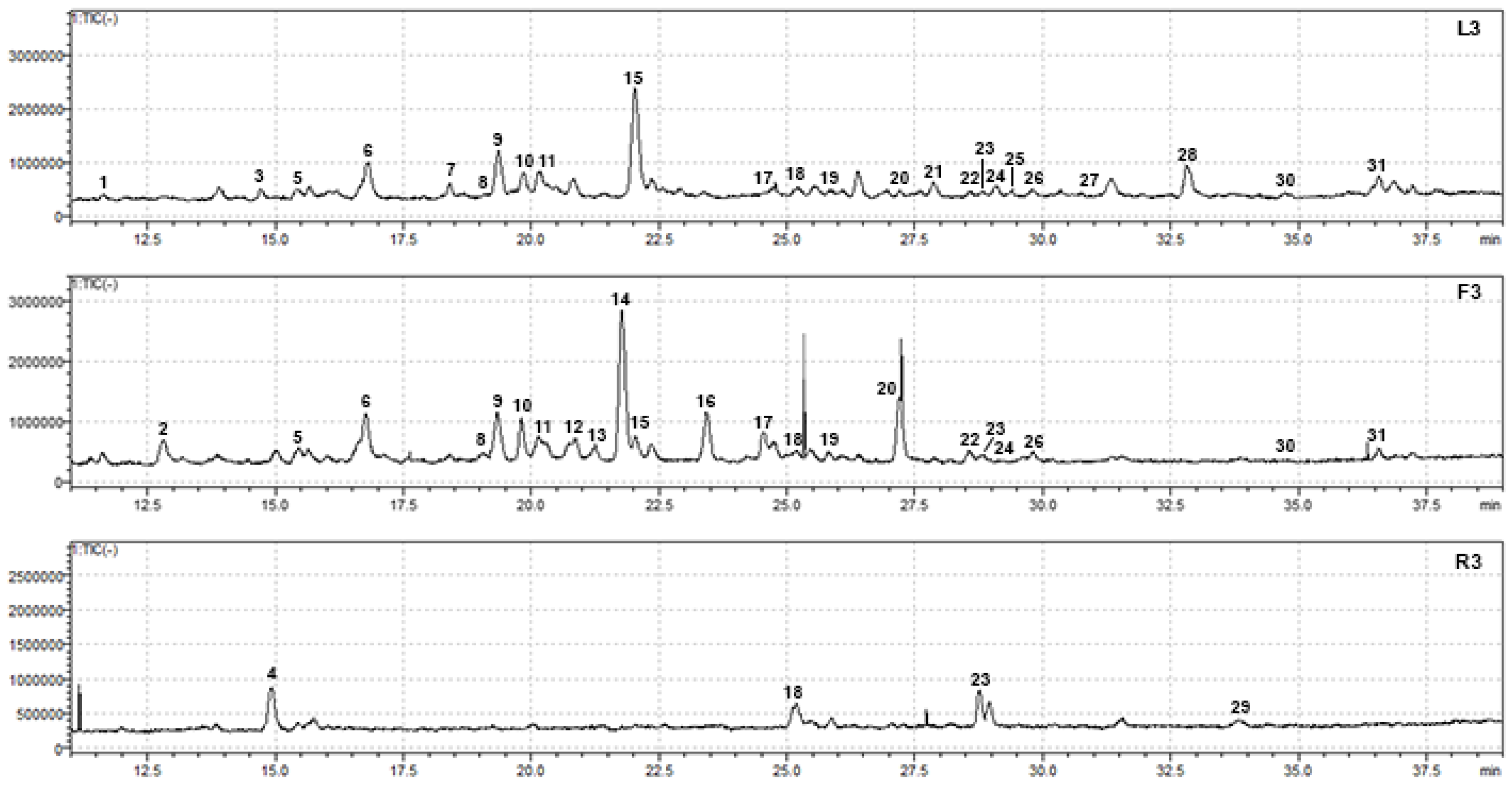
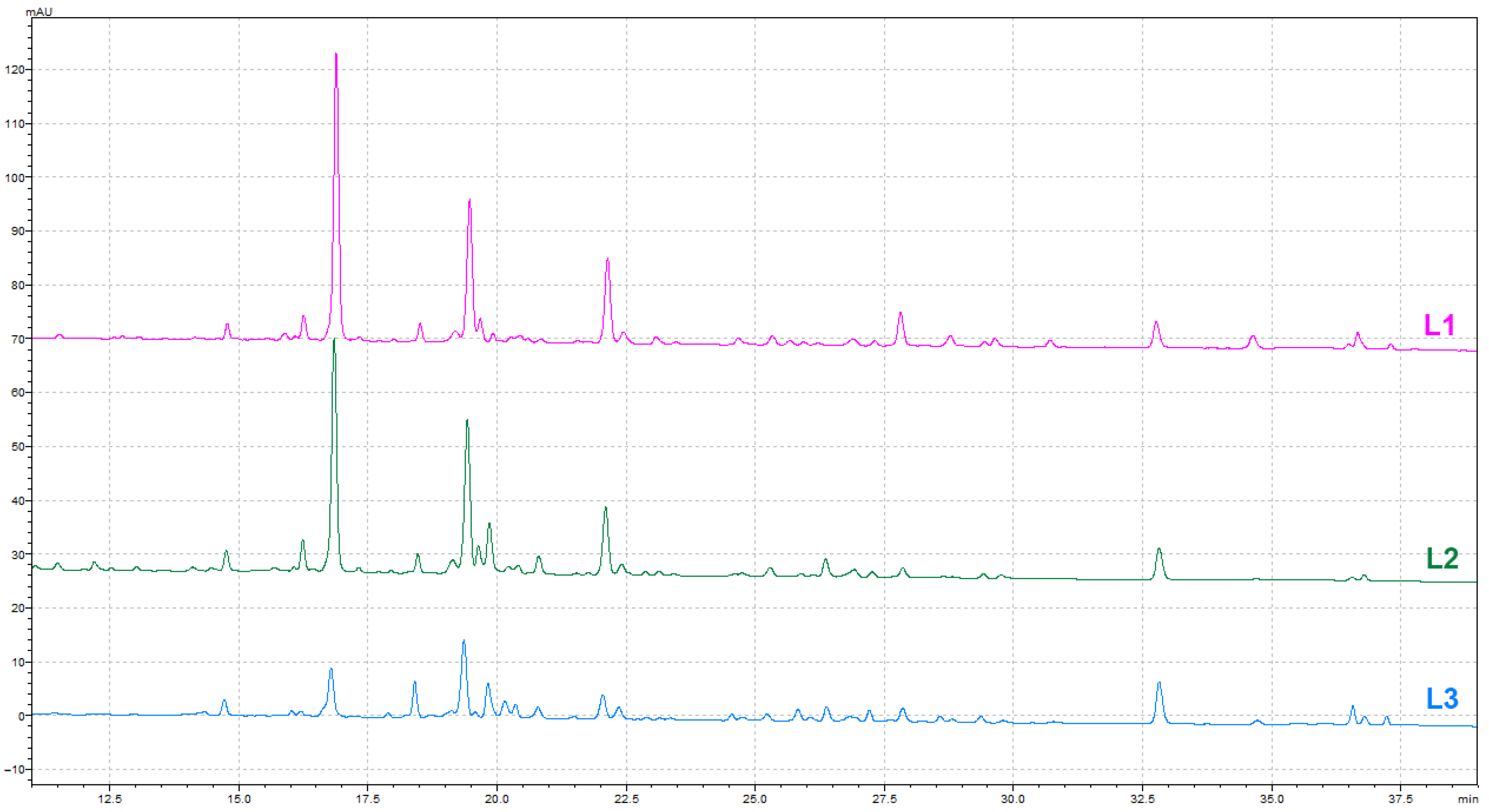
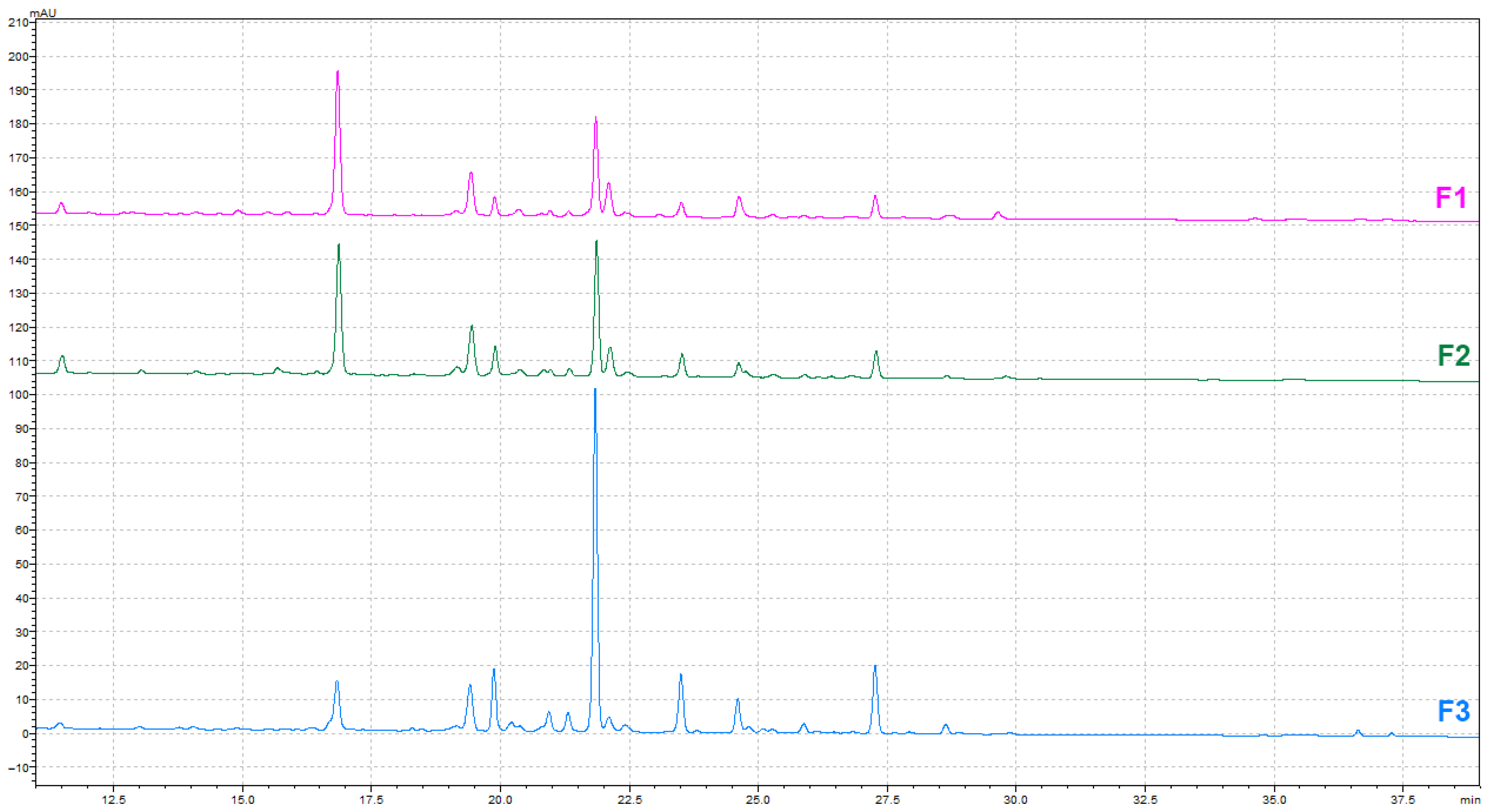
| Compound | RT, min | Name | [M − H], m/z | λmax, nm | F1 | F2 | F3 | L1 | L2 | L3 | R1 | R2 | R3 | Identification |
|---|---|---|---|---|---|---|---|---|---|---|---|---|---|---|
| 1 | 12.19 | p-Coumaroyl hexose | 325 | 220, 330 | − | − | − | + | + | + | − | − | − | [40] |
| 2 | 12.80 | 4-Carboxylate-4-hydroxy-3,4-dihydrocoumarin | 206 | 210 | + | + | + | − | − | − | − | − | − | [33] |
| 3 | 14.71 | Unidentified A | 735 | 228, 355 | − | − | − | + | + | + | − | − | − | |
| 4 | 14.91 | Unidentified B | 259 | 232 | − | − | − | − | − | − | − | − | + | |
| 5 | 15.44 | Hydroxybenzoic acid-O-hexoside | 299 | 232 | + | + | + | + | + | + | − | − | − | [9] |
| 6 | 16.91 | Unidentified C | 369 | 238, 330 | + | + | + | + | + | + | − | − | − | |
| 7 | 18.37 | Gossypetin monoglucoronide | 655 | 261, 358 | − | − | − | + | + | + | − | − | − | [36] |
| 8 | 19.07 | Caffeic acid | 179 | 239, 330 | + | + | + | + | + | + | − | − | − | Standard |
| 9 | 19.41 | Unidentified D | 353 | 240, 330 | + | + | + | + | + | + | − | − | − | |
| 10 | 19.86 | Flavonoid triglycoside I | 771 | 256, 353 | + | + | + | + | + | + | − | − | − | |
| 11 | 20.28 | Unidentified E | 353 | 237, 314 | + | + | + | + | + | + | − | − | − | |
| 12 | 20.89 | Flavonoid diglycoside I | 655 | 242, 354 | + | + | + | − | − | − | − | − | − | |
| 13 | 21.25 | Quercetin 3-sophoroside | 625 | 255, 353 | + | + | + | − | − | − | − | − | − | Standard |
| 14 | 21.85 | Flavonoid triglucoside II | 755 | 264, 347 | + | + | + | − | − | − | − | − | − | |
| 15 | 22.09 | Unidentified F | 383 | 241, 330 | + | + | + | + | + | + | − | − | − | |
| 16 | 23.48 | Flavonoid diglycoside I | 609 | 265, 346 | + | + | + | − | − | − | − | − | − | |
| 17 | 24.53 | Rutin | 609 | 266, 346 | + | + | + | + | + | + | − | − | − | Standard |
| 18 | 25.13 | Unidentified G | 173 | 244, 340 | + | + | + | + | + | + | − | − | + | |
| 19 | 25.83 | Quercetin 3-glucoside | 463 | 253, 353 | + | + | + | + | + | + | − | − | − | Standard |
| 20 | 27.26 | Kaempferol 3-rutinoside | 593 | 264, 347 | + | + | + | + | + | + | − | − | − | Standard |
| 21 | 27.98 | Quercetin glucuronide sulphate isomer I | 557 | 245, 340 | − | − | − | + | + | + | − | − | − | [36] |
| 22 | 28.61 | Kaempferol 3-glucoside | 447 | 264, 340 | + | + | + | + | + | + | − | − | − | Standard |
| 23 | 28.74 | Unidentified H | 524 | 245, 284 | + | + | + | + | + | + | − | − | + | |
| 24 | 28.89 | Isoscutellarein 8-O-β-glucuronopyranoside 3″-O-sulfate | 541 | 245, 340 | + | + | + | + | + | + | − | − | − | [37] |
| 25 | 29.38 | Hypolaetin-8-β-D-glucuronopyranoside | 477 | 247, 345 | − | − | − | + | + | + | − | − | − | [38] |
| 26 | 29.73 | Unidentified I | 317 | 246, 335 | + | + | + | + | + | + | − | − | − | |
| 27 | 30.97 | Isorhamnetin monoglucuronide sulphate | 571 | 247, 350 | − | − | − | + | + | + | − | − | − | [36] |
| 28 | 32.75 | Quercetin monoglucuronide sulphate isomer II | 557 | 247, 330 | − | − | − | + | + | + | − | − | − | [36] |
| 29 | 33.63 | N-trans-feruloyl tyramine | 312 | 246, 315 | − | − | − | − | − | − | − | − | + | [39] |
| 30 | 34.66 | Isoscutellarein 4′-methyl ether 8-(2″-sulfatoglucuronide) | 555 | 248, 330 | + | + | + | + | + | + | − | − | − | [36] |
| 31 | 36.5 | Tiliroside | 593 | 247, 315 | + | + | + | + | + | + | − | − | − | Standard |
| ID | pH | TPC | TFC | TCT | TAntC | TAlkC |
|---|---|---|---|---|---|---|
| mgGAE/L | mgCE/L | mgCE/L | mgCGE/L | µgAE/L | ||
| L1 | 0.92 ± 0.02 | 101 ± 4 | 20 ± 1 | 44 ± 2 | nd * | 9.3 ± 0.4 |
| F1 | 0.85 ± 0.02 | 152 ± 3 | 39 ± 1 | 52 ± 2 | 0.10 ± 0.02 | 8.4 ± 0.4 |
| R1 | 0.22 ± 0.02 | 79 ± 2 | nd * | nd * | nd * | 21.7 ± 0.7 |
| NADES 1 | −0.17 ± 0.02 | - | - | - | - | - |
| L2 | 4.86 ± 0.02 | 140 ± 3 | 21 ± 1 | 9 ± 1 | nd * | 7.4 ± 0.6 |
| F2 | 5.45 ± 0.02 | 164 ± 4 | 34 ± 1 | 21 ± 1 | nd * | 5.8 ± 0.4 |
| R2 | 5.28 ± 0.02 | 60 ± 2 | nd * | nd * | nd * | 11.6 ± 0.7 |
| NADES 2 | 2.63 ± 0.02 | - | - | - | - | - |
| L3 | 6.21 ± 0.01 | 178 ± 5 | 82 ± 2 | 67 ± 3 | nd | 4.6 ± 0.2 |
| F3 | 6.00 ± 0.01 | 201 ± 5 | 89 ± 4 | 42 ± 2 | 1.3 ± 0.06 | nd * |
| R3 | 6.51 ± 0.01 | 34 ± 1 | nd * | 16 ± 1 | nd * | nd * |
| 70%EtOH | 7.91 ± 0.01 | - | - | - | - | - |
| ID | DPPH | ABTS | FRAP |
|---|---|---|---|
| µmolTE/L | % | mgE/L | |
| L1 | 63 ± 2 | 15 ± 1 | 0.40 ± 0.03 |
| F1 | 66 ± 2 | 75 ± 3 | 0.36 ± 0.02 |
| R1 | 32 ± 1 | 12 ± 1 | 0.02 ± 0.01 |
| L2 | 72 ± 3 | 69 ± 3 | 5.17 ± 0.11 |
| F2 | 80 ± 4 | 82 ± 3 | 4.50 ± 0.05 |
| R2 | 25 ± 1 | 73 ± 2 | 0.02 ± 0.01 |
| L3 | 64 ± 1 | 54 ± 2 | 0.85 ± 0.12 |
| F3 | 70 ± 2 | 59 ± 2 | 2.79 ± 0.21 |
| R3 | 13 ± 1 | 51 ± 2 | 0.63 ± 0.06 |
| DPPH | ABTS | FRAP | TPC | TFC | TCT | TAntC | TAlkC | |
|---|---|---|---|---|---|---|---|---|
| DPPH | 1 | 0.304215 | 0.642327 | 0.890191 | 0.646517 | 0.527554 | 0.276015 | −0.0714 |
| ABTS | 1 | 0.495194 | 0.360161 | 0.237283 | 0.030535 | 0.102871 | −0.06662 | |
| FRAP | 1 | 0.521055 | 0.250139 | −0.12643 | 0.189831 | 0.091431 | ||
| TPC | 1 | 0.893351 | 0.635598 | 0.534951 | −0.27471 | |||
| TFC | 1 | 0.779813 | 0.650453 | −0.57763 | ||||
| TCT | 1 | 0.263569 | −0.66736 | |||||
| TAntC | 1 | −0.49943 | ||||||
| TAlkC | 1 |
| ID | Diameter of Inhibition Zones (mm) | |||
|---|---|---|---|---|
| S. aureus | E. coli | P. aeruginosa | B. cereus | |
| L1 | 34.0 ± 1.7 ac | 28.0 ± 3.4 bb | 30.7 ± 4.6 bc | 30.7 ± 1.1 ac |
| F1 | 32.0 ± 3.4 bc | 28.7 ± 2.9 bb | 31.3 ± 2.3 bc | 29.3 ± 0.6 ac |
| R1 | 34.0 ± 1.7 ac | 30.0 ± 3.5 bc | 30.7 ± 2.3 bc | 32.7 ± 1.1 ac |
| NADES1 | 30.0 ± 0.0 a | 27.0 ± 0.0 a | 28.3 ± 0.6 a | 30.0 ± 0.0 a |
| L2 | - ** | - ** | - ** | - ** |
| F2 | - ** | - ** | - ** | - ** |
| R2 | - ** | - ** | - ** | - ** |
| NADES2 | 6.0 ± 0 a | 6 ± 0 a | 6.0 ± 0 a | 6.0 ± 0 a |
| L3 | 11.0 ± 1.7 ac | - ** | 11.3 ± 1.2 ac | 8.7 ± 0.6 ac |
| F3 | 12.0 ± 0.0 ac | - ** | 10.6 ± 0.6 ac | 9.3 ± 1.2 ac |
| R3 | 10.6 ± 1.1 ac | - ** | 10.3 ± 0.6 ac | 11.7 ± 1.2a c |
| 70%EtOH | 7.0 ± 0 a | 7.0 ± 0.0 a | 7.0 ± 0 a | 6.7 ± 0.6 a |
| Gentamicin | 15.0 ± 0.0 ac | 11.0 ± 0.0 ac | 11.0 ± 0.0 ac | 15.0 ± 0.0 ac |
| ID | Diameter of Inhibition Zones (mm) | ||||||
|---|---|---|---|---|---|---|---|
| P. chrysogenum | F. oxysporum | A. parasiticus | A. niger | A. flavus | A. carbonarius | A. ochraceus | |
| L1 | 13.0 ± 1.0 ac | - ** | - ** | - ** | - ** | - ** | - ** |
| F1 | 13.7 ± 1.5 ab | 11.3 ± 0.6 ab | - ** | - ** | - ** | - ** | 10.3 ± 0.6 ab |
| R1 | 20.0 ± 1.0 ac | - ** | 12.7 ± 0.6 ac | 18.0 ± 1.0 ab | 19.0 ± 0.0 ac | 10.0 ± 0.0 ac | 17.3 ± 1.2 ac |
| NADES1 | 15.3 ± 0.6 a | 10.0 ± 0.0 a | 9.0 ± 0.0 a | 17.7 ± 0.6 a | 12.0 ± 0.0 a | 6.0 ± 0.0 a | 10.0 ± 0.0 a |
| L2 | - ** | - ** | - ** | - ** | - ** | - ** | - ** |
| F2 | - ** | - ** | - ** | - ** | - ** | - ** | - ** |
| R2 | - ** | - ** | - ** | - ** | - ** | - ** | - ** |
| NADES2 | 6.0 ± 0.0 a | 6.0 ± 0.0 a | 6.0 ± 0.0 a | 6.0 ± 0.0 a | 6.0 ± 0.0 a | 6.0 ± 0.0 a | 6.0 ± 0.0 a |
| L3 | 8.0 ± 1.0 b | 9.7 ± 0.6 ac | 7.3 ± 0.6 ab | - ** | 8.0 ± 0.06 ac | - ** | 8.7 ± 0.6 ab |
| F3 | 8.3 ± 0.6 ab | 9.7 ± 0.6 ac | 8.3 ± 0.6 ab | - ** | 8.3 ± 0.6 ac | - ** | 9.0 ± 0.0 ab |
| R3 | 10.0 ± 0.0 ac | 9.7 ± 0.6 ac | 8.7 ± 0.6 ac | - ** | 9.0 ± 0.0 ac | - ** | 8.0 ± 0.0 ab |
| 70%EtOH | 8.0 ± 0.0 a | 7.7 ± 0.6 a | 7.0 ± 0.0 a | 6.0 ± 0.0 a | 6.0 ± 0.0 a | 6.0 ± 0.0 a | 7.7 ± 0.6 a |
| Amphotericin B | 6.0 ± 0.0 ab | 6.0 ± 0.0 ab | 11.0 ± 0.0 ac | 9.0 ± 0.0 ac | 11.5 ± 0.3 ac | 13.8 ± 0.3 ac | 6.0 ± 0.0 ab |
Disclaimer/Publisher’s Note: The statements, opinions and data contained in all publications are solely those of the individual author(s) and contributor(s) and not of MDPI and/or the editor(s). MDPI and/or the editor(s) disclaim responsibility for any injury to people or property resulting from any ideas, methods, instructions or products referred to in the content. |
© 2025 by the authors. Licensee MDPI, Basel, Switzerland. This article is an open access article distributed under the terms and conditions of the Creative Commons Attribution (CC BY) license (https://creativecommons.org/licenses/by/4.0/).
Share and Cite
Memdueva, N.; Dinev, T.; Staleva, P.; Kamenova-Nacheva, M.; Yaneva, Z.; Rusenova, N.; Grozeva, N.; Ginin, S.; Tzanova, M. Antioxidant and Antimicrobial Potential of Malva neglecta Wallr. Extracts Prepared by “Green” Solvents. Appl. Sci. 2025, 15, 12813. https://doi.org/10.3390/app152312813
Memdueva N, Dinev T, Staleva P, Kamenova-Nacheva M, Yaneva Z, Rusenova N, Grozeva N, Ginin S, Tzanova M. Antioxidant and Antimicrobial Potential of Malva neglecta Wallr. Extracts Prepared by “Green” Solvents. Applied Sciences. 2025; 15(23):12813. https://doi.org/10.3390/app152312813
Chicago/Turabian StyleMemdueva, Neli, Toncho Dinev, Plamena Staleva, Mariana Kamenova-Nacheva, Zvezdelina Yaneva, Nikolina Rusenova, Neli Grozeva, Stela Ginin, and Milena Tzanova. 2025. "Antioxidant and Antimicrobial Potential of Malva neglecta Wallr. Extracts Prepared by “Green” Solvents" Applied Sciences 15, no. 23: 12813. https://doi.org/10.3390/app152312813
APA StyleMemdueva, N., Dinev, T., Staleva, P., Kamenova-Nacheva, M., Yaneva, Z., Rusenova, N., Grozeva, N., Ginin, S., & Tzanova, M. (2025). Antioxidant and Antimicrobial Potential of Malva neglecta Wallr. Extracts Prepared by “Green” Solvents. Applied Sciences, 15(23), 12813. https://doi.org/10.3390/app152312813