


Featured Application
The findings provide evidence for integrating machine learning into AI-driven educational assessment models grounded in STEM frameworks and evaluation rubrics.
Abstract
Objectively evaluating STEM education projects is essential for ensuring fairness, consistency, and evidence-based instructional decisions. Recent interest in data-informed approaches highlights the use of standardized frameworks, rubric-based assessment, and computational techniques to support more transparent evaluation practices. This systematic review examines how machine learning (ML) techniques—within the broader field of Artificial Intelligence in Education (AIED)—contribute to the evaluation of STEM projects. Following Kitchenham’s guidelines and PRISMA 2020, searches were conducted across Scopus, Web of Science, ScienceDirect, and IEEE Xplore, resulting in 39 studies published between 2020 and 2025. The findings show that current STEM frameworks emphasize disciplinary integration, inquiry, creativity, and collaboration, while rubrics operationalize these principles through measurable criteria. ML techniques have been applied to classification, prediction, and multidimensional analysis; however, these computational approaches remain largely independent from established frameworks and rubric structures. Existing ML models demonstrate feasibility for modeling evaluative indicators but do not yet integrate pedagogical constructs within automated assessment pipelines. By synthesizing evidence across frameworks, rubrics, and ML techniques, this review clarifies the methodological landscape and identifies opportunities to advance scalable, transparent, and pedagogically aligned evaluation practices. The results provide a conceptual foundation for future work aimed at developing integrative and trustworthy ML-supported evaluation systems in STEM education.
1. Introduction
The acronym STEM, for Science, Technology, Engineering, and Mathematics, was initially developed by the U.S. National Science Foundation (NSF) and has since evolved into a comprehensive educational paradigm that promotes interdisciplinary integration and innovation in response to the challenges of the twenty-first century. STEM education fosters critical thinking, creativity, problem-solving, and scientific literacy, resulting in meaningful learning grounded in inquiry, experimentation, and the application of knowledge to real-world contexts [1].
In Latin America, STEM has acquired a social and territorial dimension, understood as a strategy to strengthen educational equity, sustainability, and the development of critical citizenship. The STEM+ Framework for the Implementation of Educational Innovation in Latin America expands this vision by incorporating the arts, humanities, and local knowledge into a transdisciplinary and contextualized model oriented toward sustainable development and resilient communities [2]. Likewise, ref. [3] demonstrates positive impacts of STEM programs on student learning and motivation, as well as on reducing gender gaps and consolidating collaborative educational ecosystems.
Parallel to these developments, Artificial Intelligence in Education (AIED) has emerged as a field that integrates computational intelligence with pedagogical design to enhance learning, assessment, and feedback processes [4]. Within this domain, machine learning (ML) is recognized as a core component enabling adaptive assessment, personalized feedback, and data-driven instructional support [5]. AI-supported evaluation systems can increase fairness, transparency, and scalability in educational decision-making [6]. These advances situate the evaluation of STEM education not only within the scope of pedagogical innovation but also as part of the broader evolution of AI applications in education.
A wide range of frameworks and standards have provided essential guidelines for the formulation, implementation, and evaluation of STEM projects across different regions. In Latin America, the STEM Reference Framework emphasizes infrastructure, curriculum, and teacher training [7], while in Colombia the STEM+ model highlights interdisciplinarity, equity, and contextualized learning [8]. In Europe, initiatives such as the European STEM Schools Report established certification criteria to define STEM schools and promote quality standards [9]. Japan has oriented its STEM curriculum toward engineering and technological problem-solving, prioritizing innovation [10]. In the United States, frameworks such as ASAP and the Arizona STEM Network propose models for implementation ranging from exploratory to full immersion [11,12], complemented by the K–12 science education framework [13]. International standards such as NGSS [14] and ISTE [15] and certifications like COGNIA [16] further provide indicators of quality, equity, and curricular coherence.
Rubric-based instruments have also played a central role in operationalizing these frameworks. Generic rubrics for evaluating STEM student work and classroom-oriented rubrics for STEM challenges established performance expectations and guided teachers in assessing creativity, problem-solving, and iterative design [17,18]. Such tools emphasized transparency and comparability, laying the groundwork for more advanced computational approaches. However, when experts conduct evaluations, subjectivity and uncertainty remain [19], and many assessments still rely on manual data collection and analysis [17,18], limiting the availability of structured and comparable information on project performance and highlighting the need for more objective and scalable evaluation mechanisms.
In recent years, the implementation of STEM and STEAM education in Latin America has experienced significant growth, particularly in rural regions of countries such as Colombia, Chile, and Peru, where interdisciplinary projects link students with their local environments [20]. Yet challenges persist, including the lack of a unified STEM framework [21]. Although STEM education is incorporated into K–12 curricula, different perspectives remain about how it should be planned, implemented, and evaluated [22]. Existing frameworks provide conceptual foundations but have not converged into a standardized evaluative structure, hindering the capacity to objectively assess the quality and impact of STEM projects.
To address these limitations, evaluation practices have increasingly adopted data-driven approaches. ML techniques have emerged as powerful mechanisms for analyzing large datasets and improving decision-making in educational contexts [23,24]. ML systems have been used to predict performance, detect learning difficulties, and design personalized interventions [25,26]. Their capacity to process diverse variables and recognize latent relationships makes them promising tools for the objective assessment of STEM projects. Specifically, ML-based evaluation models can identify key factors that influence project quality, classify submissions according to their coherence and feasibility, and support fairness in decision-making [27,28]. Nevertheless, the integration of ML techniques with validated frameworks and rubrics remains incipient and underexplored.
Current research remains fragmented: frameworks and rubrics are often applied independently of computational models, and existing studies rarely integrate pedagogical constructs with ML-based evaluation methods. This fragmentation limits the comparability of results and hinders the development of automated, scalable, and objective evaluation processes in STEM education. Positioning ML within AIED allows for reframing project evaluation as a data-informed process that complements, rather than replaces, human judgment. Recent studies highlight that ML-based analytics can act as interpretive aids in formative and summative assessment, offering explainable predictions that support educators’ decision-making while maintaining pedagogical validity [6,29]. Integrating ML with established STEM frameworks thus represents a step toward hybrid evaluation models that combine computational precision with educational intentionality—a perspective increasingly discussed in the AI in Education literature.
Therefore, there is a need for a systematic review that consolidates how frameworks, rubrics, and ML-based approaches have been applied to evaluate STEM projects, identifies the gaps between these domains, and proposes a conceptual foundation for future integration. This review delimits its scope to peer-reviewed studies published between 2020 and 2025, focusing on empirical, theoretical, and mixed-method contributions that address project evaluation in STEM education. By mapping the current state of research, this review provides a diagnostic basis for the future development of integrative models that combine pedagogical and computational approaches to ensure fairness, scalability, and evidence-based evaluation in STEM education.
2. Materials and Methods
This systematic review follows the methodological guidelines proposed by Kitchenham [30], which provide a structured process for conducting systematic reviews in the computing and engineering domains. In terms of reporting, the review aligns with the Preferred Reporting Items for Systematic Reviews and Meta-Analyses (PRISMA 2020) guidelines [31], ensuring transparency, reproducibility, and traceability throughout all stages of the process. The review protocol has been retrospectively registered in the Open Science Framework (OSF) under the registration number https://doi.org/10.17605/OSF.IO/TH2D9. All procedures were planned and documented in accordance with PRISMA 2020. The corresponding checklist is available in Supplementary Table S1.
2.1. Justification and Scope
Evaluating STEM education projects requires approaches that can integrate both pedagogical and computational perspectives. Although various frameworks and rubrics have been proposed to guide the design and assessment of STEM learning experiences, evaluations often rely on expert judgment, which can introduce subjectivity and inconsistency. This challenge has motivated researchers to explore new ways of achieving more objective, transparent, and scalable evaluation processes. In this context, ML has emerged as a promising resource for automating parts of the evaluation process, uncovering latent patterns in educational data, and supporting evidence-based decision-making. However, research connecting ML models with educational frameworks and standardized rubrics remains fragmented and conceptually dispersed. This systematic review addresses this gap by examining how recent studies have applied ML techniques in educational evaluation contexts and analyzing the extent to which these approaches conceptually relate to the frameworks and rubric-based assessment practices used in STEM education. The scope of this review encompasses peer-reviewed studies published between 2020 and 2025 in English and Spanish that evaluate STEM education projects using conceptual frameworks, assessment rubrics, and machine learning approaches.
2.2. Objectives and Research Questions
The primary objective of this systematic review is to identify frameworks for the formulation and evaluation of STEM projects, classify the rubrics used in STEM project evaluation, and categorize machine learning techniques used in educational projects, with a focus on STEM environments.
To guide this process, the following research questions were defined:
- RQ1: What are the most common frameworks for formulating and evaluating STEM projects in an educational environment?
- RQ2: What are the rubrics proposed to validate and evaluate STEM projects?
- RQ3: How have machine learning techniques been applied to support or automate the evaluation of STEM projects?
These questions structure the data collection, analysis, and synthesis phases, ensuring that the review systematically addresses the integration of theoretical, methodological, and technological dimensions in STEM evaluation.
2.3. Search Strategy
Between 10 July and 15 September 2025, we conducted comprehensive literature searches across four electronic databases: Web of Science (WoS), Scopus, ScienceDirect, and IEEE Xplore. These databases were selected to capture both educational and computational perspectives on STEM education research. Specifically, Web of Science was chosen for its high-quality multidisciplinary indexing and citation tracking; Scopus for its extensive academic coverage of education and technology; ScienceDirect for its access to leading education and engineering journals; and IEEE Xplore for its focus on computing, artificial intelligence, and machine learning research relevant to STEM project evaluation.
Three independent searches were conducted to address the main research domains of this review: (i) STEM frameworks, (ii) evaluation rubrics, and (iii) machine learning techniques. Boolean expressions combined synonyms and related terms within each category. The search logic ensured that each result contained at least one STEM-related term and one concept related to frameworks, rubrics, or machine learning. A representative structure of the Scopus query is as follows:
- TITLE-ABS-KEY(("STEM education" OR "STEM project") AND ("framework" OR "theoretical framework" OR "evaluation framework" OR "curricular framework"))
- OR TITLE-ABS-KEY(("STEM education" OR "STEM project") AND ("rubric" OR "assessment rubric" OR "scoring rubric" OR "evaluation rubric" OR "evaluation criteria" OR "assessment criteria" OR "performance rubric" OR "educational rubric"))
- OR TITLE-ABS-KEY(("machine learning" OR "ML algorithms") AND ("STEM education" OR "STEM projects" OR "science technology engineering mathematics") AND ("assessment" OR "evaluation" OR "grading" OR "performance prediction"))
The search strings were adjusted to match each database’s syntax while maintaining consistent Boolean logic. The initial searches retrieved a total of 1793 records before removing duplicates. All references were exported to the review management tool Rayyan for duplicate detection, title and abstract screening, and the application of inclusion and exclusion criteria. Full-text articles were then imported into Mendeley for in-depth review, annotation, and integration with the writing process in Overleaf.
Although the database search returned records related to machine learning (ML), most of these studies were excluded during title and abstract screening because they did not evaluate STEM education projects or did not apply ML within an assessment context. As a result, only five studies met the inclusion criteria for the ML subset. Given the limited number of relevant ML-focused studies, a complementary backward and forward snowballing procedure was conducted to ensure greater coverage. This targeted snowballing process identified five additional studies. One of these was published in 2019, slightly outside the original 2020–2025 temporal window. However, because ML-based evaluation of STEM projects is an emergent research area and very few studies meet the domain-specific criteria, the temporal criterion was expanded to 2019–2025 exclusively for the ML subset. All other eligibility criteria remained unchanged. Consequently, the five snowball-identified studies were incorporated into the final dataset to enhance the completeness and robustness of the ML analysis.
2.4. Inclusion and Exclusion Criteria
The eligibility criteria were defined according to the guidelines of Kitchenham [30] and the PRISMA 2020 statement [31], ensuring transparency and reproducibility throughout the selection process. The inclusion and exclusion criteria shown in Table 1 were established in alignment with the research objectives and questions, focusing on studies that explicitly evaluate STEM education projects using frameworks, rubrics, or machine learning approaches.
Table 1.
Inclusion and exclusion criteria.
Table 1 summarizes the inclusion and exclusion criteria applied during the screening process.
The screening was performed by a single reviewer, following predefined criteria and using the Rayyan platform to ensure consistency and traceability across all stages. Each record was systematically examined—title, abstract, and full text—to determine eligibility, minimizing bias through a documented, reproducible selection process.
Although the screening and data extraction were conducted by a single reviewer, methodological rigor was reinforced through structured peer debriefing sessions with the second author. These sessions involved reviewing inclusion and exclusion decisions, discussing borderline cases, and validating coding categories. This process helped to identify potential biases, ensured consistency, and strengthened the credibility of the review.
2.5. Screening and Selection Process
After completing the database searches, all retrieved records were exported and consolidated into Rayyan for systematic screening. The process followed the identification, screening, eligibility, and inclusion stages defined by the PRISMA 2020 framework [31]. An initial set of 1793 records was imported into Rayyan, where automated duplicate detection and manual verification identified and removed 402 duplicate entries. The remaining 1391 records were screened by title and abstract according to the previously described inclusion and exclusion criteria.
At this stage, studies that did not focus on STEM education, lacked project evaluation components, or did not mention frameworks, rubrics, or machine learning were excluded. Ninety-four full-text articles were subsequently reviewed in depth to determine eligibility. During this process, one reviewer conducted the analysis using predefined criteria to ensure consistency and transparency. The entire workflow, including decisions and notes, was documented in Rayyan for traceability.
Following the full-text assessment, 34 studies met all inclusion criteria from the database searches. To strengthen the coverage of ML-based approaches without altering the predefined protocol, backward and forward snowballing was conducted on the initial corpus. This complementary procedure identified five additional studies that fulfilled all eligibility criteria and were therefore incorporated into the final dataset. The complete corpus of 39 studies provides empirical and theoretical contributions to the evaluation of educational projects using frameworks, rubrics, or ML-based techniques. All selected studies were exported to Mendeley for annotation, categorization, and data extraction to support the subsequent stages of analysis and synthesis.
The overall process is summarized in the PRISMA 2020 flow diagram (Figure 1), which details the number of studies identified, screened, assessed for eligibility, and included in the review.
Figure 1.
PRISMA 2020 flow diagram of the study selection process. The diagram follows the official PRISMA 2020 template [31].
Throughout the screening and selection process, all decisions were documented in Rayyan to ensure traceability and reproducibility. Although a single reviewer conducted the initial screening, potential bias was mitigated by systematically revisiting decisions during peer debriefing sessions with the second author. This iterative verification procedure enhanced consistency and transparency across all phases of data handling.
2.6. Data Extraction and Coding
After the final set of 39 studies was identified, data extraction was performed to systematically organize and analyze the information obtained. The process was carried out by a single reviewer using a structured template specifically designed for this review. To enhance reliability and reduce potential bias, the extracted information was periodically reviewed during peer debriefing sessions with the second author, focusing on the accuracy of coding decisions and alignment with the predefined analytical dimensions. The predefined extraction fields were aligned with the research questions and intended to ensure consistency, comparability, and traceability across all studies. Each article was examined in full using Mendeley for detailed reading, annotation, and reference management. Relevant excerpts and notes were then exported to a Microsoft Excel spreadsheet, where the data were coded and organized according to the analytical dimensions of the review.
The fields used for the data synthesis are shown in Table 2. This data extraction matrix allows us to identify each article’s contribution to the research questions by the type of approach reported. The complete data extraction matrix with all coded variables for the 39 included studies is provided in the Supplementary Table S2,ensuring full transparency and traceability of the screening and coding process in accordance with PRISMA 2020 guidelines.
Table 2.
Fields used for data synthesis.
This systematic structure facilitated comparison between studies and supported the identification of trends and gaps within the literature. The resulting dataset served as the foundation for the thematic synthesis and analysis presented in Section 3.
2.7. Data Analysis
The data extracted from the 39 selected studies were analyzed using a qualitative synthesis approach. The analysis sought to identify relationships, patterns, and gaps within the three central dimensions of the review: (i) theoretical and conceptual frameworks guiding STEM project formulation, (ii) rubric-based instruments that operationalize evaluative criteria, and (iii) the integration of ML techniques to enhance objectivity and scalability. This process followed the logic of thematic synthesis, in which data from the extracted fields (Table 2) were iteratively examined, compared, and clustered according to the research questions (RQ1–RQ3).
The analysis was conducted manually using Microsoft Excel to group and filter data across the predefined coding categories. For each dimension, studies were compared based on their methodological orientation (empirical, theoretical, or mixed), educational level, and type of evaluation approach. Patterns were identified by examining the recurrence of keywords and constructs across studies, as well as the connections established between frameworks, rubrics, and ML applications. The synthesis emphasized convergence and divergence among the three domains, enabling the identification of dominant approaches, innovative practices, and underexplored intersections.
To ensure transparency and rigor, the entire analytical process was documented within the same dataset used for extraction. Iterative reviews were performed to refine thematic categories and verify consistency between coded data and the original sources. The resulting analysis provided the foundation for presenting the findings in the Results section, where trends and research gaps are discussed in relation to the three research questions.
2.8. Quality Assessment
The methodological quality of the 39 included studies was assessed to ensure the validity, transparency, and reliability of the synthesis. Following the guidelines of Kitchenham [30] and PRISMA 2020 [31], a quality appraisal checklist was designed to evaluate the internal consistency and methodological rigor of each study. The checklist consisted of seven criteria (Q1–Q7), adapted from previous systematic reviews in education and computing, and focused on the conceptual clarity, methodological soundness, and relevance of each work to the evaluation of STEM education projects. Table 3 presents the seven evaluation criteria and their corresponding guiding questions.
Table 3.
Quality assessment criteria and guiding questions.
Each study was assessed by a single reviewer and rated according to the extent to which it met each criterion, using the categories “Yes”, “Partially”, or “No”. In addition to these categorical ratings, each entry was accompanied by a brief descriptive justification that summarized the supporting evidence for the assigned value. For example, a “Yes” rating in Q1 (Clarity of Objectives) indicated that the study explicitly stated a well-defined goal, such as “to analyze the evolution of a STEAM activity design toward transdisciplinarity”, whereas a “Partially” rating denoted a vague or implicit objective. To further enhance transparency, peer debriefing was applied as a validation mechanism. The second author critically examined methodological decisions and provided feedback throughout the process. While no formal inter-rater reliability test (e.g., Cohen’s Kappa) was conducted, this approach minimized the risk of subjective bias and improved the robustness of the review.
Table 4 summarizes the global distribution of quality across all studies. Overall, most works displayed high clarity in their objectives (Q1), methodological adequacy (Q2), and relevance to STEM evaluation (Q7). Conversely, fewer studies explicitly discussed their methodological limitations (Q6) or provided detailed contextual descriptions (Q3), highlighting areas for improvement in the reporting of empirical research.
Table 4.
Summary of quality assessment outcomes across all studies after integrating snowballing articles.
Overall, the quality appraisal indicates that the studies included in this review provide a solid and reliable basis for the synthesis presented. The predominance of clear research objectives, coherent methodological designs, and explicit contributions to the field—each satisfied by more than 90% of the studies—reinforces the robustness of the evidence analyzed across frameworks, rubrics, and machine learning approaches. However, recurrent weaknesses were identified, particularly in the reporting of contextual variables and in the explicit acknowledgment of methodological limitations, the latter being the least frequently addressed criterion. Recognizing these gaps invites a more cautious and nuanced interpretation of the findings and underscores the importance of greater transparency in future research. Even so, the overall quality of the evidence strengthens methodological confidence in the integrative synthesis developed in this review.
3. Results
The results presented in this section derive from the analysis of the data extraction matrix. The synthesis of the selected studies revealed three major dimensions of analysis: (i) theoretical and conceptual frameworks guiding STEM project formulation, (ii) rubric-based instruments that operationalize evaluative criteria, and (iii) the integration of ML techniques to enhance objectivity and scalability. The following sections present the findings associated with each dimension in alignment with the research questions (RQ1–RQ3).
3.1. Overview of the Selected Articles
A total of 39 studies published between 2020 and 2025 were included in this review, comprising 34 studies identified through database searches and 5 additional studies obtained through backward and forward snowballing. The temporal distribution of publications (Figure 2) reveals a sustained growth in research addressing the evaluation of STEM education projects. The number of studies increased notably in 2023–2025, reflecting the consolidation of this research field.
Figure 2.
Distribution of publications by year and dominant evaluative approach (framework, rubric, ML-based) from 2020–2025.
Framework-based approaches have remained the most frequently used throughout the six-year period analyzed, while rubric-based evaluations appeared intermittently, predominantly between 2021 and 2022. Studies employing ML techniques have emerged gradually since 2022 and became more visible in 2023–2025. Although still fewer in number than framework- or rubric-based studies, ML-related publications demonstrate increasing interest in integrating computational methods into educational evaluation.
The articles were published across 25 journals, 24 of which are directly related to education. Regarding publication type, the corpus consists primarily of empirical studies (17), complemented by theoretical contributions, one systematic review, and several technical or case-based articles that enrich the methodological and conceptual landscape of STEM project evaluation.
3.2. Most Used Frameworks to Formulate and Evaluate STEM Projects (RQ1)
The following section addresses RQ1, focusing on the frameworks most frequently used to formulate and evaluate STEM education projects. Among the 39 studies reviewed, 23 explicitly reported the use or development of frameworks to guide the formulation and evaluation of STEM education projects.
As illustrated in Figure 3, the studies identified some common topics; disciplinary integration/STE(A)M was the most recurrent topic, appearing in 19 studies (35%). These studies present three main characterizations of the teaching approaches: multidisciplinary, interdisciplinary, and transdisciplinary, where these characterizations are derived from diverse approaches to the collaborative work of teachers involved in the design of STEM activities, as well as the importance of understanding what to consider in STEM and the best methods to integrate disciplines [18,32].
Figure 3.
Common thematic dimensions identified in framework-based studies.
It is also found that the frameworks are applied at different levels of education. This distribution, derived from the data extraction matrix, indicates that frameworks are applied across all educational levels: four studies (17%) were found at the primary level, seven studies (30%) were found at the secondary level, two (9%) studies were found at the K–12 level referring to various courses in that range, two studies (9%) were found in teacher training, one study (4%) focused on the application of policies, and seven studies (30%) were not specified.
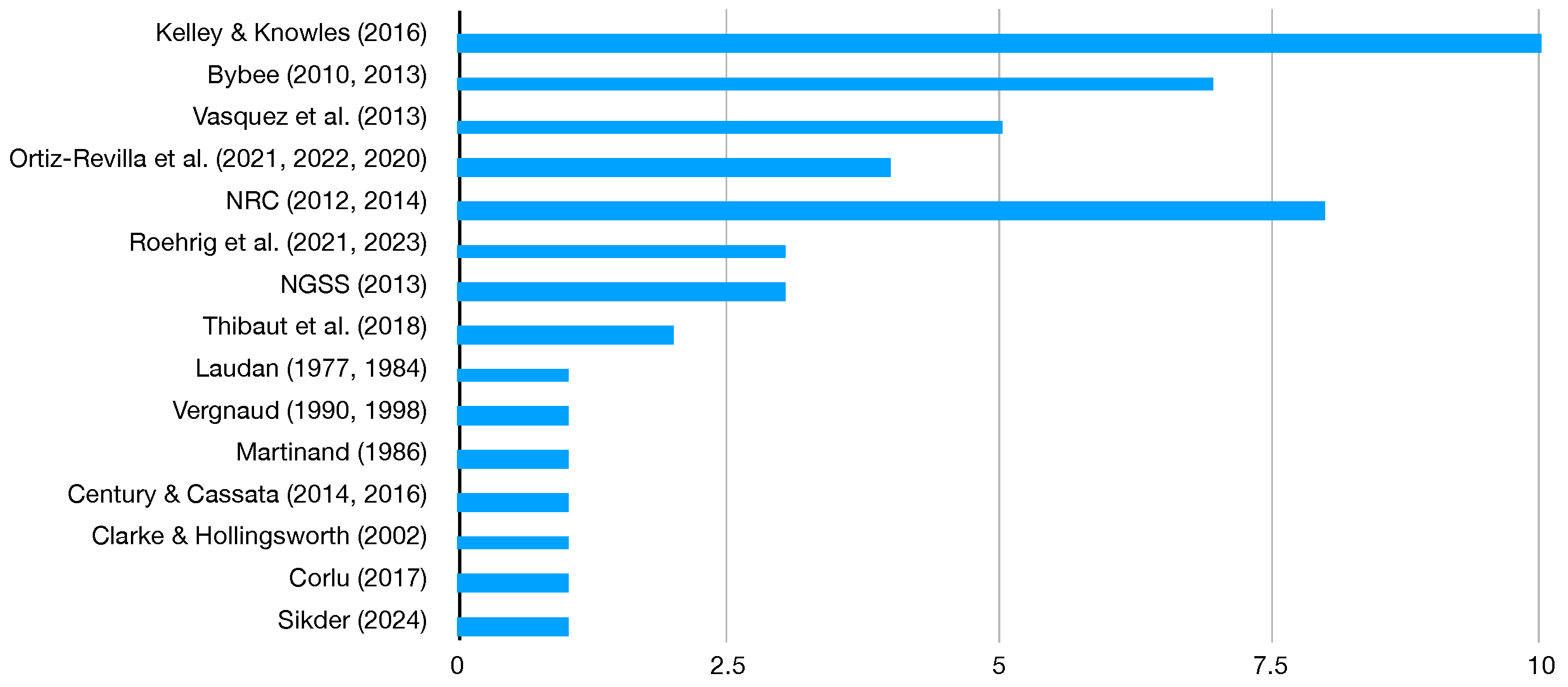
The reference frameworks in the different studies are based on prior work. These reference frameworks have evolved, incorporating distinct contributions from various sources and other STEM approaches. Standard references are cited in the different articles, as shown in Figure 4.
The analysis of studies specifically addressing the frameworks reveals a set of core reference frameworks that recur across different adaptations and emphases. Table 5 presents the common reference framework, its description, and the articles in which it is present.
The frameworks identified in the reviewed studies enable us to discern key characteristics in the formulation, implementation, and evaluation of STEM projects. Disciplinary integration and Project- or Problem-Based Learning (PBL) are the most frequently used frameworks. Most studies assume that STEM education should move towards more integrated forms of knowledge; various authors agree that integration ranges from disciplinary to multidisciplinary, interdisciplinary, and transdisciplinary, the latter being the most complex and contextualized level [22,32,33,34].
The literature highlights the centrality of active methodologies, such as project- and problem-based learning (PBL/PjBL), inquiry-based learning (IBL/IBSE), and design thinking/engineering, which serve as preferred vehicles for disciplinary integration. These strategies favor the construction of learning around authentic, real-world problems, promoting creativity, collaboration, and critical thinking [18,35,36,37]. In this phase, the selection of Authentic Problems of Knowledge Society (APoKS) is presented as an indispensable condition for student motivation and the relevance of the projects [38,39].
Table 5.
Core reference frameworks identified across the reviewed studies, their main features, and representative references.
Figure 4.
Frequency of citation of reference frameworks across reviewed studies [13,43,52,53,54,55,56,57,58,59,60,61,62,63,64,65,66,67,68,69,70,71,72].
Regarding implementation, studies show that the most effective frameworks are those that provide teachers with clear tools to organize the teaching sequence. Proposals such as the Project Planning Pyramid (PPP) [36], the botSTEM Framework for early childhood education [51], or technology integration models using drones and robotics [37,51] are examples of how to structure work phases that articulate disciplinary content, design practices, and inquiry. However, the literature also highlights a gap between theory and practice: in contexts such as Malaysia, teachers recognize the value of STEM integration but tend to maintain teacher-centered, “cookbook”-type practices [42]. To overcome these limitations, the importance of ongoing teacher professional development is emphasized, both at the disciplinary level and in collaborative work and reflection on personal theories [47,48].
The most recent frameworks strongly incorporate principles of equity, inclusion, and social justice [38,50], as well as the integration of emerging technologies (drones, robotics, VR) as drivers of pedagogical innovation [37,51]. These contributions suggest that STEM/STEAM education is evolving from a vision focused on employability and competitiveness to a more comprehensive approach that encompasses sustainability, civic participation, and holistic training.
Finally, evaluating STEM/STEAM projects remains a challenging task. While educational systems maintain disciplinary structures and standardized tests, most of the frameworks reviewed propose innovative instruments that integrate disciplinary and metadisciplinary aspects. The 21-criteria STEM PBL rubric [18], implementation fidelity indicators [46], and constructive alignment models [33] represent attempts to operationalize assessment in integrated contexts. Furthermore, a formative and holistic approach is promoted, which values not only conceptual knowledge but also the skills, dispositions, and attitudes associated with STEM literacy [22,44].
While most frameworks conceptualize evaluation as an integral component of STEM project design, they rarely provide detailed operational criteria or scoring structures. This gap has motivated the development of rubric-based instruments that translate conceptual principles into measurable indicators, as explored in the following subsection.
Overall, the frameworks identified between 2020 and 2025 show strong alignment with the foundational models and standards that have shaped STEM education internationally. Principles such as disciplinary integration, project- and problem-based learning, authentic contexts, and equity-oriented practices mirror the orientations present in broader frameworks such as the European STEM Schools Report, the K–12 Science Education Framework, NGSS, and regional models established in Latin America, Asia, and the United States [7,9,10,13,14]. This convergence suggests that recent frameworks do not emerge in isolation but build upon long-standing pedagogical and institutional guidelines while being adapted to contemporary priorities such as transdisciplinary learning, relevance to local contexts, and the integration of digital and emerging technologies. Thus, the frameworks found in the recent literature reflect an evolutionary continuity with earlier contributions, expanding them to address new educational, technological, and societal demands.
3.3. Rubrics Proposed to Evaluate STEM Projects (RQ2)
The second research question (RQ2) focuses on identifying and analyzing the rubrics proposed for evaluating STEM projects. Rubrics are understood as practical tools that operationalize the principles established in conceptual frameworks, contributing to improving the quality and consistency of project-based implementations [17,73]. Based on the data extracted in the data extraction matrix, six of the reviewed studies provide detailed information on rubric design and application, allowing an in-depth response to RQ2.
The rubrics identified in these studies were implemented across multiple educational levels: K–12 [74], primary [17], secondary [73,75,76], and one study with no specified level [77]. Their applications presented empirical evidence obtained through classroom observations, document analysis, expert validation, and pilot testing. In several cases, quantitative data from questionnaires and qualitative analyses of project reports were triangulated to ensure validity and reliability.
The reviewed rubrics differ in the number of indicators and scoring systems, but share comparable evaluation dimensions. Table 6 summarizes the main characteristics of each instrument. Although the structure varies, most rubrics adopt multilevel scales to differentiate the depth or sophistication of project development and its alignment with STEM competencies.
Table 6.
Main rubrics identified in the reviewed studies, number of indicators, and assessment scales.
Across the different instruments, the analysis identified a comprehensive set of common evaluative domains (Table 7). The most recurrent areas include the alignment of learning purposes with STEM literacy goals, the degree of disciplinary integration, and the authenticity or real-world relevance of the proposed challenges. These are followed by domains related to formative and outcome assessment, collaborative work among students and teachers, and the social or community impact of learning experiences. Additional but less frequent areas address institutional support, infrastructure, and the presence of ethical or value-oriented components. Altogether, these categories converge with the conceptual models discussed in RQ1, highlighting that integration across disciplines, contextual authenticity, and reflective assessment practices are central indicators of quality in STEM and STEAM educational projects.
Table 7.
Presence of common STEM domains across six rubrics.
Incorporating earlier foundational instruments helps contextualize these rubrics within the broader evolution of STEM project evaluation. Prior to the proliferation of rubric-based proposals published after 2020, several influential models established the basis for structured STEM assessment. The STEM Program Quality Rubric [78] outlined indicators related to curriculum coherence, teacher collaboration, equity, and community engagement, becoming one of the first comprehensive tools used to evaluate STEM program quality. Similarly, state-level frameworks such as the Texas STEM Framework [79] provided clear criteria for institutional readiness, interdisciplinary implementation, and organizational capacity. Professional organizations such as the American Evaluation Association (AEA) also defined ethical and methodological standards for evaluating STEM initiatives, emphasizing utility, feasibility, and technical rigor [80]. These earlier contributions established evaluative principles that continue to inform more recent rubric designs.
The common domains related to the articles are described below.
- Learning Purposes and Goals: Refers to the alignment of teaching and learning experiences with explicit educational aims, such as the development of STEM literacy, problem-solving, creativity, and reflective thinking. High-quality projects articulate goals that connect conceptual understanding, procedural fluency, and attitudinal growth.
- Values and Ethics in STEM: Addresses how STEM education promotes ethical reasoning, responsibility toward society and the environment, and awareness of diversity, inclusion, and sustainability. It connects disciplinary learning with moral and civic dimensions of scientific and technological work.
- Didactic Purpose and Pedagogical Justification: Focuses on the coherence between the instructional design and pedagogical intentions. It examines whether the proposed methodology is justified in relation to learning goals and whether it supports motivation, inclusion, and inquiry-based learning.
- STEM Problem or Challenge Definition: Evaluates the relevance, clarity, and authenticity of the problem or challenge that structures the project. Effective STEM projects present complex, open-ended problems that are meaningful to students and demand the integration of multiple disciplines.
- Content Selection and Depth: Assesses how conceptual, procedural, and attitudinal contents are chosen and connected. It values the inclusion of disciplinary knowledge that enables deep understanding, cross-domain application, and intellectual engagement.
- Disciplinary Integration and Interdisciplinarity: Examines the degree of connection among STEM domains—from multidisciplinary arrangements to interdisciplinary and transdisciplinary synthesis—where knowledge and practices converge toward solving complex real-world problems.
- Action Deployment and Implementation: Analyzes how the project is structured and enacted, focusing on the logical sequencing of activities, the alignment of actions with objectives, and the capacity to adapt implementation based on reflection and feedback.
- Social Impact and Application Context: Explores the extent to which projects transcend classroom boundaries and address real community, environmental, or societal needs. It emphasizes learning as a vehicle for civic engagement and sustainable development.
- Scientific and Technological Practices: Encompasses epistemic practices such as inquiry, modeling, experimentation, and engineering design. It evaluates how students construct explanations, develop prototypes, test hypotheses, and use evidence to justify decisions.
- Use of ICT and Digital Tools: Considers how digital technologies are integrated into learning processes, from information retrieval to simulation, modeling, programming, and digital fabrication. Effective use of ICT enhances inquiry and innovation.
- Impact Assessment: Refers to the evaluation of the outcomes or broader consequences of a project in social, environmental, or economic terms. It focuses on reflective analysis of results and continuous improvement.
- Contextual Authenticity: Measures how closely learning environments resemble real professional or social contexts. Authentic STEM projects situate learning in real problems, roles, and practices that demand critical thinking and creativity.
- Process Assessment (Formative Evaluation): Involves monitoring and supporting learning as it occurs. It includes formative feedback, self-assessment, and peer assessment aimed at improving understanding and performance throughout the project.
- Outcome or Product Evaluation: Refers to the assessment of the final results—prototypes, reports, or solutions—through competence-based and reflective criteria. It complements formative assessment by validating overall achievement and quality.
- Student Cooperative Work: Examines how students collaborate to achieve shared goals, regulate group processes, and assume collective responsibility. It includes tools for self-regulation, peer feedback, and collaborative decision-making.
- Teacher Collaboration: Assesses coordination and co-teaching among educators, emphasizing joint planning, interdisciplinary design, and collective reflection to ensure coherence and shared responsibility in STEM instruction.
- Teacher Professional Development: Refers to the continuous learning and professional growth of teachers in STEM pedagogy, interdisciplinary integration, and the use of innovative and technological teaching practices.
- External Stakeholders and Partnerships: Addresses collaboration with external agents such as universities, industries, or community organizations. These partnerships enrich learning contexts and connect projects with authentic problems and professional practices.
- Infrastructure and Equipment: Evaluates the adequacy of physical and digital resources that support STEM education, including laboratories, makerspaces, digital platforms, and materials necessary for experimentation and design.
- Institutional STEM Culture and Leadership: Describes the school’s collective commitment to STEM education, highlighting leadership, shared vision, and the establishment of a culture of innovation, collaboration, and continuous improvement.
- Institutional Management and Organization: Focuses on the governance and organizational structures that sustain STEM initiatives, including strategic planning, resource allocation, and administrative support for project-based learning.
These domains converge around the idea that evaluating learning outcomes alone is insufficient. Instead, the formulation, implementation, and institutional conditions surrounding STEM projects must also be considered. The rubrics serve as integrative tools that bridge conceptual and operational aspects, allowing educators to assess disciplinary integration, authenticity, and relevance in concrete and comparable ways.
Furthermore, the reviewed rubrics reveal a growing methodological rigor: most have undergone validation processes with experts or through pilot testing, and several integrate both quantitative and qualitative evidence. This evolution marks a transition from descriptive frameworks toward measurable, data-driven evaluation systems. However, an objective evaluation is necessary through automated processes and ML techniques.
3.4. Machine Learning Models Applied to Evaluate STEM Projects (RQ3)
The third research question (RQ3) explores the application of ML models to the evaluation of STEM education projects. According to the analysis of the data extraction matrix, five studies explicitly applied ML algorithms in evaluation contexts relevant to STEM education. In addition, the targeted snowballing procedure identified five further studies applying ML techniques to educational evaluation tasks, which, although not always situated in STEM-specific settings, provide methodological contributions directly applicable to STEM project assessment. These ten studies collectively expand the analytical base for understanding emerging ML methodologies within evaluative contexts.
The educational context presented in the assessed studies primarily focuses on higher education, as the majority of the ten ML-based articles were conducted in university settings or institutional quality assurance contexts. Only a small subset of studies addressed evaluation in primary or secondary education, indicating that ML-driven assessment in K–12 STEM project environments remains limited. This distribution suggests that the integration of ML for project evaluation is still emerging in school-based STEM practice, with most existing developments concentrated in higher education scenarios where data availability, computational infrastructure, and project documentation tend to be more robust.
The ML models identified differ in algorithm type, input data, use of structured indicators or rubrics, and performance metrics. Supervised learning approaches predominate, particularly for classification and regression tasks aimed at predicting project quality, instructional effectiveness, or institutional performance. Table 8 summarizes all models included in the review, consolidating their main characteristics.
Table 8.
Machine learning models applied to educational project evaluation.
Across these studies, four methodological families clearly emerge: (1) neural network–based models—including backpropagation neural networks (BP), dynamic BP, and hybrid deep learning structures—used to handle nonlinear relationships in multidimensional evaluation indicators; (2) tree-based and ensemble approaches, particularly Random Forest (RF, a decision-tree ensemble method), valued for their robustness and interpretability in classification tasks; (3) regression and statistical learning models, such as multiple linear regression and PLS-based approaches, which demonstrate the feasibility of predicting project or institutional quality from structured indicators; and (4) hybrid or optimization-enhanced models that integrate neural networks with genetic algorithms or combine PLS with dynamic architectures to improve predictive performance and indicator weighting.
Taken together, these studies illustrate a diverse yet consistent methodological landscape in ML-based educational evaluation. Despite the differences in domain (STEM projects, project-based learning, teaching quality, or institutional evaluation), all models rely on structured indicators, supervised learning pipelines, and quantifiable performance metrics. These approaches provide methodological pathways that can be adapted to STEM project assessment, particularly regarding the use of multidimensional indicator sets, model interpretability, and predictive alignment with rubric-based evaluation criteria.
The OLSCA-KELM model [19] stands out for its high training speed and generalization on moderate datasets, simultaneously optimizing hyperparameters and selecting features. The multi-view XGBoost/LightGBM model [81] demonstrates that combining heterogeneous indicators—such as computational thinking, aesthetics, and technical quality—improves correlation with human evaluations, suggesting the possibility of integrating criteria such as social impact or innovation. In parallel, several neural network–based approaches, including dynamic backpropagation architectures [84] and explainable neural models using genetic optimization and SHAP analysis [27], highlight the suitability of nonlinear models for capturing complex relationships among multidimensional evaluation indicators.
The Random Forest + clustering + DEA pipeline [82] introduces a comparative-efficiency perspective that differentiates performance profiles across institutional contexts. Random Forest models also appear in other contexts [86], reinforcing their robustness and interpretability for educational quality classification. A more recent contribution integrates a neural network with a Random Forest ensemble and a genetic optimizer [88], reporting improved sensitivity and low computational latency in teaching-effect evaluation. Regression-based approaches [87] further illustrate the feasibility of predicting project or institutional quality scores from structured indicators, particularly when coupled with feature-selection or weighting schemes.
Taken together, these ten studies reveal converging methodological patterns: the predominance of supervised learning, the reliance on structured or rubric-based indicators, and the use of multidimensional data representations to generate more consistent, scalable evaluations. Despite differences in domain—ranging from STEM projects to PBL tasks, teaching quality, and institutional assessment—these ML models share core computational traits, including indicator-based prediction, nonlinearity handling, and model interpretability strategies. Such methodological consistency suggests that the techniques explored across these studies can be readily adapted and extended to STEM project evaluation, offering promising avenues for integrating data-driven analytics with established pedagogical and rubric-based assessment practices.
A critical finding across the analyzed works is the growing emphasis on model explainability and the integration of rubric-based or indicator-based assessment. Several of the ten studies explicitly used standardized criteria, custom rubrics, or structured indicator systems—such as analytic hierarchies, weighting schemes, and PLS-based components—demonstrating a shared tendency toward grounding ML predictions in transparent and pedagogically meaningful variables. Additionally, a subset of studies incorporated interpretability techniques such as SHAP values, feature-importance analysis, or model weighting mechanisms to provide actionable feedback to teachers, curriculum designers, and institutional evaluators. This convergence highlights the importance of maintaining transparency and co-calibration with educators to prevent ML systems from functioning as opaque “black boxes”.
In terms of performance, most models achieved high accuracy (75–96%), AUC values between 0.87 and 0.96, and correlations with human evaluators up to 0.94. Across the ten studies, the reported performance metrics were consistent, reinforcing the trend that ML systems can approach—and in some cases surpass—expert human judgment in evaluation stability and reliability. Nonetheless, several limitations persist, including moderate dataset sizes (160–500 projects), the use of non-public or context-dependent datasets, and the risk of overfitting in highly parameterized models. Addressing these constraints will require expanding datasets, diversifying evaluation contexts, and adopting explainable ML frameworks to ensure fairness, interpretability, and pedagogical validity.
Overall, the findings of RQ3 confirm that ML-based approaches hold significant promise for improving objectivity, scalability, and consistency in educational project evaluation, including STEM contexts. The collective evidence from the ten studies illustrates a broad repertoire of computational techniques and methodological approaches, while also underscoring the persistent fragmentation between ML models and established STEM pedagogical constructs such as frameworks and rubrics. Bridging this gap will be essential for developing integrated, reliable, and pedagogically aligned ML-assisted evaluation systems.
4. Discussion
The reviewed frameworks converge on a shared vision of STEM/STEAM projects as educational experiences that must integrate disciplinary knowledge, foster active and reflective learning, and be guided by principles of authenticity, inclusion, and sustainability. This synthesis reflects an evolution from fragmented disciplinary approaches toward comprehensive, competency-based, and socially responsible models of STEM education.
These tendencies are consistent with long-standing international frameworks that have shaped STEM education for more than a decade. Foundational models—such as the K–12 Science Education Framework, the Next Generation Science Standards (NGSS), the European STEM Schools Report, and regional guidelines developed in Latin America, Asia, and the United States—also emphasized disciplinary integration, scientific and engineering practices, equity, and relevance to real-world contexts [7,9,10,13,14]. The frameworks identified in this review therefore extend, contextualize, and update conceptual foundations already present in these earlier international standards.
Specifically, the frameworks analyzed emphasize six core dimensions: (1) disciplinary integration that progresses from disciplinary to multidisciplinary, interdisciplinary, and ultimately transdisciplinary approaches [22,32,34,35]; (2) the development of STEM literacy that unites knowledge, cognitive and social skills, and civic engagement—expanded under STEAM interpretations to include creativity and equity [38,43,44]; (3) project- and problem-based learning (PBL/PjBL), inquiry-based learning (IBL), and engineering design anchored in authentic and meaningful real-world contexts [36,46,73]; (4) the role of the reflective and collaborative teacher as a mediator between theory and practice [39,42,47,48]; (5) holistic assessment encompassing content, skills, and attitudes [18,22,33,36]; and (6) equity, inclusion, and sustainability as guiding principles for educational innovation [38,43,50].
This continuity indicates that recent STEM/STEAM frameworks do not emerge in isolation but build upon an established pedagogical tradition. Earlier models already endorsed inquiry, authentic problem-solving, and disciplinary convergence; contemporary frameworks reinforce these principles while extending them to technological innovation, early childhood contexts, and sociocultural responsiveness. Although these frameworks provide comprehensive conceptual guidance, they often remain at a declarative level. The evaluation of STEM projects risks becoming subjective if based solely on these general postulates. Rubrics therefore play a crucial role by translating abstract principles into observable and measurable criteria. They allow educators to operationalize constructs such as integration, authenticity, and collaboration, thereby enabling a more transparent and evidence-based assessment of project quality.
The rubrics identified in the reviewed literature [17,73,74,75,76,77] align closely with the conceptual frameworks. They operationalize STEM principles through concrete evaluation dimensions—including disciplinary integration, authenticity of problems, active methodologies, reflective teaching roles, and holistic assessment. These rubrics also incorporate indicators of equity and sustainability, expanding the evaluative focus beyond cognitive performance to include social and institutional dimensions.
This evolution is consistent with earlier evaluative instruments that laid the foundation for structured STEM assessment, such as the STEM Program Quality Rubric [78], the Texas STEM Framework [79], and the evaluation principles of the American Evaluation Association (AEA) [80]. These foundational tools emphasized curriculum coherence, teacher collaboration, institutional culture, and equity—dimensions that reappear, now refined and operationalized, in the post-2020 rubrics reviewed here.
Progressive disciplinary integration emerges as a central construct, often represented through scales measuring progression from multidisciplinary to transdisciplinary approaches [17,73,76,77]. Authenticity likewise appears as a recurring quality criterion, assessing the extent to which projects address socially relevant challenges and foster community engagement [74,75]. Similarly, the teacher’s role is recognized not only as a facilitator but as a reflective practitioner and designer of learning environments [46,77]. These principles point toward increasingly holistic and systemic conceptions of STEM/STEAM quality.
However, the effectiveness of rubric-based evaluation ultimately depends on the consistency and fairness with which it is applied, bringing attention to the role of human judgment in assessment processes. While rubrics strengthen transparency and comparability, their application remains fundamentally manual and therefore vulnerable to well-documented biases—such as leniency or severity effects, halo effects, confirmation bias, and familiarity bias—that can distort scoring consistency and disproportionately affect certain groups of students. These biases undermine fairness, compromise formative feedback, and hinder longitudinal comparability of project outcomes. In contrast, ML-based approaches offer the potential to model evaluative criteria with greater consistency and detect latent patterns across large and heterogeneous datasets. When grounded in well-defined rubric indicators, ML can help mitigate human variability by reproducing decision rules more consistently. However, ML introduces different kinds of biases—stemming from data imbalance, feature selection, or opaque decision pathways—which require careful monitoring. Thus, ML should be understood not as a replacement for human judgment but as a complementary analytical tool whose value depends on transparent, explainable, and pedagogically aligned implementation.
Building on these challenges and opportunities, recent studies have begun exploring how computational approaches can support evaluation practices. Across the ten studies included in this review, ML techniques were used to model, predict, or classify project quality, instructional processes, or institutional performance based on structured indicators. Although the domains varied—ranging from STEM project assessment to teaching quality, PBL environments, and broader educational evaluation—the methodological principles were highly consistent: supervised learning techniques, multidimensional input features, and quantifiable criteria derived from rubrics or indicator-based frameworks.
This consistency suggests that ML-based evaluation does not represent a departure from established assessment practices but an extension of them. Neural networks, ensemble models, regression techniques, and hybrid architectures all rely on explicit evaluative criteria analogous to rubric dimensions, reinforcing the potential for ML models to operationalize and scale existing evaluative structures. Importantly, several studies employed interpretability methods such as feature-importance analyses or SHAP-based explanations, demonstrating increasing efforts to align computational outputs with pedagogical reasoning and respond to concerns about model opacity.
Despite these advances, the application of ML to STEM project evaluation remains limited. Although some studies included structured indicator systems or rubric-based variables, none of the reviewed research implemented ML models explicitly grounded in validated STEM frameworks or domain-specific rubric structures. Instead, most ML approaches translated contextual indicators into predictive variables without explicit integration of pedagogical constructs such as disciplinary integration, authenticity, or reflective teaching. This disconnection highlights the broader fragmentation observed in the findings: while frameworks and rubrics provide conceptual and operational guidance, ML models often function parallel to these constructs rather than in alignment with them.
This fragmentation has important implications. On one hand, the performance reported across the analyzed studies—accuracy values typically between 75–96%, strong AUC scores, and correlations with expert judgment—demonstrates the potential of ML to enhance consistency, scalability, and objectivity in evaluation. On the other hand, the absence of structured alignment with STEM-specific evaluative principles raises concerns regarding pedagogical validity. ML predictions detached from conceptual scaffolding risk reinforcing superficial or context-dependent patterns rather than contributing to meaningful and educationally grounded evaluation.
Taken together, these findings indicate that advancing ML-based evaluation in STEM education will require deliberate integration of conceptual and computational dimensions. Future research should map rubric indicators and framework constructs onto ML feature sets, develop explainable pipelines that support teacher interpretation, and construct multimodal datasets aligned with validated evaluative criteria. Such efforts would enable ML systems to not only automate aspects of assessment but also enhance fairness, transparency, and pedagogical alignment—key components for strengthening rigorous and equitable STEM education.
5. Conclusions
This systematic review examined 39 studies addressing the evaluation of STEM education projects through three complementary perspectives: conceptual frameworks, assessment rubrics, and machine learning (ML) techniques. The evidence reveals meaningful progress in how STEM project evaluation is conceptualized, operationalized, and computationally supported, while also highlighting important gaps that must be addressed for the field to advance toward more coherent and integrated evaluation systems.
The analysis of frameworks shows that they provide essential pedagogical foundations for the design of STEM projects, emphasizing disciplinary integration, inquiry, authentic problem solving, collaboration, and equity. Although valuable for articulating the principles of high-quality STEM education, these frameworks tend to offer broad conceptual guidance rather than detailed operational structures, limiting their direct applicability for systematic evaluation.
Assessment rubrics complement these frameworks by translating conceptual constructs into explicit, observable criteria. They establish consistent expectations for project quality and help educators assess performance based on structured indicators. However, rubric-based assessment remains predominantly manual, which introduces subjectivity and limits the scalability and comparability of evaluations across contexts.
From the perspective of Artificial Intelligence in Education (AIED), this review contributes a structured synthesis of how ML techniques are currently being used to support educational evaluation and how these approaches may relate to STEM project assessment. The ten ML studies analyzed demonstrate a clear methodological trend: supervised learning models—such as neural networks, ensemble methods, boosting algorithms, and regression-based predictors—are capable of modeling complex evaluative constructs and approximating human judgment when trained on multidimensional indicators commonly found in rubrics and framework-based criteria. These approaches highlight the potential of ML to enhance consistency, identify patterns, automate aspects of evaluation, and support data-informed decision making.
Nevertheless, current ML applications remain conceptually and methodologically separate from established STEM frameworks and rubric-based structures. No study demonstrated an integrated model that simultaneously incorporates the pedagogical grounding of frameworks, the operational clarity of rubrics, and the analytical capacity of ML. Instead, the findings indicate that the convergence of these three domains represents a promising yet unrealized direction for future research. By mapping how ML techniques align with—or diverge from—framework and rubric constructs, this review provides an integrative perspective that has been largely absent from the AIED literature and lays conceptual groundwork for the development of pedagogically aligned, explainable, and trustworthy ML-supported evaluation systems.
Limitations and Future Research
This review is subject to several limitations that should be considered when interpreting its findings. First, the study focused exclusively on peer-reviewed journal articles published between 2019 and 2025, which may have excluded relevant work from earlier periods or from conference proceedings where emerging research on AI in education is frequently reported. The heterogeneity of methodological approaches across the included studies also limited the feasibility of quantitative synthesis. A methodological limitation of this review is that screening, data extraction, and quality assessment were primarily conducted by a single reviewer. Although methodological rigor was strengthened through structured peer debriefing sessions with the second author and through detailed documentation of decisions in Rayyan, the absence of a formal dual-screening procedure or inter-rater reliability test (e.g., Cohen’s Kappa) may have introduced subjective bias. Future systematic reviews in this domain would benefit from implementing multi-reviewer screening protocols and formal reliability checks to further enhance transparency and reproducibility. Additionally, while ML-based evaluation approaches are increasingly present in educational research, their application to STEM project evaluation remains limited and often conceptually disconnected from established frameworks and rubric-based criteria. The evidence suggests potential for ML to support evaluative tasks, but comprehensive integration with pedagogical constructs has not yet been achieved. Future research should prioritize developing models that explicitly combine the conceptual foundations of STEM frameworks, the operational clarity of rubric-based assessment, and the analytical capacity of ML. Advancing explainable ML (XAI), building shared and openly accessible datasets, and fostering interdisciplinary collaboration between educators, evaluation specialists, and AI researchers will be essential to move toward scalable, transparent, and pedagogically grounded evaluation systems in STEM education.
Supplementary Materials
The following supporting information can be downloaded at https://www.mdpi.com/article/10.3390/app152312812/s1: Table S1: PRISMA 2020 Checklist (completed for this review), Table S2. Extraction matrix.
Funding
This research received no external funding.
Data Availability Statement
The data presented in this study are available upon request from the corresponding author. The completed PRISMA 2020 checklist (Supplementary Table S1) and the data extraction matrix of the 34 included studies (Supplementary Table S2) are available as Supplementary Materials.
Acknowledgments
This work is part of the doctoral research in Computer Science at Universidad del Cauca, Faculty of Electronic Engineering and Telecommunications, within the GICO Research Group. The author thanks the thesis supervisor and co-author for continuous guidance and support. Rayyan, Mendeley, and Overleaf were used for review management and manuscript preparation. ChatGPT (model GPT-5) and Grammarly assisted in structuring and refining the English text; all content was reviewed and edited by the authors. The first author is a doctoral fellow of MinCiencias, Colombia.
Conflicts of Interest
The authors declare no conflicts of interest.
Abbreviations
The following abbreviations are used in this manuscript:
| AI | Artificial Intelligence |
| AIED | Artificial Intelligence in Education |
| ANN | Artificial Neural Network |
| DEA | Data Envelopment Analysis |
| GA-BPNN | Genetic Algorithm–Backpropagation Neural Network |
| GICO | Computational Intelligence Research Group (Universidad del Cauca) |
| IBL | Inquiry-Based Learning |
| IBSE | Inquiry-Based Science Education |
| KELM | Kernel Extreme Learning Machine |
| LightGBM | Light Gradient Boosting Machine |
| MinCiencias | Ministry of Science, Technology and Innovation (Colombia) |
| ML | Machine Learning |
| NSF | National Science Foundation |
| OLSCA | Orthogonal Sine-Cosine Algorithm |
| PBL | Project-Based Learning |
| PjBL | Problem-Based Learning |
| PRISMA | Preferred Reporting Items for Systematic Reviews and Meta-Analyses |
| Q1, Q2, Q3, etc. | Quality Assessment Questions |
| RF | Random Forest |
| STEM | Science, Technology, Engineering, and Mathematics |
| STEAM | Science, Technology, Engineering, Arts, and Mathematics |
| SVM | Support Vector Machine |
| XAI | Explainable Artificial Intelligence |
| XGBoost | Extreme Gradient Boosting |
References
- Trevallion, D.; Trevallion, T. STEM: Design, Implement and Evaluate. Int. J. Innov. Creat. Change 2020, 14, 1–29. [Google Scholar]
- Bascopé Julio, M.; Ibaceta Guerra, N.; Ruiz, S. Marco STEM+ para la Implementación de Innovación Educativa en Latinoamérica; Technical report; Siemens Stiftung: Munich, Germany, 2024. [Google Scholar]
- Espinosa Cevallos, P.A. Evaluación de programas de educación STEM en diferentes niveles educativos. Nexus Res. J. 2024, 3, 54–64. [Google Scholar] [CrossRef] [Scilit]
- Vieriu, A.M.; Petrea, G. The Impact of Artificial Intelligence (AI) on Students’ Academic Development. Educ. Sci. 2025, 15, 343. [Google Scholar] [CrossRef] [Scilit]
- Chen, L.; Chen, P.; Lin, Z. Artificial Intelligence in Education: A Review. IEEE Access 2020, 8, 75264–75278. [Google Scholar] [CrossRef] [Scilit]
- Zhang, X. Fairness and Effectiveness in AI-Driven Educational Assessments: Challenges and Mitigation Strategies. J. Innov. Dev. 2025, 11, 7–10. [Google Scholar] [CrossRef] [Scilit]
- Botero Espinosa, J. Educación STEM—Marco de Referencia para América Latina; STEM Education Colombia: Bogotá, Colombia, 2022. [Google Scholar]
- Angulo González, M.V.; Alarcón Párraga, C.L.; Gómez Díaz, C.M.; Muñoz Castillo, A.R.; Zea Silva, L.A.; Ruíz Castillo, S.E.; Bustos Ortiz, J.; Montoya Barato, W.Y.; Roldán Giraldo, F.R.; Trujillo Pulido, P.A.; et al. Visión STEM+ Educación Expandida para la Vida; Technical report; Ministerio de Educación Nacional de Colombia: Bogotá, Colombia, 2022.
- European Schoolnet. Science, Technology, Engineering and Mathematics Education Policies in Europe; Scientix Observatory report; Technical report; European Schoolnet: Brussels, Belgium, 2018. [Google Scholar]
- Yata, C.; Ohtani, T.; Isobe, M. Conceptual framework of STEM based on Japanese subject principles. Int. J. STEM Educ. 2020, 7, 12. [Google Scholar] [CrossRef] [Scilit]
- Arizona State University. About ASAP, Arizona STEM Acceleration Project (ASAP). 2022. Available online: https://stemteachers.asu.edu/about-asap (accessed on 1 July 2024).
- Arizona STEM Network; Maricopa Conunty Education Service Agency. The STEM Immersion Guide for Schools and Districts; Arizona STEM Network: Phoenix, AZ, USA, 2014. [Google Scholar]
- NRC. A Framework for K–12 Science Education: Practices, Crosscutting Concepts, and Core Ideas; National Academies Press: Washington, DC, USA, 2012. [Google Scholar]
- Next Generation Science Standars (NGSS). Next Generation Science Standars. Available online: https://www.nextgenscience.org/ (accessed on 2 May 2025).
- International Society for Technology in Education (ISTE). Standars ISTE. Available online: https://iste.org/standards (accessed on 2 May 2025).
- Cognia. STEM Certification. Available online: https://www.cognia.org/stem-certification/ (accessed on 2 May 2025).
- Aguilera, D.; García-Yeguas, A.; Perales-Palacios, F.J.; Vílchez-González, J.M. Design and validation of a rubric for the evaluation of STEM teaching proposals (RubeSTEM). Rev. Interuniv. Form. Profr. 2022, 97, 11–34. [Google Scholar] [CrossRef] [Scilit]
- Pérez Torres, M.; Couso Lagarón, D.; Marquez Bargalló, C. Evaluation of STEAM Project-Based Learning (STEAM PBL) Instructional Designs from the STEM Practices Perspective. Educ. Sci. 2024, 14, 53. [Google Scholar] [CrossRef] [Scilit]
- Zhu, W.; Ma, C.; Zhao, X.; Wang, M.; Heidari, A.A.; Chen, H.; Li, C. Evaluation of Sino Foreign Cooperative Education Project Using Orthogonal Sine Cosine Optimized Kernel Extreme Learning Machine. IEEE Access 2020, 8, 61107–61123. [Google Scholar] [CrossRef] [Scilit]
- Gavari-Starkie, E.; Espinosa-Gutiérrez, P.T.; Lucini-Baquero, C.; Pastrana-Huguet, J. Importance of STEM and STEAM Education for Improvement of the Land in the RURAL Environment: Examples in Latin America. Land 2024, 13, 274. [Google Scholar] [CrossRef] [Scilit]
- Portillo-Blanco, A.; Deprez, H.; De Cock, M.; Guisasola, J.; Zuza, K. A Systematic Literature Review of Integrated STEM Education: Uncovering Consensus and Diversity in Principles and Characteristics. Educ. Sci. 2024, 14, 1028. [Google Scholar] [CrossRef] [Scilit]
- Falloon, G.; Hatzigianni, M.; Bower, M.; Forbes, A.; Stevenson, M. Understanding K–12 STEM Education: A Framework for Developing STEM Literacy. J. Sci. Educ. Technol. 2020, 29, 369–385. [Google Scholar] [CrossRef] [Scilit]
- Xu, W.; Ouyang, F. A systematic review of AI role in the educational system based on a proposed conceptual framework. Educ. Inf. Technol. 2022, 27, 4195–4223. [Google Scholar] [CrossRef] [Scilit]
- Jara, I.; Ochoa, J.M. Usos y Efectos de la Inteligencia Artificial en Educación; Technical report; Inter-American Development Bank: Washington, DC, USA, 2020. [Google Scholar]
- Kuleto, V.; Ilić, M.P.; Bucea-Manea-Țoniş, R.; Ciocodeică, D.F.; Mihălcescu, H.; Mindrescu, V. The Attitudes of K–12 Schools’ Teachers in Serbia towards the Potential of Artificial Intelligence. Sustainability 2022, 14, 8636. [Google Scholar] [CrossRef] [Scilit]
- Muhamedyev, R.; Yakunin, K.; Kuchin, Y.A.; Symagulov, A.; Buldybayev, T.; Murzakhmetov, S.; Abdurazakov, A. The use of machine learning “black boxes” explanation systems to improve the quality of school education. Cogent Eng. 2020, 7, 1769349. [Google Scholar] [CrossRef] [Scilit]
- Divasón, J.; Martínez-de Pisón, F.J.; Romero, A.; Sáenz-de Cabezón, E. Artificial Intelligence Models for Assessing the Evaluation Process of Complex Student Projects. IEEE Trans. Learn. Technol. 2023, 16, 694–707. [Google Scholar] [CrossRef] [Scilit]
- Fernández Pérez, Y. Modelo Computacional para la Evaluación y Selección de Productos de Software. Ph.D. Thesis, Universidad de Granada, Granada, Spain, 2018. [Google Scholar]
- Zawacki-Richter, O.; Marín, V.I.; Bond, M.; Gouverneur, F. Systematic review of research on artificial intelligence applications in higher education—Where are the educators? Int. J. Educ. Technol. High. Educ. 2019, 16, 39. [Google Scholar] [CrossRef] [Scilit]
- Kitchenham, B. Guidelines for Performing Systematic Literature Reviews in Software Engineering; Technical report; University of Durham: Durham, UK, 2007. [Google Scholar]
- Page, M.J.; McKenzie, J.E.; Bossuyt, P.M.; Boutron, I.; Hoffmann, T.C.; Mulrow, C.D.; Shamseer, L.; Tetzlaff, J.M.; Akl, E.A.; Brennan, S.E.; et al. The PRISMA 2020 statement: An updated guideline for reporting systematic reviews. BMJ 2021, 372, n71. [Google Scholar] [CrossRef] [Scilit] [PubMed]
- Silvestri, L.; Bagossi, S.; Pocalana, G.; Robutti, O. Towards a transdisciplinary approach in a mathematics teacher’s design of a STEAM activity. Int. J. Educ. Res. Open 2025, 9, 100490. [Google Scholar] [CrossRef] [Scilit]
- Abu Khurma, O.; Al Darayseh, A.; Alramamneh, Y. A Framework for Incorporating the “Learning How to Learn” Approach in Teaching STEM Education. Educ. Sci. 2023, 13, 1. [Google Scholar] [CrossRef] [Scilit]
- Aguilera, D.; Lupiáñez, J.L.; Vílchez-González, J.M.; Perales-Palacios, F.J. In search of a long-awaited consensus on disciplinary integration in stem education. Mathematics 2021, 9, 597. [Google Scholar] [CrossRef] [Scilit]
- Tytler, R.; Anderson, J.; Williams, G. Exploring a framework for integrated STEM: Challenges and benefits for promoting engagement in learning mathematics. ZDM–Math. Educ. 2023, 55, 1299–1313. [Google Scholar] [CrossRef] [Scilit]
- Sircar, M.; Orr, S.; Madis, C.; DiMaria, S. Conceptualizing an Initial Framework to Support Discipline-Rich Project-Based Learning in STEM. Educ. Sci. 2024, 14, 793. [Google Scholar] [CrossRef] [Scilit]
- Yeung, R.C.Y.; Sun, D.; Yeung, C.H. Integrating drone technology in STEM education: Curriculum, pedagogy and learning outcomes. Educ. Inf. Technol. 2025, 30, 14237–14272. [Google Scholar] [CrossRef] [Scilit]
- Chappell, K.; Hetherington, L.; Juillard, S.; Aguirre, C.; Duca, E. A framework for effective STEAM education: Pedagogy for responding to wicked problems. Int. J. Educ. Res. Open 2025, 9, 100474. [Google Scholar] [CrossRef] [Scilit]
- Yabaş, D.; Abanoz, T. Integrated STEM Teaching: Innovative STEM Training for Preschool and Primary School Teachers. J. Educ. Future 2024, 26, 27–40. [Google Scholar] [CrossRef] [Scilit]
- Ali Al-Mutawah, M.; Alghazo, Y.M.; Mahmoud, E.Y.; Preji, N.; Thomas, R. Designing a need-based integrated steam framework for primary schools in Bahrain. Int. J. Educ. Pract. 2021, 9, 602–612. [Google Scholar] [CrossRef] [Scilit]
- Goos, M.; Carreira, S.; Namukasa, I.K. Mathematics and interdisciplinary STEM education: Recent developments and future directions. ZDM–Math. Educ. 2023, 55, 1199–1217. [Google Scholar] [CrossRef] [Scilit]
- Bunyamin, M.A.H.; Talib, C.A.; Ahmad, N.J.; Ibrahim, N.H.; Surif, J. Current teaching practice of physics teachers and implications for integrated STEM education. Univers. J. Educ. Res. 2020, 8, 18–28. [Google Scholar] [CrossRef] [Scilit]
- Ortiz-Revilla, J.; Greca, I.M.; Arriassecq, I. A Theoretical Framework for Integrated STEM Education. Sci. Educ. 2022, 31, 383–404. [Google Scholar] [CrossRef] [Scilit]
- Hu, W.; Guo, X. Toward the Development of Key Competencies: A Conceptual Framework for the STEM Curriculum Design and a Case Study. Front. Educ. 2021, 6, 684265. [Google Scholar] [CrossRef] [Scilit]
- Nipyrakis, A.; Stavrou, D.; Avraamidou, L. Examining S-T-E-M Teachers’ Design of Integrated STEM Lesson Plans. Int. J. Sci. Math. Educ. 2025, 23, 537–560. [Google Scholar] [CrossRef] [Scilit]
- Gale, J.; Alemdar, M.; Lingle, J.; Newton, S. Exploring critical components of an integrated STEM curriculum: An application of the innovation implementation framework. Int. J. STEM Educ. 2020, 7, 5. [Google Scholar] [CrossRef] [Scilit]
- Bradley, G.; Churchill, D. STEM Teachers’ Private Theories and Their Learning Design in International Schools in Hong Kong. Eur. J. STEM Educ. 2023, 8, 9. [Google Scholar] [CrossRef] [Scilit] [PubMed]
- Christian, K.B.; Kelly, A.M.; Bugallo, M.F. NGSS-based teacher professional development to implement engineering practices in STEM instruction. Int. J. STEM Educ. 2021, 8, 21. [Google Scholar] [CrossRef] [Scilit]
- Lhakard, P. A Comparative Analysis of STEM Design Curriculum Policy for Country Development: A Case Study of Taiwan and Thailand. Rev. Bus. Econ. Stud. 2024, 12, 74–87. [Google Scholar] [CrossRef] [Scilit]
- Mullick, J.; Wang, Q.; Vlcek, S.; Sikder, S. “The possibility of meeting the needs of all children”: A framework for enhancing inclusive STEAM pedagogy in early childhood settings. Int. J. Educ. Res. 2025, 133, 102705. [Google Scholar] [CrossRef] [Scilit]
- Dufranc, I.M.; Terceño, E.M.; Fridberg, M.; Cronquist, B.; Redfors, A. Robotics and Early-years STEM Education: The botSTEM Framework and Activities. Eur. J. STEM Educ. 2020, 5, 1. [Google Scholar] [CrossRef] [Scilit]
- Kelley, T.R.; Knowles, J.G. A conceptual framework for integrated STEM education. Int. J. STEM Educ. 2016, 3, 11. [Google Scholar] [CrossRef] [Scilit]
- Bybee, R. Advancing STEM education: A 2020 vision. Technol. Eng. Teach. 2010, 70, 30–35. [Google Scholar]
- Bybee, R. The Case for STEM Education: Challenges and Opportunities; NSTA Press: Arlington, VA, USA, 2013. [Google Scholar]
- Vasquez, J.; Sneider, C.; Comer, M. STEM Lesson Essentials, Grades 3–8: Integrating Science, Technology, Engineering, and Mathematics; Heinemann: Portsmouth, NH, USA, 2013. [Google Scholar]
- Ortiz-Revilla, J.; Adúriz-Bravo, A.; Greca, I.M. A framework for epistemological discussion on integrated STEM education. Sci. Educ. 2020, 29, 857–880. [Google Scholar] [CrossRef] [Scilit]
- Ortiz-Revilla, J.; Greca, I.M.; Arriassecq, I. Conceptualization of competencies: Systematic review of research in primary education. Profesorado 2021, 25, 223–250. [Google Scholar] [CrossRef] [Scilit]
- NRC. STEM Integration in K–12 Education: Status, Prospects, and an Agenda for Research; National Academies Press: Washington, DC, USA, 2014. [Google Scholar]
- Roehrig, G.H.; Dare, E.A.; Ellis, J.A.; Ring-Whalen, E. Beyond the basics: A detailed conceptual framework of integrated STEM. Discip. Interdiscip. Sci. Educ. Res. 2021, 3, 11. [Google Scholar] [CrossRef] [Scilit]
- Roehrig, G.H.; Rouleau, M.D.; Dare, E.A.; Ring-Whalen, E. Uncovering core dimensions of K–12 integrated STEM. Res. Integr. STEM Educ. 2023, 1, 5–29. [Google Scholar] [CrossRef] [Scilit]
- NGSS Lead States. Next Generation Science Standards: For States, By States; National Academies Press: Washington, DC, USA, 2013. [Google Scholar]
- Thibaut, L.; Ceuppens, S.; De Loof, H.; De Meester, J.; Goovaerts, L.; Struyf, A.; Boeve-de Pauw, J.; Dehaene, W.; Deprez, J.; De Cock, M.; et al. Integrated STEM education: A systematic review of instructional practices in secondary education. Eur. J. STEM Educ. 2018, 3, 2. [Google Scholar] [CrossRef] [Scilit]
- Laudan, L. Progress and Its Problems; University of California Press: Berkeley, CA, USA, 1977. [Google Scholar]
- Laudan, L. Science and Values: The Aims of Science and Their Role in Scientific Debate; University of California Press: Berkeley, CA, USA, 1984. [Google Scholar]
- Vergnaud, G. La théorie des champs conceptuels. Rech. Didact. Math. 1990, 10, 133–170. [Google Scholar]
- Vergnaud, G. A comprehensive theory of representation for mathematics education. J. Math. Behav. 1998, 17, 167–181. [Google Scholar] [CrossRef] [Scilit]
- Martinand, J.L. Connaître et Transformer la Matière; Peter Lang: Paris, France, 1986. [Google Scholar]
- Century, J.; Cassata, A. Conceptual foundations for measuring the implementation of educational innovations. In Treatment Integrity: A Foundation for Evidence-Based Practice in Applied Psychology; Sanetti, L.M.H., Kratochwill, T.R., Eds.; American Psychological Association: Washington, DC, USA, 2014; pp. 81–108. [Google Scholar]
- Century, J.; Cassata, A. Implementation research: Finding common ground on what, how, why, where, and who. Rev. Res. Educ. 2016, 40, 169–215. [Google Scholar] [CrossRef] [Scilit]
- Clarke, D.; Hollingsworth, H. Elaborating a model of teacher professional growth. Teach. Teach. Educ. 2002, 18, 947–967. [Google Scholar] [CrossRef] [Scilit]
- Corlu, M.S. Bütünleşik öğretmenlik çerçevesi [Integrated teaching framework]. In STEM: Theory and Practice; Corlu, M.S., Çallı, E., Eds.; Pusula: Istanbul, Turkey, 2017; pp. 1–10. [Google Scholar]
- Sikder, S. Studying children’s small science and early engineering learning process to help shape their cultural identity in culturally valued play-based experience. Cult. Stud. Sci. Educ. 2024, 19, 231–255. [Google Scholar] [CrossRef] [Scilit]
- Pérez-Torres, M.; Couso, D.; Márquez, C. ¿Cómo diseñar un buen proyecto STEM? Identificación de tensiones en la co-construcción de una rúbrica para su mejora. Rev. Eureka 2021, 18, 1301. [Google Scholar] [CrossRef] [Scilit]
- Ong, Y.S.; Koh, J.; Tan, A.L.; Ng, Y.S. Developing an Integrated STEM Classroom Observation Protocol Using the Productive Disciplinary Engagement Framework. Res. Sci. Educ. 2024, 54, 101–118. [Google Scholar] [CrossRef] [Scilit]
- Estévez-Mauriz, L.; Baelo, R. How to Evaluate the STEM Curriculum in Spain? Mathematics 2021, 9, 236. [Google Scholar] [CrossRef] [Scilit]
- Grimalt-Álvaro, C.; López-Simó, V.; Tena, E. How Do Secondary-School Teachers Design STEM Teaching-Learning Sequences? A Mixed Methods Study for Identifying Design Profiles. Int. J. Sci. Math. Educ. 2025, 23, 235–260. [Google Scholar] [CrossRef] [Scilit]
- Wang, H.H.; Knobloch, N.A. Preservice educators’ interpretations and pedagogical benefits of a STEM integration through agriculture, food and natural resources rubric. J. Pedagog. Res. 2022, 6, 4–28. [Google Scholar] [CrossRef] [Scilit]
- LaForce, M.; Noble, E.; King, H.; Century, J.; Blackwell, C.; Holt, S.; Ibrahim, A.; Loo, S. The eight essential elements of inclusive STEM high schools. Int. J. STEM Educ. 2016, 3, 21. [Google Scholar] [CrossRef] [Scilit]
- Texas Education Agency. Texas STEM Education Framework; Texas Education Agency: Austin, TX, USA, 2021. [Google Scholar]
- American Evaluation Association (AEA). STEM Education and Training. Available online: https://aea365.org/blog/category/stemed/ (accessed on 2 May 2025).
- Chai, X.; Sun, Y.; Gao, Y. Towards Data-Driving Multi-View Evaluation Framework for Scratch. Tsingua Sci. Technol. 2024, 29, 517–528. [Google Scholar] [CrossRef] [Scilit]
- Hoz, E.D.L.; Zuluaga, R.; Mendoza, A. Assessing and classification of academic efficiency in engineering teaching programs. J. Effic. Responsib. Educ. Sci. 2021, 14, 41–52. [Google Scholar] [CrossRef] [Scilit]
- Chen, W.; Min, L. The Evaluation Model of Physical Education Teaching Performance based on Deep Learning Algorithm. Scalable Comput. Pract. Exp. 2025, 26, 458–466. [Google Scholar] [CrossRef] [Scilit]
- Sun, W.; Tang, J.; Bai, C. Evaluation of university project based on partial least squares and dynamic back propagation neural network group. IEEE Access 2019, 7, 69494–69503. [Google Scholar] [CrossRef] [Scilit]
- Wang, H.; Yang, F.; Xing, X. Evaluation Method of Physical Education Teaching and Training Quality Based on Deep Learning. Comput. Intell. Neurosci. 2022, 2022, 1680888. [Google Scholar] [CrossRef] [Scilit] [PubMed]
- Zhang, C.; Yao, J.; Hu, G.; Cao, X. A Machine Learning Based Funding Project Evaluation Decision Prediction. Comput. Syst. Sci. Eng. 2023, 45, 2111–2124. [Google Scholar] [CrossRef] [Scilit]
- Lou, M. Quality Evaluation of Chinese-Foreign Cooperative Schools Based on Machine Learning. J. Electr. Syst. 2024, 20, 9–14. [Google Scholar]
- Jiang, X.; Du, Y.; Zheng, Y. Evaluation of physical education teaching effect using Random Forest model under artificial intelligence. Heliyon 2024, 10, e23576. [Google Scholar] [CrossRef] [Scilit]
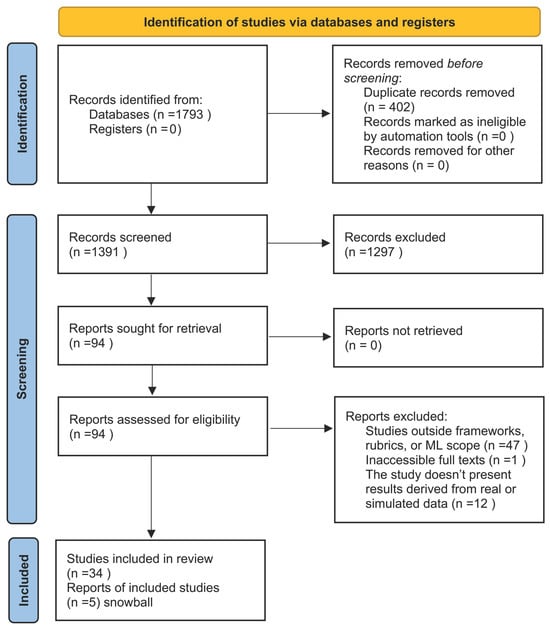
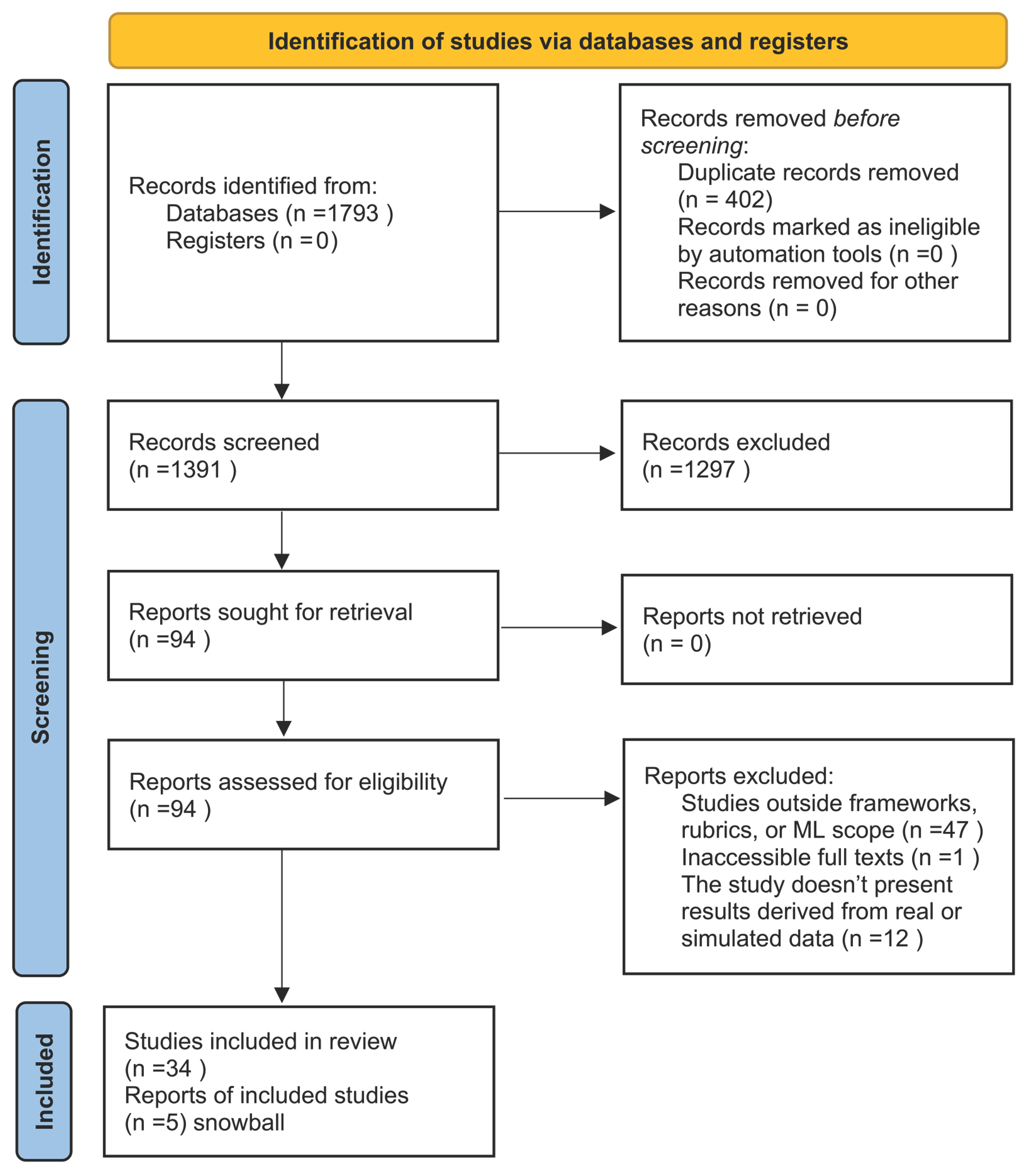
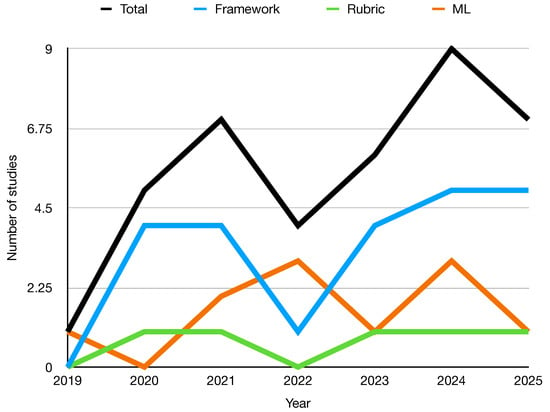
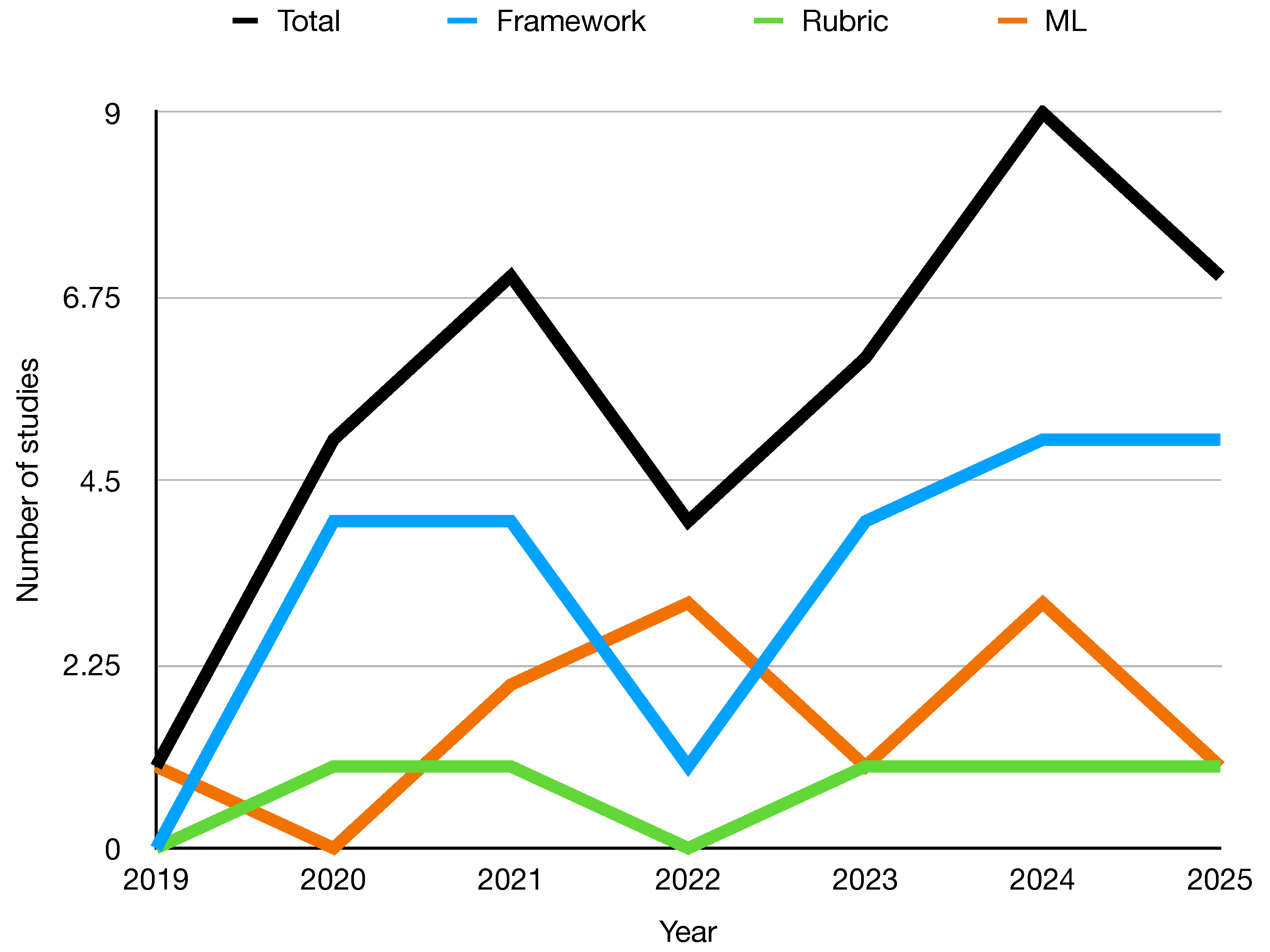
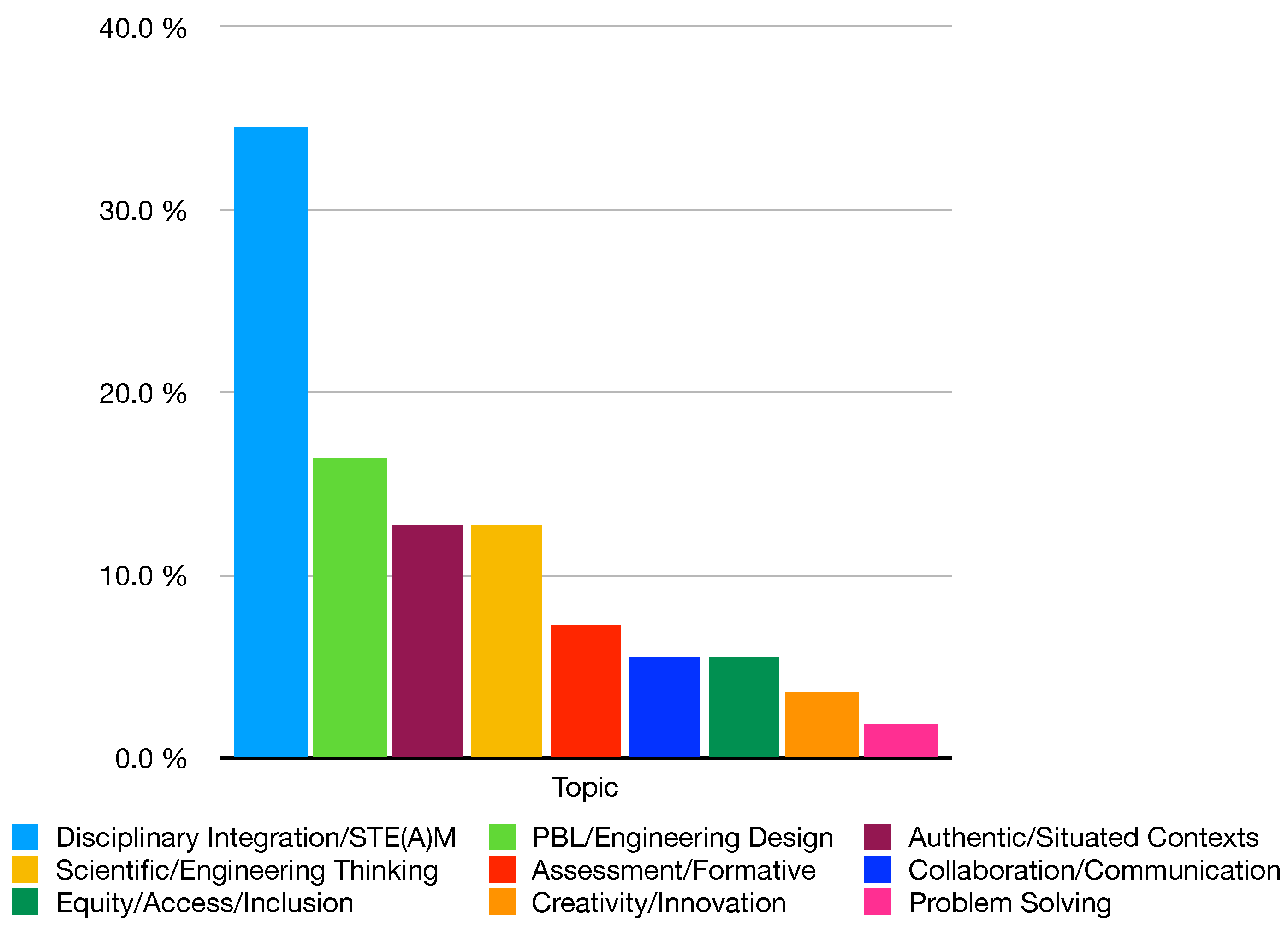

Disclaimer/Publisher’s Note: The statements, opinions and data contained in all publications are solely those of the individual author(s) and contributor(s) and not of MDPI and/or the editor(s). MDPI and/or the editor(s) disclaim responsibility for any injury to people or property resulting from any ideas, methods, instructions or products referred to in the content. |
© 2025 by the authors. Licensee MDPI, Basel, Switzerland. This article is an open access article distributed under the terms and conditions of the Creative Commons Attribution (CC BY) license (https://creativecommons.org/licenses/by/4.0/).