Article

Applying Load–Velocity Profiling to Guide In-Water Resistance Training in an Olympic-Level Swimmer: A Case Study


School of Sport and Exercise Science, Faculty of Life and Health Sciences, Ulster University, Belfast BT15 1AP, UK
*
Authors to whom correspondence should be addressed.
Appl. Sci. 2025, 15(23), 12790; https://doi.org/10.3390/app152312790
Submission received: 14 October 2025 / Revised: 19 November 2025 / Accepted: 24 November 2025 / Published: 3 December 2025
(This article belongs to the Special Issue Biomechanics and Fluid Dynamics in Swimming)

Featured Application

This study describes how coaches of high-performance swimmers can use load–velocity profiling to prescribe individualized in-water resistance training based on velocity-decrement zones to target specific adaptations.

Abstract

Elite 50 m freestyle performance demands targeted interventions for events that may be decided by hundredths of a second. This case study assesses the effectiveness of an individualised in-water resistance training intervention informed by load–velocity (LV) profiling in both profiling metrics and competitive performance, while documenting the training characteristics of an elite 50 m freestyle swimmer (male, 24.8 years) over the 18 months culminating in the Paris 2024 Olympic Games. A coach-led, six-week resisted-swim intervention involved three sessions per week with prescribed velocity-decrement zones targeting technical development, speed-strength, and power while preserving the swimmer’s race stroke rate. Post-intervention LV outputs showed likely improvements in maximal swim speed, of +3.4% and theoretical maximal load, of +13.6%, and competition time improved by 1.3% with a 3.5% improvement in free swimming time (15–45 m). Although limited to a single-athlete design, the observed improvements suggest that individualised, LV-informed resisted swimming using accessible equipment may contribute to enhancements in sprint swimming performance.

1. Introduction

The 50 m freestyle is the shortest and fastest event in competitive swimming, with current long-course world records standing at 20.91 s for men and 23.61 s for women [1]. At this elite level, marginal gains are critical, as illustrated by the men’s 50 m freestyle final at the Paris 2024 Olympic Games, where the time separating 3rd and 8th place was only 0.08 s [2]. In such a context, the ability to detect and capitalise on even the smallest performance improvements can determine podium success. Following the announcement that 50 m races across all four strokes—freestyle, butterfly, backstroke and breaststroke—will be included in the Los Angeles 2028 Olympic Games [3], national governing bodies are expected to place renewed focus on the optimal development of specialist sprint swimmers. This highlights the growing improvement of extensive race analysis combined with regular physiological and biomechanical assessment monitoring to detect small but meaningful changes in performance.
From a performance analysis perspective, the 50 m race is typically segmented into the start (0–15 m), free swimming (15–45 m), and finish (45–50 m) [4,5,6,7]. The start phase, spanning from the starting signal to the 15 m mark, comprises the block, flight, and underwater phases, each categorised by high magnitudes of horizontal force and velocity [8,9,10]. Approximately two thirds of the total race time is spent in the free swimming phase [11], making its optimisation a key focus for coaches. Understanding the time and biomechanical demands of each segment and so identifying areas for the swimmer to improve is essential for designing targeted interventions such as in-water resistance training [12,13,14,15].
Although the 50 m race is described as a maximal, all-out effort [4,7], swimmers still train to optimise their stroke length and stroke frequency to maximise swim speed [16]. Despite the event’s distinct demands, limited research exists on training strategies tailored specifically to 50 m specialists. These athletes are frequently grouped with 100 m swimmers under the broad “sprinter” classification [13,17], despite growing evidence that the two events require notably different physical, technical, and tactical approaches. For example, while the 100 m event necessitates greater pace control and strategic distribution of effort, the 50 m race relies entirely on explosive power, neuromuscular precision, and maximal velocity and typically involves limited breathing from start to finish.
Traditionally, swimming has followed a high-volume, low-intensity coaching philosophy across all race distances [13], including for sprint specialists, with some models suggesting that 80% of their training volume be spent in aerobic training zones [18]. However, given the majority of Olympic events are distances of 200 m or shorter and typically completed in under 2 min 20 s [19,20], there has been growing advocacy for low-volume, high-intensity training approaches. One such example, Ultra-Short Race-Pace Training (USRPT) [21] has gained traction by challenging the traditional paradigm and contributing to the ongoing debate around “quality versus quantity” in swim training [13,19,20,22].
As more swimmers specialise exclusively in the 50 m, their training must reflect its unique demands, in which modern sprint training focuses on intensity, resistance/assistance protocols, specificity, technical efficiency, and recovery. This evolution is evident in the practices of elite British swimmers, where significant differences in training content and load distribution have been observed between sprint and middle- and long-distance swimmers. Sprint swimmers allocate more sessions focused on speed and power development while middle- and long-distance specialists focus on energy system development [23]. These findings reinforce the need for evidence-based, individualised training programmes tailored specifically to 50 m specialists, an area that, despite its growing relevance, has yet to be thoroughly explored from a scientific perspective.
Strength and conditioning (S&C) is widely recognised as a fundamental component in the physical preparation of swimmers from youth to elite level [24]. Often referred to as “dry-land training,” methods can include strength training, Olympic lifting, Pilates, prehabilitation exercises, circuit training, and other forms of physical preparation [15,23,25,26,27]. While guidelines for applying S&C to swimmers are available [28,29,30,31], the transfer of dry-land strength to swim performance may be limited [15,32] and the application of in-water resistance training will offer a better modality for targeting swimming performance [12,14]. These methods typically involve equipment that applies a resistance to the swimmer. Common examples are parachutes [33,34,35,36,37], drag suits [38], elastic cords [39,40,41,42], hand paddles [33,43,44,45,46,47,48], a form of mechanical loading [49,50,51,52,53,54], or dynamometry [55].
This range of in-water resistance equipment and the challenge of translating research into practice are compounded by the lack of methods that accurately quantify intensity relative to the individual. Training prescriptions also vary widely in terms of sets, repetitions, and distances. Typically, interventions are implemented two to three times per week alongside regular swim training, with durations ranging from three to twelve weeks, and positive findings have been reported across this spectrum. Nonetheless, the lack of individualised resistance prescriptions and objective load monitoring remains a limitation. A possible solution is the application of load–velocity (LV) profiling, which has been shown to be a valid and reliable method for assessing a swimmer’s free swimming performance [56,57,58,59,60,61]. While these studies use motorised resistance devices, LV profiling principles can be applied to other equipment capable of quantifying load, such as towers or pulley systems commonly used in high-performance environments. This approach would help identify whether a swimmer is velocity- or load-deficient, allowing for the prescription of individually tailored resistance training to target specific adaptations. Such an approach also helps ensure that appropriate technique is maintained, optimising the transfer to free swimming, as kinetics and kinematics have been shown to change when performing semi-tethered resisted swimming [52,53]. LV profiling therefore provides a robust basis for the design of targeted, individualised training interventions. However, to the author’s knowledge, the prescription of in-water resistance training using this method has yet to be investigated.
The aim of this case study is to assess the potential effectiveness of an individualised in-water resistance training intervention informed by LV profiling on both profiling metrics and competitive performance, with the broader goal of guiding future targeted strategies to enhance sprint swimming performance. Additionally, this case study incorporated an 18-month longitudinal observation period that served as a reference baseline, allowing the athlete to act as their own control when interpreting changes over the intervention. It documents the training characteristics and performance development of an elite 50 m freestyle swimmer over the 18 months leading up to the Paris 2024 Olympic Games.

2. Materials and Methods

2.1. Participant

At the first testing point (February 2023) the participant was a 24.8-year-old male swimmer (height: 1.87 m; body mass: 83.2 kg; arm span 1.97 m) with a personal best time of 22.28 s in the 50 m freestyle (World Aquatic Points 827; Level 2 [62]). The athlete’s goal was to achieve the Olympic qualification standard of 21.96 s for the Paris 2024 Games. The swimmer was briefed on the purpose, procedures, and potential risks of the study and provided written informed consent to participate. All data were anonymized to ensure participant confidentiality. The study was ethically approved by Ulster University (REC23/0017).

2.2. Procedures

This case study employed a partial observational design, incorporating retrospective analysis of training and performance data alongside a prospective, individualised intervention guided by LV profiling.
The 18-month observation period, which preceded the intervention, included repeated LV profiling and competition data collection under normal training conditions. This long-term dataset established the athletes’s typical performance range and was used as an internal baseline for within-subject comparisons.

2.2.1. Resisted Swimming Intervention

From February 2023, LV profiling was carried out on an observational basis as part of a longitudinal study [63]. Following LV profiling on 5 February 2024, a six-week window for implementing a resisted swimming intervention was identified, starting on 29 February 2024. This duration was selected to allow for sufficient training exposure to elicit meaningful adaptations while aligning with the swimmer’s taper and competition schedule to ensure the intervention would not compromise race readiness ahead of the targeted Olympic qualification race on 25 May 2024. Follow-up LV profiling was scheduled for 10 June 2024 following qualification outcome. Although the motorised resistance device was not available for regular training use, it was used for baseline LV profiling and performance testing due to its demonstrated validity and reliability of metrics [56,61,64]. The 1080 Sprint system (1080 Motion AV, Lidingö, Sweden) provided the standardised, validated measured of velocity used to characterise the athelete‘s LV profile and subsequent changes over time. The training intervention was intentionally designed using the Power Tower [65], a resistance tool more commonly accessible to coaches and swim clubs, thereby enhancing its practical relevance and generalizability to applied settings. The Power Tower served exclusively as a training stimulus delivery device, not a measurement system; no velocity data from the Power Tower was analysed or compared with 1080 Sprint outputs. Instead, the resistance stimulus was monitored using fundamental coaching principles, such as time to cover a fixed distance, speed, speed decrement, and observed stroke rate, consistent with standard high-performance swim coaching practice. Resistance was applied in the form of weighted plates or water placed inside the buckets. A bucket of water was filled to correspond to a mass of 10 kg and then added to the tower.
The intervention began with a Power Tower-based profiling session. Following a competition warm up and changing into their competition suit, the swimmer completed an unresisted, maximal sprint of 20 m from a push. The 5 to 20 m segment was manually timed by the coach using a stopwatch and pre-marked pool indicators, allowing swim speed to be calculated as distance divided by time. This timing procedure was implemented solely to monitor and regulate the training stimulus during the intervention (e.g., maintaining stroke rate and effort intensity) and was not included in the dataset analysed for the study’s statistical outcomes. The same evaluator performed all timing procedures using a consistent start–stop protocol to maintain within-tester consistency. This test was then repeated with progressively increasing resistance applied via the Power Tower, by adding one 10 kg bucket at a time, until the swimmer could no longer maintain their target stroke rate (61–63 strokes/min). Given that both kinetics and kinematics have been shown to change with increasing load [52,53,66], maintaining the swimmer’s race stroke rate was considered essential to mitigate the risk of technique degradation. The resulting velocity decrements, calculated relative to the unresisted swim speed, were plotted against the corresponding loads. Training zones were then defined using a modified adaptation of the load prescription model from Cahill et al. [67]. Four zones were identified to target different physiological adaptations:
  • Velocity decrement of <10%: technical competency;
  • Velocity decrement of 10–30%: speed-strength;
  • Velocity decrement of 30–40%: power;
  • Velocity decrement of 40–70%: strength-speed.
These thresholds were selected to represent progressive increases in external load that shift the emphasis from high-velocity, low-fatigue technique development to higher force, strength-specific work, consistent with prior research on velocity-based load perscription [67,68]. While Cahill et al. [67] recommend velocity decrements of 60–100% to target strength-speed development, the upper threshold was capped at 70% in this protocol to better preserve stroke mechanics, which has been suggested for ensuring transfer to in-competition swim performance [52,53].
Using the velocity-decrement thresholds described above, individualised loads and target times were calculated for the swimmer. These values were used to monitor progression and inform training intensity, in line with velocity-based training principles [69]. In collaboration with the swim coach, a review of the athlete’s current resisted swimming sessions indicated a bias of loads representing strength-speed. This prescription had been based following comparison of LV profiles from similar elite sprinters that identified the participant as velocity-dominant and deficient in absolute and relative load capabilities (Figure 1 and Table 1). As a result, following a training phase focused on heavier resistances, the intervention emphasised a shift toward lighter, higher-velocity loads to better reflect preparation for competition demands. In agreement with the coach, three Power Tower sessions were incorporated into the weekly programme, each with a distinct focus: technical competency, power, and speed-strength.
Examples of each session type designed by the head coach are provided in Table 2. Each session would consist of a warm up and a main set that would consist of three rounds. Within each session, loads and target times were specified based on the focus for that session and the athlete’s performance in the Power Tower-based profiling session.

2.2.2. Load–Velocity Profiling

Profiling sessions were conducted within two weeks of scheduled competitions (international or national, based on the athlete’s plan as prescribed by the head coach). The LV profiling and data processing procedures followed that of the longitudinal, observational investigation [63]. The study was performed in a 25 m indoor swimming pool with water and air temperatures of 27 °C ± 1 °C and 28 °C ± 1 °C, respectively. The participant was asked to complete their individual competition warm-up on land and in water, then change into their competition suit.
The LV protocol required the swimmer to perform three 10 m front crawl sprints usings prescribed loads of 1, 5, and 9 kg of external resistance provided by a motorised resistance device (1080 Sprint, 1080 Motion AV, Lidingö, Sweden). The device was mounted onto a start block and the height recorded for horizontal correction of the output data. The device was set to isotonic resistance, and eccentric and concentric velocity of 0.05 and 14 m/s, respectively. The participant was required to scull to the 5 m mark before sprinting with maximal effort for 10 m; 4–5 min of passive recovery between trials was prescribed, and the swimmer was encouraged to refrain from breathing to mitigate changes in swim kinematics [70].
Position, force, and speed data, sampled at 333 Hz, were extracted for further analysis within a customised script (MATLAB R2023a, MathWorks, Natick, MA, USA). Velocity was extracted from the final 5 m of data collection and plotted against the corresponding load. A linear regression line was established and extended to intercept the axes and identify maximal swim velocity (V0) and the maximal theoretical load expressed as absolute (L0) and as a percentage relative to body mass (rL0). The steepness of the absolute and relative slope was calculated as −V0/L0, and −V0/rL0, respectively. Active drag (AD) was calculated using a modification of the velocity perturbation method [71] proposed by Gonjo and Olstad [64]:
A D = F a d d   ×   V a d d   ×   V 0 2 V 0 3     V a d d 3
where V0 is derived from the LV relationship; Fadd and Vadd are the mean force and velocity extracted from the trial with the second heaviest load, which has been shown to exhibit higher reliability [64]. The reliability of the LV protocol and data processing method has been reported as CV 2.8–9.3% and ICC 0.57–0.84 [57].

2.2.3. Competition Performance

All competition performances were video-recorded by an experienced (>10 years) performance analyst using a fixed camera (Sony FDR-AX53, Sony, Tokyo, Japan) positioned at mid-pool and elevated on the public-viewing stands. Footage was captured at 50 frames per second and analysed using Dartfish Pro (Dartfish, Fribourg, Switzerland) performance analysis software. Research using a similar set up found inter-rater variability to range from 0.02 to 0.06 s [72]. Alongside the official race time, performance metrics gleaned from the post-race analysis included split times for each segment (start, 0–15 m; free swim, 15–45 m; and finish, 45–50 m). For each half of the race, stroke length (average distance the swimmer travels from right-hand entry to the next right-hand entry [73]), stroke rate (average number of strokes that would occur per minute during free swimming [73]), and swim velocity (calculated from the product of stroke rate and stroke length [16]) were reported.

2.2.4. Training Data Collection

Training session content and volume were prescribed by the head coach and tailored to the athlete’s specific performance goals. Alongside the swim sessions, the swimmer followed a comprehensive dry-land training programme led by an experienced S&C coach. While the focus of this case study is on in-water training and performance, dry-land performance measures, including countermovement jump metrics (ForceDecks, VALD, Brisbane, Australia) and strength assessment by one repetition maximum in back squat, bench press, and chin up data were also collected to provide additional context to the swimmer’s physical development.

2.3. Statistical Analyses

Data normality was assessed using the Shapiro–Wilk test. Absolute and percentage change were used to reflect performance outcomes. Where relevant, results are presented as mean ± SD. Changes in LV performance and intervention effectiveness were evaluated using the smallest worthwhile change (SWC) calculated as 0.2 × the between-subject SD [74] based on male front crawl specialists [56]. Typical error (TE), derived from a subset of male front crawl specialists in performing repeated measures [57], using the SD of change scores (SDdiff), was calculated as SDdiff/√2 for each variable. Given the single-athlete design, traditional inferential statistics or time-series models were not appropriate. Instead, TE and SWC were used to quantify within-athlete variability and practically meaningful change, consistent with established single-case monitoring frameworks in applied sport science [75,76]. To determine the likelihood of a true change occurring, a customised spreadsheet using 80% confidence intervals was used [75], which provided the percentage chance of a true meaningful decrease, trivial change, or improvement. All statistical analyses were performed using R (version 4.4.2) through Rstudio (version 2024.09.1).

3. Results

3.1. Resisted Swimming Intervention

The 6-week intervention involved the swimmer performing 7 ± 1 swim sessions per week, covering a mean weekly swim volume of 12.6 ± 2.4 km, alongside 3 ± 0 dry-land sessions. Pre- and post-intervention results from the LV profiling are presented in Table 3. Very likely and possible improvements were observed in all LV outputs.

3.2. LV Profiling

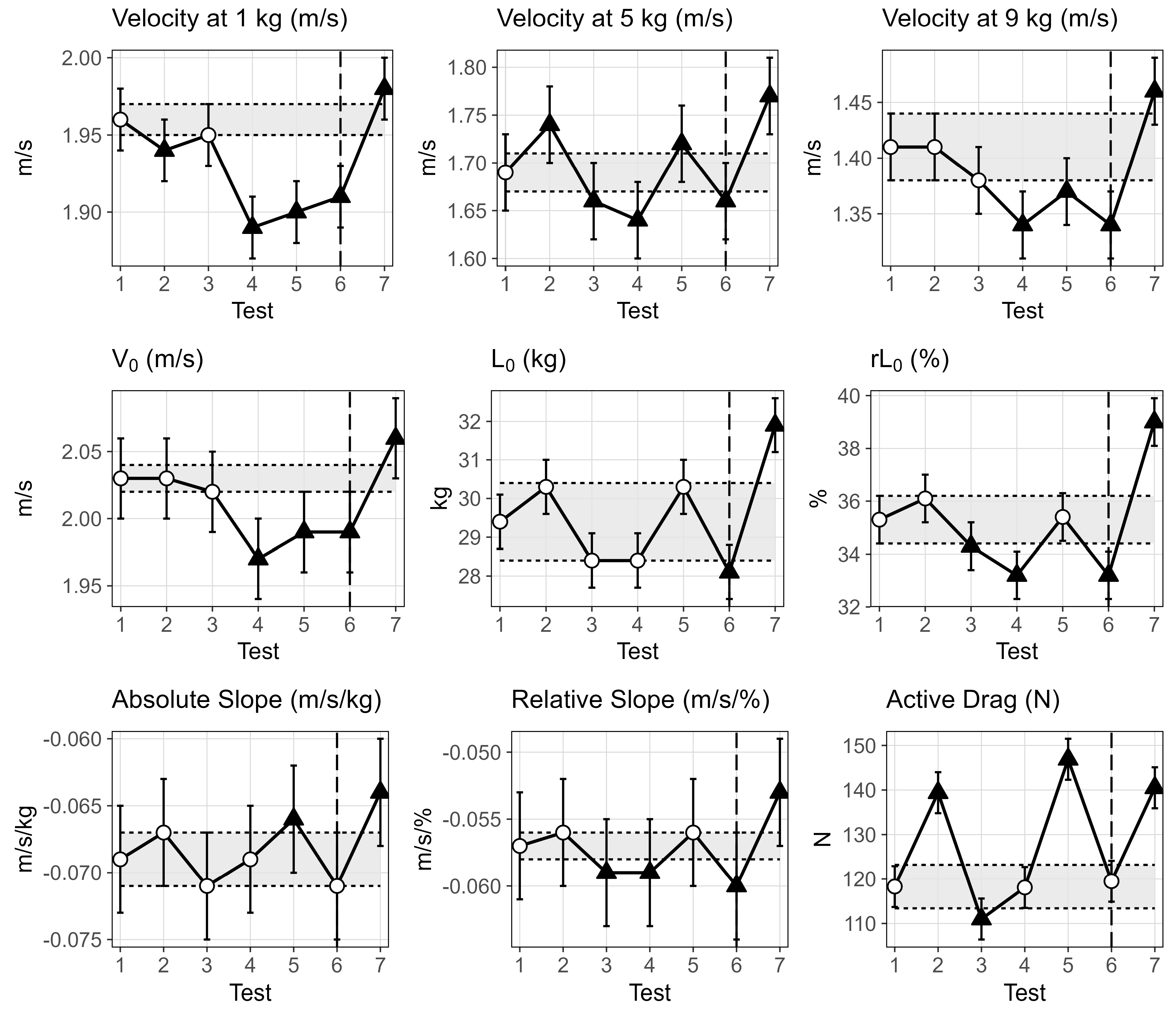
The swimmer completed seven LV profiling sessions across the 18-month observation period with performance outputs, TE, and SWC displayed in Figure 2. The baseline results were as follows:
  • Velocity at 1 kg, 1.96 m/s;
  • Velocity at 5 kg, 1.69 m/s;
  • Velocity at 9 kg, 1.41 m/s;
  • V0, 2.03 m/s;
  • L0, 29.4 kg;
  • rL0, 35.3%;
  • Absolute slope, −0.069 m/s/kg;
  • Relative slope, −0.057 m/s/%;
  • Active drag, 118.3 N.

3.3. Competition Performance

Across the pre-, intra-, and post-intervention phases, there were five competitions with a 1.3% improvement in official race time observed. Competition performance and segments of start, free swimming, and finish are presented in Table 4. Segmental analysis identified a 3.5% improvement in free swimming time accompanied by increases in stroke length of 6.5% and 5.7% in the first and second halves of the race, respectively. Overall, the swimmer competed in nine competitions during the 18-month observation period, including the Paris 2024 Olympic Games. A progressive improvement in race performance was observed with qualification for the Olympics achieved on 25 May 2024 with a time of 21.94 s, representing a 0.17 s improvement from the swimmer’s personal best at the start of the study.

3.4. Training Overview

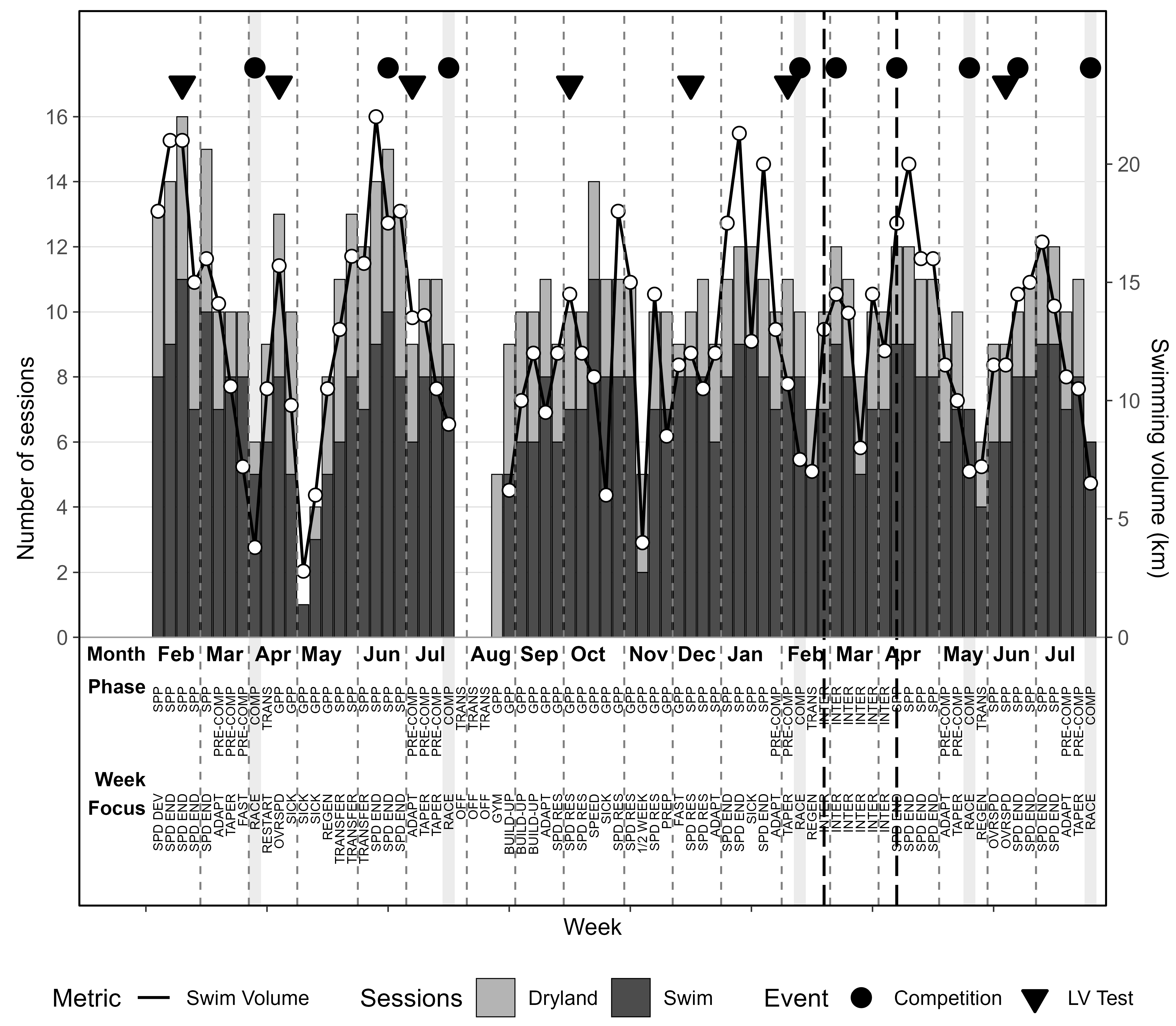
Over the 18-month observation period (Figure 3), the swimmer completed a total of 766 training sessions, comprising 535 swimming sessions (69.8%) and 231 dry-land sessions (30.2%). A further 28 sessions were missed due to illness or injury. On average, the swimmer performed 7 ± 2 swim sessions per week, covering a mean weekly swim volume of 11.9 ± 5.1 km, alongside 3 ± 1 dry-land sessions. The highest recorded weekly swim volume was 22 km, with the peak session frequency reaching 11 swim sessions and 5 dry-land sessions in a single week. The annual plan was structured using a typical periodized model incorporating phases of general preparation (GPP), specific preparation (SPP), pre-competition, competition, and transition. Training weeks were further classified by the head coach based on their primary objective, such as “speed development”, “speed endurance”, “speed resisted”, “overspeed”, and “strength transfer”. The intervention occurred during a period that would otherwise have aligned with general preparation and was subsequently followed by specific preparation, pre-competition, and competition phases. Dry-land assessments gathered during the observation period are presented in Appendix A (Table A1 and Table A2).

4. Discussion

This case study aimed to assess the effectiveness of an individualised in-water resistance training intervention informed by LV profiling. The results highlight improvements in both profiling metrics and competitive performance, offering guidance for future targeted strategies to enhance sprint swimming performance. Over the 18-month observation period, the swimmer successfully qualified for the Olympic Games. Notably, a 1.3% improvement in competition performance was observed across the six-week intervention that led to Olympic qualification. Regular LV profiling throughout the case study provided insights into free swimming performance and subsequently informed the design of the in-water resistance training intervention. This intervention, delivered using accessible equipment and prescribed based on velocity decrements, was integrated into a periodized swim programme and was associated with likely improvements in LV outputs, relative to the athlete’s established baseline performance range over the previous 18 months.
The design of the in-water resistance training intervention, in collaboration with the swim coach, revolved around three key principles to optimise transfer to swim performance:
(1)
The athlete was encouraged to maintain their race stroke rate (61–63 strokes/min), and this was monitored during resisted swimming to mitigate the risk of technical degradation [52,53].
(2)
Each resisted set was followed by non-resisted sprinting to reinforce neuromuscular coordination and facilitate technical transfer [50,55].
(3)
The speed of each repetition was monitored in real time to maximise athlete intent and allow adjustments of resistance to ensure the athlete is training within the defined adaptation zone. Resistance was prescribed in “bucket” increments to support real-world applicability while coach monitoring allowed for within-session adjustments based on fatigue or performance.
In alignment with these principles, the intervention design emphasised training quality over quantity, based on established power development guidelines from the S&C literature, which typically recommend 3–5 sets of 3–5 repetitions [77]. While this serves as a starting guide, applying velocity-based training principles can further target specific adaptations and monitoring velocity loss can prevent excessive fatigue, preserve technique, and optimise neuromuscular adaptation [69]. This is achieved in the intervention by identifying target swim times and monitoring progression, meaning that not only can the appropriate load be selected but the coach can ensure that adequate rest and recovery is provided. Should the athlete be unable to achieve the target times, the session can be adapted or stopped to prevent maladaptation. The inclusion of technical focused reps, particularly early in each main set, was intended to support movement quality and reinforce technique under load. Additionally, fins and paddles were strategically used to manipulate resistance and velocity, providing training variety [33,78].
Following the intervention, likely improvements in LV performance were observed, with several variables showing changes that exceeded both the TE and SWC. Increases in L0, rL0, and V0 by 13.6%, 17.4%, and 3.4%, respectively, indicate likely beneficial adaptations in both in-water speed and strength capabilities. These improvements were reflected in competition performance, with a 1.3% reduction in official race time. Most notably, free swimming time (15–45 m) improved by 3.5%, accompanied by increases in stroke length of 6.5% and 5.7% and decreases in stroke rate of 4.1% and 1.3% during the first and second halves of the race, respectively. The magnitude of these changes also exceeded both the TE and SWC thresholds, and the 1.3% improvement in race time surpassed the normal performance variability typically reported in elite sprint swimmers (≈0.3–0.8%), suggesting that the observed effects were meaningful beyond expected day-to-day or seasonal fluctuations.
A 17.5% increase in active drag was also observed, which aligns with expectations given that active drag is proportional to the square of swimming velocity [79]. In this model, active drag increases nonlinearly with swimming velocity, being proportional to the square of the free swimming velocity and adjusted by the difference between the cube of the free and resisted velocities. As such, higher free swimming velocity inherently produces a corresponding rise in calculated active drag, likely reflecting greater propulsive output rather than necessarily reduced efficiency. However, if propulsive efficiency does not improve proportionally, higher drag could increase the energetic cost of swimming. In the present case, concurrent improvements in stroke length and race performance suggest that the increase in active drag reflected enhanced propulsion rather than detrimental technical changes.
The literature presents more variable findings with regard to longitudinal changes in stroke length and stroke rate that may be dependent on method of resistance applied. For example, resistance bands and parachutes have been shown to increase stroke rate [35,39,40] whereas using a fixed push off point system resulted in increased stroke length [55]. These discrepancies highlight that changes in semi-tethered or resisted swimming do not always translate directly into improved competition performance [51,63]. When interpreted alongside the present results, where performance improvements exceeded both technical and natural variability thresholds, this reinforces the multifactorial nature of sprint swimming performance. The observed adaptations likely reflect an interplay of biomechanical, physiological, and technical factors, underscoring the importance of individualised, context-specific monitoring when evaluating the effectiveness of resistance-based interventions. Beyond the intervention itself, there is limited consensus in the literature regarding optimal training programmes for 50 m freestyle specialists. With a key focus on improving sprint speed and the ability to sustain it, it is reasonable to suggest that there is a reduced need for high volume, low-intensity training and therefore less mileage accumulated over the training week. In this case study, the athlete’s weekly swim volume (11.9 ± 5.1 km) was substantially lower than that described for elite British sprinters (43.2 ± 5.3 km) [23], although it is important to note that the latter cohort included those swimming 100 m events. This reinforces the need for swim programmes tailored specifically to 50 m specialists. While the volume and frequency of swim training will be dependent on the coach’s training philosophy [19], there is general agreement that sprint training should prioritise quality over quantity [13] with a greater prescription of in-water and dry-land resistance training requiring strategies tailored to the individual to optimise recovery and reduce neuromuscular fatigue.
General strength and conditioning development is a key area for swim performance [24]; however, elite athletes will likely require more targeted, context-specific interventions to progress [80,81]. The swim start is underpinned by lower-body strength and power [82,83,84] while higher levels of upper-body strength are associated with swim speed [85,86,87]. Given the small margins for performance gains at the elite level, novel interventions such as post-activation potentiation [88,89] or exercise specificity [15,90] may be needed to bridge the gap between gym-based improvements and in-water performance. Furthermore, the use of swim-specific diagnostic tools like LV profiling may help to quantify strength transfer more accurately.
The transfer of training between dry-land and aquatic environments depends on shared neuromuscular and mechanical characteristics. Previous research suggests that improvements in dry-land power do not always directly translate to swimming performance unless force production is developed in water under similar biomechanical constraints [15,52]. The present findings support this principle, showing that individualised in-water resistance aligned with load–velocity profiling can complement traditional dry-land strength training by targeting propulsion under realistic movement conditions.
While the findings of this study offer valuable insights into elite sprint swimming preparation, including detailed training records and the application of performance measures in both training and competition, the case study design introduces several limitations that should be considered when interpreting the results. The single-subject design limits the generalizability of the findings, and although the athlete demonstrated meaningful improvements relative to longitudinal baseline data, these outcomes may not be replicable across the broader population of sprint swimmers. Furthermore, the timing of LV profiling was constrained by the athlete’s competition calendar, resulting in a four-month interval between pre- and post-intervention assessments, which may have obscured any acute changes resulting from the intervention. Nevertheless, this case study lays the foundation for future controlled trials using matched cohorts or crossover designs to evaluate in-water resistance training more systematically. Moreover, it also supports the use of individual change analysis, which is particularly important in elite athlete populations, where group-level statistics may mask meaningful individual improvements [63].

5. Conclusions

This case study suggests that an individualised, in-water resistance training intervention informed by LV profiling was associated with meaningful improvements in swim velocity, stroke efficiency, and competition outcomes. These improvements appeared to exceed the athlete’s typical performance variability, based on an 18-month baseline period, suggesting a potential beneficial effect of the intervention. The study represents the first application of an individualised, LV-informed model, validated in dry-land contexts to an in-water environment using accessible equipment, highlighting its novelty and applied relevance. Furthermore, the case study highlights the preparation and performance development of an elite 50 m sprint specialist in the lead-up to the Paris 2024 Olympic Games.
A central feature of the intervention was the application of velocity-decrement programming to prescribe appropriate resistive loads using accessible equipment, offering a practical and individualised method for enhancing sprint-swimming performance within high-performance settings. From a practical standpoint, coaches can use simple in-water resistance tools (e.g., Power Tower) guided by individualised LV profiles, to prescribe precise training loads without requiring specialised equipment. Maintaining a race-specific stroke rate while controlling velocity loss enables athletes to achieve targeted neuromuscular stimuli while minimising technical deterioration. This approach offers a feasible bridge between scientific profiling and daily coaching practice. While further validation in controlled experimental settings is warranted, this method offers a practical, individualised strategy for improving sprint-swimming performance, with strong potential for adoption across high-performance environments. Future research should extend this approach to larger swimmer cohorts to evaluate its generalizability, inter-individual variability, and potential to inform broader training prescription frameworks.

Author Contributions

Conceptualisation, R.K. (Ryan Keating), R.K. (Rodney Kennedy) and C.M.; methodology, R.K. (Ryan Keating), R.K. (Rodney Kennedy) and C.M.; formal analysis, R.K. (Ryan Keating); investigation, R.K. (Ryan Keating); data curation, R.K. (Ryan Keating); writing—original draft preparation, R.K. (Ryan Keating); writing—review and editing, R.K. (Ryan Keating), R.K. (Rodney Kennedy) and C.M.; visualisation, R.K. (Ryan Keating); supervision, R.K. (Rodney Kennedy) and C.M. All authors have read and agreed to the published version of the manuscript.

Funding

This research was funded by way of a Postgraduate Studentship for R.K. (Ryan Keating) from the Department for the Economy in Northern Ireland.

Institutional Review Board Statement

The study was conducted in accordance with the Declaration of Helsinki and approved by the Research Ethics Committee of Ulster University (REC/23/0017 on 14 March 2023).

Informed Consent Statement

Informed consent was obtained from all subjects involved in the study.

Data Availability Statement

The original contributions presented in this study are included in the article. Further inquiries can be directed to the corresponding author.

Acknowledgments

The authors would like to acknowledge the study participant and collaborators.

Conflicts of Interest

The authors declare no conflicts of interest.

Abbreviations

The following abbreviations are used in this manuscript:
ADActive drag
CVCoefficient of variation
ICCIntraclass correlation coefficient
GPPGeneral preparation phase
L0Maximal theoretical load
LVLoad–velocity
rL0Maximal theoretical load relative to body mass
SDStandard deviation
SDdiffStandard deviation of change scores
SPPSpecific preparation phase
SWCSmallest worthwhile change
TETypical error
V0Maximal swim velocity

Appendix A

Table A1. Results of select countermovement jump variables pre- and post-observation with percentage change.
Jump VariableStart of ObservationEnd of ObservationPercentage Change (%)
Concentric Impulse (N.s)265 ± 3257 ± 3−2.9
Contraction Time (ms)683 ± 15738 ± 3+8.1
Countermovement Depth (cm)34.9 ± 0.747.3 ± 3.1+35.7
Jump Height (cm)50.0 ± 1.150.7 ± 0.9+1.4
Peak Velocity (m/s)3.25 ± 0.033.28 ± 0.04+0.9
Relative Mean Force (N/kg)22.8 ± 0.121.8 ± 0.3−4.5
Relative Peak Power (W/kg)67.4 ± 1.067.1 ± 1.7−0.4
RSI-Modified0.85 ± 0.010.83 ± 0.04−2.2
Table A2. Results of 1RM strength testing with percentage change.
ExerciseStart of Observation—1RM (kg)End of Observation—1RM (kg)Percentage Change (%)
Back Squat150165+10.0
Bench Press110115+4.5
Chin Up6067+11.7

References

  1. Long-Course World Records. Available online: https://www.olympics.com/en/news/swimming-long-course-world-records (accessed on 9 April 2025).
  2. Paris 2024 Men’s 50 m Freestyle Results. Available online: https://www.olympics.com/en/olympic-games/paris-2024/results/swimming/men-50m-freestyle (accessed on 9 April 2025).
  3. Fastest Swims on the Biggest Stage: LA28 Welcomes New 50 m Events. Available online: https://www.worldaquatics.com/news/4246119/swimming-olympics-sports-programme-new-events-50m-backstroke-breaststroke-butterfly-los-angeles-2028-la28-ioc-executive-board (accessed on 9 April 2025).
  4. Simbaña-Escobar, D.; Hellard, P.; Seifert, L. Modelling Stroking Parameters in Competitive Sprint Swimming: Understanding Inter- and Intra-Lap Variability to Assess Pacing Management. Hum. Mov. Sci. 2018, 61, 219–230. [Google Scholar] [CrossRef] [PubMed]
  5. Gonjo, T.; Olstad, B.H. Race Analysis in Competitive Swimming: A Narrative Review. Int. J. Environ. Res. Public Health 2021, 18, 69. [Google Scholar] [CrossRef]
  6. Arellano, R.; Ruiz-Navarro, J.J.; Barbosa, T.M.; López-Contreras, G.; Morales-Ortíz, E.; Gay, A.; López-Belmonte, Ó.; González-Ponce, Á.; Cuenca-Fernández, F. Are the 50 m Race Segments Changed From Heats to Finals at the 2021 European Swimming Championships? Front. Physiol. 2022, 13, 797367. [Google Scholar] [CrossRef]
  7. Morais, J.E.; Barbosa, T.M.; Silva, A.J.; Veiga, S.; Marinho, D.A. Profiling of Elite Male Junior 50 m Freestyle Sprinters: Understanding the Speed-time Relationship. Scand. J. Med. Sci. Sports 2022, 32, 60–68. [Google Scholar] [CrossRef]
  8. Slawson, S.E.; Conway, P.P.; Cossor, J.; Chakravorti, N.; West, A.A. The Categorisation of Swimming Start Performance with Reference to Force Generation on the Main Block and Footrest Components of the Omega OSB11 Start Blocks. J. Sports Sci. 2013, 31, 468–478. [Google Scholar] [CrossRef]
  9. Tor, E.; Pease, D.L.; Ball, K.A. Characteristics of an Elite Swimming Start. In Proceedings of the Biomechanics and Medicine in Swimming, Canberra, Australia, 28 April–2 May 2014; pp. 257–263. [Google Scholar]
  10. Burkhardt, D.; Born, D.-P.; Singh, N.B.; Oberhofer, K.; Carradori, S.; Sinistaj, S.; Lorenzetti, S. Key Performance Indicators and Leg Positioning for the Kick-Start in Competitive Swimmers. Sports Biomech. 2023, 22, 752–766. [Google Scholar] [CrossRef]
  11. Morais, J.E.; Marinho, D.A.; Arellano, R.; Barbosa, T.M. Start and Turn Performances of Elite Sprinters at the 2016 European Championships in Swimming. Sports Biomech. 2019, 18, 100–114. [Google Scholar] [CrossRef]
  12. Vorontsov, A. Strength and Power Training in Swimming. In World Book of Swimming: From Science to Performance; Nova Science Publishers, Inc.: Hauppauge, NY, USA, 2011; pp. 313–343. [Google Scholar]
  13. Maglischo, E. Swimming Fastest; Human Kinetics: Champaign, IL, USA, 2003. [Google Scholar]
  14. Muniz-Pardos, B.; Gomez-Bruton, A.; Matute-Llorente, A.; Gonzalez-Aguero, A.; Gomez-Cabello, A.; Gonzalo-Skok, O.; Casajus, J.A.; Vicente-Rodriguez, G. Swim-Specific Resistance Training: A Systematic Review. J. Strength Cond. Res. 2019, 33, 2875–2881. [Google Scholar] [CrossRef] [PubMed]
  15. Crowley, E.; Harrison, A.J.; Lyons, M. The Impact of Resistance Training on Swimming Performance: A Systematic Review. Sports Med. 2017, 47, 2285–2307. [Google Scholar] [CrossRef]
  16. Craig, A.B.; Pendergast, D.R. Relationships of Stroke Rate, Distance per Stroke, and Velocity in Competitive Swimming. Med. Sci. Sports Exerc. 1979, 11, 278–283. [Google Scholar] [CrossRef]
  17. Pyne, D.B.; Sharp, R.L. Physical and Energy Requirements of Competitive Swimming Events. Int. J. Sport Nutr. Exerc. Metab. 2014, 24, 351–359. [Google Scholar] [CrossRef] [PubMed]
  18. Sweetenham, B.; Atkinson, J.D. Championship Swim Training; Human Kinetics: Champaign, IL, USA, 2003. [Google Scholar]
  19. Nugent, F.J.; Comyns, T.M.; Warrington, G.D. Quality Versus Quantity Debate in Swimming: Perceptions and Training Practices of Expert Swimming Coaches. J. Hum. Kinet. 2017, 57, 147–158. [Google Scholar] [CrossRef] [PubMed]
  20. Nugent, F.J.; Comyns, T.M.; Burrows, E.; Warrington, G.D. Effects of Low-Volume, High-Intensity Training on Performance in Competitive Swimmers: A Systematic Review. J. Strength Cond. Res. 2017, 31, 837–847. [Google Scholar] [CrossRef]
  21. Rushall, B.S. Swimming Energy Training in the 21st Century: The Justification for Radical Changes. Swim. Sci. Bull. 2011, 39, 1–59. [Google Scholar]
  22. Salo, D.; Riewald, S.A. Complete Conditioning for Swimming; Human Kinetics: Champaign, IL, USA, 2008. [Google Scholar]
  23. Pollock, S.; Gaoua, N.; Johnston, M.J.; Cooke, K.; Girard, O.; Mileva, K.N. Training Regimes and Recovery Monitoring Practices of Elite British Swimmers. J. Sports Sci. Med. 2019, 18, 577–585. [Google Scholar]
  24. Barbosa, T.M.; Costa, M.J.; Marinho, D.A. Proposal of a Deterministic Model to Explain Swimming Performance. Int. J. Swim. Kinet. 2013, 2, 1–54. [Google Scholar]
  25. Crowley, E.; Harrison, A.J.; Lyons, M. Dry-Land Resistance Training Practices of Elite Swimming Strength and Conditioning Coaches. J. Strength Cond. Res. 2018, 32, 2592–2600. [Google Scholar] [CrossRef]
  26. Muniz-Pardos, B.; Gomez-Bruton, A.; Matute-Llorente, A.; Gonzalez-Aguero, A.; Gomez-Cabello, A.; Gonzalo-Skok, O.; Casajus, J.A.; Vicente-Rodriguez, G. Nonspecific Resistance Training and Swimming Performance: Strength or Power? A Systematic Review. J. Strength Cond. Res. 2022, 36, 1162–1170. [Google Scholar] [CrossRef]
  27. Wirth, K.; Keiner, M.; Fuhrmann, S.; Nimmerichter, A.; Haff, G.G. Strength Training in Swimming. Int. J. Environ. Res. Public Health 2022, 19, 5369. [Google Scholar] [CrossRef] [PubMed]
  28. Newton, R.U.; Jones, J.; Kraemer, W.J.; Wardle, H. Strength and Power Training of Australian Olympic Swimmers. Strength Cond. J. 2002, 24, 7–15. [Google Scholar] [CrossRef]
  29. Bishop, C.; Cree, J.; Read, P.; Chavda, S.; Edwards, M.; Turner, A. Strength and Conditioning for Sprint Swimming. Strength Cond. J. 2013, 35, 1–6. [Google Scholar] [CrossRef]
  30. Nugent, F.J.; Comyns, T.M.; Warrington, G.D. Strength and Conditioning Considerations for Youth Swimmers. Strength Cond. J. 2018, 40, 31–39. [Google Scholar] [CrossRef]
  31. Bradley, J.; Kerr, S.; Bowmaker, D.; Gomez, J.-F. A Swim-Specific Shoulder Strength and Conditioning Program for Front Crawl Swimmers. Strength Cond. J. 2019, 41, 1–17. [Google Scholar] [CrossRef]
  32. Fone, L.; van den Tillaar, R. Effect of Different Types of Strength Training on Swimming Performance in Competitive Swimmers: A Systematic Review. Sports Med. Open 2022, 8, 19. [Google Scholar] [CrossRef]
  33. Telles, T.; Barbosa, A.C.; Campos, M.H.; Andries, O. Effect of Hand Paddles and Parachute on the Index of Coordination of Competitive Crawl-Strokers. J. Sports Sci. 2011, 29, 431–438. [Google Scholar] [CrossRef]
  34. Grznar, L.; Macejkova, Y.; Labudova, J.; Polakovicova, M.; Putala, M.; Henrich, K. Effect of Resistance Training with Parachutes on Power and Speed Development in a Group of Competitive Swimmers. J. Phys. Educ. Sport 2018, 18, 787–791. [Google Scholar]
  35. Valkoumas, I.; Gourgoulis, V.; Aggeloussis, N.; Antoniou, P. The Influence of an 11-Week Resisted Swim Training Program on the Inter-Arm Coordination in Front Crawl Swimmers. Sports Biomech. 2020, 22, 940–952. [Google Scholar] [CrossRef]
  36. Gourgoulis, V.; Valkoumas, I.; Boli, A.; Aggeloussis, N.; Antoniou, P. Effect of an 11-Week In-Water Training Program With Increased Resistance on the Swimming Performance and the Basic Kinematic Characteristics of the Front Crawl Stroke. J. Strength Cond. Res. 2019, 33, 95–103. [Google Scholar] [CrossRef] [PubMed]
  37. Coloretti, V.; Fantozzi, S.; Gatta, G.; Bonifazi, M.; Zamparo, P.; Cortesi, M. Quantifying Added Drag in Swimming With Parachutes: Implications for Resisted Swimming Training. J. Strength Cond. Res. 2025, 39, e701–e705. [Google Scholar] [CrossRef] [PubMed]
  38. Dragunas, A.J.; Dickey, J.P.; Nolte, V.W. The Effect of Drag Suit Training on 50 m Freestyle Performance. J. Strength Cond. Res. 2012, 26, 989–994. [Google Scholar] [CrossRef]
  39. Girold, S.; Calmels, P.; Maurin, D.; Milhau, N.; Chatard, J.C. Assisted and Resisted Sprint Training in Swimming. J. Strength Cond. Res. 2006, 20, 547–554. [Google Scholar]
  40. Girold, S.; Maurin, D.; Dugué, B.; Chatard, J.C.; Millet, G. Effects of Dry-Land vs. Resisted- and Assisted-Sprint Exercises on Swimming Sprint Performances. J. Strength Cond. Res. 2007, 21, 599–605. [Google Scholar] [CrossRef] [PubMed]
  41. Papoti, M.; Da Silva, A.S.R.; Kalva-Filho, C.A.; Araujo, G.G.; Santiago, V.; Martins, L.E.B.; Cunha, S.A.; Gobatto, C.A. Tethered Swimming for the Evaluation and Prescription of Resistance Training in Young Swimmers. Int. J. Sports Med. 2017, 38, 125–133. [Google Scholar] [CrossRef] [PubMed]
  42. Al-Shdoukhi, K.A.S.; Petersen, C.; Clarke, J. Three Weeks of Combined Resisted and Assisted in-Water Training for Adolescent Sprint Backstroke Swimmin g: A Case Study. Hum. Mov. 2022, 23, 133–139. [Google Scholar] [CrossRef]
  43. Gourgoulis, V.; Aggeloussis, N.; Vezos, N.; Kasimatis, P.; Antoniou, P.; Mavromatis, G. Estimation of Hand Forces and Propelling Efficiency during Front Crawl Swimming with Hand Paddles. J. Biomech. 2008, 41, 208–215. [Google Scholar] [CrossRef] [PubMed]
  44. Gourgoulis, V.; Aggeloussis, N.; Kasimatis, P.; Vezos, N.; Antoniou, P.; Mavromatis, G. The Influence of Hand Paddles on the Arm Coordination in Female Front Crawl Swimmers. J. Strength Cond. Res. 2009, 23, 735–740. [Google Scholar] [CrossRef]
  45. Barbosa, A.C.; Ferreira, T.H.N.; Leis, L.V.; Gourgoulis, V.; Barroso, R. Does a 4-Week Training Period with Hand Paddles Affect Front-Crawl Swimming Performance? J. Sports Sci. 2020, 38, 511–517. [Google Scholar] [CrossRef]
  46. López-Plaza, D.; Alacid, F.; López-Miñarro, P.A.; Muyor, J.M. The Influence of Different Hand Paddle Size on 100-m Front Crawl Kinematics. J. Hum. Kinet. 2012, 34, 112–118. [Google Scholar] [CrossRef]
  47. Tsunokawa, T.; Tsuno, T.; Mankyu, H.; Takagi, H.; Ogita, F. The Effect of Paddles on Pressure and Force Generation at the Hand during Front Crawl. Hum. Mov. Sci. 2018, 57, 409–416. [Google Scholar] [CrossRef]
  48. Barbosa, A.C.; de Souza Castro, F.; Dopsaj, M.; Cunha, S.A.; Júnior, O.A. Acute Responses of Biomechanical Parameters to Different Sizes of Hand Paddles in Front-Crawl Stroke. J. Sports Sci. 2013, 31, 1015–1023. [Google Scholar] [CrossRef]
  49. Naczk, M.; Lopacinski, A.; Brzenczek-Owczarzak, W.; Arlet, J.; Naczk, A.; Adach, Z. Influence of Short-Term Inertial Training on Swimming Performance in Young Swimmers. Eur. J. Sport Sci. 2017, 17, 369–377. [Google Scholar] [CrossRef]
  50. Kojima, K.; Brammer, C.L.; Sossong, T.D.; Abe, T.; Stager, J.M. In-Water Resisted Swim Training for Age-Group Swimmers: An Evaluation of Training Effects. Pediatr. Exerc. Sci. 2018, 30, 126–133. [Google Scholar] [CrossRef]
  51. Ravé, J.M.G.; Lega-Rrese, A.; González-Mohíno, F.; Yustres, I.; Barragán, R.; De Asís Fernández, F.; Juárez, D.; Arroyo-Toledo, J.J. The Effects of Two Different Resisted Swim Training Load Protocols on Swimming Strength and Performance. J. Hum. Kinet. 2018, 64, 195–204. [Google Scholar] [CrossRef]
  52. Cuenca-Fernández, F.; Gay, A.; Ruiz-Navarro, J.J.; Arellano, R. The Effect of Different Loads on Semi-Tethered Swimming and Its Relationship with Dry-Land Performance Variables. Int. J. Perform. Anal. Sport 2020, 20, 90–106. [Google Scholar] [CrossRef]
  53. Cuenca-Fernández, F.; Ruiz-Navarro, J.J.; Arellano, R. Strength-Velocity Relationship of Resisted Swimming: A Regression Analysis. ISBS Proc. Arch. 2020, 38, 388. [Google Scholar]
  54. Odráška, L.; Krč, H.; Grznár, Ľ.; Čillík, I. Effect of Resistance Isokinetic Training on Power and Speed Development in a Group of Competitive Swimmers. J. Phys. Educ. Sport 2020, 20, 599–604. [Google Scholar] [CrossRef]
  55. Toussaint, H.; Vervoorn, K. Effects of Specific High Resistance Training in the Water on Competitive Swimmers. Int. J. Sports Med. 1990, 11, 228–233. [Google Scholar] [CrossRef]
  56. Keating, R.; Kennedy, R.; McCabe, C. Sex-Specific Relationships between Sprint Swim Performance and Tethered Swimming in High-Performance Swimmers. Sports Biomech. 2025, 1–22. [Google Scholar] [CrossRef]
  57. Keating, R.; Kennedy, R.; Nevill, A.M.; McCabe, C. A Comparison of Three Methods of Semi-Tethered Profiling in Front Crawl Swimming: A Reliability Study. J. Sports Sci. 2025, 43, 1425–1439. [Google Scholar] [CrossRef] [PubMed]
  58. Gonjo, T.; Njøs, N.; Eriksrud, O.; Olstad, B.H. The Relationship Between Selected Load-Velocity Profile Parameters and 50 m Front Crawl Swimming Performance. Front. Physiol. 2021, 12, 625411. [Google Scholar] [CrossRef] [PubMed]
  59. Gonjo, T.; Eriksrud, O.; Papoutsis, F.; Olstad, B.H. Relationships between a Load-Velocity Profile and Sprint Performance in Butterfly Swimming. Int. J. Sports Med. 2020, 41, 461–467. [Google Scholar] [CrossRef]
  60. Olstad, B.H.; Hunger, L.; Ljødal, I.; Ringhof, S.; Gonjo, T. The Relationship between Load-Velocity Profiles and 50 m Breaststroke Performance in National-Level Male Swimmers. J. Sports Sci. 2024, 42, 1512–1518. [Google Scholar] [CrossRef]
  61. Olstad, B.H.; Gonjo, T.; Njøs, N.; Abächerli, K.; Eriksrud, O. Reliability of Load-Velocity Profiling in Front Crawl Swimming. Front. Physiol. 2020, 11, 574306. [Google Scholar] [CrossRef] [PubMed]
  62. Ruiz-Navarro, J.J.; López-Belmonte, Ó.; Gay, A.; Cuenca-Fernández, F.; Arellano, R. A New Model of Performance Classification to Standardize the Research Results in Swimming. Eur. J. Sport Sci. 2023, 23, 478–488. [Google Scholar] [CrossRef]
  63. Keating, R.; Kennedy, R.; McCabe, C. Longitudinal Monitoring of Load-Velocity Variables in Preferred-Stroke and Front-Crawl with National and International Swimmers. Front. Sports Act. Living 2025, 7, 1585319. [Google Scholar] [CrossRef]
  64. Gonjo, T.; Olstad, B.H. Reliability of the Active Drag Assessment Using an Isotonic Resisted Sprint Protocol in Human Swimming. Sci. Rep. 2022, 12, 13085. [Google Scholar] [CrossRef]
  65. Power Tower. Available online: https://www.tpiswim.com/power-tower (accessed on 10 June 2025).
  66. Dominguez-Castells, R.; Arellano, R. Effect of Different Loads on Stroke and Coordination Parameters during Freestyle Semi-Tethered Swimming. J. Hum. Kinet. 2012, 32, 33–41. [Google Scholar] [CrossRef] [PubMed]
  67. Cahill, M.J.; Oliver, J.L.; Cronin, J.B.; Clark, K.P.; Cross, M.R.; Lloyd, R.S. Sled-Pull Load–Velocity Profiling and Implications for Sprint Training Prescription in Young Male Athletes. Sports 2019, 7, 119. [Google Scholar] [CrossRef]
  68. Pareja-Blanco, F.; Rodríguez-Rosell, D.; Sánchez-Medina, L.; Sanchis-Moysi, J.; Dorado, C.; Mora-Custodio, R.; Yáñez-García, J.M.; Morales-Alamo, D.; Pérez-Suárez, I.; Calbet, J.A.L.; et al. Effects of Velocity Loss during Resistance Training on Athletic Performance, Strength Gains and Muscle Adaptations. Scand J Med Sci Sports 2017, 27, 724–735. [Google Scholar] [CrossRef]
  69. Weakley, J.; Mann, B.; Banyard, H.; McLaren, S.; Scott, T.; Garcia-Ramos, A. Velocity-Based Training: From Theory to Application. Strength Cond. J. 2021, 43, 31–49. [Google Scholar] [CrossRef]
  70. McCabe, C.B.; Sanders, R.H.; Psycharakis, S.G. Upper Limb Kinematic Differences between Breathing and Non-Breathing Conditions in Front Crawl Sprint Swimming. J. Biomech. 2015, 48, 3995–4001. [Google Scholar] [CrossRef]
  71. Kolmogorov, S.V.; Duplishcheva, O.A. Active Drag, Useful Mechanical Power Output and Hydrodynamic Force Coefficient in Different Swimming Strokes at Maximal Velocity. J. Biomech. 1992, 25, 311–318. [Google Scholar] [CrossRef]
  72. Hudson, C. Inter-Analyst Variability in Swimming Competition Analysis. Procedia Eng. 2014, 72, 192–195. [Google Scholar] [CrossRef]
  73. Tor, E.; Pease, D.L.; Ball, K.A.; Hopkins, W.G. Monitoring the Effect of Race-Analysis Parameters on Performance in Elite Swimmers. Int. J. Sports Physiol. Perform. 2014, 9, 633–636. [Google Scholar] [CrossRef] [PubMed]
  74. Hopkins, W. How to Interpret Changes in an Athletic Test. Sportscience 2004, 8, 1–7. [Google Scholar]
  75. Hopkins, W.G. A Spreadsheet for Monitoring an Individual’s Changes and Trend. Sportscience 2017, 21, 5–9. [Google Scholar]
  76. Sands, W.; Cardinale, M.; McNeal, J.; Murray, S.; Sole, C.; Reed, J.; Apostolopoulos, N.; Stone, M. Recommendations for Measurement and Management of an Elite Athlete. Sports 2019, 7, 105. [Google Scholar] [CrossRef]
  77. NSCA. Essentials of Strength Training and Conditioning; Haff, G.G., Triplett, T., Eds.; Human Kinetics: Champaign, IL, USA, 2016. [Google Scholar]
  78. Konstantaki, M.; Winter, E.M. The Effectiveness of a Leg-Kicking Training Program on Performance and Physiological Measures of Competitive Swimmers. Int. J. Sports Sci. Coach. 2007, 2, 37–48. [Google Scholar] [CrossRef]
  79. Toussaint, H.M.; Beek, P.J. Biomechanics of Competitive Front Crawl Swimming. Sports Med. 1992, 13, 8–24. [Google Scholar] [CrossRef]
  80. Kraemer, W.J.; Duncan, N.D.; Volek, J.S. Resistance Training and Elite Athletes Adaptations and Program Considerations. J. Orthop. Sports Phys. Ther. 1998, 28, 110–119. [Google Scholar] [CrossRef]
  81. Haugen, T.; Seiler, S.; Sandbakk, Ø.; Tønnessen, E. The Training and Development of Elite Sprint Performance: An Integration of Scientific and Best Practice Literature. Sports Med. Open 2019, 5, 44. [Google Scholar] [CrossRef] [PubMed]
  82. West, D.J.; Owen, N.J.; Cunningham, D.J.; Cook, C.J.; Kilduff, L.P. Strength and Power Predictors of Swimming Starts in International Sprint Swimmers. J. Strength Cond. Res. 2011, 25, 950–955. [Google Scholar] [CrossRef]
  83. Thng, S.; Pearson, S.; Rathbone, E.; Keogh, J.W.L. The Prediction of Swim Start Performance Based on Squat Jump Force-Time Characteristics. PeerJ 2020, 8, e9208. [Google Scholar] [CrossRef]
  84. Calderbank, J.A.; Comfort, P.; McMahon, J.J. Association of Jumping Ability and Maximum Strength with Dive Distance in Swimmers. Int. J. Sports Physiol. Perform. 2021, 16, 296–303. [Google Scholar] [CrossRef] [PubMed]
  85. Keiner, M.; Wirth, K.; Fuhrmann, S.; Kunz, M.; Hartmann, H.; Haff, G.G. The Influence of Upper- and Lower-Body Maximum Strength on Swim Block Start, Turn, and Overall Swim Performance in Sprint Swimming. J. Strength Cond. Res. 2021, 35, 2839–2845. [Google Scholar] [CrossRef]
  86. Ruiz-Navarro, J.J.; Gay, A.; Cuenca-Fernández, F.; López-Belmonte, Ó.; Morales-Ortíz, E.; López-Contreras, G.; Arellano, R. The Relationship between Tethered Swimming, Anaerobic Critical Velocity, Dry-Land Strength, and Swimming Performance. Int. J. Perform. Anal. Sport 2022, 22, 407–421. [Google Scholar] [CrossRef]
  87. Carvalho, D.D.; Monteiro, A.S.; Fonseca, P.; Silva, A.J.; Vilas-Boas, J.P.; Pyne, D.B.; Fernandes, R.J. Swimming Sprint Performance Depends on Upper/Lower Limbs Strength and Swimmers Level. J. Sports Sci. 2023, 41, 747–757. [Google Scholar] [CrossRef]
  88. Kilduff, L.P.; Cunningham, D.J.; Owen, N.J.; West, D.J.; Bracken, R.M.; Cook, C.J. Effect of Postactivation Potentiation on Swimming Starts in International Sprint Swimmers. J. Strength Cond. Res. 2011, 25, 2418–2423. [Google Scholar] [CrossRef]
  89. Hancock, A.P.; Sparks, K.E.; Kullman, E.L. Postactivation Potentiation Enhances Swim Performance in Collegiate Swimmers. J. Strength Cond. Res. 2015, 29, 912–917. [Google Scholar] [CrossRef] [PubMed]
  90. Verkhoshansky, Y.; Siff, M. Supertraining. 2009. Available online: https://www.amazon.com/Supertraining-Yuri-V-Verkhoshansky/dp/8890403810 (accessed on 9 April 2025).
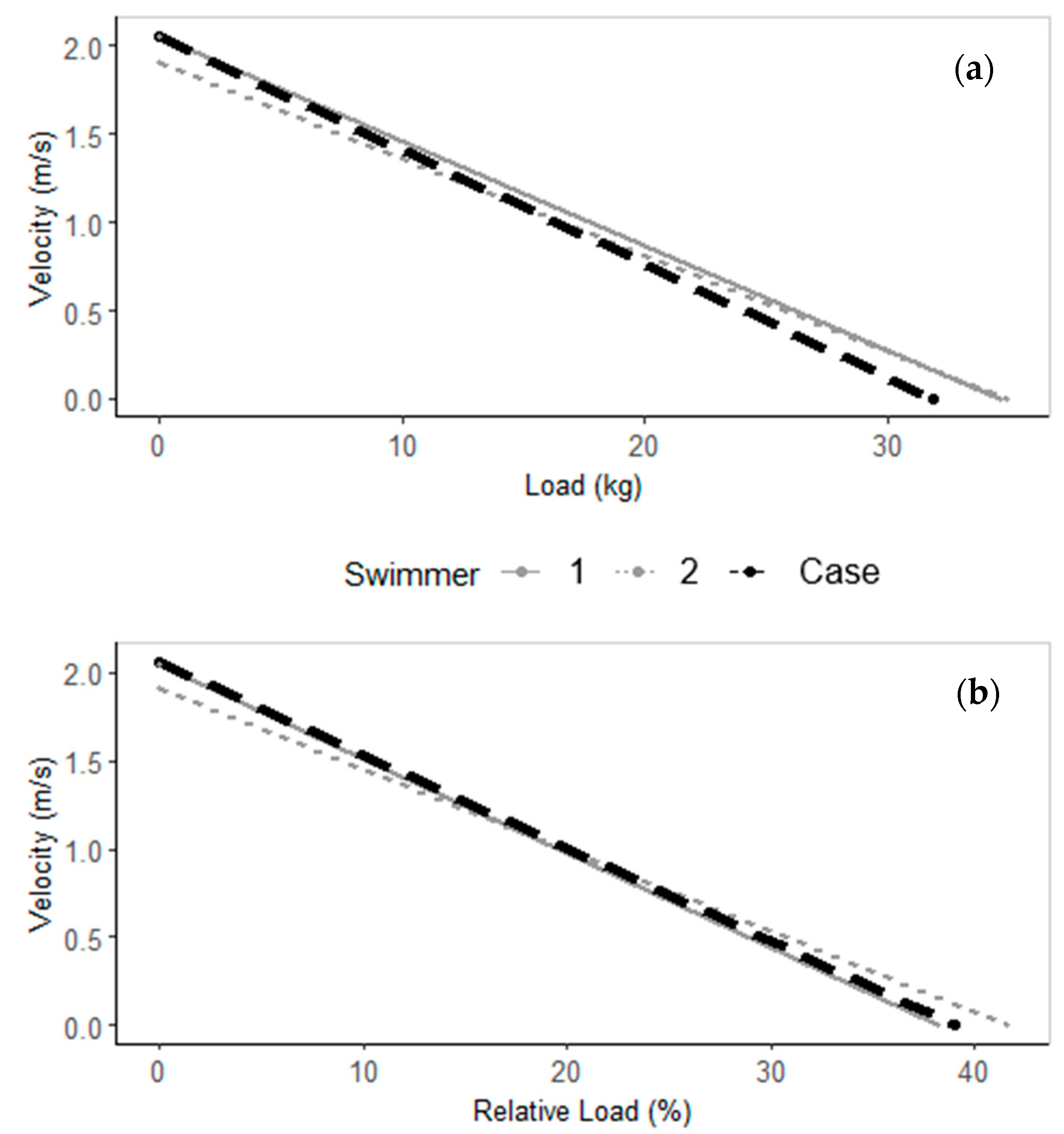
Figure 1. Comparison of study participant’s (Case) profiling outcomes to other elite sprinters (1 and 2) when plotting absolute load and velocity (a) and relative load as a percentage of body mass and velocity (b).
Applsci 15 12790 g001
Figure 2. LV performance across 18-month training programme. Error bars indicate the variable’s typical error, the shaded region is the SWC, and the dashed vertical line indicates the intervention start. Open circles indicate data point within the SWC; triangles indicate data point beyond the SWC.
Applsci 15 12790 g002
Figure 3. The 18-month training overview starting February 2023, detailing number and type of sessions, swimming volume (open circle), training phase, and focus per week. Competitions and LV test points are included with key competitions shaded. Vertical long dash lines in February and April 2024 indicate the start and end of the intervention. Abbreviations: ADAPT, adaptation; COMP, competition phase; GPP, general preparation phase; INTER, intervention; OVRSPD, overspeed; PRE-COMP, pre-competition phase; PREP, preparation; REGEN, regeneration; SPD DEV, speed development; SPD END, speed endurance; SPD RES, speed resistance; SPP, specific preparation phase; TRANS, transition phase; TRANSFER, strength transfer.
Applsci 15 12790 g003
Table 1. Comparison of study participant’s (Case) 50 m performance and LV profiling results to other elite sprinters (1 and 2).
Swimmer50 m PB (s)V0 (m/s)L0 (kg)rL0 (%)
Case22.282.0631.939.0
122.102.0534.638.2
221.681.9134.941.6
Table 2. Example of resisted swim sessions designed in collaboration with the head swim coach as part of the in-water intervention.
Session FocusWarm UpMain Set—Round 1Main Set—Round 2Main Set—Round 3
Technical Competence300 m choice, 8 × 50 m choice skill progression3 × 1 bucket swim to 15 m
2 reps technical focus
1 rep speed focus (Time Target)
3 × 20 m fast swim with fins on 80 s
200 m recovery
Repeat Round 1 with 1/2 bucket of water added
3 × 20 m fast swim with fins and paddles on 80 s
Repeat Round 2 with 1/2 bucket of water added
Speed-Strength300 m choice, 8 × 50 m choice skill progression3 × 2 bucket swim to 15 m
2 reps technical focus
1 rep speed focus (Time Target)
3 × 20 m fast swim with fins on 90 s
200 m recovery
Repeat Round 1 with 1 bucket of water added
3 × 20 m fast swim with fins and paddles on 90 s
Repeat Round 2 with 1 bucket of water added
Power800 m choice1 × 3 bucket swim to 15 m on 2 min
3 × 20 m fast swim with fins and paddles (Time Target)
1 × 25 m distance per stroke focus
175 m recovery
3 × 3 bucket swim to 15 m on 2 min
1 × 20 m fast swim with fins and paddles (Time Target)
1 × 25 m distance per stroke focus
175 m recovery
2 × 3 bucket swim to 15 m on 2 min
2 × 20 m fast swim with fins and paddles (Time Target)
1 × 25 m distance per stroke focus
175 m recovery
Table 3. Pre- and post-intervention performance in LV profiling.
VariablePre-Post-% ChangeTE (%)SWC (%)% Chance That True Change Is Decrease/Trivial/IncreaseInference
Velocity at 1 kg (m/s)1.911.983.61.20.72/5/93Very Likely Increase
Velocity at 5 kg (m/s)1.661.776.42.91.16/6/88Possible Increase
Velocity at 9 kg (m/s)1.341.469.23.52.04/7/89Possible Increase
V0 (m/s)1.992.063.41.80.68/7/85Possible Increase
L0 (kg)28.131.913.63.73.31/5/94Very Likely Increase
rL0 (%)33.239.017.43.72.71/1/98Very Likely Increase
Absolute Slope (m/s/kg)−0.071−0.0649.04.23.286/11/3Possible Trivial Decrease
Relative Slope (m/s/%)−0.060−0.05311.95.12.389/7/4Possible Decrease
Active Drag (N)119.5140.517.56.13.93/7/90Very Likely Increase
Abbreviations: V0, theoretical maximum velocity; L0, theoretical maximum load; rL0, theoretical maximum load expressed as a percentage of body mass; TE, typical error; SWC, smallest worthwhile change.
Table 4. Breakdown of competition performance pre-, intra-, and post-intervention.
Date16 February 20249 March 202412 April 202425 May 202421 June 2024
Stage of InterventionPre-Intra-Post-
Official Time (s)22.2322.3422.3921.9421.94
Race Segment—Start
0 to 15 m (s)5.525.625.605.485.58
Race Segment—Free Swimming
15 to 45 m (s)14.4614.0214.3414.0213.96
Race Segment—Finish
45 to 50 m (s)2.252.702.452.442.40
First 25 m Analysis
Stroke Length (m)2.012.042.072.072.14
Stroke Rate (cycles/min)63.862.159.662.561.2
Velocity (m/s)2.142.112.062.162.18
Second 25 m Analysis
Stroke Length (m)1.932.092.001.972.04
Stroke Rate (cycles/min)62.962.162.564.362.1
Velocity (m/s)2.022.162.082.112.11
Disclaimer/Publisher’s Note: The statements, opinions and data contained in all publications are solely those of the individual author(s) and contributor(s) and not of MDPI and/or the editor(s). MDPI and/or the editor(s) disclaim responsibility for any injury to people or property resulting from any ideas, methods, instructions or products referred to in the content.