Article

Assessment of the Impact of Blasting Operations on the Intensity of Gas Emission from Rock Masses: A Case Study of Hydrogen Sulfide Occurrence in a Polish Copper Ore Mine


by
Aleksandra Banasiewicz
1,*,
Michalina Kotyla
1 and
Sebastian Gola
1,2
1
Faculty of Geoengineering, Mining and Geology, Wroclaw University of Science and Technology, Na Grobli 15, 50-421 Wroclaw, Poland
2
KGHM Polska Miedź S.A., O/ZG Polkowice-Sieroszowice, Kaźmierzów 100, 59-101 Kaźmierzów, Poland
*
Author to whom correspondence should be addressed.
Appl. Sci. 2025, 15(23), 12781; https://doi.org/10.3390/app152312781
Submission received: 7 November 2025 / Revised: 24 November 2025 / Accepted: 28 November 2025 / Published: 3 December 2025
(This article belongs to the Section Environmental Sciences)

Abstract

The article evaluates the impact of blasting operations with explosives on hydrogen sulfide (H2S) emissions from rock mass in a copper ore mine. The study showed that detonations of explosives cause increased release of H2S and other gases from the rock mass interior into the mine workings space. Analysis of changes in H2S concentration over a period of ±60 min relative to the moment of detonation, performed for data from 2014 and 2017, revealed significant differences in gas behavior. In 2014, the average H2S concentration decreased after the blast, while in 2017, a marked increase was observed, although the absolute values were lower than in the previous period. The average time to reach the maximum concentration of H2S after an explosion in 2014 was 24 min and 25 s, and in 2017, 29 min and 22 s. Stabilization of the mine atmosphere occurred in 2014 after 58 min and 15 s, and in 2017 after about 40 min and 57 s. In none of the analyzed periods did the concentration values exceed the threshold of 7 ppm, which means that the level of H2S did not reach the values considered dangerous for the crew. The results indicate that blasting works significantly affect the dynamics of gas release from the rock mass, but do not pose a threat under the conditions studied.

1. Introduction

Underground mines have always been associated with various types of hazards to the health and lives of miners [1,2,3]. Working underground carries with it not only the risk of mechanical accidents, such as collisions with machinery, but also natural hazards—including particularly dangerous gas hazards [4,5]. Various gases can accumulate in mine workings, such as methane (CH4), which is highly explosive, carbon monoxide (CO), which is toxic and can lead to asphyxiation, or nitrogen oxides (NOx), which cause irritation to the respiratory system [6,7,8,9]. As reported by Tan et al. [10], one of the most dangerous yet naturally occurring gases in mines is hydrogen sulfide (H2S). This gas in underground mines poses a serious threat. Over the past several years, hydrogen sulfide also poses a major threat to underground crews in Polish copper ore mines. According to current regulations, the permissible value of this gas must not exceed a volumetric concentration of 0.0007% (7 ppm) [11]. It occurs mainly in the lower anhydrite layers of the first Zechstein cyclothem, where it forms, among other processes, as a result of microbial sulfate reduction [12,13]. Due to natural fracturing of the rock mass and discontinuities caused by mining, hydrogen sulfide can migrate into mine workings. Its presence in the mines of the Legnica-Glogów Copper District (LGOM) was first more extensively documented around 2010 and has since been recognized as a significant hazard to working conditions and the underground environment [14,15].
Hydrogen sulfide is particularly dangerous due to its high toxicity and ability to dissolve in water, which can cause additional complications in ventilation and mine drainage processes [16]. According to Carpenter et al. [17] and Williamson [18], H2S is an inorganic chemical compound, a colorless, highly toxic gas with a characteristic smell of rotten eggs. Even in very low concentrations, this gas causes irritation of the mucous membranes, headaches, and nausea, and in higher concentrations it can lead to loss of consciousness and death [19,20,21]. Hydrogen sulfide is flammable, and its explosive limits in air are between 4.3 and 45.5% by volume. During combustion, it oxidizes to sulfur dioxide (SO2) and water vapor. This gas has reducing properties, reacting with oxygen and heavy metals to form characteristic sulfides, including PbS and CuS. These properties are used in chemical analysis and in industrial processes related to gas and wastewater treatment. Due to its high toxicity, flammability, and ability to form explosive mixtures, H2S is classified as a substance posing a high risk to health and safety at work [22,23,24].
Currently, in Polish copper ore mines belonging to KGHM Polska Miedź S.A., preventive measures aimed at ensuring the safety of miners are mainly focused on ensuring appropriate air flow to dilute the detected concentration values and equipping employees with individual hydrogen sulfide concentration meters, as well as personal protective equipment [25,26,27]. The migration of hydrogen sulfide along with groundwater in the area of copper ore mines, especially in the Legnica-Głogów Copper District, poses an additional challenge requiring constant monitoring and preventive measures. Analyses of H2S concentration in deep mines show a close relationship between its occurrence and geological conditions, as well as technological processes, which allows for the development of more effective risk reduction strategies [28,29].
Based on the observations and experience of the services at the Polkowice–Sieroszowice mine, it is concluded that the presence of any gases in the rock mass, whether in the hanging wall or footwall strata, does not pose a direct threat to the underground crew, as long as these gases do not start to be released into the open cross-sections of the workings. With regard to the occurrence of H2S in the roof strata, the main factors that significantly influence its release into the working spaces, and thus the increase in hazard, are primarily [30,31]:
  • Rock bursts;
  • Roof control method during the liquidation of a selected space;
  • Changes in atmospheric air pressure;
  • Depression of the main ventilation fan station;
  • Changes in local depressions in the ventilation network;
  • Use of explosives in deposit mining technology.
Having a set of second-by-second measurements of hydrogen sulfide concentrations in one of the mining sections of the Polkowice–Sieroszowice mine, the focus was on the analysis of the impact of blasting on the intensity of this gas release from the rock mass into the excavation space.
In subsequent stages of the work, the data were compiled and presented in the form of box plots, allowing identification of diurnal changes and the nature of the distribution of H2S concentrations. Data originally recorded at one-second intervals were aggregated to one-minute intervals to improve readability and reduce measurement noise. A detailed analysis of the data was then carried out at intervals of ±60 min relative to the moment of blasting for the two measurement periods. From this point onward, the abbreviation “MW” will be used in the article to refer to the detonation time of the blasting material. A heat map depicting the variation of H2S concentrations in time and space was developed, and Spearman rank correlation analysis was performed to assess the relationship between H2S emissions, other gas hazards. The choice of Spearman’s coefficient instead of Pearson’s coefficient was due to the non-normal distribution of the data and the occurrence of occasional high peaks characteristic of mine gas concentrations. In addition, the gas output of H2S in the excavation, which was about 3000 m3/min, was estimated, and a statistical summary of H2S concentrations (minimum, average and maximum values) at intervals of ±60 min relative to the moment of blasting was prepared. Further, the analysis of the time of increase in H2S concentration and the time of stabilization of the mine atmosphere after blasts in 2017 was carried out, which allowed for a better understanding of the dynamics of gas changes and the process of recovery of ventilation equilibrium in the excavations. Previous studies on hydrogen sulfide control hazards in copper ore mines have focused on peak H2S concentration measurements. There was a lack of safety analysis of other substances released from the rock mass, such as CO and CH4, even though their behavior may provide additional information about the source and nature of the gas influx. The original version of the work consists of maintaining H2S within ±60 min of detonation, taking into account changes in the behavior of CO and CH4. Additional results from 2014 and 2017 indicate that the post-explosion dynamics are not fixed in time, which had not been previously established.

2. Experiment Description

2.1. Mining Area for Experiment

The study was conducted in a mining area where the deposit lies at depths exceeding 860 m below ground level and extends SW-NE, dipping at an angle of 2–5° N to the NE. A flexural feature occurs in the mining area, within which the local inclination of the deposit increases to 28° N, resulting from the influence of tectonic processes. The copper ore deposit is mined using a room-and-pillar system using blasting techniques. The mining process involves cutting the deposit into chambers and strips, while simultaneously establishing technological pillars with basic dimensions ranging from 5 to 15 m to 6–36 m. These pillars, positioned with their longer edges perpendicular to the front line, are designed to support the roof above the working area. Their exact dimensions are determined individually, taking into account local geological and mining conditions, to ensure they function in the post-failure strength phase [32,33,34]. Based on model analyses of the mine’s ventilation network and experience gained at the Polkowice–Sieroszowice mine, the minimum airflow rate for mining operations in the selected study area was determined to be 3000 m3/min. Based on model analyses of the mine ventilation network and experience from the Polkowice–Sieroszowice mine, the minimum air flow capacity for mining operations in the selected research area was set at 3000 m3/min. Average pillar dimensions in 2014: 7 × 8 m and 8 × 9 m in 2017. The average distance from the face to the measurement point in 2014 was 1684.75 m, and in 2017 it was 2026.30 m. The air velocity at the sensor installation site is approx. 3.12 m/s, and the cross-section of the excavation is 16 m2. The total air flow (3000 m3/s) flows in three air streams—from the face to the working areas: 1100, 1000, and 900 m3/s, respectively, with a speed in the face area of approx. 1.15 m/s. A gaseous hazard, hydrogen sulfide (H2S), was detected in the analyzed mining area, posing a significant risk to employee safety due to its toxicity. Figure 1 shows an overview map of mine workings located in the area of the mining division next to which continuous measurements of hydrogen sulfide concentration in mine air are carried out. The map includes the layout of the main workings, the directions of ventilation and the location of the measurement point where changes in the concentration of this gas are recorded.

2.2. Measurement System

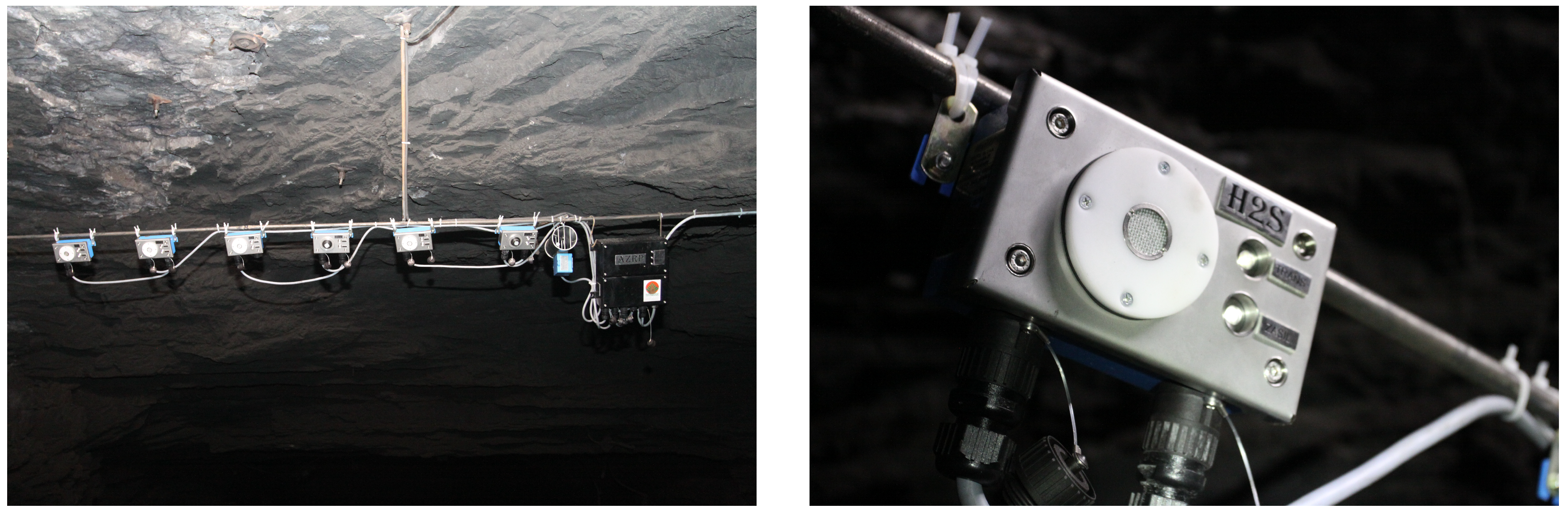
The selected measurement point was located at the mine exit because it provides a permanent, time-invariant location that allows for reliable and repeatable recording of H2S concentrations leaving the mine. This choice was also based on technical considerations—there is no mining machinery in this area, which could prevent sensor installation or lead to damage or displacement. This ensures the measurement point is stable and free from interference from equipment operation. Importantly, the mine exit also provides a straight, uniform ventilation airflow, free from additional sources of contamination that could affect the measured gas concentrations. This ensures that the recorded values reflect only the air and H2S mixture transported from the mine face, without interference from local flow disturbances or emissions. The analysis was carried out based on the results of one-second measurements of hydrogen sulfide concentrations obtained from the Autonomous Recording and Measurement Unit (AZRP) [35], installed in the excavation that discharges air from the exploitation front of the selected mining section (Figure 2, Table 1).
The AZRP measurement system, in addition to measuring hydrogen sulfide concentrations, also enabled the measurement of other gases, as well as environmental parameters such as temperature, relative humidity, and airflow velocity. Due to the lack of IT infrastructure in the analyzed area, measurement data is stored locally on an SD memory card. After the measurement period, which typically lasts several weeks, data logging is suspended, and the collected information is then transferred to a computer for further analysis. Because the underground mine environment is characterized by difficult operating conditions, the measuring device used is certified for operation at high temperatures (up to 50 °C) and in the presence of an explosive atmosphere.

3. Experiment Results

Hydrogen sulfide monitoring in the underground mine, particularly in areas where the gas is released more intensively into the mine workings, is carried out systematically. In locations with the highest risk, continuous monitoring systems have been installed. These systems have been operating since 2014. The article presents an analysis of hydrogen sulfide concentration data collected during two independent mining periods: August 2014 and April 2017. Second-by-second data were aggregated to the form of minute data. The switch from analyzing data collected every second to minute data in the context of analyzing daily monthly values is justified by the need to simplify the analytical process and to smooth out minor fluctuations that can occur in high-frequency data. The collected minute data are sufficient to capture overall trends in H2S concentrations, while minimizing the impact of noise and random fluctuations, allowing for a clearer and more stable analysis.
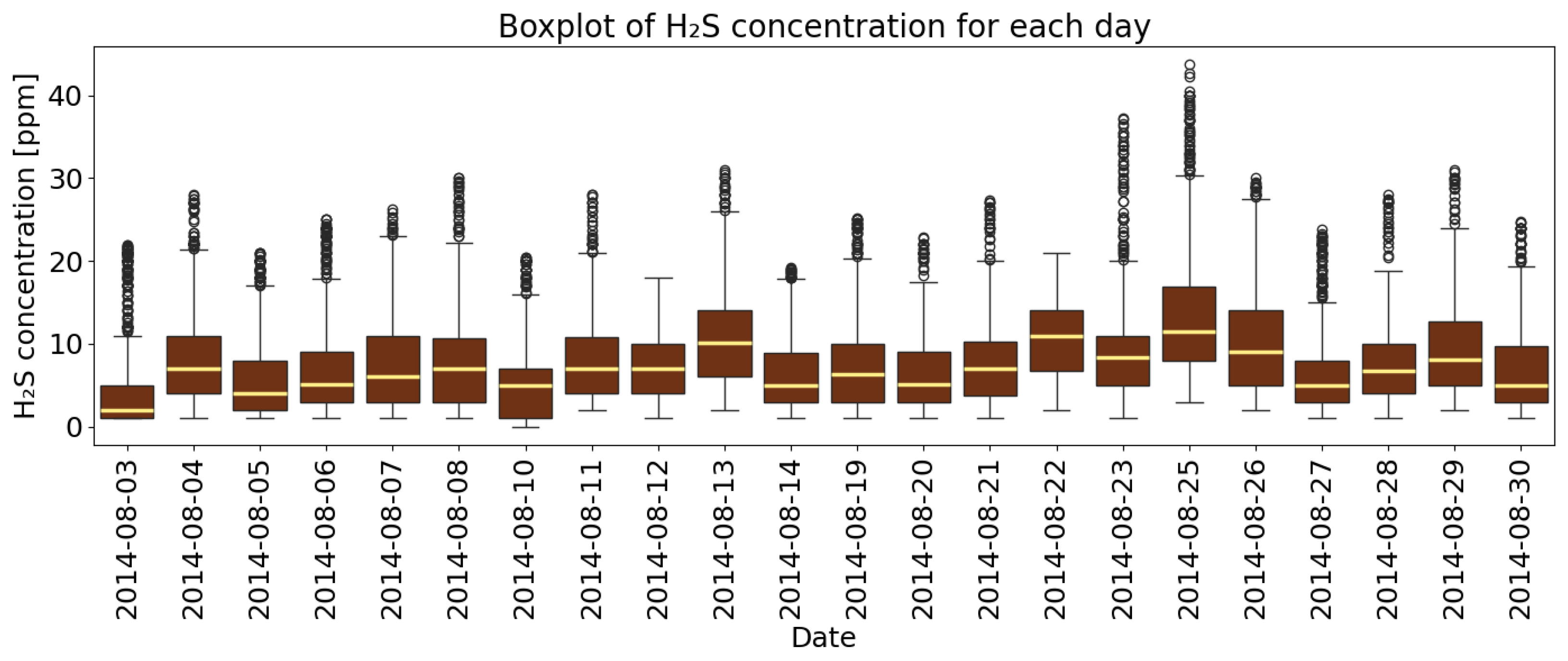
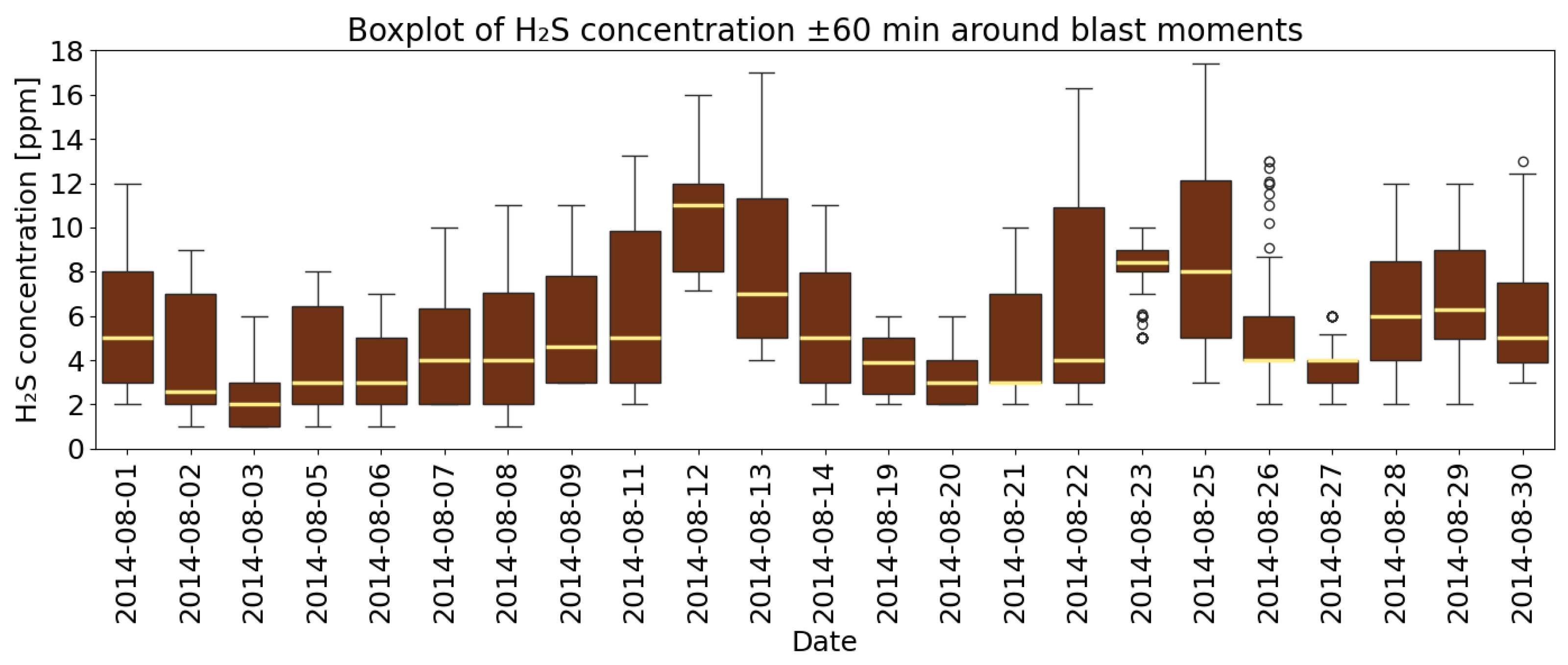
Recording H2S concentrations made it possible to analyze changes over time and evaluate blasting operations on local gas conditions in the area. Figure 3 present box plots showing daily distributions of H2S concentrations for the measurement periods analyzed, while Figure 4 shows box plots presenting the distributions of H2S concentrations in the ±60 min interval in relation to the time of explosive firing at the faces, determined based on the air velocity from the working space of the mining front to the place of installation of the measuring device (AZRP), taking into account the ventilation time determined for the mining division after blasting works, after which the crew can enter.
In August 2014 (Figure 3), hydrogen sulfide (H2S) concentrations showed considerable variability from day to day during the month. The box plot shows that median concentrations generally remained in the range of about 4 to 8 ppm, but on many days there were numerous outliers as high as 40 ppm. Particularly high and unstable H2S levels were recorded on 23–26 August, which may indicate episodes of increased pollutant emissions. On the other days of the month, the distribution of concentrations was more stable and the variability was lower.
In August 2014, significant variation and high values of hydrogen sulfide concentrations were recorded in the analyzed time interval from the firing of the explosive at the coalface, i.e., ±60 min. Median concentrations for individual days were mostly in the range of 3–8 ppm, while maximum values reached 15–17 ppm. The wide interquartile range (IQR) and numerous outliers indicate high variability in instantaneous concentrations, suggesting the occurrence of short-lived but intense episodes of hydrogen sulfide emissions into the mine workings.
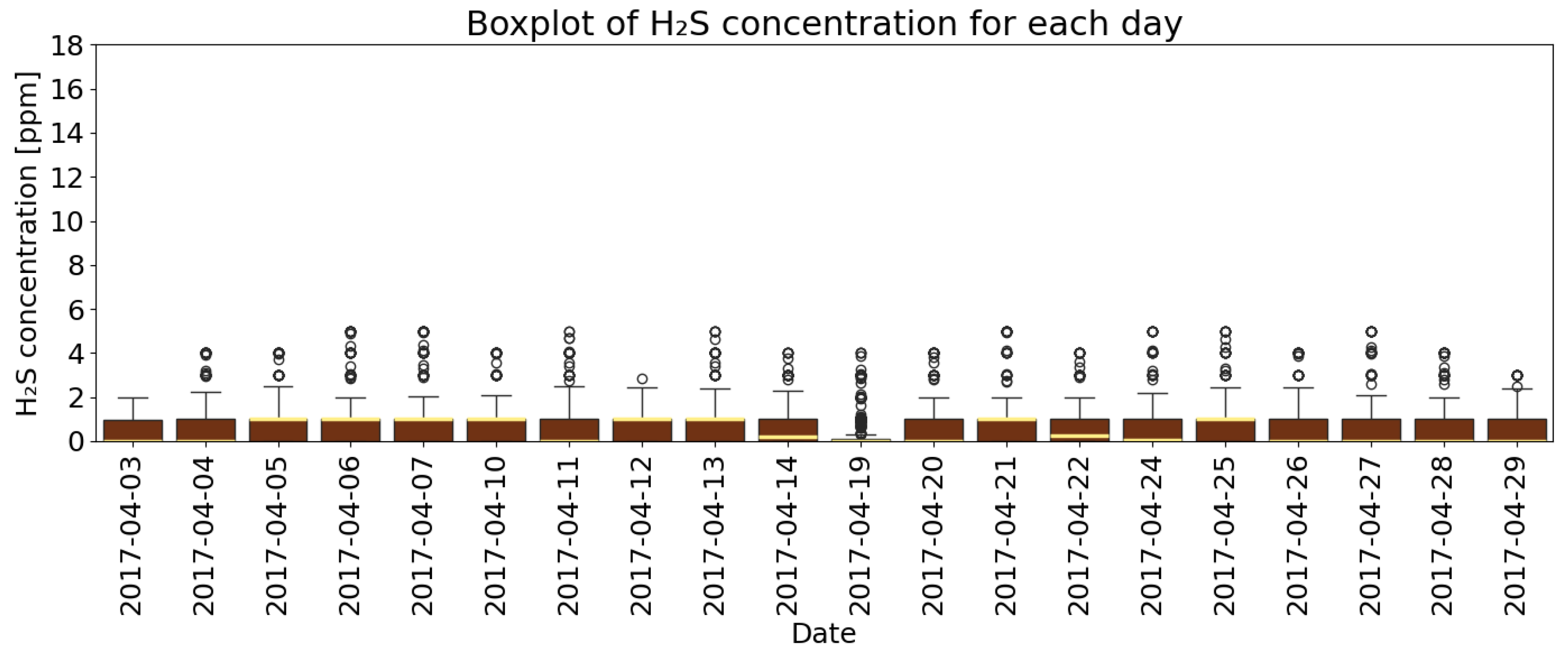
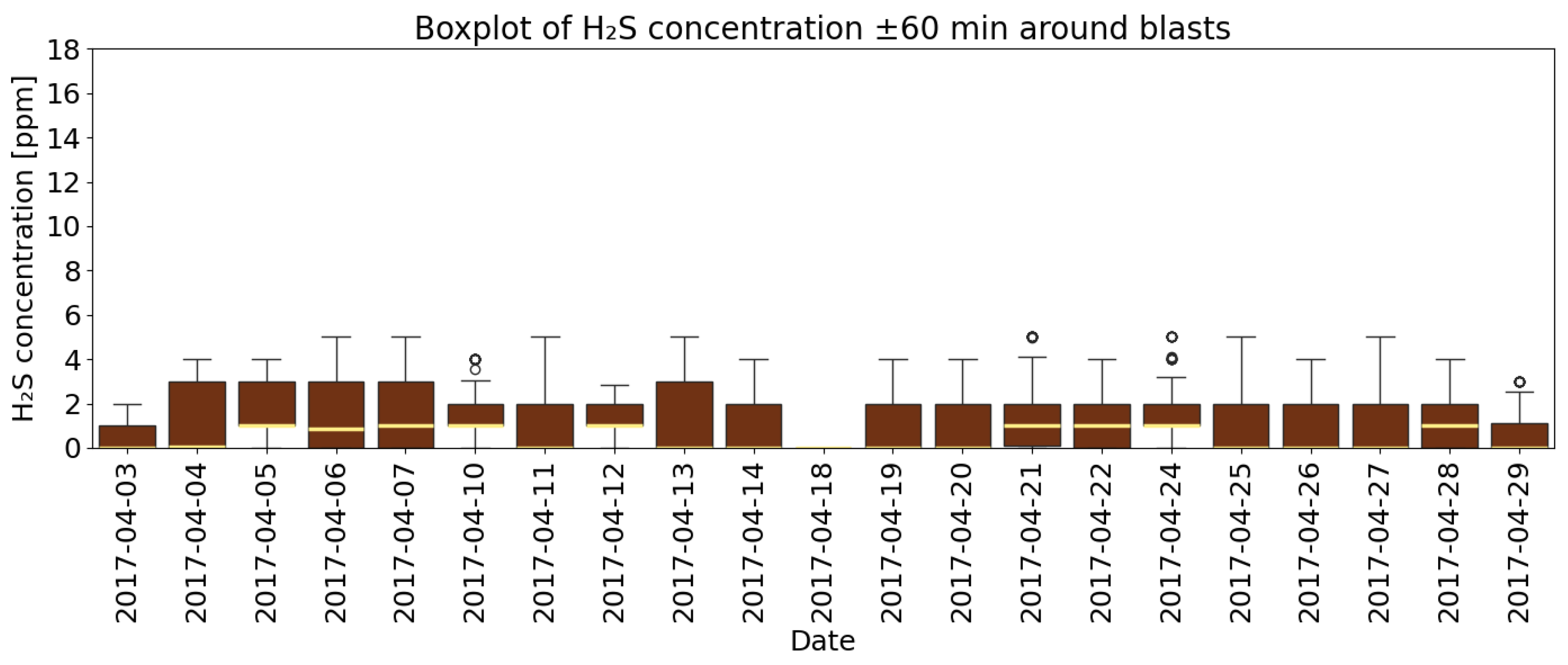
Figure 5 present box plots presenting daily distributions of H2S concentrations for the analyzed measurement periods, while Figure 6 presents box plots presenting distributions of H2S concentrations in the ±60 min interval in relation to the time of explosive detonation in the faces, determined based on the air flow velocity from the working space of the exploitation front to the place of installation of the measuring device (AZRP), taking into account the ventilation time designated for the mining department after blasting, after which the crew can enter.
In April 2017 (Figure 5), H2S concentration values were significantly lower and more stable—most data did not exceed 2 ppm, and the number of outliers was minimal. This means that in the later phase of operation, changes in recorded hydrogen sulfide concentrations were caused by the impact of the other factors mentioned above, which, however, positively influenced the observation and analysis of changes in gas concentrations due to blasting.
From Figure 6, we can read that the H2S concentration values were clearly lower and more stable than in 2014. The medians on most days did not exceed 2 ppm, and the range of variability was much smaller than in 2014. The occurrence of outlier values was sporadic, and their amplitude did not exceed 5–6 ppm.
Table 2 shows the recorded blasting times during the monitored periods in 2014 and 2017. The table on the left presents the data for August 2014, while the table on the right shows the results for April 2017. These tables provide a quick overview of the temporal distribution of blasts in each monitored month.

4. Data Analysis

4.1. Basic Descriptive Statistics of Measurement Data

The subsection presents basic descriptive statistics for the analyzed data interval. Table 3 and Table 4 include key parameters such as the number of observations, mean, standard deviation, minimum and maximum values. In addition, in order to evaluate the variability of gas concentrations, the Interquartile Range (IQR) was calculated, which describes the spread of values between the first (Q25%) and third quartile (Q75%). The IQR value was calculated according to the formula [36,37]:
IQR = Q 75 % Q 25 %
A comparison of the values of the Interquartile Range ( IQR = Q 75 % Q 25 % ) clearly shows how the stability of the gas concentration differed between the two measurement periods analyzed. In the time interval of ± 60 min around the August 2014 blast (Table 3), the value of IQR was 5.00 ppm ( IQR = 8.00 3.00 ), indicating high variability and frequent, significant fluctuations in gas concentration. In contrast, in April 2017 (Table 4), IQR reached only 2.00 ppm ( IQR = 2.00 0.00 ). The lower value of this indicator in 2017 confirms that, despite smaller maximum values, atmospheric conditions were much more stable and predictable.

4.2. Visualization of Temporal Dynamics of Gas Concentrations—Heat Map Analysis

The first step in analyzing the measurement data was to perform an analysis using a heat map chart to visualize the temporal variation of gas concentrations over time [38]. The purpose of performing this analysis was to graphically show the periods requiring special attention and correlate them with possible activities occurring in the technological cycle of copper ore mines in Poland. Analyses with the help of heat maps were made for a period of ±60 min in relation to the time of blasting at the faces.
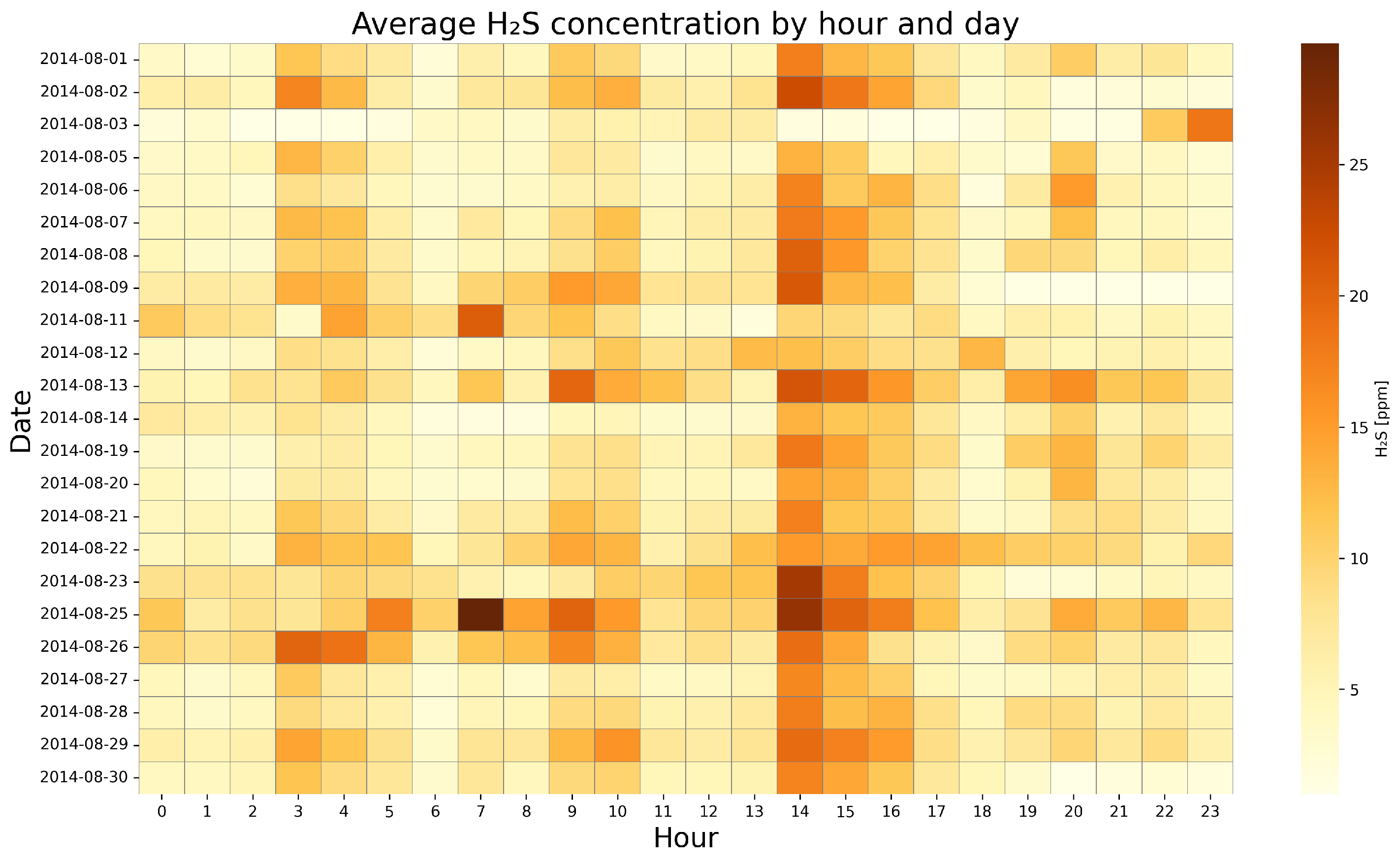
Figure 7 shows a heat map of hydrogen sulfide concentrations for the analyzed period of 2014, broken down by measurement day.
Heat map analysis of the average concentration of hydrogen sulfide (H2S) in the air of mine workings from 1 to 30 August 2014. (excluding days for which concentration data were missing: 4, 10, 15–18, 24 and 31 August) showed a clear temporal variation in H2S levels. Episodes of elevated concentrations were observed mainly during the morning and early afternoon hours (around 7:00 a.m. to 3:00 p.m.), especially on 13, 23 and 25 August, when locally values exceeded 25 ppm. A few other days (including 2, 9 and 26 August) saw moderate increases of 10–15 ppm. In contrast, during nighttime hours (00:00–06:00), H2S concentrations were typically very low or undetectable, indicating limited gas accumulation during periods of reduced ventilation or activity. Overall, the data suggest that in 2014, the air in the pits periodically had higher H2S concentrations, likely related to local gas emissions or temporary disruptions in ventilation efficiency.
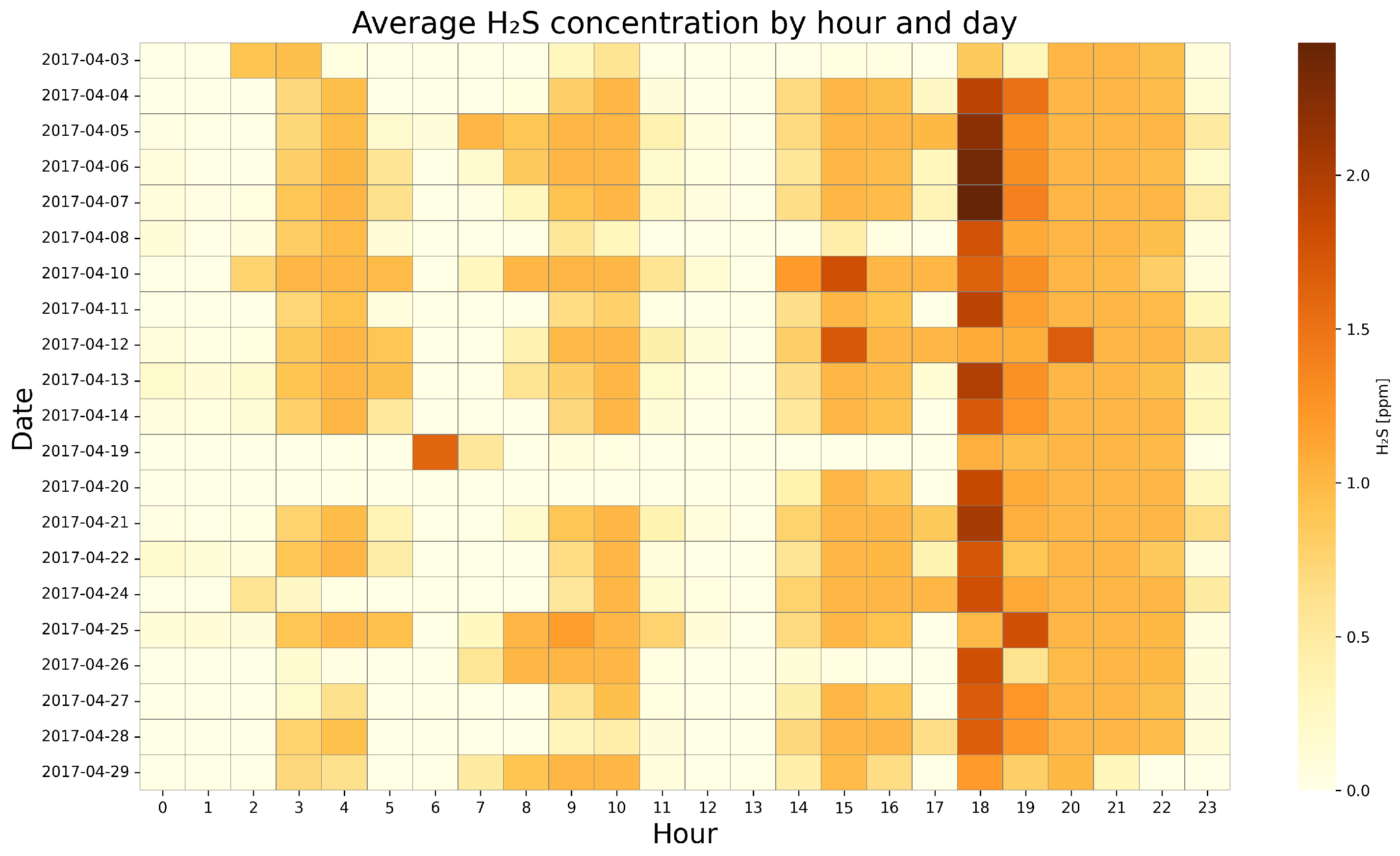
Figure 8 presents a heat map of hydrogen sulfide concentrations in the analyzed period of 2017, divided into individual measurement days.
In the heat map analysis of the average concentration of hydrogen sulfide (H2S) in the air of mine workings in the period from 1 April to 30 April 2017 (excluding days on which no concentration values were recorded: 1 April, 2 April, 9 April, 15 April, 16 April, 17 April, 18 April, 23 April, 30April) relatively low values of H2S concentrations were observed compared to the period in 2014. Most of the recorded values remained below 1 ppm, indicating a significant improvement in air quality in the pits. Despite the overall low level of pollution, isolated episodes of increased H2S concentrations are evident, occurring mainly in the afternoon (around 4:00–7:00 pm). The most pronounced case was observed on 5 April, when concentrations temporarily exceeded 2 ppm. Smaller increases, on the order of 1–1.5 ppm, also occurred on 10 April, 13 April, 18 April and 27 April, also during the afternoon hours. On other days, especially during the night (00:00–06:00) and morning (06:00–10:00) hours, H2S concentrations remained very low or undetectable.

4.3. A Detailed Assessment of the Impact of Blasting Operations on the Mine Atmosphere—Event Study Analysis
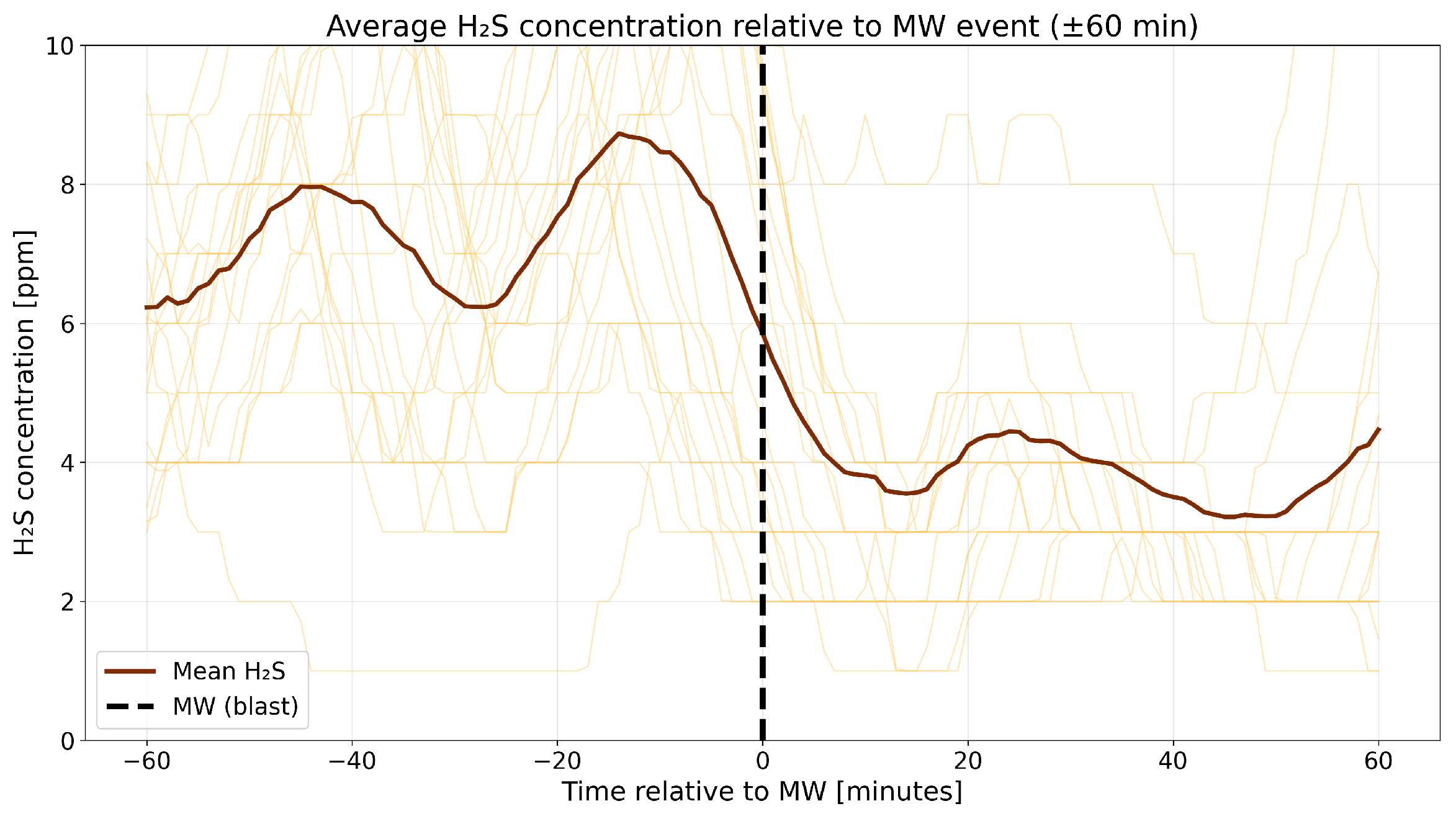
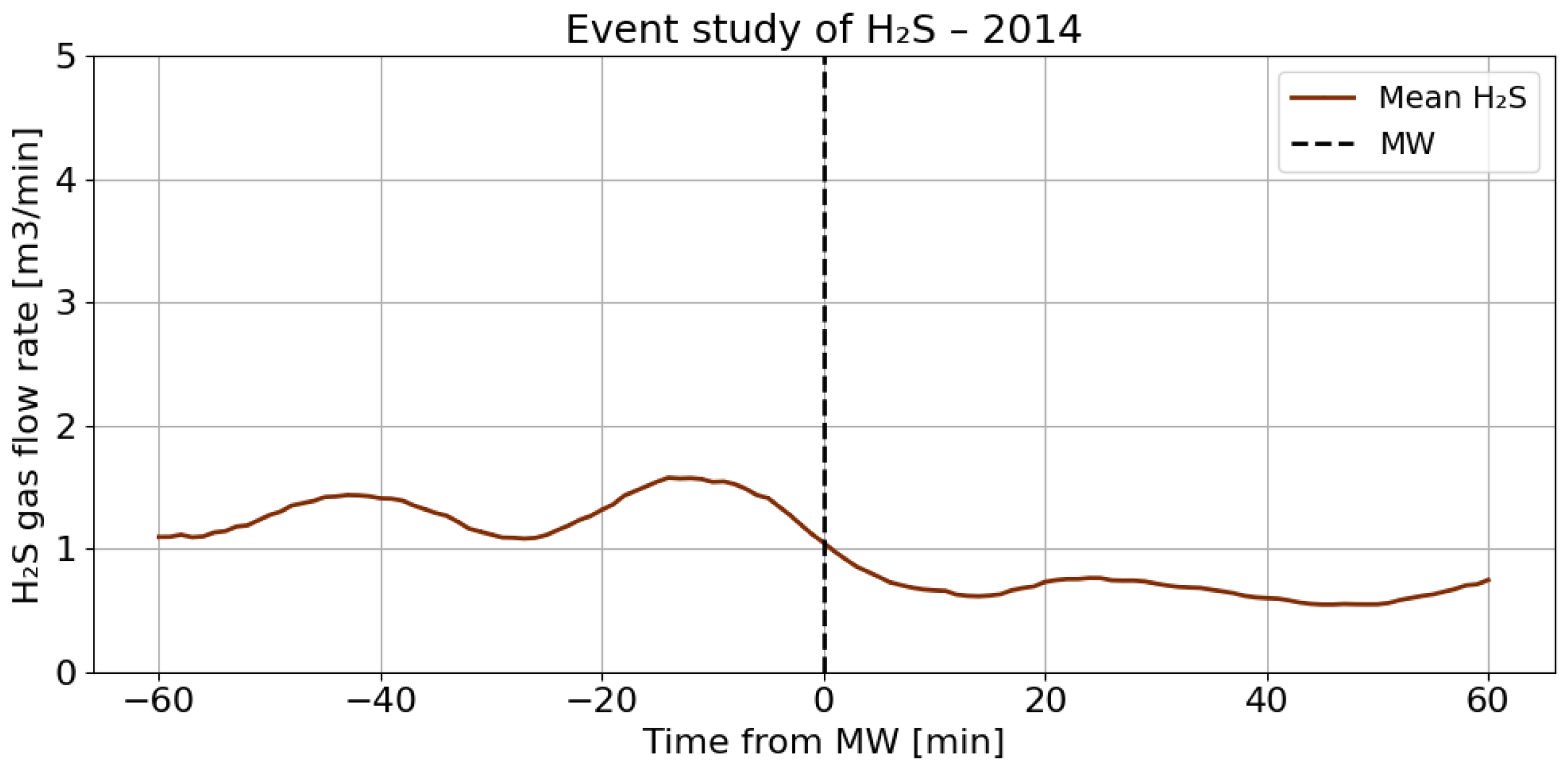
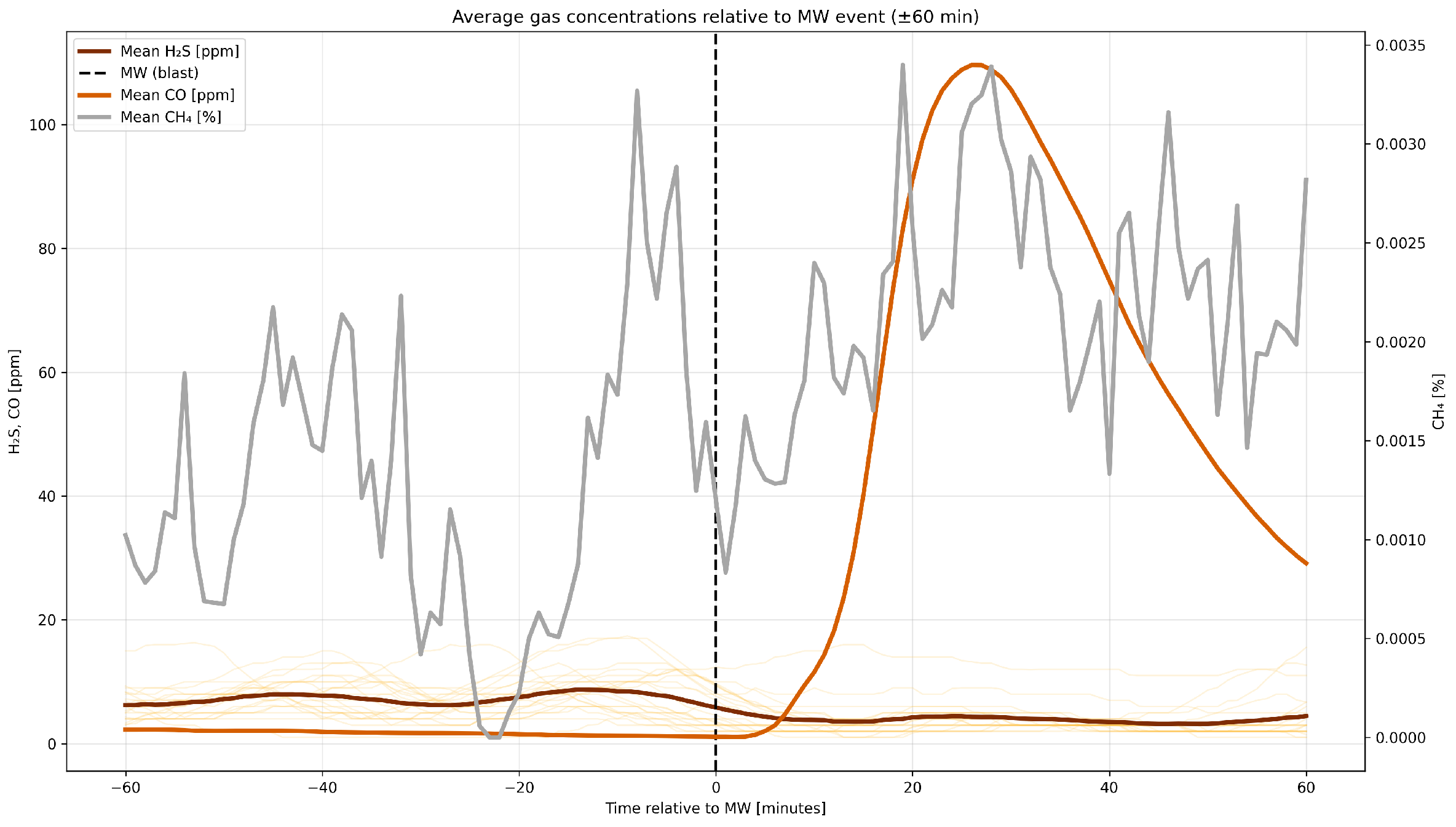
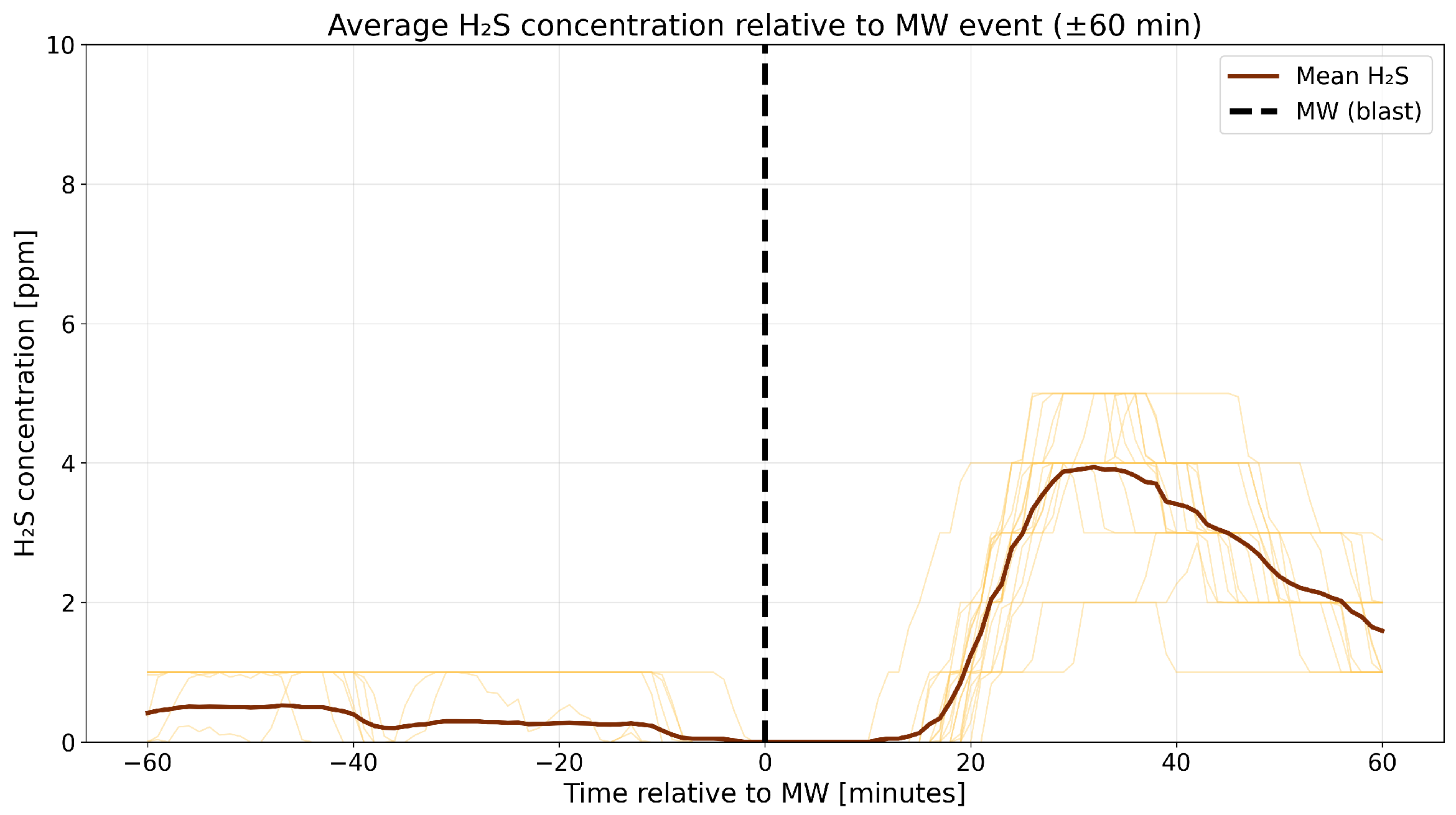
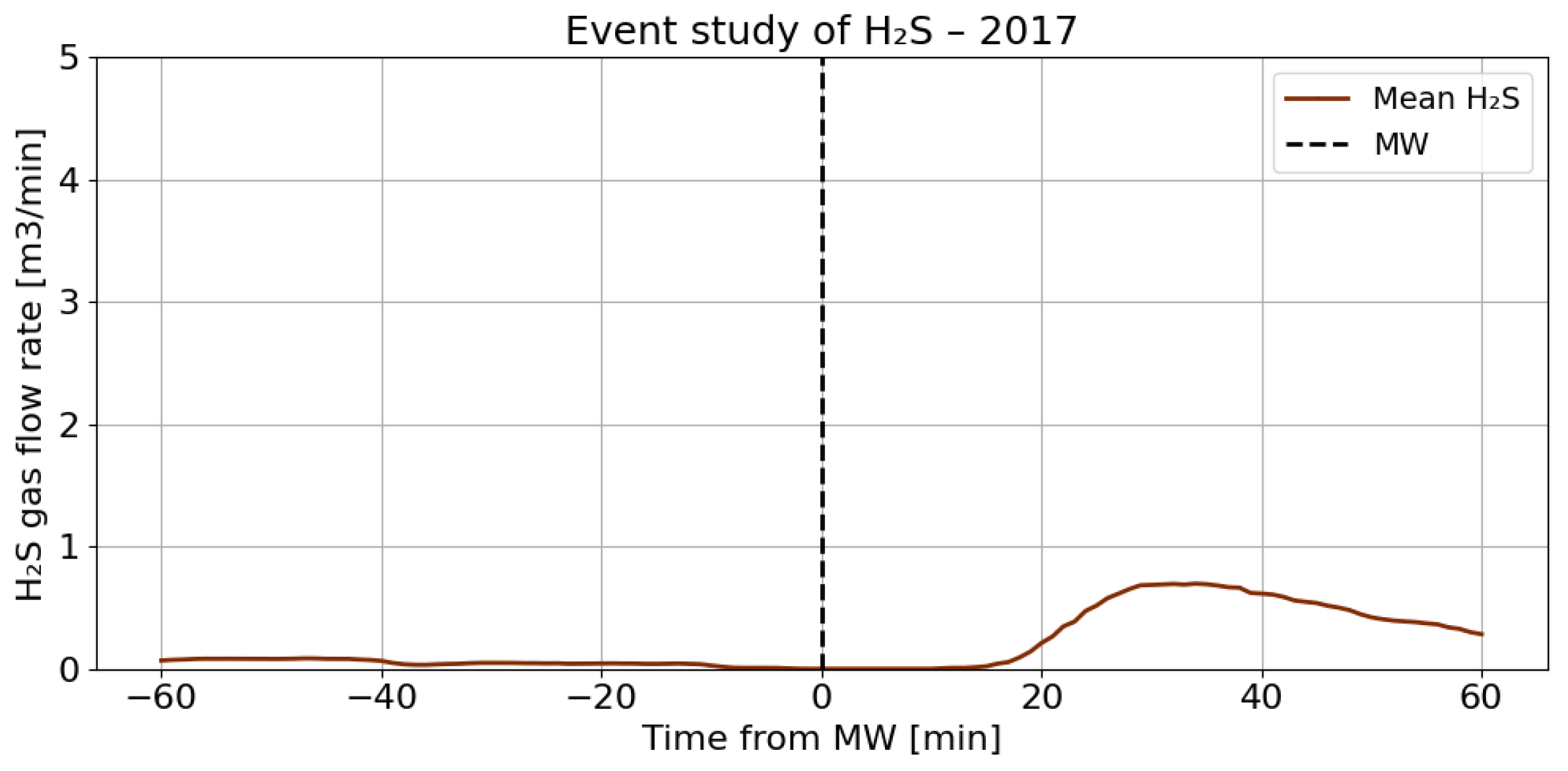
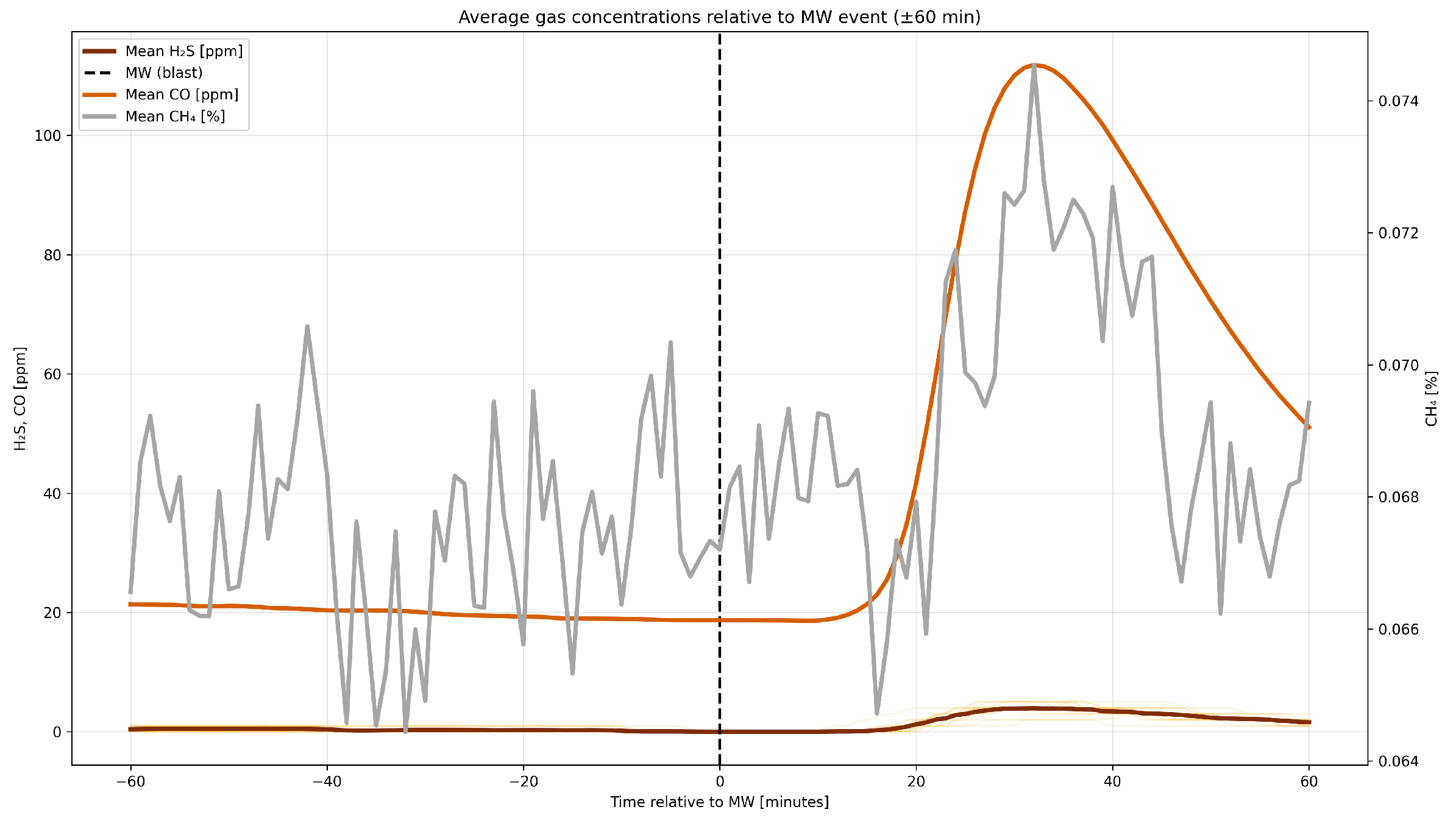
In order to analyze in detail the impact of blasting operations on the concentration of hydrogen sulfide in the mine atmosphere, event study type graphs [39] were made (Figure 9 and Figure 12). This method consists of compiling the changes in H2S concentration over a specified time interval relative to the moment of the event, which in this case was a shot excavating the rock mass. For each of the analyzed cases, a time window was determined, which made it possible to observe both the reaction of the atmosphere immediately after the blast and the process of stabilization of the gas concentration in the following minutes. The graphs clearly indicate the moment of the shot (dashed line), which makes it possible to assess the dynamics of changes in H2S concentration in its temporal environment. In addition, in Figure 10 and Figure 13, the ppm values are converted to gas output (H2S)—assuming a constant air flow rate of 3000 m3/s. Figure 11 and Figure 14 present the Event Study for CH4, CO, and the main gas analyzed in the article, H2S. (The thin yellow lines in the figures are measurements from individual days.)
Figure 9. Event Study: Analysis of the effect of blasting operations on the concentration of hydrogen sulfide in ppm in the mine atmosphere—August 2014.
Applsci 15 12781 g009
Figure 10. Event Study: Analysis of the impact of blasting operations on hydrogen sulfide emission in m3/min in the mine atmosphere—August 2014.
Applsci 15 12781 g010
Figure 11. Event Study: Average gases concentrations relative to MW event (±60 min)—August 2014.
Applsci 15 12781 g011
Figure 12. Event Study: Analysis of the effect of blasting operations on the concentration of hydrogen sulfide in ppm in the mine atmosphere—April 2017.
Applsci 15 12781 g012
Figure 13. Event Study: Analysis of the impact of blasting operations on hydrogen sulfide emission in m3/min in the mine atmosphere—April 2017.
Applsci 15 12781 g013
Figure 14. Event Study: Average gases concentrations relative to MW event (±60 min)—April 2017.
Applsci 15 12781 g014
In 2014, relatively high concentrations of H2S were observed before the moment of blasting (time < 0), remaining in the range of 6–9 ppm. This indicates the presence of significant amounts of hydrogen sulfide in the air even before the blast, which may be the result of the influence of other geological and mining factors in the department. Immediately after the moment of the blast (time 0), there is a marked decrease in the concentration of H2S to a level of about 3–4 ppm. In the following minutes after the blast, the concentration of H2S remains at a lower level, and then a gradual increase is observed, reaching 4–5 ppm again around 60 min after the blast. The release of hydrogen sulfide probably already occurs immediately after the blast, while the observed delay is a result of the time required for the gas to flow to the sensors (AZRP).
In 2017, before the moment of blasting (time < 0), the concentration of H2S remains very low, not exceeding 1 ppm. This indicates stable atmospheric conditions and the absence of significant hydrogen sulfide emissions before the blast. Immediately after the moment of blasting (time 0), a marked increase in H2S concentration is observed, which reaches a maximum between about 20 and 40 min after blasting, with values reaching 3–4 ppm. Such a course indicates that the emission of H2S appears with some delay relative to the moment of blasting, which may be related to the release of the gas from the loosened layers of the rock mass and its transport toward the measurement site as a result of ventilation air flow. After reaching the maximum, the concentration gradually decreases, which may indicate the dispersion and dilution of the gas in the ventilation network.
The following Table 5 shows the basic statistics of H2S concentrations (ppm) in the mine workings over a range of ±60 min after the blast. Included are the minimum, average, and maximum concentration values before and after the blasting for the analyzed period in 2014 and 2017.

4.4. Correlation Analysis of Gaseous Hazards and Environmental Factors

In previous analyses, only the variability and determinants of hydrogen sulfide emissions have received detailed attention, while the other gases recorded at the same measuring point have not been analyzed so far, as they are not the main focus of the study. In order to complete the picture of gaseous processes and to better understand the potential interdependence between H2S and other components of the mine atmosphere (CO and CH4), a correlation analysis between these parameters was carried out. The juxtaposition of changes in concentrations makes it possible to assess whether the observed episodes of H2S increase are an isolated phenomenon or whether they are accompanied by parallel fluctuations of other gases, which may indicate common emission sources or similar environmental conditions. For better understanding of relationship between H2S emissions and other hazardous gases a Spearman Rank Correlation ( ρ ) analysis was performed on the aggregated hourly data from both years—2014 and 2017. The Spearman coefficient was chosen over the Pearson coefficient due to the non-normal distribution and presence of sporadic, high-amplitude peaks characteristic of mine gas concentrations. This made the non-parametric rank-based measure ( ρ ) a more robust and reliable indicator of monotonic relationships.The Spearman’s rank correlation coefficient was calculated using the following formula [40,41]:
ρ = 1 6 i = 1 n d i 2 n ( n 2 1 )
where: ρ —Spearman’s rank correlation coefficient, d i —difference between the ranks of variables x i and y i , n—number of observations.
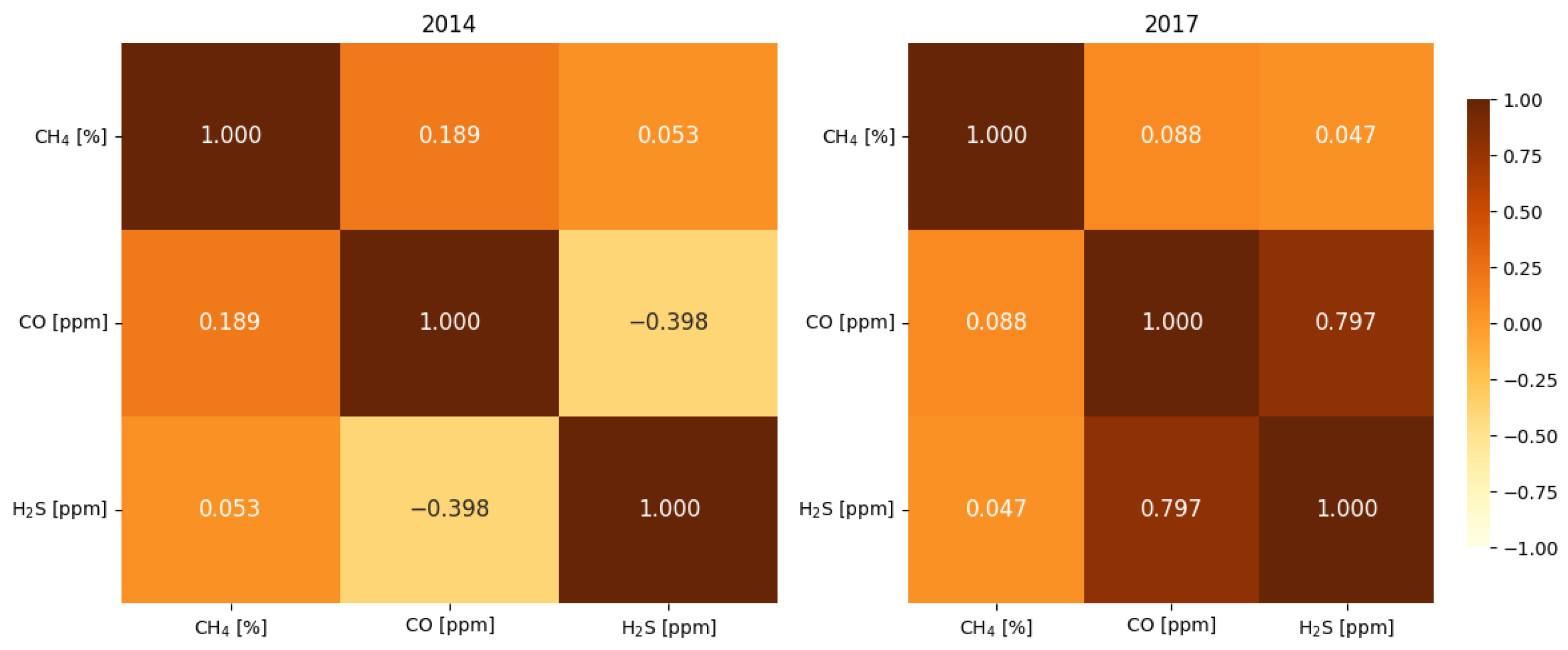
Figure 15 shows Spearman rank correlations in the form of a heat map. The value of ρ ranges from 1 to + 1 , where values close to + 1 indicate a strong positive monotonic relationship between variables, while values close to 1 indicate a negative monotonic relationship.
Analysis of the 2014 data showed a moderate negative correlation between H 2 S and CO ( ρ = 0.398 ). This negative correlation, combined with the immediate decline after the explosion (Figure 10), may be because the instantaneous emission of H 2 S was overshadowed by the high background concentration. The relationship between H 2 S and CH 4 was insignificant ( ρ = 0.053 ). Correlation analysis for data from 2017 showed a very strong positive correlation between H2S and CO concentrations ( ρ = 0.797 ). This means that periods of increased H2S emissions closely coincide with moments of elevated CO concentrations. This correlation may result from the fact that carbon monoxide is a by-product of detonation during blasting operations. Therefore, immediately after an explosion, a simultaneous increase in both CO and H2S concentrations is observed. The correlation between H2S and CH4 was negligible ( ρ = 0.047 ).
Analysis of H2S concentrations within ±60 min of the explosion showed that in 2014, the average H2S concentration decreased after the explosion, while in 2017, the explosion caused a significant increase in concentration, although the absolute values were much lower. In 2014, with higher initial concentrations (average 7.255 ppm), the explosion caused a decrease in the average concentration (to 3.738 ppm), which may indicate the effect of mixing or intensive air ventilation after detonation. This situation may have been further exacerbated by the fact that in 2014, the mining front was closer to the fresh air inlet, which facilitated faster dilution and removal of gases from the measurement area. In 2017, however, with very low H2S levels prior to the explosion (0.267 ppm on average), the observed increase in concentration after detonation (up to 1.885 ppm) suggests a local release of gas, the effects of which were limited due to the distance of the front from the fresh air source and the lower saturation of the rock mass with H2S gas.
In summary, the strong correlation between H2S and CO may result from the fact that both gases are produced by the same processes accompanying detonation. The shock of the detonation wave damages the sulfide rocks, releasing H2S from pores and microcracks, while the explosives generate CO as a product of incomplete combustion. Both gases are then transported in the same airflow, causing their convergence at the measurement point and promoting a high correlation. The low correlation between H2S and CH4 results from the different origins of methane. CH4 in the analyzed mine is not significantly associated with blasting or the fragmentation of sulfide rocks; it is released slowly from more permeable formations, often at a time independent of the detonation. Differences in the sources and dynamics of gas inflow cause its temporal course to differ from H2S fluctuations.

4.5. Analysis of the Dynamics of Changes in the Composition of the Mine Atmosphere After Blasting

4.5.1. Analysis of the Timing of the Increase in H2S Concentration After Blast in 2014

An analysis was carried out to determine the average time of increase in hydrogen sulfide (H2S) concentration in mine air after blasting during the analyzed periods. Measured data of H2S concentration were analyzed at a frequency of 1 min within a time window of 60 min after each blast. The change from analyzing seconds to minutes of data in the context of analyzing daily data from a month is intended to simplify the analytical process.
Let C ( t ) denote the concentration of H2S at time t [ppm], and let t 0 represent the moment of the blast. In the analyzed time window [ t 0 , t 0 + 60 min ] , we define:
  • Increment derivative of concentration (rate of H2S increase in consecutive minutes):
    Δ C i = C ( t i ) C ( t i 1 ) , i = 1 , 2 , , N
    where t i are successive time points (minutes) within the post-blast interval.
  • Time to reach the maximum H2S concentration after the blast:
    T max = t max t 0 , where C ( t max ) = max t [ t 0 , t 0 + 60 min ] C ( t )
    That is, the time difference between the moment of the blast and the time at which the maximum concentration occurs within the analyzed window.
  • Mean time to reach maximum H2S concentration for all blasts in the analyzed period:
    T max ¯ = 1 N MW j = 1 N MW T max ( j )
    T max ( 2014 ) ¯ = 24 min 25 s
    T max ( 2017 ) ¯ = 29 min 22 s
    where N MW denotes the number of blasts analyzed, and T max ( j ) is the time to reach the maximum concentration after the j-th blast.
The average rise time of H2S after blasts can be interpreted as the typical time when hydrogen sulfide concentration reaches a maximum in mine air after a blast. This parameter is important for safety assessment and ventilation planning in mining regions, and its analysis allows comparison of gas emission dynamics after different blasts.

4.5.2. Analysis of Mine Atmosphere Stabilization Time After Blasts in 2017

An important conclusion is the possibility of determining the average stabilization time of the mine atmosphere after explosive detonations. The waveforms of hydrogen sulfide (H2S) concentration, recorded at a one-minute frequency within a 60 min window following each blast, were analyzed to identify the moment at which the gas concentration reaches equilibrium.
Let C ( t ) denote the H2S concentration at time t [ppm], and let t 0 be the time of the blast. In the analyzed time window [ t 0 , t 0 + 60 min ] , we define:
  • Stabilization criterion of H2S concentration within the time interval τ stab :
    max s [ t , t + τ stab ] C ( s ) min s [ t , t + τ stab ] C ( s ) < ε
    where τ stab = 10 min is the length of the concentration change analysis window, and ε = 0.1 ppm is the variability threshold considered as the equilibrium state of the atmosphere.
  • Atmospheric stabilization time after the blast:
    T stab = min t t 0 : max s [ t , t + τ stab ] C ( s ) min s [ t , t + τ stab ] C ( s ) < ε
    that is, the shortest time after the blast at which the H2S concentration remains stable during the following 10 min of measurement.
  • Mean stabilization time for all analyzed blasts:
    T stab ¯ = 1 N MW j = 1 N MW T stab ( j )
    T stab ( 2014 ) ¯ = 58 min 15 s
    T stab ( 2017 ) ¯ = 40 min 57 s
    where N MW denotes the number of analyzed blasts, and T stab ( j ) is the stabilization time after the j-th blast.
The average time to stabilize the mine atmosphere after blasting marks the point at which the concentration of H2S reaches equilibrium and ceases to show significant fluctuations. This parameter informs about the time required to fully ventilate the face after blasting, and can be used to optimize process breaks and gas safety procedures in terms of the release of hydrogen sulfide into the workings as a result of blasting, as well as other gases in the rock mass.

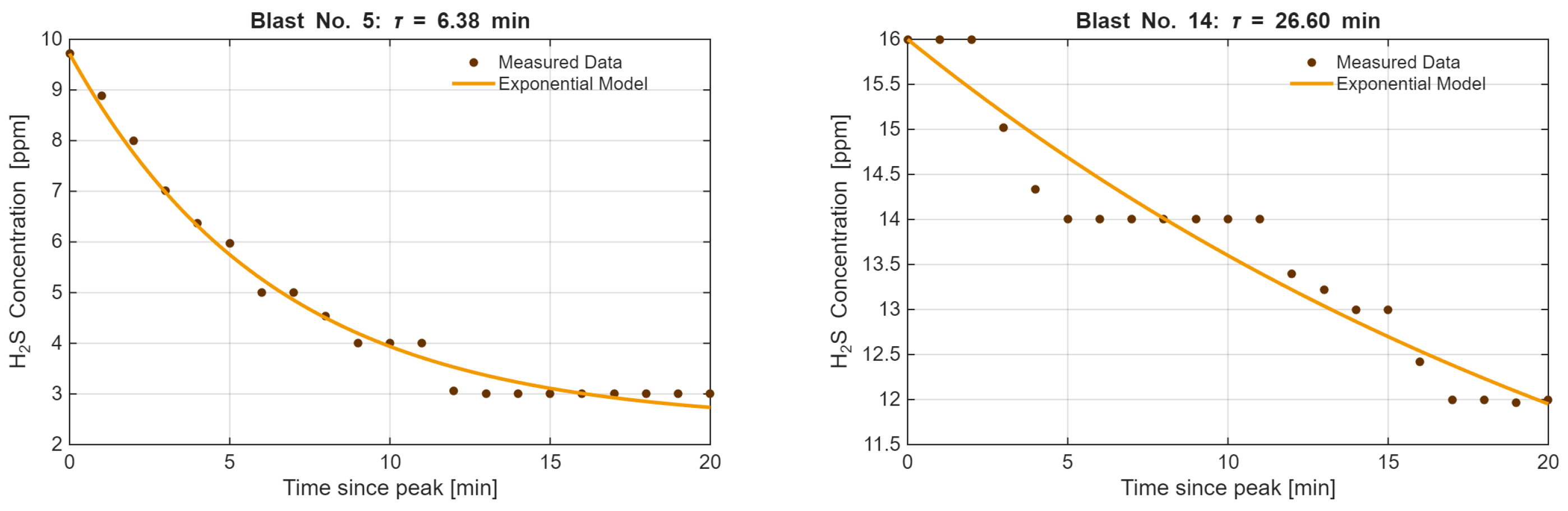
4.6. Time Constant (τ) in Post-Blast Ventilation

To generalize the assessment of ventilation process efficiency and provide a quantitative comparison between the analyzed periods, a first-order exponential decay model was applied to the post-blast gas concentration data The decay of H 2 S concentration from its peak value was approximated using the following equation:
C ( t ) = C b g + ( C m a x C b g ) · e t τ
where C ( t ) is the gas concentration at time t relative to the peak occurrence, C b g is the background concentration, C m a x is the peak concentration recorded after the blast, and τ is the time constant representing the rate of decay. The analysis revealed distinct ventilation characteristics for the two studied years:
  • Year 2014: For the blasting events analyzed in 2014, the estimated time constants τ ranged from approximately 5.5 to 48 min. This suggests a generally variable ventilation efficiency, dependent on the specific location of the mining faces during that period.
  • Year 2017: In 2017, the values of τ varied between almost 7 and 54 min. The distribution of τ values in this period reflects the ventilation conditions associated with the gas emissions observed in 2017.
Figure 16 presents two representative cases selected from the dataset to illustrate the fitted model:

5. Conclusions

  • Explosive blasting with explosives causes an increased outflow of hydrogen sulfide and other gases from the rock mass into the excavations. Explosive blasting with explosives causes an increased outflow of hydrogen sulfide from the rock mass, which is reflected in the observed increase in H2S concentration in the excavation approximately one hour after the blast. Analysis of data from 2014 and 2017 indicates that this effect is strongly dependent on the initial gas level in the excavation—under conditions of low H2S concentration before the blast, a significant, though limited in absolute terms, increase in the post-blast concentration is observed, whereas at higher initial concentrations, the blast can cause a short-term decrease in the average concentration, suggesting the effects of gas mixing and dispersion due to air movement in the excavation. These results confirm that explosives not only mechanically cut the rock but also induce changes in gas emissions from the rock mass, which is important for mine hazard assessment and ventilation planning.
  • Analysis of H2S concentrations within the ±range 60 min after blasting showed that in 2014, the average concentration decreased after blasting, whereas in 2017, blasting caused a significant increase in concentration, although the absolute values were much lower. These results suggest that the impact of blasting on H2S concentrations in the excavation varies depending on the year and the initial gas level. In 2014, at higher initial concentrations, blasting led to a lower average concentration, which may indicate mixing or ventilation effects. In 2017, however, with very low H2S levels before blasting, the observed increase in concentration after blasting suggests a local gas release, the effects of which were limited due to the low initial concentration.
  • Analysis of H2S concentrations during blasting operations in 2014 and 2017 revealed varying behavior. In 2014, H2S exhibited a moderate negative correlation with CO ( ρ = −0.398) and no significant correlation with CH4 ( ρ = 0.053), while in 2017, a strong positive H2S–CO correlation was observed ( ρ = 0.797), with a still negligible correlation with CH4 ( ρ = 0.047). Analysis within ±60 min of blasting showed that in 2014, higher initial H2S concentrations decreased after detonation, likely due to ventilation, while in 2017, lower initial levels increased locally after the blast. The strong H2S–CO correlation is due to their co-production and transport by detonation, while CH4 remains largely independent due to other sources and slower release.
  • The average time to reach the maximum concentration of H2S after the use of explosives in 2014 was 24 min 25 s, while in 2017 it was 29 min and 22 s. The time to stabilize the atmosphere in the mine in 2014 was 58 min 15 s, while in 2017 it was 40 min and 57 s. The highest concentration values occur within the first hour after detonation. This result is an important factor to consider in safety procedures—particularly when planning the airflow volume supplied to the mining area, post-blast ventilation time, planning measurements, and assessing personnel exposure. The study demonstrates that the time constant τ is a critical parameter for mine safety management, extending beyond simple statistical analysis. It was estimated through fitting the non-linear equation to the measurement data. As a variable it is aggregating the influence of key ventilation factors—distance from the face to the gas concentration measurement point (L) and airflow velocity (v)—provides a comprehensive metric of the system’s inertia.
  • The average H2S concentration values obtained after mining blasting did not exceed the 7 ppm threshold in any of the analyzed periods. An increase in hydrogen sulfide concentrations was observed after mining blasting, but this increase did not exceed the permissible value. This phenomenon is crucial for worker safety. The average face ventilation time, approximately 30–40 min before crew access, is a key element in personnel protection—it allows for the effective removal of residual gases and ensures safe working conditions.
  • Further work should consider the impact of explosive mass and the number of blast faces on the dynamics of H2S concentration. Further research should focus on a detailed analysis of the H2S concentration growth curve following blasting, taking into account both the rate and time of reaching maximum values, and the time for the concentration to decline to baseline values. An important direction will also be to assess the impact of the mass of explosive used and the number of blast faces fired on the dynamics of hydrogen sulfide emissions, which will allow for a better understanding of the relationship between blasting parameters and mine atmosphere safety.

Author Contributions

Conceptualization, A.B. and S.G.; Methodology, A.B. and M.K.; Formal Analysis, A.B.; Investigation, A.B. and S.G.; Resources, S.G.; Writing—Original Draft Preparation, A.B. and M.K.; Visualization, A.B. and M.K.; Supervision, S.G.; Project Administration, A.B. All authors have read and agreed to the published version of the manuscript.

Funding

This research received no external funding.

Data Availability Statement

The datasets presented in this article are not readily available because they originate from an industrial partner and are subject to access restrictions. The data were provided to the authors by the Mine Director solely for use in research conducted at the Faculty of Geoengineering, Mining and Geology of Wrocław University of Science and Technology. The industrial partner has granted access to the data only to employees of this Faculty.

Conflicts of Interest

Author Sebastian Gola was employed by the company KGHM Polska Miedź S.A. The remaining authors declare that the research was conducted in the absence of any commercial or financial relationships that could be construed as a potential conflict of interest.

References

  1. Ismail, S.N.; Ramli, A.; Aziz, H.A. Influencing factors on safety culture in mining industry: A systematic literature review approach. Resour. Policy 2021, 74, 102250. [Google Scholar] [CrossRef]
  2. Qi, Z.; Obracaj, D.; Gao, K.; Shi, L. The Research on Demand-Based Regulation of Mine Airflow Based on Niche Genetic Algorithm. IEEE Access 2025, 13, 170844–170861. [Google Scholar] [CrossRef]
  3. Banasiewicz, A.; Janicka, A. Selection of a Universal Method for Measuring Nitrogen Oxides in Underground Mines: A Literature Review and SWOT Analysis. Atmosphere 2025, 16, 1051. [Google Scholar] [CrossRef]
  4. Badri, A.; Nadeau, S.; Gbodossou, A. A new practical approach to risk management for underground mining project in Quebec. J. Loss Prev. Process Ind. 2013, 26, 1145–1158. [Google Scholar] [CrossRef]
  5. Mishra, R.K.; Rinne, M. Geotechnical Risk classification for underground mines. Arch. Min. Sci. 2015, 60, 51–61. [Google Scholar] [CrossRef]
  6. Bugarski, A.D.; Cauda, E.G.; Janisko, S.J.; Mischler, S.E.; Noll, J.D. Diesel Aerosols and Gases in Underground Mines: Guide to Exposure Assessment and Control; Report of Investigations 9687; National Institute for Occupational Safety and Health: Washington, DC, USA, 2011.
  7. Dreger, M. Methane emissions and hard coal production in the Upper Silesian Coal Basin in relation to the greenhouse effect increase in Poland in 1994–2018. Min. Sci. 2021, 28, 59–77. [Google Scholar] [CrossRef]
  8. Liu, L.y.; Ji, H.g.; Lü, X.f.; Wang, T.; Zhi, S.; Pei, F.; Quan, D.l. Mitigation of greenhouse gases released from mining activities: A review. Int. J. Miner. Metall. Mater. 2021, 28, 513–521. [Google Scholar] [CrossRef]
  9. Banasiewicz, A.; Wroblewski, A.; Gola, S. Preliminary sources identification of nitric oxide (NO) emissions in underground mine. In IOP Conference Series: Earth and Environmental Science; IOP Publishing: Bristol, UK, 2021; Volume 942, p. 012019. [Google Scholar]
  10. Tan, B.; Shao, Z.; Wei, H.; Yang, G.; Zhu, X.; Xu, B.; Zhang, F. Status of research on hydrogen sulphide gas in Chinese mines. Environ. Sci. Pollut. Res. 2020, 27, 2502–2521. [Google Scholar] [CrossRef] [PubMed]
  11. Ministry of Energy. Regulation of the Minister of Energy related to operations of underground mining (available in Polish: Rozporzadzenie Ministra Energii z dnia 23 listopada 2016r.,w sprawie szczegółowych wymagań dotyczacych prowadzenia ruchu podziemnych zakładów górniczych. In Dz. U. z 2017r.,poz. 1118; Ministerstwo Energii: Warszawa, Poland, 2017. [Google Scholar]
  12. Wodzicki, A.; Piestrzyński, A. An ore genetic model for the Lubin—Sieroszowice mining district, Poland. Miner. Depos. 1994, 29, 30–43. [Google Scholar] [CrossRef]
  13. Pilecki, Z.; Laskowski, M.; Hryciuk, A.; Wróbel, J.; Koziarz, E.; Pilecka, E.; Czarny, R.; Krawiec, K. Identification of gaso-geodynamic zones in the structure of copper ore deposits using geophysical methods. CIM J. 2014, 5, 194–202. [Google Scholar]
  14. Kijewski, P.; Kubiak, J.; Gola, S. Siarkowodór-nowe zagrożenie w górnictwie rud miedzi. Zesz. Nauk. Inst. Gospod. Surowcami Miner. Energią PAN 2012, 83, 83–95. [Google Scholar]
  15. Ai, C.; Wang, S.; Sun, P.; Zhao, S.; Mu, X. Analysis of the Formation Mechanism of Hydrogen Sulfide in the 13# Coal Seam of Shaping Coal Mine. ACS Omega 2024, 9, 2980–2987. [Google Scholar] [CrossRef] [PubMed]
  16. Zhang, H.; Li, S.; Zheng, H.; Han, Z.; Lin, B.; Wang, Y.; Guo, X.; Zhou, T.; Zhang, H.; Wu, J.; et al. A visual color response test paper for the detection of hydrogen sulfide gas in the air. Molecules 2023, 28, 5044. [Google Scholar] [CrossRef] [PubMed]
  17. Carpenter, T.S.; Rosolina, S.M.; Xue, Z.L. Quantitative, colorimetric paper probe for hydrogen sulfide gas. Sens. Actuators B Chem. 2017, 253, 846–851. [Google Scholar] [CrossRef]
  18. Williamson, N. Problems caused by microbes and treatment strategies health and safety issues from the production of hydrogen sulphide. In Applied Microbiology and Molecular Biology in Oilfield Systems, Proceedings of the International Symposium on Applied Microbiology and Molecular Biology in Oil Systems (ISMOS-2), Stavanger, Norway, 2–5 June 2009; Springer: Dordrecht, The Netherlands, 2010; pp. 151–157. [Google Scholar]
  19. Batterman, S.; Grant-Alfieri, A.; Seo, S.H. Low level exposure to hydrogen sulfide: A review of emissions, community exposure, health effects, and exposure guidelines. Crit. Rev. Toxicol. 2023, 53, 244–295. [Google Scholar] [CrossRef]
  20. Rashid, H.A.; Hassan, N.E. Review of Toxic Gases and Their Impact on Human Health. J. Biointerface Res. Pharm. Appl. Chem. 2024, 1, 7–12. Available online: https://sprinpub.com/jabirian (accessed on 5 November 2025).
  21. Kim, H.; Cho, S.; Jung, I.; Jung, S.; Park, W.J. A case of syncope in a villager with hypertrophic cardiomyopathy after hydrogen sulfide exposure by an unauthorized discharge of wastewater. Ann. Occup. Environ. Med. 2023, 35, e34. [Google Scholar] [CrossRef]
  22. Singh, V.; Srivastava, V.C. Insight into the thermal kinetics and thermodynamics of sulfuric acid plant sludge for efficient recovery of sulfur. Waste Manag. 2022, 140, 233–244. [Google Scholar] [CrossRef] [PubMed]
  23. National Center for Biotechnology Information (NCBI). Hydrogen Sulfide (H2S)—Compound Summary (CID 402). Available online: https://pubchem.ncbi.nlm.nih.gov/compound/402 (accessed on 5 November 2025).
  24. UK Health Security Agency. Hydrogen Sulphide: Toxicological Overview. Government of the United Kingdom; 2025. Available online: https://www.gov.uk/ (accessed on 15 September 2025).
  25. Uliasz-Misiak, B. Ryzyko środowiskowe związane z eksploatacją złóż węglowodorów zawierających siarkowodór. Rocz. Ochr. Środowiska 2015, 17, 1498–1511. [Google Scholar]
  26. Huang, X.; Wang, E.; Wang, G.; Fan, J. Prevention and Control of Hydrogen Sulphide Accidents in Mining Extremely Thick Coal Seam: A Case Study in Wudong Coal Mine. Geofluids 2021, 2021, 8885949. [Google Scholar] [CrossRef]
  27. He, T.; Wang, W.; He, B.G.; Chen, J. Review on optical fiber sensors for hazardous-gas monitoring in mines and tunnels. IEEE Trans. Instrum. Meas. 2023, 72, 1–22. [Google Scholar] [CrossRef]
  28. Hebda-Sobkowicz, J.; Gola, S.; Zimroz, R.; Wyłomańska, A. Pattern of H2S concentration in a deep copper mine and its correlation with ventilation schedule. Measurement 2019, 140, 373–381. [Google Scholar] [CrossRef]
  29. Bilkiewicz, E.; Borkowski, A.; Duda, R.; Działak, P.; Kowalski, T.; Becker, R. Integrated stable S isotope, microbial and hydrochemical analysis of hydrogen sulphide origin in groundwater from the Legnica-Głogów Copper District, Poland. Appl. Geochem. 2024, 166, 105981. [Google Scholar] [CrossRef]
  30. Xie, W.; Wang, H.; Wang, M.; He, Y. Genesis, controls and risk prediction of H2S in coal mine gas. Sci. Rep. 2021, 11, 5712. [Google Scholar] [CrossRef] [PubMed]
  31. Deng, Q.; Li, S.; Yao, M.; Liu, C.; Zhang, Z.; Xiang, S. Study on the factors of hydrogen sulfide production from lignite bacterial sulfate reduction based on response surface method. Sci. Rep. 2023, 13, 20537. [Google Scholar] [CrossRef] [PubMed]
  32. Internal Technical Report of KGHM Polska Miedź S.A.; PTE_SI_XIII_GL-I_G-51: Projekt Techniczny; KGHM Polska Miedź S.A.: Lubin, Poland, 2024.
  33. Butra, J.; Pytel, W. Room-and-pillar mining systems in Polish copper mines. In Mine Planning and Equipment Selection 2004, Proceedings of the Thirteenth International Symposium on Mine Planning and Equipment Selection, Wroclaw, Poland, 1–3 September 2004; CRC Press: Boca Raton, FL, USA, 2004; p. 211. [Google Scholar]
  34. Skrzypkowski, K. Case studies of rock bolt support loads and rock mass monitoring for the room and pillar method in the legnica-głogów copper district in Poland. Energies 2020, 13, 2998. [Google Scholar] [CrossRef]
  35. Sevitel Sp. z o.o. Technical Documentation and User Manual of Measurement Device (Available in Polish: Dokumentacja Techniczno-Ruchowa. Instrukcja Użytkowania i Obsługi DTR SEV-256/2014 v3.2. Urządzenie Pomiarowe AZRP); Sevitel Sp. z o.o.: Katowice, Poland, 2013. [Google Scholar]
  36. Larson, M.G. Descriptive statistics and graphical displays. Circulation 2006, 114, 76–81. [Google Scholar] [CrossRef] [PubMed]
  37. Heydari, S.; Hoseinie, S.H.; Bagherpour, R. Prediction of jumbo drill penetration rate in underground mines using various machine learning approaches and traditional models. Sci. Rep. 2024, 14, 8928. [Google Scholar] [CrossRef] [PubMed]
  38. Haarman, B.C.B.; Riemersma-Van der Lek, R.F.; Nolen, W.A.; Mendes, R.; Drexhage, H.A.; Burger, H. Feature-expression heat maps—A new visual method to explore complex associations between two variable sets. J. Biomed. Inform. 2015, 53, 156–161. [Google Scholar] [CrossRef] [PubMed]
  39. Sorescu, A.; Warren, N.L.; Ertekin, L. Event study methodology in the marketing literature: An overview. J. Acad. Mark. Sci. 2017, 45, 186–207. [Google Scholar] [CrossRef]
  40. Astivia, O.L.O.; Zumbo, B.D. Population models and simulation methods: The case of the Spearman rank correlation. Br. J. Math. Stat. Psychol. 2017, 70, 347–367. [Google Scholar] [CrossRef] [PubMed]
  41. Xiao, C.; Ye, J.; Esteves, R.M.; Rong, C. Using Spearman’s correlation coefficients for exploratory data analysis on big dataset. Concurr. Comput. Pract. Exp. 2016, 28, 3866–3878. [Google Scholar] [CrossRef]
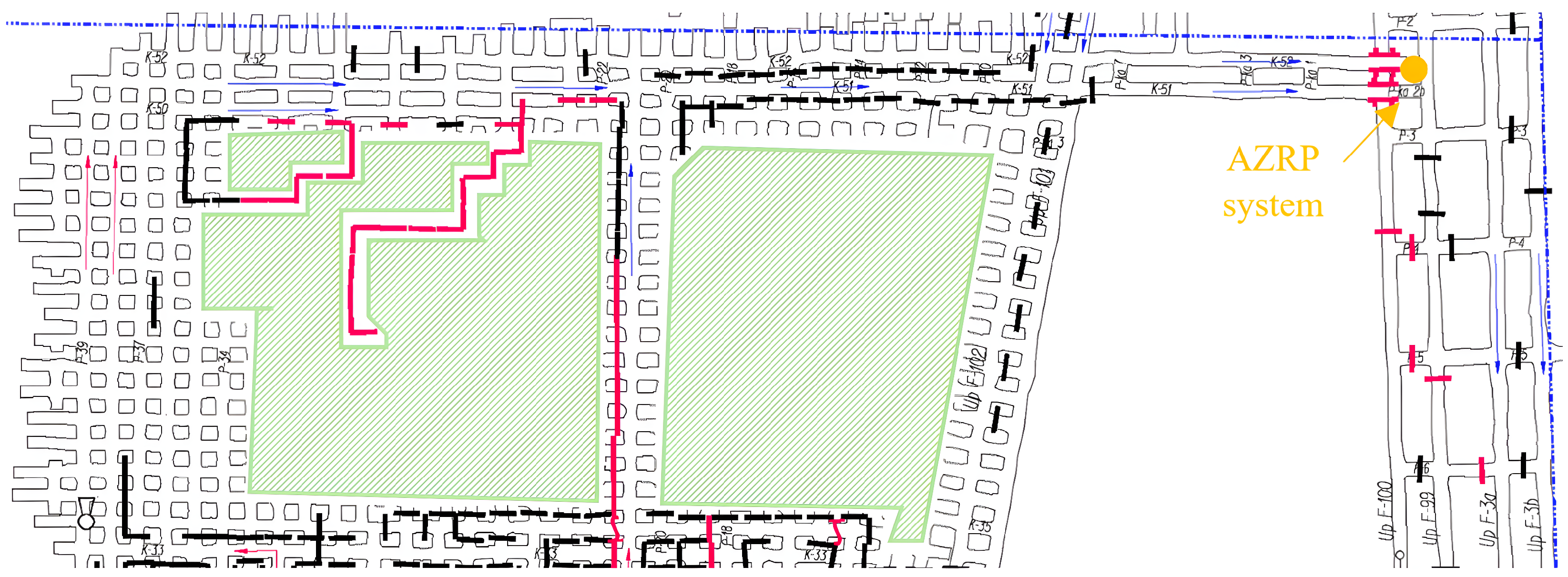
Figure 1. Measurement point locations in underground workings. Blue arrow—exhaust (return) air; red arrow—intake (fresh) air; green—goaf; red—ventilation control devices (air regulators).
Applsci 15 12781 g001
Figure 2. Built-in AZRP measuring set in a mining excavation.
Applsci 15 12781 g002
Figure 3. Boxplot of H2S concentration for each measurement day at a copper ore mine (August 2014).
Applsci 15 12781 g003
Figure 4. Boxplot of H2S concentrations for the analyzed period ± 60 min after the blast (August 2014).
Applsci 15 12781 g004
Figure 5. Boxplot of H2S concentration for each measurement day in a copper ore mine (April 2017).
Applsci 15 12781 g005
Figure 6. Boxplot of H2S concentration for the analyzed period ± 60 min from the moment of shot (April 2017).
Applsci 15 12781 g006
Figure 7. Heat map: Data analysis for August 2014.
Applsci 15 12781 g007
Figure 8. Heat map: data analysis for April 2017.
Applsci 15 12781 g008
Figure 15. Spearman rank coefficient in particular years.
Applsci 15 12781 g015
Figure 16. Comparison of H 2 S concentration decay models illustrating different ventilation efficiencies observed in the study. Left: Rapid decay ( τ 6 min). Right: Slower decay ( τ 26 min). The orange line represents the fitted exponential model, while dots represent measured data.
Applsci 15 12781 g016
Table 1. Technical specifications for H2S, CO and CH4 sensors.
ParameterH2SCOCH4
Measurement range0–200 ppm0–1000 ppm0–100%
Power supply12V DC, 10 mA
Operating temperature−20 °C to +50 °C
Humidity range0–95% (non-condensing)
ATEX classificationII M1 Ex ia I Ma
Protection ratingIP65
CommunicationRS485
Table 2. Blast times for August 2014 and April 2017.
August 2014April 2017
DayBlasting TimeDayBlasting Time
1 August 201418:063 April 201718:04
2 August 201406:204 April 201718:10
3 August 201401:065 April 201718:08
5 August 201406:156 April 201718:04
6 August 201406:177 April 201718:05
7 August 201406:058 April 201718:05
8 August 201406:1310 April 201718:11
9 August 201406:1011 April 201718:05
11 August 201418:0612 April 201718:05
12 August 201418:0713 April 201718:05
13 August 201418:0814 April 201718:03
14 August 201418:0319 April 201706:03
19 August 201406:0819 April 201718:07
20 August 201406:1120 April 201718:06
21 August 201406:1721 April 201718:07
22 August 201406:2222 April 201718:05
23 August 201406:1524 April 201718:11
25 August 201418:0925 April 201718:24
26 August 201418:1626 April 201718:04
27 August 201418:0727 April 201718:13
28 August 201418:0428 April 201718:09
28 August 201418:0929 April 201718:04
29 August 201418:06
29 August 201418:06
30 August 201418:07
30 August 201418:17
31 August 201418:05
Table 3. Descriptive statistics of H2S concentration ± 60 min around MW moments (August 2014).
StatisticH2S Sensor [ppm]
Number of observations (count)2783
Mean5.61
Standard deviation (std)3.40
Minimum (min)1.00
1st quartile (25%)3.00
Median (50%)5.00
3rd quartile (75%)8.00
Maximum (max)17.40
Table 4. Descriptive statistics of H2S concentrations ± 60 min around MW (April 2017).
StatisticH2S Sensor [ppm]
Number of observations (count)2662
Mean1.071
Standard deviation (std)1.431
Minimum (min)0.00
1st quartile (25%)0.00
Median (50%)0.00
3rd quartile (75%)2.00
Maximum (max)5.00
Table 5. H2S concentration statistics (ppm) within ±60 min of the blast.
YearPeriodMin [ppm]Mean [ppm]Max [ppm]
2014Before the blast1.0007.25517.400
After the blast1.0003.73816.000
2017Before the blast0.0000.2671.000
After the blast0.0001.8855.000
Disclaimer/Publisher’s Note: The statements, opinions and data contained in all publications are solely those of the individual author(s) and contributor(s) and not of MDPI and/or the editor(s). MDPI and/or the editor(s) disclaim responsibility for any injury to people or property resulting from any ideas, methods, instructions or products referred to in the content.