Review

Research Advances in the Distribution, Migration, Transformation, and Removal of Antibiotics in Aquatic Ecosystems

1
College of Ecology and Environment, Xinjiang University, Urumqi 830017, China
2
School of Geology and Mining Engineering, Xinjiang University, Urumqi 830046, China
*
Authors to whom correspondence should be addressed.
Appl. Sci. 2025, 15(23), 12777; https://doi.org/10.3390/app152312777 (registering DOI)
Submission received: 29 October 2025 / Revised: 24 November 2025 / Accepted: 26 November 2025 / Published: 2 December 2025

Abstract

Antibiotics are widely used in medicine, livestock and other fields, leading to increasingly prominent enrichment, transformation and potential ecological risks in the global water environment. This poses a serious threat to ecological balance and public health, making the development of efficient and economical treatment technologies a research hotspot for addressing water antibiotic pollution. This paper systematically analyzes the current status of global water antibiotic pollution, migration and transformation characteristics, and research progress in removal technologies. We summarize the main types of antibiotics in water and their spatial distribution across different global water bodies, explore their primary entry pathways into the water environment, and elaborate on transformation behaviors such as migration, adsorption and degradation, as well as residual risks to aquatic ecosystems and human health. We also focus on existing artificial removal technologies, including physical methods like adsorption and membrane separation, chemical methods centered on advanced oxidation, and biological methods utilizing microbial metabolism. And we discuss emerging technologies such as microbial fuel cells and biocatalyst remediation, along with hybrid processes, regarding their development status and application potential. Finally, we outline key challenges in practical application of current technologies, provide an outlook on future research directions and engineering applications, aiming to offer references for water antibiotic pollution control.

1. Introduction

Antibiotics play an important role in modern medicine and agriculture [1]. Since the discovery of penicillin (PEN) in the 1940s, the widespread use of antibiotics has greatly improved human health and agricultural productivity. However, the dramatic increase in the use of antibiotics has led to increasing antibiotic pollution in the global water system. Medical wastewater, livestock manure, drug residues from aquaculture, and industrial wastewater generated by pharmaceutical companies are the main pathways of antibiotics to the natural water environment [2], resulting in a potential threat to ecosystems and human health [3].
In recent years, many scholars have conducted extensive research on antibiotic pollution in water. For example, Li found that the distribution of antibiotic concentrations depends on economic, geochemical, and hydrological factors [4]. They reached this conclusion by analyzing the concentrations of 94 antibiotics in the water and sediments of 7 major rivers and 4 seas in China from 2005 to 2016 using the Meta method [4]. However, the sampling points in regions such as northwest and southwest were relatively sparsely distributed, leading to uncertainties in spatial extrapolation and global representativeness. Marie-Claire Danner outlined the full chain of potential ecological effects of antibiotics, emphasizing impacts at the microbial level and the compound effects of antibiotic cocktails, what is more, from a macro perspective, she also summarized the current state of antibiotic pollution in the global freshwater system, biological sensitivity, the emergence of resistance genes, and their potential effects on the food chain [5], but the comprehensive evaluation of the energy efficiency, cost, and by-products of emerging removal technologies was insufficient. Lu found that there is still a certain gap between some technologies being studied in the laboratory and their practical applications by the evaluation of the application of technologies such as adsorption, membrane separation, electrochemistry, and photocatalysis in the treatment of antibiotics in water [6]. However, the risk assessment of inducing, selecting, and spreading antibiotic resistance genes (ARGs) was inadequate, as was the explanation of the enrichment and removal mechanisms of ARGs by electrochemical processes. Na reviewed the sources, transmission, and risk assessment methods of antibiotic resistance in surface water [7], but their proposed priority research questions lacked specific case support, and they did not quantify the regional differences in the distribution of antibiotic resistance contributed by different agricultural activities. Elisa Kalugendo studied the seasonal dynamics and ecological risks of antibiotics in the Sabarmati River in India [8], but their sampling only covered 7 months and detected only 5 types of antibiotics, leading to incomplete assessments for the characteristics of antibiotic pollution throughout the year and the combined effects of multiple antibiotics. Abdul Qadeer conducted a “full-chain” study on antibiotic pollution in eastern China’s water bodies, but their source analysis only identified the contribution ratio of major pollution sources (6–80%) [9], without in-depth analysis of the emission characteristics (such as concentration and types) and seasonal variation patterns of antibiotics in various pollution sources (such as aquaculture wastewater and medical sewage), as well as insufficient explanation of the secondary release mechanisms of antibiotics in sediments (such as pH/temperature triggers). Moreover, academic achievements systematically studying the distribution, migration, transformation characteristics, and remediation technologies of antibiotics from a global aquatic ecology perspective remain relatively scarce.
Based on above analysis, this paper conducts extensive literature research. Rather than focusing solely on a single dimension of antibiotics (such as distribution analysis or removal technology discussion), we have constructed a full-chain analytical framework of “source-sink-effect-governance”. It systematically examines the global status and spatial distribution characteristics of antibiotic pollution, its migration and transformation mechanisms in the environment, the principles and applications of various artificial and natural removal technologies, and finally identifies current challenges and future directions. The literature integrates a large amount of the latest empirical research data from different basins and seas worldwide, particularly in China (up to 2025), involving concentration data of 94 antibiotics in 7 major rivers and 4 seas, making its conclusions more representative and reliable. In contrast, many earlier reviews or regional studies lack sufficient data scale and timeliness. Additionally, it provides a detailed analysis of key migration and transformation processes of antibiotics in aquatic environments, for example, adsorption–desorption, photolysis, hydrolysis, and biodegradation, and clearly identifies their driving factors (such as pH, temperature, etc.). This in-depth exploration of internal mechanisms provides a solid theoretical basis for accurately predicting the environmental behavior of antibiotics and developing efficient removal technologies. In summary, the strengths of this review lie in its grand systematic approach, detailed data, profound mechanisms, comprehensive and forward-looking technologies, as well as strong application orientation, offering reference for risk management and remediation strategies of antibiotic pollution in aquatic environments, thereby contributing to global water security.
Literature screening adhered to the principle of “balancing timeliness with classic works, and prioritizing relevance alongside scientific rigour”: research published within the last eight years (2017–2025) was given priority to ensure content currency, while highly cited, influential classic literature in the field was supplemented to strengthen the theoretical foundation. Sources were primarily draw from authoritative databases such as Web of Science to guarantee comprehensive and reliable coverage. Included were papers directly relevant to the mechanisms of antibiotic distribution, migration, transformation, and removal in aquatic ecosystems, which were published in core journals. Low-quality literature was rigorously excluded, including studies conducted in non-aquatic environments, those lacking systematic analysis, and those without clear experimental parameters or statistical validation.

2. Antibiotics in Aquatic Environment

Since the advent of antibiotics, they have become crucial in medicine, as well as in livestock and poultry breeding and agricultural production. According to statistics, global antibiotic consumption in livestock production reached 63,151 tonnes in 2010, and it is projected to increase by 67% by 2030 [10]. However, the metabolic rate of antibiotics in living organisms is only 10–90%; unmetabolized antibiotics enter the water environment through feces, urine, aquaculture wastewater, and other pathways. Moreover, fugitive emissions from pharmaceutical plants and waste landfills intensify the accumulation of antibiotics in surface water and groundwater [11].
Therefore, the aquatic environment serves as a major transmission medium for antibiotics. Studies have identified the main antibiotic types in aquatic environments as β-lactam, Aminoglycosides (AGs), tetracyclines (TCs), Macrolides (MA), amide alcohol (CMP), lincosamide, Quinolones (QNs), Antimicrobial Peptides (AMPs), and Sulfonamides (SAs) (Table 1).
β-lactam: Characterized by a β-internal lactam ring, it includes PEN (e.g., penicillin sodium), cephalosporins (e.g., cephalosporin C), β-lactamase inhibitors (e.g., potassium clavulanate), and non-classical β-lactam antibiotics (e.g., thiostreptomycin). Its concentration in wastewater treatment plant (WWTP) effluents can reach up to 1.988 μg/L [12].
AGs: Glycoside compounds formed by an aminol ring (aminocycline) and amino sugar molecules linked via glycosidic bonds (oxygen bridge), with common types including streptomycin (SM) sulfate and gentamicin (GM) sulfate. WWTP effluents contain tens to hundreds of ng/L of GM and tobramycin [13].
TCs: With a hydrogenated perylene core (four parallel rings) and key functional groups (phenolic hydroxyl, enol, ketone, dimethylamino, amide), it has the highest global concentration in China (exceeding 5 µg/L) [14].
MA: Composed of a 12/14/15/16-carbon macrolide ring, where cycloester ring hydroxyls condense with 1–3 amino/neutral sugars via glycosidic bonds to form alkaline glycosides. The maximum erythromycin (ERY) concentration in a Chinese lake is 98.4 ng/L [15].
Amide alcohol: Structured with a benzene ring, propylene glycol chain, and dichloroacetamide group (antibacterial activity depends on the latter two). Livestock and aquaculture are major sources, with 30–90% of florfenicol excreted via animal urine/feces [16].
QNs: Possessing a 4-quinolone nucleus (or pyrone carboxylic acid structure), with 3 carboxyl and 4 carbonyl groups (essential for antibacterial activity). It accumulates in water, sediments, and sludge; norfloxacin (NOR) residues up to 9.8 mg/kg were detected in livestock manure-amended soil [17].
AMPs: Peptide chains contain special amino acids (D-type, β-Amino, N-methyl; distinct from human protein-derived L-type amino acids) and exhibit variable environmental fates. Polymyxins, for example, adsorb to sediments, forming potential “storage pools” [18].
SAs: Synthetic antibacterial drugs based on p-aminobenzenesulfonamide, with a core structure of benzene ring (nucleus) + sulfonamide (-SO2NH2) and amino (-NH2) groups. As the top SA producer and user, China has high SA concentrations in WWTP effluents (max: sulfamethoxazole (SMX) 4000 ng/L, sulfadiazine (SDZ) 1896 ng/L, sulfadimidine (SDM) 2870.9 ng/L) [19].
Lincosamide (LCM): An alkaline glycoside formed by amino acid derivatives and sugar molecules (e.g., aminosaccharide) linked via glycosyl bonds, with concentrations related to regional human activity intensity.
Table 1. Classification of Antibiotics in the Aquatic Environment.
Antibiotic ClassesAbbreviationRepresentative DrugsMain SourcesReferences
β-Lactam penicillin (PEN), amoxicillin (AMX), ampicillin (AMP), cefuroxime, cefquinolone (CPM)chemical pharmaceuticals, microbial fermentation[20]
AminoglycosidesAGsstreptomycin (SM), gentamicin (GM), neomycin (NM), ampicillin, spectinomycinmicrobial fermentation and semi-synthetic modification[21]
TetracyclinesTCstetramycin (OXY), chlortetracycline (CTE), doxycycline (DOX) (doxycycline)natural extraction and semi-synthesis[22,23]
AmphenicolsCMPfluorfenicol, methyldisulfonatenatural extraction and chemical synthesis of microorganisms[24]
LincosamideLCMlincomycin (LCM), clindamycin (CLM) (CLM), clindamycin phosphatemicrobial fermentation and semi-synthetic modification[23]
QuinolonesQNs nalidixic acid, pipemidic acid, norfloxacin (NOR), ciprofloxacin (CIP), ofloxacin (OFX), levofloxacin (LVX)chemical synthesis [25]
Antimicrobial PeptidesAMPsvancomycin (VAN), nvancosin, daptomycin, polymyxin B (PB), polymyxin E (CT)microbial fermentation[26]
SulfonamidesSAssulfadiazine (SD), sulfamethoxazole (SMZ, sulfamethoxazole), sulfasalazine (SASP), sulfaguanidine (SG)chemical synthesis[27]
MacrolidesMAerythromycin (ERY), azithromycin (AZM), clarithromycin (CLR), acetylspiramycin (SPI)microbial fermentation[15]

3. Distribution of Antibiotics in Global Aquatic Environment

Through a comprehensive investigation of global distribution data on antibiotics in aquatic environments and geographic information system (GIS)-based analysis and visualization, the results reveal that antibiotic distribution in aquatic environments is closely associated with local factors, including economic development level, technological conditions, and population density (Figure 1). Rapid population growth, increased accessibility to pharmaceuticals [28], and rapid development of livestock and aquaculture industries have exacerbated the proliferation of antibiotics in aquatic environments [29].
Among these factors, the level of economic development has the most significant correlation with the intensity of antibiotic pollution in aquatic environments. Studies have shown that in global low- and middle-income regions, antibiotic consumption in agriculture and medical sectors accounts for a high proportion. Due to cost constraints, regulation of antibiotic use is relatively loose, making agricultural and medical wastewater the primary sources of antibiotic emissions [29]. In high-income regions, the proportion of antibiotic consumption in industrial and domestic sectors—such as medical antibiotics and antibiotic-containing daily chemical products—increases; however, pollution control in antibiotic production processes is stricter. This forms a distribution pattern of antibiotic concentrations in aquatic environments: “low-income countries ≈ lower-middle-income countries > upper-middle-income countries ≈ high-income countries” [30].
Technological conditions were identified as a key factor restricting the distribution of antibiotics in the aquatic environment, directly determining the migration efficiency of antibiotics from “emission sources” to aquatic environments. Statistics indicate that the coverage rate of WWTP in some low- and middle-income countries is less than 30% [31]. Most of these plants only provide primary or secondary treatment, and thus cannot effectively remove antibiotics. In contrast, tertiary wastewater treatment is widely implemented in most high-income countries and regions. However, due to high treatment costs, some small and medium-sized towns still have inadequate treatment, resulting in residual antibiotics entering aquatic environments.
Population factors determine the intensity of pollution discharge [32]. Analyses showed that population density and the intensity of human activities are positively correlated with antibiotic discharge amounts. For instance, in densely populated urban areas, domestic sewage and medical wastewater are centrally discharged into municipal pipe networks, leading to elevated antibiotic concentrations in water bodies. Additionally, in concentrated agricultural zones, the risk of antibiotics spreading to surrounding water bodies via aquaculture wastewater and farmland runoff is significantly higher. Notably, both types of areas form pollution hotspots, driven by the coexistence of “dense emission sources and concentrated water receptors”.
Correlation analysis of economic, technological, and population factors with the distribution of antibiotics in aquatic environments shows that the distribution of antibiotics in water bodies across different regions is the result of the coupling effect of multiple factors; among these, economic factors play a dominant role. Antibiotic pollution in developed countries generally exhibits the characteristics of “relatively low concentration and more concentrated sources”; however, affected by the combined impacts of total consumption, technology application, and population distribution, its pollution distribution still forms unique spatial and medium-related characteristics. Furthermore, as the primary sink for pollutants, water bodies play a crucial role in the migration and diffusion of antibiotics.
Based on extensive literature review, early exploration of antibiotics in aquatic environments by developed countries began in the late 1990s to early 2000s. This period also marked the start of their attention to the issue, with a primary focus on emission sources such as effluents from urban WWTPs and hospital wastewater. Gas chromatography-mass spectrometry (GC-MS) and high-performance liquid chromatography (HPLC) were the main research methods. The limit of detection (LOD) was relatively high, and only a few commonly used antibiotics were targeted. Most studies during this phase were point-source investigations. Their aim was to confirm the presence of antibiotics and conduct preliminary assessments of their environmental concentrations. For instance, several early studies in Europe and North America detected sulfonamides and tetracyclines in WWTP effluents for the first time. The concentration range of antibiotics was tens to hundreds of ng/L [33], which raised initial concerns about environmental pollution. From the mid-2000s to mid-2010s, developed countries initiated systematic monitoring and technological upgrades. With the development of high-sensitivity analytical techniques such as liquid chromatography-tandem mass spectrometry (LC-MS/MS), the LOD was significantly reduced. Lower concentrations of antibiotics could be detected, and more types could be identified. During this period, more comprehensive basin-scale monitoring networks were established by developed countries. The research focus expanded from single emission sources to surface water, groundwater, and drinking water. Antibiotics were found to be ubiquitous in the environment. However, due to the upgrading of wastewater treatment technologies (e.g., membrane bioreactor (MBR), advanced oxidation processes (AOPs)) and stricter discharge standards, the overall pollution concentration showed a decreasing trend. For example, many European countries increased the antibiotic removal rate of WWTPs to over 90% during this period. As a result, the average concentrations of sulfamethoxazole (SMX) and ciprofloxacin (CIP) in rivers decreased by approximately 30–50% in the early 2010s compared with the early 2000s [34]. Developed countries account for approximately 70% of global antibiotic usage, yet their pollution risk remains low. This is mainly due to advanced wastewater treatment technologies with a removal rate of over 90% [35]. Since the mid-2010s, the focus of developed countries on antibiotic pollution has shifted from “detection” to “ecological risk assessment” and the coexistence of antibiotic resistance genes (ARGs). Studies have found that even at low antibiotic concentrations, long-term exposure and their synergistic effects with ARGs may pose potential risks to ecosystems and human health. For example, studies in the United States and Europe have shown that although antibiotic concentrations in water bodies are low, various ARGs can still be detected in WWTP effluents. Their abundance can reach 104–105 copies/mL, and it is positively correlated with the detection of specific antibiotics [36]. Meanwhile, the emergence of emerging antibiotics (e.g., new fluoroquinolones) has posed new challenges. Studies in this phase have paid more attention to the migration and transformation in multiple media, bioaccumulation, and the construction of environmental fate models. These efforts aim to comprehensively assess the long-term impacts of antibiotic pollution. Developed countries account for approximately 70% of global antibiotic usage, but their pollution risk is low. This is mainly attributed to advanced wastewater treatment technologies with a removal rate exceeding 90% [37].
Based on nearly 30 years of research on environmental antibiotics and advancements in detection technologies in developed countries, various types of antibiotic pollution have been found in almost all their aquatic environments. In Europe, groundwater serves as the main occurrence medium for antibiotics. For example, the antibiotic concentration in groundwater in Barcelona, Spain, reached as high as 2980 ng/L. The dominant types were cephalosporins, sulfonamides, and fluoroquinolones (sampling year: 2022, method: LC-MS, LOD < 1 ng/L) [38]. In Germany, the concentration also reached 1173 ng/L, dominated by sulfonamides and tetracyclines (sampling year: 2020, method: HPLC-MS, LOD < 0.5 ng/L) [39]. Seven types of antibiotics were detected in the River Tyne in northern England, UK, with a concentration of 42,370 ng/L (sampling year: 2021, method: GC-MS, LOD < 2 ng/L) [40]. In rivers in South Wales, trimethoprim and other antibiotics were frequently detected, with sulfonamides and fluoroquinolones as the dominant types. Overall, groundwater in Europe is characterized by high antibiotic concentrations and the coexistence of multiple types. In contrast, groundwater in the United States shows a pattern of “regional concentration and type differentiation”. For example, sulfonamides were detected in some groundwater in California at concentrations ranging from 500 to 1500 ng/L, with tetracyclines as the dominant type (sampling year: 2019, method: ELISA, LOD < 5 ng/L [38]). On the other hand, among developed economies, Japan uses surface water as the main carrier of antibiotics. For instance, sulfonamides and fluoroquinolones were detected in Tokyo Bay at a concentration of 1050 ng/L (sampling year: 2021, method: LC-MS/MS, LOD < 0.1 ng/L) [41]. In summary, antibiotic pollution in developed countries is characterized by “medium concentration, regional differentiation, and local high risks”.
Literature research indicates that the global “hotspot” areas of antibiotic pollution are mainly concentrated in developing countries or emerging economies [30]. However, the awareness of antibiotic pollution in developing countries is relatively lagging. Preliminary studies were only initiated in the late 1990s to early 2000s, with a scarce number of studies. Studies during this phase were mainly concentrated in a few large cities or industrial zones. They were dominated by preliminary qualitative or semi-quantitative analyses, aiming to confirm the presence of antibiotics. Due to the lack of systematic monitoring, pollution levels may have been already high, but they were not fully recognized. For example, several studies in China in the early 2000s detected sulfonamides and fluoroquinolones in the Pearl River and Huangpu River for the first time. However, the concentration data were relatively scattered [42]. From the mid-2000s to mid-2010s, with increased international cooperation and funding input, preliminary antibiotic pollution surveys were initiated in developing countries. The research scope gradually expanded to rivers, lakes, and coastal areas, but it still focused on a few common types of antibiotics. Studies during this phase revealed the ubiquity of high antibiotic concentrations in the water bodies of developing countries. An upward trend was also observed, which is closely related to population growth, antibiotic abuse, and lagging wastewater treatment capacity. For instance, high concentrations of ciprofloxacin (up to several micrograms per liter) and sulfamethoxazole were reported in the Ganges Basin, India, in the mid-2010s. These concentrations were much higher than those in developed countries [43,44]. Since the mid-2010s, the awareness of antibiotic pollution in developing countries has gradually deepened, and the number of studies has increased significantly. Attention has been paid to antibiotic resistance, and attempts have been made to introduce more advanced analytical techniques. However, due to economic and technological constraints, monitoring networks remain incomplete, and data coverage is limited. Although some countries (e.g., China) have made significant progress in wastewater treatment, overall, the problem of antibiotic pollution in developing countries remains severe. It is characterized by high concentrations, multiple types, and wide distribution. Typical representatives include Mozambique, Uganda, Nigeria, Kenya, and South Africa in Africa, India in Asia, and Mexico in North America. The antibiotic concentrations in their water bodies are generally higher than those in developed countries, which is related to loose antibiotic management, inadequate wastewater treatment facilities, and high consumption. In some countries in southeastern and southern Africa, sulfonamides are the absolutely dominant type of antibiotics in surface water. The median concentration of sulfamethoxazole (SMX) was 286 ng/L, with a maximum of 3.32 mg/L, and the median concentration of trimethoprim (TMP) was 122 ng/L (sampling period: 2018–2022, method: LC-MS, LOD: 1–5 ng/L [30]). In the Ganges Basin, Yamuna Basin, and coastal urban waters of India, fluoroquinolones (ciprofloxacin, norfloxacin), sulfonamides (sulfamethoxazole), and macrolides (erythromycin) exhibit multi-medium pollution characteristics. The concentration of ciprofloxacin in the surface water of the Yamuna River reached 286 ng/L, which is the global upper limit for river concentrations (sampling year: 2020, method: HPLC, LOD < 0.5 ng/L) [45]. In the Mexico Valley Basin and agricultural areas along the Pacific coast, the detection rate of sulfonamides was 100%, with some sites exceeding 50 ng/L (sampling year: 2021, method: GC-MS, LOD < 2 ng/L) [30]. Uncertainties among countries include differences in the limit of detection (LOD) and variations in used methodologies. In developing countries, the LOD is often >10 ng/L, making low-concentration pollution easy to ignore. For example, simple chromatography is widely used in Africa, while some studies in Asia adopt mass spectrometry. These factors may cause data deviations [46]. Comprehensive global assessments show that the average detection rate in hotspot areas is 85%. The risk index (based on concentration and toxicity) is 3 times higher than that in developed countries. These areas are characterized by “high concentrations, significant dominant types, and diverse occurrence media”.
The distribution of antibiotics in China’s water bodies exhibits significant regional differentiation, with a wide detection range, numerous types, and large differences in abundance [30]. In Northeast China, SAs are dominant, while a small amount of lincomycin is detected in the Harbin section of the Songhua River [47]. In North China, QNs dominate; in Southwest China, QNs and TCs are the main types, with a high detection rate of norfloxacin in groundwater in karst areas [48]. Meanwhile, coastal areas are characterized by regionally aggregated composite pollution: the Bohai Rim is affected by composite pollution of SAs and MA [49]; in the Lujiang River Basin of Ningbo (Yangtze River Delta), TCs and chloramphenicols are dominant [50]; in the Haihe River Basin, composite pollution concentrations vary greatly and are concentrated in urban industrial areas [51]. In the Yangtze River Basin, concentrations in the upper reaches are higher than in the middle and lower reaches, with QNs and MA dominant in both upper and lower reaches [52]. These differences result from the combined effects of economic and industrial structure, human activities, and geographical environment.
Analysis shows that the detection limits of antibiotics in groundwater of developed countries are relatively high, while antibiotics in aquatic environments of developing countries exhibit the characteristic of multi-media co-pollution across surface water, soil, and groundwater. This difference may result from the combined effects of antibiotic discharge control intensity, wastewater treatment technology, and antibiotic use history [30,53]. From a temporal perspective, developed countries began large-scale manufacturing and application of antibiotics in the mid-20th century, entering a high-emission period approximately a decade earlier than developing countries. It was reported that from 2000 to 2018, antibiotic consumption in low- and middle-income countries surged by 76%, with their growth exhibiting a significant time lag compared to developed countries [54]. In developed countries, early discharged antibiotics migrated downward and accumulated under long-term leaching; for example, antibiotic concentrations in groundwater in Barcelona, Spain, reach as high as 2980 ng/L [38]. With the popularization of tertiary wastewater treatment technology in developed countries—for instance, 92% of urban sewage in EU countries is treated in a standardized manner—surface discharge of newly added antibiotics has decreased significantly. However, antibiotics previously accumulated in soil continue to be released into groundwater.
In developing countries, large-scale antibiotic use lags behind developed countries, and sewage treatment facility coverage is less than 30%. Currently, most regions can only implement primary or secondary treatment [31], with antibiotics still discharged into the environment. For instance, aquaculture wastewater is directly discharged into surface water bodies, leading to the accumulation of significant amounts of antibiotics in surface water and adjacent soil. Reports indicate that the ciprofloxacin concentration in the surface water of India’s Yamuna River reached 286 ng/L [45]. Notably, antibiotics in developing countries are still in the early stage of vertical migration along the “surface water-soil-groundwater” pathway. To prevent the formation of an “antibiotic cross-media penetration pollution pattern”, monitoring and control measures for antibiotics in surface water bodies of developing and low-income regions urgently require strengthening. The concentration of antibiotics, sampling Time, testing method and detection limit in each country and region are summarized in Table 2.

4. Antibiotic Pollution in Aquatic Environments

4.1. Sources of Antibiotics in Aquatic Environments

The widespread use of antibiotics in medicine, animal husbandry, and aquaculture has led to their introduction into aquatic ecosystems through various pathways, resulting in antibiotic residue accumulation and the proliferation of resistance. Primary sources include WWTPs, pharmaceutical industrial effluent, discharges from livestock and aquaculture operations, and agricultural soil leaching (Figure 2).

4.1.1. WWTPs

WWTPs, as critical nodes in urban water cycles, are traditionally designed to remove conventional pollutants via processes like activated sludge. However, they exhibit limited efficiency in eliminating trace antibiotics [55]. Water-soluble, highly polar antibiotics (e.g., SAs, β-lactams) resist effective adsorption and degradation, leading to the continual release of diverse low-concentration antibiotic mixtures. For example, SMX was detected at up to 596 ng/L in samples from WWTPs in seven Spanish cities [56]; macrolide antibiotics (e.g., clarithromycin) and SMX were frequently detected in Italian WWTPs effluents, with clarithromycin concentrations ranging from 50 to 930 ng/L [57]; in the influent of a Beijing (China) WWTPs, QNs and TCs reached concentrations as high as 1202.3 ng/L, while after traditional treatment, their effluent concentrations remained between 830.1 and 966.3 ng/L [58].

4.1.2. Pharmaceutical Industry Wastewater

The wastewater discharged by the pharmaceutical industry, especially the API manufacturing sector, constitutes a high-intensity point source of antibiotic pollution in aquatic ecosystems [59]. This wastewater can contain parent antibiotic compounds at concentrations ranging from mg/L to g/L [60]; it is characterized by high chemical oxygen demand (COD) and poor biodegradability. These properties impact the microbial community function of urban WWTPs, accelerating the enrichment and dissemination of ARGs [61]. Research show that the total concentration of AZM and two synthetic macrolide by-products in effluent from a Croatian pharmaceutical company reached 10.5 mg/L in winter and spring [62]; ciprofloxacin concentrations in wastewater from pharmaceutical factories in Patancheru, India reached as high as 31,000 μg/L [43]; and high concentrations of AMX (~54,300 ng/L) and ceftriaxone (~35,700 ng/L) were detected in the secondary treatment effluent of a large pharmaceutical park in northern China [63]. These residual antibiotics pose a continuous ecological risk to receiving water bodies.

4.1.3. Livestock and Aquaculture Farming Industry

Intensive farming is a major consumer of veterinary antibiotics. In this industry, antibiotics are used not only for treatment but also commonly in sub-therapeutic doses for disease prevention and growth promotion. Livestock and poultry manure, often applied directly to farmland as organic fertilizer, introduces substantial amounts of antibiotics (e.g., TCs, SAs, and MA) into the agricultural environment, making it a primary source of antibiotics in soil. In aquaculture, antibiotics are directly added to water to treat aquatic animals, leading to residues in water and sediment and subsequent entry into the aquatic food chain through bioaccumulation. Reports indicate that due to aquaculture activities, concentrations of TCs and SAs in surface waters such as China’s Hai River Basin and Huai River Basin ranged from 2044 to 1.3 × 10⁶ ng/L and 600 to 3.0 × 10⁵ ng/L, respectively [64]. Similarly, in wastewater samples from a Malaysian aquaculture farm, both types of antibiotics were detected, with a total concentration of 1.099 × 10⁶ ng/L [65].

4.1.4. Soil Percolation and Filtration

Soil contaminated by manure, sewage irrigation, and industrial pollution can facilitate the migration of antibiotics into aquatic ecosystems during precipitation [66]. In this process, antibiotics adsorbed to soil particles enter surrounding water bodies in dissolved form via surface runoff, causing non-point source pollution. Meanwhile, antibiotics with high water solubility and low adsorption coefficients (Koc)—such as SAs—can migrate downward through leaching under excessive irrigation or hydrodynamic conditions, polluting groundwater aquifers. Research indicates significant differences in leaching potential among antibiotic types. For example, QNs are more likely to migrate to deeper layers under high pollution, acidic conditions, and prolonged leaching [67]. In contrast, AZM exhibits strong soil adsorption (distribution coefficient up to 576 L/kg), leading to near-complete retention in surface soil (0–5 cm) during soil column leaching experiments with minimal migration to deeper layers. Conversely, SMX shows moderate mobility, with leaching depth and rate significantly influenced by soil organic matter content [68].

4.2. Migration and Transformation of Antibiotics in Aquatic Environments

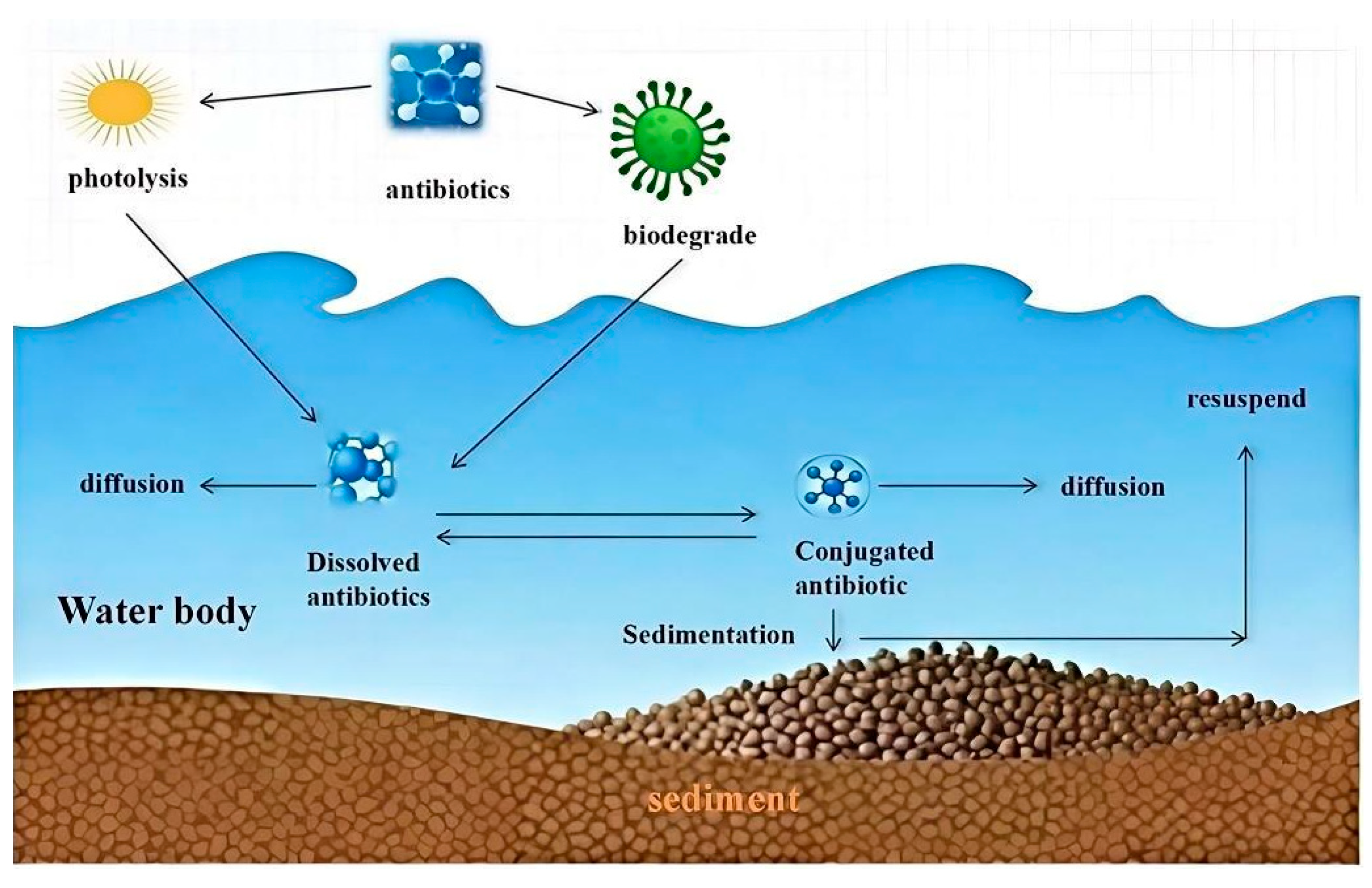
Antibiotics in aquatic ecosystems typically exist in dissolved and bound forms [69]. Dissolved antibiotics refer to free molecules directly dissolved in the water phase, which can move relatively freely via advection and diffusion with water flow. In contrast, bound antibiotics—those that have undergone adsorption—predominantly attach to suspended particles, sediments, or organic matter surfaces, resulting in significantly reduced mobility and a tendency to settle into sediments (Figure 3).
The adsorption–desorption dynamic equilibrium is a key process regulating the transformation and migration behavior of antibiotics [70], involving physical adsorption (e.g., van der Waals forces, electrostatic interactions) and chemical adsorption (e.g., hydrogen bonding, ion exchange, surface complexation) [71]. This process is also profoundly influenced by coexisting pollutants. For instance, dissolved organic matter (DOM) can alter the mobility of antibiotics by competing for adsorption sites and forming complexes. As an emerging carrier, microplastics may adsorb substantial amounts of antibiotics via their hydrophobic surfaces; it has been reported that polystyrene adsorbs macrolide antibiotics (MAs) 3–5 times more effectively than soil particles and can transport MAs over long distances [72]. Additionally, biofilms can form on the surface of microplastics, which significantly enhances the horizontal transfer efficiency of ARGs; for example, the abundance of ARGs on microplastics in recirculating aquaculture systems is 103 times higher than that in the surrounding water [73]. Heavy metal ions (e.g., Cu2+, Zn2+) can complex with antibiotics, affecting the adsorption behavior and bioavailability of antibiotics. Heavy metals and organic solvents (such as disinfectants, bactericides, and herbicides) can also induce the co-selection of ARGs. Studies have shown that the use of zinc and copper in the aquaculture industry induces the production of ARGs resistant to tetracycline and vancomycin [74]. The core mechanism lies in the tight linkage between resistance genes to bactericides (e.g., quaternary ammonium compounds) and heavy metals, and ARGs on genetic elements. Studies have shown that SDZ exhibits easy adsorption but difficult desorption [75], attributed to its amphiphilic molecular structure, which provides multiple adsorption sites, and irreversible specific adsorption that may occur post-adsorption, leading to a strong locking effect. For fluoroquinolone antibiotics such as ciprofloxacin, adsorption onto Yellow River sediments reaches equilibrium within 12 h and follows a fast-slow kinetic pattern [76]. Beyond adsorption–desorption, other physical processes—such as particle settling and resuspension driven by hydrodynamic conditions—also influence antibiotic migration pathways and ranges. For example, bound antibiotics may desorb and re-enter the dissolved phase when environmental conditions change [77]. Additionally, water advection and diffusion affect the spatiotemporal distribution of antibiotics, leading to their redistribution across environmental compartments.
Under photolysis, hydrolysis, and biodegradation, antibiotics undergo molecular structural changes or are directly degraded into carbon dioxide and water. Photolysis is categorized into direct photolysis (where antibiotic molecules directly absorb light energy, leading to chemical bond cleavage) and indirect photolysis (via reactions with reactive free radicals such as ·OH generated in water) [78]. Its efficiency is influenced by light intensity, water turbidity, water depth, and the photosensitivity of the antibiotics themselves [79]. Simulated river flume experiments (simulating river processes) have shown that in natural water bodies, photodegradation is the dominant attenuation pathway for multiple antibiotics such as sulfonamides and macrolides, with its contribution rate to overall removal exceeding 70% [80]. Water pH is also a key factor affecting photodegradation: studies have shown that erythromycin and roxithromycin exhibit the highest degradation efficiency in solutions with a pH of 7.5 [81]. Humic acid, a common photosensitive organic compound in natural water bodies, interferes with antibiotic photodegradation; sunlight simulation experiments demonstrated that humic acid addition significantly inhibits ciprofloxacin photodegradation [82]. The half-lives of parent macrolide antibiotics (MAs) range from 2.76 to 4.22 days, while the half-lives of their photodegradation products (e.g., erythromycinone) extend to 5–7 days, making these products more prone to accumulate in sediments [72].
Hydrolysis refers to chemical reactions between antibiotics and water, typically occurring in compounds with specific functional groups such as amide or ester bonds. β-lactams, MA, and SAs are particularly prone to hydrolysis, with rates strongly dependent on temperature, pH, and ion-catalyzed effects. Their hydrolysis products exhibit lower bioaccumulation potential, higher polarity, and greater water solubility compared to their parent compounds [83]. For example, cephalosporins hydrolyze in acidic, alkaline, and neutral environments [84]. Similarly, chloramphenicol and PEN degradation rates increase under alkaline conditions; notably, the β-lactam ring of PEN readily cleaves to form penicillic acid, which further decomposes into penilloic aldehyde and penillamine mediated by metal ions. Additionally, hydrolysis rates of chlortetracycline, oxytetracycline, and tetracycline vary significantly across temperatures and pH values: in the pH range 7–11, degradation rates follow the order oxytetracycline > chlortetracycline > tetracycline; at pH 5, oxytetracycline degrades faster than both chlortetracycline and tetracycline, while chlortetracycline and tetracycline degradation rates are comparable [85].
Biodegradation involves conversion via microbial metabolic activity, where microbes either directly metabolize antibiotics as carbon and energy sources using enzymes or degrade them through co-metabolism. Chen found that biodegradation removes approximately 1.33–1.88% of tetracycline [86]. The transformation of fluoroquinolone antibiotics (norfloxacin, ofloxacin, ciprofloxacin) in aquatic environments is centered on biotransformation (mediated by ligninolytic fungi). Čvančarová (2015) investigated the differences between fluoroquinolone antibiotics and their metabolites after biotransformation [87] (Table 3). Common degrading bacterial genera include Pseudomonas and Bacillus, with the process significantly influenced by microbial communities, temperature, nutrient conditions, and redox environments. In a study on biological treatment of β-lactam antibiotic production wastewater, four strains of efficient, environmentally tolerant degrading bacteria were isolated: Acinetobacter, Pseudomonas, Escherichia coli, and Bacillus [88]. The ammonia-oxidizing archaeon Nitrososphaera gargensis exhibits high degradation efficiency for sulfadimethoxine, SMX, and sulfamethoxadiazine, with mechanisms including deamination, hydroxylation, and nitrification—processes closely linked to ammonia-oxidizing activity [89].

4.3. The Impact of Antibiotics on the Ecological Environment

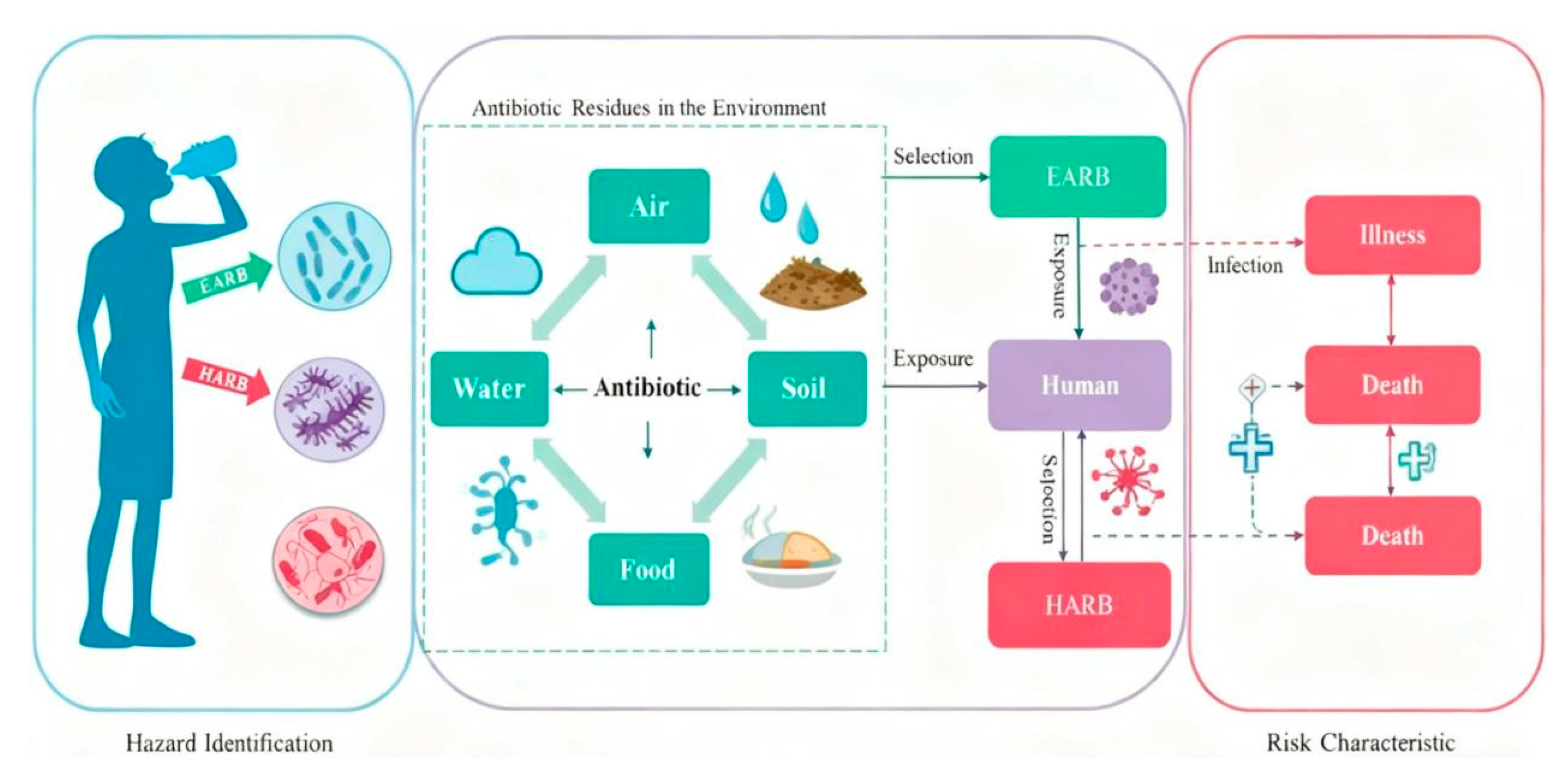
Antibiotic enrichment in aquatic environments not only impairs the growth and reproduction of aquatic animals but also hinders the normal development of aquatic plants. Ultimately, through progressive transfer along the food chain, antibiotics exert significant impacts on top-trophic-level organisms and may even alter ecosystem functions (Figure 4).
Antibiotic residues in aquatic environments exert multifaceted impacts on plants. For instance, seeds irrigated with antibiotic-contaminated wastewater exhibit inhibited germination and seedling growth, with average root length decreasing by 8 cm compared to the control group [90]. Although antibiotic concentrations in aquatic environments are relatively low, prolonged exposure to low concentrations can induce chronic toxic effects in aquatic plants [91]. More seriously, antibiotic enrichment in plants may pose potential threats to ecosystems and human health via the food chain. Beyond aquatic plants, low-dose antibiotics can cause chronic toxicity in aquatic animals, affecting their growth and reproduction. Studies have shown that SMZ reduces zebrafish embryo yield, lowering offspring survival rates from 80% at 24 h to 5% at 120 h [92]. Concurrently, in terms of resistance genes, low-concentration antibiotic residues drive the horizontal transfer of resistance genes within microbial communities via mobile genetic elements such as plasmids, integrons, and transposons, thereby forming chains of resistant bacteria transmission and exacerbating microbial antibiotic resistance [93]. For humans, exposure to antibiotics—either via drinking inadequately purified, antibiotic-contaminated water, skin contact with sewage, or inhalation of contaminated air [94]—can induce various intestinal diseases [95]. Additionally, antibiotic residues in food animals pose a serious threat to human health.
In a word, the impacts of antibiotics on the ecological environment are comprehensive and multi-level: they not only disrupt ecological balance but also jeopardize human health through food chain transmission. Therefore, it is imperative to develop diverse effective remediation strategies for antibiotics in aquatic environments to safeguard ecological security and human health.

4.4. Spread of Resistance Genes and Ecological Risks

4.4.1. Mechanism and Driving Factors of Resistance Gene Spread

The spread of ARGs in aquatic environment is a complex process driven by multiple factors, which is mainly involved in horizontal gene transfer and dynamic response of bacterial community.
The spread of ARGs primarily relies on horizontal gene transfer, a bacterial ability to acquire genetic material without reproduction. Aquatic environments provide an ideal setting for this gene exchange, which occurs through three main pathways: Conjugation: Direct bacterial contact facilitates the transfer of ARGs-carrying plasmids or mobile genetic elements from donor to recipient bacteria. This remains the predominant and most efficient ARGs transmission method in aquatic systems. The dense microbial communities within wastewater treatment plants act as massive “gene exchange reactors,” significantly accelerating this process [96]. Transformation: Bacteria absorb free DNA fragments from the environment (e.g., DNA released by lysed bacterial cells under antibiotic stress) and integrate them into their genomes [97]. This process is particularly active in DNA-rich water environments. Transduction: Using bacteriophages as vectors, ARGs are transferred from donor to recipient bacteria during infection. Although less common than conjugation, this mechanism remains crucial in specific aquatic microenvironments.
Residual antibiotics in aquatic environments, even at sub-inhibitory concentrations, exert strong selective pressure on microbial communities, enabling strains carrying specific ARGs to gain growth advantages and be enriched and amplified. Wastewater treatment plants, pharmaceutical effluents, and aquaculture wastewater are primary sources of antibiotics in the environment, making these facilities and their receiving water bodies key sources and hotspots for ARGs [98].
Mobile genetic elements such as plasmids, transposons, and integrins act as ‘transport vehicles’ for ARGs, enabling their capture, carriage, and efficient ‘jumping’ across bacterial populations. Studies demonstrate a significant positive correlation between the abundance of these elements and ARGs [99].
Heavy metals (e.g., Cu, Zn, Hg) and other pollutants can induce selective pressure, driving bacterial development of multidrug resistance. Strains resistant to heavy metals are frequently co-carried with ARGs, creating a synergistic selection effect [99].

4.4.2. Detection Strategy and Risk Assessment

The detection and risk assessment of ARGs is a systematic project, which requires the integration of multi-level technical means and multi-dimensional analytical perspectives to fully control the presence, transmission and potential hazards of ARGs in the environment.
At the detection strategy level, high-throughput quantitative PCR (qPCR) chips are first employed for rapid screening of environmental samples, enabling absolute quantification of high-risk ARGs and mobile genetic elements (MGEs). This approach is suitable for routine monitoring and trend analysis. Subsequently, metagenomic sequencing is utilized for comprehensive analysis to unbiasedly identify novel ARGs, reveal their co-occurrence relationships with MGEs, and construct host-ARGs transmission networks, particularly effective for in-depth investigations in pollution hotspots and complex matrices [100]. To correlate with actual health risks, antimicrobial susceptibility testing (AST) combined with PCR or whole-genome sequencing (WGS) is indispensable, as it directly confirms the genotype-phenotype correlation of drug resistance in clinical or aquaculture pathogen isolates. Finally, through in vitro simulation methods like conjugation transfer experiments, the frequency of horizontal gene transfer (HGT) of ARGs in environmental samples can be quantified to assess their transmission potential. Special attention should be paid to the enhanced effects of coexisting pollutants such as antibiotics, heavy metals, and microplastics on HGT through mechanisms like reactive oxygen species (ROS) induction and SOS response [100].
In risk assessment, the aforementioned detection results should be integrated into a comprehensive framework. The health risk dimension focuses on the inherent hazards of ARGs, evaluating their association with clinically critical antibiotics, presence on highly mobile MGEs, and whether their hosts are pathogenic bacteria, thereby establishing a priority control list. The environmental exposure dimension examines ARGs ‘accumulation levels in the environment, identifying exposure hotspots and key drivers through their absolute and relative abundance and spatiotemporal distribution characteristics [101]. The transmission potential dimension quantifies ARGs’ mobility, assessing diffusion risks based on genetic linkage with MGEs, experimentally measured conjugation frequencies, and the intensity of environmental factors promoting HGT.

5. Artificial Removal Technologies for Antibiotics in Aquatic Environments

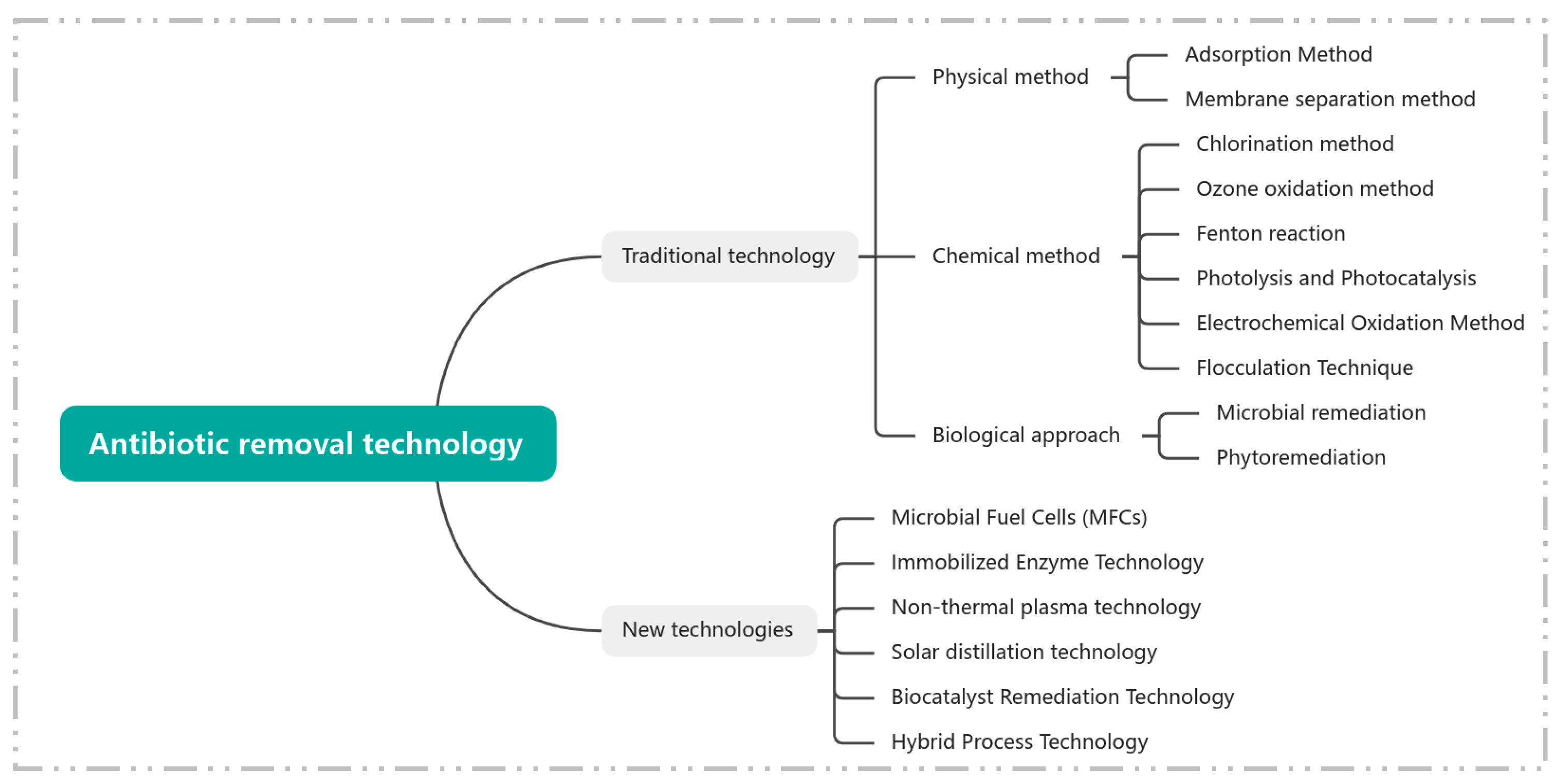
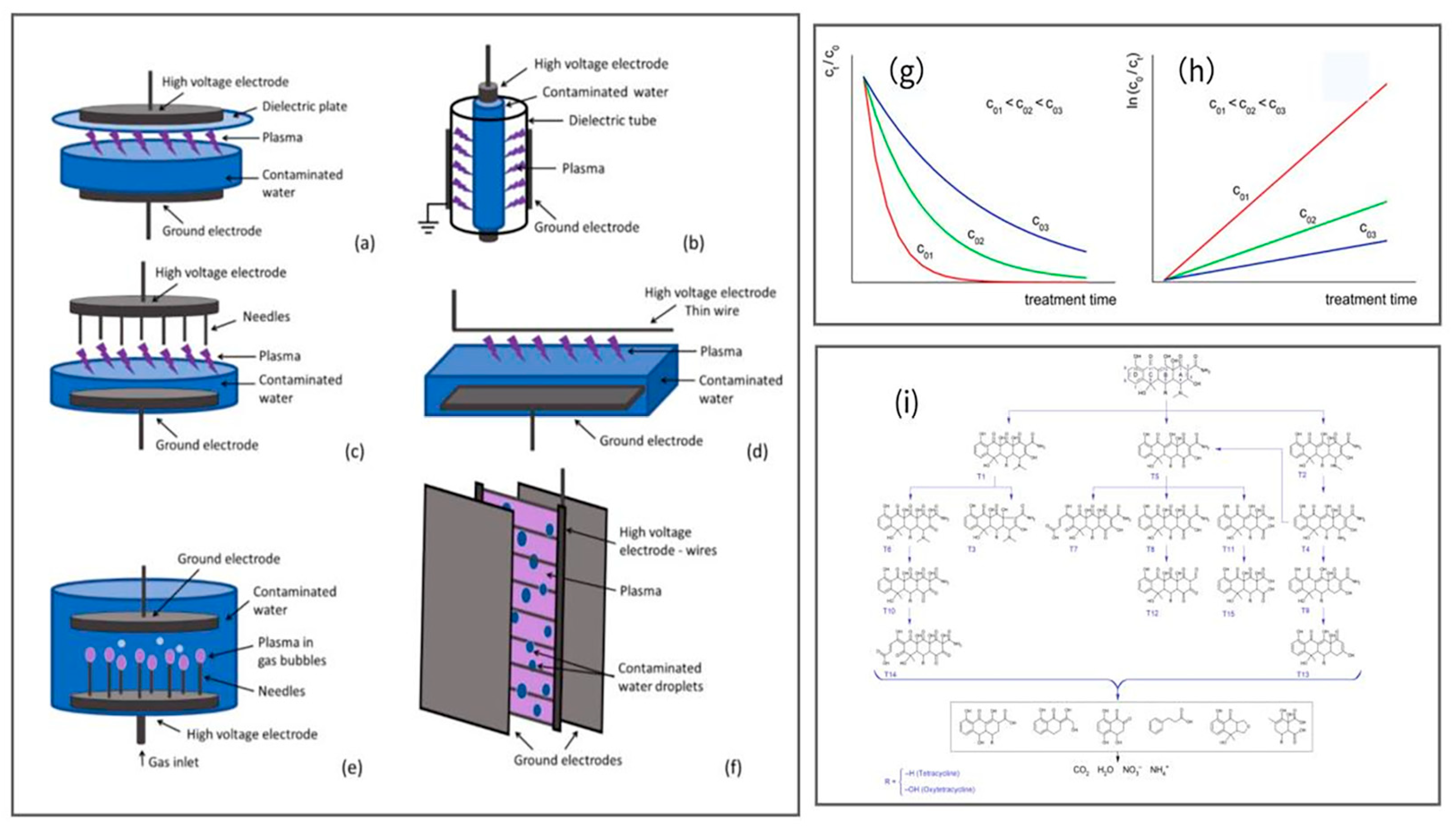
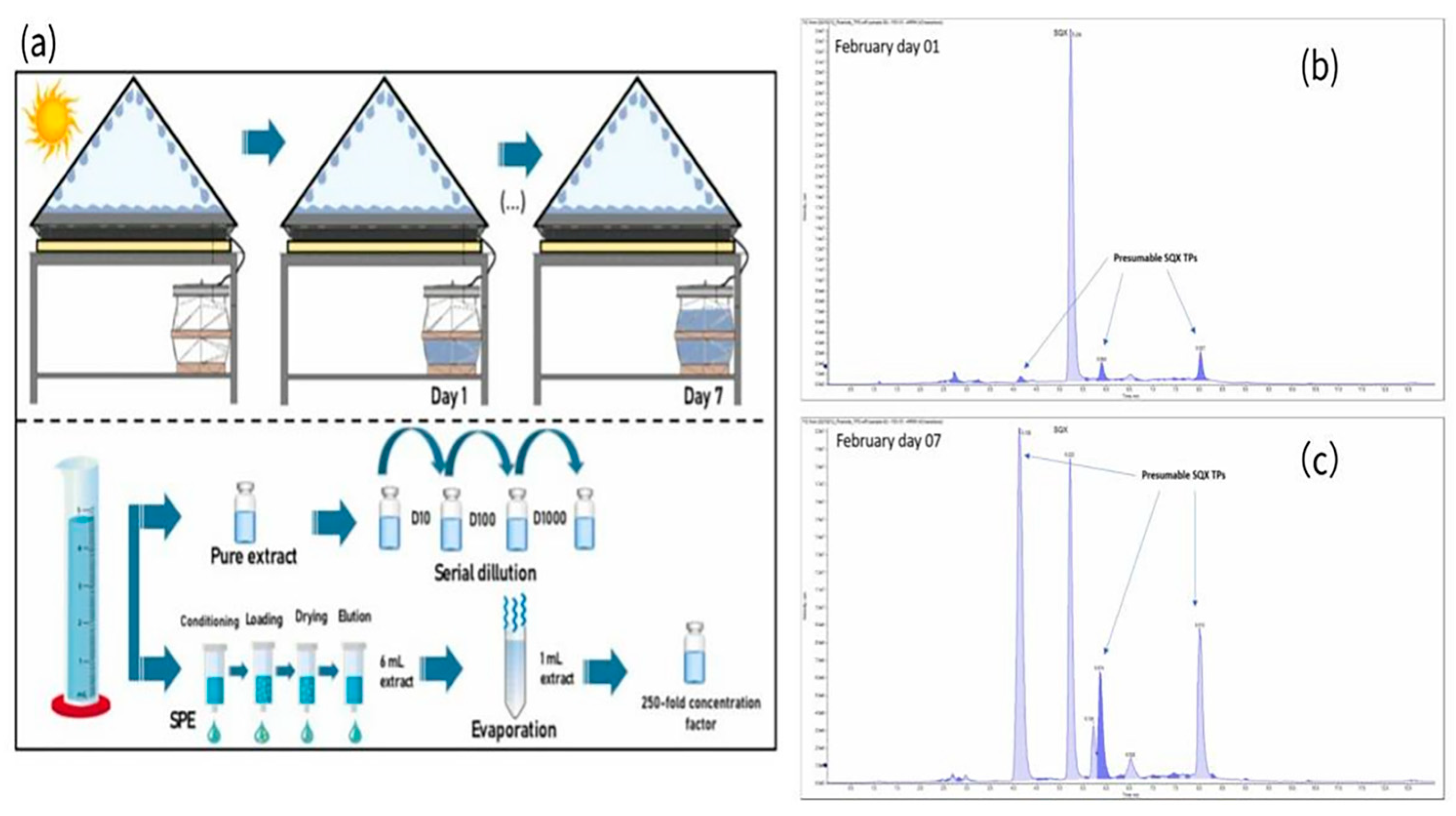
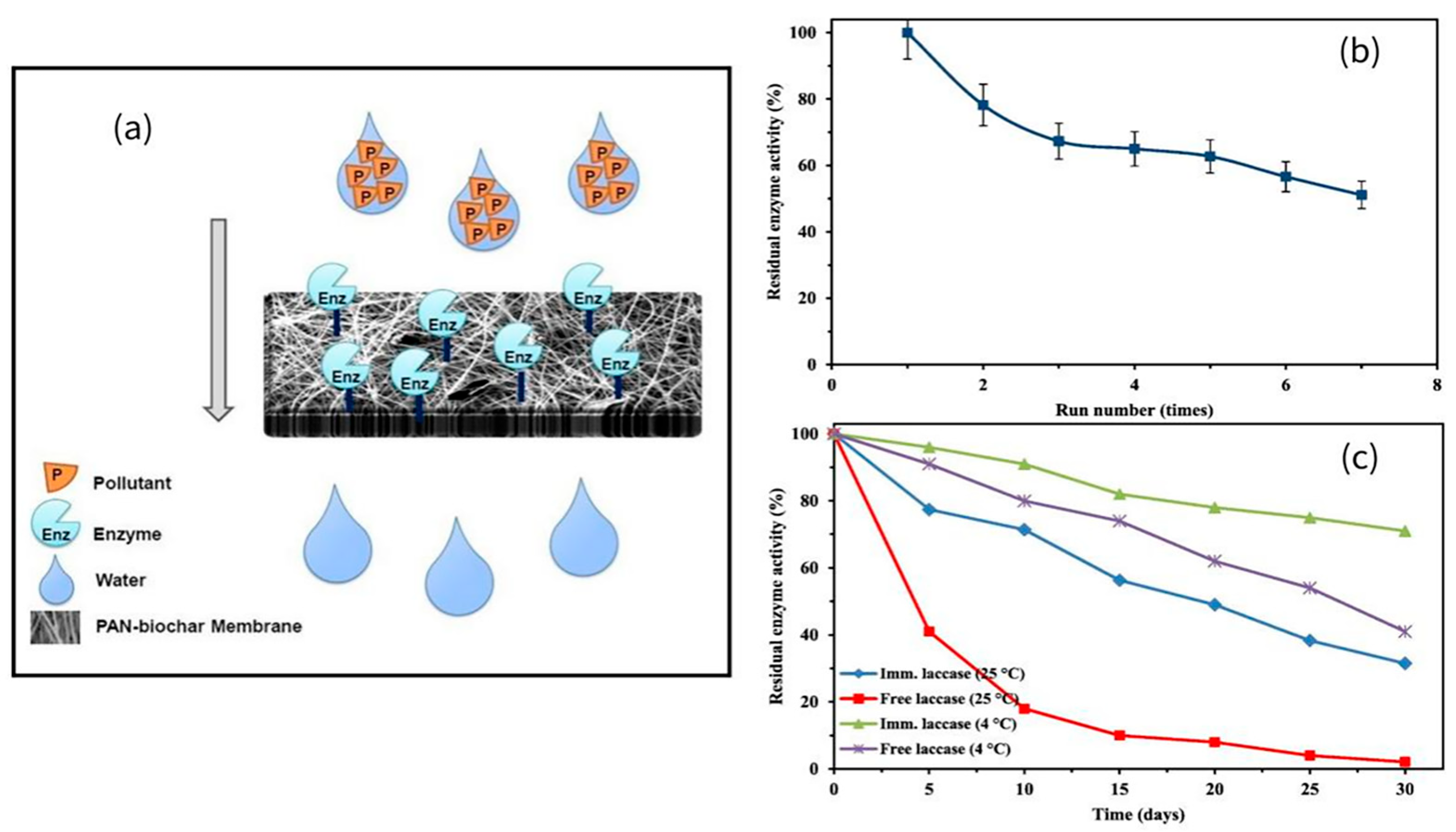
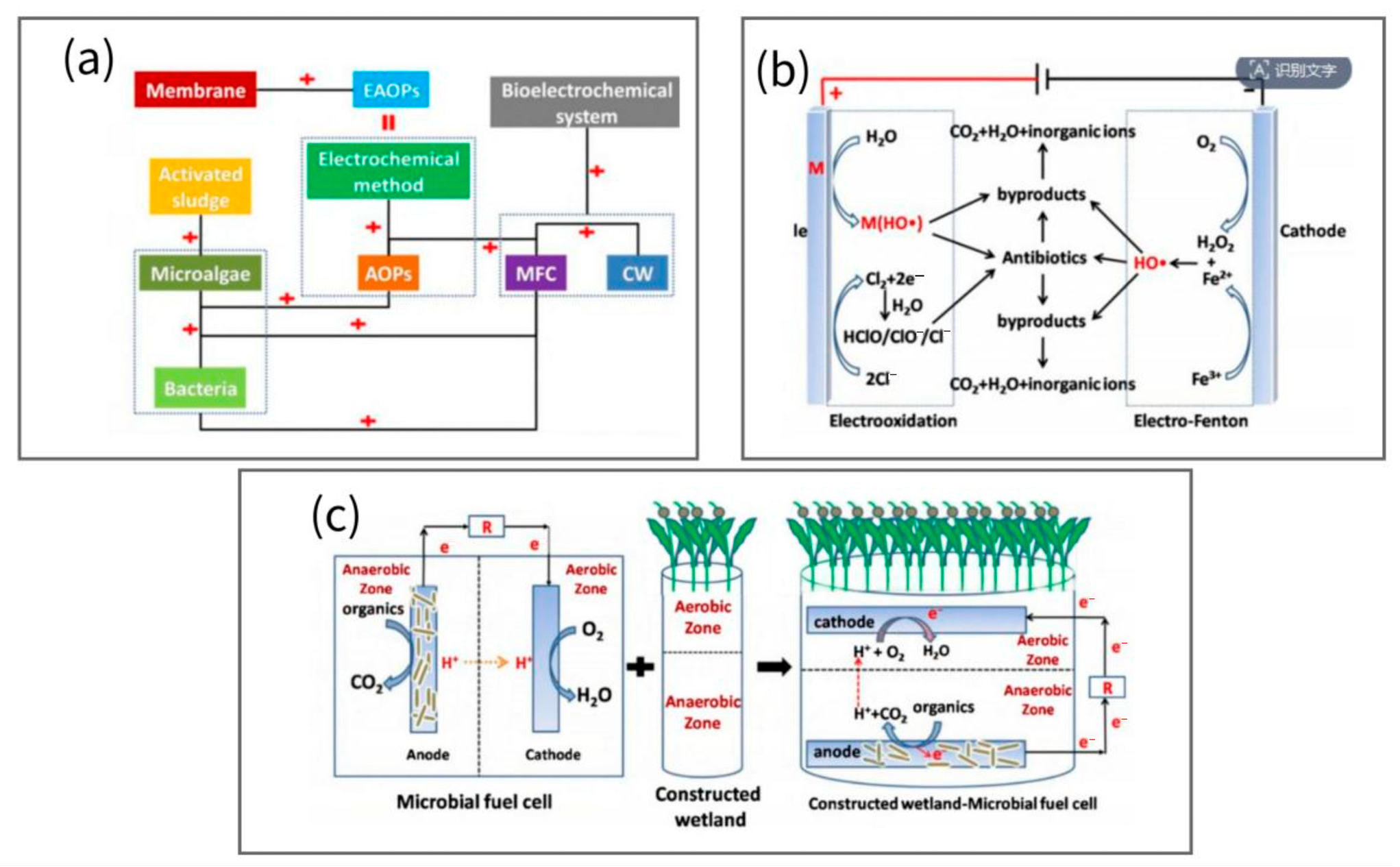
This section systematically reviews research findings on traditional physical, chemical, and biological methods for antibiotic removal from aquatic environments (Figure 5). It also delves into the applications of emerging technologies, such as microbial fuel cells (MFCs), non-thermal plasma technology, and biocatalyst remediation technology. The analysis focuses on key aspects of these artificial antibiotic removal technologies, including their working principles, advantages, practical application cases, and inherent limitations. Furthermore, it explores current challenges faced by existing technologies and delineates potential future research directions. The ultimate objective is to provide comprehensive technical insights for addressing antibiotic pollution in aquatic environments.

5.1. Factors Influencing the Efficiency of Antibiotic Removal

The efficiency of antibiotic removal is influenced by multiple factors, including antibiotic properties and aquatic environment parameters. For antibiotics, their chemical structure and physicochemical properties directly determine their specific removal pathways and efficiency in aquatic environments. For example, antibiotics containing β-lactam rings (penicillins) or ester bonds (MA) are prone to hydrolysis or enzymatic degradation. In contrast, those with aromatic rings (fluoroquinolones) or sulfonamide bonds (SAs) require strong oxidation (e.g., advanced oxidation processes (AOPs)) for structural breakdown [102]. Antibiotics with high hydrophobicity (e.g., TCs, log Kow 0.5–1.5) tend to be adsorbed or bioaccumulated, while highly hydrophilic ones (e.g., SAs, log Kow −0.5–0.5) are apt to migrate with water flow and thus require membrane separation or AOPs for removal [103].
Among aquatic ecosystem parameters, pH affects antibiotic speciation, adsorbent surface charge, and enzymatic activity. Temperature, a key aquatic environment parameter, influences chemical reaction rates and microbial activity: the activated sludge process operates optimally at 20–30 °C, whereas temperatures below 10 °C reduce microbial activity, lowering antibiotic removal rates by 30% [104]. Coexisting pollutants and dissolved organic matter (DOM) compete with antibiotics for adsorption sites or ·OH, reducing removal efficiency (e.g., humic acid decreases SMX adsorption by biochar by 25%) [105]. Heavy metal ions (e.g., Cu2+, Zn2+) impede enzyme activity (e.g., Cu2+ reduces laccase activity by 40%) or form complexes with antibiotics, hindering degradation [106]. Coexisting anions (e.g., HCO3, Cl) consume hydroxyl radicals (·OH); for example, HCO3 reacts with ·OH to produce CO32−, reducing AOP efficiency [107].

5.2. Traditional Antibiotic Removal Technologies
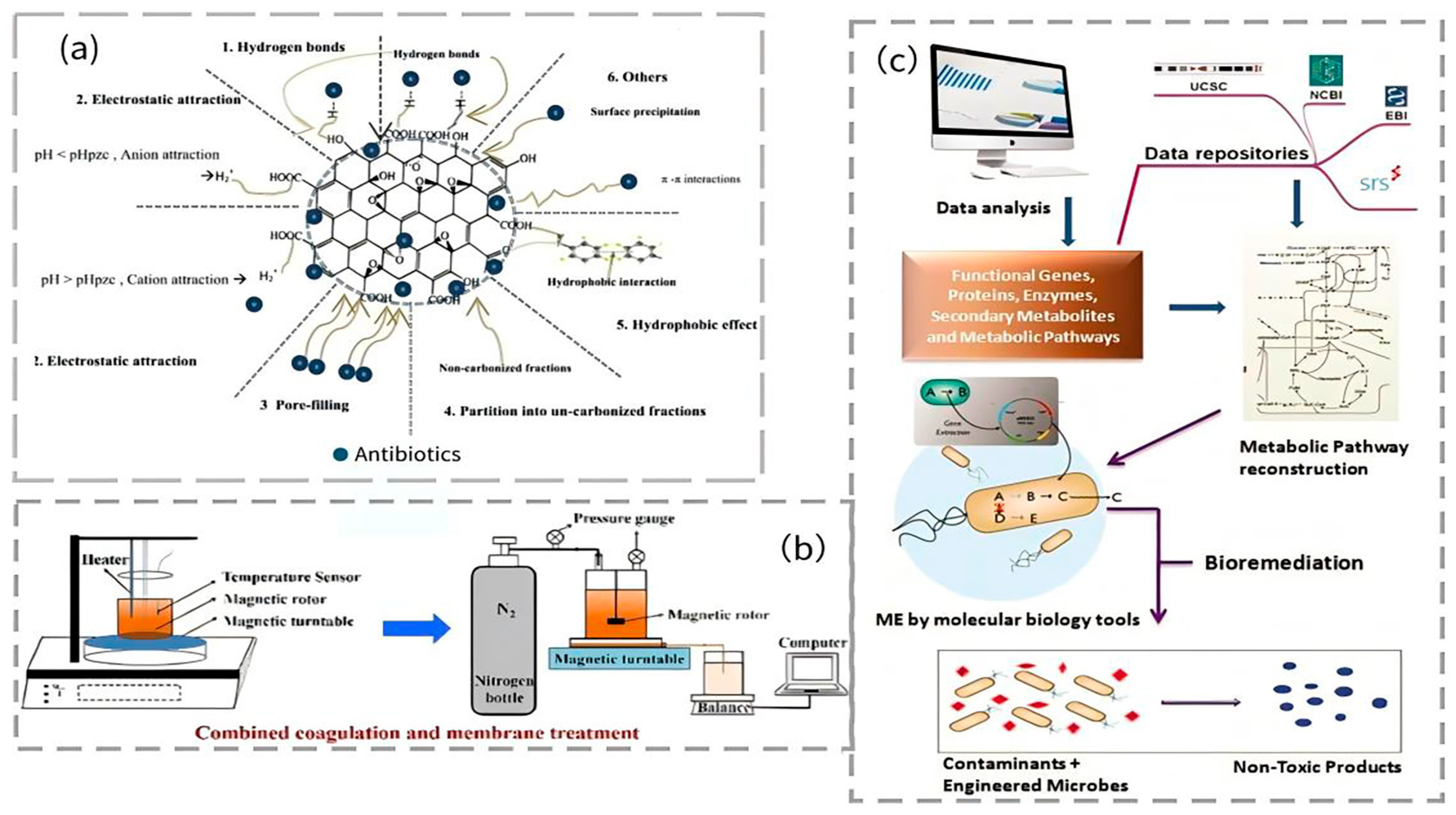
Traditional antibiotic removal systems are based on classic principles: physical separation, chemical transformation, and biodegradation. With advantages such as mature technology and controllable costs, these methods are widely applied in treating antibiotics in aquatic ecosystems. They fall into three main categories: physical, chemical, and biological. Specifically, physical methods separate antibiotics via adsorption and filtration; chemical methods destroy their molecular structures through reactions like oxidation; and biological methods utilize microbial and plant metabolic processes for degradation. These three methods are detailed in Figure 5.
Figure 5. Schematic diagram of traditional antibiotic removal methods in aquatic environments ((a) shows physical methods which is adapted from [103]; (b) shows chemical methods which is modified from [108]; and (c) shows biological methods adapted from [109]).
Applsci 15 12777 g005

5.2.1. Physical Methods

The core of physical methods involves using physical interactions between antibiotics and adsorbent/membrane materials (e.g., van der Waals forces, electrostatic interactions, pore filling) to achieve separation. Characterized by simple operation, no chemical reagent addition, and minimal impact on the original aquatic ecosystem, these methods mainly include adsorption and membrane separation.
(1)
Adsorption method
The adsorption method is a key technology for separating antibiotics from water. It leverages attractive molecular forces or chemical bonding on solid adsorbent surfaces, including van der Waals forces, hydrogen bonding, electrostatic interactions, and π-π stacking, to enrich antibiotic molecules onto the adsorbent, thereby achieving separation from water. Adsorption efficiency is influenced by adsorbent properties (specific surface area, pore structure, surface functional groups) and antibiotic physicochemical properties (molecular weight, hydrophobicity, pKa) [102]. This method offers several notable advantages for antibiotic removal: simple operation, no need for complex equipment, and ease of large-scale application; wide availability of adsorbents—including those derived from agricultural wastes and industrial residues—resulting in low costs; strong adaptability to water conditions (e.g., pH, temperature); minimal toxic by-product generation; high removal efficiency even for low-concentration antibiotics (ng/L–μg/L), making it suitable for advanced treatment of surface water and drinking water; and simultaneous removal of multiple antibiotics and other organic pollutants [103].
Activated carbon, with its high specific surface area and abundant surface functional groups, achieves a 90% removal rate for both imidazole and sulfonamide antibiotics [110]. Biochar derived from pomelo peel exhibits an adsorption capacity of 3.31 mg/g for ciprofloxacin at 20 °C and pH = 6 [111], with a removal rate exceeding 90% within 60 min. The core mechanism involves two key interactions: hydrogen bonding between hydroxyl groups on the biochar surface and the antibiotic piperazine ring, and π-π stacking. Notably, pomelo peel-based biochar costs only 1/5 of commercial activated carbon, offering significant economic advantages.
Adsorption demonstrates remarkable efficacy in eliminating ARGs. Research indicates that various adsorbents can effectively remove both free ARGs and antibiotic-resistant bacteria (ARBs) from the environment. For instance, bio-based adsorbents such as DEAE-C achieve up to 99% removal of free ARGs within 60 min, maintaining over 90% efficiency even after multiple cycles [98].
However, the adsorption method has inherent limitations in antibiotic removal. Coexisting substances in water, such as DOM and heavy metal ions, compete with antibiotics for adsorption sites, reducing efficiency. For example, humic acid can decrease the adsorption rate of SMX on biochar by 20–30% [105]. Additionally, it exhibits poor adsorption performance for strongly hydrophilic, small-molecular-weight antibiotics such as SAs [112]. Adsorbents require regeneration (e.g., pyrolysis, chemical elution) upon saturation; however, the regeneration process carries a risk of secondary pollution and an inevitable decline in adsorption efficiency.
(2)
Membrane separation
Membrane separation achieves antibiotic retention via the membrane’s pore size screening or charge repulsion effects [102]. Based on pore size differences, it is classified into microfiltration (MF, 0.1–1 μm), ultrafiltration (UF, 0.01–0.1 μm), nanofiltration (NF, 1–10 nm), and reverse osmosis (RO, < 1 nm). Among these, nanofiltration and reverse osmosis exhibit the best retention of small-molecular-weight antibiotics (200–500 Da). This method offers high separation efficiency, effectively intercepting various antibiotics—notably, nanofiltration and reverse osmosis achieve >90% removal of refractory antibiotics. It requires no chemical reagents, avoiding secondary pollution and ensuring stable effluent quality. Additionally, it enables continuous operation, features high operational automation, and is suitable for large-scale engineering applications.
It has been reported that the “nanofiltration-reverse osmosis” dual-membrane process achieves retention rates of 99.3% and 81.9% for SDZ and oxytetracycline (OTC) in pharmaceutical wastewater, respectively [108], with the effluent meeting the Discharge Standard of Water Pollutants for Pharmaceutical Industry (GB 21903-2008). Specifically, its removal rates for PEN, chlortetracycline, SMX, and norfloxacin are 97.15%, 96.10%, 90.07%, and 63.87%, respectively. Additionally, the membrane module effectively intercepts antibiotic-resistant bacteria in activated sludge, reducing the risk of antibiotic resistance in effluent [113].
Membrane separation not only physically removes free ARGs fragments but also simultaneously traps bacteria carrying resistance genes, thereby blocking the horizontal transfer of mobile elements such as plasmids and transposons. This technology is particularly suitable for high-concentration ARGs discharge scenarios like hospital wastewater and aquaculture effluent. When combined with advanced oxidation processes, it forms a multi-level barrier control system from source to end, providing an engineered solution to reduce ARGs transmission risks in aquatic environments [98].
However, membrane modules incur high costs—particularly nanofiltration and reverse osmosis membranes, which require substantial initial investment. Additionally, membrane fouling (e.g., colloidal, biological, and organic fouling) is prone to occur during operation, reducing membrane flux and necessitating frequent cleaning or module replacement, thereby increasing operating costs.

5.2.2. Chemical Methods

Chemical methods destroy antibiotic molecular structures via chemical reactions, converting them into non-toxic or low-toxic substances. Their core involves using chemical oxidants and catalysts to generate highly active species (e.g., hydroxyl radicals, active chlorine) for oxidative degradation or structural disruption of antibiotics. As antibiotic degradation approaches, these methods offer high removal efficiency and rapid reaction rates, with common types including ozone oxidation, AOPs (e.g., Fenton reaction), and chlorination.
(1)
Chlorination method
Chlorination uses chlorine-containing oxidants (e.g., Cl2, ClO2, NaClO) to oxidatively attack functional groups such as amino and hydroxyl groups, converting antibiotic molecules into less toxic, readily biodegradable substances [114]. Oxidizing capacity depends on the oxidant’s standard redox potential, in the order: hypochlorite (E0 = 1.48 V) > Cl2 (E0 = 1.36 V) > ClO2 (E0 = 0.95 V) [115].
This method offers notable advantages: mature process, simple operation, low oxidant cost, and ease of storage/transportation. It is highly effective for removing antibiotics from low-organic-load water, particularly wastewater containing β-lactam and fluoroquinolone antibiotics (e.g., ciprofloxacin, norfloxacin, levofloxacin) [116]. For example, at 20 mg/L active chlorine, pH = 7.0, and 25 °C, 100% of ciprofloxacin and norfloxacin were removed within 30 min, with 75% removal of levofloxacin [116]. Li reported experiments treating chloramphenicol-containing wastewater with Cl2 and ClO2: at 4.0 mg/L Cl2 and 2.0 mg/L ClO2, chloramphenicol removal rates reached 76% and 52%, respectively [117]. After 160 min, three disinfection by-products (DBPs) (chloroform, bromodichloromethane, dibromochloromethane) were generated at 7.7 μg/L, 0.76 μg/L, and 0.39 μg/L—all below drinking water health standard limits.
As a common water disinfection technology, chlorination demonstrates partial effectiveness against ARGs, though its efficacy is influenced by multiple factors and has inherent limitations. Chlorine (including free chlorine and chloramines) disrupts microbial structures and functions through chemical reactions with nucleic acid components in ARGs, thereby reducing ARG abundance in water. Studies indicate that under appropriate dosage, contact time, and pH conditions, chlorination can significantly inactivate various ARGs—including SAs, TCs, and β-lactams—particularly effective in removing both free ARGs and those adsorbed on suspended particles [118].
However, a key concern with chlorination is the formation of highly carcinogenic DBPs, including trihalomethanes and haloacetic acids. This issue is exacerbated by waterborne precursors such as humus and amino acids, which significantly increase by-product concentrations. Another limitation is its restricted oxidation capacity for antibiotics with stable molecular frameworks—such as those containing benzene rings or heterocyclic rings (e.g., TCs, SAs)—leading to incomplete degradation. Water pH also has a notable impact: oxidation efficiency is higher under acidic conditions but exacerbates equipment corrosion, while alkaline conditions promote the formation of more toxic by-products (e.g., chloramine). Additionally, chlorination is susceptible to waterborne reducing substances (e.g., sulfide, nitrite), which react with and consume oxidants, reducing antibiotic removal efficiency [114].
(2)
Ozone oxidation
Ozone (O3, redox potential E0 = 2.07 V) is a strong oxidant that degrades antibiotics via direct and indirect oxidation. Direct oxidation involves targeted attacks: O3 specifically binds to and cleaves aromatic bonds, carbon-carbon double bonds (C=C), and functional groups containing nitrogen, sulfur, phosphorus, or other heteroatoms, disrupting structural integrity. Indirect oxidation involves a multi-step sequence: O3 first reacts with hydroxyl ions (OH) in water to generate active species (e.g., superoxide radicals (HO2), ozone radicals (O3)), which then convert to hydroxyl radicals (·OH) that non-selectively oxidize antibiotic molecules [119].
This technology offers advantages including strong oxidizing capacity (degrading most antibiotic types), rapid reaction rates (completing degradation within tens of minutes), easy decomposition of ozone into oxygen (avoiding secondary pollution), and simultaneous removal of odor, color, and other organic pollutants in aquatic ecosystems. Studies show that 79.9% of cephalosporins (50 mg/L) were degraded within 120 min using ozone (flow rate 0.6 L/min), where O3 directly attacks the β-lactam ring, opening it and converting it to low-toxicity carboxylic acids [120].
Ozone oxidation demonstrates significant efficacy in degrading ARGs, primarily through direct oxidative action that disrupts microbial cell structures and ARGs’ nucleic acid components, thereby effectively reducing their abundance. Studies indicate that under optimal dosing conditions (e.g., 2.0–60 mg/L), ozone oxidation achieves removal rates of 0.22–2.80 log (i.e., 90–99%) for multiple typical ARGs (including tetA, tetC, sulI, sulII, and blaTEM-1), with effective removal of both cellular and free ARGs. Elevated pH levels and lower temperatures generally enhance ARGs removal efficiency [121].
However, a key challenge of ozone oxidation technology is its low gas-to-liquid mass transfer efficiency (0.1–0.5 h-1), which necessitates complex aeration systems. Coupled with the high cost of ozone production (approximately ¥1.5–3 per kg), these systems make the technology uneconomical and impractical for large-scale treatment of low-concentration antibiotic wastewater. Another critical concern is the potential formation of chlorine-containing DBPs (e.g., chloroform) when treating chlorine-containing antibiotics such as chloramphenicol, increasing health risks [117].
(3)
Fenton reaction
The Fenton method generates ·OH via the reaction of Fe2+ with H2O2, where ·OH oxidatively degrades antibiotics (reaction: Fe2+ + H2O2 → Fe3+ + OH + ·OH) [122]. The photo-Fenton method introduces ultraviolet (UV) or visible light to promote Fe3+ reduction to Fe2+, generating additional ·OH (reaction: FeOH2+ + hv → Fe2+ + ·OH) [123]. The electro-Fenton process further enhances oxidation efficiency by efficiently producing heterogeneous ·OH using electrode materials such as boron-doped diamond (BDD) electrodes.
The Fenton reaction offers notable advantages for antibiotic degradation, including mild reaction conditions (typically room temperature and acidic conditions) and low-cost, readily available reagents (Fe2+ and H2O2), enabling full degradation of various refractory antibiotics. For example, Gupta and Garg achieved 70% ciprofloxacin removal within 60 min at pH 3.0, 30 °C, and a H2O2-to-Fe2+ molar ratio of 10 [124]. Jain reported complete degradation of three β-lactam antibiotics (AMX, AMP, cloxacillin) within 2 min under conditions of pH 3, H2O2-to-COD molar ratio of 2.0, and H2O2-to-Fe2+ molar ratio of 50; degradation products showed no antibacterial activity, with significantly reduced toxicity to E. coli [125]. Fenton and modified Fenton processes can effectively degrade ARGs under optimal conditions. Under optimized conditions, typical tetracycline ARGs (e.g., tetE, tetL) and 16S rRNA are significantly reduced simultaneously [118].
However, the Fenton reaction requires an acidic environment (pH 2–4), necessitating pH adjustment of water in practical applications. Additionally, it generates iron-containing sludge that requires post-treatment and is prone to causing secondary pollution. Furthermore, the reagent H2O2 exhibits poor stability and decomposes easily, requiring strict on-site preparation or storage conditions. These factors collectively restrict its application in antibiotic removal from water.
(4)
Photolysis and photocatalysis
Photolysis involves antibiotics absorbing light energy (from artificial or natural sources) via illumination, triggering bond cleavage, isomerization, and other reactions. This converts antibiotics into intermediates, which are further hydrolyzed into non-toxic substances. Antibiotic photolysis technologies include three types: direct photolysis, indirect photolysis, and self-sensitized photolysis [126]. Specifically, direct photolysis refers to antibiotic self-decomposition upon light energy absorption; indirect photolysis involves waterborne photosensitive substances absorbing light to generate reactive oxygen species (e.g., 1O2, ·OH) that oxidize antibiotics; and self-sensitized photolysis occurs when antibiotics themselves absorb light to produce reactive oxygen species capable of degrading them. Photocatalysis builds on photolysis by incorporating semiconductor catalysts (e.g., TiO2, ZnO). These catalysts absorb light energy to generate electron-hole pairs: electrons react with oxygen to form O2, while holes react with water to produce ·OH, which then oxidatively degrade antibiotics [127].
This technology uses solar energy or low-cost artificial light sources, featuring low energy consumption and environmental friendliness. It requires no chemical reagents (or only small amounts of catalysts), resulting in low secondary pollution risk. Additionally, it can degrade various antibiotics, with high effectiveness for those containing photosensitive groups (e.g., benzene rings, carbonyl groups). Direct photolysis using UV radiation achieves 60% ciprofloxacin removal after 120 min [128]. When ZnO and TiO2 are used as catalysts, complete chloramphenicol degradation is achieved within 90 min under conditions of UV wavelength 320–400 nm, pH = 5, catalyst dosage 2 g/L, and temperature 25 °C [127]. Photolysis and photocatalysis demonstrate remarkable efficacy in degrading ARGs. Under UV or visible light irradiation, these processes directly cleave ARGs, particularly exhibiting rapid removal of photosensitive genes. For instance, UV photolysis achieves over 90% removal rate for the sul1 gene [129].
Photolysis efficiency decreases drastically at night or on cloudy days due to its dependence on light conditions, limiting its applicability in practical scenarios. Suspended solids and color in water block light transmission, reducing light utilization efficiency. Additionally, photolysis products of some antibiotics may be toxic; for example, sulfonamide antibiotic photolysis can generate carcinogenic aromatic amines [126].
(5)
Electrochemical oxidation process
The electrochemical oxidation process degrades antibiotics via anodic oxidation. Under energized conditions, anode materials (e.g., TiO2, graphite, BDD electrodes) generate ·OH and other reactive species. Direct oxidation involves antibiotic adsorption on the anode surface, followed by degradation via electron transfer. Indirect oxidation occurs when anode-generated reactive species (e.g., Cl2, O3, H2O2) oxidize antibiotics in water. Due to its high oxygen evolution overpotential, the BDD electrode efficiently generates ·OH (reaction: BDD + H2O → BDD (·OH) ads + H+ + e) [130].
Characterized by strong oxidizing capacity, this technology degrades numerous refractory antibiotics. It requires no chemical reagents (or only small amounts of electrolyte) to be added, resulting in minimal secondary pollution. Furthermore, it offers high controllability—a notable advantage—where degradation efficiency can be enhanced by adjusting parameters such as current and voltage [131].
Yan reported an electrochemical oxidation method utilizing electro-generated active chlorine for antibiotic degradation [132]. The experiment was conducted under the following conditions: 0.05 mol/L sodium chloride as the electrolyte and titanium/iridium dioxide (Ti/IrO2) as the anode material. Under these conditions, the degradation rates of ciprofloxacin (CIP) and norfloxacin (NOR) reached 100%, while that of levofloxacin (LEV) reached 75%. Fabiańska used a BDD electrode as the anode to treat SMX-containing simulated wastewater [130]. Under specific conditions (current density 40 mA/cm2, 0.1 mol/L Na2SO4 as the electrolyte, pH = 7.0), 100% SMX removal was achieved within 60 min. In this reaction, ·OH generated by the BDD electrode non-selectively oxidizes the amino and sulfonamide groups in SMX molecules, which are ultimately converted into CO2 and H2O. This technology demonstrates high efficacy in deactivating multiple representative ARGs, including sul1, tetA, and blaTEM-1. By optimizing current density, electrode materials, and electrolyte conditions, it achieves a 2–4 log reduction rate, effective against both free and intracellular ARGs [121].
However, electrode costs—particularly for BDD electrodes—are relatively high, resulting in substantial initial investment. When water conductivity is low, electrolytes (e.g., NaCl, Na2SO4) must be added, increasing operating costs. Additionally, the anode is prone to passivation or contamination, reducing its service life. For wastewater with low antibiotic concentrations, treatment costs are uncompetitive.
(6)
Flocculation process
The flocculation process removes antibiotics from water via gravity sedimentation. This is achieved by adding coagulants (e.g., Al3+, Fe3+, chitosan) or flocculants to induce floc formation between antibiotics and the added agents in aqueous solutions. Functional groups in antibiotic molecules (e.g., carboxyl, amino groups) either form complexes with metal ions or are encapsulated by flocs via charge neutralization.
The process offers advantages including simple equipment (e.g., sedimentation tanks, clarification tanks), low operating costs, broad application scope (simultaneously removing suspended solids, colloids, and certain heavy metals), and relatively high removal efficiency for hydrophobic antibiotics such as TCs. Guo reported that coagulation of tetracycline-containing wastewater with polyaluminum chloride (PAC) forms flocs within 30 min, achieving 85% tetracycline removal [106]. This relies mainly on complexation between Al3+ and tetracycline hydroxyl groups, and floc sweep flocculation. Jain used moderately hydrophobic chitosan (MHC20) to treat pharmaceutical wastewater containing 10 mg/L AMX: MHC20 binds to AMX’s benzene ring via hydrophobic interactions, forming loose flocs and achieving 92% removal [125]. Li added 1 mmol/L FeCl3 and 2 mmol/L Ca(OH)2 to water contaminated with 5 mg/L SMX, inducing ettringite (3CaO·Al2O3·3CaSO4·32H2O) formation; SMX was encapsulated in ettringite’s crystal structure, resulting in 78% removal [133].
The flocculation process effectively removes ARGs from water through mechanisms including charge neutralization, adsorption bridging, and net sweeping. It particularly demonstrates remarkable removal efficiency (1–2 log) for cellular ARGs adsorbed on suspended solids (SS) or encapsulated within microbial flocs [134].
However, the flocculation process has several limitations. First, it achieves low removal rates (<60% typically) for hydrophilic antibiotics (e.g., SAs, fluoroquinolones). Second, it generates large amounts of chemical sludge (containing antibiotics) requiring harmless disposal (e.g., incineration, landfilling); otherwise, secondary release risks arise. Third, pH significantly affects performance: metal ions hydrolyze readily under acidic conditions, while flocs dissolve easily under alkaline conditions, resulting in a narrow optimal pH range (6–8).

5.2.3. Biological Methods

Biological methods utilize the metabolic activities of microorganisms or plants to decompose antibiotic molecules into non-toxic or low-toxic substances. They offer advantages including low cost, environmental friendliness, and no secondary pollution.
(1)
Microbial remediation
Microbial remediation utilizes enzymes produced by microorganisms (e.g., bacteria, fungi, algae)—including oxidoreductases, hydrolases, and oxygenases—to degrade antibiotics [109]. Specifically, these enzymes break chemical bonds in antibiotic molecules (e.g., β-lactam rings, ester bonds, amino groups) via hydrolysis, oxidation, reduction, and dealkylation, achieving antibiotic degradation.
Microbial degradation capacity depends on microbial metabolic pathways, enzyme activities, and environmental conditions (temperature, pH, dissolved oxygen). This technology offers low cost, as it uses natural microbial communities or screened high-efficiency degrading strains without requiring large quantities of chemical reagents [135]. It is environmentally friendly and free of secondary pollution, primarily because its degradation products are mostly CO2, H2O, and small-molecule organics. Additionally, it has a wide application range—suitable for both in situ and ex situ conditions—and can simultaneously degrade multiple antibiotics and other organic pollutants.
Manasfi used two fungi, Trichoderma harzanium (T. harzanium) and Trichoderma asperellum (T. asperellum), to degrade CIP and ofloxacin (OFL) [136]. Under conditions of 400 mg/L antibiotic concentration, 28 °C temperature, and dark culture, T. harzanium achieved 81% CIP removal after 13 days, while both Trichoderma strains achieved 40% OFL removal. Xiong used Chlorella pyrenoidosa (C. pyrenoidosa) and Microcystis aeruginosa to treat wastewater containing multiple antibiotics (erythromycin, spiramycin, AMX) [100]. Under conditions of 50 ng/L–1 mg/L antibiotic concentration, 25 °C temperature, and 4500 lux light intensity, the algae achieved 12.5–33.6% removal of various antibiotics after 7 days.
However, microbial remediation exhibits a slow degradation rate (typically several days to several weeks) and high susceptibility to environmental conditions [109]. Specifically, low temperatures (<15 °C) and extreme pH values (<5 or >9) inhibit microbial activity. Additionally, its degradation efficiency for refractory antibiotics (e.g., fluoroquinolones, TCs) is limited. Another concern is that microorganisms may generate ARGs via horizontal gene transfer, increasing environmental risks.
(2)
Phytoremediation
Phytoremediation removes antibiotics from water via plant absorption, transportation, metabolism, and the synergistic effect of rhizosphere microorganisms. Plants absorb antibiotics through their roots, translocate them to tissues (e.g., stems, leaves), and convert them into non-toxic substances via enzymatic reactions (e.g., oxidation, reduction, conjugation) [101]. Meanwhile, plant root exudates (e.g., organic acids, amino acids) promote the growth of rhizosphere microorganisms, which in turn further degrade antibiotics. Aquatic plants (e.g., Vetiveria zizanioides, Pistia stratiotes) are widely used for antibiotic removal due to their well-developed roots and high biomass. Phytoremediation offers advantages including low cost and simple operation/maintenance; antibiotics can be converted into non-toxic substances within plants or volatilized via transpiration. Panja reported over 90% ciprofloxacin removal from contaminated water using vetiver grass after 30 days, under conditions of 10 mg/L antibiotic concentration, 25 ± 3 °C, and 12 h/d illumination [101]. Hoang constructed a vertical-flow constructed wetland with a reed (Phragmites australis) and calamus (Acorus calamus) plant combination to treat rural sewage containing 1 mg/L SDZ [137]. After a 7-day hydraulic retention time (HRT), 85% SDZ removal was achieved. Additionally, reeds were found to convert SDZ into SDZ-N-glucoside via synergistic absorption and metabolism, while calamus achieved SDZ removal through root adsorption.
However, phytoremediation has a long plant growth cycle, resulting in slow antibiotic removal that makes it ineffective for addressing sudden pollution events. Another concern is that antibiotics may accumulate in plants; if these plants are consumed by animals, antibiotics can transfer through the food chain. Additionally, plants are highly sensitive to climate conditions, with growth restricted in winter or low-temperature regions. Furthermore, plants exhibit poor tolerance to high antibiotic concentrations (>10 mg/L), often developing leaf yellowing and growth stagnation under such conditions.
Biological approaches to managing ARGs primarily involve leveraging microbial metabolic processes and ecological regulation to reduce ARGs abundance in water and sludge. These methods offer key advantages including environmental friendliness, cost-effectiveness, and the ability to simultaneously remove multiple pollutants. For instance, the aerobic-anoxic alternating process can suppress ARGs spread by modulating microbial community composition, such as increasing probiotic abundance [138].
Based on the above analysis, while conventional antibiotic removal technologies can reduce antibiotic concentrations in aquatic environments to a certain extent, they are inherently limited by multiple constraints. Specifically, physical methods only separate and enrich antibiotics, rather than achieving complete degradation; chemical methods offer high degradation efficiency but tend to generate toxic byproducts and incur substantial costs; biological methods are environmentally benign but exhibit slow degradation rates and high sensitivity to environmental conditions. Furthermore, with the widespread use of refractory antibiotics (e.g., fluoroquinolones, TCs) and the proliferation of ARGs, conventional approaches struggle to meet the requirements for advanced antibiotic removal in aquatic environments. Consequently, developing novel, efficient, cost-effective, and environmentally friendly removal technologies has become a research hotspot in this field.
To address the performance, cost, scalability, and environmental impact gaps in previous descriptions, Table 4 summarizes the core characteristics of traditional physical, chemical, and biological technologies under typical environmental antibiotic concentrations.

5.3. Novel Antibiotic Removal Technologies

In recent years, novel antibiotic removal methods have shown great potential for addressing the limitations of conventional methods—particularly in enhancing removal efficiency, reducing by-products, and improving energy efficiency. Derived from advancements in conventional technologies, material innovation, process coupling, or energy recovery, these methods significantly enhance antibiotic removal efficiency and environmental friendliness.

5.3.1. MFCs

MFCs are a novel technology integrating electrochemical and microbial metabolic processes. In the anode chamber, electroactive microorganisms (e.g., Geobacter and Shewanella) metabolize antibiotics and organic pollutants in wastewater, generating electrons and protons [139] (Figure 6). Electrons are then transferred to the cathode via an external circuit, while protons migrate through a proton exchange membrane to the cathode. At the cathode, electrons and protons combine with electron acceptors (e.g., oxygen) to form water, enabling both antibiotic degradation and electrical energy production. Antibiotics serve as carbon and energy sources for microorganisms at the anode, where they are degraded; the cathode further degrades antibiotics by producing active species such as ·OH [132].
This technology can synchronously achieve antibiotic degradation and electrical energy recovery, featuring high energy utilization efficiency, low treatment costs, and no need for external aeration (in single-chamber configurations) [141]. Compared with conventional biological treatment processes, it exhibits significantly lower energy consumption, high degradation efficiency for refractory antibiotics (e.g., SMX, tetracycline), and the ability to reduce the generation and dissemination of ARGs. Additionally, its compact equipment and small footprint make it suitable for decentralized sewage treatment. For example, using graphite felt as electrodes and inoculating electroactive microorganisms acclimated from activated sludge, 88% NM sulfate removal was achieved within 8 days under conditions of 50 mg/L antibiotic concentration, pH = 7.0, and 30 °C [142]. In another study, a two-chamber MFC was employed, with Pseudomonas and Alcaligenes inoculated in the anode chamber and a platinum electrode in the cathode chamber. Operated under 20 mg/L SMX concentration and 1000 Ω external resistance, the system achieved 85.1% SMX degradation within 60 h [140], with degradation products being low-toxicity alcohols and methane.
MFCs harness the electron transfer mechanism generated by electroactive microorganisms during organic oxidation at the anode, altering intracellular and extracellular redox potentials to disrupt ARGs or suppress their expression. Studies demonstrate that MFCs can achieve 1–3 log removal rates for multiple ARGs while significantly reducing HGT risks [132].
However, MFC technology exhibits low output power, making it challenging to meet large-scale power demands [141]. Another limitation is the long cultivation and acclimation period of electroactive microorganisms, typically lasting several weeks. Additionally, excessively high antibiotic concentrations (>100 mg/L) can inhibit microbial activity, reducing degradation efficiency. Furthermore, the high cost of electrodes (e.g., platinum-based cathodes) and their susceptibility to biofouling impair battery performance.

5.3.2. Non-Thermal Plasma Technique

Non-thermal plasma generated via dielectric barrier discharge (DBD) and corona discharge produces reactive oxygen species (ROS: ·OH, O3, H2O2) and reactive nitrogen species (RNS: NO, NO2) in aqueous solutions. These reactive species destroy antibiotic molecular structures through oxidative reactions, achieving antibiotic degradation. This technology is environmentally friendly, requiring only electrical energy without chemical reagents. It also features a fast reaction rate (typically completing degradation within minutes), making it suitable for emergency treatment. Additionally, it exhibits non-selective degradation capabilities, enabling simultaneous breakdown of multiple antibiotic mixtures (Figure 7).
For mixed antibiotic wastewater treatment, DBD plasma has shown excellent performance: at 20 kV and 9.44 kHz, 95% total removal of 50 mg/L levofloxacin and 50 mg/L SDZ was achieved within 10 min [144]. ·OH dominated levofloxacin degradation (contributing 70%), while O3 and ONOOH dominated SDZ degradation (contributing 60%); the toxicity of degradation products to E. coli decreased by 90%. Guo used in-bubble corona discharge to treat 50 mg/L tetracycline, achieving 98% degradation in 60 min under 22 kV voltage and 1 L/min gas flow rate, with an energy efficiency of 13.7 G/kWh [145]. This efficiency outperforms traditional AOPs—for example, the Fenton method only achieves 2.5 G/kWh. The core degradation mechanism involves synergistic oxidation of the benzene ring and amide bond in tetracycline by ·OH and O3 generated during discharge. Magureanu reported that DBD plasma combined with TiO2 catalysis achieved 99% degradation of 10 mg/L chloramphenicol in 30 min, outperforming plasma alone [143]. Non-thermal plasma (NTP) technology demonstrates remarkable efficacy in degrading ARGs, achieving 2–4 log reductions for multiple ARGs and rapid degradation within minutes to tens of minutes. It proves effective against both free and intracellular ARGs. For instance, DBD plasma treatment at 20 kV for 30 min reduces tetW and tetC abundance by 2.39–2.80 log [146].
However, non-thermal plasma technology exhibits high energy consumption (5–10 kWh per ton of wastewater treated), complex equipment requirements (high-voltage power supplies, reactors), and low treatment efficiency for high-turbidity water (turbidity > 50 NTU)—the latter due to particulate matter shielding the plasma active area.

5.3.3. Solar Distillation Technology

Solar distillation technology uses solar energy to heat antibiotic-containing water, evaporating it into water vapor. Antibiotics remain in the concentrated solution due to their high boiling points (typically > 200 °C). Condensing the water vapor produces antibiotic-free distilled water, enabling antibiotic separation and concentration. This technology relies entirely on solar energy, featuring near-zero operating costs, simple equipment (e.g., pyramidal stills, flat stills), and the ability to remove all antibiotics (based on boiling point differences) (Figure 8).
Hoff used a pyramidal solar still (Reacqua, Adelaide, SA, Australia) to treat 10 L of simulated wastewater containing 100 mg/L enrofloxacin, 37.5 mg/L oxytetracycline, and 500 mg/L SMX [147]. Under summer conditions with 5000 kJ/m2 solar radiation, the system achieved 96.1% distilled water recovery and 99.73–99.99% antibiotic removal within 7 days. Additionally, antibiotics in the concentrated solution can be further treated via incineration. Sodhi used a flat-plate solar distiller to treat pharmaceutical wastewater containing 50 mg/L AMX [148]. Under conditions of 4000 kJ/m2 solar radiation and 35 °C, the system achieved 85% distilled water recovery and 99.9% AMX removal within 10 days. The distilled water also met the Sanitary Standard for Drinking Water (GB 5749-2022). This technology demonstrates broad-spectrum efficacy against all types of ARGs, unaffected by genetic variations, water matrix characteristics (e.g., organic load, salinity), or the viability of resistant bacteria (ARB). For instance, when treating simulated wastewater containing enrofloxacin, oxytetracycline, and SMZ using the Reacqua pyramid solar distillation system, the recovery rate of distilled water reached 96.1% within seven days, with an ARGs removal rate exceeding 99.9% [140].
However, solar distillation technology is highly sensitive to climate—distillation efficiency decreases by 50–70% on rainy days. It also has limited treatment capacity (small distillers process < 100 L per day), making it unsuitable for large-scale wastewater treatment. Additionally, the concentrated solution requires further disposal (e.g., incineration); otherwise, it poses a secondary pollution risk.

5.3.4. Biocatalyst Remediation Technology

In this technology, antibiotic-degrading enzymes (e.g., β-lactamase, laccase) are immobilized on carriers (e.g., magnetic nanoparticles, biochar, membrane materials) via embedding, covalent binding, or adsorption. This immobilization strategy enhances enzyme stability and reusability, enabling antibiotic degradation through enzymatic reactions.
This immobilized enzyme technology offers high enzyme specificity, allowing targeted degradation of specific antibiotics—for example, β-lactamase exclusively degrades β-lactam antibiotics. It also features mild reaction conditions (room temperature, neutral pH) and low energy consumption. Additionally, enzyme immobilization further enhances stability (half-life extended from several days to several months) and enables reusability (Figure 9).
β-lactamase immobilized on Fe3O4 magnetic nanoparticles achieved 98% degradation of 100 mg/L PEN within 30 min at pH = 7 and 30 °C [150], with enzyme activity remaining above 95% after 35 reuse cycles. Magnetic separation facilitated enzyme recovery. Laccase immobilized on pine biochar (pyrolyzed at 525 °C) exhibited enhanced enzyme loading (15 mg/g) due to the biochar’s high specific surface area (853 m2/g). At pH = 5 and 25 °C, it achieved 90% degradation of 20 mg/L tetracycline within 120 min [149]. Song reported chloroperoxidase (CPO) entrapped in a dendritic silica particle (DSP) nanocomposite (CPO@DSP) for removing levofloxacin and rifaximin [151]. After 3 h at 80 °C, 90.74% of enzyme activity was retained in the nanocomposite, compared to only 14.28% in free form. Further coating CPO@DSP with an amyloid-like protein nanofilm (containing phase-change lysozyme PTL) to form CPO@PTL-CPO@DSP resulted in 88% removal of both antibiotics within 30 min. Immobilization significantly improved the enzyme’s thermal stability and catalytic efficiency.
The core advantage of biocatalyst remediation technology in treating ARGs lies in its mild reaction conditions, absence of secondary pollution, and high targeting specificity. While demonstrating remarkable efficacy against free ARGs, the technology has limited penetration capacity for intracellular or particle-adsorbed genes. To enhance contact efficiency, it requires carrier immobilization or integrated membrane separation processes [152].
However, biocatalyst remediation technology has notable limitations. The high preparation cost of enzymes—for example, laccase costs approximately 1000 yuan per gram—restricts its large-scale application. Additionally, heavy metal ions in water (e.g., Cu2+, Hg2+) can inhibit enzyme activity, reducing antibiotic removal efficiency. Furthermore, carriers are prone to pollutant fouling; DOM, for instance, adsorbs onto biochar surfaces, hindering contact between enzymes and antibiotics.

5.3.5. Combined Process Technology

This composite removal technology integrates two or more individual technologies (e.g., physical-chemical, chemical-biological, physical-biological combinations) either sequentially or synchronously. It leverages the unique advantages of each to achieve efficient antibiotic removal. For instance, physical methods (e.g., adsorption, membrane separation) can rapidly intercept antibiotics, reduce their concentration in aquatic environments, and thereby create suitable conditions for subsequent chemical or biological degradation. Chemical methods—such as AOPs—can convert refractory antibiotics into biodegradable small molecules, enhancing the efficiency of subsequent biological treatment. Additionally, biological methods can further degrade the products of chemical oxidation [11] (Figure 10).
Combined processes offer notable advantages, including a strong synergistic effect that delivers significantly higher removal efficiency than standalone technologies—particularly for refractory antibiotics, where removal rates can exceed 90%. They exhibit high adaptability to complex water quality, effectively addressing the coexistence of antibiotics with other pollutants (e.g., heavy metals, DOM). Additionally, they mitigate the limitations of single technologies, such as the toxic byproduct risk of chemical methods and the slow reaction kinetics of biological methods. Furthermore, they feature flexible operation, allowing adjustments to process combinations based on antibiotic type, concentration, and specific water quality characteristics. For example, Czekalski applied an ozonation-sand filtration combined process to treat wastewater containing SMX and ciprofloxacin [154]. Under an ozone dosage of 0.55 mg O3/mg DOC and 30 min of oxidation, SMX and ciprofloxacin removal rates reached 85% and 90%, respectively. Sand filtration (filter material particle size: 0.8–1.2 mm; empty bed contact time: 30 min) removed oxidation-generated suspended solids and some intermediates, reducing effluent antibiotic concentrations to ng/L—meeting surface water discharge standards.
Combined processes exhibit high complexity, as operating parameters (e.g., pH, temperature, residence time) of each unit require coordination—making control challenging. They also incur high equipment investment and operating costs, particularly when incorporating advanced oxidation or membrane separation units. Additionally, process units may interfere with one another; for example, chemical oxidation products can inhibit microbial activity in subsequent biological treatment [11].

5.4. Challenges in Practical Application of Antibiotic Removal Technologies

The preceding analysis shows that despite significant progress in artificial antibiotic removal technologies for aquatic environments, several challenges remain in practical application:
(1)
Inadequate treatment efficiency and stability: Most technologies have limited degradation efficiency for recalcitrant antibiotics (e.g., fluoroquinolones, TCs) and are strongly influenced by water quality parameters (e.g., DOM, heavy metal ions, pH).
(2)
Elevated byproduct and ARG risks: Chemical methods (e.g., chlorination, specific AOPs) easily generate toxic byproducts (e.g., trihalomethanes, haloaromatics), some of which are more toxic than parent antibiotics. Biological methods (e.g., activated sludge processes, microbial remediation) may promote the generation and horizontal transfer of ARGs, which spread through water bodies and pose potential threats to human health.
(3)
Cost and large-scale application barriers: While novel technologies (e.g., MFCs, biocatalyst remediation) have notable advantages, high initial equipment investment or raw material costs (e.g., MFC electrode materials) hinder their widespread adoption. Combined processes also involve complex operations and higher operational costs.
(4)
Poor adaptability to complex water bodies: In real aquatic environments, antibiotics often coexist with other pollutants (e.g., heavy metals, pesticides, endocrine disruptors). Synergistic effects of multiple pollutants may reduce removal efficiency and even create new ecological risks, increasing treatment difficulty.

6. Conclusions and Outlook

This paper summarizes the distribution, migration, transformation of antibiotics in aquatic environments, and research progress on their removal technologies. Globally, antibiotic pollution shows significant spatial heterogeneity, linked to regional economic development, population density, and environmental regulation. Developed economies (e.g., Europe, the U.S.) have low overall concentrations but still have high-risk areas; low-income regions, constrained by poor sewage infrastructure and lax regulation, are key pollution hotspots. After entering water bodies, antibiotic migration and transformation are regulated by their physicochemical properties and environmental conditions. Migration relies on adsorption–desorption equilibrium (hydrophobic antibiotics adsorb to particles, hydrophilic ones diffuse in water). Transformation occurs via photolysis (light-dependent), hydrolysis (common in amide/ester-bond antibiotics), and biodegradation (microbe/nutrient-dependent). Traditional removal technologies have trade-offs: physical methods (e.g., adsorption) are low-cost but only transfer pollutants; chemical methods are efficient but produce toxic by-products; biological methods are eco-friendly but slow. Novel technologies—MFCs (degradation + energy recovery), immobilized enzyme remediation (targeted degradation), non-thermal plasma (fast reaction), solar distillation (energy-saving separation), and combined processes (synergistic efficiency)—show great potential to address traditional limitations.
As a reservoir and transfer medium for antibiotics, aquatic environments require strengthened monitoring of antibiotic abundance, advanced research on migration and transformation mechanisms, and promotion of new technology development.
Firstly, new algorithms and models should be used to comprehensively assess baseline levels and temporal variation patterns of antibiotics in global aquatic environments, and predict future trends.
Secondly, in-depth investigation into antibiotic migration and transformation mechanisms across different environmental media (e.g., water–sediment–organisms) is needed. Based on metagenomics and metabolomics, this research should reveal drivers and ecological risks of antibiotics and their migration in aquatic environments, establish quantitative models linking antibiotic concentrations to ecological risks, and provide a scientific basis for formulating environmental standards and risk assessments.
Thirdly, addressing the complexity and challenges of aquatic antibiotic management, two key directions are proposed: (1) modifying adsorbent materials and optimizing process parameters via artificial intelligence algorithms to achieve efficient, stable operation of antibiotic removal technologies; (2) studying the synergistic mechanisms of different technologies in depth to build integrated systems, enabling the coordination of antibiotic removal, water purification, and resource recovery (e.g., electricity, biochar) to enhance overall technological benefits.

Author Contributions

Original draft, R.L., X.W., Y.J., Y.G., M.X., X.G., J.M. (Jiahao Ma), B.L., B.Z., L.Z., T.Q., J.M. (Junfeng Meng) and F.J.; Review and Editing, Y.J.; Supervision and Editing, F.C. and S.L. All authors have read and agreed to the published version of the manuscript.

Funding

This work was supported by Tianshan Talent Training Program (2023TSYCCX0091).

Institutional Review Board Statement

Not applicable.

Data Availability Statement

The data presented in this study are available on request from the first author and corresponding author.

Conflicts of Interest

The authors declare no conflicts of interest.

References

  1. Paumelle, M.; Donnadieu, F.; Joly, M.; Besse-Hoggan, P.; Artigas, J. Effects of sulfonamide antibiotics on aquatic microbial community composition and functions. Environ. Int. 2021, 146, 106198. [Google Scholar] [CrossRef]
  2. Ding, N.; Yu, W.; Mo, J.; Rehman, F.; Kasahara, T.; Guo, J. Does exposure timing of macrolide antibiotics affect the development of river periphyton? Insights into the structure and function. Aquat. Toxicol. 2024, 275, 107070. [Google Scholar] [CrossRef]
  3. Jampani, M.; Gothwal, R.; Mateo-Sagasta, J.; Langan, S. Water quality modelling framework for evaluating antibiotic resistance in aquatic environments. J. Hazard. Mater. Lett. 2022, 3, 100056. [Google Scholar] [CrossRef]
  4. Li, S.; Shi, W.; Liu, W.; Li, H.; Zhang, W.; Hu, J.; Ke, Y.; Sun, W.; Ni, J. A duodecennial national synthesis of antibiotics in China's major rivers and seas (2005–2016). Sci. Total Environ. 2018, 615, 906–917. [Google Scholar] [CrossRef] [PubMed]
  5. Danner, M.C.; Robertson, A.; Behrends, V.; Reiss, J. Antibiotic pollution in surface fresh waters: Occurrence and effects. Sci. Total Environ. 2019, 664, 793–804. [Google Scholar] [CrossRef] [PubMed]
  6. Lu, Y.; Zhou, X.; Zheng, Y.; Yang, H.; Cao, W. How far do we still need to go with antibiotics in aquatic environments? Antibiotic occurrence, chemical-free or chemical-limited strategies, key challenges, and future perspectives. Water Res. 2025, 275, 123179. [Google Scholar] [CrossRef]
  7. Liu, N.; Zhang, L.; Xue, H.; Yang, Z.; Meng, F. Sources, dissemination, and risk assessment of antibiotic resistance in surface waters: A review. Emerg. Contam. 2025, 11, 100455. [Google Scholar] [CrossRef]
  8. Kalugendo, E.; Kachhawaha, A.S.; Silajiya, D.; Agarwal, R. Antibiotic residues in Sabarmati River, Gujarat (India): Insight into occurrence, seasonal dynamics and risk to aquatic ecosystems. Clean. Water 2025, 4, 100128. [Google Scholar] [CrossRef]
  9. Qadeer, A.; Rui, G.; Yaqing, L.; Ran, D.; Liu, C.; Jing, D.; Anis, M.; Liu, M.; Wang, S.; Jiang, X.; et al. A mega study of antibiotics contamination in Eastern aquatic ecosystems of China: Occurrence, interphase transfer processes, ecotoxicological risks, and source modeling. J. Hazard. Mater. 2023, 458, 131980. [Google Scholar] [CrossRef]
  10. Kraemer, N.; Dercon, G.; Cisneros, P.; Lopez, F.A.; Wellstein, C. Adding another dimension: Temporal development of the spatial distribution of soil and crop properties in slow-forming terrace systems. Agric. Ecosyst. Environ. 2019, 283, 106543. [Google Scholar] [CrossRef]
  11. Chaturvedi, P.; Giri, B.S.; Shukla, P.; Gupta, P. Recent advancement in remediation of synthetic organic antibiotics from environmental matrices: Challenges and perspective. Bioresour. Technol. 2021, 319, 124161. [Google Scholar] [CrossRef]
  12. Fang, X.; Jia, L.; Liu, J. Distribution and Migration of β-lactam Antibiotics in Urban Sewage Treatment Plants. J. Hebei Univ. Eng. (Nat. Sci. Ed.) 2014, 31, 64–66. [Google Scholar] [CrossRef]
  13. Löffler, D.; Ternes, T.A. Analytical method for the determination of the aminoglycoside gentamicin in hospital wastewater via liquid chromatography–electrospray-tandem mass spectrometry. J. Chromatogr. A 2003, 1000, 583–588. [Google Scholar] [CrossRef]
  14. Zhang, X.; Cai, T.; Zhang, S.; Hou, J.; Cheng, L.; Chen, W.; Zhang, Q. Contamination distribution and non-biological removal pathways of typical tetracycline antibiotics in the environment: A review. J. Hazard. Mater. 2024, 463, 132862. [Google Scholar] [CrossRef]
  15. Venditto, V.J.; Feola, D.J. Delivering macrolide antibiotics to heal a broken heart–And other inflammatory conditions. Adv. Drug Deliv. Rev. 2022, 184, 114252. [Google Scholar] [CrossRef] [PubMed]
  16. Zhang, L.; Du, Y.; Li, Y.; Wang, T.; Pan, Y.; Xue, X.; Mu, X.; Qiu, J.; Qian, Y. Mitochondrial mechanism of florfenicol-induced nonalcoholic fatty liver disease in zebrafish using multi-omics technology. J. Hazard. Mater. 2025, 486, 136958. [Google Scholar] [CrossRef] [PubMed]
  17. Chen, X.; Song, Y.; Ling, C.; Shen, Y.; Zhan, X.; Xing, B. Fate of emerging antibiotics in soil-plant systems: A case on fluoroquinolones. Sci. Total Environ. 2024, 951, 175487. [Google Scholar] [CrossRef] [PubMed]
  18. Sun, J.; Chen, Y.; Yang, Y.; Chen, H.; Zhang, J.; Wang, S.; Bai, D.; Sun, Z.; Song, J.; Dai, L. Research Progress on bioactive peptides from animal sources: A comprehensive review. Food Chem. 2025, 490, 145006. [Google Scholar] [CrossRef]
  19. Perez-Bou, L.; Gonzalez-Martinez, A.; Gonzalez-Lopez, J.; Correa-Galeote, D. Promising bioprocesses for the efficient removal of antibiotics and antibiotic-resistance genes from urban and hospital wastewaters: Potentialities of aerobic granular systems. Environ. Pollut. 2024, 342, 123115. [Google Scholar] [CrossRef]
  20. Farhat, N.; Gupta, D.; Ali, A.; Kumar, Y.; Akhtar, F.; Kulanthaivel, S.; Mishra, P.; Khan, F.; Khan, A.U. Broad-Spectrum Inhibitors against Class A, B, and C Type β-Lactamases to Block the Hydrolysis against Antibiotics: Kinetics and Structural Characterization. Microbiol. Spectr. 2022, 10, e0045022. [Google Scholar] [CrossRef]
  21. Deja, E.N. Aminoglycoside antibiotics: Trying to find a place in this world. Clin. Microbiol. Newsl. 2024, 46, 4–10. [Google Scholar] [CrossRef]
  22. Li, J.; Qin, Y.; Zhao, C.; Zhang, Z.; Zhou, Z. Tetracycline antibiotics: Potential anticancer drugs. Eur. J. Pharmacol. 2023, 956, 175949. [Google Scholar] [CrossRef]
  23. Dinh, Q.T.; Munoz, G.; Duy, S.V.; Do, D.T.; Bayen, S.; Sauvé, S. Analysis of sulfonamides, fluoroquinolones, tetracyclines, triphenylmethane dyes and other veterinary drug residues in cultured and wild seafood sold in Montreal, Canada. J. Food Compos. Anal. 2020, 94, 103630. [Google Scholar] [CrossRef]
  24. Qi, X.; Qin, J.-Y.; Ru, S.; Xiong, J.-Q. Functional characterization of a novel Chlamydomonas reinhardtii hydrolase involved in biotransformation of chloramphenicol. Water Res. 2024, 265, 122285. [Google Scholar] [CrossRef]
  25. Wang, X.; Jiao, Y.; Wang, G.; Li, F.; Shao, L.; Zheng, F.; Wang, L.; Chen, F.; Yang, L. Occurrence of quinolones in cultured fish from Shandong Province, China and their health risk assessment. Mar. Pollut. Bull. 2022, 180, 113777. [Google Scholar] [CrossRef] [PubMed]
  26. Alnezary, F.S.; Almutairi, M.S.; Alhifany, A.A.; Almangour, T.A. Assessing Galleria mellonella as a preliminary model for systemic Staphylococcus aureus infection: Evaluating the efficacy and impact of vancomycin and Nigella sativa oil on gut microbiota. Saudi Pharm. J. 2023, 31, 101824. [Google Scholar] [CrossRef]
  27. Das, R.; Tambe, G.; Shard, A. Sulfonamides as tyrosine kinase modulators—A promising class of anticancer agents. Results Chem. 2023, 5, 100950. [Google Scholar] [CrossRef]
  28. Zafar, R.; Bashir, S.; Nabi, D.; Arshad, M. Occurrence and quantification of prevalent antibiotics in wastewater samples from Rawalpindi and Islamabad, Pakistan. Sci. Total Environ. 2021, 764, 142596. [Google Scholar] [CrossRef] [PubMed]
  29. Tian, M.; He, X.; Feng, Y.; Wang, W.; Chen, H.; Gong, M.; Liu, D.; Clarke, J.L.; van Eerde, A. Pollution by Antibiotics and Antimicrobial Resistance in LiveStock and Poultry Manure in China, and Countermeasures. Antibiotics 2021, 10, 539. [Google Scholar] [CrossRef] [PubMed]
  30. Li, S.; Liu, Y.; Wu, Y.; Hu, J.; Zhang, Y.; Sun, Q.; Sun, W.; Geng, J.; Liu, X.; Jia, D.; et al. Antibiotics in global rivers. Natl. Sci. Open 2022, 1, 20220029. [Google Scholar] [CrossRef]
  31. Omuferen, L.O.; Maseko, B.; Olowoyo, J.O. Occurrence of antibiotics in wastewater from hospital and convectional wastewater treatment plants and their impact on the effluent receiving rivers: Current knowledge between 2010 and 2019. Environ. Monit. Assess. 2022, 194, 306. [Google Scholar] [CrossRef]
  32. He, H.; Bueno, I.; Kim, T.; Wammer, K.H.; LaPara, T.M.; Singer, R.S.; Beaudoin, A.; Arnold, W.A. Determination of the Antibiotic and Antibiotic Resistance Footprint in Surface Water Environments of a Metropolitan Area: Effects of Anthropogenic Activities. ACS ES&T Water 2023, 3, 387–399. [Google Scholar] [CrossRef]
  33. Hirsch, R.; Ternes, T.; Haberer, K.; Kratz, K.-L. Occurrence of antibiotics in the aquatic environment. Sci. Total Environ. 1999, 225, 109–118. [Google Scholar] [CrossRef] [PubMed]
  34. Zhang, T.; Li, B. Occurrence, transformation, and fate of antibiotics in municipal wastewater treatment plants. Crit. Rev. Environ. Sci. Technol. 2011, 41, 951–998. [Google Scholar] [CrossRef]
  35. Szymańska, U.; Wiergowski, M.; Sołtyszewski, I.; Kuzemko, J.; Wiergowska, G.; Woźniak, M.K. Presence of antibiotics in the aquatic environment in Europe and their analytical monitoring: Recent trends and perspectives. Microchem. J. 2019, 147, 729–740. [Google Scholar] [CrossRef]
  36. Han, B.; Ma, L.; Yu, Q.; Yang, J.; Su, W.; Hilal, M.G.; Li, X.; Zhang, S.; Li, H. The source, fate and prospect of antibiotic resistance genes in soil: A review. Front. Microbiol. 2022, 13, 976657. [Google Scholar] [CrossRef] [PubMed]
  37. Sanusi, I.O.; Olutona, G.O.; Wawata, I.G.; Onohuean, H. Occurrence, environmental impact and fate of pharmaceuticals in groundwater and surface water: A critical review. Environ. Sci. Pollut. Res. 2023, 30, 90595–90614. [Google Scholar] [CrossRef] [PubMed]
  38. Wang, Y.; Cao, W.; Long, M.; Zhang, R.; Pan, D.; Wei, C.; Ding, M. Temporal and spatial distribution, status and progress of treatment technologies for antibiotic-bearing groundwater. Geol. China 2025, 52, 1352–1368. [Google Scholar] [CrossRef]
  39. Veiga-Gómez, M.; Nebot, C.; Falqué, E.; Pérez, B.; Franco, C.M.; Cepeda, A. Determination of pharmaceuticals and heavy metals in groundwater for human and animal consumption and crop irrigation in Galicia. Food Addit. Contam. Part A 2021, 38, 2055–2076. [Google Scholar] [CrossRef]
  40. BBolujoko, N.B.; Olorunnisola, D.; Poudel, S.; Omorogie, M.O.; Ogunlaja, O.O.; Olorunnisola, C.G.; Adesina, M.; Deguenon, E.; Dougnon, V.; Alfred, M.O.; et al. Occurrence profiling, risk assessment, and correlations of antimicrobials in surface water and groundwater systems in Southwest Nigeria. Environ. Sci. Process. Impacts 2024, 26, 595–610. [Google Scholar] [CrossRef]
  41. Sekizuka, T.; Itokawa, K.; Tanaka, R.; Hashino, M.; Yatsu, K.; Kuroda, M. Metagenomic Analysis of Urban Wastewater Treatment Plant Effluents in Tokyo. Infect. Drug Resist. 2022, 15, 4763–4777. [Google Scholar] [CrossRef]
  42. Jiang, L.; Hu, X.; Yin, D.; Zhang, H.; Yu, Z. Occurrence, distribution and seasonal variation of antibiotics in the Huangpu River, Shanghai, China. Chemosphere 2011, 82, 822–828. [Google Scholar] [CrossRef]
  43. Larsson, D.J.; de Pedro, C.; Paxeus, N. Effluent from drug manufactures contains extremely high levels of pharmaceuticals. J. Hazard. Mater. 2007, 148, 751–755. [Google Scholar] [CrossRef]
  44. Fick, J.; Söderström, H.; Lindberg, R.H.; Phan, C.; Tysklind, M.; Larsson, D.G.J. Contamination of surface, ground, and drinking water from pharmaceutical production. Environ. Toxicol. Chem. 2009, 28, 2522–2527. [Google Scholar] [CrossRef]
  45. Biswas, P.; Vellanki, B.P. Occurrence of emerging contaminants in highly anthropogenically influenced river Yamuna in India. Sci. Total Environ. 2021, 782, 146741. [Google Scholar] [CrossRef] [PubMed]
  46. Li, Z.; Li, M.; Zhang, Z.; Li, P.; Zang, Y.; Liu, X. Antibiotics in aquatic environments of China: A review and meta-analysis. Ecotoxicol. Environ. Saf. 2020, 199, 110668. [Google Scholar] [CrossRef]
  47. Yang, S.-L.; Wang, X.-M.; Wang, W.-H.; Hu, X.-Y.; Gao, L.-W.; Sun, X.-B. Distribution and Ecological Risk Assessment of Antibiotics in the Songhua River Basin of the Harbin Section and Ashe River. Huan Jing Ke Xue 2021, 42, 136–146. [Google Scholar] [CrossRef]
  48. Pan, W.; Xing, L.; Yu, M.; Deng, X. Review on the pollution situation and behavior of antibiotics in the karst groundwater system. Ground Water 2021, 43, 5–10. [Google Scholar] [CrossRef]
  49. Yu, J.; Jin, K.; Wu, L. The status of antibiotic contamination in multiple media of China. Appl. Chem. Eng. 2024, 53, 1635–1640. [Google Scholar] [CrossRef]
  50. Zong, Y.; Shao, M.; Liang, M.; Tang, J.; Wang, R. Occurrence and distribution of antibiotics in the surface water of a typical urban river in the Yangtze River Delta. J. Agro-Environ. Sci. 2018, 37, 965–973. [Google Scholar] [CrossRef]
  51. Yuan, Q.; Wang, N.; Guo, X.; Chen, Z.; Wang, X.; Li, W.; Li, X.; Lei, L.; Luo, Y. Antibiotic and Resistance Gene Presence and Risk in Watersheds of China. Chin. Sci. Bull. 2024, 69, 759–773. [Google Scholar] [CrossRef]
  52. Fan, D.; Zhang, Y.; Sun, S.; Zhang, B.; Liang, M.; Xu, J.; Wang, L. Occurrence, spatial distribution, source apportionment, and risk assessment of antibiotics in Yangtze river surface water. Emerg. Contam. 2025, 11, 100437. [Google Scholar] [CrossRef]
  53. Ajulo, S.; Awosile, B. Global antimicrobial resistance and use surveillance system (GLASS 2022): Investigating the relationship between antimicrobial resistance and antimicrobial consumption data across the participating countries. PLoS ONE 2024, 19, e0297921. [Google Scholar] [CrossRef]
  54. Browne, A.J.; Chipeta, M.G.; Haines-Woodhouse, G.; Kumaran, E.P.A.; Hamadani, B.H.K.; Zaraa, S.; Henry, N.J.; Deshpande, A.; Reiner, R.C.; Day, N.P.J.; et al. Global antibiotic consumption and usage in humans, 2000–18: A spatial modelling study. Lancet Planet. Health 2021, 5, e893–e904. [Google Scholar] [CrossRef]
  55. Sosa-Hernández, J.E.; Rodas-Zuluaga, L.I.; López-Pacheco, I.Y.; Melchor-Martínez, E.M.; Aghalari, Z.; Limón, D.S.; Iqbal, H.M.; Parra-Saldívar, R. Sources of antibiotics pollutants in the aquatic environment under SARS-CoV-2 pandemic situation. Case Stud. Chem. Environ. Eng. 2021, 4, 100127. [Google Scholar] [CrossRef]
  56. Garcia-Galan, M.J.; Diaz-Cruz, M.S.; Barcelo, D. Occurrence of sulfonamide residues along the Ebro river basinRemoval in wastewater treatment plants and environmental impact assessment. Environ. Int. 2011, 37, 462–473. [Google Scholar] [CrossRef]
  57. Verlicchi, P.; Al Aukidy, M.; Zambello, E. Occurrence of pharmaceutical compounds in urban wastewater: Removal, mass load and environmental risk after a secondary treatment—A review. Sci. Total Environ. 2012, 429, 123–155. [Google Scholar] [CrossRef]
  58. Liang, Y.; Li, H.; Li, Y.; Yan, L.; Li, S.; Wang, X.; Li, D.; Chen, S. MOF-derived DGT for selective monitoring of quinolones and tetracyclines: Tracking antibiotics risks in urban wastewater treatment plant. J. Hazard. Mater. 2025, 498, 139936. [Google Scholar] [CrossRef]
  59. Wang, R.; Lu, Y.; Song, S.; Yang, S.; Wu, Y.; Cui, H. Industrial source discharge estimation for pharmaceutical and personal care products in China. J. Clean. Prod. 2022, 381, 135129. [Google Scholar] [CrossRef]
  60. Zhu, Y.; Zhang, Q.; Xu, J.; Qu, Q.; Lu, T.; Du, B.; Ke, M.; Zhang, M.; Qian, H. Changes in bacterial community structure and antibiotic resistance genes in soil in the vicinity of a pharmaceutical factory. Ecotoxicol. Environ. Saf. 2018, 158, 87–93. [Google Scholar] [CrossRef]
  61. Rayan, R.A. Pharmaceutical effluent evokes superbugs in the environment: A call to action. Biosaf. Health 2023, 5, 363–371. [Google Scholar] [CrossRef]
  62. Bielen, A.; Šimatović, A.; Kosić-Vukšić, J.; Senta, I.; Ahel, M.; Babić, S.; Jurina, T.; Plaza, J.J.G.; Milaković, M.; Udiković-Kolić, N. Negative environmental impacts of antibiotic-contaminated effluents from pharmaceutical industries. Water Res. 2017, 126, 79–87. [Google Scholar] [CrossRef]
  63. Li, S.; Shi, W.; Li, H.; Xu, N.; Zhang, R.; Chen, X.; Sun, W.; Wen, D.; He, S.; Pan, J.; et al. Antibiotics in water and sediments of rivers and coastal area of Zhuhai City, Pearl River estuary, south China. Sci. Total Environ. 2018, 636, 1009–1019. [Google Scholar] [CrossRef]
  64. Zhang, Q.-Q.; Ying, G.-G.; Pan, C.-G.; Liu, Y.-S.; Zhao, J.-L. Comprehensive Evaluation of Antibiotics Emission and Fate in the River Basins of China: Source Analysis, Multimedia Modeling, and Linkage to Bacterial Resistance. Environ. Sci. Technol. 2015, 49, 6772–6782. [Google Scholar] [CrossRef]
  65. Pepi, M.; Focardi, S. Antibiotic-Resistant Bacteria in Aquaculture and Climate Change: A Challenge for Health in the Mediterranean Area. Int. J. Environ. Res. Public Health 2021, 18, 5723. [Google Scholar] [CrossRef]
  66. Luby, E.M.; Moorman, T.B.; Soupir, M.L. Fate and transport of tylosin-resistant bacteria and macrolide resistance genes in artificially drained agricultural fields receiving swine manure. Sci. Total Environ. 2016, 550, 1126–1133. [Google Scholar] [CrossRef]
  67. Zhang, X.; Xiang, L.; Mo, C.H.; Li, Y.; Cai, Q.; Huang, X.; Wu, X.; Li, H. Migration behavior of quinolone antibiotics in soil and its influencing factors. J. Agro-Environ. Sci. 2014, 33, 1345–1350. Available online: https://www.aed.org.cn/nyhjkxxben/ch/reader/view_abstract.aspx?file_no=2014-7013 (accessed on 1 October 2025).
  68. Kodešová, R.; Grabic, R.; Kočárek, M.; Klement, A.; Golovko, O.; Fér, M.; Nikodem, A.; Jakšík, O. Pharmaceuticals’ sorptions relative to properties of thirteen different soils. Sci. Total Environ. 2015, 511, 435–443. [Google Scholar] [CrossRef] [PubMed]
  69. Gothwal, R.; Shashidhar, T. Antibiotic Pollution in the Environment: A Review. CLEAN–Soil Air Water 2015, 43, 479–489. [Google Scholar] [CrossRef]
  70. Rodríguez-López, L.; Santás-Miguel, V.; Cela-Dablanca, R.; Núñez-Delgado, A.; Álvarez-Rodríguez, E.; Rodríguez-Seijo, A.; Arias-Estévez, M. Clarithromycin as soil and environmental pollutant: Adsorption-desorption processes and influence of pH. Environ. Res. 2023, 233, 116520. [Google Scholar] [CrossRef]
  71. Zhang, C.; Li, R.; Ke, D.; Suo, H.; Wang, S.; Ma, E.; Chen, Y.; Liu, C. Intraparticle sorption and desorption of antibiotics. J. Hazard. Mater. 2024, 465, 133311. [Google Scholar] [CrossRef]
  72. Yuan, Q.; Sui, M.; Qin, C.; Zhang, H.; Sun, Y.; Luo, S.; Zhao, J. Migration, transformation and removal of macrolide antibiotics in the environment: A review. Environ. Sci. Pollut. Res. 2022, 29, 26045–26062. [Google Scholar] [CrossRef]
  73. Li, Z.; Junaid, M.; Chen, G.; Wang, J. Interactions and associated resistance development mechanisms between microplastics, antibiotics and heavy metals in the aquaculture environment. Rev. Aquac. 2022, 14, 1028–1045. [Google Scholar] [CrossRef]
  74. Pal, C.; Bengtsson-Palme, J.; Kristiansson, E.; Larsson, D.G.J. Co-occurrence of resistance genes to antibiotics, biocides and metals reveals novel insights into their co-selection potential. BMC Genom. 2015, 16, 964. [Google Scholar] [CrossRef]
  75. Doretto, K.M.; Rath, S. Sorption of sulfadiazine on Brazilian soils. Chemosphere 2013, 90, 2027–2034. [Google Scholar] [CrossRef] [PubMed]
  76. Gao, J.; Xie, X.; Zhang, H.; Zhu, J.; Xie, C.; Wang, Z. Adsorption behavior of three fluoroquinolone antibiotics on sediments of the Yellow River. J. Lanzhou Univ. (Nat. Sci.) 2016, 52, 593–598. [Google Scholar] [CrossRef]
  77. Gao, H.; Li, B.; Yao, Z.W. Research progress on the occurrence and environmental behavior of antibiotics in the marine environment. Environ. Chem. 2023, 42, 779–791. [Google Scholar] [CrossRef]
  78. Bueno, I.; He, H.; Kinsley, A.C.; Ziemann, S.J.; Degn, L.R.; Nault, A.J.; Beaudoin, A.L.; Singer, R.S.; Wammer, K.H.; Arnold, W.A. Biodegradation, photolysis, and sorption of antibiotics in aquatic environments: A scoping review. Sci. Total Environ. 2023, 897, 165301. [Google Scholar] [CrossRef] [PubMed]
  79. Timm, A.; Borowska, E.; Majewsky, M.; Merel, S.; Zwiener, C.; Bräse, S.; Horn, H. Photolysis of four β-lactam antibiotics under simulated environmental conditions: Degradation, transformation products and antibacterial activity. Sci. Total Environ. 2019, 651 Pt 1, 1605–1612. [Google Scholar] [CrossRef]
  80. Liu, X.; Lv, K.; Deng, C.; Yu, Z.; Shi, J.; Johnson, A.C. Persistence and migration of tetracycline, sulfonamide, fluoroquinolone, and macrolide antibiotics in streams using a simulated hydrodynamic system. Environ. Pollut. 2019, 252, 1532–1538. [Google Scholar] [CrossRef]
  81. Xiao, J.; Liu, L.M.; Zou, S.C. Photodegradation of erythromycin and roxithromycin antibiotics in aquatic environment. Guangzhou Chem. 2008, 33, 1–5. [Google Scholar] [CrossRef]
  82. Ge, L.; Chen, J.; Zhang, S.; Cai, X.; Wang, Z.; Wang, C. Photodegradation of fluoroquinolone antibiotic gatifloxacin in aqueous solutions. Chin. Sci. Bull. 2010, 55, 1495–1500. [Google Scholar] [CrossRef]
  83. Mitchell, S.M.; Ullman, J.L.; Teel, A.L.; Watts, R.J. pH and temperature effects on the hydrolysis of three β-lactam antibiotics: Ampicillin, cefalotin and cefoxitin. Sci. Total Environ. 2014, 466, 547–555. [Google Scholar] [CrossRef] [PubMed]
  84. Lin, X.; Kück, U. Cephalosporins as key lead generation beta-lactam antibiotics. Appl. Microbiol. Biotechnol. 2022, 106, 8007–8020. [Google Scholar] [CrossRef]
  85. Loftin, K.A.; Adams, C.D.; Meyer, M.T.; Surampalli, R. Effects of Ionic Strength, Temperature, and pH on Degradation of Selected Antibiotics. J. Environ. Qual. 2008, 37, 378–386. [Google Scholar] [CrossRef]
  86. Chen, X.; Ke, Y.; Zhu, Y.; Xu, M.; Chen, C.; Xie, S. Enrichment of tetracycline-degrading bacterial consortia: Microbial community succession and degradation characteristics and mechanism. J. Hazard. Mater. 2023, 448, 130984. [Google Scholar] [CrossRef]
  87. Čvančarová, M.; Moeder, M.; Filipová, A.; Cajthaml, T. Biotransformation of fluoroquinolone antibiotics by ligninolytic fungi–metabolites, enzymes and residual antibacterial activity. Chemosphere 2015, 136, 311–320. [Google Scholar] [CrossRef]
  88. Wang, L.Q.; Sun, W.; Zhang, G.D.; Cao, L.; Gu, W.; Xiao, W.; Yu, Q. Isolation, screening, and efficacy evaluation of bacterial strains for typical antibiotic wastewater purification. J. China Agric. Univ. 2008, 13, 97–101. Available online: https://d.wanfangdata.com.cn/periodical/CiBQZXJpb2RpY2FsQ0hJU29scjkyMDI1MTExNzE2MDExNxIRemdueWR4eGIyMDA4MDQwMTgaCHRiMWt5a3Fm (accessed on 1 October 2025). [CrossRef]
  89. Zhou, L.-J.; Han, P.; Yu, Y.; Wang, B.; Men, Y.; Wagner, M.; Wu, Q.L. Cometabolic biotransformation and microbial-mediated abiotic transformation of sulfonamides by three ammonia oxidizers. Water Res. 2019, 159, 444–453. [Google Scholar] [CrossRef]
  90. Li, L.; Li, T.; Liu, Y.; Li, L.; Huang, X.; Xie, J. Effects of antibiotics stress on root development, seedling growth, antioxidant status and abscisic acid level in wheat (Triticum aestivum L.). Ecotoxicol. Environ. Saf. 2023, 252, 114621. [Google Scholar] [CrossRef]
  91. Zhou, H.; Liu, X.; Chen, X.; Ying, T.; Ying, Z. Characteristics of removal of waste-water marking pharmaceuticals with typical hydrophytes in the urban rivers. Sci. Total Environ. 2018, 636, 1291–1302. [Google Scholar] [CrossRef] [PubMed]
  92. Liu, R.B.; Jiang, J.L.; Zhang, Y.; Shan, Z. Toxic effects of sulfamethoxazole on zebrafish embryos/larvae. Environ. Pollut. Control 2020, 42, 310–316. [Google Scholar] [CrossRef]
  93. Ding, L.; Zhang, C.-M.; Jiang, H.-Y. Lipid-lowering drug clofibric acid promotes conjugative transfer of RP4 plasmid carrying antibiotic resistance genes by multiple mechanisms. J. Hazard. Mater. 2025, 489, 137560. [Google Scholar] [CrossRef]
  94. Ben, Y.; Fu, C.; Hu, M.; Liu, L.; Wong, M.H.; Zheng, C. Human health risk assessment of antibiotic resistance associated with antibiotic residues in the environment: A review. Environ. Res. 2019, 169, 483–493. [Google Scholar] [CrossRef]
  95. Lai, S.; Yan, Y.; Pu, Y.; Lin, S.; Qiu, J.-G.; Jiang, B.-H.; Keller, M.I.; Wang, M.; Bork, P.; Chen, W.-H.; et al. Enterotypes of the human gut mycobiome. Microbiome 2023, 11, 179. [Google Scholar] [CrossRef]
  96. Zarean, M.; Dave, S.H.; Brar, S.K.; Kwong, R.W.M. Environmental drivers of antibiotic resistance: Synergistic effects of climate change, co-pollutants, and microplastics. J. Hazard. Mater. Adv. 2025, 19, 100768. [Google Scholar] [CrossRef]
  97. Zhang, J.; Chang, X.; Ma, Y.; Li, H.; Wang, L.; Wang, T. Environmentally relevant concentrations of representative aquatic compounds promote the conjugative transfer of antibiotic resistance genes. J. Water Process Eng. 2025, 79, 108936. [Google Scholar] [CrossRef]
  98. Li, W.; Wang, B.; Wang, T.; Li, J.; Qi, J.; Luo, J.; Zhang, T.; Xu, X.; Hou, L. A review of antibiotic resistance genes in major river basins in China: Distribution, drivers, and risk. Environ. Pollut. 2025, 371, 125920. [Google Scholar] [CrossRef]
  99. Yu, P.; Guo, X.; Wang, W.; Wang, L.; Zhang, H.; Deng, L.; Yang, H.; He, T.; Wu, P.; Zhang, Y. Distribution and driving mechanisms of antibiotic resistance genes in urbanized watersheds. Sci. Total Environ. 2024, 954, 176387. [Google Scholar] [CrossRef] [PubMed]
  100. Wang, M.; Chen, S.-Y.; Zhang, J.-X.; He, X.-X.; Xiong, W.-G.; Sun, Y.-X. Variations of antibiotic resistance profiles in chickens during administration of amoxicillin, chlortetracycline and florfenicol. J. Appl. Microbiol. 2018, 125, 1692–1701. [Google Scholar] [CrossRef] [PubMed]
  101. Panja, S.; Sarkar, D.; Datta, R. Removal of tetracycline and ciprofloxacin from wastewater by vetiver grass (Chrysopogon zizanioides (L.) Roberty) as a function of nutrient concentrations. Environ. Sci. Pollut. Res. 2020, 27, 34951–34965. [Google Scholar] [CrossRef] [PubMed]
  102. Homem, V.; Santos, L. Degradation and removal methods of antibiotics from aqueous matrices—A review. J. Environ. Manag. 2011, 92, 2304–2347. [Google Scholar] [CrossRef]
  103. Ahmed, M.B.; Zhou, J.L.; Ngo, H.H.; Guo, W. Adsorptive removal of antibiotics from water and wastewater: Progress and challenges. Sci. Total Environ. 2015, 532, 112–126. [Google Scholar] [CrossRef] [PubMed]
  104. Tong, J.; Tang, A.; Wang, H.; Liu, X.; Huang, Z.; Wang, Z.; Zhang, J.; Wei, Y.; Su, Y.; Zhang, Y. Microbial community evolution and fate of antibiotic resistance genes along six different full-scale municipal wastewater treatment processes. Bioresour. Technol. 2019, 272, 489–500. [Google Scholar] [CrossRef]
  105. Shimabuku, K.K.; Kearns, J.P.; Martinez, J.E.; Mahoney, R.B.; Moreno-Vasquez, L.; Summers, R.S. Biochar sorbents for sulfamethoxazole removal from surface water, stormwater, and wastewater effluent. Water Res. 2016, 96, 236–245. [Google Scholar] [CrossRef]
  106. Guo, X.-P.; Liu, X.; Niu, Z.-S.; Lu, D.-P.; Zhao, S.; Sun, X.-L.; Wu, J.-Y.; Chen, Y.-R.; Tou, F.-Y.; Hou, L.; et al. Seasonal and spatial distribution of antibiotic resistance genes in the sediments along the Yangtze Estuary, China. Environ. Pollut. 2018, 242, 576–584. [Google Scholar] [CrossRef]
  107. Li, H.; Li, T.; He, S.; Zhou, J.; Wang, T.; Zhu, L. Efficient degradation of antibiotics by non-thermal discharge plasma: Highlight the impacts of molecular structures and degradation pathways. Chem. Eng. J. 2020, 395, 125091. [Google Scholar] [CrossRef]
  108. Li, Y.; Zhou, C.; Li, S.; Zhang, X.; Pu, M.; Xie, X. Combined coagulation and membrane treatment for anaerobically digested manure centrate: Contaminant residuals and membrane fouling. Environ. Res. 2023, 218, 115010. [Google Scholar] [CrossRef] [PubMed]
  109. Dangi, A.K.; Sharma, B.; Hill, R.T.; Shukla, P. Bioremediation through microbes: Systems biology and metabolic engineering approach. Crit. Rev. Biotechnol. 2019, 39, 79–98. [Google Scholar] [CrossRef]
  110. Méndez-Díaz, J.; Sánchez-Polo, M.; Rivera-Utrilla, J.; Canonica, S.; von Gunten, U. Advanced oxidation of the surfactant SDBS by means of hydroxyl and sulphate radicals. Chem. Eng. J. 2010, 163, 300–306. [Google Scholar] [CrossRef]
  111. Afzal, M.Z.; Sun, X.-F.; Liu, J.; Song, C.; Wang, S.-G.; Javed, A. Enhancement of ciprofloxacin sorption on chitosan/biochar hydrogel beads. Sci. Total Environ. 2018, 639, 560–569. [Google Scholar] [CrossRef]
  112. Tran, N.H.; Chen, H.; Reinhard, M.; Mao, F.; Gin, K.Y.-H. Occurrence and removal of multiple classes of antibiotics and antimicrobial agents in biological wastewater treatment processes. Water Res. 2016, 104, 461–472. [Google Scholar] [CrossRef]
  113. Cheng, W.; Quan, X.; Huang, X.; Cheng, C.; Yang, L.; Cheng, Z. Enhancement of micro-filtration performance for biologically-treated leachate from municipal solid waste by ozonation in a micro bubble reactor. Sep. Purif. Technol. 2018, 207, 535–542. [Google Scholar] [CrossRef]
  114. Acero, J.L.; Benitez, F.J.; Leal, A.I.; Real, F.J.; Teva, F. Membrane filtration technologies applied to municipal secondary effluents for potential reuse. J. Hazard. Mater. 2010, 177, 390–398. [Google Scholar] [CrossRef]
  115. Kumari, P.; Kulkarni, A.; Sharma, A.K.; Chakrapani, H. Visible-Light Controlled Release of a Fluoroquinolone Antibiotic for Antimicrobial Photopharmacology. ACS Omega 2018, 3, 2155–2160. [Google Scholar] [CrossRef]
  116. Serna-Galvis, E.A.; Giraldo-Aguirre, A.L.; Silva-Agredo, J.; Flórez-Acosta, O.A.; Torres-Palma, R.A. Removal of antibiotic cloxacillin by means of electrochemical oxidation, TiO2 photocatalysis, and photo-Fenton processes: Analysis of degradation pathways and effect of the water matrix on the elimination of antimicrobial activity. Environ. Sci. Pollut. Res. 2017, 24, 6339–6352. [Google Scholar] [CrossRef]
  117. Li, W.; Chen, Q.; Lei, X.; Gong, S. Fabrication of Ag/AgBr/Ag3VO4 composites with high visible light photocatalytic performance. RSC Adv. 2019, 9, 5100–5109. [Google Scholar] [CrossRef]
  118. Li, Z.; Guo, X.; Liu, B.; Huang, T.; Liu, R.; Liu, X. Metagenome sequencing reveals shifts in phage-associated antibiotic resistance genes from influent to effluent in wastewater treatment plants. Water Res. 2024, 253, 121289. [Google Scholar] [CrossRef] [PubMed]
  119. Taylor, A.E.; Dolan, M.E.; Bottomley, P.J.; Semprini, L. Utilization of Fluoroethene as a Surrogate for Aerobic Vinyl Chloride Transformation. Environ. Sci. Technol. 2007, 41, 6378–6383. [Google Scholar] [CrossRef] [PubMed]
  120. Chu, L.; Chen, D.; Wang, J.; Yang, Z.; Yang, Q.; Shen, Y. Degradation of antibiotics and inactivation of antibiotic resistance genes (ARGs) in Cephalosporin C fermentation residues using ionizing radiation, ozonation and thermal treatment. J. Hazard. Mater. 2020, 382, 121058. [Google Scholar] [CrossRef] [PubMed]
  121. Wang, Y.; Liu, X.; Huang, C.; Han, W.; Gu, P.; Jing, R.; Yang, Q. Antibiotic resistance genes and virulence factors in the plastisphere in wastewater treatment plant effluent: Health risk quantification and driving mechanism interpretation. Water Res. 2025, 271, 122896. [Google Scholar] [CrossRef] [PubMed]
  122. Xu, W.H.; Zhang, G.; Wai, O.W.H.; Zou, S.C.; Li, X.D. Transport and adsorption of antibiotics by marine sediments in a dynamic environment. J. Soils Sediments 2009, 9, 364–373. [Google Scholar] [CrossRef]
  123. Liu, H.; Pu, C.; Yu, X.; Sun, Y.; Chen, J. Removal of tetracyclines, sulfonamides, and quinolones by industrial-scale composting and anaerobic digestion processes. Environ. Sci. Pollut. Res. 2018, 25, 35835–35844. [Google Scholar] [CrossRef]
  124. Gupta, A.; Garg, A. Degradation of ciprofloxacin using Fenton's oxidation: Effect of operating parameters, identification of oxidized by-products and toxicity assessment. Chemosphere 2018, 193, 1181–1188. [Google Scholar] [CrossRef] [PubMed]
  125. Jain, B.; Singh, A.K.; Kim, H.; Lichtfouse, E.; Sharma, V.K. Treatment of organic pollutants by homogeneous and heterogeneous Fenton reaction processes. Environ. Chem. Lett. 2018, 16, 947–967. [Google Scholar] [CrossRef]
  126. Lofrano, G.; Pedrazzani, R.; Libralato, G.; Carotenuto, M. Advanced Oxidation Processes for Antibiotics Removal: A Review. Curr. Org. Chem. 2017, 21, 1054–1067. [Google Scholar] [CrossRef]
  127. Pi, Y.; Li, X.; Xia, Q.; Wu, J.; Li, Y.; Xiao, J.; Li, Z. Adsorptive and photocatalytic removal of Persistent Organic Pollutants (POPs) in water by metal-organic frameworks (MOFs). Chem. Eng. J. 2018, 337, 351–371. [Google Scholar] [CrossRef]
  128. Mondal, S.K.; Saha, A.K.; Sinha, A. Removal of ciprofloxacin using modified advanced oxidation processes: Kinetics, pathways and process optimization. J. Clean. Prod. 2018, 171, 1203–1214. [Google Scholar] [CrossRef]
  129. Siri, Y.; Sresung, M.; Paisantham, P.; Mongkolsuk, S.; Sirikanchana, K.; Honda, R.; Precha, N.; Makkaew, P. Antibiotic resistance genes and crAssphage in hospital wastewater and a canal receiving the treatment effluent. Environ. Pollut. 2024, 361, 124771. [Google Scholar] [CrossRef]
  130. Fabiańska, A.; Białk-Bielińska, A.; Stepnowski, P.; Stolte, S.; Siedlecka, E.M. Electrochemical degradation of sulfonamides at BDD electrode: Kinetics, reaction pathway and eco-toxicity evaluation. J. Hazard. Mater. 2014, 280, 579–587. [Google Scholar] [CrossRef]
  131. Xia, Y.; Dai, Q. Electrochemical degradation of antibiotic levofloxacin by PbO2 electrode: Kinetics, energy demands and reaction pathways. Chemosphere 2018, 205, 215–222. [Google Scholar] [CrossRef]
  132. Yan, W.; Xiao, Y.; Yan, W.; Ding, R.; Wang, S.; Zhao, F. The effect of bioelectrochemical systems on antibiotics removal and antibiotic resistance genes: A review. Chem. Eng. J. 2019, 358, 1421–1437. [Google Scholar] [CrossRef]
  133. Yu, X.; Sharma, V.K.; Li, H. Environmental Antibiotics and Antibiotic Resistance: From Problems to Solutions. Front. Environ. Sci. Eng. 2019, 13, 47. [Google Scholar] [CrossRef]
  134. Wang, R.; Ji, M.; Zhai, H.; Guo, Y.; Liu, Y. Occurrence of antibiotics and antibiotic resistance genes in WWTP effluent-receiving water bodies and reclaimed wastewater treatment plants. Sci. Total Environ. 2021, 796, 148919. [Google Scholar] [CrossRef]
  135. Alexandrino, D.A.; Mucha, A.P.; Almeida, C.M.R.; Gao, W.; Jia, Z.; Carvalho, M.F. Biodegradation of the veterinary antibiotics enrofloxacin and ceftiofur and associated microbial community dynamics. Sci. Total Environ. 2017, 581–582, 359–368. [Google Scholar] [CrossRef]
  136. Manasfi, R.; Chiron, S.; Montemurro, N.; Perez, S.; Brienza, M. Biodegradation of fluoroquinolone antibiotics and the climbazole fungicide by Trichoderma species. Environ. Sci. Pollut. Res. 2020, 27, 23331–23341. [Google Scholar] [CrossRef]
  137. Hoang, T.T.T.; Tu, L.T.C.; Le, N.P.; Dao, Q.P. A Preliminary Study on the Phytoremediation of Antibiotic Contaminated Sediment. Int. J. Phytoremediation 2013, 15, 65–76. [Google Scholar] [CrossRef]
  138. Tiwari, A.; Jaén-Gil, A.; Karavaeva, A.; Gomiero, A.; Ásmundsdóttir, Á.M.; Silva, M.J.; Salmivirta, E.; Tran, T.T.; Sarekoski, A.; Cook, J.; et al. Antibiotic resistance genes, antibiotic residues, and microplastics in influent and effluent wastewater from treatment plants in Norway, Iceland, and Finland. Environ. Res. 2025, 285, 122629. [Google Scholar] [CrossRef] [PubMed]
  139. Zhang, C.; You, S.; Zhang, J.; Qi, W.; Su, R.; He, Z. An effective in-situ method for laccase immobilization: Excellent activity, effective antibiotic removal rate and low potential ecological risk for degradation products. Bioresour. Technol. 2020, 308, 123271. [Google Scholar] [CrossRef]
  140. Xue, W.; Li, F.; Zhou, Q. Degradation mechanisms of sulfamethoxazole and its induction of bacterial community changes and antibiotic resistance genes in a microbial fuel cell. Bioresour. Technol. 2019, 289, 121632. [Google Scholar] [CrossRef]
  141. Li, P.; Wu, Y.; He, Y.; Zhang, B.; Huang, Y.; Yuan, Q.; Chen, Y. Occurrence and fate of antibiotic residues and antibiotic resistance genes in a reservoir with ecological purification facilities for drinking water sources. Sci. Total Environ. 2020, 707, 135276. [Google Scholar] [CrossRef]
  142. Catal, T.; Yavaser, S.; Enisoglu-Atalay, V.; Bermek, H.; Ozilhan, S. Monitoring of neomycin sulfate antibiotic in microbial fuel cells. Bioresour. Technol. 2018, 268, 116–120. [Google Scholar] [CrossRef] [PubMed]
  143. Magureanu, M.; Bilea, F.; Bradu, C.; Hong, D. A review on non-thermal plasma treatment of water contaminated with antibiotics. J. Hazard. Mater. 2021, 417, 125481. [Google Scholar] [CrossRef]
  144. Cao, J.; Liu, F.; Liu, S.; Wang, J.; Zhu, B.; Shi, Y.; Gao, G.F. Identification of antibiotic resistance genes and associated mobile genetic elements in permafrost. Sci. China Life Sci. 2021, 64, 2210–2213. [Google Scholar] [CrossRef]
  145. Guo, H.; Jiang, N.; Wang, H.; Lu, N.; Shang, K.; Li, J.; Wu, Y. Pulsed discharge plasma assisted with graphene-WO3 nanocomposites for synergistic degradation of antibiotic enrofloxacin in water. Chem. Eng. J. 2019, 372, 226–240. [Google Scholar] [CrossRef]
  146. Zhong, R.; Li, H.; Wang, Y.; Zhang, Y.; Zhou, J.; Wang, T. Removal of antibiotic resistance genes and pathogenicity in effluent from municipal wastewater treatment plant by plasma oxidation. Chem. Eng. J. 2023, 454, 140274. [Google Scholar] [CrossRef]
  147. Hoff, R.; Vogelmann, E.S.; de Melo, A.P.Z.; Deolindo, C.T.P.; Medeiros, B.M.d.S.; Daguer, H. Reacqua: A low-cost solar still system for the removal of antibiotics from contaminated effluents. J. Environ. Chem. Eng. 2021, 9, 106488. [Google Scholar] [CrossRef]
  148. Sodhi, V.; Bansal, A.; Jha, M.K. Investigation of activated sludge characteristics and their influence on simultaneous sludge minimization and nitrogen removal from an advanced biological treatment for tannery wastewater. Environ. Technol. Innov. 2021, 24, 102013. [Google Scholar] [CrossRef]
  149. Taheran, M.; Naghdi, M.; Brar, S.K.; Knystautas, E.; Verma, M.; Surampalli, R.Y. Degradation of chlortetracycline using immobilized laccase on Polyacrylonitrile-biochar composite nanofibrous membrane. Sci. Total Environ. 2017, 605–606, 315–321. [Google Scholar] [CrossRef] [PubMed]
  150. Gao, X.J.; Fan, X.J.; Chen, X.P.; Ge, Z.Q. Immobilized β-lactamase on Fe3O4 magnetic nanoparticles for degradation of β-lactam antibiotics in wastewater. Int. J. Environ. Sci. Technol. 2018, 15, 2203–2212. [Google Scholar] [CrossRef]
  151. Song, Z.; Zhang, X.; Ngo, H.H.; Guo, W.; Wen, H.; Li, C. Occurrence, fate and health risk assessment of 10 common antibiotics in two drinking water plants with different treatment processes. Sci. Total Environ. 2019, 674, 316–326. [Google Scholar] [CrossRef]
  152. Leiva, A.M.; Gómez, G.; González-Rocha, G.; Piña, B.; Vidal, G. Performance of full-scale rural wastewater treatment plants in the reduction of antibiotic-resistant bacteria and antibiotic resistance genes from small-city effluents. J. Environ. Chem. Eng. 2024, 12, 112322. [Google Scholar] [CrossRef]
  153. Zheng, S.; Wang, Y.; Chen, C.; Zhou, X.; Liu, Y.; Yang, J.; Geng, Q.; Chen, G.; Ding, Y.; Yang, F. Current Progress in Natural Degradation and Enhanced Removal Techniques of Antibiotics in the Environment: A Review. Int. J. Environ. Res. Public Health 2022, 19, 10919. [Google Scholar] [CrossRef] [PubMed]
  154. Czekalski, N.; Imminger, S.; Salhi, E.; Veljkovic, M.; Kleffel, K.; Drissner, D.; Hammes, F.; Bürgmann, H.; von Gunten, U. Inactivation of Antibiotic Resistant Bacteria and Resistance Genes by Ozone: From Laboratory Experiments to Full-Scale Wastewater Treatment. Environ. Sci. Technol. 2016, 50, 11862–11871. [Google Scholar] [CrossRef] [PubMed]
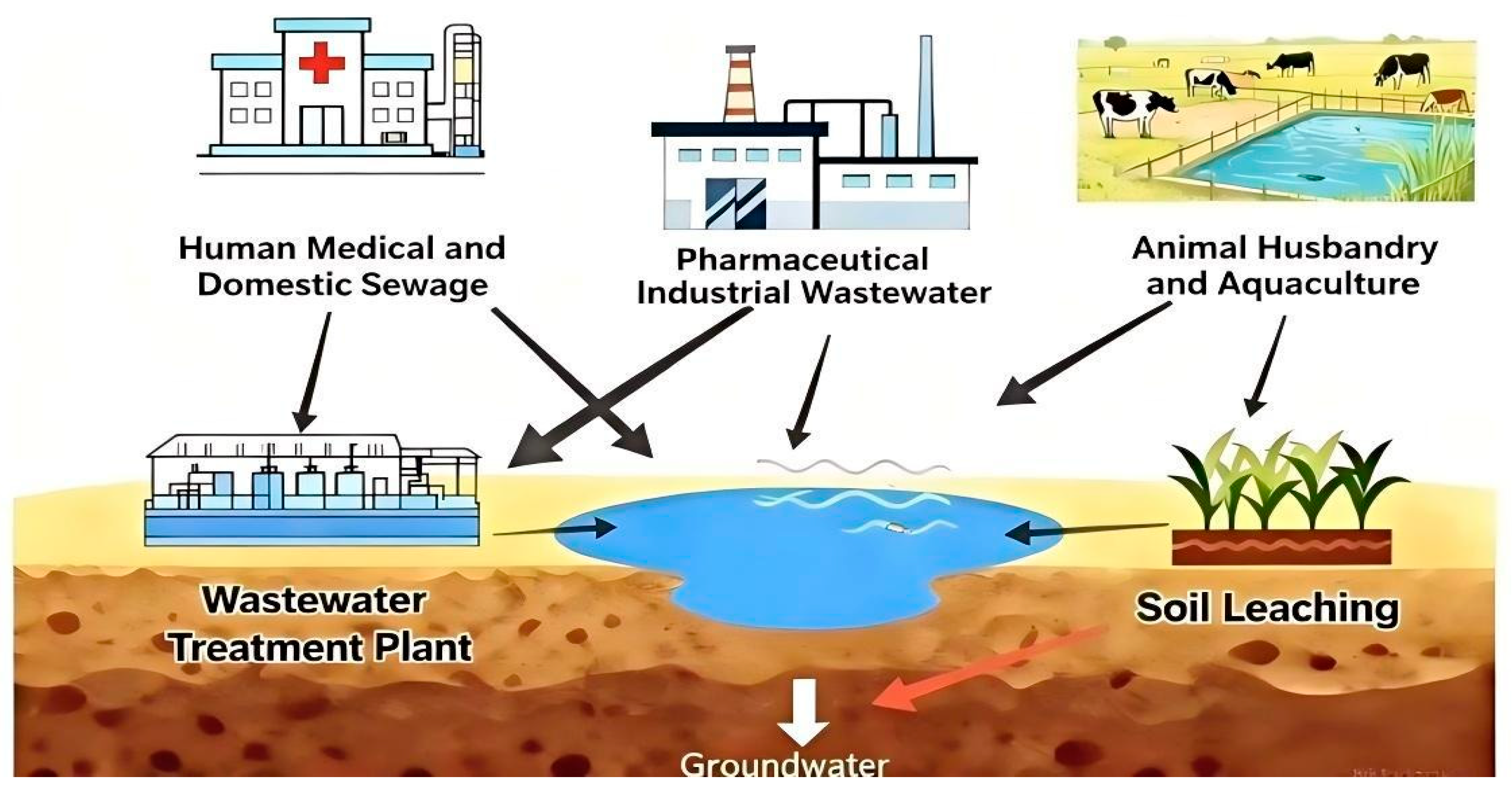
Figure 1. Pathways of antibiotics entering the environment.
Applsci 15 12777 g001
Figure 2. Schematic diagram of the fate and migration of antibiotics in aquatic environment.
Applsci 15 12777 g002
Figure 3. The impacts of antibiotics on plant, animal, and human health.
Applsci 15 12777 g003
Figure 4. Artificial removal technologies for antibiotics in aquatic environments.
Applsci 15 12777 g004
Figure 6. (a) Schematic diagram of MFC treatment of SMX antibiotics in wastewater; (b) relative abundance of species (modified by [140]).
Applsci 15 12777 g006
Figure 7. Overview of antibiotic removal by non-thermal plasma technology (a) planar DBD; (b) DBD with falling liquid film; (c) multi-point corona discharge above liquid; (d) wire-to-plate corona; (e) corona in bubbles; (f) corona with water shower; (g) decrease in the relative concentration as a function of treatment time, corresponding to first order kinetics; (h) logarithmic representation for determining the reaction rate constant k; (i) Overview of the main degradation pathways for amoxicillin and ampicillin exposed to plasma treatment (modified by [143]).
Applsci 15 12777 g007
Figure 8. Overview of solar distillation technology ((a) Workflow for sample handling and preparation; (b,c) Total ion chromatogram of output water produced in the first and the seventh day of the February experiment, with sulfaquinoxaline (SQX) peak and presumable transformation products SQX-TPs) (modified by [147]).
Applsci 15 12777 g008
Figure 9. Overview of biocatalyst remediation technology ((a) PAN-Biochar Membrane Pollutant Removal Process; (b) Operational stability of immobilized laccase; (c) Storage stability of the free and immobilized laccase stored at 4 ± 1 °C and 25 ± 1 °C) (modified by [149]).
Applsci 15 12777 g009
Figure 10. Overview of combined process technology ((a) Hybrids of different techniques for antibiotic removal; (b) Schematic representation of the mechanism of oxidant production in electrooxidation and electro-Fenton processes (M = Fe, Mn, Ni, Co, Nb, Ti, Zn); (c) The similarities between microbial fuel cell (MFC) and constructed wetland (CW) configurations) (modified by [153]).
Applsci 15 12777 g010
Table 2. Distribution of antibiotics in the world.
TypeCountry/RegionMemory Storage MediumDetection Concentration
(ng/L)
Sampling TimeDetection MethodLimit of Detection (LOD)
(ng/L)
References
Developed countries Barcelona, SpainGroundwaterUp to 2980 (cephalosporins, SAs, fluoroquinolones)2022LC-MS<1 [38]
Germany Groundwater1173 (SAs, TCs)2020HPLC-MS<0.5 [39]
River Tyne, northern England, UKriver42,370 (7 antibiotics detected)2021GC-MS<2 [40]
Rivers in South Wales, UKriver(SAs, fluoroquinolones; trimethoprim frequently detected)---[40]
Parts of California, USAGroundwater500–1500 (TCs)2019ELISA<5 [41]
Tokyo Bay, JapanSurface water10–50 (SAs, fluoroquinolones)2021LC-MS/MS<0.1 [41]
Developing CountriesSoutheastern & southern African countriesSurface water(SMX): median 286, max 3,320,000; (TMP): median 1222018–2022LC-MS1–5 [30]
Yamuna Basin, IndiariverCIP: 286 (global upper limit for rivers)2020HPLC<0.5 [45]
Ganges Basin & coastal waters, IndiaSurface water, coastal water(fluoroquinolones, SAs, MA)---[30]
Mexico Valley Basin & Pacific coastal agricultural areasSurface water (basin, agricultural area>50 at some sites (SAs; detection rate 100%)2021GC-MS<2 [30]
Northeast China (Harbin section of Songhua River)Surface water(SAs; minor LCM)2019LC-MS/MS=1 [47]
North ChinaAquatic environment(fluoroquinolones)2010–2020LC-MS/MS=0.5 [30]
Southwest China (karst areas)Groundwater, Aquatic environment(fluoroquinolones, TCs; high NOR detection rate in karst groundwater)2018–2021LC-MS/MS=0.5 [38,48]
Bohai Bay of ChinaAquatic environment(SAs, MA)2020LC-MS/MS=0.2 [49]
Lujiang Basin, Ningbo, Yangtze River Delta of ChinaAquatic environment(TCs, chloramphenicols)2016–2017LC-MS/MS=1 [50]
Haihe Basin of ChinaAquatic environment(large concentration variation; concentrated in urban industrial zones)2020–2023LC-MS/MS=0.5 [51]
Yangtze River Basin of ChinaAquatic environment(fluoroquinolones, MA)2022–2024LC-MS/MS=0.1 [52]
Table 3. Differences between Fluoroquinolone Antibiotics and their Transformation Products.
CharacteristicsParent CompoundsTransformation ProductsKey Conclusion on Differences
PersistenceShort half-lifeSome products exhibit significantly increased persistence; for example, the half-life of photodegradation products of ciprofloxacin (CIP) (e.g., erythromycinone analogs) extends to 5–7 days, and devinylated products of norfloxacin (NOR) are more prone to accumulate in sedimentsDue to their more stable structures (e.g., quinoline carboxylic acid derivatives formed after piperazine ring opening), transformation products generally have higher persistence than parent compounds, increasing the risk of environmental residues
BioaccumulationNo significant bioaccumulationMost products retain antibacterial activity: e.g., CIP-derived desethylene-N-ciprofloxacin inhibits Bacillus subtilis at 60–80% of the parent’s efficiency; a few have reduced activity but other risks (e.g., N-nitrosonorfloxacin’s antibacterial activity decreases by 30–50% but is potentially carcinogenic); only Irpex lacteus can fully eliminate OF- and NOR-derived product activity.The bioaccumulation of products exhibits a “partially enhanced” trend, and attention should be paid to the food chain transfer risk of products with increased hydrophobicity
Antimicrobial Resistance Selection PressureStrong; can significantly inhibit the growth of Gram-positive/negative bacteria (e.g., the inhibition rate of 30 μg/mL ciprofloxacin (CIP) against Pseudomonas aeruginosa exceeds 20%)Most products retain antibacterial activity: e.g., CIP-derived desethylene-N-ciprofloxacin inhibits Bacillus subtilis at 60–80% of the parent’s efficiency; a few have reduced activity but other risks (e.g., N-nitrosonorfloxacin’s antibacterial activity decreases by 30–50% but is potentially carcinogenic); only Irpex lacteus can fully eliminate OF- and NOR-derived product activity.Fungal degradation cannot completely eliminate antimicrobial resistance selection pressure; most products remain “weak selection pressure sources,” and only specific fungi (e.g., Irpex lacteus) can block this risk, requiring targeted selection of degrading microorganisms
Table 4. Comparison Table of Performance and Application Characteristics of Common Antibiotic Removal Technologies.
Technical CategoryRemoval Efficiency
(ng–μg/L)
Key AdvantagesMain LimitationsReferences
Adsorption method mediumlow cost, simple operation, no secondary pollutionThe adsorbent regeneration would cause secondary pollution and decrease the efficiency[102,103,105,110,112]
Membrane separationhighhigh separation efficiency and continuous operationHigh cost of use; membrane pollution will cause environmental pollution[102,108,113]
Chlorination methodhigh (for specific types)technology mature, low cost, fast responseIt produces carcinogenic disinfection byproducts; has limited effect on stable structure antibiotics; and its efficiency is affected by pH[114,117]
Ozone oxidationhighstrong oxidation ability, fast reaction, no chemical residueHigh energy consumption, low gas–liquid mass transfer efficiency, and potential toxic by-products[117,119,120]
Fenton reactionhigheffective against hard-to-degrade antibioticsIt needs an acidic environment; produces iron-containing sludge; H2O2 is unstable[122,125]
photocatalysismedium risks of secondary pollution are low with solar energydependent on light conditions; may produce toxic intermediates[126,127,128]
electrochemical oxidationhighhigh controllability, no chemicals addedhigh cost of electrodes; electrodes are easily contaminated; Low conductivity water requires electrolyte addition[130,132]
flocculationlow to mediumsimple to operate and low costthe yield of sludge is high; it is sensitive to pH; it has poor effect on hydrophilic antibiotics[106,125,133]
microbial remediationlow to mediumlow cost, environmentally friendlyslow reaction kinetics; environmental sensitivity; may promote proliferation of antibiotic resistance genes[100,109,135,136]
phytoremediationlow to mediumlow cost and environmental beautificationvery slow; climate-dependent; antibiotics may accumulate in the food chain[101,109,137]
Disclaimer/Publisher’s Note: The statements, opinions and data contained in all publications are solely those of the individual author(s) and contributor(s) and not of MDPI and/or the editor(s). MDPI and/or the editor(s) disclaim responsibility for any injury to people or property resulting from any ideas, methods, instructions or products referred to in the content.