Dynamic Transmission and Innovative Transformation of Cultural Heritage: Generative Artificial Intelligence Practices Based on Cultural Cognitive Models

Abstract
1. Introduction
2. Literature Review
2.1. Digital Preservation and Utilization of Cultural Heritage
2.2. Cultural Heritage in the Perspective of Symbolic Interactionism
2.3. The Application of Generative Artificial Intelligence (GenAI) in Cultural Heritage Area
3. Materials and Methods
3.1. Case Study
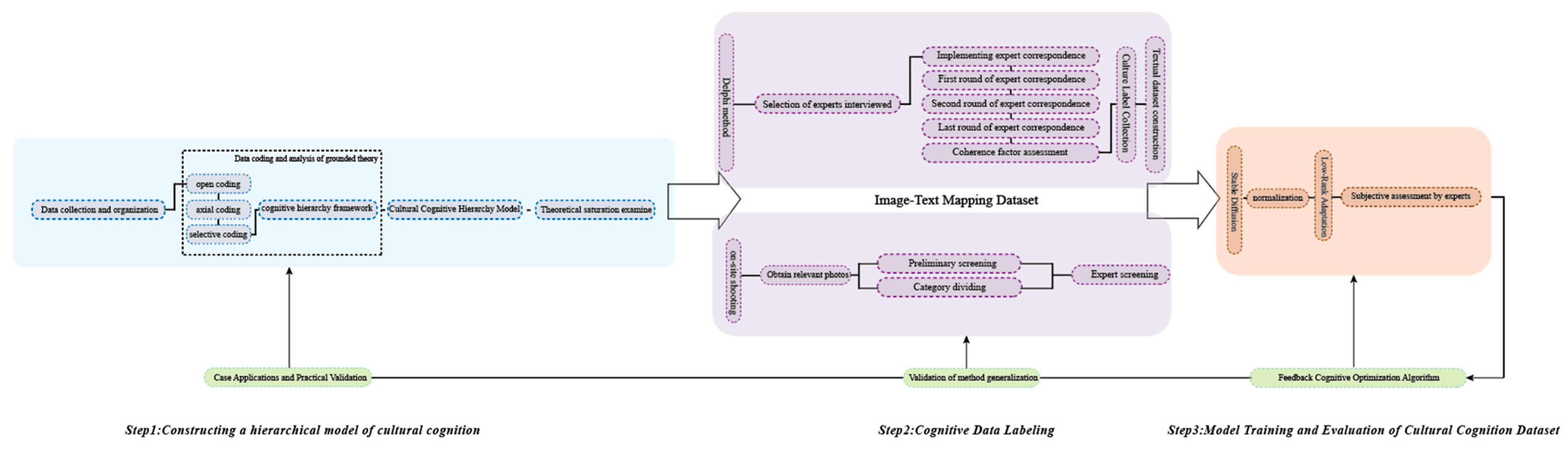
3.2. Method
3.2.1. Cognitive Hierarchy Construction
3.2.2. Cognitive Data Labeling
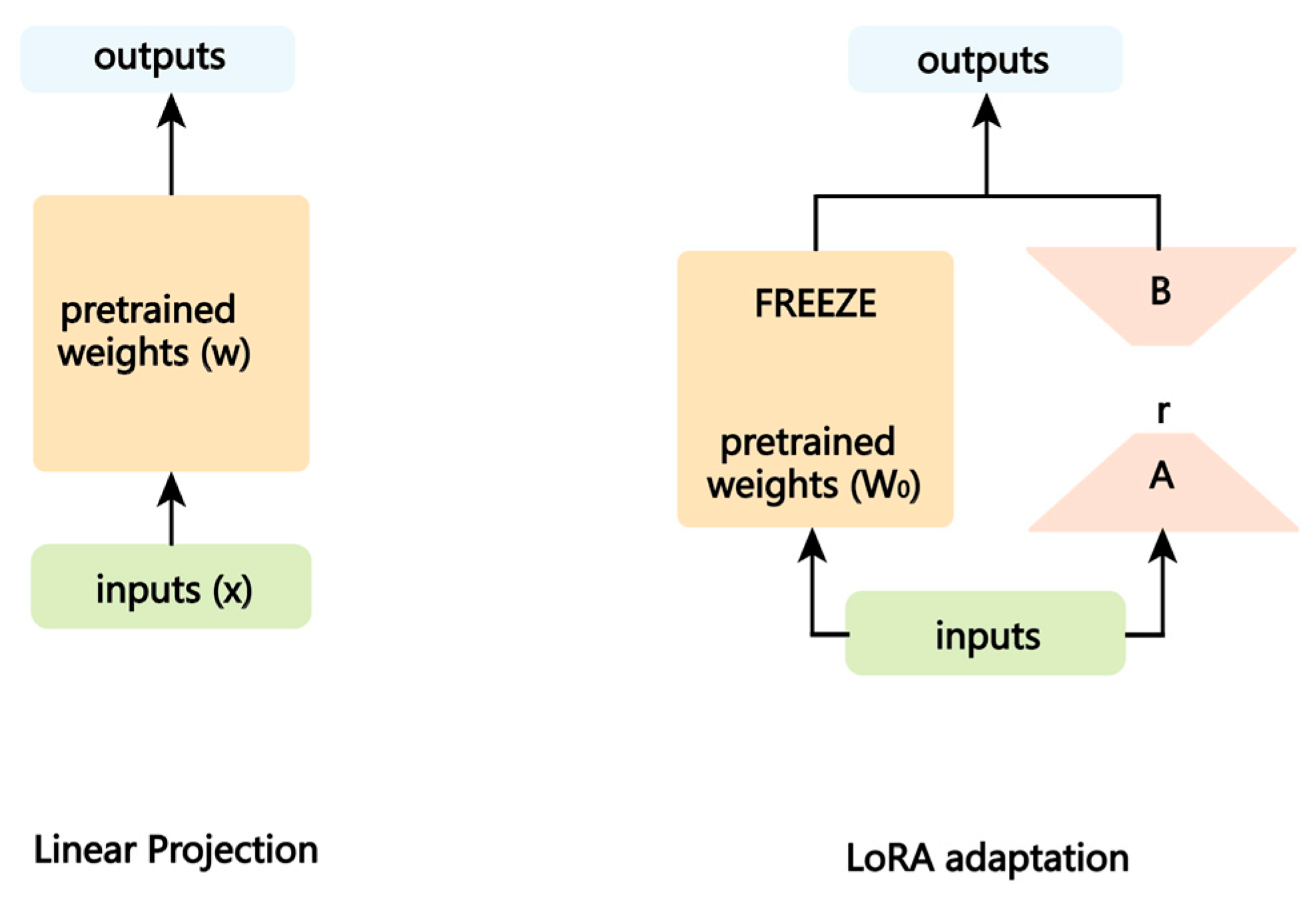
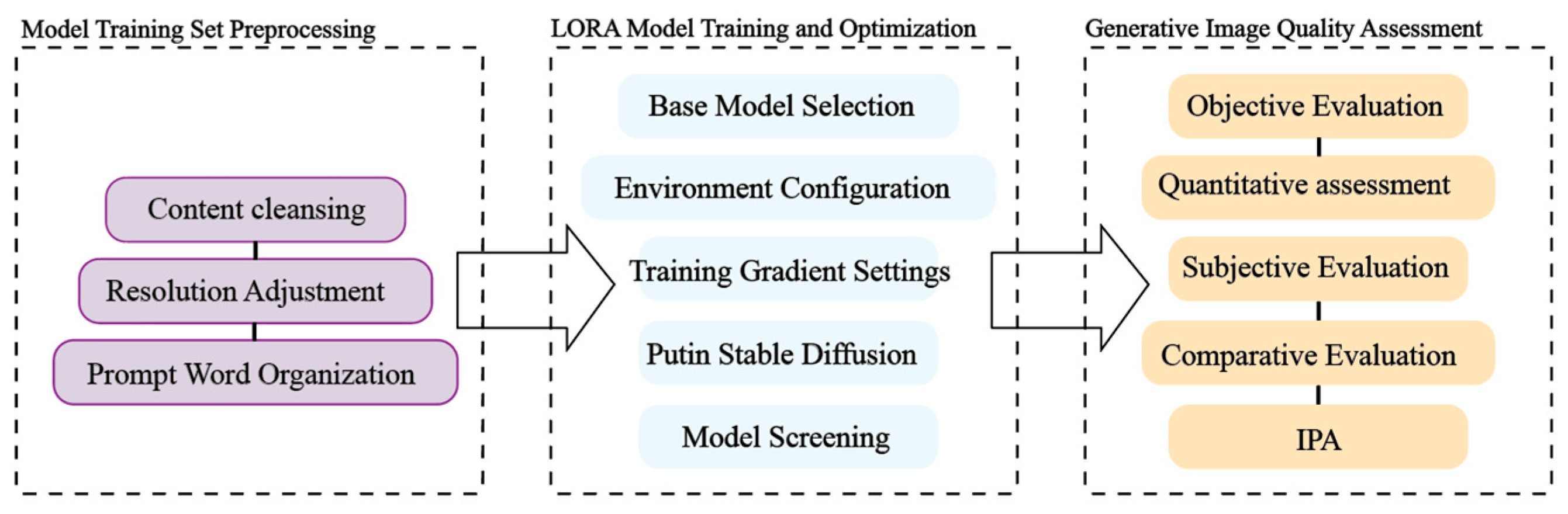
3.2.3. Model Training and Application to Cultural Cognition Datasets
3.3. Data Encoding and Analysis
3.3.1. Open Coding
3.3.2. Axical Coding
3.3.3. Selective Coding
3.3.4. Theoretical Saturation Test
3.4. Image Dataset Construction
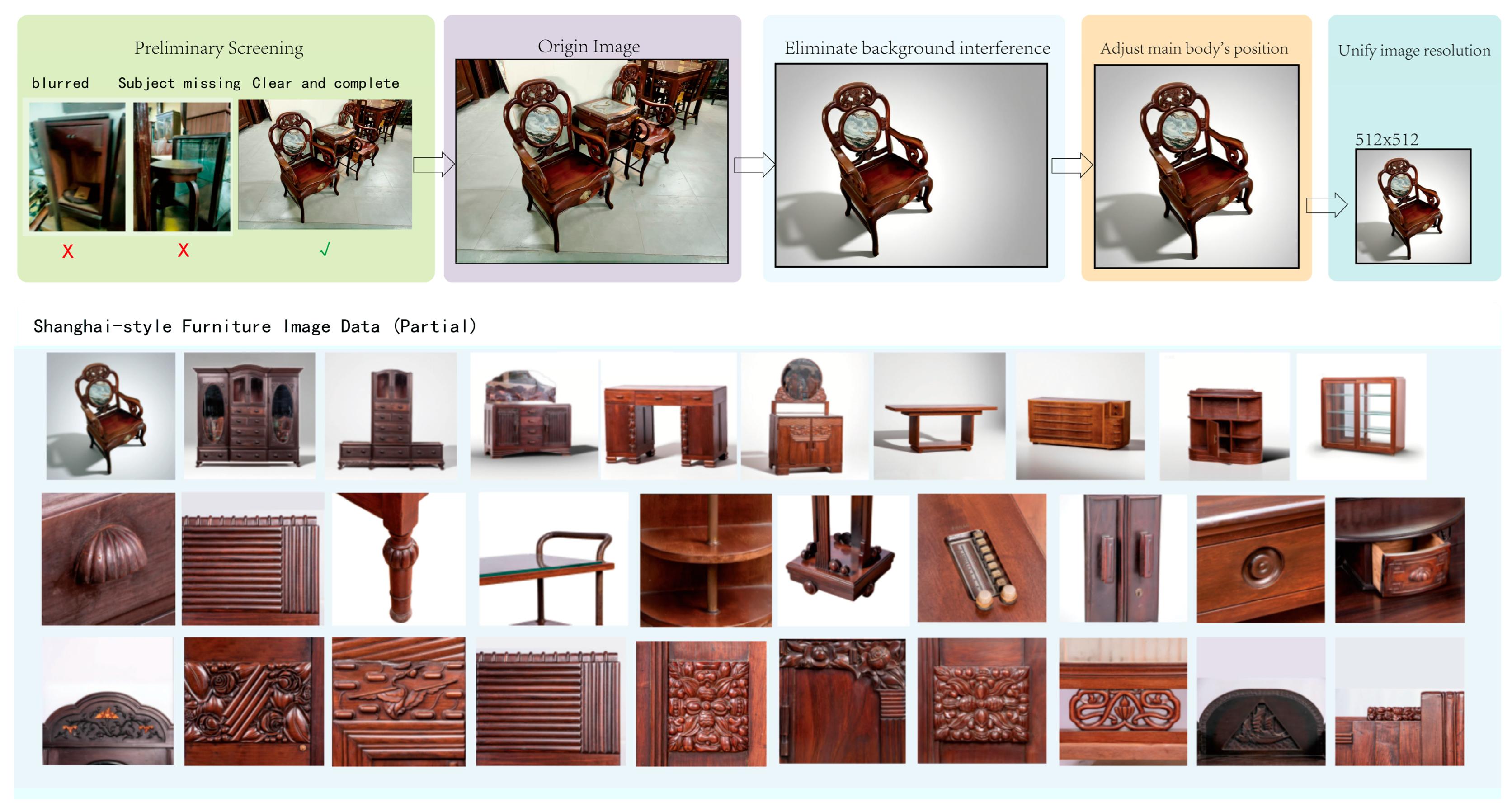
3.4.1. Image Acquisition and Cleaning of Shanghai-Style Furniture
3.4.2. Classification of Shanghai-Style Furniture Image Dataset
3.4.3. Expert Group
3.4.4. Expert Interviews and Multiple Rounds of Views Convergence
3.4.5. Textual Dataset Construction
4. Results
4.1. Environment and Parameter Configuration
4.2. Training and Testing of Stylized LoRA Models
4.3. Superiority Evaluation of Generated Images
4.3.1. Comparison and Evaluation of Mainstream Platforms
4.3.2. Importance-Performance Analysis
- Experiment Process
- Questionnaire design
- Experiment
- Analysis
5. Discussion
5.1. Theoretical Significance
5.2. Practical Significance
6. Conclusions
Author Contributions
Funding
Institutional Review Board Statement
Informed Consent Statement
Data Availability Statement
Conflicts of Interest
References
- Hou, Y.; Kenderdine, S.; Picca, D.; Egloff, M.; Adamou, A. Digitizing Intangible Cultural Heritage Embodied: State of the Art. J. Comput. Cult. Herit. 2022, 15, 55. [Google Scholar] [CrossRef]
- Mazurkevych, O.; Мазуркевич, О.; Skoryk, A.; Скoрик, А.; Antipina, I.; Антипіна, І.; Goncharova, O.; Гoнчарoва, О.; Kondratenko, I.; Кoндратенкo, І.А. The Specifics of Preserving Cultural Identity in the Context of Globalization Processes. Mank. Q. 2024, 66, 1. [Google Scholar] [CrossRef]
- Cliggett, L.; Pedersen, L. The SAGE Handbook of Cultural Anthropology; SAGE: Thousand Oaks, CA, USA, 2021; pp. 1–640. [Google Scholar]
- Heersmink, R. Materialised Identities: Cultural Identity, Collective Memory, and Artifacts. Rev. Philos. Psychol. 2023, 14, 249–265. [Google Scholar] [CrossRef]
- Cultural Geography and Heritage Conservation: Theoretical Framework, Practical Exploration, and Globalization Challenges. Available online: https://www.jstage.jst.go.jp/article/grb/3/0/3_328/_article/-char/ja/ (accessed on 2 June 2025).
- Wang, M.-Y.; Li, Y.-Q.; Ruan, W.-Q.; Zhang, S.-N.; Li, R. Influencing Factors and Formation Process of Cultural Inheritance-Based Innovation at Heritage Tourism Destinations. Tour. Manag. 2024, 100, 104799. [Google Scholar] [CrossRef]
- Wei, W.; Xin, X.U. Transformation and Development of Intangible Cultural Heritage Through Technology|EBSCOhost. Available online: https://openurl.ebsco.com/contentitem/doi:10.13998%2Fj.cnki.issn1002-1248.24-0078?sid=ebsco:plink:crawler&id=ebsco:doi:10.13998%2Fj.cnki.issn1002-1248.24-0078 (accessed on 2 June 2025).
- Arfa, F.H.; Lubelli, B.; Zijlstra, H.; Quist, W. Criteria of “Effectiveness” and Related Aspects in Adaptive Reuse Projects of Heritage Buildings. Sustainability 2022, 14, 1251. [Google Scholar] [CrossRef]
- Li, J. Application of Artificial Intelligence in Cultural Heritage Protection. J. Phys. Conf. Ser. 2021, 1881, 32007. [Google Scholar] [CrossRef]
- On Using Perceptual Loss Within the U-Net Architecture for the Semantic Inpainting of Textile Artefacts with Traditional Motifs. Available online: https://ieeexplore.ieee.org/abstract/document/10131036 (accessed on 2 June 2025).
- Gîrbacia, F. An Analysis of Research Trends for Using Artificial Intelligence in Cultural Heritage. Electronics 2024, 13, 3738. [Google Scholar] [CrossRef]
- Cao, H. Application of Artificial Intelligence in the Digital Protection and Inheritance of Intangible Cultural Heritage. Stud. Soc. Sci. Humanit. 2025, 4, 7–12. [Google Scholar] [CrossRef]
- Li, F. Three-Dimensional Reconstruction and Virtual Display Technology of Cultural Heritage Based on Computer Vision. In Proceedings of the Smart Applications and Sustainability in the AIoT Era; Al-Turjman, F., Ed.; Springer Nature: Cham, Switzerland, 2024; pp. 169–179. [Google Scholar] [CrossRef]
- Li, F.; Gao, Y.; Candeias, A.J.E.G.; Wu, Y. Virtual Restoration System for 3D Digital Cultural Relics Based on a Fuzzy Logic Algorithm. Systems 2023, 11, 374. [Google Scholar] [CrossRef]
- Takimoto, H.; Omori, F.; Kanagawa, A. Image Aesthetics Assessment Based on Multi-Stream CNN Architecture and Saliency Features. Appl. Artif. Intell. 2021, 35, 25–40. [Google Scholar] [CrossRef]
- Rinaldi, A.M.; Russo, C.; Tommasino, C. An Augmented Reality CBIR System Based on Multimedia Knowledge Graph and Deep Learning Techniques in Cultural Heritage. Computers 2022, 11, 172. [Google Scholar] [CrossRef]
- Gervasi, O.; Perri, D.; Simonetti, M.; Tasso, S. Strategies for the Digitalization of Cultural Heritage. In Computational Science and Its Applications—ICCSA 2022 Workshops; Gervasi, O., Murgante, B., Misra, S., Rocha, A.M.A.C., Garau, C., Eds.; Springer International Publishing: Cham, Switzerland, 2022; pp. 486–502. [Google Scholar]
- Recommender System for Digital Storytelling: A Novel Approach to Enhance Cultural Heritage. SpringerLink. Available online: https://link.springer.com/chapter/10.1007/978-3-030-68787-8_22 (accessed on 3 June 2025).
- Crowley, K.; Jackson, R.; O’Connell, S.; Karunarthna, D.; Anantasari, E.; Retnowati, A.; Niemand, D. Cultural Heritage and Risk Assessments: Gaps, Challenges, and Future Research Directions for the Inclusion of Heritage within Climate Change Adaptation and Disaster Management. Clim. Resil. Sustain. 2022, 1, e45. [Google Scholar] [CrossRef]
- Kolides, A.; Nawaz, A.; Rathor, A.; Beeman, D.; Hashmi, M.; Fatima, S.; Berdik, D.; Al-Ayyoub, M.; Jararweh, Y. Artificial Intelligence Foundation and Pre-Trained Models: Fundamentals, Applications, Opportunities, and Social Impacts. Simul. Model. Pract. Theory 2023, 126, 102754. [Google Scholar] [CrossRef]
- Frey, B.S. The Evaluation of Cultural Heritage: Some Critical Issues. In Economic Perspectives on Cultural Heritage; Hutter, M., Rizzo, I., Eds.; Palgrave Macmillan: London, UK, 1997; pp. 31–49. ISBN 978-1-349-25824-6. [Google Scholar]
- Zhao, J. Digital Protection and Inheritance Path of Intangible Cultural Heritage Based on Image Processing Algorithm. Scalable Comput. Pract. Exp. 2024, 25, 4720–4728. [Google Scholar] [CrossRef]
- Adaranijo, A.A.; Amzat, J.; Abdulrahman, D.; Kanmodi, K.K. Living with a New Normal: Self-Identities of Women with Breast Cancer in Nigeria. Cancer Rep. 2024, 7, e2148. [Google Scholar] [CrossRef]
- Ortiz, S.L.; de Madariaga, C.J. The UNESCO Convention for the Safeguarding of the Intangible Cultural Heritage: A Critical Analysis. Int. J. Cult. Policy 2022, 28, 327–341. [Google Scholar] [CrossRef]
- Canton, H. World Intellectual Property Organization—WIPO. In The Europa Directory of International Organizations 2021; Routledge: Oxford, UK, 2021; ISBN 978-1-003-17990-0. [Google Scholar]
- Moss, M.S.; Gollins, T.J. Our Digital Legacy: An Archival Perspective. In Michael Moss on Archives; Routledge: Oxford, UK, 2023; ISBN 978-1-003-40718-8. [Google Scholar]
- Masciotta, M.G.; Morais, M.J.; Ramos, L.F.; Oliveira, D.V.; Sánchez-Aparicio, L.J.; González-Aguilera, D. A Digital-Based Integrated Methodology for the Preventive Conservation of Cultural Heritage: The Experience of HeritageCare Project. Int. J. Archit. Herit. 2021, 15, 844–863. [Google Scholar] [CrossRef]
- Pepe, M.; Costantino, D.; Alfio, V.S.; Restuccia, A.G.; Papalino, N.M. Scan to BIM for the Digital Management and Representation in 3D GIS Environment of Cultural Heritage Site. J. Cult. Herit. 2021, 50, 115–125. [Google Scholar] [CrossRef]
- Ulvi, A. Documentation, Three-Dimensional (3D) Modelling and Visualization of Cultural Heritage by Using Unmanned Aerial Vehicle (UAV) Photogrammetry and Terrestrial Laser Scanners. Int. J. Remote Sens. 2021, 42, 1994–2021. [Google Scholar] [CrossRef]
- Virtual Reality (VR) and Augmented Reality (AR) Technologies for Accessibility and Marketing in the Tourism Industry. In ICT Tools and Applications for Accessible Tourism; Business & Management Book Chapter; IGI Global Scientific Publishing: Hershey, PA, USA, 2021; Available online: https://www.igi-global.com/chapter/virtual-reality-vr-and-augmented-reality-ar-technologies-for-accessibility-and-marketing-in-the-tourism-industry/271078 (accessed on 3 June 2025).
- Dimara, A.; Psarros, D.; Vrochidis, A.; Papaioannou, A.; Krinidis, S.; Anagnostopoulos, C.-N. Mixed Reality and 3D Modelling Role in Cultural Heritage Preservation as a Pathway to Sustainable Heritage and Management. In Artificial Intelligence Applications and Innovations. AIAI 2024 IFIP WG 12.5 International Workshops; Maglogiannis, I., Iliadis, L., Karydis, I., Papaleonidas, A., Chochliouros, I., Eds.; Springer Nature: Cham, Switzerland, 2024; pp. 405–418. [Google Scholar]
- Pietroni, E.; Ferdani, D. Virtual Restoration and Virtual Reconstruction in Cultural Heritage: Terminology, Methodologies, Visual Representation Techniques and Cognitive Models. Information 2021, 12, 167. [Google Scholar] [CrossRef]
- Abate, N.; Roubis, D.; Aggeli, A.; Sileo, M.; Amodio, A.M.; Vitale, V.; Frisetti, A.; Danese, M.; Arzu, P.; Sogliani, F.; et al. An Open-Source Machine Learning–Based Methodological Approach for Processing High-Resolution UAS LiDAR Data in Archaeological Contexts: A Case Study from Epirus, Greece. J. Archaeol. Method Theory 2025, 32, 38. [Google Scholar] [CrossRef]
- Alfio, V.S.; Costantino, D.; Pepe, M.; Restuccia Garofalo, A. A Geomatics Approach in Scan to FEM Process Applied to Cultural Heritage Structure: The Case Study of the “Colossus of Barletta”. Remote Sens. 2022, 14, 664. [Google Scholar] [CrossRef]
- Ju, F. Mapping the Knowledge Structure of Image Recognition in Cultural Heritage: A Scientometric Analysis Using CiteSpace, VOSviewer, and Bibliometrix. J. Imaging 2024, 10, 272. [Google Scholar] [CrossRef] [PubMed]
- Yi, J.H.; Kang, W.; Kim, S.-E.; Park, D.; Hong, J.-H. Smart Culture Lens: An Application That Analyzes the Visual Elements of Ceramics. IEEE Access 2021, 9, 42868–42883. [Google Scholar] [CrossRef]
- Sadowski, M.M. Petrażycki’s Theory of Law Applied: Between Collective Memory, Legal Consciousness and Intangible Cultural Heritage. Investigating the Lusophone Communities. In Legal Consciousness; Holtermann, J.V.H., Krešić, M., Novak, M., Eds.; Springer Nature: Cham, Switzerland, 2025; pp. 139–163. [Google Scholar]
- Jin, P.; Liu, Y. Fluid Space: Digitisation of Cultural Heritage and Its Media Dissemination. Telemat. Inform. Rep. 2022, 8, 100022. [Google Scholar] [CrossRef]
- Burkey, B. From Bricks to Clicks: How Digital Heritage Initiatives Create a New Ecosystem for Cultural Heritage and Collective Remembering. J. Commun. Inq. 2021, 46, 185–205. [Google Scholar] [CrossRef]
- Carter, M.J.; Fuller, C. Symbolic Interactionism. Sociopedia 2015, 1, 1–17. [Google Scholar] [CrossRef]
- Carter, M.J.; Fuller, C. Symbols, Meaning, and Action: The Past, Present, and Future of Symbolic Interactionism. Curr. Sociol. 2016, 64, 931–961. [Google Scholar] [CrossRef]
- Warczok, T.; Beyer, S. The Logic of Knowledge Production: Power Structures and Symbolic Divisions in the Elite Field of American Sociology. Poetics 2021, 87, 101531. [Google Scholar] [CrossRef]
- Wimmer, A. Herder’s Heritage and the Boundary-making Approach: Studying Ethnicity in Immigrant Societies. Sociol. Theory 2009, 27, 244–270. [Google Scholar] [CrossRef]
- Ambás, G.; Gárgoles, P. Fashioning Society: An Exploration of Collective Behaviour and Cultural Change Through Symbolic Interactionism. Filos. Sociol. 2025, 36, 1. [Google Scholar] [CrossRef]
- Wang, J.Q.; Liu, G.; Lei, Y. Reaffirming the Importance of Traditional Humanities in the Era of AI-Enhanced Translation and Transcultural Communication. Int. Commun. Chin. Cult. 2025, 12, 277–311. [Google Scholar] [CrossRef]
- Weinert, M.S. Chapter 7: Cultural Heritage, Cultural Rights and Care Ethics; Edward Elgar Publishing: Northampton, MA, USA, 2021; ISBN 978-1-83910-843-3. [Google Scholar]
- Griffin, G.; Wennerström, E.; Foka, A. AI and Swedish Heritage Organisations: Challenges and Opportunities. AI Soc. 2024, 39, 2359–2372. [Google Scholar] [CrossRef]
- Nocca, F. The Role of Cultural Heritage in Sustainable Development: Multidimensional Indicators as Decision-Making Tool. Sustainability 2017, 9, 1882. [Google Scholar] [CrossRef]
- Aslan, S.; Vascon, S.; Pelillo, M. Two Sides of the Same Coin: Improved Ancient Coin Classification Using Graph Transduction Games. Pattern Recognit. Lett. 2020, 131, 158–165. [Google Scholar] [CrossRef]
- De Smet, P. Reconstruction of Ripped-up Documents Using Fragment Stack Analysis Procedures. Forensic Sci. Int. 2008, 176, 124–136. [Google Scholar] [CrossRef] [PubMed]
- Gattiglia, G. Managing Artificial Intelligence in Archeology. An Overview. J. Cult. Herit. 2025, 71, 225–233. [Google Scholar] [CrossRef]
- Spennemann, D.H.R. ChatGPT and the Generation of Digitally Born “Knowledge”: How Does a Generative AI Language Model Interpret Cultural Heritage Values? Knowledge 2023, 3, 480–512. [Google Scholar] [CrossRef]
- Zhou, L.; Sun, X.; Mu, G.; Wu, J.; Zhou, J.; Wu, Q.; Zhang, Y.; Xi, Y.; Güneş, N.D.; Song, S. A Tool to Facilitate the Cross-Cultural Design Process Using Deep Learning. IEEE Trans. Human-Mach. Syst. 2022, 52, 445–457. [Google Scholar] [CrossRef]
- Vaswani, A.; Shazeer, N.; Parmar, N.; Uszkoreit, J.; Jones, L.; Gomez, A.N.; Kaiser, Ł.; Polosukhin, I. Attention Is All You Need. In Proceedings of the Advances in Neural Information Processing Systems, Long Beach, CA, USA, 4–9 December 2017; Curran Associates, Inc.: San Francisco, CA, USA, 2017; Volume 30. [Google Scholar]
- Brown, T.; Mann, B.; Ryder, N.; Subbiah, M.; Kaplan, J.D.; Dhariwal, P.; Neelakantan, A.; Shyam, P.; Sastry, G.; Askell, A.; et al. Language Models Are Few-Shot Learners. In Proceedings of the Advances in Neural Information Processing Systems, Virtual, 6–12 December 2020; Curran Associates, Inc.: San Francisco, CA, USA, 2020; Volume 33, pp. 1877–1901. [Google Scholar]
- Rombach, R.; Blattmann, A.; Lorenz, D.; Esser, P.; Ommer, B. High-Resolution Image Synthesis with Latent Diffusion Models. In Proceedings of the IEEE/CVF Conference on Computer Vision and Pattern Recognition, New Orleans, LA, USA, 18–24 June 2022; pp. 10684–10695. [Google Scholar]
- Yang, L.; Zhang, Z.; Song, Y.; Hong, S.; Xu, R.; Zhao, Y.; Zhang, W.; Cui, B.; Yang, M.H. Diffusion Models: A Comprehensive Survey of Methods and Applications. ACM Comput. Surv. 2023, 56, 105. [Google Scholar] [CrossRef]
- De Reu, J.; De Smedt, P.; Herremans, D.; Van Meirvenne, M.; Laloo, P.; De Clercq, W. On Introducing an Image-Based 3D Reconstruction Method in Archaeological Excavation Practice. J. Archaeol. Sci. 2014, 41, 251–262. [Google Scholar] [CrossRef]
- Arzomand, K.; Rustell, M.; Kalganova, T. From Ruins to Reconstruction: Harnessing Text-to-Image AI for Restoring Historical Architectures. Challenge 2024, 10, 69–85. [Google Scholar] [CrossRef]
- Zou, X.; Zhang, W.; Zhao, N. From Fragment to One Piece: A Review on AI-Driven Graphic Design. J. Imaging 2025, 11, 289. [Google Scholar] [CrossRef]
- Sajun, A.R.; Zualkernan, I.; Sankalpa, D. A Historical Survey of Advances in Transformer Architectures. Appl. Sci. 2024, 14, 4316. [Google Scholar] [CrossRef]
- Ding, N.; Qin, Y.; Yang, G.; Wei, F.; Yang, Z.; Su, Y.; Hu, S.; Chen, Y.; Chan, C.-M.; Chen, W.; et al. Parameter-Efficient Fine-Tuning of Large-Scale Pre-Trained Language Models. Nat. Mach. Intell. 2023, 5, 220–235. [Google Scholar] [CrossRef]
- Moon, T.; Choi, M.; Lee, G.; Ha, J.-W.; Lee, J. Fine-Tuning Diffusion Models with Limited Data. In Proceedings of the NeurIPS 2022 Workshop on Score-Based Methods, New Orleans, LA, USA, 29 November 2022. [Google Scholar]
- Alimisis, P.; Mademlis, I.; Radoglou-Grammatikis, P.; Sarigiannidis, P.; Papadopoulos, G.T. Advances in Diffusion Models for Image Data Augmentation: A Review of Methods, Models, Evaluation Metrics and Future Research Directions. Artif. Intell. Rev. 2025, 58, 112. [Google Scholar] [CrossRef]
- Valtolina, S. A Storytelling-Driven Framework for Cultural Heritage Dissemination. Data Sci. Eng. 2016, 1, 114–123. [Google Scholar] [CrossRef]
- Argyrou, A.; Agapiou, A. A Review of Artificial Intelligence and Remote Sensing for Archaeological Research. Remote Sens. 2022, 14, 6000. [Google Scholar] [CrossRef]
- Montenegro, N. Integrative Analysis of Text-to-Image AI Systems in Architectural Design Education: Pedagogical Innovations and Creative Design Implications. J. Archit. Urban. 2024, 48, 109–124. [Google Scholar] [CrossRef]
- Song, F. Shanghai-style Furniture in the Republic of China: Cultural Choice and Aesthetic Construction in Local Reconstruction. ZHUANGSHI 2025, 5, 82–88. [Google Scholar] [CrossRef]
- Song, F.; Wu, X. Seeing from the Details: The Cosmopolitanism and View of Nature in Haipai (Shanghai Style) Furniture Design, 1912–1949. In For Nature/With Nature: New Sustainable Design Scenarios; Gambardella, C., Ed.; Springer Nature: Cham, Switzerland, 2024; pp. 253–265. ISBN 978-3-031-53122-4. [Google Scholar]
- Cutcliffe, J.R. Methodological Issues in Grounded Theory. J. Adv. Nurs. 2000, 31, 1476–1484. [Google Scholar] [CrossRef]
- Jeon, Y.-H. The Application of Grounded Theory and Symbolic Interactionism. Scand. J. Caring Sci. 2004, 18, 249–256. [Google Scholar] [CrossRef]
- Annells, M. Grounded Theory Method: Philosophical Perspectives, Paradigm of Inquiry, and Postmodernism. Qual. Health Res. 1996, 6, 379–393. [Google Scholar] [CrossRef]
- Crisp, J.; Pelletier, D.; Duffield, C.; Adams, A.; Nagy, S. The Delphi Method? Nurs. Res. 1997, 46, 116. [Google Scholar] [CrossRef]
- Okoli, C.; Pawlowski, S.D. The Delphi Method as a Research Tool: An Example, Design Considerations and Applications. Inf. Manag. 2004, 42, 15–29. [Google Scholar] [CrossRef]
- Hoy, T.; Bilal, I.M.; Liou, Z. Grounded Models: The Future of Sensemaking in a World of Generative AI. In Ethnographic Praxis in Industry Conference Proceedings; Wiley Online Library: Hoboken, NJ, USA, 2023; Available online: https://anthrosource.onlinelibrary.wiley.com/doi/full/10.1111/epic.12158 (accessed on 27 October 2025).
- De Moura, C.O.; Silva, Í.R.; da Silva, T.P.; Santos, K.A.; Crespo, M.d.C.A.; da Silva, M.M. Methodological Path to Reach the Degree of Saturation in Qualitative Research: Grounded Theory. Rev. Bras. Enferm. 2022, 75, e20201379. [Google Scholar] [CrossRef]
- Wu, C.-H.; Kuo, P.-L.; Yang, C.-H.; Chang, Y.-C.; Chen, T.-L. Importance–Performance Analysis (IPA) in Analyzing the Satisfaction of Administrative Support in Teaching Practice Research Programs. Sustainability 2023, 15, 1943. [Google Scholar] [CrossRef]
- Crowson, K.; Biderman, S.; Kornis, D.; Stander, D.; Hallahan, E.; Castricato, L.; Raff, E. VQGAN-CLIP: Open Domain Image Generation and Editing with Natural Language Guidance. In Computer Vision—ECCV 2022; Avidan, S., Brostow, G., Cissé, M., Farinella, G.M., Hassner, T., Eds.; Springer Nature: Cham, Switzerland, 2022; pp. 88–105. [Google Scholar]
- Martilla, J.A.; James, J.C. Importance-Performance Analysis. J. Mark. 1977, 41, 77–79. [Google Scholar] [CrossRef]
- Kuttimani, T.; Rana, N.P.; Wamba, S.F.; Dwivedi, R. The Extended Unified Theory of Acceptance and Use of Technology (UTAUT2): A Systematic Literature Review and Theory Evaluation. Int. J. Inf. Manag. 2021, 57, 102269. [Google Scholar] [CrossRef]
- Lewis, J.R. The System Usability Scale: Past, Present, and Future. Int. J. Hum.-Comput. Interact. 2018, 34, 577–590. [Google Scholar] [CrossRef]
- Wang, Y.; Zhou, Y. Artificial Intelligence-Driven Interactive Experience for Intangible Cultural Heritage: Sustainable Innovation of Blue Clamp-Resist Dyeing. Sustainability 2025, 17, 898. [Google Scholar] [CrossRef]
- Zhou, Y.; Liu, Y.; Shao, Y.; Chen, J. Fine-Tuning Diffusion Model to Generate New Kite Designs for the Revitalization and Innovation of Intangible Cultural Heritage. Sci. Rep. 2025, 15, 7519. [Google Scholar] [CrossRef] [PubMed]
- Wach, K.; Duong, C.D.; Ejdys, J.; Kazlauskaitė, R.; Korzynski, P.; Mazurek, G.; Paliszkiewicz, J.; Ziemba, E.W. The Dark Side of Generative Artificial Intelligence: A Critical Analysis of Controversies and Risks of ChatGPT. Entrep. Bus. Econ. Rev. 2023, 11, 7–30. [Google Scholar] [CrossRef]
- Wang, X.; Wu, Y.C. Balancing Innovation and Regulation in the Age of Generative Artificial Intelligence. J. Inf. Policy 2024, 14, 385–416. [Google Scholar] [CrossRef]
- Zhu, S.; Yu, T.; Xu, T.; Chen, H.; Dustdar, S.; Gigan, S.; Gunduz, D.; Hossain, E.; Jin, Y.; Lin, F.; et al. Intelligent Computing: The Latest Advances, Challenges, and Future. Intell. Comput. 2023, 2, 0006. [Google Scholar] [CrossRef]
- Cultural Representation and Digital Reproduction: A Critical Analysis of Post Conflict Reproductions of Heritage—ProQuest. Available online: https://www.proquest.com/openview/2abc8c504403927efc3265677516bff6/1?pq-origsite=gscholar&cbl=2026366&diss=y (accessed on 20 November 2025).
- Nowacki, M. Heritage Interpretation and Sustainable Development: A Systematic Literature Review. Sustainability 2021, 13, 4383. [Google Scholar] [CrossRef]
- Costa, C.J.; Aparicio, M.; Aparicio, S.; Aparicio, J.T. The Democratization of Artificial Intelligence: Theoretical Framework. Appl. Sci. 2024, 14, 8236. [Google Scholar] [CrossRef]
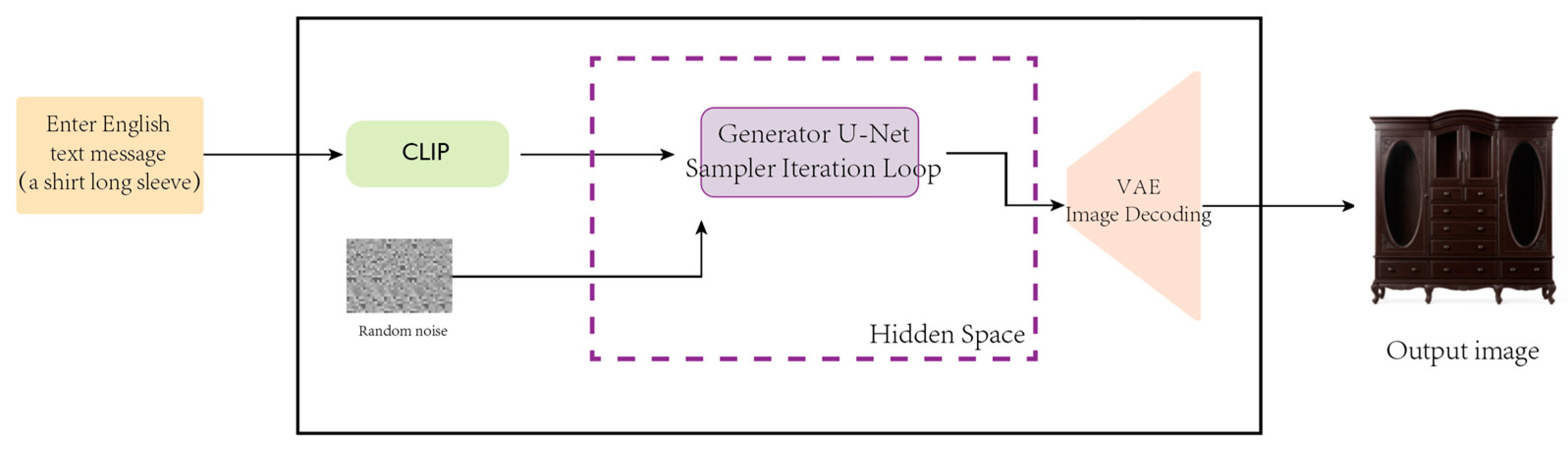


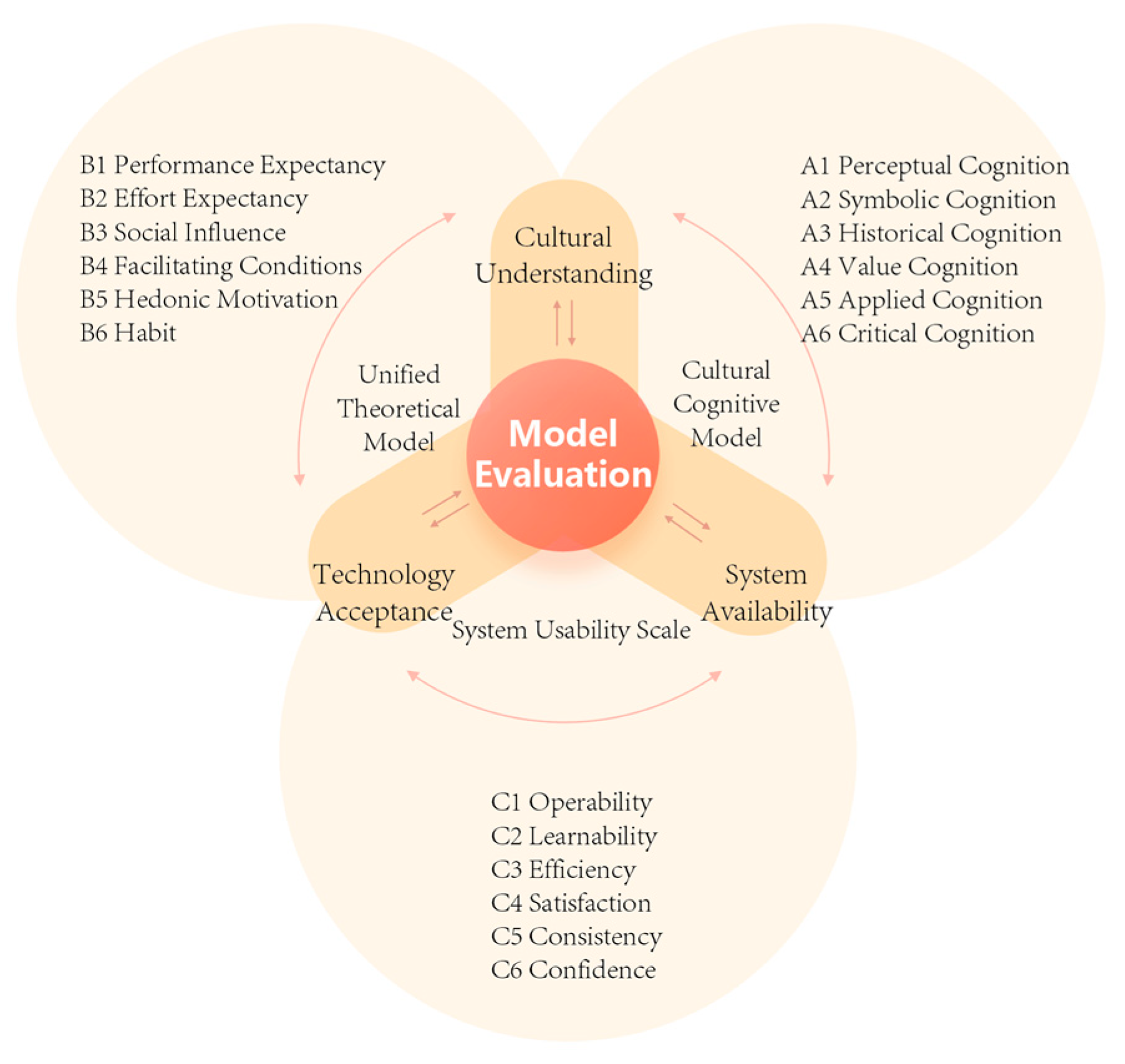


| ITEM | Value | Number | Percentage (%) |
|---|---|---|---|
| Sex | Male | 13 | 41.93% |
| Female | 18 | 58.06% | |
| Age (years) | 20–29 | 12 | 38.71% |
| 30–39 | 11 | 35.48% | |
| 40–49 | 5 | 16.13% | |
| 50–59 | 2 | 6.45% | |
| 60 and higher | 1 | 3.22% | |
| Professional background | Cultural heritage | 10 | 32.25% |
| Design | 2 | 6.45% | |
| Artificial intelligence | 5 | 16.13% | |
| Archeology | 7 | 22.58% | |
| Sociology | 7 | 22.58% | |
| Educational background | Junior college and below | 5 | 16.13% |
| Undergraduate | 7 | 22.58% | |
| Master | 8 | 25.80% | |
| Doctor | 11 | 35.48% |
| Main Categories | Subcategories (Preliminary Categories) | Significance |
|---|---|---|
| Initial perceptual experience of cultural heritage | Visual Impressions and Perceptions | Initial contact and sensory impressions of cultural heritage, including visual, auditory, tactile, and other sensory aspects of identification |
| Tactile and auditory perception | ||
| External form and representation | ||
| Direct experience of cultural heritage | ||
| Initial perceptual response | ||
| The Symbolism of Cultural Heritage | Cultural Symbols and Symbolic Meanings | Understanding of the symbolic meaning and value of cultural heritage, and forming a preliminary decoding of cultural connotations |
| The Cultural Context of Artistic Symbols | ||
| Symbolic interpretation of cultural heritage | ||
| Cultural Identity and Symbolic Expression | ||
| Symbolic understanding of historical culture | ||
| Historical Background and Evolutionary Context of Cultural Heritage | Historical Development of Cultural Heritage | Understanding the historical background, evolutionary process, and social context of cultural heritage deepens our perception of its temporality and regionality. |
| Historical timeline and regional context | ||
| Regional culture and historical sites | ||
| Historical Imprints in Cultural Change | ||
| The social and esthetic value of cultural heritage | The social significance of cultural heritage | Understanding the multiple values of cultural heritage from multiple perspectives, including social, esthetic, educational, and ecological perspectives. |
| Historical and cultural educational function | ||
| Esthetic Value and Artistic Expression | ||
| Social Impact of Cultural Heritage | ||
| The role of cultural heritage in social identity | ||
| The practical application of cultural heritage in design and communication | Cultural Heritage Design Innovation | The ability to translate an understanding of cultural heritage into practical activities such as design, communication, and education, reflecting the transformation of cognition into action. |
| Cultural Relics Display and Exhibition Planning | ||
| Cultural heritage education and dissemination | ||
| Combination of creative industries and cultural heritage | ||
| The critical reflection and reuse of cultural heritage | Critics of the Reuse of Cultural heritage | Possess critical reflection skills and be able to judge and reflect on the process of cultural heritage reuse, the distribution of discourse power, and cultural politics. |
| Analysis of Discourse Power in Cultural Heritage | ||
| Cultural Identity and Political Discourse | ||
| The controversy over authenticity and cultural heritage | ||
| Ethical issues in cultural preservation |
| Core Categories | Axial Categories | Specific Cognitive Categories |
|---|---|---|
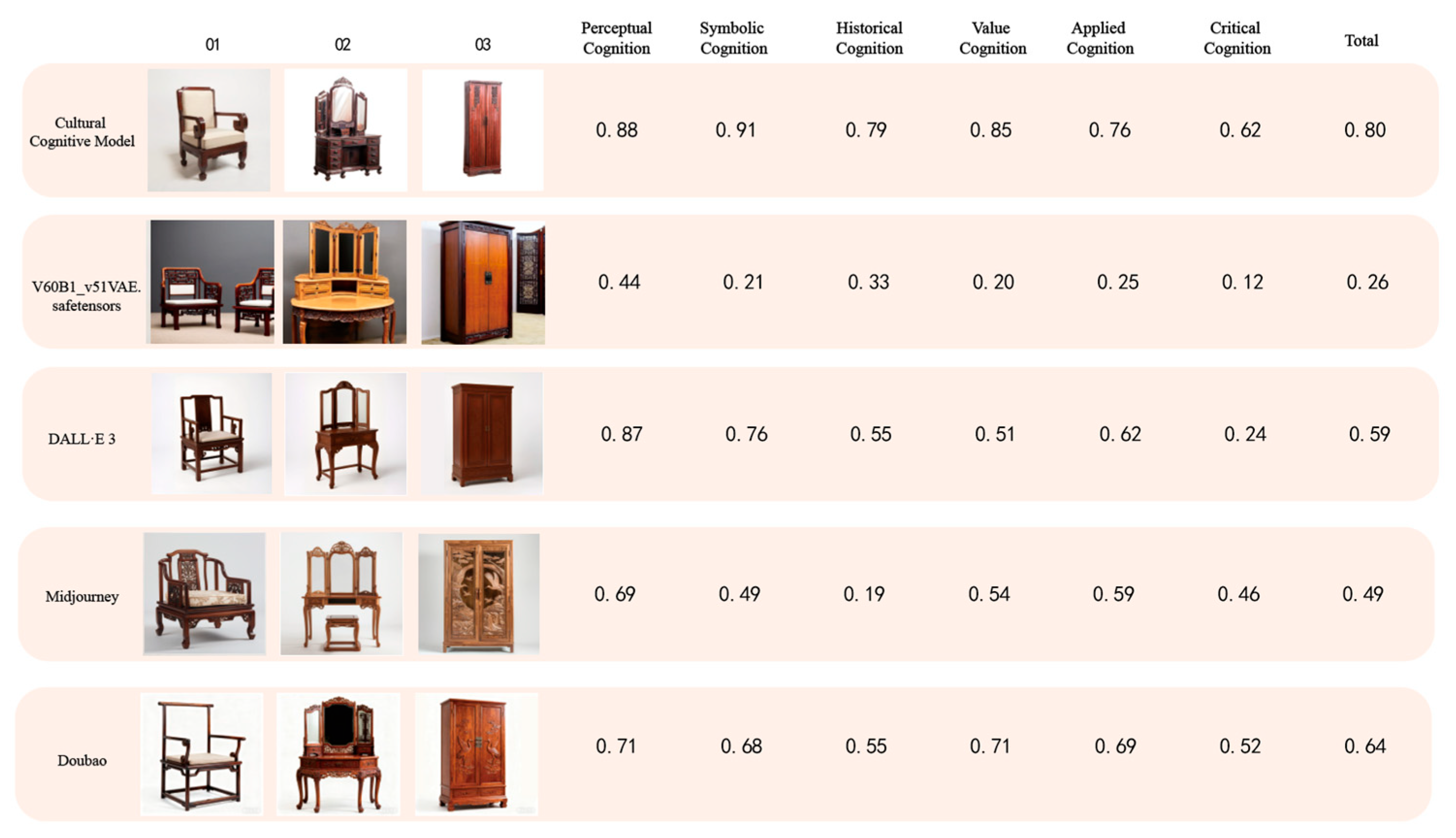
| Mechanism of hierarchical progression in the perception of cultural heritage | Perceptual Cognition | Visual Impression |
| Sensory Perception | ||
| Visceral Reaction | ||
| Cultural Perception | ||
| Eternal Feature | ||
| Symbolic Cognition | Cultural Labels | |
| Symbolic Significance | ||
| Semiotic Interpretation | ||
| Symbolic Connotation | ||
| Historical Symbol | ||
| Historical Cognition | Historical Overview | |
| Time Characteristic | ||
| Regional Culture | ||
| Evolutionary Process | ||
| Value Cognition | Cultural Value | |
| Educational Function | ||
| Esthetic Experience | ||
| Social Value | ||
| Identification | ||
| Applied Cognition | Design Utilization | |
| Exhibition Planning | ||
| Teaching Translation | ||
| Cultural Creativity | ||
| Critical Cognition | Cultural Reproduction | |
| Discourse Construction | ||
| Immigration Critics | ||
| Authenticity Issues | ||
| Ethical Reflection |
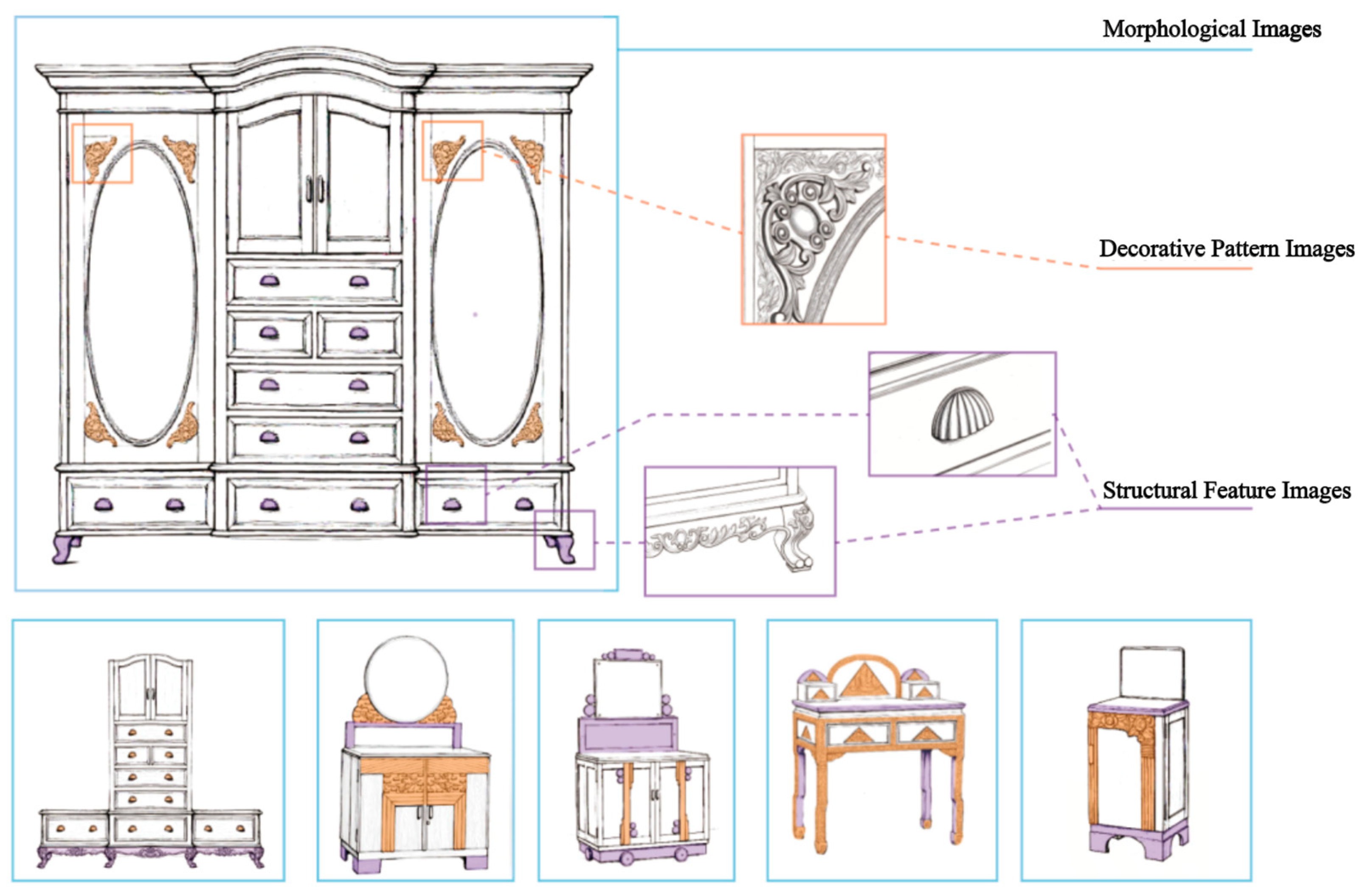
| Stylistic Schools | Morphological Images | Structural Feature Images | Decorative Pattern Images |
|---|---|---|---|
| Neoclassical Style | Furniture has symmetrical shapes and regular structures, with an overall elegant and restrained style | Common conical grooved legs, straight legs, and structural lines are straight and concise | Simple classical patterns such as plant wreaths and oval frames, with coordinated proportions between decoration and structure |
| French Rococo Style | Curves are smooth, shapes are light and gorgeous, with common shell-like and scroll-like decorative shapes | Decorative components such as curved chair legs (S-shaped legs), beast hoof feet, and carved flower holders. | Decorative patterns such as scrolls, roses, and bows, with exquisite and complex carvings and soft lines |
| Eclectic Style | Combines multiple Western classical elements, with mixed forms and grand or changeable shapes | Combinations of various European decorative leg types, such as curved legs, cylindrical legs, and dental plates | Integrates decorative motifs such as Gothic, Baroque, and Rococo. Typical patterns include flowers and leaves, flying apsaras, mythological patterns, etc. |
| Art Deco | Strong sense of geometry, simple lines, neat volume, and a modern sense | Use of metal parts, glass, straight legs, and new types of plates, such as plywood | Abstract geometric patterns, radial, stepped, and parallel line compositions, highlighting modernist design concepts |
| Chinese–Western Fusion Style | Chinese frames embed Western functional elements, with coordinated proportions and diverse styles | Western-supporting components are combined within Chinese frames, such as claw feet and appliqué legs | Integrates traditional Chinese patterns (such as Shou character, peony, auspicious cloud) with Western flowers and scroll patterns to form a mixed decoration system |
| Category | Introduction |
|---|---|
| Trigger word | The trigger word is usually a special character, such as pinyin. Concepts that cannot be understood in the image features to be learned by the model correspond to this word. Inputting the trigger word will cause image features related to the trigger word to appear in the generated image, such as dragon and phoenix carvings, inlaid studs, etc. |
| Feature label | Feature labels are labels that are strongly associated with trigger words, such as curved leg, Victorian carving, wooden door, sofa, closet, etc. More is not necessarily better; only easily recognizable features are necessary, such as sofa, closet, coffee table, etc. |
| Disturbance Label | Interference labels are screen elements like white backgrounds, clutter, etc., which are non-furniture related. These elements need to have labels applied to additionally. |
| Negative Label | Negative labels are tags established to further enhance the effectiveness of model training, such as poor quality and damage. Their role is to prevent the model from generating undesirable output results. |
| Image | Image Label | |||
|---|---|---|---|---|
| Trigger Word | Feature Labels | Disturbance Label | Negative Label | |
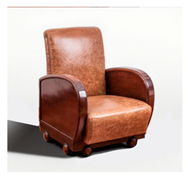 | Art Deco Furniture | chair; streamlined; geometric; functional; oval solid wood armrest; roller shape; leather upholstery; brown leather | white background | low resolution, crack, stain, blurry texture, noise, overexposure, blurry edge, deformed structure, blurry detail, scratch |
 | Art Deco Furniture | dining cart; geometric lines; modernism; glass countertop; concise lines; open structure; wooden cabinet; metal accessories; metal support rod; curved metal handle; roller | white background | low resolution, crack, stain, blurry texture, noise, overexposure, blurry edge, deformed structure, blurry detail, scratch |
 | Chinese–Western Fusion Style Furniture | dressing cabinet; large round mirror; wood carving decoration; geometric lines; line relief; cloud and crane pattern; solid wood cabinet; square cabinet feet | white background | low resolution, crack, stain, blurry texture, noise, overexposure, blurry edge, deformed structure, blurry detail, scratch |
| Classification | Parameters | Classification | Parameters |
|---|---|---|---|
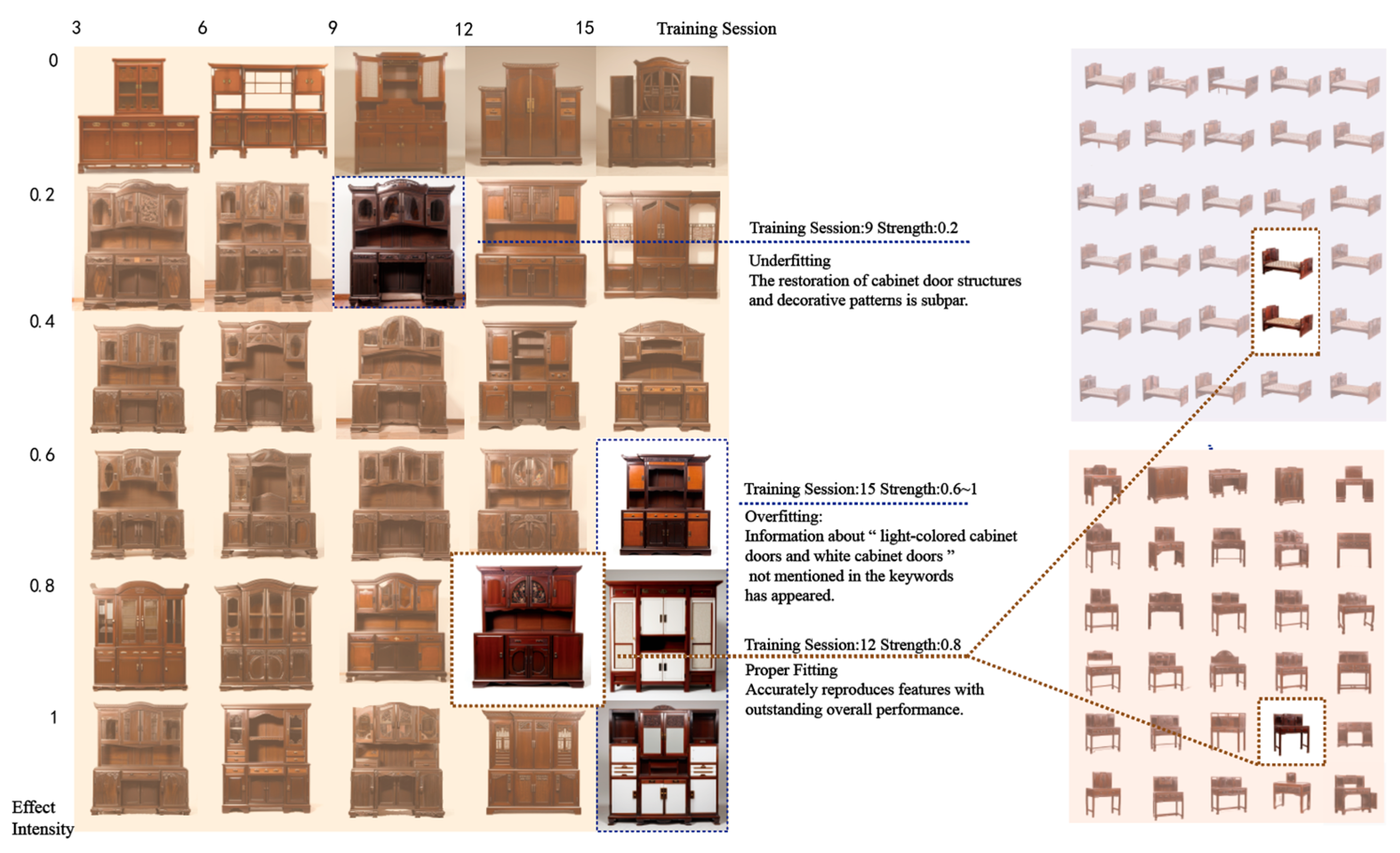
| model_train_type | Sd-lora | max_train_epochs | 15 |
| pretrained_model | Stable-diffusion/reaisticVisionV60B1_v51VAE.safetensors | train_batch size | 1 |
| resolution | 512 × 512 | unet_lr | 1 × 10⁻⁴ |
| output_name | Shanghai-style furniture | text_encoder_lr | 1 × 10⁻⁵ |
| network_dim | 64 | Ir_scheduler | cosine_with_restarts |
| network_alpha | 32 | Ir_scheduler_num_cycles | 1 |
| Save the model every N epoch. | 2 | optimizer_type | AdamW8bit |
Disclaimer/Publisher’s Note: The statements, opinions and data contained in all publications are solely those of the individual author(s) and contributor(s) and not of MDPI and/or the editor(s). MDPI and/or the editor(s) disclaim responsibility for any injury to people or property resulting from any ideas, methods, instructions or products referred to in the content. |
© 2025 by the authors. Licensee MDPI, Basel, Switzerland. This article is an open access article distributed under the terms and conditions of the Creative Commons Attribution (CC BY) license (https://creativecommons.org/licenses/by/4.0/).
Share and Cite
Li, X.; Lin, J.; Zhang, X. Dynamic Transmission and Innovative Transformation of Cultural Heritage: Generative Artificial Intelligence Practices Based on Cultural Cognitive Models. Appl. Sci. 2025, 15, 12651. https://doi.org/10.3390/app152312651
Li X, Lin J, Zhang X. Dynamic Transmission and Innovative Transformation of Cultural Heritage: Generative Artificial Intelligence Practices Based on Cultural Cognitive Models. Applied Sciences. 2025; 15(23):12651. https://doi.org/10.3390/app152312651
Chicago/Turabian StyleLi, Xinyang, Jingjing Lin, and Xiaomeng Zhang. 2025. "Dynamic Transmission and Innovative Transformation of Cultural Heritage: Generative Artificial Intelligence Practices Based on Cultural Cognitive Models" Applied Sciences 15, no. 23: 12651. https://doi.org/10.3390/app152312651
APA StyleLi, X., Lin, J., & Zhang, X. (2025). Dynamic Transmission and Innovative Transformation of Cultural Heritage: Generative Artificial Intelligence Practices Based on Cultural Cognitive Models. Applied Sciences, 15(23), 12651. https://doi.org/10.3390/app152312651