A Data-Driven PCA–OCSVM Framework for Intelligent Monitoring and Anomaly Detection of Grid-Connected PV Inverters Under Multitask Operation




Abstract
1. Introduction
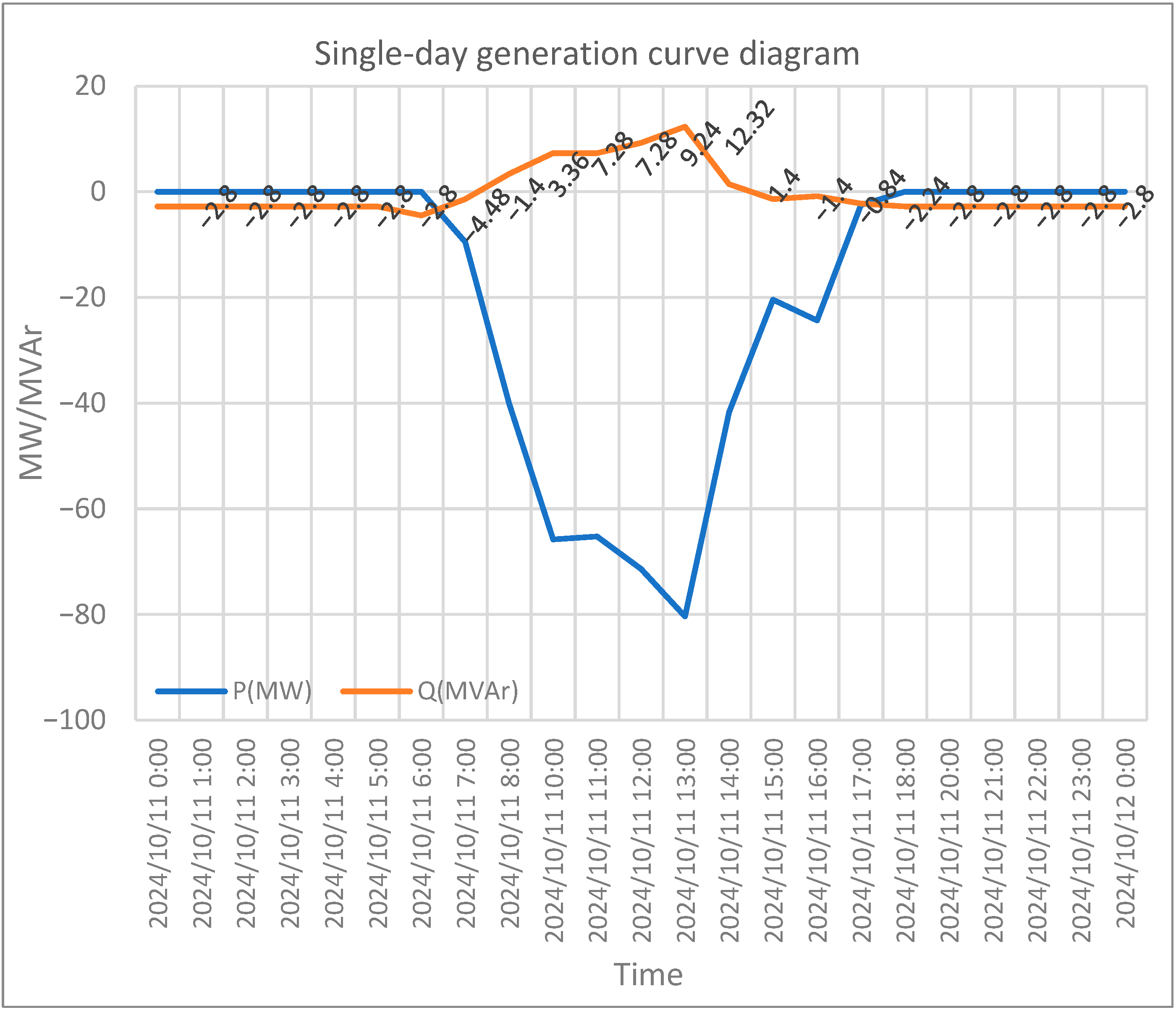
- We propose a practical anomaly detection framework for grid-connected PV inverters operating under multitask conditions, including nighttime PV-STATCOM operation, which is rarely addressed in prior studies.
- We integrate physically interpretable indicators (AC/DC power ratio and AC power variation) with an OCSVM boundary in a tri-layer decision scheme, enabling both accurate anomaly detection and engineering interpretability.
- We demonstrate field deployment in a 120 MW utility-scale PV plant and introduce an anomaly based grouping mechanism that prioritizes inverters for maintenance dispatch, providing actionable decision support for O&M teams.
2. System Architecture and Data Analysis Workflow
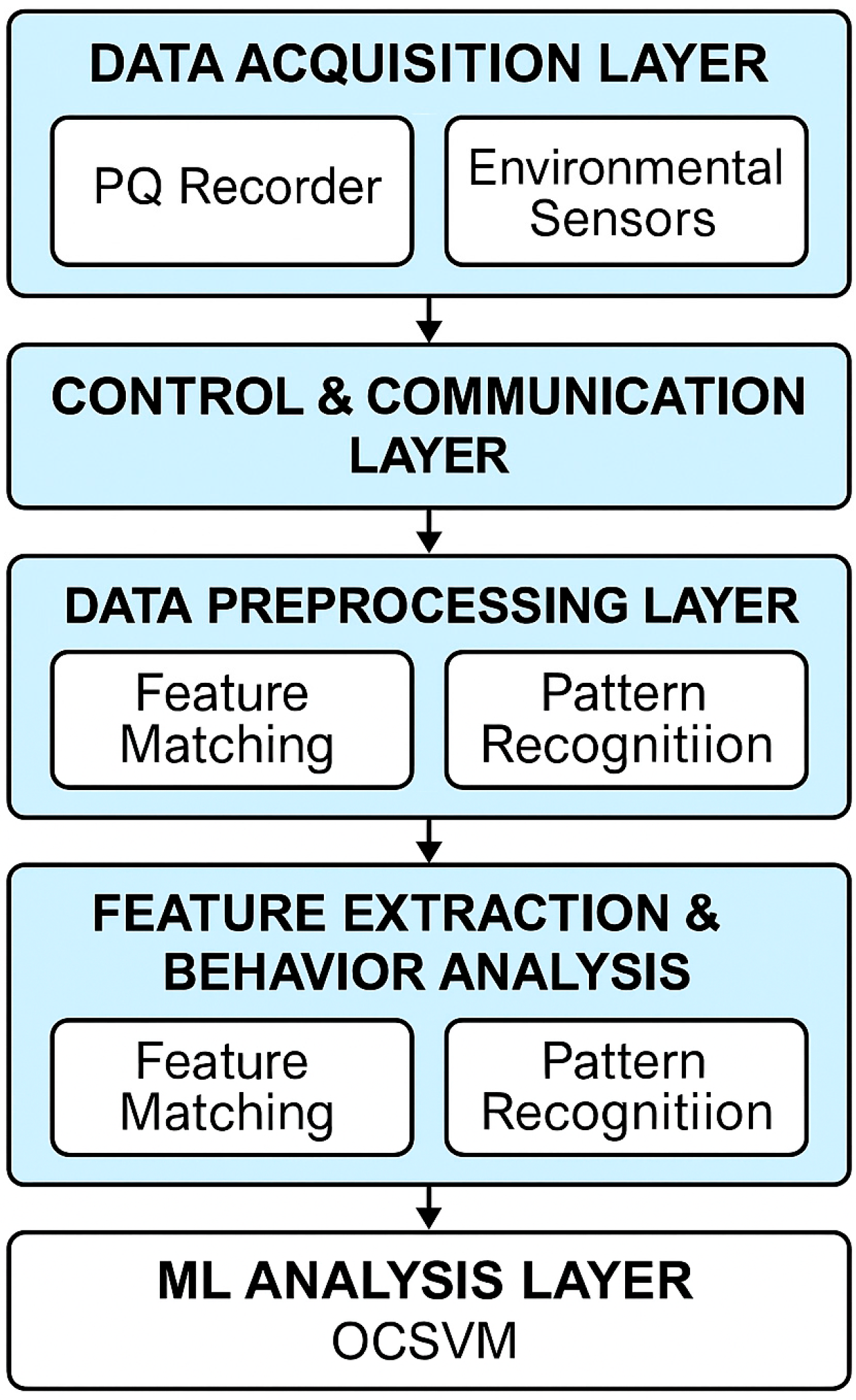
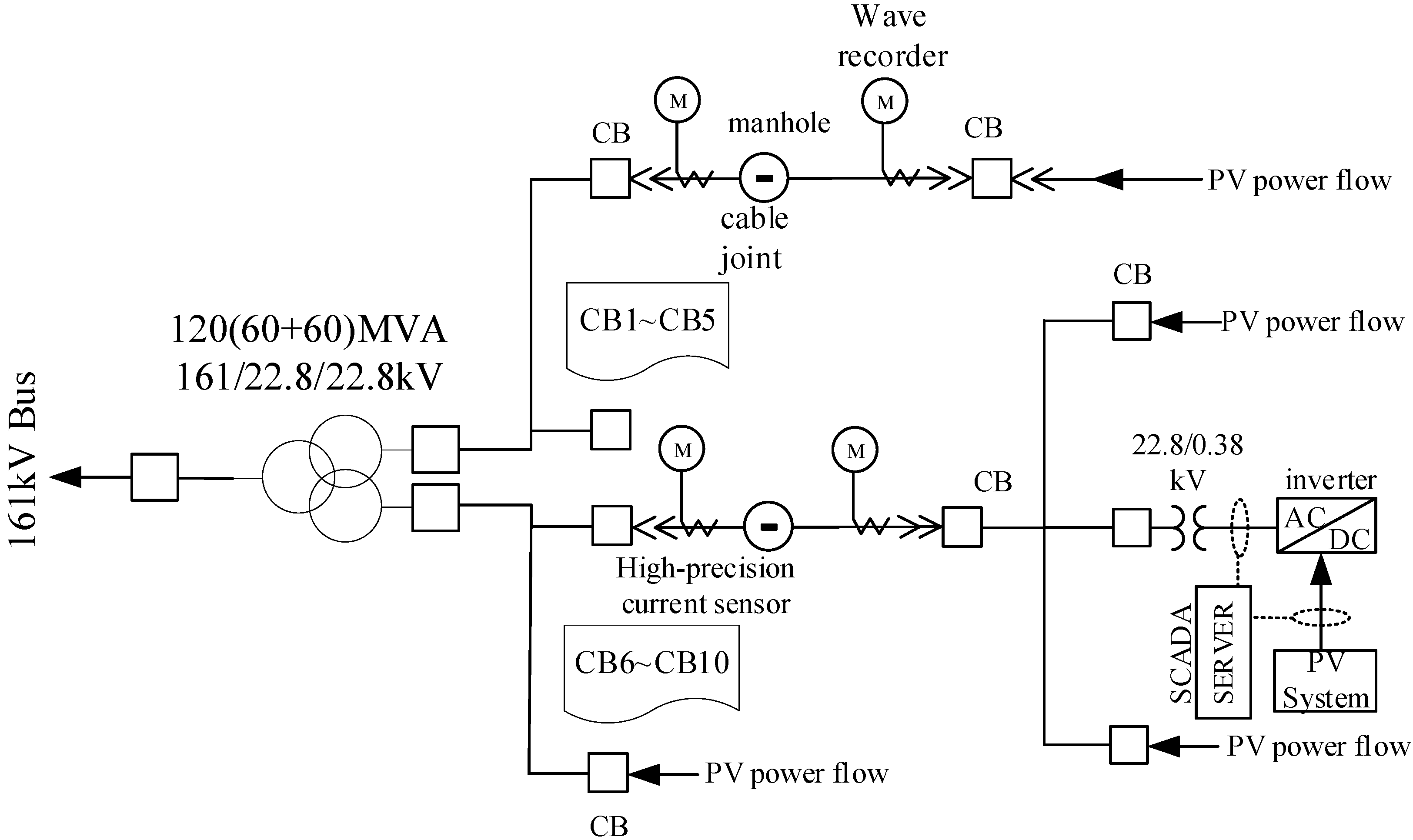
- Data Acquisition LayerThis layer is responsible for collecting raw operational and environmental data from the photovoltaic (PV) power plants. On the low-voltage AC side, multifunction power meters are installed to measure three-phase voltage, current, output power, frequency, and alarm messages at 5 min intervals. The recorded data were transmitted to a centralized server for storage. In addition, environmental sensors were deployed across the site to gather external condition data including solar irradiance, ambient temperature, module temperature, and humidity. These measurements served as critical inputs for subsequent performance assessments and anomaly detection.
- Control and Communication LayerAll inverters were connected to a centralized controller via bidirectional communication, enabling both warning and alert functionalities. Time series records of the DC input and AC output data were collected from each inverter to support continuous performance monitoring.
- Data Preprocessing LayerDuring analysis, the collected data were first subjected to cleaning, outlier removal, and categorical classification. Specific warning types were labeled accordingly. Field observations revealed that even under identical environmental conditions, certain inverters may exhibit reduced power generation performance or experience early failure owing to differences in stress distribution.
- Feature Extraction and Behavior AnalysisBased on the field maintenance records and historical data, the system extracts the full-time output-to-input power ratio for the selected inverters. This enables the exploration of inverter behavior patterns and their correlation with potential faults over time.
- Machine Learning Analysis LayerAlthough PCA and OCSVM have been widely applied in other domains, their integration for multitask inverter operation under nighttime PV-STATCOM mode remains insufficiently explored. This study establishes an anomaly boundary using the OCSVM model to identify and classify inverter-derating behavior. The analysis results provide a basis for predictive maintenance, enabling the early detection of inverter performance degradation and ensuring the overall power-generation efficiency of the PV plant.
3. Dimensionality Reduction and Anomaly Detection Methods
3.1. Feature Selection and Data Preprocessing
3.2. Dimensionality Reduction Using PCA
3.2.1. Principle of the PC1-Based Detection Indicator
- mean value of the dataset
- sample in the dataset
- mean value of the dataset
- sample in the dataset
- , The and represent the original data point in and datasets, respectively.
- The standard deviation of the dataset
- The population standard deviation of the dataset
3.2.2. Principle of the PC2-Based Detection Indicator
3.3. Anomaly Detection
- is the -th data sample, represented as , that is, the principal components in the reduced 2D feature space.
- is the transformed representation of sample in a high-dimensional feature space, using the kernel function used for hyperplane construction and anomaly classification.
- the normal vector of the hyperplane.
- offset (bias term) determines the distance between the boundary and origin.
- slack variable that controls the allowed margin of error (i.e., data points permitted to lie outside the decision boundary).
- parameter that controls the model’s tolerance for anomalies.
- maximizes the distance between the separating hyperplane and origin to establish a smooth boundary and enhances the generalization capability of the model.
- allows certain data points to deviate from the decision boundary, thereby controlling the sensitivity of the anomaly detection model.
3.4. Multi-Criteria Anomaly Detection
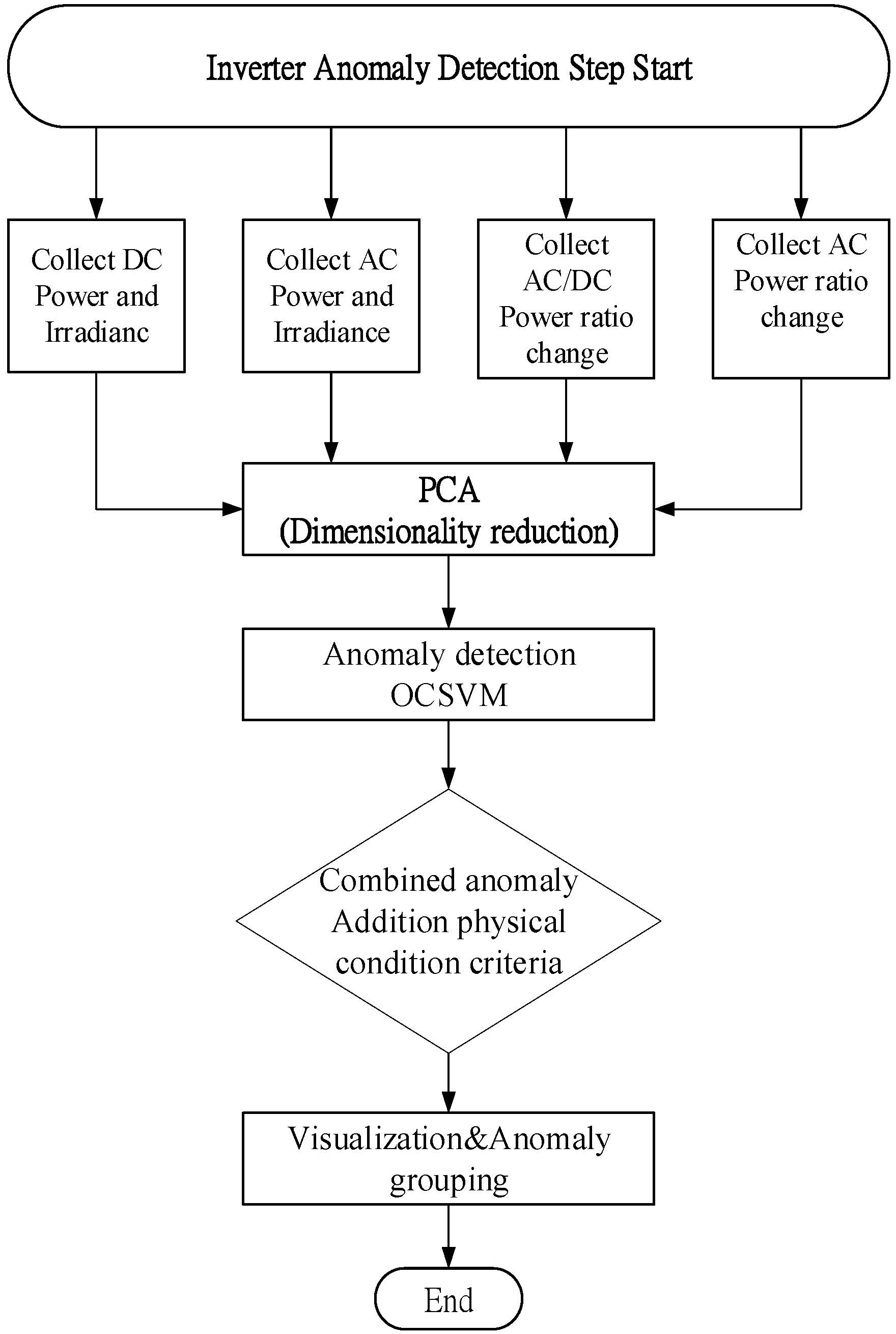
3.4.1. AC/DC Power Ratio Criterion
3.4.2. The AC Power Ratio Change
- High Anomaly, if all three conditions are met;
- Medium Anomaly, if two are met;
- Low Anomaly, if only one is satisfied.
3.5. Visualization and Anomaly Grouping
4. Experimental Results and Discussion
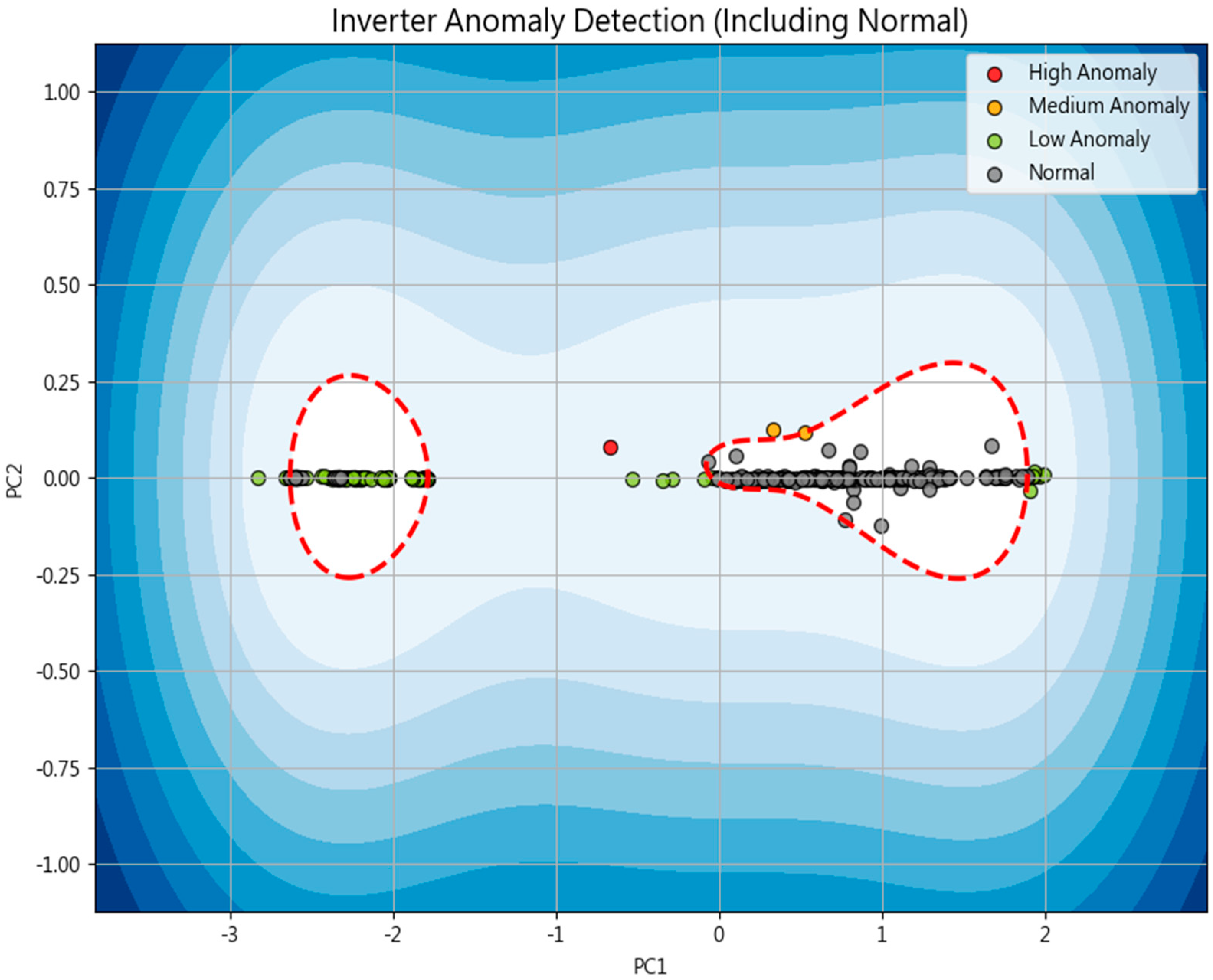
- AC/DC Anomaly Indicator: The threshold for this indicator was set at an AC/DC power ratio of less than 0.96. As shown in Table 1, the three inverters exhibit a power conversion efficiency (AC/DC ratio) below the specified threshold and are located on or beyond the OCSVM decision boundary. Therefore, these units were classified as anomalous units.
- AC Change Anomaly: This indicator is set at an AC ratio change of <0.8 and is designed to identify abrupt power fluctuations or discontinuities in the output. The threshold was calibrated to accommodate variations caused by rapid weather changes. For example, Inverter A31_23 exhibits a power drop exceeding 20% between consecutive time intervals, indicating a significant anomaly.
- OCSVM Anomaly: The parameter nu = 0.05 is adopted as the tolerance level for the decision boundary, meaning that the model assumes that up to 5% of the data may be anomalous. This parameter serves as a hyperparameter in the OCSVM model to control the trade-off between the anomaly sensitivity and boundary tightness. The dashed red line in Figure 7 represents the decision boundary established by the OCSVM model enclosing approximately 95% of the data points, which is regarded as the “normal” operational region. If nu is set too low (e.g., nu = 0.01), the model may become overly conservative, potentially failing to detect latent anomalies. Conversely, a larger nu value (e.g., 0.1 to 0.2) may lead to overdetection, mistakenly classifying normal data as anomalous.
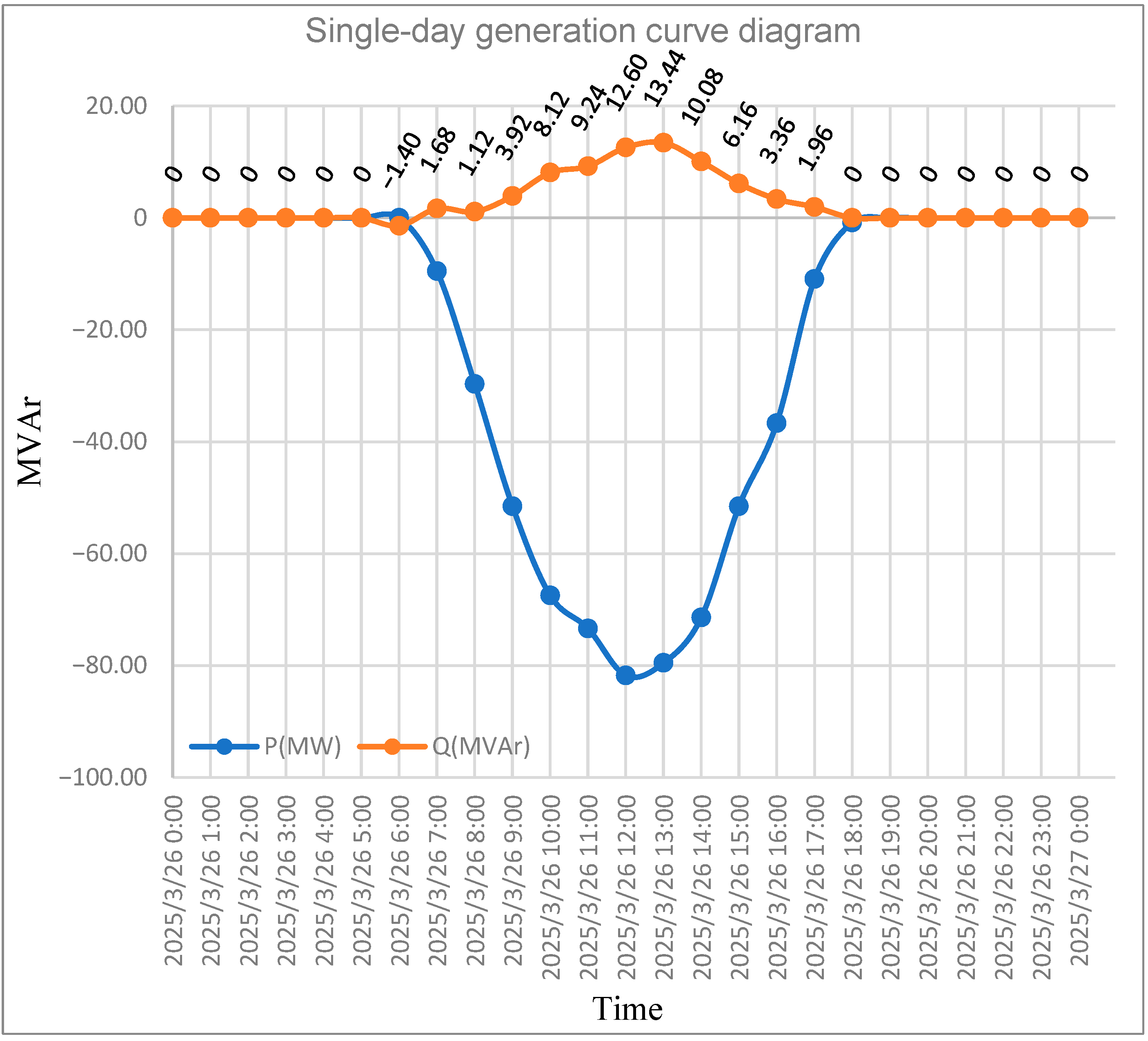
- It should be noted that this study extracted inverter data at a fixed time (12:00) each day to ensure comparable irradiance conditions and reduce weather-related variability. However, this approach may overlook time-specific anomalies such as short-term thermal derating or MPPT instability during startup or sunset periods. Future studies could incorporate multiple time points or leverage time-series models to capture intraday performance variations and further improve the detection coverage.
5. Conclusions
- Noninvasive: Diagnosis is performed using existing SCADA monitoring data without requiring additional hardware.
- Enhanced reliability: By integrating multiple anomaly detection criteria, this method increases the credibility of the classification outcomes.
- High scalability: This framework can be extended to various inverter models and adapted to various anomaly types and prediction tasks.
Author Contributions
Funding
Institutional Review Board Statement
Informed Consent Statement
Data Availability Statement
Conflicts of Interest
References
- Rezende, J.F.; Ceballos, S.; Prieto, J.; Pou, J.; Martín, A.; Busquets-Monge, S. Reliability-Oriented Design and Analysis of PV Inverters Considering Mission Profiles. IEEE Trans. Power Electron. 2020, 35, 2472–2486. [Google Scholar]
- Bouguerra, S.; Yaiche, M.R.; Gassab, O.; Sangwongwanich, A.; Blaabjerg, F. The Impact of PV Panel Positioning and Degradation on the PV Inverter Lifetime and Reliability. IEEE J. Emerg. Sel. Top. Power Electron. 2021, 9, 3114–3126. [Google Scholar] [CrossRef]
- Sangwongwanich, A.; Yang, Y.; Sera, D.; Blaabjerg, F. Lifetime Evaluation of Grid-Connected PV Inverters Considering Panel Degradation Rates and Installation Sites. IEEE Trans. Power Electron. 2018, 33, 1225–1236. [Google Scholar] [CrossRef]
- Spertino, F.; Chiodo, E.; Ciocia, A.; Malgaroli, G.; Ratclif, A. Maintenance Activity, Reliability, Availability, and Related Energy Losses in Ten Operating Photovoltaic Systems up to 1.8 MW. IEEE Trans. Ind. Appl. 2021, 57, 83–93. [Google Scholar] [CrossRef]
- Wang, W. A Non-Invasive Online Condition Monitoring Method for Both SiC MOSFET and DC-Link Capacitor in a Single-Phase Inverter. In Proceedings of the 2021 Global Reliability and Prognostics and Health Management (PHM-Nanjing), Nanjing, China, 22–24 October 2021; pp. 1–5. [Google Scholar] [CrossRef]
- IEEE Std 1547-2018; IEEE Standard for Interconnection and Interoperability of Distributed Energy Resources with Associated Electric Power Systems Interfaces. IEEE: New York, NY, USA, 2018. [CrossRef]
- Flicker, J.; Johnson, J.; Reno, M.J.; Azzolini, J.A.; Hacke, P.; Thiagarajan, R. Inverter Reliability Estimation for Advanced Inverter Functionality. In Proceedings of the 2022 IEEE 49th Photovoltaic Specialists Conference (PVSC), Philadelphia, PA, USA, 5–10 June 2022; pp. 183–189. [Google Scholar] [CrossRef]
- Moore, L.M.; Post, H.N. Five Years of Operating Experience at a Large, Utility-Scale Photovoltaic Generating Plant. Prog. Photovolt. Res. Appl. 2008, 16, 249–259. [Google Scholar] [CrossRef]
- Vinson, W.; Iradukunda, A.; Huitink, D.; Lee, J.-P.; Kwon, M.; Oh, C.-Y. Combined Electromigration and Strain Accelerated Failure Test Development for Al Wire Bonds and Reliability Analysis of Grid-Tied Solar Inverter. In Proceedings of the 2021 20th IEEE Intersociety Conference on Thermal and Thermomechanical Phenomena in Electronic Systems (iTherm), San Diego, CA, USA, 1–4 June 2021; pp. 772–779. [Google Scholar] [CrossRef]
- Sangwongwanich, A.; Blaabjerg, F. Monte Carlo Simulation with Incremental Damage for Reliability Assessment of Power Electronics. IEEE Trans. Power Electron. 2021, 36, 7366–7371. [Google Scholar] [CrossRef]
- Liu, Y.-M.; Kuo, C.-C.; Chen, H.-C. Nighttime Reactive Power Optimization for Large-Scale PV Plants: Minimizing Compensation Equipment Investment. Appl. Sci. 2025, 15, 10748. [Google Scholar] [CrossRef]
- Liu, Y.-M.; Kuo, C.-C.; Chen, H.-C. A Hybrid GA–Digital Twin Strategy for Real-Time Nighttime Reactive Power Compensation in Utility-Scale PV Plants. Appl. Sci. 2025, 15, 11282. [Google Scholar] [CrossRef]
- Montgomery, D.C.; Runger, G.C. Applied Statistics and Probability for Engineers, 7th ed.; Wiley: Hoboken, NJ, USA, 2018. [Google Scholar]
- Jolliffe, I.T. Principal Component Analysis, 2nd ed.; Springer: New York, NY, USA, 2002. [Google Scholar] [CrossRef]
- Abdi, H.; Williams, L.J. Principal Component Analysis. Wiley Interdiscip. Rev. Comput. Stat. 2010, 2, 433–459. [Google Scholar] [CrossRef]
- Roy, S.; Tufail, S.; Tariq, M.; Sarwat, A. Photovoltaic Inverter Failure Mechanism Estimation Using Unsupervised Machine Learning and Reliability Assessment. IEEE Trans. Reliab. 2024, 73, 1418–1432. [Google Scholar] [CrossRef]
- Fragoso, V.; Scheirer, W.; Hespanha, J.; Turk, M. One-Class Slab Support Vector Machine. In Proceedings of the 23rd International Conference on Pattern Recognition (ICPR), Cancun, Mexico, 4–8 December 2016; pp. 420–425. [Google Scholar] [CrossRef]
- Que, Z.; Lin, C.-J. One-Class SVM Probabilistic Outputs. IEEE Trans. Neural Netw. Learn. Syst. 2025, 36, 6244–6256. [Google Scholar] [CrossRef] [PubMed]
- Orosz, T.; Rassõlkin, A.; Arsénio, P.; Poór, P.; Valme, D.; Sleisz, Á. Current Challenges in Operation, Performance, and Maintenance of Photovoltaic Panels. Energies 2024, 17, 1306. [Google Scholar] [CrossRef]
- Walker, A.; Lockhart, E.; Desai, J.; Ardani, K.; Klise, G.; Lavrova, O.; Tansy, T.; Deot, J.; Fox, B.; Pochiraju, A. Model of Operation and Maintenance Costs for Photovoltaic Systems; Report No. NREL/TP-5C00-74840; National Renewable Energy Laboratory (NREL): Golden, CO, USA, 2020. Available online: https://www.nrel.gov/docs/fy20osti/74840.pdf (accessed on 28 October 2025).





| Inverter id | DC_Power kW | AC_Power kW | AC_Voltage V | AC_DC Ratio | AC_Ratio Change | AC_Change Anomaly | PC1 | PC2 | OCSVM Anomaly | AC_DC Anomaly | Anomaly Level |
|---|---|---|---|---|---|---|---|---|---|---|---|
| A27_12 | 70.13 | 66.7 | 382.2 | 0.951 | 1.020 | FALSE | 0.526 | 0.118 | TRUE | TRUE | Medium |
| A27_16 | 68.22 | 64.69 | 378.3 | 0.948 | 0.970 | FALSE | 0.338 | 0.125 | TRUE | TRUE | Medium |
| A31_23 | 57.1 | 54.74 | 383.4 | 0.959 | 0.775 | TRUE | −0.670 | 0.079 | TRUE | TRUE | High |
Disclaimer/Publisher’s Note: The statements, opinions and data contained in all publications are solely those of the individual author(s) and contributor(s) and not of MDPI and/or the editor(s). MDPI and/or the editor(s) disclaim responsibility for any injury to people or property resulting from any ideas, methods, instructions or products referred to in the content. |
© 2025 by the authors. Licensee MDPI, Basel, Switzerland. This article is an open access article distributed under the terms and conditions of the Creative Commons Attribution (CC BY) license (https://creativecommons.org/licenses/by/4.0/).
Share and Cite
Liu, Y.-M.; Kuo, C.-C.; Chen, H.-C. A Data-Driven PCA–OCSVM Framework for Intelligent Monitoring and Anomaly Detection of Grid-Connected PV Inverters Under Multitask Operation. Appl. Sci. 2025, 15, 12394. https://doi.org/10.3390/app152312394
Liu Y-M, Kuo C-C, Chen H-C. A Data-Driven PCA–OCSVM Framework for Intelligent Monitoring and Anomaly Detection of Grid-Connected PV Inverters Under Multitask Operation. Applied Sciences. 2025; 15(23):12394. https://doi.org/10.3390/app152312394
Chicago/Turabian StyleLiu, Yu-Ming, Cheng-Chien Kuo, and Hung-Cheng Chen. 2025. "A Data-Driven PCA–OCSVM Framework for Intelligent Monitoring and Anomaly Detection of Grid-Connected PV Inverters Under Multitask Operation" Applied Sciences 15, no. 23: 12394. https://doi.org/10.3390/app152312394
APA StyleLiu, Y.-M., Kuo, C.-C., & Chen, H.-C. (2025). A Data-Driven PCA–OCSVM Framework for Intelligent Monitoring and Anomaly Detection of Grid-Connected PV Inverters Under Multitask Operation. Applied Sciences, 15(23), 12394. https://doi.org/10.3390/app152312394