Article

Thermal Regulation and Moisture Accumulation in Embankments with Insulation–Waterproof Geotextile in Seasonal Frost Regions


1
School of Civil Engineering, Northwest Minzu University, Lanzhou 730024, China
2
China-Russia Joint Laboratory for Cold Regions Engineering & Environment, School of Civil Engineering and Transportation, Permafrost Institute, Northeast Forestry University, Harbin 150040, China
3
State Key Laboratory of Frozen Soil Engineering, Northwest Institute of Eco-Environment and Resources, Chinese Academy of Sciences, Lanzhou 730030, China
*
Author to whom correspondence should be addressed.
Appl. Sci. 2025, 15(19), 10681; https://doi.org/10.3390/app151910681
Submission received: 2 September 2025 / Revised: 29 September 2025 / Accepted: 1 October 2025 / Published: 2 October 2025
(This article belongs to the Section Civil Engineering)

Abstract

As an effective engineering countermeasure against frost heave damage in seasonally frozen regions, thermal insulation boards (TIBs) were employed in embankments. This study established a test section featuring a thermal insulation–waterproof geotextile embankment in Dingxi, Gansu Province. Temperature and water content at various positions and depths within both the thermal insulation embankment (TIE) and an ordinary embankment (OE) were monitored and compared to analyze the effectiveness of the TIB. Following the installation of the insulation layer, the temperature distribution within the embankment became more uniform. The TIB effectively impeded downward heat transfer (cold energy influx) during the winter and upward heat transfer (heat energy flux) during the warm season. However, the water content within the TIE was observed to be higher than that in the OE, with water accumulation notably occurring at the embankment toe. While the TIB successfully mitigated slope damage and superficial soil frost heave, the waterproof geotextile concurrently induced moisture accumulation at the embankment toe. Consequently, implementing complementary drainage measures is essential. In seasonally frozen areas characterized by dry weather and relatively high winter temperatures, the potential damage caused by concentrated rainfall events to embankments requires particular attention.

1. Introduction

Frozen ground refers to rock or soil containing ice at or below 0 °C. Based on its duration of existence, it is categorized into permafrost, seasonally frozen ground, and short-term frozen ground [1]. Seasonally frozen ground denotes strata or soil that freezes at the surface during winter and thaws in summer. This type of frozen ground is distributed throughout the regions north of the Yangtze River in China, accounting for approximately 74% of the land area [1,2]. In the cold season, water in soil pores freezes into ice with an increase in volume of about 9%, resulting in frost heave. In the warm season, with the thawing of ice and weakening of soil shear strength, thaw settlement appears [3,4,5]. This kind of freezing and thawing action causes embankment problems including cracking and settlement of pavements. Manifestation characteristics of subgrade distresses in seasonally frozen regions indicate that longitudinal cracks and other damage primarily develop during winter, with frost heaves being the predominant causative factor [6,7].
Thermal insulation represents one of earliest countermeasures applied in engineering practice for frost heave mitigation. The principle of installing insulating layers within or surrounding the subgrade involves increasing thermal resistance to delay or prevent the freezing of foundation soils, thereby inhibiting subgrade frost heave. Additionally, this method contributes to waterproofing and enhancing the overall integrity of the subgrade. Extruded polystyrene (XPS) is a lightweight, rigid foam material known for its excellent insulation properties and versatility in various applications, including packaging and construction [8,9]. The use of laid XPS under roadbeds for anti-frost heave measures has been successfully applied in countries such as Japan and Canada. Also, massive experimental research application have been conducted in Beijing, Hebei, Shandong, Inner Mongolia, Ningxia, Heilongjiang, and other regions of China [6]. Liu et al. [10], through numerical simulation, found that the insulation placement in the roadbed can substantially decrease the degradation of the permafrost table under it. Insulation of thickness 0.06–0.1 m is enough to keep the ground frozen throughout the service period. Haghi et al. [11] evaluated the effect of using bottom ash (B.Ash), as well as polystyrene boards, on the seasonal response of pavement at the University of Alberta’s Integrated Road Research Facility in Edmonton, Canada. They concluded that polystyrene boards performed considerably better in terms of fatigue cracking risk. Cai et al. [12] conducted field tests and field monitoring for the materials, especially focusing on thermal performance, elastic deformation, and accumulated deformation of insulation materials. Soil temperatures within a thermally insulated embankment in permafrost regions were observed to decrease after the embankment was strengthened with the addition of thermosyphons and spall rock revetments [13]. Thermal insulation techniques are also widely used in other cold-region engineering applications [14,15,16]. At greater burial depths, thermal insulation layers effectively prevent tunnel linings from frost heave [17]. Ma et al. [18] concluded that the thermal insulation layer, whether laid between the preliminary lining and secondary lining or on the surface of the secondary lining, can prevent the tunnel from freezing and thawing damage
Previous studied have mostly used insulation board in permafrost regions [13,19,20,21,22] or conducted further studies through numerical simulations [10,18,20,23,24], but there has been a lack of time-series data in the use of insulation board in seasonally frozen areas. Thus, we chose to install insulation boards and waterproof geotextiles on embankment in seasonally frozen ground, monitoring temperature and moisture content changes at different positions and depths from 2019 to 2022, hoping to provide a reference for the operation and design of roads in seasonally frozen areas and provide more scenarios for the use of insulation boards.

2. Data and Methods

2.1. Site Description

The observations for this experiment were made along the Tongwei–Longxi Class II Highway (located in Dingxi City, Gansu Province, China), covering the full length of 72.463 km (Figure 1a). Dingxi City is located in a shallow seasonally frozen region, the mean annual air temperature is 7 °C, and the annual minimum temperature is approximately −9 °C, typically occurring from December to January (Table 1). The annual rainfall is 350–600 mm. The region is characterized by a semi-arid, mid-temperature climate.
To investigate the effect of the thermal insulation layer in embankments, using XPS insulation board and waterproof geotextile, a long-term ground temperature and water content monitoring system was installed between K1+400 and K1+500 of the highway, where the elevation is between 2152 m and 2158 m above sea level (Figure 1b).

2.2. Experimental Design and Data Collection

In order to meet the design standards for thermal insulation embankment (TIE) in collapsible loess area, the thickness of the TIB was calculated by thermal resistance equivalent Formula (1) and set to 50 mm thick, with the width the same as that of the pavement.
d x = K d s λ e λ s
where d x ,   d s are the thickness of TIB and equivalent soil (mm), respectively; λ e , λ s are thermal conductivity of TIB and equivalent soil, respectively; and K is the safety factor, 1.5–2.0.
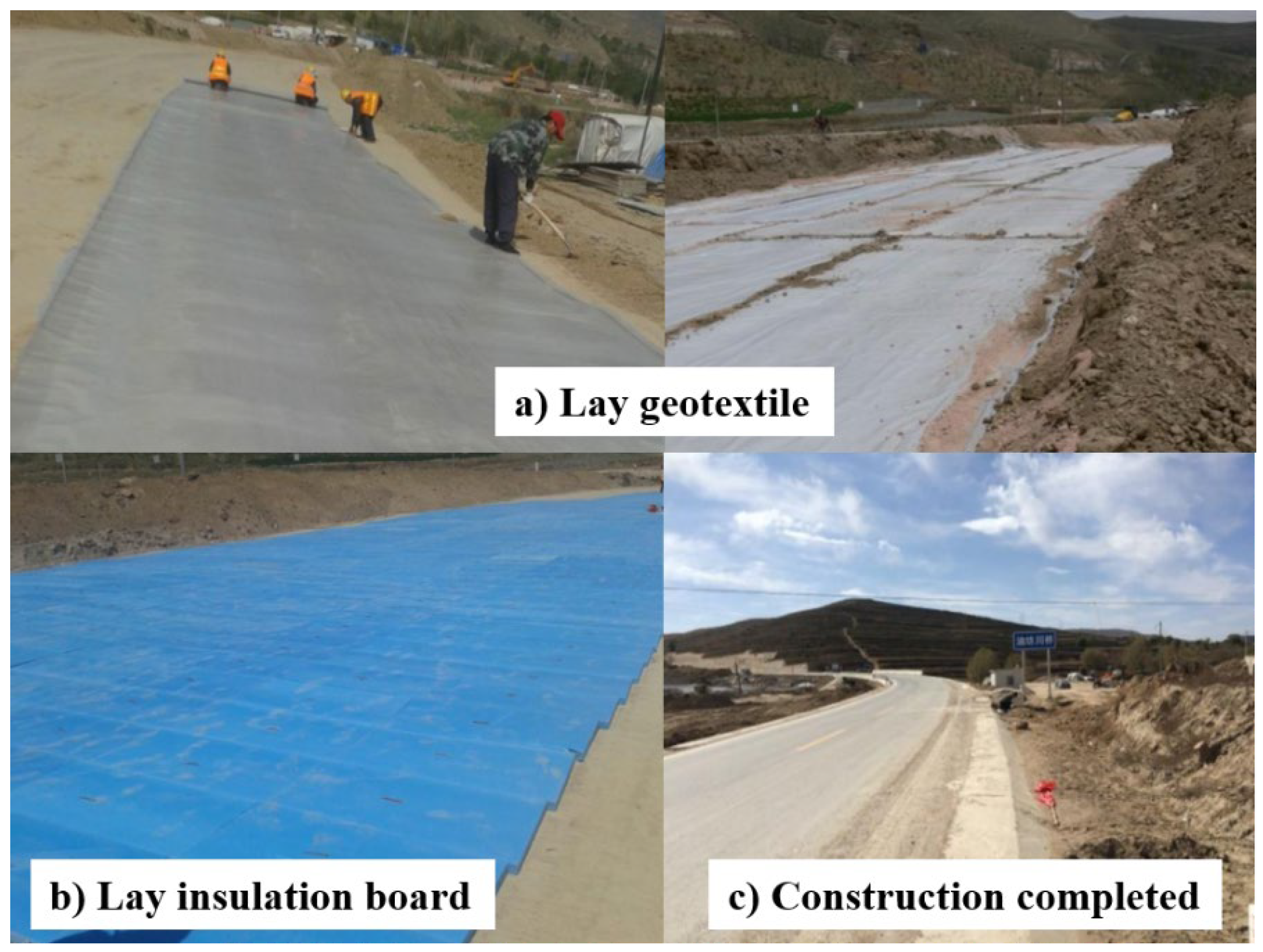
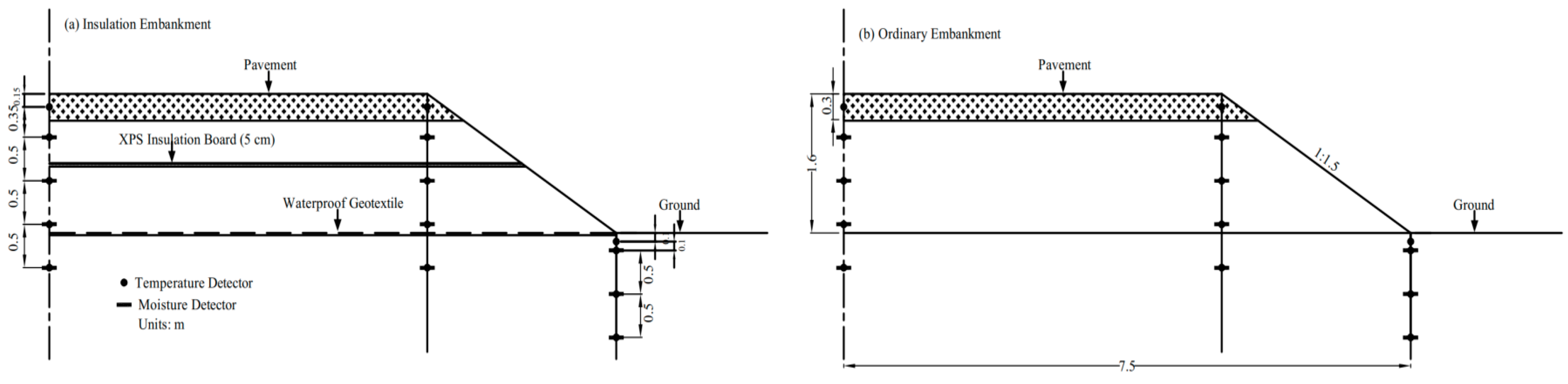
The thermal-insulating and moisture-barrier subgrade has a height of 1.6 m and uses loess as the fill material. The burial depth of the XPS boards was determined by their strength and the highway grade, and they were buried at the depth of 90 cm below the road surface. XPS (extruded polystyrene) is a readily available and cost-effective material. A composite geomembrane (one layer of geotextile and one layer of membrane) was laid on the TIB to prevent surface water from seeping into the embankment. In addition, a waterproof layer was set up inside the roadbed to prevent the infiltration of surface water and groundwater. For the new subgrade of the primary highway, the waterproofing layer is positioned beneath the roadbed. Specifically, the composite impermeable geomembrane within the embankment is wrapped underneath the toe of the embankment slope and extended to the base of the side ditch. This design served to prevent potential water infiltration in case the side ditch becomes damaged (Figure 2).
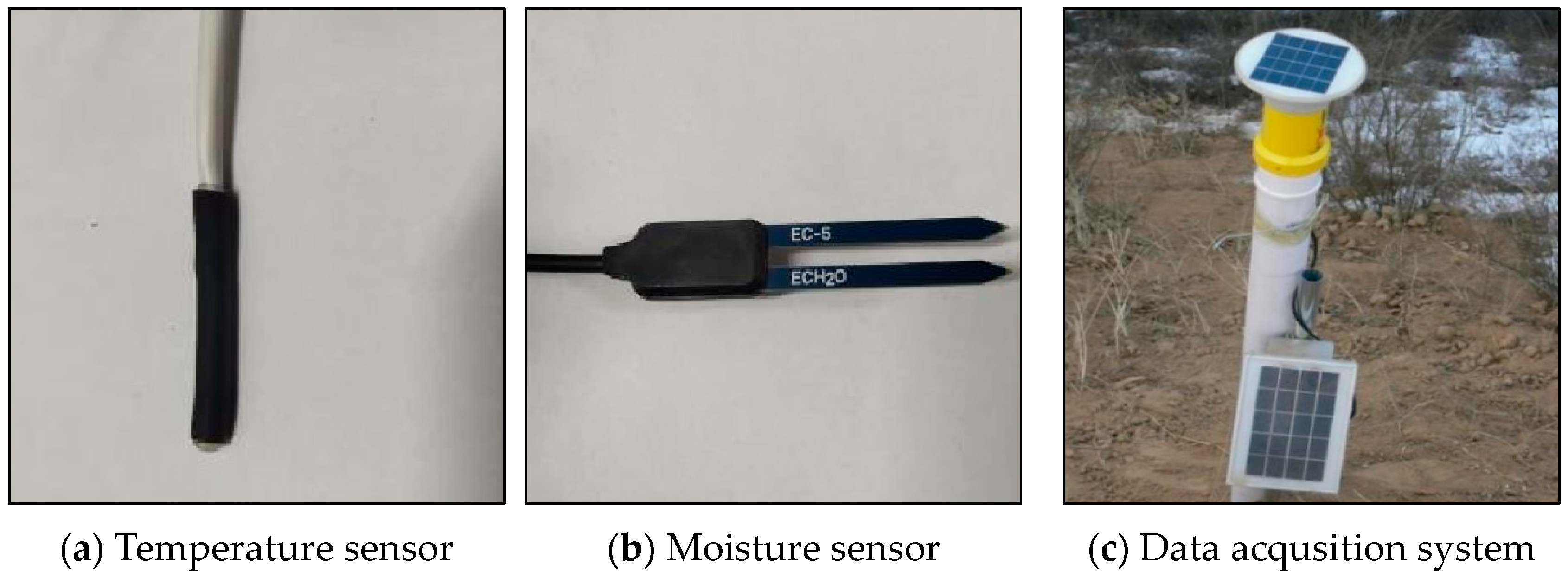
Soil temperature and water content monitoring system were conducted from February 2019 to February 2022 in the center, shoulder, and toe of TIE and OE (Figure 3 and Figure 4). Thermistor temperature sensors, with an accuracy of ±0.05 °C, were utilized. These temperature sensors were installed at depths of 10, 20, 70, and 120 cm beneath the toe of the slope. Beneath the shoulder and at the center of the subgrade, temperature sensors were placed at depths of 15, 50, 100, 150 cm (shoulder) and 15, 50, 100, 150, and 200 cm (center), respectively. Soil moisture sensors (EC-5) were deployed at depths of 20, 70, and 120 cm beneath the toe of the slope, and at depths of 50, 100, 150, and 200 cm beneath both the shoulder and the subgrade center. The EC-5 sensors have a measurement range of 0–100% volumetric water content and an accuracy of ±3%. The operating temperature range of this moisture sensor is −40 to 60 °C, which meets the temperature requirements for this study. All sensors were connected via cable to an automated data acquisition system, enabling wireless real-time transmission to the terminal.

3. Results and Analyses

3.1. Variation in Soil Temperature over Time

The temperature variations of the TIE and OE at the centerline, shoulder, and toe positions were compared.
Additionally, in order to further analyze the impact of the TIB on the embankment, the variation in temperature difference between TIE and OE ( T ) with time was examined.
T = T i e T o e
where T > 0 indicates that the ground temperature of TIE is higher than OE, and vice versa, and T at different positions were also analyzed in this section.

3.1.1. Analysis of Temperature at Centerline Position

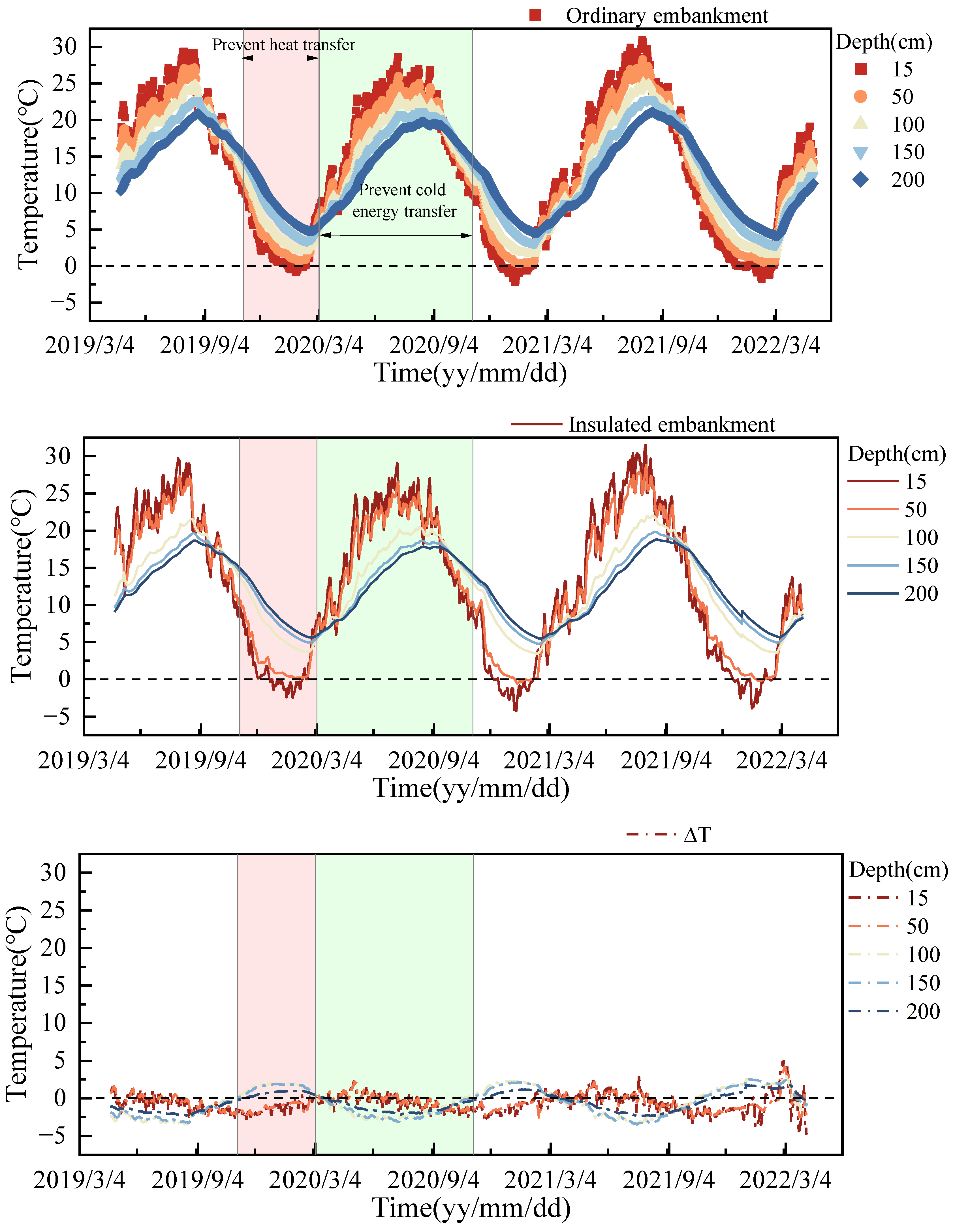
Figure 5 shows the temperature–time curves and T at the centerline position of the two embankments. As shown in Figure 5, the temperature of embankments undergoes periodic variation over time: the annual embankment temperature increases gradually from February to August and decreases gradually from August to February of the following year. The highest temperature, about 27 °C, occurs from end of July to the beginning of August, the lowest temperature, about −2 °C, appears from mid-January to the end of the month. Moreover, the temperature of the TIE is generally lower than that of the OE, and as the depth increases, the soil temperature gradually decreases.
In addition, the variation in temperature was delayed with depth. Take 2019 to 2020 as an example, the annual maximum temperature difference between the OE at a depth of 15 cm and 200 cm was 9 °C, while the difference for the TIE was 10.5 °C. The temperature near the road surface was higher. At this time, the TIB functioned to decouple the thermal regime of the upper active layer from the deeper subgrade. While temperatures at the TIB depth (90 cm) remained above freezing, the board impeded the downward propagation of the seasonal ‘cold wave’. This action was crucial for maintaining a stable and warmer base temperature, which mitigated the amplitude of thermal cycles at depth and suppressed moisture vapor migration driven by thermal gradients, thereby enhancing the long-term stability of the embankment structure. In the cold season, the soil temperature at depth of 200 cm was 5.7 °C higher than that at depth of 15 cm in OE, while the temperature difference in the TIE was 8.02 °C. At this time, the TIB prevented the transfer of cold energy to the bottom of the embankment. In addition, as depth increased, the fluctuation of embankment temperature decreased over time.
The variation of T also can explain the above rules. The variation of T at the embankment can be divided into the following stages: (1) The temperatures drop from August to February. For the soil above the TIB, T first increased then decreased, all values less than 0 °C, indicating that the insulation layer had a weak insulation effect on the upper soil. At this stage, the T of the soil under the TIB was opposite to the law of temperatures variation, gradually increasing from the minimum value of −2.5 °C to the maximum value of 2.5 °C. That is, during the cooling process, the insulation layer played a role to prevent the cold energy from transferring to the bottom of embankment. (2) The temperatures rise from February to August. For the soil above the TIB, T of the soil first increased then decreased, all values greater than 0 °C, indicating that the temperature rise of TIE was less than that in OE. At this stage, the T of the soil under the TIB was also opposite to the law of temperatures variation. That means that the temperature of TIE was more stable, and the insulation layer prevented heat from transferring to deeper soil.

3.1.2. Analysis of Temperature at Shoulder Position

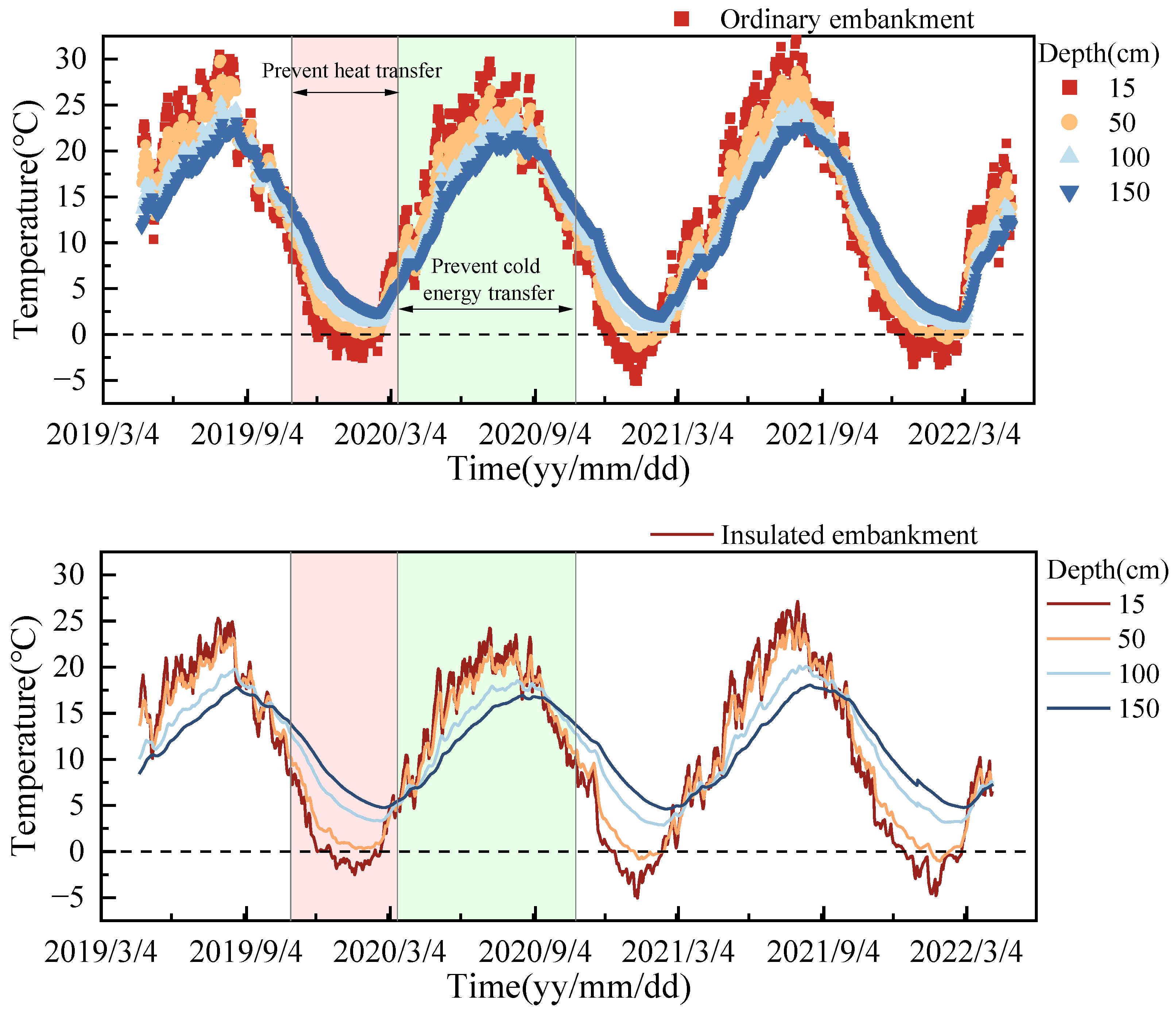
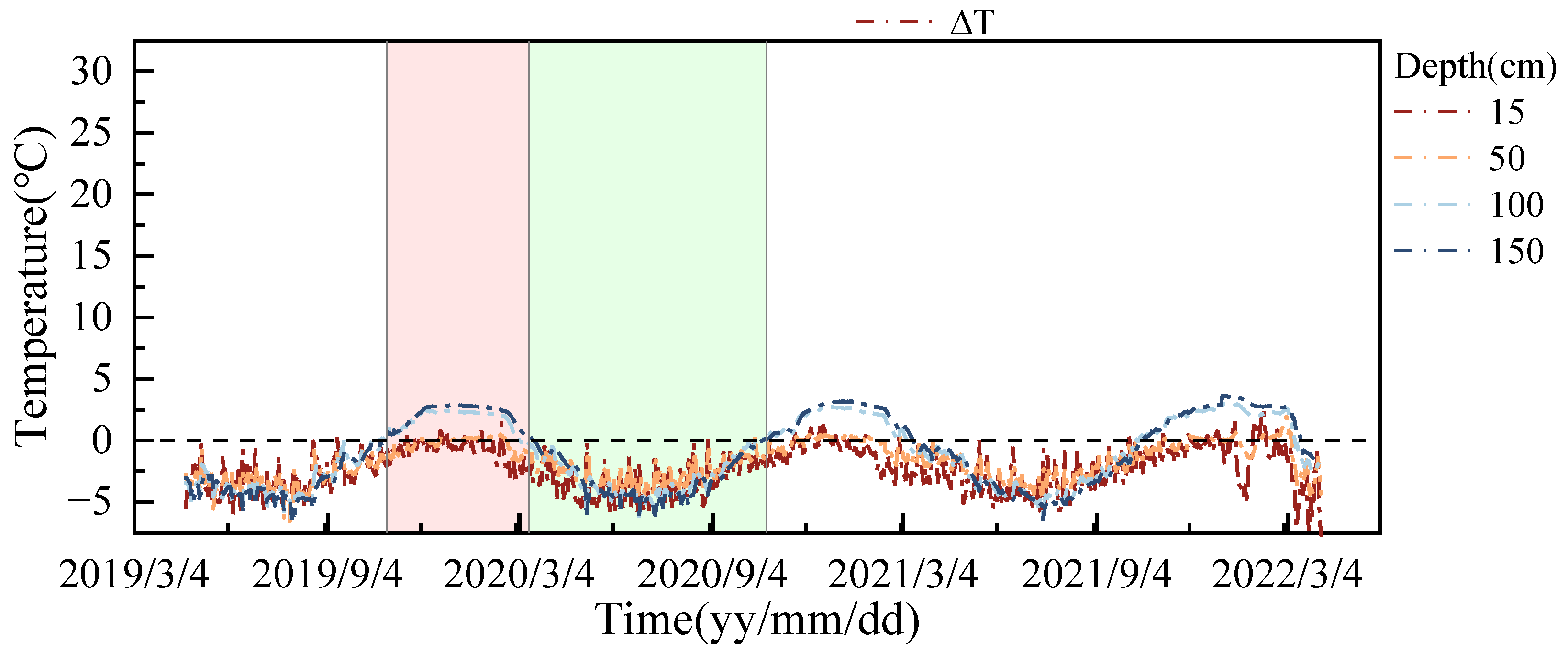
The study area is located in a semi-arid region characterized by low annual precipitation. Rainfall occurs primarily in summer as short-duration, heavy events. Figure 6 shows the temperature–time curves and ∆T at the shoulder position of the two embankments. The variation law of temperature at shoulder was similar to that at the center of embankment, but it fluctuates more drastically with the environment. For example, the negative temperature layer at the shoulder exceeds 50 cm, while at the center of the embankment it is only about 20 cm in winter, and the maximum value of T at the shoulder is greater than that at the center of the embankment. This indicates that the embankment exchanges heat with the surroundings from the sides of the embankment. Thus, the ambient temperature has a larger effect on the temperature field at the shoulder of the embankment.
At the shoulder of the embankments, the T of the soil above and below the TIB varies in the same pattern. The soil above the TIB is always that the temperature of OE is higher than that of TIE, except for a few days in the cold season. The TIB also has a slight insulating effect on the upper soil in winter. The TIB moderates the subgrade’s thermal regime by providing cooling in summer and insulation in winter. The key outcome is a stabilization of the deep subgrade temperature within a positive range throughout the year. This thermal stability has profound implications for the embankment’s condition: it completely avoids the cyclic freezing and thawing of the subsoil, thereby eliminating the associated risks of frost heave and thaw weakening. Consequently, the soil maintains a consistently high bearing capacity, and the long-term structural damage induced by repetitive volume change, such as differential settlement and fatigue cracking, is significantly mitigated.

3.1.3. Analysis of Temperature at Toe Position

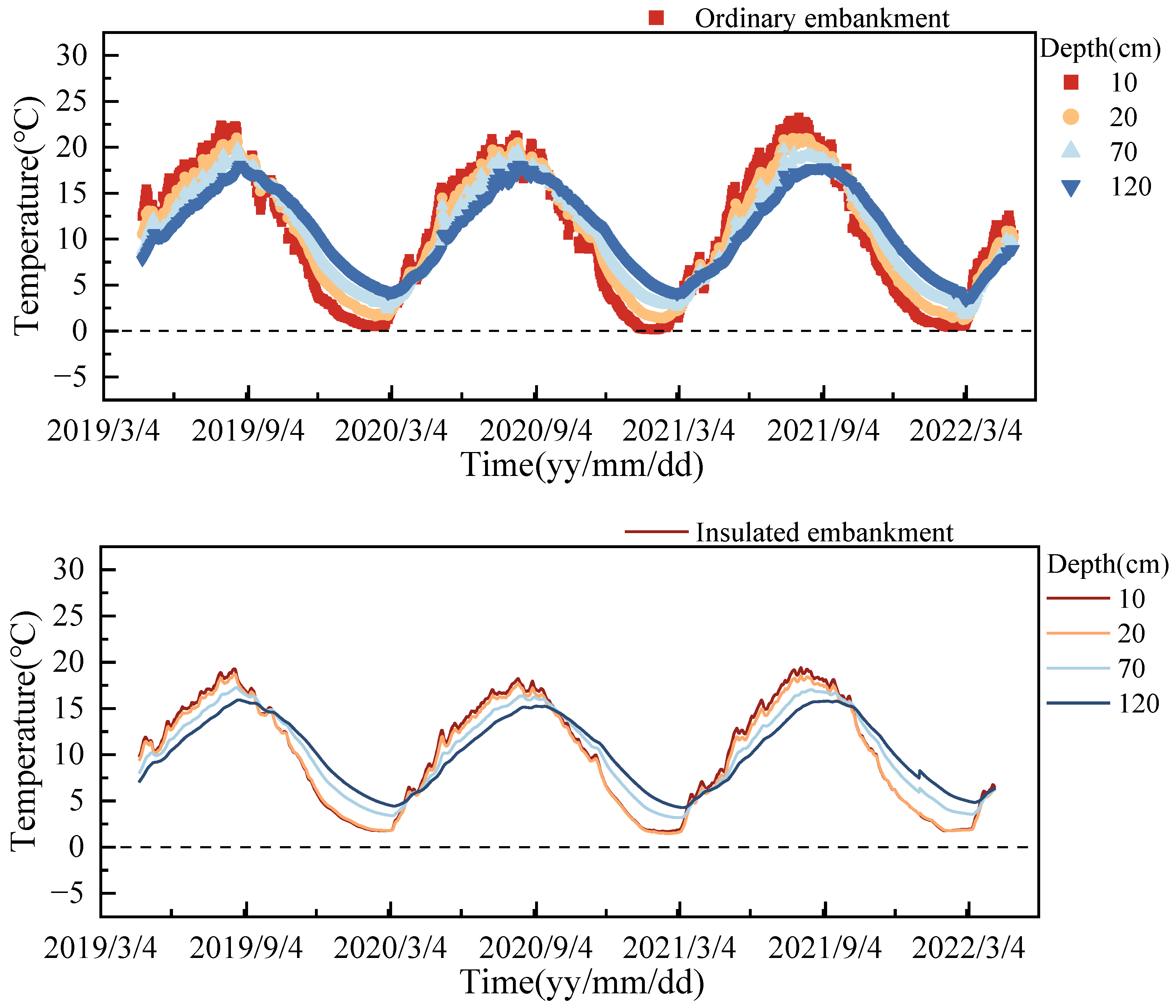
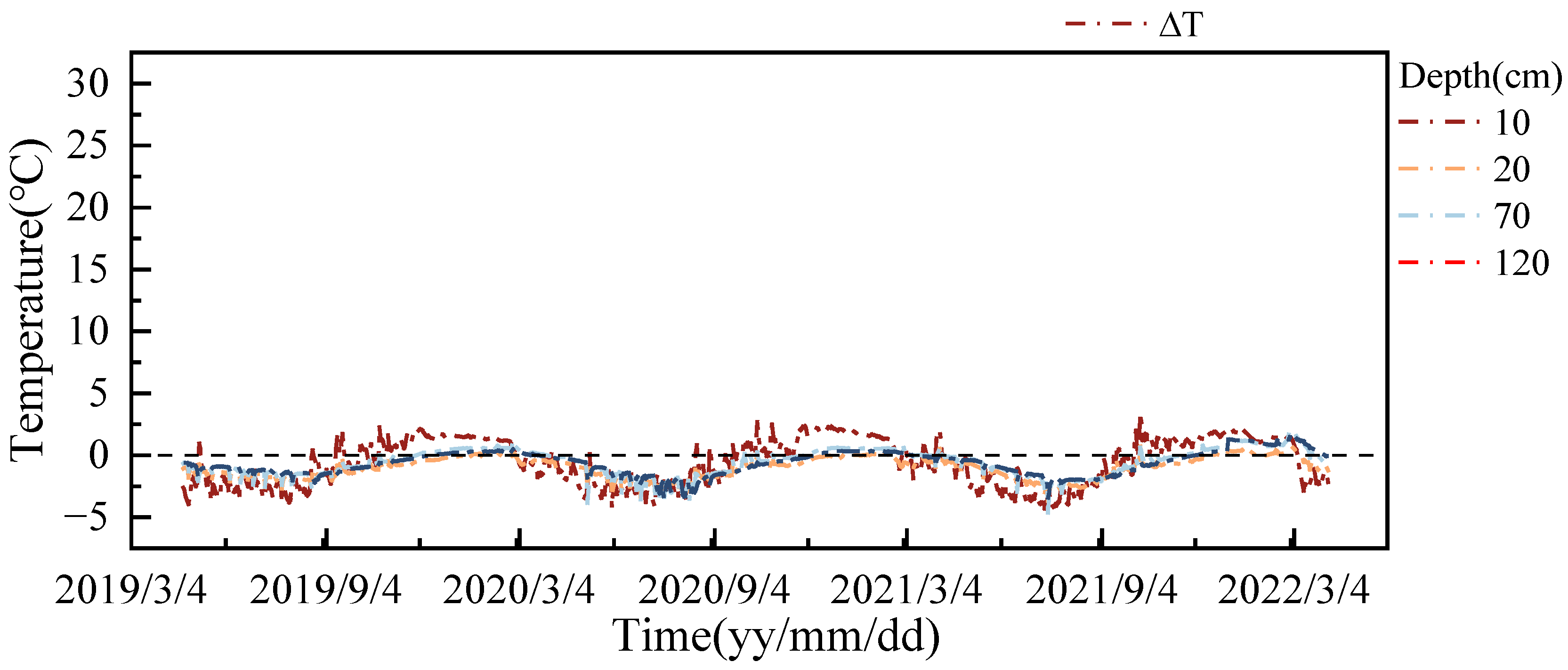
Figure 7 shows the temperature–time curves and ∆T at the toe position of the two embankments. The variation law at the toe of the embankment is consistent with that at the shoulder. However, the temperature and ∆T fluctuate slightly, and the ground temperature remains above 0 °C throughout the year. As the depth increases, the fluctuation of the ∆T gradually decreases. The TIB has little effect on the temperature at the toe position (Table 2).

3.1.4. Distribution of Soil Temperature

To analyze the insulation effect of TIB on the entire embankment, Kriging interpolation is employed on the temperature sensor data to compare the temperature distribution of the two embankments. Kriging provides statistically optimal and unbiased estimates by utilizing the spatial structure characterized by the variogram, unlike purely distance-based methods. A key advantage is its inherent ability to quantify prediction uncertainty, generating a companion map of kriging variance that defines the reliability of the interpolated surface. This combination of optimal prediction and explicit uncertainty assessment makes Kriging a rigorous and informative choice for spatial interpolation.
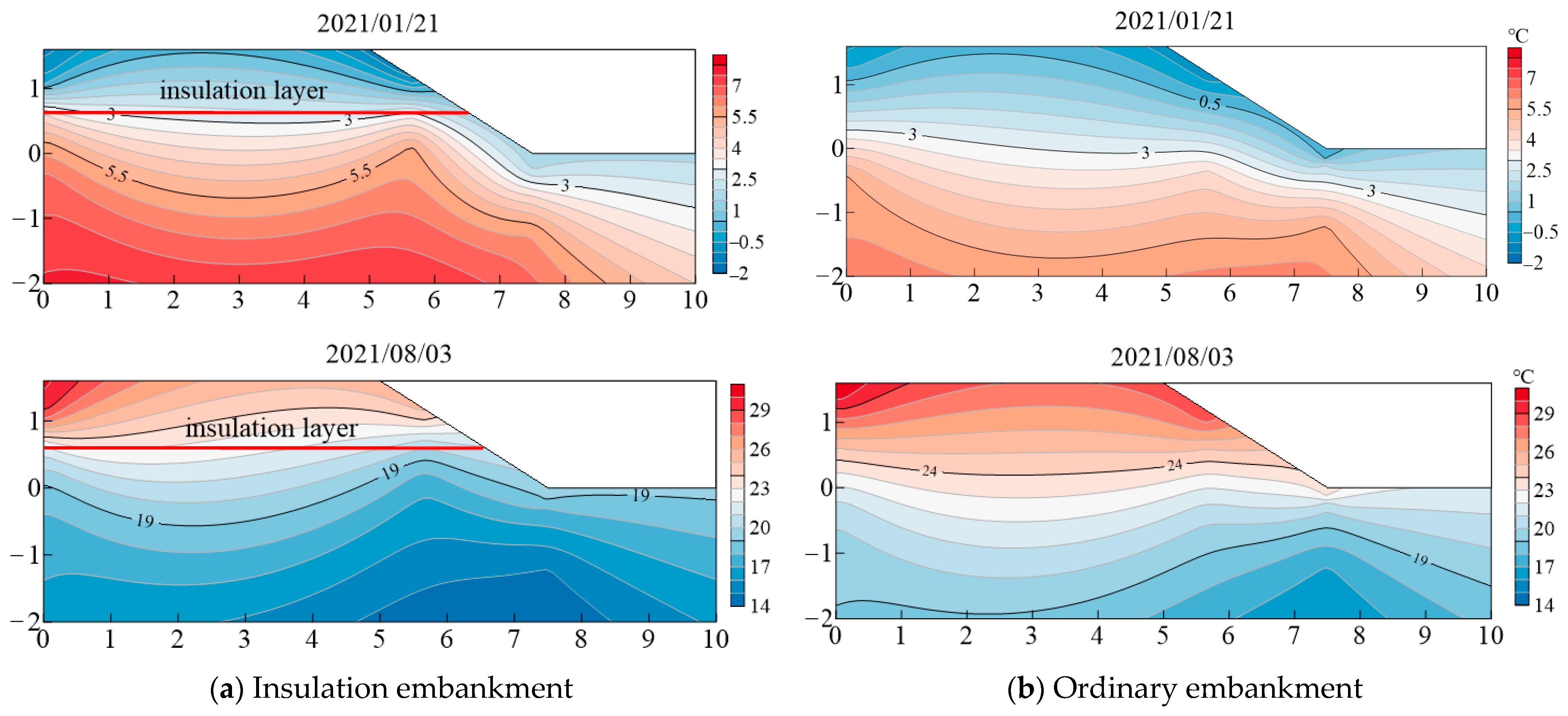
We selected the data of the daily maximum and minimum temperatures from 2021 for analysis, as shown in Figure 8. It can be seen that the function of the TIB is consistent with the analysis above. The function is, in winter, it prevents cold energy from being transferred downward, and in the warm season, it prevents heat energy from being transferred downward.
From the above analysis, we can see that in the shallow seasonally frozen soil area, the soil is below 0 °C for only a short time, and TIB can effectively prevent frost heaving of superficial soil and damage of slope soil. Temperature variation is one of the factors that cause moisture migration, and the TIB and geotextile can destroy the migration path of water in the embankment. Thus, we will analyze the variation of moisture in the embankment next.

3.2. Variation in Water Content over Time

The water content variations in the TIE and OE at the centerline, shoulder, and toe positions were compared. The water content changes regularly: there was more rainfall from March to October, and the water content was more discrete during this period.

3.2.1. Analysis of Centerline Position

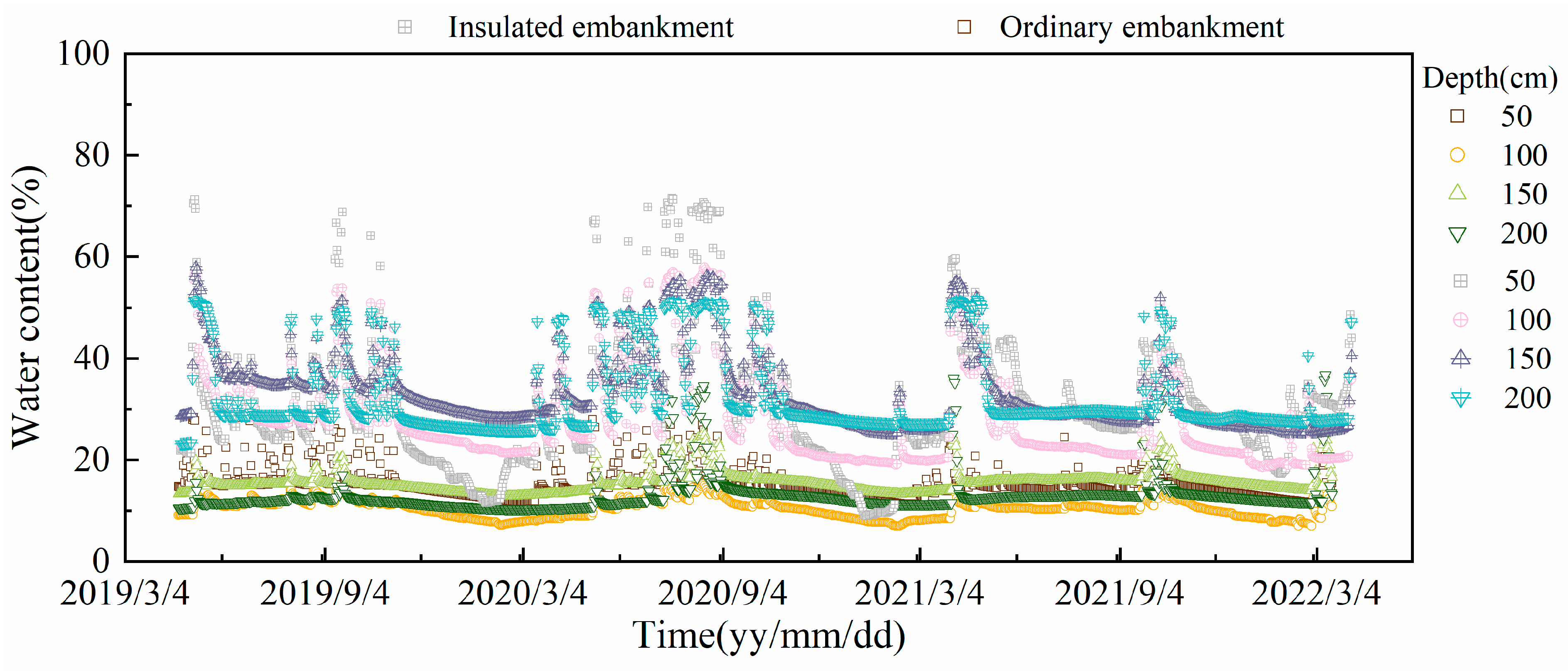
Figure 9 illustrates the variation in water content at different depths for the two embankments. The distinct patterns observed are primarily governed by the contrasting water retention and migration mechanisms in each case, driven by the local semi-arid climate with its low rainfall and high evaporation. For the TIE: The consistently high moisture content is a direct result of the integrated waterproofing system. Firstly, the thermal insulation board (TIB) reduces heat flux, thereby minimizing the thermal gradient that drives vapor movement, and acts as a cap to limit direct surface water infiltration. Secondly, and more critically, the waterproof geotextile at the base creates an effective barrier that prevents deep water from migrating upwards via capillarity to replenish water lost to evaporation at the surface. Consequently, the surface layer (0–50 cm) experiences the lowest and most environmentally responsive moisture content due to direct exposure to evaporation and infiltration. The trapped water, unable to escape upwards, accumulates at the deeper layer (150 cm), leading to the maximum water content at that depth. For the OE: In contrast, the absence of such barriers means the natural water migration channels remain intact. As a result, when surface water is depleted by evaporation, it creates a hydraulic gradient that draws water from the wetter, deeper zones upwards through capillary action. This continuous redistribution of water leads to a more uniform and overall drier moisture profile throughout the embankment, as seen in the smaller and more consistent water content values.

3.2.2. Analysis of Shoulder Position

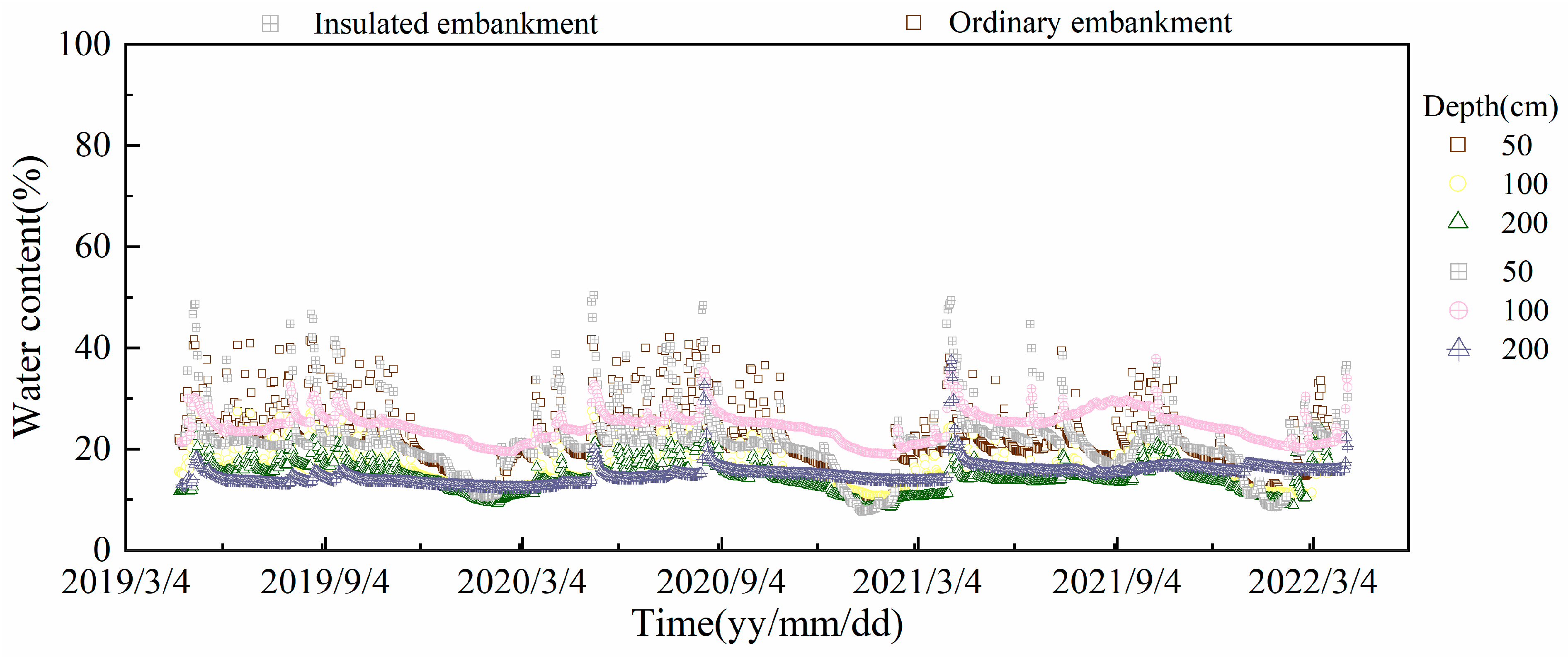
Figure 10 shows the variation in water content at the shoulder position of the two embankments. The water at the shoulder of the embankment can not only evaporate from the surface of the embankment but also evaporate or migrate from the slope. Therefore, the moisture content of the TIE is similar to that of the OE, and the surface soil water content of both is greatly affected by rainfall.

3.2.3. Analysis of Toe Position

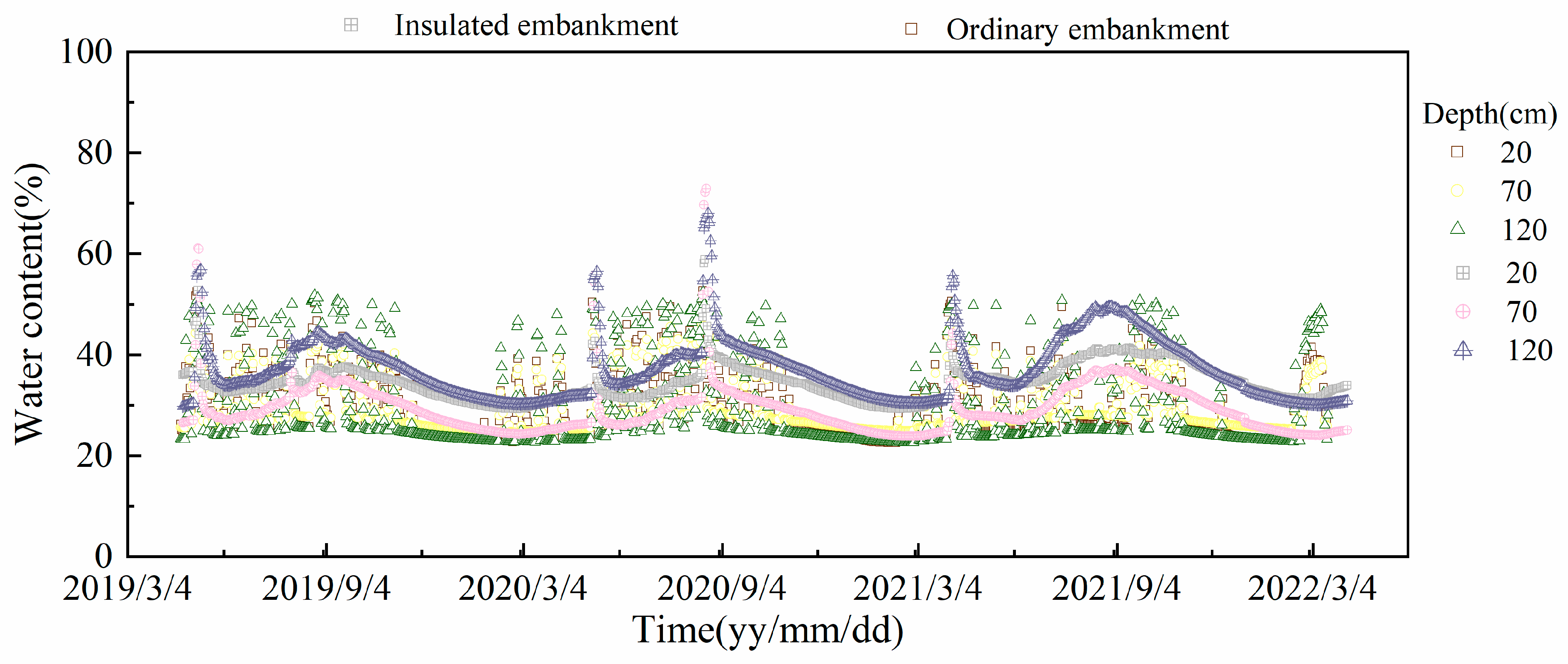
Figure 11 shows the variation in water content at the toe position of the two embankments. The soils at the toe position of the TIE are all below the geotextile, and the water changes at different depths are consistent. At this position, the moisture content of the TIE is higher. This is because the geotextile blocks the evaporation of water from the upper soil.

3.2.4. Distribution of Water Content

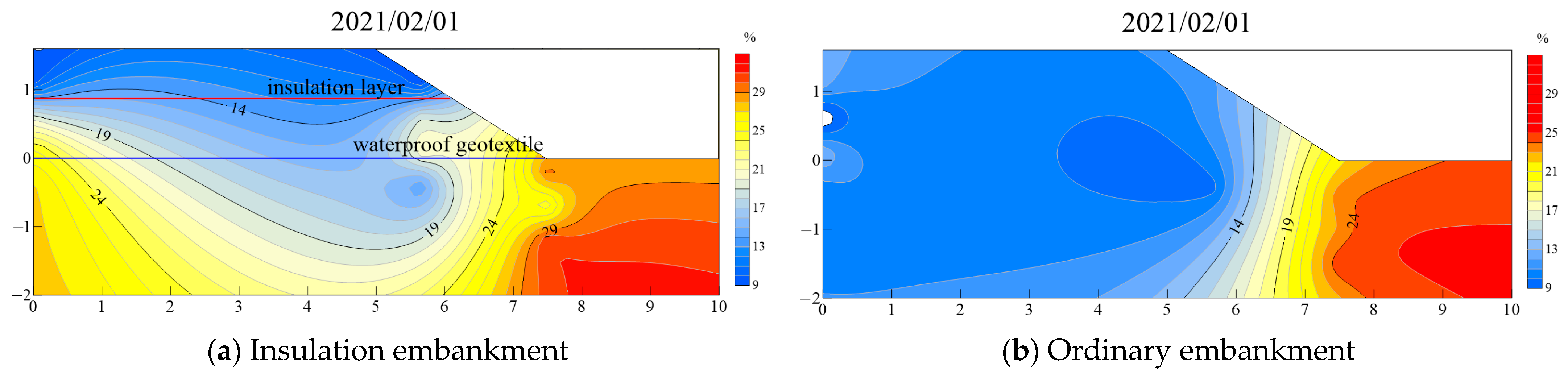
Due to the heavy rainfall in August and large fluctuations in soil moisture content, February was selected for analysis (Figure 12). The distribution pattern is generally consistent with the above analysis. For OE, water accumulates at the toe position and tends to migrate to the center of the embankment. The overall embankment has less water content. However, for the TIE, water also accumulates at the toe position and tends to migrate to the center of the embankment. At this time, due to the obstruction of the geotextile, the water cannot effectively migrate upward and evaporate, resulting in a high water content in the TIE. Thus, the TIE should be equipped with drainage channels at the toe position to prevent water from penetrating and migrating underground.

4. Conclusions

This experiment studied the influence of the TIB on embankment in shallow seasonally frozen ground regions. By comparing two embankments in terms of temperature and water content at the centerline, shoulder, and toe positions during 2019~2022, the following conclusions are drawn:
  • In the shallow seasonally frozen soil regions, only the surface soil is below 0 °C for a short period time, and the TIB can effectively prevent frost heaving of superficial soil and damage of slope soil. The TIB prevents cold energy from being transferred downward in winter and also prevents heat energy from being transferred downward in the warm season.
  • Since the test area has a mid-temperature semi-arid climate with low annual rainfall and high evaporation, and the evaporation of water in the TIE is destroyed by the insulation layer and geotextile, the water content in the embankment is higher than that of the OE. Water accumulates at the toe position in embankments.
  • For embankments in the seasonally frozen ground, especially in dry areas, more consideration should be given to the damage to the embankment caused by the dry–wet cycle or soil erosion from acute rainfall in summer. When arranging the TIB, reasonable ditches should be set up at the toe position of the embankment to prevent moisture from accumulating at the toe of the embankment and thus affecting the embankment.

Author Contributions

Conceptualization, Z.Z.; Methodology, K.Z.; Software, K.Z.; Investigation, G.L.; Resources, G.L.; Data Curation, D.J.; Writing—Original Draft, D.J.; Writing—Review and Editing, Z.Z.; Supervision, Y.M.; Project administration, Y.M. All authors have read and agreed to the published version of the manuscript.

Funding

This research was supported by the: (1) Talent Project of Northwest Minzu University (No. xbmuyjrc2023018); (2) Scientific and Technical Projects of the Transport Department of Gansu Province, China (Grant number 2014-03); (3) Key Research and Development Program Guidance Project of Heilongjiang Province (GZ20220095, GZ20220052).

Data Availability Statement

The original contributions presented in this study are included in the article. Further inquiries can be directed to the corresponding author.

Conflicts of Interest

The authors declare no conflict of interest.

References

  1. Zhou, Y. Frozen Ground of China; Science Press: Beijing, China, 2000. [Google Scholar]
  2. Qin, D. Glossary of Cryospheric Science; China Meteorological Press: Beijing, China, 2014. [Google Scholar]
  3. Everett, D.H. The Thermodynamics of Frost Damage to Porous Solids. Trans. Faraday Soc. 1961, 57, 1541–1551. [Google Scholar] [CrossRef]
  4. Hoekstra, P. Moisture Movement in Soils under Temperature Gradients with the Cold-Side Temperature below Freezin. Water Resour. Res. 1964, 2, 241–250. [Google Scholar] [CrossRef]
  5. Miller, R.D. Freezing and heaving of saturated and unsaturated soils. Geology 1972, 393, 1–11. [Google Scholar] [CrossRef][Green Version]
  6. Guo, F.; Shi, H.; Cheng, M.; Gao, W.; Yang, H.; Miao, Q. A Study of the Insulation Mechanism and Anti-Frost Heave Effects of Polystyrene Boards in Seasonal Frozen Soil. Water 2018, 10, 979. [Google Scholar] [CrossRef]
  7. Qi, M.I.; Fujun, N.I.; Zhanju, L.I.; Jing, L.U. Progress and prospects of research on frost heave of high speed railway subgrade in seasonally frozen regions. J. Glaciol. Geocryol. 2019, 41, 669–679. [Google Scholar] [CrossRef]
  8. Tyler, K.U.; Alex, H.; Brock, C.; Christopher, B.; Cynthia, A.C. Investigating the Thermal Performance of Expanded Polystyrene as a Function of Core Temperature using Static and Dynamic Thermal Conductivity Values. In Proceedings of the eSim 2018: 10th Conference of IBPSA, Montréal, QC, Canada, 9–10 May 2018; IBPSA: Montréal, QC, Canada; pp. 568–574. [Google Scholar]
  9. Basyigit, C.; Özel, C. Thermal insulation properties of expanded polystyrene as construction and insulating materials. In Proceedings of the 15th Symposium in Thermophysical Properties, Boulder, CO, USA, 22–27 June 2003. [Google Scholar]
  10. Liu, J.; Tian, Y. Numerical studies for the thermal regime of a roadbed with insulation on permafrost. Cold Reg. Sci. Technol. 2002, 35, 1–13. [Google Scholar] [CrossRef]
  11. Haghi, N.T.; Hashemian, L.; Bayat, A. Seasonal Response and Damage Evaluation of Pavements Comprised of Insulation Layers. Int. J. Pavement Res. Technol. 2019, 12, 170–177. [Google Scholar] [CrossRef]
  12. Cai, D.; Yan, H.; Yao, J.; Cui, Y.; Chen, F. Engineering Test Research of XPS Insulation Structure Applied in High Speed Railway of Seasonal Frozen Soil Roadbed. Procedia Eng. 2016, 143, 1519–1526. [Google Scholar] [CrossRef][Green Version]
  13. Hou, Y.; Wu, Q.; Liu, Y.; Zhang, Z.; Gao, S. The thermal effect of strengthening measures in an insulated embankment in a permafrost region. Cold Reg. Sci. Technol. 2015, 116, 49–55. [Google Scholar] [CrossRef]
  14. Başoğul, Y.; Demircan, C.; Keçebaş, A. Determination of optimum insulation thickness for environmental impact reduction of pipe insulation. Appl. Therm. Eng. 2016, 101, 121–130. [Google Scholar] [CrossRef]
  15. Daşdemir, A.; Ertürk, M.; Keçebaş, A.; Demircan, C. Effects of air gap on insulation thickness and life cycle costs for different pipe diameters in pipeline. Energy 2017, 122, 492–504. [Google Scholar] [CrossRef]
  16. Duan, X.; Naterer, G.F. Heat transfer in a tower foundation with ground surface insulation and periodic freezing and thawing. Int. J. Heat Mass Transf. 2010, 53, 2369–2376. [Google Scholar] [CrossRef]
  17. Zhao, P.; Chen, J.; Luo, Y.; Chen, L.; Li, Y.; Wang, C. Investigation of the Insulation Effect of Thermal Insulation Layer in the Seasonally Frozen Region Tunnel: A Case Study in the Zuomutai Tunnel, China. Adv. Civ. Eng. 2019, 2019, 4978359. [Google Scholar] [CrossRef]
  18. Ma, Q.; Luo, X.; Lai, Y.; Niu, F.; Gao, J. Numerical investigation on thermal insulation layer of a tunnel in seasonally frozen regions. Appl. Therm. Eng. 2018, 138, 280–291. [Google Scholar] [CrossRef]
  19. Sheng, Y.; Wen, Z.; Ma, W.; Liu, Y.; Qi, J.; Wu, J. Long-term evaluations of insulated road in the Qinghai-Tibetan plateau. Cold Reg. Sci. Technol. 2006, 45, 23–30. [Google Scholar] [CrossRef]
  20. ZhiQiang, L.; Yuanming, L. Numerical analysis for the ventilated embankment with thermal insulation layer in Qing–Tibetan railway. Cold Reg. Sci. Technol. 2005, 42, 177–184. [Google Scholar] [CrossRef]
  21. Perreault, P.; Shur, Y. Seasonal thermal insulation to mitigate climate change impacts on foundations in permafrost regions. Cold Reg. Sci. Technol. 2016, 132, 7–18. [Google Scholar] [CrossRef]
  22. Zhang, A.A. Thaw depths in permafrost soils under road embankments in the presence of heat insulation on slopes. Earth’s Cryosphere 2019, 23, 45–49. [Google Scholar] [CrossRef]
  23. Tai, B.; Liu, J.; Wang, T.; Shen, Y.; Li, X. Numerical modelling of anti-frost heave measures of high-speed railway subgrade in cold regions. Cold Reg. Sci. Technol. 2017, 141, 28–35. [Google Scholar] [CrossRef]
  24. Hou, Y.; Wu, Q.; Dong, J.; Luo, J.; Zhang, M.; Ye, Z. Numerical simulation of efficient cooling by coupled RR and TCPT on railway embankments in permafrost regions. Appl. Therm. Eng. 2018, 133, 351–360. [Google Scholar] [CrossRef]
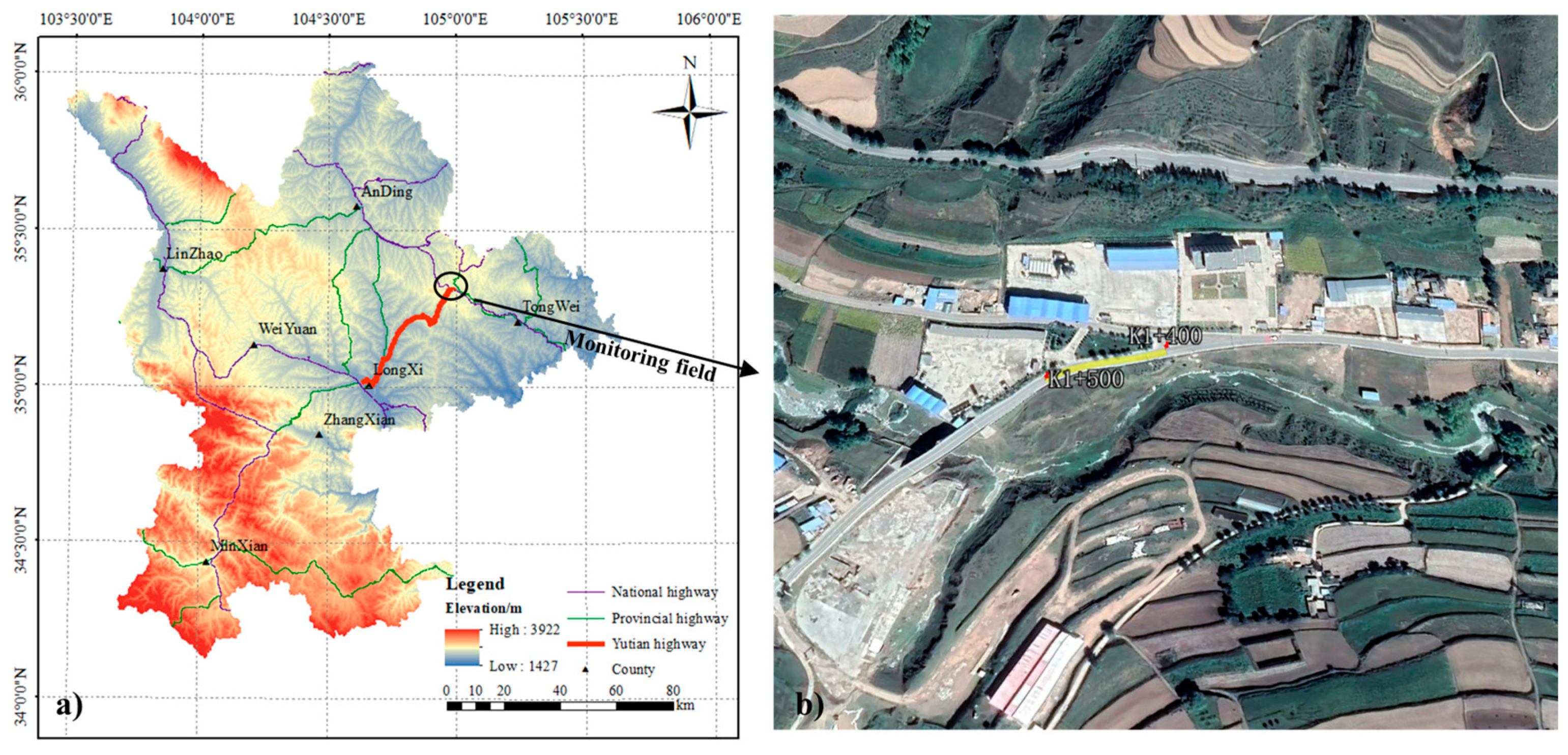
Figure 1. Position of (a) highway and (b) experimental section.
Applsci 15 10681 g001
Figure 2. The laying process of insulation and waterproof layer.
Applsci 15 10681 g002
Figure 3. Test sensors.
Applsci 15 10681 g003
Figure 4. Layout of measuring points of the two embankments.
Applsci 15 10681 g004
Figure 5. Temperature–time curves and ∆T at the centerline position.
Applsci 15 10681 g005
Figure 6. Temperature–time curves and ∆T at the shoulder position.
Applsci 15 10681 g006aApplsci 15 10681 g006b
Figure 7. Temperature–time curves and ∆T at the toe position.
Applsci 15 10681 g007aApplsci 15 10681 g007b
Figure 8. Temperature distributions of the two embankments.
Applsci 15 10681 g008
Figure 9. Water contents at different depths below the surface at the centerline position.
Applsci 15 10681 g009
Figure 10. Water contents at different depths below the surface at the shoulder position.
Applsci 15 10681 g010
Figure 11. Water contents at different depths below the surface at the toe position.
Applsci 15 10681 g011
Figure 12. Water content distributions of two embankments.
Applsci 15 10681 g012
Table 1. Monthly temperatures throughout the year in the study area.
MonthJan.Feb.Mar.Apr.MayJun.Jul.Aug.Sep.Oct.Nov.Dec.
Daily maximum temperature25131822262726201593
Daily minimum temperature−12−8048131615104−3−10
Table 2. Maximum and minimum temperature at different locations.
Temperature (°C)Depth (cm)CenterShoulderDepth (cm)Toe
OETIEOETIEOETIE
Maximum1529.4428.3830.0724.341021.8318.89
5027.1526.5727.1922.422020.0918.05
10024.5621.5924.6519.347019.6317.27
15022.4519.5622.7517.4612017.8315.89
20020.6918.59-
Minimum15−0.85−2.47−5.03−4.39100.660.66
500.810.21−0.96−0.71201.741.74
1002.053.710.862.95702.332.33
1503.455.042.144.681204.194.19
2004.855.63-
Disclaimer/Publisher’s Note: The statements, opinions and data contained in all publications are solely those of the individual author(s) and contributor(s) and not of MDPI and/or the editor(s). MDPI and/or the editor(s) disclaim responsibility for any injury to people or property resulting from any ideas, methods, instructions or products referred to in the content.