Abstract
The growing environmental impact of plastic waste and the high energy consumption in traditional asphalt production have driven the search for more sustainable alternatives in road construction. This systematic review evaluates the incorporation of recycled plastics into Hot Mix Asphalt (HMA) and Warm Mix Asphalt (WMA), focusing on their effects on mechanical performance and environmental outcomes. Using the Preferred Reporting Items for Systematic Reviews and Meta-Analyses extension for Scoping Reviews (PRISMA/ScR) methodology, 39 studies published between 2012 and 2023 were analyzed to compare plastic types, incorporation methods (dry, wet, and pyrolysis), and dosage levels. Results show that plastics such as Polyethylene Terephthalate (PET), Low-Density Polyethylene (LDPE), and Polypropylene (PP) can improve stiffness, rutting resistance, and fatigue life. WMA technologies, while less commonly applied, offer significant environmental advantages by reducing greenhouse gas emissions and energy consumption. The review highlights the critical role of plastic type, blending method, and local conditions in optimizing performance. Overall, integrating recycled plastics into asphalt mixtures presents a promising pathway toward more durable and sustainable pavement infrastructure.
1. Introduction
The world is undergoing constant environmental change, with one of the most critical challenges being the growing proliferation of plastic waste. Plastics, or polymers, are synthetic materials derived from petroleum-based compounds through polymerization processes, and their widespread use has led to severe environmental pollution. As a response, various strategies are being explored to mitigate this problem, including their integration into road construction materials. Furthermore, oceans constitute approximately 70.9% of the Earth’s surface, while the remaining 29.1% is terrestrial. Of this land surface, approximately 5.8% is occupied by road infrastructure [1,2].
The extent and use of road networks directly influence both the generation and management of plastic waste in the transport sector. Incorporating recycled plastics into pavements depends on the availability of suitable waste, which varies widely across regions due to population density, consumption patterns, collection systems, and regulatory frameworks. While countries with advanced recycling technologies and strict policies, such as Japan or parts of Europe, achieve recovery rates above 70%, many developing regions face technical and policy constraints that limit plastic valorization. These disparities affect the feasibility and performance of plastic-modified asphalt, highlighting the need for solutions tailored to local conditions [3].
According to the United Nations Development Program (UNDP), approximately 139 million metric tons of single-use plastic waste were generated globally in 2021 [4]. Plastic consumption has increased steadily over the past three decades, surpassing 30 million tons in 2017, and it is projected to double by 2050 [5]. Most virgin plastic is produced in North America (18%), Europe (19%), and Asia (50%), particularly in China, Japan, and neighboring countries. Over 90% of these plastics are manufactured using fossil fuels, which are non-renewable resources formed over millions of years. Excessive dependence on fossil fuels results in greenhouse gas emissions and environmental degradation, making plastic waste a significant pollutant. Currently, only 9% of the plastic generated worldwide is recycled, with the rest ending up in landfills, being incinerated, or accumulating in natural environments such as oceans and forests [6,7].
Initially, it is necessary to define the properties, symbolism, and origins of plastic, as shown in Table 1, emphasizing their densities and the main products derived from the waste.
Table 1.
Type of plastics, table manufactured according to [7].
According to Table 1, plastic is a material used in everyday life and is manufactured in many parts of the world. Despite being a material of great importance in daily life, it is also a waste product that negatively impacts many ecosystems. Therefore, new campaigns and recycling methods are needed to create healthier and less polluted environments. For instance, the recycling rate in the United States, a higher-income country, is very low compared to other countries that have reported recycling rates ranging from 30% to 60% of plastic reuse, with Japan boasting a plastic recycling rate of 78% [26]. The impacts generated by plastic waste have become recognized as a significant global conservation issue with implications for industries, tourism, marine life, human health, and the sustainable livelihoods of the population at large [27]. It is because of this type of waste that new ways to reduce this pollutant are being sought. Of course, reducing plastic use and advocating for a total ban on the material could be a quicker alternative. However, this could be a highly unorthodox method and complicated to implement, as it would be challenging to enforce and monitor [28].
Due to such cases, a considerable amount of research has been conducted, providing new perspectives on how to address this dilemma, particularly in the construction sector. For instance, the use of plastic waste as a substitute for sand in concrete offers a promising approach to reducing material costs and waste issues [29].
Additionally, the utilization of clean, dry, and crushed plastic waste in asphalt mixtures as aggregate for each nominal size aims to enhance their fracture resistance [30]. Furthermore, plastic usage is explored to determine its effect as an additive on the creep recovery behavior of HMA [31]. This residual polymer can be commonly used in asphalt mixtures to create sustainable pavements that provide environmental benefits and reduce pollution.
In road infrastructure, pavement structures are classified into flexible and rigid types, composed of one or more layers that facilitate land transport while providing safety, comfort, and cost efficiency [32]. Flexible pavements are roadways composed of granular materials, also known as aggregates, such as gravel and fines derived from rock crushing, along with asphalt materials obtained from petroleum distillation, thus constituting asphalt pavements.
Asphalt, also known as bitumen, plays a crucial role in asphalt mixtures, and it is important to define its classifications and functions when incorporating plastics, as this can be a significant factor to consider when aiming to create a polymer-modified mixture. Asphalt is a thermoplastic, bituminous, and viscous material with a dark appearance, composed of a mixture of hydrocarbons primarily derived from the distillation of crude petroleum. It is used to coat the aggregate entirely, facilitating material bonding [33]. When heated, asphalt gradually becomes soft to the point of a liquid and viscous consistency, primarily divided into Asphalt Cements (ACs), asphalt emulsions, and cutback asphalts, depending on their intended use [34].
It is important to note that there are different classifications for asphalts based on their Penetration Grade (PEN), which measures softness or hardness at specific temperatures, usually at 25 °C. The higher the penetration value, the softer the asphalt, typically in ranges of 10 units [35]. Another classification is based on Performance Grade (PG), which focuses on the material’s performance at extreme temperatures and under traffic conditions. PG classification is specified by two numbers, such as PG 64-22, where the first number indicates the minimum temperature at which the asphalt will still maintain viscoelastic properties. The second number indicates the maximum temperature at which the asphalt will retain its properties, typically in ranges of 6-degree increments [36], as shown in figur.
The PG asphalt classification provides detailed information on the bitumen’s behavior under different environmental and traffic conditions (Table 2).
Table 2.
Asphalt classifications, table manufactured according to [33].
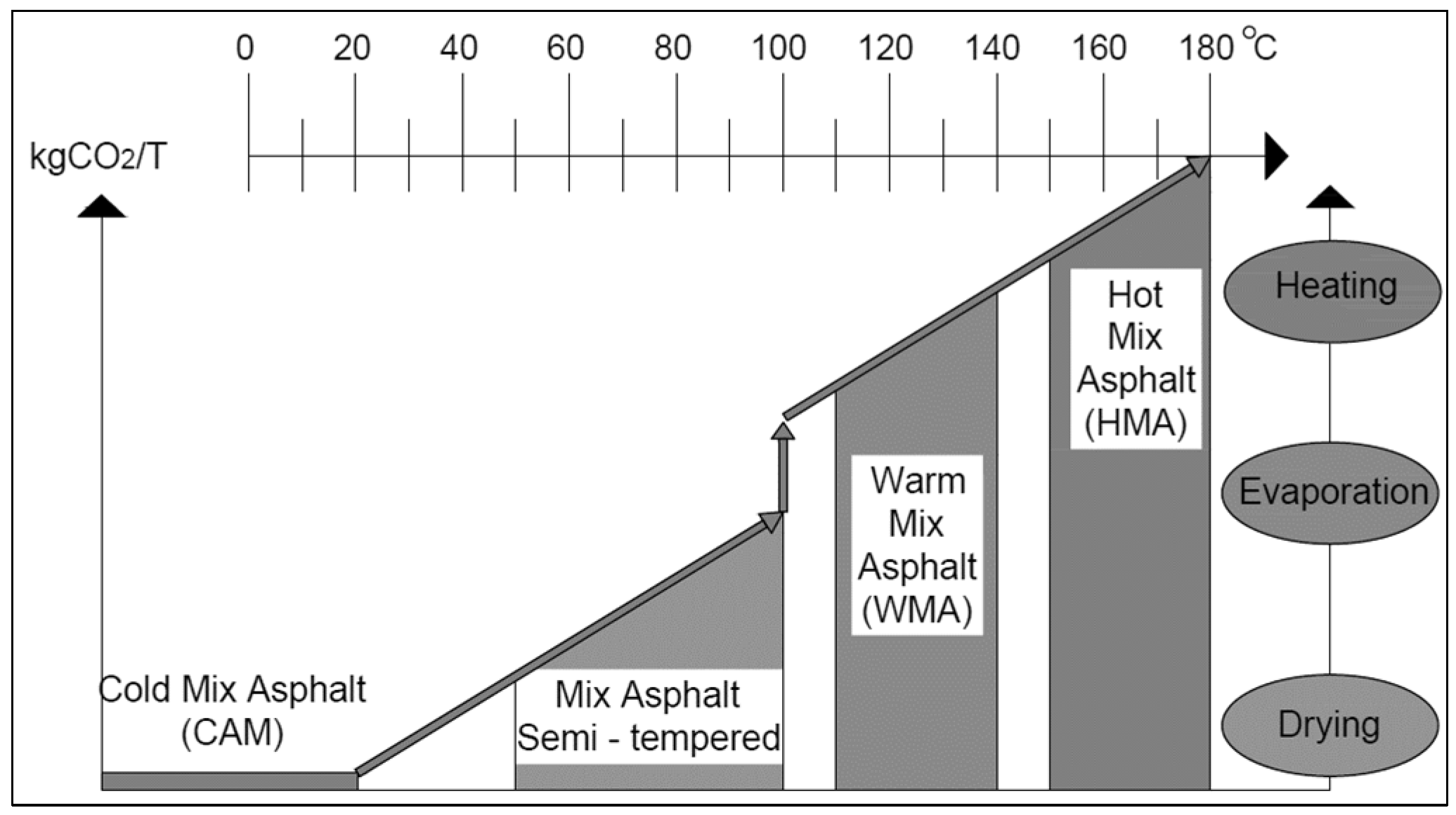
Asphalt mixtures are also categorized by mixing temperature: Cold Mix Asphalt (CMA), WMA, and HMA (Figure 1). HMA, the most common, is produced at 150–180 °C and requires significant energy input, whereas WMA is produced at lower temperatures (110–140 °C), offering environmental advantages such as reduced fuel consumption and lower emissions [37]. CMA is typically reserved for minor repairs and has limited large-scale application [38]. WMA, however, is gaining attention for its potential in sensitive environments due to its compatibility with recycled materials and reduced environmental impact [39].
Figure 1.
Mixture temperatures, according to Reference [37].
Over time, numerous research studies have been conducted on this particular topic, resulting in literature reviews covering key points such as engineering performance, cost benefits, and environmental impact [6,33]. However, despite the existence of these documents, there is a need for complementary research that compares the results of plastic incorporation into pavement and the methods of addition in asphalt mixtures used. Therefore, this study aims to conduct a systematic literature review that allows for a comparison of the main results between WMA and HMA incorporating plastics, and also indicates the best way to combine them, using the PRISMA/ScR methodology as a support to ensure proper document selection and information extraction. In this context, the present review seeks to answer the research question: Which type of recycled plastic and incorporation method offers the best balance between mechanical performance and environmental benefits in HMA and WMA mixtures [40]?
2. Materials and Methods
This study employed the PRISMA/ScR methodology [40], a structured protocol designed to ensure transparency and rigor in the identification, selection, and analysis of relevant scientific literature. The process involved a systematic series of steps to identify and extract studies that provided quantitative or qualitative data on the use of recycled plastics in asphalt mixtures. To facilitate the screening and organization of references, the Rayyan tool (Rayyan Systems Inc., Doha, Qatar; web application as of December 2023) [41] was used for managing duplicates and refining article selection.
2.1. Data Sources and Search Strategies
A three-stage filtering process was applied during the literature search. In the first stage, titles and abstracts were reviewed to eliminate irrelevant studies. In the second stage, articles meeting the inclusion criteria were read in full to extract key variables such as the type of plastic used, incorporation method (dry, wet, or pyrolysis), dosage levels, and operating temperature. Priority was given to studies that included laboratory evaluations or offered critical reviews of plastic use in asphalt mixtures.
Two distinct search strategies were implemented using major scientific databases, including Google Scholar, Scopus, EBSCO, and Web of Science, to gather a diverse and representative collection of studies involving HMA and WMA modified with recycled plastic waste. Search filters were applied to limit the results to peer-reviewed articles published between 2012 and 2023, written in English, and focused on experimental or analytical research.
The first search strategy employed the keywords “Effect”, “plastic waste”, “asphalt pavement”, and “asphalt mixture”, which primarily returned studies focused on HMA. Given the limited number of results for WMA, a second strategy was developed using the keywords: “asphalt mix”, “sustainable pavements”, “plastic waste”, and “warm asphalt mixes”. Both search strategies were structured using logical chains tailored to each database, enabling the identification of relevant studies based on predefined criteria
2.2. Inclusion and Exclusion Criteria
The inclusion criteria for this study consisted of scientific articles in development or experimental state, journals, and scientific reviews in the specified language, with publication dates between 2012 and 2023, containing relevant information on the addition of waste plastic to hot or warm asphalt mixtures.
The exclusion criteria used involved documents excluded due to insufficient data, those that dealt with a material not under consideration, with publication dates outside the provided range, or at some point were identified as duplicate works of those included.
2.3. Article Selection Process
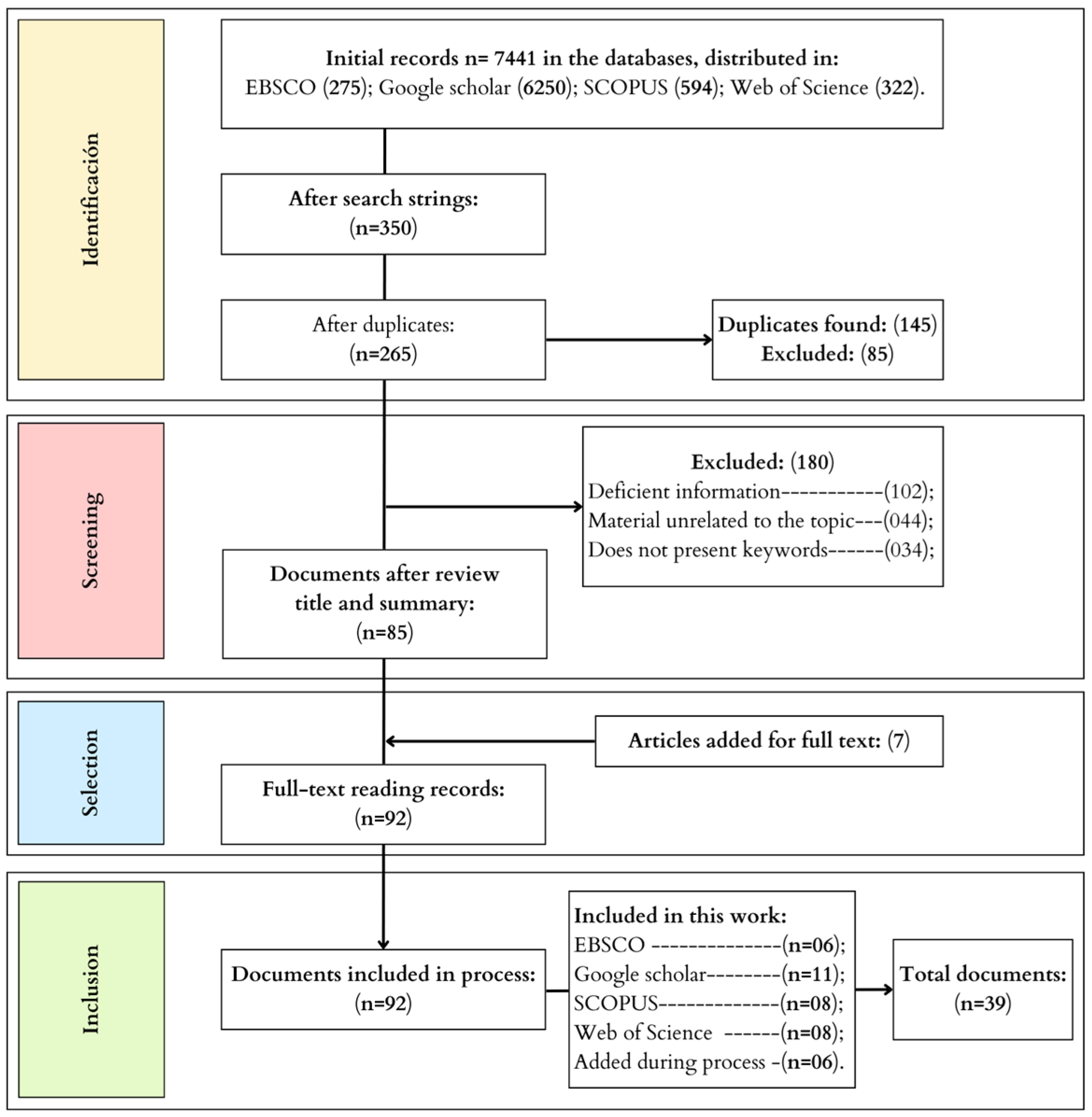
The article selection followed the four PRISMA/ScR stages: Identification, Screening, Eligibility, and Inclusion. In the Identification phase, an initial search using the keywords “Plastic” and “Mixes Asphalt” across the selected databases yielded 7441 records. To refine the results, two logical search chains were constructed, which reduced the dataset significantly. The first chain returned 555 records (mostly related to HMA), while the second produced 227 records (focused on WMA). After applying the inclusion and exclusion filters, a refined set of 350 articles remained.
In the Screening phase, the Rayyan reference manager (Rayyan Systems Inc., Doha, Qatar; web application as of December 2023) [41] was used to identify and remove 85 duplicates. The remaining 265 studies were assessed by reviewing their titles and abstracts, leading to the exclusion of 180 studies due to irrelevance or lack of data, leaving 85 articles for full-text analysis.
In the final Selection phase, the 85 full text articles were reviewed for eligibility. After further assessment, 33 articles met all criteria and were included in the review. Addition-ally, six relevant studies were manually identified and added, resulting in a total of 39 studies selected for systematic analysis.
The complete article selection process is summarized in Figure 2, which presents the PRISMA/ScR flow diagram used in this study [40].
Figure 2.
PRISMA/ScR process flow diagram.
2.4. Risk of Bias Assessment
To estimate the methodological quality of the included studies, a qualitative assessment of the risk of bias was conducted based on three key criteria: clarity of experimental design, control of variables, and completeness in the reporting of results. Due to the methodological heterogeneity of the studies analyzed, it was not feasible to apply standardized tools such as the Newcastle Ottawa Scale or ROBINS-I. Therefore, a grouped qualitative classification was adopted, as presented in Table 3, which organizes the studies according to common methodological characteristics and allows the identification of relative levels of bias (low, moderate, or high) to support the critical analysis of the findings.
Table 3.
Risk of Bias Assessment.
The PRISMA 2020 guidelines were followed when conducting this systematic review to ensure methodological transparency, consistency in article selection, and robustness in data synthesis [76]. The structured approach enhances the reliability of the findings and supports reproducibility across similar studies. The protocol was registered in the OSF platform (https://osf.io/4mr2q/, accessed on 25 July 2025)
3. Results
The findings of this review highlight the benefits of incorporating recycled plastics into asphalt mixtures as a strategy to promote cleaner environments and more sustainable pavements while maintaining performance and safety standards. Most of the studies analyzed focus on high-temperature applications, primarily through HMA, due to the relatively recent adoption and limited diffusion of WMA technologies [42]. In general, the selected research predominantly used conventional penetration grade asphalt binders such as 60/70 under standard test conditions [29,41,42,43,44,45].
3.1. Characteristics of the Included Studies
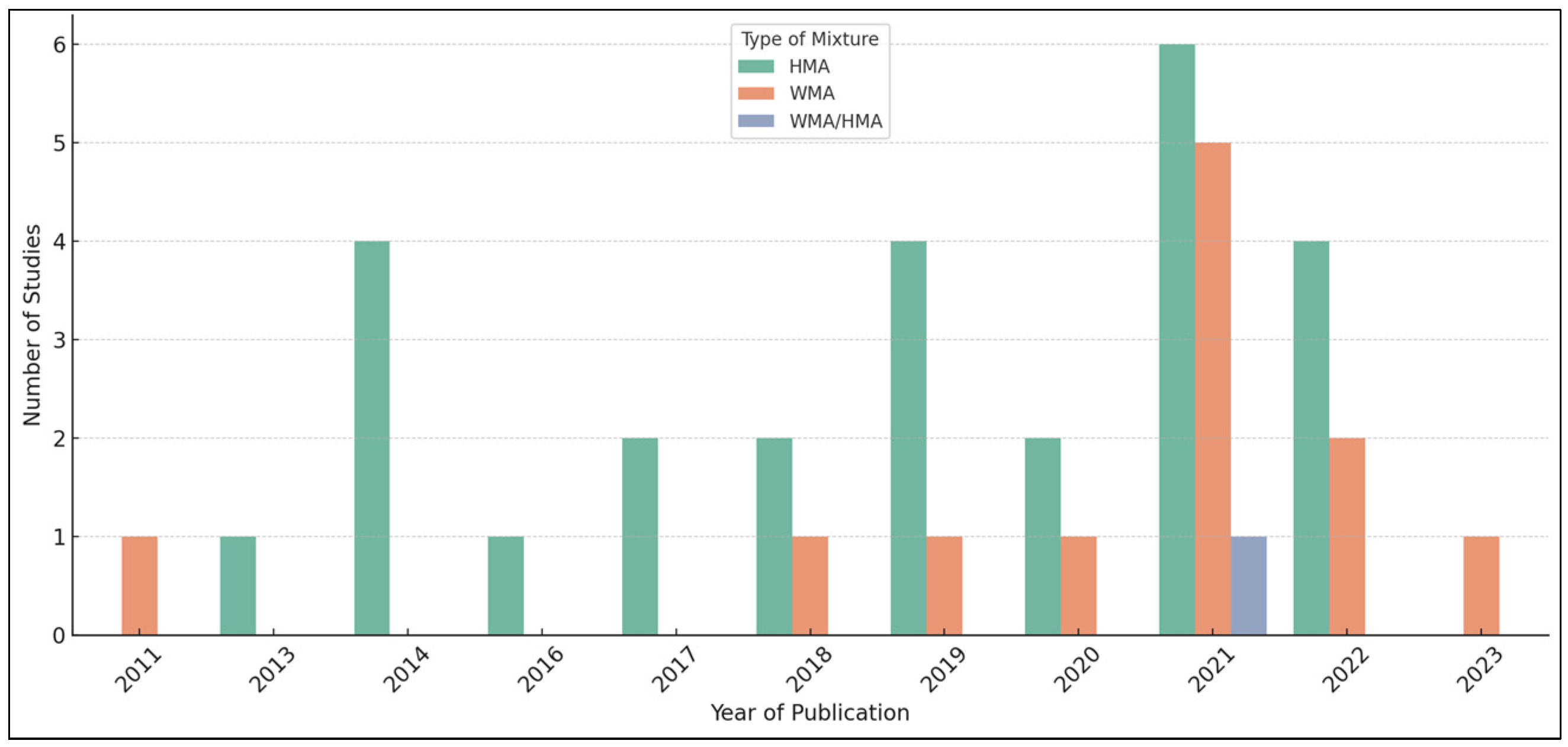
The temporal distribution of the included studies is shown in Figure 3, revealing a progressive increase in the use of technologies applied to asphalt mixtures. While HMA dominated early studies, recent years have seen a significant rise in research focused on WMA. This shift reflects a growing awareness of environmental concerns and a trend toward lower energy technologies in pavement construction.
Figure 3.
Temporal distribution of studies by type of asphalt mixture.
3.2. Data Extraction
This study focuses on research that explores the incorporation of plastic waste into asphalt mixtures using various methodologies. Articles were selected through the PRISMA/ScR framework, primarily targeting publications from 2012 to 2023. However, some studies outside this range were also included due to their substantial contribution to the research objectives and final analysis.
The selected studies were systematically categorized according to the type of plastic used, the incorporation method applied (such as dry, wet, or pyrolysis), and the type of asphalt mixture, whether HMA or WMA. For each study, key findings were extracted, including the type and percentage of plastic replacement, the asphalt grade employed, and the primary performance outcomes observed.
3.3. Ways of Incorporating Plastic into Asphalt Mixtures
Plastic is a synthetic or organic polymeric material designed to be molded into a wide range of shapes and densities. Its incorporation into asphalt depends on physical and thermal properties, which vary by type. As presented in Table 1, different plastics exhibit distinct characteristics (e.g., melting point, hardness, viscosity), making it necessary to select the appropriate incorporation method based on the type of waste available and desired performance.
Three primary incorporation methods were identified: dry method, wet method, and pyrolysis, each offering advantages and limitations depending on the type of plastic and mixture conditions.
The dry method consists of adding shredded or granulated plastic waste directly to the aggregates before mixing with the binder. This approach typically uses rigid plastics with high melting points, such as HDPE or PET, which can withstand mixing temperatures without degrading prematurely [46,47,48]. For instance, one study evaluated the use of PET flakes by replacing aggregate fractions passing through a 2.36 mm sieve with specific weight percentages of plastic [50]. Another investigation analyzed the effect of HDPE and LDPE on moisture resistance in HMA, assessing dry and wet incorporation through indirect tensile strength and stiffness modulus tests.
In contrast, the wet method involves modifying the asphalt binder itself by blending it with molten plastic prior to mixing with the aggregates. This technique is better suited for plastics with lower melting points, such as LDPE or PP, which can be more easily incorporated into the bitumen matrix [42,44,47,50]. For example, in the study by [44], PP was added directly to the binder as a partial replacement, and the resulting modified asphalt was later blended with the aggregates, aiming to improve rheological behavior and durability.
The incorporation of recycled plastics into asphalt mixtures can be achieved mainly through the wet and dry methods. Each approach has specific characteristics, advantages, and limitations that determine its suitability depending on the type of plastic, asphalt mixture, and environmental conditions. Table 4 summarizes the key differences between these two methods.
Table 4.
Comparison of Wet and Dry Processing Methods.
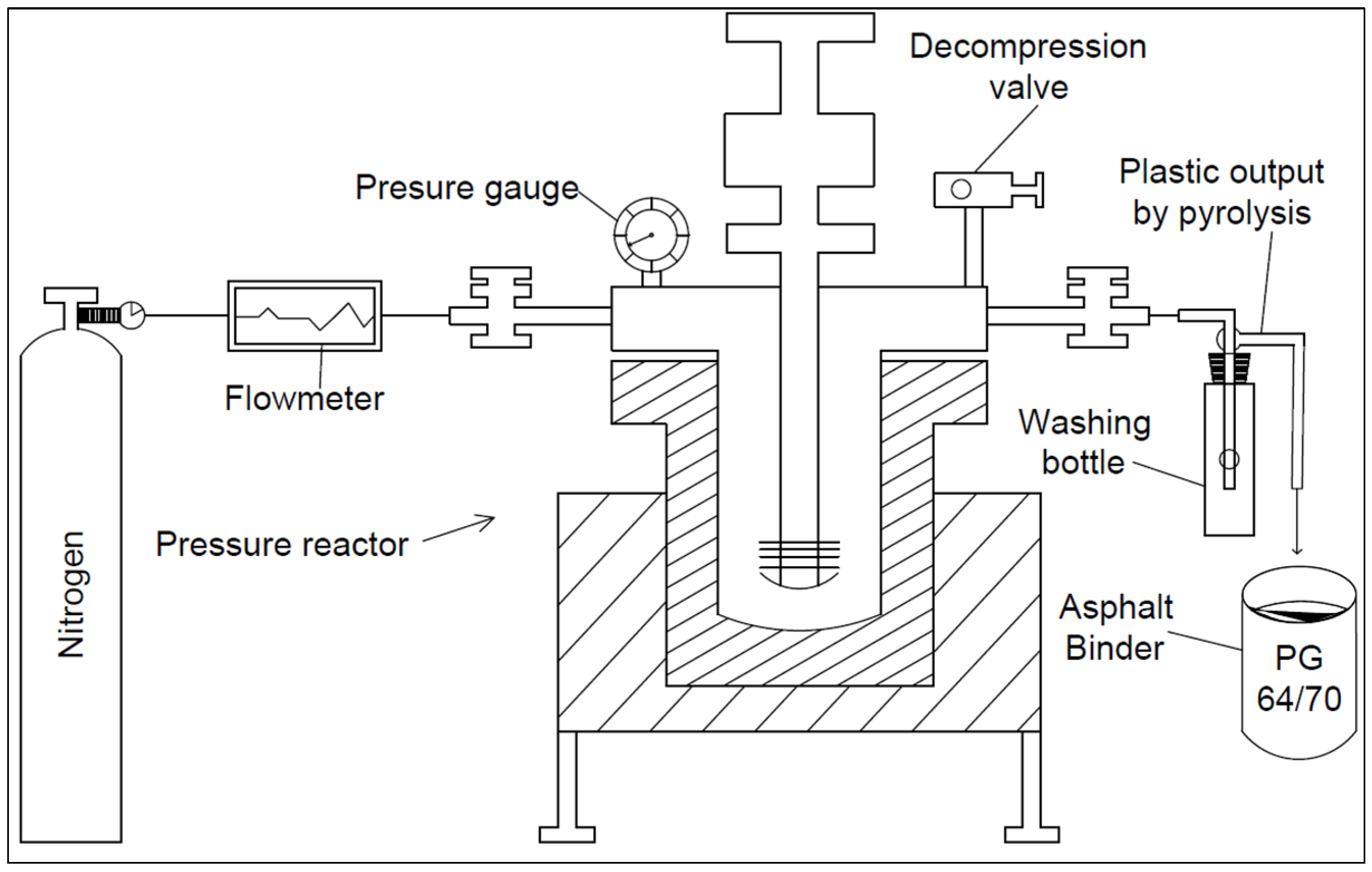
The pyrolysis method involves the thermal decomposition of plastic waste in the absence of oxygen, converting solid plastic into waxes or oils that can later be blended into asphalt binders [74]. This method is primarily used to incorporate plastic into asphalt mixtures, mainly for support in the wet method. Pyrolysis is a beneficial process for facilitating the addition of plastic to asphalt due to the procedure it entails, as illustrated in Figure 4.
Figure 4.
Schematic of pyrolysis process, according to Reference [62].
For example, Zhou et al. [62] employed pyrolysis to process PP waste by sealing it in a pressurized reactor, extracting oxygen using nitrogen gas, and heating the material while stirring at 120 rpm for 20 min. The resulting waxy compound was cooled and stored for later use as a bitumen modifier. In a similar study, Wang et al. [63] modified a base 70-grade asphalt with plastic-derived pyrolysis wax, evaluating the effects through rotary viscosity, Differential Scanning Calorimetry (DSC), and Dynamic Shear Rheology (DSR) tests. These analyses demonstrated promising results in terms of binder consistency, workability, and resistance to high-temperature deformation.
3.4. Plastic in Asphalt Mixture Results
3.4.1. Polyethylene Terephthalate (PET)
PET is the most widely used plastic in asphalt studies due to its chemical properties and availability. In China, adding 70% pyrolyzed PET wax improved the softening point and viscosity of Crumb Rubber Modified Asphalt (CRMA) in WMA. Studies in Pakistan and Iran showed enhanced fatigue resistance and durability in HMA with PET, though doses above 2% may reduce resilient modulus. In Algeria, PET improved stability, moisture resistance, and deformation behavior. Thermally Linear Polypropylene (TLPP) and Viscous Polypropylene (VPP) variants in Turkey increased low-temperature performance and fatigue life. Regional conditions influence PET performance, as summarized in Table 5.
Table 5.
PET Wet Method.
Table 6 summarizes studies using PET via the dry method to replace aggregates partially. Optimal content varies by country, often around 0.5%, with results showing improved stability, strength, and moisture resistance. In Iraq and India, PET enhanced cracking resistance and binder stiffness under short aging. In Canada and Chile, longer PET fibers and higher polymer content improved low-temperature performance. Studies from Malaysia, the USA, the UAE, and the UK reported gains in adhesion, rutting, and durability. Fine PET particles showed the best outcomes in terms of Marshall stability and moisture resistance, particularly in Iraq.
Table 6.
PET Dry Method.
3.4.2. Low-Density Polyethylene (LDPE)
Table 7 summarizes the application of LDPE in asphalt mixtures via the wet method. LDPE, often from shredded bags, improves mixture flow, reduces air voids, and increases resistance to moisture and deformation. In India, stability improved with 4% LDPE and 3% Sasobit. Iraq reported gains in crack resistance and durability using LDPE powder. In Ethiopia, LDPE enhanced stiffness and rigidity. In Malaysia, adding 20% LDPE by binder weight significantly improved tensile strength and moisture resistance. Results show LDPE’s effectiveness varies by region, dosage, and application method.
Table 7.
LDPE Wet Method.
Table 8 presents the results of using LDPE in asphalt via the dry method, primarily in HMA. In China, combining LDPE with EVA improved thermal sensitivity resistance under specific mixing conditions. In Indonesia, LDPE enhanced adhesion, Marshall stability, and resistance to rutting and moisture, with strength gains up to 20%. In Algeria, using 5% LDPE led to significant reductions in total strain and improved stiffness and durability. These findings highlight that LDPE performance depends on plastic type, dosage, and process control under local conditions.
Table 8.
LDPE Dry Method.
3.4.3. Polypropylene (PP)
Studies across several countries highlight the varied use of PP in asphalt mixtures, particularly through wet methods and pyrolysis processes. In China, pyrolyzed polypropylene improved asphalt penetration and reduced viscosity, enhancing elasticity, rutting resistance, and adhesion. In Iraq, combining PP with nanosilica improved durability and fatigue resistance, while Jordan identified 7% PP as the optimal content for mechanical stability. Another Chinese study using recycled PP additives showed better binder workability and extended fatigue life.
Overall, PP enhances mixture performance, though results depend on dosage, additive use, and local conditions. Details are summarized in Table 9.
Table 9.
PP Wet Method.
3.4.4. Other Plastics
Studies demonstrate a wide range of plastics used in asphalt mixtures, offering diverse approaches and results across countries Table 10. In Egypt, using Superplast, a compound of EVA, LDPE, and other low-molecular-weight polymers, led to improved adhesion, stiffness, and moisture resistance. In China, Pyrolysis Wax (PW) from recycled plastics enhanced viscoelasticity, storage stability, and deformation resistance. The UK reported that chemically treated plastics mixed with rubber increased stiffness by 10% due to better bonding at the aggregate–bitumen interface.
Table 10.
Other plastics, Wet Method.
In Australia, commercial plastic waste (MR6 and MR10) improved binder stiffness after short-term aging, showing potential as sustainable polymer alternatives. Iran’s use of Ultra-High-Molecular-Weight Polyethylene (UHMWPE) improved adhesion and fatigue life, particularly with granite and limestone mixtures.
Overall, results highlight the potential of both conventional and modified plastics in enhancing asphalt mixture performance. However, the wide variability across countries and mixture types underscores the need for region-specific adaptation and implementation strategies.
Studies in Portugal evaluated the use of plastic film flakes and Cross-linked Polyethylene (PEX) in asphalt mixtures. The flakes increased stiffness in both WMA and HMA, although moisture resistance decreased in WMA. PEX, applied using the dry method, reduced mixture density by 5%, favoring its use in structural applications. As shown in Table 11, these findings highlight the importance of properly selecting the type of plastic, asphalt mixture, and binder content to balance mechanical strength and environmental durability.
Table 11.
Other plastics, Wet/Dry Method.
3.4.5. Studies with More than 1 Type of Plastics
The incorporation of multiple plastics, such as HDPE and LDPE, in asphalt mixtures has shown promising results, especially in WMA. In Australia, mixtures modified with both plastics using wet and dry methods were tested, revealing that the wet method reduced binder loss, rutting depth, and improved TSR and Marshall stability. HDPE provided better resistance to moisture damage, while LDPE enhanced overall performance. Tests like the Hamburg Wheel Tracking Test demonstrated greater effectiveness under moisture conditions. These findings, summarized in Table 12, highlight the importance of selecting appropriate plastics and modification methods based on environmental conditions and project needs.
Table 12.
HDPE/LDPE Wet/Dry Method.
The incorporation of multiple plastic types, such as HDPE, LDPE, and PET, using pyrolysis methods demonstrates significant improvements in asphalt performance across diverse contexts, as can be seen in Table 13. In China, HDPE/LDPE pyrolysis wax enhanced high-temperature resistance and stability, while, in Nigeria, PET/HDPE combinations improved Marshall properties (stability, stiffness, flow) for both hot and warm mixes. These findings emphasize the role of pyrolysis in improving viscosity, thermal behavior, and structural performance. Nevertheless, successful application depends on precise control of proportions, types of plastics, and mixture conditions.
Table 13.
HDPE/LDPE; PET/HDPE; PET/LDPE Wet Method.
Table 14 presents results from studies using HDPE, LDPE, PP, and Polyethylene (PE) in asphalt mixtures via the dry method, showing stiffness and fatigue resistance comparable to SBS-modified mixes under extreme weather conditions in both warm and cold climates. In Pakistan, incorporating HDPE and LDPE in HMA reduced density due to increased air voids and enhanced both stability and flow. In Iraq, HDPE-treated aggregates improved moisture resistance and adhesion, particularly with acidic aggregates. Meanwhile, Italy evaluated PP and PE modified with plastomeric polymers and recycled plastics, finding stiffness and fatigue resistance comparable to SBS-modified mixes. These findings underscore the potential of dry methods to improve key mechanical properties of asphalt while highlighting the importance of adjusting plastic types and proportions based on local conditions and performance goals.
Table 14.
HDPE/LDPE; PP/PE Dry Method.
3.5. Structural Properties and Environmental Impact
The incorporation of recycled plastics into asphalt mixtures significantly alters their structural properties. Polymers such as PET and HDPE increase the binder’s stiffness, enhancing load-bearing capacity and resistance to heavy traffic. However, high-melting-point plastics like PP may reduce flexibility, making mixtures more prone to cracking under extreme weather conditions. In contrast, LDPE, due to its low density, provides greater ductility and improves performance in cold climates. Recent studies also highlight that the use of recycled plastic aggregates and Reclaimed Asphalt Pavement (RAP) enhances rutting resistance, while adding LDPE to the binder improves key properties like viscosity and penetration, allowing for industrial-scale production without additional costs [80,81].
Beyond mechanical benefits, the use of recycled plastics offers significant environmental advantages. By partially replacing virgin materials, the consumption of non-renewable resources is reduced, and plastic waste is diverted from landfills. The application of WMA technologies with plastic additives enables production at lower temperatures, reducing greenhouse gas emissions and energy consumption. Altogether, these innovations contribute to more durable, efficient, and sustainable road infrastructure.
3.6. Challenges of High Melting Point Plastics in WMA Blends
High melting point plastics, such as PP and certain types of HDPE, present significant challenges in the production of WMA. Due to the lower temperatures used in the manufacturing of WMAs (generally between 100 °C and 140 °C), these plastics do not fully reach their melting point, which can result in uneven distribution within the asphalt mixture. This phenomenon negatively affects the workability of the mixtures, as the unmelted plastics tend to behave like rigid particles, making it difficult for them to be homogeneously incorporated into the asphalt and aggregates.
Moreover, the lack of complete melting can compromise the adhesion between the asphalt binder and the aggregates, reducing the cohesion of the mixture and its resistance to deformation and cracking. To mitigate these challenges, techniques such as the use of plasticizers or pre-treatment of the plastics have been proposed, which facilitate their dispersion and melting in the asphalt at lower temperatures. However, these methods may increase costs and the complexity of the production process, highlighting the need to optimize the choice of plastic types and mixing conditions for each specific application.
3.7. Summary and Comparison of Results
The review of studies on the integration of plastics into asphalt mixes highlights a series of key conclusions based on various parameters of interest. A summary is provided in Table 15, offering an overview of how different types of plastics affect crucial properties compared to conventional mixes and asphalts.
Table 15.
Summary of results for plastics.
For PET, there is a general increase in the stiffness of the binder and the air void content in the mixtures, although there is a decrease in thermal cracking resistance and moisture resistance. On the other hand, LDPE shows improvements in binder stiffness and mixture strength, although accompanied by a decrease in binder viscosity. PP, in contrast, has mixed effects, with increases in binder stiffness and viscosity but decreases in several mixture properties. The results for other plastics generally suggest improvements in binder stiffness and various mixture properties. It is crucial to highlight that these impacts vary according to the specific type of plastic, the dosage, and the application method. These results provide valuable guidance for pavement engineers and designers, emphasizing the need for careful consideration when selecting plastics for specific applications in road construction.
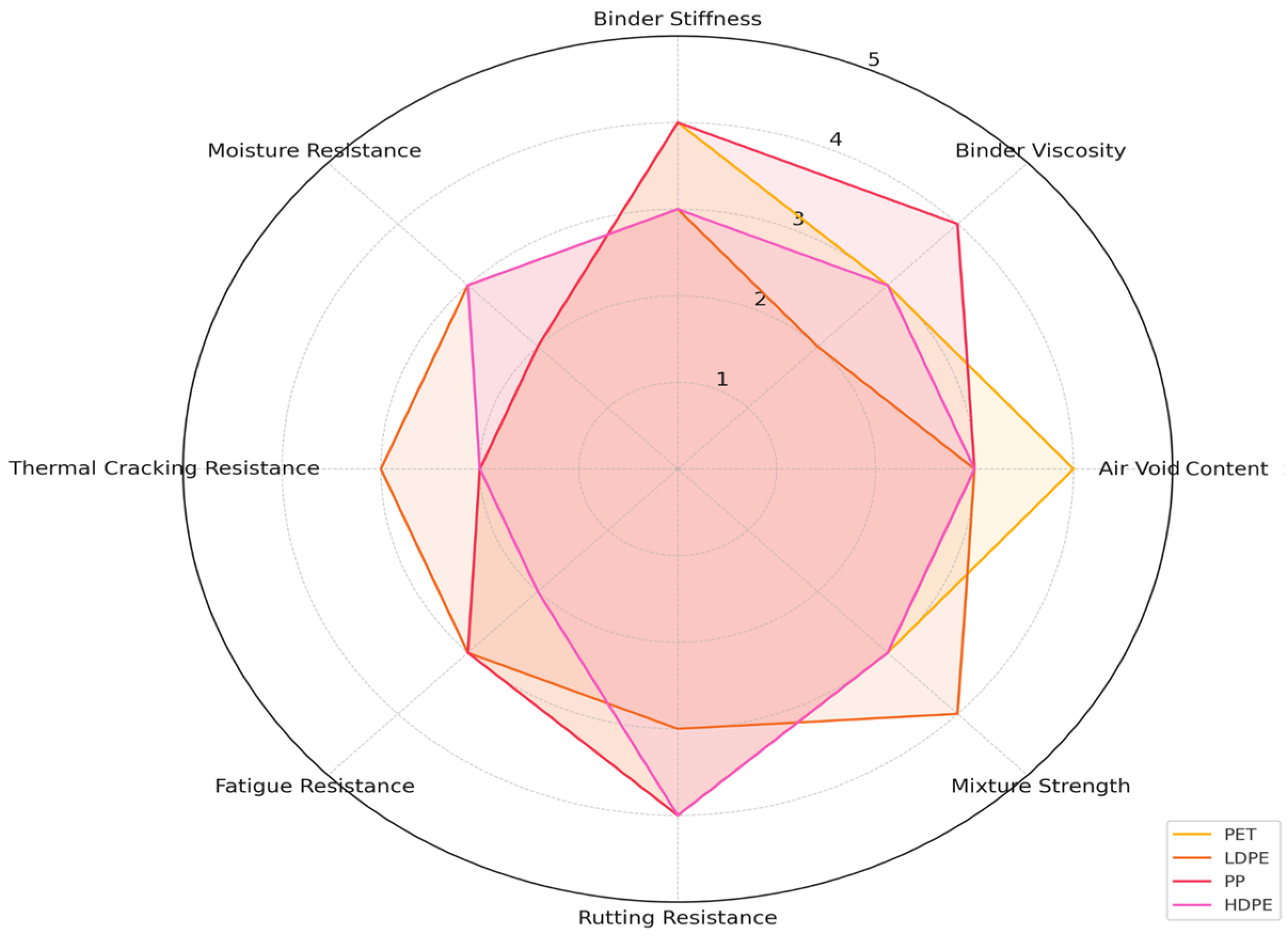
The findings of this study confirm that no single type of recycled polymer improves all aspects of asphalt performance on its own. The effectiveness of plastic-modified asphalt depends on various interrelated factors, including the polymer type, incorporation method (dry, wet, or pyrolysis-based), and mixing technology used for HMA or WMA. Figure 5 provides a qualitative visual comparison of PET, LDPE, PP, and HDPE across eight key parameters: binder stiffness, binder viscosity, air void content, mixture strength, rutting resistance, fatigue resistance, thermal cracking resistance, and moisture resistance. This helps identify the specific strengths and limitations of each plastic, supporting informed selection based on mechanical needs and environmental conditions in sustainable pavement design.
Figure 5.
Qualitative comparison of the performance of recycled plastics (PET, LDPE, PP, and HDPE) in asphalt mixtures. The scale from 1 to 5 indicates relative performance, where 1 = lowest and 5 = highest for each property.
Table 16 presents a comparative summary of the improved properties, limitations, and ideal use conditions for these recycled plastics, based on asphalt type and incorporation method. For example, PET used via the dry method in HMA enhances stiffness, fatigue resistance, and rutting resistance but may reduce moisture resistance and perform poorly in WMA. LDPE, applied through the wet method in WMA, improves workability, ductility, and moisture resistance, though it requires well-controlled mixing and has limited high-temperature performance. PP, incorporated through wet methods or pyrolysis-derived waxes, offers excellent stiffness and thermal stability in HMA but faces challenges in WMA due to its high melting point and incomplete dispersion. This synthesis offers practical guidance for choosing plastic types and incorporation strategies based on pavement needs, climate, and technical capacity while highlighting the importance of field validation and standardization for real world implementation.
Table 16.
Comparative Summary: Plastic in Asphalt Mixtures.
4. Discussion
High melting point plastics such as PET and HDPE have shown notable improvements in stiffness, fatigue resistance, and rutting resistance, particularly when incorporated into HMA via the dry method (Table 5, Table 6 and Table 12 and Figure 5). PET enhances load-bearing capacity but may reduce moisture resistance at dosages above 2% (Table 15). HDPE, when applied as a pyrolysis-derived wax (Table 13), improves thermal stability and lowers binder viscosity, making it more suitable for WMA.
In contrast, LDPE and EVA/LDPE blends are more compatible with WMA due to their lower melting points, which allow better dispersion without compromising cohesion. LDPE contributes to ductility, workability, and moisture resistance (Table 7 and Table 8); while EVA/LDPE blends enhance thermal stability without sacrificing low-temperature performance. PP offers excellent stiffness and thermal stability in HMA (Table 9) but shows limited integration in WMA due to incomplete melting; nanosilica additives have been shown to improve dispersion and moisture resistance without reducing flexibility. Multicomponent blends, such as HDPE/LDPE and PET/HDPE (Table 11 and Table 12), combine moisture resistance from HDPE with flexibility from LDPE, achieving rut depths under 5 mm in wheel tracking tests.
The dry method offers scalability and cost efficiency, especially for PET and LDPE at optimized dosage ranges, but excessive PET may reduce moisture resistance, and LDPE requires careful mixing to avoid density loss and increased air void content. The wet method enhances polymer binder interaction, particularly for LDPE and EVA blends, improving workability and moisture protection in WMA. Pyrolysis-derived waxes from HDPE or PP reduce binder viscosity and increase thermal stability, offering an effective approach for WMA where direct melting is incomplete, though industrial adaptation remains necessary for large-scale adoption.
HMA mixtures modified with PET, PP, or HDPE exhibit superior structural performance under high temperatures and heavy traffic loads (Table 15), making them suitable for urban corridors with high demand. WMA mixtures, while slightly less robust, offer adequate performance in mild or cold climates with lower traffic volumes. Low-melting plastics such as LDPE or EVA in WMA improve workability, reduce energy consumption, and enhance low-temperature performance. Considering the balance between mechanical performance and environmental benefits, PET in HMA via the dry method and LDPE in WMA via the wet method appear to provide the most favorable combinations for durability and sustainability.
Integrating recycled plastics into asphalt mixtures diverts significant waste from landfills and waterways, reduces dependency on virgin bitumen, and lowers greenhouse gas emissions particularly when combined with WMA technologies. The immobilization of plastics within the asphalt matrix (Figure 5) minimizes microplastic release and extends pavement lifespan, lowering maintenance frequency. From a sustainability perspective, this practice aligns with circular economy objectives, supports green job creation in waste processing, and fosters public acceptance of sustainable infrastructure. Nonetheless, quantifying these benefits remains limited due to the absence of standardized Life Cycle Assessment (LCA) protocols and region-specific datasets.
Despite the promising results, several technical challenges still hinder the large-scale implementation of recycled plastics in asphalt mixtures. These include the absence of standardized protocols for dosage, particle size, and binder polymer compatibility; the scarcity of long-term field performance data under real operating conditions; variability in waste plastic supply and quality affecting reproducibility; and strict emission control requirements during incorporation, particularly in pyrolysis-based processes.
Future research should focus on advancing plastic pretreatment and recycling technologies to ensure consistent quality, developing optimized mixing protocols tailored to different polymer types and asphalt grades, and conducting comprehensive LCAs to quantify environmental gains. Additionally, new characterization methodologies could better predict long-term performance, and adapting these technologies to regional contexts especially in low-resource settings may maximize both social and environmental benefits, facilitating integration into sustainable infrastructure practices.
5. Conclusions
The escalating accumulation of plastic waste and its long-term environmental consequences have made it essential to identify strategies that transform this pollutant into a valuable resource. This systematic review demonstrates that the integration of recycled plastics particularly PET, LDPE, and PP into HMA and WMA can serve as both a technical and environmental solution. By repurposing post-consumer plastics in road construction, this approach diverts significant volumes of waste from landfills and natural ecosystems while reducing the reliance on virgin petroleum-based binders.
From a social perspective, the use of recycled plastics in asphalt mixtures supports the principles of the circular economy, reduces the environmental footprint of infrastructure projects, and can generate local employment through waste collection, processing, and supply chain activities. Additionally, the adoption of WMA technologies further amplifies these benefits by lowering production temperatures, which translates into reduced greenhouse gas emissions, improved worker safety due to lower fumes, and minimized energy consumption. These advantages are especially valuable for regions with limited resources and high environmental vulnerability.
Key Findings:
- PET increases binder stiffness and fatigue life while contributing to the valorization of large volumes of post-consumer beverage containers, thereby reducing environmental contamination.
- LDPE enhances ductility, workability, and moisture resistance, enabling the reuse of common single-use plastics such as bags and packaging materials, which are among the most persistent pollutants in urban and marine environments.
- PP offers improved stiffness and high-temperature performance, allowing the recycling of packaging and industrial plastics, but requires careful control in WMA to avoid dispersion issues.
- HMA ensures maximum mechanical durability for heavy traffic roads, whereas WMA delivers substantial environmental gains, such as reduced energy demand and lower CO2 emissions, making it ideal for projects in environmentally sensitive zones.
- Dry methods provide a scalable pathway for integrating PET and LDPE with minimal adaptation costs, while wet and pyrolysis methods allow for more uniform binder modification and the incorporation of high-melting-point plastics.
- The use of recycled plastics in pavements directly reduces landfill pressure, marine litter, and microplastic release by immobilizing plastics within a durable road matrix.
- This technology supports social benefits by promoting waste-to-resource initiatives, creating local jobs in plastic collection and processing, and enabling municipalities to demonstrate visible sustainability actions.
- The integration of plastics into asphalt aligns with global sustainability goals, linking infrastructure development with climate change mitigation and responsible resource management.
This systematic review aimed to identify which type of recycled plastic and incorporation method provides the best balance between mechanical performance and environmental benefits in HMA and WMA. Based on the analysis of 39 studies, PET and LDPE, particularly when incorporated through the dry method in HMA, consistently enhanced stiffness, fatigue resistance, and rutting resistance, with LDPE also improving ductility and moisture resistance, making it suitable for WMA applications. PP demonstrated superior high-temperature stability and stiffness, especially in HMA, though its high melting point poses challenges for WMA without pre-treatment. From an environmental perspective, WMA technologies combined with recycled plastics reduced energy consumption and greenhouse gas emissions while diverting substantial volumes of waste from landfills and oceans. These findings confirm that selecting the appropriate plastic type and incorporation method according to local climatic, traffic, and technical conditions can optimize both mechanical durability and environmental sustainability, aligning road construction with circular economy principles and climate change mitigation goals.
These findings confirm that plastic-modified asphalt is not only a technically viable solution but also a strategic environmental intervention capable of linking infrastructure performance with ecological preservation. By integrating recycled plastics into HMA and WMA, this approach offers tangible benefits for both urban and rural communities, including cleaner surroundings, extended pavement service life, and reduced maintenance costs.
Looking ahead, strengthening the evidence base on environmental outcomes is essential. Future research should quantify the long-term benefits through standardized life-cycle assessments, with particular attention to CO2 emission reductions, waste diversion metrics, and resource savings. Such data would provide policymakers with the necessary tools to embed plastic-modified asphalt into broader climate action strategies. In doing so, road construction can evolve into a key driver of environmental stewardship, social progress, and sustainable development.
Author Contributions
Conceptualization, D.S.-V. and J.C.-R.; methodology, D.S.-V. and L.G.; software, D.S.-V. and J.C.-R.; validation, L.G. and M.A.L.-B.; formal analysis, D.S.-V. and C.S.-B.; investigation, D.S.-V. and M.M.-A.; resources, D.S.-V. and L.G.; supervision, M.A.L.-B. and M.M.-A.; project administration, D.S.-V., M.M.-A. and C.S.-B. All authors have read and agreed to the published version of the manuscript.
Funding
This research received no external funding.
Data Availability Statement
This study has not generated any new data that can be shared, and no data has been uploaded to any external databases. The results and analysis of the study are available in this document.
Conflicts of Interest
The authors declare no conflicts of interest.
Abbreviations
Acrylonitrile Butadiene Styrene (ABS), Asphalt Cement (AC), Asphalt Hard (AH), Binder Bond Strength (BBS), Crumb Rubber-Modified Asphalt (CRMA), Cross-linked Polyethylene (PEX), Differential Scanning Calorimetry (DSC), Dynamic Shear Rheology (DSR), Ethylene Vinyl Acetate (EVA), Fatigue Measurement (FM), Fourier Transform Infrared Spectroscopy (FTIR), High-Density Polyethylene (HDPE), Hot Mix Asphalt (HMA), Indirect Tensile Strength (ITS), Indirect Tensile Strength Ratio (ITSR), Life Cycle Assessment (LCA), Low-Density Polyethylene (LDPE), Modified Polyethylene Terephthalate (MPET), Penetration Grade (PEN), Performance Grade (PG), Polycarbonate (PC), Polyethylene (PE), Polyethylene Terephthalate (PET), Polypropylene (PP), Polyurethane (PU), Polyvinyl Chloride (PVC), Preferred Reporting Items for Systematic Reviews and Meta-Analyses extension for Scoping Reviews (PRISMA/ScR), Pyrolysis Wax (PW), Reclaimed Asphalt Pavement (RAP), Recycled Pyrolytic Polyethylene Wax (RPPW), Styrene Butadiene Styrene (SBS), Tensile Strength Ratio (TSR), Thermally Linear Polypropylene (TLPP), Ultra-High-Molecular-Weight Polyethylene (UHMWPE), Viscosity Grade (VG), Viscuous Polypropylene (VPP), Waste Polypropylene (WPP), and Warm Mix Asphalt (WMA).
References
- Secretariat of the United Nations Convention to Combat Desertification (UNCCD). The Land in Numbers: Livelihoods at a Tipping Point. Bonn, 2014. Available online: https://www.unccd.int/resources/publications/land-numbers-livelihoods-tipping-point (accessed on 30 November 2023).
- Las Carreteras ya Cruzan el 20% de la Tierra. ABC Ciencia, Madrid, el 15 de Diciembre de 2016. Available online: https://www.abc.es/ciencia/abci-20-ciento-tierra-esta-totalmente-cubierto-carreteras-201612152031_noticia.html (accessed on 30 November 2023).
- Gkyrtis, K.; Kokkalis, A. Toward the Inclusion of Waste Materials at Road Upper Layers: Integrative Exploration of Critical Aspects. Futur. Transp. 2025, 5, 67. [Google Scholar] [CrossRef]
- United Nations Development Programme (UNDP). El ABC de los Plásticos: Una Guía Sobre las negociaciones mundiales sobre plásticos. UNDP, 2023. Available online: https://www.undp.org/es/el-abc-de-los-plasticos (accessed on 2 July 2025).
- d’Ambrières, W. Plastics recycling worldwide: Current overview and desirable changes. Field Actions Sci. Rep. 2019, 19, 12–21. [Google Scholar]
- Leal Filho, W.; Saari, U.; Fedoruk, M.; Iital, A.; Moora, H.; Klöga, M.; Voronova, V. An overview of the problems posed by plastic products and the role of extended producer responsibility in Europe. J. Clean. Prod. 2019, 214, 550–558. [Google Scholar] [CrossRef]
- Wu, S.; Montalvo, L. Repurposing waste plastics into cleaner asphalt pavement materials: A critical literature review. J. Clean. Prod. 2021, 280, 124355. [Google Scholar] [CrossRef]
- Biber, N.F.; Foggo, A.; Thompson, R.C. Characterising the deterioration of different plastics in air and seawater. Mar. Pollut. Bull. 2019, 141, 595–602. [Google Scholar] [CrossRef]
- Rojas, T. Todo Sobre el Polietileno de Alta Densidad (HDPE): Usos, Ventajas y Mercado Actual. Tecnología del Plástico, 2023. Available online: https://www.plastico.com/es/noticias/todo-sobre-el-polietileno-de-alta-densidad-hdpe-usos-ventajas-y-mercado-actual (accessed on 30 November 2023).
- Casey, D.; McNally, C.; Gibney, A.; Gilchrist, M.D. Development of a recycled polymer modified binder for use in stone mastic asphalt. Resour. Conserv. Recycl. 2008, 52, 1167–1174. [Google Scholar] [CrossRef]
- Singh, B.; Gupta, M.; Tarannum, H. Mastic of polymer-modified bitumen and poly(vinyl chloride) wastes. J. Appl. Polym. Sci. 2003, 90, 1347–1356. [Google Scholar] [CrossRef]
- Sintac. Propiedades del Polietileno de Baja Densidad (PEBD). SINTAC Recycling, 2022. Available online: https://sintac.es/propiedades-del-polietileno-de-baja-densidad/ (accessed on 30 November 2023).
- Zhang, F.; Hu, C. The research for crumb rubber/waste plastic compound modified asphalt. J. Therm. Anal. Calorim. 2016, 124, 729–741. [Google Scholar] [CrossRef]
- Yan, K.; Xu, H.; You, L. Rheological properties of asphalts modified by waste tire rubber and reclaimed low density polyethylene. Constr. Build. Mater. 2015, 83, 143–149. [Google Scholar] [CrossRef]
- Jmal, H.; Bahlouli, N.; Wagner-Kocher, C.; Leray, D.; Ruch, F.; Munsch, J.N.; Nardin, M. Influence of the grade on the variability of the mechanical properties of polypropylene waste. Waste Manag. 2018, 75, 160–173. [Google Scholar] [CrossRef] [PubMed]
- SyBridge Technologies. Know Your Materials: Polystyrene (PS)—SyBridge Technologies. SyBridge Technologies, 2021. Available online: https://sybridge.com/know-your-materials-polystyrene/ (accessed on 30 November 2023).
- Makri, C.; Hahladakis, J.N.; Gidarakos, E. Use and assessment of ‘e-plastics’ as recycled aggregates in cement mortar. J. Hazard. Mater. 2019, 379, 120776. [Google Scholar] [CrossRef]
- Lopes, D.; Ferreira, M.J.; Russo, R.; Dias, J.M. Natural and synthetic rubber/waste—Ethylene-Vinyl Acetate composites for sustainable application in the footwear industry. J. Clean. Prod. 2015, 92, 230–236. [Google Scholar] [CrossRef]
- Sengoz, B.; Isikyakar, G. Evaluation of the properties and microstructure of SBS and EVA polymer modified bitumen. Constr. Build. Mater. 2008, 22, 1897–1905. [Google Scholar] [CrossRef]
- Gad, Y.H.; Magida, M.M.; El-Nahas, H.H. Effect of ionizing irradiation on the thermal blend of waste low density polyethylene/ethylene vinyl acetate/bitumen for some industrial applications. J. Ind. Eng. Chem. 2010, 16, 1019–1024. [Google Scholar] [CrossRef]
- Tarantili, P.A.; Mitsakaki, A.N.; Petoussi, M.A. Processing and properties of engineering plastics recycled from waste electrical and electronic equipment (WEEE). Polym. Degrad. Stab. 2010, 95, 405–410. [Google Scholar] [CrossRef]
- De la Colina Martínez, A.L.; Barrera, G.M.; Díaz, C.E.B.; Córdoba, L.I.Á.; Núñez, F.U.; Hernández, D.J.D. Recycled polycarbonate from electronic waste and its use in concrete: Effect of irradiation. Constr. Build. Mater. 2019, 201, 778–785. [Google Scholar] [CrossRef]
- Reich, M.J.; Woern, A.L.; Tanikella, N.G.; Pearce, J.M. Mechanical Properties and Applications of Recycled Polycarbonate Particle Material Extrusion-Based Additive Manufacturing. Materials 2019, 12, 1642. [Google Scholar] [CrossRef]
- Pedreño-Rojas, M.A.; Morales-Conde, M.J.; Pérez-Gálvez, F.; Rubio-de-Hita, P. Influence of polycarbonate waste on gypsum composites: Mechanical and environmental study. J. Clean. Prod. 2019, 218, 21–37. [Google Scholar] [CrossRef]
- Jin, X.; Guo, N.; You, Z.; Wang, L.; Wen, Y.; Tan, Y. Rheological properties and micro-characteristics of polyurethane composite modified asphalt. Constr. Build. Mater. 2020, 234, 117395. [Google Scholar] [CrossRef]
- Khoo, H.H. LCA of plastic waste recovery into recycled materials, energy and fuels in Singapore. Resour. Conserv. Recycl. 2019, 145, 67–77. [Google Scholar] [CrossRef]
- Napper, I.E.; Thompson, R.C. Plastic Debris in the Marine Environment: History and Future Challenges. Glob. Chall. 2020, 4, 1900081. [Google Scholar] [CrossRef]
- Walker, T.R.; Xanthos, D. A call for Canada to move toward zero plastic waste by reducing and recycling single-use plastics. Resour. Conserv. Recycl. 2018, 133, 99–100. [Google Scholar] [CrossRef]
- Ismail, Z.Z.; AL-Hashmi, E.A. Use of waste plastic in concrete mixture as aggregate replacement. Waste Manag. 2008, 28, 2041–2047. [Google Scholar] [CrossRef]
- Assefa, N. Evaluation of the effect of recycled waste plastic bags on mechanical properties of hot mix asphalt mixtures for road construction. Sustain. Environ. 2021, 7, 1957649. [Google Scholar] [CrossRef]
- Mazouz, M.; Merbouh, M. The Effect of Low-Density Polyethylene Addition and Temperature on Creep-recovery Behavior of Hot Mix Asphalt. Civ. Eng. J. 2019, 5, 597–607. [Google Scholar] [CrossRef]
- Yung Vargas, Y.W.; Cordoba Maquilón, J.E.; Rondón Quintana, H.A. Evaluación del desgaste por abrasión de una mezcla drenante modificada con residuo de llanta triturada (GCR). Tecnura 2016, 20, 106–118. [Google Scholar]
- C. y T. (SICT); D. G. de S. T. (CMT) Secretaría de Infraestructura. Características de los Materiales N·CMT·4·05·001/05. 4. Materiales Para Pavimentos. Ciudad de México, 2005. Available online: https://normas.imt.mx/storage/normativa/N-CMT-4-05-001-05.pdf (accessed on 2 July 2025).
- You, L.; Long, Z.; You, Z.; Ge, D.; Yang, X.; Xu, F.; Hashemi, M.; Diab, A. Review of recycling waste plastics in asphalt paving materials. J. Traffic Transp. Eng. 2022, 9, 742–764. [Google Scholar] [CrossRef]
- Harmon, J.; D’Angelo, J.; Bukowski, J. Superpave Asphalt Mixture Design Workshop Workbook. McLean, VA (FHWA Headquarters), 1999. Available online: https://www.fhwa.dot.gov/publications/research/infrastructure/pavements/asphalt/mixdsgn.pdf (accessed on 2 July 2025).
- Ma, J.; Hesp, S.A.M. Effect of recycled polyethylene terephthalate (PET) fiber on the fracture resistance of asphalt mixtures. Constr. Build. Mater. 2022, 342, 127944. [Google Scholar] [CrossRef]
- López, C.; Thenoux, G.; Sandoval, G.; Armijos, V.; Ramírez, A.; Guisado, F.; Moreno, E. Estudio de mezclas asfálticas templadas con emulsión super-estabilizada. Rev. Ing. Construcción 2017, 32, 57–64. [Google Scholar] [CrossRef][Green Version]
- Raza, S.A.; Shah, N.; Sharif, A. Time frequency relationship between energy consumption, economic growth and environmental degradation in the United States: Evidence from transportation sector. Energy 2019, 173, 706–720. [Google Scholar] [CrossRef]
- Franesqui, M.A.; Yepes, J.; Valencia-Díaz, S. Sustainable Pavement Construction in Sensitive Environments: Low-Energy Asphalt with Local Waste Materials and Geomaterials. Buildings 2024, 14, 530. [Google Scholar] [CrossRef]
- Shamseer, L.; Moher, D.; Clarke, M.; Ghersi, D.; Liberati, A.; Petticrew, M.; Shekelle, P.; Stewart, L.A. Preferred reporting items for systematic review and meta-analysis protocols (PRISMA-P) 2015: Elaboration and explanation. BMJ 2015, 349, g7647. [Google Scholar] [CrossRef]
- Ouzzani, M.; Hammady, H.; Fedorowicz, Z.; Elmagarmid, A. Rayyan—A web and mobile app for systematic reviews. Syst. Rev. 2016, 5, 210. [Google Scholar] [CrossRef]
- Moussa, G.; Sallam, I.; Younis, H. Performance Investigation of Hot- and Warm- Asphalt Mixtures Modified with Superplast. JES. J. Eng. Sci. 2021, 49, 679–703. [Google Scholar] [CrossRef]
- Modarres, A.; Hamedi, H. Effect of waste plastic bottles on the stiffness and fatigue properties of modified asphalt mixes. Mater. Des. 2014, 61, 8–15. [Google Scholar] [CrossRef]
- Awad, A. Utilization of Waste Plastics to Enhance the Performance of Modified Hot Mix Asphalt. Int. J. GEOMATE 2017, 13, 132–139. [Google Scholar] [CrossRef]
- Haider, S.; Hafeez, I.; Jamal; Ullah, R. Sustainable use of waste plastic modifiers to strengthen the adhesion properties of asphalt mixtures. Constr. Build. Mater. 2020, 235, 117496. [Google Scholar] [CrossRef]
- Hong, Z.; Yan, K.; Wang, M.; You, L.; Ge, D. Low-density polyethylene/ethylene–vinyl acetate compound modified asphalt: Optimal preparation process and high-temperature rheological properties. Constr. Build. Mater. 2022, 314, 125688. [Google Scholar] [CrossRef]
- Ling, T.; Lu, Y.; Zhang, Z.; Li, C.; Oeser, M. Value-Added Application of Waste Rubber and Waste Plastic in Asphalt Binder as a Multifunctional Additive. Materials 2019, 12, 1280. [Google Scholar] [CrossRef]
- Singh, P.; Swamy, A.K. Effect of aging level on viscoelastic properties of asphalt binder containing waste polyethylene. Int. J. Sustain. Eng. 2019, 12, 141–148. [Google Scholar] [CrossRef]
- Marquez, K.P.; Arizala, C.V.; Soriano, V.J.; Barron, J.M.; Florece, A.E.; Caday, J.H.; Calibo, J.A.; Aguila, M.J.; Razal, R.A.; Migo, V.P. Recycled Polyethylene Terephthalate as Reinforcement Additive of Asphalt Mixture for Pavement Application. Philipp. J. Sci. 2021, 150, 1061–1068. [Google Scholar] [CrossRef]
- Moghaddam, T.B.; Soltani, M.; Karim, M.R. Evaluation of permanent deformation characteristics of unmodified and Polyethylene Terephthalate modified asphalt mixtures using dynamic creep test. Mater. Des. 2014, 53, 317–324. [Google Scholar] [CrossRef]
- Bekhedda, A.; Merbouh, M. Recycling of plastic waste polyethylene terephthalate (PET) as a modifier in asphalt mixture: Study of Creep-Recovery at Low, Medium, and Hot Temperatures. Frat. Integrità Strutt. 2022, 16, 438–450. [Google Scholar] [CrossRef]
- Movilla-Quesada, D.; Raposeiras, A.C.; Olavarría, J. Effects of Recycled Polyethylene Terephthalate (PET) on Stiffness of Hot Asphalt Mixtures. Adv. Civ. Eng. 2019, 2019, 6969826. [Google Scholar] [CrossRef]
- Ghabchi, R.; Dharmarathna, C.P.; Mihandoust, M. Feasibility of using micronized recycled Polyethylene Terephthalate (PET) as an asphalt binder additive: A laboratory study. Constr. Build. Mater. 2021, 292, 100085. [Google Scholar] [CrossRef]
- Singh, G.D.; Sharma, V.K.; Sangma, B.; Kumar, R.; Senthil, K.; Singh, A.P. Experimental study on bituminous concrete pavement using low density polyethylene and sasobit. Mater. Today Proc. 2022, 52, 2109–2114. [Google Scholar] [CrossRef]
- Radeef, H.R.; Abdul Hassan, N.; Abidin, A.R.; Mahmud, M.Z.; Yusoffa, N.I.; Idham Mohd Satar, M.K.; Warid, M.N. Enhanced Dry Process Method for Modified Asphalt Containing Plastic Waste. Front. Mater. 2021, 8, 700231. [Google Scholar] [CrossRef]
- Li, C.; Wang, H.; Fu, C.; Shi, S.; Li, G.; Liu, Q.; Zhou, D.; Jiang, L.; Cheng, Y. Evaluation of modified bitumen properties using waste plastic pyrolysis wax as warm mix additives. J. Clean. Prod. 2023, 405, 136910. [Google Scholar] [CrossRef]
- Jafar, J.J. Utilisation of waste plastic in bituminous mix for improved performance of roads. KSCE J. Civ. Eng. 2016, 20, 243–249. [Google Scholar] [CrossRef]
- Hall, F.; White, G. The Effect of Waste Plastics on the Ageing Phenomenon of Bituminous Binders and Asphalt Mixtures. Materials 2021, 14, 6176. [Google Scholar] [CrossRef] [PubMed]
- Cardone, F.; Spadoni, S.; Ferrotti, G.; Canestrari, F. Asphalt mixture modification with a plastomeric compound containing recycled plastic: Laboratory and field investigation. Mater. Struct. 2022, 55, 109. [Google Scholar] [CrossRef]
- Haider, S.; Hafeez, I. A step toward smart city and green transportation: Eco-friendly waste PET management to enhance adhesion properties of asphalt mixture. Constr. Build. Mater. 2021, 304, 124702. [Google Scholar] [CrossRef]
- Abduljabbar, N.; Al-Busaltan, S.; Dulaimi, A.; Al-Yasari, R.; Sadique, M.; Al Nageim, H. The effect of waste low-density polyethylene on the mechanical properties of thin asphalt overlay. Constr. Build. Mater. 2022, 315, 125722. [Google Scholar] [CrossRef]
- Zhou, G.; Li, C.; Wang, H.; Zeng, W.; Ling, T.; Jiang, L.; Li, R.; Liu, Q.; Cheng, Y.; Zhou, D. Preparation of Wax-Based Warm Mixture Additives from Waste Polypropylene (PP) Plastic and Their Effects on the Properties of Modified Asphalt. Materials 2022, 15, 4346. [Google Scholar] [CrossRef] [PubMed]
- Wang, Z.; Li, Y.; Zhang, W.; Zhang, D.; Liu, S.; Shi, S.; Li, C. Study on Performance of Wax Warm Mix Asphalt Cracked by Mixed Polyethylene Waste Plastics. Sci. Soc. Res. 2021, 3, 170–174. [Google Scholar] [CrossRef]
- MGürü; Çubuk, M.K.; Arslan, D.; Farzanian, S.A.; Bilici, İ. An approach to the usage of polyethylene terephthalate (PET) waste as roadway pavement material. J. Hazard. Mater. 2014, 279, 302–310. [Google Scholar] [CrossRef]
- Shang, L.; Wang, S. Pyrolysed Wax from Recycled Crosslinked Polyethylene as a Warm-Mix Asphalt (WMA) Additive for Crumb-Rubber-Modified Asphalt. Prog. Rubber Plast. Recycl. Technol. 2011, 27, 133–144. [Google Scholar] [CrossRef]
- Mosa, A.; Jawad, I.T.; Salem, L.A. Modification of the Properties of Warm Mix Asphalt Using Recycled Plastic Bottles. Int. J. Eng. 2018, 31, 1514–1520. Available online: https://www.ije.ir/article_73287.html (accessed on 2 July 2025). [CrossRef]
- Jassim, H.M.; Mahmood, O.T.; Ahmed, S.A. Optimum Use of Plastic Waste to Enhance the Marshall Properties and Moisture Resistance of Hot Mix Asphalt. Int. J. Eng. Trends Technol. 2014, 7, 18–25. [Google Scholar] [CrossRef]
- Hamedi, G.H.; Pirbasti, M.H.; Pirbasti, Z.R. Investigating the Effect of Using Waste Ultra-high-molecular-weight Polyethylene on the Fatigue Life of Asphalt Mixture. Period. Polytech. Civ. Eng. 2020, 64, 1170–1180. [Google Scholar] [CrossRef]
- Almeida, A.; Capitão, S.; Estanqueiro, C.; Picado-Santosc, L. Possibility of incorporating waste plastic film flakes into warm-mix asphalt as a bitumen extender. Constr. Build. Mater. 2021, 291, 123384. [Google Scholar] [CrossRef]
- Costa, L.; Peralta, J.; Oliveira, J.; Silva, H. A New Life for Cross-Linked Plastic Waste as Aggregates and Binder Modifier for Asphalt Mixtures. Appl. Sci. 2017, 7, 603. [Google Scholar] [CrossRef]
- Abdo, A.M.A.; Jung, S.J. Investigation of reinforcing flexible pavements with waste plastic fibers in Ras Al Khaimah, UAE. Road Mater. Pavement Des. 2020, 21, 1753–1762. [Google Scholar] [CrossRef]
- White, G.; Reid, G. Recycled Waste Plastic for Extending and Modifying Asphalt Binders. In Proceedings of the 8th Symposium on Pavement Surface Characteristics (SURF 2018), Brisbane, Australia, 2–4 May 2018; p. 12. Available online: https://www.researchgate.net/publication/324908837 (accessed on 2 July 2025).
- Suaryana, N.; Nirwan, E.; Ronny, Y. Plastic Bag Waste on Hotmixture Asphalt as Modifier. Key Eng. Mater. 2018, 789, 20–25. [Google Scholar] [CrossRef]
- Demirbas, A.; Arin, G. An Overview of Biomass Pyrolysis. Energy Sources 2002, 24, 471–482. [Google Scholar] [CrossRef]
- Akinleye, M.T.; Jimoh, Y.A.; Salami, L.O. Marshall Properties Evaluation of Hot and Warm Asphalt Mixes Incorporating Dissolved Plastic Bottle Modified Bitumen. J. Mater. Eng. Struct. 2020, 7, 439–450. Available online: https://revue.ummto.dz/index.php/JMES/article/view/2399 (accessed on 2 July 2025).
- Page, M.J.; McKenzie, J.E.; Bossuyt, P.M.; Boutron, I.; Hoffmann, T.C.; Mulrow, C.D.; Shamseer, L.; Tetzlaff, J.M.; Akl, E.A.; Brennan, S.E.; et al. The PRISMA 2020 statement: An updated guideline for reporting systematic reviews. BMJ 2021, 372, n71. [Google Scholar] [CrossRef]
- Obaid, H.A. Characteristics of warm mixed asphalt modified by waste polymer and nano-silica. Int. J. Pavement Res. Technol. 2021, 14, 397–401. [Google Scholar] [CrossRef]
- Ullah, S.; Raheel, M.; Khan, R.; Khan, M.T. Characterization of physical & mechanical properties of asphalt concrete containing low- & high-density polyethylene waste as aggregates. Constr. Build. Mater. 2021, 301, 124127. [Google Scholar] [CrossRef]
- Nejad, F.M.; Arabani, M.; Hamedi, G.H.; Azarhoosh, A.R. Influence of using polymeric aggregate treatment on moisture damage in hot mix asphalt. Constr. Build. Mater. 2013, 47, 1523–1527. [Google Scholar] [CrossRef]
- Ohm, B.S.; Kim, K.; Kim, Y.M.; Le, T.H. Assessing the Viability of Waste Plastic Aggregate in Stone-Modified Asphalt Concrete Mix for Bus Rapid Transit Pavement Maintenance. Buildings 2023, 13, 3069. [Google Scholar] [CrossRef]
- RKovács; Czímerová, A.; Fonód, A.; Mandula, J. The Use of Waste Low-Density Polyethylene for the Modification of Asphalt Mixture. Buildings 2024, 14, 3109. [Google Scholar] [CrossRef]
Disclaimer/Publisher’s Note: The statements, opinions and data contained in all publications are solely those of the individual author(s) and contributor(s) and not of MDPI and/or the editor(s). MDPI and/or the editor(s) disclaim responsibility for any injury to people or property resulting from any ideas, methods, instructions or products referred to in the content. |
© 2025 by the authors. Licensee MDPI, Basel, Switzerland. This article is an open access article distributed under the terms and conditions of the Creative Commons Attribution (CC BY) license (https://creativecommons.org/licenses/by/4.0/).