Abstract
Rainfall can easily cause local sliding and collapse of carbonaceous mudstone deep road cut slopes. In order to study the strength characteristics of carbonaceous mudstone under different water environments, large-scale horizontal push shear tests were conducted on carbonaceous mudstone rock masses in their natural state and after immersion in saturated water. The push shear force–displacement relationship curve and fracture surface shape characteristics of carbonaceous mudstone samples were analyzed, and the shear strength index of carbonaceous mudstone was obtained, and numerical simulations on the stability and support effect of carbonaceous mudstone slopes were conducted. The research results indicate that carbonaceous mudstone can exhibit good structural properties and typical strain softening characteristics under natural conditions. The fracture surface, shear strength, and shear deformation process of carbonaceous mudstone samples will undergo significant changes after being soaked in saturated water. The average cohesion decreases by 33% compared to the natural state, and the internal friction angle decreases by 15%. The numerical simulation results also fully verify the attenuation of mechanical properties of carbonaceous mudstone after immersion, as well as the effectiveness of prestressed anchor cables and frame beams in supporting carbonaceous mudstone slopes. The research results provide an effective method for understanding the shear performance of carbonaceous mudstone and practical guidance for evaluating the stability and reinforcement design of carbonaceous mudstone slopes.
1. Introduction
Carbonaceous mudstone is mainly distributed in the southwestern region of China with abundant rainfall, the Appalachian Basin in the United States, and the Parana Basin in Brazil, and it has characteristics such as softening and easy disintegration when exposed to water. Due to the combined effects of rainfall and unloading, shallow landslides are prone to occur on high and steep road cut slopes made of carbonaceous mudstone [1,2]. Therefore, conducting in-depth research on the bearing deformation mechanism and mechanical property evolution law of carbonaceous mudstone under different water content conditions is of great practical significance for the scientific design and safe construction of carbonaceous mudstone high and steep road cut slopes [3,4].
At present, many scholars have conducted indoor experimental studies on the mechanical properties of carbonaceous mudstone in different environments. For example, some studies have explored the stress–strain relationship and shear strength indicators of carbonaceous mudstone under different wet dry cycles, and further revealed the disintegration characteristics and characterization indicators of carbonaceous mudstone [5,6,7,8,9,10]. There are also studies exploring the changes in mechanical properties of carbonaceous mudstone under different stresses and moisture contents and investigating the mechanical behavior and fracture mechanism of carbonaceous mudstone under hydraulic coupling [2,11,12]. In addition, some scholars have devoted themselves to exploring other factors that affect the mechanical properties of carbonaceous mudstone. Fu et al. [13,14] conducted triaxial compression tests on carbonaceous mudstone before and after modification and obtained stress–strain relationship curves before and after modification. Xue et al. [15] established a rheological constitutive model of carbonaceous mudstone by conducting shear creep tests on carbonaceous mudstone with different temperature gradients and obtained the damage effect caused by the increase in water content under temperature cycling. Fu et al. [16] established an instability model of carbonaceous mudstone slopes under weathering conditions using MATLAB programming software and ABAQUS finite element software and proposed specific mathematical expressions to quantify the impact of weathering on the properties of carbonaceous mudstone. Although these studies provide valuable insights, carbonaceous mudstone is highly susceptible to softening, weathering, and disturbance during sampling and transportation after excavation. This results in significant differences between indoor testing conditions and actual on-site conditions, making it difficult to obtain the mechanical strength indicators that are most closely related to the excavation of carbonaceous mudstone on site. In addition, existing studies have shown that carbonaceous mudstone, as a soft rock, exhibits significant size effects in strength. Indoor tests using smaller sample sizes cannot fully reflect the shear strength of rock mass structural planes [17].
At present, large-scale in-situ direct shear tests and push shear tests are considered as experimental methods that can better reflect the on-site rock mass, and many researchers have conducted extensive research based on these two methods. Zhang et al. [18] conducted in-situ direct shear tests on soil and soil–rock mixture samples and obtained the differences in mechanical properties such as deformation modulus and internal friction angle between the two samples, explaining the deformation behavior of the samples. Jin et al. [19] conducted a series of on-site direct shear tests on sandy gravel with cobbles and obtained its shear strength and failure mechanism. Wei et al. [20] conducted a series of large-scale in-situ direct shear tests on soil–rock mixtures with different moisture contents and particle size distributions and obtained the influence of the above factors on the shear strength of soil–rock mixtures, as well as the relationship between normal stress and shear strength of soil–rock mixtures. Xu et al. [21] conducted large-scale direct shear tests on soil–rock mixtures in the middle reaches of the Jinsha River and obtained the influence of rock block size ratios on the deformation mechanism of soil–rock mixtures. Cen et al. [22] conducted in-situ large-scale direct shear tests on the boundary between the stepped bedrock slope and the fill soil and obtained the stress evolution and failure process of the rock.
Unlike traditional direct shear tests, in push shear tests there is no normal load applied to the specimen, so the shear plane can freely develop along the edge of the specimen. In addition, large-scale horizontal push shear tests simulate actual forces in situ, avoiding the drawbacks of indoor test sampling disturbance and size effects. In recent years, many scholars have verified the reliability of this test: Xu et al. [23] conducted push shear tests on soil–rock mixtures in the Tiger Leaping Gorge area, obtained shear strength parameters such as cohesion and internal friction angle, and plotted an accurate three-dimensional sliding surface. Gao et al. [24] conducted in-situ horizontal push shear tests on soil–rock mixtures in Baidian County, Hunan Province, and obtained the mechanical strength and failure characteristics of soil–rock mixtures in the region. Colin et al. [25] conducted in-situ push shear tests on mudstone in Santa Barbara, Italy, and obtained accurate ranges of local mudstone strength parameters, establishing a relationship model between internal friction angle and rock mass volume block content. Jiang et al. [26] conducted large-scale on-site shear tests on 10 specimens of red sandstone embankments on a certain highway in Hunan Province and obtained the mechanical evolution process and shear strength variation curve of red sandstone at different moisture contents, further standardizing the procedure of on-site shear tests for red sandstone. Xu et al. [27] conducted large-scale in-situ horizontal push shear tests on soil–rock mixtures in natural and saturated states, obtaining complete sliding surfaces and the attenuation law of mechanical parameters after immersion in water. However, the research objects of the above studies mainly focus on soil–rock mixed fill foundations and soil–rock mixtures, and there is limited information and data available for on-site testing of carbonaceous mudstone. Therefore, it is urgent to carry out large-scale in-situ horizontal push shear tests on carbonaceous mudstone. This study conducted on-site large-scale horizontal push shear tests on carbonaceous mudstone. The aim is to obtain accurate shear strength and failure characteristics of the material, and to quantify the impact of this failure on the high cut slope of carbonaceous mudstone through finite element simulation.
Finite element simulation has become an important tool in geotechnical engineering research due to its significant advantages in slope stability analysis. Currently, software such as MIDAS, ABAQUS, and COMSOL have been widely used for simulating slope stability before and after rainfall [28,29]. These tools also enable researchers to evaluate the role of different protective measures in slope protection. Ye et al. [30] used MIDAS GTSNX to assess the stability of geocells in slope protection. Zhang et al. [31] used COMSOL6.0 to simulate the variation law of the safety factor of slopes with weak joints under freeze–thaw cycles. Xie et al. [32] analyzed the stability of sandy red clay slopes under different nitrogen values using finite element software ABAQUS CAE 2020.
This research seeks to obtain the mechanical parameters of carbonaceous mudstone by conducting large-scale horizontal push shear tests on site. In addition, through finite element numerical simulation, the stability of natural and saturated carbonaceous mudstone high road cut slopes is studied, and the rationality of using anchor cables and frame beams in such slopes is reasonably evaluated. The results of this study can provide valuable guidance and evaluation for the construction and operation of practical projects.
2. Test Location
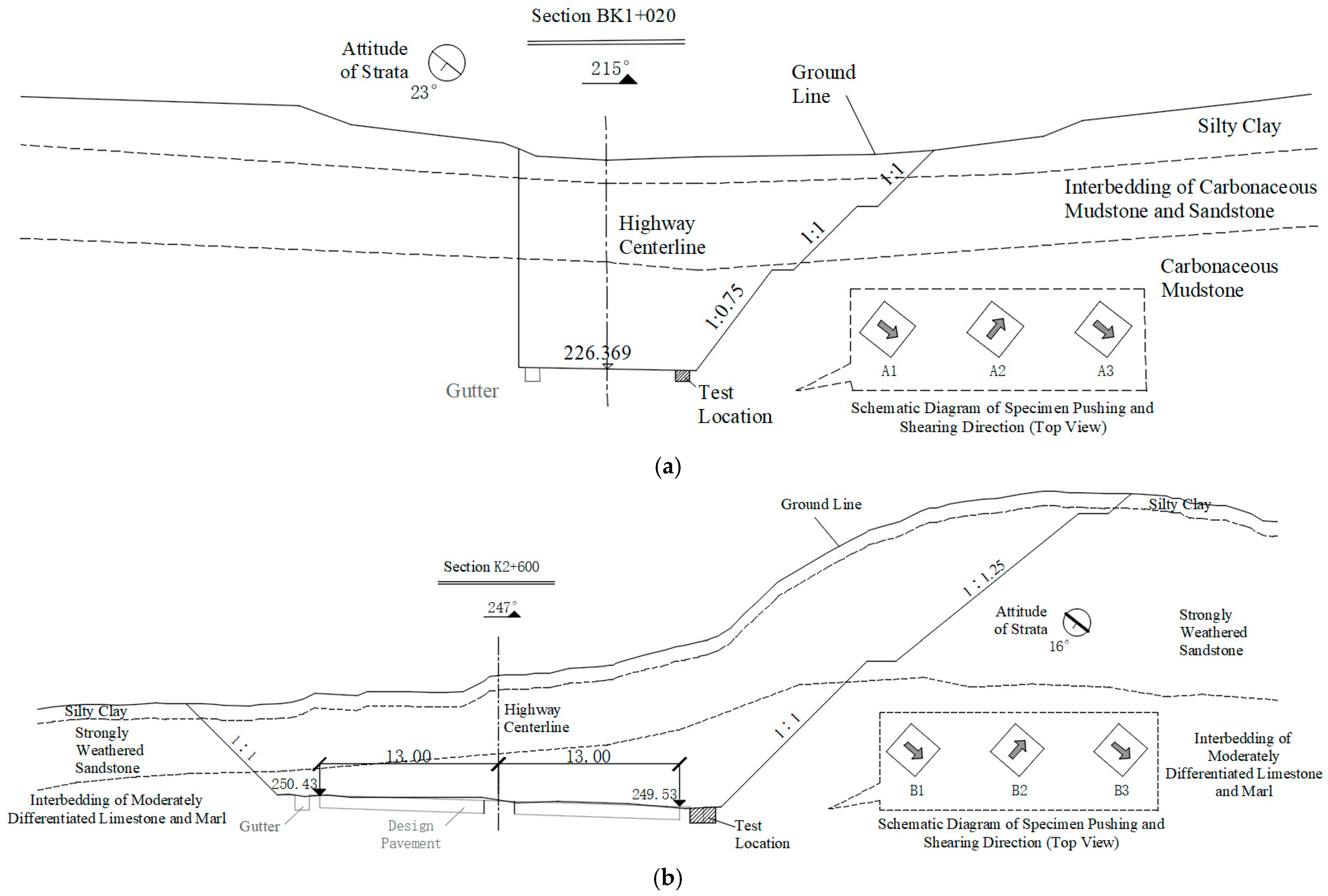
The test site is located in Hechi City, Guangxi Zhuang Autonomous Region, HeLi high speed 1 standard 1 work area. The work area belongs to the tectonic denudation of the bottom of the hilly terrain, micro-geomorphology for the slope gully geomorphology; it is located in the subtropical mountain climate and subtropical monsoon climate zone, where precipitation is abundant. The average annual rainfall in the whole area is between 1200~1600 mm, and the rainfall is mainly concentrated in May to August each year, accounting for 66% of the total annual rainfall. The lithology of the work area is mainly composed of mudstone, carbonaceous mudstone, and mudstone, with overlying Quaternary Holocene silty clay, and the overall thickness is relatively thin. On the basis of field research, two work points with route pile number BK1+020 (hereinafter referred to as work point A) and K2+600 (hereinafter referred to as work point B) were selected, as shown in Figure 1, to carry out on-site large-scale push–shear test of carbonaceous mudstone under natural conditions and water-saturated conditions, respectively.
Figure 1.
Horizontal push–shear test cross-section of carbonaceous mudstone: (a) cross-section of work point A; (b) cross-section of work point B.
3. Materials and Methods
3.1. Test Materials
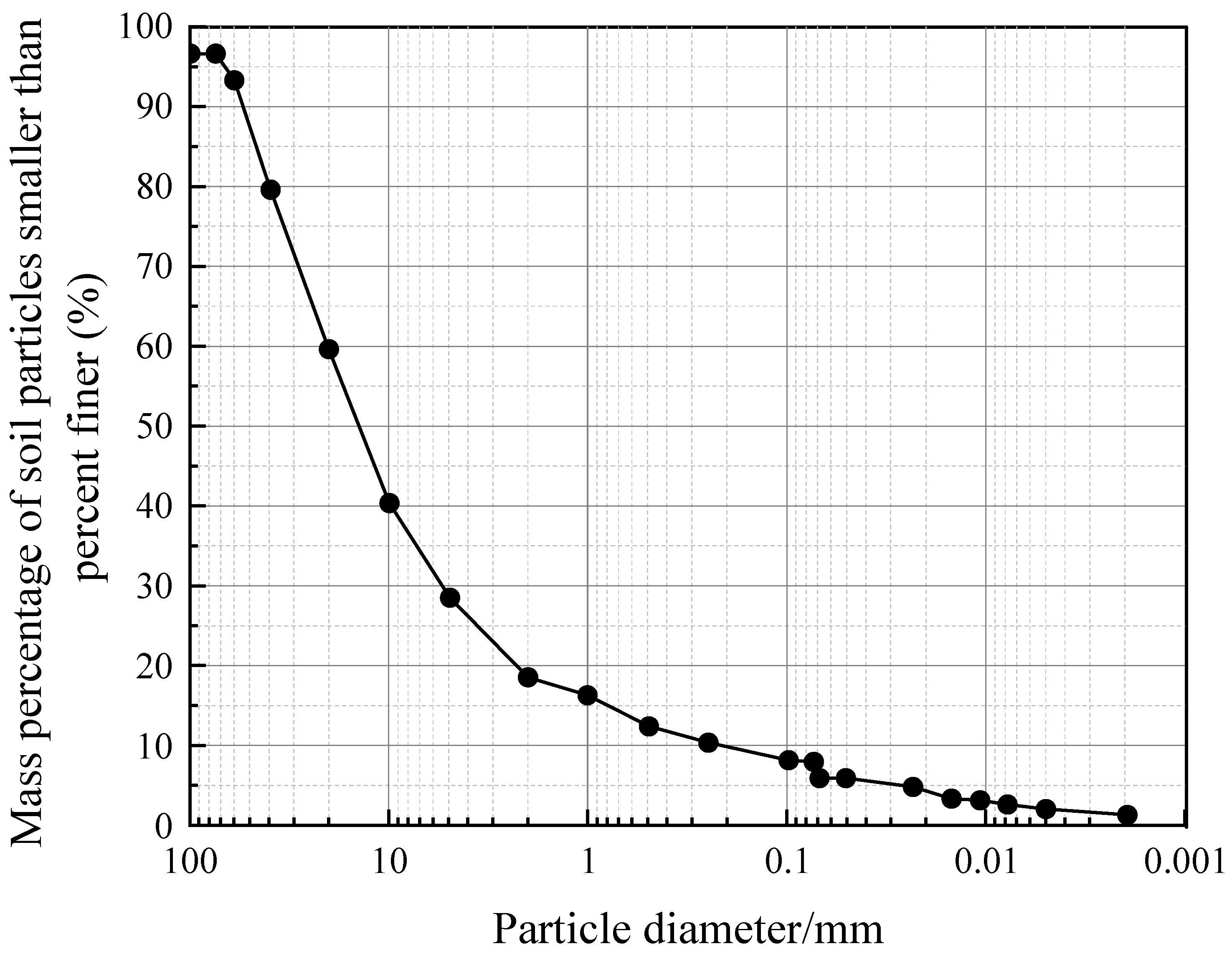
In order to determine the excavation height of the carbonaceous mudstone specimen and the basic physical properties of the carbonaceous mudstone at the test site, representative rock samples were collected using soil containers during the experiment. These samples were analyzed to determine key parameters, including density and weight. Additionally, the particle size distribution of the crushed specimens was evaluated through sieve analysis and densitometer methods. The test results show that the density of the carbonaceous mudstone at this site is 2.20 g/cm3 under natural conditions and 2.40 g/cm3 under full water immersion. Figure 2 shows the grading curve of crushed carbonaceous mudstone, from which the coefficient of uniformity (Cu = 104.7) and coefficient of curvature (Cc = 8.9) of carbonaceous mudstone can be obtained. Comparing Cu and Cc with the specification requirements, it was found that Cu > 5 and Cc > 3. Therefore, the carbonaceous mudstone particles used in this experiment have poor grading and uneven particle distribution [33]. Most particles have a diameter less than 20 mm, accounting for over 60%. The physical and mechanical parameters of the test materials are shown in Table 1.
Figure 2.
Carbonaceous mudstone grading curve.
Table 1.
Basic physical property indicators of experimental materials.
3.2. In Situ Horizontal Push Shear Test
In situ horizontal push shear test is an advanced geotechnical testing method aimed at evaluating the shear strength characteristics of rock masses under field conditions. This experimental method involves applying controlled horizontal forces to prepared rock samples while monitoring the resulting displacement and failure modes. The testing device usually consists of a reaction frame, hydraulic loading system, and precision displacement sensor to ensure accurate measurement of the shear stress displacement relationship. Compared with laboratory experiments, this method provides more reliable shear strength parameters, especially for fractured or weathered rock masses, as it considers scale effects and maintains the natural structure of the rock mass. The obtained data is crucial for slope stability analysis and engineering design under challenging geological conditions.
3.3. Sample Preparation and Equipment Installation
The main equipment used in the experiment includes two jacks, several wooden blocks of different sizes, two hydraulic pumps, several large range dial indicators, several wooden and steel plates, two electric drills, a steel tape measure, and several chalk sticks.
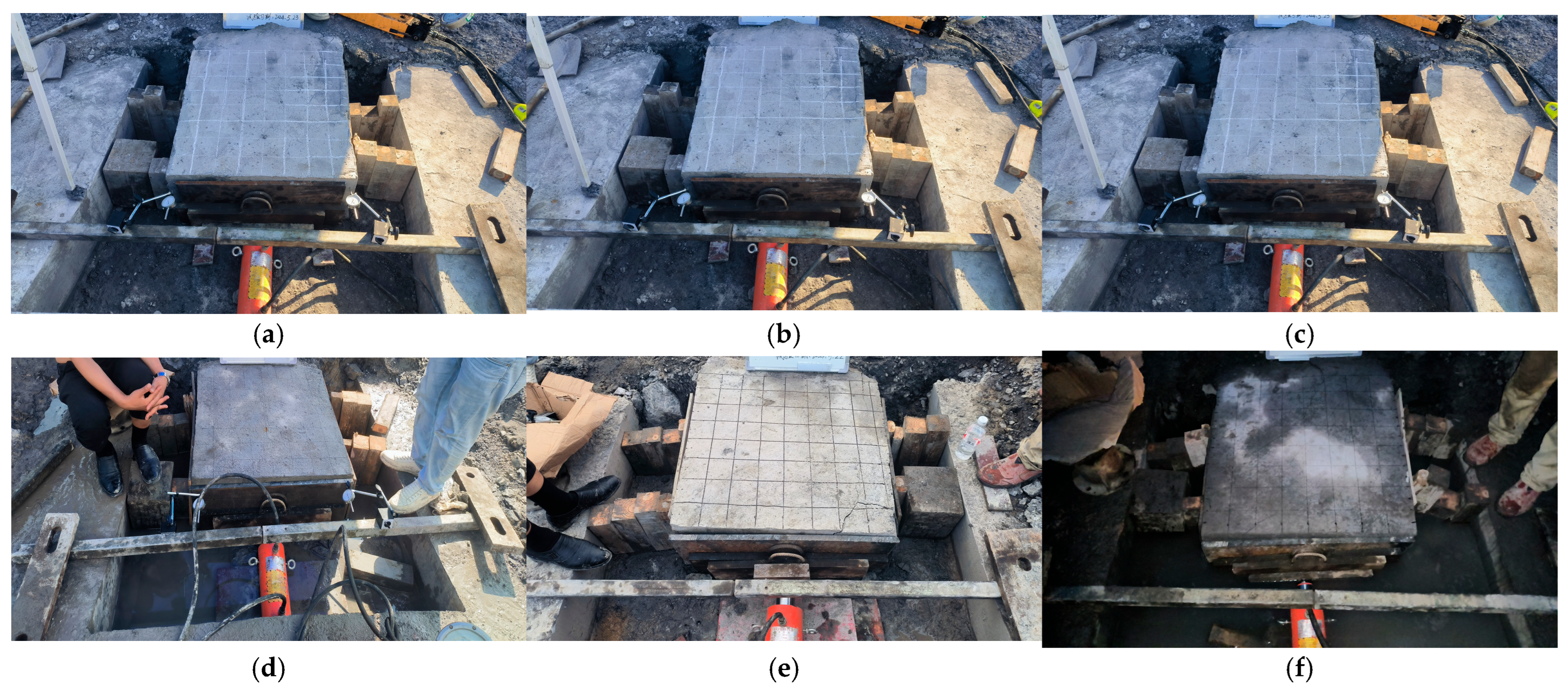
The sample preparation technique consisted of clearing the surface soil out of the test location, and then excavating 30 cm downwards to form three free faces for the sample. Subsequently, a 50 cm wide installation groove was excavated on the front of each sample to accommodate the thrust equipment. Furthermore, 25 cm wide trenches were dug out on both sides of the sample for easy observation and recording of the fracture surface. During the excavation process, carbon mudstone rock samples were collected synchronously to determine the bulk density of the carbon mudstone. Finally, electric drills and shovels were used to level the ground layer and equipment placement layer. The sample size for this test was 80 cm × 80 cm × 30 cm [34]. Samples A1, A2, and A3 were prepared in their natural state at work point A, and samples B1, B2, and B3 were soaked in water at work point B. As shown in Figure 3.
Figure 3.
Push shear test specimens under different water environments. (a) specimen A1; (b) sample A2; (c) sample A3; (d) sample B1; (e) sample B2; (f) sample B3.
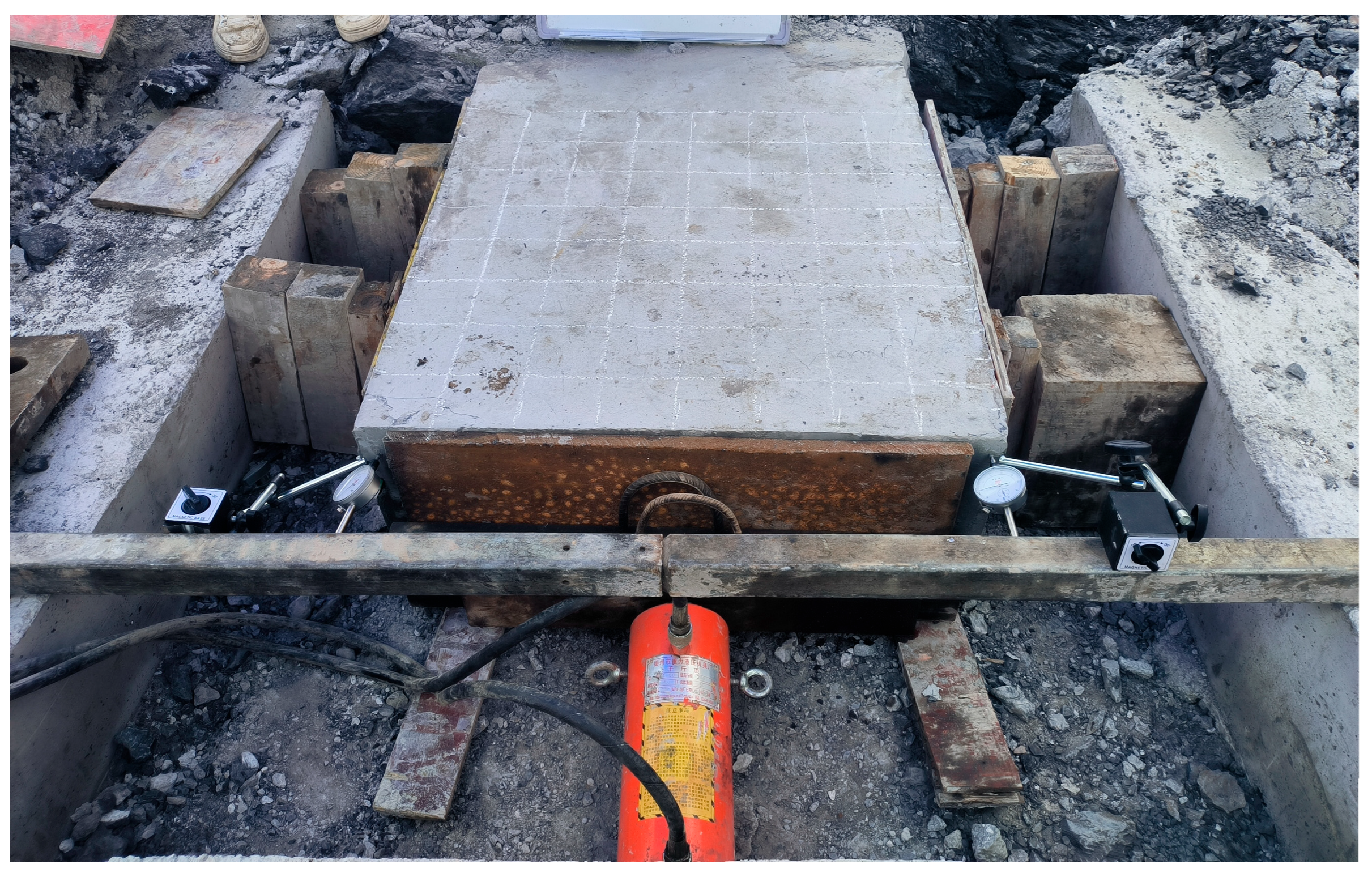
In order to observe the shear process of carbonaceous mudstone samples more accurately, 5 cm × 5 cm square grids were drawn on both sides of the sample with white chalk, and 10 cm × 10 cm square grids were drawn on the top surface with white chalk [35]. The steel plate and the jack for applying thrust were installed in the mounting groove on the front side of the specimen, and the inside of the steel plate was uniformly coated with petroleum jelly and made to adhere to the surface of the specimen, and the center of the steel plate was kept in the same point at 1/3 of the height and 1/2 of the width of the steel plate with the center of the jack, and it was ensured that the steel plate and the jack were tightly fitted to each other. At the same time the dial indicators and oil pressure gauge were installed, the dial indicators in the steel mat plate were installed on both sides of the back, and its base was fixed on the square steel; square steel ends were placed in the test pit without test effects on both ends. The steel pads and wooden force transfer blocks were installed on the side of the specimen in turn to form lateral restraints to prevent lateral displacement during the test. The assembly effect is shown in Figure 4.
Figure 4.
Test assembly diagram.
3.4. Test Procedure
After completing the installation of the equipment, the jack was used to slowly apply the horizontal thrust. During the application of force, the pushing frequency was controlled so that the deformation rate of the specimen is maintained at a horizontal displacement of about 12 mm per minute. Every 30 s the dial indicators and pressure gauge performed a reading, and the surface of the specimen was observed for cracks and bulging. When the pressure gauge reaches the peak value, if you continue to increase the push shear force, readings no longer increase but decline, so the peak should be immediately recorded as the maximum horizontal thrust Pmax. for judgment, and the load should be continued, so that the horizontal direction continues to deform by no less than 10 mm; the jack relief valve was adjusted when the pressure gauge readings were backed up to a certain stable value and then the thrust was reapplied when readings again reach a certain peak value, immediately recorded as the minimum horizontal thrust Pmin.
In addition, in order to ensure that group B specimens throughout the test process are always in a water-saturated state, water needed to be sprayed on the top surface of the specimen at regular intervals, so that surface floating water always exists on the specimen top surface. After the completion of the loading work, the first sequential disassembly of the test equipment is conducted to determine the size of the cracks on the surface of the specimen and the number of cracks, and then the specimen is turned over to observe the shape of the internal rupture surface and the location of the rupture surface sketches. At the same time, the height, length, width, damage to the shear surface, and the angle between the rupture surface and the horizontal plane of each block were measured and recorded in detail, and digital camera photos were used for archiving.
4. Results and Discussion
4.1. Destruction Form and Shape of Rupture Surface
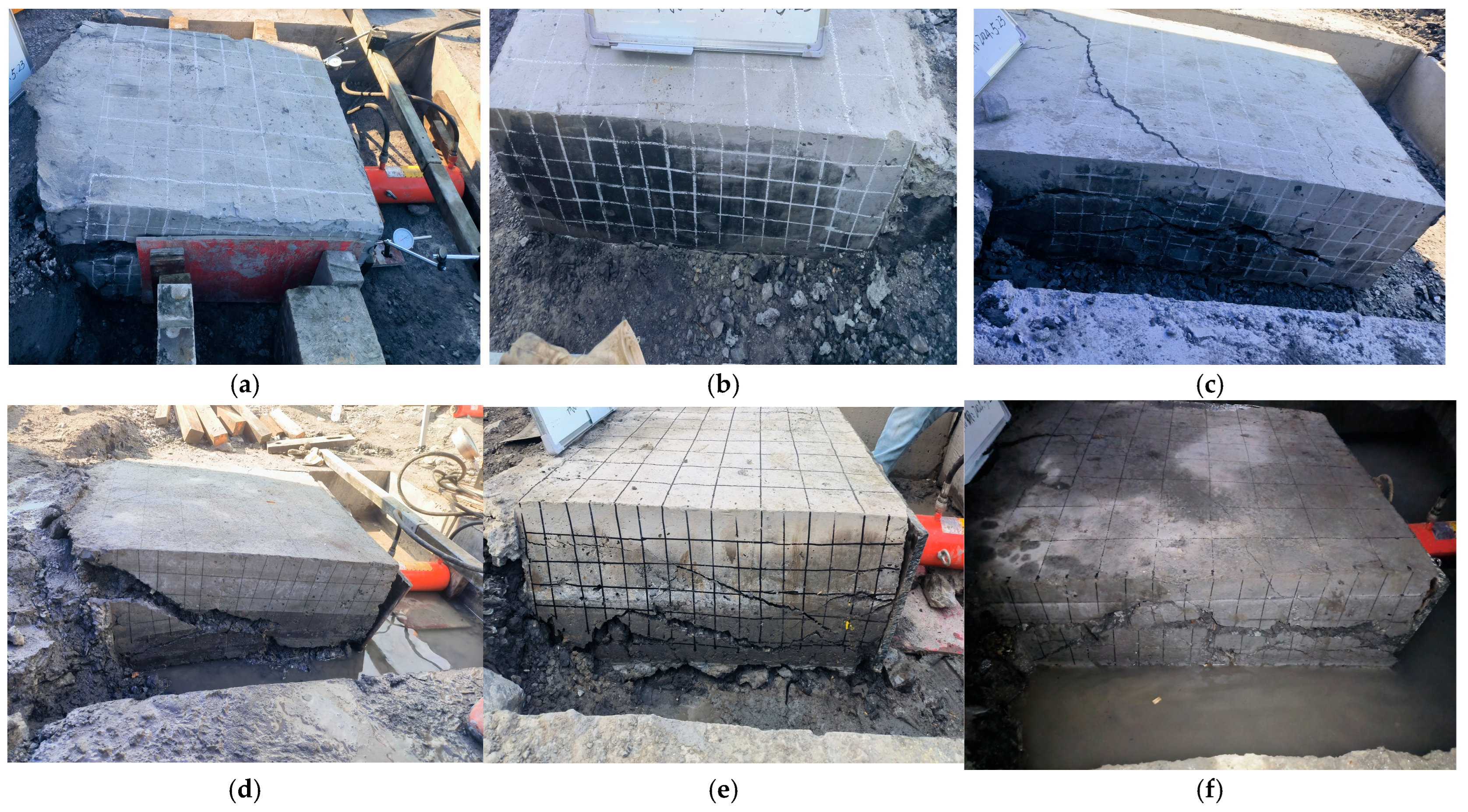
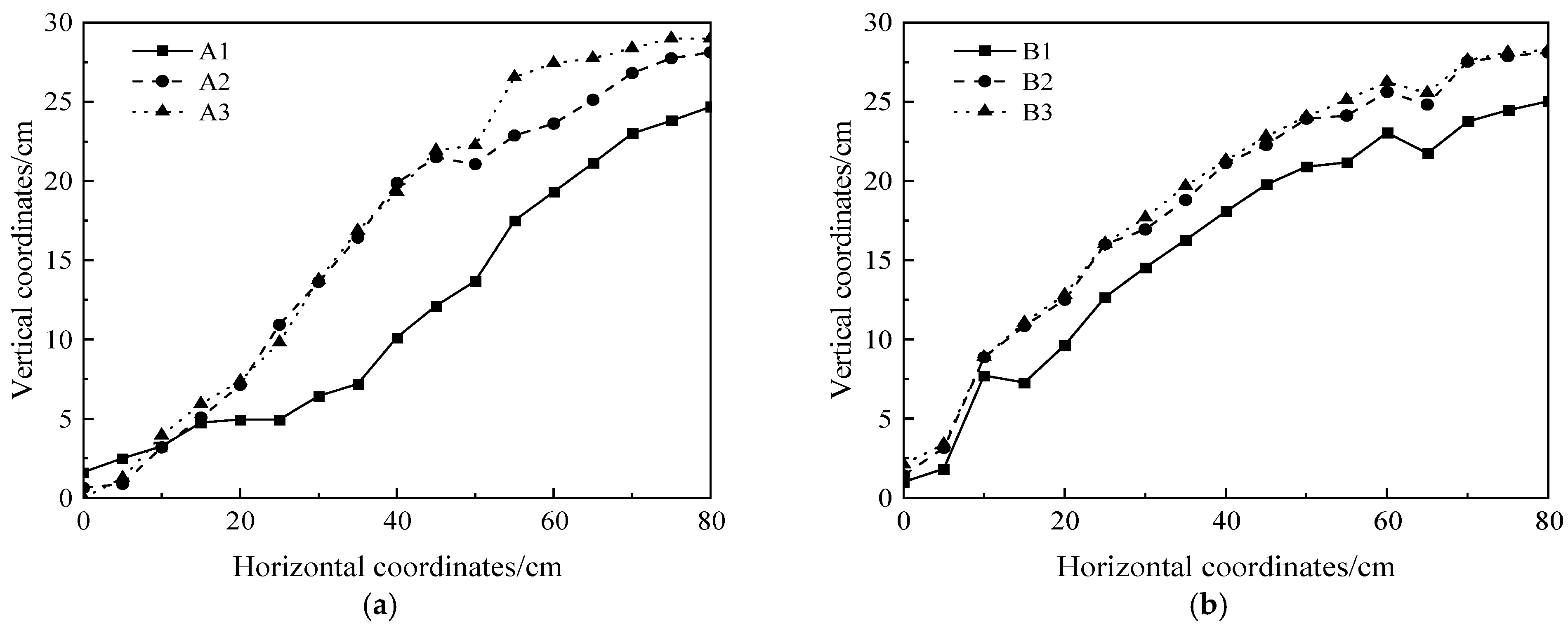
Due to the inhomogeneity of the specimen itself, it leads to the irregularity of its rupture surface. Therefore, when drawing the rupture surface and calculating the shear strength index, a single cross-section cannot be selected as the calculated damage surface of the specimen, but the average rupture surface should be selected, which is performed as follows: Firstly, in combination with the square grid drawn on the top surface, a cross-section is measured at 10 cm intervals in the direction of the width, and then the average calculation of each cross-section measured is performed to obtain the average rupture surface of each specimen, as shown in Figure 5. It can be seen from Figure 5 that in the same water environment, the three rupture surfaces of each specimen in Group A and Group B have similar rupture shapes and development processes in general. The rupture surface of Group A (under natural conditions) approximately follows an inverse S-shaped curve, with a development process of first gradual rise, then rapid rise, and finally gradual rise. Figure 5a–c shows the surface rupture of the sample in its natural state. The shape of the fracture surface of Group B (soaked in water) is generally closer to a straight line, which is significantly different from Group A. Figure 5d–f shows the surface fracture of the sample after soaking in water. This difference is mainly due to the fact that the specimens in Group B have been in the saturated water immersion environment for a longer period of time, and have a higher water content compared with Group A. When the specimens reach the saturated state, the rupture surface is more similar to a straight line. When the specimens reach the saturated state, this state will substantially inhibit the friction effect inside the carbonaceous mudstone body, and the water pressure generated in the specimens will further inhibit the interaction between the carbonaceous mudstone particles, weakening the structural properties of the carbonaceous mudstone. Therefore, under the influence of water, the fracture surfaces of the specimens in groups A and B show a large difference.
Figure 5.
Lateral fracture surfaces of push shear specimens A1 to B3. (a) specimen A1; (b) sample A2; (c) sample A3; (d) sample B1; (e) sample B2; (f) sample B3.
In addition, the trend of sample A1 in Figure 6 is consistent with the other two samples, but the curvature change in the middle section is different. This is because during the pushing and shearing process, it was influenced by larger blocks of carbonaceous mudstone stones. When the rupture surface passes over a stone, it will bypass larger stones, while smaller stones are more likely to be cut off. Therefore, in the push shear test, the presence of larger rock blocks in the sample will to some extent affect the morphology of the fracture surface.
Figure 6.
Average rupture surface of damage of specimens in Groups A and B: (a) push–shear damage surface of specimens in group A; (b) push–shear damage surface of specimens in group B.
4.2. Push–Shear Force–Push–Shear Displacement Characteristics
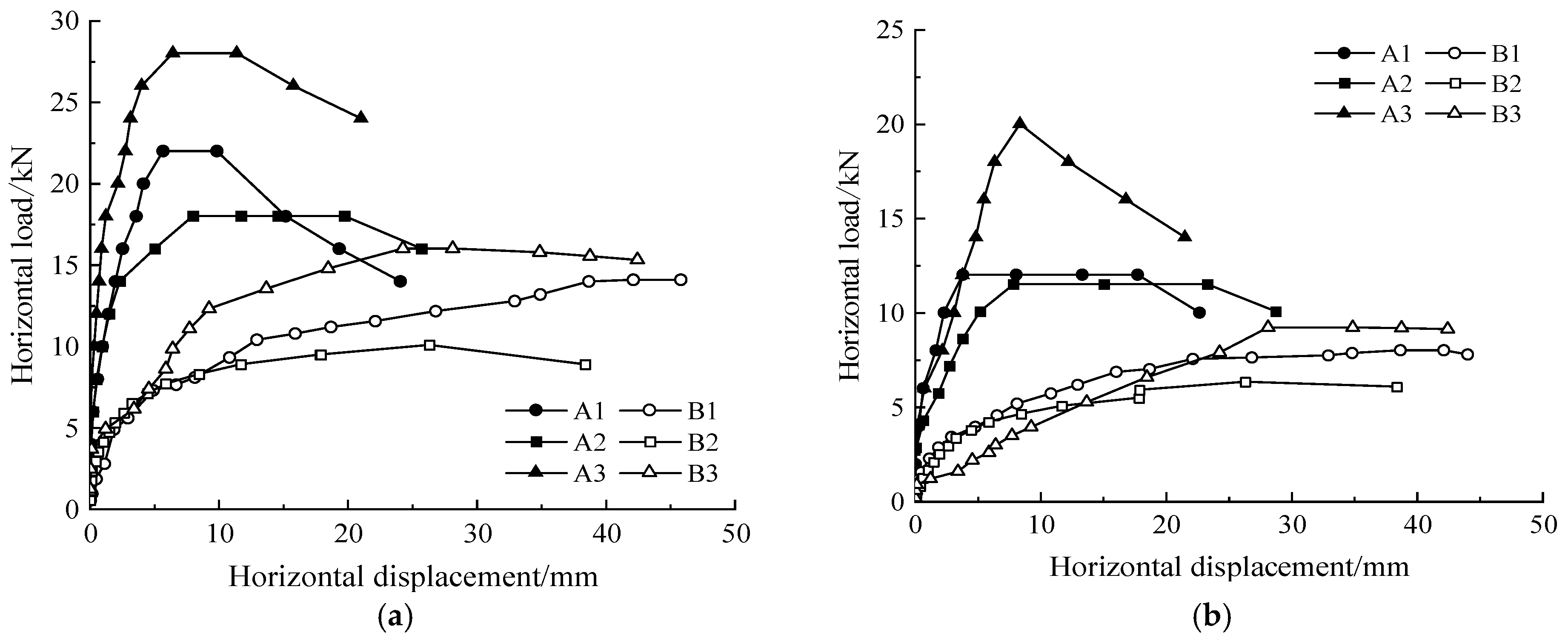
By analyzing the two loading curves (Figure 7), the shear force displacement characteristics of carbonaceous mudstone were obtained, which are manifested as follows:
Figure 7.
Push–shear force–push–shear displacement relationship curves of specimens under different water environments: (a) first loading curve; (b) second loading curve.
(1) Under natural conditions, the push–shear deformation process of carbonaceous mudstone specimens in Group A basically shows the full stress–strain curve, and the curve can be roughly divided into four stages: linear elastic deformation stage, yielding stage, strengthening stage, and local deformation stage. In the linear elastic deformation stage, the push–shear force has a higher growth rate compared with the displacement, and the change between stress and strain shows a linear relationship. After entering the yielding stage, the rate of increase of push–shear force decreases significantly, and cracks of different sizes and lengths begin to develop slowly on the specimen surface, and there are irregular curve segments on most of the curves. In the strengthening stage, the push–shear force gradually reaches the peak value, and the specimen shows a large displacement. After the destruction of the specimen after the local deformation stage, the displacement of the specimen continued to increase, while the push–shear force decreased, and the rate of decline gradually slowed down.
(2) After saturated water immersion, the push–shear deformation process of carbonaceous mudstone specimens of Group B went through elastic-plastic deformation stage and plastic deformation stage successively. After shearing, the specimen enters the elastic-plastic deformation stage, at which the shear force grows slowly, and the growth rate gradually becomes smaller, and the horizontal shear displacement also grows. For specimens in the shear after entering the plastic deformation stage, this stage of the push–shear force appears to be a small decrease.
(3) Observing and comparing the displacement relationship between the two groups A and B in Figure 7, it is found that the horizontal push–shear displacements of the specimens in Group B are increased compared with those in Group A. This is mainly due to the fact that when the carbonaceous mudstone is saturated with water, there will be pore water pressure generated in its interior. The pore water pressure is larger at the beginning of the test, but as the test proceeds, it gradually dissipates, which leads to a slow increase in the shear strength of the specimens.
4.3. Determination and Analysis of c and φ Values of Carbonaceous Mudstone
4.3.1. Determination of c and φ Values for Carbonaceous Mudstone
By analyzing the two loading curves (Figure 7), the shear force displacement characteristics of carbonaceous mudstone were obtained, which are manifested as follows:
where: Pmax is the maximum horizontal thrust (kN); Pmin is the minimum horizontal thrust (kN); B is the width of the specimen (m); Li is the line length of the ith block on the rupture surface (m); G is the total gravitational force of the sliding body (kN); αi is the angle between the rupture surface corresponding to the ith block and the horizontal plane (°); gi is the gravitational force of the ith block (kN); hi is the center line of the ith block height (m); and y is the specimen weight (kN/m3).
Combined with each group of test data, according to Figure 7, Equations (1)–(3) can be obtained for each group of specimens corresponding to the cohesive force c and the angle of internal friction φ; the final calculation results are shown in Table 2.
Table 2.
Calculation results of each specimen.
4.3.2. Analysis of c and φ Values of Carbonaceous Mudstone
By organizing and analyzing the calculation results in Table 2, the following can be obtained:
(1) The maximum horizontal thrust Pmax and minimum horizontal thrust Pmin of the carbonaceous mudstone specimens after saturated water immersion decreased significantly compared with that in the natural state, which reflected the decrease of c and φ values of the carbonaceous mudstone after saturated water immersion in a macro level: the average cohesion of Group B samples is 33% lower than that of Group A samples in their natural state, and the internal friction angle is also about 15% lower than that of Group A samples. The main reasons for this result are as follows: (1) When the carbonaceous mudstone samples are saturated with water, part of the clay minerals soften in contact with water and adsorb more water molecules, which makes the carbonaceous mudstone particles gather more water, resulting in reduced friction and cohesion. (2) The organic matter existing inside the carbonaceous mudstone is easily lost in reaction with water and oxygen under the action of microorganisms, which also weakens the original inter-particle adhesion and friction effect, making the c and φ values significantly lower.
(2) Because the push–shear direction of specimens A2 and B2 is consistent with the inclination of the rock layer, the average cohesion of these two specimens is 34% lower than that of the other specimens, and the average angle of internal friction is also lower than that of the other specimens by about 7%. Since the natural weak surface of the rock layer may have fissures or interlayer structures with weak bond, which makes the shear strength of the specimens along the inclined portion of the carbonaceous mudstone significantly lower, priority should be given to the portion along the inclined portion of the slope when reinforcing carbonaceous mudstone slopes in the actual field.
5. Stability Analysis of High Slope of Carbonaceous Mudstone Based on Numerical Simulation
5.1. Establishment of Slope Model
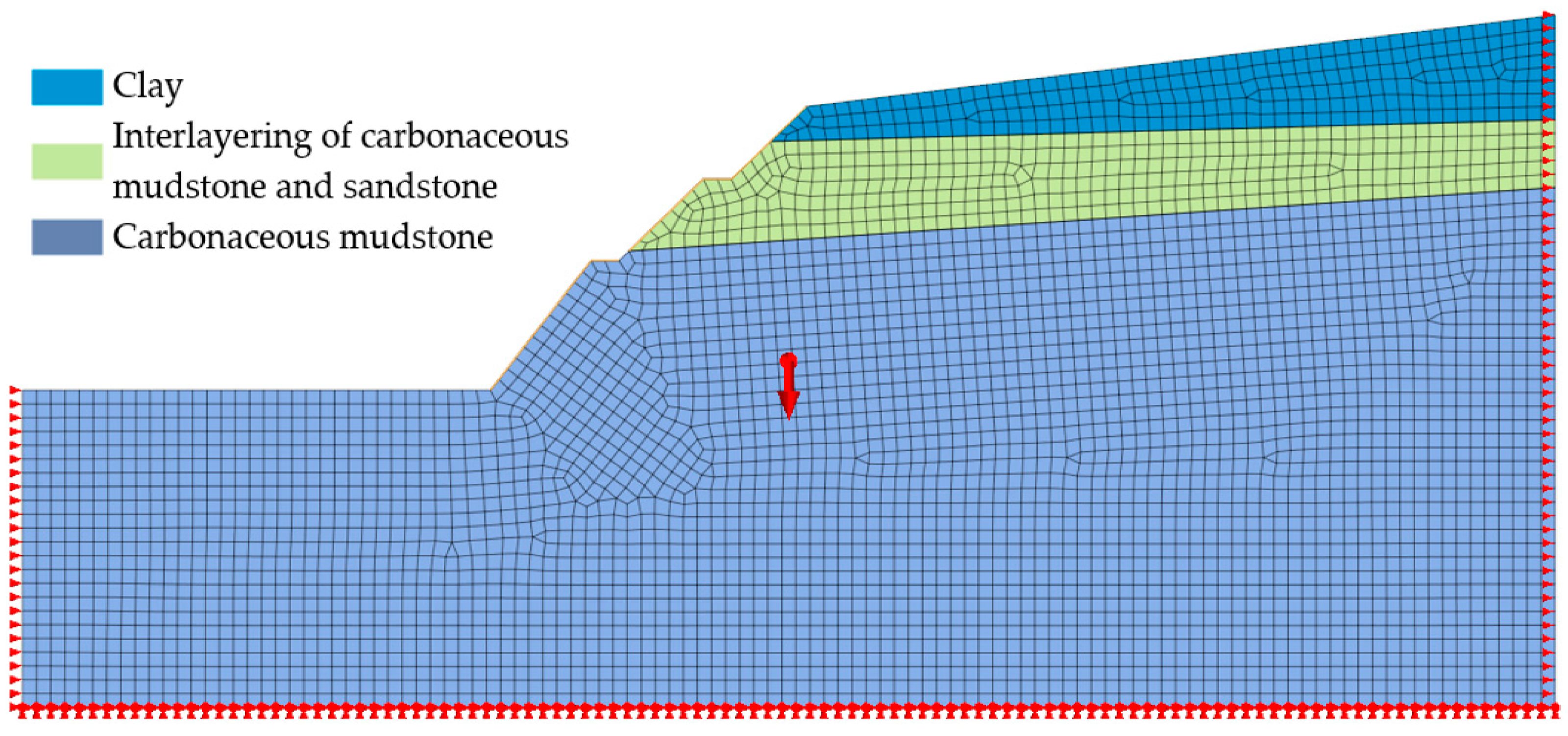
To study the stability changes of high slopes of carbonaceous mudstone before and after rainfall, numerical simulations were conducted using Midas GTS NX software. The numerical simulation of this research was completed using the commercial geotechnical engineering finite element analysis software Midas GTS NX (version number: 2023 v1.2) developed by MIDAS IT company in South Korea. Its computational core is based on standard finite element theory and has extensive engineering application verification in the field of slope stability analysis. All simulations were conducted under the default solver settings of the software, and no modifications were made to the program source code. A computational model was developed based on the profile of construction site A, as shown in Figure 8. The numerical model for roadbed excavation and cutting includes 5006 units and 5120 nodes. Under various calculation conditions, the boundary conditions for model establishment were fully constrained by the bottom. The X direction displacement is restricted on both sides, and the top is an unrestricted free boundary. The initial stress is the self weight stress vertically downward along the Z-axis.
Figure 8.
Slope Calculation Model.
5.2. Determination of Geological Material Parameters
Based on on-site engineering geological surveys and core sampling results. The high slope can be divided into three rock layers: clay layer (thickness 2–3 m), interbedded carbonaceous mudstone and sandstone (thickness 10–12 m), and carbonaceous mudstone layer (thickness 15–18 m). The mechanical parameters obtained from experiments are used as the mechanical parameters of each rock layer, as shown in the Table 3. Considering the stress–strain characteristics of carbonaceous mudstone, this model uses the Mohr Coulomb criterion as the basis for describing the mechanical behavior of slopes. The determination of key parameters is mainly obtained through in-situ shear tests and laboratory physical performance tests, especially in Section 4.3 where the cohesion and internal friction angle of carbonaceous mudstone are determined to ensure the reliability of the selected parameters.
Table 3.
Parameters of slope materials.
5.3. Stability Analysis of Slope Excavation
Based on the excavation of the BK1+020 profile of the high cut slope of carbonaceous mudstone, the strain field, displacement field, and safety factor of the slope under natural and saturated conditions were obtained through modeling analysis. Based on simulation results, the displacement variation law and strain characteristics of carbonaceous mudstone high road cut slopes after excavation were deeply studied. The specific analysis results are as follows.
5.3.1. Horizontal Displacement Analysis of Slope
Natural State
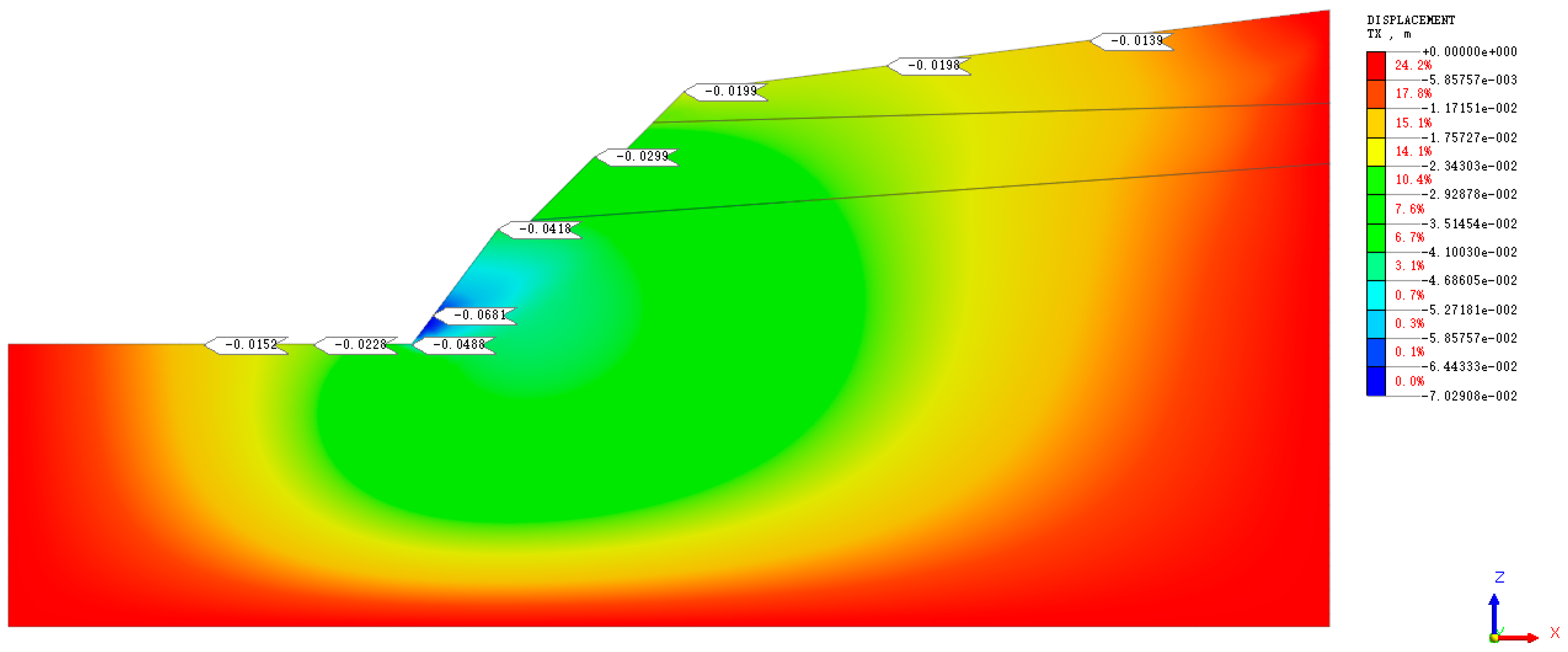
Figure 9 shows the horizontal displacement contour map of the slope in its natural state. From the horizontal displacement contour map, it can be seen that under natural working conditions, the top and foot areas of the slope exhibit the same horizontal displacement direction, moving in the negative X-axis direction (horizontally to the left). The displacement shows a clear spatial variation pattern: from the top of the slope to the foot of the slope the displacement value and its influence range gradually increase, with the maximum horizontal displacement occurring near the foot of the slope, reaching 70.3 mm. It is worth noting that the displacement influence range of other parts is relatively limited except for the foot of the slope area.
Figure 9.
Horizontal displacement contour map of the slope in the natural state after excavation of section BK1+020.
Saturated State
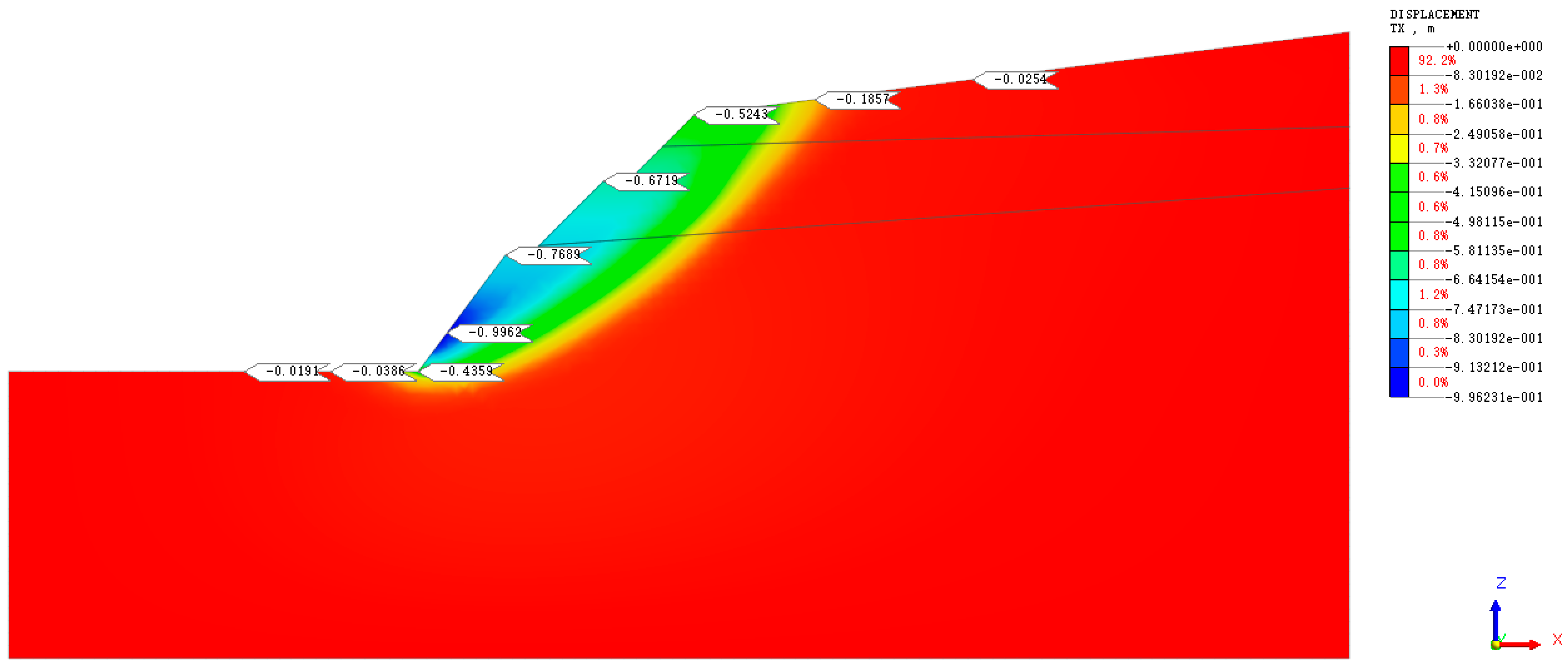
Figure 10 shows the horizontal displacement contour map of the lower slope in a saturated soaking state. From the figure, it can be seen that compared with the slope under natural conditions, the deformation range of the slope under saturated conditions is significantly expanded. From the contour map results, it can be seen that the displacement direction at the top of the slope is horizontally to the left, which is the same as the foot of the slope. The maximum horizontal displacement is mostly concentrated near the foot of the slope, where there is obvious stress concentration, mainly caused by the redistribution of stress in the internal rock mass due to the influence of rainfall. By continuously reducing the constitutive parameters of rock and soil, the displacement value of slope failure is about 996.2 mm, which indicates that after the rainstorm, the displacement of the slope under saturated conditions increased sharply, and the instability deformation scale of the middle part of the slope under the slope limit state increased, and the overall failure shape is consistent with the circular slip failure.
Figure 10.
Horizontal displacement contour map of slope under saturated water immersion conditions after excavation of section BK1+020.
5.3.2. Vertical Settlement Displacement Analysis of Slope
Natural State
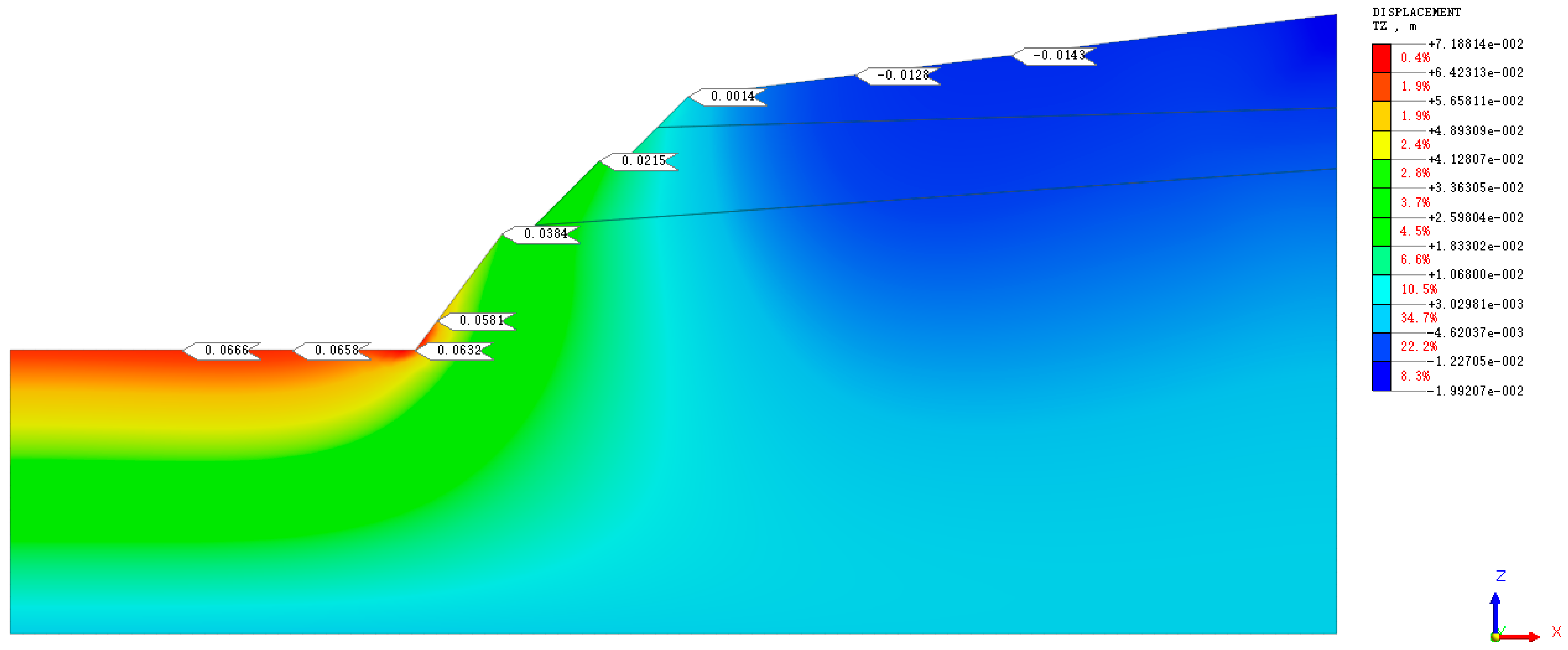
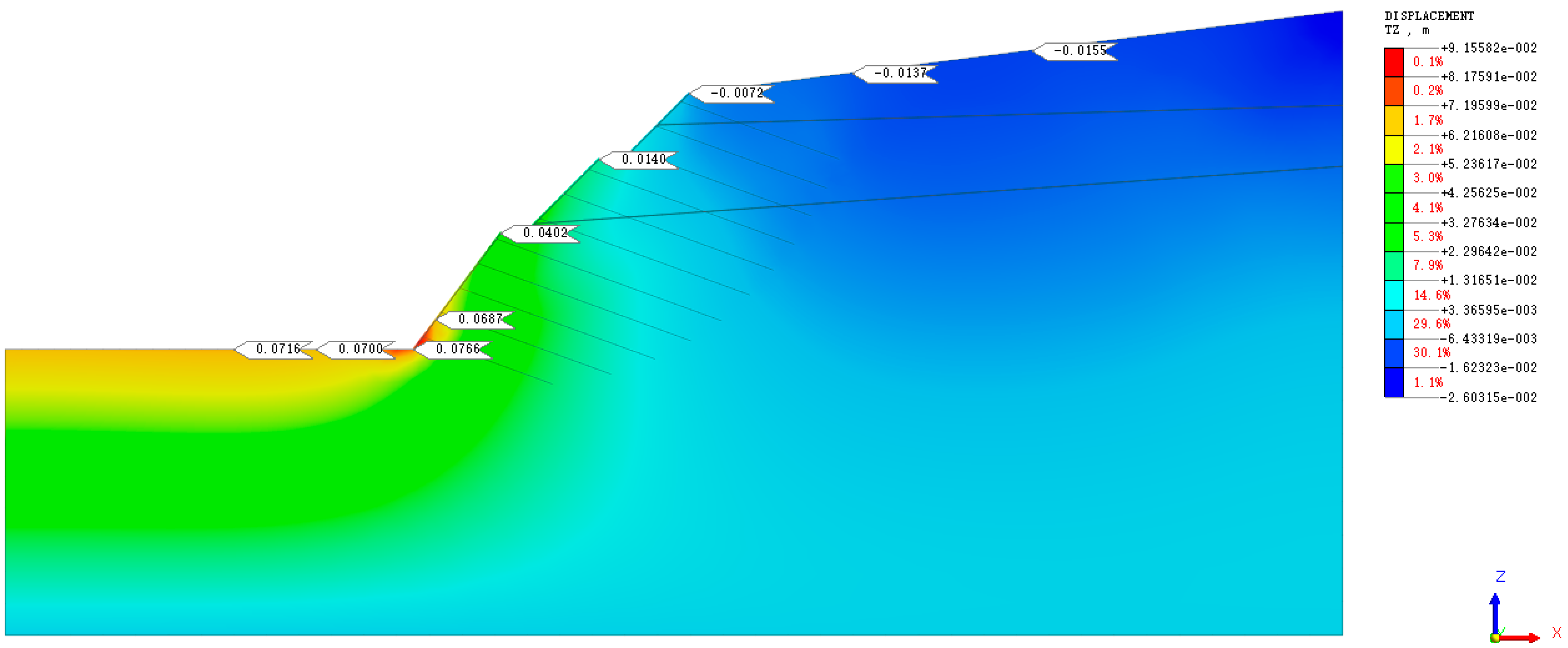
Figure 11 shows the vertical displacement contour map of the slope in its natural state. Unlike the distribution of horizontal displacement contour maps, the vertical settlement of slopes under natural conditions is mainly concentrated at the top of the slope, with a maximum settlement of 19.9 mm, in the opposite direction along the Z-axis. The main reason is settlement caused by self weight, and the soil at the top of the slope deforms downwards. The contour map shows a large-scale deformation at the foot of the slope, with a positive displacement value and a maximum uplift of 66.6 mm. This may be due to the mutual compression and restraint of the soil at the foot of the slope, causing an overall upward uplift trend.
Figure 11.
Contour map of vertical displacement of the slope in the natural state after excavation of section BK1+020.
Saturated State
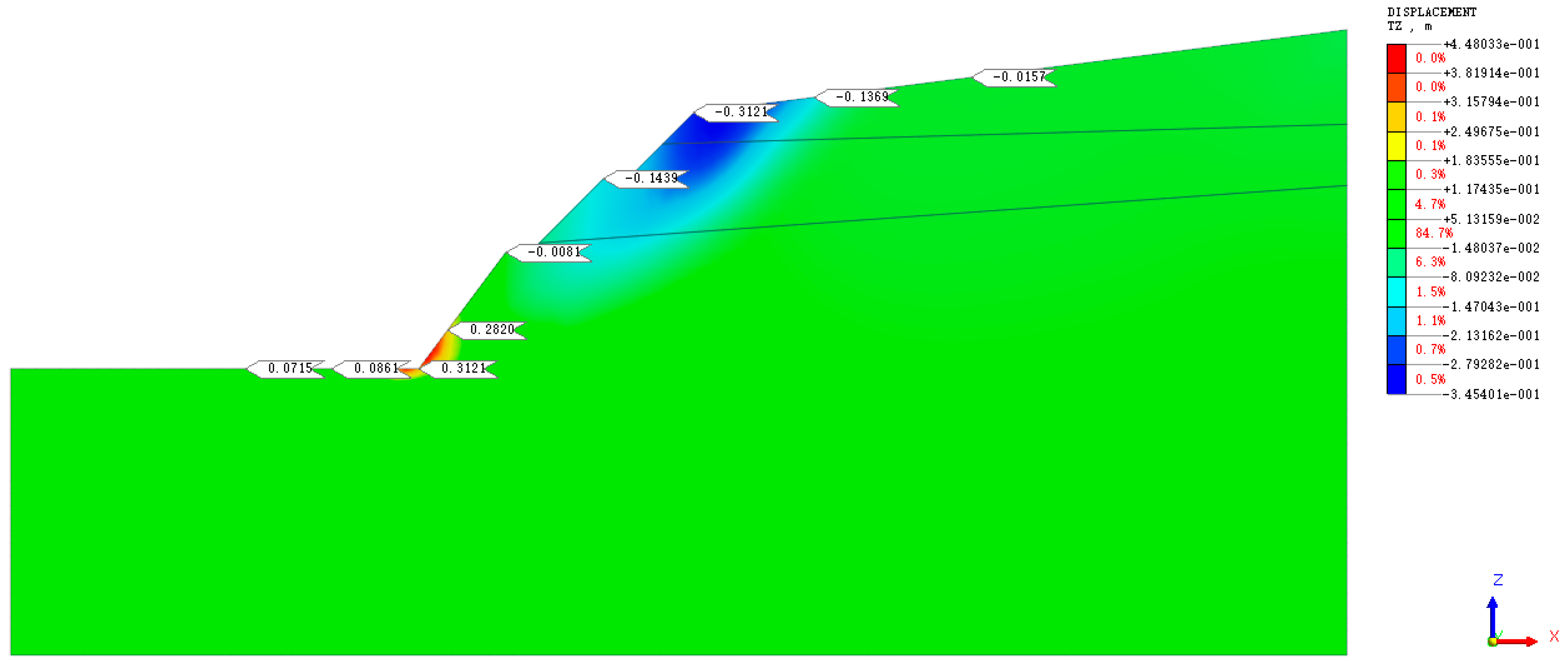
Figure 12 shows the vertical displacement contour map of the lower slope in a saturated soaking state. From the figure, it can be seen that the large-scale deformation in the vertical direction is concentrated on the inner side of the soil and gradually extends downwards, with displacement gradually decreasing downwards along the upper part of the slope. At this point, the maximum vertical displacement value along the negative direction at the top of the slope is 345.4 mm. The maximum vertical displacement value along the positive direction at the foot of the slope is 448.0 mm. This may be because the soil mass is saturated after the rainstorm, and the internal stress of the soil mass changes in varying degrees due to the influence of the seepage capacity of the upper sandy clay layer. The shear strength decreases, resulting in the reduction of the constraint on the upper soil mass. At the same time, the load brought by rainwater infiltration and the self weight of the soil increase the downward sliding force of the upper soil, causing small-scale uplift deformation near the foot of the slope.
Figure 12.
Contour map of vertical displacement of slope under saturated water immersion conditions after excavation of section BK1+020.
5.3.3. Effective Plastic Strain Analysis of Slope
Natural State
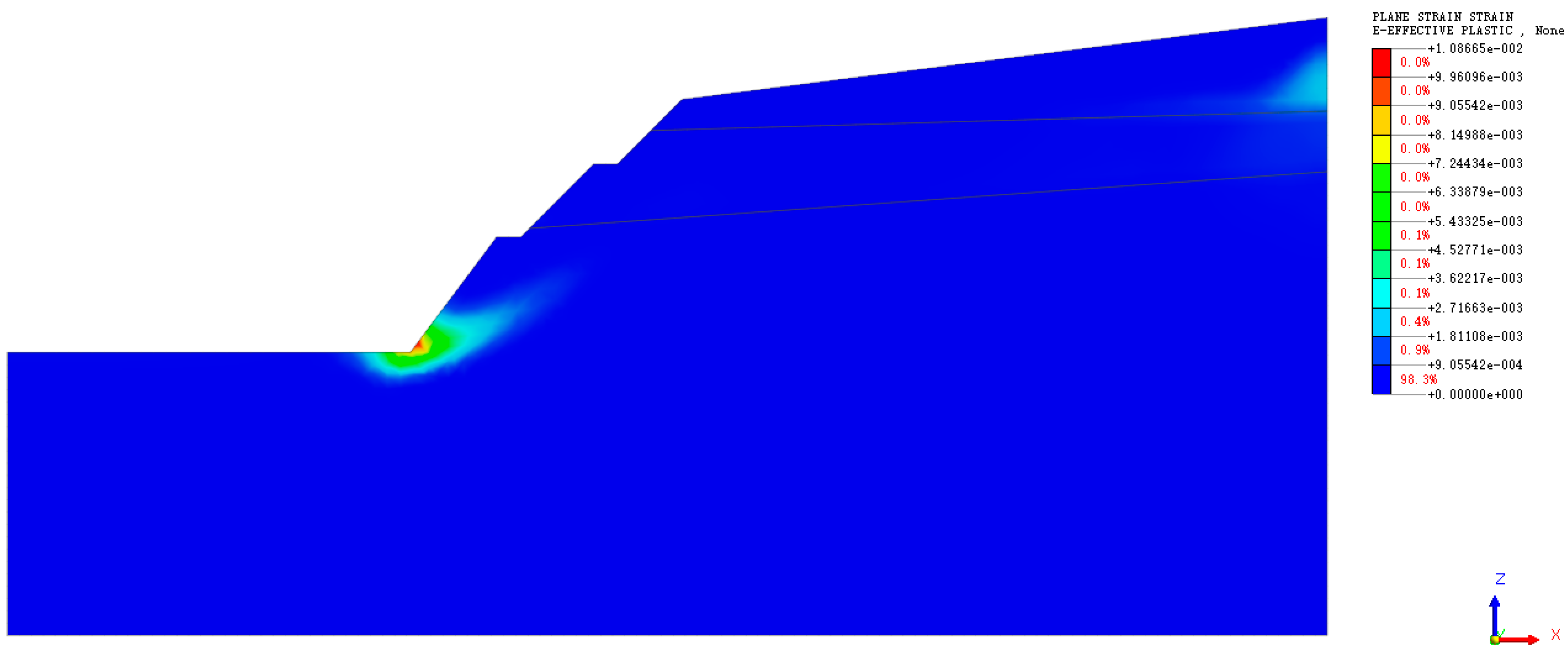
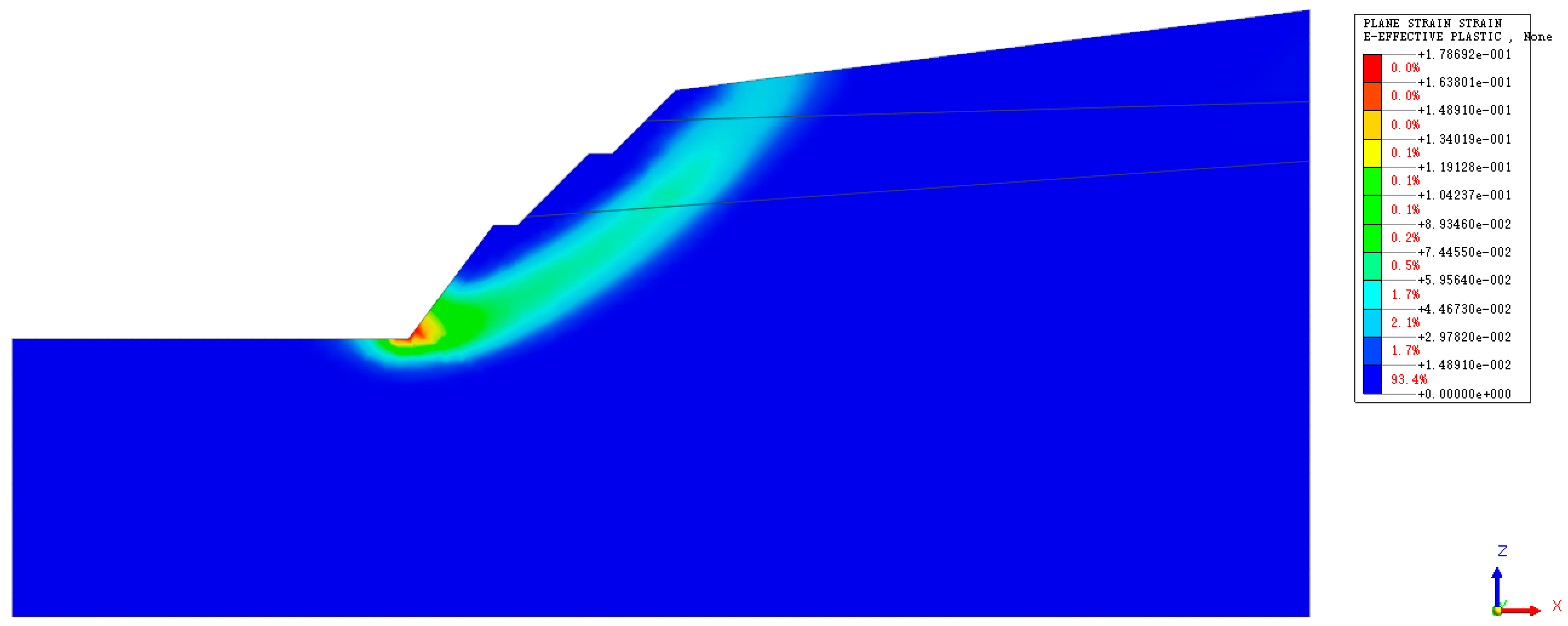
As shown in Figure 13, the plastic zone of the slope under natural working conditions is concentrated at the foot of the slope and exhibits an upward trend of arc-shaped expansion. By analyzing the color gradient changes in the plastic contour map, it can be found that the plastic deformation at the foot of the slope is most significant, but a continuous deformation zone has not yet formed. This feature indicates that in the natural state, the overall stability of the slope can be guaranteed and there will be no overall sliding failure. Therefore, the slope can maintain basic stability under natural working conditions.
Figure 13.
Plastic strain contour map of section BK1+020 in the natural state after excavation.
Saturated State
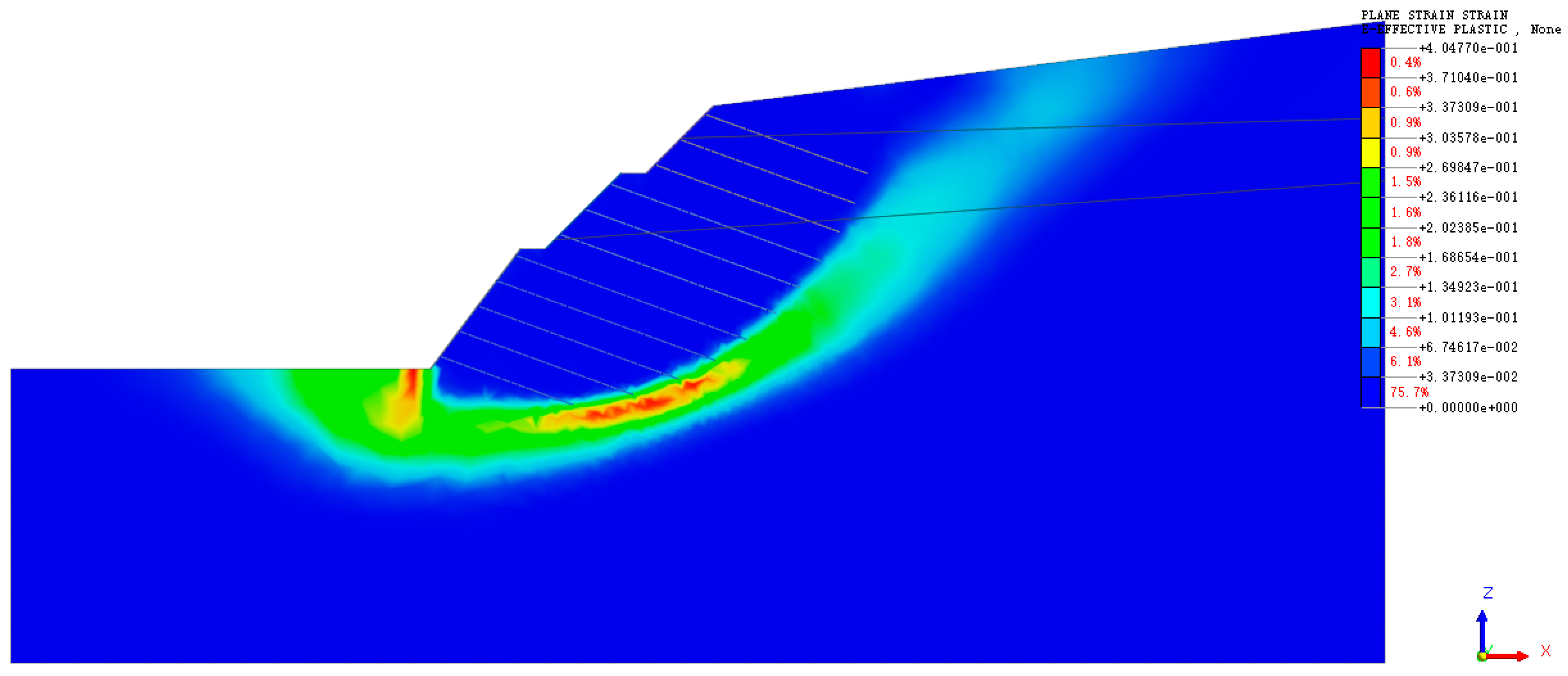
As shown in Figure 14, the potential sliding surface of the slope under saturated conditions is approximately arc-shaped, mainly distributed in the clay layer, strongly weathered mudstone layer, and moderately weathered mudstone layer, forming a composite arc-shaped sliding surface composed of three layers of rock and soil, concentrated in the middle and foot of the slope, consistent with the shape of the potential sliding surface of the slope under natural conditions. Secondly, the slope experiences shear failure, forming a situation where it runs from the foot of the slope to the top, and the range of plastic deformation also increases significantly. The shear outlet at the front edge of the slope slider is located at the foot of the slope, and there is a clear shear strain concentration zone, indicating that the instability of the slope will cause compression deformation at the foot of the slope, showing a trend of upward tilting at the foot of the slope, and finally sliding out along the front edge of the slope. From the contour map results, it can be seen that under the ultimate limit state of the slope, the obvious interface inside the slope will serve as the sliding surface for downward sliding.
Figure 14.
Plastic strain contour map of section BK1+020 under saturated water immersion conditions after excavation.
5.3.4. Stability Coefficient Analysis
The stability calculation results were compared with the safety factor values required by the standard [36], and the slope states were analyzed under natural and saturated immersion conditions. Under natural working conditions, the strength reduction method was used to numerically simulate and calculate the slope stability coefficient, which is F = 1.15 > 1.10. The slope can basically maintain stability under natural working conditions. As a comparison, the stability coefficient of the slope under saturated water immersion conditions is F = 1.03 < 1.05, and the slope of the rock mass under saturated water immersion conditions is highly prone to instability. The stability factors of slopes under different working conditions are shown in Table 4.
Table 4.
Comparison of stability factors for profile BK1+020.
Based on the three aspects of the two working conditions, the maximum horizontal displacement is mainly located at the foot of the slope, and the vertical settlement displacement direction at the top of the slope is downward, with a negative displacement value. The failure type of the slope is circular sliding failure. Compared with slopes under natural conditions, the overall shear strength of slopes under saturated conditions significantly decreases. Prolonged rainfall causes the slope, which could have remained stable under natural conditions, to become unstable. The structural planes deform along the leading edge, causing mutual compression between the soil masses, resulting in a situation where the soil mass at the foot of the slope exceeds the initial soil mass. Secondly, the stress concentration at the foot of the slope, combined with the insufficient strength of the soft rock itself, forms a circular sliding failure, which is not conducive to the stability of the slope. The changes in displacement and plastic zone contour maps mentioned above indicate that the probability of landslides occurring on slopes under saturated conditions increases, and the formation of damage can cause widespread impact. Therefore, it is necessary to take corresponding reinforcement measures to improve slope stability and reduce the risk of slope disasters.
5.4. Stability Analysis of Slope After Support
5.4.1. Selection of Support Scheme
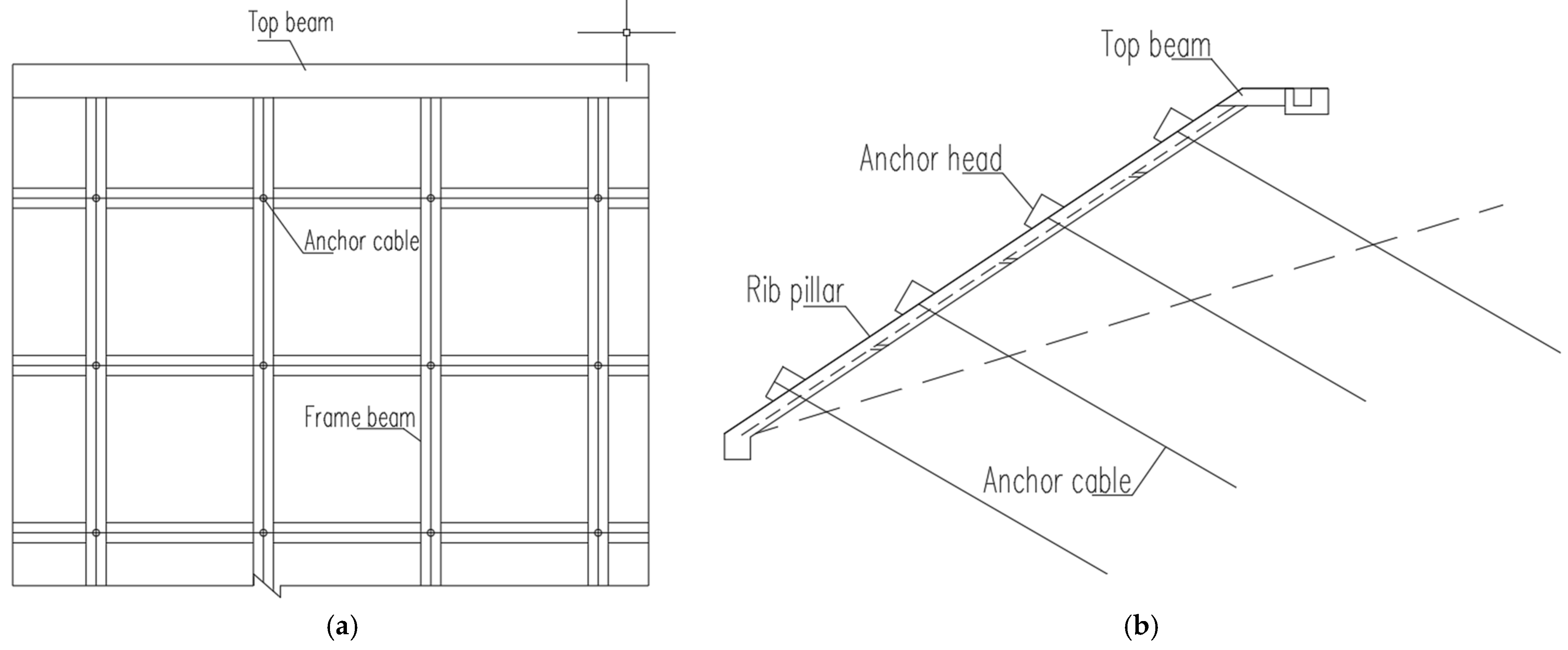
According to the design specifications, the use of anchor cables and frame beams is an effect support method for high and steep road cut slopes [37]. In response to the support requirements of high cut slopes with carbonaceous mudstone, this study selected prestressed anchor cables and frame beams as the optimal support scheme through comprehensive analysis. This support method is suitable for fractured mudstone slopes with a slope ratio ranging from 1:0.5 to 1:1.5 and can effectively address engineering issues such as rock softening and disintegration. As shown in Figure 15, the support system mainly consists of two key components: prestressed anchor cables provide deep reinforcement, while frame beams form surface protection. By combining the deep anchoring of prestressed anchor cables with the shallow constraint of frame beams, the overall stability of the slope is significantly improved.
Figure 15.
Schematic diagram of the composite overall structure of prestressed anchor cable and frame beam support: (a) anchor cable + frame beam plan; (b) anchor cable + frame beam section.
In the installation of prestressed anchor cable frame beams, the first step is to prepare the construction site, accurately locate the drilling position, and set up the drilling equipment. Subsequently, drilling operations will be carried out according to the design perspective, and grouting treatment will be carried out immediately after the completion of hole cleaning and pre installation of anchor cables. Finally, on-site pouring and curing of reinforced concrete frame beams will be carried out. In this support scheme, the cast-in-place reinforced concrete frame beam mainly undertakes the function of slope protection, while the prestressed anchor cable serves as the core load-bearing component, transmitting tension to the stable rock and soil layer while exerting a suspension effect on the unstable rock mass. During the stress process, the anchoring section forms a whole with the stable bedrock through cement mortar, and the load transmission is achieved through the bonding effect between the slurry and the surrounding rock, thereby improving the stress state of the rock and soil mass, enhancing its resistance to deformation, and effectively suppressing the development of potential sliding surfaces. And the free section is usually deployed within the potential slip zone, mainly responsible for transmitting the anchor head tension to the anchoring section. This segmented design enables the anchor cable system to fully exert its reinforcement effect, significantly improving the overall stability of the slope by coordinating the deformation behavior of the rock and soil mass.
According to the design specifications, the specific design parameters for the support are as follows: The installation angle of prestressed anchor cable is set to 20°, the vertical spacing arrangement adopts a 3 m × 3 m equidistant grid, the fixed length of the anchorage section of the anchor cable is 6 m, the free section extends 1.5 m below the potential rupture surface, the prestress is set to 200 kN, and the grouting material is M30 strength grade cement mortar. The frame beam is made of cast-in-place C30 concrete, and the cross-sectional size of the beam body is uniformly designed as 40 cm × 30 cm. The detailed technical parameters of the support structure are summarized in Table 5.
Table 5.
Parameters of prestressed anchor cable and frame beam.
The structural parameters of the support scheme are set as follows: the linear elastic constitutive relationship is used to simulate the mechanical behavior of the slope, where the free section is discretized with truss elements and prestress is applied, and the anchorage section is characterized by a combination of beam elements and interface elements. The mechanical transmission mechanism is manifested as: the free section maintains a constant axial force state, while there is a significant stress concentration phenomenon in the connection area between the anchorage section and the free section, followed by a progressive attenuation distribution characteristic. To verify the effectiveness of the support, numerical simulations were conducted on the reinforced slope in its natural state and after being soaked in water. By comparing and analyzing the changes in the displacement field and plastic zone distribution characteristics of the slope before and after support, the reinforcement efficiency of prestressed anchor cables and frame beams on high cut slopes of carbonaceous mudstone was systematically evaluated.
5.4.2. Stability Coefficient Analysis
Analyzing the changes in stability coefficient in Table 6, it can be found that the slope stability has been significantly improved after taking support measures: under natural working conditions, the stability coefficient has increased from 1.15 to 1.57, with an increase of 35.97%. Under saturated soaking conditions, the stability coefficient increased from 1.03 to 1.40, with a growth rate of 36.6%. This indicates that the stability of the slope has been significantly enhanced after support, especially by transforming the slope from extremely unstable to a safe and stable state after being soaked in water.
Table 6.
Statistical table of slope stability coefficient results before and after support under different working conditions.
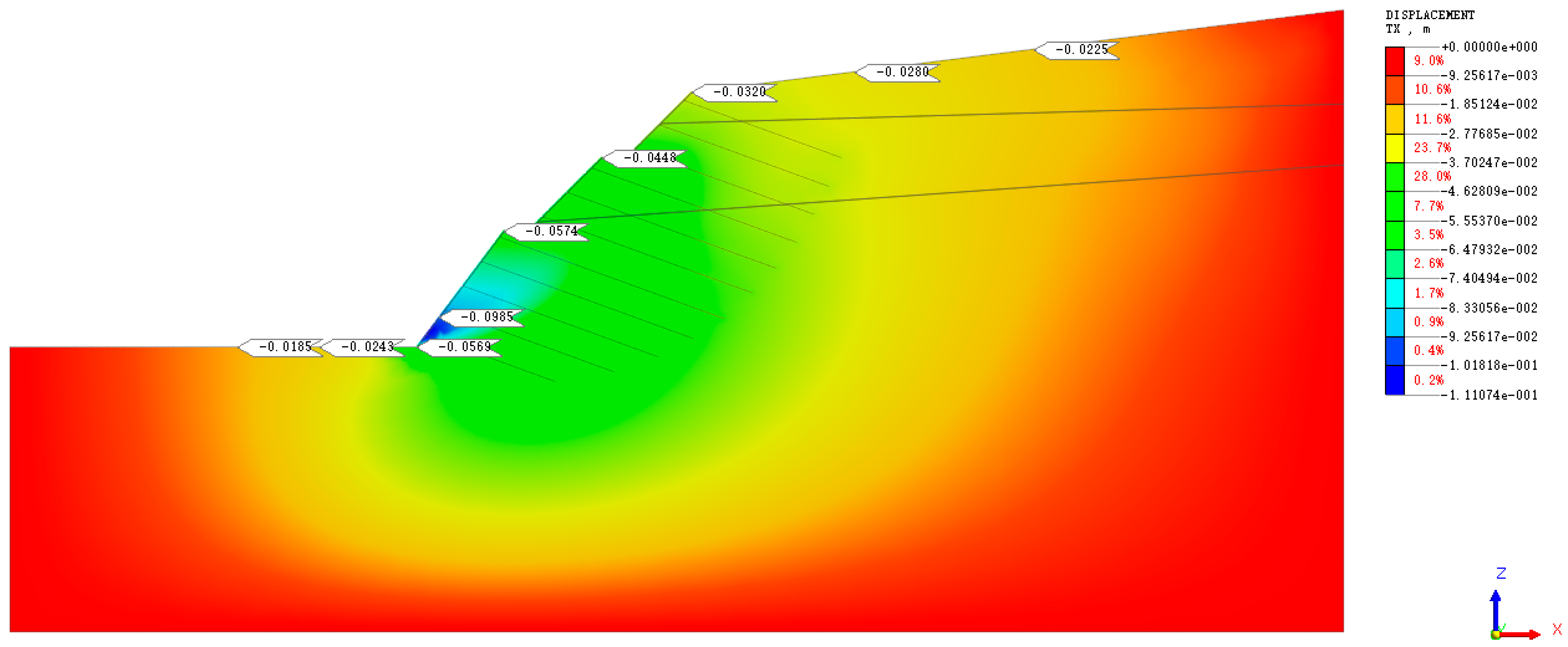
5.4.3. Horizontal Displacement Analysis of Slope
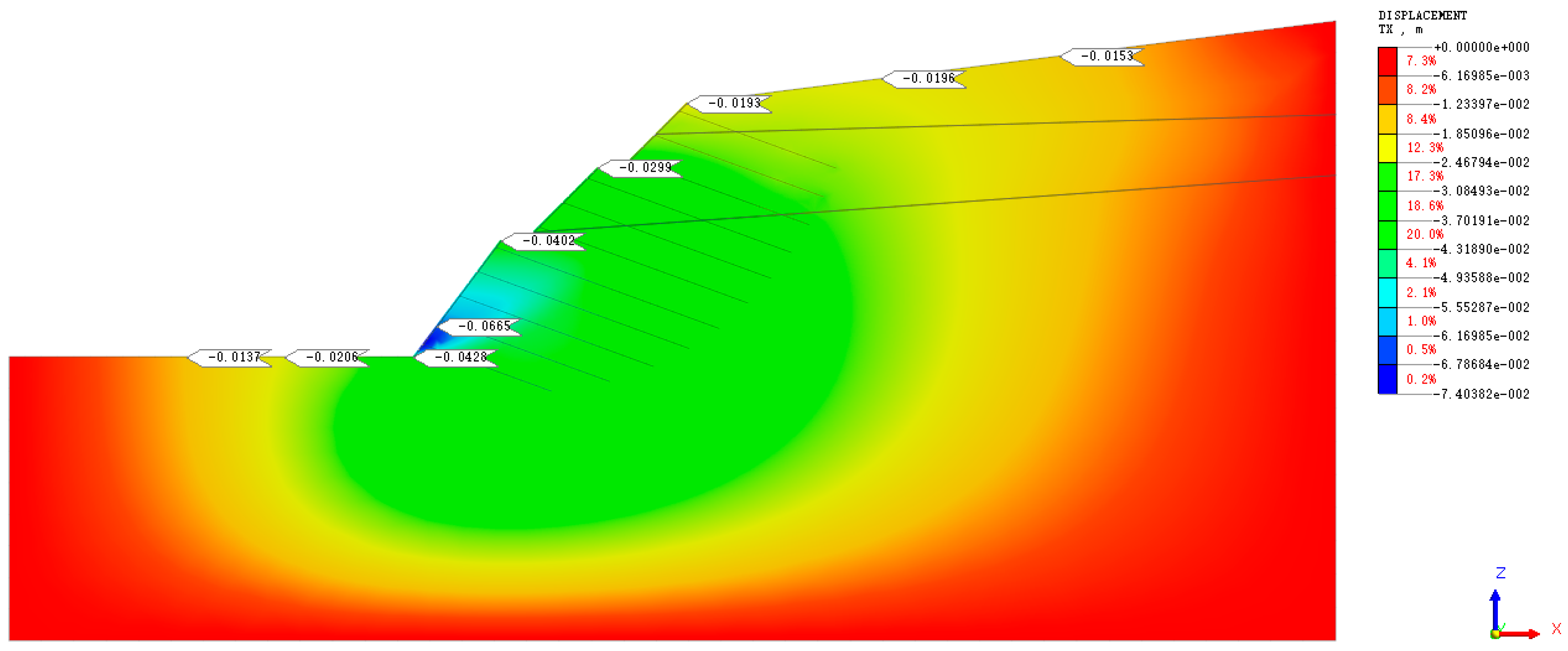
According to the data in Table 7 and the horizontal displacement contour maps in Figure 16 and Figure 17, the deformation characteristics of the slope show significant changes after the implementation of the support project: in the natural state, the maximum horizontal displacement increases slightly from 70.3 mm to 74.0 mm, an increase of 5.33%, and an increase of 3.7 mm; while under saturated conditions, the displacement value decreases significantly from 996.2 mm to 111.1 mm, a decrease of 88.85%. These data changes fully prove that the support measures have a particularly prominent effect on controlling slope deformation, especially in displacement suppression under saturated conditions. In addition, the slight increase in displacement under natural working conditions may be due to the increase in sliding force caused by the self weight of the frame beam and its vertical component of prestress, as well as the relatively limited compression effect of the horizontal component of prestress under passive earth pressure.
Table 7.
Statistics of maximum horizontal displacement of slope before and after support under different working.
Figure 16.
Horizontal displacement contour map of slope after support under natural working conditions.
Figure 17.
Horizontal displacement contour map of the slope after immersion in saturated water and support.
5.4.4. Vertical Settlement Displacement Analysis of Slope
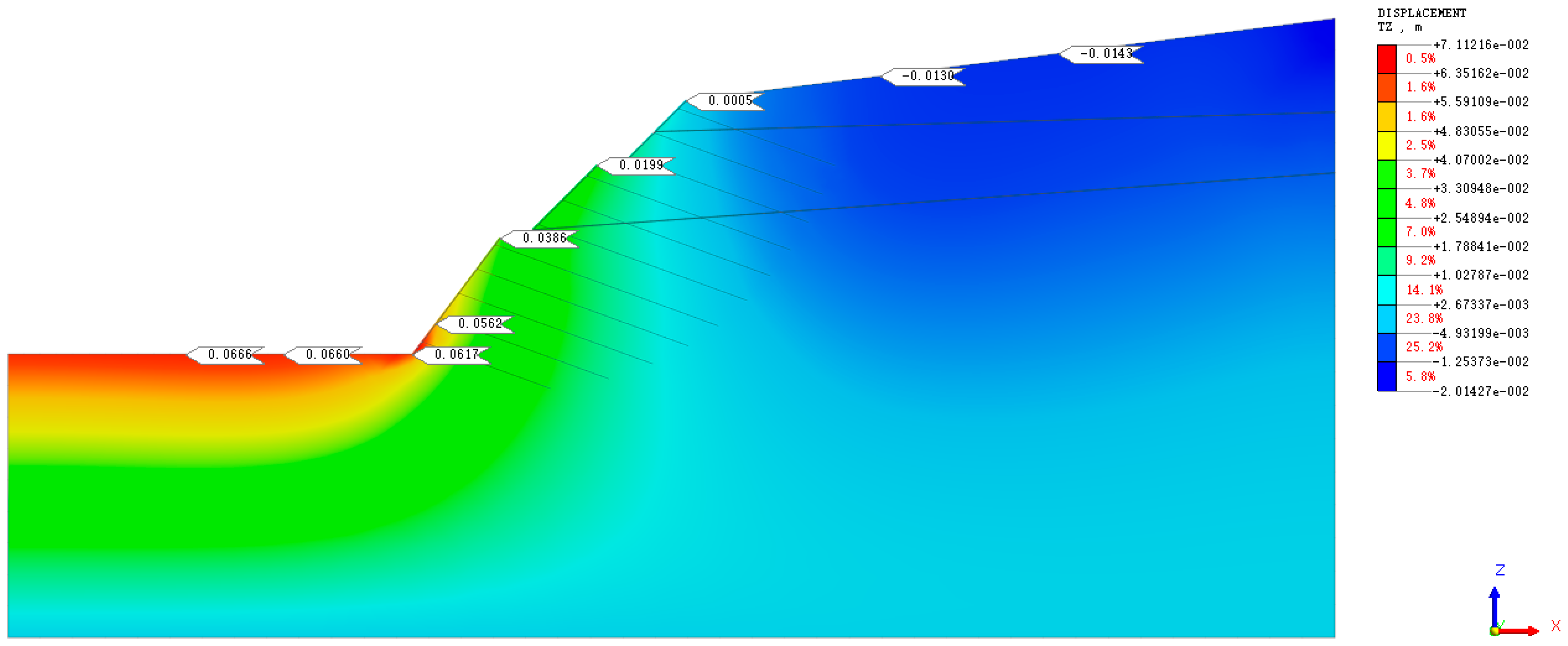
Figure 18 and Figure 19 indicate that after the implementation of support engineering, the distribution of slope displacement field undergoes significant changes. Specifically, the deformation affected area migrates towards the rear of the slope, and within the range of anchor reinforcement, the vertical displacement is effectively controlled.
Figure 18.
Contour map of vertical displacement of the slope behind the support under natural working conditions.
Figure 19.
Contour map of vertical displacement of the slope behind the support after immersion in saturated water.
Table 8 shows that the vertical settlement displacement and horizontal displacement exhibit similar evolution patterns. Specifically, under natural working conditions, the maximum vertical settlement displacement before and after support only increases by 1.01%; under saturated conditions, this indicator significantly decreased by 92.47%. This comparative result fully proves that the prestressed anchor cable + frame beam system can effectively restrain the vertical sliding of deep soil and ensure the overall stability of the slope. In addition, due to factors such as passive earth pressure, there is also a slight increase in vertical displacement under natural working conditions.
Table 8.
Statistical table of maximum vertical displacement results of slope before and after support under different working conditions.
5.4.5. Effective Plastic Strain Analysis of Slope
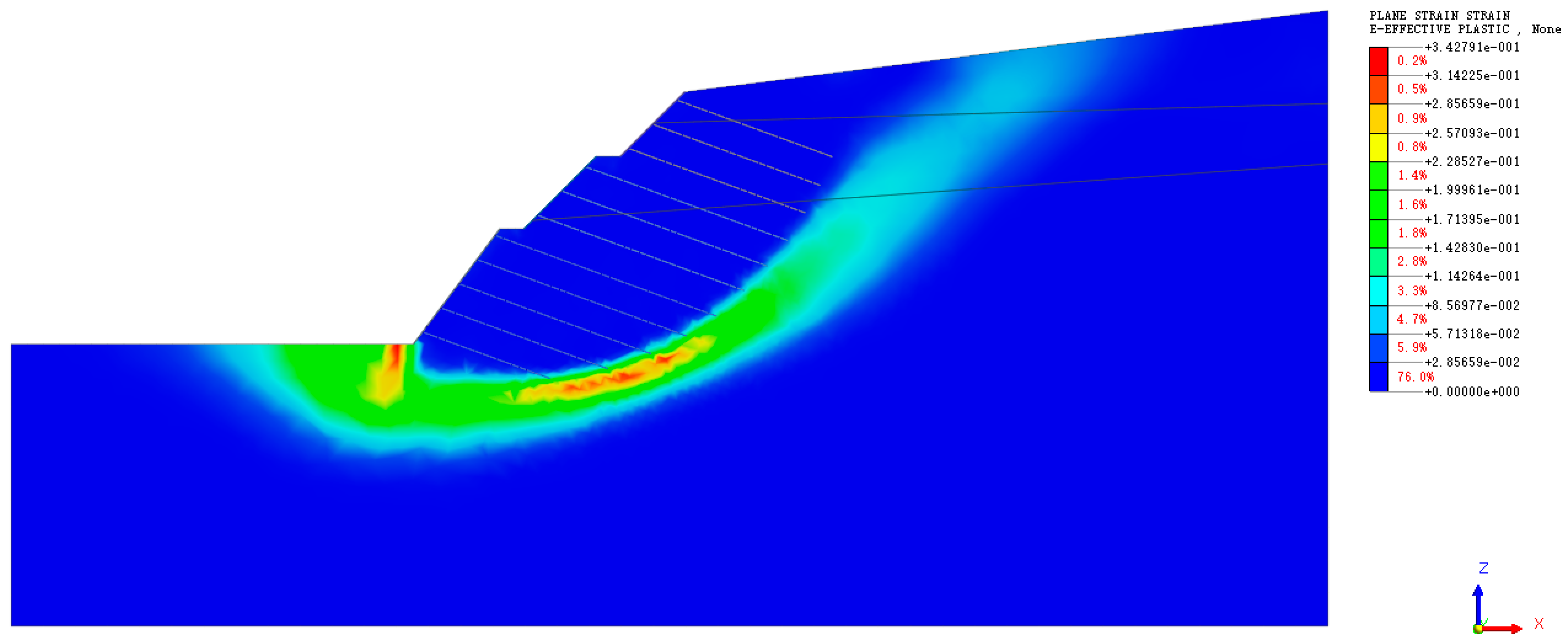
By comparing and analyzing the contour map features of Figure 20 and Figure 21, the distribution range of the plastic zone of the slope under different working conditions was obtained. The plastic zone appears below the end of the anchor cable, but compared to the unsupported state, the depth of the potential slip surface increases significantly. The reason for this phenomenon is that the prestressed anchor cable effectively connects with the stable bedrock through its anchoring section, strengthening the stability of the weak area in the upper part of the slope and promoting the transfer of potential damage to the deep soil below the reinforcement area.
Figure 20.
Plastic strain contour map of slope after support under natural working conditions.
Figure 21.
Plastic strain contour map of slope after immersion in saturated water and support.
Based on the comprehensive support effects of the two working conditions, the stability safety factor is significantly improved after support, the displacement deformation is effectively controlled, and no plastic flow occurs, indicating that the slope engineering performance has been significantly improved. This verifies the effectiveness of the anchor cable + frame beam as a support method for high cut slopes of carbonaceous mudstone.
6. Conclusions
- (1)
- The water environment has a great influence on the shape of the push–shear rupture surface of carbonaceous mudstone, and the rupture surface under the natural water content conditions approximates to an inverse S-shaped curve, while the recommended rupture surface after saturated water immersion is closer to a straight line or a circular arc.
- (2)
- The push–shear deformation of carbonaceous mudstone in the natural state shows a typical full stress–strain curve characteristic, and the whole process roughly covers four stages: linear elastic deformation, yield deformation, strengthening, and local deformation. After saturated water immersion, the deformation of carbonaceous mudstone is mainly in the elastic-plastic state, and the push–shear force grows slowly, and when the specimen is damaged, it enters into the plastic deformation stage, and at this time, the push–shear force is only slightly reduced.
- (3)
- The moisture content has a significant impact on the shear strength of carbonaceous mudstone. After soaking in saturated water, the average cohesion of carbonaceous mudstone is 33% lower than under natural conditions, and the internal friction angle is 15% lower. Therefore, after soaking in saturated water, the fracture surface, shear deformation curve, and c and φ values of carbonaceous mudstone will be greatly affected. In engineering practice, they must be fully valued and relevant waterproof and drainage measures must be taken.
- (4)
- Through numerical simulations of carbonaceous mudstone high slopes before and after rainfall, it is further confirmed that rainfall has a significant impact on the stability of slopes and requires timely maintenance and treatment.
Author Contributions
Conceptualization, R.N.; methodology, R.N.; formal analysis, H.C.; writing—original draft, J.Z.; writing—review and editing, H.C. and J.Z. All authors have read and agreed to the published version of the manuscript.
Funding
This research was supported by the National Natural Science Foundation of China (No. 52278436); Hunan Provincial Transportation Science and Technology Project (No. 202201); Hunan Provincial Transportation Science and Technology Project (No. 202219); Science and technology development project of Guizhou Road and Bridge Group Co., Ltd. (HL01-KY-01).
Institutional Review Board Statement
Not applicable.
Informed Consent Statement
Not applicable.
Data Availability Statement
The original contributions presented in this study are included in the article. Further inquiries can be directed to the corresponding author.
Conflicts of Interest
The authors declare that this study received funding from Guizhou Road and Bridge Group Co., Ltd. The funder was not involved in the study design, collection, analysis, interpretation of data, the writing of this article or the decision to submit it for publication.
References
- Zeng, L.; Lou, X.C.; Zhang, J.H.; Wu, C.; Liu, J.; Jia, C.K. Carbonaceous mudstone and lignin-derived activated carbon and its application for supercapacitor electrode. Surf. Coat. Technol. 2019, 357, 580–586. [Google Scholar] [CrossRef]
- Liu, Z.F.; He, Z.M.; Zhang, W.Z.; Luo, S.J. Laboratory test and prediction model of dynamic resilient modulus of carbonaceous mudstone coarse-grained soil. Case Stud. Constr. Mater. 2023, 18, 15. [Google Scholar] [CrossRef]
- Zeng, L.; Yu, H.C.; Liu, J.; Gao, Q.F.; Bian, H.B. Mechanical behaviour of disintegrated carbonaceous mudstone under stress and cyclic drying/wetting. Constr. Build. Mater. 2021, 282, 12. [Google Scholar] [CrossRef]
- Zeng, L.; Luo, J.T.; Liu, J.; Gao, Q.F.; Bian, H.B. Disintegration Characteristics and Mechanisms of Carbonaceous Mudstone Subjected to Load and Cyclic Drying-Wetting. J. Mater. Civ. Eng. 2021, 33, 12. [Google Scholar] [CrossRef]
- Chen, C.Y.; Fu, H.Y.; Chen, Y.Y. Disintegration behavior and its grading entropy characterization of polyurea modified graded carbonaceous mudstone under loading and drying-wetting cycles. Constr. Build. Mater. 2024, 411, 11. [Google Scholar] [CrossRef]
- Fu, H.Y.; Zha, H.Y.; Zeng, L.; Gao, Q.F. Disintegration behavior and mechanism of carbonaceous mudstone under acidic corrosion and wetting-drying cycles. Bull. Eng. Geol. Environ. 2023, 82, 18. [Google Scholar] [CrossRef]
- Li, S.N.; Huang, Z.H.; Liang, Q.; Liu, J.; Luo, S.L.; Zhou, W.Q. Evolution Mechanism of Mesocrack and Macrocrack Propagation in Carbonaceous Mudstone under the Action of Dry-Wet Cycles. Geofluids 2022, 2022, 8. [Google Scholar] [CrossRef]
- Yang, Y.L.; Zhang, T.; Liu, S.Y.; Luo, J.H. Mechanical Properties and Deterioration Mechanism of Remolded Carbonaceous Mudstone Exposed to Wetting-Drying Cycles. Rock Mech. Rock Eng. 2022, 55, 3769–3780. [Google Scholar] [CrossRef]
- Zeng, L.; Yu, H.C.; Qiu, J.; Luo, J.T.; Liu, J.; Gao, Q.F.; Zhang, H.R. Pore characteristics and microscopic damage mechanism of disintegrated carbonaceous mudstone exposed to dry-wet cycles. Constr. Build. Mater. 2024, 433, 10. [Google Scholar] [CrossRef]
- Li, S.N.; Peng, Z.; Huang, Z.H.; Liang, Q.; Liu, J.; Zhou, W.Q. Time-Dependent Deformation and Long-Term Strength of Carbonaceous Mudstone under Dry and Wet Cycles. Sustainability 2022, 14, 12044. [Google Scholar] [CrossRef]
- Yu, M.Y.; Liu, B.G.; Liu, K.Y.; Sun, J.L.; Deng, T.B.; Wang, Q. Creep behavior of carbonaceous mudstone under triaxial hydraulic coupling condition and constitutive modelling. Int. J. Rock Mech. Min. Sci. 2023, 164, 19. [Google Scholar] [CrossRef]
- Fu, H.Y.; Xue, C.W.; Wen, W.; Yang, Q.Y.; Chen, L. Research on the Road Performance of Carbonaceous Mudstone Soil-Rock Mixtures under Multifactor Influence. KSCE J. Civ. Eng. 2024, 28, 1227–1237. [Google Scholar] [CrossRef]
- Fu, Y.Y.; Liu, Z.H.; Zeng, L.; Wen, W.; Yang, Q.Y. Seepage characteristics test of carbonaceous mudstone soil-rock mixture considering rock content and rainfall infiltration angle. J. Cent. South Univ. 2023, 30, 3467–3480. [Google Scholar] [CrossRef]
- Fu, H.Y.; Yang, H.T.; Wu, H.; Zeng, L.; Wu, E.L.; Wang, Y. Study on modified pre-disintegrated carbonaceous mudstone triaxial test and binary medium model. Granul. Matter 2024, 26, 14. [Google Scholar] [CrossRef]
- Xue, F.; Hu, B.; Zhong, Z.X.; Zhang, H.J.; Li, H.Y. Study on Shear Creep Characteristics of Carbonaceous Mud Shale at Different Moisture Contents Under Temperature Cycling. Water 2025, 17, 567. [Google Scholar] [CrossRef]
- Fu, Y.Y.; Liu, Z.H.; Zeng, L.; Gao, Q.F.; Luo, J.T.; Xiao, X.H. Numerical Analysis Method That Considers Weathering and Water-Softening Effects for the Slope Stability of Carbonaceous Mudstone. Int. J. Environ. Res. Public Health 2022, 19, 14308. [Google Scholar] [CrossRef]
- McDowell, G.R.; Amon, A. The Application of Weibull Statistics to the Fracture of Soil Particles. Soils Found. 2000, 40, 133–141. [Google Scholar] [CrossRef]
- Zhang, Z.L.; Xu, W.J.; Xia, W.; Zhang, H.Y. Large-scale in-situ test for mechanical characterization of soil-rock mixture used in an embankment dam. Int. J. Rock Mech. Min. Sci. 2016, 86, 317–322. [Google Scholar] [CrossRef]
- Jin, J.W.; Jin, Q.Q.; Li, M.Y.; Liu, B.; Zhao, S.Y.; Wei, Y.Q. Analysis of Large-Scale In Situ Shear Tests of Sandy Gravel with Cobbles. Int. J. Civ. Eng. 2024, 22, 2031–2040. [Google Scholar] [CrossRef]
- Wei, H.Z.; Xu, W.J.; Wei, C.F.; Meng, Q.S. Influence of water content and shear rate on the mechanical behavior of soil-rock mixtures. Sci. China-Technol. Sci. 2018, 61, 1127–1136. [Google Scholar] [CrossRef]
- Xu, W.J.; Qiang, X.; Hu, R.L. Study on the shear strength of soil–rock mixture by large scale direct shear test. Int. J. Rock Mech. Min. Sci. 2011, 48, 1235–1247. [Google Scholar]
- Cen, D.F.; Huang, D.; Ren, F. Shear deformation and strength of the interphase between the soil-rock mixture and the benched bedrock slope surface. Acta Geotech. 2017, 12, 391–413. [Google Scholar] [CrossRef]
- Xu, W.J.; Hu, R.L.; Tan, R.J. Some geomechanical properties of soil–rock mixtures in the Hutiao Gorge area, China. Geotechnique 2007, 57, 255–264. [Google Scholar] [CrossRef]
- Gao, W.; Iqbal, J.; Hu, R.L. Investigation of geomechanical characterization and size effect of soil-rock mixture: A case study. Bull. Eng. Geol. Environ. 2021, 80, 6263–6274. [Google Scholar] [CrossRef]
- Coli, N.; Berry, P.; Boldini, D. In situ non-conventional shear tests for the mechanical characterisation of a bimrock. Int. J. Rock Mech. Min. Sci. 2011, 48, 95–102. [Google Scholar] [CrossRef]
- Jiang, J.Q.; Yang, G.L. Field tests on mechanical characteristics and strength parameters of red-sandstone. J. Cent. South Univ. Technol. 2010, 17, 381–387. [Google Scholar] [CrossRef]
- Xu, W.J.; Hu, R.L.; Zeng, R.Y. Research on horizontal push-shear in-situ test of subwater soil-rock mixture. Chin. J. Geotech. Eng. 2006, 28, 814–818. [Google Scholar]
- Wu, L.Z.; He, B.; Peng, J.B. Analysis of Rainfall-Caused Seepage into Underlying Bedrock Slope Based on Seepage Deformation Coupling. Int. J. Geomech. 2024, 24, 04024076. [Google Scholar] [CrossRef]
- Wu, L.Z.; Zhou, Y.; Sun, P.; Shi, J.S.; Liu, G.G.; Bai, L.Y. Laboratory characterization of rainfall-induced loess slope failure. Catena 2017, 150, 1–8. [Google Scholar] [CrossRef]
- Ye, X.; Zhu, H.H.; Cheng, G.; Pei, H.F.; Shi, B.; Schenato, L.; Pasuto, A. Thermo-hydro-poro-mechanical responses of a reservoir-induced landslide tracked by high-resolution fi ber optic sensing nerves. J. Rock Mech. Geotech. Eng. 2024, 16, 1018–1032. [Google Scholar] [CrossRef]
- Zhang, P.H.; Gao, N.; Yan, W.N.; Hou, J.; Liu, H.L. Strength Deterioration Pattern and Stability Evaluation of Open-Pit Mine Slopes in Cold Regions Under Freeze-Thaw Cycles. Appl. Sci. 2025, 15, 4853. [Google Scholar] [CrossRef]
- GB/T 50145-2007; Standard for Engineering Classification of Soil. Ministry of Construction of the People’s Republic of China, China Planning Press: Beijing, China, 2008; pp. 20–33.
- Xie, W.; Liu, Z.G.; Kong, Z.G.; Jing, L.; Xiao, R. A Multi-Scale Investigation of Sandy Red Clay Degradation Mechanisms During Wet-Dry Cycles and Their Implications for Slope Stability. Appl. Sci. 2025, 15, 4085. [Google Scholar] [CrossRef]
- Lin, Z. Geotechnical Engineering Test Monitoring Manual; China Construction Industry Press: Beijing, China, 2005; pp. 35–395. [Google Scholar]
- Compilation Committee of Engineering Geology Manual. Handbook of Engineering Geology; China Construction Industry Press: Beijing, China, 2018; pp. 264–275. [Google Scholar]
- SL386-2007; Design Code for Engineered Slopes in Water Resources and Hydropower Projects. The Professional Standards Compilation Group of People’s Republic of China, China Water Power Press: Beijing, China, 2007; pp. 1–73.
- GB50330-2013; Technical Specification for Building Slope Engineering. Chongqing Municipal Commission of Urban and Rural Development: Chongqing, China; China Architecture & Building Press: Beijing, China, 2013; pp. 1–91.
Disclaimer/Publisher’s Note: The statements, opinions and data contained in all publications are solely those of the individual author(s) and contributor(s) and not of MDPI and/or the editor(s). MDPI and/or the editor(s) disclaim responsibility for any injury to people or property resulting from any ideas, methods, instructions or products referred to in the content. |
© 2025 by the authors. Licensee MDPI, Basel, Switzerland. This article is an open access article distributed under the terms and conditions of the Creative Commons Attribution (CC BY) license (https://creativecommons.org/licenses/by/4.0/).