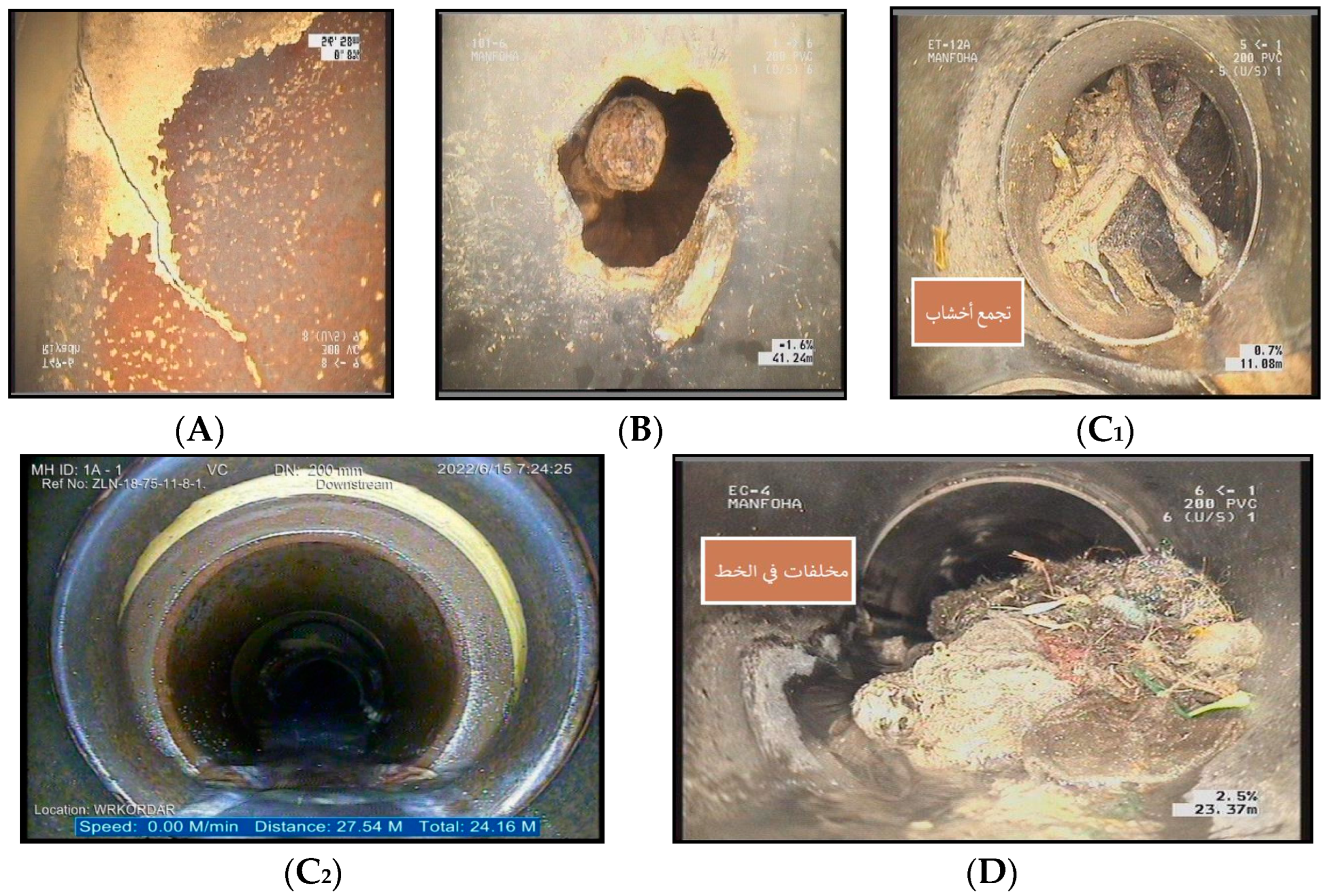
Assessment Framework for the Maintainability of Sewer Pipeline Systems




Abstract
1. Introduction
2. Literature Review
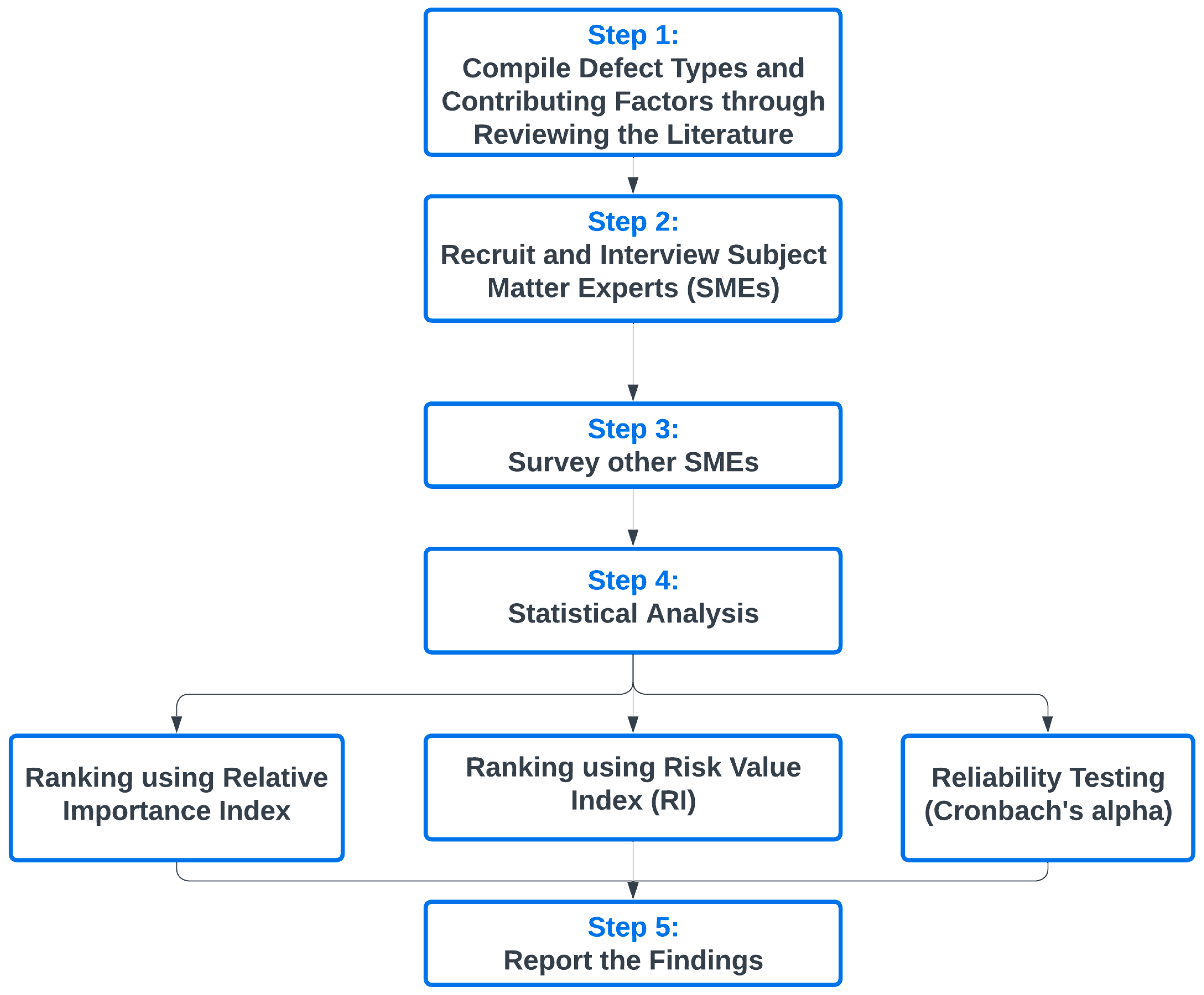
3. Research Methodology
- Q1. Are the defects and causes in this study reflective?
- Q2. What are the possible contributing factors to these defects?
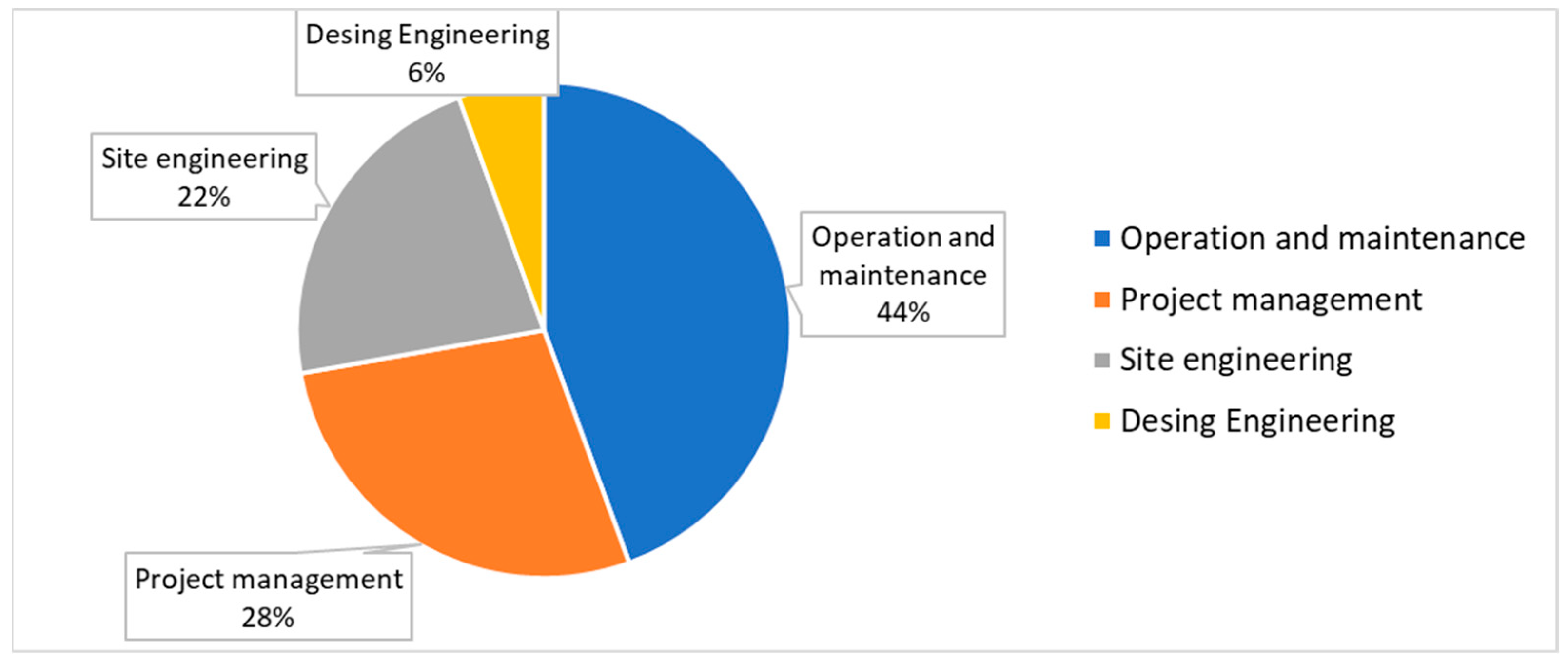
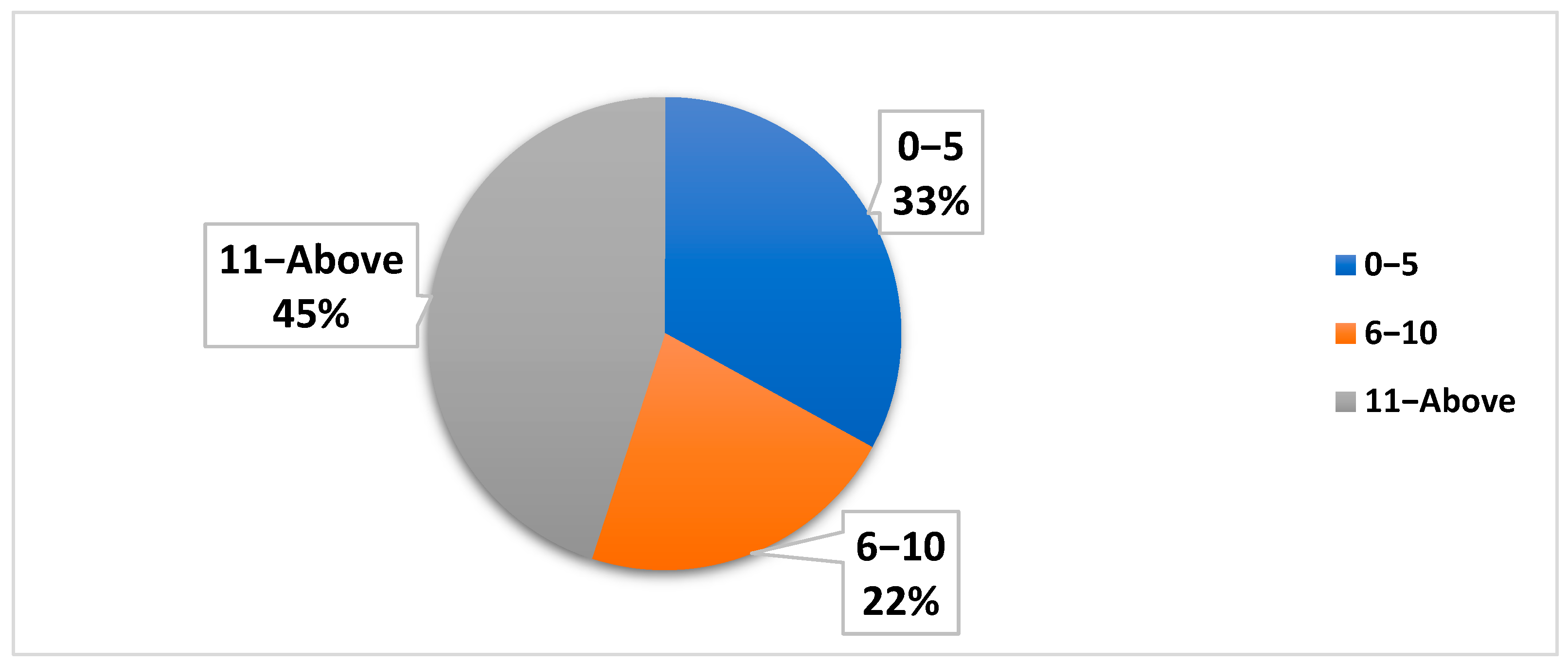
Survey Respondents’ Characteristics
4. Data Collection
5. Study Findings
5.1. The Probability of Occurrence of Defects and Their Impact
5.2. Ranking Defects via the Risk Index
5.3. Reliability and Validation
6. Discussion
7. Conclusions
Author Contributions
Funding
Institutional Review Board Statement
Informed Consent Statement
Data Availability Statement
Acknowledgments
Conflicts of Interest
References
- Majdalani, J.G. Management, Operation, and Maintenance of Wastewater Systems. Ph.D. Thesis, Lamar University-Beaumont, Beaumont, TX, USA, 2010. [Google Scholar]
- Ogidan, O.; Giacomoni, M. Sanitary Sewer Overflow Reduction Optimization Using Genetic Algorithm. In Proceedings of the World Environmental and Water Resources Congress 2015, Austin, TX, USA, 17–21 May 2015. [Google Scholar]
- Olufunso, S.; Giacomoni, M. Enhancing the performance of a multiobjective evolutionary algorithm for sanitary sewer overflow reduction. J. Water Resour. Plan. Manag. 2017, 143, 04017023. [Google Scholar]
- Olufunso, O.; Giacomoni, M.H. Application of a multiobjective genetic algorithm to reduce wet weather sanitary sewer overflows and surcharge. J. Sustain. Water Built Environ. 2017, 3, 04017008. [Google Scholar]
- Hansen, B.D.; Rasmussen, S.H.; Uggerby, M.; Moeslund, T.B.; Jensen, D.G. Comprehensive Feature Analysis for Sewer Deterioration Modeling. Water 2021, 13, 819. [Google Scholar] [CrossRef]
- Obradović, D.; Šperac, M.; Marenjak, S. Challenges in Sewer System Maintenance. Encyclopedia 2023, 3, 122–142. [Google Scholar] [CrossRef]
- Thompson, G. Review of maintainability design principles and their application to conceptual design. Proc. Inst. Mech. Eng. Part E J. Process Mech. Eng. 2004, 218, 103–113. [Google Scholar]
- Tarelko, W. Control model of maintainability level. Reliab. Eng. Syst. Saf. 1995, 47, 85–91. [Google Scholar] [CrossRef]
- Dhillon, B.S. Maintainability, Maintenance, and Reliability for Engineers, 1st ed.; CRC Press: Boca Raton, FL, USA, 2006. [Google Scholar] [CrossRef]
- Marquez, A.; Jagroop, C.; Maharaj, C. Wastewater collection system failures in a capital city: Analysis and sustainable prevention. Water Sci. Technol. 2021, 83, 1958–1972. [Google Scholar] [CrossRef] [PubMed]
- Elmasry, M.; Hawari, A.; Zayed, T. Defect based deterioration model for sewer pipelines using Bayesian belief networks. Can. J. Civ. Eng. 2017, 44, 675–690. [Google Scholar] [CrossRef]
- Noshahri, H.; Scholtenhuis, L.L.O.; Doree, A.G.; Dertien, E.C. Linking sewer condition assessment methods to asset managers’ data-needs. Autom. Constr. 2021, 131, 103878. [Google Scholar] [CrossRef]
- Ye, X.; Zuo, J.E.; Li, R.; Wang, Y.; Gan, L.; Yu, Z.; Hu, X. Diagnosis of sewer pipe defects on image recognition of multifeatures and support vector machine in a southern Chinese city. Front. Environ. Sci. Eng. 2019, 13, 17. [Google Scholar] [CrossRef]
- Balacco, G.; Iacobellis, V.; Portincasa, F.; Ragno, E.; Totaro, V.; Piccinni, A.F. Analysis of a large maintenance journal of the sewer networks of three apulian provinces in Southern Italy. Water 2020, 12, 1417. [Google Scholar] [CrossRef]
- Ana, E.V.; Bauwens, W. Modeling the structural deterioration of urban drainage pipes: The state-of-the-art in statistical methods. Urban Water J. 2010, 7, 47–59. [Google Scholar] [CrossRef]
- Chughtai, F.; Tarek, Z. Structural condition models for sewer pipeline. In Pipelines 2007: Advances and Experiences with Trenchless Pipeline Projects; The American Society of Civil Engineers (ASCE): Reston, VA, USA, 2007. [Google Scholar]
- Chughtai, F.; Tarek, Z. Sewer pipeline operational condition prediction using multiple regression. In Pipelines 2007: Advances and Experiences with Trenchless Pipeline Projects; The American Society of Civil Engineers (ASCE): Reston, VA, USA, 2007; pp. 1–11. [Google Scholar]
- McFarlane WRFPP. Wastewater Renewals Framework Gravity Pipelines; Quake Centre: Christchurch, New Zealand, 2018. [Google Scholar]
- Tizmaghz, Z.; van Zyl, J.E.; Henning, T.F.P. Consistent Classification System for Sewer Pipe Deterioration and Asset Management. J. Water Resour. Plan. Manag. 2022, 148, 04022011. [Google Scholar] [CrossRef]
- Li, Y.; Wang, H.; Dang, L.M.; Song, H.-K.; Moon, H. Vision-Based Defect Inspection and Condition Assessment for Sewer Pipes: A Comprehensive Survey. Sensors 2022, 22, 2722. [Google Scholar] [CrossRef] [PubMed]
- Angkasuwansiri, T.; Sinha, S.K. Comprehensive list of parameters affecting wastewater pipe performance. Technol. Interface Int. J. 2013, 13, 68–79. [Google Scholar]
- Kaddoura, K.; Zayed, T. An integrated assessment approach to prevent risk of sewer exfiltration. Sustain. Cities Soc. 2018, 41, 576–586. [Google Scholar] [CrossRef]
- Kleiner, Y. Scheduling inspection and renewal of large infrastructure assets. J. Infrastruct. Syst. 2001, 7, 136–143. [Google Scholar] [CrossRef]
- Montoya Montoya, A. The Influence of Different Characteristics on the Probabilities of Failure of Sewer Pipes. Master’s Thesis, Delft University of Technology, Delft, The Netherlands, 2019. [Google Scholar]
- Opila, M.C. Structural Condition Scoring of Buried Sewer Pipes for Risk-Based Decision Making. Ph.D. Thesis, University of Delaware, Newark, Delaware, 2011. [Google Scholar]
- Alkadour, F.A.A. Condition Assessment Models for Sewer Pipelines. Ph.D. Thesis, Qatar University (Qatar), Doha, Qatar, 2017. [Google Scholar]
- Baur, R.; Herz, R. Selective inspection planning with ageing forecast for sewer types. Water Sci. Technol. 2002, 46, 389–396. [Google Scholar] [CrossRef] [PubMed]
- Ribalta, M.; Mateu, C.; Bejar, R.; Rubión, E.; Echeverria, L.; Alegre, F.J.V.; Corominas, L. Sediment Level Prediction of a Combined Sewer System Using Spatial Features. Sustainability 2021, 13, 4013. [Google Scholar] [CrossRef]
- Mohandes, S.R.; Kineber, A.F.; Abdelkhalek, S.; Kaddoura, K.; Elsayed, M.; Hosseini, M.R.; Zayed, T. Evaluation of the critical factors causing sewer overflows through modeling of structural equations and system dynamics. J. Clean. Prod. 2022, 375, 134035. [Google Scholar] [CrossRef]
- Stanić, N.; Langeveld, J.G.; Clemens, F.H. HAZard and OPerability (HAZOP) analysis for identification of information requirements for sewer asset management. Struct. Infrastruct. Eng. 2014, 10, 1345–1356. [Google Scholar] [CrossRef]
- Dirksen, J.; Baars, E.J.; Langeveld, J.G.; Clemens, F.H.L.R. Settlement as a driver for sewer rehabilitation. Water Sci. Technol. 2012, 66, 1534–1539. [Google Scholar] [CrossRef] [PubMed][Green Version]
- Hluštík, P.; Zeleňáková, M. Risk Analysis of Failure in Sewer Systems in Czech Municipalities. Pol. J. Environ. Stud. 2019, 28, 4183–4190. [Google Scholar] [CrossRef]
- Daher, S. Defect-Based Condition Assessment Model and Protocol of Sewer Pipelines. Ph.D. Thesis, Concordia University, Montreal, QC, Canada, 2015. [Google Scholar]
- Alassafi, H.; Al-Gahtani, K.; Almohsen, A.; Alfalah, G. The Causal Factors of Elevator Maintenance: A Perspective from Saudi Arabia Healthcare Facility Management. Buildings 2022, 12, 532. [Google Scholar] [CrossRef]
- Das, S.; Poh, K.L.; Chew, M.Y.L. Standardizing FM knowledge acquisition when information is inadequate. Facilities 2009, 27, 315–330. [Google Scholar] [CrossRef]
- Ihsan, B.; Alshibani, A. Factors affecting operation and maintenance cost of hotels. Prop. Manag. 2018, 36, 296–313. [Google Scholar] [CrossRef]
- Salleh, R. Critical success factors of project management for Brunei construction projects: Improving project performance. Ph.D. Thesis, Queensland University of Technology, Brisbane, Australia, 2009. [Google Scholar]
- Gliem, J.A.; Gliem, R.R. Calculating, Interpreting, and Reporting Cronbach’s Alpha Reliability Coefficient for Likert-Type Scales. In Proceedings of the 2003 Midwest Research to Practice Conference in Adult, Continuing, and Community Education, Columbus, OH, USA, 8–10 October 2003; pp. 82–88. [Google Scholar]
- George, D.; Mallery, P. SPSS for Windows Step by Step: A Simple Guide and Reference 11.0 Update, 4th ed.; Allyn & Bacon: Boston, MA, USA, 2003. [Google Scholar]


| Failure | Defect Category | Defect | References | Contributing Factors |
|---|---|---|---|---|
| Pipe collapse | Structural defects | D1—the cracking and fracture of rigid pipes | [10,11,12] | Excessive loading and poor pipe bedding can cause pipe cracks and fractures; |
| Steep slopes with high velocities generate H2S gas, which accelerates abrasion and corrosion and leads to cracks. | ||||
| D2—the deformation of flexible pipes | [10,11,12,13,22] | Excessive external loadings, thermal soil loads, or other mechanical causes (for example, a point load from a boulder in the backfill or bedding, or root action). | ||
| D3—pipe breaks | [10,11,12,13,14,19] | Third-party damage (tampering and damage to sewage works by private and/or unknown persons). | ||
| D4—failing utilities | [14,20] | Failed utilities located in the vicinity of the wastewater pipeline can result in soil disturbances and possible changes in bedding configuration, ultimately leading to wastewater pipe failure. | ||
| D5—defective lining | [12,13,23] | Improper installation and material. | ||
| D6—joint defects | [10,12,13] | Weaknesses in welded joints due to the misalignment of plastic pipes or joints, especially the spigot and socket joints of rigid pipes. | ||
| Sewer system overflow (SSO) | Hydraulic defects | D7—sediment accumulation | [10,11,13,25,26,27] | Small pipe slopes that reduce flow velocity; |
| A high level of groundwater infiltrating through structural defects, carrying soil particles into the pipe. | ||||
| D8—inflow | [14,28] | Rainwater ingress through structural defects, separated joints, opened joints or manholes which increases flow during rainfall events. | ||
| D9—the dumping of fat, oil, and grease (FOG) | [10,14] | Illegal discharge from restaurants. | ||
| D10—the dumping of foreign objects (paper, rags, construction material, etc.) | [14] | Improper handling. | ||
| D11—root intrusion | [11,12,29] | The improper choice of joints; | ||
| Wrongly constructed joints; | ||||
| Structural pipe defects; | ||||
| Sewer maintenance practices (improper root removal). | ||||
| D12—the ingress of soil | [11,29] | Wrongly constructed connections/joints; | ||
| Improper bedding/foundation; | ||||
| Damage during refilling/compaction; | ||||
| Improper choices of pipe and joint type/material; | ||||
| Improper pipe positioning | ||||
| D13—infiltration due to elevated groundwater | [11,12,13,14,25,26,27,30,31] | The infiltration of a high level of groundwater, structural defects, separated joints, and opened joints or manholes. | ||
| Odor and groundwater contamination | Quality defects | D14—the production and release of H2S | [10,12,19,20,32] | The build-up of solids, poor system hydraulics, and a flat grade; |
| Flow disturbance due to a large difference in the level between the inlet pipe and the outlet pipe in the manhole; | ||||
| The exfiltration of wastewater due to defects in pipes or manholes. |
| Expert | Degree | Organization Type | Role | Years of Experience | Locations of Past and Current Employment |
|---|---|---|---|---|---|
| EX1 | Bachelor of Civil Engineering and Master of Business Administration | Governmental | Sewer network operation and senior maintenance manager | 25 | Saudi Arabia |
| EX2 | Bachelor of Mechanical Engineering | Governmental | Sewer network maintenance manager | 21 | Saudi Arabia |
| EX3 | Bachelor of Civil Engineering | Consultant | Sewer network operation specialist | 14 | Past: Egypt; Current: Saudi Arabia |
| EX4 | Bachelor of Civil Engineering | Consultant | Sewer network senior engineer | 19 | Past: Egypt and Oman; Current: Saudi Arabia |
| Defects’ Category | Defect | Defect Code | Contributing Factor | Contributing Factor Code |
|---|---|---|---|---|
| Structural defects | The cracking and fracture of rigid pipes | D1 | Excessive loading, along with poor pipe bedding and the use of inappropriate backfill soil containing stones and sharp material with no compaction, can cause pipe cracks and fractures. | C1 |
| Steep slopes with high velocities generate H2S gas, which accelerates abrasion and corrosion, leading to cracking. | C2 | |||
| The deformation of flexible pipes | D2 | Excessive external loading, thermal soil loads or other mechanical causes (for example, a point load from a boulder in the backfill or bedding, or root action). | C3 | |
| Pipe breaks | D3 | Third-party damage (tampering and damage to sewage works by private and/or unknown persons). | C4 | |
| Failing utilities | D4 | Failed utilities located in the vicinity of a wastewater pipeline can result in soil disturbances and possible changes in bedding configuration, ultimately leading to wastewater pipe failure. | C5 | |
| Defective lining | D5 | Improper installation and material. | C6 | |
| Joint defects | D6 | Weaknesses in welded joints due to the misalignment of plastic pipes or joints, especially the spigot and socket joints of rigid pipes. | C7 | |
| Hydraulic defects | Hydraulic overflow | D7 | A small pipe diameter less than the flow capacity. | C8 |
| Sediment accumulation | D8 | Small pipe slopes that reduce flow velocity. | C9 | |
| A high groundwater level infiltrating through structural defects, carrying soil particles into the pipe. | C10 | |||
| Inflow | D9 | Rainwater ingress through structural defects, separated joints, and opened joints or manholes, which increases flow during rainfall events. | C11 | |
| The dumping of fat, oil, and grease (FOG) | D10 | Illegal discharge from restaurants. | C12 | |
| The dumping of foreign objects (paper, rags, construction material, etc.) | D11 | Improper use. | C13 | |
| Root intrusion | D12 | The improper choice of joints. | C14 | |
| Wrongly constructed joints. | C15 | |||
| Structural defects in pipes. | C16 | |||
| Sewer maintenance practices (improper root removal). | C17 | |||
| Ingress of soil | D13 | Wrongly constructed connections/joints. | C18 | |
| Improper bedding/foundation. | C19 | |||
| Damaging during refilling/compaction. | C20 | |||
| Improper choices of pipe and joint type/material. | C21 | |||
| Improper pipe positioning. | C22 | |||
| Infiltration due to elevated groundwater | D14 | The infiltration of a high level of groundwater leads to structural defects, separated joints, and opened joints or manholes. | C23 | |
| Quality defects | The production and release of H2S | D15 | Solid build-up, poor system hydraulics, and flat grades. | C24 |
| Flow disturbance due to a large difference in the level between the inlet pipe and the outlet pipe in the manhole. | C25 | |||
| The exfiltration of wastewater due to defects in the pipe or manhole. | C26 | |||
| A lack of/poor preventive maintenance of the routine flushing of a sewer system. | C27 |
| Defect | Possible Solutions | Code |
|---|---|---|
| D1 | Making periodic visits to factories and ensuring compliance with specifications through necessary tests. | S1 |
| Addressing issues underneath the pipes by placing pebbles at the bottom of the pipes in layers 20 cm thick for rocky soil and 15 cm thick for normal soil. | S2 | |
| Laying a gravel layer with a thickness of up to 30 cm directly above the pipe. | S3 | |
| Laying a subgrade layer of burial soil with a thickness of up to 30 cm to avoid the effect of tamping on the pipe. | S4 | |
| D2 | Making periodic visits to factories and ensuring compliance with specifications through necessary tests. | S5 |
| Addressing issues underneath the pipes by placing pebbles at the bottom of the pipes in layers 20 cm thick for rocky soil and 15 cm thick for normal soil. | S6 | |
| Laying a gravel layer with a thickness of up to 30 cm directly above the pipe. | S7 | |
| Laying a subgrade layer of burial soil with a thickness of up to 30 cm to avoid the effect of tamping on the pipe. | S8 | |
| D3 | Protecting pipes while laying gravel and completing backfill and layering work. | S9 |
| D4 | Protecting services during implementation. | S10 |
| Relocating services away from the sewage line path according to technical specifications. | S11 | |
| Making the necessary reinforcements for all services intersecting with the sewage service. | S12 | |
| D5 | Excavating and repairing the defective parts of a pipe or a complete pipe segment as appropriate, following the standard specifications of bedding and backfilling. | S13 |
| D6 | Checking joints and welds, ensuring the straightness of the pipes utilizing thread or mirrors, and checking the integrity of the head and tail. | S14 |
| D7 | Constructing a new auxiliary line, taking the excess flow from a pipe’s capacity. | S15 |
| D8 | Considering the excessive routine flushing of parts within the preventive maintenance plan. | S16 |
| D9 | Reviewing the structures and attachment points and ensuring the integrity of the welds and cables. | S17 |
| D10 | Making oil traps for restaurants and factories and connecting the exits to an inspection room. | S18 |
| D11 | Making traps. | S19 |
| D12 | Verifying joints and reviewing the attachment and welding points. | S20 |
| Conducting periodic testing of pipes and ensuring their safety and compliance with specifications. | S21 | |
| Regular maintenance of sewers and tree removal. | S22 | |
| D13 | Excavating and repairing the defective parts of a pipe or complete pipe segments as appropriate, following the standard specifications of bedding and backfilling. | S23 |
| D14 | After implementation, ensuring that the lines are straight by using the mirror test. | S24 |
| Checking pipe alignment during implementation. | S25 | |
| D15 | The slope of the pipe must be assessed in the design stage to ensure that the speed does not exceed 1.5 m/sec. The backdrop in the manhole should be made according to the specifications so that the height does not exceed 30 cm. | S26 |
| Considering the excessive routine flushing of parts within a preventive maintenance plan. | S27 |
| Failure | Defect Category | Defect | Probability | ||||
|---|---|---|---|---|---|---|---|
| Pipe collapse | Structural defects | Code | A | N | RII | Weighted Mean % | |
| D1 | 54 | 5 | 18 | 0.6 | 5.96 | ||
| D2 | 51 | 5 | 18 | 0.567 | 5.629 | ||
| D3 | 60 | 5 | 18 | 0.667 | 6.623 | ||
| D4 | 61 | 5 | 18 | 0.678 | 6.733 | ||
| D5 | 54 | 5 | 18 | 0.6 | 5.96 | ||
| D6 | 66 | 5 | 18 | 0.733 | 7.285 | ||
| Sewer system overflow (SSO) | Hydraulic defects | D7 | 67 | 5 | 18 | 0.744 | 7.395 |
| D8 | 68 | 5 | 18 | 0.756 | 7.506 | ||
| D9 | 52 | 5 | 18 | 0.578 | 5.74 | ||
| D10 | 68 | 5 | 18 | 0.756 | 7.506 | ||
| D11 | 65 | 5 | 18 | 0.722 | 7.174 | ||
| D12 | 64 | 5 | 18 | 0.711 | 7.064 | ||
| D13 | 61 | 5 | 18 | 0.678 | 6.733 | ||
| D14 | 56 | 5 | 18 | 0.622 | 6.181 | ||
| Odor and ground water contamination | Quality defects | D15 | 59 | 5 | 18 | 0.656 | 6.512 |
| Failure | Defect Category | Defect | Parameters | Impact | ||||
| Pipe collapse | Structural defects | Code | Code | Impact | ||||
| Within the Defect | ||||||||
| RII | Weighted Mean % | Rank | RII | Weighted Mean % | ||||
| D1 | P1 | 0.7 | 26.033 | 2 | 0.672 | 6.616 | ||
| P2 | 0.778 | 28.926 | 1 | |||||
| P3 | 0.667 | 24.793 | 3 | |||||
| P4 | 0.544 | 20.248 | 4 | |||||
| D2 | P1 | 0.744 | 30.594 | 1 | 0.608 | 5.987 | ||
| P2 | 0.6 | 24.658 | 2 | |||||
| P3 | 0.567 | 23.288 | 3 | |||||
| P4 | 0.522 | 21.461 | 4 | |||||
| D3 | P1 | 0.8 | 28.916 | 2 | 0.692 | 6.807 | ||
| P2 | 0.811 | 29.317 | 1 | |||||
| P3 | 0.789 | 28.514 | 3 | |||||
| P4 | 0.367 | 13.253 | 4 | |||||
| D4 | P1 | 0.722 | 26.104 | 3 | 0.692 | 6.807 | ||
| P2 | 0.789 | 28.514 | 1 | |||||
| P3 | 0.778 | 28.112 | 2 | |||||
| P4 | 0.478 | 17.269 | 4 | |||||
| D5 | P1 | 0.733 | 27.615 | 1 | 0.664 | 6.534 | ||
| P2 | 0.722 | 27.197 | 2 | |||||
| P3 | 0.589 | 22.176 | 4 | |||||
| P4 | 0.611 | 23.013 | 3 | |||||
| D6 | P1 | 0.767 | 27.935 | 2 | 0.686 | 6.752 | ||
| P2 | 0.778 | 28.34 | 1 | |||||
| P3 | 0.622 | 22.672 | 3 | |||||
| P4 | 0.578 | 21.053 | 4 | |||||
| Sewer system overflow (SSO) | Hydraulic defects | D7 | P1 | 0.811 | 28.627 | 2 | 0.708 | 6.971 |
| P2 | 0.856 | 30.196 | 1 | |||||
| P3 | 0.778 | 27.451 | 3 | |||||
| P4 | 0.389 | 13.725 | 4 | |||||
| D8 | P1 | 0.778 | 28.807 | 1 | 0.675 | 6.643 | ||
| P2 | 0.756 | 27.984 | 2 | |||||
| P3 | 0.7 | 25.926 | 3 | |||||
| P4 | 0.67 | 17.284 | 4 | |||||
| D9 | P1 | 0.767 | 28.87 | 1 | 0.664 | 6.534 | ||
| P2 | 0.733 | 27.615 | 2 | |||||
| P3 | 0.7 | 26.36 | 3 | |||||
| P4 | 0.456 | 17.155 | 4 | |||||
| D10 | P1 | 0.789 | 27.843 | 2 | 0.708 | 6.971 | ||
| P2 | 0.833 | 29.412 | 1 | |||||
| P3 | 0.722 | 25.49 | 3 | |||||
| P4 | 0.489 | 17.255 | 4 | |||||
| D11 | P1 | 0.722 | 28.384 | 2 | 0.636 | 6.26 | ||
| P2 | 0.756 | 29.694 | 1 | |||||
| P3 | 0.622 | 24.454 | 3 | |||||
| P4 | 0.444 | 17.467 | 4 | |||||
| D12 | P1 | 0.7 | 26.695 | 2 | 0.656 | 6.452 | ||
| P2 | 0.722 | 27.542 | 1 | |||||
| P3 | 0.689 | 26.271 | 3 | |||||
| P4 | 0.511 | 19.492 | 4 | |||||
| D13 | P1 | 0.767 | 28.87 | 1 | 0.664 | 6.534 | ||
| P2 | 0.689 | 25.941 | 2 | |||||
| P3 | 0.689 | 25.941 | 3 | |||||
| P4 | 0.511 | 19.247 | 4 | |||||
| D14 | P1 | 0.711 | 25.6 | 2 | 0.694 | 6.834 | ||
| P2 | 0.744 | 26.8 | 1 | |||||
| P3 | 0.644 | 23.2 | 4 | |||||
| P4 | 0.678 | 24.4 | 3 | |||||
| Odor and groundwater contamination | Quality defects | D15 | P1 | 0.711 | 23.97 | 3 | 0.742 | 7.299 |
| P2 | 0.878 | 29.588 | 1 | |||||
| P3 | 0.8 | 26.966 | 2 | |||||
| P4 | 0.578 | 19.476 | 4 | |||||
| Failure | Defect Category | Defect | Probability | Impact | RI | Ranking | ||
| Pipe collapse | Structural defects | Code | ||||||
| RII | Weighted Mean % | RII | Weighted Mean % | |||||
| D1 | 0.6 | 5.96 | 0.672 | 6.616 | 0.403 | 12 | ||
| D2 | 0.567 | 5.629 | 0.608 | 5.987 | 0.345 | 15 | ||
| D3 | 0.667 | 6.623 | 0.692 | 6.807 | 0.462 | 8 | ||
| D4 | 0.678 | 6.733 | 0.692 | 6.807 | 0.469 | 6 | ||
| D5 | 0.6 | 5.96 | 0.664 | 6.534 | 0.398 | 13 | ||
| D6 | 0.733 | 7.285 | 0.686 | 6.752 | 0.503 | 4 | ||
| Sewer system overflow (SSO) | Hydraulic defects | D7 | 0.744 | 7.395 | 0.708 | 6.971 | 0.527 | 2 |
| D8 | 0.756 | 7.506 | 0.675 | 6.643 | 0.51 | 3 | ||
| D9 | 0.578 | 5.74 | 0.664 | 6.534 | 0.384 | 14 | ||
| D10 | 0.756 | 7.506 | 0.708 | 6.971 | 0.535 | 1 | ||
| D11 | 0.722 | 7.174 | 0.636 | 6.26 | 0.459 | 9 | ||
| D12 | 0.711 | 7.064 | 0.656 | 6.452 | 0.466 | 7 | ||
| D13 | 0.678 | 6.733 | 0.664 | 6.534 | 0.45 | 10 | ||
| D14 | 0.622 | 6.181 | 0.694 | 6.834 | 0.432 | 11 | ||
| Odor and groundwater contamination | Quality defects | D15 | 0.656 | 6.512 | 0.742 | 7.299 | 0.487 | 5 |
| Failure | Defect Category | Defect | Contributing Factor(s) | Parameters | Probability | Impact | RI | Ranking | |||||||||
| Pipe collapse | Structural defects | Code | Code | Impact | Code | Impact | |||||||||||
| Within the Defect | Within the Defect | ||||||||||||||||
| RII | Weighted Mean % | Rank | RII | Weighted Mean % | Rank | Mean with Associated Category % | RII | Weighted Mean % | RII | Weighted Mean % | |||||||
| D1 | C1 | 0.8 | 61.017 | 1 | P1 | 0.7 | 26.033 | 2 | 15.6 | 0.6 | 5.96 | 0.672 | 6.616 | 0.403 | 12 | ||
| P2 | 0.778 | 28.926 | 1 | ||||||||||||||
| P3 | 0.667 | 24.793 | 3 | ||||||||||||||
| P4 | 0.544 | 20.248 | 4 | ||||||||||||||
| C2 | 0.511 | 38.983 | 2 | ||||||||||||||
| D2 | C3 | 0.811 | --- | --- | P1 | 0.744 | 30.594 | 1 | 14.7 | 0.567 | 5.629 | 0.608 | 5.987 | 0.345 | 15 | ||
| P2 | 0.6 | 24.658 | 2 | ||||||||||||||
| P3 | 0.567 | 23.288 | 3 | ||||||||||||||
| P4 | 0.522 | 21.461 | 4 | ||||||||||||||
| D3 | C4 | 0.722 | --- | --- | P1 | 0.8 | 28.916 | 2 | 17.3 | 0.667 | 6.623 | 0.692 | 6.807 | 0.462 | 8 | ||
| P2 | 0.811 | 29.317 | 1 | ||||||||||||||
| P3 | 0.789 | 28.514 | 3 | ||||||||||||||
| P4 | 0.367 | 13.253 | 4 | ||||||||||||||
| D4 | C5 | 0.756 | --- | --- | P1 | 0.722 | 26.104 | 3 | 17.6 | 0.678 | 6.733 | 0.692 | 6.807 | 0.469 | 6 | ||
| P2 | 0.789 | 28.514 | 1 | ||||||||||||||
| P3 | 0.778 | 28.112 | 2 | ||||||||||||||
| P4 | 0.478 | 17.269 | 4 | ||||||||||||||
| D5 | C6 | 0.744 | --- | --- | P1 | 0.733 | 27.615 | 1 | 15.6 | 0.6 | 5.96 | 0.664 | 6.534 | 0.398 | 13 | ||
| P2 | 0.722 | 27.197 | 2 | ||||||||||||||
| P3 | 0.589 | 22.176 | 4 | ||||||||||||||
| P4 | 0.611 | 23.013 | 3 | ||||||||||||||
| D6 | C7 | 0.8 | --- | --- | P1 | 0.767 | 27.935 | 2 | 19.1 | 0.733 | 7.285 | 0.686 | 6.752 | 0.503 | 4 | ||
| P2 | 0.778 | 28.34 | 1 | ||||||||||||||
| P3 | 0.622 | 22.672 | 3 | ||||||||||||||
| P4 | 0.578 | 21.053 | 4 | ||||||||||||||
| Sewer system overflow (SSO) | Hydraulic defects | D7 | C8 | 0.8 | --- | --- | P1 | 0.811 | 28.627 | 2 | 13.4 | 0.744 | 7.395 | 0.708 | 6.971 | 0.527 | 2 |
| P2 | 0.856 | 30.196 | 1 | ||||||||||||||
| P3 | 0.778 | 27.451 | 3 | ||||||||||||||
| P4 | 0.389 | 13.725 | 4 | ||||||||||||||
| D8 | C9 | 0.811 | 54.478 | 1 | P1 | 0.778 | 28.807 | 1 | 13.6 | 0.756 | 7.506 | 0.675 | 6.643 | 0.51 | 3 | ||
| P2 | 0.756 | 27.984 | 2 | ||||||||||||||
| P3 | 0.7 | 25.926 | 3 | ||||||||||||||
| C10 | 0.678 | 45.522 | 2 | P4 | 0.67 | 17.284 | 4 | ||||||||||
| D9 | C11 | 0.744 | --- | --- | P1 | 0.767 | 28.87 | 1 | 10.4 | 0.578 | 5.74 | 0.664 | 6.534 | 0.384 | 14 | ||
| P2 | 0.733 | 27.615 | 2 | ||||||||||||||
| P3 | 0.7 | 26.36 | 3 | ||||||||||||||
| P4 | 0.456 | 17.155 | 4 | ||||||||||||||
| D10 | C12 | 0.767 | --- | --- | P1 | 0.789 | 27.843 | 2 | 13.6 | 0.756 | 7.506 | 0.708 | 6.971 | 0.535 | 1 | ||
| P2 | 0.833 | 29.412 | 1 | ||||||||||||||
| P3 | 0.722 | 25.49 | 3 | ||||||||||||||
| P4 | 0.489 | 17.255 | 4 | ||||||||||||||
| D11 | C13 | 0.811 | --- | --- | P1 | 0.722 | 28.384 | 2 | 13 | 0.722 | 7.174 | 0.636 | 6.26 | 0.459 | 9 | ||
| P2 | 0.756 | 29.694 | 1 | ||||||||||||||
| P3 | 0.622 | 24.454 | 3 | ||||||||||||||
| P4 | 0.444 | 17.467 | 4 | ||||||||||||||
| D12 | C14 | 0.678 | 23.643 | 4 | P1 | 0.7 | 26.695 | 2 | 12.8 | 0.711 | 7.064 | 0.656 | 6.452 | 0.466 | 7 | ||
| C15 | 0.7 | 24.419 | 3 | P2 | 0.722 | 27.542 | 1 | ||||||||||
| C16 | 0.722 | 25.194 | 2 | P3 | 0.689 | 26.271 | 3 | ||||||||||
| C17 | 0.767 | 26.744 | 1 | P4 | 0.511 | 19.492 | 4 | ||||||||||
| D13 | C18 | 0.711 | 20.382 | 3 | P1 | 0.767 | 28.87 | 1 | 12.2 | 0.678 | 6.733 | 0.664 | 6.534 | 0.45 | 10 | ||
| C19 | 0.6 | 17.197 | 5 | P2 | 0.689 | 25.941 | 2 | ||||||||||
| C20 | 0.778 | 22.293 | 1 | P3 | 0.689 | 25.941 | 3 | ||||||||||
| C21 | 0.644 | 18.471 | 4 | P4 | 0.511 | 19.247 | 4 | ||||||||||
| C22 | 0.756 | 21.656 | 2 | ||||||||||||||
| D14 | C23 | 0.733 | --- | --- | P1 | 0.711 | 25.6 | 2 | 11.2 | 0.622 | 6.181 | 0.694 | 6.834 | 0.432 | 11 | ||
| P2 | 0.744 | 26.8 | 1 | ||||||||||||||
| P3 | 0.644 | 23.2 | 4 | ||||||||||||||
| P4 | 0.678 | 24.4 | 3 | ||||||||||||||
| Odor and groundwater contamination | Quality defects | D15 | C24 | 0.789 | 26.792 | 1 | P1 | 0.711 | 23.97 | 3 | --- | 0.656 | 6.512 | 0.742 | 7.299 | 0.487 | 5 |
| C25 | 0.744 | 25.283 | 2 | P2 | 0.878 | 29.588 | 1 | ||||||||||
| C26 | 0.667 | 22.642 | 4 | P3 | 0.8 | 26.966 | 2 | ||||||||||
| C27 | 0.744 | 25.283 | 3 | P4 | 0.578 | 19.476 | 4 | ||||||||||
| Defect Code | Corrected Item–Total Correlation | Cronbach’s Alpha If the Defect Was Excluded from the Survey |
|---|---|---|
| D1 | 0.66 | 0.88 |
| D2 | 0.32 | 0.89 |
| D3 | 0.75 | 0.88 |
| D4 | 0.66 | 0.88 |
| D5 | 0.41 | 0.89 |
| D6 | 0.5 | 0.89 |
| D7 | 0.74 | 0.88 |
| D8 | 0.42 | 0.89 |
| D9 | 0.69 | 0.88 |
| D10 | 0.27 | 0.9 |
| D11 | 0.38 | 0.89 |
| D12 | 0.74 | 0.88 |
| D13 | 0.7 | 0.88 |
| D14 | 0.44 | 0.89 |
| D15 | 0.75 | 0.88 |
| Average Cronbach’s alpha α | 0.89 | |
Disclaimer/Publisher’s Note: The statements, opinions and data contained in all publications are solely those of the individual author(s) and contributor(s) and not of MDPI and/or the editor(s). MDPI and/or the editor(s) disclaim responsibility for any injury to people or property resulting from any ideas, methods, instructions or products referred to in the content. |
© 2023 by the authors. Licensee MDPI, Basel, Switzerland. This article is an open access article distributed under the terms and conditions of the Creative Commons Attribution (CC BY) license (https://creativecommons.org/licenses/by/4.0/).
Share and Cite
Alqahtani, F.K.; Alsharef, A.; Hommadi, G.M.; Alammari, M.A. Assessment Framework for the Maintainability of Sewer Pipeline Systems. Appl. Sci. 2023, 13, 11828. https://doi.org/10.3390/app132111828
Alqahtani FK, Alsharef A, Hommadi GM, Alammari MA. Assessment Framework for the Maintainability of Sewer Pipeline Systems. Applied Sciences. 2023; 13(21):11828. https://doi.org/10.3390/app132111828
Chicago/Turabian StyleAlqahtani, Fahad K., Abdullah Alsharef, Ghalib M. Hommadi, and Mohammed A. Alammari. 2023. "Assessment Framework for the Maintainability of Sewer Pipeline Systems" Applied Sciences 13, no. 21: 11828. https://doi.org/10.3390/app132111828
APA StyleAlqahtani, F. K., Alsharef, A., Hommadi, G. M., & Alammari, M. A. (2023). Assessment Framework for the Maintainability of Sewer Pipeline Systems. Applied Sciences, 13(21), 11828. https://doi.org/10.3390/app132111828