You are currently viewing a new version of our website. To view the old version click .
Applied Sciences
  • Article
  • Open Access

15 July 2022

Residual-Attention UNet++: A Nested Residual-Attention U-Net for Medical Image Segmentation
,
,
and
School of Computer Science and Technology, Minzu University of China, Beijing 100081, China
*
Author to whom correspondence should be addressed.
This article belongs to the Special Issue Applications of Artificial Intelligence in Medical Imaging

Abstract

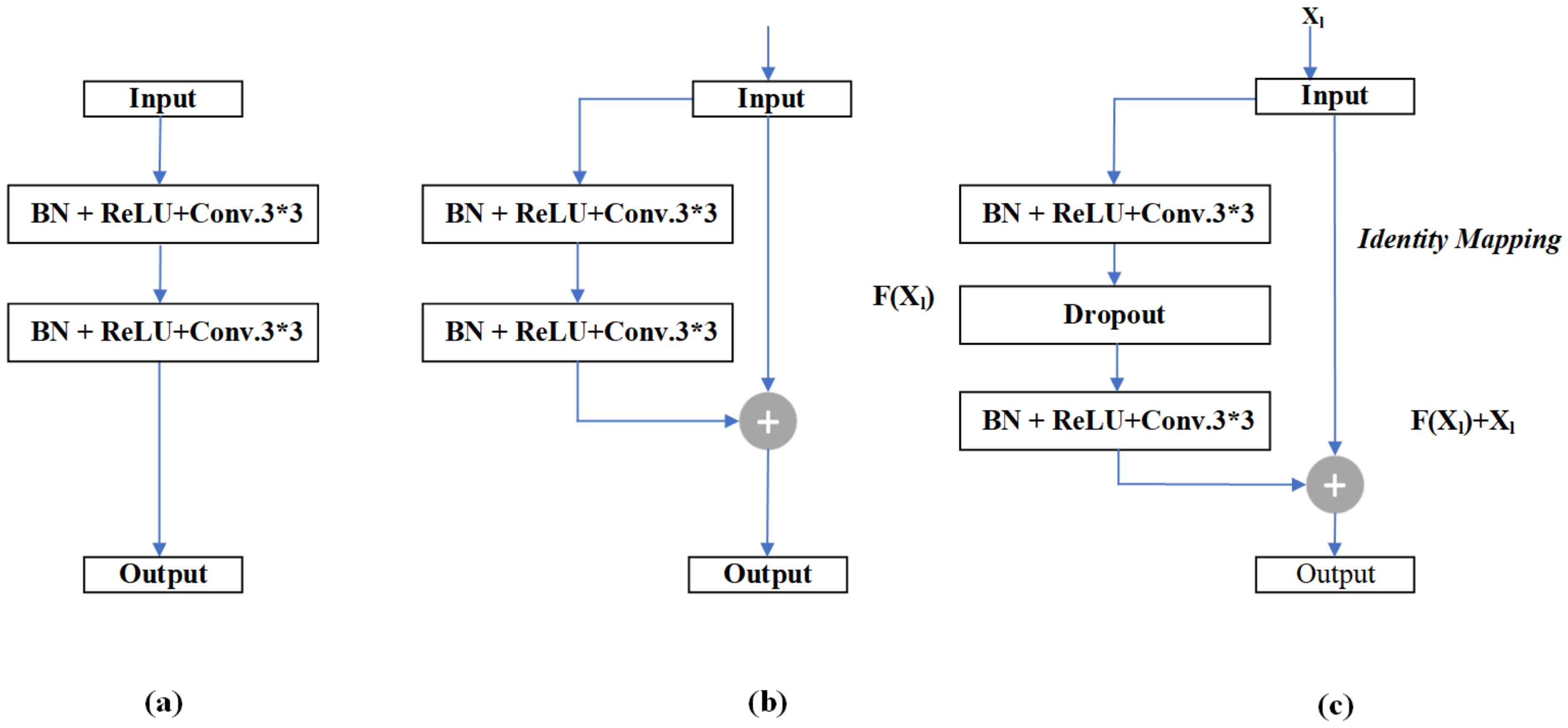
Image segmentation is a basic technology in the field of image processing and computer vision. Medical image segmentation is an important application field of image segmentation and plays an increasingly important role in clinical diagnosis and treatment. Deep learning has made great progress in medical image segmentation. In this paper, we proposed Residual-Attention UNet++, which is an extension of the UNet++ model with a residual unit and attention mechanism. Firstly, the residual unit improves the degradation problem. Secondly, the attention mechanism can increase the weight of the target area and suppress the background area irrelevant to the segmentation task. Three medical image datasets such as skin cancer, cell nuclei, and coronary artery in angiography were used to validate the proposed model. The results showed that the Residual-Attention UNet++ achieved superior evaluation scores with an Intersection over Union (IoU) of 82.32%, and a dice coefficient of 88.59% with the skin cancer dataset, a dice coefficient of 85.91%, and an IoU of 87.74% with the cell nuclei dataset and a dice coefficient of 72.48%, and an IoU of 66.57% with the angiography dataset.

1. Introduction

Image semantic segmentation is one of the core tasks in the field of computer vision. From the microscopic point of view, semantic segmentation can be understood as classifying each pixel in the image. It is a pixel-level space-intensive prediction task. In other words, semantic segmentation attempts to understand the meaning of each pixel in the image semantically, such as identifying whether it is a car, a building, or a pedestrian. From a macro point of view, semantic segmentation can be seen as assigning consistent semantic labels to a class of things instead of each pixel. It has important application value in video surveillance, automatic driving, scene understanding, and 3D scene modeling.
Interactive image segmentation methods include Graphcut [1] and Grabcut [2]. Graphcut uses the minimum-cut maximum-flow algorithm for image segmentation, which can segment the image into the foreground and background. When using this algorithm, it is necessary to draw a few strokes at the foreground and background as input. The algorithm will establish a weighted map of the similarity between each pixel and the foreground and background, and distinguish the foreground and background by solving the minimum cut. Grabcut algorithm is an iterative algorithm of the Graphcut method, which utilizes the color information and boundary information in the RGB image, and manually selects the area of interest. The inside of the frame is regarded as the unknown area, and the outside of the frame is regarded as the background area. A GMM (Gaussian Mixture Model) is established between the unknown area and the calibrated background area, the foreground GMM and the background GMM are initialized according to the result of the manual selection, and then the initialized area (unknown area) is divided into the target and the background area.
Early research on fully automatic semantic segmentation were dominated by traditional methods such as the threshold method [3], the edge detection-based method [4], the conditional random field (CRF)-based method [5], and the cluster-based method [6]. Among them, the threshold method uses a single threshold for direct classification, which is mainly applied to the segmentation of grayscale images, such as Otsu [7], which belongs to an adaptive threshold determination method. The image fixed threshold binarization with this threshold has the largest inter-class variance. It divides the image into background and foreground according to the gray characteristics of the image so that the segmentation with the largest inter-class variance means the minimum misclassification probability. The core idea is to find a threshold, T, which divides all pixels of the image into two categories. The pixel values of one category are less than or equal to T (background area), and the pixel values of the other category are greater than T (foreground area). When the variance between these two categories reaches the maximum, the T value is considered to be the most appropriate threshold. The edge detection-based method classifies objects by boundary information. The CRF method is a probabilistic framework for labeling and segmentation; the interaction process between pixels can be modeled, and the efficiency is usually higher than the threshold method and edge detection method. The clustering-based method divides the image into K groups by clustering pixels or regions with similar characteristics; K-means clustering is the mainstream method.
In the past few years, medical image segmentation has attracted increasing attention, the purpose of which is to separate the parts with special meanings from medical images. In the medical field, doctors mainly rely on medical film images and subjective judgments to diagnose diseases. Medical image segmentation is a key step in medical 3D reconstruction and quantitative analysis. It is also an important technical premise for quantification of lesion areas, selection of treatment methods, and radiotherapy. The accuracy of segmentation results directly affects the follow-up treatment effect. Medical images mainly come from different imaging technologies, including ultrasound, X-ray, magnetic resonance imaging (MRI), computer tomography (CT), and positron-emission tomography (PET). On the one hand, different segmentation methods should be selected according to different imaging technologies and imaging parts. On the other hand, medical images are different from natural images and have high complexity. Due to the single pixel of the image, the boundary, shape and other information of the lesion are also fuzzy. In addition, automatic preprocessing without human involvement also reduces human errors and overall time and cost [8]. Considering the slow process and the complexity of manual segmentation methods, there is a great demand for a fast and accurate computer method for fully automatic segmentation [9].
To meet the need for more accurate medical image segmentation, inspired by the attention mechanism and residual unit, we propose Residual-Attention UNet++, an extension of the UNet++ architecture using a residual unit and attention mechanism.
The contributions of this work can be summarized as follows:
  • The residual unit and attention mechanism were introduced to UNet++ to increase the weight of target areas and to solve the degradation problem.
  • The proposed model Residual-Attention UNet++ was introduced for medical image segmentation.
  • The experiments conducted on three medical imaging datasets demonstrated better performance in segmentation tasks compared with existing methods.
  • Residual-Attention UNet++ could increase the weight of the target area and suppress the background area irrelevant to the segmentation task.
  • Comparison against some UNet-based methods showed superior performance.
  • The pruned Residual-Attention UNet++ enabled faster inference at the cost of minimal performance degradation.
The remaining content is organized as follows. Section 2 discusses some related work, Section 3 presents the introduction of the proposed architectures, Section 4 describes the datasets, experimental details, and results, and finally, Section 5 concludes this paper.

3. Methodology

3.1. Residual-Attention UNet++

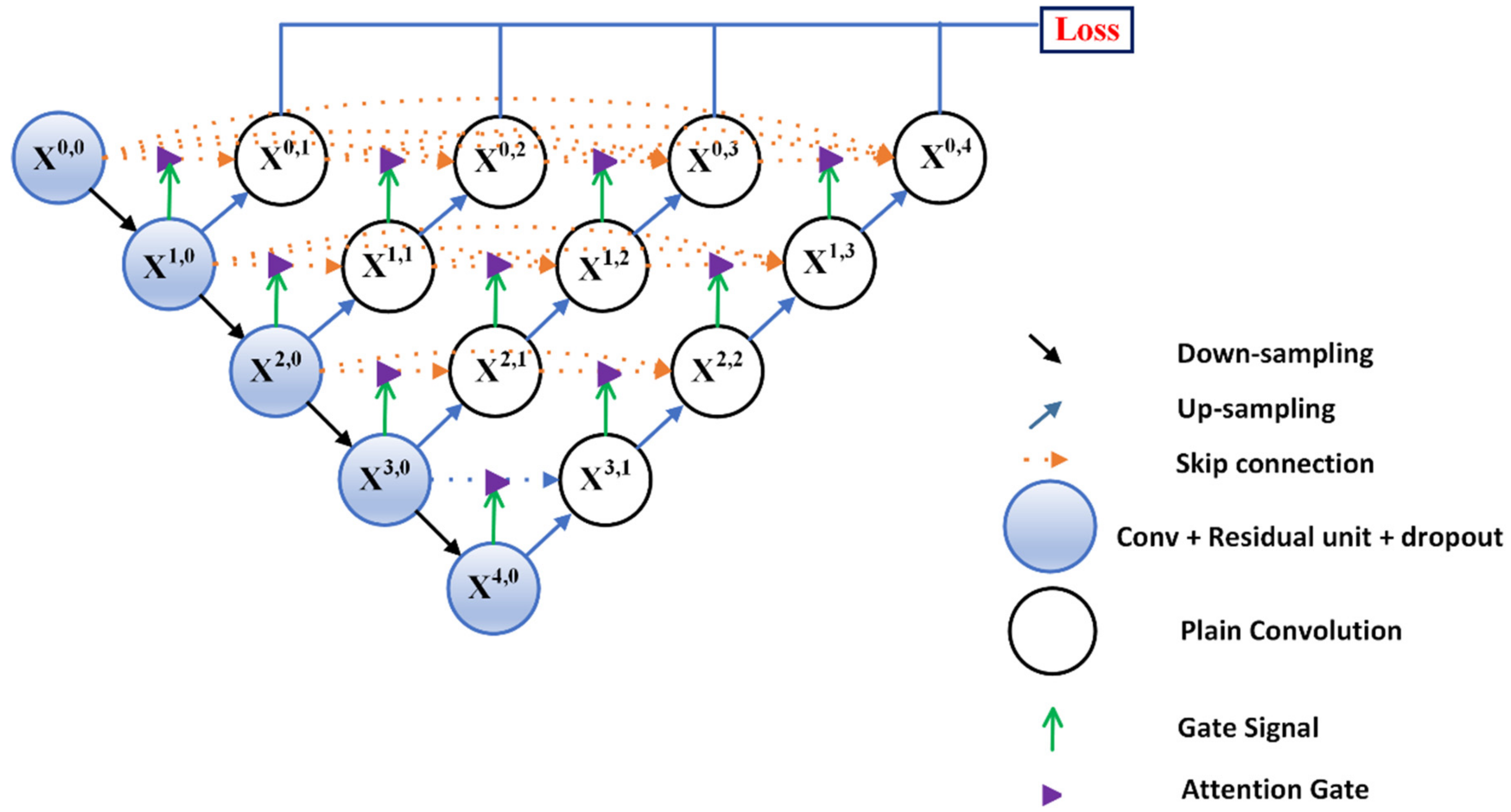
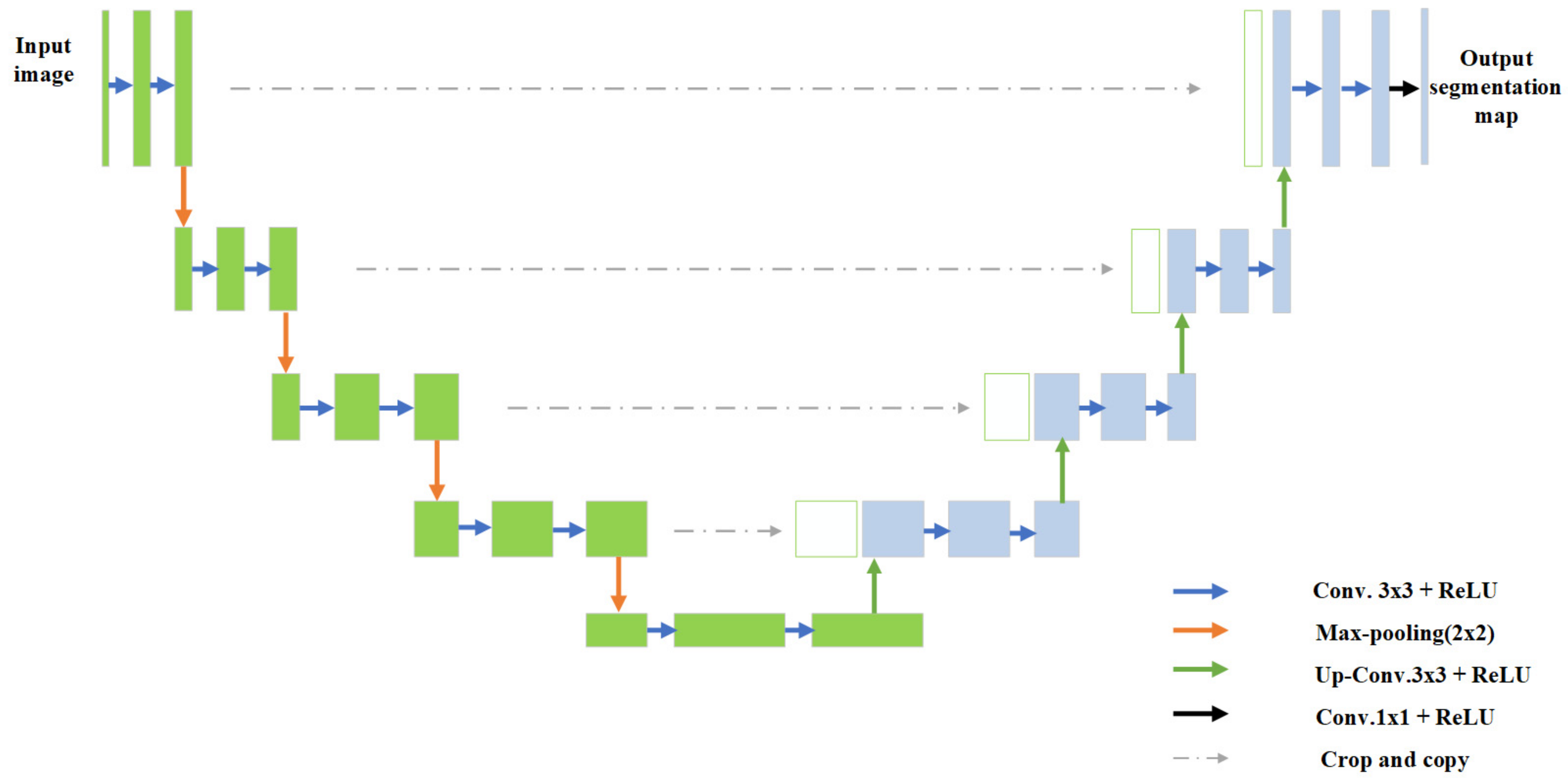
Here, we proposed the Residual-Attention UNet++, an integrated neural network that combines strengths of UNet++, residual unit, and attention mechanism for medical image segmentation, Figure 4 shows its overall structure. As we can see, the proposed model uses UNet++ as the basic network framework, which adopts redesigned skip pathways to connect the encoder network and the decoder network. The feature map of the encoder network was mapped to the decoder network through dense convolution blocks. In the above way, the feature graph semantic level in the encoder is close to the feature graph semantic level in the decoder.
Figure 4. Architecture of Residual-Attention UNet++.
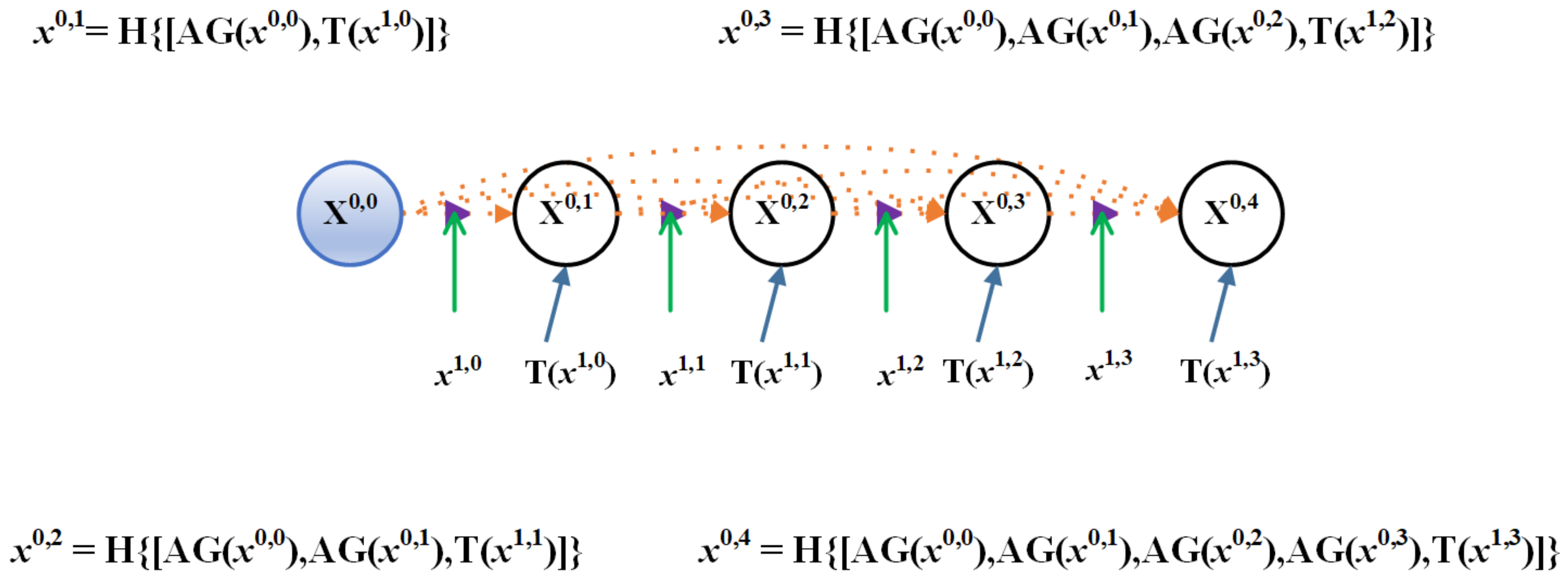
The skip pathway was formulated in the following form: x i , j represents the output of node X i , j , i indexes the down-sampling layer according to the encoder sub-network, and j indexes the convolution layer of the dense block along the skip pathway. x i , j can be calculated by the following mathematical formula:
x i , j = H x i 1 , j ,                                                                                                       j = 0 H k = 0 j 1 A G x i , k , T x i + 1 , j 1 ,     j > 0
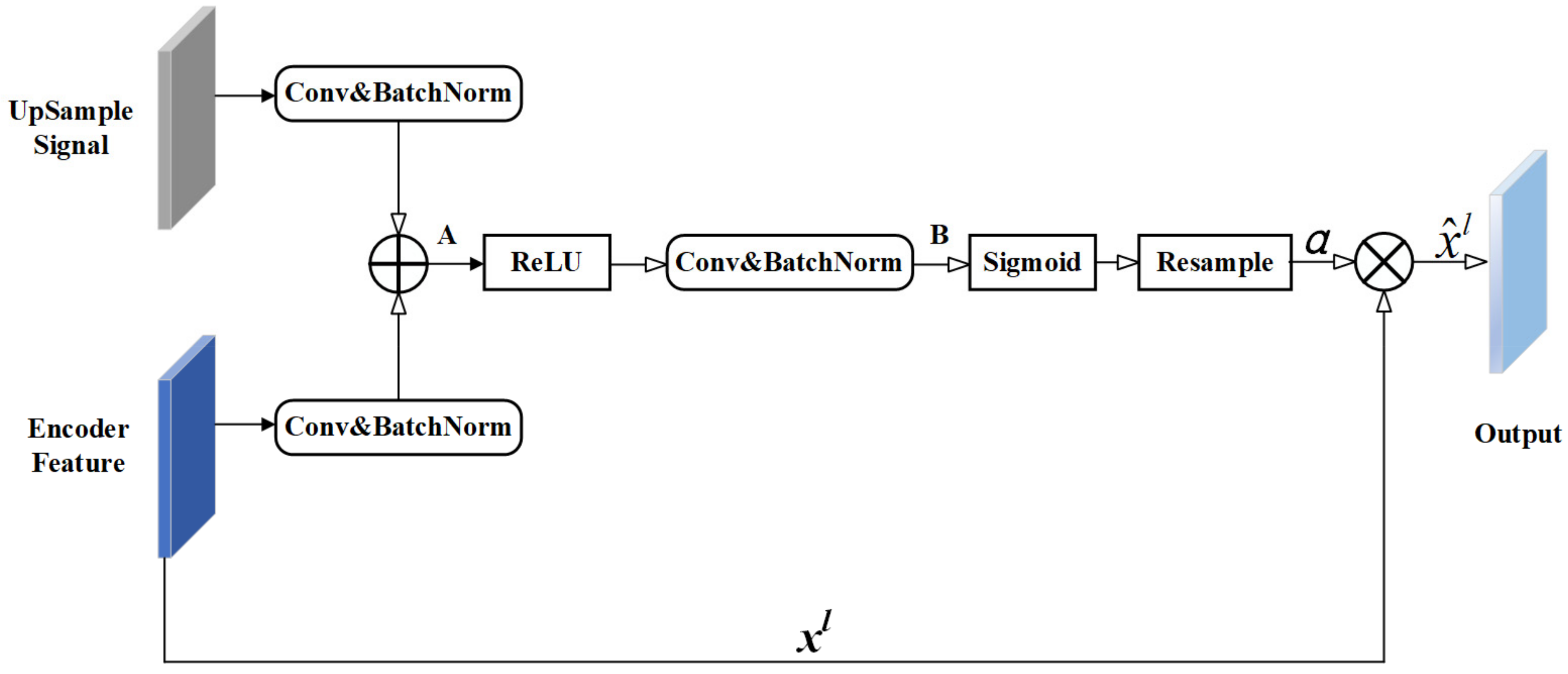
where H · represents a convolution operation followed by an ReLU activation, A G · and T · are used for attention gate and upsampling operations respectively, and [] denotes the concatenation layer. Figure 5 further explains the first skip pathway in Residual-Attention UNet++.
Figure 5. Detailed analysis of the first skip pathway of Residual-Attention UNet++.
This combination brings three benefits: (1) UNet++ improves the semantic gap between the feature maps of encoder and decoder subnetworks; (2) the residual unit eases training of the network and addresses the degradation problem; and (3) the attention mechanism can increase the weight of the target area and suppress the background area irrelevant to the segmentation task, so the accuracy of Residual-Attention UNet++ is improved.

3.2. Deep Supervision

In the proposed model, we also introduce deep supervision [32]. On the other hand, with the help of dense skip connections in nested blocks, Residual-Attention UNet++ gains full resolution feature maps at different semantic levels from x 0 , j , j 1 , 2 , 3 , 4 , which are manageable to deep supervision. We used a combination of binary cross-entropy and dice coefficient as the loss function to add to each of the above four nodes, which is described as:
L h , = 1 N b = 1 N 1 2 · h b · l o g b + 2 · h b · b h b + b
where h b and b denote the flatten predicted probabilities and the flatten ground truths of the b t h image respectively, and N indicates the batch size.

3.3. Model Pruning

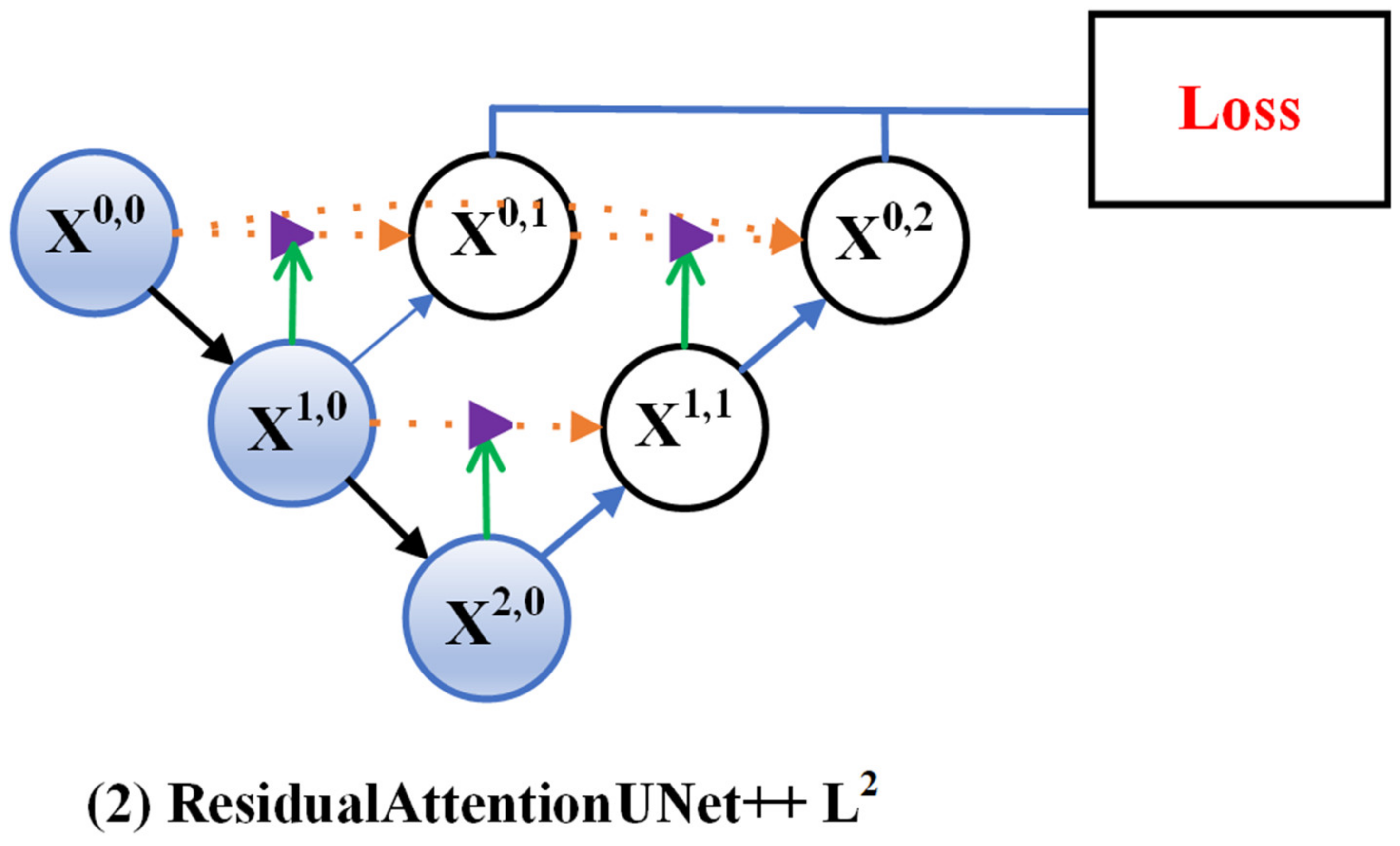
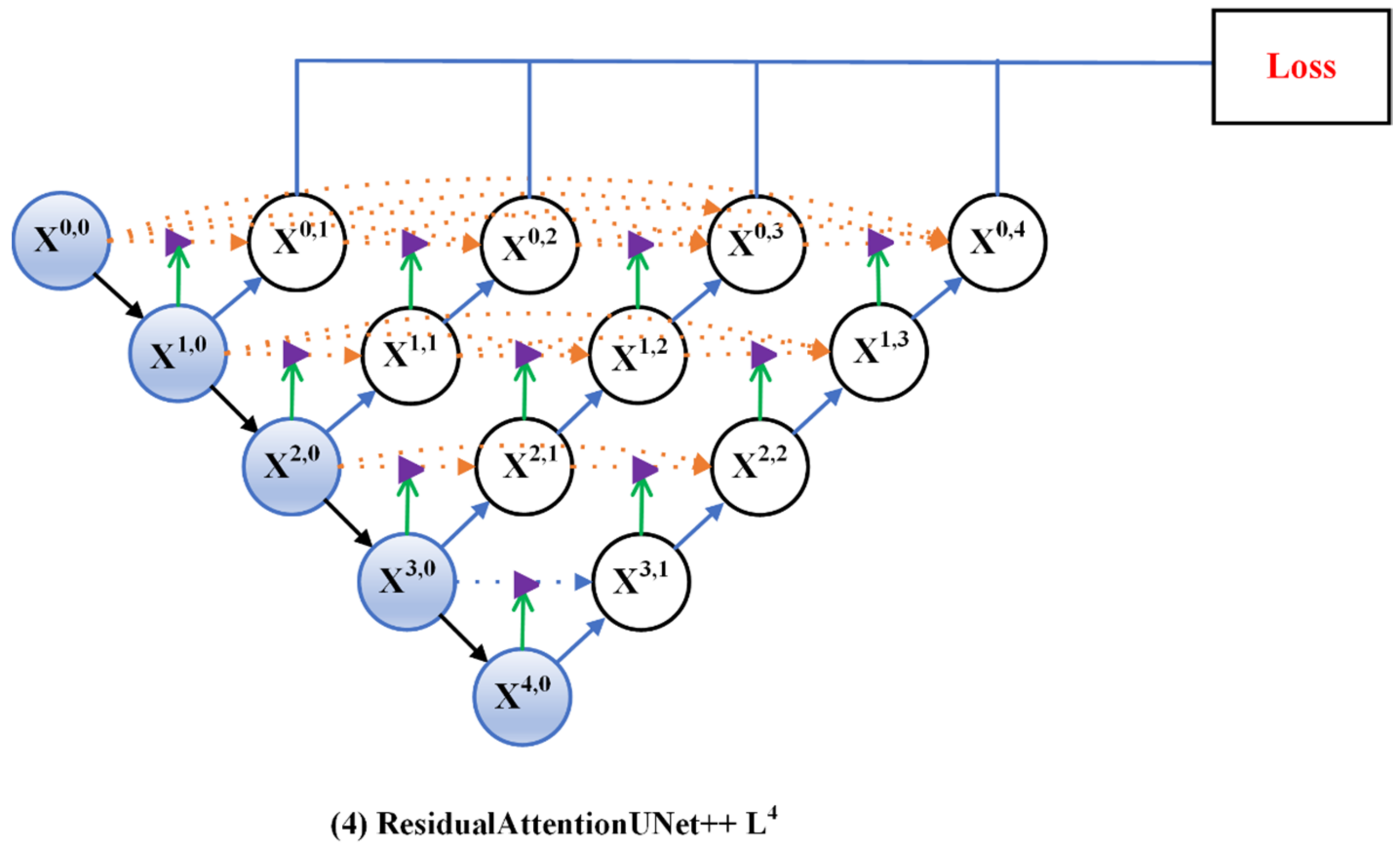
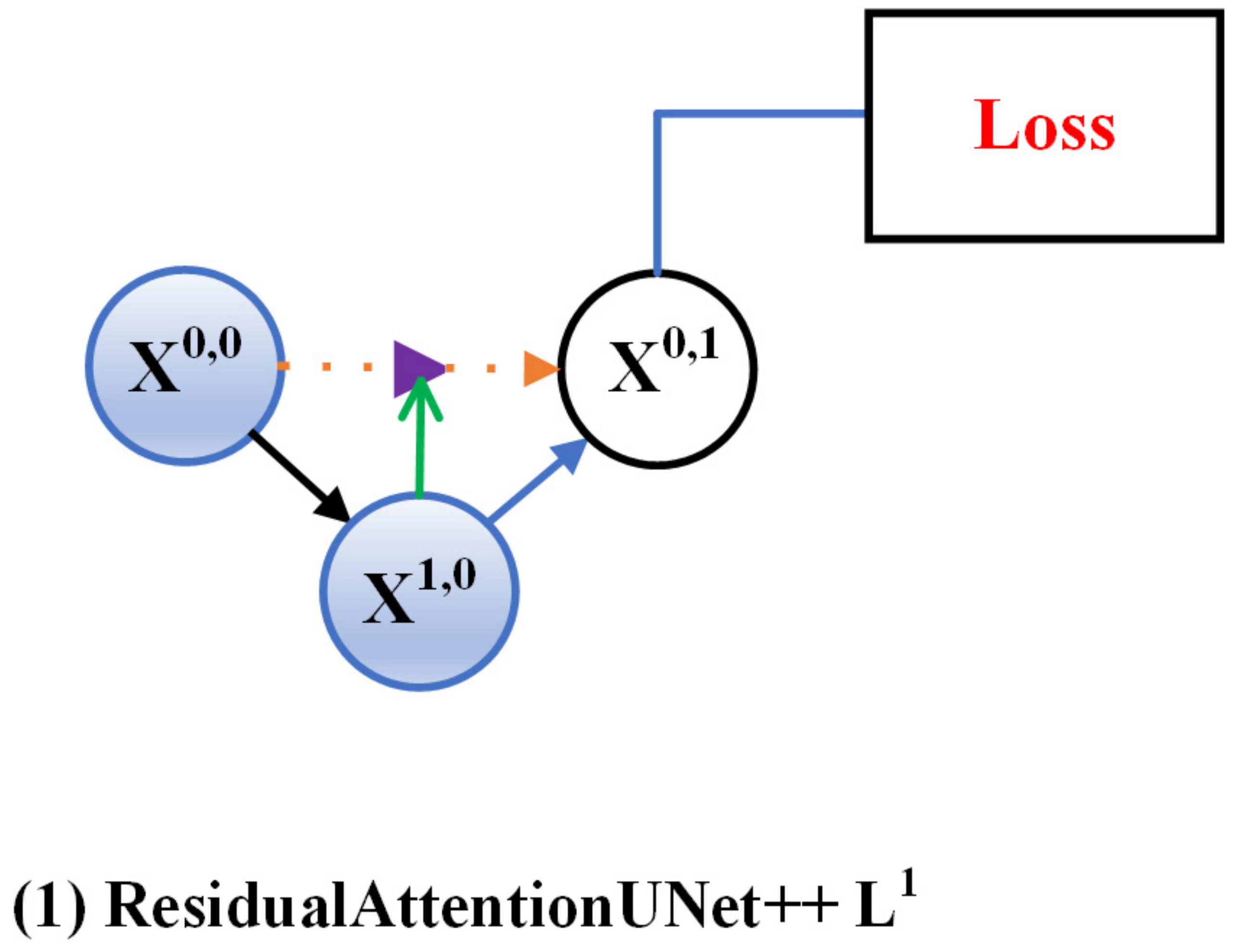
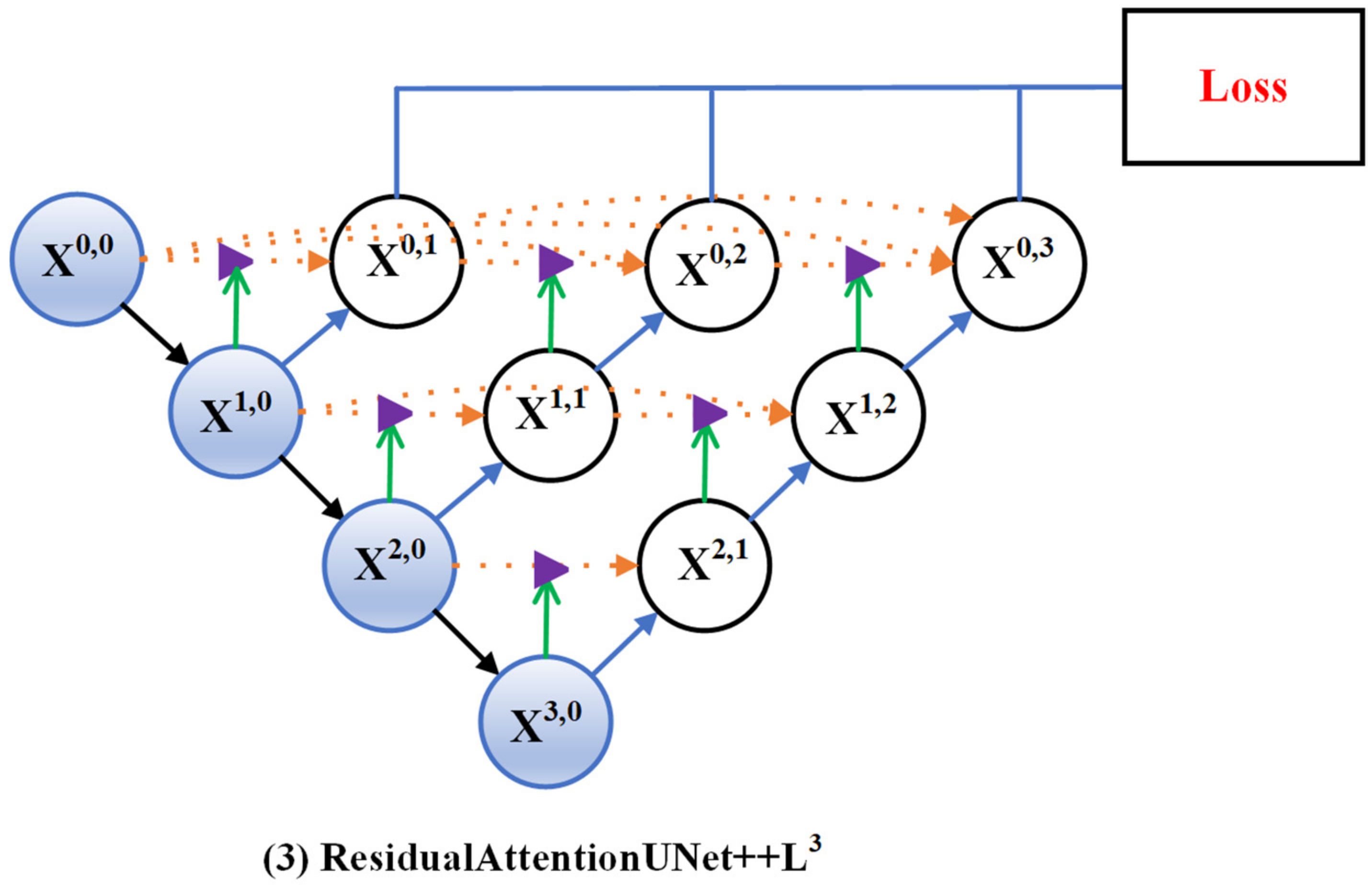
Figure 6, Figure 7, Figure 8 and Figure 9 show how the choice of segmentation branch results in architectures of varying complexity [33]. We used Residual-Attention UNet++ L i to denote Residual-Attention UNet++ pruned at level i . For example, Residual-Attention UNet++ L 1 means the prediction result is from node X 0 , 1 , which is a maximally pruned model. Moreover, Residual-Attention UNet++ L 4 , which is not pruned, indicates that the prediction result comes from node X 0 , 4 .
Figure 6. Residual-Attention UNet++ can be pruned to Residual-Attention UNet++ L 1 if trained with deep supervision.
Figure 7. Residual-Attention UNet++ can be pruned to Residual-Attention UNet++ L 2 if trained with deep supervision.
Figure 8. Residual-Attention UNet++ can be pruned to Residual-Attention UNet++ L 3 if trained with deep supervision.
Figure 9. Residual-Attention UNet++ can be pruned to Residual-Attention UNet++ L 4 if trained with deep supervision.

4. Experiments and Results

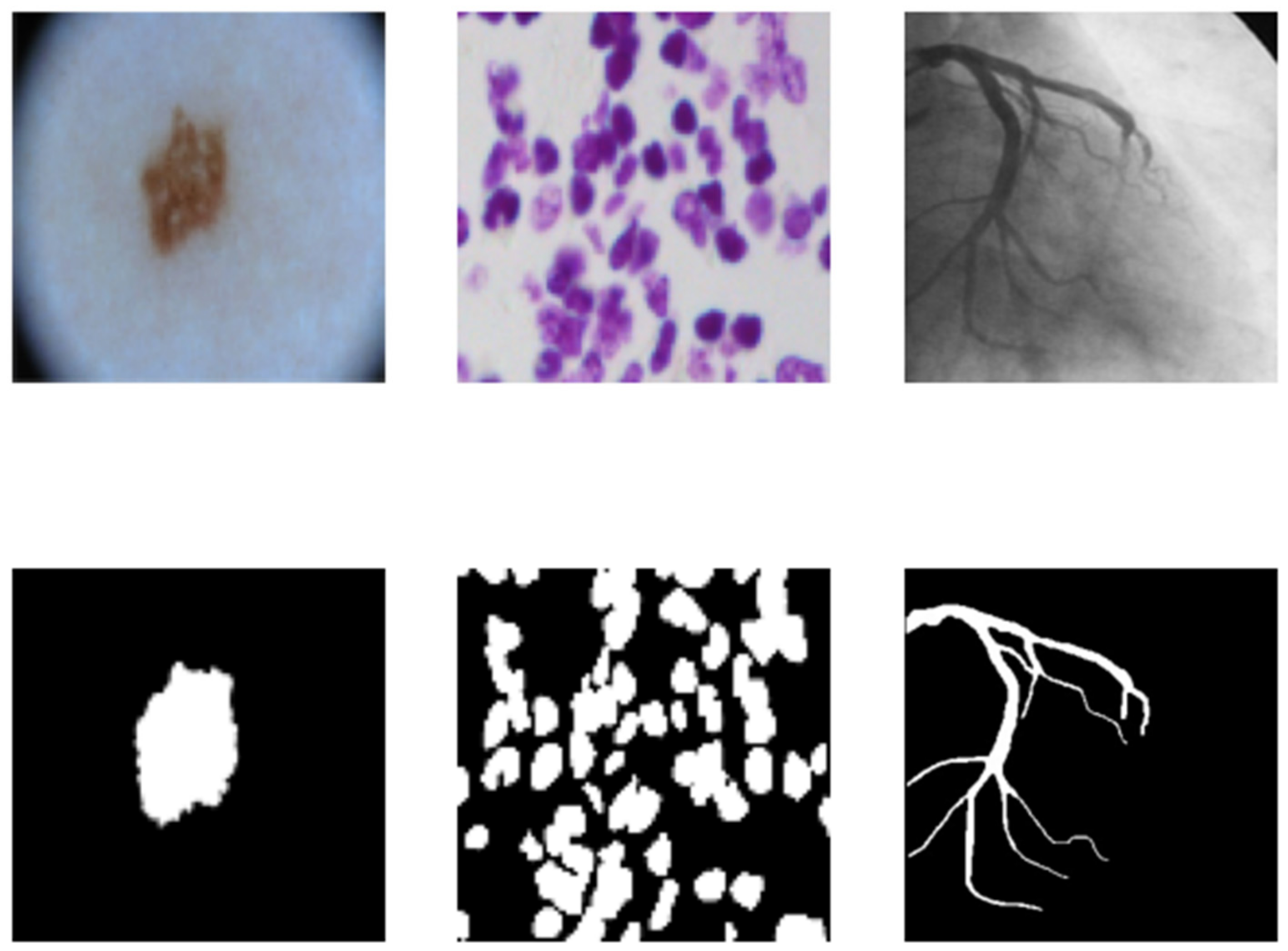
The accurate definition of the skin canceration area, nucleus, and coronary artery boundary is very important for subsequent diagnosis and research. Therefore, to demonstrate the performance of the Residual-Attention UNet++ model, we tested it on two medical imaging datasets, which include skin cancer lesion segmentation and cell nuclei segmentation from 2D images as shown in Figure 10. The PyTorch frameworks were used on a single GPU machine with 16 GB of RAM and an NVIDIA RTX 3070 for this implementation.
Figure 10. Medical image segmentation: skin cancer on the left, cell nuclei in the middle, and coronary artery in angiography on the right.

4.1. Dataset

4.1.1. Skin Cancer Segmentation

The dataset used in this work was from ISIC 2017 Challenge [34], which includes 2000 lesion images in JPEG format and 2000 corresponding binary mask images in PNG format. Among these 2000 samples, 1280 samples are for training, 320 samples for validation, and the rest for testing and we resized the images to 256 × 256 pixels in the experiment. For the target pixels, 0 and 255 represent the area outside the lesion and the area inside the lesion, respectively.

4.1.2. Cell Nuclei Segmentation

In this part, the dataset used was from The Spot Nuclei Speed Cures [35]. It consists of 670 2D samples and corresponding label images for cell nuclei segmentation. For our experiment, the training set includes 600 samples, and the other 70 images are for testing. Besides, the original images were resized to 96 × 96 pixels.

4.1.3. Coronary Artery in Angiography Segmentation

A total of 130 X-ray coronary angiography and 130 corresponding mask images in PGM format were used in this work, each angiogram being 300 × 300 pixels. The Cardiology Department of the Mexican Social Security Institute, UMAE T1-León provided the whole image database, and the ethics approval for its use in the present research, under reference R-2019-1001-078 [36]. Among these 130 samples, the training set includes 100 images, and the other 30 images are for testing.

4.2. Evaluation Metrics

In order to quantitatively analyze the experimental results, several performance metrics were considered, including F1-score, Intersection over Union (IoU), dice coefficient (DC) [37], and sensitivity (SE). The calculation method of IoU and SE are shown in Equations (4) and (5) respectively.
I o U = T P T P + F N + F P
S E = T P T P + F N
The DC is expressed as in Equation (6).
D C = 2 | G T S R | | G T | + | S R |

4.3. Results

4.3.1. Skin Cancer Segmentation

We used the Adam optimizer with a learning rate of 3 × 10⁻⁴. Besides, epoch and batch size were set to 4 and 150 respectively. The training time of the proposed model was about 10 h.
Table 1 summarizes the quantitative results for the comparison between this experiment and other methods. We tried different sets of hyperparameters for the optimization of the Residual-Attention UNet++ model. Hyperparameters tuning was conducted manually by training the model with different sets of hyperparameters and evaluating their results; Table 2 lists the hyperparameters adjusted during the experiment. The results of Residual-Attention UNet++ against other methods with respect to F1-score, SE, IoU, and DC are presented in Table 1, which shows that the proposed model achieved the highest results for the task of skin cancer segmentation. Especially, the proposed model increased the F1-score by 0.66%, the SE by 1.35%, the IoU by 0.64%, and the DC by 0.75% over UNet++.
Table 1. Experimental performance of Residual-Attention UNet++ and other methods on skin datasets.
Table 2. Hyperparameters adjusted in the experiment.
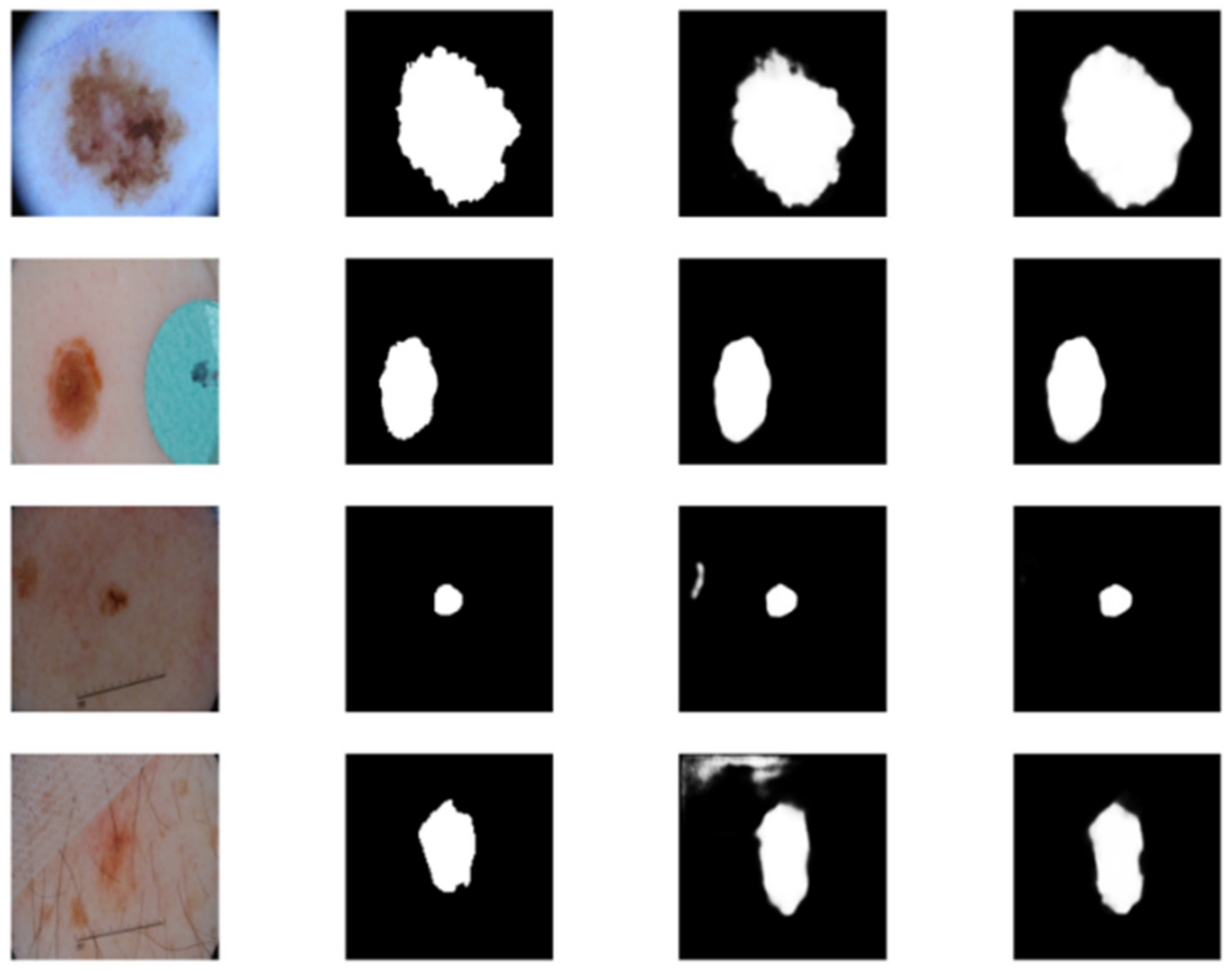
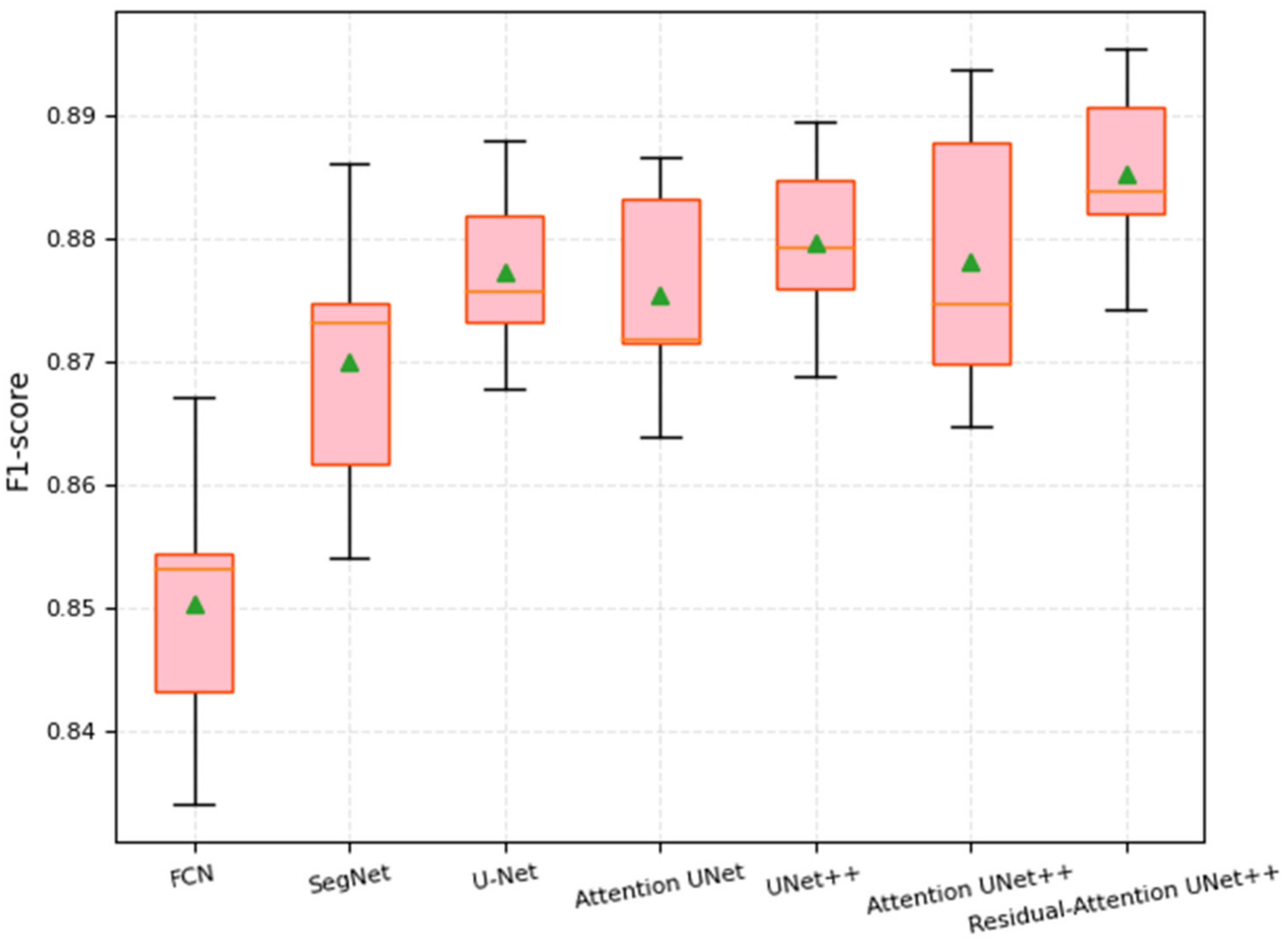
Figure 11 shows some of the example outputs from the testing phase. As observed in Figure 11, the target lesions were segmented accurately with almost the same shape of ground truth in most cases. In addition, it can be clearly seen that the input image in the second row contains two spots; the Residual-Attention UNet++ still segmented the desired target accurately. Moreover, if we examine the third and fourth rows in Figure 11, the UNet++ and Residual-Attention UNet++ predicted two lesions and one lesion respectively, while ground truth only had one, which shows the robustness of the proposed model. In addition, Figure 12 shows the comparison between Residual-Attention UNet++ and other methods on F1-score after multiple experiments, which further illustrates the robustness of the proposed model.
Figure 11. Qualitative assessment of UNet++ and Residual-Attention UNet++ performance on skin cancer. First column: original image, second column: ground truth, third column: UNet++’s output, last column: Residual-Attention UNet++’s output.
Figure 12. The comparison between Residual-Attention UNet++ and other methods on F1-score after multiple experiments for skin dataset.

4.3.2. Cell Nuclei Segmentation

In this part, Adam was selected as the optimizer, and the initial learning rate was set to 3 × 10⁻⁴. In addition, epoch and batch size were set to 4 and 150 respectively. The training time of the proposed model was about 5 h.
Table 3 shows the summary of how well the proposed model performed against UNet++ and other existing method. As observed, Residual-Attention UNet++ improved some metrics that are critical for the semantic segmentation task, including IoU and DC, by 3.9% and 16.87% compared with the UNet++, respectively.
Table 3. Experimental performance of Residual-Attention UNet++ and other methods on cell nuclei datasets.
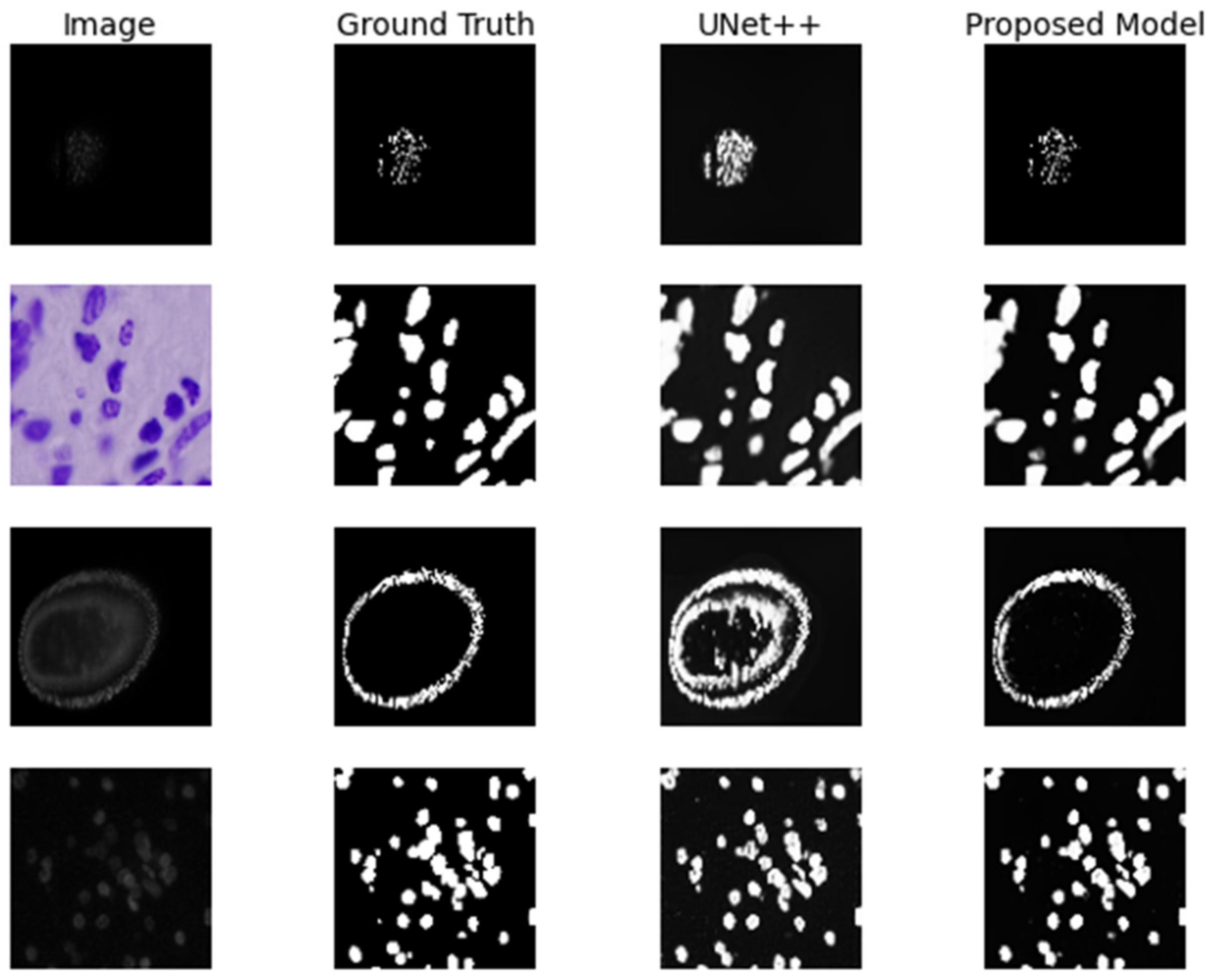
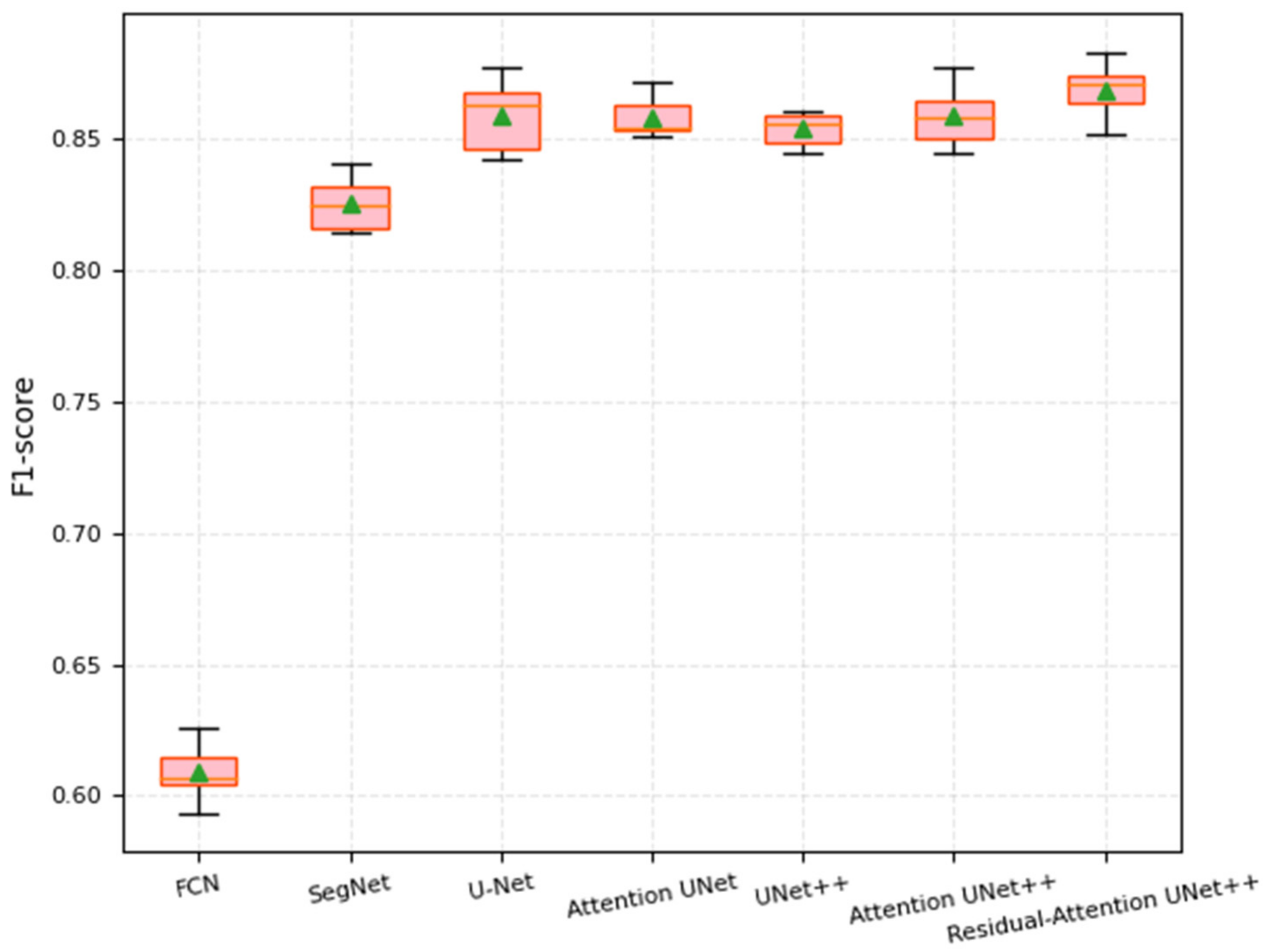
It is well known that the correct definition of class boundary in the segmentation task of medical images is crucial for subsequent treatment, but it is not easy. Figure 13 shows the qualitative results for the UNet++ and Residual-Attention UNet++ models, respectively. It demonstrates that the output of the proposed approaches showed better segmentation with accurate contour. In addition, the segmented cell nuclei boundary of the proposed model was smoother and clearer than that of UNet++, which is a better match with ground truth. Moreover, Figure 14 shows the comparison between Residual-Attention UNet++ and other methods on F1-score after multiple experiments, which further illustrates the robustness of the proposed model.
Figure 13. Qualitative assessment of the performance of UNet++ and Residual-Attention UNet++ on cell nuclei.
Figure 14. The comparison between Residual-Attention UNet++ and other methods on F1-score after multiple experiments for cell nuclei dataset.

4.3.3. Coronary Artery in Angiography Segmentation

We chose Adam as the optimizer, and the initial learning rate was 3 × 10⁻⁴. As for epoch and batch size, they were set to 250 and 4 respectively. The training time of the proposed model was about 3 h.
Table 4 summarizes the quantitative results for the comparison between this experiment and other methods. As observed, in terms of SE, IoU, and DC indicators, Residual-Attention UNet++ was higher than UNet++ by, respectively, 2.66%, 1.46%, and 2.46%. In addition, compared with FCN, we can see that all evaluation indicators greatly improved, which further illustrates the superiority of the model.
Table 4. Experimental performance of Residual-Attention UNet++ and other methods on Angiography datasets.
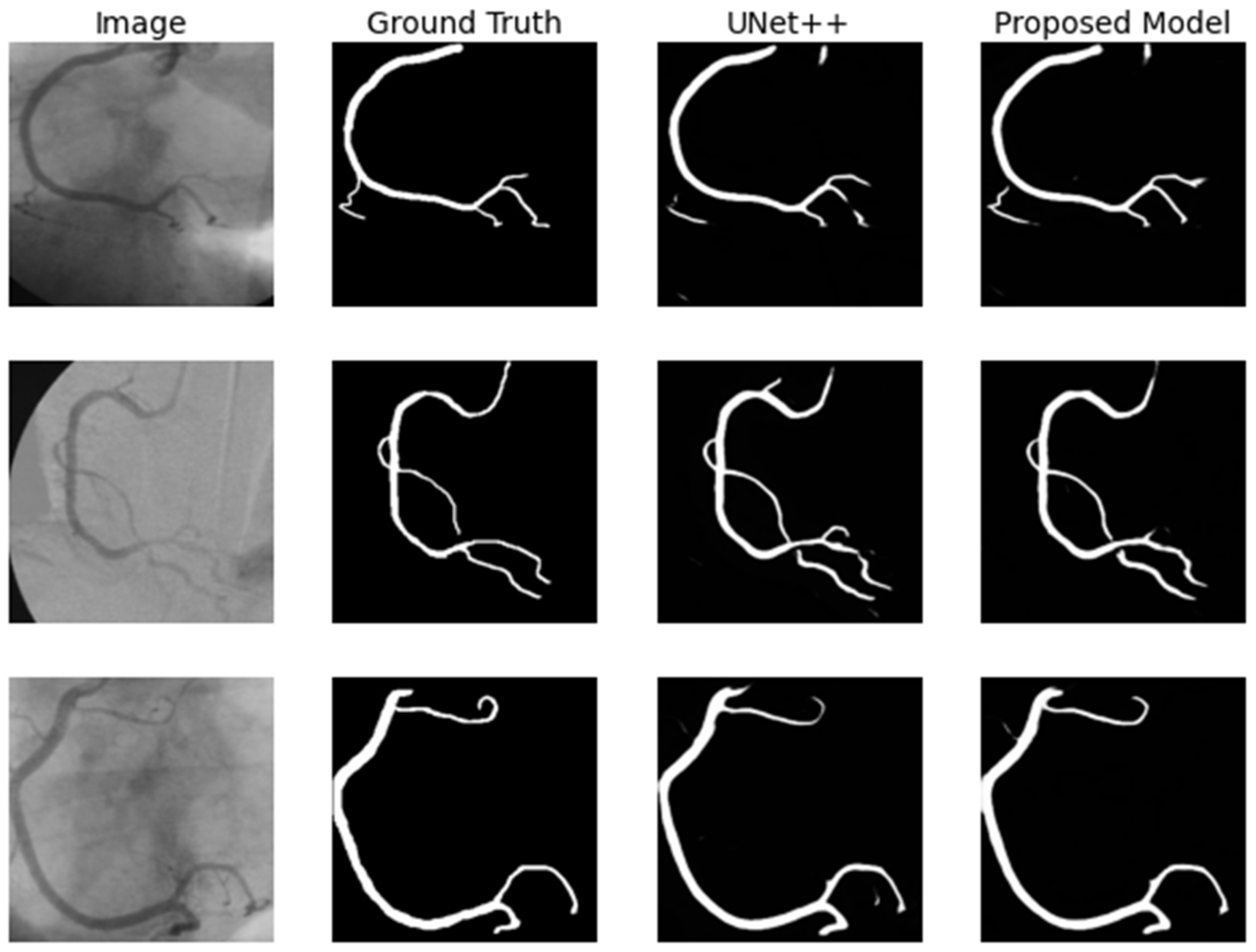
Figure 15 shows the qualitative results for the UNet++ and Residual-Attention UNet++ models, respectively. As observed, compared with UNet++, the definition of the coronary artery edge in the proposed model was closer to the ground truth.
Figure 15. Qualitative assessment of the performance of UNet++ and Residual-Attention UNet++ on coronary artery in angiography.
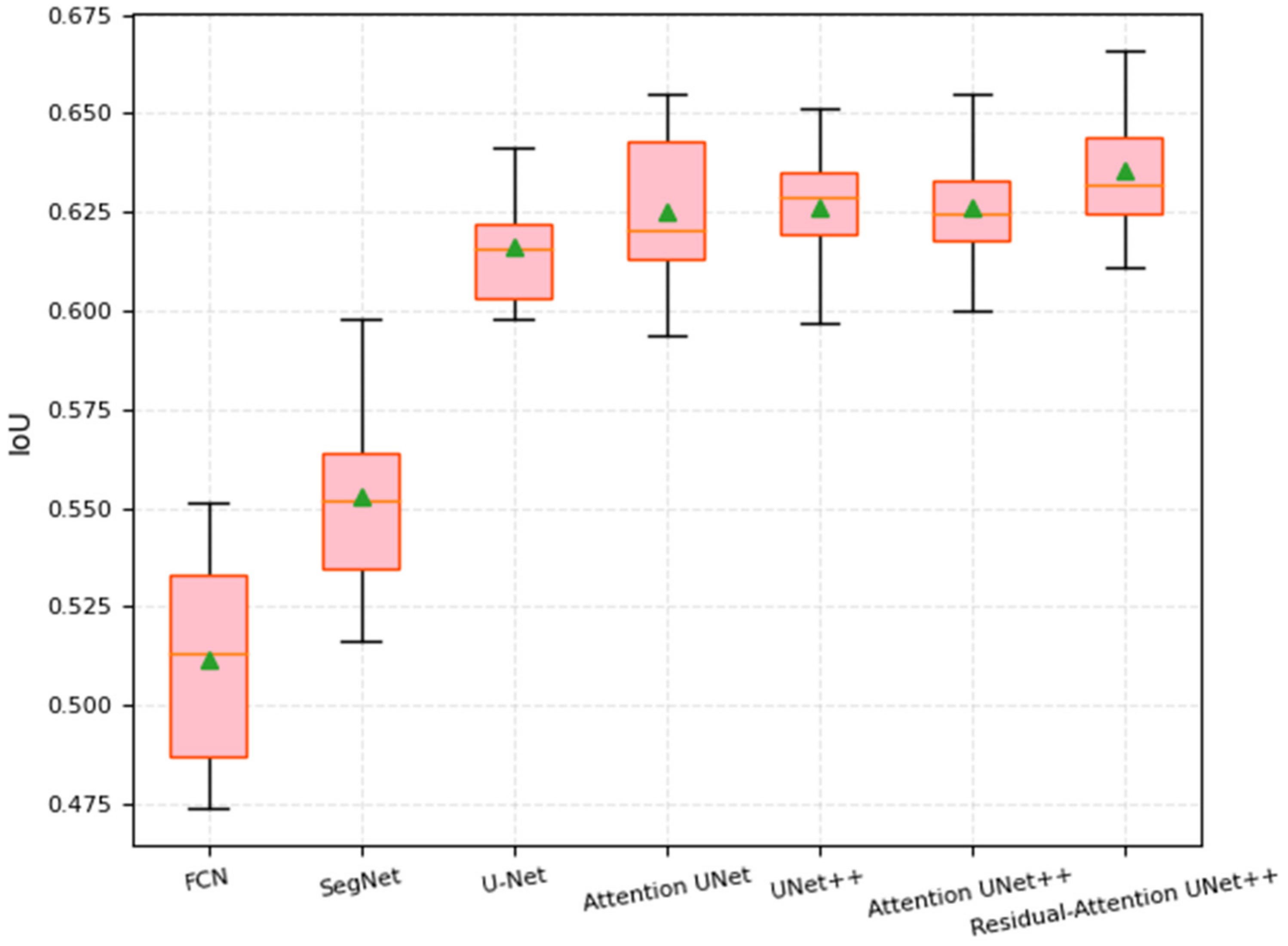
Figure 16 shows the comparison between Residual-Attention UNet++ and other methods on IoU after multiple experiments, which further illustrates the excellent performance and robustness of the proposed model.
Figure 16. The comparison between Residual-Attention UNet++ and other methods on IoU after multiple experiments for angiography dataset.

4.4. Model Pruning

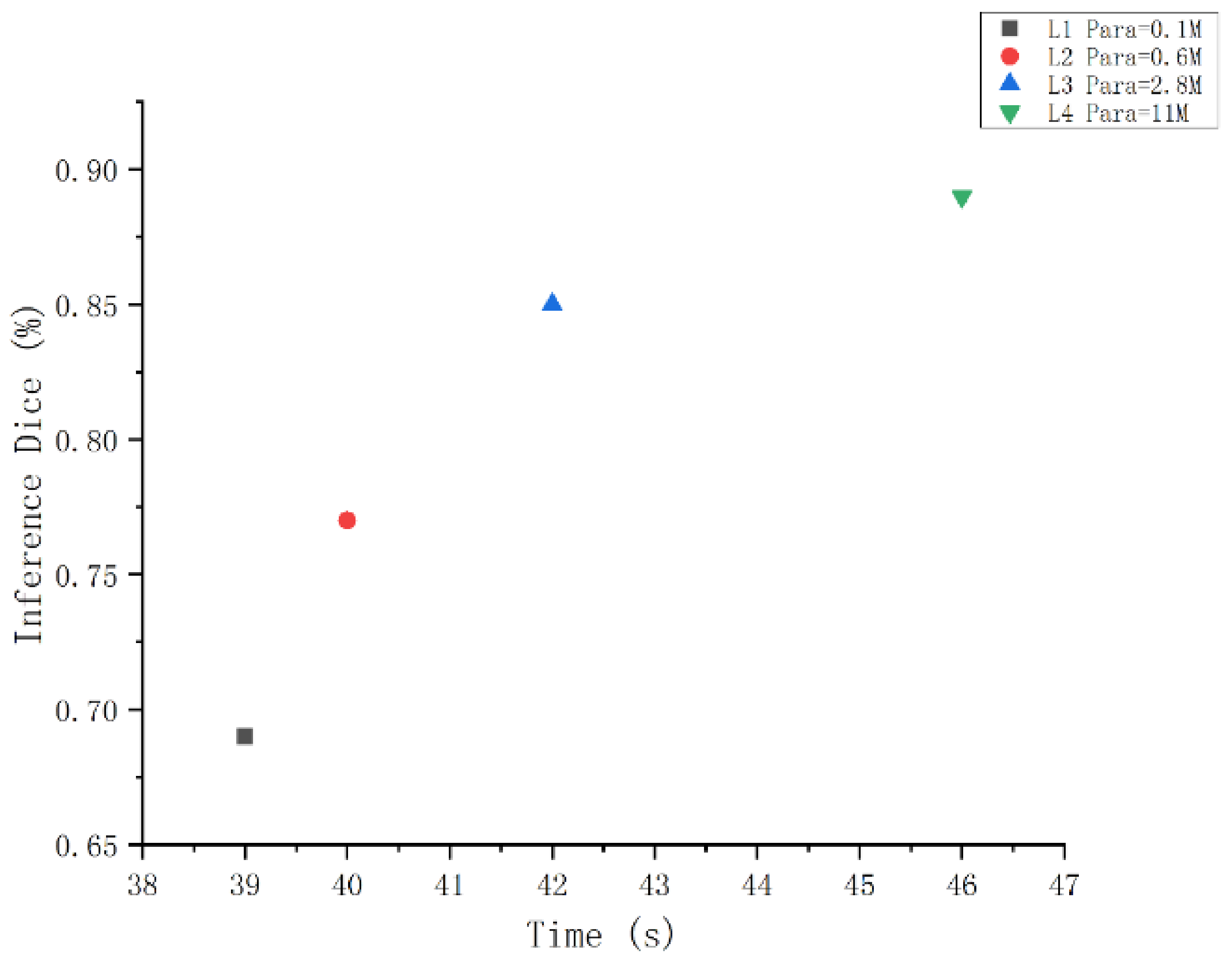
Figure 17 shows the Inference time, dice coefficient, and parameters of Residual-Attention UNet++ under different pruning degrees. As seen, Residual-Attention UNet++ L3 achieved, on average, 8.696% reduction in inference time and 75.635% reduction in parameters while degrading dice coefficient by only 3.167%. As for the Residual-Attention UNet++ L1, it achieved, on average, 15.217% reduction in inference time and 98.915% reduction in parameters while degrading the dice coefficient by 21.834%. It can be seen that pruning can not only reduce the model parameters and inference time, but also affect the segmentation performance. Therefore, it is quite crucial to choose a reasonable pruning strategy according to the actual scenario. Furthermore, considering that most deep CNN segmentation models have long inference times and require large computational resources, it makes sense to apply the pruned models to small computers and mobile devices for CAD.
Figure 17. Inference time, dice coefficient and parameters of Residual-Attention UNet++ L 1 ~ 4 for the skin cancer segmentation.

5. Conclusions

In this paper, we proposed an extension of the UNet++ architecture using residual unit and attention mechanism. The proposed models are called “Residual-Attention UNet++”. We used three different medical image datasets to evaluate our method. The experimental results demonstrated that the proposed Residual-Attention UNet++ model showed better performance in segmentation tasks when compared with existing methods, including the UNet++ and other models on both three datasets. In addition, with the introduction of deep supervision, the pruned Residual-Attention UNet++ enabled faster inference at the cost of minimal performance degradation. Last but not least, considering the current two-dimensional medical image segmentation, without considering the spatial dimension, more research on three-dimensional medical images will be carried out in the future.

Author Contributions

Conceptualization and methodology, Z.L. (Zan Li) and H.Z.; software, validation, Z.L. (Zan Li), Z.L. (Zhengzhen Li) and Z.R.; writing—original draft preparation, Z.L. (Zan Li) and H.Z.; review and editing, Z.L. (Zan Li) and H.Z. All authors have read and agreed to the published version of the manuscript.

Funding

This research received no external funding.

Institutional Review Board Statement

Not applicable.

Data Availability Statement

Not applicable.

Conflicts of Interest

The authors declare no conflict of interest.

References

  1. Young, K.D.; Utkin, V.I.; Ozguner, U. A Control Engineer’s Guide to Sliding Mode Control. IEEE Trans. Control. Syst. Technol. 1999, 7, 328–342. [Google Scholar] [CrossRef] [Green Version]
  2. Rother, C. GrabCut: Interactive foreground extraction using iterated graph cut. ACM Trans. Graph. 2004, 23, 309–314. [Google Scholar] [CrossRef]
  3. Davis, L.S.; Rosenfeld, A.; Weszka, J.S. Region Extraction by Averaging and Thresholding. IEEE Trans. Syst. Man Cybern. 1975, 3, 383–388. [Google Scholar] [CrossRef]
  4. Senthilkumaran, N.; Rajesh, R. Edge Detection Techniques for Image Segmentation—A Survey of Soft Computing Approaches. In Proceedings of the 2009 International Conference on Advances in Recent Technologies in Communication and Computing, Kottayam, India, 27–28 October 2009; pp. 844–846. [Google Scholar]
  5. Nowozin, S.; Lampert, C.H. Structured Learning and Prediction in Computer Vision. Found. Trends® Comput. Graph. Vis. 2011, 6, 185–365. [Google Scholar] [CrossRef] [Green Version]
  6. Sulaiman, S.N.; Isa, N.M. Adaptive fuzzy-K-means clustering algorithm for image segmentation. IEEE Trans. Consum. Electr. 2010, 56, 2661–2668. [Google Scholar] [CrossRef]
  7. Ostu, N.; Nobuyuki, O.; Otsu, N. A thresholding selection method from gray level histogram. IEEE SMC-8 1979, 9, 62–66. [Google Scholar]
  8. Alom, M.Z.; Hasan, M.; Yakopcic, C.; Taha, T.M.; Asari, V.K. Recurrent Residual Convolutional Neural Network based on U-Net (R2U-Net) for Medical Image Segmentation. arXiv 2018, arXiv:1802.06955. [Google Scholar]
  9. Xi, H.; Chen, J.; Chen, L.; Liang, H.; Wang, Q. Pyramid Residual Convolutional Neural Network based on an end-to-end model. In Proceedings of the 2020 13th International Conference on Intelligent Computation Technology and Automation (ICICTA), Xi’an, China, 24–25 October 2020; pp. 154–158. [Google Scholar]
  10. Long, J.; Shelhamer, E.; Darrell, T. Fully Convolutional Networks for Semantic Segmentation. In Proceedings of the IEEE Conference on Computer Vision and Pattern Recognition, Boston, MA, USA, 7–12 June 2015; Volume 39, pp. 3431–3440. [Google Scholar]
  11. Song, W.; Zhong, B.; Sun, X. Building Corner Detection in Aerial Images with Fully Convolutional Networks. Sensors 2019, 19, 1915. [Google Scholar] [CrossRef] [Green Version]
  12. Chen, L.C.; Papandreou, G.; Kokkinos, I.; Murphy, K.; Yuille, A.L. Semantic Image Segmentation with Deep Convolutional Nets and Fully Connected CRFs. Comput. Sci. 2014, 357–361. [Google Scholar] [CrossRef]
  13. Krähenbühl, P.K.V. Efficient Inference in Fully Connected CRFs with Gaussian Edge Potentials. Adv. Neural Inf. Processing Syst. 2011, 24, 109–117. [Google Scholar]
  14. Chen, L.C.; Papandreou, G.; Kokkinos, I.; Murphy, K.; Yuille, A.L. DeepLab: Semantic Image Segmentation with Deep Convolutional Nets, Atrous Convolution, and Fully Connected CRFs. IEEE Trans. Pattern Anal. 2017, 40, 834–848. [Google Scholar] [CrossRef] [PubMed] [Green Version]
  15. Liu, X.; Song, L.; Liu, S.; Zhang, Y. A Review of Deep-Learning-Based Medical Image Segmentation Methods. Sustainability 2021, 13, 1224. [Google Scholar] [CrossRef]
  16. Chen, L.C.; Papandreou, G.; Schroff, F.; Adam, H. Rethinking Atrous Convolution for Semantic Image Segmentation. arXiv 2017, arXiv:1706.05587. [Google Scholar]
  17. Chen, L.C.; Zhu, Y.; Papandreou, G.; Schroff, F.; Adam, H. Encoder-Decoder with Atrous Separable Convolution for Semantic Image Segmentation. In Proceedings of the European Conference on Computer Vision (ECCV), Munich, Germany, 8–14 September 2018; pp. 801–818. [Google Scholar]
  18. Badrinarayanan, V.; Kendall, A.; Cipolla, R. SegNet: A Deep Convolutional Encoder-Decoder Architecture for Image Segmentation. IEEE Trans. Pattern Anal. Mach. Intell. 2017, 39, 2481–2495. [Google Scholar] [CrossRef]
  19. Ronneberger, O.; Fischer, P.; Brox, T. U-Net: Convolutional Networks for Biomedical Image Segmentation. In Proceedings of the International Conference on Medical Image Computing and Computer-Assisted Intervention, Munich, Germany, 5–9 October 2015; pp. 234–241. [Google Scholar]
  20. Özgün, Ç.; Abdulkadir, A.; Lienkamp, S.S.; Brox, T.; Ronneberger, O. 3D U-Net: Learning Dense Volumetric Segmentation from Sparse Annotation. In Proceedings of the International Conference on Medical Image Computing and Computer-Assisted Intervention, Athens, Greece, 17–21 October 2016; pp. 424–432. [Google Scholar]
  21. Milletari, F.; Navab, N.; Ahmadi, S.A. V-Net: Fully Convolutional Neural Networks for Volumetric Medical Image Segmentation. In Proceedings of the 2016 Fourth International Conference on 3D Vision (3DV), Stanford, CA, USA, 25–28 October 2016; pp. 565–571. [Google Scholar]
  22. He, K.; Zhang, X.; Ren, S.; Sun, J. Delving Deep into Rectifiers: Surpassing Human-Level Performance on ImageNet Classification. In Proceedings of the IEEE International Conference on Computer Vision, Santiago, Chile, 7–13 December 2015; pp. 1026–1034. [Google Scholar]
  23. Li, X.; Chen, H.; Qi, X.; Dou, Q.; Fu, C.W.; Heng, P.A. H-DenseUNet: Hybrid Densely Connected UNet for Liver and Tumor Segmentation From CT Volumes. IEEE Trans. Med. Imaging 2018, 37, 2663–2674. [Google Scholar] [CrossRef] [Green Version]
  24. Oktay, O.; Schlemper, J.; Folgoc, L.L.; Lee, M.; Heinrich, M.; Misawa, K.; Mori, K.; Mcdonagh, S.; Hammerla, N.Y.; Kainz, B. Attention U-Net: Learning Where to Look for the Pancreas. arXiv 2018, arXiv:1804.03999. [Google Scholar]
  25. Yan, J.; Wang, X.; Cai, J.; Qin, Q.; Yang, H.; Wang, Q.; Cheng, Y.; Gan, T.; Jiang, H.; Deng, J.; et al. Medical image segmentation model based on triple gate MultiLayer perceptron. Sci. Rep. 2022, 12, 1–14. [Google Scholar] [CrossRef]
  26. Zhou, Z.; Siddiquee, M.; Tajbakhsh, N.; Liang, J. UNet++: A Nested U-Net Architecture for Medical Image Segmentation. In Deep Learning in Medical Image Analysis and Multimodal Learning for Clinical Decision Support; Springer: Cham, Switzerland, 2018; pp. 3–11. [Google Scholar]
  27. He, K.; Zhang, X.; Ren, S.; Sun, J. Deep Residual Learning for Image Recognition. In Proceedings of the IEEE Conference on Computer Vision and Pattern Recognition, Las Vegas, NV, USA, 27–30 June 2016; pp. 770–778. [Google Scholar]
  28. Srivastava, N.; Hinton, G.; Krizhevsky, A.; Sutskever, I.; Salakhutdinov, R. Dropout: A Simple Way to Prevent Neural Networks from Overfitting. J. Mach. Learn. Res. 2014, 15, 1929–1958. [Google Scholar]
  29. Zagoruyko, S.; Komodakis, N. Wide Residual Networks. arXiv 2016, arXiv:1605.07146. [Google Scholar]
  30. Wang, X.; Girshick, R.; Gupta, A.; He, K. Non-local Neural Networks. In Proceedings of the IEEE Conference on Computer vision and Pattern Recognition, Salt Lake City, UT, USA, 18–23 June 2018; pp. 7794–7803. [Google Scholar]
  31. Li, C.; Tan, Y.; Chen, W.; Luo, X.; Li, F. ANU-Net: Attention-based Nested U-Net to exploit full resolution features for medical image segmentation. Comput. Graph. 2020, 90, 11–20. [Google Scholar] [CrossRef]
  32. Lee, C.Y.; Xie, S.; Gallagher, P.; Zhang, Z.; Tu, Z. Deeply-Supervised Nets. In Proceedings of the Artificial Intelligence and Statistics, San Diego, CA, USA, 9–12 May 2015; pp. 562–570. [Google Scholar]
  33. Zhou, Z.; Siddiquee, M.; Tajbakhsh, N.; Liang, J. UNet++: Redesigning Skip Connections to Exploit Multiscale Features in Image Segmentation. IEEE Trans. Med. Imaging 2020, 39, 1856–1867. [Google Scholar] [CrossRef] [PubMed] [Green Version]
  34. ISIC 2017 Challenge. Available online: https://challenge2017.isic-archive.com (accessed on 11 July 2021).
  35. Data Science Bowl 2018. Available online: https://www.kaggle.com/c/data-science-bowl-2018 (accessed on 14 June 2021).
  36. Cervantes-Sanchez, F.; Cruz-Aceves, I.; Hernandez-Aguirre, A.; Hernandez-Gonzalez, M.A.; Solorio-Meza, S.E. Automatic Segmentation of Coronary Arteries in X-ray Angiograms using Multiscale Analysis and Artificial Neural Networks. Appl. Sci. 2019, 9, 5507. [Google Scholar] [CrossRef] [Green Version]
  37. Dice, L.R. Measures of the Amount of Ecologic Association Between Species. Ecology 1945, 26, 297–302. [Google Scholar] [CrossRef]
Publisher’s Note: MDPI stays neutral with regard to jurisdictional claims in published maps and institutional affiliations.

Article Metrics

Citations

Article Access Statistics

Multiple requests from the same IP address are counted as one view.