Article

Impact of Polycyclic Aromatic Hydrocarbons (PAHs) from an Asphalt Mix Plant in a Suburban Residential Area

1
Department of Environmental Engineering, Mokpo National University, Muan 58554, Korea
2
Department of Atmospheric & Environmental Sciences, Gangneung-Wonju National University, Gangneung 25457, Korea
3
Innovative Meteorological Research Department, National Institute of Meteorological Sciences, Jeju 63568, Korea
*
Author to whom correspondence should be addressed.
Appl. Sci. 2020, 10(13), 4632; https://doi.org/10.3390/app10134632
Submission received: 25 May 2020 / Revised: 30 June 2020 / Accepted: 30 June 2020 / Published: 4 July 2020
(This article belongs to the Special Issue Air Pollution II)

Abstract

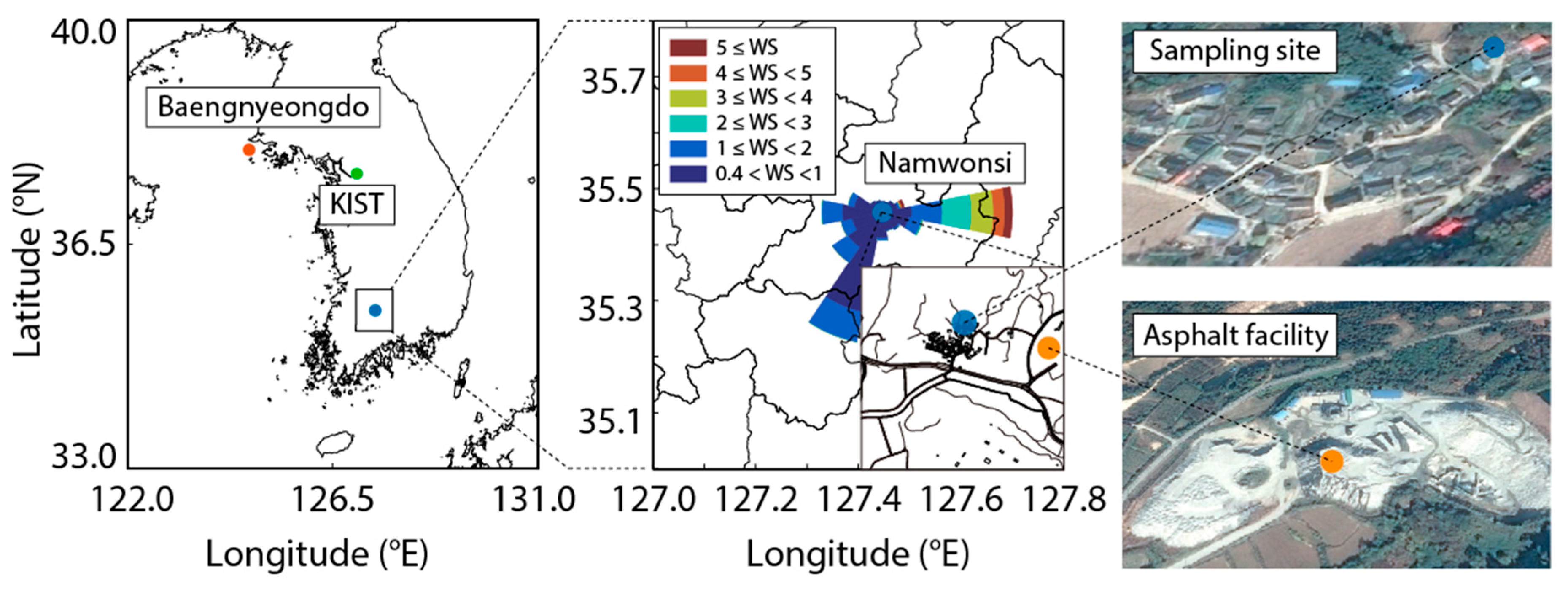
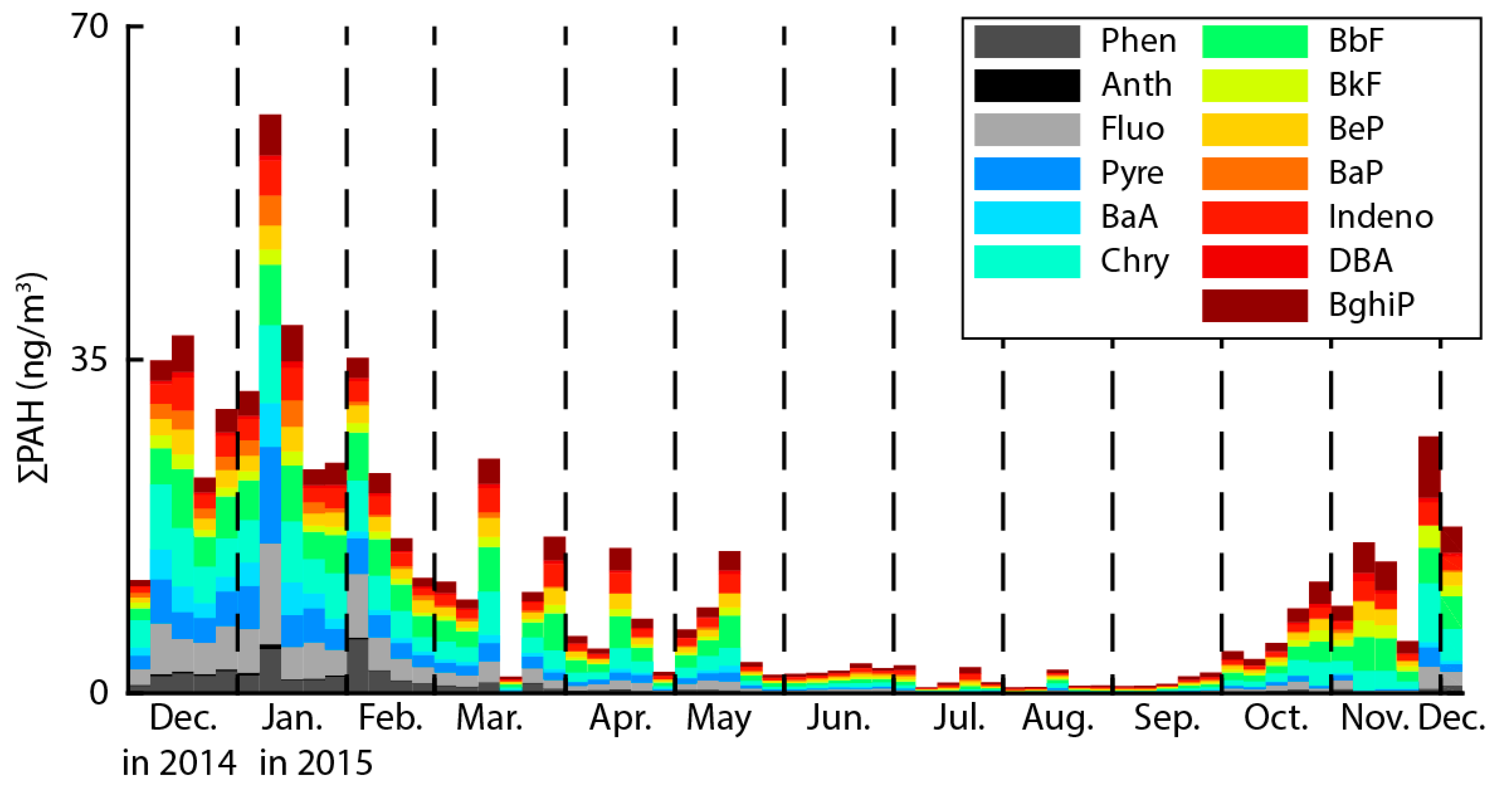
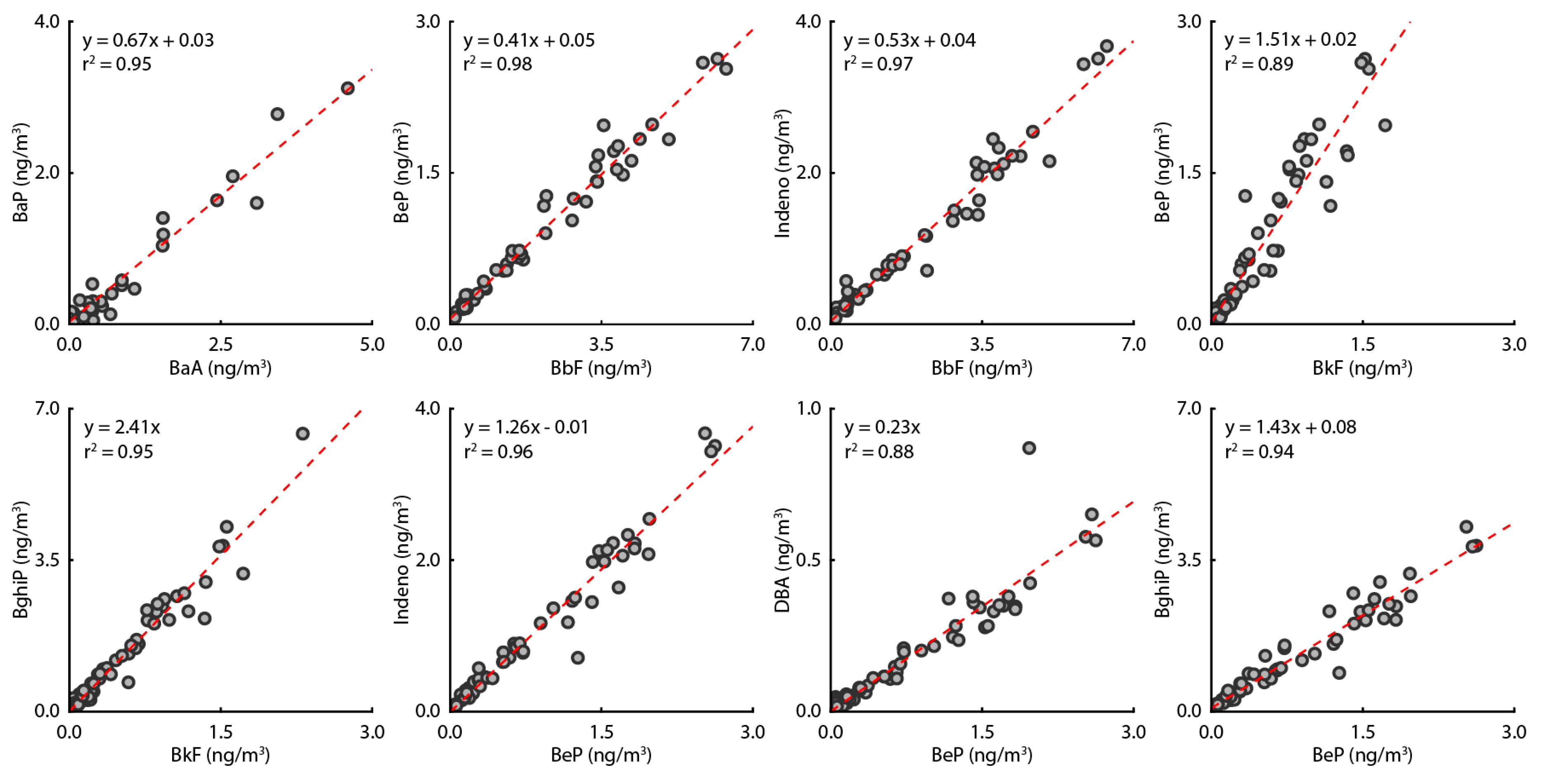
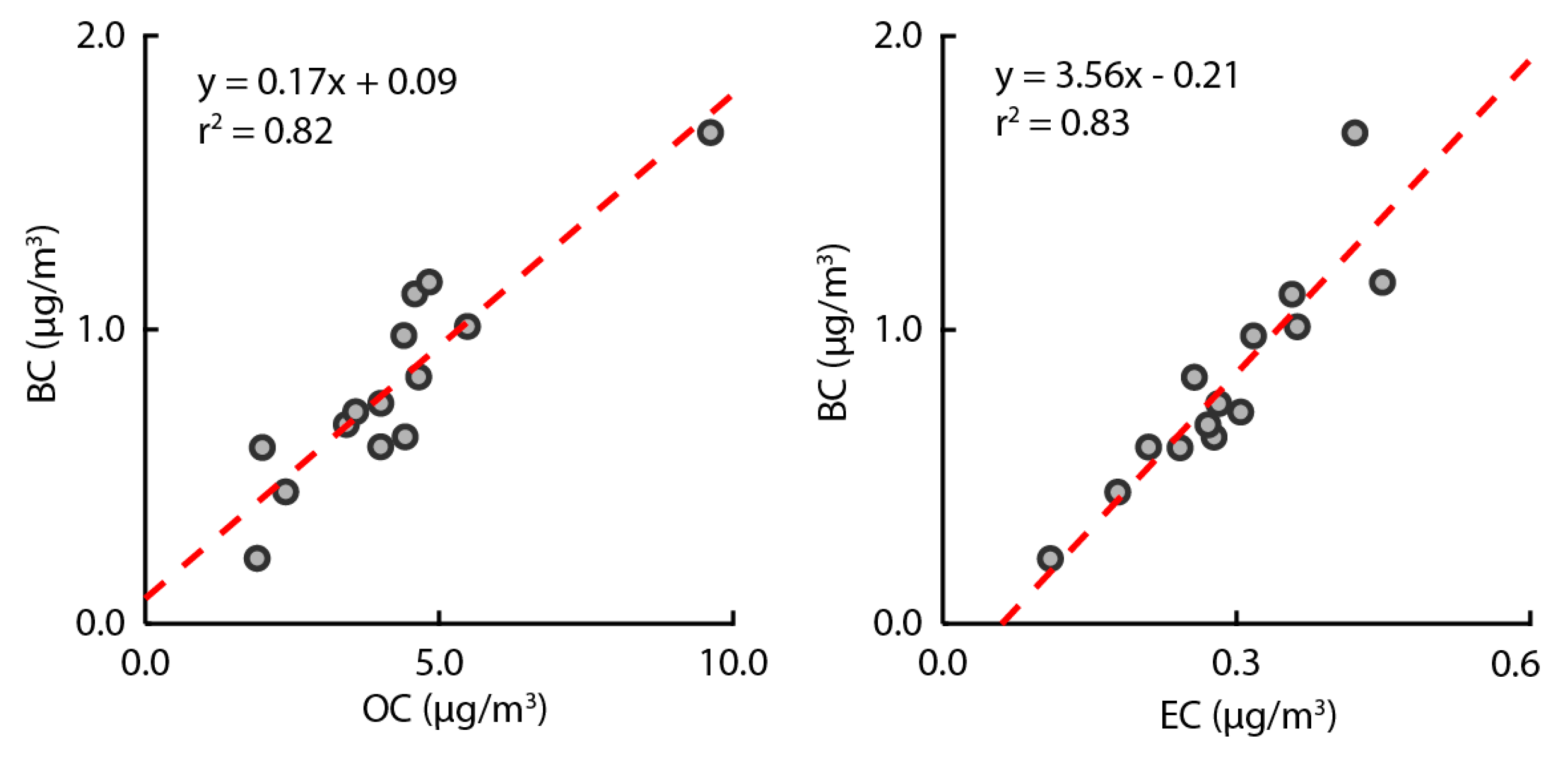
Polycyclic aromatic hydrocarbons (PAHs), an important class of hazardous airborne pollutants, are mutagenic and carcinogenic substances known to be released during the paving of asphalt. In this study, PAHs emitted from an asphalt mix plant were analyzed to investigate the effects on a suburban residential area. Black carbon, organic carbon, elemental carbon, and PAHs in fine particulate matter (PM2.5) were analyzed in a village near the asphalt mix plant. The results of wind direction analysis revealed that the village was meteorologically affected by emissions from the asphalt mix plant. PAHs in PM2.5 ranged from 0.51 to 60.73 ng/m3, with an average of 11.54 ng/m3. Seasonal PAHs were highest in winter, followed in order by spring, autumn, and summer. The diagnostic ratios between PAHs indicate that the source of PAHs could be incomplete combustion of petrogenic origin. The maximum black carbon concentration in the intensive periods reaches up to 14.17 μg/m3 during mix plant operation periods. Seasonal ∑BaPTEF values based on Toxic Equivalence Factor were: winter (2.284 ng/m3), spring (0.575 ng/m3), autumn (0.550 ng/m3), and summer (0.176 ng/m3). The values are about 6.5 times higher than the concentration in another background area and more than three times higher than those in the capital city, Seoul, in the Republic of Korea. In conclusion, primary emissions from the point source can be considered the major contributor to pollution in the residential area.
Keywords: PAHs; asphalt mix plant; organic carbon; elemental carbon; toxic equivalence factor PAHs; asphalt mix plant; organic carbon; elemental carbon; toxic equivalence factor