Article

Perceived Leader Favoritism and Non-Green Behavior in Tourism and Hospitality Organizations: The Mediating Role of Malicious Envy and the Moderating Effect of Organizational Injustice


by
Abdelrahman A. A. Abdelghani
1,*,
Sameh Fayyad
2,*,
Hazem Ahmed Khairy
3 and
Hebatallah A. M. Ahmed
1
1
Applied College, Prince Sattam bin Abdulaziz University, Al-Kharj 11942, Saudi Arabia
2
Hotel Management Department, Faculty of Tourism and Hotels, Suez Canal University, Ismailia 41522, Egypt
3
Hotel Management Department, Faculty of Tourism and Hotels, University of Sadat City, Sadat City 32897, Egypt
*
Authors to whom correspondence should be addressed.
Adm. Sci. 2025, 15(12), 469; https://doi.org/10.3390/admsci15120469 (registering DOI)
Submission received: 11 October 2025 / Revised: 22 November 2025 / Accepted: 26 November 2025 / Published: 30 November 2025
(This article belongs to the Special Issue Emerging Trends in Employee Green Behavior and Organizational Impact)

Abstract

Environmental sustainability in tourism and hospitality has emerged as a critical focus of Saudi Arabia’s Vision 2030, aligning with global Sustainable Development Goals (SDGs) and national priorities such as environmental stewardship, human health, and future economic diversification. This study examines how perceived leader favoritism influences non-green behavior among hospitality employees, exploring malicious envy as a mediator and perceived organizational injustice as a moderator. A cross-sectional survey was administered to 412 employees across five major hotels in Riyadh. Measures included validated scales for perceived leader favoritism, malicious envy, non-green behavior, and organizational justice. Structural equation modeling tested hypothesized relationships and moderation effects. Perceived leader favoritism was positively associated with non-green behavior (β = 0.39, p < 0.001) and malicious envy (β = 0.58, p < 0.001). Malicious envy mediated the favoritism–behavior link (indirect effect β = 0.17, p < 0.01). High perceptions of organizational injustice strengthened these effects, exacerbating environmentally harmful behaviors. Interpretation: The findings reveal that unfair leadership practices undermine corporate sustainability efforts by provoking negative emotions and unethical environmental actions. Managerial interventions to enhance fairness and mitigate envy are imperative for achieving SDG 12 (Responsible Consumption and Production) and SDG 13 (Climate Action), supporting Saudi Arabia’s goals in environmental sustainability, basic needs fulfillment, and future economies. Implementing justice-centered leadership programs can foster healthier organizational climates, promoting both employee well-being and ecological resilience.

1. Introduction

The issue of sustainability has become, for the tourism and hospitality sector, a key concern and, more specifically, it concerns employees’ environmentally responsible behaviors (Agrawal & Pradhan, 2023; Yeşiltaş et al., 2022). Although there is an increasing number of hotels and resorts embracing green practices, employees’ non-green behavior poses a significant obstacle to fulfilling their organizational sustainability goals (Fouad et al., 2025). Non-green behavior includes activities of employees that contravene environmental standards and impair a firm’s performance in environmental aspects, like excessive use of resources, incorrect disposal of waste, or refusal to follow environmentally friendly protocols (Meirun et al., 2024; Song et al., 2024). It is increasingly being realized by researchers that human relations and leadership style weigh heavy on the eco labeling activities of employees, and leader favoritism and organizational justice have emerged as major determinants of this (Fouad et al., 2025; Kaur et al., 2025). Leader favoritism is defined as the extent to which employees perceive that their leaders give some individuals preference over others for non-job-related reasons (Fouad et al., 2025; M. Li et al., 2023). Favoritism could reduce employees’ intrinsic motivations, generate imbalances in the perceived situation of fairness, and induce negative affect (e.g., envy, resentment, or dissatisfaction), which might then be transformed into counterproductive behaviors, including non-green behavior (C. Cao et al., 2022). Unfair treatment from a supervisor could drive a negative relationship that gradually leads to low organization commitment and less adherence to environmental procedures, and this weakens the effectiveness of green efforts (Aboramadan & Karatepe, 2021; Raza & Khan, 2022).
Recent research underscores the detrimental impact of negative leadership dynamics on workplace behavior, establishing a clear parallel to the phenomena under investigation. Hassanein et al. (2025) demonstrate that toxic leadership erodes job satisfaction through diminished trust, creating environments akin to those where perceived favoritism undermines equity and environmental commitment. Similarly, Ding et al. (2023) show that idiosyncratic deals trigger malicious envy and negative behaviors, mirroring the proposed envy-driven pathway to non-green conduct, while De Cicco et al. (2025) suggest that technological transparency, as seen in AI-driven strategies, could be pivotal in mitigating such favoritism and promoting sustainability in hospitality organizations. Malicious envy represents a critical mediator between perceived leader favoritism and non-green behavior (Fouad et al., 2025). Employees who perceive that others receive preferential treatment often experience envy, characterized by feelings of hostility and resentment toward the favored colleague (Song et al., 2024). This form of envy differs from benign envy, as it motivates negative behaviors aimed at undermining or retaliating against the envied individual, including environmentally harmful actions in organizational settings (Yang & Liu, 2022). Recent evidence suggests that employees experiencing malicious envy are less likely to engage in discretionary pro-environmental behavior and more likely to demonstrate non-green actions as a way of emotionally coping or retaliating (Farrukh et al., 2024; Zhou & Ni, 2025). Organizational injustice acts as a boundary condition that moderates the impact of leader favoritism on malicious envy and non-green behavior (Hoang et al., 2025). Employees perceiving inequitable treatment or unfair organizational practices are more susceptible to the detrimental effects of envy and favoritism, leading to higher incidences of non-green behavior (Kaur et al., 2025; Liu et al., 2025). Justice perceptions amplify the emotional and behavioral consequences of favoritism, as employees interpret unequal treatment as a systemic failure, which can reduce compliance with green organizational norms and increase discretionary environmentally harmful acts (Sadiq et al., 2025).
Green human resource management (GHRM) practices, such as training, empowerment, and green cultural initiatives, have been extensively observed as convenient tools to reduce non-green behavior (Agrawal & Pradhan, 2023; Elshaer et al., 2025). Yet, their effectiveness may be limited in environments characterized by favoritism and perceived unfairness, given the dominance of negative interpersonal factors over organizational efforts to promote pro-environmental behavior (S. Cao et al., 2024; N. U. Khan et al., 2022). Therefore, incorporating leader favoritism and its potential consequences on malicious envy and organizational injustice is important for predicting variance in non-green behavior, as well as making interventions to advance the sustainability of hospitality organizations (Meirun et al., 2024). Collectively, the literature is consistent with the notion that non-green behavior is not merely explained by environmental policies or leadership training, but rather it is influenced by perceptions of fairness and social comparison processes in organizations (Kaur et al., 2025; Song et al., 2024). Examining the mediating effect of malicious envy and the moderating influence of organizational injustice contributes to a more comprehensive framework for environmentally destructive behaviors among employees in the hospitality industry (Yang & Liu, 2022; Zhou & Ni, 2025).
Despite the growing focus on leadership and sustainability, a notable lack of understanding exists with regard to the underlying psychological mechanisms and boundary conditions that surround negative leader behaviors (e.g., perceived leader favoritism [PLF]) in thwarting environmental goals. Although ethical leadership has been generally associated with pro-environmental behavior in the literature, the negative effect of favoritism—a finer and disguised form of injustice—on NGB has been seriously ignored. This oversight is important because favoritism represents a special trigger for social comparison processes and thereby negative emotions, such as malicious envy (ME), that can directly undermine employee commitment to OS initiatives. In addition, more research is needed to explore the moderating role of the general organizational justice climate in these mechanisms (see Appendix A, where a set of research gaps is systematically identified and explained). To address these gaps, the present study aims to develop and test an integrated model explaining when and why PLF results in NGB. More specifically, this study has the following objectives: (1) to examine the direct relationships between PLF, ME, and NGB; (2) to investigate the mediating role of ME in the PLF-NGB relationship; and (3) to assess the moderating influence of perceived organizational injustice (POI) on the direct and mediating pathways within this model. Accordingly, this study is underpinned by the following research questions:
-
How does perceived leader favoritism impact non-green behavior among hospitality employees?
-
What is the mediating role of malicious envy in the association between perceived leader favoritism and non-green behavior.
-
Why does perceived organizational injustice moderate the effect of leader favoritism on workplace deviance and non-green behavior?
Answering these questions contributes to the development of a more nuanced understanding of socio-emotional precursors to detrimental environmental behaviors and may further provide theoretical and practical implications in terms of how to foster sustainable and fairer workplaces within the context of tourism and hospitality.

2. Review of Literature

2.1. Theoretical Underpinnings

This study draws upon three major theoretical frameworks: social comparison theory, leader–member exchange theory (LMX), and organizational justice theory. Social comparison theory posits that individuals evaluate their status, abilities, and outcomes relative to their peers, leading to emotions such as envy when perceived disparities arise (Song et al., 2024). In the context of hospitality organizations, perceived leader favoritism triggers upward comparisons, provoking malicious envy, which in turn can manifest as non-green behavior (Fouad et al., 2025; Meirun et al., 2024). Leader–member exchange (LMX) theory emphasizes the quality of dyadic relationships between leaders and subordinates (Agrawal & Pradhan, 2023). High-quality LMX relationships are characterized by mutual trust and support, while low-quality exchanges are marked by favoritism and neglect. Perceived favoritism disrupts LMX quality, intensifies social comparisons, and contributes to malicious envy (Fouad et al., 2025; Yang & Liu, 2022). Organizational justice theory provides a lens to examine moderating mechanisms. Procedural, distributive, and interactional justice influences how employees interpret favoritism and manage emotional responses (Liu et al., 2025). When employees perceive organizational injustice, the negative consequences of leader favoritism on malicious envy and non-green behavior are exacerbated, highlighting the conditional nature of these relationships (Hoang et al., 2025; Kaur et al., 2025). This study is informed by theories of workplace psychology and environmental behavior. Abdelghani et al. (2025) and Wei and Yu (2022) articulate the psychological processes through which negative interactions undermine resources and self-control, with counterproductive consequences such as environmentally damaging behavior. The function of social comparison is supported empirically by studies (Park et al., 2021; Su & Chen, 2023) that focus on the consequences of envy via upward comparisons. In addition, previous reports from the literature (Wu et al., 2025; Ma et al., 2022) offer valuable insights into moderating factors such as environmental identity, external pressures, and C-shape relationships, while Deng and Qu (2020) argue that an adaptive framework is required in these multi-aspect systems, and Fayyad et al. (2025) emphasize the positive influence of transformational leadership and STARA competencies on facilitating supportive climates. Collectively, these theories account for why coached benign leader favoritism increases malicious envy and non-green behavior, as well as the role that perceived organizational injustice plays in strengthening the effects of the latter two. Combining these frameworks enables a more nuanced insight into employee environmental behavior in the hospitality sector.

2.2. Hypothesis Development

2.2.1. Perceived Leader Favoritism (PLF) and Non-Green Behavior (NGB)

Perceived leader favoritism (PLF) weakens the trust- and equity-based underpinnings of pro-environmental workplace behaviors. From a social comparison theory perspective, because of such inequitable treatments based on non-merit factors, individuals feel injustice and disengage, which can lead to CWBs or non-green behavior (Bashir, 2021; Yin, 2022). This is in direct opposition to ethical and interactive leadership styles, which increase green self-efficacy and environmental commitment (Lili & Rafiq, 2025). The negative impact of PLF involves various mechanisms: it challenges the psychological green climate, damages moral self-efficacy, and motivates knowledge hiding and job insecurity, which together ultimately undermine motivation to engage in sustainable practices (C. Cao et al., 2022; Hao et al., 2023; Kerse, 2024; Song et al., 2024). Crucially, Fouad et al. (2025) analyze envy as a key moderating factor in this process, revealing the affective pathway through which favoritism leads to environmental degradation. In this manner, PLF undermines employee morale and encourages subverting such cooperation, which is a prerequisite for organizational environmental objectives. Thus, we hypothesize the following:
H1. 
Perceived leader favoritism is positively associated with non-green behavior.

2.2.2. Perceived Leader Favoritism (PLF) and Malicious Envy (ME)

Perceived leader favoritism (PLF) acts as fertile soil for the cultivation of ME through the creation of salient ingroups and outgroups, a concept that is central to LMX theory (Omilion-Hodges & Ptacek, 2021). Subordinates in low-quality LMX relations experiencing unfairness are more likely to engage in upward social comparisons that elicit feelings of injustice and hostility towards a favored co-worker (Addo & Mensah, 2023; H. Li et al., 2024). This separates ME from its benign form, as it is based on resentment and undermining others, not self-enhancement (Şener et al., 2022). Leadership plays an important role; ethical leaders who promote transparency can alleviate such envy (Emery et al., 2019), whereas favoritism by leaders directly enhances the sense of distributive injustice, leading to ME and related counterproductive work behaviors (Liang et al., 2022; Shamsudin et al., 2023). This is especially true in the hospitality industry, as teams and trust are essential to delivering a service (Bryant & Merritt, 2021). Therefore, this study hypothesizes the following:
H2. 
Perceived leader favoritism is positively associated with malicious envy.

2.2.3. Malicious Envy (ME) and Non-Green Behavior (NGB)

Malicious envy—which refers to a desire for the disadvantage of others and connotes ill will—toward those with advantage is an important predictor of non-green behavior (NGB) at work. Founded on the theory of social comparison, this negative emotion reduces an individual’s self-regulatory resources (SRs) while promoting a desire not to be wronged, which in turn encourages the use of environmentally destructive behaviors as a means of indirect retaliation for perceived inequity (Septianto, 2022; Zhang et al., 2025). It has been empirically validated that petty, spiteful envy decreases pro-environmental commitment by generating feelings of unfairness and depersonalizing people’s motivation to engage in sustainability behaviors (Fouad et al., 2025; Khatatbeh et al., 2025). Although benign envy can induce positive adaptation activities that lead to desirable environmental behavior, malicious envy is the direct antithesis of collaborative green endeavors, and it fosters resource squandering in the hospitality industry, where teamwork is a must (Ansong et al., 2025; Bindra et al., 2025). The pathway from envy to behavior is also influenced by organizational leadership; green participative leadership, for example, can help this transition through self-efficacy (although unjust climates will exacerbate such effects) (Lili & Rafiq, 2025). In other words, malignant envy is not only an immediate emotional response to something we do not already have and want, but it also serves as an instrument for turning perceived injustice into actual destruction of the physical environment. Therefore, the study proposes the following hypothesis:
H3. 
Malicious envy is positively associated with non-green behavior.

2.2.4. The Mediating Role of Malicious Envy (ME)

Subsequently, we predict that the association between PLF and NGB is mediated by a fundamental emotional process: ME. This mediating route is based on social comparison mechanisms, through which perceived unfairness and unequal division of resources lead to resentful hostility against beneficiaries (Ansong et al., 2025; H. Li et al., 2024). This affective state is not only an emotion, but it also acts as a psychological stressor, leading to the depletion of self-regulatory resources and undermining green self-efficacy, which leads to lower motivation for pro-environmental behaviors (Lili & Rafiq, 2025; Shahzad et al., 2025). Employees are therefore more prone to engage in retaliatory or deviant behaviors that appear as NGB and will hamper the sustainability performance of their organization (Liu et al., 2025). This is consistent with the conservation of resources theory, which suggests that people will strive to retain their existing resources, resulting in disengagement in voluntary, proactive work behavior such as green tasks (Abdou et al., 2022). Although these effects can be mitigated by supportive leadership and HR practices (Farrukh et al., 2024; Yang & Liu, 2022), the essential emotional pathway is a key factor. Thus, an examination of this affective mechanism contributes to a more detailed picture of the process through which unfair leadership translates into environmentally unsustainable outcomes, leading to the following assumption:
H4. 
Malicious envy mediates the relationship between perceived leader favoritism and non-green behavior.

2.2.5. The Moderating Role of Perceived Organizational Injustice (POI) in the PLF-NGB Relationship

Perceived organizational injustice (POI) is a critical predictor in determining how employees perceive and react to PLF. The theory of organizational justice suggests that when a favoritism behavior happens in what is already perceived as a sleazy system, it will not be seen in isolation but rather as representative of much wider institutional malfunctioning (Costa Pinto et al., 2020). This interpretation rationalizes acts of counter-normative behavior as a bid to restore equity. In these kinds of work environments, employees are more likely to morally disengage and neutralize in order to justify NGB that they otherwise might choose not to engage in (McCormack & Chowdhury, 2024; Nasa et al., 2024). In addition, perceived unfairness increases the intention–behavior gap and thus the likelihood of ethically or pro-environmental intentions being acted upon by employees (Lee, 2019; Toti et al., 2021). Contextual factors exacerbate this dynamic. For example, paradoxical or inconsistent leadership intensifies sensitivity to inequity, while structural ambiguity makes employees believe that formal channels for addressing injustice are blocked, leading to an increased likelihood of informal retaliation via NGB (Batool et al., 2023; Yang & Liu, 2022). Therefore, there is an interaction between an environment with high POI and PLF, which amplifies the negative impact of preferential treatment as it provides yet further evidence of systemic bias, thus directly increasing environmentally unfriendly behaviors (Hanna Massoudi, 2024; Qiang et al., 2023). Thus, we hypothesize the following:
H5. 
Perceived organizational injustice moderates the impact of perceived leader favoritism on non-green behavior.

2.2.6. The Moderating Role of Perceived Organizational Injustice (POI) in the PLF-ME Relationship

Perceived organizational injustice (POI) plays a key role in shaping employees’ emotional responses to leader favoritism (PLF). While PLF, by nature, triggers downward social comparison and resentment (Addo & Mensah, 2023; M. Li et al., 2023), its potential to stimulate malicious envy is greatly boosted when unjustness in the general organizational environment is prevalent. According to LMX and social comparison theories, in these contexts, employees are more prone to perceive favoritism less as a standalone act and more as evidence of overall inequality (Malakouti & Yarivand, 2025; Yarivand et al., 2025). This perception of systemic bias—and of the futility of one’s own attempts at recognition—results in heightened negative affect, with general dissatisfaction becoming the aggressive resentment that is typical of ME (R. Ng, 2023; Polat et al., 2024). Empirical evidence supports the idea that the emotional and behavioral consequences of envy are amplified in an environment pervaded by injustice. For example, perceived injustice leads employees to engage in social undermining and incivility as revenge for favoritism (Hilal, 2021). Hence, variables such as ethical leadership or attitudes underpinning the deservedness of favoritism may serve to moderate this effect (BAŞAR, 2020; De Clercq et al., 2023). But in enduringly unjust circumstances, PLF is regarded as proof of systemic discrimination, powerfully feeding malicious envy (J. C. K. Ng et al., 2023; Shady et al., 2024). Thus, the duel role of an unfair leadership and organization regarding JEN allows us to tap into a situation in which people are most likely envious. Thus, we hypothesize the following:
H6. 
Perceived organizational injustice moderates the impact of perceived leader favoritism on malicious envy.

2.2.7. The Moderating Role of Perceived Organizational Injustice (POI) in the ME-NGB Relationship

Malicious envy (ME), which is defined as resentment towards more advantaged colleagues, has been identified as an antecedent of counterproductive work behaviors, which include non-green behavior (NGB) (Fouad et al., 2025). Workers may perform some environmentally damaging activities as revenge or to counterbalance perceived injustices. However, this linkage is not a simple rule; organizational context plays an important moderating role, particularly in the perception of organizational injustice (POI). When workers believe that there is systemic unfairness in procedures or outcomes, the emotional pain of envy is magnified (Khatatbeh et al., 2025), developing a psychological climate where violating pro-environmental norms would seem to be fair and acceptable (Carraturo et al., 2023; Wenninger et al., 2021). This mechanism is based on social comparison processes, in which the performance-enhancing unfair advantages granted to others increase negative affect and thus induce behavior that will harm the organization or envied peers (H. Li et al., 2024; Suárez Vázquez & Chica Serrano, 2021; Xiao et al., 2025). Additionally, identification with group and individual differences—such as cultural, demographic, and personality differences—may exacerbate this process and lead non-green behavior to become a more common outlet of dissatisfaction if both envy and injustice are salient (Gaviria et al., 2021; Sabah et al., 2024). Empirical evidence drawing on longitudinal and cross-sectional studies shows that the confluence of malicious envy and perceived injustice is a strong predictor of harmful environmental behaviors across various work contexts (Fam et al., 2020; Montes & DeAndrea, 2025; Shahid et al., 2024). Thus, the evidence from the literature is very clear about POI being a crucial boundary for ME to affect NGB. Hence, this study hypothesizes the following:
H7. 
Perceived organizational injustice moderates the impact of malicious envy on non-green behavior.

2.3. The Relationship with Sustainability and SDGs

The implications of PLF and the resultant NGB are not limited to its detrimental impact on organizational performance but also reflect upon the global necessity for sustainability, reaffirmed by the United Nations’ Sustainable Development Goals (SDGs). The conceptual model of this study offers a micro-level socio-psychological rationale to explain why corporate failures towards ENV hindering these goals are observed (especially in resource extraction-based tourism and the hospitality industry). The PLF to NGB transition represents a real and measurable barrier to SDG 12 (Sustainable Consumption and Production). This objective promotes sustainable development and the use of natural resources. When employees deliberately or inadvertently disobey environmental practices under the urge of malicious envy (ME), it can be reflected by measurable waste of tangible resources, like concrete (Fouad et al., 2025). For example, a jealous employee might intentionally waste water when cleaning “hotel sheets”, leave lights and air conditioning on in unused hotel rooms, or get revenge on pull-tab communities by contaminating recycling streams with trash (Meirun et al., 2024). Such acts of commission (and omission) undermine goals for a decreased material footprint and sustainable waste management (United Nations, 2015). Moreover, the sheer existence of leader favoritism is at odds with SDG 8 (Decent Work and Economic Growth), which calls for inclusive economic growth and productivity for everyone. An unfair workplace culture that rewards and recognizes followers based on favors, rather than their merits, is the opposite of a “decent work” place (Costa Pinto et al., 2020). This climate undermines the psychological safety and distributive justice that precede employees’ voluntary discretionary effort in pro-environmental behaviors, which suppresses green innovation for vibrant sustainable economies. The moderating effect of perceived organizational injustice (POI) in our model also reinforces the link to SDG 16 (Peace, Justice and Strong Institutions), which requires inclusive, transparent, responsive, and representative decision-making at all levels. Significant negative consequences are amplified not only by the favoritism actions of any one leader per se, but by the employee’s perception that this unfairness is system-wide and endorsed by the organizational system (Bashir, 2021). When employees perceive a lack of procedural and interactive justice within their institution, they tend to justify non-green behavior as a retaliation to an unfair, corrupt system, reducing sustainable development (Shamsudin et al., 2023). This study has filled a gap in macro-level sustainability predicaments by specifying how PLF, as explained via ME and moderated through POI, relates to NGB. It suggests that attaining the SDGs is not only about policy and technology but is critically dependent on promoting just, fair, and ethical organizational climates that avert the destructive emotion–behavior sequences studied in this research (Lili & Rafiq, 2025; Shahzad et al., 2025).

2.4. Study Framework

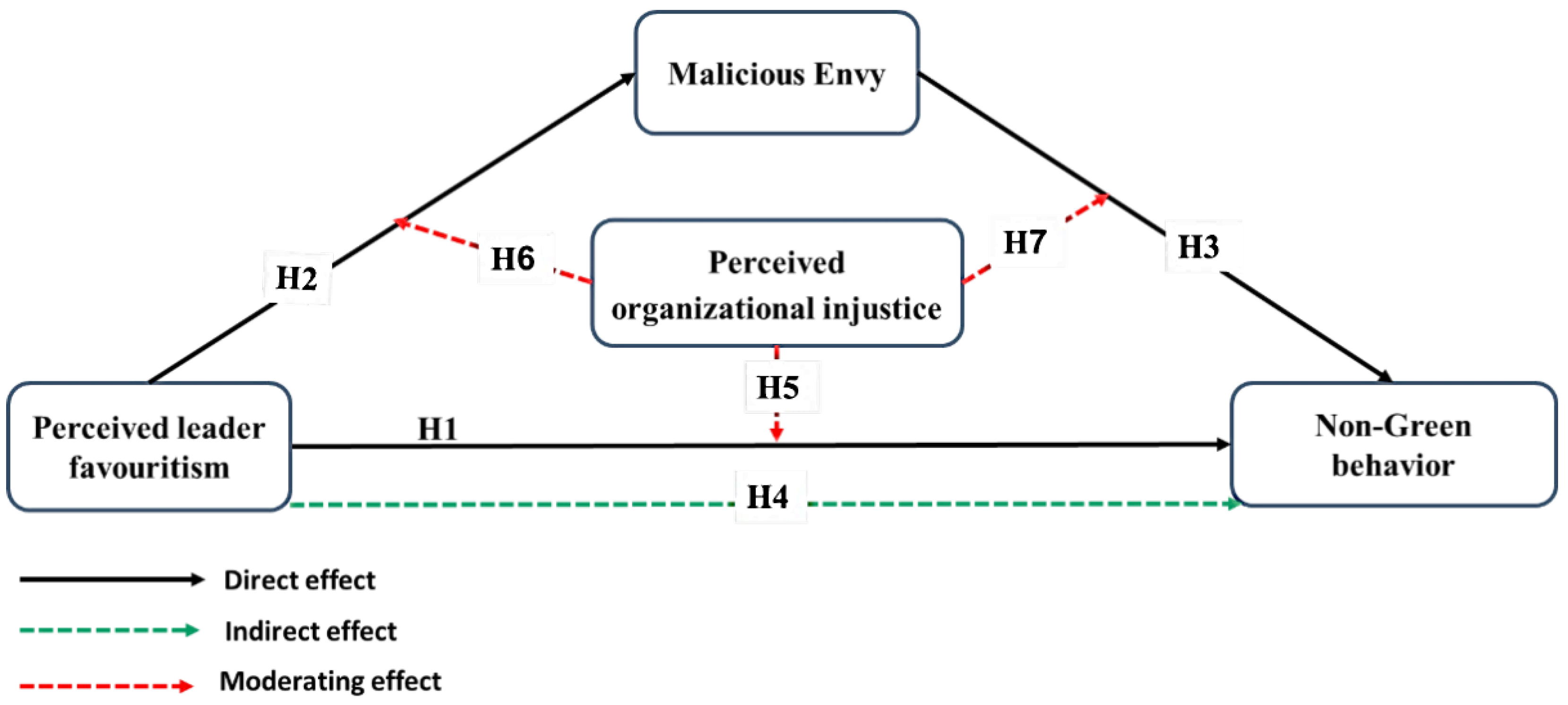
The conceptual framework in Figure 1 depicts a mediated moderation model. It asserts that PLF leads to NGB via the affective route of malicious envy (ME), which is illustrated by social comparison and LMX theories. In addition, perceived organizational injustice (POJ) serves as an important boundary condition that enhances the positive effects of PLF on NGB and ME, PLF on NGB, and ME on NGB. This model represents a mechanism by which an unfair form of leadership can initiate a spiral of negative emotions and behaviors that become reinforced in a systemically unjust context.

3. Research Methods

3.1. Instrument and Measures

All measurement items were adapted from previously validated scales, with each construct evaluated as follows: Perceived leader favoritism (PLF) was measured using a 5-item scale developed by Mohd Shamsudin et al. (2024). Non-green behavior (NGB) was assessed using a 5-item scale created by Paillé et al. (2019). Malicious envy (ME) was gauged using a 5-item scale adapted from a study by Lange and Crusius (2015), while perceived organizational injustice (POI) was assessed using 4 items adopted from a study by De Clercq et al. (2021). Except for demographic questions, all constructs were measured on a five-point Likert scale ranging from 1 (strongly disagree) to 5 (strongly agree). In accordance with the procedures outlined by Brislin (1980), the original questionnaire in English was first translated into Arabic by two bilingual specialists. To ensure both accuracy and conceptual equivalence, an independent team subsequently performed a back-translation into English. To further guarantee the clarity and cultural appropriateness of the questionnaire, a panel of six academics with expertise in research design and nine business professionals with industry experience reviewed the questionnaire to validate the survey instrument. They suggested only minor revisions, and the core content of the survey remained unchanged.

3.2. Participants and Procedures

The study used convenience sampling to recruit hotel employees from highly rated hotels in Riyadh. Participation was voluntary. The confidentiality of all responses and personal data was strictly maintained. Data were collected using a web-based questionnaire developed with Microsoft Forms. The survey link was shared with hotel and HR managers, who then distributed it to employees. Data collection took place from April to September 2025, resulting in 411 completed surveys. All responses were valid, as the questionnaire required answers for all items. To ensure participants had sufficient exposure to workplace environments, the study included only those with a minimum of one year of job experience. This requirement reflects Morrison’s (1993) view that employees generally absorb an organization’s norms and culture within their first six months on the job. The sample (N = 411), as shown in Table 1, was fairly balanced by gender (53.3% male, 46.7% female). Most respondents were aged 30–45 years (56.0%) and held higher education degrees (74.7%). The majority were married (61.6%), followed by singles (35.0%).

3.3. Data Analysis

Hypotheses were tested using PLS-SEM in SmartPLS v3.0. Before this, descriptive statistics were analyzed in SPSS 24.0. PLS-SEM was chosen because the primary aim was prediction, not theory confirmation. PLS-SEM accommodates complex models and varying sample sizes and requires fewer distributional assumptions. The analysis consisted of two steps: first, the measurement model was assessed for reliability and validity; second, the structural model was evaluated to examine the hypothesized relationships among constructs (Hair et al., 2017). Detailed results follow in the next section.

4. Results

4.1. Test for Common Method Bias (CMB) and Normality

To assess common method bias (CMB), Harman’s single-factor test was applied, where the presence of CMB is indicated if a single factor accounts for more than 50% of the variance. The analysis revealed that the first factor accounted for only 36.419% of the variance, indicating that CMB was not a significant concern (Podsakoff et al., 2003). Additionally, data normality was assessed through the examination of skewness and kurtosis values. All items exhibited absolute skewness and kurtosis values below the recommended cutoffs of 2.1 and 7.1, respectively (Curran et al., 1996), as summarized in Table 2. Together, these results confirm that neither CMB nor non-normality was problematic in the dataset.

4.2. Reliability and Construct Validity

According to (Hair et al., 2019), convergent validity (CV) in PLS-SEM can be assessed using several criteria, including factor loadings (λ), alpha coefficients (α), and construct reliability (CR), all of which should exceed the threshold of 0.70, while the average variance extracted (AVE) should be at least 0.50. As shown in Table 2, all values met or exceeded these recommended cutoffs, confirming adequate CV and supporting the internal consistency of the measurement model.
Discriminant validity (DV) was evaluated using two established methodological approaches. First, consistent with another study (Fornell & Larcker, 1981), the AVE for each construct surpassed the respective squared inter-construct correlations, satisfying the initial criterion (Table 3). Moreover, the heterotrait–monotrait ratio (HTMT) was examined; all values were below the suggested threshold of 0.90 (Gold et al., 2001), as presented in Table 4. Collectively, these findings substantiate the adequacy of discriminant validity.

4.3. Structural Model and Testing Hypotheses

The structural model was evaluated using several metrics, as recommended by Hair et al. (2019). VIF was used to assess multicollinearity, and all values had to be below the threshold of 5.0. R2 measured the model’s explanatory power, while significant β coefficients confirmed the hypothesized relationships. Q2 values greater than zero demonstrated the model’s predictive relevance.
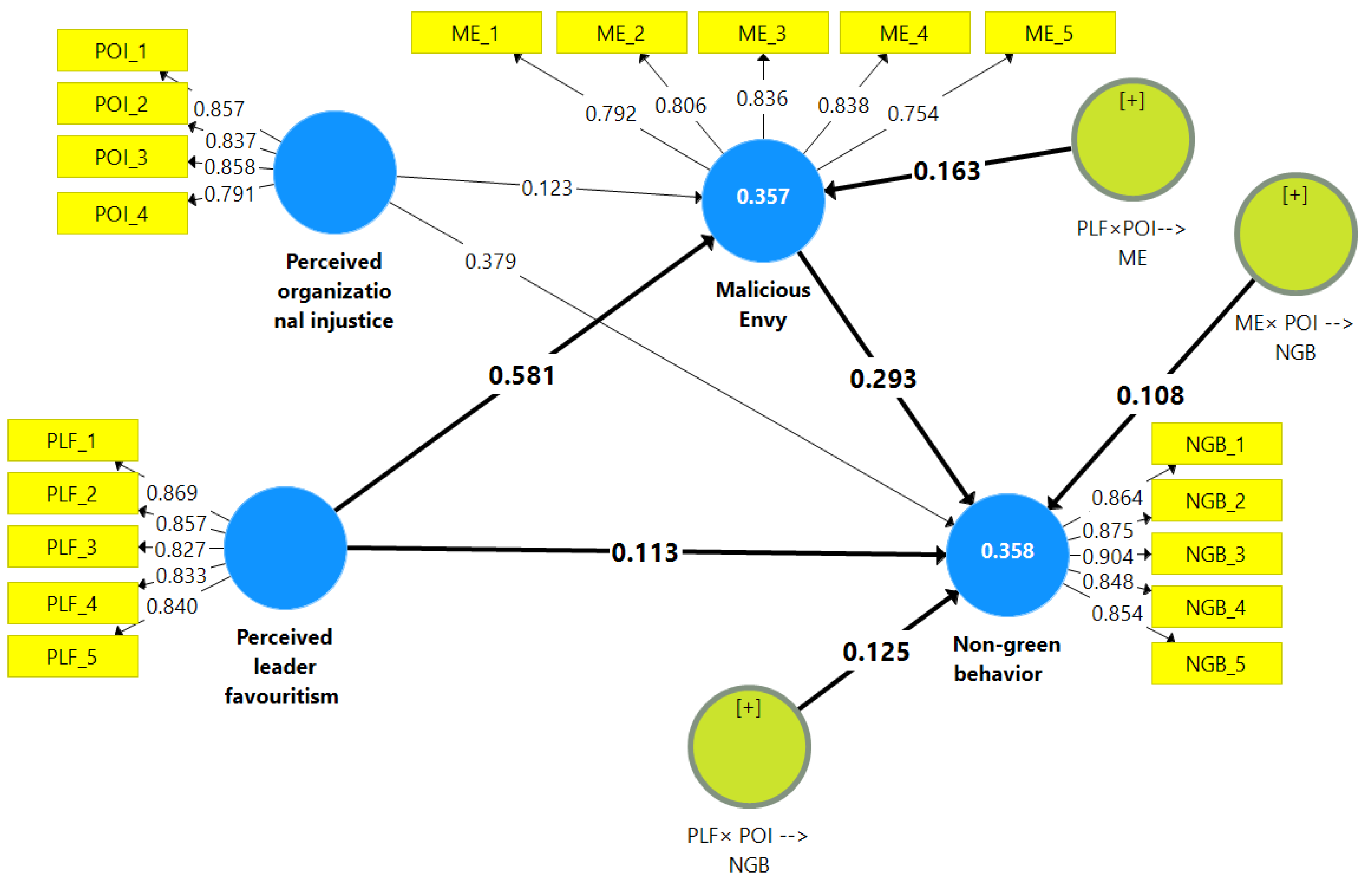
Table 2 shows that all VIF values ranged from 1.515 to 4.254, which is below the 5.0 threshold and confirms the absence of multicollinearity. Turning to model fit, the R2 for malicious envy was 0.357, indicating that the model explained 35.7% of its variance. Similarly, the R2 for non-green behavior was 0.358, exceeding the 0.25 benchmark (Hair et al., 2019). Furthermore, Q2 values also surpassed the cutoff of 0.0, supporting the model’s predictive relevance. Finally, all β coefficients were significant at the 0.01 level, validating the hypothesized relationships.
Furthermore, the overall model fit (GoF) was assessed following Tenenhaus et al. (2005) using the following formula:
GoF   =   A V E a v y × R 2 a v y
According to the suggested thresholds (0.10 = low; 0.25 = medium; 0.36 = high); the GoF value for the present model was 0.502, indicating a high goodness of fit.
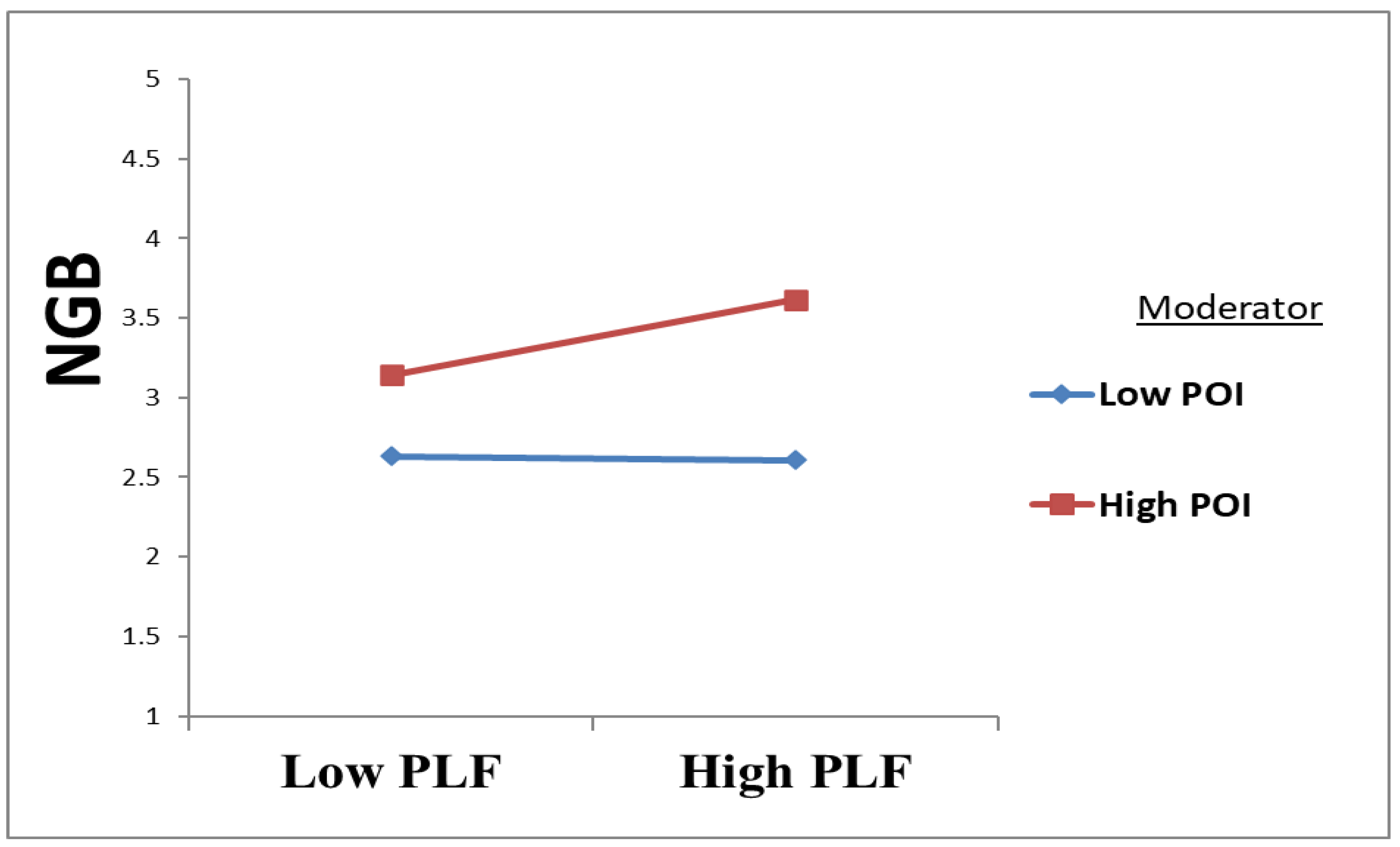
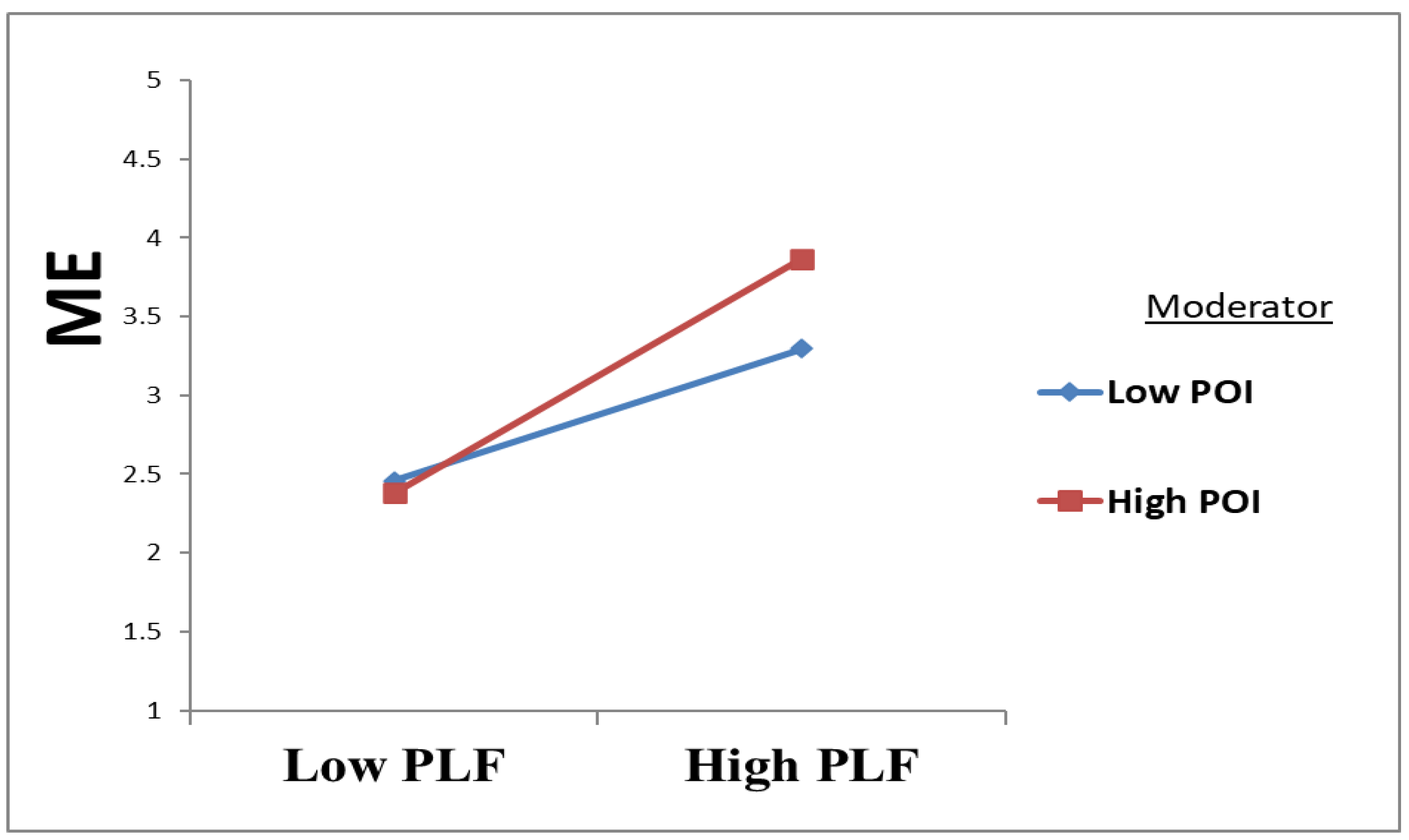
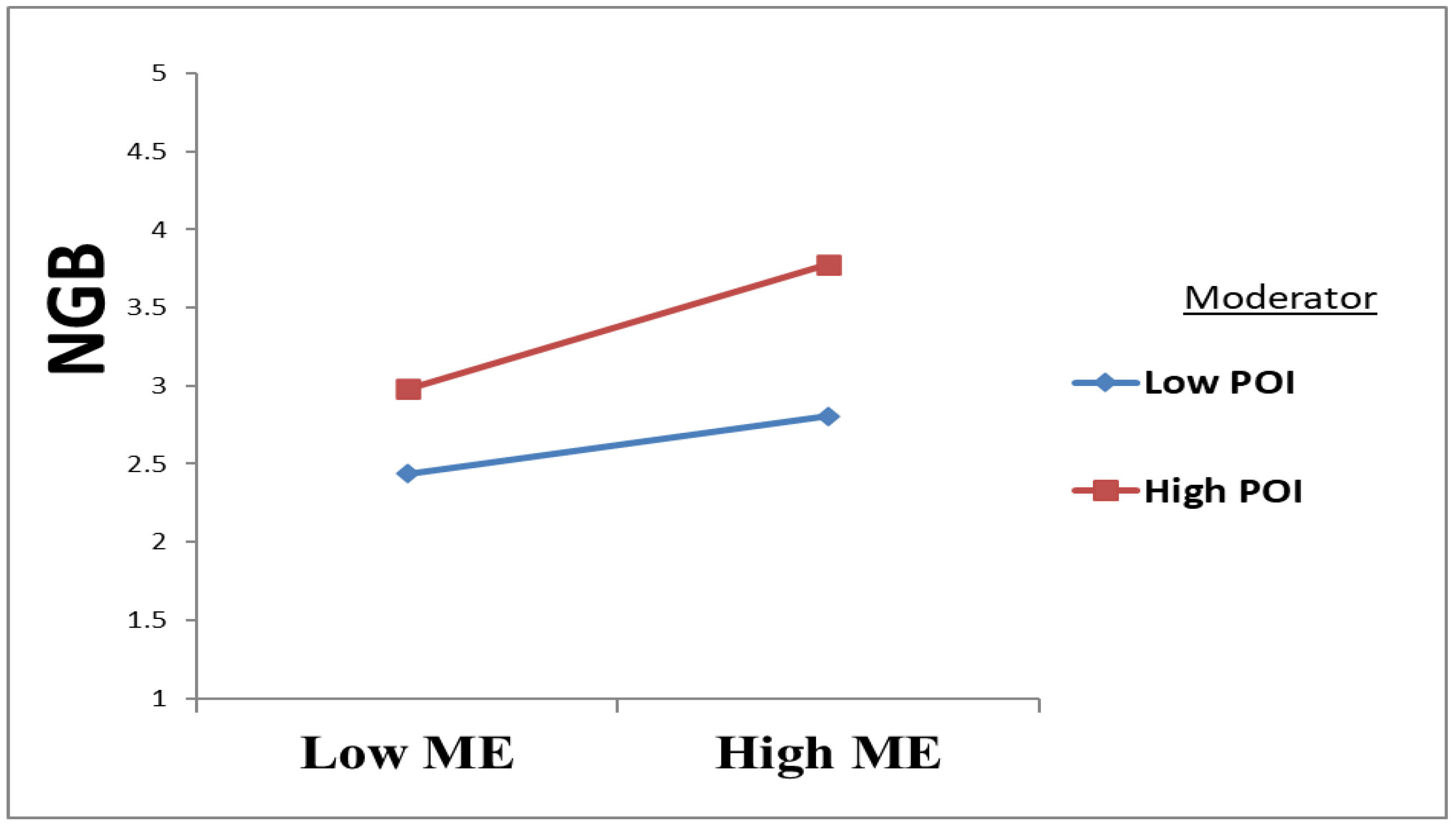
After confirming the validity of both the measurement and structural models, we tested the proposed hypotheses. The results are shown in Table 5 and Figure 2, Figure 3, Figure 4 and Figure 5.
The results in Table 5 show that perceived leader favoritism (PLF) has a significant direct effect on non-green behavior (NGB) (β = 0.113, t = 2.197, p = 0.028, F2 = 0.011) and malicious envy (ME) (β = 0.581, t = 11.116, p < 0.001, F2 = 0.422), confirming H1 and H2. In addition, ME had a significant influence on NGB (β = 0.293, t = 5.848, p < 0.001, F2 = 0.084). Additionally, the mediation analysis showed that ME mediates the relationship between PLF and NGB (β = 0.170, t = 5.352, p < 0.001), supporting H4. Notably, as shown in Figure 3, Figure 4 and Figure 5, perceived organizational injustice (POI) significantly intensified the effects of PLF on NGB (β = 0.125, t = 2.753, p = 0.006), PLF on ME (β = 0.163, t = 2.692, p = 0.007), and ME on NGB (β = 0.108, t = 2.621, p = 0.009); thus, H5–H7 were accepted.

5. Discussion

This study uncovers the psychological processes that connect perceived leader favoritism to non-green behavior among tourism and hospitality companies. The relatively weak direct effect of perceived leader favoritism on non-green behavior (H1: β = 0.113) implies that its core destructive power would not be immediate but reflected indirectly through affective processes. This is in line with social exchange theory, such that employees balance out unfair treatment by limiting their discretionary effort, for example, in pro-environmental behavior (Yang & Liu, 2022). The strong correlation between perceived leader favoritism and malicious envy (H2: β = 0.581) provides solid empirical support for social comparison theory. It suggests that upward comparisons, when induced by inequitable LMX levels, are strong enough to create hostile resentment rather than dissatisfaction (Wei & Yu, 2022). This tendency is particularly pronounced in the intimacy-driven service domain of hospitality, where differences are more observable (Park et al., 2021). More importantly, the finding that malicious envy motivates non-green behavior (H3) makes a key contribution to CORT. It highlights that the disruptive thoughts that are part of different types of malicious envy deplete an individual’s self-regulatory resources, thereby rendering them without the cognitive and emotive capacity to engage in voluntary and effortful activities such as EC (N. U. Khan et al., 2022).
Importantly, H4 (mediated moderation) indicates that the indirect trickle-down effect from perceived leader favoritism to non-green behavior is stronger via malicious envy (β = 0.170) than the direct path. This offers powerful evidence that it is not an incidental byproduct but the key operative mechanism through which favoritism turns into environmental damage. This theoretical estimation is unambiguous: the mechanism between injustice in leadership and failure in sustainability is deeply affective. The moderating role of perceived organizational injustice (H5–H7) establishes a critical boundary condition. When employees perceive the broader organizational system as unjust, the negative effects of both perceived leader favoritism and malicious envy are significantly amplified (Shapoval, 2019). This aligns with organizational justice theory, suggesting that a climate of injustice legitimizes retaliatory behaviors and erodes moral engagement, making non-green actions seem like a justified response to systemic failure (Asif et al., 2025). For an industry reliant on employee discretion, these findings underscore the indispensable role of systemic fairness. Finally, perceived organizational injustice (H5–H7) plays a key role as a moderator and boundary condition. When the larger organizational system is viewed as unjust, the detrimental effects of perceived leader favoritism and malicious envy become much stronger (Shapoval, 2019). This is consistent with organizational justice theory, which postulates that a climate of injustice legitimizes retaliatory acts (elsewhere, despite this, feature control responses also occur), leaving moral engagement by the wayside and rendering non-green behaviors as equivalent to a justified reaction to systemic inefficiency (Asif et al., 2025). For an industry which is dependent on staff using their discretion, these results highlight the crucial requirement for systemic fairness.

6. Study Implications

6.1. Theoretical Contributions

This study contributes in several notable ways to both organizational behavior and environmental psychology research. First, the study contributes to social comparison theory by showing how upward comparisons induced by leader favoritism lead to malicious envy, which in turn is externalized into acts that are harmful for the environment (Matthews & Kelemen, 2025). It presents a new application of social comparison processes to environmental contexts, and it uniquely connects the leadership, emotional, and sustainability literature. Second, the link between leader–member exchange (LMX) theory and organizational justice theory represents an integrative framework to explain when and why favoritism leads to negative consequences (Martin, 2018). The moderating effect of perceived organizational injustice on LMX differentiation suggests that the effects of LMX differentiation are not universal and instead depend crucially on larger organizational justice contexts. This result questions the validity of simplified LMX models and suggests a need for more contextually sensitive analyses in leadership differentiation research. Third, the study extends the conservation of resources theory by pinpointing malicious envy as a critical mechanism through which job stressors drain (psychological) resources and dampen engagement in optional pro-environmental behavior (N. U. Khan et al., 2022). This affective route introduces new elements to cognitive models of environmental behavior and underscores the role of emotions in sustainability research. Fourth, the study results contribute to environmental psychology by demonstrating the importance of interpersonal workplace dynamics in affecting environmental behaviors beyond simple models focusing on attitudes and values (Wei & Yu, 2022). The finding that organizational emotions can trump environmental intentions is particularly useful for understanding the intention–behavior gap within workplaces in a sustainability context. Fifth, the study contributes to hospitality management theory by connecting the dots between leadership and environmental outcomes in service contexts (Zheng et al., 2021). This is a particularly important contribution, given that the industry is taking great leaps in sustainability while grappling with distinct pressures for service delivery and customer satisfaction. Sixth, the study contributes to the growing body of literature on toxic leadership by identifying mechanisms through which toxic leader behaviors undermine organizational environmental goals (Saleem et al., 2022). The mediation model is useful because it adds theoretical clarity to the understanding of how leadership toxicity leads to environmental non-compliance through emotional mechanisms. Finally, the study furthers social identity theory’s application to environmental settings by demonstrating that leadership behaviors that challenge social identities will hinder group engagement with environmental goals (Zheng et al., 2021). This finding implies that environmental identity and organizational identity are intertwined in more nuanced ways, requiring additional theoretical elaboration.

6.2. Practical Implications

The results of this study provide a variety of implications related to actionable agendas for hospitality managers and firms that are environmentally responsible. Leaders should first understand that perceptions of favoritism—even if unintended—can have a significant impact on environmental programs by provoking an emotional response that results in less employee engagement with policies around sustainability. This sensitivity should be built into leadership development programs and supervisory training, focusing on the value of fair and consistent treatment for all team members. Second, organizations need standardized ways to manage and control perceptions of favoritism before feelings of malicious envy set in. Employing regular climate surveys, 360-degree feedback processes, and clear communications about decision-making processes can help to identify and correct patterns of inequitable treatment. This is an important result as controlling destructive envy in the long run can become resistant and spread to work groups. Third, hospitality companies need to enhance organization justice processes to reduce the potential impact of individual flaws in leadership cascade operations. Explicit policies, consistent procedures, and resource allocation processes that are perceived as fair reduce the spiraling impact of perceived injustice on favoritism–envy–behavior sequences. These practices have, among other things, ensured that there are clear and open promotion processes incorporating a commitment to fair allocation and the application of rewards and recognition. Fourth, environmental training should include levels of emotional intelligence that allow employees to easily identify and manage their envious feelings effectively. On top of the technical side of environmental knowledge, it is about sustainable education being integrated into how we interact with one another, which may either support or thwart ‘green’ efforts. This may involve educating workers on how harmful malicious envy can be and finding better ways to cope with perceived injustices. Fifth, organizations would need to create team structures and work processes that reduce opportunities for social comparison through encouraging environmental collaboration. Environmental goals and shared sustainability metrics, as well collective recognition systems, enable this competitive energy to be re-directed towards pro-environmental contributions instead of interpersonal fights. Sixth, succession planning and leadership recruitment should favor candidates who can exhibit emotional intelligence, are fair-minded, and become advocates for environmental values. As the approach of a leader has a significant effect on team environmental performance, investment in ethically focused leaders is an important avenue to continued success in sustainability. Lastly, in order to convert these discoveries into actionable change, hospitality establishments would be wise to design and implement targeted interventions. First, there is a need for leadership development programs to include specific training on how to reduce perceptions of equity in their content (i.e., unconscious bias workshops, transparent decision-making practices, and inclusive comms). Also, organizations should define measures of fairness that they will monitor diligently—embedding questions about favoritism and justice into regular climate surveys and 360-degree feedback systems to create a “fairness dashboard” for management review. Finally, sample policies such as the ones described should be implemented—such as specific, non-nepotistic criteria for promotions, offers etc., and inter-departmental ‘green task forces’ established to democratize involvement with initiatives of sustainability (and therefore remove chances of exclusion perception) and create a sense of ownership among colleagues.

6.3. Policy and National Vision Implications

This study provides important lessons that contribute to Saudi Arabia’s vision and are in line with its transformative agenda of addressing leadership fairness and environmental stewardship in hospitality settings. In drawing attention to how perceived leader favoritism deters pro-environment behavior due to malicious envy, this study has implications for management intervention designed to stimulate fair workplaces in order to contribute towards national sustainability goal attainment (Vision 2030, 2016). Consistent with Saudi Vision 2030’s objectives of a vibrant society and a thriving economy, the results emphasize the significance of inclusive leadership for promoting community well-being and environmental accountability (Vision 2030, 2016). This research offers evidence-based insights for national priorities, such as improving organizational justice, which has been highlighted in the National Environmental Strategy and Action Plan to minimize resource wastage and strengthen ecological resilience (Ministry of Environment, Water and Agriculture, 2024). Through enhancing the perception of fairness, hospitality companies could reduce non-green behaviors and, consequently, assist Saudi Arabia in achieving SDG 12 (Responsible Consumption and Production) and SDG 13 (Climate Action) (United Nations, 2015). These findings are consistent with sustainable tourism’s continuing commitment to diversifying the economy, which has led to new jobs and community development. From an economic perspective, curbing wasteful activities fueled by malicious envy increases resource productivity and operational cost savings, which would improve the competitive position of the sector in international markets. From an environmental perspective, fostering green behavior reduces carbon emissions and enhances waste management with enduring ecological advantages. From a societal perspective, equitable leadership fosters trust and social cohesion, enhancing cultural identity and increasing local communities’ quality of life (M. I. Khan et al., 2025). Finally, the current research provides a comprehensive framework for policymakers and practitioners to incorporate sustainability and human-centered governance, hence advancing Saudi Arabia’s vision towards prosperity and environmental resilience.

7. Limitations and Future Research

The study has some limitations, which could be addressed in future work. Its cross-sectional nature precludes any firm causal inferences, and so longitudinal studies are required to show the development of these associations over time. The concentration on Saudi hospitality reduces generalizability, warranting cross-cultural comparison in the future. The use of self-report data increases the potential for common method bias, suggesting the value of multi-source or objective measures. Moreover, the research focused solely on malicious envy and did not investigate the possible positive effects of benign envy. Future research also needs to test whether moderators such as individual differences (e.g., personality traits or environmental values) are involved. Lastly, research should be extended beyond non-green behavior to other positive effects, such as environmental innovation, and examine practical interventions to break the vicious cycle whereby favoritism leads to negative behaviors. Moreover, the constructs involving leader favoritism and non-compliant behaviors are sensitive, potentially leading to a risk of social desirability and response bias. Although safeguards were in place to ensure participants’ anonymity, they may have under-reported non-green behavior as well as perceived leadership. In order to corroborate this self-report study and confirm temporal priority more clearly, future studies should be considered with a prospective or experimental research design. For example, random scenario-based experiments could manipulate perceptions of favoritism and unfairness to show their immediate direct effects on envy and behavioral intentions. Alternatively, longitudinal observational field studies that examine changes in these variables over time could yield more compelling evidence for the temporal and causal sequences we hypothesize within real organizations.

8. Conclusions

The present study contributes to the literature by showing that perceived leader favoritism has a significant negative impact on environmental sustainability in hotels through the activation of malicious envy, with organizational justice perceptions as important attenuators. The results indicate that leadership behaviors impact sustainability initiatives by way of both workplace emotions and fairness judgments, extending theory through social comparison and organizational justice mechanisms that explain these emotional processes. From an applied standpoint, the findings in this work emphasize that achieving environmental goals is not a matter of just relying on disciplines and eco-terms; it demands just leadership to create fair emotional climates. With the importance of employees in the hospitality industry, where human relations are critical to success, this relationship provides insight into the connection between HRM and environmental performance. Ultimately, building just forms of leadership is necessary to enact organizational practices consistent with sustainability’s aspirations for both ecological integrity and the humane treatment of employees. There needs to be further research on developing interventions that will increase leadership quality and result in a more positive environmental impact.

Author Contributions

Conceptualization, S.F., A.A.A.A. and H.A.M.A.; methodology, S.F., A.A.A.A. and H.A.M.A.; software, H.A.K. and S.F.; validation, H.A.K., A.A.A.A. and S.F.; formal analysis, S.F. and A.A.A.A.; investigation, A.A.A.A., S.F. and H.A.M.A.; resources, A.A.A.A. and S.F.; data curation, S.F.; writing—original draft preparation, S.F., A.A.A.A. and H.A.M.A.; writing—review and editing, H.A.M.A., S.F. and H.A.M.A.; visualization, S.F.; supervision, S.F.; project administration, H.A.M.A., S.F. and A.A.A.A.; funding acquisition, H.A.M.A. and A.A.A.A. All authors have read and agreed to the published version of the manuscript.

Funding

This study is supported via funding from Prince Sattam bin Abdulaziz University, Saudi Arabia (Project number: PSAU/2025/02/34437).

Institutional Review Board Statement

The study was conducted in accordance with the Declaration of Helsinki, and approved by the Institutional Review Board (or Ethics Committee) of Ethics Committee for Faculty of Tourism and Hotels (protocol code EA/35-2025 and date of approval 6 June 2025).

Informed Consent Statement

Informed consent was obtained from all subjects involved in the study.

Data Availability Statement

The information provided in this research can be obtained by contacting the corresponding author.

Acknowledgments

The authors extend their appreciation to Prince Sattam bin Abdulaziz University for funding this research work through the project number (PSAU/2025/02/34437).

Conflicts of Interest

The authors declare no conflict of interest.

Appendix A. Research Gaps and Expected Contributions of the Present Study

Identified Research GapDescription of the Gap in Existing LiteratureContribution of the Present Study
1. Limited understanding of the role of leader favoritism in shaping environmental sustainability behaviorsAlthough leadership styles are widely examined in sustainability research (Wu et al., 2025), the specific effect of perceived leader favoritism (PLF) on employees’ environmental misconduct remains underexplored (Lasisi et al., 2022). Favoritism, as a subtle and disguised form of injustice, has been largely overlooked as a driver of non-green behavior (NGB), despite its relevance in triggering negative socio-emotional reactions.The study positions PLF as a direct antecedent of NGB and empirically tests its effect within the hospitality context. In doing so, it extends sustainability research by introducing favoritism—rather than traditional leadership constructs—as a critical social relational factor undermining organizational environmental efforts.
2. Lack of empirical investigation into the psychological mechanisms linking negative leader behaviors to non-green behaviorWhile negative leader behaviors (e.g., toxic leadership, unethical leadership) have been linked to poor workplace outcomes (Ahmed et al., 2024), the psychological processes explaining how PLF leads to NGB remain under-theorized. The role of malicious envy (ME)—a potent negative emotion triggered by unfair social comparison—has not been incorporated into sustainability models.The study introduces malicious envy as a mediating mechanism that explains why and how PLF escalates into NGB. By integrating social comparison theory and affective processes, the study clarifies the internal emotional dynamics driving environmentally harmful behavior.
3. Insufficient examination of boundary conditions that intensify or weaken the PLF–NGB relationshipThe literature lacks insights into contextual moderators that either exacerbate or alleviate the negative effects of PLF (Shamsudin et al., 2023). In particular, the organizational injustice climate—a critical contextual cue shaping how employees interpret favoritism—has not been studied as a moderating factor within sustainability or green behavior frameworks.The study incorporates perceived organizational injustice (POI) as a moderator, revealing the conditions under which PLF has stronger or weaker effects on both ME and NGB. This provides a more complete and contingent understanding of the PLF–ME–NGB pathway.
4. Overemphasis on positive leadership and HRM practices with limited attention to darker social relational dynamicsPrior sustainability research has largely focused on positive drivers (e.g., GHRM, ethical leadership, supportive culture (Al-Romeedy et al., 2025)), while negative relational dynamics—such as favoritism, envy, and perceived unfairness—remain marginalized despite evidence that they can overpower organizational green initiatives.The study shifts the conversation from positive enablers to dysfunctional interpersonal dynamics. By embedding PLF, ME, and POI into one model, it highlights the powerful role of socio-emotional and fairness-related factors in undermining environmental initiatives, offering a more balanced and realistic understanding of sustainability behaviors.
5. Limited research specifically contextualized in hospitality settings, where sustainability depends heavily on employee behaviorsMost existing studies on non-green behavior and leadership influences have been conducted in general organizational contexts. The hospitality sector—with its operational dependence on employee compliance with environmental protocols—remains underrepresented in empirical work on negative leader behaviors (Fouad et al., 2025).The study provides context-specific insights by examining hospitality employees, thereby contributing empirical evidence from a sector where sustainability outcomes are highly sensitive to employee environmental behaviors and social dynamics.
6. Fragmented understanding of non-green behavior as a socio-emotional rather than solely policy-driven phenomenonMuch of the literature approaches environmental misbehavior from structural or policy-related angles (e.g., training, green HRM). The role of interpersonal justice perceptions and social comparison processes in predicting NGB has not been adequately theorized or tested (Yarivand et al., 2025).The study integrates constructs from social comparison theory and organizational justice theory to present a holistic socio-emotional framework for understanding NGB, shifting the narrative from policy compliance to relational and emotional antecedents.

References

  1. Abdelghani, A. A. A., Ahmed, H. A. M., Zamil, A. M. A., Elsawy, O., Fayyad, S., & Elshaer, I. A. (2025). Gossip gone toxic: The dual role of self-esteem and emotional contagion in counterproductive workplace behavior. Administrative Sciences, 15(9), 359. [Google Scholar] [CrossRef]
  2. Abdou, A. H., Hassan, T. H., Salem, A. E., Albakhit, A. I., Almakhayitah, M. Y., & Salama, W. (2022). The nexus between environmentally sustainable practices, green satisfaction, and customer citizenship behavior in eco-friendly hotels: Social Exchange theory perspective. Sustainability, 14(19), 12791. [Google Scholar] [CrossRef]
  3. Aboramadan, M., & Karatepe, O. M. (2021). Green human resource management, perceived green organizational support and their effects on hotel employees’ behavioral outcomes. International Journal of Contemporary Hospitality Management, 33(10), 3199–3222. [Google Scholar] [CrossRef]
  4. Addo, M. A., & Mensah, I. (2023). Envy and jealousy in entrepreneurial activities: Existence and nature, causes, effects and management. Journal of Global Entrepreneurship Research, 13(1), 23. [Google Scholar] [CrossRef]
  5. Agrawal, S., & Pradhan, S. (2023). Employee green behavior in hotels: The role of green human resource management, green transformational leadership and value congruence. Consumer Behavior in Tourism and Hospitality, 18(2), 241–255. [Google Scholar] [CrossRef]
  6. Ahmed, M. A. O., Zhang, J., Fouad, A. S., Mousa, K., & Nour, H. M. (2024). The dark side of leadership: How toxic leadership fuels counterproductive work behaviors through organizational cynicism and injustice. Sustainability, 17(1), 105. [Google Scholar] [CrossRef]
  7. Al-Romeedy, B. S., Khairy, H. A., Abdelrahman Farrag, D., Alhemimah, A., Salameh, A. A., Gharib, M. N., & Fathy Agina, M. (2025). Green inclusive leadership and employees’ green behavior in tourism and hospitality businesses: Do green psychological climate and green psychological empowerment matter? Journal of Quality Assurance in Hospitality & Tourism, ahead of print. 1–38. [Google Scholar] [CrossRef]
  8. Ansong, A., Andoh, R. P. K., Ansong, L. O., Hayford, C., & Owusu, N. K. (2025). Toward employee green creativity in the hotel industry: Implications of green knowledge sharing, green employee empowerment and green values. Journal of Hospitality and Tourism Insights. ahead of print. [Google Scholar] [CrossRef]
  9. Asif, M., Ma, Z., Li, M., Xie, G., & Hu, W. (2025). Authentic leadership: Bridging the gap between perception of organizational politics and employee attitudes in public sector museums. Humanities and Social Sciences Communications, 12(1), 47. [Google Scholar] [CrossRef]
  10. Bashir, F. (2021). Dark side of paradoxical leadership: Social comparision theory perspective. NICE Research Journal, 14, 107–130. [Google Scholar] [CrossRef]
  11. BAŞAR, U. (2020). Ethical leadership versus perceived organisational politics and work neglect: A time lagged multi-level survey. Business & Management Studies: An International Journal, 8(4), 1081–1114. [Google Scholar] [CrossRef]
  12. Batool, U., Raziq, M. M., Sarwar, N., Saleem, S., & Obaid, A. (2023). Paradoxical leader behavior and leader effectiveness: Moderating role of structural and job-related uncertainty. European Business Review, 35(2), 239–260. [Google Scholar] [CrossRef]
  13. Bindra, S., Achhnani, B., & Neelam, N. (2025). Workplace envy through the lens of leader–member exchange: Evidence from higher educational institutions. Cogent Business & Management, 12(1), 2454980. [Google Scholar] [CrossRef]
  14. Brislin, R. W. (1980). Translation and content analysis of oral and written materials. Methodology, 2, 389–444. [Google Scholar]
  15. Bryant, W., & Merritt, S. M. (2021). Unethical pro-organizational behavior and positive leader-employee relationships. Journal of Business Ethics, 168(4), 777–793. Available online: http://www.jstor.org/stable/45386741 (accessed on 12 September 2025). [CrossRef]
  16. Cao, C., Tong, X., Chen, Y., & Zhang, Y. (2022). How top management’s environmental awareness affect corporate green competitive advantage: Evidence from China. Kybernetes, 51(3), 1250–1279. [Google Scholar] [CrossRef]
  17. Cao, S., Xu, P., Qalati, S. A., & Wu, K. (2024). Impact of employee environmental concerns on sustainable practices: Investigating organizational commitment and job satisfaction. Sustainability, 16(13), 5823. [Google Scholar] [CrossRef]
  18. Carraturo, F., Di Perna, T., Giannicola, V., Nacchia, M. A., Pepe, M., Muzii, B., Bottone, M., Sperandeo, R., Bochicchio, V., Maldonato, N. M., & Scandurra, C. (2023). Envy, social comparison, and depression on social networking sites: A systematic review. European Journal of Investigation in Health, Psychology and Education, 13(2), 364–376. [Google Scholar] [CrossRef]
  19. Costa Pinto, D., Borges, A., Maurer Herter, M., & Boto Ferreira, M. (2020). Reducing ingroup bias in ethical consumption: The role of construal levels and social goodwill. Business Ethics Quarterly, 30(1), 31–63. [Google Scholar] [CrossRef]
  20. Curran, P. J., West, S. G., & Finch, J. F. (1996). The robustness of test statistics to nonnormality and specification error in confirmatory factor analysis. Psychological Methods, 1(1), 16–29. [Google Scholar] [CrossRef]
  21. De Cicco, R., Francioni, B., Dini, M., Curina, I., Filieri, R., & Cioppi, M. (2025). Generative AI and human advice: User perceptions, intentions, and behavior across pre-visit and on-site travel stages. Journal of Travel Research, ahead of print. 00472875251364222. [Google Scholar] [CrossRef]
  22. De Clercq, D., Haq, I. U., & Azeem, M. U. (2023). Unfair rewards, poorly performing organizations and perceptions of deservingness as explanations of diminished job performance. Journal of Organizational Effectiveness: People and Performance, 10(4), 624–643. [Google Scholar] [CrossRef]
  23. De Clercq, D., Kundi, Y. M., Sardar, S., & Shahid, S. (2021). Perceived organizational injustice and counterproductive work behaviours: Mediated by organizational identification, moderated by discretionary human resource practices. Personnel Review, 50(7/8), 1545–1565. [Google Scholar] [CrossRef]
  24. Deng, X., & Qu, S. (2020). Cross-docking center location selection based on interval multi-granularity multicriteria group decision-making. Symmetry, 12(9), 1564. [Google Scholar] [CrossRef]
  25. Ding, C., Zhang, Z., Zhao, S., & Zhang, G. (2023). The impact of idiosyncratic deals on coworkers’ interactive behavior: The moderating role of developmental human resource management practices. Sustainability, 15(18), 13843. [Google Scholar] [CrossRef]
  26. Elshaer, I. A., Azazz, A. M. S., Mansour, M. A., & Fayyad, S. (2025). Perceived greenwashing and employee non-green behavior: The roles of prevention-focused green crafting and work alienation. Cogent Business & Management, 12(1), 2449592. [Google Scholar] [CrossRef]
  27. Emery, C., Booth, J. E., Michaelides, G., & Swaab, A. J. (2019). The importance of being psychologically empowered: Buffering the negative effects of employee perceptions of leader–member exchange differentiation. Journal of Occupational and Organizational Psychology, 92(3), 566–592. [Google Scholar] [CrossRef]
  28. Fam, J. Y., Bala Murugan, S., & Yap, C. Y. L. (2020). Envy in social comparison–behaviour relationship: Is social comparison always bad? Psychological Studies, 65(4), 420–428. [Google Scholar] [CrossRef]
  29. Farrukh, M., Rafiq, M., Raza, A., & Iqbal, S. (2024). Beyond the surface: Understanding the mechanism between green HR practices and employees’ green creative behavior through mixed-methods exploration. Journal of Hospitality and Tourism Insights, 7(5), 3055–3072. [Google Scholar] [CrossRef]
  30. Fayyad, S., Elsawy, O., Wafik, G. M., Abotaleb, S. A., Ali Abdelrahman, S. A., Abdel Moneim, A., Omran, R., Attia, S., & Mansour, M. A. (2025). Leaders’ STARA competencies and green innovation: The mediating roles of challenge and hindrance appraisals. Tourism and Hospitality, 6(4), 202. [Google Scholar] [CrossRef]
  31. Fornell, C., & Larcker, D. F. (1981). Evaluating structural equation models with unobservable variables and measurement error. Journal of Marketing Research, 18(1), 39–50. [Google Scholar] [CrossRef]
  32. Fouad, A. M., Abdullah Khreis, S. H., Fayyad, S., & Fathy, E. A. (2025). The dynamics of coworker envy in the green innovation landscape: Mediating and moderating effects on employee environmental commitment and non-green behavior in the hospitality industry. Tourism and Hospitality Research, ahead of print. 14673584251324618. [Google Scholar] [CrossRef]
  33. Gaviria, E., Quintanilla, L., & Navas, M. J. (2021). Influence of group identification on malicious and benign envy: A cross-sectional developmental study. Frontiers in Psychology, 12, 663735. [Google Scholar] [CrossRef] [PubMed]
  34. Gold, A. H., Malhotra, A., & Segars, A. H. (2001). Knowledge management: An organizational capabilities perspective. Journal of Management Information Systems, 18(1), 185–214. [Google Scholar] [CrossRef]
  35. Hair, J. F., Risher, J. J., Sarstedt, M., & Ringle, C. M. (2019). When to use and how to report the results of PLS-SEM. European Business Review, 31(1), 2–24. [Google Scholar] [CrossRef]
  36. Hair, J. F., Jr., Hult, G. T. M., Ringle, C. M., & Sarstedt, M. (2017). A primer on partial least squares structural equation modeling (PLS-SEM) (2nd ed.). SAGE Publications, Inc. [Google Scholar]
  37. Hanna Massoudi, A. (2024). The Mediating Effect of occupational stress between paradoxical leader and compulsory citizenship behaviour. Journal of Organisational Studies and Innovation, 11(3), 1–18. [Google Scholar] [CrossRef]
  38. Hao, X., Wen, S., Sun, Q., Irfan, M., Wu, H., & Hao, Y. (2023). How does the target of green innovation for cleaner production change in management process? Quality targeting and link targeting. Journal of Environmental Management, 345, 118832. [Google Scholar] [CrossRef]
  39. Hassanein, F. R., Mohammadi, S., & Zargar, P. (2025). Toxic leadership and job satisfaction in the middle eastern education sector: The influence of organizational culture and trust. Administrative Sciences, 15(5), 171. [Google Scholar] [CrossRef]
  40. Hilal, O. A. (2021). The moderating role of self-efficacy in the relationship between workplace envy and social undermining. Global Business and Organizational Excellence, 40(6), 28–40. [Google Scholar] [CrossRef]
  41. Hoang, G., Nguyen, T., Luu, T. T., & Quach, V. H. (2025). Entrepreneurial leadership affecting knowledge hiding behaviour: The roles of employee envy and peer justice. Knowledge Management Research & Practice, ahead of print. 1–18. [Google Scholar] [CrossRef]
  42. Kaur, S., Arora, M., & Mittal, A. (2025). Nurturing green employee behaviour: Exploring the role of leadership, human resource management practices and individual values. Management Decision. ahead of print. [Google Scholar] [CrossRef]
  43. Kerse, G. (2024). The effect of perceived green organizational support on employee green behavior. Brazilian Journal of Operations & Production Management, 21(1), 1762. [Google Scholar] [CrossRef]
  44. Khan, M. I., Yasmeen, T., Hadi, N. U., Asif, M., Farooq, M., Kurniawan, T. A., Khan, M., & Al-Ghamdi, S. G. (2025). Digital sustainability as an emerging paradigm: Insights from the Saudi Arabian experience and global implications. Res. Sq. [Google Scholar] [CrossRef]
  45. Khan, N. U., Cheng, J., Yasir, M., Saufi, R. A., Nawi, N. C., & Bazkiaei, H. A. (2022). Antecedents of employee green behavior in the hospitality industry. Frontiers in Psychology, 13, 836109. [Google Scholar] [CrossRef]
  46. Khatatbeh, Y., Bani Yassin, O. S., & Freihat, A. M. (2025). Effect of social comparison on envy: A predictive study considering psychological and demographic variables among social media users. Research Journal in Advanced Humanities, 6(3), 1–15. [Google Scholar] [CrossRef]
  47. Lange, J., & Crusius, J. (2015). Dispositional envy revisited: Unraveling the motivational dynamics of benign and malicious envy. Personality and Social Psychology Bulletin, 41(2), 284–294. [Google Scholar] [CrossRef]
  48. Lasisi, T. T., Constanţa, E., & Eluwole, K. K. (2022). Workplace favoritism and workforce sustainability: An analysis of employees’ well-being. Sustainability, 14(22), 14991. [Google Scholar] [CrossRef]
  49. Lee, H. (2019). Understanding ethical consumers through person/thing orientation approach. Journal of Business Ethics, 158(3), 637–658. [Google Scholar] [CrossRef]
  50. Li, H., Zhang, S., Mo, S., & Newman, A. (2024). Relative leader-member exchange and unethical pro-leader behavior: The role of envy and distributive justice climate. Journal of Business Ethics, 192(1), 99–111. [Google Scholar] [CrossRef]
  51. Li, M., Xu, X., & Kwan, H. K. (2023). The antecedents and consequences of workplace envy: A meta-analytic review. Asia Pacific Journal of Management, 40(1), 1–35. [Google Scholar] [CrossRef]
  52. Liang, L. H., Nishioka, M., Evans, R., Brown, D. J., Shen, W., & Lian, H. (2022). Unbalanced, unfair, unhappy, or unable? Theoretical integration of multiple processes underlying the leader mistreatment-employee CWB Relationship with meta-analytic methods. Journal of Leadership & Organizational Studies, 29(1), 33–72. [Google Scholar] [CrossRef]
  53. Lili, Z., & Rafiq, M. (2025). The impact of green participative leadership on pro-environmental behavior: Mediating role of green self-efficacy and moderating role of environmental awareness. Journal of Hospitality and Tourism Insights, 8(5), 1783–1802. [Google Scholar] [CrossRef]
  54. Liu, Z., Li, Y., Guo, Y., Zhang, M., & Ramsey, T. (2025). Does green human resource management foster green advocacy? A perspective of conservation of resources theory. Journal of Organizational Change Management, 38(2), 414–435. [Google Scholar] [CrossRef]
  55. Ma, Z., Fan, M., Su, J., Ouyang, C., & Wu, M. (2022). Impact of differential leadership on employee zhengchong behavior: A complex network’s perspective. Sustainability, 14(20), 13238. [Google Scholar] [CrossRef]
  56. Malakouti, M., & Yarivand, M. (2025). Workplace envy and counterproductive behaviour: A mediation model of perceived injustice and social undermining. Middle East Journal of Management, 12(2), 237–259. [Google Scholar] [CrossRef]
  57. Martin, R. (2018). Leader-member exchange (LMX) differentiation and work outcomes: Conceptual clarification and critical review. Journal of Occupational and Organizational Psychology, 91(1), 1–28. [Google Scholar] [CrossRef]
  58. Matthews, M. J., & Kelemen, T. K. (2025). To compare is human: A review of social comparison theory in organizational settings. Journal of Management, 51(1), 212–248. [Google Scholar] [CrossRef]
  59. McCormack, R., & Chowdhury, R. M. M. I. (2024). Moral disengagement and neutralization techniques as explanations of unethical behavior. Journal of Consumer Affairs, 58(2), 630–662. [Google Scholar] [CrossRef]
  60. Meirun, T., Ahmed, Z., Alzoubi, R. H., Khosa, M., & Nguyen, N. T. (2024). The road to eco-excellence: How does environmentally specific empowering leadership foster hospitality employees’ green creativity through green creative self-efficacy and green learning orientation. International Journal of Hospitality Management, 120, 103790. [Google Scholar] [CrossRef]
  61. Ministry of Environment, Water and Agriculture. (2024). National environmental strategy and action plan. Ministry of Environment, Water and Agriculture. Available online: https://www.mewa.gov.sa/en/Pages/default.aspx (accessed on 2 September 2025).
  62. Mohd Shamsudin, F., Bani-Melhem, S., Abukhait, R., Aboelmaged, M., & Pillai, R. (2024). Favouritism: A recipe for ostracism? How jealousy and self-esteem intervene. Leadership & Organization Development Journal, 45(1), 116–139. [Google Scholar] [CrossRef]
  63. Montes, E., & DeAndrea, D. C. (2025). Envy inducing social media posts can uplift and deflate viewers: A replication of Montes and DeAndrea (2024). Communication Research Reports, 42(2), 69–79. [Google Scholar] [CrossRef]
  64. Morrison, E. W. (1993). Newcomer information seeking: Exploring types, modes, sources, and outcomes. Academy of Management Journal, 36(3), 557–589. [Google Scholar] [CrossRef]
  65. Nasa, J., Rotman, J. D., Mercurio, K. R., Staton, M. G., & Vocino, A. (2024). The moral compass of identity: Ethical predispositions predict the importance consumers ascribe to their group and individual identities. Journal of the Association for Consumer Research, 10(1), 11–23. [Google Scholar] [CrossRef]
  66. Ng, J. C. K., Chong, J. Y. H., & Ng, H. K. Y. (2023). The way I see the world, the way I envy others: A person-centered investigation of worldviews and the malicious and benign forms of envy among adolescents and adults. Humanities and Social Sciences Communications, 10(1), 922. [Google Scholar] [CrossRef]
  67. NG, R. (2023). Effect of leader-member exchange social comparison on co-worker’s envy and work behavior moderated by perceived deservingness of star workers [PhD Dissertation, Singapore Management University]. Ink. [Google Scholar]
  68. Omilion-Hodges, L. M., & Ptacek, J. K. (2021). What is the leader–member exchange (LMX) theory? (pp. 3–25) Springer International Publishing. [Google Scholar] [CrossRef]
  69. Paillé, P., Mejía Morelos, J. H., Raineri, N., & Stinglhamber, F. (2019). The influence of the immediate manager on the avoidance of non-green behaviors in the workplace: A three-wave moderated-mediation model. Journal of Business Ethics, 155(3), 723–740. [Google Scholar] [CrossRef]
  70. Park, J., Kim, B., & Park, S. (2021). Understanding the Behavioral consequences of upward social comparison on social networking sites: The mediating role of emotions. Sustainability, 13(11), 5781. [Google Scholar] [CrossRef]
  71. Podsakoff, P. M., MacKenzie, S. B., Lee, J.-Y., & Podsakoff, N. P. (2003). Common method biases in behavioral research: A critical review of the literature and recommended remedies. Journal of Applied Psychology, 88(5), 879–903. [Google Scholar] [CrossRef] [PubMed]
  72. Polat, Ş., Yeşil, A., & Afşar Doğrusöz, L. (2024). The relationship between self-efficacy, malicious or benign envy in nurses: A cross-sectional study. International Nursing Review, 71(4), 832–840. [Google Scholar] [CrossRef] [PubMed]
  73. Qiang, Q., Xiaohong, W., & Qianru, S. (2023). Does paradoxical leadership influence employees’ proactive work behavior? A study based on employees in Chinese state-owned enterprises. Frontiers in Psychology, 14, 1269906. [Google Scholar] [CrossRef]
  74. Raza, S. A., & Khan, K. A. (2022). Impact of green human resource practices on hotel environmental performance: The moderating effect of environmental knowledge and individual green values. International Journal of Contemporary Hospitality Management, 34(6), 2154–2175. [Google Scholar] [CrossRef]
  75. Sabah, A., Aljaberi, M. A., Hajji, J., El-Mir, M., Al-Najjar, R., Ali, A. M., Hsieh, M.-T., & Lin, C.-Y. (2024). Psychometric properties of the benign and malicious envy scale: A cross-cultural study in the Arab Maghreb countries. Acta Psychologica, 248, 104397. [Google Scholar] [CrossRef] [PubMed]
  76. Sadiq, M., Leong, M. K., Jiayao, Z., & Siddiqui, K. (2025). The effect of perceived firm diversity, equity and inclusion (DEI) on employee wellbeing and green performance: A moderated mediated model. Corporate Social Responsibility and Environmental Management. ahead of print. [Google Scholar] [CrossRef]
  77. Saleem, F., Malik, M. I., Hyder, S., & Perveen, A. (2022). Toxic leadership and project success: Underpinning the role of cronyism. Behavioral Sciences, 12(11), 427. [Google Scholar] [CrossRef] [PubMed]
  78. Septianto, F. (2022). The expression of anger enhances perceived competence following corporate social irresponsibility. Australasian Marketing Journal, 30(1), 10–18. [Google Scholar] [CrossRef]
  79. Shady, A., Bouchra, N., & Darrag, M. (2024). Workplace ostracism as an antecedent to workplace envy: The mediating roles of metacognitive resources and dimensions of social perception. Evidence-Based HRM: A Global Forum for Empirical Scholarship, 12(1), 112–129. [Google Scholar] [CrossRef]
  80. Shahid, I., Jamil, N., & Toor, M. A. (2024). Envy, narcissism, and general self-efficacy among university students. Human Nature Journal of Social Sciences, 5(1), 295–301. [Google Scholar] [CrossRef]
  81. Shahzad, M. A., Wang, X., Li, Z., & Junaid, M. (2025). The nexus between green HRM, employee well-being, and citizenship behavior: Exploring the mediating role of employee sustainability and motivation. International Journal of Hospitality Management, 126, 104053. [Google Scholar] [CrossRef]
  82. Shamsudin, F. M., Bani-Melhem, S., Abukhait, R., Pillai, R., & Quratulain, S. (2023). The role of leader favoritism, unfairness, and employability in employee psychological withdrawal behavior. Business Ethics, the Environment & Responsibility, 32(4), 1185–1200. [Google Scholar] [CrossRef]
  83. Shapoval, V. (2019). Organizational injustice and emotional labor in the hospitality industry: A theoretical review. International Journal of Hospitality Management, 83, 56–64. [Google Scholar] [CrossRef]
  84. Song, W., Cheng, W., Yang, G., & Peng, X. (2024). Unraveling the influence of perceived corporate social responsibility on employee green innovation behavior: The roles of employee well-being and moral self-efficacy. Environment, Development and Sustainability, ahead of print. 1–25. [Google Scholar] [CrossRef]
  85. Su, X., & Chen, C. (2023). The influence of workplace envy on employees’ knowledge-hiding behavior based on a comparative analysis between generation cohorts. Behavioral Sciences, 13(9), 716. [Google Scholar] [CrossRef]
  86. Suárez Vázquez, A., & Chica Serrano, M. (2021). Others’ fortune in online vs offline settings: How envy affects people’s intention to share information. Internet Research, 31(5), 1641–1655. [Google Scholar] [CrossRef]
  87. Şener, İ., Erdilek Karabay, M., Elçi, M., & Erman, H. (2022). Does workplace envy always have detrimental consequences in organizations? A study of public and private sector employees. Kybernetes, 51(9), 2712–2732. [Google Scholar] [CrossRef]
  88. Tenenhaus, M., Vinzi, V. E., Chatelin, Y.-M., & Lauro, C. (2005). PLS path modeling. Computational Statistics & Data Analysis, 48(1), 159–205. [Google Scholar] [CrossRef]
  89. Toti, J.-F., Diallo, M. F., & Huaman-Ramirez, R. (2021). Ethical sensitivity in consumers’ decision-making: The mediating and moderating role of internal locus of control. Journal of Business Research, 131, 168–182. [Google Scholar] [CrossRef]
  90. United Nations. (2015). Transforming our world: The 2030 Agenda for sustainable development. Available online: https://sdgs.un.org/2030agenda (accessed on 22 November 2025).
  91. Vision 2030. (2016). Kingdom of Saudi Arabia vision 2030. Available online: https://www.vision2030.gov.sa/media/rc0b5oy1/saudi_vision203.pdf (accessed on 14 September 2025).
  92. Wei, X., & Yu, F. (2022). Envy and environmental decision making: The mediating role of self-control. International Journal of Environmental Research and Public Health, 19(2), 639. [Google Scholar] [CrossRef]
  93. Wenninger, H., Cheung, C. M. K., & Chmielinski, M. (2021). Understanding envy and users’ responses to envy in the context of social networking sites: A literature review. International Journal of Information Management, 58, 102303. [Google Scholar] [CrossRef]
  94. Wu, S., Cheng, J., & Ding, X. (2025). Impact of the top management teams’ environmental attention on dual green innovation in chinese enterprises: The context of government environmental regulation and absorptive capacity. Sustainability, 17(19), 8574. [Google Scholar] [CrossRef]
  95. Xiao, N., Zhou, H., Wang, S., Wu, S., Lin, Y., Jiang, H., Wei, X., & Lu, J. (2025). The relationship between envy and problematic social media use: Evidence from longitudinal study and daily diary investigation. International Journal of Psychology, 60(4), e70081. [Google Scholar] [CrossRef]
  96. Yang, L., & Liu, H. (2022). The impact of ethical leadership on employees’ green innovation behavior: A mediating-moderating model. Frontiers in Psychology, 13, 951861. [Google Scholar] [CrossRef] [PubMed]
  97. Yarivand, M., Al-shahrani, H. F., Hammad, M. A., & Malakouti, M. (2025). The moderating role of perceived injustice in the relationship between being envied and social undermining in public sector organizations. Frontiers in Psychology, 16, 1582051. [Google Scholar] [CrossRef] [PubMed]
  98. Yeşiltaş, M., Gürlek, M., & Kenar, G. (2022). Organizational green culture and green employee behavior: Differences between green and non-green hotels. Journal of Cleaner Production, 343, 131051. [Google Scholar] [CrossRef]
  99. Yin, J. (2022). Living with tensions in the workplace: A grounded theory of paradoxical leadership in cultivating subordinates’ paradox mindset. Leadership & Organization Development Journal, 43(6), 862–873. [Google Scholar] [CrossRef]
  100. Zhang, H., Liu, H., Zhang, Y., & He, H. (2025). How will I evaluate others? The influence of “versailles literature” language style on social media on consumer attitudes towards evaluating green consumption behavior. Behavioral Sciences, 15(7), 968. [Google Scholar] [CrossRef]
  101. Zheng, S., Jiang, L., Cai, W., Xu, B., & Gao, X. (2021). How can hotel employees produce workplace environmentally friendly behavior? The role of leader, corporate and coworkers. Frontiers in Psychology, 12, 725170. [Google Scholar] [CrossRef]
  102. Zhou, S., & Ni, Y. (2025). Unpacking the link between customer mistreatment and hotel service employees’ pro-environmental behavior: The moderating influence of trait self-control. International Journal of Contemporary Hospitality Management, ahead of print. 1–21. [Google Scholar] [CrossRef]
Figure 1. Conceptual framework model.
Admsci 15 00469 g001
Figure 2. Estimation of structural model.
Admsci 15 00469 g002
Figure 3. Moderation effects of POI on PLF towards NGB.
Admsci 15 00469 g003
Figure 4. Moderation effects of POI on PLF towards ME.
Admsci 15 00469 g004
Figure 5. Moderation effects of POI on ME towards NGB.
Admsci 15 00469 g005
Table 1. Respondents’ demographic background.
CategoryGroup (N = 411)Frequency%
Gender
Male21953.3
Female19246.7
Age group
Less than 3011728.5
30 up to 4523056.0
46 and more6415.6
Education
Intermediate Education8119.7
Higher Education30774.7
Postgraduate Studies235.6
Marital status
Single14435.0
Married25361.6
Divorced143.4
Table 2. CFA outcomes for measurement model.
Factors and ItemsλVIFMeanSDSKKU
A. Perceived leader favoritism (PLF) (α = 0.901, CR = 0.926, AVE = 0.715)
PLF_10.8692.4862.9831.296−0.130−1.143
PLF_20.8572.3312.9761.211−0.086−0.906
PLF_30.8272.2073.0661.106−0.043−0.610
PLF_40.8332.2932.9541.2100.039−0.750
PLF_50.8402.3753.0661.143−0.060−0.628
B. Malicious envy (ME) (α = 0.865, CR = 0.902, AVE = 0.649)
ME_10.7921.6942.7401.1060.159−0.785
ME_20.8061.9592.7451.1830.257−0.690
ME_30.8362.4012.8861.2490.059−0.919
ME_40.8382.3872.8391.2410.061−0.894
ME_50.7541.7083.1561.323−0.130−1.092
C. Non-green behavior (NGB) (α = 0.920, CR = 0.939, AVE = 0.756)
NGB_10.8642.4002.8441.2880.059−1.058
NGB_20.8754.2542.9001.2700.088−0.958
NGB_30.9044.2363.0071.427−0.048−1.298
NGB_40.8483.8482.8661.2090.092−0.742
NGB_50.8543.3792.9951.342−0.022−1.111
D. Perceived organizational injustice (POI)) (α = 0.857, CR = 0.903, AVE = 0.699)
POI_10.8572.4293.2411.343−0.240−1.240
POI_20.8372.1633.3551.336−0.319−1.137
POI_30.8582.4063.3091.368−0.324−1.174
POI_40.7911.5153.2701.319−0.309−1.071
Note: “factor loadings = λ; Cronbach’s alpha coefficients = α; composite reliability = CR; average variance extracted = AVE; skewness = SK; kurtosis = KU; mean = μ; standard deviation = σ.”.
Table 3. Fornell–Larcker criterion matrix.
ConstructsMENGBPLFPOI
Malicious envy0.806
Non-green behavior0.4510.869
Perceived leader favoritism0.5670.3630.845
Perceived organizational injustice0.2920.4530.3520.836
Table 4. HTMT matrix.
ConstructsMENGBPLFPOI
Malicious envy
Non-green behavior0.497
Perceived leader favoritism0.6250.393
Perceived organizational injustice0.3330.4910.398
Table 5. Hypotheses testing.
HypothesisβtpF2Remark
Direct effect
H1: PLF → NGB0.1132.1970.0280.011
H2: PLF → ME0.58111.1160.0000.422
H3: ME → NGB0.2935.8480.0000.084
Indirect mediating effect
H4: PLF → ME → NGB0.1705.3520.000
Moderating effects
H5: PLF × POI → NGB0.1252.7530.006
H6: PLF × POI → ME0.1632.6920.007
H7: ME × POI → NGB0.1082.6210.009
Malicious EnvyR20.357Q20.190
Non-green behaviorR20.358Q20.264
Note: Malicious envy = ME; non-green behavior = NGB; perceived leader favoritism = PLF; perceived organizational injustice = POI; ✔ = supported
Disclaimer/Publisher’s Note: The statements, opinions and data contained in all publications are solely those of the individual author(s) and contributor(s) and not of MDPI and/or the editor(s). MDPI and/or the editor(s) disclaim responsibility for any injury to people or property resulting from any ideas, methods, instructions or products referred to in the content.