Article

Annual Levoglucosan Variability and Its Relationship with Meteorological Conditions at an Urban Background Site in Croatia


Division of Environmental Hygiene, Institute for Medical Research and Occupational Health, Ksaverska cesta 2, HR-10001 Zagreb, Croatia
*
Author to whom correspondence should be addressed.
These authors contributed equally to this work.
Environments 2026, 13(4), 196; https://doi.org/10.3390/environments13040196
Submission received: 3 March 2026 / Revised: 23 March 2026 / Accepted: 29 March 2026 / Published: 2 April 2026

Abstract

Levoglucosan (LG), a tracer of biomass-burning air pollution, was measured in PM10 particulate matter during a year-long study at an urban background site in Zagreb, Croatia. It is known that the atmospheric lifetime of LG is not constant and undergoes degradation through reactions with hydroxyl radicals, ozone, photooxidation, etc. In this study, daily variations in LG were examined and evaluated in relation to NO2, O3, and meteorological conditions, including temperature, relative humidity, solar irradiance, UV index, and wind characteristics. The annual mean PM10 concentration was 22 µg m−3, while LG average was 0.312 µg m−3, both exhibiting pronounced seasonal variability. Elevated LG levels occurred during winter and autumn, consistent with residential wood combustion and stable atmospheric conditions, whereas markedly lower concentrations were observed in spring and summer. Moderate correlations of LG with PM10 and NO2 indicate contributions from combustion sources, while weak wind speeds and limited dispersion favored pollutant accumulation. In contrast, significant negative relationships were found between LG and ozone, temperature, and UV index. The results revealed non-linear behavior and an exponential decrease in LG with increasing oxidant levels, suggesting pseudo–first-order degradation driven by enhanced photochemical activity and hydroxyl radical formation. These findings highlight the importance of considering both emission patterns and atmospheric processing when using levoglucosan as a tracer of biomass burning in urban environments.

1. Introduction

Atmospheric particulate matter (PM) remains one of the most significant contributors to urban air pollution, affecting human health, climate, and visibility. A substantial portion of wintertime PM in many European cities originates from biomass burning, especially domestic wood combustion, which remains a widespread heating practice [1,2]. Identifying and quantifying the influence of biomass burning on urban air quality is therefore essential for understanding seasonal pollution dynamics and developing effective air quality management measures. Levoglucosan (LG) is one of the compounds found in biomass-burning smoke. It is the most abundant monosaccharide anhydride produced exclusively during cellulose pyrolysis and is widely recognized as a unique molecular tracer of biomass burning [3]. Because LG is emitted in large quantities during the combustion of wood and other lignocellulosic materials, its presence in atmospheric aerosols provides a reliable indicator of biomass-burning contributions to PM [4]. LG is known as a semi-volatile compound that partitions between the gas and particle phases [5]. It was found that the atmospheric lifetime of LG is not constant; it undergoes degradation, whether in gaseous or aqueous particles or on the surfaces of aerosols. Degradations include reactions with hydroxyl radicals and ozone, particularly under warm, oxidizing conditions with a high UV-index. Such reaction mechanisms are investigated in numerous studies [6,7,8,9], mostly relying on laboratory experiments. Large variability in the predicted atmospheric lifetime of LG has been reported. For example, laboratory studies of particle-bound LG reacting with gas-phase OH radical (2 × 10⁶ molecule cm−3) and second-order rate constant from 1.38 × 10⁻¹³ to 6.3 × 10⁻¹¹ cm3 molecule−1 s−1, yield lifetimes from 2.2 h to 42 days [7,8,10,11]. In contrast, studies focusing on aqueous-phase reaction pathways generally reported shorter lifetimes of 11.6 to 35.2 h, corresponding to second-order rate constants of 7.9 × 10⁸ to 2.4 × 10⁹ M−1 s−1 and an aqueous-phase OH concentration of 10−14 M [6,12,13]. Although laboratory studies have identified multiple pathways for LG degradation, field measurements often show weak or inconsistent correlations with individual meteorological parameters, indicating that real atmospheric behavior is governed by a combination of emission patterns and chemical and physical processes. Wang et al. [5] have shown that the LG concentration is lower during the day than at night, a pattern attributed to enhanced chemical degradation driven by strong solar irradiance and increased daytime ozone production [14]. Lai et al. [7] further demonstrated that LG degradation is strongly influenced by meteorological conditions, with reaction rates increasing at higher temperatures and, at a given temperature, accelerating under lower relative humidity.
Despite increasing research interest, studies focusing on LG in southeastern Europe remain limited. Croatia, in particular, lacks long-term assessments of LG dynamics, despite frequent wintertime pollution episodes and the widespread use of wood-based heating [15], including in urban households. Zagreb, the largest Croatian city, is located between the Medvednica (north) and Žumberačko gorje (southwest), both over 1000 m of height. Its position, therefore, makes it a meteorologically complex setting where stagnant air masses, weak winds, and temperature inversions frequently contribute to pollutant accumulation. Atmospheric pollutant concentrations at receptor sites are influenced not only by local emissions but also by transport and dispersion processes, which control the spatial distribution of pollutants [16].
This study investigates the meteorological influence on LG variability through a year-long analysis (January–December 2024) of LG in PM10 (particulate matter with aerodynamic diameter smaller than 10 µm) and selected gaseous pollutants measured at an urban background site in Zagreb. Nitrogen dioxide (NO2) and ozone (O3) were included as indicators of combustion-related emissions and photochemical activity, respectively. NO2 primarily originates from traffic and residential heating and often co-varies with biomass-burning emissions, thereby serving as a proxy for primary pollutant accumulation under stable atmospheric conditions [17]. Oxides of nitrogen (NOx) are primarily emitted from these sources as NO, which is usually quickly transformed to NO2 by oxidation, especially in the presence of sunlight and through photochemical processes. That is why NO2 is accepted as a reliable indicator of nitrogen oxides concentrations [18]. In contrast, O3 is a secondary pollutant formed through photochemical reactions and reflects the oxidative capacity of the atmosphere. Elevated ozone levels are typically associated with increased production of hydroxyl radicals, which are among the main atmospheric sinks of LG. The main objectives of this study were to: (i) quantify the seasonal variability in LG and its relationship with PM10; (ii) assess correlations between LG, meteorological parameters (temperature, relative humidity, solar irradiation, UV index), and co-emitted pollutants; (iii) investigate atmospheric transport influences using NOAA HYSPLIT backward trajectories; and (iv) characterize the effect of wind direction and speed on LG and PM10 concentrations using bivariate polar analysis. The findings offer insights into the seasonal behaviour of LG, its atmospheric processing, and the relative roles of local emissions and meteorology. Although analyzing daily and seasonal mass concentrations sheds light on emission patterns and atmospheric stability, this study further explored how meteorology influences these factors, focusing on the relationships between LG, PM10, gaseous pollutants, and key meteorological parameters.

2. Materials and Methods

2.1. Sampling

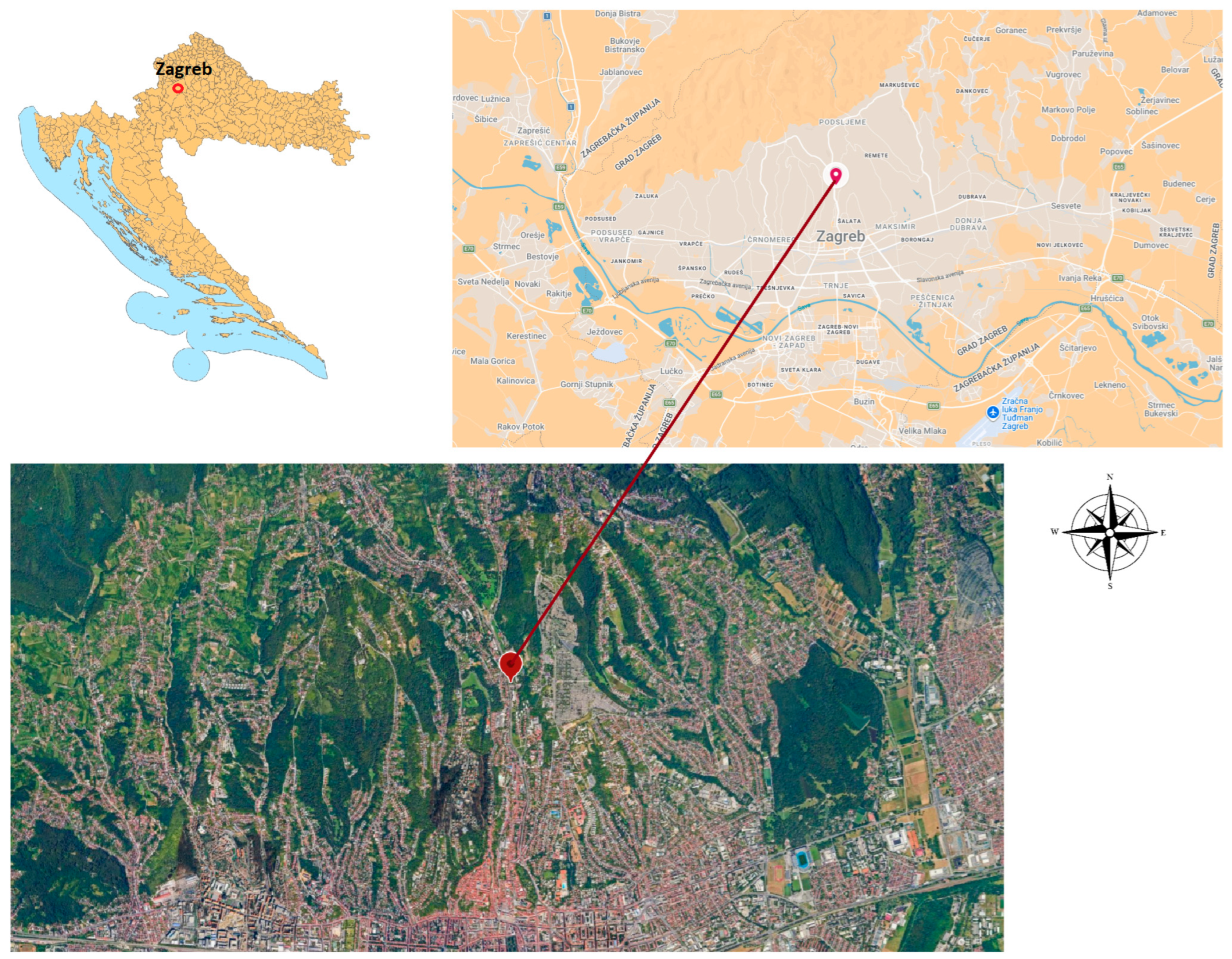
Sampling of PM10 was conducted at the urban background site in Zagreb City, Croatia in 2024 (January-December 2024). The sampling station is part of the Zagreb air quality monitoring network and is located in the northern part of the city, in a mainly residential area, as shown in Figure 1, about 30 m from a road with moderate traffic. Daily samples were collected on Whatman® QM-A quartz filters (Tisch Scientific, Cleves, OH, USA) using Sven Leckel 47/50 low-volume sampler (Sven Leckel Ingenieurbüro GmbH, Berlin, Germany) with the airflow 2.3 m3/h. A total of 352 PM10 samples were successfully collected and further analyzed. Filters were handled according to the EN 12341 standard [19], in which PM10 mass was measured gravimetrically using microbalances (Mettler Toledo MX5 and XP6/M, Greifensee, Switzerland), with a resolution of 1 µg and an electrostatic charge removal system. Prior to weighing, filters were conditioned at 20 ± 1 °C and 45–50% relative humidity for 48 h, weighed, reconditioned for an additional 24 h, and weighed again to ensure mass stability. The same conditioning and weighing procedure was applied both before and after sampling. After sampling, filters were sealed in aluminum foil envelopes and stored at −20 °C until analysis.

2.2. Analysis of Levoglucosan

LG was determined in PM10 samples using high-performance anion-exchange chromatography with pulsed amperometric detection (HPAEC-PAD). The analytical method procedure is detailed in [20]. Briefly, a filter sample aliquot was dissolved in ultrapure water (18.2 MΩ cm, Smart2Pure3 UF/UV, Thermo Scientific Barnstead GenPure, Waltham, MA, USA) and then extracted in an ultrasonic bath for 45 min at 30 ± 5 °C. The water-soluble fraction was separated from the filter via centrifugation at 3000 rpm for 10 min, transferred to a polypropylene vial, and analyzed with an ICS-6000 (Thermo Fisher Scientific, Waltham, MA, USA). LG was separated on a Dionex CarboPac MA1 analytical column (Thermo Fisher Scientific, Waltham, MA, USA) using a NaOH eluent, and detection was performed on a gold working electrode with a standard quadruple potential waveform. The detection limit for LG was 4.6 ng/m3, with a recovery rate of 98%.

2.3. NO2/O3 Measurements and Meteorological Data

Measurements of NO2 and O3 were performed using the gas analyzers type Horiba 370 (HORIBA, Ltd., Kyoto, Japan) placed in a container, with an entrance inlet at a height of 4 m from the ground. A Horiba 370 APNA device was used to measure NO2 according to the EN 14211:2012 standard [21], while a Horiba 370 APOA was used to measure O3 according to the EN 14625:2012 [22]. The measurements employed standardized methods accredited to EN ISO/IEC 17025 standard [23], in accordance with the Air Protection Act, Official Gazette 127/2019, 57/2022, 136/2024 [24,25,26], the Regulation on Air Quality Monitoring, Official Gazette 72/2020 [27], and EU legislation (Directive 2008/50/EC, Directive 2024/2881/EC) [28,29].
A Davis Instruments Vantage Pro2-type meteorology station (Davis Instruments, Hayward, CA, USA) with a sonic anemometer, mounted on a meteorological pole at 10 m above the ground at the same site, was used to collect meteorological parameters. The meteorological parameters monitored at the station are: wind speed and direction, temperature, precipitation amount, pressure, air humidity, solar irradiation, and UV-index. Meteorological data, O3, and NO2 data, available as hourly averages, were averaged to 24 h means to align with the daily values of PM10 and LG.

2.4. Meteorological Analysis

Meteorological analyses, including wind rose diagrams and bivariate polar plots, were carried out using RStudio (Posit Software, PBC (version 2026.01.1 Build 403)). 24 h backward trajectories were calculated with the HYSPLIT (Hybrid Single-Particle Lagrangian Integrated Trajectory) model via the NOAA Air Resources Laboratory READY (Real-time Environmental Applications and Display System) platform (College Park, MD, USA). Trajectories were generated for selected episodes at three receptor heights: 500 m, 1000 m, and 2000 m above ground level (AGL). The simulations were driven by meteorological fields from the Global Forecast System (GFS) with a spatial resolution of 0.25° × 0.25°.

2.5. Statistical Analysis

Statistical analyses were carried out using Statistica (TIBCO Software Inc. (version 14.1.0)) and RStudio (Posit Software). The distribution of the data was examined using the Shapiro–Wilk test. As most variables did not follow a normal distribution, non-parametric statistical methods were applied. Seasonal differences were evaluated using the Kruskal–Wallis test, followed by nonparametric pairwise post hoc comparisons with a Bonferroni correction for multiple testing. For that purpose, the seasons were divided into spring (21 March–20 June), summer (21 June–22 September), autumn (23 September–20 December), and winter (1 January–20 March; 21 December–31 December) of 2024. Concentrations below the limit of detection were substituted with half the limit of detection value. Relationships between variables in different seasons were evaluated using Spearman correlation. Statistical significance was considered at p < 0.05. Relationships between log-transformed LG concentrations and meteorological variables (O3 and temperature) were analysed using linear regression models. Model assumptions were evaluated using residual diagnostics, including residual-versus-predicted plots and autocorrelation function analysis. Ninety-five percent confidence intervals for regression coefficients were derived from standard errors.

3. Results and Discussion

3.1. Mass Concentrations of Measured Pollutants

The average annual concentration of PM10 was 22 µg m−3 (Table 1), which is higher than the air quality guidelines (AQG) value recommended by the WHO [30]; for an annual average furthermore, the daily AQG limit value of 45 µg m−3 was exceeded 24 times in 2024, surpassing the allowed 3–4 times. The average annual level of LG was (0.312 ± 0.459) µg m−3, slightly lower than the measurements in 2020 at the same station, which were (0.392 ± 0.525) µg m−3 [20].
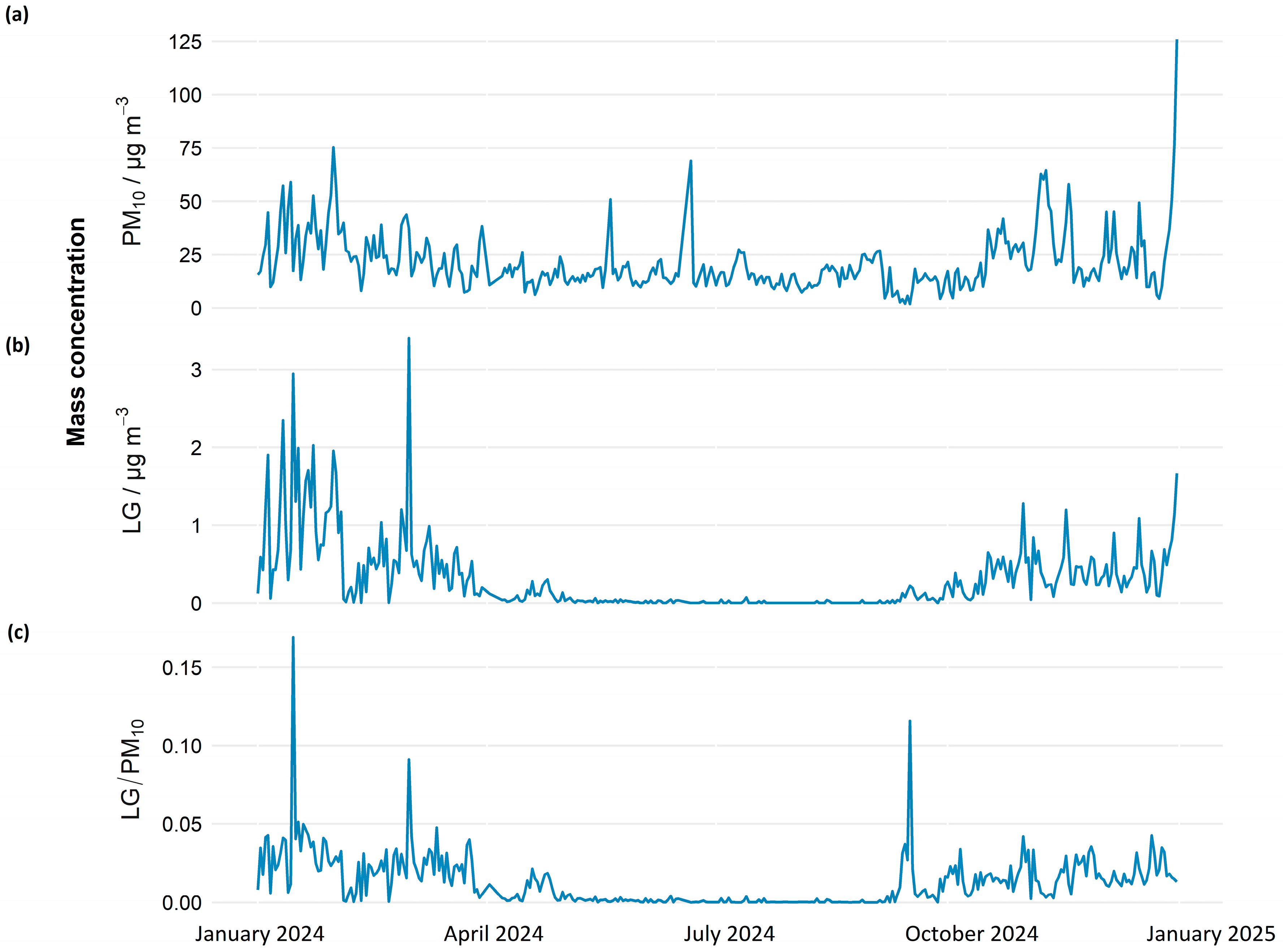
Figure 2a,b show the daily PM10 and LG levels, with noticeable seasonal variations. Shapiro–Wilk test showed daily PM10 and LG concentrations are not normally distributed. The measured data were divided into four seasons: spring (21 March–20 June), summer (21 June–22 September), autumn (23 September–20 December), and winter (21 December–20 March), which resulted in 82 samples for spring, 91 for summer, 88 for autumn, and 91 for winter. Statistical analysis using Kruskal–Wallis ANOVA followed by nonparametric pairwise post hoc comparisons and Bonferroni correction revealed significant variation in PM10 levels between spring and autumn (p < 0.01), spring and winter (p < 0.01), summer and autumn (p < 0.01), summer and winter (p < 0.01) and autumn and spring (p < 0.01). No significant difference was observed between autumn and winter, or between spring and summer. In contrast, LG exhibited significant seasonal variation in all seasons; spring and summer (p < 0.01), spring and autumn (p < 0.01), spring and winter (p < 0.01), summer and autumn (p < 0.01), summer and winter (p < 0.01), whereas autumn and winter did not differ significantly. The highest LG values were observed in winter and autumn (averages of 0.769 µg m−3 and 0.360 µg m−3, respectively), which is consistent with wood-burning for residential heating. During the summer and spring, much lower concentrations were reached, with the average values of 0.020 µg m−3 and 0.078 µg m−3, respectively. For comparison, wintertime levoglucosan (LG) concentrations in PM10 reported at European sites include 0.420 µg m−3 in Ghent, Belgium [31], 0.605 µg m−3 in Elverum, Norway [32], 0.519 µg m−3 in Barcelona, Spain [33], 0.262 µg m−3 in Sosnowiec, Poland [34], and 0.757 µg m−3 in urban industrial area in Sosnowiec, Poland [35]. Lower winter mean values of 0.143 µg m−3 were observed at a residential site in southeastern Spain [36], and 0.229 µg m−3 in Saxony, Germany [37]. In addition, heating-season LG concentrations in Hungary (PM2.5) ranged from ~0.146 to 1.417 µg m−3 at an urban site and up to ~3.262 µg m−3 at a rural site, while non-heating-season levels were typically below 0.040 µg m−3 [38]. Lower annual mean concentrations have also been reported elsewhere, for example, 0.034 µg m−3 in PM10, with seasonal variation from 0.014 µg m−3 in summer to 0.068 µg m−3 in winter [39]. In the study by Janoszka et al. in southern Poland, the average concentrations ranged from about 0.327–0.846 µg m−3 at the rural site and 0.403–0.946 µg m−3 at the urban site [40].
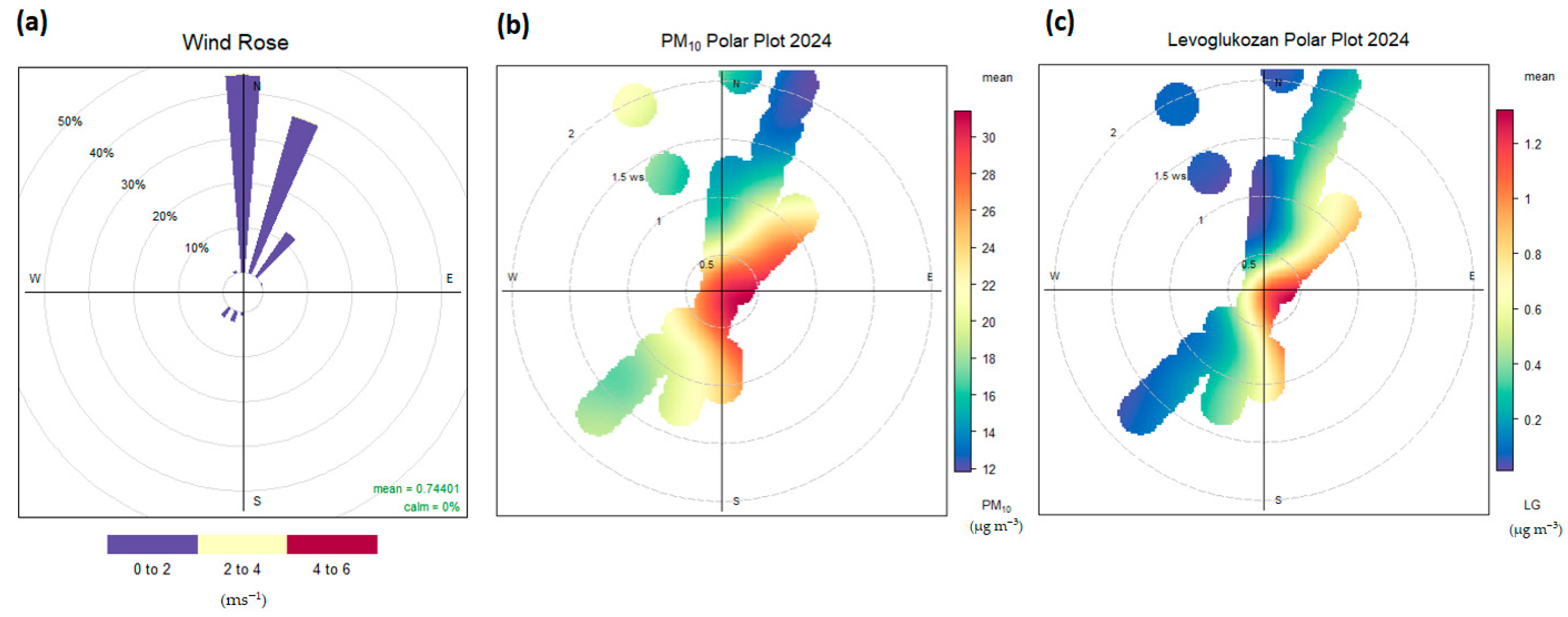
The wind-rose diagram, which shows the frequency of counts by wind direction (Figure 3a), reveals a prevalence of weak northerly and north-northeasterly winds in the local wind regime. The low variability in wind direction implies a consistent flow pattern, most likely influenced by regional geography and the proximity of Medvednica mountain. The mountain is a compact, steep, forested massif of 1033 m height that runs roughly southwest–northeast, located immediately north of Zagreb. Since most winds are below 2 m/s, dispersion of air pollutants may be limited, resulting in pollutants built-up, especially under stable atmospheric conditions [41]. This is supported by the absence of calm conditions, indicating constant, low-level air movement. In the urban air quality study, low wind speeds can worsen pollution episodes by slowing pollutant dispersion [42]. Only in winter, the wind is dominant from the north-northeast (NNE), and the wind speed increases to 4 m/s. The bivariate polar plots (Figure 3b,c) confirm that the highest PM10 and LG concentrations occur at low wind speeds near the center of the plots, implying a dominant influence of local emissions, most likely originating from residential heating and traffic. In the northeastern area, as well as in the vicinity of the measuring station, there is a residential area still heated with wood, which explains the higher LG concentrations. In the northern part of the station, there is the Medvednica nature park, a protected area where economic activity is not allowed, which explains the lower LG concentrations from that direction.
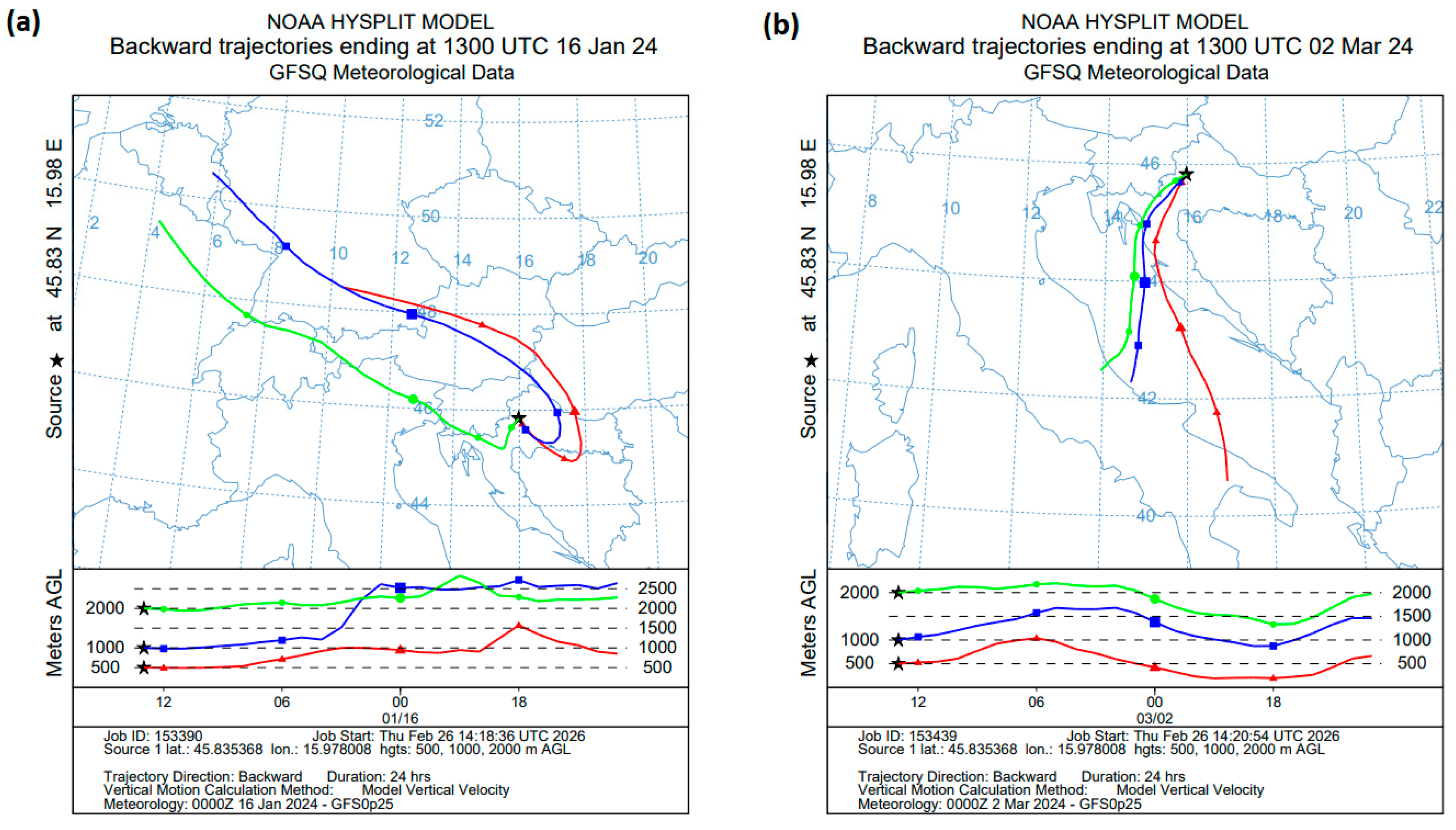
However, the maximum LG concentration (3.403 µg m−3) was recorded on 1 March 2024. As shown in Figure 2b, this peak, together with a few elevated values observed at the beginning of the year, indicates that the event was episodic rather than representative of typical conditions. Elevated LG concentrations were not consistently accompanied by increases in PM10. In some cases, high LG levels occurred when total PM10 concentrations were relatively low, resulting in a higher mass fraction of LG within PM10 rather than an increase in total particulate mass. This suggests that biomass burning may have dominated the particle composition on those days, even though it did not substantially elevate overall PM10 levels. The LG/PM10 ratio (Figure 2c) shows three pronounced peaks, suggesting that during these three days, biomass-burning influence was at its strongest relative to the overall particulate mass. The two peaks at the beginning of the year, with high LG/PM10 ratios, coincide with very high LG levels. The mass fraction of LG to PM10 reached 16.9% during the first peak and 9.1% during the second peak. The autumn peak showed an LG contribution of 11.6%, primarily associated with unusually low PM10 levels rather than elevated LG levels. Such portions were higher than those reported by Benetello et al. in the PM2.5 fraction of an urban area (1.2 to 1.4%) [43] and slightly lower than those recorded during the heating seasons in different studies, ranging up to 6.9% [20,44]. A value of 10.5% was registered in Greece during severe winter residential wood-burning events [45]. Our previous study on the impact of summer wildfire episodes near the Adriatic coast showed the LG/PM10 contribution of 2.6%, while the ratio was much smaller (0.7%) with the usual daily LG and PM10 behavior [46]. On the days of two highest LG concentrations, a backward trajectory analysis was conducted using the NOAA HYSPLIT model to investigate the transport pathways of air masses arriving at the receptor site (45.83° N, 15.98° E) (Figure 4). Considering the relatively short and variable atmospheric lifetime of LG, trajectory analysis was restricted to 24 h backward transport to ensure greater representativeness. The backward trajectories reveal different transport patterns: on 16 January 2024 (matching the 15 January LG peak) (Figure 4a), air masses primarily originated from northwest and central Europe. The trajectories at 500 and 1000 m AGL show transport from southern Germany and across Austria, and Hungary, passing through the continental part of Croatia before reaching Zagreb. The 2000 m AGL trajectory, on the other hand, suggests regional recirculation over northern Italy and west of Slovenia, passing through the Gorski Kotar region before reaching Zagreb. In contrast, the trajectories ending on 2 March 2024 (matching the 1 March LG peak) (Figure 4b) exhibit a more southerly flow for all three considered trajectories. The air masses at 500 m AGL originated over the central Mediterranean and southern Italy, then moved northward toward Croatia, while the 1000 and 2000 m trajectories show transport from the Adriatic region and central Italy. Vertical profiles imply relatively low-level transport within the lower troposphere, as no significant orographic obstacles affect their movement. In this case, the trajectories arriving in Croatia pass only through the Gorski Kotar region, which is characterized by forests where traditional wood-based household heating is most common. Backward trajectory analysis was also performed for the same dates at an altitude of 10 m AGL, with an endpoint closer to the PM10 sampling point (Figure S1), and the results showed very similar behavior. Transport pathways are broadly consistent with the higher-level trajectories, indicating that the regional flow pattern influencing Zagreb was vertically coherent within the lower troposphere. Nevertheless, despite the influence of regional transport, the seasonal pattern of LG indicates that local combustion sources and meteorological stability predominantly control its variability in Zagreb. While the analysis of daily and seasonal mass concentrations provides insight into emission patterns, the relationships between LG, PM10, gaseous pollutants, and key meteorological parameters were examined in more detail using correlation analysis.

3.2. Pollutant Correlations

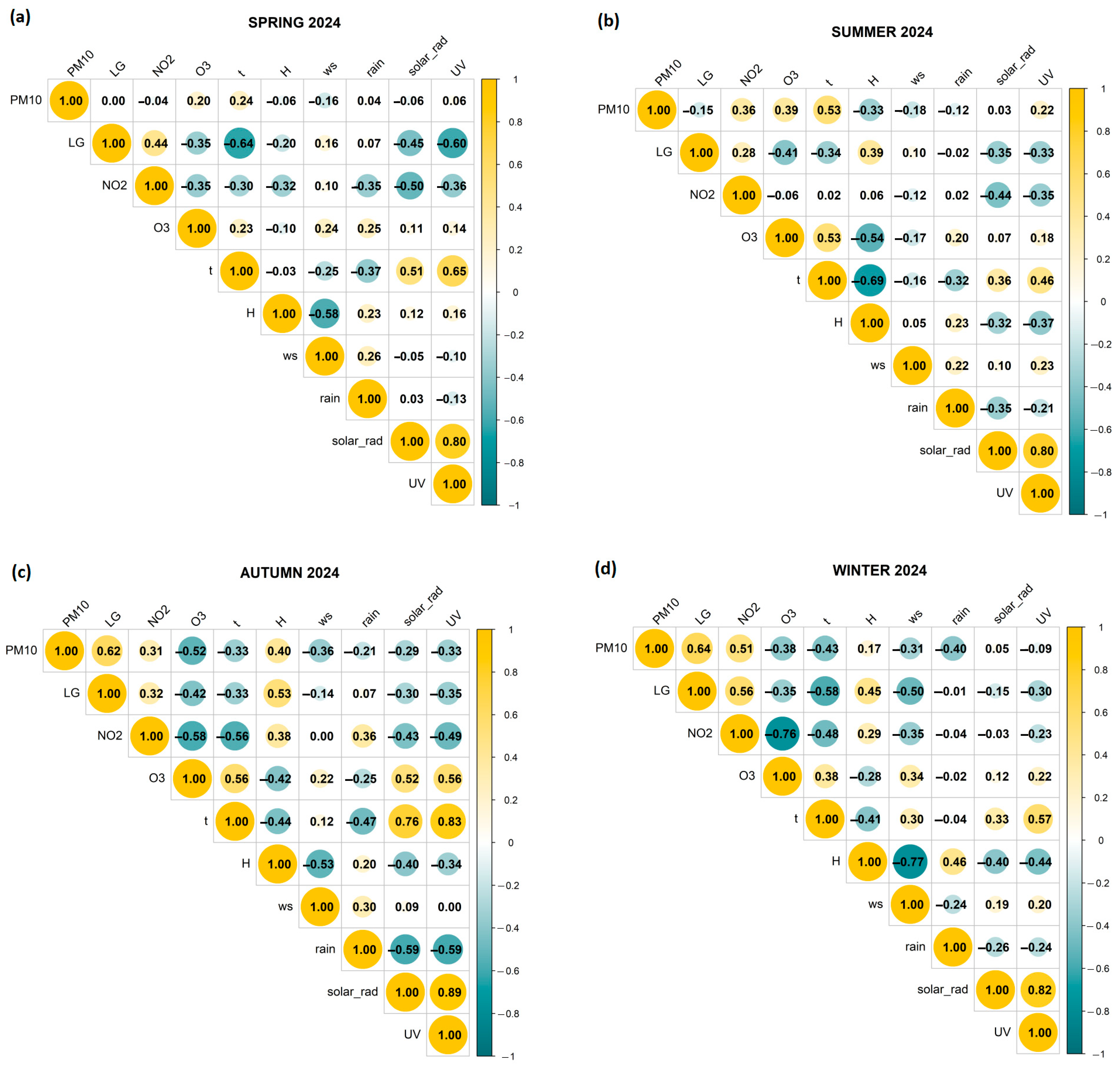
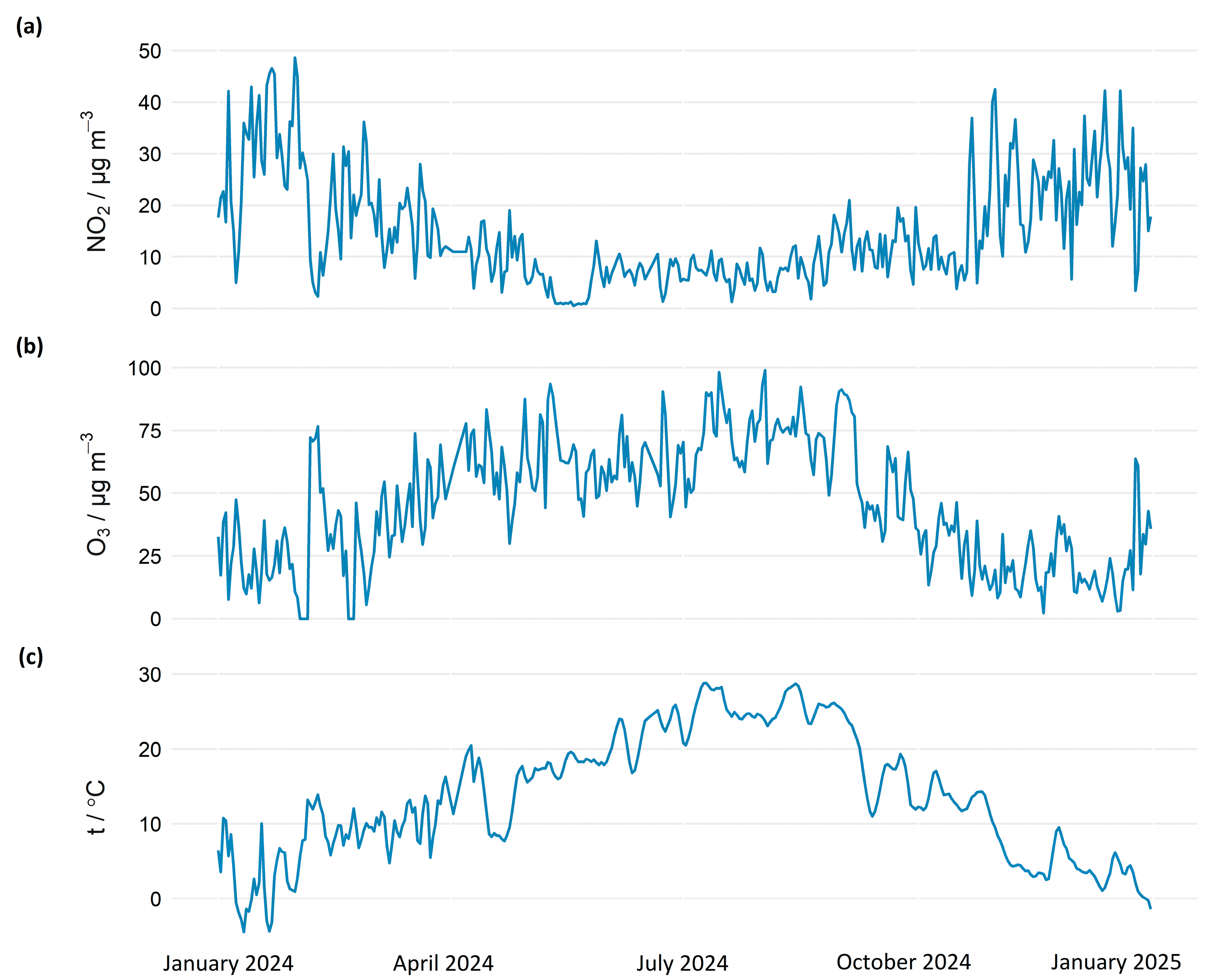
As discussed in numerous studies, meteorological conditions greatly influence air pollutant levels [47,48,49,50,51]. The relationships between meteorological parameters and the determined pollutants across different seasons, determined by Spearman correlation, are presented in Figure 5. PM10, NO2, and O3 exhibit both positive and negative correlations, reflecting the complexity of atmospheric interactions. A strong negative correlation (ρ = −0.76) between O3 and NO2 is observed in winter, a moderate negative correlation (ρ = −0.58) in autumn, and a weak negative correlation in spring, while no clear correlation is evident in the summer. This seasonal behavior highlights the complexity of atmospheric chemistry controlling O3 and NO2. As described by Leighton, the photostationary state involves a dynamic equilibrium between NO, NO2, and O3 in the presence of sunlight [52]. When NO2 absorbs solar radiation, it photolyzes into NO and an oxygen atom, which subsequently reacts with O2 to form ozone. In this way, sunlight controls how NO2 and O3 change throughout the day. During colder seasons, reduced photochemical activity combined with increased NO emissions from combustion sources such as traffic and residential heating lead to efficient O3 consumption, significantly reducing ozone levels. This process explains the strong negative correlation between NO2 and O3 typically observed in wintertime urban environments [53]. In contrast, during warmer seasons (spring and summer), weaker NO2-O3 correlations indicate a more complex chemical regime. This behavior is also evident in Figure 6, which shows the daily mass concentrations of NO2 and O3, and temperature in 2024. The average seasonal air temperatures in 2024 were 6.1 °C in winter, 8.6 °C in autumn, 16.3 °C in spring, and 23.6 °C in summer. A similarly complex chemical regime is reflected in the relationship between O3 and air temperature, with a moderate positive correlation (ρ ≈ 0.5) observed during summer and autumn, while much weaker correlations occur in winter and spring (ρ < 0.23). Although higher temperatures are generally associated with enhanced ozone formation, the lower average temperature in autumn compared to spring suggests that O3-related atmospheric processes differed between the seasons. Previous studies in central Europe have identified temperature as a key meteorological driver of ozone during summer [54]. Enhanced solar radiation and higher temperatures promote photolytic activity and accelerate chemical reactions that form ozone [55]. These conditions also enhance emissions of volatile organic compounds (VOCs), which generate peroxy radicals that convert NO back to NO2 without consuming ozone, thereby increasing net O3 production [56,57]. It should be noted that the annual maximum temperatures do not coincide with the annual maximum in UV radiation, which is crucial for ozone formation. From Figure 5, it is evident that the strongest correlation between temperature and both solar irradiance and UV index was observed in autumn, followed by spring.
Seasonal variations were also noticed for LG; however, they were mainly moderate (ρ < 0.6). A moderate correlation (ρ = −0.60) was observed between LG and UV, occurring only during spring, and between temperature and UV, occurring in winter and spring. The observed negative correlations with LG vs. temperature and UV, and positive correlation with LG vs. humidity, further indicate that LG accumulation is favored under cold, stable, and moist atmospheric conditions typical of winter. A moderate positive correlation (ρ > 0.6) was observed between LG and PM10, suggesting that higher PM10 levels may be associated with biomass-burning activity, which is primarily observed during wintertime. During warmer seasons, the correlation was very weak or nonexistent, indicating that biomass burning has a negligible influence on PM10 levels. Similar behavior was also observed by Srithawirat et al. [58] at a semi-urban site, where the correlation was very weak because most particles appeared likely to derive from urban sources such as vehicles, and biomass-burning saccharides accounted for 3.2–10.7% of coarse-mode aerosols.
A moderate negative correlation exists between LG and O3 (ρ ~ −0.4) in all seasons, suggesting that ozone most likely influences LG levels, as ozone increases, LG tends to decrease. Similar findings were reported by Wang et al. [4], who showed that the LG concentration was lower during the day than at night and suggested that this pattern is attributable to enhanced chemical degradation driven by strong solar irradiance and increased daytime ozone production.
Correlations among certain meteorological parameters differ across seasons. Strong physical consistency is observed between solar irradiance and UV, as evidenced by high positive coefficients (ρ > 0.8) across all seasons. Although solar irradiance is the main driver of air temperature, its positive correlation with temperature is mostly moderate; however, this relationship is influenced by cloud cover and atmospheric processes, which alter the amount of solar energy reaching the surface [59,60]. Relative humidity (RH) typically shows a negative correlation with temperature and solar irradiance across all seasons, except in spring, when the correlation with solar irradiance is slightly positive.
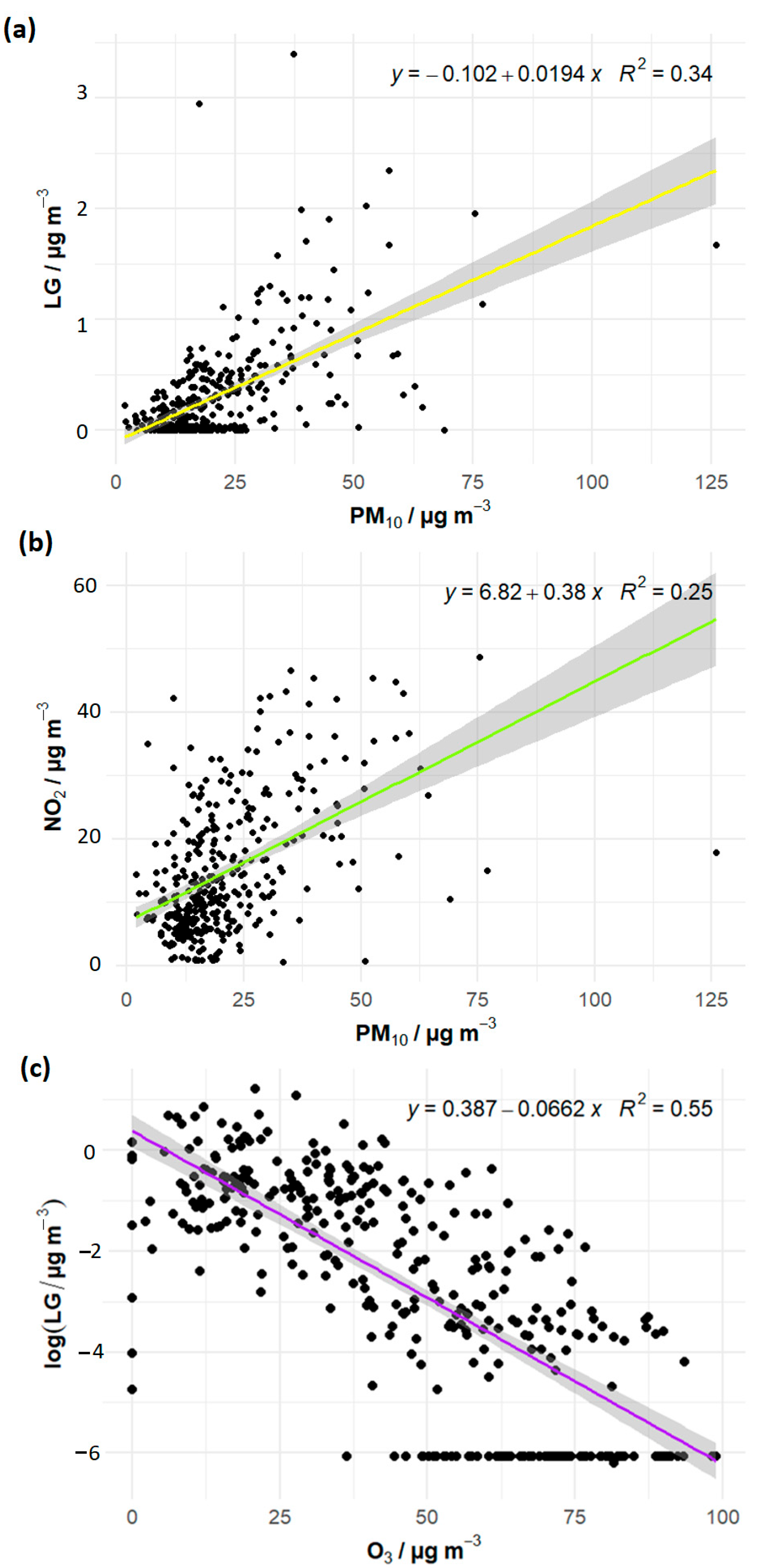
Regression analysis was used to correlate LG, PM10, O3, NO2, UV index, temperature, and RH (Figure 7). A positive correlation with 95% confidence levels was found between LG vs. PM10, and LG vs. NO2 (Figure 7a,b), confirming that biomass burning contributes to the production of PM10, as well as NO2 formation, but is only a fraction of total concentrations, which is consistent with mixed-source urban aerosols [15,58]. Conversely, LG and O3 exhibited different behavior, with a non-linear relationship that required using a logarithmic scale (Figure 7c). The log-transformed LG concentrations show a clear, statistically robust negative correlation with ozone (R2 = 0.55), indicating that approximately half of the variability in LG can be explained by changes in O3 levels. This relationship suggests that LG loss follows exponential or pseudo–first-order behavior with respect to oxidant concentration, consistent with known atmospheric degradation mechanisms. Ozone itself is not most likely the primary oxidant of LG in the particle phase; instead, elevated O3 levels typically coincide with enhanced photochemical activity, leading to increased production of hydroxyl radicals (OH), which are the dominant atmospheric sink for LG. Therefore, the observed decrease in log(LG) with increasing O3 likely reflects an indirect but significant connection between ozone-rich, high-irradiance conditions and enhanced degradation of LG, driven by increased photochemical activity and the presence of OH radicals, as previously shown in laboratory studies [6,7,8]. Besides O3, proxies for OH radicals include photochemical activity indices, NO2, formaldehyde, CO, and NOx/O3 ratios, etc. [61]. Recent field observations by Zhou et al. [62] investigated the atmospheric degradation of anhydro-saccharides, including LG, under real ambient conditions. Their results showed that LG concentrations decrease under conditions of enhanced photochemical activity, with temperature, relative humidity and oxidant levels identified as key factors controlling its atmospheric variability. These findings are consistent with the results of the present study, which also indicate a pronounced negative relationship between LG and ozone, temperature and UV index, suggesting that both emission intensity and atmospheric processing govern LG levels in the urban environment. The correlation with log-transformation also suggests that LG degradation becomes disproportionately stronger at higher oxidant concentrations—i.e., small increases in O3 correspond to large fractional decreases in LG. This behavior aligns with pseudo–first-order kinetics, in which the decay rate increases linearly with oxidant concentration, while the mass of LG declines exponentially.

3.3. Meteorological Influence

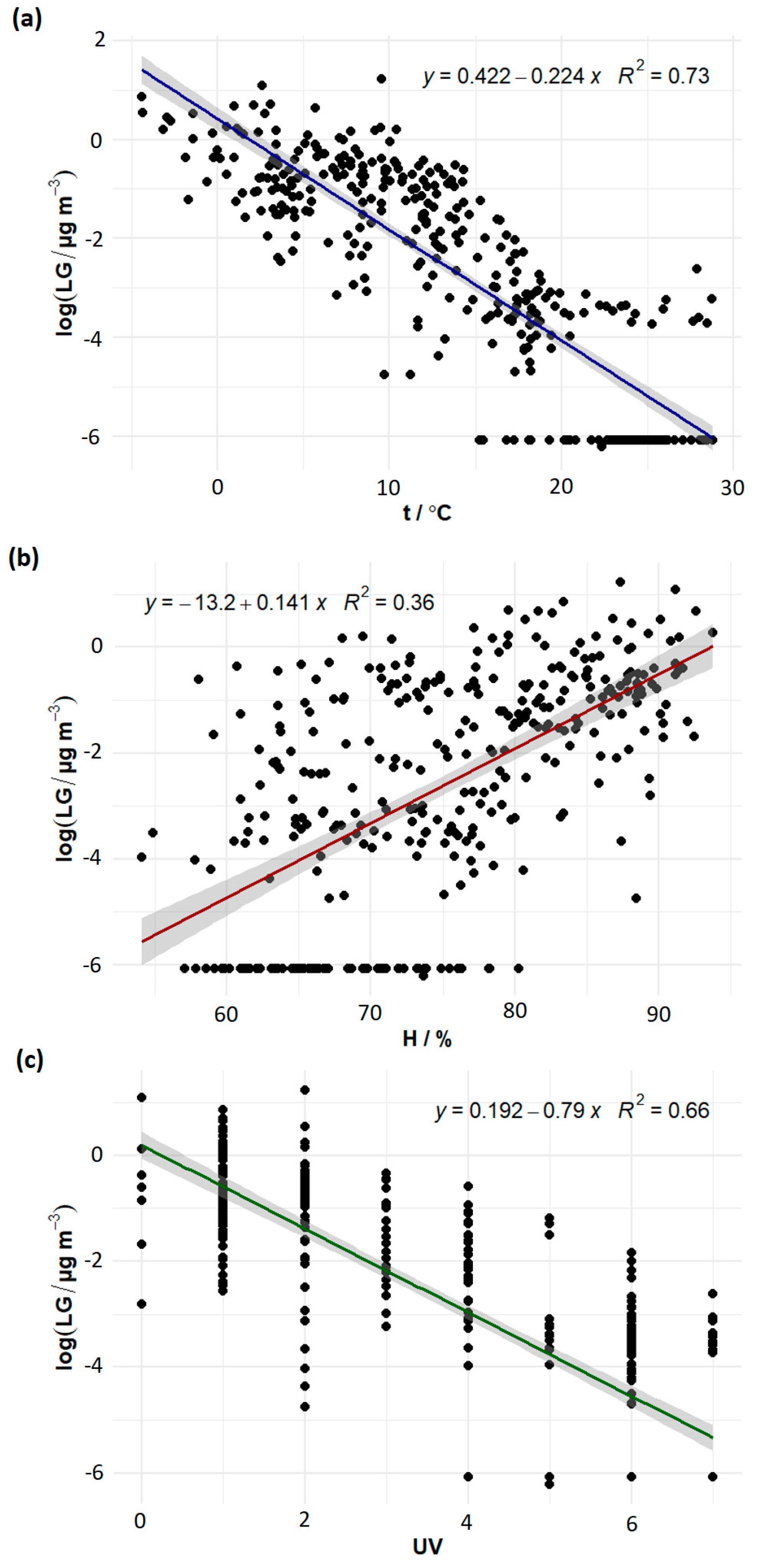
The relationships between LG, air temperature, relative humidity, and UV index also showed non-linear behavior; therefore, the logarithmic scale was used to describe their dependence (Figure 8). Among the three parameters, temperature exhibits the strongest relationship with LG, with a pronounced negative correlation (R2 = 0.73), indicating that temperature is a major driver of LG variability. The steep decline in log(LG) with temperature reflects the combined influence of reduced biomass-burning emissions during warmer periods and enhanced chemical degradation at higher temperatures. Both field and laboratory studies showed that the elevated temperatures increase reaction rate constants and are typically associated with stronger photochemical activity, thereby accelerating OH-driven oxidation of LG [4,63].
In contrast, relative humidity shows a moderate positive correlation with log(LG) (R2 = 0.36). Higher LG concentrations tend to occur at elevated relative humidity, while lower values are observed under drier conditions. This may be explained by several interacting processes: higher humidity often coincides with colder, more stable atmospheric conditions conducive to biomass-burning emissions and pollutant accumulation, whereas lower humidity is frequently associated with enhanced photochemical activity and increased oxidant levels [7]. Additionally, liquid water in the aerosol may influence the phase state and reactivity of LG, although the relatively modest R2 value indicates that relative humidity alone does not strongly control LG concentrations. Similar behavior was observed by Klejnowski et al. [64] in Krynica, Poland, who attributed it to higher wood consumption for residential heating in the colder months and/or to LG condensation on PM10.
A strong negative correlation is observed between log(LG) and UV index (R2 = 0.66), highlighting the importance of photochemical processes in LG degradation. An increasing UV-index corresponds to enhanced ozone photolysis and hydroxyl radical production, both of which are known to drive the chemical loss of LG. The discrete vertical groupings of data points reflect the stepwise nature of the UV index, yet the overall decreasing trend is clear and robust. The pronounced reduction in LG at high UV values supports the interpretation that photochemically active conditions influence the atmospheric lifetime of LG.
Regression analysis showed of log(LG) vs. O3 and log(LG) vs. temperature showed increasing O3 concentrations were associated with a decrease in log(LG) (b = −0.066, 95% CI: −0.072 to −0.060, p < 0.001), while temperature showed an even stronger negative association (b = −0.224, 95% CI: −0.238 to −0.210, p < 0.001) (Table S1). Plots of residuals versus predicted values indicated structured patterns, suggesting departures from strict linearity and the presence of unmodelled variability (Figures S2 and S3). Temporal plots of residuals revealed clear persistence over time, consistent with the daily resolution of the dataset (Figures S4 and S5). Autocorrelation function analysis confirmed significant positive temporal autocorrelation in the residuals, particularly at short lags, indicating that the residuals were not temporally independent (Figures S6 and S7). The autocorrelation gradually decreased with increasing lag, suggesting persistence typical of daily atmospheric time-series data. This pattern indicates and confirms that simple linear regression does not fully account for the temporal structure underlying the observed variability.
To further explore the role of photochemical conditions, relationships between log(LG) and O3, as well as temperature were examined separately for daytime and nighttime conditions (Figure S8). Observations recorded during periods when solar radiation exceeded 0 W m−2 were classified as daytime, whereas periods with solar radiation equal to 0 W m−2 were treated as nighttime. The results show very similar slopes and coefficients of determination for both periods (O3: R2 ≈ 0.44–0.55; temperature: R2 ≈ 0.73 in both cases). This indicates that the overall dependence of LG on oxidizing and thermal conditions is not driven exclusively by daytime photochemistry. Although photochemical processes are expected to be stronger during daylight due to enhanced solar radiation and OH radical production, the comparable strength of correlations at night suggests that daily LG concentrations reflect an integrated response to emission patterns, atmospheric mixing, and chemical processing over the full 24 h sampling period. In particular, seasonal emission variability (e.g., residential heating) and cumulative oxidative aging likely contribute to the observed relationships. Overall, these results demonstrate that meteorological parameters associated with photochemical activity, particularly temperature and UV index, influence LG concentrations, whereas relative humidity most likely plays an indirect role. These findings reinforce the conclusion that LG variability in the urban atmosphere reflects the combined effects of emission intensity, atmospheric stability, and chemically driven degradation, rather than simple linear dependence on individual meteorological parameters. Moreover, the periods with higher LG levels, which occur almost exclusively at low ozone concentrations, indicate periods dominated by primary emissions, weak photochemistry, or stable atmospheric layers that limit oxidant production.

4. Conclusions

This study investigates the annual behavior of LG as a tracer of biomass burning in Zagreb, as determined in PM10 particles, its relationship with several gaseous pollutants and meteorological conditions, and its relationship with biomass burning. Annual 2024 data show pronounced seasonal variability, with elevated LG concentrations in winter (average of 0.769 µg m−3) and autumn (average of 0.360 µg m−3) linked to residential wood combustion and minimal levels during the warmer months (summer average of 0.020 µg m−3, and spring average of 0.078 µg m−3). The average annual PM10 concentration was 22 µg m−3, with smaller seasonal variations. The spring, summer, autumn, and winter averages were 29.4 µg m−3, 17.9 µg m−3, 14.4 µg m−3, and 24.0 µg m−3, respectively. The moderate correlation between LG and PM10 indicates that biomass burning contributes to particulate matter, though additional sources significantly affect PM10 levels. Negative correlations with ozone, temperature, and UV index confirm that LG is photochemically unstable under oxidizing, sunlit conditions, whereas its positive association with humidity reflects accumulation under cold, stagnant air. Meteorological analyses reveal that weak northerly winds and limited dispersion favour the build-up of pollutants in the urban basin. Overall, LG variability in Zagreb is primarily controlled by wintertime biomass burning and meteorological stability, with secondary modulation by atmospheric oxidation processes during summer. The combined statistical and meteorological analyses highlight the interplay between local emissions, atmospheric chemistry, and dispersion conditions that govern LG levels in Zagreb. Due to moderate to weak correlations with individual meteorological parameters in field measurements, it can be concluded that the real atmospheric behavior of LG is governed by a combination of emission patterns and chemical and physical processes. Overall observations indicate that the atmospheric processing of LG involves multiple interacting pathways. Consequently, the reaction mechanism is highly complex, making it difficult to isolate the dependence of LG concentrations on individual atmospheric parameters under real ambient conditions. Our future work would therefore include time-resolved particulate matter sampling aligned with the temporal resolution of solar irradiance, UV index, O3, and temperature measurements, thereby enabling a more direct evaluation of the photochemical influence on LG degradation.

Supplementary Materials

The following supporting information can be downloaded at: https://www.mdpi.com/article/10.3390/environments13040196/s1, Figure S1: NOAA HYSPLIT 24 h back trajectories ending at 1300 UTC on (a) 16 January 2024 and (b) 2 March 2024 at 10 m, 500 m, and 1500 m AGL; Table S1: Regression summary for log(LG) vs. O3 and log(LG) vs. temperature dependence; Figure S2: Residuals vs. predicted values for the regression model log(LG) vs. O3; Figure S3: Residuals vs. predicted values for the regression model log(LG) vs. temperature; Figure S4: Residual time series from the regression model log(LG) vs. O3; Figure S5: Residual time series from the regression model log(LG) vs. temperature; Figure S6: Autocorrelation function of residuals from the regression model log(LG) vs. O3; Figure S7: Autocorrelation function of residuals from the regression model log(LG) vs. temperature; Figure S8: Relationships between daily log(LG) and (a) nighttime O3, (b) daytime O3, (c) nighttime air temperature, and (d) daytime air temperature.

Author Contributions

Conceptualization, S.S. and S.D.; methodology, S.S., S.D. and I.B.; software, S.S.; validation, S.D., S.S. and I.B.; formal analysis, S.S. and I.B.; investigation, S.S. and S.D.; writing—original draft preparation, S.S. and S.D.; writing—review and editing, S.S., I.B. and G.P.; visualization S.S.; supervision, G.P. and I.B. All authors have read and agreed to the published version of the manuscript.

Funding

This study was performed using the facilities and equipment funded by the European Regional Development Fund project KK.01.1.1.02.0007 “Research and Education Centre of Environmental Health and Radiation Protection—Reconstruction and Expansion of the Institute for Medical Research and Occupational Health”. Gravimetry measurements of PM10, NO2, O3 were conducted within the National Air Quality Monitoring Program on the National Network for Continuous Air Quality Monitoring funded by the Croatian Environmental Protection and Energy Efficiency Fund. All other measurements and research were funded by the European Union—Next Generation EU (Program Contract of 8 December 2023, Class: 643-02/23-01/00016, Reg. No. 533-03-23-0006)—EnvironPollutHealth. The authors thank the Ministry of Environmental Protection and Green Transition in Croatia for supporting the use of ion chromatography instruments for scientific purposes. Instruments were acquired through the project AirQ-Expansion and Modernization of the National Network for Continuous Air Quality Monitoring (K.K.06.2.1.02.0001, granted by the European Regional Development Fund, Croatian Environmental Protection, and Energy Efficiency Fund).

Data Availability Statement

Supporting data for NO2, and O3 are publicly available from the national air quality monitoring database from the website: https://iszz.azo.hr/iskzl/podatak.htm (accessed on 2 March 2026). Daily PM10 and levoglucosan concentrations are available from the authors upon reasonable request.

Conflicts of Interest

The authors declare no conflicts of interest.

References

  1. Noda, J.; Bergström, R.; Kong, X.; Gustafsson, T.L.; Kovacevik, B.; Svane, M.; Pettersson, J.B.C. Aerosol from Biomass Combustion in Northern Europe: Influence of Meteorological Conditions and Air Mass History. Atmosphere 2019, 10, 789. [Google Scholar] [CrossRef]
  2. Navarro, K.M.; Fent, K.; Mayer, A.C.; Brueck, S.E.; Toennis, C.; Law, B.; Meadows, J.; Sammons, D.; Brown, S. Characterization of Inhalation Exposures at a Wildfire Incident during the Wildland Firefighter Exposure and Health Effects (WFFEHE) Study. Ann. Work Expo. Health 2023, 67, 1011–1017. [Google Scholar] [CrossRef]
  3. Simoneit, B.R.T. Biomass Burning—A Review of Organic Tracers for Smoke from Incomplete Combustion. Appl. Geochem. 2002, 17, 129–162. [Google Scholar] [CrossRef]
  4. Mochida, M.; Kawamura, K.; Fu, P.; Takemura, T. Seasonal Variation of Levoglucosan in Aerosols over the Western North Pacific and Its Assessment as a Biomass-Burning Tracer. Atmos. Environ. 2010, 44, 3511–3518. [Google Scholar] [CrossRef]
  5. Wang, Q.; Wang, S.; Chen, H.; Zhang, Z.; Yu, H.; Chan, M.N.; Yu, J.Z. Ambient Measurements of Daytime Decay Rates of Levoglucosan, Mannosan, and Galactosan. J. Geophys. Res. Atmos. 2025, 130, e2024JD042423. [Google Scholar] [CrossRef]
  6. Zhao, R.; Mungall, E.L.; Lee, A.K.Y.; Aljawhary, D.; Abbatt, J.P.D. Aqueous-Phase Photooxidation of Levoglucosan and Ash; a Mechanistic Study Using Aerosol Time-of-Flight Chemical Ionization Mass Spectrometry (Aerosol ToF-CIMS). Atmos. Chem. Phys. 2014, 14, 9695–9706. [Google Scholar] [CrossRef]
  7. Lai, C.; Liu, Y.; Ma, J.; Ma, Q.; He, H. Degradation Kinetics of Levoglucosan Initiated by Hydroxyl Radical under Different Environmental Conditions. Atmos. Environ. 2014, 91, 32–39. [Google Scholar] [CrossRef]
  8. Hennigan, C.J.; Sullivan, A.P.; Collett, J.L.; Robinson, A.L. Levoglucosan Stability in Biomass Burning Particles Exposed to Hydroxyl Radicals. Geophys. Res. Lett. 2010, 37, L09806. [Google Scholar] [CrossRef]
  9. Liang, Z.; Zhou, L.; Chan, C.K. Photosensitized Decay of Levoglucosan in Biomass Burning Aerosol Particles. Environ. Sci. Technol. 2025, 59, 18749–18760. [Google Scholar] [CrossRef]
  10. Sang, X.F.; Gensch, I.; Kammer, B.; Khan, A.; Kleist, E.; Laumer, W.; Schlag, P.; Schmitt, S.H.; Wildt, J.; Zhao, R.; et al. Chemical Stability of Levoglucosan: An Isotopic Perspective. Geophys. Res. Lett. 2016, 43, 5419–5424. [Google Scholar] [CrossRef]
  11. Kessler, S.H.; Smith, J.D.; Che, D.L.; Worsnop, D.R.; Wilson, K.R.; Kroll, J.H. Chemical Sinks of Organic Aerosol: Kinetics and Products of the Heterogeneous Oxidation of Erythritol and Levoglucosan. Environ. Sci. Technol. 2010, 44, 7005–7010. [Google Scholar] [CrossRef] [PubMed]
  12. Hoffmann, D.; Tilgner, A.; Iinuma, Y.; Herrmann, H. Atmospheric Stability of Levoglucosan: A Detailed Laboratory and Modeling Study. Environ. Sci. Technol. 2010, 44, 694–699. [Google Scholar] [CrossRef]
  13. Teraji, T.; Arakaki, T. Bimolecular Rate Constants between Levoglucosan and Hydroxyl Radical: Effects of PH and Temperature. Chem. Lett. 2010, 39, 900–901. [Google Scholar] [CrossRef]
  14. Wennberg, P.O. Radicals Follow the Sun. Nature 2006, 442, 145–146. [Google Scholar] [CrossRef]
  15. Perrone, M.G.G.; Vratolis, S.; Georgieva, E.; Török, S.; Šega, K.; Veleva, B.; Osán, J.; Bešlić, I.; Kertész, Z.; Pernigotti, D.; et al. Sources and Geographic Origin of Particulate Matter in Urban Areas of the Danube Macro-Region: The Cases of Zagreb (Croatia), Budapest (Hungary) and Sofia (Bulgaria). Sci. Total Environ. 2018, 619–620, 1515–1529. [Google Scholar] [CrossRef]
  16. Zaporozhets, A.O.; Khaidurov, V.V. Mathematical Models of Inverse Problems for Finding the Main Characteristics of Air Pollution Sources. Water Air Soil Pollut. 2020, 231, 563. [Google Scholar] [CrossRef]
  17. Mucha, W.; Mainka, A. Exposure to Nitrogen Dioxide (NO2) Emitted from Traffic-Related Sources: Review. Appl. Sci. 2026, 16, 859. [Google Scholar] [CrossRef]
  18. Jacob, D.J. Introduction to Atmospheric Chemistry; Princeton University Press CN-QE: Princeton, NJ, USA, 1999; ISBN 9781400841547. [Google Scholar]
  19. EN 12341:2023; Ambient Air—Standard Gravimetric Measurement Method for the Determination of the PM10 or PM2,5 Mass Concentration of Suspended Particulate Matter. CEN: Brussels, Belgium, 2023.
  20. Sopčić, S.; Pehnec, G.; Bešlić, I. Specific Biomass Burning Tracers in Air Pollution in Zagreb, Croatia. Atmos. Pollut. Res. 2024, 15, 102176. [Google Scholar] [CrossRef]
  21. EN 14211:2012; Ambient Air—Standard Method for the Measurement of the Concentration of Nitrogen Dioxide and Nitrogen Monoxide by Chemiluminescence. European Committee for Standardization: Brussels, Belgium, 2012.
  22. EN 14625:2012; Ambient Air—Standard Method for the Measurement of the Concentration of Ozone by Ultraviolet Photometry. European Committee for Standardization: Brussels, Belgium, 2012.
  23. EN ISO/IEC 17025:2017; General Requirements for the Competence of Testing and Calibration Laboratories (ISO/IEC 17025:2017). International Organization for Standardization: Geneva, Switzerland, 2017.
  24. Republic of Croatia. Air Protection Act, Official Gazette No. 127/2019; Republic of Croatia: Zagreb, Croatia, 2019. [Google Scholar]
  25. Republic of Croatia. Air Protection Act, Official Gazette No. 57/2022; Republic of Croatia: Zagreb, Croatia, 2022. [Google Scholar]
  26. Republic of Croatia. Air Protection Act, Official Gazette No. 136/2024; Republic of Croatia: Zagreb, Croatia, 2024. [Google Scholar]
  27. Ministry of Environmental Protection and Green Transition. Regulation on Air Quality Monitoring, Official Gazette No. 72/2020; Republic of Croatia: Zagreb, Croatia, 2020. [Google Scholar]
  28. European Commission. Directive 2008/50/EC of the European Parliament and of the Council of 21 May 2008 on Ambient Air Quality and Cleaner Air for Europe. Off. J. Eur. Union 2008, 152, 1–43. [Google Scholar]
  29. European Commission. Directive (EU) 2024/2881 of the European Parliament and of the Council of 23 October 2024 on Ambient Air Quality and Cleaner Air for Europe (Recast). Off. J. Eur. Union 2024, 2881, 1–70. [Google Scholar]
  30. World Health Organization. WHO Global Air Quality Guidelines: Particulate Matter (PM2.5 and PM10), Ozone, Nitrogen Dioxide, Sulfur Dioxide and Carbon Monoxide; Electronic Version; World Health Organization: Geneva, Switzerland, 2021; ISBN 9789240034228. [Google Scholar]
  31. Pashynska, V.; Vermeylen, R.; Vas, G.; Maenhaut, W.; Claeys, M. Development of a Gas Chromatographic/Ion Trap Mass Spectrometric Method for the Determination of Levoglucosan and Saccharidic Compounds in Atmospheric Aerosols. Application to Urban Aerosols . J. Mass Spectrom. 2002, 1249–1257. [Google Scholar] [CrossRef]
  32. Yttri, K.E.; Aas, W.; Bjerke, A.; Cape, J.N.; Cavalli, F.; Ceburnis, D.; Dye, C.; Emblico, L.; Facchini, M.C.; Forster, C.; et al. Elemental and Organic Carbon in PM10: A One Year Measurement Campaign within the European Monitoring and Evaluation Programme EMEP. Atmos. Chem. Phys. 2007, 7, 5711–5725. [Google Scholar] [CrossRef]
  33. Sánchez-Soberón, F.; van Drooge, B.L.; Rovira, J.; Grimalt, J.O.; Nadal, M.; Domingo, J.L.; Schuhmacher, M. Size-Distribution of Airborne Polycyclic Aromatic Hydrocarbons and Other Organic Source Markers in the Surroundings of a Cement Plant Powered with Alternative Fuels. Sci. Total Environ. 2016, 550, 1057–1064. [Google Scholar] [CrossRef]
  34. Marynowski, L.; Simoneit, B.R.T. Saccharides in Atmospheric Particulate and Sedimentary Organic Matter: Status Overview and Future Perspectives. Chemosphere 2022, 288, 132376. [Google Scholar] [CrossRef] [PubMed]
  35. Rajeev, P.; Gupta, T.; Marynowski, L. Neutral Saccharides and Hemicellulose over Two Urban Sites in Indo-Gangetic Plain and Central Europe during Winter. Sci. Total Environ. 2024, 912, 168849. [Google Scholar] [CrossRef] [PubMed]
  36. Cordell, R.L.; Mazet, M.; Dechoux, C.; Hama, S.M.L.; Staelens, J.; Hofman, J.; Stroobants, C.; Roekens, E.; Kos, G.P.A.; Weijers, E.P.; et al. Evaluation of Biomass Burning across North West Europe and Its Impact on Air Quality. Atmos. Environ. 2016, 141, 276–286. [Google Scholar] [CrossRef]
  37. Iinuma, Y.; Engling, G.; Puxbaum, H.; Herrmann, H. A Highly Resolved Anion-Exchange Chromatographic Method for Determination of Saccharidic Tracers for Biomass Combustion and Primary Bio-Particles in Atmospheric Aerosol. Atmos. Environ. 2009, 43, 1367–1371. [Google Scholar] [CrossRef]
  38. Balogh, B.S.; Csákó, Z.; Nyiri, Z.; Szabados, M.; Kakucs, R.; Erdélyi, N.; Szigeti, T. Levoglucosan and Its Isomers as Markers and Biomarkers of Exposure to Wood Burning. Toxics 2025, 13, 742. [Google Scholar] [CrossRef]
  39. Clemente, Á.; Yubero, E.; Nicolás, J.F.; Crespo, J.; Galindo, N. Organic Tracers in Fine and Coarse Aerosols at an Urban Mediterranean Site: Contribution of Biomass Burning and Biogenic Emissions. Environ. Sci. Pollut. Res. 2024, 31, 25216–25226. [Google Scholar] [CrossRef]
  40. Janoszka, K.; Czaplicka, M. Correlation Between Biomass Burning Tracers in Urban and Rural Particles in Silesia—Case Study. Water Air Soil Pollut. 2022, 233, 62. [Google Scholar] [CrossRef]
  41. Nejad, M.T.; Ghalehteimouri, K.J.; Talkhabi, H.; Dolatshahi, Z. The Relationship between Atmospheric Temperature Inversion and Urban Air Pollution Characteristics: A Case Study of Tehran, Iran. Discov. Environ. 2023, 1, 17. [Google Scholar] [CrossRef]
  42. Tudor, C.; Horobet, A.; Sova, R.; Belascu, L.; Pentescu, A. Decoding Urban Traffic Pollution: Insights on Trends, Patterns, and Meteorological Influences for Policy Action in Bucharest, Romania. Atmosphere 2025, 16, 916. [Google Scholar] [CrossRef]
  43. Benetello, F.; Squizzato, S.; Hofer, A.; Masiol, M.; Khan, M.B.; Piazzalunga, A.; Fermo, P.; Formenton, G.M.; Rampazzo, G.; Pavoni, B. Estimation of Local and External Contributions of Biomass Burning to PM2.5 in an Industrial Zone Included in a Large Urban Settlement. Environ. Sci. Pollut. Res. 2017, 24, 2100–2115. [Google Scholar] [CrossRef]
  44. Pfeffer, U.; Breuer, L.; Gladtke, D.; Schud, T.J. Contribution of Wood Burning to the Exceedance of PM10 Limit Values in North Rhine-Westphalia. Gefahrst. Reinhalt. Luft 2013, 73, 239–245. [Google Scholar]
  45. Kaskaoutis, D.G.G.; Grivas, G.; Oikonomou, K.; Tavernaraki, P.; Papoutsidaki, K.; Tsagkaraki, M.; Stavroulas, I.; Zarmpas, P.; Paraskevopoulou, D.; Bougiatioti, A.; et al. Impacts of Severe Residential Wood Burning on Atmospheric Processing, Water-Soluble Organic Aerosol and Light Absorption, in an Inland City of Southeastern Europe. Atmos. Environ. 2022, 280, 119139. [Google Scholar] [CrossRef]
  46. Sopčić, S.; Godec, R.; Prskalo, H.; Pehnec, G. Impact of a Summer Wildfire Episode on Air Quality in a Rural Area Near the Adriatic Coast. Fire 2025, 8, 299. [Google Scholar] [CrossRef]
  47. Buchholz, R.R.; Paton-Walsh, C.; Griffith, D.W.T.; Kubistin, D.; Caldow, C.; Fisher, J.A.; Deutscher, N.M.; Kettlewell, G.; Riggenbach, M.; Macatangay, R.; et al. Source and Meteorological Influences on Air Quality (CO, CH4 & CO2) at a Southern Hemisphere Urban Site. Atmos. Environ. 2016, 126, 274–289. [Google Scholar] [CrossRef]
  48. Ramsey, N.R.; Klein, P.M.; Moore, B. The Impact of Meteorological Parameters on Urban Air Quality. Atmos. Environ. 2014, 86, 58–67. [Google Scholar] [CrossRef]
  49. Pernigotti, D.; Georgieva, E.; Thunis, P.; Bessagnet, B. Impact of Meteorology on Air Quality Modeling over the Po Valley in Northern Italy. Atmos. Environ. 2012, 51, 303–310. [Google Scholar] [CrossRef]
  50. Watson, L.; Lacressonnière, G.; Gauss, M.; Engardt, M.; Andersson, C.; Josse, B.; Marécal, V.; Nyiri, A.; Sobolowski, S.; Siour, G.; et al. The Impact of Meteorological Forcings on Gas Phase Air Pollutants over Europe. Atmos. Environ. 2015, 119, 240–257. [Google Scholar] [CrossRef]
  51. Salvador, P.; Barreiro, M.; Gómez-Moreno, F.J.; Alonso-Blanco, E.; Artíñano, B. Synoptic Classification of Meteorological Patterns and Their Impact on Air Pollution Episodes and New Particle Formation Processes in a South European Air Basin. Atmos. Environ. 2021, 245, 118016. [Google Scholar] [CrossRef]
  52. Leighton, P. Photochemistry of Air Pollution; Academic Press: New York, NY, USA, 1961. [Google Scholar]
  53. Clapp, L.J.; Jenkin, M.E. Analysis of the Relationship between Ambient Levels of O3, NO2 and NO as a Function of NOx in the UK. Atmos. Environ. 2001, 35, 6391–6405. [Google Scholar] [CrossRef]
  54. Otero, N.; Sillmann, J.; Schnell, J.L.; Rust, H.W.; Butler, T. Synoptic and Meteorological Drivers of Extreme Ozone Concentrations over Europe. Environ. Res. Lett. 2016, 11, 024005. [Google Scholar] [CrossRef]
  55. Bloomer, B.J.; Stehr, J.W.; Piety, C.A.; Salawitch, R.J.; Dickerson, R.R. Observed Relationships of Ozone Air Pollution with Temperature and Emissions. Geophys. Res. Lett. 2009, 36, L09803. [Google Scholar] [CrossRef]
  56. Coates, J.; Mar, K.A.; Ojha, N.; Butler, T.M. The Influence of Temperature on Ozone Production under Varying NOx Conditions—A Modelling Study. Atmos. Chem. Phys. 2016, 16, 11601–11615. [Google Scholar] [CrossRef]
  57. Seinfeld, J.H.; Pandis, S.N. Atmospheric Chemistry and Physics: From Air Pollution to Climate Change; John Wiley & Sons: New York, NY, USA, 2016. [Google Scholar]
  58. Srithawirat, T.; Brimblecombe, P. Seasonal Variation of Saccharides and Furfural in Atmospheric Aerosols at a Semi-Urban Site. Aerosol Air Qual. Res. 2015, 15, 821–832. [Google Scholar] [CrossRef]
  59. Tscholl, S.; Tasser, E.; Tappeiner, U.; Egarter Vigl, L. Coupling Solar Radiation and Cloud Cover Data for Enhanced Temperature Predictions over Topographically Complex Mountain Terrain. Int. J. Climatol. 2022, 42, 4684–4699. [Google Scholar] [CrossRef]
  60. Khaleel, M.H.; Al-Rukabie, J.S.A.; Al-Jiboori, M.H.; Al-Ramahy, Z.A. Relationships between Daily Solar Irradiance and Maximum Temperature in Iraq. J. Agrometeorol. 2025, 27, 67–72. [Google Scholar] [CrossRef]
  61. Zhu, Q.; Fiore, A.M.; Correa, G.; Lamarque, J.-F.; Worden, H. The Impact of Internal Climate Variability on OH Trends between 2005 and 2014. Environ. Res. Lett. 2024, 19, 064032. [Google Scholar] [CrossRef]
  62. Zhou, B.; Zhang, K.; Wang, Q.; Zhu, J.; Li, L.; Yu, J.Z. Degradation of Anhydro-Saccharides and the Driving Factors in Real Atmospheric Conditions: A Cross-City Study in China. Atmos. Chem. Phys. 2026, 26, 3589–3606. [Google Scholar] [CrossRef]
  63. Bai, J.; Sun, X.; Zhang, C.; Xu, Y.; Qi, C. Chemosphere The OH-Initiated Atmospheric Reaction Mechanism and Kinetics for Levoglucosan Emitted in Biomass Burning. Chemosphere 2013, 93, 2004–2010. [Google Scholar] [CrossRef] [PubMed]
  64. Klejnowski, K.; Janoszka, K.; Czaplicka, M. Characterization and Seasonal Variations of Organic and Elemental Carbon and Levoglucosan in PM10 in Krynica Zdroj, Poland. Atmosphere 2017, 8, 190. [Google Scholar] [CrossRef]
Figure 1. Geographical position of sampling site in Zagreb, Croatia (45°50′07″ N, 15°58′38″ E).
Environments 13 00196 g001
Figure 2. Daily mass concentrations of (a) PM10, (b) LG obtained in the PM10 fraction, and (c) daily LG to PM10 contribution during 2024.
Environments 13 00196 g002
Figure 3. (a) Wind rose, (b) annual bivariate polar plot for PM10, and (c) annual bivariate polar plot for levoglucosan at the urban site in Zagreb through 2024.
Environments 13 00196 g003
Figure 4. NOAA HYSPLIT 24 h back trajectories ending at 1300 UTC on (a) 16 January and (b) 2 March 2024.
Environments 13 00196 g004
Figure 5. Spearman correlation analysis among PM10, LG, NO2, O3, temperature (t/°C), relative humidity (H/%), solar irradiance (solar_irrad/W m−2), and UV index measured in (a) spring (21 March–20 June), (b) summer (21 June–22 September), (c) autumn (23 September–20 December), and (d) winter season (1 January–20 March; 21 December–31 December) of 2024.
Environments 13 00196 g005
Figure 6. Daily variation in (a) NO2, (b) O3 mass concentrations, and (c) daily average temperature in 2024.
Environments 13 00196 g006
Figure 7. Relationships between (a) LG versus PM10, (b) LG versus NO2, (c) log(LG) versus O3. Solid lines represent linear regression fits, and shaded areas indicate 95% confidence intervals.
Environments 13 00196 g007
Figure 8. Relationships between levoglucosan (LG) and meteorological parameters: (a) log(LG) versus average daily air temperature (°C), (b) log(LG) versus relative humidity (%), and (c) log(LG) versus average daily UV index. Solid lines represent linear regression fits, and shaded areas indicate 95% confidence intervals.
Environments 13 00196 g008
Table 1. Average, standard deviation (SD), minimum, median, and maximum daily concentrations of PM10, LG, NO2, and O3 in 2024.
PM10/µg m−3LG/µg m−3NO2/µg m−3O3/µg m−3
average220.31214.747.3
SD150.45910.424.0
min20.0020.52.3
median180.12111.347.6
max1303.40348.699.0
Disclaimer/Publisher’s Note: The statements, opinions and data contained in all publications are solely those of the individual author(s) and contributor(s) and not of MDPI and/or the editor(s). MDPI and/or the editor(s) disclaim responsibility for any injury to people or property resulting from any ideas, methods, instructions or products referred to in the content.