Article

Study of Reedbed System Planted with Phragmites australis for the Treatment of Groundwater Contaminated with 1,2-Dichloroethane (1,2-DCA) and Its Microbial Analysis at a Former Industrial Plant

by
Fazli Rahim
1,
Siti Rozaimah Sheikh Abdullah
1,
Setyo Budi Kurniawan
2 and
Muhammad Fauzul Imron
3,4,5,*
1
Department of Chemical and Process Engineering, Faculty of Engineering and Built Environment, Universiti Kebangsaan Malaysia (UKM), Bangi 43600, Selangor, Malaysia
2
Research Centre for Environmental and Clean Technologies, National Research and Innovation Agency (BRIN), Jakarta Pusat 10340, Indonesia
3
Study Program of Environmental Engineering, Department of Biology, Faculty of Science and Technology, Universitas Airlangga, Kampus C UNAIR, Jalan Mulyorejo, Surabaya 60115, Indonesia
4
Research Group of Sustainable Environmental Systems and Infrastructure (SUSTAIN), Faculty of Science and Technology, Universitas Airlangga, Kampus C UNAIR, Jalan Mulyorejo, Surabaya 60115, Indonesia
5
Department of Water Management, Faculty of Civil Engineering and Geosciences, Delft University of Technology, Stevinweg 1, 2628 CN Delft, The Netherlands
*
Author to whom correspondence should be addressed.
Environments 2026, 13(3), 162; https://doi.org/10.3390/environments13030162
Submission received: 26 January 2026 / Revised: 4 March 2026 / Accepted: 11 March 2026 / Published: 13 March 2026

Abstract

A 2-acre reedbed system, cultivated with Phragmites australis, was established and utilized to remediate groundwater polluted with chlorinated hydrocarbons at a former industrial site. The reedbed comprised a combination of horizontal and vertical systems over four parallel installations, with a treatment capacity of 305 m3/day. The mean inlet concentration for the four-line treatment was 112.4 mg/L, which was below the specified inlet concentration of 250 mg/L. From 2019 to 2024, the reedbed system effectively eliminated 1,2-Dichloroethane (1,2-DCA), with average removal rates of 97.7%, 98.8%, 98.5%, and 98.6% for Lines 1 to 4, respectively. The average outlet concentrations of 1,2-DCA were 0.70 mg/L, 0.40 mg/L, 0.42 mg/L, and 0.52 mg/L for Lines 1–4, respectively, resulting in an overall average of 0.51 mg/L. We performed the assessment of natural attenuation by first-order decay kinetics for five groundwater monitoring wells, showing values between 0.0012/year and 0.0036/year (shallow wells), 0.0003/year and 0.0021/year (middle wells), and 0.0003/year and 0.0009/year (deep wells). Here, shallow groundwater showed the highest kinetic rates compared to middle and deep groundwater wells. The results indicated that the reedbed system removed the bulk of contaminants through active biological processes involving plants and microbes, and that natural attenuation further degraded 1,2-DCA in the groundwater profiles. Based on data monitoring from 2019 to 2024, the reduction and degradation results showed good removal efficiency for the reedbed systems, combined with natural attenuation in the groundwater.

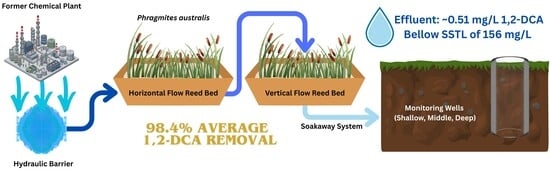
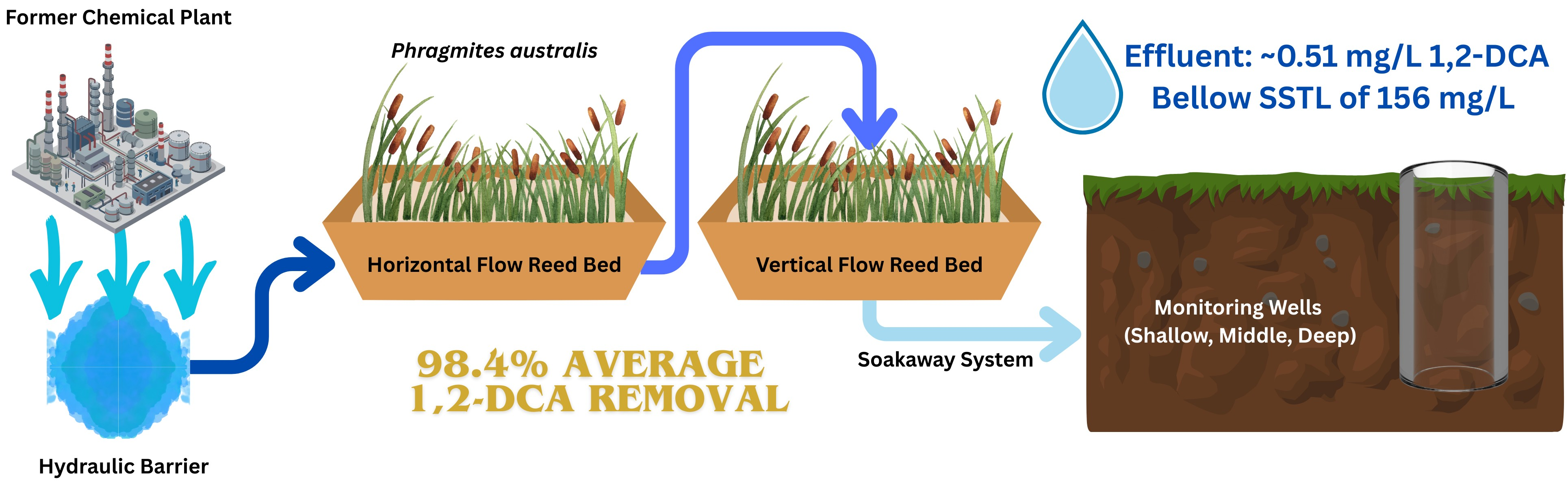
Graphical Abstract

1. Introduction

Oil and gas use and the petrochemical industry generate various pollution loads that encompass various pollutants such as olefins, gases, benzene, toluene, and xylenes (BTX) and derivatives, polyaromatic hydrocarbons (PAH), vinylic monomers, elastomers, polymers and resins, alcohols, organic acids, as well as organic and inorganic pollutants [1,2]. These pollutants are byproducts or waste generated by chemical or industrial processes and must be treated or lowered to acceptable levels for human and ecological receptors. The majority of these hydrocarbon and chemical pollutants are toxic and pose risks to both human health and the environment, as they can penetrate the body through ingestion, the inhalation of fumes, and indirect exposure [3,4].
The contamination of groundwater resources has caused short- and long-term pollution impacts, especially in ecological zones. Groundwater contamination can originate from geological formations, the infiltration of low-quality water, seawater intrusion, and geothermal interaction with hot water [5]. In contrast, human-based (anthropogenic) groundwater contamination is caused the by improper application of fertilizers and pesticides in agricultural activities, the disposal of industrial and mining wastes, and imperfect well construction [6]. The typical sources of groundwater contamination included petroleum hydrocarbons [7,8], petrochemicals and other chemicals [9], and heavy metals [10]. Additionally, due to the war, oil production facilities were affected and, subsequently, subsurface freshwater aquifers were also impacted [11]. Chlorinated volatile organic compounds (CVOCs), including 1,2-Dichloroethane (1,2-DCA), often referred to as ethylene dichloride, are recognized as the predominant chlorinated industrial products utilized in the production of vinyl chloride monomers, the synthesis of amines, and chlorinated solvents [12,13], and common groundwater contaminants in petrochemical plants [14]. It is designated as a potential (Group B2) and possibly (Group C) human carcinogen by the USEPA [15]. 1,2-DCA can be bioactivated into harmful chemicals in fish and mammals [16]; therefore, it is essential to remediate soil or groundwater contaminated with chlorinated hydrocarbons such as 1,2-DCA to prevent the prolonged exposure of humans and the environment.
In recent years, phytoremediation has gained rapid interest as a viable ecological method for extracting chlorinated hydrocarbons from soils and water bodies [17,18] and from contaminated groundwater [19]. Phytoremediation plants remove pollutants, including heavy metals and organic pollutants, from various industries [20]. Phytoremediation has the potential to treat chlorinated hydrocarbon-contaminated media by harnessing the catabolic abilities of microorganisms with specific enzymatic activities [21], which also involves plant-associated microbial interactions [20]. The plant of focus in this study is Phragmites australis, which was planted in a constructed wetland at an ex-chemical plant to treat groundwater contaminated with chlorinated VOCs, particularly 1,2-DCA, vinyl chloride, and other VOCs. P. australis was studied in terms of its capability to treat pollutants, including heavy metals, toxic substances, and micropollutants [22,23]. This plant establishes distinctive habitats on and around its roots, where the microbial population significantly exceeds that in a soil environment devoid of roots [22,24]. These habitats involve complex interactions among roots, root exudates, rhizosphere soil, and microbes [25], as well as carbohydrates, amino acids, flavonoids, and sterols [26]. One pathway for chlorinated hydrocarbon degradation is reductive dichlorination, facilitated by interactions between plant roots and microbes. Borruso et al. [27] found that microbes played important roles in degrading pollutants using P. australis as the phytoremediation plant, resulting in high microbial counts, also known as rhizodegradation [28].
Microbes thriving in the rhizosphere, the root zone, can improve phytoremediation by using oxygenase activity to break down hydrocarbons and aromatic compounds [27]. In addition to decomposing pollutants, microorganisms can enhance plant growth by synthesizing phytohormones, antibiotics, and lytic enzymes; nitrogen fixing; mineral nutrient solubilization; and inducing systemic resistance [29]. Many studies reported on the microbial community in plants. Previous studies on the P. australis rhizosphere found that the majority of microbial phyla consisted of Proteobacteria, Bacteroidetes, Chloroflexi, and Firmicutes, with varying counts across sites [27,30], and that microbes can enhance wetland performance and plant growth [31].
Although many studies have reported the use of P. australis for phytoremediation, reports on microbial community diversity in a full-scale 1,2-DCA phytoremediation system using P. australis after years of operation are currently limited. This research focuses on microbial community adaptation in a reedbed planted with P. australis for treating 1,2-DCA-contaminated groundwater. The objective of this study was to assess the performance of the reedbed system planted with P. australis in treating 1,2-DCA in groundwater and to compare the microbial diversity, composition, and relative dominance of the rhizosphere microbial community after more than 6 years of operation at a former industrial site.

2. Materials and Methods

2.1. Site Description

The study location was a closed chemical facility in Malaysia that manufactured vinyl chloride monomer and PVC products for domestic and international markets. The baseline data were documented by Rahim et al. [32]. The groundwater depth generally ranges from 1.4 to 3.0 m, with the site mostly composed of sand (from very fine to very coarse) extending to a depth of 24 m below ground surface (bgs), and transitioning to silt/clay beyond 28 m bgs, with a hydraulic conductivity of 1.0 × 10⁻⁴ to 1.1 × 10⁻² cm/s. The primary pollutants at the site were found to be 1,2-DCA and vinyl chloride. Additional chlorinated chemicals were detected in lower concentrations, including 1,1-dichloroethylene, trichloroethylene, and carbon tetrachloride. Table 1 delineates the characteristics of groundwater. The contamination was confined to the site, with a hydraulic barrier system installed in the down-gradient area.
The reedbed system was constructed at a site that includes hydraulic barrier pumping wells, a collecting tank, a reedbed treatment system, and a treated water outflow (Figure 1). Twenty-two units of 4-inch pumping wells were erected at a depth of 10 m to provide a hydraulic barrier and inhibit the movement of pollutants toward the south and southwest. Groundwater was extracted from 19 hydraulic barrier wells into collecting tanks, with an estimated total flow rate of 305 m3/day. The design concept was to treat the groundwater to a 1,2-DCA goal limit of 156 mg/L using a variable flow rate of 330 m3/day. The mean recovery flow was 237.93 m3/day. The reedbed system consisted of an entrance section, reedbed configurations populated with adult P. australis, and an output collection tank. The reedbeds were divided into two stages, namely, Stage 1 (4 units of horizontal reedbed in which groundwater flows laterally through the porous media below the surface under oxic conditions) and Stage 2 (4 units of vertical reedbed, where the influent is intermittently loaded onto the surface and percolates vertically through the media under oxic–anoxic conditions). Stage 1 accounted for 75% of the overall footprint, while Stage 2 accounted for the remaining 25%. The sanctioned site-specific target level (SSTL) of 156 mg/L for 1,2-DCA was used as the effluent threshold for the comprehensive reedbed system, with a total residence time of 8–10 days across both phases. The cleaned water will be retained in four retention ponds before being discharged into the soakaway system (with a capacity of 1680 m3 and 90% space), from where it will be redistributed to the groundwater aquifer. For this study, Line 1 was designated as horizontal reedbed 1, vertical reed bed 1 and retention pond 1, Line 2 was designated as horizontal reedbed 2, vertical reed bed 2 and retention pond 2, Line 3 was designated as horizontal reedbed 3, vertical reed bed 3 and retention pond 3 and Line 4 was designated as horizontal reedbed 4, vertical reed bed 4 and retention pond 4. Statistical analysis was conducted with SPSS Version 21, with prior assessment of data normality and homogeneity using the Kolmogorov–Smirnov test [33]. A one-way ANOVA was used to assess the relationship between removal performance and the reedbed line. Subsequent post hoc analysis was conducted using Tukey’s HSD. All decisions were based on the examination of p-values within a 95% confidence interval, with α set at 0.05 [34].

2.2. Groundwater Sampling & Analysis

A total of 54 monitoring wells were installed. These were grouped into three distinct depths: S (shallow at 0–5 m), M (middle at 10–20 m), and D (deep at 20–25 m). Groundwater quality sampling and monitoring were performed quarterly. Before sampling, groundwater wells were cleansed three to five times their total volume to eliminate stagnant water. High-flow-rate centrifugal pumps (10–20 gallons per minute) were employed to cleanse the monitoring wells. Sampling was performed with low-flow-rate peristaltic pumps (0.02–2 gallons per minute). Submersible pumps were used to collect samples from various depths in intermediate- and deep-well formations. Groundwater sample bottles were stored at 4 °C and delivered to designated laboratories for analysis. 1,2-DCA was evaluated in accordance with United States Environmental Protection Agency (USEPA) standard 8260B. For operational data, groundwater samples were collected at the inlet and outlet of the reedbed system and analyzed to measure 1,2-DCA and vinyl chloride removal. The groundwater inlet samples were collected at the inlets of RB1 to RB4 (horizontal reedbed), and the treated water samples were collected at the outlets of RB5 to RB8 (vertical reedbed). The reedbed performance data were collected and reported from November 2023 to December 2024 to show the removal rates of 1,2-DCA and vinyl chloride. Groundwater sample bottles were stored at 4 °C for preservation and transported to identified laboratories for analysis. 1,2-DCA was analyzed in accordance with United States Environmental Protection Agency (USEPA) standards 5030B and 8260B using a Gas Chromatography–Mass Spectrometer (GC 6980N, Agilent Technologies, Santa Clara, CA, USA) [32].
Method USEPA 5030B, 8260B (Gas Chromatography–Mass Spectrometer (GC 6980N, Agilent Technologies, USA)) was used to measure the concentrations of 1,2-DCA and vinyl chloride in the water samples. Volatile BTEX components in water were efficiently purged by inert gas and trapped in sorbent columns. The sorbent column is heated and backflushed with an inert gas to desorb the components onto a gas chromatographic column, after which GC-MS quantification is performed. Quantification is achieved using internal standards and average response-factor techniques against an established five-point calibration.

2.3. Natural Attenuation Analysis

The groundwater sampling data in this study were reported from December 2019 through February 2023, continuing the 2012 data. The degradation rate constant was determined using the exponential first-order decay model in Equation (1) to analyze the degradation of 1,2-DCA by natural attenuation in the groundwater column at the research location. The first-order model was only applied to wells showing a monotonic decrease in concentration; datasets with poor linearity (R2 < 0.5) were not interpreted as representing first-order attenuation.
C = Coe−kt
C represents the concentration of pollutants at time t (mg/L); Co is the starting concentration; and k signifies the attenuation rate constant (/year). A linear equation is obtained from Equation (1), as shown in Equation (2).
ln C = ln Cokt

2.4. Microbial Community Assessment

Soil samples were collected at 3 reedbeds: RB3 (horizontal reedbed), RB6 (vertical reedbed), and RB9 (control reedbed) in May 2023. The soil samples were extracted from depths of 0.3–0.5 m at 3 points within each bed, composited into a single sample, wrapped in aluminum foil, and transferred to sterilized glass bottles. The samples were cooled to 4 °C and immediately transported to the laboratory within 6–12 h. Groundwater samples were collected from 2 groundwater monitoring wells: one well representing high concentrations of 1,2-DCA contaminants (MW1-2004) and another representing a control (MW12-05). The groundwater was extracted using a peristaltic pump, collected in a sterilized 1 L amber glass bottle, and wrapped in aluminum foil. The bottles were stored at 4 °C and immediately transported to the laboratory within 6–12 h.
Genomic DNA was isolated with the FastDNATM Spin Soil Kit (MP Biomedicals, Puchong, Malaysia). DNA purity was initially assessed using a 1% TAE agarose gel. The DNA concentration was assessed using a spectrophotometer (Implen NanoPhotometer® N60/N50, München, Germany) and by fluorometric quantification with the iQuantTM Broad Range dsDNA Quantification Kit (iQuantTM, Leeds, UK). For Amplicon PCR quality control, purified genomic DNA that met the DNA sample quality criteria was amplified with locus-specific primers. Bacterial 16S V3-V4 Forward: CCTACGGGNGGCWGCAG; 16S V3-V4 Reverse: GACTACHVGGGTATCTAATCC. All PCR reactions were conducted using REDiant 2X PCR Master Mix (1st BASE). The sequencing libraries were constructed following the 16S library preparation procedure established by Illumina (Illumina, San Diego, CA, USA). Dual indices were added to the amplicon PCR using the Illumina Nextera XT Index Kit V2 (Illumina, Cambridge, United Kingdom), according to the manufacturer’s instructions. The libraries’ quality was assessed utilizing the Agilent Bioanalyzer 2100 System with the Agilent DNA 1000 Kit (Agilent, Santa Clara, California, USA) and fluorometric quantification with Helixyte GreenTM Quantifying Reagent (Helixyte, Hamburg, Germany). The libraries were normalized and pooled according to the Illumina protocol, and sequencing was performed on the MiSeq platform using 300 PE and the MiSeq Reagent Kit v3 (600 cycles) (Illumina, Cambridge, UK).
The quality evaluation of raw reads is conducted with FastQC (https://www.bioinformatics.babraham.ac.uk/projects/fastqc/ accessed on 10 December 2025), followed by the removal of primers and adaptors with Cutadapt 3.5 [35]. Paired-end readings are processed and amalgamated with DADA2 V1.18. Chimera screening and taxonomy assignment are conducted utilizing the SILVA database V138.1 [36]. Phylogenetic analysis (for Unifrac) involves sequence alignment with MUSCLE 3.8 [37], followed by phylogenetic tree construction with FastTree2 [38].
A comparison of α-diversity measures the diversity of microbes within a single sample, quantified using diversity indices that incorporate both the numbers and abundances of microbial taxa in that sample. The Shannon Diversity Index is sensitive to rare taxa and is widely used to compare microbial diversity across different samples.

2.5. Heatmap and Unweighted Pair Group Method with Arithmetic Mean (UPGMA) Analysis

Heatmap analysis exhibits the relative abundances of taxa (phyla) using shades of color. The higher the value is, the darker the represented color will be. Similarities between samples are presented on the left using hierarchical clustering with UPGMA and the Bray–Curtis distance matrix. UPGMA (Unweighted Pair Group Method with Arithmetic Mean) is a hierarchical clustering method commonly used in microbial ecology to analyze the similarity or dissimilarity between microbial communities based on their taxonomic or functional profiles. The UPGMA method works by calculating pairwise distances between all samples in the dataset and then clustering them based on their similarities or dissimilarities. This similarity or dissimilarity can be represented by different distance metrics, such as UniFrac, Bray–Curtis, or Jaccard, depending on the type of data being analyzed. UniFrac is a distance metric that accounts for the evolutionary history of microbial communities by calculating the fraction of a phylogenetic tree’s total branch length that is unique to each community. UniFrac can be weighted or unweighted, depending on whether taxa abundances are included. UniFrac is particularly useful for analyzing the phylogenetic structure of microbial communities and for identifying the effects of different environmental factors on their evolution.

3. Results

3.1. Performance of the Reedbed System

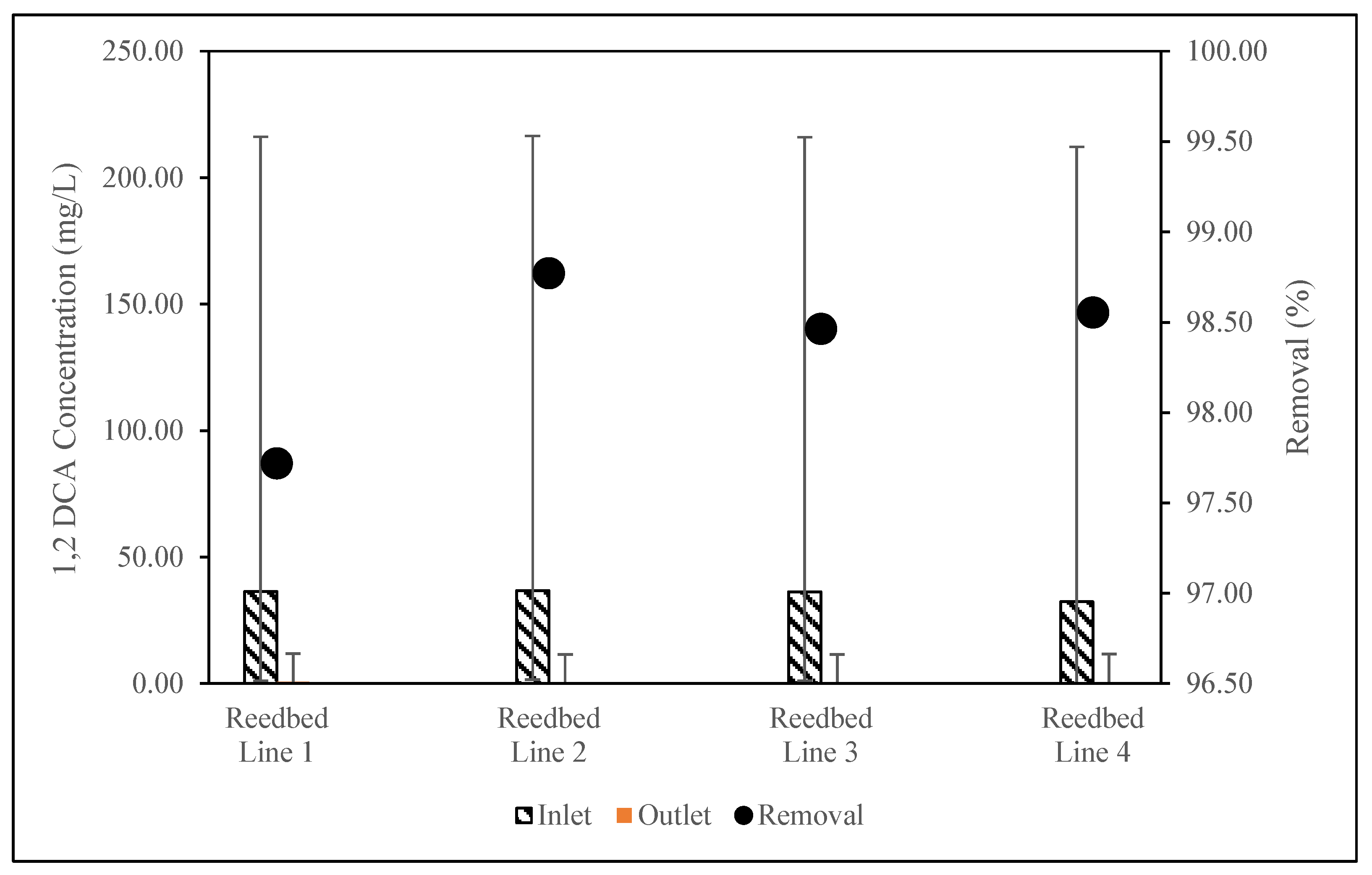
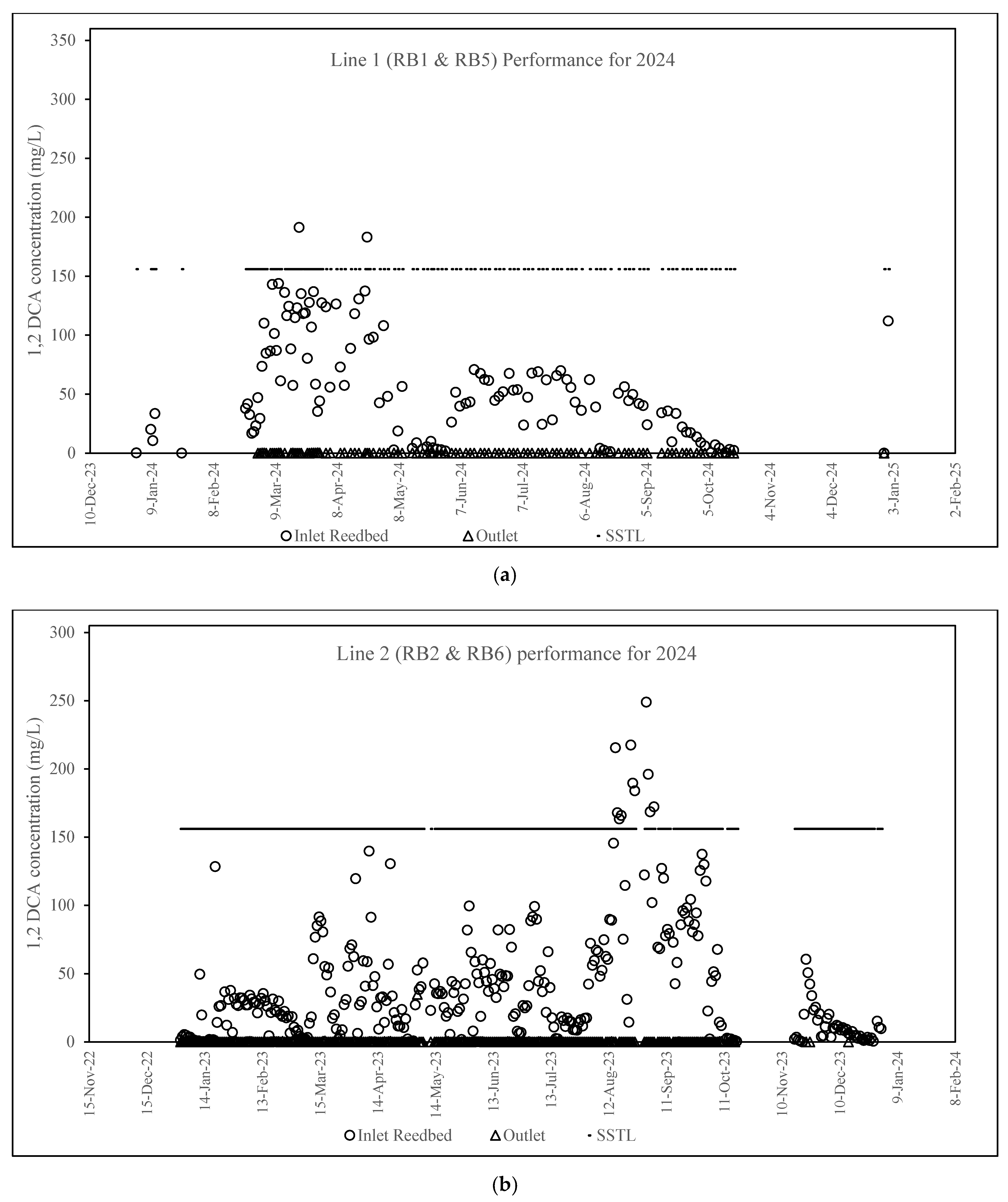
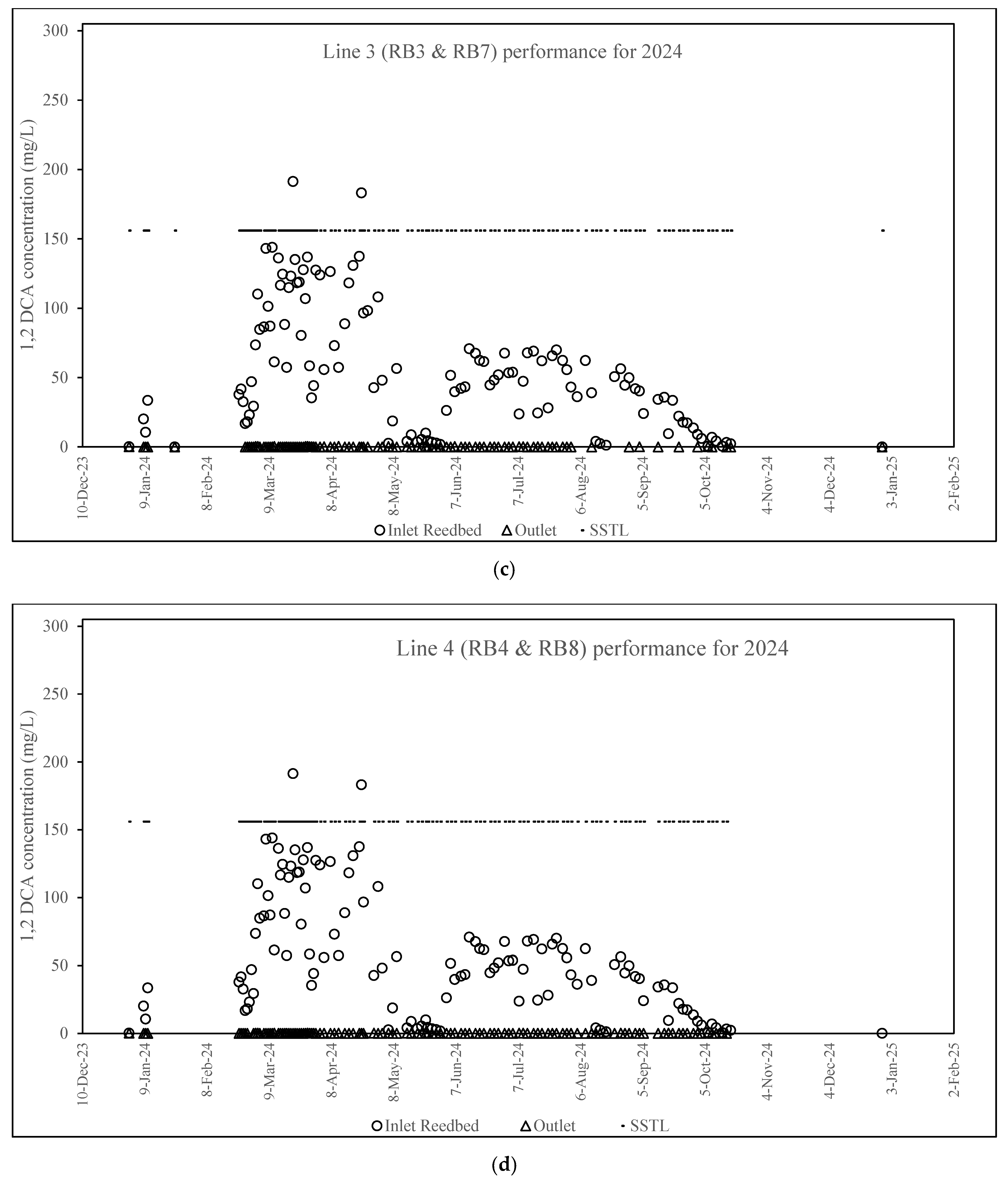
The performance of the reedbed system was recorded for the removal of 1,2-DCA from 2019 to 2024, with daily monitoring performed. Based on the data collected during operations, the reedbed system removed 1,2-DCA on an average of 97.7%, 98.8%, 98.5%, and 98.6% for Lines 1 to 4, respectively (reporting period: 2019 to 2024). The total average removal from the collective performance of four parallel reedbeds was 98.4%. The average outlet concentrations of 1,2-DCA were 0.70 mg/L, 0.40 mg/L, 0.42 mg/L, and 0.52 mg/L for Lines 1–4, respectively, yielding an overall average of 0.51 mg/L. The concentrations were significantly below the SSTL of 156 mg/L, as summarized in Figure 2. Figure 3 illustrates the scheduled monitoring of 1,2-DCA concentrations throughout the reedbed’s operation. The average results indicated that Lines 1 through 4 achieved a 1,2-DCA removal efficiency exceeding 97.7% during the reporting period from 2023 to 2025, in contrast to the previous average removal rates of 77.78%, 68.1%, 75.5%, and 50.0% for Lines 1 to 4, respectively, during the reporting period from 2016 to 2017 [32].

3.2. Natural Attenuation of 1,2 DCA in Groundwater

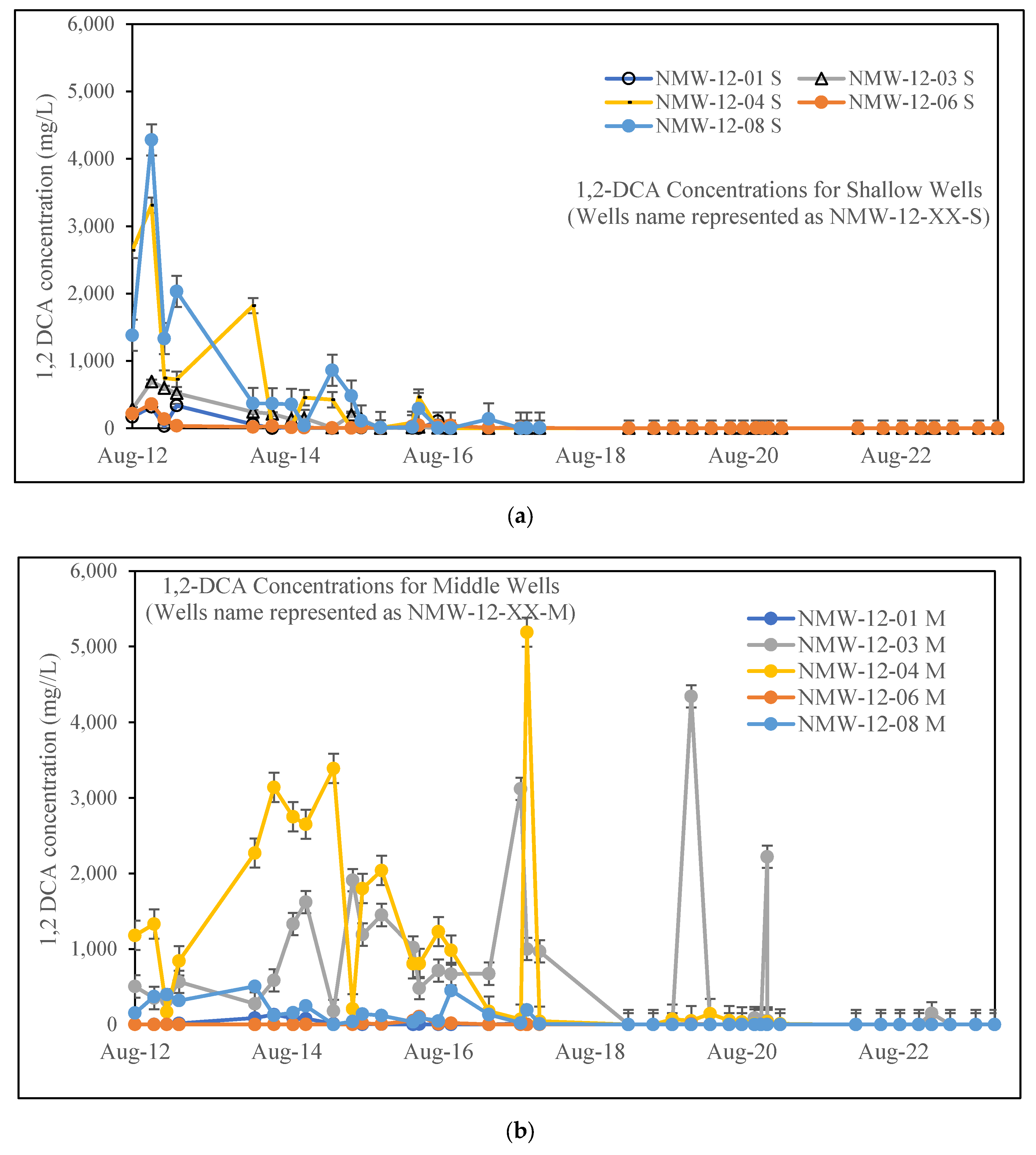
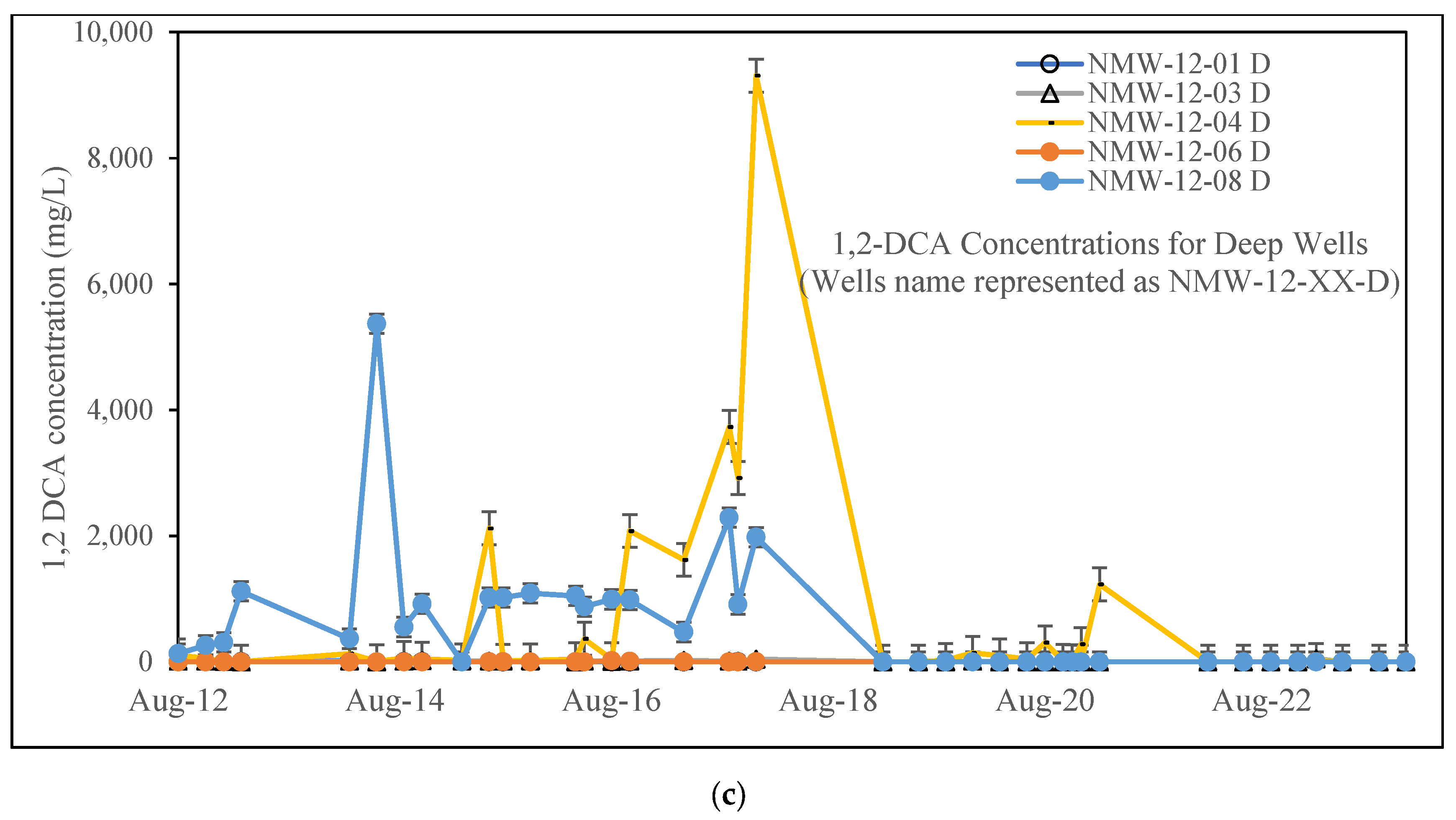
The concentrations of 1,2-DCA were monitored in clustered groundwater wells representing shallow well (0 to 5 m), middle-well (10 to 15 m), and deep-well (20 to 25 m) profiles (Figure 4). Shallow groundwater profiles observed from 2012 to 2023 exhibited concentrations ranging from <0.05 mg/L to 4280 mg/L, with the majority of studied 1,2-DCA levels being above the Site-Specific Target Limit (SSTL) of 156 mg/L (156,000 µg/L). In middle groundwaters, 1,2-DCA concentrations ranged from <0.05 mg/L to 5190 mg/L, with the majority exceeding the SSTL of 156 mg/L (156,000 µg/L). In deep groundwater profiles, 1,2-DCA concentrations ranged from <0.05 µg/L to 9310 mg/L, with the majority of the studied 1,2-DCA levels above the SSTL of 156 mg/L (156,000 µg/L).
The natural attenuation parameters of five selected groundwater monitoring wells were measured using annual data collected from 2012 to 2024 for comparison. The results for shallow, middle, and deep groundwater wells are shown in Table 2, Table 3, and Table 4, respectively.
The natural attenuation rates for shallow wells ranged from 0.0013/year (R2 = 0.6015) to 0.0036/year (R2 = 0.7144), indicating a declining trend overall, with NMW-12-01S and NMW-12-08S showing the highest attenuation rates of 0.0035/year (R2 = 0.5906) and 0.0036/year (R2 = 0.7144), respectively. The kinetic rates obtained were considered moderate fits (0.5 > R2 > 0.8) [39].

3.3. Overall Microbial Community Assessment for Groundwater

Groundwater monitoring well MW1-2004 has been identified as having high concentrations of 1,2-DCA and vinyl chloride. The detection range for 1,2-DCA in MW1-2004 was from 13,085 µg/L to 150,000 µg/L, and for vinyl chloride it was from 10,600 µg/L to 21,900 µg/L (data from 2017 to 2021). Groundwater monitoring well MW12-05 was selected as the control groundwater well, with reported concentrations of both 1,2-DCA and vinyl chloride below the Limit of Reporting (<50 µg/L) (data for years 2018–2021).
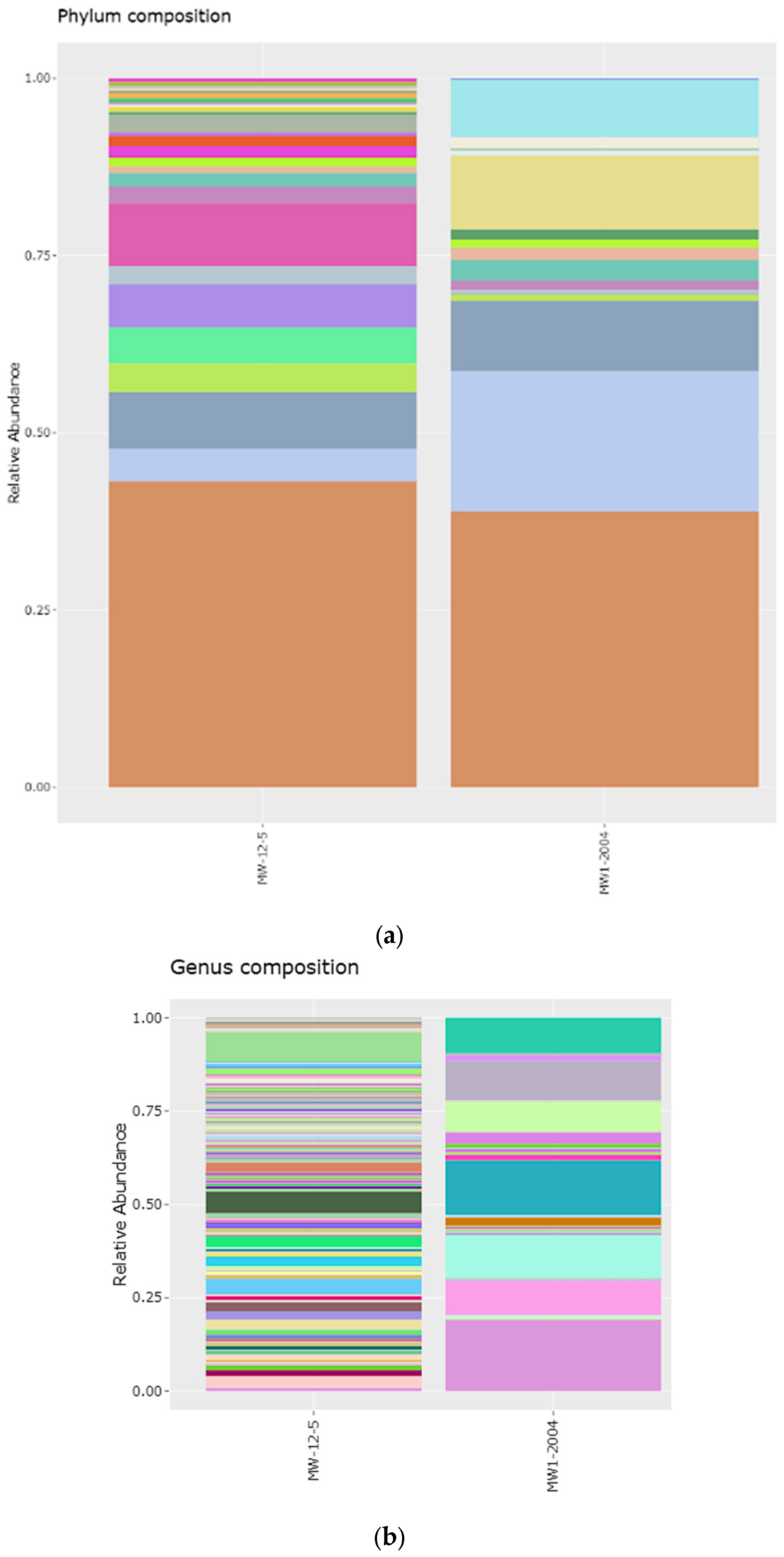
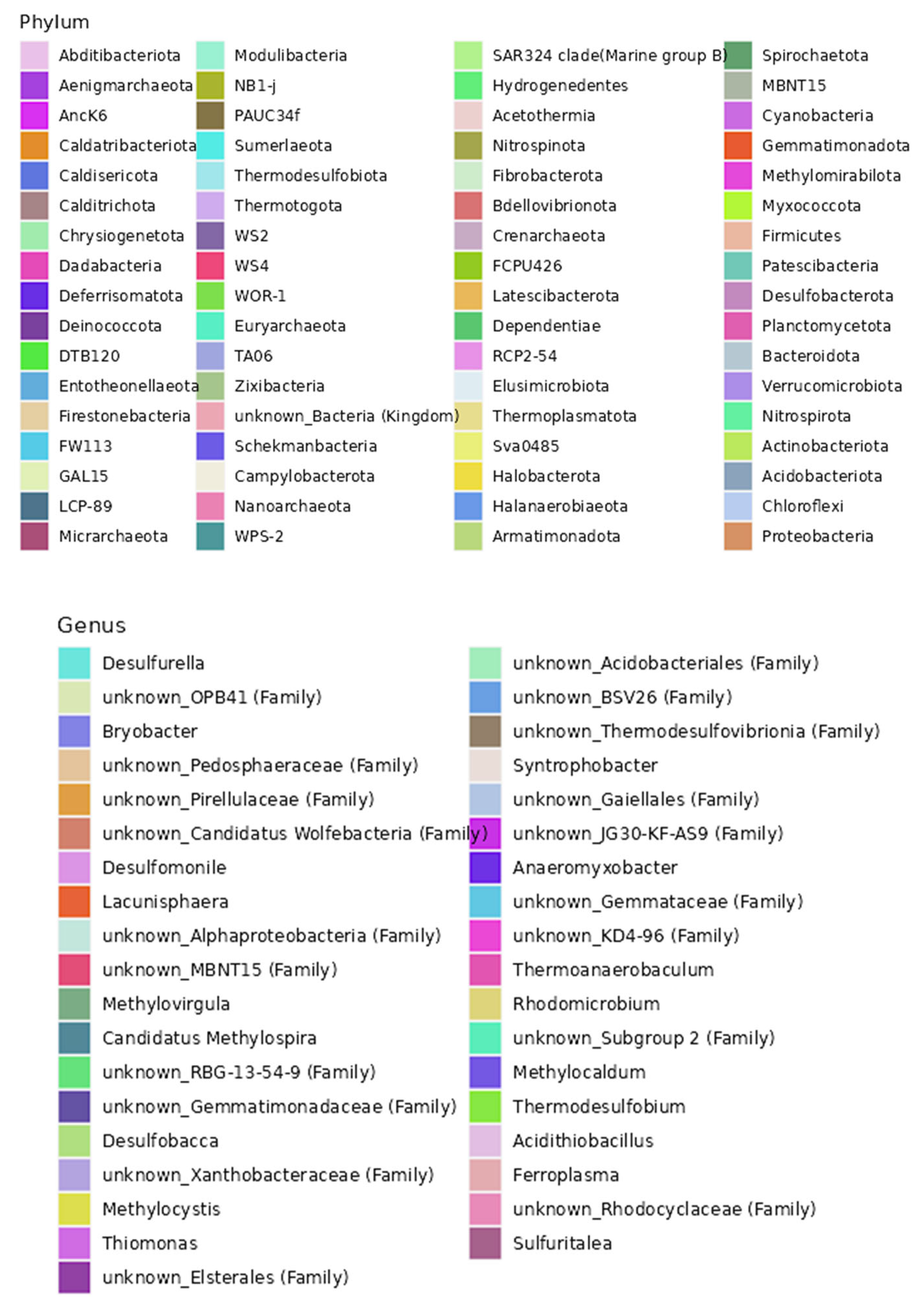
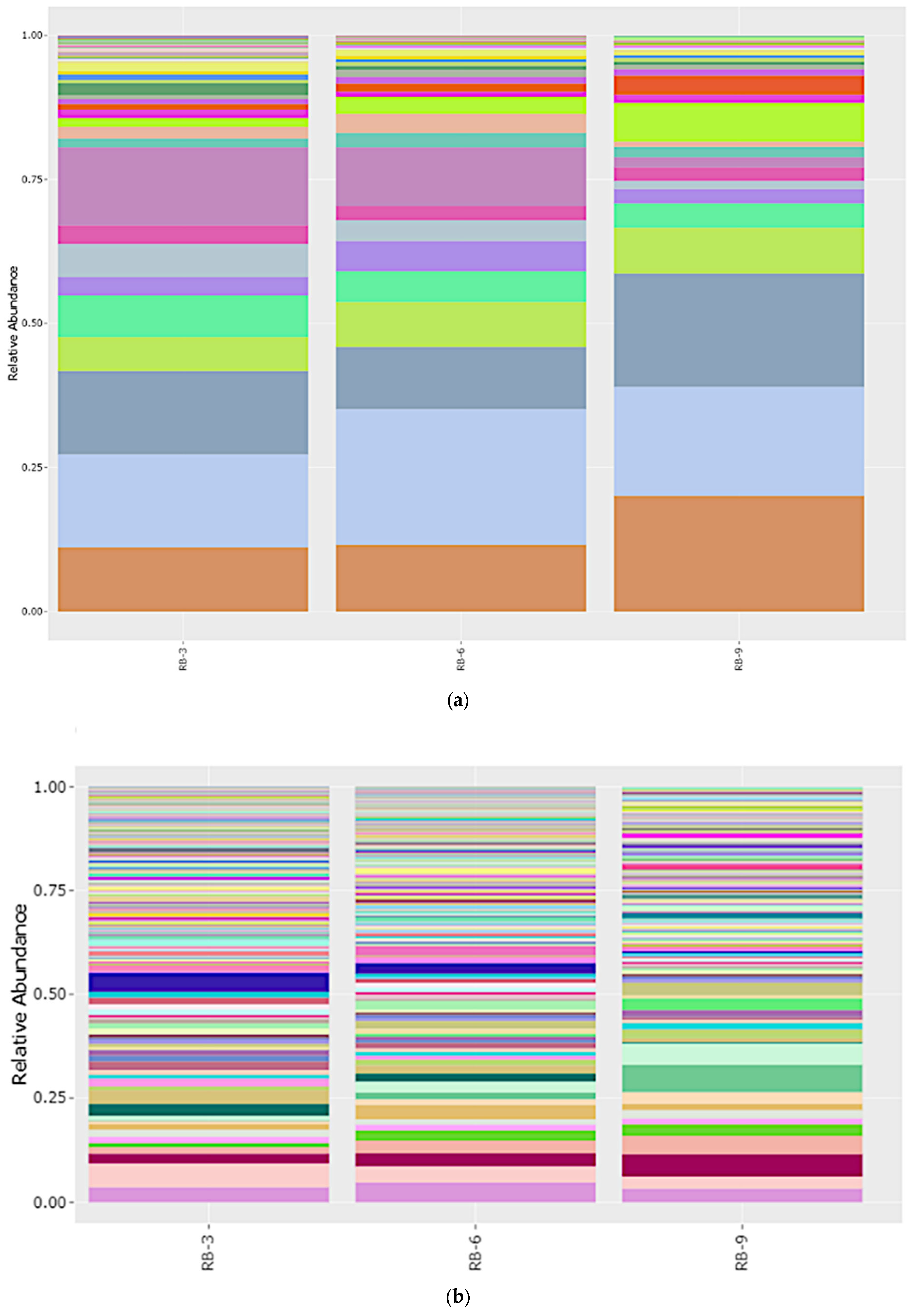
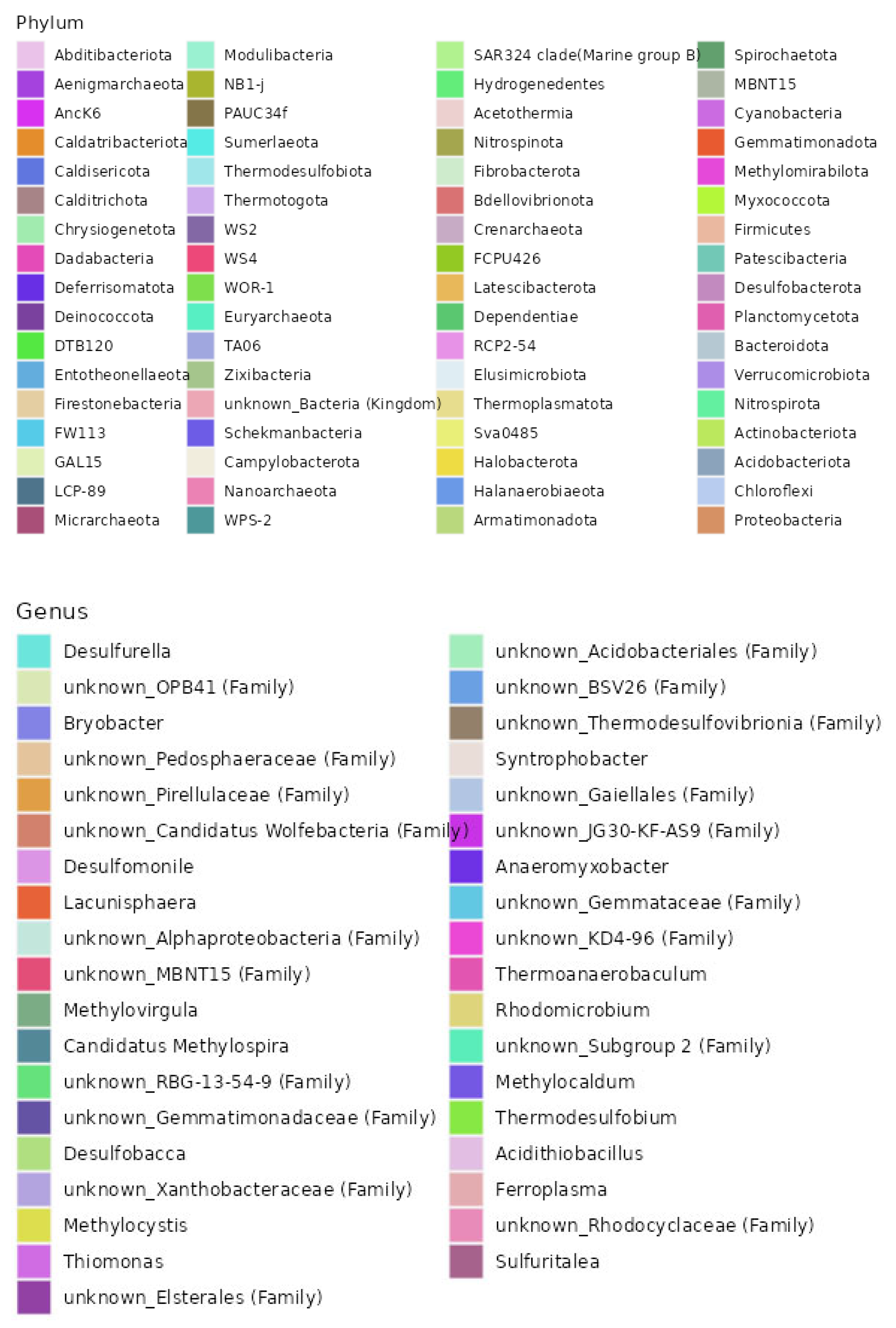
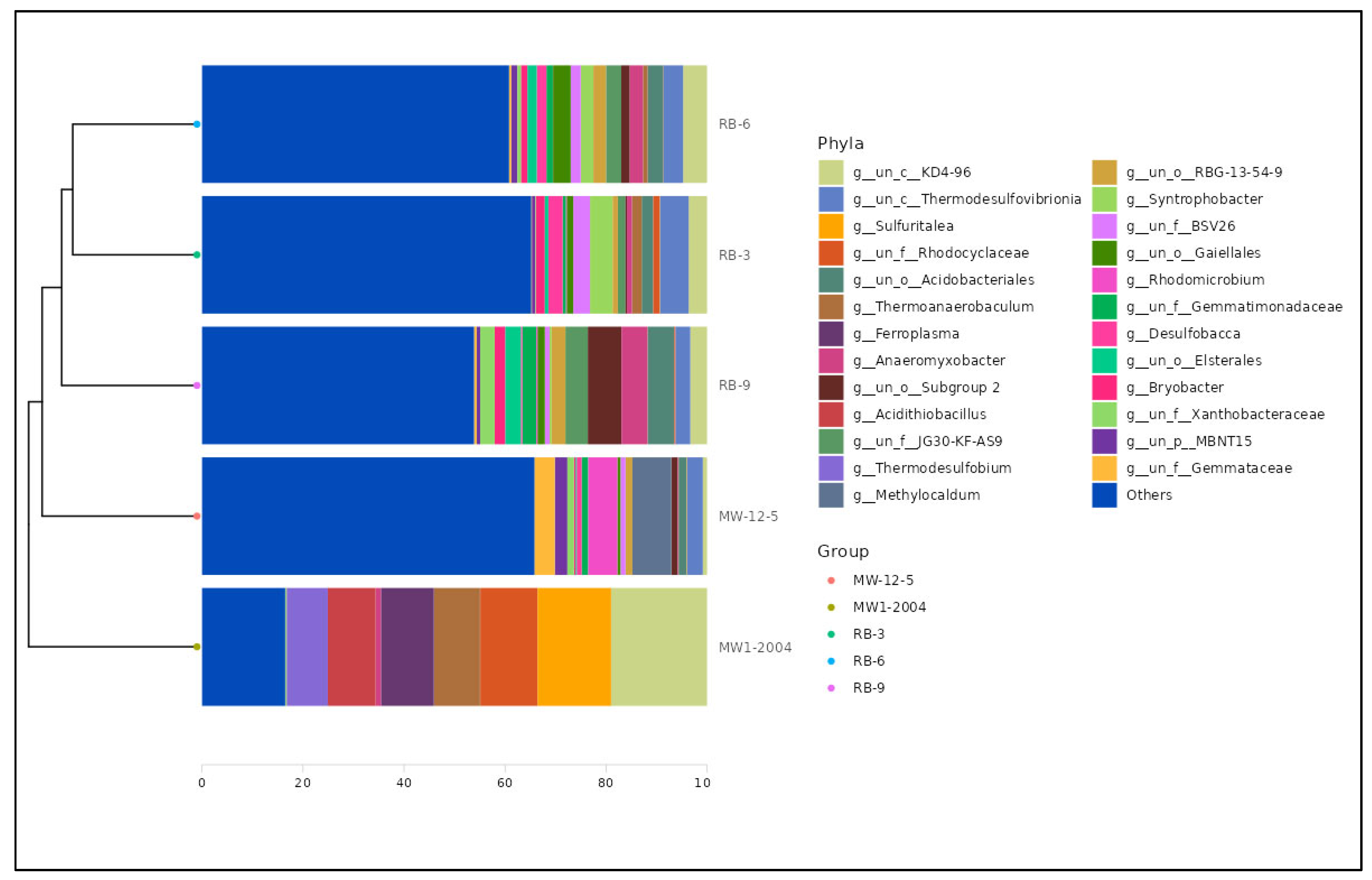
For groundwater samples collected from MW1-2004 in May 2023, a total OTU count of 35,910 was recorded. A total of 22 phyla were identified, with Proteobacteria, Chloroflexi, Acidobacteriota, Thermodesulfobiota, and Patescibacteria ranking among the top 5, accounting for 80% of the total phylum community in the MW1-2004 groundwater sample. γ-proteobacteria (99%) were the dominant class of the Proteobacteria phylum. At the genus level, the dominant genus in the MW1-2004 groundwater sample is unknown KD4-96 (19%), followed by Sulfuritalea (15%), Ferroplasma (10%), Acidithiobacillus (9%), and Thermoanaerobaculum (9%). The relative abundances of unidentified KD4-96 (19%), belonging to the Chloroflexi phylum, and Sulfuritalea (15%), belonging to the Proteobacteria phylum, are the 2 most significant abundances of genera in groundwater sample MW1-2004. The taxonomic composition of DNA sequences from groundwater bacterial communities at the phylum and genus levels is shown in Figure 5.
A comparison was performed with the control groundwater well, MW12-05. The total OTU count was recorded at 34,194. The results showed that 42 phyla were classified, with Proteobacteria, Acidobacteriota, and Planctomycetota identified as the top 3, accounting for 61% of the total phylum community. Gammaproteobacteria (22%) and Alphaproteobacteria (22%) were both the dominant classes of the Proteobacteria phylum. The most dominant genera in the MW12-05 groundwater sample were Methylocaldum (8%), Rhodomicrobium (6%), Gemmataceae (4%), Thermodesulfovibrionia (3%), Candidatus methylospira (3%), Methylovirgula (3%), and unknown MBNT (3%). The relative abundance values of Methylocaldum (8%) and Rhodomicrobium (6%), belonging to the most dominant Proteobacteria phylum, made them the most significant genera in MW12-05 groundwater.
Table 5 presents the diversity indices (total and Shannon) and the evaluation of bacterial abundance and diversity within and between 2 groundwater samples. The difference in phyla α-diversity is distinct between the two groundwater samples. The observed counts for MW1-2004 and MW12-5 (control) were 158 and 1377, respectively. The Shannon Diversity indices were higher in control groundwater wells than in groundwater contaminated with 1,2-DCA. This pattern was observed in a similar way for Shannon, Simpson, and Fisher’s diversity indices.

3.4. Overall Microbial Community Assessment for Reedbed Soil

For reedbed soils, the 1,2-DCA concentrations taken from the years 2019 and 2020 for RB3, RB6, and RB9 (Control) were all below the Limit of Reporting (LOR) of <0.5 mg/kg. For horizontal reedbed RB3 soil, the total OTU count was recorded at 33,923. A total of 49 phyla were classified, with Chloroflexi, Acidobacteriota, and Desulfobacterota ranking among the top 3, accounting for 45% of the total phylum community. The most dominant genus in RB3 was Thermodesulfovibrionia (19.29%), followed by Syntrophobacter (15.19%), unknown KD4-96 (12.32%), unknown BSV26 (11.25%), and Desulfabacca (9.56%). The relative abundance values of Thermodesulfovibrionia (Nitrospirota phylum) and Rhodomicrobium, belonging to the most dominant phylum (Proteobacteria phylum) and Syntrophobacter (Desulfobacterota phylum), made them the most significant genere in the RB3 sample (Figure 6).
For vertical reedbed RB6 soil, the total OTU count was recorded at 34,282. A total of 40 phyla were classified, with Chloroflexi, Proteobacteria, and Acidobacteriota identified as the top 3, accounting for 47% of the total phylum community. The most dominant genus for RB6 is unknown KD4-96 (16.65%), followed by Thermodesulfovibrionia (12.71%), Gaiellales (11.52%), Acidobacteriales (10.25%), and unknown JG30-KF-AS9 (9.94%). The relative abundance values of unknown KD4-96 (Chloroflexi phylum) and Thermodesulfovibrionia (Nitrospirota phylum) made them the most significant genera in the RB6 soil sample.
A comparison was performed with the control reedbed RB9 to assess the microbial community of the untreated reedbed. The total OTU count was recorded at 34,770. A total of 34 phyla were identified, with Proteobacteria, Acidobacteriota, and Chloroflexi ranking among the top 3, accounting for 59% of the total phylum community. The most dominant genera for RB9 are unknown Subgroup 2 (17.05%), unknown Acidobacteriales (13.44%), Anaeromyxobacter (13.10%), and unknown JG30-KF-AS9 (8.50%), which together constitute the top 5 genera. The relative abundance values of unknown Subgroup-2 (Acidobacteriota phylum), Acidobacteriales (Acidobacteriota phylum), and Anaeromyxobacter (Myxococcota phylum) made them the most significant genera in the RB9 soil sample.
Table 6 presents the diversity indices (total and Shannon) and evaluates bacterial abundance and diversity within and between soil samples from the reedbeds RB3, RB6, and RB9 (control).
For soil samples, both the horizontal bed (RB3) and the vertical bed (RB6) were comparable in observed counts (1433 and 1472, respectively), with corresponding SDI values of 6.64 and 6.66, respectively. However, the control bed (RB9) showed a lower observed count of 1050 (SDI = 6.23) than both RB3 and RB6.

3.5. Heatmap Analysis

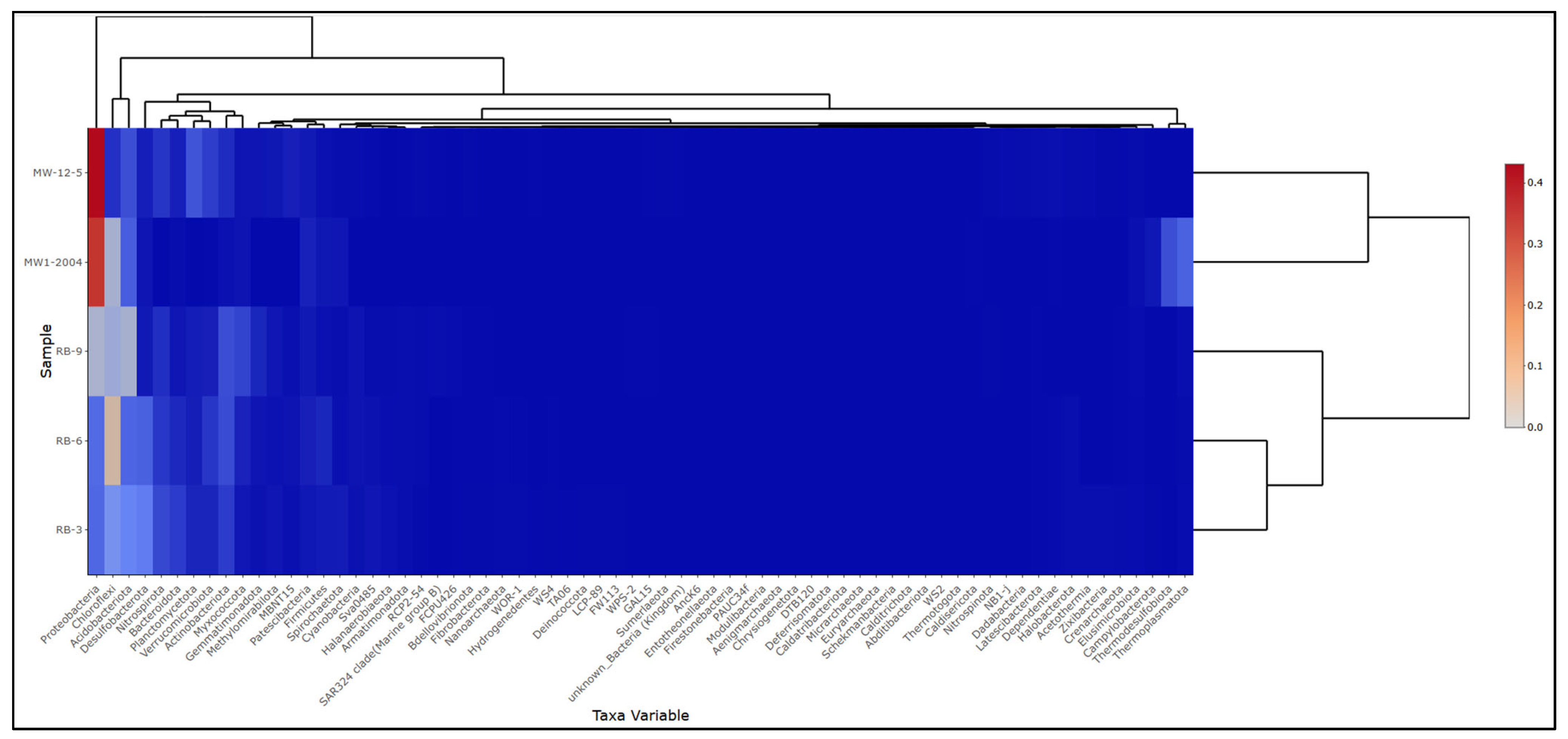
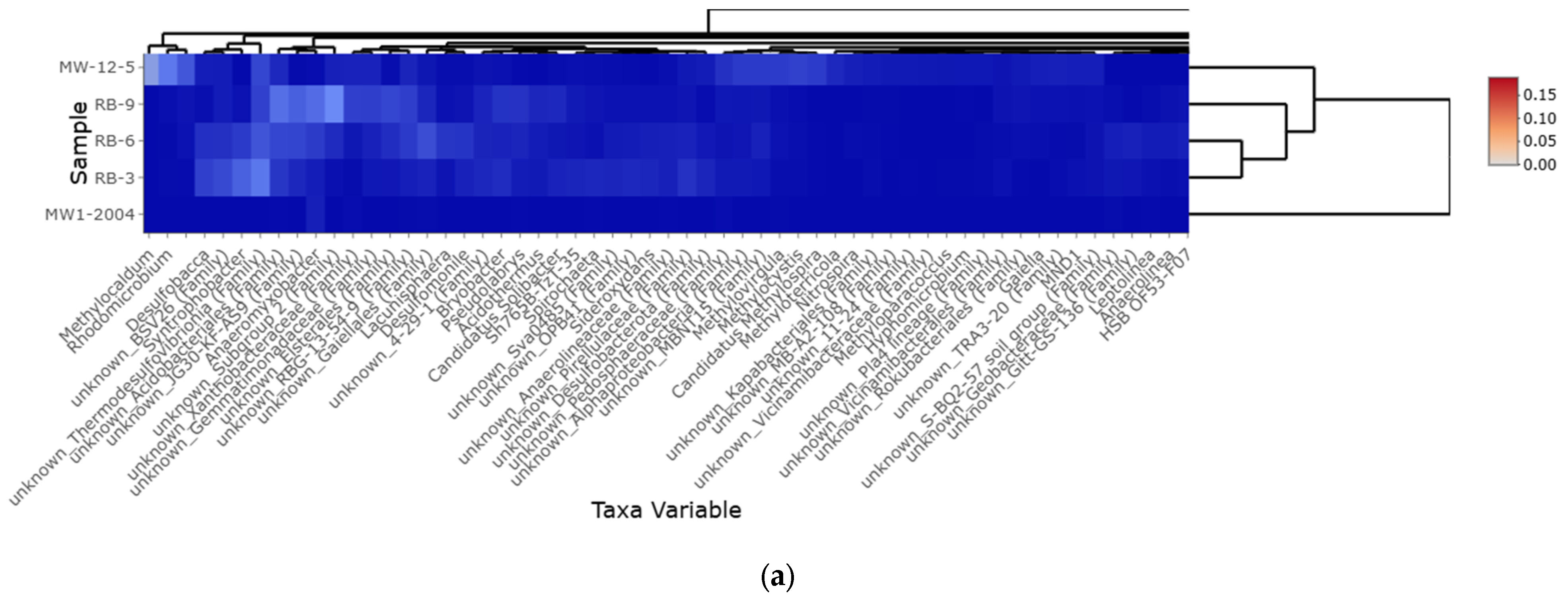
The phylum heatmap for all 2 groundwater and 3 reedbed soil samples is shown in Figure 7. For groundwater samples, Proteobacteria, Chloroflexi, Acidobacteriota, Desulfobacterota, and Nitrospirota phyla were commonly dominant in both MW1-2004 and MW-12-5 (control). The Proteobacteria phylum was represented in a very dense red color, with an MW1-2004 value of 0.3891, compared with one of 0.43153 for MW12-5 (control), indicating comparable abundances of this phylum in both groundwater samples. The Chloroflexi phylum showed a value of 0.1980 for MW1-2004, compared with one of 0.0456 for MW12-5 (control), indicating a difference in abundance between the two groundwater samples. The similarity in microbial abundances was further demonstrated by the Acidobacteriota phylum, showing a value of 0.0992 for MW1-2004 compared with one of 0.0804 for MW12-5 (control), and by Desulfobacterota, showing a value of 0.0127 for MW1-2004 compared with one of 0.0025 for MW12-5 (control), indicating the comparable abundances of these phyla in both groundwater samples. Groundwater samples containing 1,2-DCA, vinyl chloride, and other contaminants (MW1-2004) showed lower diversity counts. Groundwater sample MW1-2004, containing 1,2-DCA and vinyl chloride, also recorded the presence of Campylobacterota, Thermodesulfobiota, and Thermoplasmatota (0.0153, 0.0812, and 0.1044, respectively), which were not observed in groundwater sample MW-12-05 (control). This indicates the existence of potential microbial taxa that can thrive in groundwater contaminated with 1,2-DCA and vinyl chloride, using the contaminants as their food source. Campylobacterota are reported to be present in subterranean estuaries that control the nitrate concentrations [40] and are also categorized among the phyla that can perform anaerobic organohalide-respiring (OHR) [41]. Not much research was found for the Thermodesulfobiota and Thermoplasmatota phyla regarding remediation functions. For reedbed soil samples, the heatmap showed that RB3 and RB6 have more similar diversity patterns than RB9 (control). Proteobacteria were comparable between RB3 (0.1106) and RB6 (0.1153), whilst Acidobacteriota and Desulfobacterota showed higher counts in RB3 than in RB6. In contrast, Chloroflexi was highly significant in RB6 (0.2357), and higher counts of Verrucomicrobiota (0.0526) and Actinobacteriota (0.7718) were observed in RB6 than in RB3. In RB9 (Control), significant counts were observed for Proteobacteria (0.2002) and Acidobacteriota (0.1970). RB9 (Control) also shows higher counts of Myxococcota (6.79%) and Gemmatimonadota (3.30%) than RB3 and RB6.
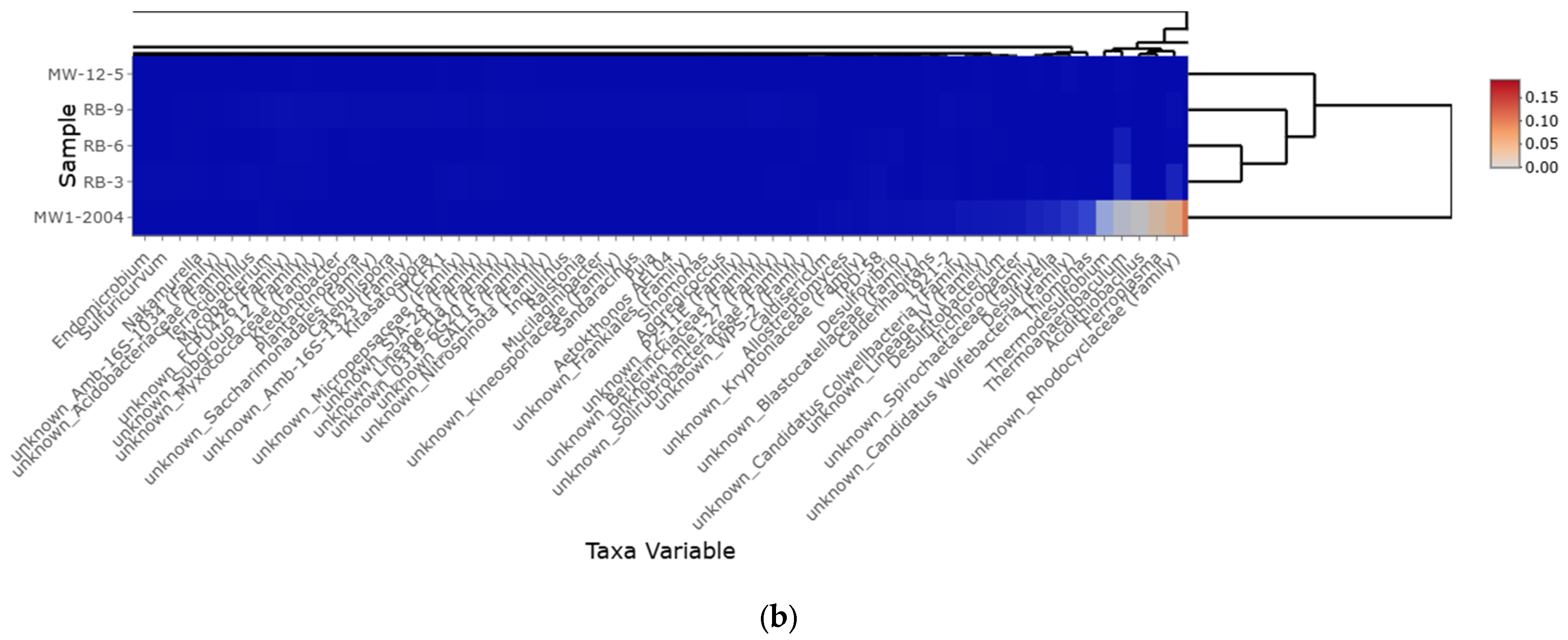
In groundwater sample analysis at the genus level, for groundwater sample MW1-2004, unknown KD4-96 (family) under the Chloroflexi phylum was recorded to have the highest abundance (0.1899), followed by Sulfuritalea (0.1454) under the Proteobacteria phylum, unknown Rhodocyclaceae (family) (0.1135) under the Proteobacteria phylum, Ferroplasma (0.1044) under Archaea, Acidithiobacillus (0.0946) under the Proteobacteria phylum, and Thermoanaerobaculum (0.0913) under the Acidobacteriota phylum and the Thermodesulfobium (0.0812) phylum. These 7 genera were significantly more abundant in groundwater contaminated with 1,2-DCA and vinyl chloride than in the groundwater sample MW12-5 (control). For control groundwater (MW-12-5), the genera identified as the 5 most abundant in groundwater samples were Methylocaldum (0.0769) under the Proteobacteria phylum, Rhodomicrobium (0.0576) under the Proteobacteria phylum, unknown Gemmataceae (family) (0.0397) under the Planctomycetota phylum, unknown Thermodesulfovibrionia (family) (0.0312) under the Nitrospirota phylum, Methylocystis (0.0286) under the Proteobacteria phylum, and Candidatus methylospira (0.0257) under the Proteobacteria phylum. The results showed that different genera thrived at 2 different groundwater samples, as shown in Figure 8. Based on the heatmap, the Proteobacteria phylum was dominant in both groundwater samples. Chloroflexi was dominant in groundwater samples contaminated with, alongside Thermoplasmatota, Thermosdesulfobiota, and Campylobacterota. These phyla were observed as being dominant in groundwater contaminated with 1,2-DCA and vinyl chloride.
For reedbed soils, it was observed from the genus heatmap that both RB3 and RB6 did not have similar abundance compared to that seen at the phylum level. This is expected, since the abundance of a genus is much higher when compared to that at the phylum level. For RB3, the most abundant genera were unknown-Thermodesulfovibrionia (family) (0.0569), Synthophobacter (0.0448), unknown-BSV26 (family) (0.0332), Desulfobacca (0.0282), and unknown-Pirellulaceae (family) (0.0202). For RB6, the most abundant genera were unknown-Thermodesulfovibrionia (family) (0.0385), unknown-Gaiellales (family) (0.0249), unknown-Acidobacteriales (family) (0.0311), unknown-JG30-KF-AS9 (family) (0.0302), and Anaeromyxobacter (0.0259). For Control reedbed RB9, the most abundant genera were unknown-Subgroup 2 (family) (0.0667), unknown-Acidobacteriales (family) (0.0526), Anaeromyxobacter (0.0513), unknown-JG30-KF-AS9 (family) (0.0444), and unknown-Elsterales (family) (0.0307). Some similarities among genera were observed for both RB6 and RB9, particularly in unknown-Acidobacteriales (family), Anaeromyxobacter, and unknown-JG30-KF-AS9. In general, few similarities in genera were observed across all 3 reedbed soils. Still, the identification of genera was incomplete due to library limitations, which allowed only family-level identification.

3.6. Unweighted Pair Group Method with Arithmetic Mean (UPGMA) Analysis

UPGMA was conducted for groundwater samples and reedbed soil samples (Figure 9). For groundwater samples containing 1,2-DCA and vinyl chloride, the diversity was mainly characterized by 7 main genera, including unknown KD4-96, Sulfuritalea, Rhodocyclaceae, Thermoanaerobaculum, Ferroplasma, Achidithiobacillus, Thermodesulfobium, and Anaeromyxobacter. When compared with the groundwater sample MW12-5 (control), different genera were observed at relatively lower abundances, with about 70% of the phyla recorded as coming from others. The prominent phyla controlling groundwater were Methylocaldum, Rhodomicrobium, Sulfuritalea, and Thermodesulfovibrionia, but they occurred at lower abundances. By comparing the two groundwater samples, we observed that unknown KD4-96, Sulfuritalea, Rhodocyclaceae, Thermoanaerobaculum, Ferroplasma, Achidithiobacillus, and Thermodesulfobium thrived, existing in greater abundance. This indicated that contaminated conditions with 1,2-DCA and vinyl chloride provided a favorable environment for these phyla to grow, using the contaminants as their primary carbon source. Microbial diversity, however, was observed to be greater in the control (MW-12-5) sample, indicating that other phyla may not thrive in contaminated conditions.
For reedbed soils, the abundances of RB3 and RB6 were almost comparable, and both samples were comparable to the control RB9. However, the results showed higher microbial abundance and diversity at the control RB9 soil. The common genera identified at the 3 reedbed soil samples were unknown KD4-96, Thermodesulfovibrionia, Acidobacteriales, unknown JG30-KF-AS9, Syntrophobacter, Anaeromyxobacter, Sulfuritalea, and Bryobacter. Other phyla were more abundant in RB3 and RB6 reedbed soils (55–65%), indicating a more diverse microbial community existed in soil than in groundwater.

4. Discussions

The indication of microbial communities in the reedbed system, planted with P. australis at 2 configurations (horizontal and vertical reedbeds), will establish microbial community types and relative abundances for this site, which is primarily contaminated with 1,2-DCA. The reedbed system treats groundwater and began operations in August 2017. We expected that the rhizosphere soil in the reedbed had been inundated with 1,2-DCA and vinyl chloride contaminants, and that, over time, the reedbed would become acclimatized to microbial communities capable of adapting to the contaminated conditions. For the groundwater system, the contaminants were present earlier historically, at a much earlier date than 2017. It is expected that the microbial communities in groundwater will contain higher counts and greater diversity of 1,2-DCA- and vinyl chloride-resistant microbes that can utilize these contaminants as food sources. In this study, 2 groundwater samples were collected to determine the relative abundance of microbes in groundwater contaminated with 1,2-DCA and in control groundwater samples. Another set of samples involved soil from the rhizosphere of P. australis plants in a horizontal reedbed system (RB3), a vertical reedbed system (RB6), and a control reedbed (RB9). The control reedbed system is a vertical bed planted with only P. australis and fed with only freshwater and rainwater. The results showed that the performance of the reedbed system improved from previous levels, indicating a reduction in 1,2-DCA over the past 10 years of operations. Based on monitoring, the average inlet for the four lines treatment was 112.4 mg/L, which was lower than the design inlet concentration of 250 mg/L. As reported previously, the concentrations were lower due to the mixing of different high concentrations from 19 hydraulic barrier groundwater wells and 3 source wells at the site. The performance was observed to be better than previously reported, largely due to the maturity of P. australis plants planted at the site since 2016. After 10 years of operations, the groundwater extraction systems had pumped a significant amount of groundwater containing 1,2-DCA and vinyl chloride as feedstock for the reedbed system, and, as the P. australis root zone matured, the surface treatment area had increased, along with chlorinated hydrocarbon degrader species found at this site.
Over the operational years, declines in 1,2-DCA concentrations from groundwater extraction wells indicate natural attenuation processes in the subsurface due to the mixing and redistribution of treated groundwater through the soak-away system, thereby improving groundwater natural attenuation. The effective removal of 1,2-DCA and other chlorosolvents from the extracted groundwater in the reedbed system was mainly due to rhizodegradation, where phytoremediation plants produced root exudates that provided a carbon source and created a nutrient-rich environment conducive to microbial growth and enzymatic activity [42]. This condition has enabled heterotrophic microbial numbers to increase by 1000-fold in P. australis-planted soils compared to unplanted soil [43]. Demers et al. [44] reported the detection of chlorinated phenols in P. australis roots, confirming their phytoextraction capacity. The induction of phase II detoxification enzymes, including glutathione-S-transferases (GST) and glucosyltransferases (UGT), has also been demonstrated in P. australis exposed to organochlorines by San Miguel et al. [45], indicating enzymatic detoxification before pollutant accumulation. P. australis also has a robust aerenchyma system that enables efficient oxygen transport to the rhizosphere area, which creates oxic conditions enabling the aerobic microbial degradation of the vinyl chloride that was also present in the groundwater alongside 1,2-DCA [46]. P. australis’s extensive root network and high biomass enhanced microbial degradation within the root zone, providing diverse micro-habitats and stimulating effects for microbial degraders, hence helping the degradation of 1,2-DCA and vinyl chloride from the contaminated groundwater [47]. The extensive root system of P. australis also enhances nutrient cycling and organic matter decomposition, thereby supporting microbes in metabolizing contaminants [48]. P. australis was reported to be able to create dual oxic and anoxic environments in the root zone environment, encouraging both aerobic and anaerobic microbial bioassays that enabled a broader spectrum of degradation pathways for chlorinated hydrocarbons [49]. Complex interactions among roots, exudates, and microbes enabled the biodegradation of pollutants into non-toxic or less toxic products [50], as demonstrated by this phytoremediation system.
In addition to plant species, aeration also enhanced the aerobic degradation of hydrocarbon molecules. Aeration may condense the treatment process from two steps comprising horizontal and vertical reedbeds into a single step, as indicated by prior studies [51,52,53]. The rhizosphere in vertical reedbed soils exhibited gradients from oxic to anoxic conditions in regions penetrated by plant roots, thus offering several possible paths for the dechlorination of chlorinated ethene within the subsurface soil of wetlands [32,54]. Less chlorinated aliphatic hydrocarbons (CAHs), including trichloroethene, cis-dichloroethene (cisDCE), and vinyl chloride (VC), may collect in the anoxic zones of wetlands and may undergo additional degradation in the upper layers of reedbeds and root zones. This outcome can be achieved because chlorinated hydrocarbons function as electron donors for microbial metabolism or through co-metabolic activities. [55]. Due to the presence of electronegative chlorine substituents, chlorinated ethane and ethene are commonly oxidized molecules that can function as electron acceptors [56]. The suggested phytoremediation processes involved in this treatment include mineralization, transpiration, and rhizodegradation by microorganisms [57,58].
The 1,2-DCA concentrations were observed to be higher in deep and middle groundwater profiles than in shallow groundwater profiles, corroborated by the contaminant’s profile as a Dense Non-Aqueous Phase Liquid (DNAPL) that is denser than water and tends to sink until it reaches a non-penetrable soil or geological layer. It was observed that the shallow groundwater profile showed a significant reduction over 10 years of monitoring, especially after the reedbed treatment system was operated at the end of 2017. The analysis of middle and deep groundwater profiles showed significant spiking of 1,2-DCA in February 2021 in the latest data collection. The spike of 1,2-DCA concentrations could be triggered by continuous groundwater movement. After 2021, monitoring indicated lower 1,2-DCA concentrations in middle and deep groundwater wells, which partly contributed to the reedbed system’s efficiency in removing residual 1,2-DCA from groundwater, and the redistribution of treated groundwater was expected to improve existing groundwater quality.
Based on Table 2, Table 3 and Table 4, the degradation of 1,2-DCA exhibited good kinetic constants, and natural attenuation rates were observed to be positive. This indicated that the returned treated groundwater from the phytoremediation system may positively impact the further degradation of 1,2-DCA in the shallow groundwater profile. This is supported by good-quality in situ profiles for shallow groundwater, with pH ranging from 5.3 to 7.2, conductivity ranging from 80.2 µS/cm to 5320 µS/cm, dissolved oxygen ranging from 0.8 mg/L to 5.4 mg/L, and redox potentials ranging from −83.5 to 359.4 mV. The first-order attenuation model only provided a moderate fit for the shallow wells (R2 = 0.50–0.71), indicating that natural attenuation of 1,2-DCA in the shallow zone can be reasonably approximated by first-order kinetics. In contrast, most middle- and deep-well samples showed very low coefficients of determination (R2 < 0.30) and, in several cases, yielded negative apparent rate constants. These results indicate that the concentration trends in these wells do not follow first-order decay and are likely influenced by non-monotonic processes such as DNAPL dissolution, plume migration, and hydraulic fluctuations. Therefore, no meaningful first-order attenuation rates can be assigned to the middle and deep groundwater zones.
The natural attenuation rate for middle wells ranged from −0.0005/year (R2 = 0.0006) to 0.0021/year (R2 = 0.6329), indicating a declining pattern overall but at a lower, constant rate than the attenuation rates seen for shallow groundwater wells. Only NMW-12-04S has a moderate fit (0.0021/day), whilst the others show a low fit (R2 < 0.5). Based on these results, the degradation of 1,2-DCA was documented to have moderately kinetic constants, and natural attenuation rates were lower than shallow-well attenuation rates. We obtained in situ profiles for middle groundwater, with pH values ranging from 4.6 to 7.5, conductivity ranging from 2.5 µS/cm to 18,200 µS/cm, dissolved oxygen ranging from 0.3 mg/L to 5.3 mg/L, and redox potentials of −92.1 to 174.9 mV. The monitoring results showed that the pH in the middle is slightly lower (more acidic) than in the shallow wells. The conductivity values are higher than those of shallow wells, with comparable dissolved oxygen values.
The natural attenuation rate for deep wells ranged from −0.00006/year (R2 = 0.00004) to 0.0009/year (R2 = 0.1838), indicating very low attenuation of 1,2-DCA at NMW-12-01S and NMW-12-03S, while other wells showed negative values, indicating no degradation processes. In general, deeper groundwater profiles exhibited fluctuating 1,2-DCA concentrations, with lower kinetic constants indicating slower degradation. In situ profiles for deep groundwater were recorded, with pH values ranging from 3.6 to 7.2, conductivity ranging from 2.5 µS/cm to 56,600 µS/cm, dissolved oxygen ranging from 0.6 mg/L to 4.4 mg/L, and redox potentials ranging from −55 to 244.4 mV.
In summary, the natural attenuation parameters were higher and supported by higher first-order kinetic constants in shallow groundwater wells than in middle and deep wells. The degradation of 1,2-DCA in the shallow groundwater profile contributed to the site owner’s decision to redevelop the site more quickly. The hydraulic barrier system protected the downstream area of the study site from contamination. At the same time, the extracted groundwater was treated with a phytoremediation system, which has been shown to remove most of 1,2-DCA, as indicated by the reedbed performance results. The site experiences monsoonal seasons, particularly from November to February each year; hence, increasing rainfall may affect natural attenuation. As previously reported [32], increasing rainfall intensity elevated groundwater levels and reached the DNAPL pool, which was stable in the soil matrix. This remixed the DNAPL with groundwater, increasing concentrations of DNAPL components and those of 1,2-DCA and other chlorosolvents in the groundwater. This is also known as the ganglia effect [59]. The effective reduction in shallow groundwater and partial reduction in middle groundwater were attributed to the effective pumping of 19 hydraulic barrier groundwater wells at depths of 10 to 13 m above ground level. This was also supported by 3 deep groundwater extraction wells that, significantly, extracted the highest 1,2-DCA concentrations plume identified at this site. As the in situ phytoremediation system was used to treat contaminated groundwater, it was expected that concentrations of 1,2-DCA and other pollutants would be significantly reduced in the system after 8 years of operation, beginning in 2018. There was a need to review the relocation of the groundwater extraction wells to optimize the highest concentrations of 1,2-DCA in the groundwater profile.
Natural attenuation was monitored at this site as one of the viable remediation processes, combined with an active phytoremediation system, and demonstrated effectiveness for chlorinated compounds such as 1,2-DCA and vinyl chloride [60]. Natural attenuation relies on thermodynamically controlled, microbially assisted redox reactions that attenuate toxic organic compounds [61], and reductive dechlorination is a key transformation process under anaerobic conditions, where highly chlorinated aliphatic hydrocarbons often undergo biodegradation under strong reducing conditions [62]. The role of microbes in degrading 1,2-DCA was also reported, with genera such as Dehalobacter spp., Dehalococcoides spp., and Desulfitobacterium spp. primarily responsible for the conversion of 1,2-DCA via reductive dehalogenases [63]. For vinyl chloride biodegradation, both aerobic and anaerobic pathways can occur with complete degradation via ethene formation under anaerobic reductive dechlorination, especially by Dehalococcoides [64].
The results of the microbial community assessment showed that both horizontal and vertical reedbeds had higher microbial abundance than the uncontaminated reedbed, corroborating findings by Cheng et al. [65], who concluded that the values of diversity indexes under phytoremediation treatment were higher than those in the control. However, based on a single-factor ANOVA, the p-value is greater than 0.05, indicating that there is no significant difference between the reedbeds with plants and contaminants (RB3 and RB6) and the control reedbed (RB9). For this study, reedbeds that were planted with P. australis and flowed with 1,2-DCA contaminated groundwater showed higher α-indexes in RB3 and RB6 soils, as compared to the control bed RB9. P. australis was studied for use in treating wastewater, where the roots in the rhizosphere provided dissolved oxygen and organic carbon, rendering them optimized conditions for microbial propagation [66].
At the phylum and genus levels, relative abundance was higher in contaminated groundwater sampled from monitoring well MW1-2004, with 35,910 counts, compared to 34,194 counts in control groundwater samples from MW-12-05. The results showed that 1,2-DCA- and vinyl chloride-contaminated groundwater had relatively higher microbial community abundances than control samples. For reedbed soils, it was observed that microbial community diversity for RB3, RB6, and RB9 (control) was comparable, with counts of 33,923, 34,282, and 34,770, respectively. There is no significant difference between reedbeds inundated with 1,2-DCA and vinyl chloride and the RB9 (control), which used normal stormwater flow to irrigate the P. australis plants. It showed that the reedbed system had greater microbial diversity in the rhizosphere of reedbeds (horizontal and vertical reedbeds). The study confirmed that, with the presence of 1,2-DCA contaminants in groundwater, significant increases in microbial diversity occurred as plants responded to reduce stress. The increased total microbial count also indicated that the phytoremediation process was influenced by and assisted by endophytes present in the groundwater profile and in the reedbed soil. This translated into the good performance of P. australis plants, which provide the natural environment for microbes to grow and multiply.
The microbial phyla that were recorded in this study were typically the same as reported for activated sludge systems [67] and the thermal desorption of chlorinated hydrocarbons [68], which include Proteobacteria, Actinobacteriota, Chloroflexi, Bacteroidetes, and Acidobacteriota, and other studies by Truyens et al. [69] and Wasmund et al. [70] recorded the same microbial phyla. Borruso et al. [71] reported the same findings in the area where P. australis samples were located. They contained the majority of Proteobacteria (36–43%), Firmicutes (26–44%), and Bacteriodetes (13–24%) from saline soil samples taken from soil at Wuliangsuhai Lake, China, with other phyla reported in this study including Spirochaetes, Plantomycetes, and Cyanobacteria. Wang et al. [72] recorded the same phyla (Bacteroidetes, Proteobacteria, and Firmicutes) for the rhizosphere of P. australis in winter. A study by Sauvetre & Schroder [73] assessing the phytoremediation of carbamazepine (pharmaceutical contaminant-type) using P. australis showed the same cluster of dominant phyla in an endophytic environment where the majority of the phylum was affiliated with Proteobacteria (72.7%), followed by Bacteroidetes (13.6%), Actinobacteria (9.1%), and Firmicutes (4.5%). In terms of genus, Pseudomonas (Gamma-proteobacteria) had the highest count at 22.7%, followed by Rhizobium (Alphaproteobacteria) at 13.6%. Gao & Shi [30] found that the bacterial microbiota from P. australis and Typha angustifolia L. seed showed a similar pattern where the dominant phylum was Proteobacteria (41.24–66.20%), followed by other phyla like Acidobacteria (0.03–2.39%), Actinobacteria (0.10–2.76%), Bacteroidetes (9.25–28.58%), Chloroflexi (1.56–8.72), Firmicutes (0.12–12.20%), Planctomycetes (0.29–10.36%), and Spirochaetes (0.11–23.86%). Their study also found that the rhizosphere microorganisms consisted of Proteobacteria (46.83–66.20%), Bacteroidetes (20.70–28.58%), Firmicutes (8.13–12.20%), and Chloroflexi (1.56–5.14%). Li et al. [74] also found the same, reporting that endophytic bacteria of P. australis have strong potential to enhance phytoremediation, with Proteobacteria, Firmicutes, Bacteroidetes, and Fusobacteria identified, along with a small proportion of unidentified bacteria. P. australis was found to help stimulate bacteria-degrading hydrocarbons to perform degradation in water, as demonstrated by Tara et al. [75], where treatment combining both P. australis and bacterial inoculations further enhanced its hydrocarbon degradation efficiency of more than 95% for hydrocarbons, COD, BOD5, TOC, and phenol. The root zones of common reed (including P. australis) and narrowleaf cattail are rich in dissolved oxygen (DO) and organic carbon, which can provide optimal conditions for microbes to thrive [76].
The decrease in 1,2-DCA concentrations observed in the reedbed system and the shallow groundwater is attributed to a combination of biological and physical processes rather than biodegradation alone. Biological removal is primarily driven by rhizodegradation [77,78] and microbial reductive dechlorination [41] within the root zone of P. australis, where alternating oxic–anoxic microenvironments support both aerobic co-metabolism and anaerobic organohalide respiration. The presence of dominant phyla such as Proteobacteria, Chloroflexi, and Desulfobacterota further supports the occurrence of microbial transformation pathways.
Physical processes also contributed to the overall decrease in concentration. The sorption of 1,2-DCA onto organic matter and biofilm within the porous media and rhizosphere can temporarily retard contaminant transport [79], increasing the effective contact time for biodegradation. The relatively long hydraulic residence time (8–10 days) in the horizontal and vertical subsurface flow reedbeds enhances this effect by promoting diffusion into bioactive zones [80,81]. In addition, continuous pumping by the hydraulic barrier system reduces plume mass and limits downgradient migration, while the reinjection of treated water dilutes and mixes with the shallow aquifer [79].
For deeper groundwater, the limited attenuation and poor first-order fit indicate that physical processes, such as DNAPL dissolution, plume migration, and hydraulic fluctuations, dominate biological degradation. These processes produce non-monotonic concentration trends and explain the lower apparent attenuation rates at depth [82]. Overall, the results indicate that the high removal efficiency in the treatment system is governed by coupled hydraulic control, sorptive retention, and microbially mediated transformation. In contrast, natural attenuation in the aquifer is depth-dependent and constrained by DNAPL source dynamics.
Other plant species used for phytoremediation showed the same microbial phyla. Cheng et al. [65] reported a phytoremediation system planted with Hylotelephium spectabile to treat petroleum hydrocarbons. They showed that bacterial biodiversity and microbial community richness increased in the presence of plants. Bacterial biodiversity was most abundant when phytoremediation was applied to soil contaminated with 5000 mg/kg of petroleum hydrocarbons. This study reported that the relative abundance of γ-Proteobacteria in treatments planted with phytoremediation plants was 1.54 to 3.40 times higher than that in the unplanted controls. This study found that the dominant phyla in petroleum hydrocarbon-contaminated soils were Proteobacteria, Actinobacteria, Acidobacteria, and Bacteriodetes. Zhang et al. [83] found that Proteobacteria and Bacteroidetes phyla were dominant in swamp reed and salt meadow reed, with Proteobacteria showing a relative abundance from 16.8% to 34.0% and Bacteroidetes showing a relative abundance of 18.7%. It was also found that Actinobacteria were the second most abundant in salt meadow reed, with 32.3% relative abundance. It was also reported that Alphaproteobacteria, Gammaproteobacteria, Chloroflexi, Gemmatimonadetes, and Planctomycetes were widely distributed at more than 5% in the rhizosphere of P. australis. Antarcticimonas, Flexibacter, Acinetobacter, Serinibacter, Amycolatopsis, and the Streptomyces genus were found at levels of >2% in the 3 ecotypes of P. australis.
Our study showed that the microbial communities found were similar to those reported in other studies using P. australis as a phytoremediation plant, specifically Proteobacteria, Actinobacteriota, Chloroflexi, Bacteroidetes, Acidobacteriota, and Firmicutes. The differences were noted only in the diversity and counts of the reported phyla. The plant drives the high speciation of root microbiomes and their counts in response to specific external conditions, such as high concentrations of contaminants. It is also affected by plant properties, soil properties, nutrient content, and climate conditions [73]. Our study confirmed the presence of phyla similar to those found in the P. australis rhizosphere under various conditions. Few studies have reported microbial phyla at sites contaminated with 1,2-DCA and vinyl chloride, and this study has documented the phyla in both soil and groundwater profiles at the site. Miao [84] assessed bioremediation techniques for soil and groundwater contaminated with 1,4-dioxane and identified similar phyla, including Proteobacteria, Actinobacteria, and Firmicutes, with Bacteroidetes and Cyanobacteria at lower diversity. Studies for the treatment of hydrocarbon-contaminated soils indicated the presence of the phyla Actinobacteria (>22%), Acidobacteria (>3%), Proteobacteria (>2%), Chloroflexi (1%), and Firmicutes (1%) [85] and Actinobacteria (38.4%), Proteobacteria (29.3%), and Chloroflexi (8.6%) [86]. Based on this, it can be stated that these phyla are commonly found in contaminated soils and groundwater, especially in hydrocarbon-contaminated environments. In general, the phyla found on this site, such as Proteobacteria, Bacteroidetes, Actinobacteria, Firmicutes, Acidobacteria, Verrucomicrobia, Chloroflexi, Planctomycetes, and Gemmatimonadetes, are often encountered in soil worldwide, as reported by Janssen [87].
The most common phylum at this site (Proteobacteria) is among the most diverse microbial phyla and is found in most biomes on Earth [88]. It is among the tolerant microbial phyla that can withstand polluted environmental conditions [89,90]. It is involved in global carbon, nitrogen, and sulfur cycling, thereby contributing to pollutant removal [91]. Shentu et al. [68] reported that Proteobacteria relative abundance increased by 25.9% to 51.1%, and that Actinobacteriota and Bacteroidata relative abundance increased by 8.7% to 3.3%, respectively, after water regulation treatment. Similar findings were observed in this study, showing an increasing relative abundance of these phyla at RB3 and RB6, which have been inundated with 1,2-DCA-contaminated groundwater since 2017. Proteobacteria were shown to interact with other dominant phyla, such as Chloroflexi, Firmicutes, and Actinobacteriota [92].
The Acidobacteria phylum is the second most abundant soil phylum in terrestrial environments [93]. It is found in harsh environments such as those seen during acid mine drainage, desert soil, forest soil, and many diverse temperate soils [94]. The Acidobacteria phylum was reported to be involved in nitrogen and phosphorus removal, as well as iron reduction, in the activated sludge of a Danish wastewater treatment plant [95]. Acidobacteria are commonly known as decomposers that can produce bioactive metabolites necessary for decomposing organic matter into molecules, and they are among the common phyla found in soil samples [96]. It is also a slow-acting decomposer, tending to oligotrophic lifestyles [97]. It was evident that Acidobacteria had a role in organic carbon degradation, as reported by Eichorst et al. [94]. Other properties of Acidobacteria include the ability to reduce iron, participate in sulfur recycling, and oxidize atmospheric dihydrogen gas [98].
The third phylum found on this site, Chloroflexi, was reported to be a reliable indicator of the soil’s potential for intrinsic bioremediation and detoxification. Zanaroli et al. [99] reported that Chloroflexi facilitated improved biological phosphorus removal in activated sludge [100] and were found to participate in organic matter degradation [101]. Studies indicated that Chloroflexi was among the phyla detected, helping enhance bioremediation for the treatment of PCE-contaminated groundwater [102] and phenol-contaminated wastewater [103]. Firmicutes was one of the many phyla that increased across different 1,4-dioxane treatments, indicating its ability to treat chlorosolvents [84]. Bacillus (within Firmicutes) is classified as a plant growth-promoting rhizobacteria that can influence plant growth through various molecular mechanisms [104].
It should be noted that the 16S rRNA amplicon analysis provides information on microbial community composition and relative abundance, but does not directly demonstrate functional activity or confirm the in situ biodegradation of 1,2-DCA [105]. The detection of taxa affiliated with groups known to participate in organohalide respiration or hydrocarbon transformation (e.g., Proteobacteria, Chloroflexi, and Desulfobacterota) indicates potential for biodegradation rather than direct evidence of metabolic activity. Confirmation of active degradation pathways would require functional gene analysis (e.g., reductive dehalogenase genes), transcriptomics, or compound-specific isotope analysis [106]. In this study, the inference of biodegradation is therefore based on the combined evidence of high removal efficiencies in the reedbed system, depth-dependent attenuation trends in groundwater, and the presence of microbial taxa with known metabolic capabilities. The microbial community data should thus be interpreted as supporting, but not proving, the biological transformation of 1,2-DCA. In addition, the applicability of the present results to other sites depends on hydrogeological conditions, redox regime, and contaminant characteristics. The high removal efficiency observed in this study is partly site-specific, due to the sandy aquifer matrix, relatively high hydraulic conductivity, a shallow groundwater table, and an engineered hydraulic barrier that ensured controlled residence time within the reedbed system. These factors promoted effective contact between contaminated groundwater, rhizosphere biofilms, and reactive media. Nevertheless, the study demonstrates general principles that are transferable to other locations, including the importance of hydraulic control for plume capture, the role of extended residence time in enhancing treatment, and the contribution of rhizosphere-driven microbial processes in constructed wetland systems. Thus, while quantitative removal rates are site-specific, the coupled hydraulic–biological treatment concept and depth-dependent attenuation behavior are broadly applicable to similar DNAPL-impacted shallow aquifers.

5. Conclusions

The phytoremediation system was used to help bioremediate groundwater contaminated with 1,2-DCA, vinyl chloride, and their derivatives, using P. australis as the phytoremediation plant. The study found that groundwater contaminated with 1,2-DCA and vinyl chloride in MW1-2004 contained several phyla in higher abundance than Proteobacteria (40.53%), Chloroflexi (20.63%), Thermoplasmatota (10.87%), Acidobacteriota (10.33%), and Thermodesulfobiota (8.46%). At the genus level, unknown KD4-96 (Chloroflexi phylum), Sulfuritalea (Proteobacteria phylum), Rhodocyclaceae (Proteobacteria phylum), Ferroplasma (Archaea phylum), and Aciidithiobacillus (Proteobacteria phylum) were dominant at 21.40%, 16.37%, 12.79%, 11.76%, and 10.66%, respectively. Thermoanaerobaculum (Acidobacteriota phylum) and Thermodesulfobium (Bacillota phylum) were also found to be dominant in groundwater contaminated with 1,2-DCA and vinyl chloride. In terms of the diversity index, control samples from the MW12-5 well showed higher diversity than the MW1-2004 sample, indicating that only a few resistant genera can thrive in contaminated groundwater collected at the former chemical plant. The soil samples analyzed at RB3 (horizontal bed) and RB6 (vertical bed) showed comparable phyla, with Chloroflexi, Proteobacteria, Acidobacteriota, and Desulfobacterota being the dominant phyla. The control bed RB9 soil sample also showed similar phyla with comparable diversity counts. This study concluded that the microbial communities found in the groundwater and reedbed soil contaminated with 1,2-DCA and vinyl chloride were comparable and similar to phyla found in other reported studies for other phytoremediation systems using P. australis and other types of plants, with several identified phyla showing persistence and acclimatization in groundwater containing 1,2-DCA and vinyl chloride.

Author Contributions

F.R.: Investigation, formal analysis, data curation, visualization, writing—original draft, writing—review & editing; S.R.S.A.: Supervision, validation, writing—review & editing; S.B.K.: data curation, visualization, validation, writing—original draft, writing—review & editing; M.F.I.: funding acquisition, writing—review & editing. All authors have read and agreed to the published version of the manuscript.

Funding

This research received no external funding. The APC was funded by TU Delft.

Data Availability Statement

The original contributions presented in this study are included in the article. Further inquiries can be directed to the corresponding author.

Acknowledgments

Thank you to the project team for facilitating and completing the site sampling, and to the laboratory for supporting results analysis and reporting.

Conflicts of Interest

The authors declare no conflicts of interest.

References

  1. Wang, D.; Ma, J.; Li, H.; Zhang, X. Concentration and Potential Ecological Risk of PAHs in Different Layers of Soil in the Petroleum-Contaminated Areas of the Loess Plateau, China. Int. J. Environ. Res. Public Health 2018, 15, 1785. [Google Scholar] [CrossRef]
  2. Cai, Y.; Wang, R.; Rao, P.; Wu, B.; Yan, L.; Hu, L.; Park, S.; Ryu, M.; Zhou, X. Bioremediation of Petroleum Hydrocarbons Using Acinetobacter Sp. SCYY-5 Isolated from Contaminated Oil Sludge: Strategy and Effectiveness Study. Int. J. Environ. Res. Public Health 2021, 18, 819. [Google Scholar] [CrossRef] [PubMed]
  3. Xie, W.; Zhang, Y.; Li, R.; Yang, H.; Wu, T.; Zhao, L.; Lu, Z. The Responses of Two Native Plant Species to Soil Petroleum Contamination in the Yellow River Delta, China. Environ. Sci. Pollut. Res. 2017, 24, 24438–24446. [Google Scholar] [CrossRef] [PubMed]
  4. Muyoma, W.; Ododkuma, L.; Ibisime, E.; Ramkat, R. Oil-Gas and Environmental Nexus: Impact of Human Actions on Selected Soil Physicochemical Parameters in Port Harcourt and Its Environment, Nigeria. J. Appl. Sci. Environ. Manag. 2019, 22, 1863. [Google Scholar] [CrossRef]
  5. Abd-Elaty, I.; Pugliese, L.; Zelenakova, M.; Mesaros, P.; Shinawi, A. El Simulation-Based Solutions Reducing Soil and Groundwater Contamination from Fertilizers in Arid and Semi-Arid Regions: Case Study the Eastern Nile Delta, Egypt. Int. J. Environ. Res. Public Health 2020, 17, 9373. [Google Scholar] [CrossRef]
  6. Alquwaizany, A.S.; Alfadul, S.M.; Khan, M.A.; Alabdulaaly, A.I. Occurrence of Organic Compounds in Groundwater of Saudi Arabia. Environ. Monit. Assess. 2019, 191, 601. [Google Scholar] [CrossRef]
  7. Fonkwe, M.L.D.; Trapp, S. Analyzing Tree Cores to Detect Petroleum Hydrocarbon-Contaminated Groundwater at a Former Landfill Site in the Community of Happy Valley-Goose Bay, Eastern Canadian Subarctic. Environ. Sci. Pollut. Res. 2016, 23, 16137–16151. [Google Scholar] [CrossRef]
  8. Park, J.J.; Kim, H.J. Use of a Forensic Geochemical Technique and a Hydrogeological Assessment to Determine the Source of Petroleum Hydrocarbon Contamination at a Foreshore Site in Korea. Environ. Earth Sci. 2018, 77, 742. [Google Scholar] [CrossRef]
  9. Herman, J.P.; Redfern, L.; Teaf, C.; Covert, D.; Michael, P.R.; Missimer, T.M. Cumene Contamination in Groundwater: Observed Concentrations, Evaluation of Remediation by Sulfate Enhanced Bioremediation (SEB), and Public Health Issues. Int. J. Environ. Res. Public Health 2020, 17, 8380. [Google Scholar] [CrossRef]
  10. Rezaei, A.; Hassani, H.; Hayati, M.; Jabbari, N.; Barzegar, R. Risk Assessment and Ranking of Heavy Metals Concentration in Iran’s Rayen Groundwater Basin Using Linear Assignment Method. Stoch. Environ. Res. Risk Assess. 2018, 32, 1317–1336. [Google Scholar] [CrossRef]
  11. Bruckberger, M.C.; Morgan, M.J.; Walsh, T.; Bastow, T.P.; Prommer, H.; Mukhopadhyay, A.; Kaksonen, A.H.; Davis, G.; Puzon, G.J. Biodegradability of Legacy Crude Oil Contamination in Gulf War Damaged Groundwater Wells in Northern Kuwait. Biodegradation 2019, 30, 71–85. [Google Scholar] [CrossRef] [PubMed]
  12. Syed, I.; Ray, S.D. Dichloroethane, 1,2-. In Encyclopedia of Toxicology, 3rd ed.; Elsvier: Amsterdam, The Netherlands, 2014; pp. 86–89. [Google Scholar] [CrossRef]
  13. Boudewijns, T.; Piccinini, M.; Degraeve, P.; Liebens, A.; De Vos, D. Pathway to Vinyl Chloride Production via Dehydrochlorination of 1,2-Dichloroethane in Ionic Liquid Media. ACS Catal. 2015, 5, 4043–4047. [Google Scholar] [CrossRef]
  14. Al-Baldawi, I.A. Removal of 1,2-Dichloroethane from Real Industrial Wastewater Using a Sub-Surface Batch System with Typha Angustifolia L. Ecotoxicol. Environ. Saf. 2018, 147, 260–265. [Google Scholar] [CrossRef] [PubMed]
  15. Nobre, R.C.M.; Nobre, M.M.M.; Campos, T.M.P.; Ogles, D. In-Situ Biodegradation Potential of 1,2-DCA and VC at Sites with Different Hydrogeological Settings. J. Hazard. Mater. 2017, 340, 417–426. [Google Scholar] [CrossRef]
  16. Mena-Benitez, G.L.; Gandia-Herrero, F.; Graham, S.; Larson, T.R.; McQueen-Mason, S.J.; French, C.E.; Rylott, E.L.; Bruce, N.C. Engineering a Catabolic Pathway in Plants for the Degradation of 1,2-Dichloroethane. Plant Physiol. 2008, 147, 1192–1198. [Google Scholar] [CrossRef]
  17. Ahmad, J.; Abdullah, S.R.S.; Hasan, H.A.; Othman, A.R.; Kurniawan, S.B. Effect of Ludwigia Octovalvis Biomass Ratio on Hydrocarbon Phytotoxicity. J. Water Process Eng. 2024, 60, 105177. [Google Scholar] [CrossRef]
  18. Ahmad, J.; Marsidi, N.; Sheikh Abdullah, S.R.; Hasan, H.A.; Othman, A.R.; Ismail, N.I.; Kurniawan, S.B. Integrating Phytoremediation and Mycoremediation with Biosurfactant-Producing Fungi for Hydrocarbon Removal and the Potential Production of Secondary Resources. Chemosphere 2024, 349, 140881. [Google Scholar] [CrossRef]
  19. Kumar, V.; Agrawal, S.; Bhat, S.A.; Américo-Pinheiro, J.H.P.; Shahi, S.K.; Kumar, S. Environmental Impact, Health Hazards, and Plant-Microbes Synergism in Remediation of Emerging Contaminants. Clean. Chem. Eng. 2022, 2, 100030. [Google Scholar] [CrossRef]
  20. Park, J.K.; Oh, K. Advancements in Phytoremediation Research for Soil and Water Resources: Harnessing Plant Power for Environmental Cleanup. Sustainability 2023, 15, 13901. [Google Scholar] [CrossRef]
  21. Pathak, V.M.; Verma, V.K.; Rawat, B.S.; Kaur, B.; Babu, N.; Sharma, A.; Dewali, S.; Yadav, M.; Kumari, R.; Singh, S.; et al. Current Status of Pesticide Effects on Environment, Human Health and It’s Eco-Friendly Management as Bioremediation: A Comprehensive Review. Front. Microbiol. 2022, 13, 1–29. [Google Scholar] [CrossRef]
  22. Al-Homaidan, A.A.; Al-Otaibi, T.G.; El-Sheikh, M.A.; Al-Ghanayem, A.A.; Ameen, F. Accumulation of Heavy Metals in a Macrophyte Phragmites Australis: Implications to Phytoremediation in the Arabian Peninsula Wadis. Environ. Monit. Assess. 2020, 192, 202. [Google Scholar] [CrossRef] [PubMed]
  23. Lei, Y.; Carlucci, L.; Rijnaarts, H.; Langenhoff, A. Phytoremediation of Micropollutants by Phragmites Australis, Typha Angustifolia, and Juncus Effuses. Int. J. Phytoremediation 2023, 25, 82–88. [Google Scholar] [CrossRef] [PubMed]
  24. Huang, X.F.; Ye, G.Y.; Yi, N.K.; Lu, L.J.; Zhang, L.; Yang, L.Y.; Xiao, L.; Liu, J. Effect of Plant Physiological Characteristics on the Removal of Conventional and Emerging Pollutants from Aquaculture Wastewater by Constructed Wetlands. Ecol. Eng. 2019, 135, 45–53. [Google Scholar] [CrossRef]
  25. Gerhardt, K.E.; Huang, X.D.; Glick, B.R.; Greenberg, B.M. Phytoremediation and Rhizoremediation of Organic Soil Contaminants: Potential and Challenges. Plant Sci. 2009, 176, 20–30. [Google Scholar] [CrossRef]
  26. Farouk, O.Y.; Fahim, J.R.; Attia, E.Z.; Kamel, M.S. Phytochemical and Biological Profiles of the Genus Phragmites (Family Poaceae): A Review. S. Afr. J. Bot. 2023, 163, 659–672. [Google Scholar] [CrossRef]
  27. Borruso, L.; Esposito, A.; Bani, A.; Ciccazzo, S.; Papa, M.; Zerbe, S.; Brusetti, L. Ecological Diversity of Sediment Rhizobacteria Associated with Phragmites Australis along a Drainage Canal in the Yellow River Watershed. J. Soils Sediments 2017, 17, 253–265. [Google Scholar] [CrossRef]
  28. Kotoky, R.; Rajkumari, J.; Pandey, P. The Rhizosphere Microbiome: Significance in Rhizoremediation of Polyaromatic Hydrocarbon Contaminated Soil. J. Environ. Manag. 2018, 217, 858–870. [Google Scholar] [CrossRef]
  29. Basit, A.; Shah, S.T.; Ullah, I.; Muntha, S.T.; Mohamed, H.I. Microbe-Assisted Phytoremediation of Environmental Pollutants and Energy Recycling in Sustainable Agriculture. Arch. Microbiol. 2021, 203, 5859–5885. [Google Scholar] [CrossRef]
  30. Gao, T.; Shi, X.Y. Taxonomic Structure and Function of Seed-Inhabiting Bacterial Microbiota from Common Reed (Phragmites Australis) and Narrowleaf Cattail (Typha Angustifolia L.). Arch. Microbiol. 2018, 200, 869–876. [Google Scholar] [CrossRef]
  31. Abed, R.M.M.; Al-Kharusi, S.; Gkorezis, P.; Prigent, S.; Headley, T. Bacterial Communities in the Rhizosphere of Phragmites Australis from an Oil-Polluted Wetland. Arch. Agron. Soil Sci. 2018, 64, 360–370. [Google Scholar] [CrossRef]
  32. Rahim, F.; Abdullah, S.R.S.; Hasan, H.A.; Kurniawan, S.B.; Mamat, A.; Yusof, K.A.; Ambak, K.I. A Feasibility Study for the Treatment of 1,2-Dichloroethane-Contaminated Groundwater Using Reedbed System and Assessment of Its Natural Attenuation. Sci. Total Environ. 2022, 814, 152799. [Google Scholar] [CrossRef] [PubMed]
  33. Kurniawan, S.B.; Imron, M.F. The Effect of Tidal Fluctuation on the Accumulation of Plastic Debris in the Wonorejo River Estuary, Surabaya, Indonesia. Environ. Technol. Innov. 2019, 15, 100420. [Google Scholar] [CrossRef]
  34. Kurniawan, S.B.; Imron, M.F. Seasonal Variation of Plastic Debris Accumulation in the Estuary of Wonorejo River, Surabaya, Indonesia. Environ. Technol. Innov. 2019, 16, 100490. [Google Scholar] [CrossRef]
  35. Zhang, F.; Kang, H.M. FASTQuick: Rapid and Comprehensive Quality Assessment of Raw Sequence Reads. Gigascience 2021, 10, giab004. [Google Scholar] [CrossRef]
  36. Ivens, M.J.R.; Kamminga, S.; Benchamach, K.; Akile, C.; Wessels, E.; Claas, E.C.J.; Boers, S.A. Rapid and Reliable Species-Level Identification from Clinical Samples Using 16 S RRNA Gene Nanopore Sequencing Analysis. Sci. Rep. 2025, 15, 28606. [Google Scholar] [CrossRef]
  37. Wang, X.; Wang, Z.; Jiang, P.; He, Y.; Mu, Y.; Lv, X.; Zhuang, L. Bacterial Diversity and Community Structure in the Rhizosphere of Four Ferula Species. Sci. Rep. 2018, 8, 5345. [Google Scholar] [CrossRef]
  38. Höhler, D.; Haag, J.; Kozlov, A.M.; Morel, B.; Stamatakis, A. Performance Assessment of Phylogenetic Inference Tools Using PhyloSmew. Bioinform. Adv. 2024, 5, vbaf300. [Google Scholar] [CrossRef]
  39. Yang, J.; Zhang, Q.; Fu, X.; Chen, H.; Hu, P.; Wang, L. Natural Attenuation Mechanism and Health Risk Assessment of 1,1,2-Trichloroethane in Contaminated Groundwater. J. Environ. Manag. 2019, 242, 457–464. [Google Scholar] [CrossRef]
  40. Huang, L.; Bae, H.S.; Young, C.; Pain, A.J.; Martin, J.B.; Ogram, A. Campylobacterota Dominate the Microbial Communities in a Tropical Karst Subterranean Estuary, with Implications for Cycling and Export of Nitrogen to Coastal Waters. Environ. Microbiol. 2021, 23, 6749–6763. [Google Scholar] [CrossRef]
  41. Bertolini, M.; Zecchin, S.; Beretta, G.P.; De Nisi, P.; Ferrari, L.; Cavalca, L. Effectiveness of Permeable Reactive Bio-Barriers for Bioremediation of an Organohalide-Polluted Aquifer by Natural-Occurring Microbial Community. Water 2021, 13, 2442. [Google Scholar] [CrossRef]
  42. Omoarelojie, L.O.; Slavětínská, L.P.; Stirk, W.A.; Kulkarni, M.G.; van Staden, J. Phlorotannins Contribute to the Ameliorative Bioactivities of Ecklonia Maxima-Derived Bioproduct in Salt-Stressed Solanum Lycopersicum. J. Plant Physiol. 2024, 303, 154366. [Google Scholar] [CrossRef] [PubMed]
  43. Pinchin, H.E.; Williams, J.B.; May, E.; Mant, C.; Hodkinson, B.J. In Situ and Microcosm Investigations into the Phytoremediation of Hydrocarbon-Contaminated Lagoon Sediments Using Phragmites Australis. J. Environ. Eng. 2013, 139, 488–495. [Google Scholar] [CrossRef]
  44. Demers, E.; Kõiv-Vainik, M.; Yavari, S.; Mench, M.; Marchand, L.; Vincent, J.; Frédette, C.; Comeau, Y.; Brisson, J. Macrophyte Potential to Treat Leachate Contaminated with Wood Preservatives: Plant Tolerance and Bioaccumulation Capacity. Plants 2020, 9, 1774. [Google Scholar] [CrossRef] [PubMed]
  45. San Miguel, A.; Schröder, P.; Harpaintner, R.; Gaude, T.; Ravanel, P.; Raveton, M. Response of Phase II Detoxification Enzymes in Phragmites Australis Plants Exposed to Organochlorines. Environ. Sci. Pollut. Res. 2013, 20, 3464–3471. [Google Scholar] [CrossRef]
  46. Montes-Rocha, J.A.; Diaz-Torres, R.d.C.; Alonso-Castro, A.J.; Ilizaliturri-Hernández, C.A.; Carrizales-Yáñez, L.; Carranza-Álvarez, C. Determination and Removal of Potentially Toxic Elements by Phragmites Australis (Cav.) Trin. Ex Steud. (Poaceae) in the Valles River, San Luis Potosí (Central Mexico). Plants 2025, 14, 33. [Google Scholar] [CrossRef]
  47. Ijoma, G.N.; Lopes, T.; Mannie, T.; Mhlongo, T.N. Exploring Macrophytes’ Microbial Populations Dynamics to Enhance Bioremediation in Constructed Wetlands for Industrial Pollutants Removal in Sustainable Wastewater Treatment. Symbiosis 2024, 92, 323–354. [Google Scholar] [CrossRef]
  48. Rezania, S.; Oryani, B.; Park, J.; Hashemi, B.; Yadav, K.K.; Kwon, E.E.; Hur, J.; Cho, J. Review on Transesterification of Non-Edible Sources for Biodiesel Production with a Focus on Economic Aspects, Fuel Properties and by-Product Applications. Energy Convers. Manag. 2019, 201, 112155. [Google Scholar] [CrossRef]
  49. Raji, E.; Ijomah, T.I.; Eyieyien, O.G. Improving Agricultural Practices and Productivity through Extension Services and Innovative Training Programs. Int. J. Appl. Res. Soc. Sci. 2024, 6, 1297–1309. [Google Scholar] [CrossRef]
  50. Oubohssaine, M.; Dahmani, I. Phytoremediation: Harnessing Plant Power and Innovative Technologies for Effective Soil Remediation. Plant Stress 2024, 14, 100578. [Google Scholar] [CrossRef]
  51. Al-Baldawi, I.A.; Abdullah, S.R.S.; Suja, F.; Anuar, N.; Mushrifah, I. Effect of Aeration on Hydrocarbon Phytoremediation Capability in Pilot Sub-Surface Flow Constructed Wetland Operation. Ecol. Eng. 2013, 61, 496–500. [Google Scholar] [CrossRef]
  52. Purwanti, I.F.; Abdullah, S.R.S.; Hamzah, A.; Idris, M.; Basri, H.; Mukhlisin, M.; Latif, M.T. Biodegradation of Diesel by Bacteria Isolated from Scirpus Mucronatus Rhizosphere in Diesel-Contaminated Sand. Adv. Sci. Lett. 2015, 21, 140–143. [Google Scholar] [CrossRef]
  53. Sanusi, S.N.A.; Halmi, M.I.E.; Abdullah, S.R.S.; Hassan, H.A.; Hamzah, F.M.; Idris, M. Comparative Process Optimization of Pilot-Scale Total Petroleum Hydrocarbon (TPH) Degradation by Paspalum Scrobiculatum L. Hack Using Response Surface Methodology (RSM) and Artificial Neural Networks (ANNs). Ecol. Eng. 2016, 97, 524–534. [Google Scholar] [CrossRef]
  54. Sánchez, M.; Ruiz, I.; Soto, M. Sustainable Wastewater Treatment Using a New Combined Hybrid Digester—Constructed Wetland System. J. Environ. Chem. Eng. 2023, 11, 110861. [Google Scholar] [CrossRef]
  55. Li, C.; Chen, R.; Liu, H.; Huang, Y.; Yu, J.; Ouyang, W.; Xue, C. Response of Chlorinated Hydrocarbon Transformation and Microbial Community Structure in an Aquifer to Joint H2 and O2. RSC Adv. 2022, 12, 23252–23262. [Google Scholar] [CrossRef] [PubMed]
  56. Kwon, M.J.; O’Loughlin, E.J.; Boyanov, M.I.; Brulc, J.M.; Johnston, E.R.; Kemner, K.M.; Antonopoulos, D.A. Impact of Organic Carbon Electron Donors on Microbial Community Development under Iron-and Sulfate-Reducing Conditions. PLoS ONE 2016, 11, e0146689. [Google Scholar] [CrossRef]
  57. Al-Ajalin, F.A.H.; Idris, M.; Abdullah, S.R.S.; Kurniawan, S.B.; Imron, M.F. Effect of Wastewater Depth to the Performance of Short-Term Batching-Experiments Horizontal Flow Constructed Wetland System in Treating Domestic Wastewater. Environ. Technol. Innov. 2020, 20, 101106. [Google Scholar] [CrossRef]
  58. Kadir, A.A.; Abdullah, S.R.S.; Othman, B.A.; Hasan, H.A.; Othman, A.R.; Imron, M.F.; Ismail, N.I.; Kurniawan, S.B. Dual Function of Lemna Minor and Azolla Pinnata as Phytoremediator for Palm Oil Mill Effluent and as Feedstock. Chemosphere 2020, 259, 127468. [Google Scholar] [CrossRef]
  59. Cavelan, A.; Golfier, F.; Colombano, S.; Davarzani, H.; Deparis, J.; Faure, P. A Critical Review of the Influence of Groundwater Level Fluctuations and Temperature on LNAPL Contaminations in the Context of Climate Change. Sci. Total Environ. 2022, 806, 150412. [Google Scholar] [CrossRef]
  60. Wazeer, I.; Omair, A.; Blidi, L.E.; Mokraoui, S.; Ali, E.; Hadj-Kali, M.K. Efficient Extraction of 1,2-Dichloroethane from Wastewater Using Hydrophobic Deep Eutectic Solvents: A Green Approach. Separations 2025, 12, 197. [Google Scholar] [CrossRef]
  61. Newsome, L.; Bacon, C.G.D.; Song, H.; Luo, Y.; Sherman, D.M.; Lloyd, J.R. Natural Attenuation of Lead by Microbial Manganese Oxides in a Karst Aquifer. Sci. Total Environ. 2021, 754, 142312. [Google Scholar] [CrossRef]
  62. Dutta, N.; Usman, M.; Ashraf, M.A.; Luo, G.; Zhang, S. Efficacy of Emerging Technologies in Addressing Reductive Dechlorination for Environmental Bioremediation: A Review. J. Hazard. Mater. Lett. 2022, 3, 100065. [Google Scholar] [CrossRef]
  63. Carpani, G.; Marchesi, M.; Pietrini, I.; Alberti, L.; Zaninetta, L.M.; Shouakar-Stash, O.; de Ferra, F. 1,2-DCA Natural Attenuation Evaluation in Groundwater: Insight by Dual Isotope 13C/37Cl and Molecular Analysis Approach. Water 2021, 13, 728. [Google Scholar] [CrossRef]
  64. Bertolini, M.; Zecchin, S.; Cavalca, L. Sequential Anaerobic/Aerobic Microbial Transformation of Chlorinated Ethenes: Use of Sustainable Approaches for Aquifer Decontamination. Water 2023, 15, 1406. [Google Scholar] [CrossRef]
  65. Cheng, L.; Zhou, Q.; Yu, B. Responses and Roles of Roots, Microbes, and Degrading Genes in Rhizosphere during Phytoremediation of Petroleum Hydrocarbons Contaminated Soil. Int. J. Phytoremediation 2019, 21, 1161–1169. [Google Scholar] [CrossRef] [PubMed]
  66. Thakur, T.; Barya, M.; Dutta, J.; Mukherjee, P.; Thakur, A.; Swamy, S.; Anderson, J. Integrated Phytobial Remediation of Dissolved Pollutants from Domestic Wastewater through Constructed Wetlands: An Interactive Macrophyte-Microbe-Based Green and Low-Cost Decontamination Technology with Prospective Resource Recovery. Water 2023, 15, 3877. [Google Scholar] [CrossRef]
  67. Zhang, J.; Liu, G.; Wei, Q.; Liu, S.; Shao, Y.; Zhang, J.; Qi, L.; Wang, H. Regional Discrepancy of Microbial Community Structure in Activated Sludge System from Chinese WWTPs Based on High-Throughput 16S RDNA Sequencing. Sci. Total Environ. 2022, 818, 151751. [Google Scholar] [CrossRef]
  68. Shentu, J.; Chen, Q.; Cui, Y.; Wang, Y.; Lu, L.; Long, Y.; Zhu, M. Disturbance and Restoration of Soil Microbial Communities after In-Situ Thermal Desorption in a Chlorinated Hydrocarbon Contaminated Site. J. Hazard. Mater. 2023, 448, 130870. [Google Scholar] [CrossRef]
  69. Truyens, S.; Weyens, N.; Cuypers, A.; Vangronsveld, J. Bacterial Seed Endophytes. Environ. Microbiol. Rep. 2014, 7, 40–50. [Google Scholar] [CrossRef]
  70. Wasmund, K.; Singleton, C.; Dahl Dueholm, M.K.; Wagner, M.; Nielsen, P.H. The Predicted Secreted Proteome of Activated Sludge Microorganisms Indicates Distinct Nutrient Niches. mSystems 2024, 9, e0030124. [Google Scholar] [CrossRef]
  71. Borruso, L.; Bacci, G.; Mengoni, A.; Philippis, R.; Brusetti, L.; De Philippis, R.; Brusetti, L. Rhizosphere Effect and Salinity Competing to Shape Microbial Communities in Phragmites Australis (Cav.) Trin. Ex-Steud. FEMS Microbiol. Lett. 2014, 359, 193–200. [Google Scholar] [CrossRef]
  72. Wang, J.; Song, X.; Wang, Y.; Abayneh, B.; Ding, Y.; Yan, D.; Bai, J. Microbial Community Structure of Different Electrode Materials in Constructed Wetland Incorporating Microbial Fuel Cell. Bioresour. Technol. 2016, 221, 697–702. [Google Scholar] [CrossRef]
  73. Sauvêtre, A.; Schröder, P. Uptake of Carbamazepine by Rhizomes and Endophytic Bacteria of Phragmites Australis. Front. Plant Sci. 2015, 6, 83. [Google Scholar] [CrossRef]
  74. Li, Y.H.; Liu, Q.F.; Liu, Y.; Zhu, J.N.; Zhang, Q. Endophytic Bacterial Diversity in Roots of Typha Angustifolia L. in the Constructed Beijing Cuihu Wetland (China). Res. Microbiol. 2011, 162, 124–131. [Google Scholar] [CrossRef] [PubMed]
  75. Tara, N.; Arslan, M.; Hussain, Z.; Iqbal, M.; Khan, Q.M.; Afzal, M. On-Site Performance of Floating Treatment Wetland Macrocosms Augmented with Dye-Degrading Bacteria for the Remediation of Textile Industry Wastewater. J. Clean. Prod. 2019, 217, 541–548. [Google Scholar] [CrossRef]
  76. Gao, T.; Feng, S.; Yu, S.; Shi, X.; Cheng, J. Rhizobacteria of Native Aquatic Macrophytes in Coal Mining Subsidence Ponds Are Shaped by Compartment Niche Differentiation. Rhizosphere 2026, 37, 101235. [Google Scholar] [CrossRef]
  77. Arliyani, I.; Tangahu, B.V.; Mangkoedihardjo, S.; Zulaika, E.; Kurniawan, S.B. Enhanced Leachate Phytodetoxification Test Combined with Plants and Rhizobacteria Bioaugmentation. Heliyon 2023, 9, e12921. [Google Scholar] [CrossRef]
  78. Abdullah, S.R.S.; Al-Baldawi, I.A.; Almansoory, A.F.; Purwanti, I.F.; Al-Sbani, N.H.; Sharuddin, S.S.N. Plant-Assisted Remediation of Hydrocarbons in Water and Soil: Application, Mechanisms, Challenges and Opportunities. Chemosphere 2020, 247, 125932. [Google Scholar] [CrossRef]
  79. Padhye, L.P.; Srivastava, P.; Jasemizad, T.; Bolan, S.; Hou, D.; Shaheen, S.M.; Rinklebe, J.; O’Connor, D.; Lamb, D.; Wang, H.; et al. Contaminant Containment for Sustainable Remediation of Persistent Contaminants in Soil and Groundwater. J. Hazard. Mater. 2023, 455, 131575. [Google Scholar] [CrossRef]
  80. Osama, O.A.; Abdullah, S.R.S.; Hasan, H.A.; Othman, A.R.; Ewadh, H.M.; Al-Baldawi, I.A.; Sharuddin, S.S.N.; Kurniawan, S.B.; Ismail, N.I. Elimination of Mixed Ibuprofen and Paracetamol from Spiked Domestic Wastewater via a Pilot Continuous Aerated Sub-Surface Constructed Wetland System. J. Water Process Eng. 2022, 50, 103308. [Google Scholar] [CrossRef]
  81. Jehawi, O.H.; Abdullah, S.R.S.; Kurniawan, S.B.; Ismail, N.I.; Idris, M.; Al Sbani, N.H.; Muhamad, M.H.; Hasan, H.A. Performance of Pilot Hybrid Reed Bed Constructed Wetland with Aeration System on Nutrient Removal for Domestic Wastewater Treatment. Environ. Technol. Innov. 2020, 19, 100891. [Google Scholar] [CrossRef]
  82. More, S.; Benford, D.; Hougaard Bennekou, S.; Bampidis, V.; Bragard, C.; Halldorsson, T.; Hernandez-Jerez, A.; Koutsoumanis, K.; Lambré, C.; Machera, K.; et al. Opinion on the Impact of Non-Monotonic Dose Responses on EFSA′s Human Health Risk Assessments. EFSA J. 2021, 19, 1–68. [Google Scholar] [CrossRef]
  83. Zhang, W.; Wu, X.; Liu, G.; Chen, T.; Zhang, G.; Dong, Z.; Yang, X.; Hu, P. Pyrosequencing Reveals Bacterial Diversity in the Rhi-Zosphere of Three Phragmites Australis Ecotypes. Geomicrobiol. J. 2013, 30, 593–599. [Google Scholar] [CrossRef]
  84. Miao, Y. Microbial Ecology and Bioremediation of 1,4-Dioxane and Chlorinated Solvents Contaminated Groundwater & Soil; University of California L.A: Los Angeles, CA, USA, 2019. [Google Scholar]
  85. Martinez-Rabelo, F.; Gomez-Guzman, L.A.; García-Segura, D.R.; Villegas-García, E.; Rodriguez-Campos, J.; Velázquez-Fernández, J.B.; Hernández-Castellanos, B.; Barois, I.; Contreras-Ramos, S.M. Hydrocarbon Bioremediation in a Pilot-Scale: A Combination of Bioaugmentation, Phytoremediation, and Vermiremediation. Environ. Technol. Innov. 2023, 31, 103210. [Google Scholar] [CrossRef]
  86. Yan, L.; Penttinen, P.; Mikkonen, A.; Lindström, K. Bacterial Community Changes in Response to Oil Contamination and Perennial Crop Cultivation. Environ. Sci. Pollut. Res. 2018, 25, 14575–14584. [Google Scholar] [CrossRef] [PubMed]
  87. Janssen, P.H. Identifying the Dominant Soil Bacterial Taxa in Libraries of 16S RRNA and 16S RRNA Genes. Appl. Environ. Microbiol. 2006, 72, 1719–1728. [Google Scholar] [CrossRef]
  88. Spain, A.M.; Krumholz, L.R.; Elshahed, M.S. Abundance, Composition, Diversity and Novelty of Soil Proteobacteria. ISME J. 2009, 3, 992–1000. [Google Scholar] [CrossRef]
  89. Crisafi, F.; Giuliano, L.; Yakimov, M.M.; Azzaro, M.; Denaro, R. Isolation and Degradation Potential of a Cold-Adapted Oil/PAH-Degrading Marine Bacterial Consortium from Kongsfjorden (Arctic Region). Rend. Lincei 2016, 27, 261–270. [Google Scholar] [CrossRef]
  90. Zhou, Z.; Tran, P.Q.; Kieft, K.; Anantharaman, K. Genome Diversification in Globally Distributed Novel Marine Proteo-Bacteria Is Linked to Environmental Adaptation. ISME J. 2020, 14, 2060–2077. [Google Scholar] [CrossRef]
  91. Ansola, G.; Arroyo, P.; Sáenz de Miera, L.E. Characterisation of the Soil Bacterial Community Structure and Composition of Natural and Constructed Wetlands. Sci. Total Environ. 2014, 473–474, 63–71. [Google Scholar] [CrossRef]
  92. Wang, Y.; Guo, M.; Li, X.; Liu, G.; Hua, Y.; Zhao, J.; Huguet, A.; Li, S. Shifts in Microbial Communities in Shallow Lakes Depending on Trophic States: Feasibility as an Evaluation Index for Eutrophication. Ecol. Indic. 2022, 136, 108691. [Google Scholar] [CrossRef]
  93. Delgado-Baquerizo, M.; Oliverio, A.M.; Brewer, T.E.; Benavent-González, A.; Eldridge, D.J.; Bardgett, R.D.; Maestre, F.T.; Singh, B.K.; Fierer, N. A Global Atlas of the Dominant Bacteria Found in Soil. Science 2018, 359, 320–325. [Google Scholar] [CrossRef] [PubMed]
  94. Eichorst, S.A.; Trojan, D.; Roux, S.; Herbold, C.; Rattei, T.; Woebken, D. Genomic Insights into the Acidobacteria Reveal Strategies for Their Success in Terrestrial Environments. Environ. Microbiol. 2018, 20, 1041–1063. [Google Scholar] [CrossRef] [PubMed]
  95. Kristensen, J.M.; Singleton, C.; Clegg, L.A.; Petriglieri, F.; Nielsen, P.H. High Diversity and Functional Potential of Undescribed “Acidobacteriota” in Danish Wastewater Treatment Plants. Front. Microbiol. 2021, 12, 643950. [Google Scholar] [CrossRef] [PubMed]
  96. Tian, Y.; Gao, L. Bacterial Diversity in the Rhizosphere of Cucumbers Grown in Soils Covering a Wide Range of Cucumber Cropping Histories and Environmental Conditions. Microb. Ecol. 2014, 68, 794–806. [Google Scholar] [CrossRef]
  97. Naumoff, D.G.; Dedysh, S.N. Lateral Gene Transfer between the Bacteroidetes and Acidobacteria: The Case of α-l-Rhamnosidases. FEBS Lett. 2012, 586, 3843–3851. [Google Scholar] [CrossRef]
  98. Huber, K.J.; Pester, M.; Eichorst, S.A.; Navarrete, A.A.; Foesel, B.U. Editorial: Acidobacteria—Towards Unraveling the Secrets of a Widespread, Though Enigmatic, Phylum. Front. Microbiol. 2022, 13, 960602. [Google Scholar] [CrossRef]
  99. Zanaroli, G.; Balloi, A.; Negroni, A.; Borruso, L.; Daffonchio, D.; Fava, F. A Chloroflexi Bacterium Dechlorinates Polychlorinated Biphenyls in Marine Sediments under in Situ-like Biogeochemical Conditions. J. Hazard. Mater. 2012, 209–210, 449–457. [Google Scholar] [CrossRef]
  100. Kragelund, C.; Levantesi, C.; Borger, A.; Thelen, K.; Eikelboom, D.; Tandoi, V.; Kong, Y.; Krooneman, J.; Larsen, P.; Thomsen, T.R.; et al. Identity, Abundance and Ecophysiology of Filamentous Bacteria Belonging to the Bacteroidetes Present in Activated Sludge Plants. Microbiology 2008, 154, 886–894. [Google Scholar] [CrossRef]
  101. Bovio-Winkler, P.; Guerrero, L.D.; Erijman, L.; Oyarzúa, P.; Suárez-Ojeda, M.E.; Cabezas, A.; Etchebehere, C. Genome-Centric Metagenomic Insights into the Role of Chloroflexi in Anammox, Activated Sludge and Methanogenic Reactors. BMC Microbiol. 2023, 23, 45. [Google Scholar] [CrossRef]
  102. Patil, S.S.; Adetutu, E.M.; Rochow, J.; Mitchell, J.G.; Ball, A.S. MES Assisted PCE Remediation. Microb. Biotechnol. 2014, 7, 54–63. [Google Scholar] [CrossRef]
  103. El-Sheekh, M.M.; Ibrahim, H.A.H.; Amer, M.S.; Ali, E.M. Wastewater Treatment by Membrane Bioreactor as Potent and Advanced Technology. In Membrane-Based Hybrid Processes for Wastewater Treatment; Elsevier: Amsterdam, The Netherlands, 2021; pp. 45–72. ISBN 9780128238042. [Google Scholar]
  104. Liu, M.; Cui, Y.; Chen, Y.; Lin, X.; Huang, H.; Bao, S. Diversity of Bacillus-like Bacterial Community in the Sediments of the Bamenwan Mangrove Wetland in Hainan, China. Can. J. Microbiol. 2017, 63, 238–245. [Google Scholar] [CrossRef]
  105. Straub, D.; Blackwell, N.; Langarica-Fuentes, A.; Peltzer, A.; Nahnsen, S.; Kleindienst, S. Interpretations of Environmental Microbial Community Studies Are Biased by the Selected 16S RRNA (Gene) Amplicon Sequencing Pipeline. Front. Microbiol. 2020, 11, 550420. [Google Scholar] [CrossRef]
  106. Di Curzio, D.; Laureni, M.; Broholm, M.M.; Weissbrodt, D.G.; van Breukelen, B.M. Integrating Enzyme-Based Kinetics in Reactive Transport Models to Simulate Spatiotemporal Dynamics of Biomarkers during Chlorinated Ethene Degradation. Environ. Sci. Technol. 2024, 58, 20642–20653. [Google Scholar] [CrossRef]
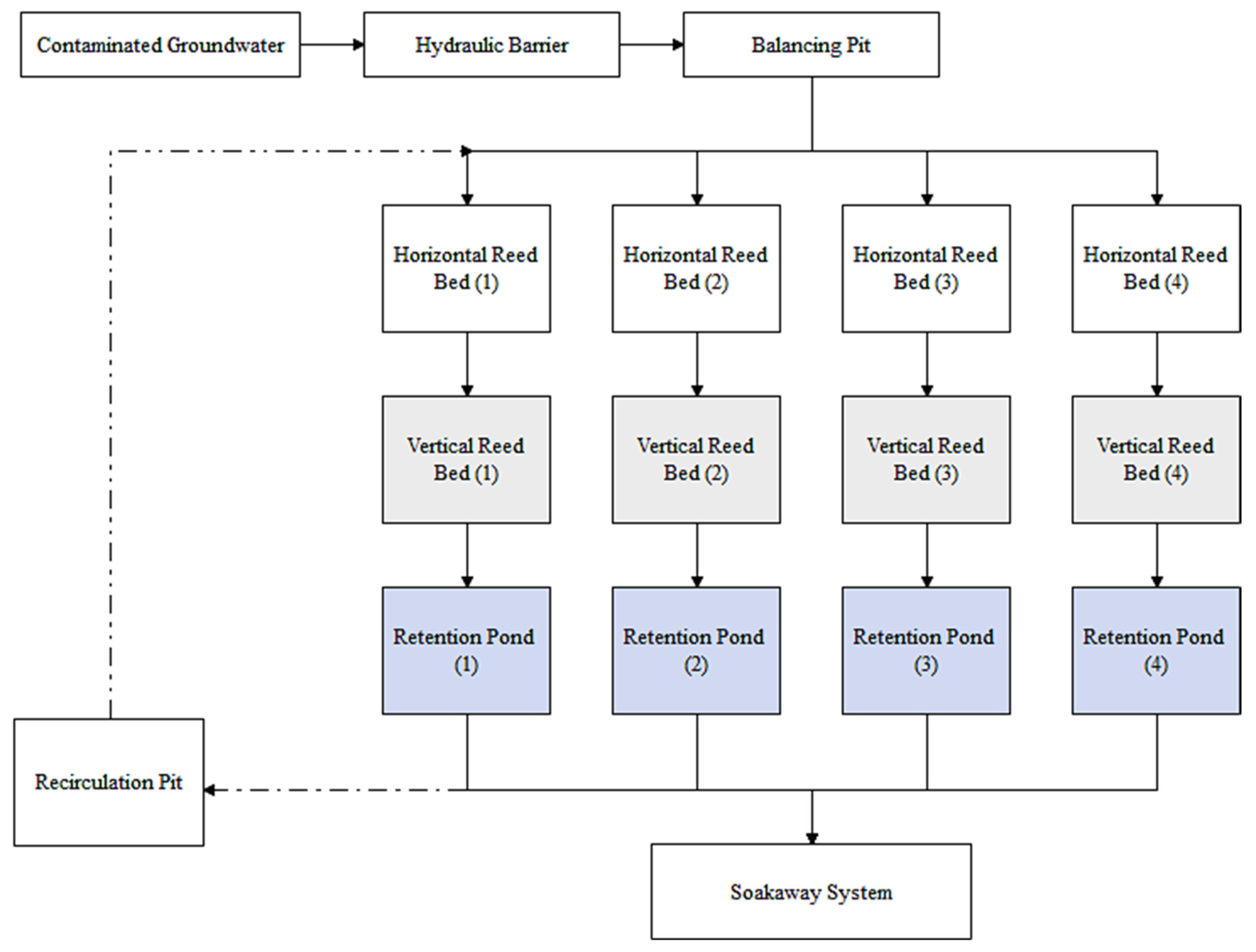
Figure 1. Detailed layout of the installed phytoremediation system.
Environments 13 00162 g001
Figure 2. The overall removal percentages for Line 1, Line 2, Line 3, and Line 4 for 1,2-DCA.
Environments 13 00162 g002
Figure 3. The comparison of (a) Line 1, (b) Line 2, (c) Line 3, and (d) Line 4 removal of 1,2-DCA year (November 2023–December 2024). The horizontal dashed line indicates the site-specific target limit (SSTL) of 156 mg L−1. RB denotes reedbed unit; SSTL denotes site-specific target limit.
Environments 13 00162 g003aEnvironments 13 00162 g003b
Figure 4. 1,2-DCA concentrations trending from 2012 to 2023 for (a) shallow groundwater wells, (b) middle groundwater wells, and (c) deep groundwater wells.
Environments 13 00162 g004aEnvironments 13 00162 g004b
Figure 5. Phylum and genus microbes’ distribution for groundwater samples: (a) phylum and (b) genus levels sampled in the reedbed system.
Environments 13 00162 g005aEnvironments 13 00162 g005b
Figure 6. Phylum and genus microbes’ distribution for reedbed soil samples: (a) phylum and (b) genus levels sampled at the reedbed system.
Environments 13 00162 g006aEnvironments 13 00162 g006b
Figure 7. Heatmap of relative abundance and hierarchical clustering of microbial phyla across groundwater and reedbed soil samples. The color scale represents normalized relative abundance (red = higher abundance; blue = lower abundance). The dendrogram illustrates similarity in microbial community composition among samples.
Environments 13 00162 g007
Figure 8. Heatmap of relative abundance and hierarchical clustering of microbial genera across groundwater and reedbed soil samples ((a) right side, (b) left side). The color scale represents normalized relative abundance (red = higher abundance; blue = lower abundance). The dendrogram illustrates similarity in microbial community composition among samples.
Environments 13 00162 g008aEnvironments 13 00162 g008b
Figure 9. UPGMA Weighted Unifrac results for groundwater and reedbed samples.
Environments 13 00162 g009
Table 1. Characteristics of groundwater at the contaminated site.
ParameterSite Data
pH2.21–4.32 (shallow up to 5 m depth)
11.25–11.69 (deep up to 25 m depth)
Redox potential−190.4 to 475.4 mV (potential reducing condition)
Water levels1.449 m to 2.466 m
Texture Very fine to very coarse sand up to 24 m depth
Silt/clay after 28 m depth
Hydraulic conductivity1.1 × 10−2 cm/s to 1.0 × 10⁻⁴ cm/s
Nitrate0.08 to 2.14 mg/L
Sulphate2 to 239 mg/L
Chloride25 to 8980 mg/L
1,2-DCA0.362 to 4320 mg/L
Table 2. Kinetic constant rates of 1,2-DCA for shallow groundwater wells.
Kinetic Constants
(1,2-DCA)
Attenuation Rate
(per Year)
R2
NMW-12-01S0.00350.5906
NMW-12-03S0.00220.5031
NMW-12-04S0.00280.5516
NMW-12-06S0.00120.6015
NMW-12-08S0.00360.7144
Note: NMW-12-XX-S/M/D are well naming conventions for this site: S (shallow well), M (mid well), and D (deep well).
Table 3. Kinetic constant rates of 1,2-DCA for middle groundwater wells.
Kinetic Constants
(1,2-DCA)
Attenuation Rate
(per Year)
R2
NMW-12-01M0.00060.0308
NMW-12-03M0.00030.0558
NMW-12-04M0.00210.6329
NMW-12-06Mn/a0.0006
NMW-12-08M0.00110.3696
Note: NMW-12-XX-S/M/D are well naming conventions for this site: S (shallow well), M (mid well), and D (deep well). n/a: Negative slopes from linear regression were not interpreted as attenuation rates because they indicate non-decay concentration trends.
Table 4. Kinetic constant rates of 1,2-DCA for deep groundwater wells.
Kinetic Constants
(1,2-DCA)
Attenuation Rate
(per Year)
R2
NMW-12-01D0.00090.1838
NMW-12-03D0.00030.0302
NMW-12-04Dn/a0.00134
NMW-12-06Dn/a0.00004
NMW-12-08Dn/a0.2817
Note: NMW-12-XX-S/M/D are well naming conventions for this site: S (shallow well), M (mid well), and D (deep wells). n/a: Negative slopes from linear regression were not interpreted as attenuation rates because they indicate non-decay concentration trends.
Table 5. Observed and Shannon Diversity Index Values for groundwater samples.
Diversity IndexObserved *Chao1ACEShannon **SimpsonFischer
MW1-20041581671613.2630.928321.26
MW-12-5 (Control)1377141814056.2850.9934284.06
Note: * Observed: Total number of species observed in a sample. ** Shannon: Index increases as both community richness and evenness increase.
Table 6. Observed and Shannon Diversity Index Values for reedbed soil samples.
Diversity IndexObserved *Chao1ACEShannon **SimpsonFischer
RB31433145314486.6400.9976298.67
RB61472148814806.6660.9973308.96
RB9 (Control)1050108310606.2340.9959202.57
Note: * Observed: Total number of species observed in a sample. ** Shannon: Index increases as both richness and evenness of the community increase.
Disclaimer/Publisher’s Note: The statements, opinions and data contained in all publications are solely those of the individual author(s) and contributor(s) and not of MDPI and/or the editor(s). MDPI and/or the editor(s) disclaim responsibility for any injury to people or property resulting from any ideas, methods, instructions or products referred to in the content.