Article

Plant Accumulation of Metals from Soils Impacted by the JSC Qarmet Industrial Activities, Central Kazakhstan


by
Bakhytzhan K. Yelikbayev
1,
Kanay Rysbekov
1,
Assel Sankabayeva
1,
Dinara Baltabayeva
1 and
Rafiq Islam
2,*
1
Mining and Metallurgical Institute Named After O.A. Baikonurov, Satbayev University, Almaty 050013, Kazakhstan
2
Soil, Water, and Bioenergy Resources, The Ohio State University South Centers, Piketon, OH 45661, USA
*
Author to whom correspondence should be addressed.
Environments 2026, 13(1), 64; https://doi.org/10.3390/environments13010064 (registering DOI)

Submission received: 11 November 2025 / Revised: 24 December 2025 / Accepted: 19 January 2026 / Published: 22 January 2026

Abstract

Metal pollution from metallurgical emissions poses serious environmental and public health risks in Kazakhstan. A replicated pot-culture experiment (n = 4) in a completely randomized design under controlled phytotron conditions evaluated biomass production and metal accumulation in six crop and forage species, alfalfa (Medicago sativa), amaranth (Amaranthus spp.), corn (Zea mays), mustard (Brassica juncea), rapeseed (Brassica napus), and sunflower (Helianthus annuus); three ornamental species, purple coneflower (Echinacea purpurea), marigold (Tagetes spp., ‘Tiger Eyes’), and sweet alyssum (Lobularia maritima); and three native wild plants, greater burdock (Arctium lappa), horse sorrel (Rumex confertus), and mug wort (Artemisia vulgaris). Plants were grown in soils collected from the Qarmet industrial zone in Temirtau, central Kazakhstan. Initial soil analysis revealed substantial mixed-metal contamination, ranked as Mn > Ba > Zn > Sr > Cr > Pb > Cu > Ni > B > Co. Mn reached 1059 mg·kg−1, ~50-fold higher than B (22.7 mg·kg−1). Ba (620 mg·kg−1) exceeded FAO/WHO limits sixfold, Zn (204 mg·kg−1) surpassed the lower threshold, and Pb (41.6 mg·kg−1) approached permissible levels, while Cr, Cu, Ni, Co, and Sr were lower. Biomass production varied markedly among species: corn and sunflower produced the highest shoot biomass (126.8 and 60.9 g·plant−1), whereas horse sorrel had the greatest root biomass (54.4 g·plant−1). Root-to-shoot ratios indicated shoot-oriented growth (>1–8) in most species, except horse sorrel and burdock (<1). Metal accumulation was strongly species-specific. Corn and marigold accumulated Co, Pb, Cr, Mn, Ni, Cu, B, and Ba but showed limited translocation (transfer function, TF < 0.5), whereas sunflower, amaranth, and mug wort exhibited moderate to high translocation (TF > 0.8 to <1) for selected metals. Corn is recommended for high-biomass metal removal, marigold for stabilization, sunflower, horse sorrel, and mug wort for multi-metal extraction, and amaranth and coneflower for targeted Co, Ni, and Cu translocation, supporting sustainable remediation of industrially contaminated soils.

1. Introduction

Environmental contamination by metals, particularly when present in excess, is recognized as one of the major global challenges [1]. Unregulated, widespread, and diverse industrial activities threaten air and water quality, public health, and ecosystem productivity [1,2]. Suspended particles from atmospheric emissions further contribute to soil contamination and can be resuspended as fugitive dust into the atmosphere [3].
Metals and metalloids commonly found in contaminated soil–plant–air–water ecosystems include lead (Pb), chromium (Cr), arsenic (As), zinc (Zn), manganese (Mn), cadmium (Cd), copper (Cu), cobalt (Co), mercury (Hg), and nickel (Ni) [3,4,5,6,7,8]. Soil ecosystems, by their nature and reactivity, act as major sinks for these metals due to their persistence against biological and chemical degradation, which can subsequently increase their uptake by plants and accumulation in living organisms [5,9,10]. While some metals are nonessential and toxic even at low concentrations, others are essential nutrients but can disrupt ecosystem functioning and biodiversity when present in excess, posing risks to public health [1,6,11].
In Kazakhstan, rapid economic growth and indiscriminate mining activities have led to widespread metal contamination of soil–plant–air–water ecosystems [8,12,13,14,15]. Urban soil and industrial sites are frequently contaminated with persistent metals such as Pb, Cu, Va, Zn, Cd, and Co [14,16,17,18,19]. In the industrial region of Central Kazakhstan, particularly around the city of Temirtau, where the Qarmet metallurgical complex (formerly ArcelorMittal) is located, soils are contaminated. Geospatial studies report significant exceedances of maximum permissible concentrations of multiple metals in Temirtau’s industrial zones, reflecting a high technogenic load [8]. Spatial analyses further identify Temirtau as a heavy metal “hot spot” due to emissions from metallurgical operations, coal mining, and associated waste disposal [8].
Given the scale of contamination, remediation strategies are urgently needed for the sustainable management of soil ecosystems. Conventional chemical and physical methods, including excavation, soil washing, solidification, electrokinetic remediation, and thermal desorption, are effective in some contexts but often entail environmental trade-offs, being costly, energy-intensive, and disruptive, particularly over large areas [19,20]. Pollution and anthropogenic pressures have also degraded primary vegetation in the region, resulting in the loss of deep-rooted species such as Woolly milkvetch (Astragalus dasyanthus Pall.) and Feather grass (Stipa capillata L.) species, which have been replaced by ruderal species including Artemisia and Atriplex tatarica.
Phytoremediation offers a proactive and sustainable approach to mitigate metal contamination [21]. This strategy involves selecting highly adaptive plants capable of growing in contaminated soil and accumulating metals in their biomass. Plants with extensive root systems absorb metals from the soil and translocate them to aboveground tissues, often without visible phytotoxic effects, effectively acting as hyperaccumulators [22,23,24]. Hyperaccumulators are defined by their ability to concentrate on specific metals at levels hundreds or thousands of times higher than normal plant tissues. Threshold concentrations for hyperaccumulation under natural conditions include the following: 100 mg·kg−1 shoot dry weight for Cd, Ti, or Se; 300 mg·kg−1 for Co or Cu; 1000 mg·kg−1 for Ni, As, or Pb; 3000 mg·kg−1 for Zn; and 10,000 mg·kg−1 for Mn [23,24,25].
Several studies have documented pronounced interspecific variability in metal accumulation among plant species used for phytoremediation of contaminated soils [26,27,28,29]. One study reported Cr concentrations of up to 6 mg·kg−1 dry matter in sunflower shoots, while Ni concentrations reached 10.7 mg·kg−1 dry matter [26]. In contrast, another study observed a comparatively lower accumulation of mixed metals in sunflower shoots, including 0.08 mg·kg−1 Cd, 0.52 mg·kg−1 Co, 2.3 mg·kg−1 Cr, 5.2 mg·kg−1 Cu, 70 mg·kg−1 Fe, 59.8 mg·kg−1 Mn, 3.7 mg·kg−1 Ni, 0.77 mg·kg−1 Pb, and 6.4 mg·kg−1 Zn [27]. Exceptionally high Zn and Pb accumulation has been reported in maize shoots, with maximum concentrations of 4180 and 6320 mg·kg−1, respectively [28]. In urban soil spiked with mixed Pb, Co, and Cd at two maximum permissible addition levels, coneflower shoots accumulated up to 25.8 mg·kg−1 Co, marigold 27.5 mg·kg−1 Pb, Amaranthus ‘Perfect’ 26 mg·kg−1 Pb, Amaranthus ‘Emerald’ 0.32 mg·kg−1 Cd, and rapeseed 0.63 mg·kg−1 Cd [29].
Given the accelerated metal contamination in Temirtau and other industrial regions of Kazakhstan, identifying plant species with potential for field-scale phytoremediation is critical. We hypothesized that plant species exhibiting both tolerance to contaminated soils, expressed through sustained growth and biomass production, and enhanced, multi-metal accumulation would represent suitable candidates for phytoremediation of industrially polluted soils. Accordingly, the objectives of this study were to evaluate shoot, root, and total biomass production, as well as metal concentrations and accumulations, in twelve crop, forage, ornamental, and native wild plant species grown under pot-culture conditions using contaminated soils collected from the Qarmet industrial zone in Temirtau, central Kazakhstan.

2. Materials and Methods

2.1. Soil Sampling, Processing, and Basic Characteristics

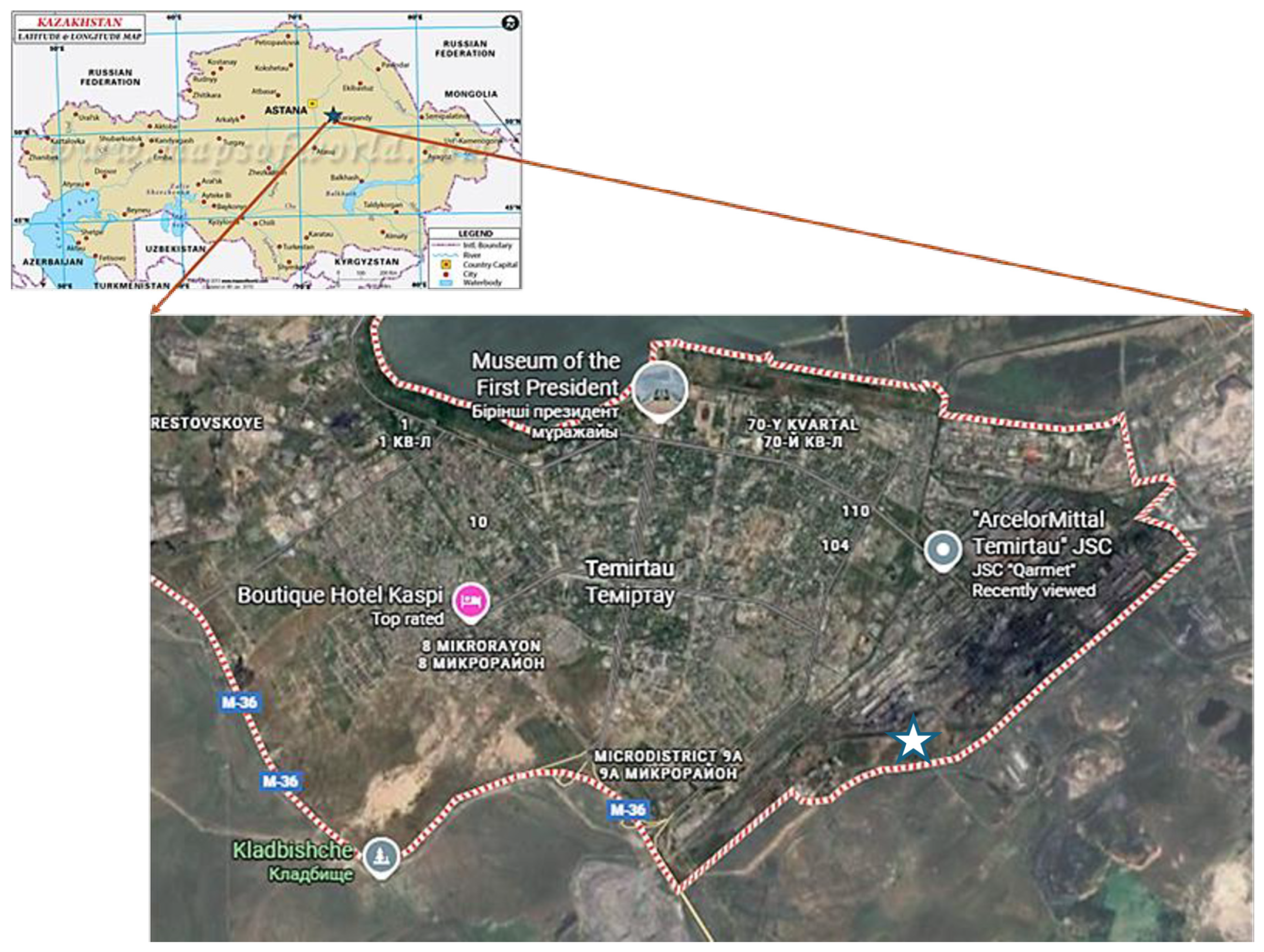
Based on an earlier study of heavy metal pollution at the Qarmet JSC metallurgical plant in Temirtau, Central Kazakhstan (latitude 50.0518° N; longitude 73.0145° E), approximately 500 kg of composite field-moist soils (loamy dark chestnut; Haplic Kastanozems) were collected from the 0–20 cm soil depth of a 10 × 10 m plot (approx. latitude 50.036° N and longitude 73.009° E) within the vicinity of the industrial complex [8,30] (Figure 1).
The field-moist soils were thoroughly mixed to obtain a homogeneous composite sample, air-dried in the shade at room temperature (25–28 °C) for 15 days, ground, passed through a 2 mm sieve, and re-mixed. Four subsamples of 50 kg each were prepared as pseudo-replications (n = 4). All soil analyses were performed on randomly selected samples from these pseudo-replications.
The initial baseline soil properties were as follows: pH 7.8 ± 0.3, cation exchange capacity 23.3 ± 1.6 cmolc·kg−1, total organic carbon 8.6 ± 0.4 g·kg−1, calcium carbonate 12.4 ± 1.1 g·kg−1, total phosphorus 5.4 ± 0.7 g·kg−1, total magnesium 3.4 ± 0.8 g·kg−1, total potassium 32.5 ± 3.5 g·kg−1, sand 250 ± 8.3 g·kg−1, silt 400 ± 14.6 g·kg−1, and clay 350 ± 3.1 g·kg−1.

2.2. Experimental Design

A replicated pot-culture experiment (n = 4) in a completely randomized design (CRD) was conducted in a phytotron at Satbayev University, Almaty, Kazakhstan. Plastic pots (height 19 cm, diameter 20.5 cm, and surface area 330 cm2) were filled with 400 g of perlite at the bottom, followed by 4 kg of air-dried soil from each 50 kg pseudo-replicated soil samples. Initially, pots were received 1.6 L of distilled deionized water to stabilize soil moisture, applied evenly to ensure uniform wetting without localized oversaturation before sowing plant seeds.
A total of 12 plant species as experimental treatments were selected which includes 6 crops [alfalfa, Medicago sativa), Amaranth (Amaranthus spp.), corn (Zea mays), mustard (Brassica juncea), rapeseed (Brassica napus), and sunflower (Helianthus annuus) Enisey], 3 ornamental plants [purple coneflower (Echinacea purpurea), marigold (Tagetes) Tiger Eyes, and sweet alyssum (Lobularia maritima)], and 3 wild and medicinal plants [greater burdock (Arctium lappa), horse sorrel or Russian dock (Rumex confertus), and mug wort (Artemisia vulgaris)], respectively. Each plant species, treated as an experimental treatment, was replicated in four pots.
As the contaminated composite soil was uniformly used to assess the comparative metal accumulation performance of the selected plant species, no separate control soil or control plants were included in the study.

2.3. Cultural Practices

Six randomly selected seeds from each plant were sown at recommended densities to avoid uneven germination. After emergence, one healthy seedling in each pot was allowed to grow for further studies. Seedlings were irrigated 2–3 times per week with distilled deionized water to maintain soil field moisture capacity at ~ 70 ± 5%. Chemical fertilizers (NPK) were surface applied twice at 1.36 g pot−1 equivalent to 60 kg ha−1 25 and 50 days after seedlings emergence while magnesium and sulfur were applied once at 0.34 g·pot−1 equivalent to 15 kg·ha−1, 25 days after seedlings emergence. To enhance metal mobilization, Ethylenediaminetetraacetic acid (EDTA) was applied at 1 mmol·kg−1 of soil 25 days after seedlings emergence. For the first two weeks, soil surface illumination was maintained at 15,000 lux for 12 h. per day.
After two weeks, the photoperiod illumination was maintained at 22,500 lux for 16 h. per day. After 45 days, the photoperiod illumination was maintained at 30,000 lux for 16 h. per day. The duration and intensity of photoperiod illumination were automatically regulated. During flowering, plants were manually pollinated using cotton swabs. The growth conditions were maintained as temperatures of 26 ± 2 °C and relative humidity at 60 ± 2%.

2.4. Plant Biomass Measurement and Processing

Ninety days after seedling emergence, aboveground biomass (leaves, stems, flowers, and seeds, if present) was harvested by cutting the plant stem close to the soil surface at the pot and fresh biomass collected in sealed plastic bags. Roots were then recovered gravimetrically by carefully removing the soil from each pot. After collecting soil subsamples for residual metal analysis, root-containing soils were gently washed by placing them on a 2 mm sieve with running distilled deionized water to remove adhering soil particles. Clean roots were blotted dry, air-dried under shade at room temperature for 7 days, and weighed as fresh root biomass. Both shoot and root biomass were subsequently oven-dried at 55 ± 2 °C to constant weight.

2.5. Total Metal Concentrations in Shoot Biomass

Prior to analysis, the dried shoot samples were processed by grinding using a Wiley Mill [Thomas Scientific®, Swedesboro, NJ, USA] and sieved through a 125 µm mesh. A 0.5 g sample of processed shoot biomass was digested with a concentrated HNO3: HCl mixture (3:1) in Teflon vessels using a Milestone ETHOS UP MAXI-44 microwave digestion system [Milestone® Sri, Srisole, Italy]. The digestates were diluted with distilled deionized water, filtered through Whatman® Quantitative ashless, grade 41 filter paper (pore diameter 20–25 µm), and analyzed by ICP-OES [PlasmaQuant 9100, Analytik® Jena, Germany] equipped with an ASX-560 autosampler [Teledyne CTAC®, Omaha, NE, USA]. However, repeated analyses of Fe and Cd concentrations in the extracts failed to yield consistently reliable results; therefore, these elements were excluded from the reported results.
Using the metal concentration data, the metal accumulation in plant shoot biomass was calculated as follows:
M e t a l   a c c u m u l a t i o n m g p l a n t = M e t a l   c o n c . i n   d r y   s h o o t   b i o m a s s m g k g D r y   s h o o t   b i o m a s s   w e i g h t g p l a n t

2.6. Total Metal Concentrations in Soil

A sample 0.5 g processed air-dried soil (0.25 mm sieved) was digested in a mixture of concentrated HNO3: HCl (3:1), following the US EPA 3051A protocol [31]. The soil digestates were diluted with distilled deionized water, filtered through Whatman® Quantitative ashless, grade 41 filter paper (pore diameter 20–25 µm), and analyzed for total concentration of Co, Cr, Pb, Ni, Mn, Cu, Zn, B, Ba, and Sr in both initially collected and post-harvest soils by ICP-OES [PlasmaQuant 9100, Analytik® Jena, Germany] equipped with an ASX-560 autosampler [Teledyne CTAC®, Omaha, NE, USA]. Repeated analyses of Fe and Cd produced inconsistent results and were therefore excluded from the reported results.
Using the metal concentration data in plant biomass and soil, the metal transfer factor (TF), an index of metal mobility from soil to plants [32,33] was calculated:
T F = M e t a l   c o n c . i n   d r y   s h o o t   b i o m a s s ( m g k g ) M e t a l   c o n c . i n   s o i l ( m g k g )
Based on the calculation, if the ratio is >1, the plants have accumulated metals and ratios < 1 indicate that the plants exclude metals from accumulation [32,33].

2.7. Analysis of Soil Baseline Properties

Soil pH was determined in soil: distilled water suspension (1:5) following the standard glass electrode method [34]. Total organic carbon was analyzed, based on wet oxidation with potassium dichromate and concentrated sulfuric acid following Tyurin colorimetric method [35]. Determination of carbonate in soils was performed by volumetric calcimeter method. The Kappen method was used to determine cation exchange capacity of soil [36]. Soil particle size analysis (sand, silt, and clay contents) was performed by pipette method [37].

2.8. Quality Assurance/Quality Control

Quality assurance/quality control (QA/QC) samples prepared from certified standard solutions of heavy metals were performed after every ten samples using standard reference solutions to monitor analytical precision, which showed a relative standard deviation of 5–10%. Analytical precision as determined by QA/QC procedures, reagent blanks, and internal standards, was better than ±10%.

2.9. Statistical Analysis

Collected data were analyzed using one-way analysis of variance (ANOVA) to evaluate plant biomass production and its effects on metal accumulation and translocation in contaminated soil, employing the general linear model (GLM) procedure in SAS® version 9.4 (SAS Institute, Cary, NC, USA). Plant species were treated as fixed-effect independent variables. Prior to statistical analysis, data normality was assessed using the Shapiro–Wilk test in SAS. Treatment means for plant response variables (dependent variables) were compared using Duncan’s Multiple Range Test (DMRT) at a significance level of p ≤ 0.05. Figures were generated using SigmaPlot® [Grafiti USA, Palo Alto, CA, USA].

3. Results

3.1. Initial Metal Concentrations in Soil

Initial soil analysis showed substantial variability in mixed-metal concentrations, indicating significant contamination at the study site (Table 1). The concentrations of analyzed metals followed the order of Mn > Ba > Zn > Sr > Cr > Pb > Cu > Ni > B > Co.
Mn exhibited the highest concentration (1059 mg kg−1), 50-fold greater than B, which showed the lowest concentration (22.7 mg kg−1). Ba concentration reached 620 mg kg−1, exceeding the FAO/WHO permissible limit (100 mg kg−1) by approximately six times. Zn concentration (204 mg kg−1) exceeded the lower FAO/WHO guideline threshold (150 mg kg−1) but remained below the upper limit (300 mg kg−1). Pb concentration (41.6 mg kg−1) was close to the lower boundary of the FAO/WHO permissible range (50–85 mg kg−1). Other metals, including Cr, Cu, Ni, Co, and Sr, were present at comparatively lower concentrations.

3.2. Plant Biomass Production

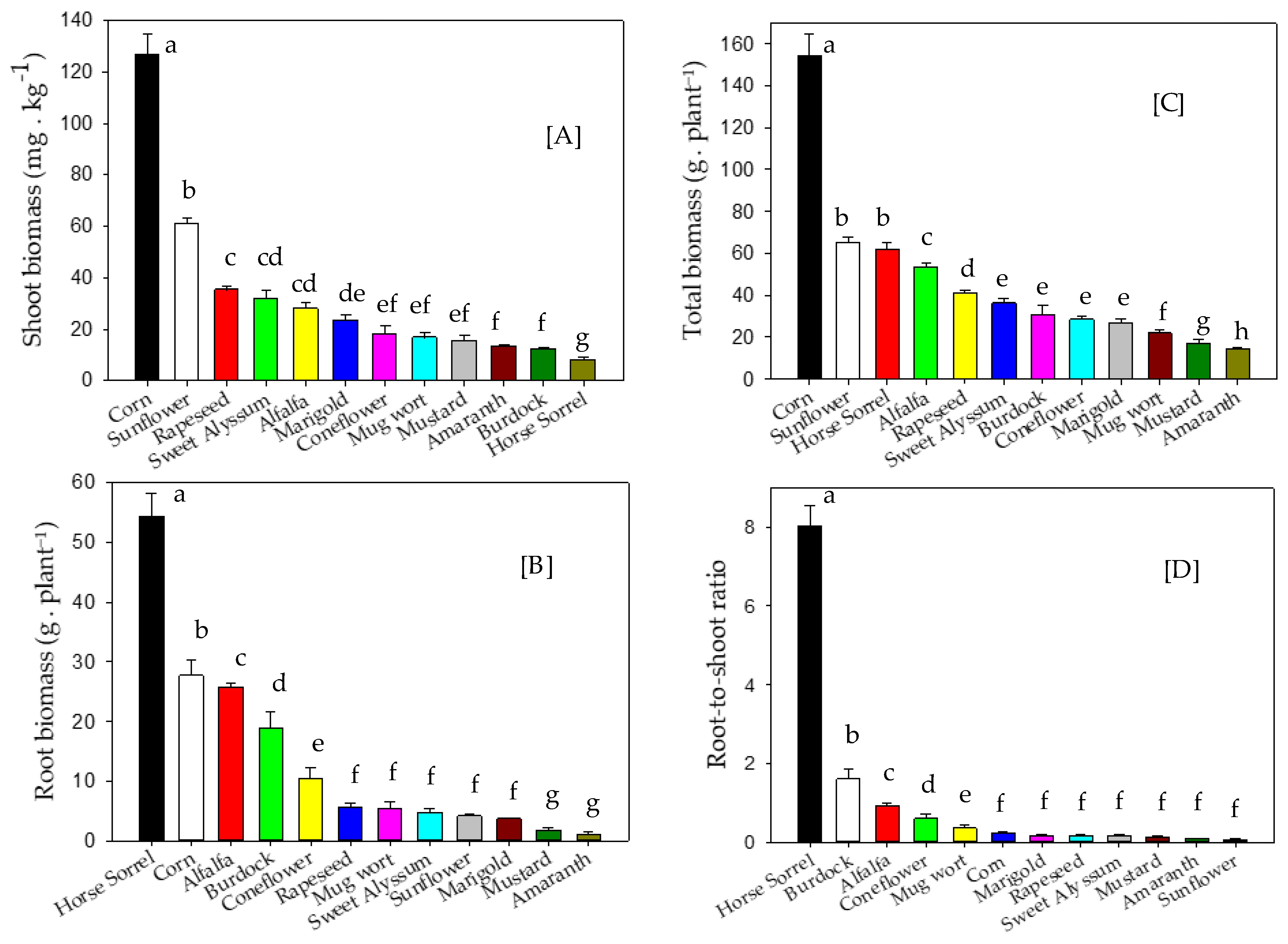
Shoot biomass differed markedly among all evaluated plant species (Figure 2A). Among them, corn and sunflower produced the highest shoot biomass (126.8 and 60.9 g plant−1, respectively), significantly exceeding that of rapeseed, sweet alyssum, alfalfa, and marigold, which were classified as moderate shoot biomass producers (35.1, 31.6, 27.9, and 23.3 g plant−1, respectively). Coneflower, mug wort, mustard, amaranth, burdock, and horse sorrel exhibited low shoot biomass production (17.9, 16.6, 15.4, 13.1, 12.0, and 7.7 g plant−1, respectively), with values significantly lower than both high- and moderate-producing species.
Root biomass also varied significantly among species (Figure 2B). Horse sorrel produced the highest root biomass (54.4 g plant−1), which was significantly greater than that of corn, alfalfa, and burdock (27.7, 25.8, and 18.8 g plant−1, respectively), categorized as moderate root biomass producers. Coneflower, rapeseed, mug wort, sweet alyssum, sunflower, marigold, mustard, and amaranth produced comparatively low root biomass (10.5–1.1 g plant−1), with statistically significant differences between moderate- and low-biomass groups.
Data in Figure 2C on corn, sunflower, horse sorrel, and alfalfa were classified as high total-biomass (shoot + root) producers (154.5, 65.1, 62.1, and 53.7 g plant−1, respectively), significantly exceeding moderate producers such as rapeseed, sweet alyssum, burdock, coneflower, and marigold (40.8–27.0 g plant−1), as well as low producers including mug wort, mustard, and amaranth (21.9–14.2 g plant−1). Likewise, root-to-shoot ratios differed significantly among plant species (Figure 2D). Horse sorrel and burdock exhibited markedly higher ratios (>1 to 8), whereas all other species showed ratios below unity, indicating dominant shoot biomass production.

3.3. Metal Concentrations and Accumulation in Shoot Biomass

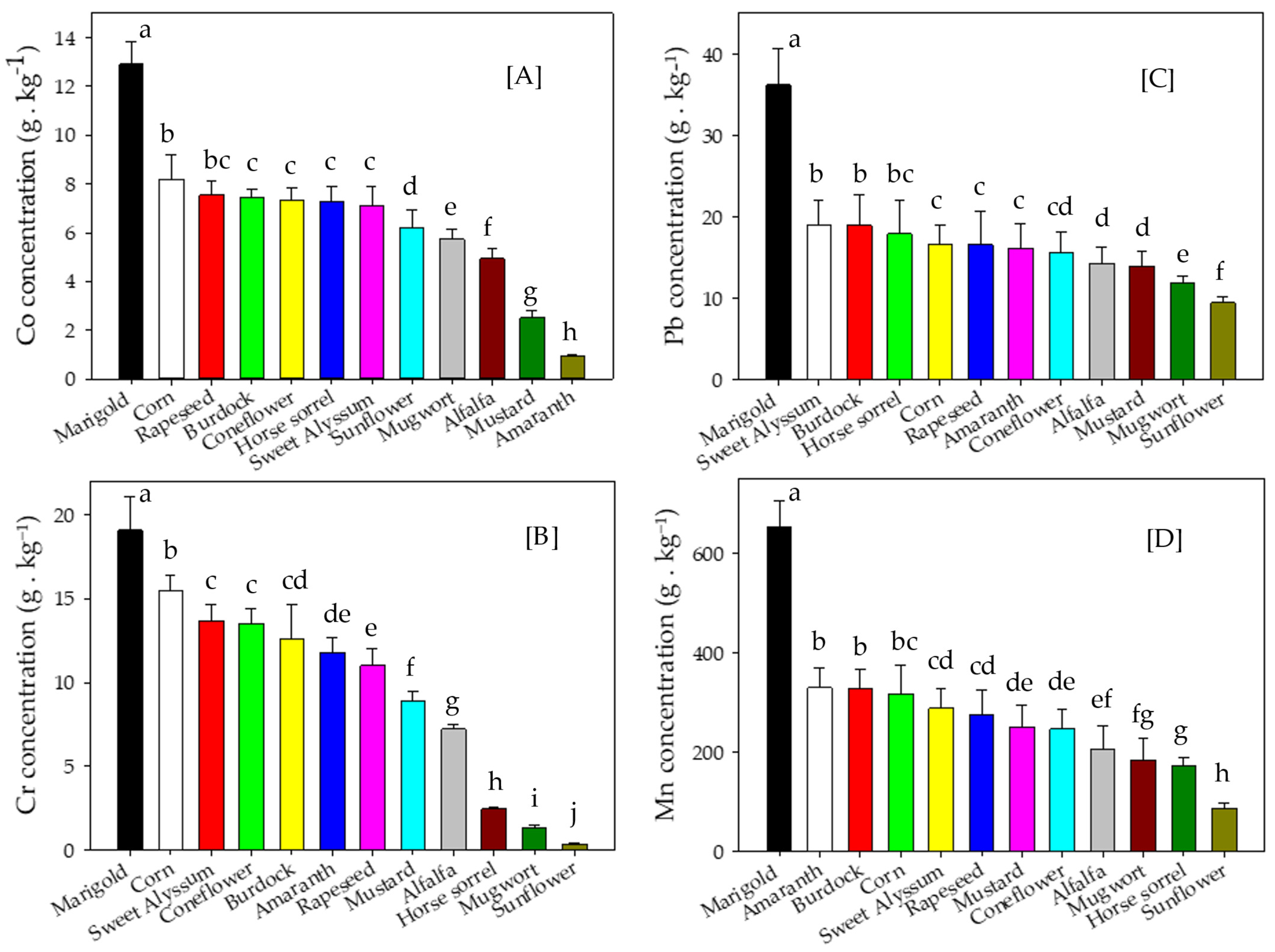
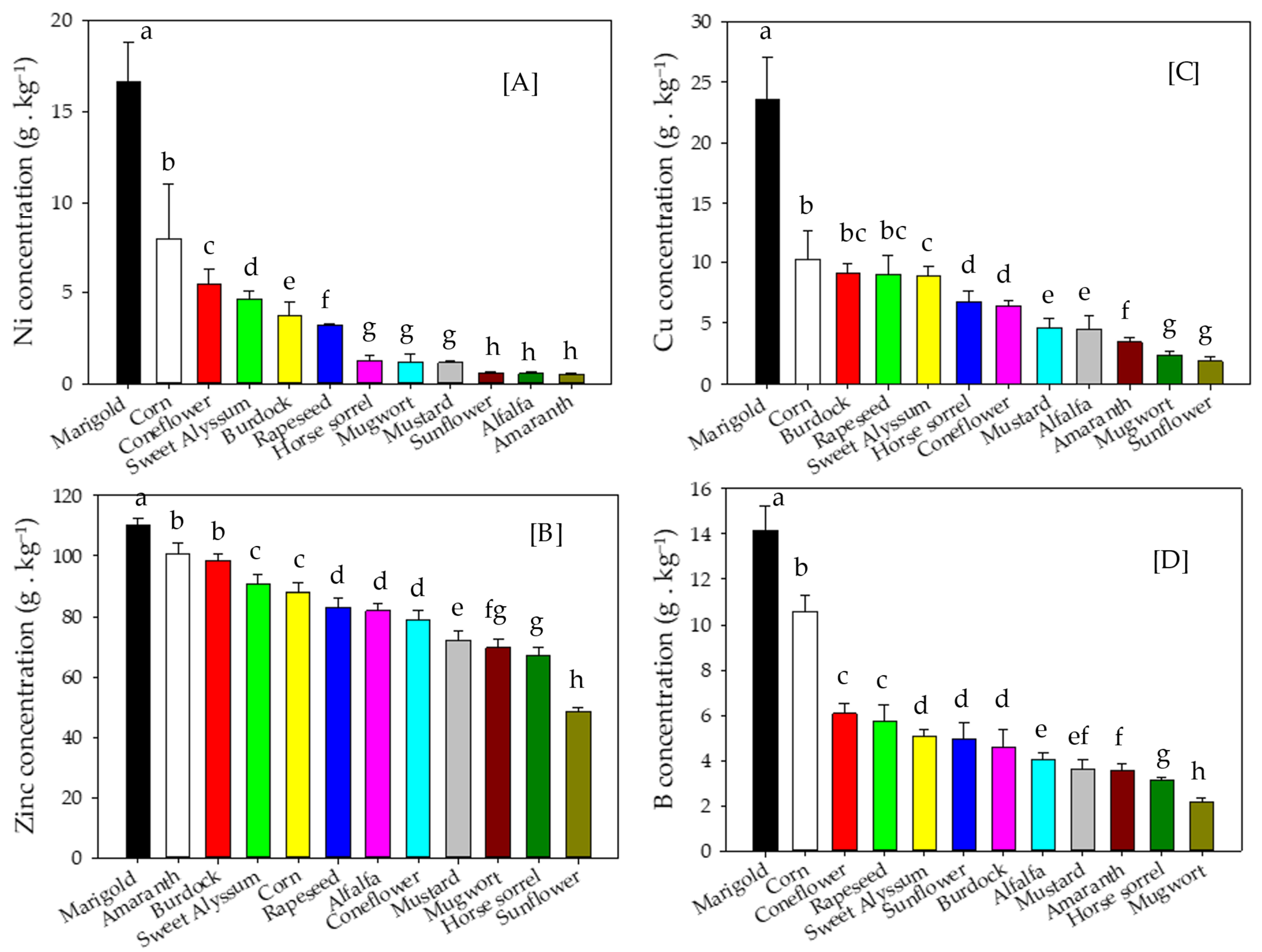
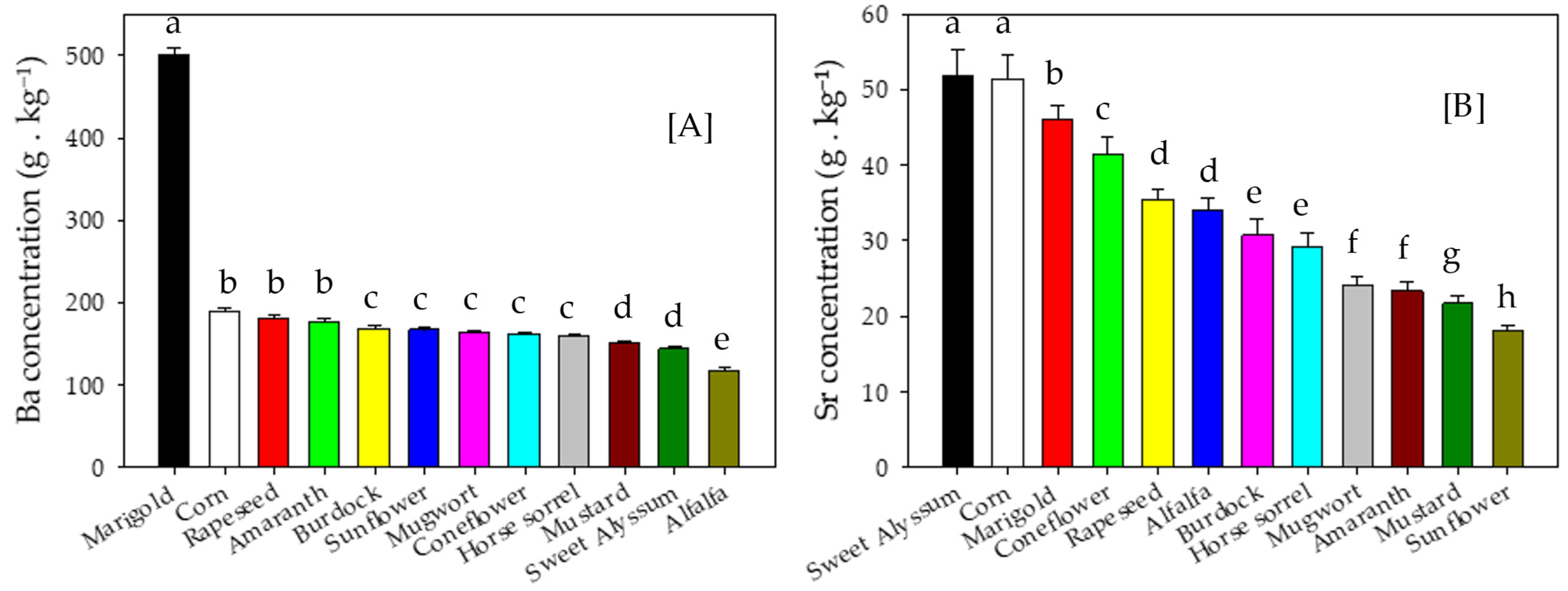
Shoot metal concentrations differed significantly among species (Figure 3, Figure 4 and Figure 5). Marigold consistently exhibited the highest shoot concentrations for most analyzed metals, including Co, Pb, Cr, Mn, Ni, Cu, B, and Ba. Relative to other species, marigold shoots contained 1.5–6-fold higher Co, 2–3-fold higher Pb, 1–20-fold higher Cr, and 2–6-fold higher Mn concentrations (Figure 3A–D). Nickel and Cu concentrations were elevated by 2–10- and 2–12-fold, respectively, while B and Ba were 2–3-fold higher (Figure 4A,C,D and Figure 5A). In contrast, marigold exhibited significantly lower Sr concentrations than sweet alyssum and corn (Figure 5B).
Corn showed moderately high shoot concentrations of several metals (Co, Cr, Mn, Ni, Cu, B, Ba, and Sr), though consistently lower than those of marigold. Burdock, rapeseed, horse sorrel, coneflower, and sweet alyssum exhibited moderate concentrations of one or more metals, whereas amaranth displayed among the highest Zn concentrations across species (Figure 4B). Sweet alyssum, followed by corn, accumulated the highest Sr concentrations (Figure 5B).
Sunflower consistently exhibited the lowest shoot concentrations of Pb, Cr, Mn, Zn, Cu, and Sr. While amaranth had the lowest Co and Ni concentrations, mug wort the lowest B concentration, and alfalfa the lowest Ba concentration among species (Figure 3, Figure 4 and Figure 5).
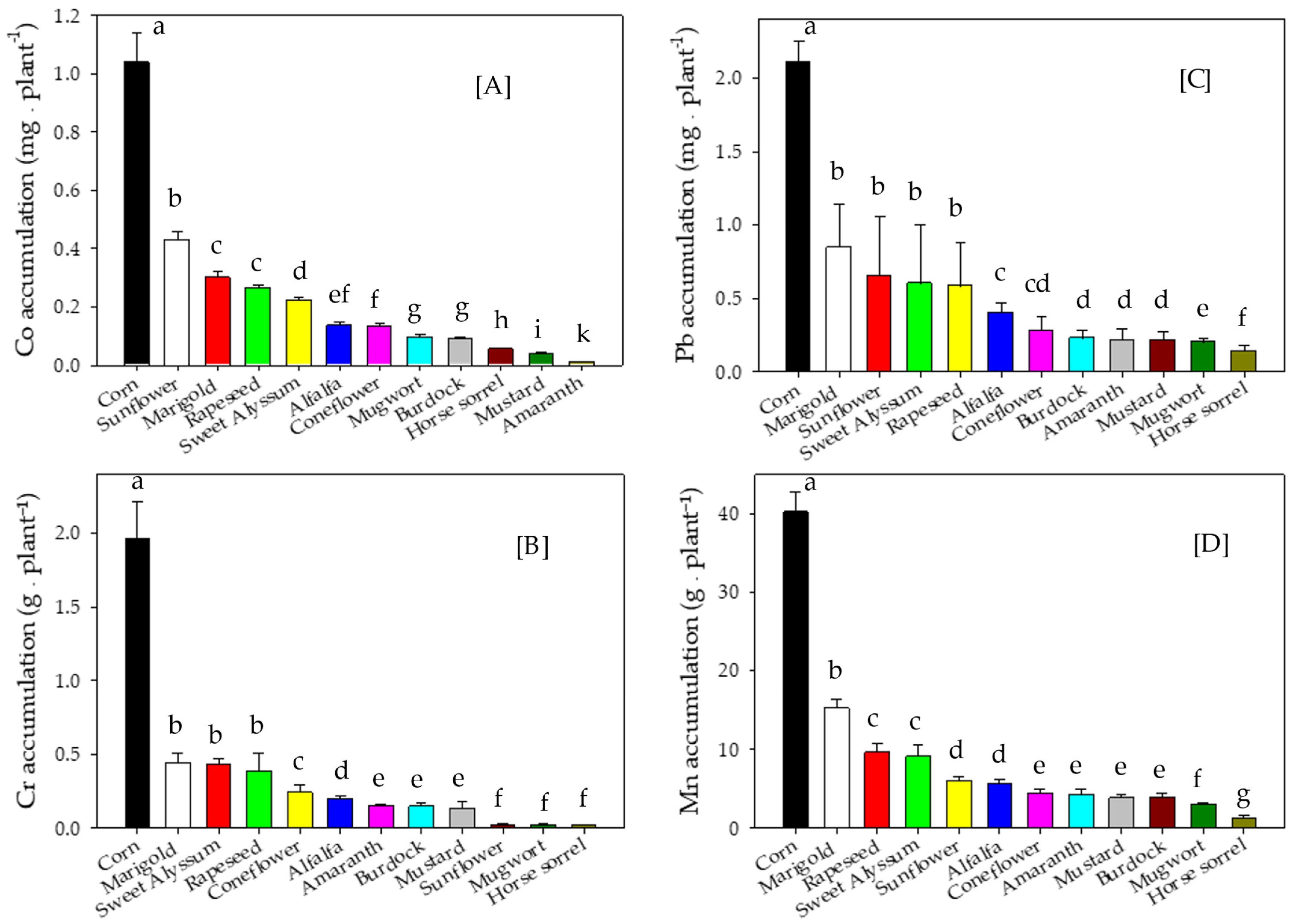
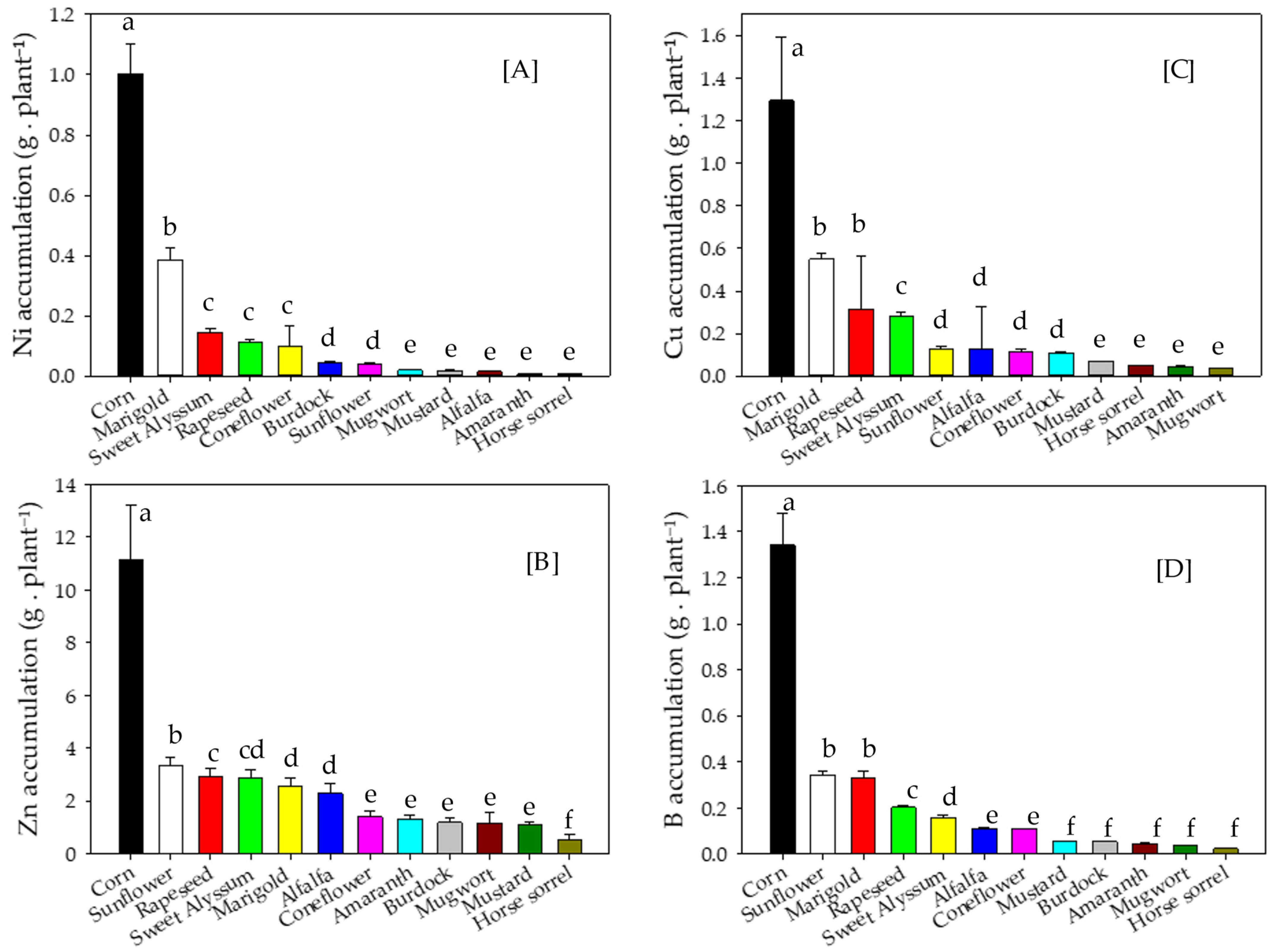
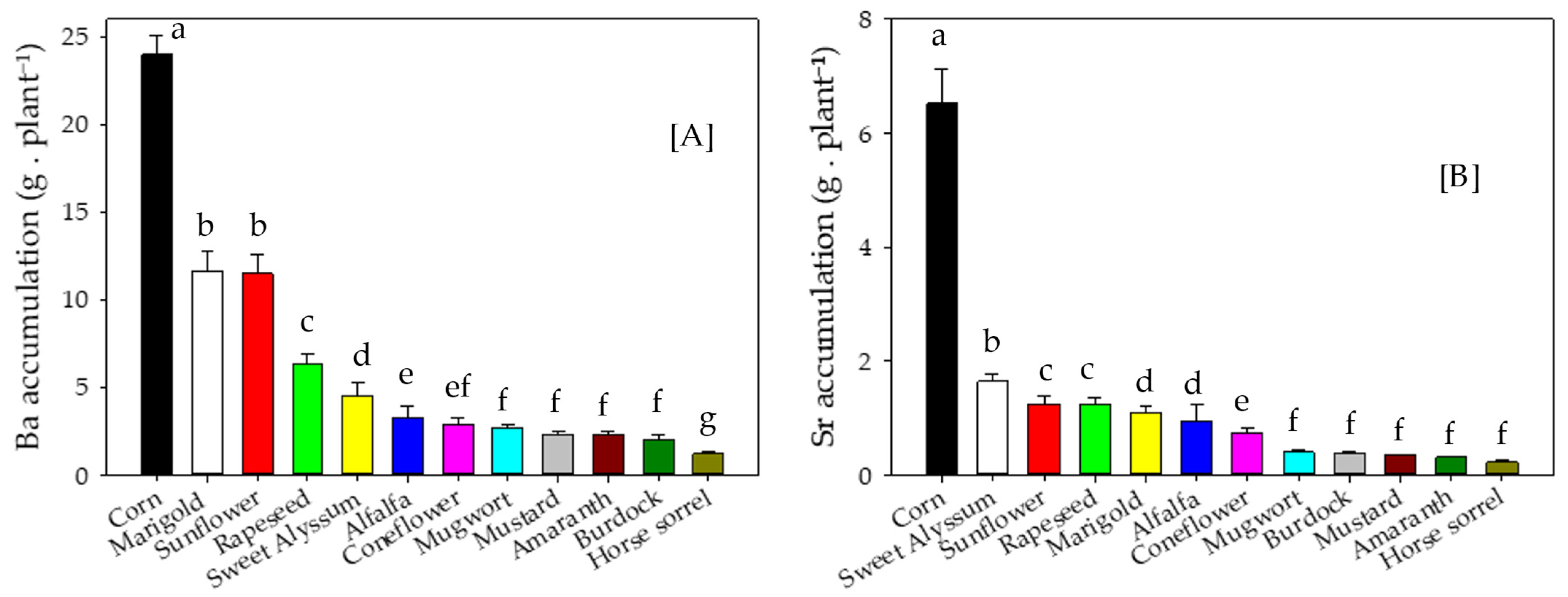
Shoot metal accumulation varied markedly among plant species (Figure 6, Figure 7 and Figure 8). Corn accumulated the highest amounts of most metals, including Co, Pb, Cr, Mn, Ni, Zn, Cu, B, Ba, and Sr, followed by marigold. Sunflower, rapeseed, and sweet alyssum showed moderate accumulation, whereas amaranth and several other species exhibited consistently low accumulation, particularly for Co, Ni, Cu, and Sr. Horse sorrel showed the lowest accumulation for most metals.
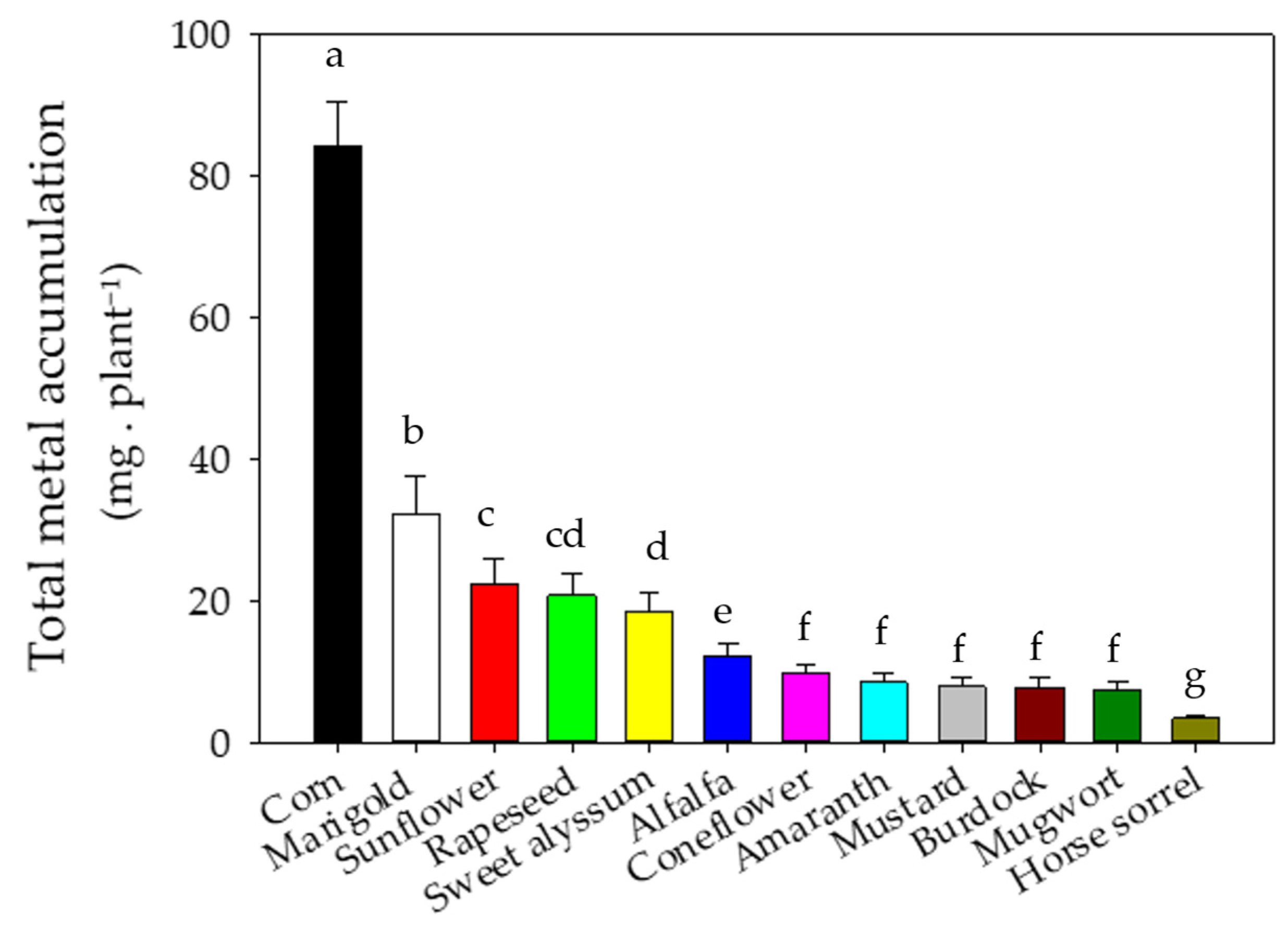
Likewise, total metal accumulation in shoots differed significantly among plant species (Figure 9). Corn exhibited the highest cumulative accumulation (84.1 mg plant−1), followed by marigold (32.3 mg plant−1), sunflower (22.4 mg plant−1), rapeseed (20.7 mg plant−1), and sweet alyssum (18.3 mg plant−1). All the remaining plant species accumulated a lower amount of total metal contents.
Across species, Mn and Ba dominated shoot metal accumulation, together accounting for 26.7–51.3% and 24.7–51.2% of total accumulated metals, respectively. Zinc contributed 7.9–18.7%, followed by Sr (3.3–8.9%) and Pb (2.5–4.1%), whereas Co, Cr, Ni, Cu, and B represented minor fractions of total accumulation.

3.4. Metal Transfer Factor of Plants

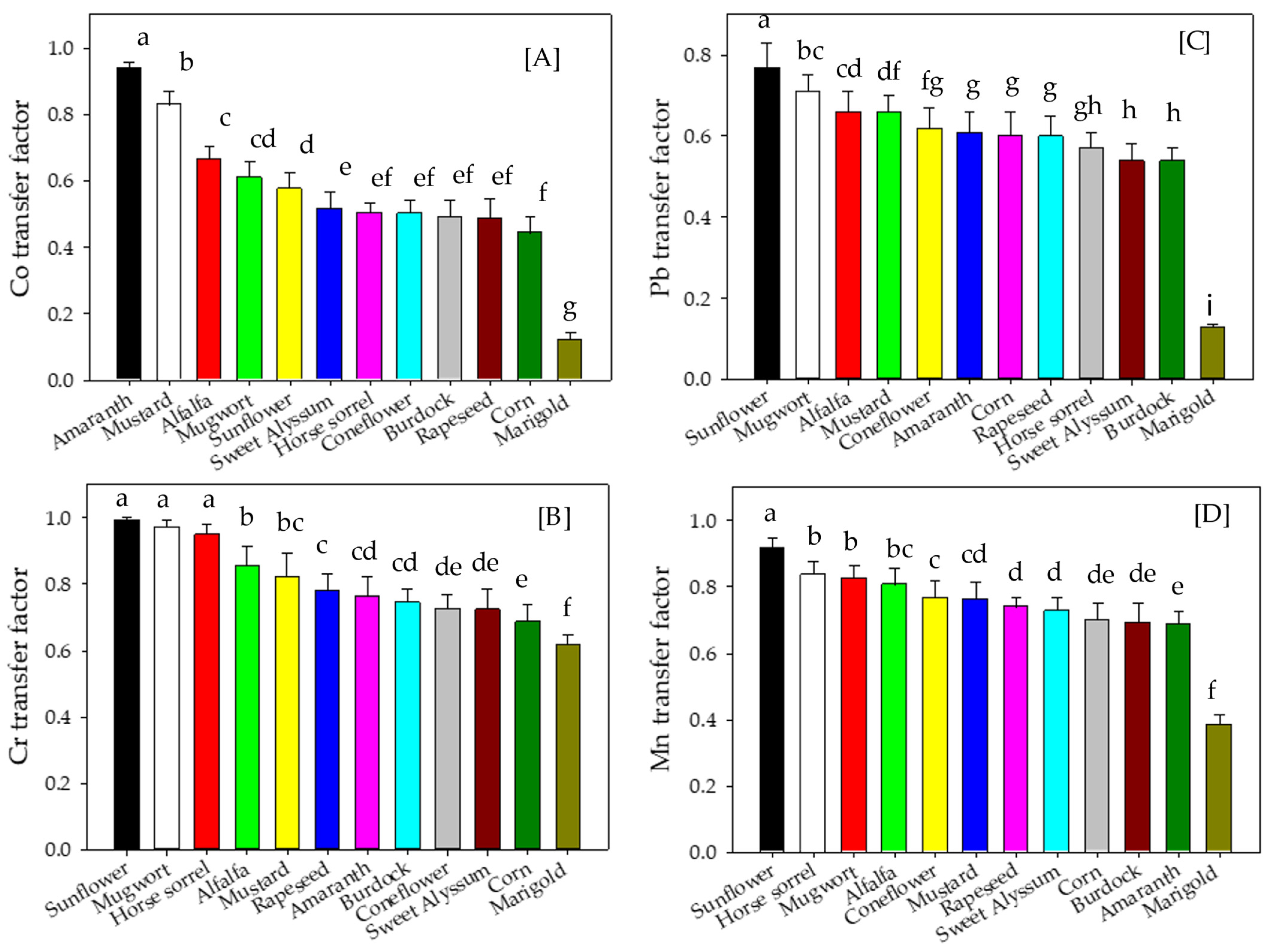
Metal transfer factor (TF) values differed significantly among plants species, but all remained below unity (<1), indicating that none of the evaluated species functioned as true hyperaccumulators under existing mixed-metal soil conditions (Figure 10, Figure 11 and Figure 12). Nevertheless, several species exhibited TF values approaching 1 for specific metals, reflecting efficient root-to-shoot translocation.
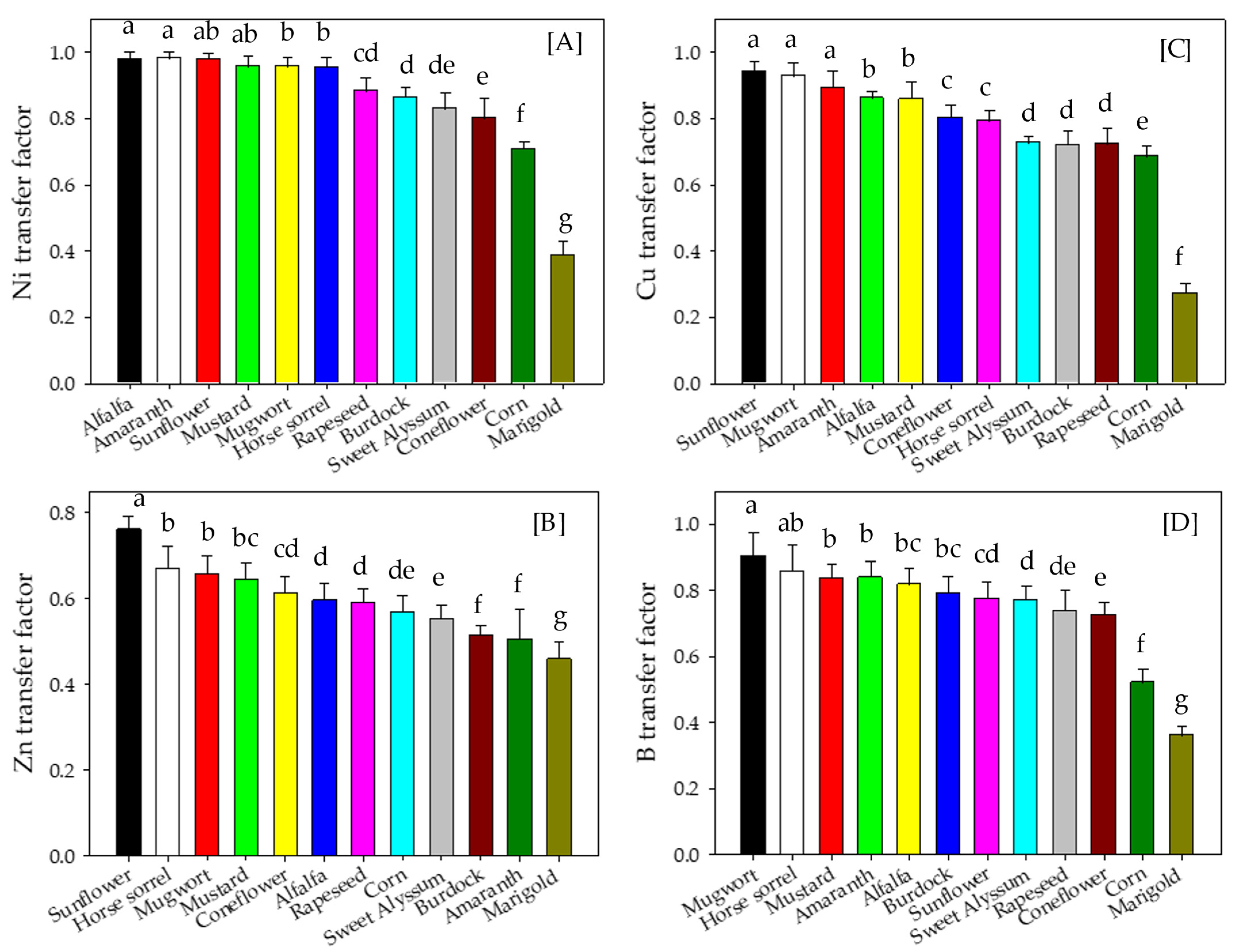
Co showed a high TF in amaranth (0.94), indicating strong mobilization and upward transport (Figure 10A). Cr exhibited the highest TFs overall, with sunflower, mug wort, and horse sorrel showing values between 0.95 and 0.99, suggesting near-equilibrium partitioning between roots and shoots. Sunflower also displayed elevated TFs for Mn (0.92) and Cu (0.93), along with moderate TFs for B, highlighting its broad translocation capacity across multiple elements (Figure 10D and Figure 11C,D). Coneflower exhibited a comparatively high TF for Cu (0.94), while mug wort showed a high TF for B (0.90), reflecting species-specific metal transport efficiencies (Figure 11C,D).
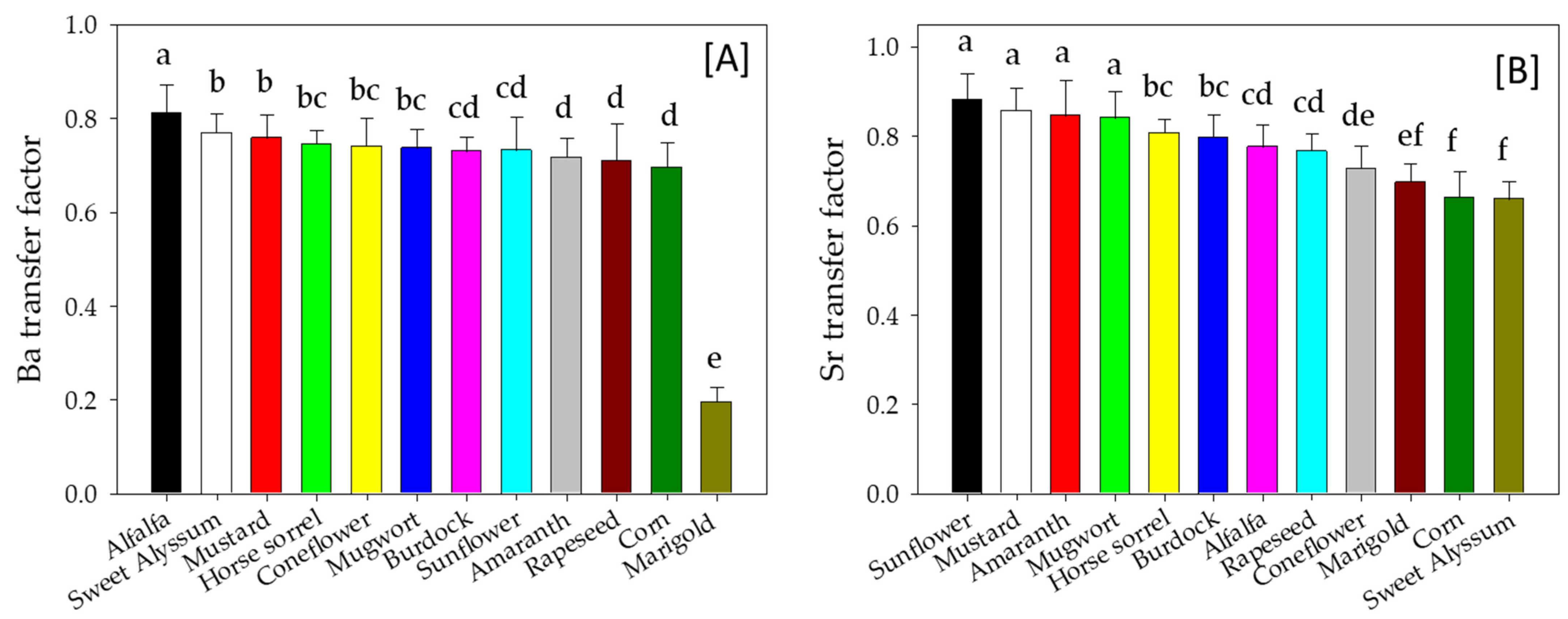
Ni TF values were consistently high across several taxa, including alfalfa, amaranth, sunflower, mustard, mug wort, and horse sorrel, ranging from 0.95 to 0.98 (Figure 11A), indicating efficient Ni translocation across diverse plant groups. In contrast, Sr exhibited narrow TF ranges among plant species, with sunflower, mustard, amaranth, and mug wort showing similar values, while sweet alyssum and corn exhibited the lowest TF values (Figure 12B).
Conversely, several plant species exhibited uniformly low TF values across most metals, indicating strong root retention. Marigold consistently showed low TF values for Co, Pb, Cr, Mn, Ni, Cu, Zn, B, and Ba, with particularly low values for Pb (0.13), Mn (0.38), Ni (0.39), Cu (0.27), B (0.36), and Ba (0.20) (Figure 10, Figure 11 and Figure 12). Low Co TF values (0.12–0.44) were also observed in marigold, corn, burdock, and rapeseed.

4. Discussion

4.1. Metal Concentrations in Soil

The variability in soil metal concentrations reflects the strong influence of industrial activities associated with JSC Qarmet on local soil geochemistry, consistent with previous reports from industrial regions in Kazakhstan and other post-Soviet landscapes [8,40,41]. The dominance of Mn in the contamination profile aligns with observations from metallurgical and mining-impacted soils, where Mn is often enriched due to ore processing and atmospheric deposition [42,43]. The 50-fold higher Mn concentration relative to B highlights the heterogeneous accumulation patterns characteristic of point-source industrial emissions.
The markedly elevated Ba concentration indicates substantial anthropogenic enrichment and identifies Ba as an additional contaminant of concern at the site. Such enrichment has been linked to coal combustion, steel production, and particulate emissions from industrial processes [44]. Moderate Zn enrichment reflects inputs from smelting operations, steel manufacturing, and legacy industrial waste, which commonly contribute Zn-rich particulates to surrounding soils [45].
Although Pb concentrations were near the lower FAO/WHO guideline threshold, its persistence, bioaccumulative potential, and toxicity warrant continued attention, particularly in mixed-metal systems where its effect may amplify ecological risk [46]. While Cr, Cu, Ni, and Co occurred at lower concentrations, their coexistence in contaminated soils remains environmentally relevant due to the potential additive or interactive effects on soil ecosystem and plant accumulation [42,43].
Overall, the soil exhibits multi-metal contamination dominated by Mn, Ba, and Zn, consistent with contamination patterns reported in the industrial regions of Kazakhstan and other legacy industrial centers influenced by long-term metallurgical activity [8,40,41,47].

4.2. Plant Biomass Production

The significant interspecific variation in shoot, root, and total biomass production reflects contrasting growth characteristics and tolerance mechanisms of plants under mixed metal-contaminated soil conditions. Such variability is a common plant response to multi-metal stress and is governed by species-specific physiology and detoxification capacity [48].
The higher shoot and total biomass of corn and sunflower highlight their growth vigor and resilience under metal stress [49,50,51,52]. These species are known for high photosynthetic efficiency, effective nutrient acquisition, and robust antioxidative defense systems, which collectively mitigate metal-induced growth inhibition [49,52,53,54]. Consistent with previous studies is their ability to sustain high biomass under contaminated conditions [49,50,51,52,53,54,55].
Moderate shoot biomass producers, including rapeseed, sweet alyssum, alfalfa, and marigold [50,56,57], appear to adopt a conservative growth strategy that balances productivity with stress tolerance. Such strategies may enhance survival under contamination but constrain maximum biomass accumulation, as reported for similar species in metal-stressed soils [29,58].
Low shoot biomass in coneflower, mug wort, mustard, amaranth, burdock, and horse sorrel suggests a greater sensitivity of shoot biomass to metal toxicity [29]. Suppressed shoot growth under metal stress is commonly associated with impaired photosynthesis, disrupted nutrient uptake, and oxidative damage, leading to preferential restriction of shoot development [58,59,60,61].
The high root biomass and root-to-shoot ratio of horse sorrel indicate preferential belowground carbon accumulation, a trait typical of metal-tolerant or exclusion-type species that restrict metal translocation to shoots [22,62]. Moderate root biomass in corn, alfalfa, and burdock suggests a balanced photosynthate allocation strategy supporting both nutrient uptake and shoot growth. In contrast, reduced root biomass in several species, including sunflower and mustard, reflects direct root growth inhibition, as roots are the primary site of metal exposure and toxicity [51,60].
While total biomass integrates these contrasting shoot and root responses, it serves as a robust indicator of overall plant performance in contaminated soils. The high total biomass of corn, sunflower, and horse sorrel underscores the importance of considering both productivity and biomass partitioning between shoots and roots under metal-contaminated soils.

4.3. Metal Concentrations and Accumulation in Shoot Biomass

Significant interspecific variability in shoot metal concentrations and accumulation highlights strong species-specific differences in metal uptake, translocation, and biomass-driven accumulation under mixed-metal-contaminated soils. Among all evaluated species, marigold exhibited the highest shoot enrichment for most metals (Co, Pb, Cr, Mn, Ni, Cu, B, and Ba), whereas Sr accumulation remained comparatively low. This broad enrichment pattern indicates efficient root uptake and shoot translocation, consistent with reports identifying marigold as an effective metal accumulator in contaminated soils [56,57,63,64].
Exceptionally high Cr, Mn, and Ni concentrations in marigold shoots, up to 20-fold greater than in other species, suggest enhanced root absorption and internal transport capacity [63,64]. Higher accumulation of Pb and Ba further indicates effective long-distance translocation of typically low-mobility metals [43,65].
In contrast, corn achieved the greatest total shoot metal accumulation despite lower tissue concentrations, underscoring the dominant role of biomass production in overall metal removal. Its substantial accumulation of Mn, Zn, Cu, B, Pb, Cr, and Ba supports its suitability for phyto-extraction strategies where high biomass compensates for moderate uptake efficiency [52,65,66].
Sunflower, rapeseed, and sweet alyssum showed intermediate accumulation, reflecting moderate uptake efficiency combined with moderate biomass production. Sunflower’s preferential enrichment of Co, Zn, and B aligns with its documented micronutrient acquisition capacity under stress [51,67]. Although sweet alyssum is known for Ni hyperaccumulation in serpentine soils, its high Sr accumulation here highlights element-specific uptake under mixed-metal soil conditions [68,69].
Amaranth, alfalfa, mug wort, and horse sorrel consistently exhibited low shoot concentrations and accumulations, indicating effective metal exclusion through root immobilization and restricted translocation. Low Ni and Co concentrations in amaranth and alfalfa align with reports showing that legumes and fast-growing C4 species often limit shoot translocation of toxic metals [70,71]. Horse sorrel’s uniformly low accumulation suggests limited phyto-extraction potential but supports its use for site stabilization.
Across plant species, Mn and Ba dominated total shoot metal accumulation, together accounting for up to half of cumulative metal content. Mn dominance reflects high soil availability and its essential physiological role, while elevated Ba accumulation is attributed to its chemical similarity to Ca and passive uptake via Ca transport pathways [72,73]. Zn and Sr contributed secondary fractions, whereas Co, Cr, Ni, Cu, and B comprised smaller proportions, consistent with their lower bioavailability.

4.4. Metal Transfer Factor of Plants

While TF values varied widely, all remained below unity (<1), confirming that none of the tested species functioned as dedicated hyperaccumulators. This aligns with previous studies showing that multi-metal contamination often suppresses shoot translocation due to competitive uptake, altered rhizosphere chemistry, and enhanced root sequestration [32,33,74]. Nevertheless, several species exhibited TFs approaching unity for specific metals, indicating efficient internal transport and near-equilibrium partitioning between roots and shoots.
Among plant species, highest Cr TF values were obtained overall, with sunflower, mug wort, and horse sorrel ranging 0.95–0.99, implying root mobilization despite Cr’s typical soil immobility [75]. Sunflower also exhibited elevated TFs for Mn, Cu, and moderate B, reflecting broad translocation capacity and physiological plasticity [76,77,78]. Coneflower and mug wort showed element-specific efficiencies for Cu and B, respectively, reflecting differences in micronutrient demand. A high TF value of Co was found in amaranth, suggesting effective mobilization.
Ni showed consistently high TF values across diverse plants, including alfalfa, amaranth, sunflower, mustard, mug wort, and horse sorrel, indicating efficient translocation irrespective of growth habit, consistent with its high soil mobility and micronutrient role [43,79]. In contrast, Sr exhibited narrow TF variation, with sunflower, mustard, amaranth, and mug wort showing similar values, while sweet alyssum and corn were the lowest, reflecting probable physicochemical control processes [80].
Several plant species displayed low TF values across most metals, indicating strong root retention. Marigold consistently showed low TFs particularly for Pb, Mn, Ni, Cu, B, and Ba, suggesting limited sequestration and translocation processes by roots [32,33,80]. Similarly, low TF values for Co in marigold, corn, burdock, and rapeseed highlight species-specific constraints on translocation, emphasizing exclusion or stabilization strategies.
Our results indicate that high metal TF values for sunflower, mug wort, amaranth, horse sorrel, and coneflower is one of the important parameters for evaluating phytoremediation potential; however, effective species selection should integrate TF values with biomass production and metal specificity.

5. Conclusions

This study reveals substantial mixed-metal contamination at the JSC Qarmet steel mill site, with Mn, Ba, and Zn exceeding guideline thresholds, highlighting the need for targeted remediation. Significant species-specific differences were observed in biomass production and metal accumulation: corn and sunflower produced the highest shoot and total biomass, whereas horse sorrel preferentially accumulated biomass in roots. Corn and marigold consistently accumulated Co, Pb, Cr, Mn, Ni, Cu, B, and Ba in shoots; however, low transfer factors (<0.8) indicate effective phytostabilization rather than hyperaccumulation. In contrast, sunflower, amaranth, and mug wort exhibited higher transfer factors (>0.9 <1) for Cr, Ni, Co, and B, suggesting potential for phyto-extraction. These results support multifunctional phyto-management strategies that integrate biomass yield, metal specificity, and transfer factor behavior. Strategic species combinations, such as high-biomass corn and sunflower with marigold, amaranth, horse sorrel, and mug wort, offer promising approaches for mixed-metal remediation at Temirtau and comparable industrial sites in Kazakhstan.

Author Contributions

Conceptualization, B.K.Y. and R.I.; methodology, B.K.Y.; software, R.I.; validation, A.S., D.B. and B.K.Y.; formal analysis, B.K.Y., R.I.; investigation, K.R.; resources, K.R. and B.K.Y.; data curation, A.S. and D.B.; writing—original draft preparation, B.K.Y.; writing, review and editing, R.I., A.S. and D.B.; visualization, R.I.; supervision, K.R.; project administration, K.R.; funding acquisition, K.R. All authors have read and agreed to the published version of the manuscript.

Funding

The research (grant no. BR21881939) was funded by the Scientific Committee of the Ministry of Science and Higher Education of the Republic of Kazakhstan. The APC was funded by the grant no. BR21881939 (Title—Development of resource-saving energy-generating technologies for the mining and metallurgical complex and creation of an innovative engineering center).

Data Availability Statement

The raw data supporting the conclusions of this article will be made available by the authors on request.

Acknowledgments

During the revision of the manuscript, the author(s) used Microsoft 365 Copilot provided by Ohio State University and took full responsibility for the content of this publication.

Conflicts of Interest

The authors declare no conflicts of interest.

References

  1. Ondrasek, G.; Shepherd, J.; Rathod, S.; Dharavath, R.; Rashid, M.I.; Brtnicky, M.; Shahid, M.S.; Horvatinec, J.; Rengel, Z. Metal contamination—A global environmental issue: Sources, implications & advances in mitigation. RSC Adv. 2025, 15, 3904–3927. [Google Scholar] [CrossRef] [PubMed]
  2. Wei, B.; Linsheng, Y. A review of heavy metal contaminations in urban soils, urban road dusts and agricultural soils from China. Microchem. J. 2010, 94, 99–107. [Google Scholar] [CrossRef]
  3. Woszczyk, M.; Spychalski, W.; Boluspaeva, L. Trace metal (Cd, Cu, Pb, Zn) fractionation in urban-industrial soils of Ust-Kamenogorsk (Oskemen), Kazakhstan—Implications for the assessment of environmental quality. Environ. Monit. Assess 2018, 190, 362. [Google Scholar] [CrossRef] [PubMed]
  4. Minkina, T.; Mandzhieva, S.; Motusova, G.; Burachevskaya, M.; Nazarenko, O.; Sushkova, S.; Kızılkaya, R. Heavy metal compounds in a soil of technogenic zone as indicate of its ecological state. Eurasian J. Soil Sci. 2014, 3, 144–151. [Google Scholar] [CrossRef]
  5. Doabi, S.A.; Karami, M.; Afyuni, M.; Yeganeh, M. Pollution and health risk assessment of heavy metals in agricultural soil, atmospheric dust, and major food crops in Kermanshah province, Iran. Ecotoxicol. Environ. Saf. 2018, 163, 153–164. [Google Scholar] [CrossRef]
  6. Ramazanova, E.; Bulgakova, G.; Lee, W.; Tsatsakis, A.; Koptyug, A. Stochastic risk assessment of urban soils contaminated by heavy metals in Kazakhstan. Sci. Total Environ. 2021, 750, 141535. [Google Scholar] [CrossRef]
  7. Silva, H.F.; Silva, N.F.; Oliveira, C.M.; Matos, M.J. Heavy Metals contamination of urban soils—A decade study in the city of Lisbon, Portugal. Soil Syst. 2021, 5, 27. [Google Scholar] [CrossRef]
  8. Zhakypbek, Y.; Rysbekov, K.; Lozynskyi, V.; Mikhalovsky, S.; Salmurzauly, R.; Begimzhanova, Y.; Kezembayeva, G.; Yelikbayev, B.; Sankabayeva, A. Geospatial and correlation analysis of heavy metal distribution on the territory of integrated steel and mining company Qarmet JSC. Sustainability 2025, 17, 7148. [Google Scholar] [CrossRef]
  9. Gebrekidan, A.; Weldegebriel, Y.; Hadera, A.; Van der Bruggen, B. Toxicological as-sessment of heavy metals accumulated in vegetables and fruits grown in Ginfel river near Sheba Tannery, Tigray, Northern Ethiopia. Ecotoxicol. Environ. Saf. 2013, 95, 171–178. [Google Scholar] [CrossRef]
  10. Amoakwah, E.; Ahsan, S.; Rahman, M.A.; Asamoah, E.; Essumang, D.K.; Ali, M.; Islam, K.R. Artisanal gold mining impacts on heavy metals pollution of soil-water-vegetative ecosystems. J. Soil Sed. 2020, 29, 788–803. [Google Scholar] [CrossRef]
  11. Li, G.; Sun, G.X.; Ren, Y.; Luo, X.S.; Zhu, Y.G. Urban soil, and human health: A review. Eur. J. Soil Sci. 2018, 69, 196–215. [Google Scholar] [CrossRef]
  12. Diacono, E.; Faye, B.; Meldebekova, A.; Konuspayeva, G. Plant, water, and milk pollution in Kazakhstan. In Impact of Pollution on Animal Products; Sinyavskiy, Y., Faye, B., Eds.; Springer: Dordrecht, The Netherlands, 2008; pp. 107–116. [Google Scholar]
  13. Kaliaskarova, Z.; Aliyeva, Z.; Ikanova, A.; Negim, E. Soil pollution with heavy metals on the land of the Karasai landfill of municipal solid waste in Almaty city. News Acad. Sci. Repub. Kaz. Ser. Geol. Tech. Sci. 2019, 6, 256–267. [Google Scholar] [CrossRef]
  14. Baubekova, A.; Akindykova, A.; Mamirova, A.; Dumat, C.; Jurjanz, S. Evaluation of environmental contamination by toxic trace elements in Kazakhstan based on reviews of available scientific data. Environ. Sci. Pollut. Res. 2021, 28, 43315–43328. [Google Scholar] [CrossRef] [PubMed]
  15. Toishimanov, M.; Abilda, Z.; Daurov, D.; Daurova, A.; Zhapar, K.; Sapakhova, Z.; Kanat, R.; Stamgaliyeva, Z.; Zhambakin, K.; Shamekova, M. Phytoremediation properties of sweet potato for soils contaminated by heavy metals in South Kazakhstan. Appl. Sci. 2023, 13, 9589. [Google Scholar] [CrossRef]
  16. Iztileu, A.; Grebeneva, O.; Otarbayeva, M.; Zhanbasinova, N.; Ivashina, E.; Dui-senbekov, B. Intensity of soil contamination in industrial centers of Kazakhstan. CBU Int. Conf. Proc. 2013, 1, 374–380. [Google Scholar] [CrossRef]
  17. Aiman, N.; Gulnaz, S.; Alena, M. The characteristics of pollution in the big industrial cities of Kazakhstan by the example of Almaty. J. Environ. Health Sci. Eng. 2018, 16, 81–88. [Google Scholar] [CrossRef]
  18. Muzychenko, I.; Jamalova, G.; Mussina, U.; Kazulis, V.; Blumberga, D. Case study of lead pollution in the roads of Almaty. Energy Procedia 2017, 113, 369–376. [Google Scholar] [CrossRef]
  19. Naimanova, A.; Akhmetova, S.; Issayeva, A.; Vyrakhmanova, A.; Alipbekova, A. Phytoaccumulation of heavy metals in South Kazakhstan Soils (Almaty and Turkestan Regions): An evaluation of plant-based remediation potential. Int. J. Des. Nat. Ecodyn. 2024, 19, 451–464. [Google Scholar] [CrossRef]
  20. Haghighizadeh, A.; Omid, R.; Arman, N.; Zahra, H.; Mina, H.; Soheila, H.; Soheila, D.A.; Ali, A.B. Comprehensive analysis of heavy metal soil contamination in mining environments: Impacts, monitoring techniques, and remediation strategies. Arab. J. Chem. 2024, 17, 105777. [Google Scholar] [CrossRef]
  21. Cozma, P.; Mihaela, R.; Mariana, M.; Maria, G. Phytoremediation: A sustainable and promising biobased approach to heavy metal pollution management. Sci. Total Environ. 2025, 1001, 180458. [Google Scholar] [CrossRef]
  22. van der Ent, A.; Baker, A.J.M.; Reeves, R.D.; Pollard, A.J.; Schat, H. Hyperaccumulators of metal and metalloid trace elements: Facts and fiction. Plant Soil 2013, 362, 319–334. [Google Scholar] [CrossRef]
  23. Reeves, R.D.; Baker, A.J.M.; Jaffré, T.; Erskine, P.D.; Echevarria, G.; van der Ent, A. A global database for plants that hyperaccumulate metal and metalloid trace elements. New Phytol. 2017, 218, 407–411. [Google Scholar] [CrossRef] [PubMed]
  24. Manara, A.; Elisa, F.; Antonella, F.; Giovanni, D. Evolution of the metal hyperaccumulation and hyper-tolerance traits. Plant Cell Environ. 2020, 43, 2969–2986. [Google Scholar] [CrossRef] [PubMed]
  25. van der Ent, A.; Rylott, E.L. Inventing hyperaccumulator plants: Improving practice in phytoextraction research and terminology. Int. J. Phytoremediat. 2024, 26, 1379–1382. [Google Scholar] [CrossRef]
  26. Stoikou, V.; Andrianos, V.; Stasinos, S.; Kostakis, M.G.; Attiti, S.; Thomaidis, N.S.; Zabetakis, I. Μetal uptake by sunflower (Helianthus annuus) irrigated with water polluted with chromium and nickel. Foods 2017, 6, 51. [Google Scholar] [CrossRef]
  27. Abedi, T.; Gavanji, S.; Mojiri, A. Lead and Zinc uptake and toxicity in maize and their management. Plants 2022, 11, 1922. [Google Scholar] [CrossRef]
  28. Petrović, S.; Mrmošanin, J.; Arsić, B.; Pavlović, A.; Tošić, S. Uptake of some heavy metal(oid)s by sunflower. Chem. Naissensis 2023, 5, 73–84. [Google Scholar] [CrossRef]
  29. Yelikbayev, B.; Imanbek, F.; Jamalova, G.; Kalogerakis, N.; Islam, K. Phytoremediation of contaminated urban soils spiked with heavy metals. Eurasian J. Soil. Sci. 2024, 13, 348–357. [Google Scholar] [CrossRef]
  30. Storozhenko, D.M. Soils of the Kazakh SSR. Issue 8. Karaganda Region; Publisher Nauka (Science): Alma-Ata, Kazakhstan, 1967; 331p. (In Russian)
  31. US-EPA Method 3051A. Microwave Assisted with Acid Digestion of Sediments, Sludges, Soils, and Oils. Revision 1. 2007. Available online: https://www.epa.gov/sites/default/files/2015-12/documents/3051a.pdf (accessed on 1 February 2007).
  32. Prabasiwi, D.S.; Murniasih, S.S.; Rozana, K. Transfer factor as indicator of heavy metal content in plants around adipala steam power plant. J. Phys. Conf. Ser. 2020, 1436, 012133. [Google Scholar] [CrossRef]
  33. Rehman, Z.U.; Khan, S.; Shah, M.T.; Brusseau, M.I.; Khan, S.A.; Mainhagu, J. Transfer of heavy metals from soils to vegetables and associated human health risks at selected sites in Pakistan. Pedosphere 2018, 28, 666–679. [Google Scholar] [CrossRef]
  34. GOST 26423-85; Soils—Methods for Determination of Specific Electric Conductivity, pH, and Solid Residue of Water Extract. 2024. USSR State Standards Committee, USSR Ministry of Agriculture: Moscow, Russia, 1985. Available online: https://www.russiangost.com/p-16105-gost-26423-85.aspx (accessed on 20 May 2024).
  35. Jankauskas, B.; Jankauskiene, G.; Slepetiene, A.; Fullen, M.A.; Booth, C.A. International comparison of analytical methods of determining the soil organic matter content of Lithuanian Eutric albeluvisols. Commun. Soil Sci. Plant Anal. 2006, 37, 707–720. [Google Scholar] [CrossRef]
  36. GOST 27821-88; Soils. Determination of Base Absorption Sum by Kappen Method. 1988. Available online: https://www.russiangost.com/p-49750-gost-27821-88.aspx (accessed on 20 May 2024).
  37. GOST 12536-2014; Soils—Methods of Laboratory Granulometric (Grain-Size) and Microaggregate Distribution. USSR State Standards Committee, USSR Ministry of Agriculture: Moscow, Russia, 2014. Available online: www.russiangost.com/p-138335-gost-12536-2014.aspx (accessed on 20 May 2024).
  38. FAO; WHO. ALINORM 01/12A; Food Additives and Contaminants—Joint Codex Alimentarius Commission, FAO/WHO Food Standards Program. FAO: Rome, Italy; WHO: Geneva, Switzerland, 2014; p. 1289.
  39. CX/CF 21/14/13; Discussion Paper on Cadmium and Lead in Quinoa—Joint FAO/WHO Food Standard Programme Codex Committee on Contaminants in Foods, 14th Session, 3–7 and 13 May 2021, Agenda Item 15. FAO: Rome, Italy; WHO: Geneva, Switzerland. Available online: https://www.fao.org/fao-who-codexalimentarius/sh-proxy/en/?lnk=1&url=https%253A%252F%252Fworkspace.fao.org%252Fsites%252Fcodex%252FMeetings%252FCX-735-14%252FWDs-2021%252Fcf14_13e.pdf (accessed on 20 May 2024).
  40. Koshim, A.; Karatayev, M.; Clarke, M.L. Industrial pollution, and environmental degradation in Central Kazakhstan. Environ. Sci. Pollut. Res. 2018, 25, 12345–12358. [Google Scholar]
  41. Beisenova, R.; Issanova, G.; Abuduwaili, J. Heavy metal pollution in industrial cities of Kazakhstan. Sustainability 2020, 12, 5678. [Google Scholar]
  42. Alloway, B.J. Heavy Metals in Soils: Trace Metals and Metalloids in Soils and Their Bioavailability, 4th ed.; Springer: Dordrecht, The Netherlands, 2019. [Google Scholar]
  43. Kabata-Pendias, A. Trace Elements in Soils and Plants, 5th ed.; CRC Press: Boca Raton, FL, USA, 2020. [Google Scholar]
  44. Querol, X.; Alastuey, A.; Moreno, N. Environmental impact of coal combustion residues. Int. J. Coal Geol. 2008, 75, 77–96. [Google Scholar]
  45. Csavina, J.; Field, J.; Taylor, M.P. Metal contamination from smelters. Sci. Total Environ. 2012, 424, 38–54. [Google Scholar]
  46. Mielke, H.W.; Reagan, P.L. Soil is an important pathway of human lead exposure. Environ. Health Perspect. 1998, 106, 217–229. [Google Scholar]
  47. Issanova, G.; Jilili, R.; Abuduwaili, J. Legacy pollution in post-Soviet industrial regions. Environments 2019, 6, 45. [Google Scholar]
  48. Rizwan, M.; Ali, S.; Rehman, M.Z.U.; Malik, S.; Adrees, M.; Qayyum, M.F. Effect of metal and metal oxide nanoparticles on growth and physiology of plants: A critical review. Chemosphere 2020, 260, 127521. [Google Scholar]
  49. Atta, M.I.; Zehra, S.S.; Ali, H.; Ali, B.; Abbas, S.N.; Aimen, S.; Sarwar, S.; Ahmad, I.; Hussain, M.; Al-Ashkar, I.; et al. Assessing the effect of heavy metals on maize (Zea mays L.) growth and soil characteristics: Plants-implications for phytoremediation. PeerJ. 2023, 11, e16067. [Google Scholar] [CrossRef]
  50. Samal, S.K.; Datta, S.P.; Dwivedi, B.S.; Meena, M.C.; Nogiya, M.; Choudhary, M.; Golui, D.; Raza, M.B. Phytoextraction of nickel, lead, and chromium from contaminated soil using sunflower, marigold, and spinach: Comparison of efficiency and fractionation study. Environ. Sci. Pollut. Res. 2023, 30, 50847–50863. [Google Scholar] [CrossRef]
  51. Angelova, V.; Ivanova, R.; Todorov, G.; Ivanov, K. Potential of sunflower for phytoremediation of contaminated soils. Int. J. Agric. Biol. 2010, 12, 131–138. [Google Scholar]
  52. Elik, Ü.; Gül, Z. Accumulation potential of lead and cadmium metals in maize (Zea mays L.) and effects on physiological-morphological characteristics. Life 2025, 15, 310. [Google Scholar] [CrossRef] [PubMed]
  53. Zhuang, P.; Ye, Z.H.; Lan, C.Y.; Xie, Z.W.; Shu, W.S. Chemically assisted phyto-extraction of heavy metal contaminated soils using three plant species. Plant Soil 2005, 276, 153–162. [Google Scholar] [CrossRef]
  54. Ahmad, R.; Waraich, E.A.; Nawaz, F.; Ashraf, M.Y.; Khalid, M. Performance of maize cultivars under cadmium stress. Int. J. Agric. Biol. 2015, 17, 133–140. [Google Scholar]
  55. Tóth, G.; Hermann, T.; Da Silva, M.R.; Montanarella, L. Heavy metals in agricultural soils of the European Union with implications for food safety. Environ. Int. 2016, 88, 299–309. [Google Scholar] [CrossRef]
  56. Molnár, E.; Bobek-Nagy, J.; Juzsakova, T.; Kurdi, R.; Rauch, R. Tagetes erecta as a nickel phytore-mediator: Insights into accumulation and growth response. Circ. Econ. Sust. 2025, 5, 6483–6498. [Google Scholar] [CrossRef]
  57. Kumar, A.; Singh, S.; Pandey, V.C. Phytoremediation potential of ornamental plants grown in multi-metal contaminated soils. Environ. Sci. Pollut. Res. 2022, 29, 41875–41890. [Google Scholar]
  58. Ghori, N.H.; Ghori, T.; Hayat, M.Q.; Imadi, S.R.; Gul, A.; Altay, V.; Ozturk, M. Heavy metal stress and responses in plants. Int. J. Environ. Sci. Technol. 2019, 16, 1807–1828. [Google Scholar] [CrossRef]
  59. Cuypers, A.; Plusquin, M.; Remans, T.; Jozefczak, M.; Keunen, E.; Gielen, H.; Vangronsveld, J. Cadmium stress: An oxidative challenge. Biometals 2010, 23, 927–940. [Google Scholar] [CrossRef]
  60. Sheetal, K.R.; Singh, S.D.; Anand, A.; Prasad, S. Heavy metal accumulation and effects on growth, biomass and physiological processes in mustard. Indian J. Plant Physiol. 2016, 21, 219–223. [Google Scholar] [CrossRef]
  61. Tőzsér, D.; Yelamanova, A.; Sipos, B.; Magura, T.; Simon, E. A meta-analysis on the heavy metal uptake in Amaranthus species. Environ. Sci. Pollut. Res. 2023, 30, 85102–85112. [Google Scholar] [CrossRef] [PubMed]
  62. Baker, A.J.M.; Whiting, S.N. In search of the Holy Grail—A further step in understanding metal hyperaccumulation? New Phytol. 2002, 155, 1–4. [Google Scholar] [CrossRef] [PubMed]
  63. Zeng, P.; Guo, Z.; Xiao, X.; Peng, C. Uptake, translocation, and accumulation of heavy metals by Tagetes species in contaminated soils. Int. J. Phytoremed. 2023, 25, 1035–1046. [Google Scholar]
  64. Chen, Y.; Wang, Y.; Yeh, K.-C. Rhizosphere processes and metal uptake in plants exposed to mixed-metal contamination. Environ. Pollut. 2021, 268, 115860. [Google Scholar] [CrossRef]
  65. Li, X.; Zhou, Q.; Wei, S. Organic acid-mediated chelation and translocation of heavy metals in plants. Plant Physiol. Biochem. 2022, 185, 152–161. [Google Scholar]
  66. Yang, Y.; Huang, G.; An, C.; Xin, X. Biomass-driven phytoextraction efficiency of maize in industrially contaminated soils. Environ. Pollut. 2024, 336, 122523. [Google Scholar]
  67. Singh, A.; Sharma, R.K.; Agrawal, M.; Marshall, F. Sunflower as a potential candidate for metal uptake under environmental stress conditions. Environ. Monit. Assess. 2022, 194, 287. [Google Scholar]
  68. van der Ent, A.; Echevarria, G.; Tibbett, M. Delimiting nickel hyperaccumulation: Implications for phytomining and soil chemistry. Plant Soil 2023, 476, 67–82. [Google Scholar]
  69. Broadhurst, C.L.; Chaney, R.L. Growth and metal accumulation of an alyssum murale nickel hyperaccumulator ecotype o-cropped with alyssum montanum and perennial ryegrass in Serpentine soil. Front. Plant Sci. 2016, 7, 451. [Google Scholar] [CrossRef]
  70. Rizwan, M.; Ali, S.; Zia ur Rehman, M.; Adrees, M.; Arshad, M.; Qayyum, M.F. Mechanisms of metal exclusion and tolerance in crop plants grown on contaminated soils. J. Hazard. Mater. 2021, 402, 123535. [Google Scholar]
  71. Hassan, W.; Aamer, M.; Chattha, M.U.; Haiying, T.; Shahzad, B. Plant strategies for metal tolerance and exclusion under contaminated environments. Ecotoxicol. Environ. Saf. 2023, 249, 114396. [Google Scholar]
  72. Liu, Y.; Wang, J.; Zhang, H. Uptake and translocation of barium and strontium in plants: Mechanisms and environmental implications. Chemosphere 2022, 291, 133003. [Google Scholar]
  73. White, P.J. The pathways of calcium movement to the xylem. J. Exp. Bot. 2001, 52, 891–899. [Google Scholar] [CrossRef] [PubMed]
  74. Nepal, A.; Antonious, G.F.; Bebe, F.N.; Webster, T.C.; Gyawali, B.R.; Neupane, B. Heavy metal accumulation in three varieties of mustard grown under five soil management practices. Environments 2024, 11, 77. [Google Scholar] [CrossRef]
  75. Shahid, M.; Shamshad, S.; Rafiq, M.; Khalid, S.; Bibi, I.; Niazi, N.K.; Dumat, C.; Rashid, M.I. Chromium speciation, bioavailability, uptake, toxicity and detoxification in soil–plant system: A review. Chemosphere 2017, 178, 513–533. [Google Scholar] [CrossRef]
  76. Yoon, J.; Cao, X.; Zhou, Q.; Ma, L.Q. Accumulation of Pb, Cu, and Zn in native plants growing on a contaminated Florida site. Sci. Total Environ. 2006, 368, 456–464. [Google Scholar] [CrossRef]
  77. Mani, D.; Kumar, C. Biotechnological advances in bioremediation of heavy metals contaminated ecosystems: An overview with special reference to phytoremediation. Int. J. Environ. Sci. Technol. 2014, 11, 843–872. [Google Scholar]
  78. Rizwan, M.; Ali, S.; Rizvi, H.; Rinklebe, J.; Tsang, D.C.W.; Meers, E.; Ok, Y.S.; Ishaque, W. Phytomanagement of heavy metals in contaminated soils using sunflower: A review. Environ. Sci. Technol. 2016, 46, 1498–1528. [Google Scholar]
  79. Seregin, I.V.; Kozhevnikova, A.D. Nickel toxicity and tolerance in higher plants. Russ. J. Plant Physiol. 2006, 53, 257–277. [Google Scholar]
  80. Hall, J.L. Cellular mechanisms for heavy metal detoxification and tolerance. J. Exp. Bot. 2002, 53, 1–11. [Google Scholar] [CrossRef]
Figure 1. Location of the in JSC Qarmet (ArcelorMittal) steel mill and associated complex area in Temirtau, Kazakhstan, where the field-moist soil samples were collected (https://www.mapsofworld.com/lat_long/kazakhstan-lat-long.html; accessed on 20 May 2024).
Environments 13 00064 g001
Figure 2. Shoot (A), root (B), total biomass (C), and root-to-shoot ratios (D) of plant species grown in mixed metal-contaminated soils collected from the vicinity of the Qarmet industrial zone in Temirtau, Central Kazakhstan. One plant per species was grown in each replicated pot (n = 4) under controlled phytotron conditions for 90 days. At harvest, shoot biomass was collected by cutting the stem at the soil surface and placing the material in sealable plastic bags. Root biomass was subsequently recovered gravimetrically by carefully removing soil from each pot. Statistical analyses of data were conducted using SAS version 9.4. Mean values are presented with standard errors; means followed by the same lowercase letter are not significantly different among plant species at p ≤ 0.05, according to DMRT.
Environments 13 00064 g002
Figure 3. Total cobalt (A), chromium, (B), lead (C), and manganese (D) concentrations in shoot biomass of plant species grown in contaminated soils in the vicinity of Qarmet JSC industrial zone, Temirtau, Central Kazakhstan. One plant per species was grown in each replicated pot (n = 4) under controlled phytotron conditions for 90 days. At harvest, shoot biomass was collected by cutting the stem at the soil surface and placing the material in sealable plastic bags. The metal concentrations were determined in diluted solutions following digestion of shoot samples in concentrated HNO3:HCl (3:1) using Teflon vessels in a microwave digestion system. Statistical analyses of data were conducted using SAS version 9.4. Mean values are presented with standard errors; means followed by the same lowercase letter are not significantly different among plant species at p ≤ 0.05 according to DMRT.
Environments 13 00064 g003
Figure 4. Total nickel (A), zinc (B), copper (C), and boron (D) concentrations in shoot biomass of plant species grown in contaminated soils in the vicinity of Qarmet JSC industrial zone, Temirtau, Central Kazakhstan. One plant per species was grown in each replicated pot (n = 4) under controlled phytotron conditions for 90 days. At harvest, shoot biomass was collected by cutting the stem at the soil surface and placing the material in sealable plastic bags. The metal concentrations were determined in diluted solutions following digestion of shoot samples in concentrated HNO3:HCl (3:1) using Teflon vessels in a microwave digestion system. Statistical analyses of data were conducted using SAS version 9.4. Mean values are presented with standard errors; means followed by the same lowercase letter are not significantly different among plant species at p ≤ 0.05 according to DMRT.
Environments 13 00064 g004
Figure 5. Total barium (A) and strontium (B) concentrations in shoot biomass of plant species grown in contaminated soils in the vicinity of Qarmet JSC industrial zone, Temirtau, Central Kazakhstan. One plant per species was grown in each replicated pot (n = 4) under controlled phytotron conditions for 90 days. At harvest, shoot biomass was collected by cutting the stem at the soil surface and placing the material in sealable plastic bags. The metal concentrations were determined in diluted solutions following the digestion of shoot samples in concentrated HNO3:HCl (3:1) using Teflon vessels in a microwave digestion system. Statistical analyses of data were conducted using SAS version 9.4. Mean values are presented with standard errors; means followed by the same lowercase letter are not significantly different among plant species at p ≤ 0.05, according to DMRT.
Environments 13 00064 g005
Figure 6. Total cobalt (A), chromium (B), lead (C), and manganese (D) accumulation in shoot biomass of plant species grown in contaminated soils in the vicinity of Qarmet JSC industrial zone, Temirtau, Central Kazakhstan. One plant per species was grown in each replicated pot (n = 4) under controlled phytotron conditions for 90 days. At harvest, shoot biomass was collected by cutting the stem at the soil surface and placing the material in sealable plastic bags. The metal concentrations were determined in diluted solutions following the digestion of shoot samples in concentrated HNO3:HCl (3:1) using Teflon vessels in a microwave digestion system. Statistical analyses of data were conducted using SAS version 9.4. Mean values are presented with standard errors; means followed by the same lowercase letter are not significantly different among plant species at p ≤ 0.05, according to DMRT.
Environments 13 00064 g006
Figure 7. Total nickel (A), zinc (B), copper (C), and boron (D) accumulation in shoot biomass of plant species grown in contaminated soils collected from the vicinity of Qarmet JSC industrial zone, Temirtau, Central Kazakhstan. One plant per species was grown in each replicated pot (n = 4) under controlled phytotron conditions for 90 days. At harvest, shoot biomass was collected by cutting the stem at the soil surface and placing the material in sealable plastic bags. The metal concentrations were determined in diluted solutions following the digestion of shoot samples in concentrated HNO3:HCl (3:1) using Teflon vessels in a microwave digestion system. Statistical analyses of data were conducted using SAS version 9.4. Mean values are presented with standard errors; means followed by the same lowercase letter are not significantly different among plant species at p ≤ 0.05, according to DMRT.
Environments 13 00064 g007
Figure 8. Total barium (A) and strontium (B) accumulation in shoot biomass of plant species grown in contaminated soils collected from the vicinity of Qarmet JSC industrial zone, Temirtau, Central Kazakhstan. One plant per species was grown in each replicated pot (n = 4) under controlled phytotron conditions for 90 days. At harvest, shoot biomass was collected by cutting the stem at the soil surface and placing the material in sealable plastic bags. The metal concentrations were determined in diluted solutions following the digestion of shoot samples in concentrated HNO3:HCl (3:1) using Teflon vessels in a microwave digestion system. Statistical analyses of data were conducted using SAS version 9.4. Mean values are presented with standard errors; means followed by the same lowercase letter are not significantly different among plant species at p ≤ 0.05, according to DMRT.
Environments 13 00064 g008
Figure 9. Total metal accumulation in shoot biomass of plant species grown in contaminated soils collected from the vicinity of Qarmet JSC industrial zone, Temirtau, Central Kazakhstan. One plant per species was grown in each replicated pot (n = 4) under controlled phytotron conditions for 90 days. At harvest, shoot biomass was collected by cutting the stem at the soil surface and placing the material in sealable plastic bags. The metal concentrations were determined in diluted solutions following the digestion of shoot samples in concentrated HNO3:HCl (3:1) using Teflon vessels in a microwave digestion system. Statistical analyses of data were conducted using SAS version 9.4. Mean values are presented with standard errors; means followed by the same lowercase letter are not significantly different among plant species at p ≤ 0.05, according to DMRT.
Environments 13 00064 g009
Figure 10. Metal transfer factor (TF) of cobalt (A), chromium (B), lead (C), and manganese (D) of plant species grown in contaminated soils collected from the vicinity of Qarmet JSC industrial zone, Temirtau, Central Kazakhstan. One plant per species was grown in each replicated pot (n = 4) under controlled phytotron conditions for 90 days. At harvest, shoot biomass was collected by cutting the stem at the soil surface and placing the material in sealable plastic bags. The metal concentrations were determined in diluted solutions following the digestion of shoot samples in concentrated HNO3:HCl (3:1) using Teflon vessels in a microwave digestion system. Statistical analyses of data were conducted using SAS version 9.4. Mean values are presented with standard errors; means followed by the same lowercase letter are not significantly different among plant species at p ≤ 0.05, according to DMRT.
Environments 13 00064 g010
Figure 11. Metal transfer factor (TF) of nickel (A), zinc (B), copper (C), and boron (D) of plant species grown in contaminated soils collected from the vicinity of Qarmet JSC industrial zone, Temirtau, Central Kazakhstan. One plant per species was grown in each replicated pot (n = 4) under controlled phytotron conditions for 90 days. At harvest, shoot biomass was collected by cutting the stem at the soil surface and placing the material in sealable plastic bags. The metal concentrations were determined in diluted solutions following the digestion of shoot samples in concentrated HNO3:HCl (3:1) using Teflon vessels in a microwave digestion system. Statistical analyses of data were conducted using SAS version 9.4. Mean values are presented with standard errors; means followed by the same lowercase letter are not significantly different among plant species at p ≤ 0.05, according to DMRT.
Environments 13 00064 g011
Figure 12. Metal transfer factor (TF) of barium (A) and strontium (B) of plant species grown in contaminated soils collected from the vicinity of Qarmet JSC industrial zone, Temirtau, Central Kazakhstan. One plant per species was grown in each replicated pot (n = 4) under controlled phytotron conditions for 90 days. At harvest, shoot biomass was collected by cutting the stem at the soil surface and placing the material in sealable plastic bags. The metal concentrations were determined in diluted solutions following the digestion of shoot samples in concentrated HNO3:HCl (3:1) using Teflon vessels in a microwave digestion system. Statistical analyses of data were conducted using SAS version 9.4. Mean values are presented with standard errors; means followed by the same lowercase letter are not significantly different among plant species at p ≤ 0.05, according to DMRT.
Environments 13 00064 g012
Table 1. Total initial baseline concentration of metals in soil collected at the vicinity of the Qarmet industrial zone (Temirtau, Central Kazakhstan) along with FAO/WHO permissible concentration limit in soil. The metal concentrations in soils were determined from diluted digest solutions following the microwave-assisted digestion of soil samples in concentrated HNO3–HCl (3:1, v/v) using Teflon vessels. Descriptive statistical analysis of data was performed using SAS version 9.4. The mean values (n = 4) were presented with standard errors and coefficient variations (CV). NA = Not available.
Initial Metal
Conc. in Soil
UnitValuesCV
(%)
FAO/WHO Limit
(mg·kg−1) [38,39]
Total cobaltmg·kg−114.7 ± 1.41950
Total leadmg·kg−141.6 ± 3.818.350–85
Total chromiummg·kg−149.8 ± 8.232.975–100
Total manganesemg·kg−11059 ± 12523.62000
Total nickelmg·kg−127.1 ± 3.122.950
Total zincmg·kg−1203.8 ± 17.216.9300–1000
Total coppermg·kg−132.5 ± 3.320.3100–300
Total boronmg·kg−122.1 ± 3.128.1NA
Total bariummg·kg−1620.3 ± 4113.2100
Total strontiummg·kg−1152 ± 4.96.4NA
Disclaimer/Publisher’s Note: The statements, opinions and data contained in all publications are solely those of the individual author(s) and contributor(s) and not of MDPI and/or the editor(s). MDPI and/or the editor(s) disclaim responsibility for any injury to people or property resulting from any ideas, methods, instructions or products referred to in the content.