Article

DNA Metabarcoding of Soil Microbial Communities in a Postvolcanic Region: Case Study from Băile Lăzărești, Romania


by
Alexandra-Constanța Dudu
1,
Ana Bianca Pavel
1,*,
Corina Avram
1,
Gabriel Iordache
1,
Andrei-Gabriel Dragoș
1,
Oana Dobre
1,
Constantin-Ștefan Sava
1 and
Lia Stelea
1,2,*
1
National Institute for Research and Development on Marine Geology and Geoecology-GeoEcoMar, 23-25 Dimitrie Onciul, 024053 Bucharest, Romania
2
Doctoral School of Geology, University of Bucharest, Regina Elisabeta Boulevard No. 4-12, 050663 Bucharest, Romania
*
Authors to whom correspondence should be addressed.
Environments 2025, 12(10), 344; https://doi.org/10.3390/environments12100344
Submission received: 18 August 2025 / Revised: 8 September 2025 / Accepted: 21 September 2025 / Published: 25 September 2025

Abstract

This study investigates the impact of post-volcanic gas emissions on soil microbial communities in the Băile Lăzărești region (Romania). Nineteen soil samples across a CO2 gradient ranging from background levels to ≈46,221 ppm. Methane and hydrogen sulfide showed localized peaks (CH4 up to 8271 ppm; H2S up to ~10.12 ppm), with CH4 contributing to outlier community patterns. eDNA metabarcoding identified 3064 OTUs, (2463 bacterial and 601 fungal). Bacteria were dominated by Proteobacteria, fungi by Ascomycota, with Thelebolales nearly ubiquitous. Alpha diversity (Chao1, Fisher) declined significantly in high-CO2 soils (>3000 ppm), while intermediate concentrations (1000–3000 ppm) showed heterogeneous responses. Beta-diversity analyses (PCoA, clustering) revealed distinct grouping of high-CO2 soils, with sample P16 (CH4-rich) forming an outlier. A PCA including CO2, CH4, and H2S confirmed CO2 as the main driver of variance (>65%), with CH4 accounting for local effects. At the genus level, Acidobacterium, Granulicella, Streptomyces, and Nocardia increased with CO2, while Rhizobium and Pseudomonas declined. Fungal responses were mixed: Thelebolus and Cladosporium increased, whereas Mortierella and Cryptococcus decreased. Overall, elevated soil CO2 reduced microbial richness and reorganized communities, while CH4 shaped local niches. These findings provide key natural analog insights for assessing ecological risks of CO2 leakage from geological storage.

1. Introduction

The Sixth Assessment Report of the [1] attributes the observed increase in global temperatures primarily to anthropogenic emissions of greenhouse gases, emphasizing the urgent need for large-scale interventions to reduce these emissions. Carbon capture and storage (CCS) is one of the promising and recommended [1,2] methods for reducing greenhouse gas levels. However, responsible implementation of CCS and especially of the storage part of the chain requires a comprehensive risk assessment, particularly considering the potential leakage of CO2 from storage sites to near-surface environments, which could affect ecosystems and human health [3,4].
A number of studies have explored the impact of increased atmospheric CO2 on ecosystems [5]. However, few have examined the effects on subsurface ecosystems exposed to the upward migration of CO2 from storage sites. Examples include studies of terrestrial CO2 vents in Italy [6,7], volcanic emissions in California [8], and the impact of geothermal CO2 on vegetation in Slovenia [9,10]. These studies reveal how elevated soil CO2 alters soil chemistry, mineralogy, and affects both vegetation and microbial communities.
CO2 geological storage has a potential environmental impact if CO2 leaks from deep storage, possibly altering groundwater quality by reducing pH, increasing salinity, and mobilizing harmful solutes [11,12,13]. CO2 exposure also affects soil microbiota, influencing microbial metabolism, community composition and diversity [14]. Research on volcanic vents, natural analogs of CO2 seepage, has shown that microbial communities adapt to high-CO2 conditions where acidophiles or anaerobic autotrophs dominate [15].
While short-term studies on CO2 leakage offer insights, they are limited by short observation periods, typically months to a few years, while CO2 exposure in CO2 geological storage can last for centuries. This has led researchers to explore natural analogs—places where CO2 seeps naturally, such as volcanic gas vents and geysers—providing a model for understanding long-term ecosystem responses to CO2 exposure [7,16,17]. The responses observed in these analog sites indicate significant changes in microbial populations and soil chemistry under sustained CO2 exposure.
The Băile Lăzărești site, located near the town of Băile Tușnad, has a long history of research centered on the mineral springs and gas emissions characteristic to post-volcanic activity. As early as the 1950s, scientific studies documented the chemical composition of the mineral waters and the gases emitted from local mofettes. Significant insights are recorded in works such as “Mineral and Thermal Waters of Romania” [18] and “Therapeutic Mineral Substances of Romania” [19] by Artemiu Pricăjan. By 1974, an inventory compiled by Zoltán Rákosy detailed 44 mineral springs in the Lăzărești area alone, underscoring the region’s rich hydrogeological diversity [20]. From the 1970s through the early 2000s, geologists and chemists from the Harghita Geological Research and Exploration Company conducted extensive mapping and chemical analyses of the region’s acidulated waters and mofettes. These findings, published by Berner, Jánosi, and Péter in 2000, provided comprehensive data on 16 mineral springs on the northern slope and 18 on the southern slope of the Ciomad Massif [21]. Additionally, studies of the Ciomadul region continued, with analyses describing eutrophic and oligotrophic peat bogs, as well as the flora and fauna that thrive in mineral-rich, gas-emission areas.
The geological structure around Lăzărești is shaped by deep fault systems that facilitated the development of volcanic structures and ongoing post-volcanic activity, including significant gas emissions. Geological surveys have identified a complex system of crustal, regional, and local faults, which define the tectonic and hydrogeological framework of Harghita County. These features, combined with the region’s unique sedimentary and volcanic deposits, contribute to the geological and ecological significance of the Băile Lăzărești area, offering a valuable site for ongoing studies on mineral springs, gas emissions, and biodiversity.
The aim of this study is to investigate the ecological and microbial responses to naturally elevated soil CO2 levels in Băile Lăzărești, Romania, an area affected by post-volcanic emissions. By analyzing soil microbiota and geochemical changes in response to CO2 migration pathways, the study seeks to understand the long-term impacts of CO2 leakage on soil ecosystems, particularly in terms of microbial community composition, biodiversity, and soil chemistry. These findings will contribute to assessing the ecological risks associated with geological carbon storage and CO2 leakage, providing insights relevant for environmental monitoring in similar high-emission areas.

2. Materials and Methods

2.1. Study Area

The study area surrounding Băile Lăzărești, approximately 16 km northeast of Băile Tușnad, is renowned for significant post-volcanic activity. The last eruption of the Ciomadul volcano occurred about 27–35 ka ago [22], yet volcanic gases continue to reach the surface. These emissions manifest as dry and wet gas vents (mofettes) in areas like Lăzărești, Băile Tușnad, and Bálványos, where the local population has historically used them for medicinal purposes.
In addition to concentrated emissions, gases diffuse through the soil, impacting vegetation—often causing absence or alteration—and rock formations, marked by secondary mineral precipitations. Within the selected measurement area, locals have developed several springs and wells, notably Nagyborvíz (a calcium–magnesium carbonated mineral water) and Fortyogó and Nyírfürdő (Nyír Baths), which feature outdoor pools, foot basins, and a mofette used for treating rheumatic, vascular, and skin conditions. Residents collect this mineral water for household use [23].
On Borvíztető ridge, additional calcium–magnesium bicarbonate mineral springs dry up in droughts and function as dry gas vents. The area is divided into two zones for research: a northern zone with high-CO2 emissions, including therapeutic baths with wet and dry gas emissions, and a southern zone with lower, primarily dry emissions.

2.2. Field Campaigns

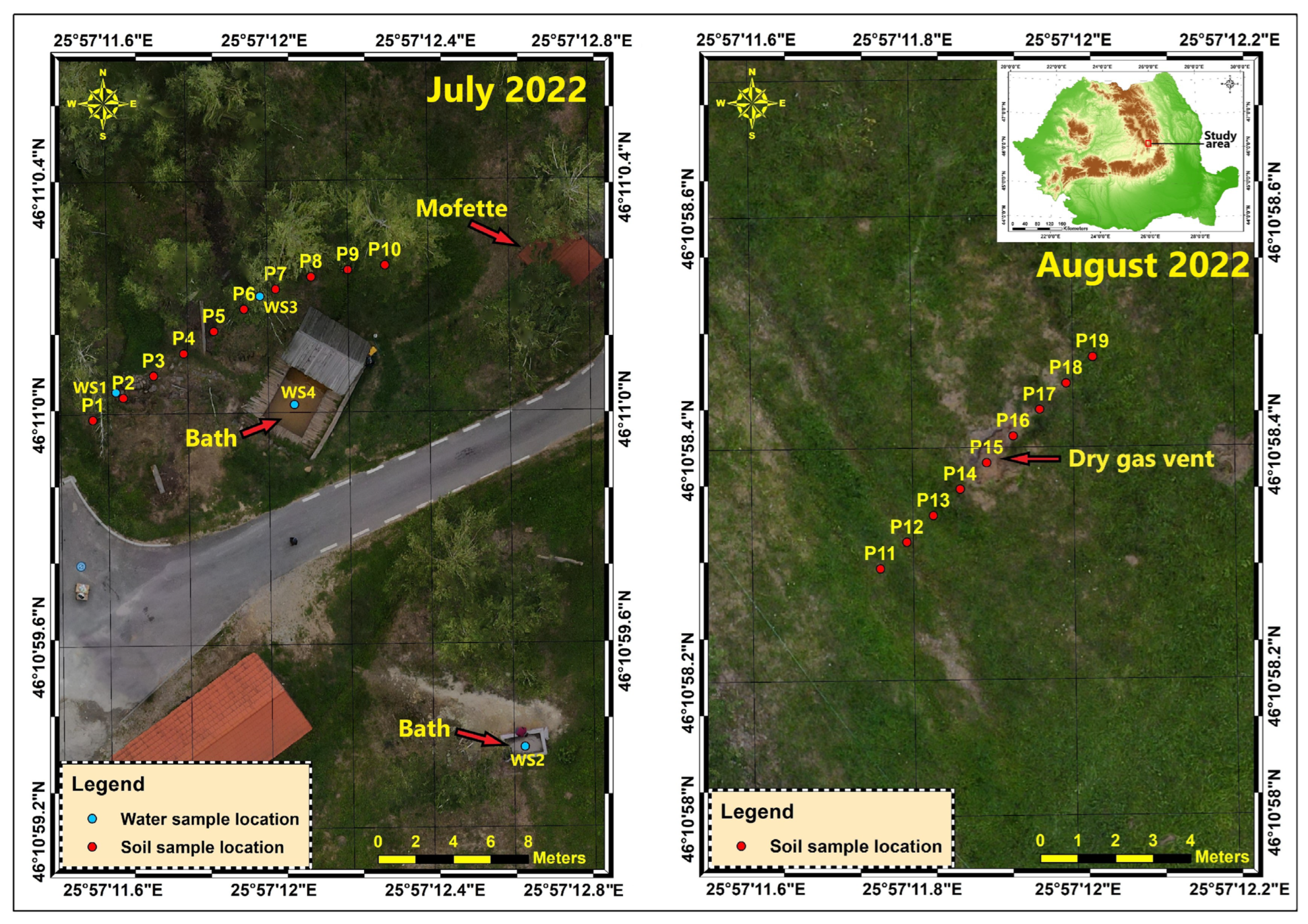
Two field campaigns have been conducted in the summer of 2022, in July and August for assessing the soil gas flux and for sample collections. Two profiles have been selected as representative, one in the northern zone with 10 sampling points and one in the southern zone with 9 sampling points (Figure 1).
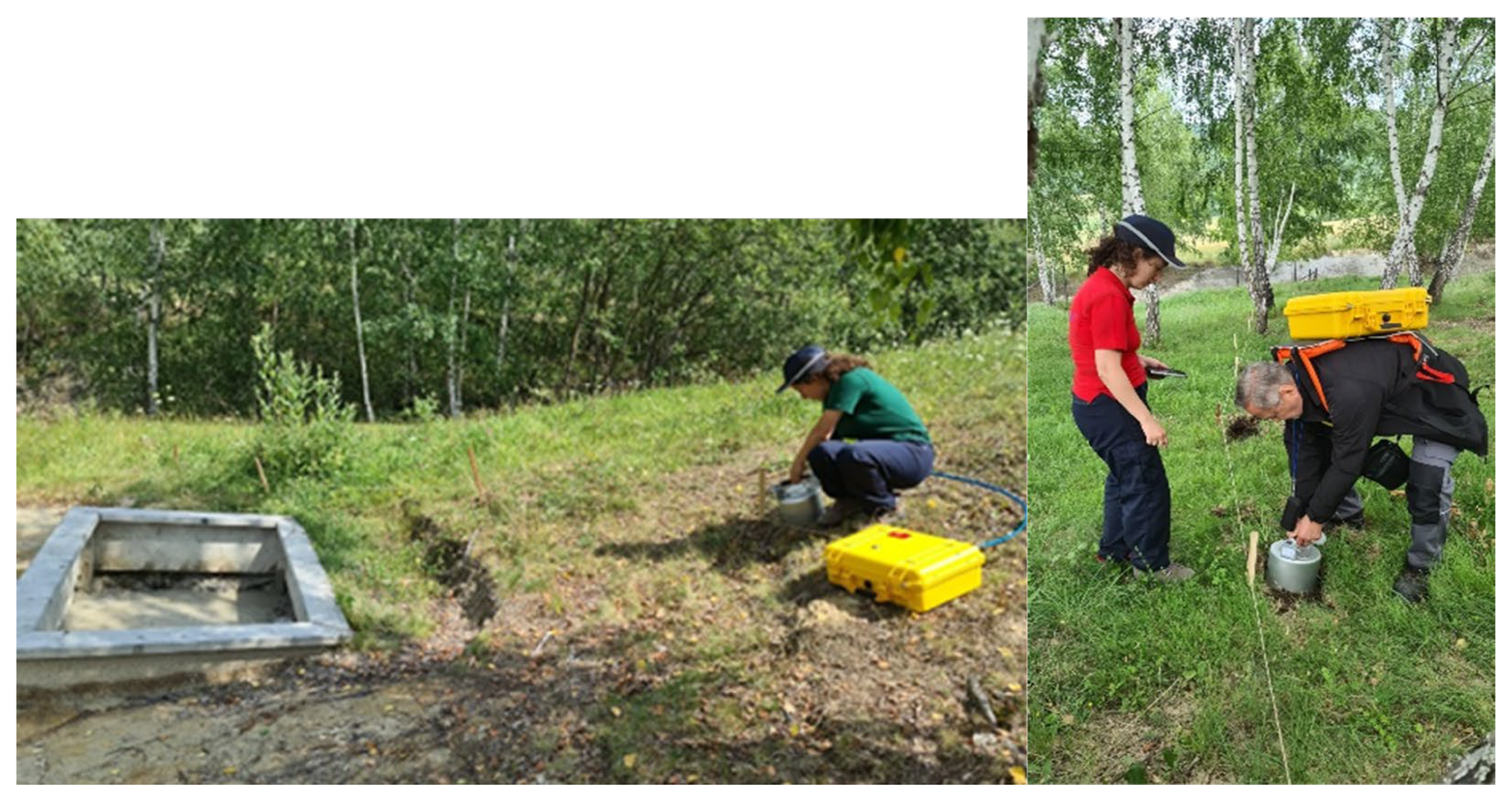
Gas flux measurements (Figure 2) were carried out during both field campaigns. Soil gas flux was measured using a portable flux meter from West Systems (Pontedera, Italy), equipped with CO2 (Li-COR LI-830-3, 0–2%; Vaisala GMP251, 0–20%), CH4 (WS-CH4-TLD), and H2S (WS-TOX-H2S) sensors. The flux data was processed using FluxRevision software version 4.11 which resulted in flux values for each measured gas and average gas concentrations. For the current study, correlations were conducted exclusively with CO2 concentrations, as CO2 was the dominant gas across the study area and provided the most consistent and spatially extensive dataset. Methane (CH4) and hydrogen sulfide (H2S) concentrations were either too low, highly localized, or irregular to support robust statistical comparisons.
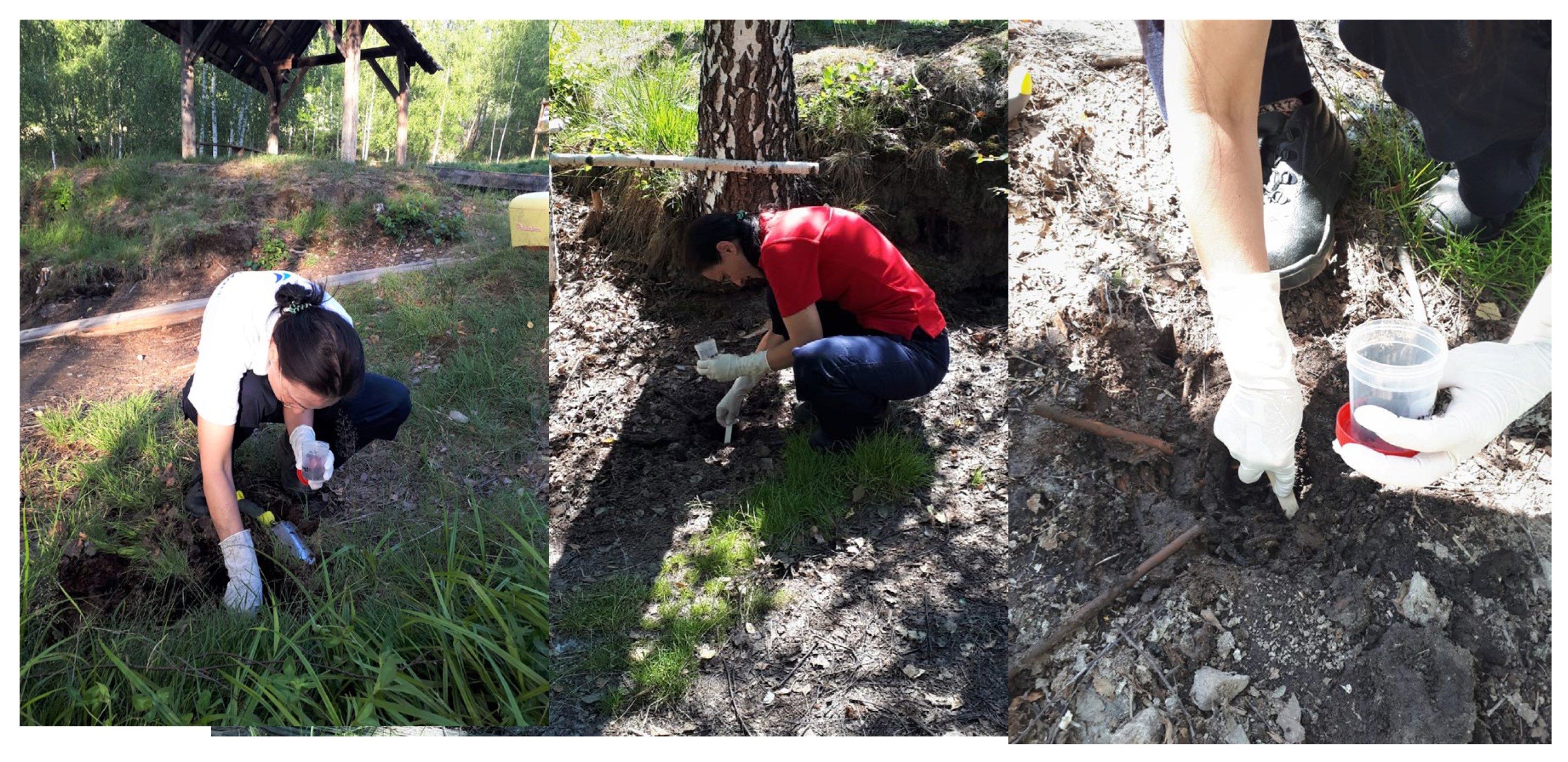
In addition to gas measurements, soil samples were collected (Figure 3) in the same sample points, immediately after measuring gas flux. Samples were taken in sterile plastic containers (50–100 g each, depending on the material’s physical state), sealed, and stored to prevent contamination. These samples were then frozen and sent to Nature Metrics, a specialized laboratory in the UK, for DNA sequencing to analyses the microbiome (bacteria and fungi) present, both qualitatively (species identification) and quantitatively.
The mofetta field at Băile Lăzărești extends over more than 1 ha, with multiple active degassing spots covering several hundred square meters. Because gas emissions are spatially widespread across this area, even the lowest emission points (<1000 ppm CO2) were considered as internal controls. Establishing an external control would have required sampling soils located far outside the mofetta field, thus removing them from the geological and ecological framework of the study site.

Atmospheric Gas Composition

In addition to soil gas fluxes, the composition of the near-surface atmosphere in the Ciomadul–Băile Tușnad area has been investigated in recent studies using Multi-GAS GFM 436 (Gas Data, Coventry, UK) instruments and direct sampling. Measurements at mofettas and caves (e.g., Stinky Cave, Turia; Băile Tușnad mofetta) consistently show that the gas phase is strongly dominated by CO2, typically accounting for 95–99% of the composition, with minor fractions of CH4 and H2S [24]. Annual CO2 emissions were estimated at ~1923 tons for the Stinky Cave mofetta [25], while the minimum total CO2 flux for the youngest volcanic segment at Ciomadul was estimated at 8.7 × 10³ t/year [24]. Methane concentrations generally remain below 5% but can locally exceed background levels, while H2S is usually <200 ppm, with occasional local maxima explained by sulfide alteration processes [26]. By comparison, global background atmospheric values are much lower: ~420 ppm CO2) [27], ~1.9 ppm CH4, ~0.1 ppm CO, and ~0.0004 ppm H2S. This highlights the strong localized enrichment in CO2 and trace volcanic gases in post-volcanic emission areas compared to global atmospheric averages.
For sample grouping, CO2 concentration was selected as the primary variable because it represented >95% of the measured gas fluxes and was spatially continuous across the study area. Methane (CH4) and hydrogen sulfide (H2S) were recorded only at localized points and in much lower concentrations, and therefore could not support robust stratification.

2.3. DNA Extraction and Sequencing

In this study, environmental DNA (eDNA) refers to the total DNA extracted from bulk soil samples, including DNA from intact microbial cells, dead cells, and extracellular fragments bound to soil particles. This approach provides an integrative snapshot of microbial community composition in the sampled soils.
Total DNA was extracted from approximately 0.5 g of each sample. An extraction blank was processed for each extraction batch. DNA was quantified using a Qubit DNA broad range kit (Thermo Fisher Scientific, Waltham, MA, United States) according to the manufacturer’s protocol. Our analysis was based on eDNA metabarcoding targeting the V4 region of the bacterial 16S rRNA gene and the ITS2 region of fungal DNA, which allows both qualitative (taxonomic identification) and quantitative (relative abundance) characterization of soil microbial communities; DNA was amplified in triplicate PCRs with primers specific for these regions.
PCRs were performed with a negative control (the extraction blank) and a positive control (a sample known to amplify with these primers). Amplification success was assessed by gel electrophoresis. PCR replicates were pooled and purified, and sequencing indexes were added. Amplicons were purified and verified by gel electrophoresis, and then quantified using a Qubit DNA broad range kit following the manufacturer’s protocol. All purified indexed PCRs were pooled into final libraries, with equal concentrations of each sample. The final libraries were sequenced using an Illumina MiSeq V3 kit (Illumina, San Diego, CA, United States) at 10.5 pM with a 20% PhiX spike-in.

2.4. Bioinformatics

Sequence data were processed using a custom bioinformatics pipeline for quality filtering, OTU clustering (97%), and taxonomic assignment. A total of 2,678,241 high-quality sequences (bacteria: 1,349,217 and fungi: 1,329,024) are represented. Consensus taxonomic assignments for each OTU were made based on sequence similarity searches against two reference databases appropriate for the dataset: one general (NCBI nt) and one specialized: Bacteria: SILVA 16S (v138.1) and Fungi: UNITE (v8.2). The GBIF (http://doi.org/10.5281/zenodo.17279548, accessed on 20 September 2025) taxonomic backbone was used to ensure consistency across databases. Results from both searches were combined, and taxonomic assignments were made to the lowest possible level where matches were consistent. Conflicting results were flagged and resolved manually. Minimum similarity thresholds of 98%, 95%, and 92% were required for species-, genus-, and higher-level assignments, respectively. Identifications based on fewer than three reference matches were flagged for review. The OTU table was filtered to remove low-abundance OTUs from each sample (<0.03% or fewer than 10 reads, whichever threshold was greater for the sample). Results are presented for OTUs identified at the target kingdom level or below.

2.5. Statistical Analysis

Statistical analyses were conducted using a combination of dedicated bioinformatics and ecological software tools. For multivariate statistics, we used PRIMER 7 with the PERMANOVA+ add-on package to test for significant differences in microbial community composition across CO2 categories [28]. In addition, PAST v.4 (Paleontological Statistics Software; [29]) was employed for ordination and clustering analyses, including Principal Component Analysis (PCA) and hierarchical clustering (Ward’s method, Bray–Curtis distances), to visualize community differentiation along the CO2, CH4, and H2S gradients.

3. Results

3.1. Data Analysis

The final dataset included a total of 3064 Operational Taxonomic Units (OTUs) across the 19 soil DNA samples, consisting of 2463 bacterial OTUs and 601 fungal OTUs (Table 1). A greater number of fungal OTUs were identified at the species level compared to bacteria. This difference is attributed to differences in the availability of reference sequences for different organisms in the databases, as well as a higher frequency of assignment conflicts among bacteria, where identical sequences (100% matches) frequently corresponded to multiple species.
Most abundant phylum:
Bacteria: Proteobacteria
Fungi: Ascomycota
OTU with the highest proportion of reads:
Bacteria: kingdom Bacteria
Fungi: order Thelebolales
For the purpose of data analysis, we have utilized the publicly available web-based tools provided by MicrobiomeAnalyst [30], latest updated on 21 March 2025, a comprehensive platform designed for statistical, integrative and visual analysis of microbiome data. We have used the raw data (abundance tables) provided by NatureMetrics in a CSV (comma-separated values) format compatible with MicrobiomeAnalyst to generate the graphs. Taxonomy labels were in a non-specific format. For the purpose of better understanding the taxonomy, we have removed the unassigned OTUs. Data filtering involved removal of constant features in order to benefit the differential analysis and of one sample occurrences, since such appearances are often considered artifacts (https://www.microbiomeanalyst.ca/MicrobiomeAnalyst/home.xhtml, accessed on 13–28 February 2025, 8–9 April 2025). The low count filter was set to a minimum count of 4 (the default setting). A 20% prevalence filter was set, which means that at least 20% of values should contain at least 4 counts. A low variance filter was also set in place to remove 10% of features with variance measured using inter-quantile range (the default setting). Data normalization aims to address the variability in sampling depth and data sparsity to ensure more biologically meaningful comparisons. We have used total sum scaling to normalize the data (the default setting).
In order to perform the analysis, the 19 samples were assigned to three categories based on CO2 concentration (Table 2) C1 with less than 1000 ppm CO2 (“low”), C2 between 1000 and 3000 ppm CO2 (“intermediate”) and C3 over 3000 ppm CO2 (“high”).

3.1.1. Bacteria

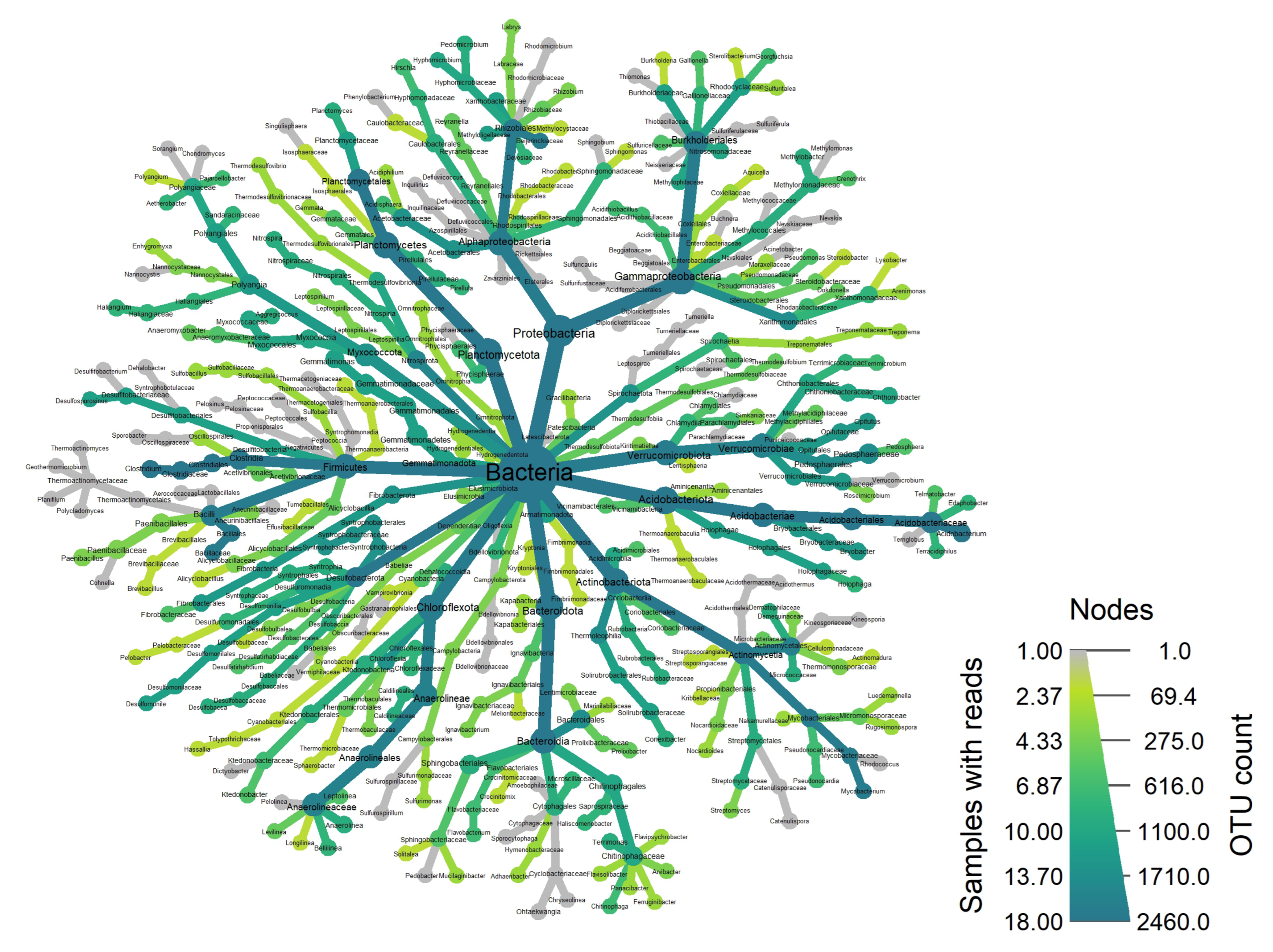
In the bacterial dataset, OTUs were identified in 25 distinct phyla from the kingdom Bacteria. The average bacterial taxon richness per sample, based on rarefied data, was 418.8, with values ranging from 79 (sample P6) to 745 (sample P9). The overall taxonomy of the detected OTUs is illustrated in Figure 4, indicating that the phylum Proteobacteria exhibited the highest OTU richness. The bacterial OTU with the highest number of reads was detected in 6 of the 18 samples analyzed, while a single bacterial OTU was consistently identified in each sample. In addition, 975 OTUs (39.6%) were identified exclusively in individual samples.
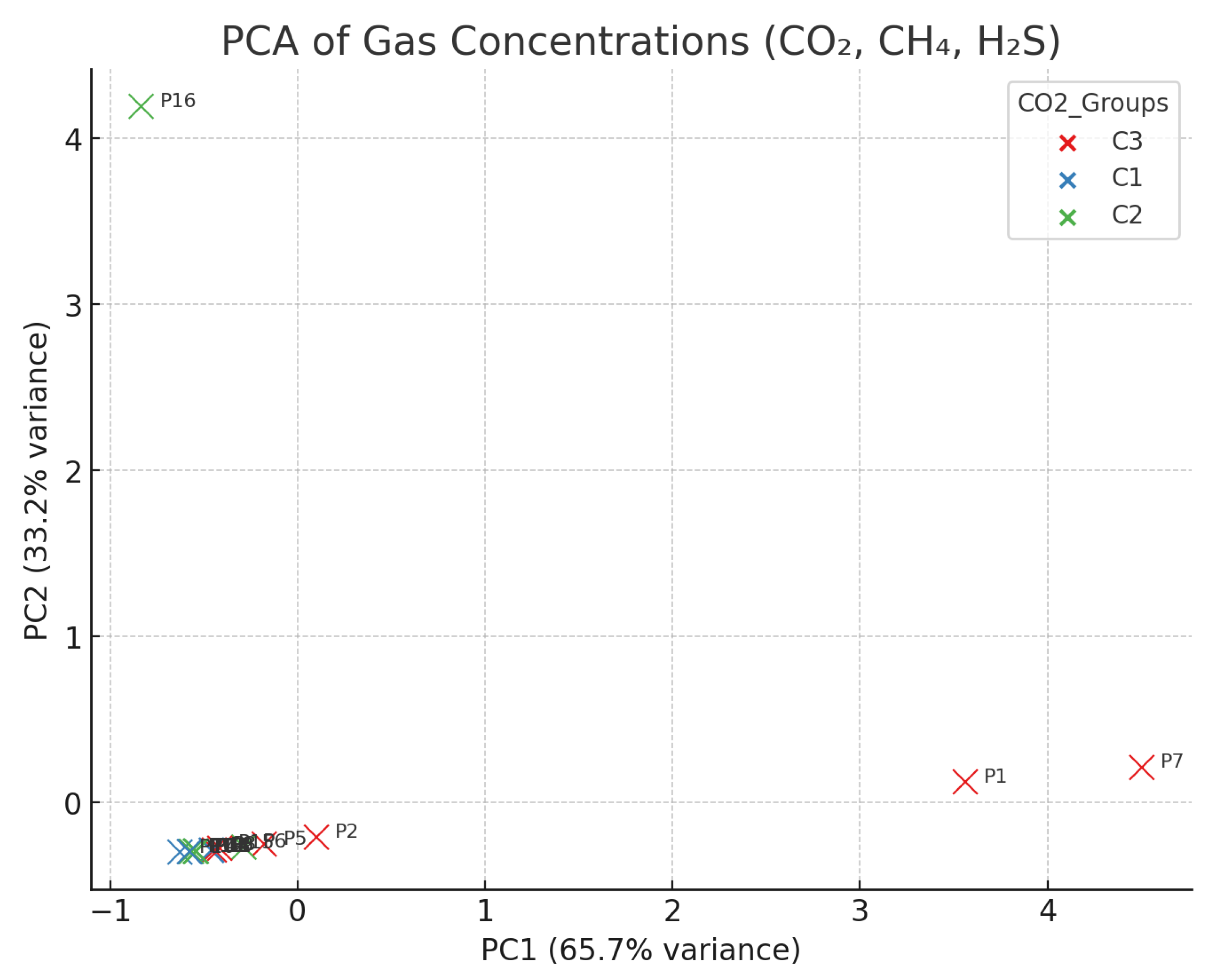
A PCA including CO2, CH4, and H2S concentrations (Figure 4) confirmed that CO2 is the dominant factor explaining gas variability among samples. PC1 (65.7% of total variance) was strongly correlated with CO2 and separated low-, intermediate-, and high-CO2 soils. PC2 (33.2%) was associated mainly with CH4, distinguishing sample P16 with the highest methane concentration. H2S contributed negligibly, consistent with its low concentrations (<10 ppm).
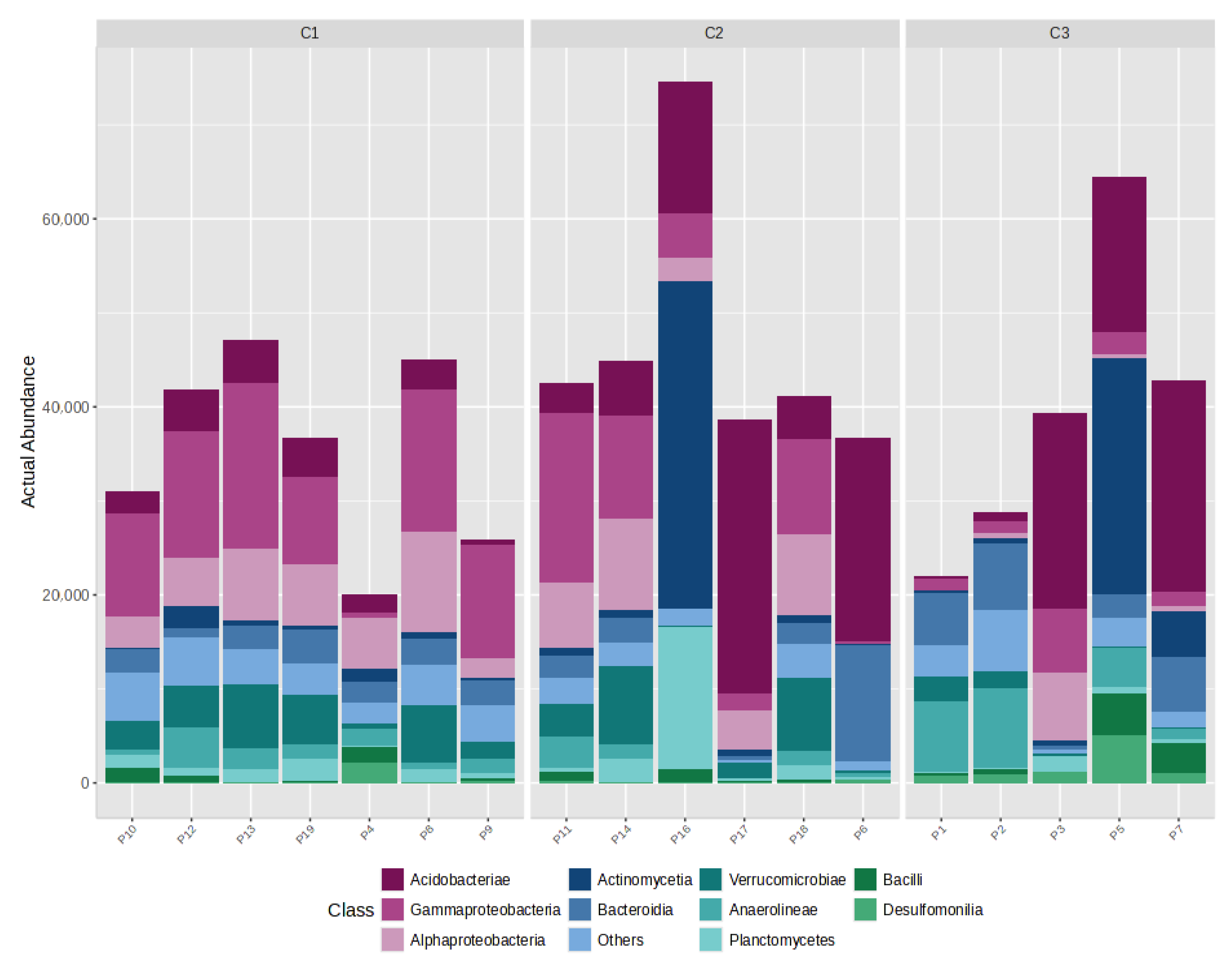
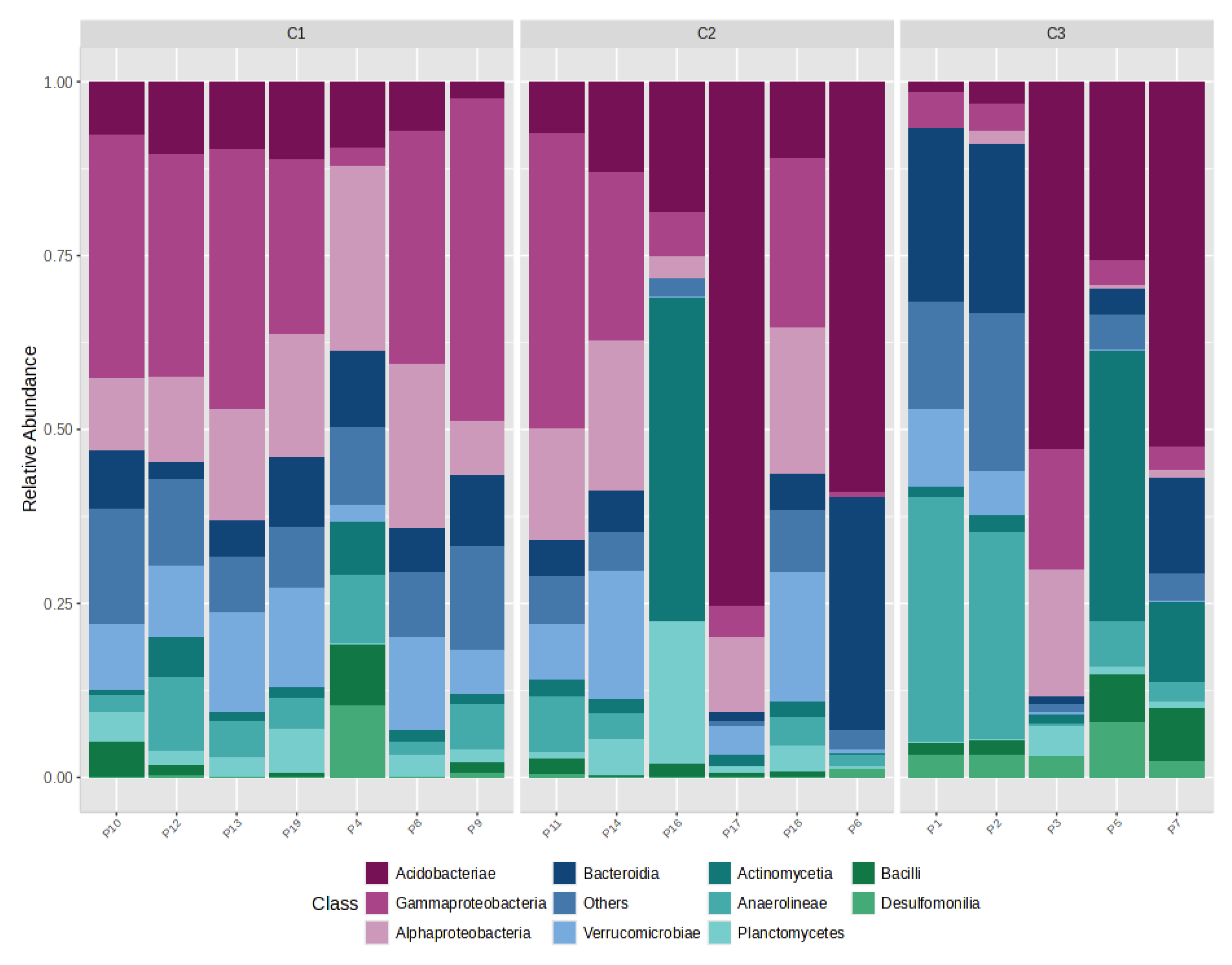
The taxon richness (number of OTUs) for bacterial communities within each CO2 concentration group is shown in Figure 5. The composition and variability of soil bacterial communities between samples are shown in Figure 6. Samples with similar community compositions tended to form distinct clusters. Considerable variability in both bacterial abundance and community composition was observed between samples. In particular, sample P16, characterized by the highest methane concentration (8271.5 ppm), represented an outlier with a significantly increased relative abundance of the bacterial classes Actinomycetia and Planctomycetes compared to other samples.
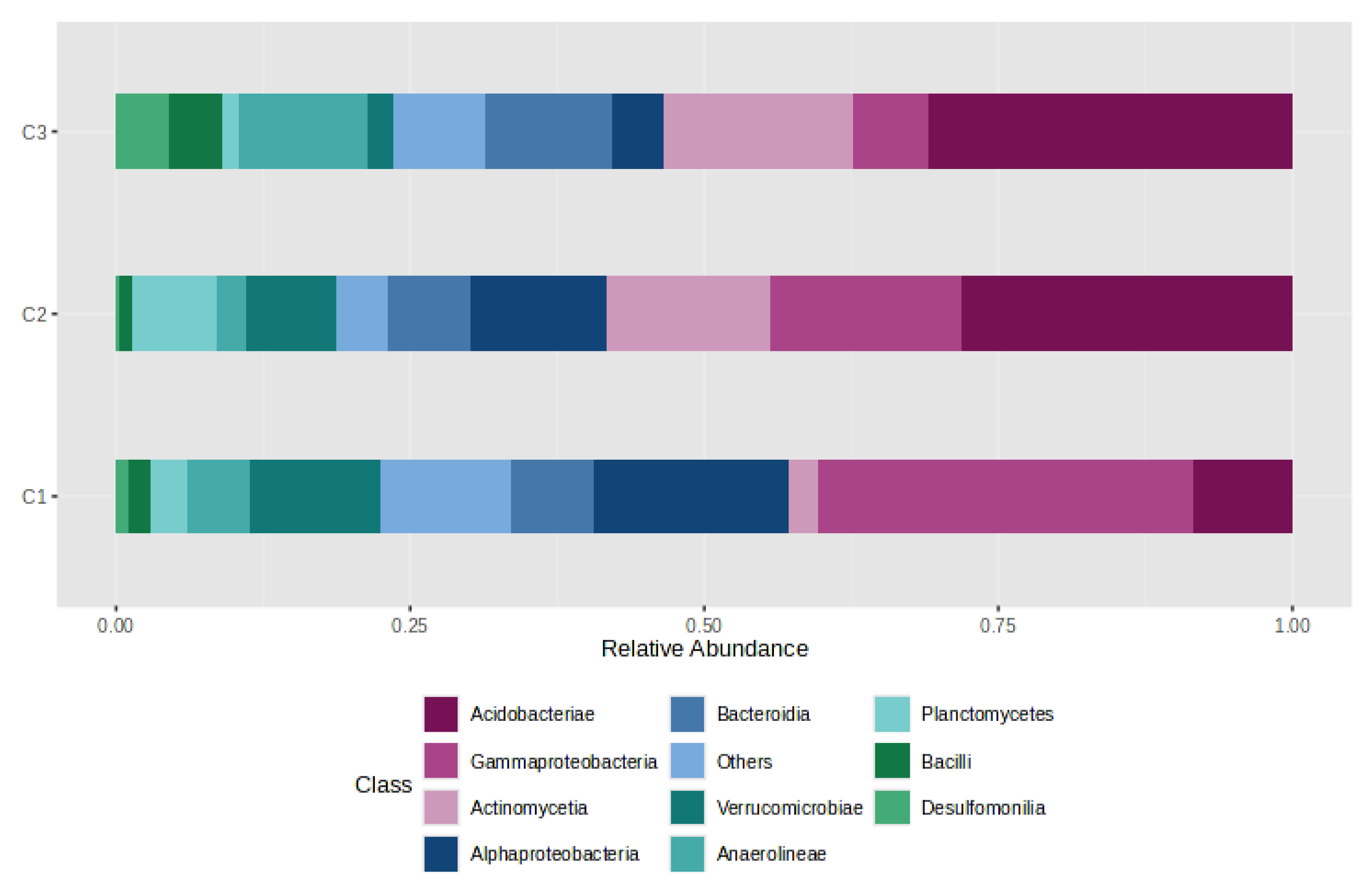
Analyzing the distribution of bacterial classes in relation to CO2 concentration groups revealed specific trends. The classes Acidobacteriae, Actinomycetia and Bacteroidia increased in relative abundance with increasing CO2 concentrations, while the classes Gammaproteobacteria, Alphaproteobacteria and Verrucomicrobiae showed a decreasing trend under the same conditions. However, substantial variability within the group was observed. Given this variability and the limited sample size, these trends should be interpreted with caution and further research with additional samples is needed to confirm the observed patterns. The unique microbial composition of sample P16 highlights the potential influence of elevated methane levels on bacterial community structure (Figure 7 and Figure 8).
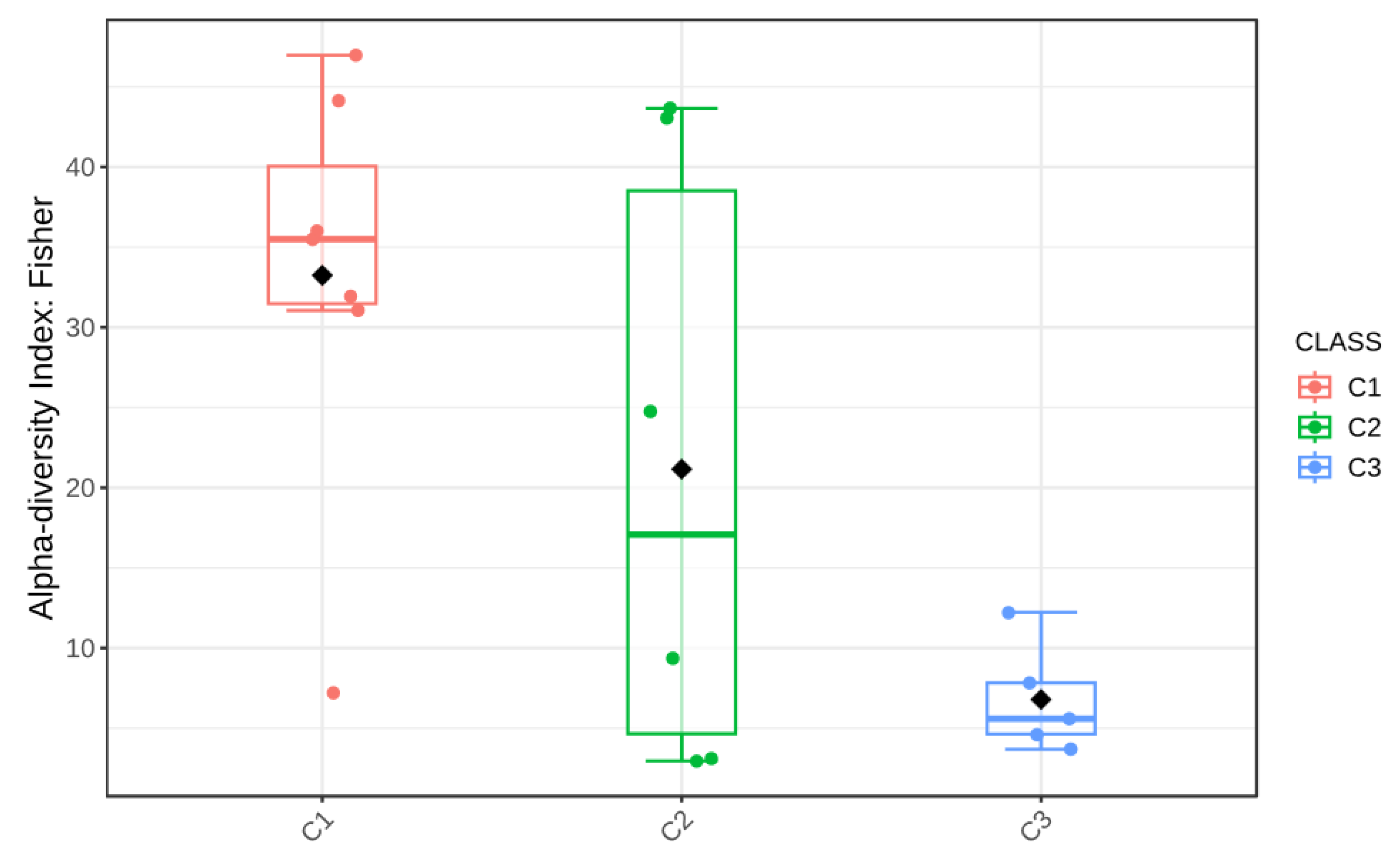
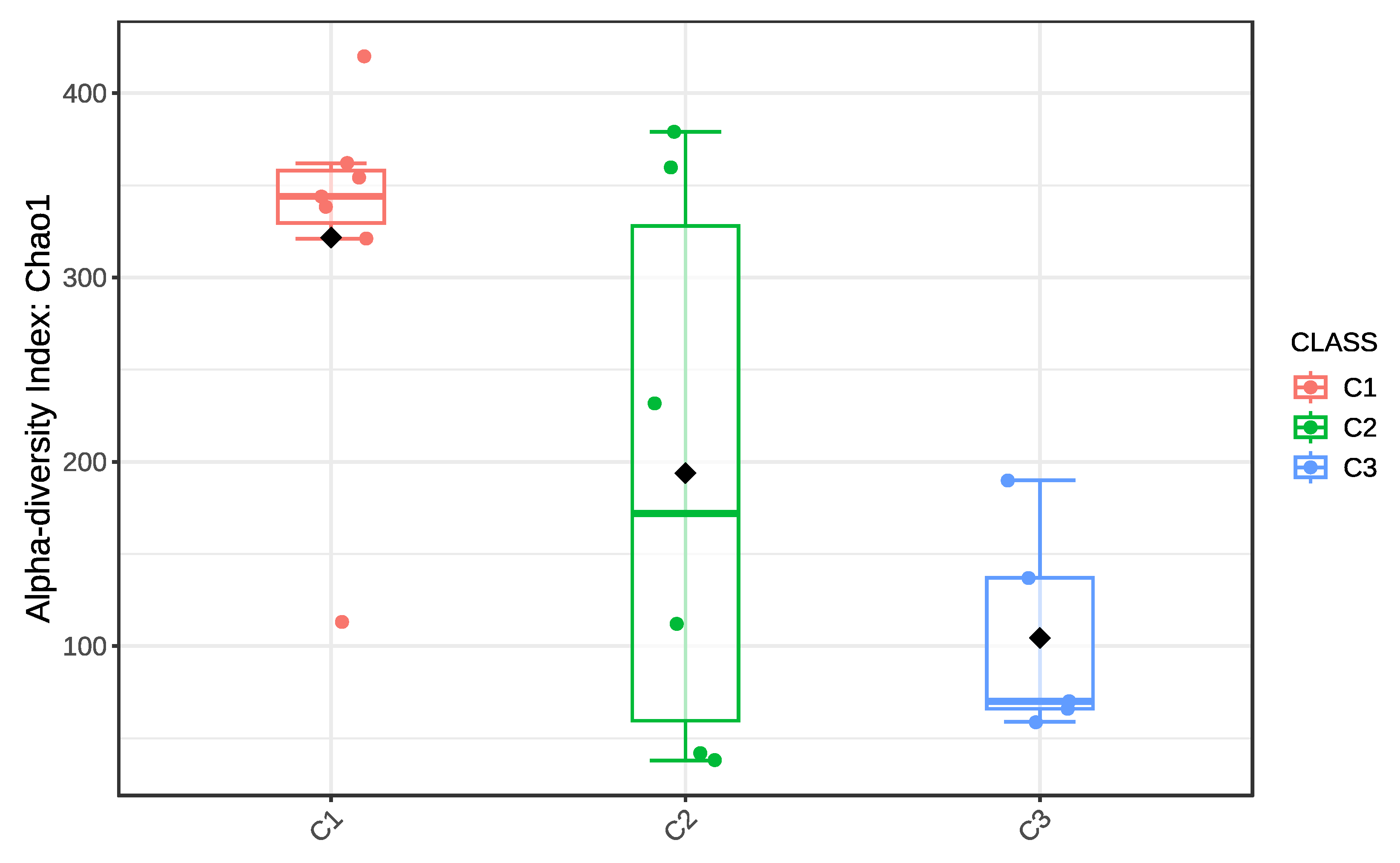
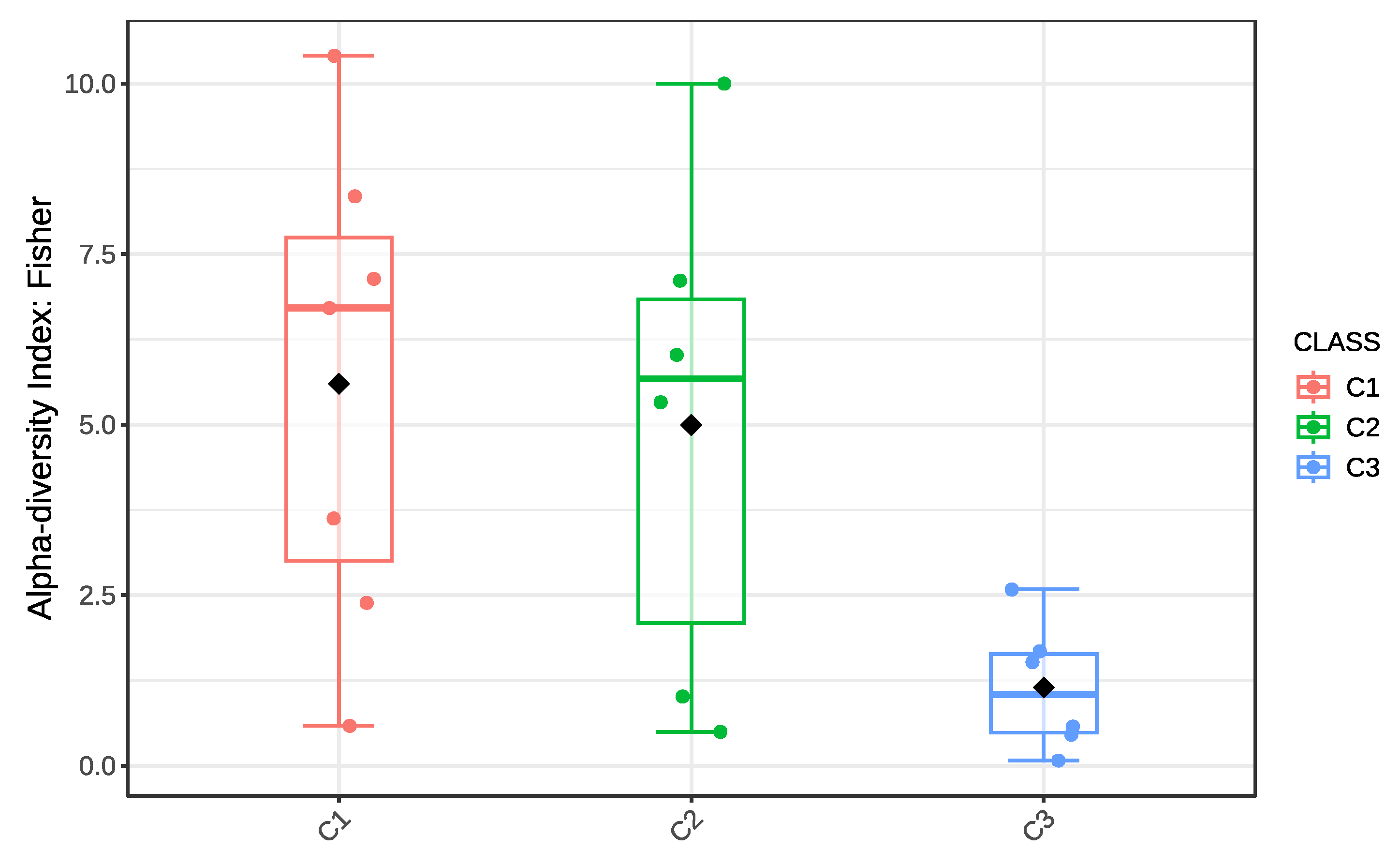
Alpha diversity profiling was performed using data filtered at the taxonomy level at the trait level, with the three CO2 concentration groups defined as experimental factors. Chao1 and Fisher diversity indices were used, with statistical comparisons performed using Welch’s T/ANOVA test and pairwise post hoc tests. Specifically, samples with CO2 concentrations below 1000 ppm generally showed higher bacterial diversity, while samples exceeding 3000 ppm showed significantly lower diversity. Intermediate CO2 concentrations (1000–3000 ppm) showed a wide range of diversity values, indicating that this CO2 range may correspond to diverse ecological niches that support varying levels of bacterial diversity (Figure 8, Figure 9 and Figure 10).
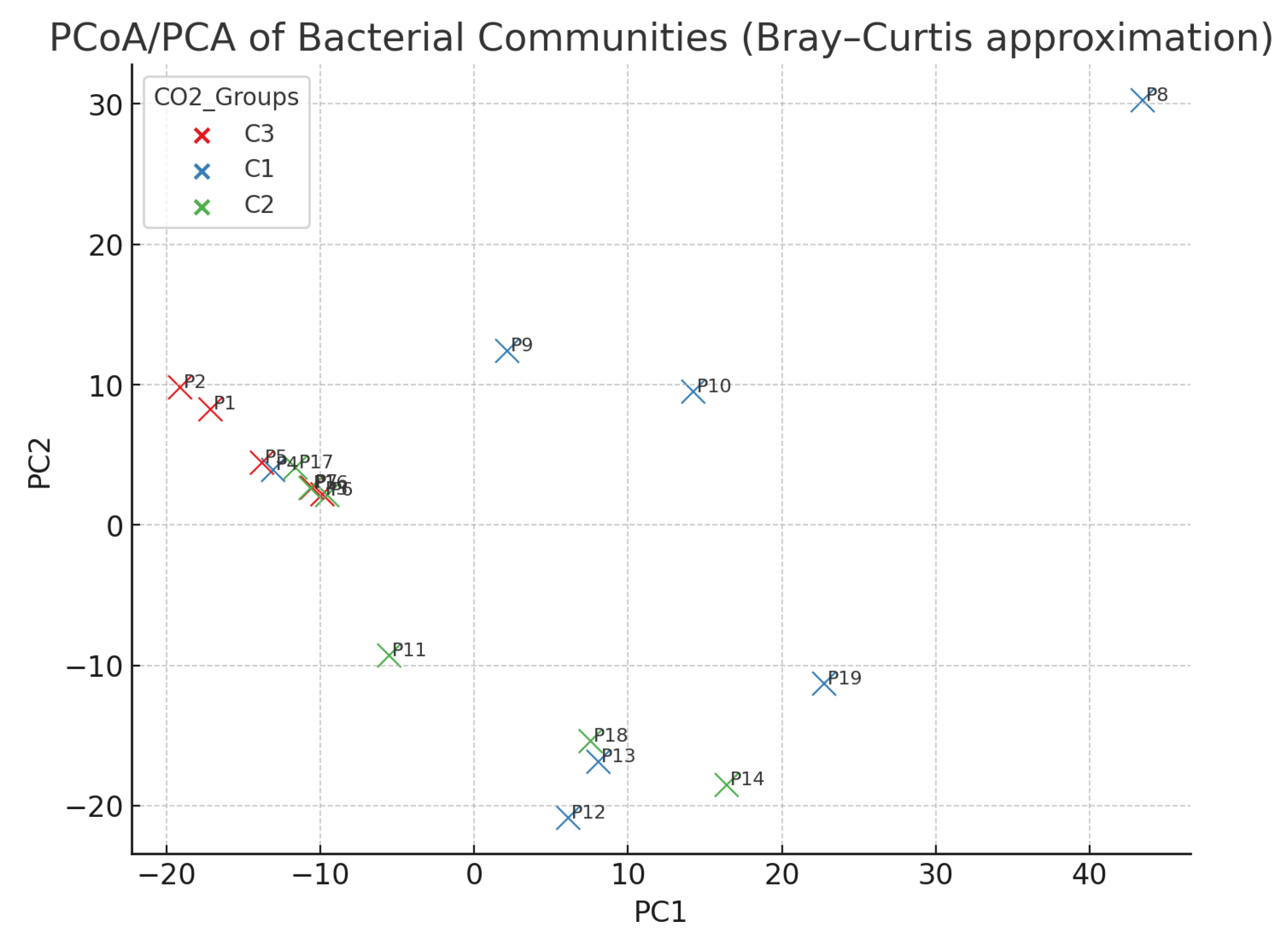
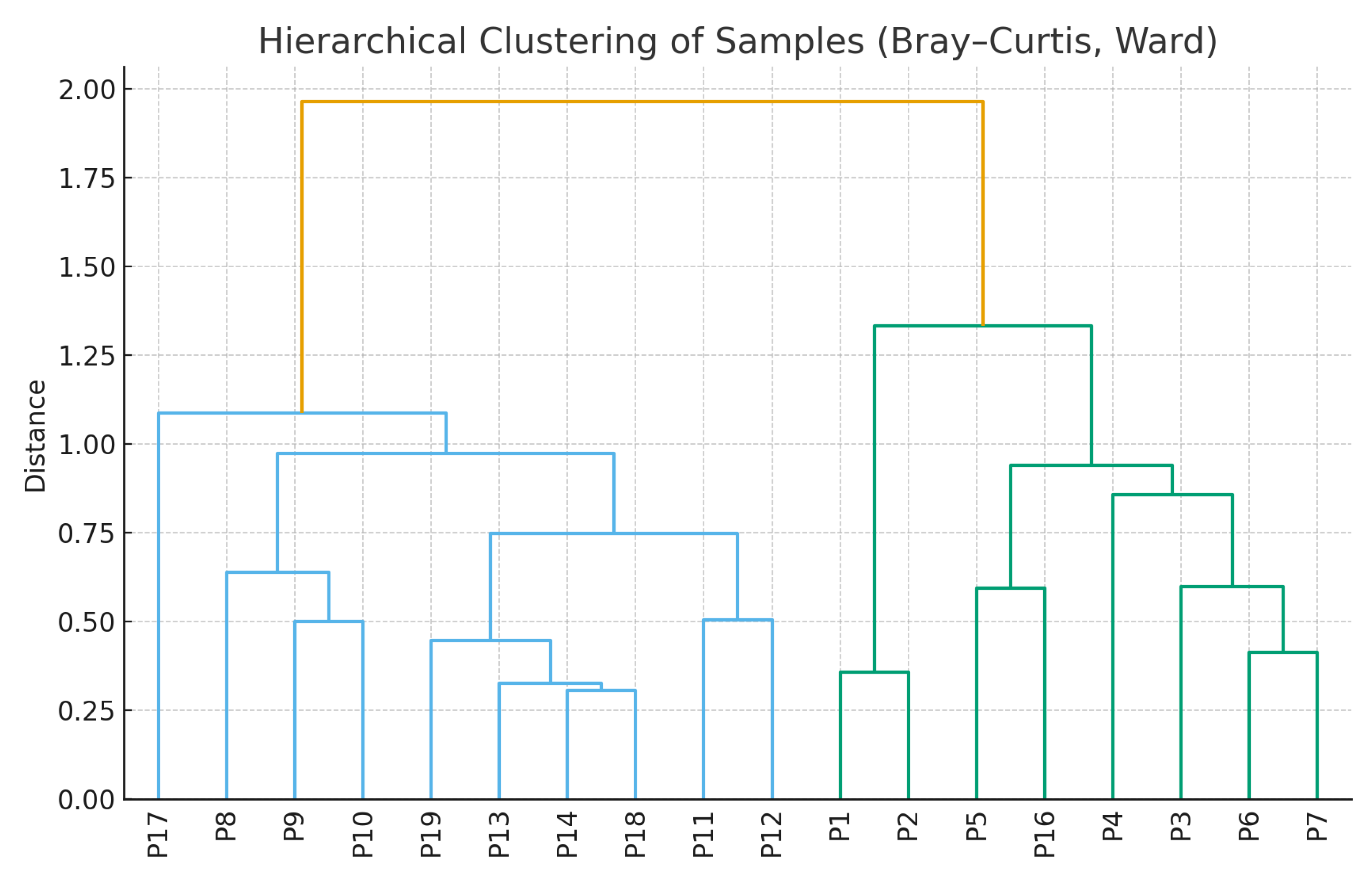
Beta diversity analyses further supported the influence of gas composition on bacterial communities. A Principal Coordinates Analysis (PCoA) based on Bray–Curtis dissimilarities (Figure 11) showed that high-CO2 soils (>3000 ppm) tended to cluster separately from low-CO2 soils (<1000 ppm), while intermediate soils (1000–3000 ppm) displayed heterogeneous positions, consistent with variable ecological niches. Hierarchical clustering analysis (Ward’s method, Bray–Curtis distance) confirmed these patterns (Figure 12), with most high-CO2 samples forming a distinct cluster, while sample P16 (characterized by the highest CH4 concentration) appeared as an outlier. These results indicate that CO2 is the main driver of microbial community structure, with additional local effects of CH4 contributing to outlier behavior.
Statistical testing confirmed the influence of CO2 on microbial diversity and community composition. As shown in Table 3, Welch’s ANOVA revealed significant differences in bacterial alpha diversity between low- and high-CO2 groups (Chao1: p = 0.017; Fisher: p = 0.023). In contrast, fungal alpha diversity differences were not statistically significant (Chao1: p = 0.11; Fisher: p = 0.09). PERMANOVA analysis further supported these results, showing a strong effect of CO2 category on bacterial community composition (p = 0.001) and a weaker but significant effect for fungi (p = 0.045).
A preliminary correlation analysis suggests that bacterial diversity decreases under high-CO2 concentrations (>3000 ppm), while the highest richness values occur in soils with <1000 ppm CO2. Intermediate CO2 concentrations (1000–3000 ppm) show large variability in community composition, consistent with the existence of heterogeneous ecological niches. Moreover, sample P16, characterized by the highest CH4 concentration (~8271 ppm), displayed a distinct community structure with increased relative abundances of Actinomycetia and Planctomycetes, suggesting a potential role of CH4 in shaping microbial assemblages. Although these results indicate that gas composition (CO2, CH4) can influence bacterial diversity and community structure, the limited number of samples does not yet allow for robust statistical correlation, and further work with expanded datasets is needed to confirm these trends.

3.1.2. Fungi

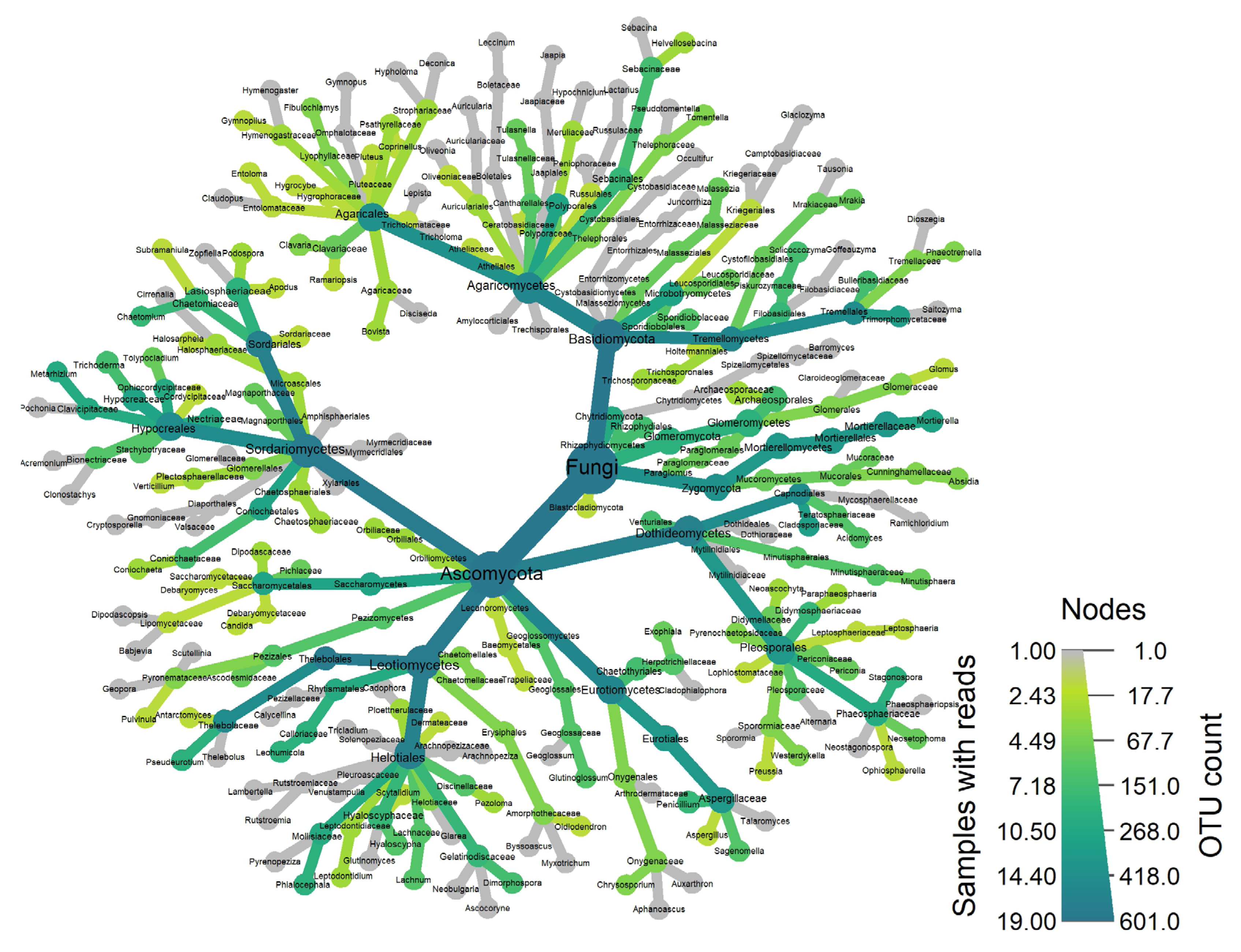
In the fungal dataset, OTUs were detected in six phyla of the kingdom Fungi. The average fungal taxa richness per sample, calculated using rarefied data, was 81, ranging from a low of 3 OTUs (sample LAZ-22p-2p-05) to a high of 208 OTUs (sample LAZ-22p-2p-08). Ascomycota was the dominant fungal phylum in terms of OTU richness, while the fungal OTU with the highest number of reads belonged to the order Thelebolales, detected in 18 out of 19 samples. No single fungal OTU was universally present in all samples, and 268 OTUs (44.6%) occurred in only one sample each (Figure 13).
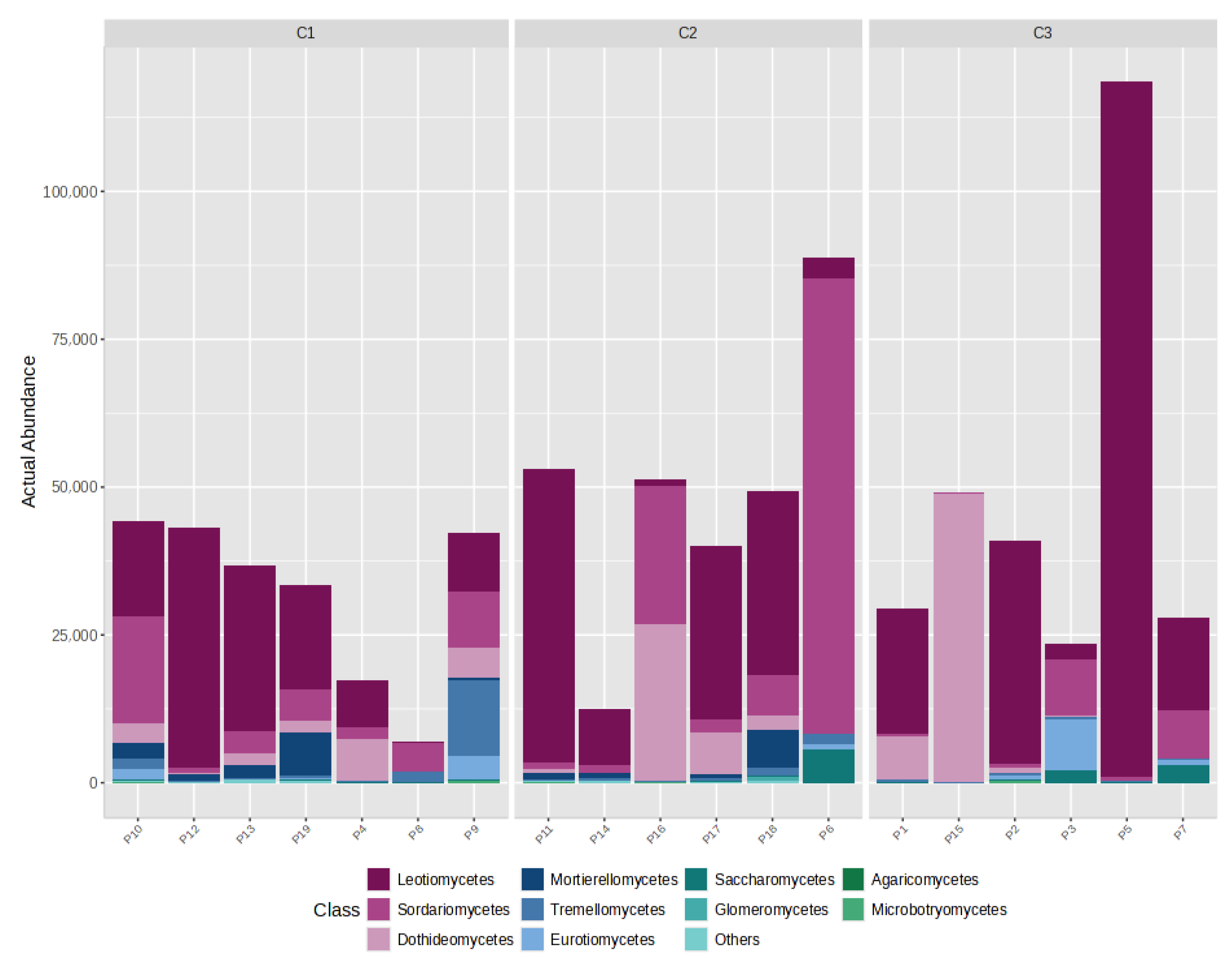
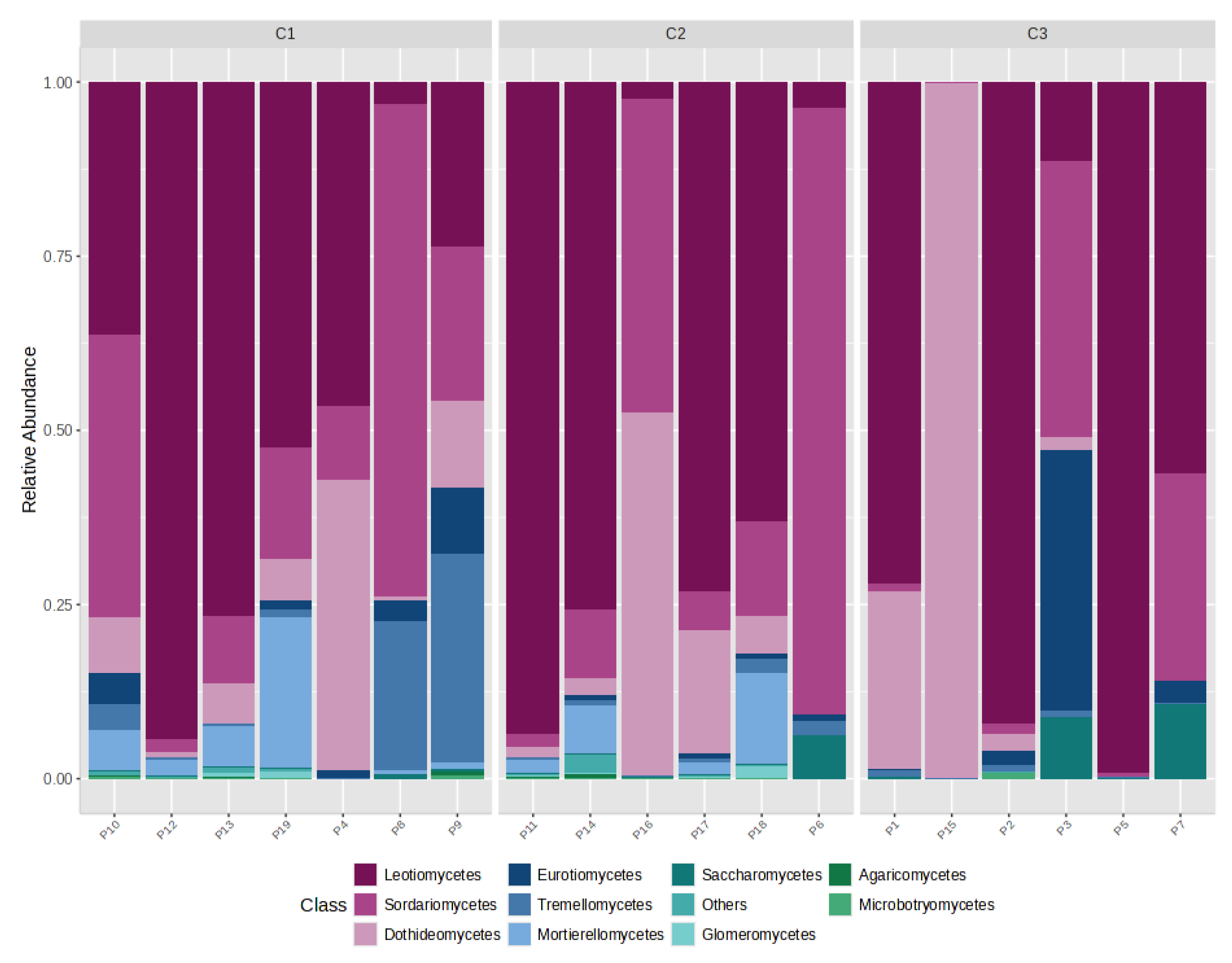
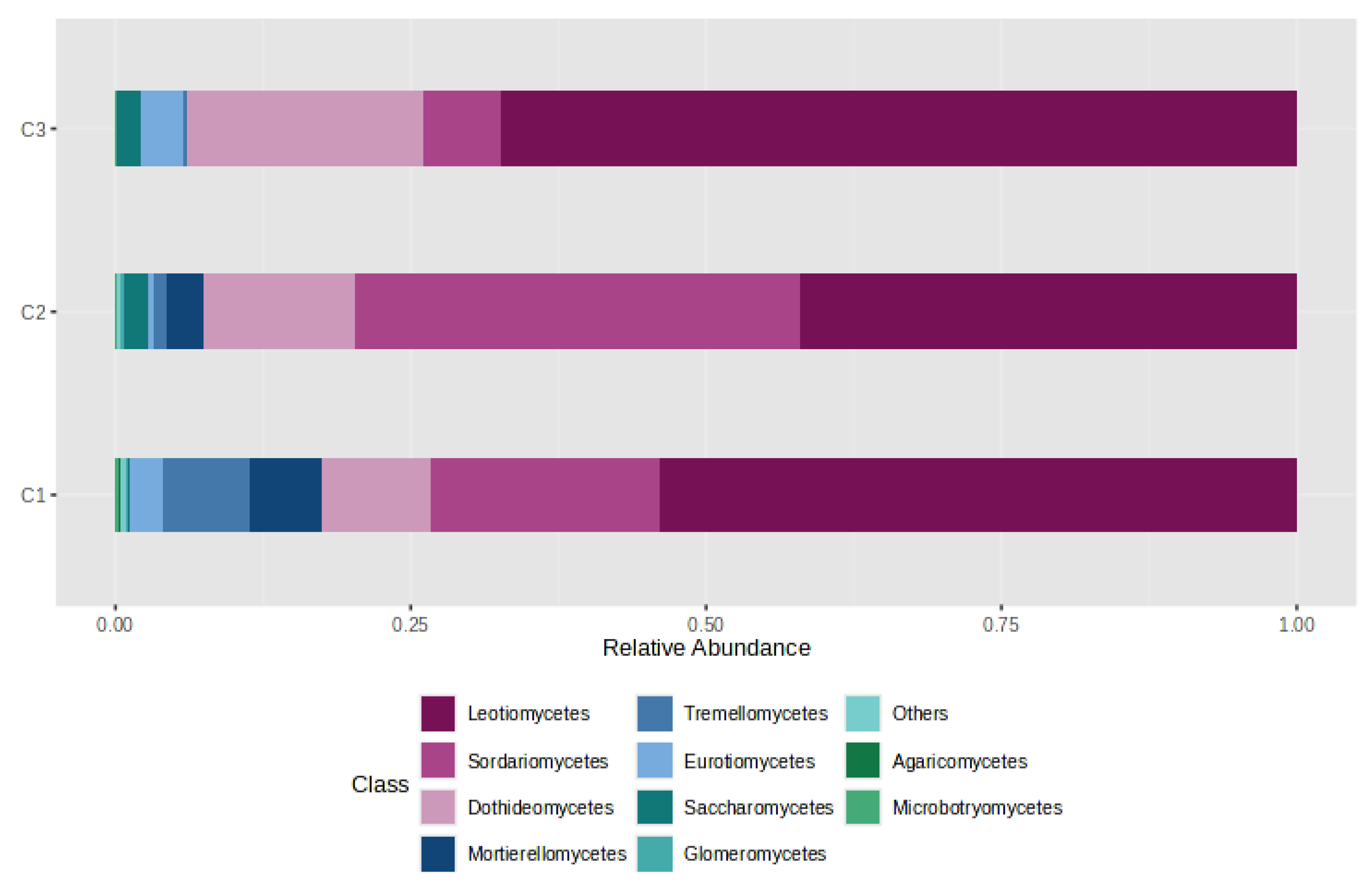
At the class level, Leotiomycetes and Sordariomycetes were the most abundant classes and did not show a clear association with CO2 concentrations. However, other abundant classes, such as Dothideomycetes (Ascomycota), Mortierellomycetes (Zygomycota), and Tremellomycetes (Basidiomycota), displayed variable responses to CO2 levels. Dothideomycetes generally increased in relative abundance with higher CO2, although their distribution was inconsistent between samples. Mortierellomycetes and Tremellomycetes showed a trend of decreasing abundance as CO2 levels increased, but exhibited significant variability between samples. Thus, none of these classes demonstrated sufficient consistency in abundance between samples to serve as reliable indicators of CO2 levels (Figure 14, Figure 15 and Figure 16).
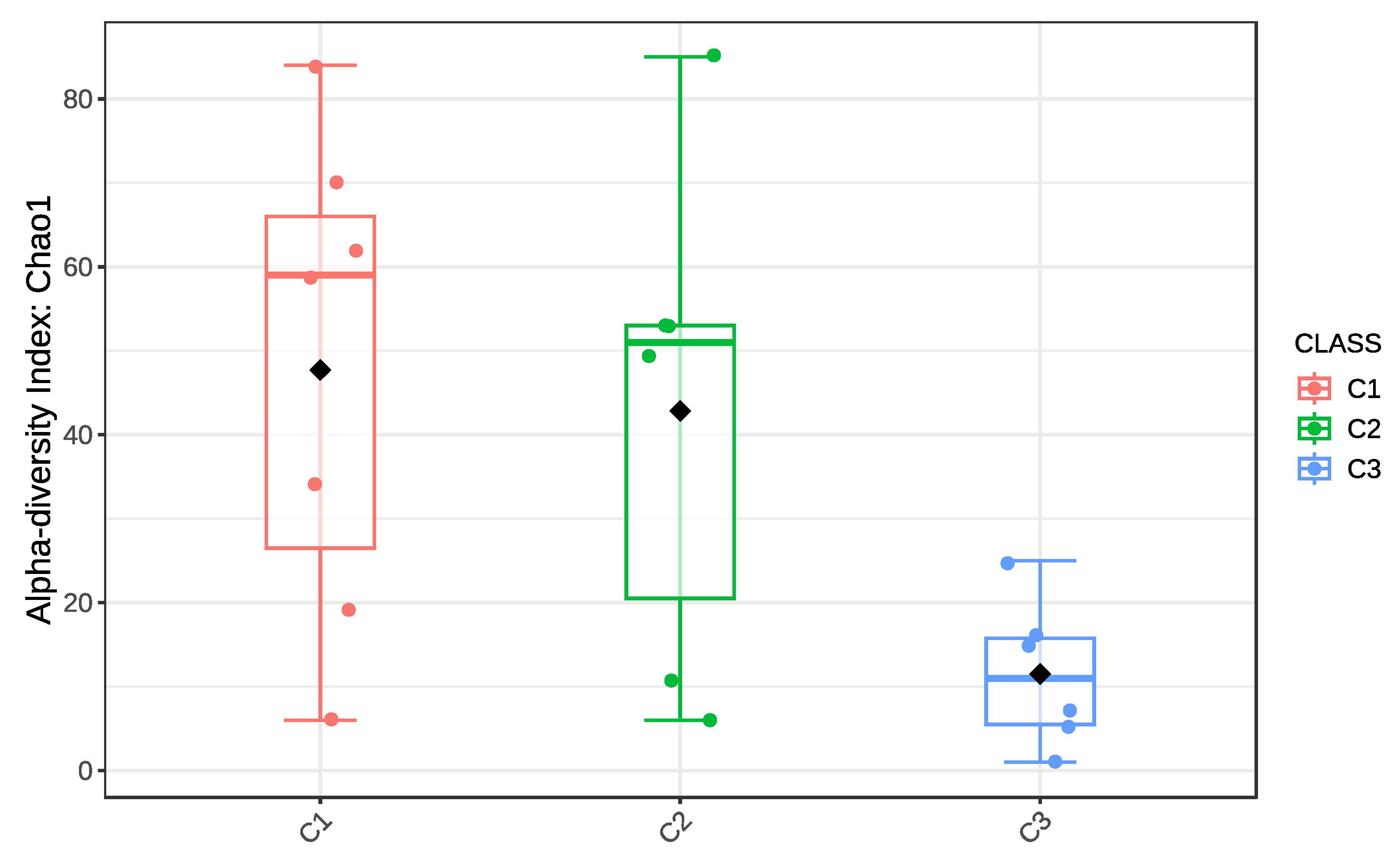
Alpha diversity indices (Chao1 and Fisher) for fungi indicated that samples from high-CO2 environments (>3000 ppm) generally exhibited lower diversity compared to those with CO2 levels below 3000 ppm. Samples with lower CO2 displayed a wide range of fungal diversity values, highlighting that fungal communities can vary significantly even under similar CO2 conditions (Figure 17 and Figure 18).
For fungi, Welch’s ANOVA showed a negative trend in diversity with increasing CO2, though differences between groups were not statistically significant (Chao1: p = 0.11; Fisher: p = 0.09). However, PERMANOVA detected a weak but significant effect of CO2 category on fungal community composition (pseudo-F = 1.69, p = 0.045).
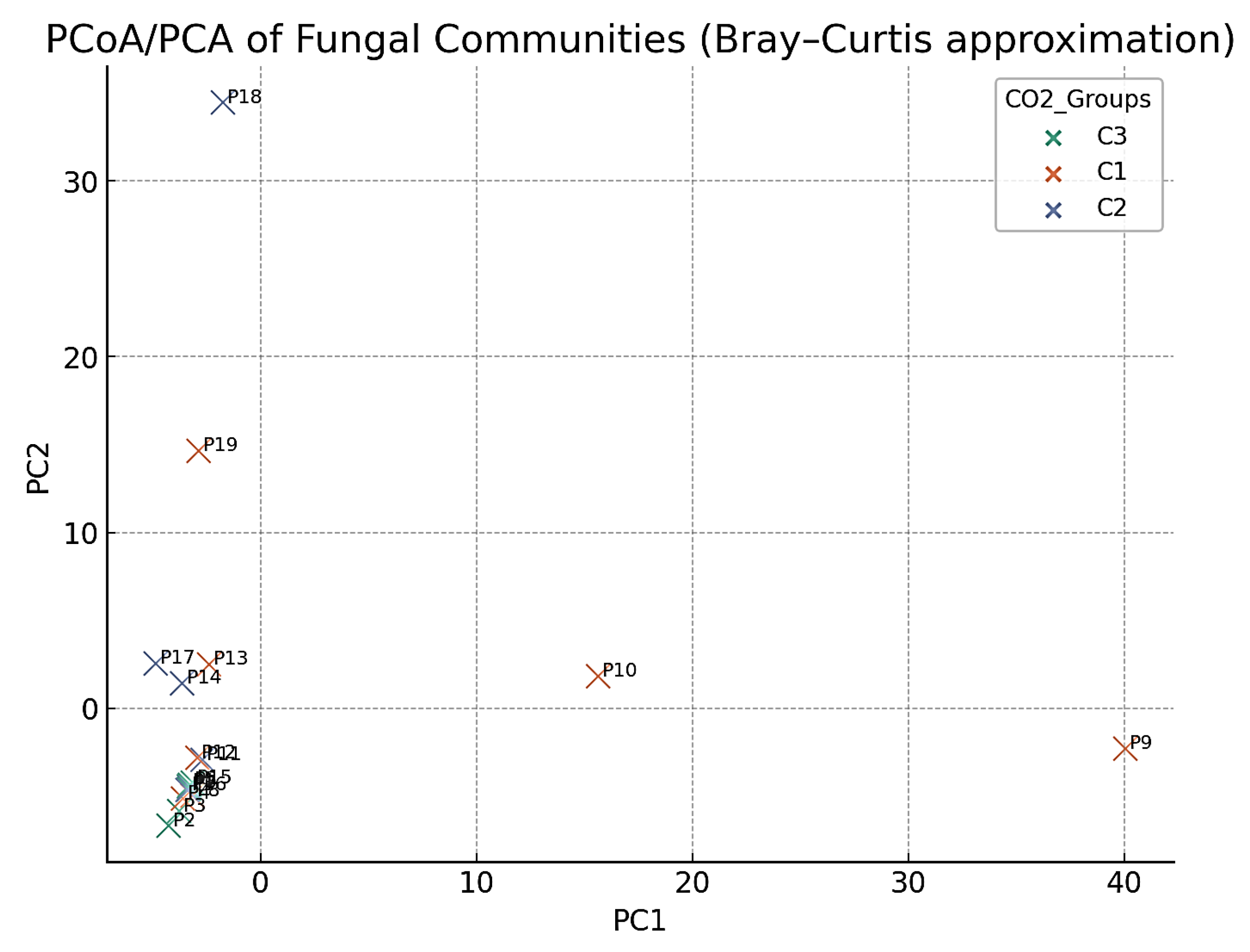
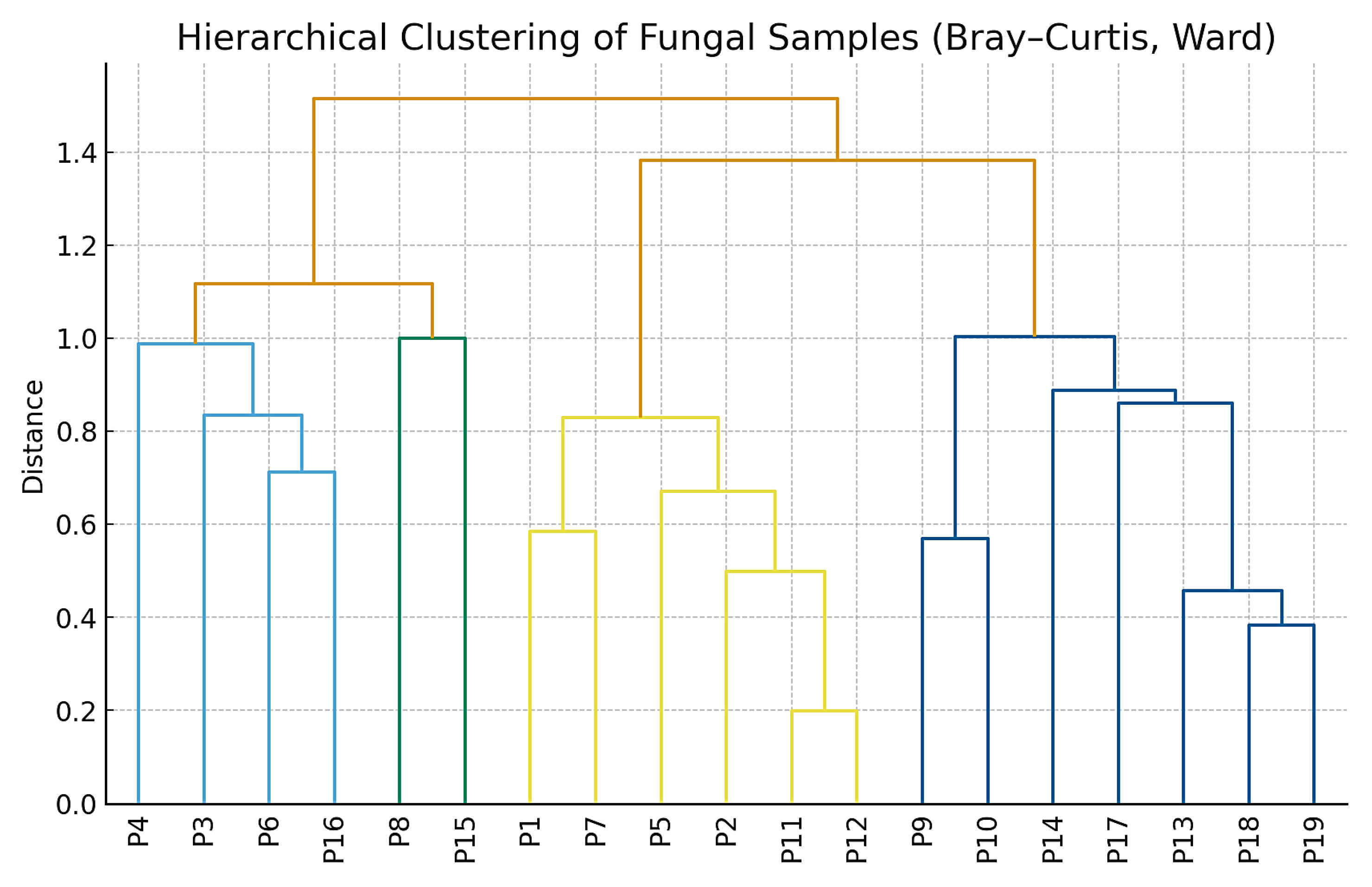
Beta diversity analyses revealed that fungal communities also varied along the CO2 gradient. PCoA based on Bray–Curtis dissimilarities (Figure 19) showed that high-CO2 soils (>3000 ppm) tended to cluster apart from low-CO2 soils (<1000 ppm), while intermediate soils (1000–3000 ppm) were more scattered. Hierarchical clustering (Figure 20) confirmed this pattern, with most high-CO2 samples forming a distinct group. However, the separation was less pronounced than for bacteria, consistent with the higher variability observed in fungal responses.

4. Discussion

4.1. Quantitative Synthesis of the eDNA Set

It should be noted that our analysis is based on environmental DNA (eDNA), which captures both living and non-living DNA traces in the soil. While this provides a comprehensive view of community composition, it does not directly distinguish between metabolically active and inactive organisms.
Soil DNA analysis identified a total of 3064 OTUs in 19 samples: 2463 bacterial OTUs and 601 fungal OTUs. Species-level identifications were more frequent in fungi than in bacteria, a difference attributed to uneven database coverage and higher frequency of ambiguities in bacteria. Among bacteria, Proteobacteria had the highest OTU richness, while Ascomycota dominated among fungi [31,32]. One bacterial OTU was consistently detected in all samples, suggesting ubiquity, while fungal OTUs from the order Thelebolales were present in almost all samples. The mean bacterial richness was 418.8 OTUs/sample (range: 79 OTUs at P6—745 OTUs at P9).
The beta diversity analyses indicate that fungal communities also shift along the CO2 gradient, although the separation between groups was less pronounced than for bacteria. High-CO2 soils (>3000 ppm) tended to cluster together, while intermediate soils (1000–3000 ppm) displayed high variability, suggesting that CO2-enriched environments support diverse fungal responses depending on local conditions. This is consistent with observations from natural analog sites, where fungi show both tolerance and sensitivity to CO2 exposure. For example, Thelebolus species are frequently reported as dominant in high-CO2 mofettas, reflecting adaptation to acidic, CO2-rich soils [33,34], whereas genera such as Mortierella tend to decline in abundance under elevated CO2 [31]. The weaker clustering observed for fungi compared to bacteria therefore highlights their greater ecological plasticity, with some taxa persisting under stressful conditions while others are excluded.

4.2. Geochemical Context

Field measurements show that CO2 is the dominant gas at the site scale, while CH4 and H2S appear mainly as local, spatially heterogeneous peaks. According to Table 2, the maxima in the set of 19 samples are: CO2 = 46,220.71 ppm at P7 (~4.62%), CH4 = 8271.47 ppm at P16 (~0.83%), H2S = 10.12 ppm at P7.
Methane concentrations at Băile Lăzărești were generally lower, but local peaks were recorded (e.g., up to ~0.83% in sample P16), a pattern compatible with the influence of local ecological conditions (e.g., peaty/marshy microhabitats), also reported in studies from areas with natural CO2 degassing, such as those investigated by [31,35]).
Hydrogen sulfide. H2S levels were relatively low throughout the site (maximum ~10.12 ppm at P7), consistent with observations from other analogous degassing sites where H2S occurs at much lower concentrations than CO2 [35,36]. Variability in gas composition is plausible to contribute to differential effects on the structure and diversity of microbial communities.

4.3. Distribution of Gases by CO2 Category (C1/C2/C3)

The samples were classified into three categories based on CO2 concentration: C1 < 1000 ppm, C2 = 1000–3000 ppm, C3 > 3000 ppm. Based on the CH4–H2S–CO2 sums in Table 2, the aggregate composition by category is:
  • C1 (n = 7): CO2 ≈ 99.66%, CH4 ≈ 0.27%, H2S ≈ 0.06%;
  • C2 (n = 6): CO2 ≈ 54.13%, CH4 ≈ 45.85%, H2S ≈ 0.02%;
  • C3 (n = 6): CO2 ≈ 99.34%, CH4 ≈ 0.64%, H2S ≈ 0.02%.
This shows that the extremes of the gradient (C1 and C3) are clearly dominated by CO2, while the intermediate zone (C2) includes CH4-rich micro-niches, strongly influenced by P16.
The choice of three CO2 concentration categories was guided by ecological relevance and sample distribution. Concentrations below 1000 ppm (C1) represent near-background conditions, where microbial diversity is expected to be least affected. The 1000–3000 ppm interval (C2) captures intermediate degassing environments, often characterized by high spatial variability and the coexistence of micro-niches. Concentrations above 3000 ppm (C3) correspond to strongly degassing mofetta zones, where gas exposure is sufficiently high to induce stress responses in soil biota. These thresholds also provided a balanced number of samples per category, enabling comparative analyses of microbial community structure along the CO2 gradient.

4.4. Gas–Bacteria Relationship

At the bacterial level, Proteobacteria remains the most abundant phylum in terms of OTU richness, but community structure reconfigures along the CO2 gradient: classes such as Acidobacteriae, Actinomycetia and Bacteroidia increase their relative abundance with increasing CO2, while Gammaproteobacteria, Alphaproteobacteria and Verrucomicrobiae tend to decrease. P16 represents a special case: high CH4 concentration is associated with a relative increase in Actinomycetia and Planctomycetes taxa, suggesting that electron availability from methane may regulate community composition in anoxic or poorly oxygenated micro-niches.
At the genus level, several taxa showed consistent responses to the CO2 gradient. Acidobacterium and Granulicella increased under high CO2, reflecting their preference for acidic, low-nutrient soils [37,38]. Streptomyces and Nocardia (Actinomycetia) were enriched, consistent with their resilience and ability to decompose complex organic matter under stress [39]). Flavobacterium and Chitinophaga (Bacteroidetes) were more abundant in CO2-rich soils, suggesting adaptation to altered carbon cycling and reduced oxygen availability [40]. In contrast, Rhizobium and Pseudomonas (Proteobacteria) declined at high CO2, in line with their sensitivity to low pH and oxygen depletion [33,35].
Alpha diversity profiling (Chao1, Fisher) confirms the decrease in bacterial richness towards high CO2 values (>3000 ppm), with pronounced variability in the intermediate range (1000–3000 ppm). This variability is plausible in a mosaic of geochemical conditions (diffuse fluxes vs. point emanations, moisture, pH, organic carbon availability), which can support contrasting ecological niches within the same CO2 class.
Overall, the variability of bacterial composition is accentuated, with P16 (CH4 peak) as an outlier, where Actinomycetia and Planctomycetes increase relatively. Along the CO2 gradient, the same general trends are observed: Acidobacteriae, Actinomycetia and Bacteroidia increase with CO2, while Gammaproteobacteria, Alphaproteobacteria and Verrucomicrobiae decrease (in the context of high intra-group variability and limited sampling). Alpha bacterial diversity is, on average, higher below 1000 ppm CO2 and lower above 3000 ppm, and the range 1000–3000 ppm shows a wide range of responses (diverse micro-niches).
The observed decrease in bacterial diversity with increasing CO2 and the distinct taxonomic profile in the CH4-rich sample (P16) support the idea that gas composition exerts a selective pressure on microbial communities. Elevated CO2 appears to reduce overall diversity, whereas localized CH4 enrichment may create ecological niches favoring taxa such as Actinomycetia and Planctomycetes. These findings align with previous studies linking gas flux heterogeneity to shifts in microbial composition in volcanic and post-volcanic environments. While correlations in our dataset remain preliminary, they highlight the importance of integrating geochemical and microbial data to better understand ecosystem responses to gas seepage.
Correlation analysis (Spearman’s rank) confirmed a significant negative relationship between CO2 concentration and bacterial alpha diversity indices (Chao1: ρ = −0.58, p < 0.05; Fisher: ρ = −0.62, p < 0.05). This quantitative evidence supports the observed decrease in bacterial richness with increasing CO2 levels.

4.5. Gas–Fungi Relationship

In the fungal set, Ascomycota dominates at the phylum level, and Thelebolales occurs in most samples (almost ubiquitously), suggesting a broad tolerance to acidic and CO2-rich conditions. At the class level, Leotiomycetes and Sordariomycetes are not clearly related to CO2 levels, while Dothideomycetes tend to increase with CO2, and Mortierellomycetes and Tremellomycetes tend to decrease; however, these patterns are not consistent enough to serve as robust bioindicators of CO2 levels.
Fungal responses to CO2 enrichment were heterogeneous at the genus level. Thelebolus (Thelebolales) was nearly ubiquitous, consistent with its adaptation to acidic, CO2-rich environments [33,34]. Mortierella decreased in high-CO2 soils, reflecting its sensitivity to pH and oxygen limitation [31]. Cladosporium showed tolerance and even enrichment under elevated CO2, likely due to its ecological plasticity [32]. In contrast, yeast genera such as Cryptococcus and Vishniacozyma declined, reflecting their dependence on aerobic niches [41].
The dominance of Ascomycota and the prevalence of the order Thelebolales, consistent with other volcanic regions [33] (wet skunk), [34] (Hartoušov, Eger Rift)), indicate that these taxa are specifically adapted to high-CO2 environments. However, fungal diversity was considerably lower than that reported by Zhao et al. [31] in similar areas with high CO2 flux. This discrepancy may result from local variations in environmental conditions, such as moisture content, temperature regimes, and spatial heterogeneity of gas emissions, all of which influence fungal diversity.
Similarly to bacteria, fungal alpha diversity decreases in the high-CO2 zone (>3000 ppm), while at low CO2 a wide range of values is observed, highlighting the sensitivity of fungal communities to fine-spatial environmental heterogeneity. Overall, the mean fungal richness is 81 OTU/sample (range 3–208 OTU).
The CO2 concentrations recorded at Băile Lăzărești, reaching ~4.62% v/v (i.e., 46,220.71 ppm in sample P7) near the wet mofettas, significantly exceed levels typically reported under similar volcanic conditions [42,43,44,45,46]. Such high concentrations substantially influence microbial communities, reducing their diversity and altering community composition, as documented in various studies exploring high-CO2 environments [31,32,33,34,41].
For fungi, the correlation between CO2 concentration and alpha diversity indices was weaker (Chao1: ρ = −0.41, p = 0.08; Fisher: ρ = −0.39, p = 0.09), indicating a negative but less robust trend compared to bacteria. These results suggest that fungal communities are also sensitive to elevated CO2, though the strength of the relationship appears lower than in bacterial assemblages (Table 4).

4.6. Statistical Significance of Diversity Patterns

The statistical analyses reinforce the interpretation that CO2 exerts a major influence on microbial communities at Băile Lăzărești. Welch’s ANOVA showed significant reductions in bacterial alpha diversity between low- and high-CO2 soils (Chao1: p = 0.017; Fisher: p = 0.023), consistent with findings from other natural analog sites where prolonged CO2 exposure reduces bacterial richness [33,35]. In contrast, fungal alpha diversity did not differ significantly between groups (p > 0.09), although a general decreasing trend was observed at high CO2, in line with reports from mofetta soils in Italy and China where fungal responses were more variable [31,34]. PERMANOVA results demonstrated a significant effect of CO2 concentration on bacterial community composition (p = 0.001), and a weaker but still significant effect on fungi (p = 0.045). This suggests that bacterial communities are more tightly structured by CO2 gradients, while fungi show greater ecological plasticity and higher variability in their responses.

4.7. Site-Scale Ecological Implications

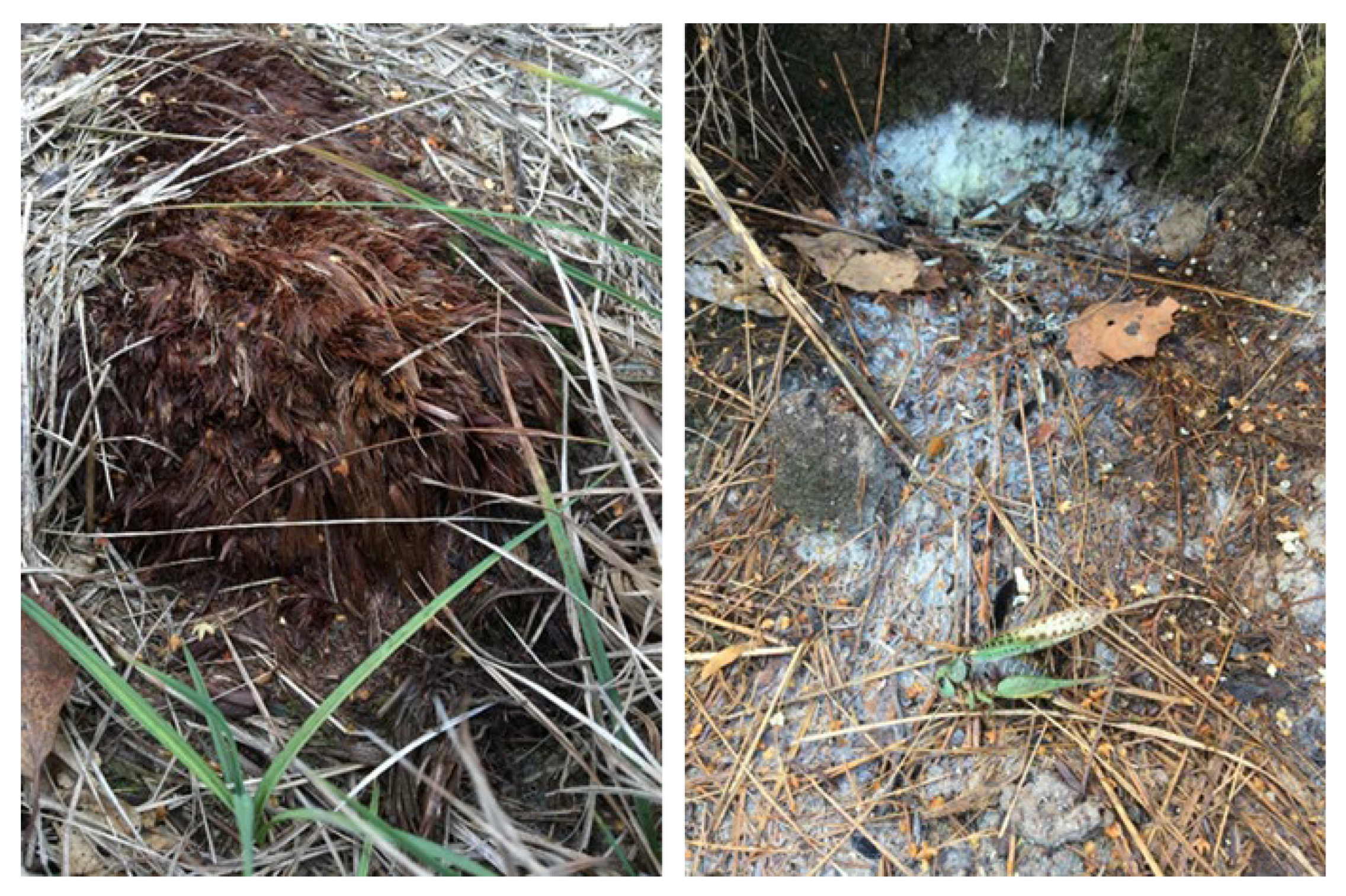
CO2 migration along N–S oriented fractures is accompanied by vegetation stress/absence and mortality of small fauna (insects, rodents), signaling hostile conditions that reduce diversity and remodel microbial communities (Figure 21). These observations are consistent with the literature from other volcanic regions and support the use of natural sites as analogs for assessing risks in CO2 leakage scenarios associated with geological storage [47].
Vegetation sparseness and plant stress observed at Băile Lăzărești coincide with zones of elevated CO2 flux (>30,000 ppm), consistent with reports from natural analog sites where soil gas emissions suppress plant growth or cause complete absence of vegetation [6,32,46,48,49,50,51,52]. While gas emissions represent the primary stressor, other factors such as soil characteristics, seasonal humidity, or local hydrology may modulate vegetation responses. This interplay of drivers underscores the importance of integrated monitoring (gas flux, soil chemistry, vegetation surveys) for understanding ecosystem-level effects of CO2 leakage.
We compared vegetation responses at Băile Lăzărești with those documented at several well-studied natural analog sites. As summarized in Table 5, high CO2 fluxes (>2000–3000 g m−2 d−1 or >20% soil CO2) consistently coincide with vegetation absence or stress, while transition zones with lower CO2 concentrations often support grasses or mixed plant communities. These cross-site comparisons indicate that although soil properties, humidity, and local ecological factors can modulate vegetation cover, elevated CO2 remains the dominant driver of vegetation sparseness in degassing areas [6,46,48,49,50,51].

4.8. Integration of Tracers

Together, the results paint a coherent picture: (i) CO2 shapes microbial communities along the entire gradient; (ii) CH4 gains weight in the intermediate zone (C2), generating distinct micro-niches (e.g., P16) with specific bacterial fingerprints; (iii) H2S has a limited impact at the study scale; (iv) the decrease in diversity at high CO2 implies possible effects on soil functions (C and nutrient cycling, organic matter decomposition)—more evident in fungi—relevant both for risk assessment in natural analogs of CO2 leakage and, by extension, for the context of geological CO2 storage.
The dominance of CO2 at the ends of the gradient and the pronounced methane signature in C2 together explain the observed compositional and diversity changes. The results support the combined use of gas monitoring and metabarcoding as complementary tools for the ecological diagnosis of post-volcanic degassing areas and for establishing useful benchmarks in CO2 leakage monitoring programs associated with geological CO2 storage. These results align closely with findings from other volcanic regions [35,46], reinforcing the idea that sustained high CO2 emissions create inhospitable conditions that lead to significant biodiversity losses.
The PCA including CO2, CH4, and H2S concentrations (Figure Q) confirmed the dominant role of CO2 as the main structuring factor across the study site, explaining 65.7% of the variance (PC1). CH4 accounted for 33.2% of the variance (PC2) and highlighted local micro-niches such as sample P16, where elevated methane concentrations strongly influenced bacterial community structure. In contrast, H2S contributed negligibly, consistent with its low absolute concentrations (<10 ppm) and limited spatial distribution. These results reinforce the decision to use CO2 as the primary grouping variable, while acknowledging the secondary role of CH4 in shaping outlier community responses. Together, the combined gas analyses confirm that the observed microbial community patterns are primarily controlled by the CO2 gradient, with localized contributions from CH4.
Given the large surface extent of the mofetta field (>1 ha, with several hundred square meters of active vents), low-emission soils within the area were used as controls. Selecting an external reference site with no gas influence would have required moving far away from the studied degassing zone, thereby introducing confounding differences in geology, soil type, and ecological conditions. For this reason, our design focused on internal contrasts along the CO2 gradient, while future studies could expand to include more distant reference sites for comparison.

5. Conclusions

This study provides an integrated assessment of the spatial distribution and ecological impact of post-volcanic gas emissions (CO2, CH4, H2S) at Băile Lăzărești. Gas measurements revealed substantial variability, with CO2 dominating at the site scale (up to 46,220.71 ppm, ~4.62% v/v at P7), while CH4 reached localized maxima of 8271.47 ppm (~0.83% v/v at P16) and H2S remained low (10.12 ppm at P7). These spatially heterogeneous peaks reflect the influence of gas migration along fractures and microhabitat conditions. Soil eDNA metabarcoding identified 3064 OTUs in 19 samples (2463 bacterial and 601 fungal). Proteobacteria were the most diverse bacterial phylum, while Ascomycota dominated fungi. Thelebolus (Thelebolales) was nearly ubiquitous, indicating broad tolerance to acidic and CO2-rich conditions. Species-level identifications were more frequent in fungi than in bacteria, reflecting uneven database coverage. Alpha diversity analyses (Welch’s ANOVA) demonstrated that bacterial richness (Chao1, Fisher indices) was significantly lower in high-CO2 soils (>3000 ppm; p < 0.05) compared to low-CO2 soils (<1000 ppm), with intermediate CO2 concentrations showing heterogeneous responses. Fungal alpha diversity showed a decreasing trend at high CO2 but without statistical significance. Beta diversity (PERMANOVA) confirmed significant differences in bacterial (p = 0.001) and fungal (p = 0.045) community composition between CO2 categories. Taxonomic patterns revealed that bacterial genera such as Acidobacterium, Granulicella, Streptomyces, Nocardia, Flavobacterium, and Chitinophaga were enriched under high CO2, whereas Rhizobium and Pseudomonas declined, reflecting sensitivity to acidity and oxygen limitation. Among fungi, Thelebolus and Cladosporium tolerated CO2-rich soils, while Mortierella, Cryptococcus, and Vishniacozyma decreased, highlighting contrasting adaptive strategies. Sample P16, characterized by a methane peak, was an ecological outlier with distinct bacterial signatures (increased Actinomycetia and Planctomycetes). Multivariate analysis (PCA) including CO2, CH4, and H2S concentrations confirmed that CO2 is the dominant environmental driver (PC1, 65.7% variance), while CH4 contributed to localized variability (PC2, 33.2%), particularly in sample P16. H2S had negligible influence.
Overall, our findings show that post-volcanic gas emissions restructure microbial communities, reducing diversity at high CO2 and establishing distinct ecological niches that can alter soil processes such as nutrient cycling and organic matter decomposition. These results emphasize the ecological risks of sustained CO2 exposure and highlight the value of natural analog sites for assessing the potential impacts of CO2 leakage in geological storage scenarios.

Author Contributions

Conceptualization, A.B.P., A.-C.D. and L.S.; methodology A.-C.D.; software A.B.P. and L.S.; validation, A.-C.D. and A.B.P.; formal analysis, A.-C.D., C.A., G.I., A.-G.D., O.D. and C.-Ș.S.; investigation, A.-C.D., C.A., G.I., A.-G.D., O.D. and C.-Ș.S.; resources, A.-C.D.; data curation, A.B.P., L.S.; writing—original draft preparation, A.B.P., A.-C.D. and L.S.; writing—review and editing, A.B.P., A.-C.D. and L.S.; visualization, A.B.P., A.-C.D. and L.S.; supervision, A.-C.D.; project administration, A.-C.D.; funding acquisition, A.-C.D. All authors have read and agreed to the published version of the manuscript.

Funding

The research leading to these results was financed by the Ministry of Research, Innovation and Digitalization of Romania through the Core Program: PN 19 20 05 03 “The study of natural CO2 emission sites in Banat and Harghita for accession to the European ECCSEL network (Studiul siturilor cu emisii naturale de CO2 din Banat și Harghita în vederea aderării la rețeaua europeană ECCSEL)” and PN 23 30 04 04 “Development of an environmental monitoring methodology for potential CO2 storage sites in Romania (Dezvoltarea unei metodologii de monitorizare de mediu pentru potențialele situri de stocare de CO2 din România.

Data Availability Statement

The original contributions presented in this study are included in the article. Further inquiries can be directed to the corresponding authors.

Acknowledgments

The authors thank Roy KOUSTAV for helping to improve the paper. We thank Nature Metrics Ltd., 1 Occam Court, Surrey Research Park, Guildford, GU2 7HJ, UK (www.naturemetrics.co.uk, Accessed on 8 July 2024). We also acknowledge Apel Laser S.R.L. (https://apellaser.ro/, Accessed on 1 November 2024), for their financial support in covering the Article Processing Charge (APC). During the preparation of this manuscript, the authors used ChatGPT (OpenAI, GPT-5, 2025) as an AI-assisted writing tool for language editing and text refinement. The authors have carefully reviewed and edited the output, and they take full responsibility for the content of this publication.

Conflicts of Interest

The authors declare no conflicts of interest.

References

  1. IPCC. Climate Change 2023: Synthesis Report. Contribution of Working Groups I, II and III to the Sixth Assessment Report of the Intergovernmental Panel on Climate Change; Lee, H., Romero, J., Eds.; IPCC: Geneva, Switzerland, 2023; p. 184. [Google Scholar] [CrossRef]
  2. IPCC. Climate Change 2014: Synthesis Report. Contribution of Working Groups I, II and III to the Fifth Assessment Report of the Intergovernmental Panel on Climate Change; Pachauri, R.K., Meyer, L.A., Eds.; IPCC: Geneva, Switzerland, 2014; p. 151. [Google Scholar]
  3. West, J.M.; Pearce, J.M.; Bentham, M.; Maul, P. Environmental issues and the geological storage of CO2. Eur. Environ. 2005, 15, 250–259. [Google Scholar] [CrossRef][Green Version]
  4. West, J.M.; Pearce, J.M.; Bentham, M.; Rochelle, C.; Maul, P.; Lombardi, S. Environmental Issues and the Geological Storage of CO2—A European Perspective. In Proceedings of the 8th International Conference on Greenhouse Gas Control Technologies, Trondheim, Norway, 19–22 June 2006; Elsevier: Amsterdam, The Netherlands, 2006; pp. 1281–1286. Available online: https://hdl.handle.net/11573/417124 (accessed on 20 September 2025).[Green Version]
  5. Jossi, M.; Fromin, N.; Tarnawski, S.; Kohler, F.; Gillet, F.; Aragno, M.; Hamelin, J. How elevated pCO2 modifies total and metabolically active bacterial communities in the rhizosphere of two perennial grasses grown under field conditions. FEMS Microbiol. Ecol. 2006, 55, 339–350. [Google Scholar] [CrossRef] [PubMed][Green Version]
  6. Beaubien, S.E.; Ciotoli, G.; Coombs, P.; Dictor, M.C.; Krüger, M.; Lombardi, S.; Pearce, J.M.; West, J.M. The impact of a naturally occurring CO2 gas vent on the shallow ecosystem and soil chemistry of a Mediterranean pasture (Latera, Italy). Int. J. Greenh. Gas Control 2008, 2, 373–387. [Google Scholar] [CrossRef]
  7. Oppermann, B.I.; Michaelis, W.; Blumenberg, M.; Frerichs, J.; Schulz, H.M.; Schippers, A.; Beaubien, S.E.; Krüger, M. Soil microbial community changes as a result of long-term exposure to a natural CO2 vent. Geochim. Cosmochim. Acta 2010, 74, 2697–2716. [Google Scholar] [CrossRef]
  8. Stephens, J.C.; Hering, J.G. Factors affecting the dissolution kinetics of volcanic ash soils: Dependencies on pH, CO2, and oxalate. Appl. Geochem. 2004, 19, 1217–1232. [Google Scholar] [CrossRef]
  9. Macek, I.; Pfanz, H.; Francetic, V.; Batic, F.; Vodnik, D. Root respiration response to high CO2 concentrations in plants from natural CO2 springs. Environ. Exp. Bot. 2005, 54, 90–99. [Google Scholar] [CrossRef]
  10. Pfanz, H.; Vodnik, D.; Wittmann, C.; Aschan, G.; Batic, F.; Turk, B.; Macek, I. Photosynthetic performance (CO2-compensation point, carboxylation efficiency, and net photosynthesis) of timothy grass (Phleum pratense L.) is affected by elevated carbon dioxide in post-volcanic mofette areas. Environ. Exp. Bot. 2007, 61, 41–48. [Google Scholar] [CrossRef]
  11. Harvey, O.R.; Qafoku, N.P.; Cantrell, K.J.; Lee, G.; Amonette, J.E.; Brown, C.F. Geochemical implications of gas leakage associated with geologic CO2 storage—A qualitative review. Environ. Sci. Technol. 2013, 47, 23–36. [Google Scholar] [CrossRef]
  12. Humez, P.; Négrel, P.; Lagneau, V.; Lions, J.; Kloppmann, W.; Gal, F.; Millot, R.; Guerrot, C.; Flehoc, C.; Widory, D.; et al. CO2–water–mineral reactions during CO2 leakage: Geochemical and isotopic monitoring of a CO2 injection field test. Chem. Geol. 2014, 368, 11–30. [Google Scholar] [CrossRef]
  13. Lions, J.; Devau, N.; de Lary, L.; Dupraz, S.; Parmentier, M.; Gombert, P.; Dictor, M.C. Potential impacts of leakage from CO2 geological storage on geochemical processes controlling fresh groundwater quality: A review. Int. J. Greenh. Gas Control 2014, 22, 165–175. [Google Scholar] [CrossRef]
  14. Kirk, M.F.; Altman, S.J.; Santillan, E.-F.U.; Bennett, P.C. Interplay between microorganisms and geochemistry in geological carbon storage. Int. J. Greenh. Gas Control 2016, 47, 386–395. [Google Scholar] [CrossRef]
  15. Beulig, F.; Urich, T.; Nowak, M.; Trumbore, S.E.; Gleixner, G.; Gilfillan, G.D.; Küsel, K. Altered carbon turnover processes and microbiomes in soils under long-term extremely high CO2 exposure. Nat. Microbiol. 2016, 1, 15025. [Google Scholar] [CrossRef]
  16. Emerson, J.B.; Thomas, B.C.; Alvarez, W.; Banfield, J.F. Metagenomic analysis of a high carbon dioxide subsurface microbial community populated by chemolithoautotrophs and bacteria and archaea from candidate phyla. Environ. Microbiol. 2016, 18, 1686–1703. [Google Scholar] [CrossRef] [PubMed]
  17. Probst, A.J.; Castelle, C.J.; Singh, A.; Brown, C.T.; Anantharaman, K.; Sharon, I.; Hug, L.A.; Burstein, D.; Emerson, J.B.; Thomas, B.C.; et al. Genomic resolution of a cold subsurface aquifer community provides metabolic insights for novel microbes adapted to high CO2 concentrations. Environ. Microbiol. 2017, 19, 459–474. [Google Scholar] [CrossRef] [PubMed]
  18. Pricăjan, A. Mineral and Thermal Waters from Romania; Ed. Tehnica: Bucharest, Romania, 1972. [Google Scholar]
  19. Pricăjan, A. Therapeutic Mineral Substances from Romania; Scientific and Encyclopedic Publishing House: Bucharest, Romania, 1985. [Google Scholar]
  20. Karátson, D.; Veres, D.; Gertisser, R.; Magyari, E.K.; Jánosi, C.; Hambach, U. Ciomadul (Csomád), The Youngest Volcano in the Carpathians; Springer Nature: Cham, Switzerland, 2022. [Google Scholar]
  21. Berner, Z.; Jánosi, C.; Péter, É. A Kelemen-Görgényi-Hargita vonulat ásványvizei [Mineral Waters of Călimani-Gurghiu-Harghita Mountain Chain]; Report for Harghita County Council; The Official Gazette of Romania: Harghita County, Romania, 2000. [Google Scholar]
  22. Szakács, A.; Seghedi, I.; Pécskay, Z.; Mirea, V. Eruptive history of a low-frequency and low-output rate Pleistocene volcano, Ciomadul, South Harghita Mts., Romania. Bull. Volcanol. 2015, 77, 12. [Google Scholar] [CrossRef]
  23. Bálint-Bálint, L.; Magyari-Sáska, Z.; Irimuş, I.A.; Peteley, A.; Niţă, A. The Valuation of the Urban Ecotourism Potential of the Volcanic Geomorphohydrosite Băile Tuşnad in Harghita County, Romania. Mod. Geograph. 2024, 19, 49–68. [Google Scholar] [CrossRef]
  24. Kis, B.M.; Szalay, R.; Aiuppa, A.; Bitetto, M.; Palcsu, L.; Harangi, S. Compositional measurement of gas emissions in the Eastern Carpathians (Romania) using the multi-GAS instrument: Approach for in situ data gathering at non-volcanic areas. J. Geochem. Explor. 2022, 240, 107051. [Google Scholar] [CrossRef]
  25. Tămaș, D.M.; Kis, B.M.; Tămaș, A.; Szalay, R. Identifying CO2 Seeps in a Long-Dormant Volcanic Area Using Uncrewed Aerial Vehicle-Based Infrared Thermometry: A Qualitative Study. Sensors 2022, 22, 2719. [Google Scholar] [CrossRef]
  26. Molnár, K.; Czuppon, G.; Palcsu, L.; Benkó, Z.; Lukács, R.; Kis, B.-M.; Németh, B.; Harangi, S. Noble gas geochemistry of phenocrysts from the Ciomadul volcanic dome field (Eastern Carpathians). Lithos 2021, 394–395, 106152. [Google Scholar] [CrossRef]
  27. NOAA. Global Monitoring Laboratory—Annual Greenhouse Gas Index. 2023. Available online: https://gml.noaa.gov/ccgg/ (accessed on 7 September 2025).
  28. Anderson, M.J.; Gorley, R.N.; Clarke, K.R. PERMANOVA+ for PRIMER: Guide to Software and Statistical Methods; PRIMER-E Ltd.: Plymouth, UK, 2008. [Google Scholar]
  29. Hammer, Ø.; Harper, D.A.T.; Ryan, P.D. PAST: Paleontological Statistics Software Package for Education and Data Analysis. Palaeontol. Electron. 2001, 4, 4. [Google Scholar]
  30. Dhariwal, A.; Chong, J.; Habib, S.; King, I.L.; Agellon, L.B.; Xia, J. MicrobiomeAnalyst: A web-based tool for comprehensive statistical, visual and meta-analysis of microbiome data. Nucleic Acids Res. 2017, 45, W180–W188. [Google Scholar] [CrossRef]
  31. Zhao, X.; Deng, H.; Wang, W.; Han, F.; Li, C.; Zhang, H.; Dai, Z. Impact of naturally leaking carbon dioxide on soil properties and ecosystems in the Qinghai-Tibet Plateau. Sci. Rep. 2017, 7, 3001. [Google Scholar] [CrossRef] [PubMed]
  32. Ham, B.; Choi, B.-Y.; Chae, G.-T.; Kirk, M.F.; Kwon, M.J. Geochemical influence on microbial communities at CO2-leakage analog sites. Front. Microbiol. 2017, 8, 2203. [Google Scholar] [CrossRef] [PubMed]
  33. Beulig, F.; Heuer, V.B.; Akob, D.M.; Viehweger, B.; Elvert, M.; Herrmann, M.; Küsel, K. Carbon flow from volcanic CO2 into soil microbial communities of a wetland mofette. ISME J. 2015, 9, 746–759. [Google Scholar] [CrossRef] [PubMed]
  34. Liu, Q.; Kämpf, H.; Bussert, R.; Krauze, P.; Horn, F.; Nickschick, T.; Alawi, M. Influence of CO2 degassing on the microbial community in a dry mofette field in Hartoušov, Czech Republic (Western Eger Rift). Front. Microbiol. 2018, 9, 2787. [Google Scholar] [CrossRef]
  35. Zhalnina, K.; Dias, R.; de Quadros, P.D.; Davis-Richardson, A.; Camargo, F.A.; Clark, I.M.; Triplett, E.W. Soil pH determines microbial diversity and composition in the Park Grass Experiment. Microb. Ecol. 2015, 69, 395–406. [Google Scholar] [CrossRef]
  36. Zhalnina, K.; de Quadros, P.D.; Camargo, F.A.; Triplett, E.W. Drivers of archaeal ammonia-oxidizing communities in soil. Front. Microbiol. 2012, 3, 210. [Google Scholar] [CrossRef]
  37. Jones, R.T.; Robeson, M.S.; Lauber, C.L.; Hamady, M.; Knight, R.; Fierer, N. A comprehensive survey of soil acidobacterial diversity using pyrosequencing and clone library analyses. ISME J. 2009, 3, 442–453. [Google Scholar] [CrossRef]
  38. Lee, S.H.; Ka, J.O.; Cho, J.C. Members of the phylum Acidobacteria are dominant and metabolically active in rhizosphere soil. FEMS Microbiol. Lett. 2008, 285, 263–269. [Google Scholar] [CrossRef]
  39. Bergmann, G.T.; Bates, S.T.; Eilers, K.G.; Lauber, C.L.; Caporaso, J.G.; Walters, W.A.; Knight, R.; Fierer, N. The under-recognized dominance of Verrucomicrobia in soil bacterial communities. Soil Biol. Biochem. 2011, 43, 1450–1455. [Google Scholar] [CrossRef]
  40. Prosser, J.I.; Bohannan, B.J.M.; Curtis, T.P.; Ellis, R.J.; Firestone, M.K.; Freckleton, R.P.; Green, J.L.; Green, L.E.; Killham, K.; Lennon, J.J.; et al. The role of ecological theory in microbial ecology. Nat. Rev. Microbiol. 2007, 5, 384–392. [Google Scholar] [CrossRef]
  41. de Miera, L.E.S.; Arroyo, P.; de Luis Calabuig, E.; Falagán, J.; Ansola, G. High-throughput sequencing of 16S rRNA genes of soil bacterial communities from a naturally occurring CO2 gas vent. Int. J. Greenh. Gas Control 2014, 29, 176–184. [Google Scholar] [CrossRef]
  42. Fierer, N.; Jackson, R.B. The diversity and biogeography of soil bacterial communities. Proc. Natl. Acad. Sci. USA 2006, 103, 626–631. [Google Scholar] [CrossRef] [PubMed]
  43. Lauber, C.L.; Hamady, M.; Knight, R.; Fierer, N. Pyrosequencing-based assessment of soil pH as a predictor of soil bacterial community structure at the continental scale. Appl. Environ. Microbiol. 2009, 75, 5111–5120. [Google Scholar] [CrossRef] [PubMed]
  44. Power, J.F.; Carere, C.R.; Lee, C.K.; Wakerley, G.L.; Evans, D.W.; Button, M.; Stott, M.B. Microbial biogeography of 925 geothermal springs in New Zealand. Nat. Commun. 2018, 9, 2876. [Google Scholar] [CrossRef]
  45. Rousk, J.; Bååth, E.; Brookes, P.C.; Lauber, C.L.; Lozupone, C.; Caporaso, J.G.; Fierer, N. Soil bacterial and fungal communities across a pH gradient in an arable soil. ISME J. 2010, 4, 1340–1351. [Google Scholar] [CrossRef]
  46. Park, K.; Kim, C.Y.; Kirk, M.F.; Chae, G.; Kwon, M.J. Effects of natural non-volcanic CO2 leakage on soil microbial community composition and diversity. Sci. Total Environ. 2023, 862, 160754. [Google Scholar] [CrossRef]
  47. Krüger, M.; Jones, D.; Frerichs, J.; Oppermann, B.I.; West, J.; Coombs, P.; Green, K.; Barlow, T.; Lister, B.; Shaw, R.; et al. Effects of elevated CO2 concentrations on the vegetation and microbial populations at a terrestrial CO2 vent at Laacher See, Germany. Int. J. Greenh. Gas Control 2011, 5, 1093–1098. [Google Scholar] [CrossRef]
  48. Krüger, M.; West, J.; Frerichs, J.; Oppermann, B.; Dictor, M.-C.; Jouliand, C.; Jones, D.; Coombs, P.; Green, K.; Pearce, J.; et al. Ecosystem effects of elevated CO2 concentrations on microbial populations at a terrestrial CO2 vent at Laacher See, Germany. Energy Procedia 2009, 1, 1933–1939. [Google Scholar] [CrossRef]
  49. Ziogou, F.; Gemeni, V.; Koukouzas, N.; de Angelis, D.; Libertini, S.; Beaubien, S.E.; Lombardi, S.; West, J.M.; Jones, D.G.; Coombs, P.; et al. Potential Environmental Impacts of CO2 Leakage from the Study of Natural Analogue Sites in Europe. Energy Procedia 2013, 37, 3521–3528. [Google Scholar] [CrossRef]
  50. Smith, K.L.; Steven, M.D.; Jones, D.G.; West, J.M.; Coombs, P.; Green, K.A.; Barlow, T.S.; Breward, N.; Gwosdz, S.; Krüger, M.; et al. Environmental impacts of CO2 leakage: Recent results from the ASGARD facility, UK. Energy Procedia 2013, 37, 791–799. [Google Scholar] [CrossRef]
  51. Feitz, A.; Jenkins, C.; Schacht, U.; McGrath, A.; Berko, H.; Schroder, I.; Noble, R.; Kuske, T.; George, S.; Heath, C.; et al. An assessment of near surface CO2 leakage detection techniques under Australian conditions. Energy Procedia 2014, 63, 3891–3906. [Google Scholar] [CrossRef]
  52. Gwosdz, S.; West, J.M.; Jones, D.; Rakoczy, J.; Green, K.; Barlow, T.; Blöthe, M.; Smith, K.; Steven, M.; Krüger, M. Long-term CO2 injection and its impact on near-surface soil microbiology. FEMS Microbiol. Ecol. 2016, 92, fiw193. [Google Scholar] [CrossRef]
Figure 1. Sampling stations on the Băile Lăzărești area.
Environments 12 00344 g001
Figure 2. Gas measurements in the summer campaign from 2022.
Environments 12 00344 g002
Figure 3. Soil sampling from the area with high emissions of the Lăzărești site.
Environments 12 00344 g003
Figure 4. Principal Component Analysis of Gas concentrations (CO2, CH4, and H2S).
Environments 12 00344 g004
Figure 5. A taxonomic heat tree showing the number of OTUs across all samples for soil bacterial taxa down to the order rank. Each node (the circles) is a taxon and the edges (lines) show hierarchical relationships between taxa. The color scale and the relative width of the node represent the number of taxa at each level.
Environments 12 00344 g005
Figure 6. Distribution by class of the bacteria in the three categories C1, C2 and C3 per sample (actual abundance).
Environments 12 00344 g006
Figure 7. Distribution by class of the bacteria in the three categories C1, C2 and C3 per sample (relative abundance).
Environments 12 00344 g007
Figure 8. Distribution by class of relative abundance of bacteria in the three categories C1, C2 and C3 with samples taken together.
Environments 12 00344 g008
Figure 9. Boxplots of alpha-diversity index Chao1 for the three categories C1, C2 and C3.
Environments 12 00344 g009
Figure 10. Boxplots of alpha-diversity index Fisher for the three categories C1, C2 and C3.
Environments 12 00344 g010
Figure 11. PCoA/PCA of Bacterial Communities (Bray–Curtis approximation).
Environments 12 00344 g011
Figure 12. Hierarchical Clustering of Samples (Bray–Curtis, Ward).
Environments 12 00344 g012
Figure 13. A taxonomic heat tree showing the number of OTUs across all samples for soil fungal taxa down to the order rank. Each node (the circles) is a taxon and the edges (lines) show hierarchical relationships between taxa. The color scale and the relative width of the node represent the number of taxa at each level.
Environments 12 00344 g013
Figure 14. Distribution by class of the fungi in the three categories C1, C2 and C3 per sample (actual abundance).
Environments 12 00344 g014
Figure 15. Distribution by class of the fungi in the three categories C1, C2 and C3 per sample (relative abundance).
Environments 12 00344 g015
Figure 16. Distribution by class of relative abundance of fungi in the three categories C1, C2 and C3 with samples taken together.
Environments 12 00344 g016
Figure 17. Boxplots of alpha-diversity index Chao1 for the three categories C1, C2 and C3.
Environments 12 00344 g017
Figure 18. Boxplots of alpha-diversity index Fisher for the three categories C1, C2 and C3.
Environments 12 00344 g018
Figure 19. PCoA/PCA of Bacterial Communities (Bray–Curtis approximation).
Environments 12 00344 g019
Figure 20. Hierarchical Clustering of Samples (Bray–Curtis, Ward).
Environments 12 00344 g020
Figure 21. Vegetation exposed to gas emissions.
Environments 12 00344 g021
Table 1. Summary of the number of OTUs detected and the percentage of OTUs successfully classified at each taxonomic level for each target.
TargetNumber of OTUsPhylumClassOrderFamilyGenusSpecies
Bacteria246368.3%53.8%39.3%27.8%11.3%2.1%
Fungi60198.8%89.7%79.7%62.6%31.4%11.3%
Table 2. Samples and gas concentrations.
SampleProfileCH4 (ppm)H2S (ppm)CO2 (ppm)CO2 Categories
P11P275.20087.3736142,653.92C3
P21P82.633610.45312313,162.42C3
P31P4.4942620.3935493199.084C3
P41P2.432520.542659601.6707C1
P51P36.947970.9395935396.768C3
P61P15.773771.0963362531.079C2
P71P318.741810.1168846,220.71C3
P81P2.332520.765073992.7963C1
P91P2.14160.829536631.2909C1
P101P2.1350750.250425485.4114C1
P112P1.9639340.3744431505.181C2
P122P2.0247930.366752929.5848C1
P132P1.8877050.344893977.153C1
P142P2.4479340.3367111608.869C2
P152P19.9680.449083447.992C3
P162P8271.4740.3847691456.66C2
P172P3.5041320.339951173.752C2
P182P1.8569110.3493661520.143C2
P192P1.8585370.382748785.9752C1
Table 3. Summary of statistical tests (Welch’s ANOVA for alpha diversity; PERMANOVA for beta diversity) with corresponding p-values across CO2 categories.
AnalysisTestResultp-Value
Alpha diversity (Bacteria, Chao1)Welch’s ANOVA + post hocSignificant0.017
Alpha diversity (Bacteria, Fisher)Welch’s ANOVA + post hocSignificant0.023
Alpha diversity (Fungi, Chao1)Welch’s ANOVANot significant0.11
Alpha diversity (Fungi, Fisher)Welch’s ANOVANot significant0.09
Beta diversity (Bacteria)PERMANOVA (Bray–Curtis, 999 permutations)Significant0.001
Beta diversity (Fungi)PERMANOVA (Bray–Curtis, 999 permutations)Significant (weak)0.045
Table 4. Examples of bacterial and fungal genera detected in the study and their responses to CO2 enrichment, with supporting references. Symbols and abbreviations: ↑ = increased/relative enrichment under high CO2; ↓ = decreased/relative depletion under high CO2. OM = organic matter. C-rich = carbon-rich. Anoxic = low-oxygen conditions. Mofetta = natural cold CO2 emission site.
DomainGenusTrend Under High CO2Reference(s)
BacteriaAcidobacterium, Granulicella↑ Enriched in acidic, CO2-rich soils[37,38]
BacteriaStreptomyces, Nocardia↑ Tolerant, degrade complex OM[39]
BacteriaFlavobacterium, Chitinophaga↑ Adapted to C-rich, anoxic niches[40]
BacteriaRhizobium, Pseudomonas↓ Sensitive to acidity/anoxia[33,35]
FungiThelebolus↑ Ubiquitous in mofettas[33,34]
FungiMortierella↓ Reduced under high CO2[31]
FungiCladosporium↑ Tolerant, stress-adapted[32]
FungiCryptococcus, Vishniacozyma↓ Sensitive, aerobic niches[41]
Table 5. Summarizing CO2 fluxes and vegetation responses at several natural analog sites.
Site (Reference)Max CO2 Flux/Conc.Vegetation Response
Latera, Italy [6]>2000–3000 g m−2 d−1, >95% soil CO2No vegetation in vent core; transition zone with grasses/clover
Laacher See, Germany [47,48]Up to 95% soil CO2Vegetation absent directly above vents
Florina, Greece [49]Localized vents with high soil CO2 (>20%)Grassland degraded; plant diversity reduced near vents
ASGARD, UK [50]Injected 2–50% soil CO2Crop stress, reduced biomass at >15% CO2
Australia [51]Fluxes >10,000 g m−2 d−1Vegetation death in high flux zones
Daepyeong, Korea [46]29% soil CO2‚ in high flux groupLower pH soils, vegetation stress and reduced cover
Disclaimer/Publisher’s Note: The statements, opinions and data contained in all publications are solely those of the individual author(s) and contributor(s) and not of MDPI and/or the editor(s). MDPI and/or the editor(s) disclaim responsibility for any injury to people or property resulting from any ideas, methods, instructions or products referred to in the content.