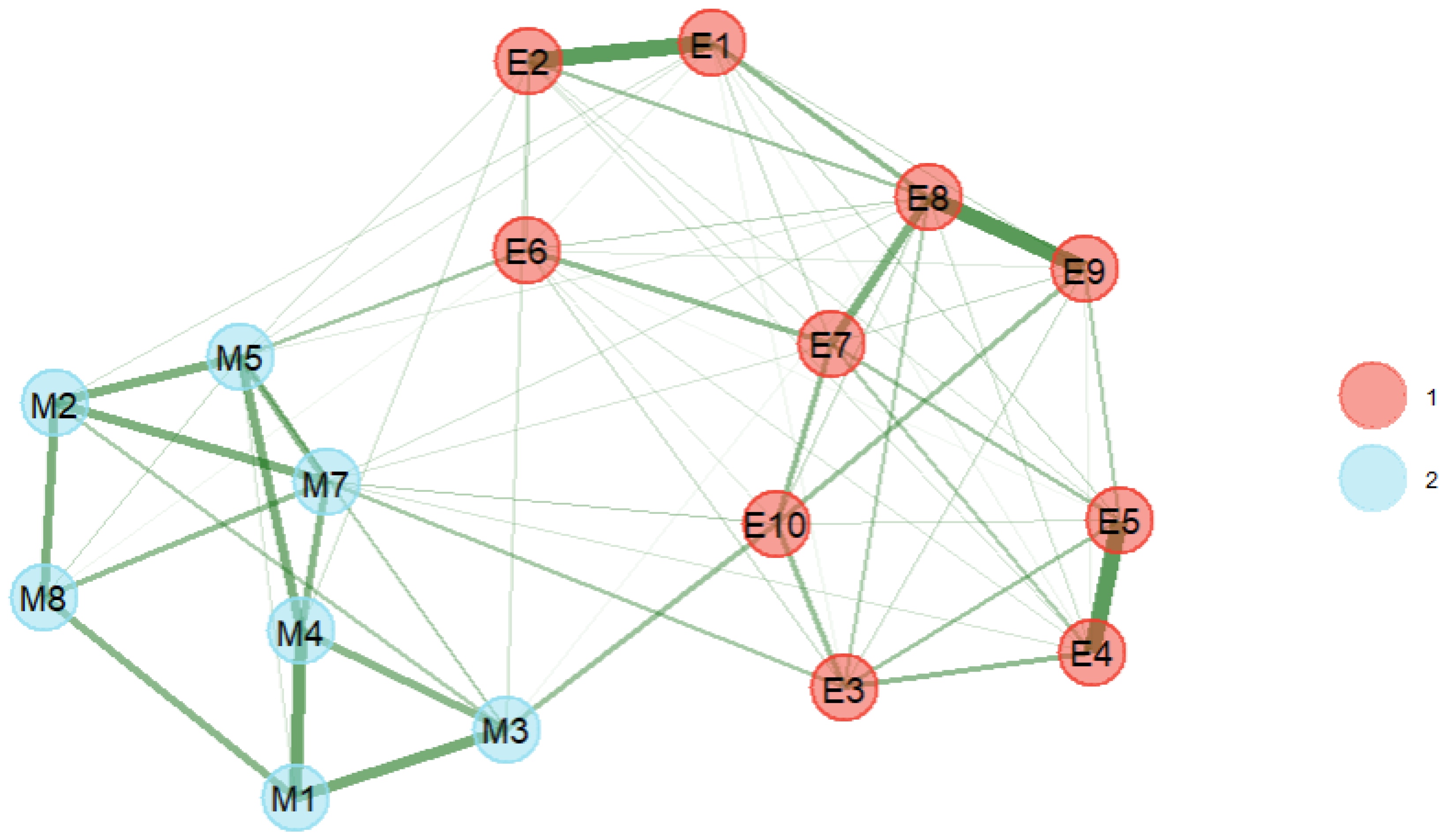


Psychometric Validation of the Mother–Infant Bonding Scale in Greek Mothers up to 1 Year Postpartum

 , , , ,
Abstract
1. Introduction
1.1. The Mother-to-Infant Bonding Scale
1.2. Present Study
2. Materials and Methods
2.1. Participants
2.2. Procedure
2.3. Cultural Adaptation of the MIBS
2.4. Pilot Study
2.5. Mother-to-Infant Bonding Scale (MIBS)
2.6. Edinburgh Postnatal Depression Scale
2.7. Data Analysis
3. Results
4. Discussion
5. Conclusions
Supplementary Materials
Author Contributions
Funding
Institutional Review Board Statement
Informed Consent Statement
Data Availability Statement
Acknowledgments
Conflicts of Interest
References
- Abu Salih, M., Abargil, M., Badarneh, S., Klein Selle, N., Irani, M., & Atzil, S. (2023). Evidence for cultural differences in affect during mother–infant interactions. Scientific Reports, 13(1), 4831. [Google Scholar] [CrossRef] [PubMed]
- Ainsworth, M. D., Blehar, M. C., Waters, E., & Wall, S. (1978). Patterns of attachment: A psychological study of the strange situation. Erlbaum. [Google Scholar]
- Beaton, D. E., Bombardier, C., Guillemin, F., & Ferraz, M. B. (2000). Guidelines for the process of cross-cultural adaptation of self-report measures. Spine, 25(24), 3186–3191. [Google Scholar] [CrossRef] [PubMed]
- Bienfait, M., Maury, M., Haquet, A., Faillie, J. L., Franc, N., Combes, C., Daudé, H., Picaud, J. C., Rideau, A., & Cambonie, G. (2011). Pertinence of the self-report mother-to-infant bonding scale in the neonatal unit of a maternity ward. Early Human Development, 87(4), 281–287. [Google Scholar] [CrossRef] [PubMed]
- Brockington, I. (2004). Diagnosis and management of post-partum disorders: A review. World Psychiatry, 3(2), 89–95. [Google Scholar] [PubMed] [PubMed Central]
- Brockington, I. F. (2011). Motherhood and mental health. Oxford University Press. [Google Scholar]
- Brockington, I. F., Fraser, C., & Wilson, D. (2006). The postpartum bonding questionnaire: A validation. Archives of Women’s Mental Health, 9(5), 233–242. [Google Scholar] [CrossRef]
- Chen, F. F. (2007). Sensitivity of goodness-of-fit indexes to lack of measurement invariance. Structural Equation Modeling, 14(3), 464–504. [Google Scholar] [CrossRef]
- Clark, L. A., & Watson, D. (1995). Constructing validity: Basic issues in objective scale development. Psychological Assessment, 7(3), 309–319. [Google Scholar] [CrossRef]
- Condon, J. T. (1993). The assessment of antenatal emotional attachment: Development of a questionnaire instrument. British Journal of Medical Psychology, 66(2), 167–183. [Google Scholar] [CrossRef]
- Cox, J. L., Holden, J. M., & Sagovsky, R. (1987). Detection of postnatal depression: Development of the 10-item Edinburgh postnatal depression scale. British Journal of Psychiatry, 150, 782–786. [Google Scholar] [CrossRef]
- Demir, E., Öz, S., Aral, N., & Gürsoy, F. (2022). A reliability generalization meta-analysis of the mother-to-infant bonding scale. Psychological Reports, 127(5), 447–464. [Google Scholar] [CrossRef]
- DeVellis, R. F. (2017). Scale development: Theory and applications (4th ed.). Sage Publications. [Google Scholar]
- Devita, S., Deforges, C., Bickle-Graz, M., Tolsa, J. F., Sandoz, V., & Horsch, A. (2025). Maternal childbirth-related posttraumatic stress symptoms, bonding, and infant development: A prospective study. Journal of Reproductive and Infant Psychology, 43(3), 718–732. [Google Scholar] [CrossRef]
- Economou, M., Madianos, M., Peppou, L. E., Souliotis, K., Patelakis, A., & Stefanis, C. (2014). Cognitive social capital and mental illness during economic crisis: A nationwide population-based study in Greece. Social Science & Medicine, 100, 141–147. [Google Scholar] [CrossRef]
- El Hadathy, D., Malaeb, D., Hallit, S., Fekih-Romdhane, F., & Barakat, H. (2024). The relationship between maternal-infant bonding and postpartum depression/anxiety: Moderating effect of childhood psychological abuse and validation of the Mother-to-Infant Bonding Scale (MIBS-8) in Arabic. BMC Psychiatry, 24, 293. [Google Scholar] [CrossRef] [PubMed]
- Figueiredo, B., Costa, R., Pacheco, A., & Pais, Á. (2009). Mother-to-infant emotional involvement at birth. Maternal and Child Health Journal, 13(4), 539–549. [Google Scholar] [CrossRef]
- Georgas, J., Mylonas, K., Bafiti, T., Poortinga, Y. H., Christakopoulou, S., Kagitcibasi, C., Kwak, K., Ataca, B., Berry, J., Orung, S., Sunar, D., Charalambous, N., Goodwin, R., Wang, W.-Z., Angleitner, A., Stepanikova, I., Pick, S., Givaudan, M., Zhuravliova-Gionis, I., … Kodiç, Y. (2001). Functional relationships in the nuclear and extended family: A 16-culture study. International Journal of Psychology, 36, 289–300. [Google Scholar] [CrossRef]
- Gilden, J., Kamperman, A. M., Munk-Olsen, T., Hoogendijk, W. J. G., & Kushner, S. A. (2020). Longitudinal associations of maternal bonding and depressive symptoms in the perinatal period: A systematic review. Journal of Clinical Medicine, 9(7), 2291. [Google Scholar] [CrossRef]
- Golino, H., Shi, D., Christensen, A. P., Garrido, L. E., Nieto, M. D., Sadana, R., Thiyagarajan, J. A., & Martinez-Molina, A. (2020). Investigating the performance of exploratory graph analysis and traditional techniques to identify the number of latent factors. Psychological Methods, 25(3), 292–320. [Google Scholar] [CrossRef] [PubMed]
- Goretzko, D., Pham, T. T. H., & Bühner, M. (2021). Exploratory factor analysis: Current use, methodological developments and recommendations for good practice. Current Psychology, 40(7), 3510–3521. [Google Scholar] [CrossRef]
- Green, S. B., & Yang, Y. (2009). Reliability of summed item scores using structural equation modeling: An alternative to coefficient alpha. Psychometrika, 74(1), 155–167. [Google Scholar] [CrossRef]
- Hancock, G. R., & Mueller, R. O. (2001). Rethinking construct reliability within latent variable systems. Structural Equation Modeling: Present and Future, 195(216), 60–70. [Google Scholar]
- Harasawa, N., Chen, C., Okawa, S., Okubo, R., Matsubara, T., Nakagawa, S., & Tabuchi, T. (2025). A network analysis of postpartum depression and mother-to-infant bonding shows common and unique symptom-level connections across three postpartum periods. Communications Psychology, 3, 7. [Google Scholar] [CrossRef]
- Harkness, S., & Super, C. M. (2002). Culture and parenting. In M. H. Bornstein (Ed.), Handbook of parenting: Vol. 2. Biology and ecology of parenting (2nd ed., pp. 253–280). Lawrence Erlbaum Associates. [Google Scholar]
- Hill, R., & Flanagan, J. (2020). The maternal–infant bond: Clarifying the concept. International Journal of Nursing Knowledge, 31(1), 14–18. [Google Scholar] [CrossRef]
- Kagitcibasi, Ç. (2007). Family, self, and human development across cultures: Theory and applications (2nd ed.). Lawrence Erlbaum Associates. [Google Scholar]
- Kennell, J., & McGrath, S. (2005). Starting the process of mother–infant bonding. Acta Paediatrica, 94(6), 775–777. [Google Scholar] [CrossRef] [PubMed]
- Kinsey, C. B., & Hupcey, J. E. (2013). State of the science of maternal–infant bonding: A principle-based concept analysis. Midwifery, 29(12), 1314–1320. [Google Scholar] [CrossRef] [PubMed]
- Kitamura, T., Takegata, M., Haruna, M., Yoshida, K., Yamashita, H., Murakami, M., & Goto, Y. (2015). The mother-infant bonding scale: Factor structure and psychosocial correlates of parental bonding disorders in Japan. Journal of Child and Family Studies, 24(2), 393–401. [Google Scholar] [CrossRef]
- Klaus, M. H., & Kennell, J. H. (1976). Maternal-infant bonding. Mosby. [Google Scholar]
- Kuersten-Hogan, R., & McHale, J. P. (2021). The transition to parenthood: A theoretical and empirical overview. In R. Kuersten-Hogan, & J. P. McHale (Eds.), Prenatal family dynamics. Springer. [Google Scholar] [CrossRef]
- Kumar, R. C. (1997). “Anybody’s child”: Severe disorders of mother-to-infant bonding. British Journal of Psychiatry, 171(2), 175–181. [Google Scholar] [CrossRef]
- Kumar, R. C., & Hipwell, A. E. (1996). Development of a clinical rating scale to assess mother-infant interaction in a psychiatric mother and baby unit. British Journal of Psychiatry, 169(1), 18–26. [Google Scholar] [CrossRef]
- Le Bas, G. A., Youssef, G. J., Macdonald, J. A., Teague, S., Mattick, R., Honan, I., McIntosh, J. E., Khor, S., Rossen, L., Elliott, E. J., Allsop, S., Burns, L., Olsson, C. A., & Hutchinson, D. (2022). The role of antenatal and postnatal maternal bonding in infant development. Journal of the American Academy of Child & Adolescent Psychiatry, 61(6), 820–829.e1. [Google Scholar] [CrossRef]
- Leerkes, E. M. (2011). Maternal sensitivity during distressing tasks: A unique predictor of attachment security. Infant Behavior and Development, 34(3), 443–446. [Google Scholar] [CrossRef]
- Leonardou, A. A., Zervas, Y. M., Papageorgiou, C. C., Marks, M. N., Tsartsara, E. C., Antsaklis, A., Christodoulou, G. N., & Soldatos, C. R. (2009). Validation of the Edinburgh postnatal depression scale and prevalence of postnatal depression at two months postpartum in a sample of Greek mothers. Journal of Reproductive and Infant Psychology, 27(1), 28–39. [Google Scholar] [CrossRef]
- Li, C.-H. (2016). Confirmatory factor analysis with ordinal data: Comparing robust maximum likelihood and diagonally weighted least squares. Behavior Research Methods, 48(3), 936–949. [Google Scholar] [CrossRef]
- Lieberman, A. F., Diaz, M. A., Castro, G., & Bucio, G. O. (2022). Make room for baby: Perinatal child-parent psychotherapy to repair trauma and promote attachment. Guilford Press. [Google Scholar]
- Lyons-Ruth, K., Todd Manly, J., Von Klitzing, K., Tamminen, T., Emde, R., Fitzgerald, H., Paul, C., Keren, M., Berg, A., Foley, M., & Watanabe, H. (2017). The worldwide burden of infant mental and emotional disorder: Report of the task force of the world association for infant mental health. Infant Mental Health Journal, 38, 695–705. [Google Scholar] [CrossRef]
- Mardia, K. V. (1970). Measures of multivariate skewness and kurtosis with applications. Biometrika, 57(3), 519–530. [Google Scholar] [CrossRef]
- Moehler, E., Brunner, R., Wiebel, A., Reck, C., & Resch, F. (2006). Maternal depressive symptoms in the postnatal period are associated with long-term impairment of mother–child bonding. Archives of Women’s Mental Health, 15(4), 273–278. [Google Scholar] [CrossRef] [PubMed]
- Moore, E. R., Bergman, N., Anderson, G. C., & Medley, N. (2016). Early skin-to-skin contact for mothers and their healthy newborn infants. Cochrane Database of Systematic Reviews, 11(11), CD003519. [Google Scholar] [CrossRef] [PubMed]
- Mori, A., Naw Awn, J.-P., Komori, K., Mitsuda, N., Imanaka, M., Maeda, N., Nagai, R., Hisakawa, H., Eitoku, M., & Suganuma, N. (2026). Relationship between feeding method, maternal behavior during feeding, and mother–infant bonding at 1 year postpartum: The Japan environment and children’s study. Attachment & Human Development, 28(1), 61–75. [Google Scholar] [CrossRef]
- Motegi, T., Watanabe, Y., Fukui, N., Ogawa, M., Hashijiri, K., Tsuboya, R., Sugai, T., Egawa, J., Araki, R., Haino, K., Yamaguchi, M., Nishijima, K., Enomoto, T., & Someya, T. (2020). Depression, anxiety and primiparity are negatively associated with mother-infant bonding in Japanese mothers. Neuropsychiatric Disease and Treatment, 16, 3117–3122. [Google Scholar] [CrossRef]
- Mörelius, E., Elander, A., & Saghamre, E. (2020). A Swedish translation and validation of the mother-to-Infant Bonding Scale. Scandinavian Journal of Public Health, 49(4), 465–470. [Google Scholar] [CrossRef]
- Nakić Radoš, S., Hairston, I., & Handelzalts, J. E. (2024). The concept analysis of parent–infant bonding during pregnancy and infancy: A systematic review and meta-synthesis. Journal of Reproductive and Infant Psychology, 42(2), 142–165. [Google Scholar] [CrossRef]
- Nolvi, S., Karlsson, L., Bridgett, D. J., Korja, R., Huizink, A. C., Kataja, E. L., & Karlsson, H. (2016). Maternal prenatal stress and infant emotional reactivity six months postpartum. Journal of Affective Disorders, 199, 163–170. [Google Scholar] [CrossRef]
- Nonnenmacher, N., Noe, D., Ehrenthal, J. C., & Reck, C. (2016). Postpartum bonding: The impact of maternal depression and adult attachment style. Archives of Women’s Mental Health, 19, 927–935. [Google Scholar] [CrossRef]
- Nordahl, D., Rognmo, K., Bohne, A., Landsem, I. P., Vibeke Moe, V., Arfwedson Wang, C. E., & Sørensen Høifødt, R. (2020). Adult attachment style and maternal-infant bonding: The indirect path of parenting stress. BMC Psychology, 8(1), 58. [Google Scholar] [CrossRef]
- O’Dea, M., Giallo, R., Macdonald, J. A., & Youssef, G. J. (2023). The association between postpartum depression and mother–infant bonding: A systematic review and meta-analysis. Archives of Women’s Mental Health, 26(5), 847–860. [Google Scholar] [CrossRef]
- Ohara, M., Okada, T., Kubota, C., Nakamura, Y., Shiino, T., Aleksic, B., Morikawa, M., Yamauchi, A., Uno, Y., Murase, S., Goto, S., Kanai, A., Masuda, T., & Ozaki, N. (2016). Validation and factor analysis of mother-infant bonding questionnaire in pregnant and postpartum women in Japan. BMC Psychiatry, 16(1), 212. [Google Scholar] [CrossRef]
- O’Higgins, M., Roberts, I. S., Glover, V., & Taylor, A. (2013). Mother-child bonding at 1 year; associations with symptoms of postnatal depression and bonding in the first few weeks. Archives of Women’s Mental Health, 16(5), 381–389. [Google Scholar] [CrossRef] [PubMed]
- Örün, E., Yalçın, S. S., & Mutlu, B. (2013). Relations of maternal psychopathologies, social-obstetrical factors and mother-infant bonding at 2-month postpartum: A sample of Turkish mothers. World Journal of Pediatrics, 9(4), 350–355. [Google Scholar] [CrossRef] [PubMed]
- Pernoud, A., Taylor, A., De Luca, R., Marci, R., Timmins, E., Potter, K., & Bothorel, H. (2025). Translation and cross-cultural adaptation into French of the mother-to-Infant Bonding Scale. Patient Related Outcome Measures, 16, 85–92. [Google Scholar] [CrossRef]
- Sockol, L. E., Battle, C. L., Howard, M., & Davis, T. (2014). Correlates of impaired mother-infant bonding in a partial hospital program for perinatal women. Archives of Women’s Mental Health, 17, 465–469. [Google Scholar] [CrossRef]
- Stern, D. N. (1995). The motherhood constellation: A unified view of parent-infant psychotherapy (1st ed.). Routledge. [Google Scholar] [CrossRef]
- Tabachnick, B. G., & Fidell, L. S. (2013). Using multivariate statistics (6th ed.). Allyn and Bacon. [Google Scholar]
- Takács, L., Smolík, F., Kaźmierczak, M., & Putnam, S. P. (2020). Early infant temperament shapes the nature of mother-infant bonding in the first postpartum year. Infant Behavior and Development, 58, 101428. [Google Scholar] [CrossRef] [PubMed]
- Taylor, A., Atkins, R., Kumar, R. C., Adams, D., & Glover, V. (2005). A new mother-to-infant bonding scale: Links with early maternal mood. Archives of Women’s Mental Health, 8, 45–51. [Google Scholar] [CrossRef]
- Tichelman, E., Westerneng, M., Witteveen, A. B., van Baar, A. L., van der Horst, H. E., de Jonge, A., Berger, M. Y., Schellevis, F. G., Burger, H., & Peters, L. L. (2019). Correlates of prenatal and postnatal mother-to-infant bonding quality: A systematic review. PLoS ONE, 14(9), E0222998. [Google Scholar] [CrossRef]
- Toivo, J., Tulivuo, N., Kanzaki, M., Koivisto, A.-M., Kylmä, J., & Paavilainen, E. (2023). First-time parents’ bonding with their baby: A longitudinal study on finnish parents during the first eight months of parenthood. Children, 10(11), 1806. [Google Scholar] [CrossRef]
- Tolja, R., Nakić Radoš, S., & Anđelinović, M. (2020). The role of maternal mental health, infant temperament, and couple’s relationship quality for mother-infant bonding. Journal of Reproductive and Infant Psychology, 38(4), 395–407. [Google Scholar] [CrossRef] [PubMed]
- Triliva, S., & Brusten, C. M. (2011). From icon to person: Findings from a qualitative study of motherhood in Crete. Europe’s Journal of Psychology, 7(4), 640–663. [Google Scholar] [CrossRef]
- Trombetta, T., Giordano, M., Santoniccolo, F., Vismara, L., Della Vedova, A. M., & Rollè, L. (2021). Pre-natal attachment and parent-to-infant attachment: A systematic review. Frontiers in Psychology, 12, 620942. [Google Scholar] [CrossRef]
- van Bork, R., Grasman, R. P. P. P., & Waldorp, L. J. (2018). Unidimensional factor models imply weaker partial correlations than zero-order correlations. Psychometrika, 83(2), 443–452. [Google Scholar] [CrossRef]
- van Bussel, J. C. H., Spitz, B., & Demyttenaere, K. (2010). Three self-report questionnaires of the early mother-to-infant bond: Reliability and validity of the Dutch version of the MPAS, PBQ and MIBS. Archives of Women’s Mental Health, 13(5), 373–384. [Google Scholar] [CrossRef]
- Van De Schoot, R., Schmidt, P., De Beuckelaer, A., Lek, K., & Zondervan-Zwijnenburg, M. (2015). Editorial: Measurement invariance. Frontiers in Psychology, 6, 1064. [Google Scholar] [CrossRef] [PubMed]
- Varela, P., Karamanou, A., Nanou, C., & Deltsidou, A. (2023). Case-control study of postpartum anxiety and maternal-infant bonding in NICU and non-NICU mothers. Journal of Neonatal Nursing, 29(1), 174–178. [Google Scholar] [CrossRef]
- Vengadavaradan, A., Bharadwaj, B., & Sathiyaseelan, A. (2019). Mother–infant bonding and postpartum depression: A cross-sectional study. Asian Journal of Psychiatry, 43, 1–6. [Google Scholar] [CrossRef]
- Widström, A., Brimdyr, K., Svensson, K., Cadwell, K., & Nissen, E. (2019). Skin-to-skin contact the first hour after birth, underlying implications and clinical practice. Acta Paediatrica, 108(7), 1192–1204. [Google Scholar] [CrossRef]
- Wiguna, T., & Ismail, R. I. (2019). Validation study of Indonesian mother–infant bonding scale. Asian Journal of Psychiatry, 43, 60–64. [Google Scholar] [CrossRef] [PubMed]
- Winnicott, D. W. (2012). Primary maternal preoccupation. In P. Mariotti (Ed.), The maternal lineage: Identification, desire and transgenerational issues (pp. 59–66). Routledge and Taylor & Francis Group. [Google Scholar]
- Wittkowski, A., Vatter, S., Muhinyi, A., Garrett, C., & Henderson, M. (2020). Measuring bonding or attachment in the parent-infant-relationship: A systematic review of parent-report assessment measures, their psychometric properties and clinical utility. Clinical Psychology Review, 82, 101906. [Google Scholar] [CrossRef] [PubMed]
- Wittkowski, A., Wieck, A., & Mann, S. (2007). An evaluation of two bonding questionnaires: A comparison of the mother-to-infant bonding scale with the postpartum bonding questionnaire in a sample of primiparous mothers. Archives of Women’s Mental Health, 10, 171–175. [Google Scholar] [CrossRef] [PubMed]
- Yoshida, K., Yamashita, H., Conroy, S., Marks, M., & Kumar, C. (2012). Japanese version of the mother-to-infant bonding scale: Factor structure and links with maternal mood. Archives of Women’s Mental Health, 15(5), 343–352. [Google Scholar] [CrossRef]


| M | SD | Skewness | Kurtosis | |
|---|---|---|---|---|
| Total | 2.13 | 2.3 | 1.61 | 3.48 |
| Item 1 | 0.24 | 0.45 | 1.54 | 1.17 |
| Item 2 | 0.70 | 0.61 | 0.45 | 0.25 |
| Item 3 | 0.14 | 0.46 | 4 | 18.51 |
| Item 4 | 0.34 | 0.53 | 1.28 | 0.64 |
| Item 5 | 0.29 | 0.49 | 1.39 | 0.87 |
| Item 6 | 0.55 | 0.64 | 0.87 | 0.22 |
| Item 7 | 0.19 | 0.43 | 2.34 | 5.61 |
| Item 8 | 0.24 | 0.49 | 2.03 | 4.2 |
| 2-Factor EFA | 1-Factor EFA | 1-Factor CFA | ||
|---|---|---|---|---|
| F1 | F2 | |||
| Item 1 | 0.33 | 0.58 | 0.74 | 0.71 |
| Item 2 | 0.79 | 0.02 | 0.75 | 0.70 |
| Item3 | 0.05 | 0.77 | 0.58 | 0.81 |
| Item 4 | 0.46 | 0.47 | 0.79 | 0.80 |
| Item 5 | 0.72 | 0.14 | 0.80 | 0.81 |
| Item 6 | −0.27 | 0.65 | - | - |
| Item 7 | 0.93 | −0.11 | 0.78 | 0.72 |
| Item 8 | 0.58 | 0.21 | 0.71 | 0.60 |
| EFA | CFA | |||
|---|---|---|---|---|
| F1 | F2 | MIBS | EPDS | |
| MIBS 1 | 0.80 | −0.15 | 0.66 | |
| MIBS 2 | 0.69 | 0.06 | 0.74 | |
| MIBS 3 | 0.69 | 0.07 | 0.74 | |
| MIBS 4 | 0.85 | −0.04 | 0.80 | |
| MIBS 5 | 0.78 | 0.07 | 0.84 | |
| MIBS 7 | 0.68 | 0.17 | 0.83 | |
| MIBS 8 | 0.63 | 0.00 | 0.64 | |
| EPDS 1 | 0.06 | 0.70 | 0.76 | |
| EPDS 2 | 0.16 | 0.61 | 0.74 | |
| EPDS 3 | 0.03 | 0.66 | 0.67 | |
| EPDS 4 | −0.07 | 0.73 | 0.72 | |
| EPDS 5 | −0.09 | 0.77 | 0.75 | |
| EPDS 6 | 0.16 | 0.48 | 0.57 | |
| EPDS 7 | −0.01 | 0.78 | 0.75 | |
| EPDS 8 | 0.04 | 0.85 | 0.88 | |
| EPDS 9 | −0.07 | 0.82 | 0.78 | |
| EPDS 10 | 0.19 | 0.56 | 0.68 | |
| Group | Model | χ2 | df | p | RMSEA | CFI | SRMR | ΔCFI | Δχ2 (p) |
|---|---|---|---|---|---|---|---|---|---|
| Pregnancy expectancy | |||||||||
| Configural invariance | 98.45 | 28 | <0.001 | 0.067 | 0.943 | 0.040 | |||
| Metric invariance | 117.78 | 34 | <0.001 | 0.064 | 0.936 | 0.057 | 0.007 | >0.05 | |
| Scalar invariance | 125.58 | 40 | <0.001 | 0.061 | 0.932 | 0.059 | 0.004 | >0.05 | |
| Health problems | |||||||||
| Configural invariance | 112.44 | 28 | <0.001 | 0.074 | 0.932 | 0.044 | |||
| Metric invariance | 131.51 | 34 | <0.001 | 0.069 | 0.927 | 0.060 | 0.005 | >0.05 | |
| Scalar invariance | 137.25 | 40 | <0.001 | 0.066 | 0.923 | 0.061 | 0.003 | >0.05 |
Disclaimer/Publisher’s Note: The statements, opinions and data contained in all publications are solely those of the individual author(s) and contributor(s) and not of MDPI and/or the editor(s). MDPI and/or the editor(s) disclaim responsibility for any injury to people or property resulting from any ideas, methods, instructions or products referred to in the content. |
© 2026 by the authors. Licensee MDPI, Basel, Switzerland. This article is an open access article distributed under the terms and conditions of the Creative Commons Attribution (CC BY) license.
Share and Cite
Ekizoglou, C.; Sarantaki, A.; Makrygiorgos, N.; Zaravinos-Tsakos, F.; Anagnostopoulos, D.; Papageorgiou, C.; Zervas, I.; Vousoura, E. Psychometric Validation of the Mother–Infant Bonding Scale in Greek Mothers up to 1 Year Postpartum. Behav. Sci. 2026, 16, 397. https://doi.org/10.3390/bs16030397
Ekizoglou C, Sarantaki A, Makrygiorgos N, Zaravinos-Tsakos F, Anagnostopoulos D, Papageorgiou C, Zervas I, Vousoura E. Psychometric Validation of the Mother–Infant Bonding Scale in Greek Mothers up to 1 Year Postpartum. Behavioral Sciences. 2026; 16(3):397. https://doi.org/10.3390/bs16030397
Chicago/Turabian StyleEkizoglou, Chrysoula, Antigoni Sarantaki, Nikos Makrygiorgos, Foivos Zaravinos-Tsakos, Dimitrios Anagnostopoulos, Charalampos Papageorgiou, Ioannis Zervas, and Eleni Vousoura. 2026. "Psychometric Validation of the Mother–Infant Bonding Scale in Greek Mothers up to 1 Year Postpartum" Behavioral Sciences 16, no. 3: 397. https://doi.org/10.3390/bs16030397
APA StyleEkizoglou, C., Sarantaki, A., Makrygiorgos, N., Zaravinos-Tsakos, F., Anagnostopoulos, D., Papageorgiou, C., Zervas, I., & Vousoura, E. (2026). Psychometric Validation of the Mother–Infant Bonding Scale in Greek Mothers up to 1 Year Postpartum. Behavioral Sciences, 16(3), 397. https://doi.org/10.3390/bs16030397