
The Impact of Pulmonary Rehabilitation in Patients with Post-COVID-19 Syndrome: A Systematic Review

 ,
,  , ,
, ,  ,
, 
Abstract
1. Introduction
1.1. Pathogenesis
1.2. Pathophysiology of Exercise Intolerance and Respiratory Dysfunction
1.3. Cardiopulmonary Exercise Characteristics
1.3.1. Autonomic Dysfunction
1.3.2. Skeletal Muscle Endurance and Deconditioning
1.4. Clinical Presentation
1.5. Physiological and Functional Parameters During Physical Activity
1.6. Pulmonary Function and Lung Volumes
1.7. Aerobic and Anaerobic Exercise Capacity
1.8. Cardiovascular Dynamics and Heart Rate Reserve
1.9. Treatment of Post-COVID-19 Syndrome: The Key Role of Pulmonary Rehabilitation
1.10. Structured Exercise-Based Rehabilitation Protocols
1.11. Endurance (Aerobic) Training Modalities
1.12. Resistance (Strength) Training Modalities
1.13. Inspiratory Muscle Training (IMT)
2. Methodology
2.1. Study Design, Registration, and Objectives
2.2. Search Strategy
- Humans;
- Adults (≥18 years);
- English language;
- Randomized controlled trial;
- Publication period: January 2021 to January 2026.
2.3. Study Screening
2.4. Eligibility Criteria
2.5. Quality and Risk of Bias Evaluation
2.6. Data Extraction
2.7. Data Analysis
2.8. Assessment of Reporting Bias
2.9. Certainty of the Evidence
3. Results
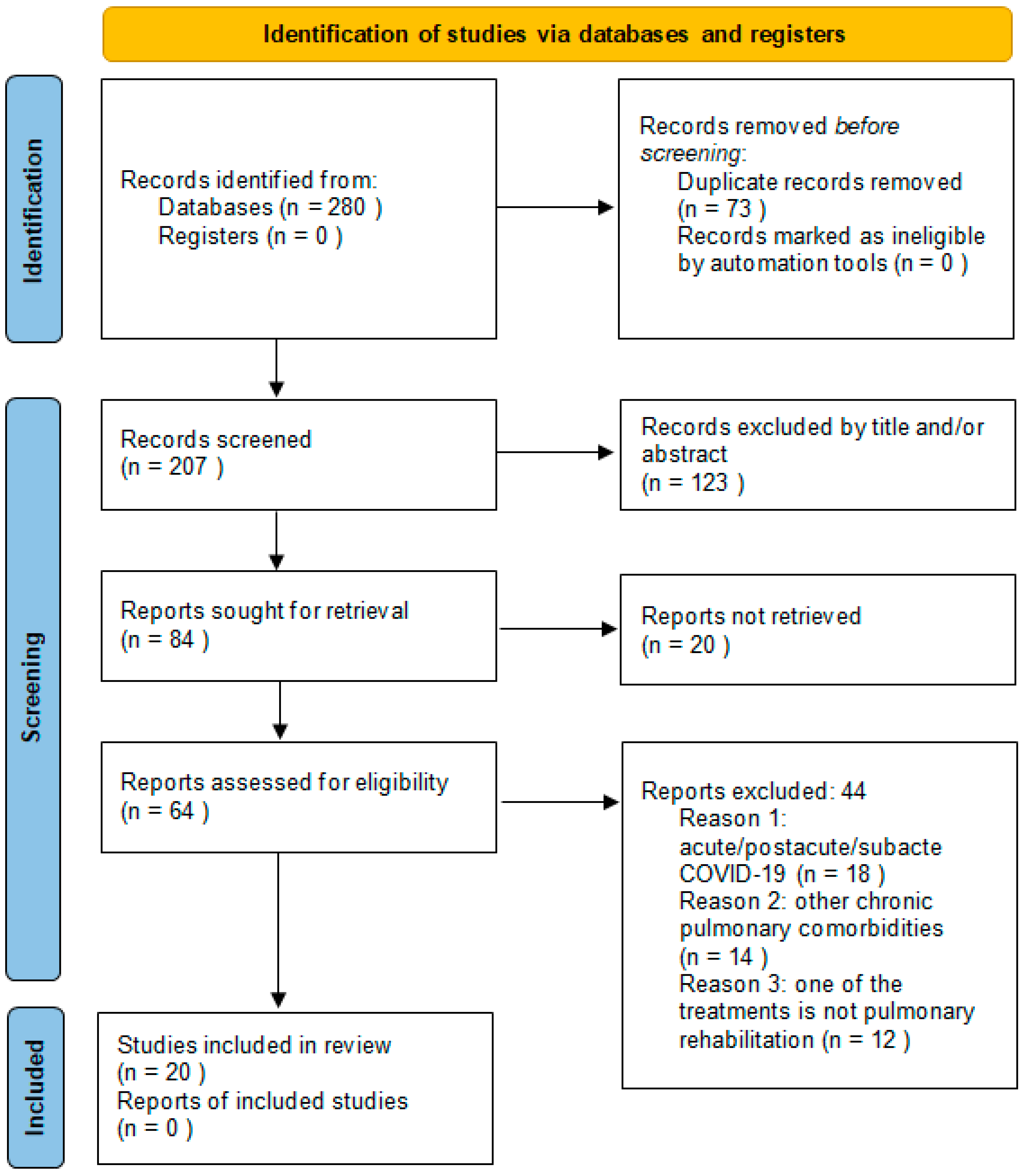
3.1. Study Selection
3.2. Methodological Quality

| Study No. and First Author | Q1 | Q2 | Q3 | Q4 | Q5 | Q6 | Q7 | Q8 | Q9 | Q10 | Q11 | Total Score |
|---|---|---|---|---|---|---|---|---|---|---|---|---|
| [33]: Longobardi et al. | Y | Y | Y | Y | N | N | Y | N | Y | Y | Y | 7/10 |
| [34]: Daynes et al. | Y | Y | Y | N | N | N | Y | N | Y | Y | Y | 6/10 |
| [35]: Rutkowski et al. | Y | Y | Y | Y | N | N | Y | Y | N | Y | Y | 7/10 |
| [36]: Sánchez Milá et al. | Y | Y | Y | Y | N | N | Y | Y | N | Y | Y | 7/10 |
| [37]: McNarry et al. | Y | Y | Y | Y | N | N | N | N | Y | Y | Y | 6/10 |
| [38]: Okan et al. | Y | Y | Y | Y | N | N | N | Y | Y | Y | Y | 7/10 |
| [39]: Philip et al. | Y | Y | Y | Y | N | N | Y | Y | Y | Y | Y | 8/10 |
| [40]: McGregor et al. | Y | Y | Y | Y | N | N | Y | Y | Y | Y | Y | 8/10 |
| [41]: del Corral et al. | Y | Y | Y | Y | Y | Y | Y | Y | Y | Y | Y | 10/10 |
| [42]: Elyazed et al. | Y | Y | Y | Y | N | N | N | Y | N | Y | Y | 6/10 |
| [43]: dos Santos et al. | Y | Y | Y | N | N | N | Y | Y | N | Y | Y | 6/10 |
| [44]: Jimeno-Almazan et al. | Y | Y | Y | Y | N | N | N | Y | N | Y | Y | 6/10 |
| [45]: Li et al. | Y | Y | Y | Y | N | N | Y | Y | Y | Y | Y | 8/10 |
| [46]: Vallier et al. | Y | Y | Y | Y | N | N | N | N | N | Y | Y | 5/10 |
| [47]: Arora et al. | Y | Y | Y | Y | N | N | N | N | N | Y | Y | 5/10 |
| [48]: del Corral et al. | Y | Y | Y | Y | Y | Y | Y | Y | Y | Y | Y | 10/10 |
| [49]: Nagy et al. | Y | Y | Y | Y | N | N | Y | Y | Y | Y | Y | 8/10 |
| [50]: Romanet et al. | Y | Y | Y | Y | N | N | Y | Y | Y | Y | Y | 8/10 |
| [51]: Bai et al. | Y | Y | Y | Y | N | N | N | Y | Y | Y | Y | 7/10 |
| [52]: Besnier et al. | Y | Y | Y | Y | N | N | Y | Y | Y | Y | Y | 8/10 |
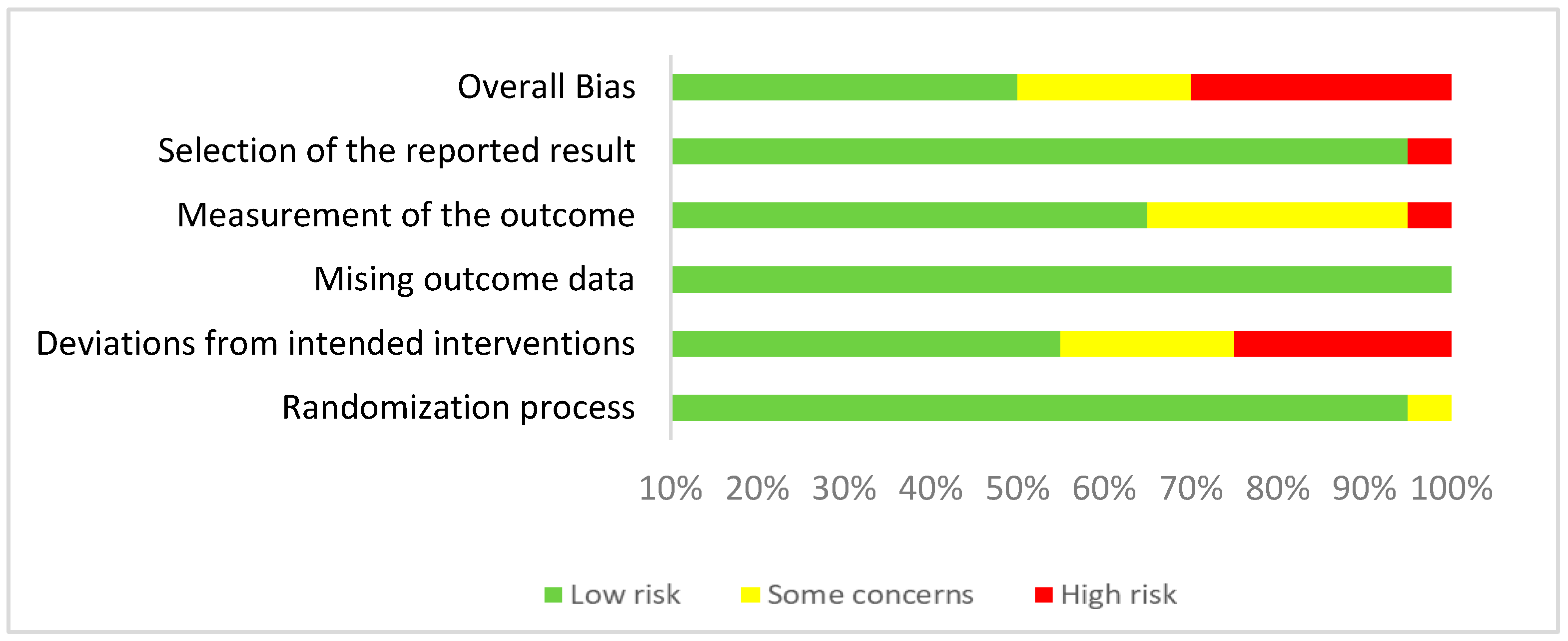
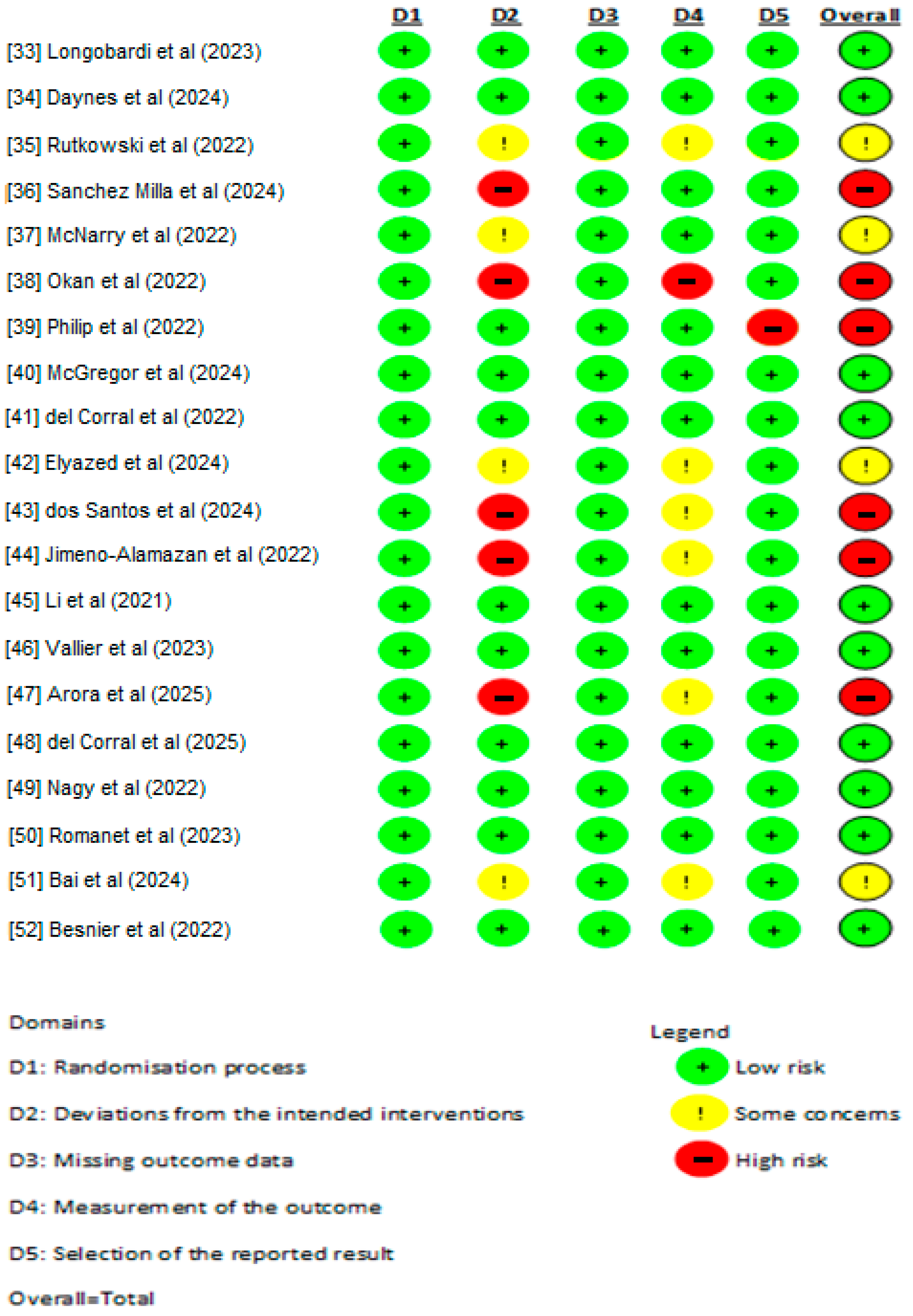
3.3. Risk of Bias Assessment
3.4. Characteristics of Participants and Intervention
3.5. Outcomes
3.6. Effectiveness of Pulmonary Rehabilitation
3.6.1. Exercise Capacity
3.6.2. Pulmonary Function
3.6.3. Respiratory Muscle Function
3.6.4. Peripheral Muscle Strength
3.6.5. Quality of Life
3.6.6. Anxiety and Depression
3.6.7. Dyspnea
3.6.8. Fatigue
3.6.9. In-Hospital Rehabilitation vs. Telerehabilitation
3.6.10. Telerehabilitation vs. Standard Care/Educational Counselling
4. Discussion
4.1. Study Strengths
4.2. Methodological Shortcomings and Study Limitations
4.3. Comparison with the Existing Literature
5. Conclusions
Points for Clinical Practice
Supplementary Materials
Author Contributions
Funding
Institutional Review Board Statement
Informed Consent Statement
Data Availability Statement
Conflicts of Interest
Abbreviations
| PR | pulmonary rehabilitation |
| COVID-19 | Coronavirus disease 19 |
| WHO | World Health Organization |
| mRNA | messenger ribonucleic acid |
| EBV | Ebstein–Barr virus |
| HSV6 | Herpes Simplex Virus 6 |
| ACTH | adrenocorticotropic hormone |
| PTSD | post-traumatic stress disorder |
| PEM | post-exertional malaise |
| ENT | ear–nose–throat |
| ATS | American Thoracic Society |
| AMPARS | α-amino-e-hydroxy-5-methyl-4-isoxalepropionic acid receptor |
| ESR | erythrocyte sedimentation rate |
| CRP | C-reactive protein |
| PRISMA | Preferred Reporting Items for Systematic Reviews and Meta-Analysis |
| PROSPERO | International Prospective Register of Systematic Reviews |
| PEDro | Physiotherapy evidence database |
| RCTs | randomized controlled trials |
| TELE-PR | tele-pulmonary rehabilitation |
| CARDIOPULM R | cardiopulmonary rehabilitation |
| I | intervention group |
| C | control group |
| sess | session |
| min | minute |
| w | week |
| FEV1 | forced expiratory volume in the first second |
| FVC | forced vital capacity |
| MVV | maximal voluntary ventilation |
| PEF | peak expiratory flow |
| PIF | peak inspiratory flow |
| TLCO | diffusing capacity of carbon monoxide |
| MIP | maximal inspiratory pressure |
| MEP | maximal expiratory pressure |
| SMIP | sustained maximal inspiratory pressure |
| IME | inspiratory muscle resistance |
| EPAP | expiratory positive airway pressure |
| PEEP | positive end-expiratory pressure |
| 6MWT | 6-minute walk test |
| 6MWD | 6-minute walking distance |
| CPET | cardiopulmonary exercise test |
| ISWT | incremental shuttle walk test |
| VO2max | maximal oxygen consumption |
| AT | anaerobic threshold |
| VT1 | ventilatory threshold 1 |
| VT2 | ventilatory threshold 2 |
| VE | minute ventilation |
| HRR | heart rate recovery |
| RPE | Borg scale rating of perceived exertion |
| ROM | range of motion |
| Wrmax | maximal workload |
| MHR | maximal heart rate |
| SHR | submaximal heart rate |
| SF-36 | short-form health survey (36 items) |
| SF-12 | short-form health survey (12 items) |
| PCS | physical component score |
| MCS | mental component score |
| EQ-5D-5L | 5-dimension 5-level EuroQol questionnaire |
| WHOQOL-BREF | World Health Organization Quality of Life questionnaire |
| HRQOL | health-related quality of life |
| K-BILD | K-BILD questionnaire for quality of life in pulmonary diseases |
| IMT | inspiratory muscle training |
| RMT | respiratory muscle training |
| mMRC scale | modified Medical Research Council dyspnea scale |
| BDI | baseline dyspnea index |
| TDI | transitional dyspnea index |
| Dyspnoea-12 | 12-item dyspnea questionnaire |
| GAD-7 | Generalized Anxiety Disorder-7 scale |
| HADS | Hospital Anxiety and Depression Scale |
| PHQ-9 | patient Health Questionnaire-9 |
| BDI | Beck Depression Inventory |
| BAI | Beck Anxiety Inventory |
| PMS | peripheral muscle strength |
| upper limbs | upper limbs |
| lower limbs | lower limbs |
| 30/1STS | 30 s sit-to-stand test/1 min |
| QMVC | quadriceps maximal voluntary contraction |
| HSQ | half-squat |
| 1RM | one-repetition maximum |
| FSS | Fatigue Severity Scale |
| CFQ-11 | 11-item Chalder Fatigue Scale |
| MFIS | modified impact of fatigue scale |
| MFI | multidimensional fatigue inventory |
| VR | virtual reality |
References
- World Health Organization. Post COVID-19 Condition (Long COVID); WHO: Geneva, Switzerland, 2025; Available online: https://www.who.int/news-room/fact-sheets/detail/post-covid-19-condition-(long-covid) (accessed on 14 July 2026).
- Postolache, P. Tratat de Recuperare Respiratorie—Aspecte Particulare; Gr. T. Popa: Iași, Romania, 2023; pp. 380–383. [Google Scholar]
- Batiha, G.E.-S.; Al-Kuraishy, H.M.; Al-Gareeb, A.I. Pathophysiology of Post-COVID syndromes: A new perspective. Virol. J. 2022, 19, 158. [Google Scholar] [CrossRef] [Scilit] [PubMed]
- Maltezou, H.C.; Pavli, A.; Tsakris, A. Post-COVID Syndrome: An Insight on Its Pathogenesis. Vaccines 2021, 9, 497. [Google Scholar] [CrossRef] [Scilit] [PubMed]
- Peluso, M.J.; Deeks, S.G. Mechanisms of long COVID and the path towards therapeutics. Cell 2024, 187, 5500–5529. [Google Scholar] [CrossRef] [Scilit] [PubMed]
- Fujimoto, Y.; Abe, H.; Eiro, T. Systemic increase of AMPA receptors associated with cognitive impairment of long COVID. Brain Commun. 2025, 7, fcaf337. [Google Scholar] [CrossRef] [Scilit] [PubMed]
- Parlițeanu, O.A.; Bălteanu, M.A.; Zaharia, D.C. The Impact of SARS-CoV-2 Infection on Glucose Homeostasis in Hospitalized Patients with Pulmonary Impairment. Diagnostics 2025, 15, 554. [Google Scholar] [CrossRef] [Scilit] [PubMed]
- Zheng, C.; Chen, J.-J.; Dai, Z.-H. Physical exercise-related manifestations of long COVID: A systematic review and meta-analysis. J. Exerc. Sci. Fit. 2024, 22, 341–349. [Google Scholar] [CrossRef] [Scilit] [PubMed]
- Park, J.-H.; Park, S.; Kim, N.-H. Postural Orthostatic Tachycardia Syndrome Associated with COVID-19: A Narrative Review. Medicina 2024, 60, 1325. [Google Scholar] [CrossRef] [Scilit] [PubMed]
- Payne, R.; Pring, T.; Hey, M.; Payne, G.; Greenhalgh, T. Muscle weakness post-COVID: A practical guide for primary care. Br. J. Gen. Pract. 2024, 74, 573–575. [Google Scholar] [CrossRef] [Scilit] [PubMed]
- Healthdirect Australia. Long COVID. Available online: https://www.healthdirect.gov.au/long-covid (accessed on 15 September 2025).
- Postolache, P.; Duceac, L.D.; Vasincu, E.G.; Agop, M.; Nemeș, R. Chaos and self-structuring behaviors in lung airways. UPB Sci. Bull. Ser. A 2016, 78, 291–298. [Google Scholar]
- Nemeș, R.; Duceac, L.D.; Vasincu, E.G.; Agop, M.; Postolache, P. On the implications of the biological systems fractal morpho-functional structure. UPB Sci. Bull. Ser. A 2015, 77, 263–272. [Google Scholar]
- Cherneva, R.; Cherneva, Z. Cardio-Respiratory Fitness and Fatigue in Post-COVID-19 Syndrome—A Three-Year Update. Biomedicines 2025, 13, 1097. [Google Scholar] [CrossRef] [Scilit] [PubMed]
- Perego, E. Overview and Pathophysiology of Long COVID. COVID 2026, 6, 53. [Google Scholar] [CrossRef] [Scilit]
- Castanares-Zapatero, D.; Chalon, P.; Kohn, L.; Dauvrin, M.; Detollenaere, J.; Maertens de Noordhout, C.; Primus-de Jong, C.; Cleemput, I.; Van den Heede, K. Pathophysiology and mechanism of long COVID: A comprehensive review. Ann. Med. 2022, 54, 1473–1487. [Google Scholar] [CrossRef] [Scilit] [PubMed]
- Postolache, P. Pulmonary Rehabilitation in COVID-19. In Handbook of Pulmonary Rehabilitation; Postolache, P., Manciniuk, D., Eds.; Nova Science Publishers: New York, NY, USA, 2021; Chapter 16; pp. 242–248. [Google Scholar]
- Seo, J.W.; Kim, S.E.; Kim, Y. Updated Clinical Practice Guidelines for the Diagnosis and Management of Long COVID. Infect. Chemother. 2024, 56, 122–157. [Google Scholar] [CrossRef] [Scilit] [PubMed]
- European Centre for Disease Prevention and Control. Does COVID-19 Vaccination Reduce the Risk and Duration of Post-COVID-19 Condition? Rapid Systematic Literature Review; ECDC: Stockholm, Sweden, 2025. [Google Scholar]
- Postolache, P.; Cojocaru, D.C. Pulmonary rehabilitation—From guidelines to practice. Rev. Med. Chir. Soc. Med. Nat. Iasi 2013, 117, 380–387. [Google Scholar] [PubMed]
- Martínez-Pozas, O.; Meléndez-Oliva, E.; Rolando, L.M.; Rico, J.A.Q.; Corbellini, C.; Sánchez Romero, E.A. The pulmonary rehabilitation effect on long COVID-19 syndrome: A systematic review and meta-analysis. Physiother. Res. Int. 2024, 29, e2077. [Google Scholar] [CrossRef] [Scilit] [PubMed]
- Pouliopoulou, D.V.; MacDermid, J.C.; Saunders, E. Rehabilitation Interventions for Physical Capacity and Quality of Life in Adults with Post-COVID-19 Condition: A Systematic Review and Meta-Analysis. JAMA Netw. Open 2023, 6, e2333838. [Google Scholar] [CrossRef] [Scilit] [PubMed]
- Singh, S.J.; Baldwin, M.M.; Daynes, E.; Evans, R.A.; Greening, N.J.; Jenkins, R.G.; Lone, N.I.; McAuley, H.; Mehta, P.; Newman, J.; et al. Respiratory sequelae of COVID-19: Pulmonary and extrapulmonary origins, and approaches to clinical care and rehabilitation. Lancet Respir. Med. 2023, 11, 709–725. [Google Scholar] [CrossRef] [Scilit] [PubMed]
- Gloeckl, R.; Marinov, B.; Pitta, F. Practical recommendations for exercise prescription in patients with Long COVID. Pulmonology 2022, 28, 467–471. [Google Scholar] [CrossRef] [Scilit] [PubMed]
- Spruit, M.A.; Holland, E.A.; Singh, S.J. COVID-19: Interim guidance on rehabilitation in the hospital and post-hospital phase from a committee of rehabilitation experts. Phys. Ther. 2020, 100, 1945–1951. [Google Scholar] [CrossRef] [Scilit] [PubMed]
- World Health Organization. Support for Rehabilitation Self-Management After COVID-19-Related Illness, 2nd ed.; Report No.: WHO/EURO:2021-3159-42917-59885; WHO Regional Office for Europe: Copenhagen, Denmark, 2021. [Google Scholar]
- Li, S.; Dai, B.; Hou, Y. Effect of pulmonary rehabilitation for patients with long COVID-19: A systematic review and meta-analysis of randomized controlled trials. Ther. Adv. Respir. Dis. 2025, 19, 17534666251323482. [Google Scholar] [CrossRef] [Scilit] [PubMed]
- Tan, C.; Meng, J.; Dai, X. Effects of therapeutic interventions on long COVID-19: A meta-analysis of randomized controlled trials. eClinicalMedicine 2025, 87, 103412. [Google Scholar] [CrossRef] [Scilit] [PubMed]
- Yue, Y.; Han, X.; Chen, Q. The effect of pulmonary rehabilitation for post-acute sequelae of SARS-CoV-2 infection in patients: A systematic review and meta-analysis. Front. Rehabil. Sci. 2025, 6, 1634351. [Google Scholar] [CrossRef] [Scilit] [PubMed]
- Sorouri, S.; Shafiei, H.; Mojahed, F. Functional and structural pulmonary outcomes in COVID-19 survivors and the role of pulmonary rehabilitation in the recovery process: A review of clinical and imaging studies. Health Provid. 2025, 5, 173–181. [Google Scholar] [CrossRef]
- Page, M.J.; McKenzie, J.E.; Bossuyt, P.M. The PRISMA 2020 statement: An updated guideline for reporting systematic reviews. BMJ 2021, 372, n71. [Google Scholar] [CrossRef] [Scilit] [PubMed]
- de Morton, N.A. The PEDro scale is a valid measure of the methodological quality of clinical trials: A demographic study. Aust. J. Physiother. 2009, 55, 129–133. [Google Scholar] [CrossRef] [Scilit] [PubMed]
- Longobardi, I.; Goessler, K.; de Oliveira Júnior, G.N. Effects of a 16-week home-based exercise training programme on health-related quality of life, functional capacity, and persistent symptoms in survivors of severe/critical COVID-19: A randomised controlled trial. Br. J. Sports Med. 2023, 57, 1295–1303. [Google Scholar] [CrossRef] [Scilit] [PubMed]
- Daynes, E.; Evans, R.A.; Greening, N.J. Post-hospitalisation COVID-19 Rehabilitation (PHOSP-R): A randomized controlled trial of exercise-based rehabilitation. Eur. Respir. J. 2025, 65, 2402152. [Google Scholar] [CrossRef] [Scilit] [PubMed]
- Rutkowski, S.; Bogacz-Czech, O.; Rutkowska, A. Effectiveness of an Inpatient Virtual Reality-Based Pulmonary Rehabilitation Program among COVID-19 Patients on Symptoms of Anxiety, Depression and Quality of Life: Preliminary Results from a Randomized Controlled Trial. Int. J. Environ. Res. Public Health 2022, 19, 16980. [Google Scholar] [CrossRef] [Scilit]
- Mila, Z.; Sanz, D.; Nieto, A. Effects of a respiratory and neurological rehabilitation treatment plan in post COVID-19 affected university students. Randomized clinical study. Chronic Respir. Dis. 2024, 21, 14799731241255967. [Google Scholar] [CrossRef] [Scilit] [PubMed]
- McNarry, M.; Berg, R.; Shalley, J. Inspiratory muscle training enhances rehabilitation post-COVID-19: A randomized controlled trial. Eur. Respir. J. 2022, 60, 2103101. [Google Scholar] [CrossRef] [Scilit] [PubMed]
- Okan, F.; Okan, S.; Yucesoy, F.D. Evaluating the Efficiency of Breathing Exercises via Telemedicine in Post-COVID-19 Patients: Randomized Controlled Study. Clin. Nurs. Res. 2022, 31, 771–781. [Google Scholar] [CrossRef] [Scilit] [PubMed]
- Philip, K.; Owles, H.; McVey, S. An online breathing and wellbeing programme (ENO Breathe) for people with persistent symptoms following COVID-19: A parallel-group, single-blinded, randomized controlled trial. Lancet Respir. Med. 2022, 10, 851–862. [Google Scholar] [CrossRef] [Scilit] [PubMed]
- McGregor, G.; Sandhu, H.; Bruce, J. Clinical effectiveness of an online supervised group physical and mental health rehabilitation programme for adults with post-COVID-19 condition (REGAIN study): Multicenter randomized controlled trial. BMJ 2024, 384, e076506. [Google Scholar] [CrossRef] [Scilit] [PubMed]
- Del Corral, T.; Fabero-Garrido, R.; Plaza-Manzano, G.; Fernández-de-Las-Peñas, C.; Navarro-Santana, M.; López-de-Uralde-Villanueva, I. Home-based respiratory muscle training on quality of life and exercise tolerance in long-term post-COVID-19: Randomized controlled trial. Ann. Phys. Rehabil. Med. 2023, 66, 101709. [Google Scholar] [CrossRef] [Scilit] [PubMed]
- Elyazed, T.; Alsharawy, L.; Salem, S. Effect of home-based pulmonary rehabilitation on exercise capacity in post COVID-19 patients: A randomized controlled trail. J. Neuroeng. Rehabil. 2024, 21, 40. [Google Scholar] [CrossRef] [Scilit] [PubMed]
- dos Santos, G.E.; da Costa, K.V.; Cordeiro de Souza, I.T. Effects of a cardiopulmonary rehabilitation protocol on functional capacity, dyspnea, fatigue, and body composition in individuals with post-COVID-19 syndrome: A randomized controlled trial. Physiother. Res. Int. 2023, 28, e2086. [Google Scholar] [CrossRef] [Scilit] [PubMed]
- Jimeno-Almazán, A.; Franco-López, F.; Buendía-Romero, Á. Rehabilitation for post-COVID-19 condition through a supervised exercise intervention: A randomized controlled trial. Scand. J. Med. Sci. Sports 2022, 32, 1791–1801. [Google Scholar] [CrossRef] [Scilit] [PubMed]
- Li, J.; Xia, W.; Zhan, C. A telerehabilitation programme in post-discharge COVID-19 patients (TERECO): A randomized controlled trial. Thorax 2022, 77, 697–706. [Google Scholar] [CrossRef] [Scilit] [PubMed]
- Vallier, J.; Simon, C.; Bronstein, A. Randomized controlled trial of home-based vs. hospital-based pulmonary rehabilitation in post COVID-19 patients. Eur. J. Phys. Rehabil. Med. 2023, 59, 103–110. [Google Scholar] [CrossRef] [Scilit] [PubMed]
- Arora, H.; Jaggi, S.; Aggarwal, D. Effect of Home Based Versus Hospital Based Pulmonary Rehabilitation Program on Lung Functions in Recovered Covid-19 Patients. Natl. J. Med. Res. 2025, 15, 103–108. [Google Scholar] [CrossRef] [Scilit]
- del Corral, T.; Fabero-Garrido, G.; Izquierdo-García, J. Effect of pulmonary rehabilitation on quality of life in individuals with post-COVID-19 symptoms: A randomized controlled trial. Ann. Phys. Rehabil. Med. 2025, 68, 101920. [Google Scholar] [CrossRef] [Scilit] [PubMed]
- Nagy, E.N.; Elimy, D.A.; Ali, A.Y.; Ezzelregal, H.G.; Elsayed, M.M. Influence of Manual Diaphragm Release Technique Combined with Inspiratory Muscle Training on Selected Persistent Symptoms in Men with Post-COVID-19 Syndrome: A Randomized Controlled Trial. J. Rehabil. Med. 2022, 54, jrm00330. [Google Scholar] [CrossRef] [Scilit] [PubMed]
- Romanet, C.; Wormser, J.; Fels, A. Effectiveness of exercise training on the dyspnea of individuals with long COVID: A randomized controlled multicenter trial. Ann. Phys. Rehabil. Med. 2023, 66, 101765. [Google Scholar] [CrossRef] [Scilit] [PubMed]
- Bai, B.; Ma, X.Y.; Zhou, H. Effects of aerobic training on cardiopulmonary fitness in patients with long COVID-19: A randomized controlled trial. Trials 2024, 25, 649. [Google Scholar] [CrossRef] [Scilit] [PubMed]
- Besnier, F.; Malo, J.; Mohammadi, H. Effects of Cardiopulmonary Rehabilitation on Cardiorespiratory Fitness and Clinical Symptom Burden in Long COVID. Am. J. Phys. Med. Rehabil. 2025, 104, 163–171. [Google Scholar] [CrossRef] [Scilit] [PubMed]
- Ortiz-Ortigosa, L.; Galvez-Alvarez, P.; Vinolo-Gil, M.J. Effectiveness of pulmonary rehabilitation programmes and/or respiratory muscle training in patients with post-COVID conditions: A systematic review. Respir. Res. 2024, 25, 248. [Google Scholar] [CrossRef] [Scilit] [PubMed]
- Sakai, T.; Hoshino, C.; Masanobu, H. Rehabilitation of Patients with Post-COVID-19 Syndrome: A Narrative Review. Prog. Rehabil. Med. 2023, 8, 20230017. [Google Scholar] [CrossRef] [Scilit] [PubMed]
- Burnett, D.M.; Skinner, C.E. Year in review: Long COVID and Pulmonary Rehabilitation. Respir. Care 2023, 68, 846–851. [Google Scholar] [CrossRef] [Scilit] [PubMed]
- Fernandez-Lazaro, D.; Santamaria, G.; Sanchez-Serrano, N. Efficacy of Therapeutic Exercise in Reversing Decreased Strength, Impaired Respiratory Function, Decreased Physical Fitness, and Decreased Quality of Life Caused by the Post-COVID-19 Syndrome. Viruses 2022, 14, 2797. [Google Scholar] [CrossRef] [Scilit] [PubMed]
- Ahmed, I.; Mustafaoglu, R.; Yeldan, I.; Yasaci, Z.; Erhan, B. Effect of Pulmonary Rehabilitation Approaches on Dyspnea, Exercise Capacity, Fatigue, Lung Functions, and Quality of Life in Patients with COVID-19: A Systematic Review and Meta-analysis. Arch. Phys. Med. Rehabil. 2022, 103, 2051–2062. [Google Scholar] [CrossRef] [Scilit] [PubMed]
- Reinert, G.; Müller, D.; Wagner, P.; Martínez-Pozas, O.; Cuenca-Záldivar, J.N.; Fernández-Carnero, J.; Sánchez Romero, E.A.; Corbellini, C. Pulmonary Rehabilitation in SARS-CoV-2: A Systematic Review and Meta-Analysis of Post-Acute Patients. Diagnostics 2022, 12, 3032. [Google Scholar] [CrossRef] [Scilit] [PubMed]
- Chen, H.; Shi, H.; Liu, X.; Sun, T.; Wu, J.; Liu, Z. Effect of Pulmonary Rehabilitation for Patients with Post-COVID-19: A Systematic Review and Meta-Analysis. Front. Med. 2022, 9, 837420. [Google Scholar] [CrossRef] [Scilit] [PubMed]
- Meléndez-Oliva, E.; Martínez-Pozas, O.; Cuenca-Zaldívar, J.N.; Villafañe, J.H.; Jiménez-Ortega, L.; Sánchez-Romero, E.A. Efficacy of Pulmonary Rehabilitation in Post-COVID-19: A Systematic Review and Meta-Analysis. Biomedicines 2023, 11, 2213. [Google Scholar] [CrossRef] [Scilit] [PubMed]
- Al-Mhanna, S.B.; Mohamed, M.; Noor, N.M.; Afolabi, H.A.; Irekeola, A.A.; Bello, K.E.; Aldhahi, M.I.; Ghazali, W.S.W. Effectiveness of Pulmonary Rehabilitation among COVID-19 Patients: A Systematic Review and Meta-Analysis. Healthcare 2022, 10, 2130. [Google Scholar] [CrossRef] [Scilit] [PubMed]
- Oliveira, M.R.; Hoffman, M.; Jones, A.W.; Holland, E.A.; Borghi-Silva, A. Effect of Pulmonary Rehabilitation on Exercise Capacity, Dyspnea, Fatigue, and Peripheral Muscle Strength in Patients With Post-COVID-19 Syndrome: A Systematic Review and Meta-analysis. Arch. Phys. Med. Rehabil. 2024, 105, 1559–1570. [Google Scholar] [CrossRef] [Scilit] [PubMed]
- da Costa Correia, A.; Ribeiro, F.; Amorim, F.F.; Giusti, P.R.; Peccin, M.S.; Imoto, A.M. Effectiveness of inspiratory muscle training and multicomponent physical training in patients with post-COVID conditions: A systematic review and meta-analysis. Syst. Rev. 2025, 14, 230. [Google Scholar] [CrossRef] [Scilit] [PubMed]
- da Silva Vieira, A.G.; Nunes Pinto, A.C.; Schneider Pereira Garcia, B.M. Telerehabilitation improves physical function and reduces dyspnea in people with COVID-19 and post-COVID-19 conditions: A systematic review. J. Physiother. 2022, 68, 90–98. [Google Scholar] [CrossRef] [Scilit] [PubMed]


| Injury | Symptoms |
|---|---|
| Respiratory | Cough, dyspnea, chest pain |
| Cardiovascular | Chest pain, palpitations, myocarditis, orthostatic postural tachycardia, ischemic heart disease |
| Nervous | Fatigue, brain fog, amnesia, paresthesia |
| Psycho-emotional | Anxiety, depression, mood changes, sleep disorders, PTSD |
| Musculoskeletal | Myalgia, arthralgia |
| Gastrointestinal | Nausea, diarrhea/constipation, abdominal pain, decreased appetite |
| Author (Year) | Country | COVID-19 Severity | Sample Size T, I/C | Sample Characteristics |
|---|---|---|---|---|
| [33] Longobardi et al. (2023) | Brazil | Severe/critical | 50 25/25 | Age (mean ± SD) = 61 ± 7.4 F = 23 (50%) |
| [34] Daynes et al. (2024) | UK | Non-severe/Severe/critical | 181 I1 56/I2 63/C 62 | Age (mean ± SD) = 56 ± 12 F = 82 (45,3%) |
| [35] Rutkowski et al. (2022) | Poland | A classification (mild/severe/critical) is not specified | 32 18/14 | Age (mean ± SD) = 57.8 ± 4.9 F = 22 (68.8%) |
| [36] Sanchez Milla et al. (2024) | Spain | Mild | 200 100/100 | Age (median) = 22 F = 101 (50.5%) |
| [37] McNarry et al. (2022) | UK | A classification (mild/severe/critical) is not specified | 148 111/37 | Age (mean ± SD) = 46.6 ± 12.2 F = 130 (87,8%) |
| [38] Okan et al. (2022) | Turkey | A classification (mild/severe/critical) is not specified | 52 26/26 | Age (mean ± SD) = 50.49 ± 12.85 F = 25 (48.1%) |
| [39] Philip et al. (2022) | UK | A classification (mild/severe/critical) is not specified | 129 58/71 | Age (median) = 49 F = 103 (79,8%) |
| [40] McGregor et al. (2024) | UK | A classification (mild/severe/critical) is not specified | 485 237/248 | Age (mean ± SD) = 56.1 ± 12.2 F = 252 (52%) |
| [41] del Corral et al. (2022) | Spain | A classification (mild/severe/critical) is not specified | 88 I1 22/I2 22/C1 22/C2 22 | Age (mean ± SD) = 46.42 ± 10.22 F = 63 (71.59%) |
| [42] Elyazed et al. (2024) | Egypt | Moderate/Severe | 60 30/30 | Age (mean ± SD) = 55.75 ± 6.9 F = 27 (45%) |
| [43] dos Santos et al. (2024) | Brazil | A classification (mild/severe/critical) is not specified | 33 17/16 | Age (mean ± SD) = 47.38 ± 12.8 F = 20 (60,6%) |
| [44] Jimeno-Alamazan et al. (2022) | Spain | Mild | 39 19/20 | Age (mean ± SD) = 45.3 ± 9.7 F = 29 (74.4%) |
| [45] Li et al. (2021) | China | Non-severe/Severe | 112 52/60 | Age (mean ± SD) = 50.6 + 10.98 F = 62 (52%) |
| [46] Vallier et al. (2023) | France | Mild/Moderate/Severe | 17 9/8 | Age (mean ± SD) = 54.8 ± 16 F = 5 (29.41%) |
| [47] Arora et al. (2025) | India | Mild/Moderate/Severe | 54 27/27 | Age (mean ± SD) = 50.8 ± 14.7 F = 29 (53,7%) |
| [48] del Corral et al. (2025) | Spain | A classification (mild/severe/critical) is not specified | 64 32/32 | Age (mean ± SD) = 50.3 ± 10.5 F = 41 (64.1%) |
| [49] Nagy et al. (2022) | Egypt | A classification (mild/severe/critical) is not specified | 52 26/26 | Age (mean ± SD) = 39.85 ± 3.45 F = 0 |
| [50] Romanet et al. (2023) | France | A classification (mild/severe/critical) is not specified | 60 27/33 | Age (mean ± SD) = 58 + 12.11 F = 23 (38,3%) |
| [51] Bai et al. (2024) | China | A classification (mild/severe/critical) is not specified | 24 12/12 | Age (mean ± SD) = 45.23 ± 15.11 F = 14 (58.3%) |
| [52] Besnier et al (2022) | Canada | A classification (mild/severe/critical) is not specified | 35 18/17 | Age (mean ± SD) = 53.18 ± 11.71 F = 24 (52,5%) |
| Intervention (Type, Duration, Components) | Control | Measured Parameters | Intragroup res (p < 0.05) | Intergroup res (p < 0.05) | |
|---|---|---|---|---|---|
| [33] Longobardi et al. (2023) | TELE-PR 3 sessions/week, 60–80 min/session, 16 weeks aerobic (walking, jogging): from short session (10 min/day) to one session of 50 min/day strength training 6 ex, 3–5 sets, 8–15 reps. Progressive training intensity based on RPE 1 supervised video session/week | Standard care (healthy lifestyle advices, diet, physical activity) | Exercise capacity: | ||
| CPET VO2max (L/min) | ↔ | ↔ | |||
| VO2max (mL/kg/min) VO at VT1 | ↔ ↔ | ↔ ↔ | |||
| VO at VT2 VE/VCO2 | ↔ ↔ | ↔ ↔ | |||
| HRQOL: | |||||
| SF-36 | ↑ PCS + PF, GH, VT | ↑ PCS + PF, GH, VT | |||
| Pulmonary function: | |||||
| FEV1, FVC, FEV1/FVC, PIF, PEF | ↔ ↔ | ↔ ↔ | |||
| PMS: | |||||
| 30STS | ↔ | ↑ | |||
| Handgrip | ↔ | ↔ | |||
| TUG | ↔ | ↔ | |||
| Fatigue: FSS | ↔ | ↔ | |||
| Anxiety and depression: | |||||
| BAI | ↔ | ↔ | |||
| BDI* | ↔ | ↔ | |||
| [34] Daynes et al. (2024) | I1. PR 3 sessions/week in hospital, 90–120 min/session, 8 weeks aerobic, walking strength training auto management strategies educational counselling I2. Tele-PR on your COVID rehabilitation Platform 4 phases, 1 phase = 2 weeks aerobic, walking strength training | Standard care, depending on symptoms | Exercise capacity: | ||
| ISWT (VO2max) | ↑ I1,I2 | ↑ I1 vs. C, ↑ I2 vs. C | |||
| HRQOL: | |||||
| EQ-5D-5L | ↔ | ↔ | |||
| Anxiety and depression: | |||||
| GAD-7 | ↔ | ↔ | |||
| PHQ-9 | ↔ | ↔ | |||
| Dyspnea: | |||||
| Dyspnoea-12 | ↔ | ↔ | |||
| mMRC | ↔ | ↔ | |||
| Fatigue: | |||||
| FACIT-FS | ↑ I1,C | ↔ | |||
| PMS: | |||||
| Handgrip | ↑ I2,C | ↑ I1 vs. C | |||
| QMVC | ↑ I1,I2 | ↑ I2 vs. C | |||
| [35] Rutkowski et al. (2022) | PR VR-assisted 3 weeks aerobic (cycloergometer) on a sunny island, with heart rate limits vary by the rehabilitation models included (model A-80% of SHR, model B-70% SHR, model C-60% SHR, model D-20–30% HRR) strength training VR relaxing techniques–therapeutical virtual garden breathing exercises | IN-HOSPITAL 5 sessions/week, 3 weeks aerobic (cycloergometer) with heart rate limits vary by the rehabilitation models included (model A-80% of SHR, model B-70% SHR, model C-60% SHR, model D-20–30% HRR) strength training mindfulness techniques breathing exercises | Exercise capacity: | ||
| 6MWT | ↑ | ↔ | |||
| HRQOL: | |||||
| WHOQOL-BREF | ↔ | ↔ | |||
| Anxiety and depression: | |||||
| HADS-A/D | ↓ I,C | ↔ | |||
| Dyspnea: | |||||
| mMRC | ↓ | ↓ | |||
| [36] Sanchez Milla et al. (2024) | PR + neurological rehab 4 weeks IMT: every day, 5 min/day, with Powerbreathe device aerobic (walking): 6 days/week, 1 session = 40 min/day, intensity of 60–75% MHR and 50–60% MHR olfactory and gustatory rehabilitation | No treatment | Pulmonary function: | ||
| FEV1, FVC, FEV1/FVC | ↑ FVC, ↑ FEV1/FVC | ↑ FVC ↑ FEV1/FVC | |||
| Respiratory muscles function: MIP | ↑ MIP I | ↑ | |||
| Dyspnea: | |||||
| mMRC | ↓ | ↓ | |||
| Borg scale | ↓ | ↓ | |||
| Neuro: SSTQ | ↑ | ↑ | |||
| [37] McNarry et al. (2022) | TELE-PR IMT 3 unsupervised sessions/week, 20 min/session, 8 weeks IMT with PrO2Fit device, 1 session = 6 cycles of 6 breaths, in non-consecutive days before each session MIP is measured, to maintain IMT pressure > 80% MIP during training | Standard care, depending on symptoms | Exercise capacity: | ||
| Chester step test | |||||
| VO2max (mL/kg/min) | ↑ I | ↔ | |||
| Respiratory muscles function: | |||||
| MIP, SMIP | ↑ MIP I ↑ SMIP I | ↑ MIP ↑ SMIP | |||
| HRQOL: | |||||
| K-BILD | ↑ total score + breathless and activities domain, psychological domain | ↔ | |||
| Dyspnea: | |||||
| BDI | ↔ | ↔ | |||
| TDI | ↑ | ↑ | |||
| [38] Okan et al. (2022) | TELE-PR 5 weeks aerobic (walking) 20–30 min/day, 5 days/weeks, intensity <3 RPE breathing exercises 3 sessions × 10 ex, daily, 2 h after meal | Educational counselling: brochure with breathing exercises | Exercise capacity: | ||
| 6MWT | ↑ 6MWD I | ↑↑ 6MWD | |||
| HRQOL: SGRQ | ↓ I,C | ↓ | |||
| Pulmonary function: | |||||
| FEV1, FEV1/FVC, MVV | ↑ FEV1, ↑ FVC ↑ MVV | ↑ FEV1, ↑ FVC ↑ MVV | |||
| Dyspnea:mMRC | ↓ I,C | ↓ | |||
| [39] Philip et al. (2022) | PR ENO Breathe protocol, 6 weeks Description: online program that integrates singing techniques to optimize breathing control and reduce anxiety 1 online group session/week: singing lullabies breathing exercises, vocal training, postural training anxiety and depression auto management techniques | Standard care, depending on symptoms | HRQOL: SF-36 | ↔ | ↑ MCH score |
| Dyspnea: VAS | ↔ | ↓ | |||
| Anxiety: GAD-7 | ↔ | ↓ | |||
| Dyspnea: | |||||
| Dyspnoea-12 | ↔ | ↔ | |||
| VAS | ↔ | ↓ VAS breathless running | |||
| [40] McGregor et al. (2024) | TELE-PR 8 weeks 2–3 sessions/week, 30 min/session, group supervised training aerobic strength training balance and coordination improvement 6 sessions/week, 1 h/session, group-supervised psychological training | 1 consult of 30 min about post-COVID syndrome and its implications NHS COVID recovery brochure | HRQOL: | ||
| PROPr | ↔ | ↑ | |||
| EQ-5D-5L | ↔ | ↑ VAS score | |||
| Anxiety and depression: HADS-A/D | ↔ | ↓ HADS-D | |||
| Dyspnea: PROMIS | ↔ | ↔ | |||
| [41] del Corral et al. (2022) | PR 12 sessions/week, morning and evening, 20 min/session, 6days/week, 8 weeks I1 = RMT I2 = IMT Morning session—unsupervised Evening session—supervised via videoconference MIP/MEP: S1 + S5: I1 50% MIP, I2 20% MIP/MEP S2 + S6: 60% MIP/MEP S3 + S7: 70% MIP/MEP S4 + S8: 80%MIP/MEP | TELE-PR identical protocol like in I group C1 = RMT sham C2 = IMT sham C1, and C2 groups used a sham device RMT/IMT (0 cm H2O resistance) | Exercise capacity: | ||
| Ruffier test | ↑ I1 | ↔ | |||
| Respiratory muscles function: | |||||
| MIP MEP | ↑ MIP I1, I2, C1, C2 ↑ MEP I1, I2, C1, C2 | ↑ MIP I2 vs. C1/C2 ↑ MIP I1 vs. C1 ↑ MIP C2 vs. I1 ↑ MEP I2 vs. C2 ↑ MEP I1 vs. C1 ↑ MEP C2 vs. I1 | |||
| HRQOL: EQ-5D-5L INDEX/VAS | ↑ Index + VAS I1, I2, C2 | ↑ Index I1 vs. C1 ↑ VAS I1 vs. C1 | |||
| Pulmonary function: | |||||
| FEV1, FVC, FEV1/FVC, PEF | ↔ ↑ PEF I1 | ↔ ↑ PEF I2 vs. I1, I1 vs. C1, C2 vs. I1 | |||
| PMS: | |||||
| Handgrip | ↑ I1, I2, C1, C2 | ↔ | |||
| 1STS | ↑ I1, I2 | ↑ I1 vs. C1 ↑ I2 vs. C2 ↑ I2 vs. C1 ↑ C2 vs. I1 | |||
| Anxiety and depression: | |||||
| HADS | ↑ I1, I2, C1, C2 | ↔ | |||
| Dyspnea: VAS | ↔ | ↔ | |||
| [42] Elyazed et al. (2024) | TELE-PR 12 weeks aerobic (walking): 30 min-1 h/day, 1 session/day, 5 days/week RMT 10–15 min, 2 sessions/day, 5 days/week strength training (sup limbs + quadriceps) 3 sets × 10 reps, 2 sessions/week, 5–7 days/week diaphragmatic strengthening with 1–2 kg loads on the patients’ abdomen | Standard care, depending on symptoms: multivitamins, Antioxidants, hyperproteic diet | Exercise capacity: | ||
| 6MWT | ↑ I,C | ↑ | |||
| HRQOL: SF-36 | ↑ I,C | ↑ | |||
| Dyspnea: mMRC | ↓ I,C | ↓ | |||
| Fatigue: CFQ-11 | ↓ I,C | ↓ | |||
| [43] dos Santos et al. (2024) | CARDIOPULMONARY R 6 weeks IMT with Threshold device, 3 sets × 10 reps, with 1 min pause between steps, MIP 40% W1–3, MIP 50% W3–6 pulmonary expansion therapy EPAP and PEEP 5–20 cm H2O, 3 sets × 2 min, with 2 min pause between sets aerobic (treadmill) 20 de min/day, progressive intensity 60%, 70% and 80% in W1, W5, W6 strength training sup limbs, initially at 50% VO2max and progressive increase if RPE 4–6 | Educational counselling lifestyle recommendations | Exercise capacity: | ||
| 6MWT | ↑ | ↑ | |||
| Dyspnea: mMRC | ↓ | ↓ | |||
| Fatigue: MFIS | ↓ | ↔ | |||
| Body composition: upper- and lower- limb muscle mass | ↑ upper-limb muscle mass | ↑ upper-limb muscle mass | |||
| [44] Jimeno-Alamazan et al. (2022) | PR 3 sessions/week, 8 weeks 1 session/week of continuous low intensity continuous training (65–70% HRR), 30–60 min 2 sessions/week: continuous moderate intensity-variable training (3–5 min of 65–70% HRR, then 2–3 min of 55–65% HRR), 30–60 min + strength training, 3 sets of 4 ex, 8 reps, 50% of 1RM intensity | Educational counselling: WHO Guidelines of rehabilitation and self-management after COVID-19 | Exercise capacity: | ||
| CPET VO2max (mL/kg/min) | ↑ I | ↑ | |||
| HRQOL: SF-12 | ↑ PA domain | ↑ PCS | |||
| Pulmonary function: | |||||
| FEV1, FVC, FEV1/FVC, MVV | ↔ ↔ | ↔ ↔ | |||
| PMS: | |||||
| Handgrip | ↔ | ↔ | |||
| 1STS | ↑ I,C | ↑ | |||
| BP 50% 1RM | ↑ I | ↑ | |||
| HSQ 50% 1RM | ↑ I,C | ↑ | |||
| Dyspnea: mMRC | ↓ I,C | ↓ | |||
| Fatigue: | |||||
| CFQ-11 | ↓ | ↓ | |||
| FSS | ↓ | ↓ | |||
| Anxiety and depression: | |||||
| GAD-7 | ↔ | ↔ | |||
| PHQ-9 | ↔ | ↓ | |||
| [45] Li et al. (2021) | TELE-PR 3–4 sessions/week, 40–60 min/session, 6 weeks on RehabApp aerobic (walking, treadmill, mild running) 20 min, intensity of 30–40% HRR S1–3 and 40–60% HRR W4–6 minimum 2 days/week breathing control 2 sets of 1 min each, 12 reps, 3–4 days/week thoracic expansion exercises 2 sets each of 1 min, 12 reps, 3–4 days/week low limbs strength training, 2 sets × 3 ex, 1 min/set, 12 reps | Educational counselling: Short session (10 min) | Exercise capacity: | ||
| 6MWT | ↔ | ↑↑ | |||
| HRQOL: SF-12 | ↔ | ↑ PCS | |||
| Pulmonary function: | |||||
| FEV1, FVC, FEV1/FVC, PEF, MVV | ↔ ↔ | ↔ ↑ MVV | |||
| PMS: Squats | ↔ | ↑ | |||
| Dyspnea: mMRC | ↓ I | ↓ | |||
| [46] Vallier et al. (2023) | TELE-PR 5 sessions/week, 4 weeks 1 session/week of walking, 40 min/session, intensity of 90–100% of the HR reached at a 6MWT conducted before 1 resistance training session/week 3 total sessions of individual strength training via videoconference 1 sophrology session via videoconference | IN-HOSPITAL PR aerobic (cycloergometer) 1 session/week, 1 session = 40 min, intensity of 90–100% HR (determined at a CPET previously carried out) 1 session/week resistance training 3 sessions of group strength training 1 sophrology session | Exercise capacity: | ||
| 6MWT | ↑ I,C | ↔ | |||
| HRQOL: VQ-11 | ↓ I,C | ↔ | |||
| Pulmonary function: | |||||
| FEV1, FVC, FEV1/FVC, TLCO | ↑ FVC I,C ↑ TLCO I,C | ↔ ↔ | |||
| Dyspnea: mMRC | ↓ I,C | ↔ | |||
| Fatigue: MFI | ↓ C | ↓ in favor of C | |||
| PMS: | |||||
| 1STS | ↑ I,C | ↔ | |||
| Jump-squats | ↑ I,C | ↔ | |||
| [47] Arora et al. (2025) | TELE-PR 8 weeks active ROM exercises aerobic breathing exercises incentive spirometry | IN-HOSPITAL PR 2 sessions/week, 45 min—1 h/session, 8 weeks aerobic upper and lower limbs strength training breathing techniques nutritional counselling psychological counselling | Exercise capacity: | ||
| 6MWT | ↑ I,C | ↔ | |||
| Pulmonary function: | |||||
| FEV1, FVC | ↑ FVC C | ↔ | |||
| Dyspnea: mMRC | ↔ | ↔ | |||
| [48] del Corral et al. (2025) | TELE AE + RMT 3 days/week, 8 weeks RMT with Oxygen Dual Valve device, 1 morning session of 20 min, 1 afternoon session of 30 min 1 cycle = 10 reps, 6 cycles in total, 1 min pause between cycles 3 min warm up la 30% MIP/MEP 1 cycle MIP/MEP 50% every 2 min MIP/MEP raised by 10% AE (aerobic) via videoconference 1 session of 50 min, intensity of 60–75% MHR (determined at a CPET previously done), 2 days/week | TELE AE + RMT sham RMT with the same protocol as the I group, but using a sham device (0 cm H2O pressure) AE (aerobic) via videoconference, 1 session = 50 de min, intensity of 60–75% MHR (determined at a CPET previously done), 2 days/week | Exercise capacity: | ||
| CPET VO2max (mL/kg/min) | ↑ I,C | ↔ | |||
| Respiratory muscles function: | |||||
| MIP MEP IME | ↑ MIP I, C ↑ MEP I ↑ IME I,C | ↑ MIP I vs. C ↑ MEP I vs. C ↑ IME I I vs. C | |||
| HRQOL: EQ-5D-5L Index/VAS | ↑ Index I,C + VAS I | ↔ | |||
| Pulmonary function: | |||||
| FEV1, FVC, FEV1/FVC | ↔ | ↔ | |||
| PEF | ↑ PEF I | ↑ PEF | |||
| TLCO | ↑ TLCO I | ↔ | |||
| PMS: | |||||
| 1STS | ↑ I,C | ↔ | |||
| Handgrip | ↔ | ↔ | |||
| Anxiety and depression: | |||||
| HADS-A/D | ↓ I,C | ↔ | |||
| HADS total | ↓ I,C | ↔ | |||
| [49] Nagy et al. (2022) | IMT + manual Diaphragm release training, 6 weeks IMT with Powerbreathe device, 2 sets of 30 dynamic breaths, 1 session = max 4 min, 2 min pause between sessions, intensity of 60% MIP, 3 sessions/week 3 sessions/week DR, 2 sets × 10 deep breaths, 1 min pause between sets, 3 min total time | IMT IMT with Powerbreathe device, 2 sets of 30 dynamic breaths, 1 session = max 4 min, 2 min pause between sets, intensity 60% MIP, 3 sessions/week | Exercise capacity: | ||
| 6MWT | ↑ I,C | ↑ | |||
| Respiratory muscles function: MIP | ↑ I | ↑ | |||
| Dyspnea: mMRC | ↓ I,C | ↓ | |||
| Fatigue: FSS | ↓ I,C | ↓ | |||
| [50] Romanet et al. (2023) | ETR protocol 2 sessions/weeks, 15–60 min/session, 10 weeks aerobic (cycloergometer) continuous or with intervals, intensity of 60–70%MHR (reached at a 6MWT previously done), initially 15 min and gradually raised 45–60 min upper and lower limbs strength training, 4 sets, 6–12 reps | Classic PR: 2 sessions/week, 1 session = 30 min low-moderate intensity aerobic (cycloergometer) upper and lower limbs strength training RMT balance exercises electrostimulation | HRQOL: SF-12 | ↔ | ↑ PCS I vs. C |
| Dyspnea: mMRC | ↔ | ↓ I | |||
| [51] Bai et al. (2024) | PR 3 sessions/week aerobic training, 4 weeks MIIT protocol: 1 session of 8 min at initial intensity of 40% WR max (determined at a CPET previously done), 2 min pause, 4 cycles—>4 sessions at 50% WR max—>4 sessions 55% WR max protocol HIIT: 1 session of 8 min at initial intensity of 40% WR max, 2 min pause, 4 cycles—> 4 cycles of 30 s, 30 s pause, la 80% WR max, 25–30 cycles in total. After 4 the intensity reaches 85% WR, then 90% WR, with the same number and duration of cycles | Educational counselling: WHO Guidelines of rehabilitation and self-management after COVID-19 | Exercise capacity: CPET | ||
| VO2max (mL/min) | ↑ I | ↑ | |||
| VO2 max(mL/kg/min) | ↑↑ I | ↑ | |||
| VO2 max (%) | ↑ I | ↑ | |||
| AT at VO2 (mL/min) | ↑ I | ↑ | |||
| AT VO2 (mL/kg/min) | ↑ I | ↑ | |||
| AT VO2 (%) | ↔ | ↔ | |||
| VE (L/min) | ↔ | ↔ | |||
| VE/VCO2 | ↔ | ↔ | |||
| HRQOL: SF-12 | ↔ | ↔ | |||
| Pulmonary function: | |||||
| FEV1, FVC, FEV1/FVC | ↔ | ↔ | |||
| Anxiety and depression: | |||||
| GAD-7 | ↔ | ↔ | |||
| PHQ-9 | ↓ I | ↔ | |||
| [52] Besnier et al. (2022) | CARDIOPULM R 3 session/week, 8 weeks aerobic (cycloerogometer) 30 min, first session 10 min, low intensity (10–11 RPE), W2 20 min, W3–8 30 min strength training 3 sets of 10 reps IMT with Powerbreathe device, 3 sets of 10 breaths, daily breathing techniques (pursed lips, abdominal breathing) | No treatment (patients maintain their daily habits) | Exercise capacity: | ||
| CPET | |||||
| VO2 max (mL/min) | ↑ | ↑ | |||
| VO2 max (mL/kg/min) | ↑ | ↑ | |||
| VO2 max (%) | ↑ | ↑ | |||
| VO2 at VT1 (mL/kg/min) | ↑ | ↑ | |||
| VO2 a VT2 (mL/kg/min) | ↑ | ↑ | |||
| VE/VCO2 | ↑ | ↑ | |||
| Exercise capacity: | |||||
| 6MWT | ↑ | ↑ | |||
| HRQOL: SF-36 | ↑ PCS + domains PF, BP, GH, MH ↑ PCS C ↓ MH C | ↑ MH I vs. C | |||
| Pulmonary function: | |||||
| FEV1, FVC, FEV1/FVC | ↔ | ↔ | |||
| Dyspnea: MRC | ↔ | ↓ | |||
| PMS: | |||||
| TUG usual speed | ↓ | ↓ | |||
| TUG fast speed | ↓ | ↔ | |||
| STS-5 | ↔ | ↔ |
Disclaimer/Publisher’s Note: The statements, opinions and data contained in all publications are solely those of the individual author(s) and contributor(s) and not of MDPI and/or the editor(s). MDPI and/or the editor(s) disclaim responsibility for any injury to people or property resulting from any ideas, methods, instructions or products referred to in the content. |
© 2026 by the authors. Licensee MDPI, Basel, Switzerland. This article is an open access article distributed under the terms and conditions of the Creative Commons Attribution (CC BY) license.
Share and Cite
Oiegar, V.-F.; Călărașu, C.; Postolache, P.; Ghimuș, C.; Bălteanu, M.-A.; Pătru, S.; Caimac, D.; Bumbea, A.M.; Roșu, S.-M.; Croitoru, I.A. The Impact of Pulmonary Rehabilitation in Patients with Post-COVID-19 Syndrome: A Systematic Review. Med. Sci. 2026, 14, 443. https://doi.org/10.3390/medsci14040443
Oiegar V-F, Călărașu C, Postolache P, Ghimuș C, Bălteanu M-A, Pătru S, Caimac D, Bumbea AM, Roșu S-M, Croitoru IA. The Impact of Pulmonary Rehabilitation in Patients with Post-COVID-19 Syndrome: A Systematic Review. Medical Sciences. 2026; 14(4):443. https://doi.org/10.3390/medsci14040443
Chicago/Turabian StyleOiegar, Vlad-Florin, Cristina Călărașu, Paraschiva Postolache, Constantin Ghimuș, Mara-Amalia Bălteanu, Simona Pătru, Dănuț Caimac, Ana Maria Bumbea, Simona-Maria Roșu, and Ionela Alina Croitoru. 2026. "The Impact of Pulmonary Rehabilitation in Patients with Post-COVID-19 Syndrome: A Systematic Review" Medical Sciences 14, no. 4: 443. https://doi.org/10.3390/medsci14040443
APA StyleOiegar, V.-F., Călărașu, C., Postolache, P., Ghimuș, C., Bălteanu, M.-A., Pătru, S., Caimac, D., Bumbea, A. M., Roșu, S.-M., & Croitoru, I. A. (2026). The Impact of Pulmonary Rehabilitation in Patients with Post-COVID-19 Syndrome: A Systematic Review. Medical Sciences, 14(4), 443. https://doi.org/10.3390/medsci14040443