
Network-Based, Cross-Sectional Analysis of Drug-Related Problems Reveals a Strong Association of Possible Inappropriate Medication and Clinical Outcomes in Romanian Elderly Nursing Home Residents

 ,
,  ,
,  , ,
, , 
Abstract
1. Introduction
2. Materials and Methods
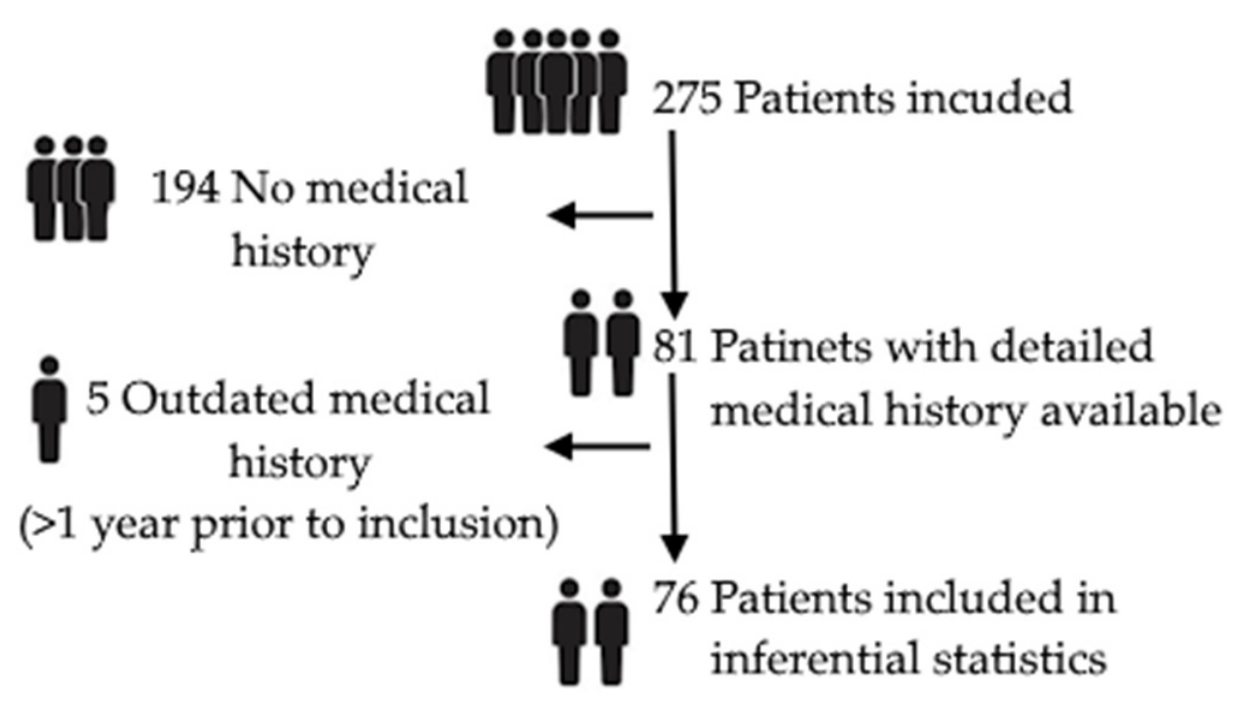
2.1. Patients, Inclusion and Exclusion Criteria
2.1.1. Inclusion and Exclusion Criteria
2.1.2. Handling of Missing Outcome Data
2.2. Primary and Secondary Exposure and Outcome Association
2.3. Potentially Inappropriate Medication, Drug–Drug and Herb–Drug Interactions
2.4. Statistical Analysis
2.5. Ethical Commission
3. Results
3.1. Patient Characteristics and Number of Drugs Used
3.2. Prevalence of Potentially Inappropriate Medications Based on STOPP/START Criteria
3.3. Supplement Use in the Sample
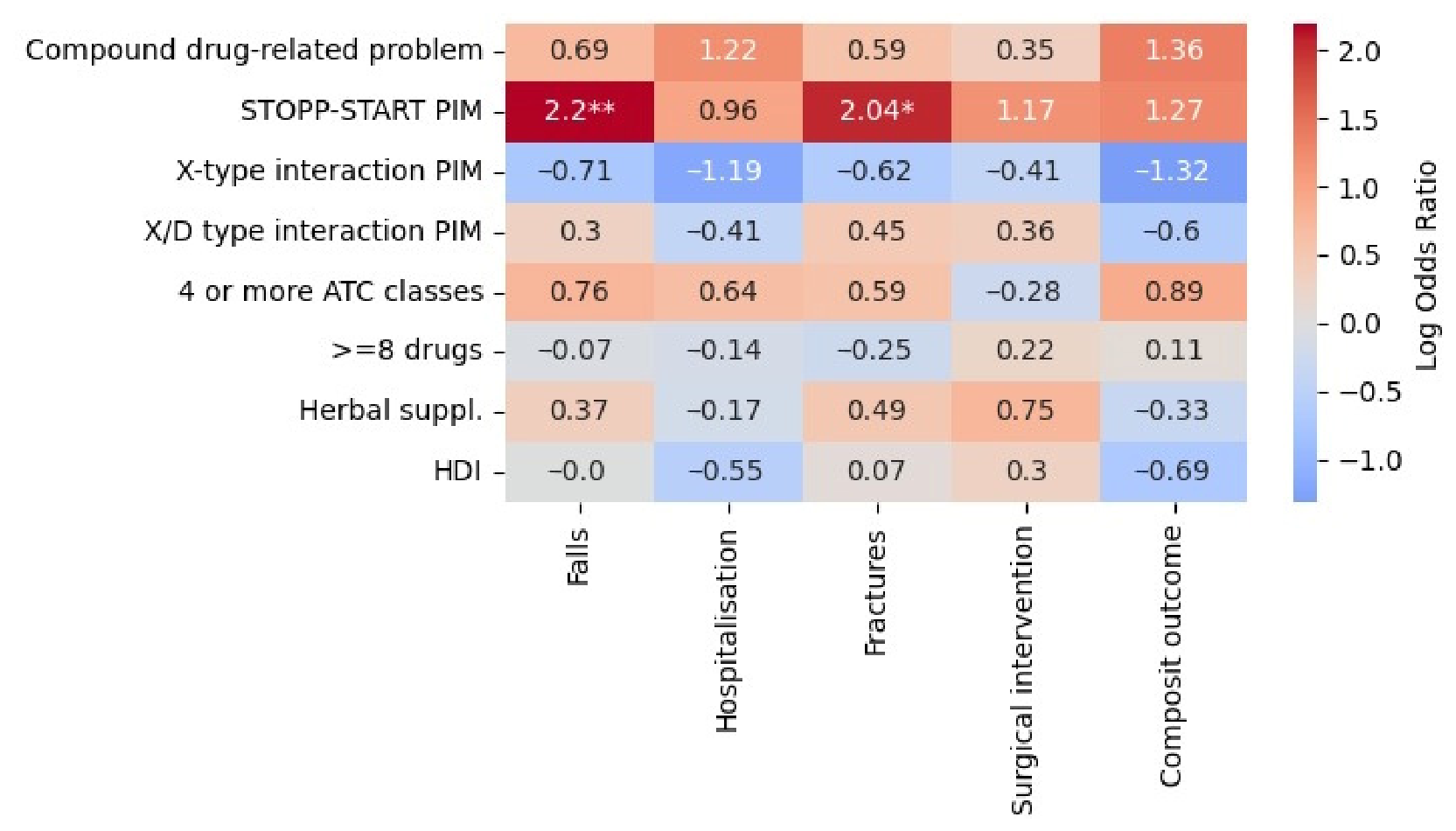
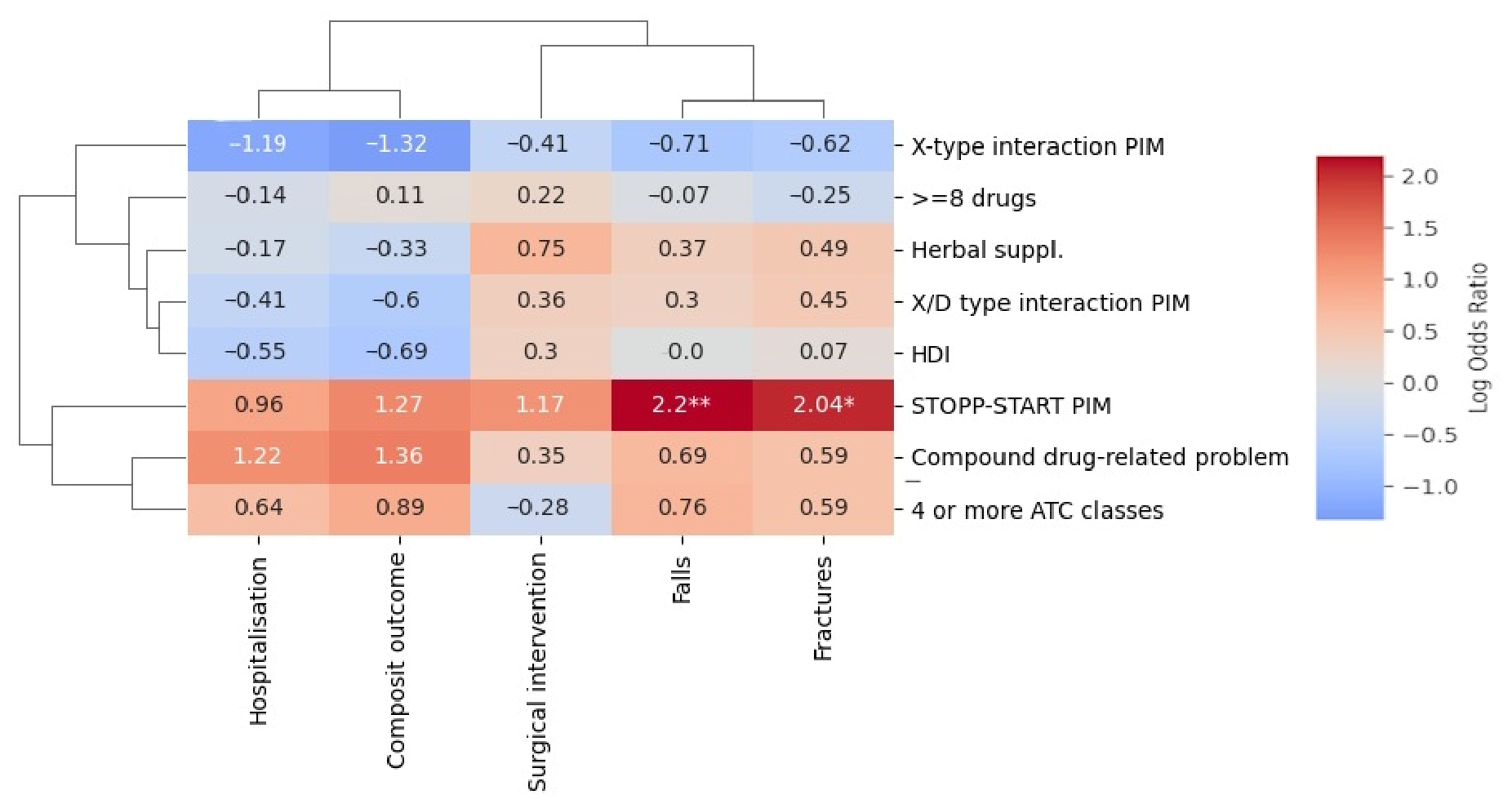
3.4. Exposures Associated with Major Adverse Events
3.5. Imputed Data Analysis
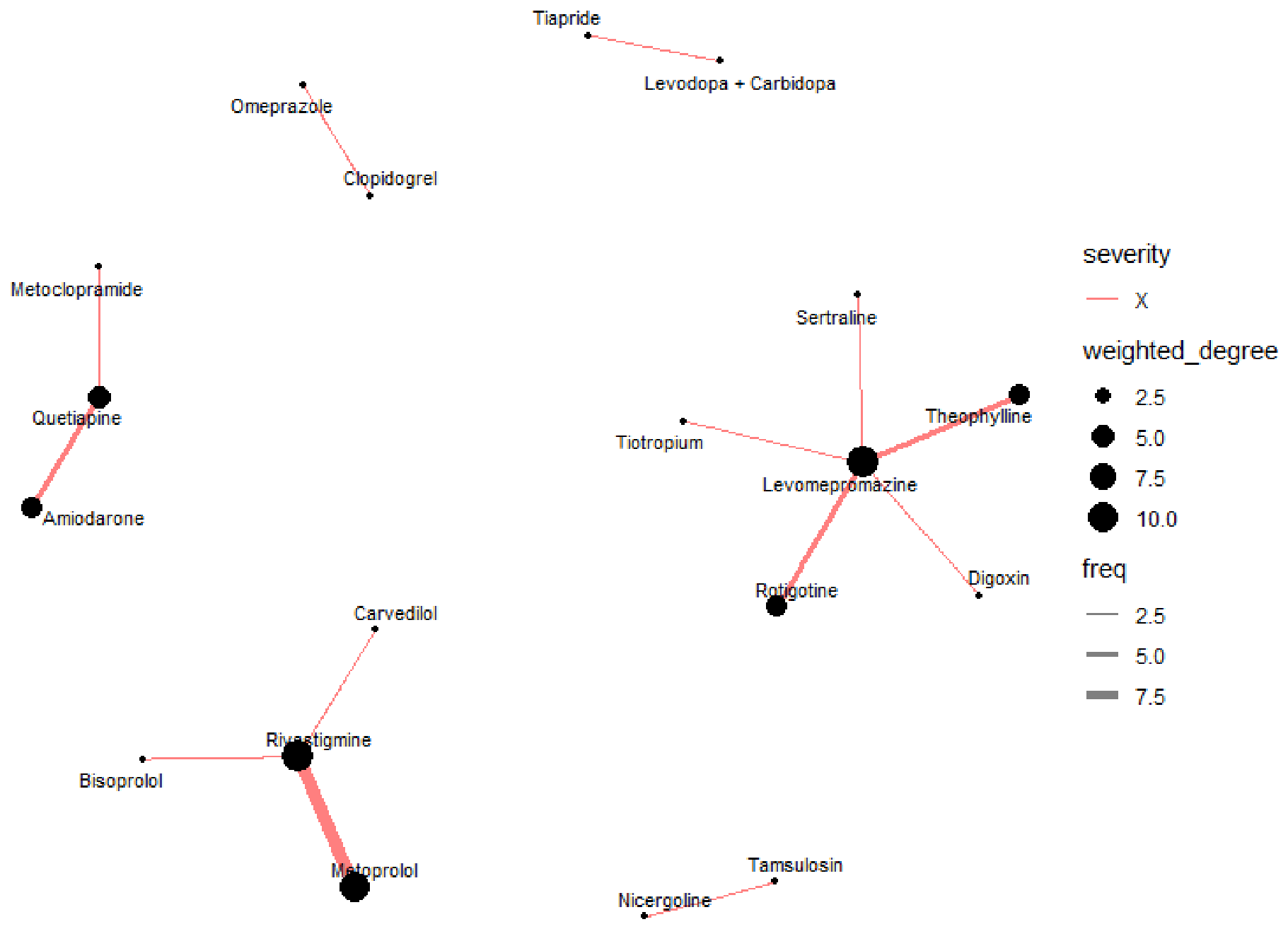
3.6. Graph-Based Analysis of Drug Interaction Patterns
4. Discussion
5. Conclusions
Supplementary Materials
Author Contributions
Funding
Institutional Review Board Statement
Informed Consent Statement
Data Availability Statement
Acknowledgments
Conflicts of Interest
Abbreviations
| NHR | Nursing Home Resident |
| DDI | Drug–Drug Interaction |
| HDI | Herb–Drug Interaction |
| PIM | Potentially Inappropriate Medication |
| OTC | Over The Counter |
References
- United Nations. World Social Report 2023; United Nations: San Francisco, CA, USA, 2023; ISBN 9789210019682. [Google Scholar]
- Bán, E.-G.; Lechsner, P.; Dho-Nagy, E.-A.; Balan, M.-A.; Major-Szakács, I.; Brassai, A.; Simon-Szabó, Z.; Ureche, C. Novel Strategy in the Detection of Adverse Cutaneous Drug Reactions: A Case Series Study. Diagnostics 2024, 14, 575. [Google Scholar] [CrossRef] [PubMed]
- Chowdhury, S.R.; Chandra Das, D.; Sunna, T.C.; Beyene, J.; Hossain, A. Global and Regional Prevalence of Multimorbidity in the Adult Population in Community Settings: A Systematic Review and Meta-Analysis. eClinicalMedicine 2023, 57, 101860. [Google Scholar] [CrossRef] [PubMed]
- Hong, S.N.; Lai, F.T.T.; Wang, B.; Choi, E.P.H.; Wong, I.C.K.; Lam, C.L.K.; Wan, E.Y.F. Age-Specific Multimorbidity Patterns and Burden on All-Cause Mortality and Public Direct Medical Expenditure: A Retrospective Cohort Study. J. Epidemiol. Glob. Health 2024, 14, 1077–1088. [Google Scholar] [CrossRef] [PubMed]
- Lion, S.; Evrard, P.; Foulon, V.; Spinewine, A. Drug–Drug Interactions in Nursing Home Residents: Analysis from the COME-ON Trial. Age Ageing 2023, 52, afac278. [Google Scholar] [CrossRef] [PubMed]
- Bories, M.; Bouzillé, G.; Cuggia, M.; Le Corre, P. Drug–Drug Interactions in Elderly Patients with Potentially Inappropriate Medications in Primary Care, Nursing Home and Hospital Settings: A Systematic Review and a Preliminary Study. Pharmaceutics 2021, 13, 266. [Google Scholar] [CrossRef] [PubMed]
- Juurlink, D.N.; Mamdani, M.; Kopp, A.; Laupacis, A.; Redelmeier, D.A. Drug-Drug Interactions Among Elderly Patients Hospitalized for Drug Toxicity. JAMA 2003, 289, 1652. [Google Scholar] [CrossRef] [PubMed]
- Liperoti, R.; Sganga, F.; Landi, F.; Topinkova, E.; Denkinger, M.D.; van der Roest, H.G.; Foebel, A.D.; Finne-Soveri, H.; Bernabei, R.; Onder, G. Antipsychotic Drug Interactions and Mortality Among Nursing Home Residents with Cognitive Impairment. J. Clin. Psychiatry 2017, 78, e76–e82. [Google Scholar] [CrossRef] [PubMed]
- Lenander, C.; Bondesson, Å.; Viberg, N.; Beckman, A.; Midlöv, P. Effects of Medication Reviews on Use of Potentially Inappropriate Medications in Elderly Patients; a Cross-Sectional Study in Swedish Primary Care. BMC Health Serv. Res. 2018, 18, 616. [Google Scholar] [CrossRef] [PubMed]
- Zermansky, A.G.; Alldred, D.P.; Petty, D.R.; Raynor, D.K.; Freemantle, N.; Eastaugh, J.; Bowie, P. Clinical Medication Review by a Pharmacist of Elderly People Living in Care Homes—Randomised Controlled Trial. Age Ageing 2006, 35, 586–591. [Google Scholar] [CrossRef] [PubMed]
- Patterson, S.M.; Hughes, C.M.; Crealey, G.; Cardwell, C.; Lapane, K.L. An Evaluation of an Adapted U.S. Model of Pharmaceutical Care to Improve Psychoactive Prescribing for Nursing Home Residents in Northern Ireland (Fleetwood Northern Ireland Study). J. Am. Geriatr. Soc. 2010, 58, 44–53. [Google Scholar] [CrossRef] [PubMed]
- Marcum, Z.A.; Handler, S.M.; Wright, R.; Hanlon, J.T. Interventions to Improve Suboptimal Prescribing in Nursing Homes: A Narrative Review. Am. J. Geriatr. Pharmacother. 2010, 8, 183–200. [Google Scholar] [CrossRef] [PubMed]
- Jeitler, M.; Ortiz, M.; Brinkhaus, B.; Sigl, M.; Hoffmann, R.; Trübner, M.; Michalsen, A.; Wischnewsky, M.; Kessler, C.S. Use and Acceptance of Traditional, Complementary and Integrative Medicine in Germany—An Online Representative Cross-Sectional Study. Front. Med. 2024, 11, 1372924. [Google Scholar] [CrossRef] [PubMed]
- Díez, R.; Cadenas, R.; Susperregui, J.; Sahagún, A.M.; Fernández, N.; García, J.J.; Sierra, M.; López, C. Drug-Related Problems and Polypharmacy in Nursing Home Residents: A Cross-Sectional Study. Int. J. Environ. Res. Public Health 2022, 19, 4313. [Google Scholar] [CrossRef] [PubMed]
- Agbabiaka, T.B.; Wider, B.; Watson, L.K.; Goodman, C. Concurrent Use of Prescription Drugs and Herbal Medicinal Products in Older Adults: A Systematic Review. Drugs Aging 2017, 34, 891–905. [Google Scholar] [CrossRef] [PubMed] [PubMed Central]
- Le, T.T.; McGrath, S.R.; Fasinu, P.S. Herb-Drug Interactions in Neuropsychiatric Pharmacotherapy—A Review of Clinically Relevant Findings. Curr. Neuropharmacol. 2022, 20, 1736–1751. [Google Scholar] [CrossRef] [PubMed]
- Chan, D.-C.; Chen, J.-H.; Kuo, H.-K.; We, C.-J.; Lu, I.-S.; Chiu, L.-S.; Wu, S.-C. Drug-Related Problems (DRPs) Identified from Geriatric Medication Safety Review Clinics. Arch. Gerontol. Geriatr. 2012, 54, 168–174. [Google Scholar] [CrossRef] [PubMed]
- Pavlopoulos, G.A.; Secrier, M.; Moschopoulos, C.N.; Soldatos, T.G.; Kossida, S.; Aerts, J.; Schneider, R.; Bagos, P.G. Using graph theory to analyze biological networks. BioData Min. 2011, 4, 10. [Google Scholar] [CrossRef] [PubMed]
- O’Mahony, D.; Cherubini, A.; Guiteras, A.R.; Denkinger, M.; Beuscart, J.-B.; Onder, G.; Gudmundsson, A.; Cruz-Jentoft, A.J.; Knol, W.; Bahat, G.; et al. STOPP/START Criteria for Potentially Inappropriate Prescribing in Older People: Version 3. Eur. Geriatr. Med. 2023, 14, 625–632. [Google Scholar] [CrossRef] [PubMed]
- Lobraico-Fernandez, J.; Baksh, S.; Nemec, E.C. Elderly Bleeding Risk of Direct Oral Anticoagulants in Nonvalvular Atrial Fibrillation: A Systematic Review and Meta-Analysis of Cohort Studies. Drugs R&D 2019, 19, 235–245. [Google Scholar] [CrossRef] [PubMed]
- van der Velde, N.; Seppala, L.J.; Hartikainen, S.; Kamkar, N.; Mallet, L.; Masud, T.; Montero-Odasso, M.; van Poelgeest, E.P.; Thomsen, K.; Ryg, J.; et al. European position paper on polypharmacy and fall-risk-increasing drugs recommendations in the World Guidelines for Falls Prevention and Management: Implications and implementation. Eur. Geriatr. Med. 2023, 14, 649–658. [Google Scholar] [CrossRef] [PubMed]
- Stewart, C.; Taylor-Rowan, M.; Soiza, R.L.; Quinn, T.J.; Loke, Y.K.; Myint, P.K. Anticholinergic burden measures and older people’s falls risk: A systematic prognostic review. Ther. Adv. Drug Saf. 2021, 12, 20420986211016645. [Google Scholar] [CrossRef] [PubMed]
- UpToDate Drug Interactions. Available online: https://www.uptodate.com/drug-interactions/?source=responsive_home#di-druglist (accessed on 8 June 2026).
- Friedman, J.H. Greedy function approximation: A gradient boosting machine. Ann. Stat. 2001, 29, 1189–1232. [Google Scholar] [CrossRef]
- Pedregosa, F.; Varoquaux, G.; Gramfort, A.; Michel, V.; Thirion, B.; Grisel, O.; Blondel, M.; Prettenhofer, P.; Weiss, R.; Dubourg, V.; et al. Scikit-learn: Machine learning in Python. J. Mach. Learn. Res. 2011, 12, 2825–2830. [Google Scholar]
- Josendal, A.V.; Bergmo, T.S.; Granas, A.G. Potentially inappropriate prescribing to older patients receiving multidose drug dispensing. BMC Geriatr. 2020, 20, 272. [Google Scholar] [CrossRef] [PubMed]
- Díaz Planelles, I.; Navarro-Tapia, E.; García-Algar, Ó.; Andreu-Fernández, V. Prevalence of Potentially Inappropriate Prescriptions According to the New STOPP/START Criteria in Nursing Homes: A Systematic Review. Healthcare 2023, 11, 422. [Google Scholar] [CrossRef] [PubMed]
- Calcaterra, L.; Proietti, M.; Saporiti, E.; Nunziata, V.; Rolland, Y.; Vellas, B.; Cesari, M. Predictors of drug prescription in nursing home residents: Results from the INCUR study. Intern. Emerg. Med. 2022, 17, 165–171. [Google Scholar] [CrossRef] [PubMed]
- Pazan, F.; Wehling, M. Polypharmacy in older adults: A narrative review of definitions, epidemiology and consequences. Eur. Geriatr. Med. 2021, 12, 443–452. [Google Scholar] [CrossRef] [PubMed]
- Vamadevan, A.; Vijayan, V.; Marwein, F.; Yoosuf, N. Fall-Related Adverse Events of Anti-Epileptic Drugs Used for Neuropathic Pain in Older Adults: A Systematic Review and Meta-Analysis. Geriatrics 2025, 10, 130. [Google Scholar] [CrossRef] [PubMed]
- Hill-Taylor, B.; Walsh, K.A.; Stewart, S.; Hayden, J.; Byrne, S.; Sketris, I.S. Effectiveness of the STOPP/START (Screening Tool of Older Persons’ Potentially Inappropriate Prescriptions/Screening Tool to Alert Doctors to the Right Treatment) Criteria: Systematic Review and Meta-Analysis of Randomized Controlled Studies. J. Clin. Pharm. Ther. 2016, 41, 158–169. [Google Scholar] [CrossRef] [PubMed]
- Stuhec, M. Antipsychotic treatment in elderly patients on polypharmacy with schizophrenia. Curr. Opin. Psychiatry 2022, 35, 332–337. [Google Scholar] [CrossRef] [PubMed]
- Roberts, G.; Pegoli, M.; Grzeskowiak, L.; Benger, S.; Forbes, H.; Hunt, K.; Jafari, S.; Koeper, I.; McDonald, C.; Nguyen, H.; et al. Hospital admission as a deprescribing triage point for patients discharged to Residential Aged Care Facilities. Age Ageing 2021, 50, 1600–1606. [Google Scholar] [CrossRef] [PubMed]
- Radu, A.-F.; Radu, A.; Bungau, G.S.; Tit, D.M.; Vesa, C.M.; Jurca, T.; Uivarosan, D.; Gitea, D.; Brata, R.; Bustea, C. Polypharmacy and Drug–Drug Interaction Architecture in Hospitalized Cardiovascular Patients: Insights from Real-World Analysis. Biomedicines 2026, 14, 218. [Google Scholar] [CrossRef] [PubMed]
- Ralph, S.J.; Espinet, A.J. Increased All-Cause Mortality by Antipsychotic Drugs: Updated Review and Meta-Analysis in Dementia and General Mental Health Care. J. Alzheimer’s Dis. Rep. 2018, 2, 1–26. [Google Scholar] [CrossRef] [PubMed]
- Sahlberg, M.; Holm, E.; Gislason, G.H.; Køber, L.; Torp-Pedersen, C.; Andersson, C. Association of Selected Antipsychotic Agents With Major Adverse Cardiovascular Events and Noncardiovascular Mortality in Elderly Persons. J. Am. Heart Assoc. 2015, 4, e001666. [Google Scholar] [CrossRef] [PubMed]
- Qin, D.; Leef, G.; Alam, M.B.; Rattan, R.; Munir, M.B.; Patel, D.; Khattak, F.; Adelstein, E.; Jain, S.K.; Saba, S. Mortality risk of long-term amiodarone therapy for atrial fibrillation patients without structural heart disease. Cardiol. J. 2015, 22, 622–629. [Google Scholar] [CrossRef] [PubMed]
- Zeng, C.; Dubreuil, M.; LaRochelle, M.R.; Lu, N.; Wei, J.; Choi, H.K.; Lei, G.; Zhang, Y. Association of Tramadol with All-Cause Mortality Among Patients with Osteoarthritis. JAMA 2019, 321, 969–982. [Google Scholar] [CrossRef] [PubMed]




| STOPP-START Criteria | Recommendation |
|---|---|
| A3 | Any duplicate drug class prescription for daily regular use (as distinct from PRN use), e.g., two concurrent NSAIDs, SSRIs, loop diuretics, ACE inhibitors, anticoagulants, antipsychotics, opioid analgesics (optimisation of monotherapy within a single drug class should be observed prior to considering a new agent). |
| B3 | Beta-blocker in combination with verapamil or diltiazem. |
| B12 | Aldosterone antagonists (e.g., spironolactone, eplerenone) with concurrent potassium-conserving drugs (e.g., ACEI’s, ARB’s, amiloride, triamterene) without monitoring of serum potassium (risk of dangerous hyperkalaemia, i.e., >6.0 mmol/L–serum K should be monitored regularly, i.e., at least every 6 months). |
| B18 | NSAIDs or systemic corticosteroids with heart failure requiring loop diuretic therapy (risk of exacerbation of heart failure). |
| C6 | Ticlopidine in any circumstances (clopidogrel and prasugrel have similar efficacy, stronger evidence and fewer side-effects). |
| C10 | NSAID and vitamin K antagonist, direct thrombin inhibitor or factor Xa inhibitors in combination (risk of gastrointestinal bleeding). |
| C13 | Direct thrombin inhibitor (e.g., dabigatran) and diltiazem or verapamil (increased risk of bleeding). |
| C14 | Apixaban, dabigatran, edoxaban, rivaroxaban and P-glycoprotein (P-gp) drug efflux pump inhibitors, e.g., amiodarone, azithromycin, carvedilol, cyclosporin, dronedarone, itraconazole, ketoconazole (systemic), macrolides, quinine, ranolazine, tamoxifen, ticagrelor, verapamil (increased risk of bleeding). |
| C16 | Aspirin for primary prevention of cardiovascular disease. |
| D14 | Drugs with potent anticholinergics/antimuscarinic effects in patients with delirium or dementia (risk of exacerbation of cognitive impairment). |
| D24 | First-generation antihistamines as first-line treatment for allergy or pruritus (safer, less toxic antihistamines with fewer side effects now widely available). |
| I1 | Systemic antimuscarinic drugs in patients with dementia or chronic cognitive impairment (risk of increased confusion, agitation). |
| K1 | Benzodiazepines in patients with recurrent falls (sedative, may cause reduced sensorium, impair balance). |
| K5 | Anti-epileptic drugs in patients with recurrent falls (may impair sensorium, may adversely affect cerebellar function). |
| K6 | First-generation antihistamines in patients with recurrent falls (may impair sensorium). |
| K8 | Antidepressants in patients with recurrent falls (may impair sensorium). |
| Characteristic | Male (n = 91) | Female (n = 184) | Overall (n = 275) | p Value * |
|---|---|---|---|---|
| Age | 75.45 ± 12.26 | 78.14 ± 7.87 | 79.67 ± 9.95 | U = 6070, p = 0.0002 |
| Morbidity (number of diseases) | 2.95 ± 1.95 | 3.13 ± 1.08 | 3.07 ± 1.85 | U = 7742, p = 0.30 |
| No. of drugs | 9.57 ± 4.82 | 9.63 ± 4.29 | 9.61 ± 4.47 | U = 8232, p = 0.82 |
| No. ATC classes prescribed | 3.33 ± 1.57 | 3.31 ± 1.30 | 3.32 ± 1.39 | U = 8360, p = 0.98 |
| No. of patients with ≥5 drugs/supplements | 76 (84) | 163 (89) | 224 (87) | χ2 = 1.38 p = 0.24 |
| No. of patients with ≥10 drugs/supplements | 43 (47) | 93 (51) | 136 (49) | χ2 = 0.26 p = 0.61 |
| No. of predicted DDIs per patient | 11.73 ± 11.83 | 10.17 ± 9.81 | 10.68 ± 10.54 | U = 8110, p = 0.67 |
| No. of patients presenting herb–drug interactions | 12 | 31 | 43 | χ2 = 0.62 p = 0.43 |
| No. of subjects taking supplements | 49 (54) | 98 (53) | 147 (53) | χ2 = 0.01 p = 0.93 |
| No. of subjects taking herbal supplements | 28 (31) | 51 (28) | 79 (29) | χ2 = 2.42 p = 0.12 |
| No. of patients with violations of STOPP/START criteria | 26 (28.57) | 56 (30.43) | 82 (29.82) | χ2 = 0.16 p = 0.68 |
| Average No. of STOPP/START criteria violations ± SD | 0.07 ± 0.31 | 0.13 ± 0.44 | 0.11 ± 0.40 | U = 8146, p = 0.42 |
| Male (n = 91) | Female (n = 184) | Overall (n = 275) | Association Analysis Significance (p) 1 | |
|---|---|---|---|---|
| A3 | 13 (14.29) | 21 (11.41) | 34 (12.36) | 0.06 |
| All B type | 7 (7.69) | 10 (5.43) | 17 (6.18) | 0.60 |
| B3 | 0 (0) | 1 (0.54) | 1 (0.36) | >0.99 |
| B12 | 7 (7.69) | 9 (4.89) | 16 (5.82) | 0.41 |
| B18 | 0 (0) | 0 (0) | 0 (0) | n.a. |
| All C type | 1 (1.1) | 9 (4.89) | 10 (3.64) | 0.17 |
| C6 | 0 (0) | 0 (0) | 0 (0) | n.a. |
| C10 | 0 (0) | 0 (0) | 0 (0) | n.a. |
| C13 | 0 (0) | 0 (0) | 0 (0) | n.a. |
| C14 | 1 (1.1) | 9 (4.89) | 10 (3.64) | 0.17 |
| C16 | 0 (0) | 0 (0) | 0 (0) | n.a. |
| All D type | 4 (4.4) | 9 (4.89) | 13 (4.73) | >0.99 |
| D14 | 3 (3.3) | 8 (4.35) | 11 (4) | >0.99 |
| D24 | 1 (1.1) | 1 (0.54) | 2 (0.73) | 0.55 |
| I1 | 0 (0) | 1 (0.54) | 1 (0.36) | >0.99 |
| All K type | 6 (6.59) | 21 (11.41) | 27 (9.82) | 0.28 |
| K1 | 4 (4.4) | 13 (7.07) | 17 (6.18) | 0.44 |
| K5 | 2 (2.2) | 5 (2.72) | 7 (2.55) | >0.99 |
| K6 | 0 (0) | 0 (0) | 0 (0) | n.a. |
| K8 | 0 (0) | 3 (1.63) | 3 (1.09) | 0.55 |
| No violation | 65 (71.43) | 128 (69.57) | 193 (70.18) | 0.78 |
| At least one violation | 26 (28.57) | 56 (30.43) | 82 (29.82) | 0.78 |
| 1 criterium | 20 (21.98) | 39 (21.2) | 59 (21.45) | 0.88 |
| 2 criteria | 5 (5.49) | 13 (7.07) | 18 (6.55) | 0.80 |
| 3 criteria | 1 (1.1) | 2 (1.09) | 3 (1.09) | >0.99 |
| 4 criteria | 0 (0) | 2 (1.09) | 2 (0.73) | >0.99 |
| Supplement Type | Male (n = 91) | Female (n = 184) | Overall (n = 275) | p Value 1 |
|---|---|---|---|---|
| Non-herbal supplements | ||||
| Electrolyte supplements | 9 (9.89%) | 19 (10.32%) | 28 (10.18%) | χ2 = 0.01 p = 0.91 |
| Probiotics | 1 (1.09%) | 5 (2.71%) | 6 (2.18%) | p = 0.66 |
| Calcium and/or Vit D | 3 (3.29%) | 22 (11.95%) | 25 (9.09%) | p = 0.02 |
| Multivitamins and minerals | 22 (24.17%) | 48 (26.08%) | 70 (25.45%) | χ2 = 0.11 p = 0.73 |
| Liver support | 10 (10.98%) | 8 (4.34%) | 18 (6.54%) | χ2 = 4.39 p = 0.03 |
| Phospholipids | 1 (1.09%) | 4 (2.17%) | 5 (1.81%) | p = 1.00 |
| Fish oil (omega 3) | 6 (6.59%) | 23 (12.5%) | 29 (10.54%) | χ2 = 2.25 p = 0.13 |
| Melatonin | 4 (4.39%) | 10 (5.43%) | 14 (5.09%) | p = 1.00 |
| Digestive enzymes | 3 (3.29%) | 3 (1.63%) | 6 (2.18%) | p = 0.40 |
| Eye health supp. | 1 (1.09%) | 3 (1.63%) | 4 (1.45%) | p = 1.00 |
| Urinary tract supp. | 2 (2.19%) | 3 (1.63%) | 5 (1.81%) | p = 0.66 |
| Other 2 | 8 (8.79%) | 34 (18.47%) | 42 (15.27%) | χ2 = 4.41 p = 0.03 |
| Herb-based supplements | ||||
| Ginkgo biloba | 17 (18.68%) | 28 (15.21%) | 45 (16.36%) | χ2 = 0.53 p = 0.46 |
| Passiflora | 3 (3.29%) | 8 (4.34%) | 11 (4%) | p = 1.00 |
| Valerian | 1 (1.09%) | 8 (4.34%) | 9 (3.27%) | p = 0.27 |
| Herb-based laxatives | 1 (1.09%) | 12 (6.52%) | 13 (4.72%) | p = 0.06 |
| Silimarine | 9 (9.89%) | 5 (2.71%) | 14 (5.09%) | χ2 = 6.48 p = 0.01 |
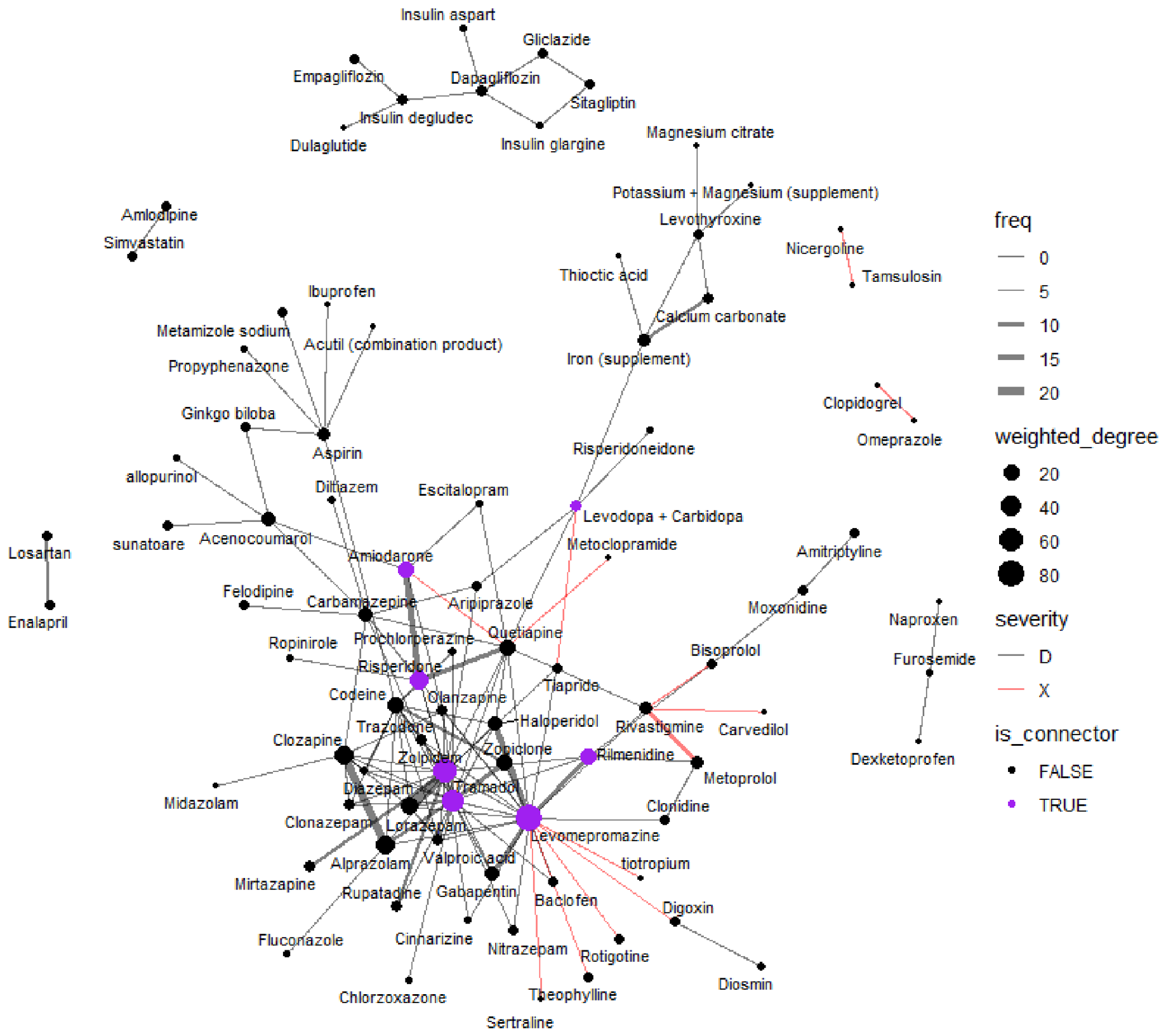
| Drug | Degree 1 | Weighted Degree 2 | Closeness Centrality 3 | Betweenness 3 | Eigenvector 4 | Number of Clusters Connected 5 | Bridge Drug 6 |
|---|---|---|---|---|---|---|---|
| Levomepromazine | 24 | 82 | 1.01 | 1141.50 | 0.93 | 6 | Yes |
| Zolpidem | 21 | 63 | 0.84 | 294.50 | 1.00 | 5 | Yes |
| Tramadol | 22 | 55 | 0.89 | 324.00 | 0.67 | 4 | Yes |
| Risperidone | 8 | 37 | 0.97 | 816.00 | 0.36 | 4 | Yes |
| Alprazolam | 6 | 33 | 0.91 | 237.00 | 0.61 | 3 | No |
| Clozapine | 9 | 32 | 0.87 | 120.00 | 0.52 | 3 | No |
| Lorazepam | 6 | 30 | 0.81 | 0.00 | 0.84 | 3 | No |
| Amiodarone | 5 | 24 | 0.93 | 457.00 | 0.20 | 2 | Yes |
| Codeine | 13 | 22 | 0.83 | 108.00 | 0.26 | 5 | No |
| Quetiapine | 11 | 21 | 0.91 | 258.00 | 0.21 | 6 | No |
| Zopiclone | 3 | 21 | 0.85 | 114.00 | 0.36 | 2 | No |
| Rilmenidine | 5 | 20 | 0.96 | 500.00 | 0.49 | 4 | Yes |
| Haloperidol | 5 | 18 | 0.94 | 0.00 | 0.49 | 4 | No |
| Acenocoumarol | 5 | 15 | 0.79 | 379 | 0.02 | 1 | No |
| Carbamazepine | 8 | 15 | 0.75 | 142.00 | 0.07 | 4 | No |
Disclaimer/Publisher’s Note: The statements, opinions and data contained in all publications are solely those of the individual author(s) and contributor(s) and not of MDPI and/or the editor(s). MDPI and/or the editor(s) disclaim responsibility for any injury to people or property resulting from any ideas, methods, instructions or products referred to in the content. |
© 2026 by the authors. Licensee MDPI, Basel, Switzerland. This article is an open access article distributed under the terms and conditions of the Creative Commons Attribution (CC BY) license.
Share and Cite
Bába, L.-I.; Sebesi, H.; Gáll, Z.; Kolcsár, M.; Dávid, S.; Medvés, N.E.; Jîtcă, G. Network-Based, Cross-Sectional Analysis of Drug-Related Problems Reveals a Strong Association of Possible Inappropriate Medication and Clinical Outcomes in Romanian Elderly Nursing Home Residents. Med. Sci. 2026, 14, 359. https://doi.org/10.3390/medsci14030359
Bába L-I, Sebesi H, Gáll Z, Kolcsár M, Dávid S, Medvés NE, Jîtcă G. Network-Based, Cross-Sectional Analysis of Drug-Related Problems Reveals a Strong Association of Possible Inappropriate Medication and Clinical Outcomes in Romanian Elderly Nursing Home Residents. Medical Sciences. 2026; 14(3):359. https://doi.org/10.3390/medsci14030359
Chicago/Turabian StyleBába, László-István, Hanna Sebesi, Zsolt Gáll, Melinda Kolcsár, Soma Dávid, Noémi Eliza Medvés, and George Jîtcă. 2026. "Network-Based, Cross-Sectional Analysis of Drug-Related Problems Reveals a Strong Association of Possible Inappropriate Medication and Clinical Outcomes in Romanian Elderly Nursing Home Residents" Medical Sciences 14, no. 3: 359. https://doi.org/10.3390/medsci14030359
APA StyleBába, L.-I., Sebesi, H., Gáll, Z., Kolcsár, M., Dávid, S., Medvés, N. E., & Jîtcă, G. (2026). Network-Based, Cross-Sectional Analysis of Drug-Related Problems Reveals a Strong Association of Possible Inappropriate Medication and Clinical Outcomes in Romanian Elderly Nursing Home Residents. Medical Sciences, 14(3), 359. https://doi.org/10.3390/medsci14030359