
Urinary Biomarkers in Parkinson’s Disease: A Structured Integrative Review of Pathophysiological Pathways

 and
and
Abstract
1. Introduction
2. Methods
2.1. Study Design
2.2. Sources of Information and Search Strategy
2.3. Eligibility Criteria
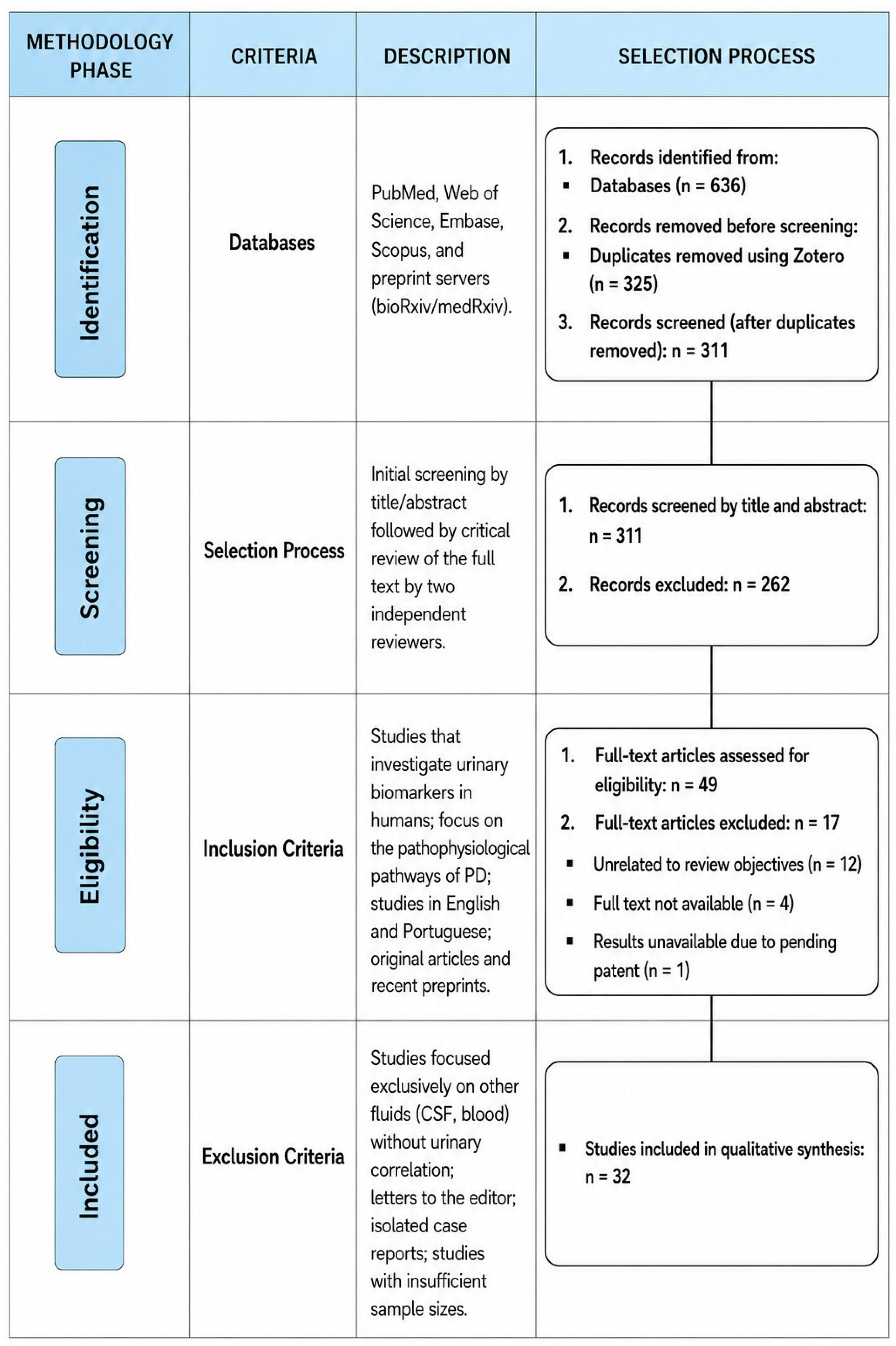
2.4. Study Selection Process
2.5. Data Extraction
2.6. Quality Assessment and Methodological Considerations
2.7. Data Synthesis
3. Results and Discussion
3.1. Genetic and Protein-Based Urinary Biomarkers
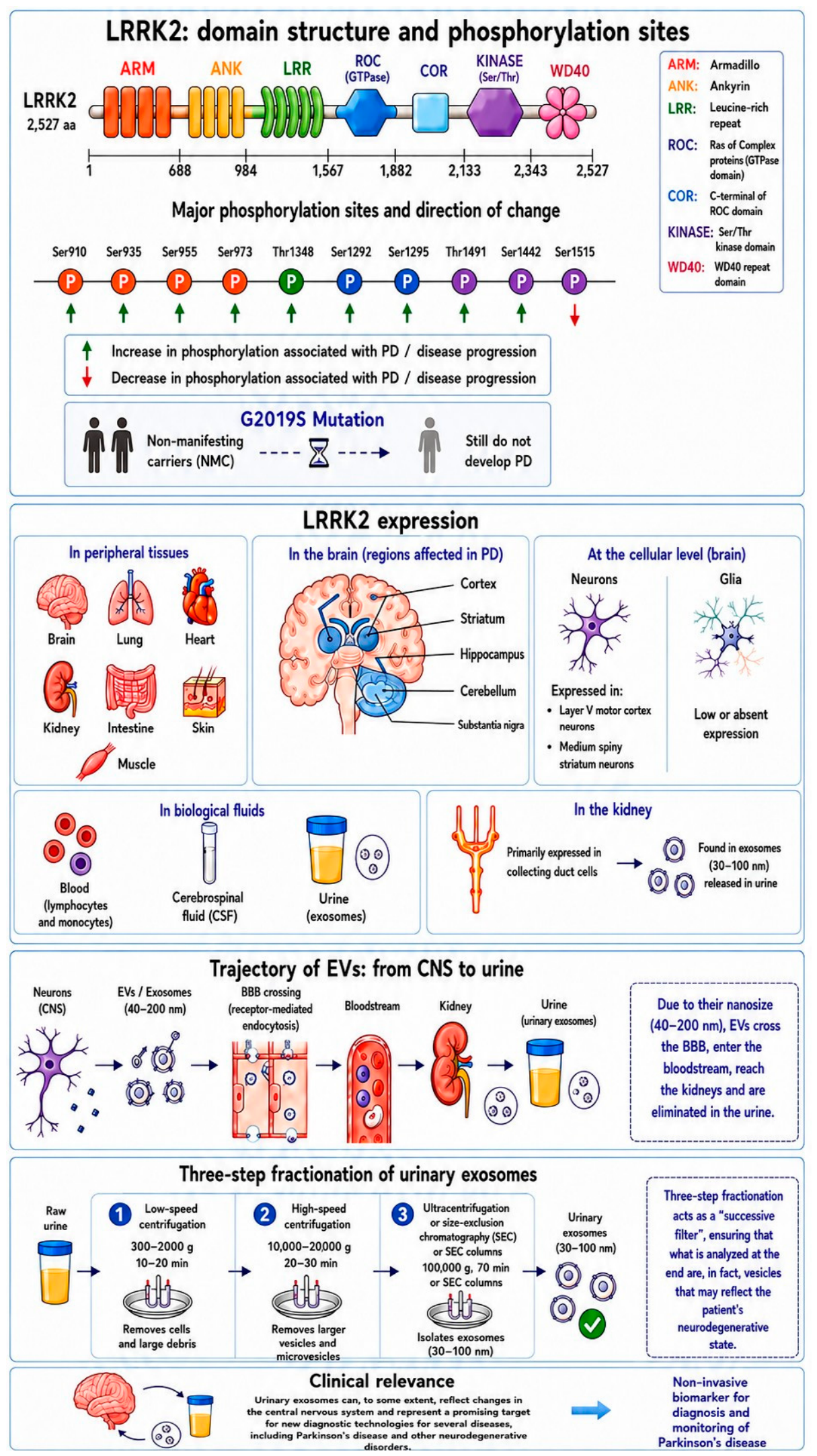
3.1.1. Leucine-Rich Repeat Kinase 2 (LRRK2)
3.1.2. Glycocerebrosidase (GBA) and Lysosomal Pathways
3.1.3. Bis(monoacylglycerol)phosphate (BMP)
3.1.4. Alpha-Synuclein
3.1.5. Extracellular Vesicle-Associated Proteins
3.1.6. Integrative Perspective on Genetic and Protein-Based Urinary Biomarkers
3.2. Metabolic Pathways and Mitochondrial Dysfunction
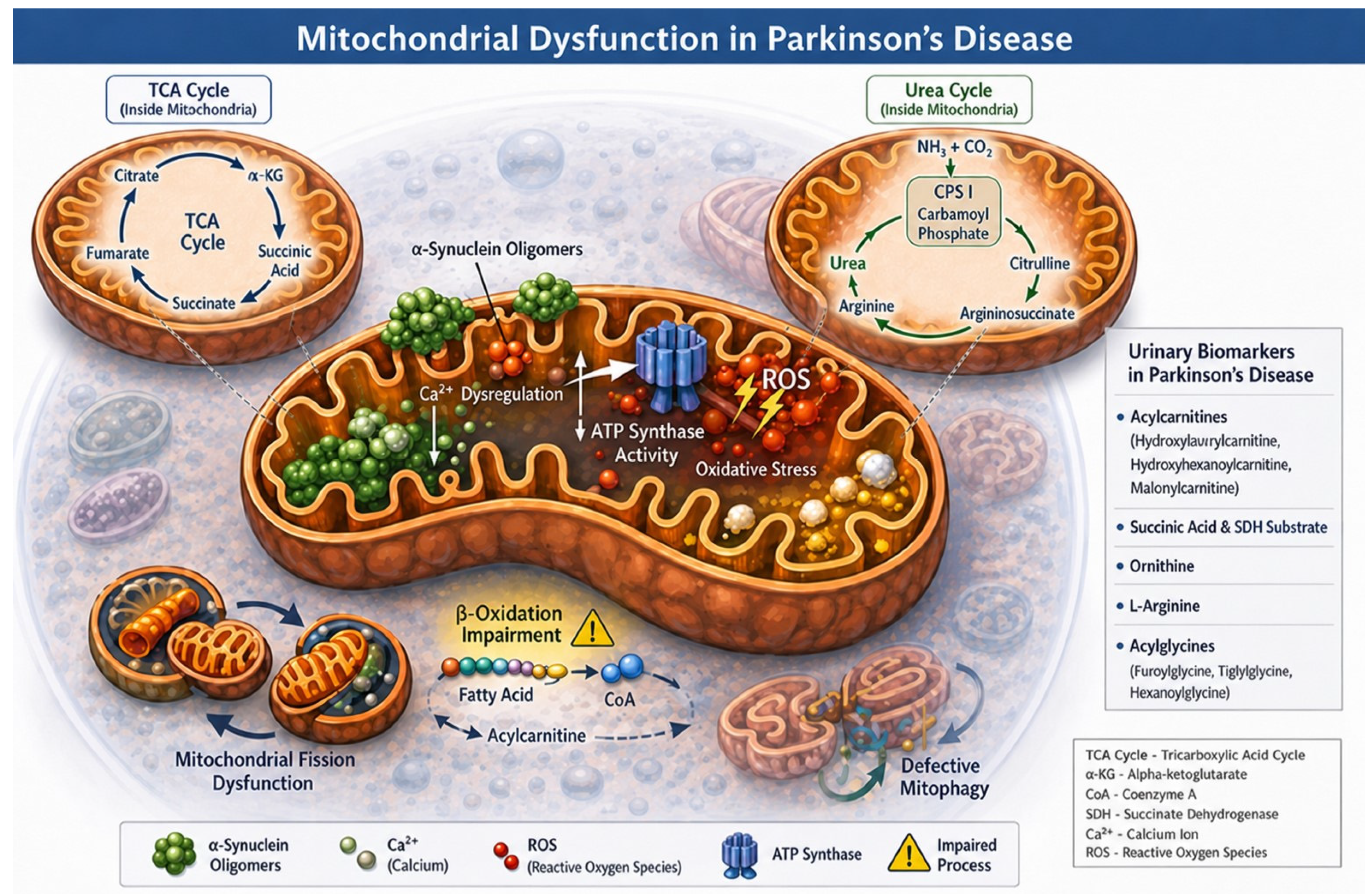
3.2.1. Mitochondrial Dysfunction and Energy Metabolism
3.2.2. Organic Acids and Krebs Cycle Intermediates
3.2.3. Acylglycines and Fatty Acid Detoxification Pathways
3.2.4. Amino Acid-Related Metabolic Alterations
3.2.5. Integrative Perspective on Metabolic Dysregulation and Mitochondrial Dysfunction
3.3. Oxidative Stress and Neuroinflammation
3.3.1. Oxidative DNA Damage
3.3.2. Bilirubin Metabolism and Biopyrrins
3.3.3. Immune Activation and Inflammatory Markers
3.3.4. Neuroinflammatory Modulators and Metabolites
3.3.5. Integrative Perspective on Oxidative Stress and Neuroinflammation
3.4. Gut–Brain Axis and Microbiota-Derived Metabolites
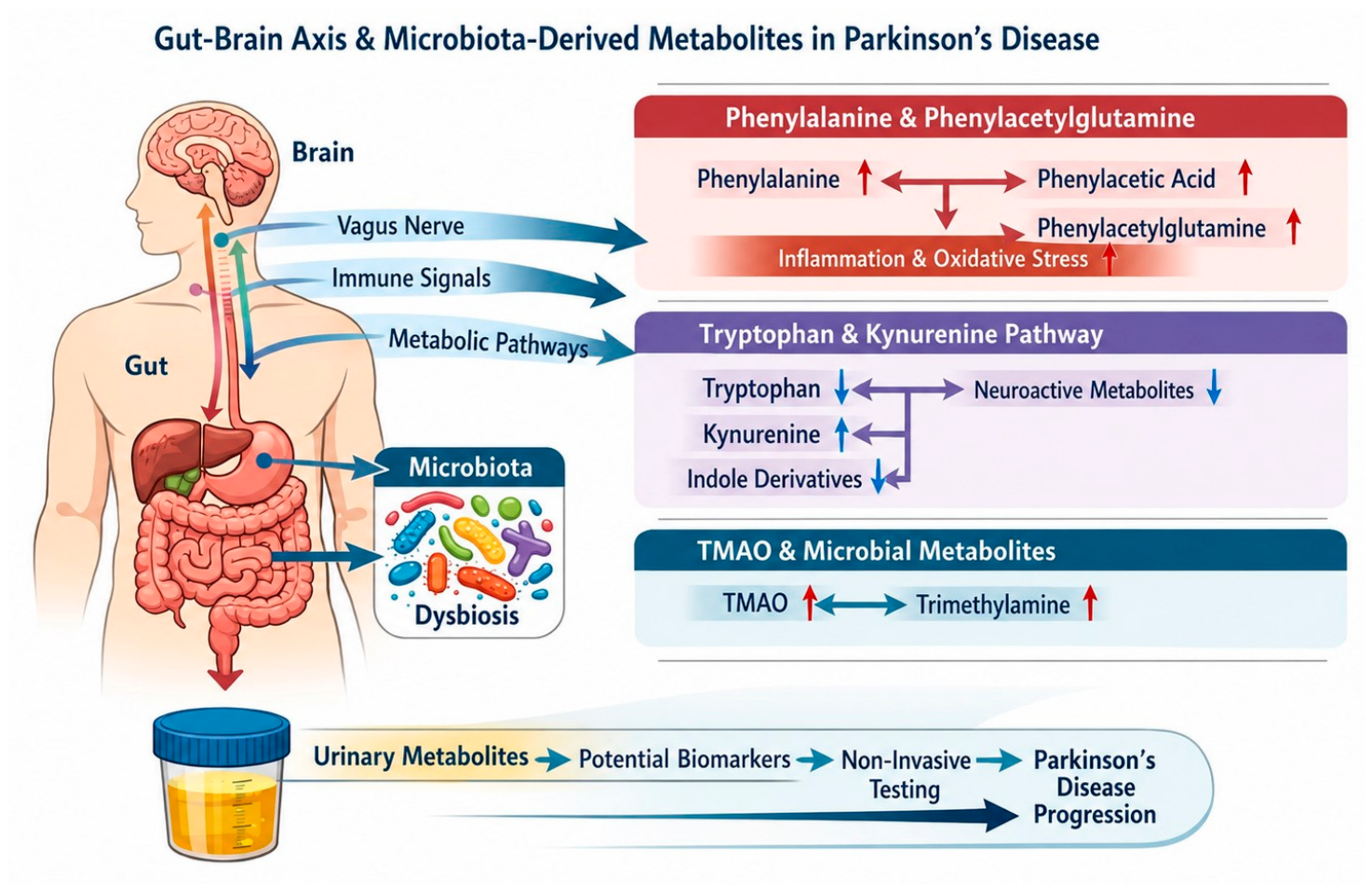
3.4.1. Microbiota–Gut–Brain Axis
3.4.2. Phenylalanine and Phenylacetylglutamine Pathway
3.4.3. Tryptophan Metabolism and Kynurenine Pathway
3.4.4. Trimethylamine N-Oxide (TMAO) and Microbial Metabolites
3.4.5. Integrative Perspective on Gut–Brain-Axis-Related Urinary Biomarkers
3.5. Hormonal and Systemic Biomarkers
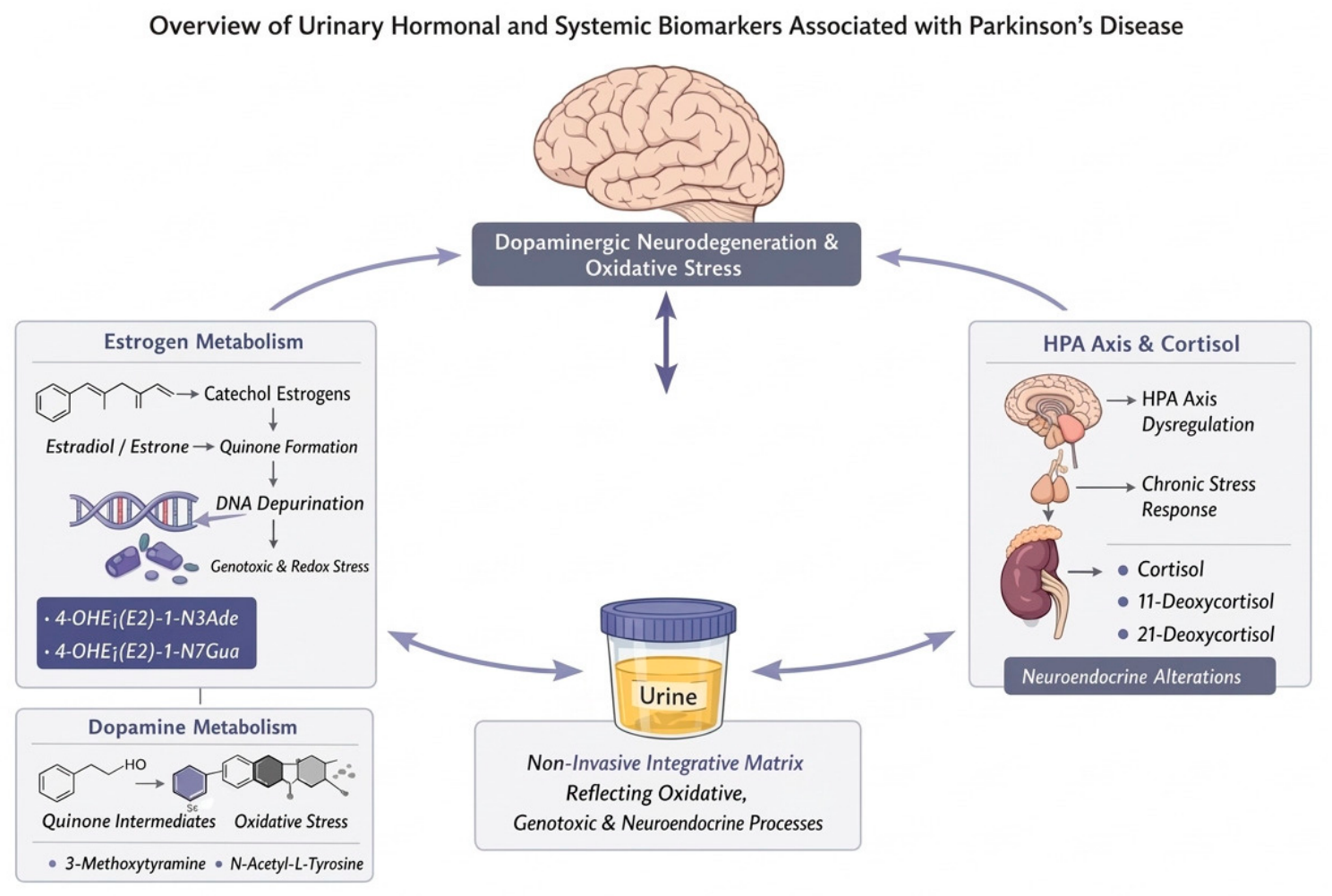
3.5.1. Estrogen Metabolism and Catechol Estrogens
3.5.2. Dopamine-Related Metabolites and Precursors
3.5.3. Hypothalamic–Pituitary–Adrenal Axis and Cortisol
3.5.4. Integrative Perspective on Hormonal and Systemic Urinary Biomarkers
3.6. Emerging and Exploratory Urinary Biomarkers
4. Final Considerations
5. Conclusions
Author Contributions
Funding
Institutional Review Board Statement
Informed Consent Statement
Data Availability Statement
Acknowledgments
Conflicts of Interest
Abbreviations
References
- Sun, Y.; Wang, Z.; Liang, Y.; Hao, C.; Shi, C. Digital Biomarkers for Precision Diagnosis and Monitoring in Parkinson’s Disease. npj Digit. Med. 2024, 7, 218. [Google Scholar] [CrossRef]
- Hornykiewicz, O. The tropical localization and content of noradrenalin and dopamine (3-hydroxytyramine) in the substantia nigra of normal persons and patients with Parkinson’s disease. Wien. Klin. Wochenschr. 1963, 75, 309–312. [Google Scholar]
- Braak, H.; Rb, U.; Gai, W.P.; Del Tredici, K. Idiopathic Parkinson’s Disease: Possible Routes by Which Vulnerable Neuronal Types May Be Subject to Neuroinvasion by an Unknown Pathogen. J. Neural Transm. 2003, 110, 517–536. [Google Scholar] [CrossRef] [PubMed]
- Dorsey, E.R.; Elbaz, A.; Nichols, E.; Abbasi, N.; Abd-Allah, F.; Abdelalim, A.; Adsuar, J.C.; Ansha, M.G.; Brayne, C.; Choi, J.-Y.J.; et al. Global, Regional, and National Burden of Parkinson’s Disease, 1990–2016: A Systematic Analysis for the Global Burden of Disease Study 2016. Lancet Neurol. 2018, 17, 939–953. [Google Scholar] [CrossRef] [PubMed]
- World Health Organization Parkinson Disease. Available online: https://www.who.int/news-room/fact-sheets/detail/parkinson-disease (accessed on 24 December 2025).
- Koros, C.; Simitsi, A.-M.; Papagiannakis, N.; Bougea, A.; Prentakis, A.; Papadimitriou, D.; Pachi, I.; Antonelou, R.; Angelopoulou, E.; Beratis, I.; et al. Serum Uric Acid Level as a Putative Biomarker in Parkinson’s Disease Patients Carrying GBA1 Mutations: 2-Year Data from the PPMI Study. Park. Relat. Disord. 2021, 84, 1–4. [Google Scholar] [CrossRef]
- Rocha, E.M.; Keeney, M.T.; Di Maio, R.; De Miranda, B.R.; Greenamyre, J.T. LRRK2 and Idiopathic Parkinson’s Disease. Trends Neurosci. 2022, 45, 224–236. [Google Scholar] [CrossRef] [PubMed]
- Xu, W.; Tan, L.; Yu, J.-T. The Link between the SNCA Gene and Parkinsonism. Neurobiol. Aging 2015, 36, 1505–1518. [Google Scholar] [CrossRef]
- Ben-Shlomo, Y.; Darweesh, S.; Llibre-Guerra, J.; Marras, C.; San Luciano, M.; Tanner, C. The Epidemiology of Parkinson’s Disease. Lancet 2024, 403, 283–292. [Google Scholar] [CrossRef]
- Schneider, S.A.; Alcalay, R.N. Neuropathology of Genetic Synucleinopathies with Parkinsonism: Review of the Literature. Mov. Disord. 2017, 32, 1504–1523. [Google Scholar] [CrossRef]
- Siderowf, A.; Concha-Marambio, L.; Lafontant, D.-E.; Farris, C.M.; Ma, Y.; Urenia, P.A.; Nguyen, H.; Alcalay, R.N.; Chahine, L.M.; Foroud, T.; et al. Assessment of Heterogeneity among Participants in the Parkinson’s Progression Markers Initiative Cohort Using α-Synuclein Seed Amplification: A Cross-Sectional Study. Lancet Neurol. 2023, 22, 407–417. [Google Scholar] [CrossRef]
- Emamzadeh, F.N.; Surguchov, A. Parkinson’s Disease: Biomarkers, Treatment, and Risk Factors. Front. Neurosci. 2018, 12, 612. [Google Scholar] [CrossRef]
- Foley, P.; Riederer, P. Influence of Neurotoxins and Oxidative Stress on the Onset and Progression of Parkinson’s Disease. J. Neurol. 2000, 247, II82–II94. [Google Scholar] [CrossRef]
- Moore, D.J.; West, A.B.; Dawson, V.L.; Dawson, T.M. Molecular Pathophysiology of Parkinson’s Disease. Annu. Rev. Neurosci. 2005, 28, 57–87. [Google Scholar] [CrossRef] [PubMed]
- Virreira Winter, S.; Karayel, O.; Strauss, M.T.; Padmanabhan, S.; Surface, M.; Merchant, K.; Alcalay, R.N.; Mann, M. Urinary Proteome Profiling for Stratifying Patients with Familial Parkinson’s Disease. EMBO Mol. Med. 2021, 13, e13257. [Google Scholar] [CrossRef]
- Seol, W.; Kim, H.; Son, I. Urinary Biomarkers for Neurodegenerative Diseases. Exp. Neurobiol. 2020, 29, 325–333. [Google Scholar] [CrossRef]
- Shao, Y.; Le, W. Recent Advances and Perspectives of Metabolomics-Based Investigations in Parkinson’s Disease. Mol. Neurodegener. 2019, 14, 3. [Google Scholar] [CrossRef] [PubMed]
- Alcalay, R.N.; Hsieh, F.; Tengstrand, E.; Padmanabhan, S.; Baptista, M.; Kehoe, C.; Narayan, S.; Boehme, A.K.; Merchant, K. Higher Urine Bis(Monoacylglycerol)Phosphate Levels in LRRK2 G2019S Mutation Carriers: Implications for Therapeutic Development. Mov. Disord. 2020, 35, 134–141. [Google Scholar] [CrossRef] [PubMed]
- Fang, S.; Lee, P.A.H.; Wang, Z.; Zhao, B. The Impact of 90 Parkinson’s Disease-Risk Single Nucleotide Polymorphisms on Urinary Bis(Monoacylglycerol)Phosphate Levels in the Prodromal and PD Cohorts. Int. J. Mol. Sci. 2024, 25, 2286. [Google Scholar] [CrossRef]
- Fraser, K.B.; Moehle, M.S.; Daher, J.P.L.; Webber, P.J.; Williams, J.Y.; Stewart, C.A.; Yacoubian, T.A.; Cowell, R.M.; Dokland, T.; Ye, T.; et al. LRRK2 Secretion in Exosomes Is Regulated by 14-3-3. Hum. Mol. Genet. 2013, 22, 4988–5000. [Google Scholar] [CrossRef]
- Fraser, K.B.; Rawlins, A.B.; Clark, R.G.; Alcalay, R.N.; Standaert, D.G.; Liu, N.; Parkinson’s Disease Biomarker Program Consortium; West, A.B. Ser(P)-1292 LRRK2 in Urinary Exosomes Is Elevated in Idiopathic Parkinson’s Disease. Mov. Disord. 2016, 31, 1543–1550. [Google Scholar] [CrossRef]
- Gomes, S.; Garrido, A.; Tonelli, F.; Obiang, D.; Tolosa, E.; Martí, M.J.; Ruiz-Martínez, J.; Vinagre-Aragón, A.; Hernandez-Eguiazu, H.; Croitoru, I.; et al. Elevated Urine BMP Phospholipids in LRRK2 and VPS35 Mutation Carriers with and without Parkinson’s Disease. npj Park. Dis. 2023, 9, 52. [Google Scholar] [CrossRef] [PubMed]
- Hallqvist, J.; Schreglmann, S.R.; Kulcsarova, K.; Skorvanek, M.; Feketeova, E.; Rizig, M.R.; Mollenhauer, B.; Turano, P.; Francheschi, C.; Wood, N.; et al. Detection of Prodromal Parkinson’s Disease Using Targeted Urine Proteomics and Machine Learning. medRxiv 2023. [Google Scholar] [CrossRef]
- Müller, L.; Özdüzenciler, P.; Schedlich-Teufer, C.; Seger, A.; Jergas, H.; Fink, G.R.; Willbold, D.; Sommerauer, M.; Barbe, M.T.; Tamgüney, G. Elevated α-Synuclein Aggregate Levels in the Urine of Patients with Isolated REM Sleep Behavior Disorder and Parkinson’s Disease. medRxiv 2025. [Google Scholar] [CrossRef] [PubMed]
- Nam, D.; Lee, J.-Y.; Lee, M.; Kim, J.; Seol, W.; Son, I.; Ho, D.H. Detection and Assessment of α-Synuclein Oligomers in the Urine of Parkinson’s Disease Patients. J. Park. Dis. 2020, 10, 981–991. [Google Scholar] [CrossRef]
- Taymans, J.-M.; Mutez, E.; Sibran, W.; Vandewynckel, L.; Deldycke, C.; Bleuse, S.; Marchand, A.; Sarchione, A.; Leghay, C.; Kreisler, A.; et al. Alterations in the LRRK2-Rab Pathway in Urinary Extracellular Vesicles as Parkinson’s Disease and Pharmacodynamic Biomarkers. npj Park. Dis. 2023, 9, 21. [Google Scholar] [CrossRef]
- Wang, S.; Liu, Z.; Ye, T.; Mabrouk, O.S.; Maltbie, T.; Aasly, J.; West, A.B. Elevated LRRK2 Autophosphorylation in Brain-Derived and Peripheral Exosomes in LRRK2 Mutation Carriers. Acta Neuropathol. Commun. 2017, 5, 86. [Google Scholar] [CrossRef]
- Wang, S.; Kojima, K.; Mobley, J.A.; West, A.B. Proteomic Analysis of Urinary Extracellular Vesicles Reveal Biomarkers for Neurologic Disease. eBioMedicine 2019, 45, 351–361. [Google Scholar] [CrossRef]
- Gasser, T. Genetic Basis of Parkinson’s Disease: Inheritance, Penetrance, and Expression. Appl. Clin. Genet. 2011, 2011, 67–80. [Google Scholar] [CrossRef]
- Cookson, M.R. The Role of Leucine-Rich Repeat Kinase 2 (LRRK2) in Parkinson’s Disease. Nat. Rev. Neurosci. 2010, 11, 791–797. [Google Scholar] [CrossRef]
- West, A.B.; Moore, D.J.; Biskup, S.; Bugayenko, A.; Smith, W.W.; Ross, C.A.; Dawson, V.L.; Dawson, T.M. Parkinson’s Disease-Associated Mutations in Leucine-Rich Repeat Kinase 2 Augment Kinase Activity. Proc. Natl. Acad. Sci. USA 2005, 102, 16842–16847. [Google Scholar] [CrossRef]
- Healy, D.G.; Falchi, M.; O’Sullivan, S.S.; Bonifati, V.; Durr, A.; Bressman, S.; Brice, A.; Aasly, J.; Zabetian, C.P.; Goldwurm, S.; et al. Phenotype, Genotype, and Worldwide Genetic Penetrance of LRRK2-Associated Parkinson’s Disease: A Case-Control Study. Lancet Neurol. 2008, 7, 583–590. [Google Scholar] [CrossRef]
- Lee, A.J.; Wang, Y.; Alcalay, R.N.; Mejia-Santana, H.; Saunders-Pullman, R.; Bressman, S.; Corvol, J.; Brice, A.; Lesage, S.; Mangone, G.; et al. Penetrance Estimate of LRRK2 p.G2019S Mutation in Individuals of non-Ashkenazi Jewish Ancestry. Mov. Disord. 2017, 32, 1432–1438. [Google Scholar] [CrossRef] [PubMed]
- Liu, C.; Wang, Y.; Li, J.-W.; Zhu, X.; Jiang, H.-S.; Zhao, H.; Zhang, L.-M. MiR-184 Mediated the Expression of ZNF865 in Exosome to Promote Procession in the PD Model. Mol. Neurobiol. 2024, 61, 3397–3408. [Google Scholar] [CrossRef]
- Kumari, S.; Kumaran, S.S.; Goyal, V.; Sharma, R.K.; Sinha, N.; Dwivedi, S.N.; Srivastava, A.K.; Jagannathan, N.R. Identification of Potential Urine Biomarkers in Idiopathic Parkinson’s Disease Using NMR. Clin. Chim. Acta 2020, 510, 442–449. [Google Scholar] [CrossRef] [PubMed]
- Luan, H.; Liu, L.-F.; Meng, N.; Tang, Z.; Chua, K.-K.; Chen, L.-L.; Song, J.-X.; Mok, V.C.T.; Xie, L.-X.; Li, M.; et al. LC-MS-Based Urinary Metabolite Signatures in Idiopathic Parkinson’s Disease. J. Proteome Res. 2015, 14, 467–478. [Google Scholar] [CrossRef]
- Luan, H.; Liu, L.-F.; Tang, Z.; Zhang, M.; Chua, K.-K.; Song, J.-X.; Mok, V.C.T.; Li, M.; Cai, Z. Comprehensive Urinary Metabolomic Profiling and Identification of Potential Noninvasive Marker for Idiopathic Parkinson’s Disease. Sci. Rep. 2015, 5, 13888. [Google Scholar] [CrossRef] [PubMed]
- Michell, A.W.; Mosedale, D.; Grainger, D.J.; Barker, R.A. Metabolomic Analysis of Urine and Serum in Parkinson’s Disease. Metabolomics 2008, 4, 191–201. [Google Scholar] [CrossRef]
- Wang, X.; Hao, X.; Yan, J.; Xu, J.; Hu, D.; Ji, F.; Zeng, T.; Wang, F.; Wang, B.; Fang, J.; et al. Urine Biomarkers Discovery by Metabolomics and Machine Learning for Parkinson’s Disease Diagnoses. Chin. Chem. Lett. 2023, 34, 108230. [Google Scholar] [CrossRef]
- Salis Torres, A.; Lee, J.-E.; Caporali, A.; Semple, R.K.; Horrocks, M.H.; MacRae, V.E. Mitochondrial Dysfunction as a Potential Mechanism Mediating Cardiac Comorbidities in Parkinson’s Disease. Int. J. Mol. Sci. 2024, 25, 10973. [Google Scholar] [CrossRef]
- Zhao, R.; Jiang, S.; Zhang, L.; Yu, Z. Mitochondrial Electron Transport Chain, ROS Generation and Uncoupling (Review). Int. J. Mol. Med. 2019, 44, 3–15. [Google Scholar] [CrossRef]
- Riboldi, G.M.; Di Fonzo, A.B. GBA, Gaucher Disease, and Parkinson’s Disease: From Genetic to Clinic to New Therapeutic Approaches. Cells 2019, 8, 364. [Google Scholar] [CrossRef] [PubMed]
- Madeo, F.; Eisenberg, T.; Pietrocola, F.; Kroemer, G. Spermidine in Health and Disease. Science 2018, 359, eaan2788. [Google Scholar] [CrossRef] [PubMed]
- Saiki, S.; Sasazawa, Y.; Fujimaki, M.; Kamagata, K.; Kaga, N.; Taka, H.; Li, Y.; Souma, S.; Hatano, T.; Imamichi, Y.; et al. A Metabolic Profile of Polyamines in Parkinson Disease: A Promising Biomarker. Ann. Neurol. 2019, 86, 251–263. [Google Scholar] [CrossRef] [PubMed]
- Liu, C.; Liang, M.C.; Soong, T.W. Nitric Oxide, Iron and Neurodegeneration. Front. Neurosci. 2019, 13, 114. [Google Scholar] [CrossRef]
- Mason, E.; Hindmarch, C.C.T.; Dunham-Snary, K.J. Medium-chain Acyl-COA Dehydrogenase Deficiency: Pathogenesis, Diagnosis, and Treatment. Endocrinol. Diabetes Metab. 2023, 6, e385. [Google Scholar] [CrossRef]
- Kölker, S.; Christensen, E.; Leonard, J.V.; Greenberg, C.R.; Boneh, A.; Burlina, A.B.; Burlina, A.P.; Dixon, M.; Duran, M.; García Cazorla, A.; et al. Diagnosis and Management of Glutaric Aciduria Type I--Revised Recommendations. J. Inherit. Metab. Dis. 2011, 34, 677–694. [Google Scholar] [CrossRef]
- Sato, S.; Mizuno, Y.; Hattori, N. Urinary 8-Hydroxydeoxyguanosine Levels as a Biomarker for Progression of Parkinson Disease. Neurology 2005, 64, 1081–1083. [Google Scholar] [CrossRef]
- Seet, R.C.S.; Lee, C.-Y.J.; Lim, E.C.H.; Tan, J.J.H.; Quek, A.M.L.; Chong, W.-L.; Looi, W.-F.; Huang, S.-H.; Wang, H.; Chan, Y.-H.; et al. Oxidative Damage in Parkinson Disease: Measurement Using Accurate Biomarkers. Free Radic. Biol. Med. 2010, 48, 560–566. [Google Scholar] [CrossRef]
- Luan, H.; Liu, L.-F.; Tang, Z.; Mok, V.C.T.; Li, M.; Cai, Z. Elevated Excretion of Biopyrrin as a New Marker for Idiopathic Parkinson’s Disease. Park. Relat. Disord. 2015, 21, 1371–1372. [Google Scholar] [CrossRef]
- Campolo, J.; De Maria, R.; Cozzi, L.; Parolini, M.; Bernardi, S.; Proserpio, P.; Nobili, L.; Gelosa, G.; Piccolo, I.; Agostoni, E.C.; et al. Antioxidant and Inflammatory Biomarkers for the Identification of Prodromal Parkinson’s Disease. J. Neurol. Sci. 2016, 370, 167–172. [Google Scholar] [CrossRef]
- Ullah, R.; Ikram, M.; Park, T.J.; Ahmad, R.; Saeed, K.; Alam, S.I.; Rehman, I.U.; Khan, A.; Khan, I.; Jo, M.G.; et al. Vanillic Acid, a Bioactive Phenolic Compound, Counteracts LPS-Induced Neurotoxicity by Regulating c-Jun N-Terminal Kinase in Mouse Brain. Int. J. Mol. Sci. 2020, 22, 361. [Google Scholar] [CrossRef]
- Bai, J.-H.; Zheng, Y.-L.; Yu, Y.-P. Urinary Kynurenine as a Biomarker for Parkinson’s Disease. Neurol. Sci. 2021, 42, 697–703. [Google Scholar] [CrossRef]
- Chung, S.H.; Yoo, D.; Ahn, T.-B.; Lee, W.; Hong, J. Profiling Analysis of Tryptophan Metabolites in the Urine of Patients with Parkinson’s Disease Using LC-MS/MS. Pharmaceuticals 2023, 16, 1495. [Google Scholar] [CrossRef]
- Liang, Y.; Zhao, Y.; Fasano, A.; Su, C.-W. Gut Permeability and Microbiota in Parkinson’s Disease: Mechanistic Insights and Experimental Therapeutic Strategies. Int. J. Mol. Sci. 2025, 26, 9593. [Google Scholar] [CrossRef]
- Kleine Bardenhorst, S.; Cereda, E.; Severgnini, M.; Barichella, M.; Pezzoli, G.; Keshavarzian, A.; Desideri, A.; Pietrucci, D.; Aho, V.T.E.; Scheperjans, F.; et al. Gut Microbiota Dysbiosis in Parkinson Disease: A Systematic Review and Pooled Analysis. Eur. J. Neurol. 2023, 30, 3581–3594. [Google Scholar] [CrossRef]
- Chung, S.J.; Rim, J.H.; Ji, D.; Lee, S.; Yoo, H.S.; Jung, J.H.; Baik, K.; Choi, Y.; Ye, B.S.; Sohn, Y.H.; et al. Gut Microbiota-Derived Metabolite Trimethylamine N-Oxide as a Biomarker in Early Parkinson’s Disease. Nutrition 2021, 83, 111090. [Google Scholar] [CrossRef]
- Cirstea, M.S.; Yu, A.C.; Golz, E.; Sundvick, K.; Kliger, D.; Radisavljevic, N.; Foulger, L.H.; Mackenzie, M.; Huan, T.; Finlay, B.B.; et al. Microbiota Composition and Metabolism Are Associated with Gut Function in Parkinson’s Disease. Mov. Disord. 2020, 35, 1208–1217. [Google Scholar] [CrossRef]
- Peters, M.; Hegelmaier, T.; Wegner, F.; Höllerhage, M.; Ye, L.; Niesmann, C.; Schneidereit, I.V.; Haghikia, A.; Klietz, M. The Role of the Gut Microbiome in the Progression of Parkinson’s Disease: A Systematic Review of Patient Cohorts. J. Neurol. 2025, 273, 8. [Google Scholar] [CrossRef]
- Gaikwad, N.W.; Murman, D.; Beseler, C.L.; Zahid, M.; Rogan, E.G.; Cavalieri, E.L. Imbalanced Estrogen Metabolism in the Brain: Possible Relevance to the Etiology of Parkinson’s Disease. Biomarkers 2011, 16, 434–444. [Google Scholar] [CrossRef]
- Knezevic, E.; Nenic, K.; Milanovic, V.; Knezevic, N.N. The Role of Cortisol in Chronic Stress, Neurodegenerative Diseases, and Psychological Disorders. Cells 2023, 12, 2726. [Google Scholar] [CrossRef]
- Soares, N.M.; Pereira, G.M.; Altmann, V.; De Almeida, R.M.M.; Rieder, C.R.M. Cortisol Levels, Motor, Cognitive and Behavioral Symptoms in Parkinson’s Disease: A Systematic Review. J. Neural Transm. 2019, 126, 219–232. [Google Scholar] [CrossRef]
- Agnieszka, W.; Paweł, P.; Małgorzata, K. How to Optimize the Effectiveness and Safety of Parkinson’s DiseaseTherapy?—A Systematic Review of Drugs Interactions with Food and Dietary Supplements. Curr. Neuropharmacol. 2022, 20, 1427–1447. [Google Scholar] [CrossRef]




| Author (Year) | Study Design/Population | Biomarker Class | Urinary Biomarker(s) | Analytical Method | Main Findings | Clinical Relevance |
|---|---|---|---|---|---|---|
| Alcalay et al. (2020) [18] | Case–control (PD, NMC, HC) | Lipid/ Lysosomal | BMP isoforms (di-18:1, di-22:6) | LC–MS/MS | BMP ↑ in LRRK2-PD; di-22:6-BMP assoc. cognition | Disease severity |
| Fang et al. (2024) [19] | Genetic association study | Lipid/ Lysosomal | BMP | LC–MS/MS; GWAS | LRRK2 and GBA1 variants modulate BMP levels | Genetic modulation |
| Fraser et al. (2013) [20] | Case–control (PD, HC) | Genetic/ Protein (EV) | Total LRRK2 | EV isolation; immunoblot | High interindividual variability; limited diagnostic value | Exploratory |
| Fraser et al. (2016b) [21] | Case–control (PD, NMC, HC) | Genetic/ Protein (EV) | pS1292-LRRK2 | EV isolation; immunoblot | pS1292-LRRK2 ↑ (PD vs. NMC); assoc. cognitive impairment | Disease severity |
| Gomes et al. (2023) [22] | Case–control (PD, HC) | Lipid/ Lysosomal | BMP isoforms | LC–MS/MS | BMP ↑ in LRRK2 and VPS35 mutation carriers | Genetic stratification |
| Hallqvist et al. (2023) [23] | Cohort (iRBD, PD) | EV-associated proteins | EV protein panel | EV proteomics | Distinguishes PD from iRBD; predicts phenoconversion | Prodromal PD |
| Müller et al. (2025) [24] | Case–control (PD, iRBD, HC) | Protein | α-synuclein aggregates | sFIDA | α-syn aggregates ↑ (PD and iRBD) | Prodromal PD |
| Nam et al. (2020) [25] | Case–control (PD, HC) | Protein | Fibrillar and oligomeric α-synuclein | Immunoassay | Fibrillar α-syn ↑; oligomeric α-syn ↓ (PD) | Exploratory |
| Taymans et al. (2023) [26] | Case–control (PD, HC) | Genetic/ Protein (EV) | Rab10, Rab8, pS910-LRRK2, pS935-LRRK2 | EV analysis; phospho-protein assays | Altered Rab phosphorylation; reflects LRRK2 kinase activity | Pathway activity |
| Virreira Winter et al. (2021) [15] | Cross-sectional (LRRK2-PD, GBA-PD, HC) | Proteomic | ICAM1, AHCY, STOM, GM2A | LC–MS/MS proteomics | Distinct urinary proteomic profiles by genetic background | Genetic stratification |
| Wang et al. (2017) [27] | Case–control (PD, HC) | Genetic/ Protein (EV) | pS1292-LRRK2 | EV analysis; immunoassay | pS1292-LRRK2 ↑ (PD) | Diagnosis |
| Wang et al. (2019) [28] | Case–control (PD, HC) | EV-associated proteins | SNAP23, CALB1 | EV proteomics | SNAP23 ↑; CALB1 ↑ (PD) | Diagnosis |
| Author (Year) | Study Design/Population | Biomarker Class | Urinary Biomarker(s) | Analytical Method | Main Findings | Clinical Relevance |
|---|---|---|---|---|---|---|
| Kumari et al. (2020) [35] | Case–control (PD, HC) | Metabolomic | Amino acid derivatives | LC–MS/MS metabolomics | Amino acid metabolism altered | Metabolic remodeling |
| Luan et al. (2015a) [36] | Case–control (PD, HC) | Metabolomic; Mitochondrial | Acylcarnitines (C6-OH, C12-OH), hydroxyacids | GC–MS metabolomics | Acylcarnitines ↑; impaired β-oxidation | Metabolic dysregulation |
| Luan et al. (2015b) [37] | Case–control (PD, HC) | Metabolomic; Mitochondrial | Succinic acid, acylglycines, glutaric acid | GC–MS metabolomics | Succinic acid ↑; acylglycines ↑ (mid–advanced PD) | Disease progression |
| Michell et al. (2008) [38] | Case–control (PD, HC) | Metabolomic | Succinic acid | GC–MS metabolomics | Succinic acid ↑ (advanced PD) | Disease stage |
| Wang et al. (2023) [39] | Case–control (PD, HC) | Metabolomic | Organic acids (3,3-dimethylglutaric, orotic acid) | LC–MS/MS metabolomics | Organic acids altered (PD) | Exploratory |
| Author (Year) | Study Design/Population | Biomarker Class | Urinary Biomarker(s) | Analytical Method | Main Findings | Clinical Relevance |
|---|---|---|---|---|---|---|
| Sato et al. (2005) [48] | Case–control (PD, HC) | Metabolomic | 8-OHdG | HPLC-ECD/ELISA | 8-OHdG ↑ in PD are positively correlated with disease duration and severity. | Oxidative stress |
| Seet et al. (2010) [49] | Case–control (PD, HC) | Metabolomic | 8-OHdG and isoprostanes | LC-MS/MS | 8-OHdG ↑ and 8-iso-PGF2α ↑ in the early phase of PD; negative correlation between 8-OHdG and the cumulative dose of levodopa. | Oxidative stress |
| Luan et al. (2015c) [50] | Case–control (PD, HC) | Metabolomic | Biopyrrins | LC–MS/MS | Significant increase in urinary biopyrrins in all stages of PD (early and advanced), reflecting the oxidative metabolism of bilirubin. | Oxidative stress |
| Campolo et al. (2016) [51] | Case–control (PD, HC) | Metabolomic | Neopterin | LC-MS/MS | PD with neopterin ↑, inversely associated with olfactory identification scores. | Neuroinflammation |
| Wang et al. (2023) [39] | Case–control (PD, HC) | Metabolomic | Vanillic acid | LC–MS/MS metabolomics | Vanillic acid ↑ in DP with HC. | Neuroinflammation |
| Author (Year) | Study Design/Population | Biomarker Class | Urinary Biomarker(s) | Analytical Method | Main Findings | Clinical Relevance |
|---|---|---|---|---|---|---|
| Bai et al. (2021) [53] | Case–control (early PD, HC) | Gut–brain axis | Kynurenine | ELISA | Kynurenine ↑ (early PD) | Early diagnosis |
| Chung et al. (2023) [54] | Case–control (PD, HC) | Gut–brain axis/Metabolomic | Indole-3-acetic acid | LC–MS/MS | Indole-3-acetic acid ↓ (PD) | Microbiota-related changes |
| Kumari et al. (2020) [35] | Case–control (PD, HC) | Metabolomic; Gut–brain axis | Phenylalanine, tryptophan metabolites | LC–MS/MS metabolomics | Aromatic amino acid metabolism altered | Exploratory |
| Luan et al. (2015a) [36] | Case–control (PD, HC) | Metabolomic; Gut–brain axis | Phenylacetic acid, phenylacetylglutamine, TMAO | GC–MS metabolomics | Phenylalanine-derived metabolites ↑ (PD) | Early metabolic changes |
| Luan et al. (2015b) [37] | Case–control (PD, HC) | Metabolomic; Gut–brain axis | Phenylalanine, quinurenine derivatives | GC–MS metabolomics | Phenylalanine-related metabolites altered (early PD) | Disease stage |
| Wang et al. (2023) [39] | Case–control (PD, HC) | Gut–brain axis/Metabolomic | Microbiota-derived metabolites | LC–MS/MS metabolomics | Gut-derived metabolites altered | Exploratory |
| Author (Year) | Study Design/Population | Biomarker Class | Urinary Biomarker(s) | Analytical Method | Main Findings | Clinical Relevance |
|---|---|---|---|---|---|---|
| Gaikwad et al. (2011) [60] | Case–control (PD, HC) | Hormonal/Genotoxic | Estrogen-derived DNA adducts (4-OHE1(E2)-1-N3Ade; 4-OHE1(E2)-1-N7Gua) | LC–MS/MS | Estrogen-DNA adducts ↑ (PD) | Systemic oxidative/ genotoxic stress |
| Knezevic et al. (2023) [61] | Case–control (PD, HC) | Hormonal/Endocrine | Steroid hormones | LC–MS/MS | Steroid metabolism altered | Systemic endocrine changes |
| Luan et al. (2015a) [36] | Case–control (PD, HC) | Hormonal/Endocrine | Cortisol, 11-deoxycortisol, 21-deoxycortisol | GC–MS metabolomics | Cortisol-related metabolites ↑ (PD) | HPA axis dysregulation |
| Soares et al. (2019) [62] | Case–control (PD, HC) | Hormonal/Stress-related | Cortisol metabolites | Immunoassay | Altered cortisol profile (PD) | Stress response |
| Wang et al. (2023) [39] | Case–control (PD, HC) | Neurotransmitter-related | 3-methoxytyramine, N-acetyl-L-tyrosine | LC–MS/MS metabolomics | Dopamine-related metabolites ↑ (PD) | Dopaminergic metabolism |
Disclaimer/Publisher’s Note: The statements, opinions and data contained in all publications are solely those of the individual author(s) and contributor(s) and not of MDPI and/or the editor(s). MDPI and/or the editor(s) disclaim responsibility for any injury to people or property resulting from any ideas, methods, instructions or products referred to in the content. |
© 2026 by the authors. Licensee MDPI, Basel, Switzerland. This article is an open access article distributed under the terms and conditions of the Creative Commons Attribution (CC BY) license.
Share and Cite
Santos, H.Q.P.; Sumita, N.M.; Alberto-Silva, C.; Echeverry, M.B. Urinary Biomarkers in Parkinson’s Disease: A Structured Integrative Review of Pathophysiological Pathways. Med. Sci. 2026, 14, 258. https://doi.org/10.3390/medsci14020258
Santos HQP, Sumita NM, Alberto-Silva C, Echeverry MB. Urinary Biomarkers in Parkinson’s Disease: A Structured Integrative Review of Pathophysiological Pathways. Medical Sciences. 2026; 14(2):258. https://doi.org/10.3390/medsci14020258
Chicago/Turabian StyleSantos, Halyne Queiroz Pantaleão, Nairo Massakazu Sumita, Carlos Alberto-Silva, and Marcela Bermudez Echeverry. 2026. "Urinary Biomarkers in Parkinson’s Disease: A Structured Integrative Review of Pathophysiological Pathways" Medical Sciences 14, no. 2: 258. https://doi.org/10.3390/medsci14020258
APA StyleSantos, H. Q. P., Sumita, N. M., Alberto-Silva, C., & Echeverry, M. B. (2026). Urinary Biomarkers in Parkinson’s Disease: A Structured Integrative Review of Pathophysiological Pathways. Medical Sciences, 14(2), 258. https://doi.org/10.3390/medsci14020258