
Article

Associations Between Sickle Cell Disease, Pica, and Enuresis in Pediatric Neurodevelopmental Disorders

1
Department of Neurodevelopmental Medicine, Kennedy Krieger Institute, Baltimore, MD 21205, USA
2
Department of Pediatrics, The Johns Hopkins University School of Medicine, Baltimore, MD 21205, USA
3
Department of Neuropsychology, Kennedy Krieger Institute, Baltimore, MD 21205, USA
4
Department of Neurology, The Johns Hopkins University School of Medicine, Baltimore, MD 21205, USA
5
Department of Behavioral Psychology, Kennedy Krieger Institute, Baltimore, MD 21205, USA
*
Authors to whom correspondence should be addressed.
Med. Sci. 2026, 14(2), 186; https://doi.org/10.3390/medsci14020186

Submission received: 5 February 2026 / Revised: 26 March 2026 / Accepted: 1 April 2026 / Published: 7 April 2026
(This article belongs to the Special Issue Sickle Cell Disease)

Abstract

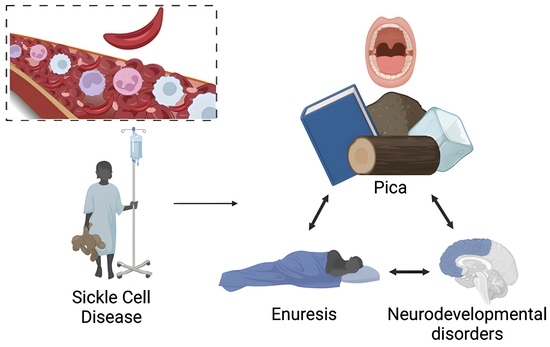
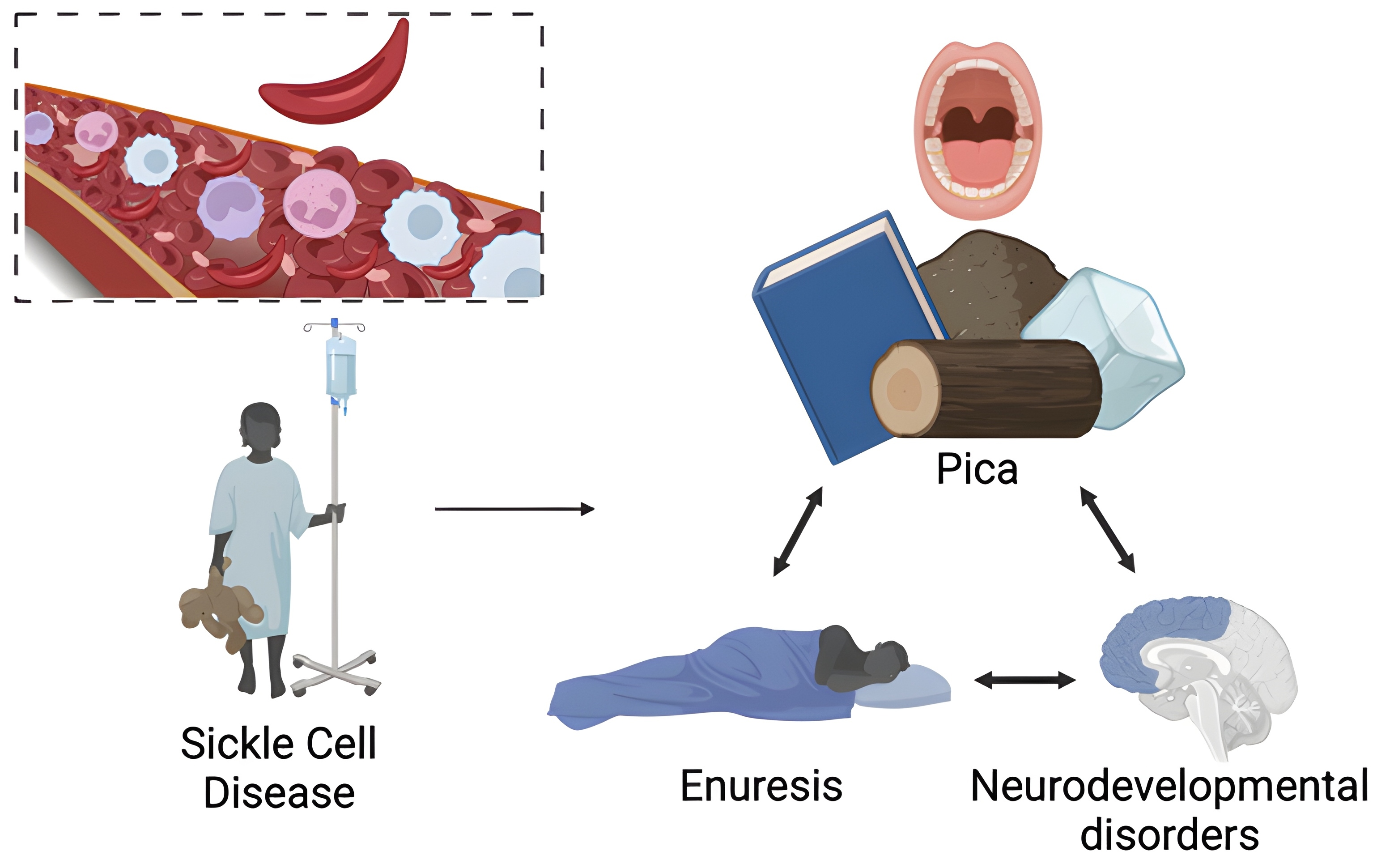
Background: Sickle cell disease (SCD) is a hereditary disorder affecting red blood cells’ shape and functional capacity. Individuals with SCD report relatively high co-occurrence of neurodevelopmental disorders (NDDs). In addition, these children also have higher rates of enuresis (incontinence) and pica, disorders prevalent in children with developmental delays. Both enuresis and pica can have negative effects on mental health, but their pathophysiology, especially in SCD, remains unclear. Objectives: The objective of this study was to determine the rates of pica and enuresis in a pediatric SCD clinic to compare the co-occurrence of NDDs and enuresis/pica. Methods: To do so, we performed a cross-sectional explanatory retrospective chart review of 275 pediatric SCD patients. Results: Our SCD cohort had a 27% prevalence of enuresis, 9% prevalence of pica, and 24% prevalence of one or more NDDs. We noted significant inter-group overlap between pica/enuresis and other risk SCD severity factors. NDDs were approximately twice as frequent in SCD patients with pica or enuresis compared to those without. While pica was associated with HbSβ+, it was not linked to disease severity indicators. Enuresis was associated with hydroxyurea usage (66.7% vs. 42.6%, p = 0.001) and reticulocyte counts, indicative of higher disease severity. Conclusions: Clinically, these results are the first to show co-occurrence between pica, enuresis, and NDDs in SCD. We suggest that the occurrence of pica or enuresis may serve as an indicator for previously unknown NDD risk. Together, these results underscore the need for targeted screenings of pica and enuresis in SCD populations.

Graphical Abstract

1. Introduction

Sickle cell disease (SCD) is a hereditary disorder that affects the shape and functional capacity of red blood cells, leading to vaso-occlusive events resulting in complications including chronic pain, anemia, and increased risk of infections [1,2,3]. In the United States, per the Centers for Disease Control, approximately 100,000 people are affected by SCD, and it is particularly prevalent in Black and African American individuals [4]. The term SCD encompasses at least 13 genetically distinct hemoglobinopathies and heterozygous variants, including homozygous HbSS and HbS/β-thalassemia, each producing differing degrees of hemolysis, vaso-occlusion, organ injury, and clinical severity [5]. In all subtypes, significant complications include cerebrovascular disease and cognitive impairment [2], which can lead to central nervous system involvement.
Individuals with SCD have higher rates of neurodevelopmental disorders (NDDs), including attention deficit hyperactivity disorder (ADHD), intellectual disabilities (ID), and specific learning disabilities [3,6]. As previously reviewed by Schatz & McClellan [7], while the exact effects of SCD on the central nervous system remain unclear, epidemiologically, approximately between a quarter and a third of children with SCD experience concomitant neurodevelopmental complications [8]. Although NDDs are associated with both mental health concerns and SCD-related complications, knowledge about associated risk factors for NDDs in SCD remains limited. The objective of this study was to determine the impact of SCD on two conditions known to be associated with NDDs: enuresis and pica.
Enuresis, or incontinence, is a prevalent issue that the International Children’s Continence Society defines as occurring until a cutoff age of 5 years old [9]. Enuresis diagnoses may further be separated into primary enuresis, defined as children who have never been continent for over 6 months, and secondary enuresis, defined as children with relapse after over 6 months of continence [10]. Cumulatively, these diagnoses affect up to 5–7 million children (equivalent to approximately 5–10% of the general population) in the United States [11]. Nocturnal enuresis, defined as nighttime incontinence at least two times weekly, is associated with reduced self-esteem and social isolation [12]. Nocturnal enuresis more commonly occurs among people with SCDs [12]. Male sex is a major risk factor for enuresis in individuals of all ages with and without SCD, with reported rates as high as 50% of boys with homozygous SCD [13]. Additional risk factors for enuresis in SCD include younger age, thalassemia major, sleep-disordered breathing, and NDDs [12,14]. Regardless of frequency and etiology, enuresis significantly impacts quality of life. In children with SCD, increased nocturnal enuresis is associated with higher reported psychosocial problems, as determined by the Pediatric Symptom Checklist [15]. Additionally, a recent study found that poorer health-related quality of life, disrupted sleep, increased self-reported fatigue, and higher disease severity markers, such as elevated lactate dehydrogenase, are all risk factors for enuresis in SCD [16]. Contrastingly, enuresis has also been correlated with higher fetal hemoglobin, which often signifies improved clinical outcomes in SCD, yet this association may be mediated by increased hydroxyurea in both cases, despite hydroxyurea’s urine-concentrating effect [16,17]. Although the 2019 American Society of Hematology guidelines recommend that the enuresis status be discussed as a screening tool for polysomnography [18], enuresis screenings in the context of SCD lack standardization. Standardization is hampered in part due to the unclear etiology and disease risk factors for enuresis, highlighting the need to clarify the prevalence and implications of enuresis in SCD.
Another significant issue observed in both NDDs and SCD is pica [19,20]. Pica is broadly defined as the compulsive ingestion of non-digestible or non-nutritive substances—such as dirt, wood, or soap—over a period of at least one month [19,20]. Pica is commonly reported in individuals with NDDs, such as ASD and ID [21], as well as patients with SCD [20]. While pica’s pathophysiology remains unclear, especially in the context of SCD, prior research has shown a high prevalence, ranging from 5% to 30% of children, with a higher prevalence in SCD patients than in the general population [22,23]. Among SCD patients, younger individuals and those with homozygous SCD have higher rates of pica compared to older individuals or those with heterozygous SCD [22]. Another study of a majority-white population with SCD in Belgium found similar results; researchers observed no differences dependent on sex but noted that individuals reporting pica were significantly younger and had lower median hemoglobin levels [24]. Despite the relatively high prevalence of pica, like enuresis, many screening techniques are limited. A past chart review of pica indicated that although 21% to 34% of patients displayed behaviors emblematic of pica, screening occurred less than 35% of the time [25]. Like enuresis, pica can have neurodevelopmental, medical, and psychosocial implications, making it important to discuss in standard visits [26]. In the general population, pica can cause substantial burdens on the family, including embarrassment and significant health risks, such as bowel obstruction and damage to teeth [27]. The unclear etiological mechanisms of pica highlight the importance of exploring the interdependence of this condition with NDDs and SCD severity.
It is well-established that NDDs, including ASD and ID, are associated with enuresis [28,29] and pica [21], but associations between these disorders and SCD have not yet been considered. Furthermore, it remains unclear if in SCD patients with NDDs, pica and enuresis more commonly occur. Thus, the objective of this study was to determine the rates of pica and enuresis in a local pediatric SCD clinic. Additionally, we explored whether these conditions have different disease markers or associations in SCD compared to the general population. To do so, grounded in substantial literature [30,31,32], we performed a retrospective chart review. Given that NDDs frequently occur concomitantly with SCD [33], it was hypothesized that enuresis and pica would display a relatively high prevalence in this pediatric population, accompanying NDD diagnoses.

2. Methods

2.1. Cohort

Inclusion criteria for this study encompassed patients under 18 years old at the time of initial database creation, with hematology/laboratory-confirmed diagnoses of SCD. Exclusion criteria included incomplete charts and patients under 5 years old (for purposes of enuresis diagnosis). We obtained patient information from the clinic rosters of two local sickle cell disease and neurodevelopmental clinics in a Northeastern United States metropolitan area. We then accessed records through the Epic Hyperspace system [34]. Both institutions are urban pediatric hospitals and ambulatory outpatient care centers, sharing a single charting system, which was accessed.

2.2. Chart Review

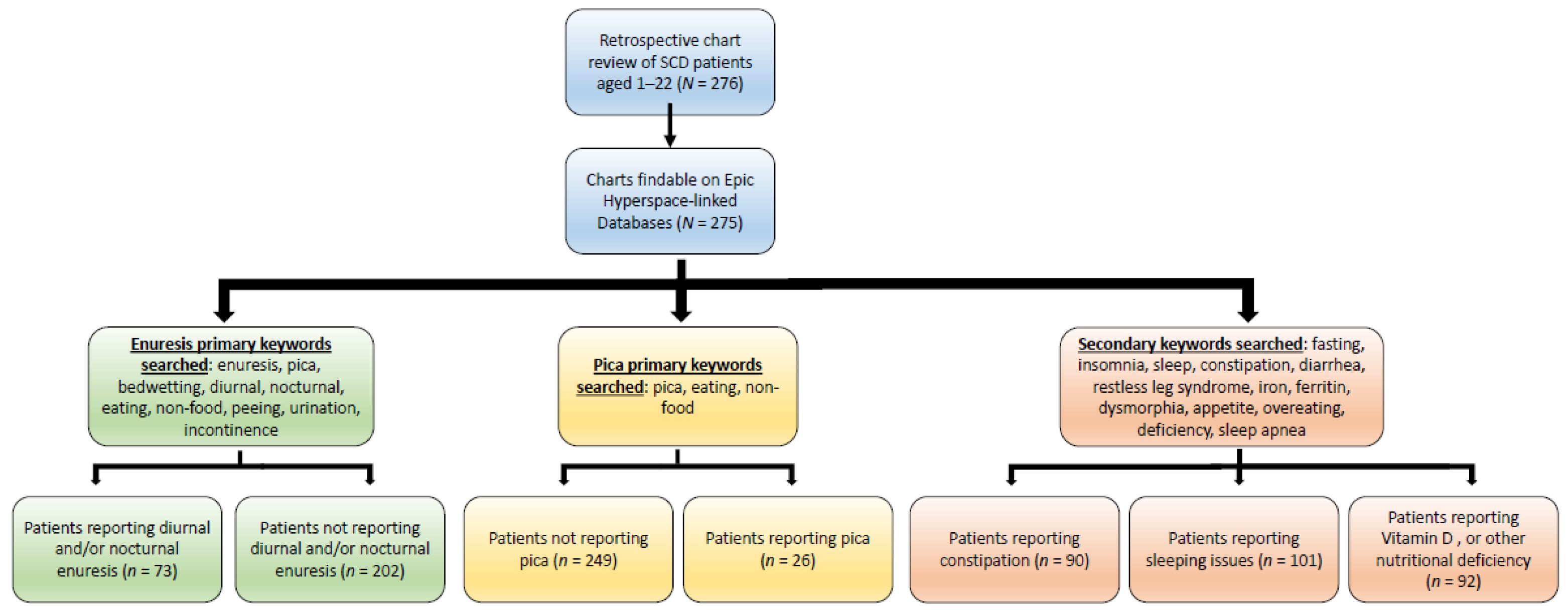
We utilized a chart review from a previously collected pediatric medical record that contains extensive information about SCD patients, many of whom have concomitant NDDs [33]. Charts of 340 patients were reviewed for the above inclusion criteria, with 275 charts qualifying for additional review/data extraction (Figure 1). The chart years contained within the database differed on a per-patient basis. All searching and accessing of records was performed in 2023 across two months in a cross-sectional manner. The database included demographic (e.g., age and sex), medical, and educational history, as well as disease information such as SCD genotype, SCD treatment history (e.g., hydroxyurea, chronic transfusions), and history of disease complications/comorbidities (e.g., stroke, acute chest syndrome, pain crisis, splenic sequestration, infection, and dactylitis). Additionally, this database included information pertinent to NDDs, including neurodevelopmental diagnoses (e.g., ADHD, attention issues, developmental delay, specific learning disabilities in math and reading comprehension, language disorders, and anxiety), psychiatric diagnoses associated with neurodevelopmental disorders (e.g., anxiety, depression, etc.), and school services [e.g., Individualized Educational Plan (IEP), 504 Rehabilitation Plan (504 Plan)].
Charts were searched for keywords related to pica (associated terms queried: pica, eating, non-food, malnutrition, and eating disorder) and enuresis (associated terms queried: enuresis, enuretic, nocturnal, diurnal, peeing, urination, and incontinence). Criteria for pica diagnosis required the physician to note in the charts the eating of non-food items or pica. Criteria for enuresis diagnosis required a physician’s notes in the charts mentioning bedwetting or enuresis. In both cases, therefore, diagnosis was dependent on a physician’s reporting of pica or enuresis. We also expanded the database to explore the paradigms of sleeping disorders (i.e., reported insomnia or sleep apnea), constipation, or nutritional deficiencies (associated terms queried: fasting, insomnia, sleep, constipation, diarrhea, restless leg syndrome, iron, ferritin, dysmorphia, appetite, overeating, deficiency, and sleep apnea). Finally, recent patient lab values (i.e., hemoglobin, fetal hemoglobin, mean reticulocyte count, mean white-cell count, mean platelets, mean ferritin serum, mean transferrin, mean iron serum, mean TIBC, and mean iron saturation) were accessed, if available. For lab values, the most recent three lab values were averaged for each patient. If fewer than three lab values were available, lab values were not included.

2.3. Statistical Analyses

Data were collected using Microsoft Excel 2023 and exported into Stata IC-13 (StataCorp, College Station, TX, USA) for analyses. Logistic regression analyses were used with specific neurodevelopmental diagnoses as the outcome variables, as indicated in the Figure Legends. Chi-squared test, with additional post hoc test, was performed to calculate residuals for nominal variables. The Wilcoxon rank-sum test was used as the non-parametric equivalent to a t-test for all comparisons of interval variables. A p-value of ≤0.05 was accepted for significance.

2.4. Ethics Approval

All study procedures were reviewed and approved by the Institutional Review Board (Parent ID IRB00087766; Protocol CR00053361) under an expedited review pathway.

3. Results

3.1. Co-Occurrence of Pica and Enuresis with NDDs

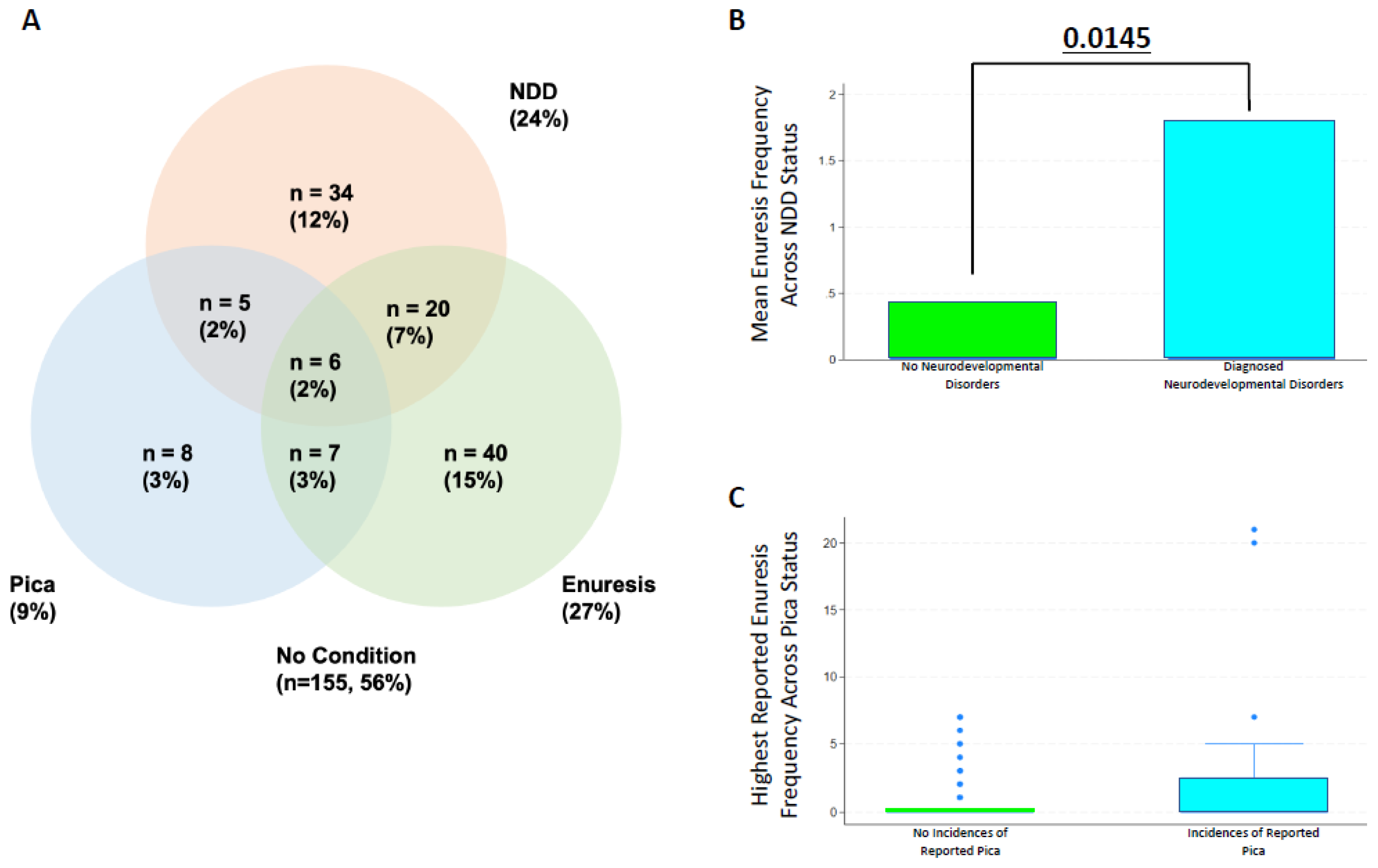
To begin, we examined the co-occurrence of NDDs with pica and enuresis. Consistent with past results [33], 24% of patients (n = 65) had an NDD diagnosis. Nine percent of patients (n = 26) had pica, and 27% (n = 73) had enuresis. Most patients without pica and with enuresis reported nocturnal enuresis only. Enuresis and pica each showed significant associations with NDD occurrence (p = 0.005 and p = 0.019, respectively). Fourteen percent of the study cohort also had two or more of the conditions: pica, enuresis, or NDDs (Figure 2A). Specific NDDs, including global development delays (11.0% vs. 2.5%, p = 0.003) and specific learning disabilities (SLD), in math (6.9% vs. 2%, p = 0.045) were significantly more likely to be diagnosed in individuals with enuresis than those without. However, these differences in developmental delays did not confer a significant difference (p = 0.108) in rates of school support services (e.g., IEP or 504 plan). Among individuals with pica, language disabilities occurred at a significantly higher rate (19.2% vs. 7.6%, p = 0.046). Yet, school support services were not significantly associated with pica status (p = 0.514). Together, 44% of patients had either an NDD, pica, or enuresis, with these statuses frequently occurring alongside one another.
From there, we sought to understand if the co-occurrence of enuresis, pica, and/or NDDs increased the relative severity of these conditions. When we stratified enuresis frequency (as reported in incidents per week by physicians, if available within the charts) by NDD status, individuals with NDDs had significantly higher frequencies of reported enuresis (Figure 2B). Additionally, patients with both enuresis and pica had higher enuresis incident frequency than patients without pica (Figure 2C), but results were not statistically significant, likely due to the small sample size of pica. Together, this shows an interdependence between pica, enuresis, and NDDs, with pica and/or NDDs increasing the occurrence of enuresis. From there, we sought to define the characteristics of individuals with enuresis and pica.

3.2. Sickle Cell Disease Enuresis Characteristics Analyses

In our study, 27% (n = 73) of patients’ charts yielded either current or past reports of enuresis (Figure 2A), mostly nocturnal only (n = 58, 21%) or both nocturnal and diurnal (n = 7, 2.5%), with a small proportion either being unspecified (n = 7, 2.5%) or diurnal only (n = 1, 0.3%). Beyond associations with NDD, enuresis was not significantly associated with age (9.12 vs. 8.57 years among those with and without enuresis, respectively; p = 0.365). While males had a slightly higher prevalence of enuresis compared to females, this was not statistically significant [30.4% among males versus 22.6% among females, p = 0.143]. SCD genotype was also associated with enuresis, with homozygous-SS type SCD more common in patients with enuresis [76.7% rate among enuretic individuals vs. 56.9% rate among non-enuretic individuals; p = 0.003]. Interestingly, enuresis occurred less in patients with SC-type SCD compared with the non-enuretic population (9.6% vs. 31.7%, p = 0.0002). Patients who reported enuresis, as compared to those without enuresis, had a higher likelihood of stroke history (17.8% vs. 9.9%, p = 0.046), specifically silent cerebral infarct (13.7% vs. 4%, p = 0.004), as well as headaches (65.8% vs. 49%, p = 0.014). Enuresis was not statistically linked to constipation, diarrhea, or other sickle cell complications.
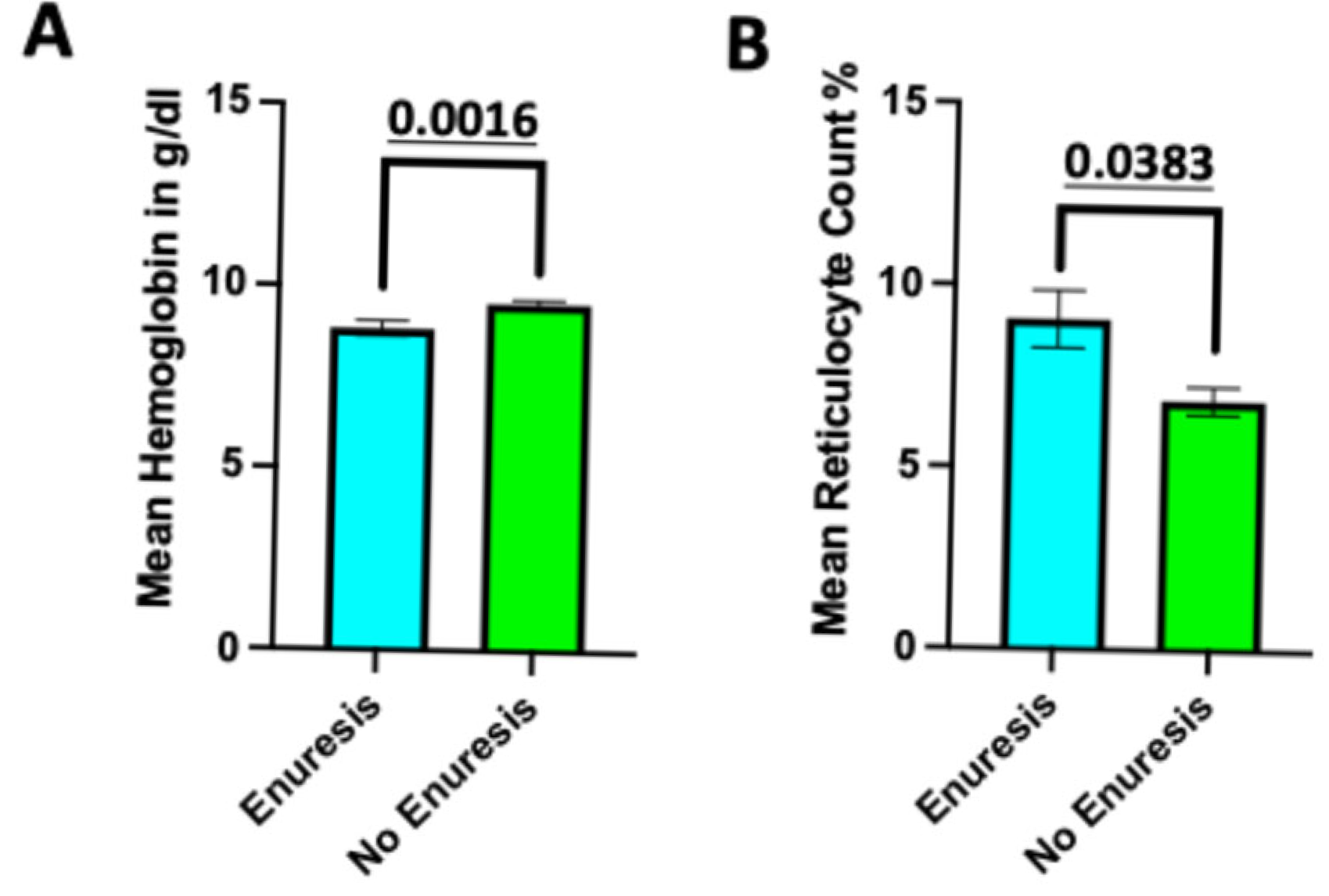
We also found associations between enuresis and SCD treatments, sleeping issues, and lab-measured hemoglobin levels and reticulocyte counts (Table 1; Figure 3A,B). Specifically, individuals with enuresis had statistically significantly lower median hemoglobin and higher mean reticulocyte counts, indicating higher disease severity (Figure 3A,B). We further found that patients with enuresis were significantly more likely to have previously been on disease-modifying therapies, such as hydroxyurea, than non-enuretic individuals (66.7% vs. 42.6%, p = 0.001). Given concerns that this finding may be due to the higher rates of enuresis in individuals with SS-type SCD, who are also more likely to be offered/on disease-modifying therapies, we repeated analyses including only SS-type SCD patients, with results continuing to be significant (81.8% vs. 66.1%, p = 0.034). This shows that in our population, enuresis was independently associated with disease severity.

3.3. Sickle Cell Disease Pica Characteristics Analyses

We found no significant demographic differences (e.g., sex and age), SCD-related complications, and lab values between patients with SCD with and without pica (Table 2). While patients reporting pica were slightly younger (7.54 years versus 8.84 years) and had a lower BMI (16.6 kg/m2 versus 17.8 kg/m2), neither of these differences was statistically significant. Additionally, within our database of other medical diagnoses (e.g., psychiatric, as described in Section 2), no other statistically significant correlates were present with pica. Notably, we found associations with S-β+ thalassemia type SCD [n = 6 (23.1%) with pica versus 21 (8.4%) without pica; p = 0.017)], but the overall distribution of genotypes among patients with and without pica was not significantly different (p = 0.051). Additionally, no SCD complications, including strokes (p = 0.477), pain crises (p = 0.855), and headaches (p = 0.649), vitamin deficiencies (p = 0.126), SCD treatments (p = 0.452), or lab values of blood and iron metrics were associated with pica status. This underscores that pica is relatively independent of other SCD and NDD risk factors within our patient population, outside of SCD subtype.

4. Discussion

4.1. NDDs in Sickle Cell Disease

Our retrospective chart review suggested a co-occurrence of pica and enuresis in SCD, potentially arising due to the association of both conditions with NDDs. This co-occurrence underscores the need for increased targeted screening and intervention strategies for NDDs.

4.2. Enuresis

Compared with other studies in SCD populations, our chart review found a lower prevalence of enuresis. Past studies have found rates of enuresis ranging from a common range of 38–52% in homozygous SCD [35]. In general, the prevalence of enuresis, even in SCD, decreases with age [36]. However, we found the average age of individuals with enuresis was slightly higher than that of their counterparts without enuresis. This may be due to having a study cohort composed of relatively older patients (mean age = 8.7 years) or because younger individuals were automatically disqualified from enuresis diagnosis in our study per the International Children’s Continence Society cutoff age of 5 years old [9]. As many providers did not report them separately, our study could not discriminate between primary and secondary enuresis. Relative rates of primary and secondary enuresis may have similar etiology and should be investigated in the future [37].
Our data was consistent with prior studies demonstrating that enuresis is associated with hydroxyurea usage [16]. Patients on disease-modifying therapies, like hydroxyurea, were more likely to have enuresis in our study, findings that persisted even when only SS-type SCD patients were included. Of note, enuresis is not a reported side effect of hydroxyurea, and hydroxyurea is associated with improved sleep in SCD [17]. This finding may be related to associations between hydroxyurea and worsening disease severity.
In line with previous findings [13], we found that homozygous SCD was more likely to be associated with enuresis (32.7% within-group prevalence of enuresis) than SC-type SCD (9.8% within-group prevalence of enuresis). Additionally, our findings of higher mean reticulocyte and lower mean hemoglobin count in individuals with enuresis suggest increased SCD severity, which may be independent of other SCD-associated complications (e.g., seizures and pain crises) [38]. They also displayed high rates of Global Developmental Delays and SLD for math, yet the relatively small subgroup sizes make it difficult to determine if these findings are simply secondary to the occurrence of NDDs in enuresis.
While there are sex differences noted in the general population with enuresis, sex-dependent differences were not found in our SCD sample. A previous study in Philadelphia showed increased rates of nocturnal enuresis in male adolescents with SCD, as compared with their female counterparts [39]. Another study suggested that sex-dependent differences arise in part due to blood composition; enuresis more commonly occurs in males with low concentrations of fetal hemoglobin and females with high mean corpuscular hemoglobin [13]. Our study did not find any significant differences in fetal hemoglobin between children with and without enuresis.

4.3. Potential Etiology of Enuresis in SCD

Sleep issues were associated with enuresis in our sample cohort. Nearly half of all individuals with sleep apnea also reported enuresis, aligning with previous findings that enuresis severity is associated with obstructive sleep apnea [40]. Prior findings also show that hyposthenuria, sleep-disordered breathing, and neurological dysfunction are each associated with and potentially causative of enuresis [12], and that enuresis in patients with SCD is more severe and long-lasting than in patients without SCD [41]. Past results indicate that blood–brain barrier (BBB) disruption can occur with a high severity of SCDs [42]. Increased BBB permeability results in the infiltration of innate immune cells and neuroinflammation [43]. The entry of these inflammatory mediators into the central nervous system may affect brain regions involved in autonomic control, thereby dysregulating bladder function [43]. Additionally, sleep dysfunction is associated with autonomic dysfunction [44]. These factors might affect autonomic control through the blood–brain barrier, contributing simultaneously to both enuresis and sleep apnea.
Alternatively, renal function could link both NDDs and enuresis. Generally, SCD is known to modulate nephropathy and renal function [45]. Renal abnormalities have also been considered as an underlying cause of enuresis, through increased diuresis, free water reabsorption, and solute excretion [46]. SCD may therefore increase the risk of enuresis through renal changes. Other cohort studies of enuresis in SCD have further shown that enuresis is associated with higher lactate dehydrogenase levels [16], which in turn correlate with creatinine clearance as a potential renal insufficiency biomarker [47]. Notably, recent large-scale cohort studies also show that, among adults with NDDs and when adjusting for risk and demographic factors, there is a higher risk for chronic kidney disease than in adults without NDDs [48]. This suggests a poorly elucidated potential “kidney–brain axis” [49], which may modulate associations between NDDs and enuresis severity in individuals with SCD.
Despite the potential difference in the etiology of enuresis in SCD, treatments for enuresis may reflect guidelines for enuresis mitigation in the general population. Enuresis alarms and desmopressin are commonly prescribed in the general population [50]. In one study, intranasal desmopressin acetate for SCD patients with primary nocturnal enuresis resulted in 60 percent of patients having a complete or partial reduction in bedwetting [51]. Although this represents a small study by Figueroa et al., their results in enuretic SCD patients are comparable to past studies of the general enuretic population, which found that approximately 50 percent of patients have reduced bedwetting frequency with adherence to desmopressin [52]. Within the general population, the literature reviews have indicated that desmopressin, by itself, may be less effective than sustained long-term alarm therapy [53]. Alarm therapy, which is based primarily on principles of behavioral therapy [53], may not be affected by the different etiology of enuresis in SCD, if any. However, desmopressin, alarm therapy, and other enuresis therapies have not been comprehensively evaluated within SCD [41].

4.4. Pica

Our study reports lower rates of pica than previously seen in the general and SCD population studies. In particular, past studies have found that pica in SCD ranges in prevalence from 30 to 56% [22,24], which is much higher than our pica prevalence of approximately 10%. Additionally, our cohort group did not show many of the same risk factors for pica that have been found in previous studies. Past findings show pica is associated with HbSS and lower hemoglobin levels, age, and weight [22,24], none of which we saw. Other previously discussed risk factors for pica include iron deficiency and previous occurrence of stroke [23,24]. It is possible that our population was not adequately screened for pica, resulting in a small sample size that was underpowered to detect these statistical differences.
Pica is commonly reported in individuals with NDDs, such as ASD and ID [21], as well as patients with SCD [20], but few studies have looked at the confounding effect of NDDs and SCD on pica occurrence. Past studies have found that pica is generally associated with NDDs, particularly obsessive-compulsive disorders [19]. One study of a pica cohort who have both SCD and ASD found that applied behavior analysis treatment reduces pica to a near-zero rate [54].

4.5. Potential Etiology of Pica in SCD

The exact etiology of pica in SCD remains unclear. While iron deficiency has been proposed to cause pica [55], the iron serum levels in our sample were not significantly different. Wide-scale studies of the general population also show that pica is associated with low hemoglobin, hematocrit, and plasma zinc, although the directionality of this association was not defined [55]. Although we did not examine zinc levels, zinc deficiency is associated with pica in the general population [55]. Zinc deficiency is also common in SCD [56]. Notably, zinc deficiency in SCD has partially been attributed to reduced reabsorption of zinc in the renal tubules [56]. This suggests that widespread zinc deficiency in SCD patients predisposes them to pica [22], offering an avenue for greater research exploring the interplay between NDDs, altered kidney-mediated zinc absorption, and pica prevalence in SCD.
While there were limited significant differences between the cohorts with and without pica, we noted differences from the general population characteristics of pica. Past literature on the non-SCD population has found “ice” pica is the most common, with studies reporting 34.5% frequency, while other common items include chalk, soap, and clay [57]. In SCD, past studies have also found that dysfunctional eating patterns, while potentially being a sign of pica, can occur independently of pica [58]. While some case reports have helped to define the specifics of pica in patients with SCD [27], larger cohort studies are necessary to clarify what constitutes severe pica and the risk factors specific to SCD.

4.6. Limitations

Limitations include a small sample size, especially for pica, limiting the degrees of freedom, so some analyses may be underpowered to detect significant differences. Particularly, although we showed some differences in pica and enuresis occurrence on the basis of SCD type, our sample was too small for subgroup analyses. Furthermore, specific DNA mutations in patients were not available. Larger, multi-center studies are needed to confirm these associations and better understand the prevalence and risk factors across diverse populations, particularly as they pertain to specific learning difficulties and SCD-type. Some patients may have received primary or specialty care for these conditions elsewhere, and those records were not linked to the reviewed charts. Similarly, there is a potential for selection bias, as individuals with more severe symptoms or complications may be more likely to be referred, thus overreporting the prevalence of pica and enuresis. Inversely, however, given the nature of a retrospective chart review, based on diagnosed conditions, and since many of the conditions, enuresis and pica, are underrecognized, our prevalence rates may be an underestimation. Still, given that this was performed in an SCD clinic, these issues are ideally minimized and do not affect the core conclusions of our study. While our study did not investigate the role of social determinants of health in NDD, pica, and enuresis prevalence, this is an important avenue for future study. Stratifications in genotypes may aid in explaining ethnicity-dependent outcomes. Finally, the absence of a control group makes prevalence comparisons difficult for the general population.

5. Implications and Future Directions

Pica and enuresis commonly occur alongside one another and NDDs, demonstrating the need for increased standardized screening. Of note, the actual rate of NDDs, pica, and nocturnal enuresis may be far higher due to relatively low rates of proper developmental screening (i.e., performing full screenings for NDDs, pica, and enuresis). While the American Society of Hematology and American Academy of Pediatrics guidelines suggest surveillance and screening for neurocognitive conditions in patients with SCD, given their high-risk status, these screenings are not consistently occurring [30,59]. Given the relatively high presence of nocturnal enuresis and pica, these are likely to be readily observed by caregivers. Thus, pica or enuresis occurrence may serve as indicators for previously unknown NDD risk or elevated SCD severity. However, our chart review shows that providers offering screenings remain low; among the few charts that mention pica or enuresis in any capacity, the vast majority do not catalog specific details, including frequency, temporality, duration, and foods eaten. One potential alternative would be to increase training and knowledge for care providers to provide screenings, which may highlight previously under-reported symptoms. For pica, past studies have shown that quality improvement initiatives in a hospital system increased screening rates for pica behaviors from a sub-40% rate to a near-consistent 100% rate, suggesting the feasibility of implementing screening programs for these conditions [25]. Once screened more rigorously, providers may apply effective techniques for reducing these conditions in the general population, such as behavioral therapy for pica [54] and desmopressin or other medications for nocturnal enuresis. Furthermore, the distinct pathogenesis for these conditions in SCD, as opposed to the general population, warrants further investigation to understand and address these overlapping challenges. Given the influence of age in both pica and enuresis prevalence, a longitudinal follow-up is needed to better understand how pica, enuresis, and NDD evolve in children with SCD. Finally, future studies should also consider differences in pica and enuresis across socioeconomic and psychosocial determinants of health.

Author Contributions

Conceptualization, E.I.L., B.G.G.; methodology, K.N. A.A.; software, K.N.; validation, K.N., A.A., C.J.G., A.D.C., W.L., B.G.G. and E.I.L.; formal analysis, K.N., E.I.L.; investigation, K.N., A.A., C.J.G., A.D.C., W.L. and B.G.G.; resources, E.I.L., A.A.; data curation, K.N., E.I.L.; writing—original draft preparation, K.N.; writing—review and editing, K.N., A.A., C.J.G., A.D.C., W.L., B.G.G. and E.I.L.; visualization, K.N.; supervision, E.I.L.; project administration, E.I.L.; funding acquisition, E.I.L. All authors have read and agreed to the published version of the manuscript.

Funding

This study was funded by the National Institutes of Health’s National Heart, Lung, and Blood Institute, K23 HL133455- 01A1, E. I. Lance (PI). This poster was supported by the Cooperative Agreement Number NU50CD300866, funded by the Centers for Disease Control and Prevention. Its contents are solely the responsibility of the authors and do not necessarily represent the official views of the Centers for Disease Control and Prevention of the Department of Health and Human Services.

Institutional Review Board Statement

This study received ethical approval from the Johns Hopkins IRB under Parent ID IRB00087766; Protocol CR00053361, original approval date 4 April 2017, and updated approval date 7 October 2025.

Informed Consent Statement

This study received ethical approval from the Johns Hopkins IRB. This is an IRB-approved retrospective study; all patient information was de-identified, and patient consent was not required.

Data Availability Statement

The data presented in this study are available on request from the corresponding author. The data are not publicly available due to privacy restrictions.

Conflicts of Interest

The authors declare no conflicts of interest.

Glossary

504 Plan504 rehabilitation plan
ASHAmerican Society of Hematology
ADHDAttention Deficit Hyperactivity Disorder
ASDAutism spectrum disorder
HBBHemoglobin beta
HbS/β0Hemoglobin S-β-thalassemia
HbSSHomozygous genotypes
IEPIndividualized educational plan
IDIntellectual disability
NDDsNeurodevelopmental disorders
SCDSickle cell disease
SDStandard deviation

References

  1. Platt, O.S.; Brambilla, D.J.; Rosse, W.F.; Milner, P.F.; Castro, O.; Steinberg, M.H.; Klug, P.P. Mortality In Sickle Cell Disease—Life Expectancy and Risk Factors for Early Death. N. Engl. J. Med. 1994, 330, 1639–1644. [Google Scholar] [CrossRef]
  2. Rees, D.C.; Williams, T.N.; Gladwin, M.T. Sickle-Cell Disease. Lancet 2010, 376, 2018–2031. [Google Scholar] [CrossRef]
  3. Elendu, C.; Amaechi, D.C.; Alakwe-Ojimba, C.E.; Elendu, T.C.; Elendu, R.C.; Ayabazu, C.P.; Aina, T.O.; Aborisade, O.; Adenikinju, J.S. Understanding Sickle Cell Disease: Causes, Symptoms, and Treatment Options. Medicine 2023, 102, e35237. [Google Scholar] [CrossRef] [PubMed]
  4. Hassell, K.L. Population Estimates of Sickle Cell Disease in the U.S. Am. J. Prev. Med. 2010, 38, S512–S521. [Google Scholar] [CrossRef] [PubMed]
  5. Bain, B.J. The Spectrum of Sickle Cell Disease. Am. J. Hematol. 2025, 100, 296–297. [Google Scholar] [CrossRef] [PubMed]
  6. Lance, E.I.; Comi, A.M.; Johnston, M.V.; Casella, J.F.; Shapiro, B.K. Risk Factors for Attention and Behavioral Issues in Pediatric Sickle Cell Disease. Clin. Pediatr. 2015, 54, 1087–1093. [Google Scholar] [CrossRef]
  7. Schatz, J.; McClellan, C.B. Sickle Cell Disease as a Neurodevelopmental Disorder. Ment. Retard. Dev. Disabil. Res. Rev. 2006, 12, 200–207. [Google Scholar] [CrossRef]
  8. Gyamfi, J.; Lee, J.T.; Islam, F.; Opeyemi, J.; Tampubolon, S.; Ojo, T.; Qiao, Y.; Mai, A.; Vieira, D.; Peprah, E. Characterization of Neurological Complications Among Children with Sickle Cell Disease in the United States: Findings from the 2007–2018 National Health Interview Survey (NHIS). Blood 2021, 138, 1909. [Google Scholar] [CrossRef]
  9. Austin, P.F.; Bauer, S.B.; Bower, W.; Chase, J.; Franco, I.; Hoebeke, P.; Rittig, S.; Walle, J.V.; von Gontard, A.; Wright, A.; et al. The Standardization of Terminology of Lower Urinary Tract Function in Children and Adolescents: Update Report from the Standardization Committee of the International Children’s Continence Society. Neurourol. Urodyn. 2016, 35, 471–481. [Google Scholar] [CrossRef]
  10. Ramakrishnan, K. Evaluation and Treatment of Enuresis. Am. Fam. Physician 2008, 78, 489–496. [Google Scholar]
  11. Baird, D.C.; Seehusen, D.A.; Bode, D.V. Enuresis in Children: A Case-Based Approach. Am. Fam. Physician 2014, 90, 560–568. [Google Scholar] [PubMed]
  12. Wolf, R.B.; Kassim, A.A.; Goodpaster, R.L.; DeBaun, M.R. Nocturnal Enuresis in Sickle Cell Disease. Expert Rev. Hematol. 2014, 7, 245–254. [Google Scholar] [CrossRef] [PubMed]
  13. Readett, D.; Morris, J.; Serjeant, G. Nocturnal Enuresis in Sickle Cell Haemoglobinopathies. Arch. Dis. Child. 1990, 65, 290–293. [Google Scholar] [CrossRef] [PubMed]
  14. Ekinci, O.; Celik, T.; Ünal, Ş.; Oktay, G.; Toros, F.; Ozer, C. Nocturnal Enuresis in Sickle Cell Disease and Thalassemia Major: Associated Factors in a Clinical Sample. Int. J. Hematol. 2013, 98, 430–436. [Google Scholar] [CrossRef]
  15. Jordan, S.S.; Hilker, K.A.; Stoppelbein, L.; Elkin, T.D.; Applegate, H.; Iyer, R. Nocturnal Enuresis and Psychosocial Problems in Pediatric Sickle Cell Disease and Sibling Controls. J. Dev. Behav. Pediatr. 2005, 26, 404. [Google Scholar] [CrossRef]
  16. Porter, J.S.; Paladino, A.J.; Russell, K.; Rupff, R.; Griffith, J.; Mai, Y.; Zhang, H.; Hankins, J.S.; Wang, W.C. Nocturnal Enuresis in Sickle Cell: Sociodemographic, Medical, and Quality of Life Factors. J. Pediatr. Psychol. 2021, 47, 75–85. [Google Scholar] [CrossRef]
  17. Yoo, M.; Bai, S.; Kalmus, G.; Abel, L.; Dampier, C.; Gillespie, M.; Vala, S.; Huang, T.; Khemani, K.; Leu, R.; et al. Impact of Hydroxyurea on Pediatric Sleep in Sickle Cell Disease. Blood Red Cells Iron 2025, 1, 100026. [Google Scholar] [CrossRef]
  18. Liem, R.I.; Lanzkron, S.; Coates, T.D.; DeCastro, L.; Desai, A.A.; Ataga, K.I.; Cohen, R.T.; Haynes, J., Jr.; Osunkwo, I.; Lebensburger, J.D.; et al. American Society of Hematology 2019 Guidelines for Sickle Cell Disease: Cardiopulmonary and Kidney Disease. Blood Adv. 2019, 3, 3867–3897. [Google Scholar] [CrossRef]
  19. Matson, J.L.; Belva, B.; Hattier, M.A.; Matson, M.L. Pica in Persons with Developmental Disabilities: Characteristics, Diagnosis, and Assessment. Res. Autism Spectr. Disord. 2011, 5, 1459–1464. [Google Scholar] [CrossRef]
  20. Rodrigues, N.; Shih, S.; Cohen, L.L. Pica in Pediatric Sickle Cell Disease. J. Clin. Psychol. Med. Settings 2021, 28, 6–15. [Google Scholar] [CrossRef]
  21. Fields, V.L.; Soke, G.N.; Reynolds, A.; Tian, L.H.; Wiggins, L.; Maenner, M.; DiGuiseppi, C.; Kral, T.V.E.; Hightshoe, K.; Schieve, L.A. Pica, Autism, and Other Disabilities. Pediatrics 2021, 147, e20200462. [Google Scholar] [CrossRef] [PubMed]
  22. Ivascu, N.S.; Sarnaik, S.; McCrae, J.; Whitten-Shurney, W.; Thomas, R.; Bond, S. Characterization of Pica Prevalence among Patients with Sickle Cell Disease. Arch. Pediatr. Adolesc. Med. 2001, 155, 1243–1247. [Google Scholar] [CrossRef] [PubMed]
  23. Liu, H.; Burns, R.T.; Spencer, B.R.; Page, G.P.; Mast, A.E. Demographic, Clinical, and Biochemical Predictors of Pica in a Large Cohort of Blood Donors. Transfusion 2021, 61, 2090–2098. [Google Scholar] [CrossRef] [PubMed]
  24. Aloni, M.N.; Lecerf, P.; Lê, P.-Q.; Heijmans, C.; Huybrechts, S.; Devalck, C.; Azzi, N.; Ngalula-Mujinga, M.; Ferster, A. Is Pica Under-Reported in Children with Sickle Cell Disease? A Pilot Study in a Belgian Cohort. Hematology 2015, 20, 429–432. [Google Scholar] [CrossRef]
  25. Reed-Knight, B.; Thompson, B.; Bigham, L.; Sil, S.; Griffin, A.; Johnson, A. Identification of Pica Behaviors in Youth with Sickle Cell Disease: A Quality Improvement (QI) Project. Clin. Pract. Pediatr. Psychol. 2015, 3, 167. [Google Scholar] [CrossRef]
  26. Al Nasser, Y.; Muco, E.; Alsaad, A.J. Pica. In StatPearls; StatPearls Publishing: Treasure Island, FL, USA, 2024. [Google Scholar]
  27. O’Callaghan, E.T.; Gold, J. Pica in Children with Sickle Cell Disease: Two Case Reports. J. Pediatr. Nurs. 2012, 27, 65–70. [Google Scholar] [CrossRef]
  28. Crowder, D.; Gutmann, L.; Pergami, P. Urinary Incontinence in Children as a Sign of Neurological Disorders: Need for a High Index of Suspicion. Clin. Pediatr. 2014, 53, 1291–1294. [Google Scholar] [CrossRef]
  29. von Gontard, A.; Hussong, J.; Yang, S.S.; Chase, J.; Franco, I.; Wright, A. Neurodevelopmental Disorders and Incontinence in Children and Adolescents: Attention-Deficit/Hyperactivity Disorder, Autism Spectrum Disorder, and Intellectual Disability—A Consensus Document of the International Children’s Continence Society. Neurourol. Urodyn. 2022, 41, 102–114. [Google Scholar] [CrossRef]
  30. Aguwa, C.J.; Cannon, A.D.; Casella, J.F.; Shapiro, B.K.; Lance, E.I. Current Developmental Screening Practices in Young Children with Sickle Cell Disease. Br. J. Haematol. 2023, 200, 377–380. [Google Scholar] [CrossRef]
  31. Gearing, R.E.; Mian, I.A.; Barber, J.; Ickowicz, A. A Methodology for Conducting Retrospective Chart Review Research in Child and Adolescent Psychiatry. J. Can. Acad. Child Adolesc. Psychiatry 2006, 15, 126–134. [Google Scholar]
  32. Matt, V.; Matthew, H. The Retrospective Chart Review: Important Methodological Considerations. J. Educ. Eval. Health Prof. 2013, 10, 12. [Google Scholar] [CrossRef]
  33. Lance, E.I.; Cannon, A.D.; Shapiro, B.K.; Lee, L.-C.; Johnston, M.V.; Casella, J.F. Co-Occurrence of Neurodevelopmental Disorders in Pediatric Sickle Cell Disease. J. Dev. Behav. Pediatr. 2021, 42, 463–471. [Google Scholar] [CrossRef] [PubMed]
  34. Crawford, R.; Stephan, A.; Prideaux, F. EPiC Database; The University of Melbourne: Melbourne, VIC, Australia, 2024. [Google Scholar]
  35. Gaye, O.; Seck, M.; Thiam, N.M.; Ndong, A.; Fall, P.A. Enuresis and Overactive Bladder in Sickle Cell Patients: A Narrative Review of the Literature. World J. Urol. 2023, 41, 953–962. [Google Scholar] [CrossRef] [PubMed]
  36. Babela, J.M.; Loumingou, R.; Pemba-Loufoua, A.; Londjongo, W.; Nzingoula, S.; Senga, P. Enuresis in Children with Sickle Cell Disease. Arch. Pediatr. 2004, 11, 1168–1172. [Google Scholar]
  37. Robson, W.L.M.; Leung, A.K.C.; Van Howe, R. Primary and Secondary Nocturnal Enuresis: Similarities in Presentation. Pediatrics 2005, 115, 956–959. [Google Scholar] [CrossRef]
  38. Rees, D.C.; Brousse, V.A.M.; Brewin, J.N. Determinants of Severity in Sickle Cell Disease. Blood Rev. 2022, 56, 100983. [Google Scholar] [CrossRef]
  39. Barakat, L.P.; Smith-Whitley, K.; Schulman, S.; Rosenberg, D.; Puri, R.; Ohene-Frempong, K. Nocturnal Enuresis in Pediatric Sickle Cell Disease. J. Dev. Behav. Pediatr. 2001, 22, 300. [Google Scholar] [CrossRef]
  40. Lehmann, G.C.; Bell, T.; Kirkham, F.; Gavlak, J.; Ferguson, T.; Strunk, R.; Austin, P.; Rosen, C.; Marshall, M.; Wilkey, O.; et al. Enuresis Associated with Sleep Disordered Breathing in Children with Sickle Cell Anemia. J. Urol. 2012, 188, 1572–1576. [Google Scholar] [CrossRef]
  41. Esezobor, C.I.; Akintan, P.; Nwaogazie, U.; Akinwunmi, E.; Temiye, E.; Akinsulie, A.; Gbadegesin, R. Enuresis in Children and Adolescents with Sickle Cell Anaemia Is More Frequent and Substantially Different from the General Population. PLoS ONE 2018, 13, e0201860. [Google Scholar] [CrossRef]
  42. Lin, Z.; Lance, E.; McIntyre, T.; Li, Y.; Liu, P.; Lim, C.; Fan, H.; Tekes, A.; Cannon, A.; Casella, J.F.; et al. Imaging Blood–Brain Barrier Permeability Through MRI in Pediatric Sickle Cell Disease: A Feasibility Study. J. Magn. Reson. Imaging 2022, 55, 1551–1558. [Google Scholar] [CrossRef]
  43. Takata, F.; Nakagawa, S.; Matsumoto, J.; Dohgu, S. Blood-Brain Barrier Dysfunction Amplifies the Development of Neuroinflammation: Understanding of Cellular Events in Brain Microvascular Endothelial Cells for Prevention and Treatment of BBB Dysfunction. Front. Cell. Neurosci. 2021, 15, 661838. [Google Scholar] [CrossRef] [PubMed]
  44. Bascom, A.; McMaster, M.A.; Alexander, R.T.; MacLean, J.E. Nocturnal Enuresis in Children Is Associated with Differences in Autonomic Control. Sleep 2018, 42, zsy239. [Google Scholar] [CrossRef] [PubMed]
  45. Nath, K.A.; Hebbel, R.P. Sickle Cell Disease: Renal Manifestations and Mechanisms. Nat. Rev. Nephrol. 2015, 11, 161–171. [Google Scholar] [CrossRef] [PubMed]
  46. Natochin, Y.V.; Kuznetsova, A.A. Defect of Osmoregulatory Renal Function in Nocturnal Enuresis. Scand. J. Urol. Nephrol. Suppl. 1999, 202, 40–43, discussion 43–44. [Google Scholar] [CrossRef]
  47. Alzahri, M.S.; Mousa, S.A.; Almomen, A.M.; Hasanato, R.M.; Polimeni, J.M.; Racz, M.J. Lactate Dehydrogenase as a Biomarker for Early Renal Damage in Patients with Sickle Cell Disease. Saudi J. Kidney Dis. Transpl. 2015, 26, 1161–1168. [Google Scholar] [CrossRef]
  48. Whitney, D.G.; Schmidt, M.; Bell, S.; Morgenstern, H.; Hirth, R.A. Incidence Rate of Advanced Chronic Kidney Disease Among Privately Insured Adults with Neurodevelopmental Disabilities. Clin. Epidemiol. 2020, 12, 235–243. [Google Scholar] [CrossRef]
  49. Harshman, L.A.; Hooper, S.R. The Brain in Pediatric Chronic Kidney Disease—The Intersection of Cognition, Neuroimaging, and Clinical Biomarkers. Pediatr. Nephrol. 2020, 35, 2221–2229. [Google Scholar] [CrossRef]
  50. Vande Walle, J.; Rittig, S.; Tekgül, S.; Austin, P.; Yang, S.S.-D.; Lopez, P.-J.; Van Herzeele, C. Enuresis: Practical Guidelines for Primary Care. Br. J. Gen. Pr. 2017, 67, 328–329. [Google Scholar] [CrossRef]
  51. Figueroa, T.E.; Benaim, E.; Griggs, S.T.; Hvizdala, E.V. Enuresis in Sickle Cell Disease. J. Urol. 1995, 153, 1987–1989. [Google Scholar] [CrossRef]
  52. Stewart, S.; Masand, S.; Zhu, P. 1257 Is Desmopressin Effective in the Longterm as a Treatment for Nocturnal Enuresis in Children Who Are Dry During the Day? Pediatr. Res. 2010, 68, 622–623. [Google Scholar] [CrossRef][Green Version]
  53. Perrin, N.; Sayer, L.; While, A. The Efficacy of Alarm Therapy versus Desmopressin Therapy in the Treatment of Primary Mono-Symptomatic Nocturnal Enuresis: A Systematic Review. Prim. Health Care Res. Dev. 2015, 16, 21–31. [Google Scholar] [CrossRef] [PubMed]
  54. Thomas, B.R.; Bali, D.; O’Connor, J.T. Behavioral Treatment of Pica in a Child with Sickle Cell Disease. Clin. Pract. Pediatr. Psychol. 2023, 12, 339–346. [Google Scholar] [CrossRef]
  55. Miao, D.; Young, S.L.; Golden, C.D. A Meta-Analysis of Pica and Micronutrient Status. Am. J. Hum. Biol. 2015, 27, 84–93. [Google Scholar] [CrossRef]
  56. Prasad, A.S. Lessons Learned from Experimental Human Model of Zinc Deficiency. J. Immunol. Res. 2020, 2020, e9207279. [Google Scholar] [CrossRef]
  57. Katsoufis, C.P.; Kertis, M.; McCullough, J.; Pereira, T.; Seeherunvong, W.; Chandar, J.; Zilleruelo, G.; Abitbol, C. Pica: An Important and Unrecognized Problem in Pediatric Dialysis Patients. J. Ren. Nutr. 2012, 22, 567–571. [Google Scholar] [CrossRef]
  58. Lemanek, K.L.; Brown, R.T.; Armstrong, F.D.; Hood, C.; Pegelow, C.; Woods, G. Dysfunctional Eating Patterns and Symptoms of Pica in Children and Adolescents with Sickle Cell Disease. Clin. Pediatr. 2002, 41, 493–500. [Google Scholar] [CrossRef]
  59. Hoyt, C.R.; Luo, L.; Rice, H.E.; Shivakumar, N.; Housten, A.J.; Picinich, A.; Qashou, N.; Harris, K.M.; Varughese, T.; King, A.A. “Everyone Screens to Some Extent”: Barriers and Facilitators of Developmental Screening among Children with Sickle Cell Disease: A Mixed Methods Study. Pediatr. Blood Cancer 2024, 71, e31060. [Google Scholar] [CrossRef]
Figure 1. Flow chart of retrospective chart review performed. Abbreviations: SCD, sickle cell disease.
Medsci 14 00186 g001
Figure 2. (A) Venn diagram showing the co-occurrence of NDDs, enuresis, and pica in SCD. (B) The mean enuresis frequency reported among those with and without NDDs. (C) The highest reported enuresis frequency, if available, reported among those with and without pica. p-value is presented above with statistical analysis performed via the Wilcoxon rank-sum test. Abbreviations: NDD, neurodevelopmental disorder.
Medsci 14 00186 g002
Figure 3. (A) Lab values of hemoglobin and (B) mean reticulocyte count (%) in SCD patients with and without enuresis. Median ± SD lab values represent the last 3 available labs for the patient (n = 3). p-value is presented above with statistical analysis performed via the Wilcoxon rank-sum test.
Medsci 14 00186 g003
Table 1. Stratifications on the basis of enuresis status in demographics, sickle cell disease severity, and medical history across sickle cell disease patients. Note: Significant results are bolded. Chi-squared test and Wilcoxon rank-sum test were used unless otherwise indicated. For nominal categories, additional post hoc tests were performed to calculate residuals, which are stated alongside the p-value. Column percentages are presented in the Table. Categories are not exclusive for all variables. Abbreviations: n, no. of study participants; SD, standard deviation; and NDD, neurodevelopmental disorder.
FactorGroup with Enuresis (n = 73)Group Without Enuresis (n = 202)p-Value
Mean age in years when chart reviewed (SD)9.12 (0.57)8.57 (0.31)0.3654
Sex 0.1430
 Male42 (57.5)96 (47.5)
 Female31 (42.5)106 (52.5)
SCD Type (%) 0.0030
 SS56 (76.7)115 (56.9)0.0028
 SC7 (9.6)64 (31.7)0.0002
 S Beta Thalassemia02 (2.7)4 (2.0)0.7032
 S Beta Thalassemia+8 (11.0)19 (9.4)0.7025
SCD Complications (%)
 Stroke13 (17.8)20 (9.9)0.0460
  Silent Cerebral Infarction10 (13.7)8 (4.0)0.0039
 Seizure3 (4.1)9 (4.5)0.9010
 Headache48 (65.8)99 (49.0)0.0140
 Pain Crises51 (69.9)135 (66.8)0.6350
History of SCD Treatments (%) 0.0100
 None25 (34.3)116 (57.4)0.0007
 Hydroxyurea (HU)37 (50.7)64 (31.7)0.0039
 Chronic Transfusion Therapy (CTT)5 (6.9)9 (4.5)0.4255
Other Medical Diagnoses (%)
 Constipation25 (34.3)65 (32.2)0.9270
 Diarrhea1 (1.4)4 (2.0)0.4380
 Sleeping Status <0.001
  None38 (52.1)136 (67.3)0.0203
  Sleep Apnea23 (31.5)26 (12.9)0.0004
  Insomnia9 (12.3)12 (5.9)0.0782
  Fragmented1 (1.4)19 (9.4)0.0235
  Excessive Sleeping2 (2.7)9 (4.5)0.5215
Positive NDD (%)26 (35.6)39 (19.3)0.0050
Table 2. Stratifications on the basis of pica occurrence in demographics, sickle cell disease severity, and medical history across sickle cell disease patients. Note: Significant results are bolded. Chi-squared test and Wilcoxon rank-sum test are used unless otherwise indicated. For nominal categories, additional post hoc tests were performed to calculate residuals, which are stated alongside p-value. Column percentages are presented in the Table. Categories are not exclusive for all variables. Abbreviations: n, no. of study participants; SD, standard deviation; and NDD, neurodevelopmental disorder.
FactorGroup with Pica (n = 26)Group Without Pica (n = 249)p-Value
Mean age in years when chart reviewed (SD)7.54 (0.84)8.84 (0.29)0.1669
Sex 0.6660
 Male12 (46.1)126 (50.6)
 Female14 (53.9)123 (49.4)
SCD Type (%) 0.0510
 SS16 (61.5)155 (62.3)0.9434
 SC3 (11.5)68 (27.3)0.0805
 S Beta Thalassemia01 (3.9)5 (2.0)0.5419
 S Beta Thalassemia+6 (23.1)21 (8.4)0.0169
SCD Complications (%)
 Stroke2 (7.7)31 (12.5)0.4770
  Silent Cerebral Infarction2 (7.7)16 (6.4)
 Pain Crises18 (69.2)168 (67.5)0.8550
History of SCD Treatments (%) 0.4520
 None11 (42.3)130 (52.2)
 Hydroxyurea (HU)14 (53.9)87 (34.9)
 Chronic Transfusion Therapy (CTT)0 (0)14 (5.6)
Vitamin or Nutrition Deficiency 0.1260
 Vitamin D8 (30.8)60 (24.1)0.4530
 G6PD0 (0)7 (2.8)
 Vitamin C3 (11.5)13 (5.2)
 Lactase0 (0)1 (0.4)
 Copper0 (0)1 (0.4)
Other Medical Diagnoses (%)
 Constipation9 (34.6)81 (32.6)0.8850
 Diarrhea1 (3.9)4 (1.6)0.1250
Abnormal Eating 0.0320
 None20 (76.9)221 (88.8)0.0812
 Poor Appetite4 (15.4)25 (10.0)0.3987
 High Fast-Food Frequency2 (7.7)2 (0.8)0.0052
 Overeating0 (0)1 (0.4)0.7459
Positive NDD (%)11 (42.3)54 (21.7)0.0190
Disclaimer/Publisher’s Note: The statements, opinions and data contained in all publications are solely those of the individual author(s) and contributor(s) and not of MDPI and/or the editor(s). MDPI and/or the editor(s) disclaim responsibility for any injury to people or property resulting from any ideas, methods, instructions or products referred to in the content.