
Supervised (Home-Based Exercise) Prehabilitation Program in Pancreatic Cancer Patients Undergoing to Neoadjuvant Chemotherapy: A Pilot Feasibility Study

 , , ,
, , ,  ,
,  and
and 
Abstract
1. Introduction
2. Materials and Methods
2.1. Study Design
2.2. Eligibility/Exclusion Criteria
2.3. Recruitment
2.4. Study Outcomes
2.5. Intervention
2.6. Measurements
2.6.1. Adherence to the Intervention
2.6.2. Cardiopulmonary Exercise Test (CPET)
2.6.3. Steep Ramp Test
2.6.4. Knee Extensor Muscle Function
2.6.5. Handgrip Strength Test
2.6.6. 30-Second Sit-to-Stand
2.6.7. Skeletal Muscle Mass and Quality
2.6.8. Questionnaires
2.6.9. Cytokine/Chemokine Levels
2.7. Statistical Analysis
3. Results
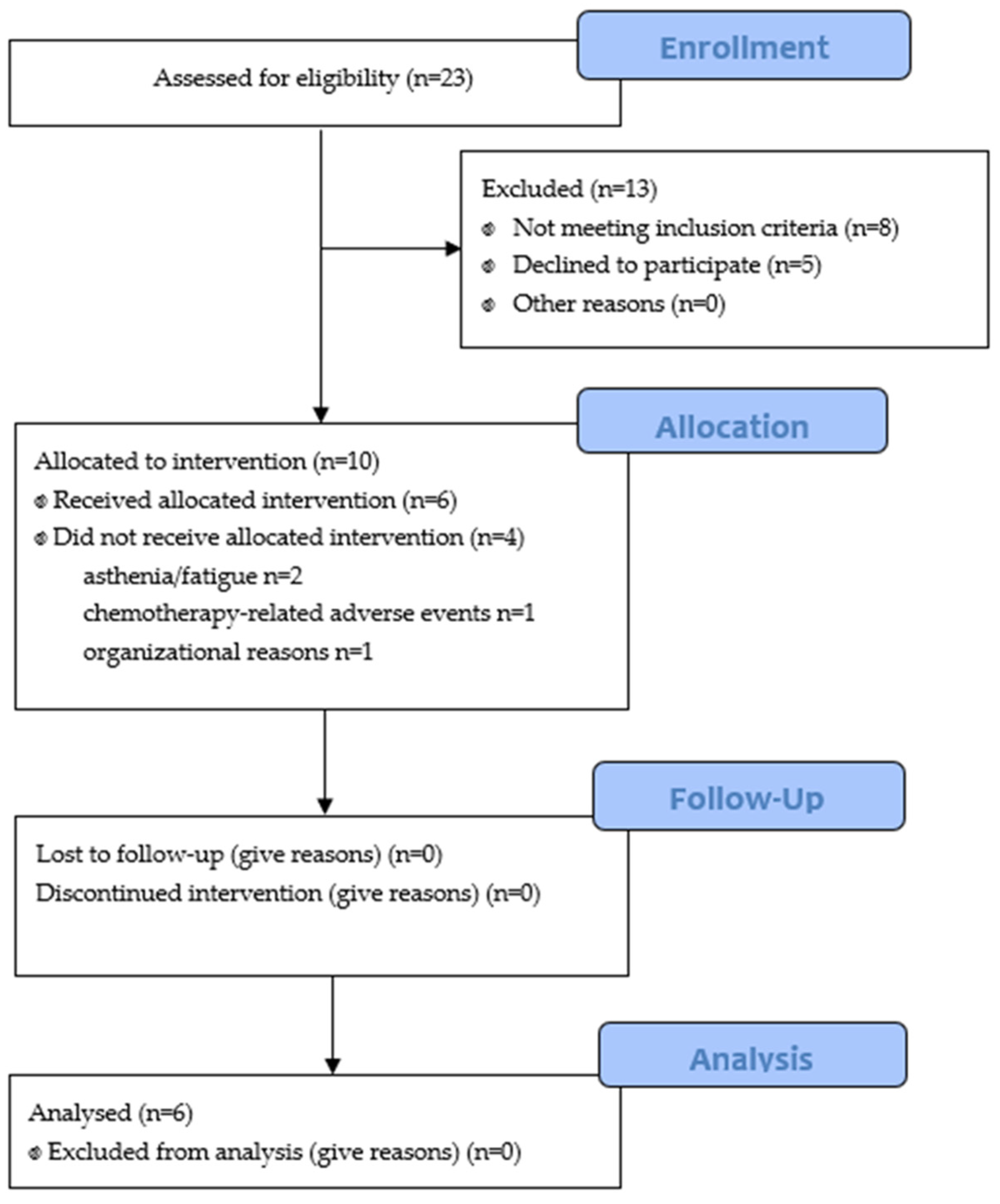
3.1. Feasibility
3.2. Clinical Data
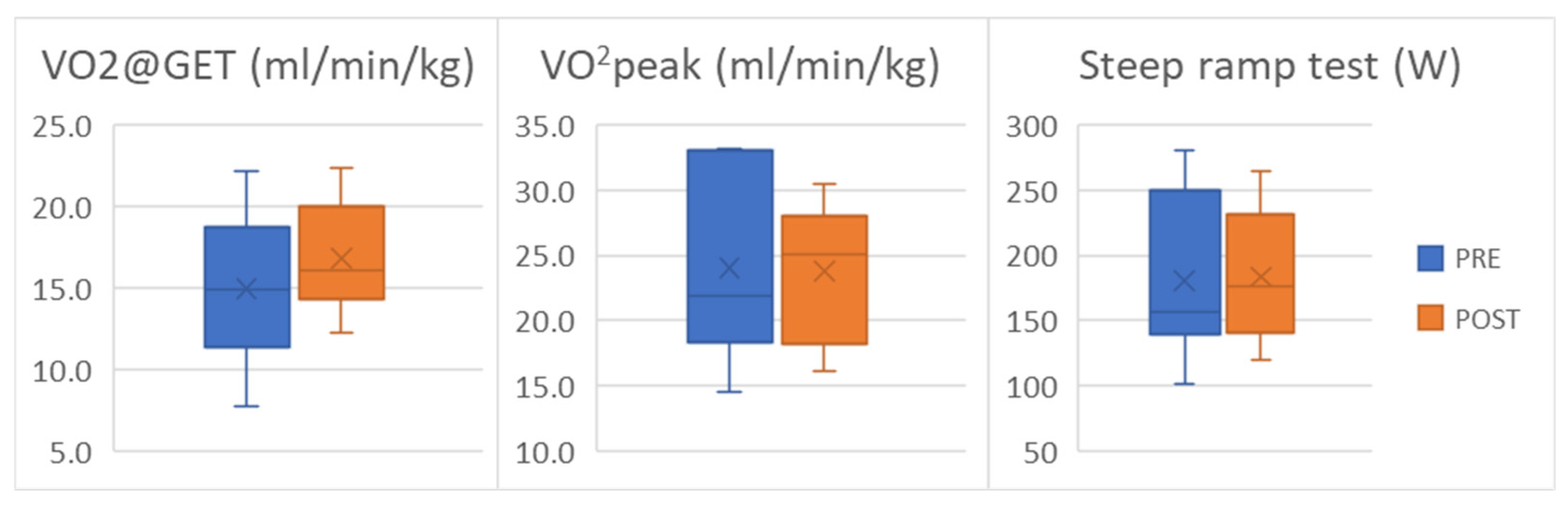
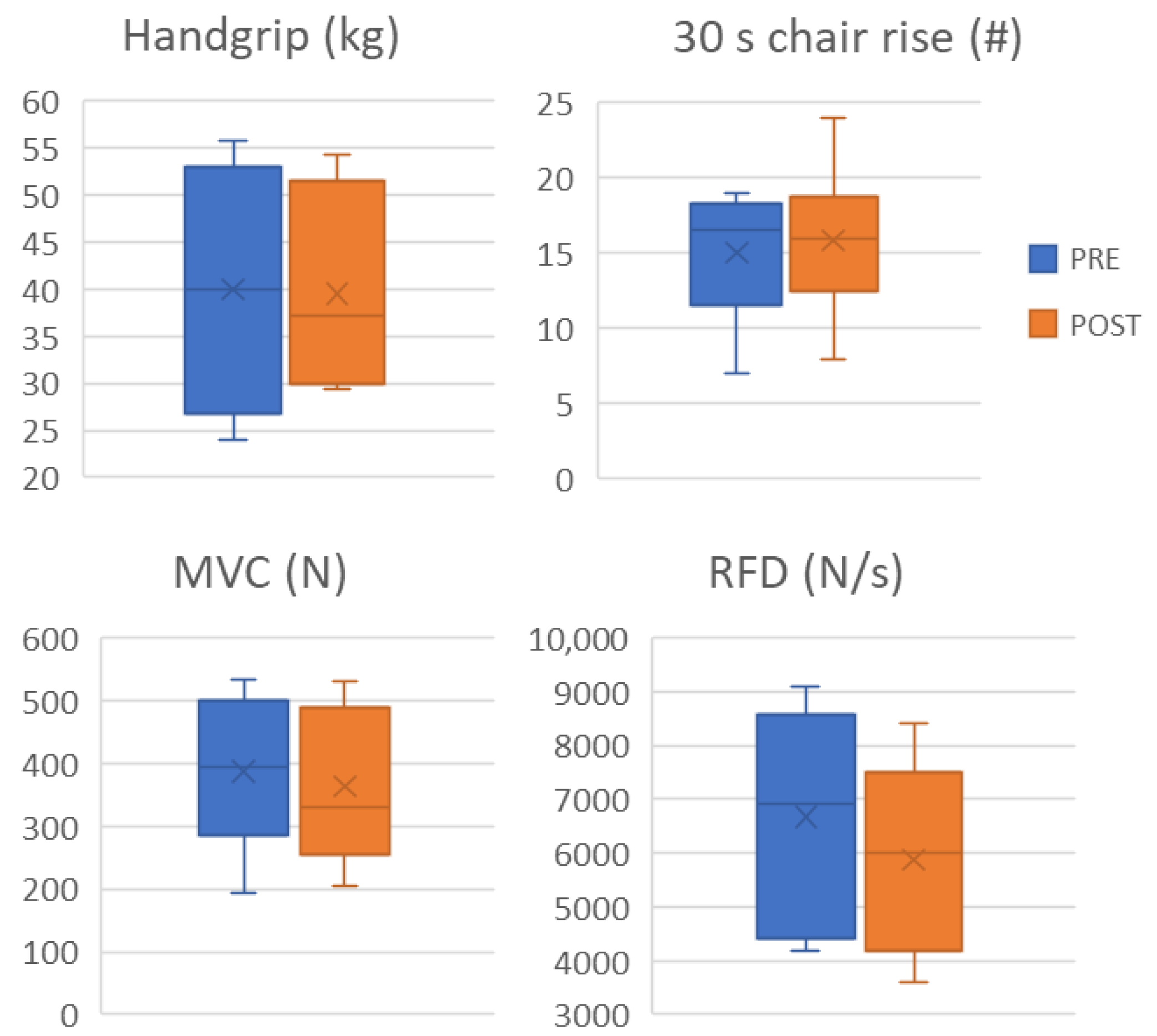
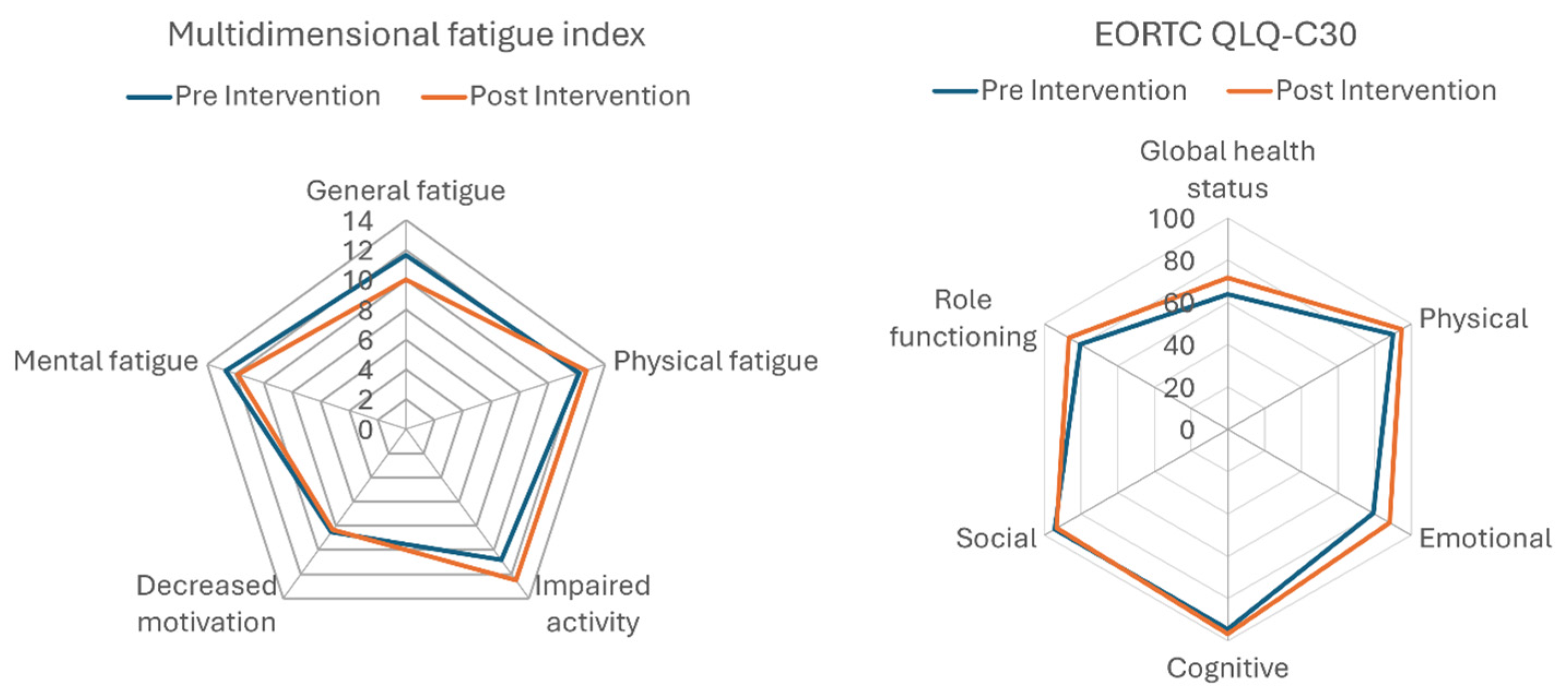
3.3. Secondary Outcomes
4. Discussion
5. Conclusions
Supplementary Materials
Author Contributions
Funding
Institutional Review Board Statement
Informed Consent Statement
Data Availability Statement
Acknowledgments
Conflicts of Interest
References
- Rawla, P.; Sunkara, T.; Gaduputi, V. Epidemiology of Pancreatic Cancer: Global Trends, Etiology and Risk Factors. World J. Oncol. 2019, 10, 10. [Google Scholar] [CrossRef] [PubMed]
- Park, W.; Chawla, A.; O’Reilly, E.M. Pancreatic Cancer: A Review. JAMA 2021, 326, 851–862. [Google Scholar] [PubMed]
- Mizrahi, J.D.; Surana, R.; Valle, J.W.; Shroff, R.T. Pancreatic Cancer. Lancet 2020, 395, 2008–2020. [Google Scholar] [CrossRef] [PubMed]
- Farnes, I.; Kleive, D.; Verbeke, C.S.; Aabakken, L.; Issa-Epe, A.; Småstuen, M.C.; Fosby, B.V.; Dueland, S.; Line, P.-D.; Labori, K.J. Resection Rates and Intention-to-Treat Outcomes in Borderline and Locally Advanced Pancreatic Cancer: Real-World Data from a Population-Based, Prospective Cohort Study (Norpact-2). BJS Open 2023, 7, zrad137. [Google Scholar]
- Sandini, M.; Patino, M.; Ferrone, C.R.; Alvarez-Perez, C.A.; Honselmann, K.C.; Paiella, S.; Catania, M.; Riva, L.; Tedesco, G.; Casolino, R.; et al. Association between Changes in Body Composition and Neoadjuvant Treatment for Pancreatic Cancer. JAMA Surg. 2018, 153, 809–815. [Google Scholar] [CrossRef]
- Kasumova, G.G.; Conway, W.C.; Tseng, J.F. The Role of Venous and Arterial Resection in Pancreatic Cancer Surgery. Ann. Surg. Oncol. 2018, 25, 51–58. [Google Scholar] [CrossRef]
- Zhang, Q.H.; Ma, J.D.; Lu, Y.M.; Zhang, R.N.; Zhao, Z.H.; Li, Y.T.; Chen, Q.P. Sarcopenia Adversely Impacts Clinical Outcomes in Patients Undergoing Pancreaticoduodenectomy: A Systematic Review and Meta-Analysis. World J. Gastrointest. Surg. 2024, 16, 1857–1870. [Google Scholar] [CrossRef]
- Bongers, B.C.; Dejong, C.H.C.; den Dulk, M. Enhanced Recovery after Surgery Programmes in Older Patients Undergoing Hepatopancreatobiliary Surgery: What Benefits Might Prehabilitation Have? Eur. J. Surg. Oncol. 2021, 47, 551–559. [Google Scholar] [CrossRef]
- Makary, M.A.; Segev, D.L.; Pronovost, P.J.; Syin, D.; Bandeen-Roche, K.; Patel, P.; Takenaga, R.; Devgan, L.; Holzmueller, C.G.; Tian, J.; et al. Frailty as a Predictor of Surgical Outcomes in Older Patients. J. Am. Coll. Surg. 2010, 210, 901–908. [Google Scholar] [CrossRef]
- Aoyama, T.; Kawabe, T.; Fujikawa, H.; Hayashi, T.; Yamada, T.; Tsuchida, K.; Yukawa, N.; Oshima, T.; Rino, Y.; Masuda, M.; et al. Loss of Lean Body Mass as an Independent Risk Factor for Continuation of S-1 Adjuvant Chemotherapy for Gastric Cancer. Ann. Surg. Oncol. 2015, 22, 2560–2566. [Google Scholar] [CrossRef]
- Wilson, R.J.; Davies, S.; Yates, D.; Redman, J.; Stone, M. Impaired Functional Capacity Is Associated with All-Cause Mortality after Major Elective Intra-Abdominal Surgery. Br. J. Anaesth. 2010, 105, 297–303. [Google Scholar] [CrossRef]
- Versteijne, E.; Suker, M.; Groothuis, K.; Akkermans-Vogelaar, J.M.; Besselink, M.G.; Bonsing, B.A.; Buijsen, J.; Busch, O.R.; Creemers, G.M.; van Dam, R.M.; et al. Preoperative Chemoradiotherapy Versus Immediate Surgery for Resectable and Borderline Resectable Pancreatic Cancer: Results of the Dutch Randomized Phase Iii Preopanc Trial. J. Clin. Oncol. 2020, 38, 1763–1773. [Google Scholar] [CrossRef]
- West, M.A.; Asher, R.; Browning, M.; Minto, G.; Swart, M.; Richardson, K.; McGarrity, L.; Jack, S.; Grocott, M.P.; Perioperative Exercise, T.; et al. Validation of Preoperative Cardiopulmonary Exercise Testing-Derived Variables to Predict in-Hospital Morbidity after Major Colorectal Surgery. Br. J. Surg. 2016, 103, 744–752. [Google Scholar] [CrossRef]
- Chandrabalan, V.V.; McMillan, D.C.; Carter, R.; Kinsella, J.; McKay, C.J.; Carter, C.R.; Dickson, E.J. Pre-Operative Cardiopulmonary Exercise Testing Predicts Adverse Post-Operative Events and Non-Progression to Adjuvant Therapy after Major Pancreatic Surgery. HPB 2013, 15, 899–907. [Google Scholar] [CrossRef] [PubMed]
- Carli, F.; Scheede-Bergdahl, C. Prehabilitation to Enhance Perioperative Care. Anesthesiol. Clin. 2015, 33, 17–33. [Google Scholar] [CrossRef]
- Levett, D.Z.; Edwards, M.; Grocott, M.; Mythen, M. Preparing the Patient for Surgery to Improve Outcomes. Best Pract. Res. Clin. Anaesthesiol. 2016, 30, 145–157. [Google Scholar] [CrossRef]
- Giles, C.; Cummins, S. Prehabilitation before Cancer Treatment. BMJ 2019, 366, l5120. [Google Scholar] [CrossRef] [PubMed]
- Berkel, A.E.M.; Bongers, B.C.; van Kamp, M.S.; Kotte, H.; Weltevreden, P.; de Jongh, F.H.C.; Eijsvogel, M.M.M.; Wymenga, A.N.M.; Bigirwamungu-Bargeman, M.; van der Palen, J.; et al. The Effects of Prehabilitation Versus Usual Care to Reduce Postoperative Complications in High-Risk Patients with Colorectal Cancer or Dysplasia Scheduled for Elective Colorectal Resection: Study Protocol of a Randomized Controlled Trial. BMC Gastroenterol. 2018, 18, 29. [Google Scholar] [CrossRef]
- Moran, J.; Wilson, F.; Guinan, E.; McCormick, P.; Hussey, J.; Moriarty, J. Role of Cardiopulmonary Exercise Testing as a Risk-Assessment Method in Patients Undergoing Intra-Abdominal Surgery: A Systematic Review. Br. J. Anaesth. 2016, 116, 177–191. [Google Scholar] [CrossRef] [PubMed]
- Barberan-Garcia, A.; Ubre, M.; Roca, J.; Lacy, A.M.; Burgos, F.; Risco, R.; Momblan, D.; Balust, J.; Blanco, I.; Martinez-Palli, G. Personalised Prehabilitation in High-Risk Patients Undergoing Elective Major Abdominal Surgery: A Randomized Blinded Controlled Trial. Ann. Surg. 2018, 267, 50–56. [Google Scholar] [CrossRef]
- Ausania, F.; Senra, P.; Melendez, R.; Caballeiro, R.; Ouvina, R.; Casal-Nunez, E. Prehabilitation in Patients Undergoing Pancreaticoduodenectomy: A Randomized Controlled Trial. Rev. Esp. Enferm. Dig. 2019, 111, 603–608. [Google Scholar] [CrossRef]
- Ferreira, V.; Agnihotram, R.V.; Bergdahl, A.; van Rooijen, S.J.; Awasthi, R.; Carli, F.; Scheede-Bergdahl, C. Maximizing Patient Adherence to Prehabilitation: What Do the Patients Say? Support. Care Cancer 2018, 26, 2717–2723. [Google Scholar] [CrossRef]
- Baldelli, G.; Natalucci, V.; Ferri Marini, C.; Sisti, D.; Annibalini, G.; Saltarelli, R.; Bocconcelli, M.; Gentilini, V.; Emili, R.; Rocchi, M.B.L. A Home-Based Lifestyle Intervention Program Reduces the Tumorigenic Potential of Triple-Negative Breast Cancer Cells. Sci. Rep. 2024, 14, 2409. [Google Scholar] [CrossRef] [PubMed]
- van Wijk, L.; Bongers, B.C.; Berkel, A.E.M.; Buis, C.I.; Reudink, M.; Liem, M.S.L.; Slooter, G.D.; van Meeteren, N.L.U.; Klaase, J.M. Improved Preoperative Aerobic Fitness Following a Home-Based Bimodal Prehabilitation Programme in High-Risk Patients Scheduled for Liver or Pancreatic Resection. Br. J. Surg. 2022, 109, 1036–1039. [Google Scholar] [CrossRef] [PubMed]
- Franssen, R.F.W.; Janssen-Heijnen, M.L.G.; Barberan-Garcia, A.; Vogelaar, F.J.; Van Meeteren, N.L.U.; Bongers, B.C. Moderate-Intensity Exercise Training or High-Intensity Interval Training to Improve Aerobic Fitness During Exercise Prehabilitation in Patients Planned for Elective Abdominal Cancer Surgery? Eur. J. Surg. Oncol. 2022, 48, 3–13. [Google Scholar] [CrossRef]
- Hildebrand, N.D.; Wijma, A.G.; Bongers, B.C.; Rensen, S.S.; den Dulk, M.; Klaase, J.M.; Damink, S.W.O. Supervised Home-Based Exercise Prehabilitation in Unfit Patients Scheduled for Pancreatic Surgery: Protocol for a Multicenter Feasibility Study. JMIR Res. Protoc. 2023, 12, e46526. [Google Scholar] [CrossRef]
- Hildebrand, N.D.; Wijma, A.G.; Bongers, B.C.; Rensen, S.S.; den Dulk, M.; Klaase, J.M.; Damink, S.W.O. Adherence and Response to Supervised Home-Based Exercise Prehabilitation of Unfit Patients Scheduled for Pancreatic Surgery. Eur. J. Surg. Oncol. 2025, 51, 110302. [Google Scholar] [CrossRef] [PubMed]
- Wasserman, K. The Anaerobic Threshold Measurement to Evaluate Exercise Performance. Am. Rev. Respir. Dis. 1984, 129, S35–S40. [Google Scholar] [CrossRef] [PubMed]
- Beaver, W.L.; Wasserman, K.; Whipp, B.J. A New Method for Detecting Anaerobic Threshold by Gas Exchange. J. Appl. Physiol. 1986, 60, 2020–2027. [Google Scholar] [CrossRef]
- Whipp, B.J.; Ward, S.A.; Wasserman, K. Respiratory Markers of the Anaerobic Threshold. Anaerob. Thresh. Physiol. Clin. Signif. Adv. Cardiol. 1987, 35, 47–64. [Google Scholar]
- Wilkinson, T.J.; Watson, E.L.; Xenophontos, S.; Gould, D.W.; Smith, A.C. The “Minimum Clinically Important Difference” in Frequently Reported Objective Physical Function Tests after a 12-Week Renal Rehabilitation Exercise Intervention in Nondialysis Chronic Kidney Disease. Am. J. Phys. Med. Rehabil. 2019, 98, 431–437. [Google Scholar] [CrossRef]
- Trul-Kreuze, I.A.; Akkerman, M.; Kieboom, E.A.; Nieuwenhuis, M.K.; Houdijk, H.; Bongers, B.C. Clinimetric Properties of the Steep Ramp Test to Assess Cardiorespiratory Fitness, its Underlying Physiological Responses, and Its Current Applications: A Scoping Review. Arch. Phys. Med. Rehabil. 2024, 105, 2198–2213. [Google Scholar] [CrossRef]
- Gutiérrez, S.R.; Paixão, C.; Rebelo, P.; Antão, J.; Fernandes, V.; Ferreira, P.G.; Marques, A. Minimal Clinically Important Difference for Quadriceps Maximal Voluntary Contraction Following Pulmonary Rehabilitation in People with Interstitial Lung Disease. Respir. Med. 2025, 248, 108351. [Google Scholar] [CrossRef]
- Kim, J.K.; Park, M.G.; Shin, S.J. What Is the Minimum Clinically Important Difference in Grip Strength? Clin. Orthop. Relat. Res. 2014, 472, 2536–2541. [Google Scholar] [CrossRef] [PubMed]
- Bohannon, R.W.; Wang, Y.-C.; Yen, S.-C.; Grogan, K.A. Handgrip Strength: A Comparison of Values Obtained from the Nhanes and Nih Toolbox Studies. Am. J. Occup. Ther. 2019, 73, 7302205080p1–7302205080p9. [Google Scholar] [CrossRef] [PubMed]
- Zanini, A.; Crisafulli, E.; D’Andria, M.; Gregorini, C.; Cherubino, F.; Zampogna, E.; Azzola, A.; Spanevello, A.; Schiavone, N.; Chetta, A. Minimum Clinically Important Difference in 30-s Sit-to-Stand Test after Pulmonary Rehabilitation in Subjects with Copd. Respir. Care 2019, 64, 1261–1269. [Google Scholar]
- Mourtzakis, M.; Prado, C.M.; Lieffers, J.R.; Reiman, T.; McCargar, L.J.; Baracos, V.E. A Practical and Precise Approach to Quantification of Body Composition in Cancer Patients Using Computed Tomography Images Acquired During Routine Care. Appl. Physiol. Nutr. Metab. 2008, 33, 997–1006. [Google Scholar] [CrossRef] [PubMed]
- Aubrey, J.; Esfandiari, N.; Baracos, V.E.; Buteau, F.; Frenette, J.; Putman, C.; Mazurak, V. Measurement of Skeletal Muscle Radiation Attenuation and Basis of Its Biological Variation. Acta Physiol. 2014, 210, 489–497. [Google Scholar] [CrossRef]
- Goodpaster, B.H.; Kelley, D.E.; Thaete, F.L.; He, J.; Ross, R. Skeletal Muscle Attenuation Determined by Computed Tomography Is Associated with Skeletal Muscle Lipid Content. J. Appl. Physiol. 2000, 89, 104–110. [Google Scholar] [CrossRef]
- Smets, E.; Garssen, B.; Bonke, B.d.; De Haes, J. The Multidimensional Fatigue Inventory (Mfi) Psychometric Qualities of an Instrument to Assess Fatigue. J. Psychosom. Res. 1995, 39, 315–325. [Google Scholar] [CrossRef]
- Purcell, A.; Fleming, J.; Bennett, S.; Burmeister, B.; Haines, T. Determining the Minimal Clinically Important Difference Criteria for the Multidimensional Fatigue Inventory in a Radiotherapy Population. Support. Care Cancer 2010, 18, 307–315. [Google Scholar] [CrossRef]
- Aaronson, N.K.; Ahmedzai, S.; Bergman, B.; Bullinger, M.; Cull, A.; Duez, N.J.; Filiberti, A.; Flechtner, H.; Fleishman, S.B.; Haes, J.C.d. The European Organization for Research and Treatment of Cancer Qlq-C30: A Quality-of-Life Instrument for Use in International Clinical Trials in Oncology. JNCI J. Natl. Cancer Inst. 1993, 85, 365–376. [Google Scholar] [CrossRef]
- Osoba, D.; Rodrigues, G.; Myles, J.; Zee, B.; Pater, J. Interpreting the Significance of Changes in Health-Related Quality-of-Life Scores. J. Clin. Oncol. 1998, 16, 139–144. [Google Scholar] [CrossRef] [PubMed]
- Buscemi, S.; Rosafio, G.; Vasto, S.; Massenti, F.M.; Grosso, G.; Galvano, F.; Rini, N.; Barile, A.M.; Maniaci, V.; Cosentino, L. Validation of a Food Frequency Questionnaire for Use in Italian Adults Living in Sicily. Int. J. Food Sci. Nutr. 2015, 66, 426–438. [Google Scholar] [CrossRef] [PubMed]
- Gibala, M.J.; Little, J.P.; MacDonald, M.J.; Hawley, J.A. Physiological Adaptations to Low-Volume, High-Intensity Interval Training in Health and Disease. J. Physiol. 2012, 590, 1077–1084. [Google Scholar] [CrossRef]
- Palma, S.; Hasenoehrl, T.; Jordakieva, G.; Ramazanova, D.; Crevenna, R. High-Intensity Interval Training in the Prehabilitation of Cancer Patients—A Systematic Review and Meta-Analysis. Support. Care Cancer 2021, 29, 1781–1794. [Google Scholar] [CrossRef] [PubMed]
- Cuomo, S.; Brustio, P.R.; Mulasso, A.; Beratto, L.; Dieli-Conwright, C.; Rainoldi, A. High-Intensity Interval Training During Cancer Prehabilitation May Improve Cardiorespiratory Fitness: A Meta-Analysis. Healthcare 2025, 13, 3030. [Google Scholar] [CrossRef]
- Wielsøe, S.; Sundberg, A.; Kristensen, T.S.; Christensen, J.; Sillesen, M.; Hansen, C.P.; Burgdorf, S.K.; Pedersen, B.K.; Suetta, C.; Christensen, J.F. Impact of Sarcopenia and Muscle Strength on Postoperative Complication Risk Following Pancreatic Resection. Clin. Nutr. ESPEN 2024, 64, 263–273. [Google Scholar] [CrossRef]
- Bettariga, F.; Galvao, D.A.; Taaffe, D.R.; Bishop, C.; Lopez, P.; Maestroni, L.; Quinto, G.; Crainich, U.; Verdini, E.; Bandini, E. Association of Muscle Strength and Cardiorespiratory Fitness with All-Cause and Cancer-Specific Mortality in Patients Diagnosed with Cancer: A Systematic Review with Meta-Analysis. Br. J. Sports Med. 2025, 59, 722–732. [Google Scholar] [CrossRef]
- Ciudin, A.; Simó-Servat, A.; Palmas, F.; Barahona, M.J. Sarcopenic Obesity: A New Challenge in the Clinical Practice. Endocrinol. Diabetes Nutr. 2020, 67, 672–681. [Google Scholar] [CrossRef]
- Garneau, L.; Terada, T.; Mistura, M.; Mulvihill, E.E.; Reed, J.L.; Aguer, C. Exercise Training Reduces Circulating Cytokines in Male Patients with Coronary Artery Disease and Type 2 Diabetes: A Pilot Study. Physiol. Rep. 2023, 11, e15634. [Google Scholar] [CrossRef] [PubMed]
- Sun, Y.; Tian, Y.; Li, Z.; Cao, S.; Liu, X.; Han, H.; Han, L.; Kong, L.; Zhang, X.; Liu, F. Multimodal Prehabilitation to Improve Functional Abilities and Reduce the Chronic Inflammatory Response of Frail Elderly Patients with Gastric Cancer: A Prospective Cohort Study. Eur. J. Surg. Oncol. 2025, 51, 109563. [Google Scholar] [PubMed]
- Zylstra, J.; Whyte, G.P.; Beckmann, K.; Pate, J.; Santaolalla, A.; Gervais-Andre, L.; Russell, B.; Maisey, N.; Waters, J.; Tham, G. Exercise Prehabilitation During Neoadjuvant Chemotherapy May Enhance Tumour Regression in Oesophageal Cancer: Results from a Prospective Non-Randomised Trial. Br. J. Sports Med. 2022, 56, 402–409. [Google Scholar] [CrossRef] [PubMed]





| ID | Sex | Age | Weight (kg) | Height (cm) | BMI |
|---|---|---|---|---|---|
| 001 | F | 67 | 70 | 150 | 31.1 |
| 002 | M | 47 | 64 | 168 | 22.6 |
| 003 | M | 45 | 102 | 184 | 30.1 |
| 004 | M | 63 | 82 | 189 | 23.0 |
| 014 | M | 61 | 78 | 174 | 25.7 |
| 016 | M | 72 | 50 | 150 | 22.2 |
| Median | 62 | 74 | 171 | 24.4 | |
| Range | 45–72 | 50–102 | 150–189 | 22.2–31.1 |
| ID | Chemotherapy Regimen | Adverse Events * Chemotherapy-Related | Type of Surgical Resection | Postoperative Complications | pTNM |
|---|---|---|---|---|---|
| 001 | mFFIRINOX | Nausea G1 | Pancreato-duodenectomy | Anastomosis ulcer | ypT2; pN1; TRG:4 |
| 002 | mFFIRINOX | Fatigue G2 Diarrhea G1 | Distal spleno-pancreatectomy | None | ypT2; pN0; TRG:3 |
| 003 | PAX-G | Nausea G1 HFS G1 | Exploratory laparotomy: involvement of the mesenteric vessels | N/A | N/A |
| 004 | PAX-G | Fatigue G2 Nausea G1 HFS G3 Leukopenia G2 | Total pancreatectomy | None | No evidence of residual neoplasia; reactive hyperplasia in lymph nodes (35 findings) |
| 014 | mFFIRINOX | Nausea G1 | Pancreato-duodenectomy | None | ypT3a; pN0; TRG: 3 |
| 016 | mFFIRINOX | Nausea G1 Oral mucositis G1 | Distal spleno-pancreatectomy | Gastrointestinal bleeding Candida parapsilosis Infection of the central venous catheter | ypT1; pN2; TRG: 4 |
| SMI | SMRA | |||
|---|---|---|---|---|
| ID | PRE | POST | PRE | POST |
| 001 | 33.2 | 32.1 | 34 | 36 |
| 002 | 32.1 | 44.9 | 49 | 45 |
| 003 | 45.1 | 48.2 | 46 | 50 |
| 004 | 36.5 | 37.6 | 53 | 58 |
| 014 | 38.3 | 36.1 | 40 | 42 |
| 016 | 46.6 | 46.1 | 57 | 62 |
| Median | 37.4 | 41.2 | 57 | 62 |
| Range | 32.1–46.6 | 32.1–48.2 | 34–57 | 36–62 |
| ID | CCL27 | CCL11 | IL-8 | TNF-a |
|---|---|---|---|---|
| 01A | 73.13 | 11.67 | 3.41 | 1.51 |
| 01B | 85.36 | 4.58 | 2.14 | 0.67 |
| 02A | 36.84 | 5.22 | 0.51 | 0.67 |
| 02B | 48.86 | 3.83 | 1.31 | 0.67 |
| 03A | 17.09 | 0.69 | 0.51 | ND |
| 03B | 9.34 | 0.49 | 0.51 | 1.51 |
| 04A | 1.78 | 0.35 | ND | ND |
| 04B | ND | ND | ND | ND |
| 014A | ND | ND | ND | 0.67 |
| 014B | ND | ND | ND | ND |
| 016A | ND | ND | ND | ND |
| 016B | ND | 0.04 | ND | ND |
Disclaimer/Publisher’s Note: The statements, opinions and data contained in all publications are solely those of the individual author(s) and contributor(s) and not of MDPI and/or the editor(s). MDPI and/or the editor(s) disclaim responsibility for any injury to people or property resulting from any ideas, methods, instructions or products referred to in the content. |
© 2026 by the authors. Licensee MDPI, Basel, Switzerland. This article is an open access article distributed under the terms and conditions of the Creative Commons Attribution (CC BY) license.
Share and Cite
Boccia, G.; Beratto, L.; Tarperi, C.; Rainoldi, A.; Calliera, C.; Ierace, D.; Satolli, M.A.; Bo, S.; Costelli, P. Supervised (Home-Based Exercise) Prehabilitation Program in Pancreatic Cancer Patients Undergoing to Neoadjuvant Chemotherapy: A Pilot Feasibility Study. Med. Sci. 2026, 14, 184. https://doi.org/10.3390/medsci14020184
Boccia G, Beratto L, Tarperi C, Rainoldi A, Calliera C, Ierace D, Satolli MA, Bo S, Costelli P. Supervised (Home-Based Exercise) Prehabilitation Program in Pancreatic Cancer Patients Undergoing to Neoadjuvant Chemotherapy: A Pilot Feasibility Study. Medical Sciences. 2026; 14(2):184. https://doi.org/10.3390/medsci14020184
Chicago/Turabian StyleBoccia, Gennaro, Luca Beratto, Cantor Tarperi, Alberto Rainoldi, Chiara Calliera, Daniele Ierace, Maria Antonietta Satolli, Simona Bo, and Paola Costelli. 2026. "Supervised (Home-Based Exercise) Prehabilitation Program in Pancreatic Cancer Patients Undergoing to Neoadjuvant Chemotherapy: A Pilot Feasibility Study" Medical Sciences 14, no. 2: 184. https://doi.org/10.3390/medsci14020184
APA StyleBoccia, G., Beratto, L., Tarperi, C., Rainoldi, A., Calliera, C., Ierace, D., Satolli, M. A., Bo, S., & Costelli, P. (2026). Supervised (Home-Based Exercise) Prehabilitation Program in Pancreatic Cancer Patients Undergoing to Neoadjuvant Chemotherapy: A Pilot Feasibility Study. Medical Sciences, 14(2), 184. https://doi.org/10.3390/medsci14020184