Article

Rapid Growth of Dimension Stone Imports: Implications for the Urban Geocultural Heritage of the City of Poznań (Poland)


by
Paweł Wolniewicz
Institute of Geology, Adam Mickiewicz University, Bogumiła Krygowskiego St 12, 61-680 Poznań, Poland
Geosciences 2026, 16(1), 45; https://doi.org/10.3390/geosciences16010045
Submission received: 27 December 2025 / Revised: 8 January 2026 / Accepted: 17 January 2026 / Published: 19 January 2026

Abstract

The global production of dimension stones, that is, natural stones that can be processed into blocks and used as building and decorative materials, has grown steadily since the second half of the twentieth century. The rise of global markets and trade has also contributed to a rapid increase in imports of natural stones from distant locations. The introduction of dimension stones sourced from other continents can contribute significantly to geocultural heritage, defined as geological features that have acquired cultural, historical or symbolic meaning, as well as cultural elements embedded in a geological context. In the present contribution, the use of dimension stones in the city of Poznań (Poland, central Europe) is quantified. The study reveals dramatic changes in natural stone use between 1990 and 2019, with the number of dimension stone types increasing nearly threefold, and the mean distance to the stone source areas rising from 322 to 3885 km. Growing numbers and more diversified lithologies of natural stones can improve the urban landscape and contribute to the development of geotourism. On the other hand, increasing imports of dimension stones negatively affect local producers, threaten future conservation efforts, and have significant geoethical implications.

1. Introduction

Natural stones that can be quarried in blocks, processed by splitting and/or cutting to specific shapes and sizes, and whose physical and aesthetic properties permit their utilisation in the building industry, are known as dimension stones [1,2,3]. The use of particular stone types shapes the distinctive urban character [4], and natural stone remains a widely used construction material in landscape design [5]. For centuries, humans preferred natural stone resources that were available nearby [6] or did not require significant transportation effort [7,8]. Although notable exceptions are known, such as the use of dolerites sourced approximately 230 km away during the construction of Stonehenge in England around 3000 BC [9], the scarcity of natural stone resources led to the use of alternative building materials [10] or at least facilitated the advancement of building technologies that do not require natural stone sources, such as in the case of Brick Gothic in central Europe [11]. The rise of aristocracies, elites and ruling dynasties created a demand for high quality natural stone [12,13,14,15]. Although building materials [16,17] and gemstones [18] were sourced from distances of up to hundreds of kilometres, the number of stone types obtained was limited in most cases, and the cultural trends that mediated the selection of natural stones were relatively stable over centuries [19].
The advent of global trade during the Columbian Exchange between 1492 and 1800 [20,21] resulted in the widespread use of European dimension stones in colonies [22,23,24], although trade volumes remained low and the global exchange resulted mostly in biological homogenisation [25]. Nineteenth-century railway expansion has contributed to a significant growth in the volume of natural stone materials used in architecture [26,27,28]. Nevertheless, the distances from which natural stones were sourced remained, in many cases, limited [19]. However, in the middle of the twentieth century, with the rise of the global market and the rapid increase in global trade [25] during the Great Acceleration [29], imports of natural stones from distant locations soared.
The global dimension stone market has grown steadily since the 1980s [1]. Its future growth is expected at least until 2030 [30] and is estimated to be 5 per cent per year [31]. Currently, seven countries (Brazil, China, India, Iran, Italy, Spain, and Turkey) are responsible for nearly two-thirds of global dimension stone production [32,33,34]. Moreover, export volumes have soared in recent years, both on a global scale [35] and in individual countries [36,37]. This has resulted in an increase in the use of imported stones in urban settings, leading to a transformation of the landscape of historical cities [38]. In the same time, global extraction centres have moved from Europe to Asia [39].
The dimension stones used in architecture constitute an important part of geocultural heritage, defined as geological and geomorphological features that have acquired cultural, historical, or symbolic meaning, as well as cultural elements grounded in a geological background [40,41,42]. Geocultural elements contribute to the development of geotourism [43,44], particularly in urban areas [45]. The advantages of natural stones that facilitate their use for geotouristic purposes have already been recognised [46,47,48,49,50]. A number of geotouristic trails have also been introduced worldwide (see, e.g., [51,52,53,54,55,56,57,58]). Urban itineraries that guide tourists through the monuments where natural stone is used as a building or decorative material also reveal significant educational potential [49,58,59].
The use of dimension stones in urban environment and their geocultural importance have also been extensively researched. Qualitative descriptions of natural stones in buildings in Poznań are provided by Walendowski [60] and Skoczylas [61]. Systematic studies of natural stones in urban settings are known from other European cities, including Oxford [62] in Great Britain and Madrid in Spain [27]. Petrographic descriptions of stone types included in geocultural elements have also been featured in several studies that refer to locations in Europe [63,64] and other continents [22,65,66,67].
Although the impact of the decline of local sources of dimension stones [68,69], the rise of large quarries and their impact on the environment [38], waste generation [32,70,71], urban landscapes [38,72], and the importance of geoethics in the dimension stone industry [3] are relatively well studied, little effort has been made to examine the geocultural values of imported dimension stone and its impact on geoheritage conservation. In the present article, a case study is described that demonstrates the introduction of dimension stones sourced worldwide into the urban environment of the city of Poznań in Poland (central Europe). The main objective of the study is to evaluate the impact of the changing suite of natural stones utilised in the public buildings of the city on its geocultural heritage, geotouristic and educational initiatives, and future conservation efforts.

2. Study Area

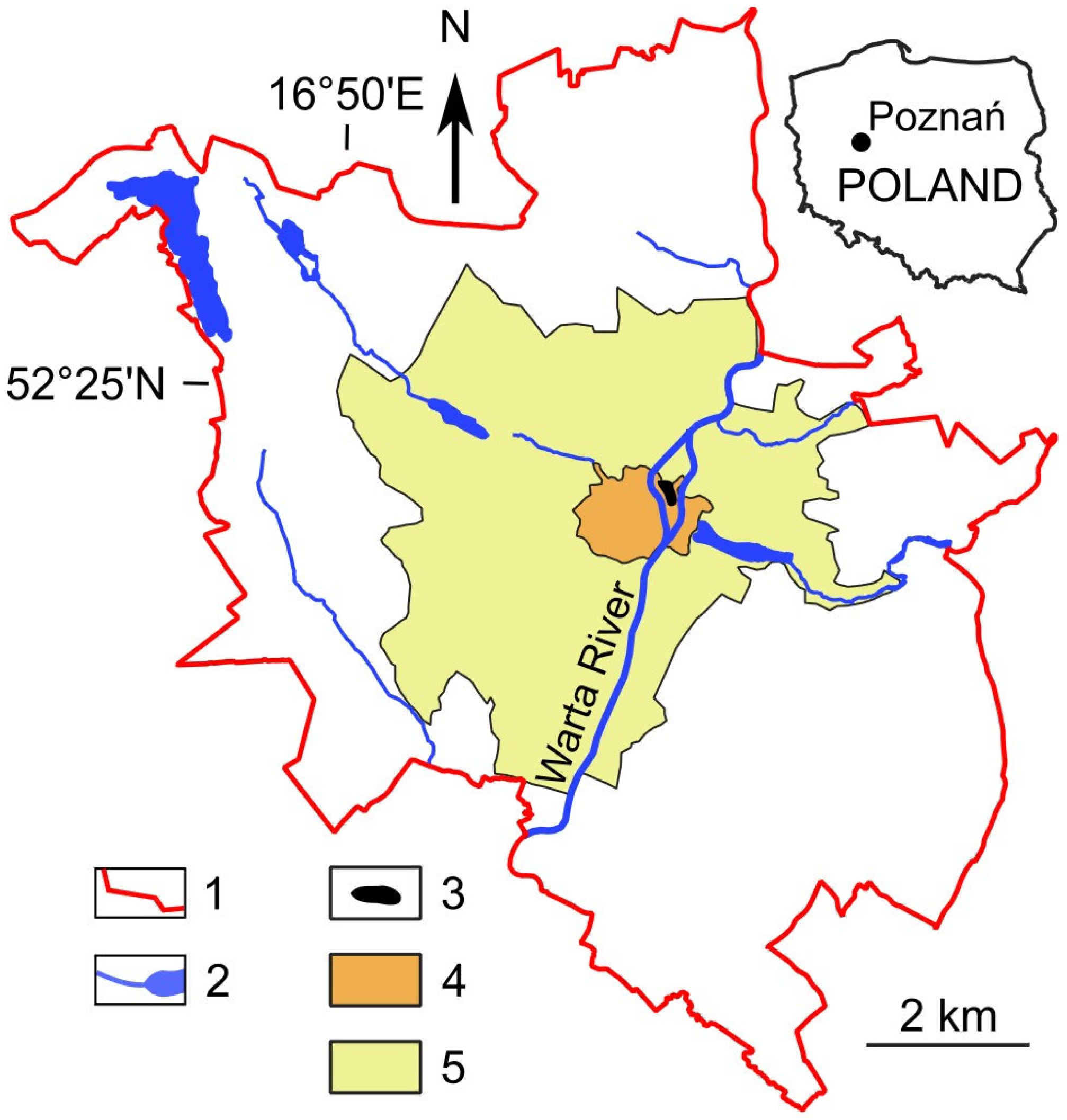
The city of Poznań (Figure 1) is located within the European Plain and within the extent of the last Pleistocene glaciation, dated back to the Last Glacial Maximum (marine isotope stage MIS 2 [73,74]). Local natural stone resources are limited to glacial erratic boulders, mainly granitoids, gneisses, and sandstones of Scandinavian origin [75], although small quantities of Miocene sandstones, now unavailable, were also sourced in the earliest history of the city from quarries located 100 km east of the city [76]. The remains of the earliest buildings that involved the use of natural stone, excavated on the island in the Warta River (Figure 1), date back to the second half of the tenth century [77]. From the fourteenth century, imported resources became the main source of dimension stones [78]. A steady growth in the number of natural stones used has been noted, although most of the material was sourced from central Europe, with low quantities of high-quality limestones and marbles imported from the territories of contemporary Belgium and Italy [19].
From its early beginnings in the tenth century up to the end of the eighteenth century, Poznań belonged to Poland [79]. Annexed by Prussia in 1793 and subsequently the German Empire, the city was restored to Poland in 1919, after the First World War [80]. During the Second World War, Poznań faced German occupation and was directly incorporated into the Third Reich [79]. Since 1945, the city has been part of Poland, which was ruled from 1945 to 1989 by a socialist regime that severely limited international exchange and trade [80,81,82]. Since 1990, Poland has undergone a transition to a market-based economy and integration with global trading networks [83], enabling the introduction of dimension stone sourced from around the world into buildings and constructions built and renovated during the closing decade of the twentieth century and in the twenty-first century.

3. Methods

This study involves the compilation of an inventory of the occurrences of dimension stones used in public buildings and constructions in Poznań, introduced between 1945 and 2020. The use of natural stones in the architecture and arts of the city of Poznań from its beginnings to 1944 has been previously assessed by Wolniewicz [19]. The present contribution examines and quantifies the use of dimension stone in the post-Second World War period. The purpose of the study is to assess changes in the role and presence of natural stone within the urban environment before the collapse of socialism and after the transition to a market-oriented economy in the final decade of the twentieth century.
The database obtained in this study includes 446 occurrences of 79 types of dimension stones. Similar types of rocks sourced within the same areas were merged into one category. The number of dimension stones included in the inventory is therefore lower than the number of commercial names of stones present in the urban landscape of Poznań. For each stone type, the source area was obtained from the existing literature, and the distance to the source area was calculated using Qgis 3.34 software. The inventory of stone occurrences, measured distances and locations of source areas are provided in the Supplementary Materials.
The identification of types of dimension stones involved the use of the following sources:
  • Existing literature (219 occurrences of dimension stones [84,85,86,87,88]);
  • The author’s own fieldwork, including the previously published designations revised by the author (186 occurrences);
  • Local websites that provided the material used in buildings and constructions, and personal communications (41 occurrences).
The following occurrences of dimension stones were excluded from the present study:
  • Dimension stones used in buildings not accessible to the public; this allowed for limiting the number of occurrences dated from 1945 onwards, which are more common and significantly outnumber all earlier occurrences taken together, inventoried by Wolniewicz [19], thus introducing a significant bias in the results of the study;
  • Occurrences of natural stones for which the date of introduction could not be determined;
  • Stone types that are not recognised or whose source areas are unknown (18 occurrences);
  • Dimension stones that are listed in published sources but were removed from their reported locations;
  • Stones used in small quantities, that is, those covering surfaces of less than twenty square metres;
  • Natural stones introduced after 2019, to enable the visualisation of dimension stone use in subsequent decades and to omit the disturbances in the natural stone industry caused by the COVID-19 pandemic;
  • Pavements made of natural stone.

4. Results

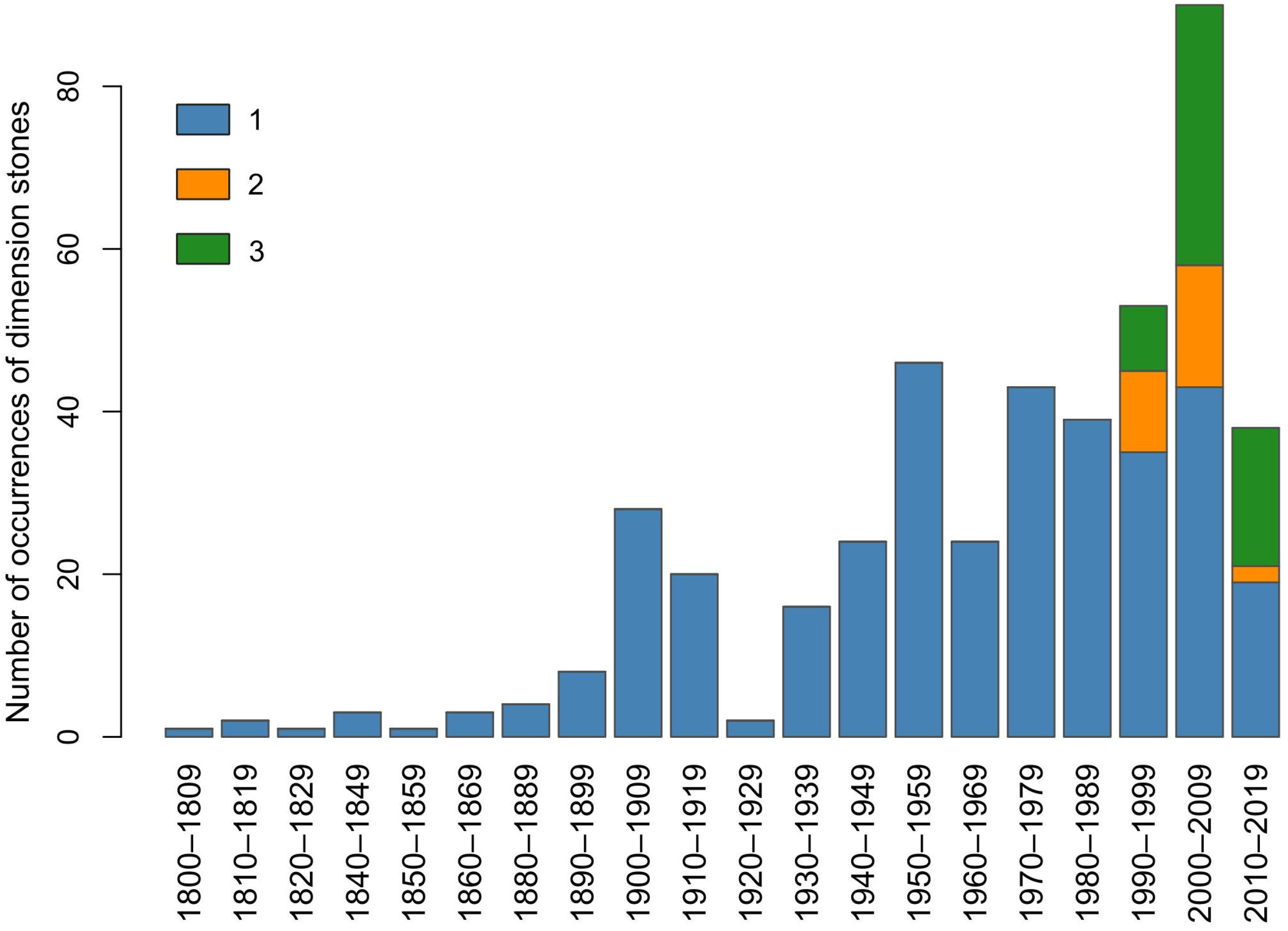
The database of dimension stone occurrences in monuments and public buildings of Poznań includes 265 elements dated from 1800 to 1989 and 181 elements introduced between 1990 and 2019. The relatively low number of occurrences dated before 1950 (fewer than 30 in each decade; Figure 2) is partly due to the destruction of the city centre during the Second World War. However, a significant increase in the number of occurrences is reported for the first two decades of the twentieth century (28 and 20 occurrences, respectively; Figure 2), which correlates with the building efforts coordinated by the late German Empire [89]. A similar number of occurrences was reached again during the Second World War, under the occupation by Nazi Germany. Dimension stones were used in significant quantities during the rebuilding of the city in the 1950s. For three consecutive decades, from 1960 to 1989, similar numbers of stone occurrences are reported. Starting from 1990, a significant growth in the use of dimension stones is noted, with 53 occurrences recorded between 1990 and 1999 and 90 in the first decade of the twenty-first century (Figure 2).
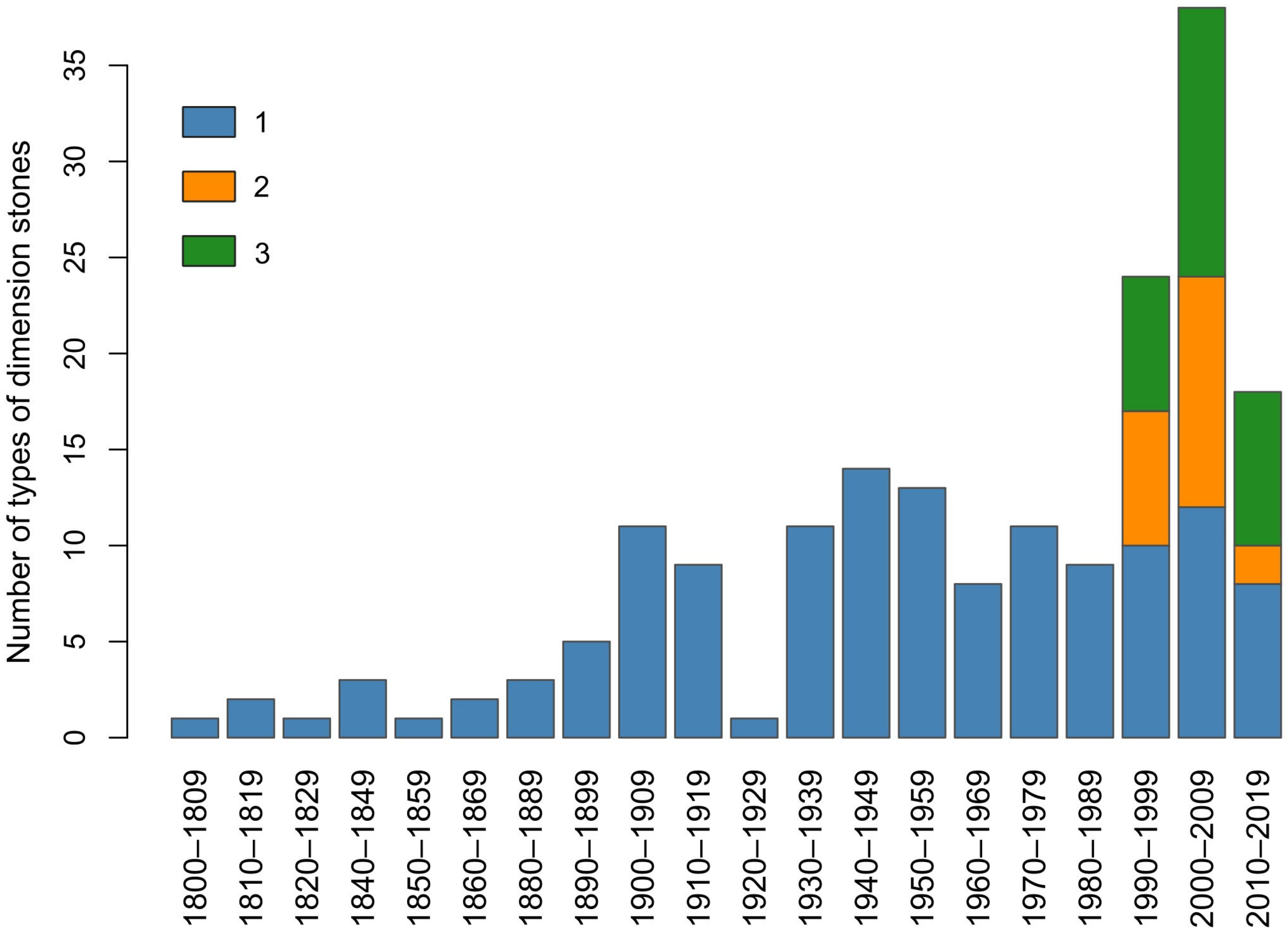
The number of stone types used in the nineteenth century is low (fewer than six for each decade; Figure 3) and rises to 11 at the turn of the nineteenth and twentieth centuries. A significant drop to one stone type was recorded between 1920 and 1929 due to the loss of access to natural stone deposits caused by changes in state affiliations and borders after the First World War. The diversity of stone types used in Poznań by decade remains relatively low (fewer than 15 types of dimension stones) until 1989 and increases more than twofold between 1990 and 1999 (Figure 3). A further dynamic rise to 38 stone types was noted in the first decade of the twenty-first century. The number of stone types decreased to 18 between 2010 and 2019, which correlates with the decline in new occurrences of dimension stone types recorded during the same period (Figure 2).
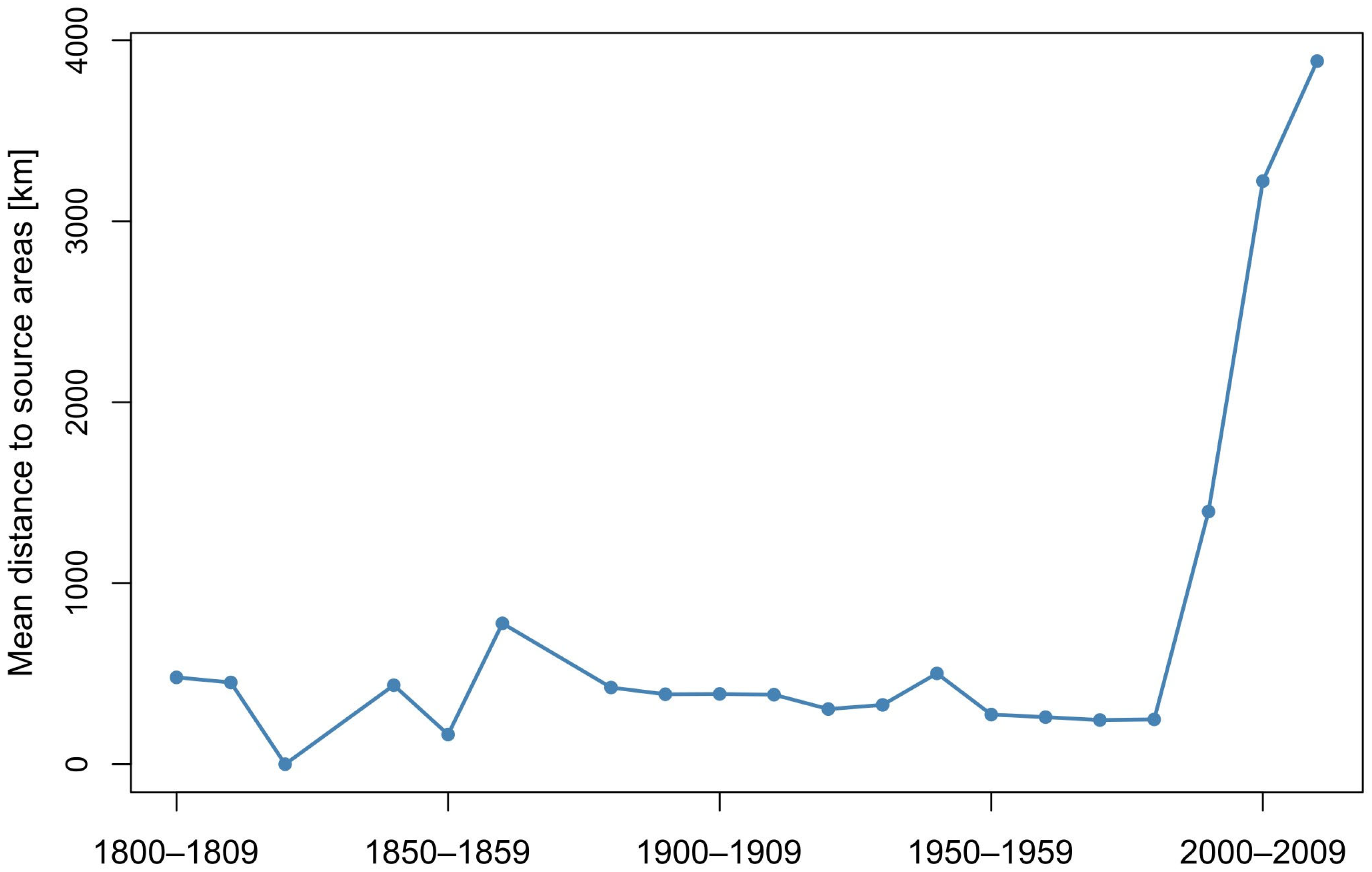
The mean distance to source areas of dimension stone types used in the buildings and other edifices in Poznań remains relatively stable from 1800 to 1989, despite a minor increase between 1860 and 1869 (Figure 4). The differences recorded in the first half of the nineteenth century result from the low number of stone occurrences. The mean distance to the source areas calculated for stone occurrences dating back to 1800–1989 is 322 km. The closing decade of the twentieth century saw a sharp increase in the mean distance, to 1396 km (Figure 4). In the subsequent decade, a further dramatic rise to 3221 km is recorded. Despite the lower number of dimension stone occurrences introduced between 2010 and 2019 and included in the database, the mean distance to source areas further increased to 3885 km (Figure 4). Of the 79 types of dimension stones recorded in the city of Poznań, originating from 20 countries, 24 (30.4%) are obtained from distances of up to 350 km, and 21 (26.6%) from distances between 350 and 1000 km. A total of 34 stone types (43.0%) are imported from distances greater than 1000 km, with the greatest distances to source areas approximating 10,000 km in the case of gneisses and granulites from Brazil.
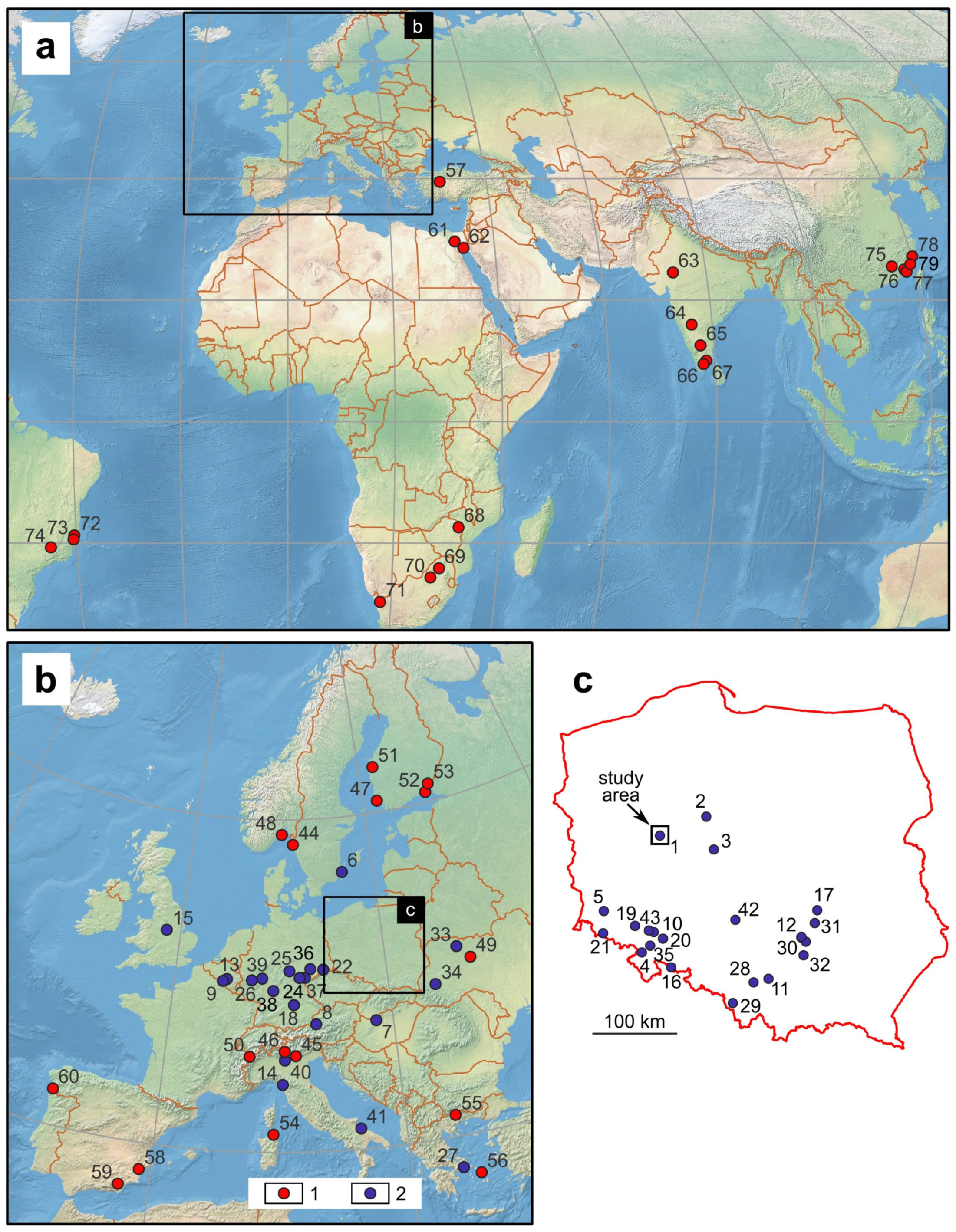
All dimension stone occurrences included in the database and introduced between 1800 and 1989 were sourced from Europe (Figure 2 and Figure 3), although rare examples of stone imports from other continents are reported in the literature [60]. However, these types of natural stones have been replaced by other materials during the twenty-first century and, therefore, are not reported in the present study. Since 1990, imports from continents other than Europe are recorded in the city of Poznań (Figure 5a). The highest numbers are noted for the first decade of the twenty-first century: 32 occurrences (Figure 2) and 14 types of dimension stones (Figure 3). Lower numbers are reported for the period between 2010 and 2019. Since 1990, new types of dimension stone sourced in Europe have also been introduced (Figure 5b). In the database, the highest numbers of new European imports are recorded for the first decade of the twenty-first century (15 occurrences and 12 stone types). No new types of dimension stones originating from Poland were introduced in Poznań after 1989 (Figure 5c).
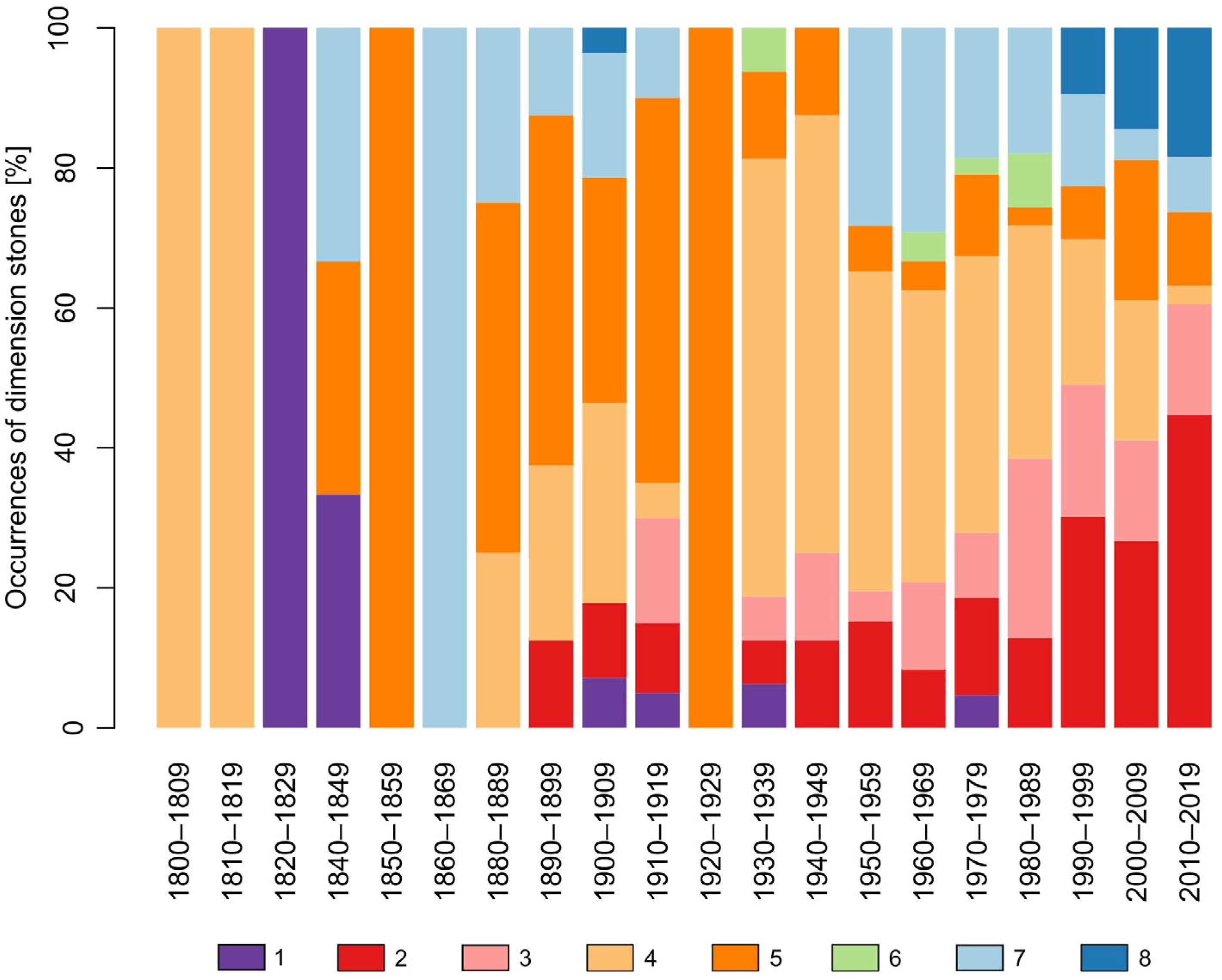
Among the dimension stones used in Poznań, limestones are the most common (131 occurrences; 29.4%); granitoids (87; 19.5%), sandstones (71; 15.9%) and marbles (62; 13.9%) follow. During the nineteenth century, limestones, sandstones and marbles were preferred (Figure 6), supplemented by the local material (glacial erratics) that comprises various types of igneous and metamorphic rocks, with subordinate quantities of sandstones. In the first half of the twentieth century, limestones and sandstones retained the largest share (Figure 6). Between 1950 and 1989, limestones and dolomites were used most frequently (61 occurrences; 40.1%), followed by marbles (35; 23.0%), granitoids (20; 13.2%) and igneous rocks other than granitoids (19; 12.5%). An important shift in the lithology of the dimension stone introduced in the city of Poznań occurred in 1990 (Figure 6). Granitoids noted a substantial increase in their share (57 occurrences between 1990 and 2019; 31.5%), while limestones (30; 16.6%) and marbles (14; 7.7%) underwent a significant reduction in their use. The use of sandstones (26; 14.4%) exhibited a small growth, similar to igneous rocks other than granitoids (29; 16.0%). Metamorphic rocks other than marbles (including gneisses, granulites and migmatites) constitute a new element in the palette of dimension stones utilised in Poznań (25 occurrences between 1990 and 2019; 13.8%; Figure 6). Both igneous and metamorphic rocks noted a substantial rise in their use due to the appearance of new dimension stone types imported from Brazil, China, India and Spain.
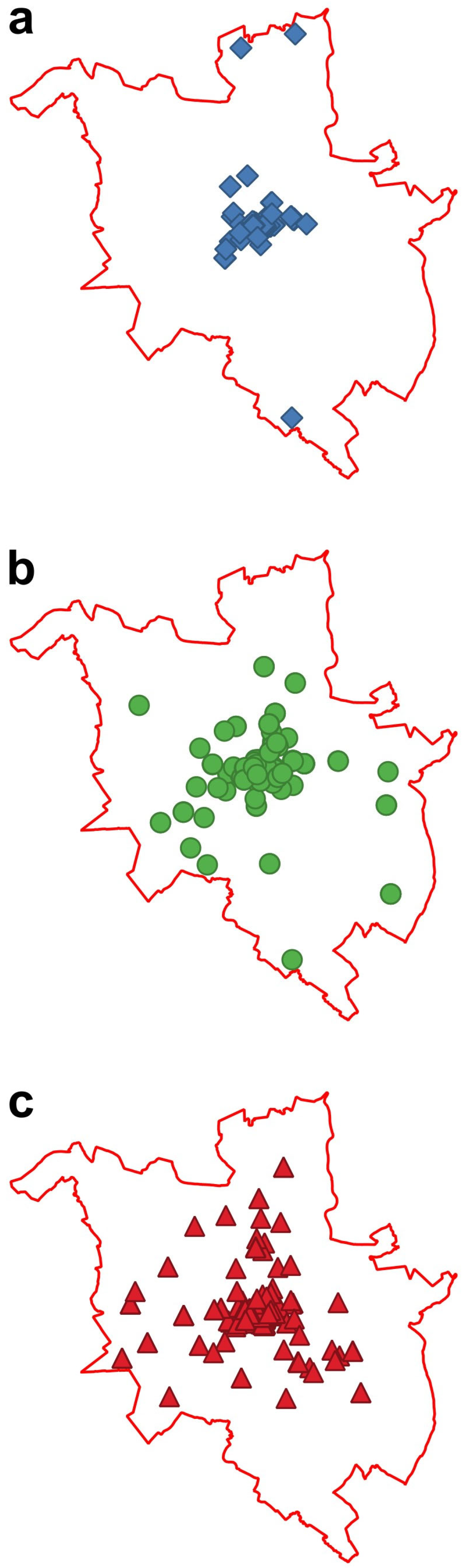
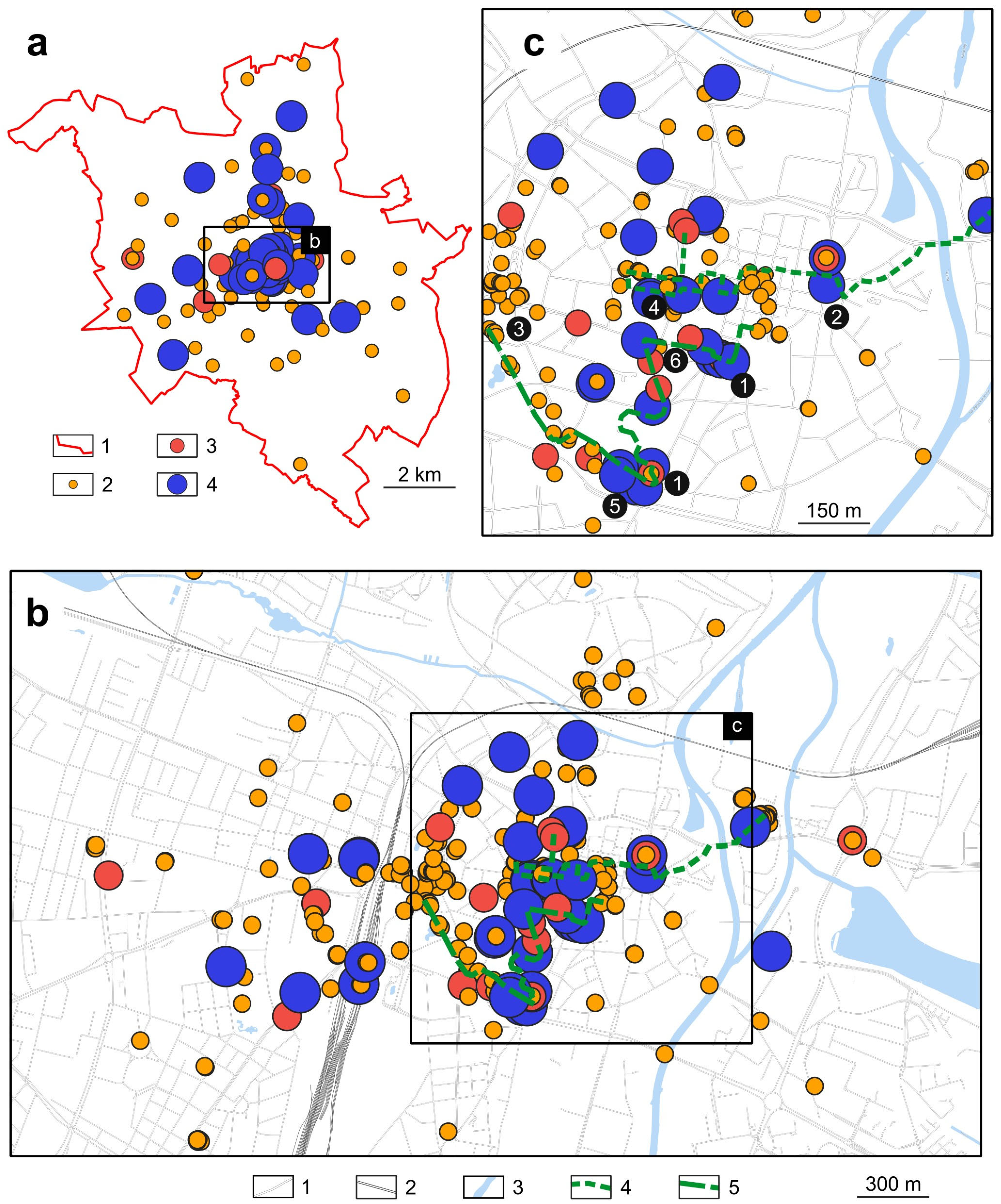
Most occurrences of dimension stones introduced before 1950 are located within the present city centre (Figure 7a), which is consistent with the more recent expansion of the city (Figure 1). Natural stones used between 1950 and 1989 (Figure 7b) and those after 1989 (Figure 7c) are scattered throughout the city, with most occurrences located in the city centre. Dimension stones sourced after 1989 from continents other than Europe follow a similar pattern (Figure 8a). Most of these were introduced in the city centre (Figure 8b), with apparent clusters of three or more types of dimension stones occurring in shopping centres developed in the first decade of the twenty-first century (no. 1 in Figure 8c). Imported stones are also common in new buildings located in the vicinity of historic architecture devoid of any natural stones (no. 2 in Figure 8c). On the other hand, the historic Imperial District (no. 3 in Figure 8c), where sandstones from Lower Silesia (no. 4–5 in Figure 5c) were used on a significant scale in the early twentieth century, is devoid of imported natural stones, and the façades of new buildings are clad with Polish sandstones.
Unfortunately, dimension stones sourced from other continents also appear in historic buildings that were originally finished using natural stones available within national borders. Examples include a well-documented case of the construction of the PKO Bank Polski (no. 4 in Figure 8c), where initially, dimension stones sourced from the territory of Poland were used; however, in 1998 they were partially replaced by, among others, gabbronorites from Africa [92]. In the near vicinity, the Bazar Hotel building, with interiors initially clad with Italian marbles [93], now also features migmatites from India and granites from China, which were introduced during the restoration in 2005.

5. Discussion

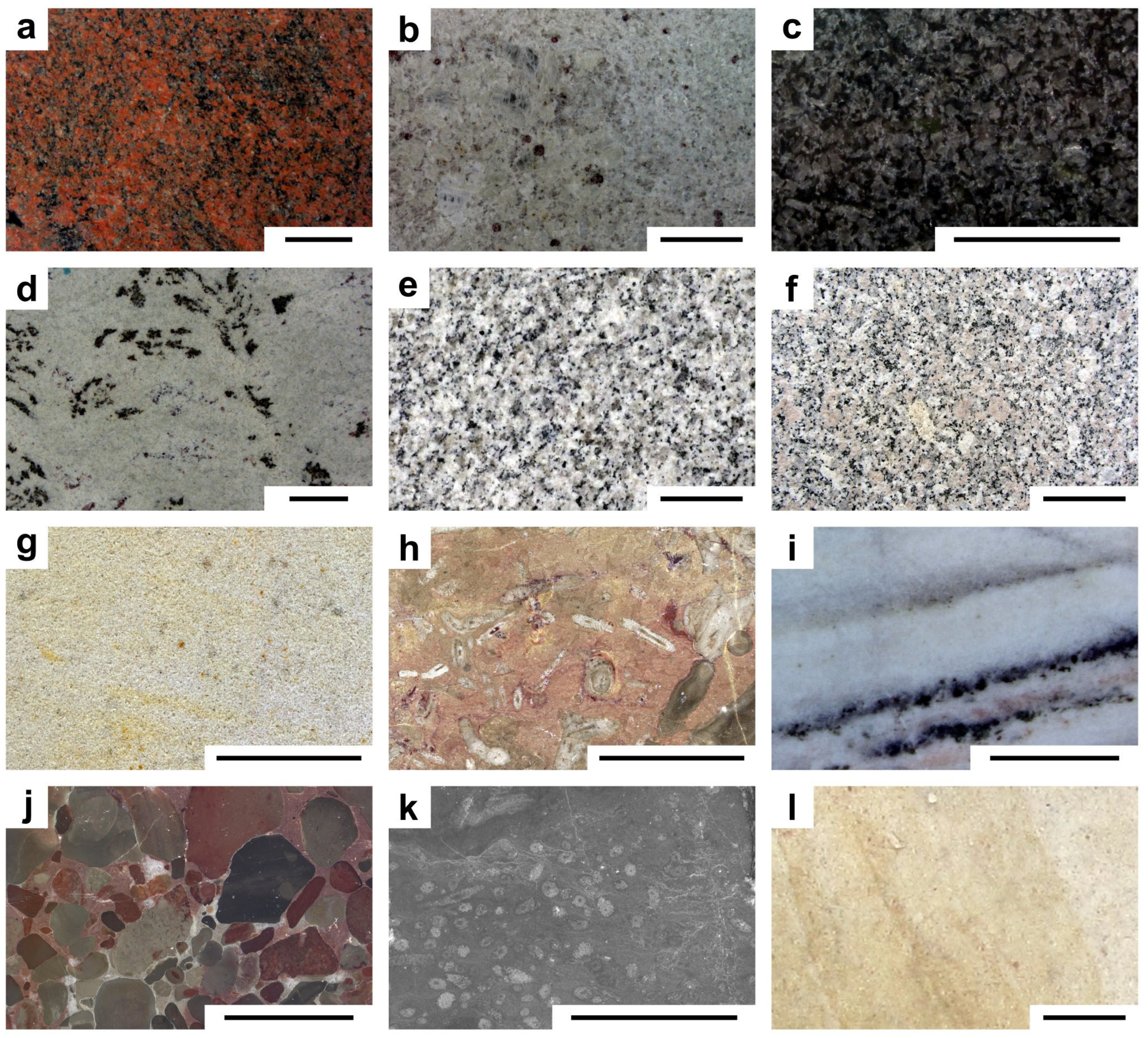
The results show a rapid increase in the mean distance from which dimension stones are imported, starting from 1990, further magnified by the excessive use of local sources of natural stone during the preceding period of a centrally planned socialist economy. On the other hand, imports of limited quantities of dimension stones to Poznań from distances of several thousand kilometres began as early as the sixteenth century [19]. This shows that the use of imported stones has long traditions in cities with limited availability of local material. In Poznań, globalisation and renewed access to the global economy in 1990 only provided access to natural stones sourced from continents other than Europe. The study shows that among the imported dimension stones, lithological types that are not available in Poland and are relatively scarce in Europe were preferred. Migmatites (Figure 9a) and granulites (Figure 9b) from India [94], black gabbronorites from South Africa (Figure 9c), and metamorphic rocks from Brazil (Figure 9d) are among the most prominent dimension stones introduced in Poznań after 1990. The steady growth in the number of occurrences of imported dimension stones is consistent with the rising imports of natural stones to Poland before 2012 [95] and with a relatively stable import pattern between 2014 and 2021 [96]. Conversely, light-coloured granites and tonalites from China (Figure 9e), which replaced the local granites from Lower Silesia in Poland (no. 19–21 in Figure 5c and Figure 9f) in many buildings in the late twentieth century, were used less commonly in the decade 2010–2019, coinciding with a revival of local materials. The decrease in the share of light-coloured granitoids from Asia partly reflects the fall in dimension stone imports in 2013 [96]. On the other hand, conscious decisions to prefer local materials also play a significant role. In street pavements, not studied in this contribution, granites from Lower Silesia in Poland are rebuilding their share, and the growing number of technical specifications for the renovation of road surfaces and elevations of public buildings explicitly demand the use of Lower Silesian material. This demonstrates a growing awareness of the importance of a coherent use of local and historic natural stones, as well as a flourishing recognition of the advantages and negative impacts of imported natural stones.

5.1. Positive and Negative Impacts of Dimension Stone Imports

The incorporation of natural stones into urban settings, regardless of their origin, can help improve the quality of visual landscapes [97,98]. The visually appealing textures and colour palettes of natural stones influence place perception and the attachment of residents to urban spaces [38]. In addition, imported stones carry significant geoheritage values [3]. A few lithological types introduced in the city of Poznań are also recognised by the Global Heritage Stone Resource initiative as dimension stones that have significant importance for culture [69,99,100]. Several types of dimension stones used in Poznań and sourced from the territories of Belgium, Germany and Italy are included in the list of the IUGS heritage stones [101], although the number of lithological types recognised as heritage stones could be much higher if stones from Africa, Asia and South America are represented in the databases equally to the number of natural stones from Europe.
The presence of imported dimension stones can be used to facilitate geotourism. Imports from continents other than Europe, which commenced in Poznań in 1990, resulted in a rise in the number of lithological types of natural stone used in public edifices (Figure 6). Such a substantial increase in lithological diversity can be utilised for educational purposes. In Poznań, two attempts have already been made to develop a geotouristic trail featuring buildings that contain significant volumes of natural stones. One of these trails includes predominantly historic locations with natural stones that originated from sources in Europe (Figure 8b,c; [90]). The latter features modern buildings and dimension stones imported from Africa, Asia and South America (Figure 8b,c; [91]). The locations from both geotrails have subsequently been integrated into the interactive geological map of Poznań [102].
Growing imports of dimension stones from remote areas open up the possibility of obtaining lithological types that are more resistant to weathering than local materials. This is exemplified by the substantial increase in the number of igneous and metamorphic rocks that were introduced in Poznań between 1990 and 2019 (Figure 6). The presence of durable materials also limits the necessity for future interventions, simplifying conservation efforts. On the other hand, a decrease in the use of selected lithological types can negatively affect geoeducational initiatives. In Poznań, this is exemplified by the limited number of new occurrences of sedimentary rocks that were previously used to communicate geoscientific topics related to fossils and the geological history of Poland [103].
The introduction of imported dimension stones that exhibit physical properties, textures, and colours different from those used in heritage buildings can also have a negative impact on the city landscape [38]. However, the present study shows that when appropriate policies are implemented, the character of the city’s historic districts can be retained. In Poznań, imported magmatic and metamorphic rocks have rarely been introduced in the historic Imperial District, which originated in the early twentieth century and is dominated by façades clad by sandstones sourced from Lower Silesia (no. 3 in Figure 8c and Figure 9g). A significant share of new buildings in which imported dimension stones were utilised is located within the relatively small quarters of the city, informally termed the business centre, where skyscrapers and tall office buildings appeared after 1990 (no 5. in Figure 8c). The intensive use of natural stones imported from Asia and South Africa is consistent with the growing importance of high buildings in the age of globalisation [104]. On the other hand, imported dimension stones have also transformed the landscape of some historic streets in the city centre, such as Saint Martin St. (no. 6 in Figure 8c), where the use of natural stone was limited, and the lithologic types of dimension stones were restricted to Cretaceous sandstones sourced from the territories of contemporary Germany and Poland.
Growing imports of dimension stones from distant areas can also negatively impact local stone producers. Following the collapse of communism in 1989 and the transformation towards a market-oriented economy, the demand for natural stone types quarried in Poland decreased significantly [105]. A reduction in the extraction of Polish natural stones was compensated by a high abundance of stone types obtained from various countries in Africa and Asia, used in the buildings of Poznań that were erected or renovated during the last decade of the twentieth century and the twenty-first. Among Polish natural stones, plutonic rocks and sandstones have slowly regained their share over the past twenty years, while limestones (Figure 9h) and marbles (Figure 9i) quarried in Poland are poorly represented in recent buildings. A similar trend was reported for the natural stone market in Poland by Bromowicz [106]. Lower Silesian granites (Figure 9f) and sandstones (Figure 9g) are frequently used in the city centre, conforming to traditions dating back to the end of the nineteenth century and the city’s development under late German rule.

5.2. Sustainable Use of Dimension Stones

The decline in the extraction of selected local dimension stone types suggests that significant difficulties in obtaining the stone for renovation purposes will occur in the future. Several types of natural stones that are no longer quarried are present within the monumental buildings of Poznań, and some of these buildings borrow their unique style from the character of the stone type. Their future renovations and replacements pose a perplexing problem because aesthetically compatible stones are difficult to obtain. Permian conglomerates sourced from the Holy Cross Mountains in central Poland (no. 12 in Figure 5c and Figure 9j) serve as a good example. During the seventeenth century, it was possible to obtain eight-metre-long blocks to produce the shaft of King Sigismund III Vasa’s column in Warsaw [107,108]. The introduction of mechanised, waste-intensive extraction techniques involving the use of explosives in the second half of the twentieth century lowered the quality of the stone obtained and ultimately was one of the factors that led to the end of exploitation in 1993 [108]. One of the most distinct Polish natural stones, present in several localities in Poznań, cannot therefore be restored, and no proper conservation work can be carried out. Limited recognition of natural stones as non-renewable resources, therefore, leads to their disappearance from the economy and historic buildings, threatening future conservation efforts and the preservation of geocultural heritage. This also raises concerns regarding the future sustainable use and protection of natural stone resources [3].
Black limestones from Dębnik in southern Poland (no. 11 in Figure 5c and Figure 9k) are another example of dimension stone used for centuries that has not been quarried since the end of the twentieth century [107]. The extraction of the Dębnik limestones commenced as early as the fifteenth century [109]. Black limestones from southern Poland first appeared in Poznań in the seventeenth century [19], but the decreasing number of available quarries and restricted source areas ultimately brought exploitation to an end [105]. The replacement of Permian conglomerates and Devonian black limestones present in historic buildings in Poznań is therefore not possible with the original material.
The use of dimension stone sourced thousands of kilometres away also limits the possibilities for the development of place-based sustainable design practices [110]. The import of unique stone types from other continents, which cannot be easily replaced by other natural stones, poses a threat to future conservation efforts. Weaker trading partnerships with the natural stone industry from distant parts of the world and the lack of state control over natural stone source areas located outside the country limit the possibility of ensuring an uninterrupted stone supply. The acquisition of stones sourced from distant localities could easily be compromised in the future due to possible disturbances to seaborne transportation, changes in political situations, or if the exploitation were to cease. Similar problems occurred in Poland in the seventeenth century when wars led to significant drops in stone imports [111]. The impact of transportation or trade disturbances during the twenty-first century would have a much greater effect on city landscapes. The renovation of edifices that feature many natural stones differing in texture and physical parameters is also much more difficult than the preservation of monuments in which a limited number of rock types was used. The issue is not limited to Poznań, as other European cities also receive extensive seaborne imports of natural stones [8]. These factors threaten the enduring conservation of natural stones in public buildings completed after 1989.

5.3. Implications for Urban Design, Heritage and Geoethics

With the emergence of the globalised stone market and the transformation to a market-oriented economy, natural stones imported from Africa, Asia and South America have been introduced to Poznań over the last thirty years. Their presence in the vicinity of rebuilt monuments places additional pressure on natural streetscapes, defined as the environmental characteristics of the natural and built fabrics of public spaces and their design quality [8]. Such a process is unfavourable due to its interference with the alterations that affected historic buildings after 1945. Although the volume of natural stone used in Poznań is not quantified at this stage, the volumes of foreign natural stones introduced to the city between 1990 and 2022 are likely to exceed the volumes of stones introduced prior to 1989, thereby altering the streetscape. Such changes obfuscate the traditional character of the city and potentially impact both its aesthetics and geocultural environment [8,72].
The implications of the introduction of globally used imported stones constitute a broader problem that is apparent in most cities in Poland and central Europe. The presence of uniform, flat, and polished stone surfaces on the façades of new buildings, which significantly differ from the historic rusticated sandstone cladding used in Poznań in the beginning of the twentieth century, also diminishes the quality of urban design, as monotonous and closed elevations fail to establish an inviting milieu for spontaneous gatherings and creativity [112]. Such processes are clear examples of the adverse effects of globalisation in the end of the twentieth century and the onset of the twenty-first century, which lead to the growing homogenisation of city centres and pose serious challenges to unprotected geocultural heritage [113]. Stone imports from many of the same locations around the world cause the unification of streetscapes in towns that previously maintained their local character [114], leading to the decay of the unique local character of buildings in urban areas. The possibility of obtaining many different types of stones from Asia, Africa, and South America results in significant diversification in stone types, textures, and colours (Figure 9a–e), which has the potential to exert a negative effect on the aesthetics of the city [115,116,117]. This also means that no consistent pattern for buildings from the same epoch can be established.
Recent patterns of natural stone use also reveal the importance of geoethics and its applicability beyond the field of geosciences to other members of society, extending beyond pure geoscientists. According to the Cape Town Statement [118], geoethics encompasses the social and cultural implications of geosciences, which can potentially be applied to the effects of decisions related to natural stone use, as well as the conservation and renovation of the built environment. Bearing in mind that geoethics should contribute to the enhancement of geoheritage and strengthen the sense of place for people in their environment, as well as ensure the sustainable use of natural resources [118], it is therefore essential to promote the values of geoethics outside the geoscientific realm. Similar conclusions have been reached by Careddu et al. [3], who stressed the need for recognition of the values of geoethics by the quarrying industry. The equal importance of such values should also be recognised by professionals involved in the future development of geoethics related to the use of dimension stone.
The large-scale removal of vast quantities of natural resources, including natural stones, frequently associated with their exports overseas, is termed extractivism [119]. The foundations of this process are perceived to be grounded in colonialism and the establishment of colonial capitalism [120,121,122]. Although the relationship between the roots of geosciences and the development of extractivism and colonial practices is increasingly recognised and studied in the field of geoethics [123], the association between the growing imports of natural stones and the development of global extractivism remains largely unexplored. Recent growth in the acquisition and export of natural resources is also attributed to the new wave of colonialism (neocolonial extractivism; [119,124]). Moreover, there are growing concerns over natural resource extraction amid the low-carbon transition (green extractivism; [121]), where the replacement of selected building materials with natural stones is recommended [125,126]. The decrease in dimension stone imports can significantly contribute to the reduction in carbon dioxide emissions [127]. This shows that the global trade of natural stones deserves more attention in the field of geoethics. On the other hand, a growing number of studies point to the need to retain the connections between architecture and the local landscape and geology [122], while others explore alternatives to extractivism, such as the post-extractivist degrowth approach [121]. The present study shows that the immense scale of current imports of dimension stones is also recorded in countries that do not have colonial traditions, demonstrating the transgressive nature of the current rise in natural stone extraction.

5.4. Limitations of the Study

Although aiming to provide a holistic representation of the geocultural heritage related to the use of dimension stones in the city of Poznań, Poland, this study has certain limitations. The occurrences of natural stones that were not dated are not included in the database. The same applies to stone types that were not recognised and for which no detailed information could be obtained. The list of natural stones in public buildings of Poznań is, therefore, far from complete.
The stone pavements and occurrences of natural stones located within privately owned properties (outdoor and indoor) were not included in the database. Moreover, research on contemporary natural stone use (after 1945) is limited to places where significant surfaces (more than twenty square metres) and volumes of natural stones are employed. The exclusion of natural stones that appeared in private spaces is a possible source of bias. Indeed, the results do not include numerous walls clad with natural stones, predominantly Mesozoic sandstones from central Poland (no. 17 in Figure 5c and Figure 9l), which were built in significant quantities during the 1970s and 1980s, and made a notable imprint on the city landscape. Therefore, future studies would benefit from including contemporary private constructions, examples of small-scale applications of natural stones, and the utilisation of dimension stone at more detailed scales, that is, selected historic quarters of the city.

6. Conclusions

This study shows that the quantity of natural stone used in construction and decoration in Poznań (Poland) has increased significantly in the last 30 years. This rise is even more overwhelming considering the poor economic conditions that affected Poznań prior to 1990. The number of stone types used in new edifices has increased more than threefold between the decades 1980–1989 and 2000–2009, and the mean distance has increased more than thirteen times during the same period. Although the volume of natural stones used in buildings was not quantified here, the volumes of foreign natural stones introduced between 1990 and 2020 likely exceed the total volumes of rocks that were introduced up to 1989, significantly impacting both the aesthetics and the geocultural environment of the city.
The introduction of new types of dimension stone imported from other continents can have a positive impact on the geocultural heritage of urban areas. Access to lithological types not known or sourced from the vicinity of the city, as well to global heritage stones, facilitates geoeducation, as illustrated by the development of geotouristic routes in Poznań. The presence of carefully selected natural stones also improves the quality of visual landscapes. Careful conservation policies permit the maintenance of the character of historic urban areas while introducing imported stone to new edifices located outside the protected heritage quarters of the city.
On the other hand, large-scale imports limit local extraction of natural stones, threaten future conservation efforts, negatively affect the preservation of geocultural heritage, and jeopardise sustainable stone use in the future. The excessive use of standard types of dimension stones, introduced in urban areas across all continents, unifies the landscapes of cities that previously maintained their local character. In the future, possible disruptions to long distance transportation and the cessation of exploitation may lead to difficulties in securing supplies of these materials, thereby compromising their use for conservation purposes. This issue is not unique to Poznań and Poland as a whole, as other European cities are also known to receive extensive seaborne imports of natural stones.
The use of imported stone cannot be decoupled from geoethical issues related to the negative impacts of extractivism and possible neo-colonial connotations of the acquisition of dimension stones from the Global South. This demonstrates that the current dynamic development in the field of geoethics should also take into account the evaluation of the dimension stone extractive industry and explore the intersections between dimension stone supply and its effects on urban geocultural heritage.

Supplementary Materials

The following supporting information can be downloaded at: https://www.mdpi.com/article/10.3390/geosciences16010045/s1, Table S1: The occurrences of natural stones used in the public buildings of Poznań [19,60,74,86,87,88,90,91,92], and the list of types of stone used in public buildings in Poznań with locations and distances to the source areas.

Funding

This research received no external funding.

Data Availability Statement

The data presented in this study are available in Supplementary Materials.

Acknowledgments

The author thanks Włodzimierz Ratajczak, the founder of Wrimar, a natural stone masonry company, for sharing the details of his projects. The study would not be possible without the work of Henryk Walendowski (1936–2020), who spent 30 years documenting the use of natural stones in Poznań.

Conflicts of Interest

The author declares no conflicts of interest.

References

  1. Cosi, M. The dimension stone sector: New perspectives on the global market and on the reporting of international mining standards. Eur. Geol. 2015, 39, 24–30. [Google Scholar]
  2. Careddu, N. Dimension stones in the circular economy world. Resour. Policy 2019, 60, 243–245. [Google Scholar] [CrossRef]
  3. Careddu, N.; Di Capua, G.; Siotto, G. Dimension stone industry should meet the fundamental values of geoethics. Resour. Policy 2019, 63, 101468. [Google Scholar] [CrossRef]
  4. Onay, N.S.; Ricci, M. Stone as a determinant of architectural identity in the Florence of Renaissance. A|Z ITU J. Fac. Archit. 2012, 9, 121–134. [Google Scholar]
  5. Abyzov, V. The role of construction materials in modern landscape design. Hous. Environ. 2018, 22, 107–114. [Google Scholar] [CrossRef]
  6. Šekularac, N.; Debljović Ristić, N.; Mijović, D.; Cvetković, V.; Barišić, S.; Ivanović-Šekularac, J. The use of natural stone as an authentic building material for the restoration of historic buildings in order to test sustainable refurbishment: Case study. Sustainability 2019, 11, 4009. [Google Scholar] [CrossRef]
  7. Bristow, C.M. The geology of the building and decorative stones of Cornwall, UK. In Stone in Historic Buildings: Characterization and Performance; Cassar, J., Winter, M.G., Marker, B.R., Walton, N.R.G., Entwisle, D.C., Bromhead, E.N., Smith, J.W.N., Eds.; Geological Society: London, UK, 2014; Volume 391, pp. 93–120. [Google Scholar]
  8. Cassar, J.; Winter, M.G.; Marker, B.R.; Walton, N.R.; Entwisle, D.C.; Bromhead, E.N.; Smith, J.W. Introduction to stone in historic buildings: Characterization and performance. Geol. Soc. Lond. Spec. Publ. 2014, 391, 1–5. [Google Scholar] [CrossRef]
  9. Pearson, M.P.; Pollard, J.; Richards, C.; Welham, K.; Casswell, C.; French, C.; Schlee, D.; Shaw, D.; Simmons, E.; Stanford, A.; et al. Megalith quarries for Stonehenge’s bluestones. Antiquity 2019, 93, 45–62. [Google Scholar] [CrossRef]
  10. Yarwood, D. Building and architecture. In An Encyclopedia of the History of Technology; McNeil, I., Ed.; Routledge: London, UK, 2002; pp. 855–901. [Google Scholar]
  11. Lehouck, A. The Early Periods of Brick Architecture North of the Alps: The Question of the Cistercian Origin Viewed from the Low Countries. In Les Cisterciens et l’économie des Pays-Bas et de la principauté de Liège (XIIe–XVe siècles); Delaissé, É., Yante, J.-M., Eds.; Institut d’études Médiévales de l’Université Catholique de Louvain: Louvain-la-Neuve, Belgium, 2017; pp. 182–204. (In French) [Google Scholar]
  12. Baines, J. Stone and other materials: Usages and values. In Visual and Written Culture in Ancient Egypt; Baines, J., Ed.; Oxford University Press: Oxford, UK, 2007; pp. 263–280. [Google Scholar]
  13. Laughlin, V.A. The architectural patronage and political prowess of Herod the Great. J. Anc. Hist. Archaeol. 2016, 3, 13–24. [Google Scholar] [CrossRef]
  14. Byington, M.E. Identification and chronology of some Koguryŏ royal tombs. Asian Perspect. 2019, 58, 7–27. [Google Scholar] [CrossRef]
  15. Carocci, S.; Giannini, N. Porches, palaces, towers and fortresses: Buildings and aristocratic families in Rome (12th–14th centuries). Stud. Hist. Hist. Mediev. 2021, 39, 7–44. [Google Scholar] [CrossRef]
  16. Heldal, T.; Storemyr, P.; Bloxam, E.; Shaw, I. Heritage stone 6. Gneiss for the Pharaoh: Geology of the Third Millennium BCE Chephren’s Quarries in Southern Egypt. Geosci. Can. 2016, 43, 63–78. [Google Scholar] [CrossRef]
  17. Scott, B.L. Kingship and the rocks: Infrastructure and the materiality of empire. In The Routledge Handbook of Infrastructure Design; Heathcott, J., Ed.; Routledge: New York, NY, USA, 2022; pp. 18–29. [Google Scholar]
  18. Gan, F. The glass and jade road—The cultural and technical exchange of silicate based artefacts with foreign countries before Qin dynasty. J. Chin. Ceram. Soc. 2013, 41, 458–466. [Google Scholar]
  19. Wolniewicz, P. Where geoheritage meets cultural heritage: Historical stone use in the city of Poznań, Poland, and its economic and political background. Geoheritage 2024, 16, 11. [Google Scholar] [CrossRef]
  20. Nunn, N.; Qian, N. The Columbian exchange: A history of disease, food, and ideas. J. Econ. Perspect. 2010, 24, 163–188. [Google Scholar] [CrossRef]
  21. Boivin, N.; Fuller, D.Q.; Crowther, A. Old World globalization and the Columbian exchange: Comparison and contrast. World Archaeol. 2012, 44, 452–469. [Google Scholar] [CrossRef]
  22. Polck, M.A.D.R.; de Medeiros, M.A.M.; de Araújo-Júnior, H.I. Geodiversity in urban cultural spaces of Rio de Janeiro city: Revealing the geoscientific knowledge with emphasis on the fossil content. Geoheritage 2020, 12, 47. [Google Scholar] [CrossRef]
  23. Del Lama, E.A.; Costa, A.G. Global heritage stones in Brazil. Geoheritage 2022, 14, 25. [Google Scholar] [CrossRef]
  24. Mozer, A.G.; Castro, N.F.; Mansur, K.L.; Ribeiro, R.C.C. Mapping Lioz limestone in monuments at Rio de Janeiro, Brazil. Geoheritage 2022, 14, 50. [Google Scholar] [CrossRef]
  25. Brolin, J.; Kander, A. Global trade in the Anthropocene: A review of trends and direction of environmental factor flows during the Great Acceleration. Anthr. Rev. 2022, 9, 71–110. [Google Scholar] [CrossRef]
  26. McMillan, A.A.; Hyslop, E.K.; Maxwell, I.; McKinny, A. Indigenous stone resources for Scotland’s built heritage. In Proceedings of the 10th IAEG International Congress, IAEG2006, Nottingham, UK, 6–10 September 2006; Volume 825, pp. 1–10. [Google Scholar]
  27. Fort, R.; de Buergo, M.A.; Perez-Monserrat, E.M.; Gómez-Heras, M.; Varas-Muriel, M.J.; Freire, D.M. Evolution in the use of natural building stone in Madrid, Spain. Q. J. Eng. Geol. Hydrogeol. 2013, 46, 421–429. [Google Scholar] [CrossRef]
  28. Hussey, J. Mineral rail roads, granite quarrying and the piers at Newcastle, Co. Down, 1800–1850. Due North 2017, 3, 47–53. [Google Scholar]
  29. Steffen, W.; Broadgate, W.; Deutsch, L.; Gaffney, O.; Ludwig, C. The trajectory of the Anthropocene: The Great Acceleration. Anthr. Rev. 2015, 2, 81–98. [Google Scholar] [CrossRef]
  30. Yarahmadi, R.; Asadi, A.A. Multidimensional assessment of sustainability and competitiveness in the ceramic tile and natural stone industries: A cross-country comparative study. Sci. Rep. 2025, 15, 30807. [Google Scholar] [CrossRef] [PubMed]
  31. Alonso-Jiménez, A.; Regueiro González-Barros, M.M.; Álvarez Areces, E.; de Oliveira, D.P.S. The Iberian industries of natural stone and industrial minerals. Comun. Geol. 2025, 112, 189–192. [Google Scholar]
  32. Jalalian, M.H.; Bagherpour, R.; Khoshouei, M. Wastes production in dimension stones industry: Resources, factors, and solutions to reduce them. Environ. Earth Sci. 2021, 80, 560. [Google Scholar] [CrossRef]
  33. Neves, M.A.; Nascimento, W.A.; Horn, A.H. Dimension stone processing sludge at different stages of production: Insights for waste management. Minerals 2024, 15, 39. [Google Scholar] [CrossRef]
  34. Yari, M.; Jamali, S.; Abdullah, G.M.; Ahmad, M.; Badshah, M.U.; Najeh, T. Development a risk assessment method for dimensional stone quarries. Sci. Rep. 2024, 14, 21582. [Google Scholar] [CrossRef]
  35. Ericsson, M. XXIX World Marble and Stones Report 2018 by Carlo Montani. Miner. Econ. 2019, 32, 255–256. [Google Scholar] [CrossRef]
  36. Laskaridis, K.; Arapakou, A.; Patronis, M.; Kouseris, I. Physical mechanical properties and producing areas of Greek dimension stones. Mater. Proc. 2021, 5, 64. [Google Scholar]
  37. Papadopoulos, A. An overview of the domestic market of dimension stones in Greece. Miner. Econ. 2021, 34, 323–330. [Google Scholar] [CrossRef]
  38. Edensor, T. The affective and sensory potencies of urban stone: Textures and colours, commemoration and geologic convivialities. Thesis Elev. 2022, 172, 16–35. [Google Scholar] [CrossRef]
  39. Łochańska, D.; Machniak, Ł. The dimension stone market and the role of dimension stone in Poland. Inż. Miner. 2019, 21, 301–309. [Google Scholar] [CrossRef]
  40. Reynard, E.; Giusti, C. The landscape and the cultural value of geoheritage. In Geoheritage; Reynard, E., Brilha, J., Eds.; Elsevier: Amsterdam, The Netherlands, 2018; pp. 147–166. [Google Scholar]
  41. Scarlett, J.P.; Riede, F. The dark geocultural heritage of volcanoes: Combining cultural and geoheritage perspectives for mutual benefit. Geoheritage 2019, 11, 1705–1721. [Google Scholar] [CrossRef]
  42. Pijet-Migoń, E.; Migoń, P. Geoheritage and cultural heritage—A review of recurrent and interlinked themes. Geosciences 2022, 12, 98. [Google Scholar] [CrossRef]
  43. Marjanović, M.; Marković, R.; Šarić, K.; Radivojević, A.R.; Antić, A.; Raičević, Đ.; Schaetzl, R.J.; Marković, S.B. Geotouristic approach to the elements of geocultural heritage by using UGAM model: UNESCO World Heritage Site Felix Romuliana (Zaječar, Serbia). Geoheritage 2024, 16, 35. [Google Scholar] [CrossRef]
  44. Bačević, N.R.; Radaković, M.G.; Nikolić, M.; Radovanović, D.; Barjaktarović, D.; Tahov, V.; Mirković, M.; Simić, D.; Marković, R.S.; Marković, S.B.; et al. Geocultural heritage as a basis for geotourism development: Banjska Monastery, Zvečan (Serbia). Open Geosci. 2025, 17, 20250863. [Google Scholar] [CrossRef]
  45. Kubalíková, L.; Kirchner, K.; Kuda, F.; Bajer, A. Assessment of urban geotourism resources: An example of two geocultural sites in Brno, Czech Republic. Geoheritage 2020, 12, 7. [Google Scholar] [CrossRef]
  46. Del Lama, E.A.; De La Corte Bacci, D.; Martins, L.; da Glória Motta Garcia, M.; Dehira, L.K. Urban geotourism and the old centre of São Paulo City, Brazil. Geoheritage 2015, 7, 147–164. [Google Scholar] [CrossRef]
  47. Górska-Zabielska, M.; Zabielski, R. Stone in an urban space–its potential to promote geotourism. Geo J. Tour. Geosites 2019, 26, 1033–1045. [Google Scholar] [CrossRef]
  48. Richards, S.J.; Newsome, D.; Simpson, G. Architectural geoheritage, engaging the observer and the geotourism potential of the Lighthouse Hotel Rock Wall, Bunbury, Western Australia. Geoheritage 2020, 12, 75. [Google Scholar] [CrossRef]
  49. Kubalíková, L.; Zapletalová, D. Geo-cultural aspects of building stone extracted within Brno city (Czech Republic): A bridge between natural and cultural heritage. Geoheritage 2021, 13, 78. [Google Scholar] [CrossRef]
  50. Rosendahl, S.; Balsells, C.M.; Gonçalves, M.M. Crossing heritages: Drystone walls in cultural tourism and geo-tourism. J. Tour. Herit. Res. 2021, 4, 23–48. [Google Scholar]
  51. Perez-Monserrat, E.M.; de Buergo, M.A.; Gomez-Heras, M.; Muriel, M.J.V.; Gonzalez, R.F. An urban geomonumental route focusing on the petrological and decay features of traditional building stones used in Madrid, Spain. Environ. Earth Sci. 2013, 69, 1071–1084. [Google Scholar] [CrossRef]
  52. De Wever, P.; Baudin, F.; Pereira, D.; Cornée, A.; Egoroff, G.; Page, K. The importance of geosites and heritage stones in cities—A review. Geoheritage 2017, 9, 561–575. [Google Scholar] [CrossRef]
  53. Gambino, F.; Borghi, A.; d’Atri, A.; Gallo, L.M.; Ghiraldi, L.; Giardino, M.; Martire, L.; Palomba, M.; Perotti, L.; Macadam, J. TOURinSTONES: A free mobile application for promoting geological heritage in the city of Torino (NW Italy). Geoheritage 2019, 11, 3–17. [Google Scholar] [CrossRef]
  54. Lezzerini, M.; Pagnotta, S.; Legnaioli, S.; Palleschi, V. Walking in the streets of Pisa to discover the stones used in the Middle Ages. Geoheritage 2019, 11, 1631–1641. [Google Scholar] [CrossRef]
  55. Santi, P.; Tramontana, M.; Tonelli, G.; Renzulli, A.; Veneri, F. The historic centre of Urbino, UNESCO World Heritage (Marche Region, Italy): An urban-geological itinerary across the building and ornamental stones. Geoheritage 2021, 13, 86. [Google Scholar] [CrossRef]
  56. Parmeggiani, G.; d’Atri, A.; Perotti, L.; Borghi, A. Geo-heritage tour across the ornamental stone of the historic centre of Ivrea, UNESCO World Heritage Site (Piedmont region, NW Italy). Geoheritage 2023, 15, 70. [Google Scholar] [CrossRef]
  57. Silva, R.E.C.; Polck, M.A.R.; de Araújo-Júnior, H.I. Geodiversity in ecclesiastical construction: A geotourism itinerary in the City of Rio de Janeiro. Geoheritage 2024, 16, 9. [Google Scholar] [CrossRef]
  58. Careddu, N.; Dessena, A.; Meloni, P. Virtutes Materiae: Cagliari, the City of Stone. Innovative geo-tourist itineraries promoting the use of stone resources throughout time. Geoheritage 2025, 17, 45. [Google Scholar] [CrossRef]
  59. Brocx, M.; Semeniuk, V. Building stones can be of geoheritage significance. Geoheritage 2019, 11, 133–149. [Google Scholar] [CrossRef]
  60. Walendowski, H. Let’s Build with Stone; Wydawnictwo Nowy Kamieniarz: Poznań, Poland, 2020. (In Polish) [Google Scholar]
  61. Skoczylas, J. Poznań in Stone: The Rocks That Shape the City; Wydawnictwo Miejskie Posnania: Poznań, Poland, 2025. (In Polish) [Google Scholar]
  62. Gomez-Heras, M.; Smith, B.J.; Viles, H.A. Oxford stone revisited: Causes and consequences of diversity in building limestone used in the historic centre of Oxford, England. Geol. Soc. Lond. Spec. Publ. 2010, 333, 101–110. [Google Scholar] [CrossRef]
  63. Siegesmund, S.; Grimm, W.D.; Dürrast, H.; Ruedrich, J. Limestones in Germany used as building stones: An overview. Geol. Soc. Lond. Spec. Publ. 2010, 331, 37–59. [Google Scholar] [CrossRef]
  64. Fratini, F.; Rescic, S. The stone materials of the historical architecture of Tuscany, Italy. Geol. Soc. Lond. Spec. Publ. 2014, 391, 71–92. [Google Scholar] [CrossRef]
  65. Cooper, B.J. Heritage stone in South Australia. Aust. J. Earth Sci. 2019, 66, 947–953. [Google Scholar] [CrossRef]
  66. Cole, D. Heritage stone in Cape Town, South Africa. Geol. Soc. Lond. Spec. Publ. 2020, 486, 305–323. [Google Scholar] [CrossRef]
  67. Key, M.M., Jr.; Lieber, S.B.; Teagle, R.J. An historical geoarchaeological approach to sourcing an eighteenth century building stone: Use of Aquia Creek Sandstone in Christ Church, Lancaster County, VA, USA. Geoheritage 2020, 12, 4. [Google Scholar] [CrossRef]
  68. Přikryl, R.; Török, Á. Natural stones for monuments: Their availability for restoration and evaluation. In Natural Stone Resources for Historical Monuments; Přikryl, R., Török, Á., Eds.; Geological Society: London, UK, 2010; Volume 333, pp. 1–9. [Google Scholar]
  69. Pereira, D. The value of natural stones to gain in the cultural and geological diversity of our global heritage. Heritage 2023, 6, 4542–4556. [Google Scholar] [CrossRef]
  70. Karaca, Z.; Pekin, A.; Deliormanlı, A.H. Classification of dimension stone wastes. Environ. Sci. Pollut. Res. 2012, 19, 2354–2362. [Google Scholar] [CrossRef]
  71. Strzałkowski, P. Characteristics of waste generated in dimension stone processing. Energies 2021, 14, 7232. [Google Scholar] [CrossRef]
  72. Edensor, T. Entangled agencies, material networks and repair in a building assemblage: The mutable stone of St Ann’s Church, Manchester. Trans. Inst. Br. Geogr. 2011, 36, 238–252. [Google Scholar] [CrossRef]
  73. Marks, L.; Gałązka, D.; Woronko, B. Climate, environment and stratigraphy of the last Pleistocene glacial stage in Poland. Quat. Int. 2016, 420, 259–271. [Google Scholar] [CrossRef]
  74. Zwoliński, Z.; Hildebrandt-Radke, I.; Mazurek, M.; Makohonienko, M. Anthropogeomorphological metamorphosis of an urban area in the postglacial landscape: A case study of Poznań city. In Urban Geomorphology; Thornbush, M., Allen, C., Eds.; Elsevier: Amsterdam, The Netherlands, 2018; pp. 55–77. [Google Scholar]
  75. Górska-Zabielska, M. The most valuable erratic boulders in the Wielkopolska region of western Poland and their potential to promote geotourism. Geoj. Tour. Geosites 2020, 29, 694–714. [Google Scholar] [CrossRef]
  76. Skoczylas, J. Early Piast dynasty (10–11th century) stone architecture in western Poland in a geological context. Geol. Q. 2017, 61, 765–770. [Google Scholar] [CrossRef]
  77. Kóčka-Krenz, H. Residence of the first Piasts in Poznań stronghold. Kwart. Nauka 2005, 2, 83–92. (In Polish) [Google Scholar]
  78. Gałka, W. On the Architecture and Plastic Arts of Old Poznań up to the End of the Baroque Era; Wydawnictwo Miejskie: Poznań, Poland, 2001. (In Polish) [Google Scholar]
  79. Zaręba, A.; Widawski, K.; Kołodziejczyk, K.; Krzemińska, A.; Marek, A.; Rozenkiewicz, A. City profile: Poznań—One of the “normals” in the centre of Europe. Cities 2021, 111, 103095. [Google Scholar] [CrossRef]
  80. Stryjakiewicz, T.; Burdack, J.; Egedy, T. Institutional change and new development paths: Budapest, Leipzig, Poznań, Riga and Sofia. In Making Competitive Cities; Musterd, S., Murie, A., Eds.; Wiley-Blackwell: Oxford, UK, 2010; pp. 93–112. [Google Scholar]
  81. Parysek, J.J.; Mierzejewska, L. Poznań. Cities 2006, 23, 291–305. [Google Scholar] [CrossRef]
  82. Biskupski, M.B.B. The History of Poland; ABC-CLIO, Greenwood: Santa Barbara, CA, USA; Denver, CO, USA, 2018. [Google Scholar]
  83. McDermott, K.; Stibbe, M. The collapse of communism in Eastern Europe: Origins, processes, outcomes. In The 1989 Revolutions in Central and Eastern Europe; McDermott, K., Stibbe, M., Eds.; Manchester University Press: Manchester, UK, 2015; pp. 1–30. [Google Scholar]
  84. Paul, U. Construction of the Park–Monument of Brotherhood in Arms and Polish–Soviet Friendship in the years 1964–1970. Kron. Miasta Pozn. 1972, 40, 1–12. (In Polish) [Google Scholar]
  85. Knoll, C. Construction and unveiling of the “Poznań” Army monument. Kron. Miasta Pozn. 1983, 51, 71–85. (In Polish) [Google Scholar]
  86. Skoczylas, J.; Walendowski, H. Use of stone raw materials in the architecture of Ostrów Tumski in Poznań. Ochr. Zabyt. 1998, 51, 418–426. (In Polish) [Google Scholar]
  87. Błaszczyk, I. Wells in the Old Market Square. Kron. Miasta Pozn. 2003, 2, 172–191. (In Polish) [Google Scholar]
  88. Antczak, M. Jurassic animals and algae in the flooring of Our Lady of Sorrows Church in Poznań. Biol. Lett. 2015, 52, 37–42. [Google Scholar] [CrossRef]
  89. Skuratowicz, J. Poznań–the capital of the German East. In The Imperial Castle in Poznań: From a Prussian “Fortress in the East” to the “Zamek” Cultural Centre; Pazder, J., Zimmermann, E., Eds.; Centrum Kultury Zamek: Potsdam, Germany; Poznań, Poland, 2003; pp. 49–53. (In Polish) [Google Scholar]
  90. Walendowski, H. A walk through Poznań. Nowy Kamieniarz 2009, 43, 30–38. (In Polish) [Google Scholar]
  91. Walendowski, H. Discover Poznań. Nowy Kamieniarz 2010, 50, 78–83. (In Polish) [Google Scholar]
  92. Walendowski, H. Natural stone in the PKO building in Poznań. Kron. Miasta Pozn. 1999, 69, 249–256. (In Polish) [Google Scholar]
  93. Walendowski, H. New-old Bazar Hotel. Nowy Kamieniarz 2013, 66, 102–104. Available online: https://issuu.com/skivak_press/docs/nk66_issuu (accessed on 1 January 2026). (In Polish)
  94. Pivko, D. World’s quarries of commercial granites—Localization and geology. In Dimension Stone 2004. New Perspectives for a Traditional Building Material; Přikryl, R., Ed.; A.A. Balkema: Leiden, The Netherlands, 2004; pp. 147–152. [Google Scholar]
  95. Kozioł, W.; Ciepliński, A. Dimension Stone—Current Trends in Use, Extraction, and Processing, Part 2. Nowocz. Bud. Inż. 2012, 43, 82–85. (In Polish) [Google Scholar]
  96. Guzik, K.; Figarska-Warchoł, B. The Management of Dimension Stones in Poland in the Years 2011–2021. Miner. Resour. Manag. 2023, 39, 87–107. [Google Scholar] [CrossRef]
  97. Orewere, E.; Owonubi, A.; Go’ar, L.L.; Oguledo, C.A. Enhancing outdoor landscape development through the use of stones in Jos, Plateau State. J. Agric. Environ. Sci. 2020, 9, 32–43. [Google Scholar] [CrossRef]
  98. Liu, R.; Wang, X. Visual quality analysis of urban park landscapes based on eye tracking: A case study of Nanjing Xiaohong Stone Carving Park. J. Landsc. Res. 2024, 16, 5–12. [Google Scholar]
  99. Cooper, B.J. The “Global Heritage Stone Resource” designation: Past, present and future. In Global Heritage Stone: Towards International Recognition of Building and Ornamental Stones; Pereira, D., Marker, B.R., Kramar, S., Cooper, B.J., Schouenborg, B.E., Eds.; Geological Society: London, UK, 2015; Volume 407, pp. 11–20. [Google Scholar]
  100. Marker, B.R. Procedures and criteria for the definition of Global Heritage Stone Resources. Geol. Soc. Lond. Spec. Publ. 2015, 407, 5–10. [Google Scholar] [CrossRef]
  101. Ehling, A.; Kaur, G.; Wyse Jackson, P.N.; Cassar, J.; Del Lama, E.A.; Heldal, T. The First 55 IUGS Heritage Stones; International Union of Geological Sciences: Backnang, Germany, 2024. [Google Scholar]
  102. Wolniewicz, P. Classification and quantification of urban geodiversity and its intersection with cultural heritage. Geoheritage 2022, 14, 63. [Google Scholar] [CrossRef]
  103. Wolniewicz, P. Bringing the history of the Earth to the public by using storytelling and fossils from decorative stones of the City of Poznań, Poland. Geoheritage 2019, 11, 1827–1837. [Google Scholar] [CrossRef]
  104. Al-Kodmany, K. The logic of vertical density: Tall buildings in the 21st century city. Int. J. High-Rise Build. 2012, 1, 131–148. [Google Scholar]
  105. Bromowicz, J.; Figarska-Warchoł, B. Decorative and architectural stones of south-eastern Poland—Deposits, resources and prospects for exploitation. Gospod. Surowcami Miner. 2012, 28, 5–22. (In Polish) [Google Scholar] [CrossRef]
  106. Bromowicz, J. Geological assessment of the possibility of producing stone blocks from Polish deposits located outside Lower Silesia. Przegl. Geol. 2014, 62, 144–147. (In Polish) [Google Scholar]
  107. Bromowicz, J.; Figarska-Warchoł, B. The need to protect deposits of unique decorative limestones in Poland. Górn. Odkryw. 2011, 52, 46–54. (In Polish) [Google Scholar]
  108. Jewuła, K.; Fijałkowska-Mader, A.; Salwa, S. Geoeducational and geotourist value of the Zygmuntówka (Sigismund) quarry at Czerwona Góra (Holy Cross Mountains). Przegl. Geol. 2022, 70, 25–33. (In Polish) [Google Scholar]
  109. Marszałek, M. Black “marble” in Polish architecture—Characteristics and the possibility of provenance determination: The case of the Dębnik limestone. Geol. Geophys. Environ. 2014, 40, 189–198. [Google Scholar] [CrossRef]
  110. Derbyshire, A.K. Sustainable urban habitats: Design intentions to practical implementation. Proc. Inst. Civ. Eng. Urban Des. Plan. 2011, 164, 19–28. [Google Scholar] [CrossRef]
  111. Wardzyński, M. Foreign marble and other building material in Polish Renaissance and Baroque sculpture during the sixteenth and seventeenth century. In Actes du XIVe Colloque International de Glyptographie de Chambord; van Belle, J.-L., Ed.; OCLC: Dublin, OH, USA, 2005; pp. 523–550. [Google Scholar]
  112. Loodin, H.; Thufvesson, O. Which architectural style makes an attractive streetscape? Aesthetic preferences among city centre managers. J. Urban Des. 2023, 28, 25–43. [Google Scholar] [CrossRef]
  113. Senderos, M.; Sagarna, M.; Otaduy, J.P.; Mora, F. Globalization and architecture: Urban homogenization and challenges for unprotected heritage—The case of postmodern buildings with complex geometric shapes in the Ensanche of San Sebastián. Buildings 2025, 15, 497. [Google Scholar] [CrossRef]
  114. Nita, J.; Plit, J.; Nita, M. Rock raw materials as construction material—Analysis of preserved regional features. Pr. Kom. Kraj. Kult. 2018, 40, 107–129. (In Polish) [Google Scholar]
  115. Gjerde, M. Visual evaluation of urban streetscapes: How do public preferences reconcile with those held by experts? Urban Des. Int. 2011, 16, 153–161. [Google Scholar] [CrossRef]
  116. Gao, H.; Bakar, S.A.; Maulan, S.; Yusof, M.J.M.; Mundher, R.; Guo, Y.; Chen, B. A systematic literature review and analysis of visual pollution. Land 2024, 13, 994. [Google Scholar] [CrossRef]
  117. Zhang, N.; Zhao, L.; Shi, J.; Gao, W. Impact of visual and textural characteristics of street walls on stress recovery. Sci. Rep. 2024, 14, 15115. [Google Scholar] [CrossRef]
  118. Di Capua, G.; Peppoloni, S.; Bobrowsky, P.T. The Cape Town Statement on Geoethics. Ann. Geophys. 2017, 60, 1–6. [Google Scholar] [CrossRef]
  119. Flores, R.K.; Böhm, S.; Misoczky, M.C. Contesting extractivism: International business and people’s struggles against extractive industries. Crit. Perspect. Int. Bus. 2022, 18, 1–14. [Google Scholar] [CrossRef]
  120. Gómez-Barris, M. The Extractive Zone: Social Ecologies and Decolonial Perspectives; Duke University Press: London, UK, 2017. [Google Scholar]
  121. Calvão, F.; Benya, A.; Archer, M. Global afterlives of extraction. Int. Dev. Policy 2023, 16, 1–23. [Google Scholar] [CrossRef]
  122. Foote, J.; Kozminska, U.; Gjorgjievski, N. Post-extractive material practice: The case of quarried stone. In Design for Rethinking Resources; Thomsen, M.R., Ratti, C., Tamke, M., Eds.; Springer International Publishing: Cham, Switzerland, 2023; pp. 11–19. [Google Scholar]
  123. Metzger, E.P. Reimagining geoscience education for sustainability. Earth Sci. Syst. Soc. 2024, 4, 10116. [Google Scholar] [CrossRef]
  124. Acosta, A. Extractivism and neoextractivism: Two sides of the same curse. In Beyond Development: Alternative Visions from Latin America; Lang, M., Mokrani, D., Eds.; Transnational Institute: Amsterdam, The Netherlands, 2013; pp. 61–86. [Google Scholar]
  125. de Toldi, T.; Pestre, T. The relevance of cut-stone to strategies for low-carbon buildings. Build. Cities 2023, 4, 229–257. [Google Scholar] [CrossRef]
  126. Navaro Auburtin, P.; Saade, M.; Manthey, M.; Louerat, M.; Martin, J.L.; Baverel, O. Reducing the environmental impact of buildings through stone masonry structures. In Redefining the Art of Structural Design; Block, P., Boller, G., DeWolf, C., Pauli, J., Kaufmann, W., Eds.; International Association for Shell and Spatial Structures (IASS): Zurich, Switzerland, 2024; pp. 1–10. [Google Scholar]
  127. Crishna, N.; Banfill, P.F.G.; Goodsir, S. Embodied energy and CO2 in UK dimension stone. Resour. Conserv. Recycl. 2011, 55, 1265–1273. [Google Scholar] [CrossRef]
Figure 1. Simplified map of the study area, showing the administrative boundaries of Poznań in Poland and the territorial expansion of the city. (1) City boundaries; (2) Rivers and lakes; (3) Extent of medieval settlement dating back to the tenth century; (4) City boundaries in 1800; (5) Territory of the city in 1939.
Geosciences 16 00045 g001
Figure 2. Number of occurrences of dimension stones included in the database, introduced between 1800 and 2019, in consecutive decades. No new occurrences of dimension stones were introduced during the decades 1830–1839 and 1870–1879. (1) Dimension stones introduced for the first time before 1990, sourced from Europe; (2) Dimension stones first used after 1989, sourced from Europe; (3) Dimension stones introduced after 1989, imported from continents other than Europe.
Geosciences 16 00045 g002
Figure 3. Number of dimension stone types used in the city of Poznań across consecutive decades. Similar lithological types of dimension stone, obtained from similar source areas, are merged; for the commercial names of merged stone types, see Supplementary Materials. For the explanation of numbers (1)–(3), see Figure 2.
Geosciences 16 00045 g003
Figure 4. Mean distance to the source areas of the dimension stones used in consecutive decades.
Geosciences 16 00045 g004
Figure 5. Locations of the source areas of the dimension stones used in the city of Poznań between 1800 and 2019. For the names of dimension stones marked by numbers, consult Supplementary Materials. (a) Source areas of stones imported from continents other than Europe. (b) Dimension stones sourced in Europe. (1) Types of dimension stones first used in Poznań before 1990; (2) Dimension stones introduced after 1989. (c) Dimension stones sourced from the territory of Poland.
Geosciences 16 00045 g005
Figure 6. Lithology of dimension stones used in Poznań in consecutive decades. The limited diversity recorded in the nineteenth century partly results from the low number of occurrences included in the database. (1) Erratic boulders (local material); (2) Granitoids; (3) Igneous rocks other than granitoids; (4) Limestones and dolomites; (5) Sandstones; (6) Sedimentary rocks other than dolomites, limestones and sandstones; (7) Marbles; (8) Metamorphic rocks other than marbles.
Geosciences 16 00045 g006
Figure 7. Location of dimension stones within the administrative boundaries of Poznań. (a) Occurrences of dimension stones dating from 1800 to 1949. (b) Locations of dimension stones introduced between 1950 and 1989. (c) Occurrences of dimension stones dating from 1990 to 2019.
Geosciences 16 00045 g007
Figure 8. Locations of dimension stones acquired from different source areas. (a) Locations shown within the administrative boundaries of Poznań. (1) City borders; (2) Dimension stones introduced for the first time before 1990, sourced from Europe; (3) Dimension stones first used after 1989, sourced from Europe; (4) Dimension stones introduced after 1989, imported from continents other than Europe. (b) Locations shown on the map of the city centre. (1) Streets; (2) Railways; (3) Rivers, streams and lakes; (4) Geotouristic trail of Walendowski [90]; (5) Geotouristic trail of Walendowski [91]. (c) Occurrences of dimension stones on the map of the Old Town. (1) Main shopping centres developed in the first decade of the twenty-first century; (2) Area of the city devoid of any historic occurrences of natural Stones; (3) Imperial District; (4) Buildings of PKO Bank Polski and the Bazar Hotel; (5) New business centre of the city; (6) Saint Martin Street.
Geosciences 16 00045 g008
Figure 9. Selected dimension stones used in Poznań. Scale bars equal 5 cm. (ae) Stone types sourced from continents other than Europe. (a) Migmatite from India (commercial name: Multicolour Red). (b) Granulite from India (Kashmir White). (c) Gabbronorite from southern Africa (Nero Impala). (d) Gneiss from Brazil (Verde Eucalipto). (e) Granite from China (New Bianco Cristal). (fl) Local dimension stones, sourced from the territory of Poland. (f) Granite from Lower Silesia. (g) Cretaceous sandstone from Lower Silesia. (h) Limestone from Holy Cross Mountains. (i) Marble from Lower Silesia. (j) Permian conglomerates from the Holy Cross Mountains. (k) Black limestone from Dębnik in southern Poland. (l) Jurassic sandstone from central Poland.
Geosciences 16 00045 g009
Disclaimer/Publisher’s Note: The statements, opinions and data contained in all publications are solely those of the individual author(s) and contributor(s) and not of MDPI and/or the editor(s). MDPI and/or the editor(s) disclaim responsibility for any injury to people or property resulting from any ideas, methods, instructions or products referred to in the content.