Article

Origin of Early Triassic Hornblende Gabbro from the Yunkai Massif, South China: Constraints from Mineral and Bulk-Rock Geochemistry

1
State Kay Laboratory of Isotope Geochemistry, Guangzhou Institute of Geochemistry, Chinese Academy of Sciences, Guangzhou 510640, China
2
Center for Excellence in Deep Earth Science, Chinese Academy of Sciences, Guangzhou 510640, China
3
College of Earth and Planetary Sciences, University of Chinese Academy of Sciences, Beijing 100049, China
*
Author to whom correspondence should be addressed.
Geosciences 2024, 14(6), 147; https://doi.org/10.3390/geosciences14060147

Submission received: 2 April 2024 / Revised: 23 May 2024 / Accepted: 24 May 2024 / Published: 29 May 2024

Abstract

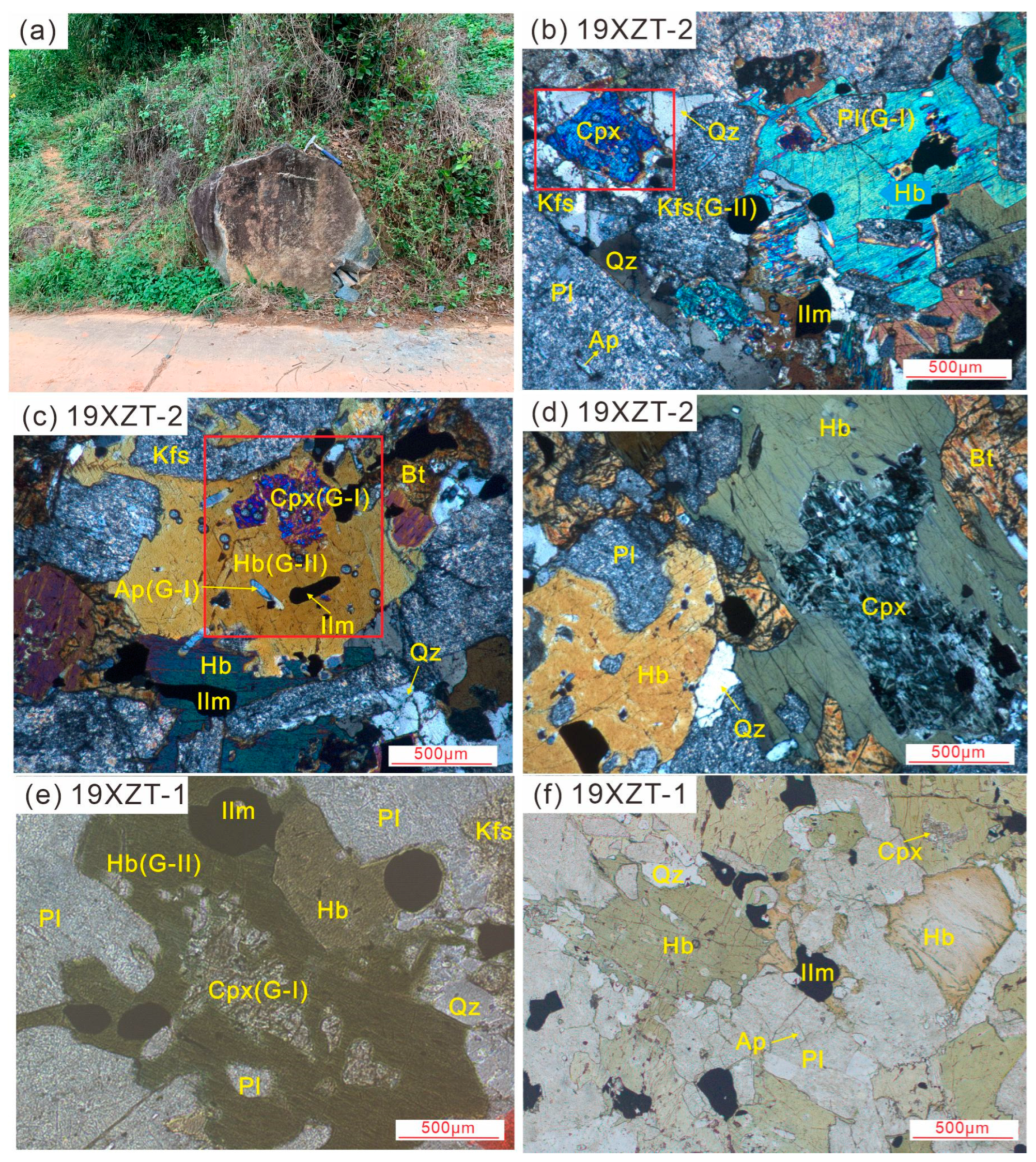
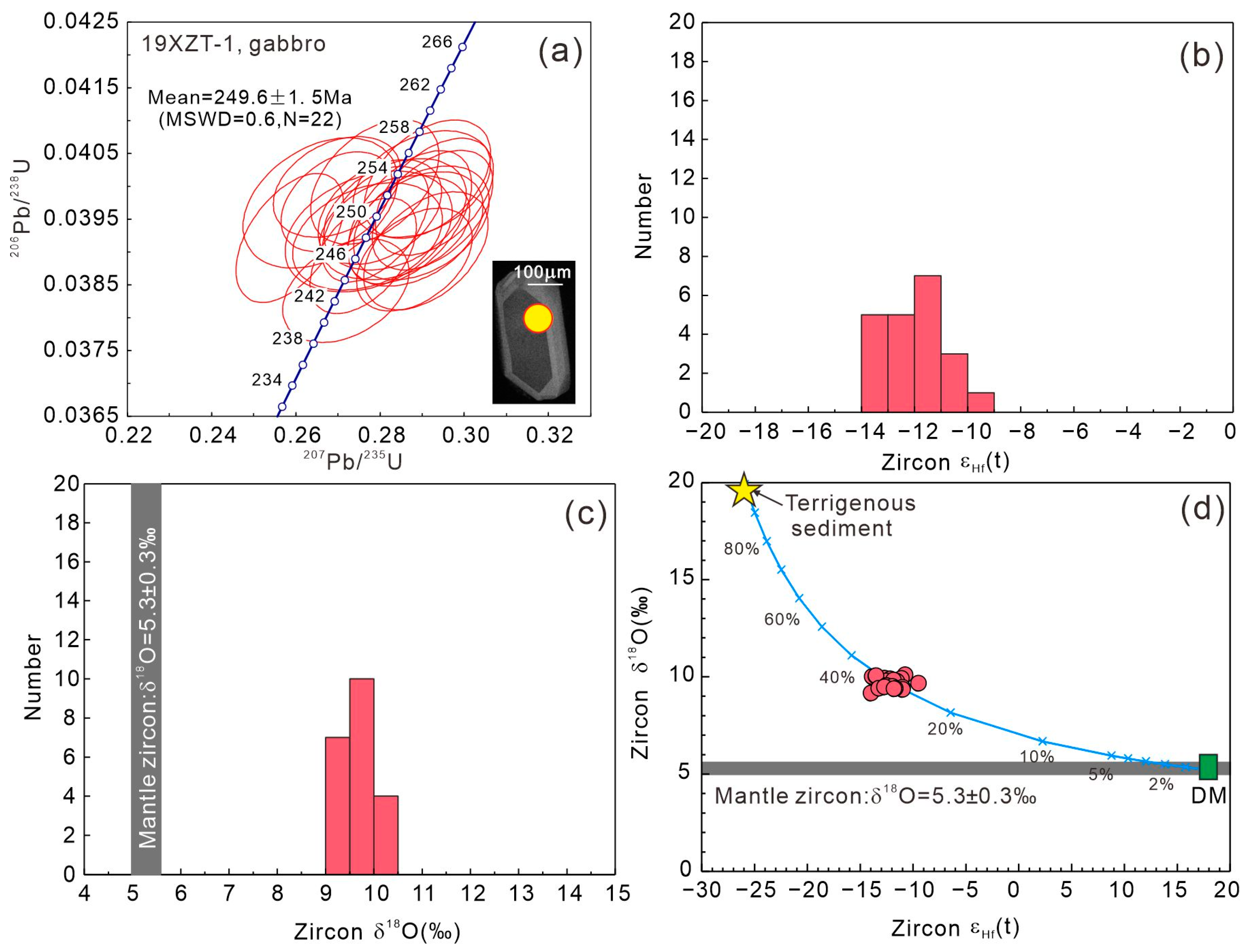
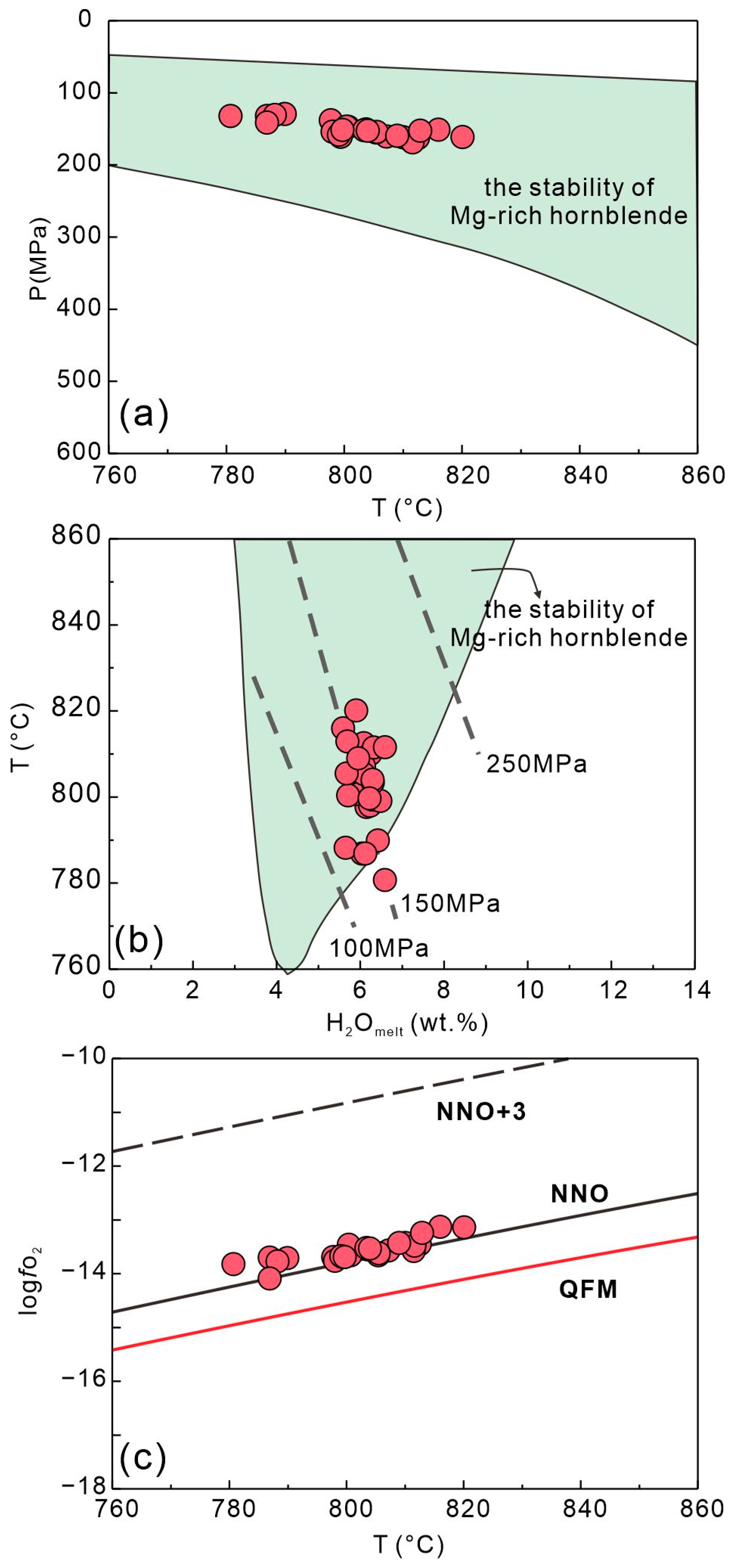
The early Triassic (~250 Ma) hornblende gabbro from the Tengxian area of Yunkai Massif, South China, contains a mineral assemblage of clinopyroxene, hornblende, biotite, plagioclase, K-feldspar and quartz and accessory apatite, and zircon and ilmenite. Based on mineral association and crystallization sequence, two generations of the mineral assemblage have been identified: clinopyroxene + plagioclase + apatite (zircon) in Generation I and ilmenite + hornblende + biotite + K-feldspar + quartz in Generation II. The high crystallization temperature (T = 999–1069 °C) of clinopyroxene and its coexistence with labradorite (An = 52–58) indicate that Generation I crystallized in a basaltic magma, while the hornblende’s relatively low crystallization temperature (T = 780–820 °C) and coexistence with K-feldspar and quartz suggest that Generation II formed in an evolved alkaline melt. The mineralogical records are likely attributed to pulsed intrusion of the late-stage evolved magma into a crystal mush, like in Generation I. The bulk-rock geochemical data include a sub-alkaline affinity, arc-type trace element features, and highly enriched Sr-Nd-Pb-Hf isotopic compositions, consistent with the isotopic records from the accessory minerals, e.g., the very high δ18O values in both zircon and apatite and significantly negative εHf(t) in zircon. The combined mineral and bulk-rock geochemical data suggest that the primary magma for the Tengxian hornblende gabbro was derived from a mantle wedge that had been metasomatized by voluminous subducted terrigenous sediment-derived melts in response to subduction of the Paleo-Tethys Ocean.
Keywords: petrogenesis; bulk-rock and mineral geochemistry; hornblende gabbro; early Triassic; Yunkai Massif petrogenesis; bulk-rock and mineral geochemistry; hornblende gabbro; early Triassic; Yunkai Massif