Article

Temperature Effect on Parasitism in Auricularia Larva of the Sea Cucumber Isostichopus fuscus: Implications for Aquaculturing and Management


by
Jorge I. Sonnenholzner-Varas
1,*,
María Panchana
2 and
Ricardo Searcy-Bernal
3
1
Departamento de Acuicultura, Pesca y Recursos Naturales Renovables, Facultad de Acuicultura y Ciencias del Mar, Universidad Técnica de Manabí, Bahía de Caráquez, Manabí 130104, Ecuador
2
Centro Nacional de Acuicultura e Investigaciones Marinas, Escuela Superior Politécnica del Litoral (ESPOL), 30.5, Vía Perimetral, Guayaquil 90902, Ecuador
3
Instituto de Investigaciones Oceanológicas, Universidad Autónoma de Baja California, Carretera Tijuana-Ensenada, Ensenada 3917, Mexico
*
Author to whom correspondence should be addressed.
Animals 2026, 16(8), 1133; https://doi.org/10.3390/ani16081133
Submission received: 26 December 2025 / Revised: 20 March 2026 / Accepted: 31 March 2026 / Published: 8 April 2026
(This article belongs to the Section Aquatic Animals)

Simple Summary

We evaluated the effect of temperature on the disease severity index (DSI), as a global infection parameter derived from prevalence and intensity, as well as survival, and total length of the auricularia larvae of I. fuscus with/without parasites across five developmental time points under laboratory conditions. We reared early auricularia larvae of I. fuscus in eight 500 L tanks with FSSW at 0.2 larvae mL−1 under two temperature conditions (high: 27.0 ± 0.5 °C and low: 23.0 ± 2.5 °C). Larval samples were collected from both treatments across five time points (days 6, 11, 16, 21, and 25). The highest temperature showed the lowest DSI. There were differences in larval length and survival between the two temperature conditions with/without parasites. Elevated temperature does not compromise the viability of I. fuscus auricularia larvae and instead identifies 27 ± 0.5 °C as an optimal thermal regime for enhancing larval performance and physiological condition in tropical aquaculture. These findings provide critical insights into one of the main constraints for sustainable I. fuscus aquaculture: achieving reliable larval production under the combined pressures of pathogens, disease, and environmental stressors.

Abstract

A protozoa leads a rapid onset of symptoms, with high mortality rates in the rearing of the planktotrophic larvae of the tropical holothurian Isostichopus fuscus for aquaculture. This study aimed to determine the effect of temperature on the infection parameters and the larvae size with/without parasites in its five development stages: T1–EA (250–300 μm), T2–MA-I (300–600 μm), T3–MA-II (600–900 μm), T4–A (1.1–1.3 mm), and T5–LA (≈500 μm). Eight 500 L conical tanks with filtered and UV-sterilized seawater with 0.2 larvae mL−1 under two temperature treatments (low: 23.0 ± 2.5 °C, high: 27.0 ± 0.5 °C). Thirty larvae per replicate at intervals of 4–5 days were sampled until day 25. A total of 1200 larvae were examined, and a total of 21,715 parasites were counted. A total of 97% of parasites were found under low temperature conditions. The DSI and survival significantly varied in relation to the temperature and time. The highest prevalence and intensity, 62.5 ± 5.7% and 130.5 ± 13.0, respectively, were observed at T4 at low temperature. At 18 d, larvae without parasites were larger (1494.1 ± 52.2 μm) than larvae with parasites (1237.7 ± 24.4 μm, p < 0.05) at 25 d. These findings suggest that elevated temperature functions as a key regulator in mitigating parasitic infections in auricularia larvae of I. fuscus.

1. Introduction

Tropical sediment-swallowing holothurians (order Synallactida, family Stichopodidae) play an important ecological role as ecosystem engineers in marine environments [1,2]. They also hold commercial significance, being highly consumed as a traditional delicacy called “Ginseng of the Sea”, which marketed in Southeast Asia as bêche-de-mer in its dried premium form [3,4,5]. Nowadays, they are marketed as a “superfood” for their high quality and concentration of bioactive compounds, which support nutraceuticals and pharmaceutical applications for human and animal health-promoting effects [6,7,8]. Nonetheless, the continued growth of global demand for holothurians, aquaculture has emerged as a necessary strategy, and the industry is challenged to ensure a stable and sustainable supply.
Based on the principles of the Code of Conduct for Responsible Fisheries, the aquaculture of these holothurians has gained emerging importance (USD $902 million in 2024, with more than 1,800,000 t), with an upward trend, showing solid expansion with a compound annual growth rate of 6.9% from 2025 to reach USD $1780 million in 2033 [9,10]. In fact, this industry is promoting intensive farming methods that are being rapidly developed, but at the same time, it is contending to bottlenecks for its sustainability, such as: (i) the intensification of fishing pressure on natural populations, which has severely depleted many wild stocks due to overfishing, illegal exploitation, and trafficking, affecting more than 70 sea cucumber species and jeopardizing the long-term availability of broodstock [11,12]; (ii) the aquaculture of sea cucumbers using hatchery-produced seeds, which could both enhance the declining wild populations and provide sufficient bêche-de-mer product to satisfy increasing market demand, but this remains technically challenging, particularly due to the limited development of scalable larval rearing technologies and the lack of established reliable hatchery protocols for several species, particularly regarding to environmental conditions, e.g., temperature [13,14,15,16,17]; and (iii) climate change and extreme ocean–atmosphere events that are altering coastal marine systems, creating highly variable conditions in temperature, dissolved oxygen, and water quality, which can negatively impact the successful production of healthy larvae and seeds in hatchery operations [17]. Therefore, the global sea cucumber aquaculture industry is not progressing adequately to meet the high consumer demand.
High larval stocking densities in sea cucumber hatcheries can increase the risk of disease outbreaks by facilitating pathogen proliferation and transmission under intensive culture conditions [18]. Therefore, optimizing stocking densities is essential to maintain production efficiency while minimizing physiological stress and infection risk. Larval densities should be adjusted according to interspecific differences in auricularia size and biological traits. For example, densities of up to 0.60 larvae mL−1 have been reported for species such as Holothuria leucospilota, H. nobilis, and H. scabra, whereas species with larger larvae, such as Apostichopus japonicus and Isostichopus fuscus generally require lower densities ranging from 0.1 to 0.2 larvae mL−1 [19,20,21,22,23,24,25,26].
However, even under recommended stocking densities for holothurian larvae, environmental factors—particularly temperature—play a critical role (as abiotic stressor) in determining larval performance (as host) and disease susceptibility [27]. The edible tropical holothurian, I. fuscus (Ludwig, 1875), has been reared successfully under controlled temperature conditions, but larval disease caused by parasitic infection may occur at low densities [26,27]. The literature reports that elevated temperatures may extend the duration of parasite transmission, thereby increasing disease prevalence, although this is not always consistent [17]. This means that responses to temperature are not universal across biological systems. In some cases, rising temperatures have been associated with reduced prevalence of certain diseases, suggesting that the interaction between temperature and parasitism is complex and context-dependent [27,28]. However, this interaction remains poorly understood and requires further experimental investigation. Ref. [29] demonstrated that the survival rates, population density, and growth of the parasitic protozoan Mesanophrys sp. infecting the crab Portunus trituberculatus were higher at low temperatures (≈12 °C) and progressively decreased as the temperature increased between 16 °C and 26 °C. Additionally, the authors of [30] determined the effect of temperature on trematodes Echinoparyphium aconiatum in its snail host under high temperature. They discovered that the parasites exhibit optimal growth or virulence at low temperatures, while at high temperatures, their infectious success is lower, which benefits the host. Therefore, high temperatures can modify host–parasite dynamics, but their effects on the prevalence or intensity of infection will depend on the host’s physiology and resistance.
In the eastern tropical Pacific, including Ecuador, I. fuscus is the only commercially overexploited sea cucumber species [31,32], and it is the second most expensive on the market, just after A. japonicus (as high as $2400 per kg [33]). Despite this status, its demand has continued to grow in Asian markets for its nutritional quality and bioactive compounds for human health-promoting effects [34,35,36]. Accordingly, its aquaculture has become an area of increasing interest, and it is currently progressing in Ecuador, where the species has demonstrated strong feasibility and potential as a high-value candidate for the emerging blue economy seafood industry [15,37]. In 1999, Ecuador explored its culture to diversify aquaculture production since private initiative [26,38,39], but this attempt was hampered by massive larval mortality due to diseases in the hatcheries [38,39]. Fifteen years later, the Government of Ecuador, through the Secretariat of Aquaculture, promoted studies to establish reliable aquaculture protocols for I. fuscus. The efforts were focused on addressing key challenges during auricularia larval rearing: (i) stocking density, (ii) nutrition, and (iii) disease caused by parasitism.
I. fuscus is an indirect-developing holothurian with a feeding dipleurula-type larva (auricularia) characterized as an oligotrophic, transparent pelagic stage [40]. This early planktonic stage is extremely sensitive to low temperatures in the equatorial Pacific (<21 °C) where the larva’s metabolic activity is significantly reduced producing a dormancy condition that could last several months [41]. This has significant operational implications for aquaculture, because in hatcheries, it delays larval development, prolongs culture cycles, and increases the risk of mortality through infections [42]. Therefore, in I. fuscus larval rearing, temperatures are generally maintained at around 24–26 °C, where the development is faster and more stable [43]. Nevertheless, this larva harbors an early-life core microbiome that includes free-living undetermined bacteria and amoeboid protozoa, which play important roles in host development, health, and environmental adaptation [44]. The larval core microbiome in holothurians of the order of Synallactida include four dominant bacterial taxa: Alteromonadales, Rhodobacterales, Oceanospirillales, and Flavobacteriales [45]; but so far, there are no studies with molecular sequencing of the parasitic organism that is found in the auricularia larva of I. fuscus to allow for more precise taxonomy confirmation. Nonetheless, those unicellular protozoan evidence a true and direct parasitism (not endosymbionts) which invades, penetrates, and causes severe damage to the larval digestive tract tissue (intestinal shrinkage, atrophy, and organ collapse), causing pathological effects and mortality and probably acting as opportunistic and facultative parasites, exploiting environmental conditions and host stress [27,42]. Two stages as vacuolar structures were observed (approximately 10 μm in diameter) surrounding the digestive organs of the larvae, appearing as: (i) a mobile form with appendages (flagella or filopodia) and (ii) a slow-moving amoeboid form [42]. In aquaculture, the free-living stage of these ameboid parasites’ spreads through the water column, and it can enter hosts through wounds or natural orifices or through accidental ingestion, subsequently attacking the digestive system [18,46].
The thermal physiological and immunological resilience of the auricularia larva of I. fuscus is a result of its metabolic plasticity, efficient physiological regulation, and functional innate immunity, which allows it to tolerate environmental variability and limit opportunistic infections [47] where the culture conditions do not exceed its adaptive limits in low temperatures [48]. This allows them to tolerate temperature fluctuations without immediate physiological collapse, reducing the impact of thermal stress as a predisposing factor for disease [49]. Nonetheless, high parasite infection can alter energy allocation, impair development, reduce growth rates and swimming performance, and decrease overall fitness. Such effects may lead to elevated mortality when temperatures fluctuate below optimal conditions [50,51,52,53].
Resolving host–parasite interactions during larval development is critical for improving growth, immune competence, and disease resistance in this sea cucumber species. However, these processes are governed by complex and poorly understood interactions that require targeted experimental approaches. Here, we address this gap by experimentally assessing the effects of temperature on parasite abundance in planktotrophic larvae of I. fuscus. Based on previous studies [29,30,42,54,55,56], a conceptual model on thermal tolerance characterized by a close ecological and physiological coupling is proposed, where the bacteria–protozoan association represents a functionally integrated consortium that could enhance parasite survival under adverse thermal conditions for the host and facilitate transmission or die when the thermal conditions no longer favor them. Deciphering these processes in auricularia larvae of I. fuscus is critical for improving growth, immune resilience, and disease resistance. Light refuges, together with the phycobiome and holobiome, likely represent key, non-incidental drivers of host–microbe–parasite interactions that shape disease dynamics. This conceptual model provides a basis for developing ecosystem-based strategies to optimize larval performance in hatchery systems.
The objective of this study was to evaluate the effect of temperature on the disease severity index (as a global infection parameter derived from prevalence and intensity), survival, and total length of auricularia larvae of I. fuscus with and without parasites at five developmental phases under laboratory conditions, with an emphasis on understanding the disease dynamic caused by a protozoan species. The findings provide insights into one of the major challenges for sustainable I. fuscus aquaculture: ensuring larval production in the face of pathogens, diseases, and environmental stressors.

2. Materials and Methods

2.1. Sea Cucumber Collecting

Auricularia-stage larvae of Isostichopus fuscus were obtained from a broodstock of dark brown morphotype (N = 100), with an average contracted body length of 20.1 ± 1.5 cm and wet weight of 356.3 ± 20.4 g. The specimens were collected by hookah diving at depths ranging from 12 to 25 m, 5 days before the new moon, based on the lunar calendar [43] from El Pelado islet, Santa Elena, Ecuador (01°55′ S, 80°47′ W), in August 2016. The animals were transported to the aquaculture facility at the Centro Nacional de Acuicultura e Investigaciones Marinas—Escuela Superior Politécnica del Litoral (CENAIM-ESPOL), Santa Elena, Ecuador.

2.2. Spawning and Larval Rearing Conditions

Fifteen holothurians were placed in 500 L high-density square polystyrene dark tanks at a stocking density of 323 g wet weight m−2 to prevent polyspermy [57,58]. The tanks were filled with filtered, UV-sterilized seawater (FSSW) at ambient temperature under a natural photoperiod and light aeration. The animals were not handled during spawning to avoid the interruption of gamete release. Because larvae reared at high densities are often more susceptible to disease and parasitism, preliminary 10-day trial was conducted to determine the optimal stocking density. Four densities were tested: 0.2, 0.5, 1.0, and 1.5 larvae mL−1. The larvae were fed a mixed algal diet at <5 × 10⁴ cells mL−1 at 23.0 °C. The results indicated that densities of >0.5 larvae mL−1 failed to develop properly, remained small, and showed high levels of malformations and parasitism, with zero survival. For the main experiment, see the experimental design. The upwelling system prevented larval settlement at the tank bottom and prolonged suspension of microalgae in the water column under gentle aeration. The moribund larvae that sank, along with the dead larvae and fecal material, were siphoned from the bottom. Seawater was renewed three times per week: twice with a partial exchange (50%) and once with a full exchange (100%), using a 100–250 μm mesh sieve. The larvae were fed daily, twice a day (08:00 and 15:00), with rations adjusted based on stomach fullness. The diet consisted of a microalgal mixture (4:1:1) of Chaetoceros gracilis, Rhodomonas sp., and Tisochrysis lutea (=Isochrysis galbana) at concentrations ranging from 1 × 10⁴ to 4 × 10⁴ cells mL−1. Water quality was monitored using a multiparameter water quality tester (model HI 9828). Average conditions during the experiment were the following: salinity 34‰, pH 8.2, dissolved oxygen 5–6 mg O2 L−1, and irradiance 0.5 μE m−2 s−1, under a natural 12 h light:12 h dark cycle.

2.3. Conceptual Model: Thermal/Light Regimes in Hatchery Conditions for Auricularia Larvae

Our conceptual model based on [28] simulates two thermal scenarios to assess the influence of temperature on parasitism in I. fuscus auricularia larvae under controlled hatchery conditions. Both treatments were conducted under reduced light levels to mimic the attenuated illumination that regulates larval vertical positioning in the water column. At higher temperatures (27 °C), larval development is accelerated, leading to shorter developmental periods, higher survival rates, and reduced transmission of protozoan parasites, resulting in lower parasite prevalence despite increased metabolic demand. In contrast, at lower temperatures (21 °C), larval development is prolonged, creating conditions that favor the persistence and transmission efficiency of protozoan parasites, thereby increasing the likelihood of infection. Larval behavior was incorporated into the model by considering vertical positioning within large cylindrical tanks, allowing individuals to redistribute in response to thermal and light gradients. This behavioral response reflects natural depth selection strategies that help balance energy acquisition with the risk of infection. Overall, the model predicts that parasite prevalence in auricularia larvae decreases under hatchery conditions characterized by higher temperatures and reduced light levels, highlighting a mechanistic interaction among temperature, light exposure, larval behavior, and protozoan dynamics.

2.4. Experimental Design

A completely randomized experimental design was implemented using early auricularia larvae of I. fuscus reared in eight 500 L dark conical smooth truncated cylinder tanks with FSSW at a stocking density of 0.2 larvae mL−1. To evaluate the effects of temperature stress on parasite infection dynamics in auricularia, two experimental treatments were applied. In treatment #1 (high-temperature), four tanks were equipped with heat-resistant hoses (Chun system) connected to a boiler to maintain the water temperature at 27.0 ± 0.5 °C and avoid daily temperature fluctuations. In treatment #2 (low-temperature), four tanks were maintained under ambient temperature conditions (23.0 ± 2.5 °C). Each treatment included four replicates (n = 4 tanks). The thermal conditions applied in this experimental study were realistic, and they were implemented under a thermal coefficient of 1.286 between both treatments. As temperatures in the ambient treatment dropped to 21 °C for more than 9 days in August 2016, the larval samples were collected from both treatments at five time points (days: 6, 11, 16, 21, and 25) after the onset of the experiment for measurement and survival assessment. From each tank and at each time point, 30 larvae were randomly obtained (total 600 larvae per treatment, 30 × 4 = 120 per time point). All larvae were differentiated between larvae with and without parasites for each treatment (abundance, prevalence, intensity, and the disease index). Of those 120 larvae, 80 were randomly obtained per treatment, 10 larvae per tank (40 with and 40 without parasites) for the measurement of the total larval length.

2.5. Larval Sampling and Measurement

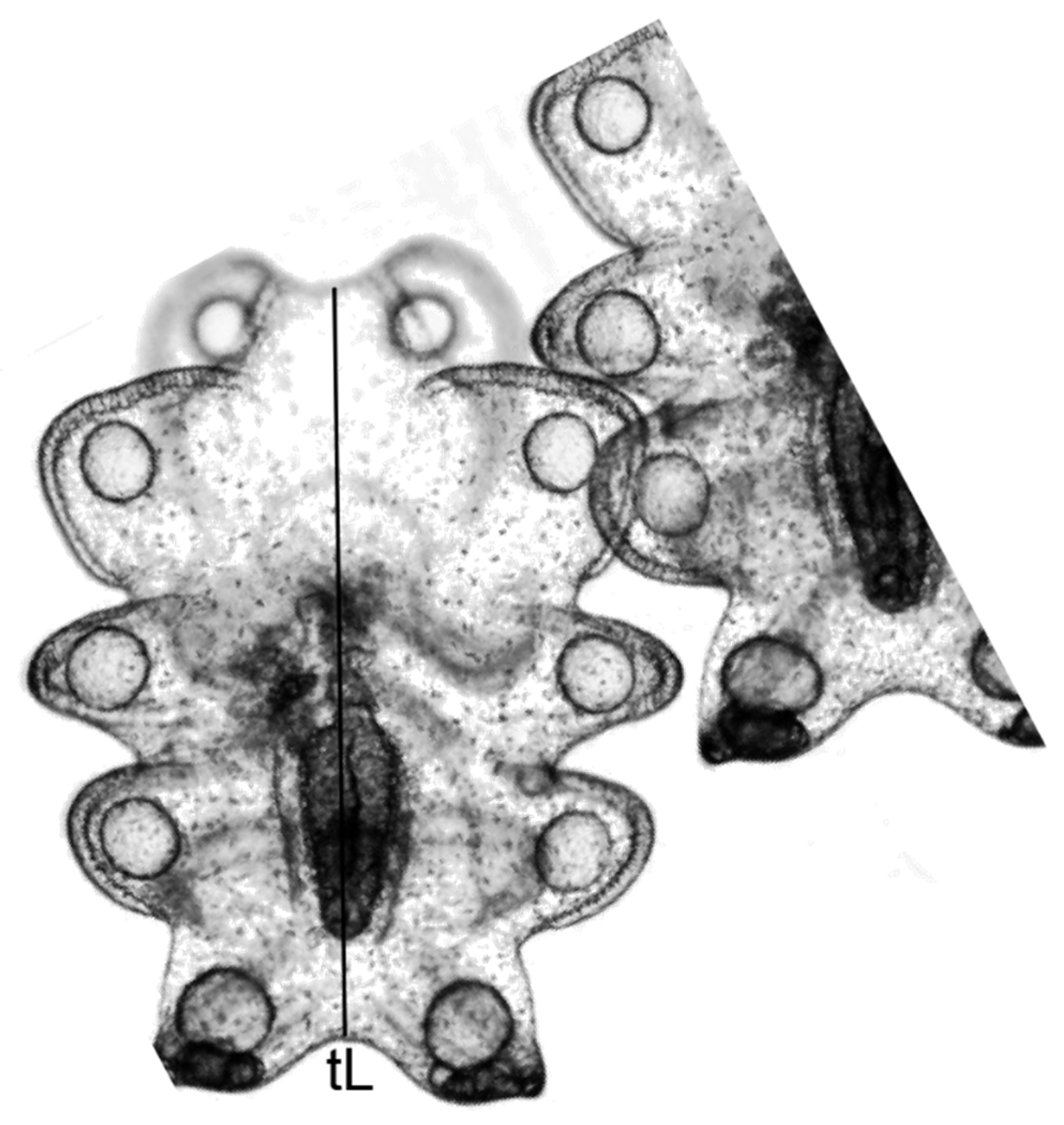
The planktotrophic larva of I. fuscus was measured in total length, tL (Figure 1).
Five developmental stages were identified based on larval size and morphological criteria: (T1: 6 days) early auricularia (EA): 250–300 μm; (T2: 11 days) middle auricularia I (MA I): 300–600 μm; (T3: 16 days) middle auricularia II (MA II): 600–1000 μm; (T4: 21 days) mature auricularia (A): 1000–1300 μm; and (T5: 25 days) late auricularia (LA): ~500 μm. SMA I, MA II, and A stages were defined by the extension of the left somatocoel to less than half the length of the gut, without an increase in axohydrocoel length, and the presence of 10–12 hyaline spheres. The LA stage was characterized by the extension of the left somatocoel beyond half the gut length, accompanied by the elongation of the axohydrocoel from its original spherical shape and the beginning of its retraction. For each sampling event, three 1 mL aliquots containing 10 larvae each were examined from every tank (four replicates per treatment), yielding a total of 30 larvae per tank and 120 larvae per treatment across the five sampling dates. Larval survival was estimated based on the number of dead individuals recorded from each set of aliquots (n = 3 per tank). Larval length was measured with an eyepiece micrometer under a compound microscope, and parasites were counted using an optical microscope. The images were captured with a high-resolution digital camera (MDX503, Lanoptik Technologies Ltd., Guangzhou, China) mounted on a trinocular microscope (CX31RTSF, Olympus Corporation, Tokyo, Japan), and they were processed using the Nahwoo iWorks 2.0 software for data acquisition and analysis.

2.6. Infection Parameters

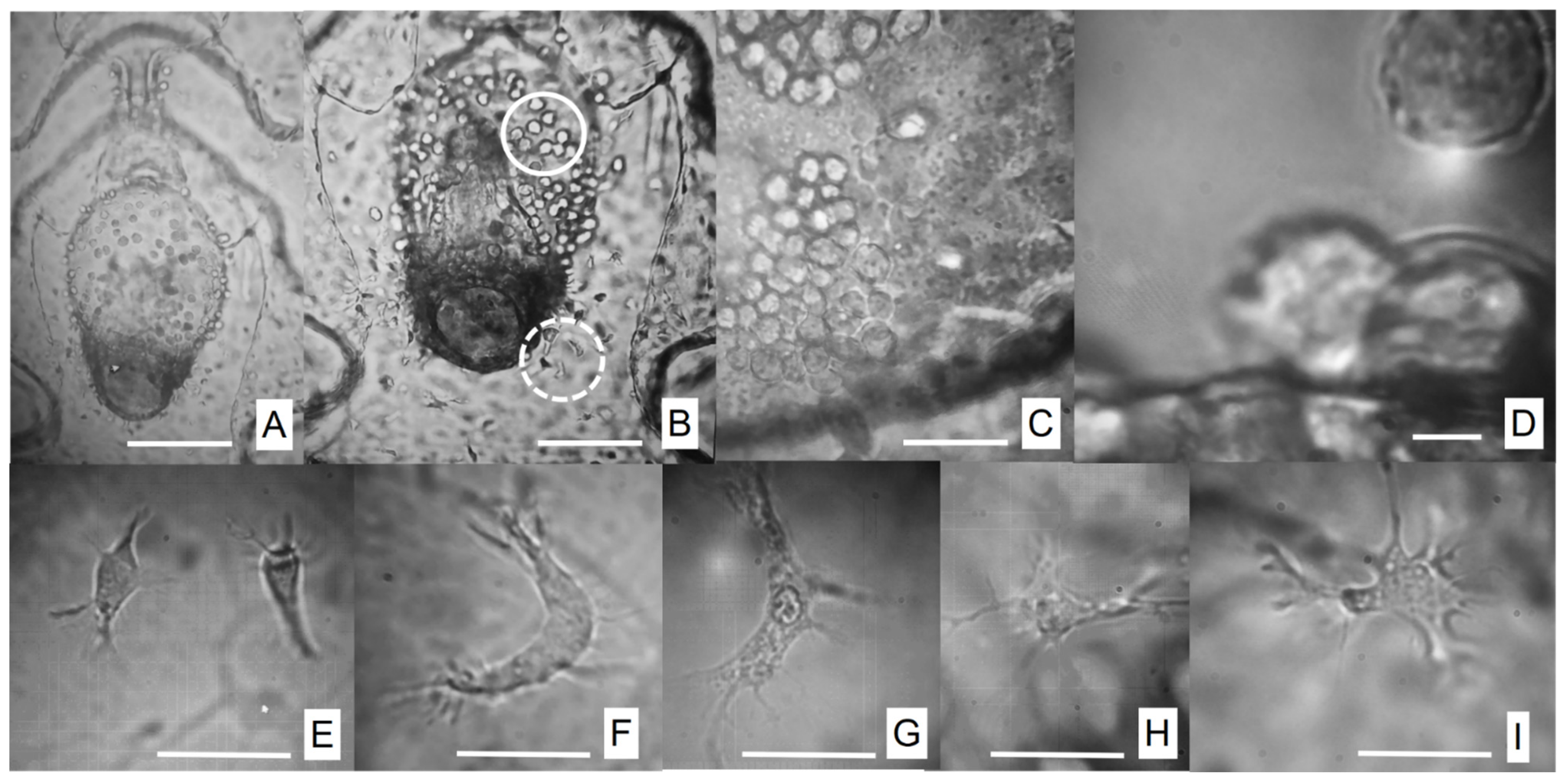
Figure 2 shows the protozoans observed in diseased auricularia larvae of I. fuscus. Our conceptual model proposes that large, mobile larvae reared in tanks as gregarious populations are more strongly associated with parasite transmission dynamics than smaller hosts. In this context, microparasite transmission may occur primarily through direct contact. Mobile parasites can move freely and actively seek new hosts, often through swimming [46]. In this study, infection parameters (prevalence, mean intensity, and the disease severity index) were calculated at each of the five sampling time points using the following formulas:
Mean Abundance = TNP/N,
where TNP is the total number of parasites, and N is the total number of hosts screened.
Prevalence (P) = (NIL/n) × 100,
where NIL is the number of infected larvae, and n is the total number of hosts screened with parasites, expressed in percentage.
Mean Intensity (MI) = TNP/n,
where TNP is the total number of parasites, and n is the total number of hosts with parasites screened.
Disease Severity Index (IDS) = P × MI,
where P is the prevalence, and MI is the mean intensity. This composite variable allows for a more complete view of a disease’s impact on a population, considering not only how many larvae present with the disease, but also how severe the condition is. The severity can vary over time. If the disease prevalence is 20%, and the average intensity is 5, then IDS is low (level I). See Table 1.

2.7. Statistical Analysis

A repeated-measures analysis of variance (ANOVA) was performed to evaluate the effects of the infection parameters (prevalence, intensity, and the disease severity index) across five sampling time points, with two fixed factors: temperature and parasite presence. Prior to the analysis, the assumptions of normality and homoscedasticity were tested at α = 0.05 using the Kolmogorov–Smirnov and Levene’s tests, respectively. When these assumptions were violated (p < 0.05), the data were arcsine-transformed before the analysis. Mauchly’s test of sphericity was non-significant (p > 0.05). In cases where the assumption of sphericity was not met, the degrees of freedom were adjusted using the Greenhouse–Geisser correction. Post hoc comparisons of mean response variables were conducted using Tukey’s HSD test. The data are presented as mean ± standard error. All statistical analyses were carried out using Statistica v.10 (StatSoft Inc., Tulsa, OK, USA) and IBM SPSS Statistics v.19 (IBM Corp., Armonk, NY, USA).

2.8. Ethics Statement

All experimental studies were conducted in accordance with the recommendations of the Guide for the Care and Use of Laboratory Animals of CENAIM–ESPOL. The protocols were reviewed and approved by the Subsecretary of Aquaculture of the Government of Ecuador (Approval No. CUP #133600000.864.423; Resolution No. 2012078, 3 December 2012).

3. Results

3.1. Etiology and Clinical Signs

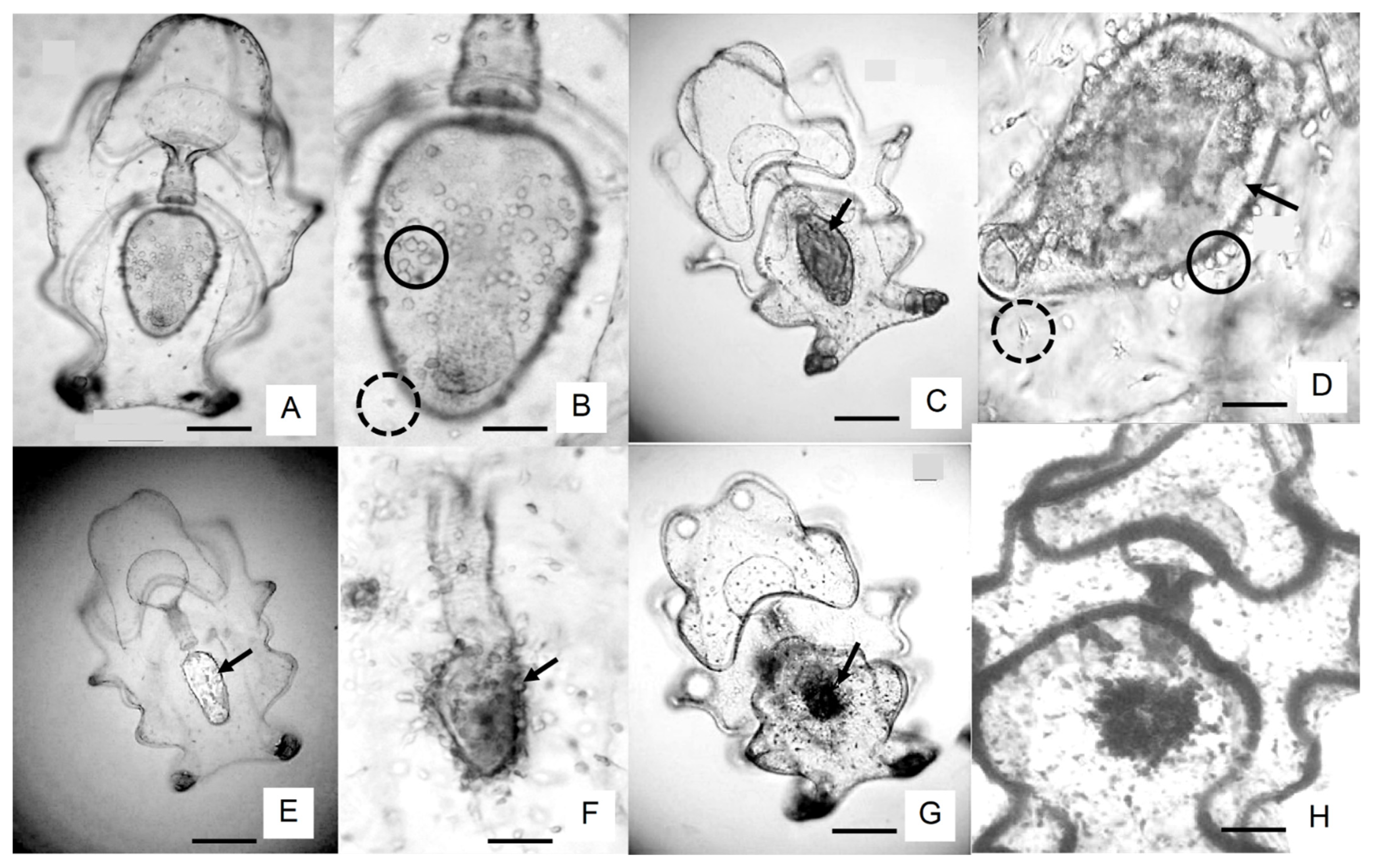
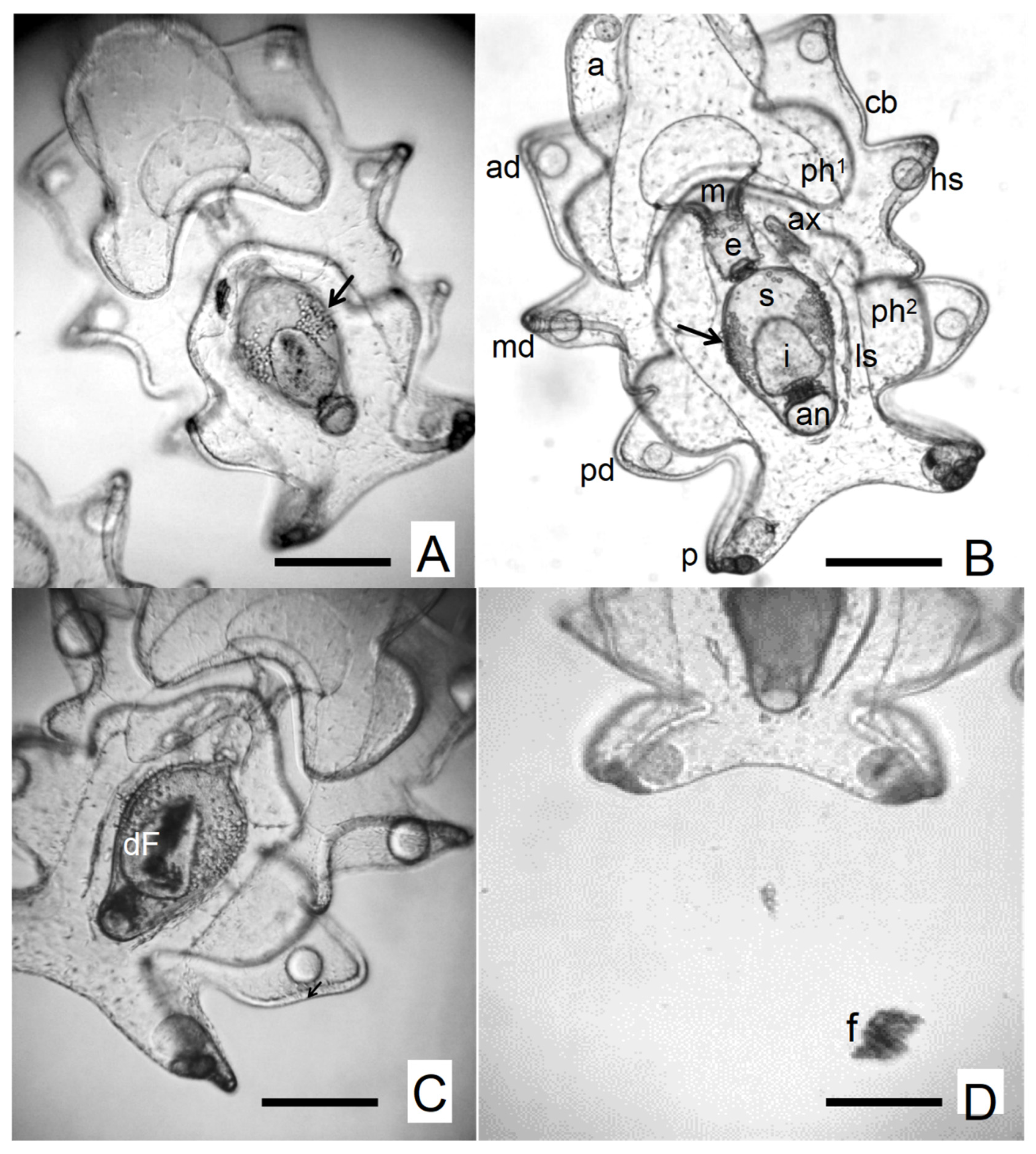
Optical microscopy revealed infected larvae exhibiting two forms of protozoan parasites (Figure 2A,B): (i) small, opaque, rounded slow-motile ameboid form (with pseudopodia; Figure 2C,D) and (ii) an irregular motile form (with filopodia; Figure 2E–I), measuring 10–12 μm in diameter. The occurrence of the disease happened in two waves influenced by the experimental temperature (Table 2). The first peak corresponded to a high invasion of slow-motile parasites in the body wall (Figure 2A–C and Figure 3A,B) and large clusters of irregular motile parasites with filopodia in the digestive tract (mouth and esophagus; Figure 2A,B and Figure 3A,B) with severe effects (scales III–V; see Table 2) in the stages EA and MA I at low temperature conditions (Figure 2A–H; Table 2). By 5 days post-hatch, all infected larvae exhibited lethargy and erratic swimming, with reduced feeding (Figure 3A,B). Three clinical signs were observed in the stomach: (1) stomach ulceration (Figure 3A,B); (2) stomach atrophy (Figure 3C–E), and (3) stomach rotting edge (Figure 3F–H). The stomach ulcer progressed from an active, rounded and clear pear-like stomach to a vague structure with darkened, rough, thickened borders and a shrunken lumen (Figure 3H). By 7 days post-hatch, the larvae showed empty, shrunken stomachs. In severe cases under starvation, the body edge thickened and darkened, and the stomach epithelium became hyperplastic and eventually disintegrated by autolysis (Figure 3F–H). The second peak, observed at higher temperatures, displayed low to moderate effects (scales I–II; see Table 2), with slow-motile protozoans localized in the equatorial region of the stomach and intestine in the MA II and A stages (Figure 4A–D). All larvae remained actively feeding and produced substantial feces (Figure 4D).

3.2. Infection Parameters

Parasite Abundance. A total of 1200 auricularia larvae of I. fuscus were examined in this trial. The highest parasite abundance was observed in the low-temperature treatment, with the peak occurring at T3 (1768.8 ± 342.7, Table 2). The lowest parasite counts were recorded in high-temperature conditions at T5 (10.3 ± 4.2, Table 2).
Prevalence. On average, the highest prevalence of parasites was recorded in low-temperature conditions (0.79 ± 0.11; F(1,6) = 10.318, p = 0.01832; Table 3), particularly at three stages: T2 (0.70 ± 0.13, Table 2), T3 (0.90 ± 0.11, Table 2), and T4 (0.90 ± 0.12, Table 2) (F(4,24) = 3.3576, p = 0.02562; Table 3). A significant interaction was detected with temperature. In low temperature conditions, the highest prevalence occurred at T4 (0.94 ± 0.034, Table 3), whereas the lowest prevalence was recorded at T2 (0.68 ± 0.14, Table 3). In high temperature conditions, prevalence peaked at T2 (0.90 ± 0.05, Table 3) and reached its minimum at T5 (0.20 ± 0.07, Table 3) (F(4,24) = 5.7312, p = 0.00220; Table 3).
Media Intensity. On average, the highest disease intensity was recorded in low-temperature conditions (43.30 ± 10.60; F(1,6) = 104.44, p = 0.00005; Table 3), particularly at stages T2 (33.60 ± 7.90, Table 2), T3 (71.40 ± 14.40, Table 2), and T4 (60.70 ± 12.90, Table 2) (F(4,24) = 3.9644, p = 0.1312; Table 3). A significant interaction was detected with temperature. In low temperature conditions, the highest intensity occurred at T3 (71.40 ± 12.70, Table 3), while the lowest intensity was recorded at T1 (11.10 ± 4.00, Table 3). In high temperature conditions, intensity reached its maximum at T5 (6.30 ± 5.25, Table 3) and minimum at T1 (1.30 ± 0.14, Table 3) (F(4,24) = 3.8785, p = 0.1440; Table 3).
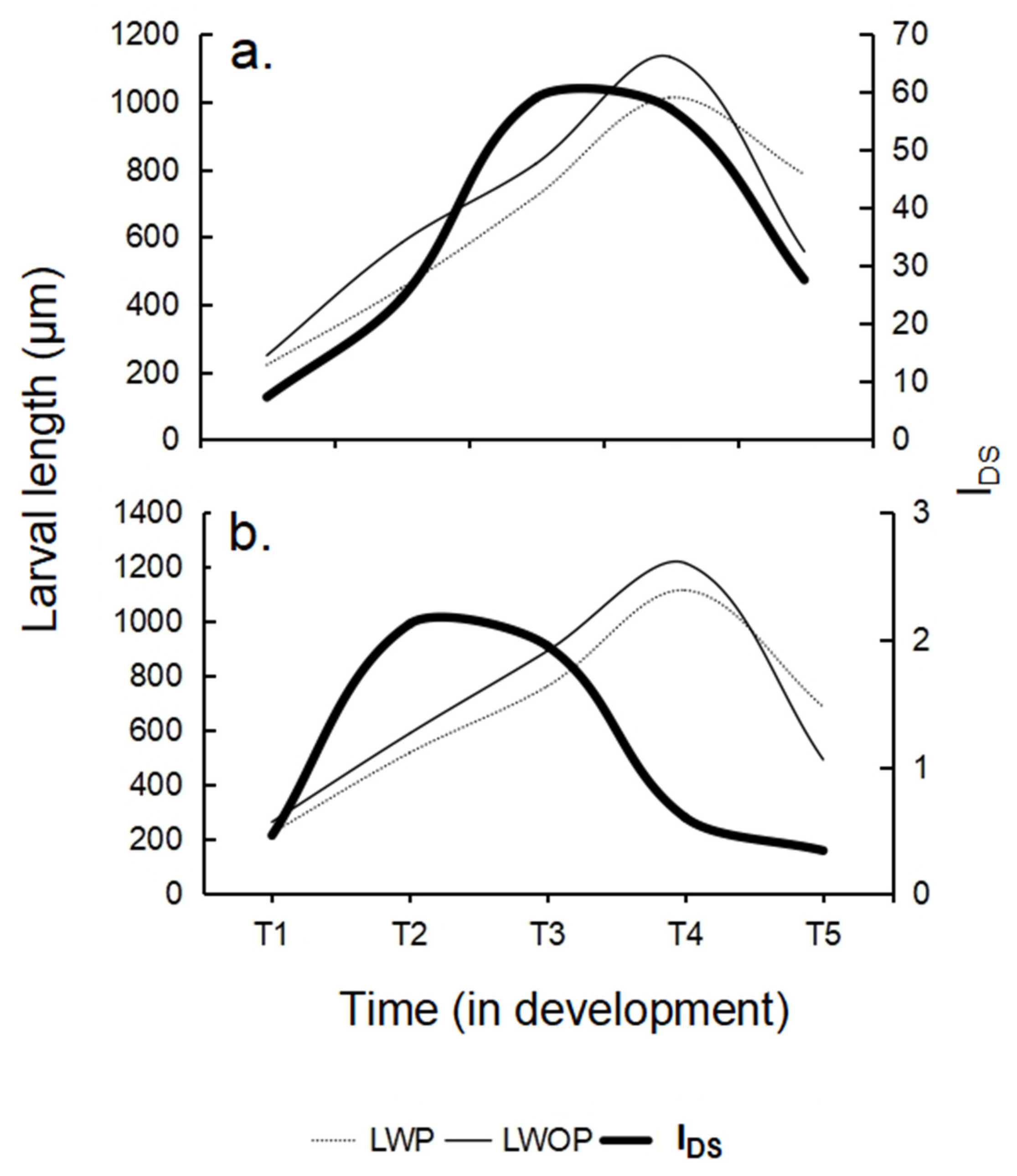
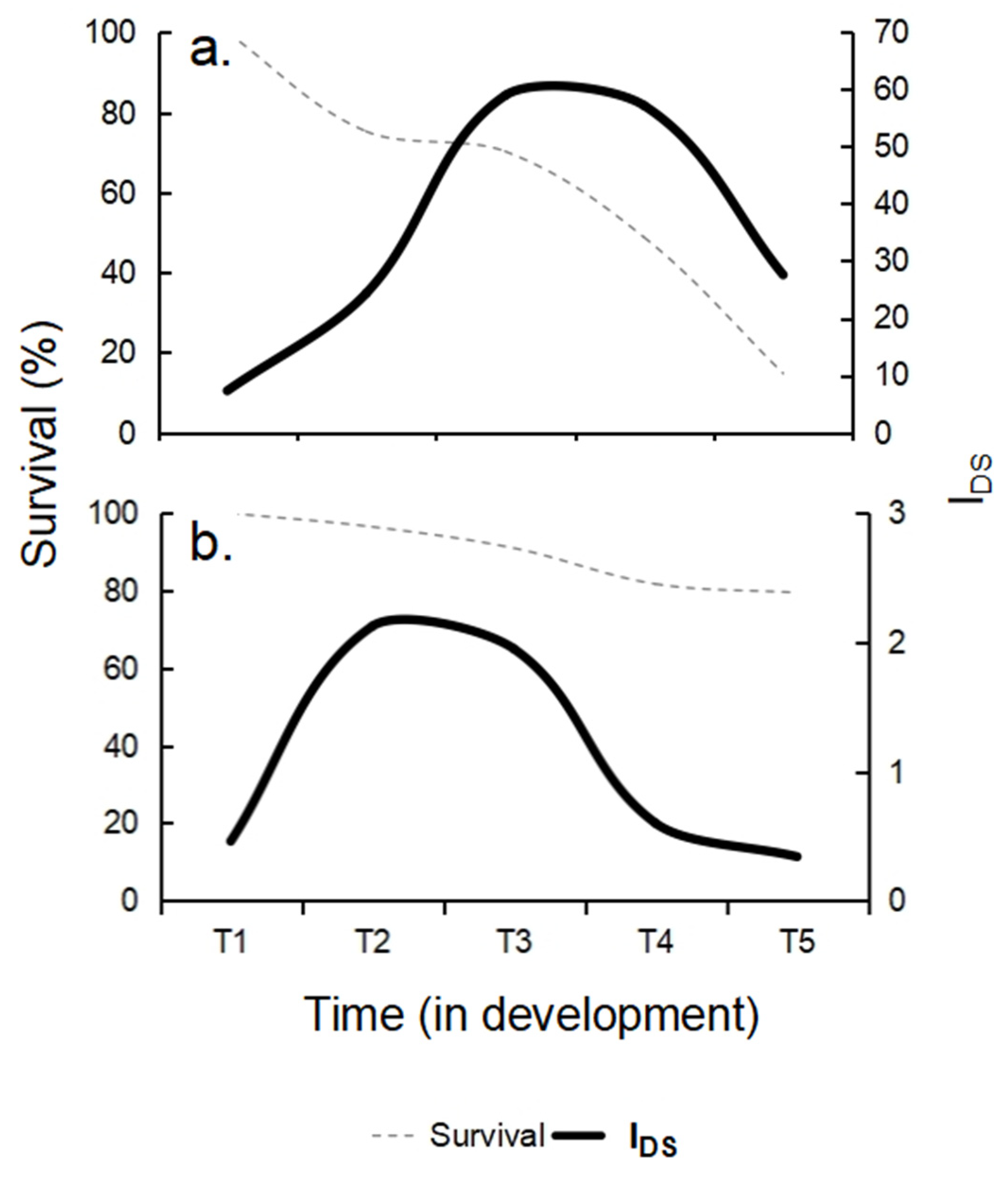
The Disease Severity Index. On average, the highest IDS value was recorded in low-temperature conditions (35.07 ± 8.91; F(1,6) = 60.813, p = 0.00023; Figure 4, Table 3), particularly at T3 (59.00 ± 11.42, Table 2) and T4 (57.00 ± 12.57, Table 2) (F(4,24) = 5.0002, p = 0.0448; Figure 4, Table 3). A significant interaction was observed, with IDS strongly shaped by temperature. At low temperature, the maximum value occurred at T3 (59.00 ± 11.42, Table 3), while the minimum was recorded at T1 (7.00 ± 2.71, Table 3). In high temperature conditions, IDS peaked at T2 (2.13 ± 0.26) and reached its lowest value at T5 (0.30 ± 0.14, Table 2) (F(4,24) = 4.7879, p = 0.0554; Figure 4, Table 3).
Larval Size. A delayed larval organogenesis (buccal cavity, mouth, esophagus, stomach, intestine, and cloaca) and a slowed down growth was observed in low-temperature conditions. The development of infected larvae, particularly between T1 and T2, was delayed compared with parasite-free larvae in high temperature conditions, which exhibited faster growth and fully developed structures, including left somatocoel extension to approximately half the stomach length, axohydrocoel elongation, and the presence of 10 large hyaline spherules (Figure 3). In high-temperature treatment, larval development and growth were continued non-retarded (Table 2). The total length of auricularia larvae was significantly affected by both the parasite presence and temperature (Figure 4). Larger larvae were consistently observed in the absence of parasites (F(1,12) = 17.904, p = 0.00117; Figure 4, Table 3) under high-temperature conditions (F(1,12) = 11.463, p = 0.00541; Figure 4, Table 3). The maximum total length was reached at stage T4 (MA), with mean lengths of 1064.8 ± 11.7 μm at low temperature and 1165.5 ± 11.8 μm at high temperature (F(4,48) = 1565.8, p < 0.0001; Figure 4, Table 2 and Table 3). Parasite-free larvae completed development in 18 days, whereas parasitized larvae required 25 days. No significant interaction was found between temperature, parasite presence, and time (F(4,48) = 1.5690, p = 0.19775; Figure 4, Table 3).
Survival. High mortality was reported at each sampling time before larvae reached the next stage, which was significantly influenced by temperature (F(1,6) = 773.73, p < 0.0001; Figure 5, Table 3). The lowest survival occurred under low-temperature conditions, reaching 14.8 ± 1.9% at T5, whereas the highest survival was recorded under high-temperature conditions, reaching 79.5 ± 1.3% at T5 (F(4,24) = 240.94, p < 0.0001; Figure 5, Table 3). A significant interaction was also detected between temperature and the auricularia developmental stage (T1–EA to T5–LA) (F(4,24) = 73.600, p < 0.0001; Figure 5, Table 3).

4. Discussion

4.1. Thermal and Light Refuges as ‘Window of Opportunities’

Adult I. fuscus inhabiting equatorial region are predominantly nocturnal [43]. They display a predictable monthly spawning pattern that persists year-round; however, only a fraction of the population spawns during each event, thereby sustaining recruitment over time [59]. This reproductive activity occurs within a defined “window of opportunities” that is strongly modulated by environmental cues, particularly light intensity, photoperiod, spectral composition, and temperature. For this reason, their long-lived oligo- planktotrophic pelagic larvae develop over 22–27 days, progressing through five distinct developmental stages (see Section 2.4) influenced by light-sensitive and phototactic behavior with thermal tolerance [41,50,55,60,61]. This pattern is consistent with experimental evidence in other tropical holothurians. Ref. [55] evaluated the negative phototaxis and photokinesis of actively swimming auricularia larvae of A. japonicus under red light at 500 lx, meaning that they preferentially move away from the light source. This indicates a clear behavioral response, with larvae seeking areas farther from the surface to optimally position themselves in the water column. This should also apply to the auricularia larvae of I. fuscus, which exhibit considerable dispersal capacity across the eastern tropical Pacific (ETP) populations, ranging from Baja California, México, to northern Perú, including oceanic archipelagos, such as the Galápagos islands [62,63]; thus, it is capable of tolerating the thermal gradients and light fluctuations characteristic of the ETP, thereby enhancing their survival potential [64,65].
The data in this study align with the proposed conceptual model and are in accordance with other studies reporting temperature-mediated adaptive physiological plasticity in I. fuscus auricularia larvae, where thermal conditions critically regulate its growth performance and disease resistance [26,27,38,39,42,43]. Nevertheless, it is important to acknowledge that larval yield in hatcheries is driven by the interaction of several environmental and culture-related factors. For example, the adequate tank design and characteristics—such as, volume, shape, and color—played a critical role during the five larval development stages, promoting efficient swimming and stable positioning within the water column. This prevented larval surface aggregation and allowed them to occupy areas with favorable dissolved oxygen, temperature, and light conditions. All these conditions supported better water quality and reduced physiological stress, contributing to higher larval survival [19,66,67].
In contrast, the combined influence of temperature and light conditions, including larval rearing in black-colored tanks under reduced indoor light may trigger endocrine responses mediated by melatonin, commonly referred to as the “hormone of darkness”, associated with circadian regulation. According to the thermal mismatch hypothesis, this planktotrophic larva may obtain a physiological advantage—a form of thermal refuge—when environmental temperatures exceed the tolerance limits of the parasite while remaining within the viable range for the host. This pattern suggests that the auricularia larva possesses a distinct thermal performance curve, with optimal functioning across a particular temperature window. Furthermore, light enhanced larval physiological responsiveness. This condition may have contributed to improved immune regulation and reduced susceptibility to protozoan parasites at elevated temperatures (27 °C) [66]. Meanwhile, low-temperature conditions reduce larval metabolism (as hypometabolism with reduction in aerobic scope), which in turn drives physiological responses leading to dormancy or aestivation [41]. This explains the high prevalence and intensity of parasite infections, as well as the very low survival rates (<0.3%), where suboptimal rearing temperatures for I. fuscus larvae are those below 23 °C, particularly when pathogens are present.
Elevated temperatures (see Figure 5 and Figure 6) may enable the host to partially escape or mitigate the effects of parasitic infections, as the parasites appear to be more thermally sensitive than the host. Under these conditions, relatively high temperature combined with moderate light levels may contribute to maintaining stable protozoan parasite loads without increasing host susceptibility, thereby reducing the risk of severe parasite-induced damage in the larvae. Importantly, such conditions are unlikely to impose additional metabolic costs that could compromise the maintenance of larval innate immune defenses [51,52,53]. When the temperature factor was experimentally isolated across the five auricularia larval stages, low-temperature conditions were associated with an increased progression of parasitic disease, whereas higher temperatures promoted improved larval performance and health. This response likely reflects temperature-dependent metabolic processes that regulate energy allocation and physiological resilience. Under high-temperature conditions, larvae developed more rapidly, completing the development in approximately 18 days while maintaining low parasite loads and exhibiting fewer disease symptoms. Active feeding and abundant fecal production further suggest efficient food assimilation and elevated metabolic activity under these conditions.

4.2. Phycosphere of Auricularia

Microalgae constitute the primary trophic foundation for the long-lived planktotrophic larvae of tropical sea cucumbers [16,21,26,67]. Therefore, the selection of nutritionally rich diets is a critical factor in hatchery production [68]. In particular, diets that provide a broad spectrum of essential nutrients—including proteins, carbohydrates, vitamins, hormones, and bioactive compounds—as well as high levels of highly unsaturated fatty acids (HUFAs), are essential for supporting the optimal larval development [69,70,71]. Therefore, mixed live microalgal assemblages are generally considered more nutritionally balanced than single-species diets and have been widely adopted in hatchery systems. Such multi-species microalgal diets represent a key determinant of larval performance, contributing to improved survival, growth, physiological condition, and overall production efficiency in I. fuscus [38,72].
In this study, Chaetoceros gracilis, T-isochrisis lutea, and Rhodomonas sp were supplied in a ratio of 4:1:1 at a final concentration from 1 × 10⁴ to 4 × 10⁴ cells·mL−1. C. gracilis (2.8–3.0 µm in size) has high protein (20–25%) and lipid (39%) content, with PUFA comprising 5–62% of total fatty acids [73]. T. lutea (3 × 5 µm in size) has high protein (40–49%) and lipid (20–30%) content [73,74,75], and Rhodomonas sp (10 × 12 µm in size) has high protein (42–59%) and lipid (12–29%) content [73,76]. Rhodomonas sp presents a high percentage of total PUFAs, EPAs, and DHAs (PUFAs = 64.35%, EPAs = 8.4% and DHAs = 6.9%), followed by T. lutea and C. gracilis [73,76]. It is necessary to highlight the importance of PUFAs as essential nutrients for auricularia larvae of I. fuscus in aquaculture [72], which might be modulated by the supplied diet. Refs. [70,76] suggested that larvae fed with Rhodomonas sp produce the highest lipid content, particularly PUFA (22:6n-3 and 20:5n-3), and high levels of carbohydrates, which reflects robust physiological condition and the capacity for successful metamorphosis [76]. Nonetheless, the microalgal assemblage used in this study may also influence the composition of associated bacterial communities adapted to auricularia larvae, including taxa such as Vibrio [56]. These microbial assemblages can perform a variety of ecological functions, including microbial signaling and other host–microbe interactions that shape the rearing environment. However, under certain conditions, they may also shift toward opportunistic pathogenic roles, potentially acting as vectors for disease through bacteria–protozoa consortium-like interactions. Such dynamics may influence larval health and survival in hatchery systems, particularly under low-temperature conditions that may favor pathogen persistence and proliferation.
Our data suggest that auricularia larvae with an IDS under 40% (see Table 1) can transport lipid energy reserves from phytoplankton in the mature auricularia stage (particularly from the base of a nutrient-rich diet) to form up to 12 hyaline spheres—HSs [72]; however, the larvae with high parasite load did not form HSs (Figure 1, Figure 2 and Figure 3). HSs have a higher percentage of saturated fatty acids, dominated by the presence of myristic, palmitic, stearic, palmitoleic, and alfa-linolenic and EPA fatty acids. This content of fatty acids is decisive for completing this critical stage until the late auricularia stage. Ref. [77] successfully manipulated the size and number of HSs through alterations of the phytoplankton diet fed to auricularia. The occurrence of hyaline spheres (HSs) and associated granular structures appears to be an important feature during the larval development of I. fuscus. These structures may reflect physiological processes related not only to nutrient storage and metabolic regulation but also to the maintenance of an active innate immune system during early development. However, this pattern does not seem to be universal among holothurians. For example, successful metamorphosis has been reported in cultured larvae of Apostichopus californicus even in the absence of HSs, suggesting interspecific differences in developmental and physiological strategies. These observations indicate that the functional role of HSs in I. fuscus may extend beyond simple energy reserves and could be associated with maintaining larval physiological condition and immune competence during metamorphosis. Consequently, further research is required to determine whether HSs represent a physiological prerequisite for successful metamorphosis in healthy I. fuscus larvae and to clarify their role in the nutritional–immunological regulation of early larval development under hatchery conditions.
Consistent with the findings of [56], recent studies in tropical sea cucumber larvae demonstrate that diet quality not only regulates growth and survival but also shapes the associated microbiome. Therefore, diet does not just feed the larva, but it also “selects” its microbiome, and that modulates disease. For example, mixed diets have been shown to enhance microbial diversity and larval performance in Holothuria leucospilota, suggesting that nutritional conditions directly influence host’s physiological status through microbiome-mediated processes [78]. This supports the view that larval condition represents a central axis linking metabolism, microbial regulation, and susceptibility to disease in holothurian aquaculture systems.
In contrast, relatively low food rations (<5 × 10⁴ cells mL−1), when composed of nutritionally rich mixed microalgae, may contribute to reducing both the risk and severity of infectious diseases. Higher food availability can accelerate host growth and stimulate cellular metabolism, which may inadvertently favor pathogen proliferation and increase disease susceptibility. This mechanism may be particularly relevant for I. fuscus auricularia larvae, whose active swimming behavior as heterotrophic organisms may facilitate the motility and transmission of associated protozoan parasites [56,78,79,80]. Conversely, maintaining low but continuous food availability under near ad libitum conditions may improve the physiological status of the host while simultaneously limiting pathogen development. Under restricted feeding regimes, the reduced availability of resources can constrain pathogen growth and metabolic activity, given that parasite proliferation depends on the metabolic resources of the host [81]. For this reason, food levels in the present trial were carefully regulated to minimize resource competition and potential pathogen amplification.

4.3. Holobiome and Diseases in Auricularia

The auricularia larva of I. fuscus (as host) has a digestive system—mouth, esophagus, cardiac sphincter, stomach, intestine, and anus—that act as a dynamic core holobiome, with long-term effects on the host’s immunological and physiological development, and its disturbance is known to trigger various diseases in the host [42,44,45,82]. Although this study did not perform any bacterial analysis, we presume that the diseases observed in the larva are caused by bacteria-protozoa consortium-like interactions [44,45].
Increasing evidence indicates that the microbiome composition in holothurian larvae undergoes pronounced shifts throughout early ontogeny. For instance, Ref. [45] documented significant changes in the bacterial community structure across developmental stages (egg, auricularia, and doliolaria), revealing a stage-specific trajectory of microbial succession. Such dynamics may have important consequences for larval health, as alterations in the microbiome can facilitate opportunistic pathogenic interactions under stressful environmental conditions (e.g., temperature).
Temperature is widely recognized as a key regulator of host–parasite interactions in aquatic systems [17,28,83]. Several studies have shown that the infectivity and virulence of microparasites can vary markedly across thermal ranges, with important consequences for host health. For instance, thermal exposure experiments demonstrated that spores of the endoparasitic bacterium Pasteuria ramosa infecting Daphnia exhibit substantially reduced infectivity after exposure to elevated temperatures [84]. Similarly, parasite–host interactions can sometimes modulate host tolerance to environmental stressors; cestode larvae have been shown to increase resistance to pollutants and oxidative stress in Artemia even under moderately elevated temperatures [85]. Temperature-dependent parasite dynamics have also been documented in aquaculture species, such as Atlantic salmon (Salmo salar), where the infestations of the sea louse Lepeophtheirus salmonis were the highest at lower temperatures and declined markedly in warmer conditions [86]. Collectively, these findings support the view that parasite performance is often more thermally constrained than that of their hosts, suggesting that environmental temperature can strongly modulate disease dynamics. Consistent with this pattern, disease outbreaks in aquaculture systems, including shrimp farms in Ecuador, have frequently been associated with periods of unusually low seawater temperature [87,88].
In this context, larval diseases such as rotten edge syndrome—associated with Vibrio lentus—have been linked to thermal stress that increases host susceptibility to infection. Prolonged exposure to suboptimal low temperatures (<23 °C) can exacerbate this condition [27,41,89], likely by inducing metabolic imbalance and the accumulation of reactive metabolites during the onset of feeding in pelagic larvae [89,90,91]. Together, these findings highlight that larval microbiome assembly is jointly shaped by ontogenetic processes and culture conditions, and that disruptions in this balance may compromise larval health. Consequently, understanding host–microbiome–environment interactions is essential for improving larval resilience and ensuring sustainable sea cucumber aquaculture production systems [84]. In the present study, larval disease in I. fuscus was characterized by a set of concurrent clinical manifestations observed during early developmental stages [45,82,89,90]. These included: (i) stomach ulceration symptoms (SUSs), characterized by anorexia, an empty digestive tract, impaired motility, and erratic swimming behavior; (ii) rotting edge symptoms (RESs), marked by lethargy, thickening, and discoloration of the stomach wall toward a brownish tone, and delayed formation of larval structures; and (iii) stomach atrophy syndrome (SAS), evidenced by stomach shrinkage, collapse of the digestive structure, and high larval mortality (see Figure 3 and Figure 4). Notably, the earliest pathological signs and tissue lesions were predominantly detected within the first 3–7 days of development, particularly during the early auricularia stages (EA, MA-I, and MA-II), where affected larvae exhibited marked deviations from normal morphology and behavior. Importantly, these alterations appeared to be partially reversible under favorable temperature conditions, suggesting that thermal regimes may play a critical role in modulating disease progression and larval physiological resilience.
The highest parasite infestation occurred during the mature auricularia stage (T4), where heavily infected larvae frequently harbored more than 160 parasites per host. Under these conditions, the infected larvae exhibited reduced body length and a marked delay in organogenesis compared with parasite-free individuals, which developed more rapidly. This pattern suggests that high parasite burdens may impose substantial physiological costs on the host, likely diverting metabolic resources away from somatic growth and developmental processes. Moreover, clear temperature-dependent differences in developmental performance were observed. Mature auricularia larvae with low parasite loads (fewer than 10 parasites) or without detectable infection completed their development in approximately 18 days under high-temperature conditions, whereas heavily infected larvae maintained at lower temperatures required more than 25 days to reach comparable stages. Together, these findings suggest that parasite load and thermal conditions interact to strongly influence larval growth dynamics and developmental timing, highlighting the importance of environmental regulation in mitigating parasite-mediated impact on larval performance.

5. Conclusions

This study demonstrates that temperature is a key driver of host–parasite dynamics, metabolic performance, and developmental outcomes in auricularia larvae of the tropical sea cucumber Isostichopus fuscus. Elevated temperature (27 °C) enhanced larval metabolic activity, accelerated development, and reduced the severity of protozoan parasitic infections without compromising survival under culture conditions. Notably, mature auricularia (T4) with low or negligible parasite loads completed development within 18 days at high temperature, whereas heavily infected larvae reared under lower temperatures required more than 25 days. In contrast, prolonged exposure to suboptimal temperatures (<23 °C) induced severe pathological conditions in the digestive tract—manifested as SUSs, RES, and SAS—driven by true protozoan parasitism rather than endosymbiotic associations.
From a practical perspective, optimal larval rearing should combine a thermal regime of ~27 °C with controlled feeding strategies, maintaining stomach fullness at 70–85% using low-concentration mixed microalgal diets (1 × 10⁴–4 × 10⁴ cells mL−1) composed of Chaetoceros gracilis, Tisochrysis lutea, and Rhodomonas sp., the latter providing high levels of essential PUFAs (EPA and DHA).
These conditions collectively promote larval growth, physiological resilience, and reduced disease risk. Overall, these findings highlight the importance of environmental regulation in mitigating parasitism and optimizing larval performance, providing a robust framework for sustainable aquaculture of I. fuscus, particularly for the dark chocolate-brown morphotype. Further research should address the mechanistic links between environmental stress, host physiology, and parasite outbreaks across different broodstock morphotypes.

Author Contributions

Conceptualization, J.I.S.-V.; methodology, J.I.S.-V., M.P. and R.S.-B.; software, J.I.S.-V. and R.S.-B.; validation, J.I.S.-V. and M.P.; formal analysis, J.I.S.-V. and R.S.-B.; investigation, J.I.S.-V. and M.P.; resources, J.I.S.-V., data curation, J.I.S.-V.; writing—original draft preparation, J.I.S.-V.; writing—review and editing, J.I.S.-V. and R.S.-B.; visualization, J.I.S.-V.; supervision, J.I.S.-V. All authors have read and agreed to the published version of the manuscript.

Funding

This study was funded by a grant of Subsecretary of Aquaculture of the Government of Ecuador through the project of special regime for “Professional Services Research and Testing Laboratory: Spondylus and Sea Cucumber” CUP # 133600000.864.423 (Resolution No. 2012078 of 3 December 2012).

Institutional Review Board Statement

This experimental study was conducted in accordance with the recommendations of the Guide for the Care and Use of Laboratory Animals off CENAIM–ESPOL. The protocols were reviewed and approved by the Subsecretary of Aquaculture of the Government of Ecuador (Approval No. CUP #133600000.864.423; Resolution No. 2012078, 3 December 2012).

Informed Consent Statement

Not applicable.

Data Availability Statement

The original contributions presented in this study are included in the article. Further inquiries can be directed to the corresponding author.

Acknowledgments

Authors would like to thank to Stanislaus A. Sonnenholzner (Cenaim—Espol) for his assistance.

Conflicts of Interest

Authors declare no conflicts of interest.

References

  1. Pan, W.; Wang, X.; Ren, C.; Jiang, X.; Gong, S.; Xie, Z.; Wong, N.-K.; Li, X.; Huang, J.; Fan, D.; et al. Sea cucumbers and their symbiotic microbiome have evolved to feed on seabed sediments. Nat. Commun. 2024, 15, 8825. [Google Scholar] [CrossRef]
  2. Purcell, S.W.; Conand, C.; Uthicke, S.; Byrne, M. Ecological roles of exploited sea cucumbers. Oceanogr. Mar. Biol. Annu. Rev. 2016, 54, 367–386. [Google Scholar] [CrossRef]
  3. Fabinyi, M. Historical, Cultural and social perspectives on luxury seafood consumption in China. Environ. Conserv. 2011, 39, 83–92. [Google Scholar] [CrossRef]
  4. Fabinyi, M.; Barclay, K.; Eriksson, H. Chinese Trader perceptions on sourcing and consumption of endangered seafood. Front. Mar. Sci. 2017, 4, 181–192. [Google Scholar] [CrossRef]
  5. Choo, P.S.; Conand, C. Sea cucumber products at the China Fisheries Seafood Expo 2014. SPC Beche-de-Mer Inform. Bull. 2015, 35, 60–63. [Google Scholar]
  6. Xia, S.D.; Wang, X.Y. Nutritional and Medicinal Value. In The Sea Cucumber Apostichopus japonicus: History, Biology and Aquaculture; Yang, H.S., Hamel, J.F., Mercier, A., Eds.; Academic Press: Amsterdam, The Netherlands, 2015; pp. 353–365. ISBN 978-0-12-799953-1. [Google Scholar]
  7. Hossain, A.; Dave, D.; Shahidi, F. Northern sea cucumber (Cucumaria frondosa): A potential candidate for functional food, nutraceutical, and pharmaceutical sector. Mar. Drugs 2020, 18, 274. [Google Scholar] [CrossRef] [PubMed]
  8. Liang, Q.; Ahmed, F.; Zhang, M.; Sperou, N.; Franco, C.M.M.; Feng, Q.; Zhang, W. In Vivo and clinical studies of sea cucumber-derived bioactives for human health and nutrition from 2012–2021. Front. Mar. Sci. 2022, 9, 917857. [Google Scholar] [CrossRef]
  9. Purcell, S.W.; Williamson, D.H.; Ngaluafe, P. Chinese market prices of bêche-de-mer: Implications for fisheries and aquaculture. Mar. Policy 2018, 91, 58–65. [Google Scholar] [CrossRef]
  10. Dataintelo. Global Sea Cucumber Aquaculture Market Analysis & Forecast 2018–2033; FB-678417; Dataintelo Consulting Pvt Ltd.: Pune, India, 2025; pp. 1–56. [Google Scholar]
  11. Kinch, J.; Purcell, S.; Uthicke, S.; Friedman, K. Population status, fisheries and trade of sea cucumbers in the Western Central Pacific. In Sea Cucumbers: A Global Review of Fisheries and Trade; Toral-Granda, M.V., Lovatelli, A., Vasconcellos, M., Eds.; Food and Agriculture Organization of the United Nations: Rome, Italy, 2008; pp. 7–55. ISBN 978-92-5-106079-7. [Google Scholar]
  12. Chong, R.; Kumar, A.; Dyrting, K.; Turner, L. Sea Cucumber Health and Biosecurity for Aquaculture Development. Agrifutures, New South Wales: Agrifutures. CSIRO: EP2024-0742. 2024. Available online: http://hdl.handle.net/102.100.100/635528?index=1 (accessed on 20 March 2025).
  13. Zamora, L.N.; Yuan, X.; Carton, A.G.; Slater, M.J. Role of deposit-feeding sea cucumbers in integrated multitrophic aquaculture: Progress, problems, potential and future challenges. Rev. Aquac. 2018, 10, 57–74. [Google Scholar] [CrossRef]
  14. Ru, X.; Zhang, L.; Li, X.; Liu, S.; Yang, H. Development strategies for the sea cucumber industry in China. J. Ocean. Limnol. 2019, 37, 300–312. [Google Scholar] [CrossRef]
  15. Sonnenholzner-Varas, J.I. ¿Hacia dónde va la acuicultura de equinodermos en América Latina? Potencial, retos y oportunidades. Rev. Biol. Trop. 2021, 69, 514–549. [Google Scholar] [CrossRef]
  16. Mercier, A.; Hamel, J.-F. Sea cucumber aquaculture: Hatchery production, juvenile growth and industry challenges. In Advances in Aquaculture Hatchery Technology; Allan, G., Burnell, G., Eds.; Woodhead Publishing Series in Food Science, Technology and Nutrition; Woodhead Publishing: Cambridge, UK, 2013; pp. 431–454. [Google Scholar] [CrossRef]
  17. Karvonen, A.; Rintamäki, P.; Jokela, J.; Valtonen, T. Increasing water temperature and disease risks in aquatic systems: Climate change increases the risk of some, but not all, diseases. Int. J. Parasitol. 2010, 40, 1483–1488. [Google Scholar] [CrossRef]
  18. Lafferty, K.D.; Harvell, C.D.; Conrad, J.M.; Friedman, C.S.; Kent, M.L.; Kuris, A.M.; Powell, E.N.; Rondeau, D.; Saksida, S.M. Infectious Diseases Affect Marine Fisheries and Aquaculture Economics. Annu. Rev. Mar. Sci. 2015, 7, 471–496. [Google Scholar] [CrossRef]
  19. Sousa, J.; Félix, P.M.; Brito, A.C.; Venâncio, E.; Azevedo e Silva, F.; Simões, T.; Amorim, A.; Dâmaso-Rodrigues, M.L.; Pombo, A. Optimizing growth and rearing techniques for larvae and juveniles of the sea cucumber Holothuria arguinensis. Diversity 2023, 15, 722. [Google Scholar] [CrossRef]
  20. Dabbagh, A.R.; Sedaghat, M.R.; Rameshi, H.; Kamrani, E. Breeding and larval rearing of the sea cucumber Holothuria leucospilota Brandt (Holothuria vegabunda Selenka) from the northern Persian Gulf, Iran. Beche-de-Mer Inform. Bull. 2011, 31, 35–38. [Google Scholar]
  21. Yu, Z.; Wu, H.; Tu, Y.; Hong, Z.; Luo, J. Effects of diet on larval survival, growth, and development of the sea cucumber Holothuria leucospilota. Aquac. Nutr. 2022, 2022, 8947997. [Google Scholar] [CrossRef]
  22. Nguyen, D.Q.D. Developing Hatchery Culture of the Tropical Sea Cucumber Holothuria scabra Using Micro-Algae Concentrates. Ph.D. Thesis, James Cook University, Townsville, Australia, 2017. [Google Scholar] [CrossRef]
  23. Hung, V.N.; Bakari, A.M.; Hung, Q.P. Induced spawning and larval rearing of the sea cucumber Holothuria nobilis. Isr. J. Aquac. Bamidgeh. 2021, 73, 1434765. [Google Scholar] [CrossRef]
  24. Sun, X.; Li, Q. Effects of temporary starvation on larval growth, survival and development of the Sea cucumber Apostichopus japonicus. Mar. Biol. Res. 2012, 8, 771–777. [Google Scholar] [CrossRef]
  25. Asha, P.S.; Diwakar, K. Effect of stocking density on the hatching rate, larval and early juvenile rearing of edible Sea cucumber Holothuria scabra (Jaeger, 1883). Indian J. Mar. Sci. 2013, 42, 191–195. [Google Scholar]
  26. Mercier, A.; Ycaza, R.H.; Espinoza, R.; Haro, V.M.A.; Hamel, J.-F. Hatchery experience and useful lessons from Isostichopus fuscus in Ecuador and Mexico. In Asia-Pacific Tropical Sea Cucumber Aquaculture—An International Symposium; Proceedings of an International Symposium, Noumea, New Caledonia; Hair, C.A., Pickering, T.D., Mills, D.J., Eds.; Australian Centre for International Agricultural Research: Canberra, Australia, 2012; Volume 136, pp. 79–90. ISBN 9781921962349. [Google Scholar]
  27. Eeckhaut, I.; Parmentier, E.; Becker, P.; Gomez da Silva, S.; Jangoux, M. Parasites and biotic diseases in field and cultivated sea cucumbers. In Advances in Sea Cucumber Aquaculture and Management; Lovatelli, A., Conand, C., Purcell, S., Uthicke, S., Hamel, J.-F., Mercier, A., Eds.; FAO Fish. Tech. Pap. 463; FAO: Rome, Italy, 2004; pp. 311–325. ISBN 0429-9345. [Google Scholar]
  28. Godwin, S.C.; Fast, M.D.; Kuparinen, A.; Medcalf, K.E.; Hutchings, J.A. Increasing temperature accentuate negative fitness consequences of a marine parasite. Nature 2020, 10, 18467. [Google Scholar] [CrossRef] [PubMed]
  29. Perveen, S.; Lei, Y.; Yin, F.; Wang, C. Effect of environmental factors on survival and population growth of ciliated parasite, Mesanophrys sp (Ciliophora: Scuticociliatia) infecting Portunus trituberculatus. Parasitology 2021, 148, 477–485. [Google Scholar] [CrossRef]
  30. Leicht, K.; Seppälä, O. Infection success of Echinoparyphium aconiatum (Trematoda) in its snail host under high temperature: Role of host resistance. Parasites Vectors 2014, 7, 192. [Google Scholar] [CrossRef] [PubMed]
  31. Toral-Granda, V. Population status, fisheries and trade of sea cucumbers in Latin America and the Caribbean. In Sea Cucumbers. A Global Review of Fisheries and Trade; Toral-Granda, V., Lovatelli, A., Vasconcellos, M., Eds.; FAO Fish. Aquacul. Tech. Pap., 516; FAO: Rome, Italy, 2008; pp. 213–229. ISBN 9789251060797. [Google Scholar]
  32. Mercier, A.; Hamel, J.-F.; Toral-Granda, V.; Alvarado, J.J.; Ortiz, P.; Benavides, M. Isostichopus fuscus. The IUCN Red List of Threatened Species 2013, e.T180373A1621878. Available online: https://www.researchgate.net/publication/295547026_Isostichopus_fuscus_The_IUCN_Red_List_of_Threatened_Species_2013_eT180373A1621878 (accessed on 24 May 2024).
  33. Purcell, S.W.; Mercier, A.; Conand, C.; Hamel, J.-F.; Toral-Granda, M.V.; Lovatelli, A.; Uthicke, S. Sea cucumber fisheries: Global analysis of stocks, management measures and drivers of overfishing. Fish Fish. 2013, 12, 34–59. [Google Scholar] [CrossRef]
  34. Olivera-Castillo, L.; Barrientos, R.G.; Legarreta, I.G.; Sámano, A.H.; Chi, Y.C. Sea cucumber as a source of bioactive compounds: Current research on Isostichopus badionotus and Isostichopus fuscus from México. In Bioactive Compounds from Marine Foods: Plants and Animal Source; Hernández-Ledesma, B., Herrero, M., Eds.; John Wiley and Sons Ltd.: Chichester, UK, 2013; pp. 329–342. [Google Scholar] [CrossRef]
  35. Olivera-Castillo, L.; Dávalos, A.; Grant, G.; Valadez-González, N.; Montero, J.; Barrera-Pérez, H.A.; Chim-Chi, Y.; Olvera-Novoa, M.A.; Ceja-Moreno, V.; Acereto-Escoffie, P.; et al. Diets containing sea cucumber (Isostichopus badionotus) meals are hypocholesterolemic in young rats. PLoS ONE 2013, 8, e79446. [Google Scholar] [CrossRef]
  36. Olivera-Castillo, L.; Grant, G.; Kantún-Moreno, N.; Barrera-Pérez, H.A.; Montero, J.; Olvera-Novoa, M.A.; Carrillo-Cocom, L.M.; Acevedo, J.J.; Puerto-Castillo, C.; Solís, V.M.; et al. Glycosaminoglycan-rich fraction from sea cucumber Isostichopus badionotus has potent anti-inflammatory properties in vitro and in vivo. Nutrients 2020, 12, 1698. [Google Scholar] [CrossRef]
  37. Food and Agriculture Organization of the United Nations (FAO). The State of World Fisheries and Aquaculture 2022. Towards Blue Transformation; FAO: Rome, Italy, 2022; pp. 1–236. ISBN 978-92-5-136364-5. [Google Scholar]
  38. Mercier, A.; Ycaza, H.R.; Hamel, J.-F. Aquaculture of the Galapagos sea cucumber Isostichopus fuscus. In Advances in Sea Cucumber Aquaculture and Management; Lovatelli, A., Conand, C., Purcell, S., Uthicke, S., Hamel, J.-F., Mercier, A., Eds.; FAO Fish. Tech. Pap., 463; FAO: Rome, Italy, 2004; pp. 347–358. ISBN 92-5-105163-1. [Google Scholar]
  39. Hamel, J.F.; Ycaza-Hidalgo, R.; Mercier, A. Larval development and juvenile growth of the Galapagos sea cucumber Isostichopus fuscus. SPC Bêche de Mer Inf. Bull. 2003, 18, 3–8. [Google Scholar]
  40. Sewell, M.A.; Hamer, J.-F.; Mercier, A. Morphological diversity, development, and biology of sea cucumber larvae. In The World of Sea Cucumbers: Challenges, Advances; and Innovations; Mercier, A., Hamel, J.-F., Suhrbier, A.D., Pearce, C.M., Eds.; Academic Press: Cambridge, MA, USA, 2024; pp. 237–256. ISBN 9780323953771. [Google Scholar]
  41. Hamel, J.-F.; Mercier, A. Experimental evidence suggesting temperature-driven dormancy in the planktotrophic larvae of the sea cucumber Isostichopus fuscus. Invertebr. Reprod. Dev. 2022, 66, 79–87. [Google Scholar] [CrossRef]
  42. Becker, P.; Eeckhaut, I.; Ycaza, R.H.; Mercier, A.; Hamel, J.-F. Protozoan disease in larval culture of the edible sea cucumber Isostichopus fuscus. In Echinoderms: Durham; Harris, L.G., Bottger, S.A., Walker, C.W., Lesser, M.P., Eds.; CRC Press: London, UK, 2010; pp. 571–573. ISBN 978-0-415-40819-6. [Google Scholar]
  43. Mercier, A.; Ycaza, R.H.; Hamel, J.-F. Long-term study of gamete release in a broadcast-spawning holothurian: Predictable lunar and diel periodicities. Mar. Ecol. Prog. Ser. 2007, 329, 179–189. [Google Scholar] [CrossRef]
  44. Yu, J.; Jiang, C.; Yamano, R.; Koike, S.; Sakai, Y.; Mino, S.; Sawabe, T. Unveiling the early life core microbiome of the sea cucumber Apostichopus japonicus and the unexpected abundance of the growth-promoting Sulfitobacter. Anim. Microbiome 2023, 5, 54. [Google Scholar] [CrossRef]
  45. Yu, J.W.; Sakai, Y.; Mino, S.; Sawabe, T. Characterization of microbiomes associated with the early life stages of sea cucumber Apostichopus japonicus selenka. Front. Mar. Sci. 2022, 9, 801344. [Google Scholar] [CrossRef]
  46. Lafferty, K.D.; Mordecai, E.A. The rise and fall of infectious disease in a warmer world. F1000Research 2016, 5, F1000 Faculty Rev:2040. [Google Scholar] [CrossRef] [PubMed]
  47. Yang, A.; Zhou, Z.; Dong, Y.; Bei, J.; Wang, X.; Chen, Z.; Guan, X.; Wang, B.; Sun, D. Expression of immune-related genes in embryos and larvae of sea cucumber Apostichopus japonicus. Fish Shellfish Immunol. 2010, 29, 839–845. [Google Scholar] [CrossRef] [PubMed]
  48. Asha, P.S.; Muthiah, P. Effects of temperature, salinity and pH on larval growth, survival and development of the sea cucumber Holothuria spinifera Theel. Aquaculture 2005, 250, 823–829. [Google Scholar] [CrossRef]
  49. Sene, I.d.S.; Costa, D.L.; Zacarias, D.A.; dos Santos, J.C.; Ferreira, G.R.; Andrade, D.R.; Andrade, J.C.d.S.; Costa, C.H.N. Immune–pathological correlates of disease severity in new-world Kala-Azar: The role of parasite load and cytokine profiles. Pathogens 2025, 14, 615. [Google Scholar] [CrossRef]
  50. González-Durán, E.; Hernández-Flores, Á.; Headley, M.D.; Canul, J.D. On the effects of temperature and pH on tropical and temperate holothurians. Conserv. Physiol. 2021, 9, coab092. [Google Scholar] [CrossRef]
  51. Huo, D.; Sun, L.; Sun, J.; Zhang, L.; Liu, S.; Su, F.; Yang, H. Sea cucumbers in a high temperature and low dissolved oxygen world: Roles of miRNAs in the regulation of environmental stresses. Environ. Pollut. 2021, 268A, 115509. [Google Scholar] [CrossRef]
  52. Huo, D.; Su, F.; Zhang, L.; Yang, H.; Sun, L. Temperature and dissolved oxygen influence the immunity, digestion, and antioxidant level in sea cucumber Apostichopus japonicus. Front. Mar. Sci. 2022, 9, 1094814. [Google Scholar] [CrossRef]
  53. Huo, D.; Sun, L.; Xing, L. Sea cucumbers in a high temperature and low dissolved oxygen world: An overview focusing on Apostichopus japonicus. In The World of Sea Cucumbers: Challenges, Advances, and Innovations; Mercier, A., Hamel, J.-F., Suhrbier, A.D., Pearce, C.M., Eds.; Academic Press: Cambridge, MA, USA, 2024; pp. 493–504. [Google Scholar] [CrossRef]
  54. Padfield, D.; Castledine, M.; Buckling, A. Temperature-dependent changes to host-parasite interactions alter the thermal performance of a bacterial host. ISME J. 2020, 14, 389–398. [Google Scholar] [CrossRef]
  55. Tong, H.; Wang, X.; Lyu, M.; Deng, B.; Zhang, L.; Lin, C. Responses to light in terms of embryonic development and larval phototactic behavior in sea cucumber, Apostichopus japonicus. Aquaculture 2024, 584, 740670. [Google Scholar] [CrossRef]
  56. Pernet, F.; Tamayo, D.; Fuhrmann, M.; Petton, B. Deciphering the effect of food availability, growth and host condition on disease susceptibility in a marine invertebrate. J. Exp. Biol. 2019, 222, 1–6. [Google Scholar] [CrossRef]
  57. Shepherd, S.A.; Toral-Granda, M.V.; Edgar, G.J. Estimating the abundance of clustered and cryptic marine macro-invertebrates in the Galapagos with particular reference to sea cucumbers. Not. Galápagos 2003, 62, 36–39. [Google Scholar]
  58. Shepherd, S.A.; Martínez, P.; Toral-Granda, M.V.; Edgar, G.J. The Galapagos sea cucumber fishery: Management improves as stocks decline. Environ. Conserv. 2004, 31, 102–110. [Google Scholar] [CrossRef]
  59. Ramírez-González, J.; Moity, N.; Andrade-Vera, S.; Reyes, H. Overexploitation and more than a decade of failed management leads to no recovery of the Galapagos sea cucumber fishery. Front. Mar. Sci. 2020, 7, 554314. [Google Scholar] [CrossRef]
  60. Derby, C.D. Chemoreception in aquatic invertebrates. In The Senses: A Comprehensive Reference, 2nd ed.; Fritzsch, B., Ed.; Elsevier: Oxford, UK, 2020; pp. 65–84. ISBN 9780128054086. [Google Scholar]
  61. Couvray, S.; Coupe, S. Three-year monitoring of genetic diversity reveals a micro-connectivity pattern and local recruitment in the broadcast marine species Paracentrotus lividus. Heredity 2018, 120, 110–124. [Google Scholar] [CrossRef]
  62. Fiedler, P.C.; Lavín, M.F. Oceanographic Conditions of the Eastern Tropical Pacific. In Coral Reefs of the Eastern Tropical Pacific. Coral Reefs of the World; Glynn, P., Manzello, D., Enochs, I., Eds.; Springer: Dordrecht, The Netherlands, 2017; Volume 8, pp. 59–83. [Google Scholar]
  63. Kerstitch, A. Sea of Cortéz Marine Invertebrates. A Guide for the Pacific Coast Mexico to Ecuador; Sea Challengers: Monterey, CA, USA, 1989; pp. 108–109. ISBN 978-0930118143. [Google Scholar]
  64. Hearn, A.; Martínez, P.; Toral-Granda, V.; Murillo, J.C.; Polovina, J. Population dynamics of the exploited sea cucumber Isostichopus fuscus in the western Galapagos Islands, Ecuador. Fish. Oceanogr. 2005, 14, 377–385. [Google Scholar] [CrossRef]
  65. Ruiz, D.J.; Wolff, M. The Bolivar Channel Ecosystem of the Galapagos Marine Reserve: Energy flow structure and role of keystone groups. J. Sea Res. 2011, 66, 123–134. [Google Scholar] [CrossRef]
  66. Li, L.; Li, Q. Effects of stocking density, temperature, and salinity on larval survival and growth of the red race of the sea cucumber Apostichopus japonicus (Selenka). Aquac. Int. 2010, 18, 447–460. [Google Scholar] [CrossRef]
  67. Liu, X.Y.; Zhao, G.H.; Zhao, Q.; Wang, L.; Gu, B.X. Studies on hatchery techniques of the sea cucumber, Apostichopus japonicus. In Advances in Sea Cucumber Aquaculture and Management; Lovatelli, A., Purcell, C., Uthicke, S., Hamel, J.F., Mercier, A., Eds.; FAO Fish. Tech. Pap, 463; FAO: Rome, Italy, 2004; pp. 287–295. ISBN 92-5-105163-1. [Google Scholar]
  68. Montgomery, E.M.; Suhrbier, A.D.; Pearce, C.M. Biology, ecology, aquaculture, and commercial products of Apostichopus californicus. In The World of Sea Cucumbers: Challenges, Advances, and Innovations; Mercier, A., Hamel, J.-F., Suhrbier, A.D., Pearce, C.M., Eds.; Academic Press: Cambridge, MA, USA, 2024; pp. 653–675. ISBN 0323953778/780323953771. [Google Scholar]
  69. Prowse, T.A.A.; Sewell, M.A.; Byrne, M. Three-stage lipid dynamics during development of planktotrophic echinoderm larvae. Mar. Ecol. Prog. Ser. 2017, 583, 149–161. [Google Scholar] [CrossRef]
  70. Langdon, C.; Waldock, M.J. The effect of algal and artificial diets on the growth and fatty acid composition of Crassostrea gigas spat. J. Mar. Biol. Assoc. UK 1981, 61, 431–448. [Google Scholar] [CrossRef]
  71. Labarta, U.; Fernández-Reiriz, M.J.; Pérez-Camacho, A. Dynamics of fatty acids in the larval development, metamorphosis and post-metamorphosis of Ostrea edulis (L.). Comp. Biochem. Physiol A Mol. Integr. Physiol. 1999, 123, 249–254. [Google Scholar] [CrossRef]
  72. Dautov, S.S.; Kashenko, S.D. Hyaline spheres in auricularia of Stichopus japonicus. J. Invertebr. Reprod. Dev. 1995, 27, 61–64. [Google Scholar] [CrossRef]
  73. Rodríguez-Pesantes, D.; Lodeiros, C.; Revilla, J.; Márquez, A.; Freites, L.; Sonnenholzner, S. Effects of microalgal diet on growth, survival and fatty acid composition of larvae rock oyster Striostrea prismatica (Gray, 1825). Aquac. Res. 2022, 53, 6928–6934. [Google Scholar] [CrossRef]
  74. Roncarati, A.; Meluzzi, A.; Acciarri, S.; Tallarico, N.; Meloti, P. Fatty acid composition of different microalgae strains (Nannochloropsis sp, Nannochloropsis oculata (Droop) Hibberd, Nannochloris atomus Butcher and Isochrysis sp) according to the culture phase and the carbon dioxide concentration. J. World Aquac. Soc. 2004, 35, 401–411. [Google Scholar] [CrossRef]
  75. Bonfanti, C.; Cardoso, C.; Afonso, C.; Matos, J.; Garcia, T.; Tanni, S.; Bandarra, N.M. Potential of microalga Isochrysis galbana: Bioactivity and bioaccessibility. Algal Res. 2018, 29, 242–248. [Google Scholar] [CrossRef]
  76. Seixas, P.; Coutinho, P.; Ferreira, M.; Otero, A. Nutritional value of the cryptophyte Rhodomonas lens for Artemia sp. J. Exp. Mar. Biol. Ecol. 2009, 381, 1–9. [Google Scholar] [CrossRef]
  77. Peters-Didier, J.; Sewell, M.A. The role of the hyaline spheres in sea cucumber metamorphosis: Lipid storage via transport cells in the blastocoel. EvoDevo 2019, 10, 8. [Google Scholar] [CrossRef]
  78. Pan, W.; Ma, B.; Liu, Y.; Huang, J.; Sun, C.E.Z.; Jiang, X.; Hu, C.; Ren, C.; Luo, P. Developing artificial mixed diets for larval culture of sea cucumber, Holothuria leucospilota, and their effects on the internal microbiota. Aquac. Rep. 2023, 29, 101868. [Google Scholar] [CrossRef]
  79. Hasegawa, H.; Lind, E.J.; Boin, M.A.; Häse, C.C. The extracellular metalloprotease of Vibrio tubiashii is a major virulence factor for pacific oyster (Crassostrea gigas) larvae. Appl. Environ. Microbiol. 2008, 74, 4101–4110. [Google Scholar] [CrossRef]
  80. Luna-González, A.; Maeda-Martínez, A.N.; Sainz, J.C.; Ascencio-Valle, F. Comparative susceptibility of veliger larvae of four bivalve mollusks to a Vibrio alginolyticus strain. Dis. Aquat. Org. 2002, 49, 221–226. [Google Scholar] [CrossRef]
  81. Overstreet, R.M. Waterborne parasitic diseases in ocean. In Encyclopedia of Sustainability Science and Technology; Meyers, R.A., Ed.; Springer: New York, NY, USA, 2012; pp. 12018–12062. ISBN 978-1-4419-0851-3. [Google Scholar]
  82. Becker, P.; Gillan, D.; Lanterbecq, D.; Jangoux, M.; Rasolofonirina, R.; Rakotovao, J.; Eeckhaut, I. The skin ulceration disease in cultivated juveniles of Holothuria scabra (Holothuroidea, Echinodermata). Aquaculture 2004, 242, 13–30. [Google Scholar] [CrossRef]
  83. Harvell, C.D.; Mitchell, C.E.; Ward, J.R.; Altizer, S.; Dobson, A.P.; Ostfeld, R.S.; Samuel, M.D. Climate warming and disease risks for terrestrial and marine biota. Science 2002, 296, 2158–2162. [Google Scholar] [CrossRef]
  84. Marcus, E.; Dagan, T.; Asli, W.; Ben-Ami, F. Out of the ‘host’ box: Extreme off-host conditions alter the infectivity and virulence of a parasitic bacterium. Philos. Trans. R. Soc. B 2023, 378, 20220015. [Google Scholar] [CrossRef] [PubMed]
  85. Sánchez, M.I.; Pons, I.; Martínez-Haro, M.; Taggart, M.A.; Lenormand, T.; Green, A.J. When parasites are good for health: Cestode parasitism increases resistance to arsenic in brine shrimps. PLoS Pathog. 2016, 12, e1005459. [Google Scholar] [CrossRef] [PubMed]
  86. Ugelvik, M.S.; Maehle, S.; Dalvin, S. Temperature affects settlement success of ectoparasitic salmon lice (Lepeophtheirus salmonis) and impacts the immune and stress response of Atlantic salmon (Salmo salar). J. Fish Dis. 2022, 45, 975–990. [Google Scholar] [CrossRef]
  87. Munro, J.; Owens, L. Yellow head-like viruses affecting the penaeid aquaculture industry: A review. Aquc. Res. 2007, 38, 893–908. [Google Scholar] [CrossRef]
  88. Zhan, W.-B.; Wang, Y.-H.; Fryer, J.L.; Yu, K.-K.; Fukuda, H.; Meng, Q.-X. White spot syndrome virus infection of cultured shrimp in China. J. Aquat. Anim. Health 1998, 10, 405–410. [Google Scholar] [CrossRef]
  89. Zhang, C.Y.; Chen, G.; Xu, Z.; Yan, P.S.; Wang, Y.G. Etiology of rotting edges syndrome in cultured larval Apostichopus japonicus at auricularia stage and analysis of reservoir of pathogens. Acta Microbiol. Sin. 2010, 50, 687–693. [Google Scholar]
  90. Delroisse, J.; Van Wayneberghe, K.; Flammang, P.; Gillan, D.; Gerbaux, P.; Opina, N.; Todinanahary, G.G.B.; Eeckhaut, I. Epidemiology of a Skin Ulceration Disease (SKUD) in the sea cucumber Holothuria scabra with a review on the SKUDs in Holothuroidea (Echinodermata). Sci. Rep. 2020, 10, 22150. [Google Scholar] [CrossRef] [PubMed]
  91. Ling, Y.; Xu, P.; Afiqah-Aleng, N.; Ishak, S.D.; Wang, Y.; Shu-Chien, A.C.; Yeong, Y.S.; Rozaimi, R.; Jung-Liew, H.; Fazhan, H.; et al. Physiological adaptation and gut microbiota changes of orange mud crab Scylla olivacea in response to increased temperature condition. Aquat. Sci. 2024, 86, 100. [Google Scholar] [CrossRef]
Figure 1. Total length (tL) measurement of a mature auricularia larva, A—T4, of the sea cucumber Isostichopus fuscus (Ludwig, 1875) at five different time points during the trial that lasted for 25 days.
Animals 16 01133 g001
Figure 2. The view of two protozoan stages in diseased auricularia larva of the sea cucumber Isostichopus fuscus. (AD) Spherical slow-moving ameboid shape in the stomach and intestine ((B), white full circle). (EI) Mobile shape with flagelae or filipodiae ((B), white cutline circle), with a cytoplasm highly vacuolated and a circular-oval nucleus present in the entire larva. Scale bars: (A,B) 200 μm; (C,D) 20 μm; and (EI) cells (10 μm).
Animals 16 01133 g002
Figure 3. Micrographs of the prevalent disease complex on auricularia larvae of the sea cucumber Isostichopus fuscus at the low temperature regime. (A,B) Stomach ulceration symptoms, SUSs, in MA I—T2. Black arrow shows initial condition, anorexia/loss of appetite, empty digestive tract, motor disturbance, and erratic swimming; rounded stomach invaded by amoeboid protozoa, cluster-like aggregates of 15–80 parasites in the equatorial region (passive form in dark circle line and active form in circle clipped line), and larva reduced size; (CE) Rotting-edge syndrome, RES, in MA I—T2 and MA II—T3, close-up view of the inflammatory process thickening of stomach wall with change in coloration to brown, delayed formation of larval structures (black arrow); (FH) stomach atrophy syndrome, SAS in MA I—T1 and MA II—T2, stomach shrinkage, collapse/implosion, larval decay, high mortality, and autolysis with thickened/darkened edges and inflammatory cells in the epithelial tissues become ulcerated with epithelial cell necrosis in a severely larva infected. (H) Dark purple edges when stained with hematoxylin and eosin.
Animals 16 01133 g003
Figure 4. Prevalent disease of stomach ulceration symptoms (SUSs) in (A) middle auricularia II, MA II—T3, and (B) mature auricularia, A—T4 of the sea cucumber Isostichopus fuscus at high temperature regime. (C,D) Intestine with digested food; dF and feces, f. Arrows show that stomachs are invaded by amoeboid parasites. Letters indicate: cb = cilary band; m = mouth; e = esophageus; s = stomach; i = intestine; an = anus; ax = axohydrocoel; ls = left somatocoel; hs = hyaline spherules; ph1 = pre-oral hood; ph2 = post-oral hood; ad = anteriodorsal fold; a = anterior fold; md = mid-dorsal fold; pd = posteriodorsal fold; p = posterior fold. Scale bar = 100 μm.
Animals 16 01133 g004
Figure 5. The relationship between larval size and IDS in auricularia of the sea cucumber Isostichopus fuscus with (LWP) and without parasites (LWOP) at five different phases of development and under two temperature regimes: (a) low temperature and (b) high temperature.
Animals 16 01133 g005
Figure 6. Relationship between survival and IDS in auricularia of the sea cucumber Isostichopus fuscus with (LWP) and without parasites (LWOP) at five different phases of development and under two temperature regimes: (a) low temperature and (b) high temperature.
Animals 16 01133 g006
Table 1. Metric of disease severity index (IDS) of physiological damage scale to the host, the auricularia larva of the sea cucumber Isostichopus fuscus [49].
LevelIDS
Range
Physiological Damage Scale Description
I1–20LowMinor effect.
II20–40MediumMedium effect. The consequences are significant and can affect the achievement of larval culture.
III40–60HighHigh effect. The consequences can cause significant damage and mortality of larvae.
IV60–80Very highVery high effect. The consequences are very serious and cause significant damage and massive disease.
V80–100CriticalSevere effect. The consequences are extremely serious and can lead to the failure of the project.
Table 2. The summary of the total number of parasites counted, the proportion of larvae with (+) and without (−), and the average of parasites for each time (or larval stage) and treatment in auricularia larva of the sea cucumber Isostichopus fuscus in the trial that lasted for 25 days.
Temperatures/ParametersTimes
LowT1T2T3T4T5
EA100.011.33.70.00.0
MA 10.088.716.326.20.0
MA 20.00.080.02.50.0
MA0.00.00.071.341.2
LA0.00.00.00.058.8
N8071675947
Survival100.088.883.873.858.8
Average total length ± ES235.1 ± 2.0520.9 ± 10.1768.7 ± 16.31064.8 ± 11.7630.9 ± 22.7
Prevalence 0.70.70.90.90.8
Intensity11.133.671.460.739.5
DSI7.024.059.057.028.0
High
EA100.00.00.00.00.0
MA 10.0100.00.00.00.0
MA 20.00.0100.00.00.0
MA0.00.00.0100.00.0
LA0.00.00.00.0100.0
N8076727263
Survival100.095.090.090.078.8
Average total length ± ES244.1 ± 2.7558.1 ± 5.9837.4 ± 9.01165.5 ± 11.8594.2 ± 16.3
Prevalence 0.40.90.70.30.2
Intensity1.32.52.22.36.3
DSI0.52.12.00.60.3
Table 3. The summary of repeated measures analysis of variance with effect of temperature for infection parameters (prevalence, mean intensity, disease severity index, and survival) and parasite effect on the auricularia larvae of the sea cucumber Isostichopus fuscus.
Effect SizesSSdfMSFp
Infection Parameters
Prevalence
Temperature1.0133611.0133610.31800.018317
Error0.5892860.09821
Time 0.5732240.143313.35760.025619
Time × temperature0.9784440.244615.73120.002199
Error1.02433240.04268
Mean Intensity
Temperature16,282.79116,282.79104.43810.000051
Error935.456155.91
Time4552.1341138.033.96440.013118
Time × temperature4453.4841113.373.87850.014396
Error6889.4324287.06
Disease Severity Index
Temperature11,544.14111,544.1460.812900.000234
Error138.96189.83
Time4098.9041024.735.000250.004476
Time × temperature3924.854981.214.787930.005542
Error4918.4424204.93
Survival
Temperature14,493.2114,493.2773.730.0000
Error112.4618.7
Time 12,337.643084.4240.940.0000
Time × temperature3768.84942.273.600.0000
Error307.22412.8
Larval Size
Total Length
Parasites17,731117,73117.900.001165
Temperature111,353111,35311.460.005410
Parasites × temperature5150.000.947294
Error11,88412990
Time6,770,525412,6311565.750.000000
Time × parasites306,829476,70770.960.000000
Time × temperature69,503417,37616.070.000000
Time × parasites × temperature6785416961.570.197752
Error51,890481081
Disclaimer/Publisher’s Note: The statements, opinions and data contained in all publications are solely those of the individual author(s) and contributor(s) and not of MDPI and/or the editor(s). MDPI and/or the editor(s) disclaim responsibility for any injury to people or property resulting from any ideas, methods, instructions or products referred to in the content.