1. Introduction
The mud crab,
Scylla paramamosain, is a warm-water, euryhaline, carnivorous marine crustacean classified taxonomically within the phylum Arthropoda, class Crustacea, order Decapoda, suborder Brachyura, family Portunidae, and genus
Scylla. As an economically important mariculture species in China, its production scale and output have consistently increased owing to continuous advancements in artificial propagation, larval rearing, grow-out technologies, and aquaculture infrastructure. As recorded in the 2025 edition of the China Fisheries Statistical Yearbook, the national mariculture area for this species reached 24,602 hectares in 2024, with an output of 162,349 tons, reflecting a 3.4% increase compared to the production in 2023 [
1].
With the robust development of the mud crab industry, research on formulated feeds has advanced considerably [
2,
3]. Such feeds can be tailored to meet specific nutritional needs, which improves feed efficiency while reducing water pollution from residual feed and lowering the incidence of disease [
4]. However, the current mud crab farming still relies predominantly on frozen raw biogenic feeds. The expansion of farming scale has led to substantial inputs of such frozen feeds, resulting in deterioration of the aquaculture environment and frequent occurrences of viral [
5], bacterial [
6], and parasitic diseases [
7]. Additionally, environmental factors, such as temperature, dissolved oxygen, ammonia nitrogen, pH, and heavy metals, also contribute to high mortality in mud crabs [
8]. These issues collectively pose significant challenges to the mud crab aquaculture industry’s long-term development.
Antibiotics have been commonly incorporated into feed to prevent diseases by eliminating pathogenic bacteria, to promote growth, and to enhance immunity in farmed animals [
9]. However, long-term and intensive use of antibiotics contributes to multiple issues, including the development of bacterial resistance, disruption of intestinal microbiota balance, drug residue accumulation, and environmental pollution [
10]. Additionally, husbandry practices such as medicated baths and vaccination further increase labor and economic costs in aquaculture. To foster the sustainable development of aquaculture, it is essential to develop safe and effective feed additives that enhance immunity and disease resistance, while promoting the growth of farmed species.
Polysaccharide feed additives, including chitin, yeast polysaccharides, and algal polysaccharides, have been extensively studied in aquaculture species [
11,
12,
13]. Chitin, a crucial structural polysaccharide, is present in the cell walls of fungi and algae, as well as in the exoskeletons of arthropods such as shrimp, crabs, and insects. In terms of natural abundance by biomass, chitin is defined as the second most prevalent polysaccharide worldwide, following cellulose [
14]. Chitosan is produced through chemical deacetylation of chitin and is therefore also referred to as deacetylated chitin [
15]. This natural polymer exhibits biocompatibility, non-toxicity, edibility, and biodegradability [
16]. As a feed additive, chitosan demonstrates broad biological activities including antimicrobial and antioxidant effects, along with physiological regulatory functions such as cholesterol reduction and immune modulation [
17]. These biological functions are typically assessed by measuring a set of physiological parameters. These parameters mainly include antioxidant enzymes (such as superoxide dismutase and catalase), immune-related enzymes (such as lysozyme, acid phosphatase, and alkaline phosphatase), and the lipid peroxidation product malondialdehyde [
18]. These indicators reflect the physiological response of aquatic animals to dietary interventions. Chitosan supplementation has been demonstrated to enhance golden pompano (
Trachinotus ovatus) growth performance [
19]. The serum lysozyme activity in Nile tilapia (
Oreochromis niloticus) was significantly elevated in response to chitosan-supplemented diets, with levels notably higher compared to the control diets [
20]. Additionally, it was demonstrated by Li et al. that dietary chitosan exhibited antibacterial efficacy against
Aeromonas hydrophila in Yellow catfish (
Pelteobagrus fulvidraco) [
21]. Together, these findings indicate that chitosan supplementation in feed supports the healthy development of farmed aquatic animals.
However, the impact of chitosan on the growth, body composition, non-specific immunity, and gut microbiota of this species remains unclear. Thus, this study investigated how various dietary chitosan levels affected mud crabs’ growth performance, body composition, antioxidant capacity, nonspecific immunological response, and intestinal function. It is anticipated that the findings would offer a theoretical basis for developing formulated feeds and applying chitosan as a functional feed addition in sustainable mud crab aquaculture.
4. Discussion
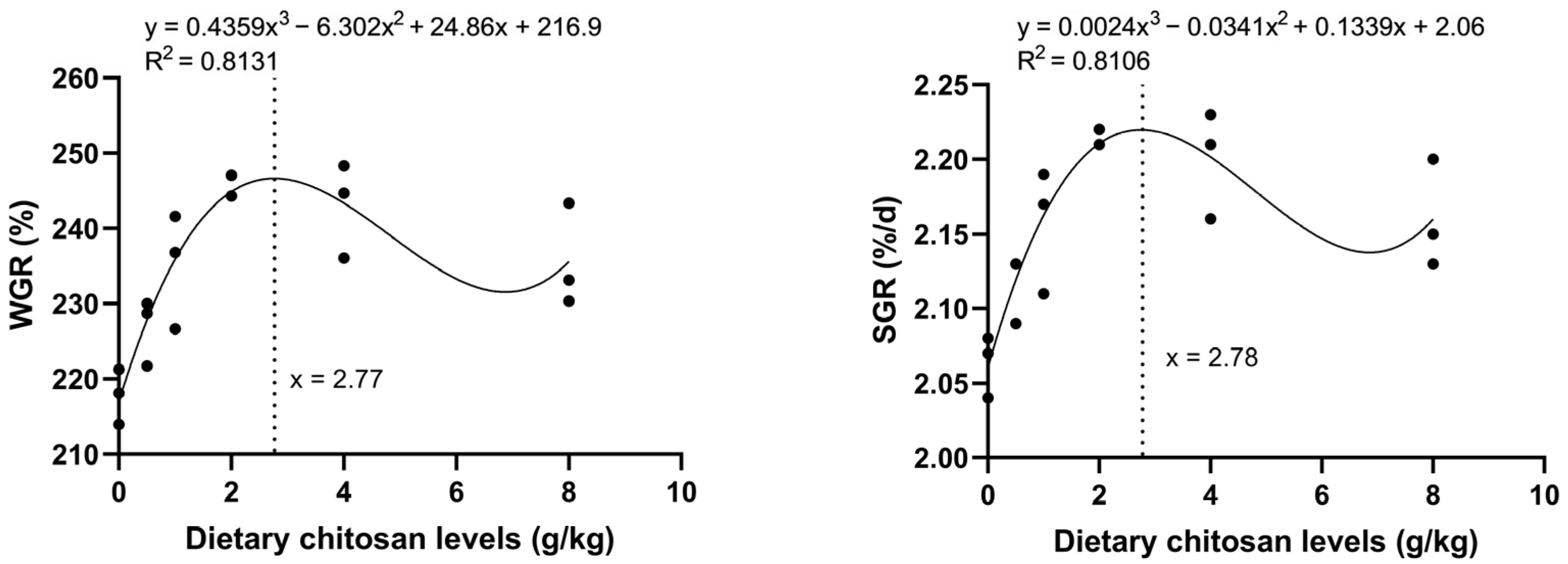
The growth-promoting effects of chitosan, primarily attributed to enhanced immune stimulation and improved intestinal health, have been established in various animal species. In this study, cubic regression analysis estimated that the dietary chitosan levels for optimal WGR and SGR of mud crab were 2.78 g/kg and 2.77 g/kg, respectively. Compared with the control group, the final body weight, weight gain rate, and specific growth rate in the SB, SC, SD, and SE groups were significantly increased. Among the chitosan-supplemented groups, MF was significantly elevated only in groups SC and SD. However, the low-chitosan (SA) group did not show any growth-promoting effects. The results showed that dietary chitosan supplementation at 1–8 g/kg effectively promoted the growth of mud crab. The optimal supplementation level was estimated to be approximately 2.77–2.78 g/kg. This outcome aligns with numerous previous studies. For example, tilapia supplemented with 0.4% chitosan had higher WGR and SGR [
20]. Chen et al. discovered that adding chitosan to diets significantly improved WGR in loaches, indicating that chitosan promotes loach growth [
24]. Further studies indicate that diets enriched with 4–8 g/kg of chitosan considerably enhanced FBW, SGR, and WGR in
Trachinotus ovatus [
19]. Comparable findings have also been observed with chitosan nanoparticles in Nile tilapia [
25]. It should be noted that the overall survival rate in this experiment was low. This was primarily attributed to the intraspecific cannibalism behavior of crabs during the molting period. Due to the limitations of the culture conditions, some soft-shell crabs lacked effective shelter and were easily attacked and killed by other crabs. However, the key point is that there was no significant difference in survival rate among the treatment groups. This indicates that the mortality was evenly distributed across all groups and did not introduce systematic bias into the inter-group comparison of the core indicators. Therefore, the effects of chitosan on mud crabs observed in this study are considered reliable.
In this study, dietary supplementation with an appropriate level of chitosan (1–4 g/kg) significantly increased the crude protein content in the whole body, muscle, and hepatopancreas of mud crabs, indicating that chitosan promotes protein deposition. A similar finding was reported by Li et al. [
21], who observed a significant increase in whole-body crude protein content in juvenile yellow catfish fed diets supplemented with 5–10 g/kg chitosan for eight weeks. The underlying mechanism may involve the regulation of amino acid metabolism and the reduction in transdeamination, leading to a protein-sparing effect that enhances protein deposition [
26]. As the central organ for lipid metabolism in crustaceans, the hepatopancreas is responsible for lipid digestion, synthesis, and storage, and is particularly sensitive to changes in dietary nutrients and additives [
27]. In the present study, dietary chitosan at 1 and 2 g/kg significantly increased hepatopancreatic crude lipid content, whereas 8 g/kg chitosan significantly decreased it. This result is consistent with the findings of Niu et al. [
28] in Pacific white shrimp, where low-dose chitosan supplementation increased crude lipid content and high-dose supplementation decreased it. Considering the concurrent increase in crude protein content, it is speculated that low to moderate doses of chitosan promote overall nutrient deposition, and the increase in lipid content may represent an energy reserve adjustment to support rapid growth. In addition, the antioxidant activity of chitosan may also contribute to lipid retention. Wang et al. [
29] demonstrated that chitosan reduces serum lipid peroxidation levels and minimizes lipid oxidative loss, thereby facilitating lipid accumulation in the body. When the chitosan dose exceeds a certain threshold, its role in binding dietary lipids in the intestine becomes predominant, resulting in reduced lipid absorption and deposition [
30]. In this study, the crude ash content in the whole body, muscle, and hepatopancreas reached its maximum in the SC group. Ash content reflects the overall level of mineral elements in the body, and its variation suggests that chitosan may influence the absorption and deposition of minerals.
Under normal physiological settings, cells continuously generate reactive oxygen species (ROS). However, when ROS levels generated by oxidative stress exceed a certain threshold, biomolecules become damaged [
31]. Consequently, organisms activate antioxidant defense systems to eliminate excess ROS, thereby reducing oxidative damage and preventing pathological changes [
32]. The evaluation of antioxidant capacity and related biomarkers (T-AOC, SOD, CAT, and MDA) effectively reflects the organisms oxidative stress status [
33]. The antioxidant system’s first line of defense is made up of natural antioxidant enzymes called SOD and CAT. Superoxide anion radicals are converted by SOD into hydrogen peroxide (H
2O
2), which is then further broken down by CAT into H
2O and O
2. This process determines whether ROS are effectively removed [
34]. When the body encounters harmful stimuli, excessive cellular ROS production causes lipid membrane peroxidation and the creation of MDA [
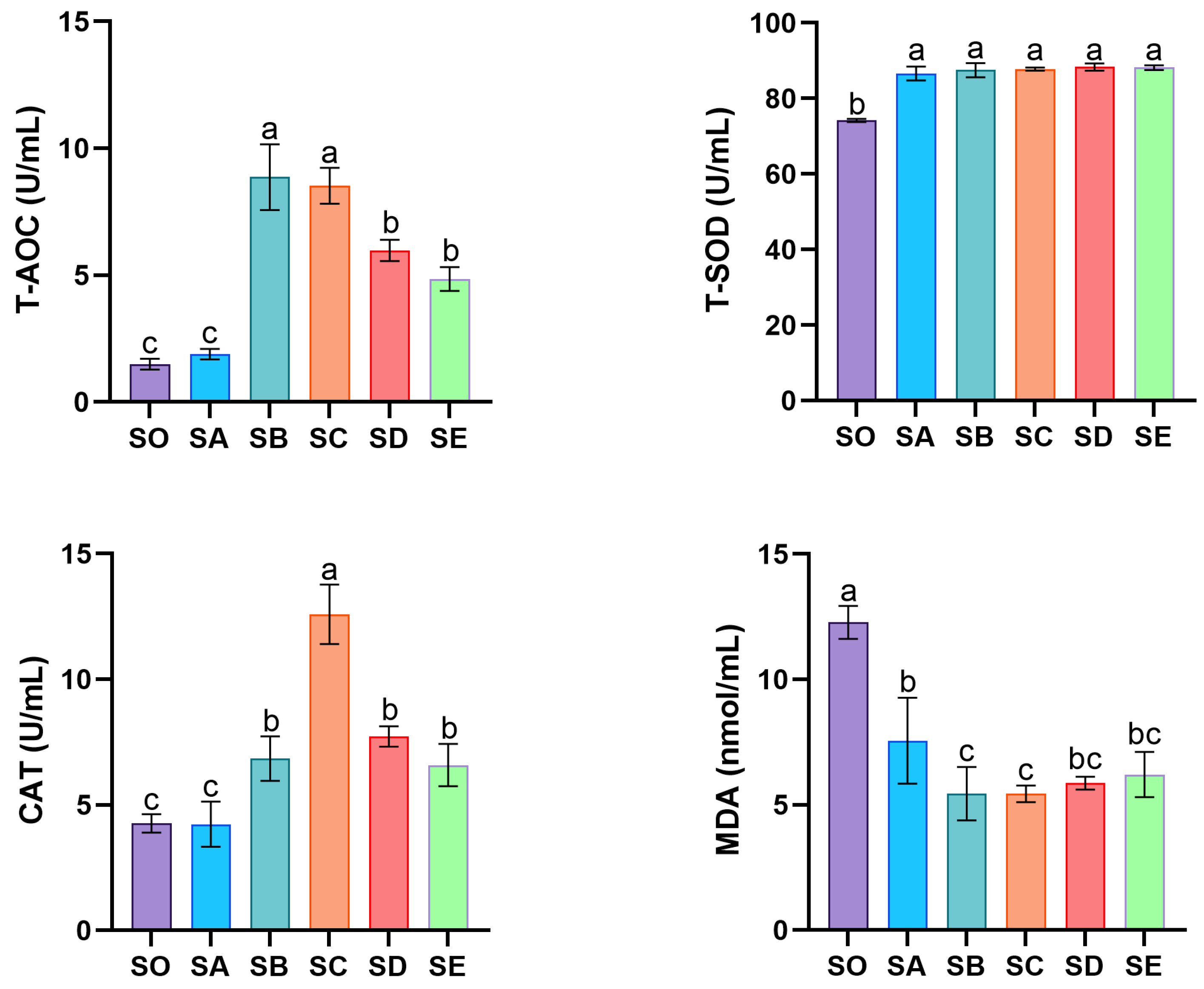
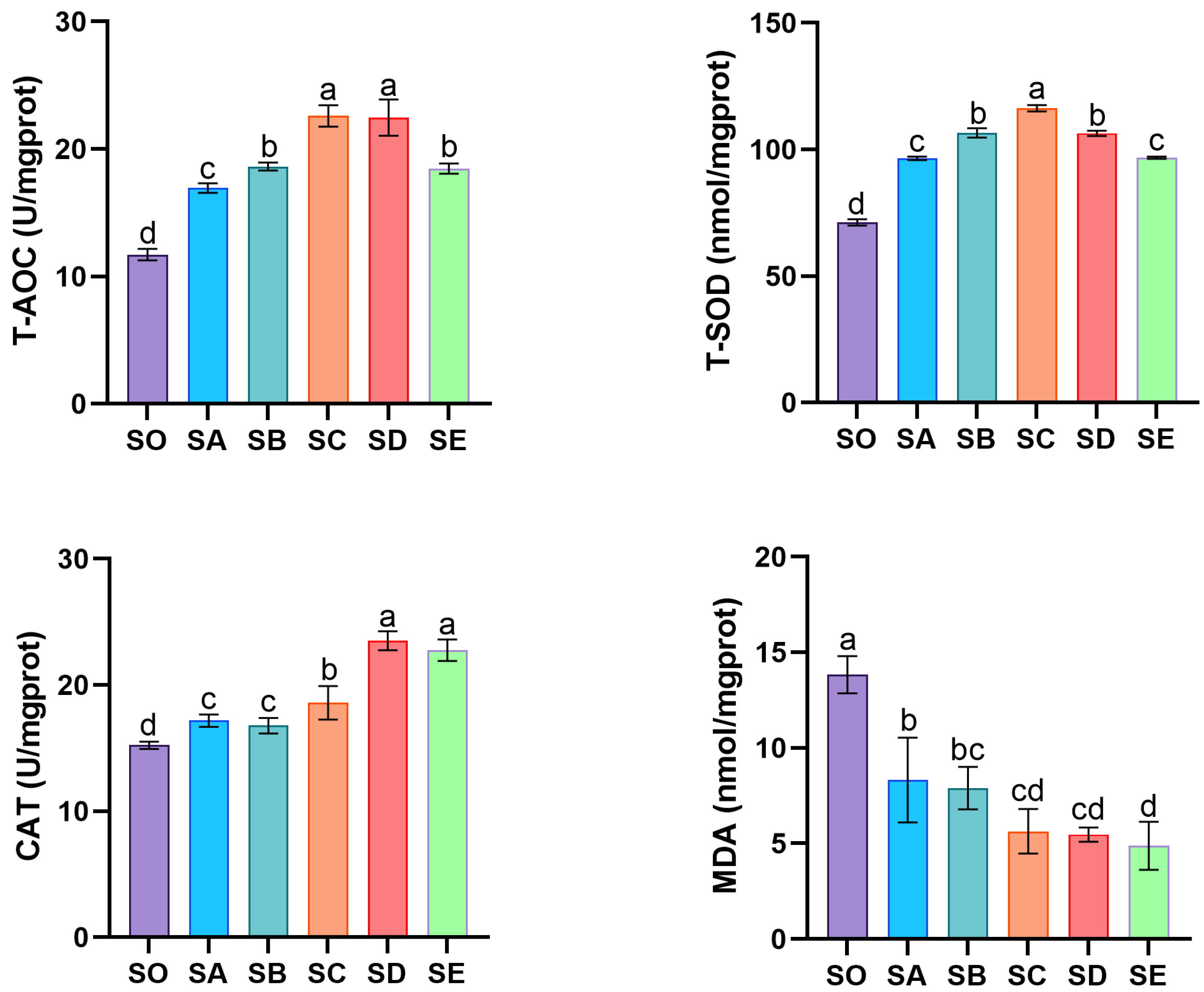
35]. MDA is a crucial marker for determining the extent of oxidative damage since it is a byproduct of lipid peroxidation. In this study, dietary chitosan notably increased T-AOC, T-SOD, and CAT activity in mud crab hemolymph and hepatopancreas while decreasing MDA content. These outcomes are compatible with the findings of Thilagar et al., who demonstrated that chitosan dramatically increased SOD, T-AOC, and CAT activities in tilapia following lead stress [
36]. Similarly, after being fed diets enriched with chitosan nanoparticles for 8 weeks, fish receiving 1 and 2 g/kg exhibited lower MDA levels and higher SOD, CAT, and GPx activity than those fed 0 and 0.5 g/kg [
37]. Therefore, chitosan’s antioxidant effect can be attributed to its capacity to eliminate ROS in cells by enhancing T-AOC, T-SOD, and CAT activities, thereby mitigating oxidative stress damage to the organism [
38].
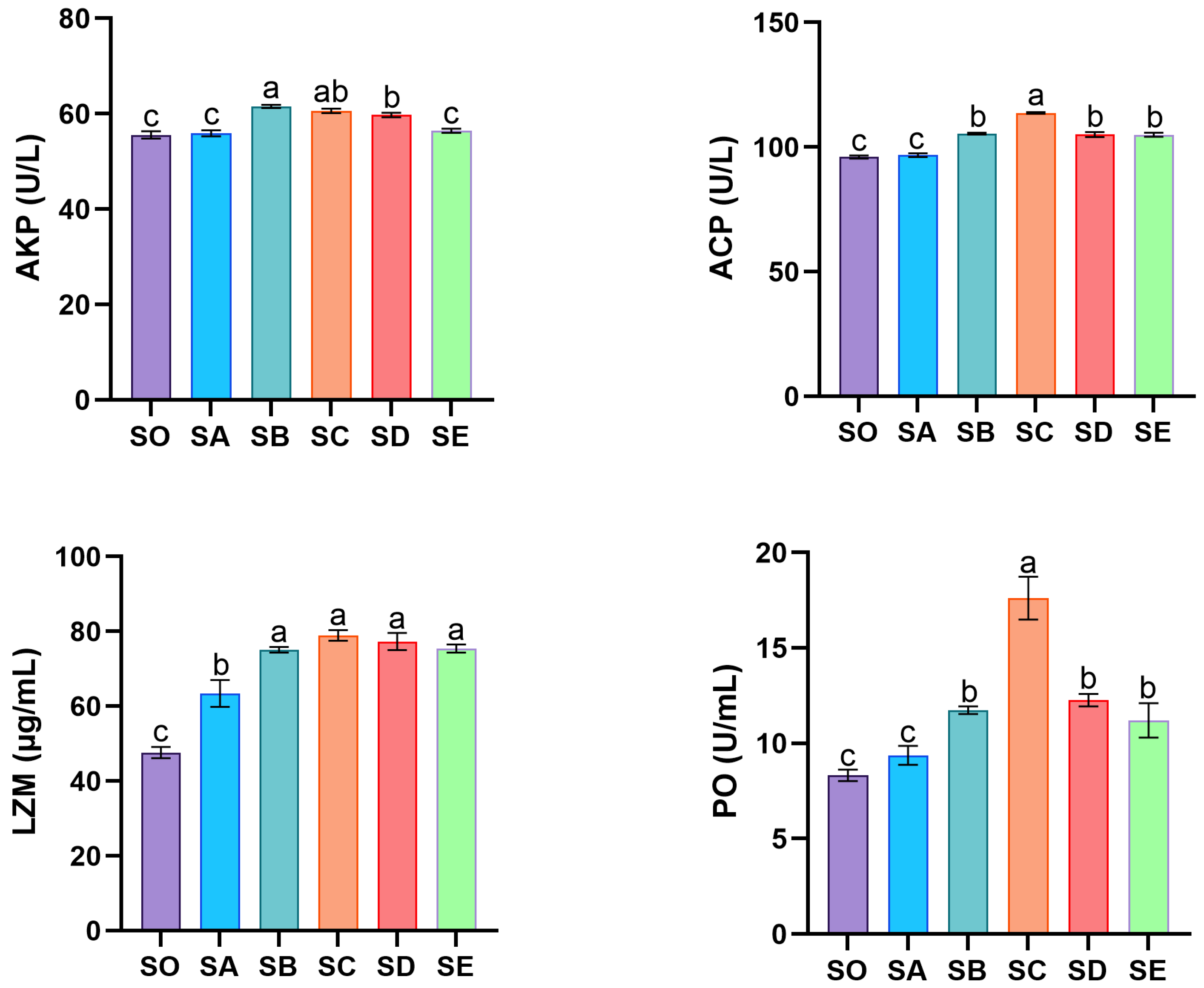
The immunity of crustaceans is mainly accomplished by some non-specific immune enzymes and other immune factors. LZM, a hydrolase discovered in aquatic animal serum and phagocytes, breaks down the β-1,4 glycosidic bond between N-acetylmuramic acid and N-acetylglucosamine in Gram-positive bacteria’s peptidoglycan cell wall. This process disrupts the cell wall, releases intracellular contents, and induces bacterial lysis [
39]. PO resists pathogen invasion, enhances hemocyte phagocytosis, and mediates bacterial agglutination and clearance processes [
40]. LZM and PO activities are considered key indicators of aquatic animal immune status. Studies indicate that feeding loach diets containing 1, 5, and 10 g/kg chitosan significantly increased both LZM and PO activities in contrast to the control group [
24]. Similar outcomes were found in the present study. The hemolymph of mud crabs exhibited a notable increase in LZM activity following the inclusion of chitosan in their diet, and the 2 g/kg group had a much greater PO activity than the other groups. Upon stimulation by foreign substances, lysosomal membranes rupture to release hydrolases. As typical hydrolases, ACP and AKP play a role in pollutant detoxification and removal processes [
41]. Their activities typically reflect an animal’s immune status [
42]. This study showed that ACP and AKP activities in mud crab hemolymph were considerably increased by diets enriched with 1, 2, and 4 g/kg of chitosan. In Nile tilapia, dietary chitosan alleviates cadmium stress by enhancing non-specific immunity through increased serum ACP, AKP, and lactate dehydrogenase (LDH) activity [
43]. These findings suggest that dietary chitosan supplementation may enhance aquatic animals’ resistance to pathogen infection.
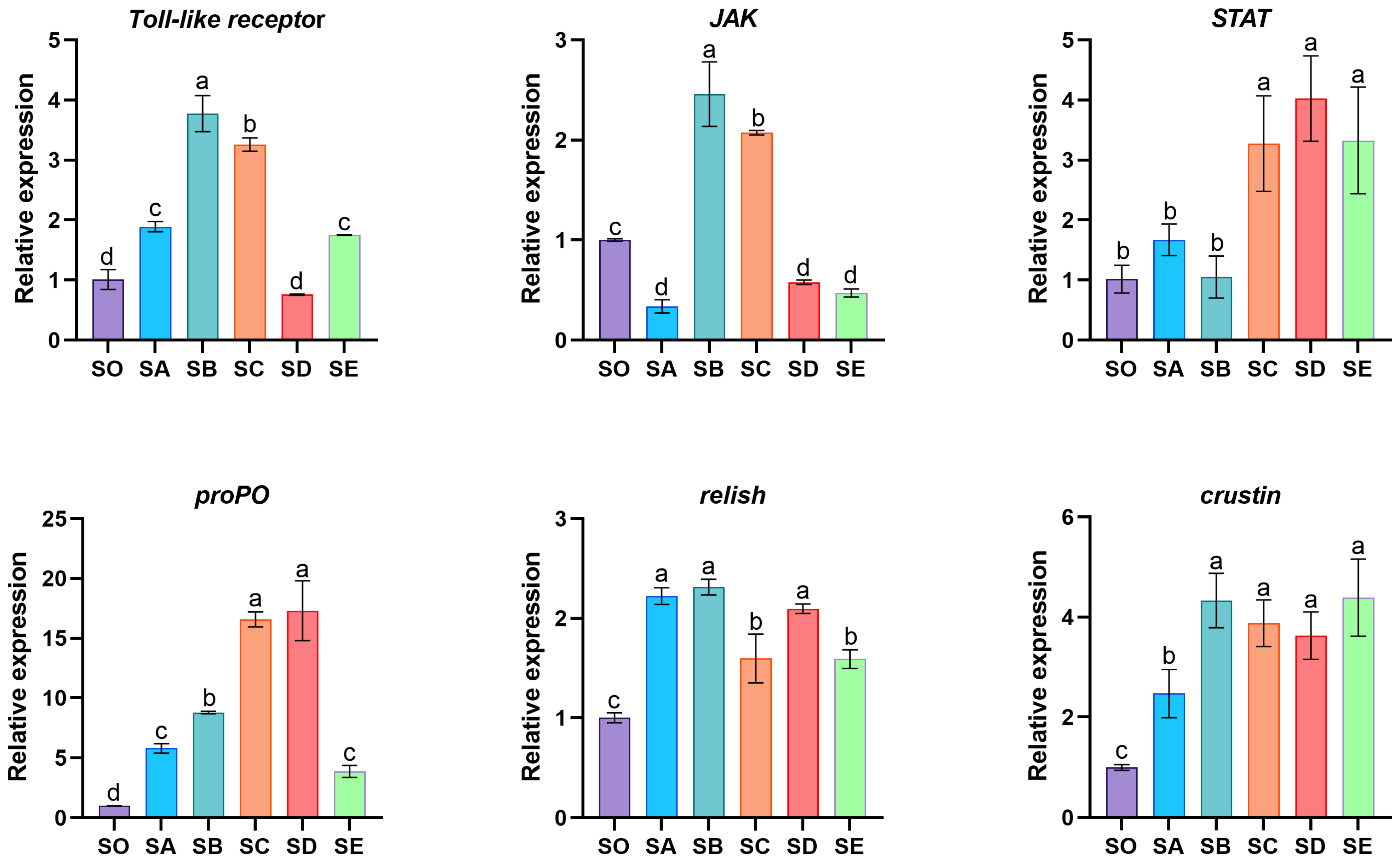
The Toll signaling pathway, the IMD signaling pathway, and the JAK/STAT signaling pathway are recognized as the primary signaling pathways regulating the innate immune response of crustaceans [
44]. Toll-like receptors (TLRs) are important membrane recognition receptors that activate NF-κB expression through interaction with MyD88 [
45]. This process subsequently modulates the production of key antimicrobial peptides, such as
crustin,
lysozyme, and anti-lipopolysaccharide factor (
ALF), thereby eliminating pathogens within crustaceans [
46]. Relish, an NF-κB homolog in invertebrates, participates in regulating inflammatory responses and apoptosis [
47]. JAK is a protein tyrosine kinase whose mediated phosphorylation activates signal transduction and transcription activator (STAT) proteins. STAT, as a transcription factor, initiates the expression of genes associated with antibacterial and antiviral immunity [
48,
49]. The proOP system is also a crucial component of crustacean innate immunity, forming an immune defense mechanism through a series of proteases [
50]. In this study, feeding mud crabs a diet containing 2 g/kg chitosan significantly upregulated the gene expression levels of
Toll-like receptor,
relish,
crustin,
JAK,
STAT, and
proPO in the hepatopancreas. Similarly, the addition of bamboo leaf flavonoids [
51], mannooligosaccharides [
52], and inulin [
53] significantly increased gene expression levels of
TLRs,
STAT,
proPO,
crustin, and
ALF in shrimp and crab. The results above indicate that dietary chitosan up-regulates the expression of several immune-related genes in the hepatopancreas of mud crabs. Based on the known functions of these genes in the Toll pathway, the JAK/STAT pathway, and the proPO system, it is suggested that chitosan may enhance immune function by influencing these immune pathways. However, it should be noted that this study only reveals a correlation between gene expression and health improvement. The direct causal mechanisms still require further investigation.
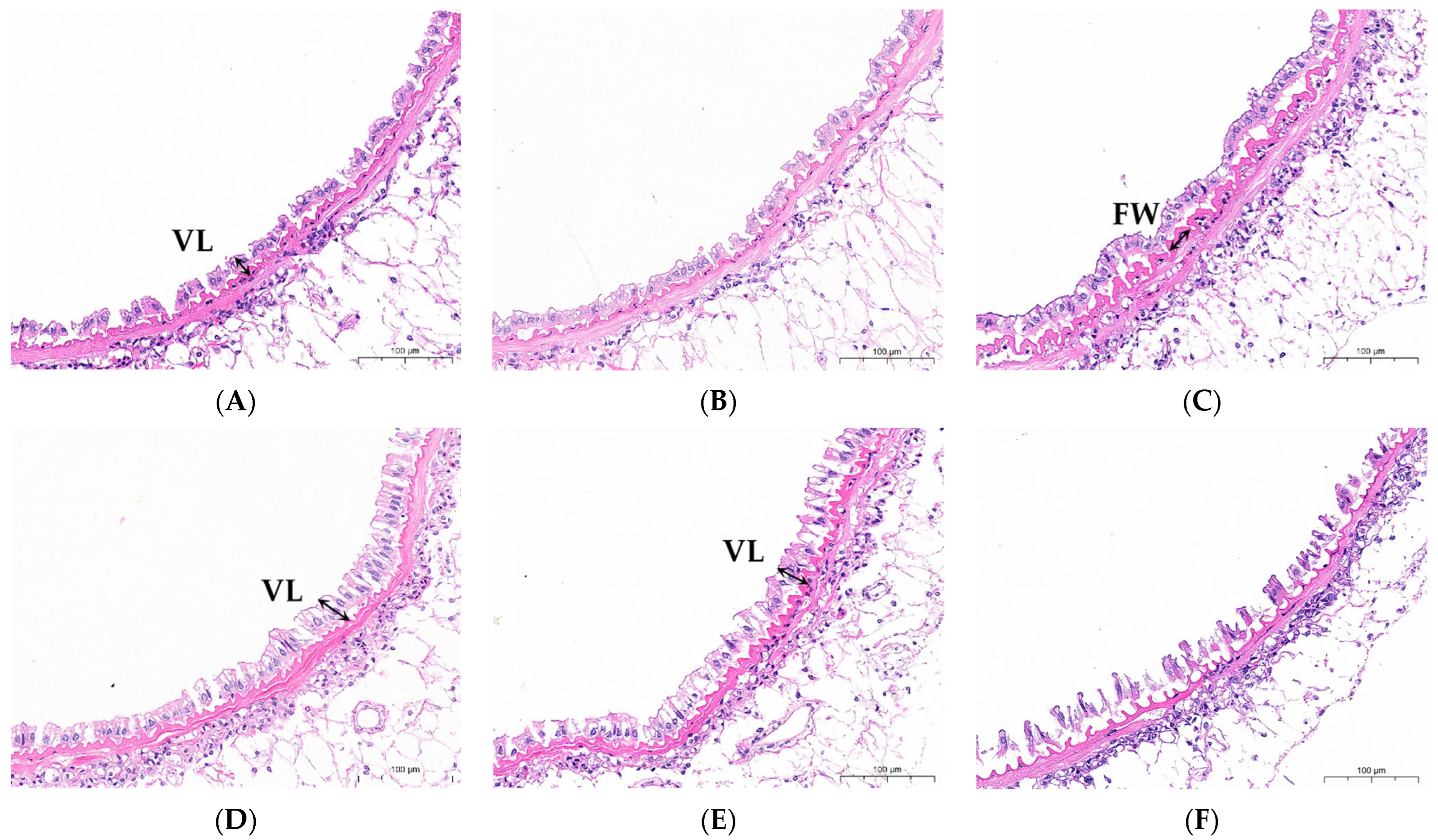
Animal digestion, absorption, and growth are all significantly impacted by the intestine, an essential organ for nutrition metabolism and absorption. Generally, taller, wider, and denser intestinal villi and folds signify higher efficiency of nutrient absorption [
54,
55]. The results of this investigation showed that the supplemental diet of 1–4 g/kg of chitosan increased the villus density, villus length and fold width in the intestine of mud crabs. Similar results have been published in related research. Zake et al. discovered that dietary supplementation of 1.5–6 g/kg chitosan increased both villus height and width in juvenile stellate sturgeon (
Acipenser stellatus) [
56]. Similarly, Salam et al. [
57] and Kamali Najafabad et al. [
58] found that supplementation with 1 g/kg chitosan significantly increased intestinal villus length in juvenile
Barbonymus gonionotus and caspian kutum (
Rutilus frisii kutum Kamenskii, 1901), respectively. These studies indicate that dietary supplementation of appropriate levels of chitosan can improve intestinal morphology. Chitosan can enhance nutrient absorption by increasing the intestinal absorptive surface area via enlarged villus dimensions (height and width) and increased density.
Intestinal health significantly influences animal growth. Maintaining a stable balance of intestinal microorganisms assists the host in resisting pathogenic infections and preventing disease [
59]. The Ace, Chao1, Shannon, and Simpson indices in this study did not significantly differ between the groups according to alpha diversity analysis. The results indicate that dietary chitosan did not alter the species richness or diversity of the intestinal microbial community in mud crabs. This suggests that chitosan did not cause major changes in the number of species. It also did not disrupt the overall ecological structure of the microbial community [
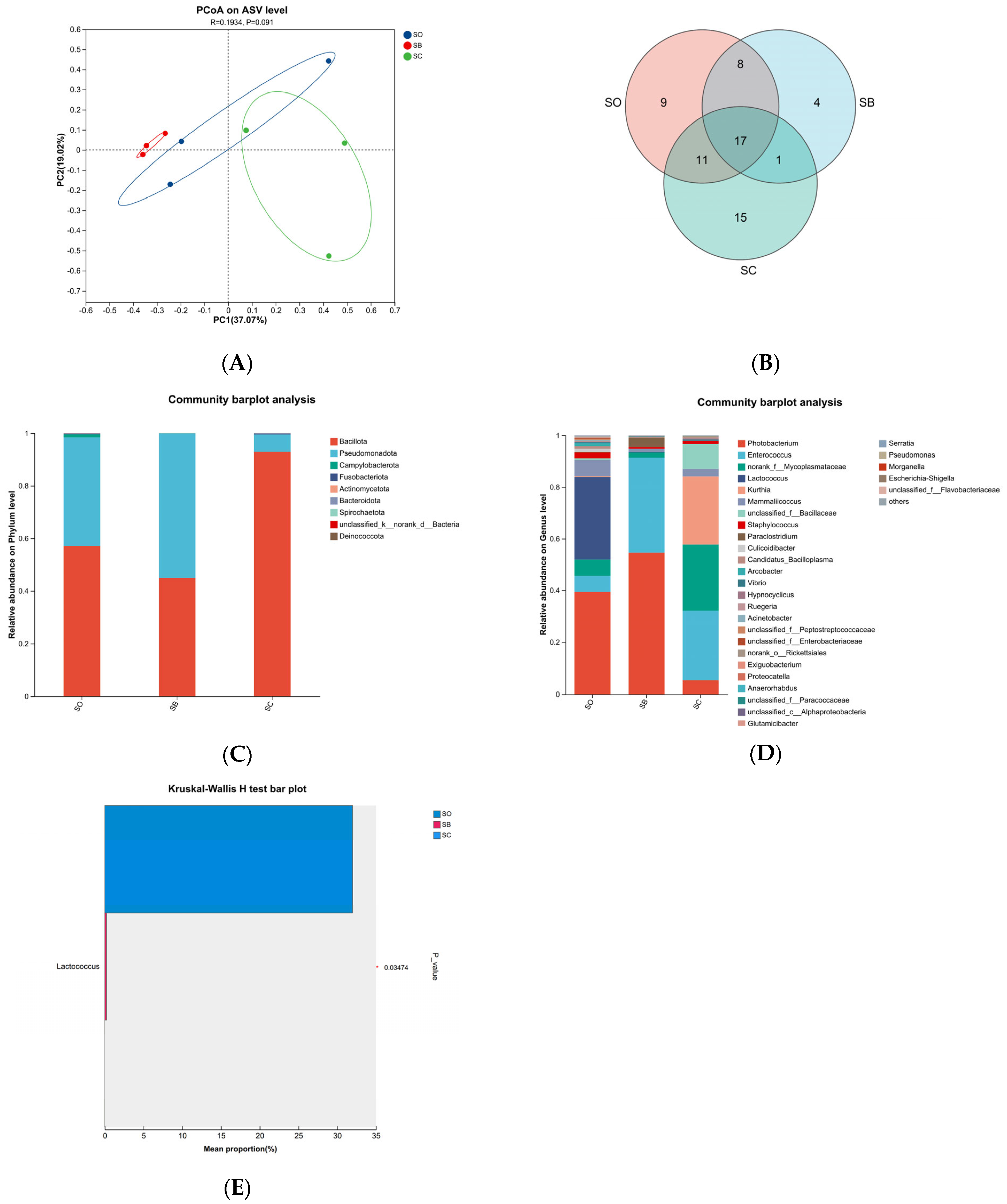
60]. PERMANOVA analysis showed that the grouping factor did not have a statistically significant effect on microbial community structure. However, this factor explained 32.19% of the community variation, indicating a potentially large effect size. This relatively high explanation suggests that chitosan may have some potential impact on the intestinal microbial community.
Venn diagram analysis showed that three groups shared 17 ASVs. These formed a relatively stable core microbiota. The number of unique ASVs varied among treatments. This indicated that chitosan addition altered the composition of the intestinal microbiota. Among all groups, the SC group (2.0 g/kg) had the highest number of unique ASVs. This suggested that this dose had the most significant regulatory effect on the intestinal microbiota.
Zhang proposed that the Proteobacteria, Firmicutes and Mollicutes constitute the dominant shared microbial communities in the intestines of decapods such as shrimp and crabs [
61]. Hong et al. also identified the phyla Firmicutes, Proteobacteria, Bacteroidetes, and Actinobacteria as potential dominant phyla in crustacean gut microbiota [
62]. Thus, Firmicutes, Proteobacteria, Bacteroidetes, and Actinobacteria may be the phylum-level dominant gut microbiota in shrimp and crabs. This study suggests that the dominating phyla in mud crabs’ intestinal microbiota are primarily Bacillota (formerly Firmicutes) and Pseudomonadota (formerly Proteobacteria), consistent with previous research findings. Pseudomonadota includes numerous opportunistic pathogens. Their overproliferation can disrupt gut microbial community structure, leading to intestinal diseases [
63]. Bacillota contains denitrifying bacteria, including various probiotics like
Enterococcus,
Lactobacillus, and
Bacillus. These bacteria synthesize diverse digestive enzymes to facilitate food digestion, stimulate innate immune responses to secrete antimicrobial peptides, and strengthen the intestinal barrier to prevent pathogen adhesion, ultimately achieving the goal of preventing intestinal infections [
64]. Dietary treatment with 2 g/kg chitosan significantly increased Bacillota relative abundance while reducing Pseudomonadota relative abundance in comparison with the control group. These findings imply that supplementing feed with 2 g/kg chitosan may enhance intestinal immunity in mud crabs and reduce the incidence of intestinal diseases. Similar studies have shown that adding 500, 1000, or 2000 mg/kg of Astragalus polysaccharides to feed increases the relative abundance of the Firmicutes in Chinese mitten crabs [
65], while supplementing feed with 320 mg/kg of Guava leaves extracts reduces the relative abundance of the Proteobacteria in mud crabs [
66].
Photobacterium constitute the predominant genus in the control group. Belonging to the Pseudomonadota, they are potential pathogenic microorganisms found on the body surface and in the intestines of aquatic animals.
Photobacterium damselae subsp.
damselae is the primary pathogenic species within the genus, capable of inducing photobacteriosis in mud crabs, which negatively affects crab growth [
67]. In the group treated with 2 g/kg chitosan, the relative abundance of
Photobacterium was considerably lower compared to the control group. This suggests that 2 g/kg chitosan may enhance the host’s resistance against pathogenic bacteria. The genera
Lactococcus and
Enterococcus belong to the phylum Bacillota. The genus
Lactococcus exhibits functional diversity across different hosts. In the intestines of
Macrobrachium rosenbergii,
Lactococcus exhibited the highest abundance, with
Lactococcus garvieae playing a crucial role as a dominant species in shrimp growth and development, but most species within the
Lactococcus are pathogenic to fish [
68].
Enterococcus has been reported as a probiotic. Specifically,
Enterococcus faecalis has been shown to enhance nonspecific immunity in
Litopenaeus vannamei, promote nutrient digestion and absorption, and improve intestinal health [
69]. In this investigation, meals supplemented with 1 and 2 g/kg chitosan had an increased relative abundance of
Enterococcus than the control group. This suggests chitosan may improve intestinal function by increasing
Enterococcus abundance, thereby potentially benefiting mud crab growth. Meanwhile, the relative abundance of
Lactococcus showed a decreasing trend with increasing chitosan supplementation. These results indicate that dietary chitosan can optimize the intestinal microbial community structure of mud crabs. While maintaining the overall ecological balance of the gut microbiota, chitosan suppressed potentially harmful bacteria and enriched potentially beneficial bacteria, thereby improving the microbial community structure.