Article

Transcriptomics Analysis of Testis Development in Thamnaconus septentrionalis Responding to a Rise in Temperature

1
School of Ocean, Yantai University, Yantai 264005, China
2
State Key Laboratory of Mariculture Biobreeding and Sustainable Goods, Yellow Sea Fisheries Research Institute, Chinese Academy of Fishery Sciences, Qingdao 266071, China
3
East China Sea Fisheries Research Institute, Chinese Academy of Fishery Sciences, Shanghai 200090, China
4
Laboratory of Marine Ecology and Environmental Sciences, Institute of Oceanology, Chinese Academy of Sciences, Qingdao 266071, China
*
Author to whom correspondence should be addressed.
Animals 2026, 16(2), 327; https://doi.org/10.3390/ani16020327
Submission received: 17 December 2025 / Revised: 19 January 2026 / Accepted: 20 January 2026 / Published: 21 January 2026
(This article belongs to the Section Aquatic Animals)

Simple Summary

Fish are rich in species and provide an important food supply, especially high-quality protein sources, for billions of people worldwide. In recent years, aquaculture production of fish has exceeded wild catch production, highlighting the importance of the fish aquaculture industry. As is well-known, regulating the reproductive processes of economically valuable fish is a critical step in artificial breeding. The gonadal development of many fish species, including the greenfin horse-faced filefish in this study, could be influenced by temperature. Thus, the present study first investigated the potential molecular mechanism of Thamnaconus septentrionalis testis development induced by temperature and found that the rising temperature enhanced its testis development. The major findings will provide a valuable and important theoretical and technical basis for the artificial breeding and fishery resources conservation of T. septentrionalis in the future.

Abstract

Thamnaconus septentrionalis is an emerging commercially important aquaculture species in China, distributed extensively in the Indo-West Pacific Ocean. Recently, because of the seriously declining population and considerable economic potential of this aquaculture fish, increasing attention has been paid to the conservation and development of T. septentrionalis. Artificial fish breeding is essential and has become progressively implemented on local farms in China, which benefits the protection of T. septentrionalis resources and facilitates the development of its fishery industry. Previous studies have demonstrated that temperature could significantly influence ovary development in T. septentrionalis. However, the potential molecular mechanisms underlying the influence of temperature on testis development in T. septentrionalis have been scarcely studied. Thus, this study comprehensively explores the effects of temperature on testis development in T. septentrionalis using histological observation and transcriptomic techniques. Histological and transmission electron microscopy analyses indicated that T. septentrionalis testes, undergoing a rise in temperature, developed from phase III to IV. Transcriptomic analysis identified 315 differentially expressed genes, including 200 upregulated and 115 downregulated genes. Moreover, rising temperatures may enhance testis development by regulating steroid hormone biosynthesis, cellular senescence, and nucleotide metabolism. The upregulation of four genes (hsd11b2, cyp11b, cyp11a, and hsd17b3) involved in the steroid hormone biosynthesis process may significantly contribute to the increased level of testosterone and 11-keto-testosterone. This study is the first to elucidate the potential molecular mechanism involved in T. septentrionalis testis development induced by temperature, offering valuable and novel insights for its artificial breeding and fishery resources conservation.

1. Introduction

Thamnaconus septentrionalis is extensively distributed in the coastal lines around the Chinese, Japanese, and Korean Peninsula regions. It is a significant commercial fish species with characteristic spine-like first dorsal fins and blue-green fins [1]. Since the 1980s, overfishing and ruining the environment have resulted in a sharp decrease in T. septentrionalis populations, which are insufficient to meet market requirements [2]. In 2023, the marine catch production of filefish reached 122,258 tons, as reported in the China Fisheries Statistical Yearbook [3]. Artificial breeding is essential for developing the T. septentrionalis fishery industry and meeting market needs, with seedling generation expanding rapidly alongside aquaculture development.
During T. septentrionalis breeding, we observed that the ovaries and testes of the female and male individuals were maintained at stages II and III, respectively, without appropriate temperature stimulation. In the natural and cultural environment, from May to June along the Shandong coastal waters, the gonads of parent fish can initiate further development with rising temperatures. The fry cultivated under normal temperatures can hardly be marketed in the same year. In November–December, we increased the temperature of culturing parent fish to accelerate gonadal development as well as maturation of T. septentrionalis during the artificial breeding period [4]. The molecular mechanism involved in promoting gonadal development and maturation in T. septentrionalis with increasing temperature remains unclear.
In teleosts, gonadal development is a crucial factor for fish reproduction and population sustainability, which is influenced by numerous environmental factors, with water temperature playing an essential role in this process [5,6]. Research has revealed that suitable higher temperatures can contribute to gonadal development [7,8]. However, most research mainly focused on the relationship between ovary development and temperature [9,10,11,12], and recently, the transcriptomic technique has been employed for systematic investigation in the regulatory mechanisms of ovary development in the common carp [13]. In addition, a limited number of previous studies indicated that the testis developmental process of Atlantic salmon and small yellow croaker could be influenced by temperature [14,15]. However, the molecular mechanism of promoting testis development and maturation in the economically important fish T. septentrionalis by rising temperatures remains unexplored. Thus, in this study, we applied the transcriptomics technique to systematically elucidate the molecular mechanisms of testis development in T. septentrionalis induced by temperature rise. Moreover, histological and ultrastructural observations of the T. septentrionalis testis were performed. The concentrations of three important steroid hormones (17 β-estradiol; E2, 11-keto-testosterone; 11-KT, and testosterone; T) were detected in the T. septentrionalis plasma in this study.

2. Materials and Methods

2.1. Ethical Statement

All of the experiment procedures related to animals received approval from the Animal Care and Use Committee of Yantai University, China (Permit Number 20170605).

2.2. Experimental Animals, Design, and Sampling

A total of 12 male Thamnaconus septentrionalis (3 years old) were acquired from an aquatic hatchery farm in Yantai City, China. During reproductive control by temperature, testes of T. septentrionalis (n = 6 per group) were obtained before water warming and set as the low temperature (LT) group treated with 13.2 °C, whereas the other six individuals collected after water warming were set as the high temperature (HT) group treated with 14.2 °C. The information on experiment design in the present study is shown in Figure S1. Before sampling, the experimental fish were not fed for one day and were treated with MS-222 (0.05%). The indices of fish body weight, full-length, and gonad weight were carefully calculated and recorded (Table 1). Blood samples were extracted from T. septentrionalis with a heparinized syringe. Fish blood was extracted from the caudal vein of 12 individuals (n = 6 for each group) and carefully centrifuged at 800× g for 15 min to obtain the plasma for further measurement of hormones. Testes tissues were sampled for the subsequent molecular and cellular analyses. For the testis sample, about 0.5 cm3 of testis was kept in the Bouin’s solution for histopathology, and 0.5 cm3 of testis tissue was preserved in the solution (glutaraldehyde 2.5%) for transmission electron microscope (TEM) analysis. The other testes tissues of T. septentrionalis (n = 3/group for transcriptomic analysis) were collected to be preserved at −80 °C after quick freezing in liquid nitrogen until further processing.

2.3. Assays of the Gonadal Somatic Index and Plasma Hormones Analysis

The gonadal somatic index (GSI) of each sampled fish was carefully measured and recorded, according to the previous study [16]. The concentration levels of the three steroid hormones (E2, T, and 11-KT) were examined by the commercial ELISA kit (Mlbio, Shanghai, China).

2.4. Histopathology of T. septentrionalis Testes

Thamnaconus septentrionalis testes (n = 6 for each group) were dissected for further histological assay. After being excised and fixed in 4% formaldehyde for 24–48 h, the testes tissues were kept in 70% ethanol. All tissue samples were subjected to paraffin histology with the hematoxylin and eosin (H&E) staining method [17]. The slides were observed and photographed carefully using an Olympus BX53 microscope (200× and 400×) (Olympus Corporation, Tokyo, Japan).

2.5. Ultrastructural Observation of T. septentrionalis Testes

A 0.1 M sodium cacodylate buffer (pH 7.4) enriched with 2.5% glutaraldehyde was utilized to fix the testis tissues at 4 °C for 24 h, then three washes were conducted (5 min each) with the same buffer, and a 1.5 h post-fixation was conducted in 1% osmium tetroxide. Samples underwent dehydration in a graded acetone series, embedding in Epon 812, sectioning with a microtome, staining with uranyl acetate and lead citrate, and a HITACHI HT7800 electron microscope (Hitachi High-Tech Corporation, Tokyo, Japan) was utilized for examination.

2.6. Total RNA Extraction, Library Construction, Transcriptomics Analysis

Beijing Novogene Technology Co., Ltd. (Beijing, China) was employed to conduct the total RNA extraction of the collected T. septentrionalis testes tissues (n = 3 for each group), library preparation, and subsequent transcriptome sequencing and bioinformatics analyses. The bioinformatics analysis was conducted according to the previous study [18].

2.7. qRT-PCR Validation of Representative DEGs

From the transcriptome sequencing data, we chose 16 DEGs related to testis development to detect their gene expressions by qRT-PCR analysis to further validate the reliability of transcriptomic data. The Gene ID, amplicon size, primer efficiency, and annealing temperature of the 16 DEGs are presented in Table S1. Total RNA isolation was conducted from the same testis samples via TRIzol reagent and exposed to RNase-free DNase I (TaKaRa, Japan) to eliminate genomic DNA. The PrimeScript™ RT reagent Kit (TaKaRa, Japan) was utilized to conduct the cDNA synthesis. The qRT-PCR reaction using the primer concentration of 10 μM was conducted according to Li et al. [19]. The qRT-PCR efficiency was assessed from the given slope in Rotor-gene Real-Time PCR System Manager software (version 2.3.1) by a 10-fold diluted cDNA sample series with six dilution points [19]. Efficiency (E) was determined by the equation E = 10 (−1/slope) [20]. qRT-PCR was carried out in triplicate and used the 2−∆∆CT relative quantification method to quantify the gene expression levels [21]. Transcript level normalization to the geometric mean of 3 reference genes (elongation factor 1-α, GAPDH, and β-actin) was conducted according to the MIQE guidelines [22] to guarantee the accuracy and reliability of the gene expression levels. Primers (Table S1) were designed using qPrimerDB v2.0 [23]. Data are reported as mean ± standard deviation (SD), and the independent samples t-test was utilized to conduct statistical analyses in GraphPad Prism 8 (USA), with significance set at p < 0.05.

3. Results

3.1. Physiological Indexes of the Experimental Male T. septentrionalis

No significance was detected in the total length, testis weight, or body weight between the LT and HT groups. However, the GSI was found to be increased significantly in the HT group (1.71-fold, p < 0.05) compared to the LT group (Table 1).

3.2. Histology and TEM Assays of T. septentrionalis Testis

Histological observations indicated that LT testes were enriched with a significant number of the primary spermatocytes (Ps), spermatids (St), and secondary spermatocytes (Ss), indicating that LT testes were at stage III. The Ss were observed to be comparatively smaller than the Ps. Non-significant changes were found in the Sertoli cell (Se) between the LT and HT groups. Then, as the temperature increased, the testes started to develop in the presence of a limited quantity of spermatids (St) and spermatozoa (S) (Figure 1).
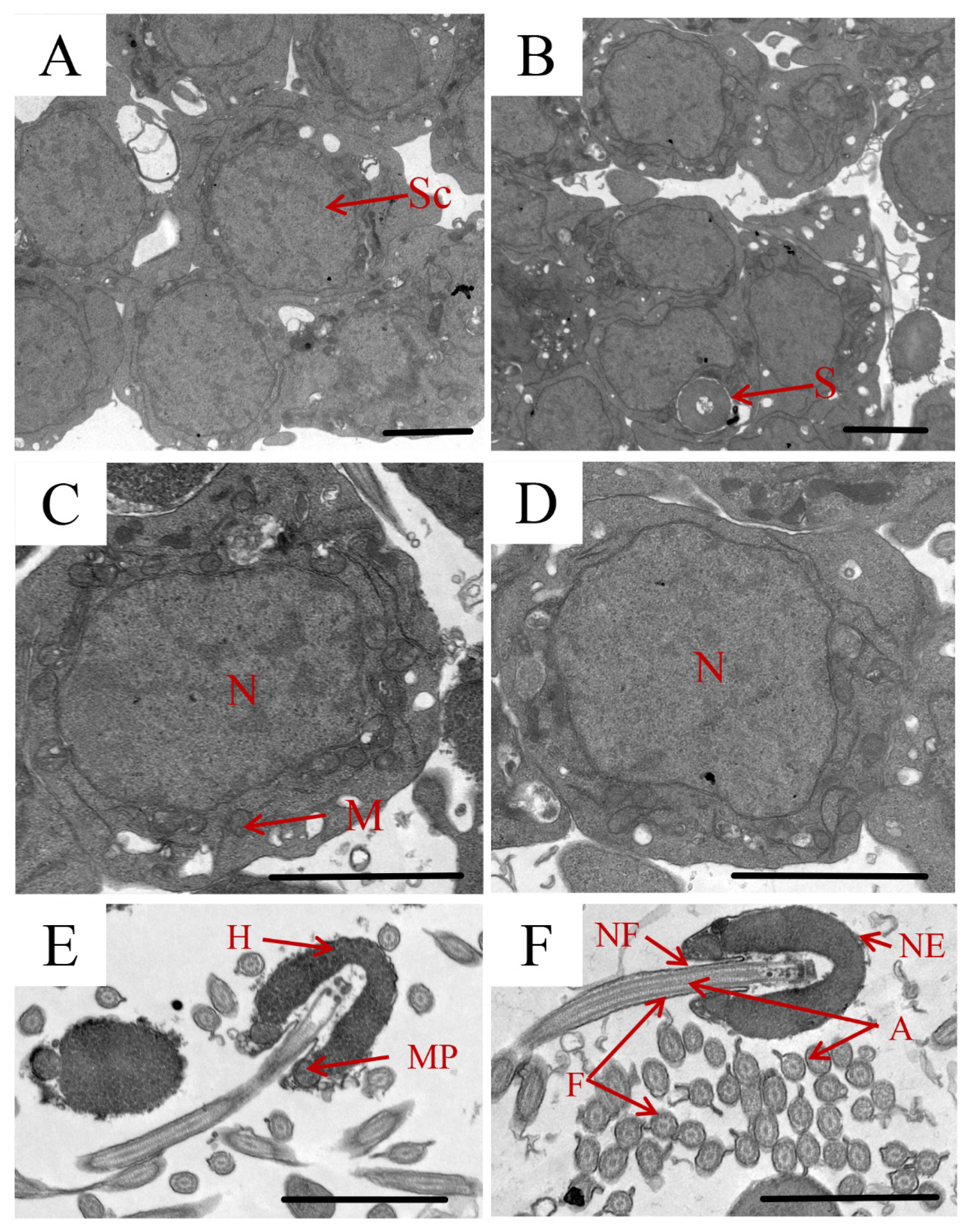
By the TEM analysis, the only spermatocytes of T. septentrionalis were found in the testes of the LT group (Figure 2A), while the presence of sperm was observed obviously in the testes of the HT group (Figure 2B), which was consistent with the histological findings. Spermatocytes exhibited oval-shaped nuclei with regular outlines, and the size of the nuclei was ~3.5 μm in diameter. And certain mitochondria were distributed in the cytoplasm around the nuclei (Figure 2C,D). In addition, the nucleus in the LT group (Figure 2C) seemed to be a little stretched and more condensed than that in the HT group (Figure 2D). The sperm structure consisted of three dominant parts, including a head without acrosomes, a mid-piece, and a single flagellum. The flagellum axoneme comprised microtubule configurations in a ‘9 + 2’ microtubule pattern (Figure 2E,F). In addition, the cellular structure of T. septentrionalis sperm was found to be better developed in the HT group (Figure 2F) than in the LT group (Figure 2E).

3.3. E2, T, and 11-KT Levels of T. septentrionalis Testes in Response to Temperature Rise

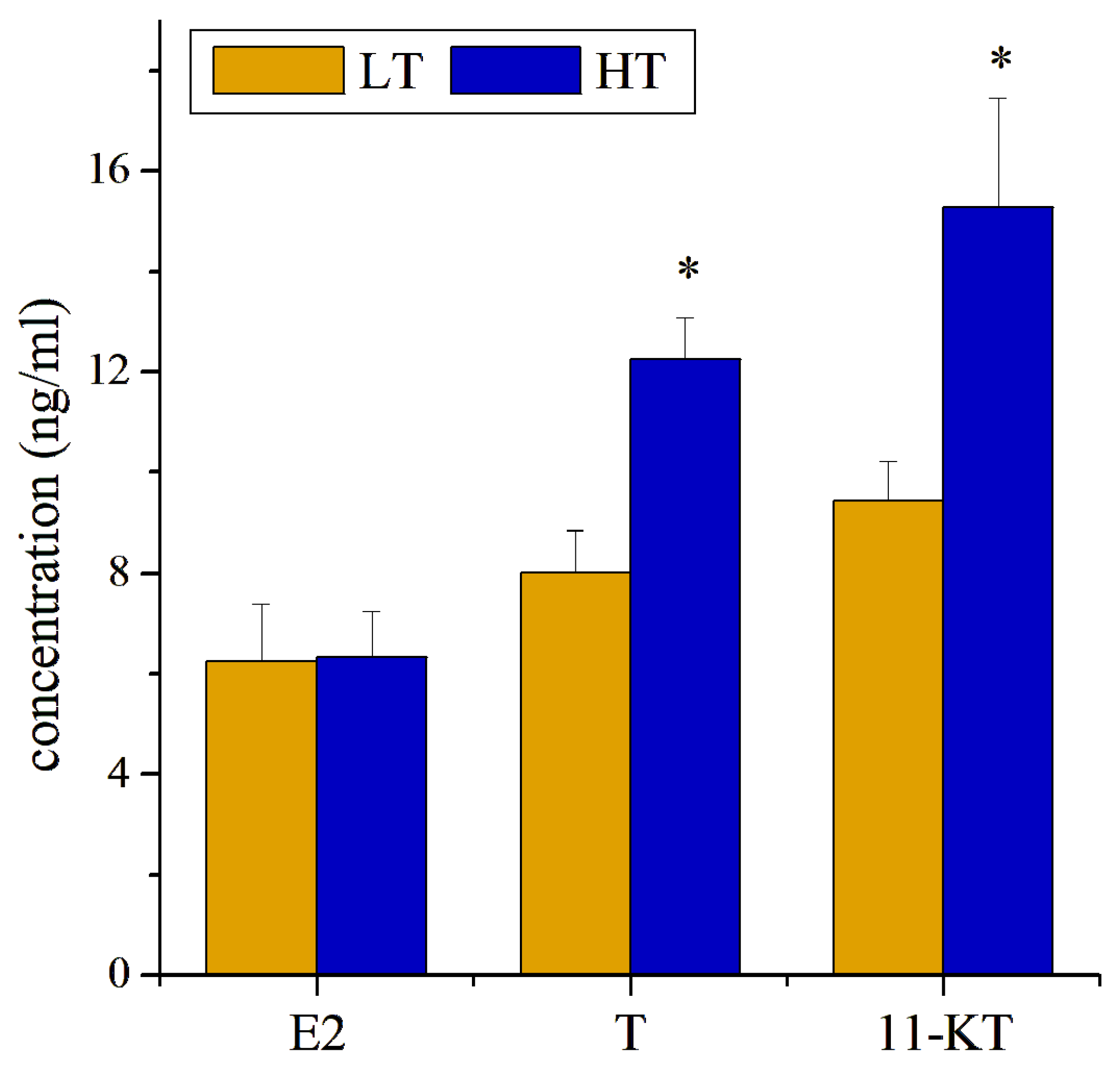
The serum levels of E2, T, and 11-KT in T. septentrionalis were measured and are shown in Figure 3. In comparison with the LT group, the concentration levels of T (1.52-fold change, p < 0.05) and 11-KT (1.62-fold change, p < 0.05) were elevated with significance in the fish plasma in the HT group, whereas that of E2 exhibited no significant difference (Figure 3).

3.4. Transcriptome Profiles of T. septentrionalis Testes Responding to Temperature

Transcriptomic analysis of T. septentrionalis testes yielded 40.95 Gb of raw bases corresponding to the LT (21.0 Gb) and HT (19.95 Gb) groups, with 39.39 Gb clean bases obtained in the LT (20.15 Gb) and HT (19.24 Gb) groups after eliminating low-quality and junction reads. In the LT and HT groups, the average GC contents were 52.17% and 52.34%, average Q30 values 91.09% and 91.02%, and average Q20 values 96.37% and 96.34%, respectively. Clean reads aligned to the genome of T. septentrionalis with mean rates of 78.14% (LT) and 78.27% (HT), confirming the high quality and reliability of the sequencing data (Table S2).
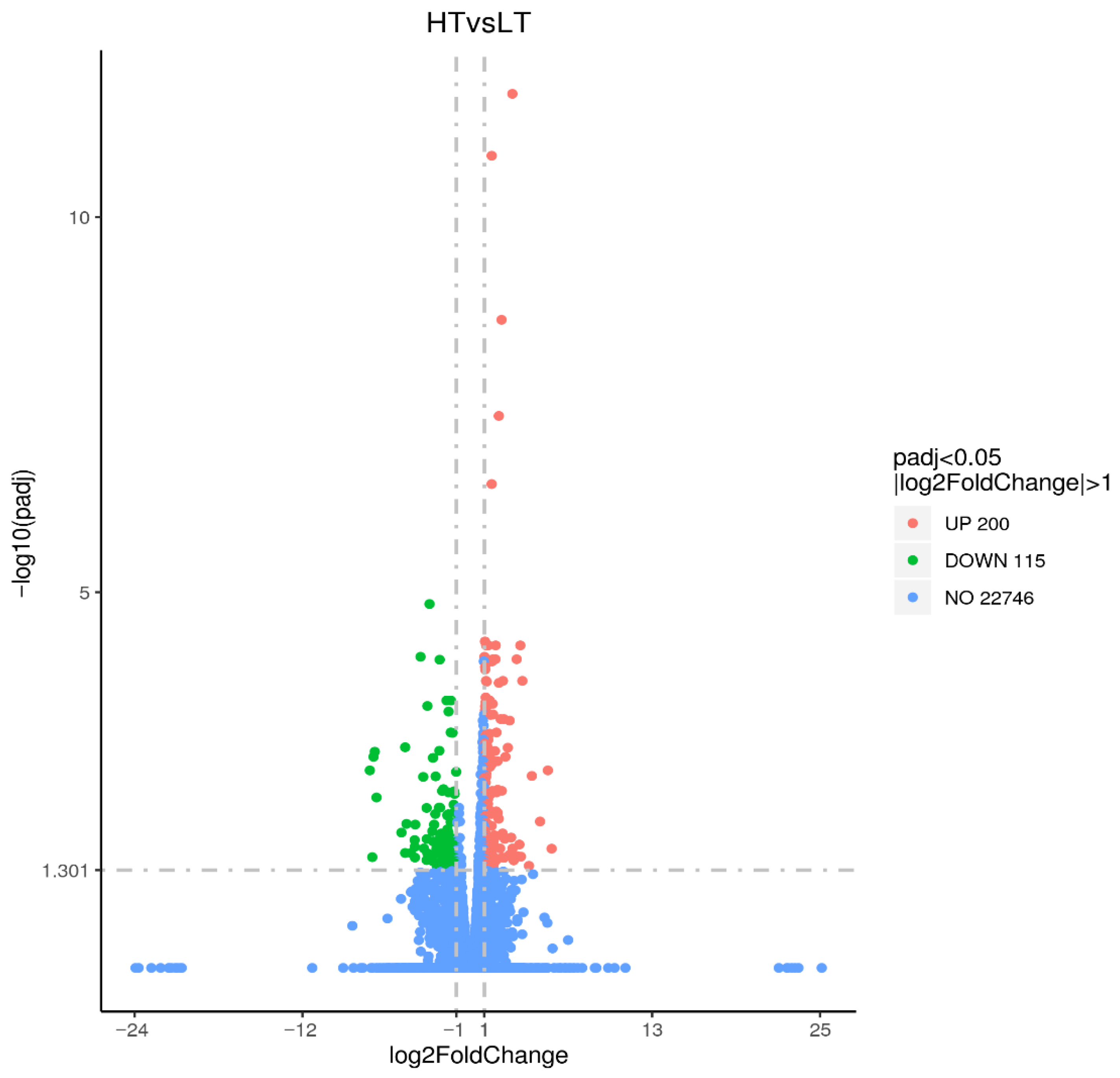
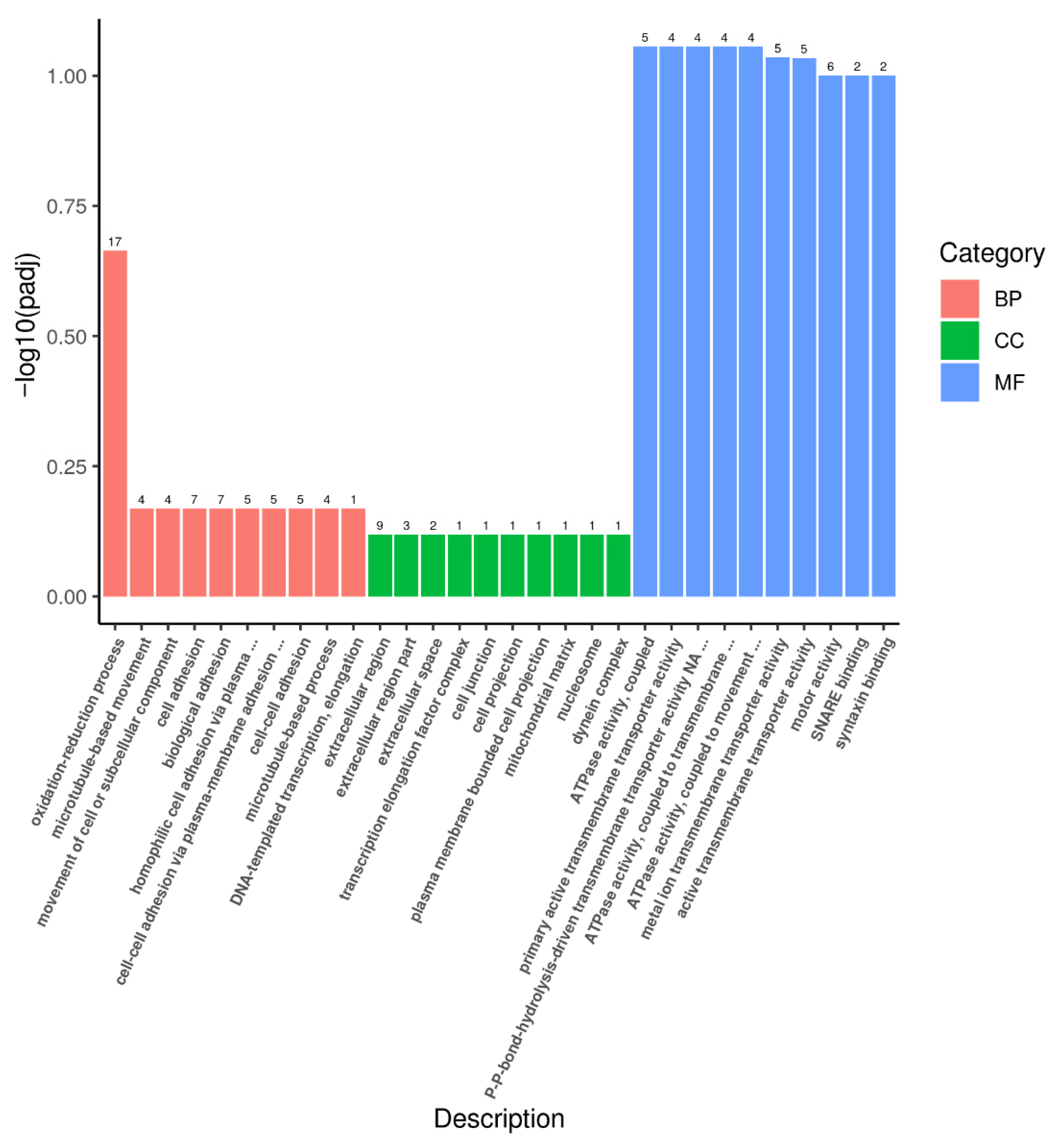
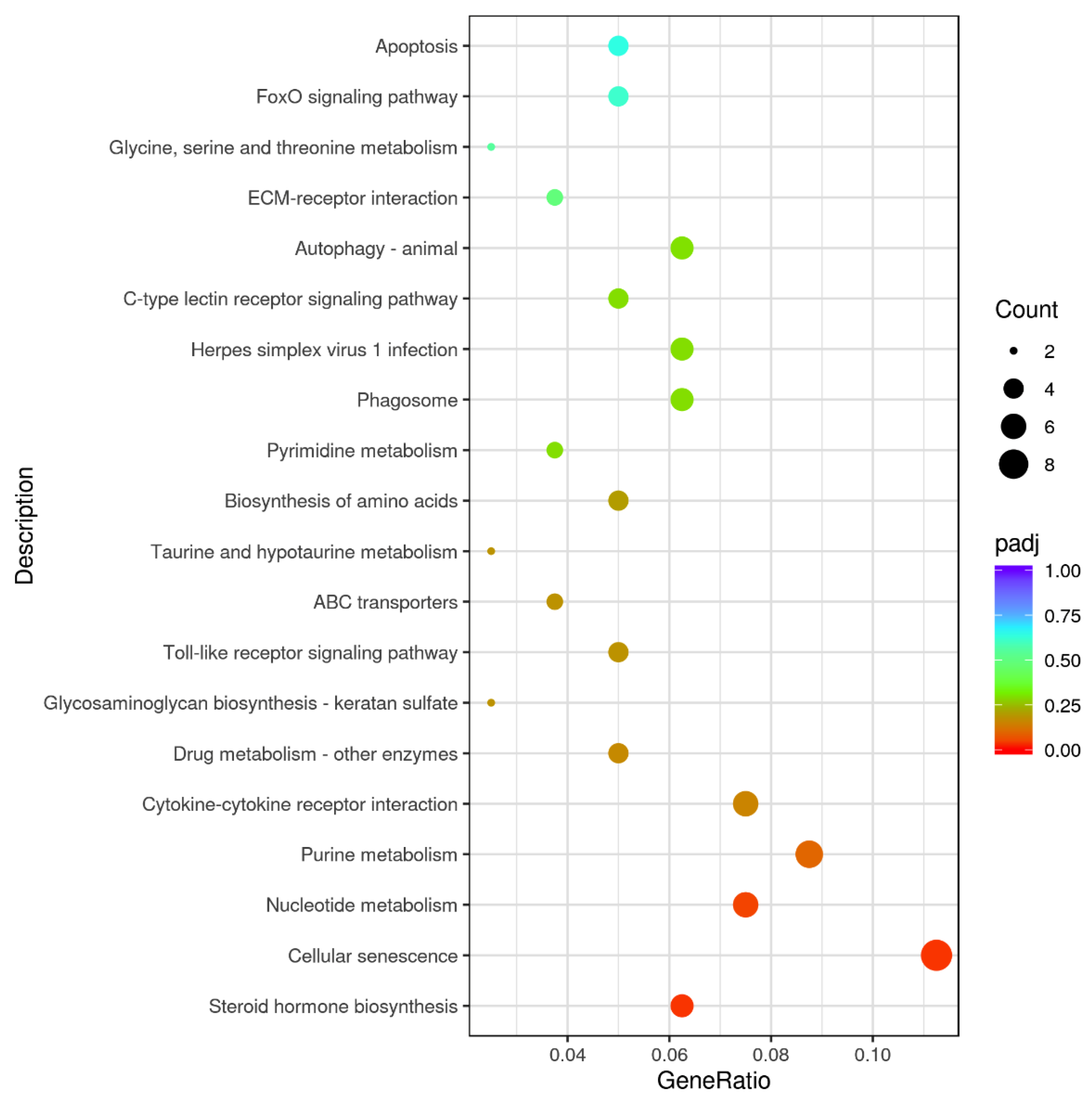
By comparative analysis of the transcriptomics data of LT and HT groups with the screening circumstances of | log2 FC | ≥ 1 and FDR < 0.05, we identified 315 DEGs, consisting of 200 upregulated and 115 downregulated genes (Figure 4). To further investigate the biological processes involved in the DEGs, the GO analysis was performed. The findings indicated that DEGs were primarily classified into biological processes (BP), molecular functions (MF), and cellular components (CC). The biological processes primarily comprise oxidation–reduction, microtubule-based movement, movement of cell or subcellular components, cell adhesion, and biological adhesion. The cellular constituents primarily include the extracellular region. Molecular functions were mainly relevant to SNARE binding, syntaxin binding, ATPase, transmembrane transporter, motor, oxidoreductase, and monooxygenase activities (Figure 5). KEGG analysis illustrated that 315 DEGs were significantly enriched in multiple pathways, including steroid hormone biosynthesis, cellular senescence, nucleotide metabolism, purine metabolism, cytokine–cytokine receptor interaction, toll-like receptor, ABC transporters, and biosynthesis of amino acids (Figure 6).

3.5. qRT-PCR Analysis of Critical DEGs in T. septentrionalis Testis

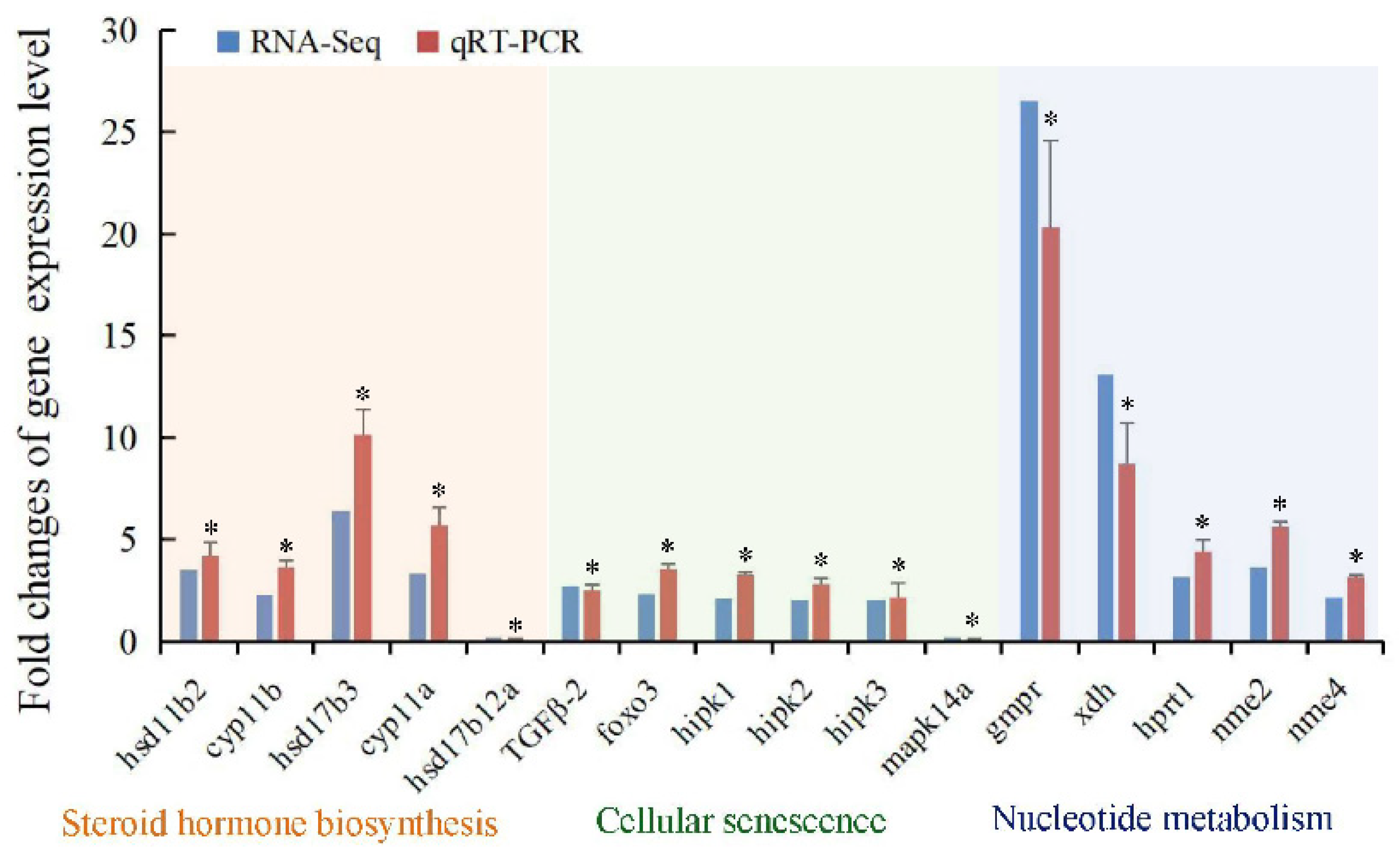
To verify the accuracy and reliability of the transcriptomics data, a total of 16 DEGs in T. septentrionalis testes involved in the pathways of steroid hormone biosynthesis (hsd11b2, cyp11b, cyp11a, hsd17b3, and hsd17b12a), cellular senescence (TGFβ-2, foxo3, hipk1, hipk2, hipk3, and mapk14a), and nucleotide metabolism (gmpr, xdh, hprt1, nme2, and nme4) were subjected to qRT-PCR analysis. qRT-PCR findings indicated that the DEGs showed a similar expression trend comparable with that of the sequencing data (Figure 7), reflecting the accuracy and reliability of the transcriptomics data. In addition, fourteen of the examined DEGs were significantly upregulated in the HT group compared to the LT group (p < 0.05), except for the significant downregulation of hsd17b12a and mapk14a in the HT group compared to the LT group (p < 0.05). The similar trends of the gene expression changes between the transcriptomic and qRT-PCR analyses (Figure 7) reflected the accuracy and reliability of the transcriptomic data in the present study.

4. Discussion

Thamnaconus septentrionalis is a commercially important marine fish broadly spread in the Indo-West Pacific and a key aquaculture species in China [1]. Recently, T. septentrionalis has been confronted with a serious decrease in its population resources and the problem of overfishing [1]. Previous studies have examined its reproductive biology and artificial propagation under aquaculture conditions [4,24,25]; the molecular mechanisms regulating reproductive development remain unclear. In this study, we attempted to investigate the molecular regulation mechanism of T. septentrionalis testis development induced by temperature. The critical genes as well as biological processes associated with the temperature-induced testes development of T. septentrionalis were uncovered. The significantly high gonadal somatic index (GSI) of the HT group in this study reflected that temperature rise likely promoted the testis development of Thamnaconus septentrionalis.
The developmental processes of fish gonads could be influenced by both genetic and environmental factors, especially sensitive to temperature [8,26]. Housh et al. [27] found that elevated temperature significantly influenced the ovarian development of the pupfish via regulation of the reproductive endocrine pathways. Zhao et al. [28] suggested that the high-temperature treatment could result in the female sex reversal of the Nile tilapia Oreochromis niloticus. Wright et al. [29] suggested that the temperature rise (+5 °C) delayed ovarian development in the lesser sandeel Ammodytes marinus, with the timing of oocyte maturation over two months. Spinks et al. [30] found that an elevated temperature (+1.5 °C) consistent with the projected ocean warming could increase the breeding probability in the females, while male development or pairs reproducing was affected negatively by higher temperature in the coral reef damselfish Acanthochromis polyacanthus. The present study suggested that the elevated temperature (+1 °C) contributed to testis development in cultured T. septentrionalis. The different effects of temperature rise on male development between Spinks et al. [30] and this study were likely due to the different experimental treatments and species. In addition, given that the occurrence of fish reproduction was typically within a narrow thermal window, our results implied that an increase of +1 °C might facilitate the optimal window for reproduction in male T. septentrionalis.
Further transcriptomic analysis indicated that the steroid hormone biosynthesis process was modulated with significance in T. septentrionalis testes with increasing temperature. Biosynthesis of steroid hormones, undergoing three classes of sex steroids (androgens, estrogens, and glucocorticoids), was initiated from a common precursor molecule (cholesterol) and a series of reactions catalyzed by cytochrome P450 hydroxylases and hydroxysteroid dehydrogenases in mitochondria [31,32,33,34,35]. It plays a very important regulatory role in developing the reproductive system and maintenance of testicular function [33,36,37]. In this study, the transcripts of four genes (hsd11b2, cyp11b, cyp11a, and hsd17b3) involved in the steroid hormone biosynthesis process were significantly enhanced in T. septentrionalis testes after the temperature rise. CYP11A is a mitochondrial monooxygenase, catalyzing the conversion of cholesterol to pregnenolone and participating in the first step in steroid biosynthesis [38]. HSD17B3 plays a key role in male sex development by converting androstenedione to the primary male sex steroid hormone T. CYP11B1 and HSD11B2 are crucial in 11-KT production in the testis [39,40]. The upregulation and activation of these genes might be an important reason for the observed increase in T and 11-KT hormones in this study. Li et al. [41] also found an elevating trend of plasma 11-KT concentration during seahorse testicular development. Moreover, T and 11-KT have been demonstrated to be potent in androgen-mediating spermatogenesis, sexual characteristics, and male fertility in teleosts [42,43]. Treatment with androgen inhibitors or androgen mutations blocks spermatogenesis, with fewer spermatocytes and sperm observed in the zebrafish testes [44]. In this study, the number of sperm was significantly increased, and the testis developed to stage IV with increasing temperature. These findings highlighted the critical role of steroid hormone biosynthesis in testis development and spermatogenesis in T. septentrionalis in response to rising temperature.
The cellular senescence pathway was also affected remarkably in T. septentrionalis testes after the temperature rise treatment. Cellular senescence, a stress response condition in the context of homeostasis, promotes tissue remodeling through serial related genes [45]. In this study, except for the significant downregulation of mapk14a, the mRNA transcripts of five genes (tgfβ-2, foxo3, hipk1, hipk2, and hipk3) involved in the cellular senescence pathway were increased significantly in T. septentrionalis testes responding to temperature rise. Transforming growth factor beta participated in maintaining effective peripheral immune tolerance in sperm and normal sperm development [46,47]. FOXO3 could inhibit the formation of StAR proteins to affect testosterone synthesis in mice [48]. Ni et al. [49] demonstrated that treatment with nicotinamide riboside or metformin resulted in inhibition of apoptosis in Basonuclin 1 (Bnc1)-knockdown spermatogonia by stimulating CREB/SIRT1/FOXO3 signaling pathway. HIPKs play conserved roles in the initiation of spermatogenesis and sperm maturation [50]. In addition, Dong et al. [51] found the upregulation of hipk1/2/3 and foxm in four-eyed sleepers and suggested its important role in spermatogonia differentiation and sperm production in comparison to the testis at 3 months post hatch (mph). In addition, mitogen-activated protein kinases (MAPKs) are evolutionarily conserved proteins and found to be crucially involved in testis development by regulating spermatogenesis [52,53,54]. Thus, the significant downregulation of mapk14a in this study might also be associated with the testis development in Thamnaconus septentrionalis. Collectively, the significantly enriched pathway “cellular senescence pathways” participated in regulating testis development and gametogenesis in T. septentrionalis.
The nucleotide metabolic pathway was also influenced significantly in T. septentrionalis testes after the temperature rise treatment. Qi et al. [55] discovered that glyphosate-based herbicides induce reproductive toxicity by impairing energy and nucleotide metabolism in mouse testes, suggesting that nucleotide metabolism is essential for maintaining normal testis development. In the present study, five genes (gmpr, xdh, hprt1, nme2, and nme4) involved importantly in these pathways were significantly enhanced in T. septentrionalis testes responding to temperature increase. Guanosine monophosphate reductase (GMPR) plays an important role in maintaining the intracellular balance of adenine and guanine nucleotides by converting guanosine nucleotides to pivotal precursors of both G and A nucleotide [56]. Xanthine dehydrogenase (XDH) could reduce NAD+ to NADH. Previous studies have suggested that an increased NADH/NAD+ ratio can affect testis development [49,57,58]. Hypoxanthine phosphoribosyl transferase 1 (HPRT1), an enzyme in the DNA salvage pathway, participates in transferring phosphoribose from phosphoribosyl diphosphate to hypoxanthine and guanine bases, which are involved in the regulation of purine synthesis in the cell cycle [59]. NME2 and NME4 belong to the conserved NME protein family and play critical roles in maintaining cellular nucleoside triphosphate homeostasis [60,61]. Therefore, in principle, HPRT1, NME2, and NME4 activities could control the biological processes (e.g., DNA synthesis or GTP-dependent biological activities) and mediate the basic cellular functions (e.g., differentiation and development). So, the present study suggested that the significantly enriched pathway “nucleotide metabolism pathway” likely plays a key role in maintaining normal testis development in T. septentrionalis.

5. Conclusions

This study comprehensively examined the potential underlying molecular mechanism of testis development in T. septentrionalis induced by the temperature rise at both the molecular and cellular levels. The present study suggested that temperature rise could promote the T. septentrionalis testis development. Critical genes and important regulatory pathways involved in T. septentrionalis testis development were revealed. The major findings of this study may support the seedling production of this fish species and enhance our understanding of the theoretical evidence of temperature-induced testis development in artificial seed production of this important, economically valuable fish species.

Supplementary Materials

The following supporting information can be downloaded at https://www.mdpi.com/article/10.3390/ani16020327/s1. Table S1: Primers used for qRT-PCR assays in this study; Table S2: The statistics of the transcriptomic data in this study; Figure S1: The information of the experimental design in this study.

Author Contributions

Conceptualization, Y.L.; methodology, Y.L. and X.Z.; software, X.Z. and J.W.; validation, J.W. and W.X.; formal analysis, L.B. and Y.W.; investigation, L.B. and M.L.; resources, L.L. and M.L.; data curation, Y.W. and W.X.; writing—original draft, Y.L. and X.Z.; writing—review and editing, L.L.; visualization, Y.L.; supervision, Y.L.; project administration, Y.L. and L.L.; funding acquisition, Y.L. and L.L. All authors have read and agreed to the published version of the manuscript.

Funding

This investigation was funded by the National Natural Science Foundation of China (Youth Project, grant no. 32302997), the Natural Science Foundation of Shandong Province (Youth Project, ZR2023QC113), and the Yantai Science and Technology Innovation Development Plan (2022XDRH022).

Institutional Review Board Statement

The animal study protocol was approved by the Ethics Committee of Yantai University, China (protocol code: 20170605 and date of approval: 5 June 2017).

Informed Consent Statement

Not applicable.

Data Availability Statement

All data are available in Supplementary Data Files. The RNA-Seq data for the transcriptome analysis are available via the BioProject accession number PRJNA1227174.

Conflicts of Interest

The authors declare no conflicts of interest.

References

  1. Bian, L.; Li, F.H.; Ge, J.L.; Wang, P.F.; Chang, Q.; Zhang, S.N.; Li, J.; Liu, C.L.; Liu, K.; Liu, X.T.; et al. Chromosome-level genome assembly of the greenfin horse-faced filefish (Thamnaconus septentrionalis) using Oxford Nanopore PromethION sequencing and Hi-C technology. Mol. Ecol. Res. 2020, 20, 1069–1079. [Google Scholar] [CrossRef] [PubMed]
  2. Zhan, B.; Lou, D.; Zhong, J. Evaluation of Thamnaconus septentrionalis Resources and their Rational Utilization. Aquac. Fish 1986, 4, 409–418. (In Chinese) [Google Scholar]
  3. Fisheries Bureau of Ministry of Agriculture. China Fisheries Yearbook 2024; China Agriculture Press: Beijing, China, 2024. [Google Scholar]
  4. Mao, X.; Liu, L.; Wang, J.; Liu, Y.; Wu, Y.; Jiang, H.; Xu, W. Histological observation on the gonadal development of the parental Thamnaconus modestus during early reproductive regulation. J. Fish. Res. 2024, 46, 11–18. [Google Scholar]
  5. Flores, A.; Wiff, R.; Brown, D.; Larrea-Meza, S. Reproductive traits of female of pink cusk-eel (Genypterus blacodes Schneider, 1801) in the fjords of the Chilean Patagonia. Estuar. Coast. Shelf Sci. 2000, 233, 106554. [Google Scholar] [CrossRef]
  6. Urbatzka, R.; Rocha, M.; Rocha, E. Regulation of ovarian development and function in teleosts. Horm. Reprod. Vertebr. 2011, 35, 65–82. [Google Scholar]
  7. Fu, W.; Li, Z.; Ren, X.; Liu, F.; Liu, W.; Liu, J.; Peng, L.; Xiao, Y. Effects of high temperature on gonadal development of gynogenetic Megalobrama amblycephala and acquisition of fertile pseudo-male fish. Aquaculture 2025, 606, 742588. [Google Scholar] [CrossRef]
  8. Guan, Q.; Xu, H.; Huang, L.; Zulfahmi, I.; Kisha, M.S.; Masroor, W.; Zhao, C.; Cao, Q. Regulatory mechanisms of temperature on the gonadal development of fish. Aquaculture 2026, 613, 743382. [Google Scholar] [CrossRef]
  9. He, K.; Li, Z.; Yan, H.; Shi, L.; Yang, H.; Liu, Q.; Song, K.; Hu, Y.; Wang, B.; Yang, S.; et al. Cold temperature delays ovarian development of largemouth bass by inhibiting sex hormone release, angiogenesis, apoptosis and autophagy during out-of-season reproduction. Comp. Biochem. Phys. Part A 2025, 301, 111795. [Google Scholar] [CrossRef]
  10. Peng, Y.; Yan, L.; Zhao, C.; Zhang, B.; Zhang, B.; Qiu, L. Effects of Temperature and Salinity on Ovarian Development and Differences in Energy Metabolism Between Reproduction and Growth During Ovarian Development in the Lateolabrax maculatus. Int. J. Mol. Sci. 2025, 26, 8295. [Google Scholar] [CrossRef]
  11. Li, T.; Chen, Q.; Zhang, Q.; Feng, T.; Zhang, J.; Lin, Y.; Yang, P.; He, S.; Zhang, H. Transcriptomic Analysis on the Effects of Altered Water Temperature Regime on the Fish Ovarian Development of Coreius guichenoti under the Impact of River Damming. Biology 2022, 11, 1829. [Google Scholar] [CrossRef]
  12. Huang, J.; Liao, S.; Su, Y.; Li, M.; Hu, J.; Han, L.; Jiang, Y.; Yang, M.; Zhang, Y.; Li, S.; et al. Effects of temperature on ovarian development of mandarin fish (Siniperca chuatsi) and hormone therapy to induce its ovulation out of breeding season. Aquacult. Rep. 2024, 37, 102271. [Google Scholar] [CrossRef]
  13. Cai, S.; Li, Y.; Xu, R.; He, C.; Chen, K.; Chen, J.; Hu, W.; Jiang, M. Transcriptome analysis provides new insights into ovarian follicle growth in common carp (Cyprinus carpio). Aquacult. Rep. 2023, 33, 101864. [Google Scholar] [CrossRef]
  14. Pino Martinez, E.; Braanaas, M.F.; Balseiro, P.; Kraugerud, M.; Pedrosa, C.; Imsland, A.K.D.; Handeland, S.O. Constant High Temperature Promotes Early Changes in Testis Development Associated with Sexual Maturation in Male Atlantic Salmon (Salmo salar L.) Post-Smolts. Fishes 2022, 7, 341. [Google Scholar] [CrossRef]
  15. Zheng, X.; Wang, J.; Gao, X.; Du, C.; Hou, C.; Xie, Q.; Liu, F.; Zhu, J.; Lou, B. Testis Development and Ultrastructural Features During Spermatogenesis in Cultured Small Yellow Croaker, Larimichthys Polyactis. J. Ocean. Univ. China 2023, 22, 1412–1426. [Google Scholar] [CrossRef]
  16. Flores, A.; Wiff, R.; Díaz, E. Using the gonadosomatic index to estimate the maturity ogive: Application to Chilean hake (Merluccius gayi gayi). ICES J. Mar. Sci. 2015, 72, 508–514. [Google Scholar] [CrossRef]
  17. Sharma, P.; Purohit, S.; Bhatt, G.; Kothiyal, S.; Singh, M.; Nautiyal, P.; Bhattacharya, I. A study on the seasonal cyclicity of ovarian development in adult himalayan snow trout, Schizothorax plagiostomus. J. Fish Biol. 2023, 103, 292–304. [Google Scholar] [CrossRef]
  18. Liu, Y.; Xu, W.; Zhang, X.; Wang, J.; Chen, X.; Yu, X.; Zeng, J.; Wu, Y.; Liu, L. The molecular mechanism of ovary development in Thamnaconus septentrionalis induced by rising temperature via transcriptomics and metabolomics analysis. Front. Mar. Sci. 2025, 12, 1556002. [Google Scholar] [CrossRef]
  19. Li, M.; Li, C.; Wang, J.; Song, S. Molecular characterization and expression of a novel Toll gene from the swimming crab Portunus trituberculatus. Mol. Immunol. 2015, 67, 388–397. [Google Scholar] [CrossRef]
  20. Rasmussen, R. Quantification on the LightCycler. In Rapid Cycle Real-Time PCR, Methods and Applications; Meuer, S., Wittwer, C., Nakagawara, K., Eds.; Springer Press: Heidelberg, Germany, 2001; pp. 21–34. [Google Scholar]
  21. Livak, K.J.; Schmittgen, T.D. Analysis of relative gene expression data using real-time quantitative PCR and the 2−ΔΔCT method. Methods 2001, 25, 402–408. [Google Scholar] [CrossRef]
  22. Bustin, S.; Benes, V.; Garson, J.; Hellemans, J.; Huggett, J.; Kubista, M.; Mueller, R.; Nolan, T.; Pfaffl, M.; Shipley, G.; et al. The MIQE guidelines: Minimum information for publication of quantitative real-time PCR experiments. Clin. Chem. 2009, 55, 611–622. [Google Scholar] [CrossRef]
  23. Li, X.; Meng, B.; Zhang, Z.; Wei, L.; Chang, W.; Wang, Y.; Zhang, K.; Li, T.; Lu, K. qPrimerDB 2.0: An updated comprehensive gene-specific qPCR primer database for 1172 organisms. Nucleic Acids Res. 2024, 53, gkae684. [Google Scholar] [CrossRef]
  24. Liu, K.; Zhang, L.; Zhang, Q.; Chen, S.; Liu, C.; Bian, L. Study on Thamnaconus septentrionalis under industrial aquaculture condition. Fish. Mod. 2017, 44, 35–40. (In Chinese) [Google Scholar]
  25. Chen, X.; Cheng, Q. Current research status of Thamnaconus septentrionalis. Fish. Inf. Strategy 2025, 40, 123–134. (In Chinese) [Google Scholar]
  26. Kovács, L.; Minya, D.; Homoki, D.; Toviho, O.A.; Fehér, M.; Stündl, L.; Bársony, P. Effect of different water temperatures on sex ratio, gonad development and production parameters of common carp (Cyprinus carpio L.). Aquac. Res. 2020, 51, 858–862. [Google Scholar] [CrossRef]
  27. Housh, M.J.; Telish, J.; Forsgren, K.L.; Lema, S.C. Fluctuating and Stable High Temperatures Differentially Affect Reproductive Endocrinology of Female Pupfish. Integr. Org. Biol. 2024, 6, obae003. [Google Scholar] [CrossRef] [PubMed]
  28. Zhao, Y.; Chen, H.; Wang, Y.; Mei, Y.; Huang, L.; Wang, H.; Ji, X. Gonad development examination of high-temperature–treated genetically female Nile tilapia. Aquaculture 2020, 515, 734535. [Google Scholar] [CrossRef]
  29. Wright, P.J.; Orpwood, J.E.; Boulcott, P. Warming delays ovarian development in a capital breeder. Mar. Biol. 2017, 164, 80. [Google Scholar] [CrossRef]
  30. Spinks, R.K.; Bonzi, L.C.; Ravasi, T.; Munday, P.L.; Donelson, J.M. Sex- and time-specific parental effects of warming on reproduction and offspring quality in a coral reef fish. Evol. Appl. 2021, 14, 1145–1158. [Google Scholar] [CrossRef]
  31. Miller, W. Steroid hormone synthesis in mitochondria. Mol. Cell. Endocrinol. 2013, 379, 62–73. [Google Scholar] [CrossRef]
  32. Miller, W. Steroidogenesis: Unanswered questions. Trends Endocrin. Met. 2017, 28, 771–793. [Google Scholar] [CrossRef]
  33. Liu, W.; Gong, T.; Shi, F.; Xu, H.; Chen, X. Taste receptors affect male reproduction by influencing steroid synthesis. Front. Cell Dev. Biol. 2022, 10, 956981. [Google Scholar] [CrossRef] [PubMed]
  34. Shah, W.; Khan, R.; Shah, B.; Khan, A.; Dil, S.; Liu, W. The molecular mechanism of sex hormones on sertoli cell development and proliferation. Front. Endocrinol. 2021, 12, 648141. [Google Scholar] [CrossRef] [PubMed]
  35. Detlefsen, A.; Paulukinas, R.; Penning, T. Germline mutations in steroid metabolizing enzymes: A focus on steroid transforming aldo-keto reductases. Int. J. Mol. Sci. 2023, 24, 1873. [Google Scholar] [CrossRef] [PubMed]
  36. Esmaeilian, Y.; Hela, F.; Bildik, G.; İltumur, E.; Yusufoglu, S.; Yildiz, C.; Yakin, K.; Kordan, Y.; Oktem, O. Autophagy regulates sex steroid hormone synthesis through lysosomal degradation of lipid droplets in human ovary and testis. Cell Death Dis. 2023, 14, 342. [Google Scholar] [CrossRef]
  37. Zhao, Y.; Wu, J.; Li, X.; Chen, Q.; Hong, Z.; Zheng, L.; Huang, S.; Mo, P.; Li, C.; Wang, R.; et al. Protective effect of Huangqi-Guizhi-Wuwutang against cyclophosphamide-induced spermatogenesis dysfunction in mice by promoting steroid hormone biosynthesis. J. Ethnopharmacol. 2024, 319, 117260. [Google Scholar] [CrossRef]
  38. Hu, M.; Hsu, H.; Guo, I.; Chung, B. Function of Cyp11a1 in animal models. Mol. Cell. Endocrinol. 2004, 215, 95–100. [Google Scholar] [CrossRef]
  39. Ikegawa, K.; Hasegawa, Y. Adrenal gland involvement in 11-ketotestosterone production analyzed using LC-MS/MS. Front. Endocrinol. 2023, 14, 1051195. [Google Scholar] [CrossRef]
  40. Swart, A.; Schloms, L.; Storbeck, K.; Bloem, L.; Toit, T.; Quanson, J.; Rainey, W.; Swart, P. 11β-hydroxyandrostenedione, the product of androstenedione metabolism in the adrenal, is metabolized in LNCaP cells by 5α-reductase yielding 11β-hydroxy-5α-androstanedione. J. Steroid Biochem. Mol. Biol. 2013, 138, 132–142. [Google Scholar] [CrossRef]
  41. Li, Y.; Zhao, L.; Luo, R.; Xu, G.; Fang, Y.; Wang, B.; Chen, J. Development of gonad and brood pouch and expression profiles of cgα, fshβ and lhβ transcripts and plasma 17β-E2 and 11-KT during the first reproductive cycle of farmed big-belly seahorse (Hippocampus abdominalis). Aquaculture 2024, 589, 740986. [Google Scholar] [CrossRef]
  42. Zheng, Q.; Xiao, H.; Shi, H.; Wang, T.; Sun, L.; Tao, W.; Kocher, T.; Li, M.; Wang, D. Loss of Cyp11c1 causes delayed spermatogenesis due to the absence of 11-ketotestosterone. J. Endocrinol. 2020, 244, 487–499. [Google Scholar] [CrossRef]
  43. Sebire, M.; Katsiadaki, I.; Scott, A. Non-invasive measurement of 11-ketotestosterone, cortisol and androstenedione in male three-spined stickleback (Gasterosteus aculeatus). Gen. Comp. Endocr. 2007, 152, 30–38. [Google Scholar] [CrossRef]
  44. Yin, Y.; Tang, H.; Liu, Y.; Chen, Y.; Li, G.; Liu, X. Targeted disruption of aromatase reveals dual functions of cyp19a1a during sex differentiation in zebrafish. Endocrinology 2017, 158, 3030–3041. [Google Scholar] [CrossRef]
  45. Gorgoulis, V.; Adams, P.; Alimonti, A.; Bennett, D.; Bischof, O.; Bishop, C.; Campisi, J.; Collado, M.; Evangelou, K.; Ferbeyre, G. Cellular Senescence: Defining a Path Forward. Cell 2019, 179, 813–827. [Google Scholar] [CrossRef] [PubMed]
  46. Voisin, A.; Damon-Soubeyrand, C.; Bravard, S.; Saez, F.; Drevet, J.R.; Guiton, R. Differential expression and localisation of TGF-beta isoforms and receptors in the murine epididymis. Sci. Rep. 2020, 10, 995. [Google Scholar] [CrossRef] [PubMed]
  47. Chang, H.; Brown, C.; Matzuk, M. Genetic analysis of the mammalian transforming growth factor-beta superfamily. Endoc. Rev. 2002, 23, 787–823. [Google Scholar] [CrossRef]
  48. Choi, Y.; Song, J.; Kong, B.; Hong, J.; Novelli, S.; Lee, E. The role of Foxo3 in Leydig cells. Yonsei Med. J. 2015, 56, 1590–1596. [Google Scholar] [CrossRef] [PubMed]
  49. Ni, F.; Wang, F.; Li, J.; Liu, Y.; Sun, X.; Chen, J.; Li, J.; Zhang, Y.; Ye, X.; Tu, M. BNC1 deficiency induces mitochondrial dysfunction-triggered spermatogonia apoptosis through the CREB/SIRT1/FOXO3 pathway: The therapeutic potential of nicotinamide riboside and metformin. Biol. Reprod. 2024, 110, 615–631. [Google Scholar] [CrossRef]
  50. Crapster, J.; Rack, P.; Hellmann, Z.; Le, A.; Adams, C.; Leib, R.; Elias, J.; Perrino, J.; Behr, B.; Li, Y.; et al. HIPK4 is essential for murine spermiogenesis. eLife 2020, 9, e50209. [Google Scholar] [CrossRef]
  51. Dong, M.; Tang, M.; Li, W.; Li, S.; Yi, M.; Liu, W. Morphological and transcriptional analysis of sexual differentiation and gonadal development in a burrowing fish, the four-eyed sleeper (Bostrychus sinensis). Comp. Biochem. Phys. D 2023, 48, 101148. [Google Scholar] [CrossRef]
  52. Meng, S.; Liu, T.; Song, C.; Zhang, C.; Chen, J. Testis of Male Tilapia Under Methomyl Stress: Transcriptome Changes and Signal Pathway Analysis. Chin. Agric. Sci. Bull. 2019, 35, 44–51. (In Chinese) [Google Scholar]
  53. Luo, D.; He, Z.; Yu, C.; Guan, Q. Role of p38 MAPK Signalling in Testis Development and Male Fertility. Oxidative Med. Cell. Longev. 2022, 2022, 6891897. [Google Scholar] [CrossRef] [PubMed]
  54. Kumar, L.; Solanki, S.; Jain, A.; Botts, M.; Gupta, R.; Rajput, S.; Roti Roti, E. MAPKs signaling is obligatory for male reproductive function in a development-specific manner. Front. Reprod. Health 2024, 6, 1330161. [Google Scholar] [CrossRef] [PubMed]
  55. Qi, L.; Li, Y.; Dong, Y.; Ma, S.; Li, G. Integrated metabolomics and transcriptomics reveal glyphosate based-herbicide induced reproductive toxicity through disturbing energy and nucleotide metabolism in mice testes. Environ. Toxicol. 2023, 38, 1811–1823. [Google Scholar] [CrossRef] [PubMed]
  56. Zhang, J.; Zhang, W.; Zou, D.; Chen, G.; Wan, T.; Zhang, M.; Cao, X. Cloning and functional characterization of GMPR2, a novel human guanosine monophosphate reductase, which promotes the monocytic differentiation of HL-60 leukemia cells. J. Cancer Res. Clin. 2003, 129, 76–83. [Google Scholar] [CrossRef]
  57. Orpana, A.; Orava, M.; Vihko, R.; Härkönen, M.; Eriksson, C. Ethanol-induced inhibition of testosterone biosynthesis in rat Leydig cells: Central role of mitochondrial NADH redox state. J. Steroid Biochem. 1990, 36, 603–608. [Google Scholar] [CrossRef]
  58. Santucci, L.; Graham, T.; Van Thiel, D. Inhibition of testosterone production by rat Leydig cells with ethanol and acetaldehyde: Prevention of ethanol toxicity with 4-methylpyrazole. Clin. Exp. Res. 1983, 7, 135–139. [Google Scholar] [CrossRef]
  59. Townsend, M.; Robison, R.; O’Neill, K. A review of HPRT and its emerging role in cancer. Med. Oncol. 2018, 35, 89. [Google Scholar] [CrossRef]
  60. Mátyási, B.; Petővári, G.; Dankó, T.; Butz, H.; Likó, I.; Lőw, P.; Petit, I.; Bittar, R.; Bonnefont-Rousselot, D.; Farkas, Z.; et al. Extracellular vesicle-mediated metastasis suppressors NME1 and NME2 modify lipid metabolism in fibroblasts. Cancers 2022, 14, 3913. [Google Scholar] [CrossRef]
  61. Tokarska-Schlattner, M.; Rstom, B.; Tellier, C.; Attia, S.; Kay, L.; Schlattner, U. Knock-out of mitochondrial nucleoside diphosphate kinase NME4 reveals surprising tissue-distribution and remodeled cell signaling, suggestive of multiple functions. Biophys. J. 2023, 122, 97A. [Google Scholar] [CrossRef]
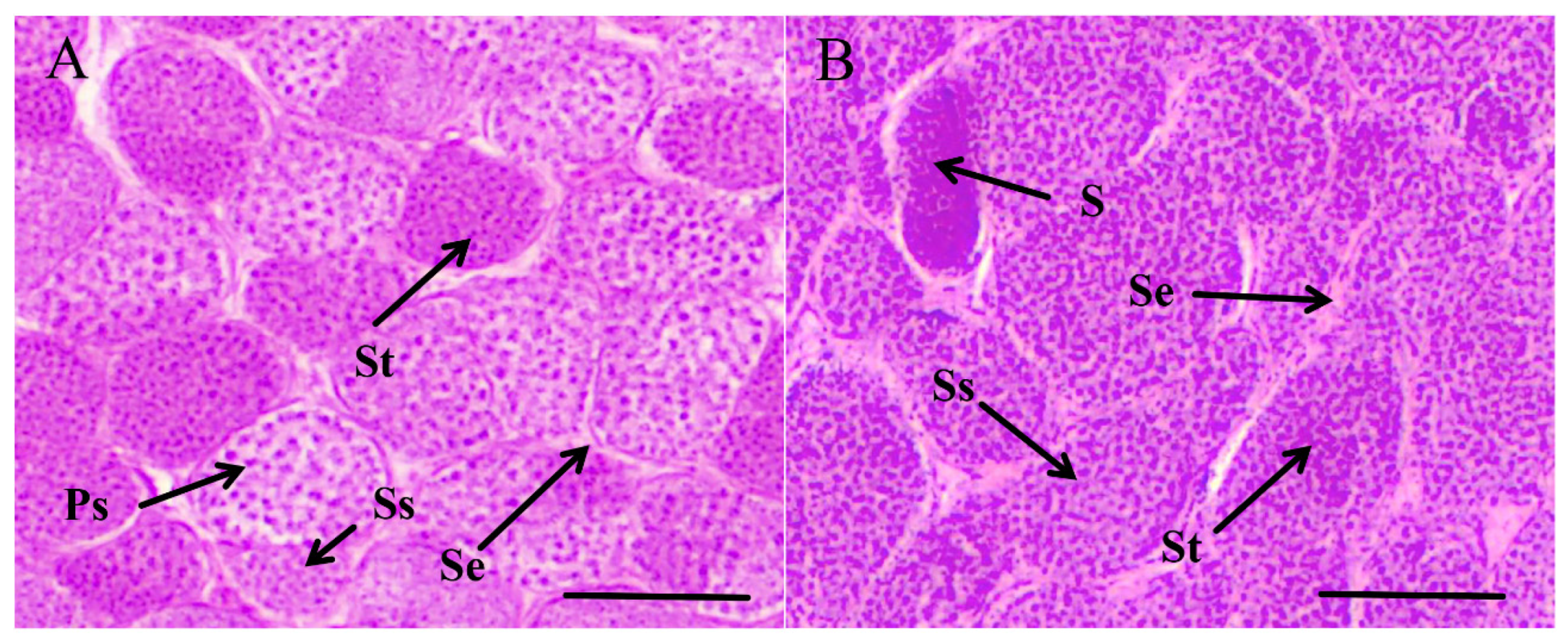
Figure 1. Histology of T. septentrionalis testes in LT (A) and HT (B) groups. Ps, primary spermatocytes; Ss, secondary spermatocytes; Se, Sertoli cell; St, spermatid; S, spermatozoa. Scale bar: 100 μm.
Animals 16 00327 g001
Figure 2. TEM analysis of T. septentrionalis testes in LT (A,C) and HT (B,D) groups. TEM analysis of the T. septentrionalis spermatozoa in LT (E) and HT (F). Sc, spermatocytes; S, sperm; N, nucleus; NF, nuclear fossa; MP, mid-piece; NE, nuclear envelope; F, flagellum; M, mitochondrion; A, axoneme; H, head. Scale bar: 1 μm.
Animals 16 00327 g002
Figure 3. The concentration of the plasma 17β-estradiol (E2), testosterone (T), and 11-ketotestosterone (11-KT) in LT and HT groups. * on bars represent statistical significance (p < 0.05).
Animals 16 00327 g003
Figure 4. The differentially expressed genes (DEGs) between the LT and HT groups. Red dots indicated significantly upregulated DEGs, green dots indicated significantly downregulated DEGs, and blue dots indicated non-significantly expressed genes.
Animals 16 00327 g004
Figure 5. GO enrichment analysis of DEGs between the LT and HT groups. The numbers on each bar represent the number of differentially expressed genes identified in the corresponding GO term. Biological process, BP; molecular function, MF; and cellular component, CC.
Animals 16 00327 g005
Figure 6. KEGG pathway analysis of DEGs between the LT and HT groups.
Animals 16 00327 g006
Figure 7. Comparison of qRT-PCR and RNA-Seq results for transcripts of 16 DEGs in T. septentrionalis testes treated with temperature. The fold changes of the gene expressions (HT/LT) obtained by the transcriptomic data and qRT-PCR validation analysis are shown in the blue and red bars, respectively. The statistical significance of the fold-change between HT and LT, validated by qRT-PCR analysis in red bars, is indicated by an asterisk (*) (p < 0.05).
Animals 16 00327 g007
Table 1. Physiological indices of Thamnaconus septentrionalis in this study.
GroupTotal Length (cm)Body Weight (g)Testis Weight (g)GSI (%)
LT28.40 ± 3.99385.86 ± 111.441.87 ± 0.730.48 ± 0.07
HT29.67 ± 2.58406.43 ± 125.033.60 ± 1.770.82 ± 0.23 *
Note: * on GSI indicate statistical significance (p < 0.05).
Disclaimer/Publisher’s Note: The statements, opinions and data contained in all publications are solely those of the individual author(s) and contributor(s) and not of MDPI and/or the editor(s). MDPI and/or the editor(s) disclaim responsibility for any injury to people or property resulting from any ideas, methods, instructions or products referred to in the content.