Microcystin-LR-Induced Oxidative Stress, Transcriptome Changes, Intestinal Microbiota, and Histopathology in Rana chensinensis Tadpoles


 ,
, 
Simple Summary
Abstract
1. Introduction
2. Materials and Methods
2.1. Chemicals and Reagents
2.2. Animals and Samples
2.3. Measurement of Oxidative Stress Markers
2.4. RNA Isolation, Library Preparation, and Transcriptome Sequencing
2.5. Transcriptome Assembly and DEG Screening
2.6. Microbial DNA Extraction and PCR Amplification
2.7. Illumina Miseq Sequence Processing
2.8. Biodiversity Analysis
2.9. Histopathology Examination
3. Results
3.1. Effect of MC-LR Exposure on Oxidative Stress Markers in Livers
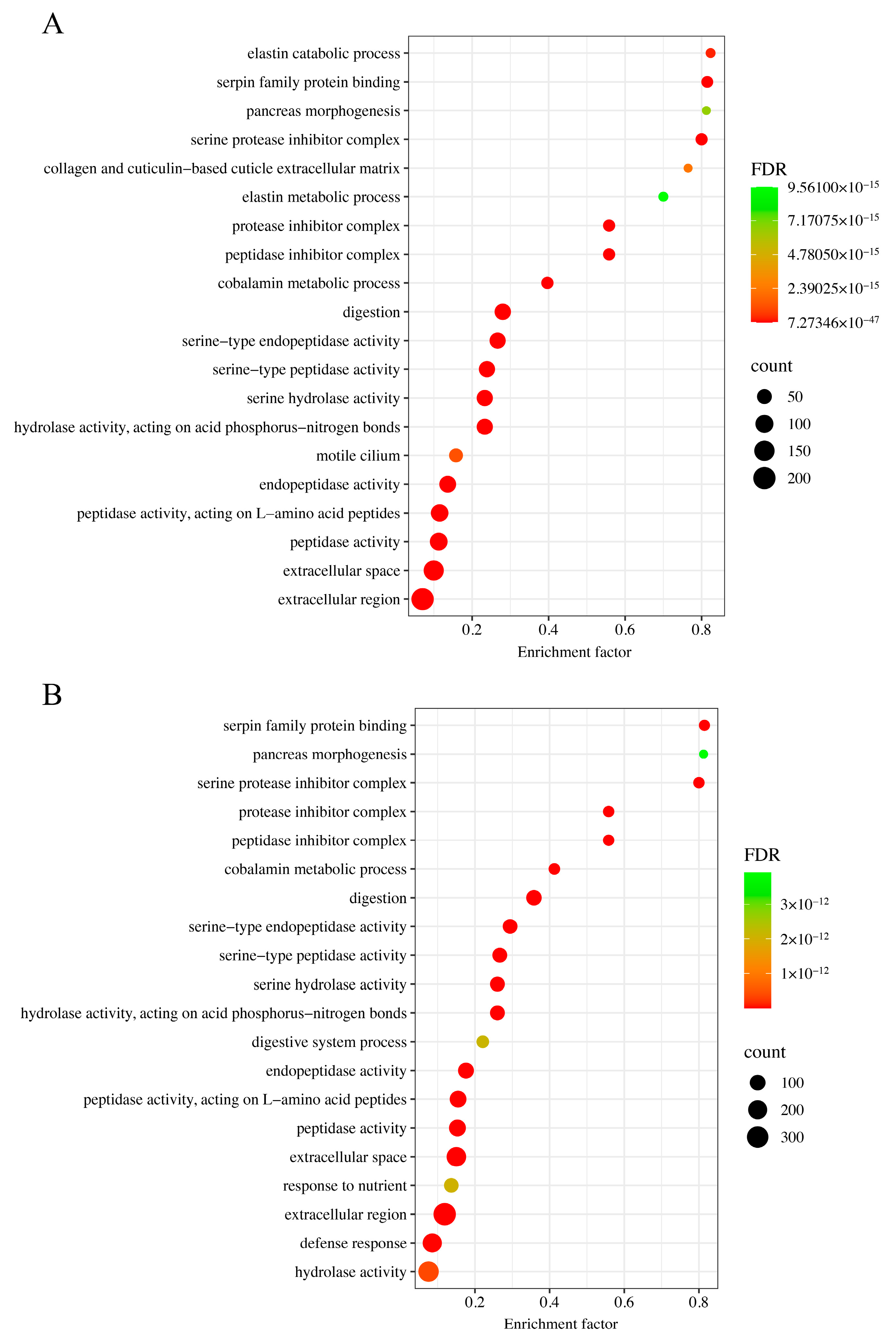
3.2. Liver Transcriptome Sequencing of Chinese Brown Frog Tadpoles in Response to MC-LR Exposure
3.3. Identifying DEGs in Chinese Brown Frog Tadpoles Exposed to MC-LR
3.4. Summary of the 16S rRNA Sequencing Data
3.5. Intestinal Microbial Diversity
3.6. OTU Distribution
3.7. Intestinal Microbial Composition
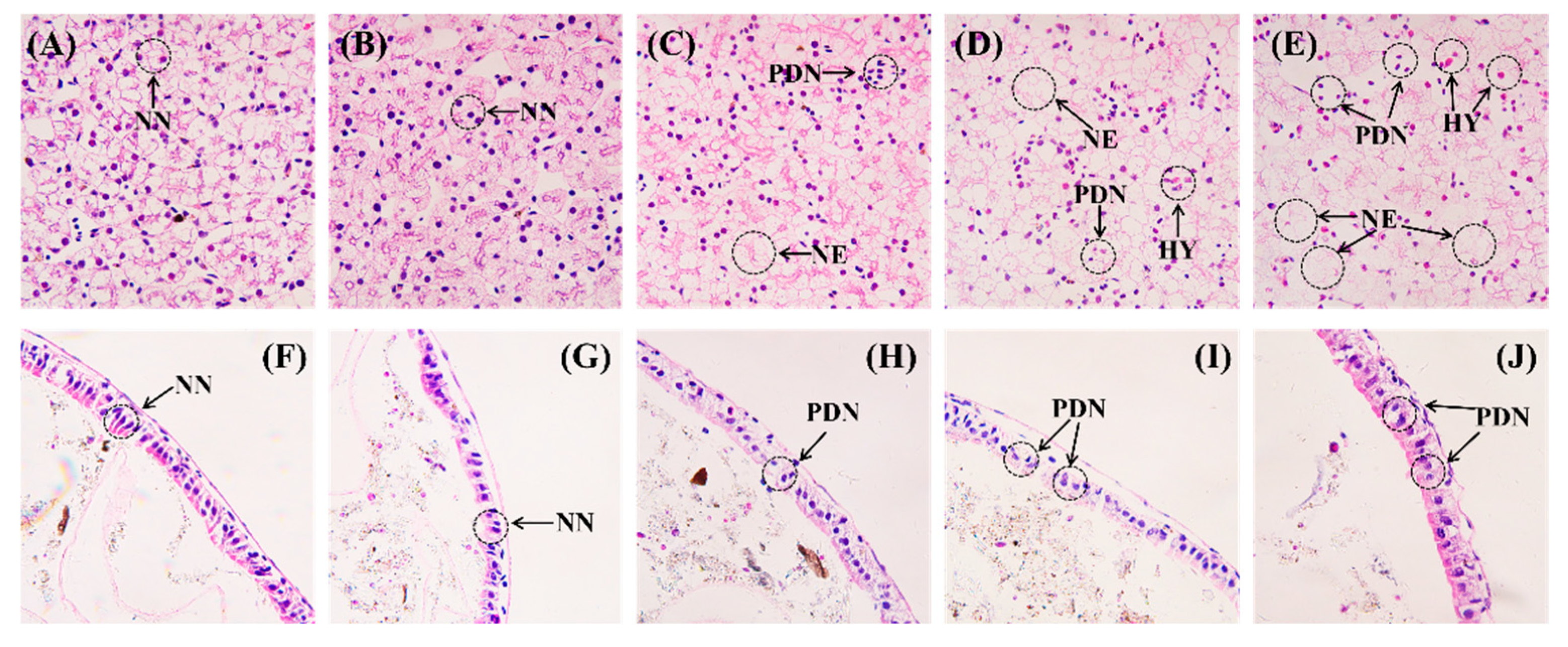
3.8. Effects of MC-LR Exposure on Liver and Intestinal Histology
4. Discussion
5. Conclusions
Supplementary Materials
Author Contributions
Funding
Institutional Review Board Statement
Informed Consent Statement
Data Availability Statement
Conflicts of Interest
References
- Chen, L.; Hu, Y.; He, J.; Chen, J.; Giesy, J.P.; Xie, P. Responses of the proteome and metabolome in livers of zebrafish exposed chronically to environmentally relevant concentrations of microcystin-LR. Environ. Sci. Technol. 2017, 51, 596–607. [Google Scholar] [CrossRef]
- Codd, G.A.; Morrison, L.F.; Metcalf, J.S. Cyanobacterial toxins: Risk management for health protection. Toxicol. Appl. Pharmacol. 2005, 203, 264–272. [Google Scholar] [CrossRef]
- Meriluoto, J.; Spoof, L.; Codd, G.A. Handbook of Cyanobacterial Monitoring and Cyanotoxin Analysis; Abo Akademi University Press: Turku, Finland, 2005; pp. 15–39. [Google Scholar]
- Zhang, D.; Deng, X.; Xie, P.; Chen, J.; Guo, L. Risk assessment of microcystins in silver carp (Hypophthalmichthys molitrix) from eight eutrophic lakes in China. Food Chem. 2013, 140, 17–21. [Google Scholar] [CrossRef]
- Xie, L.; Xie, P.; Guo, L.; Li, L.; Miyabara, Y.; Park, H.D. Organ distribution and bioaccumulation of microcystins in freshwater fish at different trophic levels from the eutrophic Lake Chaohu, China. Environ. Toxicol. 2005, 20, 293–300. [Google Scholar] [CrossRef]
- Xu, Y.; Xu, W.; Hu, X.; Su, H.; Wen, G.; Yang, K.; Cao, Y. Toxicity of the microcystin-producing cyanobacteria Microcystis aeruginosa to shrimp Litopenaeus vannamei. Ecotoxicology 2022, 31, 1403–1412. [Google Scholar] [CrossRef] [PubMed]
- Chi, C.; Giri, S.S.; Yu, X.W.; Liu, Y.; Chen, K.K.; Liu, W.B.; Zhang, D.D.; Jiang, G.Z.; Li, X.F.; Gao, X.; et al. Lipid metabolism, immune and apoptosis transcriptomic responses of the hepatopancreas of Chinese mitten crab to the exposure to microcystin-LR. Ecotoxicol. Environ. Saf. 2022, 236, 113439. [Google Scholar] [CrossRef]
- Chen, L.; Giesy, J.P.; Adamovsky, O.; Svirčev, Z.; Meriluoto, J.; Codd, G.A.; Mijovic, B.; Shi, T.; Tuo, X.; Li, S.C.; et al. Challenges of using blooms of Microcystis spp. in animal feeds: A comprehensive review of nutritional, toxicological and microbial health evaluation. Sci. Total Environ. 2021, 764, 142319. [Google Scholar] [CrossRef] [PubMed]
- Díez-Quijada, L.; Prieto, A.I.; Guzmán-Guillén, R.; Jos, A.; Cameán, A.M. Occurrence and toxicity of microcystin congeners other than MC-LR and MC-RR: A review. Food Chem. Toxicol. 2019, 125, 106–132. [Google Scholar] [CrossRef] [PubMed]
- Paerl, H.W.; Otten, T.G. Harmful cyanobacterial blooms: Causes, consequences, and controls. Microb. Ecol. 2013, 65, 995–1010. [Google Scholar] [CrossRef]
- Puddick, J.; Prinsep, M.R.; Wood, S.A.; Kaufononga, S.A.; Cary, S.C.; Hamilton, D.P. High levels of structural diversity observed in microcystins from Microcystis CAWBG11 and characterization of six new microcystin congeners. Mar. Drugs 2014, 12, 5372–5395. [Google Scholar] [CrossRef]
- Amado, L.L.; Monserrat, J.M. Oxidative stress generation by microcystins in aquatic animals: Why and how. Environ. Int. 2010, 36, 226–235. [Google Scholar] [CrossRef]
- Ding, W.X.; Shen, H.M.; Ong, C.N. Critical role of reactive oxygen species and mitochondrial permeability transition in microcystin-induced rapid apoptosis in rat hepatocytes. Hepatology 2000, 32, 547–555. [Google Scholar] [CrossRef]
- Jiang, J.; Gu, X.; Song, R.; Zhang, Q.; Geng, J.; Wang, X.; Yang, L. Time-dependent oxidative stress and histopathological changes in Cyprinus carpio L. exposed to microcystin-LR. Ecotoxicology 2011, 20, 1000–1009. [Google Scholar] [CrossRef]
- Li, X.; Liu, Y.; Song, L.; Liu, J. Responses of antioxidant systems in the hepatocytes of common carp (Cyprinus carpio L.) to the toxicity of microcystin-LR. Toxicon 2003, 42, 85–89. [Google Scholar] [CrossRef] [PubMed]
- Zhang, H.; Cai, C.; Fang, W.; Wang, J.; Zhang, Y.; Liu, J.; Jia, X. Oxidative damage and apoptosis induced by microcystin-LR in the liver of Rana nigromaculata in vivo. Aquat. Toxicol. 2013, 140, 11–18. [Google Scholar] [CrossRef]
- Jiang, J.; Shi, Y.; Shan, Z.; Yang, L.; Wang, X.; Shi, L. Bioaccumulation, oxidative stress and HSP70 expression in Cyprinus carpio L. exposed to microcystin-LR under laboratory conditions. Comp. Biochem. Physiol. C Toxicol. Pharmacol. 2012, 155, 483–490. [Google Scholar] [CrossRef]
- Zhang, Y.; Gao, J.; Nie, Z.; Zhu, H.; Du, J.; Cao, L.; Shao, N.; Sun, Y.; Su, S.; Xu, G.; et al. Microcystin-LR induces apoptosis in juvenile Eriocheir sinensis via the mitochondrial pathway. Ecotoxicol. Environ. Saf. 2022, 238, 113528. [Google Scholar] [CrossRef] [PubMed]
- Dong, J.; Li, C.; Dai, D.; Zhang, M.; Gao, Y.; Li, X.; Li, M.; Zhang, J.; Wang, X.; Zhou, C. Protective effects of astaxanthin from Haematococcus pluvialis on the survival and oxidative stress of zebrafish embryos induced by microcystin-LR. J. Appl. Phycol. 2021, 33, 2261–2271. [Google Scholar] [CrossRef]
- Sabatini, S.E.; Brena, B.M.; Pirez, M.; de Molina, M.C.R.; Luquet, C.M. Oxidative effects and toxin bioaccumulation after dietary microcystin intoxication in the hepatopancreas of the crab Neohelice (Chasmagnathus) granulata. Ecotoxicol. Environ. Saf. 2015, 120, 136–141. [Google Scholar] [CrossRef]
- Li, H.; Cai, Y.; Xie, P.; Chen, J.; Hao, L.; Li, G.; Xiong, Q. Identification and expression profile of Id1 in bighead carp in response to microcystin-LR. Environ. Toxicol. Pharmacol. 2012, 34, 324–333. [Google Scholar] [CrossRef]
- Zhang, Y.; Li, Z.; Kholodkevich, S.; Sharov, A.; Feng, Y.; Ren, N.; Sun, K. Microcystin-LR-induced changes of hepatopancreatic transcriptome, intestinal microbiota, and histopathology of freshwater crayfish (Procambarus clarkii). Sci. Total Environ. 2020, 711, 134549. [Google Scholar] [CrossRef] [PubMed]
- Li, Y.; Yang, H.; Fu, B.; Kaneko, G.; Li, H.; Tian, J.; Wang, G.; Wei, M.; Xie, J.; Yu, E. Integration of multi-omics, histological, and biochemical analysis reveals the toxic responses of Nile Tilapia liver to chronic microcystin-LR exposure. Toxins 2024, 16, 149. [Google Scholar] [CrossRef]
- Drobac, D.; Tokodi, N.; Kiprovski, B.; Malenčić, D.; Važić, T.; Nybom, S.; Meriluoto, J.; Svirčev, Z. Microcystin accumulation and potential effects on antioxidant capacity of leaves and fruits of Capsicum annuum. J. Toxicol. Environ. Health A 2017, 80, 145–154. [Google Scholar] [CrossRef]
- Falconer, I.R.; Dornbusch, M.; Moran, G.; Yeung, S.K. Effect of the cyanobacterial (blue-green algal) toxins from Microcystis aeruginosa on isolated enterocytes from the chicken small intestine. Toxicon 1992, 30, 790–793. [Google Scholar] [CrossRef]
- Fischer, W.J.; Altheimer, S.; Cattori, V.; Meier, P.J.; Dietrich, D.R.; Hagenbuch, B. Organic anion transporting polypeptides expressed in liver and brain mediate uptake of microcystin. Toxicol. Appl. Pharmacol. 2005, 203, 257–263. [Google Scholar] [CrossRef]
- Wang, C.; Gu, S.; Yin, X.; Yuan, M.; Xiang, Z.; Li, Z.; Cao, H.; Meng, X.; Hu, K.; Han, X. The toxic effects of microcystin-LR on mouse lungs and alveolar type II epithelial cells. Toxicon 2016, 115, 81–88. [Google Scholar] [CrossRef]
- Zhou, Y.; Xu, X.; Yu, B.; Yu, G. Characterization of in vitro effects of microcystin-LR on intestinal epithelial cells. Environ. Toxicol. 2017, 32, 1539–1547. [Google Scholar] [CrossRef]
- Zhang, Y.; Li, Z.; Tian, X.; Xu, P.; Sun, K.; Ren, N. Acute toxic effects of microcystin-LR on crayfish (Procambarus clarkii): Insights from antioxidant system, histopathology and intestinal flora. Environ. Sci. Pollut. Res. Int. 2023, 30, 56608–56619. [Google Scholar] [CrossRef]
- Duan, Y.; Xiong, D.; Wang, Y.; Dong, H.; Huang, J.; Zhang, J. Effects of Microcystis aeruginosa and microcystin-LR on intestinal histology, immune response, and microbial community in Litopenaeus vannamei. Environ. Pollut. 2020, 265, 114774. [Google Scholar] [CrossRef] [PubMed]
- Nayak, S.K. Role of gastrointestinal microbiota in fish. Aquacult. Res. 2010, 41, 1553–1573. [Google Scholar] [CrossRef]
- Stevens, C.E.; Hume, I.D. Comparative Physiology of the Vertebrate Digestive System; Cambridge University Press: Cambridge, UK, 2004. [Google Scholar]
- Gill, S.R.; Pop, M.; Deboy, R.T.; Eckburg, P.B.; Turnbaugh, P.J.; Samuel, B.S.; Gordon, J.I.; Relman, D.A.; Fraser-Liggett, C.M.; Nelson, K.E. Metagenomic analysis of the human distal gut microbiome. Science 2006, 312, 1355–1359. [Google Scholar] [CrossRef] [PubMed]
- Chen, C.J.; Wu, G.H.; Kuo, R.L.; Shih, S.R. Role of the intestinal microbiota in the immunomodulation of influenza virus infection. Microbes Infect. 2017, 19, 570–579. [Google Scholar] [CrossRef] [PubMed]
- Levy, M.; Blacher, E.; Elinav, E. Microbiome, metabolites and host immunity. Curr. Opin. Microbiol. 2017, 35, 8–15. [Google Scholar] [CrossRef] [PubMed]
- Li, J.; Chen, C.; Zhang, T.; Liu, W.; Wang, L.; Chen, Y.; Wu, L.; Hegazy, A.M.; El-Sayed, A.F.; Zhang, X. μEvaluation of microcystin-LR absorption using an in vivo intestine model and its effect on zebrafish intestine. Aquat. Toxicol. 2019, 206, 186–194. [Google Scholar] [CrossRef]
- Qian, H.; Zhang, M.; Liu, G.; Lu, T.; Sun, L.; Pan, X. Effects of different concentrations of Microcystis aeruginosa on the intestinal microbiota and immunity of zebrafish (Danio rerio). Chemosphere 2019, 214, 579–586. [Google Scholar] [CrossRef]
- Li, J.; Sun, H.; Wang, C.; Li, S.; Cai, Y. Subchronic toxicity of microcystin-LR on young frogs (Xenopus laevis) and their gut microbiota. Front. Microbiol. 2022, 13, 895383. [Google Scholar] [CrossRef]
- Jin, L.L.; Song, S.S.; Li, Q.; Chen, Y.H.; Wang, Q.Y.; Hou, S.T. Identification and characterisation of a novel antimicrobial polypeptide from the skin secretion of a Chinese frog (Rana chensinensis). Int. J. Antimicrob. Agents. 2009, 33, 538–542. [Google Scholar] [CrossRef]
- Li, X.; Liu, J.; Zhang, Y. Octylphenol induced gene expression in testes of frog, Rana chensinensis. Ecotoxicol. Environ. Saf. 2016, 128, 75–82. [Google Scholar] [CrossRef]
- Shen, Y.; Jiang, Z.; Zhong, X.; Wang, H.; Liu, Y.; Li, X. Manipulation of cadmium and diethylhexyl phthalate on Rana chensinensis tadpoles affects the intestinal microbiota and fatty acid metabolism. Sci. Total Environ. 2022, 821, 153455. [Google Scholar] [CrossRef]
- Ma, Y.; Li, B.; Ke, Y.; Zhang, Y. Effects of low doses Trichlorfon exposure on Rana chensinensis tadpoles. Environ. Toxicol. 2019, 34, 30–36. [Google Scholar] [CrossRef]
- Liu, R.; Zhang, Y.; Gao, J.; Li, X. Effects of octylphenol exposure on the lipid metabolism and microbiome of the intestinal tract of Rana chensinensis tadpole by RNAseq and 16s amplicon sequencing. Ecotoxicol. Environ. Saf. 2020, 197, 110650. [Google Scholar] [CrossRef]
- Jiang, H.; He, J.; Wang, H.; Zheng, L.; Wang, X.; Zhang, H.; Wu, H.; Shu, Y. Gill junction injury and microbial disorders induced by microcystin-leucine arginine in Lithobates catesbeianus tadpoles. Toxins 2022, 14, 479. [Google Scholar] [CrossRef]
- Zhang, H.; Wu, J.; Fang, N.; Zhang, S.; Su, X.; Jiang, H.; Hong, P.; Wu, H.; Shu, Y. Waterborne exposure to microcystin-leucine arginine induces endocrine disruption and gonadal dysplasia of Pelophylax nigromaculatus tadpoles via the hypothalamic-pituitary-gonadal-liver axis. Sci. Total Environ. 2024, 906, 167644. [Google Scholar] [CrossRef]
- He, J.; Shu, Y.; Dai, Y.; Gao, Y.; Liu, S.; Wang, W.; Jiang, H.; Zhang, H.; Hong, P.; Wu, H. Microcystin-leucine arginine exposure induced intestinal lipid accumulation and MC-LR efflux disorder in Lithobates catesbeianus tadpoles. Toxicology 2022, 465, 153058. [Google Scholar] [CrossRef]
- Milotic, M.; Milotic, D.; Koprivnikar, J. Exposure to a cyanobacterial toxin increases larval amphibian susceptibility to parasitism. Parasitol. Res. 2018, 117, 513–520. [Google Scholar] [CrossRef]
- Shu, Y.; Jiang, H.; Gao, X.; Hong, P.; Wang, Q.; Ruan, Y.; Wu, H.; He, J. Microcystin-LR induces lipid metabolism disorder in Pelophylax nigromaculatus tadpoles via the gut-liver axis. Environ. Sci. Technol. 2025, 59, 9399–9411. [Google Scholar] [CrossRef]
- He, J.; Zhang, F.; Fang, M.; Zhang, Y.; Zhu, C.; Xiang, S.; Yu, D.; Wu, H.; Shu, Y. Alteration of intestinal microbiota-intestinal barrier interaction interferes with intestinal health after microcystin-LR exposure in Lithobates catesbeianus tadpoles. Aquat. Toxicol. 2025, 279, 107249. [Google Scholar] [CrossRef]
- Li, J.; Zhang, Y.; Ni, J.; Hou, W.; Huang, L.; Pan, H.; Wang, C.; Wang, K.; Zuo, S.; Dong, J.; et al. Effects of different doses of microcystin-LR exposure on gut development and the microbiota of Xenopus laevis tadpoles. BMC Microbiol. 2025, 25, 395. [Google Scholar] [CrossRef] [PubMed]
- Gosner, K.L. A simplified table for staging anuran embryos and larvae with notes on identification. Herpetologica 1960, 16, 183–190. [Google Scholar]
- do Amaral, D.F.D.; Montalvão, M.F.; Mendes, B.O.; de Souza, J.M.; Chagas, T.Q.; Rodrigues, A.S.L.; Malafaia, G. Insights about the toxic effects of tannery effluent on Lithobates catesbeianus tadpoles. Sci. Total Environ. 2018, 621, 791–801. [Google Scholar] [CrossRef] [PubMed]
- WHO. Guidelines for Drinking-Water Quality, 2nd ed.; World Health Organization Publishing: Geneva, Switzerland, 2002. [Google Scholar]
- Hou, J.; Li, L.; Wu, N.; Su, Y.; Lin, W.; Li, G.; Gu, Z. Reproduction impairment and endocrine disruption in female zebrafish after long-term exposure to MC-LR: A life cycle assessment. Environ. Pollut. 2016, 208, 477–485. [Google Scholar] [CrossRef]
- He, Y.; Ouyang, K.; Yang, H.; Wang, L.; Zhang, Q.; Li, D.; Li, L. The MC-LR induced neuroinflammation and the disorders of neurotransmitter system in zebrafish (Danio rerio): Oxidative stress as a key. Fish Shellfish Immunol. 2025, 158, 110126. [Google Scholar] [CrossRef]
- Sinnhuber, R.O.; Yu, T.C.; Yu, T.C. Characterization of the red pigment formed in the 2-thiobarbituric acid determination of oxidative rancidity. J. Food Sci. 1958, 23, 626–634. [Google Scholar] [CrossRef]
- Beyer, W.F.; Fridovich, I. Assaying for superoxide dismutase activity: Some large consequences of minor changes in conditions. Anal. Biochem. 1987, 161, 559–566. [Google Scholar] [CrossRef]
- Jelodar, G.; Nazifi, S.; Akbari, A. The prophylactic effect of vitamin C on induced oxidative stress in rat testis following exposure to 900 MHz radio frequency wave generated by a BTS antenna model. Electromagn. Biol. Med. 2013, 32, 409–416. [Google Scholar] [CrossRef]
- Zhou, W.; Tong, D.; Tian, D.; Yu, Y.; Huang, L.; Zhang, W.; Yu, Y.; Lu, L.; Zhang, X.; Pan, W.; et al. Exposure to polystyrene nanoplastics led to learning and memory deficits in zebrafish by inducing oxidative damage and aggravating brain aging. Adv. Healthc. Mater. 2023, 12, e2301799. [Google Scholar] [CrossRef] [PubMed]
- Zhang, L.; Yang, Z.; Yang, M.; Yang, F.; Wang, G.; Liu, D.; Li, X.; Yang, L.; Wang, Z. Copper-induced oxidative stress, transcriptome changes, intestinal microbiota, and histopathology of common carp (Cyprinus carpio). Ecotoxicol. Environ. Saf. 2022, 246, 114136. [Google Scholar] [CrossRef] [PubMed]
- Rashid, E.; Hussain, S.M.; Sarker, P.K.; Ali, S.; Paray, B.A. Assessment of polystyrene microplastics as dietary additives in aquaculture species, Catla catla: Alters growth, feed utilization, nutritional composition, hematology and gut histopathology. Aquac. Rep. 2024, 36, 102100. [Google Scholar] [CrossRef]
- Campos, A.; Vasconcelos, V. Molecular mechanisms of microcystin toxicity in animal cells. Int. J. Mol. Sci. 2010, 11, 268–287. [Google Scholar] [CrossRef] [PubMed]
- Li, Y.; Ye, H.; Du, M.; Zhang, Y.; Ye, B.; Pu, Y.; Wang, D. Induction of chemotaxis to sodium chloride and diacetyl and thermotaxis defects by microcystin-LR exposure in nematode Caenorhabditis elegans. J. Environ. Sci. 2009, 21, 971–979. [Google Scholar] [CrossRef]
- Harfouche, R.; Basu, S.; Soni, S.; Hentschel, D.M.; Mashelkar, R.A.; Sengupta, S. Nanoparticle-mediated targeting of phosphatidylinositol-3-kinase signaling inhibits angiogenesis. Angiogenesis 2009, 12, 325–338. [Google Scholar] [CrossRef] [PubMed]
- Pirinccioglu, A.G.; Gökalp, D.; Pirinccioglu, M.; Kizil, G.; Kizil, M. Malondialdehyde (MDA) and protein carbonyl (PCO) levels as biomarkers of oxidative stress in subjects with familial hypercholesterolemia. Clin. Biochem. 2000, 43, 1220–1224. [Google Scholar] [CrossRef] [PubMed]
- Zhang, H.; Zhao, X.; Li, Y.; Xie, P. A meta-analysis on the toxicity of microcystin-LR to fish and mammals. Environ. Pollut. 2023, 330, 121780. [Google Scholar] [CrossRef] [PubMed]
- Cao, L.; Shao, N.; Du, J.; Zhu, H.; Gao, J.; Li, Q.; Sun, Y.; Hu, J.; Yin, G.; Xu, G. Involvement of reactive oxygen species (ROS) in the hepatopancreatic cytotoxicity, oxidative stress, and apoptosis induced by microcystin-LR in Eriocheir sinensis. Comp. Biochem. Physiol. C Toxicol. Pharmacol. 2024, 276, 109801. [Google Scholar] [CrossRef]
- Buettner, G.R. Superoxide dismutase in redox biology: The roles of superoxide and hydrogen peroxide. Anti-Cancer Agents. Med. Chem. 2011, 11, 341–346. [Google Scholar] [CrossRef]
- Sun, H.; Lü, K.; Minter, E.J.; Chen, Y.; Yang, Z.; Montagnes, D.J. Combined effects of ammonia and microcystin on survival, growth, antioxidant responses, and lipid peroxidation of bighead carp Hypophthalmythys nobilis larvae. J. Hazard. Mater. 2012, 221, 213–219. [Google Scholar] [CrossRef]
- Atencio, L.; Moreno, I.; Jos, A.; Pichardo, S.; Moyano, R.; Blanco, A.; Cameán, A.M. Dose-dependent antioxidant responses and pathological changes in tenca (Tinca tinca) after acute oral exposure to microcystis under laboratory conditions. Toxicon 2008, 52, 1–12. [Google Scholar] [CrossRef]
- Bagnyukova, T.V.; Chahrak, O.I.; Lushchak, V.I. Coordinated response of goldfish antioxidant defenses to environmental stress. Aquat. Toxicol. 2006, 78, 325–331. [Google Scholar] [CrossRef]
- Kabel, A. Free radicals and antioxidants: Role of enzymes and nutrition. World J. Nutr. Health 2014, 2, 35–38. [Google Scholar]
- Shin, E.J.; Hwang, Y.G.; Pham, D.T.; Lee, J.W.; Lee, Y.J.; Pyo, D.; Lei, X.G.; Jeong, J.H.; Kim, H.C. Genetic overexpression of glutathione peroxidase-1 attenuates microcystin-leucine-arginine-induced memory impairment in mice. Neurochem. Int. 2018, 118, 152–165. [Google Scholar] [CrossRef]
- Lin, W.; Ouyang, K.; He, Y.; Yang, H.; Kuang, Y.; Li, D.; Li, L. Combined effects of microcystin-LR and rice straw-derived biochar on the hepatic antioxidant capacity of zebrafish: Insights from LC-MS/MS-based metabolomics analysis. Sci. Total Environ. 2023, 904, 166830. [Google Scholar] [CrossRef]
- Chi, C.; Yu, X.W.; Zhang, C.Y.; Liu, J.D.; Ye, M.W.; Zhang, D.D.; Liu, W.B. Acute exposure to microcystin-LR induces hepatopancreas toxicity in the Chinese mitten crab (Eriocheir sinensis). Arch. Toxicol. 2021, 95, 2551–2570. [Google Scholar] [CrossRef]
- Ghiselli, A.; Serafini, M.; Natella, F.; Scaccini, C. Total antioxidant capacity as a tool to assess redox status: Critical view and experimental data. Free Radic. Biol. Med. 2000, 29, 1106–1114. [Google Scholar] [CrossRef]
- Lin, W.; Hou, J.; Guo, H.; Li, L.; Wang, L.; Zhang, D.; Li, D.; Tang, R. The synergistic effects of waterborne microcystin-LR and nitrite on hepatic pathological damage, lipid peroxidation and antioxidant responses of male zebrafish. Environ. Pollut. 2018, 235, 197–206. [Google Scholar] [CrossRef] [PubMed]
- Satoh, K.; Godo, S.; Saito, H.; Enkhjargal, B.; Shimokawa, H. Dual roles of vascular-derived reactive oxygen species--with a special reference to hydrogen peroxide and cyclophilin A. J. Mol. Cell. Cardiol. 2014, 73, 50–56. [Google Scholar] [CrossRef] [PubMed]
- Van den Ende, W.; Peshev, D.; De Gara, L. Disease prevention by natural antioxidants and prebiotics acting as ROS scavengers in the gastrointestinal tract. Trends Food Sci. Technol. 2011, 22, 689–697. [Google Scholar] [CrossRef]
- Sun, F.; Peatman, E.; Li, C.; Liu, S.; Jiang, Y.; Zhou, Z.; Liu, Z. Transcriptomic signatures of attachment, NF-κB suppression and IFN stimulation in the catfish gill following columnaris bacterial infection. Dev. Comp. Immunol. 2012, 38, 169–180. [Google Scholar] [CrossRef] [PubMed]
- Liu, Y.; Hu, J.; Zhou, S.; Yang, R.; Qin, J.G.; Ma, Z.; Yang, Q. Effect of acute ammonia stress on antioxidant enzymes and digestive enzymes in barramundi Lates calcarifer larvae. Isr. J. Aquacult-Bamid. 2018, 70, IJA_70.2018.1508. [Google Scholar]
- Ojha, M.; Smith, N.J.; Devine, A.J.; Joshi, R.; Goodman, E.M.; Fan, Q.; Schuman, R.; Porollo, A.; Wells, J.M.; Tiwary, E.; et al. Anti-CELA1 antibody KF4 prevents emphysema by inhibiting stretch-mediated remodeling. JCI Insight 2024, 9, e169189. [Google Scholar] [CrossRef]
- Toldi, V.; Kassay, N.; Szabó, A. Missense PNLIP mutations impeding pancreatic lipase secretion cause protein misfolding and endoplasmic reticulum stress. Pancreatology 2021, 21, 1317–1325. [Google Scholar] [CrossRef]
- Hochachka, P.W.; Somero, G.N. Biochemical Adaptation: Mechanism and Process in Physiological Evolution; Oxford University Press: Oxford, UK, 2002. [Google Scholar]
- Xu, H.; Song, W.; Warren, A. An investigation of the tolerance to ammonia of the marine ciliate Euplotes vannus (Protozoa, Ciliophora). Hydrobiologia 2004, 519, 189–195. [Google Scholar] [CrossRef]
- Korbut, E.; Brzozowski, T.; Magierowski, M. Carbon monoxide being hydrogen sulfide and nitric oxide molecular sibling, as endogenous and exogenous modulator of oxidative stress and antioxidative mechanisms in the digestive system. Oxid. Med. Cell. Longev. 2020, 2020, 5083876. [Google Scholar] [CrossRef] [PubMed]
- Xie, D.; Xie, L.; Fang, C.; Du, Z.; Cao, Z.; Su, C.; Huo, Y. New advances of nanozymes for the diagnosis and treatment of digestive system diseases. Int. J. Mol. Med. 2025, 56, 176. [Google Scholar] [CrossRef]
- Peng, J.; Chen, Z.; Liang, H.; Yang, J. Proteomics analyses of Xiaopi granules in N-methyl-N’-nitro-N-nitrosoguanidine-induced gastric epithelial dysplasia rat model using LC-MS. Biomed. Chromatogr. 2022, 36, e5414. [Google Scholar] [CrossRef]
- Liu, J.; Ai, T.; Yang, J.; Shang, M.; Jiang, K.; Yin, Y.; Gao, L.; Jiang, W.; Zhao, N.; Ju, J. Effects of salinity on growth, digestive enzyme activity, and antioxidant capacity of spotbanded scat (Selenotoca multifasciata) juveniles. Fishes 2024, 9, 309. [Google Scholar] [CrossRef]
- Zhang, J.; Jie, W.; Cheng, G.; Gu, Z.; Liu, X. Transcriptome analysis of response mechanism to Microcystin-LR and microplastics stress in Asian clam (Corbicula fluminea). Fish Shellfish Immunol. 2023, 139, 108875. [Google Scholar] [CrossRef]
- Jandhyala, S.M.; Talukdar, R.; Subramanyam, C.; Vuyyuru, H.; Sasikala, M.; Nageshwar Reddy, D. Role of the normal gut microbiota. World J. Gastroenterol. 2015, 21, 8787–8803. [Google Scholar] [CrossRef] [PubMed]
- Paone, P.; Cani, P.D. Mucus barrier, mucins and gut microbiota: The expected slimy partners? Gut 2020, 69, 2232–2243. [Google Scholar] [CrossRef] [PubMed]
- Rowland, I.; Gibson, G.; Heinken, A.; Scott, K.; Swann, J.; Thiele, I.; Tuohy, K. Gut microbiota functions: Metabolism of nutrients and other food components. Eur. J. Nutr. 2018, 57, 1–24. [Google Scholar] [CrossRef]
- Karl, J.P.; Hatch, A.M.; Arcidiacono, S.M.; Pearce, S.C.; Pantoja-Feliciano, I.G.; Doherty, L.A.; Soares, J.W. Effects of psychological, environmental and physical stressors on the gut microbiota. Front. Microbiol. 2018, 9, 2013. [Google Scholar] [CrossRef]
- Salazar, N.; González, S.; Nogacka, A.M.; Rios-Covián, D.; Arboleya, S.; Gueimonde, M.; Reyes-Gavilán, C.G.L. Microbiome: Effects of ageing and diet. Curr. Issues Mol. Biol. 2015, 36, 33–62. [Google Scholar]
- Tomasello, G.; Mazzola, M.; Leone, A.; Sinagra, E.; Zummo, G.; Farina, F.; Damiani, P.; Cappello, F.; Gerges Geagea, A.; Jurjus, A.; et al. Nutrition, oxidative stress and intestinal dysbiosis: Influence of diet on gut microbiota in inflammatory bowel diseases. Biomed. Pap. Med. Fac. Univ. Palacky. Olomouc. Czech. Repub. 2016, 160, 461–466. [Google Scholar] [CrossRef]
- Chao, A.; Chazdon, R.L.; Colwell, R.K.; Shen, T.J. A new statistical approach for assessing similarity of species composition with incidence and abundance data. Ecol. Lett. 2005, 8, 148–159. [Google Scholar] [CrossRef]
- Feng, Y.; Li, L.; Ma, Q.; Liu, S.; Wang, P.; Li, X.; Ma, J. Effect of microcystin-LR on intestinal microbiota, metabolism, and health of zebrafish (Danio rerio). Sci. Total Environ. 2025, 967, 178838. [Google Scholar] [CrossRef] [PubMed]
- Duan, Y.; Lu, Z.; Zeng, S.; Dan, X.; Mo, Z.; Zhang, J.; Li, Y. Integration of intestinal microbiota and transcriptomic and metabolomic responses reveals the toxic responses of Litopenaeus vannamei to microcystin-LR. Ecotoxicol. Environ. Saf. 2021, 228, 113030. [Google Scholar] [CrossRef]
- Chai, L.; Wang, H.; Li, X.; Wang, H. Comparison of the characteristics of gut microbiota response to lead in Bufo gargarizans tadpole at different developmental stages. Environ. Sci. Pollut. Res. Int. 2023, 30, 20907–20922. [Google Scholar] [CrossRef]
- Yang, Y.; Yu, J.; Huo, J.; Yan, Y. Sesamolin attenuates kidney injury, intestinal barrier dysfunction, and gut microbiota imbalance in high-fat and high-fructose diet-fed mice. J. Agric. Food Chem. 2023, 71, 1562–1576. [Google Scholar] [CrossRef] [PubMed]
- Duan, X.; Xu, J.; Yang, P.; Liang, X.; Zeng, Z.; Luo, H.; Tang, X.; Wu, X.; Xiao, X. The effects of a set amount of regular maternal exercise during pregnancy on gut microbiota are diet-dependent in mice and do not cause significant diversity changes. PeerJ 2022, 10, e14459. [Google Scholar] [CrossRef]
- Magnúsdóttir, S.; Ravcheev, D.; de Crécy-Lagard, V.; Thiele, I. Systematic genome assessment of B-vitamin biosynthesis suggests co-operation among gut microbes. Front. Genet. 2015, 6, 148. [Google Scholar] [CrossRef]
- Gur, C.; Mandelboim, O.; Bachrach, G. “Messieurs, c’est les microbes qui auront le dernier mot”: Gentlemen, it is the microbes who have the last word (Louis Pasteur)-Fusobacterium nucleatum protect tumors from killing by immune cells. Oncoimmunology 2015, 4, e1038690. [Google Scholar] [CrossRef]
- Zheng, Y.; Fang, Y.; Xu, J.; Mao, Y.; Gul, S.; Song, Y.; Fan, H.; Wang, Y.; Hu, M. Sub-chronic ammonia nitrogen exposure disrupts gut microbiota and intestinal structure in hybrid sturgeon. Fish Shellfish Immunol. 2025, 169, 111069. [Google Scholar] [CrossRef]
- Gutierrez, M.W.; Arrieta, M.C. The intestinal mycobiome as a determinant of host immune and metabolic health. Curr. Opin. Microbiol. 2021, 62, 8–13. [Google Scholar] [CrossRef] [PubMed]
- Ventura, M.; Canchaya, C.; Tauch, A.; Chandra, G.; Fitzgerald, G.F.; Chater, K.F.; van Sinderen, D. Genomics of Actinobacteria: Tracing the evolutionary history of an ancient phylum. Microbiol. Mol. Biol. Rev. 2007, 71, 495–548. [Google Scholar] [CrossRef]
- Binda, C.; Lopetuso, L.R.; Rizzatti, G.; Gibiino, G.; Cennamo, V.; Gasbarrini, A. Actinobacteria: A relevant minority for the maintenance of gut homeostasis. Dig. Liver Dis. 2018, 50, 421–428. [Google Scholar] [CrossRef] [PubMed]
- Ghosh, K.; Harikrishnan, R.; Mukhopadhyay, A.; Ringø, E. Fungi and Actinobacteria: Alternative probiotics for sustainable aquaculture. Fishes 2023, 8, 575. [Google Scholar] [CrossRef]
- Murphy, E.F.; Cotter, P.D.; Healy, S.; Marques, T.M.; O’Sullivan, O.; Fouhy, F.; Clarke, S.F.; O’Toole, P.W.; Quigley, E.M.; Stanton, C.; et al. Composition and energy harvesting capacity of the gut microbiota: Relationship to diet, obesity and time in mouse models. Gut 2010, 59, 1635–1642. [Google Scholar] [CrossRef] [PubMed]
- Ma, Y.; Ma, S.; Chang, L.; Wang, H.; Ga, Q.; Ma, L.; Bai, Z.; Shen, Y.; Ge, R. Gut microbiota adaptation to high altitude in indigenous animals. Biochem. Biophys. Res. Commun. 2019, 516, 120–126. [Google Scholar] [CrossRef]
- Turnbaugh, P.J.; Bäckhed, F.; Fulton, L.; Gordon, J.I. Diet-induced obesity is linked to marked but reversible alterations in the mouse distal gut microbiome. Cell Host Microbe 2008, 3, 213–223. [Google Scholar] [CrossRef]
- Huang, S.; Kleerebezem, R.; Rabaey, K.; Ganigué, R. Open microbiome dominated by Clostridium and Eubacterium converts methanol into i-butyrate and n-butyrate. Appl. Microbiol. Biotechnol. 2020, 104, 5119–5131. [Google Scholar] [CrossRef]
- Louis, P.; Flint, H.J. Diversity, metabolism and microbial ecology of butyrate-producing bacteria from the human large intestine. FEMS Microbiol. Lett. 2009, 294, 1–8. [Google Scholar] [CrossRef]
- Bilen, M.; Mbogning, M.D.; Cadoret, F.; Dubourg, G.; Daoud, Z.; Fournier, P.E.; Raoult, D. ‘Pygmaiobacter massiliensis’ sp. nov., a new bacterium isolated from the human gut of a Pygmy woman. New Microbes New Infect. 2016, 16, 37–38. [Google Scholar] [CrossRef] [PubMed]
- Yuan, Y.; Niu, X.; Hao, C.; Liang, L.; Huang, Z.; Wang, D.; Hong, M.; Ding, L. Dietary taurine regulation of the intestinal microbiome in Chinese stripe-necked turtle (Mauremys sinensis). Int. J. Mol. Sci. 2025, 26, 445. [Google Scholar] [CrossRef]
- Zhang, Y.; Shi, Q.; Wei, W.; Xu, F.; Nie, F.; Yang, H. Effects of microcystin-LR on the immune dysfunction and ultrastructure of hepatopancreas in giant freshwater prawn Macrobrachium rosenbergii. Fish Shellfish Immunol. 2019, 89, 586–594. [Google Scholar] [CrossRef]
- Chen, C.; Liu, W.; Wang, L.; Li, J.; Chen, Y.; Jin, J.; Kawan, A.; Zhang, X. Pathological damage and immunomodulatory effects of zebrafish exposed to microcystin-LR. Toxicon 2016, 118, 13–20. [Google Scholar] [CrossRef]
- Khurshid, I.; Noorani, I.A.; Bilal, T.; Mushtaq, S.; Mir, M.A. Zinc-induced histopathological and enzymatic alterations in kidney and liver of Common carp Cyprinus carpio var. Communis: A comprehensive analysis. Asian J. Biol. Life Sci. 2025, 14, 461–471. [Google Scholar] [CrossRef]
- Shi, Y.; Jiang, J.; Shan, Z.; Bu, Y.; Deng, Z.; Cheng, Y. Oxidative stress and histopathological alterations in liver of Cyprinus carpio L. induced by intraperitoneal injection of microcystin-LR. Ecotoxicology 2015, 24, 511–519. [Google Scholar] [CrossRef]
- Pierce, K.V.; McCain, B.B.; Wellings, S.R. Pathology of hepatomas and other liver abnormalities in English sole (Parophrys vetulus) from the Duwamish River estuary, Seattle, Washington. J. Natl. Cancer Inst. 1978, 60, 1445–1453. [Google Scholar] [CrossRef] [PubMed]
- Bernet, D.; Schmidt, H.; Meier, W.; Burkhardt-Holm, P.; Wahli, T. Histopathology in fish: Proposal for a protocol to assess aquatic pollution. J. Fish Dis. 1999, 22, 25–34. [Google Scholar] [CrossRef]




| Group | Chao | Ace | Shannon | Simpson |
|---|---|---|---|---|
| Con | 396.91 ± 46.28 b | 416.78 ± 44.09 b | 3.40 ± 0.26 a | 0.11 ± 0.36 a |
| ATr | 554.41 ± 59.15 a | 581.91 ± 61.87 a | 3.49 ± 0.19 a | 0.10 ± 0.03 a |
| BTr | 496.27 ± 53.53 ab | 559.41 ± 114.91 ab | 3.52 ± 0.24 a | 0.10 ± 0.04 a |
Disclaimer/Publisher’s Note: The statements, opinions and data contained in all publications are solely those of the individual author(s) and contributor(s) and not of MDPI and/or the editor(s). MDPI and/or the editor(s) disclaim responsibility for any injury to people or property resulting from any ideas, methods, instructions or products referred to in the content. |
© 2026 by the authors. Licensee MDPI, Basel, Switzerland. This article is an open access article distributed under the terms and conditions of the Creative Commons Attribution (CC BY) license.
Share and Cite
Wang, Y.; Wang, B.; He, Z.; Chen, J.; Liu, C.; Wang, Z.; Irfan, M.; Zhang, L. Microcystin-LR-Induced Oxidative Stress, Transcriptome Changes, Intestinal Microbiota, and Histopathology in Rana chensinensis Tadpoles. Animals 2026, 16, 316. https://doi.org/10.3390/ani16020316
Wang Y, Wang B, He Z, Chen J, Liu C, Wang Z, Irfan M, Zhang L. Microcystin-LR-Induced Oxidative Stress, Transcriptome Changes, Intestinal Microbiota, and Histopathology in Rana chensinensis Tadpoles. Animals. 2026; 16(2):316. https://doi.org/10.3390/ani16020316
Chicago/Turabian StyleWang, You, Bingjie Wang, Zhuolin He, Jiaxin Chen, Chenyang Liu, Zhanqi Wang, Muhammad Irfan, and Lixia Zhang. 2026. "Microcystin-LR-Induced Oxidative Stress, Transcriptome Changes, Intestinal Microbiota, and Histopathology in Rana chensinensis Tadpoles" Animals 16, no. 2: 316. https://doi.org/10.3390/ani16020316
APA StyleWang, Y., Wang, B., He, Z., Chen, J., Liu, C., Wang, Z., Irfan, M., & Zhang, L. (2026). Microcystin-LR-Induced Oxidative Stress, Transcriptome Changes, Intestinal Microbiota, and Histopathology in Rana chensinensis Tadpoles. Animals, 16(2), 316. https://doi.org/10.3390/ani16020316